In the rural landscape of northern Portugal, amidst vineyards and dispersed settlements, AZO Sequeira Arquitectos was commissioned to bring new life to an abandoned dovecote—pombal in Portuguese. Their response translates the former pigeon house into a hybrid structure: part concrete, part stone; part treehouse, part bathhouse—serving both as a space of play for the family’s children and as a supporting facility for the adjacent swimming pool.
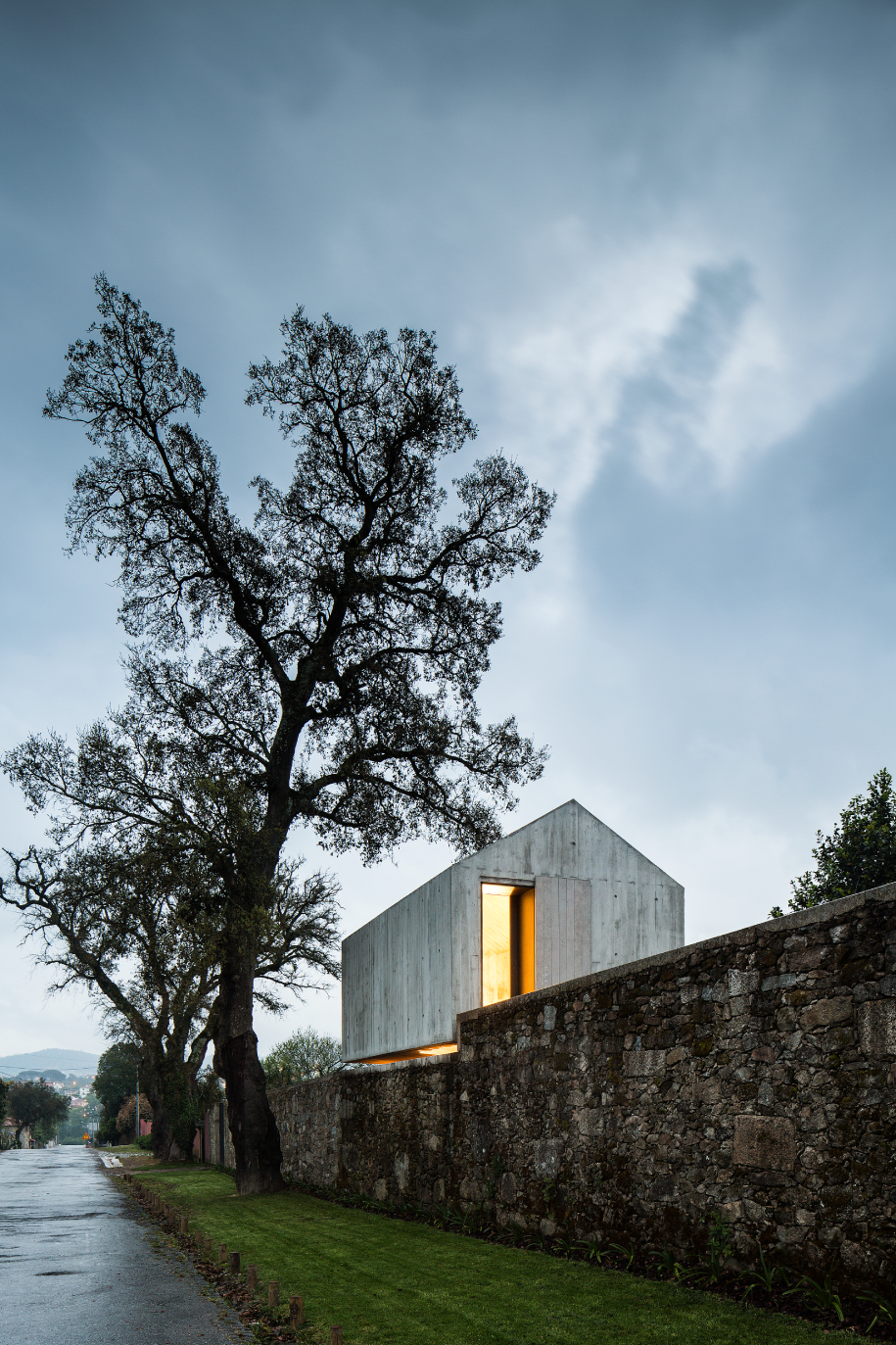
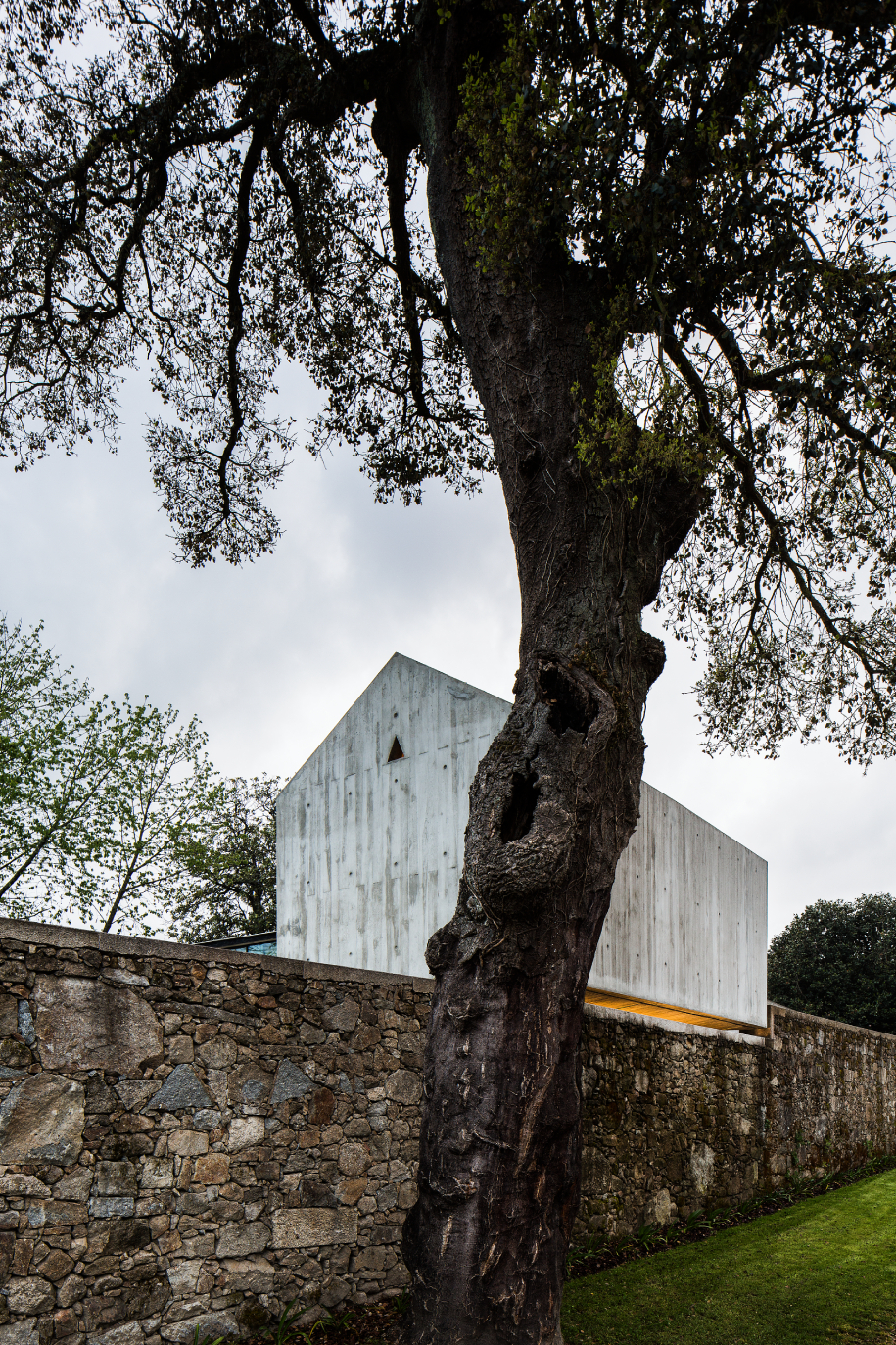
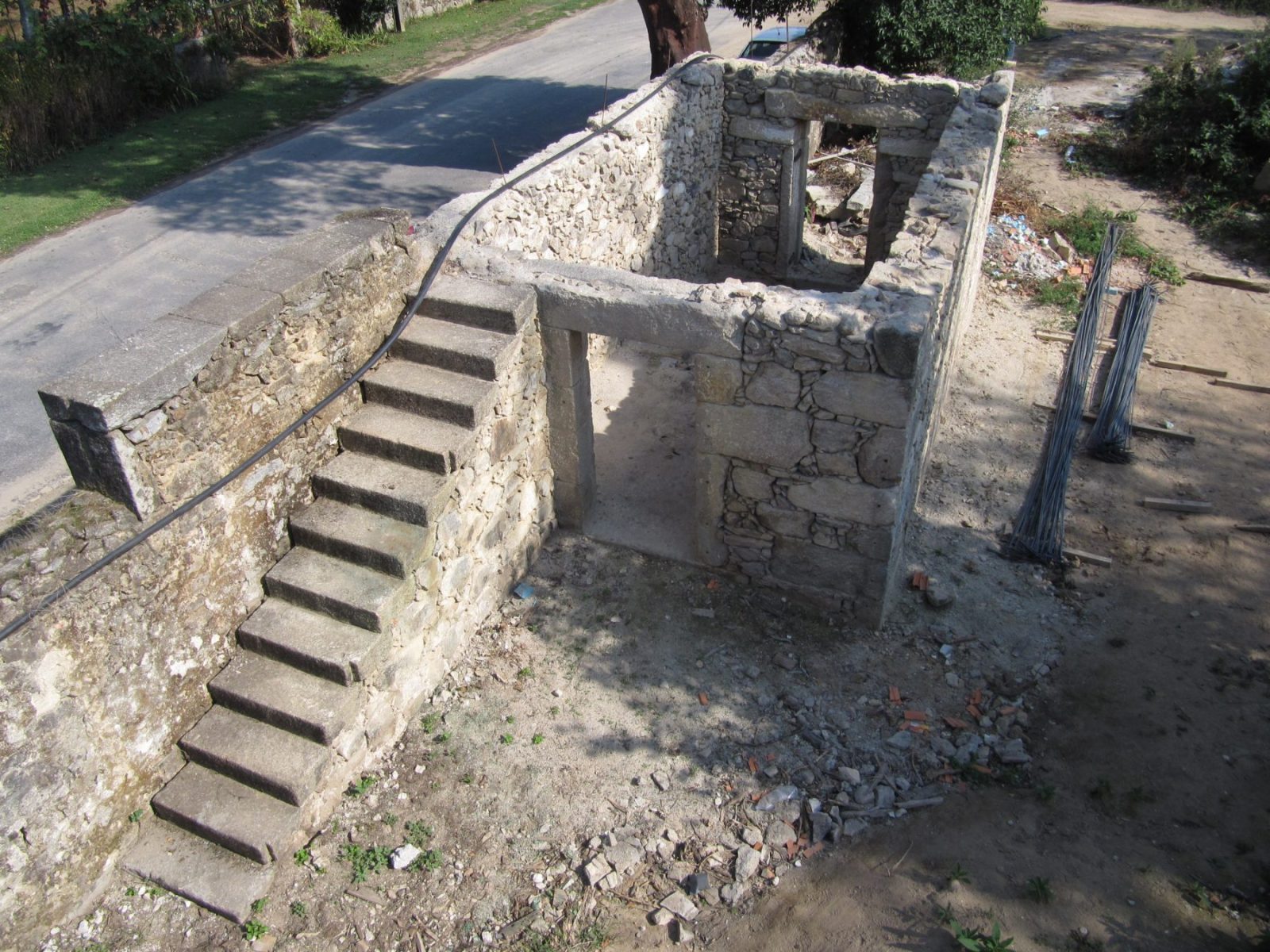
Somewhere between utility and landmark, dovecotes once punctuated the Portuguese countryside as quiet indicators of an agrarian economy and a way of life deeply attuned to the land. With the industrialization of agriculture and the transformation of food systems across the 19th and 20th centuries, these modest yet symbolically charged structures fell into disuse, gradually dissolving into ruin.
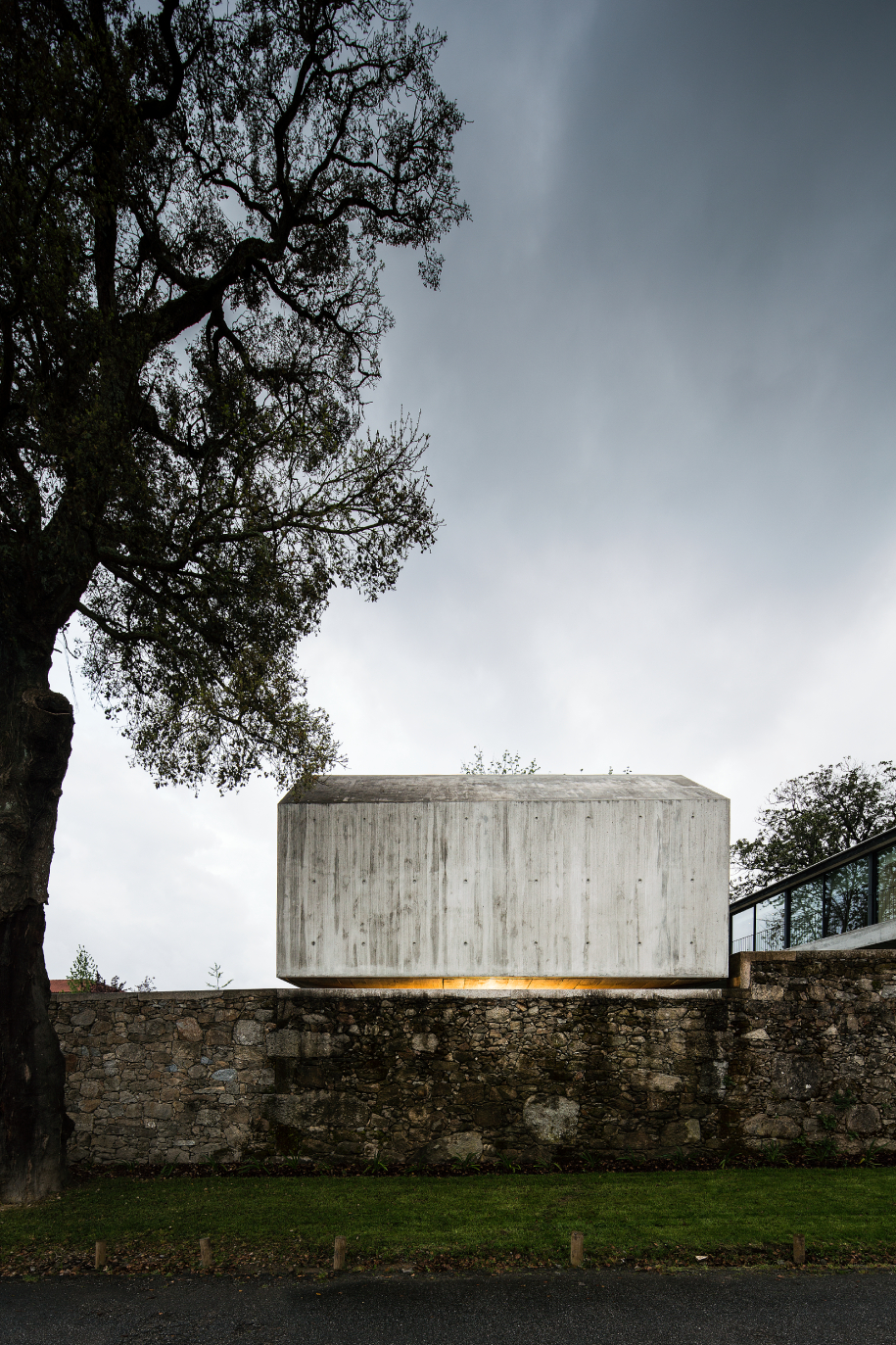
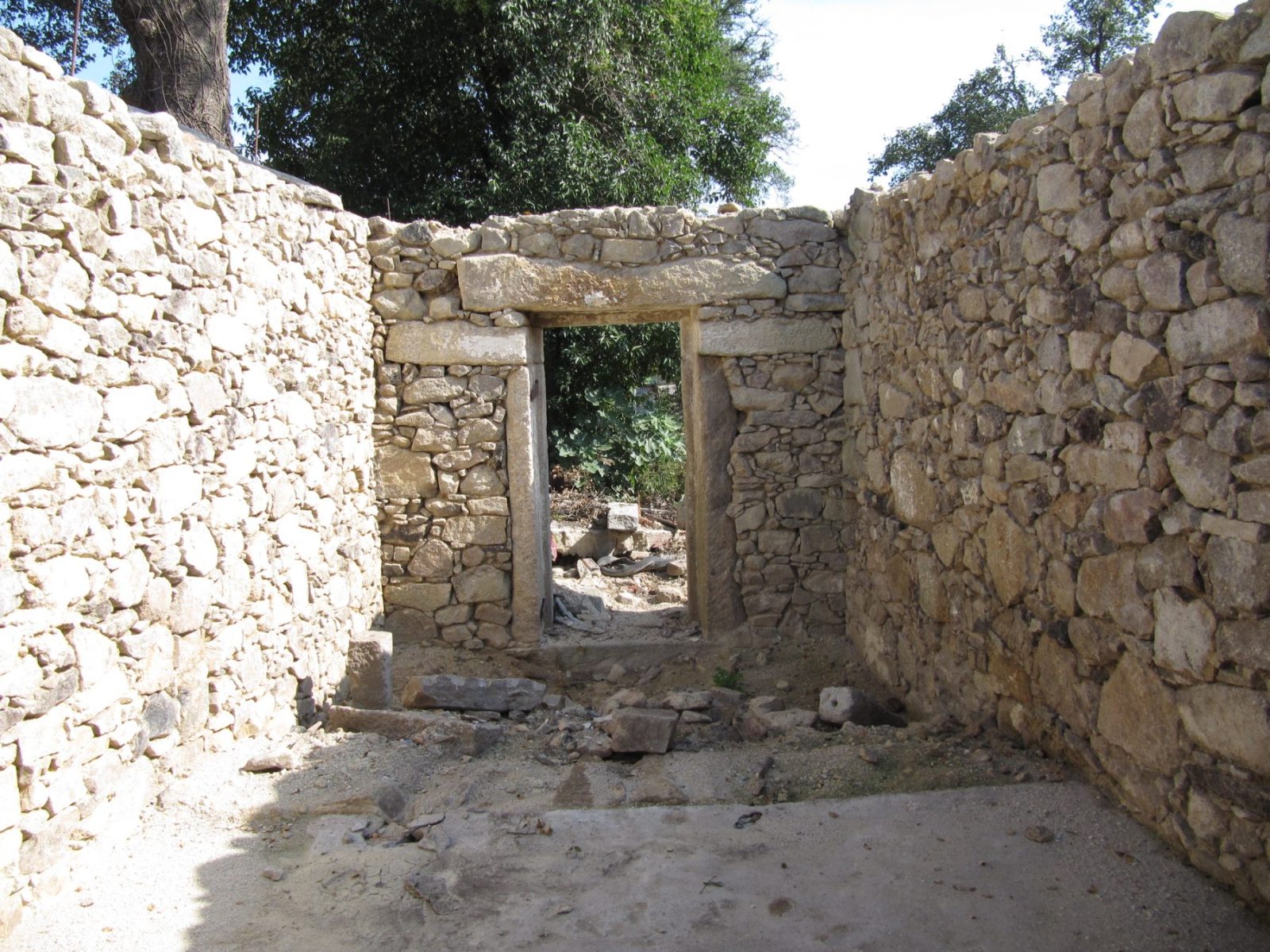
Against this backdrop, AZO Sequeira Arquitectos undertook the restoration and adaptive reuse of a deteriorated dovecote in Braga, seeking not mere preservation but a precise dialogue between vernacular inheritance and contemporary inhabitation.
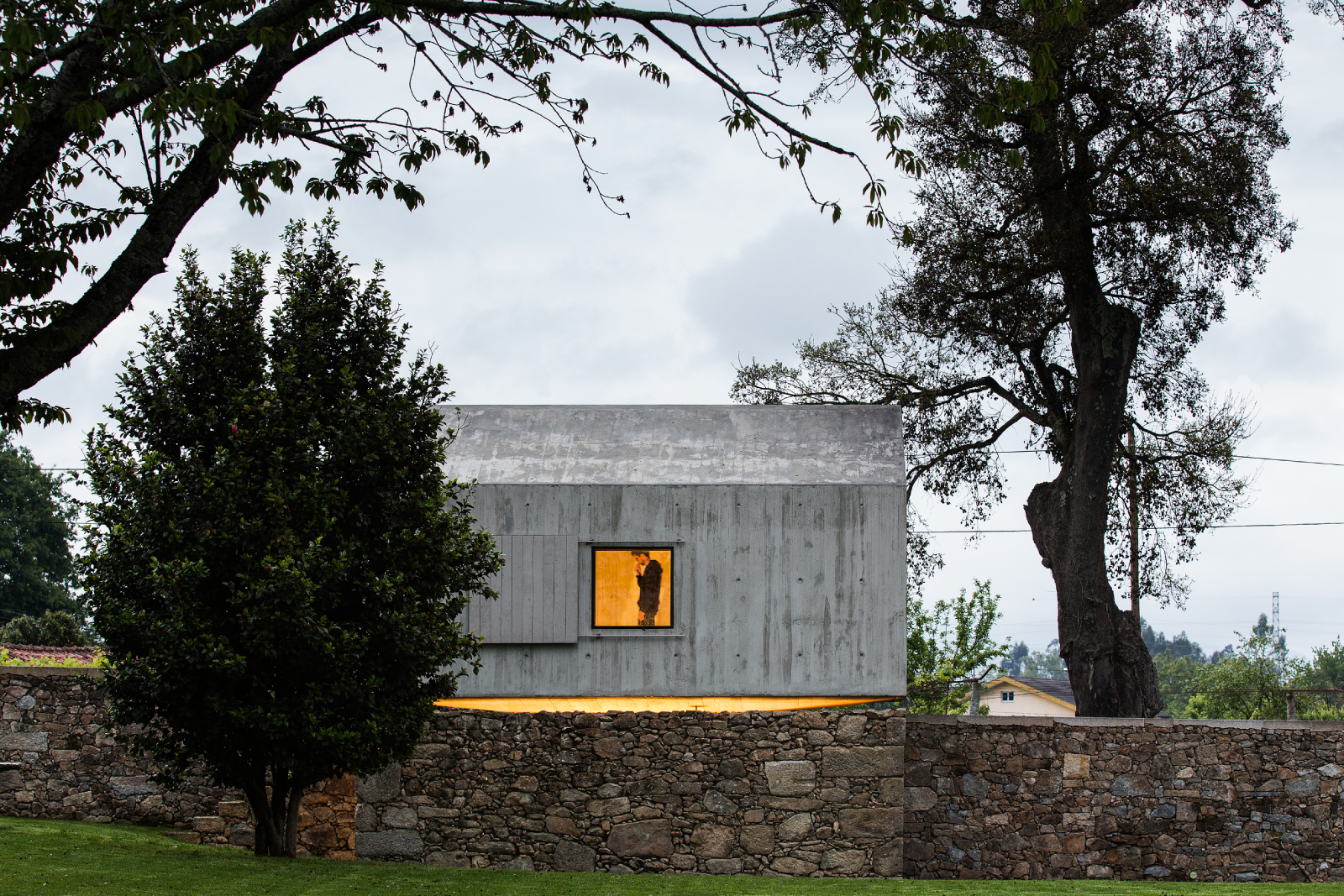
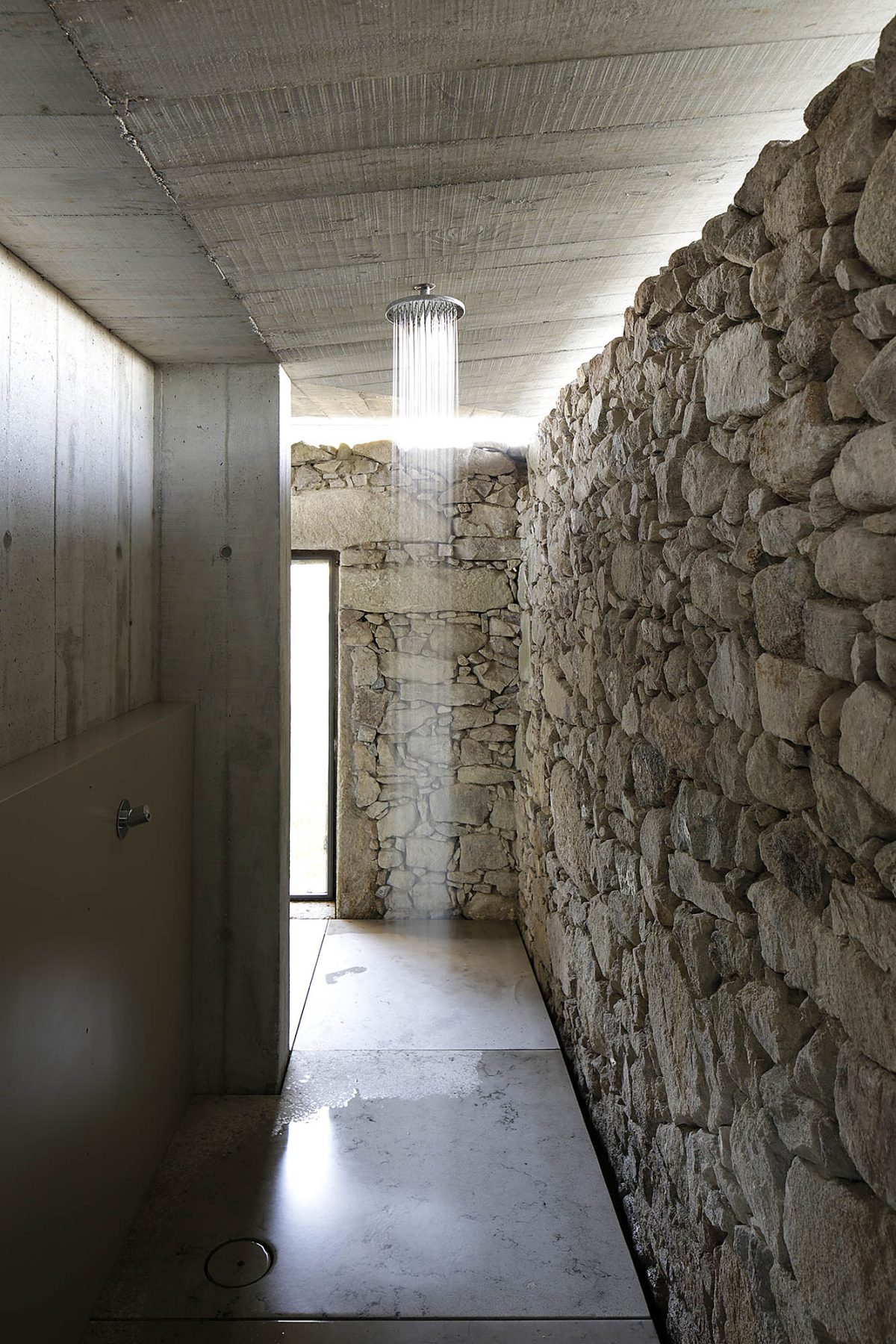
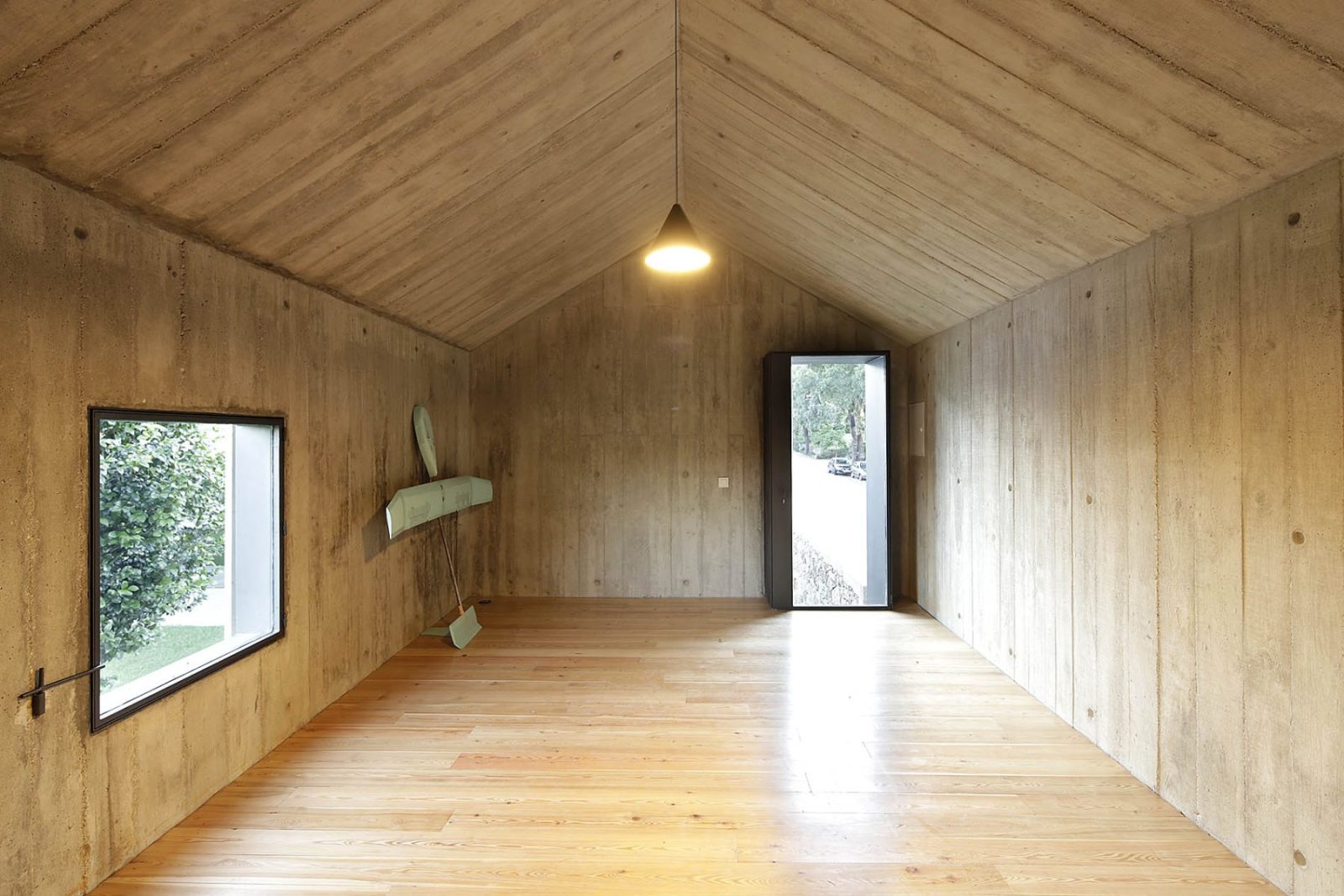
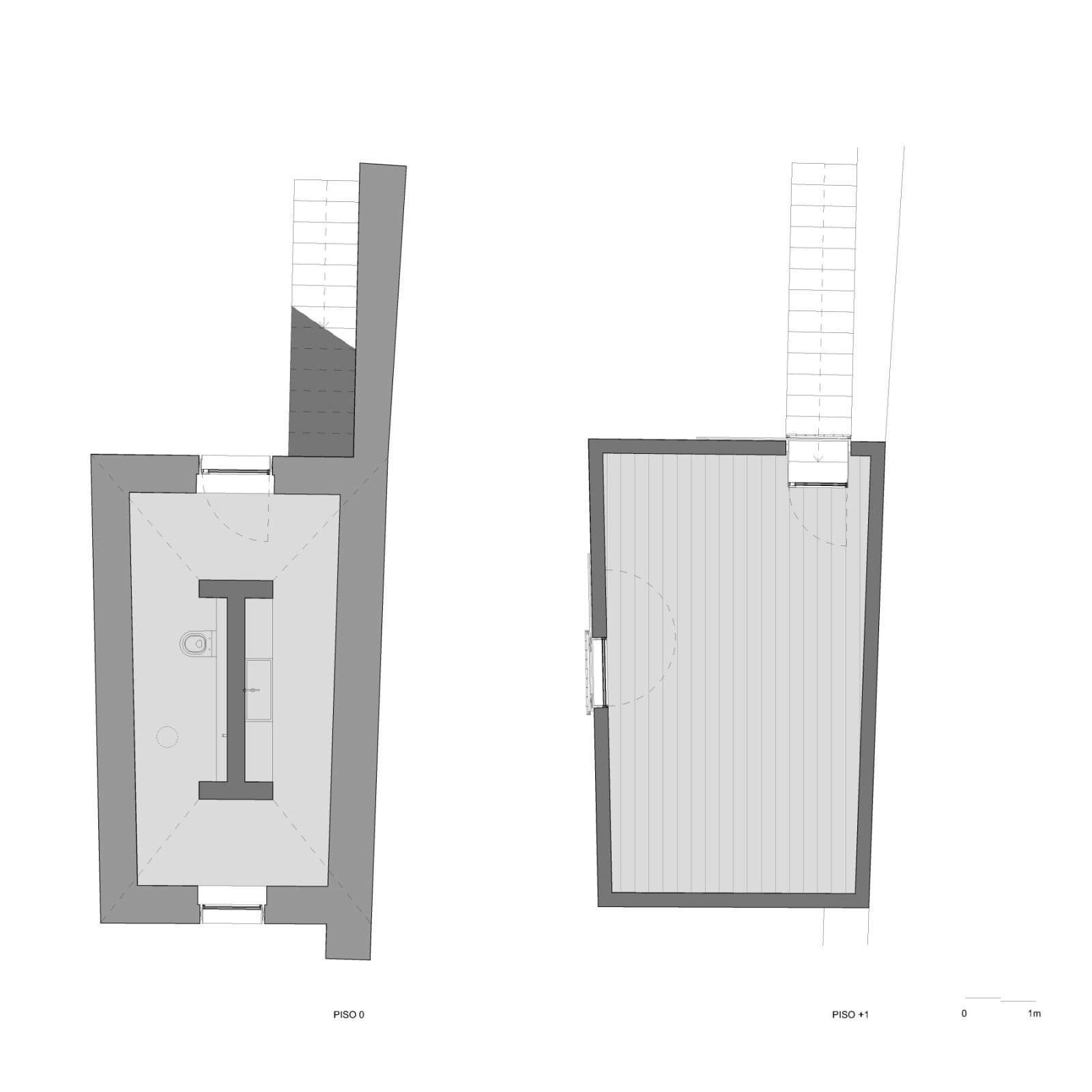
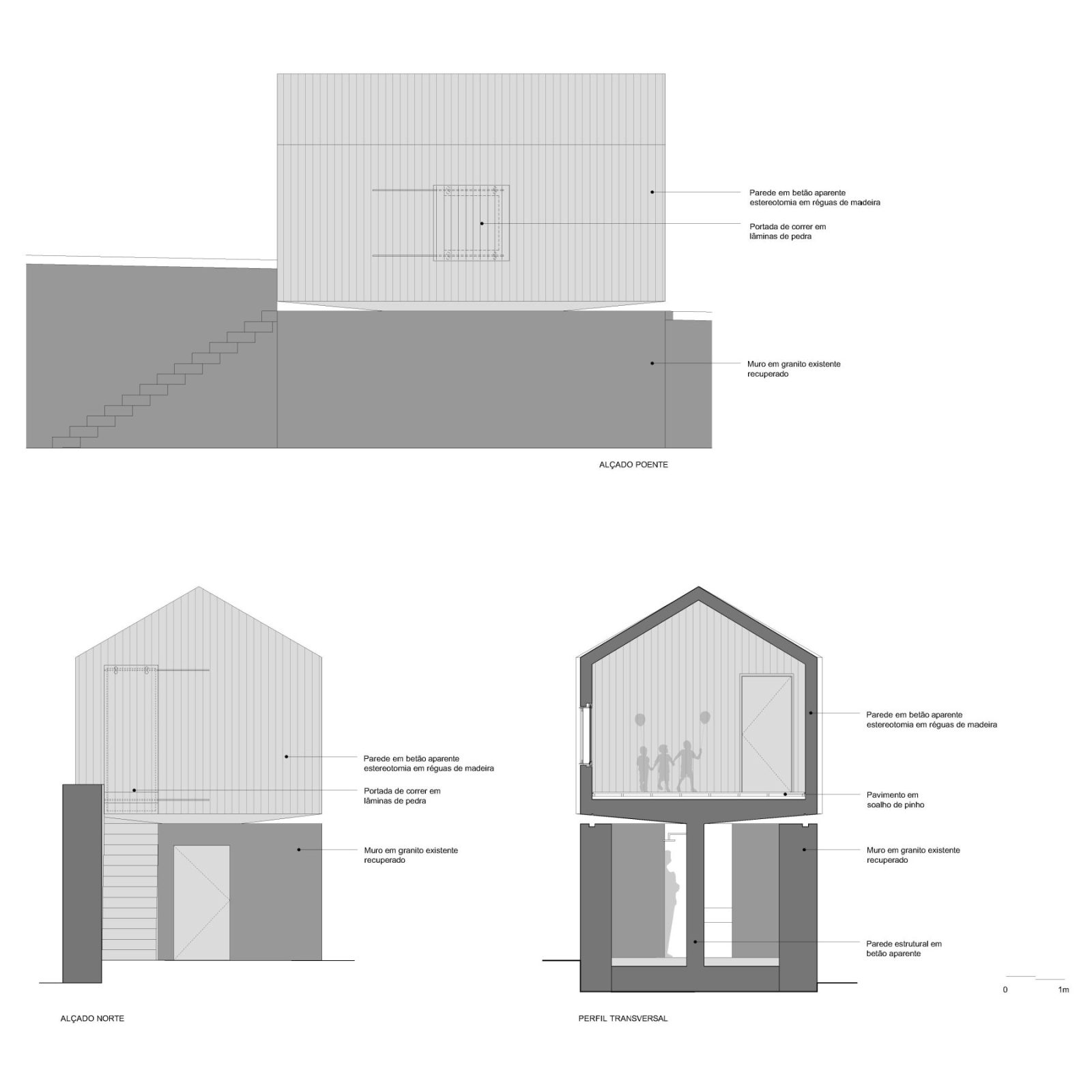
“Play is a free activity standing quite consciously outside ‘ordinary’ life,” writes Johan Huizinga—a notion the architects materialize here through a deliberate architectural duality. The existing stone remains are retained as a grounded base, while a new, minimal concrete volume rises above, forming what the architects describe as a “treehouse.” Within this raw yet carefully composed material contrast, functions are split: the concrete volume hosts a playroom—a space for imagination and suspension—while the stone base accommodates a bathhouse serving the pool.
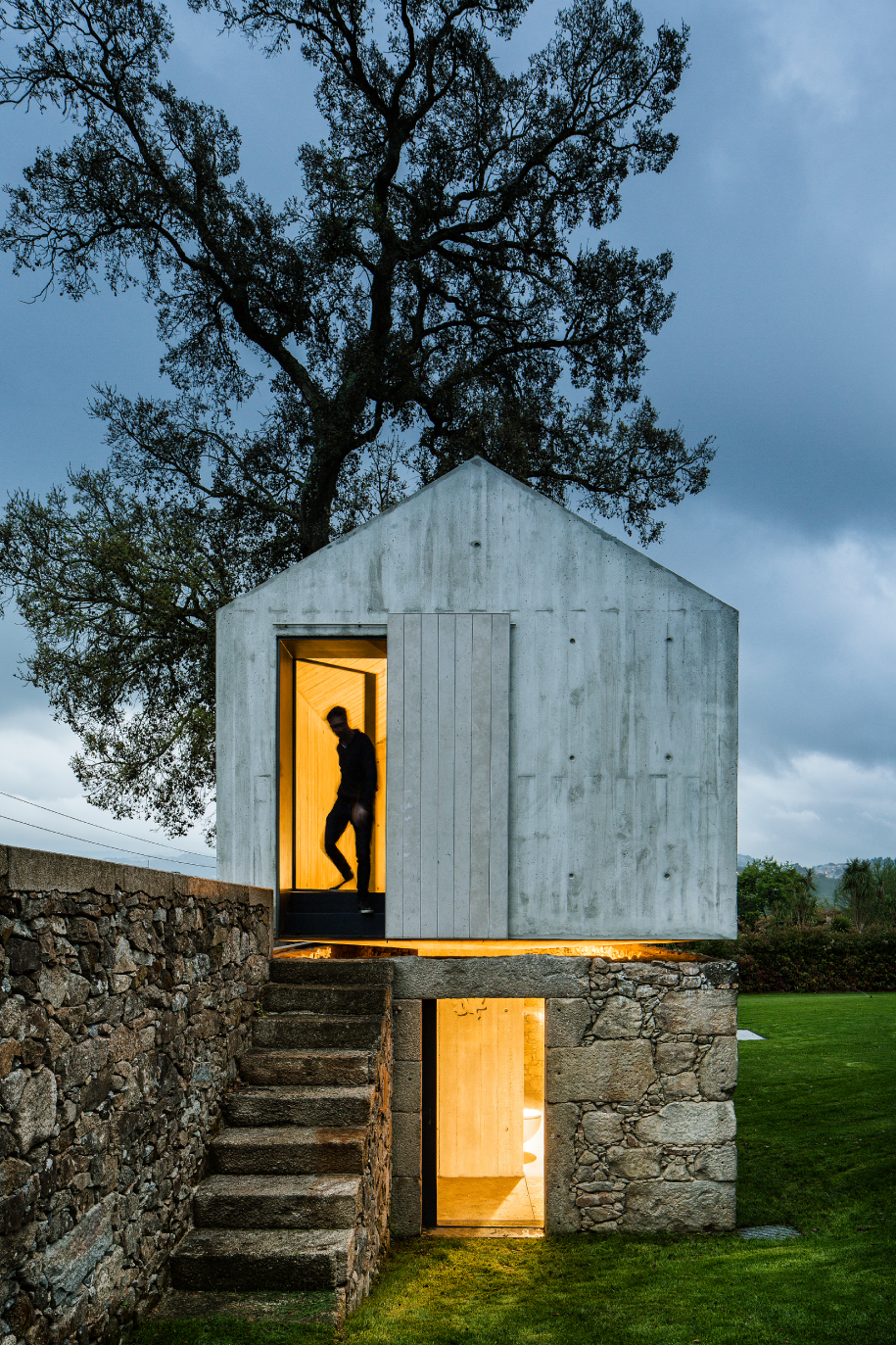
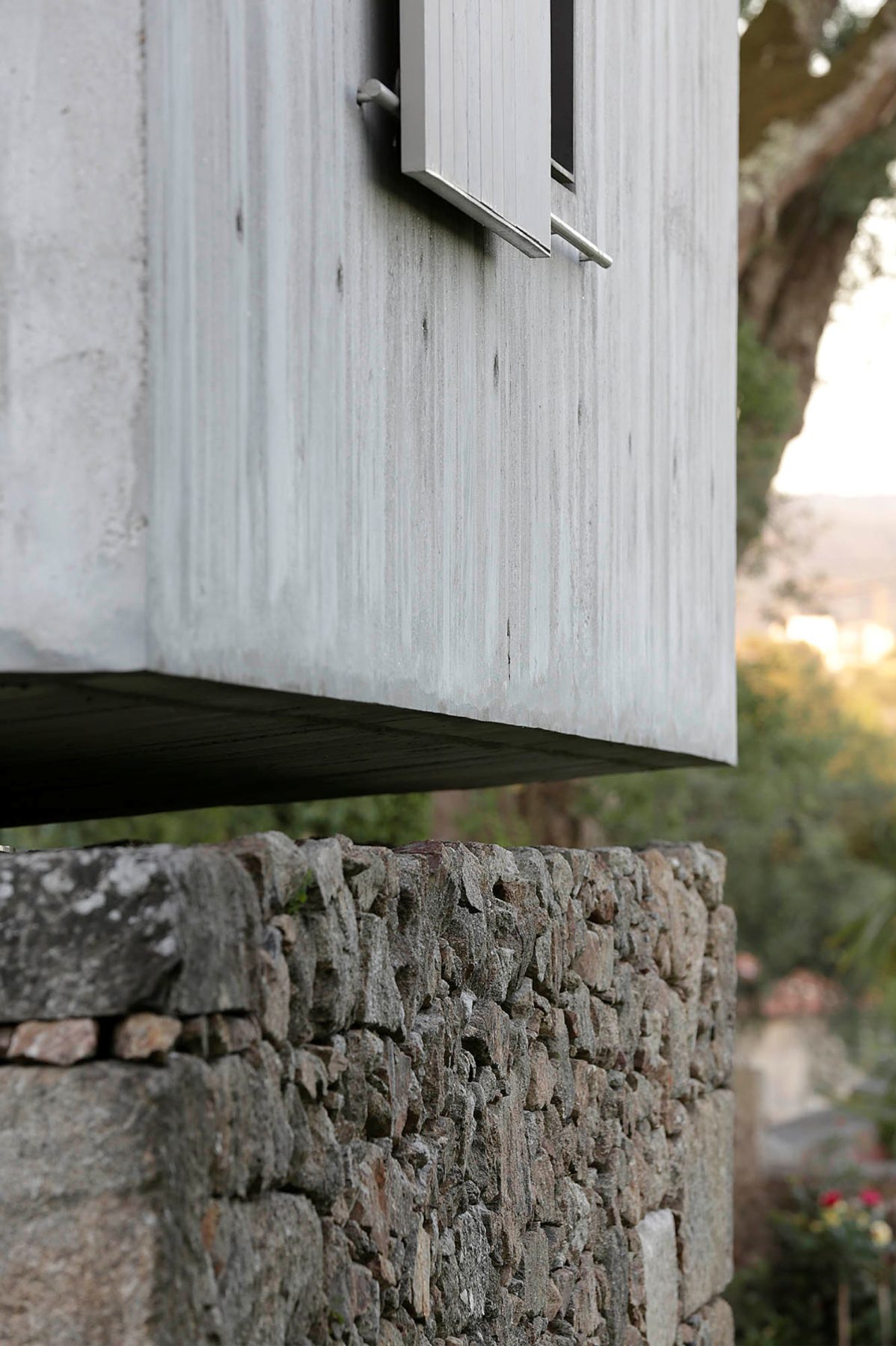
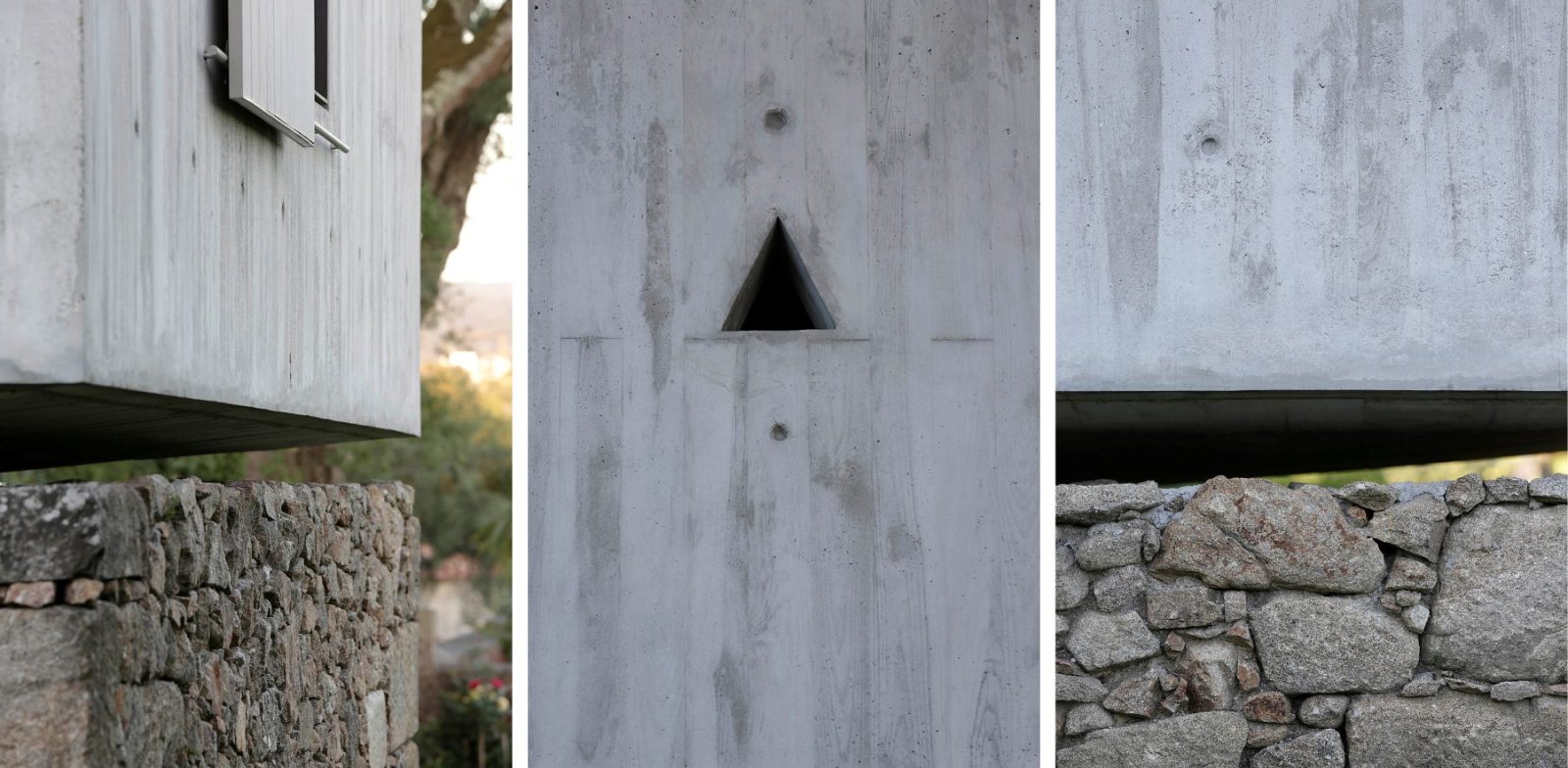
A decisive gesture defines the project: the two volumes never quite meet. A narrow, almost imperceptible gap separates old from new, earth from elevation.
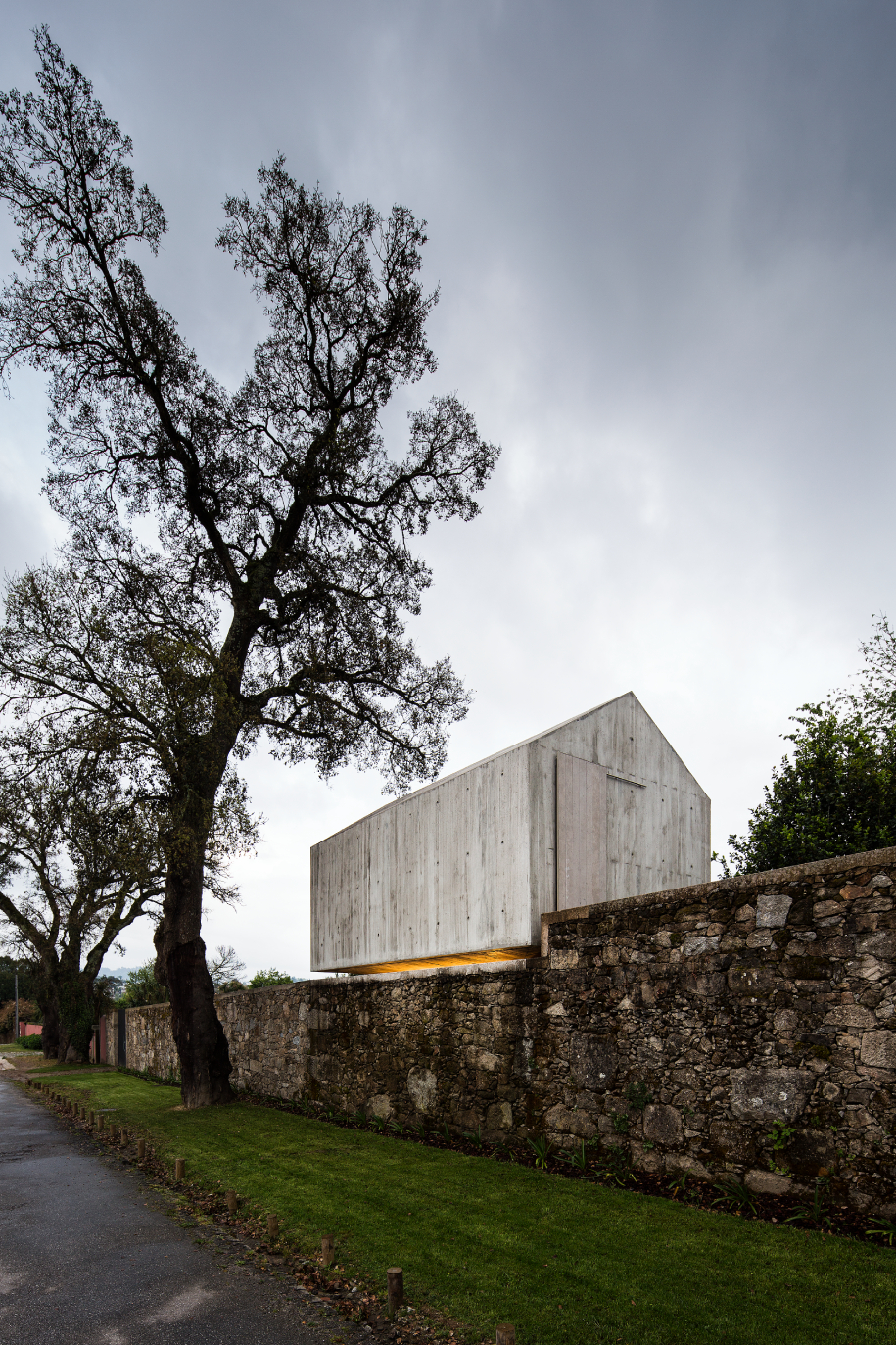
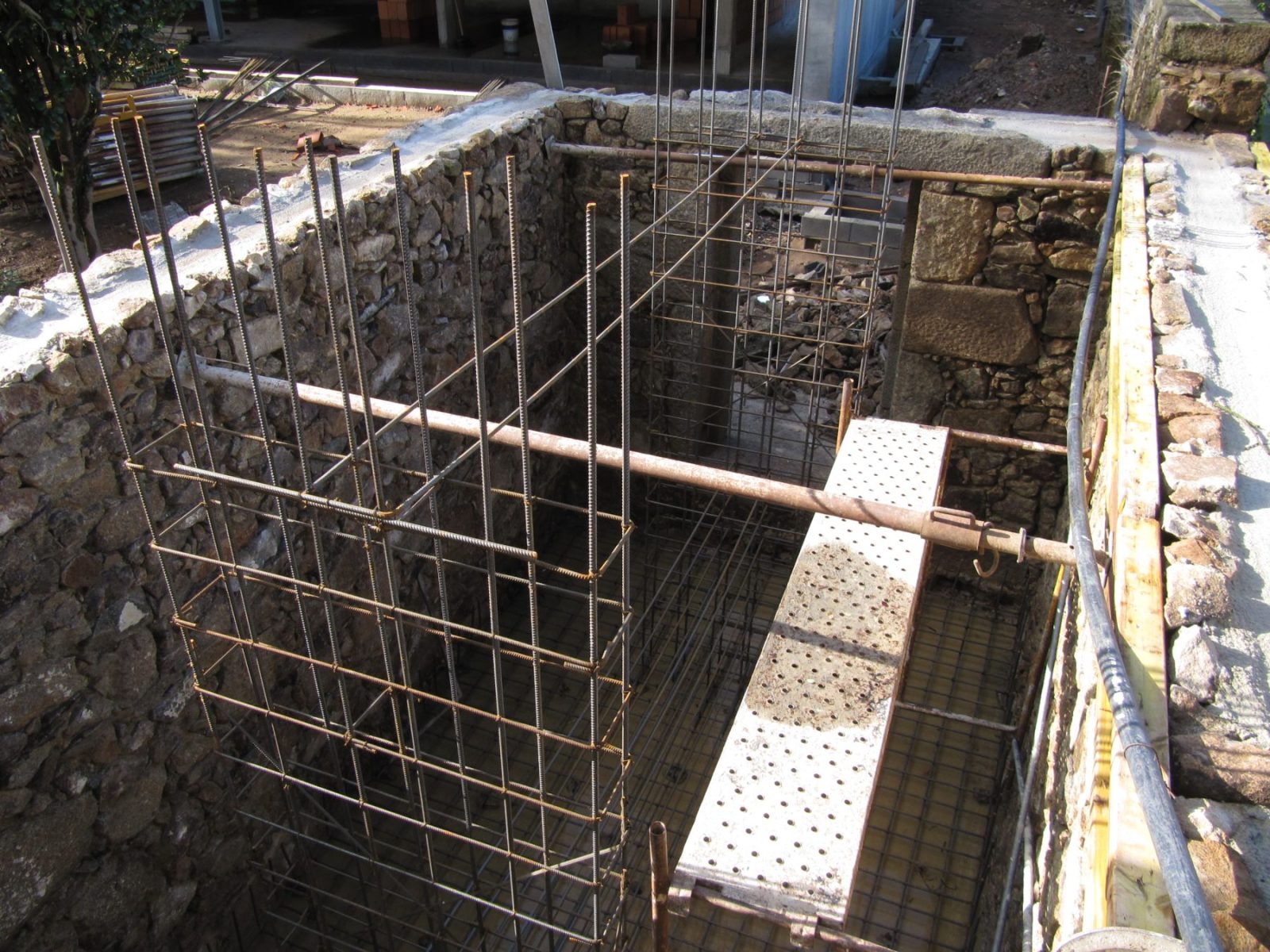
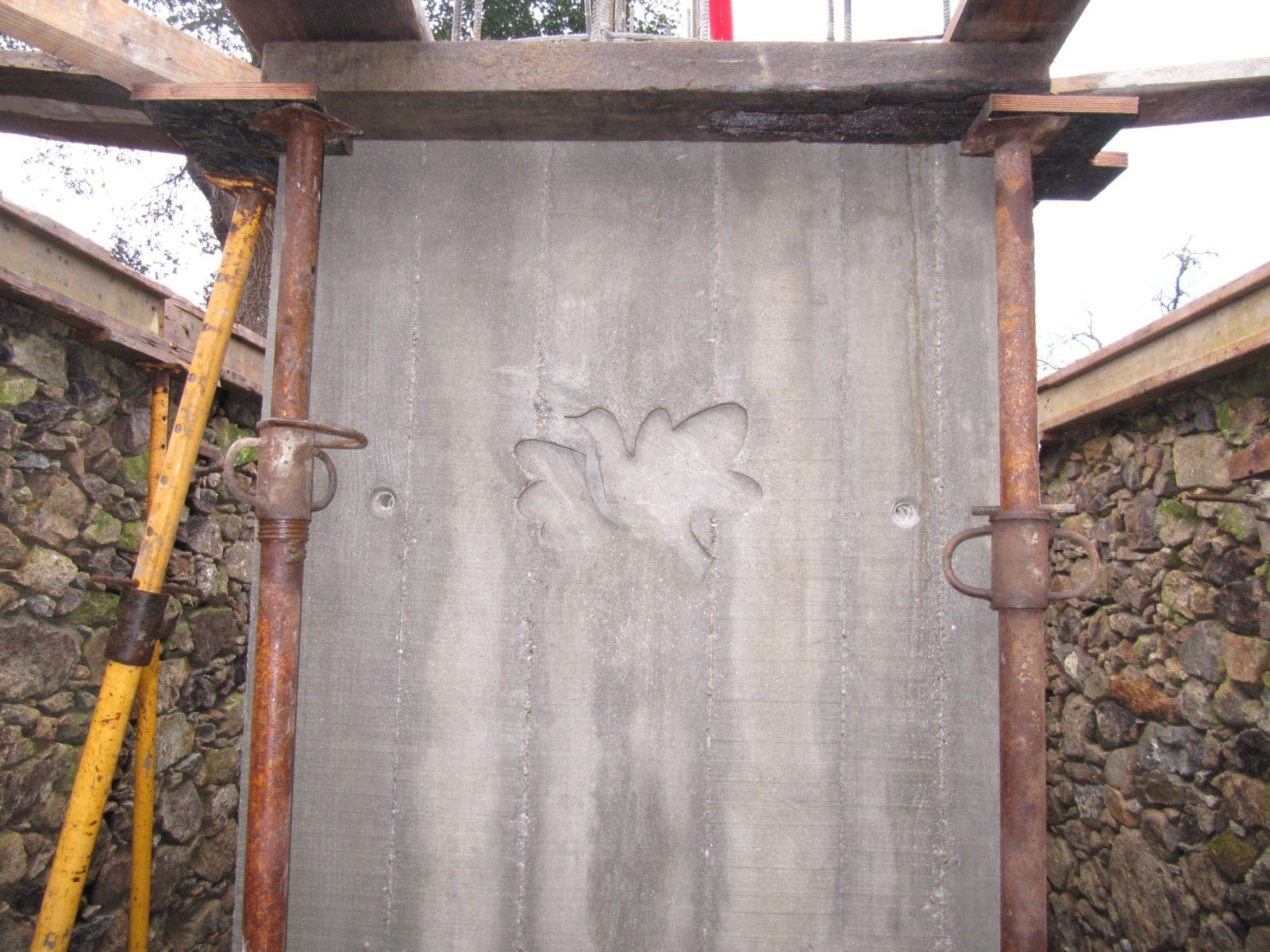
Supported by a discreet central concrete wall, the upper volume appears to hover—detached from the rugged stone perimeter walls, the adjacent enclosure, and ultimately the ground itself. What emerges is a calibrated illusion of levitation, where weight is both asserted and denied.
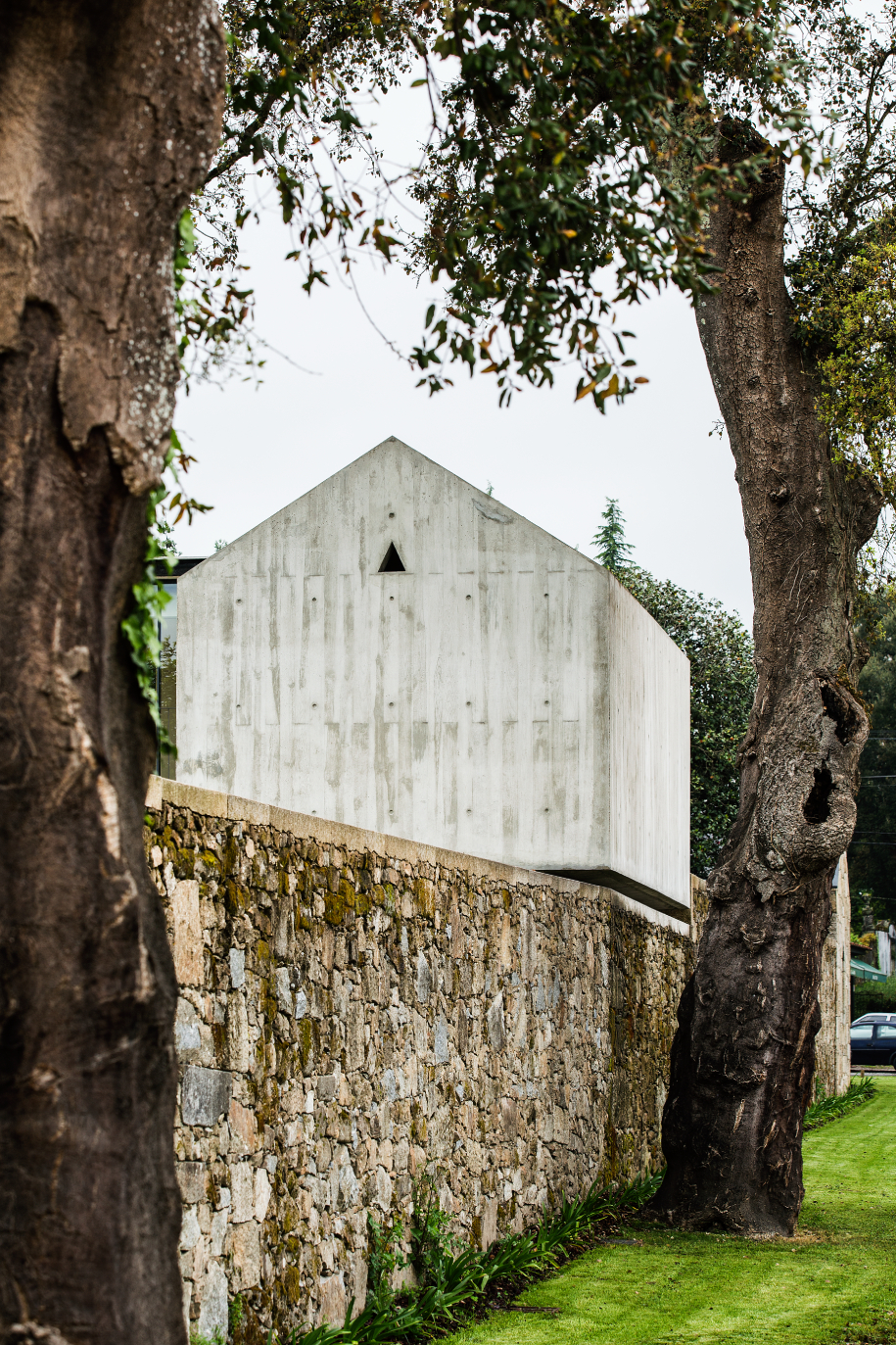
As the architects note, “We looked for a way to make it seem like the main volume is floating, like a treehouse, while remaining balanced and pure.”
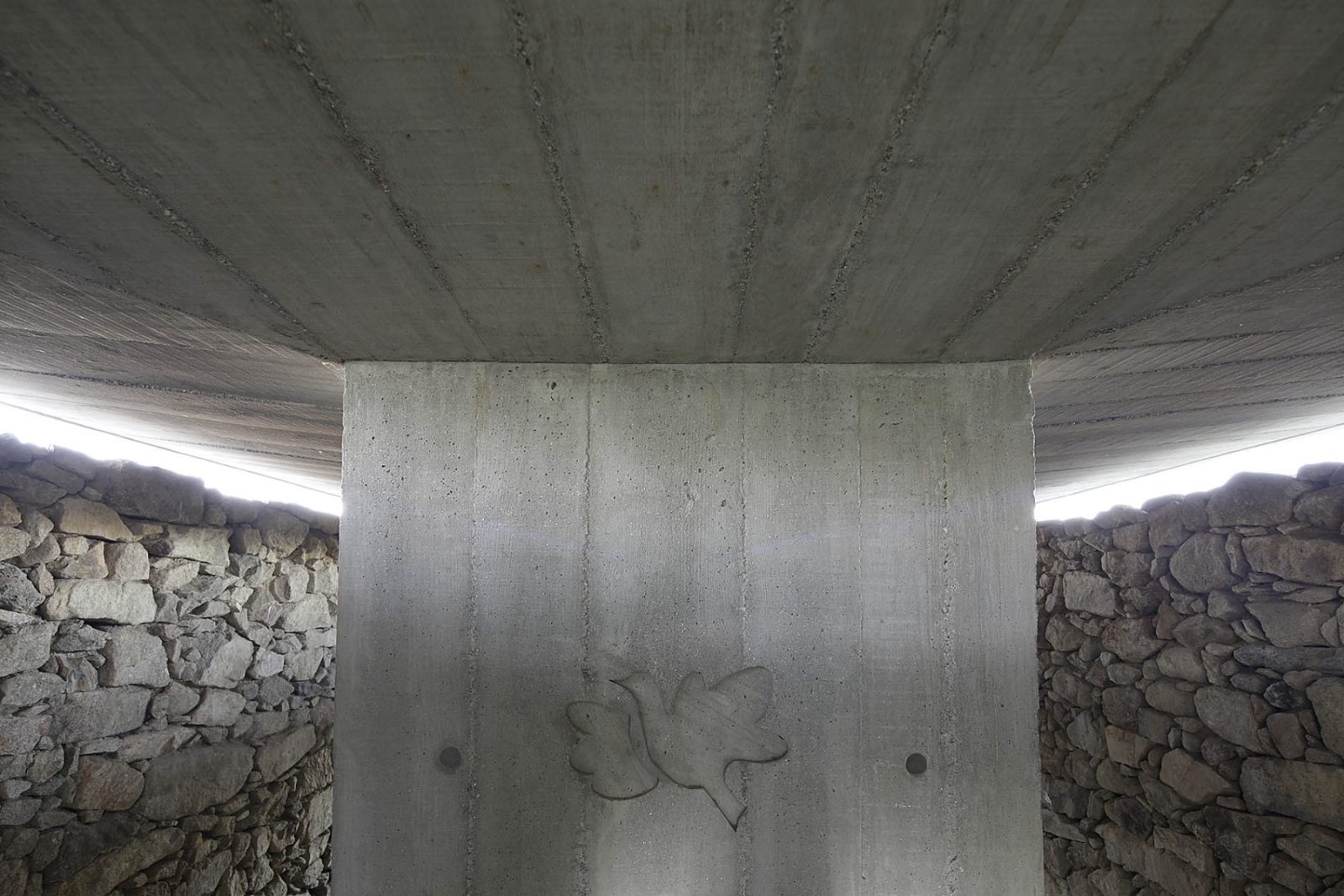
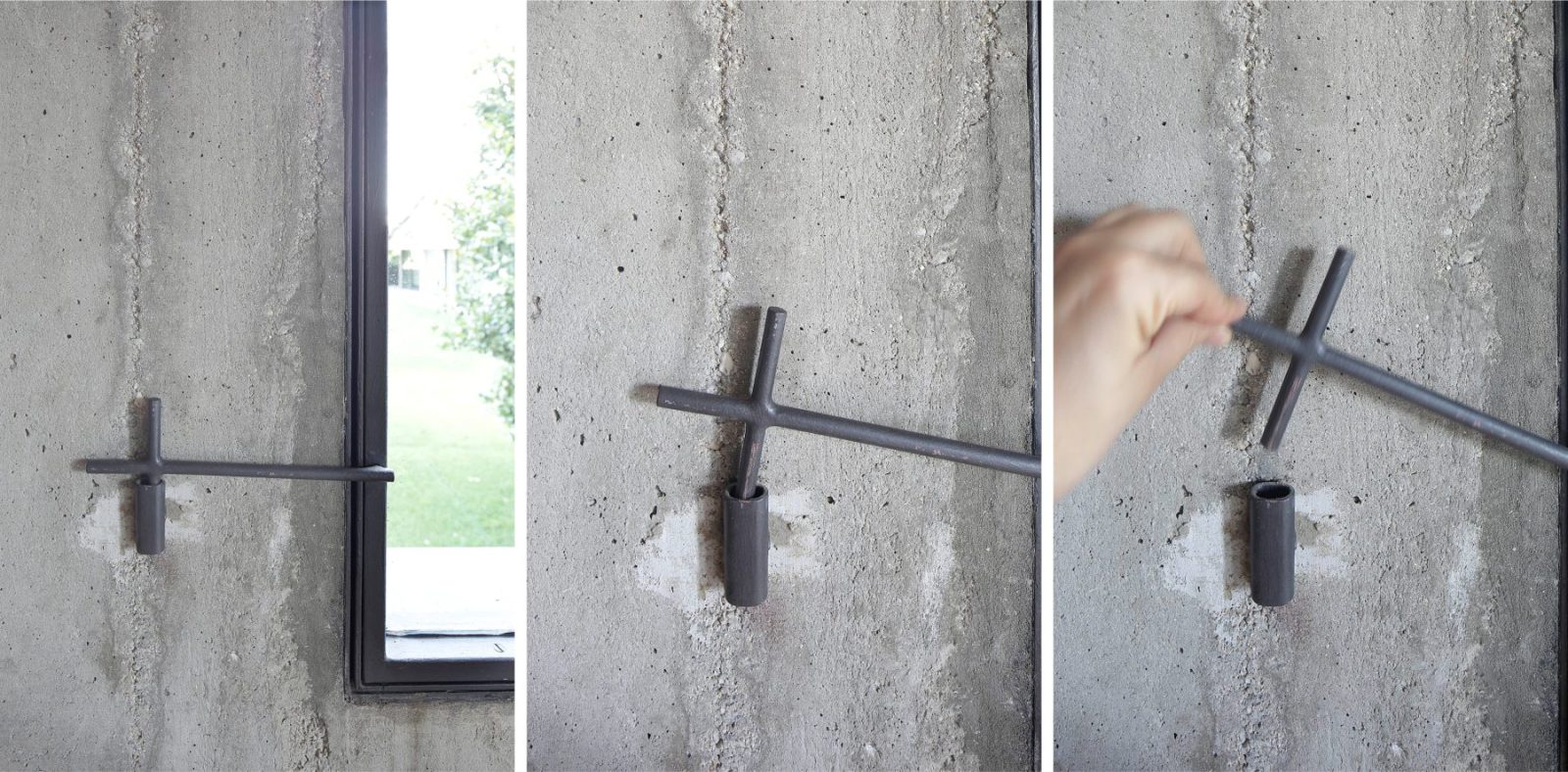
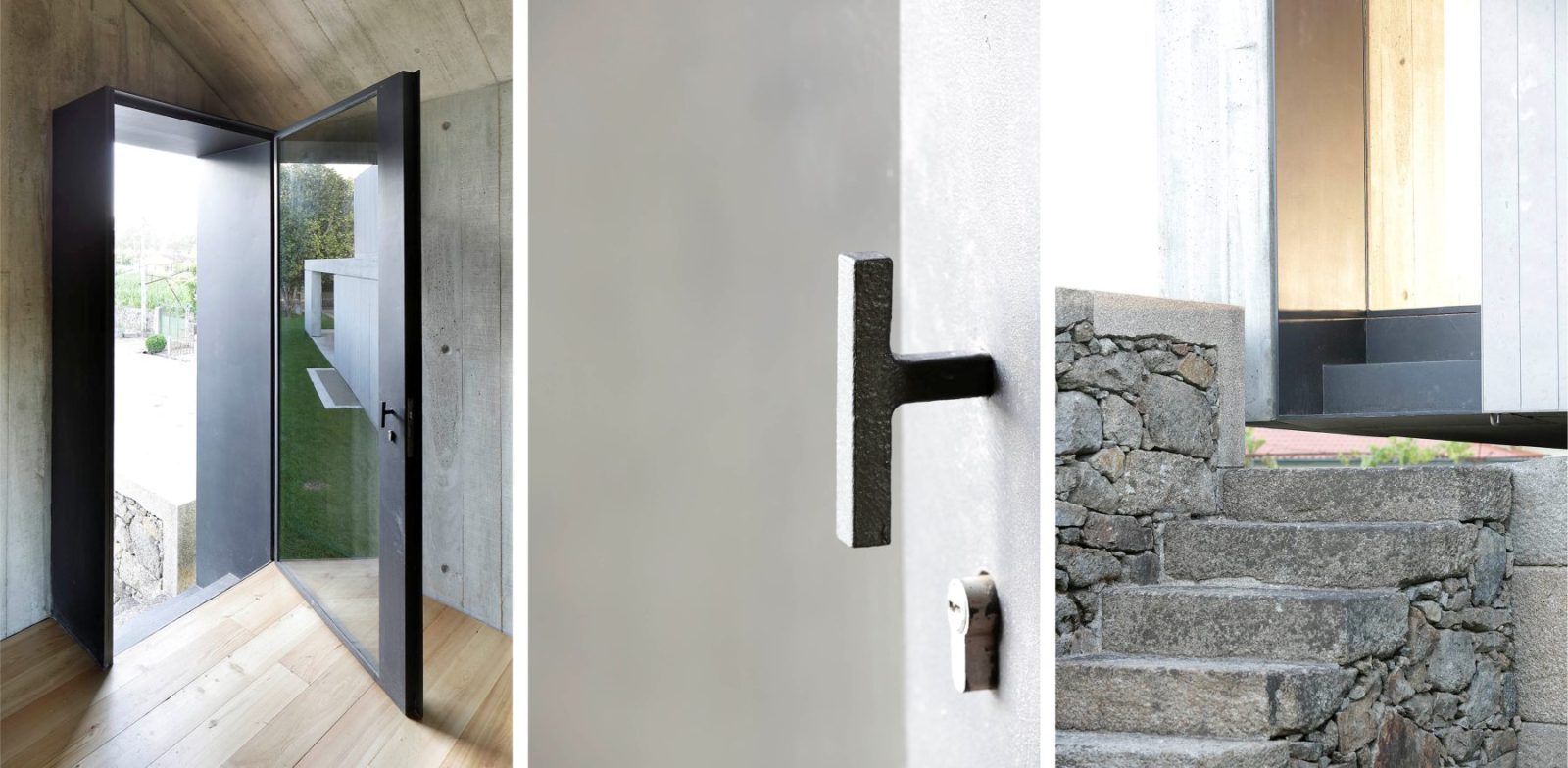
Fragments of the original structure persist. The small triangular openings once used by doves are preserved, now re-signified within a new spatial narrative. Contemporary insertions— a silver-toned wooden door and window shutters, parquet flooring, lighting and a boxy metal entrance portal —are introduced with restraint, reinforcing the project’s dialogue between continuity and intervention.
Rooted in the vernacular landscape yet oriented toward the intangible worlds of childhood, this compact and autonomous structure operates as both artifact and imagination device.
It binds land to memory, ruin to renewal, and utility to play—transforming a forgotten dovecote into a place where architecture shelters not only function, but also the quiet unfolding of dreams.
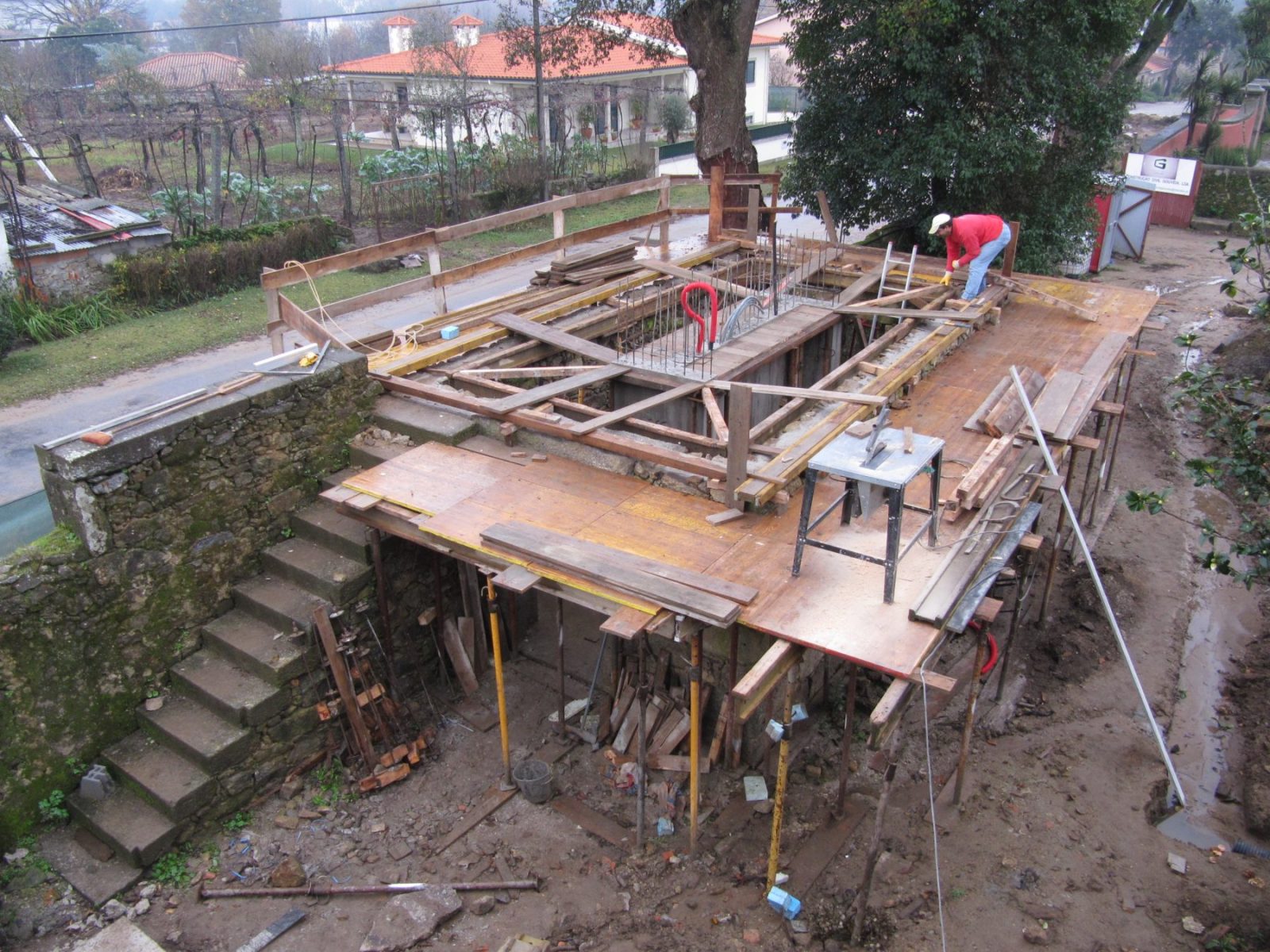
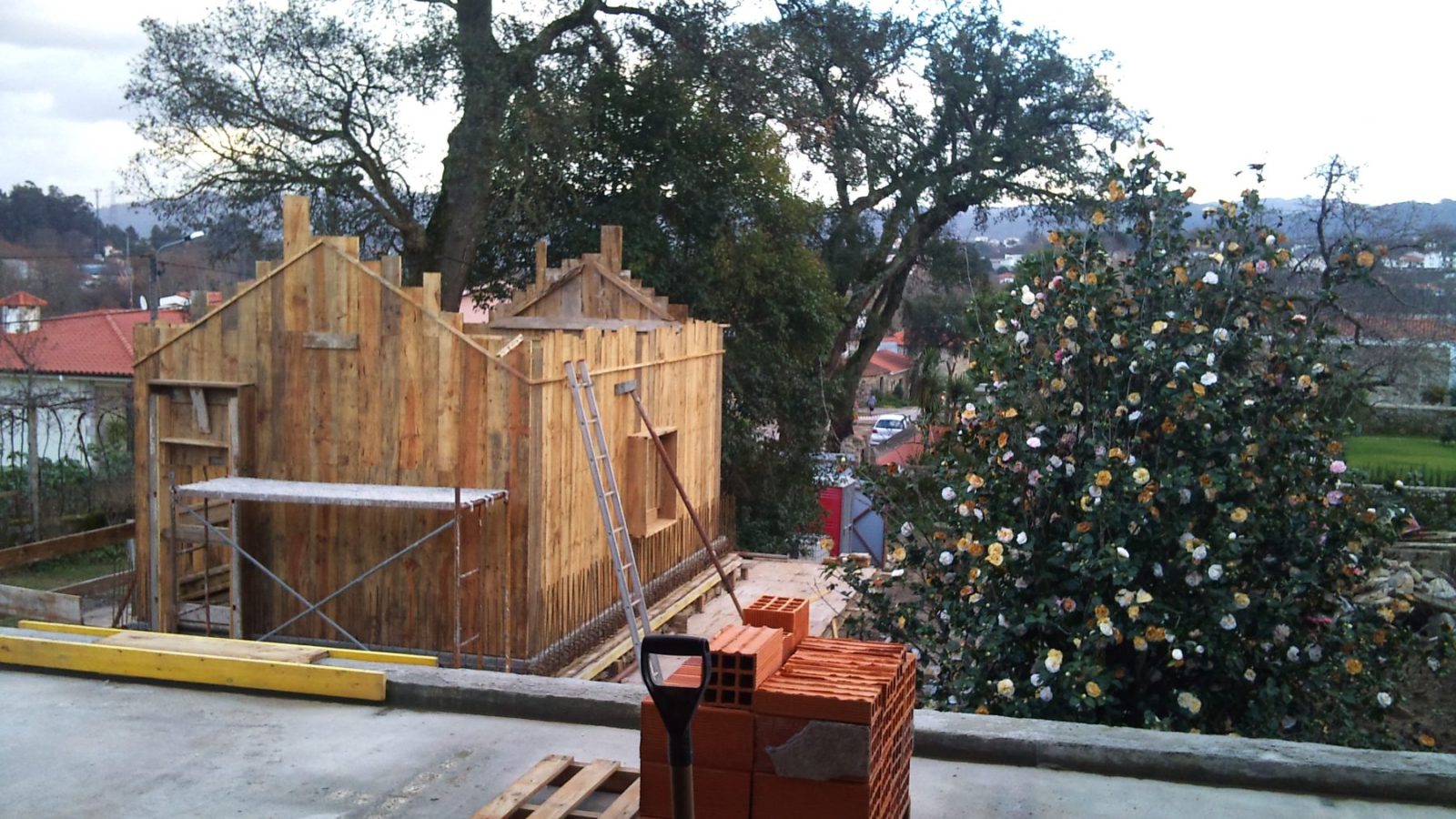
Construction / Details
Facts & Credits
Project title The Dovecote
Typology Rural Living, Restoration, Renovation
Location Soutelo, Braga, Portugal
Built Area 54 sqm
Status Completed, 2017
Architecture AZO Sequeira Arquitectos
Lead Architect Mário Sequeira
Project Team Pedro Soares, Fátima Barroso, Jorge Vilela, João Alves
Photography Nelson Garrido