A Whimsical Reuse explores refined architectural transformations where history is reinterpreted through poetic interventions and contemporary craft. Forgotten spaces gain new life, revealing a dialogue between memory, material, and contemporary ways of living.
A former industrial structure within Barcelona’s Palo Alto district is reimagined by Taller 9s Arquitectes as an open and adaptable workplace that reconnects the site with the surrounding neighbourhood. Through the insertion of a folded modular timber system, steel-and-laminated timber mezzanines, and carefully restored historic elements, the project balances heritage preservation with contemporary flexibility, while passive environmental strategies and a preserved green façade enhance its long-term sustainability.
Urban strategy
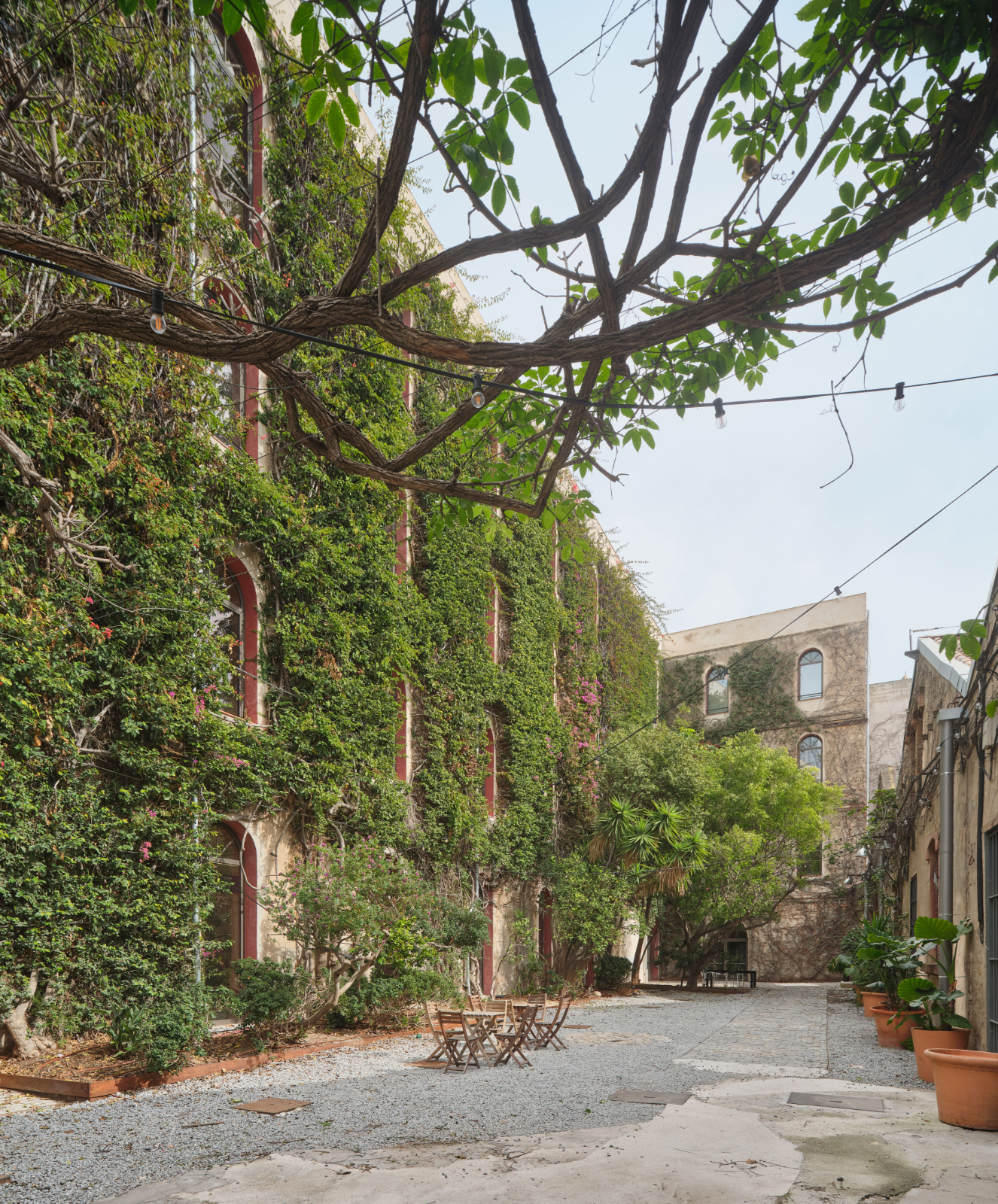
The intervention challenges the historical perception of Palo Alto as a closed industrial enclave by opening the former warehouse to the surrounding neighbourhood.
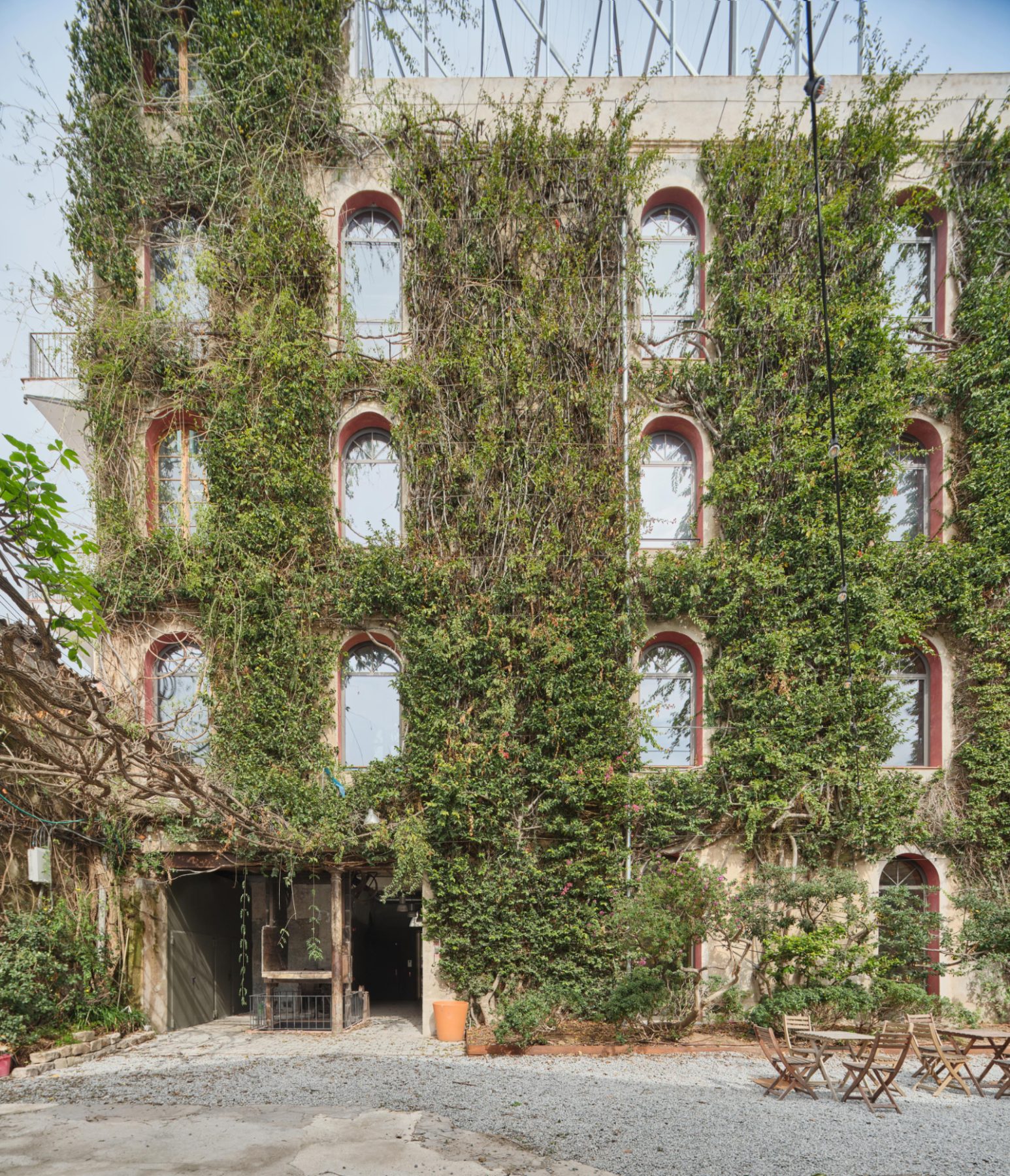
Multi-purpose spaces are strategically positioned on the ground floor to foster interaction between the site and the city.
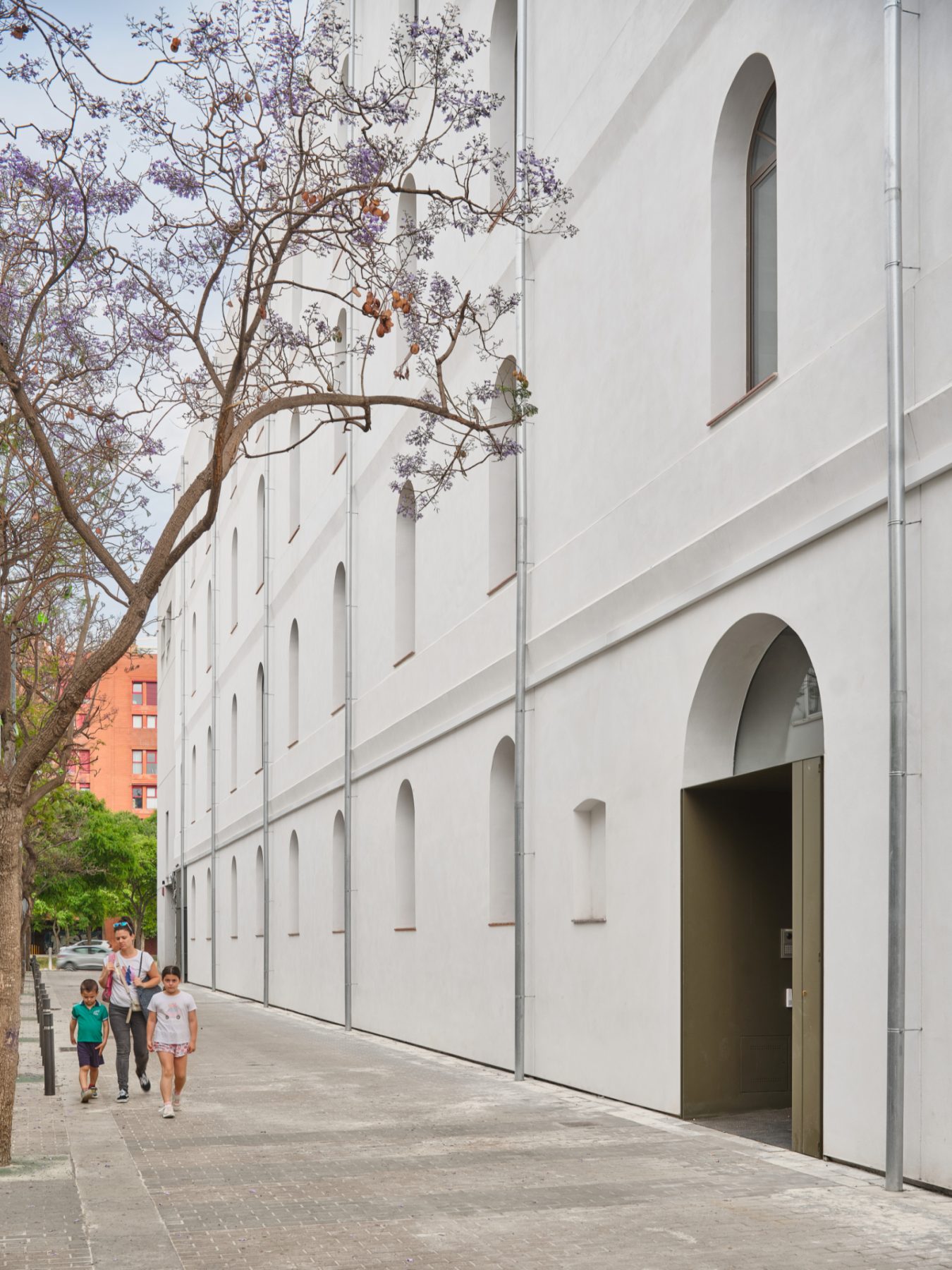
A new public entrance, introduced through the existing passageway, strengthens connectivity and reinforces the building’s civic role within the urban fabric.
Architectural and heritage criteria
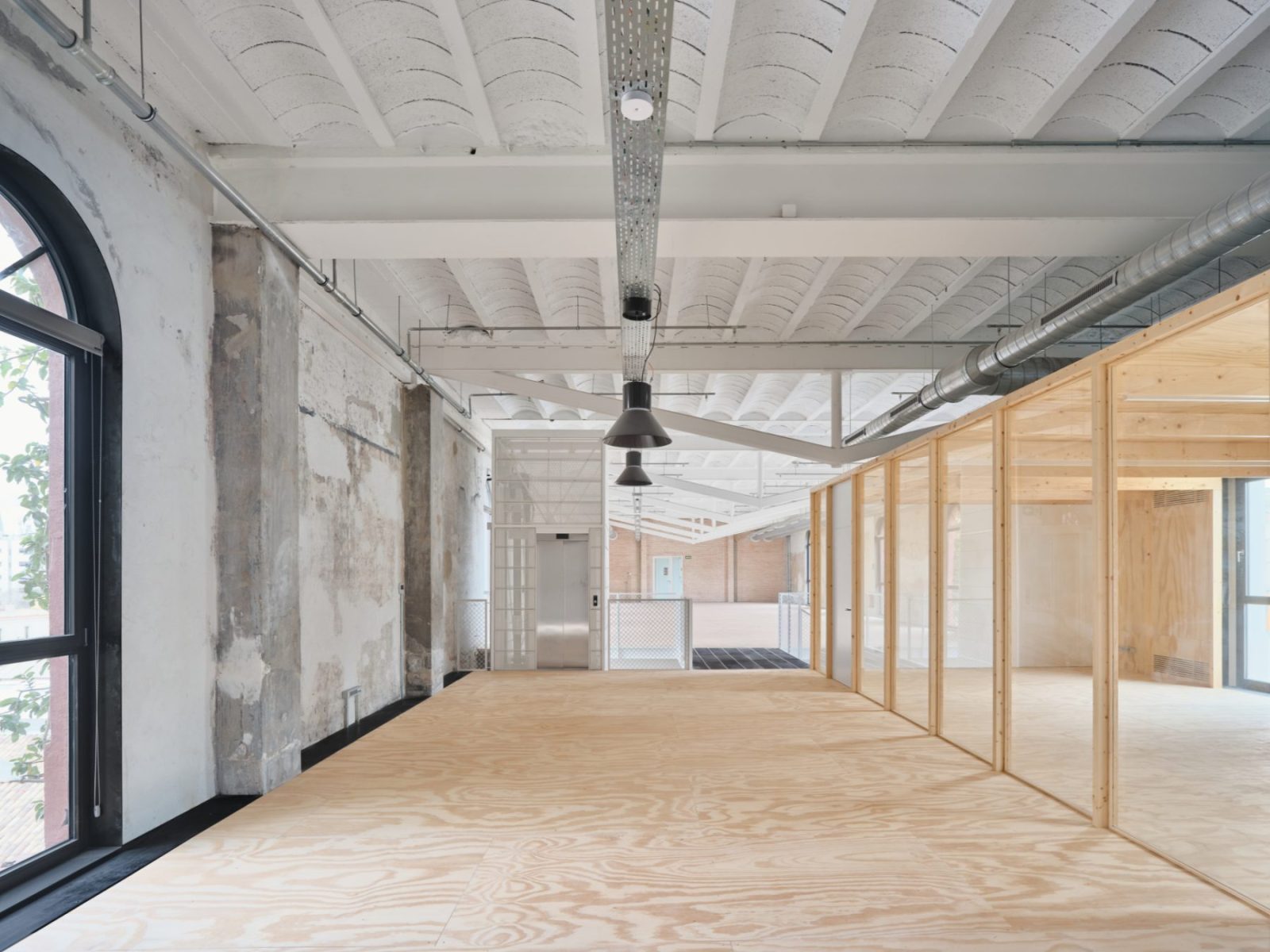
The project begins with the removal of later interior additions in order to recover the original spatial clarity of the warehouse.
The existing structure is carefully reinforced and enhanced.
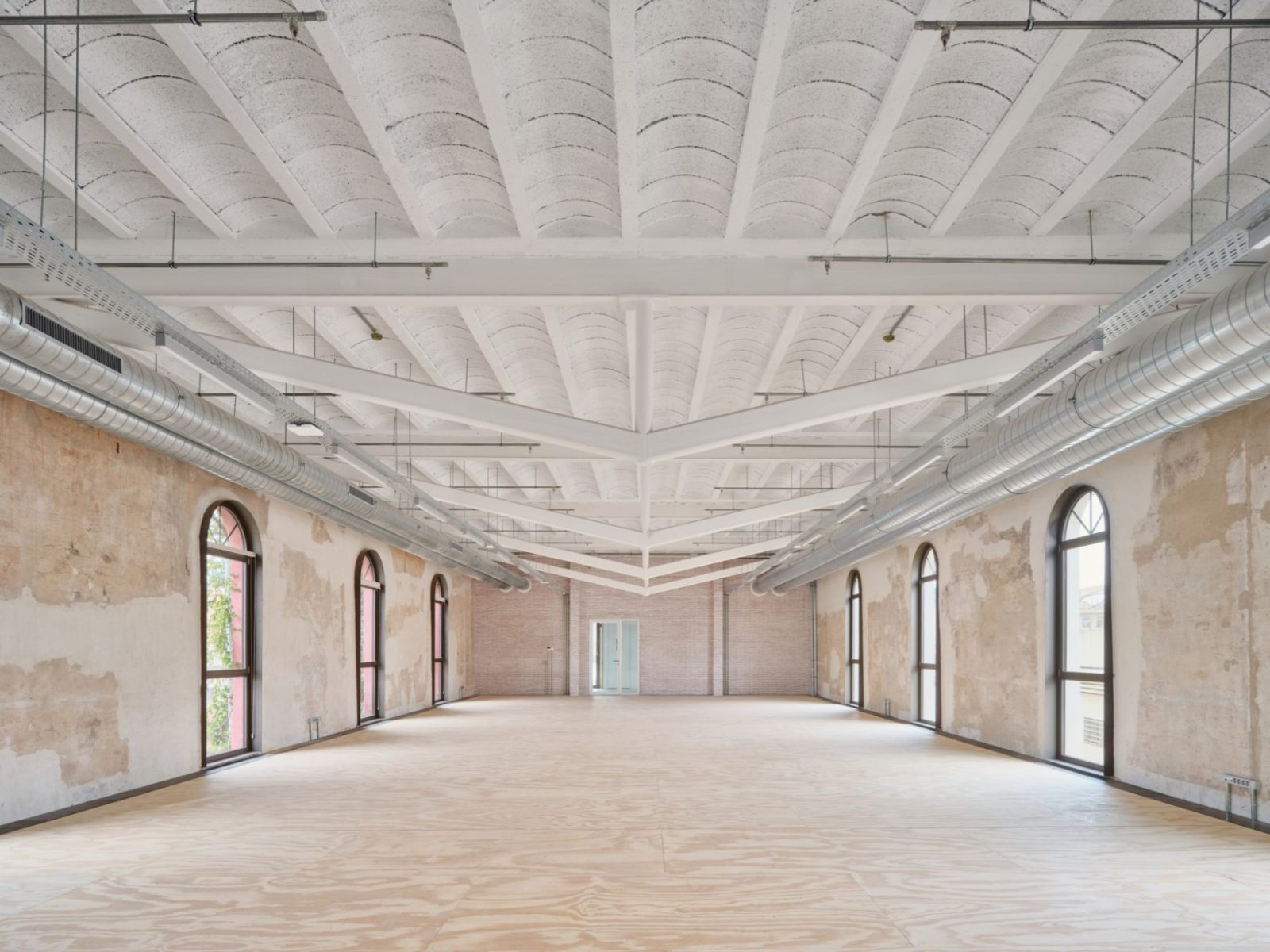
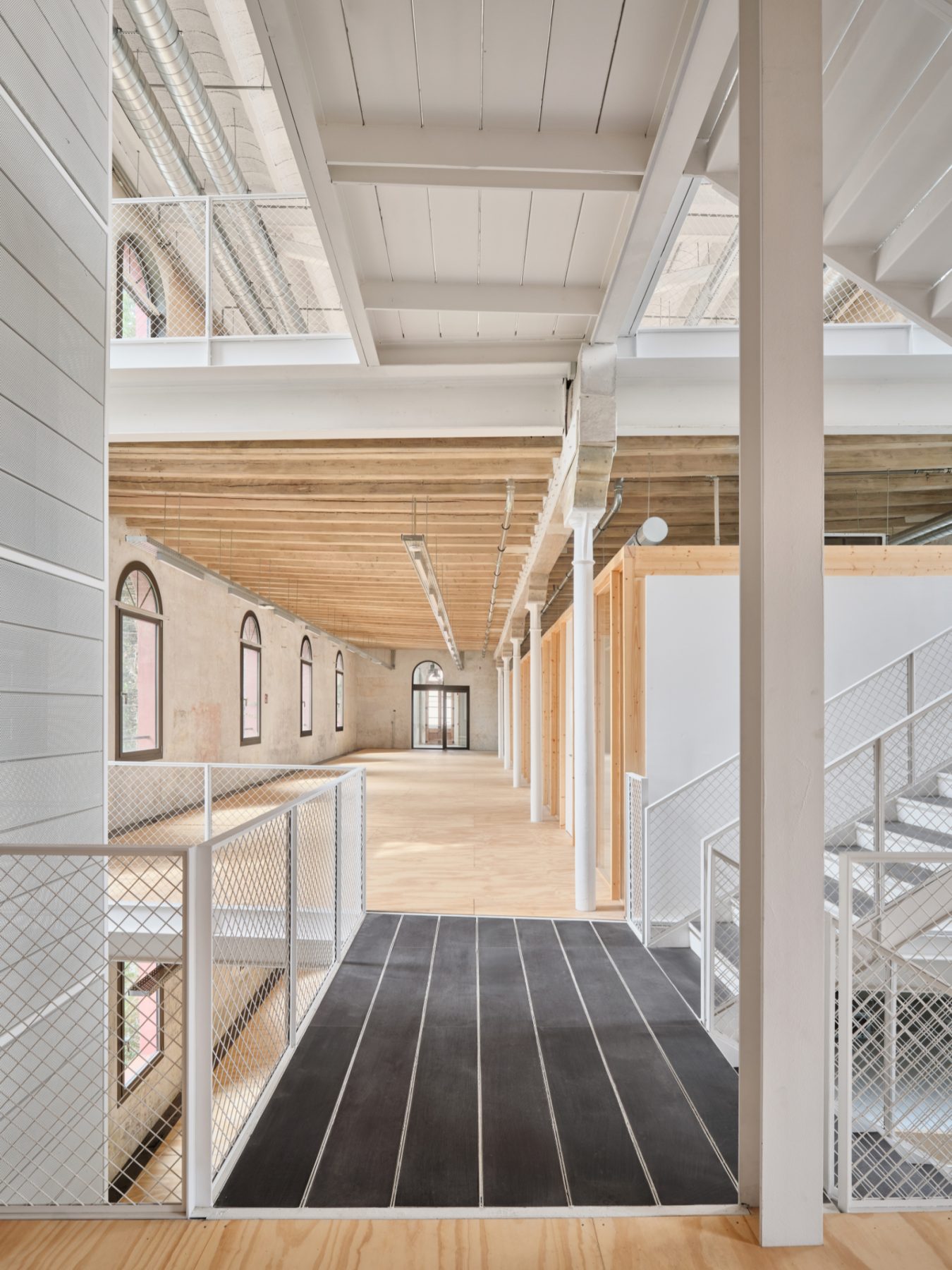
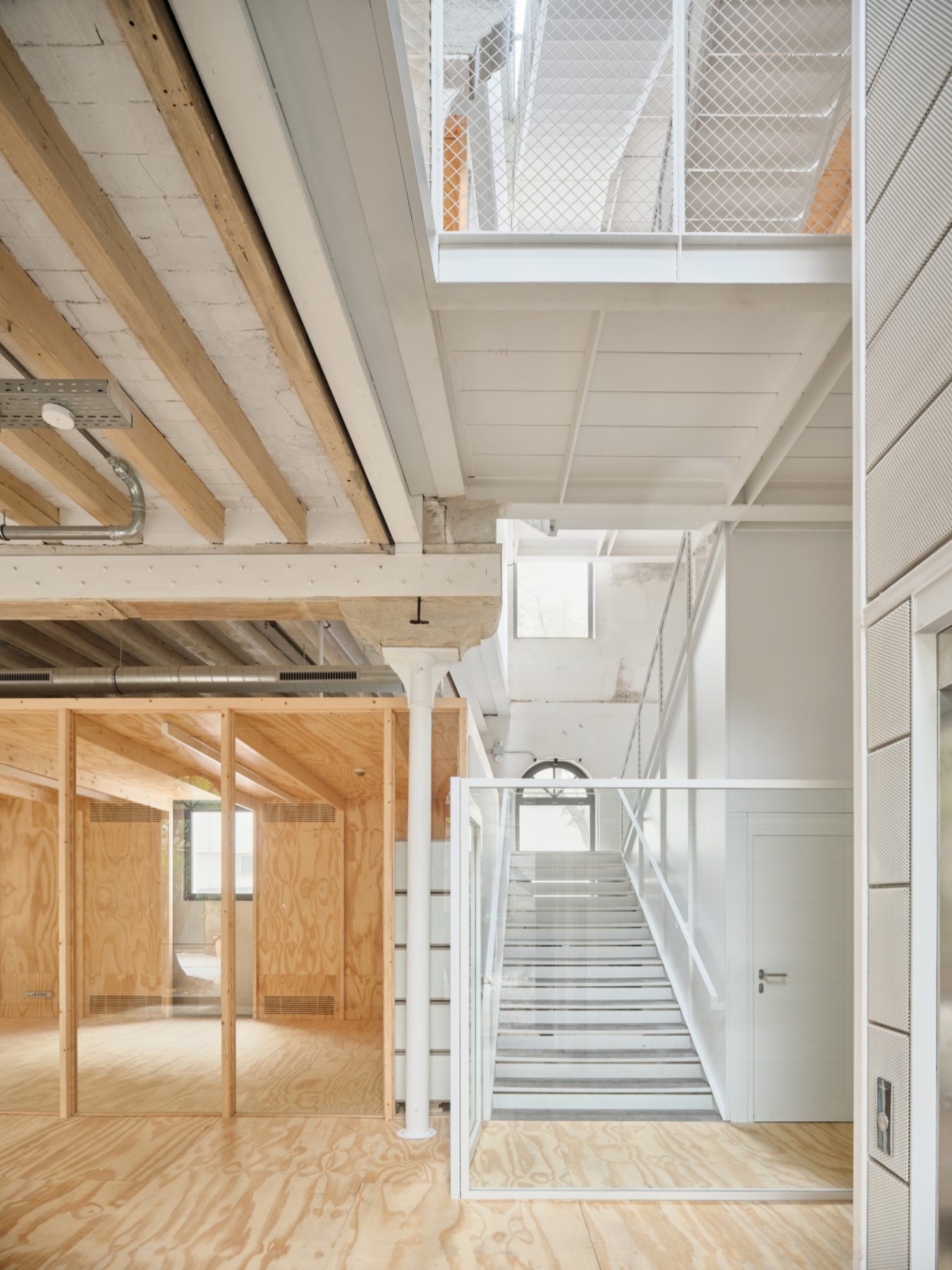
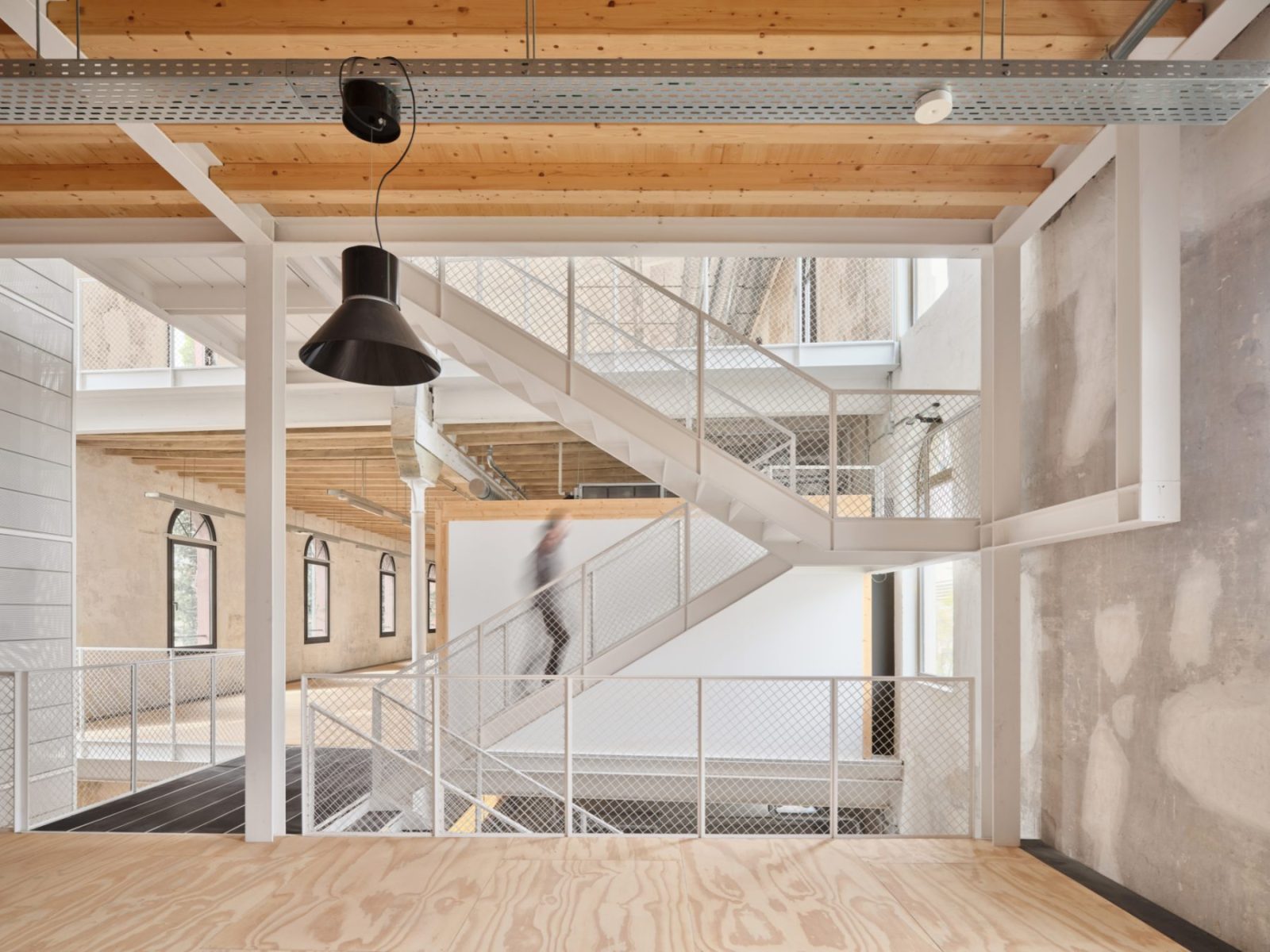
Previously underutilised areas are completed through the insertion of a new steel and laminated timber framework inspired by the logic of industrial mezzanines and integrated coherently within the historic fabric.
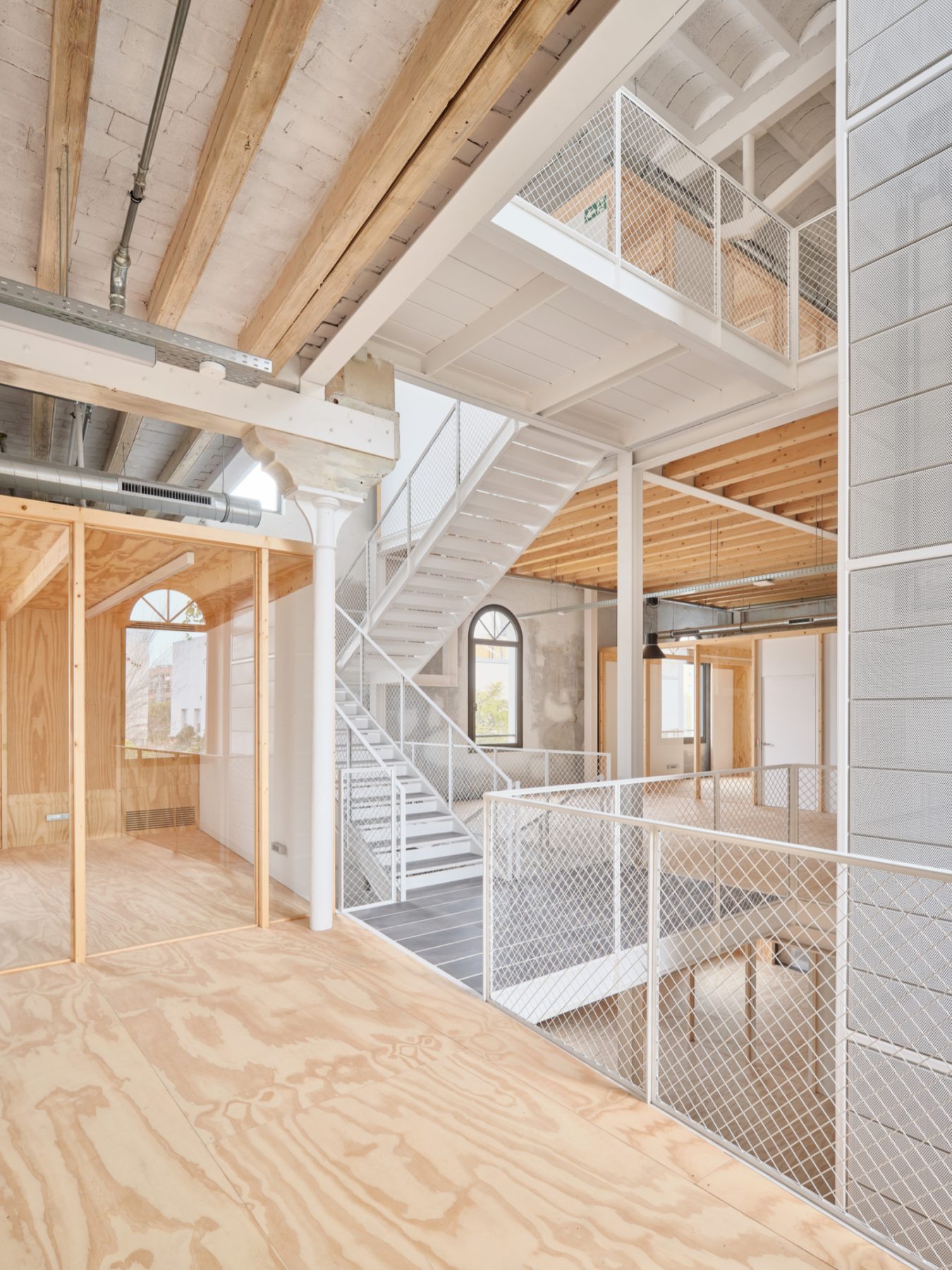
The void created between old and new accommodates an open staircase that becomes a key spatial connector.
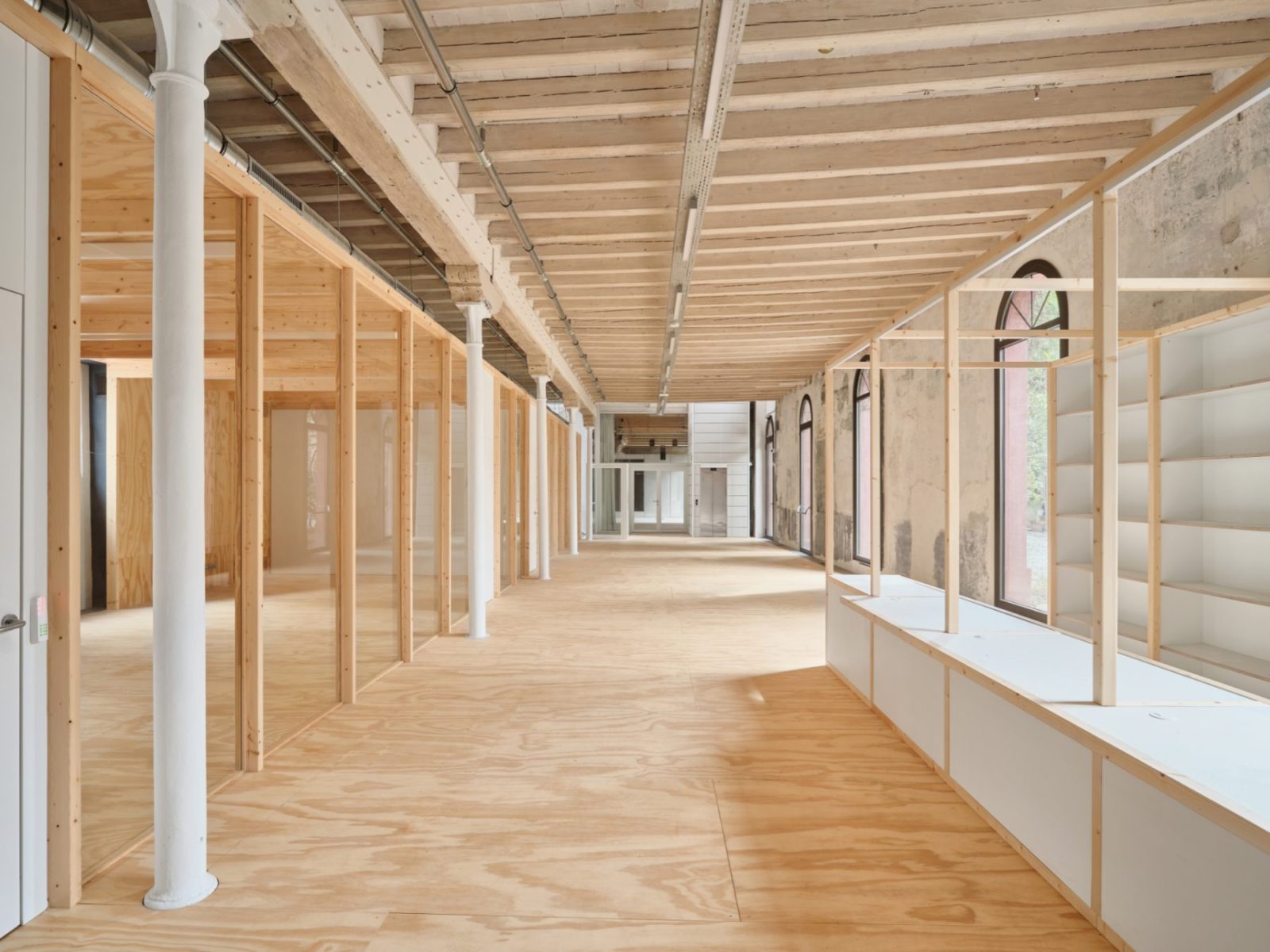
A new architectural layer, described as a “carpet”, is superimposed onto the existing structure.
This intervention resolves the programme through a single, legible gesture while preserving the spatial perception of the warehouse. Folding and adapting to different requirements, this element defines both enclosed and open areas, regularises existing geometrical irregularities, and discreetly incorporates technical services.
Functional criteria
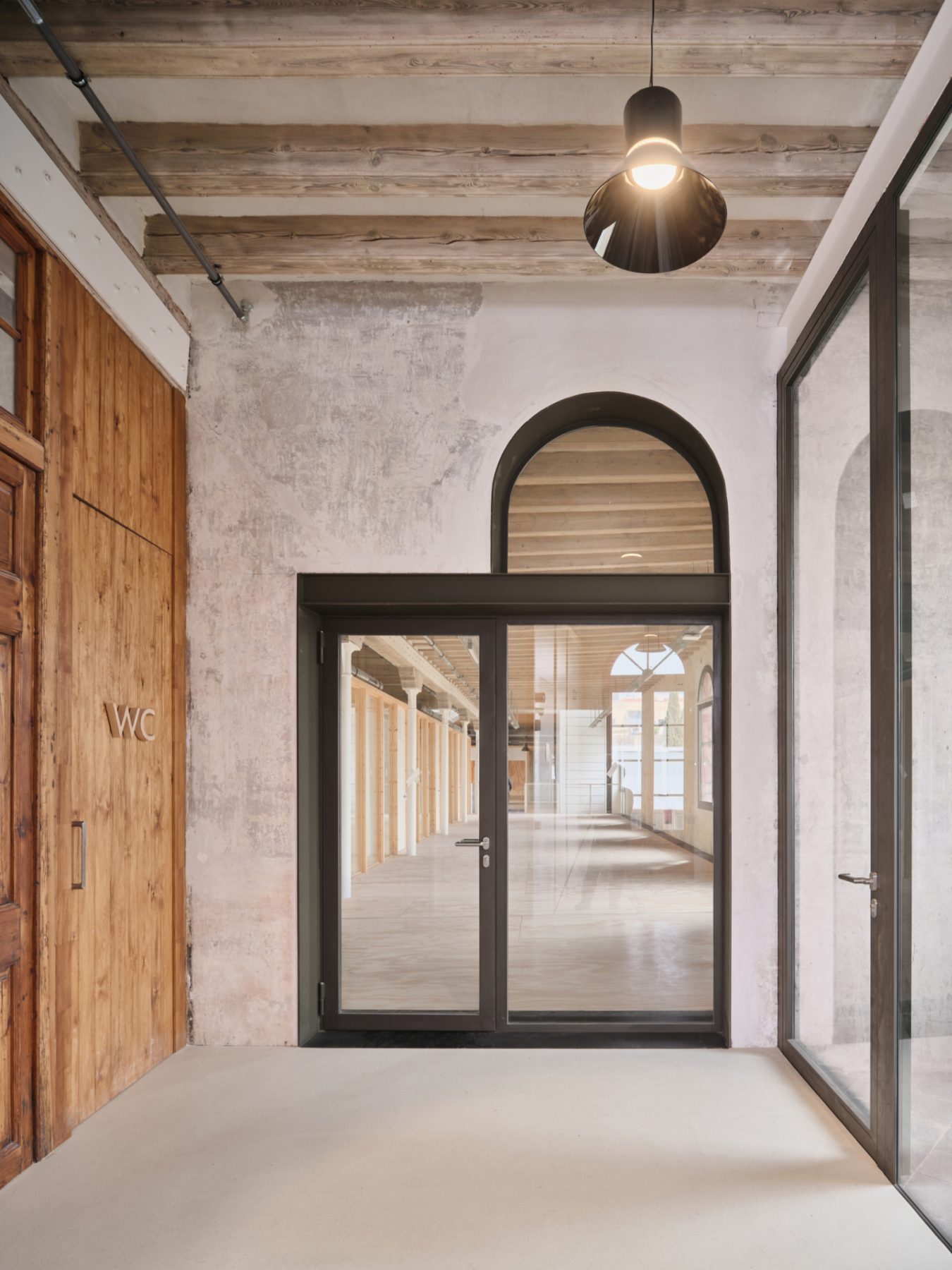
The ground floor is designed to function independently from the upper levels while maintaining direct connections to the lobby and inner courtyard. Workspaces are organised according to a clear spatial hierarchy. Enclosed functions such as offices and meeting rooms are positioned along the street frontage, while open, collaborative environments are oriented towards the courtyard.
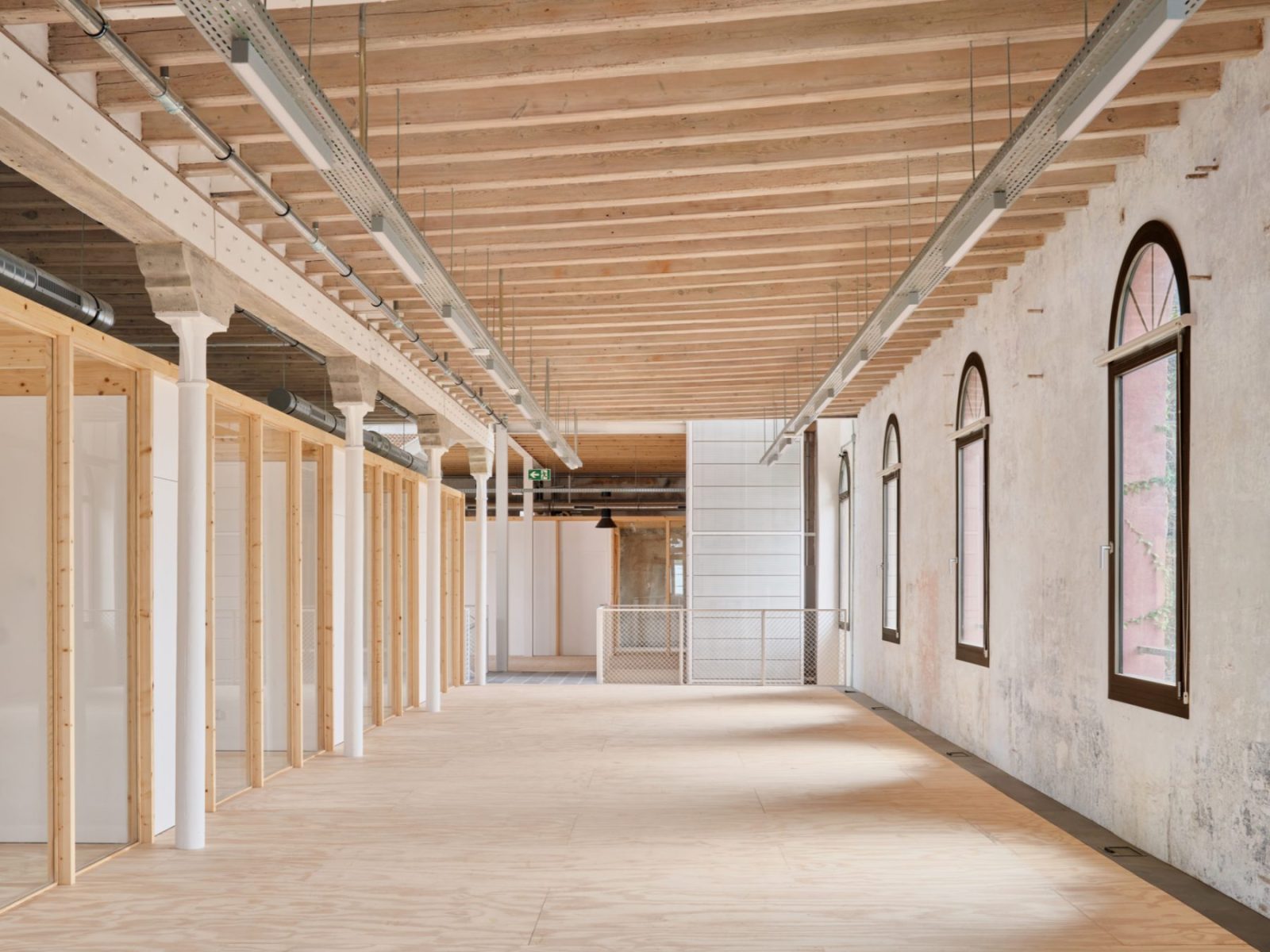
The enclosed portion of the “carpet” operates as a flexible modular system based on a grid structure, allowing spaces to expand or contract according to evolving operational needs.
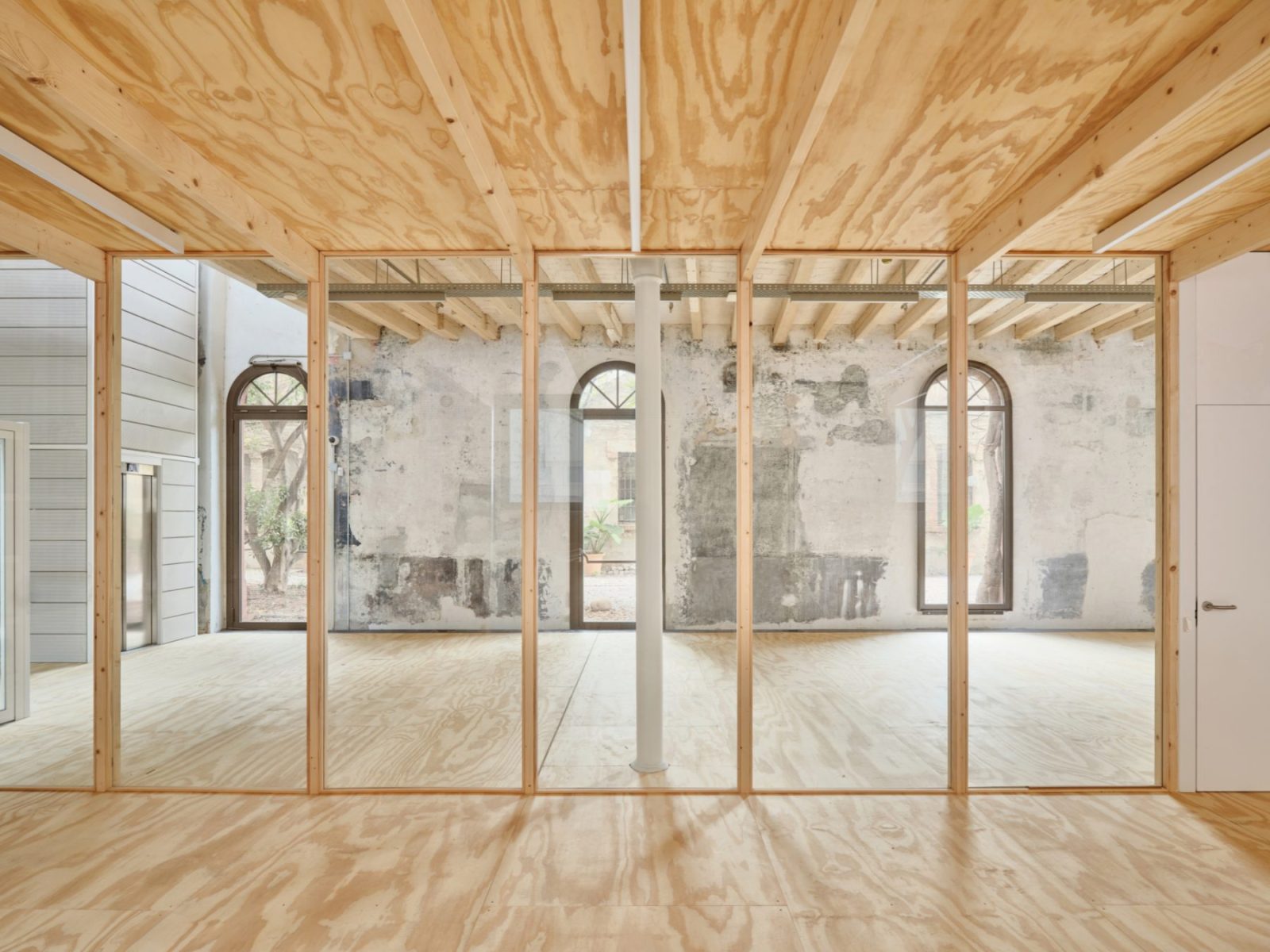
Formal criteria
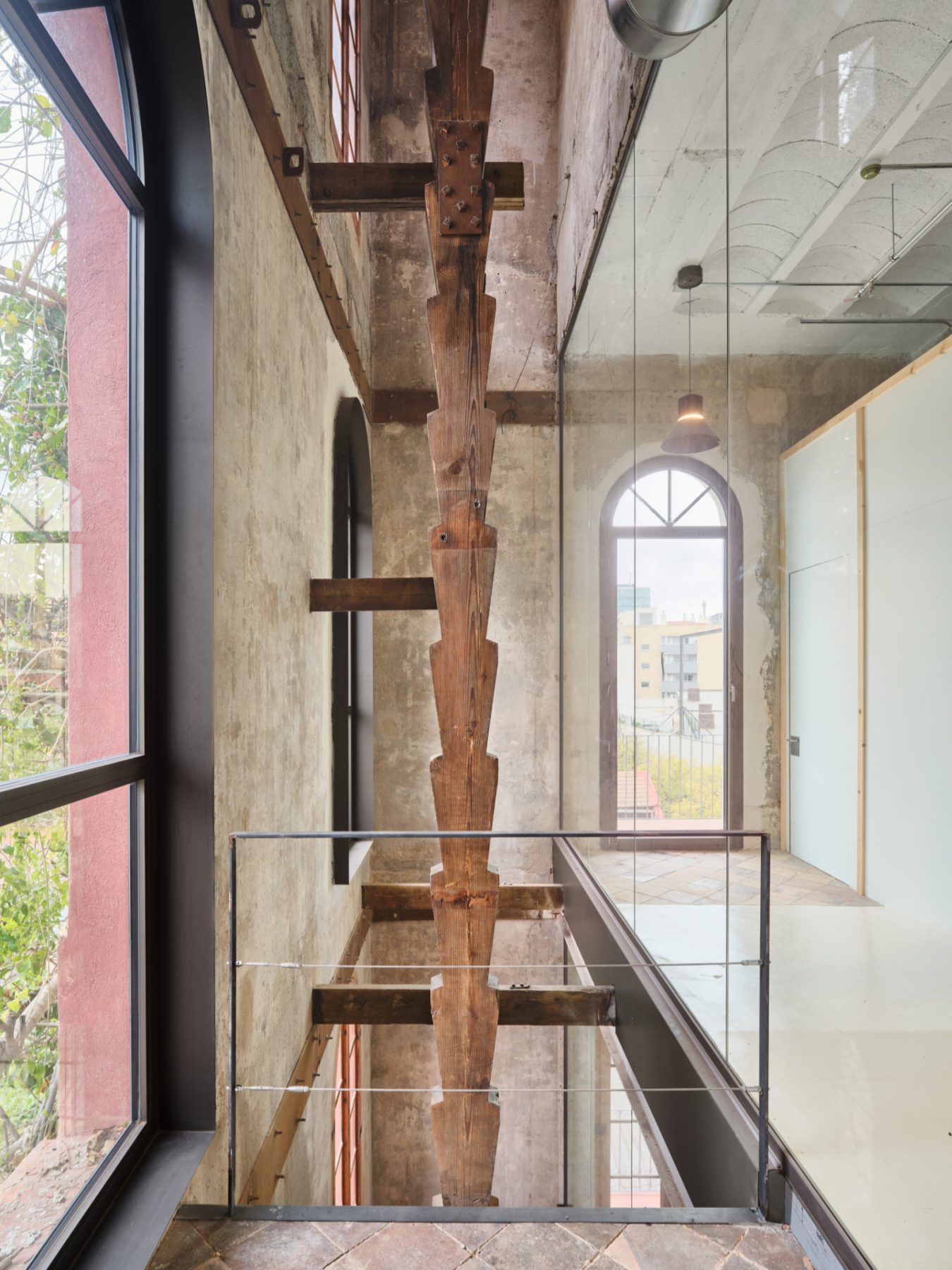
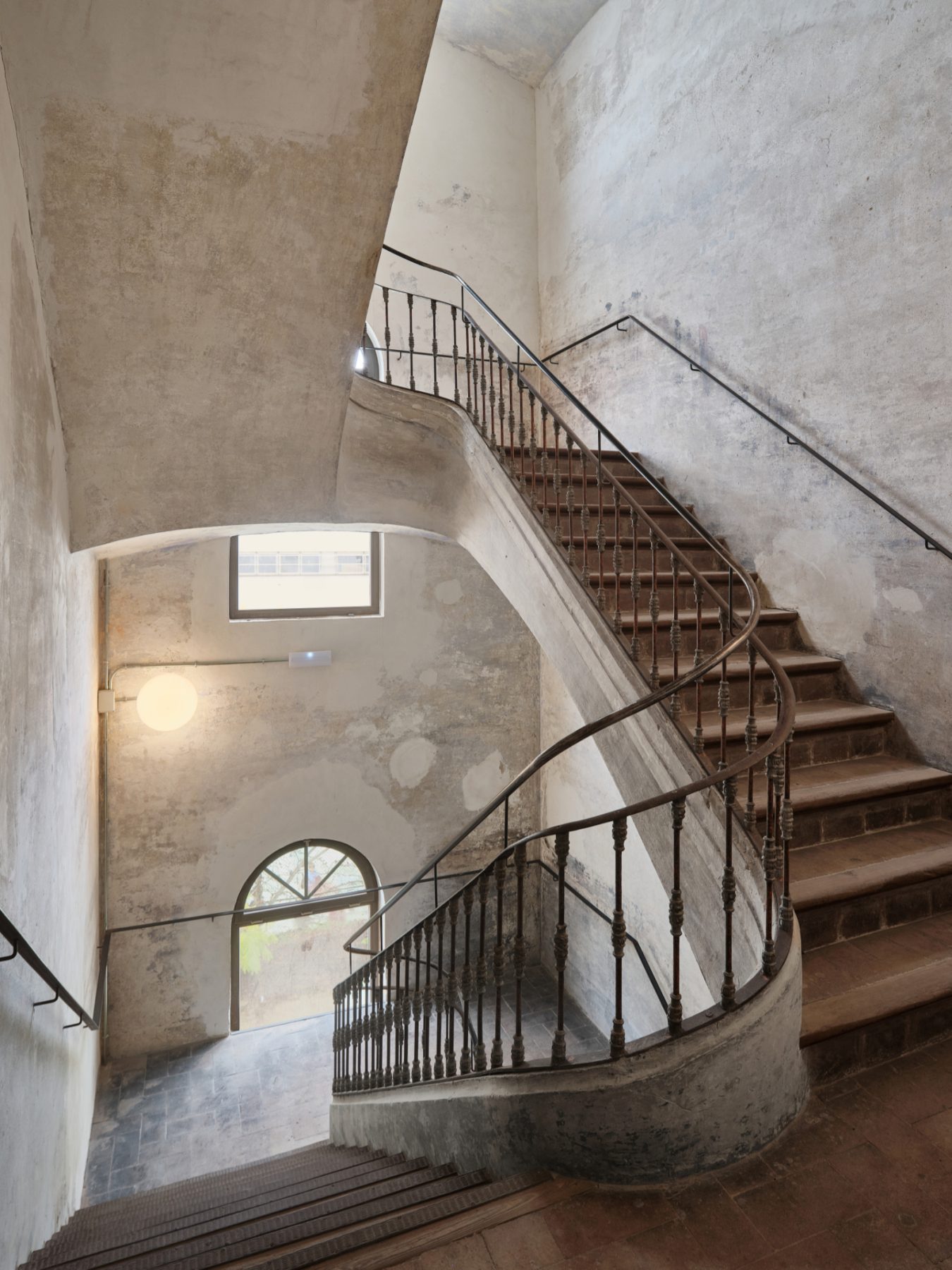
The intervention preserves and restores key historic elements, including plastered walls, structural beams, ceramic infill slabs, the original staircase, and the freight lift. Existing ceramic flooring is carefully repaired where required. In contrast, the new architecture adopts a dry-construction approach based on modular timber components, establishing a dialogue between the lightweight character of the new insertions and the robust material presence of the industrial shell.
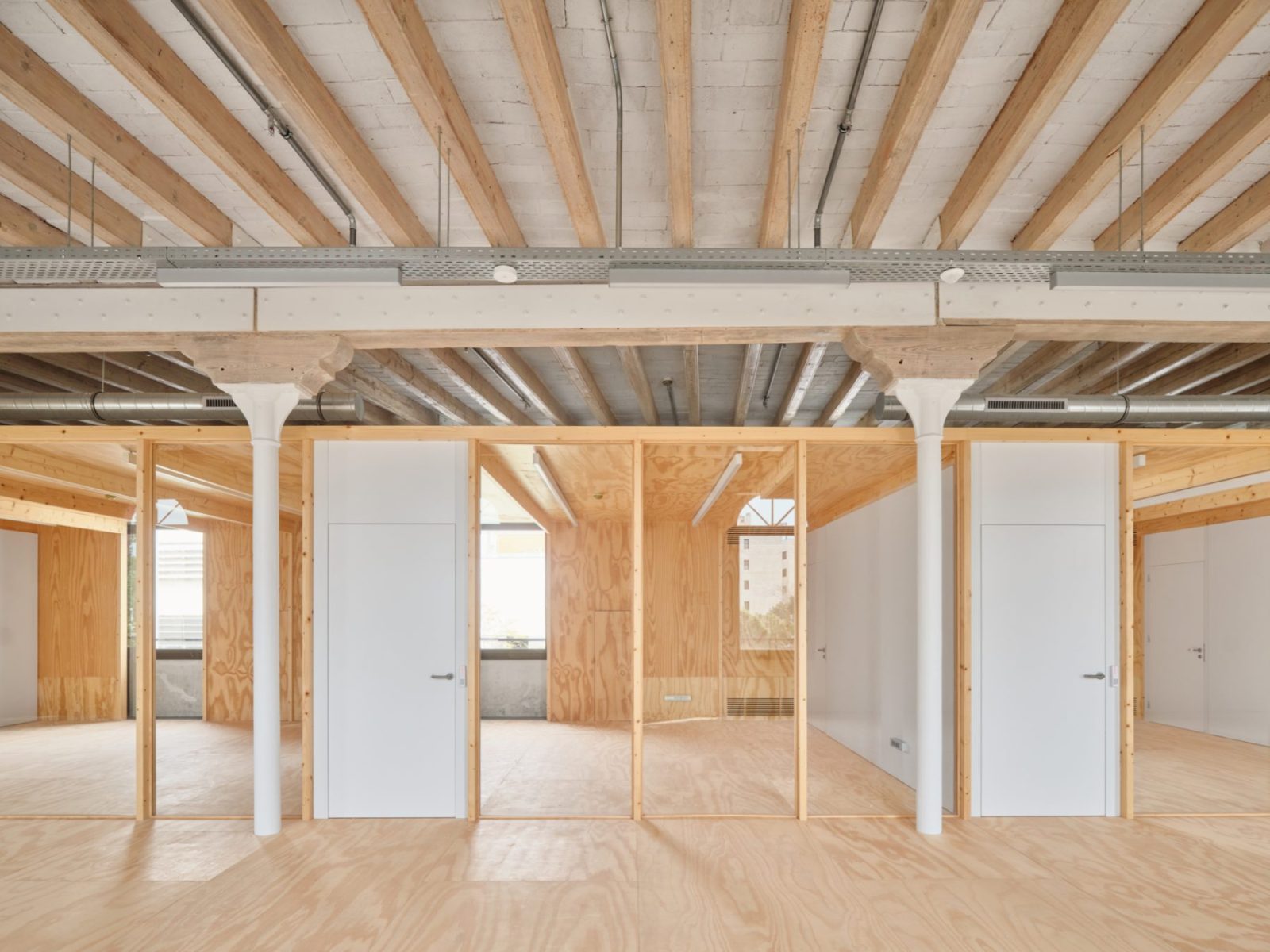
Designed for adaptability, the system ensures long-term flexibility and future transformation.
Energy strategy
Environmental performance is enhanced through a series of passive measures, including external insulation, a ventilated floating roof, increased wall thermal inertia, and the installation of new steel-framed windows.
The existing green façade is retained and revalued as both a heritage feature and a climatic device.
It contributes significantly to the building’s environmental performance. Reflecting the effectiveness of its sustainability strategy, the project was ranked 21st among 500 proposals in Spain’s Next Generation programme.
Facts & Credits
Project title: Refurbishment of a 19th century industrial warehouse into a 21st century business incubator
Project location: Barcelona, Spain
Architecture: Taller 9s Arquitectes –Oriol Cusidó i Garí, Irene Marzo Llovet-
Collaborator architect: Maria Auquer
Collaborators technical architects: Eradio Larosa & Carla Alexandre, Joan Olona
Structural design: Manel Fernàndez
Facilities engineer: Xavier Abella
Date of completion: 2025
Photography: Adrià Goula Sardà