Architecture for Education explores the spaces where knowledge takes form. From visionary schools to research-driven universities, this series examines how design shapes learning, interaction, and intellectual growth. Through exemplary projects worldwide, we highlight architecture that inspires curiosity, fosters inclusivity, and redefines the future of educational environments with clarity, innovation, and cultural depth.
In Porto-Vecchio, southern Corsica, France the project by Orma Architettura redefines the kindergarten as a civic threshold within a fragmented urban fabric. Rather than an isolated facility, it fuses early education with community life through interior streets, courtyards, and shared public programmes. The steep Mediterranean site structures access and spatial hierarchy, embedding the architecture into the terrain. Constructed with local timber and recycled aggregates, the ensemble combines climatic intelligence with material circularity, framing learning as an extension of landscape, climate, and collective memory.
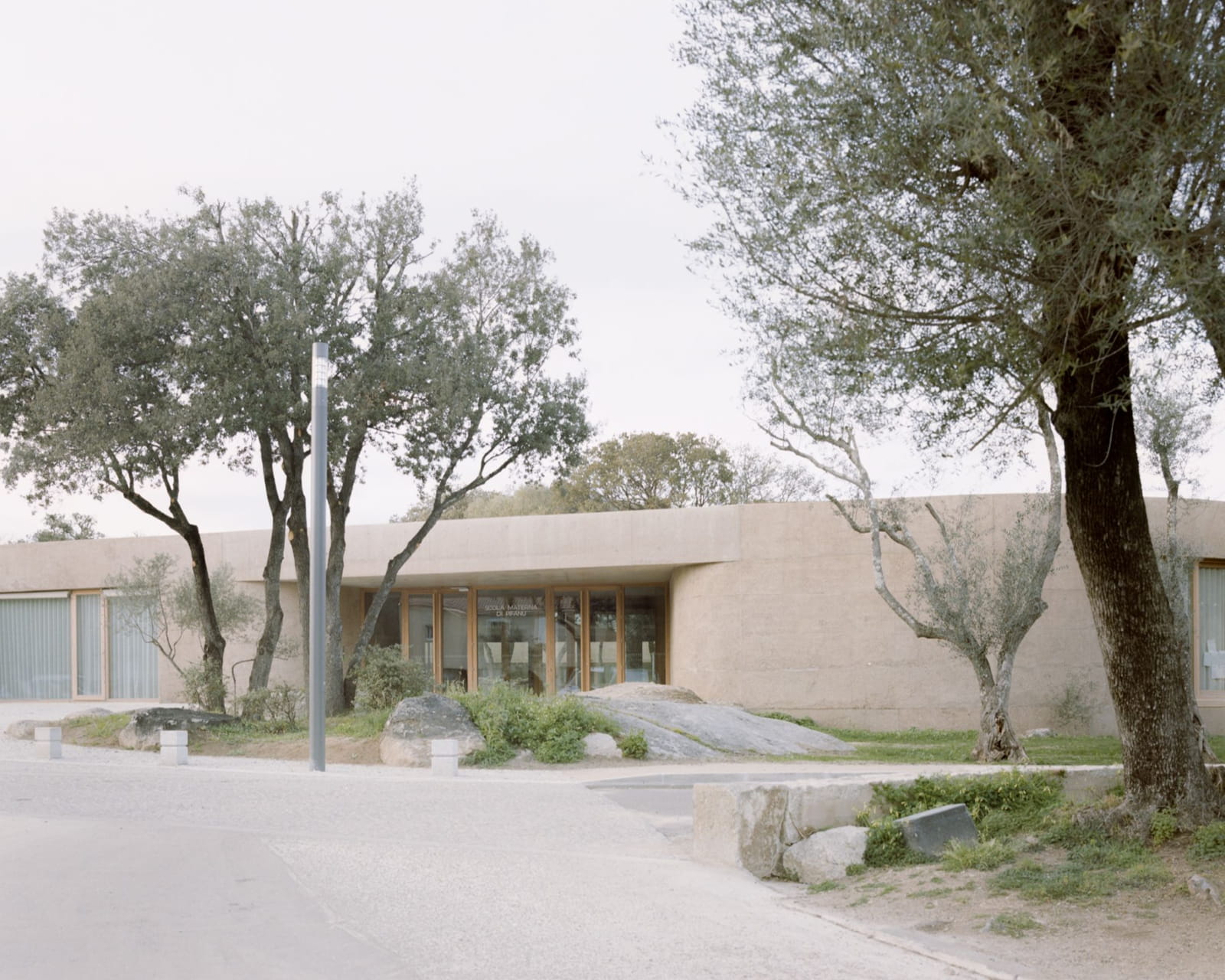
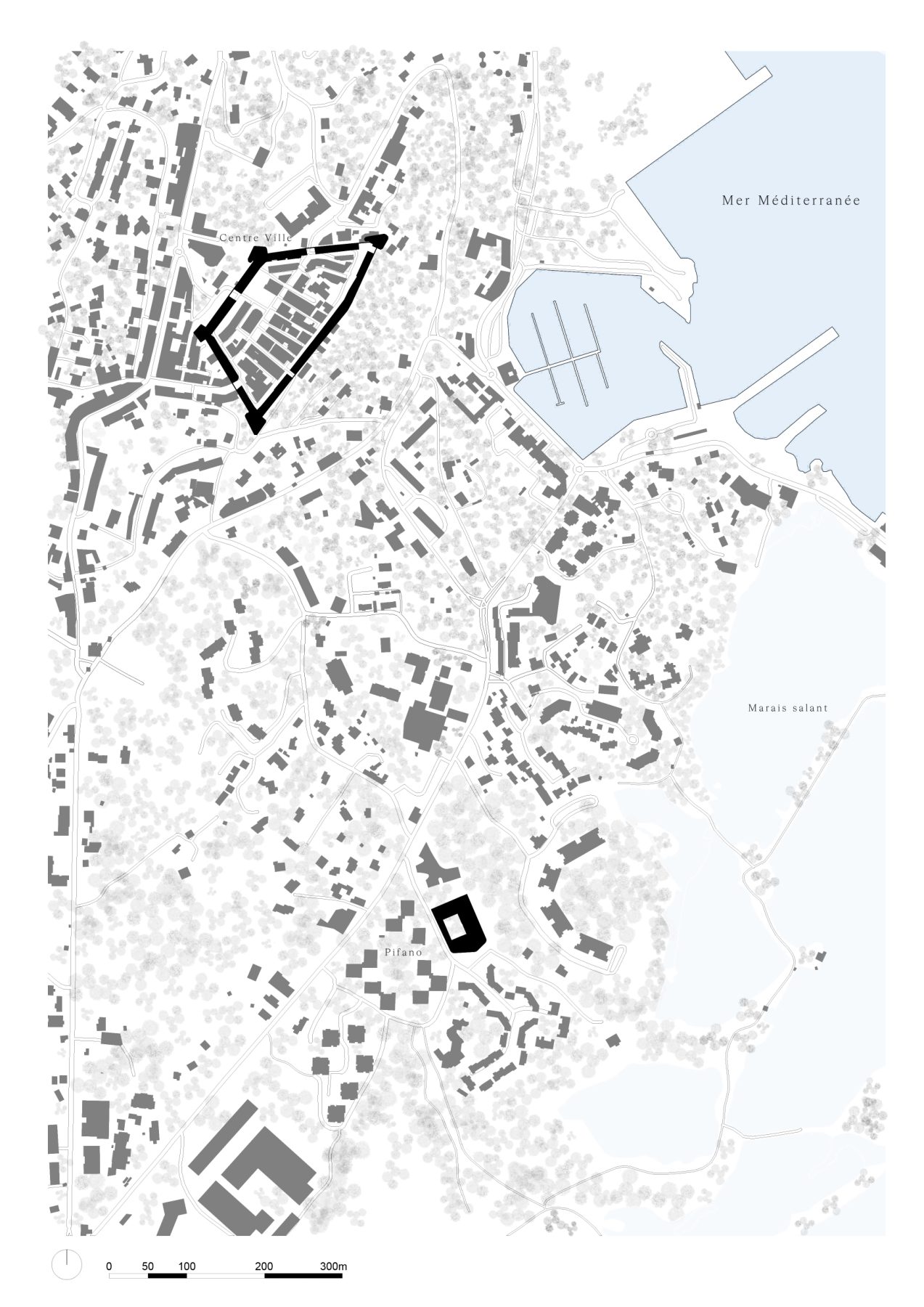
Set in Porto-Vecchio, in southern Corsica, just below the historic bastions of the Pifano district, the École de Pifano is conceived not as an isolated educational facility but as the emerging civic nucleus of a neighborhood in transformation. While primarily accommodating early childhood education, the project deliberately extends beyond its pedagogical role, incorporating shared spaces that invite broader community use and encourage everyday encounters.
In this way, the school operates as both an educational environment and a social condenser.
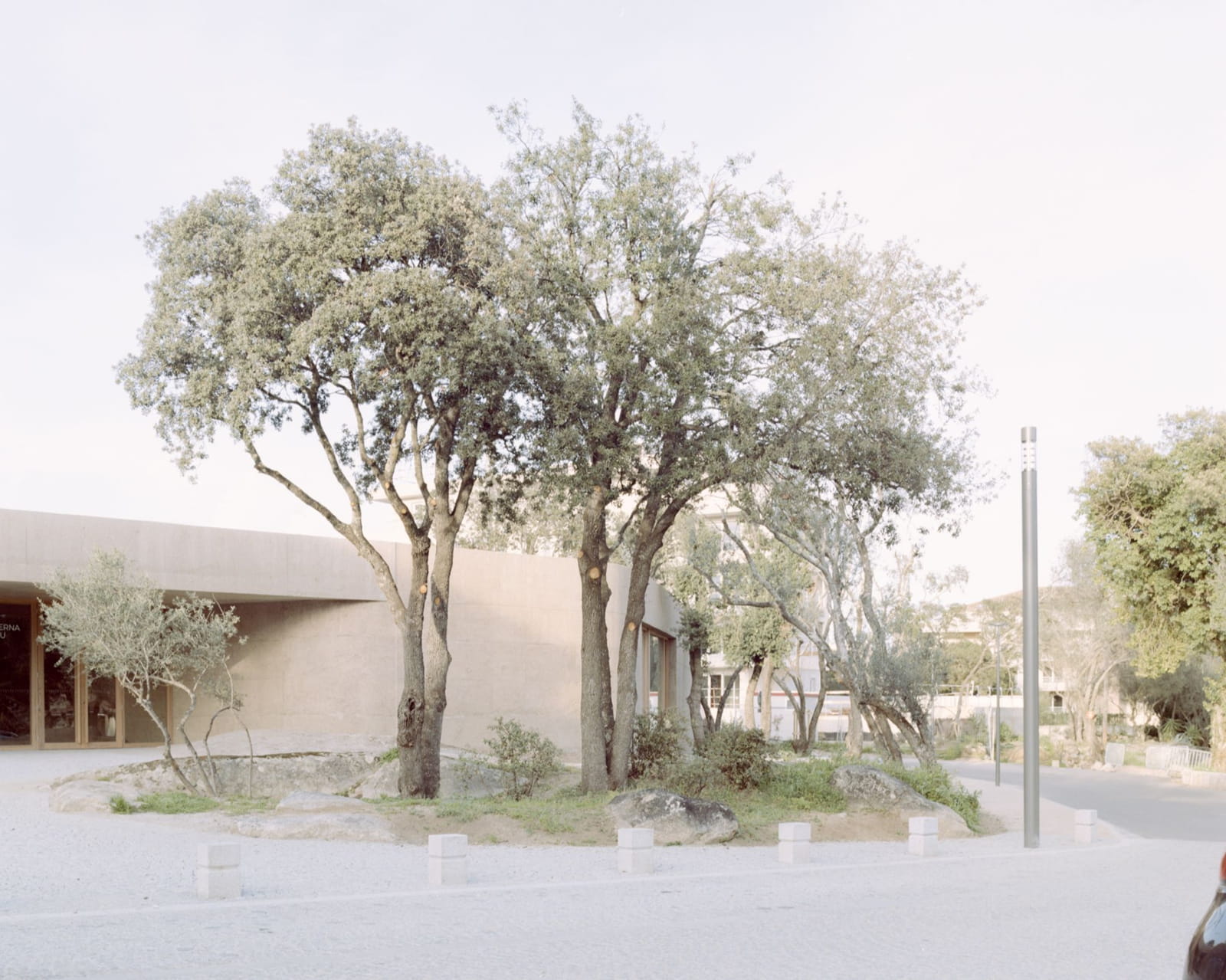
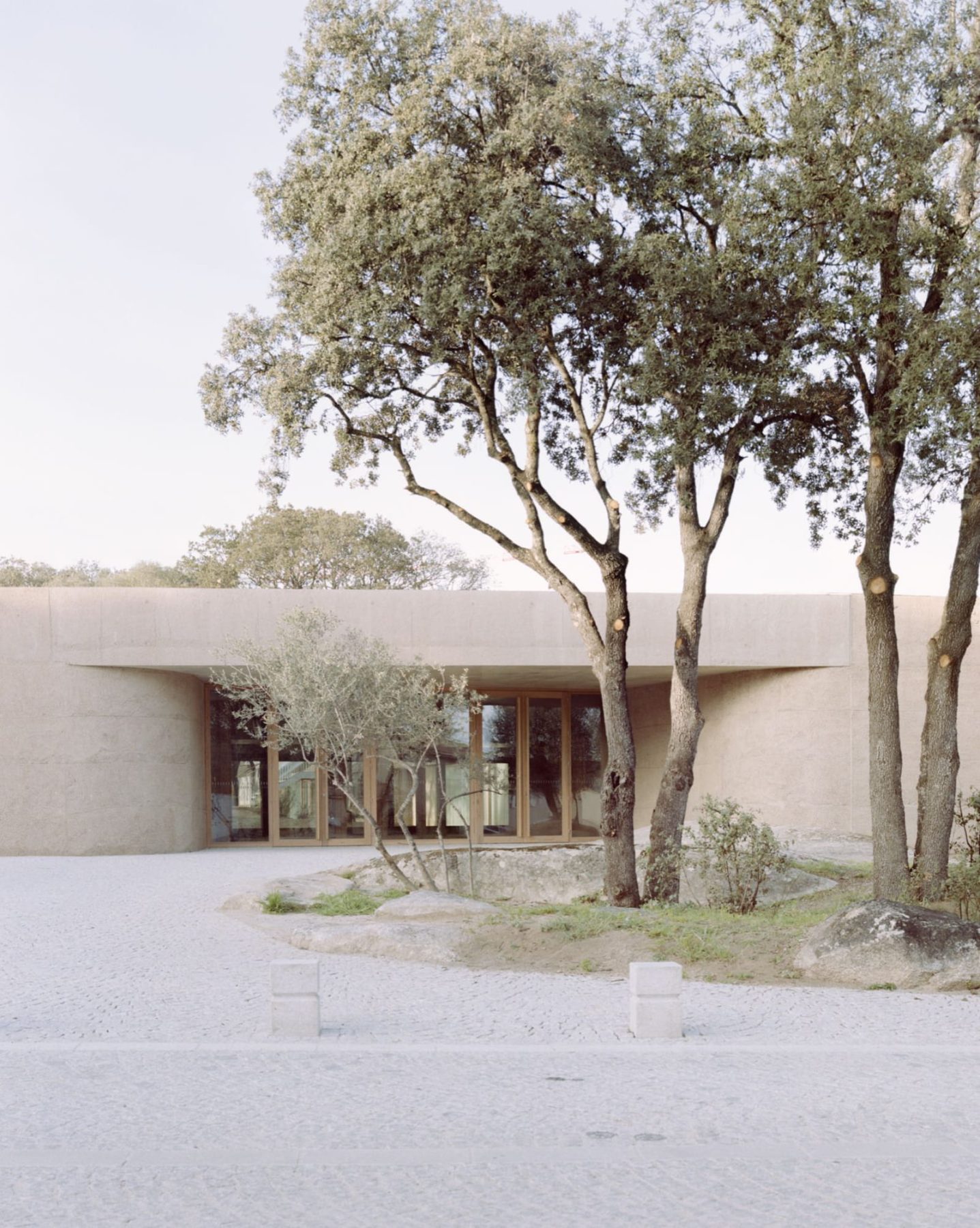
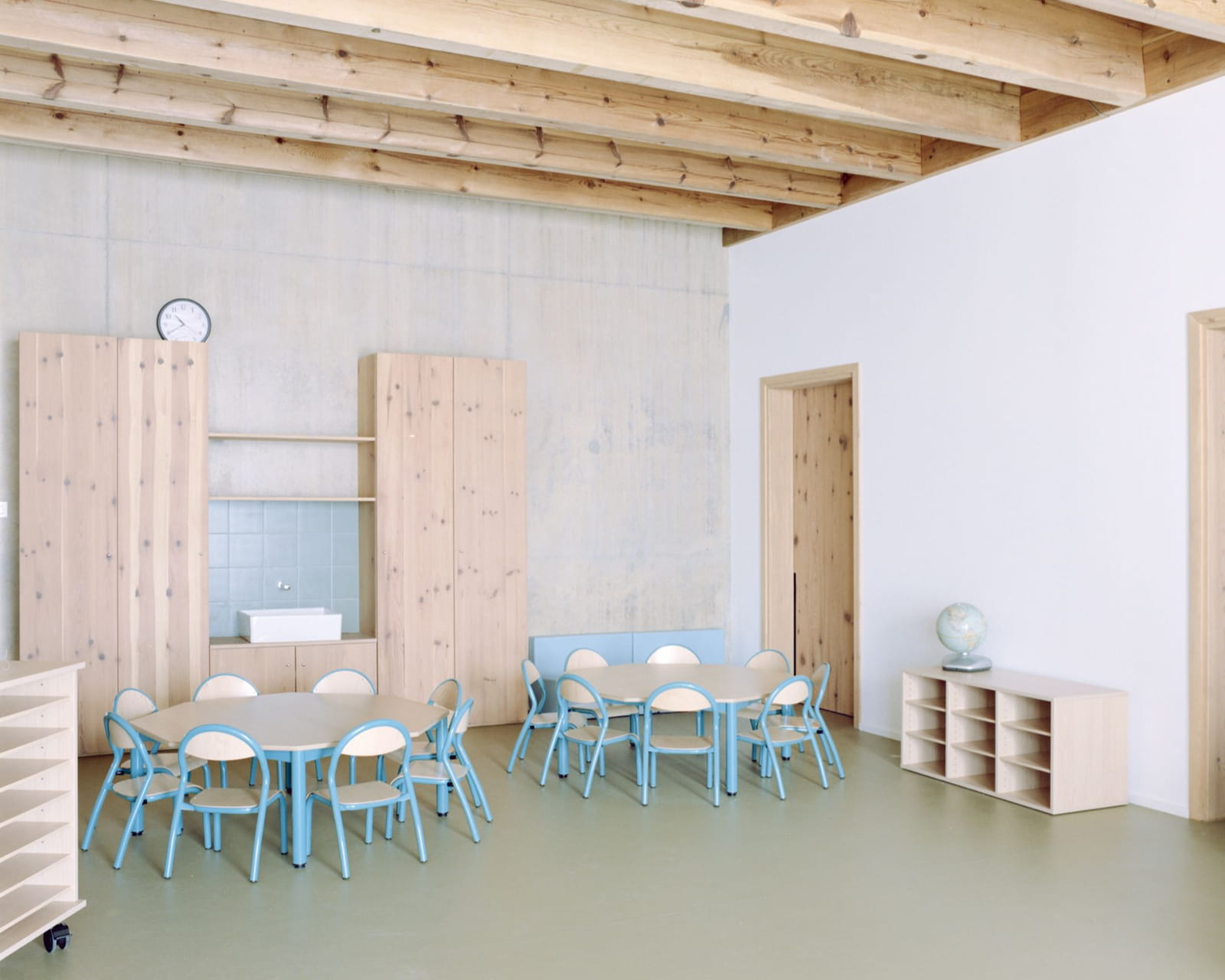
The architectural language is calibrated to a child’s scale.
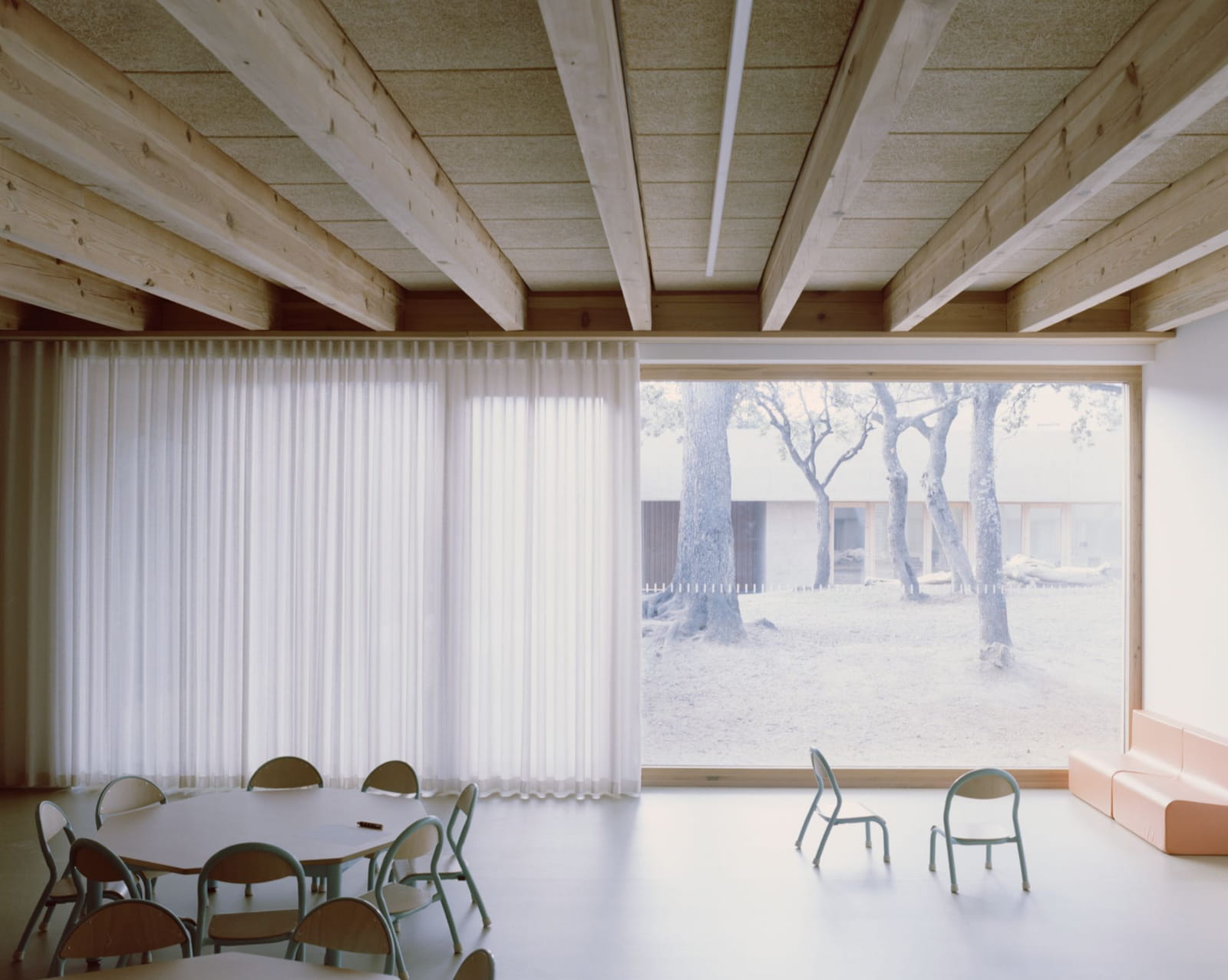
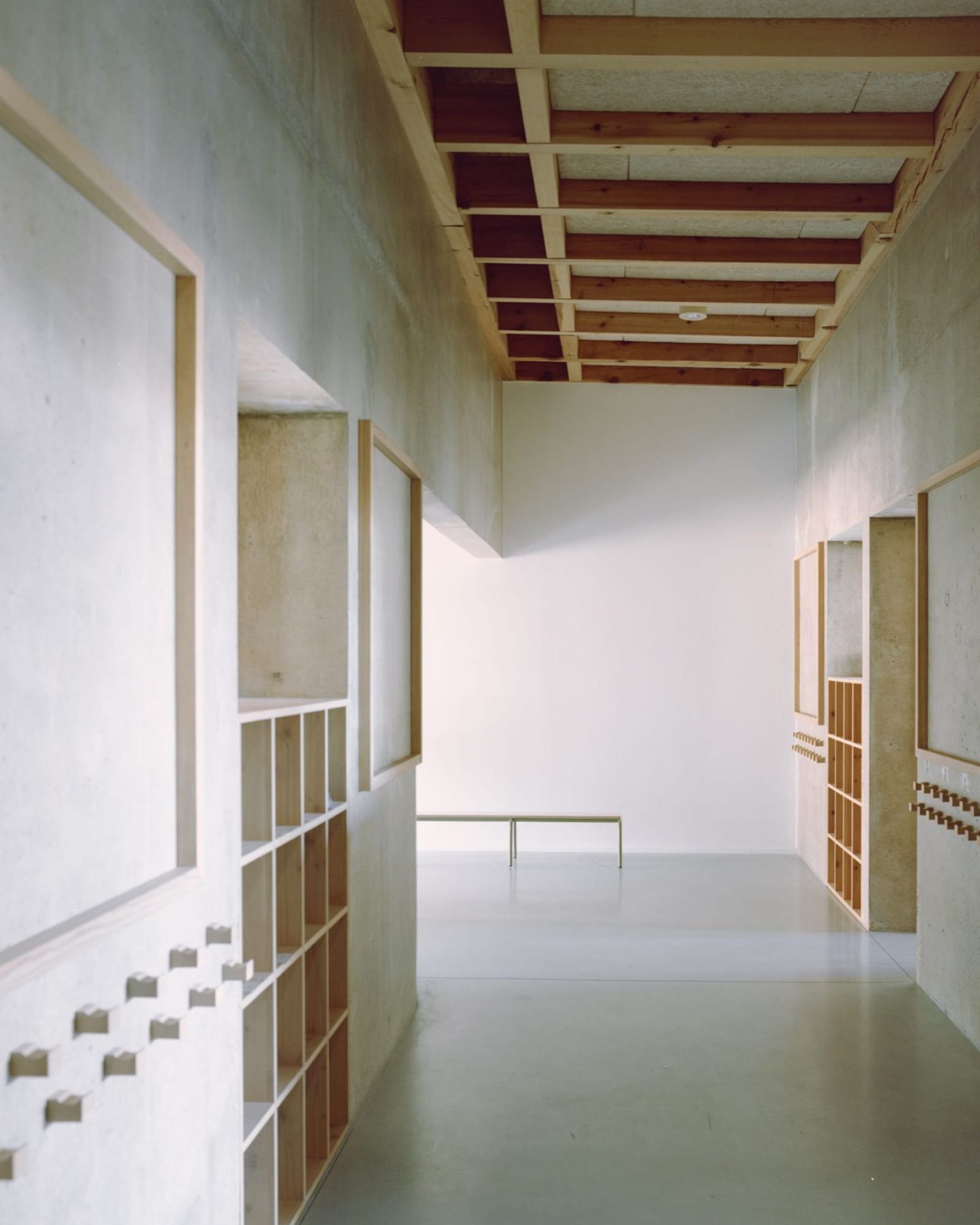
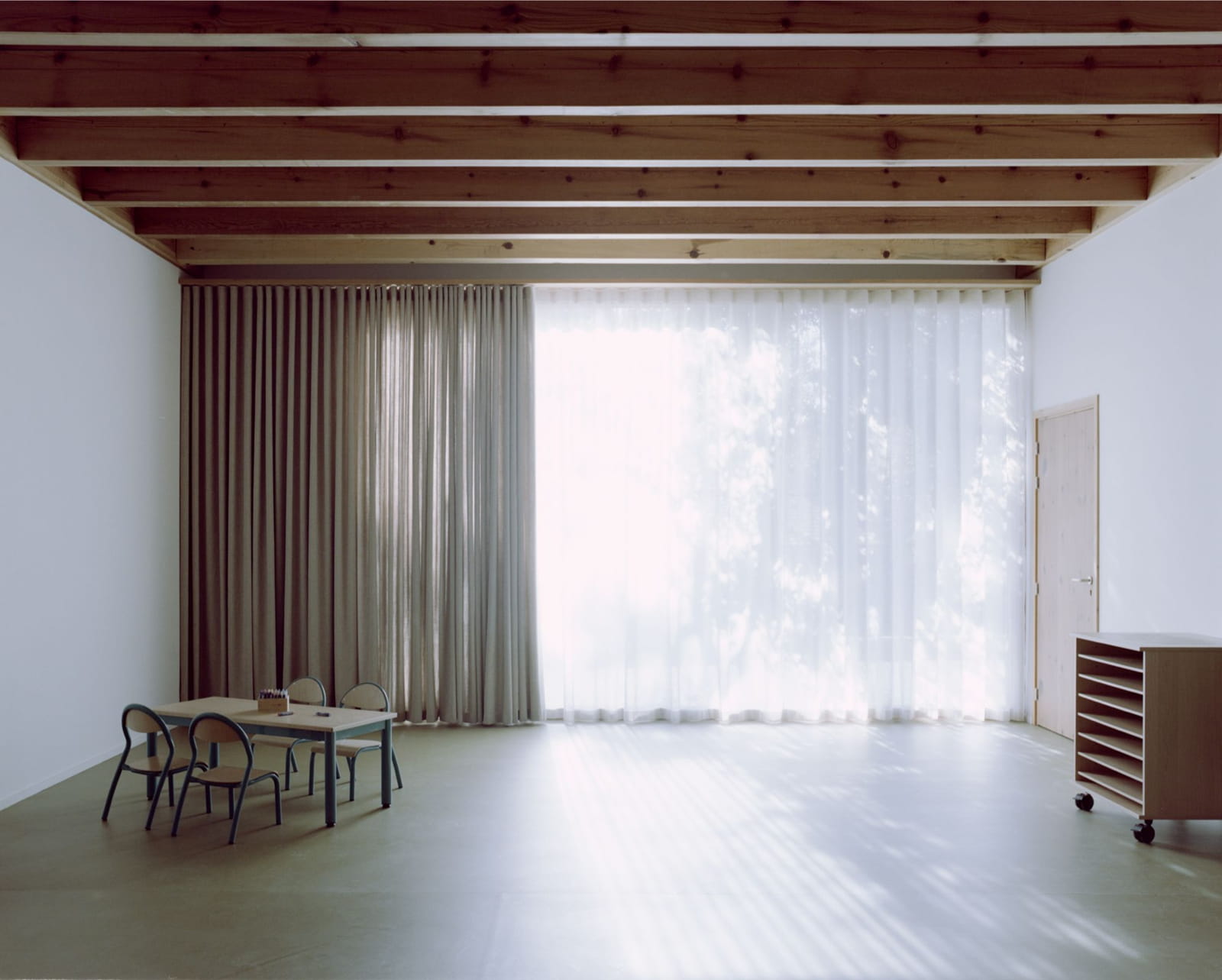
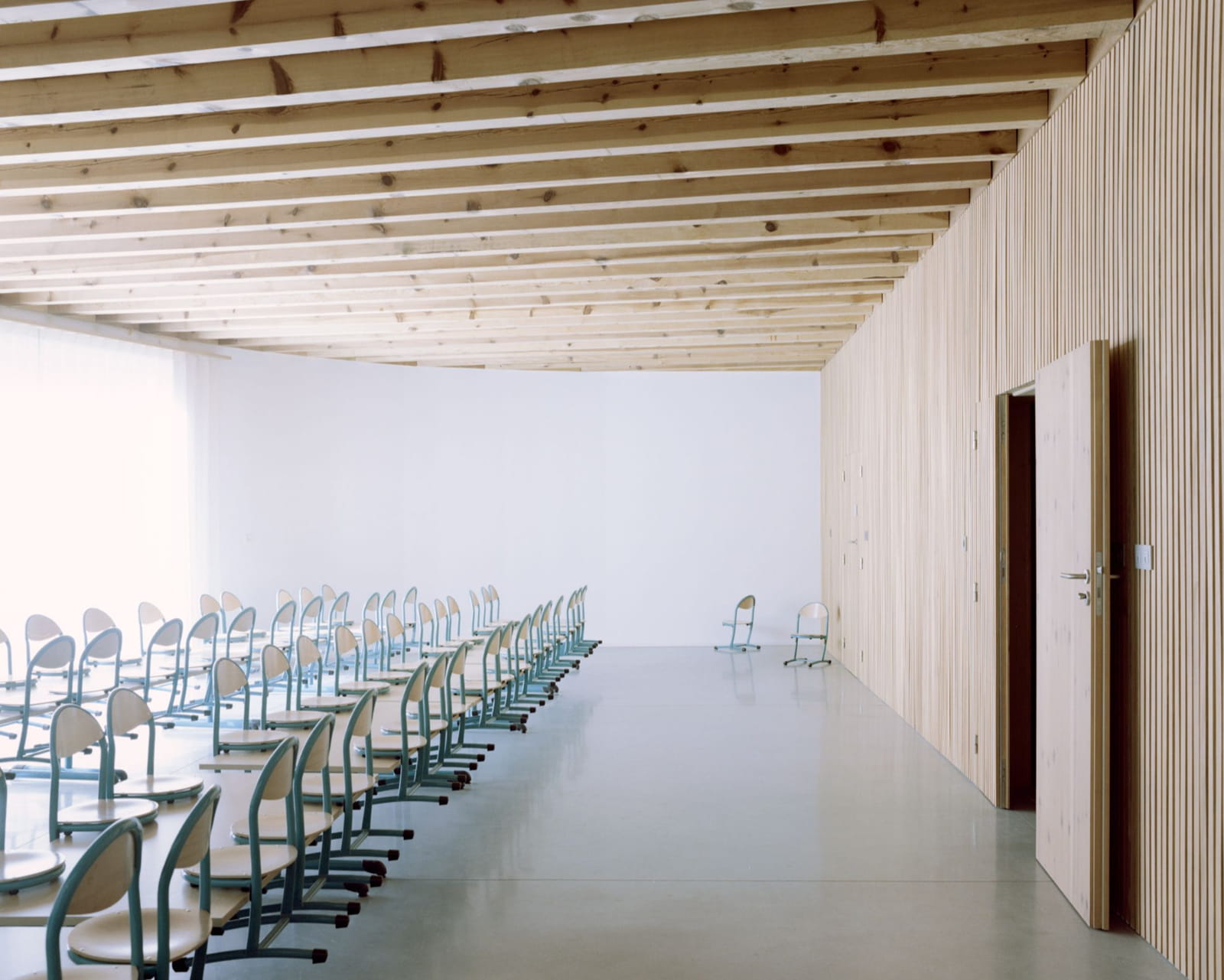
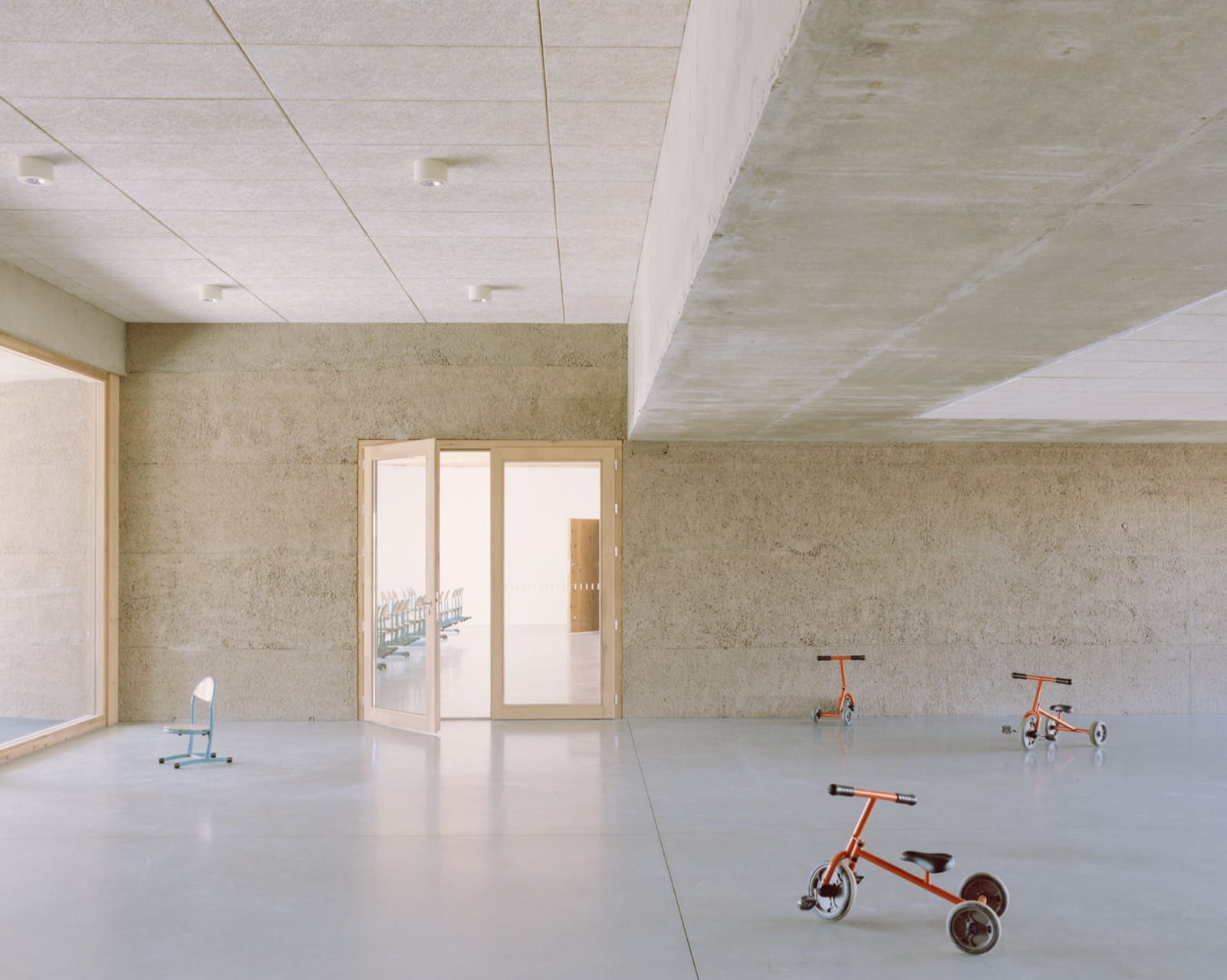
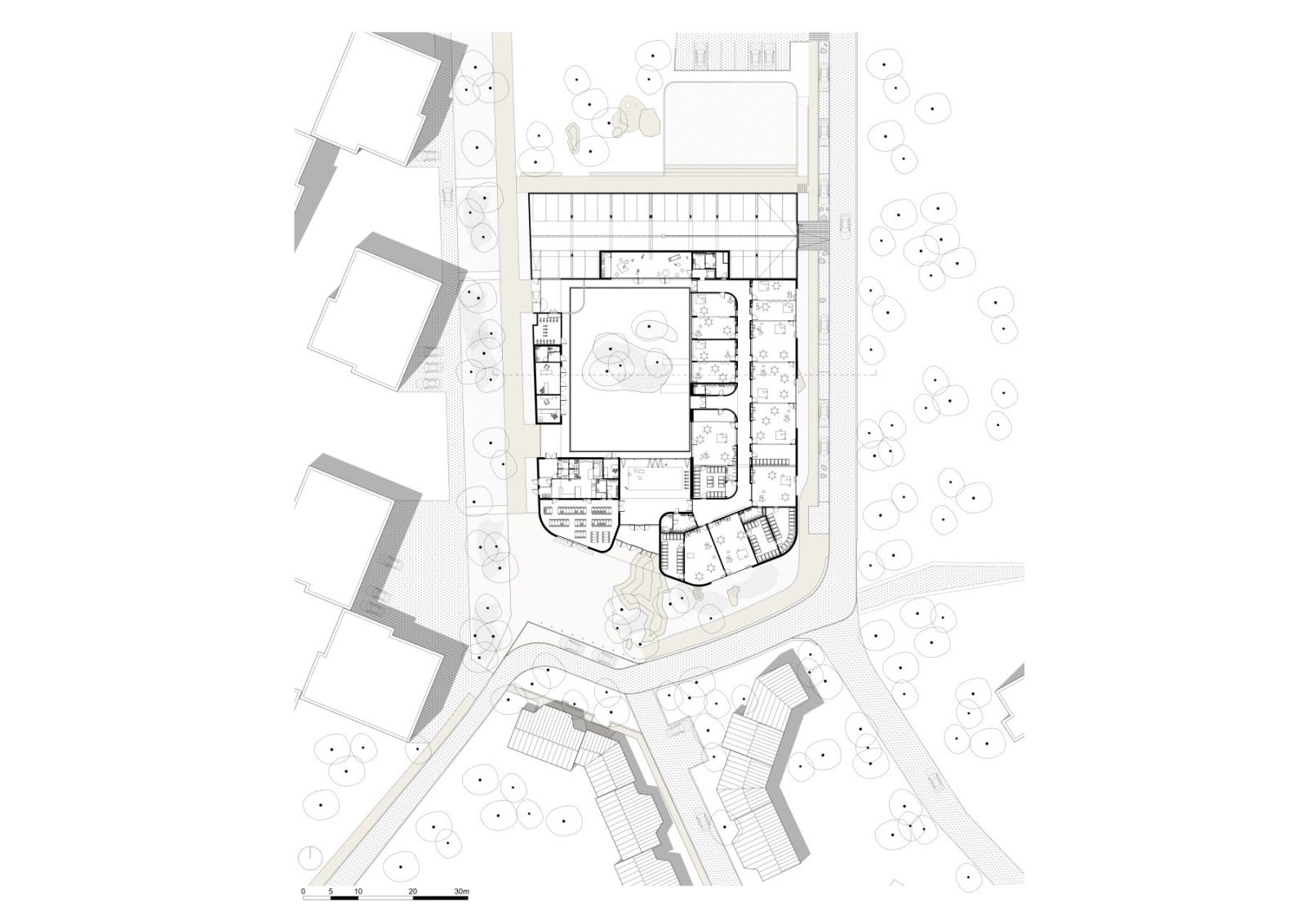
Classrooms are generous yet protective, offering a sense of enclosure without confinement. Covered playgrounds and activity areas open outward, fostering continuity between interior and exterior. Circulation is conceived as a series of “interior streets,” supporting children’s gradual acquisition of autonomy through spatial clarity and intuitive navigation.
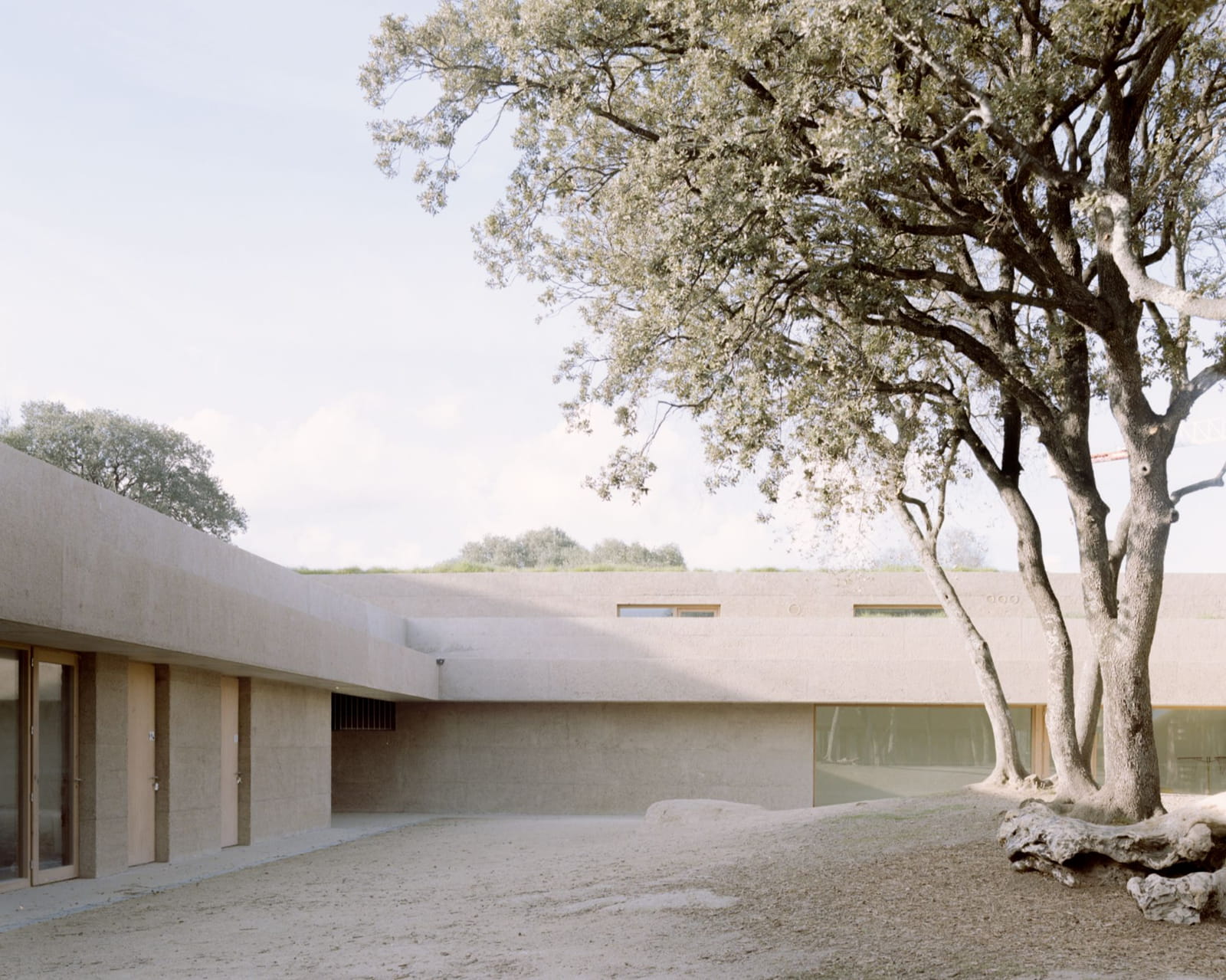
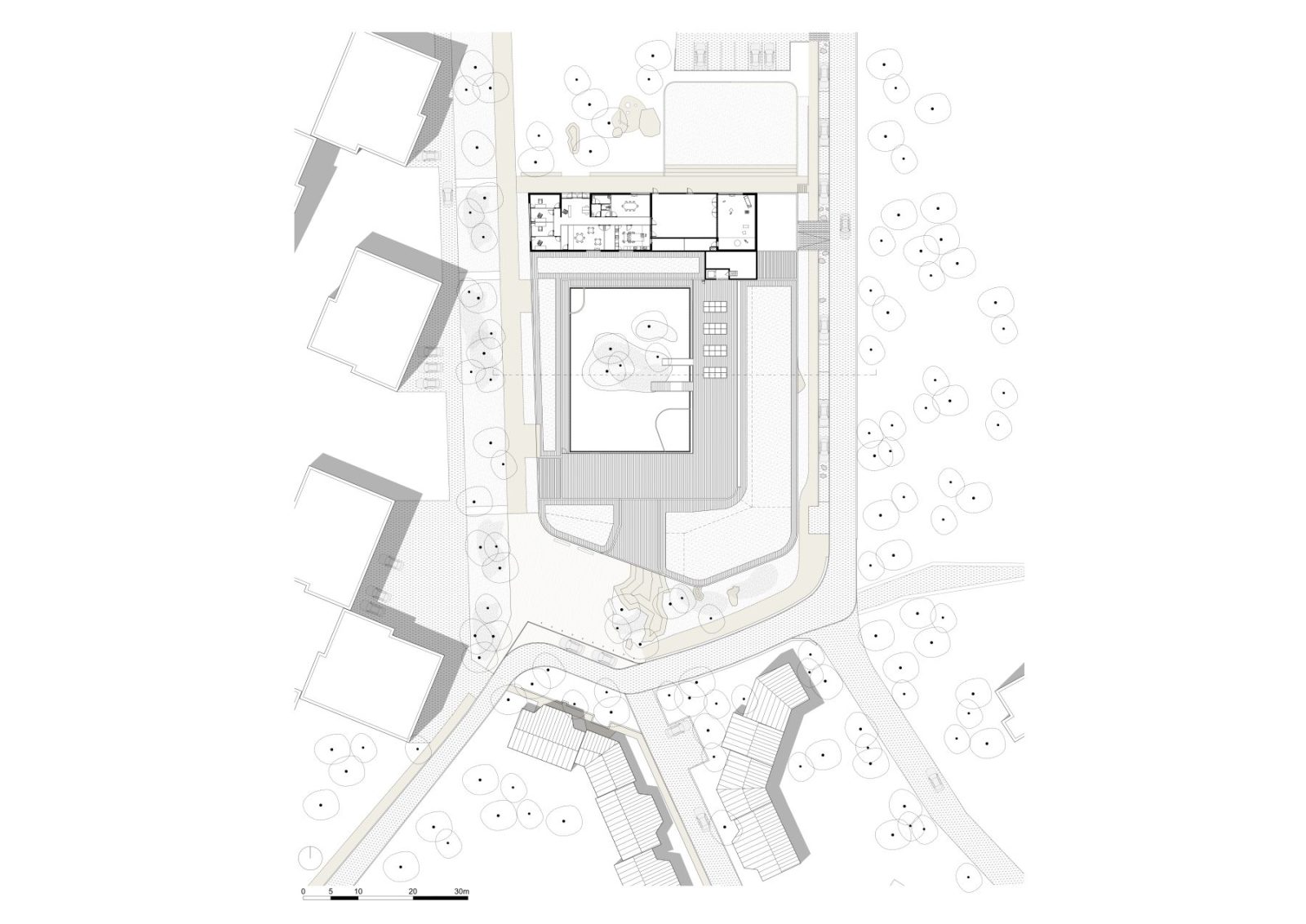
Above the school, a community center expands the programmatic reach, hosting workshops, a shared kitchen, dance studios, and spaces for local associations. A multi-sport field and gardens complete the ensemble, embedding the project within the rhythms of daily life and reinforcing its collective dimension.
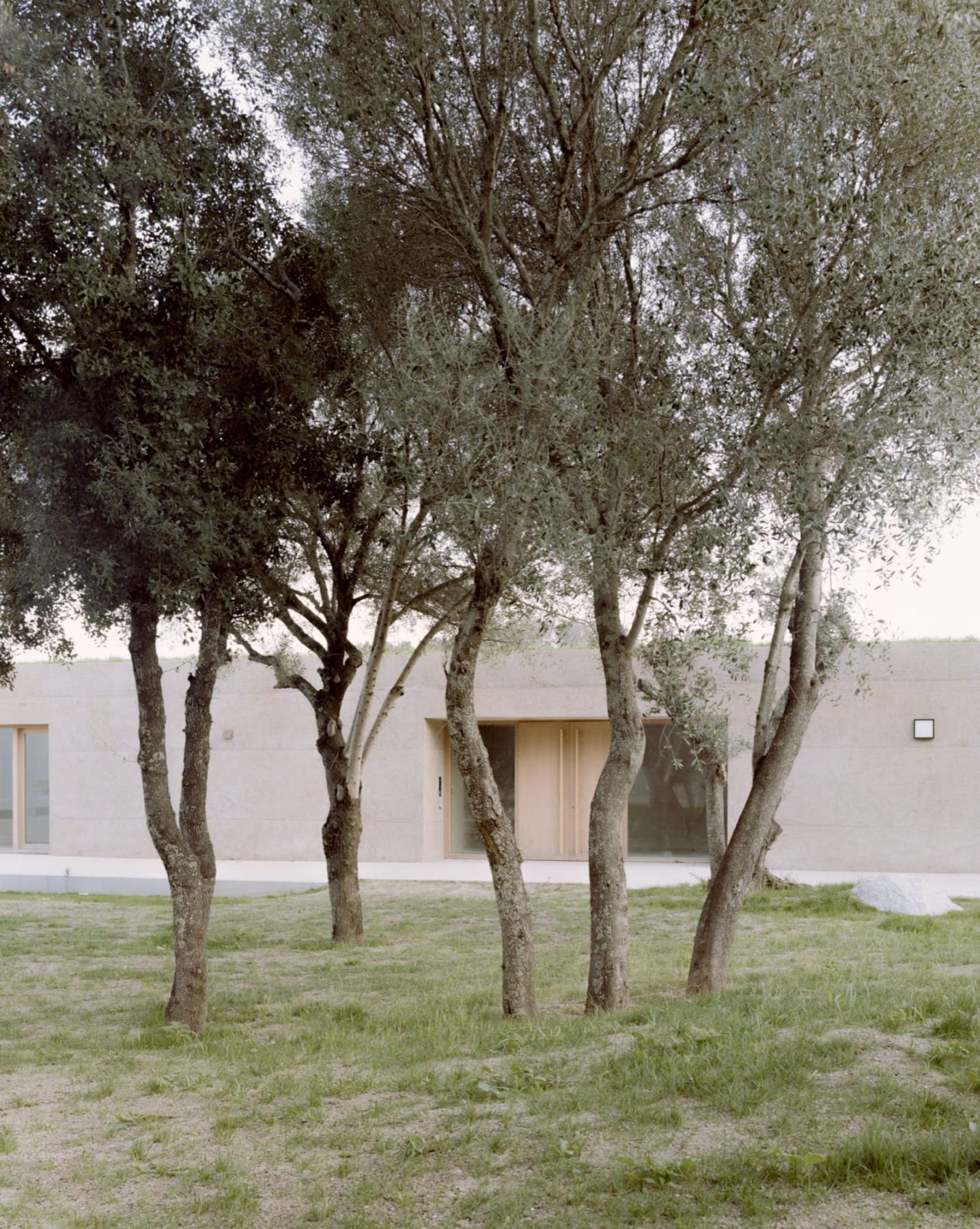
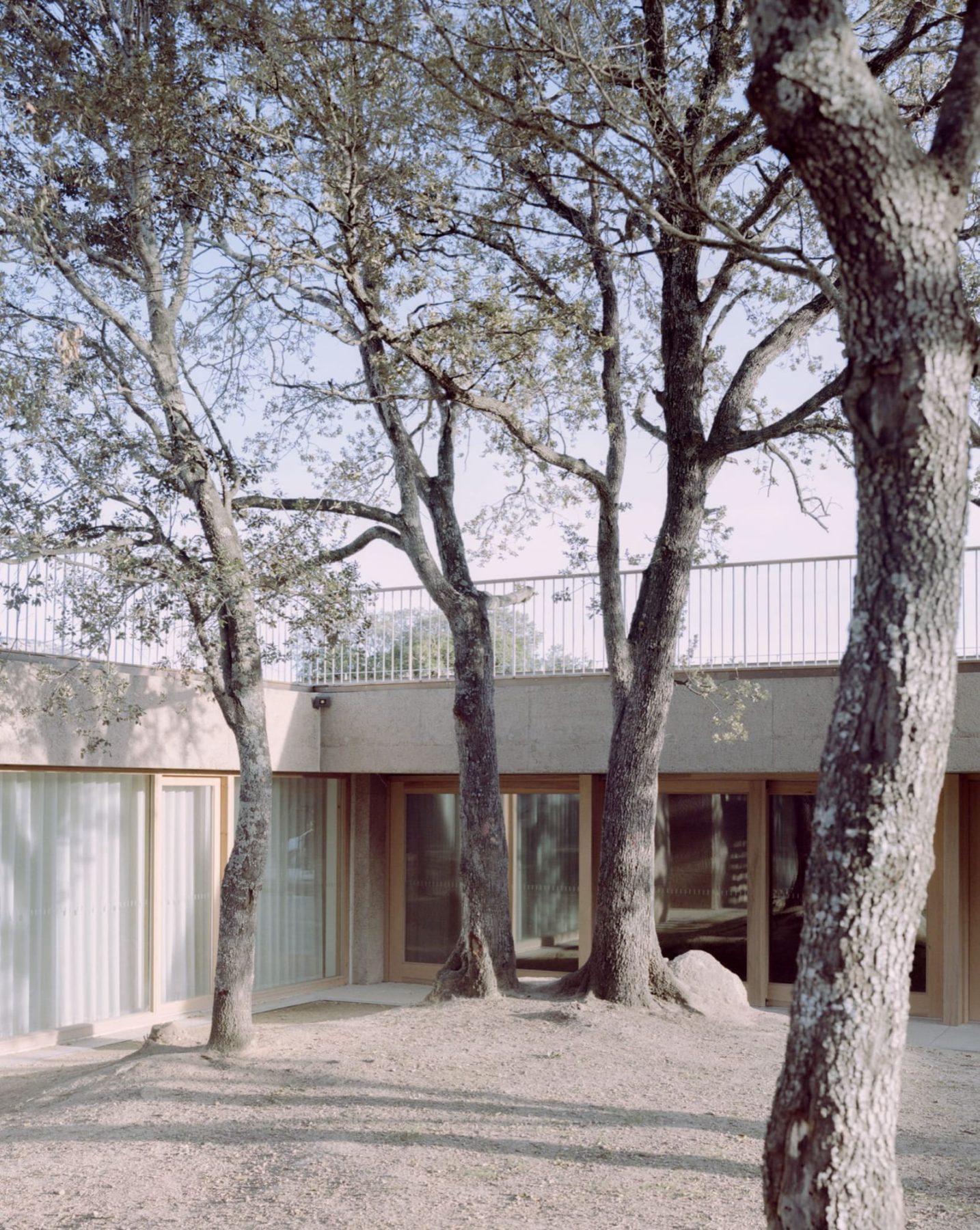
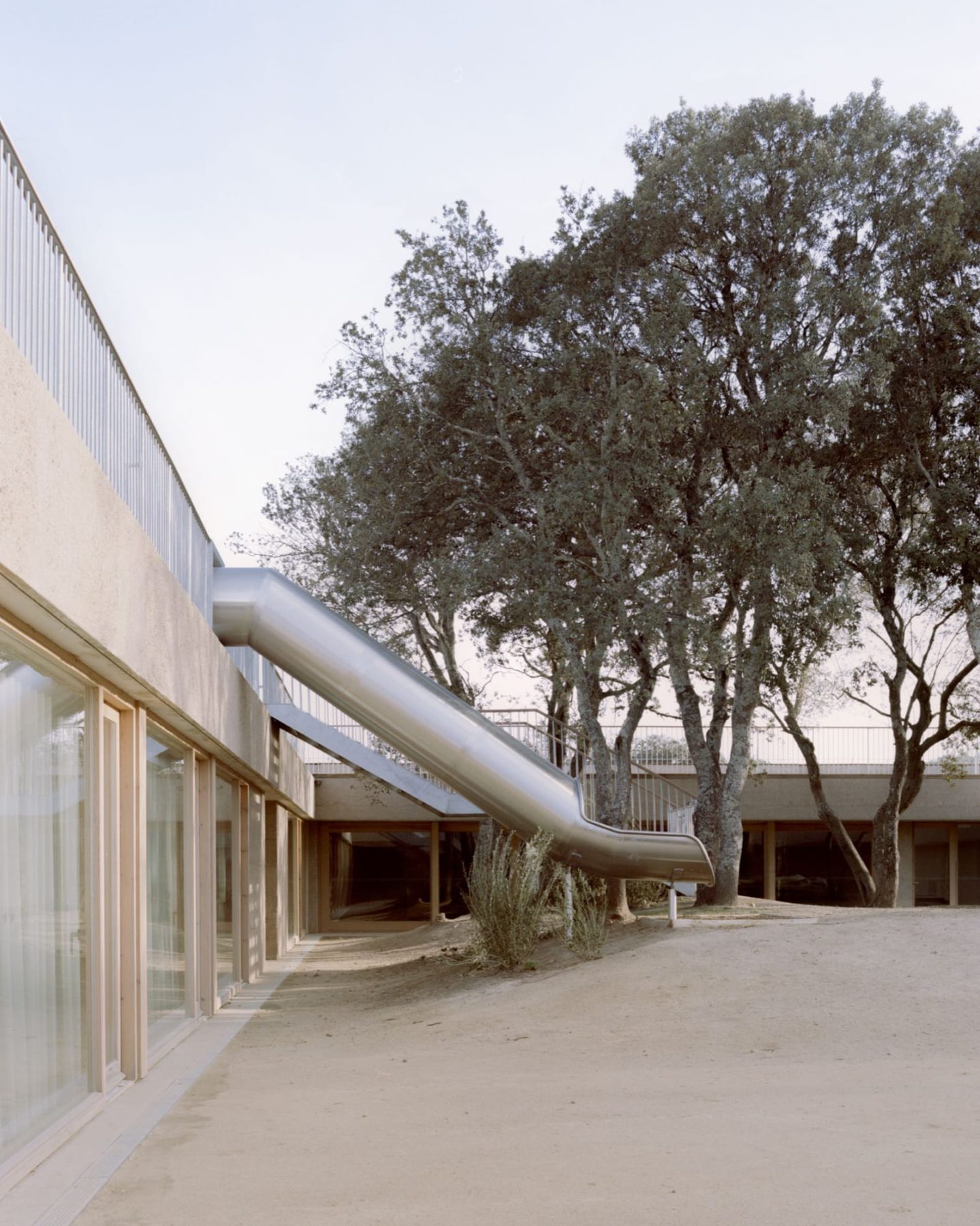
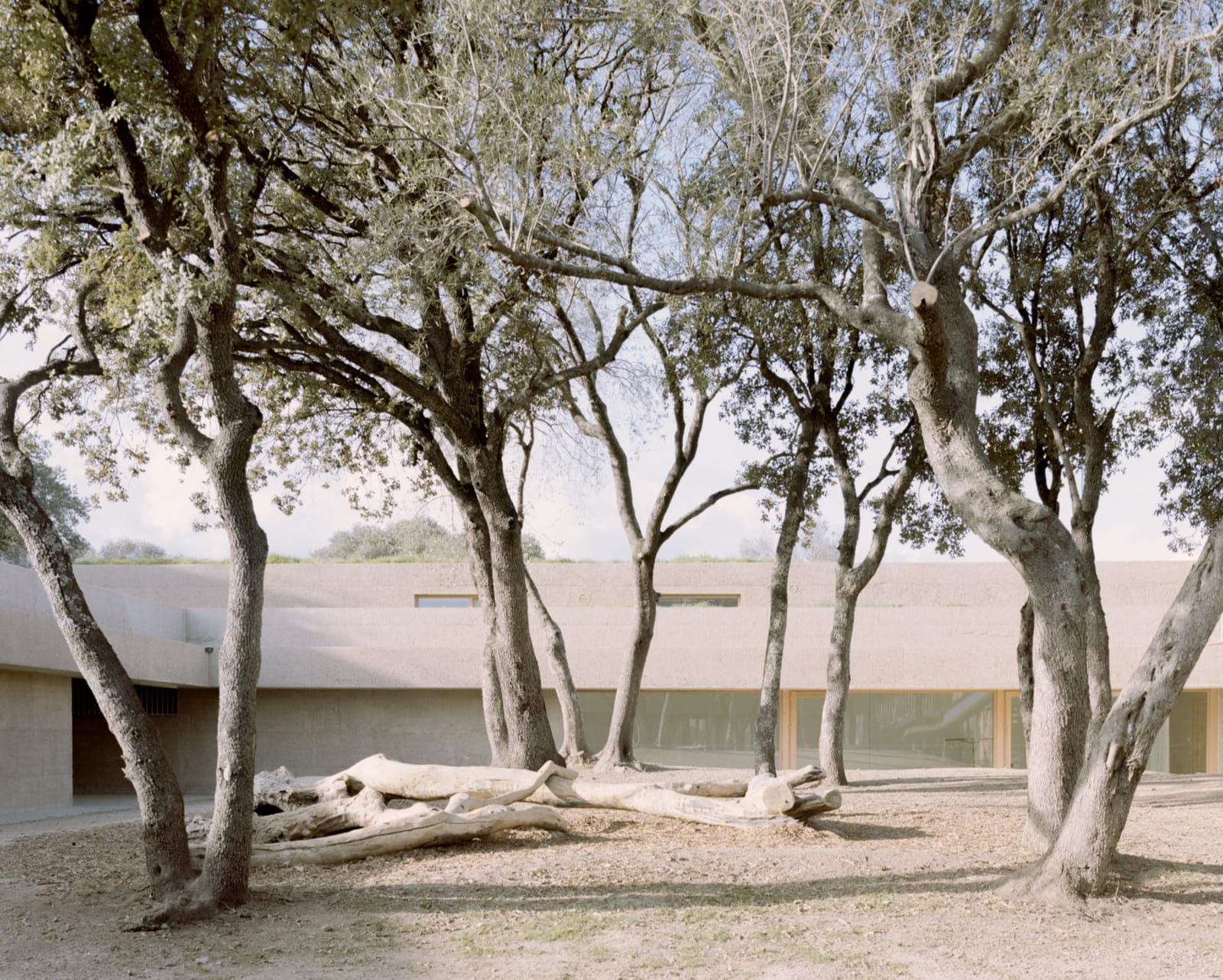
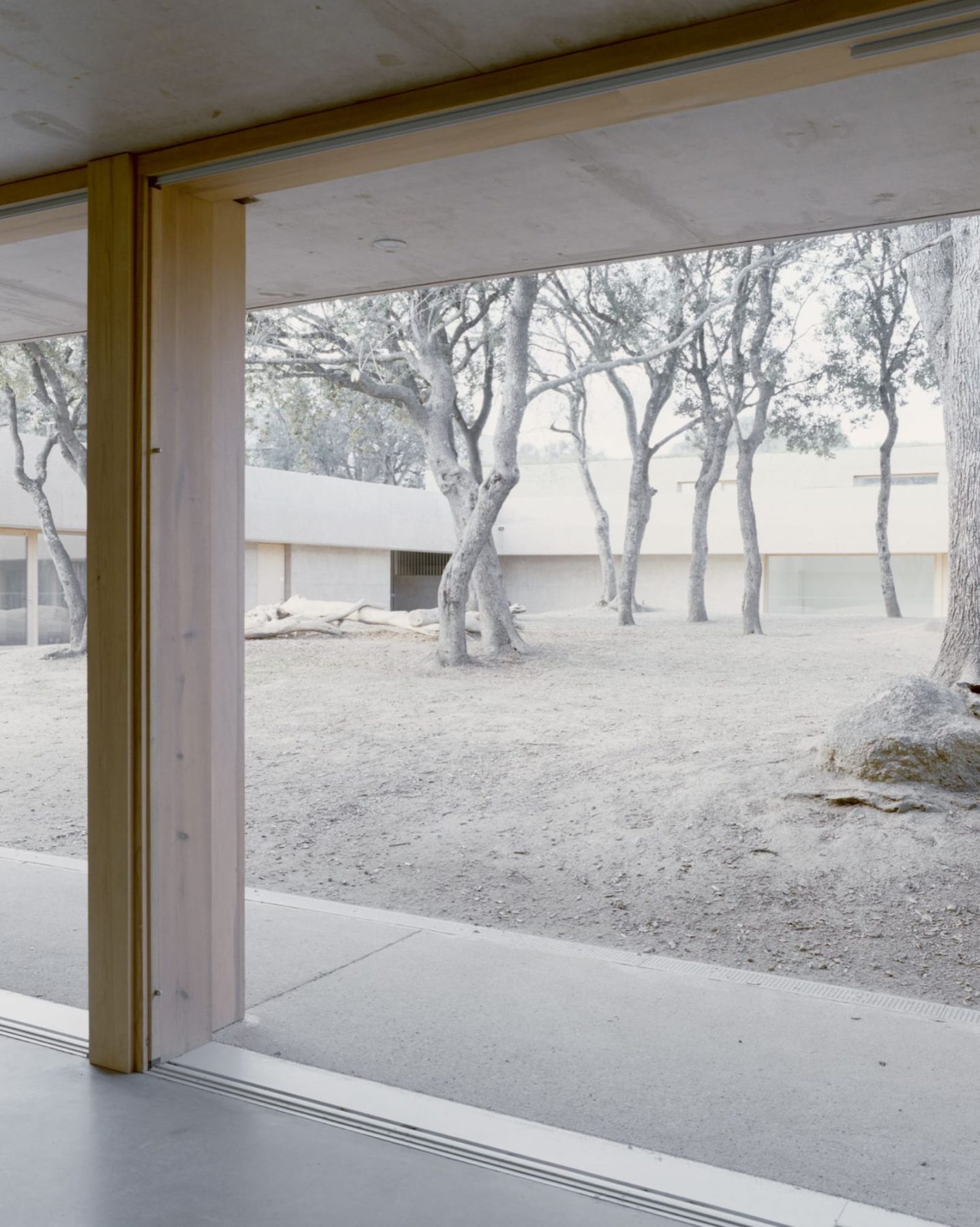
Outdoor space is fundamental to the design strategy.
Courtyards, gardens, and granite forecourts establish a network of interconnected public realms at the neighborhood scale. Parking is partially integrated into the slope, liberating ground-level surfaces for pedestrian movement and shared uses.
The site itself presents both richness and fragility. Characterized by a Mediterranean landscape of olive trees, oaks, and exposed rock, it is nonetheless situated within a fragmented urban fabric lacking cohesion and identity. Surrounded by buildings of varying scales and orientations, the school is persistently overlooked, necessitating a strong, coherent architectural presence capable of engaging this heterogeneous context.
Topography—marked by pronounced gradients—becomes a primary design driver. It anchors the structure, organizes access, and conceals infrastructure.
Previously disruptive traffic flows are reconfigured to prioritize pedestrians, while an existing path is reinterpreted as a soft connective spine linking housing, school, community facilities, and sports areas.
At a conceptual level, the project seeks to reconcile city and landscape, memory and present.
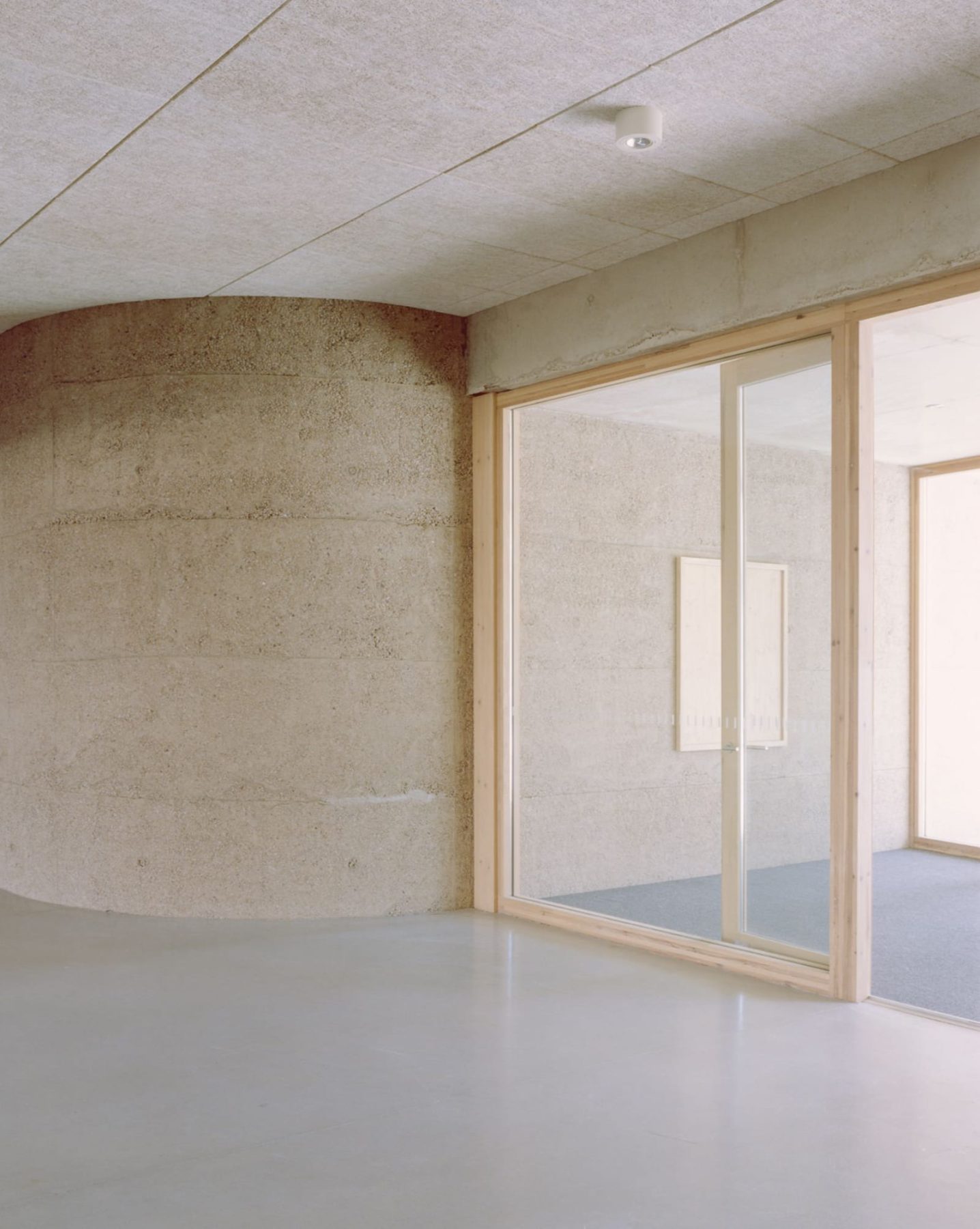
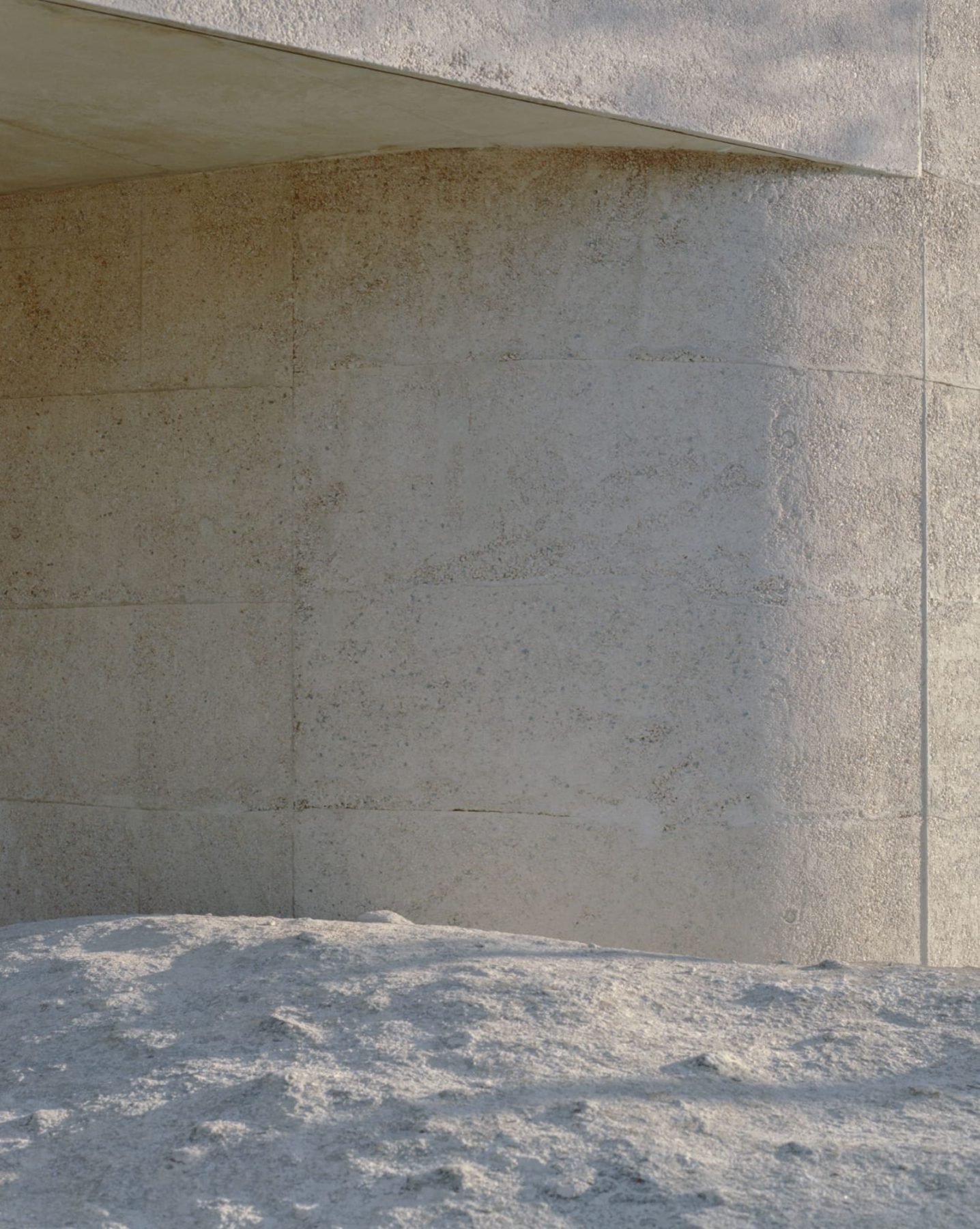
The school and community center together form a contemporary “bastion” of learning, entering into dialogue with the adjacent citadel. The use of warm-toned concrete, incorporating aggregates sourced directly from the site, recalls the pink porphyry of the historic ramparts, expressing both continuity and transformation.
Designed for early childhood within a Mediterranean climate, the architecture privileges shade, air, and outdoor living.
Spaces are at once protective and permeable, allowing trees, wind, and light to become active components of the learning environment.
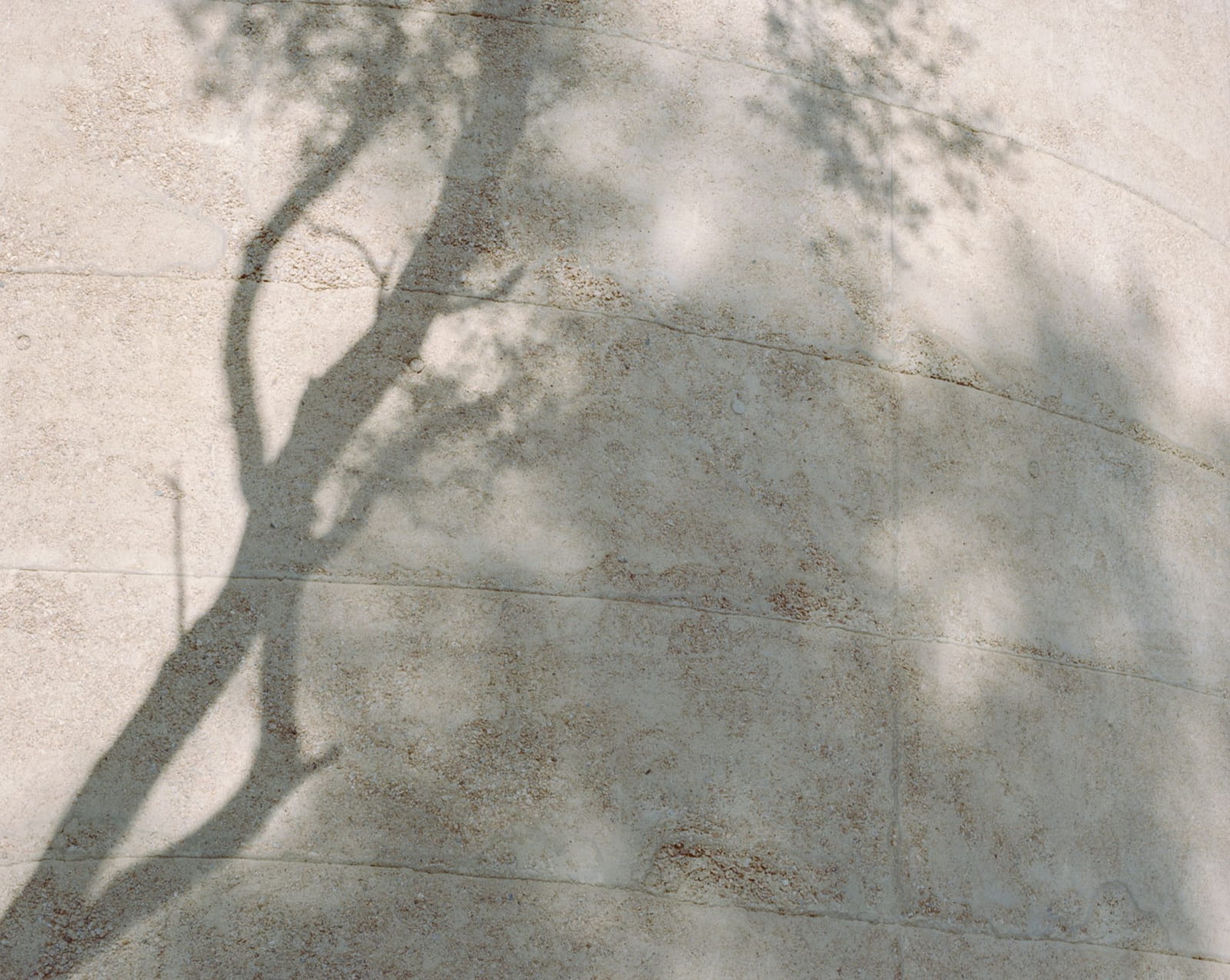
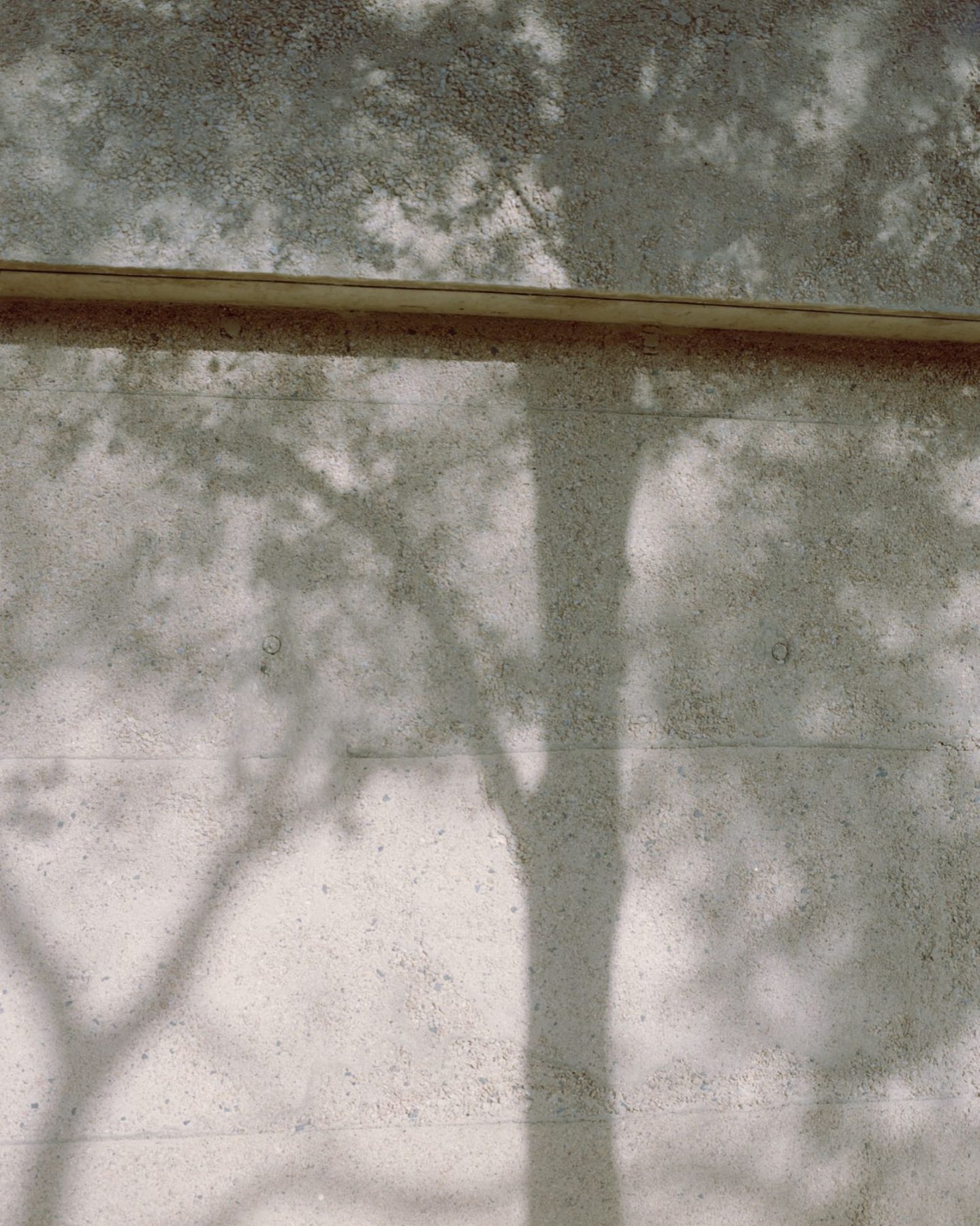
Here, architecture embodies an implicit pedagogy: through spatial clarity, material honesty, and atmospheric quality, children learn from their surroundings as much as from formal instruction.
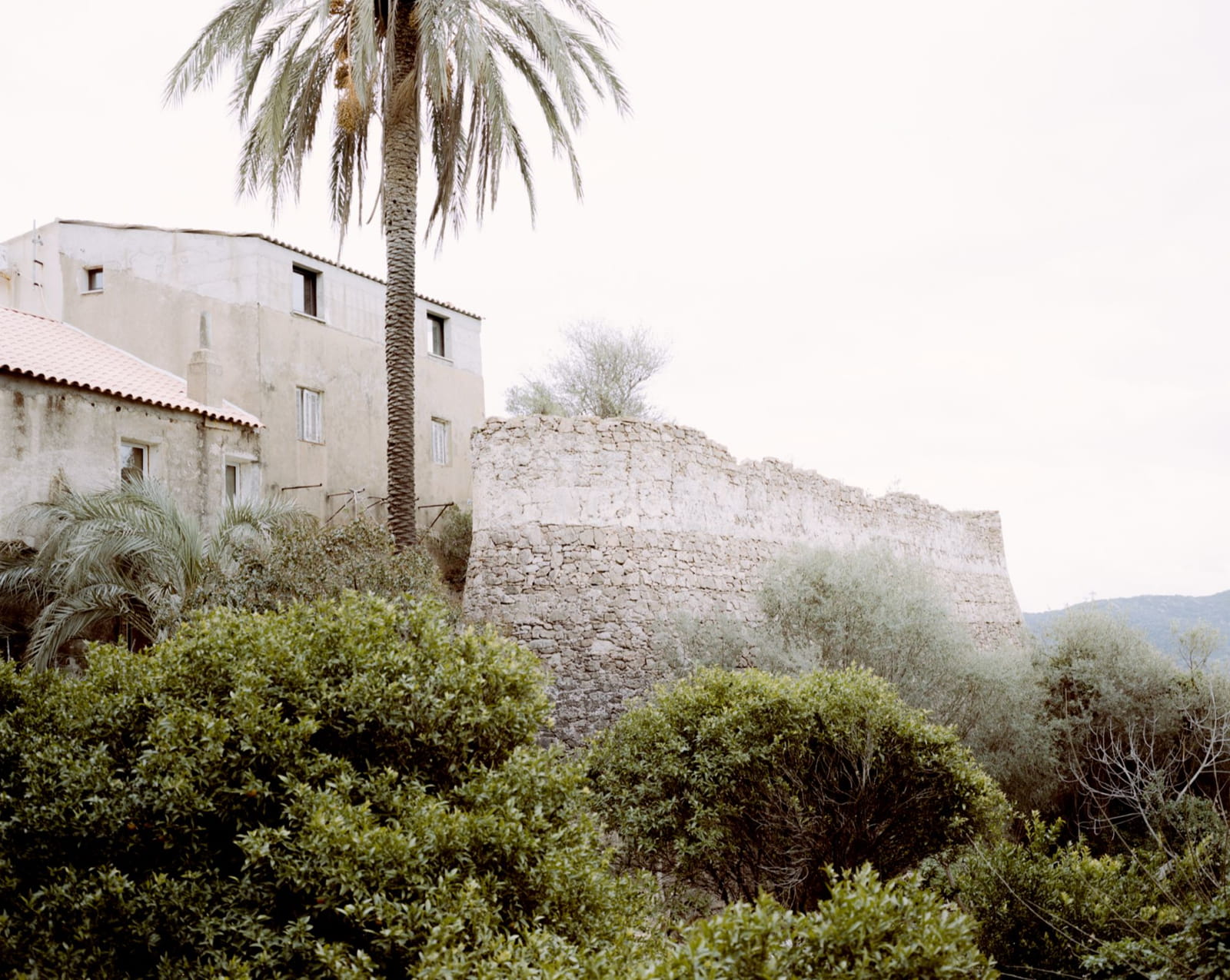
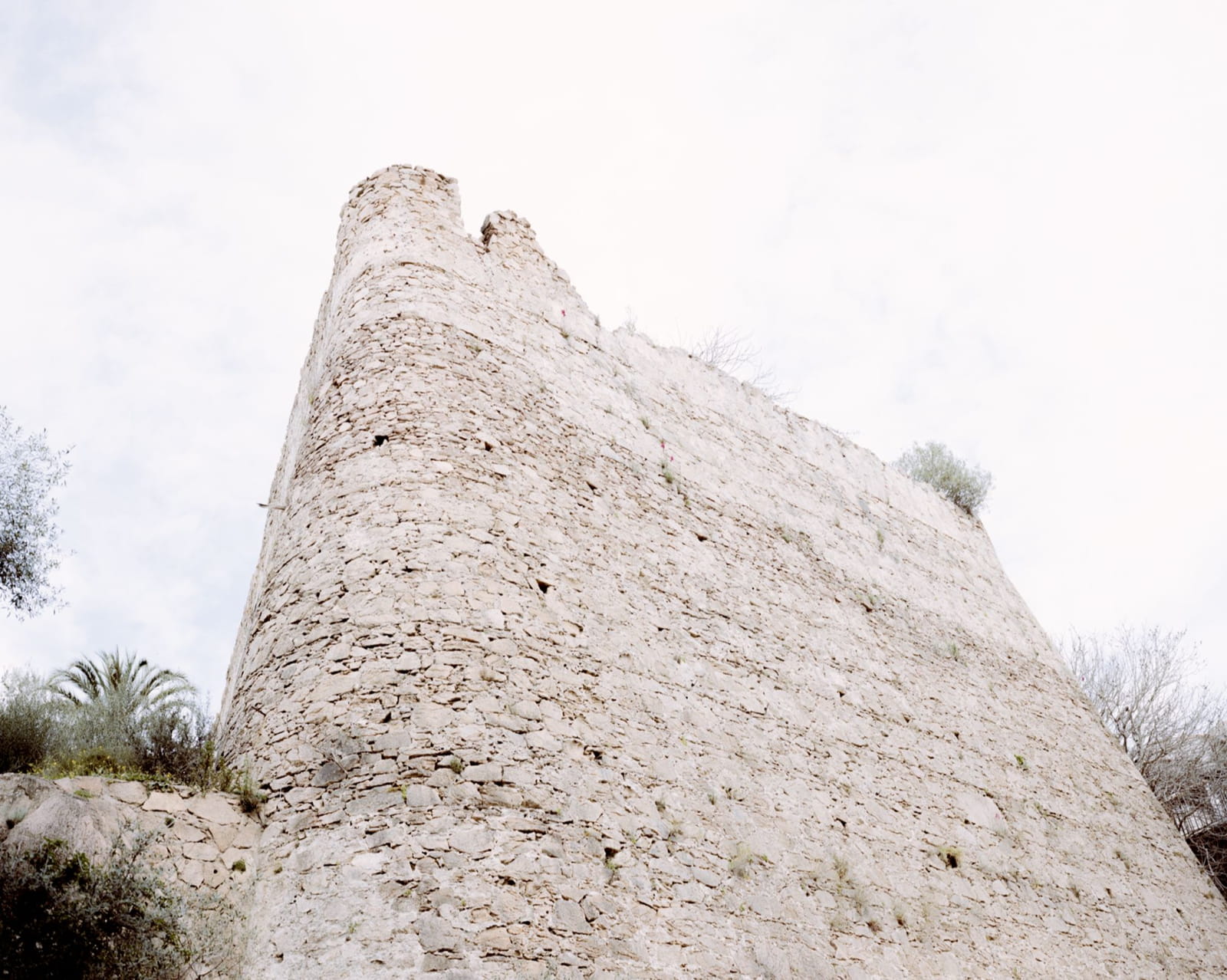
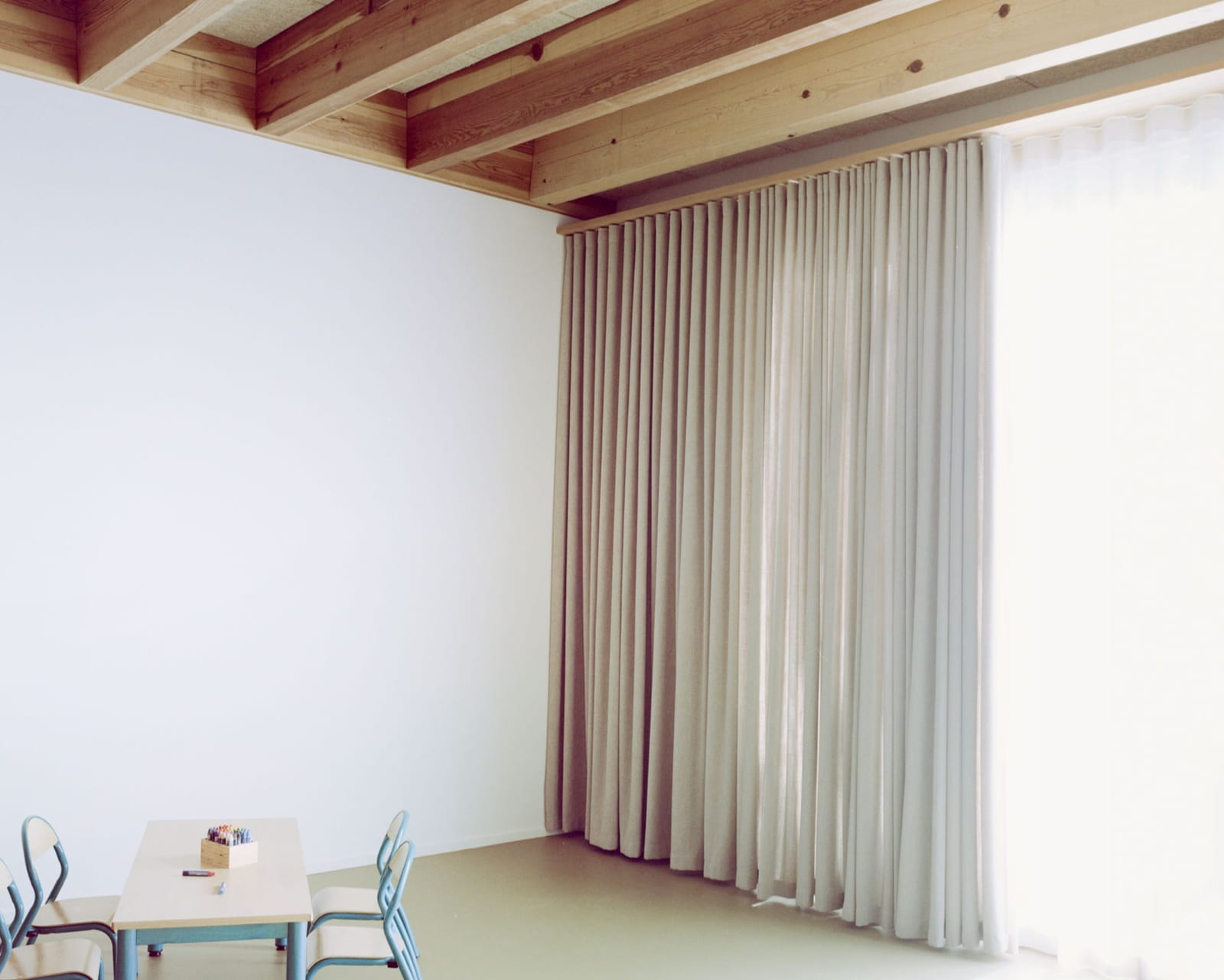
Material strategies reinforce this ethos. Excavated aggregates are reused in concrete production, topsoil is preserved for landscaping, and removed trees are repurposed as play elements. Locally sourced Laricio pine is employed for structure, joinery, and furniture, creating a warm, tactile environment while supporting regional resources. Structural systems are adapted to the relatively small diameter of available timber, resulting in an efficient assembly of composite beams.
Drawings
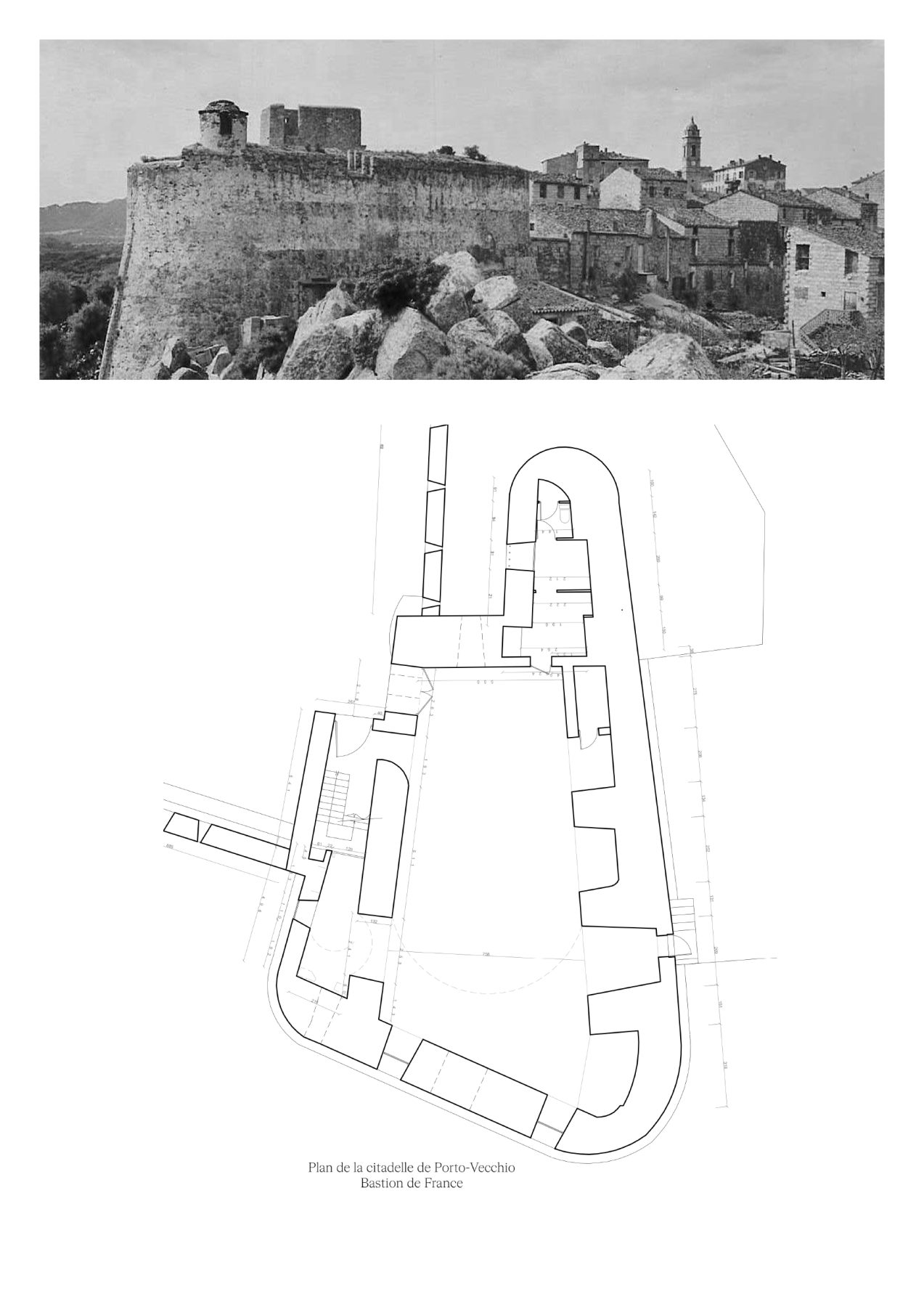
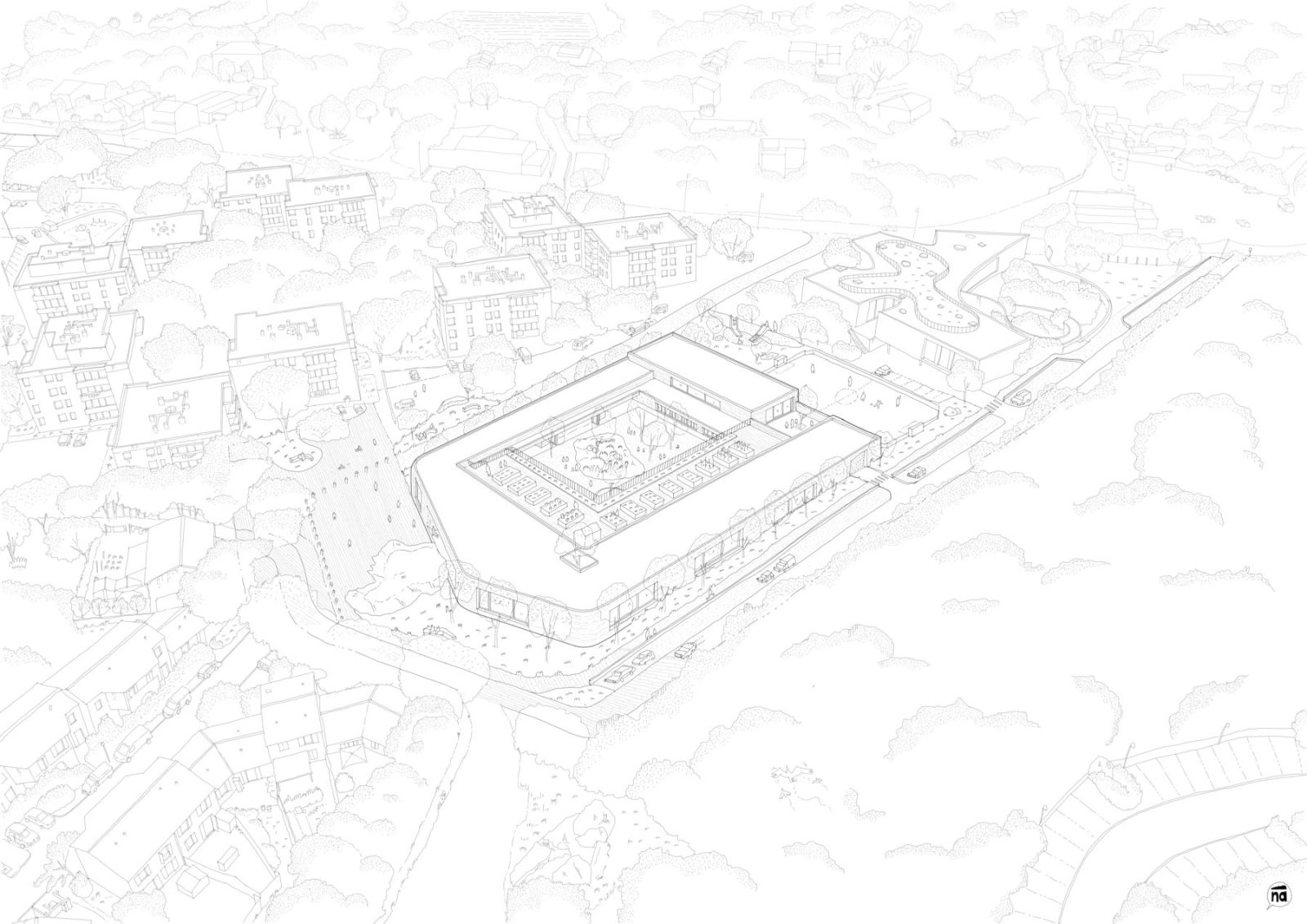
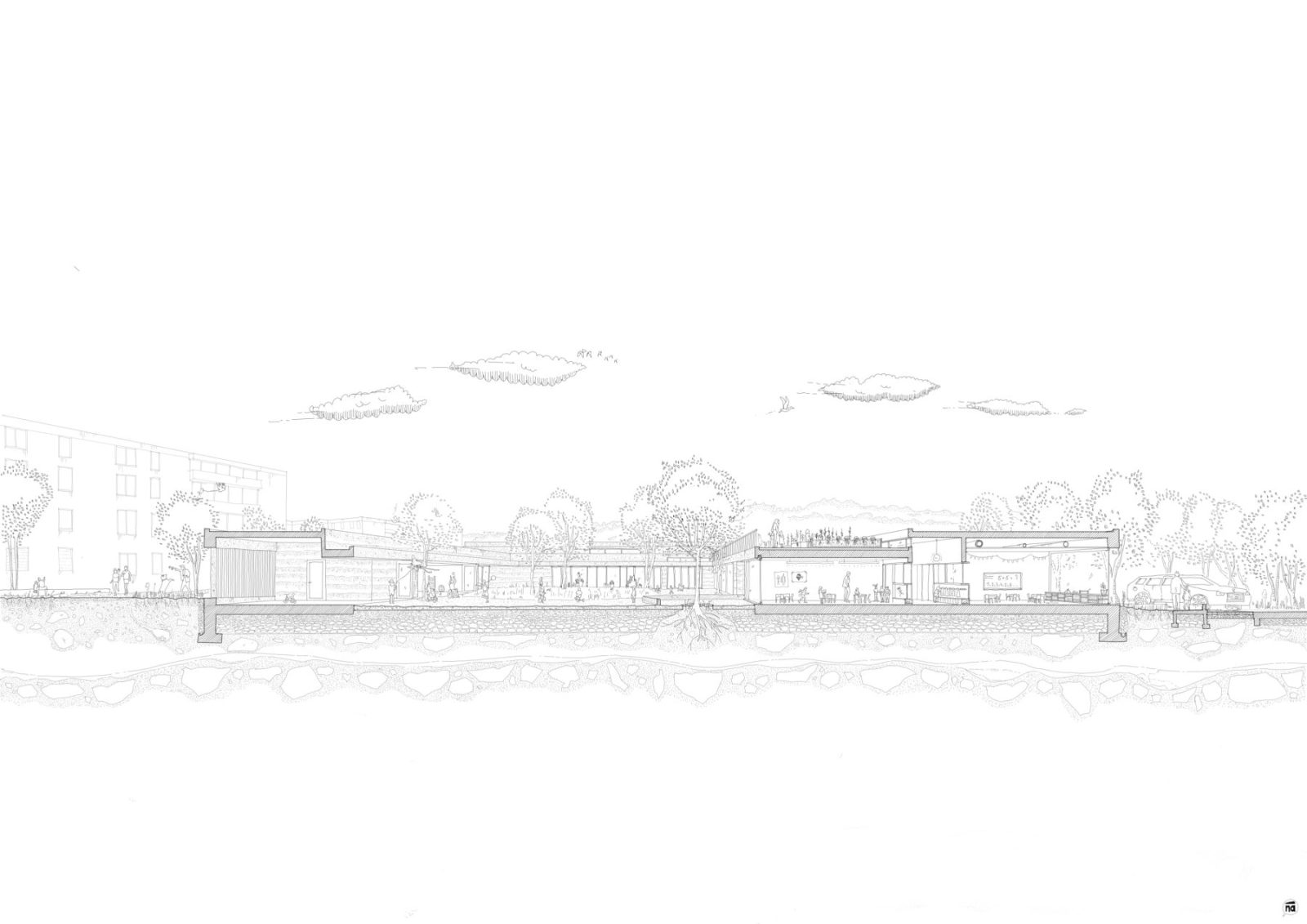
École de Pifano is an architectural narrative, illustrating how buildings can engage climate, material cycles, and collective memory—offering children not only a place of education, but a lived lesson in how to inhabit the world.
Facts & Credits
Title École de Pifano
Typology Architecture, Education
Location Porto-Vecchio, southern Corsica, France
Status Completed, 2025
Architecture Orma Architettura
Photography Simone Bossi
Text by the authors