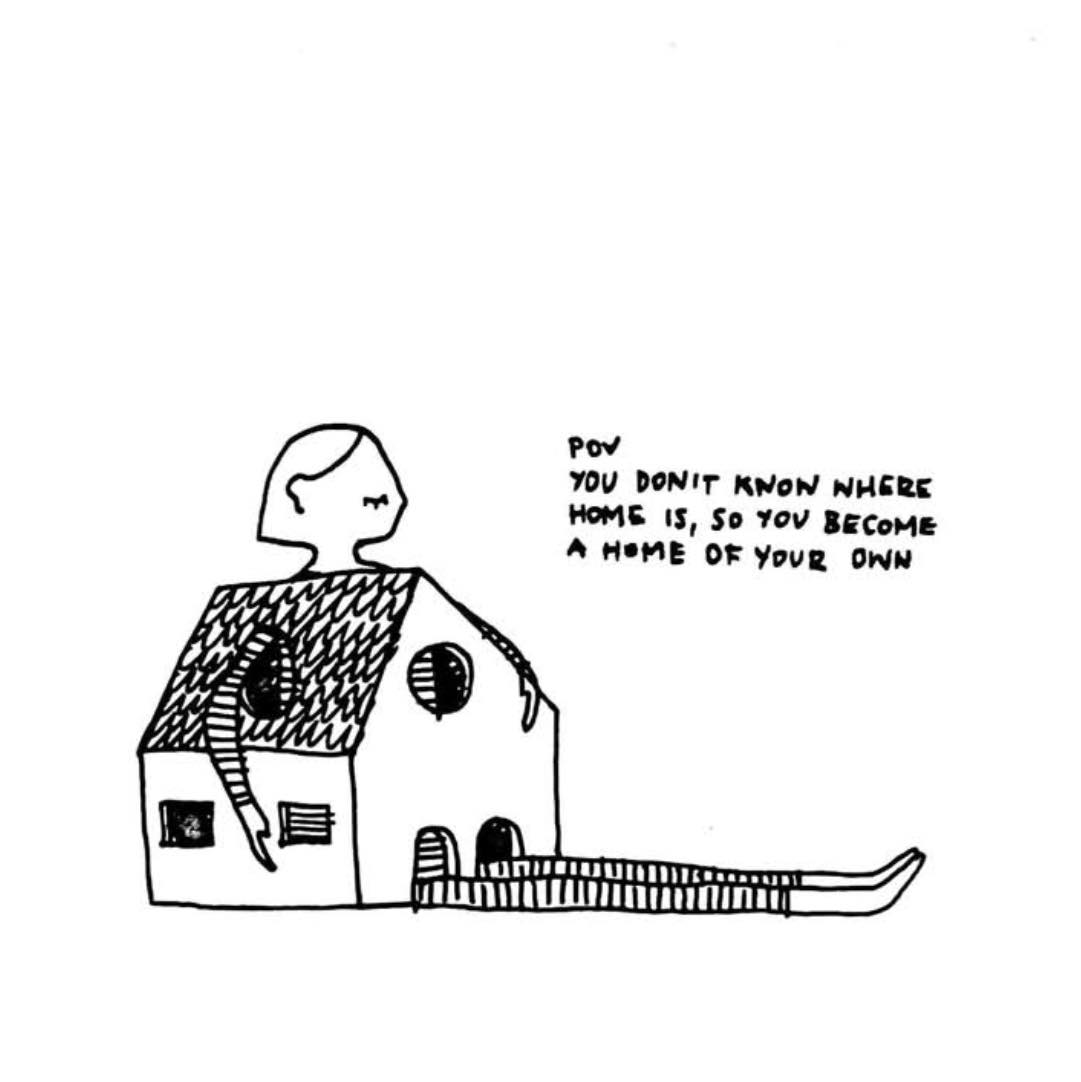
“Home is where one starts from,” writes T. S. Eliot in East Coker (1940), the second poem of his Four Quartets, named after the small village in Somerset where his ancestors lived before emigrating to America in the seventeenth century. In this deceptively simple phrase, Eliot locates home not merely as a physical shelter, but as the origin of identity—a point from which every departure, transformation, and return unfolds. As life progresses, the idea of home becomes increasingly layered with memory, absence, and personal mythology. Yet every emotional geography begins with a room, a wall, a window, a threshold.
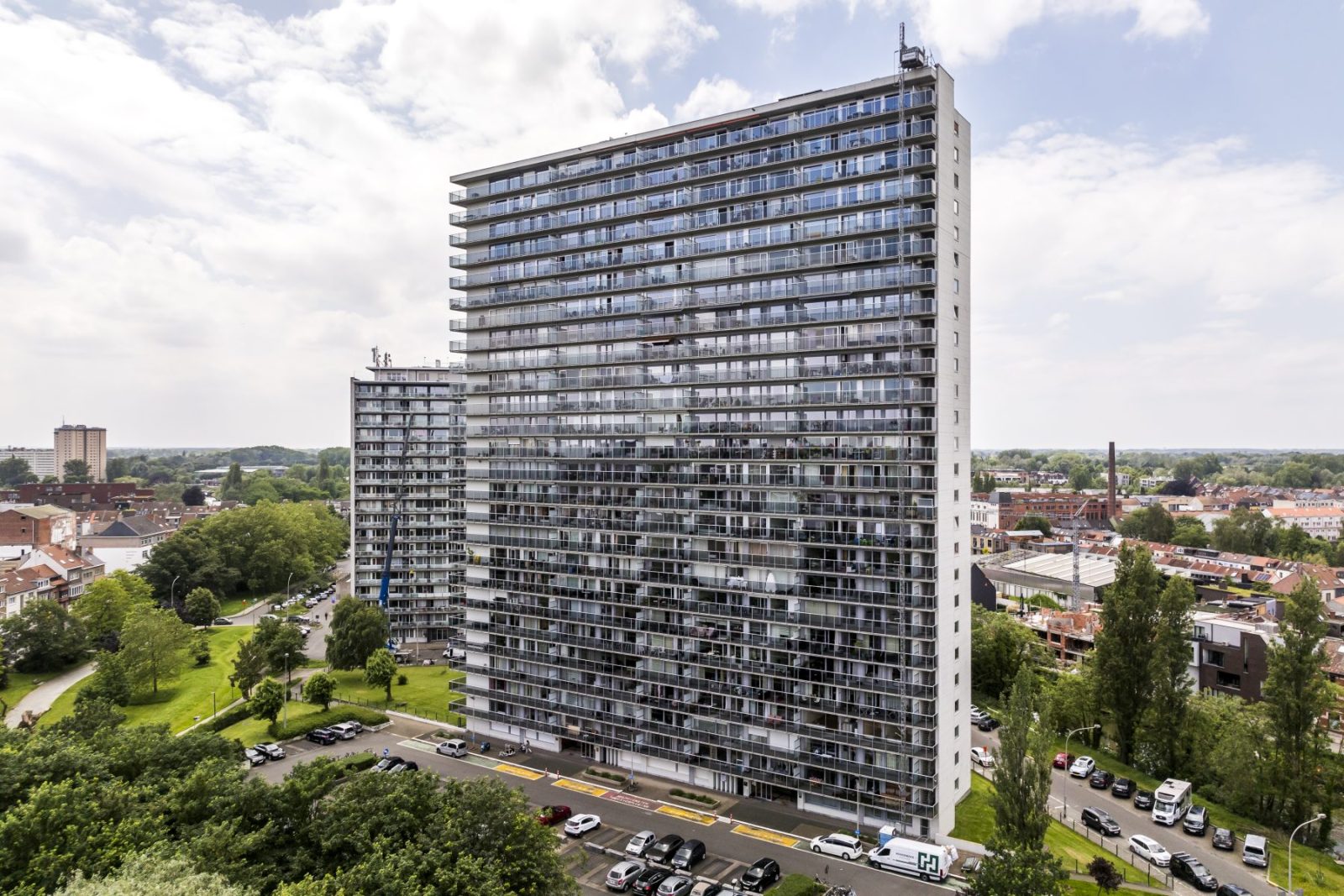
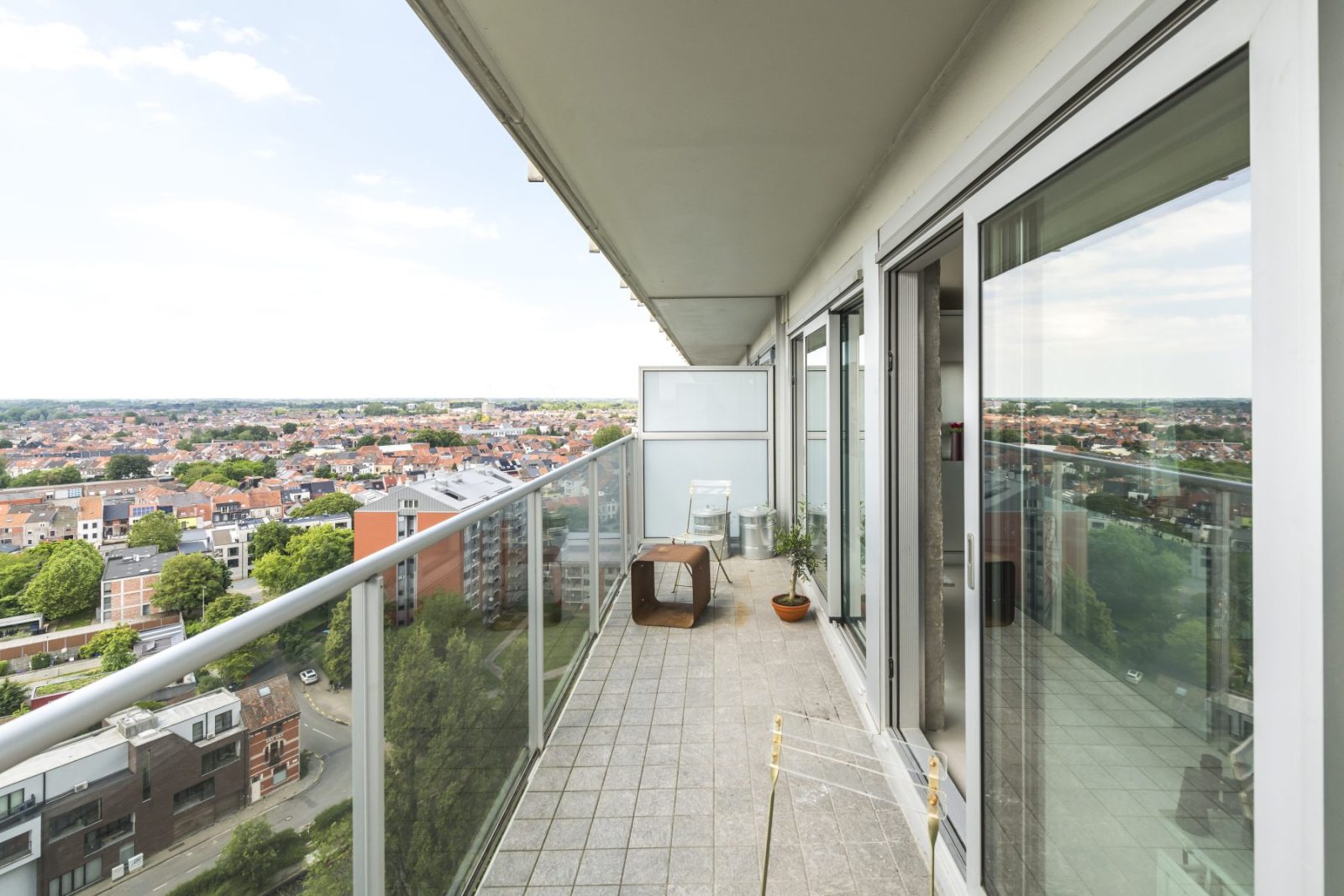
The twenty-second episode of ‘Stories of Contemporary Domesticity or HOMEland’—a series curated by Archt. for Archisearch exploring the changing interpretations of home through contemporary architectural practices— follows AUX architects as they translate Hannelore’s dream of her first home of her own into a multilayered domestic landscape of aluminium surfaces, shifting boundaries, and multifunctional objects. Located within one of Ghent’s late-modernist landmarks—the city’s highest residential tower, rising above the landscape of Groene Vallei park— the project transforms a standardized 55-square-metre apartment on the sixteenth floor into an intimate universe: a private observatory suspended between the privacy of everyday life and the vast panorama of the city.
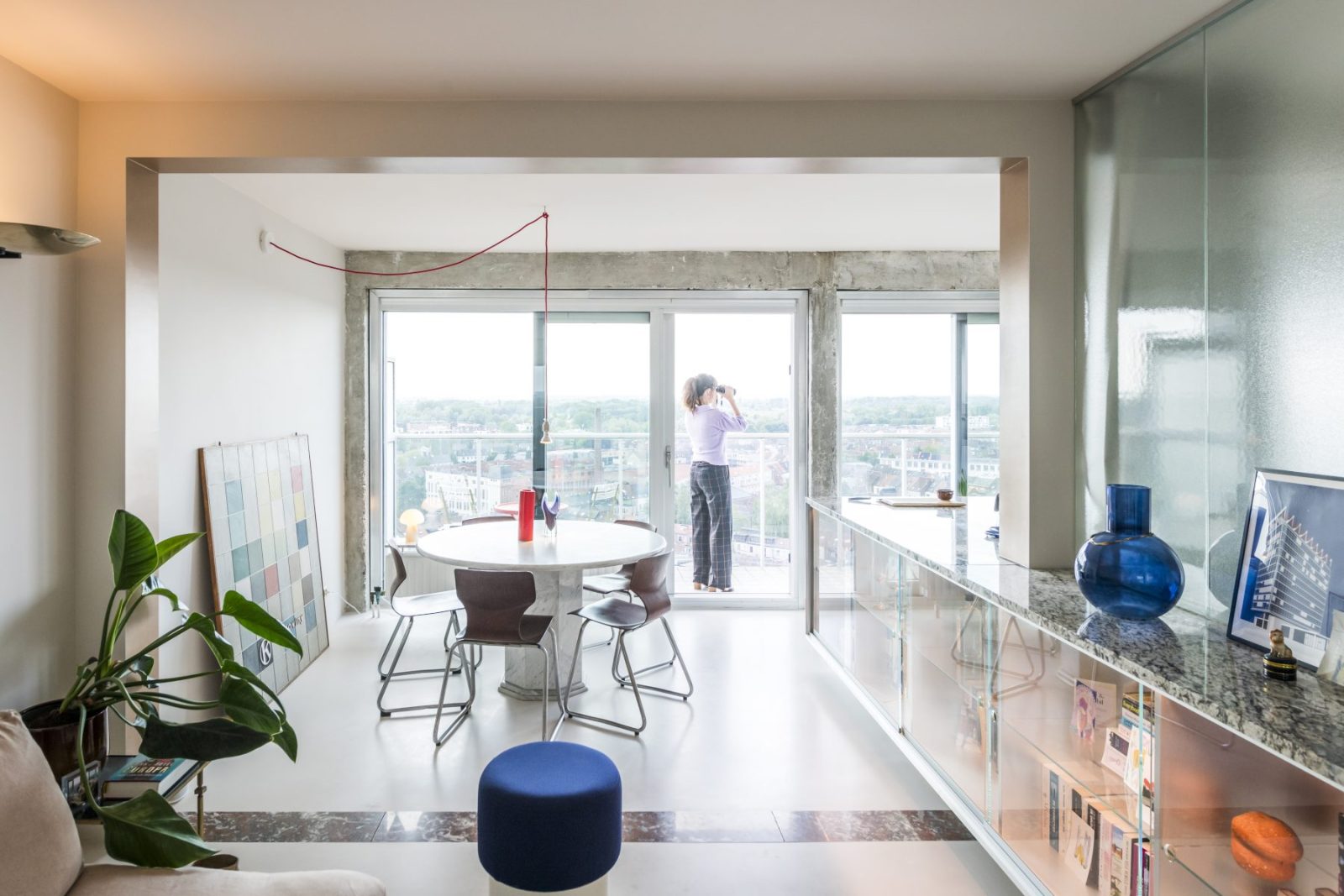
Operating between the modernist ambition of collective housing and the philosophical inquiry into what it truly means to dwell, AUX reinterpret the apartment as a landscape of selfhood, focusing on the tension between the anonymous scale of the residential tower and the singularity of individual domestic experience, demonstrating how architecture can transform a generic dwelling into a profoundly personal place called home.
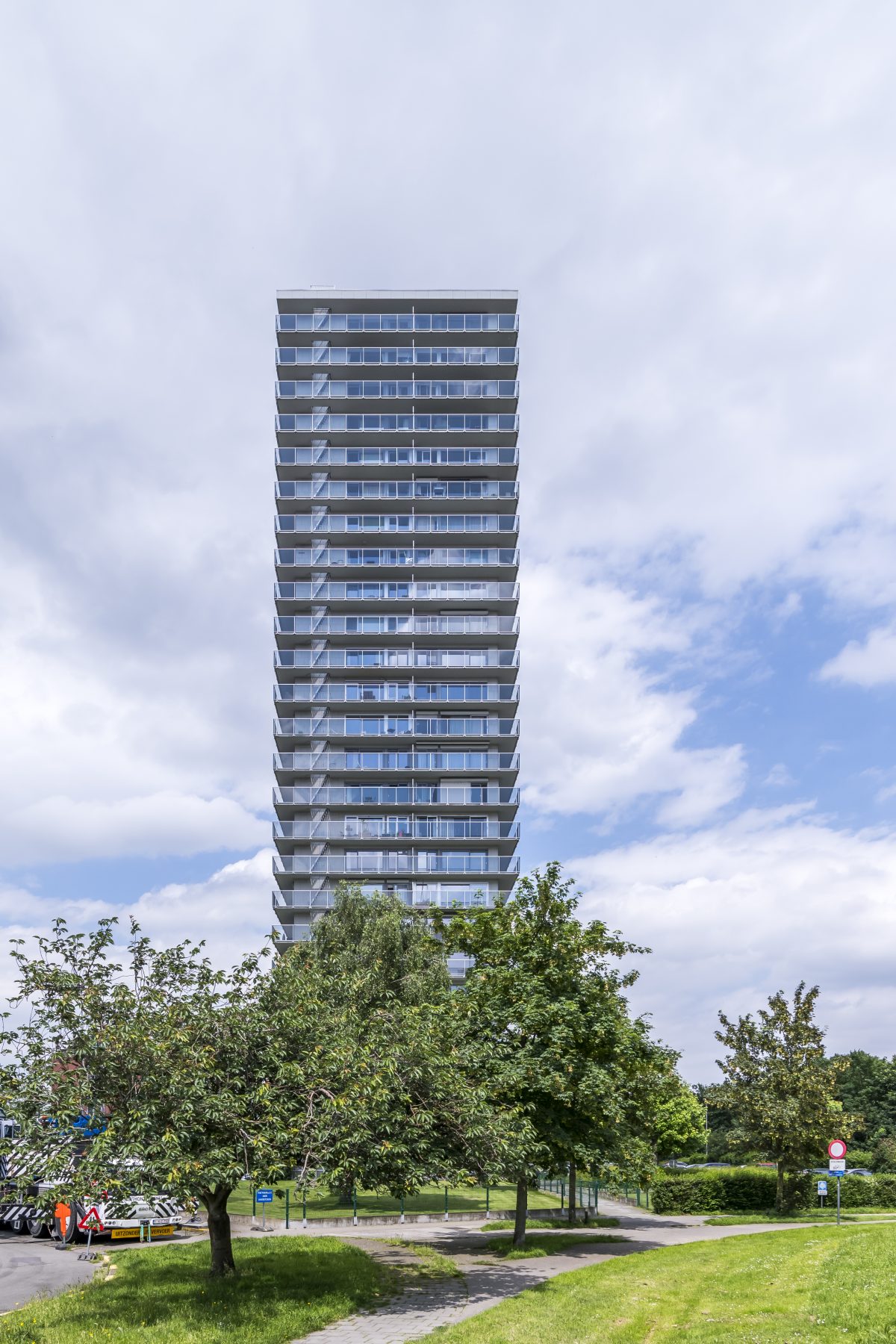
The apartment occupies a complex architectural and ideological terrain. Designed by Belgian architect Jacques Mignolet as part of the larger De Groene Vallei housing development, the 26-storey tower embodies the late aspirations of twentieth-century modernism. Emerging from a tradition shaped by the ideals of CIAM and Le Corbusier, the building expresses the dream of collective dwelling: the vertical city liberated from the constraints of the historic street, elevated into light, air, and greenery.
The tower in the park represented a new social promise, where standardized dwellings could provide healthier and more egalitarian ways of living.
This modernist vision was inseparable from the belief that architecture could reshape society through rational planning and universal spatial solutions. As Le Corbusier famously declared, “the house is a machine for living in” (Le Corbusier, 1923).
Yet the great paradox of collective housing remained unresolved: how can a repetitive architectural system accommodate the irreducible singularity of individual life?
This is precisely the question revisited by AUX architects Wouter Vanheste and Thomas De Roeck, whose intervention engages in a subtle dialogue with the building’s modern legacy. The search for Hannelore’s apartment began during the Covid-19 lockdown of 2020, when the repetitive routes of everyday walks through Ghent transformed the city into a landscape of rediscovery. With a limited budget and the desire for a one-bedroom apartment with a private terrace, her attention turned toward post-war high-rise housing. There, within the highest residential tower of the city, she found an untouched apartment from the late 1970s: a compact shell with extraordinary views over the park and the urban horizon.
The Groene Vallei itself is a palimpsest of industrial and ecological histories. Once occupied by the La Lys textile factory, demolished during the 1960s, the site was gradually transformed into a public landscape where traces of industrial memory coexist with designed gardens and spontaneous nature.
The apartment therefore occupies a unique threshold between past and present, between the collective memory of labour and the private rituals of contemporary life.
AUX’s response does not reject the modernist framework; instead, it inhabits and transforms it from within.
The architects pose two fundamental questions: How does height and the distant horizon alter our experience of dwelling? And how can a standardized apartment within a massive collective structure become a deeply personal home?
Their answer lies in a postmodern understanding of domesticity through the recovery of subjectivity and personal narrative. If modernism sought universal models of habitation, later architectural thought turned toward the intimate and psychological dimensions of the house. Gaston Bachelard described the home as “our corner of the world,” a place where memory, imagination, and dreams take architectural form (Bachelard, 1958).
Similarly, postmodern critiques of modern housing argued for the recognition of complexity, individual expression, and the multiplicity of everyday life (Venturi, 1966).
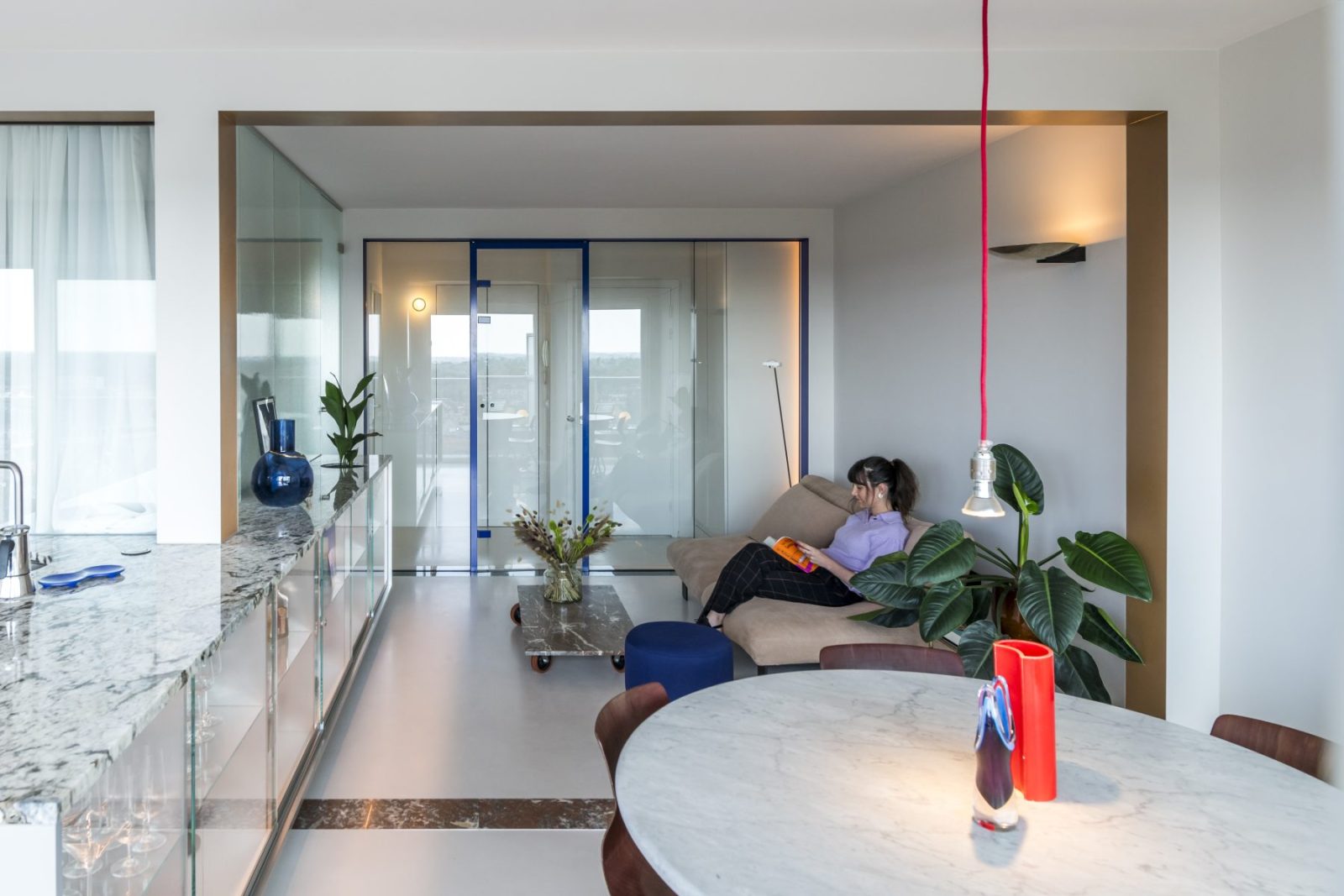
Within this framework, AUX removes all non-structural interior walls, reducing the apartment to an empty container that can be reimagined according to Hannelore’s personal rituals and desires. Privacy is no longer achieved through a sequence of enclosed rooms but through the possibility of establishing one’s own boundaries within an open, fluid, and materially layered domestic landscape where nothing possesses a single meaning or function.
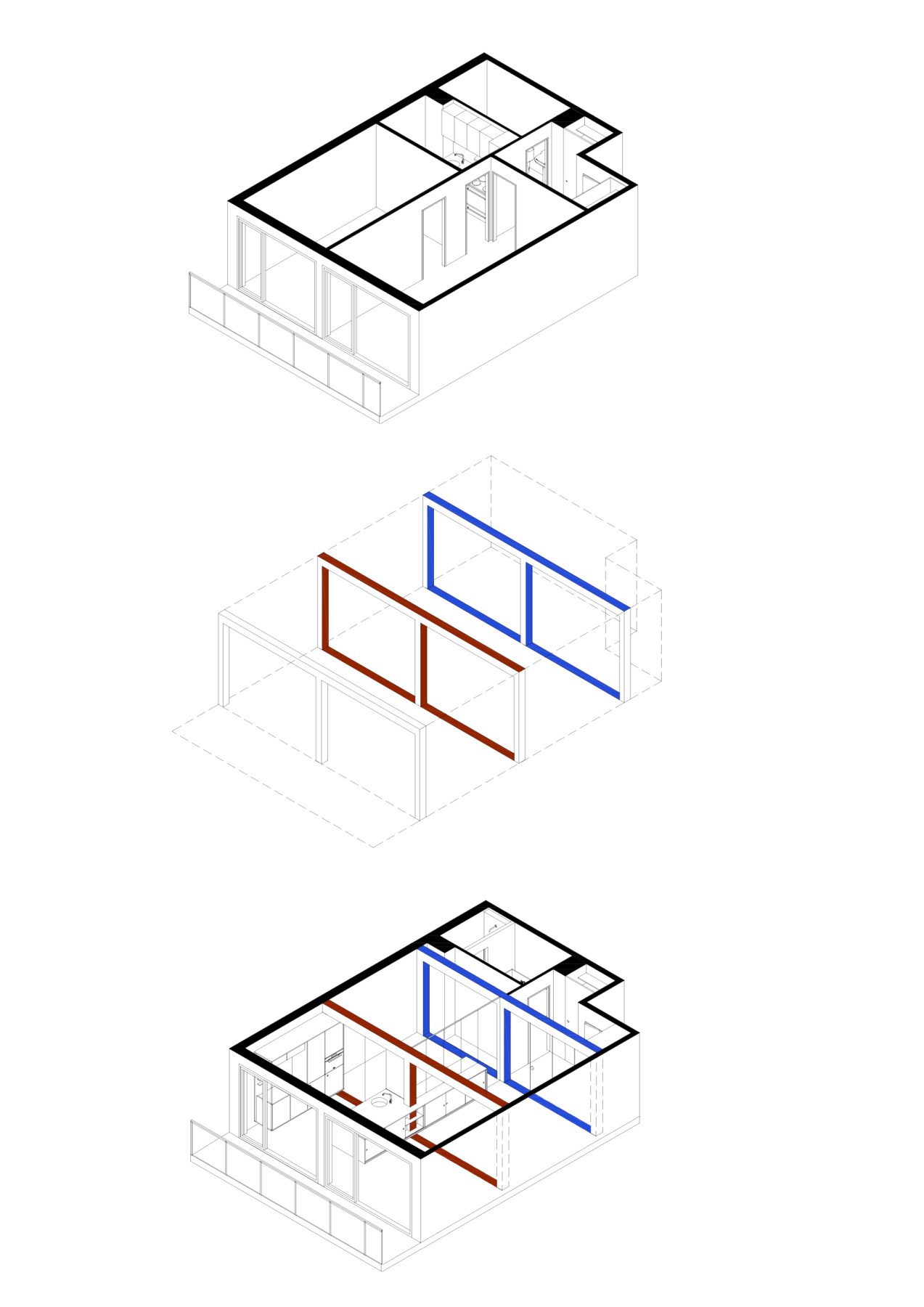
Three coloured frames—aluminium, red, and blue—organize the apartment.
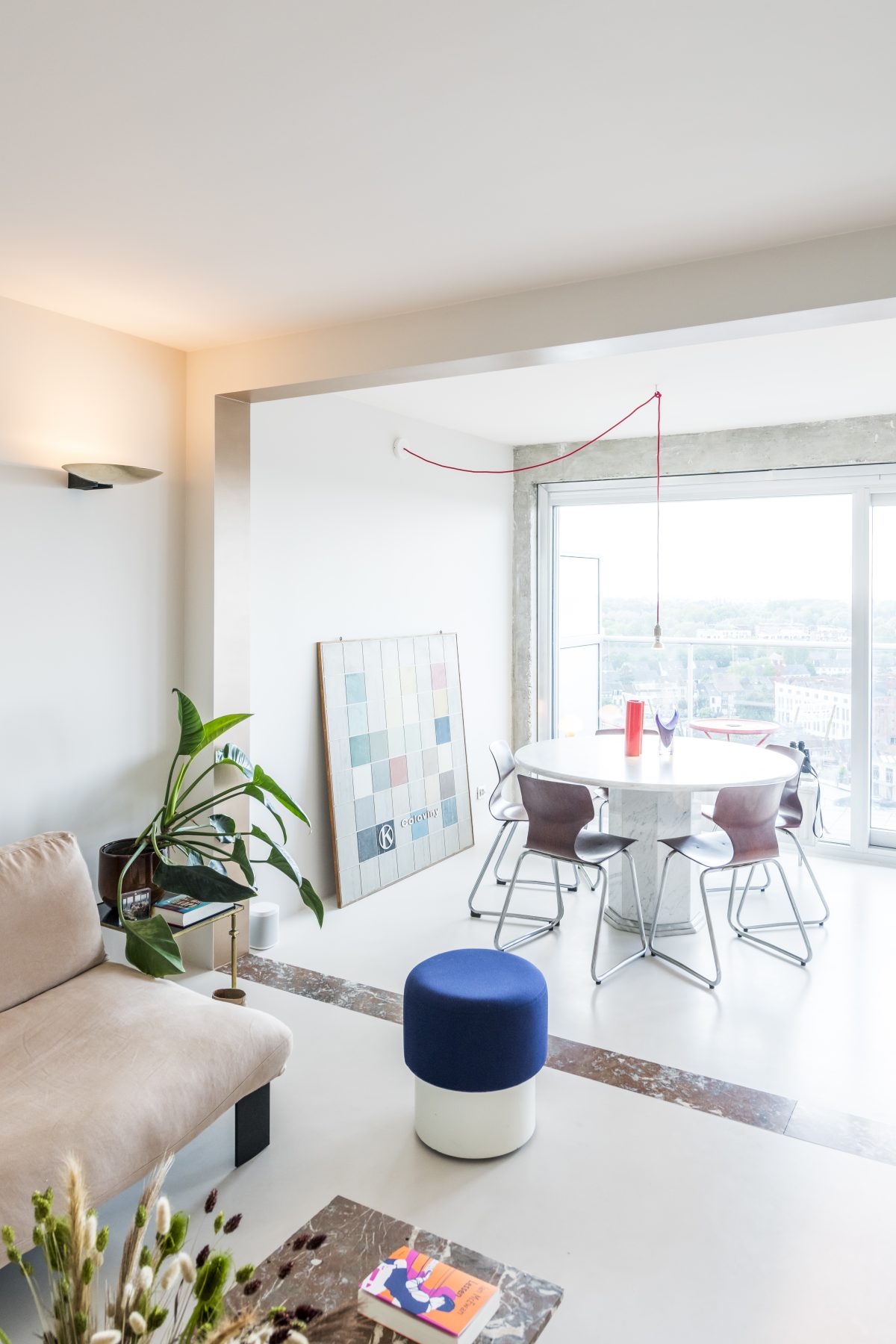
Their contours extend onto the floor through reclaimed marble strips, a subtle reference to the pattern of the tower’s original entrance hall.
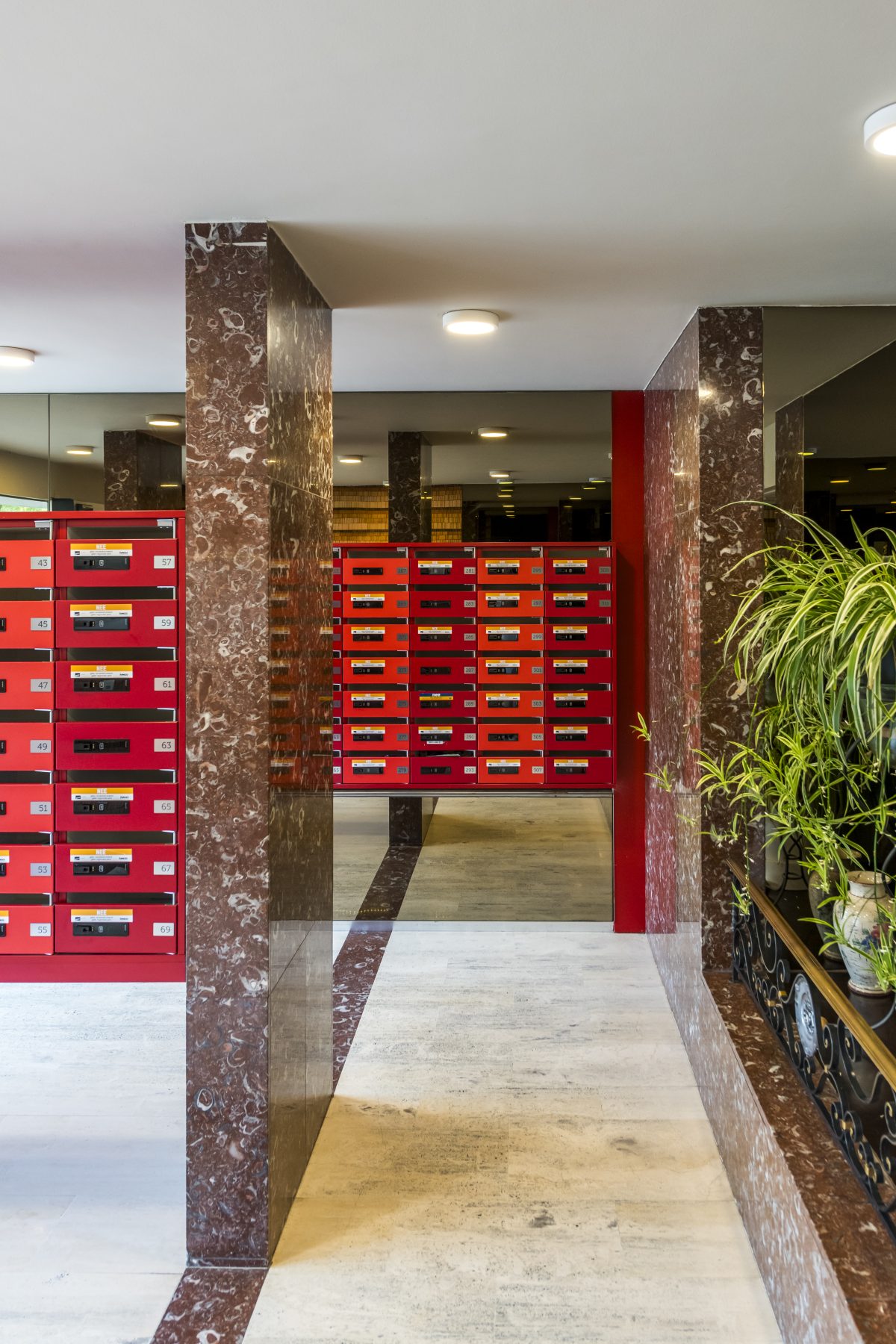
The gesture creates a dialogue between the private interior and the collective architecture of the building, carrying fragments of the common memory into the personal realm.

The original arrangement placed the bedroom and living room side by side along the façade, while the kitchen remained buried in the darker interior. A disproportionately large entrance hall consumed valuable space, reducing the actual living area to little more than a place for a sofa and a table against a wall.
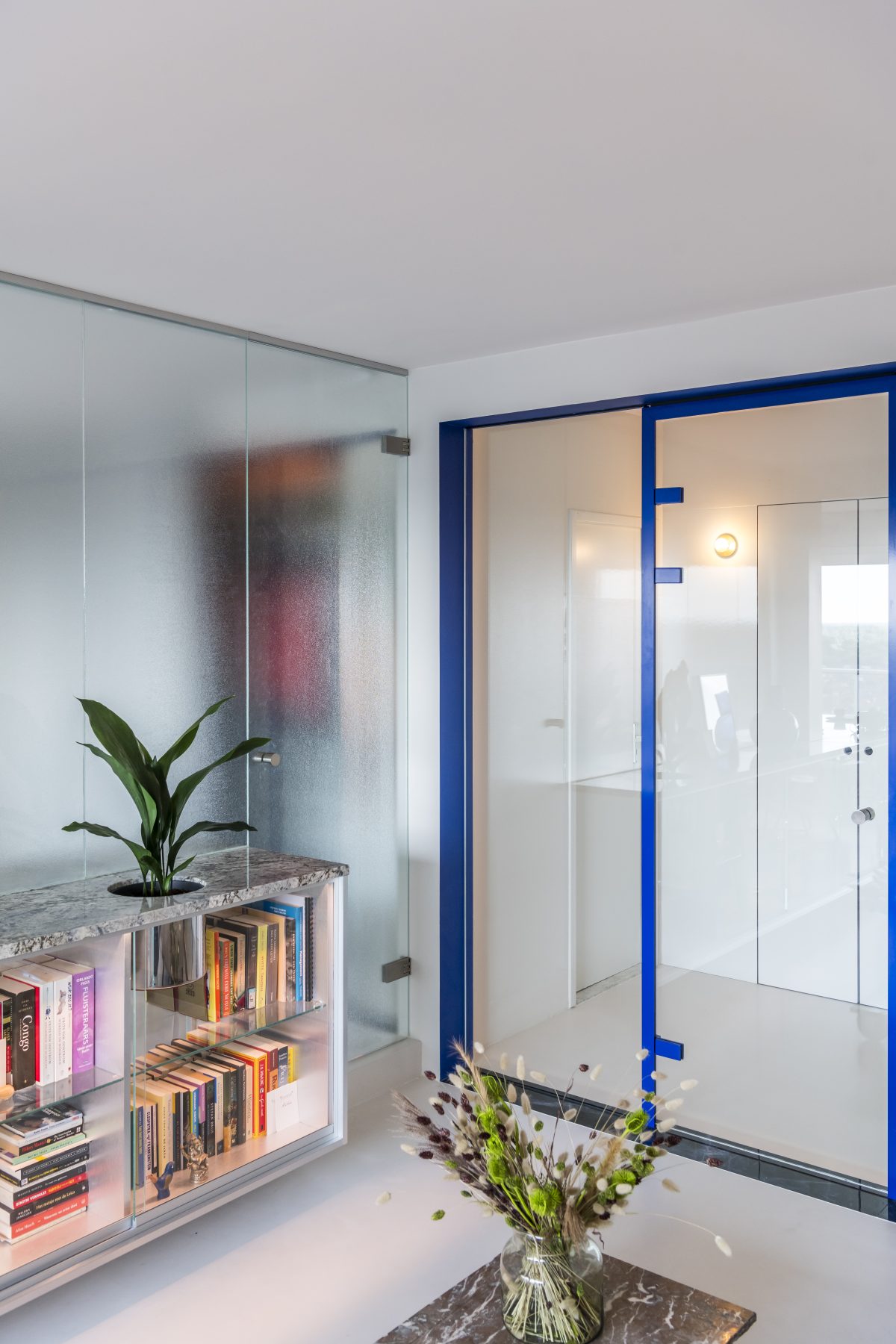
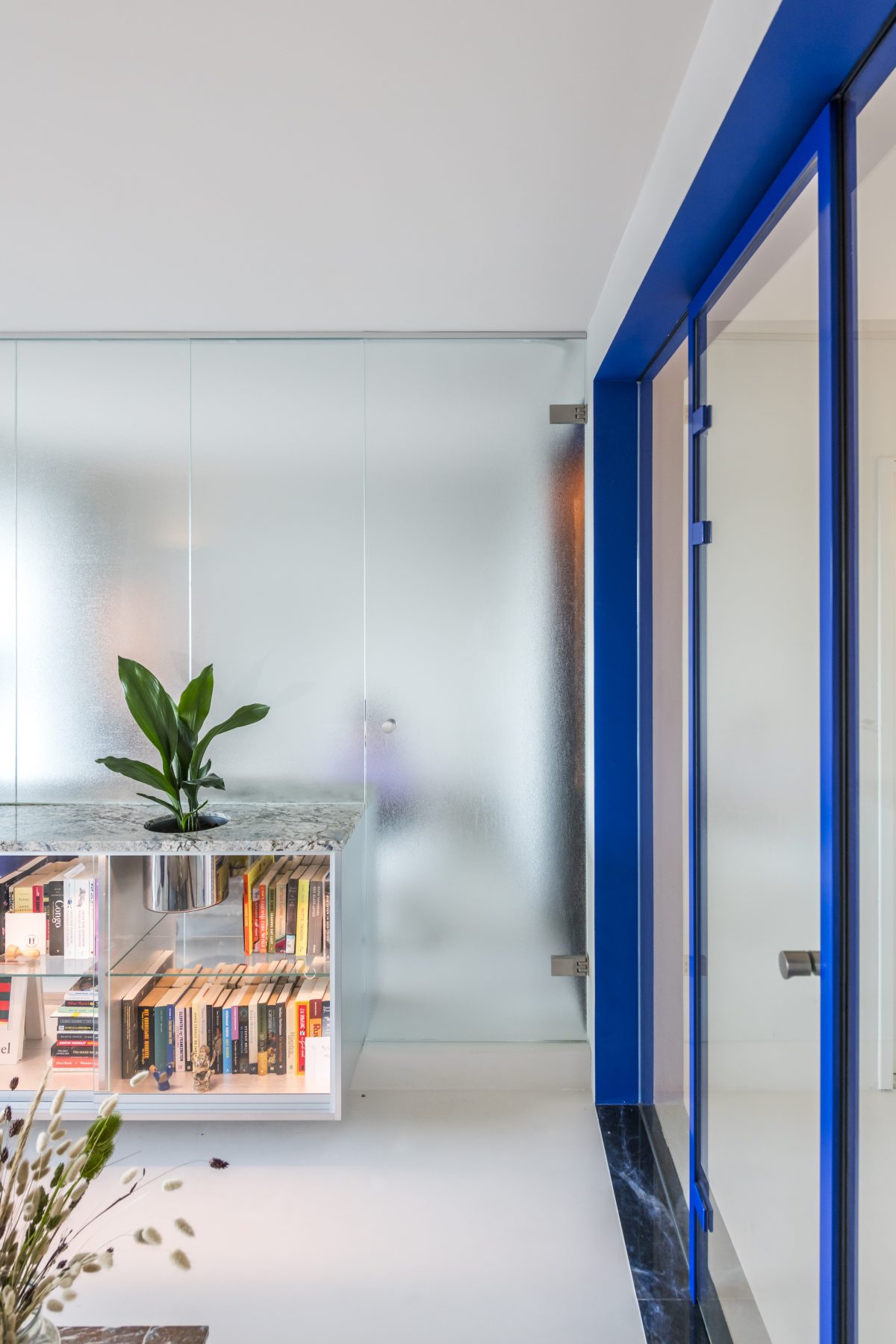
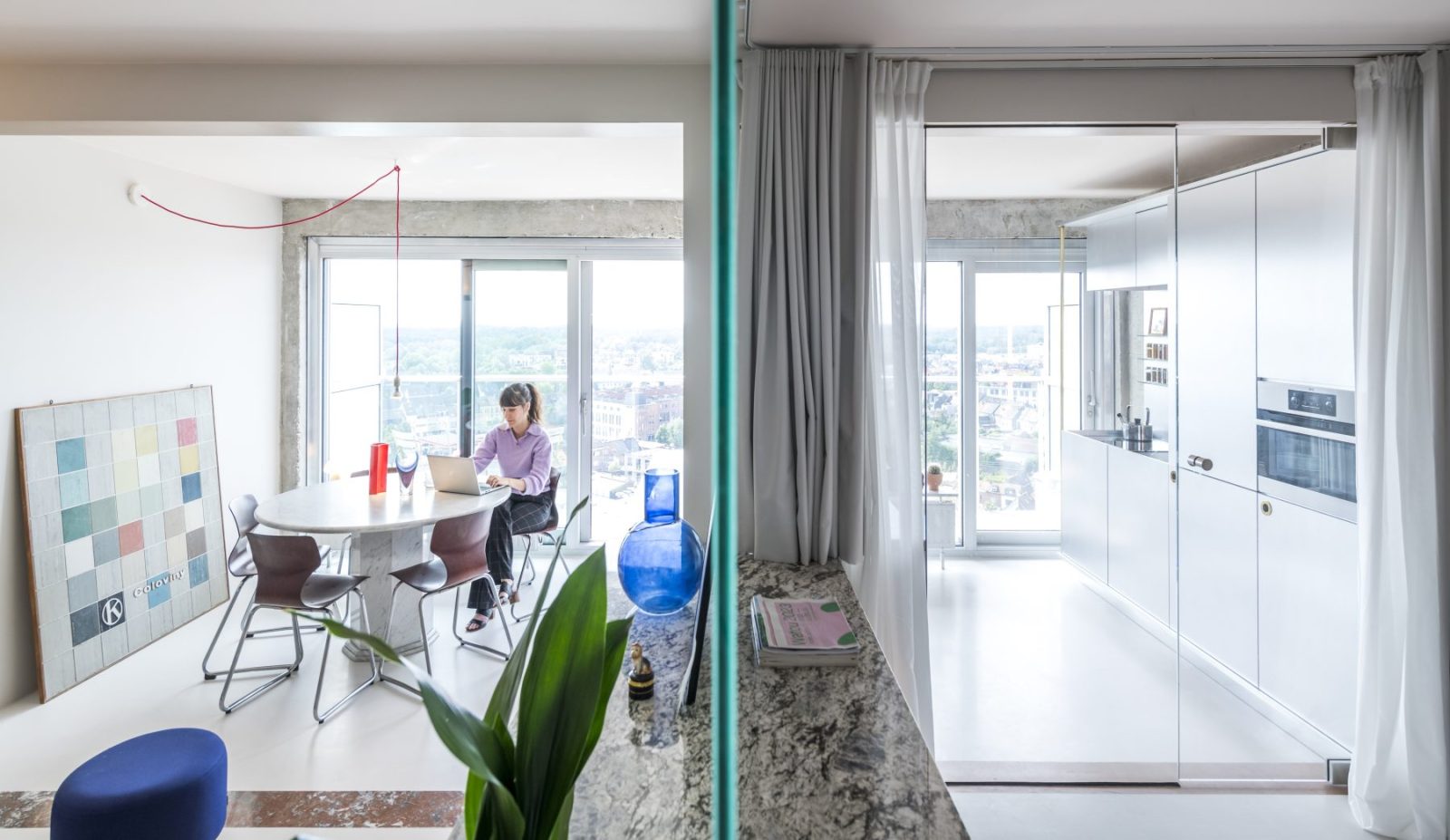
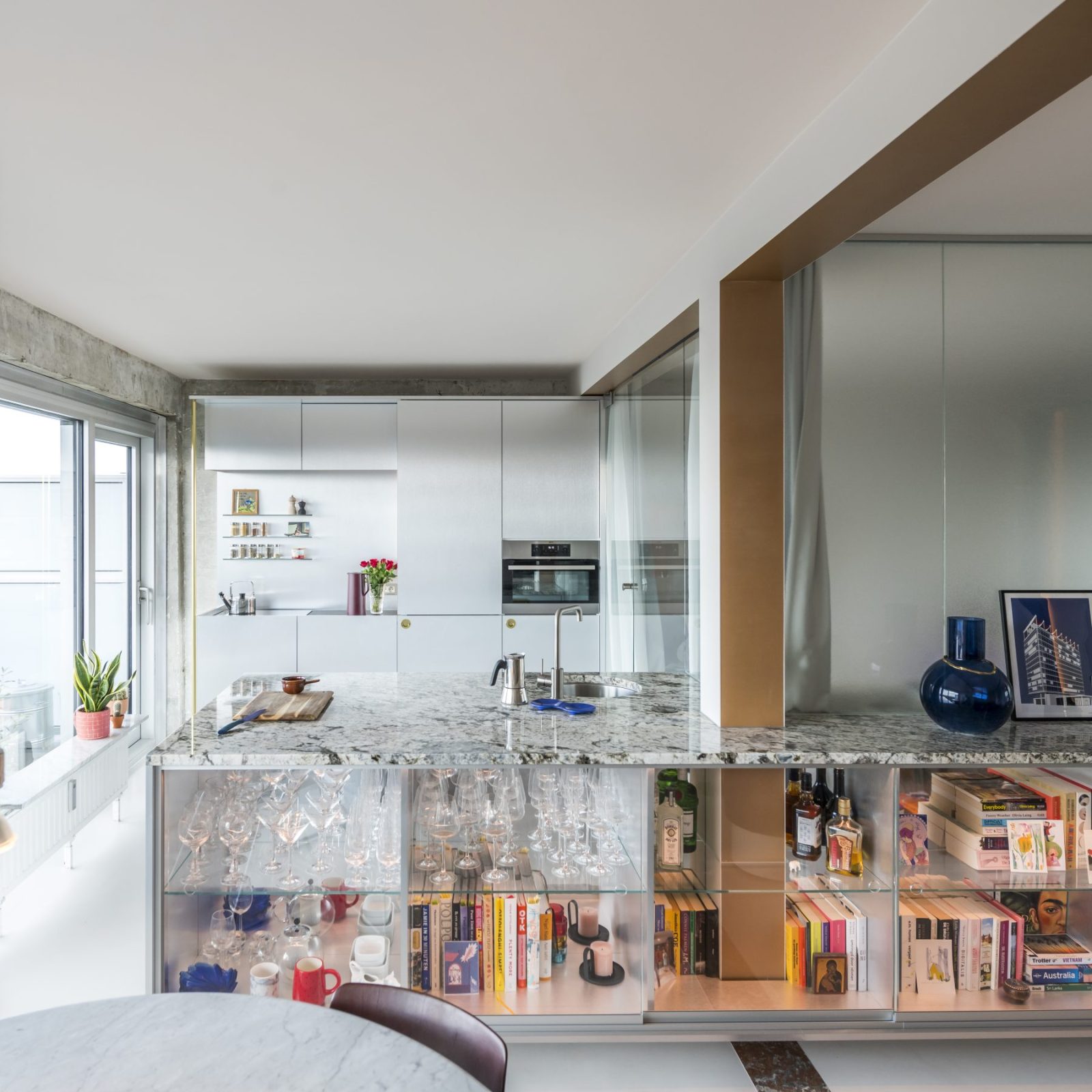
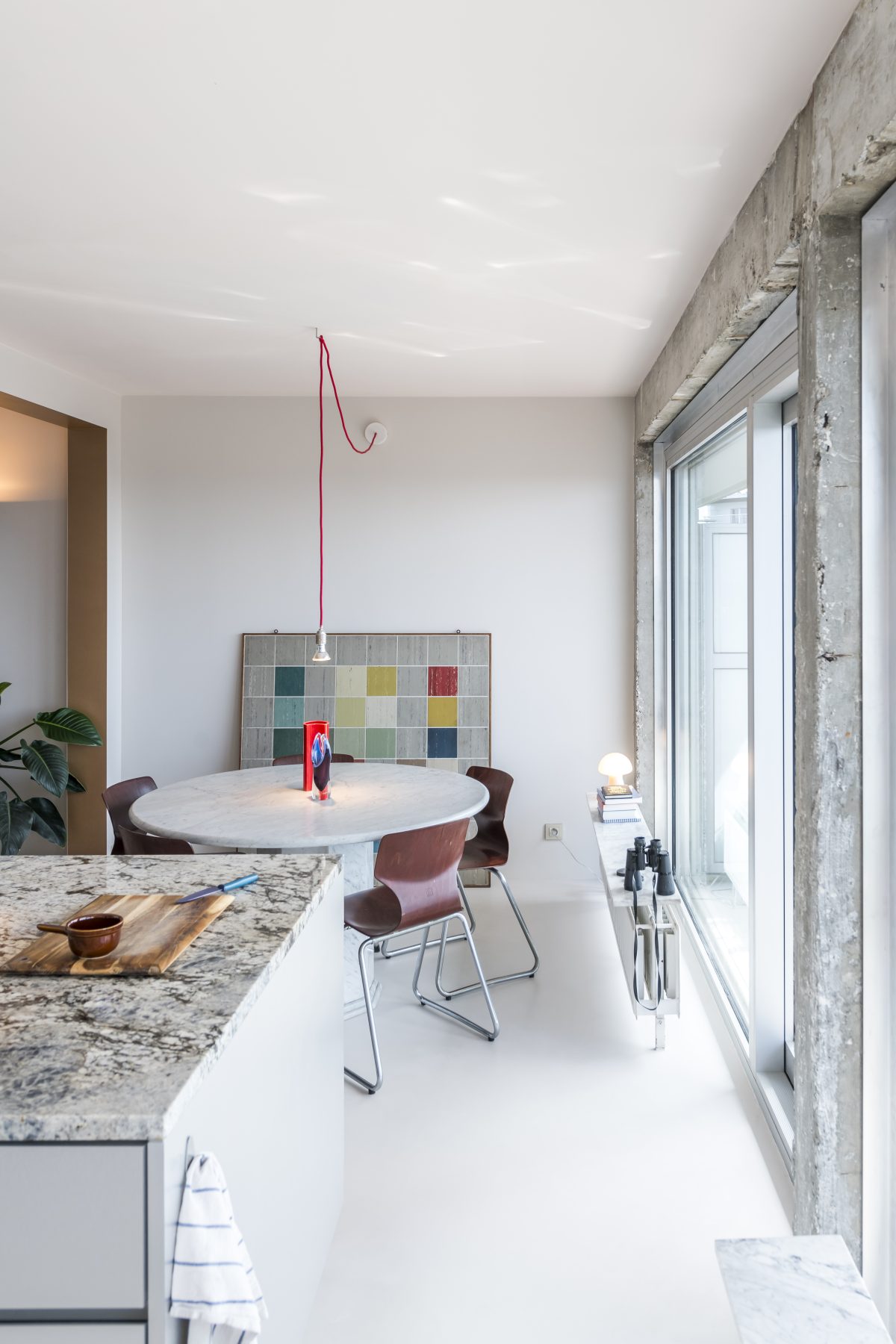
AUX radically reverses this hierarchy. The kitchen and dining space, conceived as the social heart of the apartment, are moved directly to the façade, where the panoramic view becomes part of everyday domestic life. The width of the living space doubles, and with it the perception of openness. Behind this luminous threshold unfold the bedroom, while the bathroom and entrance occupy the deepest part of the plan.
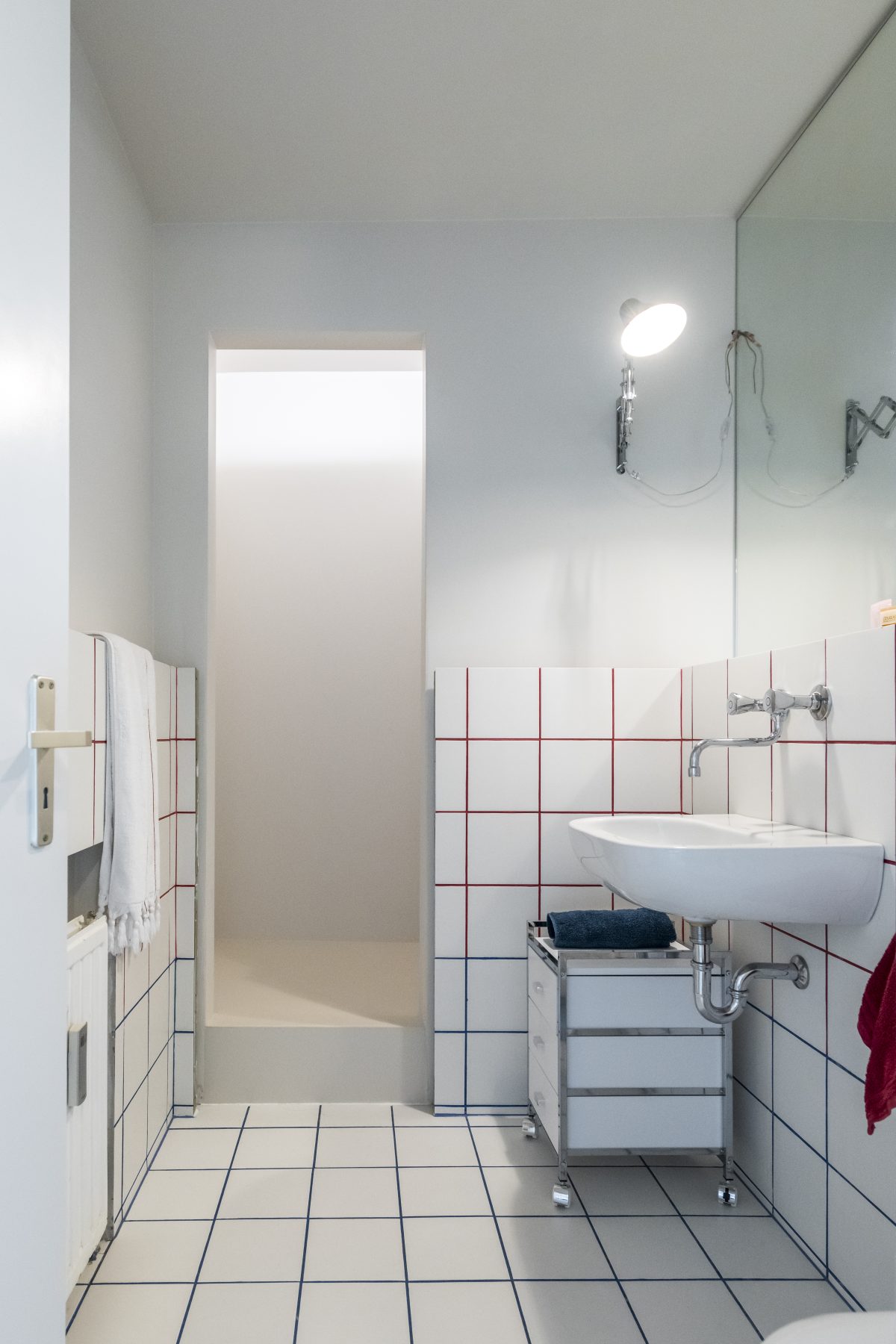
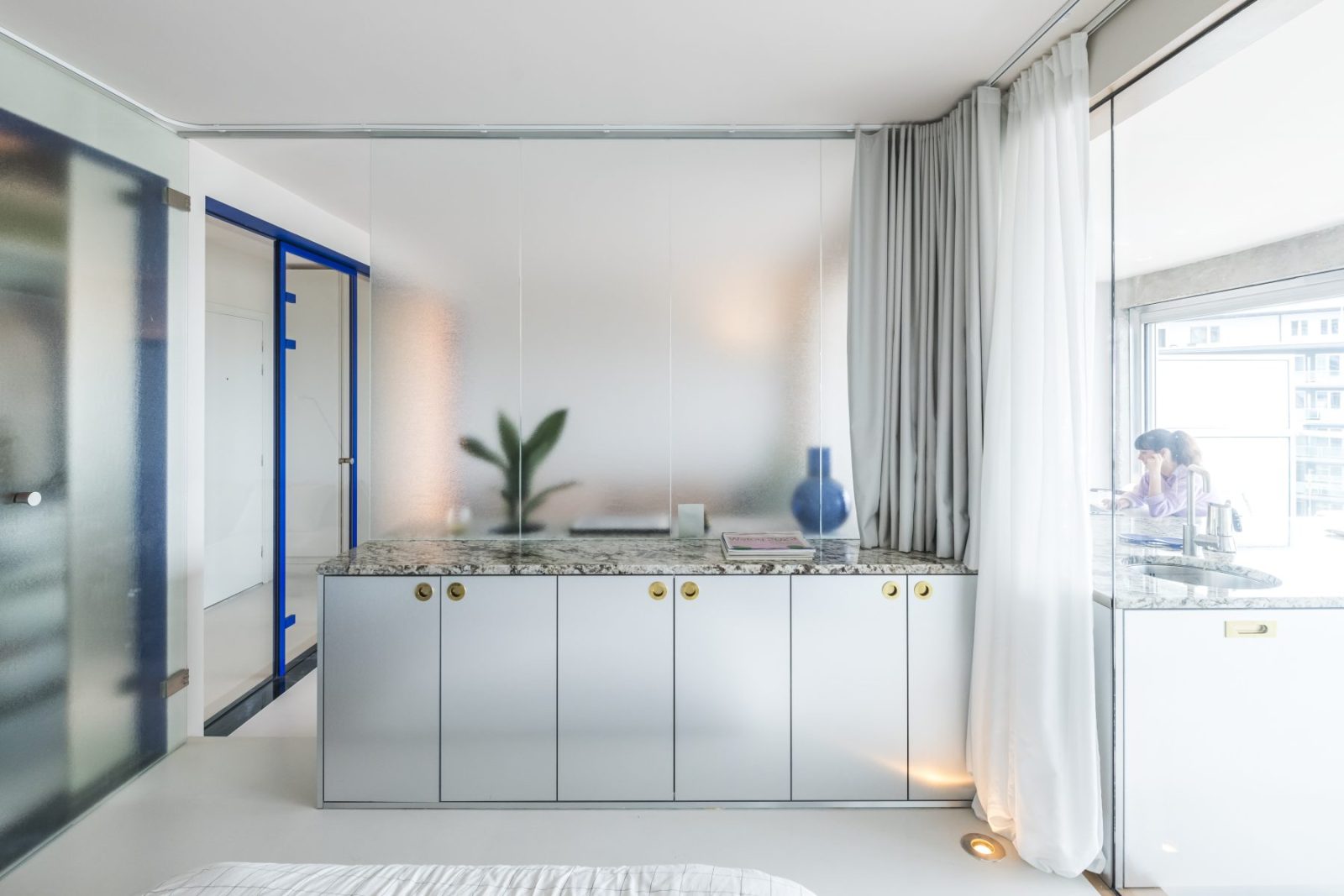
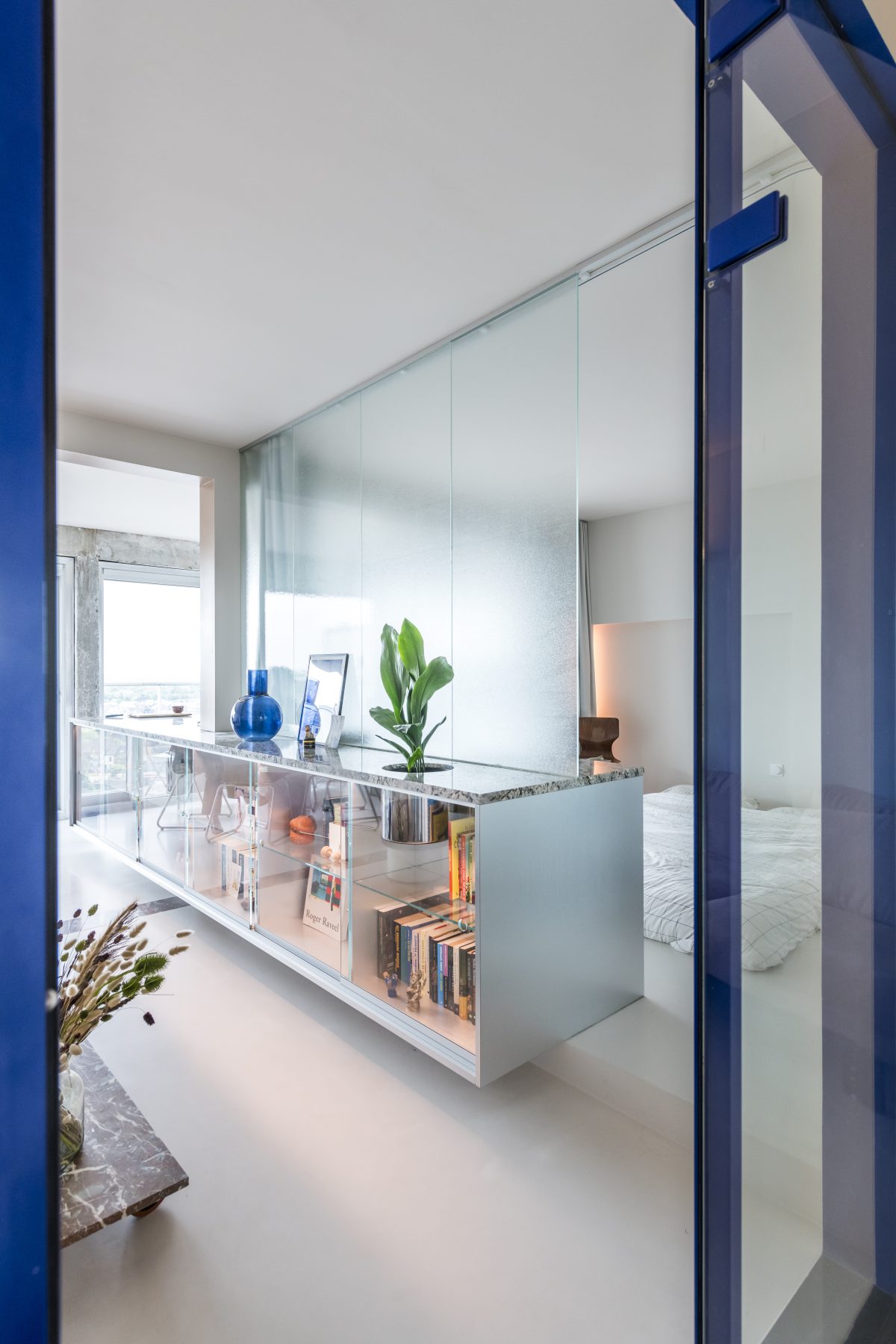
The bedroom is defined not by permanent walls but by a delicate system of interior windows and surrounding curtains that provide varying degrees of exposure, enclosure, and darkness. The white-tiled bathroom introduces a new choreography of blue and red joints referencing the chromatic language of the project and the playful aesthetic of the transition between the 1970s and 1980s.
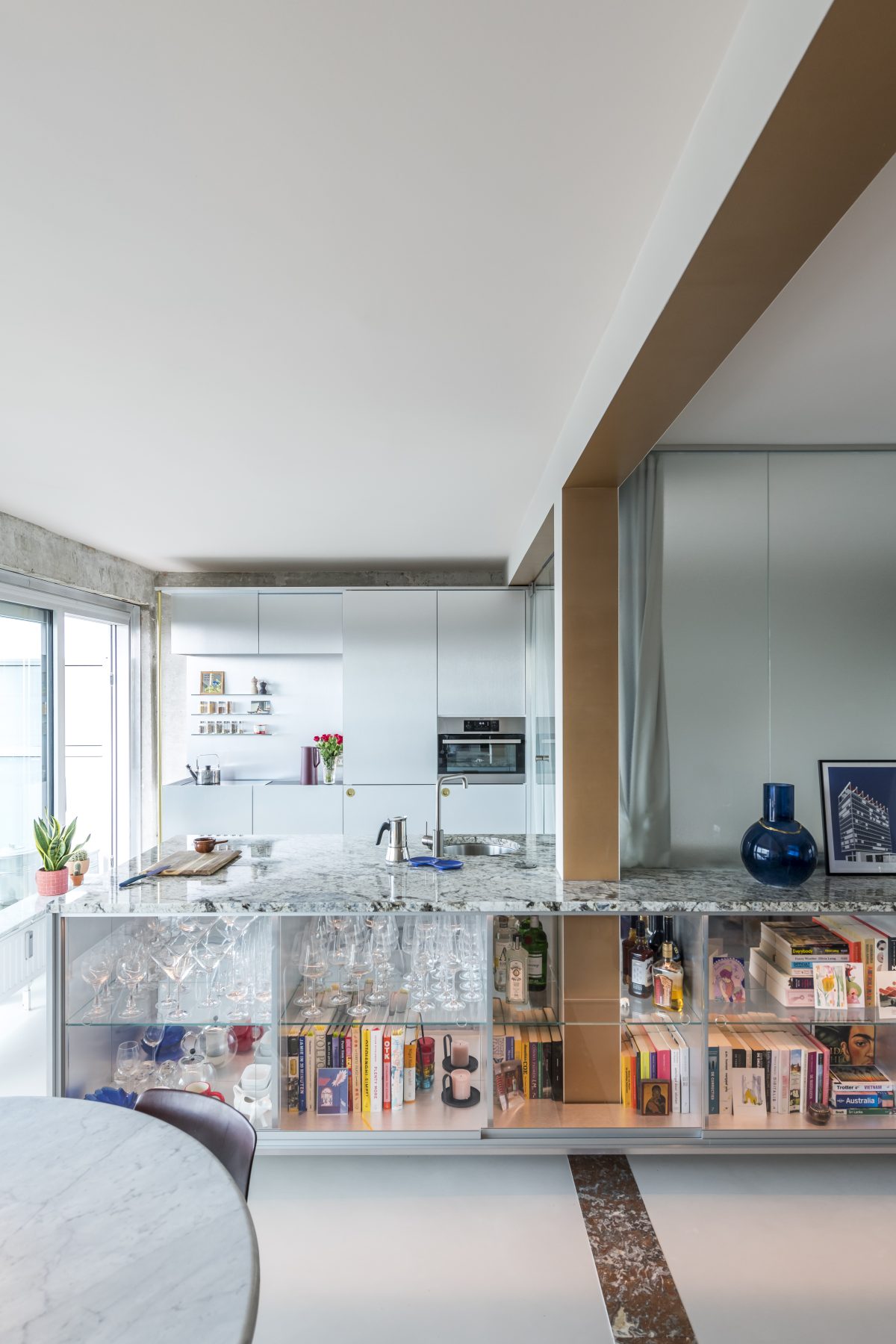
At the centre of the apartment stands a multifunctional object—a domestic monument that changes identity according to the side from which it is approached.
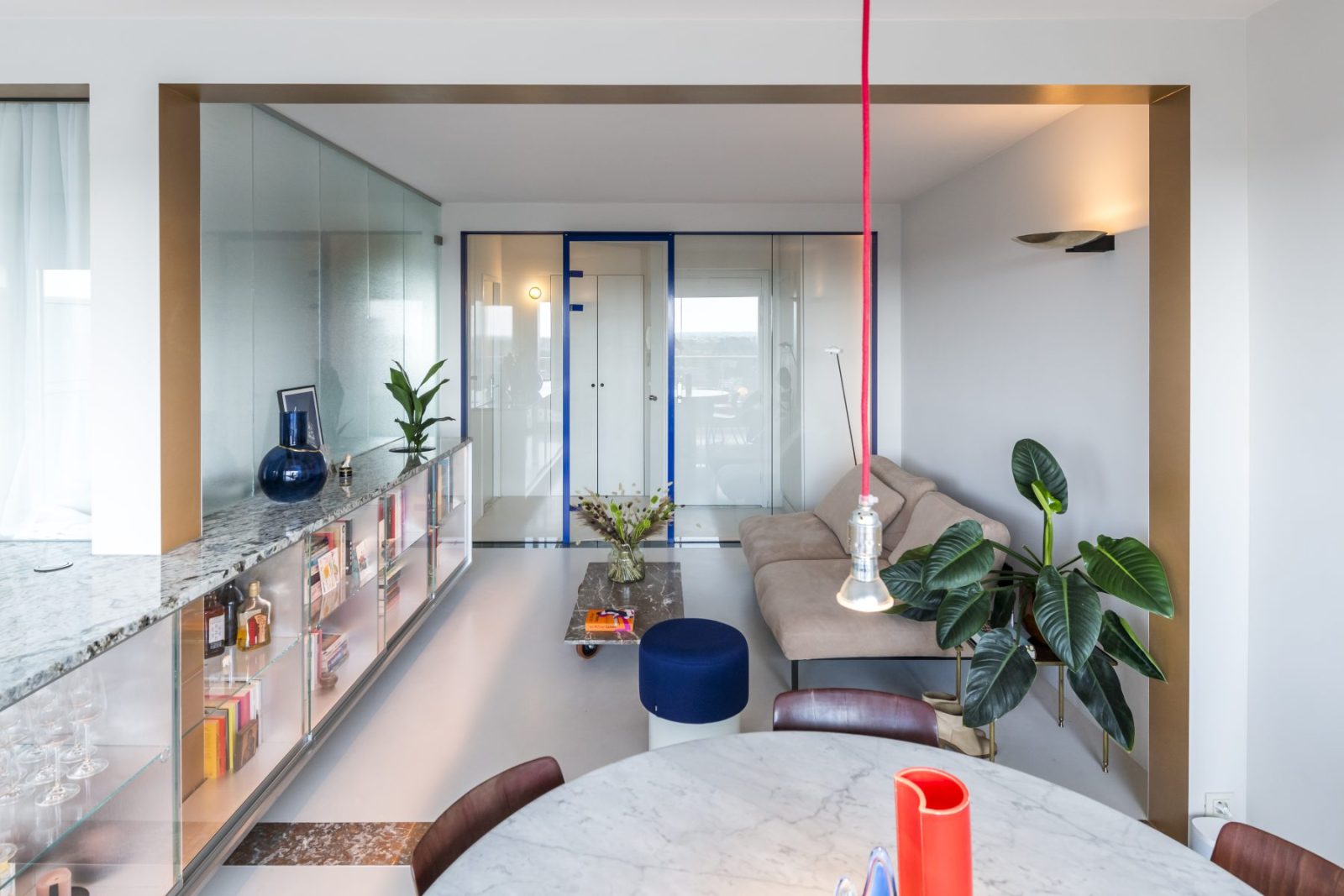
It becomes wardrobe in the bedroom, library in the sitting area, and kitchen island in the culinary space. Clad in aluminium, continuing the language of the original window frames, and crowned with a granite surface, it combines the futuristic optimism of late modernity with a subtle sense of kitsch. A mirrored back panel multiplies objects and reflections, transforming ordinary belongings into part of a cinematic, ever-changing domestic scenery.
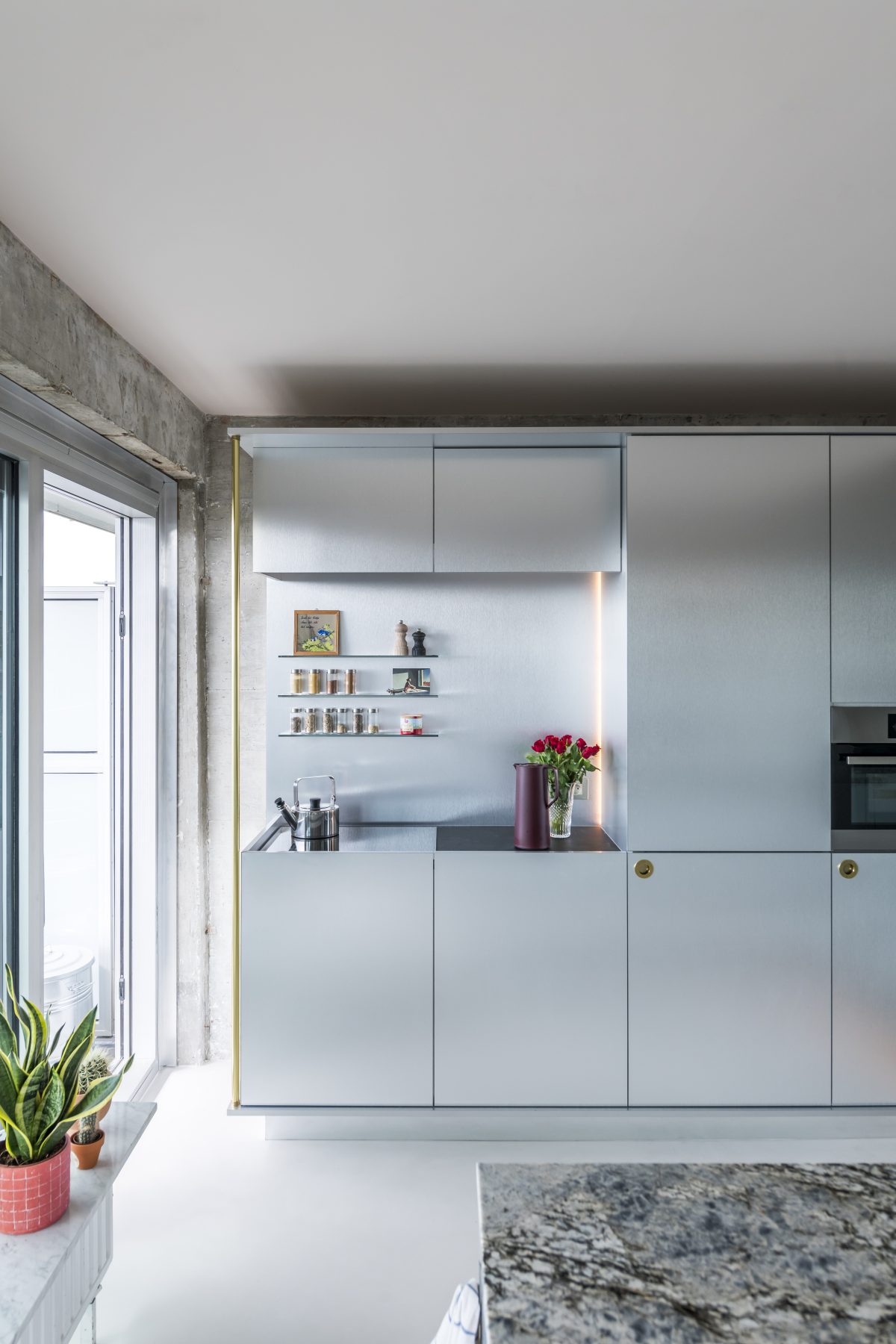
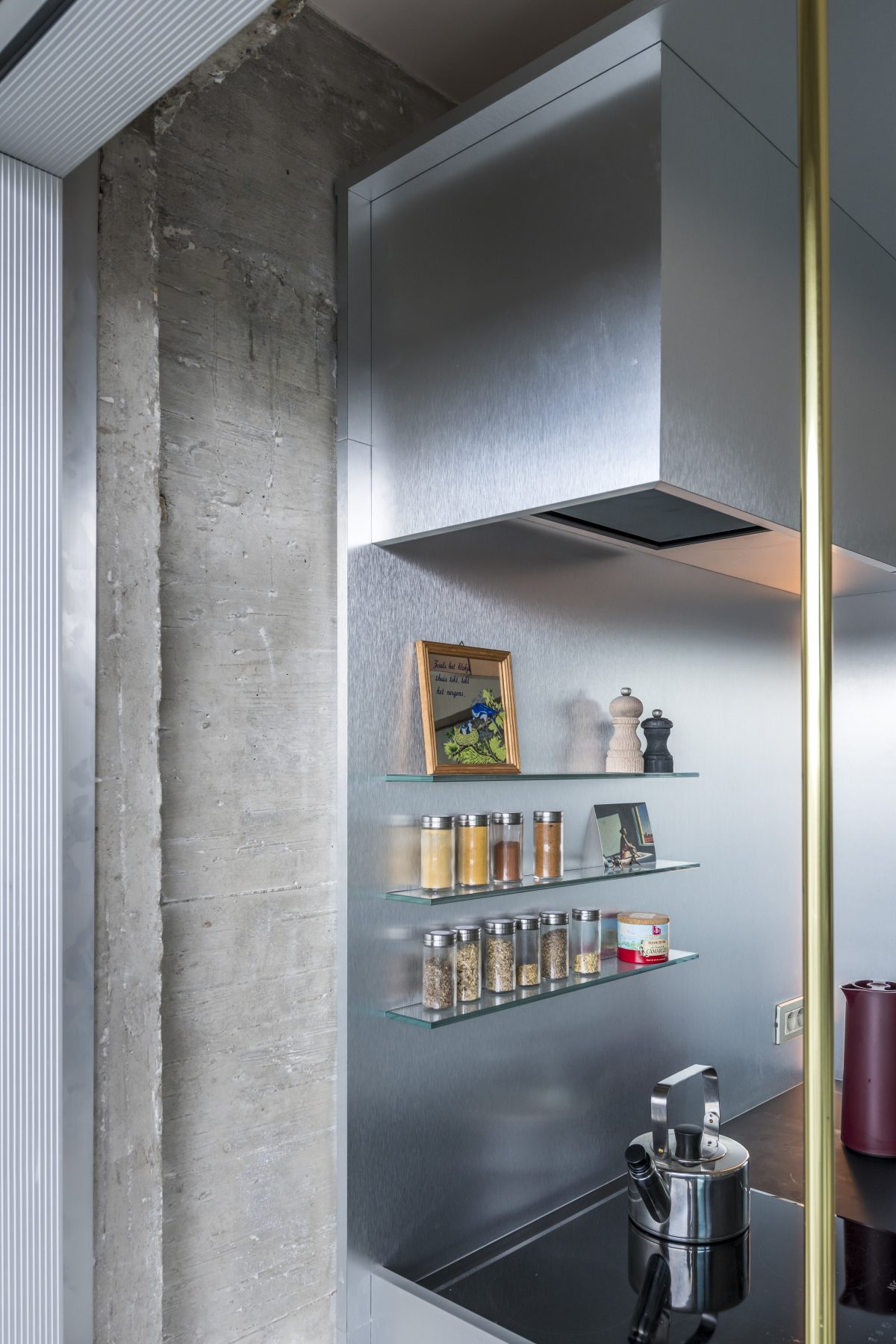
Hovering above Ghent, between the clouds and the city below, La Lys apartment anchors Hannelore within the collective body of the tower while allowing her imagination to extend beyond its walls. Embodying a contemporary understanding of home that reconciles the modern dream of collective living with the postmodern desire for individuality, it is simultaneously part of a larger machine and an intimate cosmos: a cell in a vertical city, and a private world of its own.
Facts & Credits
Project title La Lys Apartment
Typology Stories of Contemporary Domesticity, Renovation, Residential
Episode 22nd
Location Ghent, Belgium
Status Completed, 2022
Area 55m2
Architecture AUX
Lead Architects Wouter Vanheste and Thomas De Roeck
Photography Luc Roymans
References
Bachelard, G. (1958) The Poetics of Space. Boston: Beacon Press.
Le Corbusier (1923) Vers une Architecture. Paris: Éditions Crès.
Venturi, R. (1966) Complexity and Contradiction in Architecture. New York: The Museum of Modern Art.
Eliot, T.S. (1940) East Coker. In: Four Quartets. London: Faber & Faber.