‘An Architecture of Care’ series curated by Archt., explores how inclusive design reshapes contemporary architectural discourse, framing spatial practice as an act of poetic care, social engagement, and embodied experience.
In the second episode, we follow the Dutch studio Monadnock as it reimagines the site of a former care facility in the Netherlands into an inclusive, colourful social housing block, echoing Aldo van Eyck’s assertion that “a building is not just a place to be, but a way to be.”
Born in the soot and urgency of the 19th century, Dutch social housing emerged as a quiet negotiation between necessity and dignity. In cities like Amsterdam and Rotterdam, brick by brick, it answered the crush of industry with order, light, and shared space. Early workers’ cooperatives imagined community as architecture, framing housing as a collective endeavor and embedding solidarity in brick and street. Postwar modernist estates reimagined this ambition at scale, privileging light, air, and repetition, yet often testing the limits of belonging.
Today, social housing softens further, returning to the human scale: courtyards that breathe, thresholds that invite, materials that speak gently.
Always evolving, it remains a civic promise—housing not as shelter alone, but as a form of collective care that reconciles density with intimacy, material restraint with warmth, and architecture with the quiet rituals of shared everyday life.

Within this framework, Rotterdam-based architecture studio Monadnock, led by Job Floris and Sandor Naus, reads the city as a stratified organism—a fabric of elements unfolding at different speeds, where buildings persist as slow, resilient forms, open to shifting uses and cultural paradigms. Their name, drawn from the Monadnock Block in Chicago, US—the tallest load-bearing brick building ever constructed—signals a commitment to material continuity and endurance. In Hilversum, a compact, green suburb southeast of Amsterdam, this lineage is reinterpreted in Volante: a colourful landmark of custom-moulded brick, where the Dutch tradition of social housing is renewed with a heightened sense of civic presence.
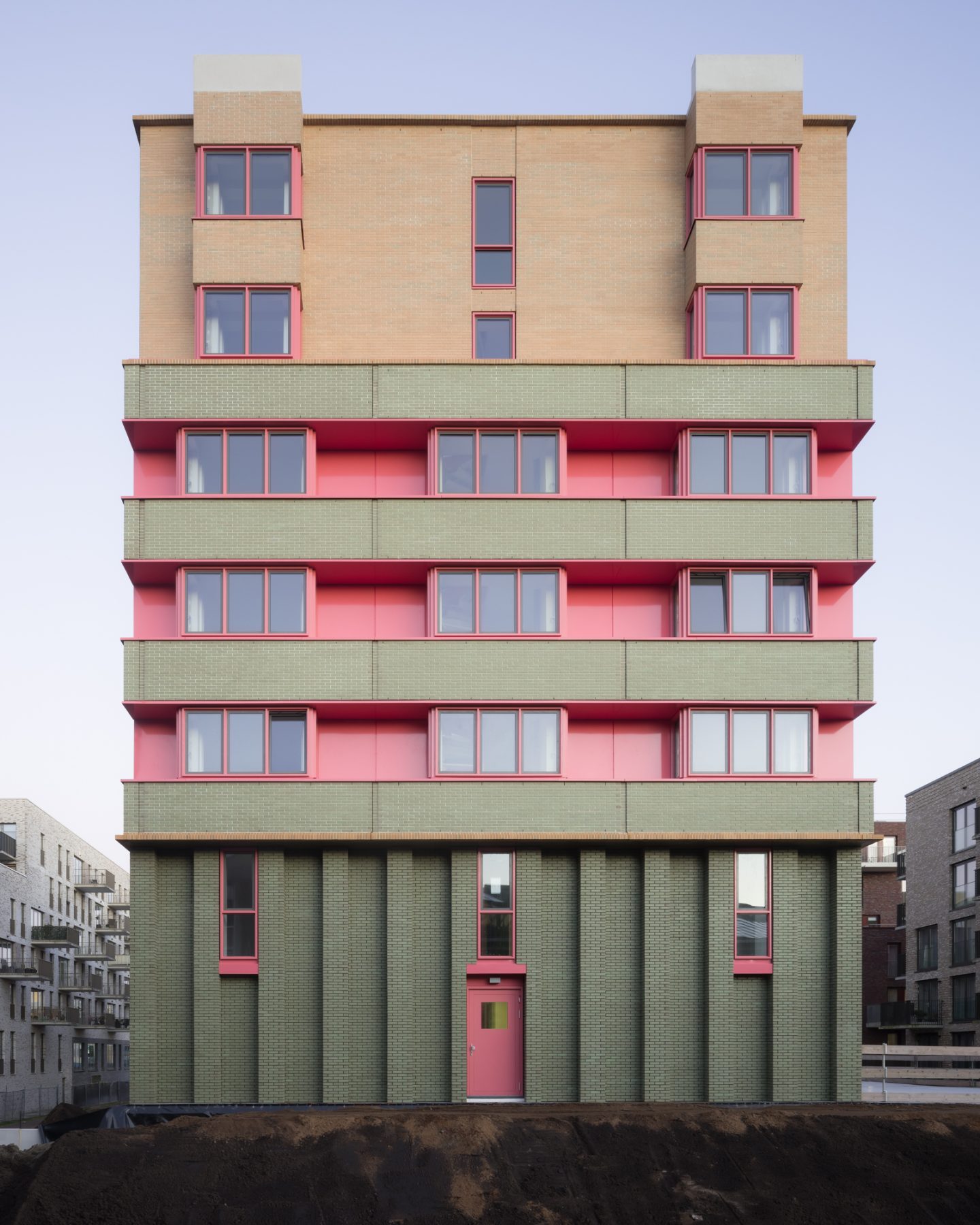
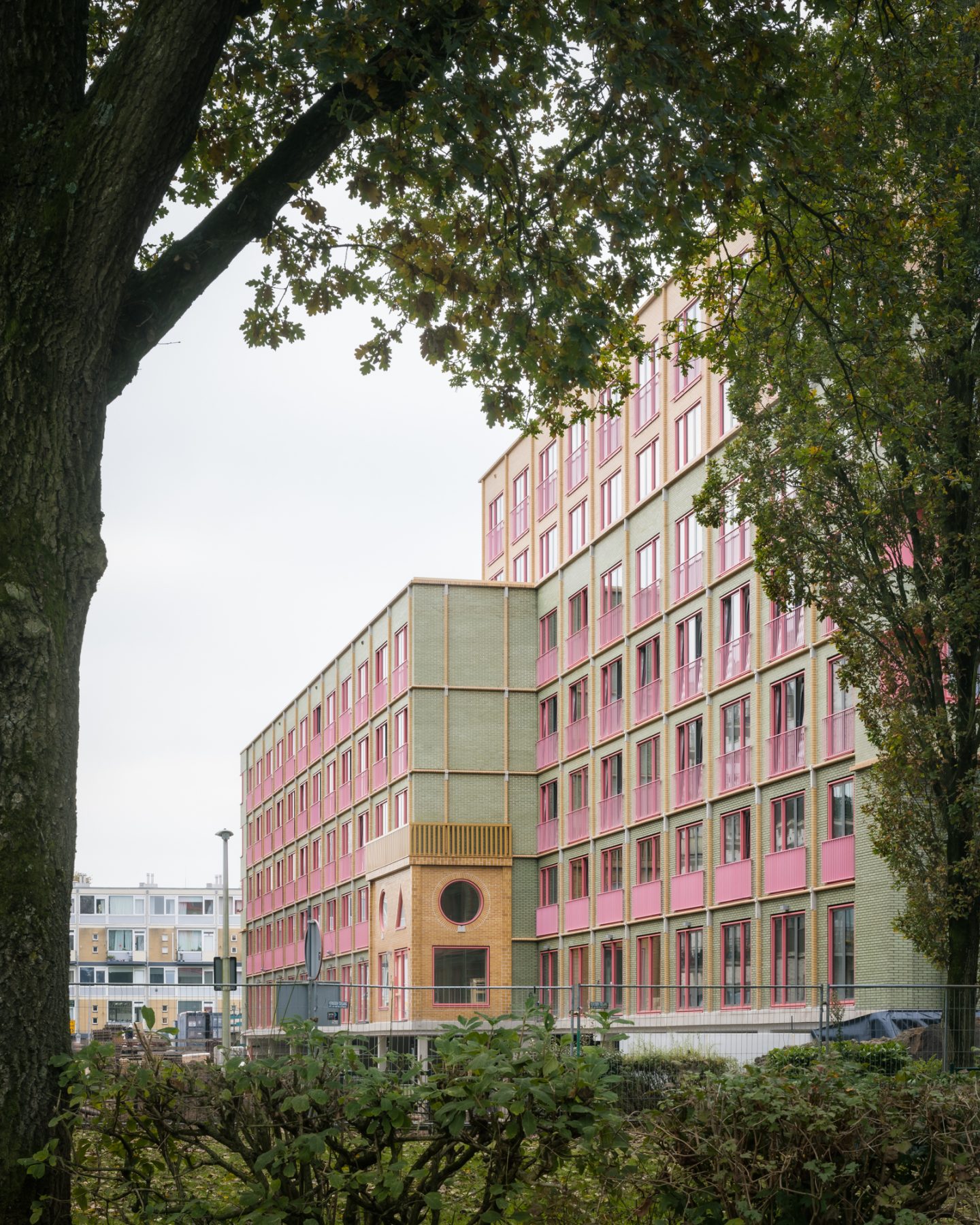
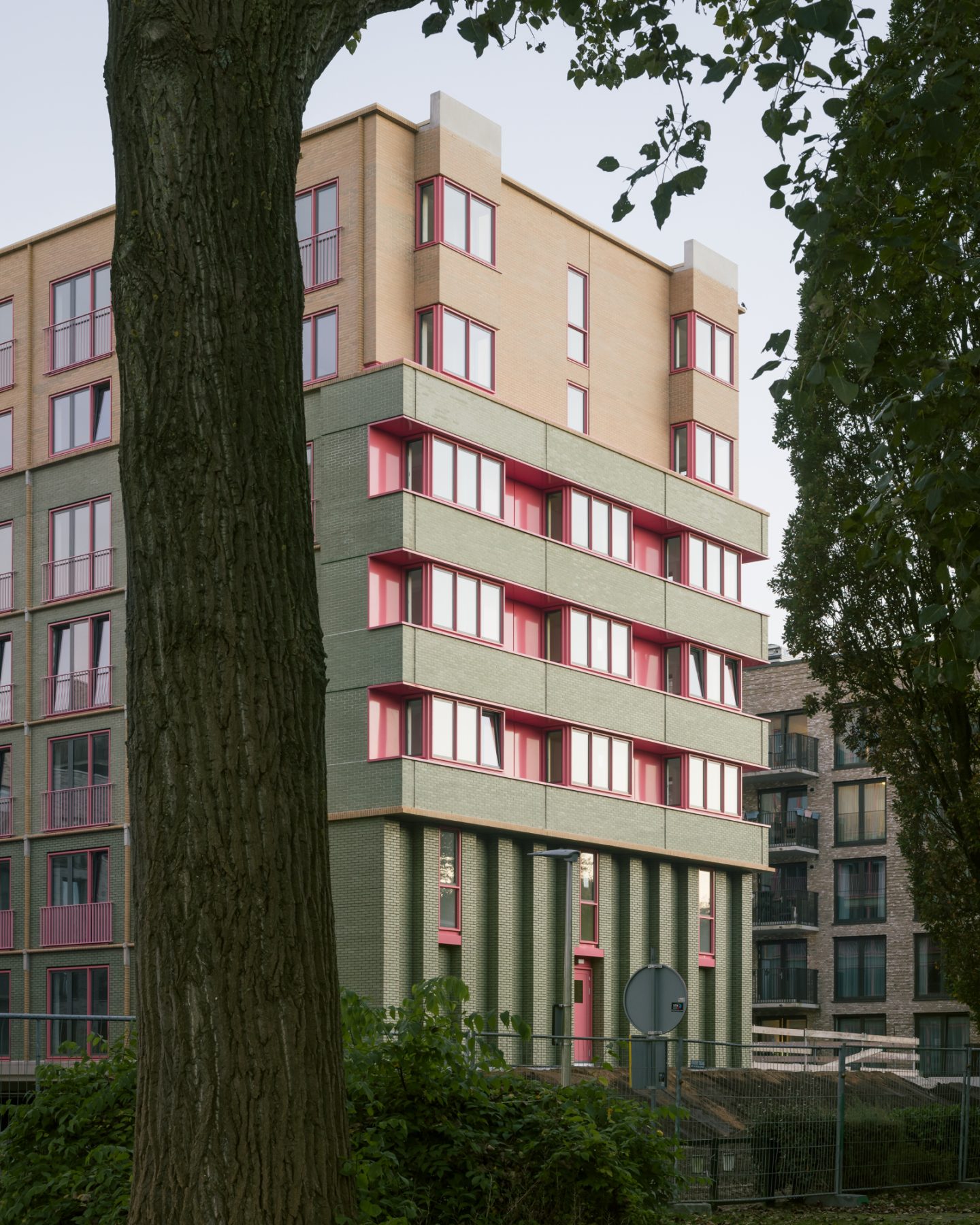
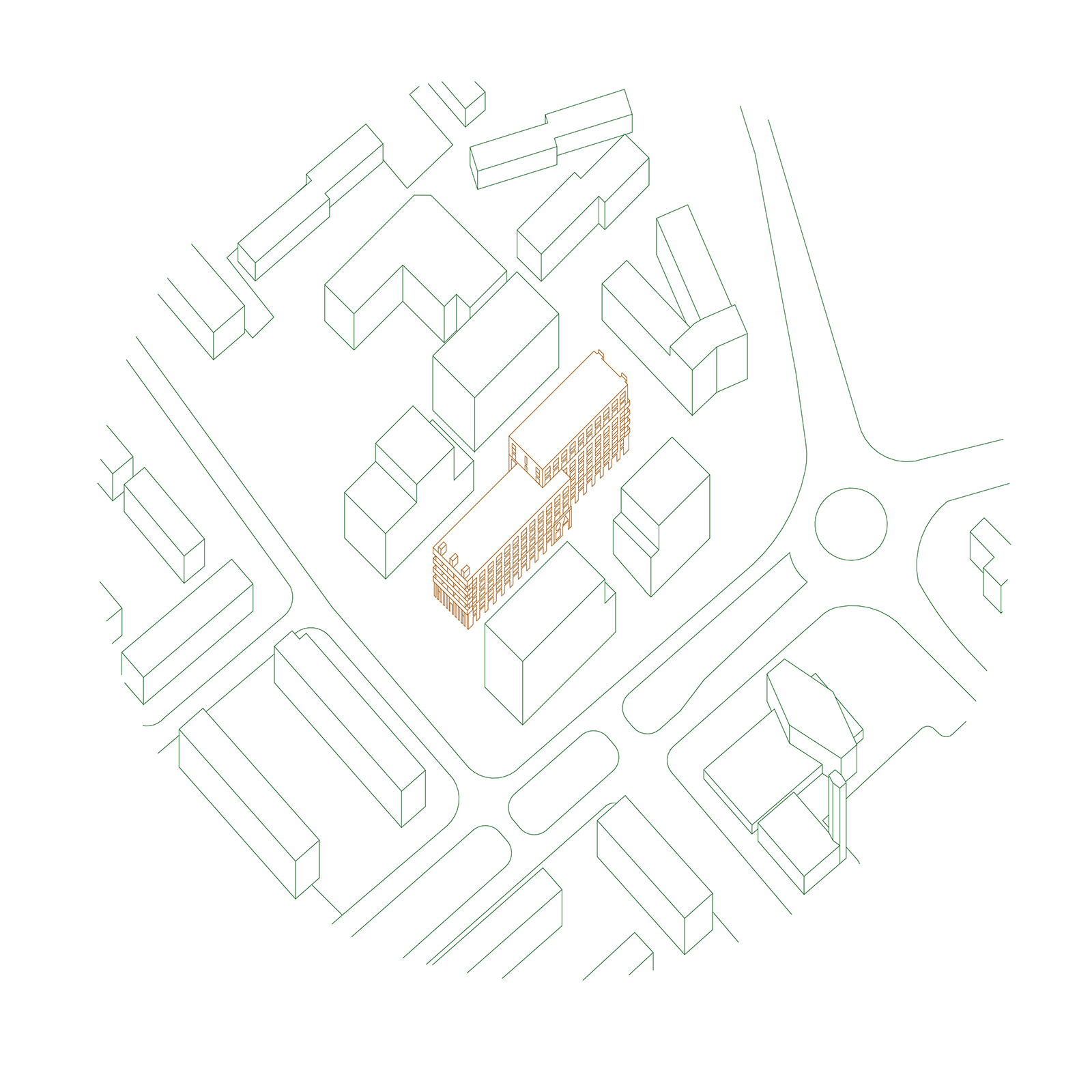
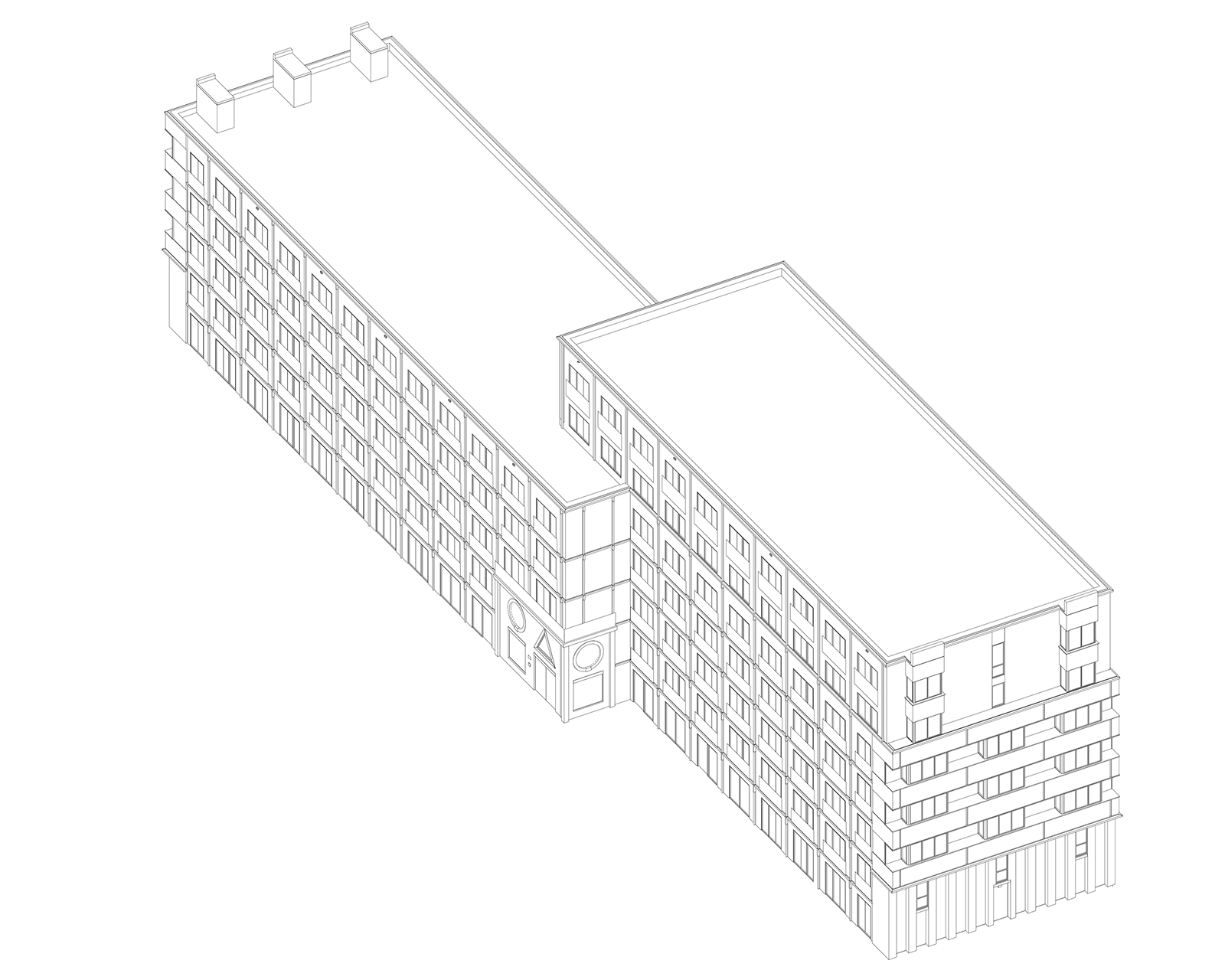
Rising between five and seven storeys, the project accommodates 108 social rental apartments—including 22 for young people with disabilities and 30 care homes—enabling a lively, layered community.
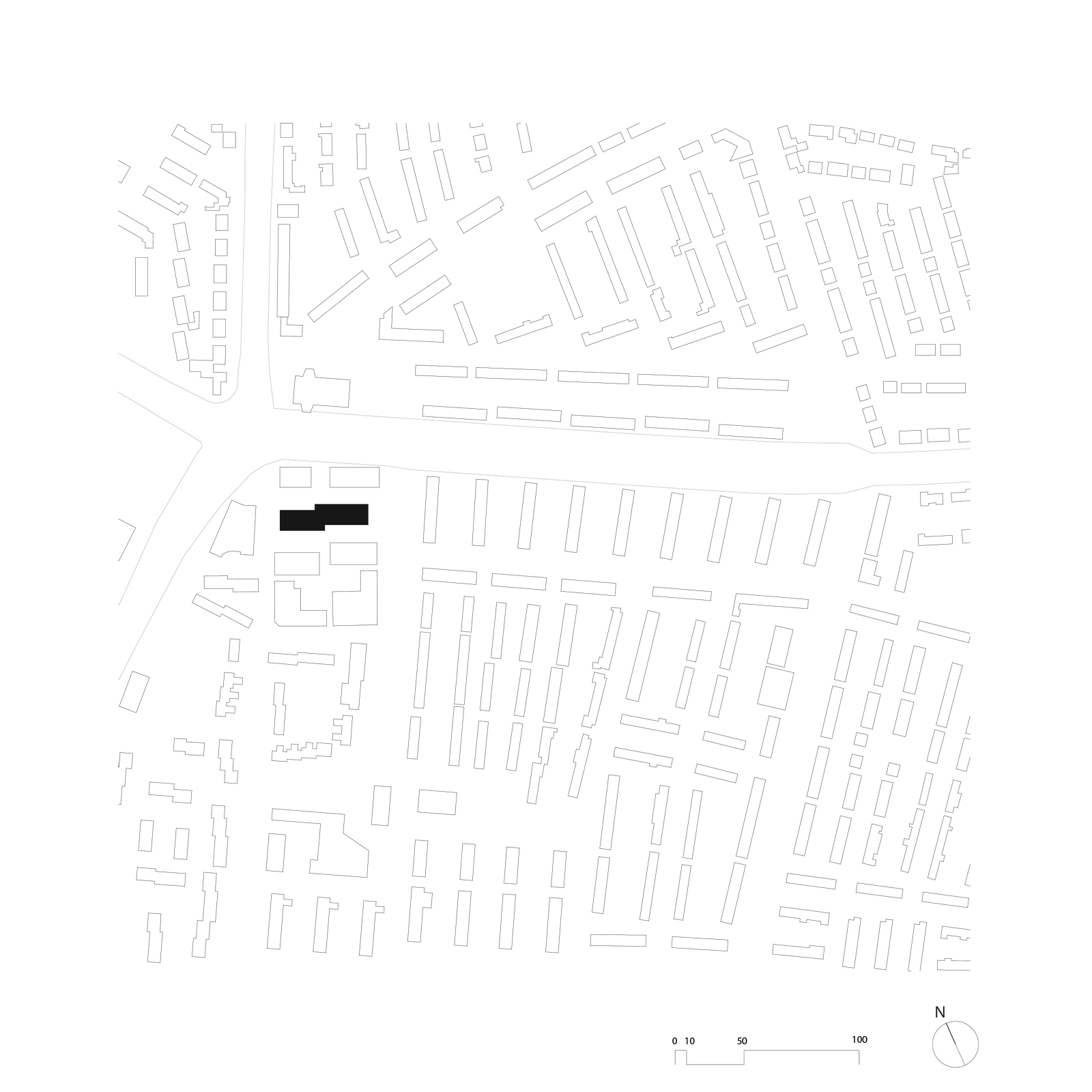
As part of a broader densification operation, the Nieuw-Zuid project introduces an ensemble of five buildings into a 1950s neighbourhood of porch flats and abundant greenery, incorporating a physiotherapy practice, a children’s nursery, and a restaurant.
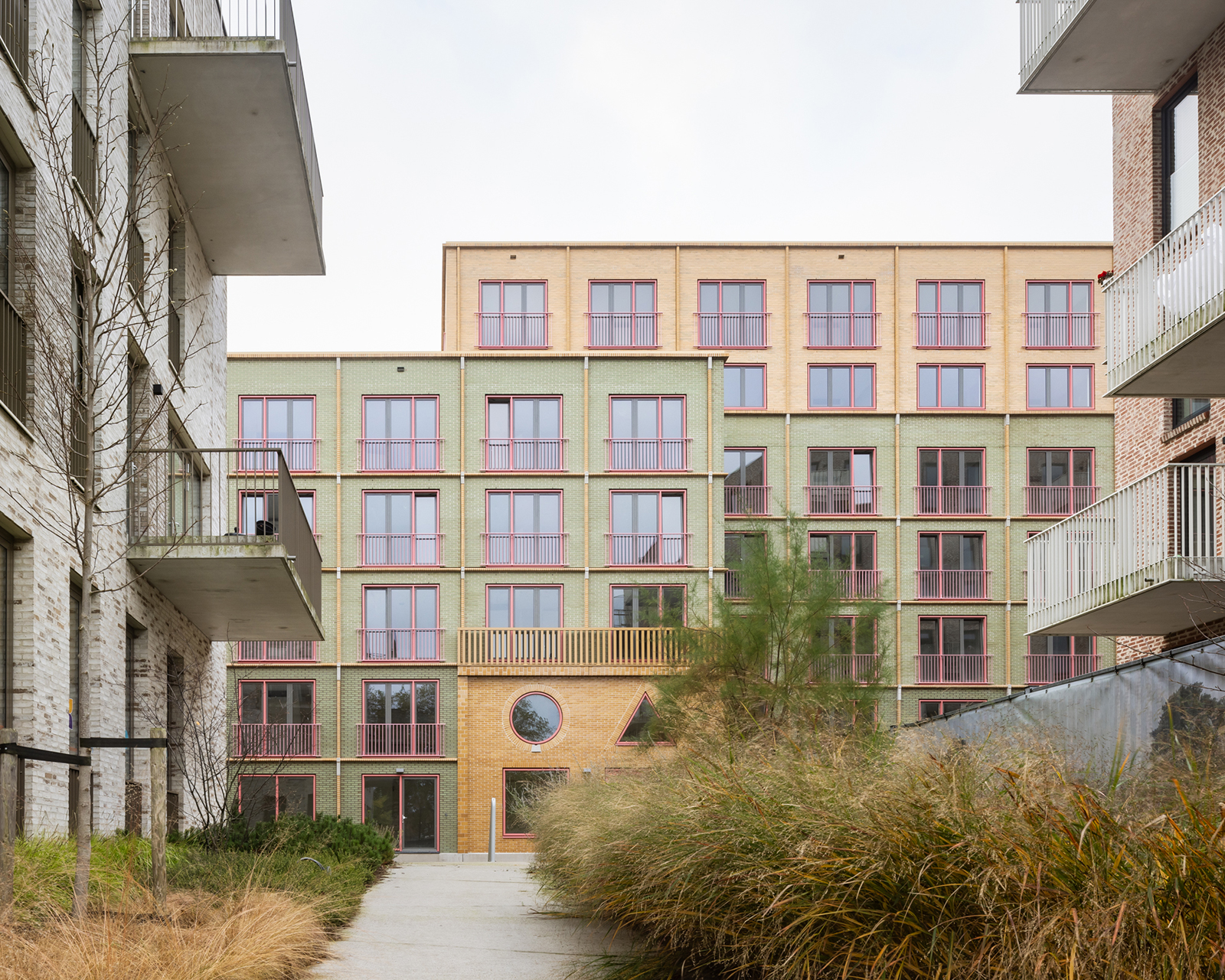
Volante is one of these buildings exemplifying a new generation of Dutch social housing: inclusive, socially attentive, and spatially expressive.
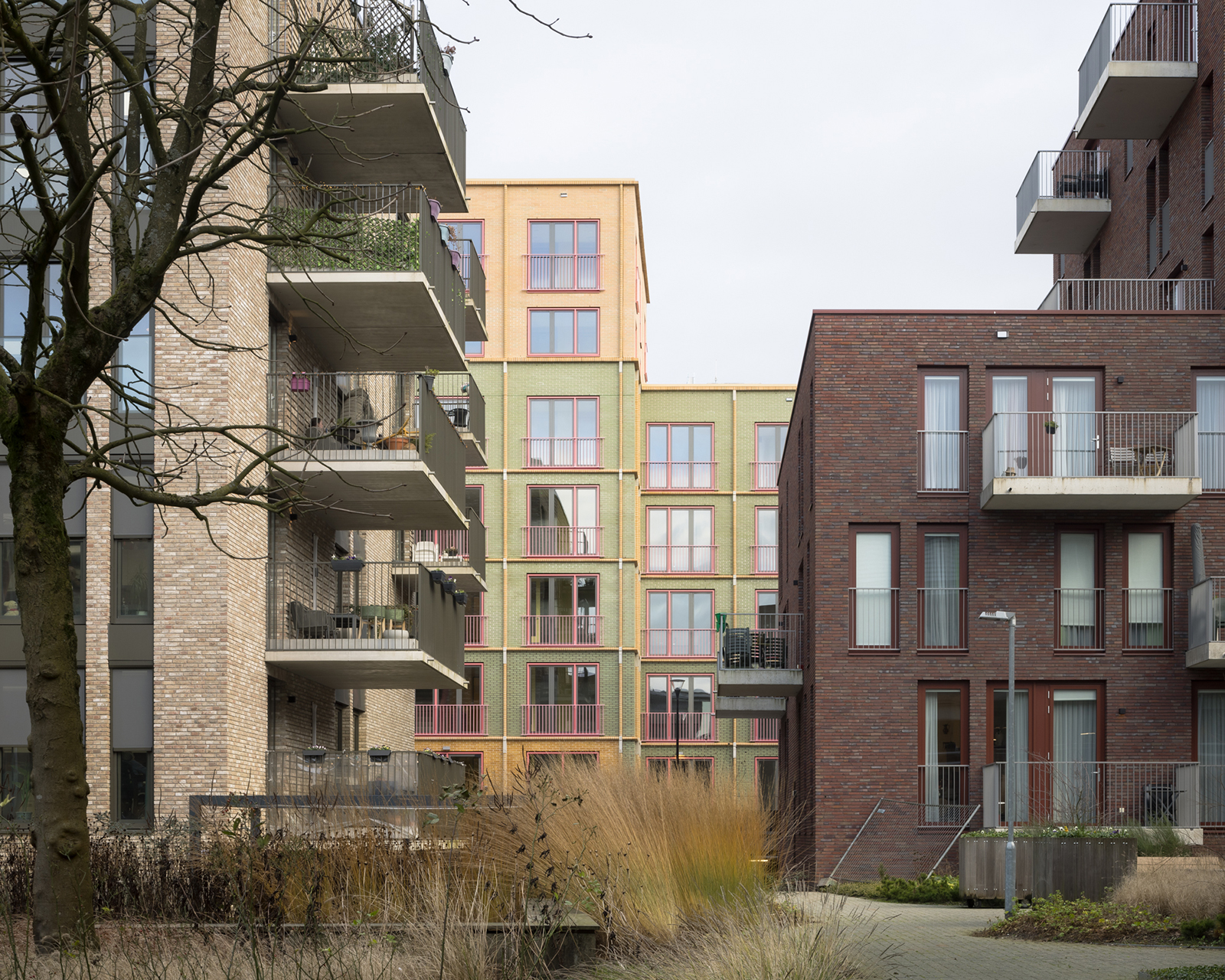
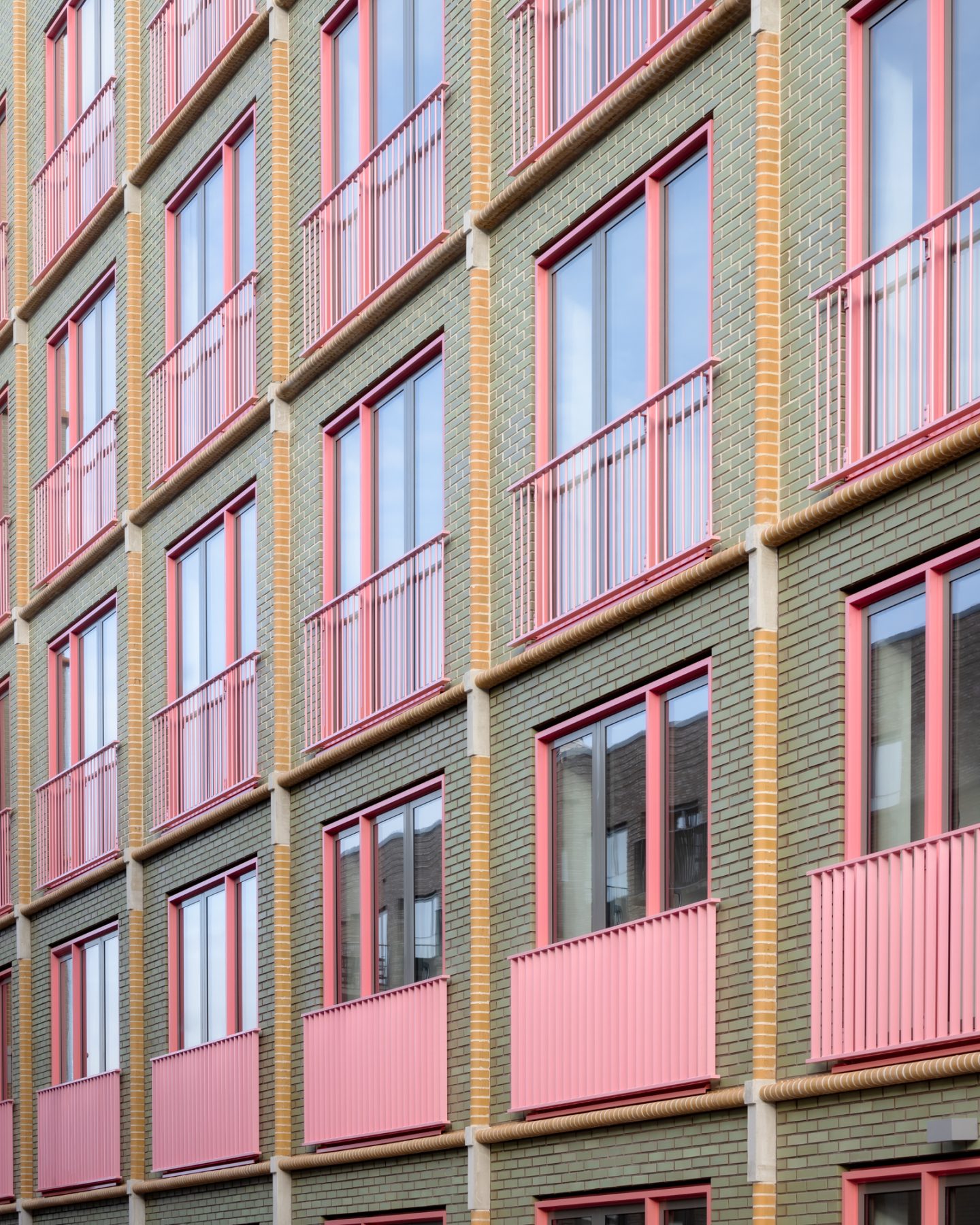
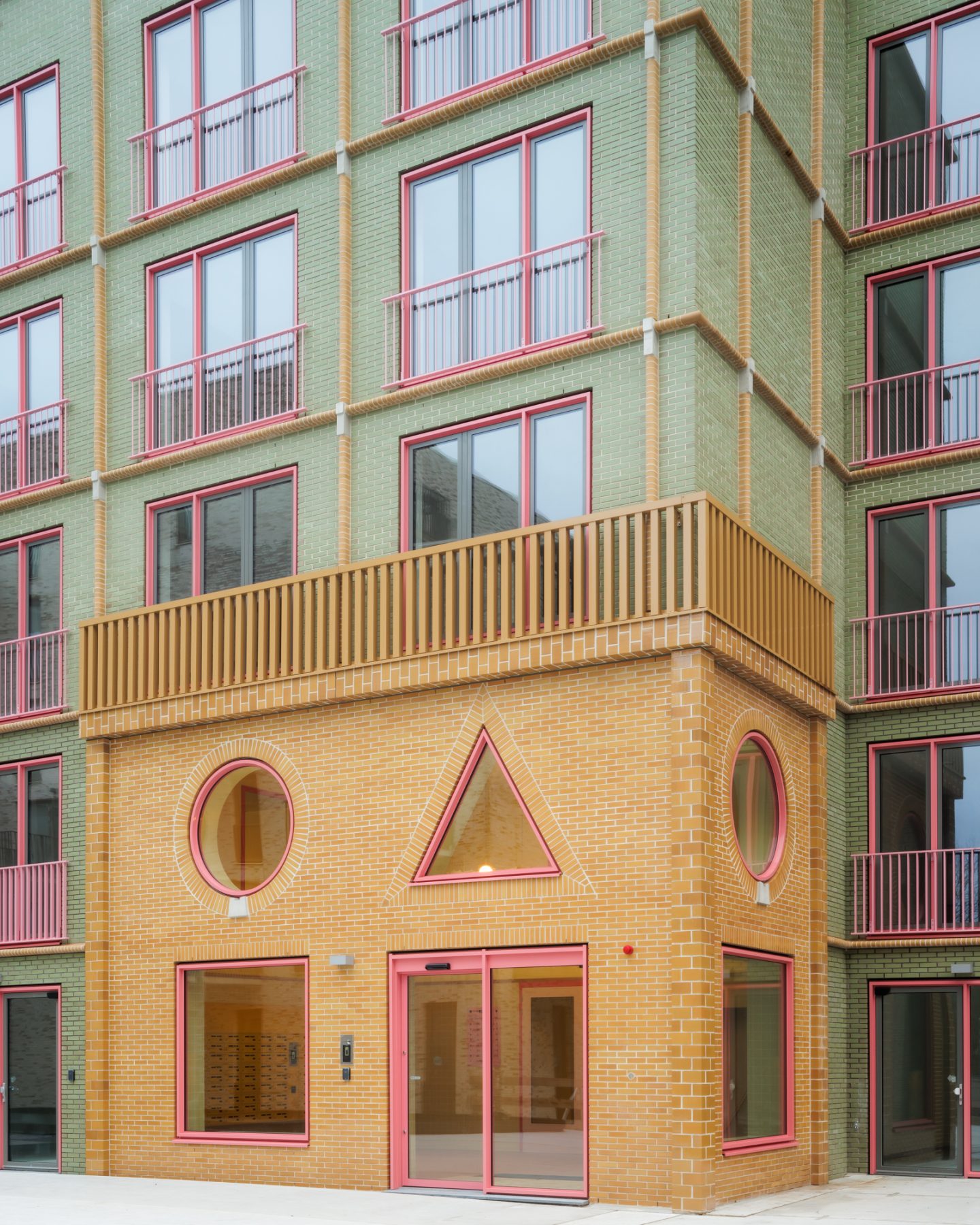
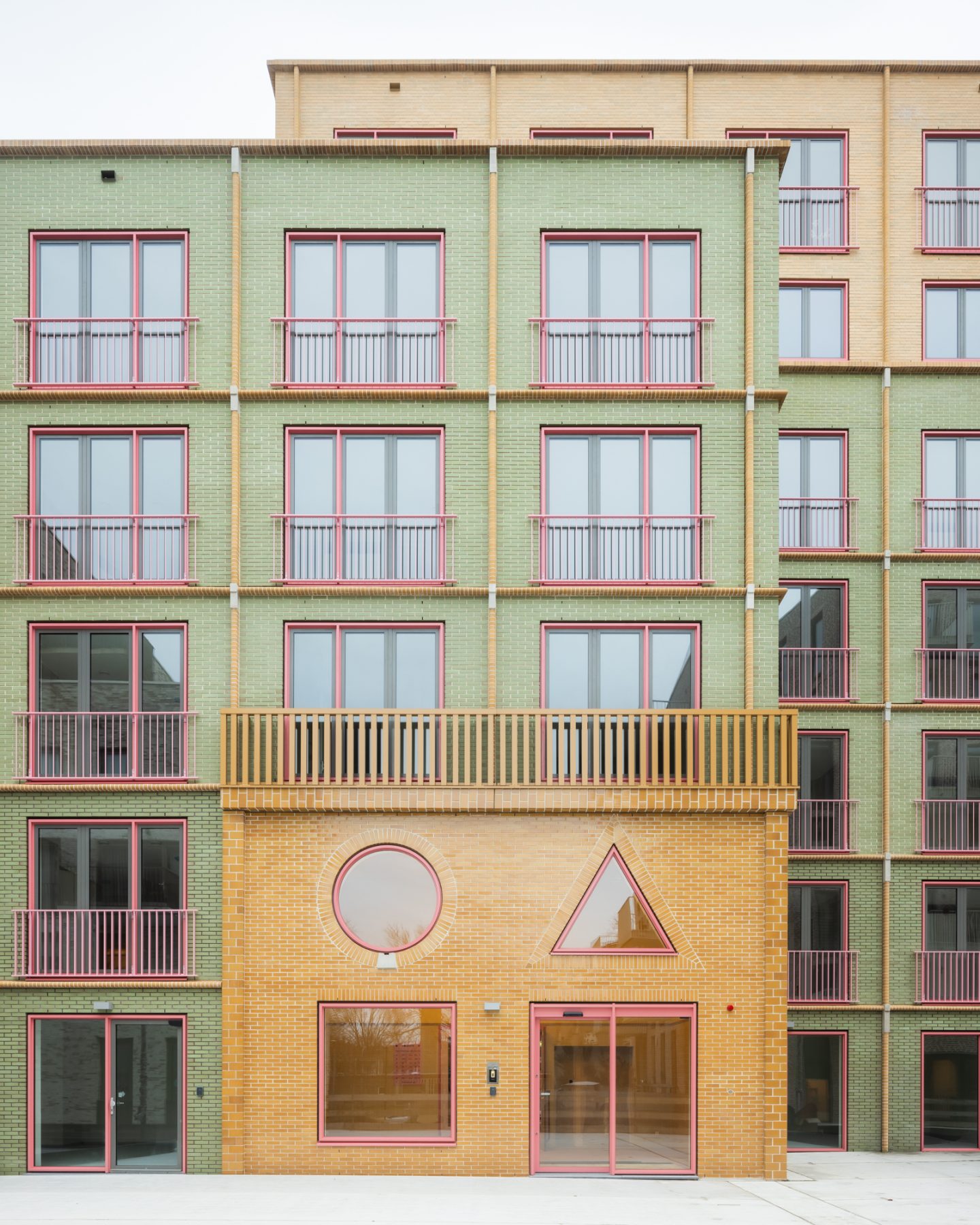
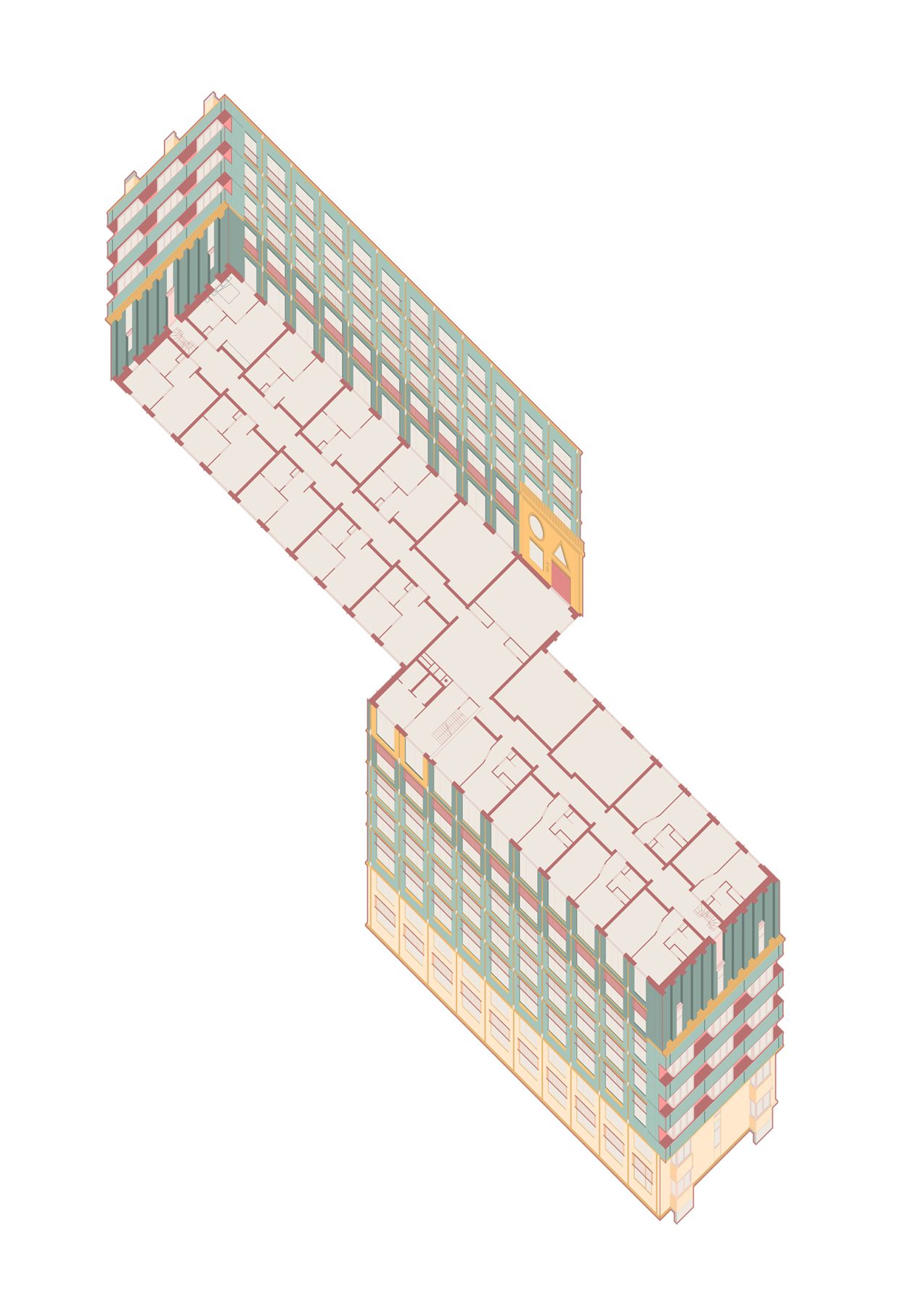
Featuring a distinctively colourful façade of olive-green and mimosa-yellow glazed brickwork, accented by flamingo-pink window frames and metalwork, Volante is conceived as an outsized garden house, as Monadnock founder Sandor Naus describes it, lying gracefully at the heart of the communal green space. Seeking to craft a building legible from afar, the architects foregrounded the façades as a canvas of chromatic and tactile complexity.
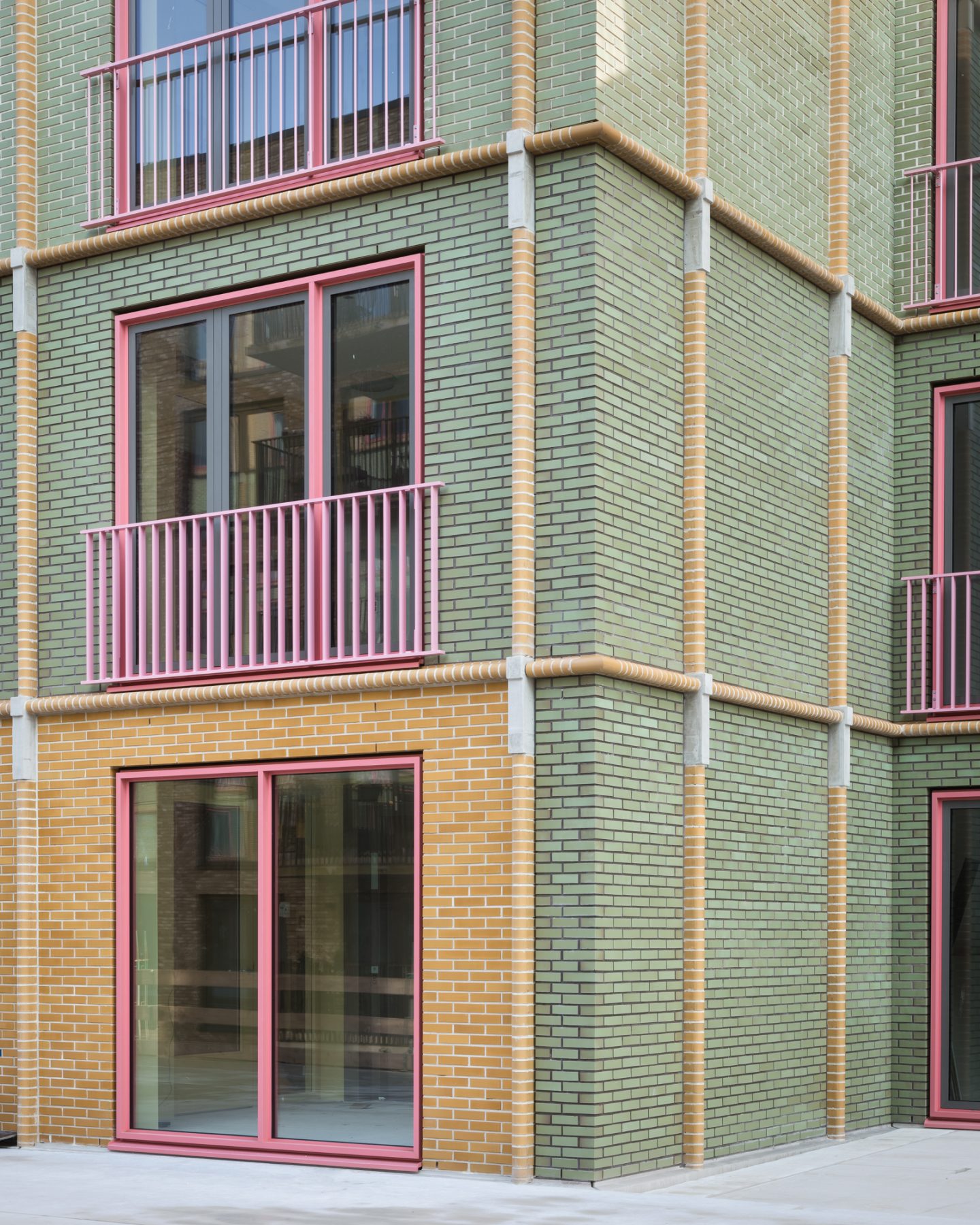
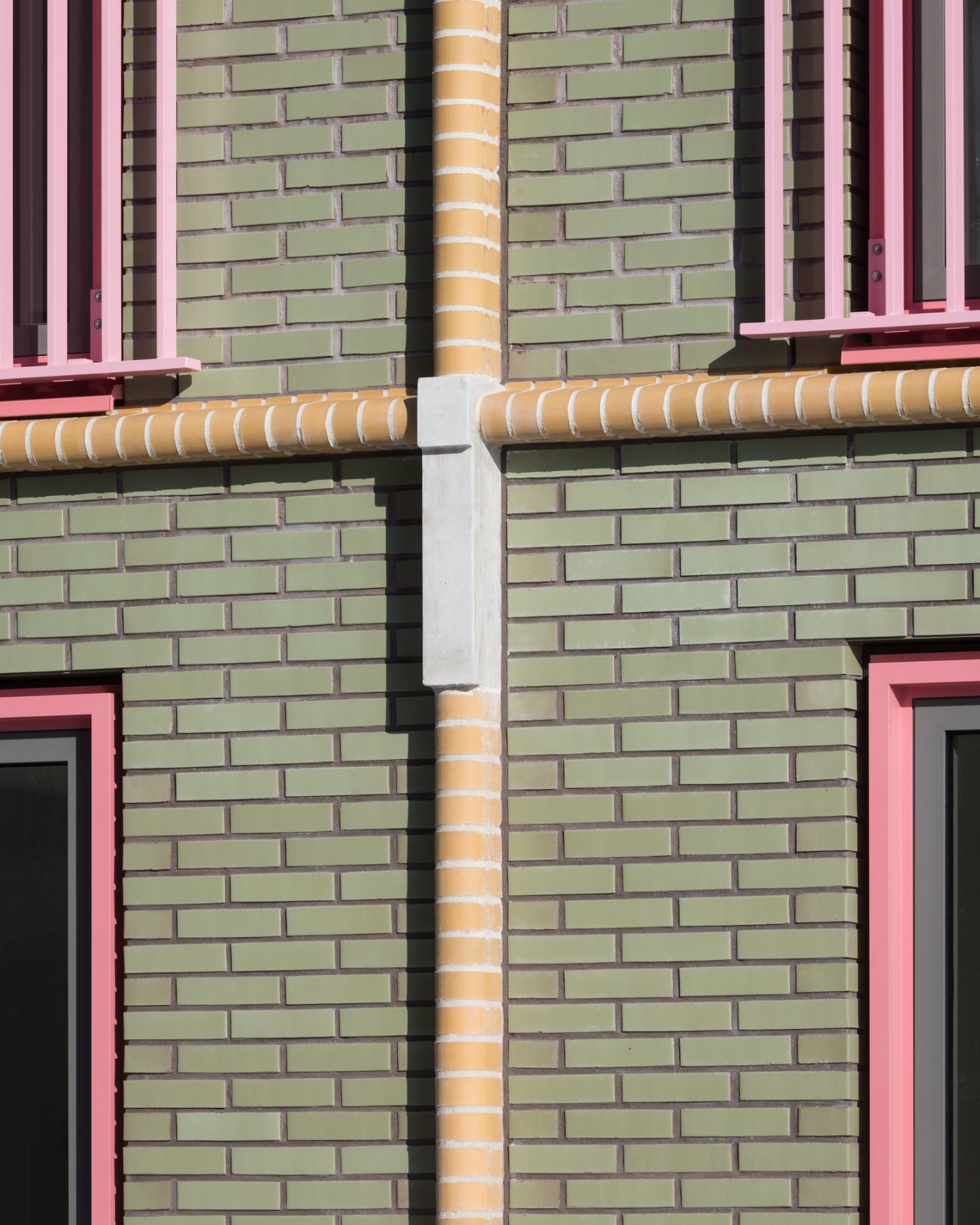
Semi-rounded, custom-moulded bricks—meticulously repeated—articulate a rhythm that enlivens the multicoloured envelope, transforming it into an unmistakable urban sign.
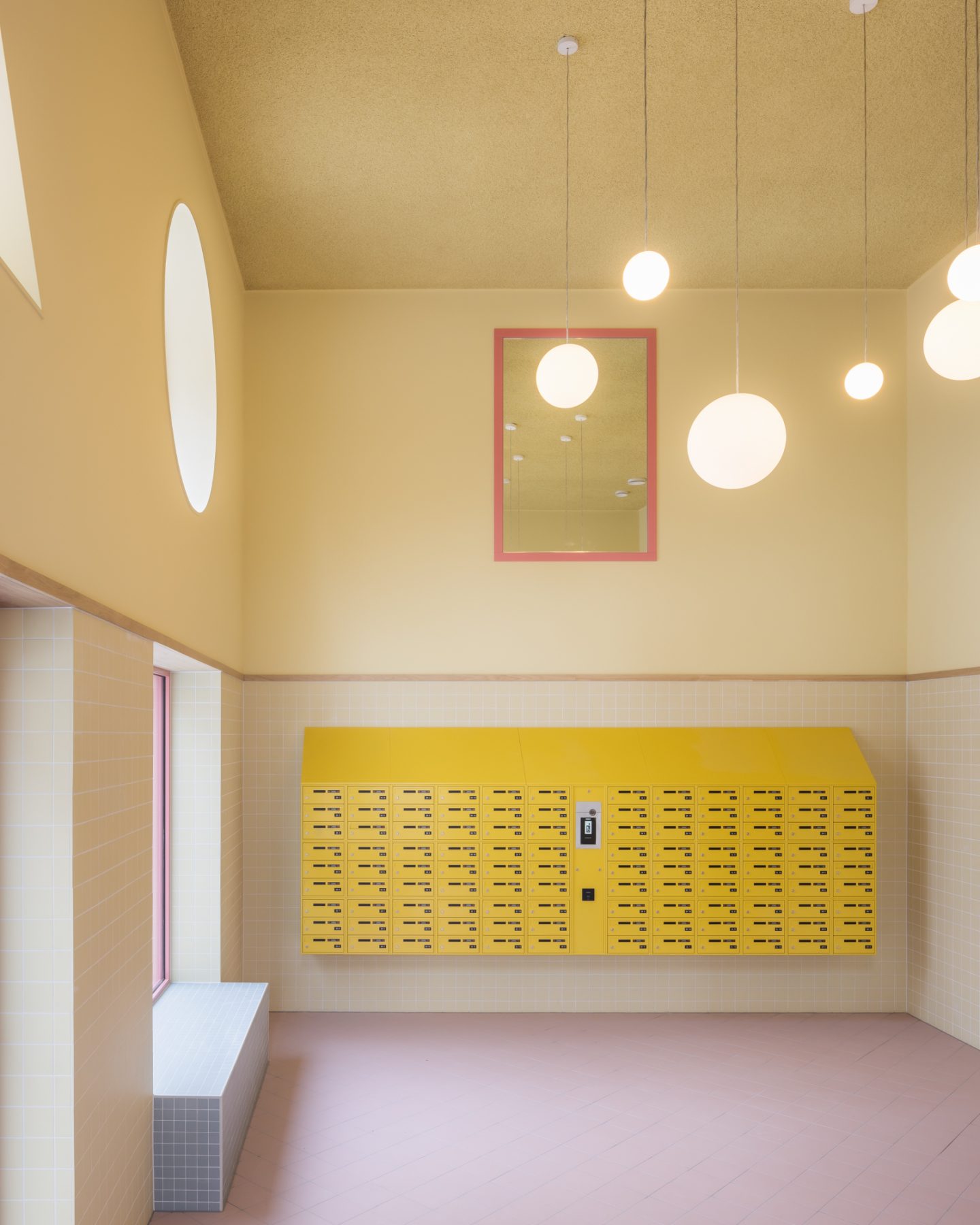
The main entrance is punctuated by two circular and one triangular aperture, a playful yet considered gesture that softens scale and invites engagement, asserting a user-friendly personality in dialogue with the street.
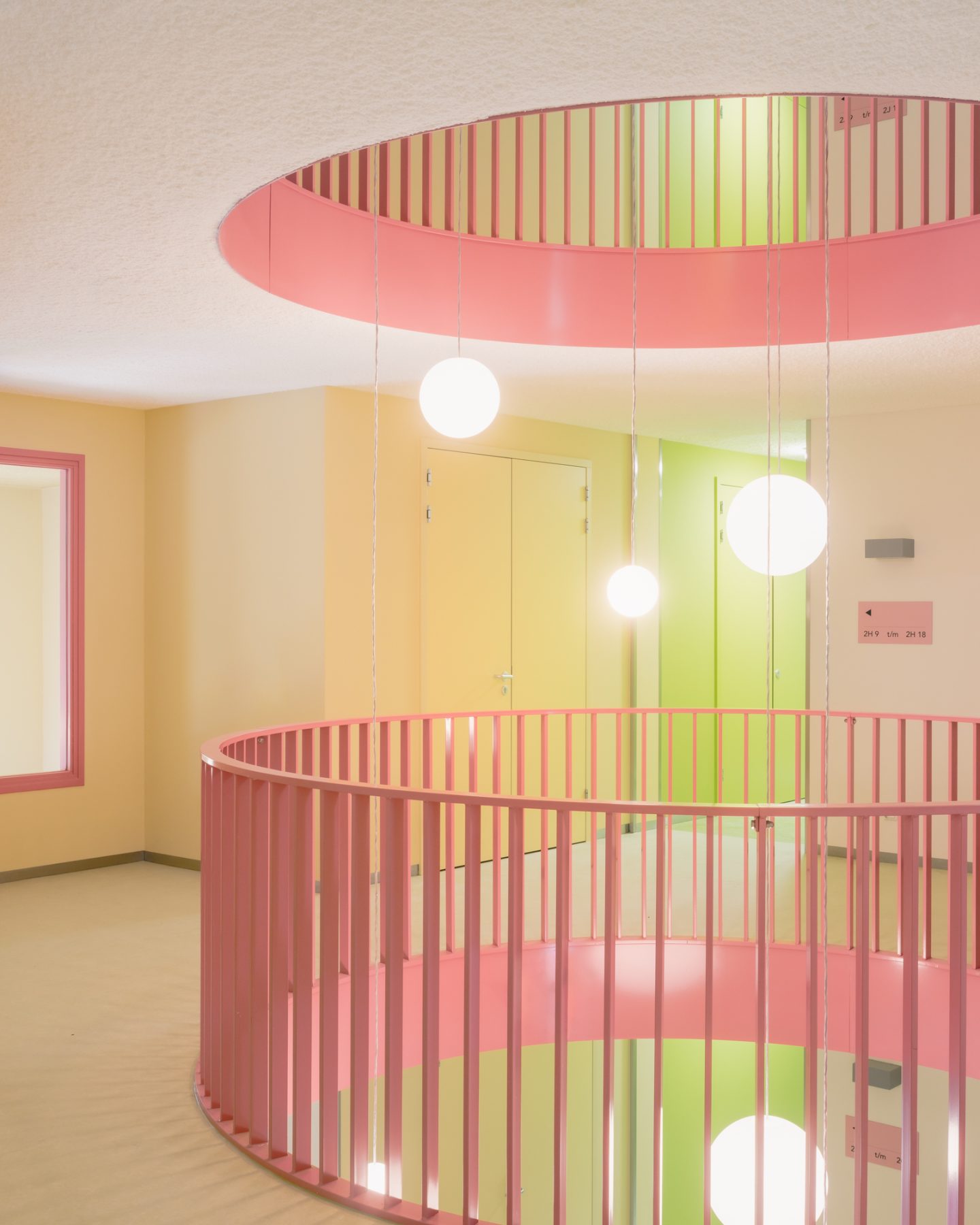
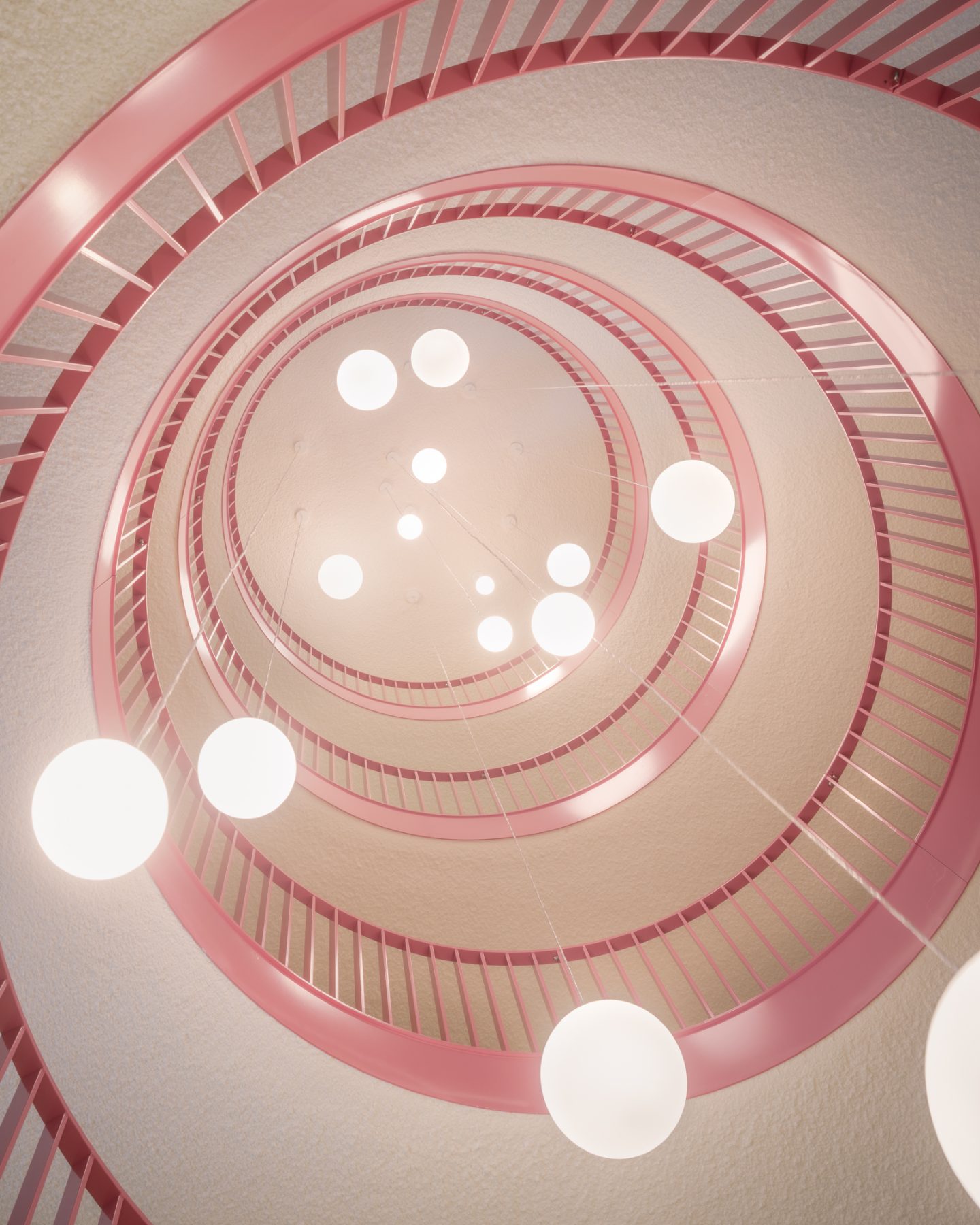
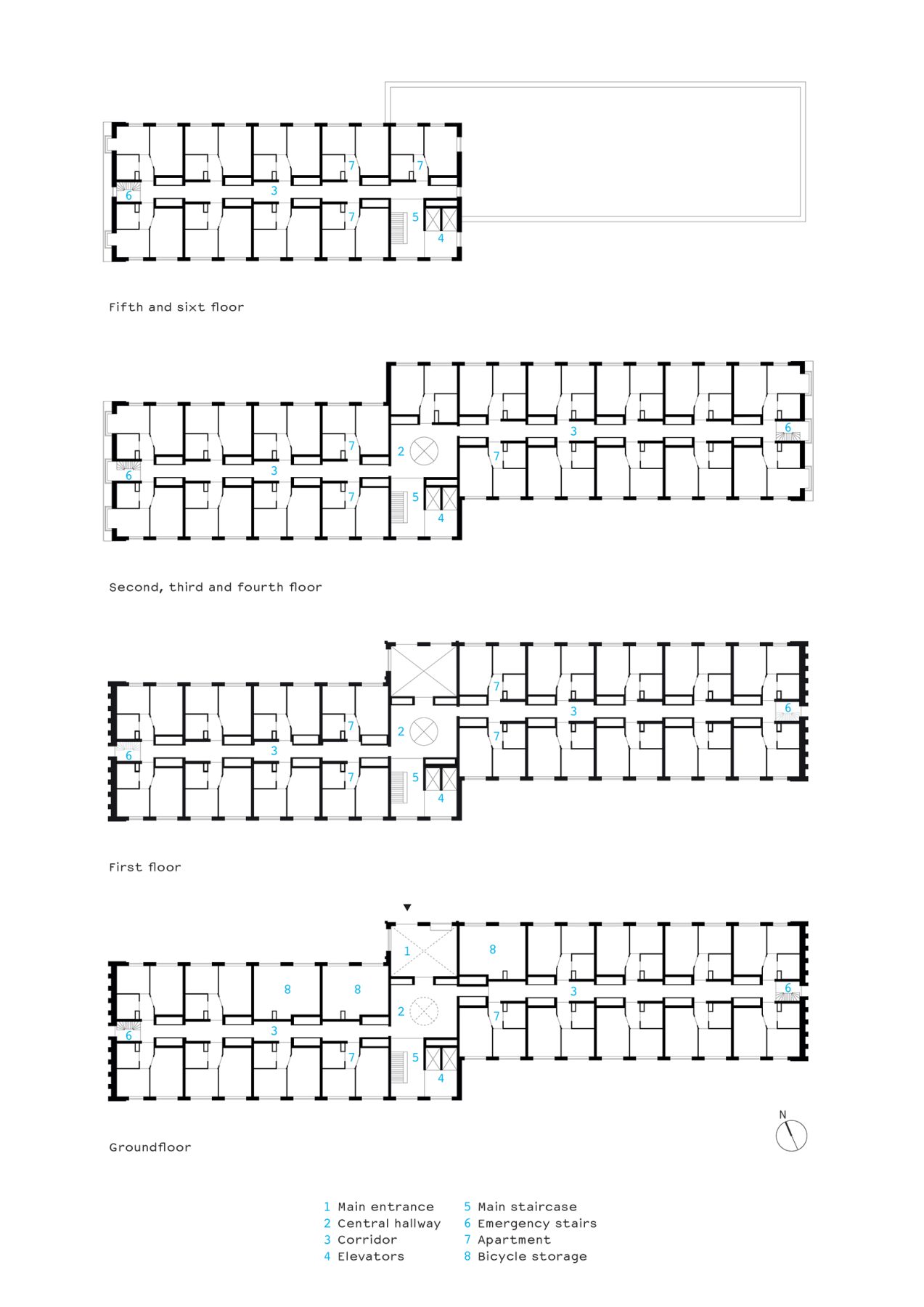
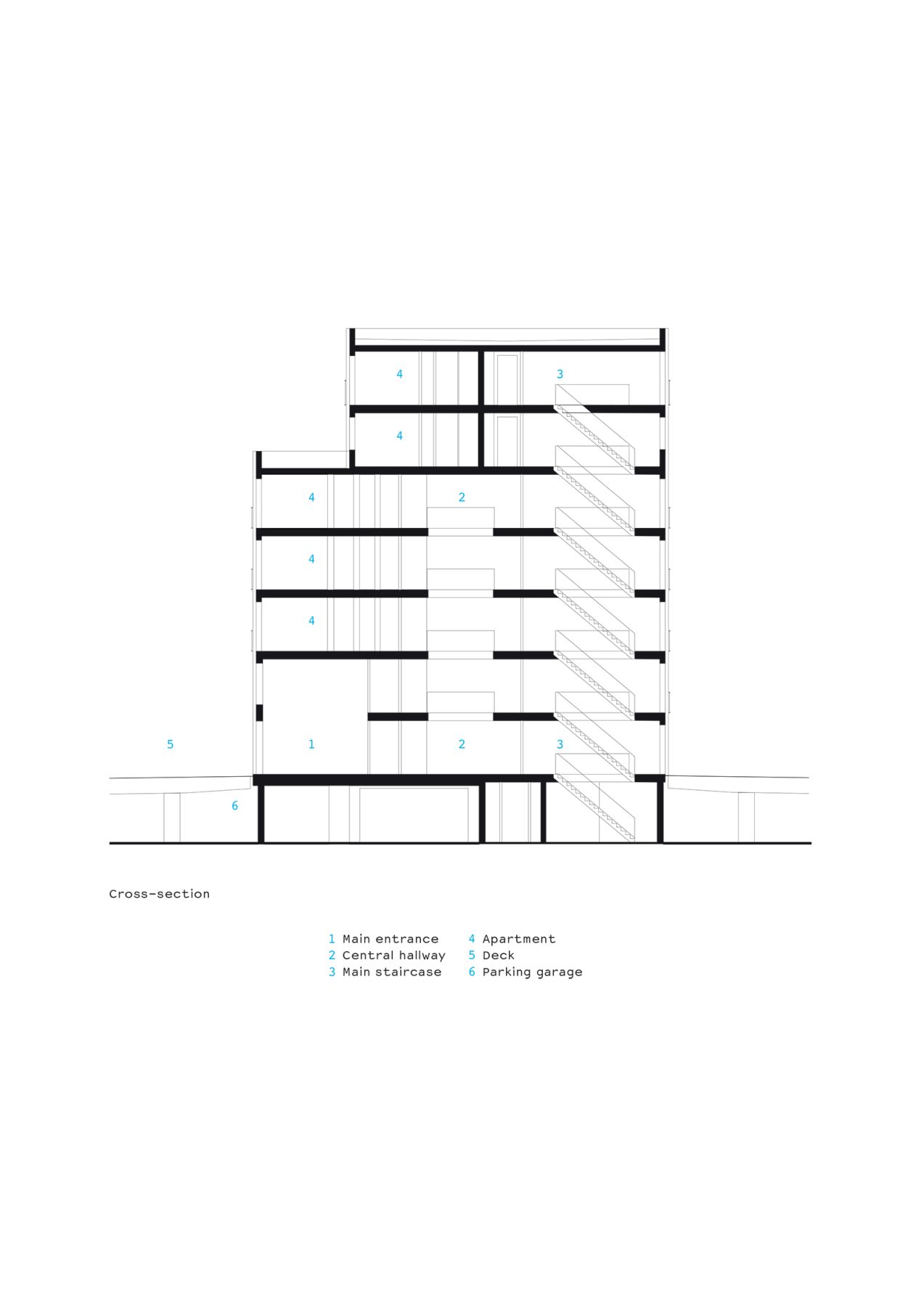
Inside, a double-height atrium unfolds: a central circular void threads through the first five floors, orchestrating light and spatial continuity while accentuating vertical connectivity.
The apartments, modest yet precise at approximately 50 square metres, are organized around two principal spaces: a living room with integrated kitchen and a bedroom. Generous windows with French balconies frame each space, mediating between interior and city, and allowing light and view to penetrate the dwellings with ease.
Sustainability is integral: the block is entirely gas-free, with a contemporary climate control system delivering heating, cooling, and hot water in a discreet, efficient gesture. At street level, the parking garage is capped by a green deck, layering functionality with landscape and softening the infrastructural base.
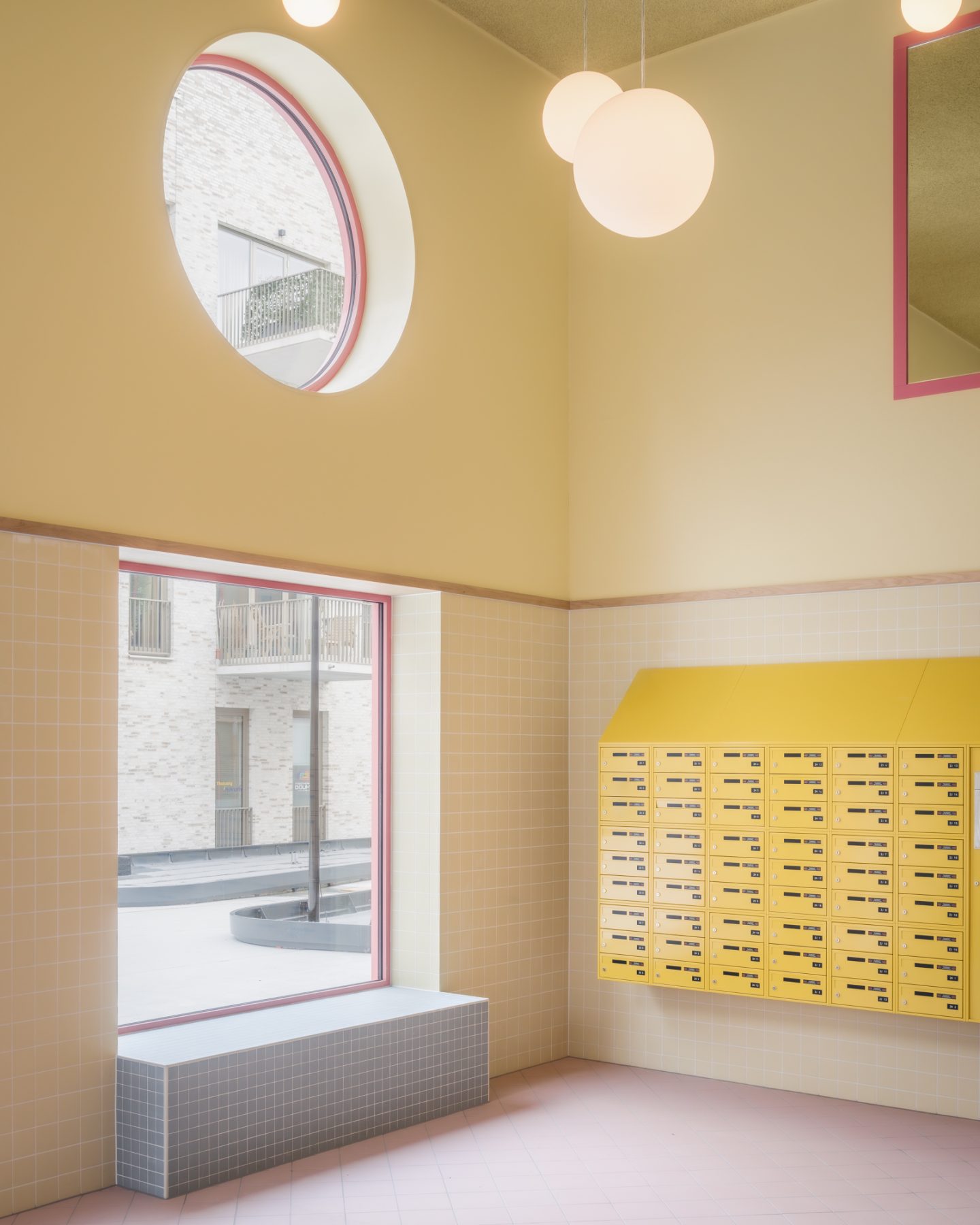
In Volante, colour, form, and detail converge: the building asserts itself as a beacon in the city, playful yet rigorous, legible yet intimately scaled—an architecture of care speaking of contemporary artistry as well as thoughtful integration.
Drawings
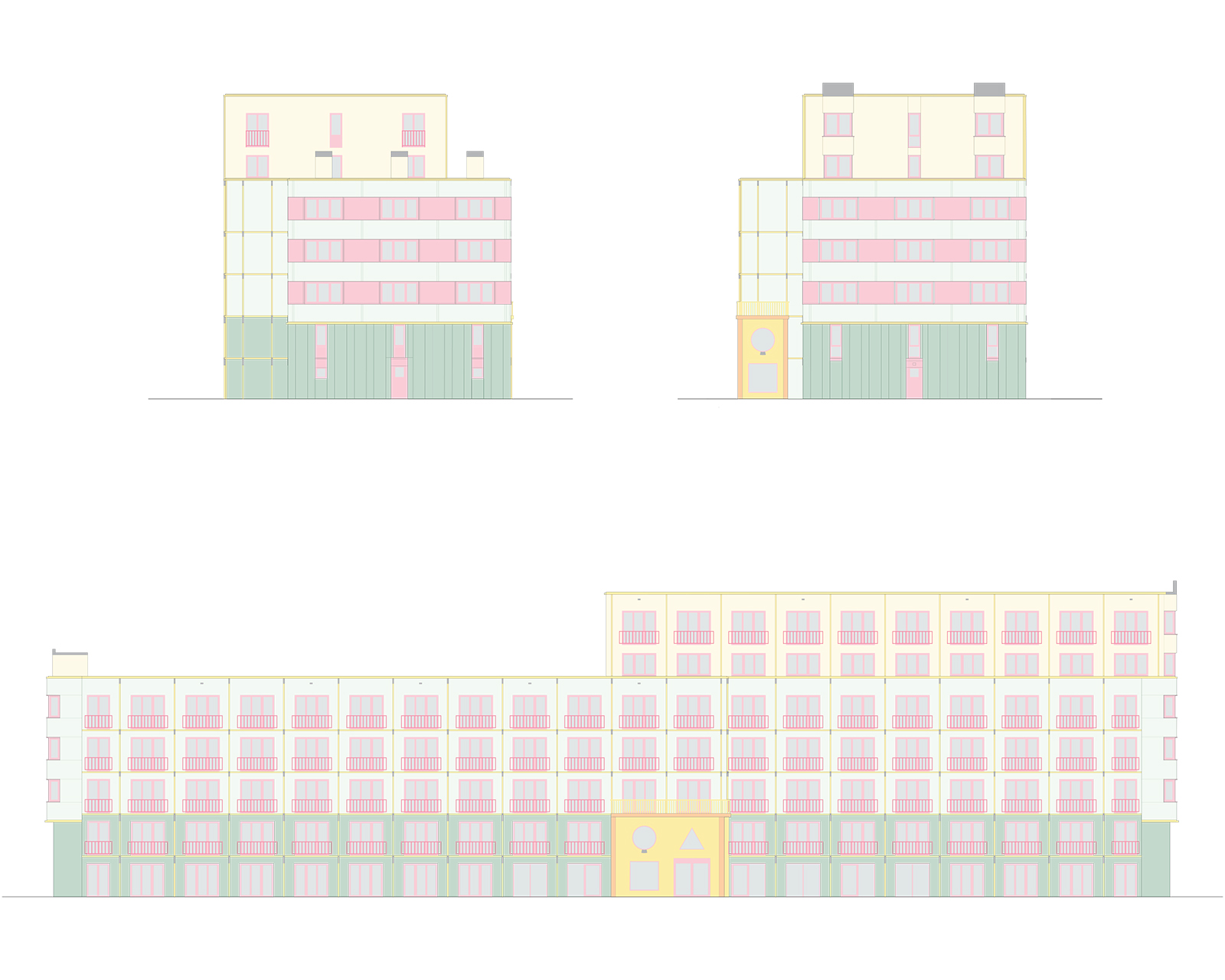
Facts & Credits
Project title Volante
Typology An Architecture of Care, Social Housing
Location Hilversum, The Netherlands
Gross floor area 8.032 m2
Status Completed, 2024
Architecture Monadnock | Job Floris, Sandor Naus
Project architect Sandor Naus
Project team Marta Cendra, Michael Maminski, Filippo Gallone, Matéo White, Blanka Major
Photography Stijn Bollaert
Main contractor Hegeman construction company, Nijverdal
Construction engineer IAA Architects, Enschede
Structural engineer Schreuders structural engineering, Hengelo
MEP engineer InnQ Installations, Almere
Building physics engineer Alcedo, Holten
Landscape architect Hosper Landscape Architecture, Haarlem
Urban planner Moke Architects, Amsterdam
Prefab concrete stairs Hop prefab, Baarn
Steel stairs and balustrades Krepla, Ommen
Elevators Schindler Elevators, The Hague
Floor and walls main entrance Tiles, Winckelmans, Lomme (F)
Floor in common areas Marmoleum, Forbo Flooring, Assendelft
Window frames, manufacturer Kawneer Benelux, Harderwijk
Window frames, supplier Rollecate, Staphorts
Balustrades facades, supplier Rollecate, Staphorts
Frames and doors, interior Berkvens, Someren
Facade cladding, brick Klinkerwerk Iking, Stadtlohn (D)
Facade cladding, glazed bricks Dijkstra Frisian Earthenware, Sneek
Aluminium cladding Voskamp, Almelo