The New Workplace explores how contemporary offices balance flexibility, craft, and identity. From adaptive reuse to bespoke interventions, each project rethinks spatial hierarchy, materiality, and light, framing work as an experience rather than a routine. Steel, concrete, timber, and glass converge to create environments that are simultaneously resilient and human, reflecting evolving professional cultures while celebrating texture, tactility, and the quiet poetry of everyday occupation.
Founded and personally designed by Anna Truyol in 2005, Artchimboldi has continually evolved over the years. In its latest transformation, Anna and architect Emma Martí reimagined the original headquarters within a modernist apartment in Barcelona’s Dreta de l’Eixample, maximizing natural light and incorporating untreated pine, textured glass, and flexible sliding partitions to create adaptable, collaborative spaces. Preserved Nolla mosaics, a feng shui-inspired entrance cube, and warm, natural materials compose a workplace model where hospitality, flexibility, and human connection become integral components of the working environment.
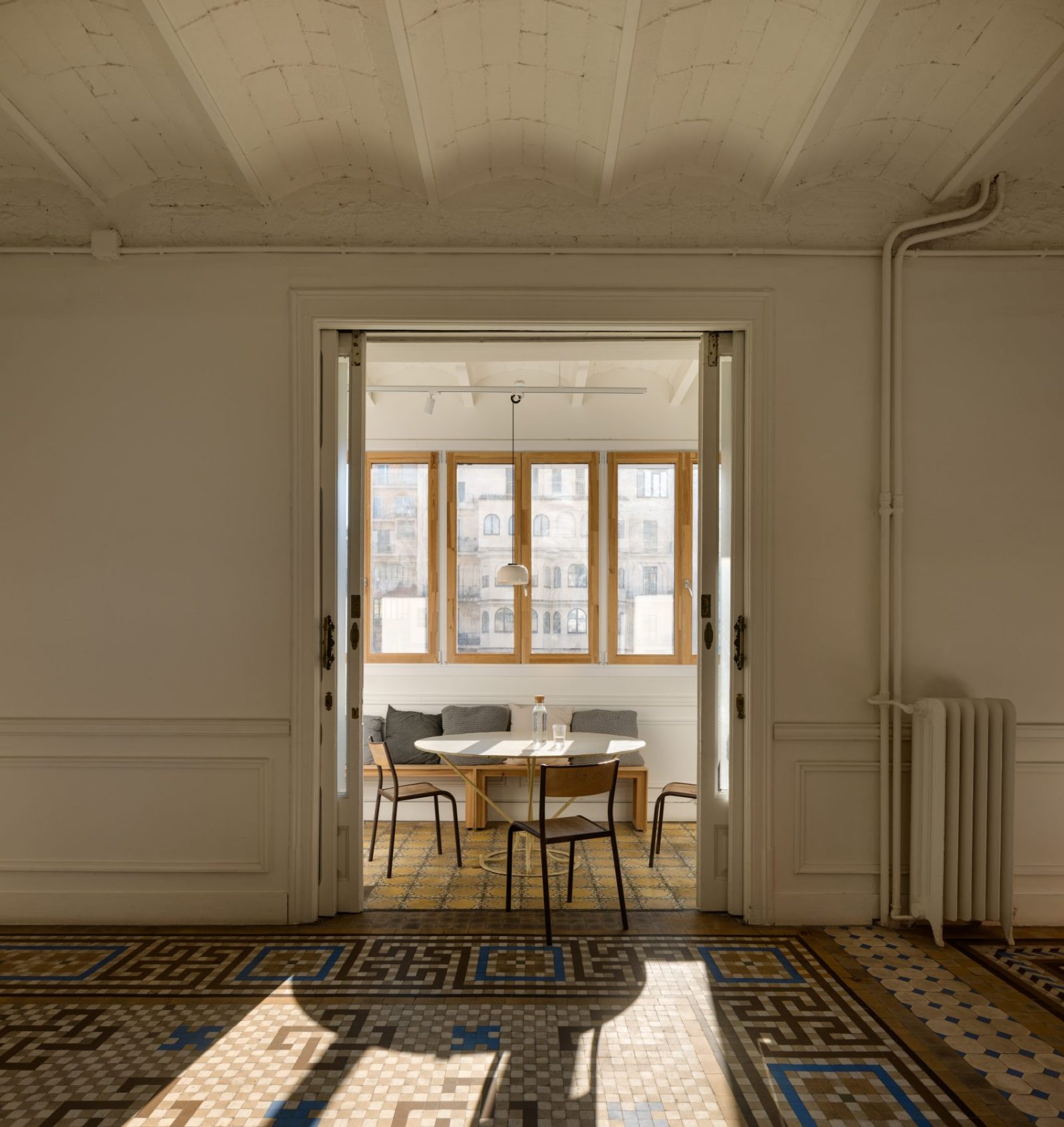
The creator of Artchimboldi, Anna Truyol, stands out for her restlessness and tireless. After almost a decade working as an engineer in a multinational without finding meaning in her work and looking for a way to transform the business world, she decided to turn her career around. She clearly remembers how meetings in the multinational used to take place in impersonal hotels, in cold rooms with unwelcoming lighting. Conceived as a workplace with the warmth and atmosphere of a home, Artchimboldi emerged from a desire to humanise business environments and challenge the impersonal nature of conventional corporate meeting spaces.
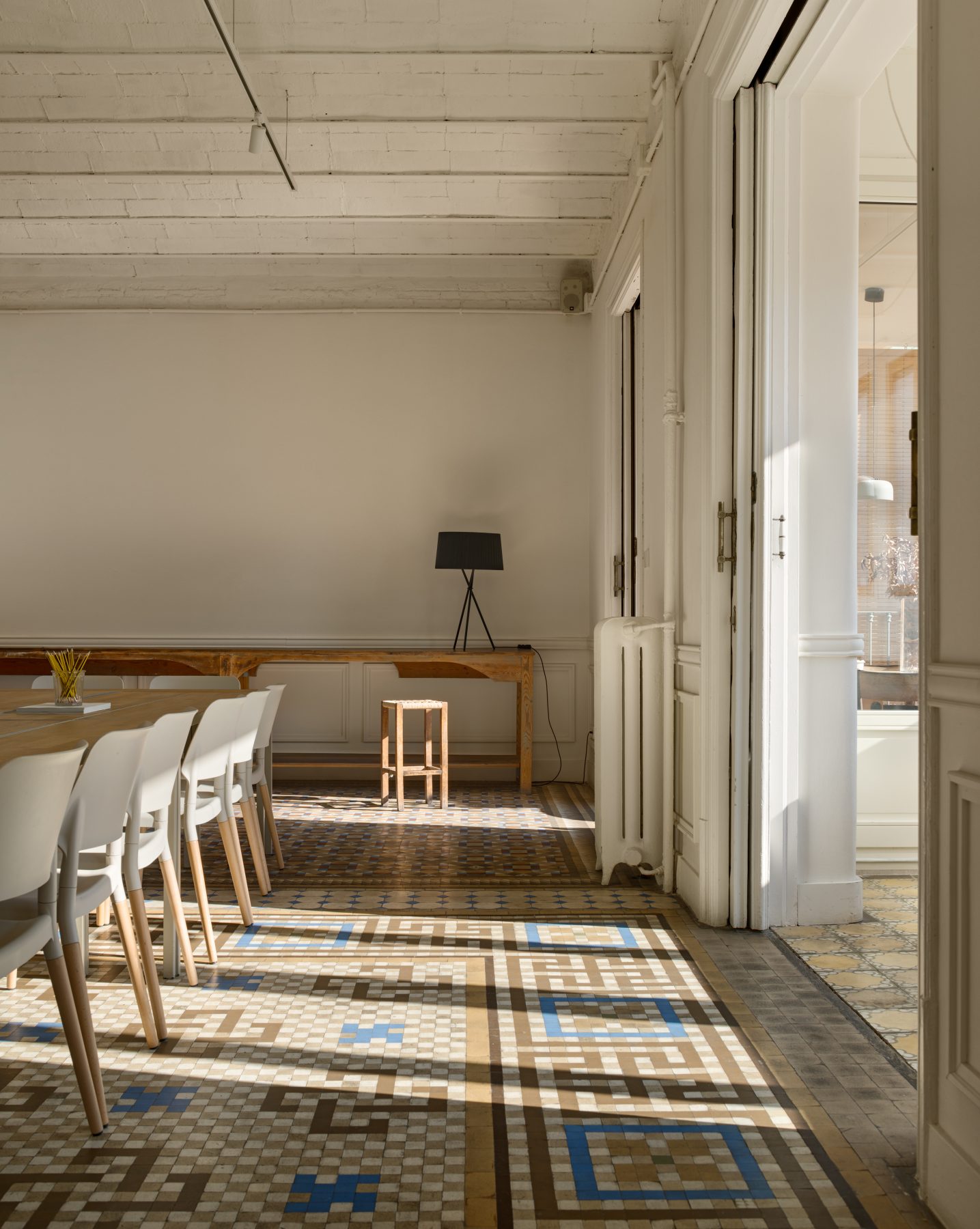
The latest transformation of Artchimboldi’s headquarters, located in Barcelona’s Dreta de l’Eixample, was developed by architect Emma Martí in collaboration with Anna Truyol.
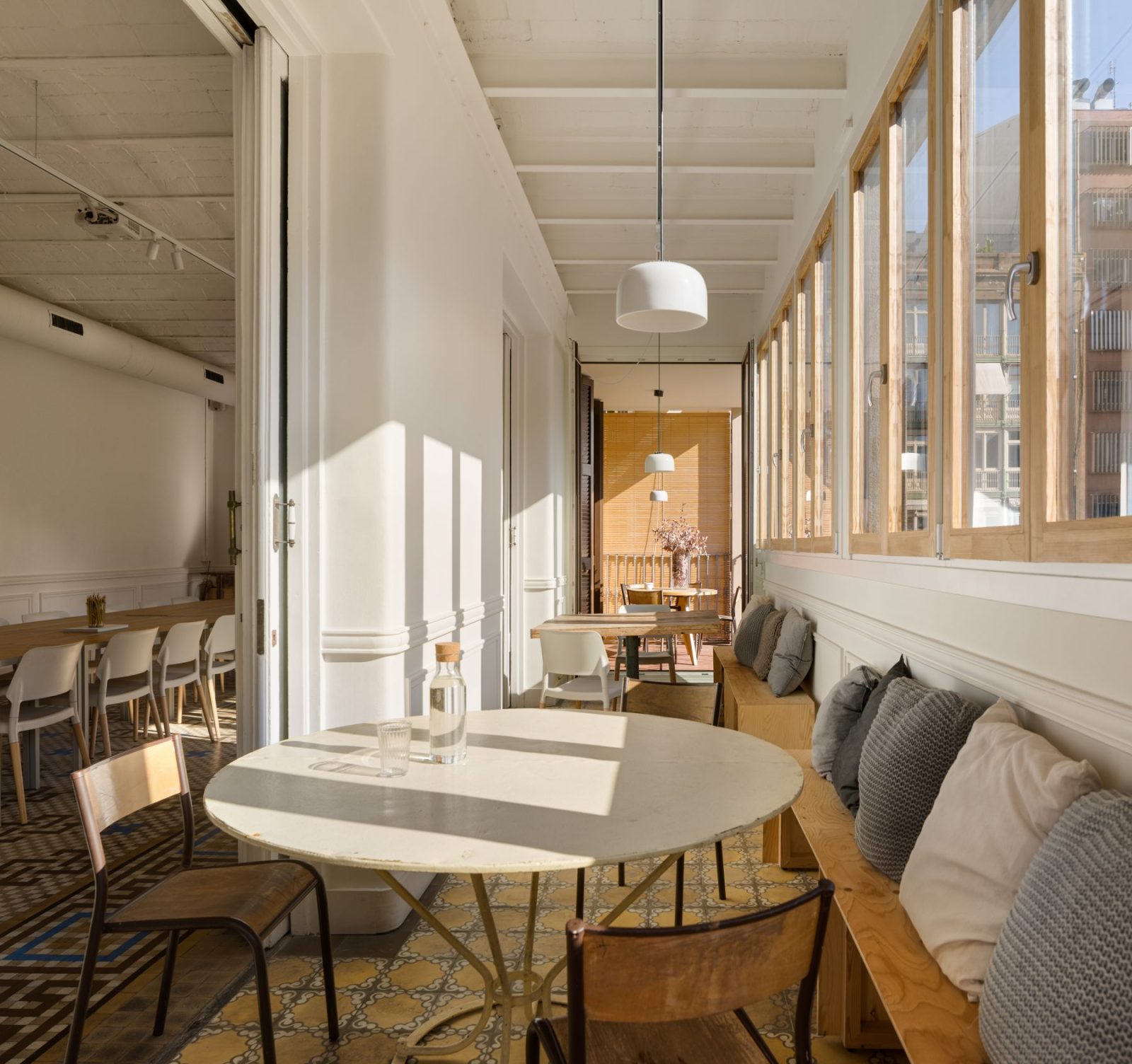
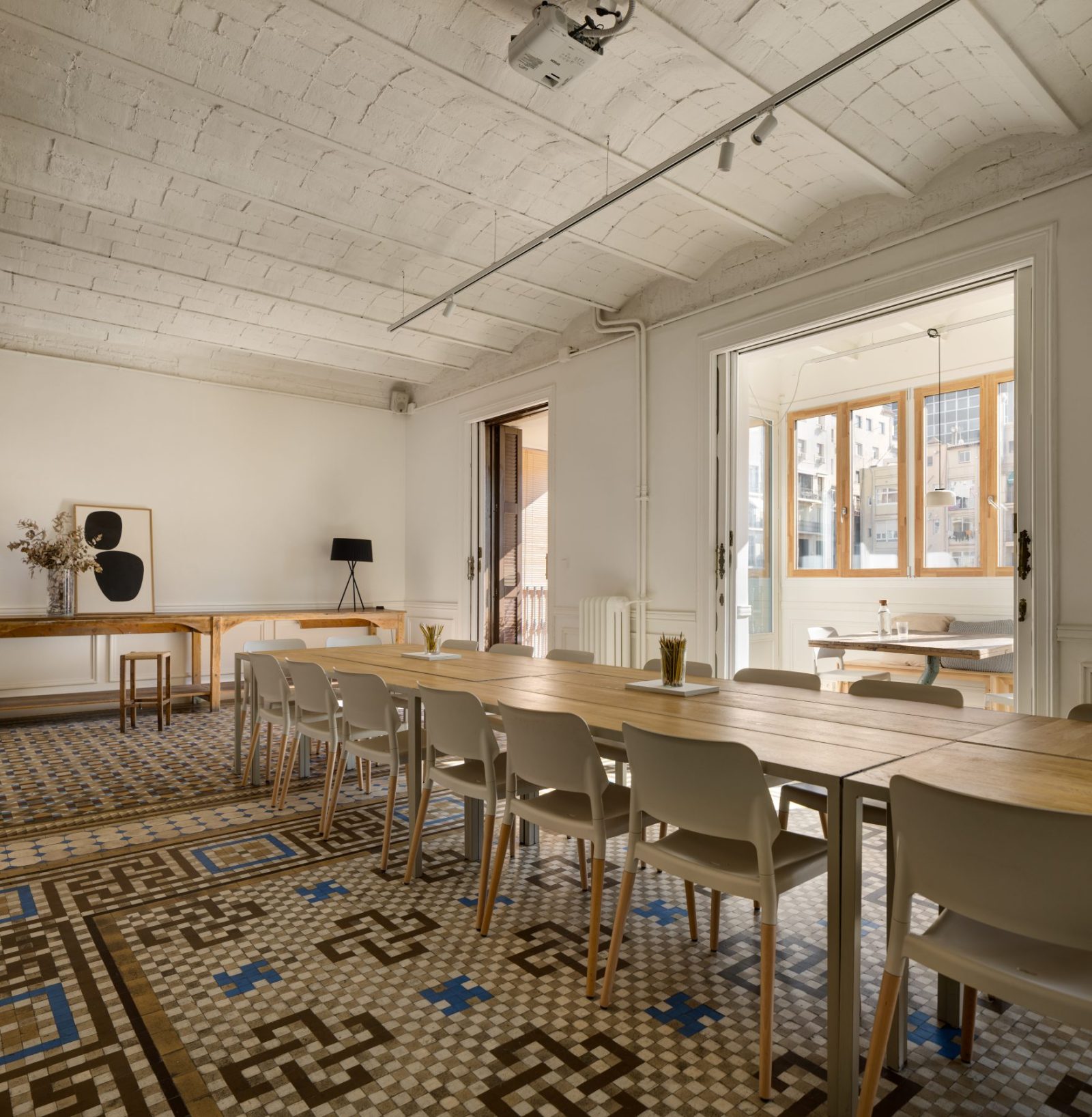
The renovation sought to increase natural light, introduce the warmth of wood, and strengthen the sense of comfort and creativity that has defined the project since its inception.
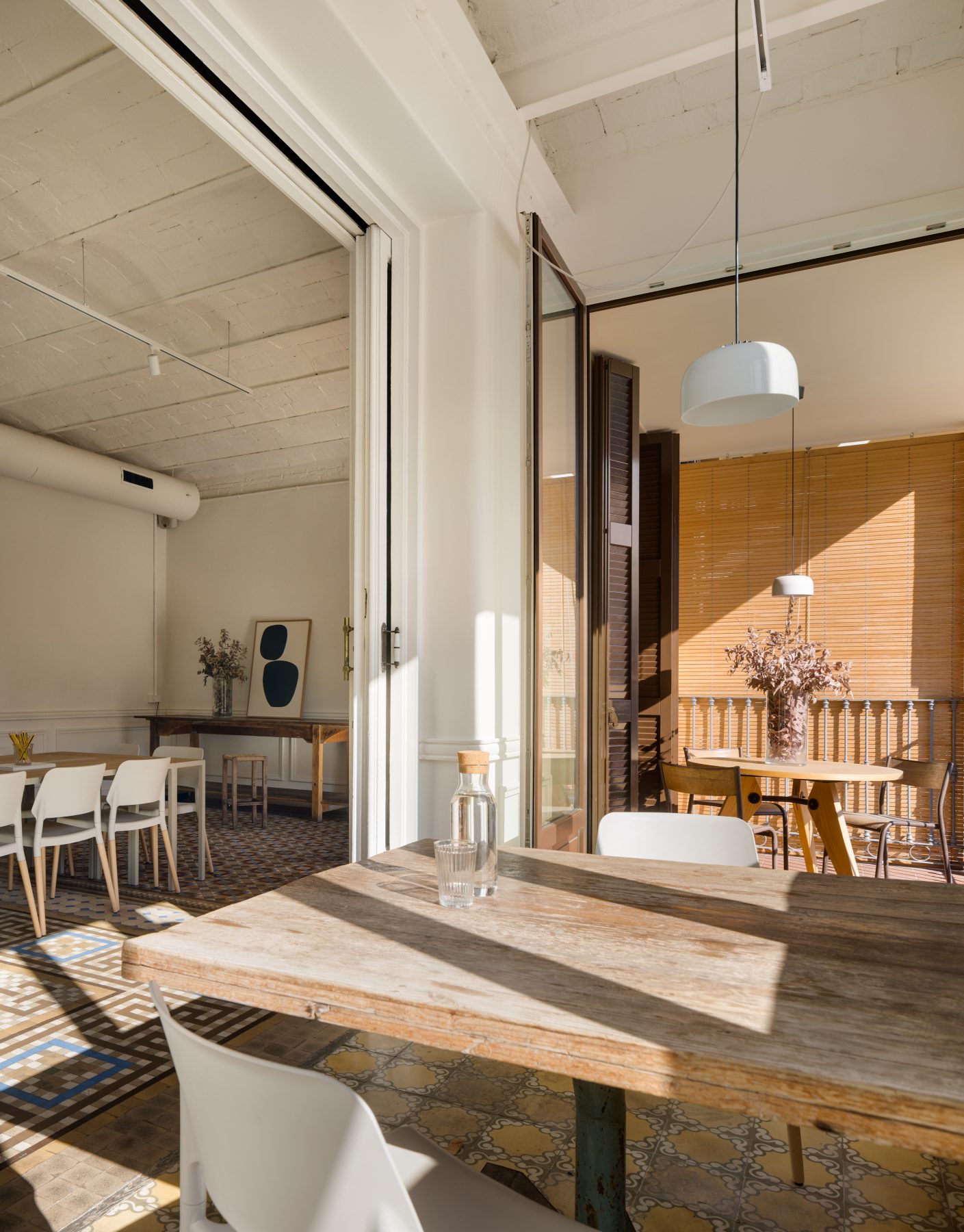
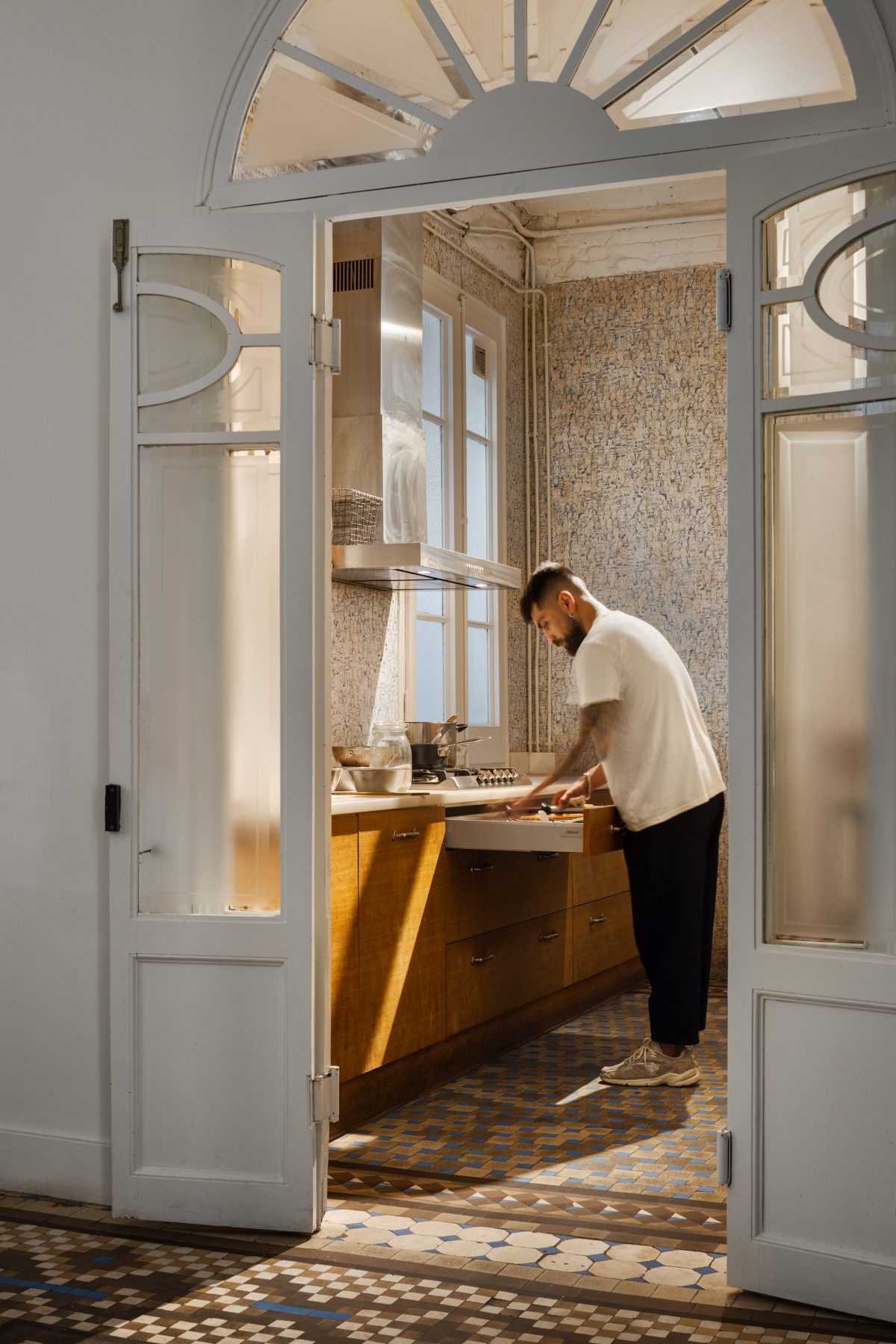
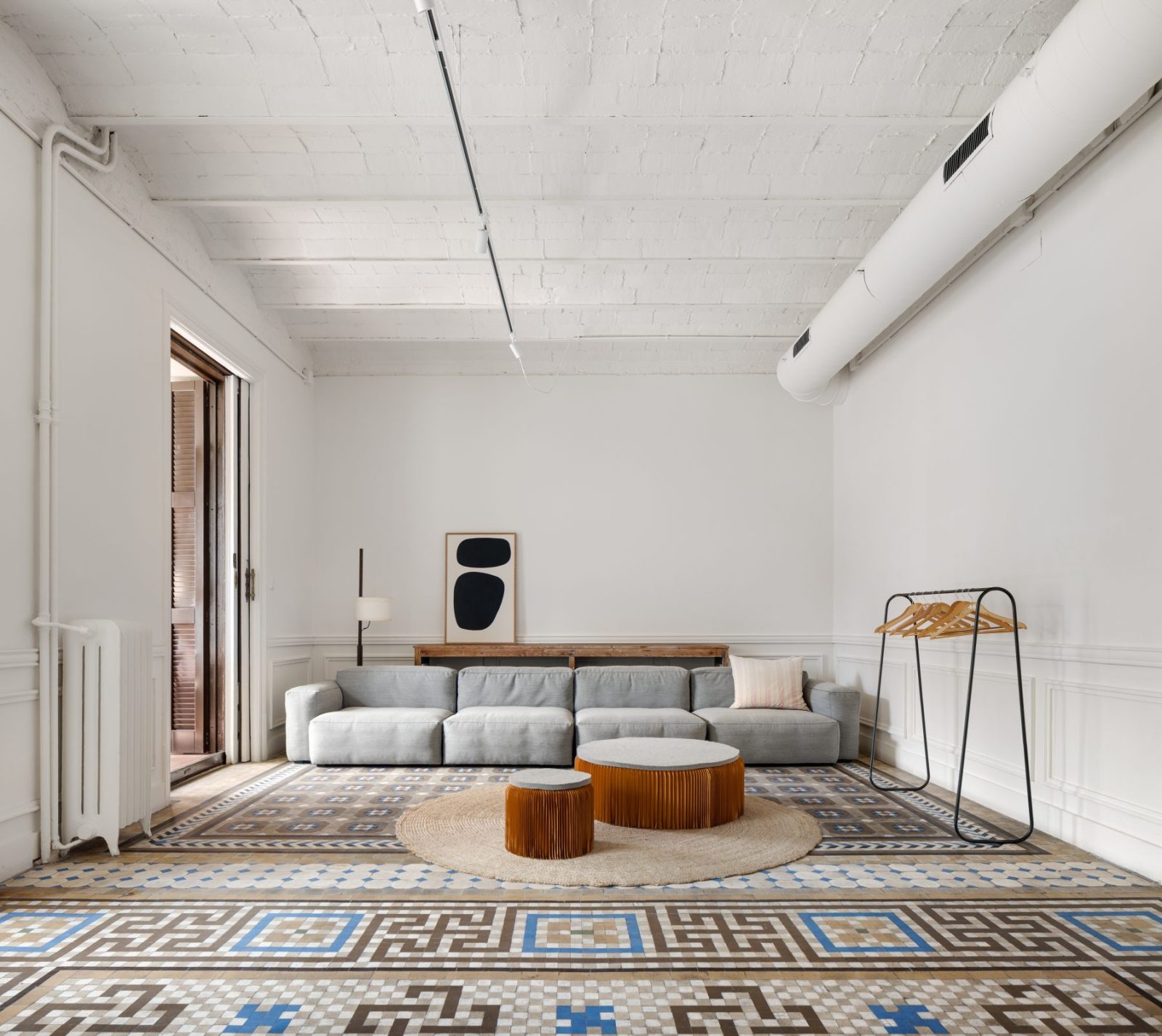
Occupying a modernist apartment, the intervention carefully balances preservation and adaptation. Original features, including mouldings, Nolla mosaic flooring, and carpentry details, were retained to preserve the dwelling’s historic character.
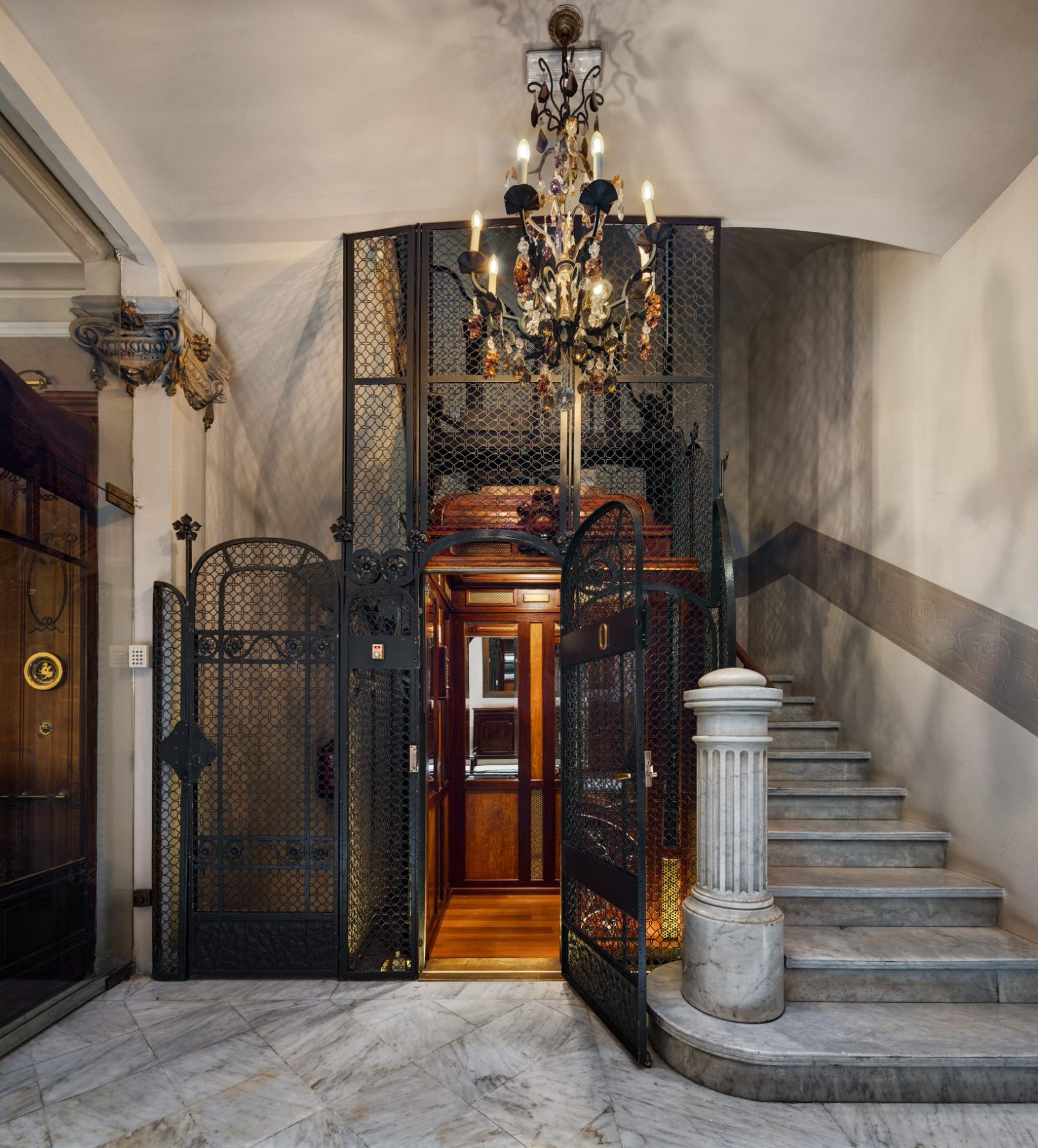
Against this backdrop, untreated pine wood and textured glass were introduced as the project’s defining materials, creating a contemporary layer that runs throughout the interior.
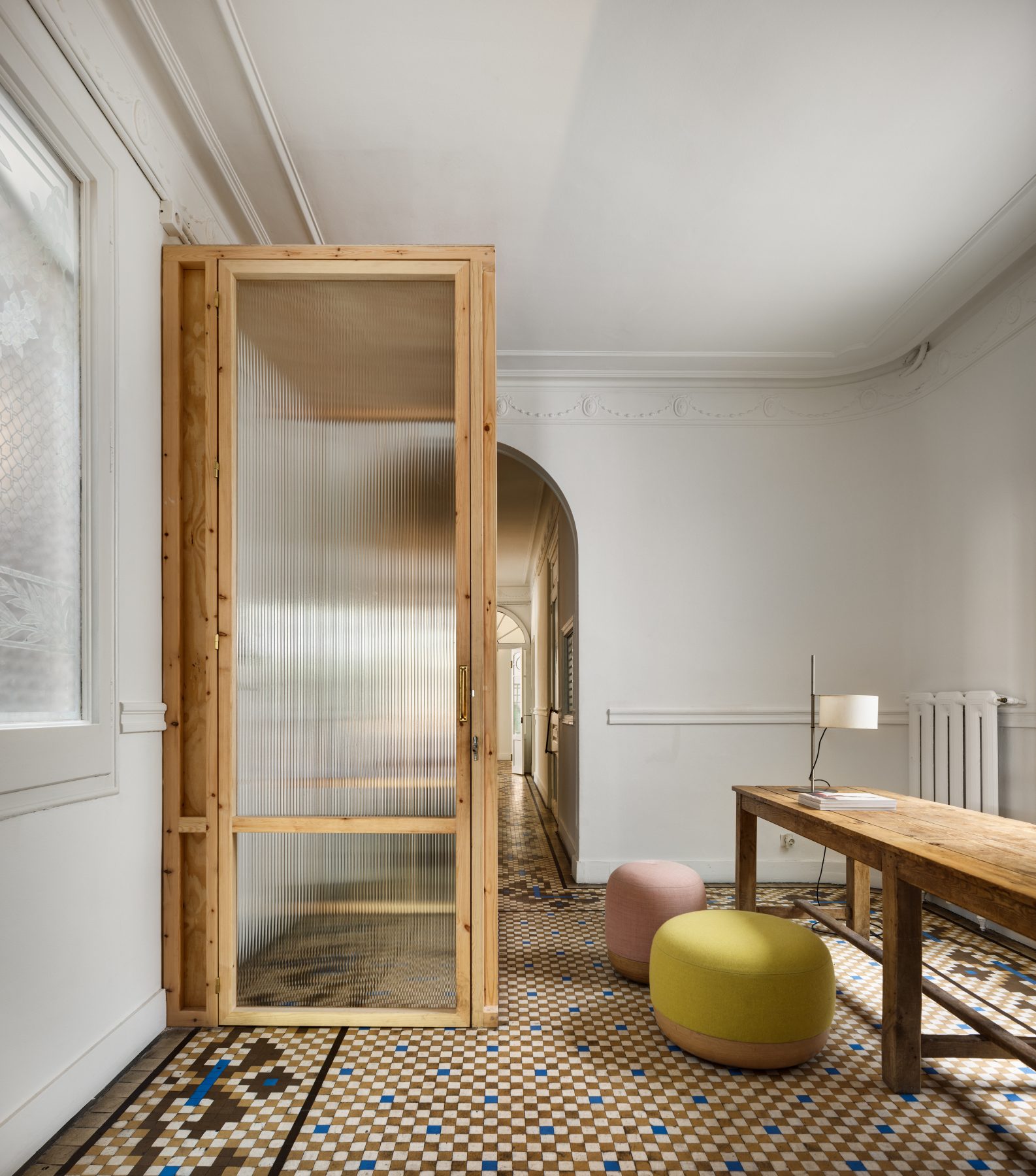
Their application extends across the entrance, room dividers, corridor, washbasin area, and gallery. The arrival sequence is defined by a cube constructed from untreated pine and textured glass, conceived as a welcoming threshold that filters natural light into the interior. Inspired by principles of feng shui, the intervention emphasises the importance of arrival and spatial organisation.
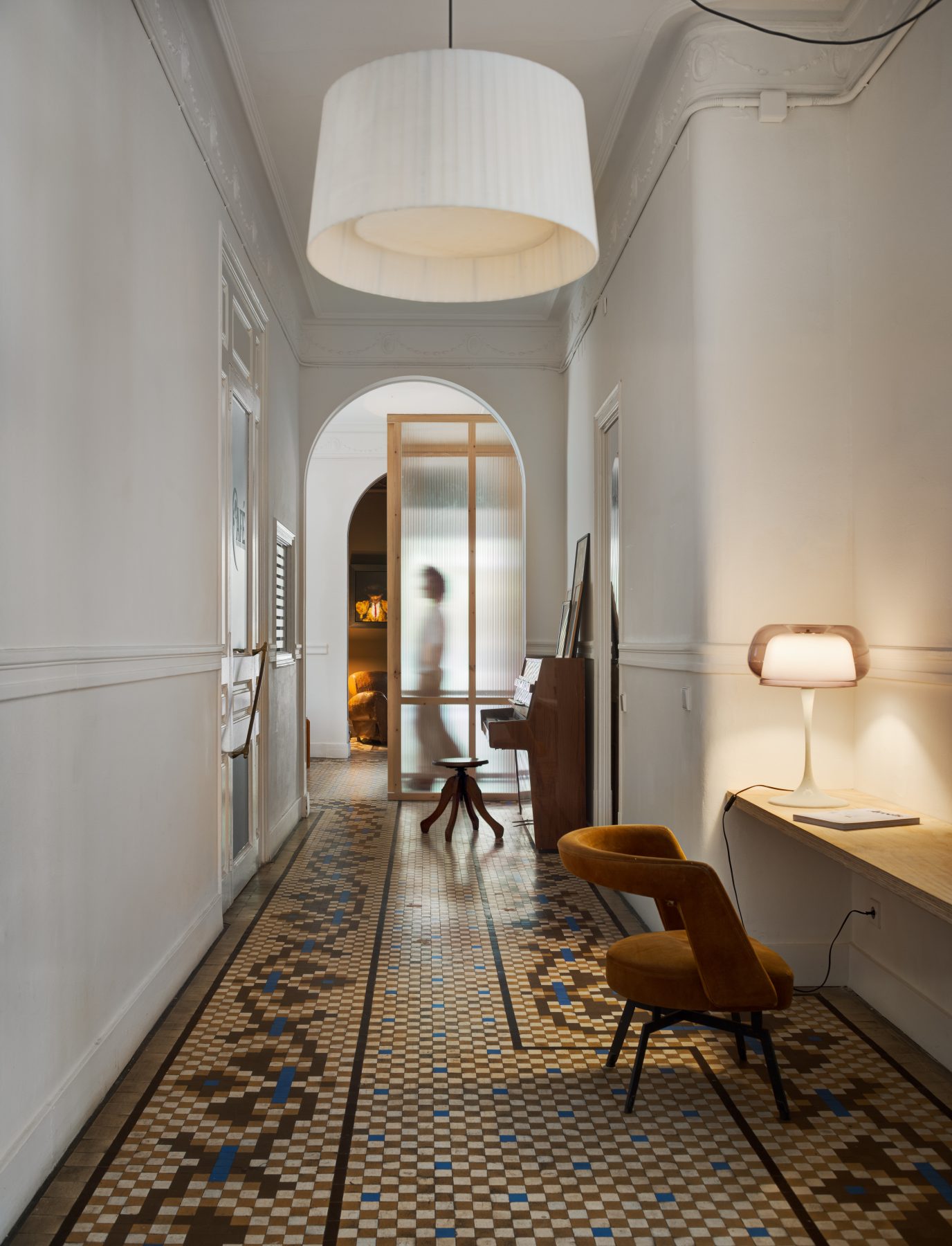
Flexibility became a central design objective.
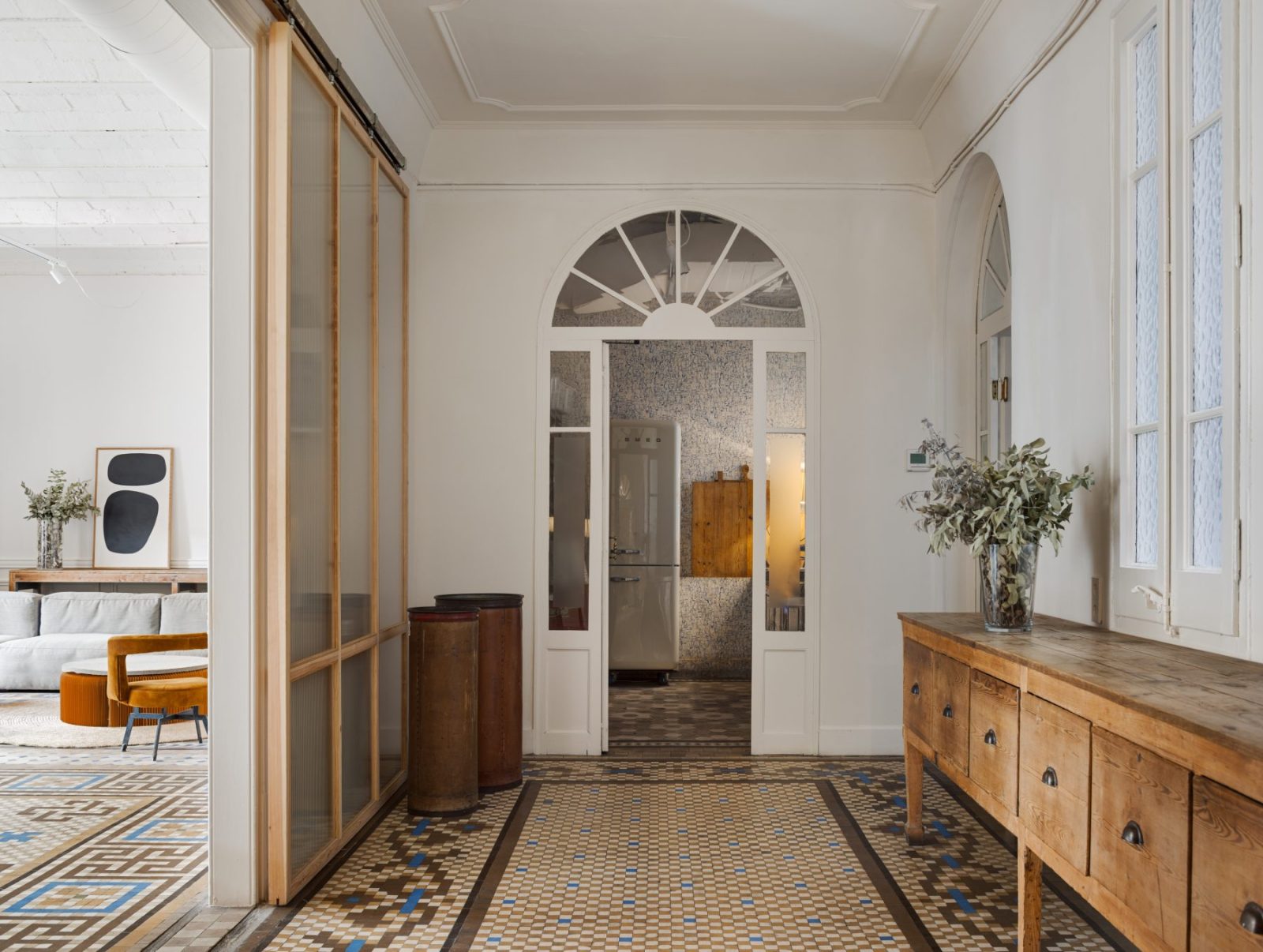
A series of sliding partitions with exposed guides allows workspaces to expand, contract, or merge according to changing needs while maximising daylight penetration. This adaptable system supports a variety of meeting formats and group configurations.
“Companies need flexibility to meet, divide into groups, move furniture, change the set-up, it needs to be possible to do this naturally,” explains Anna.
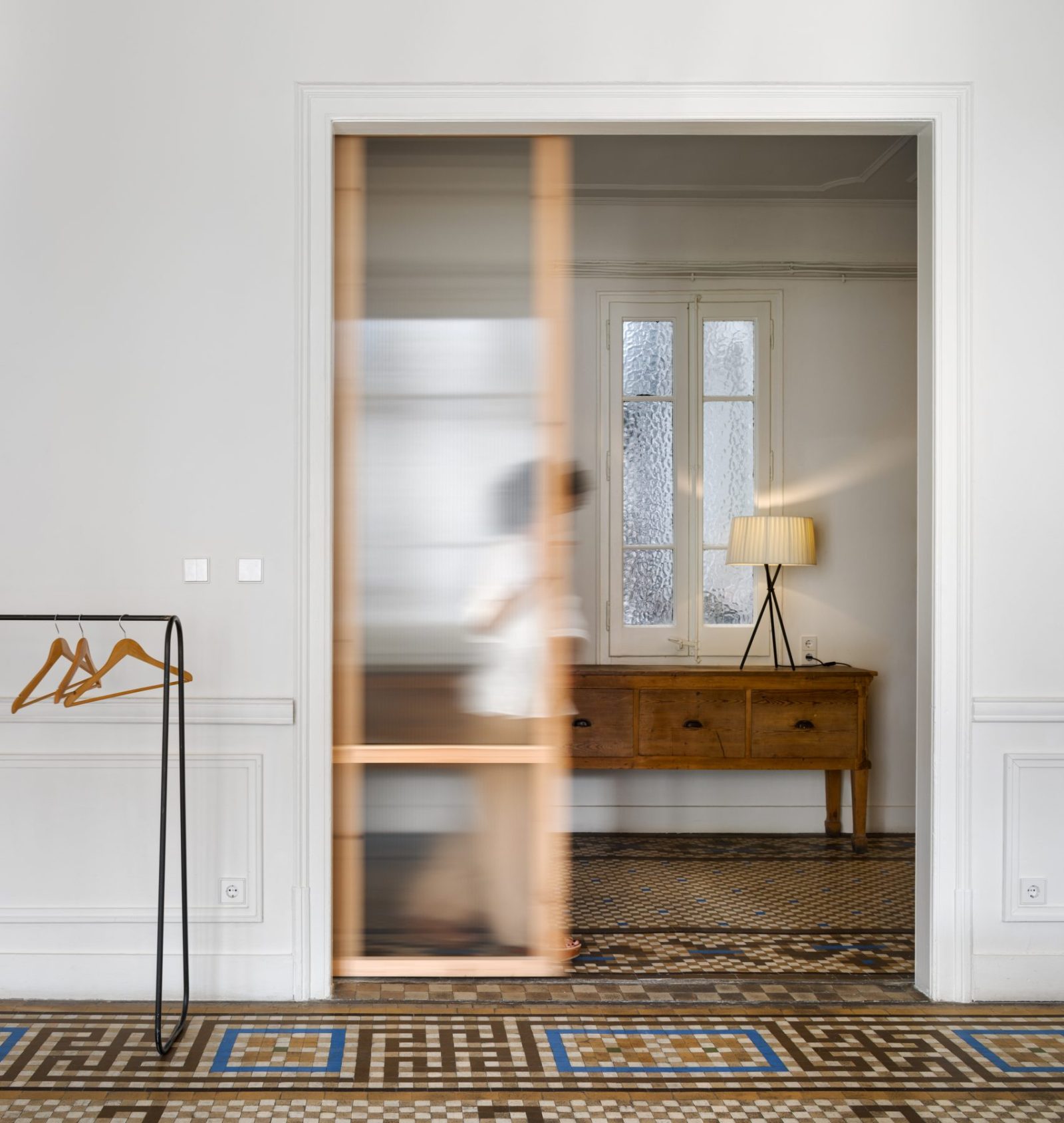
The partitions, bathroom doors, and entrance cube reach approximately three metres in height. Their visual lightness is reinforced through slender timber profiles measuring only five centimetres. In the gallery, custom pinewood benches create an informal meeting area bathed in natural light.
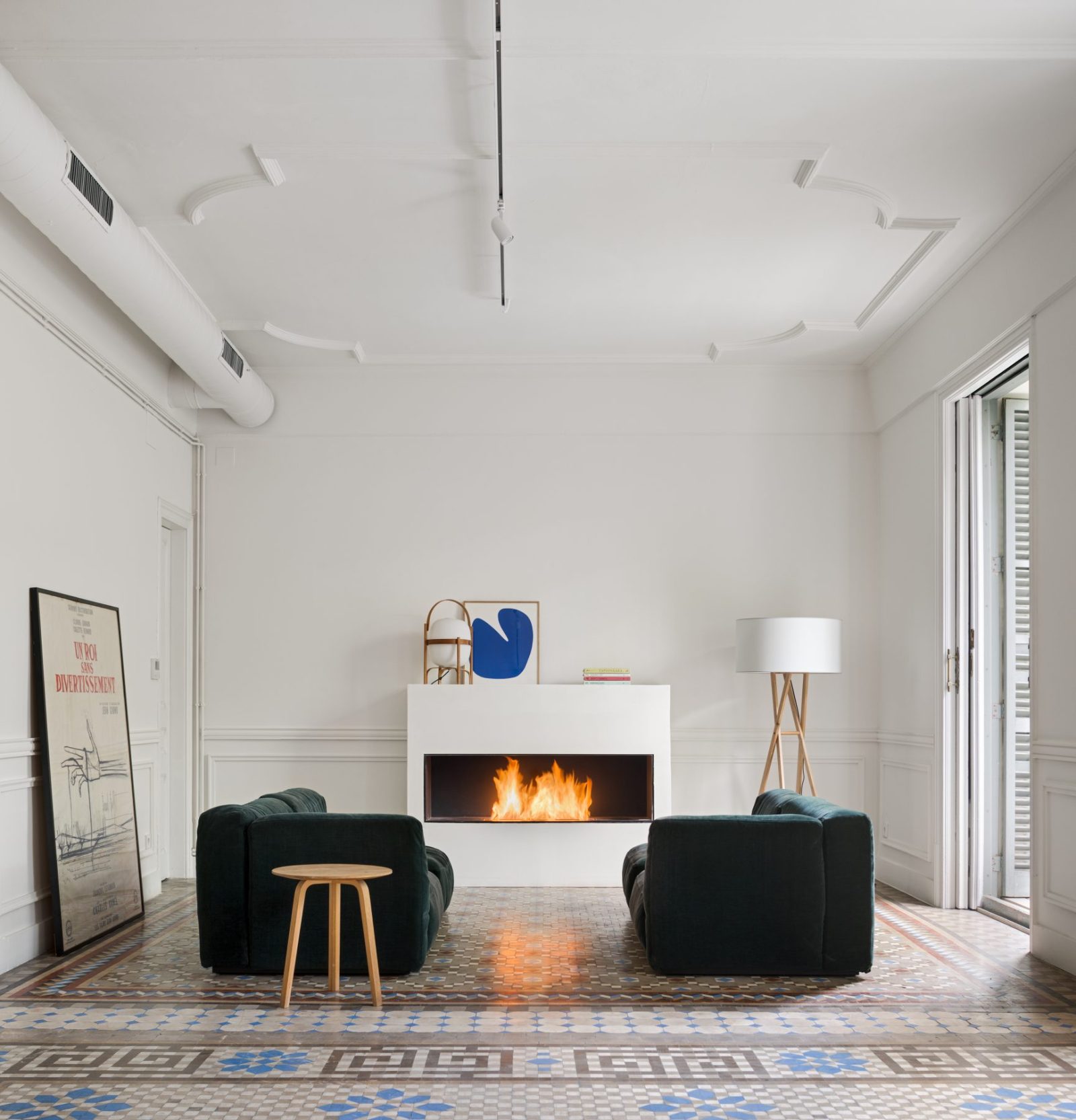
Further interventions focused on improving openness and spatial clarity.
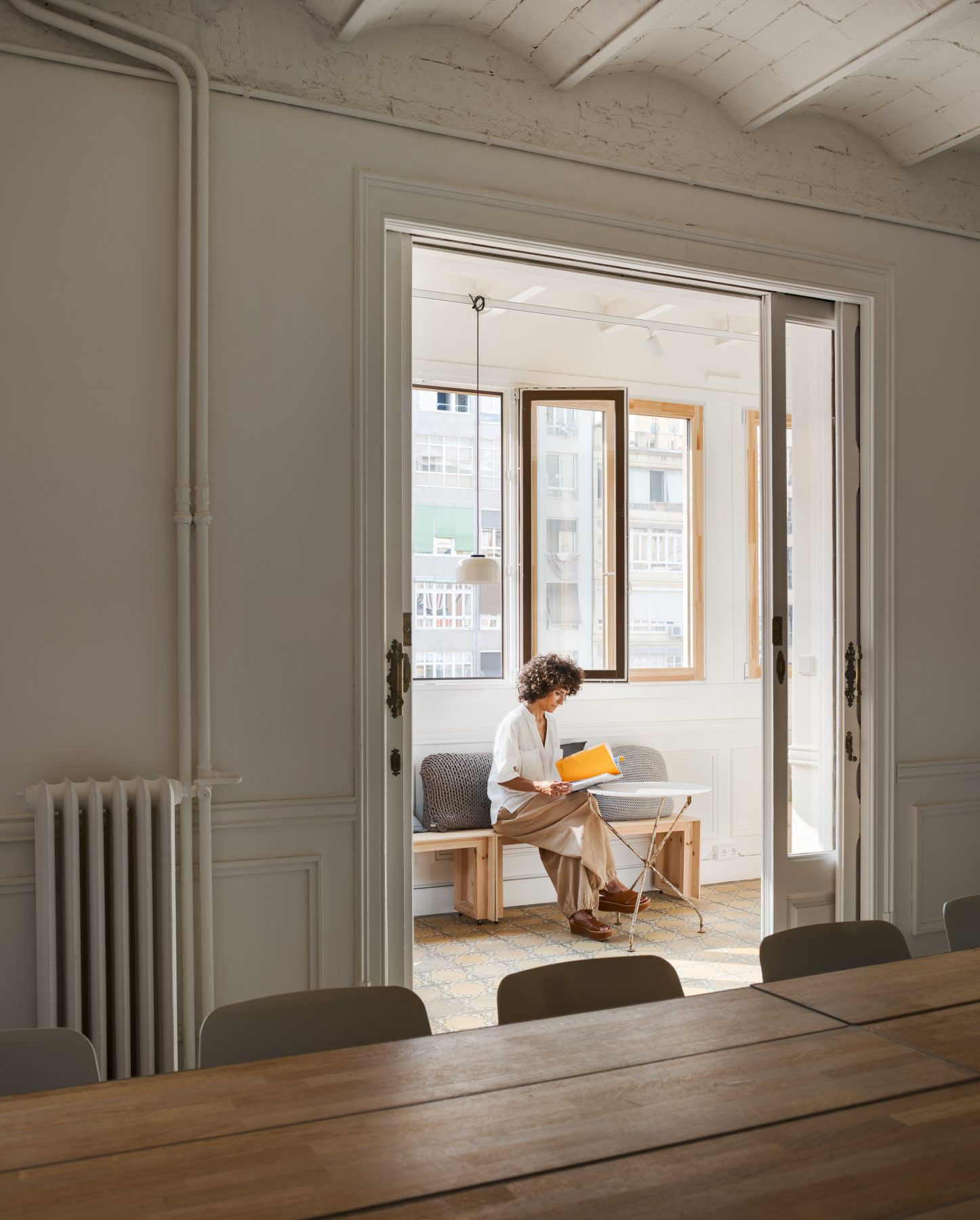
A previously dark corridor leading to the bathrooms was reconfigured through the addition of pinewood and textured-glass doors, while a glazed partition connecting both bathrooms allows daylight to penetrate deeper into the plan.
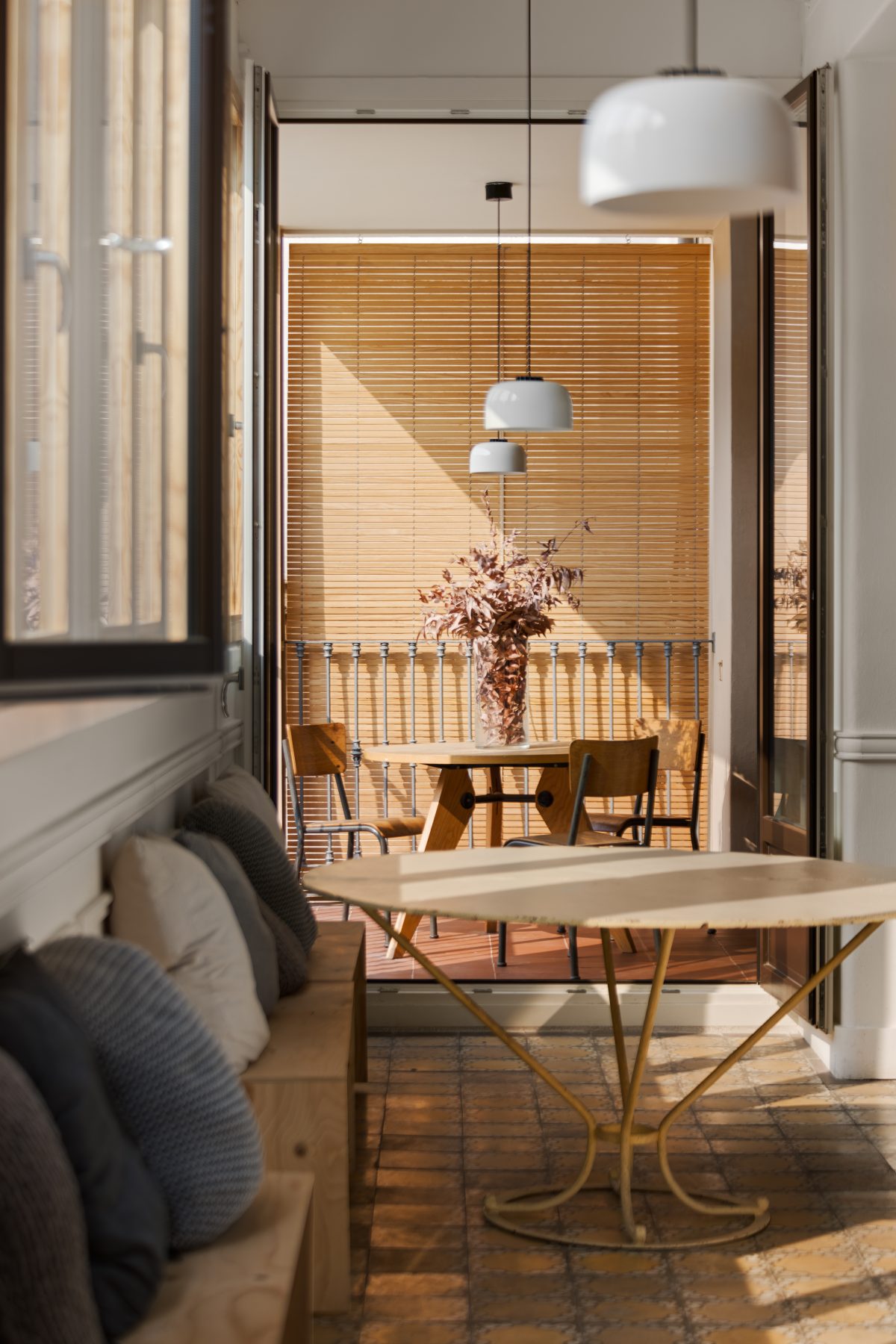
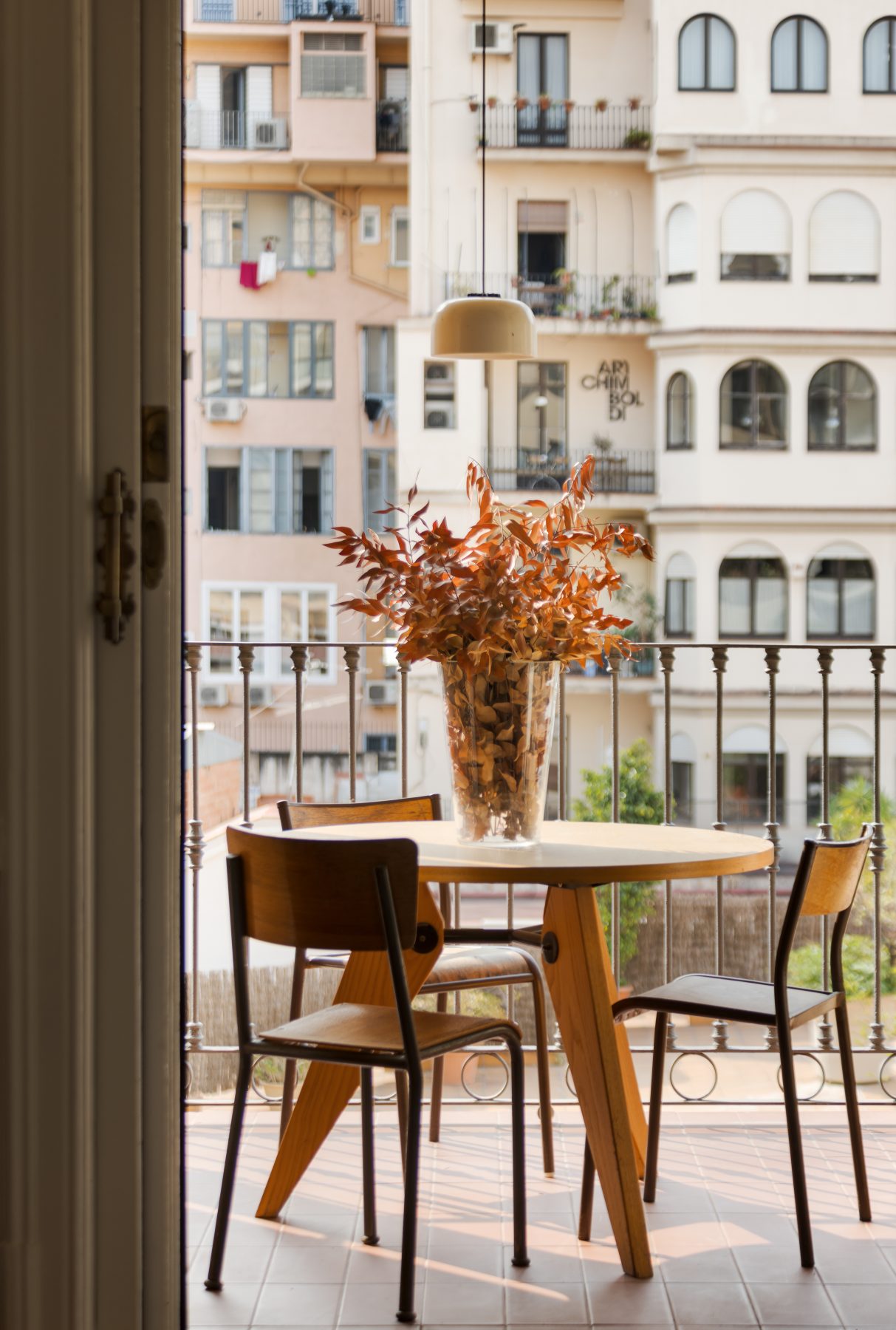
The renovation also involved removing suspended ceilings to recover the apartment’s original volume and expose technical infrastructure.
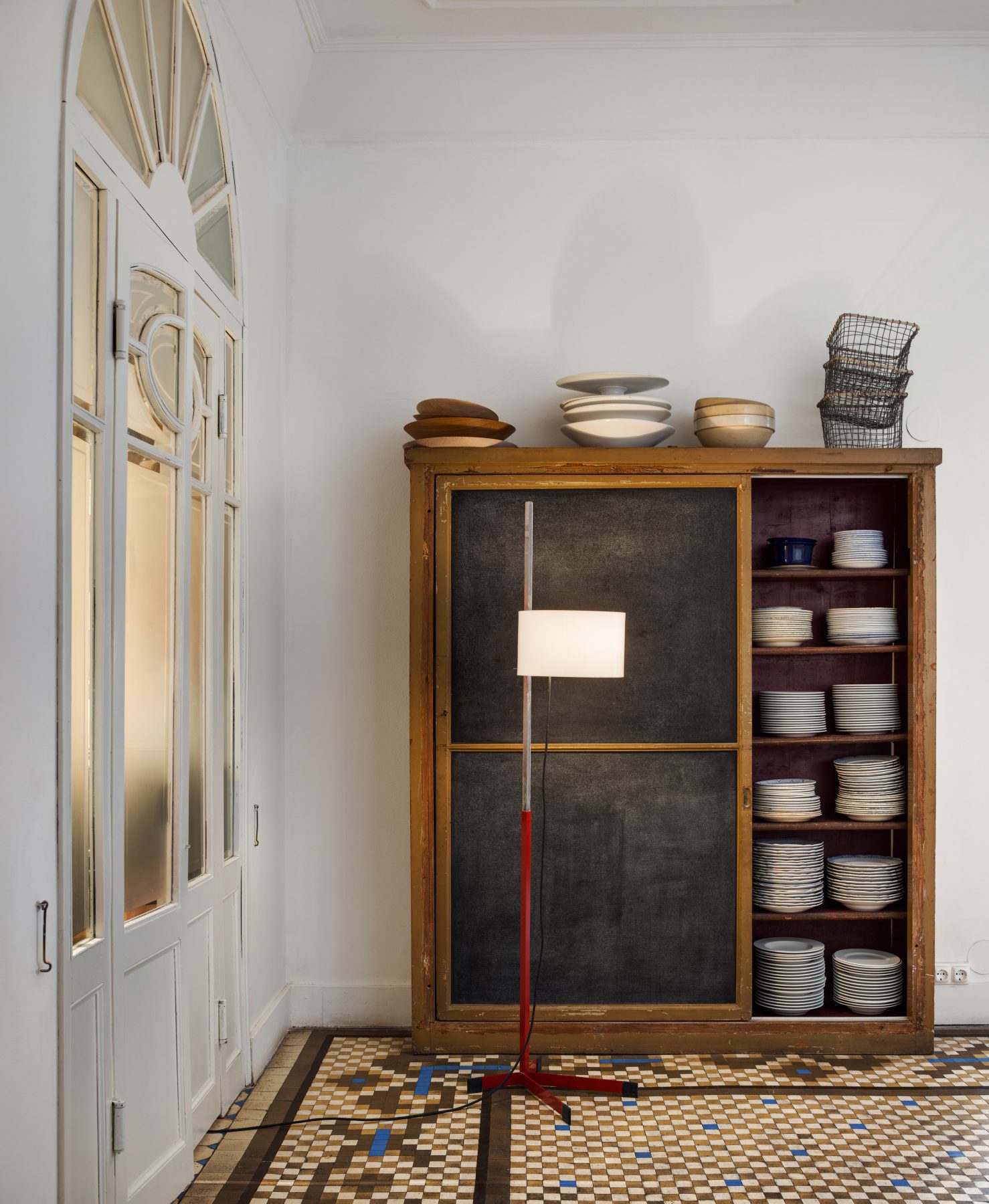
Lighting tracks and a white-painted galvanised steel spiral duct were integrated into the design, transforming functional systems into visible architectural elements.
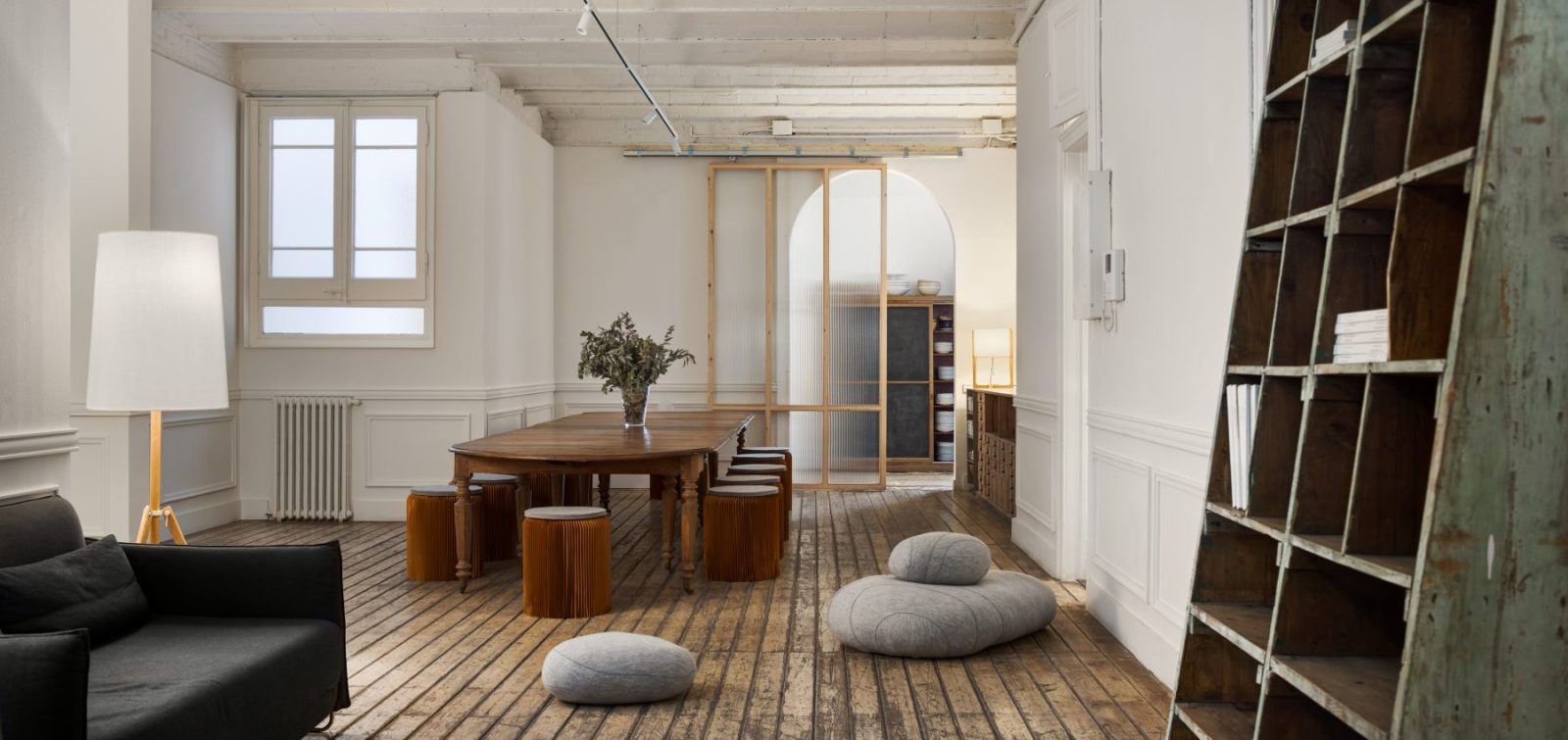
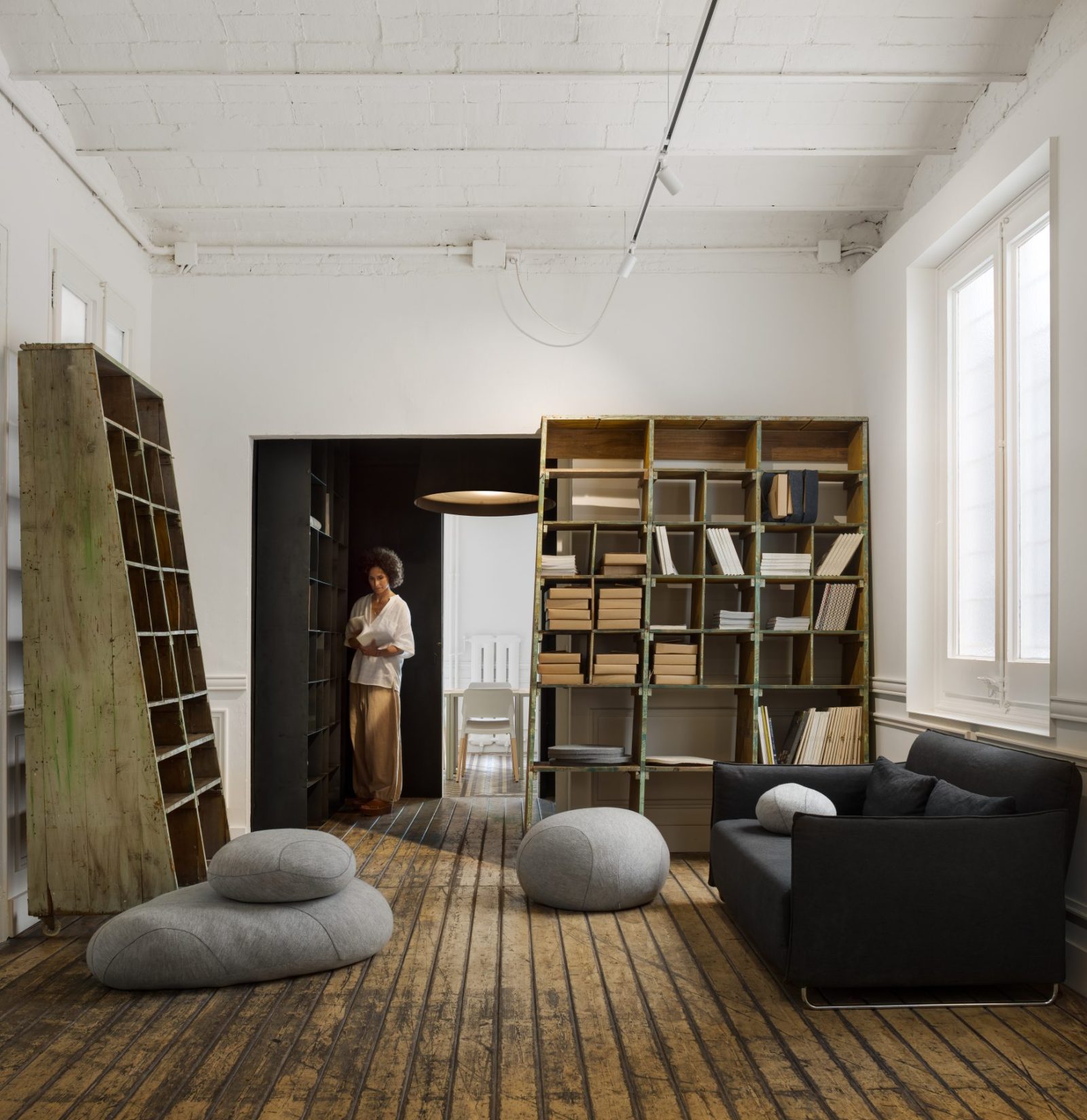
Truyol curated the furniture selection and developed modular meeting tables designed for adaptability and collaborative use. The project ultimately positions hospitality as a framework for contemporary work culture. “We feel we belong when we recognise ourselves in those around us, that’s why simple, close beauty is important. At the heart of hospitality is a sense of community,” explains Anna.
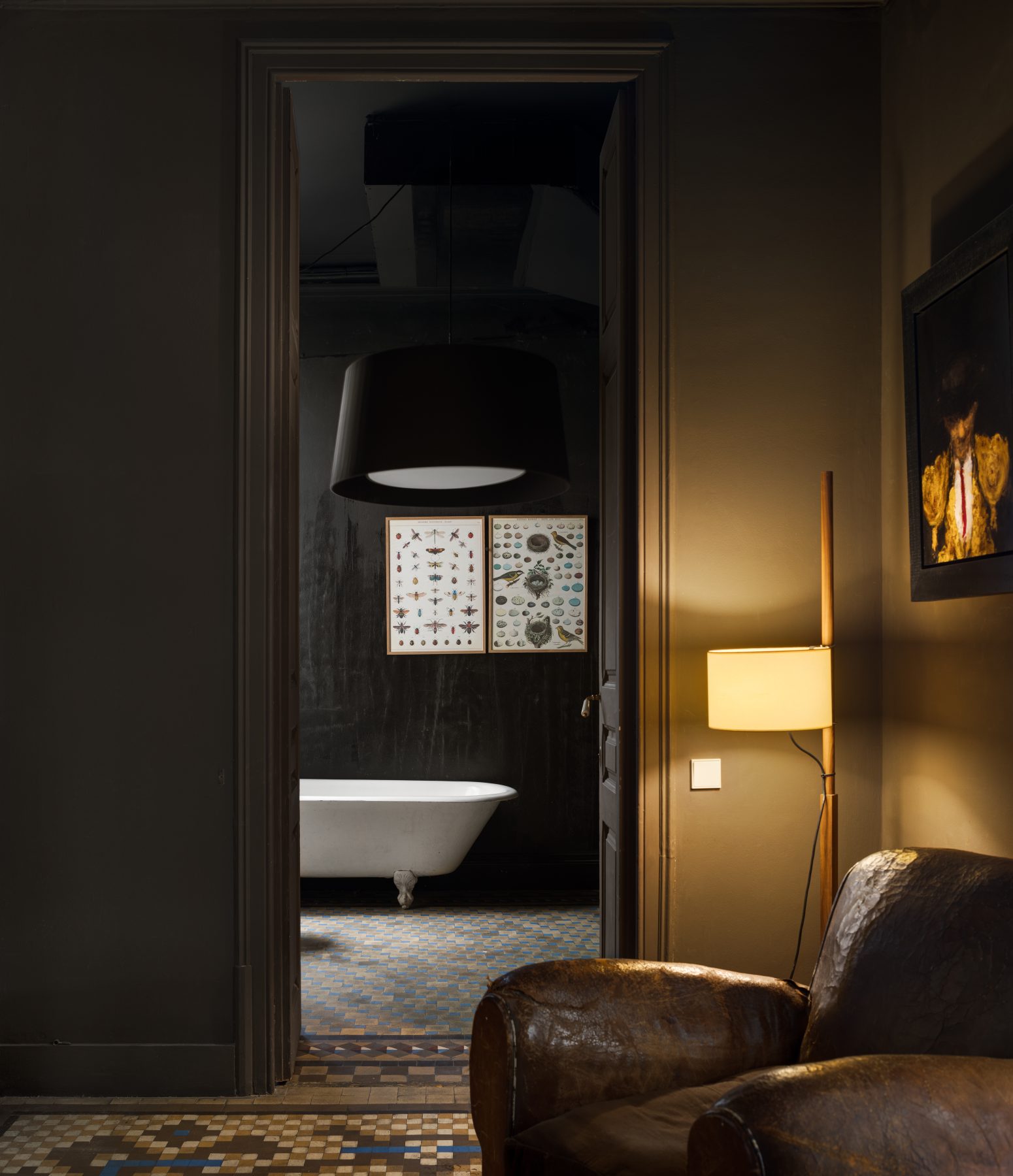
Artchimboldi extends beyond workspace design to include technology, organisation, and culinary services, recognising that “the best parties or the best moments begin and end in a kitchen”.
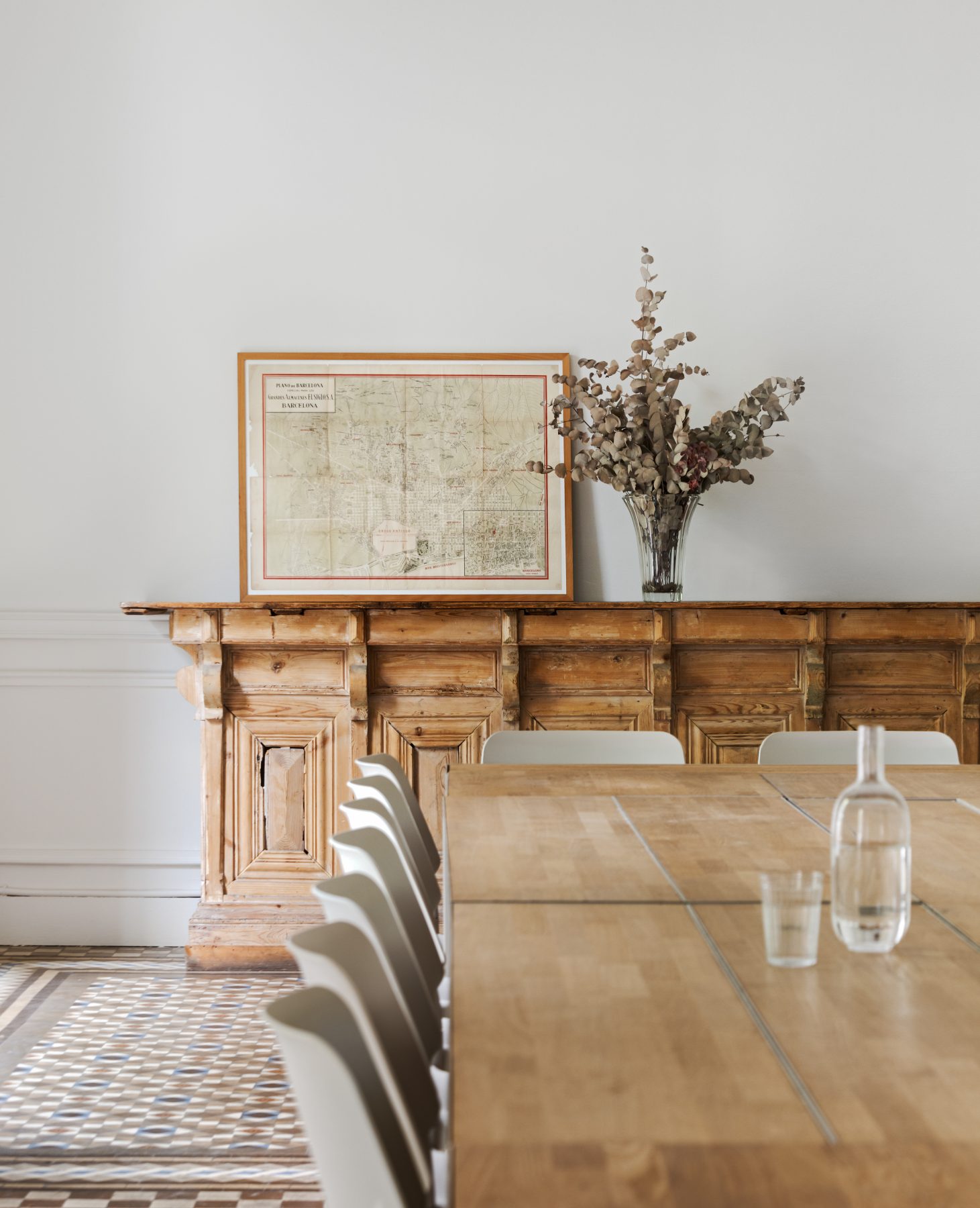
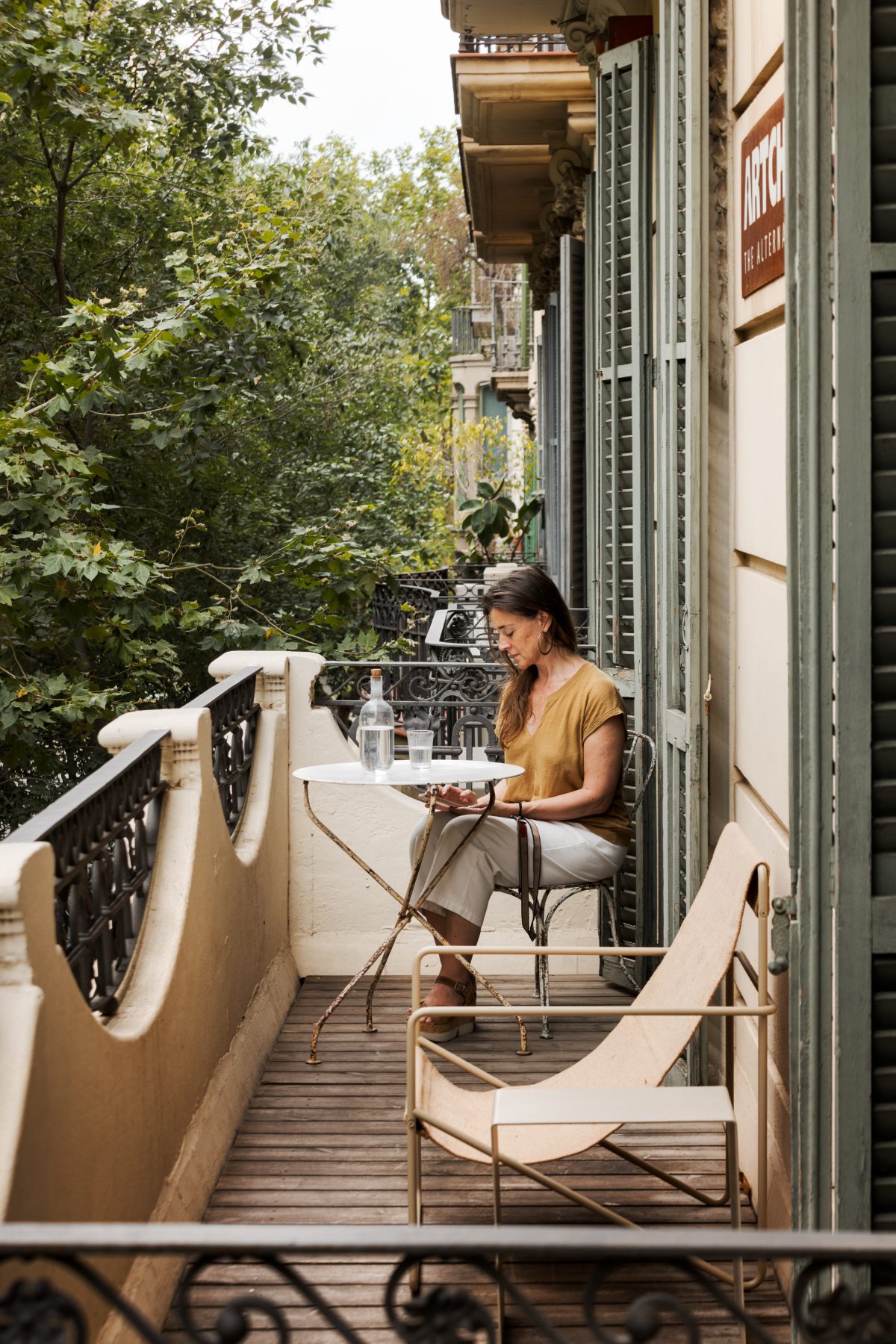
By combining the preservation of Barcelona’s modernist heritage with adaptable spatial strategies and a restrained palette of untreated pine and textured glass, the project enhance a welcoming atmosphere that nurtures creativity, comfort, community, and a sense of belonging.
Facts & Credits
Project title: Artchimboldi Barcelona
Project type: Interiors
Architecture: Arquitect Emma Martí
Client & Collaborator: Anna Truyol
Photography: Pol Viladoms