Architecture in Colour series treats colour as an architectural instrument rather than decoration—one that shapes space, proportion, and emotional experience as powerfully as form and light.
In Bagnolet, Gruit converts two stacked apartments into a duplex where structure and color become primary tools of spatial organization. An exposed diagonal beam creates a visible triangular void that reveals the building’s transformation, while a yellow circulation core, light blue ceilings, and material contrasts define movement, hierarchy, and everyday use throughout the interior.
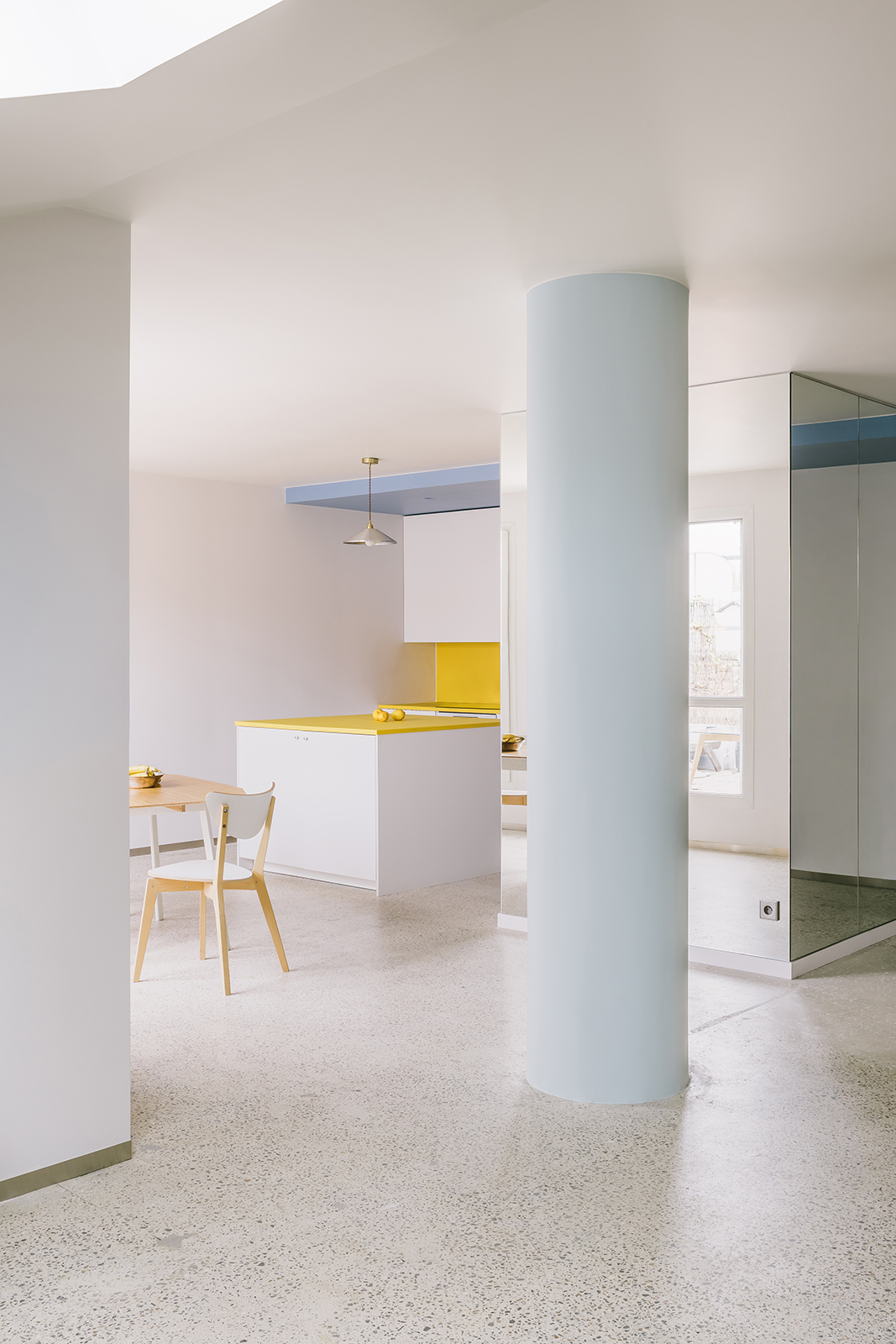
Located within a residential building dating from the 2000s in the heart of Bagnolet, the project reconfigures two vertically stacked apartments into a single duplex residence.
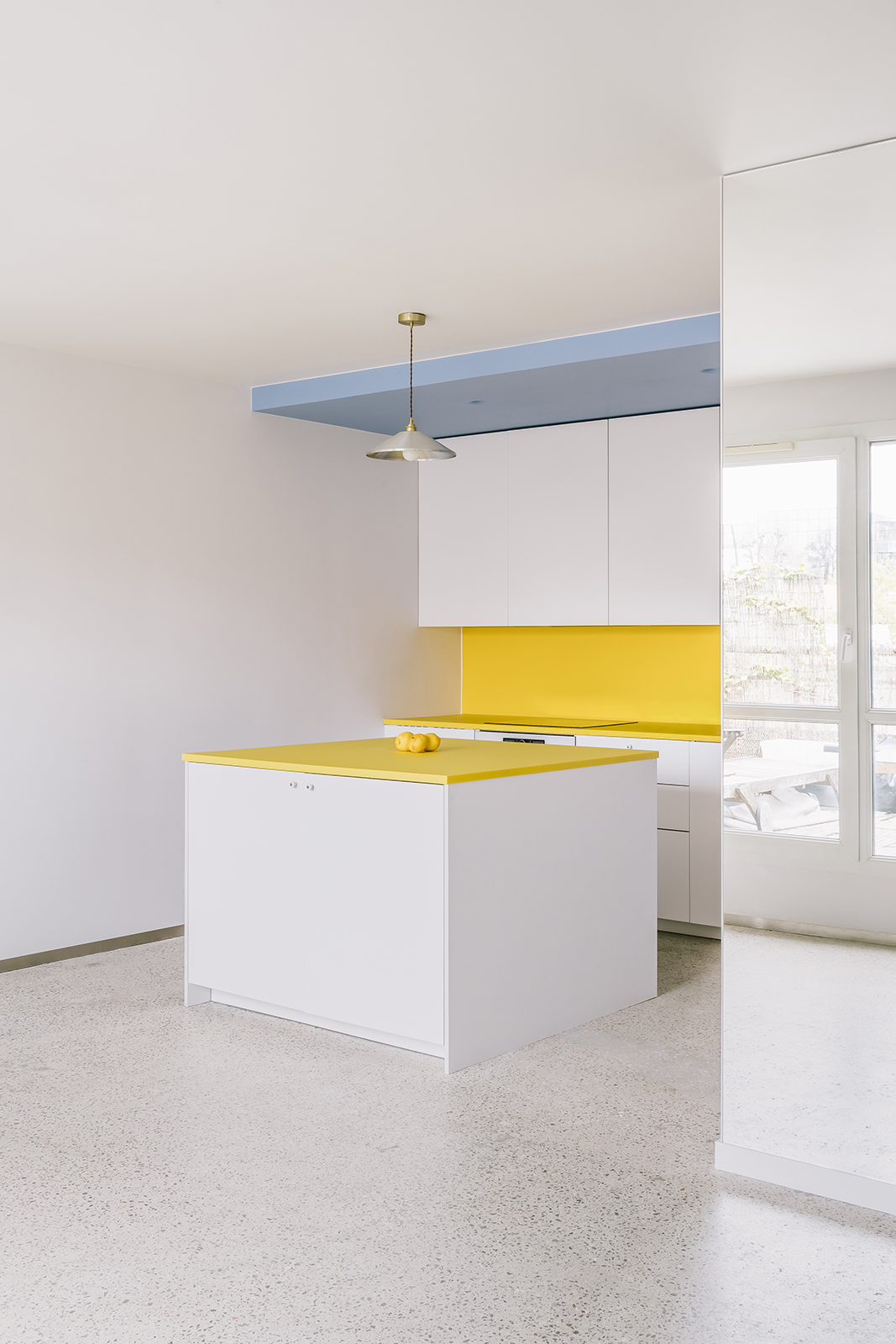
The intervention begins with a complete stripping back of the existing interiors, enabling a radical reorganization of space and circulation.
Central to the design is the exposed concrete beam supporting the new opening in the floor slab. The project makes the structural intervention visible, allowing the building’s transformation to remain legible.
Extending diagonally through the apartment and bearing onto the load-bearing walls, the beam generates a triangular void within the slab. Intentionally left exposed, this opening becomes a defining spatial element of the project.
The dialogue between existing and new construction is further reinforced through material contrast.
White aggregate concrete used for the additions is set against the darker concrete of the original slab, clearly distinguishing successive layers of intervention while revealing the process of construction.
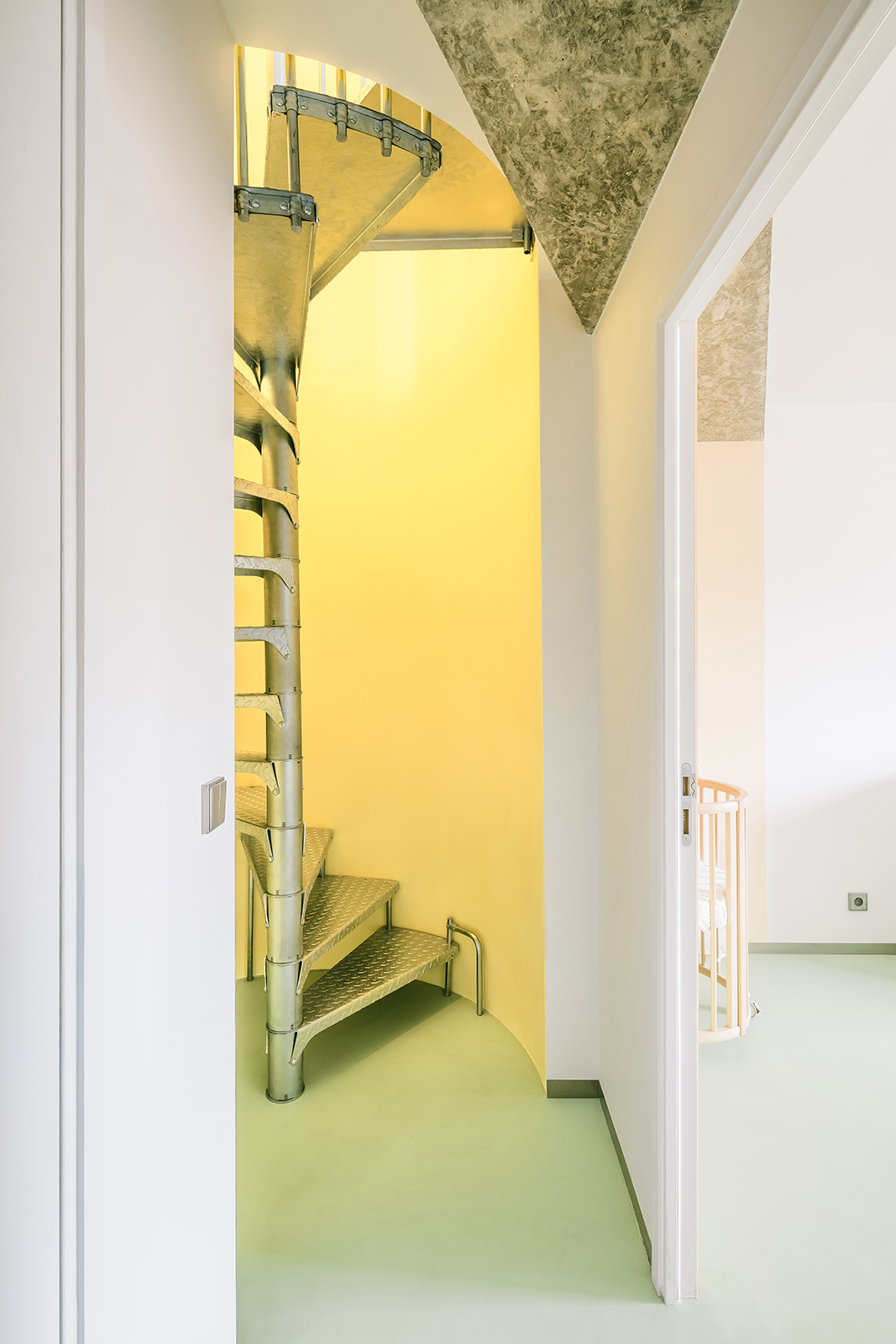
On the lower level, the beam continues uninterrupted through the bedroom, corridor, and bathroom, establishing a continuous structural presence throughout the plan.
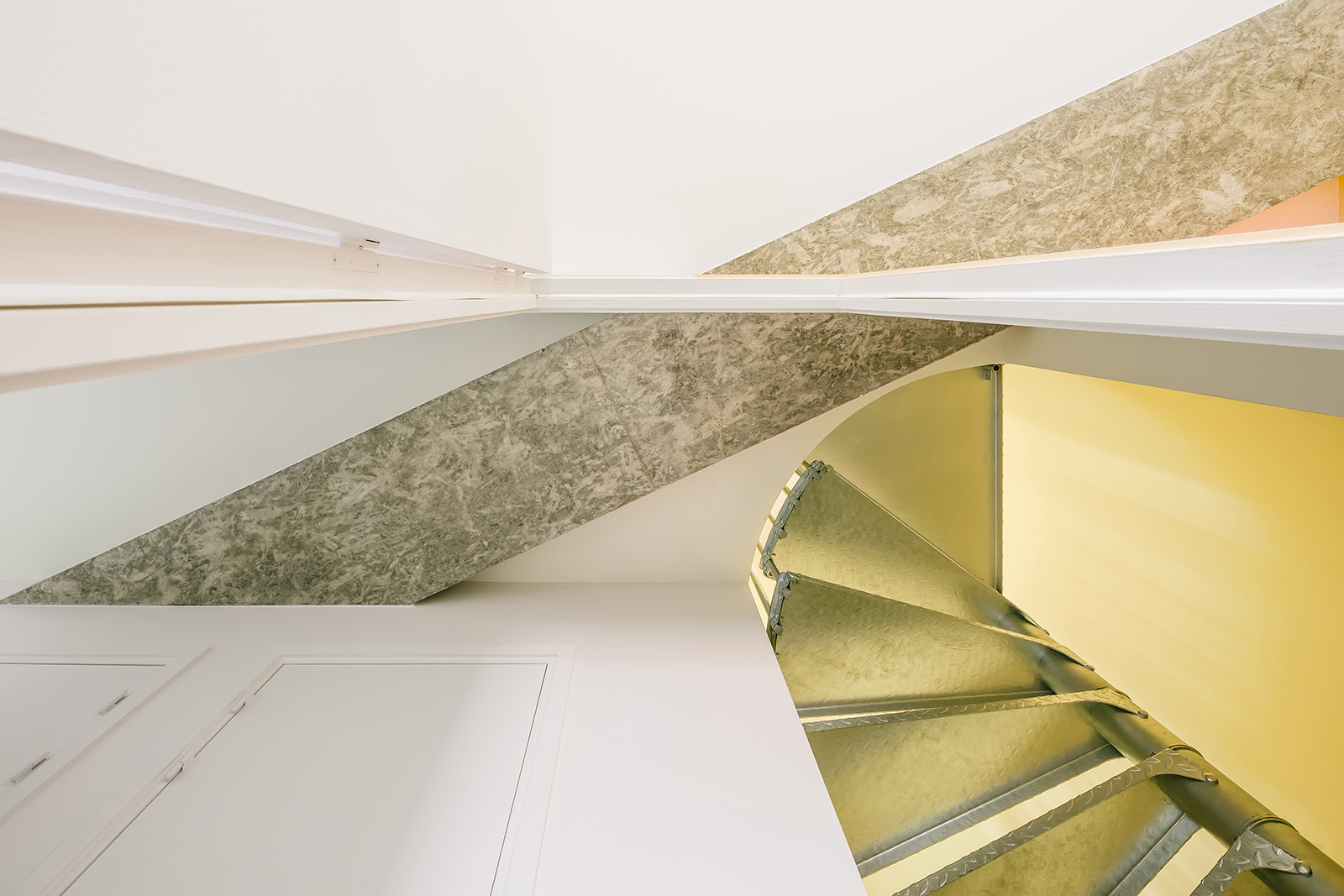
Its visibility reinforces the logic of the transformation, turning the structure into an active architectural component.
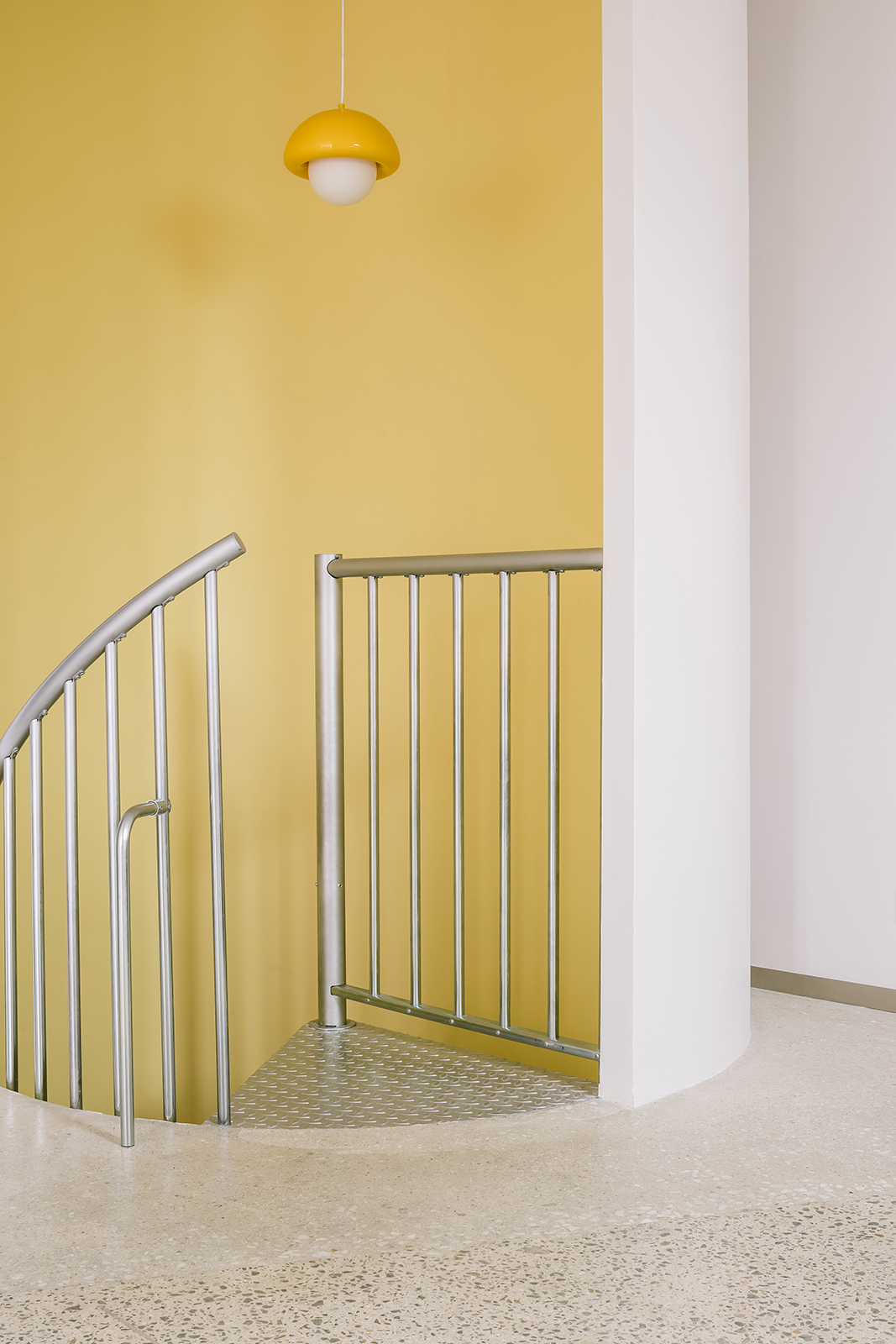
Alongside structure, color operates as a spatial device.
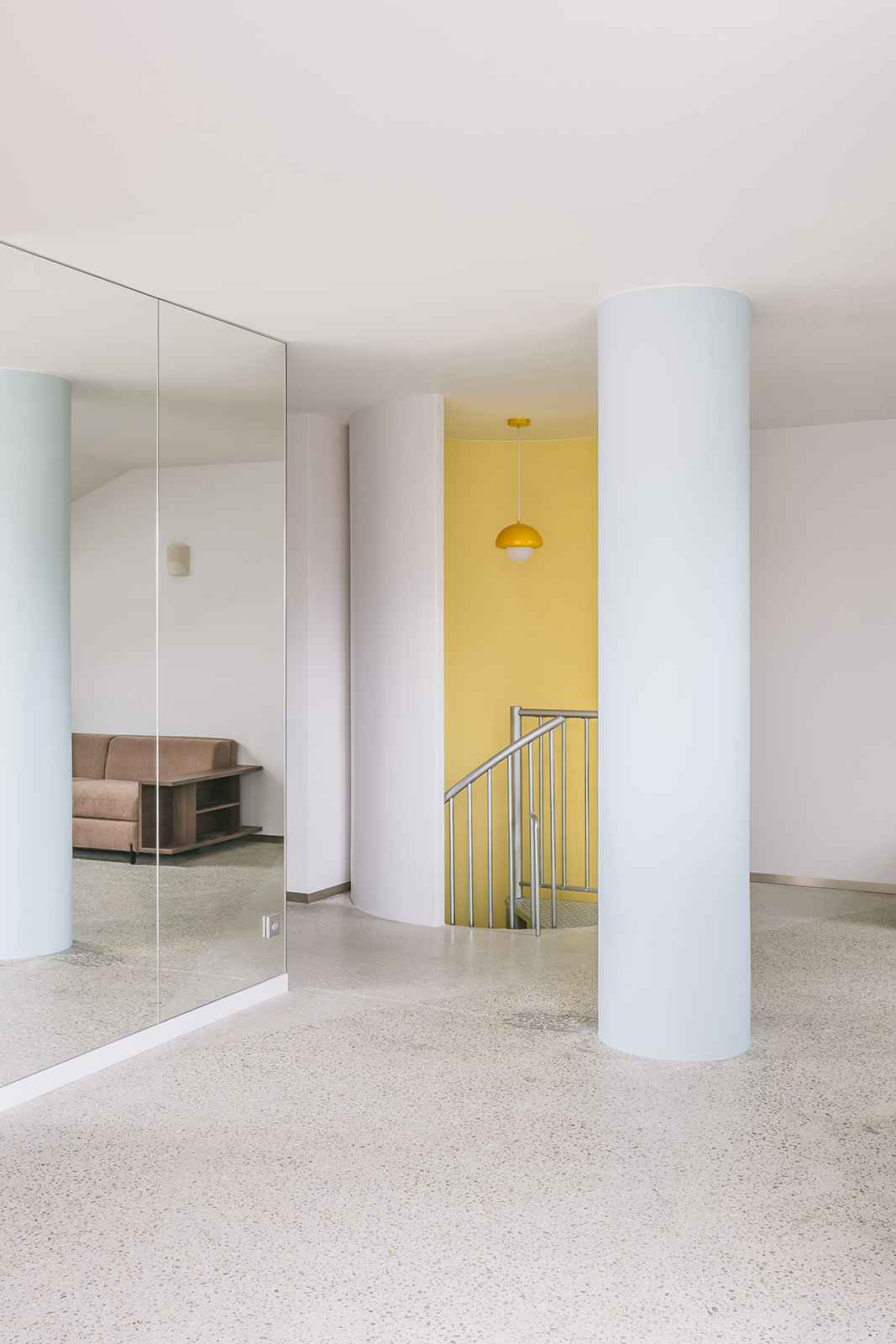
It organizes circulation, defines thresholds, and articulates relationships between functions.
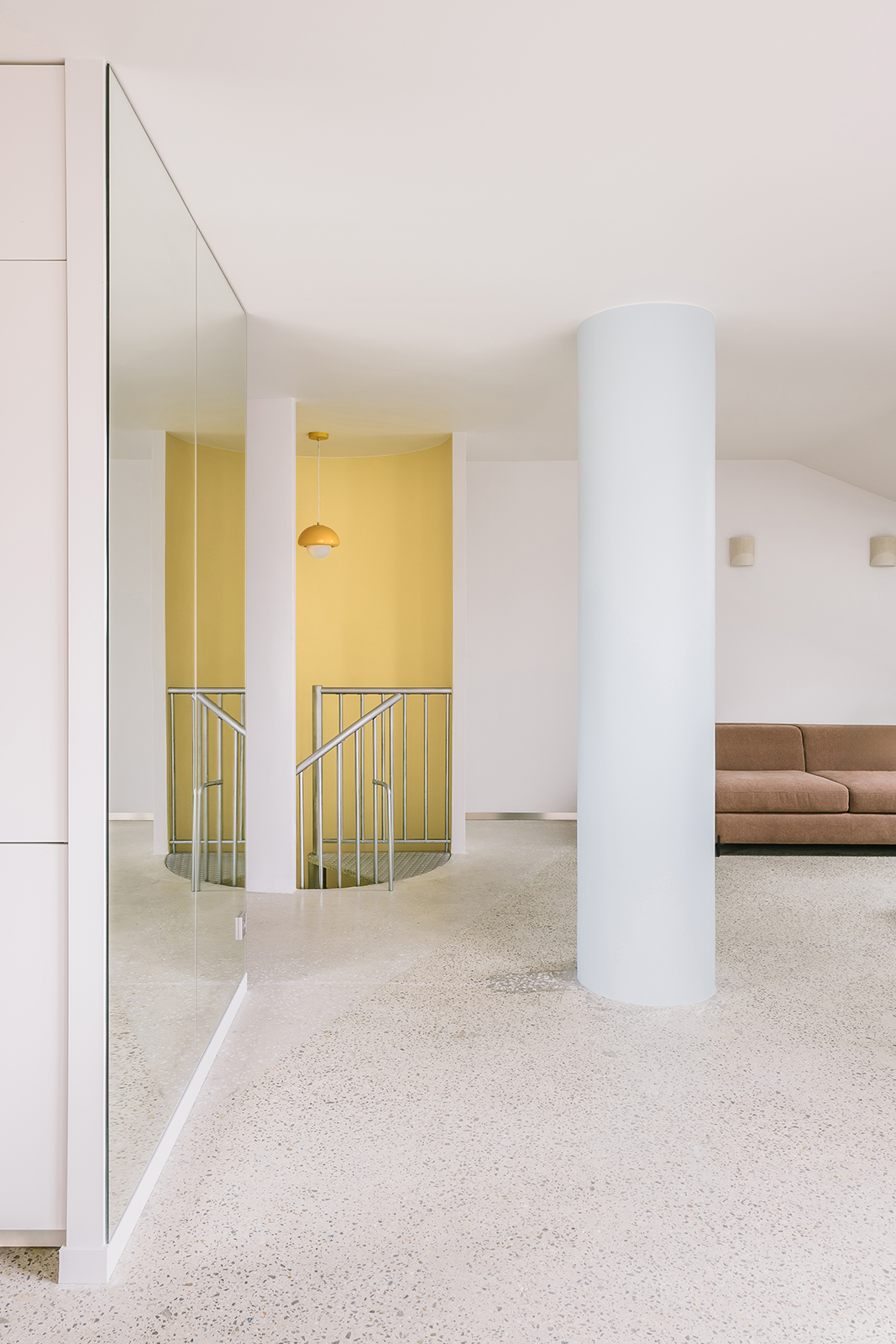
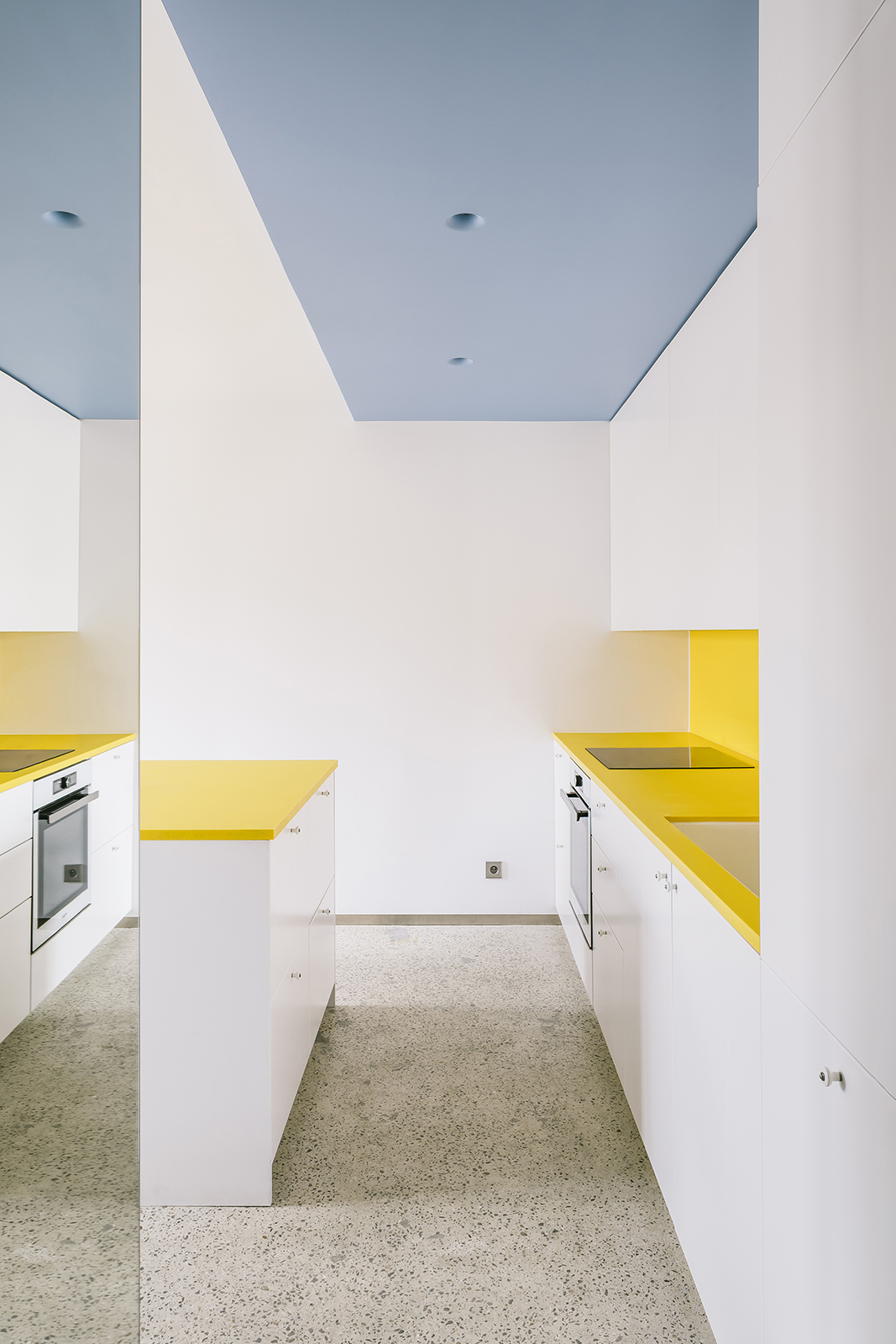
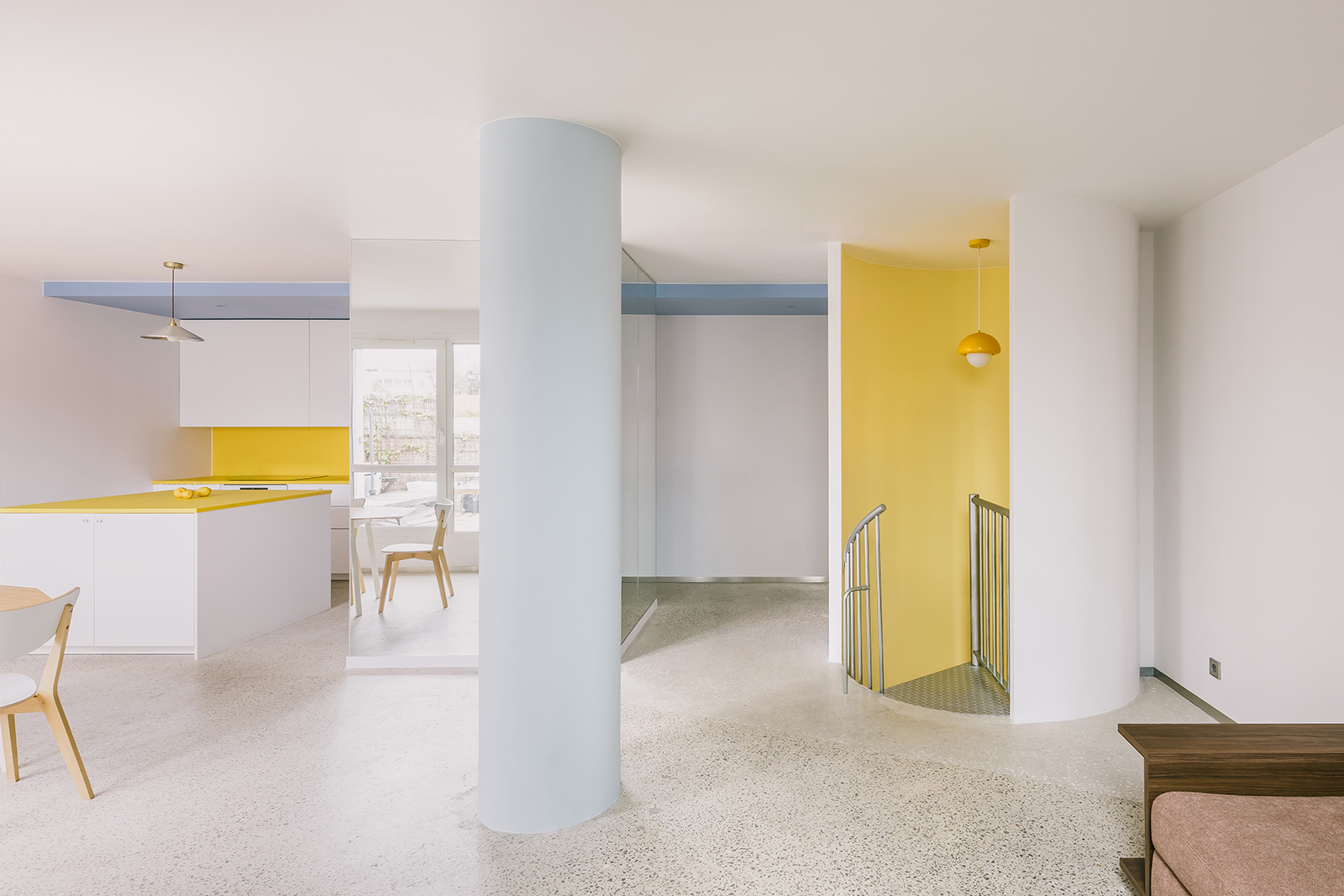
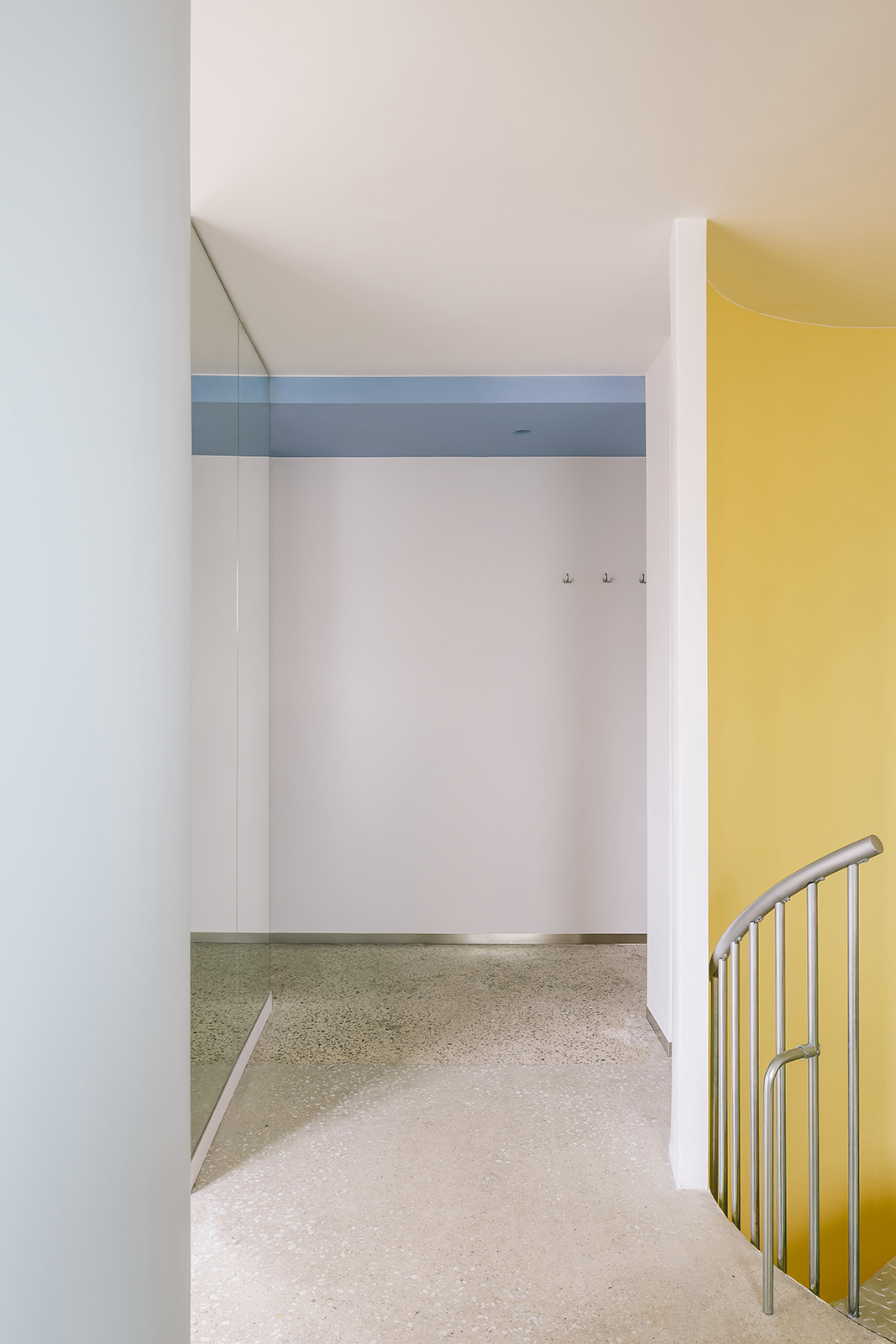
A yellow volume marks the vertical circulation and transforms the staircase into the project’s spatial core.
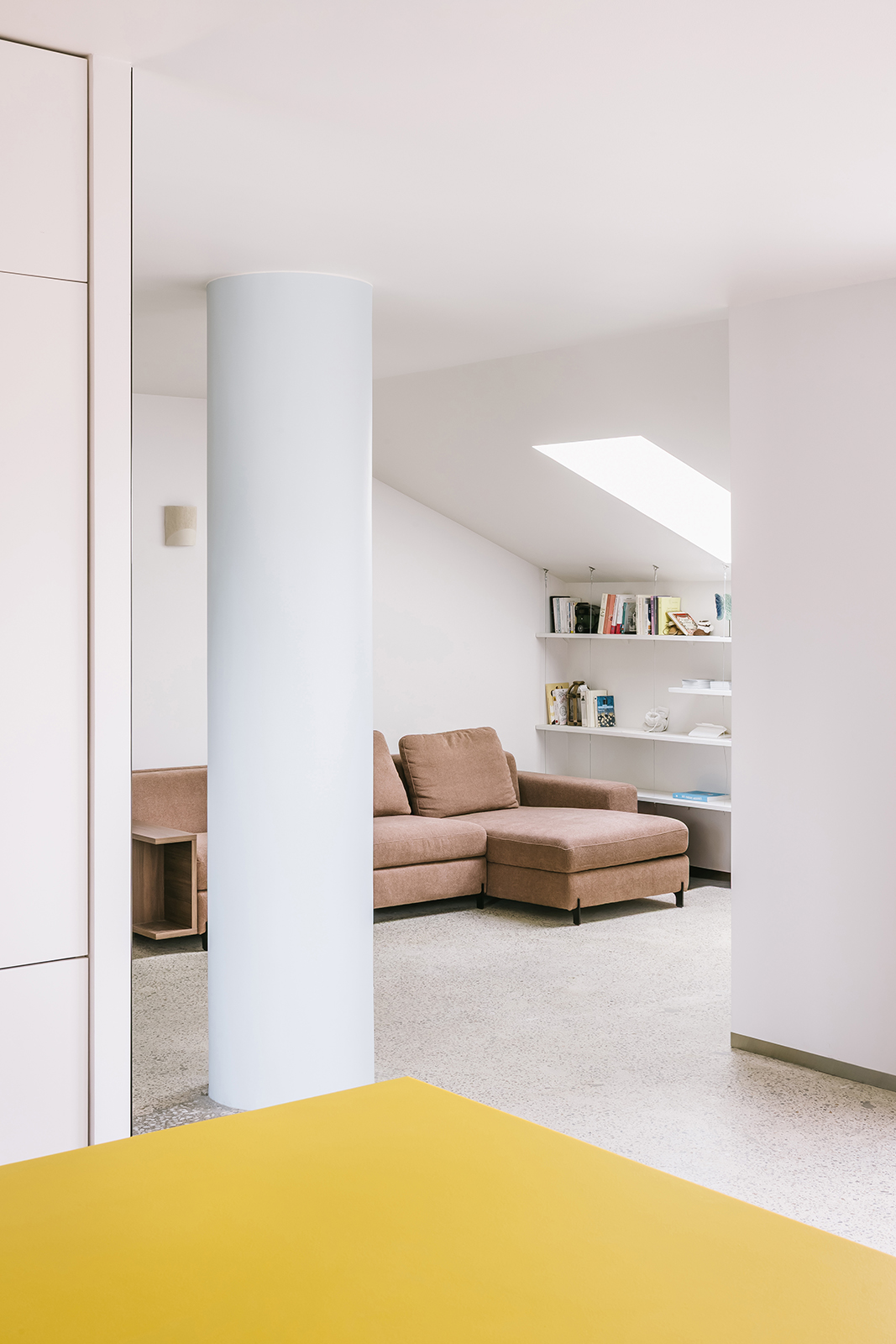
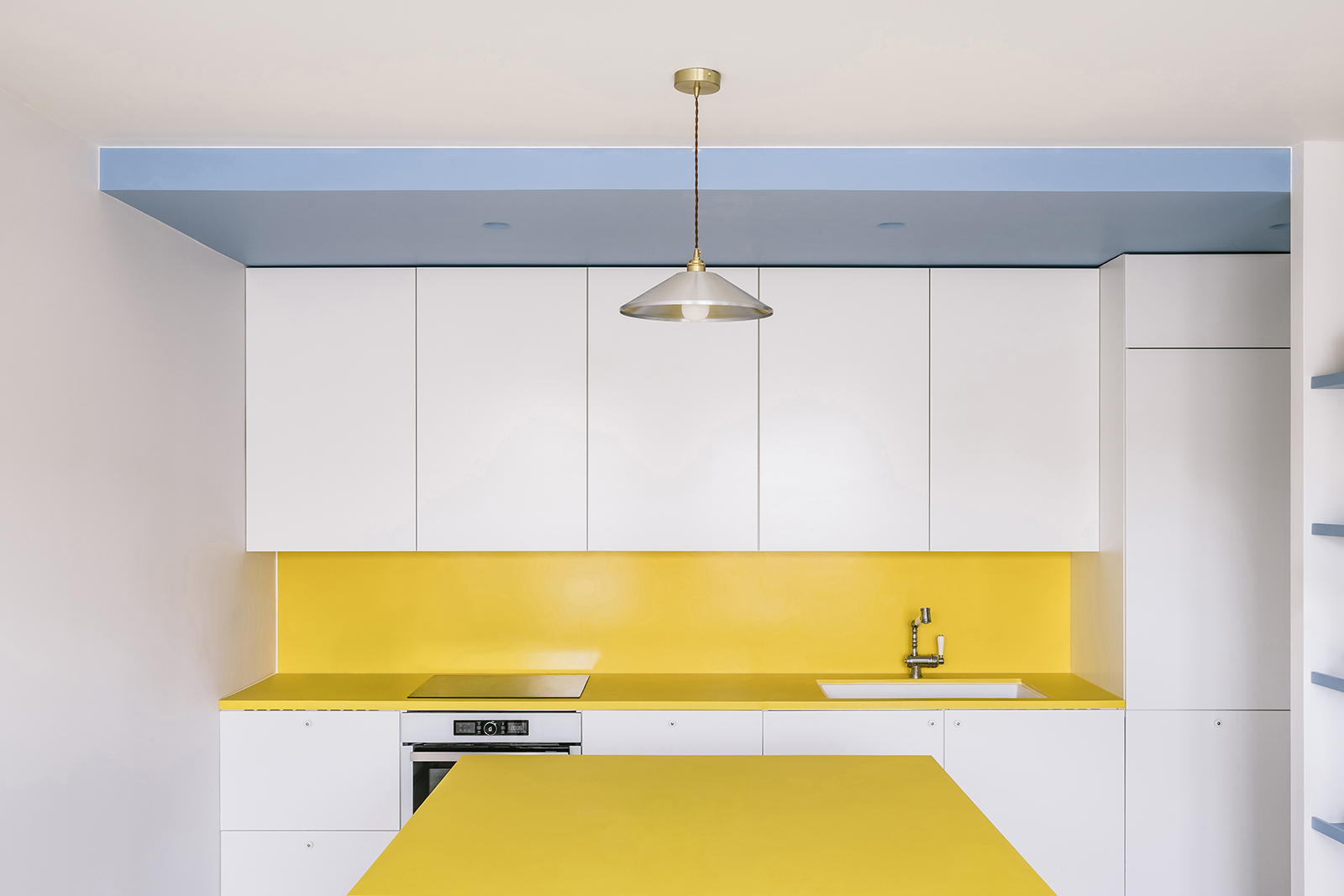
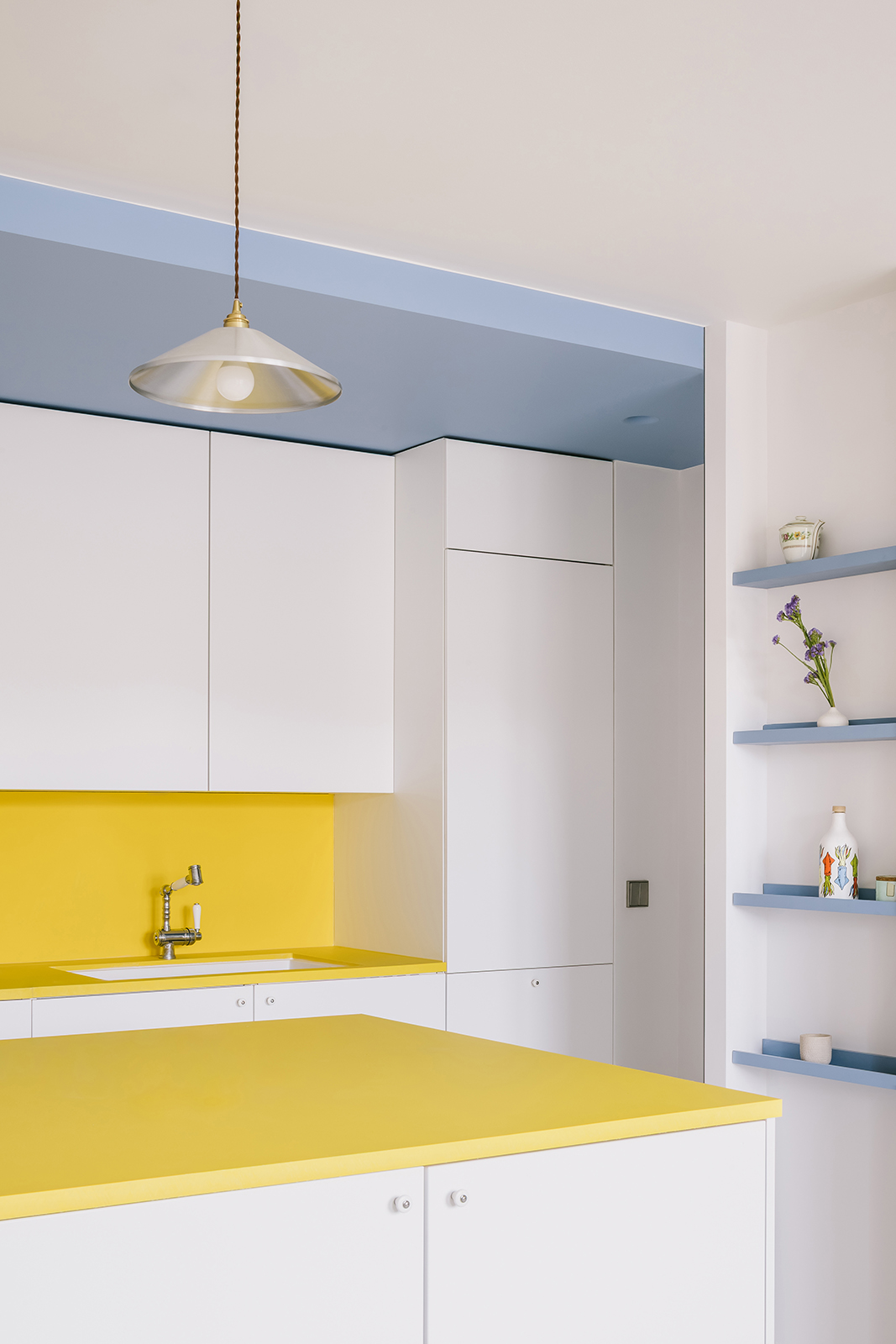
It positions the living area as the point of departure from which one descends toward the more private spaces below. In contrast, a blue horizontal ceiling element organizes everyday functions, including the entrance, kitchen, and sanitary spaces, while establishing a coherent framework for their interaction.
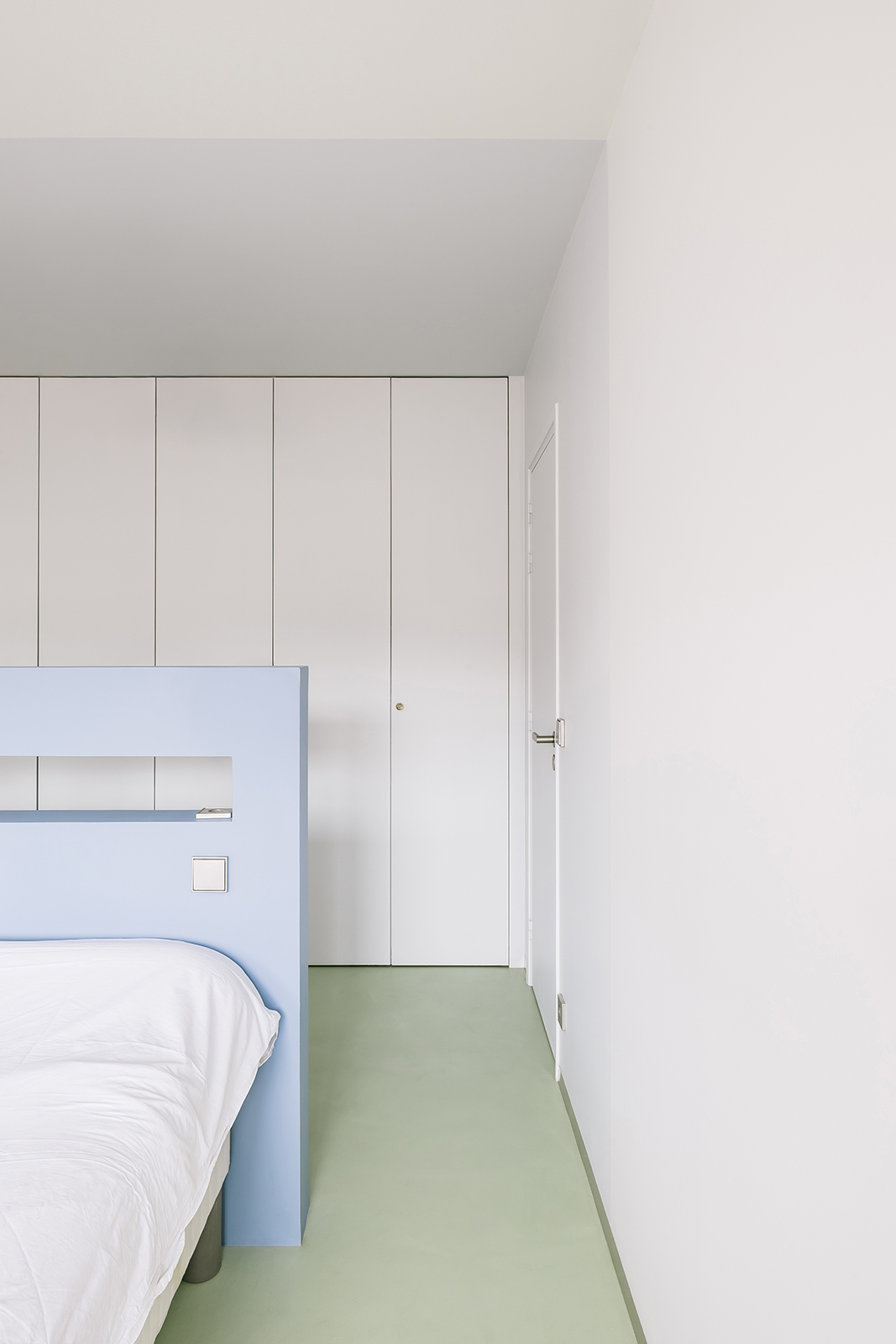
Materiality further contributes to this chromatic strategy.
The kitchen is constructed from polyethylene, a material typically associated with professional cutting boards. Its yellow coloration references food-preparation codes, where the color is commonly linked to poultry. In this context, the material shifts from object to architecture, defining space through both function and color.
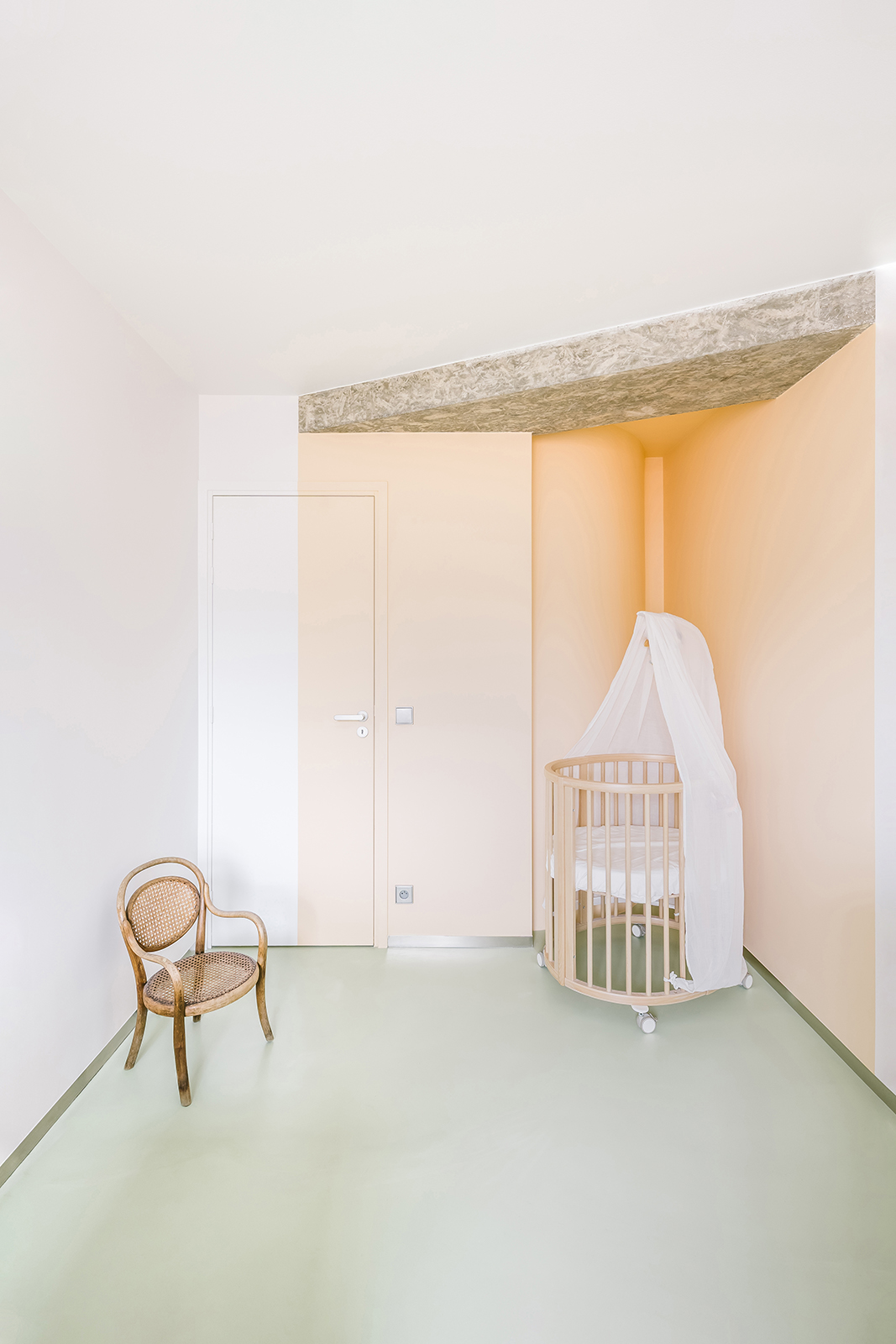
On the lower level, the exposed beam establishes the upper limit of the interior, allowing a peach-colored volume to emerge as a precisely calibrated spatial condition.
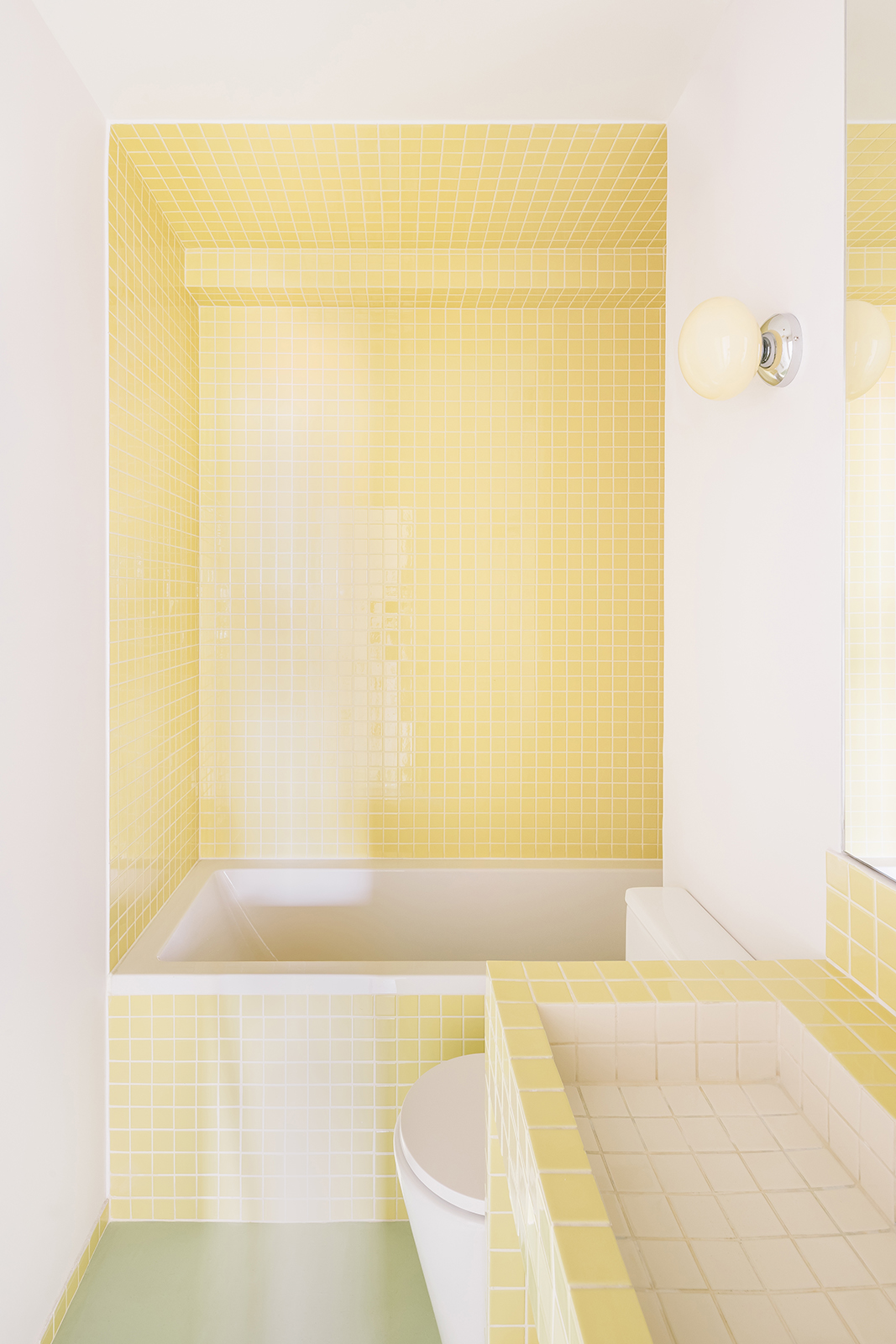
Throughout the project, color functions as more than a decorative layer. It becomes an architectural instrument that shapes perception, organizes movement, and actively produces space.
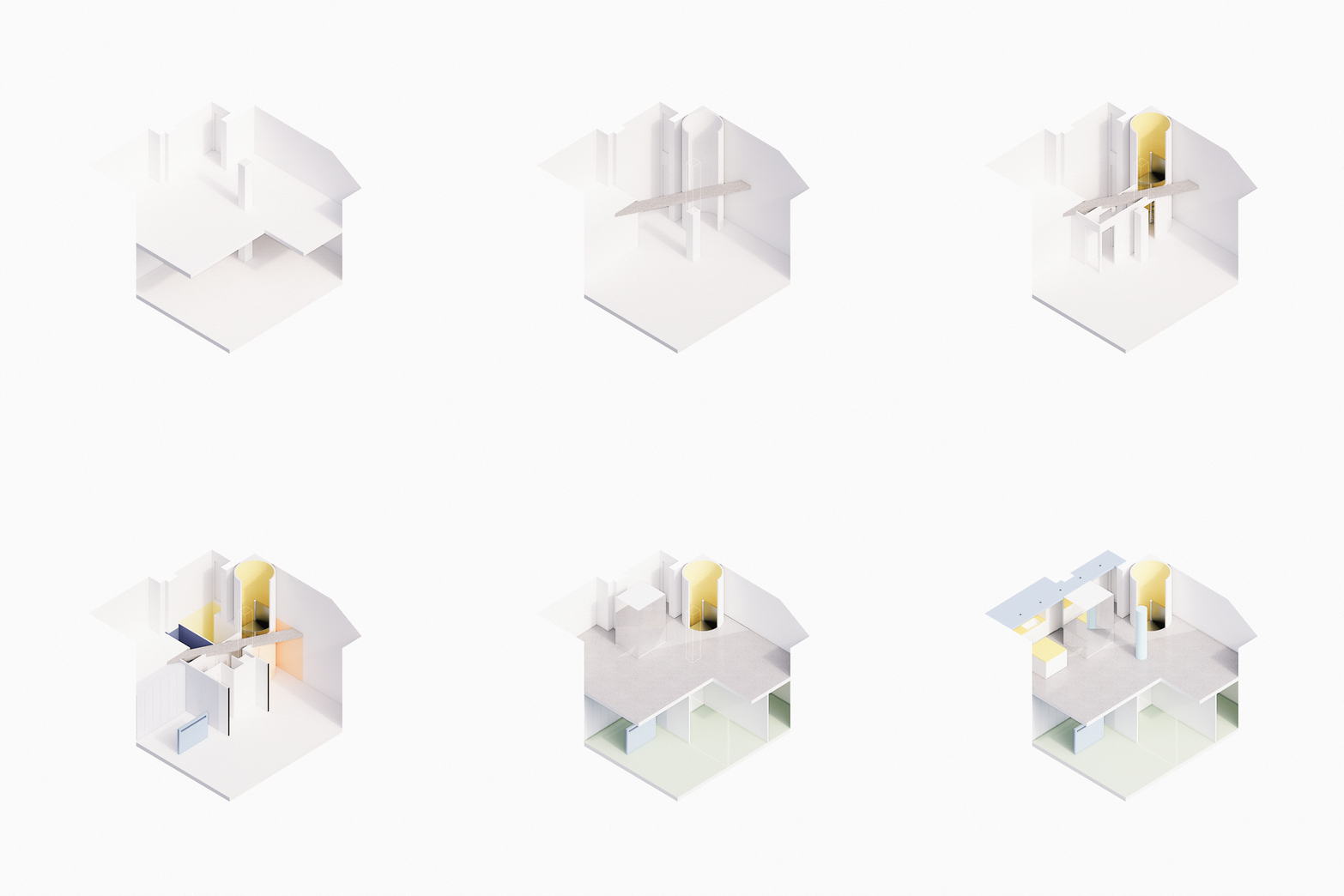
Plans
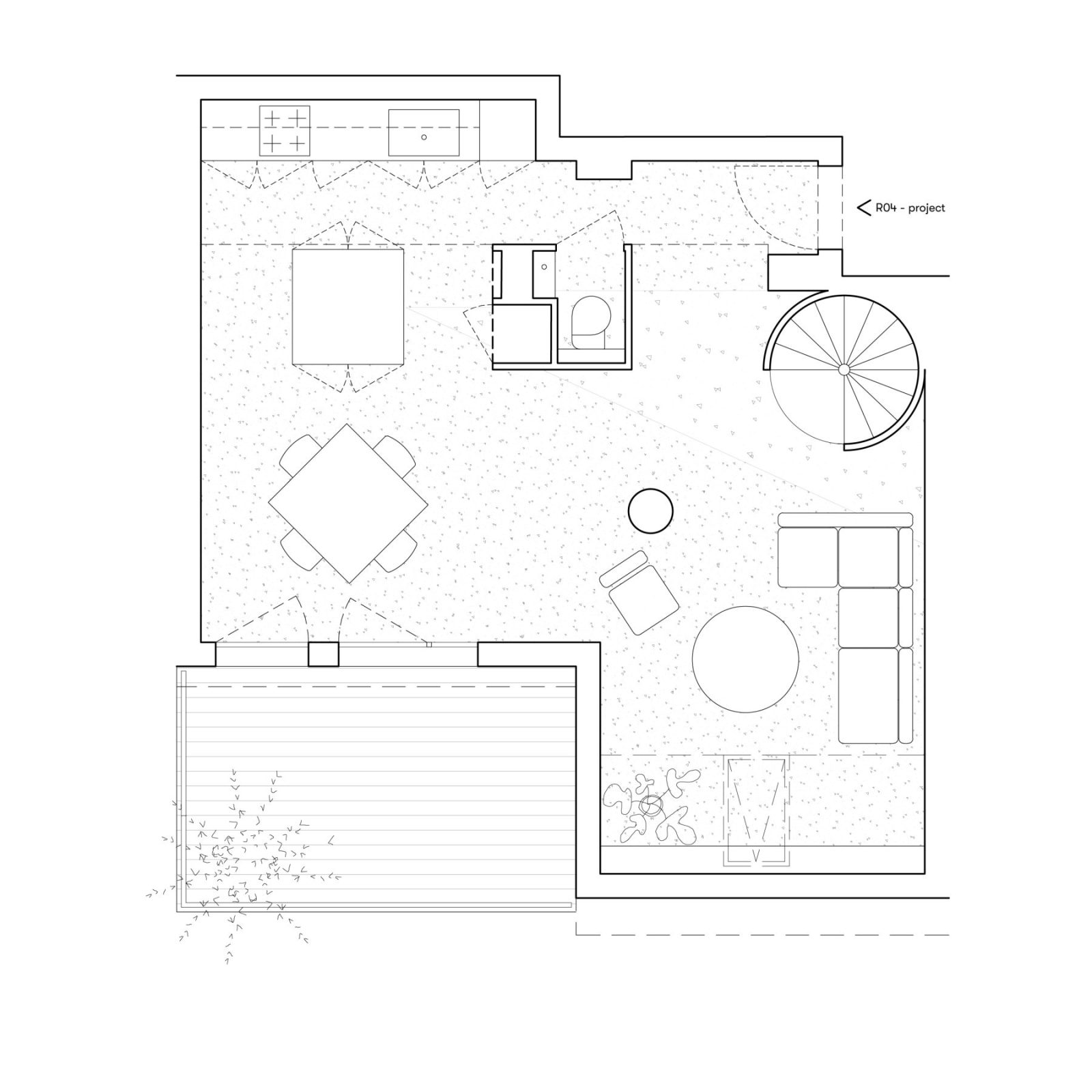
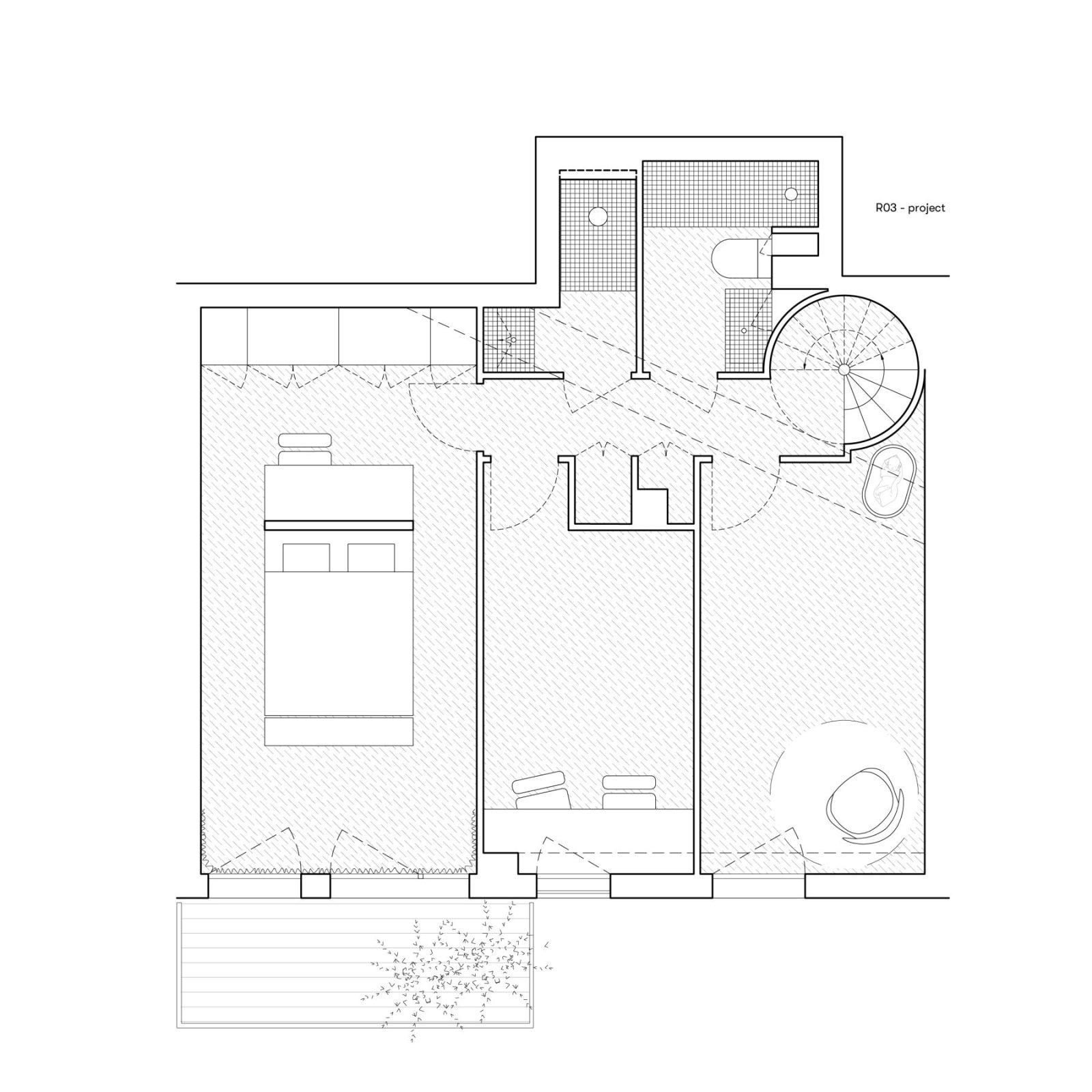
Facts & Credits
Project title: Bagnolet 32
Project type: Transformation of two existing apartments into a 100 m² duplex
Date of completion: 2026
Clients: Rosa Bursztein & Mickaël Allouche
Project location: Bagnolet, France
Architecture: Gruit Architect
Structural Engineer: IN4
General contractor: Caballero Père & Fils
Photography: Philippe Billard