MicroScale explores architecture at its most intimate spotlighting tiny designs with outsized ideas; compact structures that rethink space, material, and function. From tiny houses to pocket retail, these projects prove that small architecture can be radical, poetic, and deeply human, revealing how scale sharpens innovation rather than limiting it.
This Athens micro-dwelling demonstrates how limitations can generate spatial richness through precise interventions and resourceful design. A glass brick partition introduces daylight into a previously enclosed bathroom, while a raised platform shaped by a perimeter pipe integrates sleeping, storage, and display functions. Untreated MDF, pine plywood, and galvanized steel reinforce an economical yet tactile material palette, creating a compact living environment where adaptability, construction logic, and atmosphere coexist.
Occupying just 12 sqm in the Greek capital, the project demonstrates how restriction can drive creative problem-solving. Through the strategic use of light, reflection, and raw materials, the intervention creates an interior that exceeds its physical dimensions.
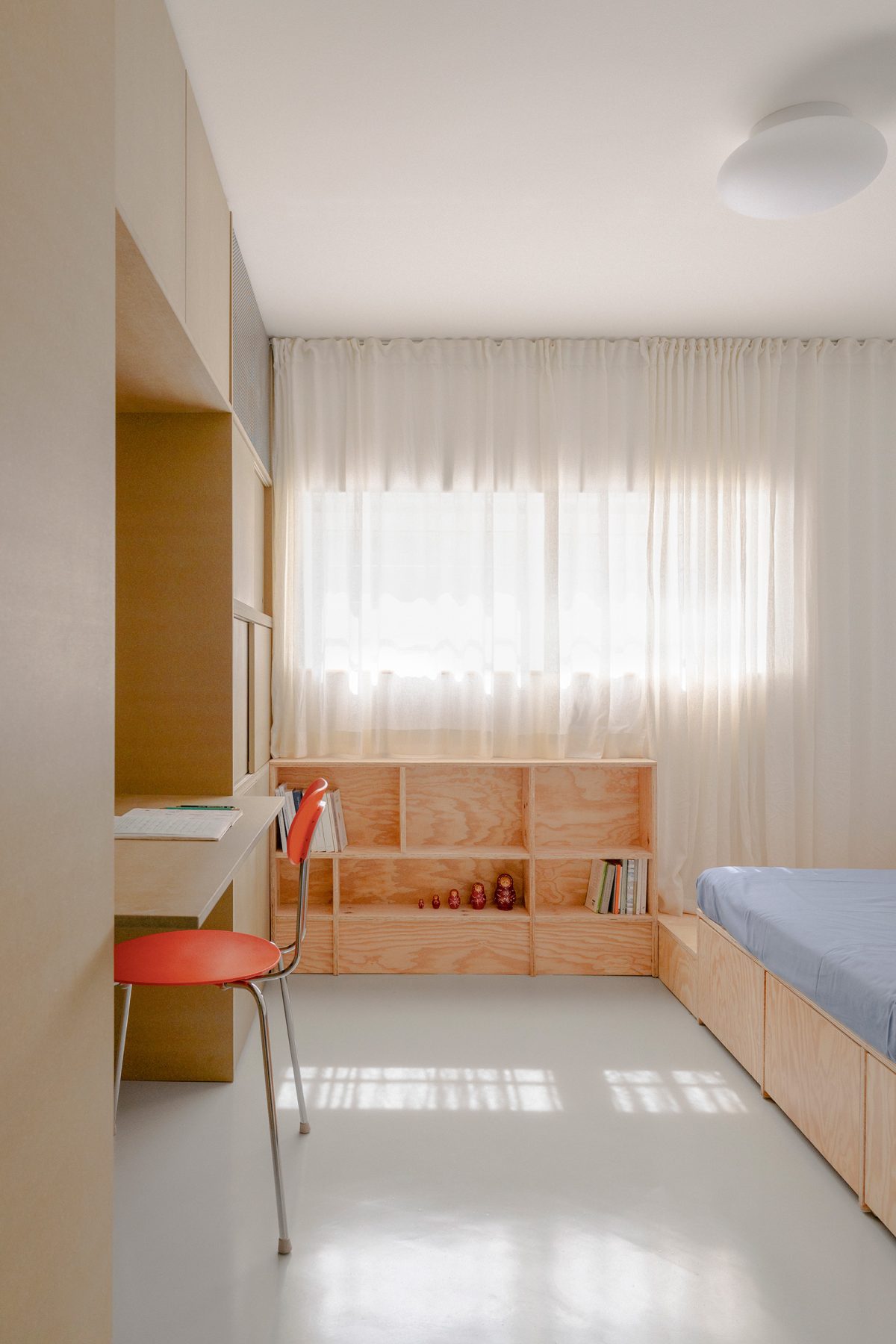
It proposes a compact yet adaptable living environment shaped by simplicity, economy, and precision.
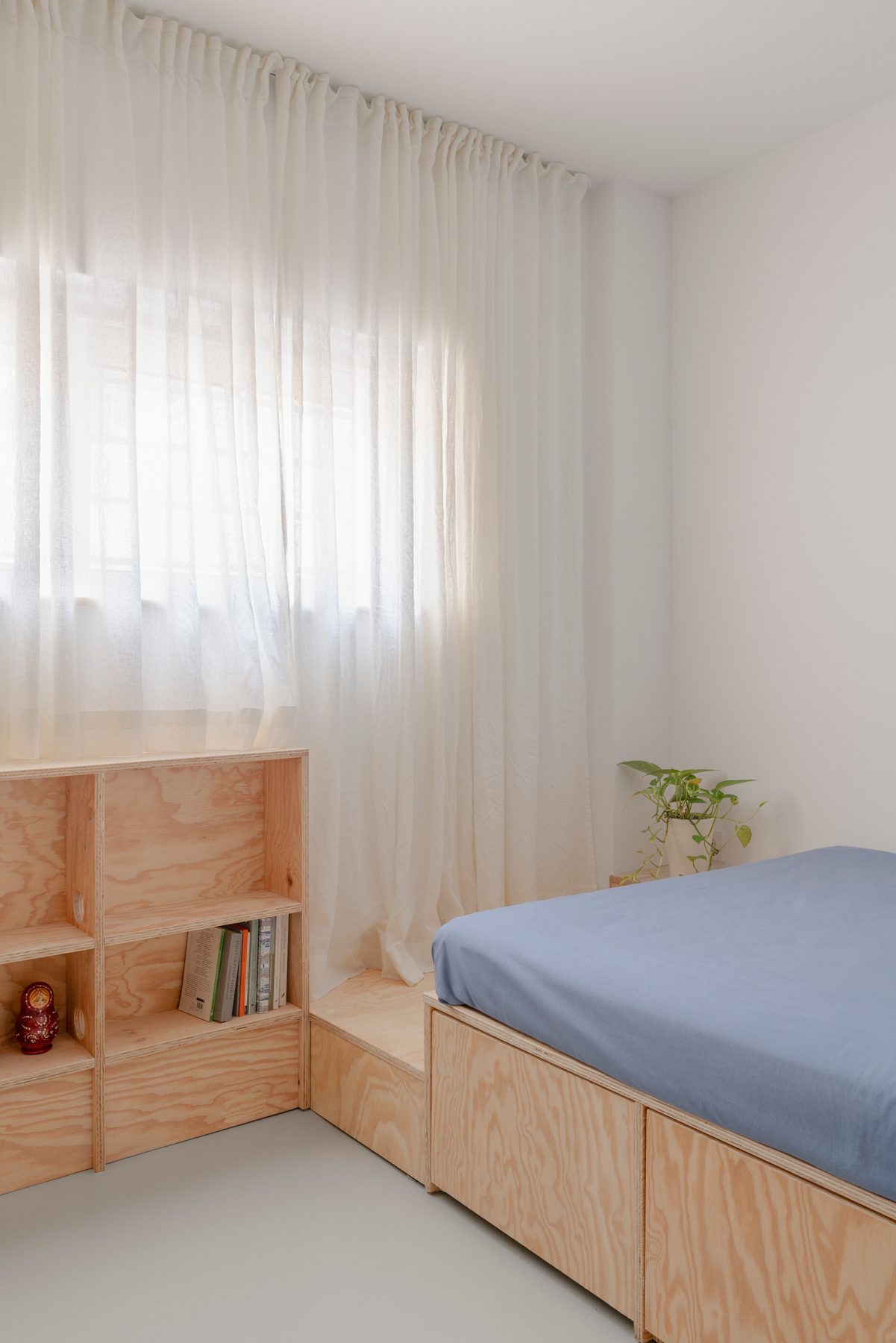
The project is centered on increasing the perception of space while maximizing the availability and distribution of natural light.
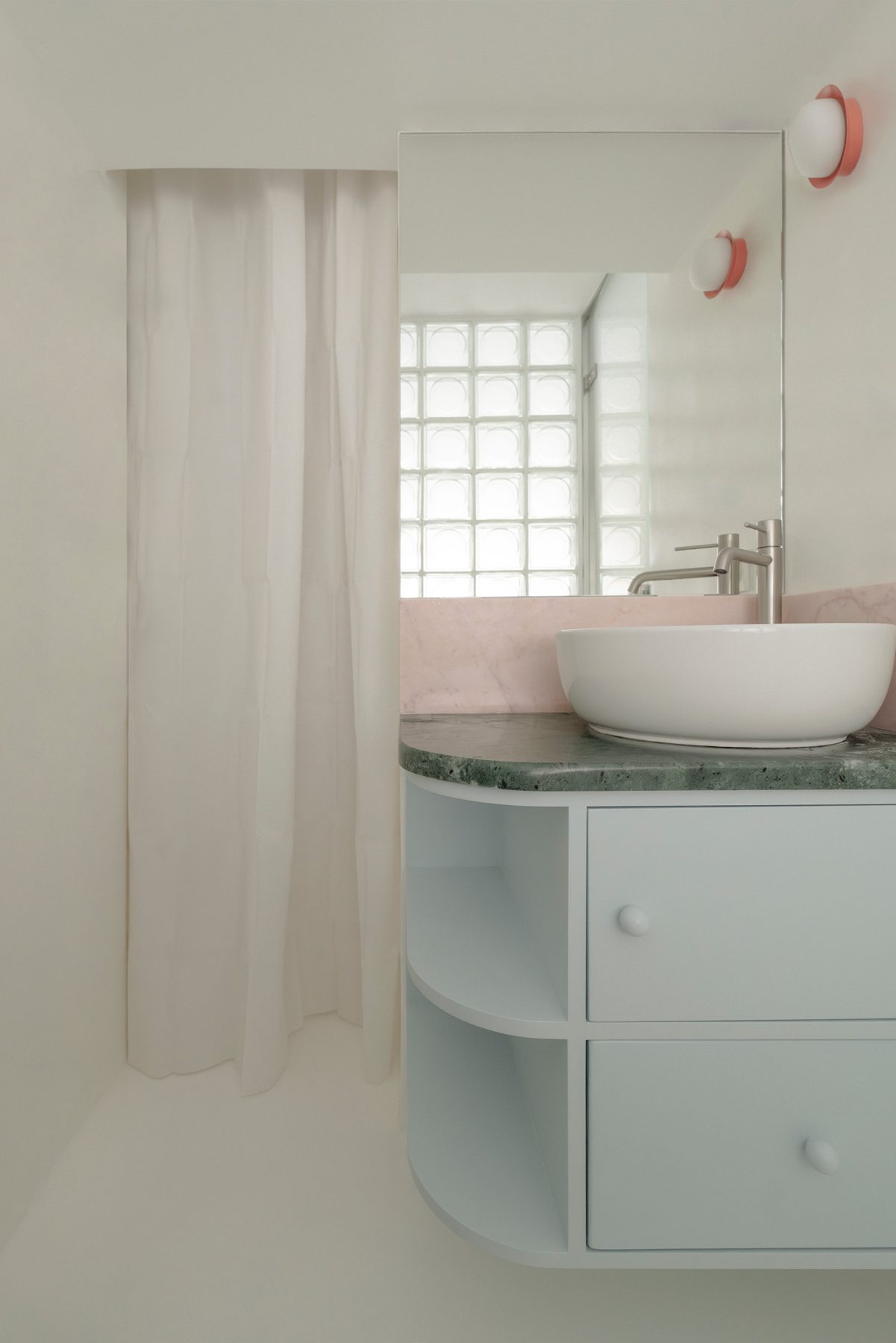
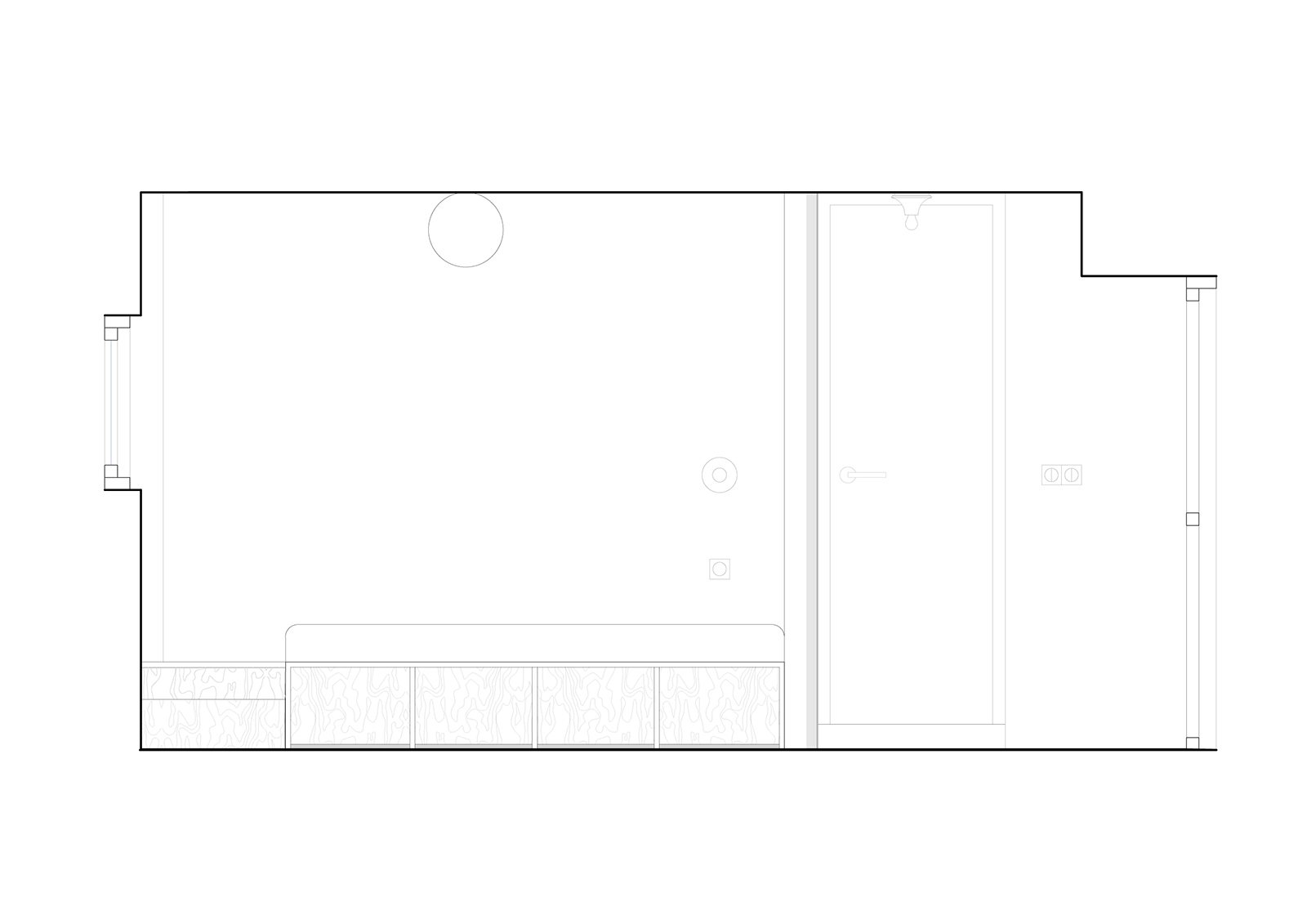
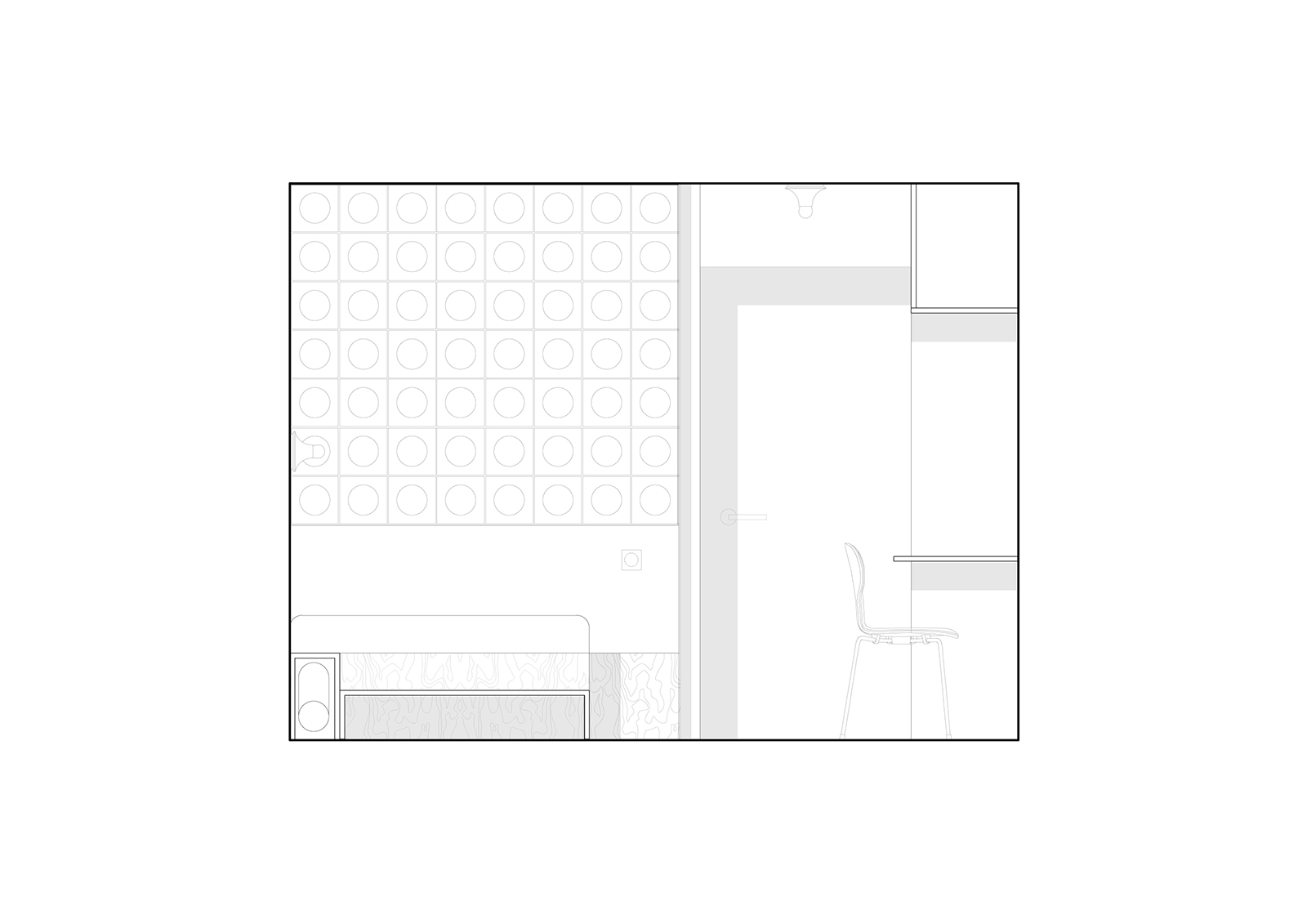
A glass brick wall replaces the studio’s only partition, allowing daylight to penetrate a previously artificially lit bathroom while preserving visual privacy. This intervention establishes a more luminous and continuous interior atmosphere, further reinforced by a subtly reflective floor surface that amplifies daylight throughout the space.
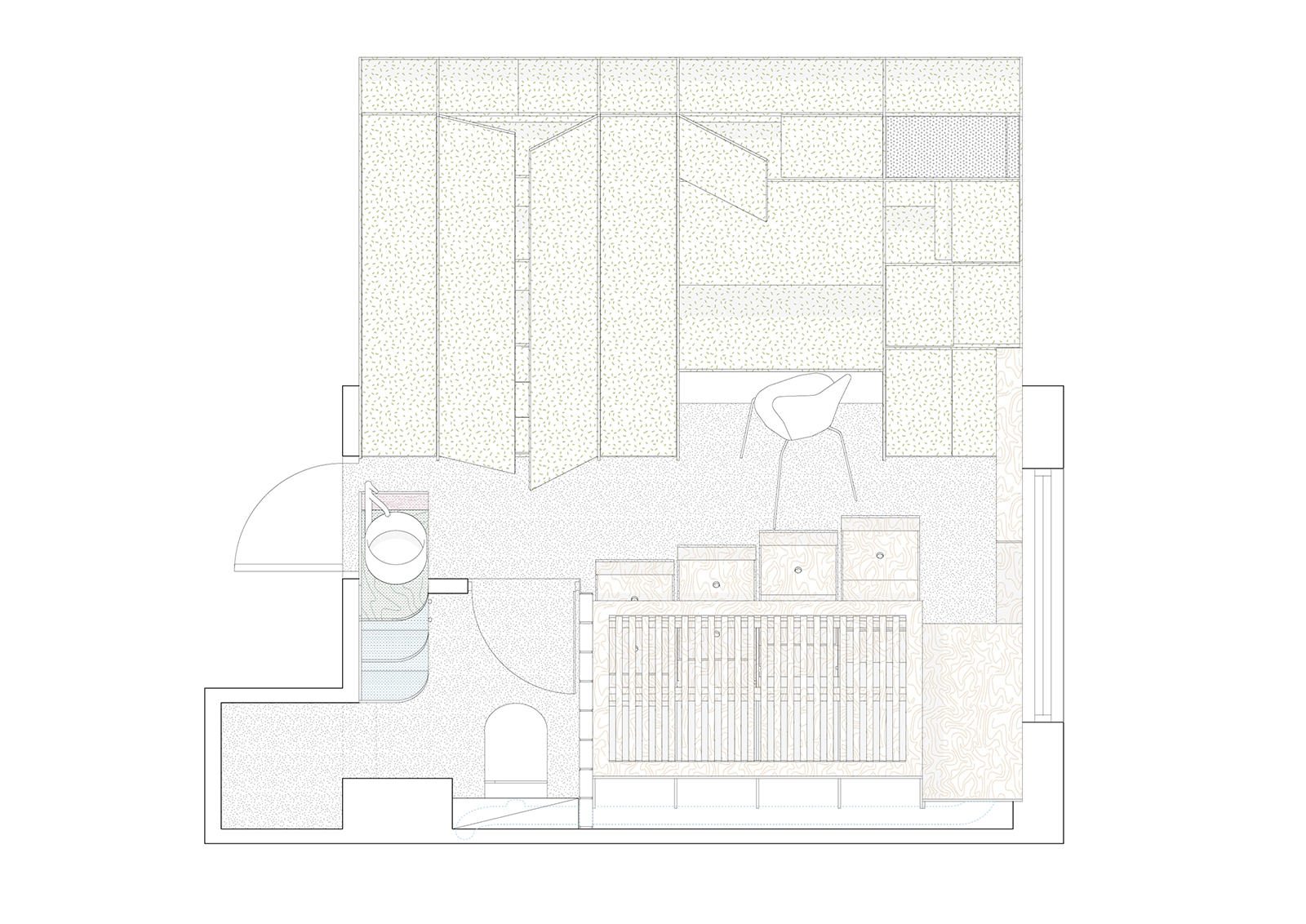
The design is organized around three materially distinct elements: the bed, the storage system, and the bathroom vanity.
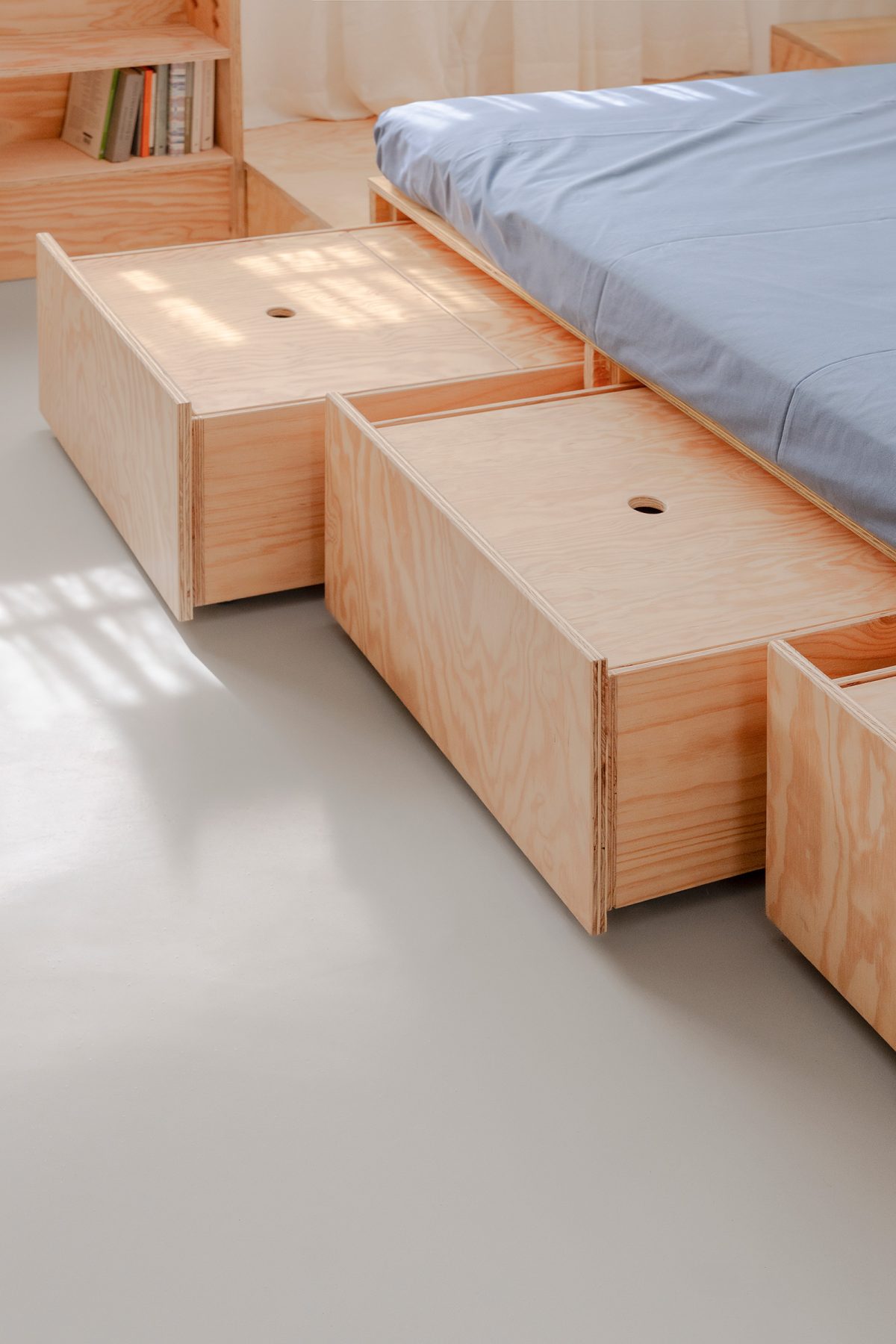
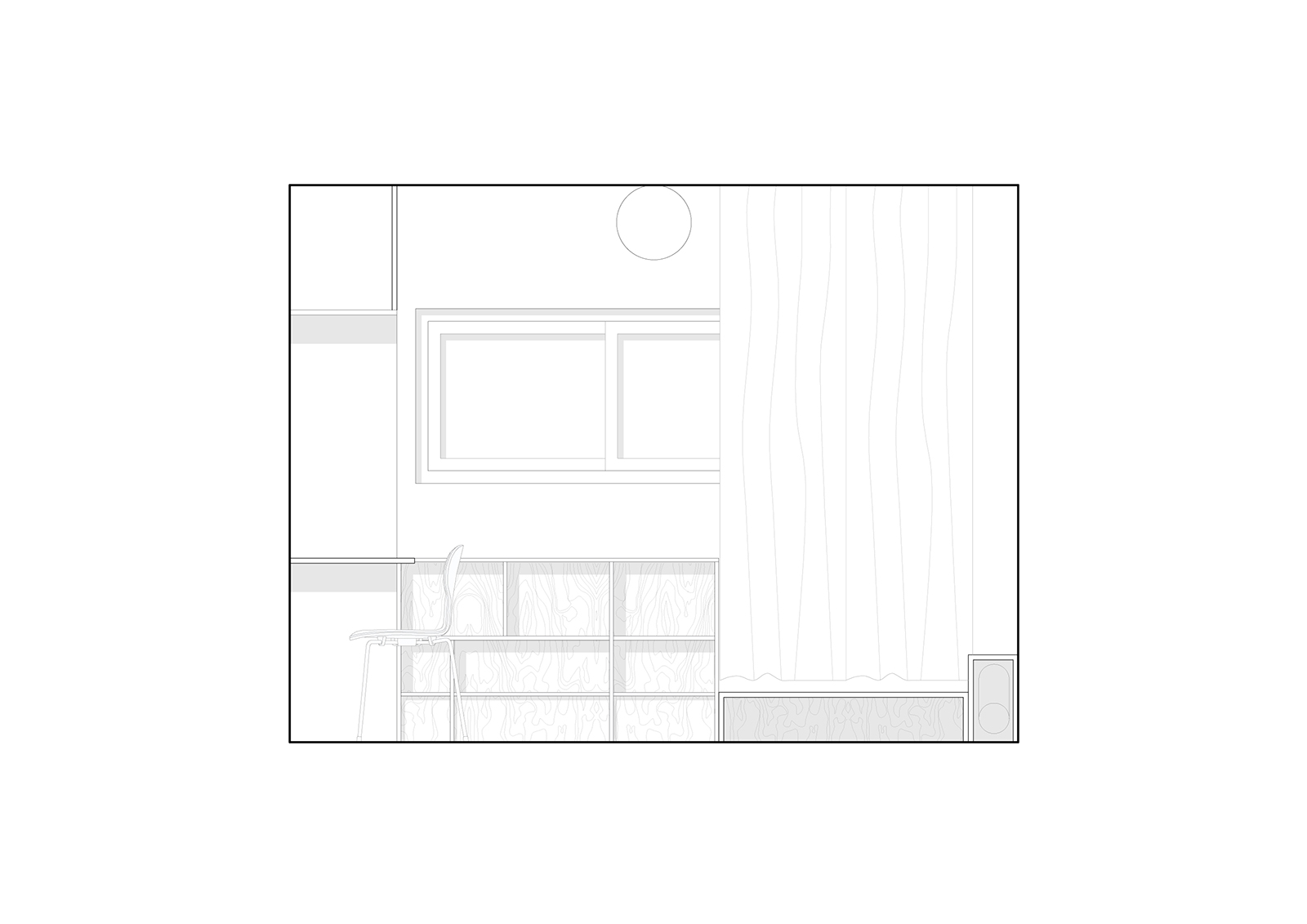
A 15 cm pipe running along the perimeter of the room became the starting point for a custom raised platform that accommodates the sleeping area. Extending into a small bookcase, the platform incorporates mobile storage units beneath it, one of which functions as a bedside table.
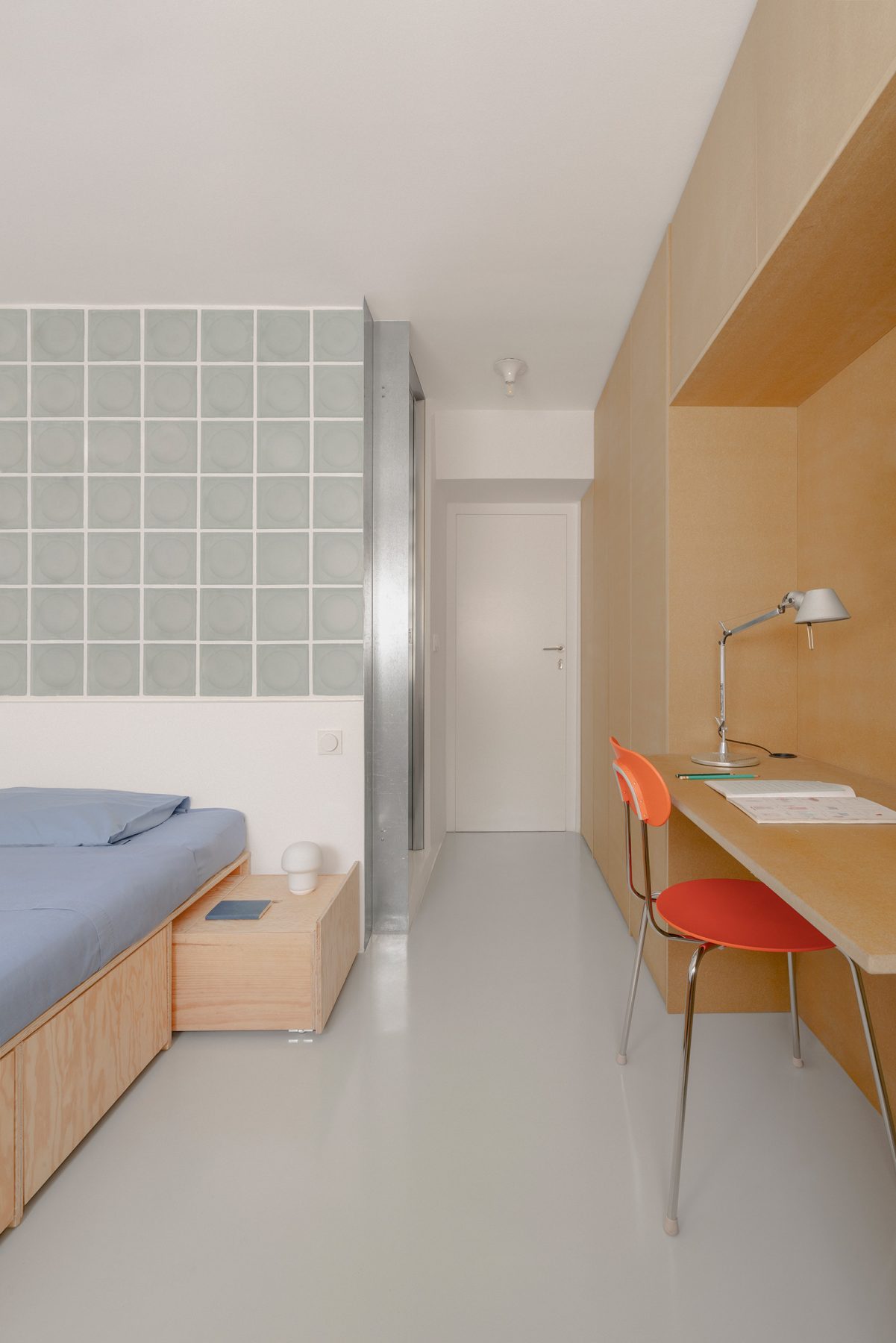
This approach transforms an existing constraint into a spatial device that integrates multiple functions within a limited footprint.
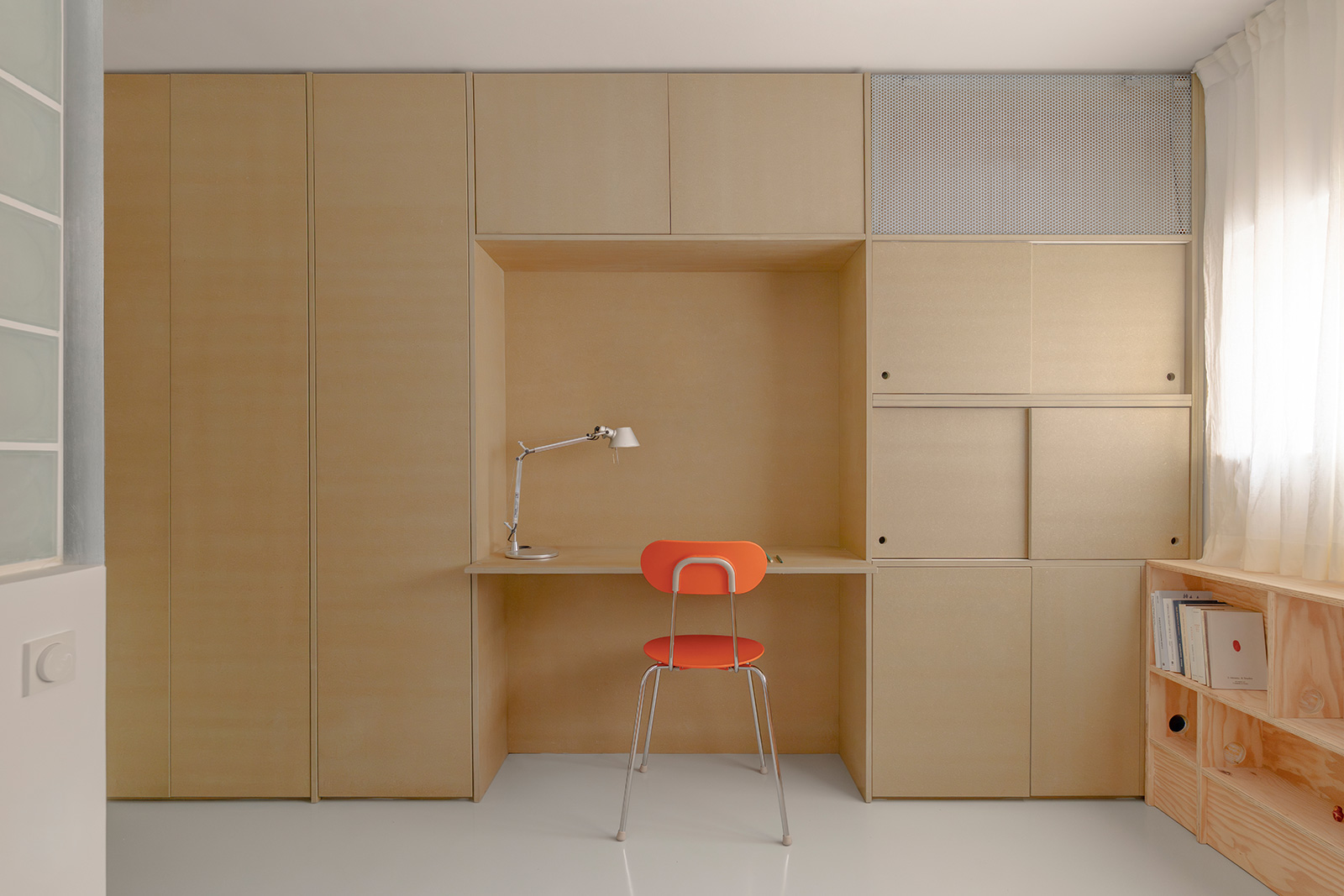
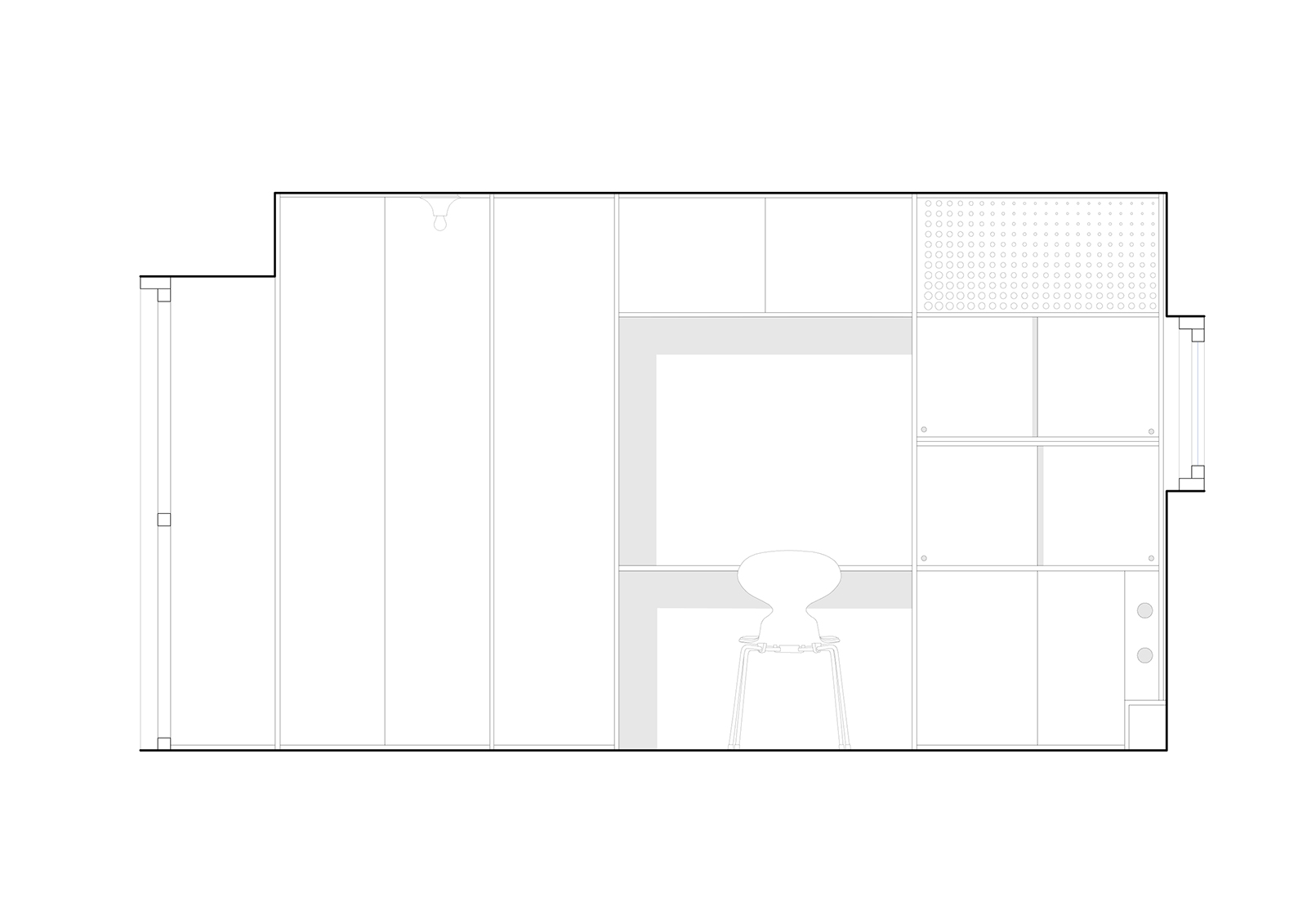
Storage is further consolidated through a compact container wall that combines wardrobe, study, and cabinetry functions into a single continuous element. By replacing a series of fragmented furnishings, the intervention establishes a clearer spatial organization and allows the remaining area to operate as an uninterrupted living environment.
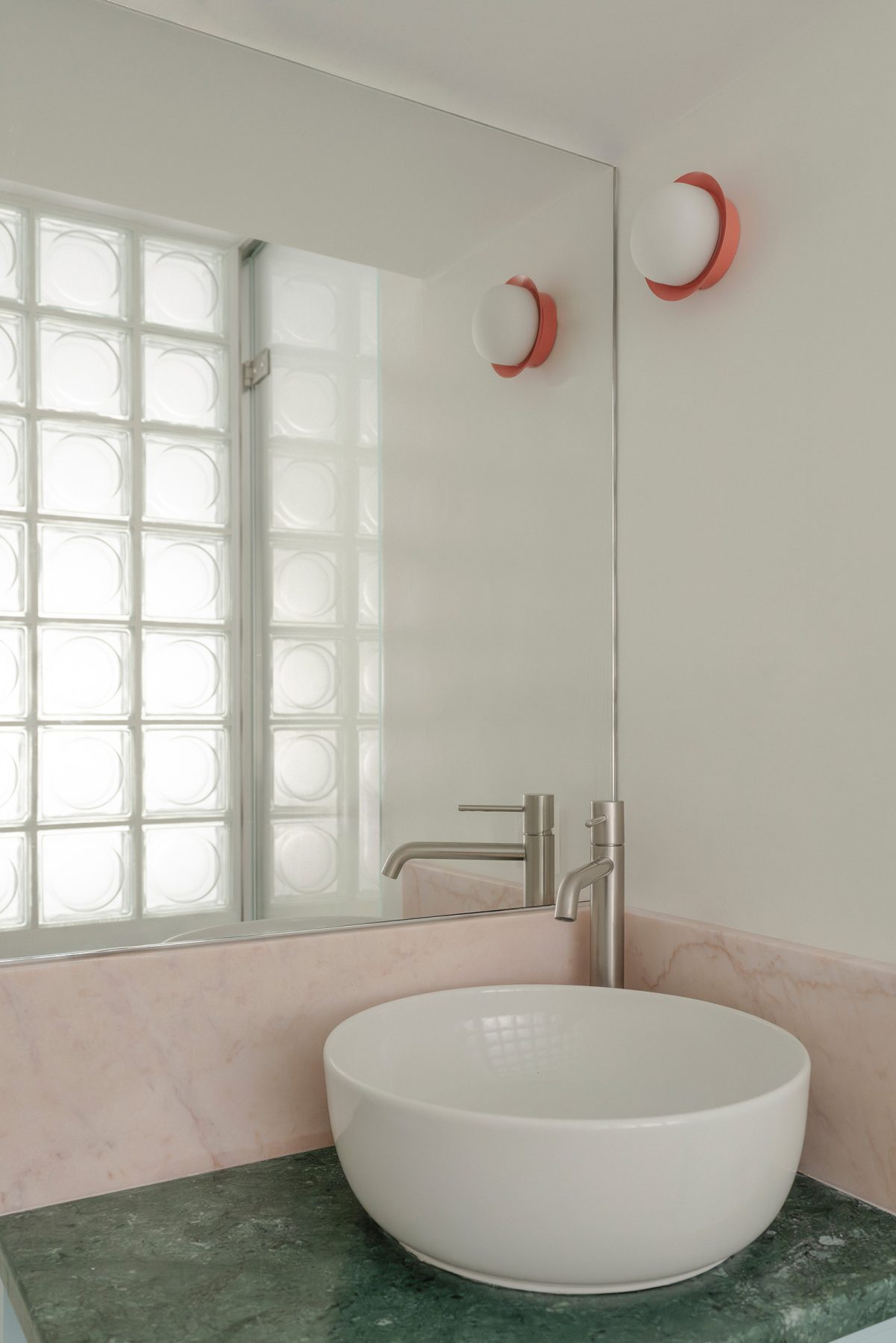
Within the bathroom, reflective paint enhances the diffused light introduced by the glass brick partition, contributing to a brighter and more atmospheric space. A colorful vanity introduces a distinct visual identity within the otherwise monochromatic palette. Its filleted corner softens the geometry of the room while ensuring comfortable and unobstructed movement within the compact layout.
Material choices reinforce the project’s emphasis on economy and directness.
Unpainted moisture-resistant MDF, pine plywood, and galvanized steel are employed in their largely untreated state, reducing construction costs while preserving their tactile and textural qualities.
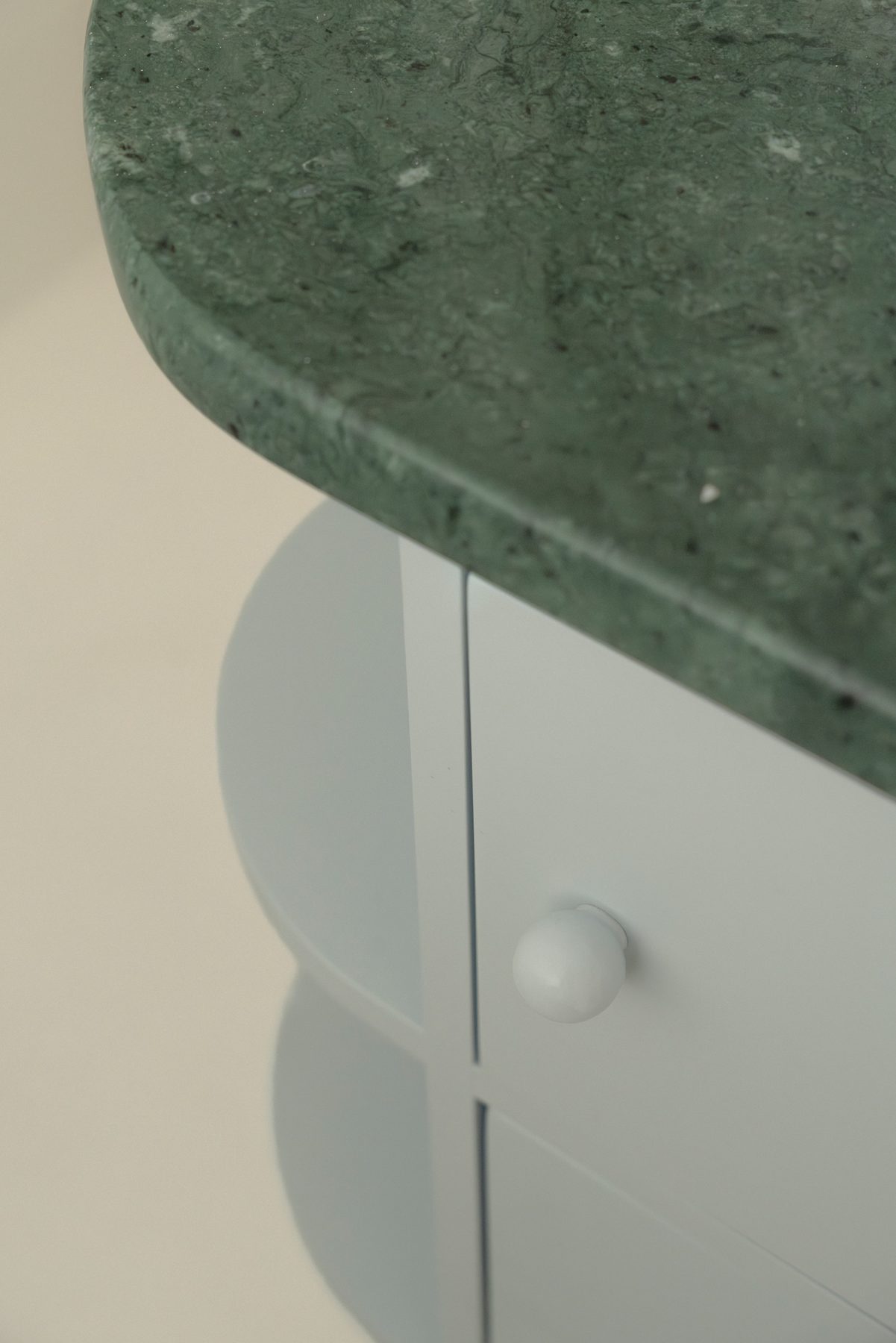
The project embraces the realities of construction as part of its architectural expression. Through a limited palette of interventions and materials, the studio demonstrates how spatial quality can emerge from constraint.
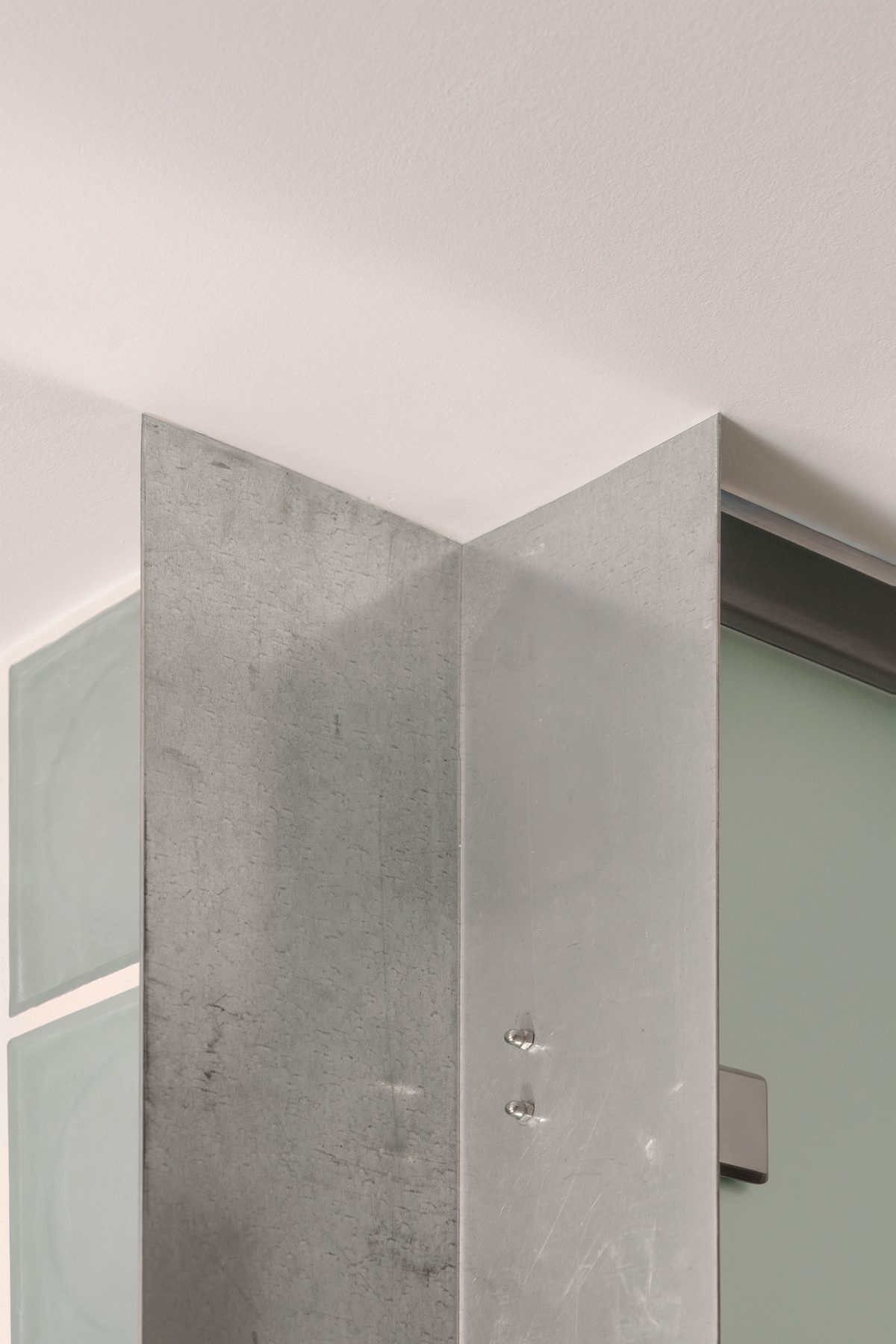
Existing conditions are reinterpreted as design opportunities, while light, adaptability, and construction logic become the primary generators of the architectural experience.
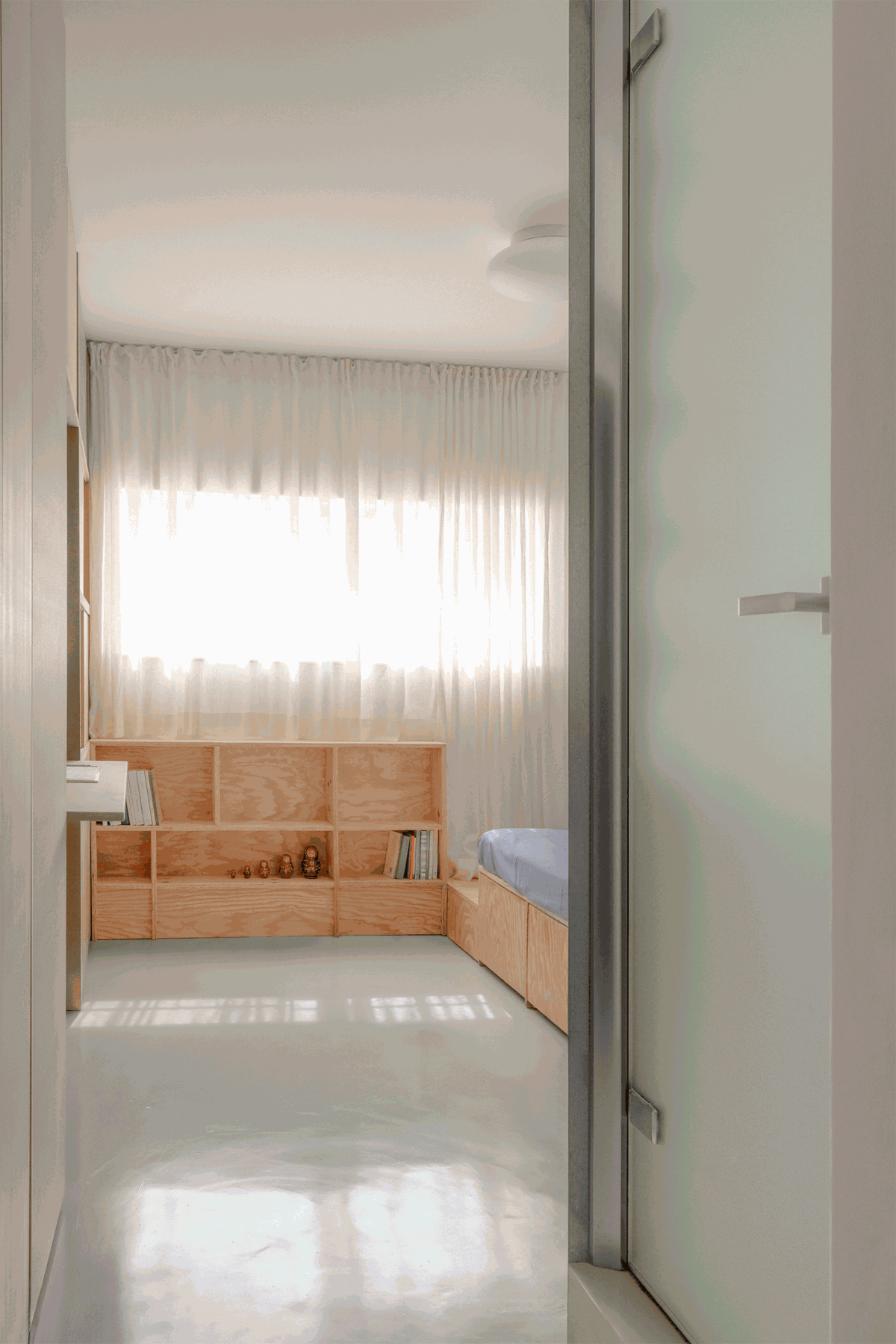
The result is a compact interior where efficiency and atmosphere coexist, offering a thoughtful response to contemporary urban living.
Plans
Facts & Credits
Project title: Aiginis Studio
Architecture: Andreas Anagnostopoulos (Concept Design & Design Development) & Studio Lok (Design Development & Project Implementation)
Project location: Athens, Greece
Date of completion: 2025
Project type: Interiors | Renovation
Lighting: Neapolis
Carpentry/Joinery: Rokani
Photography: Vasso Paraschi