Architecture for Culture examines spaces as active cultural agents where memory, identity, and collective experience intersect. From institutions to informal settings, the series highlights how design shapes environments that sustain dialogue, creativity, and shared cultural expression.
DOXA & bistan architekti design the interior of the P. O. Hviezdoslav Regional Library in Prešov, Slovakia as a layered spatial narrative of collective knowledge. Three historic townhouses are unified through a daylight-driven, structurally expressive intervention. Suspended shelving, gradient density, and preserved historic layers redefine monumentality while fostering inclusivity, spatial clarity, and contemporary cultural use.
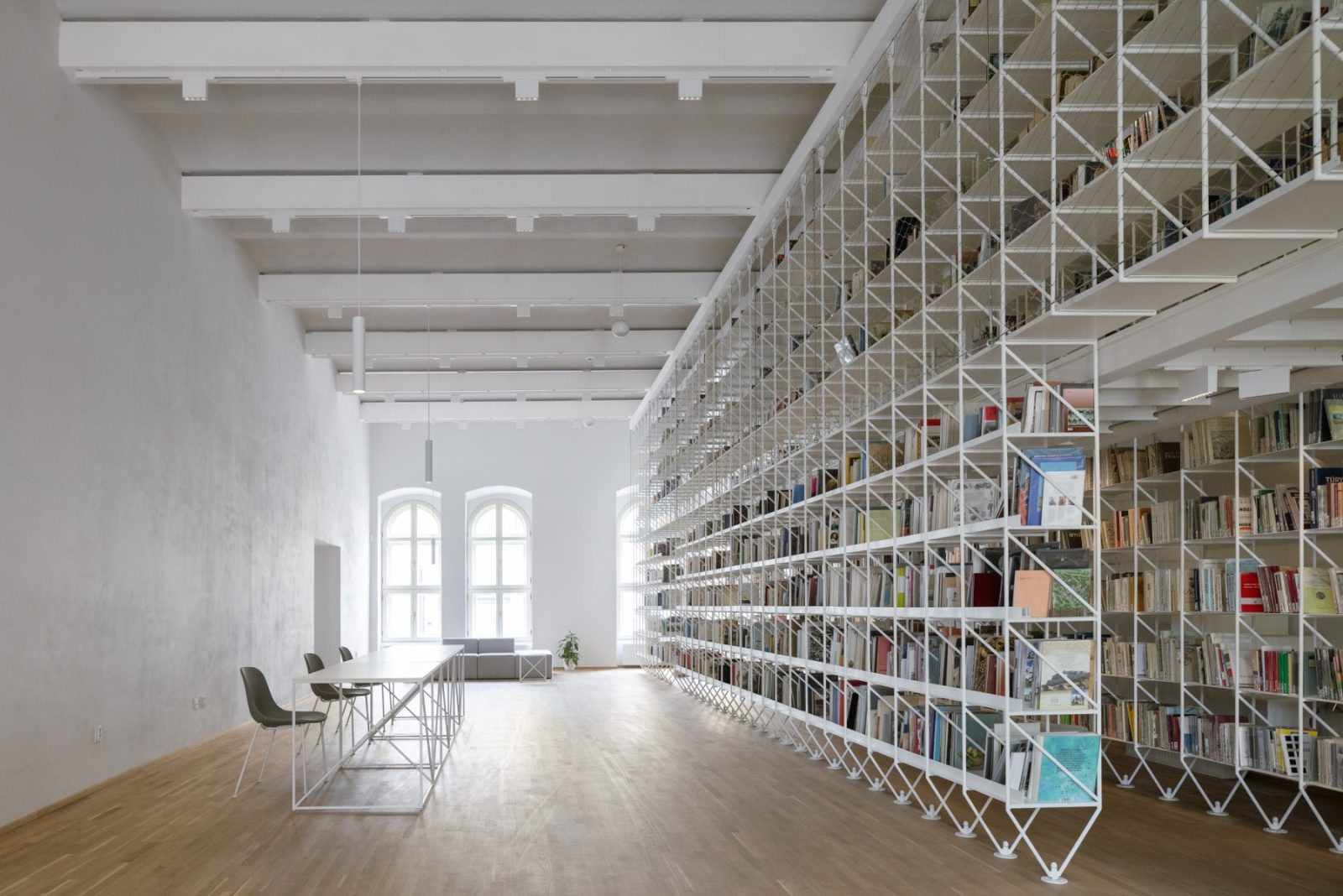
Daylight reveals the palatial scale of the historic halls, activating the genius loci of the space. The project brings together three interconnected historic townhouses, transforming them into a unified cultural institution that accommodates departments for non-fiction, fiction, and children’s literature.
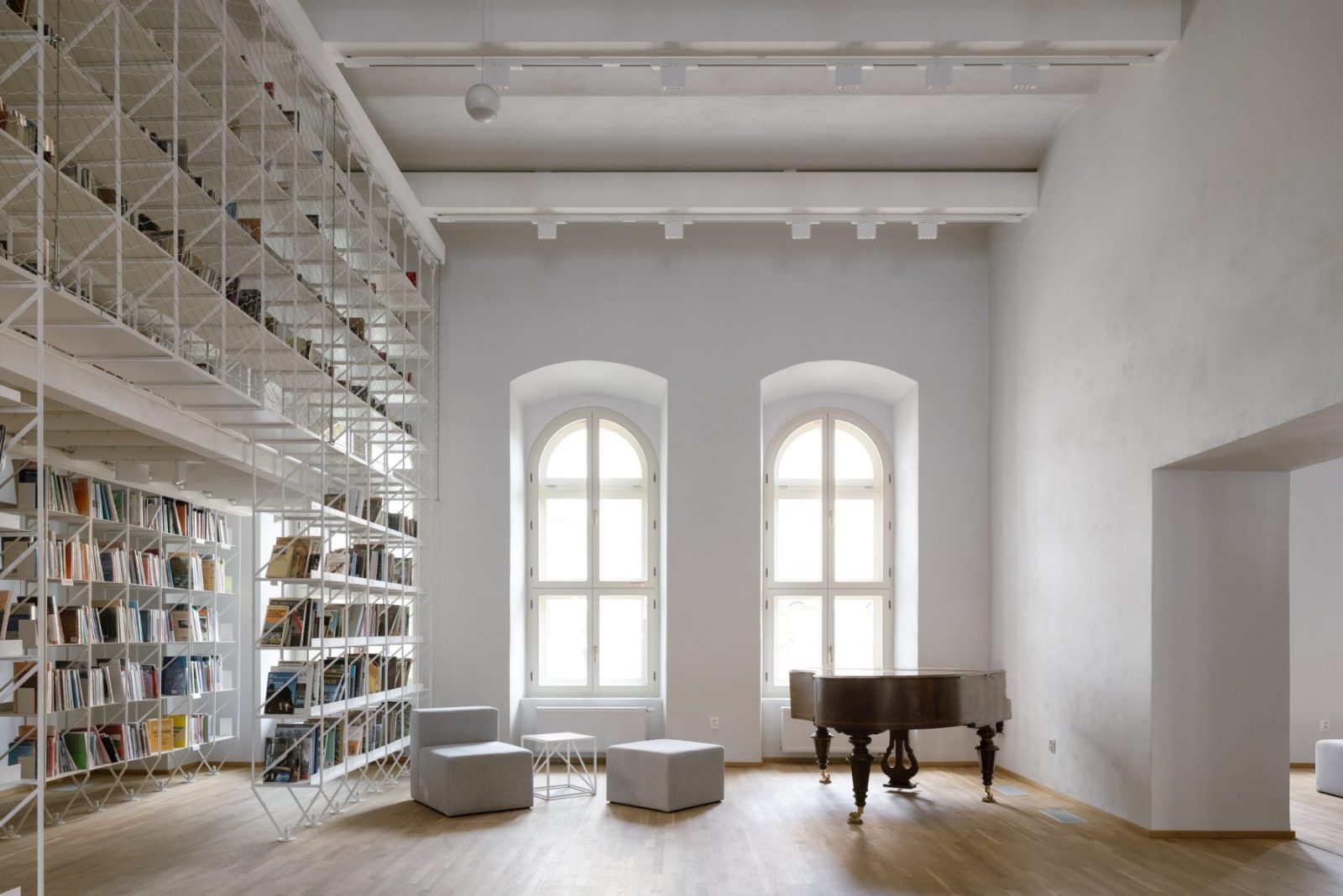
At its core, the design responds to the library’s evolving role as a vibrant community hub, requiring a careful balance between multifunctionality, inclusivity, and spatial clarity.
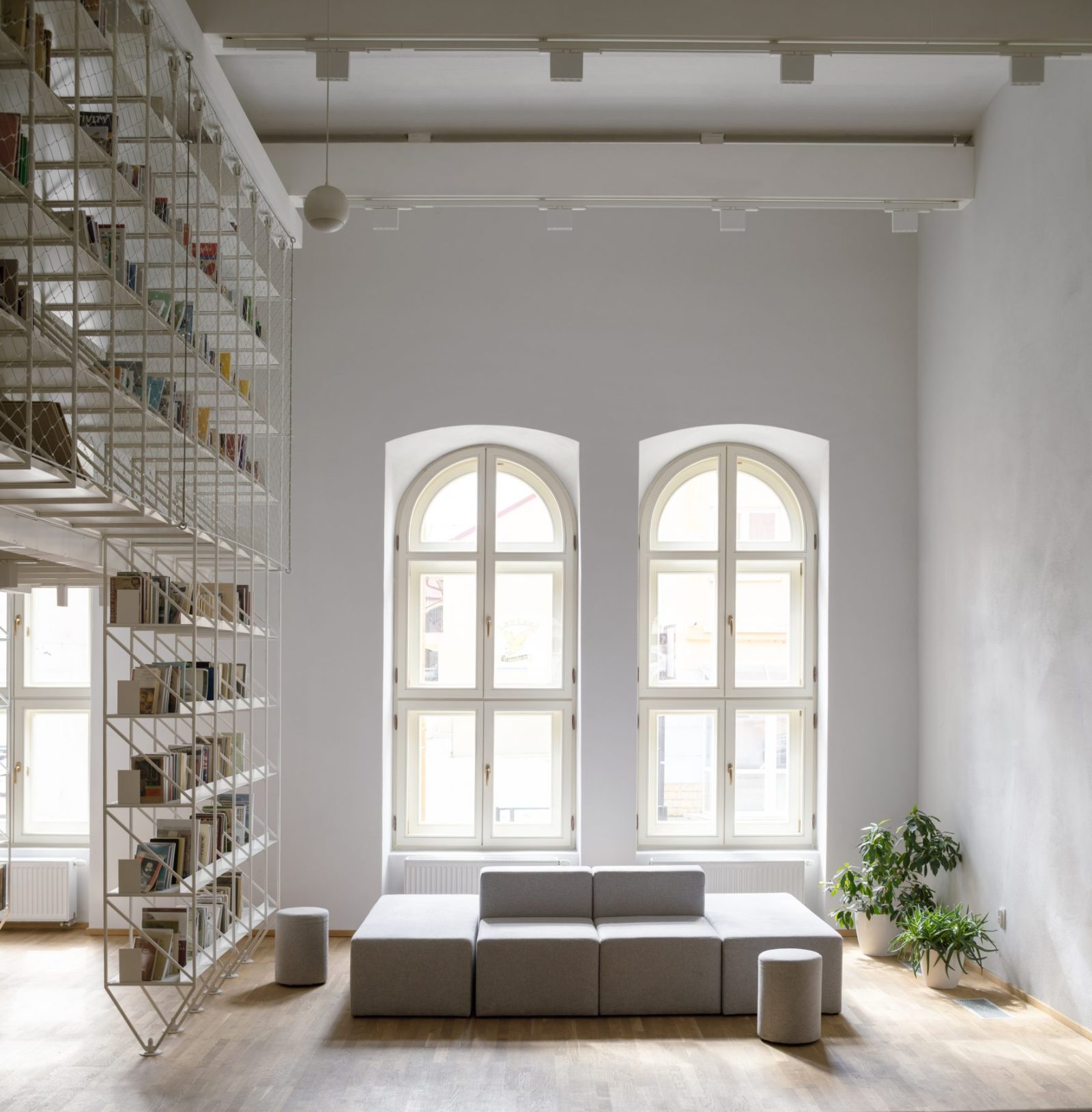
The intervention is guided by the structural limitations of the existing building, which are treated not as constraints but as generative design parameters. The proposal seeks to represent the institution through space while updating it through structure.
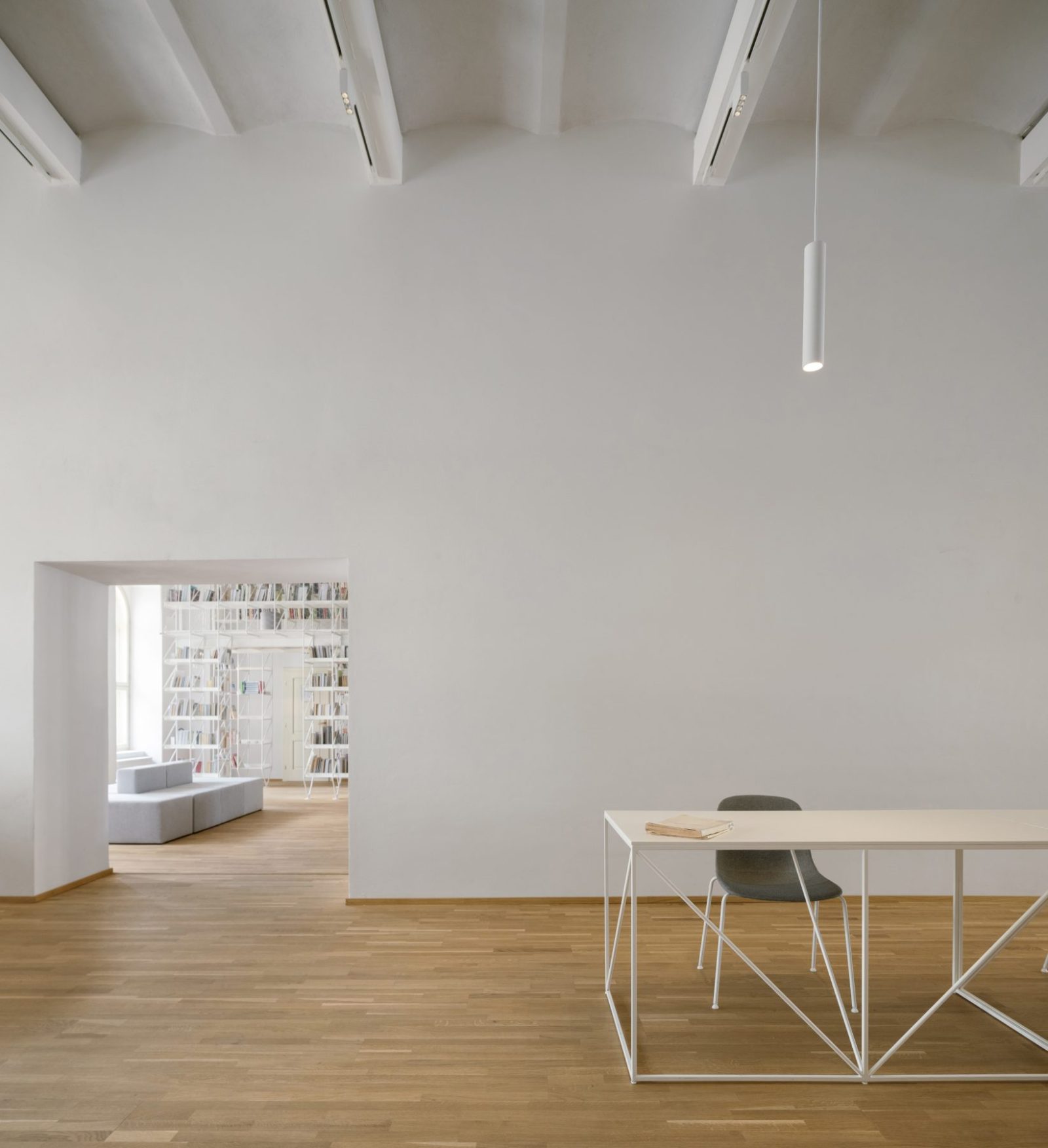
Within this framework, the concept of democratization -access to information and collective intelligence- becomes spatially embedded.
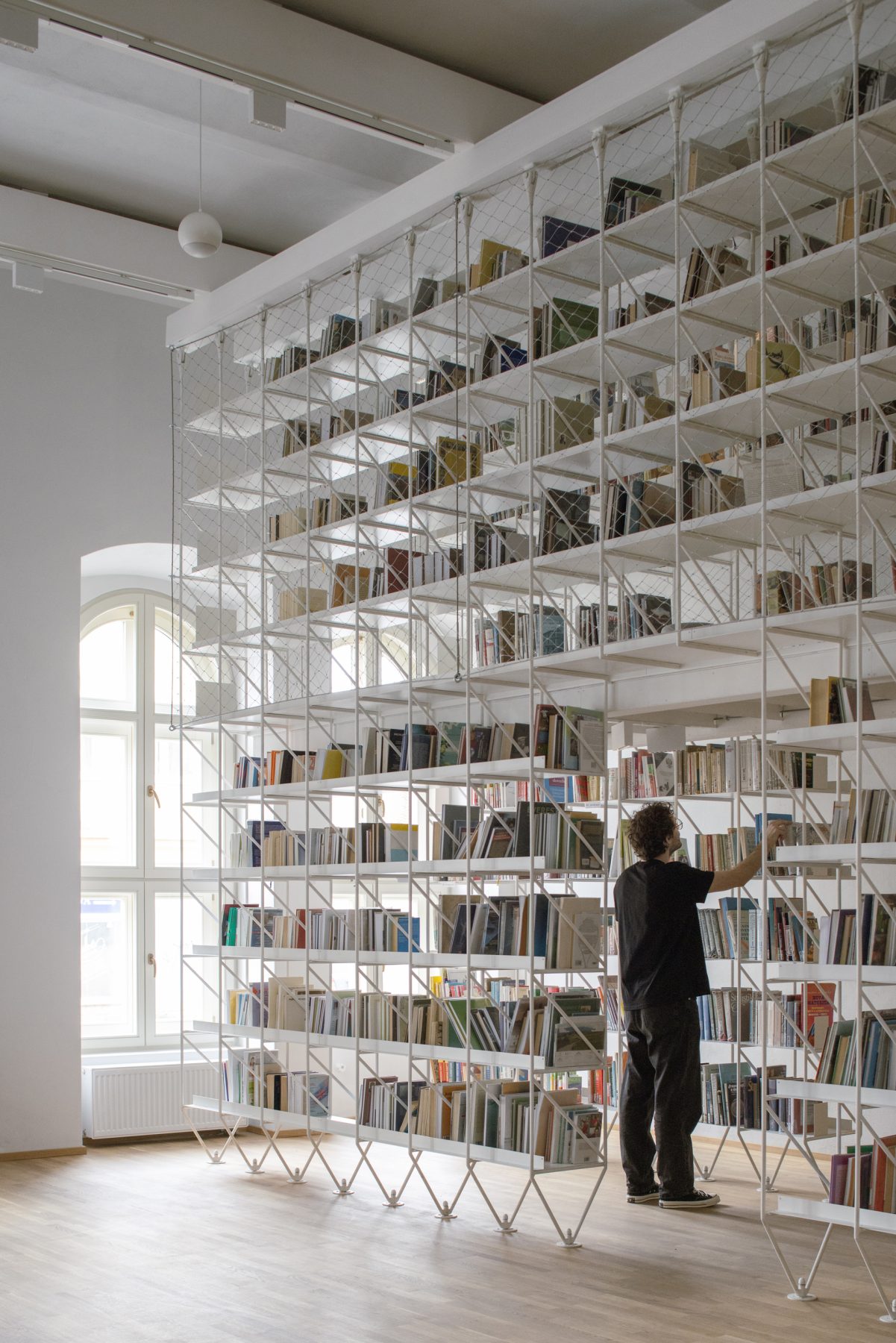
Monumentality is redefined, shifting away from mass toward a subtle articulation of verticality, rhythm, and asymmetry.
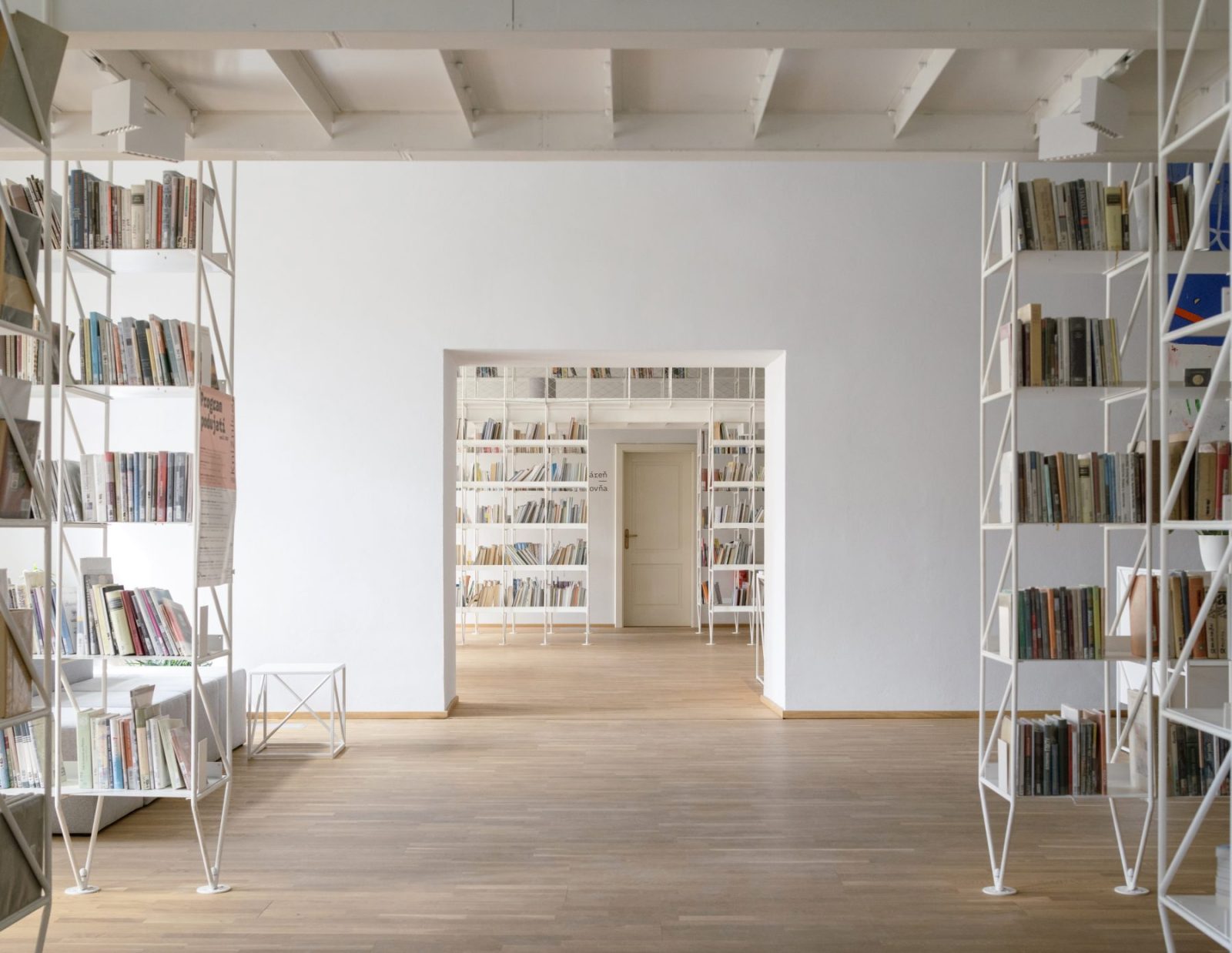
A key ambition is the preservation of the atmosphere of the historic halls, allowing daylight to permeate the interiors.
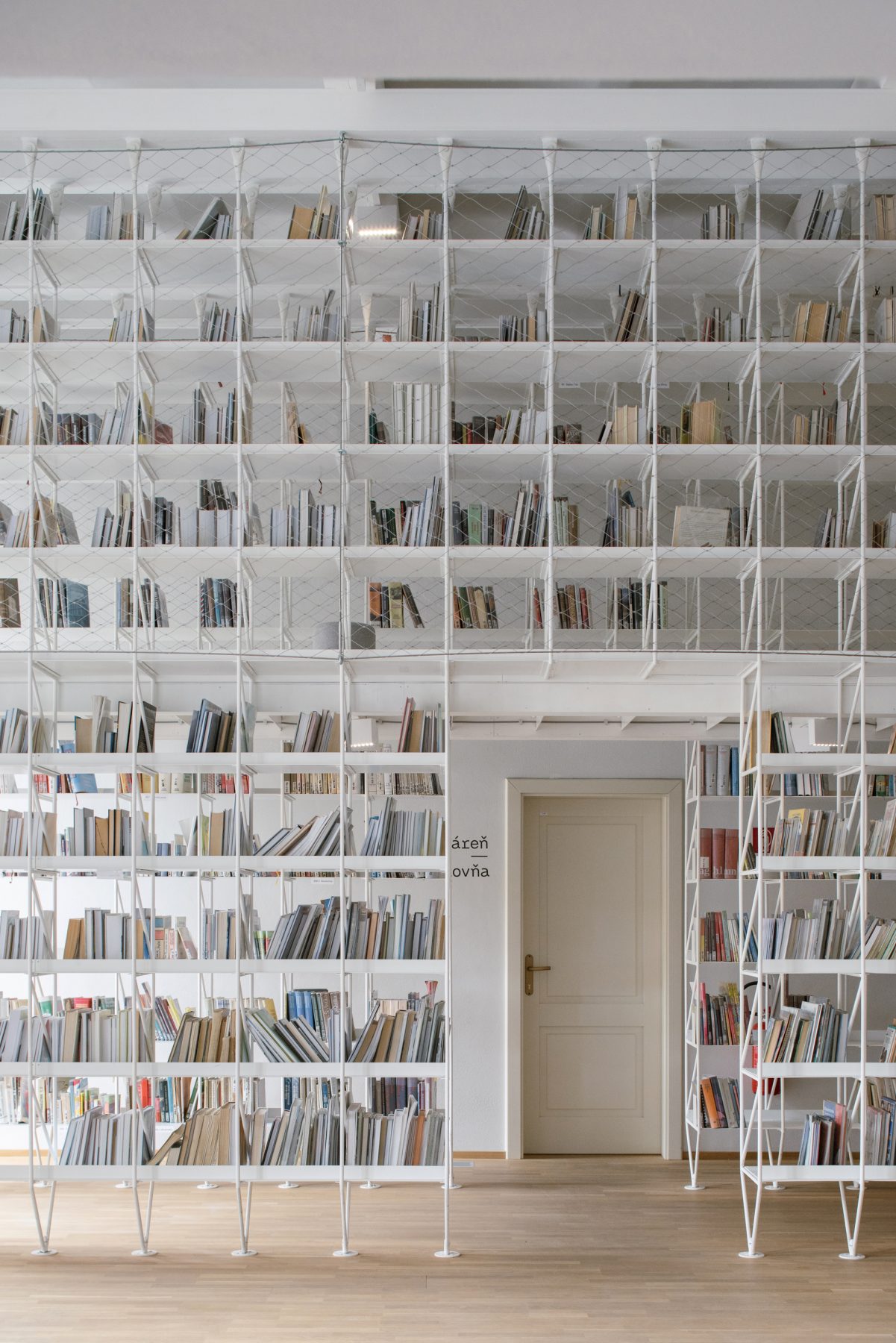
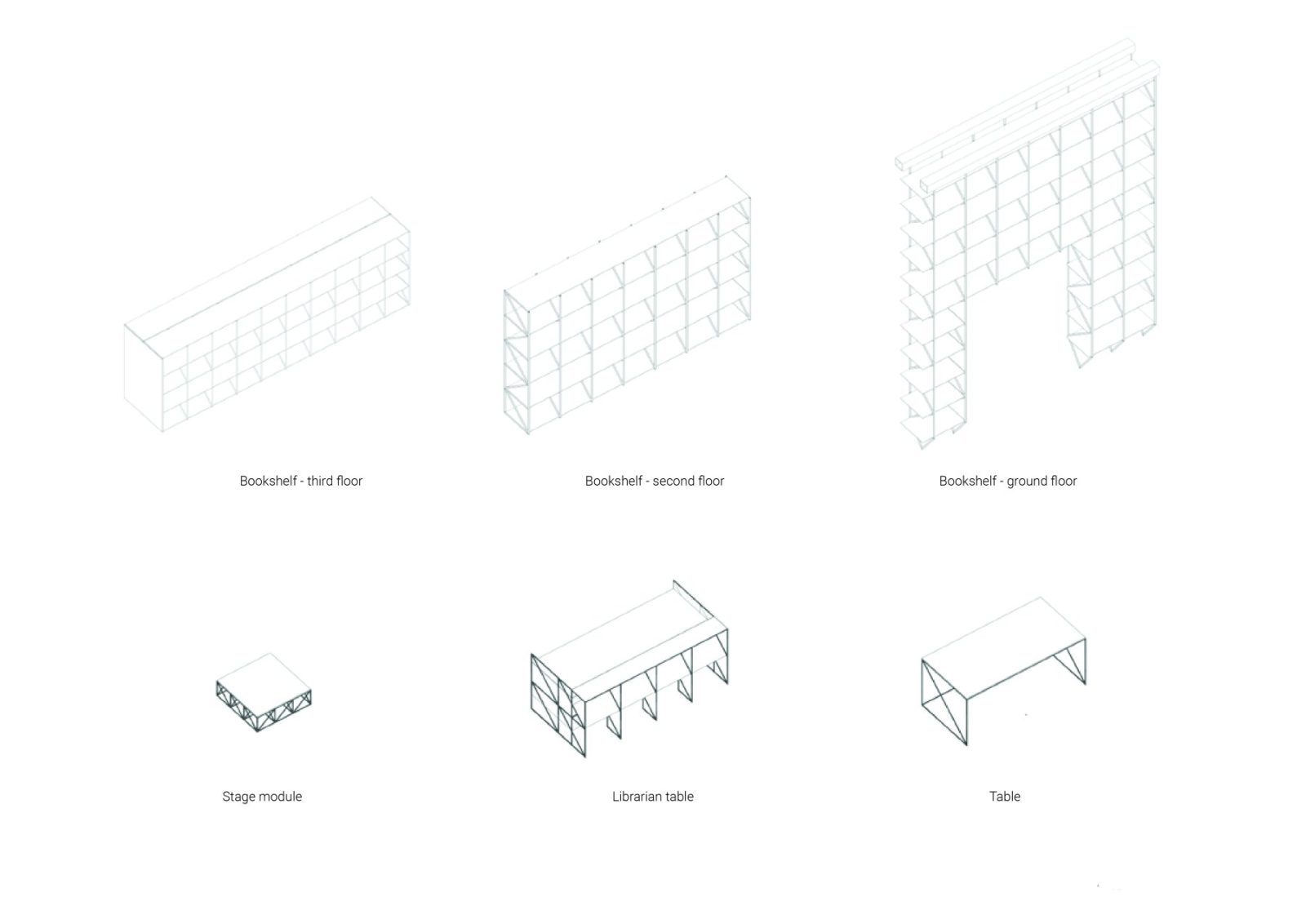
This is achieved through a lightweight system of suspended shelving, particularly on the first floor, where structural load is minimized through slender steel rods and reduced beam dimensions.
The result is a curtain-like architectural element, transforming traditionally heavy storage into a visually permeable system that maintains spatial continuity.
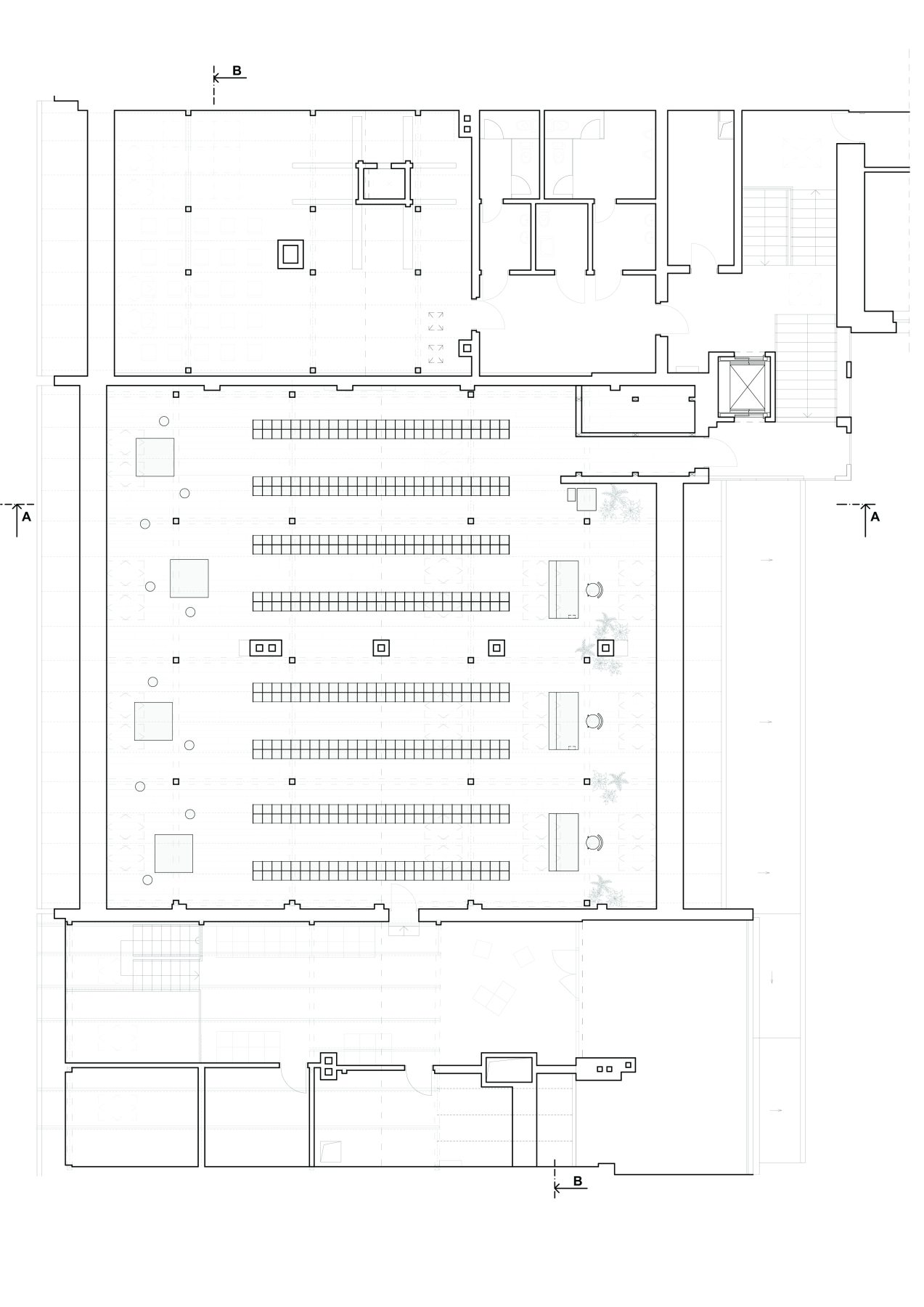
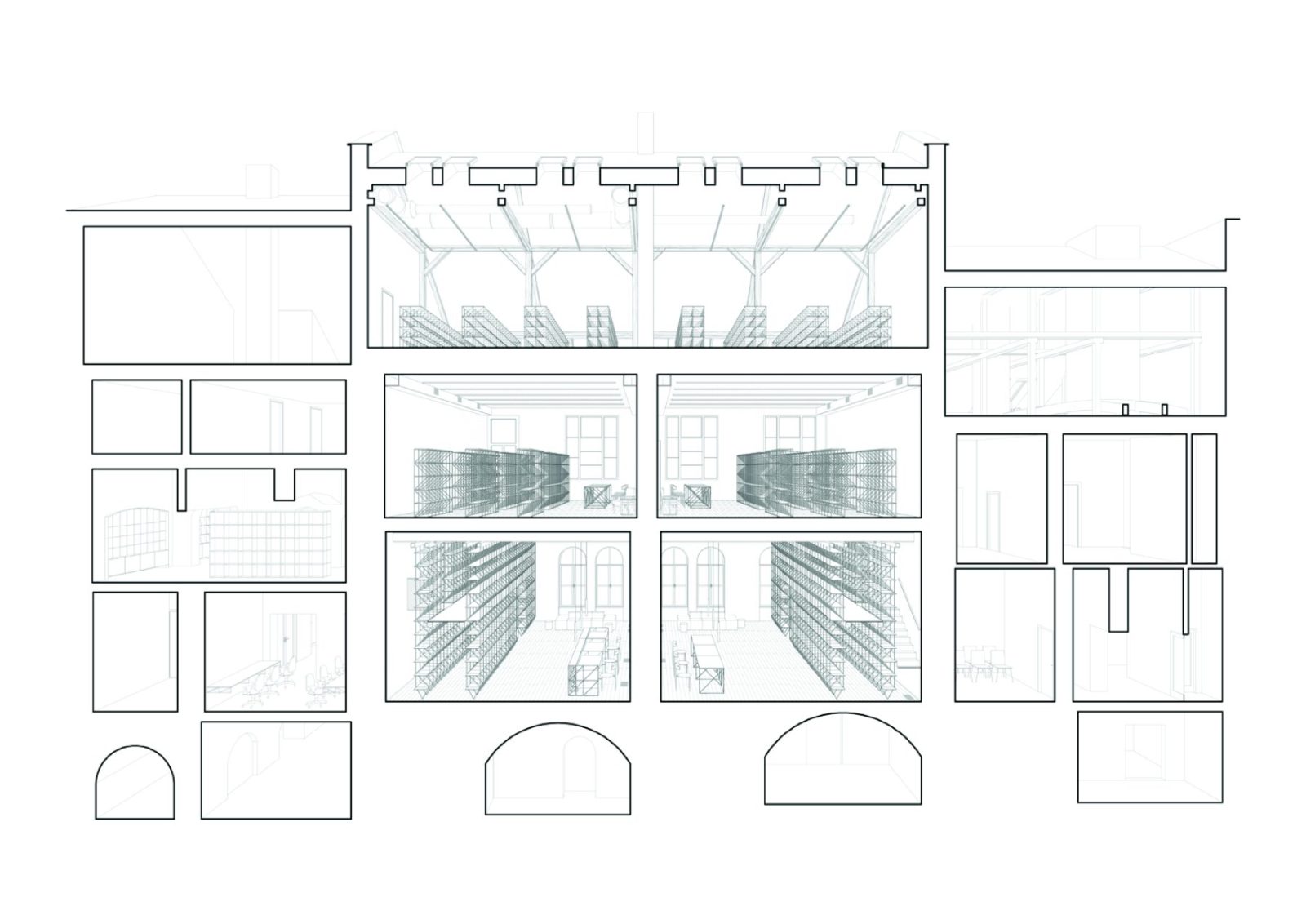
The design establishes a clear spatial progression across three levels, articulated through a gradient of density and program.
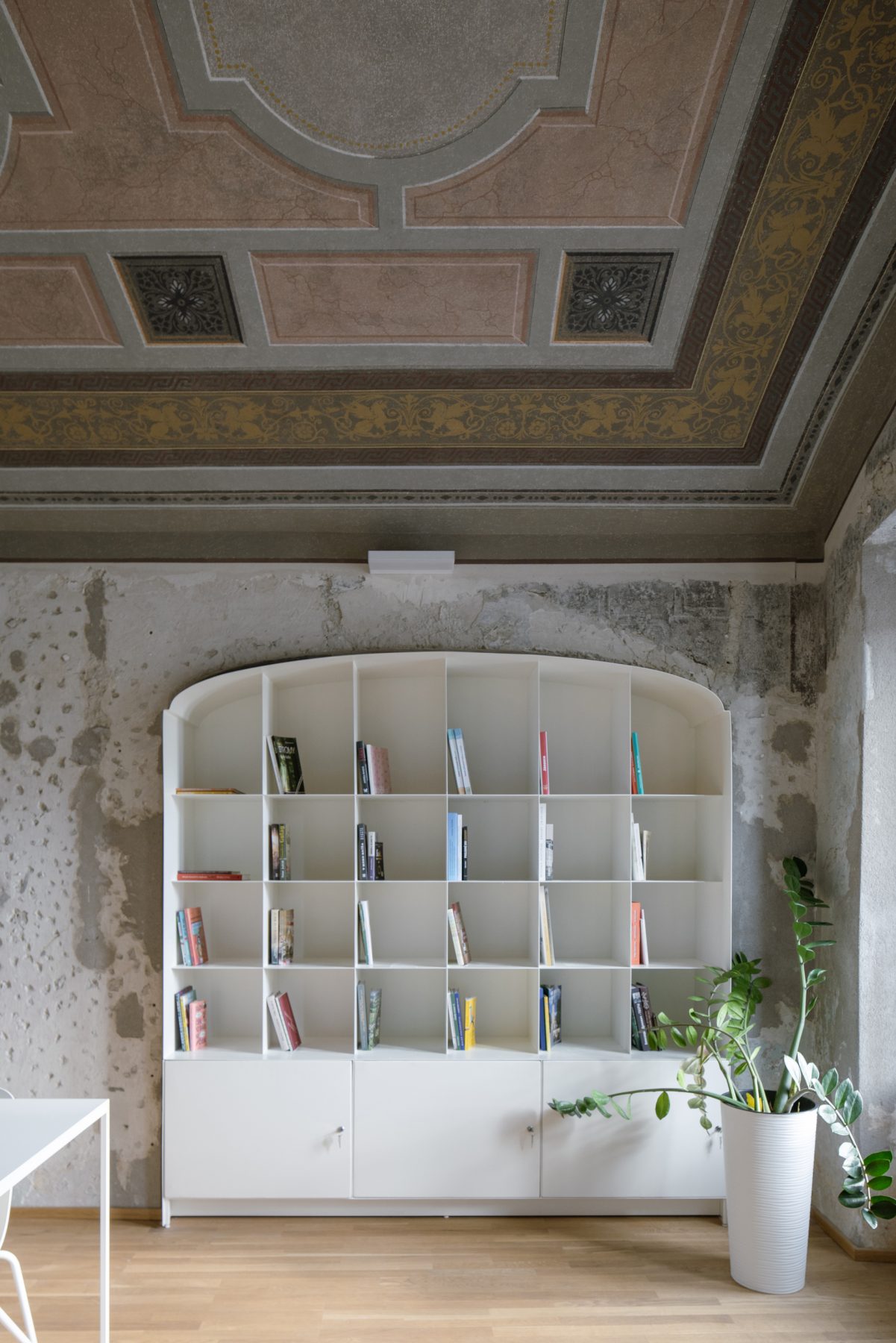
The ground floor supports a range of diverse, community-oriented activities, maintaining openness and flexibility.
As one ascends, the environment gradually shifts: shelving density increases, spatial occupation intensifies, and multifunctionality recedes, culminating in focused, book-dominated spaces on the upper levels. This progression is reinforced through varying shelf heights, which act as subtle tools of orientation within the interior.
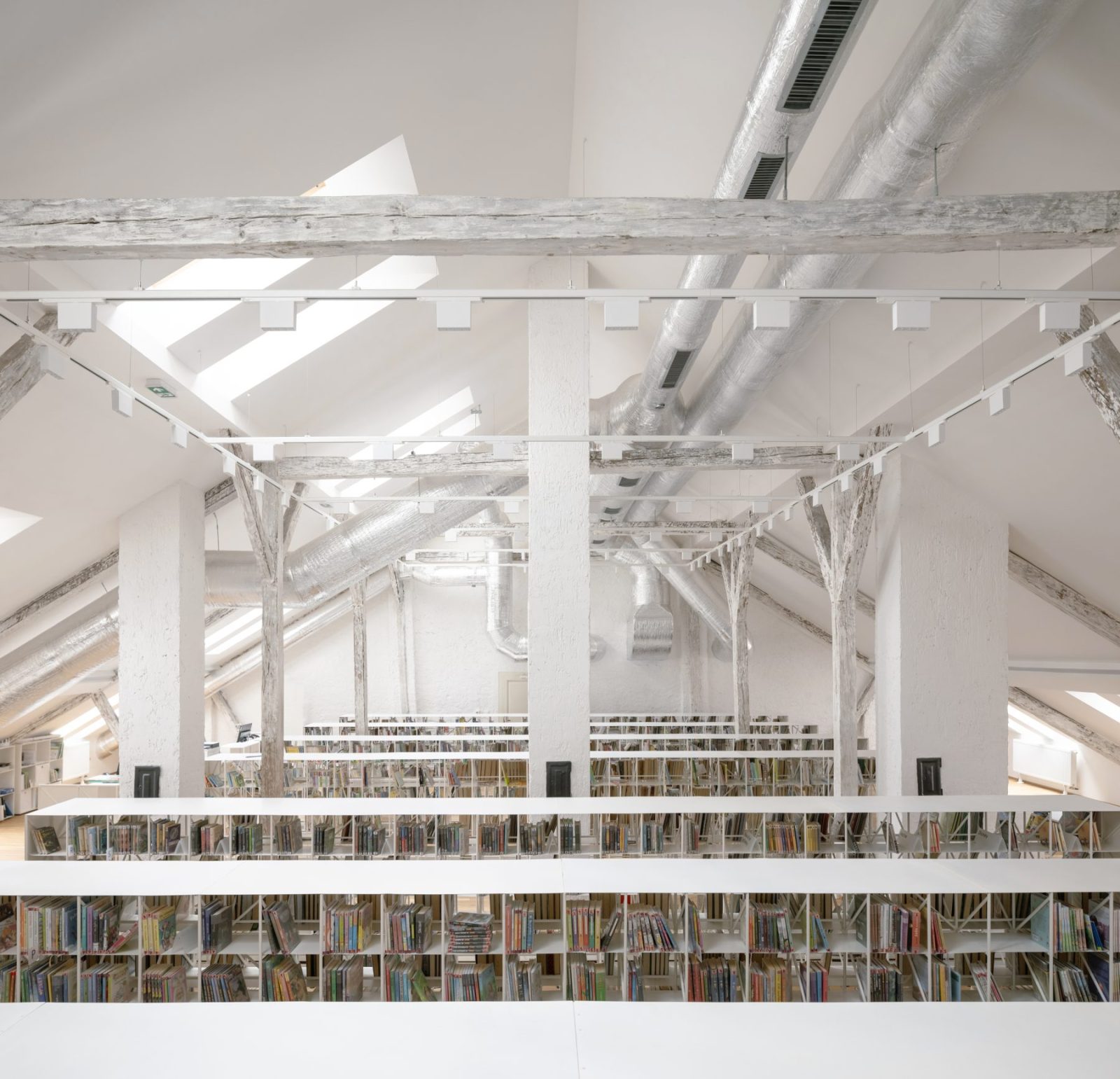
Throughout the project, the layered history of the building remains legible, from the original massive masonry walls to later cast iron interventions and the newly introduced delicate steel structures.
This dialogue between past and present allows the architecture to narrate its own evolution, situating the intervention within a broader temporal continuum.
Material and visual restraint further define the interior.
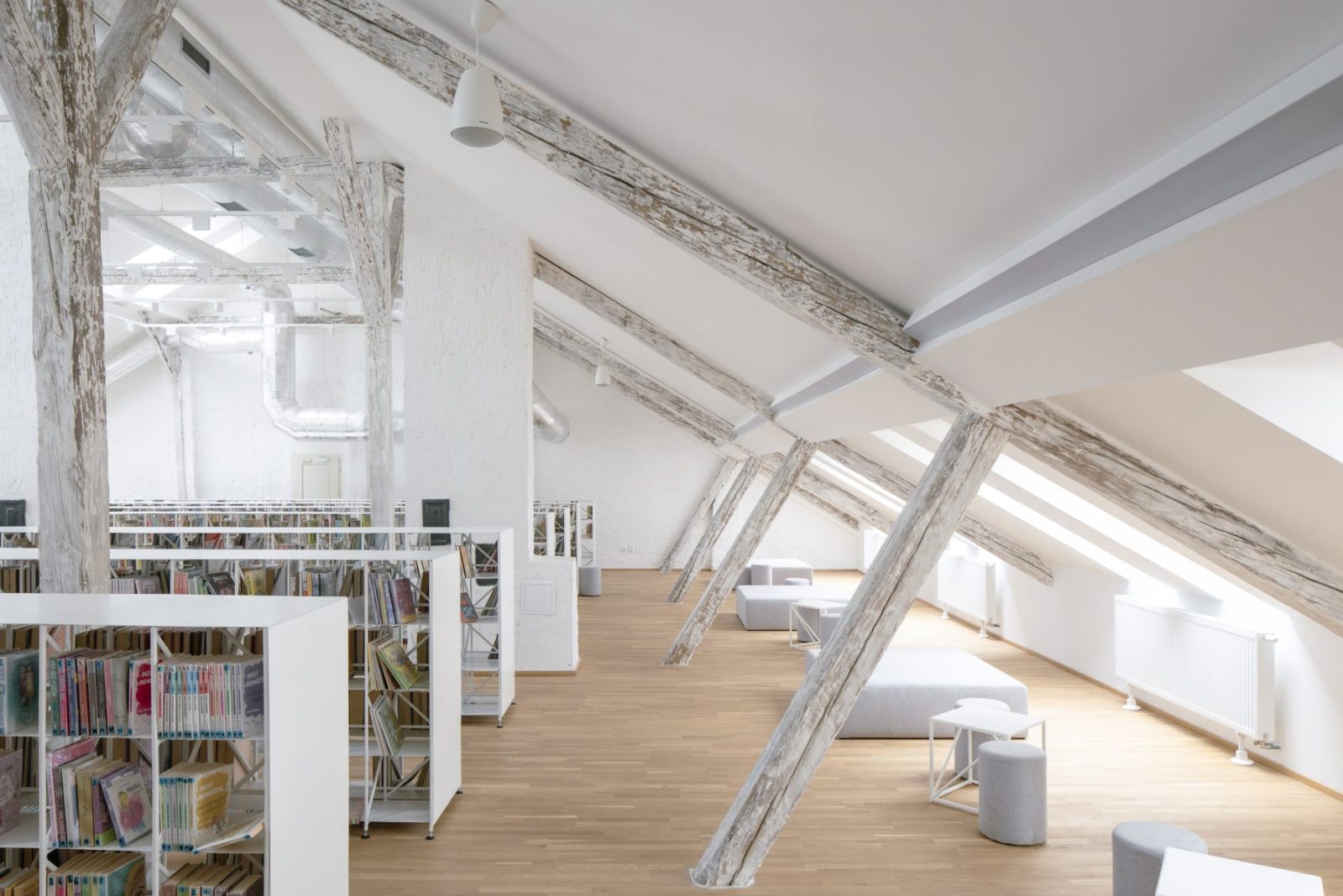
White surfaces provide a neutral background, allowing the books themselves to form a natural ornament. In this way, the collection becomes both content and expression.
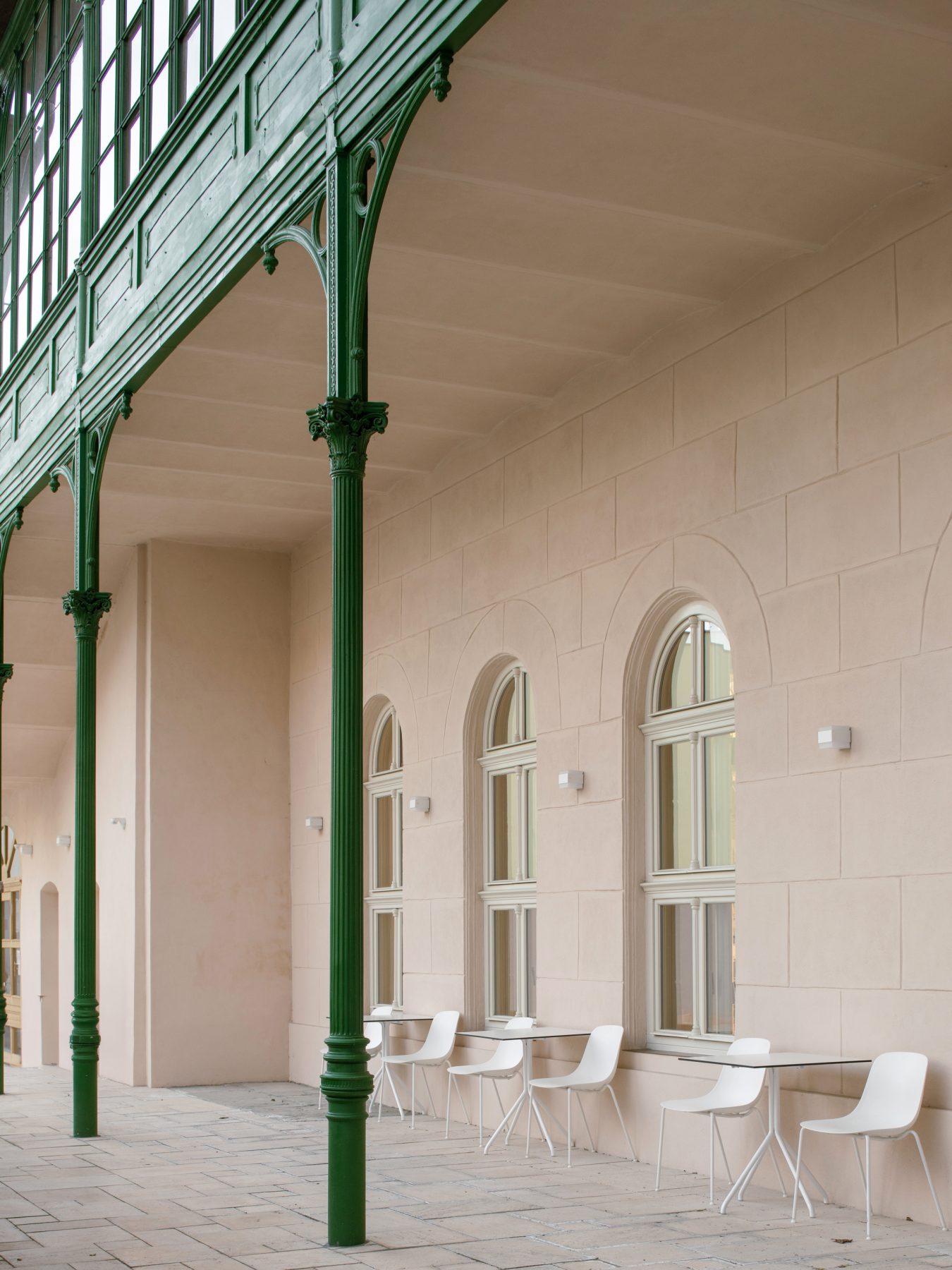
The project ultimately articulates a refined architectural response, where light, structure, and program converge to create a contemporary library environment grounded in historical continuity.
Plans
Facts & Credits
Project title: Interior of p.O.Hviezdoslav regional library in Prešov
Project type: Interiors
Architecture: Doxa & bistan architekti
Project location: Prešov, Slovakia
Design team: Matúš Bišťan, Maroš Mitro, Ondrej Jurčo, Tomáš Boroš, Jakub Števanka, Pavel Bakajsa
Cooperators: Vincent Ung (architecture), Martina Hončárová (architecture), Ján Hlodák (architecture)
Engineering: Ivan Tatala – BPT projekt
Graphic design: Tomáš Eisner
Photography: Alex Shoots Buildings