Featured Architect series traces practices that redefine the contemporary architectural discourse through critical thinking, spatial intelligence and a distinct authorial voice. The series explores the ideas, methodologies and cultural positions shaping architecture today, foregrounding work that resonates with clarity, experimentation and lasting relevance.
Working from Le Havre across Normandy and beyond, m i o g u i transforms spatial constraints into lucid compositions where geometry, colour and construction converge, reminding us that architecture can remain rigorous while profoundly joyful. From a compact 10 m² studio reimagined as a singular temporary sleeping experience within the vastness of the Parisian metropolis, to a refined residential energy retrofit in Lagny-sur-Marne, a playful spatial adaptation for a newborn’s arrival in Paris, and a Mondrian-inspired 13 m² renovation in the suburbs of Évreux, miogui explores the intimate scale of living. Through curved geometries, mirrored surfaces, and the softness of textile, each intervention seeks to amplify atmosphere and transform limitation into character, giving every space its necessary spark.
Design Philosophy
Installed in the Saint-François district of Le Havre, miogui architects — founded by Sabine Fremiot and Léo Berastegui — operates across Normandy and beyond with a practice grounded in clarity, restraint and constructive intelligence. Their architecture emerges from the structural honesty of raw materials and from an acute attention to spatial economy; an approach shaped, above all, by the discipline of working at a small scale.
Early commissions taught the office how to compress, distill and intensify space, and how to attribute meaning to every junction, threshold and surface — lessons that continue to inform their larger interventions today.
Simple yet never reductive, miogui’s work pursues a quiet abstraction of form through the careful synthesis of constraints.
Geometry becomes both method and language, while colour and mirrors emerge not as ornamentation but as atmospheric instruments — precise, almost playful devices that cultivate moments of delight within the rituals of everyday life.
Beneath the apparent rigor of their compositions lies a deeply human ambition — to create spaces that are lucid, generous and unexpectedly joyful.
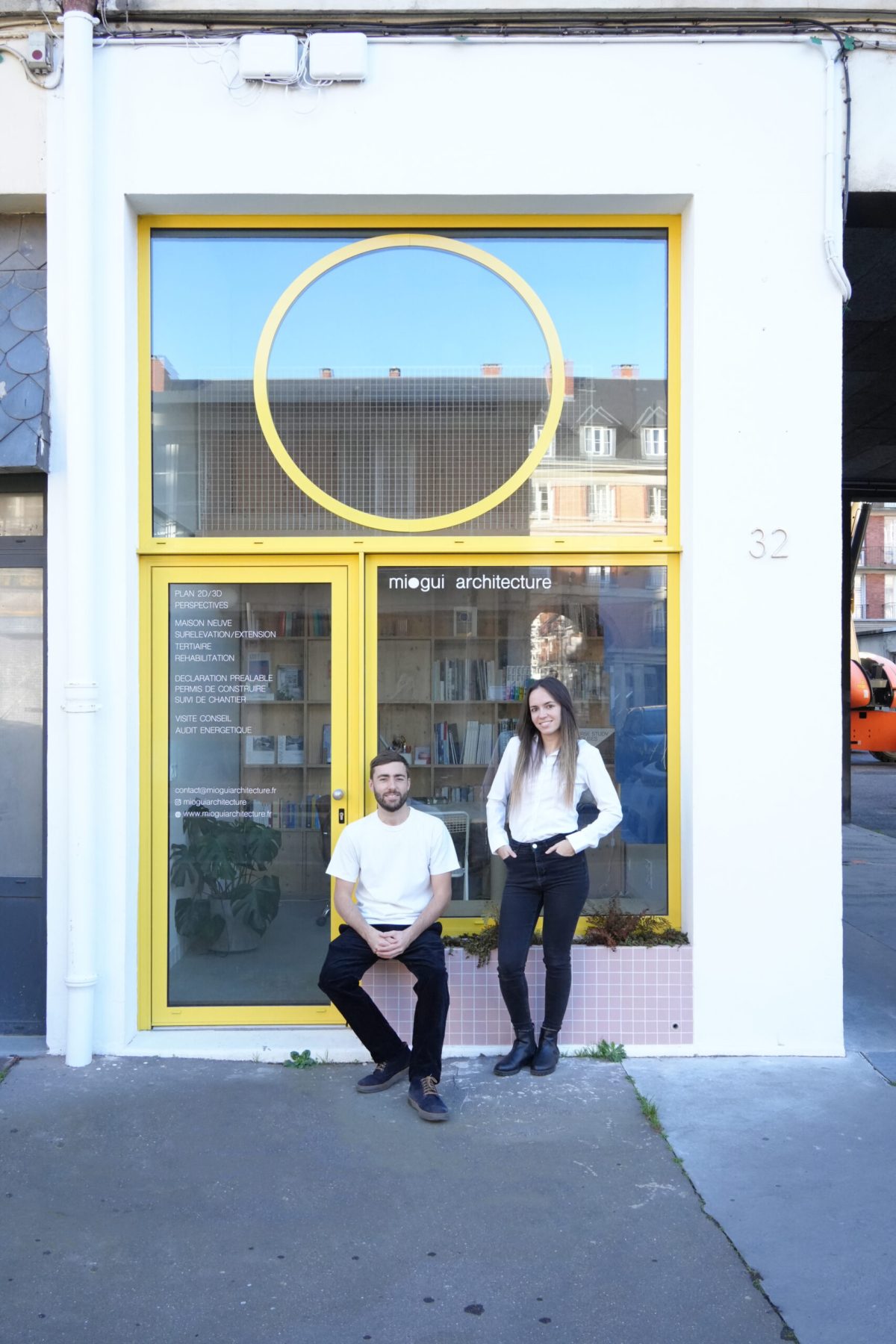
For miogui, architecture begins with the plan and the section: not merely technical instruments, but conceptual territories where the project’s intelligence is first revealed. Each commission unfolds through an ongoing reflection on use, experience and the accumulated knowledge of built work. In this sense, their practice resists the autonomy of the image.
Construction itself becomes an extension of the design process — a site of dialogue, adjustment and experimentation, where the expertise of craftsmen and contractors actively shapes the final architectural expression.
Built Works
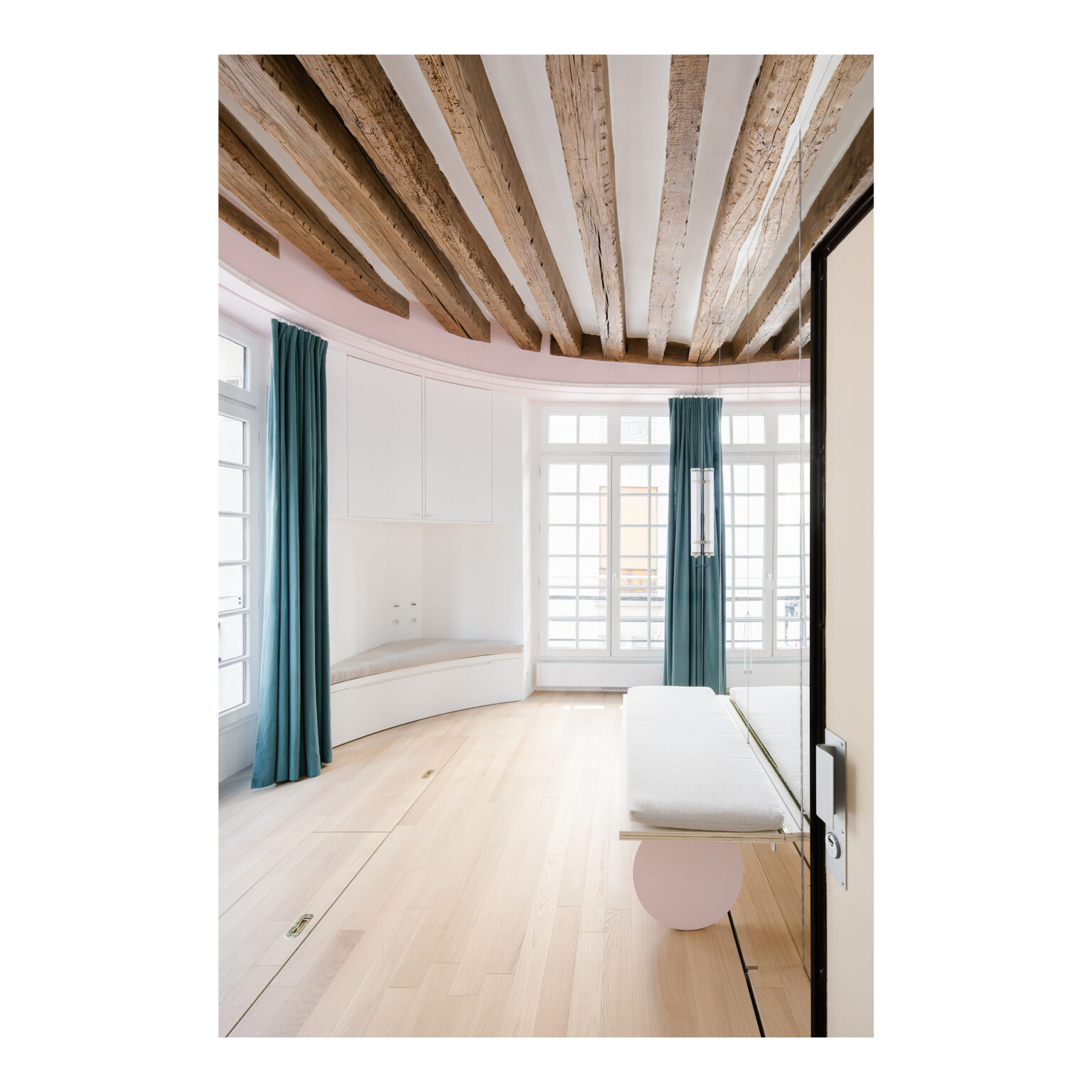
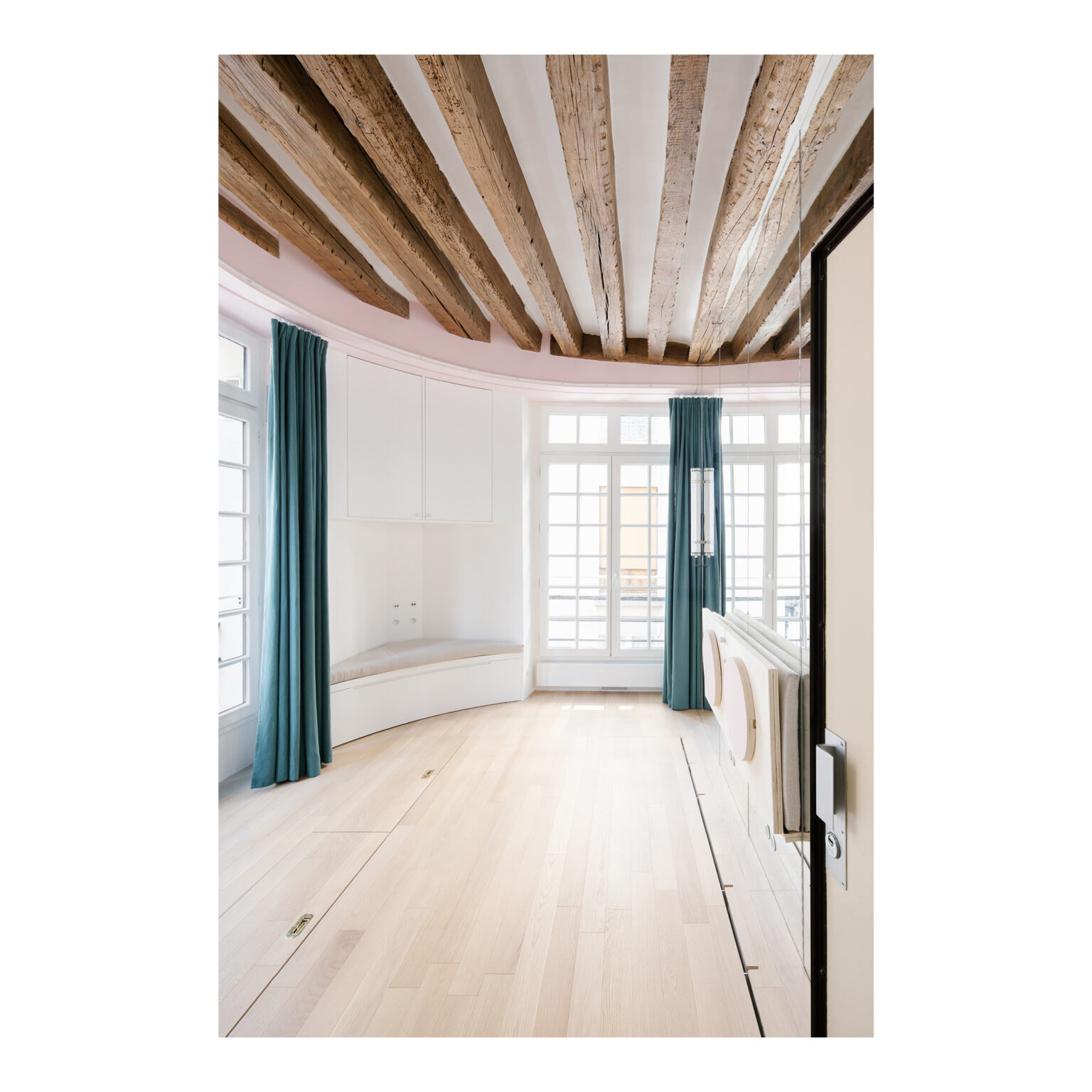
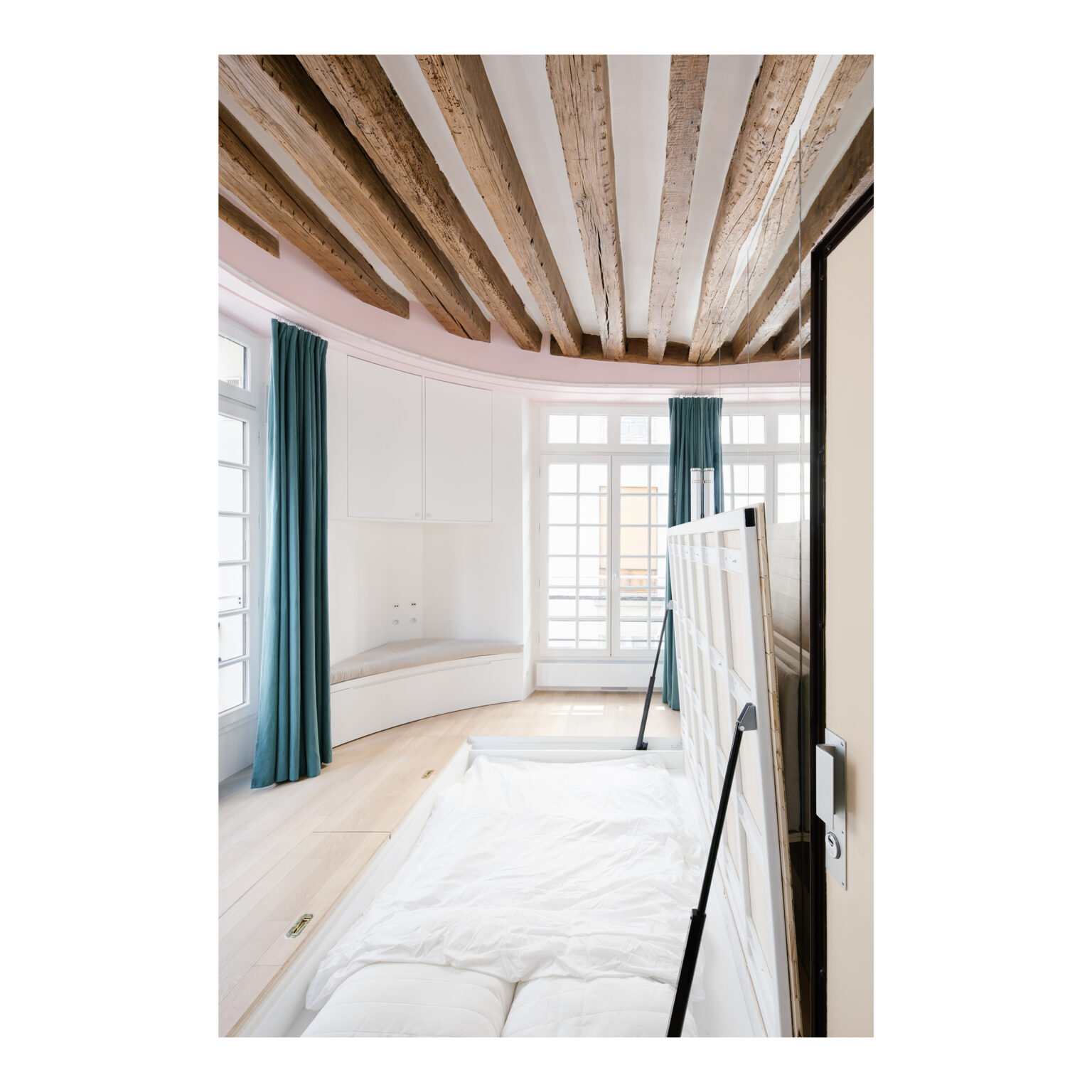
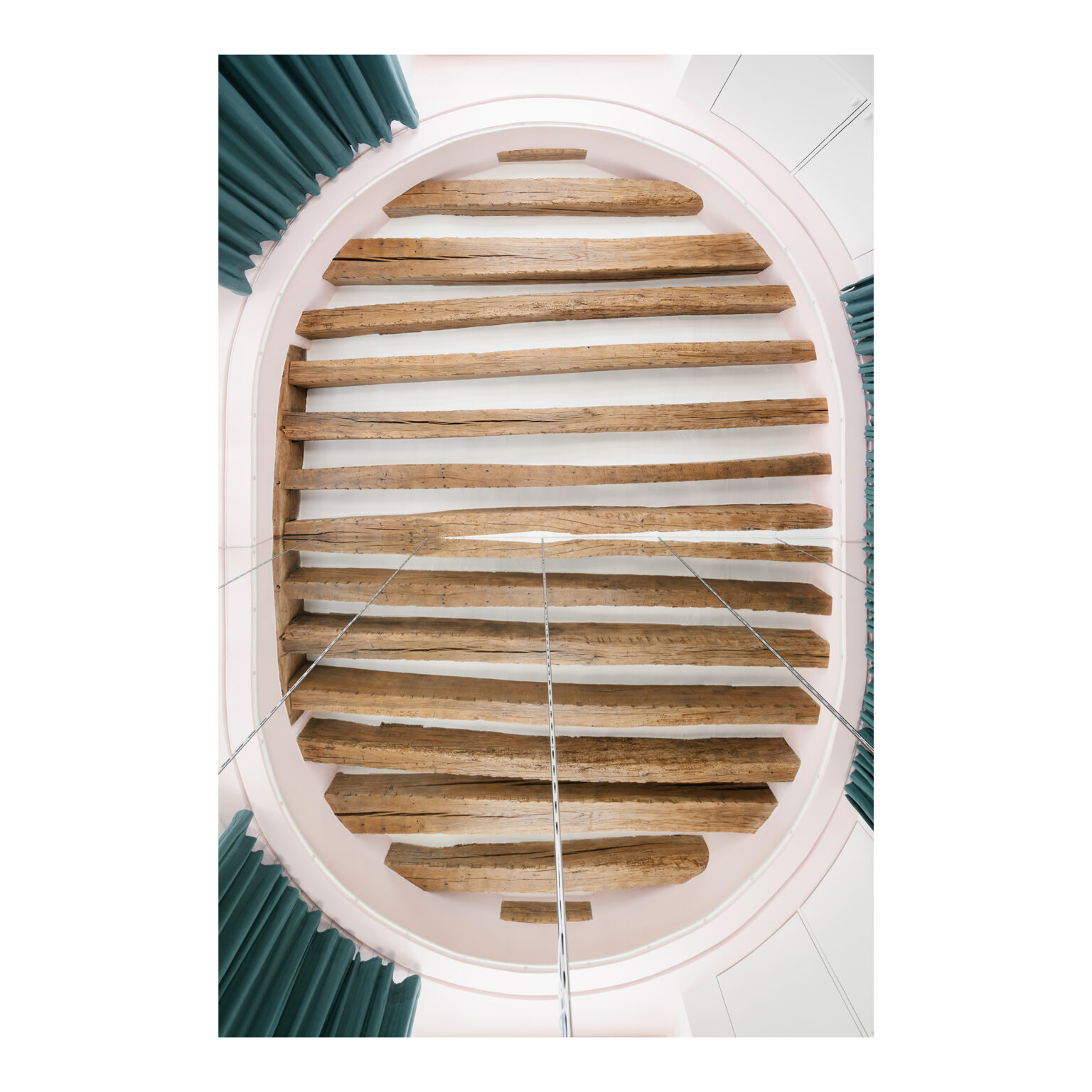
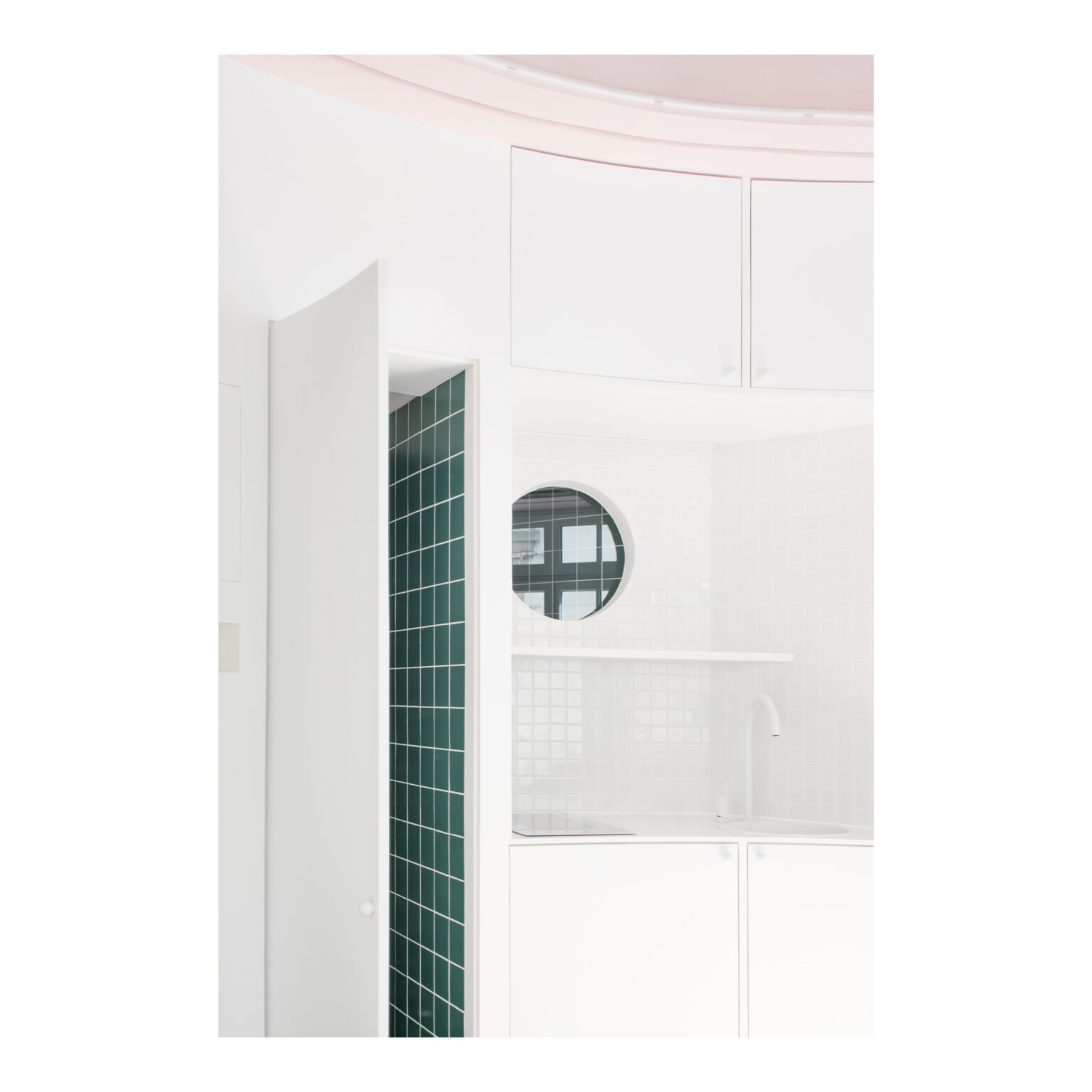
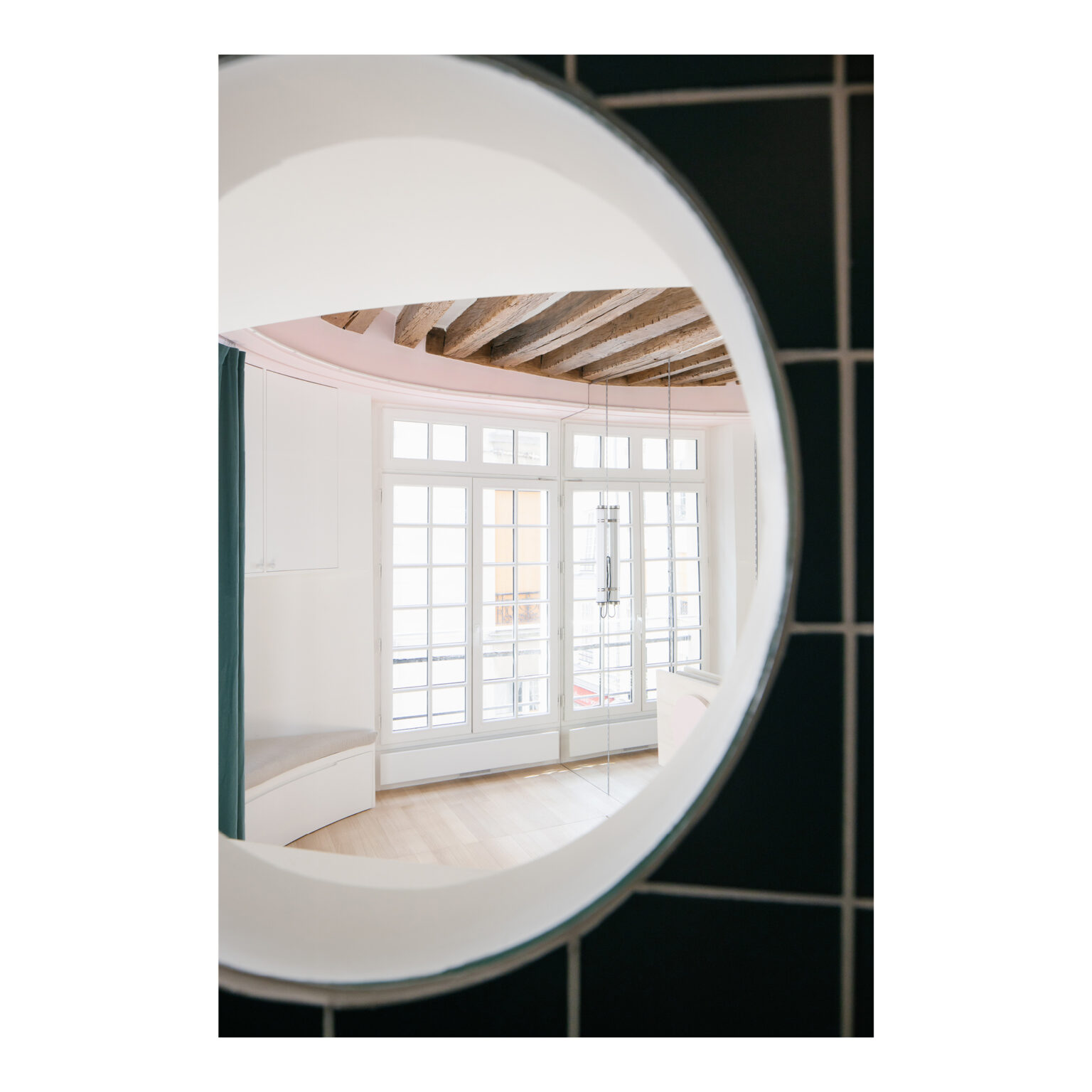
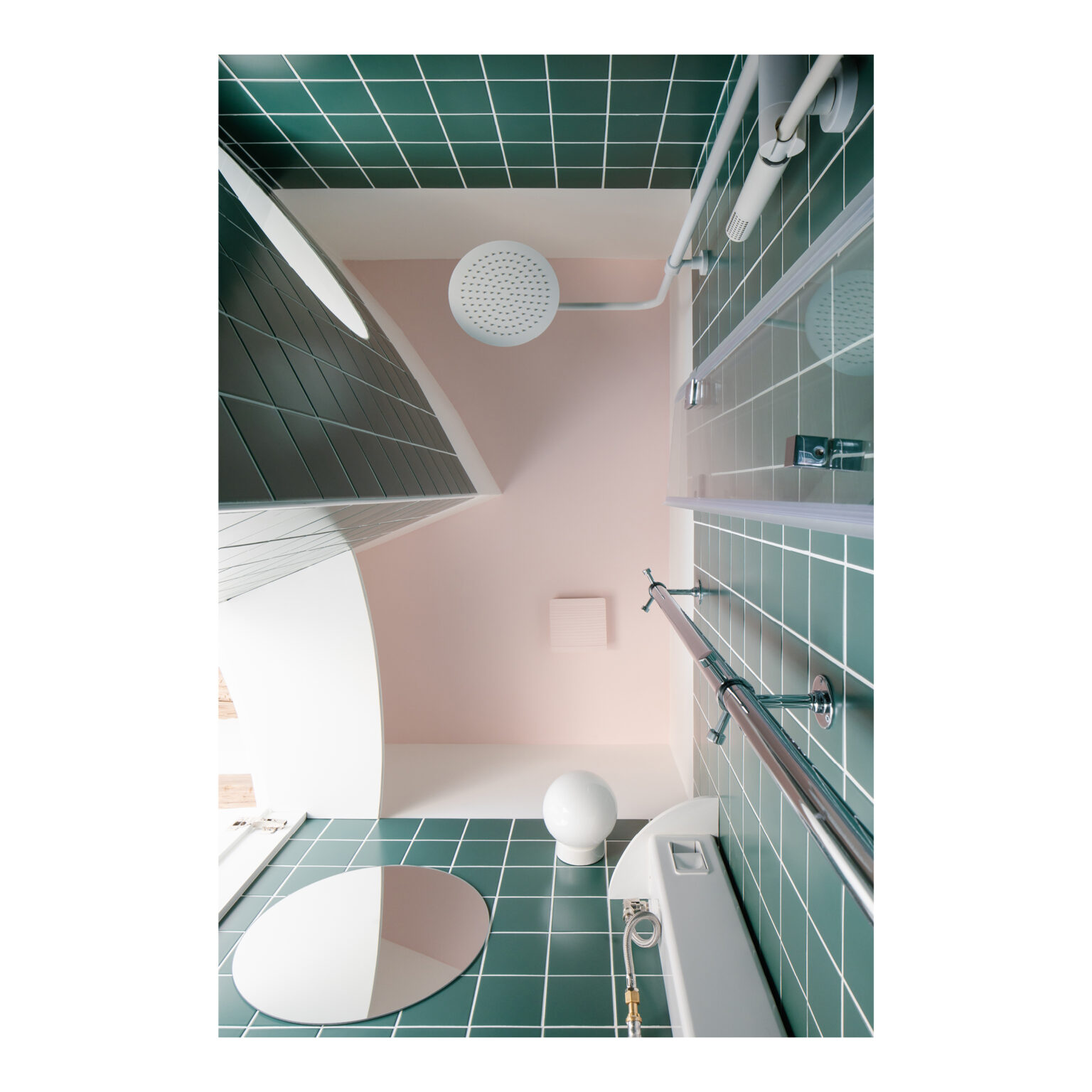
Turenne (2024): A compact 10m2 studio as a unique temporary sleeping experience in the immensity of the Parisian metropolis.
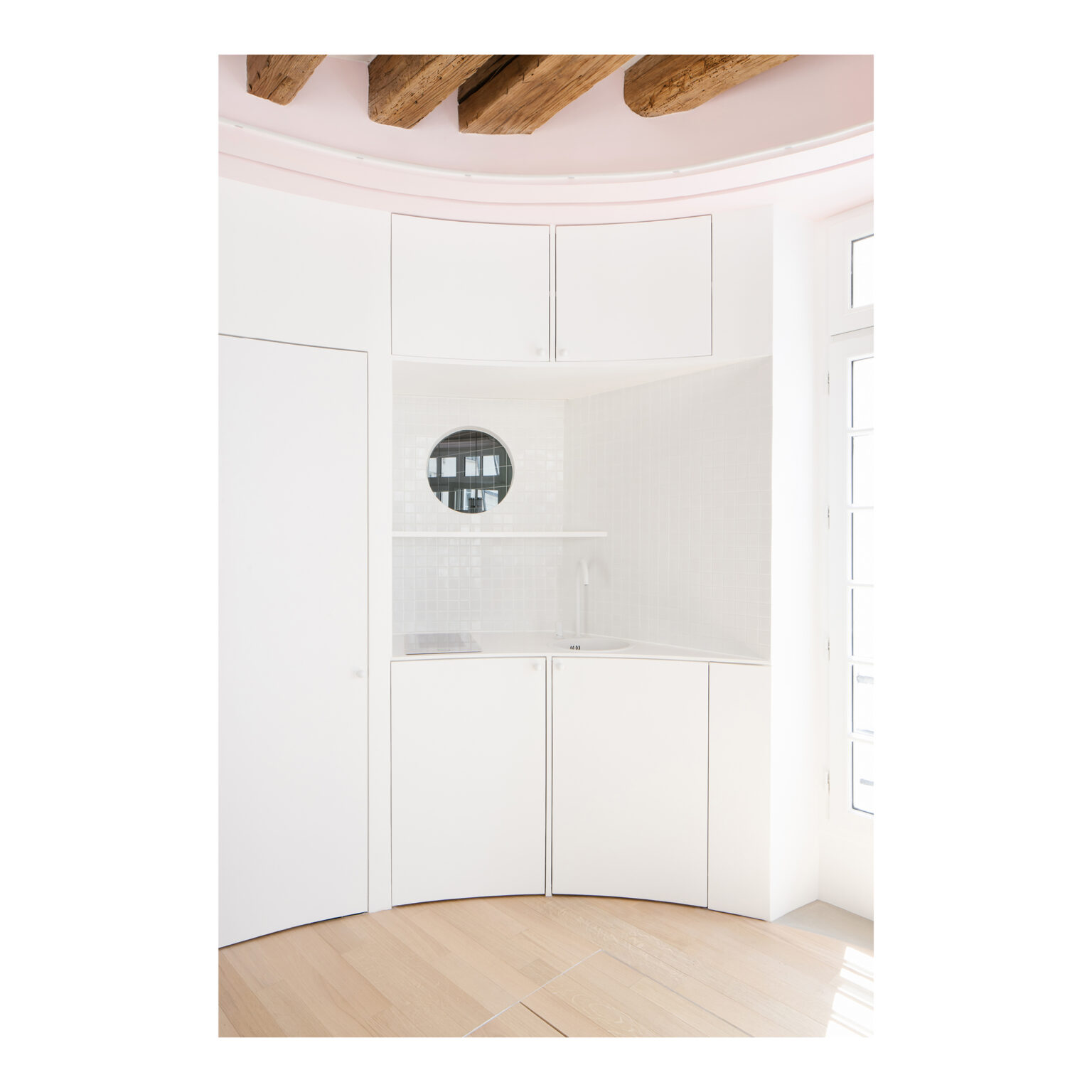
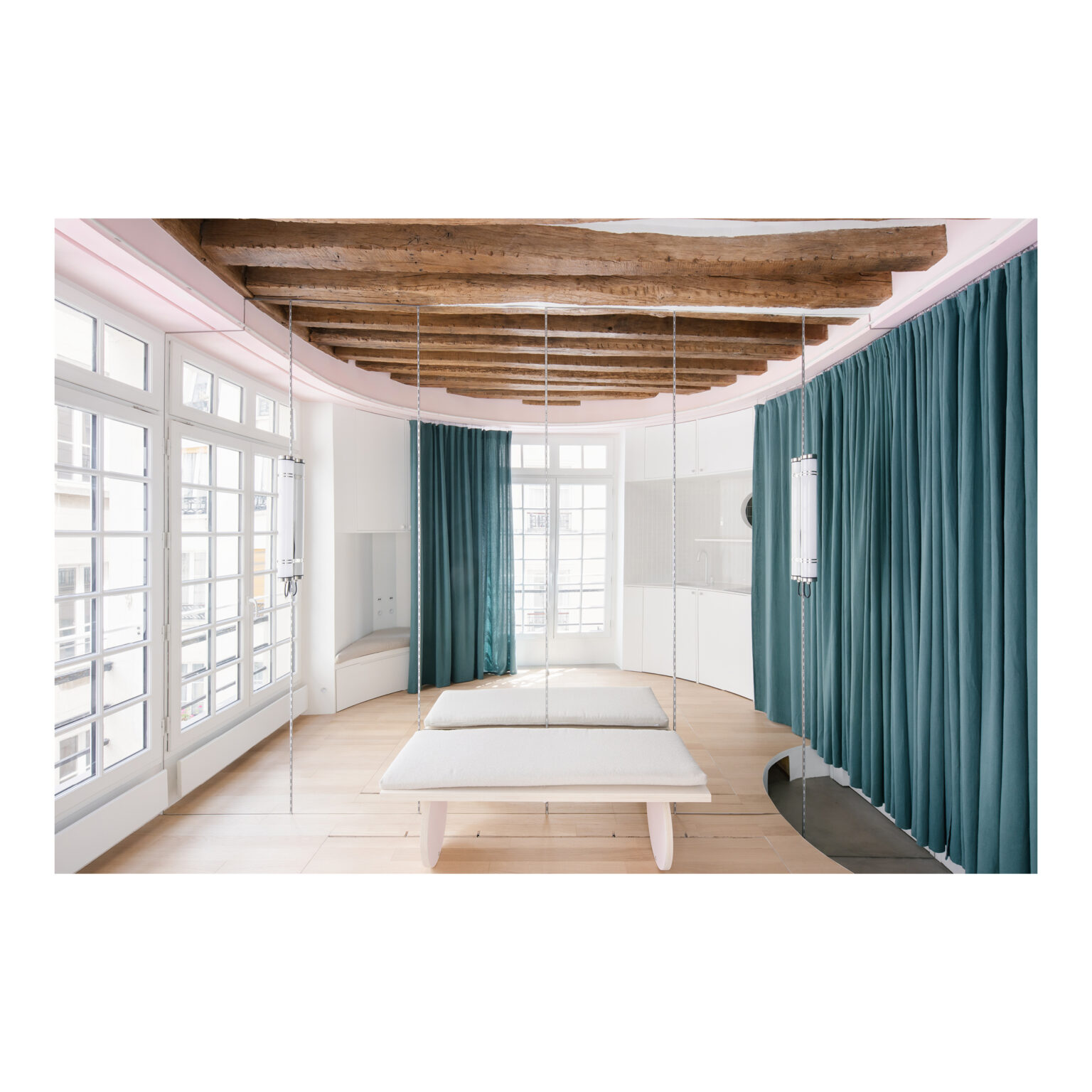
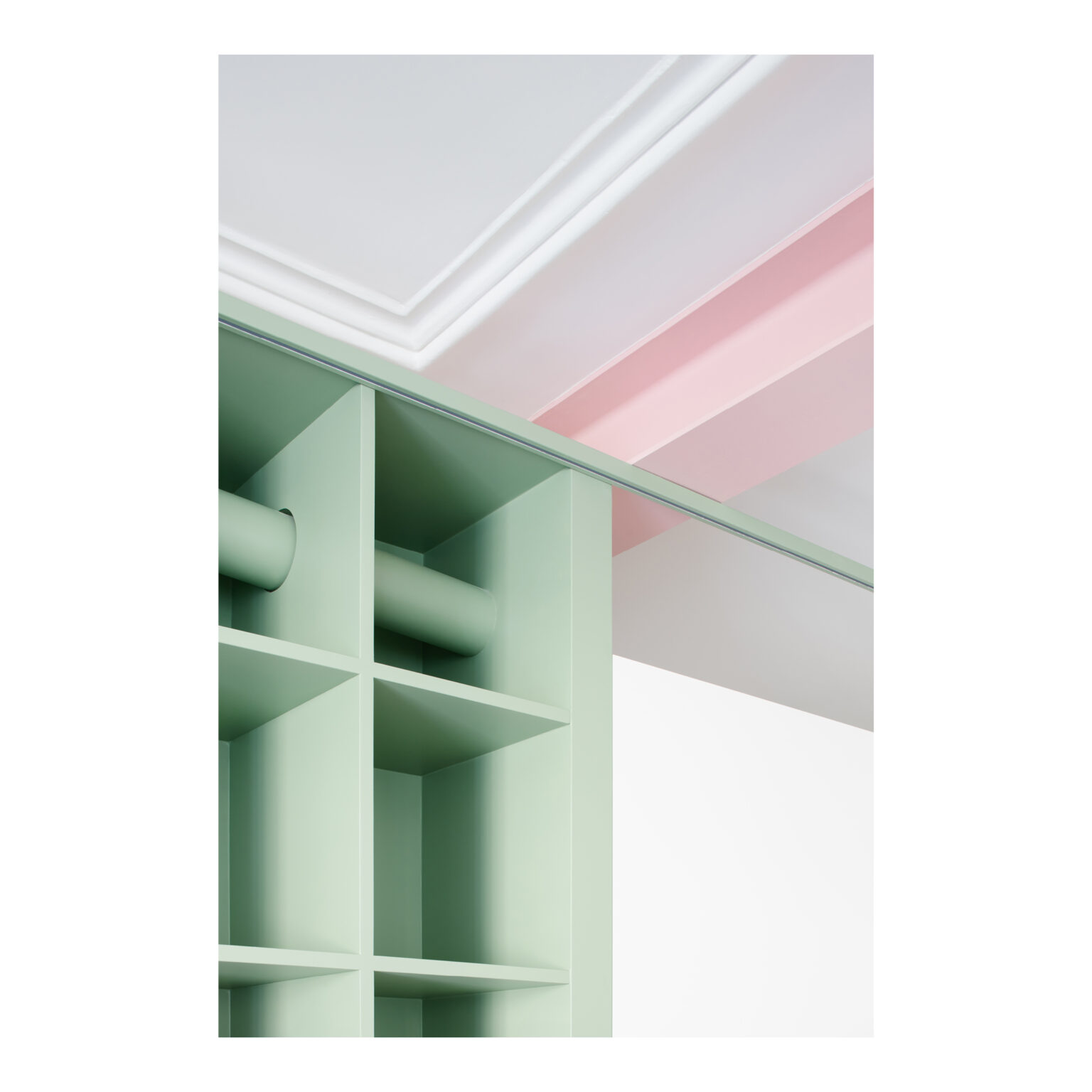
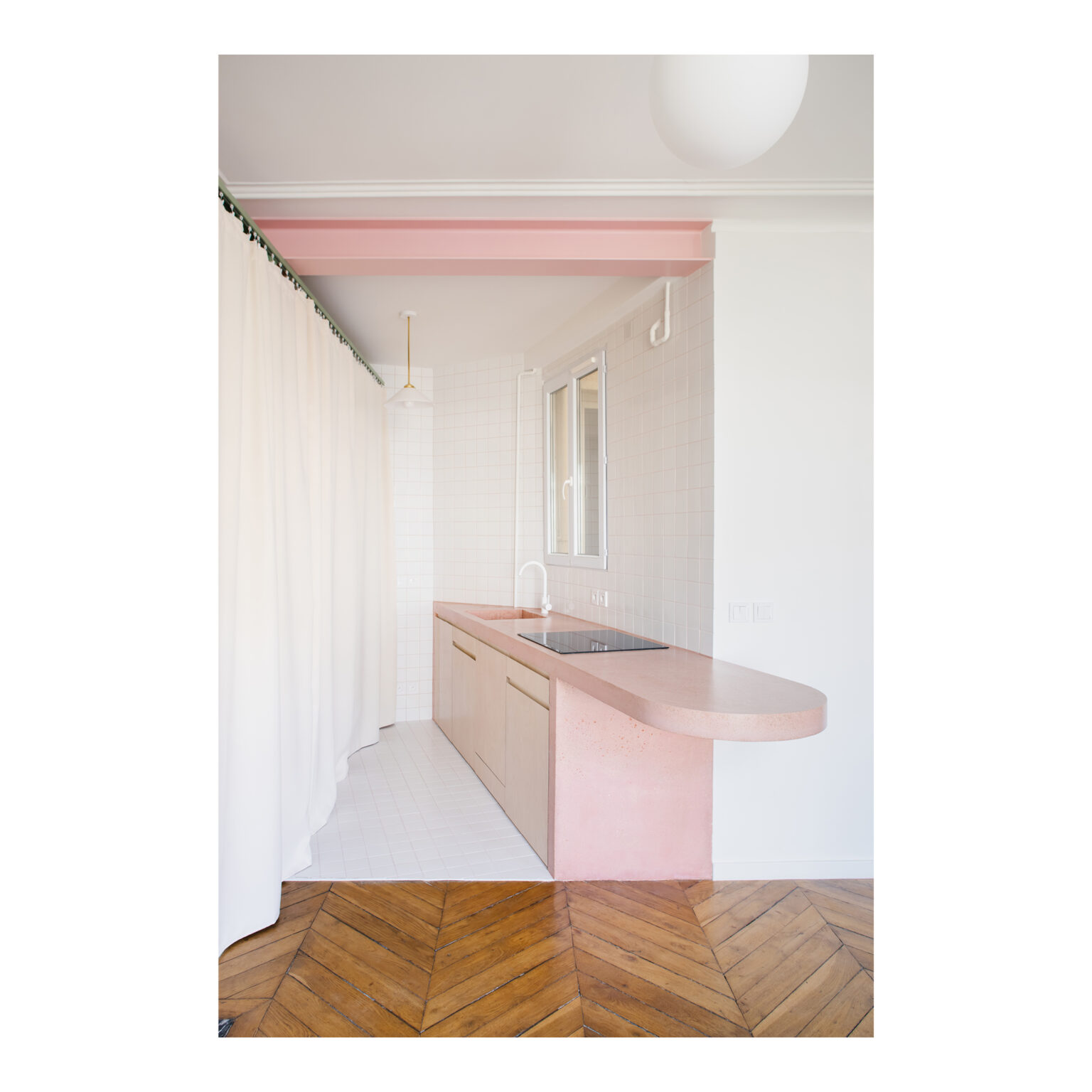
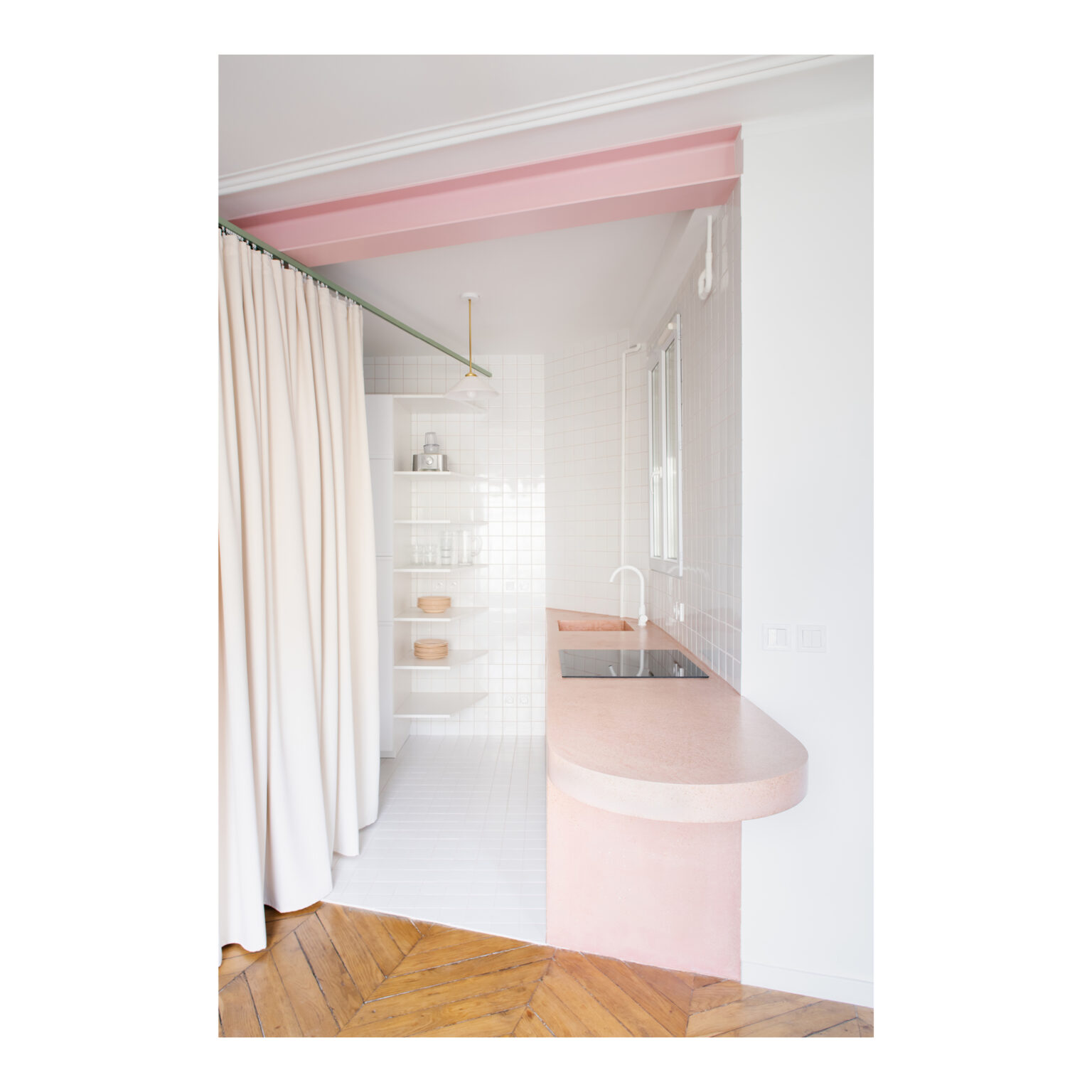
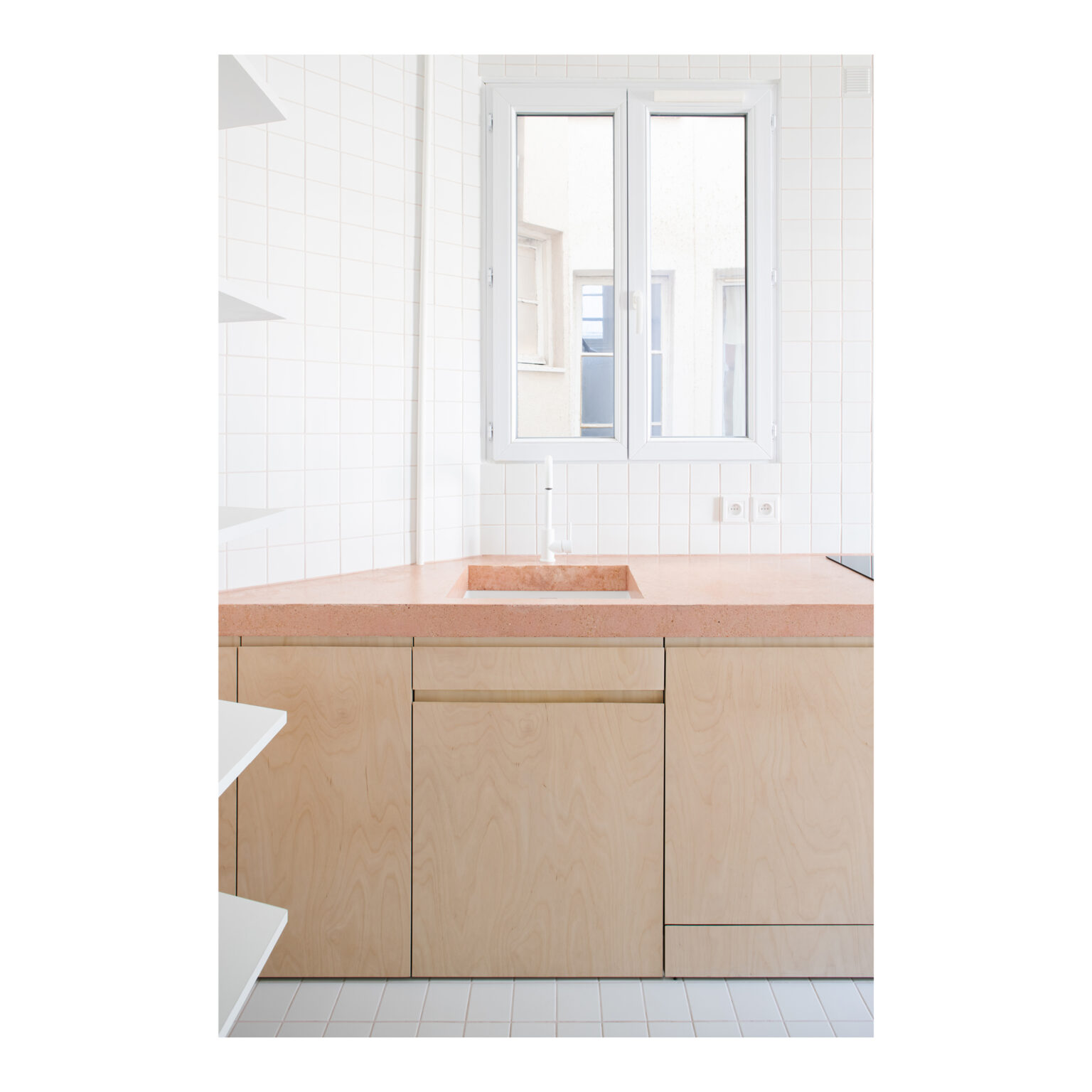
An existing 10m2 studio in Paris is transformed into a micro-space intended for short stays, office use, or a pied-à-terre (a second home) rather than permanent living. The project takes advantage of an angled room with two large windows, high ceilings, and exposed wooden beams. A semicircular layout organizes the plan, with curved ceiling, floor, and partitions reflecting this geometry. Service functions such as kitchen, bathroom, and storage are placed along the perimeter to maximize central living space. A mirrored wall visually doubles the space and incorporates benches, lighting, shelves, and coat storage. The floor is raised to conceal a bed and additional storage accessed through trapdoors; jacks lift the bed at night, transforming the living area into a sleeping space. Compact fixtures are used for efficiency. The palette is minimal: white surfaces for brightness, a light pink ceiling, and green bathroom tiles. Circular geometry unifies the design and abstracts everyday objects scale.
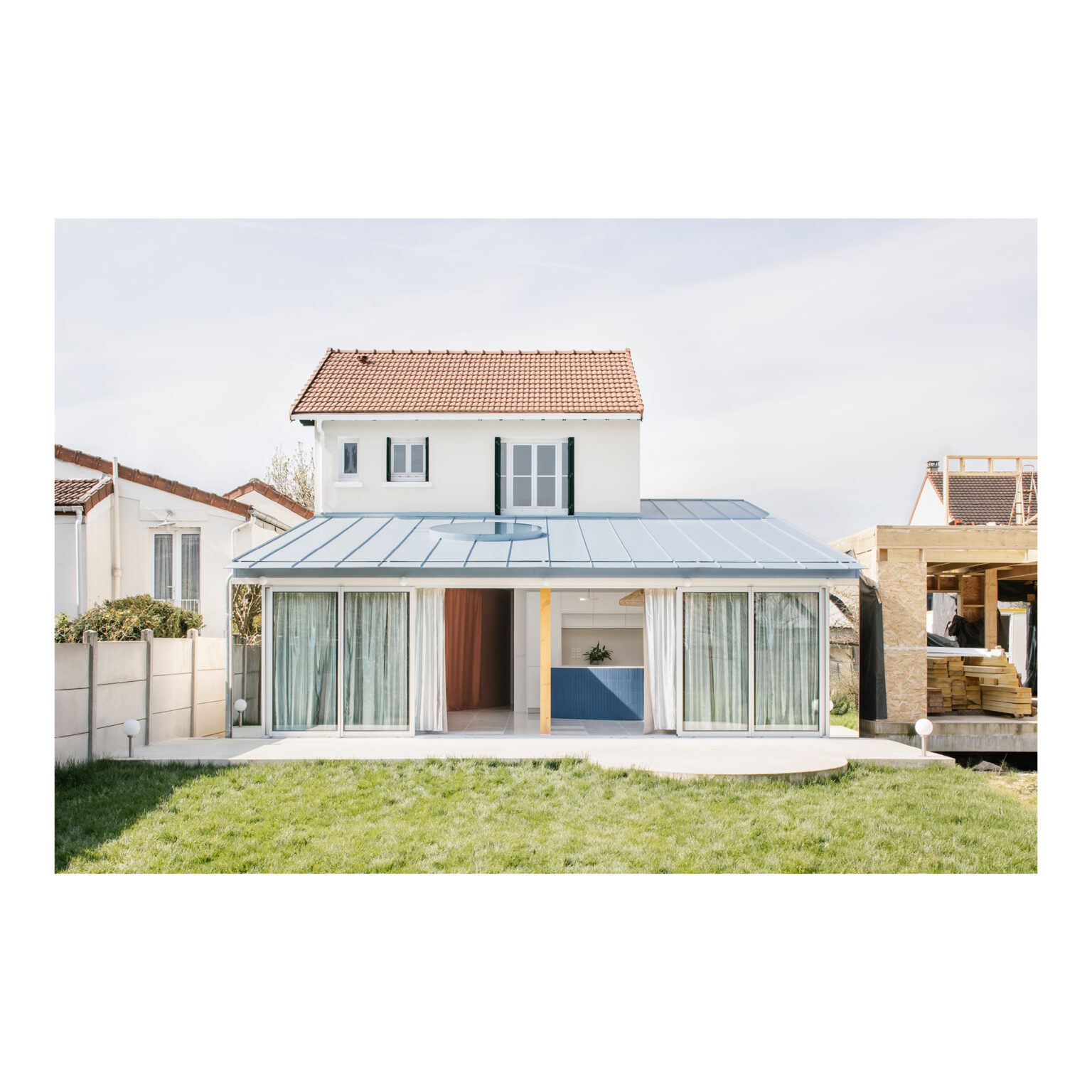
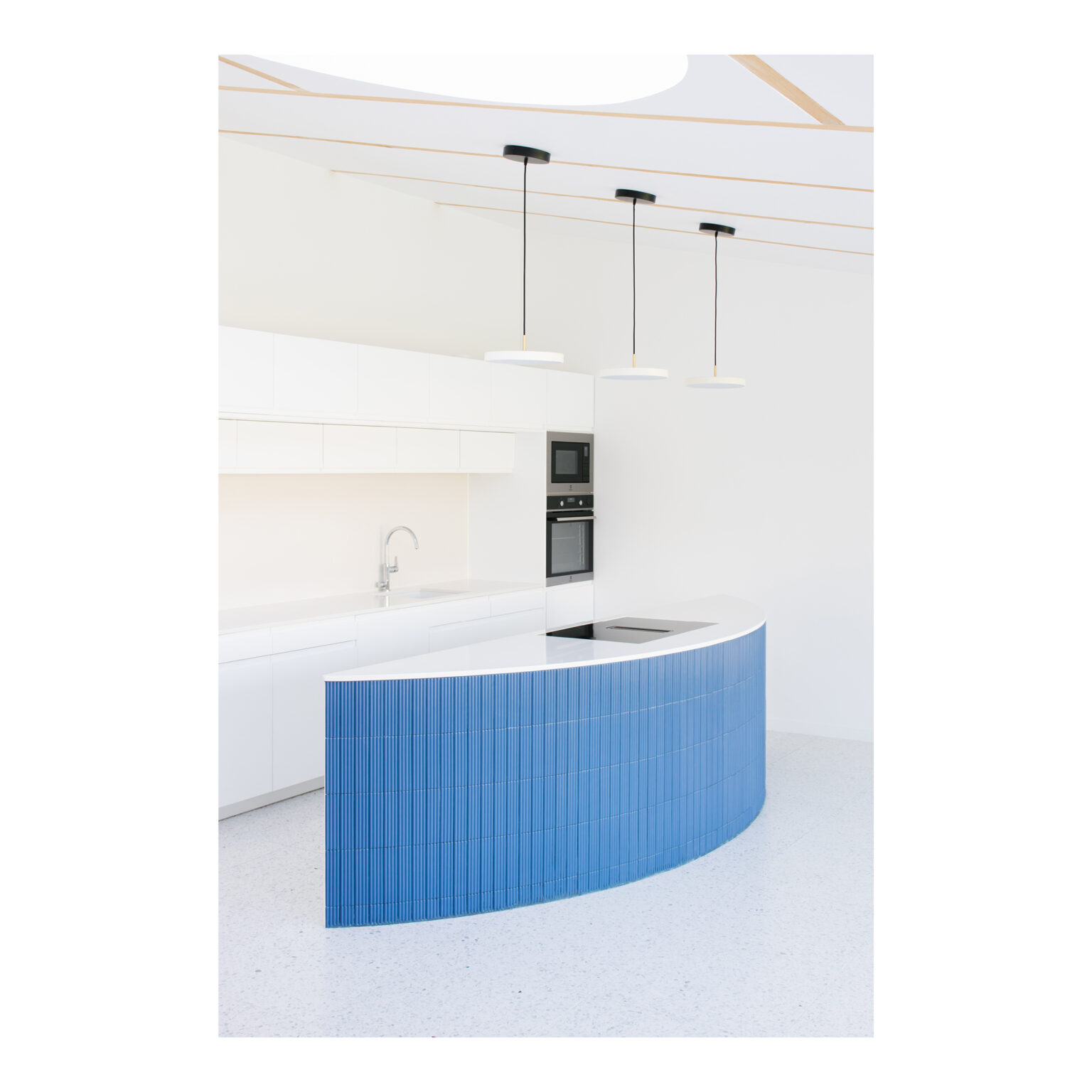
Tilleuls (2024): a stylish residential energy retrofit in Lagny-sur-Marne, France.
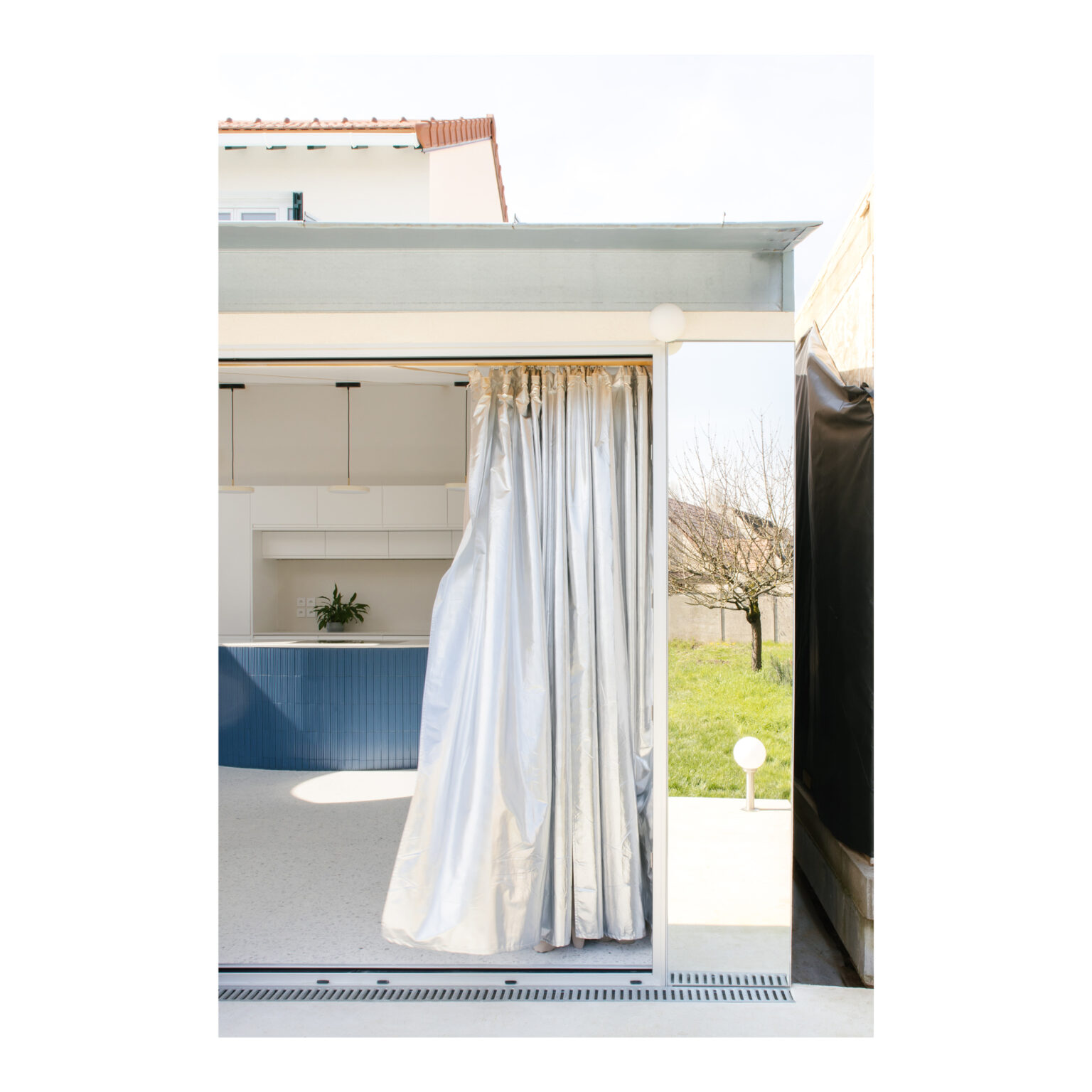
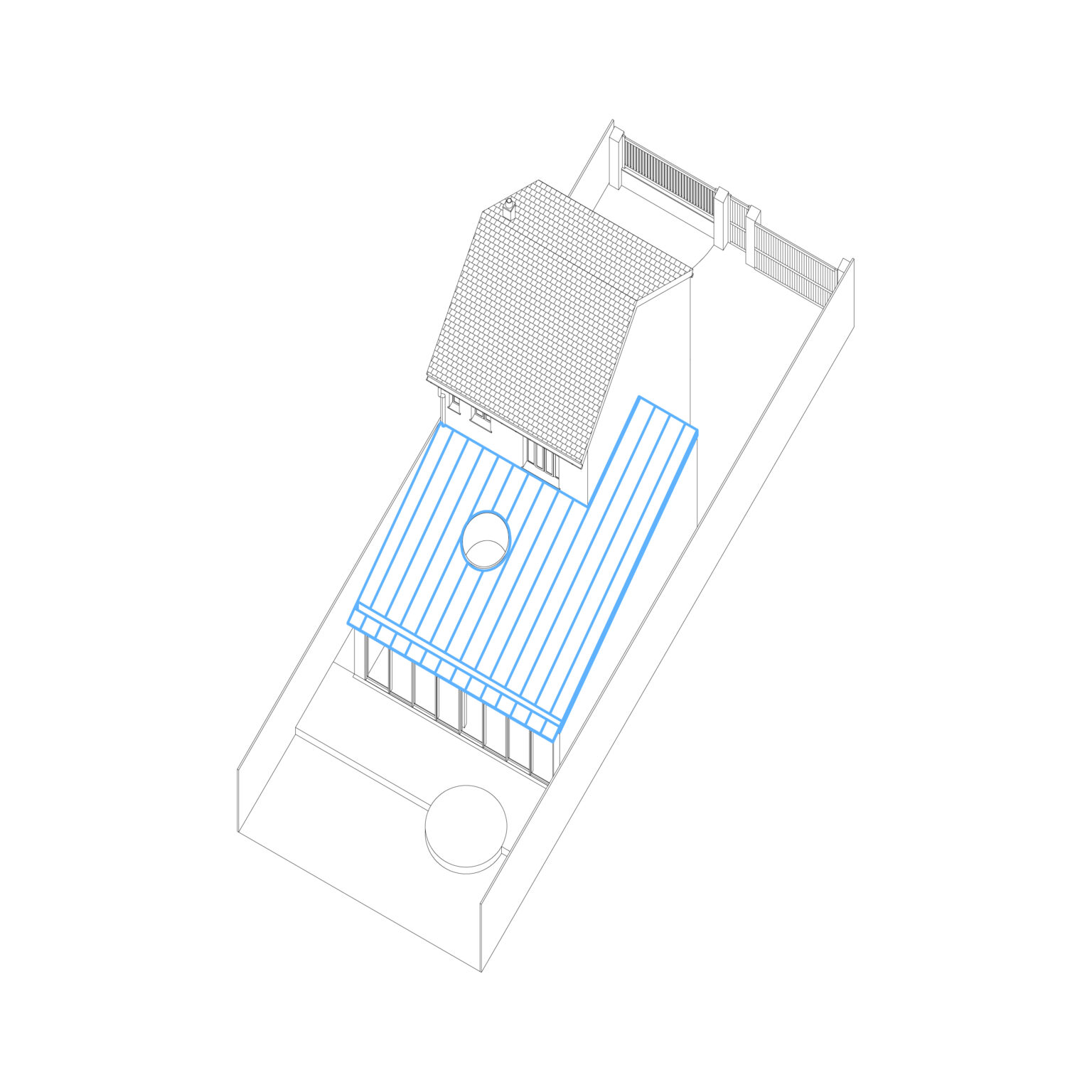
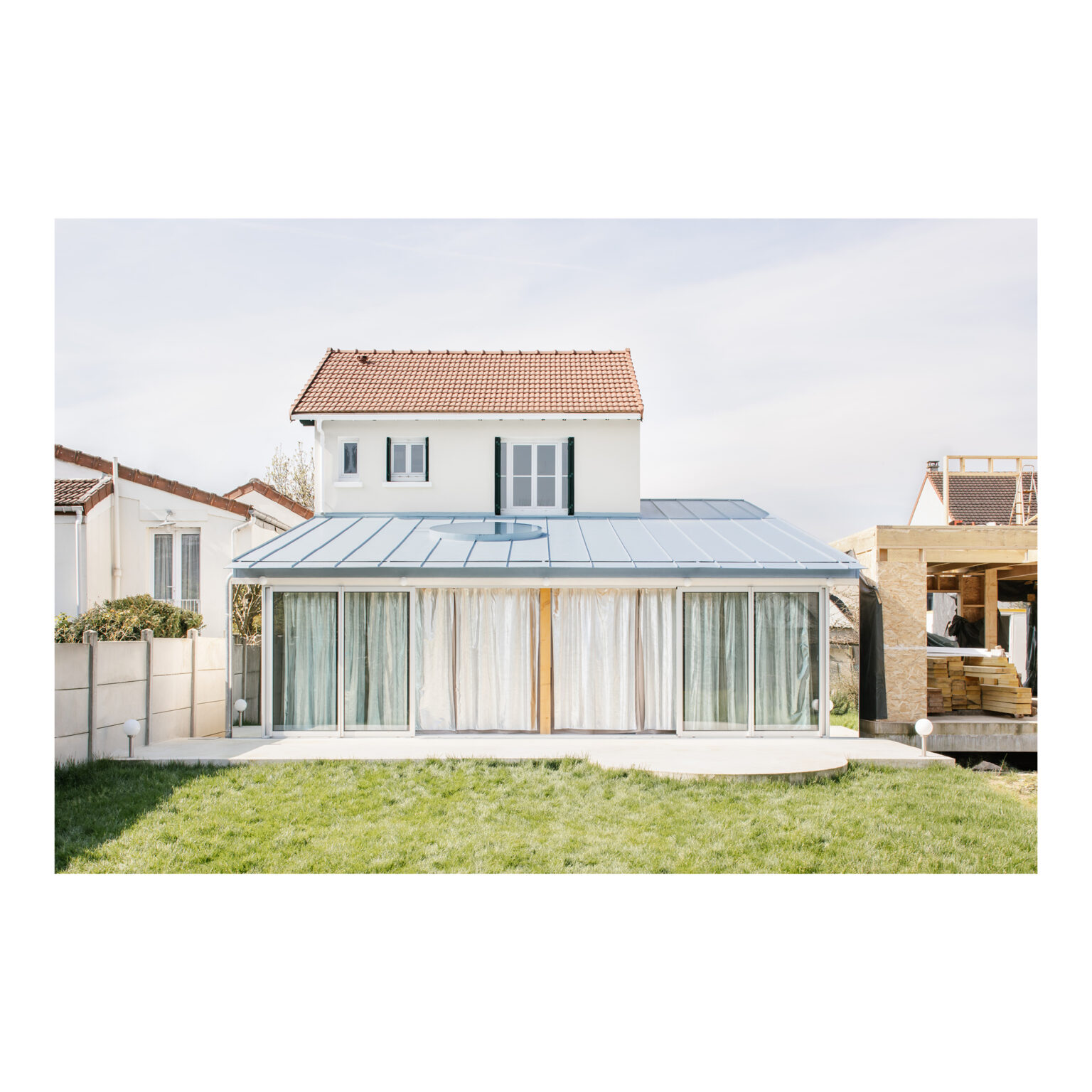
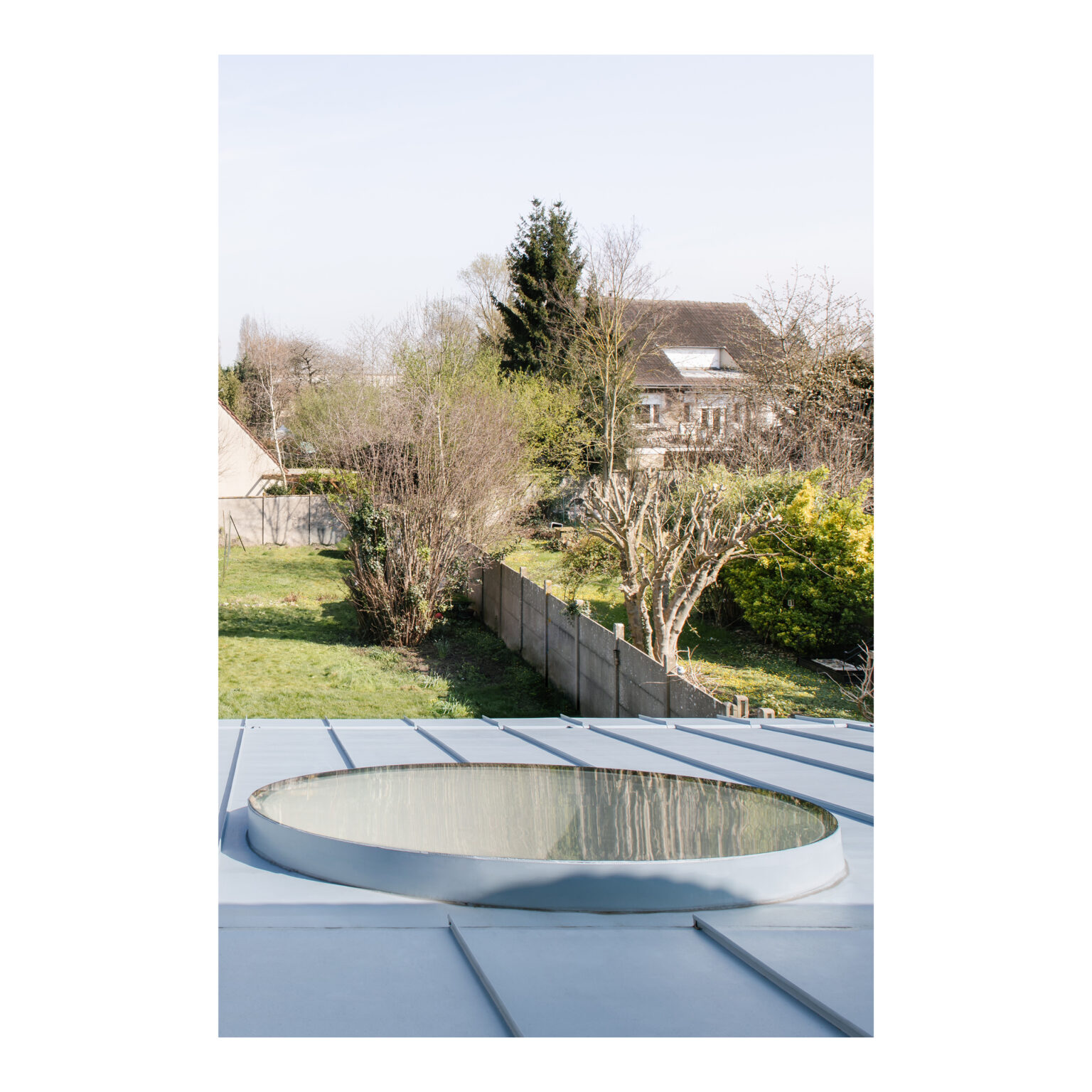
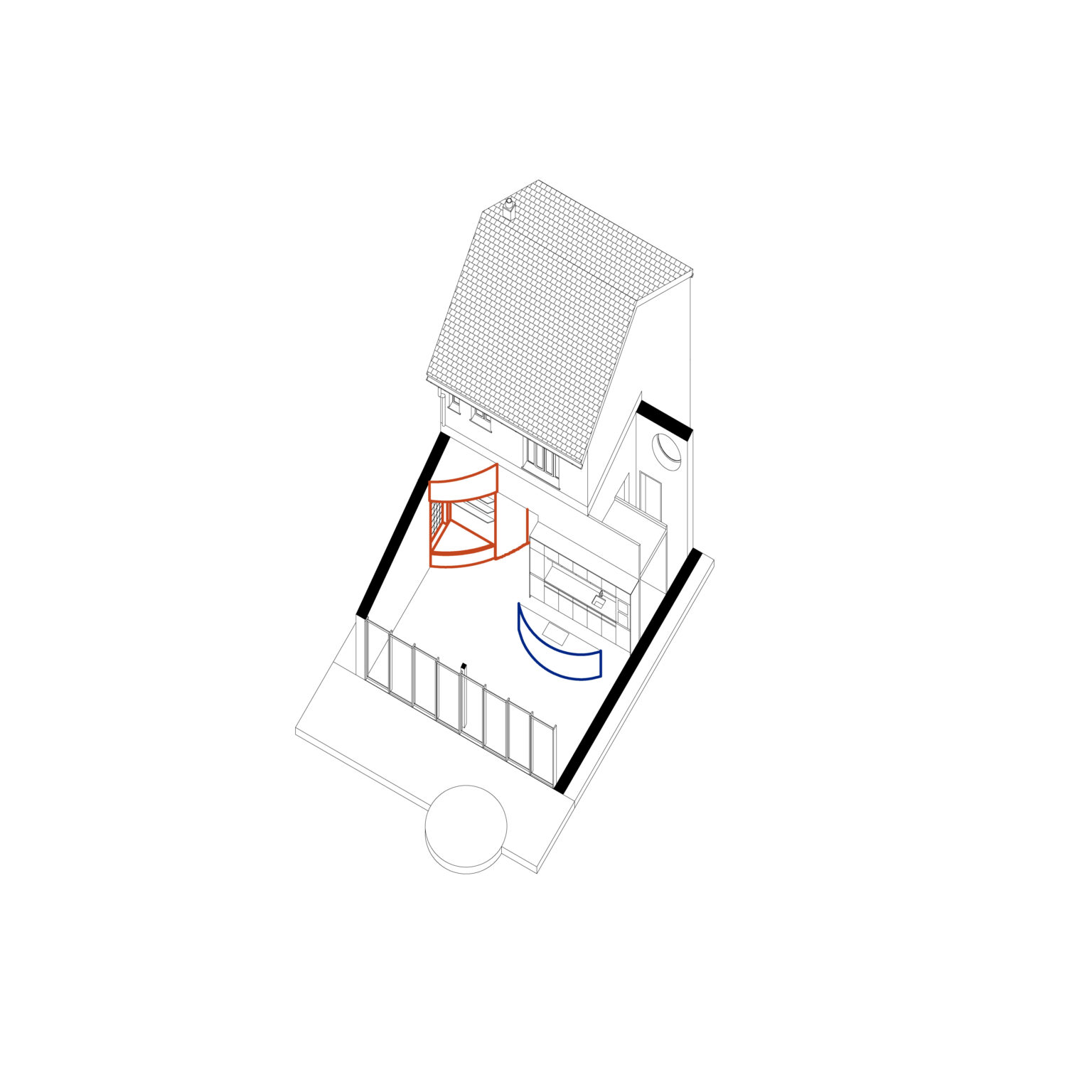
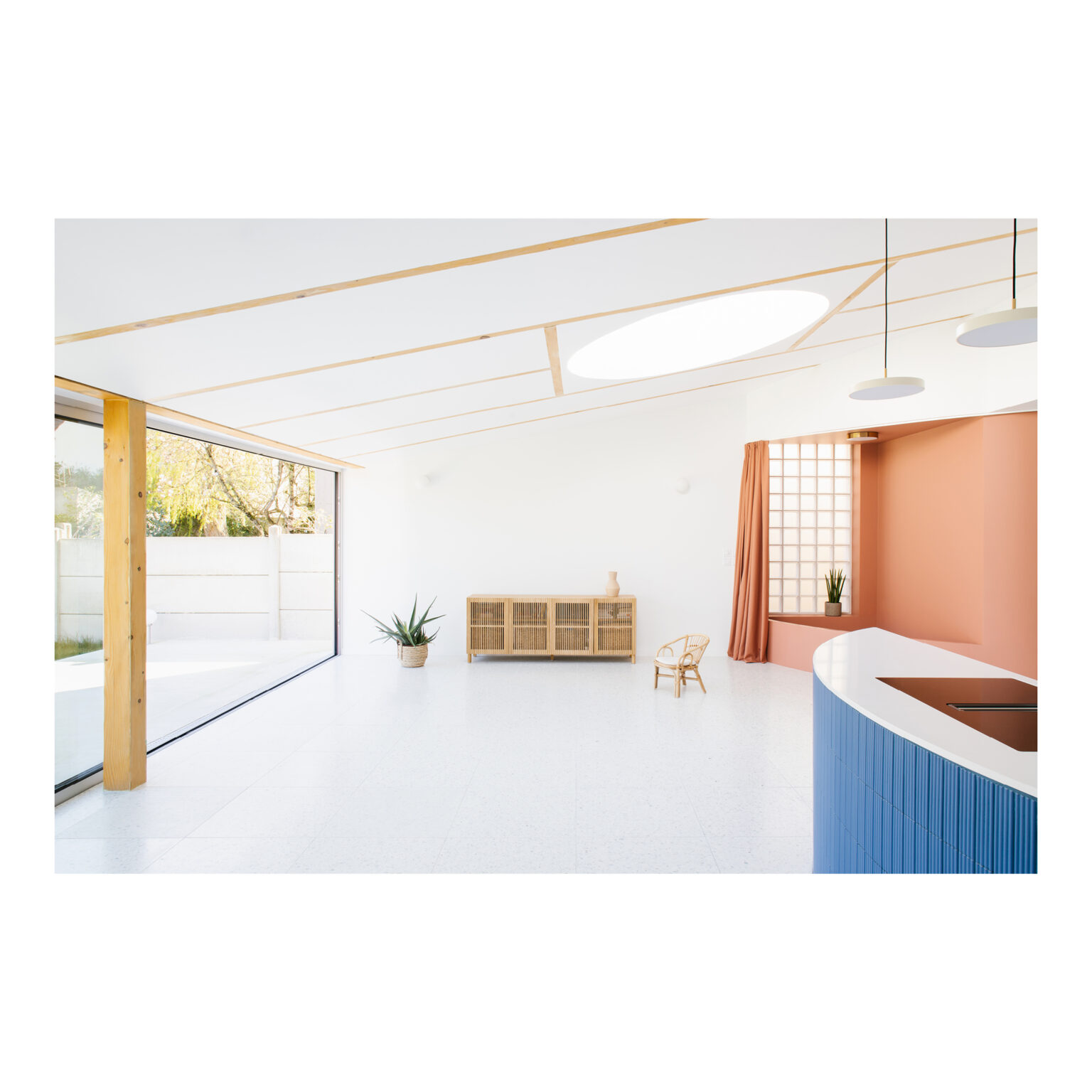
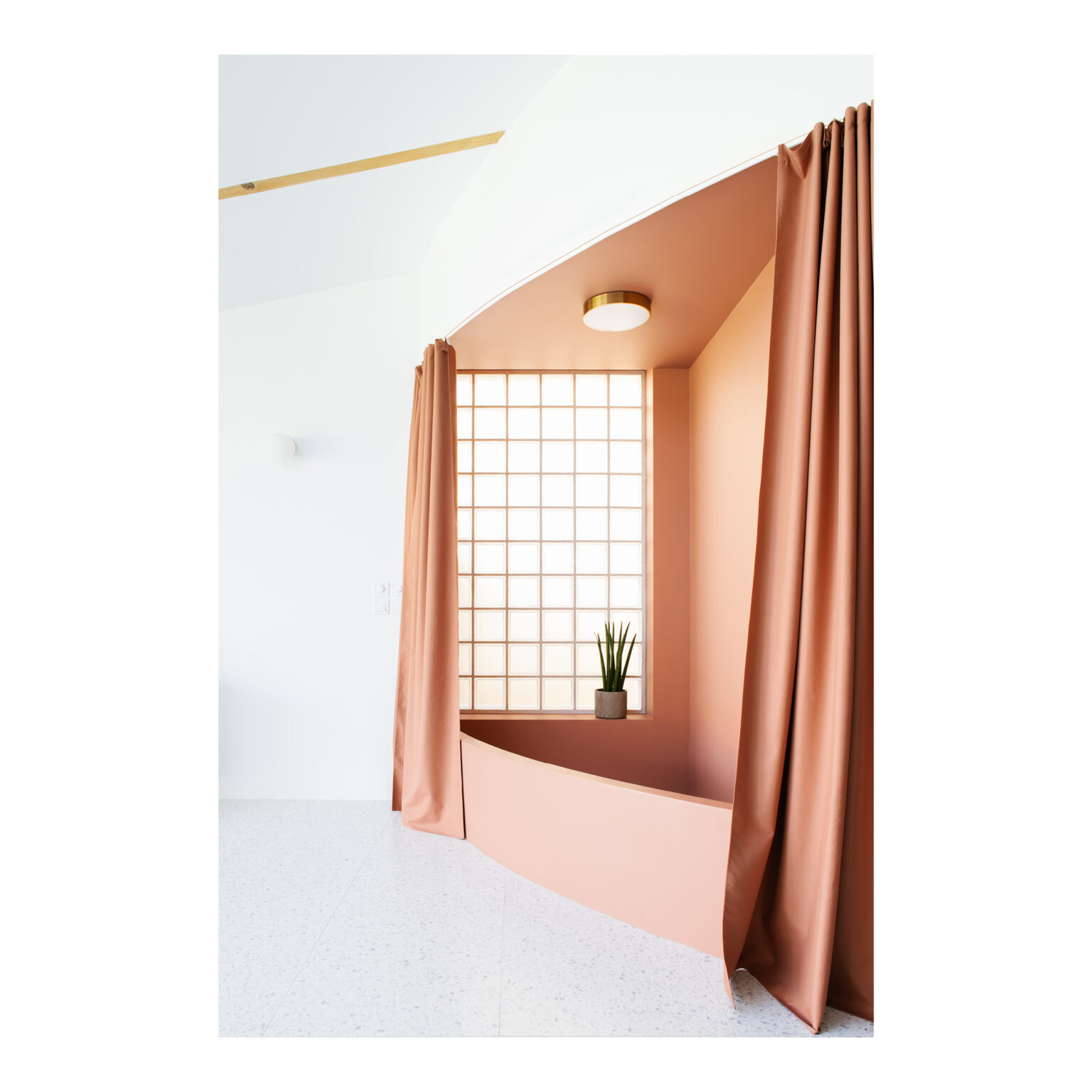
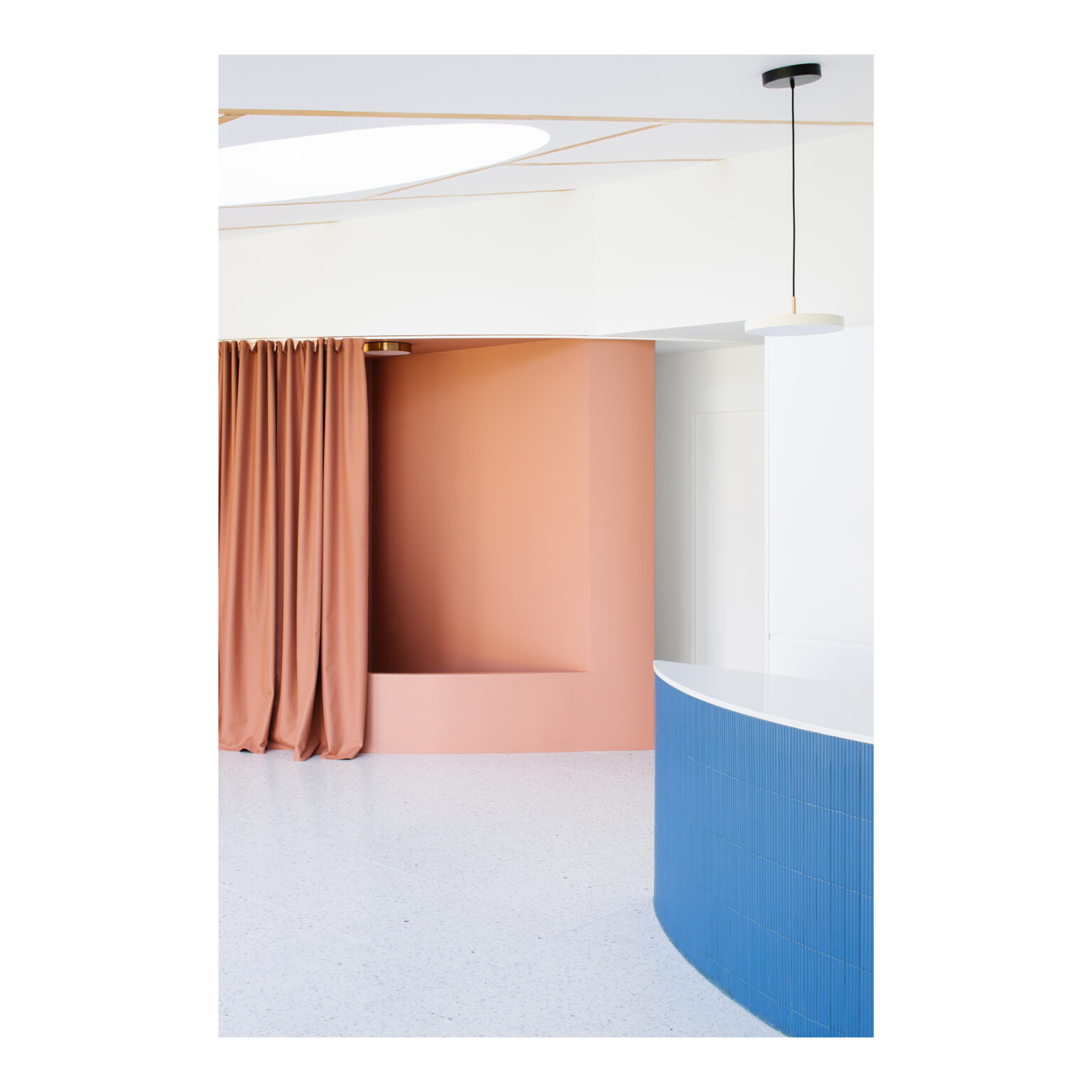
A typical suburban housing transformation addressing outdated, poorly insulated, and over-partitioned homes on subdivided plots. It proposes both spatial and energetic renovation, combined with an extension to improve living quality and reduce environmental impact. The ground floor is completely reorganized, grouping all communal spaces into a single, open volume facing the garden. A curved spatial sequence connects the existing house to the extension: a bright, high-ceilinged entrance contrasts with a lower, more intimate central space that contains services and circulation. The sloping roof reinforces movement toward the garden, while coloured curved walls soften the transition. Constructed with insulating bricks, timber structure, and wood-fibre insulation, the extension prioritizes thermal performance and comfort. Passive strategies include solar tracking via a roof oculus, natural ventilation, and shading systems. Large sliding glazed panels and mirrored edges dissolve the boundary between interior and exterior, while geometry and colour structure the entire design.
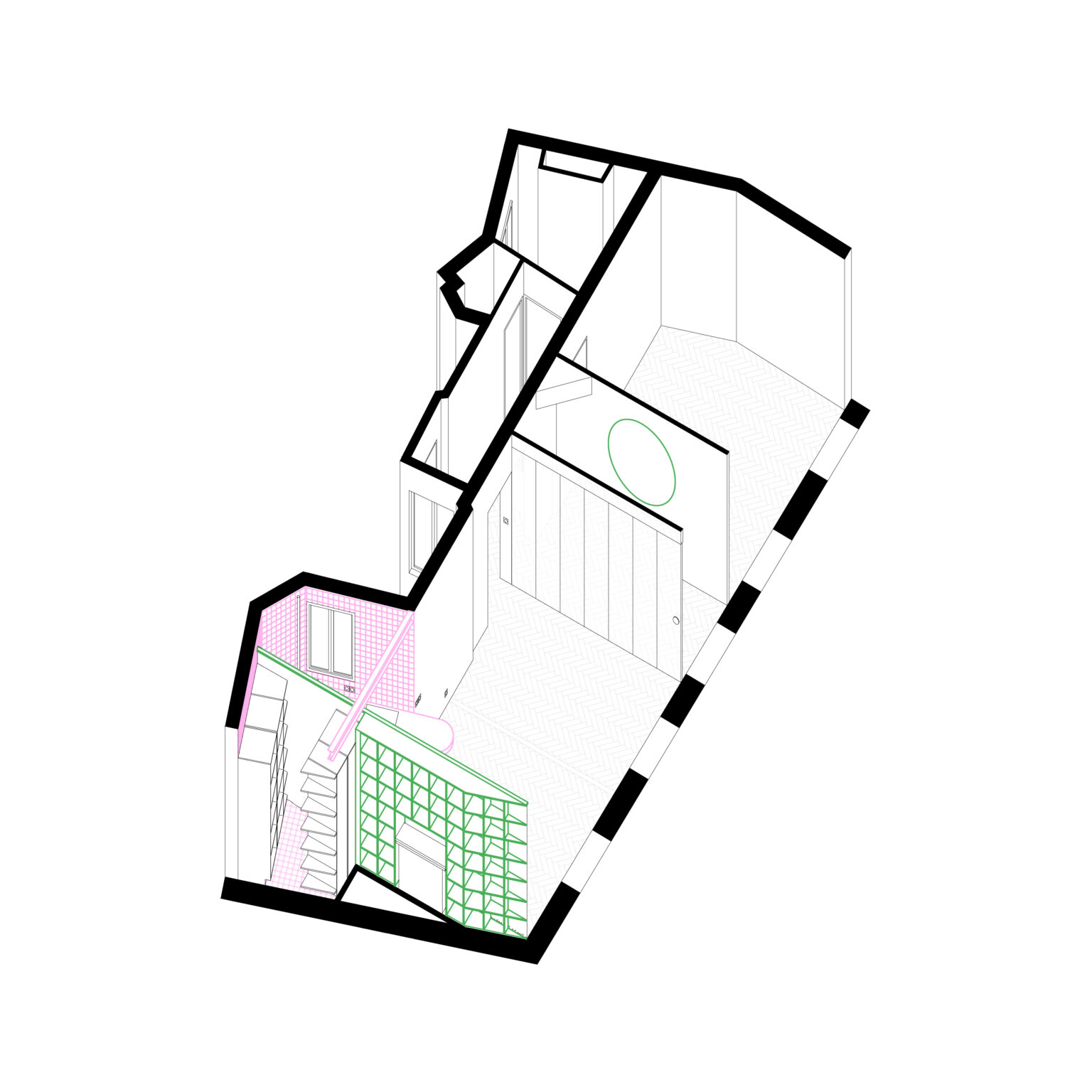
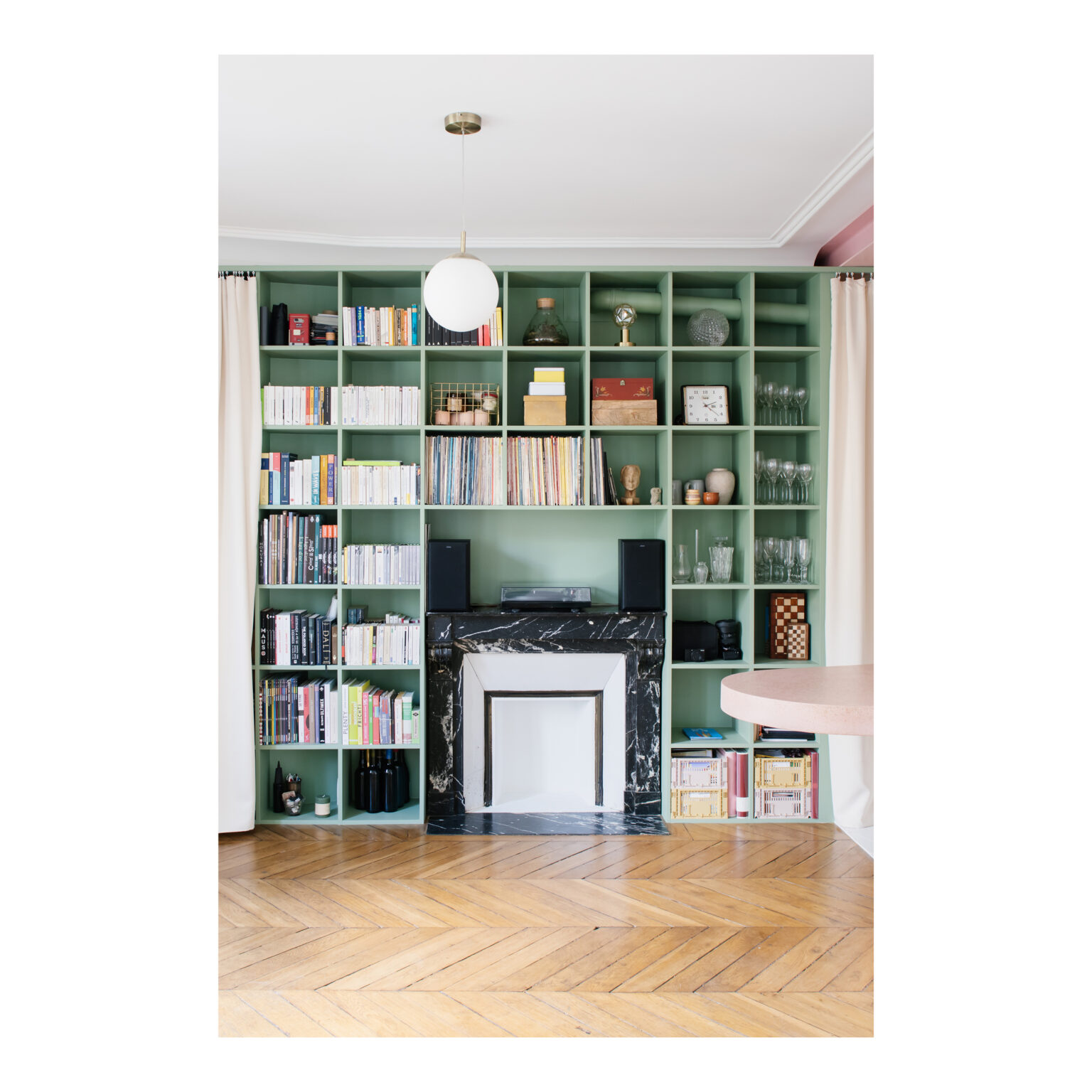
Villette (2023): adapting space to life — the arrival of a baby.
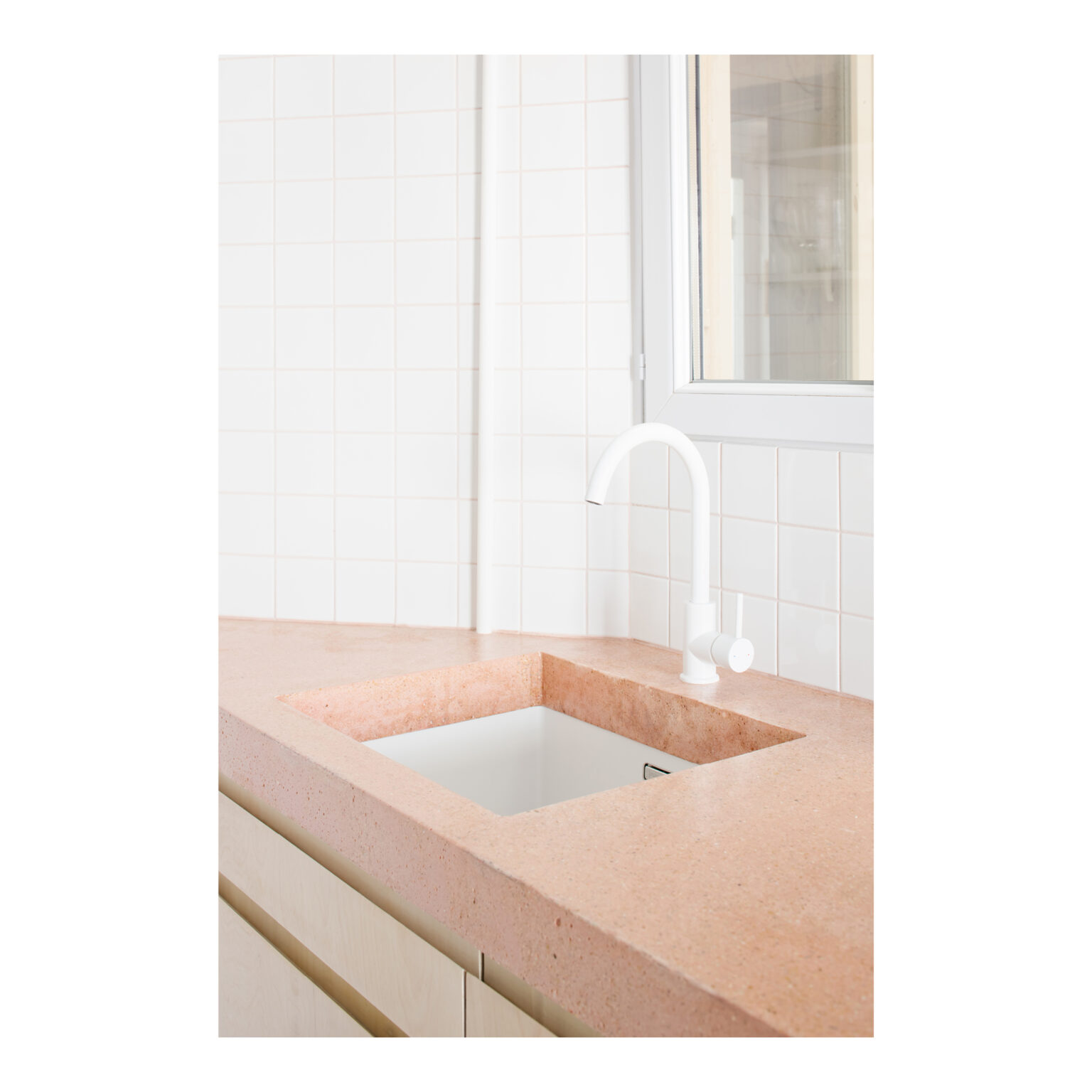
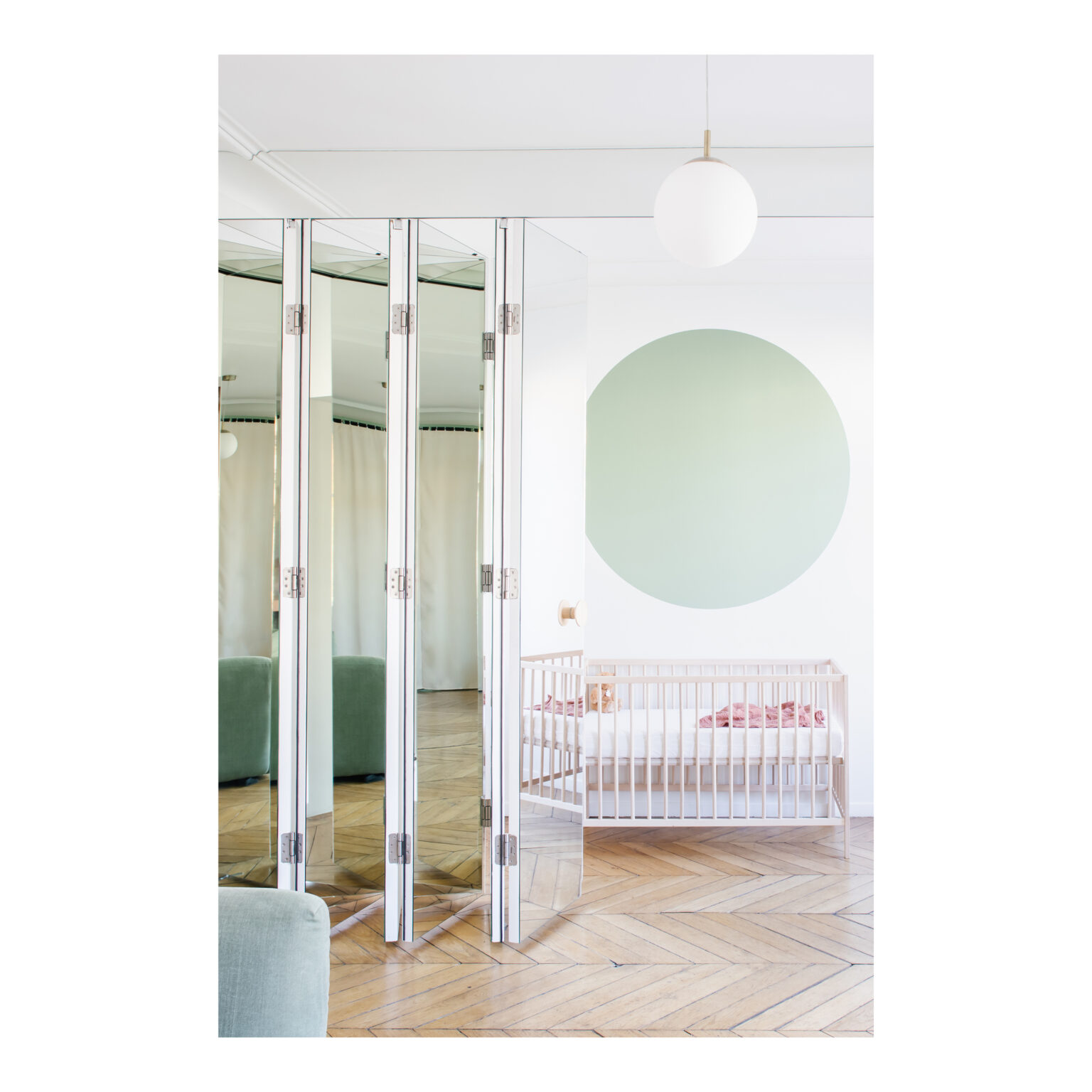
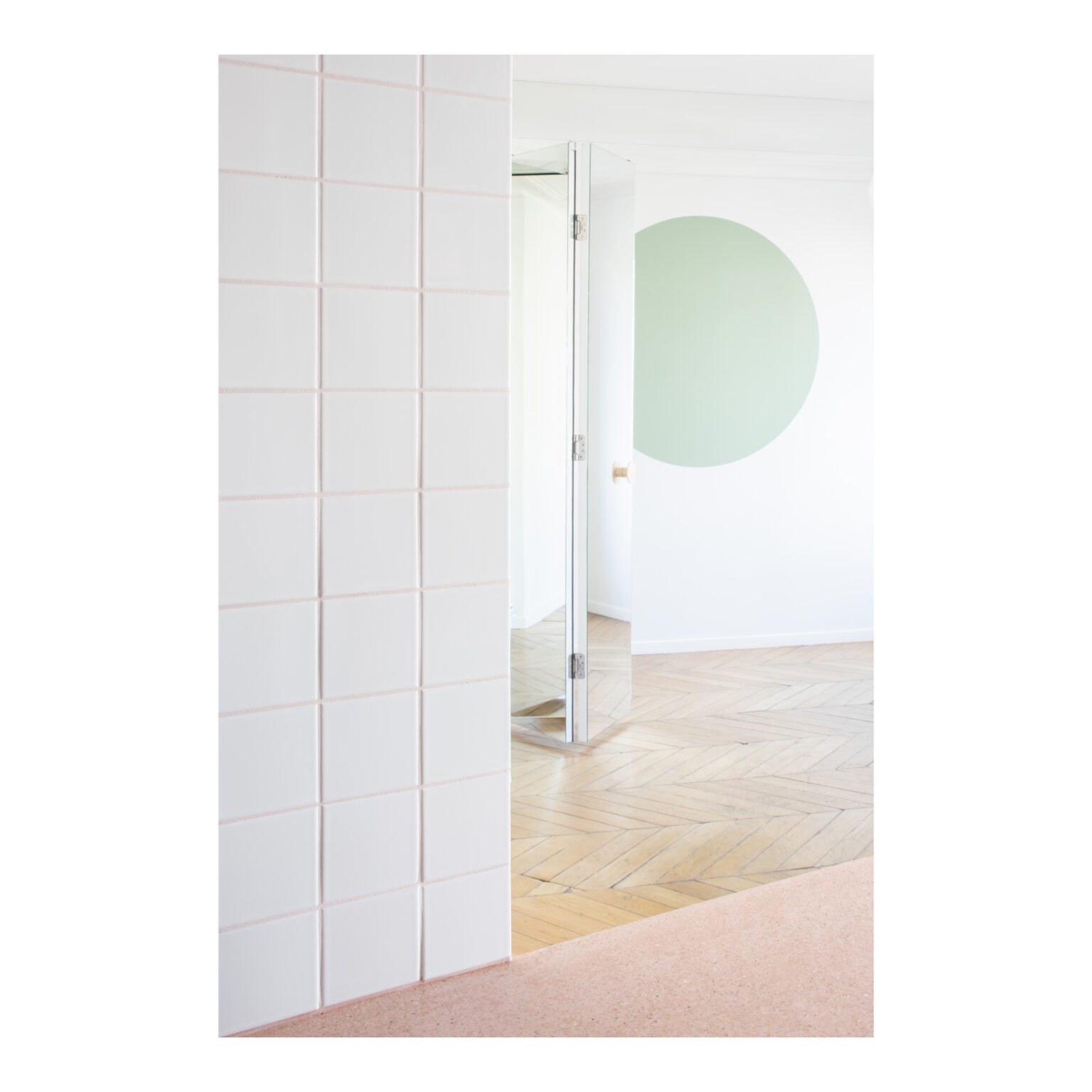
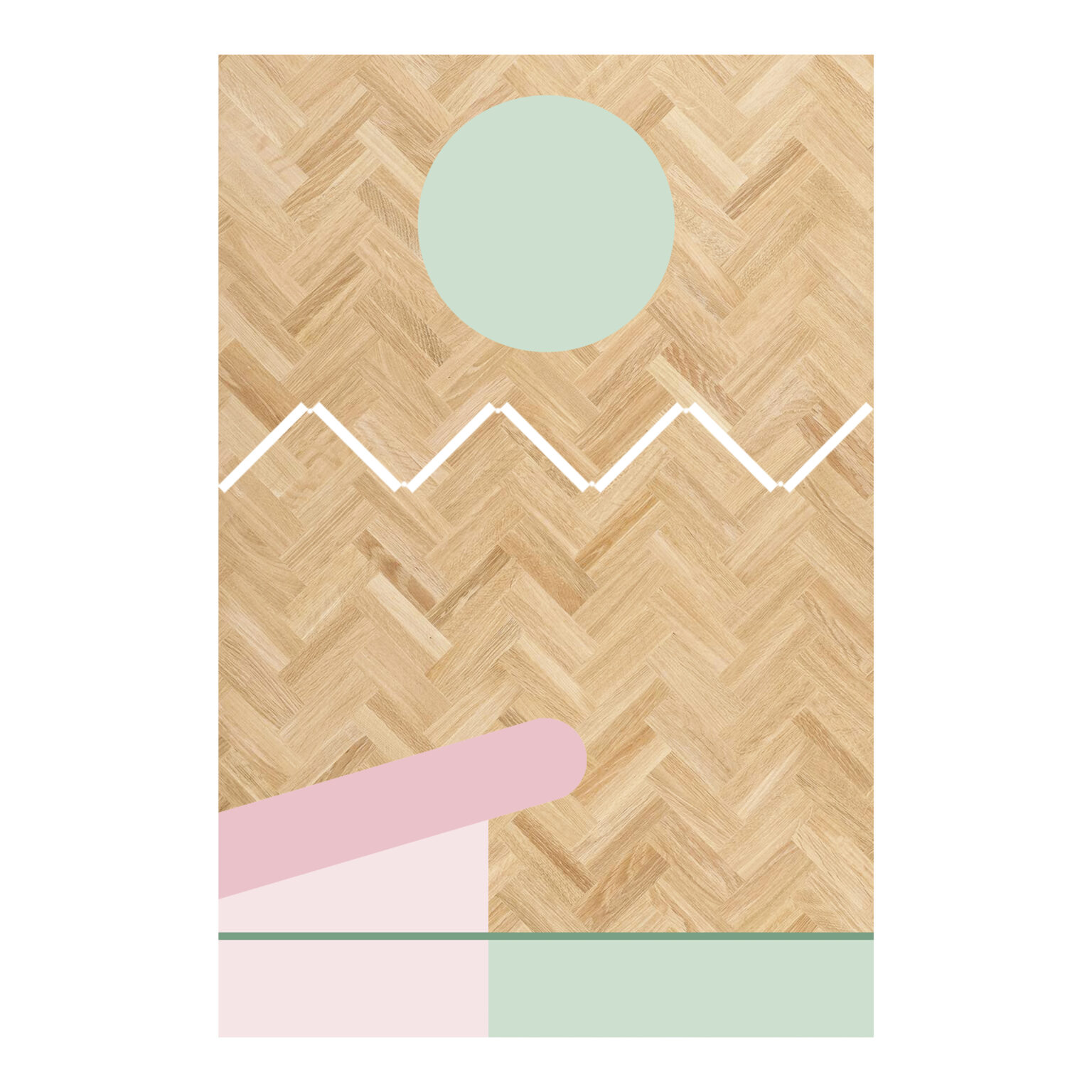
With Villette, the architects explore how a 59 m² apartment in Paris can evolve with a major life change, specifically the arrival of a baby, without requiring relocation. Instead of moving to a larger home, the clients chose to reconfigure their existing space. A flexible nursery is integrated into the living room through a folding partition, allowing the area to shift between a baby room and an open play or living space depending on use. The partition is finished in mirrors, helping it visually disappear and enhance the sense of spatial depth. The kitchen is opened onto the living area, supporting a more communal and contemporary lifestyle. A continuous technical strip follows the slanted wall, providing extensive storage that can be concealed or revealed with curtains. Colour is used as a spatial tool, distinguishing functions and highlighting structural, functional, and decorative elements throughout the apartment.
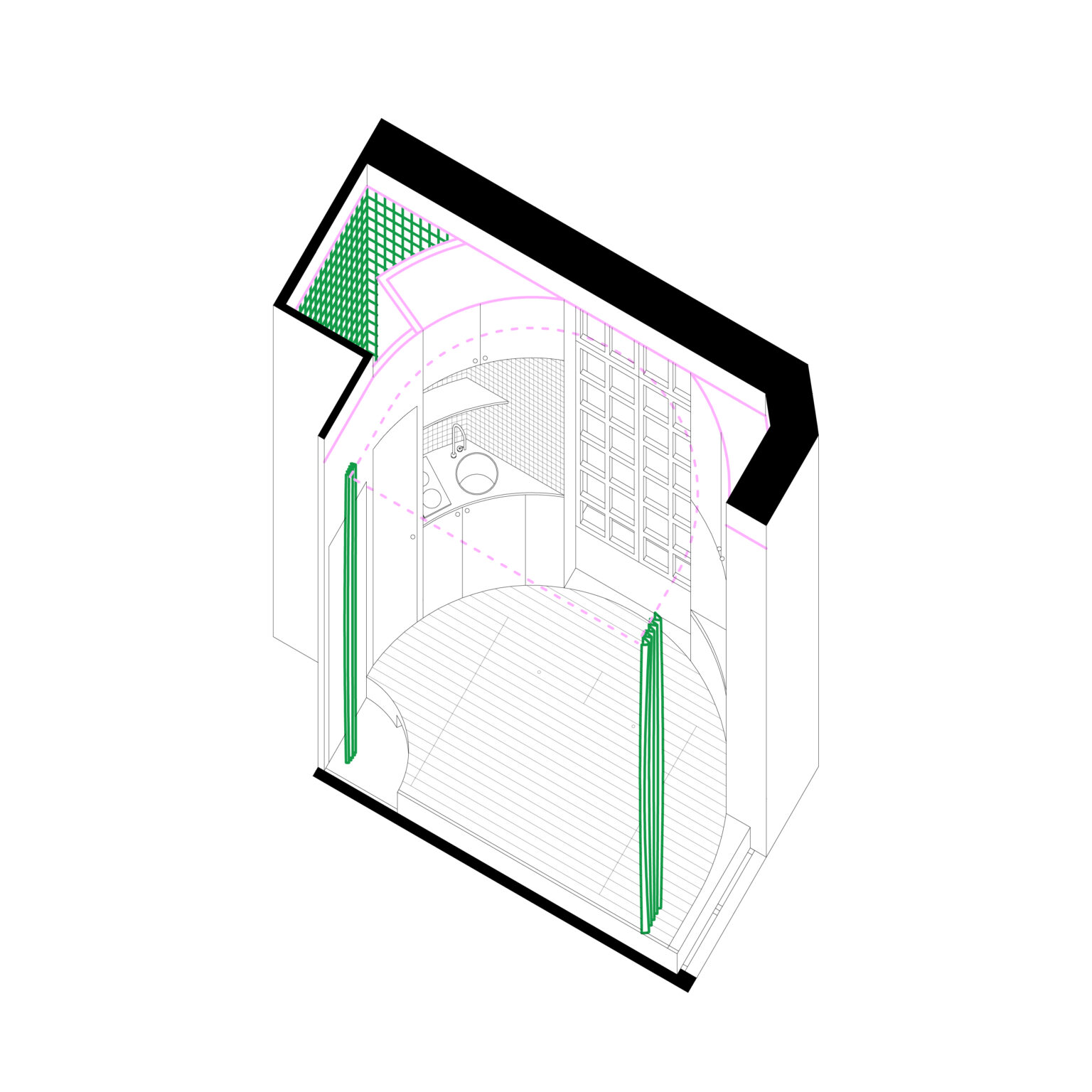
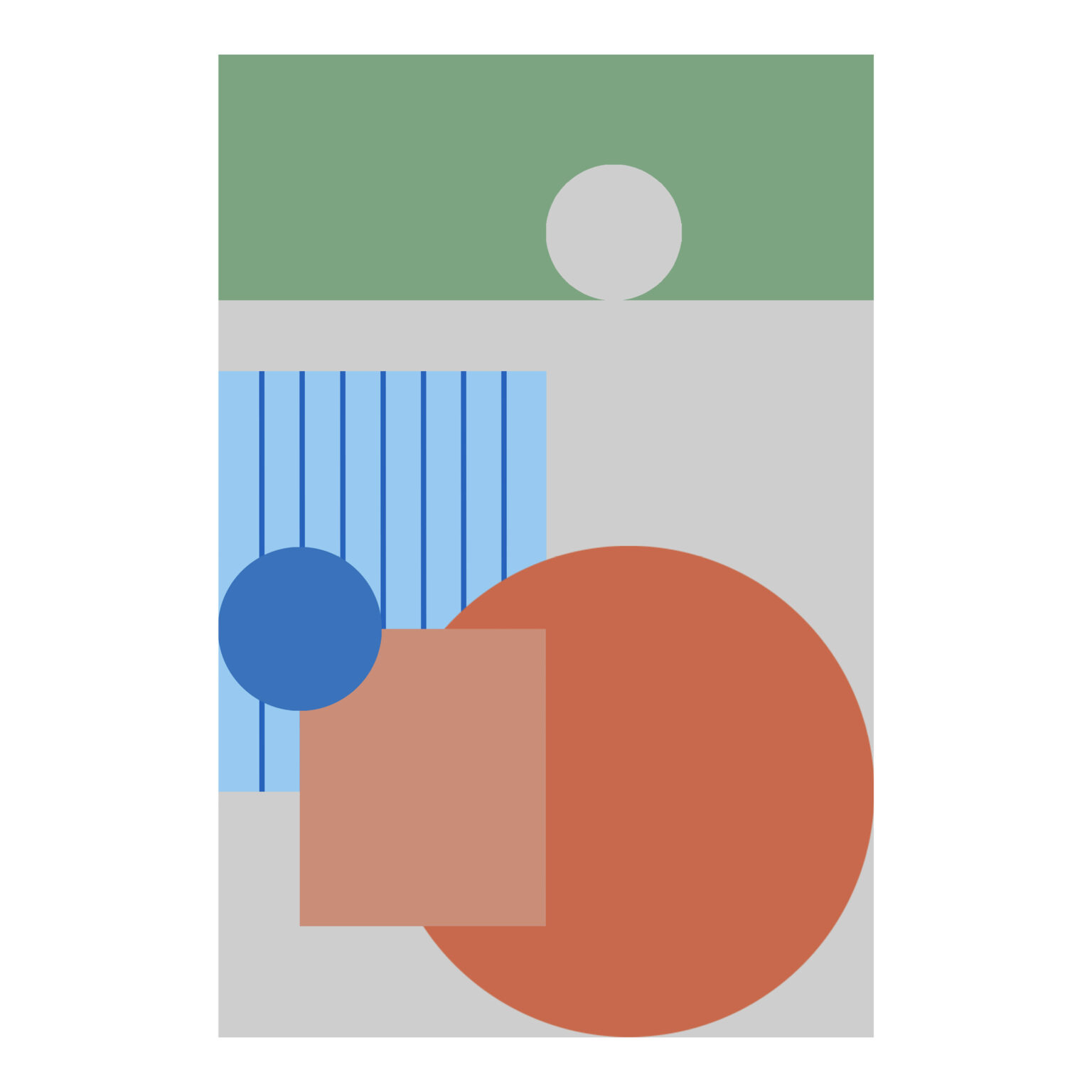
Ridel (2022): a Mondrian-inspired 13 m² apartment renovation in the Évreux suburbs
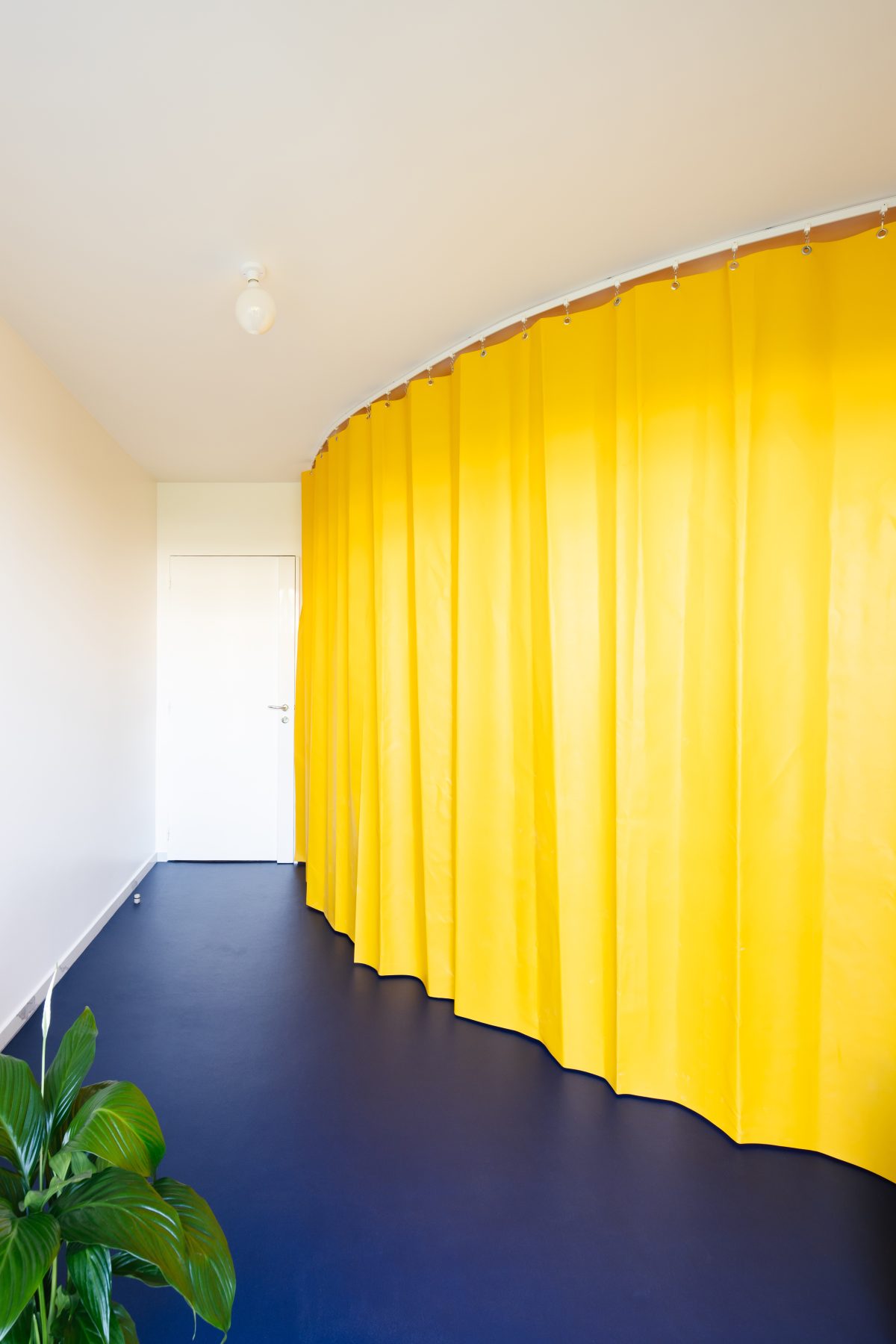
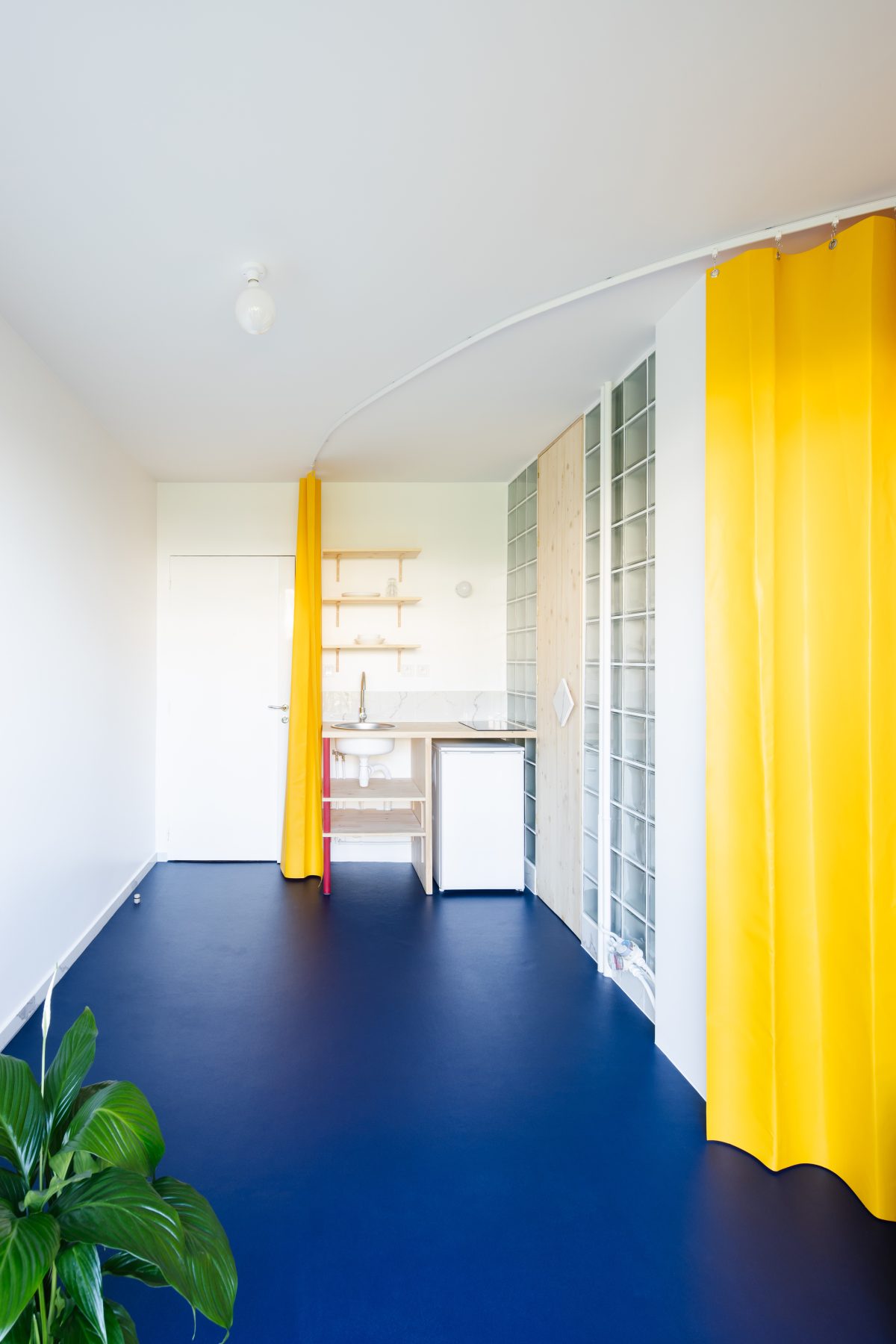
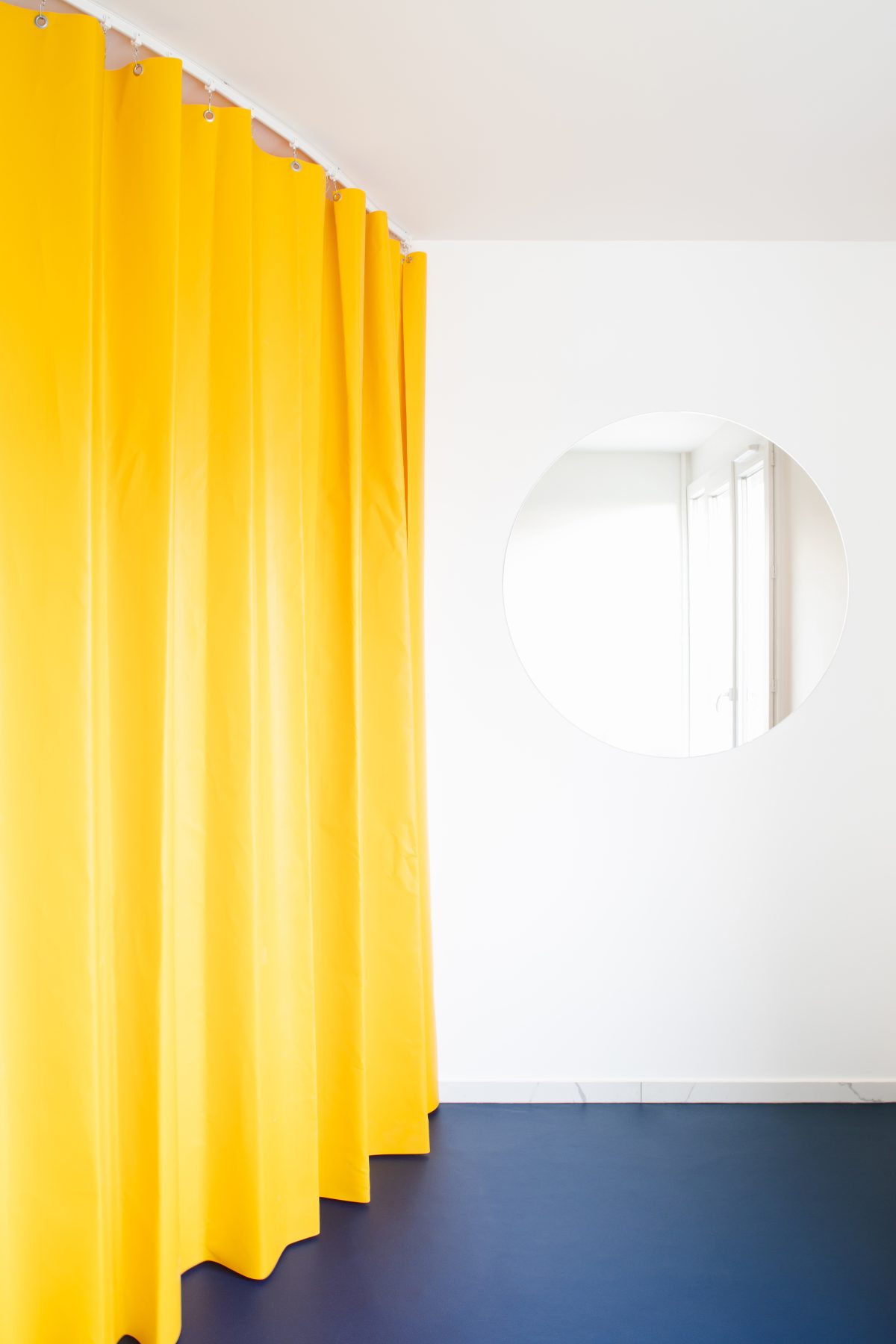
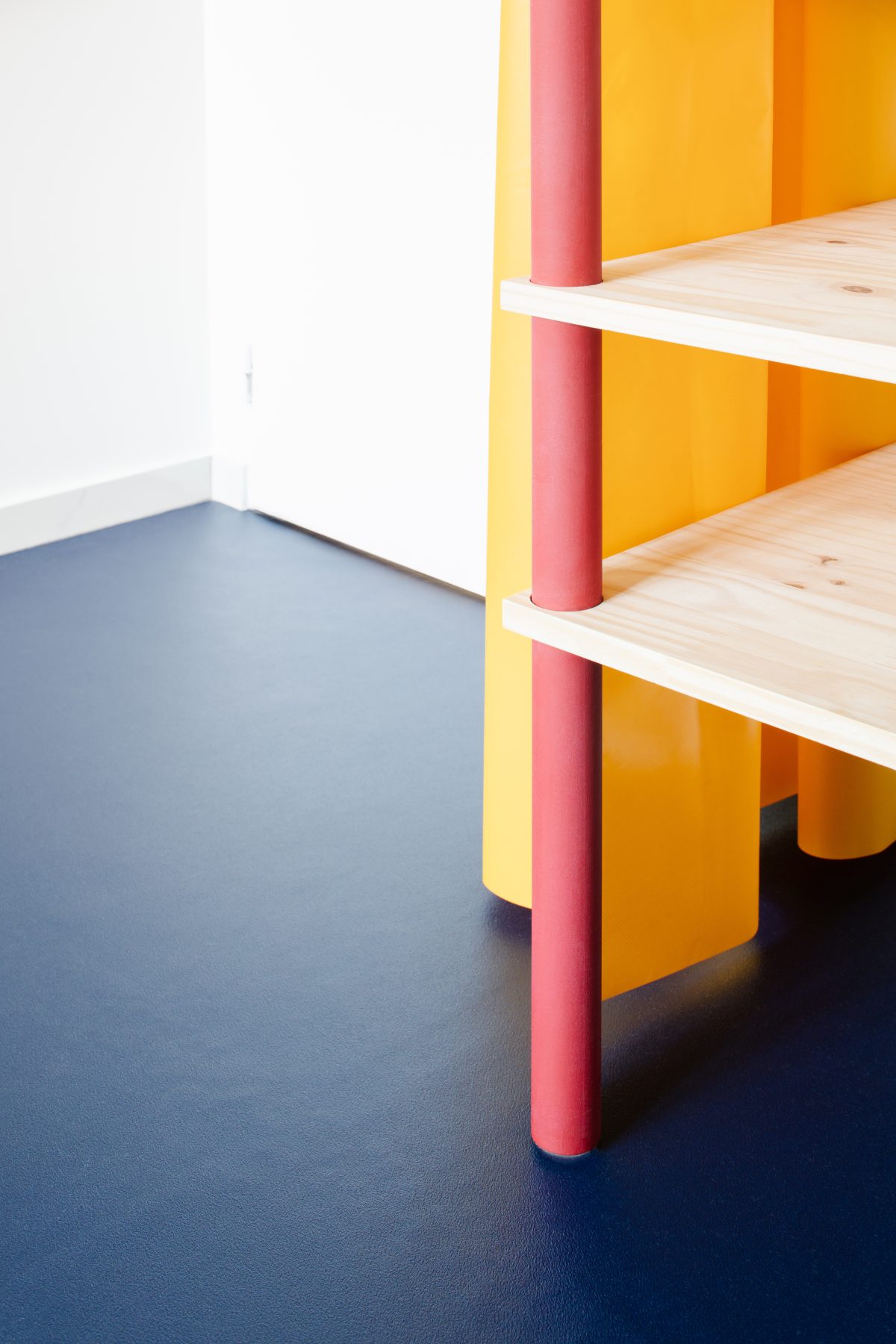
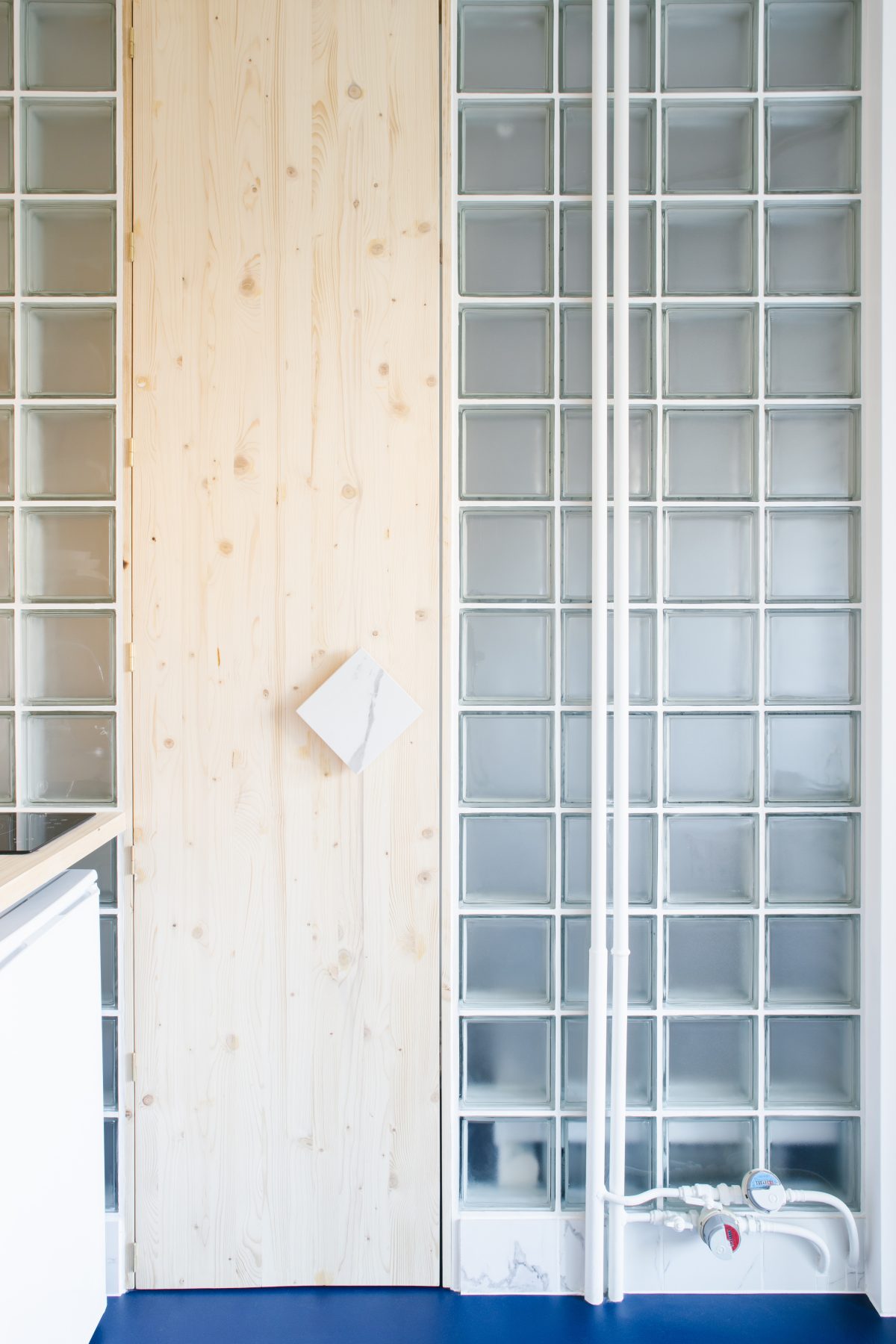
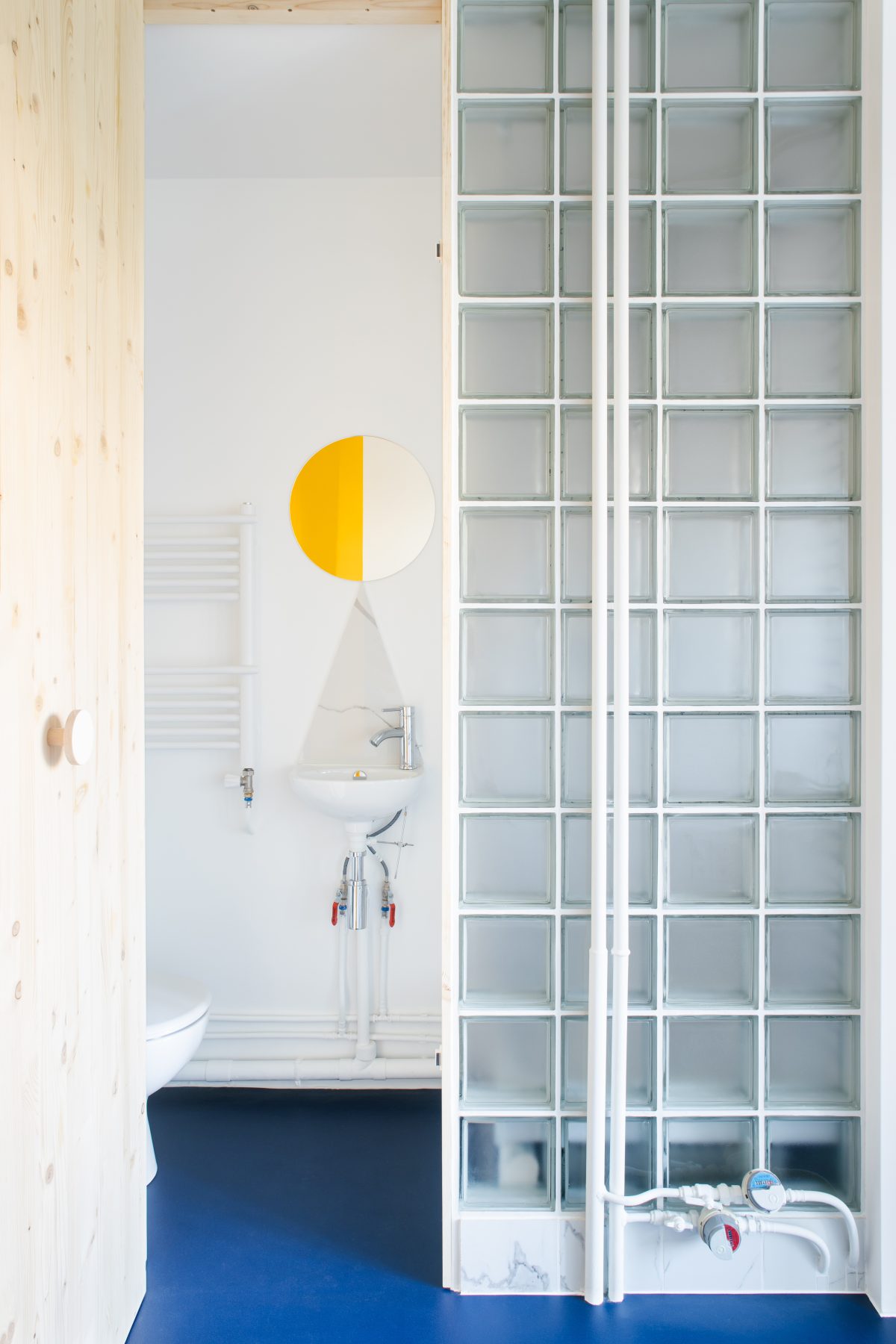
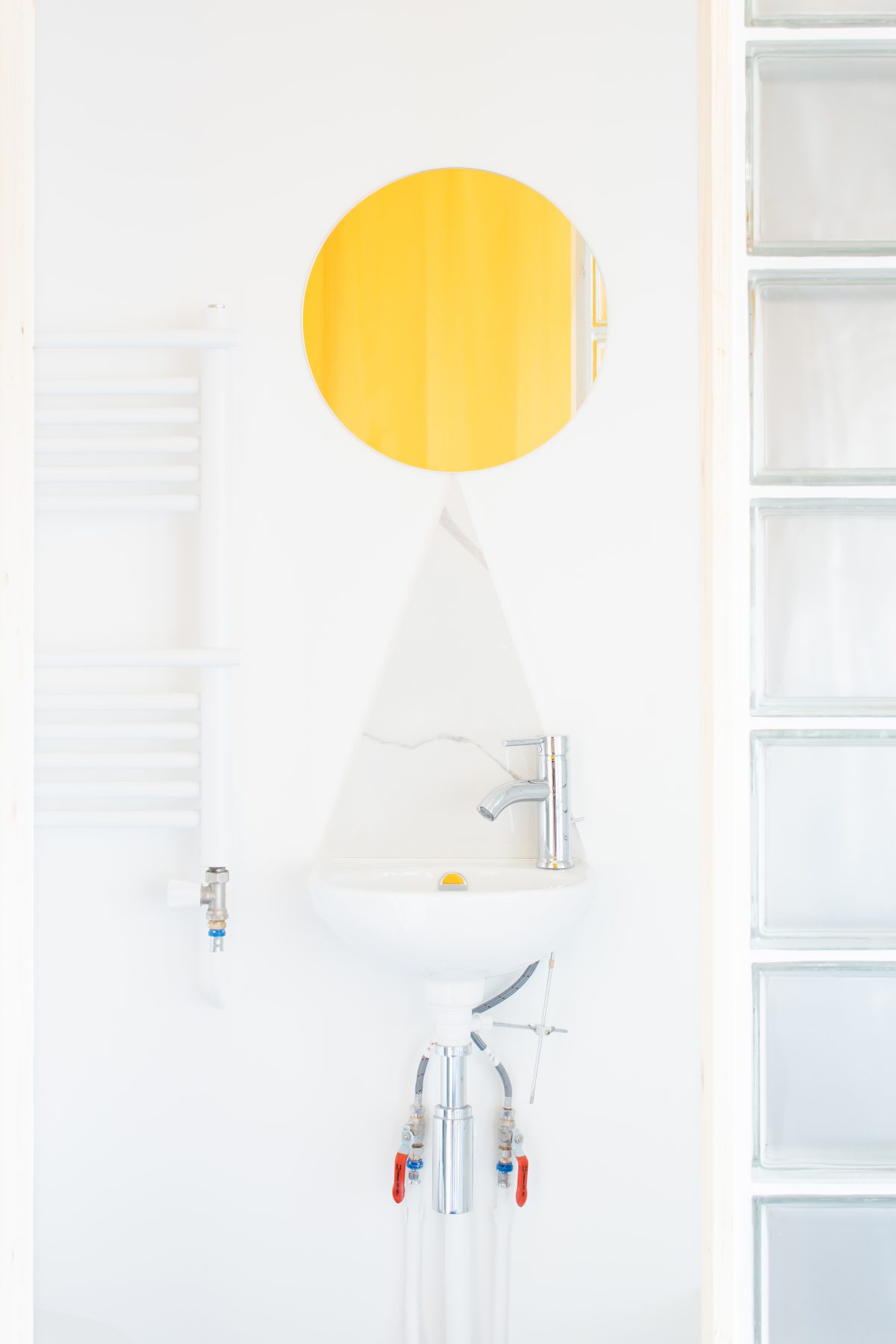
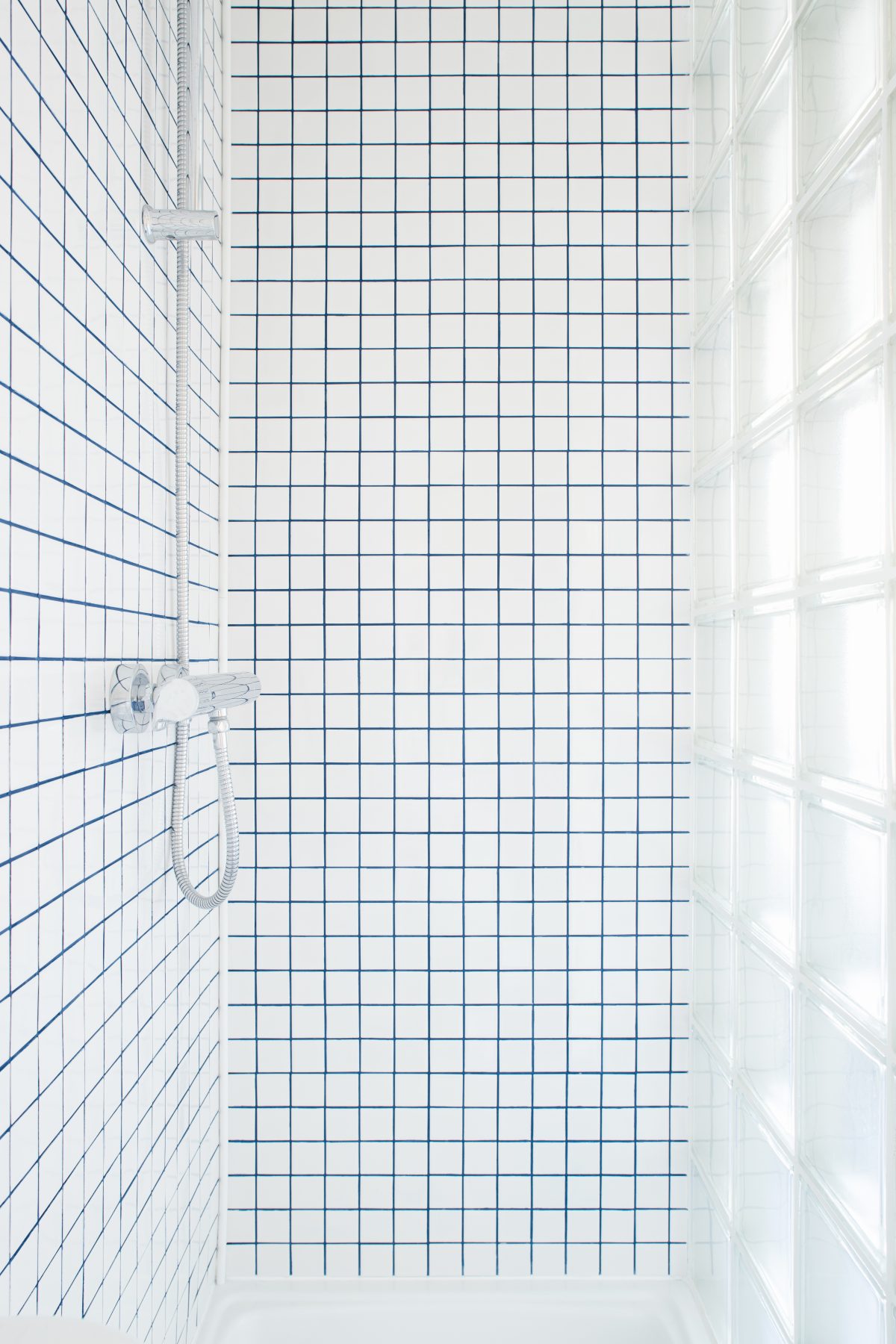
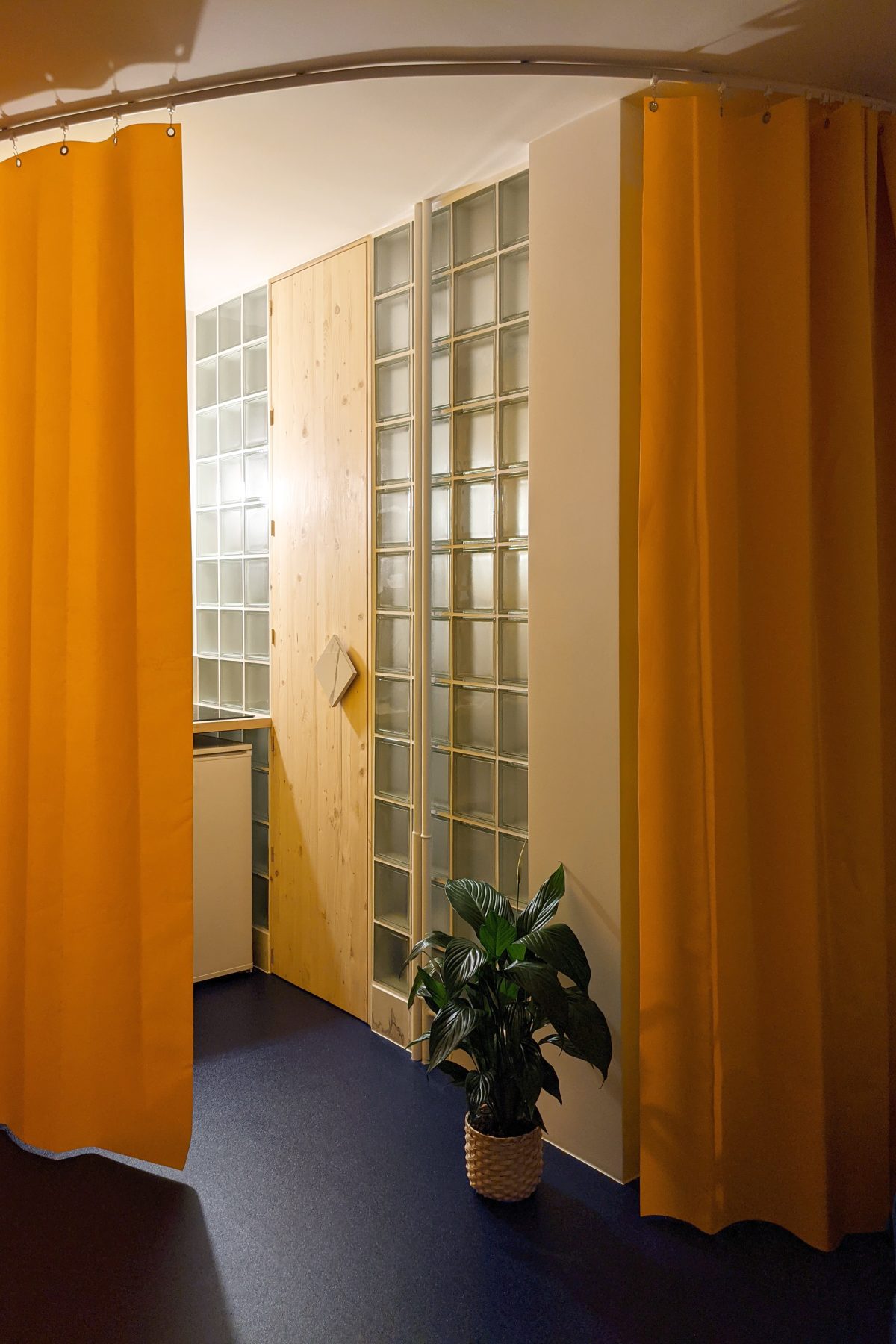
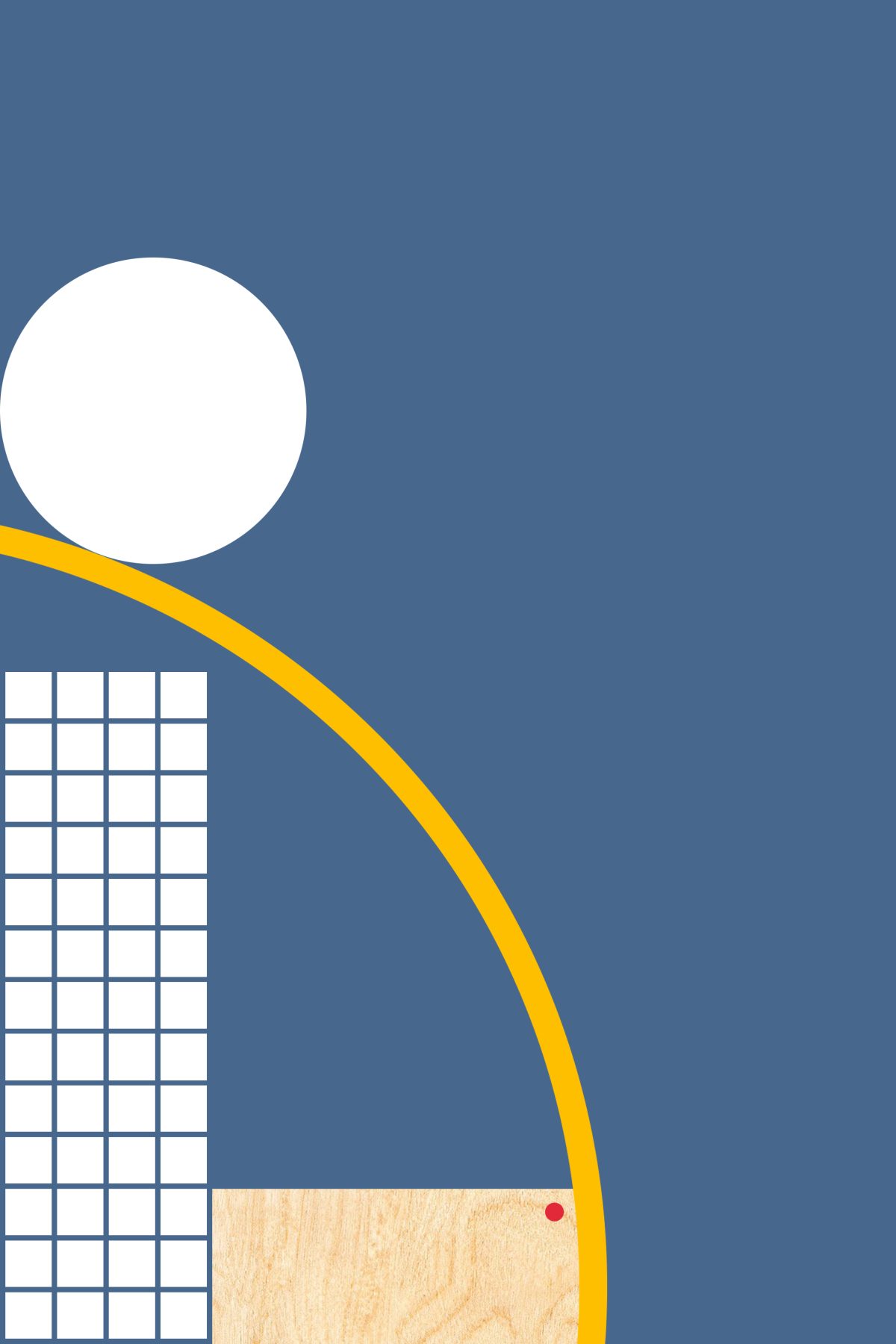
Set in the socially complex suburbs of Évreux in northern France, Ridel reimagines a deteriorated 13 m² studio into a precise spatial composition. The intervention capitalises on generous floor-to-ceiling glazing, which floods the narrow volume with light. The former oversized bathroom is dismantled, recovering valuable surface and establishing a refined balance with a reduced, fully timber kitchen. A glass-block partition now delineates wet and cooking zones while preserving visual continuity and luminosity. A tall wooden door amplifies vertical perception. A curved yellow curtain introduces softness and modulation, concealing storage and ensuring privacy, while continually reconfiguring the spatial geometry. Primary hues—blue linoleum, red structural accent, and yellow textile—evoke a restrained Mondrian vocabulary, animating the grey urban context. Material honesty extends to exposed pipes and tactile details: marble-like plinths, a sculptural sink backboard, and a tiled handle. Function is abstracted into composition, where utility is transposed into spatial expression and perceptual clarity is intensified through sensory detail.