ALM by INTO STORIES reimagines the kitchen as an architectural device, demonstrating how a precise, small-scale intervention can fundamentally transform an existing apartment without altering its underlying spatial order. A diagonal composition links existing spatial lines, while volumes of brushed stainless steel and light blue oiled wood draw out the latent geometries and colours woven throughout the interior.
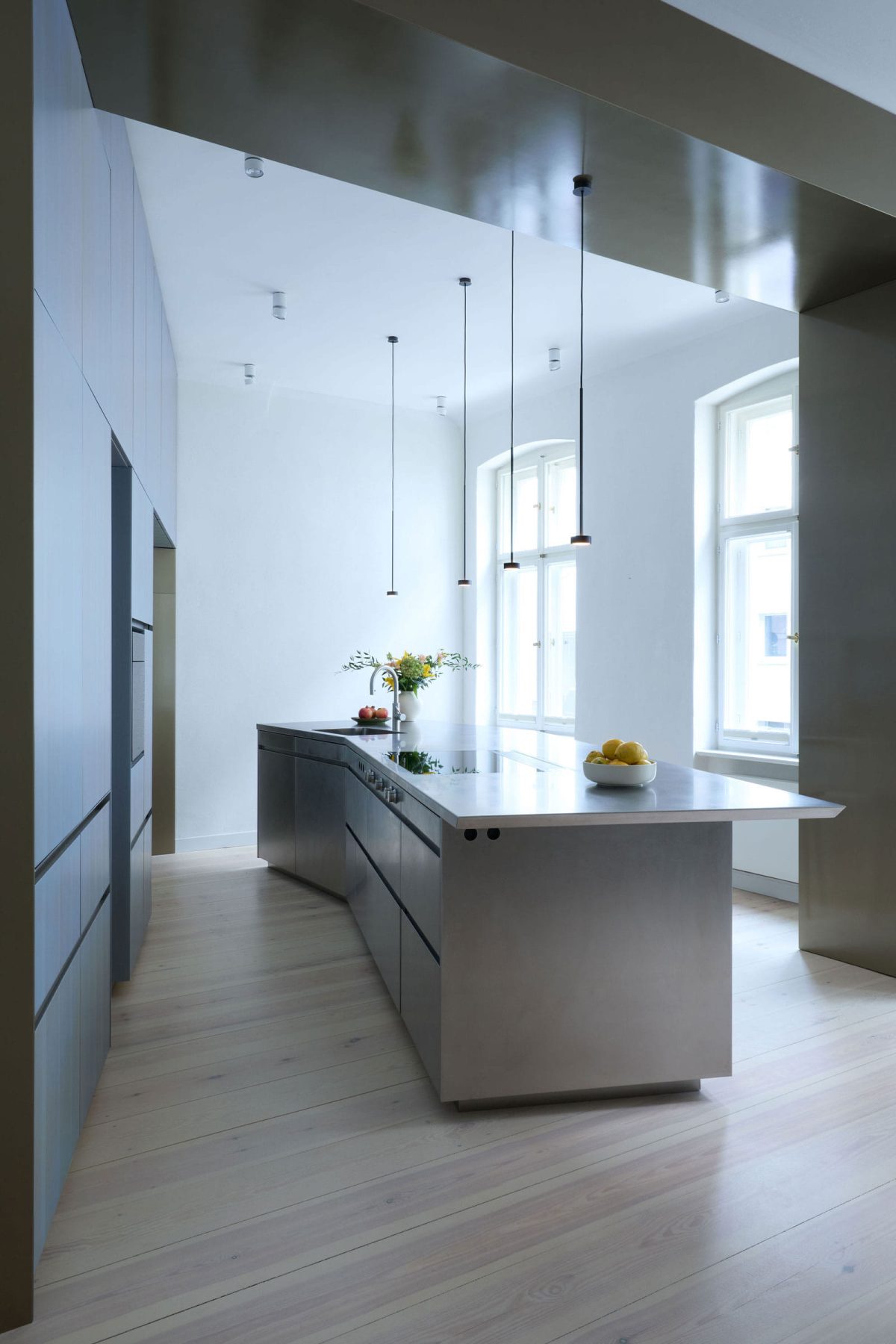
The ALM project approaches the kitchen not as a standalone object or piece of furniture, but as an architectural device that responds directly to the existing spatial framework of the apartment.Rather than introducing a new autonomous order, the project engages with latent geometries already present within the interior, activating and extending their spatial potential through a precise and measured intervention.
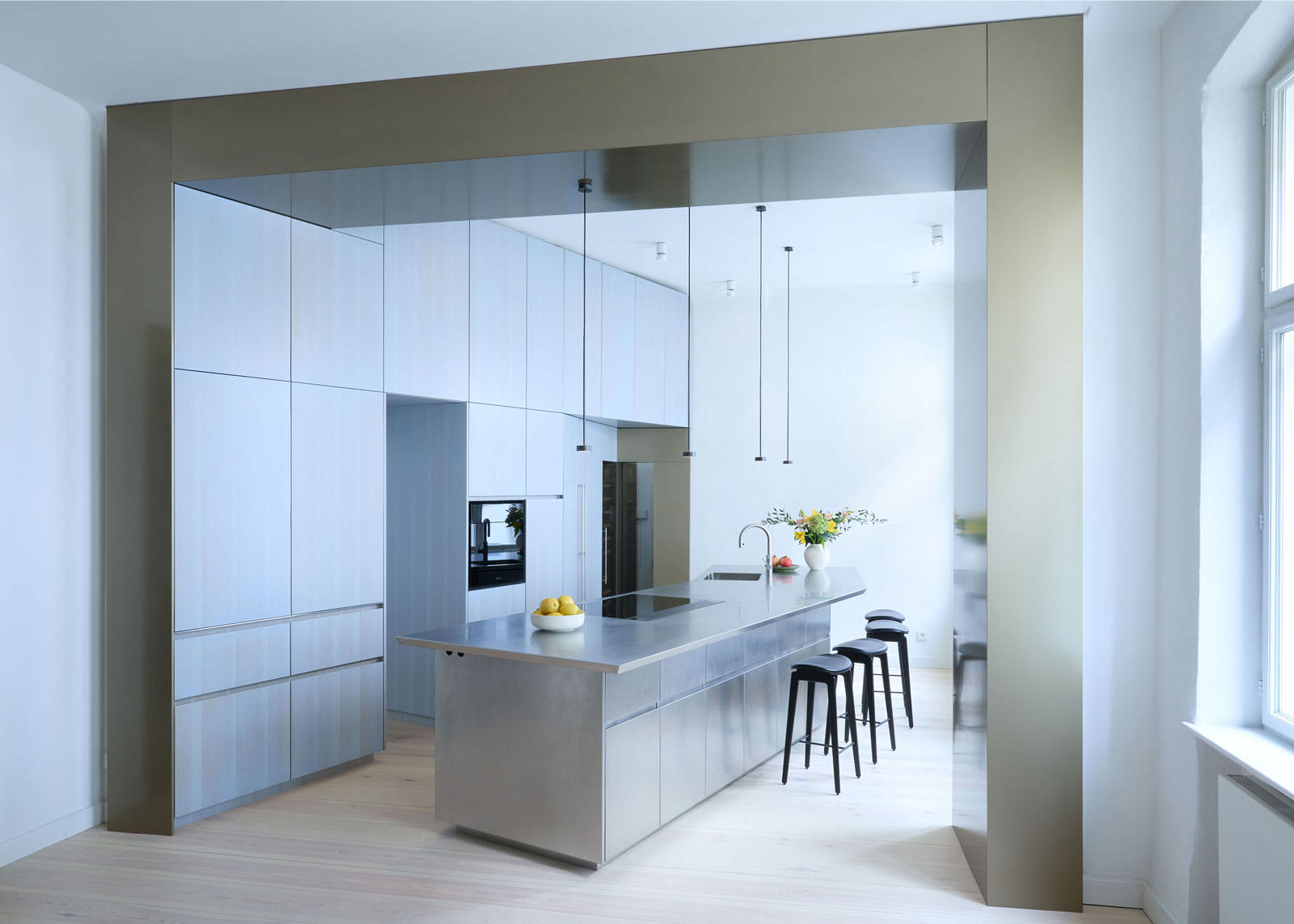
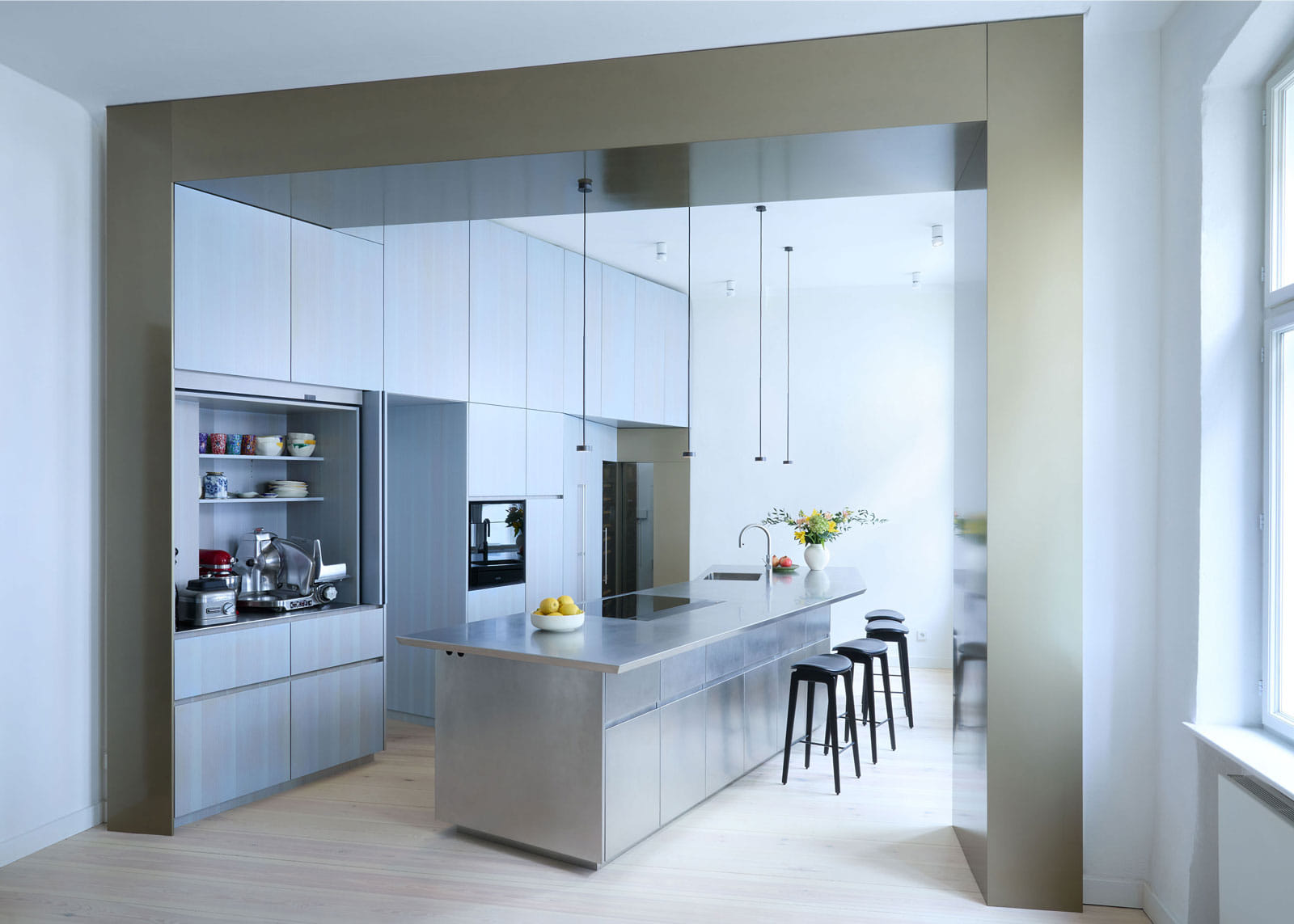
The apartment’s original built-in elements, designed by GRAFT, remain largely untouched and continue to define the character and atmosphere of the interior. The kitchen was the only component replaced. Instead of replicating the existing design language or deliberately contrasting it, the intervention establishes a dialogue with the inherited structure.
Existing visual axes, openings, and alignments become the primary generators of the new design.
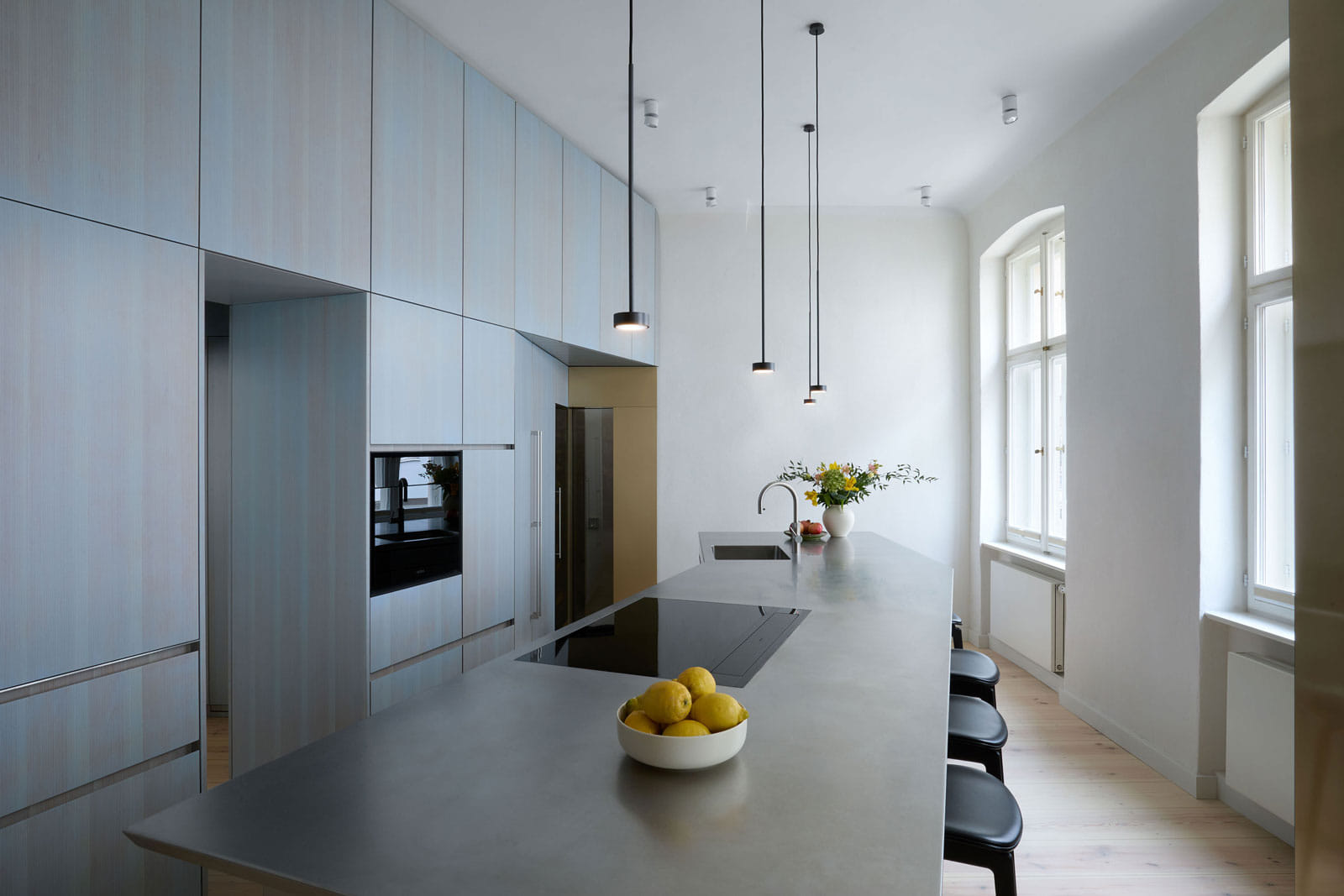
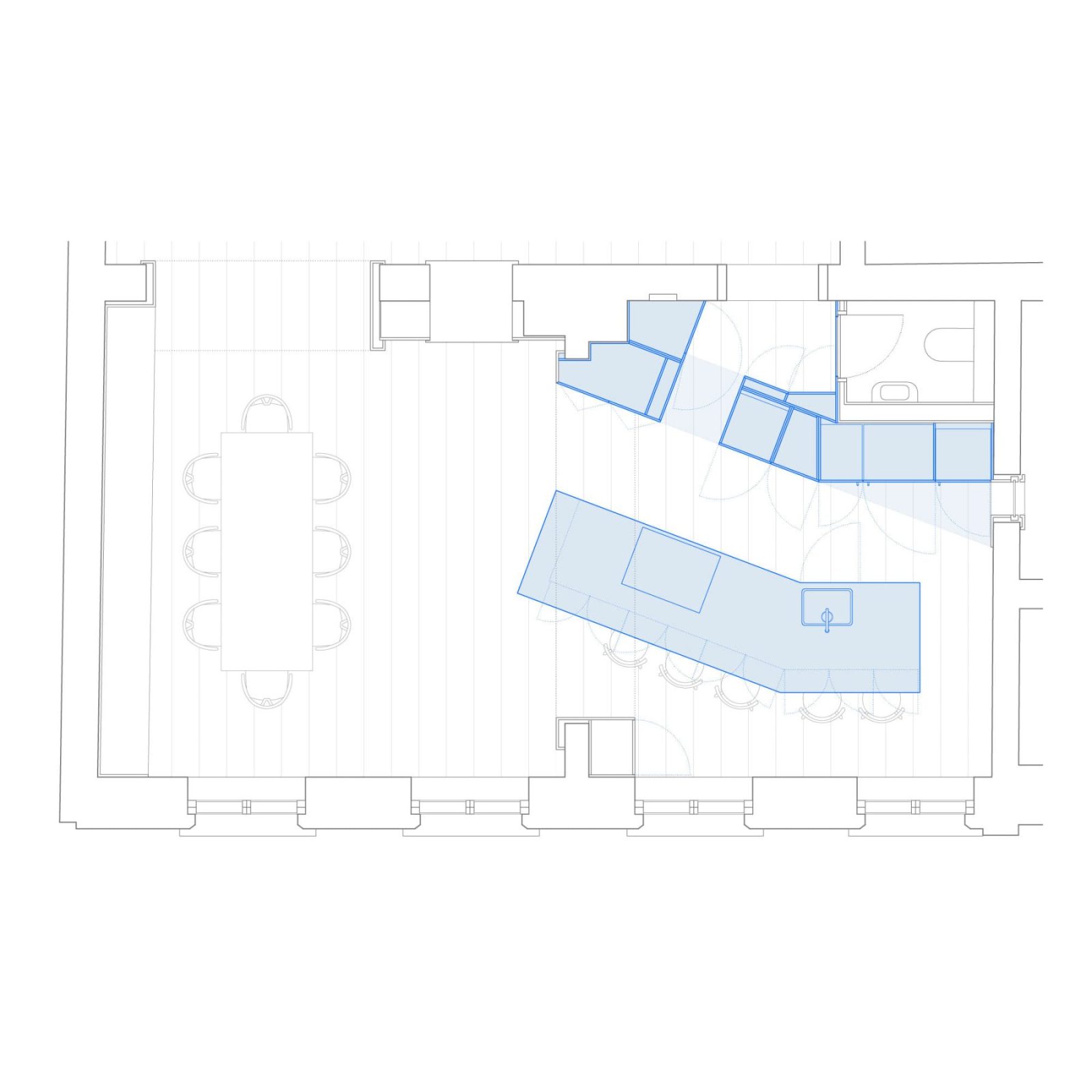
The kitchen volumes are positioned along a diagonal trajectory that connects and reinforces existing spatial lines throughout the apartment. This gesture links the framed opening between the kitchen and dining area with the internal window facing the corridor, while simultaneously integrating the circulation routes leading to the living room, the WC, and the entrance sequence.
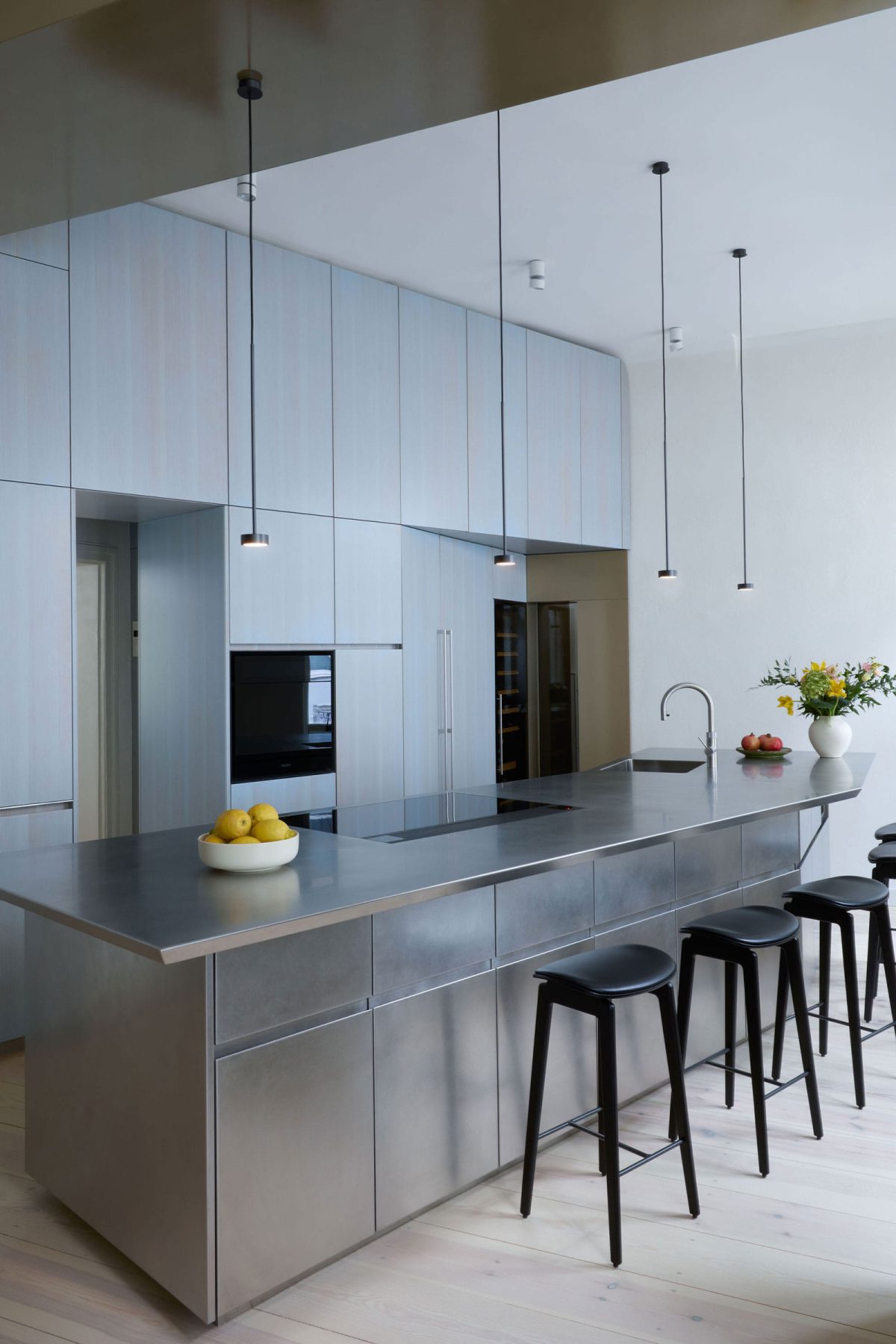
Through this operation, the kitchen becomes a spatial mediator, organizing relationships between previously distinct zones.
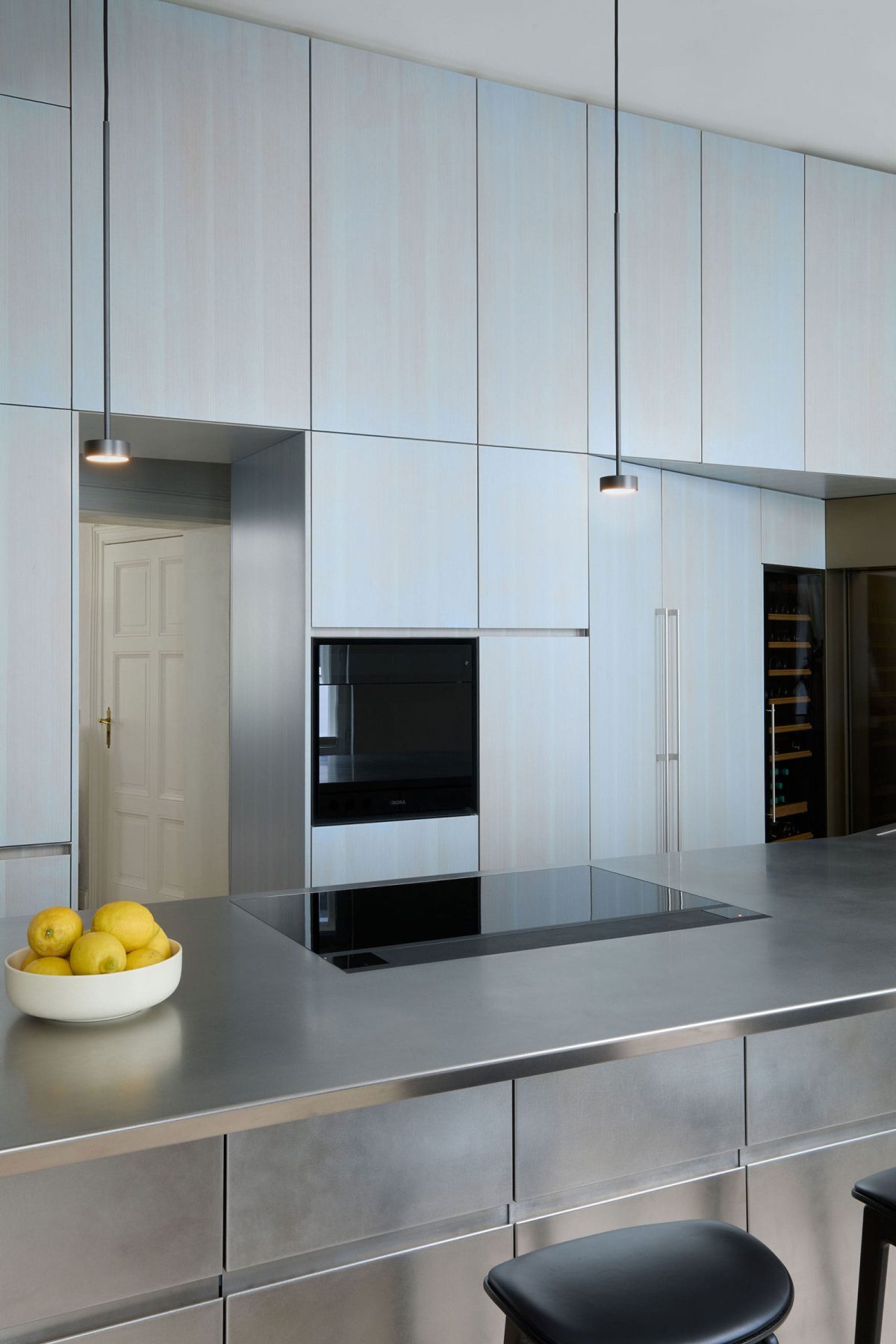
The intervention establishes a continuous and interconnected spatial sequence, transforming the former arrangement into a lighter, more open, and socially oriented environment. Rather than defining rigid boundaries, the new configuration creates fluid transitions between functions and generates in-between zones.
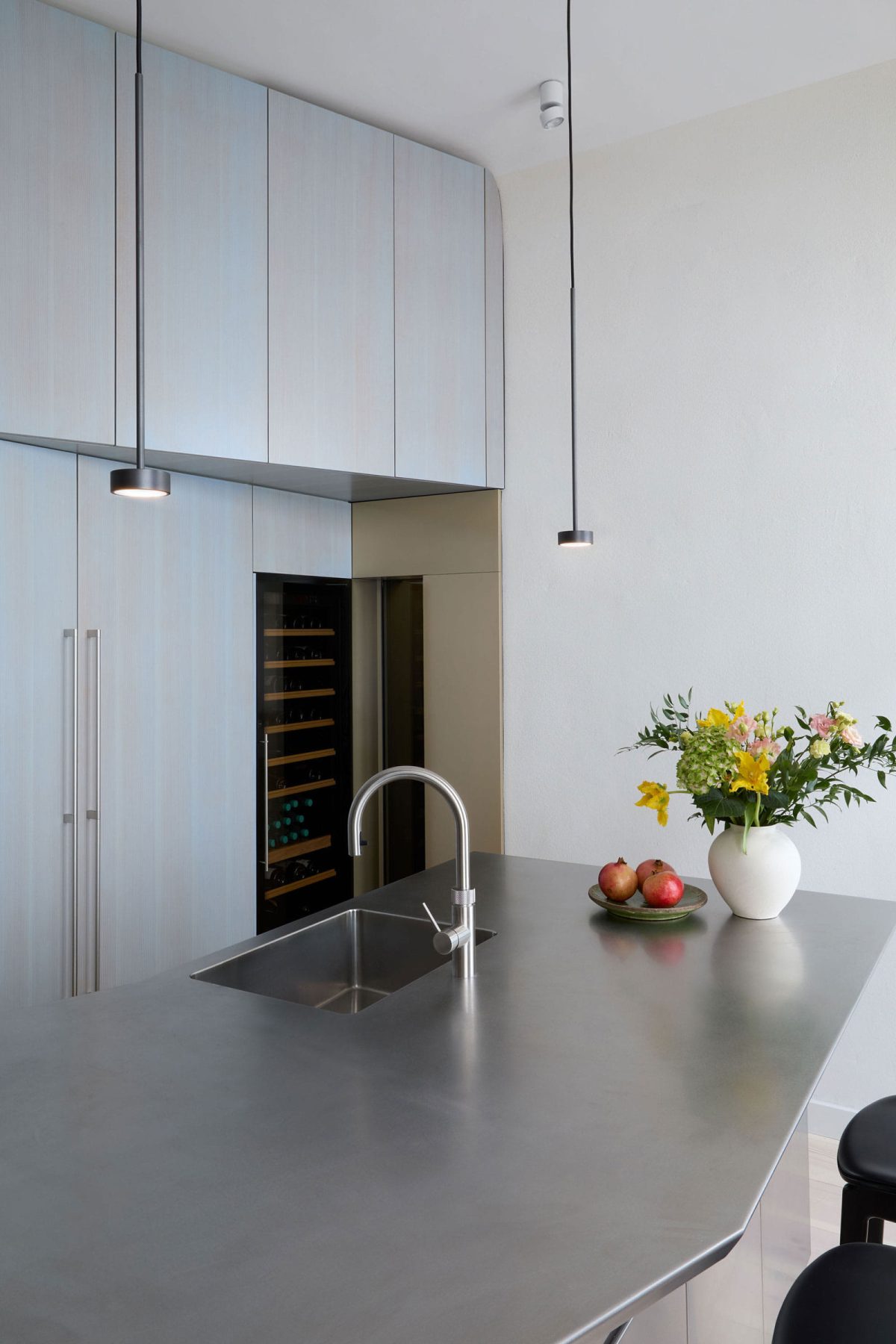
Preserving openness and maximizing access to daylight were central considerations in the design process.
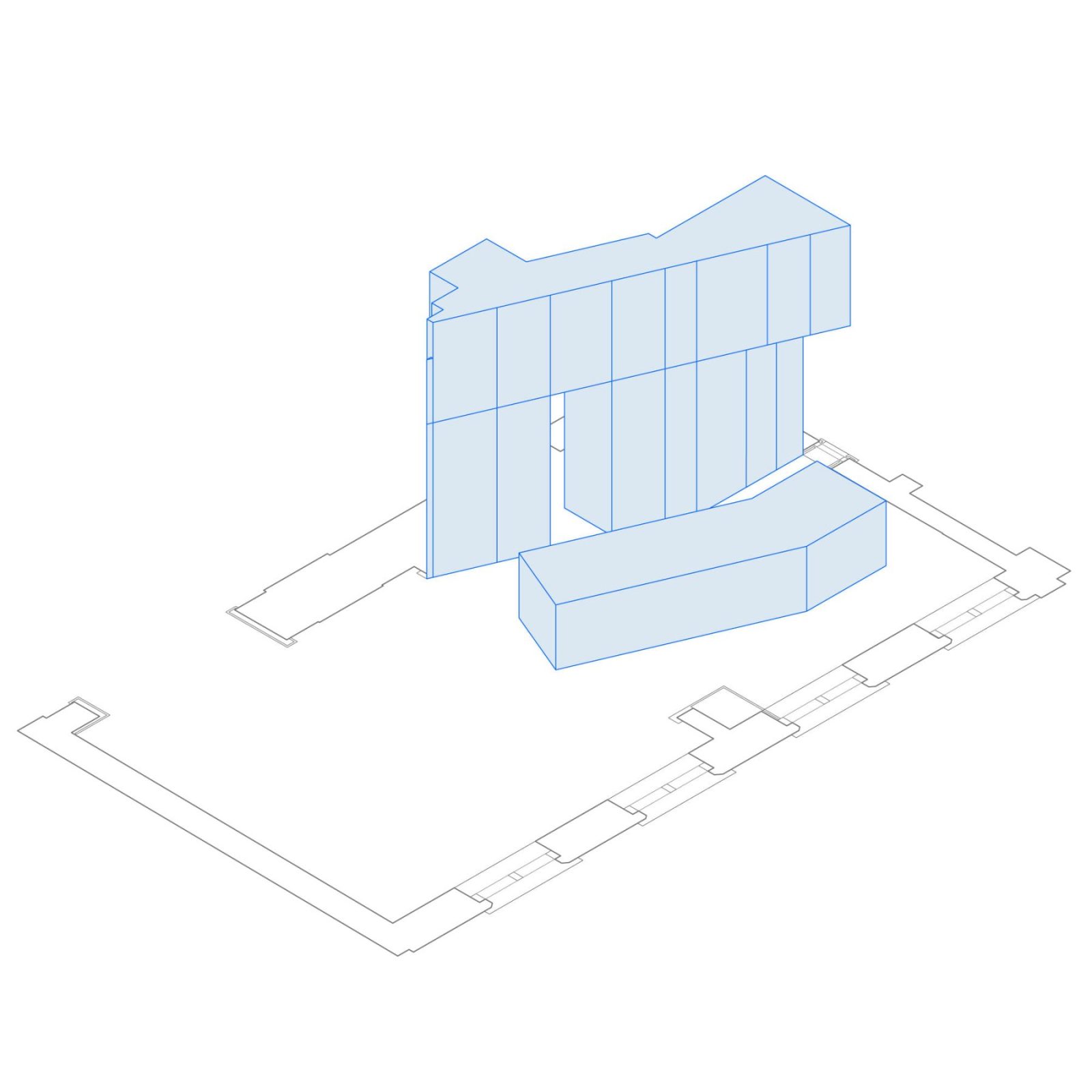
To achieve this, the newly introduced volumes are deliberately set back from the façade and increase gradually in height towards the rear of the space. This stepped composition maintains the visual presence of the existing windows within the room while allowing natural light to penetrate deep into the interior.
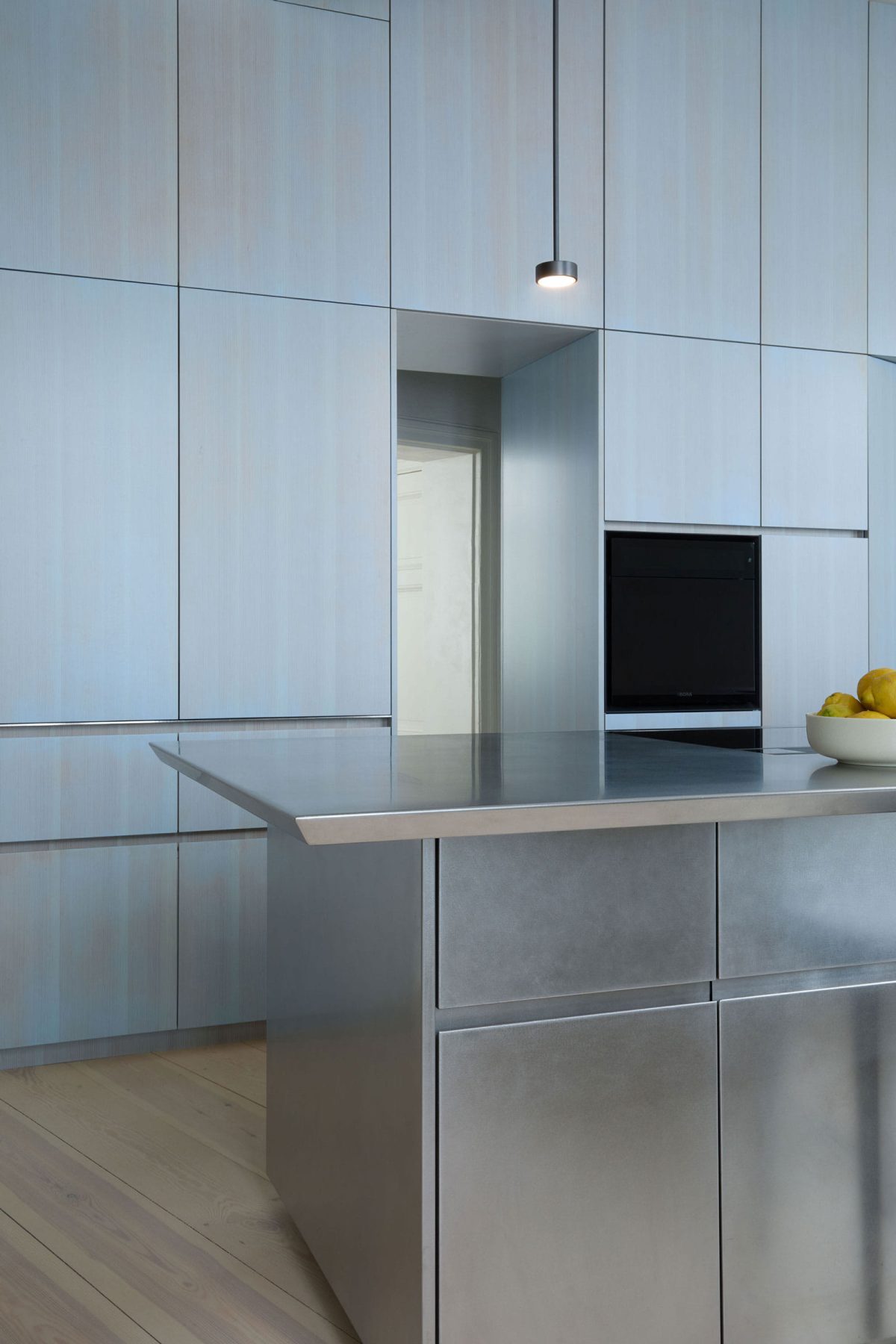
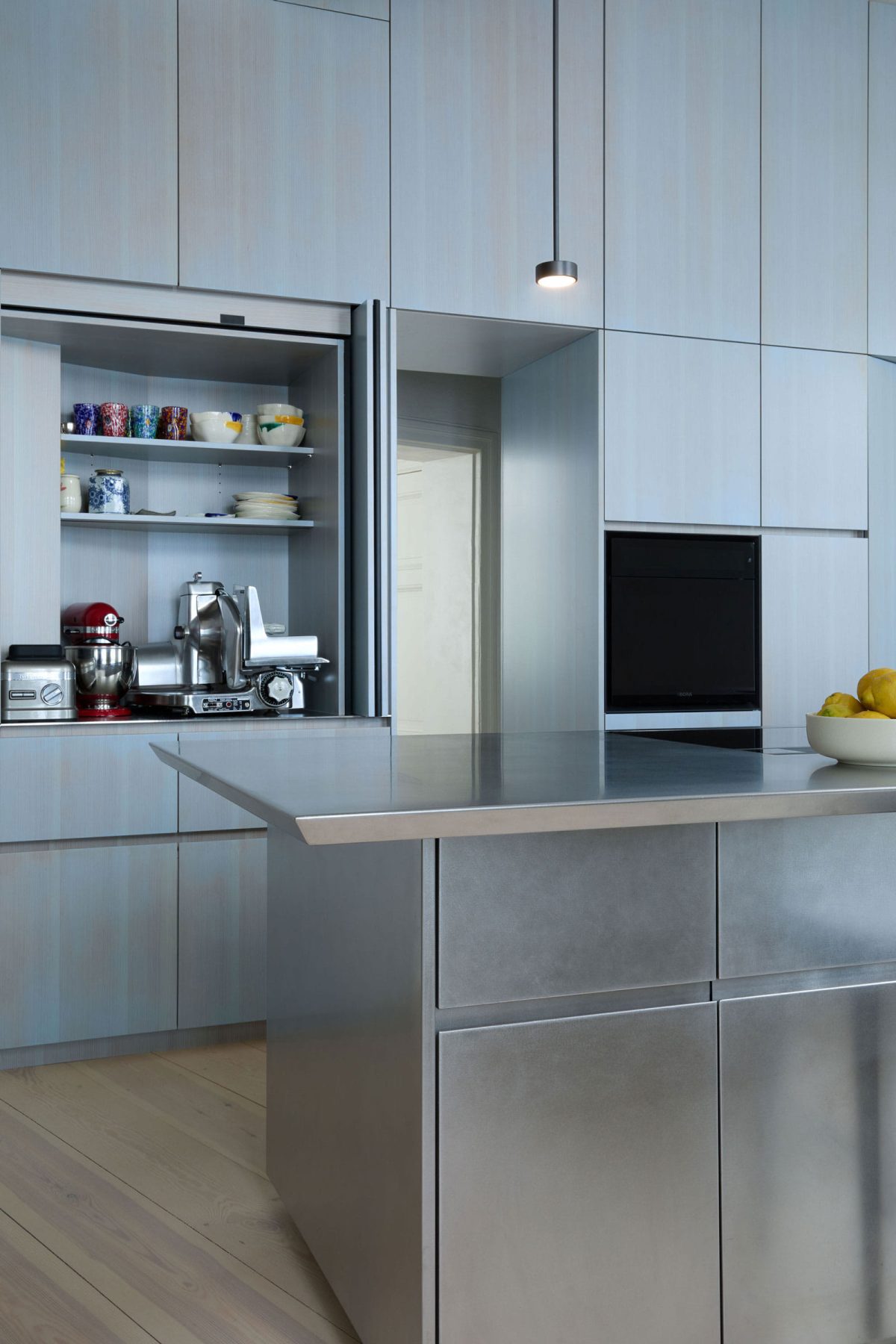
Materially, the intervention remains deliberately restrained.
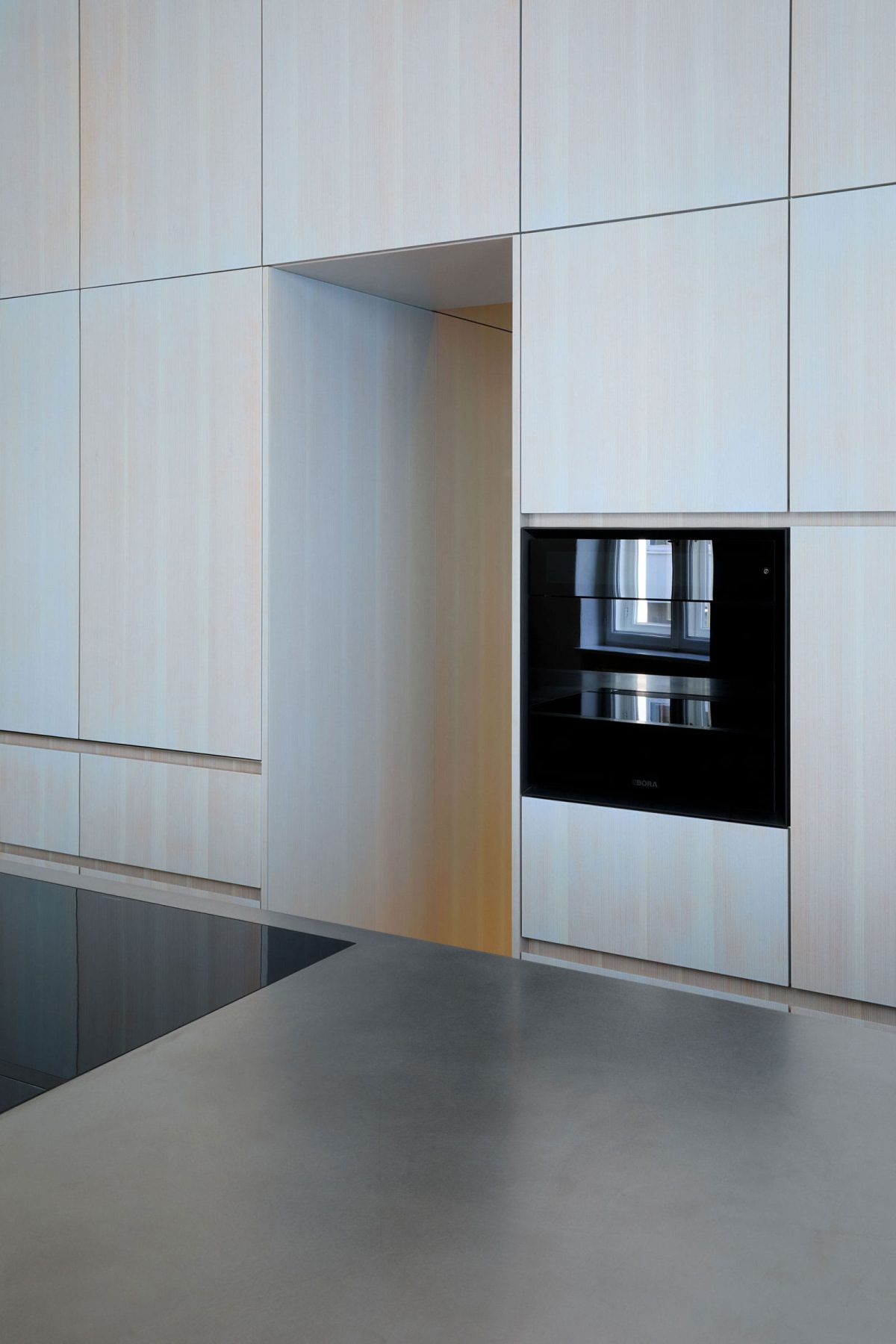
The island is executed in brushed stainless steel, introducing a precise and reflective presence at the centre of the space, while the larger storage volume is clad in a light blue oiled wood veneer. The cool and muted material palette has been carefully calibrated in relation to the sprayed lacquer finishes of the existing interior.
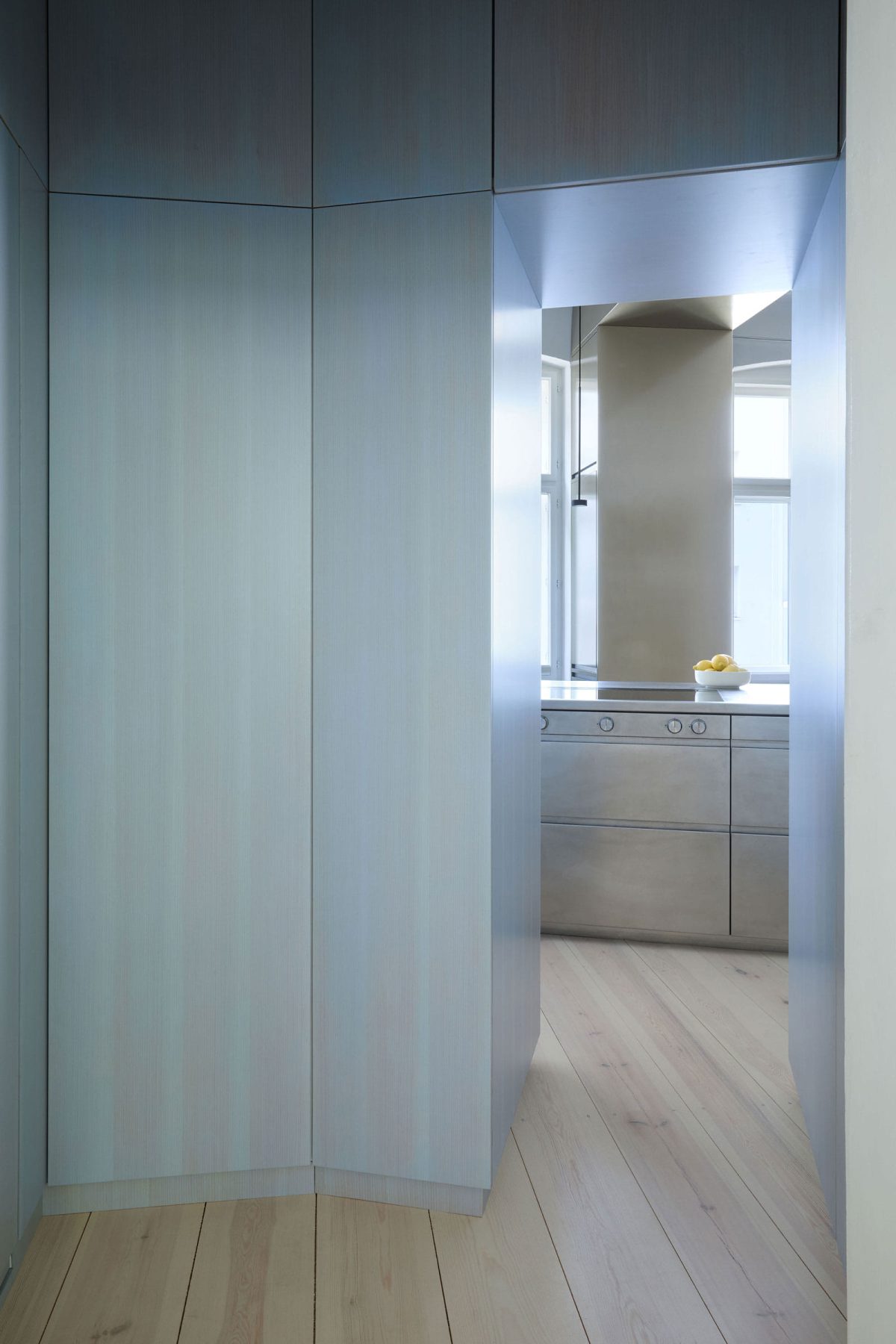
ALM demonstrates how a relatively small-scale intervention can fundamentally rearticulate an existing interior without imposing a dominant new order. Instead, it reveals and extends spatial qualities already embedded within the apartment.
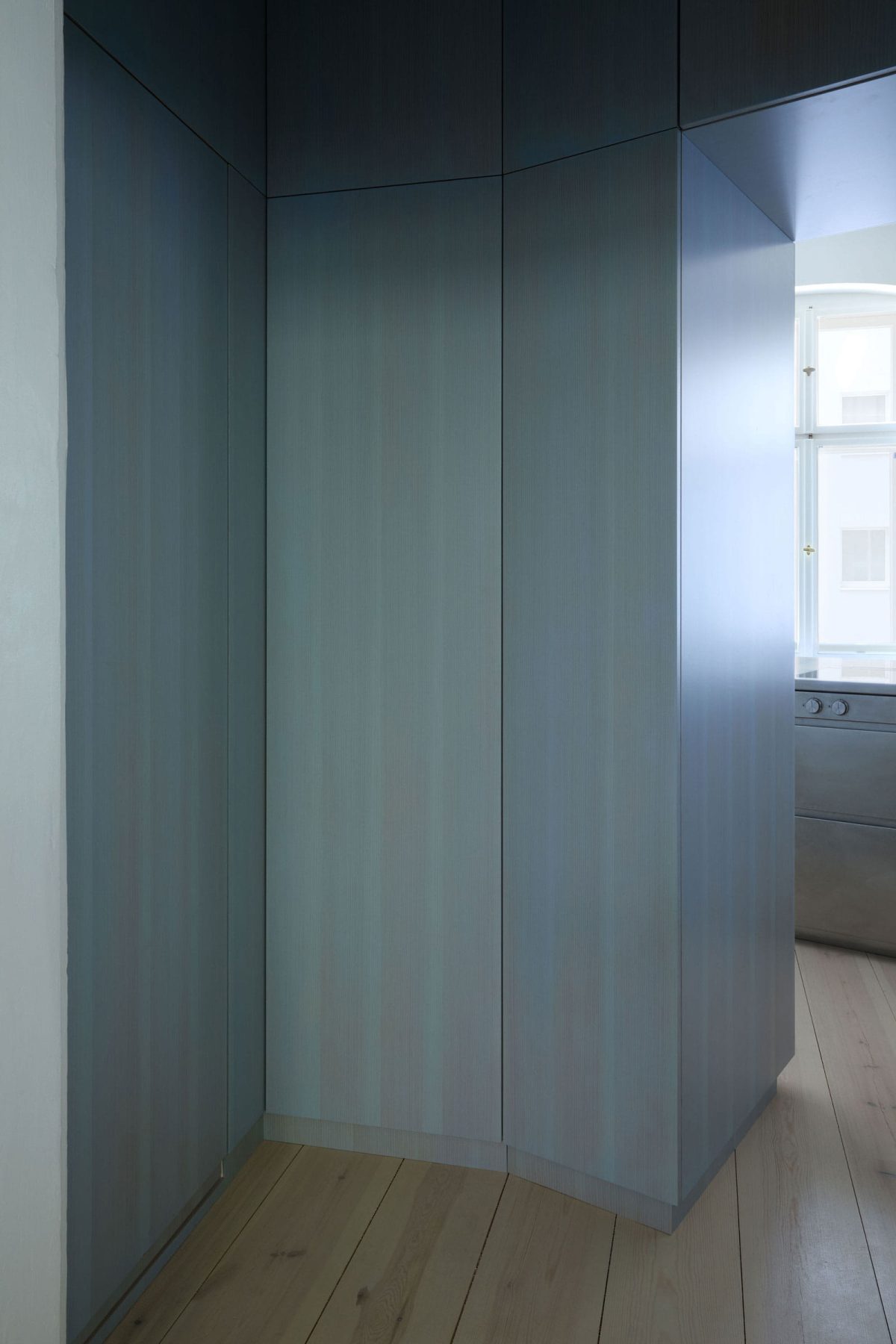
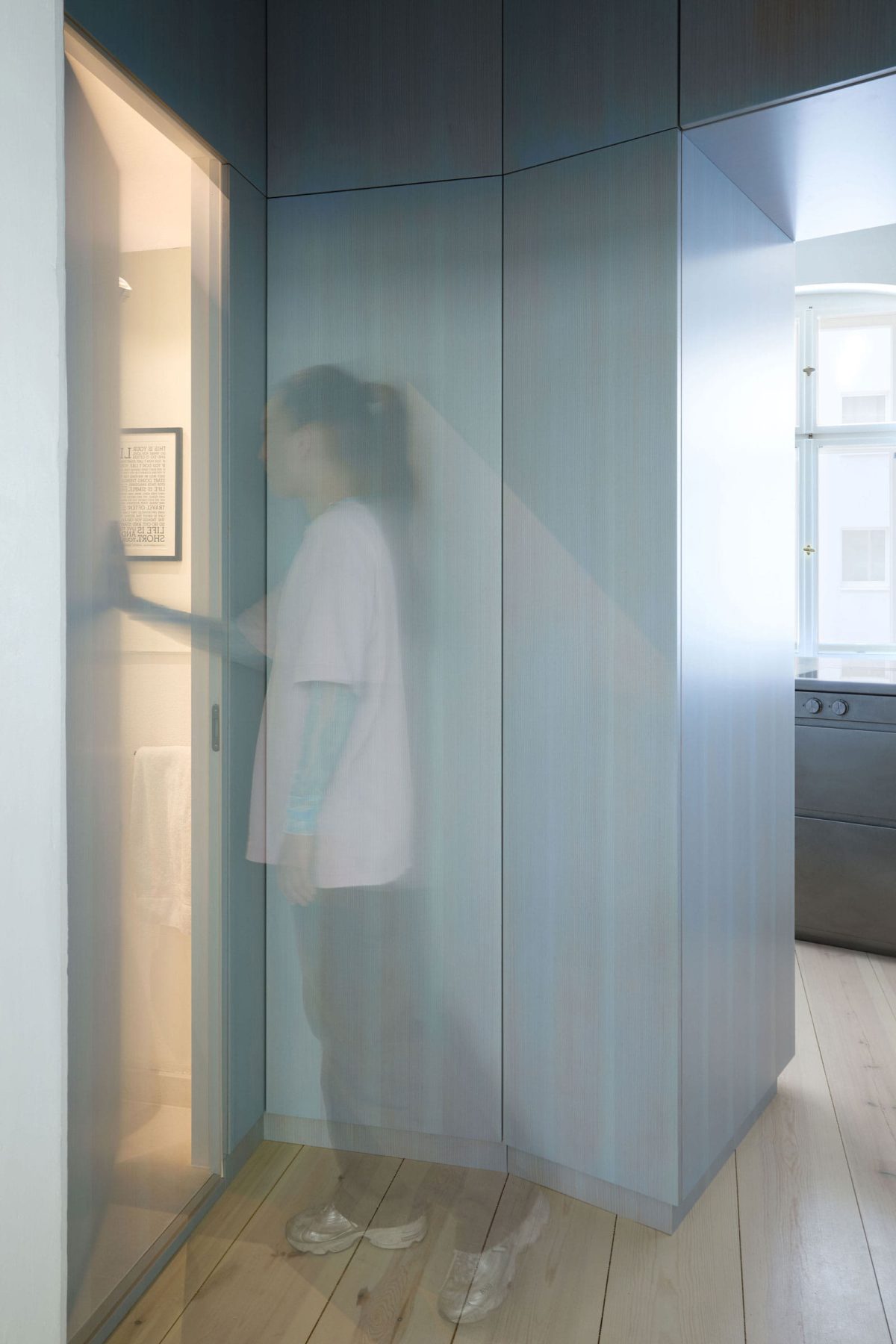
The kitchen operates as an architectural device—structuring space, directing movement, and shaping everyday encounters.
Drawings
Facts & Credits
Title ALM – Kitchen on a Diagonal
Typology Design
Location Berlin, Germany
Status Completed, 2026
Design INTO STORIES – architecture and beyond
Photography Anna Große-Drenkpohl
Text by the authors