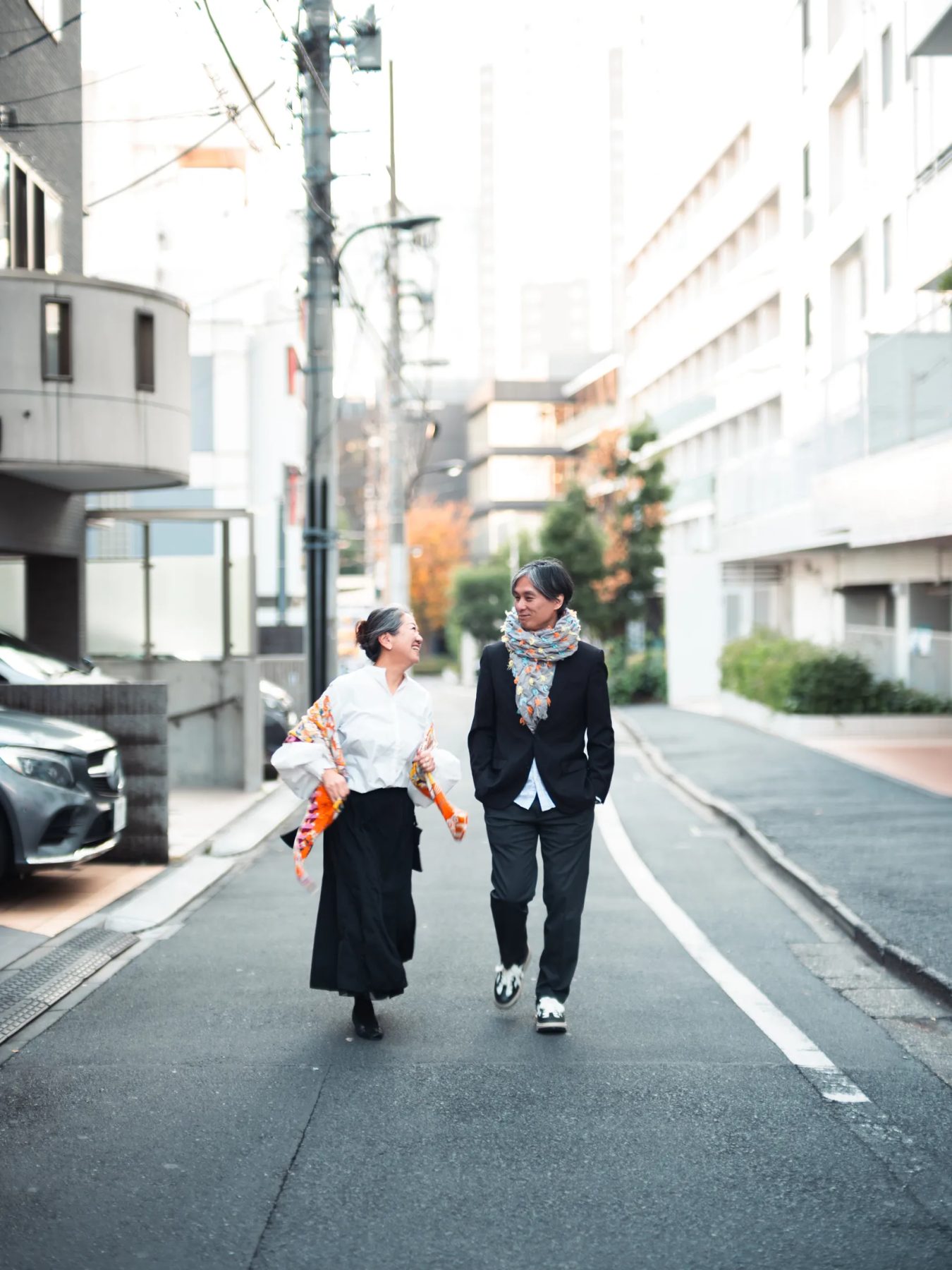
They say that one’s house is a mirror of one’s self, and for architect Takeshi Hosaka and his wife Megumi, that reflection takes the form of a 19-square-metre concrete sanctuary nestled within the dense urban fabric of Tokyo’s Bunkyo district.
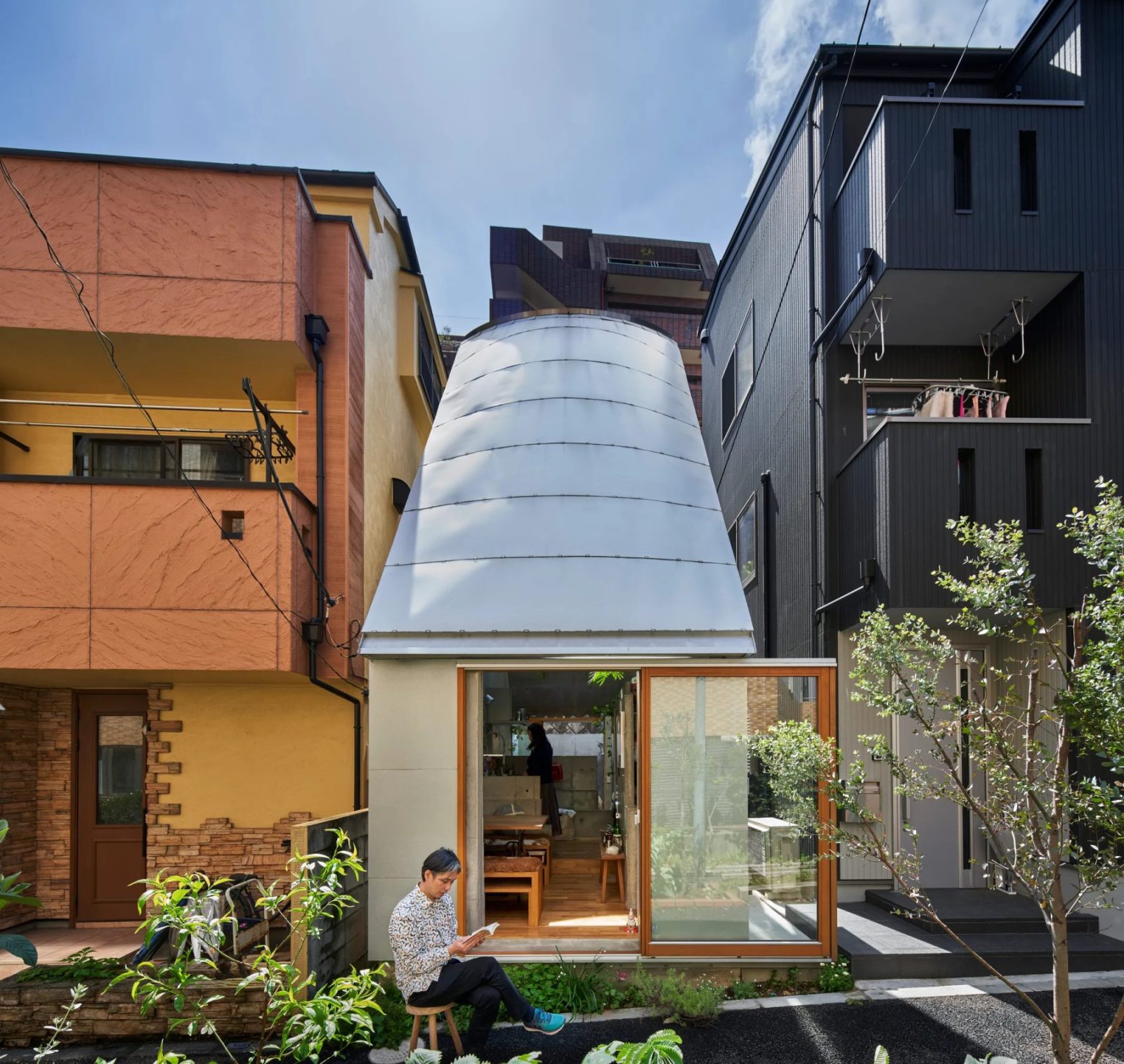
Japanese architecture has long explored the paradox of finding abundance within limitation. In a country shaped by dense cities, scarce land and a cultural appreciation of impermanence, smallness is rarely perceived as deprivation. Instead, it becomes a means of cultivating awareness, intimacy and a heightened relationship with everyday rituals. Conceived and realised as an architectural meditation on how to live more intensely with less, Hosaka’s Love2 House occupies a 31-square-metre plot as a quiet act of resistance against the excess and alienation of contemporary megacity life.
Through its radical modesty, it poses an almost existential question: how much space do we truly need in order to feel at home?
After living for a decade in the 38-square-metre Love House in Yokohama, on the western shore of Tokyo Bay and approximately 30 kilometres south of the capital’s centre, Hosaka and his wife Megumi relocated to Tokyo following his appointment as a professor at Waseda University’s Department of Architecture.
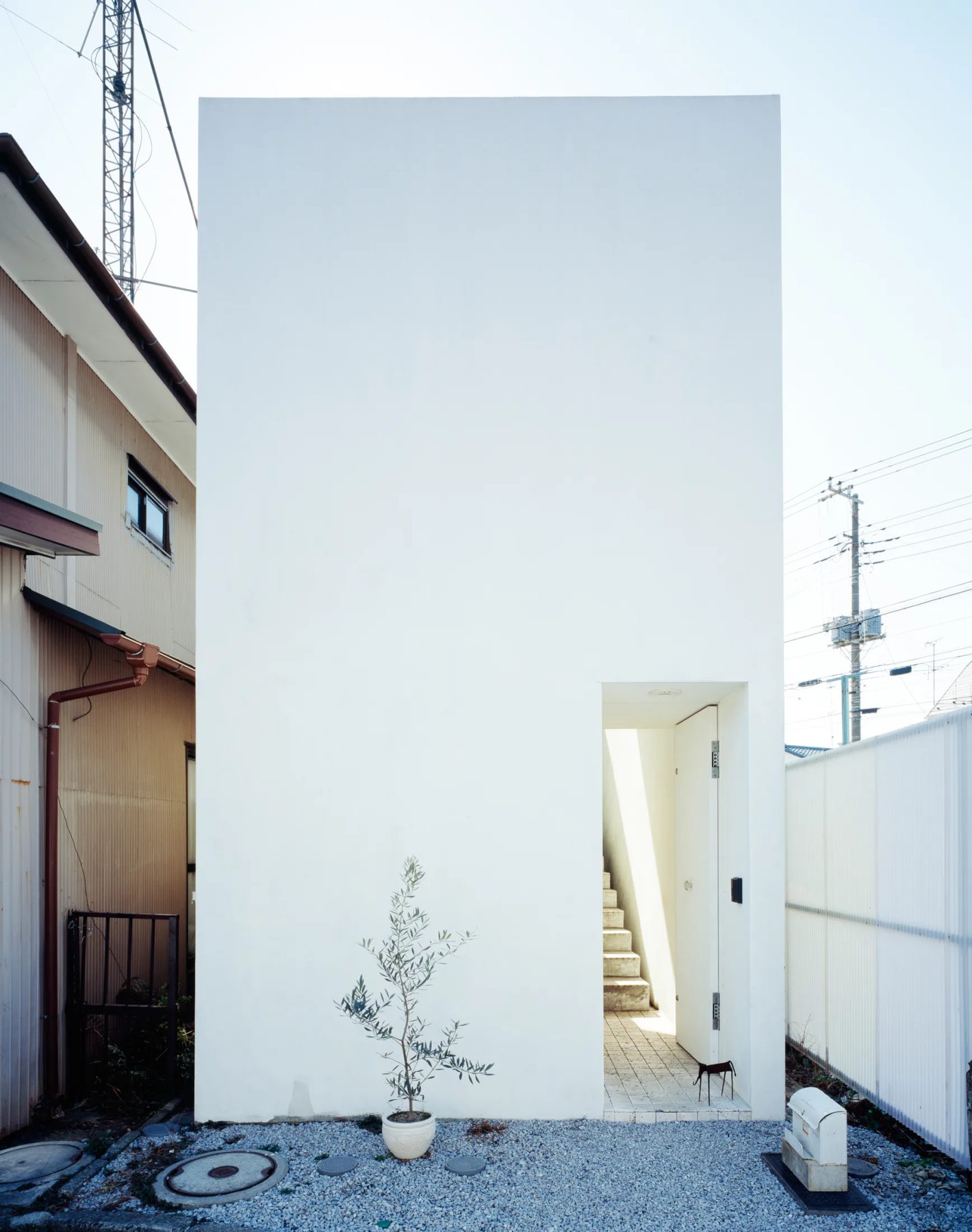
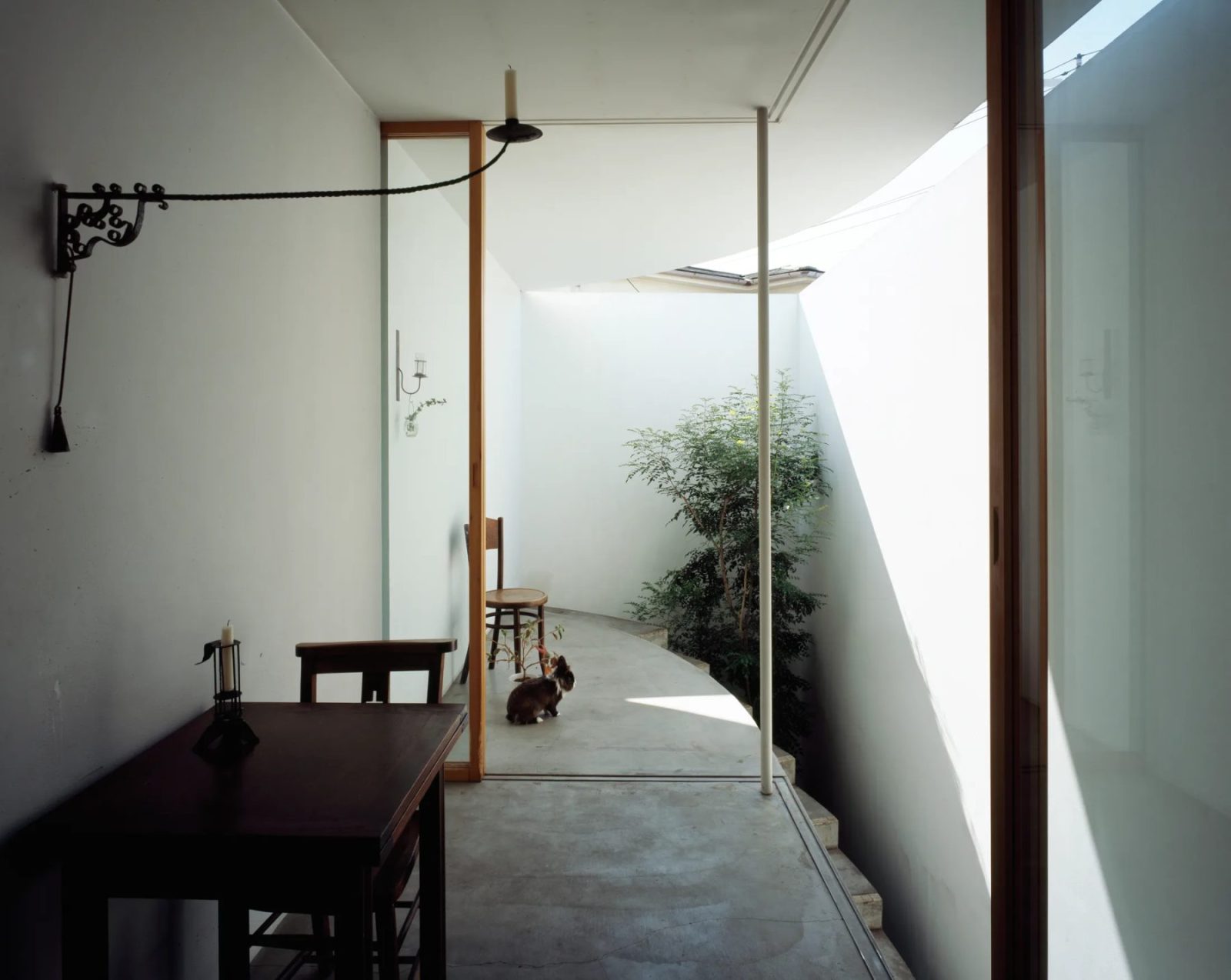
Rather than perceiving the move as a rupture, the couple conceived Love2 House as a continuation of their long-standing domestic experiment, in which reduction is understood not as a compromise but as a catalyst for pleasure.
The project positions itself within a centuries-old lineage of radical minimal dwellings, where architecture becomes an instrument of introspection and the art of living is distilled to its essence.
From Kamo no Chōmei’s Hōjō-an—the nine-square-metre hermitage described in the 13th-century Hōjōki, embodying the Buddhist ideal of detachment from worldly desires—to Kyoto’s compact machiya townhouses, the traditional wooden urban dwellings that emerged during the Edo period as carefully choreographed spaces for living and craftsmanship within the constraints of the dense city, and finally to Le Corbusier’s Cabanon on the French Riviera, the modernist declaration that the smallest room can still contain the vastness of human experience.
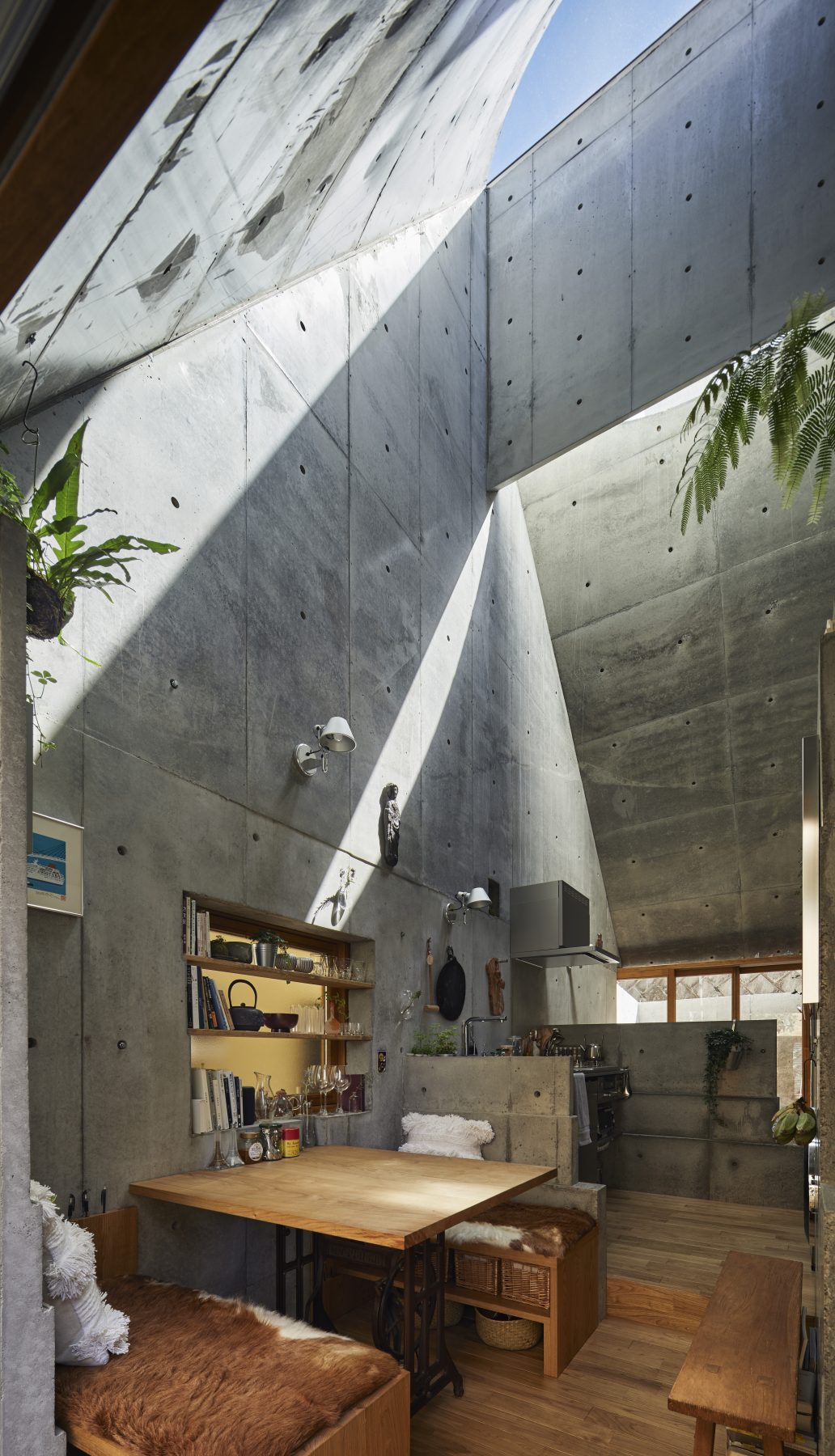
Love2 House emerges as the contemporary heir to this genealogy. In the heart of 21st-century Tokyo, Hosaka’s exposed concrete retreat transforms centuries of knowledge on minimum living into a quiet yet radical architectural statement: an Epicurean sanctuary where abundance is no longer measured by square metres or possession, but by the heightened awareness of everyday existence through simplicity, friendship, contemplation and the appreciation of natural phenomena. For Epicurus, happiness emerged from freedom from unnecessary desires and from a conscious attention to the pleasures that already surround us (Epicurus, 1926).
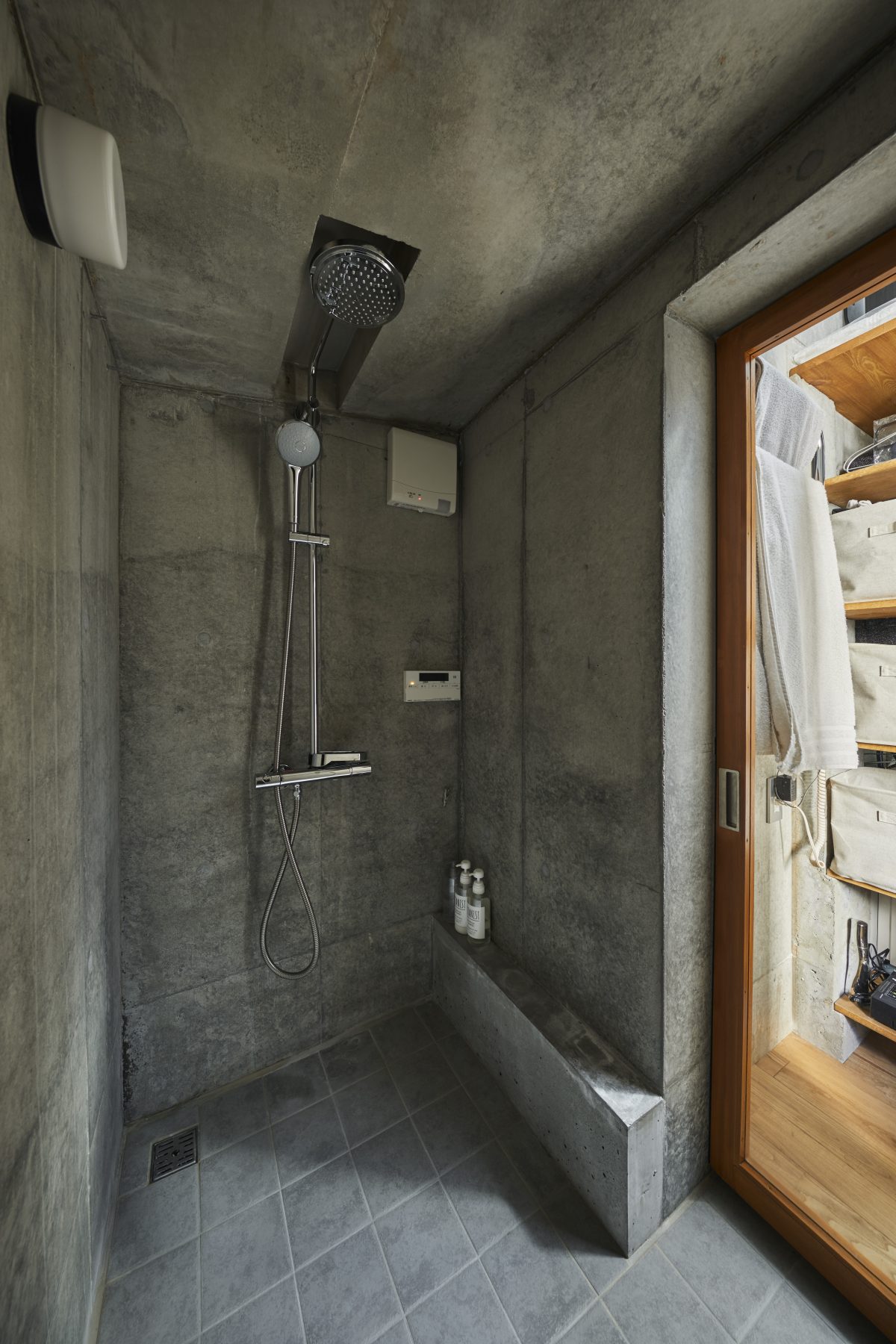
Hosaka translates this philosophy into architectural form.
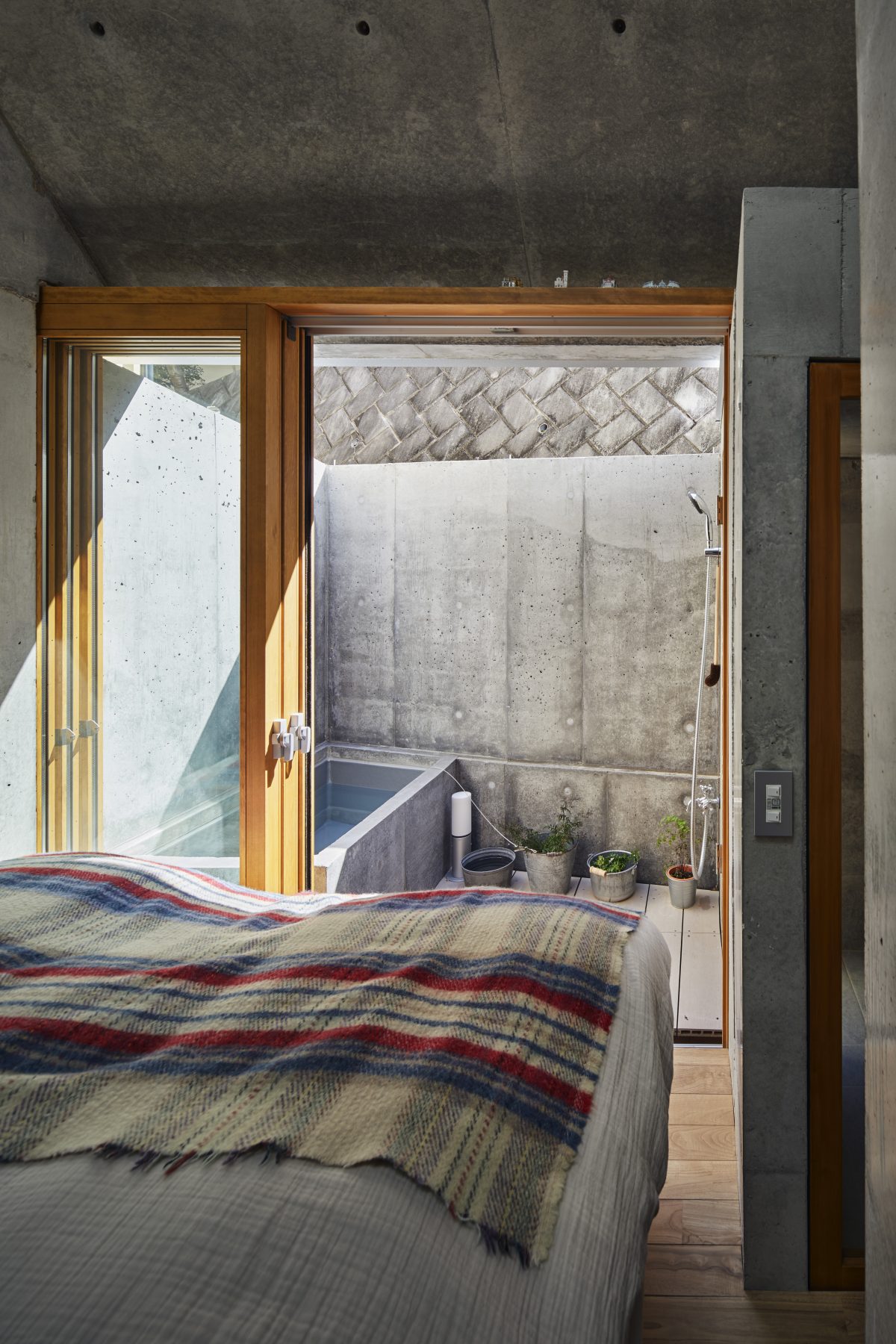
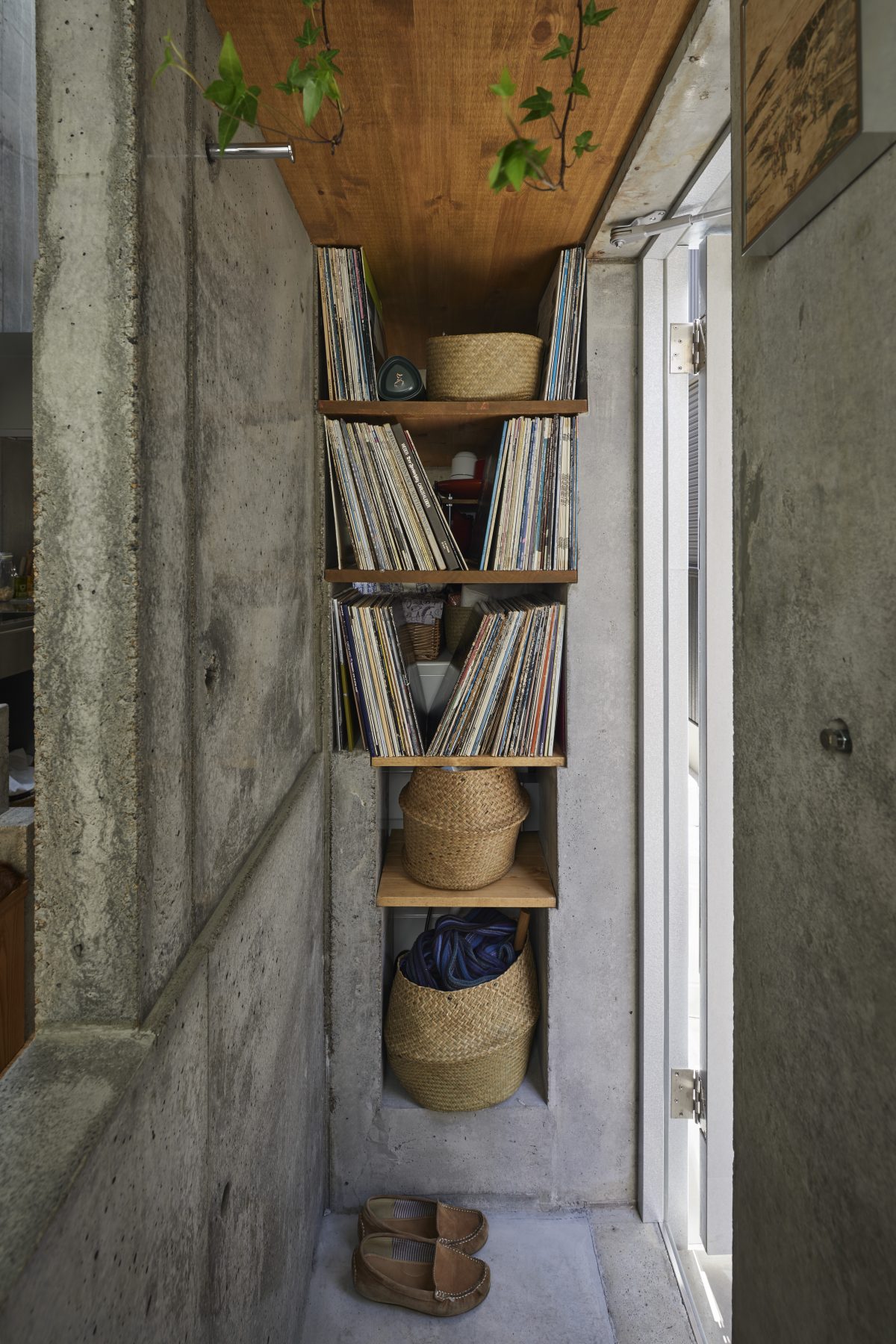
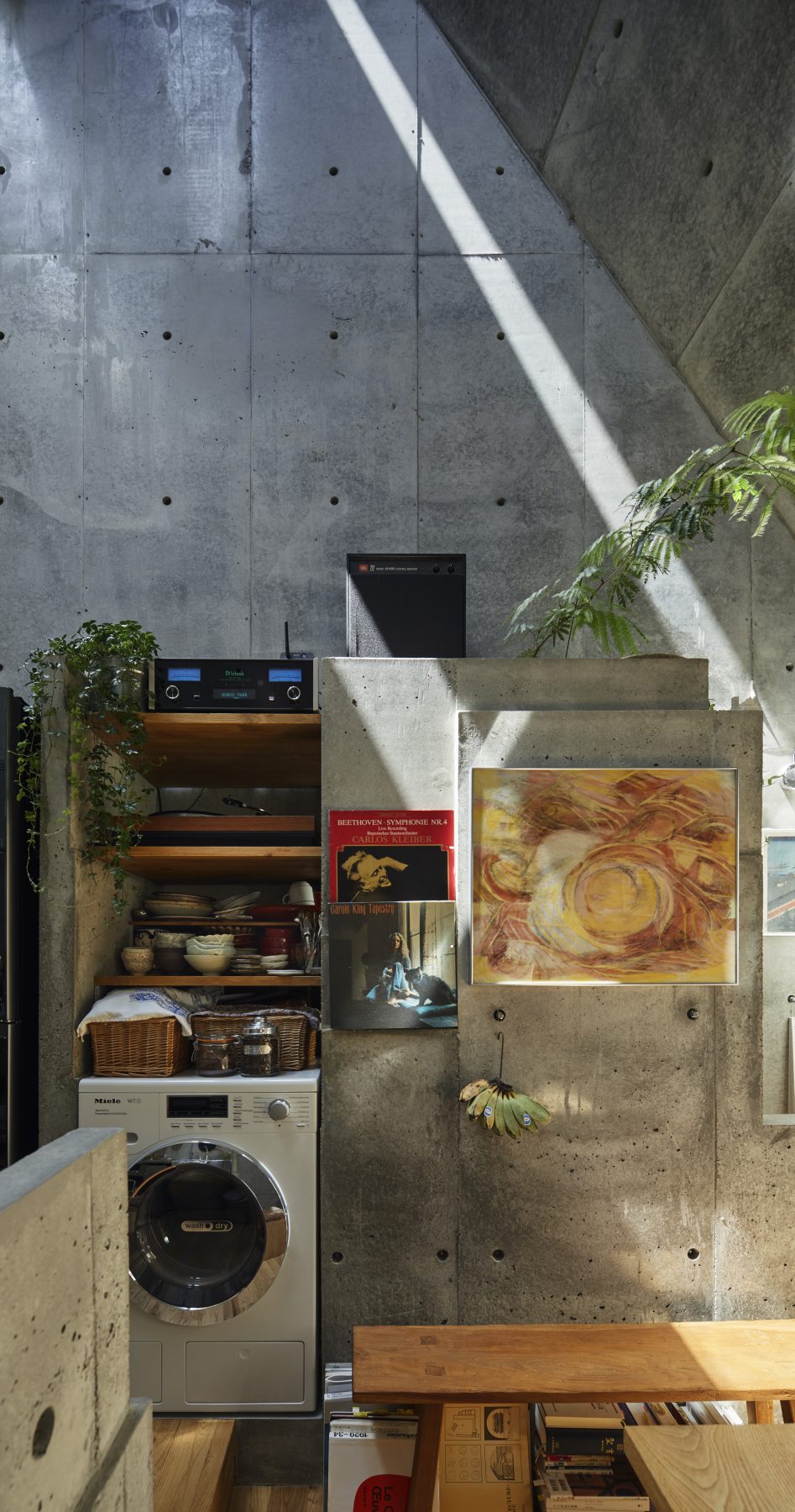
A daily bath beneath the open sky, the resonance of vinyl records against exposed concrete, rice slowly cooked in an earthen pot, and the silent companionship of books become expressions of architectural abundance. In this sense, Love2 House resonates deeply with the Japanese understanding of space as a relationship rather than a mere container. The concept of ma—often described as the meaningful interval between things—suggests that emptiness is not a void to be filled, but a fertile condition in which what remains unoccupied is as significant as what is built. It is within these intervals that awareness, movement and human relationships unfold, transforming the most ordinary rituals into deliberate acts of presence (Pilgrim, 1986).
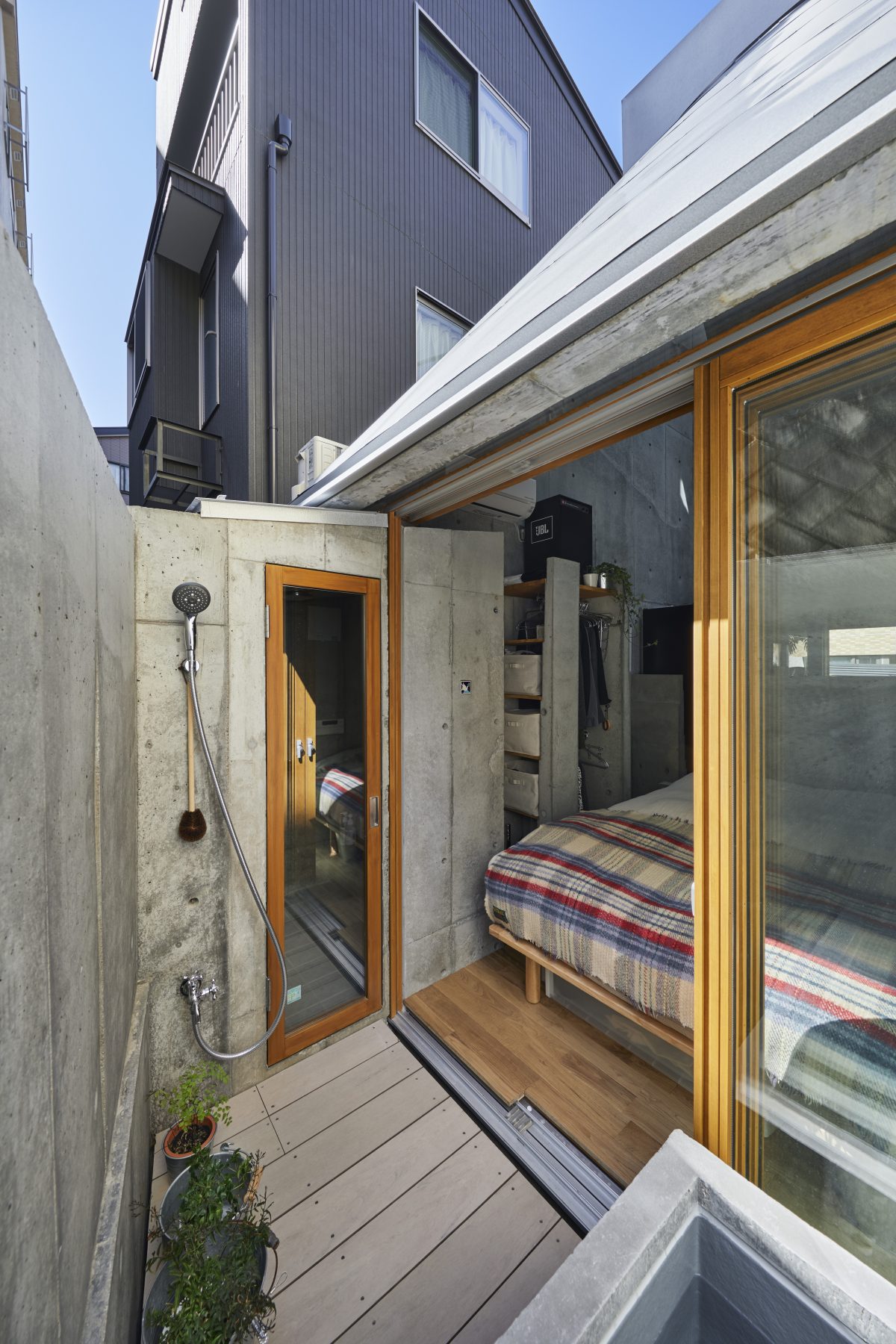
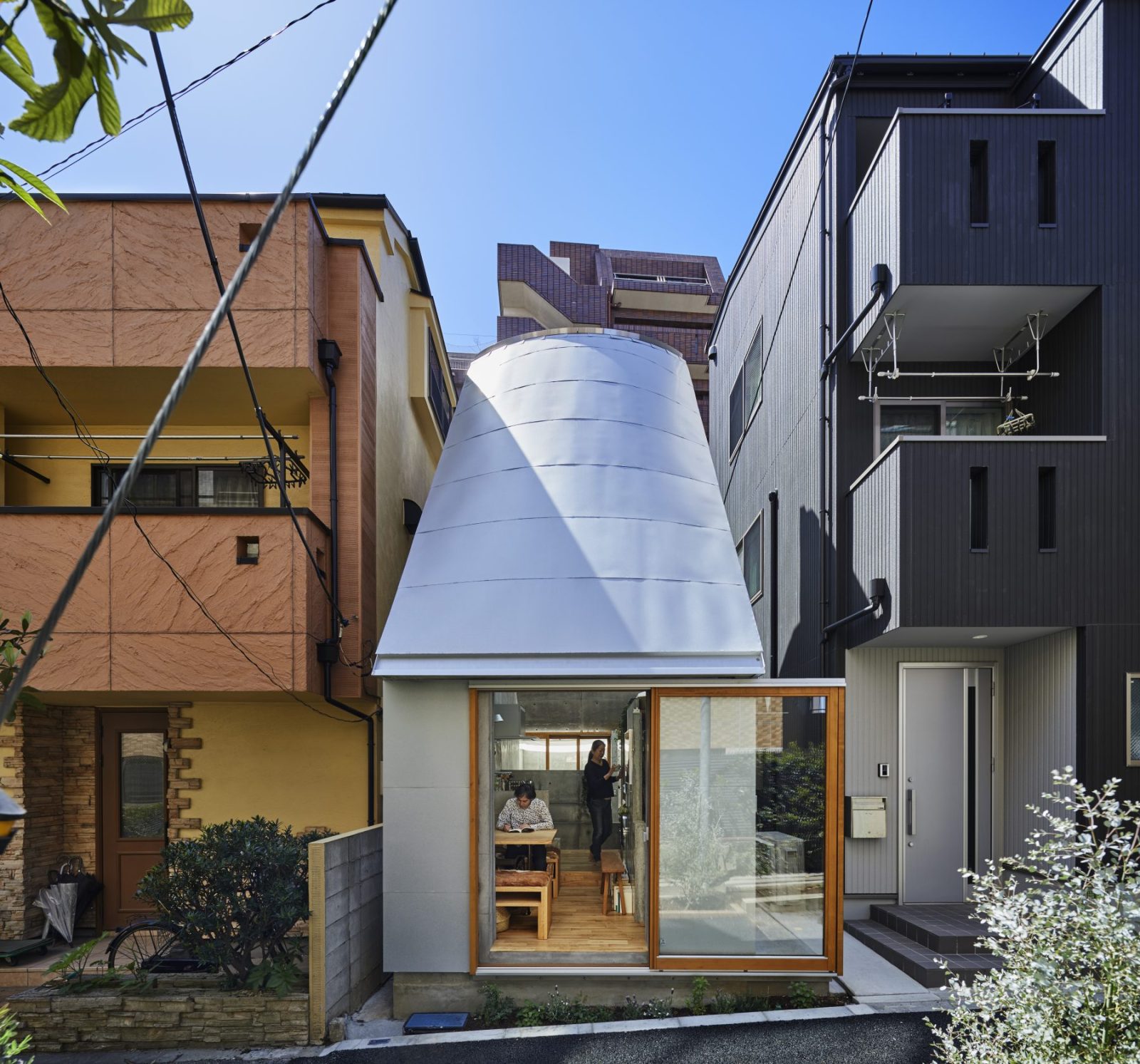
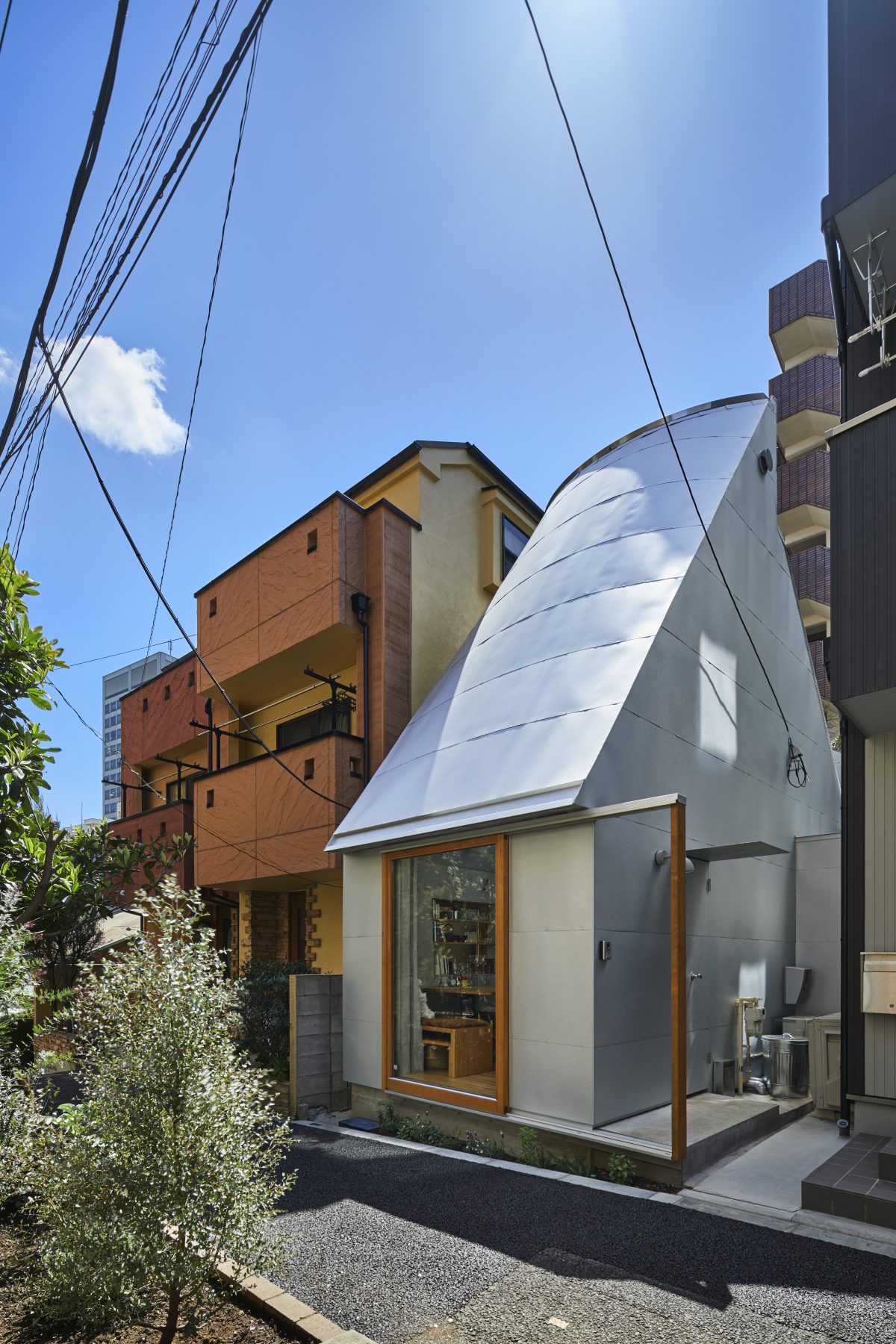
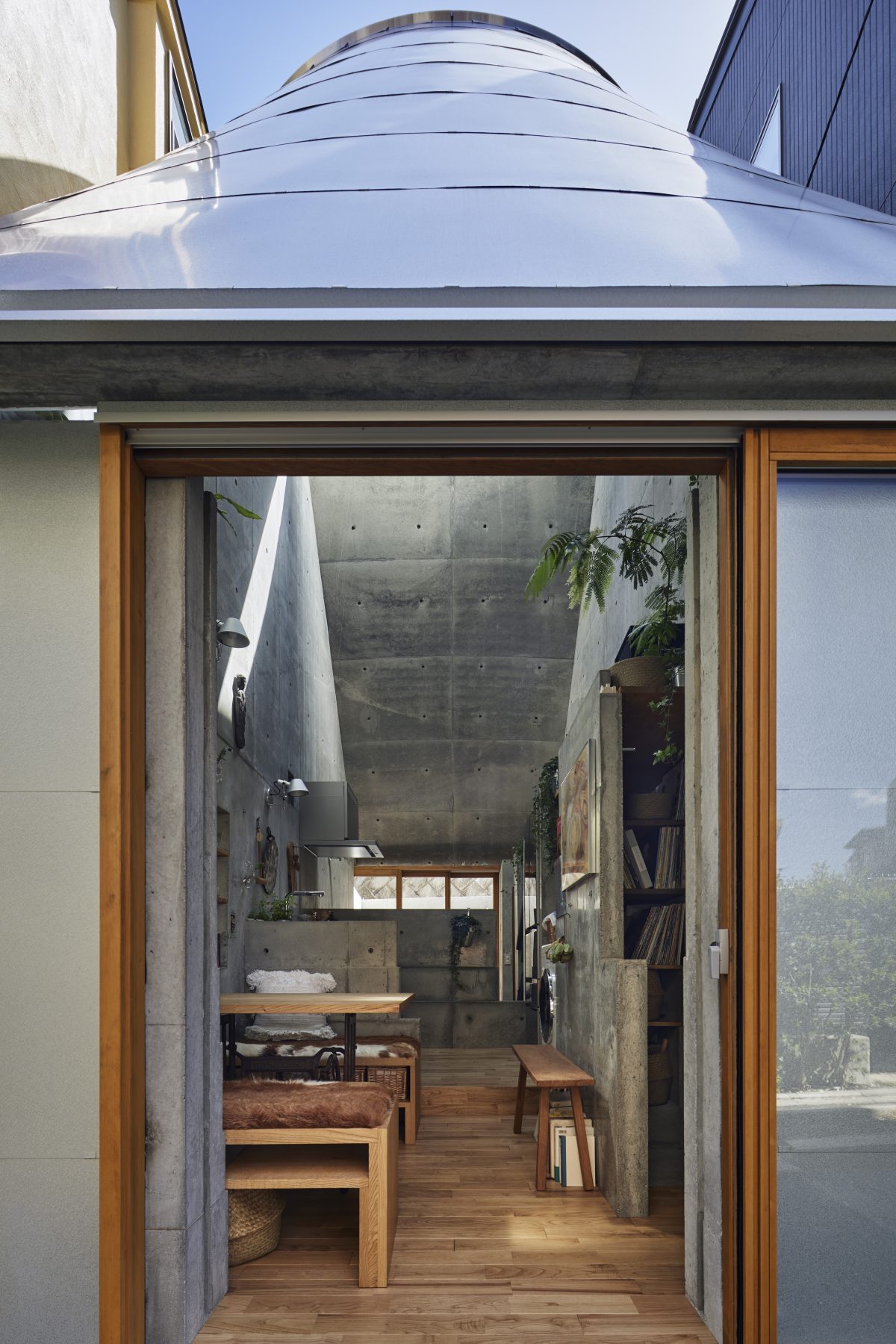
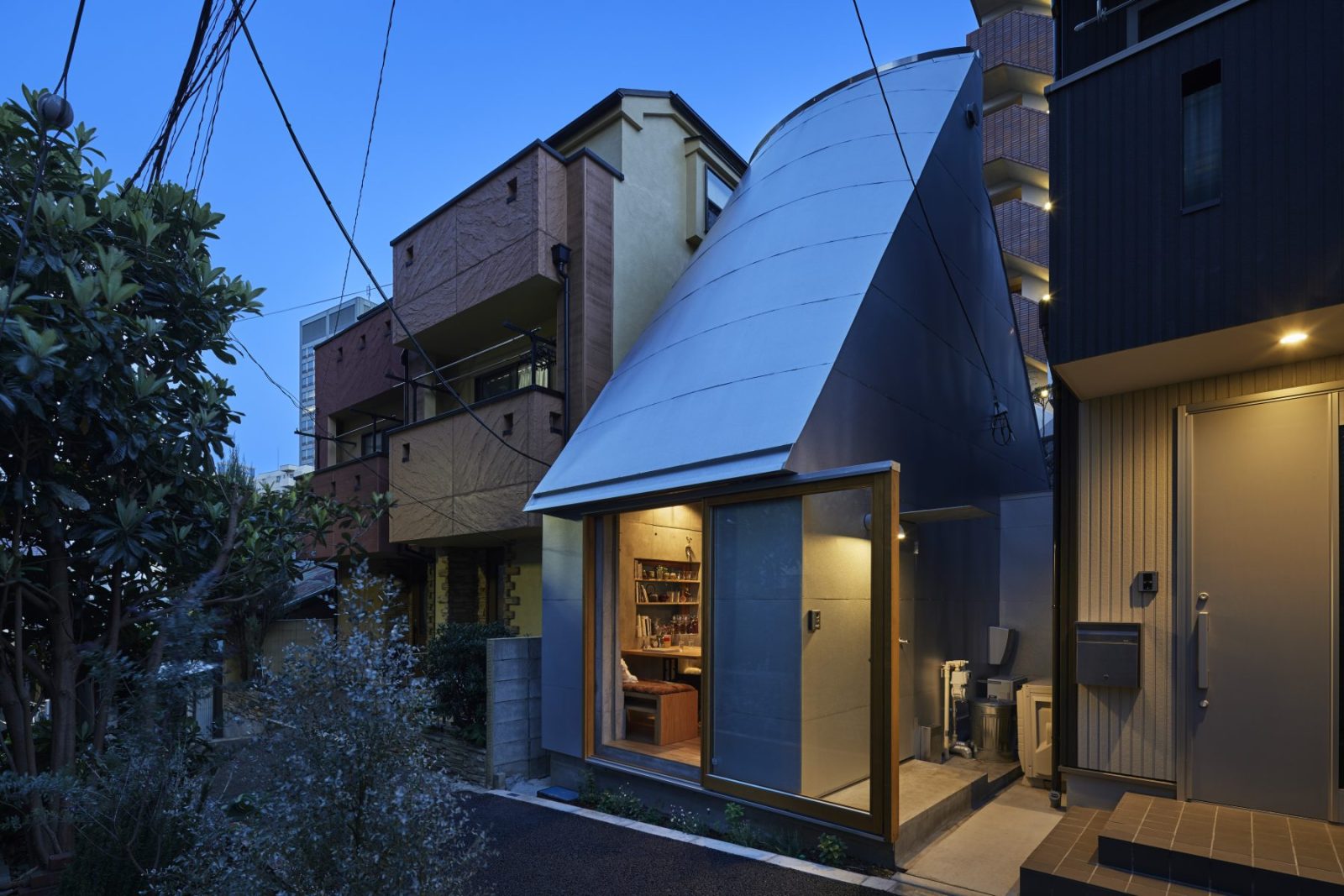
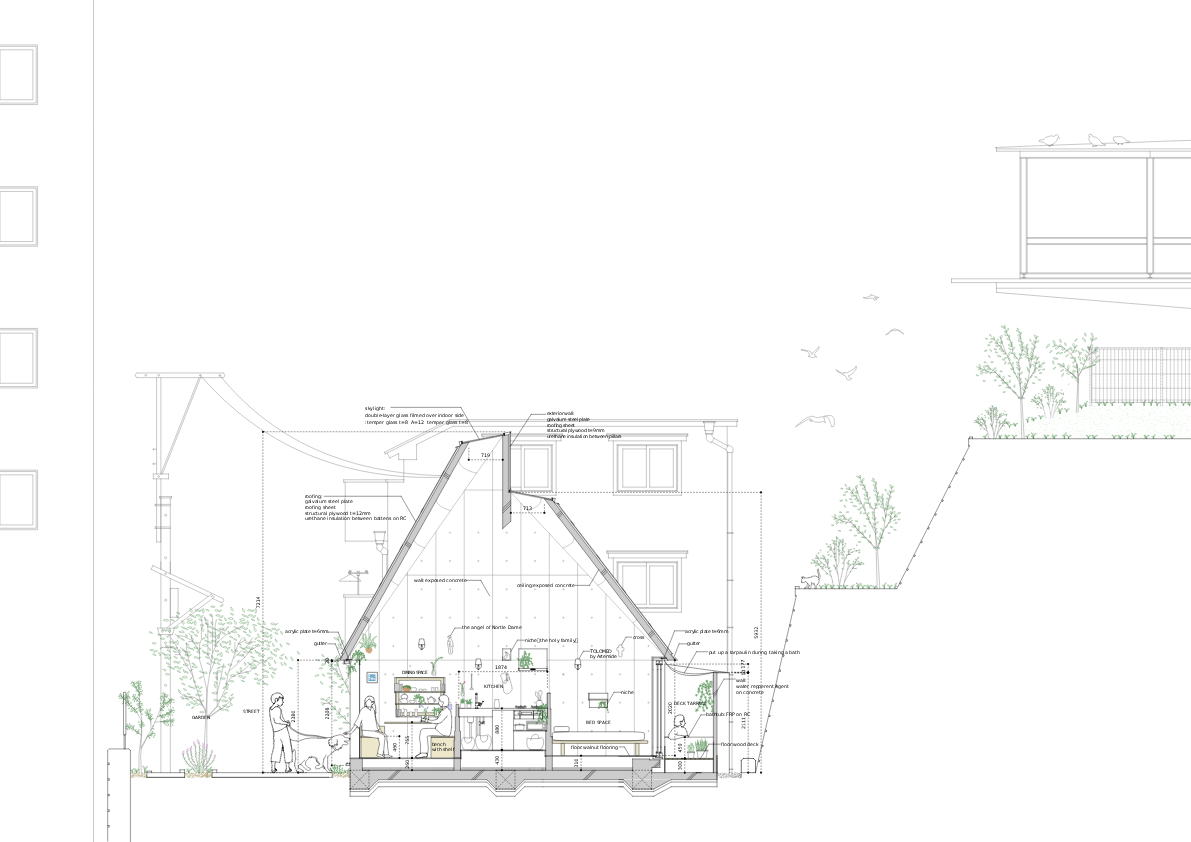
The most poetic gesture of Love2 House lies in its pair of gently curved roofs—two thin concrete shells, externally clad in galvanised aluminium panels, that open towards the sky like attentive eyes.
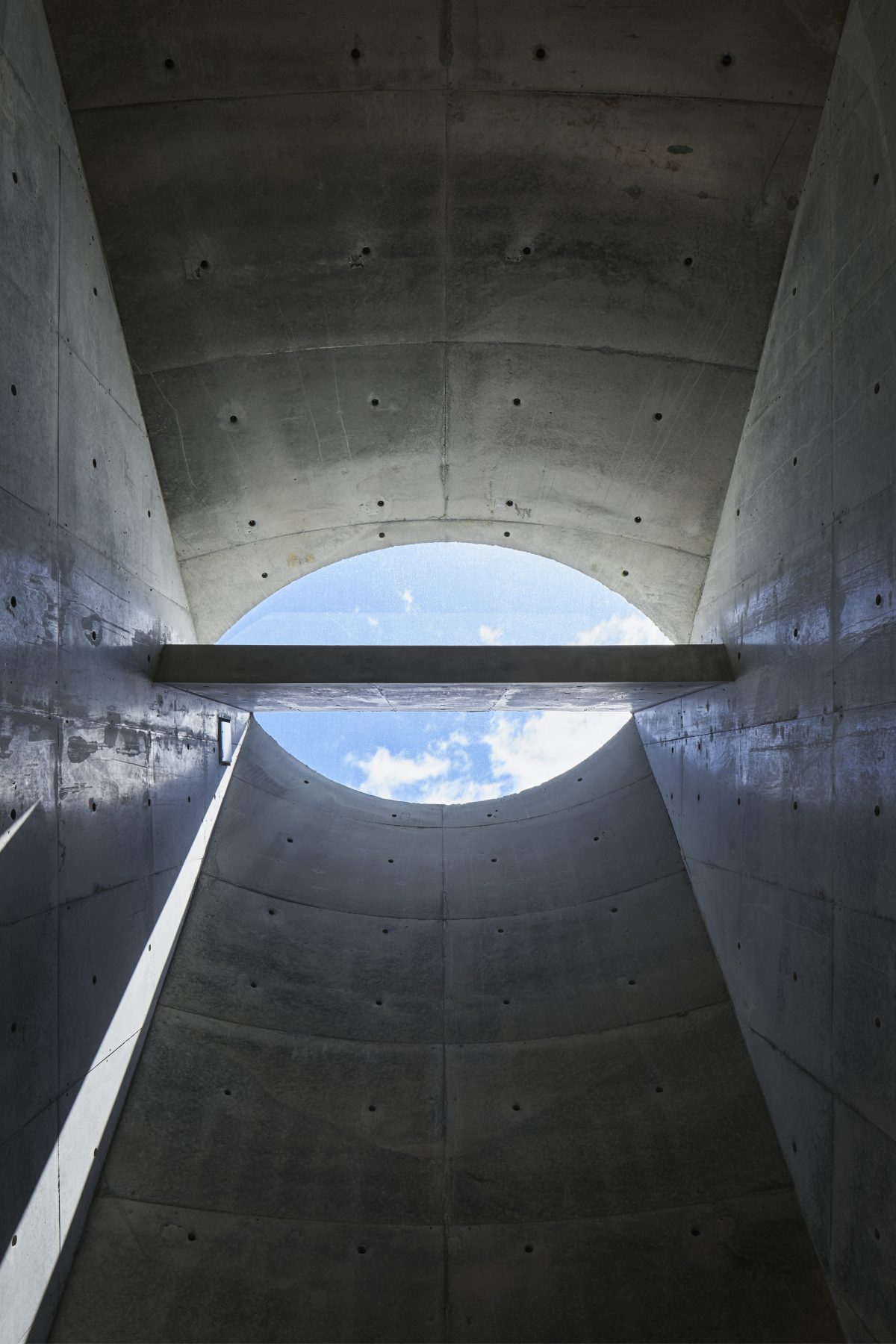
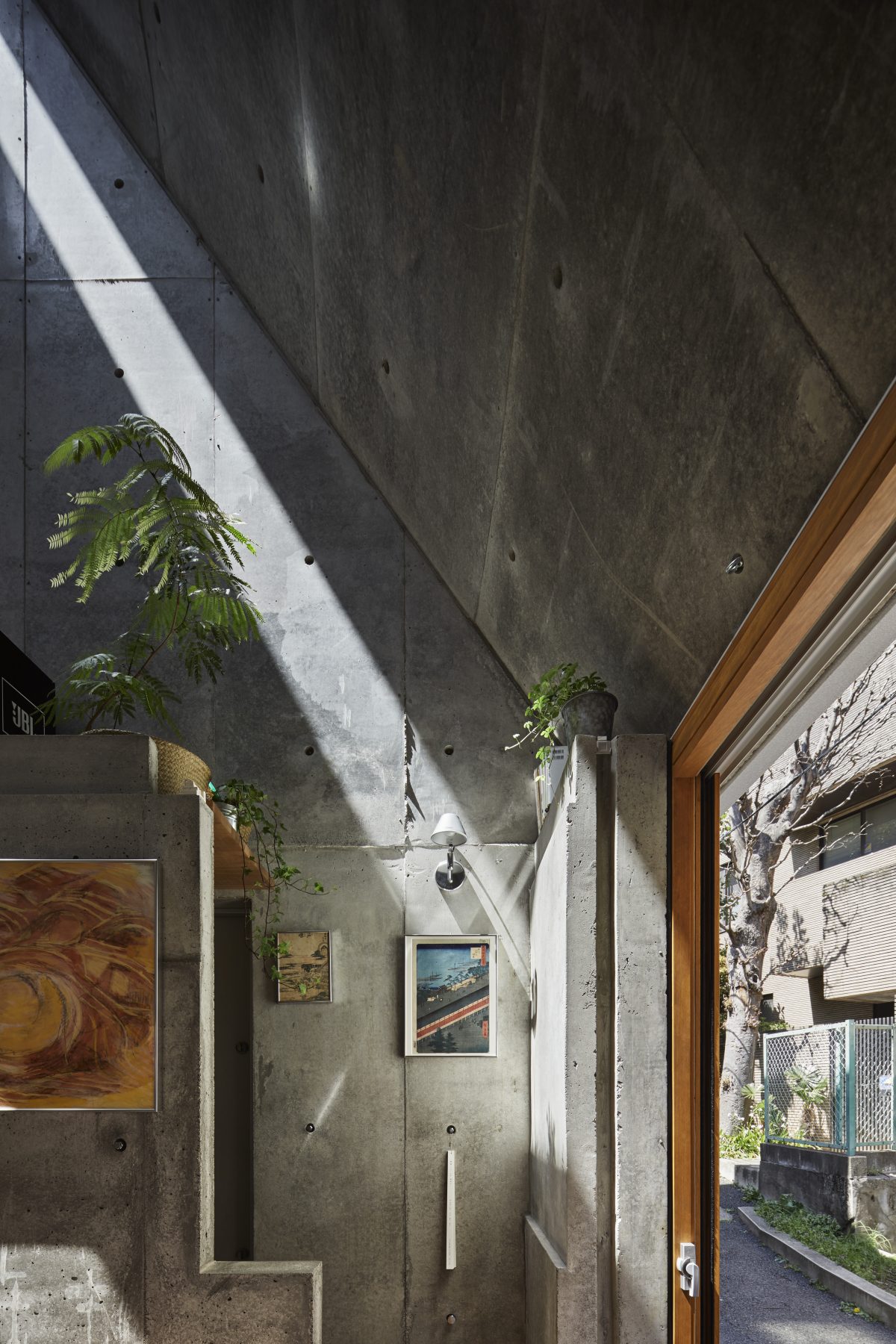
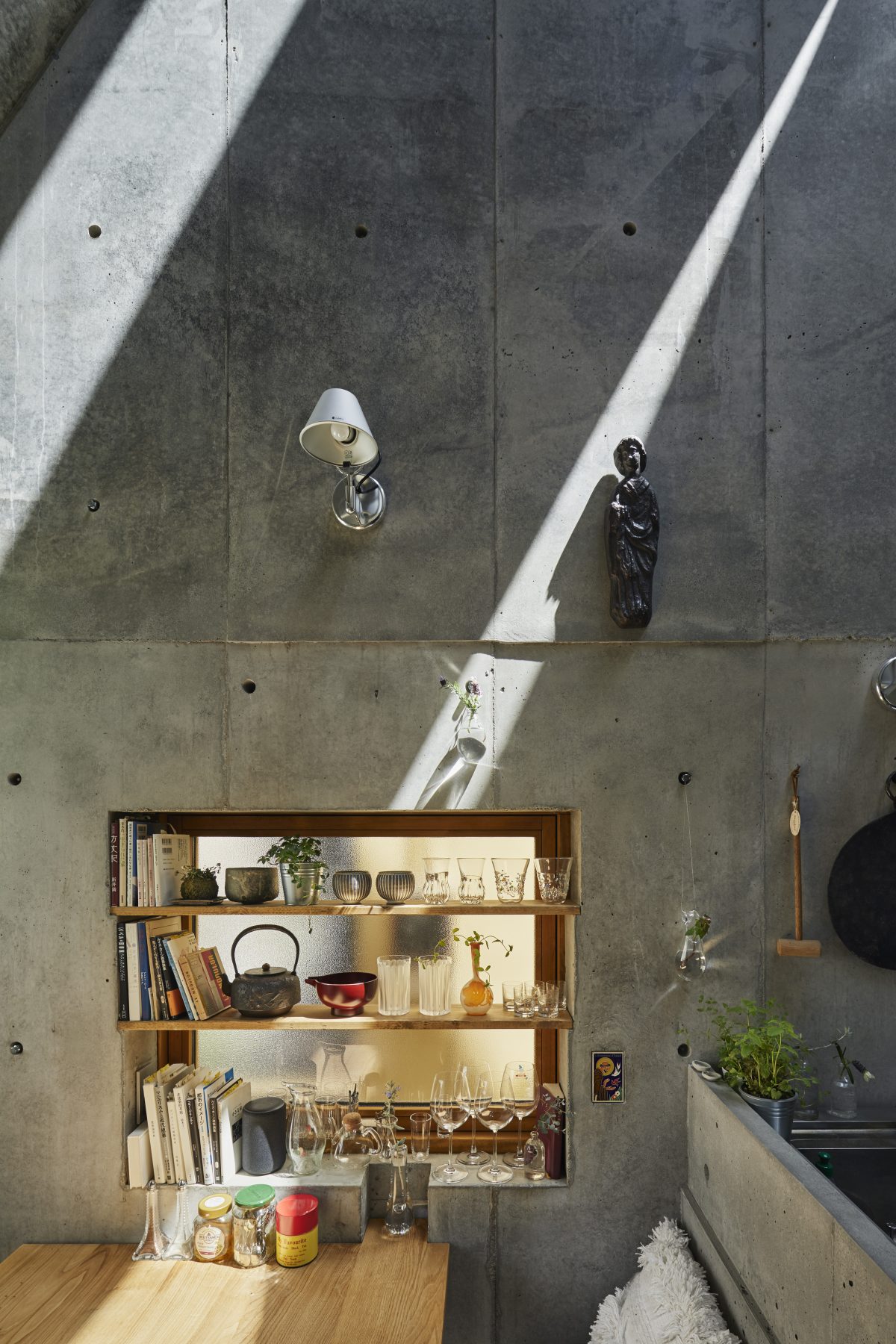
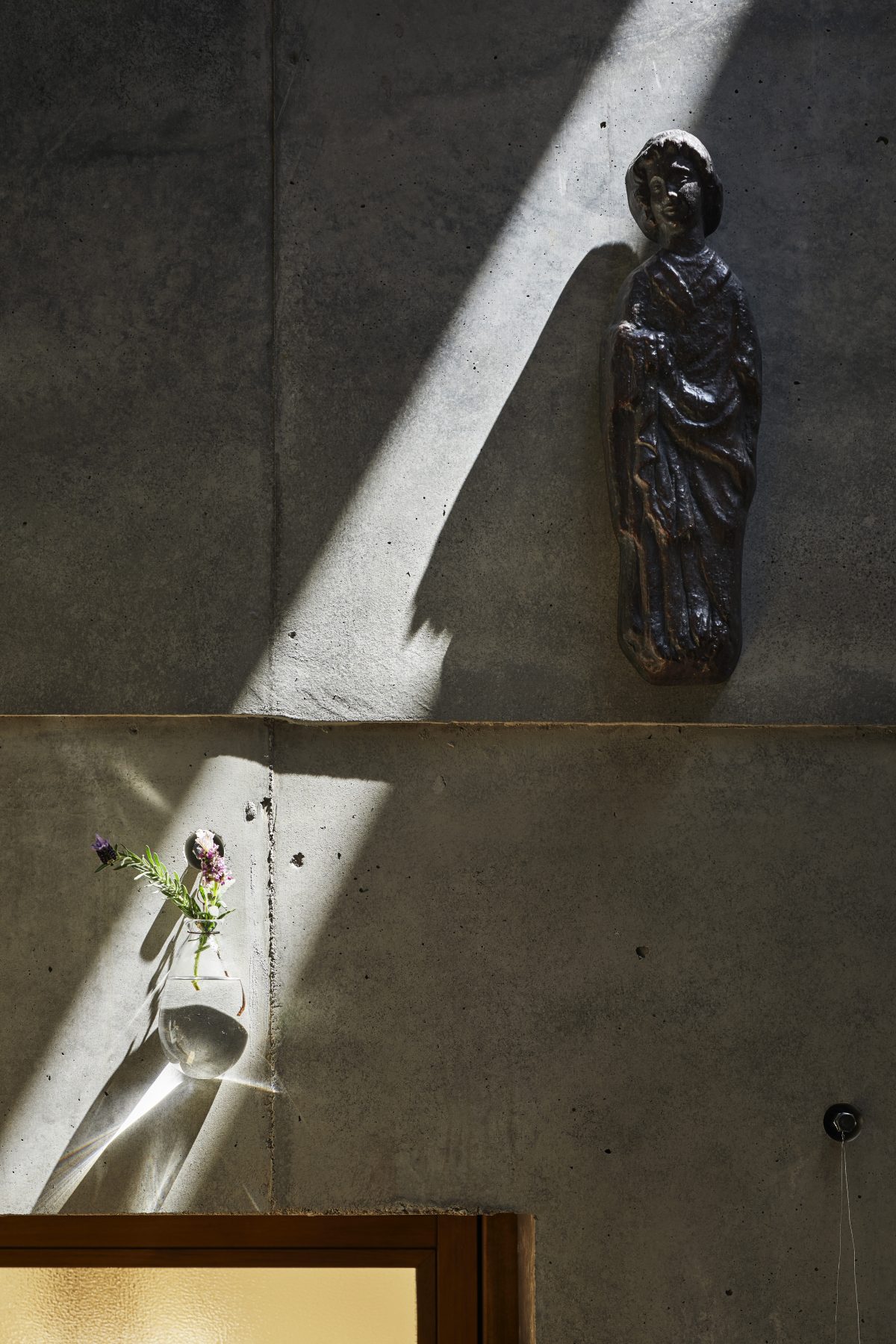
Their form does not arise from a pursuit of formal novelty, but from a precise environmental reading developed through patient observation. Sun studies revealed that the narrow urban site would receive almost no direct sunlight during Tokyo’s winter months. Rather than treating this condition as a limitation, Hosaka transforms it into the project’s central narrative. The two roof openings collect the soft northern light of winter and welcome the intense summer sun, translating seasonal variation into a lived domestic experience.
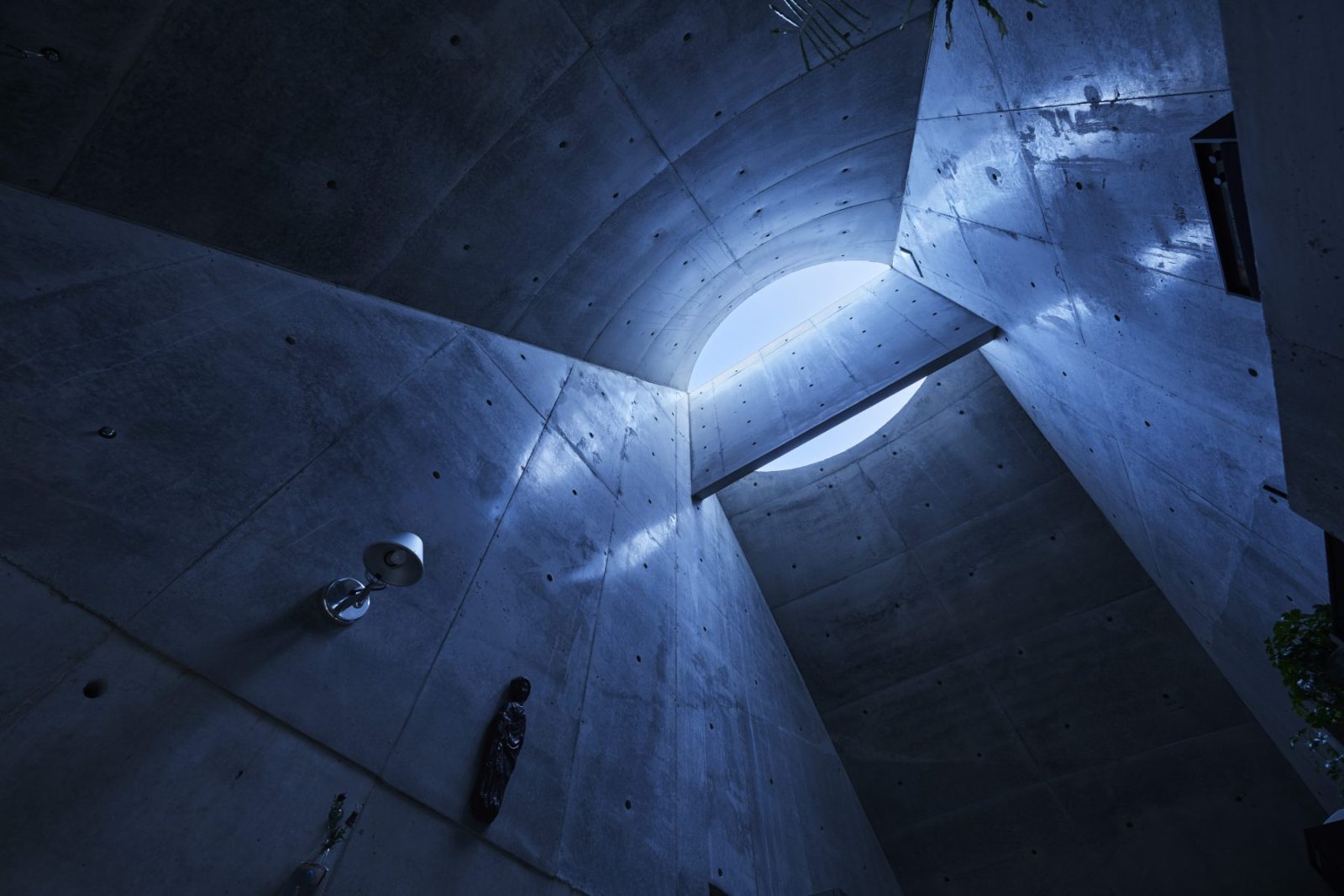
The house becomes a device for registering atmospheric change, where architecture acts as a medium for framing the world beyond it.
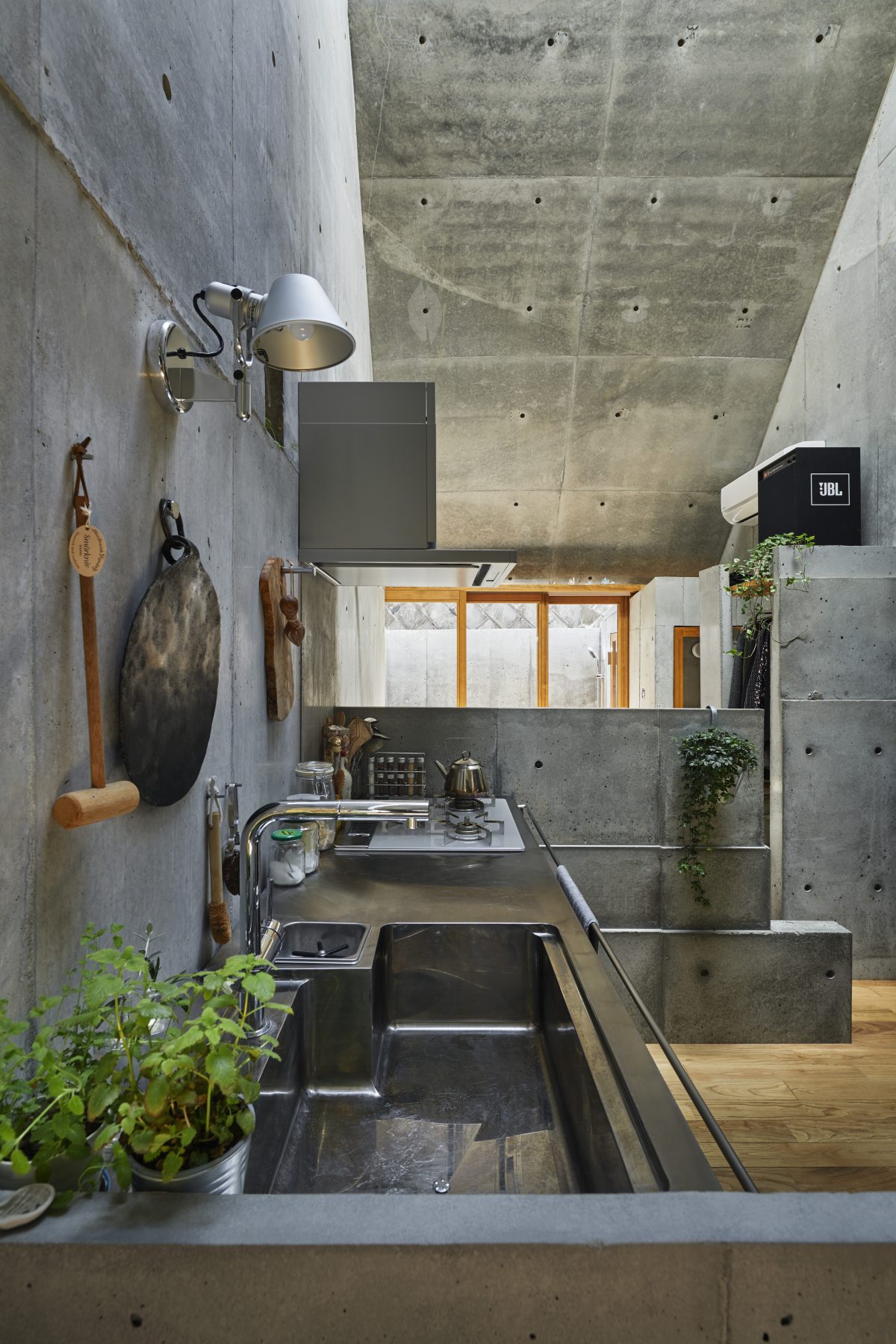
Inside, the reinforced concrete structure behaves simultaneously as enclosure, furniture and landscape.
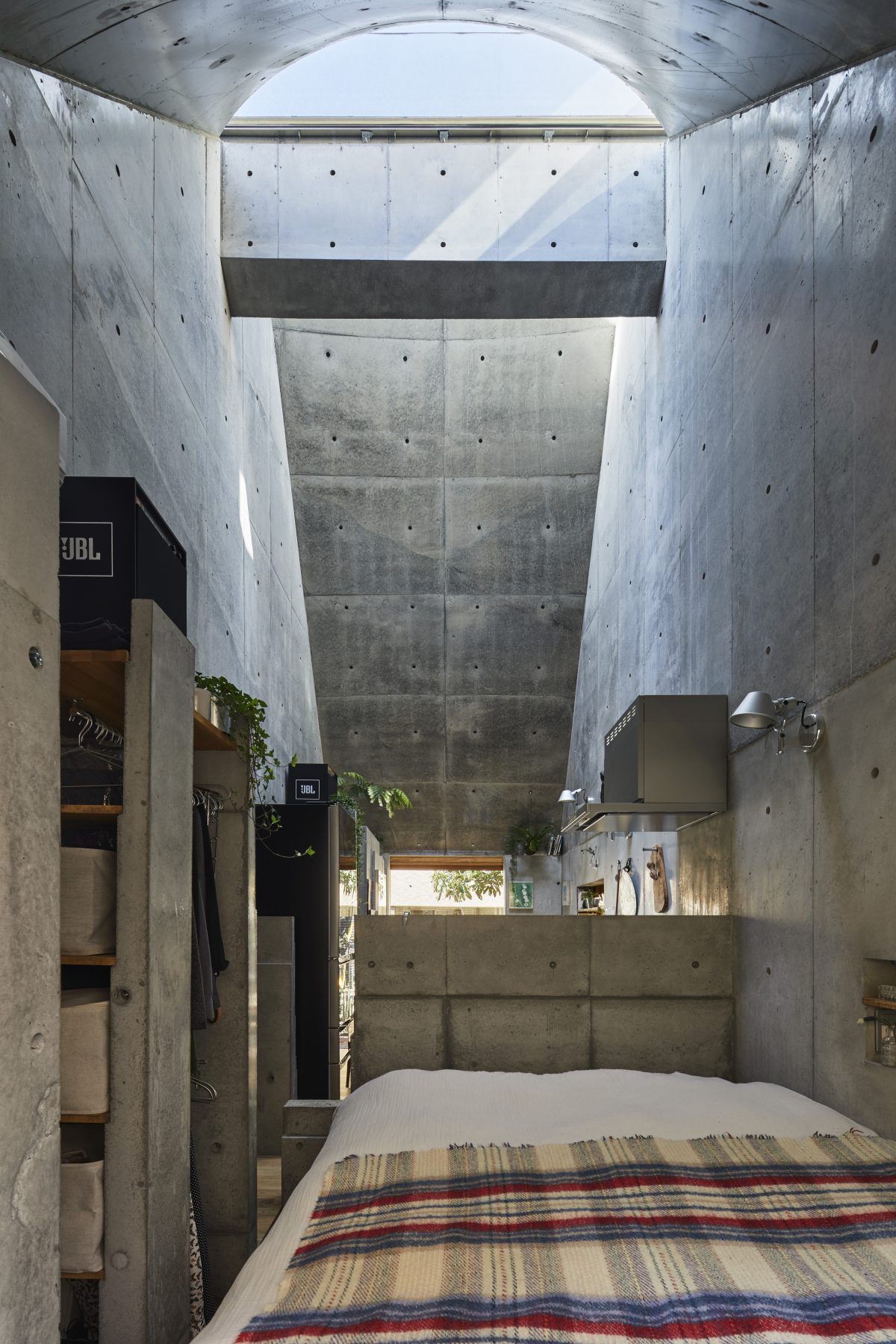
Seven short walls emerging from the primary shell subtly divide the house into zones for dining, cooking and sleeping, while their varying thickness accommodates shelves, counters and storage. There are no conventional rooms or unnecessary partitions; instead, the dwelling operates like a carefully composed piece of music, where silence and intervals are as important as sound.
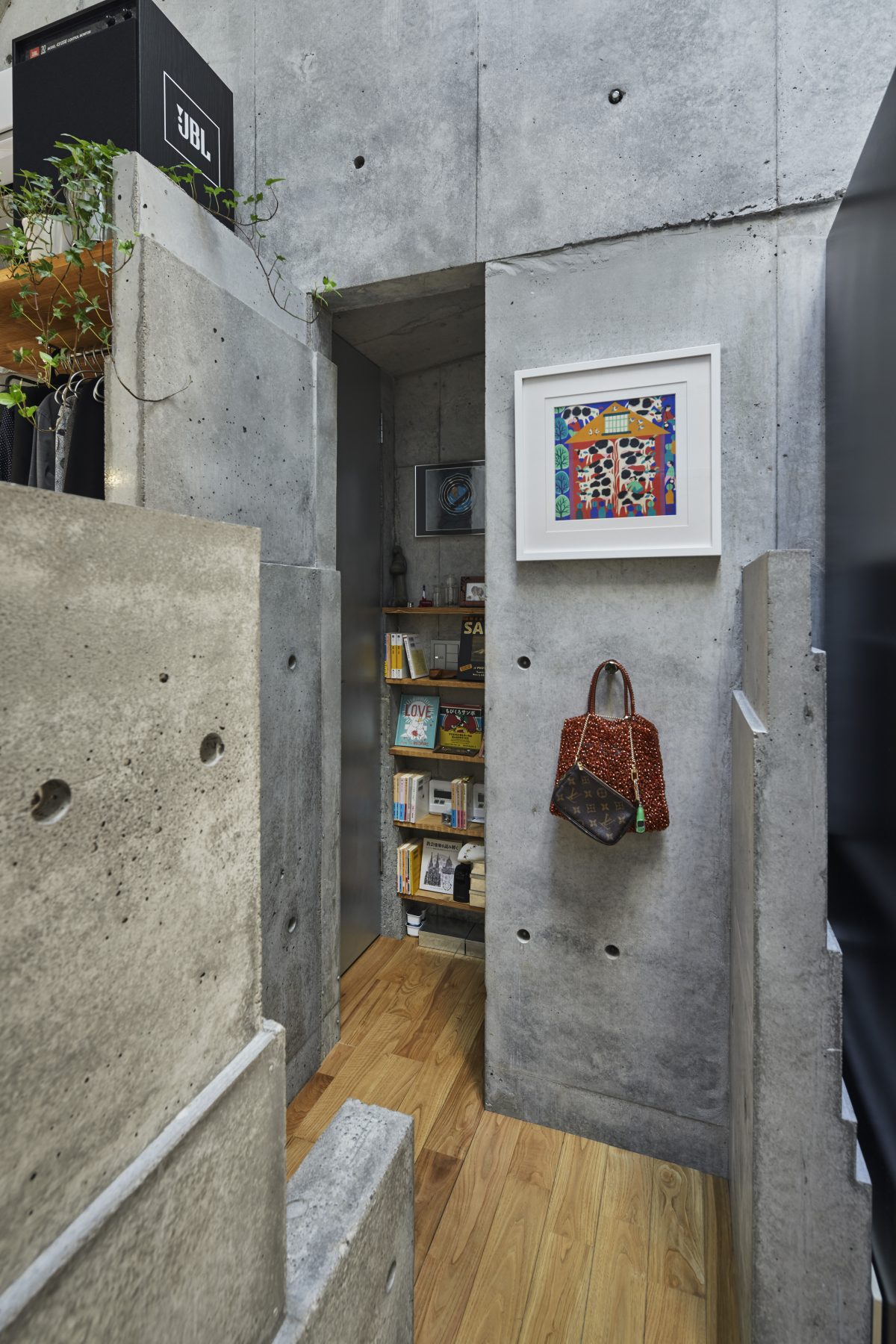
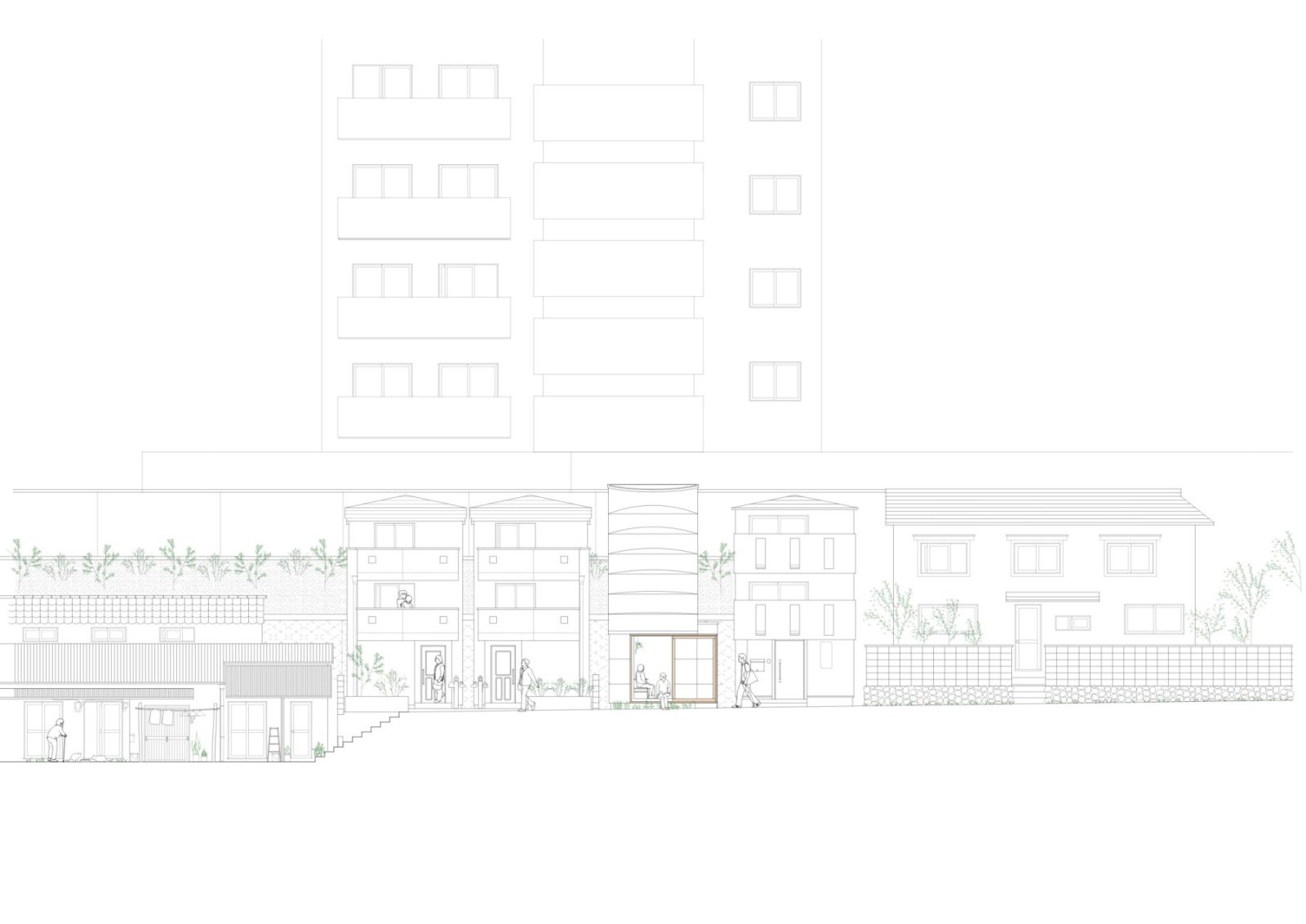
Perhaps the most radical aspect of Love2 House is not its smallness, but its capacity to dissolve into the surrounding urban fabric.
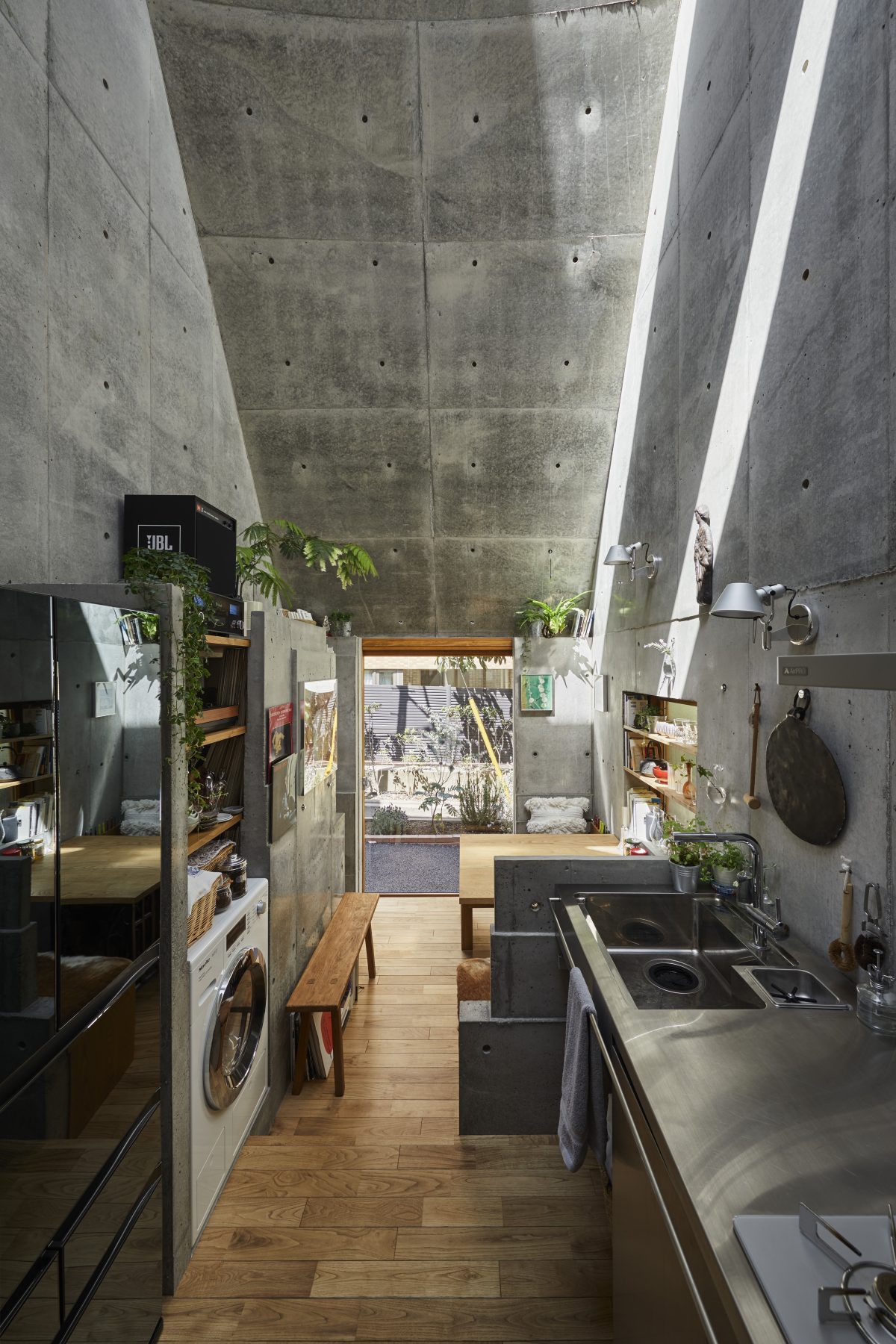
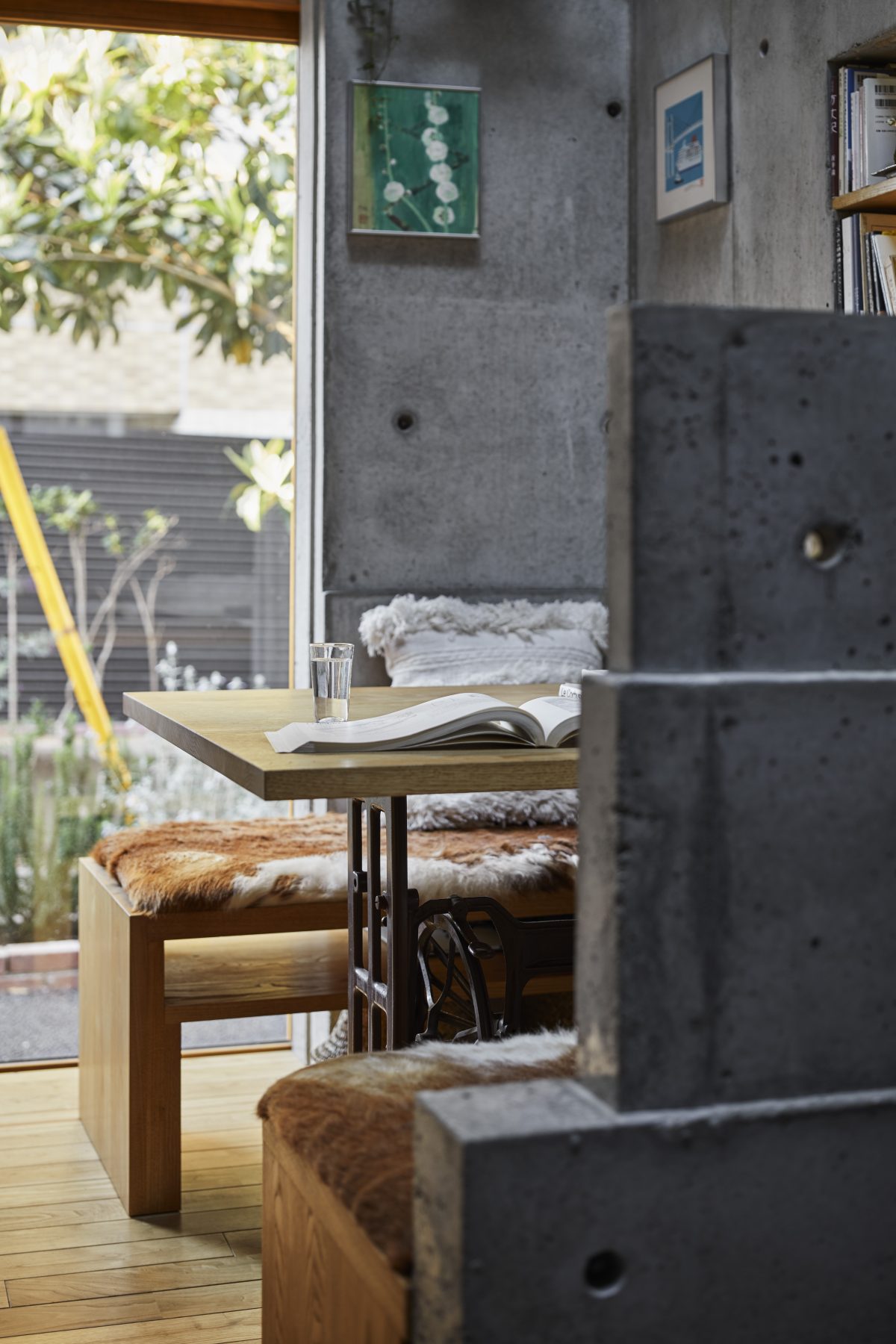
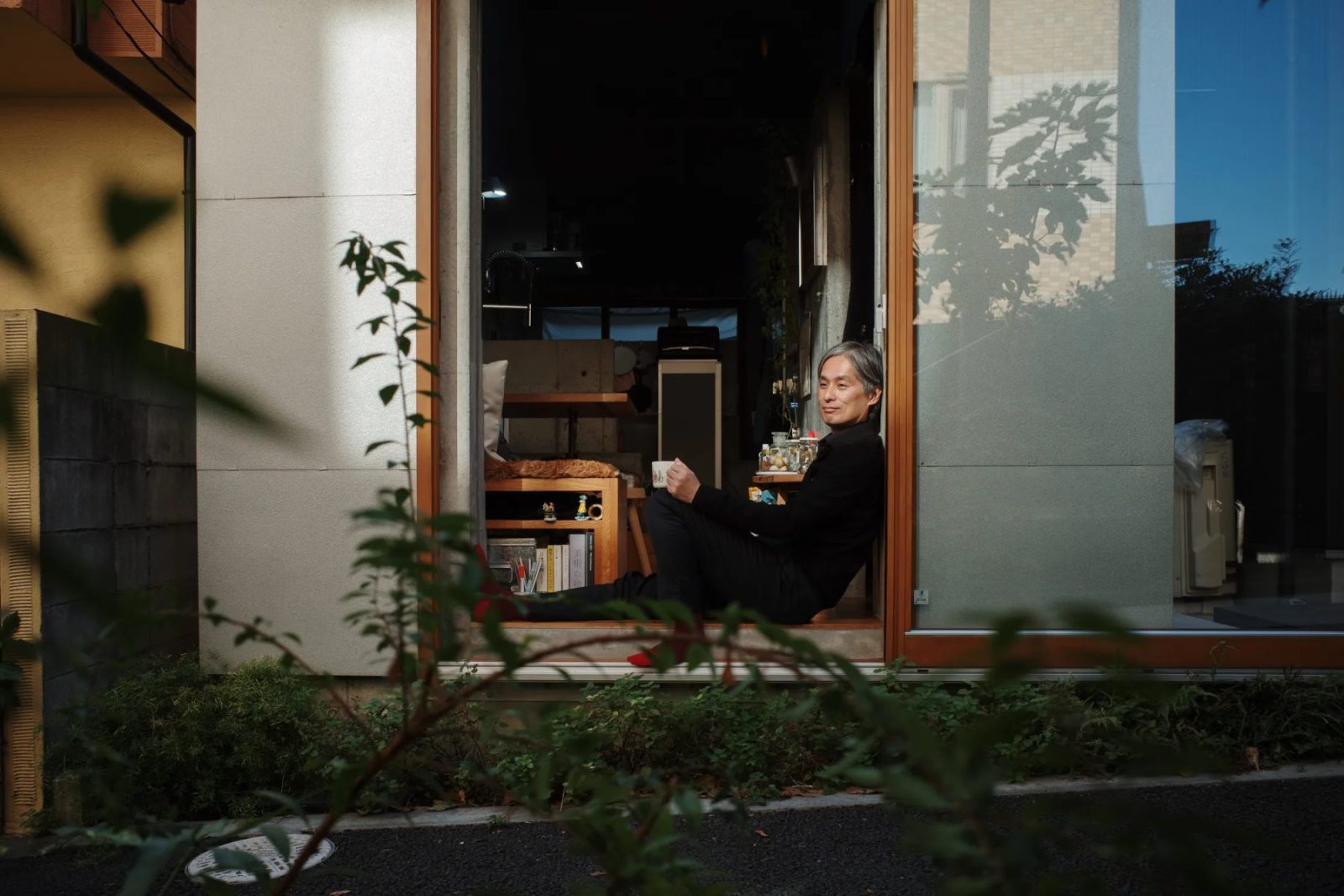
A large sliding opening towards the street erases the conventional boundary between private interior and city, allowing domestic life to spill gently into the public realm. Neighbours pause to converse, children peer inside, and everyday encounters become quietly embedded in the rhythm of the home. This permeability recalls a long-standing spatial tradition in Japanese architecture, where the threshold is understood not as a fixed line but as a gradient—an in-between condition in which intermediary spaces mediate the relationship between individual, community and nature (Engel, 1985). Within this logic, the city is not opposed to the house but folded into it.
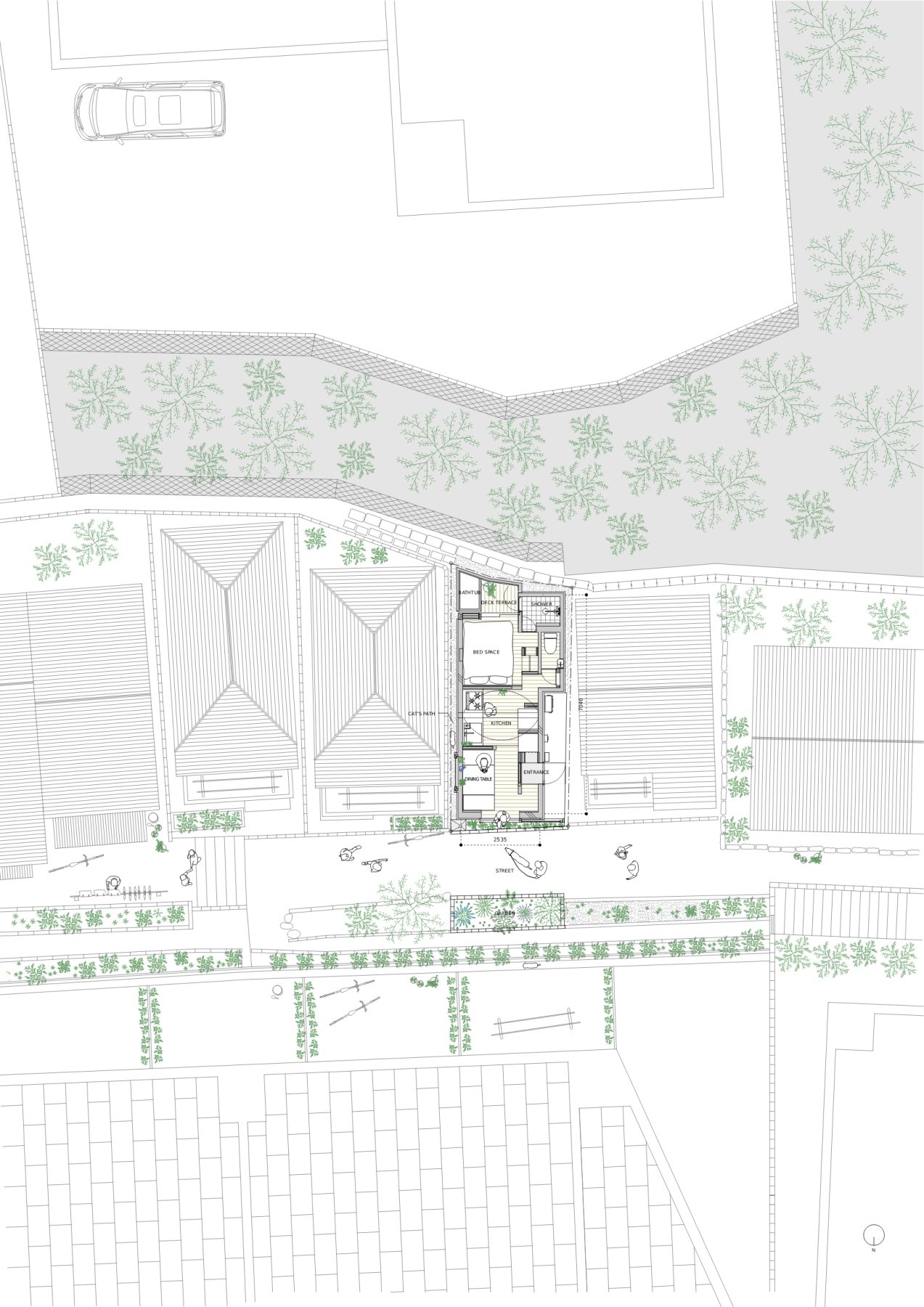
Hosaka thus achieves, through the most restrained architectural gesture, an expansive territory measured not by ownership or enclosure, but by intensity of relation.
In an era where minimalism is frequently aestheticised as a language of empty surfaces and expensive restraint, Hosaka proposes something far more profound: a lesson in the ethics of enough where luxury is not measured in square metres but in sunlight, sound, water, conversation and time. Ultimately, Love2 House does not ask how much space a person can occupy, but how intensely one can inhabit a fragment of the world.
Facts & Credits
Project title Love2 House
Typology Architecture, House, Residential
Location Bunkyo, Tokyo, Japan
Area 19m2
Status Completed, 2019
Architecture TAKESHI HOSAKA architects
Structural engineering Kenji Nawa
Photography Nacasa & Partners Inc., Koji Fujii, Nam Tran
References
Epicurus (1926) The Extant Remains. Translated by C. Bailey. Oxford: Clarendon Press.
Engel, H. (1985) The Japanese House: A Tradition for Contemporary Architecture. Tokyo: Charles E. Tuttle.
Pilgrim, R.B. (1986) ‘Intervals (ma) in Space and Time: Foundations for a Religio-Aesthetic Paradigm in Japan’, History of Religions, 25(3), pp. 255–277.