Το Studio Vrantsi είναι ένα νέο ελληνικό αρχιτεκτονικό και interior design γραφείο, που ιδρύθηκε από τη Χρυσή και την Αναστασία Βράντση και αναπτύσσει τη δραστηριότητά του μεταξύ Θεσσαλονίκης και Αθήνας. Η πρακτική του διαμορφώνει μια σαφή αρχιτεκτονική ταυτότητα που εκκινεί από την προσεκτική ανάγνωση του εδάφους και εξελίσσεται μέσα από τη μετάφραση της τοπογραφίας σε μορφή, με έμφαση σε κατοικίες και έργα που διερευνούν τη σχέση μορφής και τοπίου.
Η σύνθεση οργανώνεται ως συνέχεια του τόπου, με τις γεωμετρίες να προκύπτουν από τις ίδιες τις γραμμές, τις κλίσεις και τις υψομετρικές διαφοροποιήσεις του, ενώ ο σχεδιασμός αξιοποιεί παραμετρικά εργαλεία και τεχνολογική ακρίβεια ως μέσα διερεύνησης, διαμορφώνοντας όγκους με έντονη πλαστικότητα και σαφή χωρική συνοχή.
Από τα πρώτα τους έργα διακρίνεται μια συνεκτική κατεύθυνση, όπου η υλικότητα, η κατασκευή και η περιβαλλοντική απόδοση εντάσσονται εξαρχής στη συνθετική λογική, συγκροτώντας αρχιτεκτονικές μορφές που αναπτύσσονται μέσα από μετατοπίσεις, προβολές και κεκλιμένα επίπεδα.
Μέσα σε αυτό το πλαίσιο, η γεωμετρία, το φως και το τοπίο συνυπάρχουν ως ενιαίο σύστημα, ενώ η αρχιτεκτονική εκφράζεται ως αποτέλεσμα ακριβούς επεξεργασίας και χωρικής σκέψης, συγκροτώντας ένα αναγνωρίσιμο σχεδιαστικό αποτύπωμα ήδη από τα πρώτα τους βήματα.
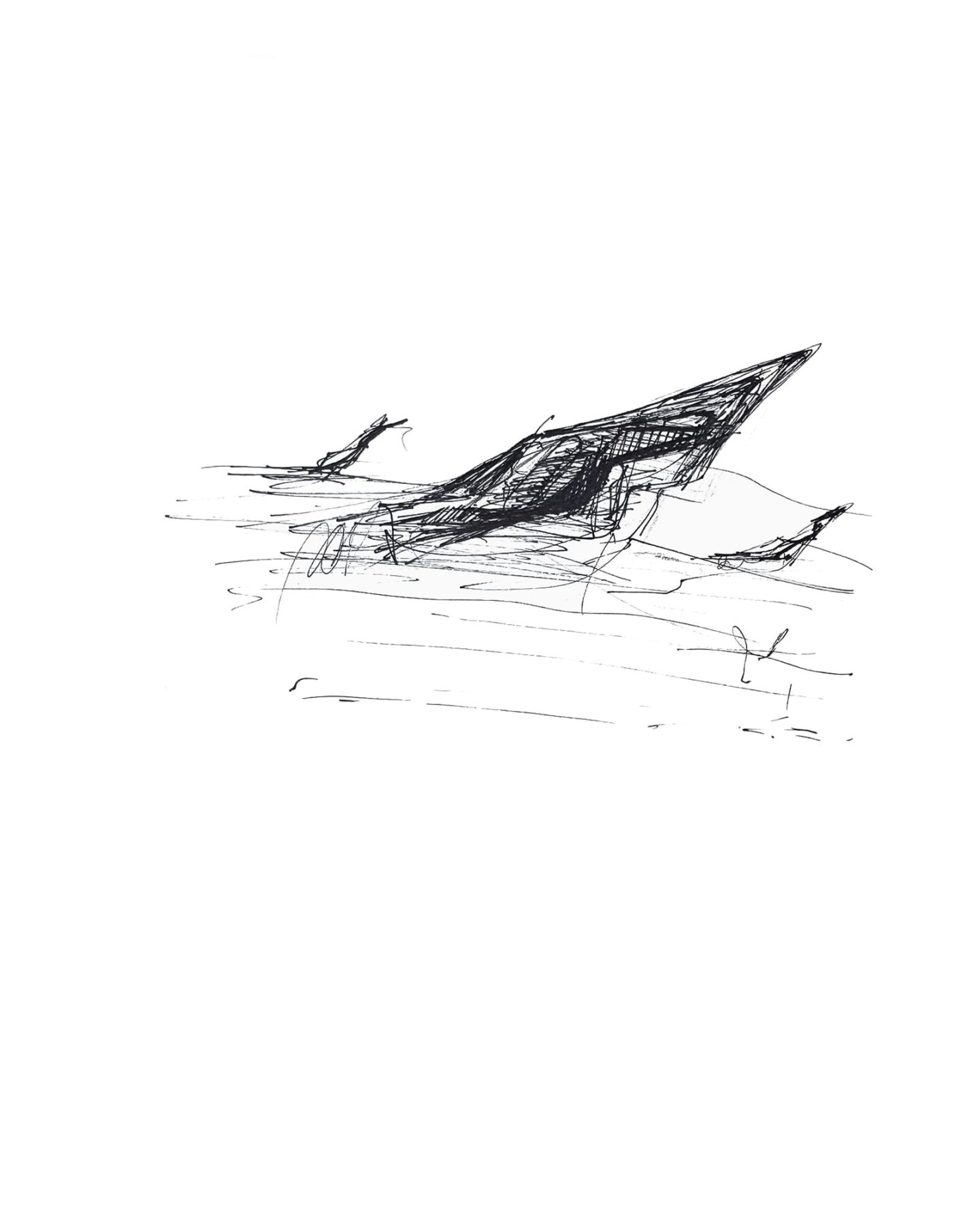
Στο έργο Omen, μια σειρά από desert capsules συγκροτεί ένα πιλοτικό μοντέλο αυτόνομης κατοίκησης στην έρημο, διερευνώντας τις δυνατότητες μιας αρχιτεκτονικής που λειτουργεί εκτός δικτύου, με ελάχιστο περιβαλλοντικό αποτύπωμα.
Οι κάψουλες οργανώνονται ως μικρο-κατοικίες που ανταποκρίνονται στο ακραίο κλίμα μέσα από παθητικές βιοκλιματικές στρατηγικές.
«Οι κάψουλες σχεδιάζονται ως αυτόνομες μικρο-κατοικίες ερήμου, ικανές να λειτουργούν εκτός δικτύου, ελαχιστοποιώντας το περιβαλλοντικό τους αποτύπωμα», σημειώνουν οι αρχιτέκτονες, υπογραμμίζοντας τη σημασία του προσανατολισμού, των βαθιών σκιάσεων και του φυσικού αερισμού στη μείωση των ενεργειακών αναγκών.
«Για τη διατήρηση της μορφολογικής καθαρότητας των όγκων, τα φωτοβολταϊκά συστήματα τοποθετούνται διακριτικά στο τοπίο, σε ανεξάρτητο πεδίο», συνεχίζουν, επιτρέποντας την ενεργειακή αυτονομία χωρίς να μεταβάλλεται η αρχιτεκτονική έκφραση.
Η αποθήκευση ενέργειας και οι στρατηγικές διαχείρισης και ανακύκλωσης νερού εντάσσονται σε ένα ενιαίο σύστημα λειτουργίας, ενώ «το έργο προτείνεται ως πιλοτική εφαρμογή στην Utah, διερευνώντας ένα νέο μοντέλο αυτάρκους, αρθρωτής κατοίκησης σε απομονωμένα τοπία».
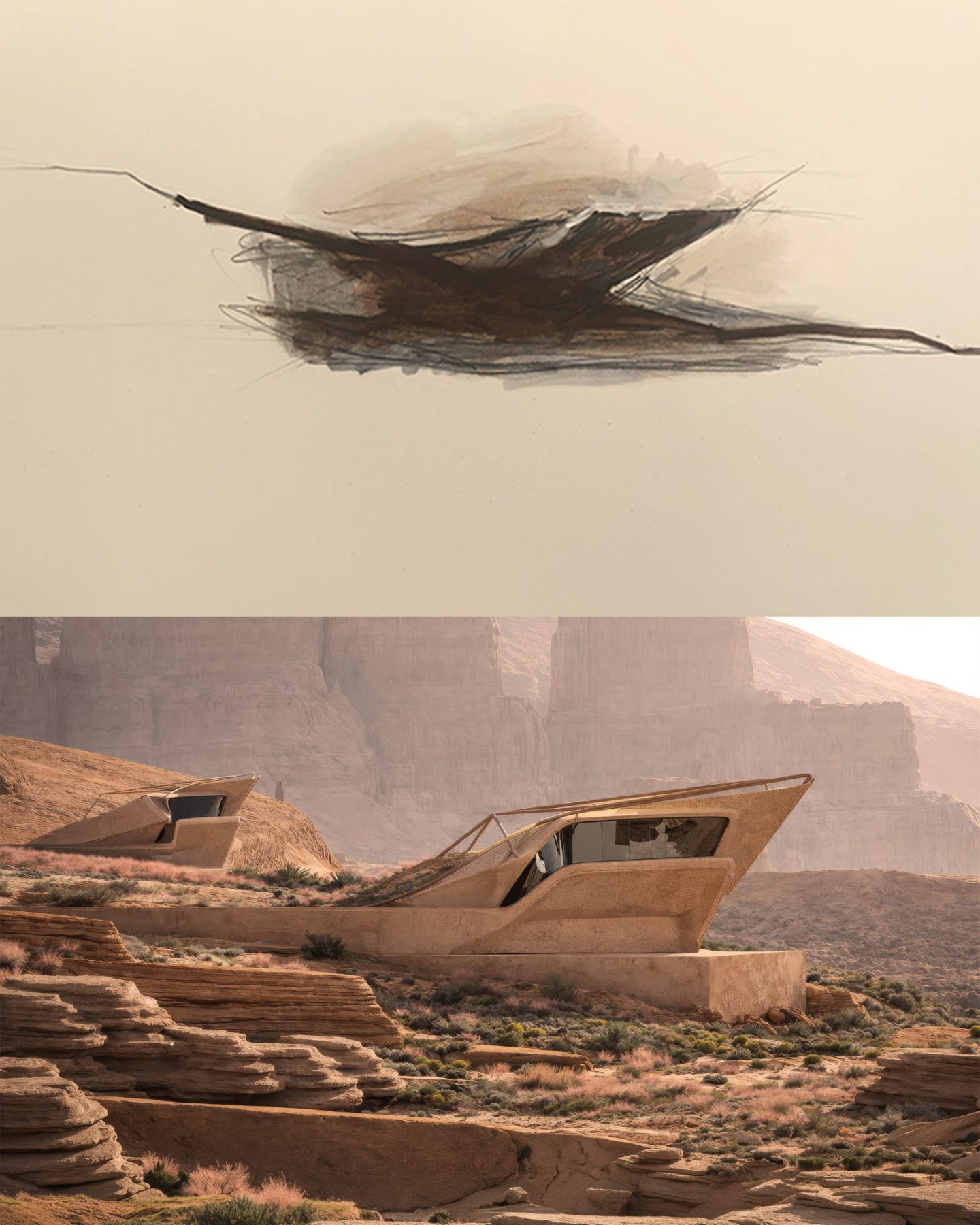
Παράλληλα, το Habitable Outcrop / Desert Observatory House αναπτύσσεται ως κατοικία–παρατηρητήριο που συγκροτείται μέσα από τη στενή σχέση με την τοπογραφία της ερήμου. Η μορφή του προκύπτει από μορφολογικό πειραματισμό με τα mesas, τα plateaus και τα διαβρωμένα φαράγγια της Utah, οδηγώντας σε ένα χαμηλό, επιμήκες πρίσμα με κεκλιμένα επίπεδα που αντανακλούν τις φυσικές εξάρσεις του εδάφους. «Το έργο διερευνά μια κατοικία–παρατηρητήριο που δεν επιβάλλεται στο τοπίο, αλλά αναδύεται ως οργανική του προέκταση», αναφέρουν, περιγράφοντας μια προσέγγιση όπου «το κτίριο προσεγγίζεται ως μια γεωλογική συνθήκη, μια αρχιτεκτονική μορφή που μοιάζει να αναδύεται από την ίδια την έρημο».
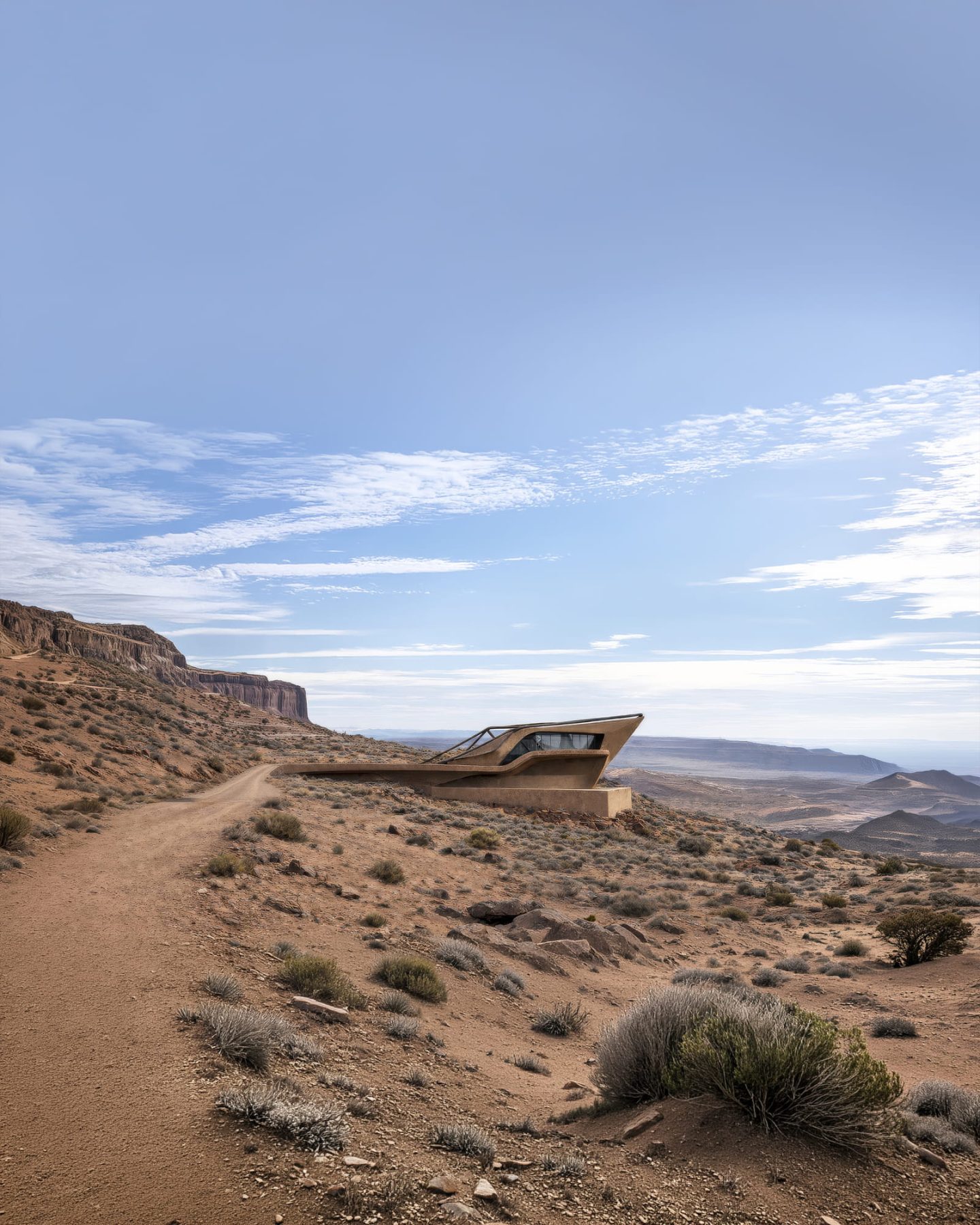
Η υλικότητα οργανώνεται γύρω από μια παλέτα εμπνευσμένη από το χρωματικό φάσμα της γης της Utah, με επιφάνειες που παραπέμπουν στις τραχιές ποιότητες της φυσικής διάβρωσης.
«Το κτίριο, εν μέρει υπόσκαφο, ενσωματώνεται στην τοπογραφία, αξιοποιώντας τη θερμική μάζα του εδάφους για παθητική ψύξη», σημειώνουν, ενώ η σχέση υπέργειων και υπόγειων όγκων συγκροτεί έναν συνεχή διάλογο μεταξύ αρχιτεκτονικής και εδάφους.
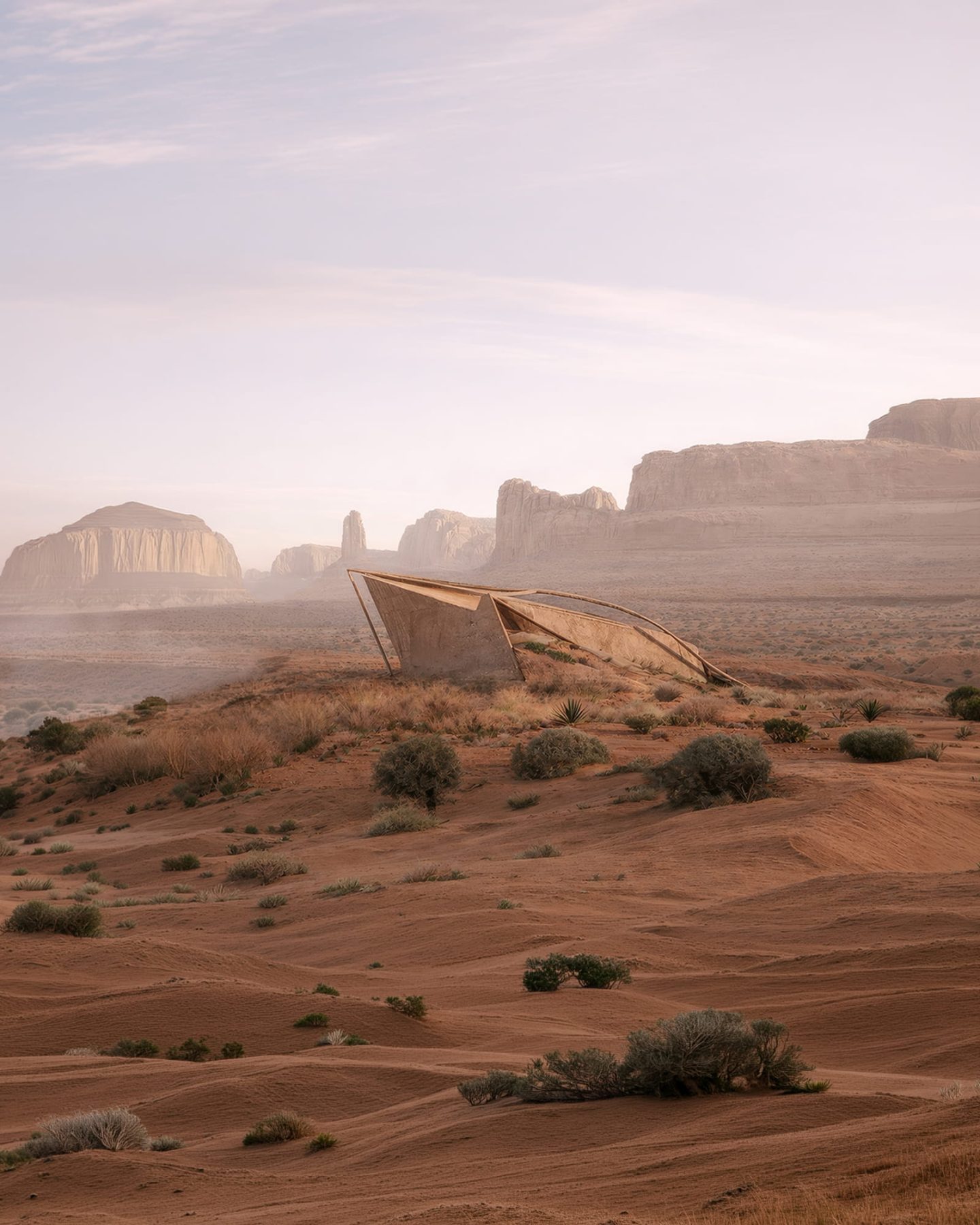
Η κατοίκηση οργανώνεται ως πράξη παρατήρησης, με τους ημι-υπόσκαφους ιδιωτικούς χώρους να μεταβαίνουν σταδιακά σε προβολικούς όγκους που αναδύονται στο τοπίο. «Η χωρική οργάνωση βασίζεται σε μια προσέγγιση όπου η κατοίκηση ταυτίζεται με την παρατήρηση», αναφέρουν, εξηγώντας ότι τα υπνοδωμάτια τοποθετούνται κάτω από το επίπεδο του εδάφους για θερμική σταθερότητα και ιδιωτικότητα, ενώ οι κοινόχρηστοι χώροι ανυψώνονται για να αποδώσουν πανοραμικές θέες.
Σε επίπεδο αρχιτεκτονικής σκέψης, «οι αρχιτεκτονικοί όγκοι αντιμετωπίζονται ως δυναμικές οντότητες και όχι ως στατικά αντικείμενα», με κεκλιμένα επίπεδα, αιχμηρές γεωμετρίες και προβολές σε πρόβολο να συγκροτούν μια συνθήκη έντασης που παραπέμπει σε στιγμές γεωλογικής μεταβολής. «Η σύνθεση επιδιώκει μια ένταση μορφής και εμπειρίας που ενεργοποιεί την αντίληψη», σημειώνουν, με τον διάλογο με το έδαφος να παραμένει κεντρικός σε κάθε κλίμακα.
Το Desert Observatory House διαμορφώνει τελικά μια αρχιτεκτονική συνθήκη όπου «το τοπίο λειτουργεί ως συν-δημιουργός της μορφής».
Μέσα από γεωμορφολογική μίμηση, χρωματική συγγένεια και βιοκλιματική προσαρμογή, η κατοίκηση συγκροτείται ως «μια στοχαστική εμπειρία επαφής με την έρημο», ένα κατοικήσιμο έξαρμα που λειτουργεί ταυτόχρονα ως καταφύγιο και ως μηχανισμός παρατήρησης.
Στοιχεία έργου
Τίτλοι έργων Omen & Desert Observatory House
Τυπολογία Αρχιτεκτονική, Μοντέλο Κατοίκησης
Κατάσταση Μη Υλοποιημένη Μελέτη
Αρχιτεκτονική Studio Vrantsi
Εικόνες Παραχώρηση του Studio Vrantsi
Kείμενο από τους δημιουργούς
Μάθετε περισσότερα για το Studio Vrantsi, εδώ!
Studio Vrantsi is a new Greek architecture and interior design practice, founded by Chrysi Vrantsi and Anastasia Vrantsi, operating between Thessaloniki and Athens. Its work establishes a clear architectural identity that begins with a close reading of the ground and evolves through the translation of topography into form, with a focus on residential projects and spatial investigations into the relationship between form and landscape.
The compositional approach is structured as a continuation of the site, with geometries emerging from its lines, slopes, and altimetric variations. Design employs parametric tools and technological precision as instruments of exploration, shaping volumes with strong plasticity and clear spatial coherence.
From their early work, a consistent direction becomes evident, where materiality, construction, and environmental performance are integrated from the outset into the design logic, forming architectural expressions developed through shifts, projections, and inclined planes.
Within this framework, geometry, light, and landscape operate as a unified system, while architecture is articulated as the outcome of precise processing and spatial reasoning, forming a recognizable design language from the practice’s earliest projects.
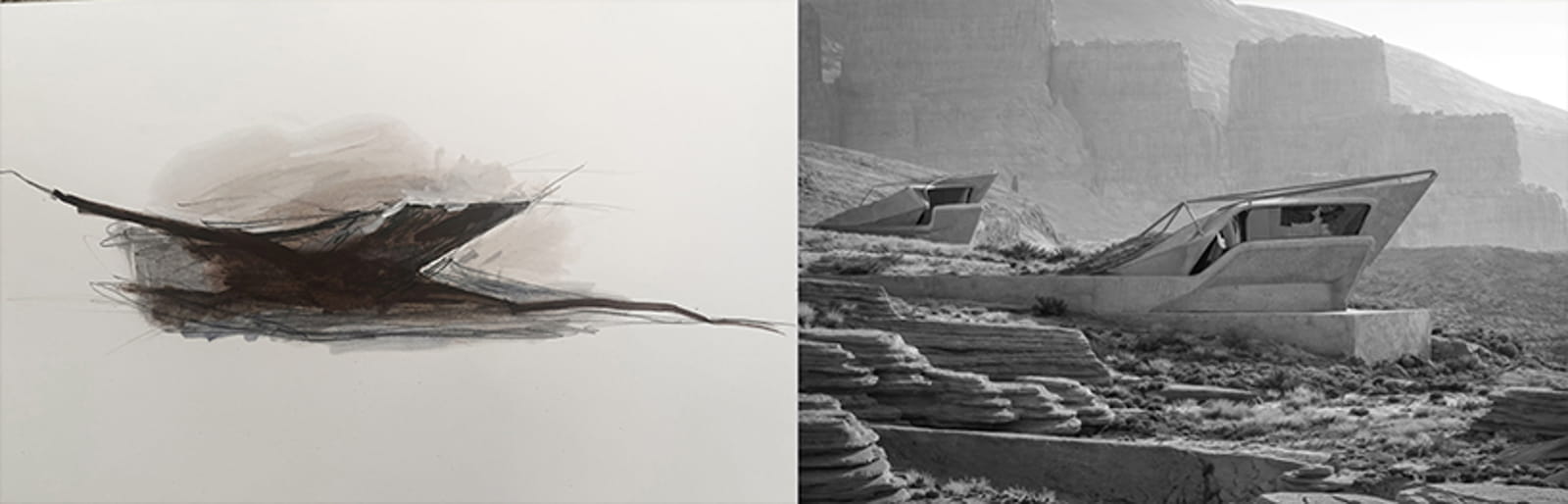
In the project Omen, a series of desert capsules establishes a pilot model for autonomous living in the desert, exploring an architectural approach capable of operating off-grid with minimal environmental impact.
The capsules are conceived as micro-habitats responding to extreme climatic conditions through passive bioclimatic strategies.
“The capsules are designed as autonomous desert micro-habitats, capable of operating off-grid while minimizing their environmental footprint,” the architects note, emphasizing the role of orientation, deep shading, and natural ventilation in reducing energy demand.
“To preserve the morphological clarity of the volumes, photovoltaic systems are placed discreetly within the landscape, in a separate field,” they continue, allowing for full energy autonomy without altering the architectural expression. Energy storage and water management and recycling strategies are integrated into a unified operational system, while “the project is proposed as a pilot application in Utah, exploring a new model of self-sufficient, modular living in remote landscapes.”
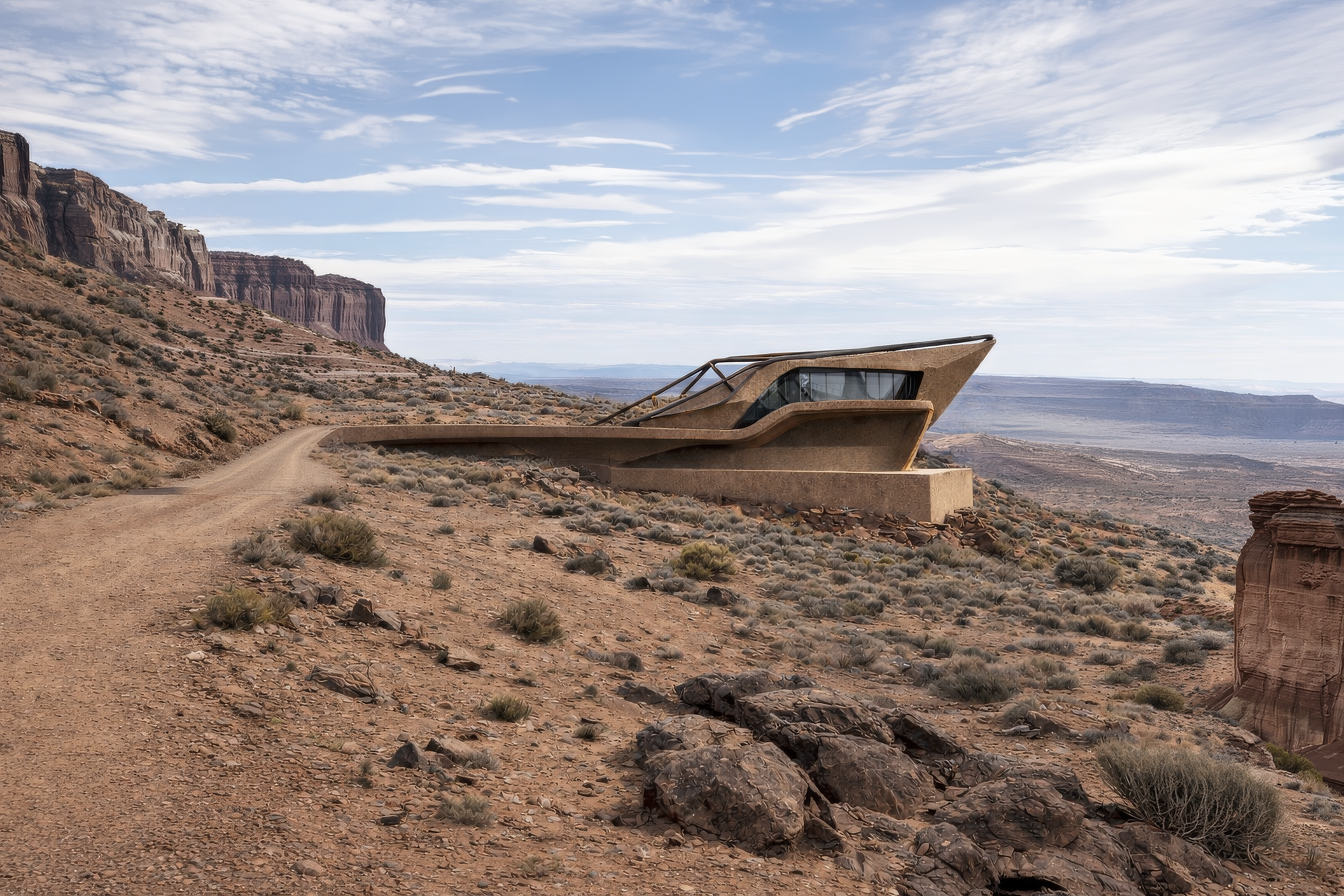
In parallel, the Habitable Outcrop / Desert Observatory House develops as a residence–observatory shaped through its close relationship with the desert topography. Its form emerges from morphological experimentation with the mesas, plateaus, and eroded canyons of Utah, resulting in a low, elongated prism articulated through inclined planes that echo the natural protrusions of the terrain. “The project explores a residence–observatory that does not impose itself on the landscape, but emerges as its organic extension,” they explain, describing an approach in which “the building is conceived as a geological condition, an architectural formation that appears to arise from the desert itself.”
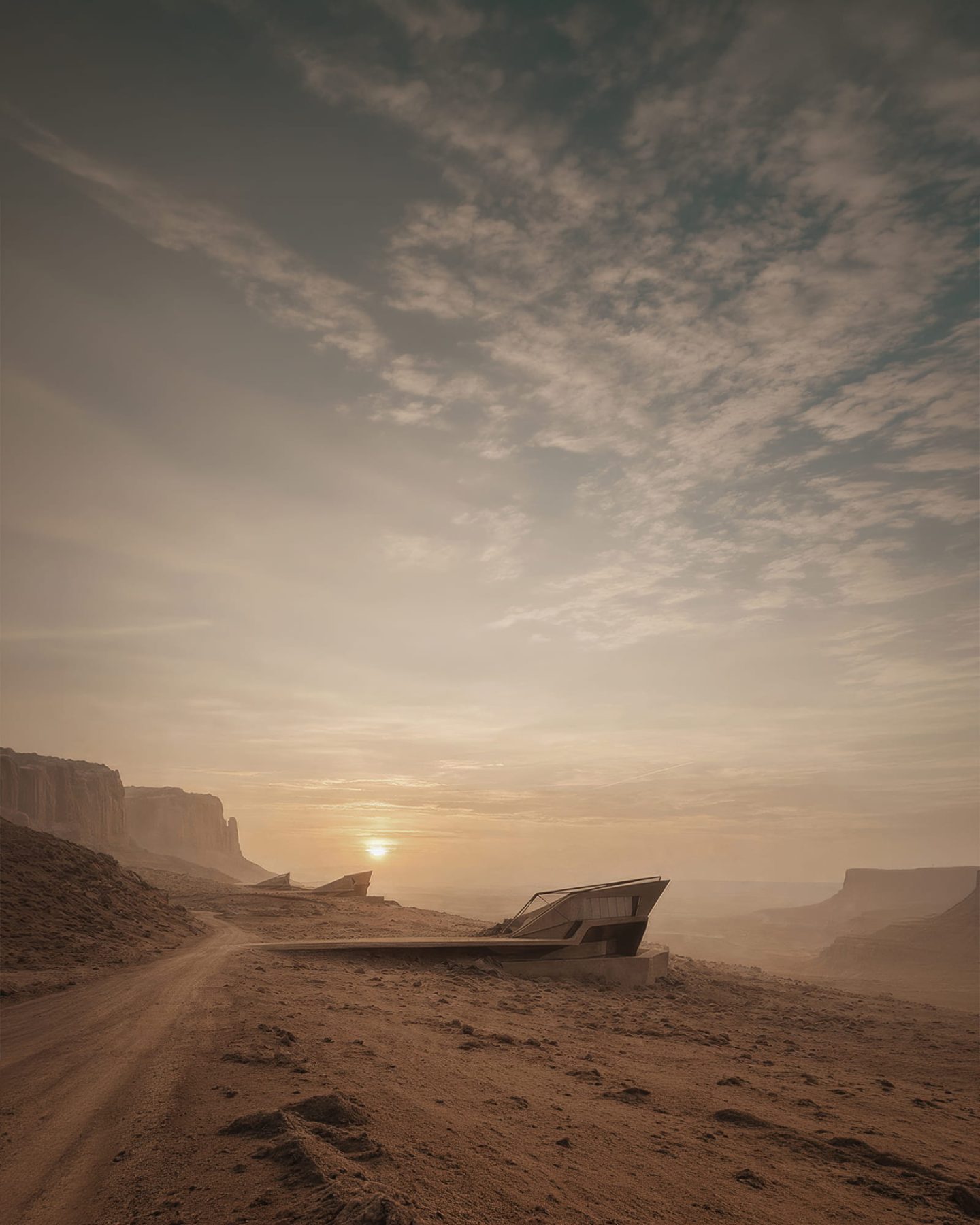
Materiality is structured around a palette derived from the chromatic spectrum of Utah’s soil, generating surfaces that evoke the rugged qualities of natural erosion.
“The building, partially embedded in the ground, integrates into the topography, utilizing the thermal mass of the earth for passive cooling,” they note, while the relationship between above-ground and subterranean volumes establishes a continuous dialogue between architecture and terrain.
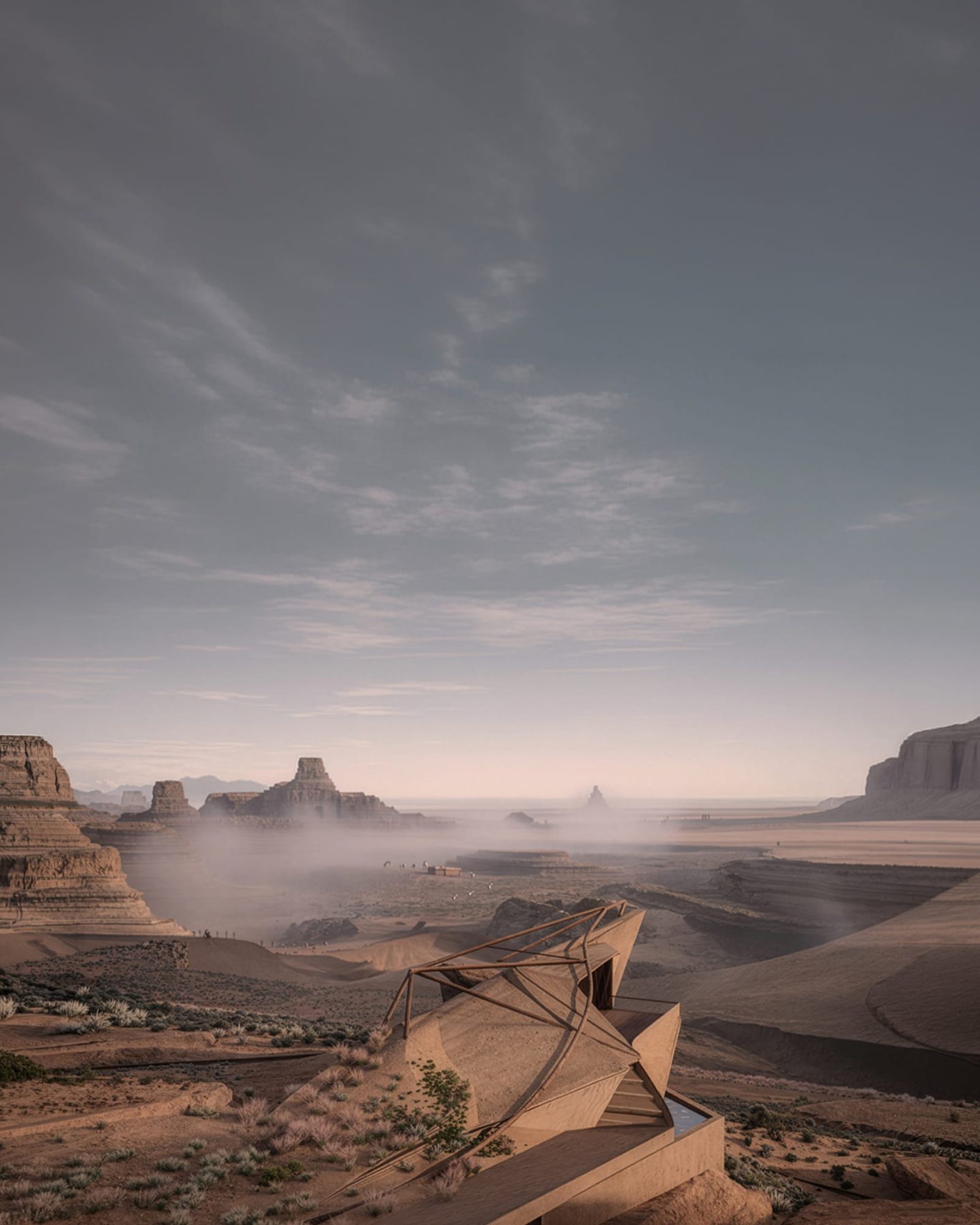
Inhabitation is organized as an act of observation, with semi-subterranean private spaces gradually transitioning into projecting volumes that emerge into the landscape. “Spatial organization is based on an approach where inhabitation becomes observation,” they state, explaining that bedrooms are positioned below ground level for thermal stability and privacy, while communal spaces are elevated to capture panoramic views.
At the level of architectural thinking, “the architectural volumes are treated as dynamic entities rather than static objects,” with inclined planes, sharp geometries, and cantilevered elements forming a condition of tension that recalls moments of geological transformation. “The composition seeks an intensity of form and experience that activates perception,” they note, with the dialogue with the ground remaining central at every scale.
The Desert Observatory House ultimately defines an architectural condition in which “the landscape operates as a co-author of form.”
Through geomorphological mimicry, chromatic affinity, and bioclimatic responsiveness, inhabitation becomes “a contemplative experience of engagement with the desert”—an inhabitable outcrop that operates simultaneously as shelter and as an instrument of observation.
Facts & Credits
Title Omen & Desert Observatory House
Typology Architecture, Residential Model
Status Not Completed Study
Architecture Studio Vrantsi
Images Courtesy of Studio Vrantsi
Text by the authors
Learn more about Studio Vrantsi, here!