Architecture for Education explores the spaces where knowledge takes form. From visionary schools and research-driven universities to civic libraries that anchor communities, this series examines how design shapes learning, interaction, and intellectual growth. Through exemplary projects worldwide, we highlight architecture that inspires curiosity, fosters inclusivity, and redefines the future of educational environments with clarity, innovation, and cultural depth.
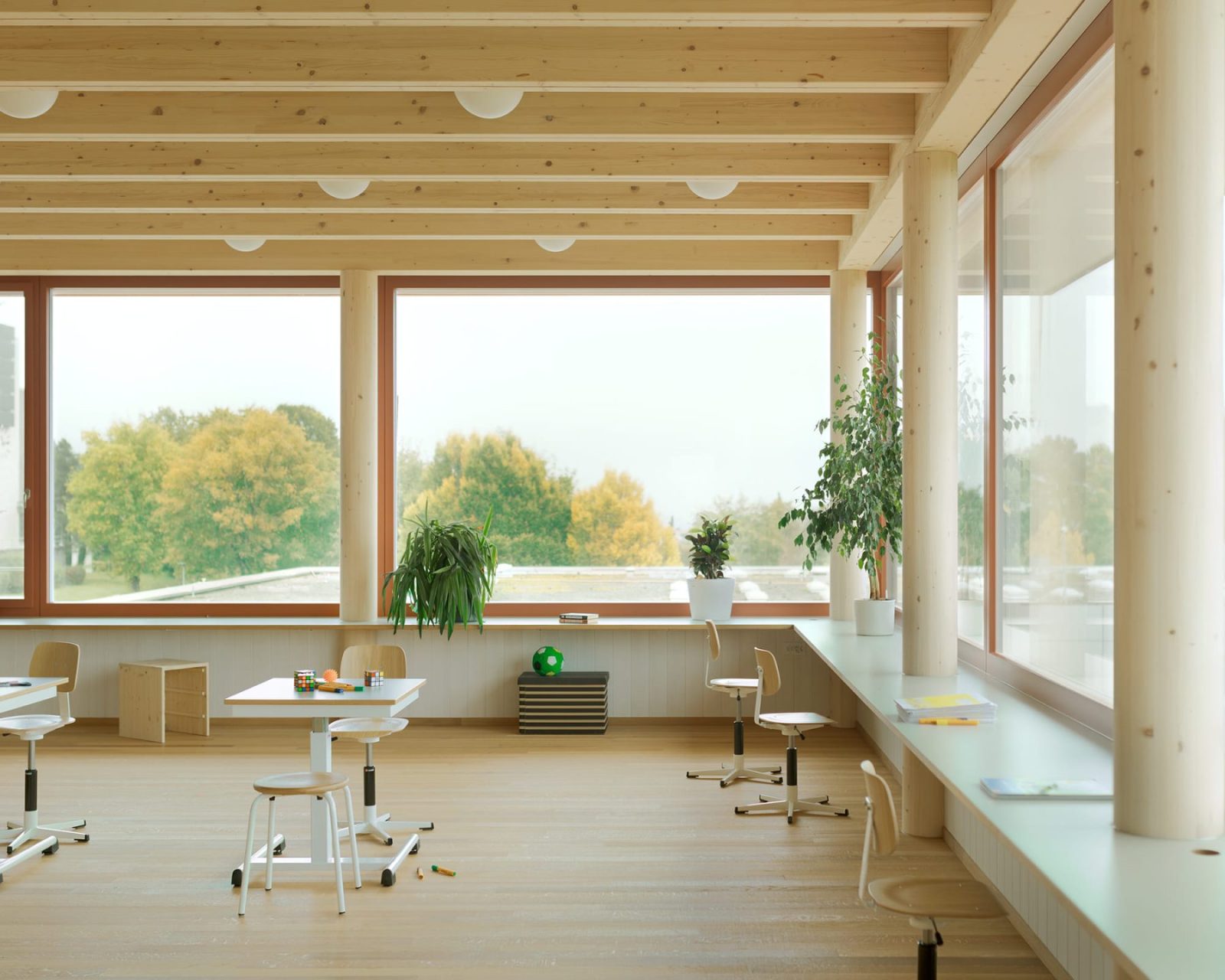
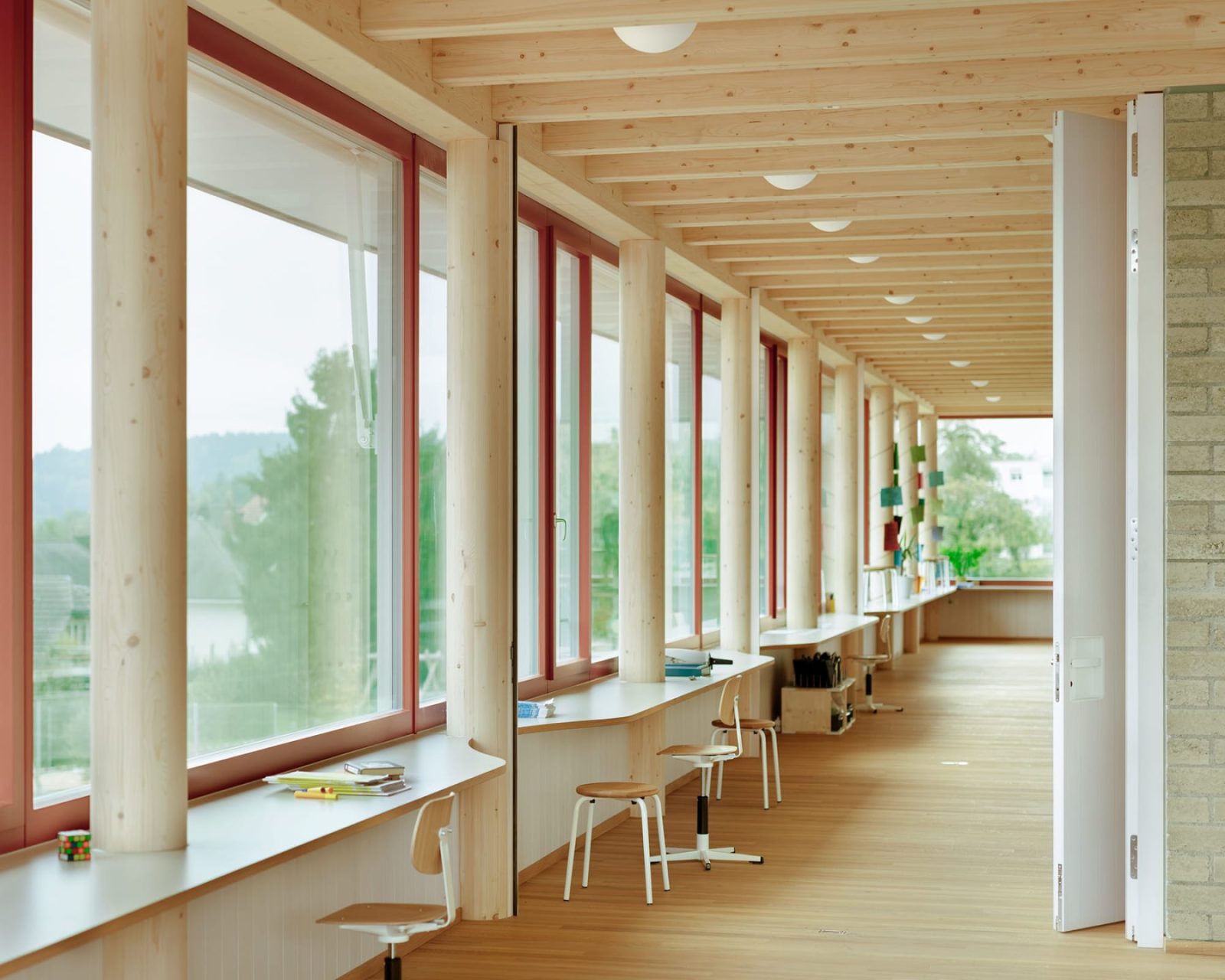
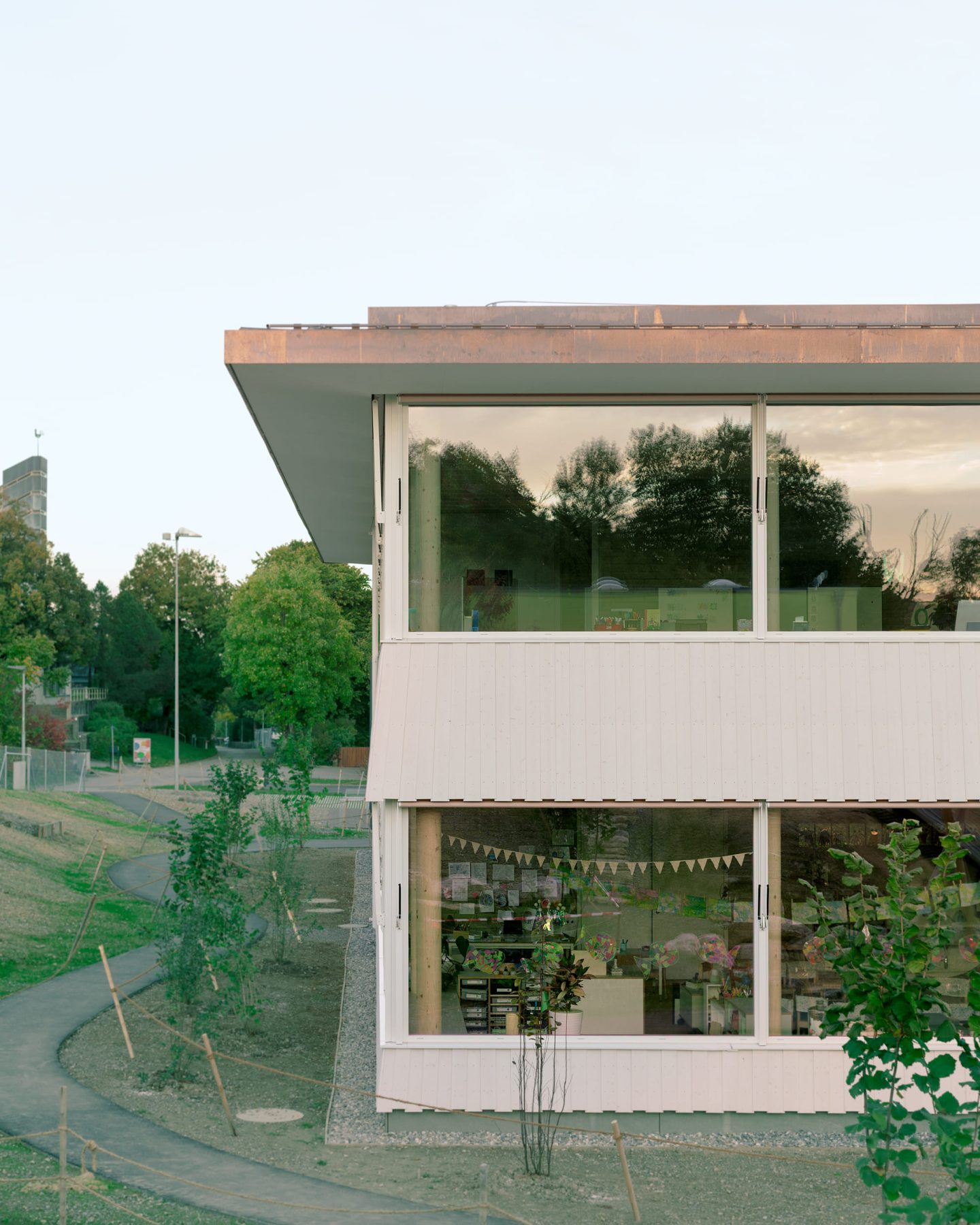
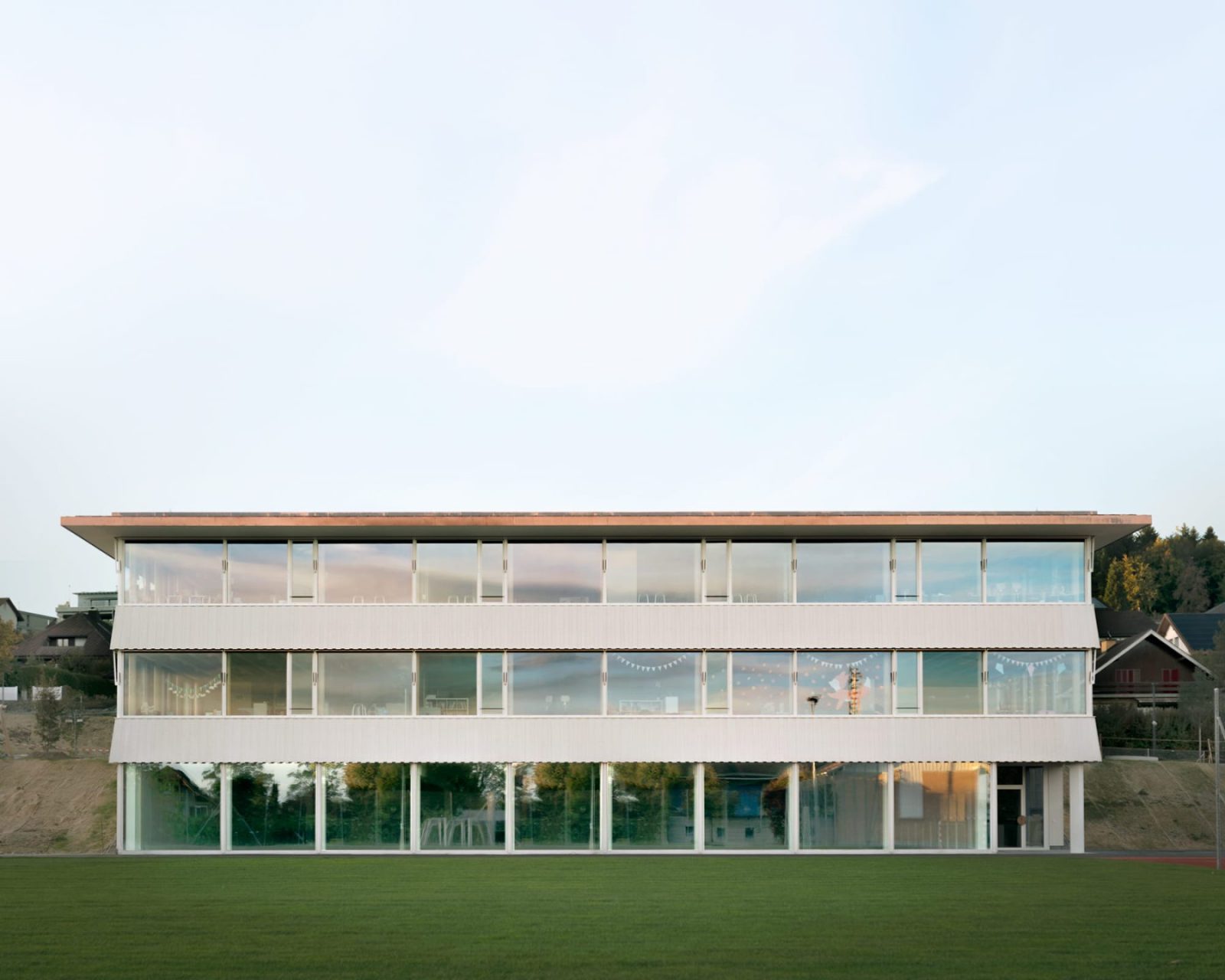
Designed by Haller Gut in Lohn-Ammannsegg, Switzerland, the Stöckliacker School is defined by two key spatial qualities: a generous central open space and the site’s gentle natural slope. Organized around this landscape-driven core, the timber building integrates learning, recreational, and flexible-use spaces, while its careful placement reinforces openness and a strong connection to the surrounding topography.
-text by the authors
Architectural concept
The defining features of the Stöckliacker school complex in Lohn Ammannsegg are the large open space in the center of the complex and its slight slope.
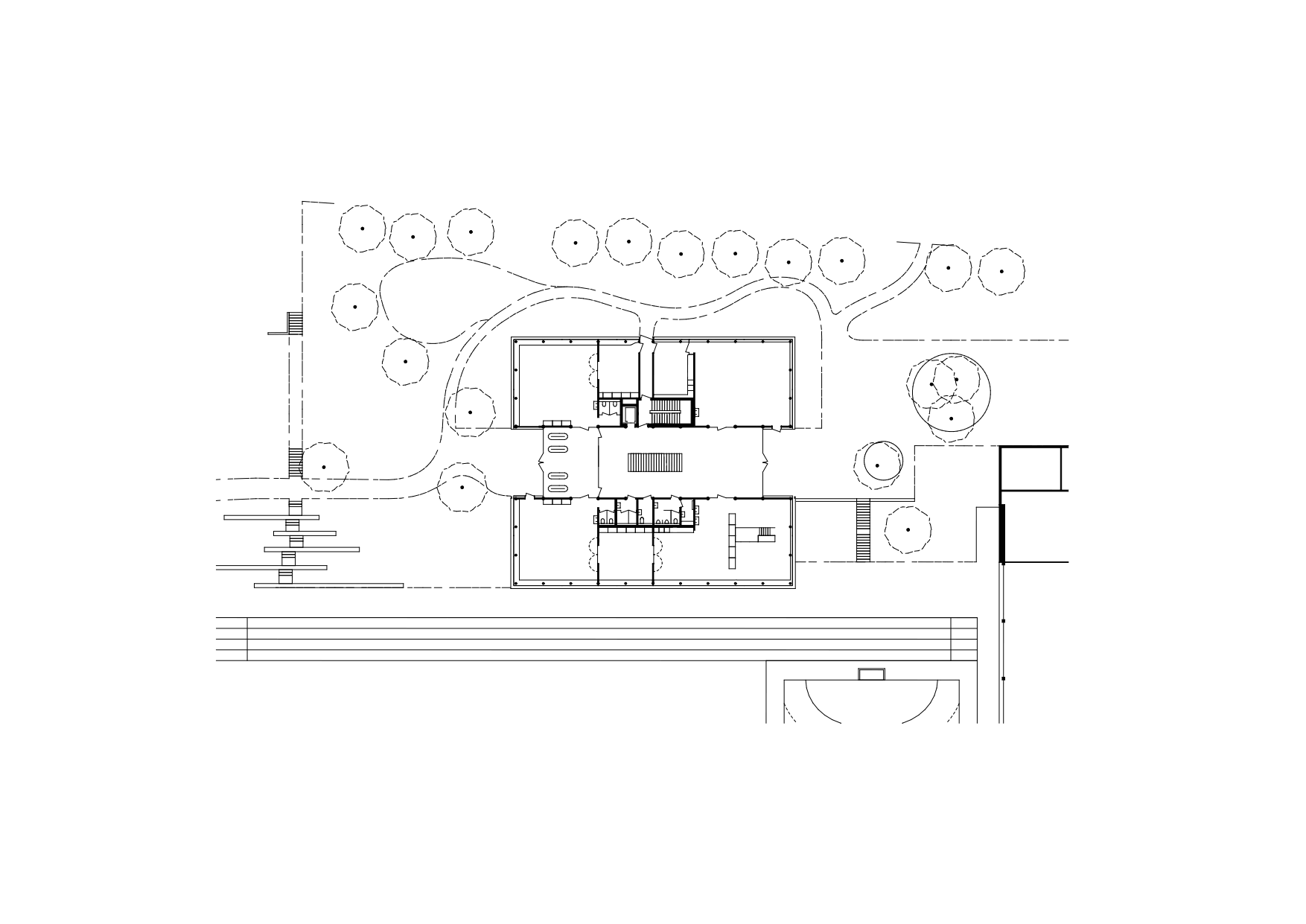
The new timber construction fills the gap between the double kindergarten and the existing multipurpose building along Friedhofstrasse.
In front of the new building, an attractive interior space has been created that can accommodate the outdoor sports areas, the playground, and the small natural forest and connects to the existing open space to the west.
Generous distances to the neighboring school and residential buildings as well as the unobstructed lines of sight preserve the spatial expanse despite the considerable densification.
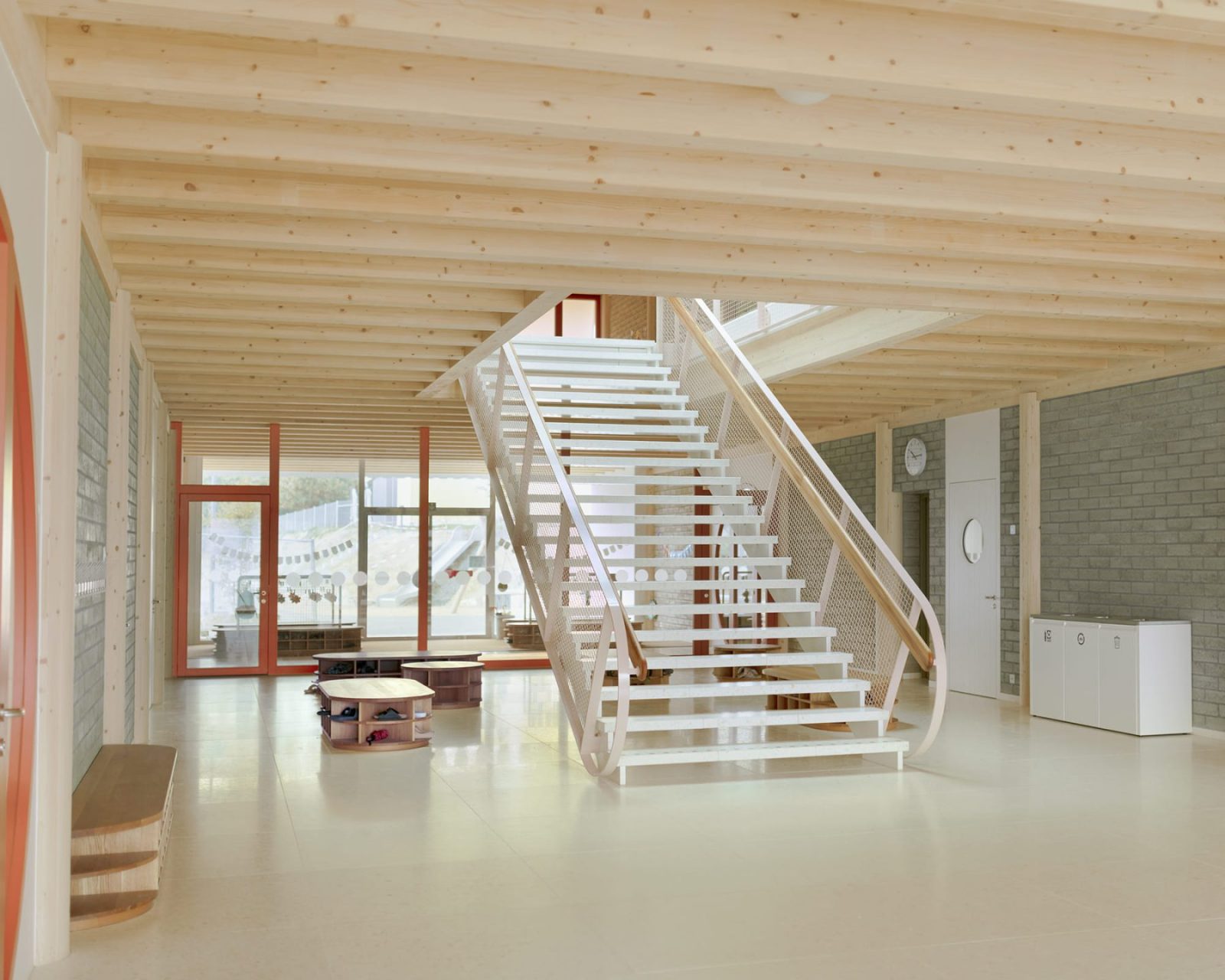
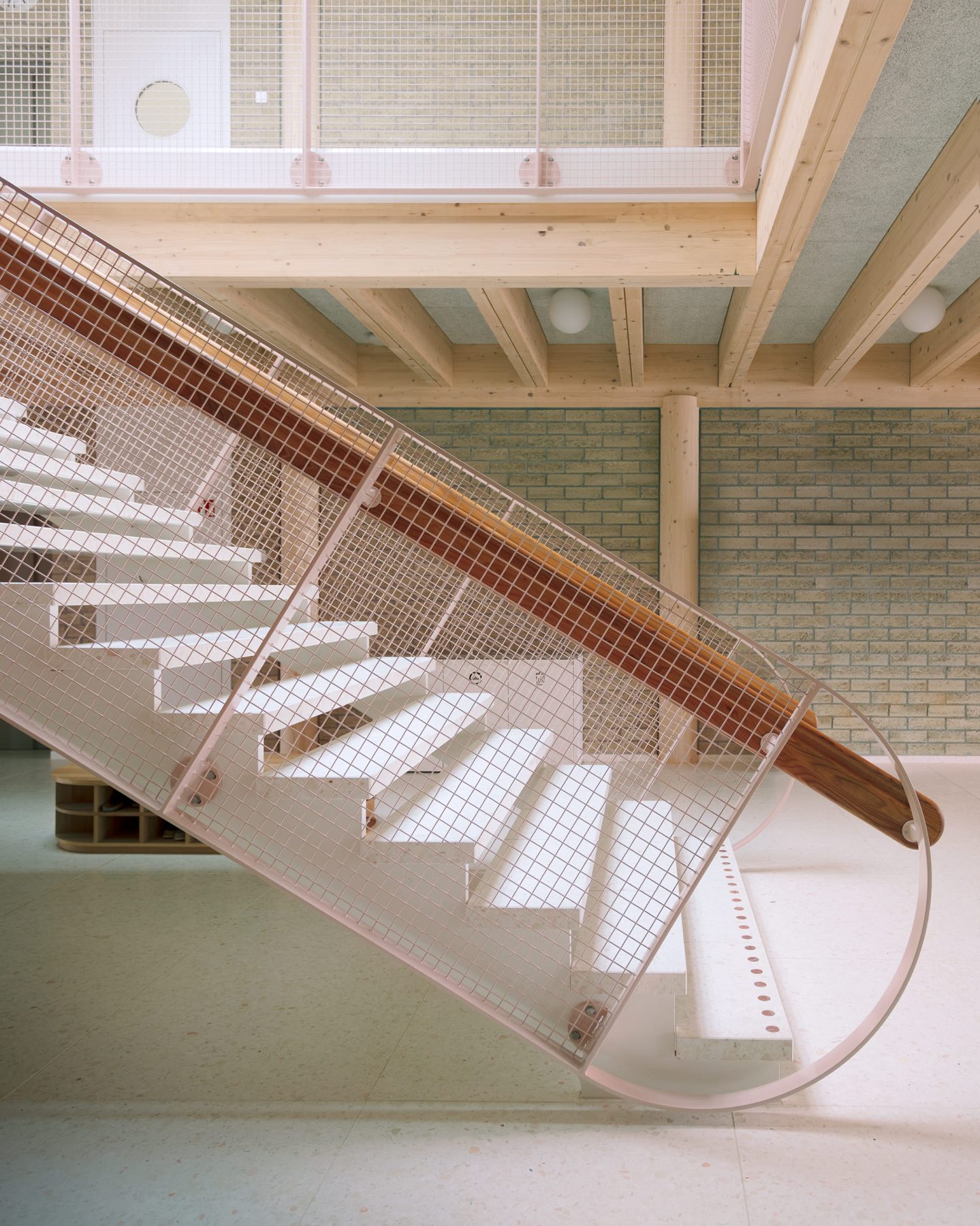
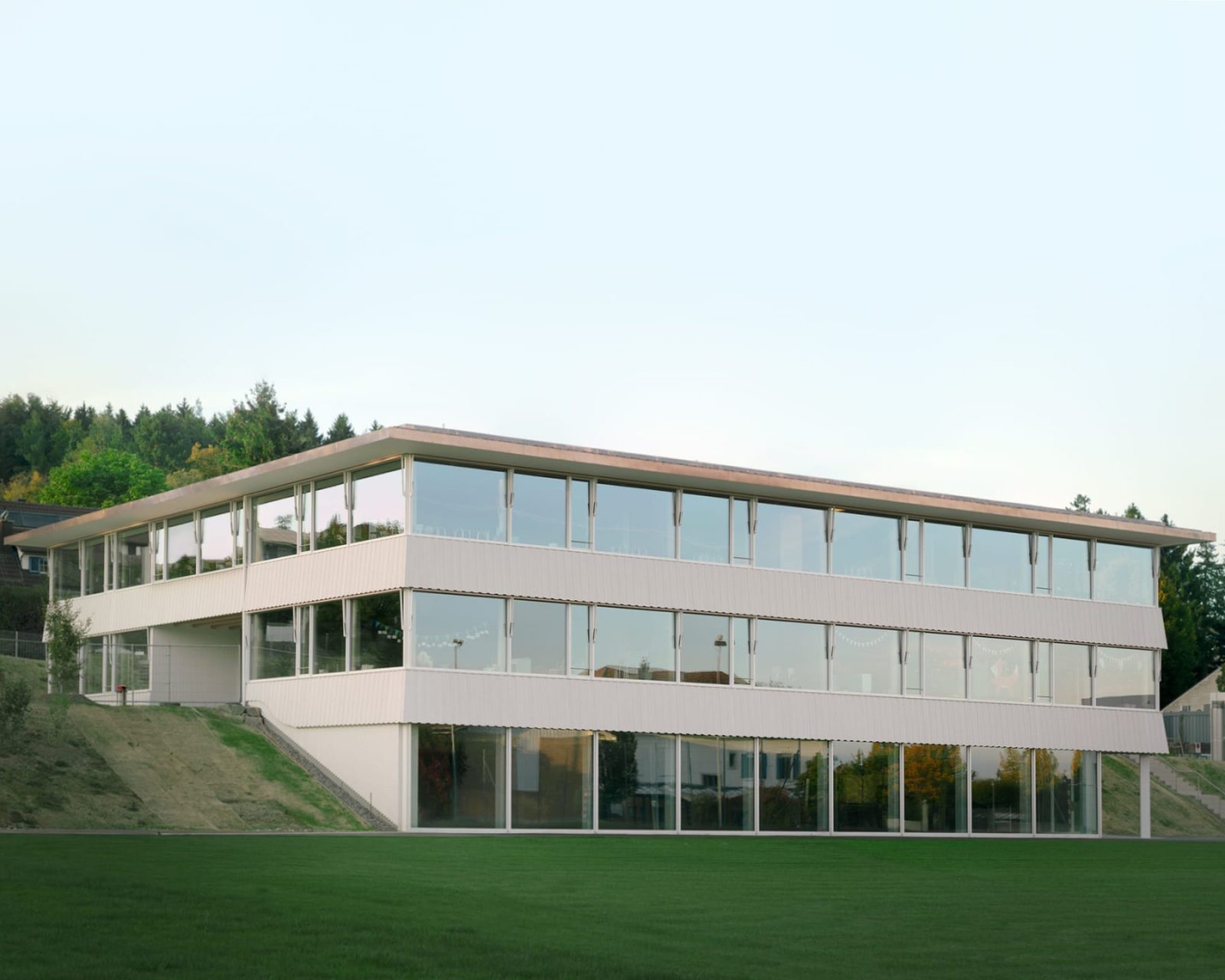
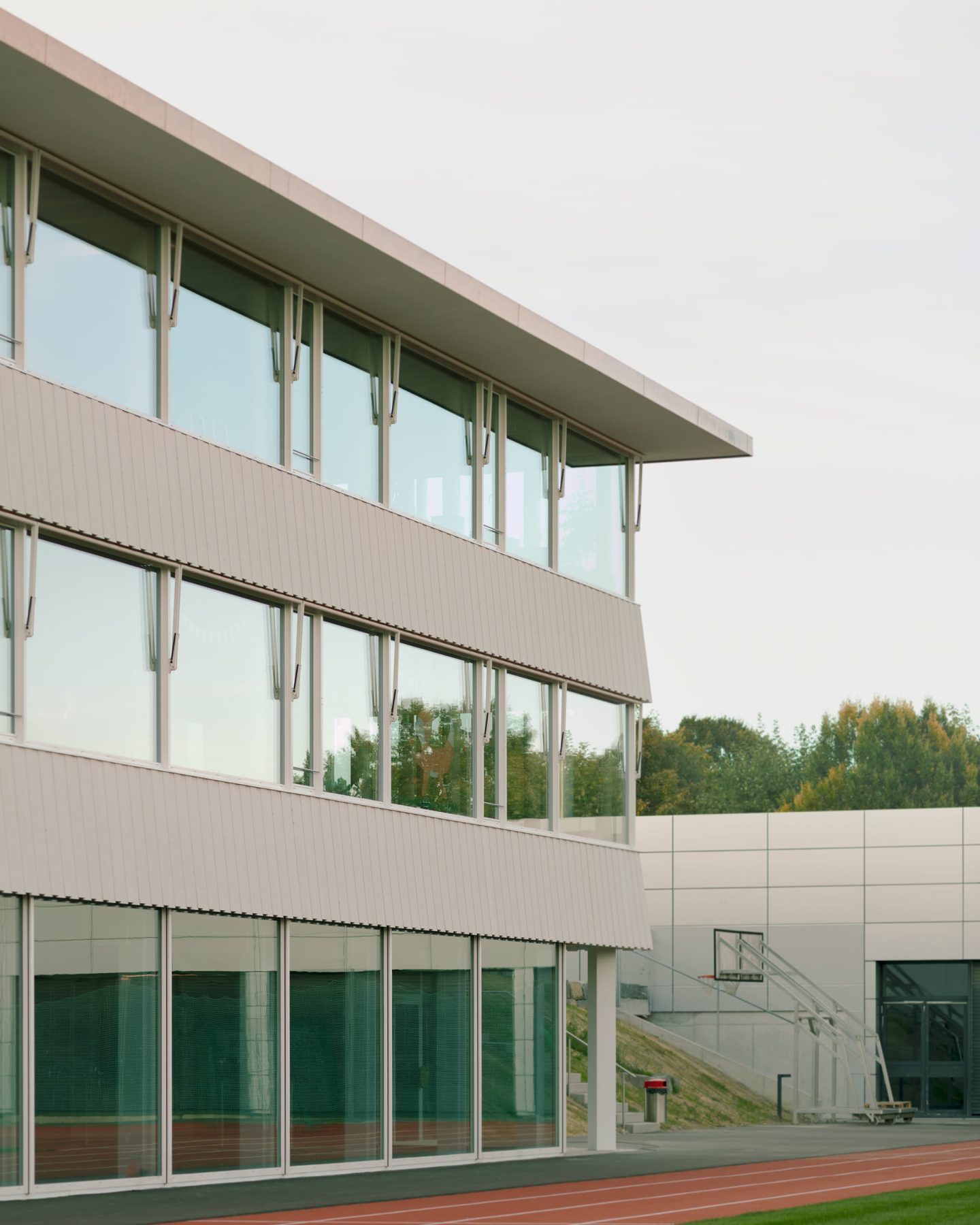
The new three-story school building is oriented on all sides.
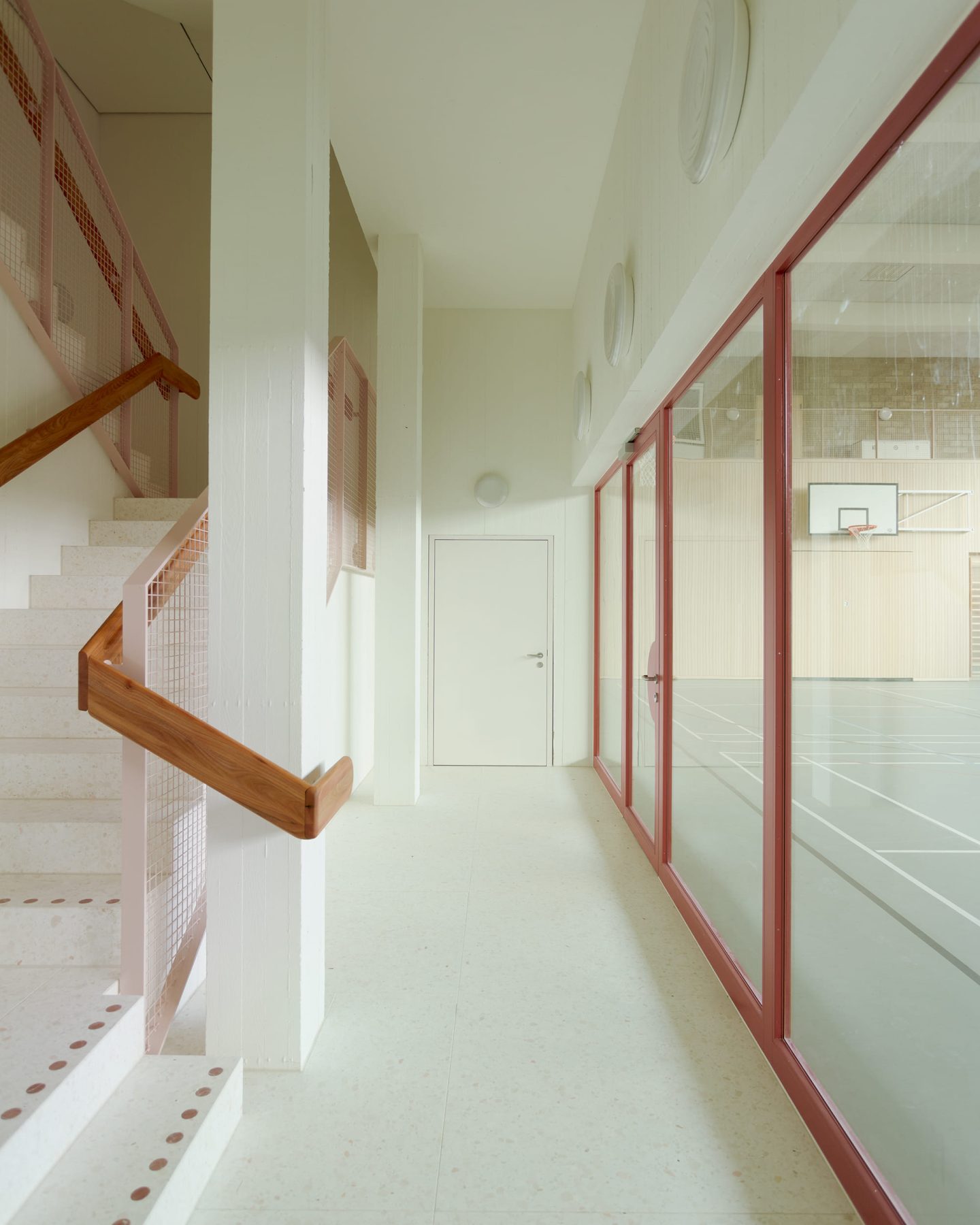
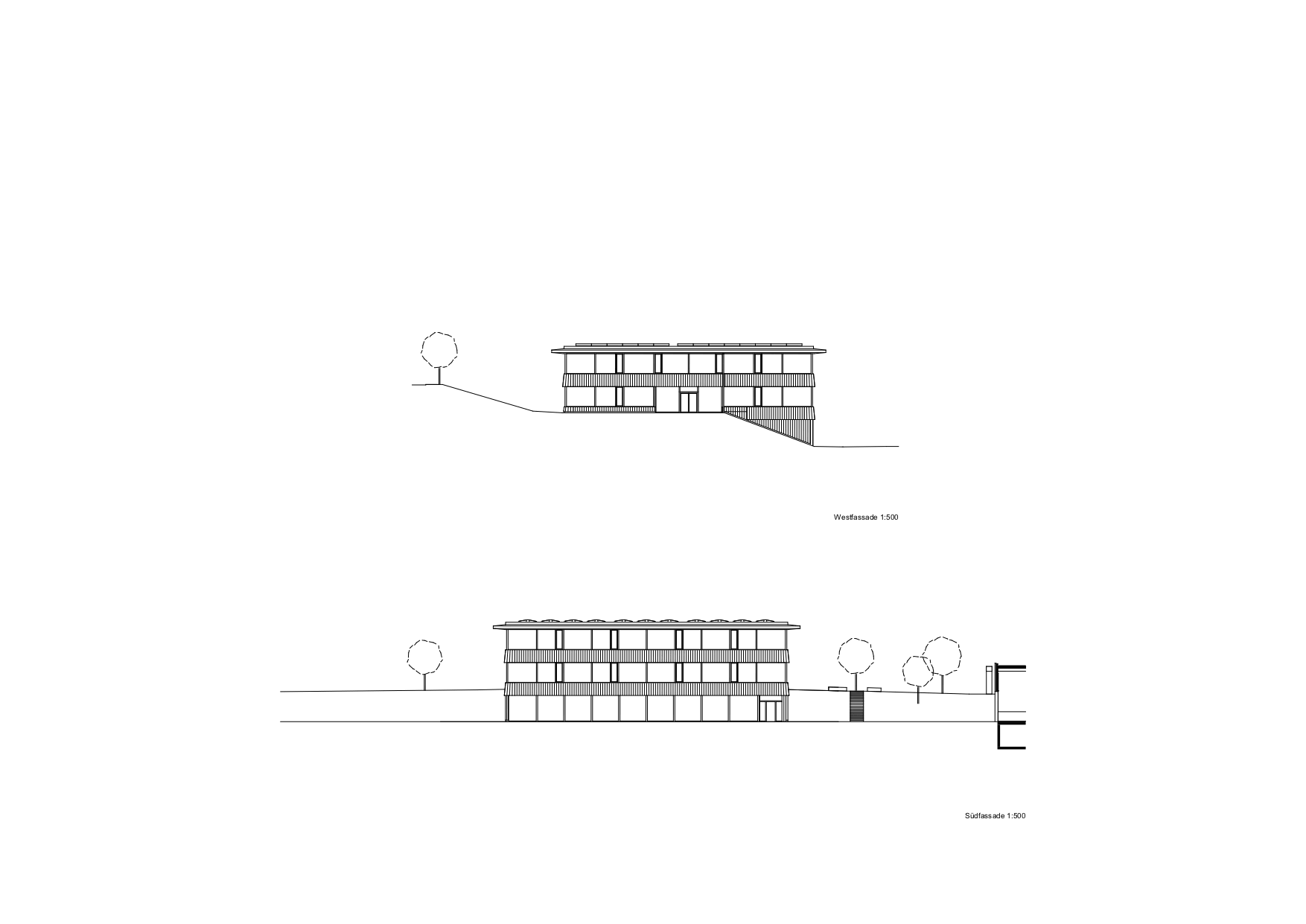
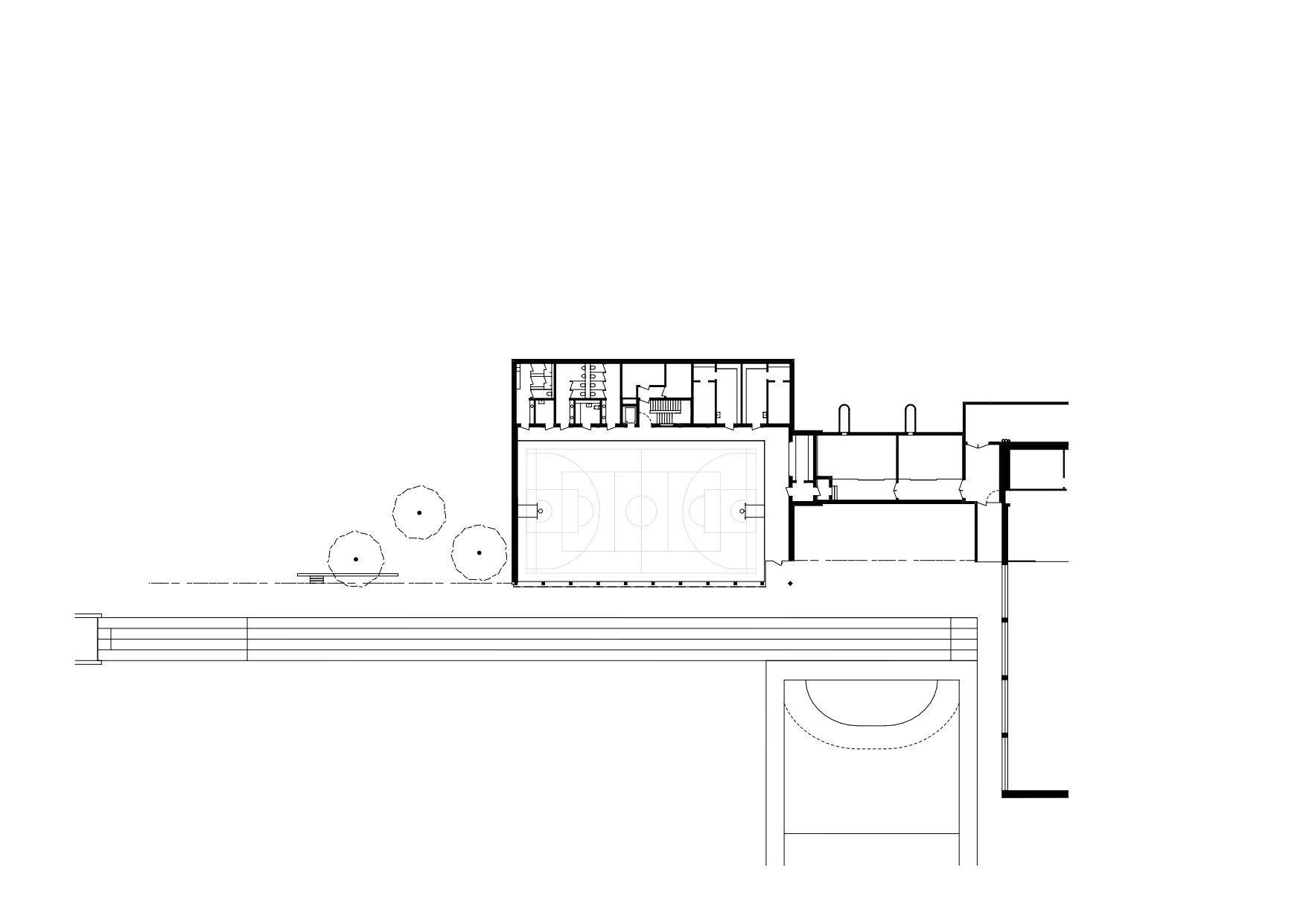
A generous canopy and the three covered entrance loggias create attractive, weather-protected access points and emphasize the connection between the interior and exterior spaces. By taking advantage of the sloping site, both the ground floor of the school and the gallery floor of the sports hall can be accessed at ground level. The filigree, three-story wooden structure creates an identity for the school location.
Landscape connectivity
A green belt with space-defining trees runs along the edges of the plots facing the street and frames the open space in the center of the complex.
The playgrounds, sports fields, and open spaces surrounding the new building on all sides are open in design and feature different play and adventure zones.
Here, children of different ages can find their own play niches. The playgrounds, sports fields, and open spaces surrounding the new building on all sides are open in design and feature different play and adventure zones.
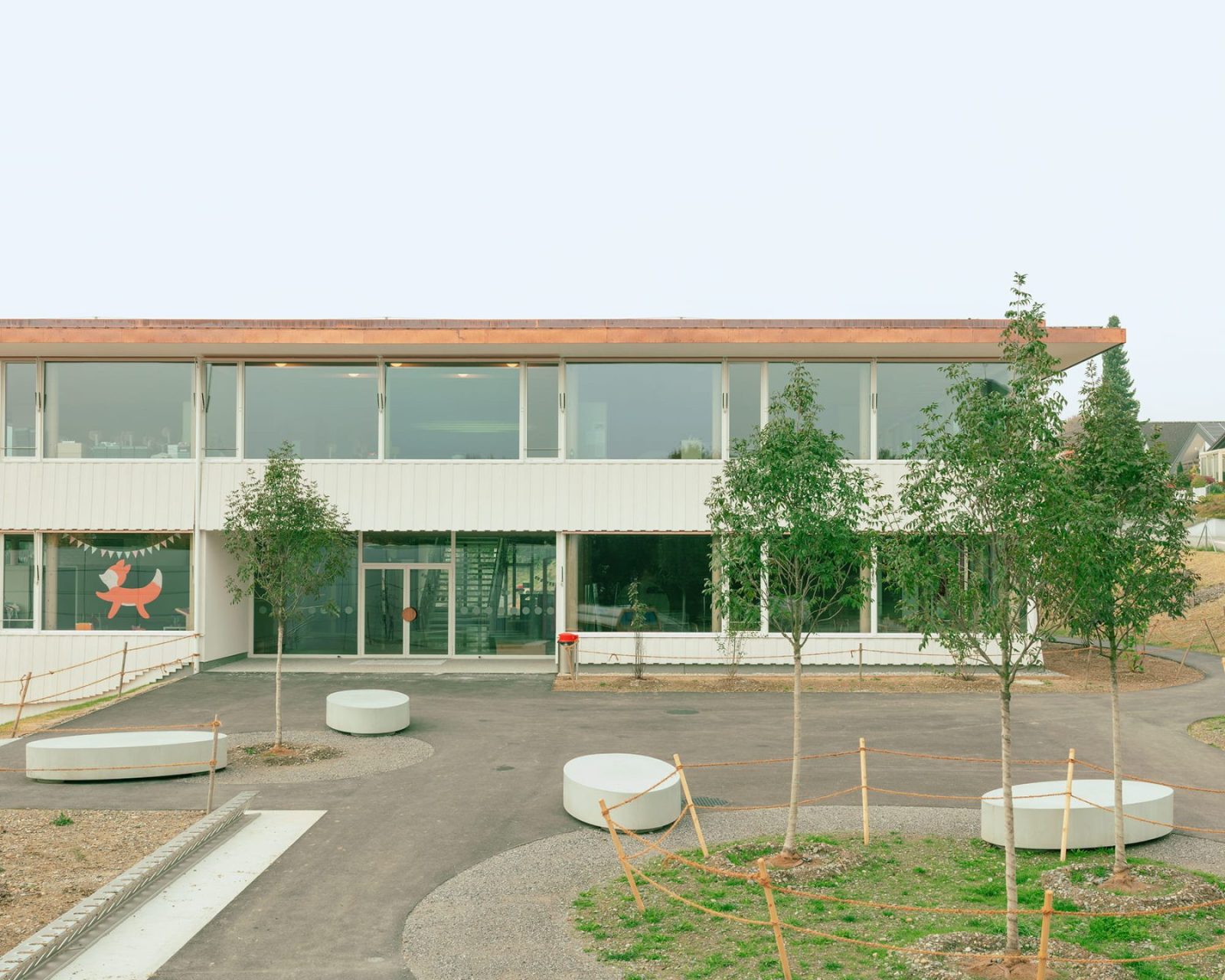
Here, children of different ages can find their own play areas and the experiences they want. The diverse range of activities on offer is further enriched by the small natural forest.
Organization
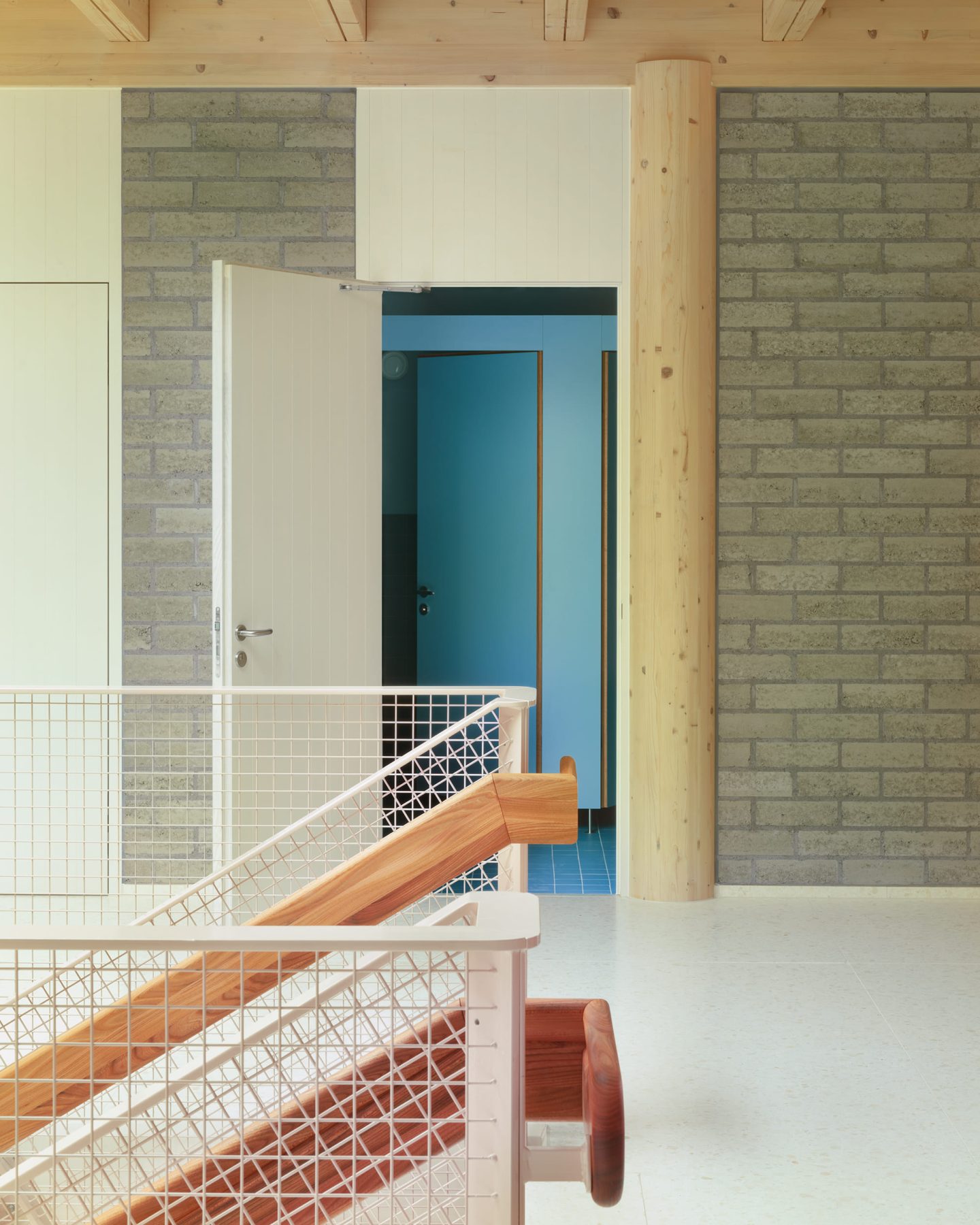
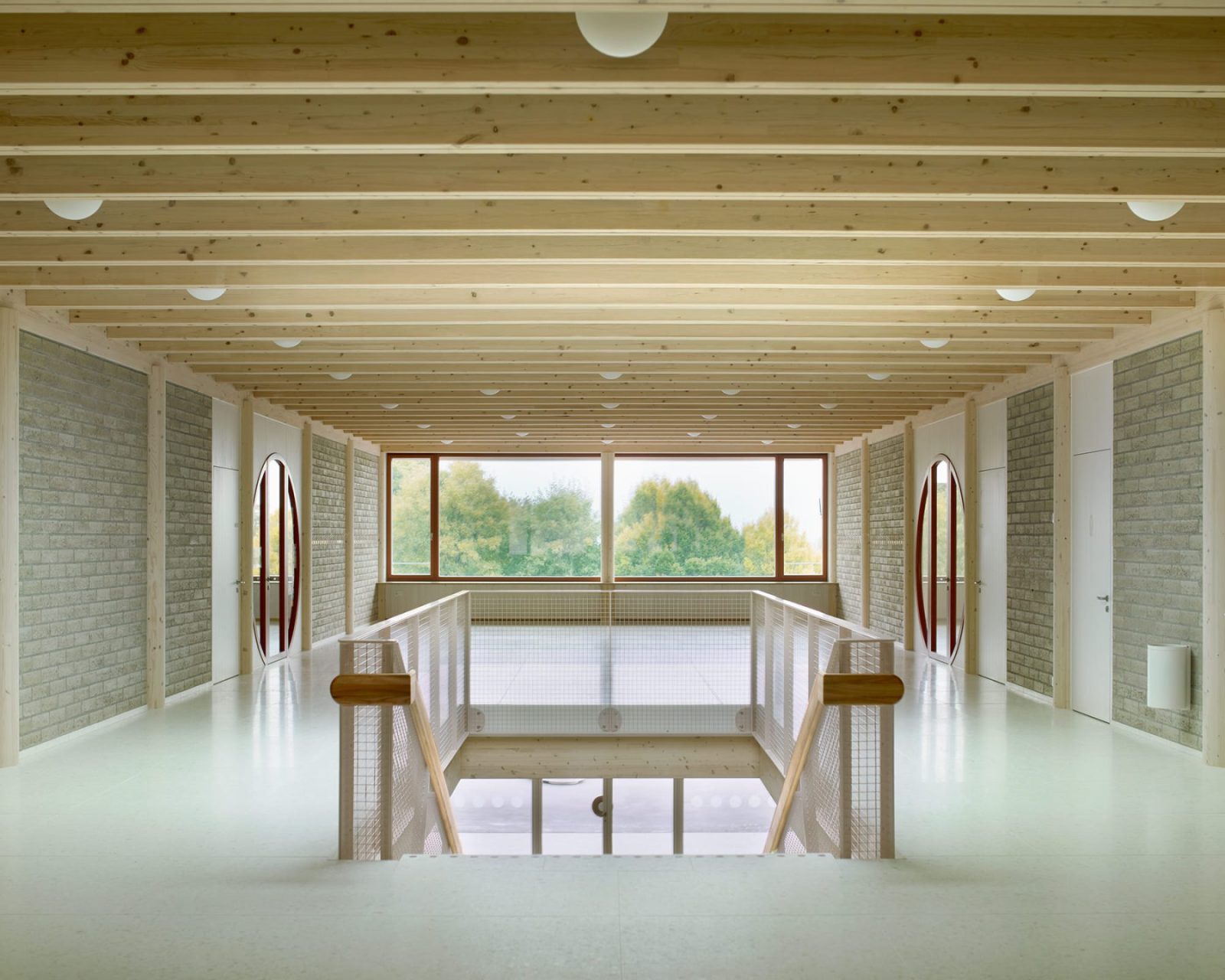
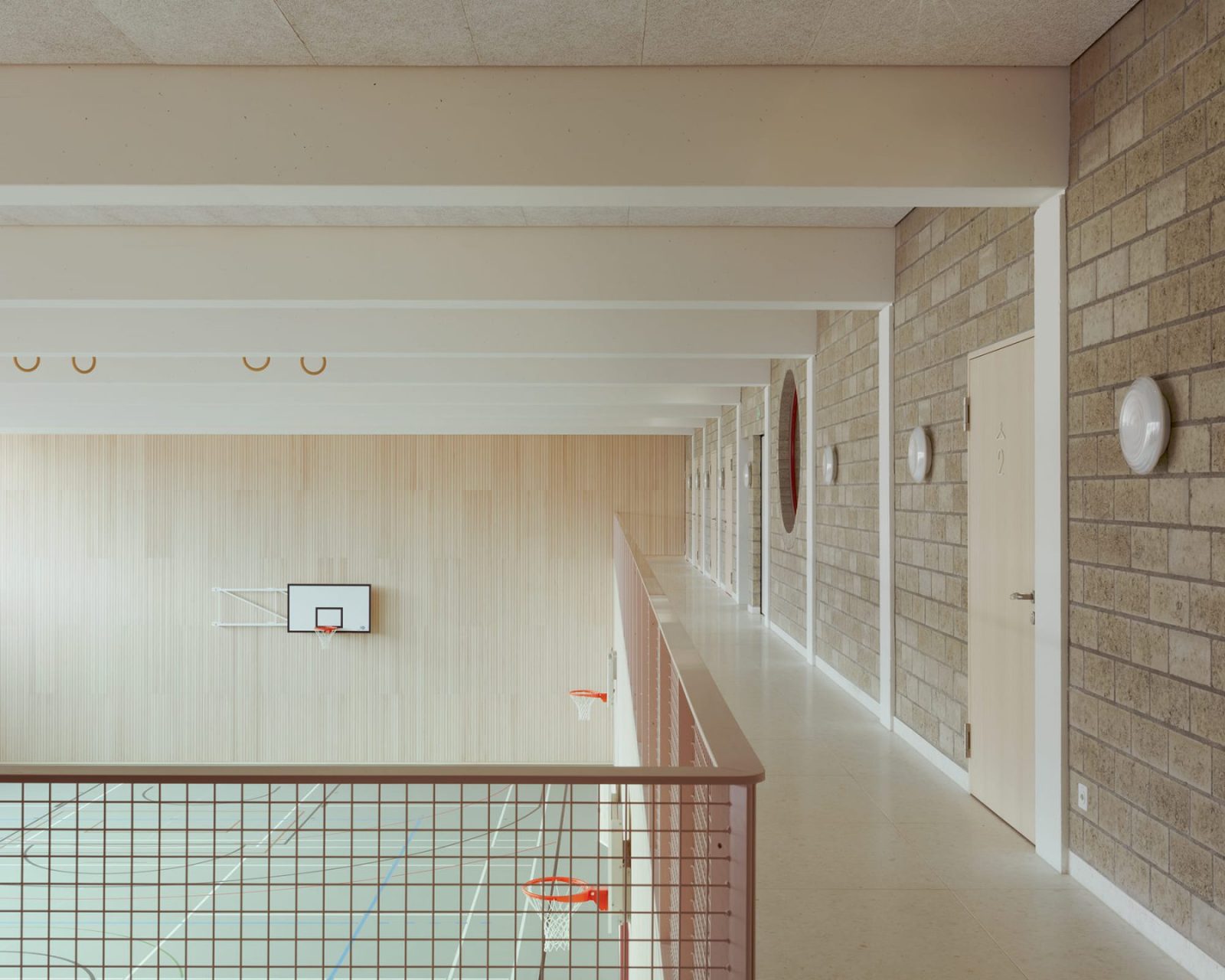
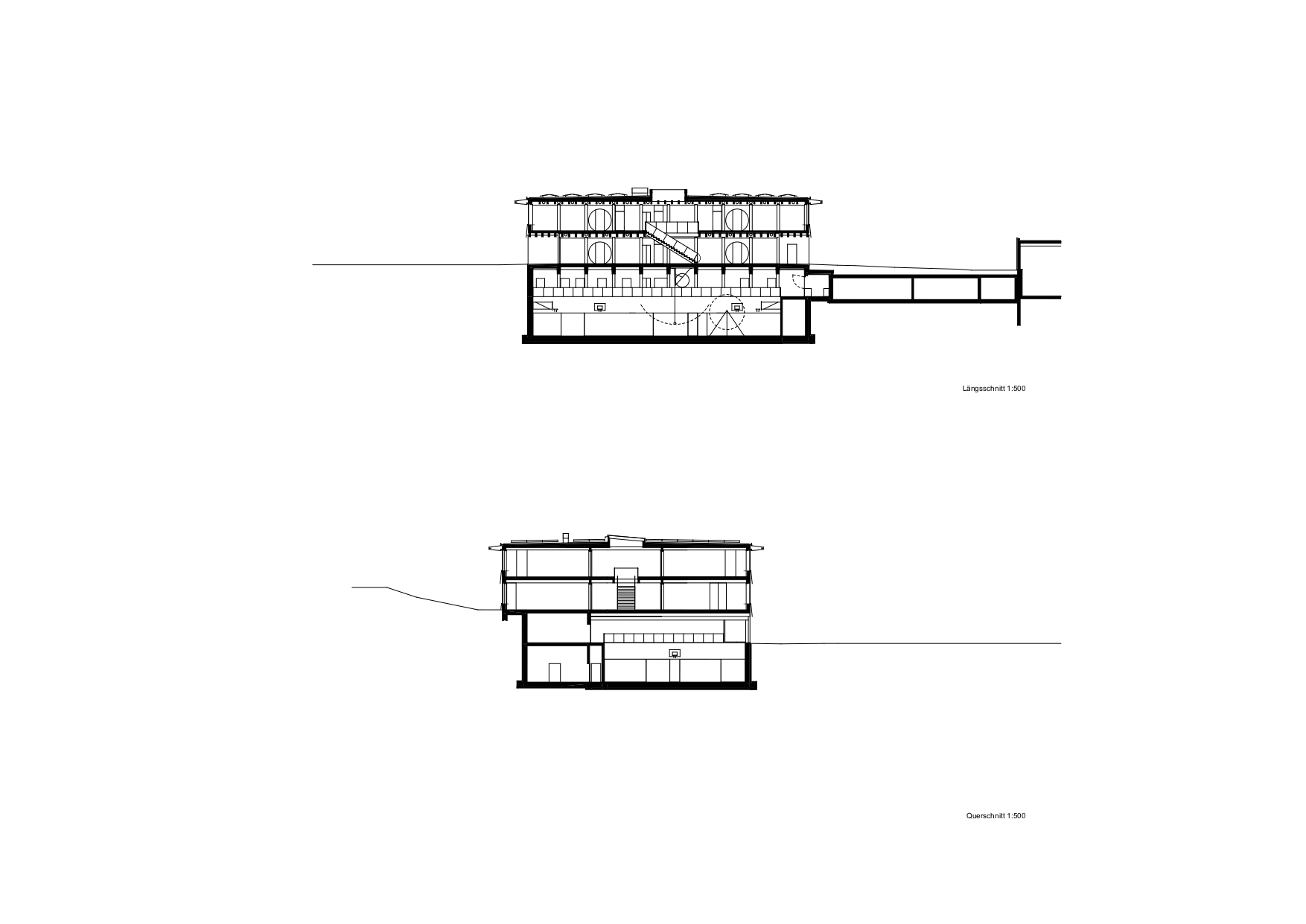
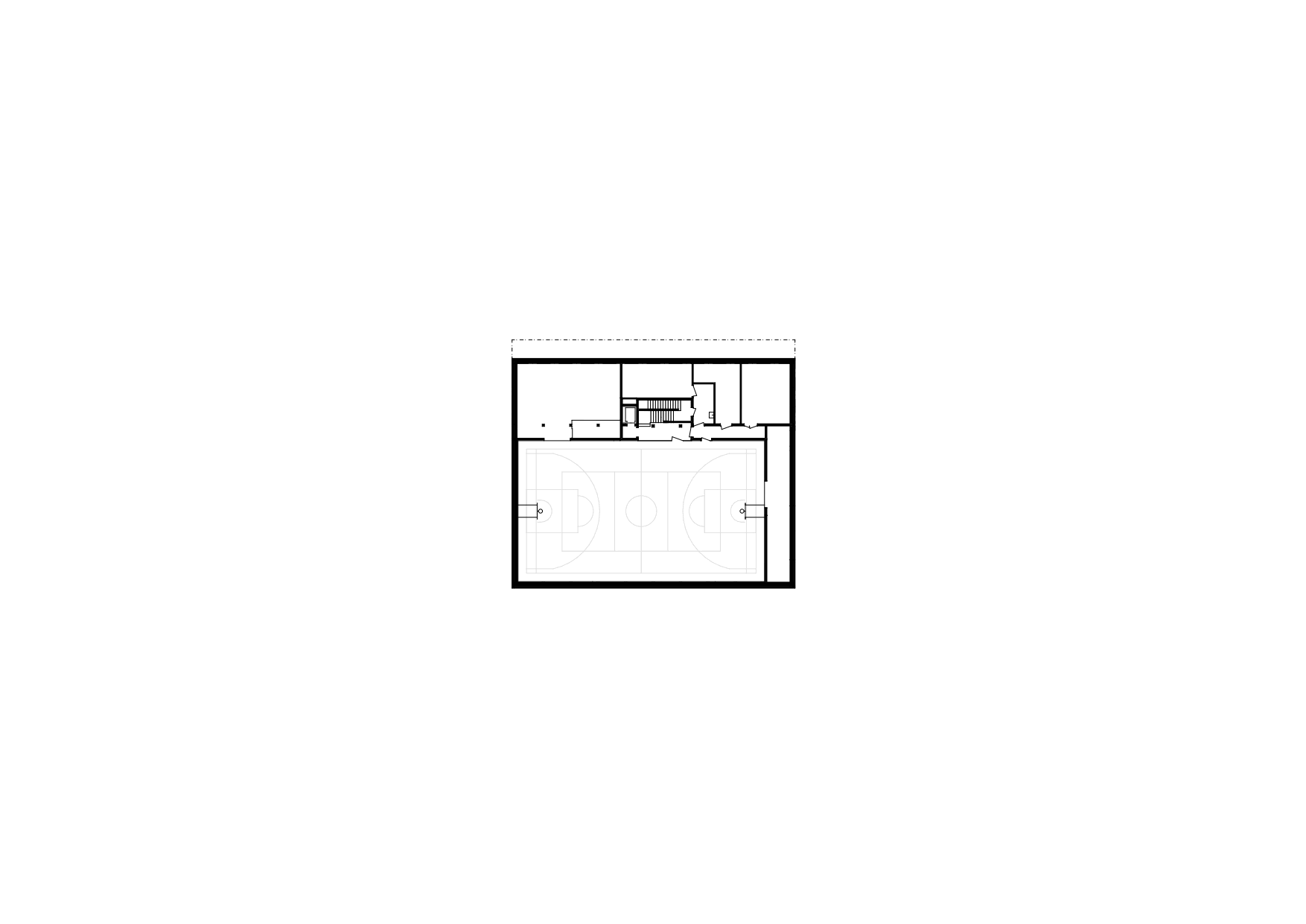
The new school building is clearly and simply organized. The school and the sports hall are spatially separated, which means that the two units can be operated independently.
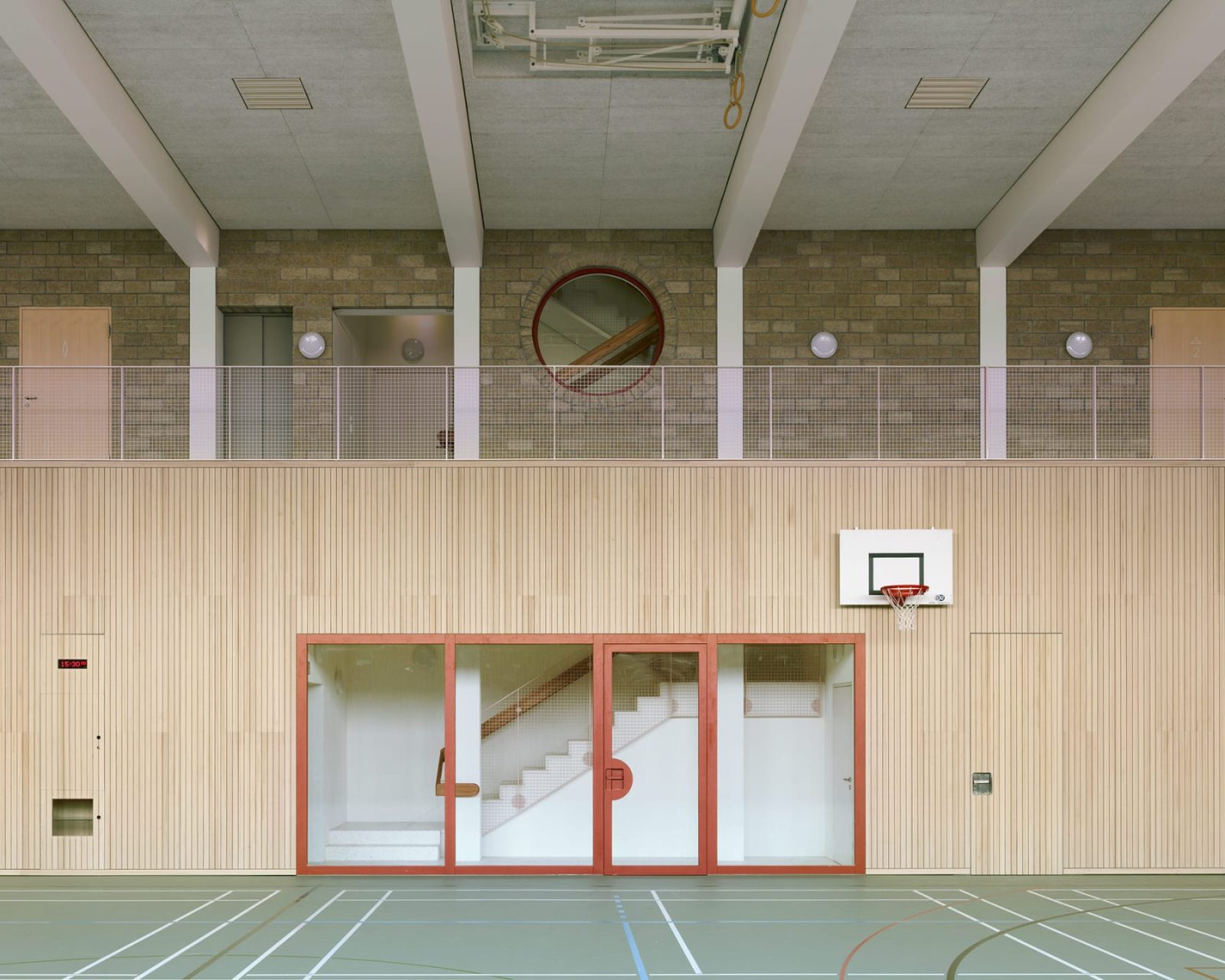
The rooms for sports are located in the gallery and basement. The ground floor houses the kindergartens, the day school, and the cultural room with direct access to the outside.
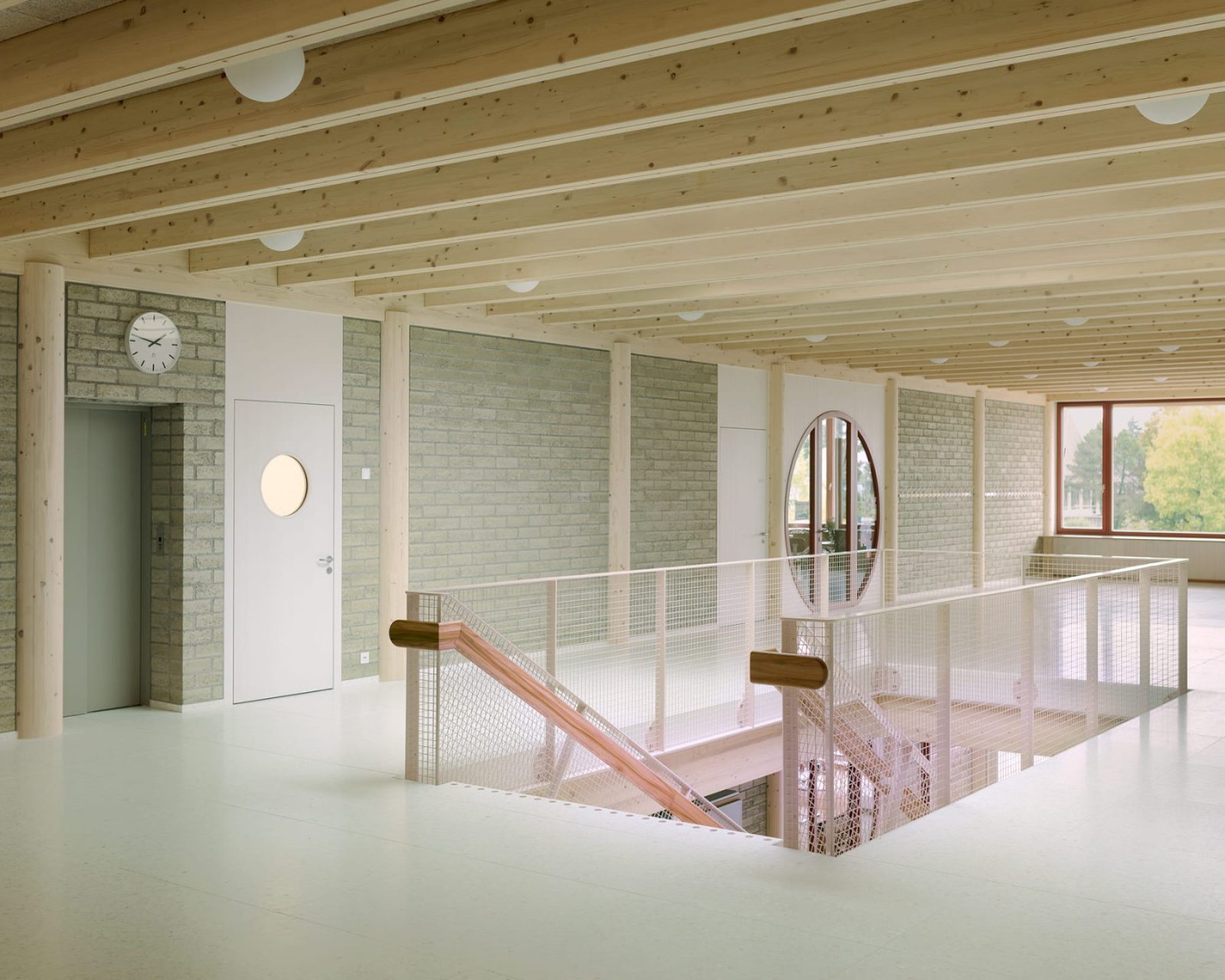
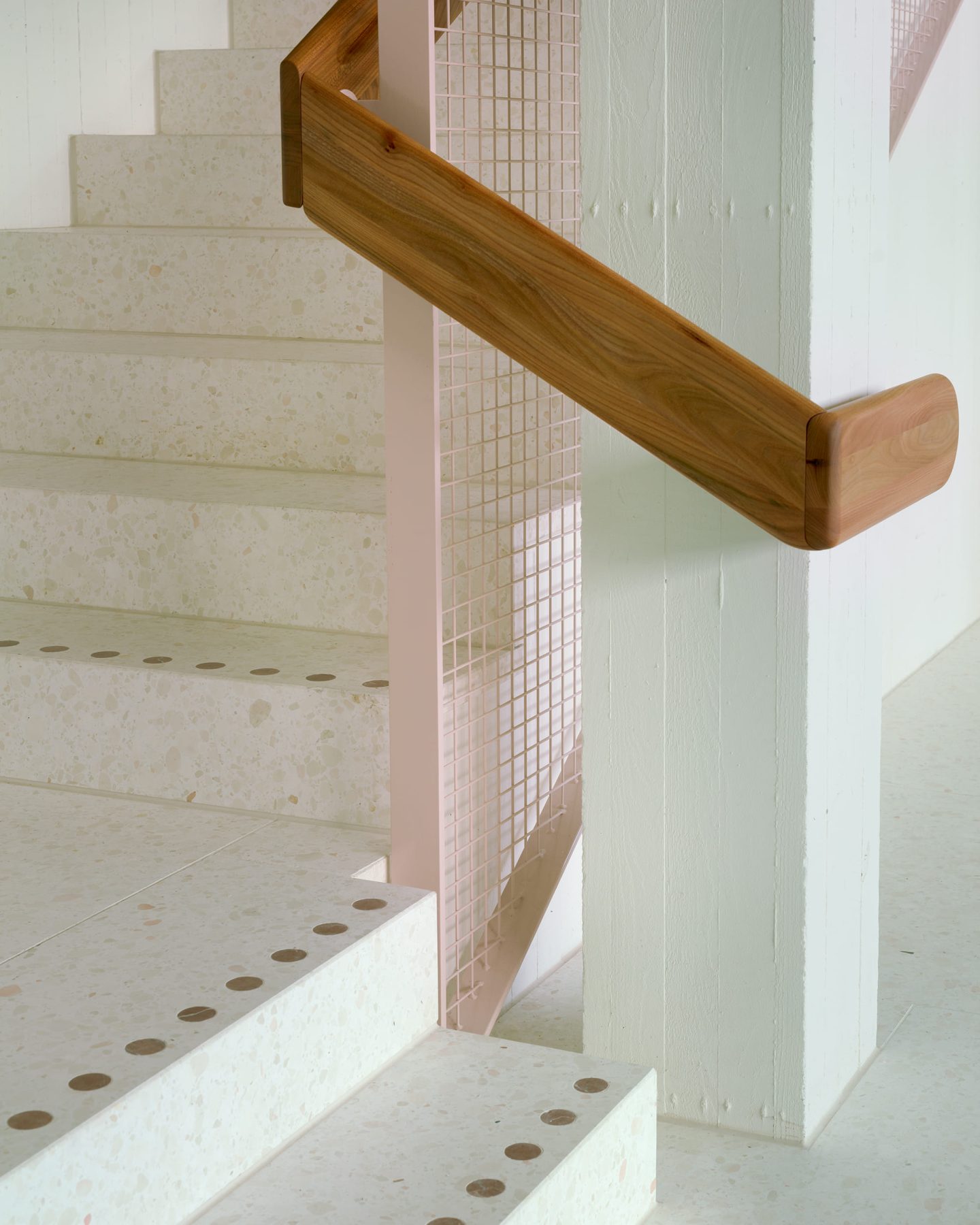
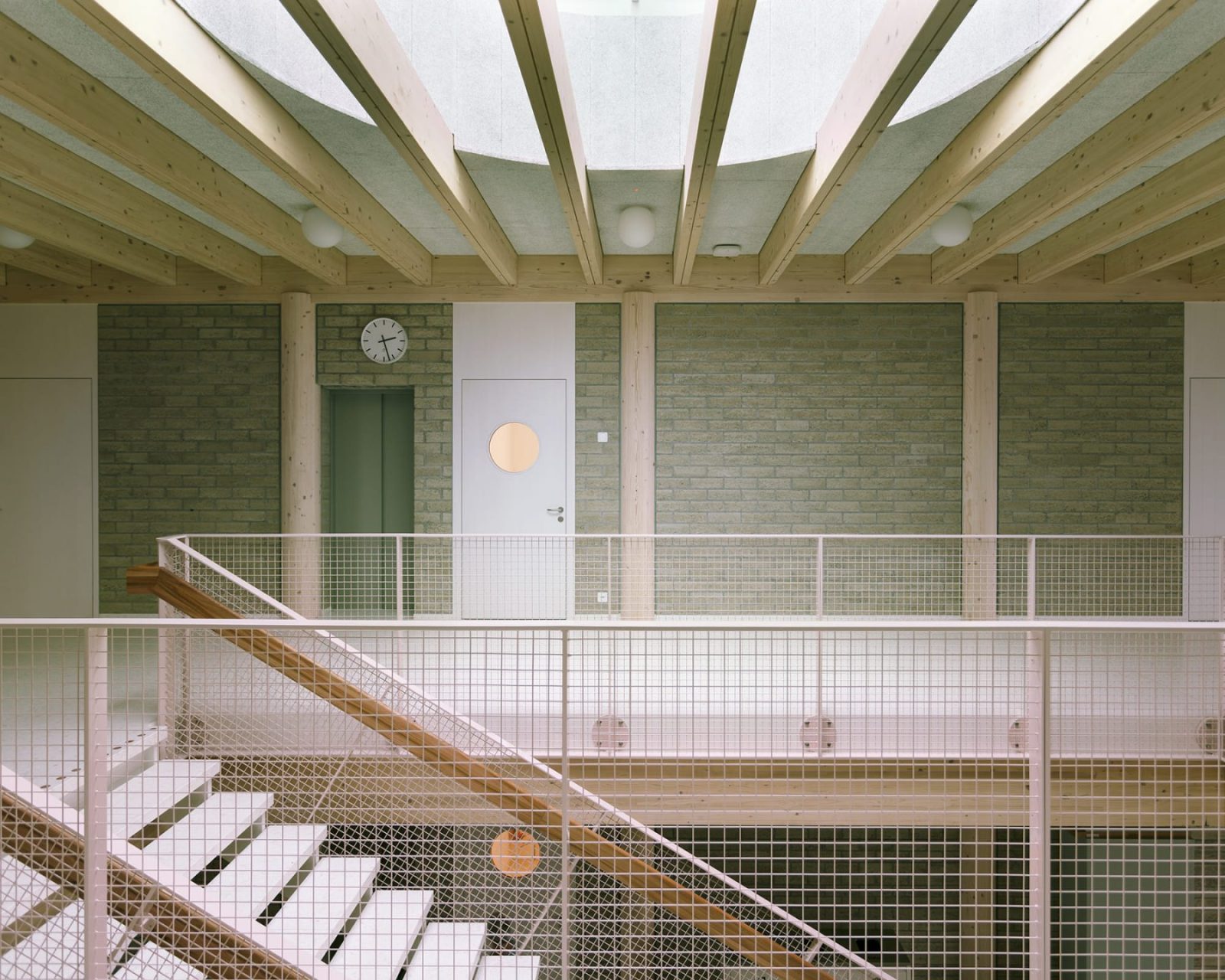
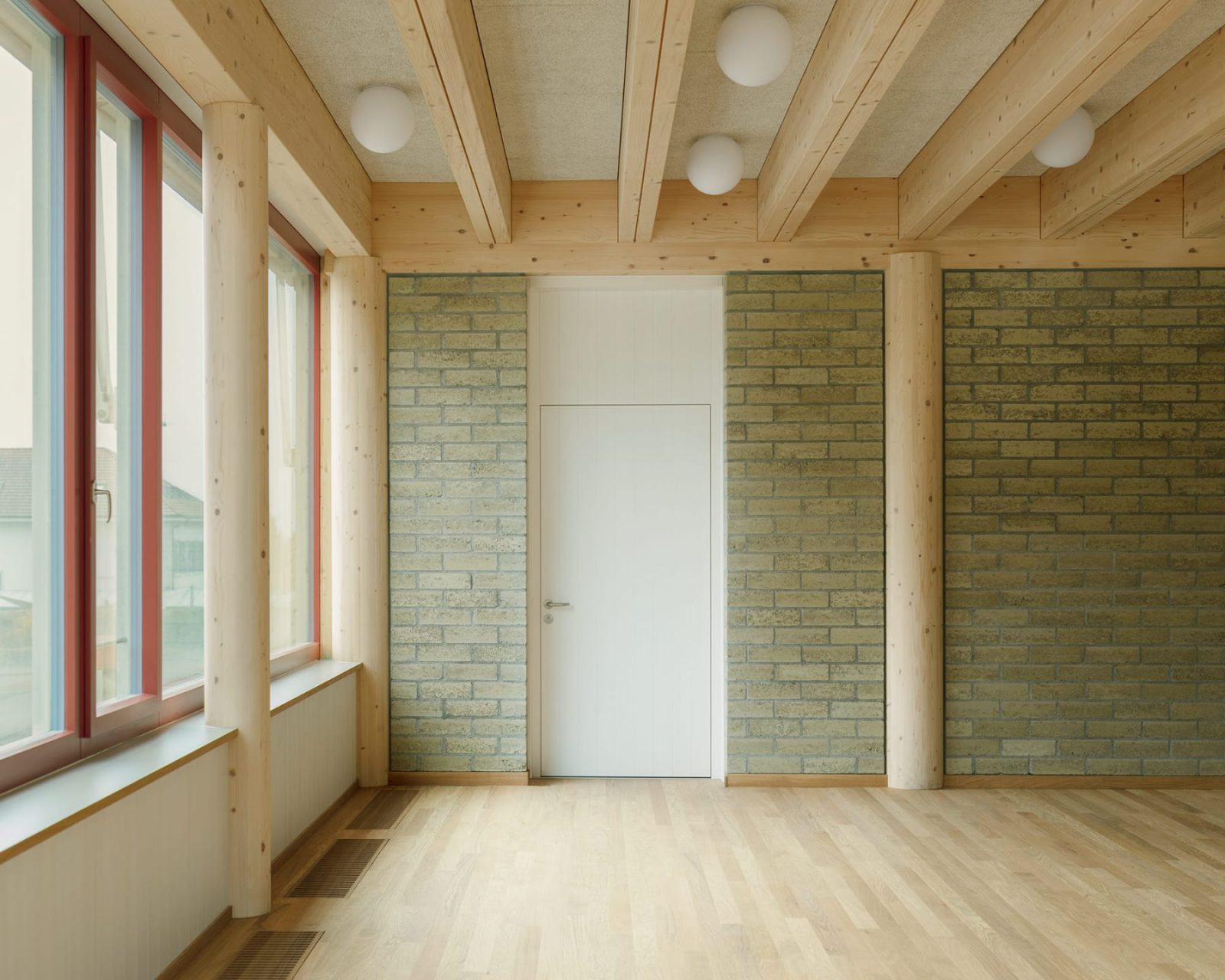
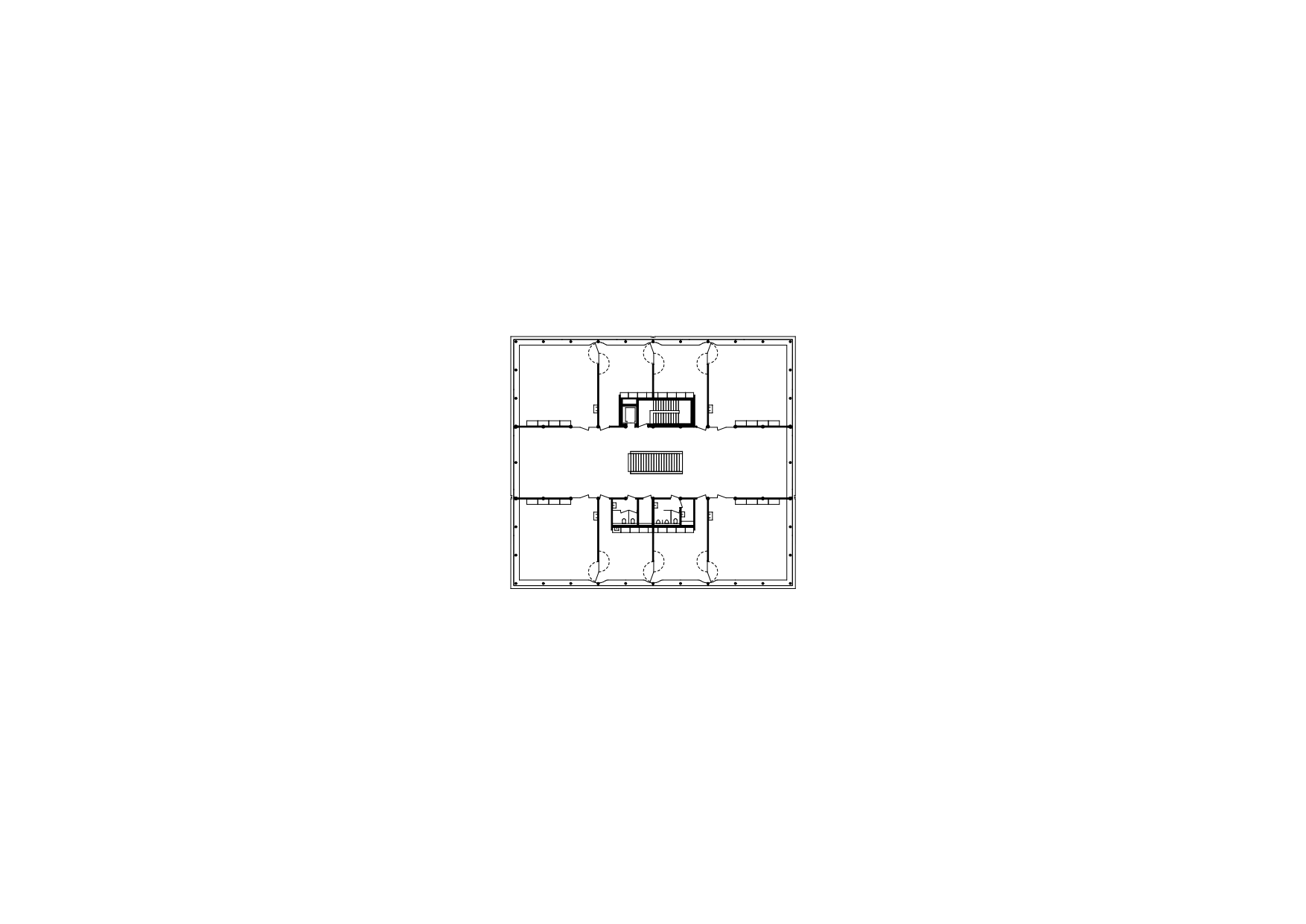
Above this, the school rooms are grouped together in a cluster and accessed via a central hall, which can be used for a variety of purposes. The cloakrooms and study niches are located on both sides of the hall’s facade and are used for independent work and as a break room.
Drawings
Facts & Credits
Title Stöckliacker school complex
Typology Architecture, Education
Location Lohn-Ammannsegg, Switzerland
Status Completed, 2025
Architecture Haller Gut
Photography Karina Castro
Text by the authors