The New Polykatoikia features intriguing design solutions on how to live together in different urban contexts and social ecosystems.
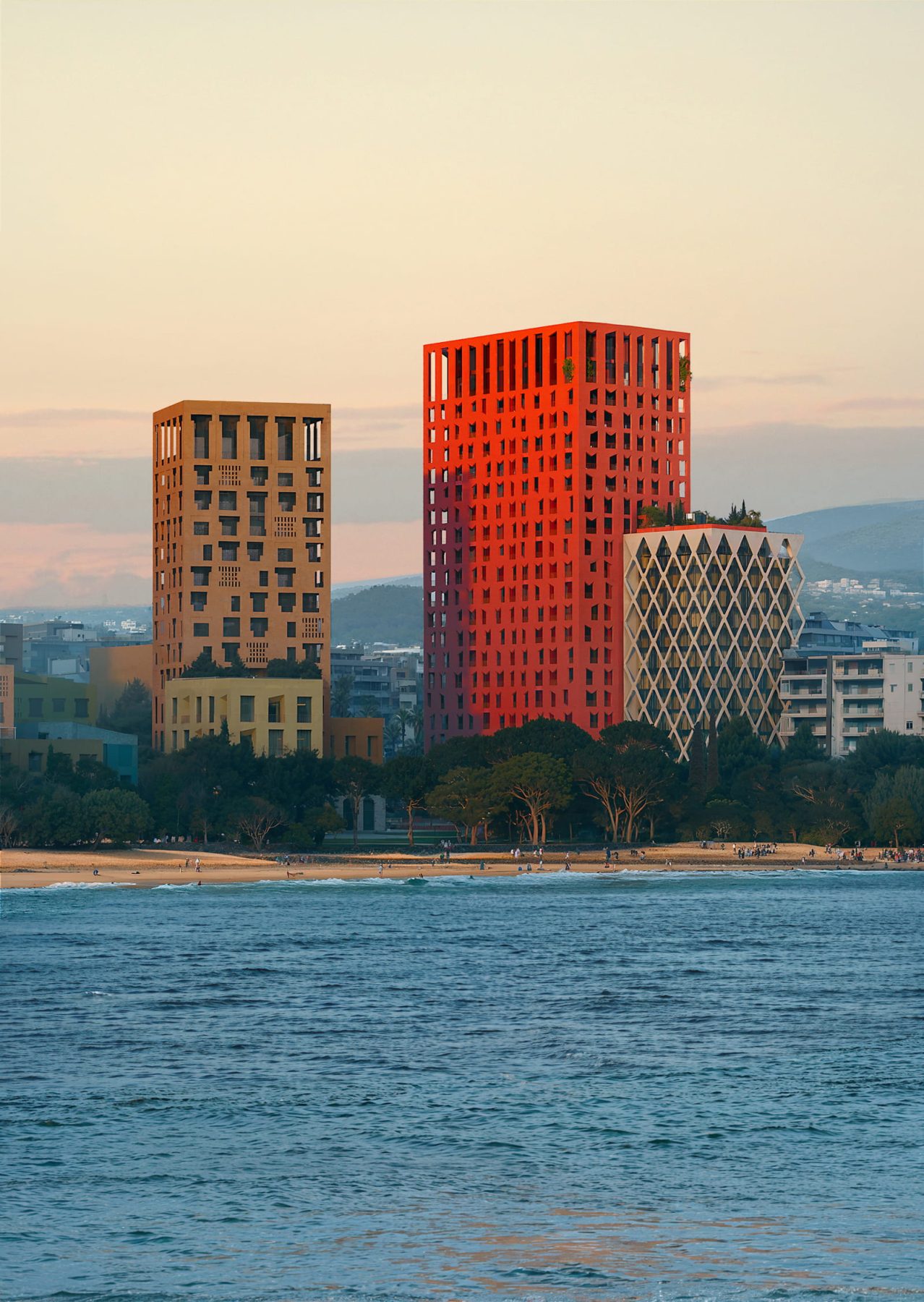
Oppenheim Architecture envisions Vlora Tower as an expression of material, culture, and context: a vertical landmark along Albania’s southern coast integrating residential, commercial, and recreational uses. Positioned between tradition and rapid transformation, the project opens toward the city through an active ground plane that fosters public engagement and pedestrian continuity. Its textured, reddish façade reinterprets vernacular Albanian window typologies, echoing the local landscape, while carefully oriented living spaces face the Adriatic, redefining contemporary coastal living.
Beat Huesler , Architect and Director Europe of Oppenheim Architecture, participates as a speaker at this year’s ESO 2026, offering an architectural approach defined by a context-responsive methodology that integrates landscape, local craft, and technical precision into site-specific designs.
Book now your tickets for ESO 2026, here!
“To dwell is to belong to a place. Architecture means to visualize the genius loci, the spirit of the place, and help man dwell poetically in the world. The role of architecture is not to impose, but to reveal the meanings latent in the landscape, in the culture, in memory.” — Christian Norberg-Schulz, Genius Loci: Towards a Phenomenology of Architecture, 1980
The Vlore Beach Tower emerges from a prominent corner site along Albania’s southern coastline, where the city meets the sea and layers of cultural memory persist within a rapidly transforming urban fabric.
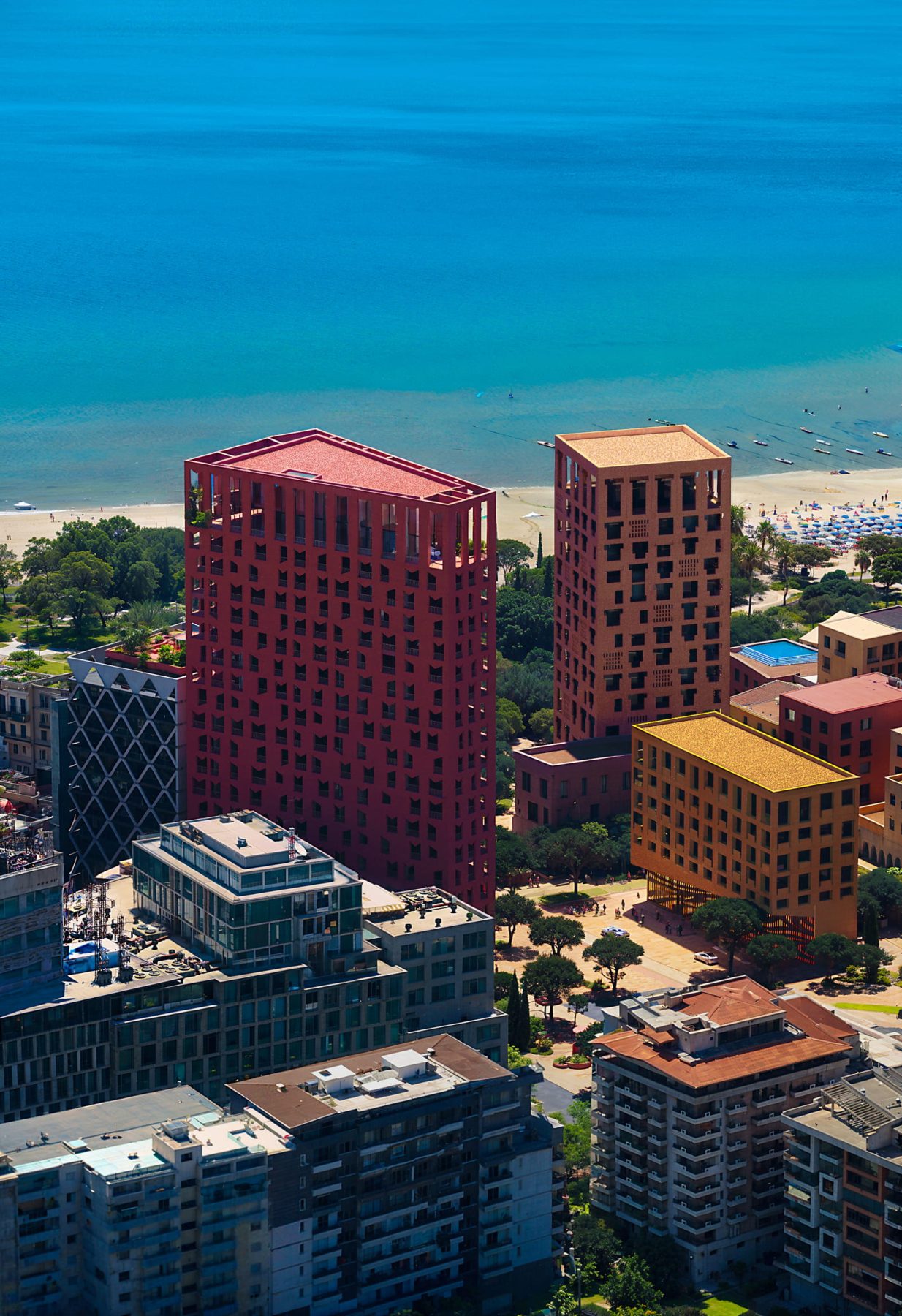
Conceived as a vertical landmark for Vlore’s evolving waterfront, the project reinterprets coastal living, exploring new ways of inhabiting density while fostering connection across diverse urban ecosystems.
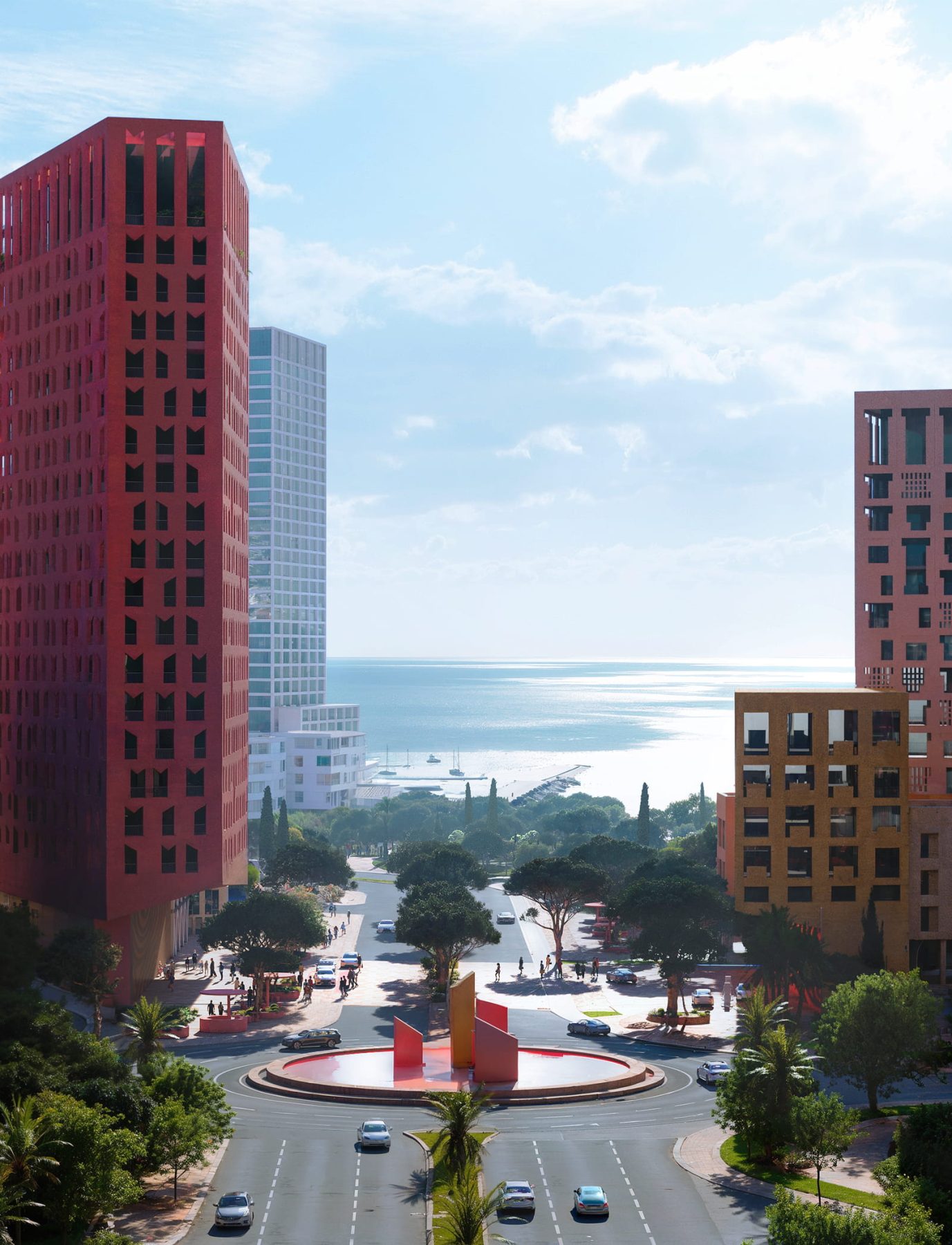
Located approximately three kilometers from the historic center, the tower aligns with a primary axis leading toward the new marina, embedded within a lively promenade and oriented toward expansive views of the Adriatic.
Βetween heritage and contemporary growth, Vlore Beach Tower establishes a renewed rhythm along the skyline, simultaneously grounded in place and projecting a forward-looking identity.
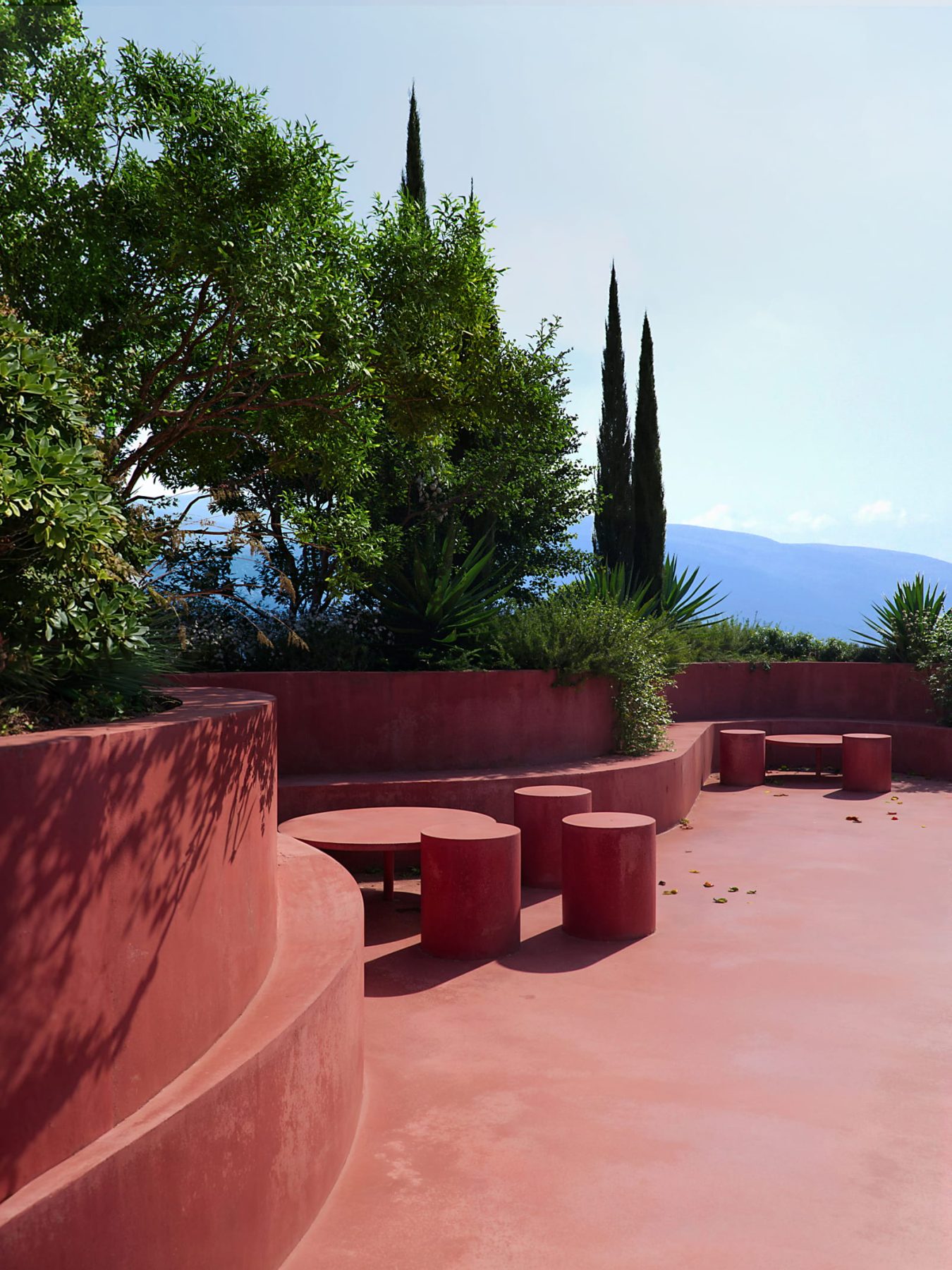
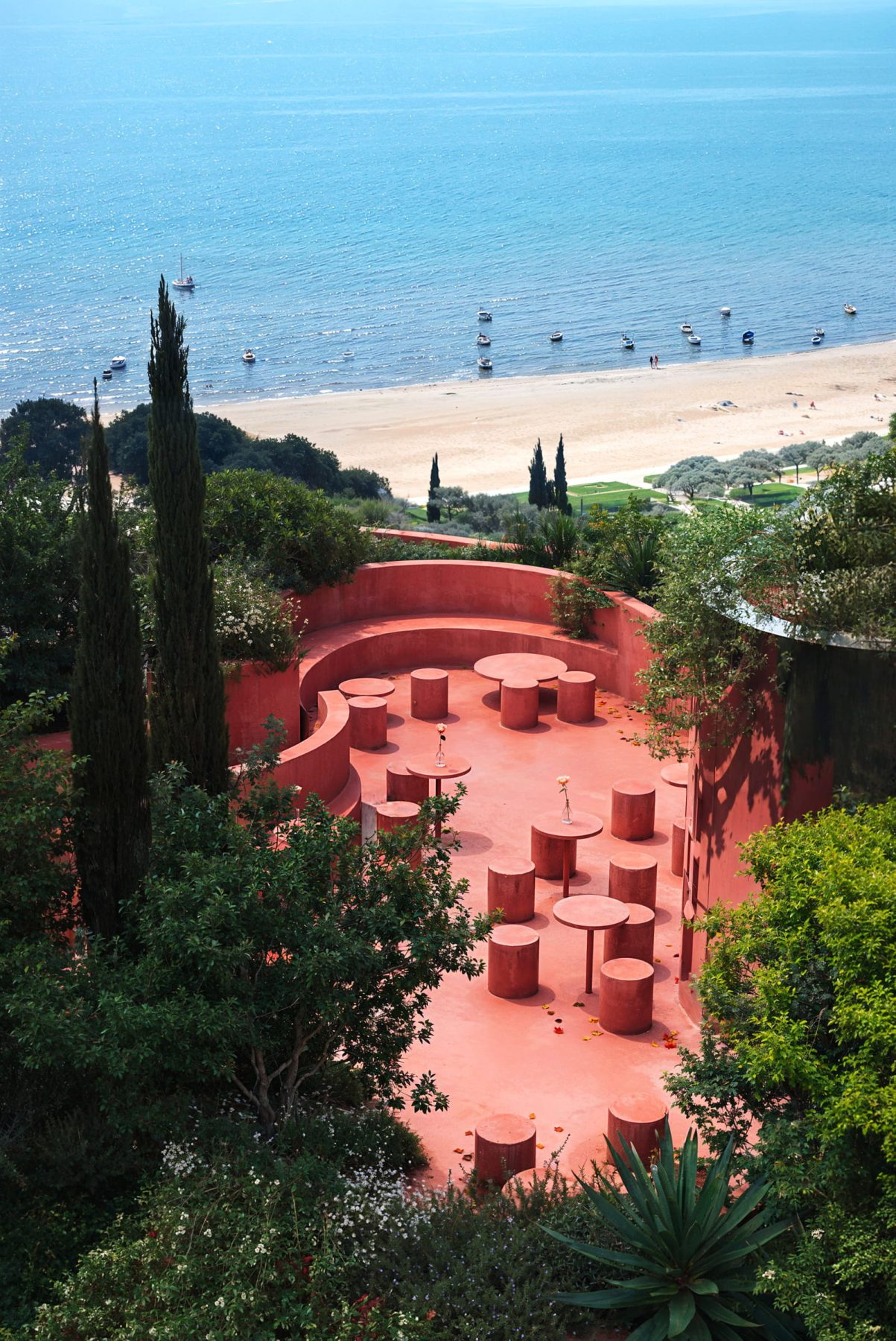
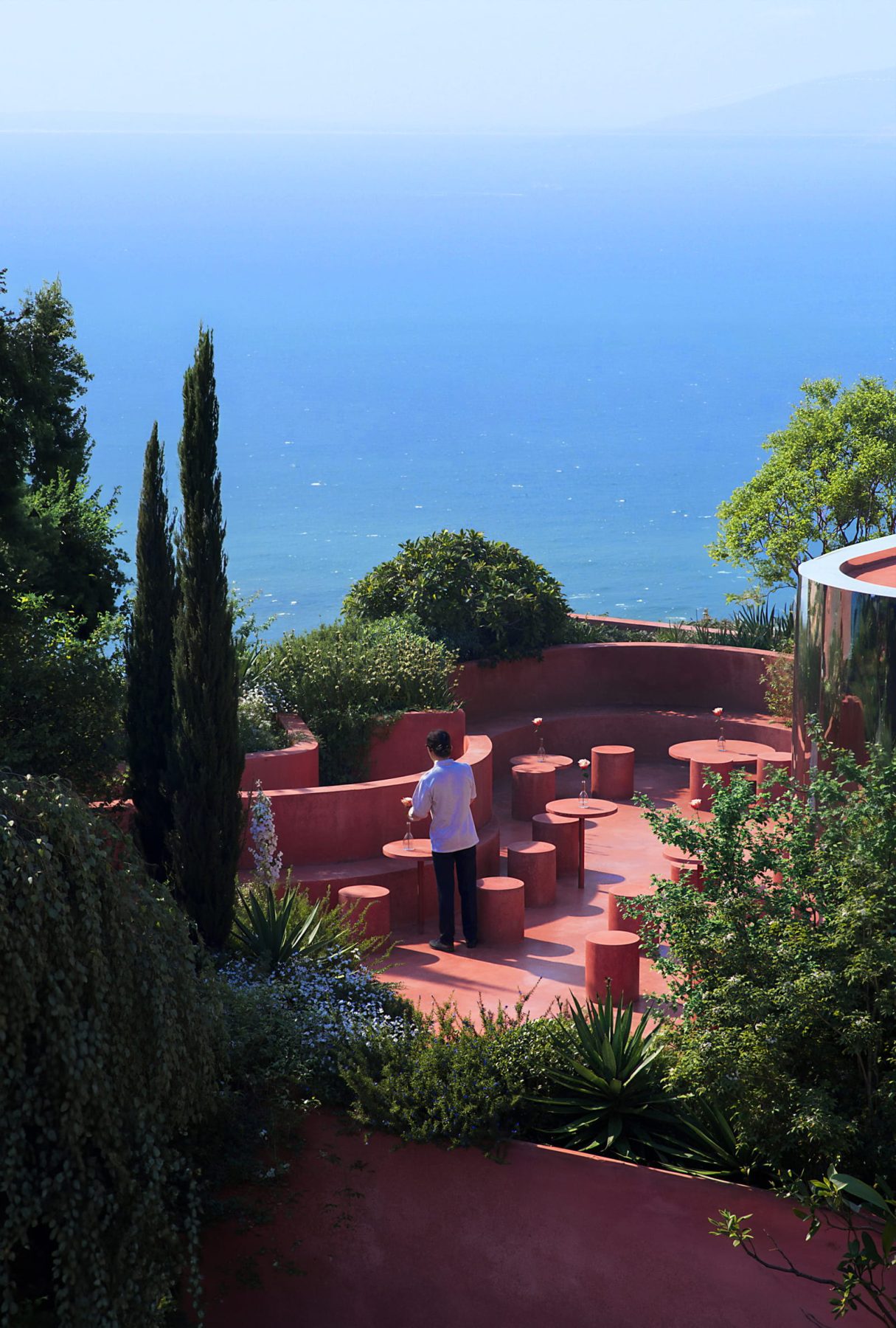
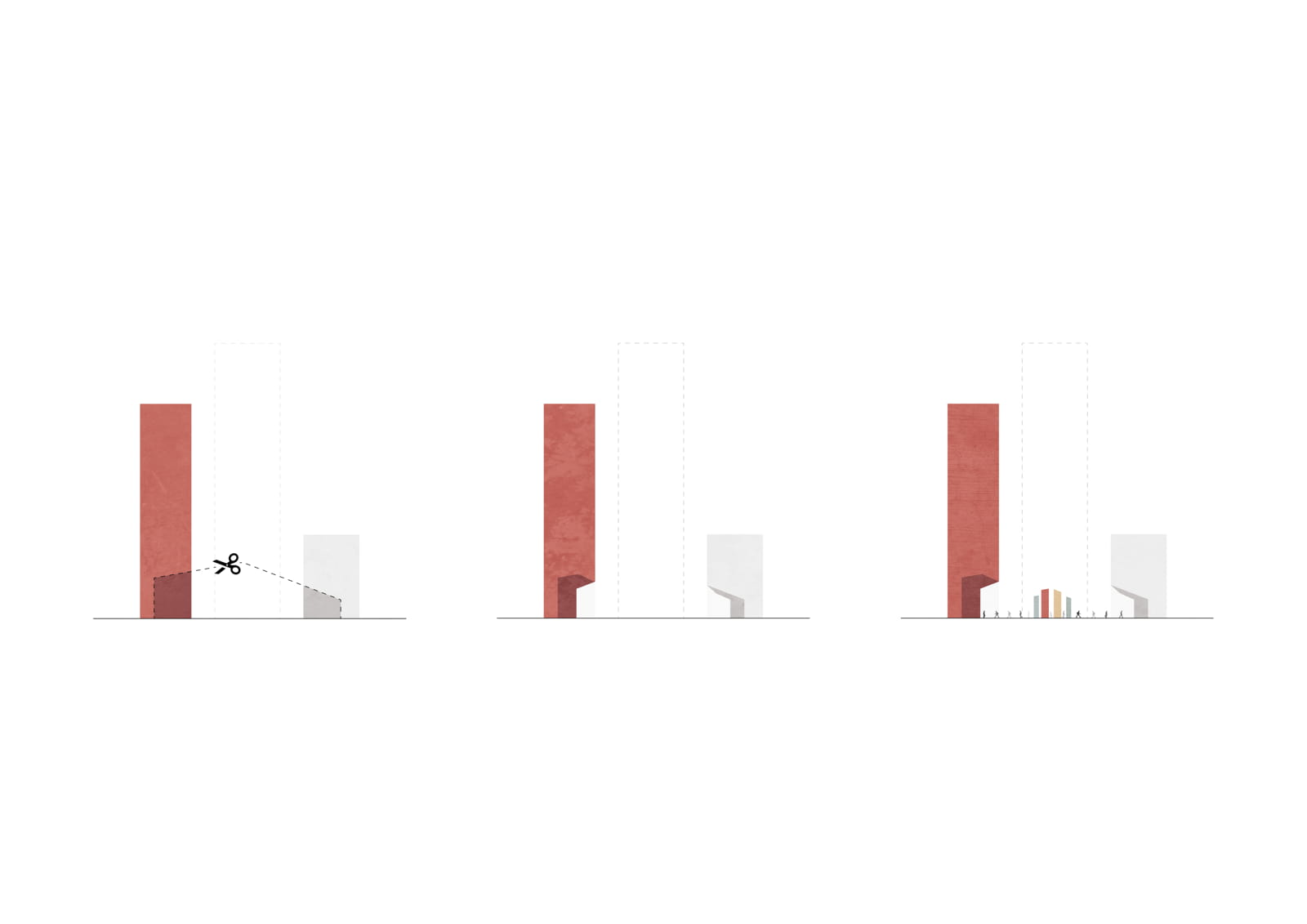
At ground level, a decisive volumetric subtraction forms an open, porous base that accommodates commercial uses and a generous public plaza. This gesture activates the street edge, framing a threshold between city and coastline while reinforcing pedestrian continuity toward the beach, marina, and the adjacent Vlore Beach Masterplan. The corner condition is thus redefined as a point of encounter, encouraging shared use and urban permeability—an essential attribute of contemporary housing models.
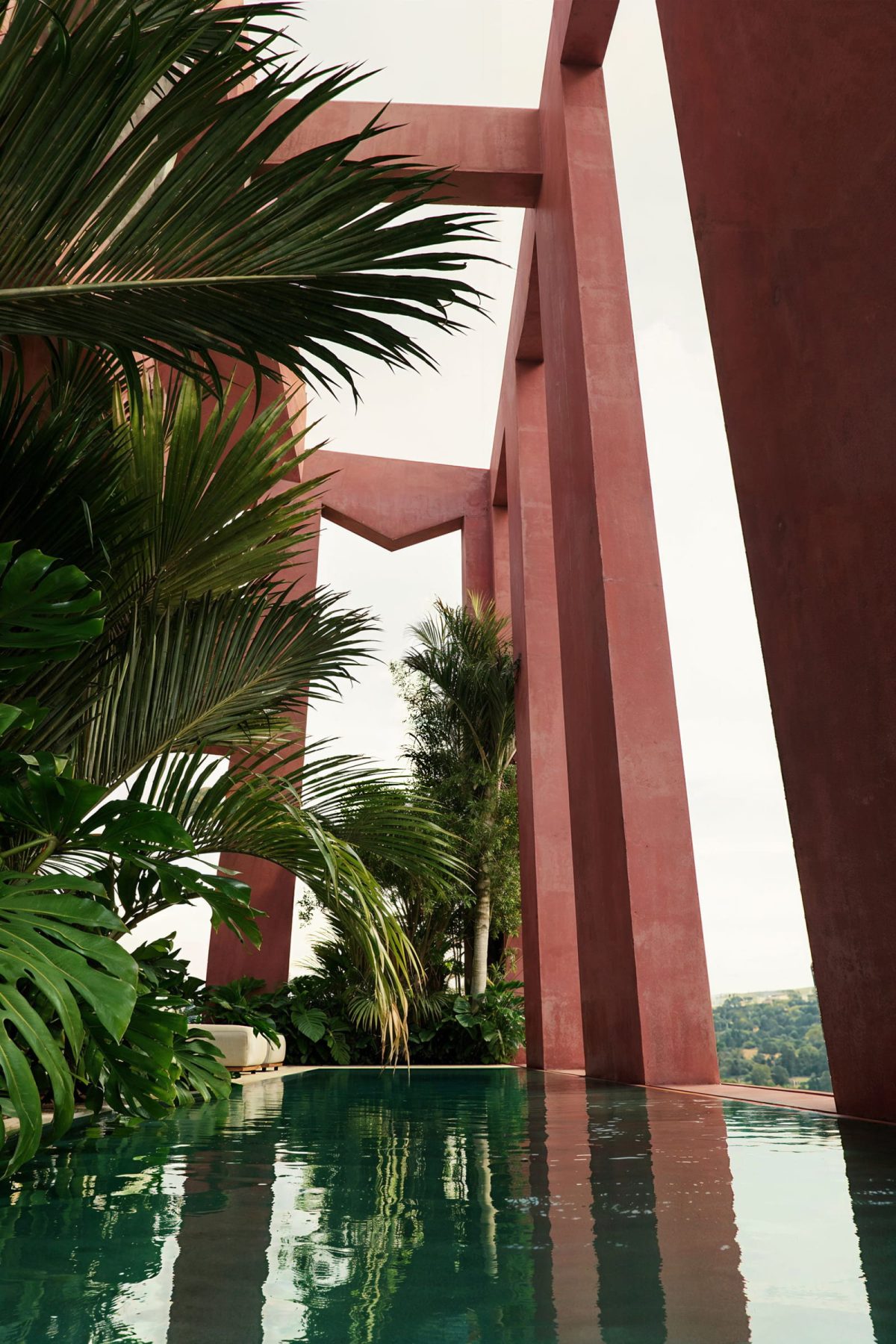
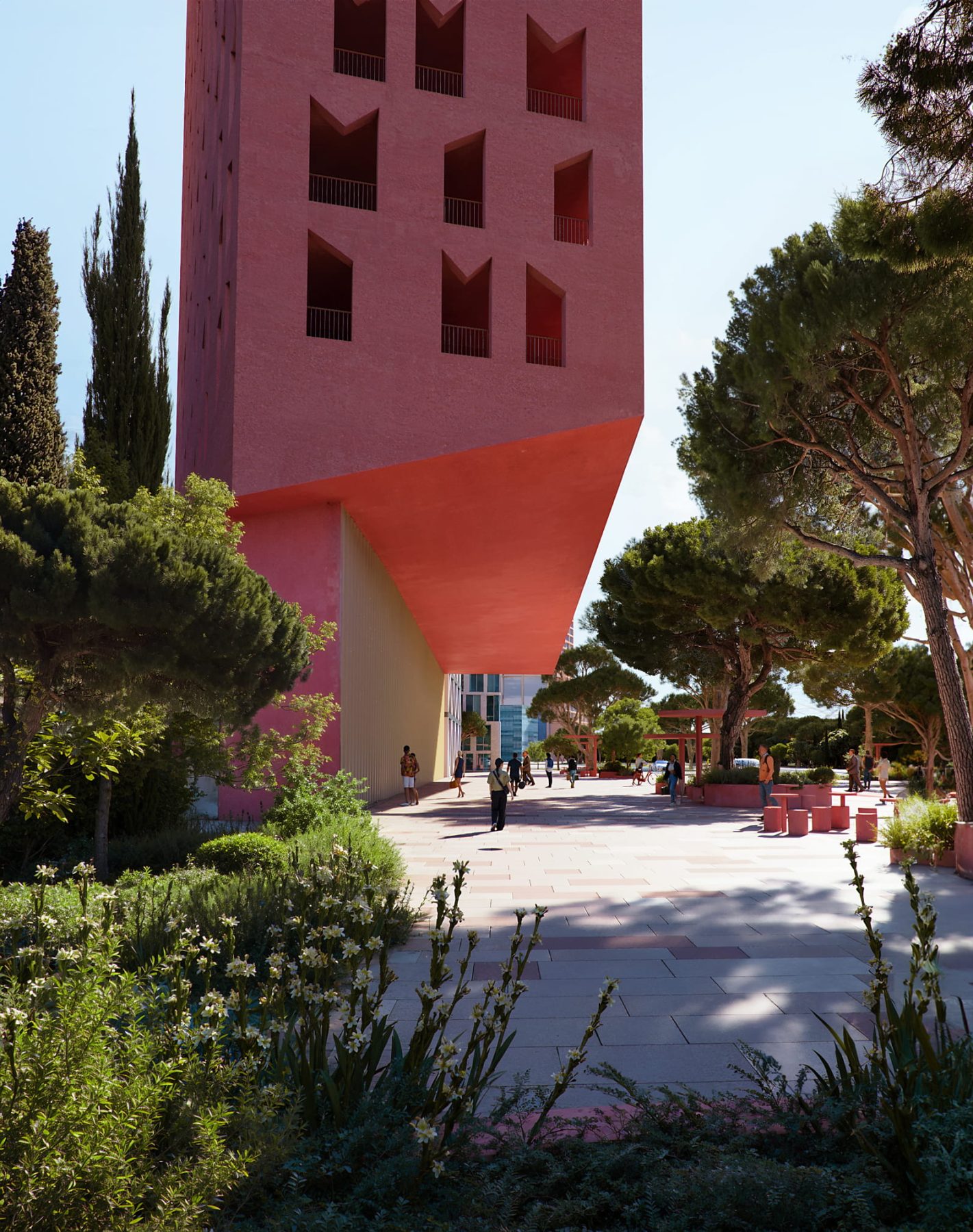
This engagement extends into the building’s media presence. Integrated within the podium façade, a vertical LED media wall introduces a dynamic layer of communication and expression. Conceived as a platform for digital art, community narratives, and light-based installations, the façade becomes an interface between inhabitants and the wider city.
In dialogue with the nearby public art intervention, the tower contributes to a broader cultural network, where architecture operates as an active participant in urban storytelling.
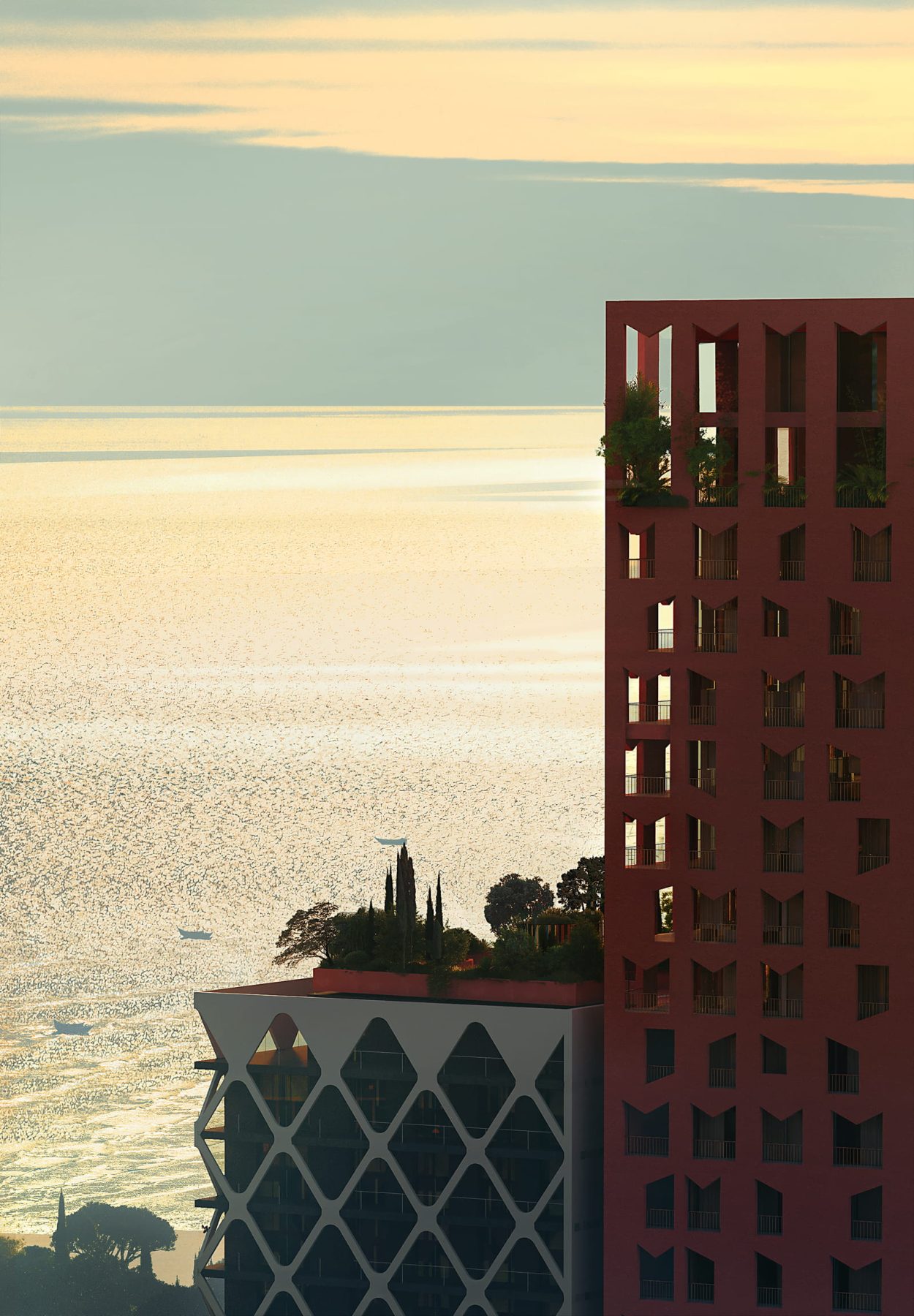
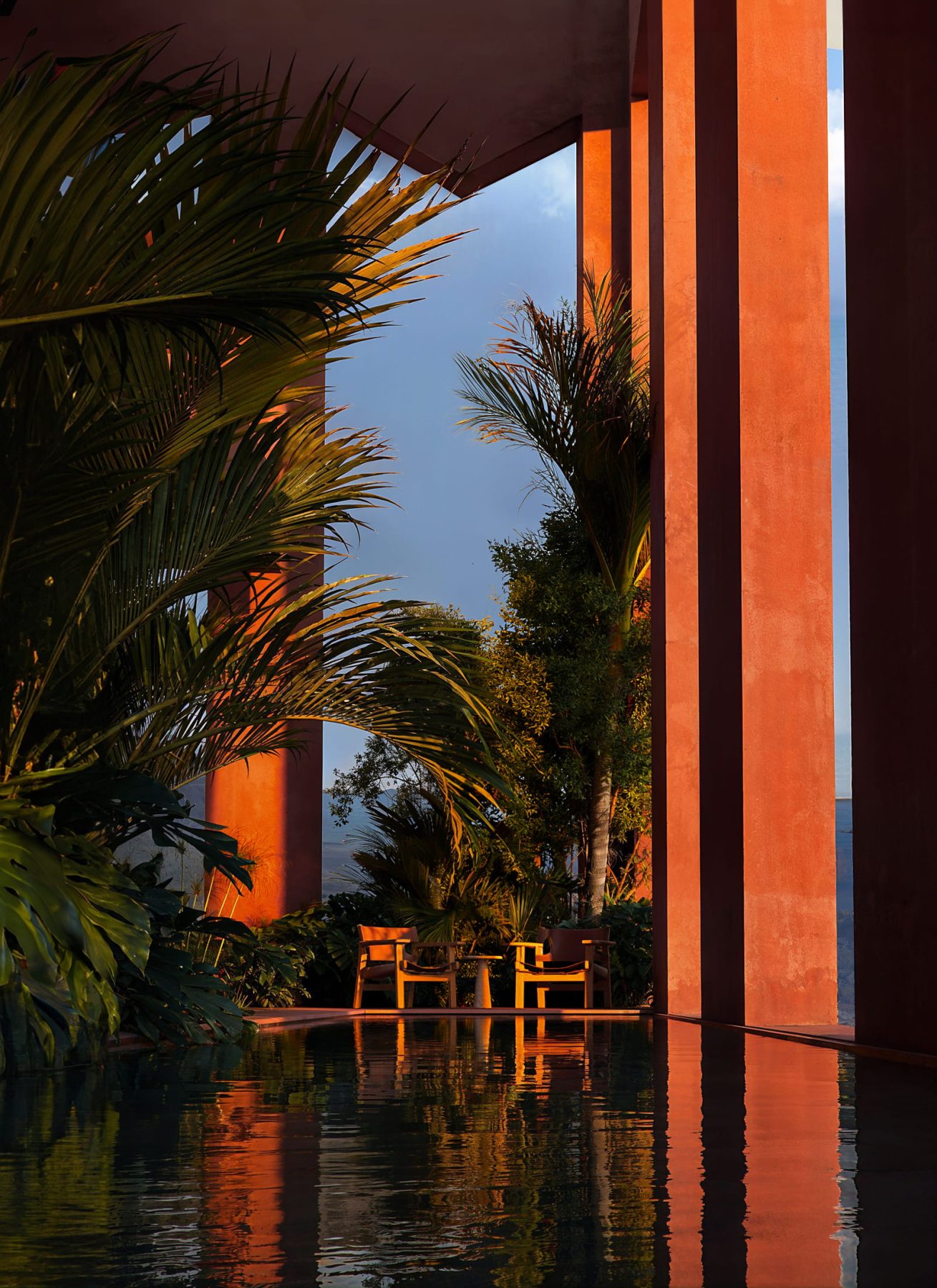
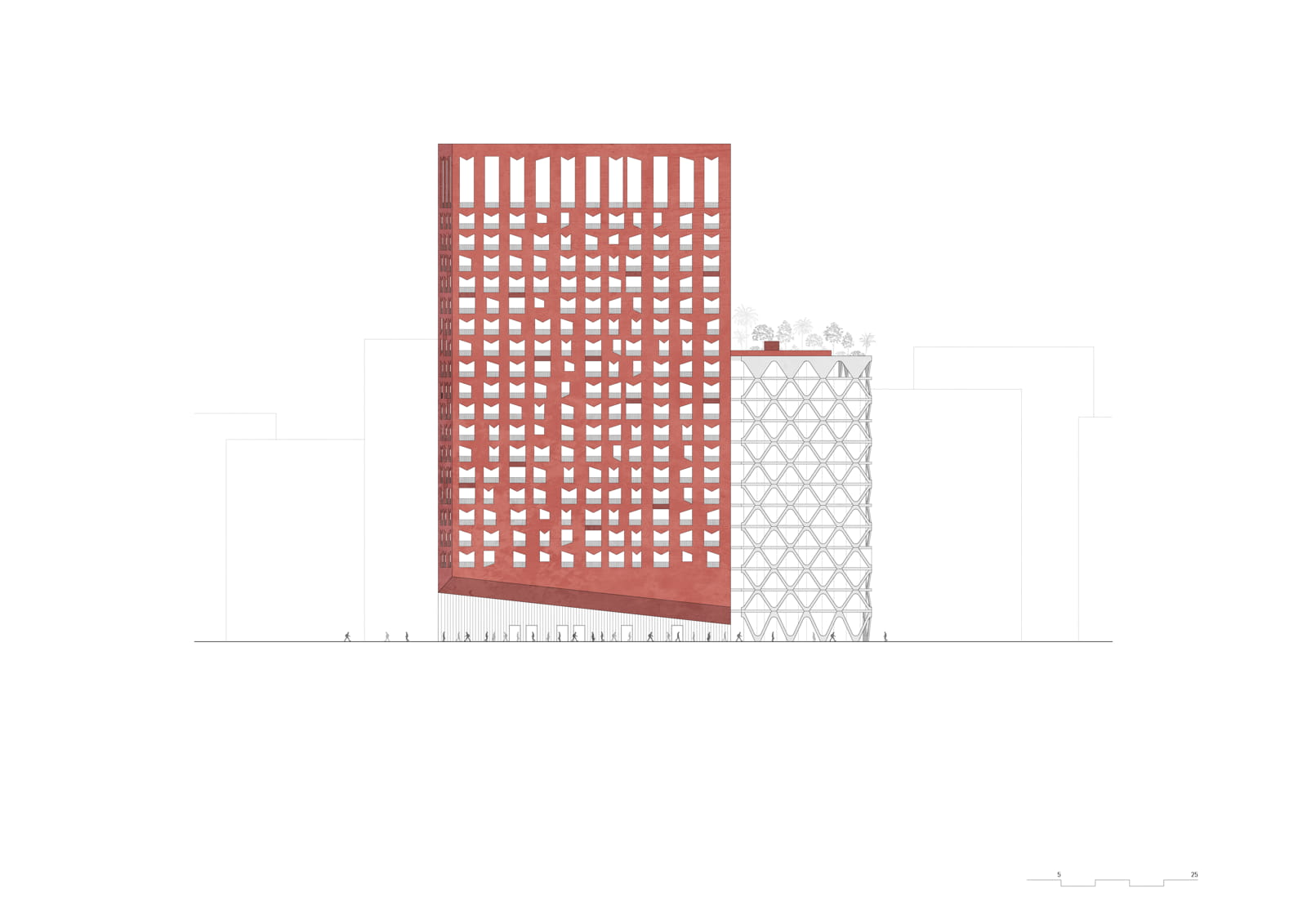
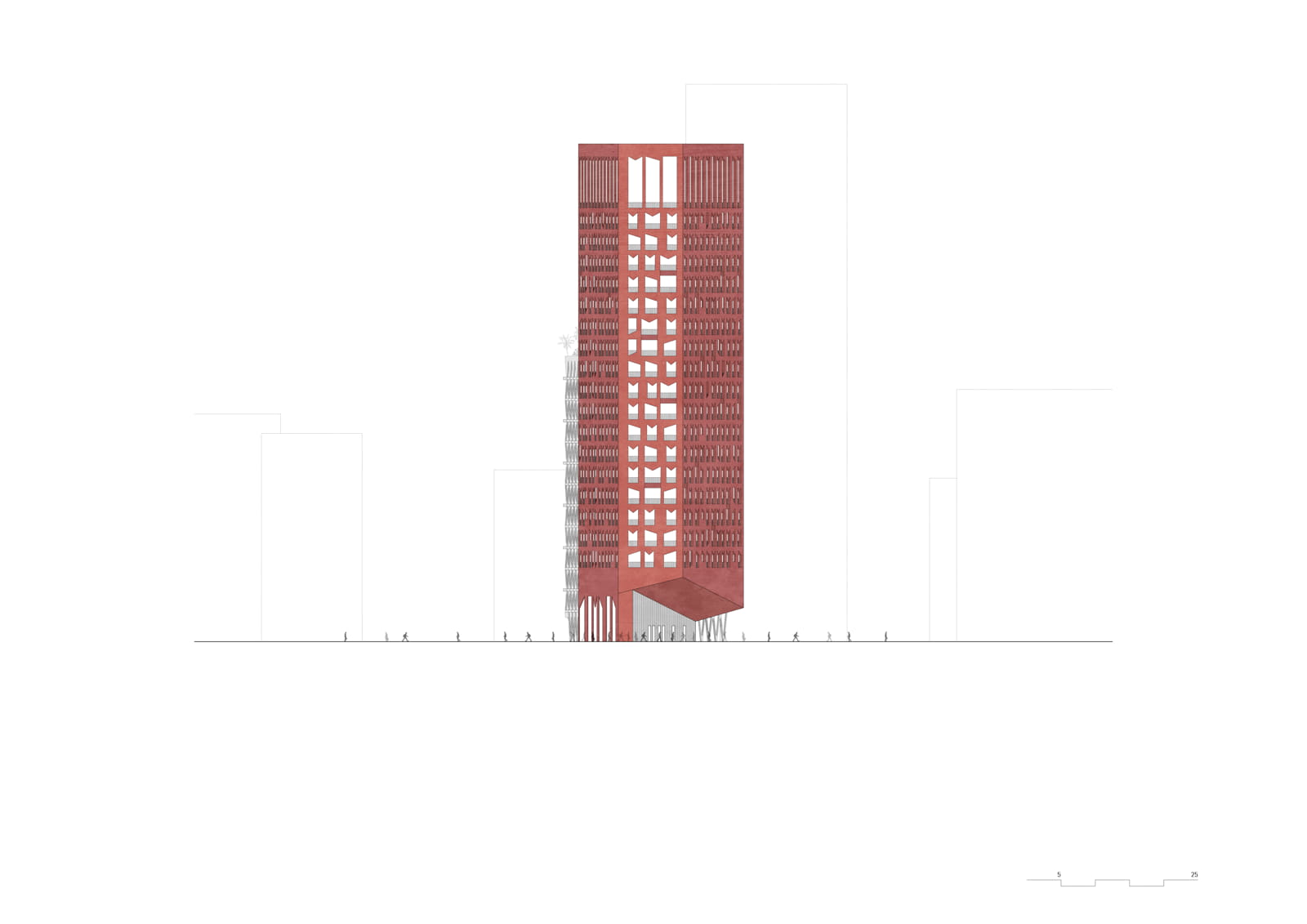
The tower is conceived as a tactile and experiential object. Its façade is articulated in bush-hammered concrete, rendered in warm reddish tones that resonate with the mineral qualities of the local landscape.
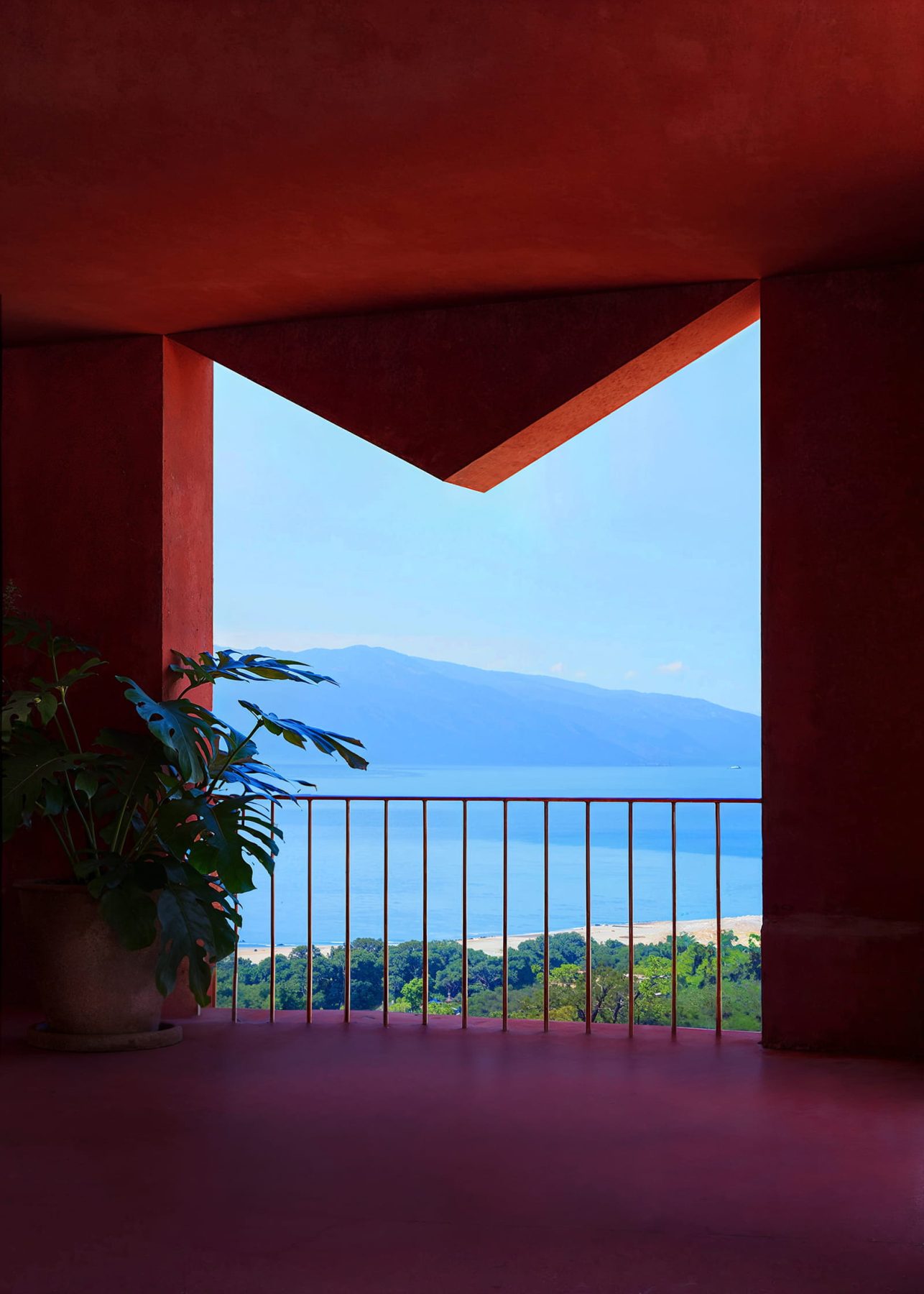
The composition balances rawness and precision, while openings are carefully proportioned to frame views and reinterpret vernacular Albanian window typologies through a contemporary architectural language.
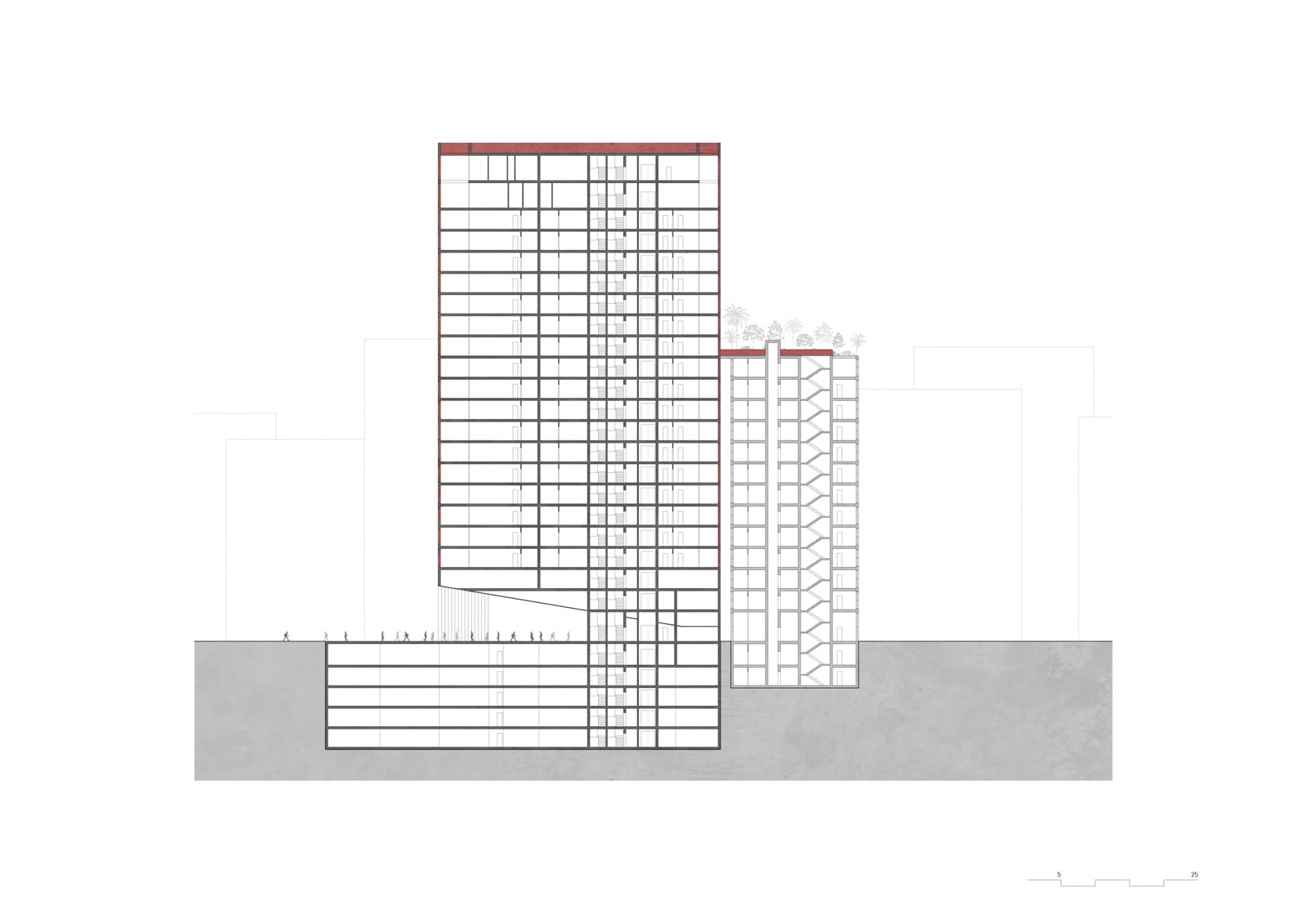
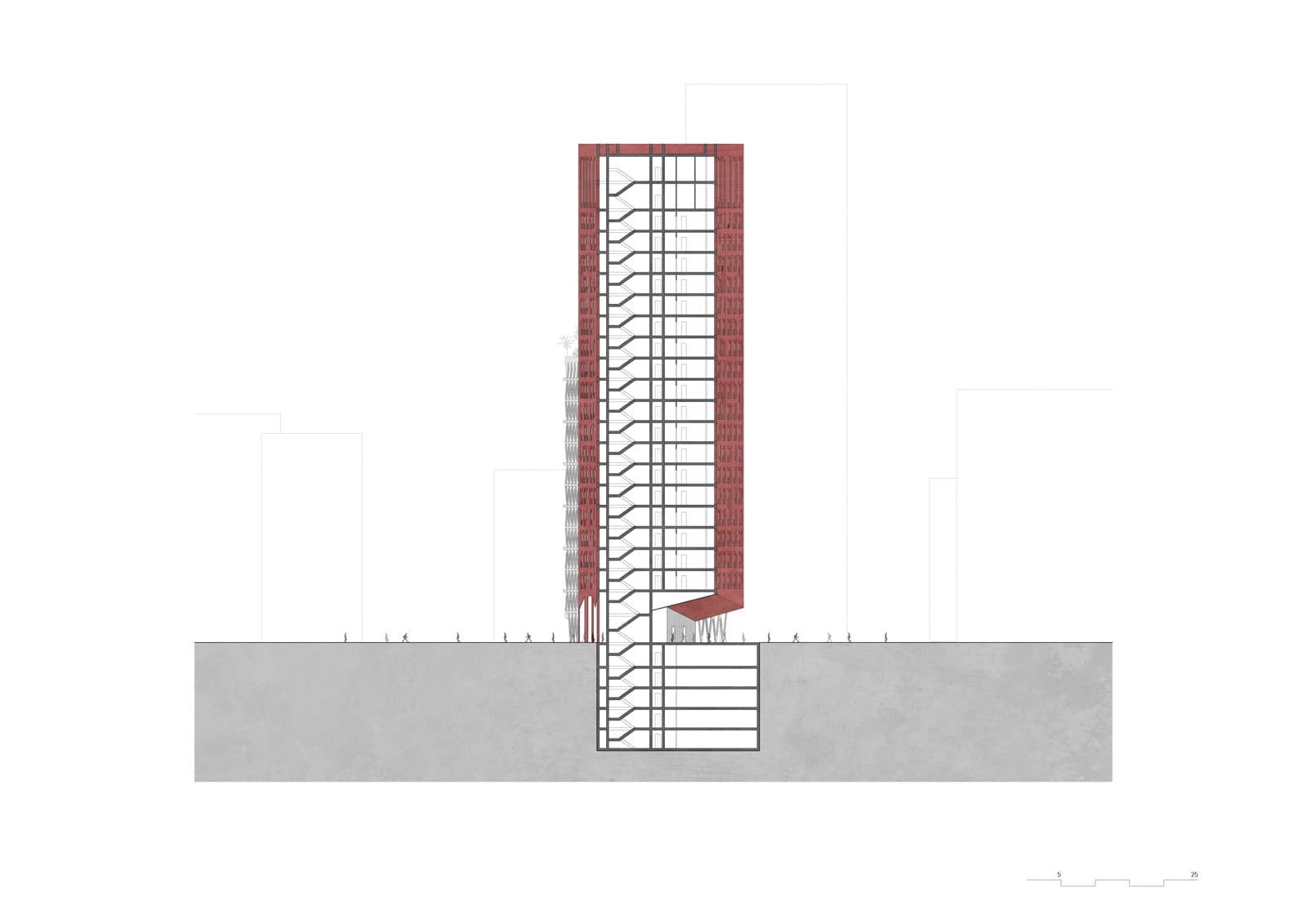
A continuous perimeter loggia defines each residential level, extending the domestic interior outward and mediating between private and collective realms. This spatial device enhances environmental comfort while cultivating a shared architectural rhythm across the elevation. It enables a mode of living that embraces light, air and horizon—embedding everyday life within the broader coastal context, and reinforcing the project’s identity as a framework for communal yet individualized dwelling.
The tower accommodates a diverse mix of uses, supporting a layered urban ecosystem.
A rooftop bar crowns the structure, offering panoramic views and functioning as a social condenser for both residents and visitors. The residential component comprises 107 units across 21 levels, ranging from one-bedroom apartments to duplex penthouses, ensuring a varied demographic and promoting coexistence within a single vertical community.
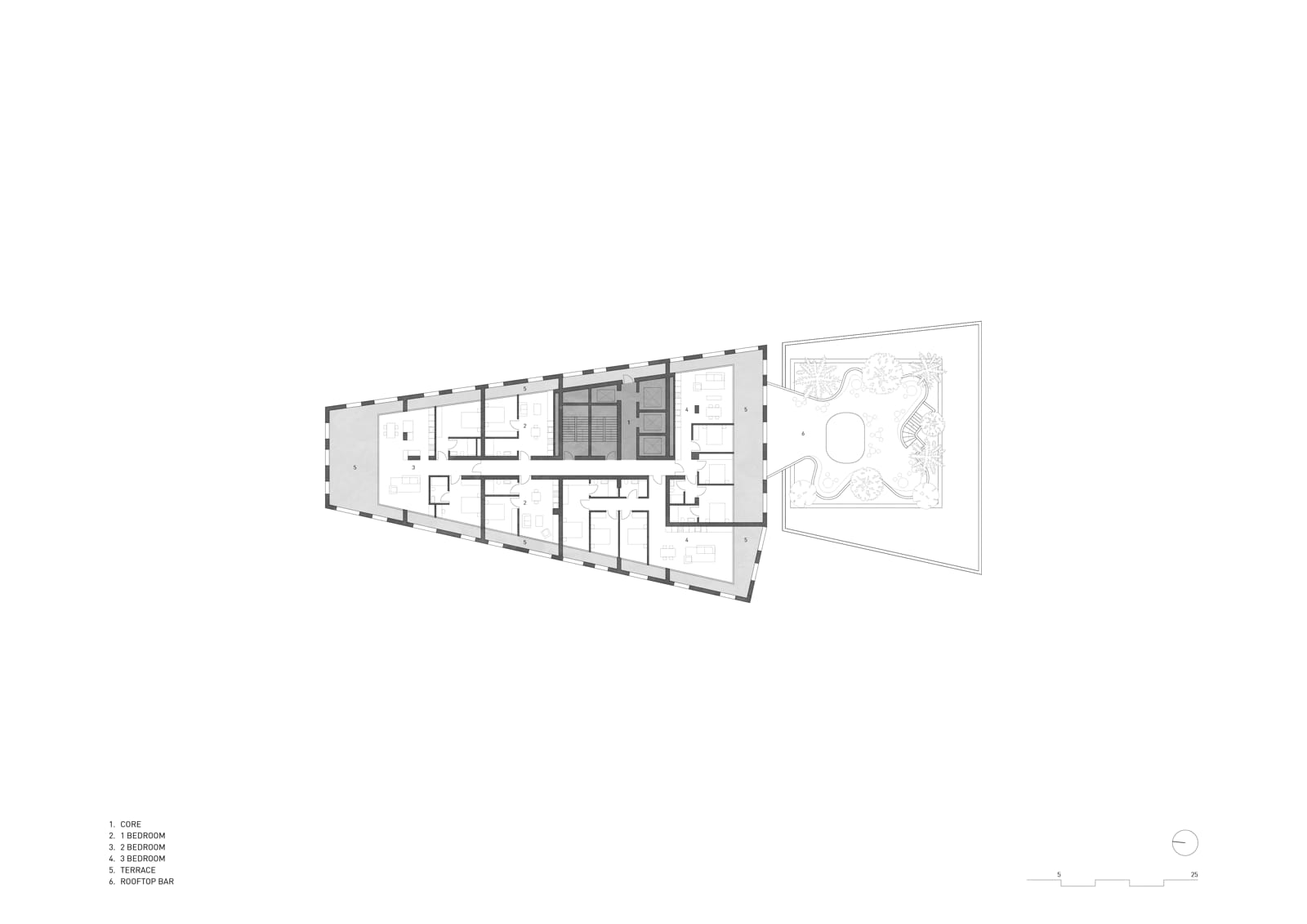
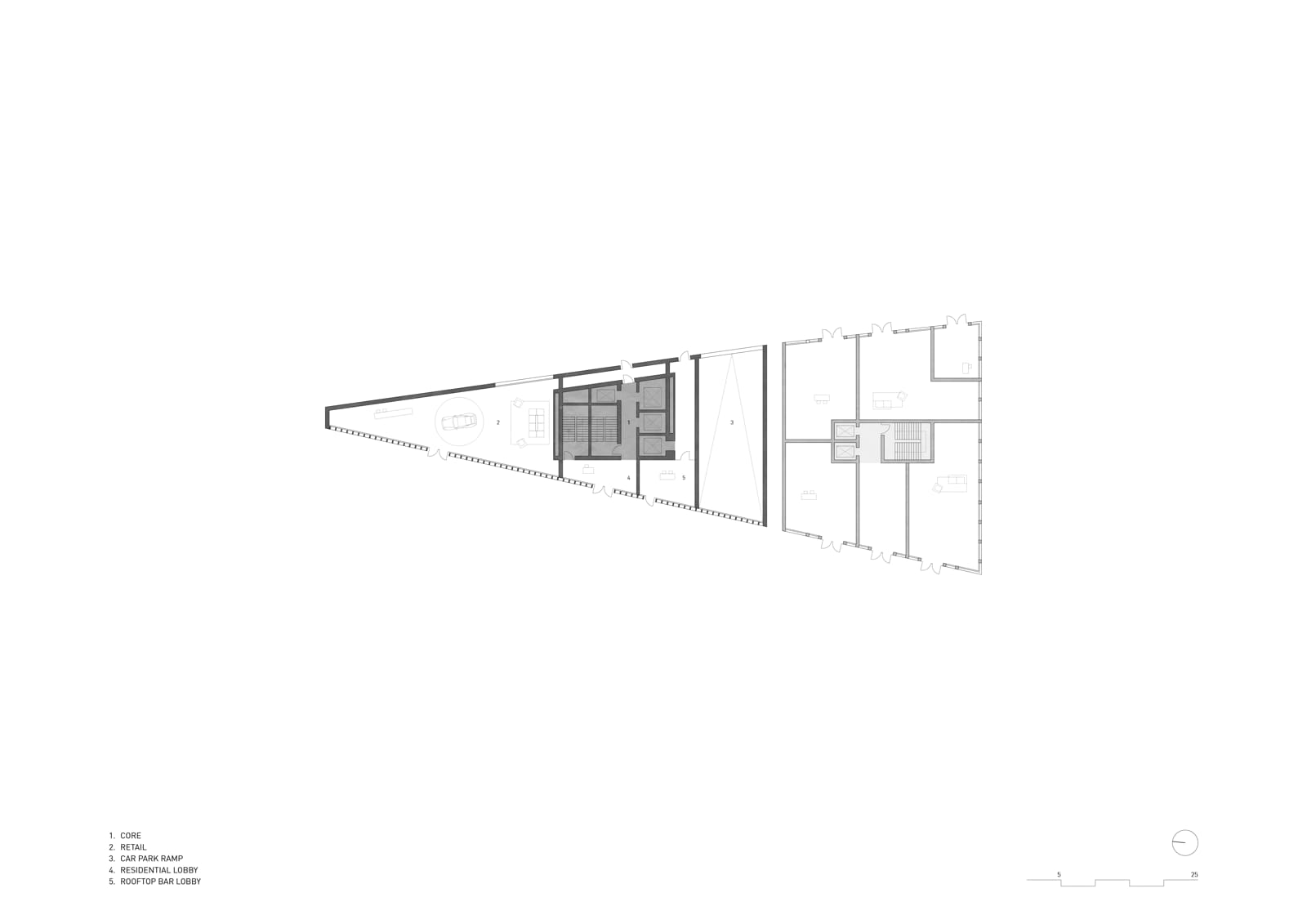
Each floor is organized to optimize light, orientation, and livability.
Upper levels expand into larger terraces, while penthouses articulate seamless transitions between interior and exterior. The uppermost level is reserved as a more secluded domain for penthouse residents, offering a quiet retreat above the urban intensity below. Circulation is clearly stratified, with independent access points for residential entry, office lobby, rooftop bar, and parking.
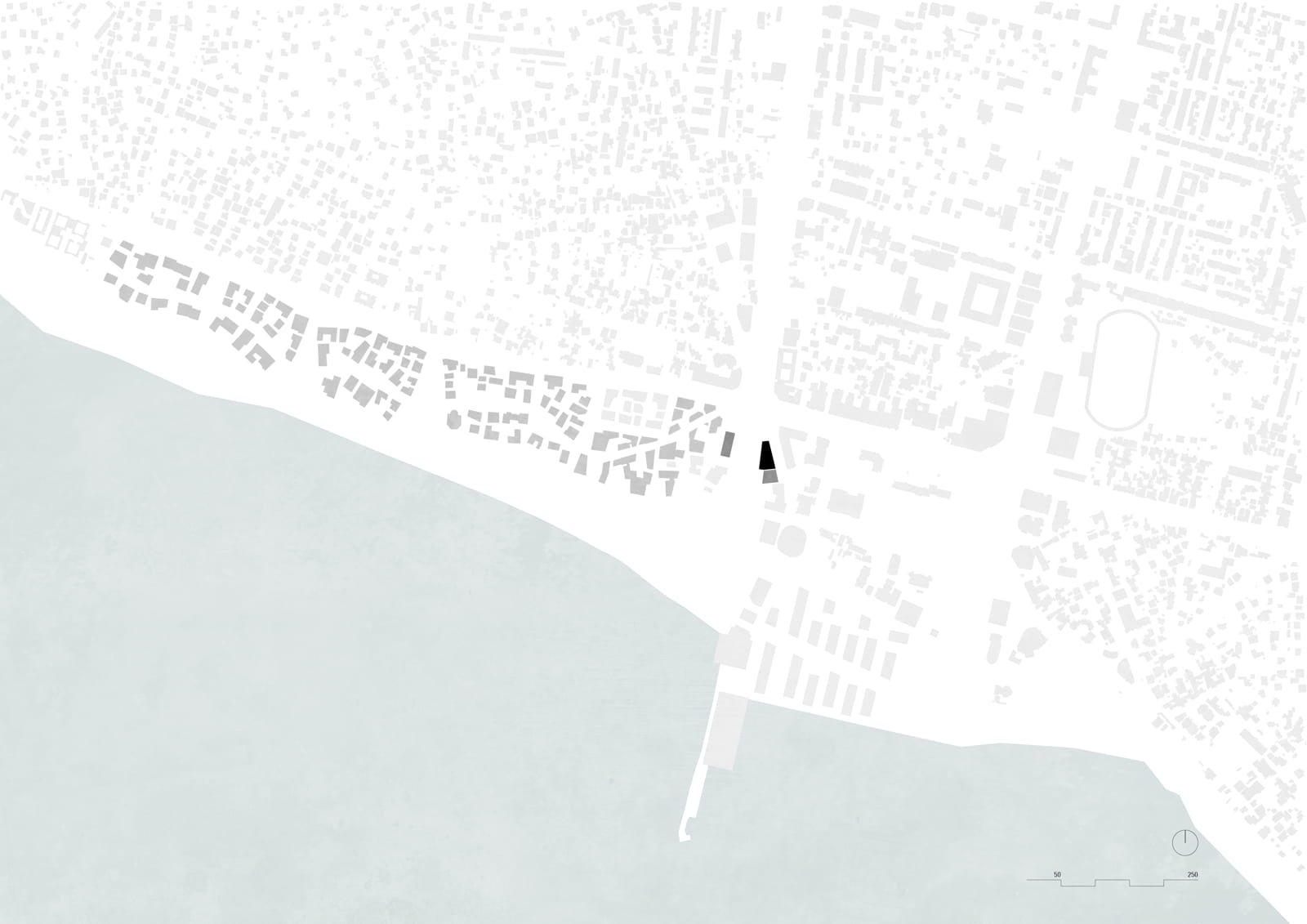
Subterranean parking liberates the ground plane, preserving it as an open civic interface—permeable, accessible, and connected to the surrounding public realm.
As part of a broader vision for the transformation of southern Albania’s coastline, the Vlore Beach Tower contributes to a renewed architectural identity for the region. Approaching architecture not only as form and function, but also feeling, the Vlore Beach Tower is a vessel for experience; an honest, essential expression of material, culture, and context.
Facts & Credits
Title Vlora Tower
Typology Architecture, Housing
Location Vlore, Albania
Status Under Construction
Architecture Oppenheim Architecture
Team Chad Oppenheim, Beat Huesler Tom McKeogh (Studio leader Europe), Rasem Kamal (Design lead Europe), Jose Maria Urbiola (Project lead), Joana Sousa, Kristijan Markoc, Daniela Abella, Olha Tymczuk, Martino Cucurnia, Inaya Berger, Samuel Heitz
Visualizations MIR
Text by the authors
Learn more about Beat Huesler, Architect and Director Europe of Oppenheim Architecture, here!