‘Stories of contemporary domesticity or HOMEland’, a series curated by Archt. for Archisearch, poses questions about the concept of home through an open dialogue with contemporary architectural practices in housing.
In the ninth episode, we follow Spanish studio Takk as they renovate a 50 m² apartment in Barcelona on a remarkably modest budget of 10,000 euros, addressing both the current housing crisis and climate change challenges. The project unfolds through an inclusive, open-ended design strategy in which rooms are nested within one another, prioritizing affordability, material honesty, and an energy-efficient domestic model.
Home can take many forms, but above all, it is an indisputable human right. To seek the meaning of home, therefore, is to search for a better life.
From the personal to the collective, one of the most urgent questions of our time persists: how do we want to live together? Across Europe’s cities, soaring rents, stagnant wages, rising energy costs, growing social inequality, and climate-driven extreme weather events exert immense pressure on domestic life.
It is from this context that 10k House emerges; a renovation by Takk that reimagines a small Barcelona apartment with an ambition to make sustainability and social critique operative within strict material limits.
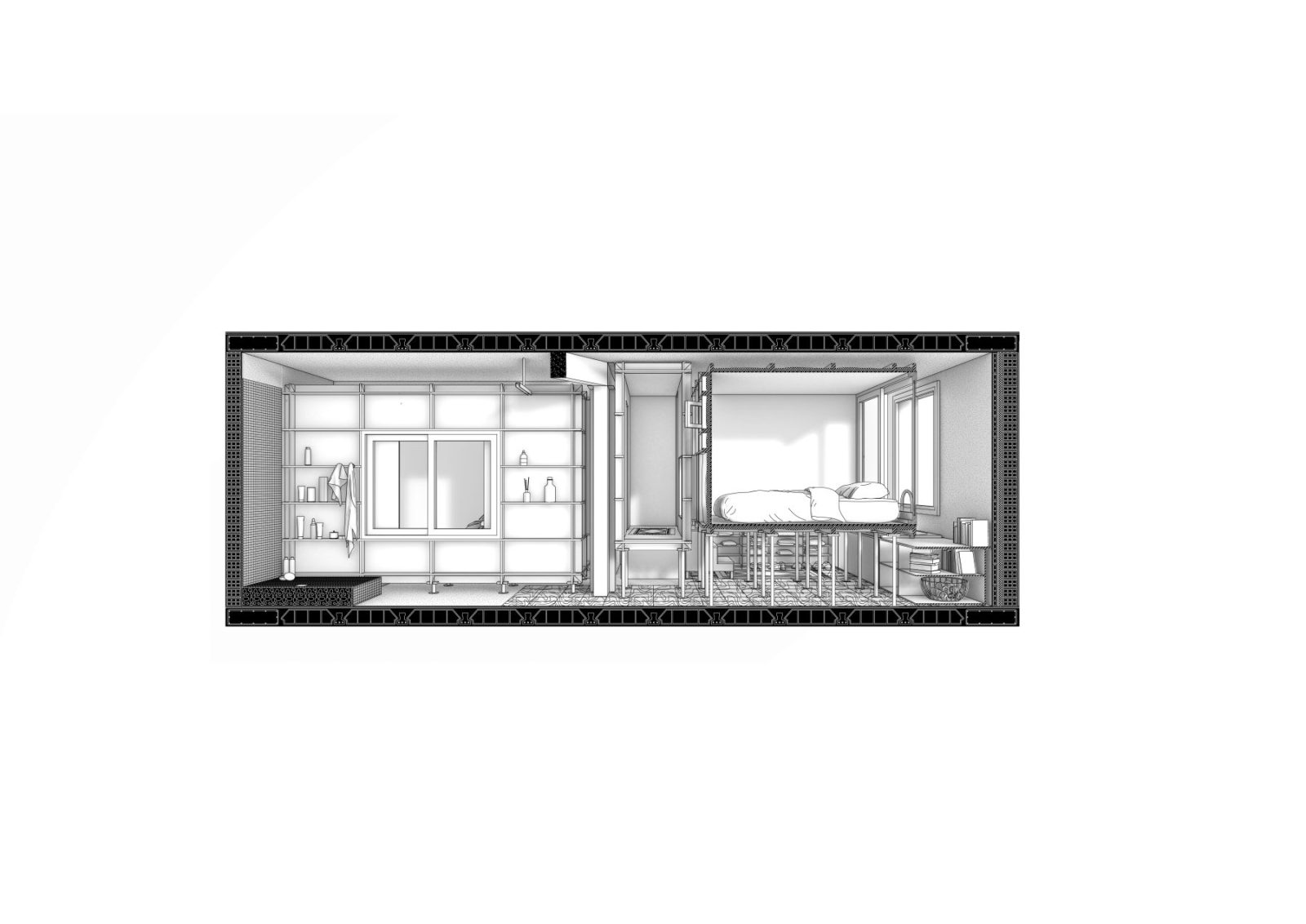
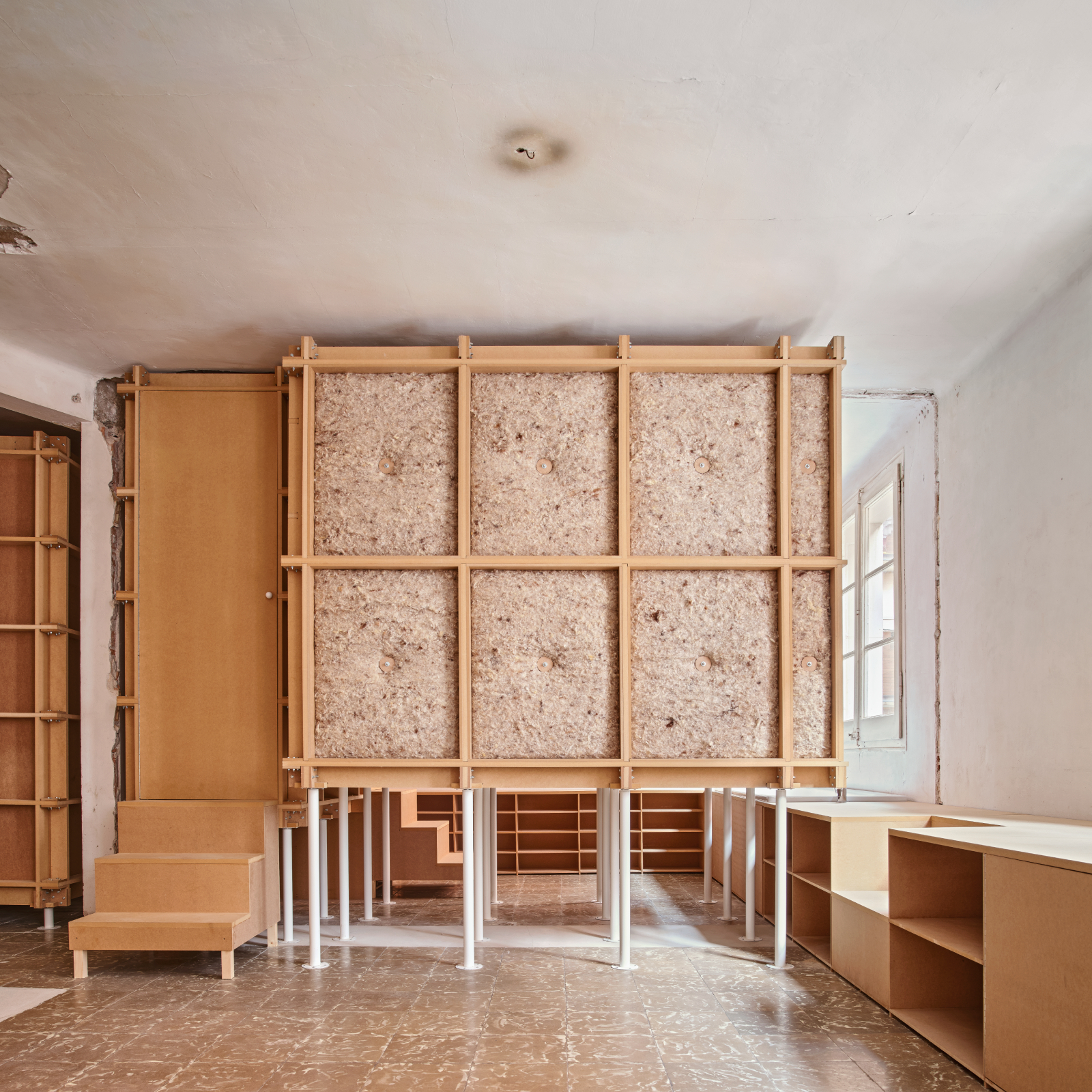
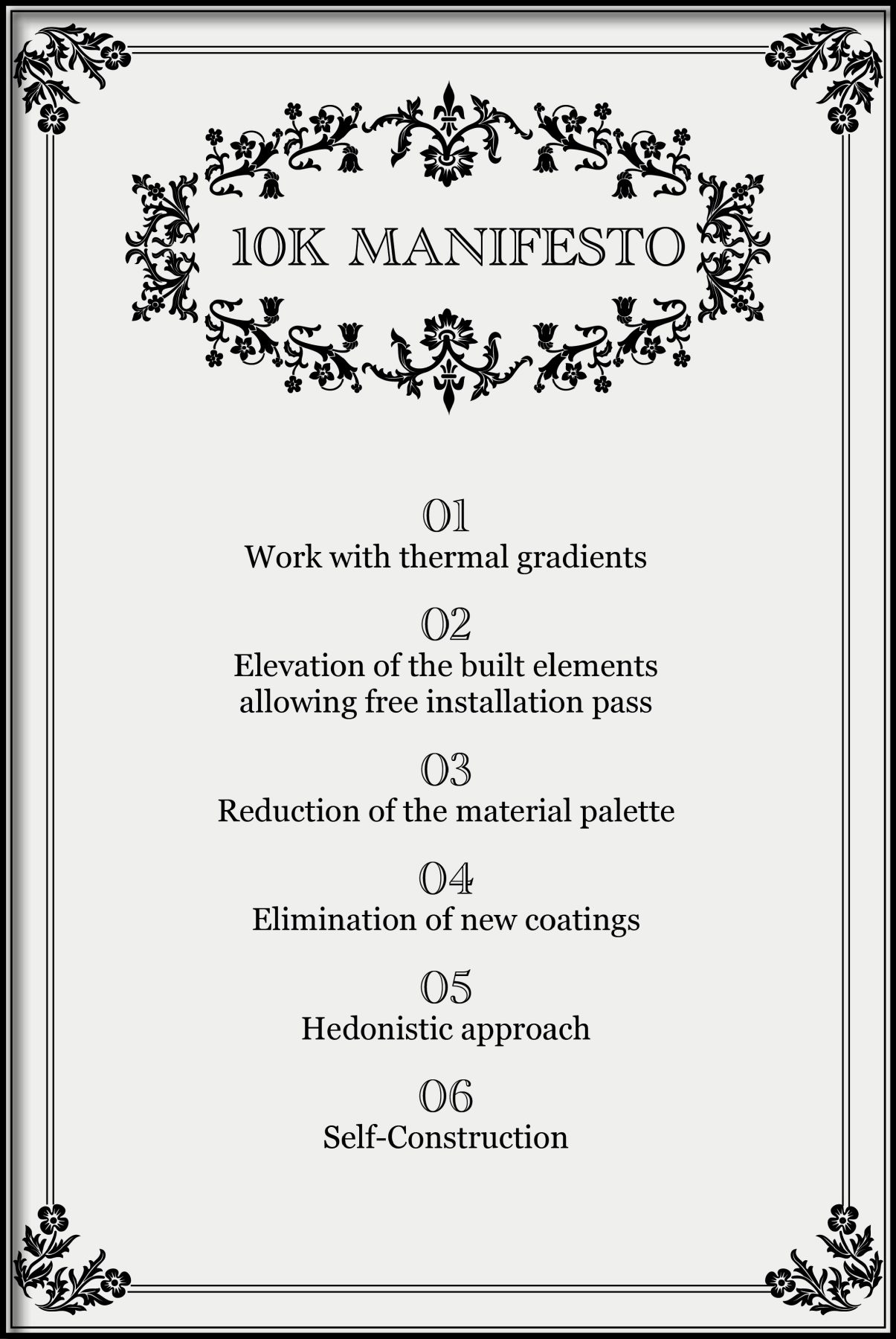
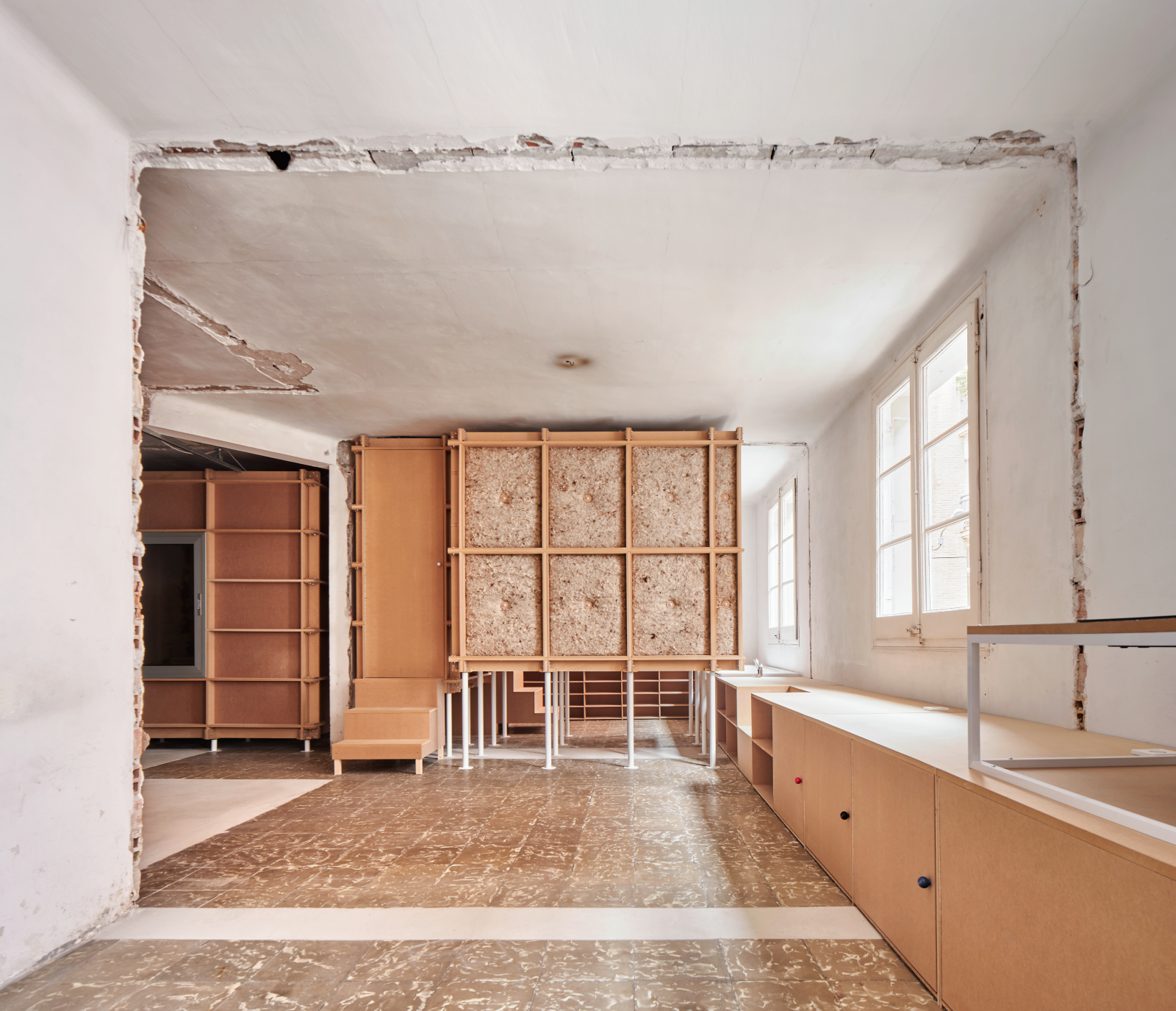
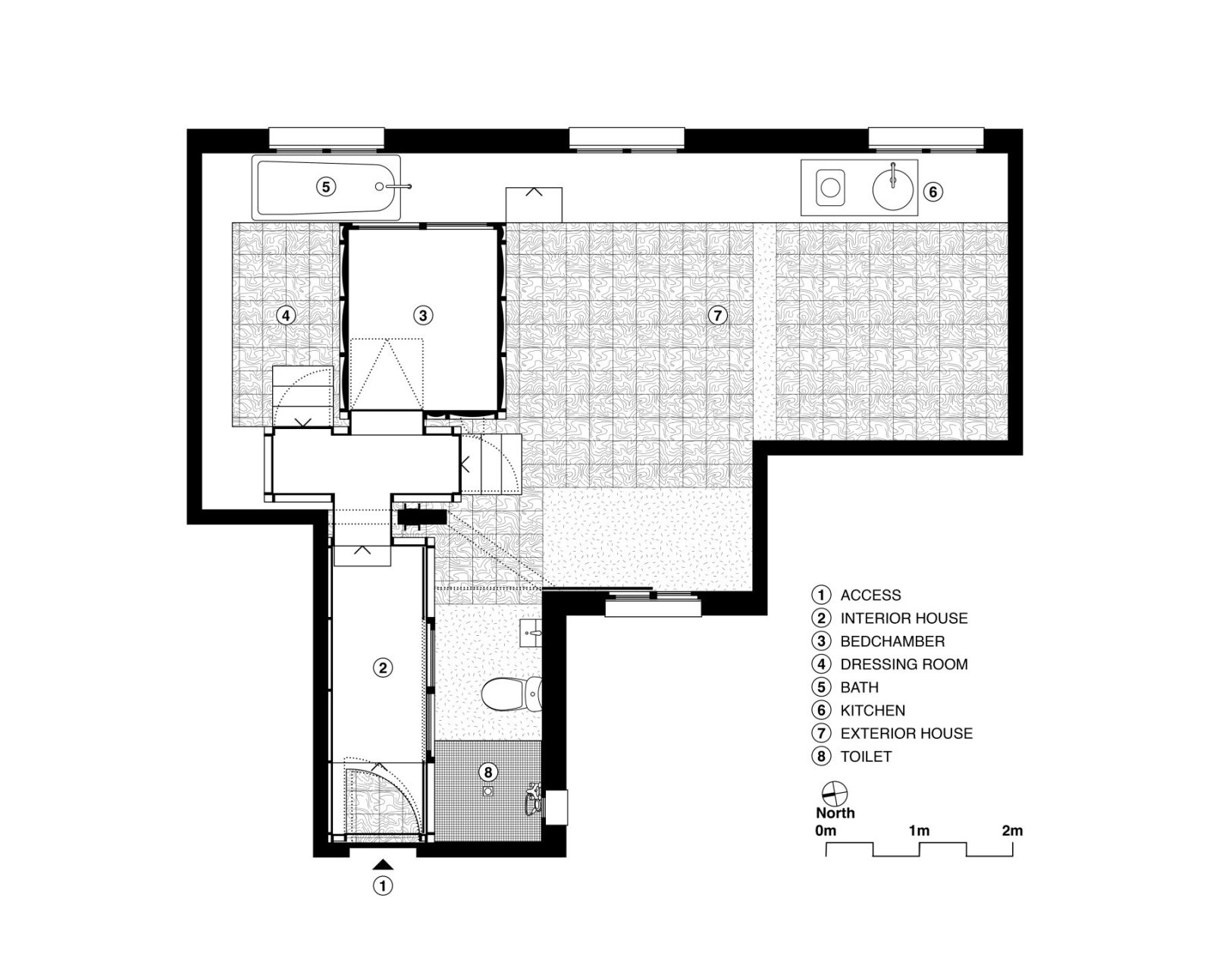
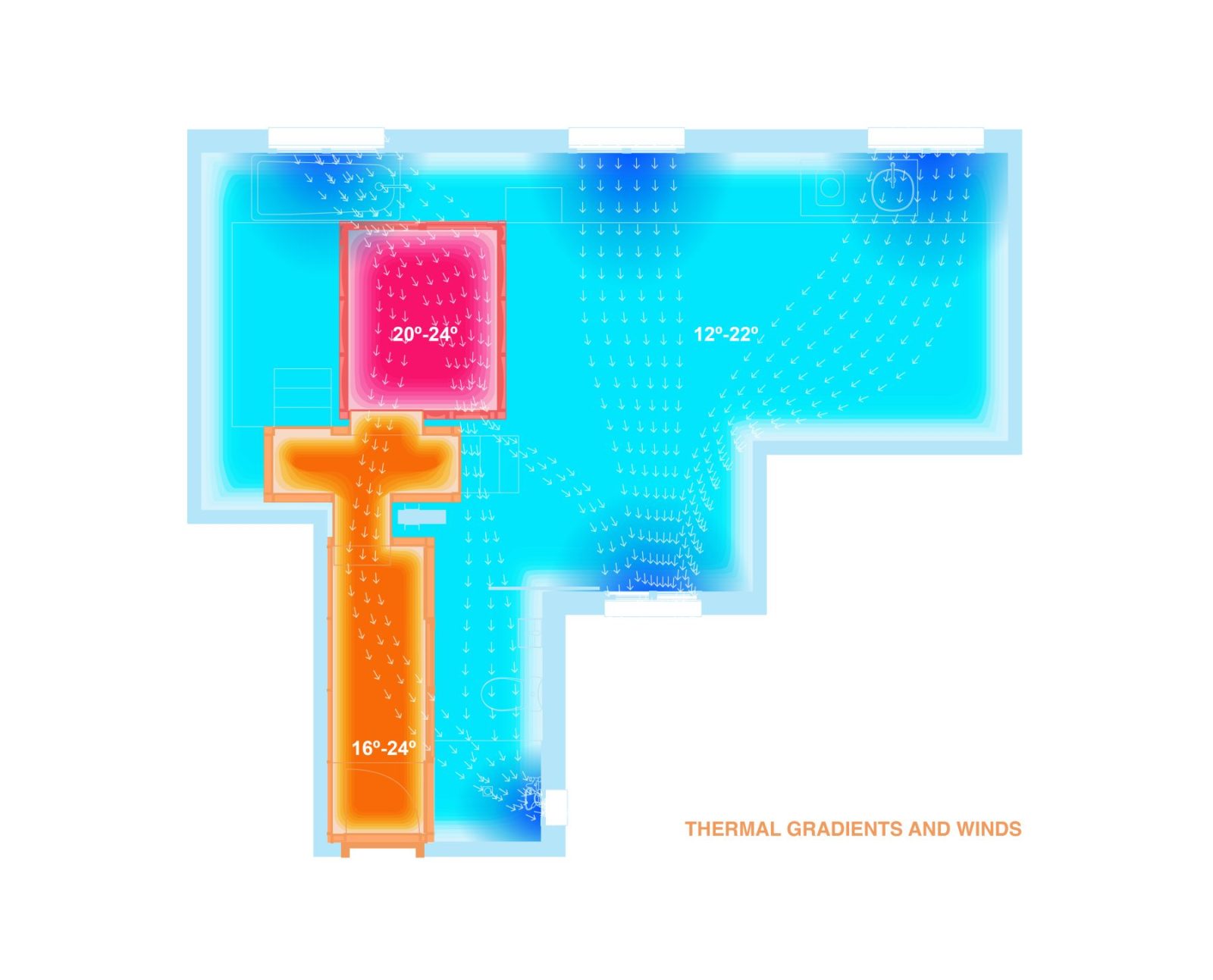
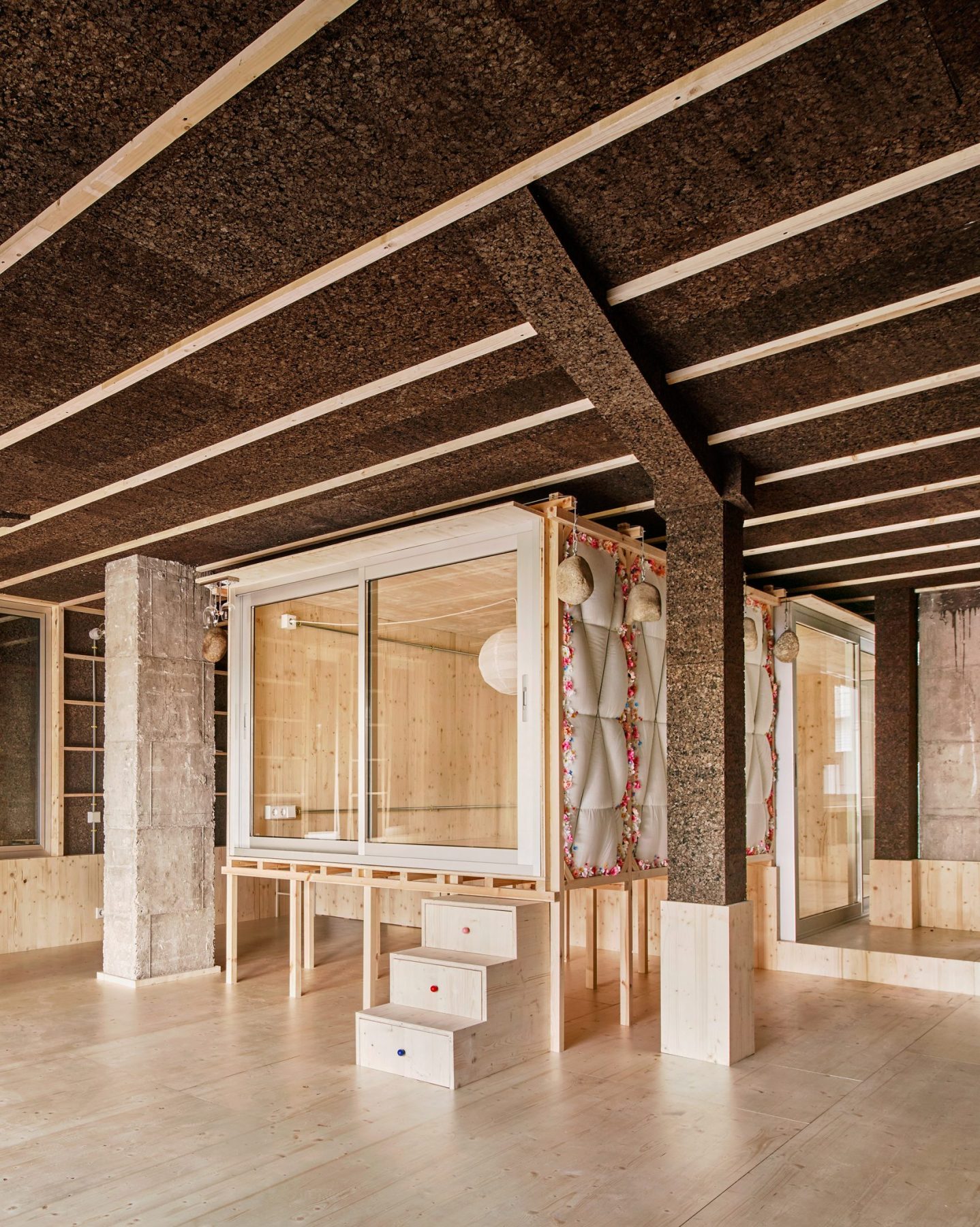
Elevated on white recycled table legs, the home’s new built elements allow water pipes and electrical conduits to run freely around them, eliminating the need for wall chases and significantly reducing construction time and cost. At the heart of the dwelling lies its softest and warmest core—the sleeping chamber. By positioning the room with the greatest thermal demand at the center, the design enhances energy efficiency; its layered, onion-like configuration helps stabilize indoor temperatures and reduces the need for additional heating. For insulation and affordability, the elevated bedroom volume is clad in gridded medium-density fibreboard (MDF) frames enveloped with slabs of locally sourced sheep’s wool.
By minimizing the material palette, the architects achieve both ecological and economic restraint.
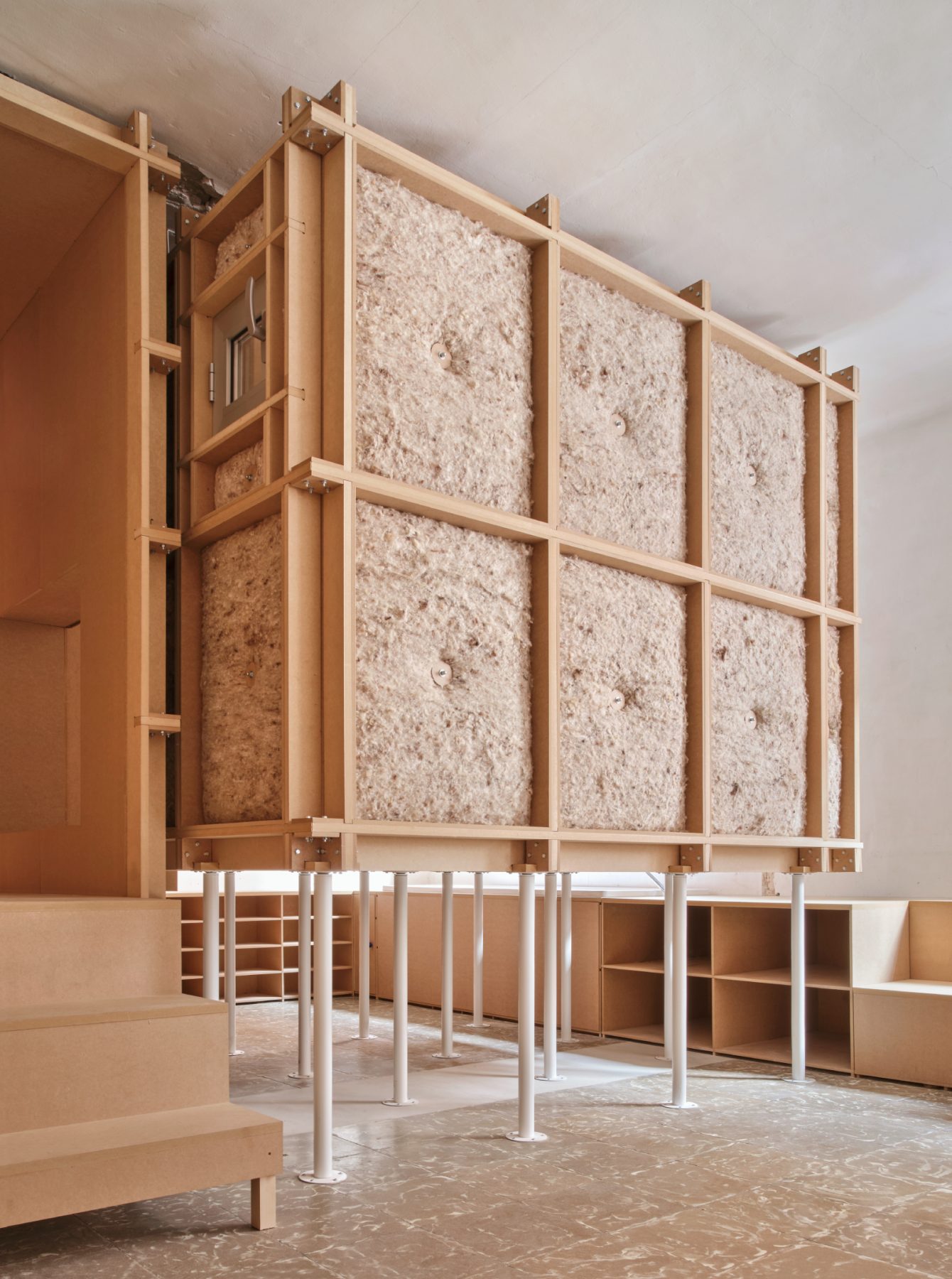
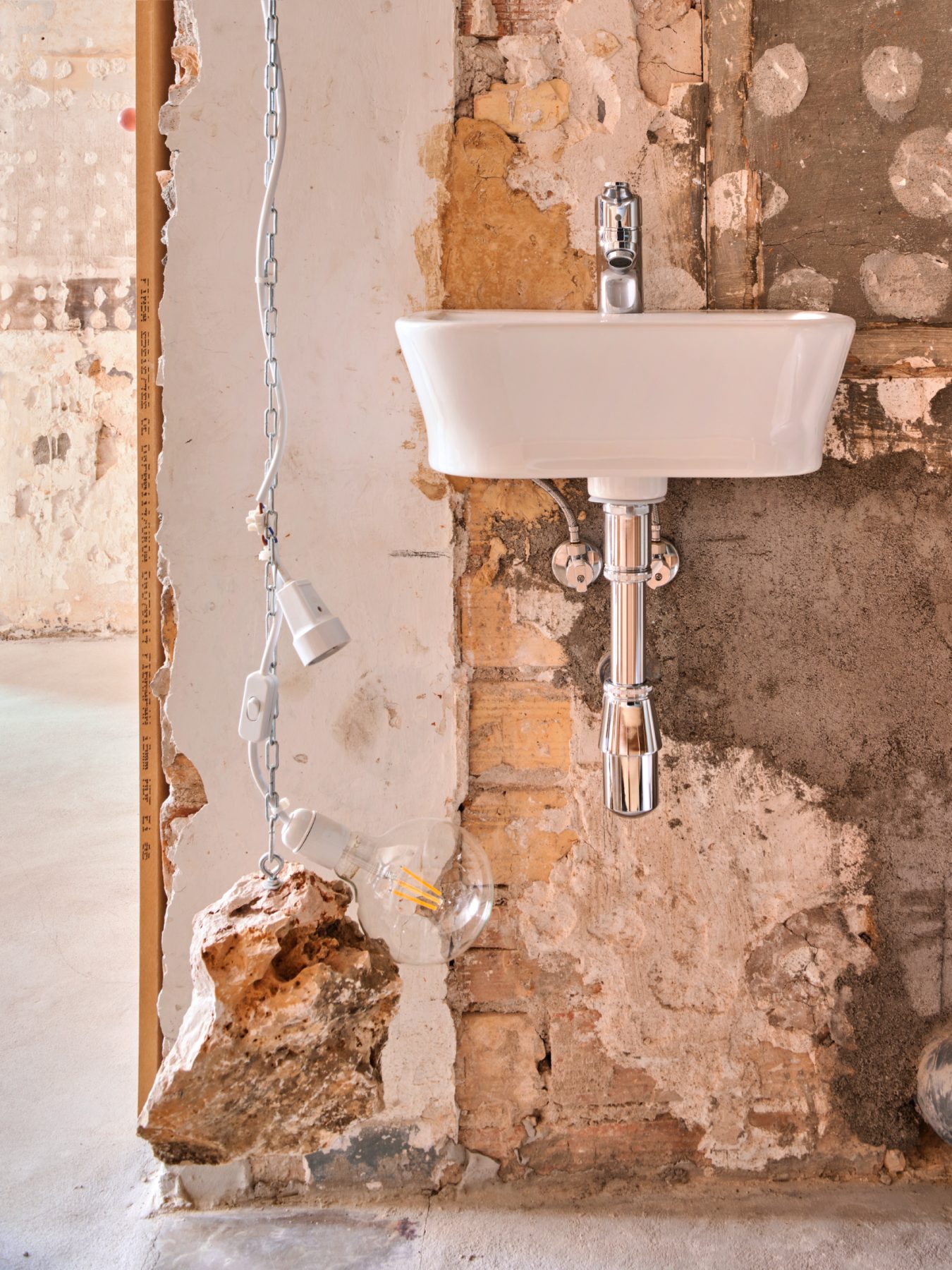
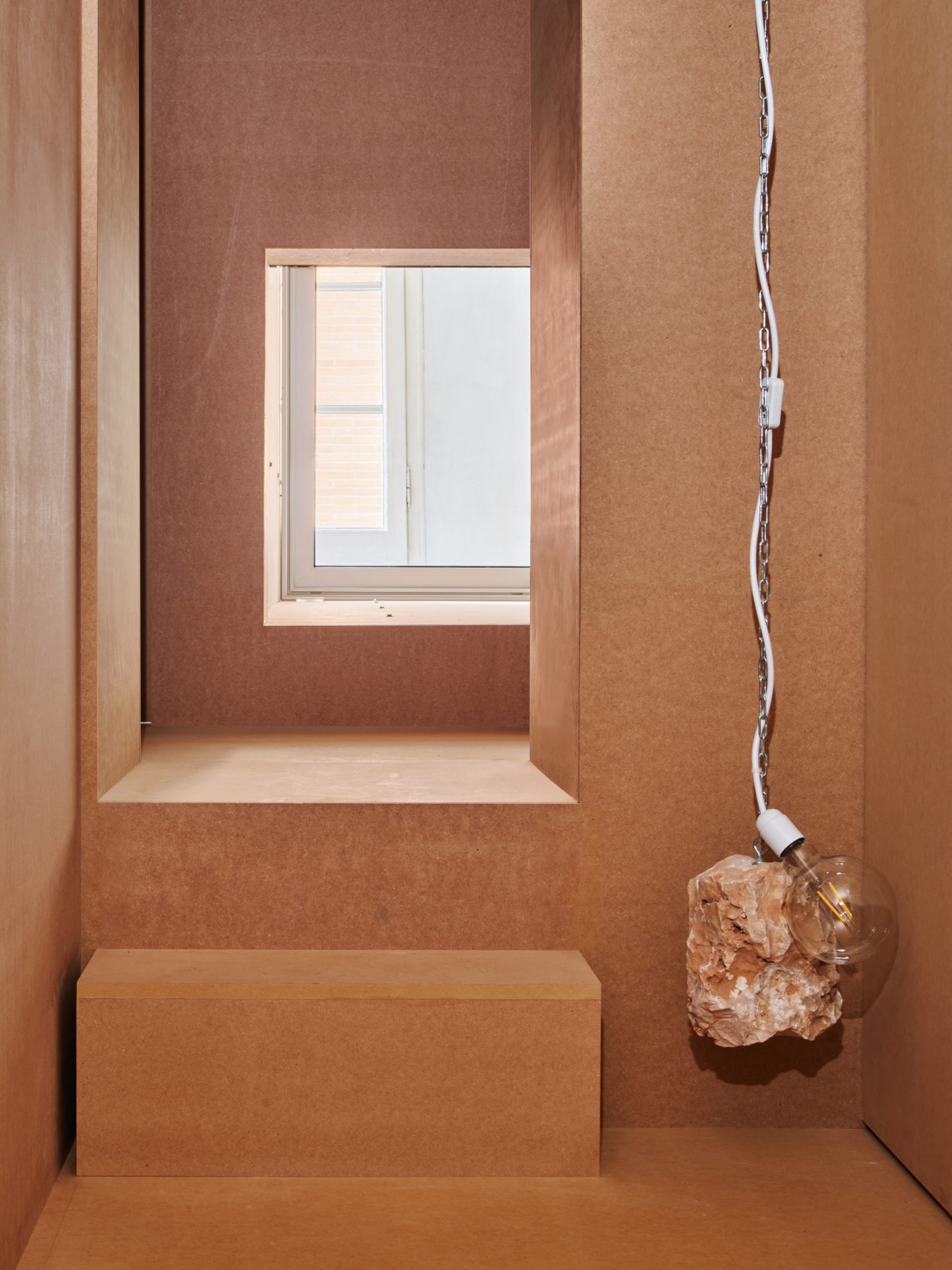
This floating, room-within-a-room strategy—rather than the conventional aggregation of rooms and corridors—creates spaces with distinct climatic and environmental conditions, exploiting layers of air and material to enhance comfort without mechanical intervention. Following demolition, the architects deliberately avoided the application of new, carbon-intensive finishes. Floors, ceilings, and walls were neither plastered nor painted; instead, the existing surfaces were carefully cleaned and left exposed.
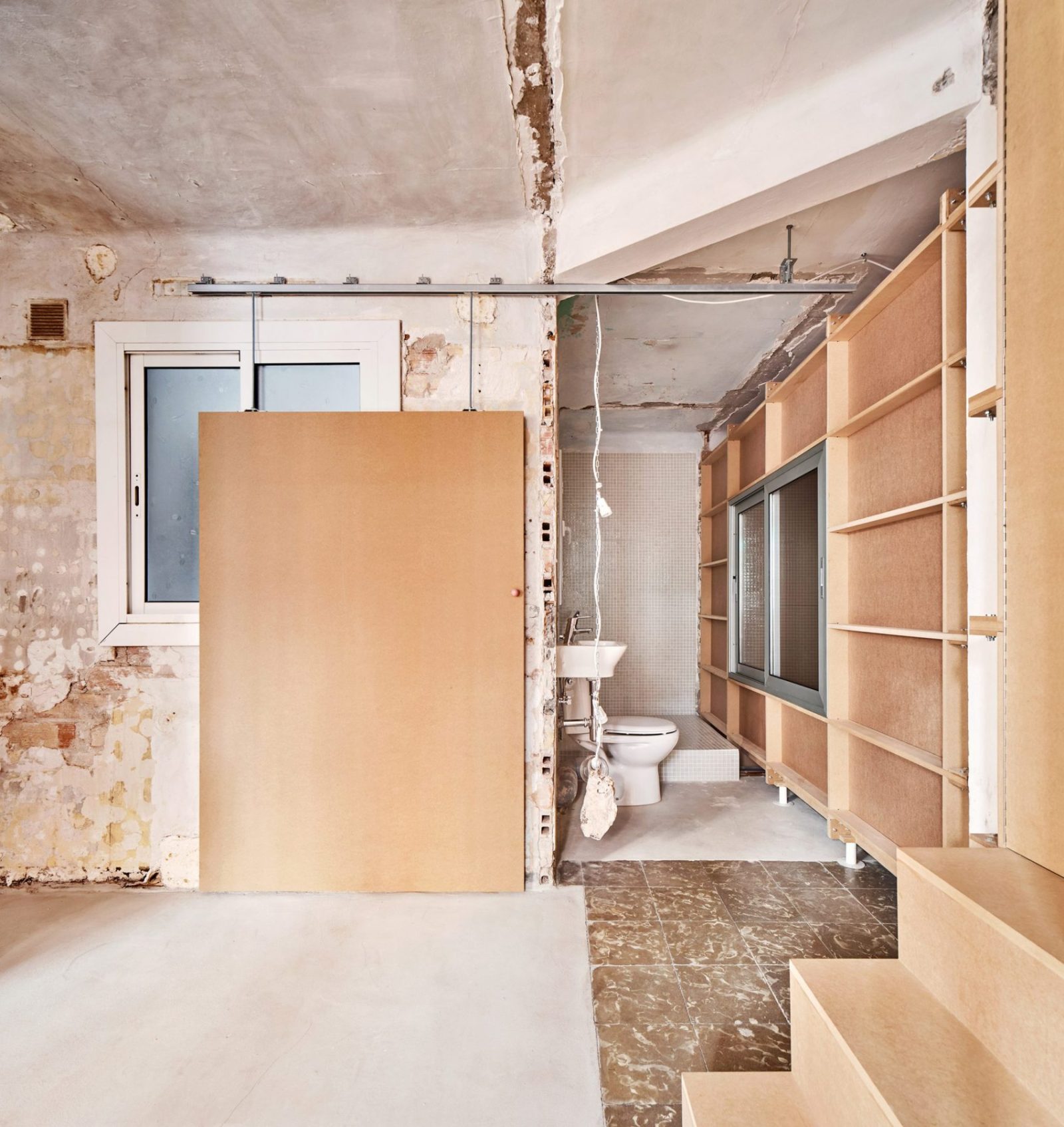
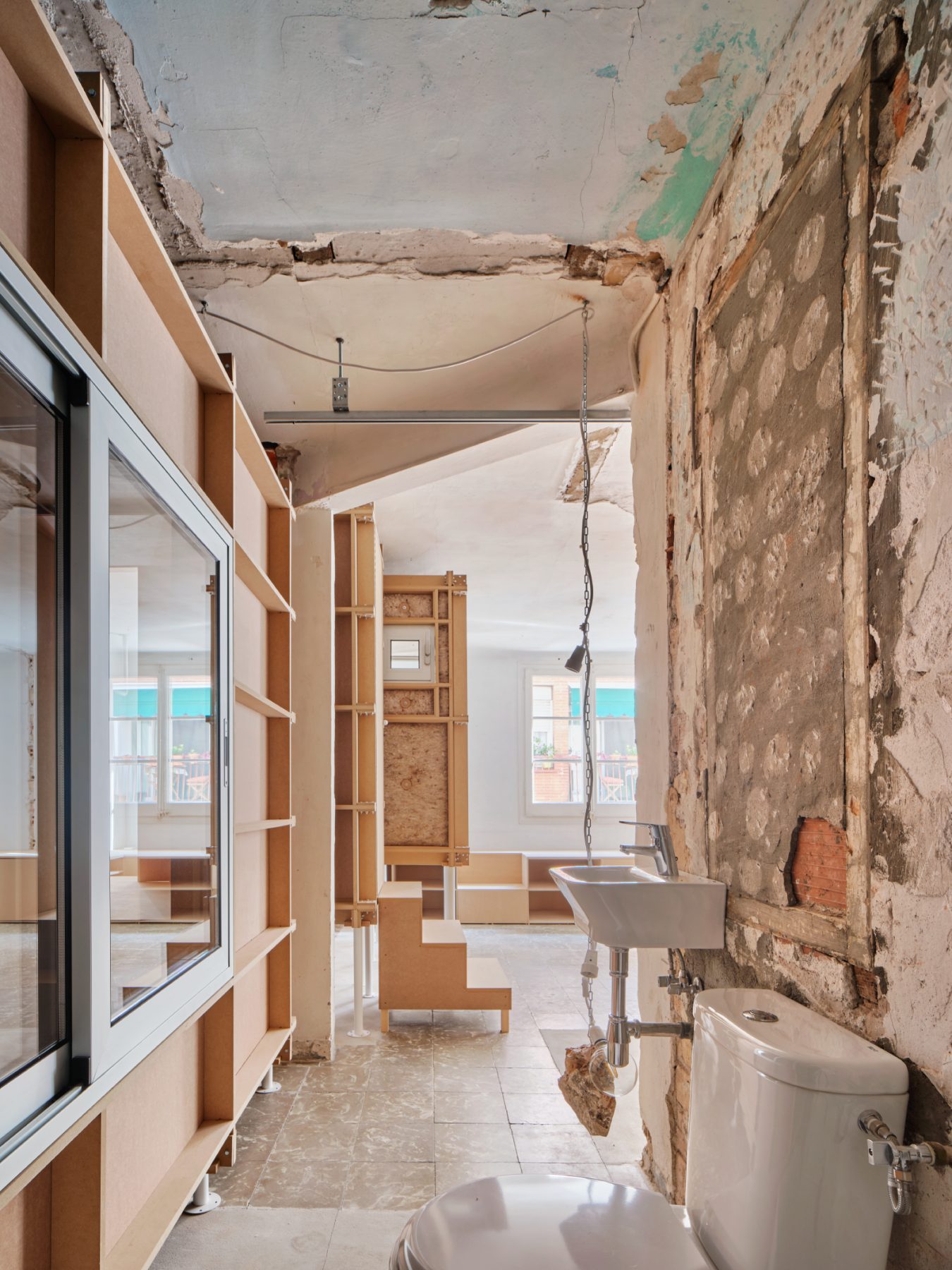
Traces of removed partitions and dismantled light fixtures remain visible, lending the apartment a raw, brutal honesty while preserving the memory of its former layout.
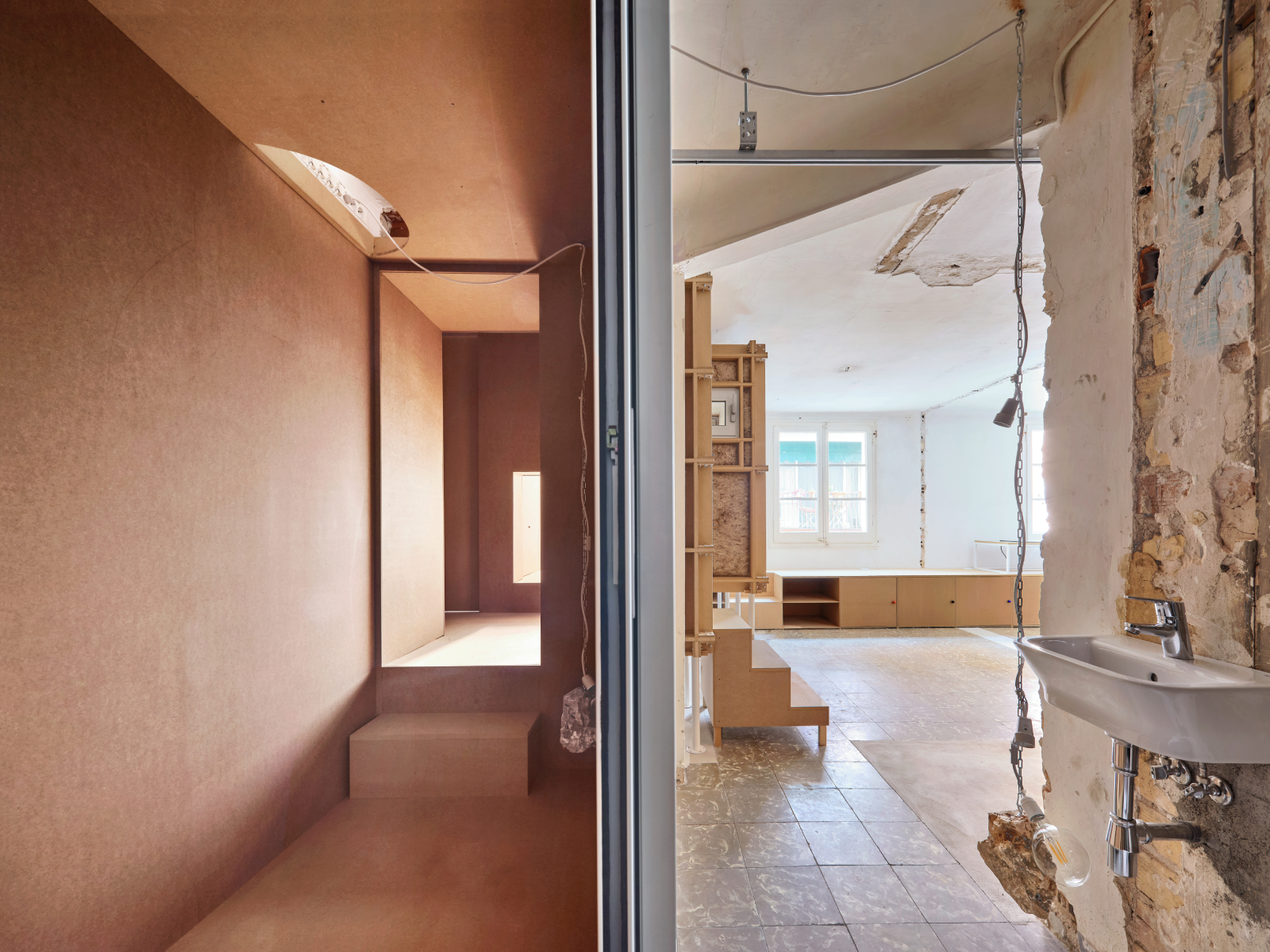
Challenging entrenched domestic conventions, Takk positioned the exposed metal kitchen sink and the bathtub directly adjacent to the apartment’s façade windows. In doing so, the body is placed in plain sight—as a free, ungendered presence—disrupting the traditional hierarchies of privacy and use.
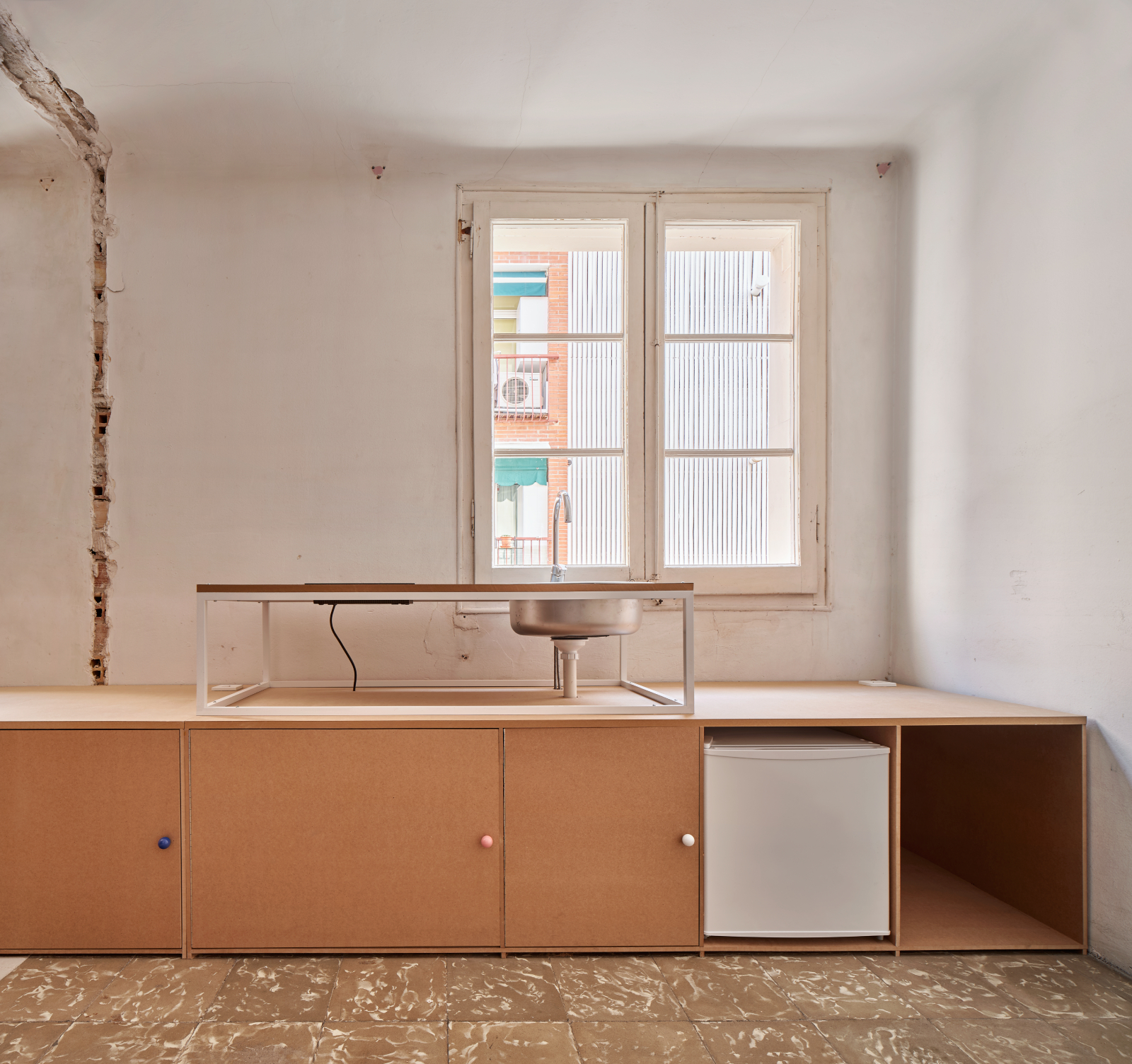
“Traditionally, the kitchen has been understood as a space used mainly by women, whether as homeowners or domestic workers,” reflect Mireia Luzárraga and Alejandro Muiño, Takk’s founding partners. “Historically, this has meant relegating it to secondary areas of the house—poorly lit and poorly ventilated, especially in small houses. One way to counter this is to place the kitchen in open, prominent spaces, challenging everyone, regardless of gender, to take responsibility for domestic labor.”
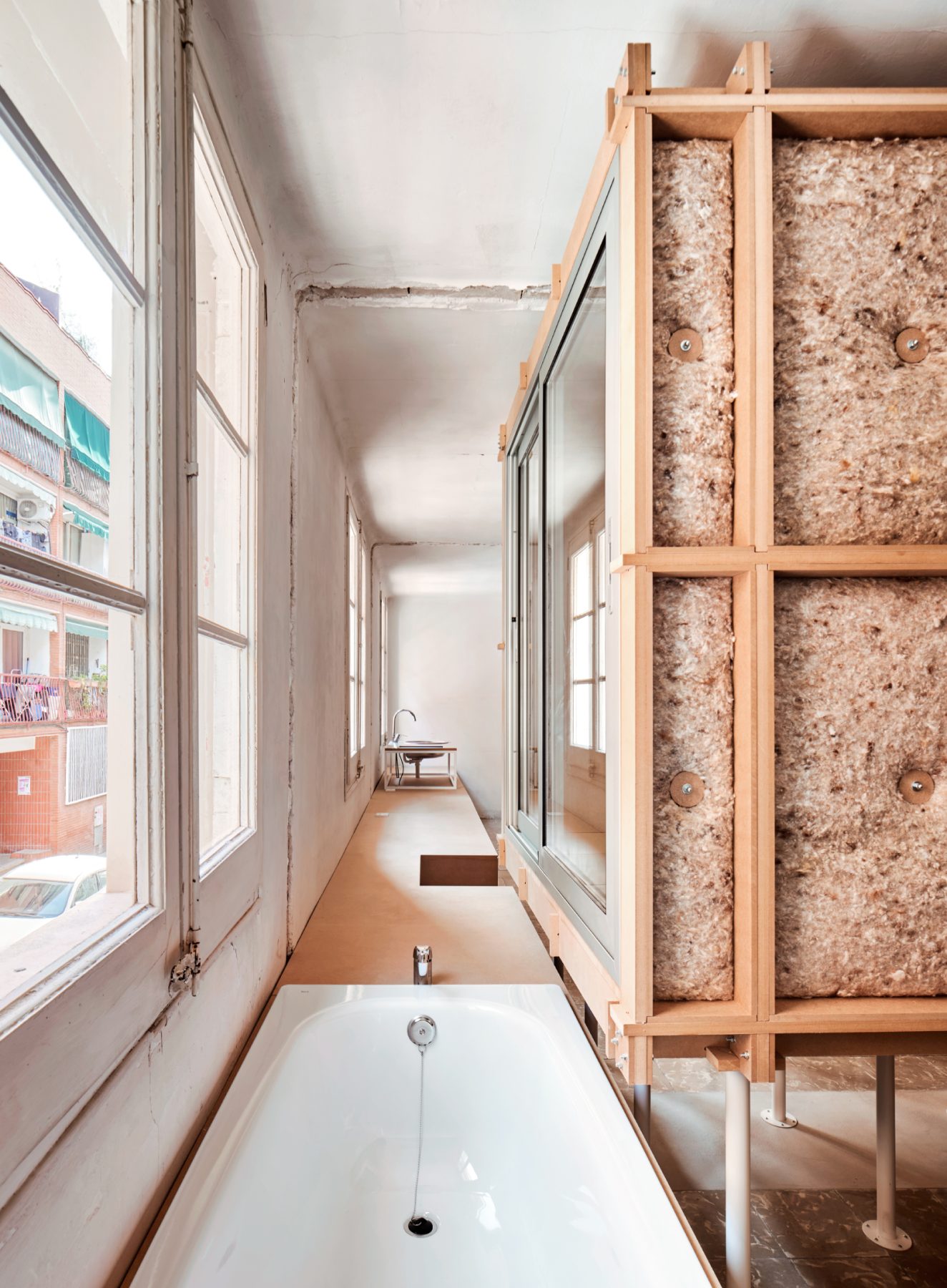
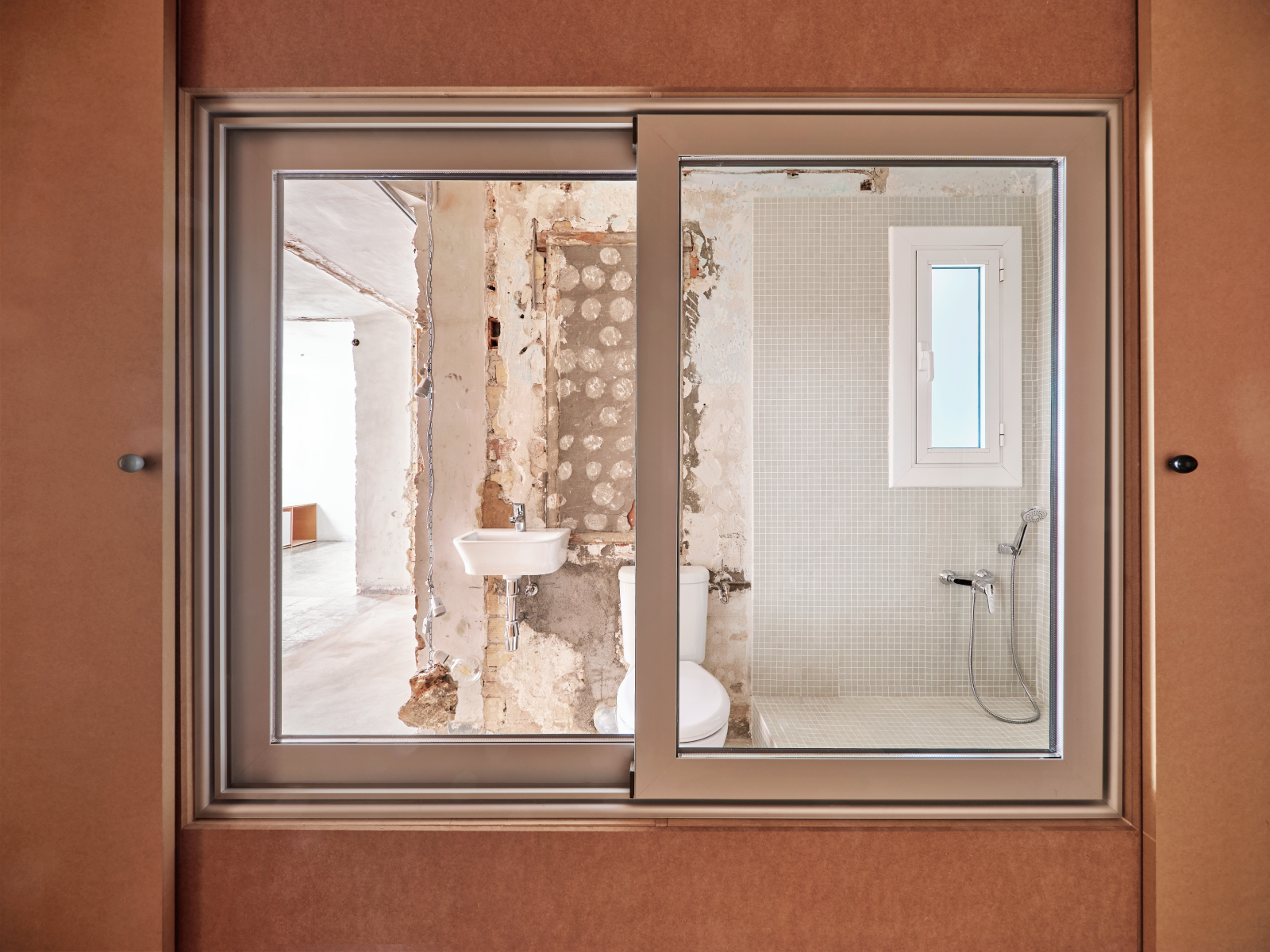
Extending this logic, the architects introduced an internal window between the entrance corridor and the bathroom. Once again, the naked body is exposed—this time as a hedonistic spectacle—transforming the bathroom from a secluded, utilitarian enclosure into a space “that can be used even in company”, social and luminous rather than isolated and opaque.
Conceived as both home-as-laboratory and home-as-construction-site, the project deliberately promotes a DIY ethos and the inclusion of non-experts in the building process. The renovation was executed entirely through dry assembly: all components were prefabricated, cut off-site, and assembled using standard screws by the architects and the client themselves, without the involvement of specialized labor.
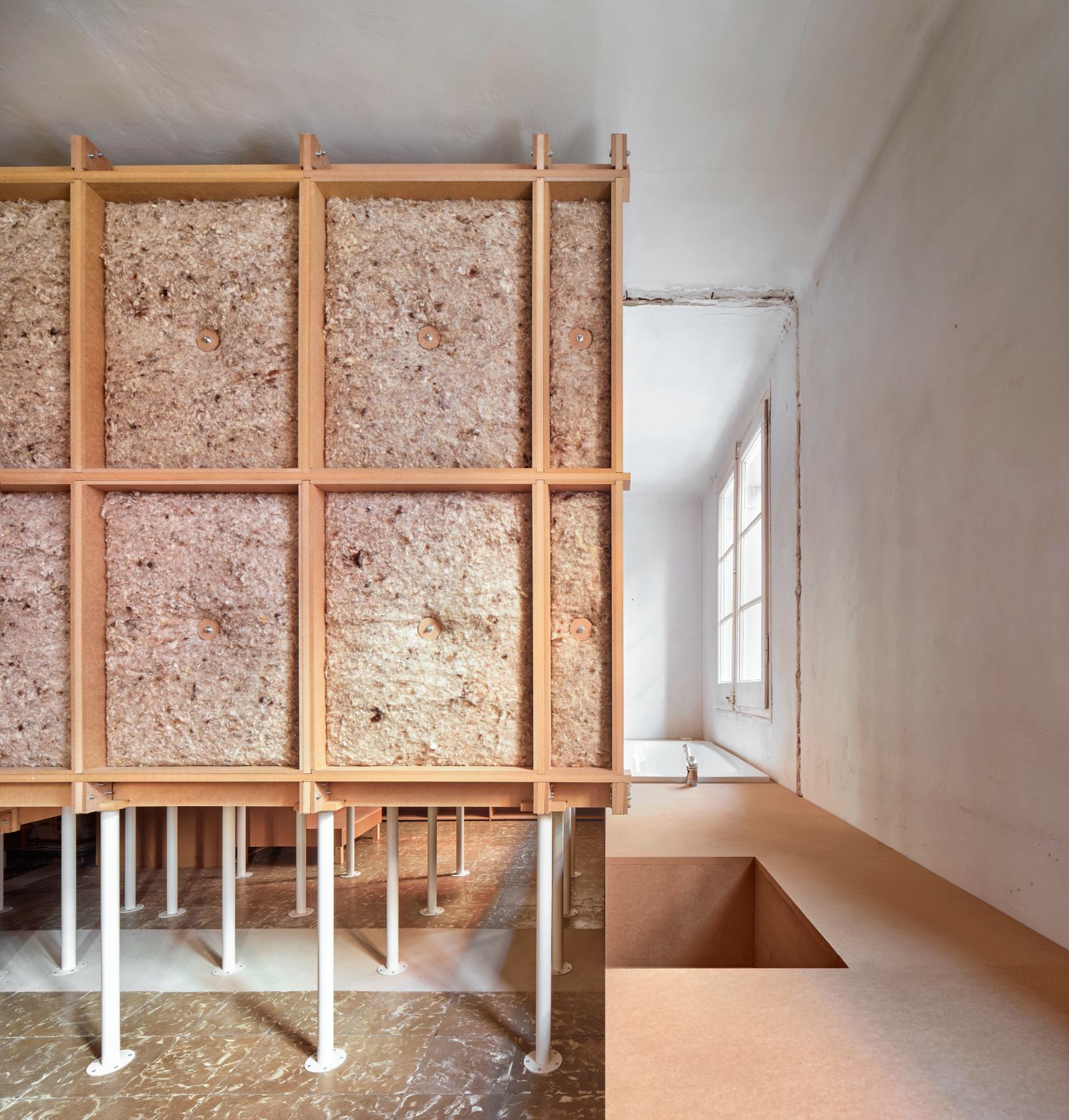
This groundbraking self-construction technique allowed the inhabitants to assemble aspects of their house by themselves as if “the apartment were a piece of furniture”.
In 10k House, Takk weaves ecological frameworks into spatial production while seeking to cultivate new material, social, and political imaginaries—reframing how the built world is conceived, inhabited, and transformed.
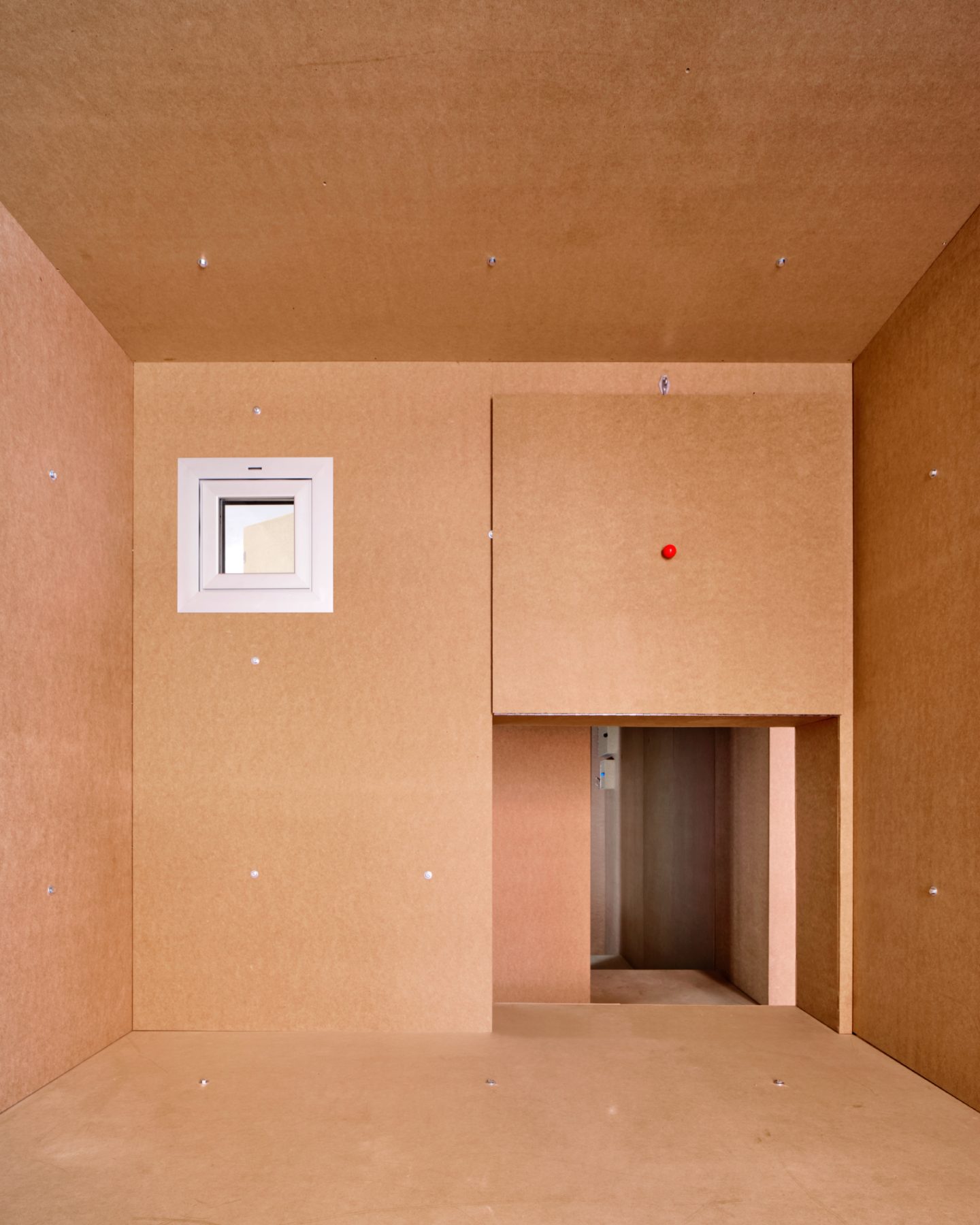
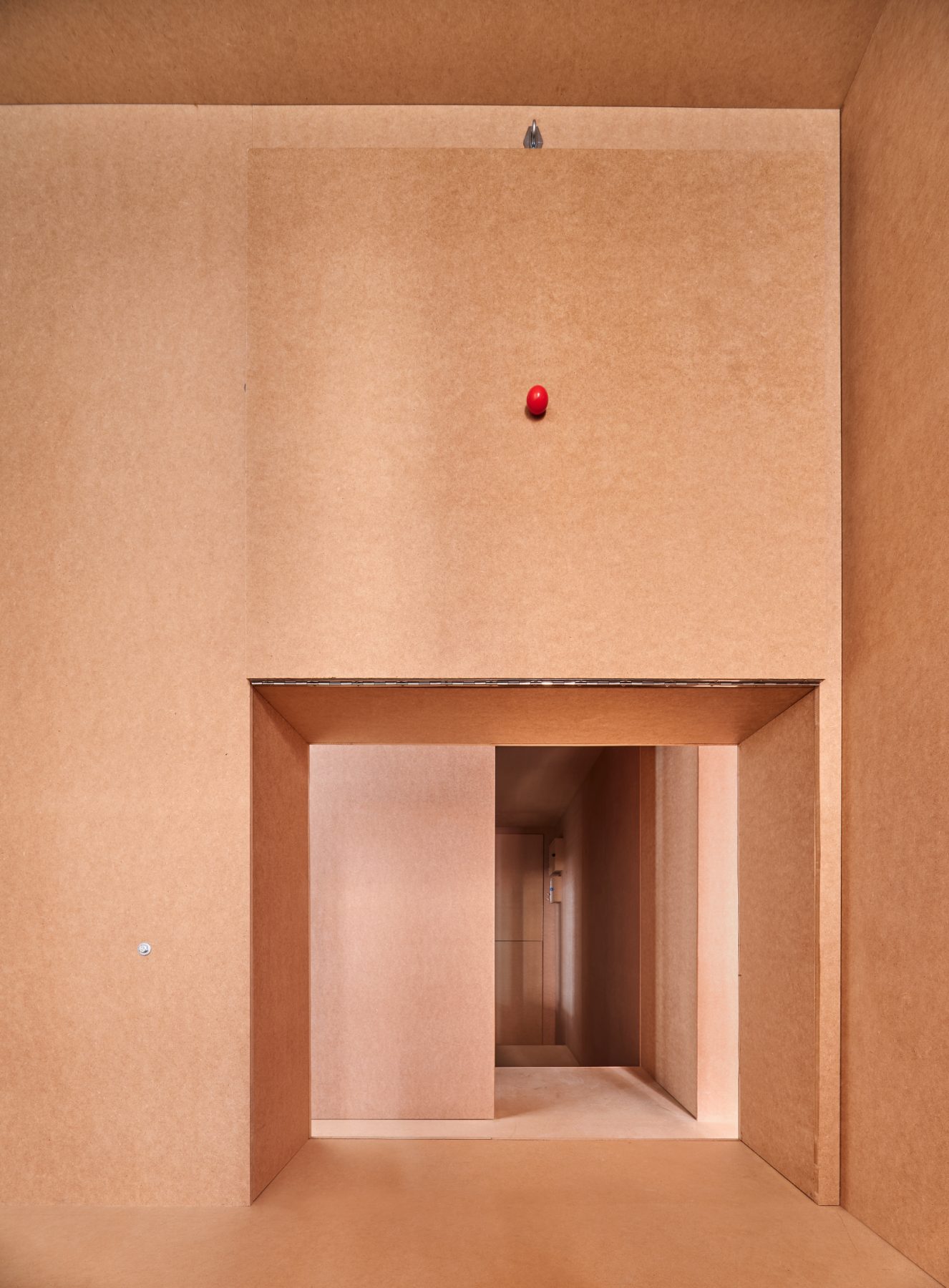
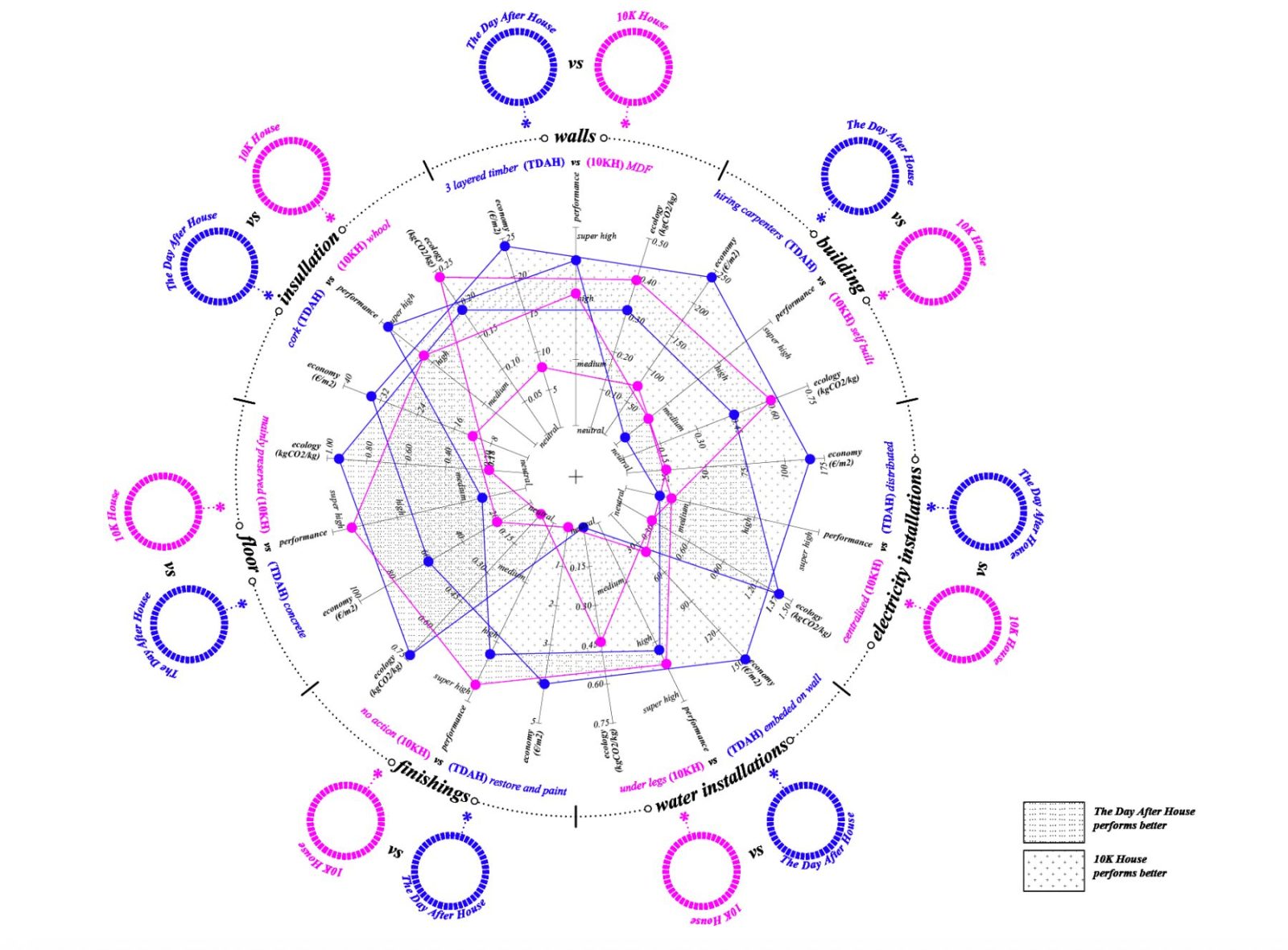
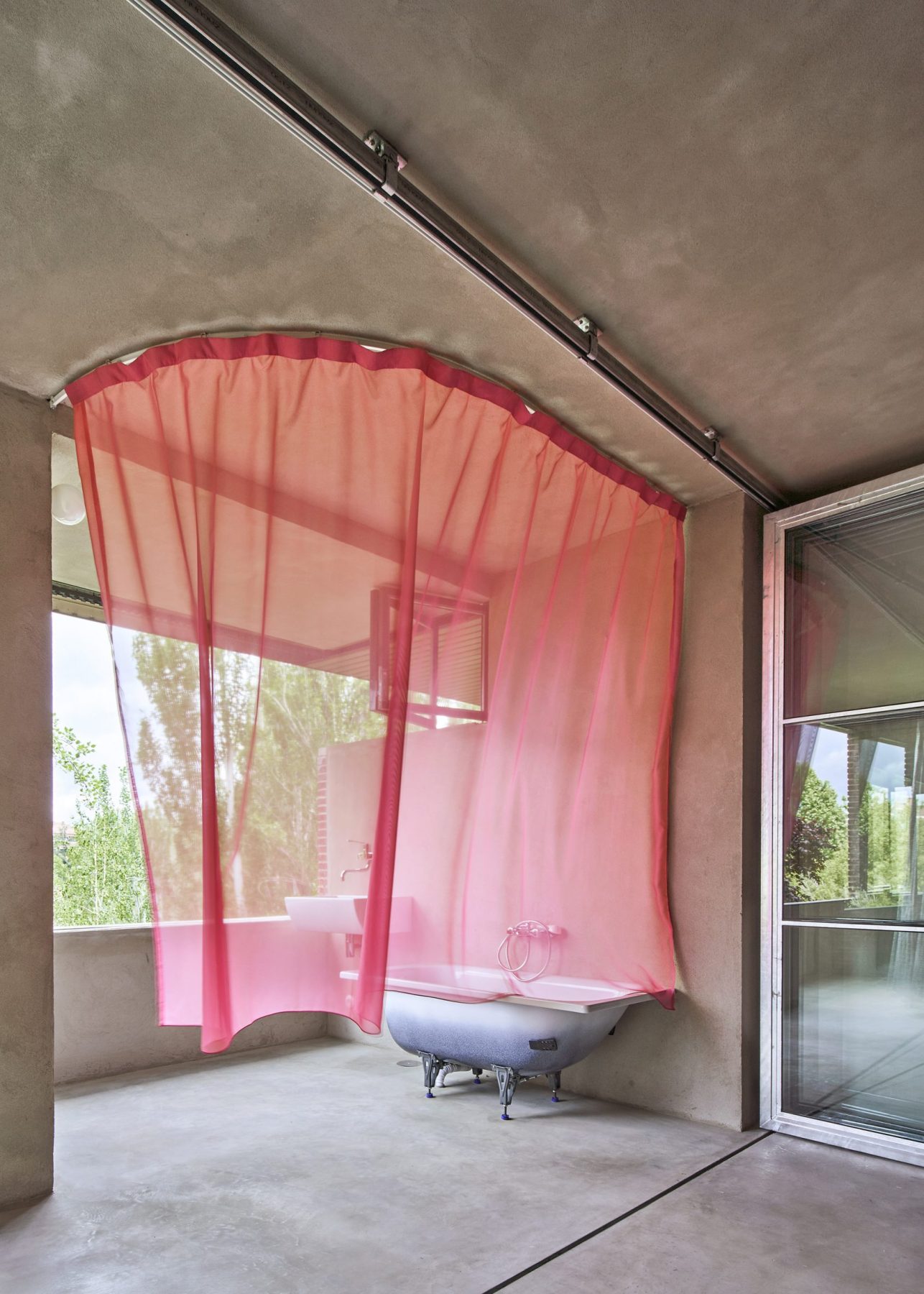
10K House follows The Day After House, a 2021 project by TAKK in Madrid, extending similar out-of-the-box design principles, including a bedroom raised on stilts and a communal outdoor bathtub concealed behind a sheer pink curtain.
BIO
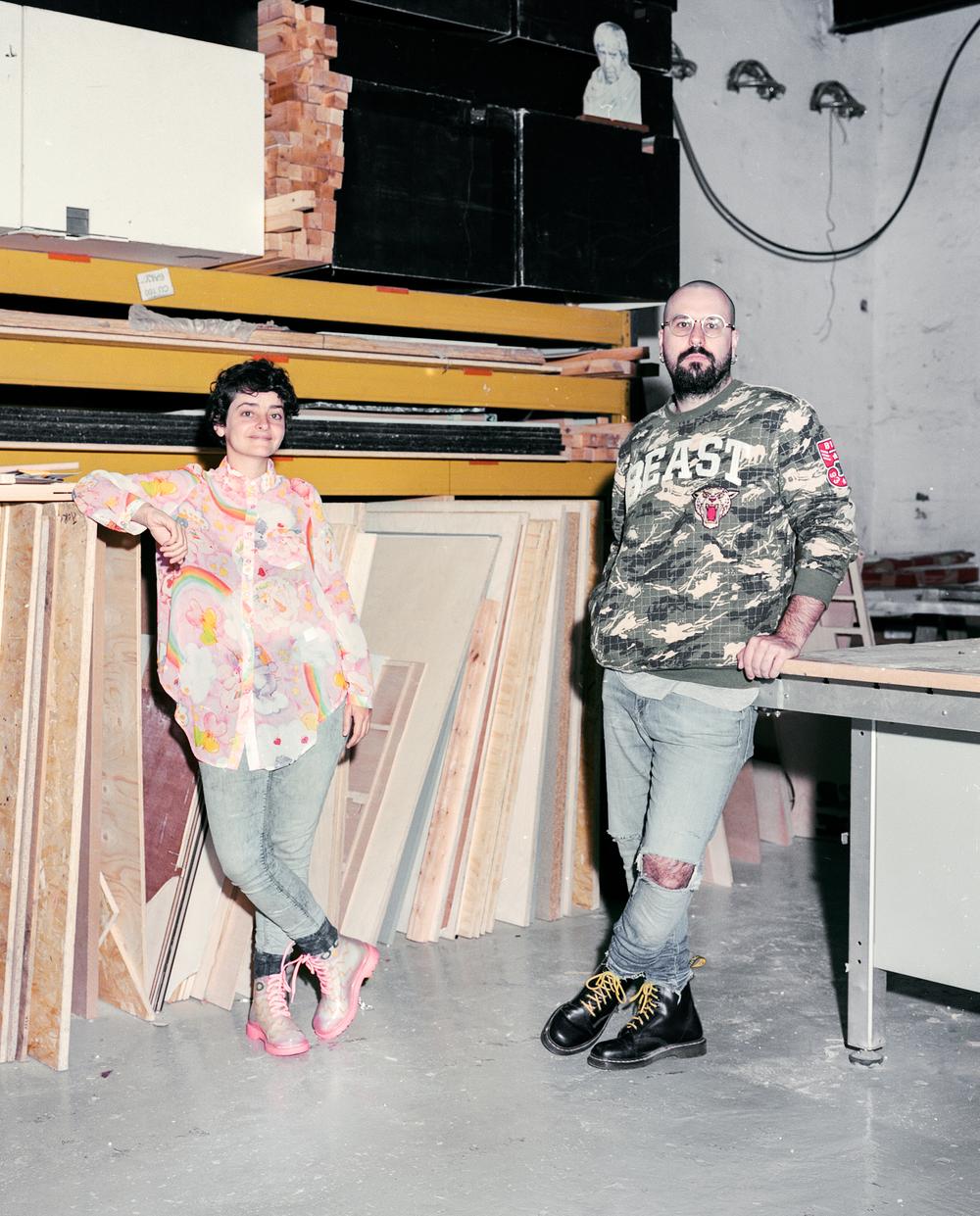
TAKK is an architecture and design studio based in Barcelona and New York, founded by Mireia Luzárraga and Alejandro Muiño. The studio’s work critically engages with the integration of ecological frameworks into architectural discourse and spatial production. TAKK operates at the intersection of professional practice and academic research. Mireia Luzárraga is an Assistant Professor and Director of the Core I sequence at Columbia University GSAPP, where she also served as Dean’s Visiting Professor in 2023. She was the Kengo Kuma Visiting Professor at the University of Tokyo in 2024, and Master Tutor at the Institute for Advanced Architecture of Catalonia (IAAC) in Barcelona from 2018 to 2022.
Facts & Credits
Project title 10K House
Typology Stories of Contemporary Domesticity, Housing
Episode 9th
Location Barcelona, Spain
Area 50 sq.m.
Status Completed, 2023
Architecture TAKK, Mireia Luzárraga + Alejandro Muiño
Collaborators Roger Monfort, Berta Ribaudí
Photography José Hevia
READ ALSO: The Architect’s Office: Inside the STUDIOVAL Studio in Athens