Since its evolution into a multidisciplinary platform, the Coachella Art Program has blended architecture, design, and sculpture to create immersive, large-scale works. For the 2026 edition of the Coachella Valley Music & Arts Festival, curators Raffi Lehrer and Paul Clemente present luminous, interactive installations that transform the desert landscape into a sensory, communal experience. Building on collaboration, the program emphasizes durability, innovation, and artworks that resonate beyond the festival itself.
The Coachella Art Program: Vision, Evolution
Coachella has been an arts and music festival since its inception in 1999. However, the art program reached its current multi-disciplinary form in 2016, when the team reduced the number of installations significantly and brought most of the production of these works in-house and on-site.
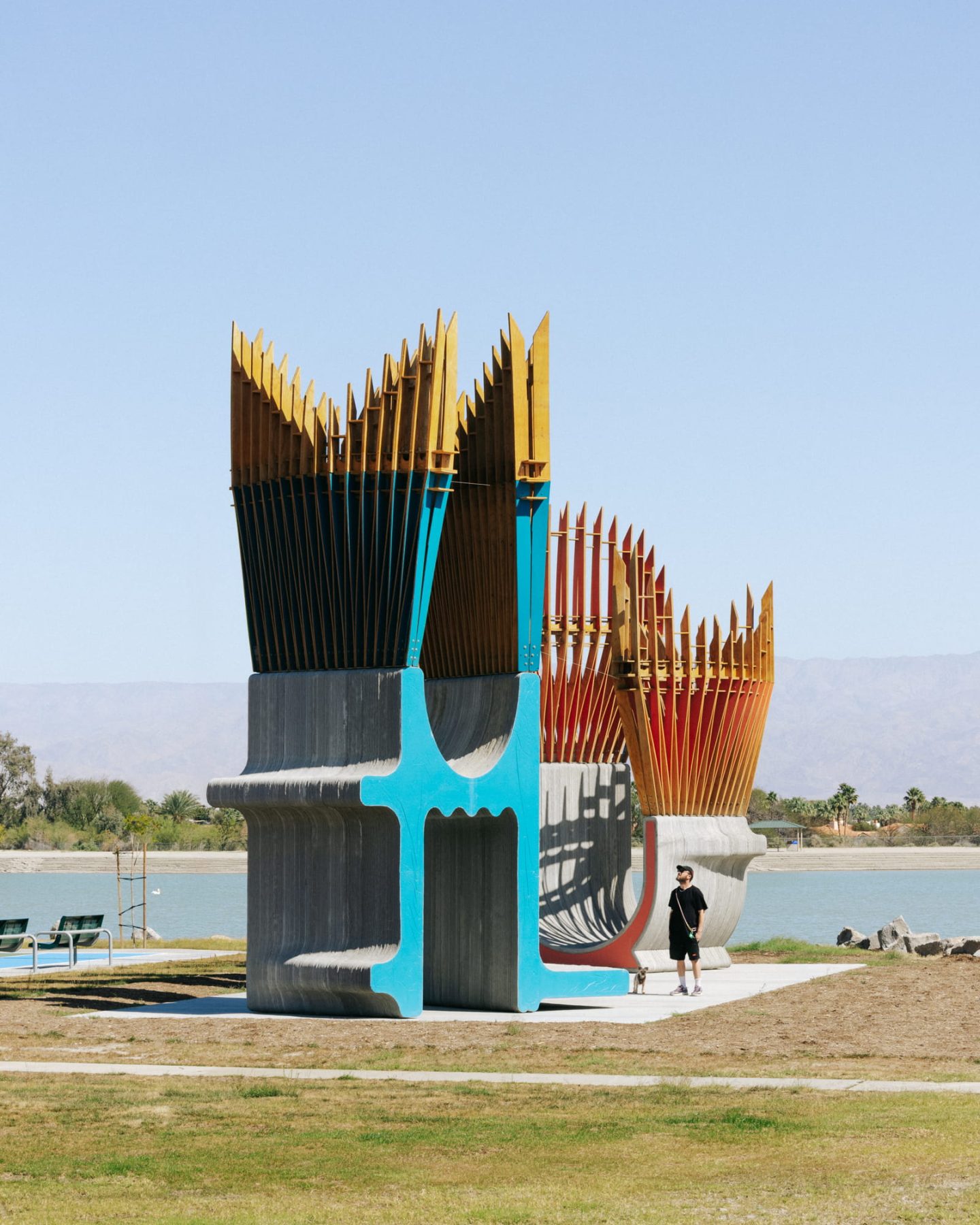
Under Paul Clemente’s leadership, along with a crew of talented local carpenters, metalworkers, painters and riggers, this approach to fabrication has allowed the Art Program to achieve the architectural scale that the program has become known for the past 10 years.
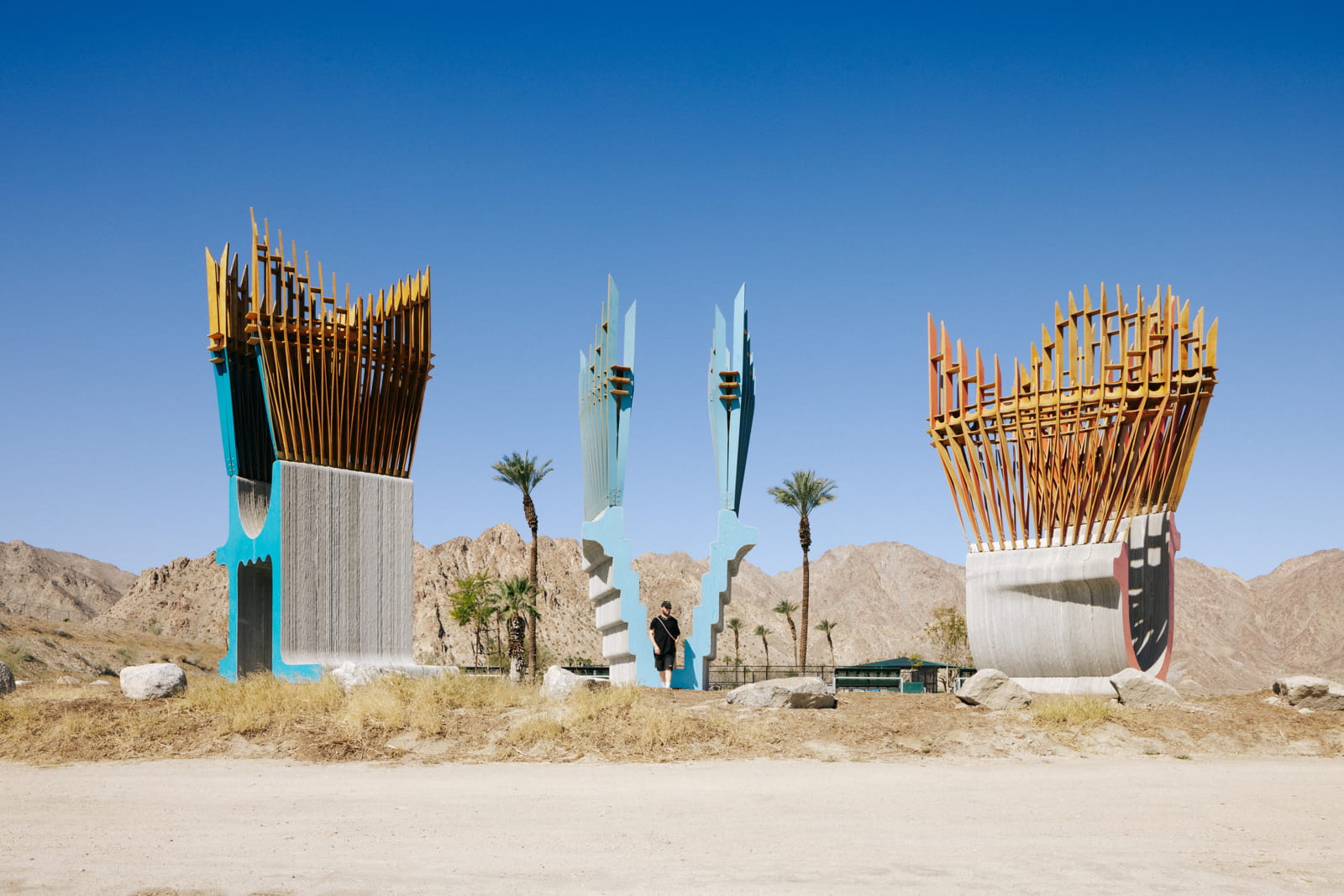
On the curatorial side, the program’s selection process is guided by a commitment to creating iconic landmarks that define the festival landscape and foster a sense of place.
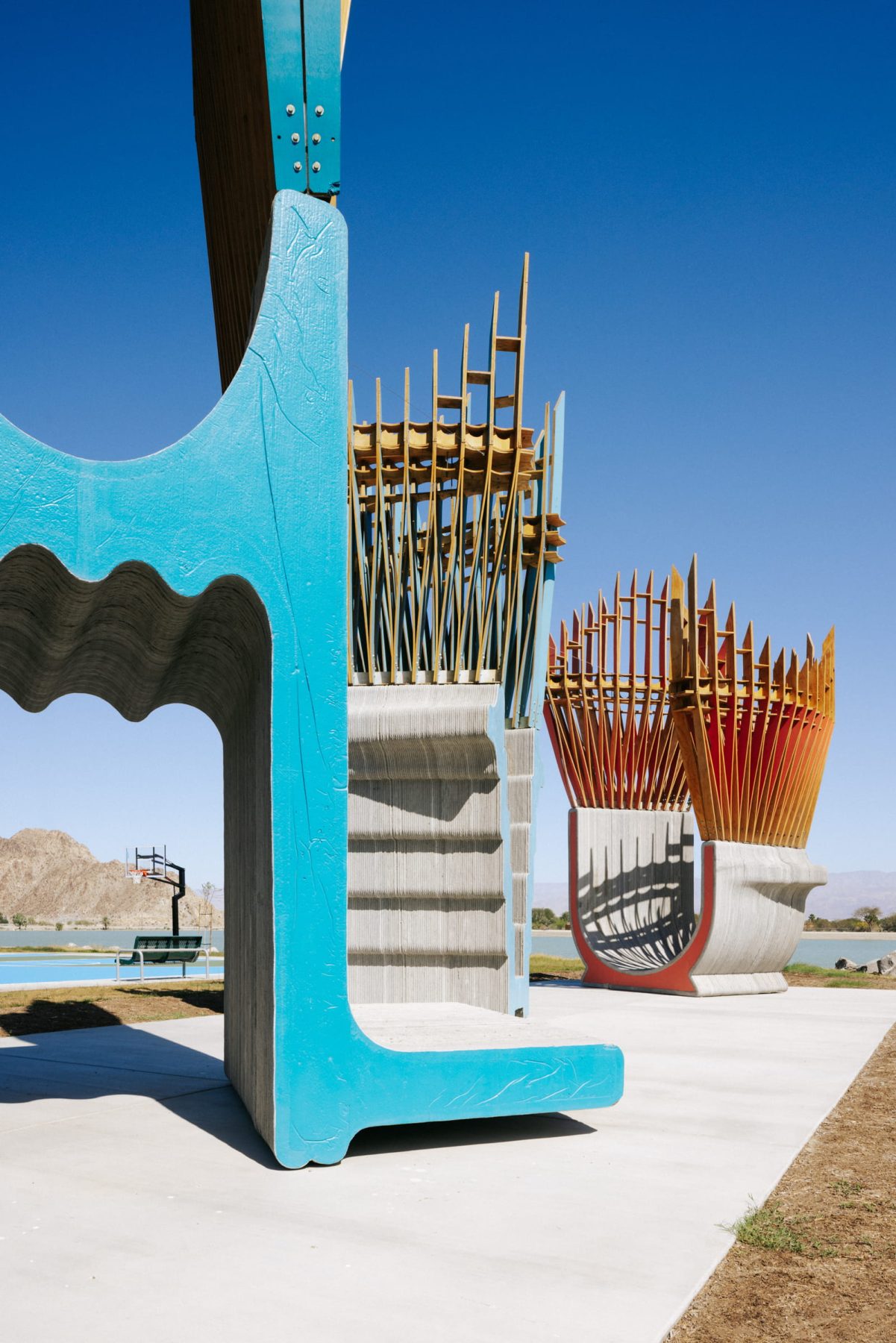
Each year, Lehrer and Public Art Company’s team look for artists who have a bold aesthetic, an intuitive understanding of scale and elevations, and a knack for evoking visceral emotional responses through material, color, and form.
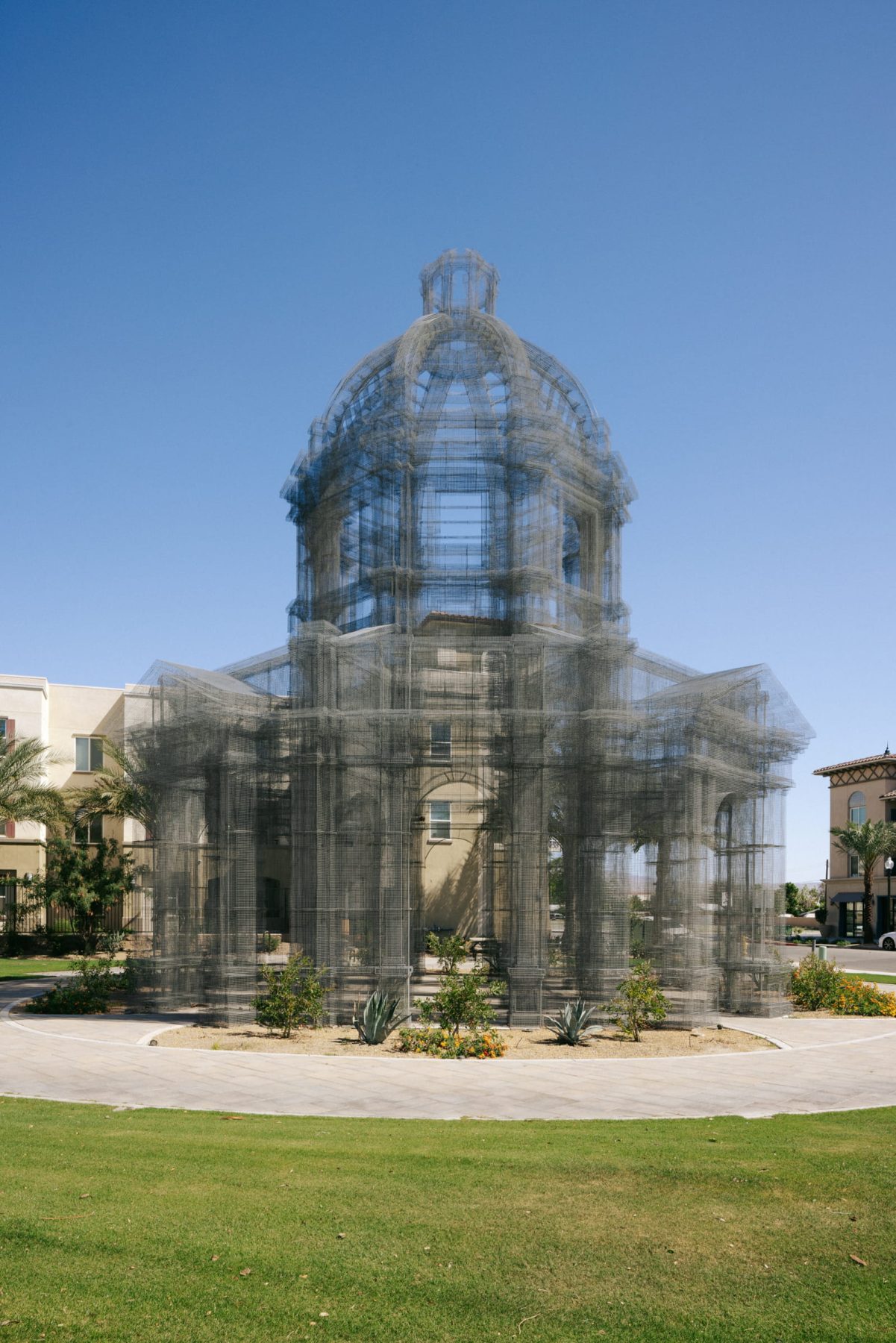
Oftentimes this means working with architects and designers as well as artists, due to their deep understanding of scale, structure, and functionality.
Coachella installations must be both visually striking and structurally sound, given the large crowds and windy desert conditions. Designers and architects often have experience working at this scale and bring technical expertise that allows the team to push creative boundaries.
Says Lehrer, “We see our role as curators as mirroring the multi-genre spirit of Coachella itself – just as the music curation spans an eclectic mix of styles, we aim to represent a diverse range of artistic practices, from sculptors to digital artists, from experimental designers to architects pushing the boundaries of spatial experience. By blending disciplines, we ensure that the festival’s art program remains dynamic, forward-thinking, and uniquely Coachella.”
Some installations are highly sculptural, others architectural, while some embrace interactive or kinetic elements—all contributing to the eclectic and immersive nature of the festival. Importantly, all projects are conceived specifically for Coachella’s site, and each installation is rigorously developed over the course of as long as 2-3 years, in close collaboration with Lehrer and Clemente every step of the way.
The festival’s scale and audience interaction requires artists to be collaborative and specific, in order to think through the unique challenges of temporary installation within an environment that demands high durability and functionality.
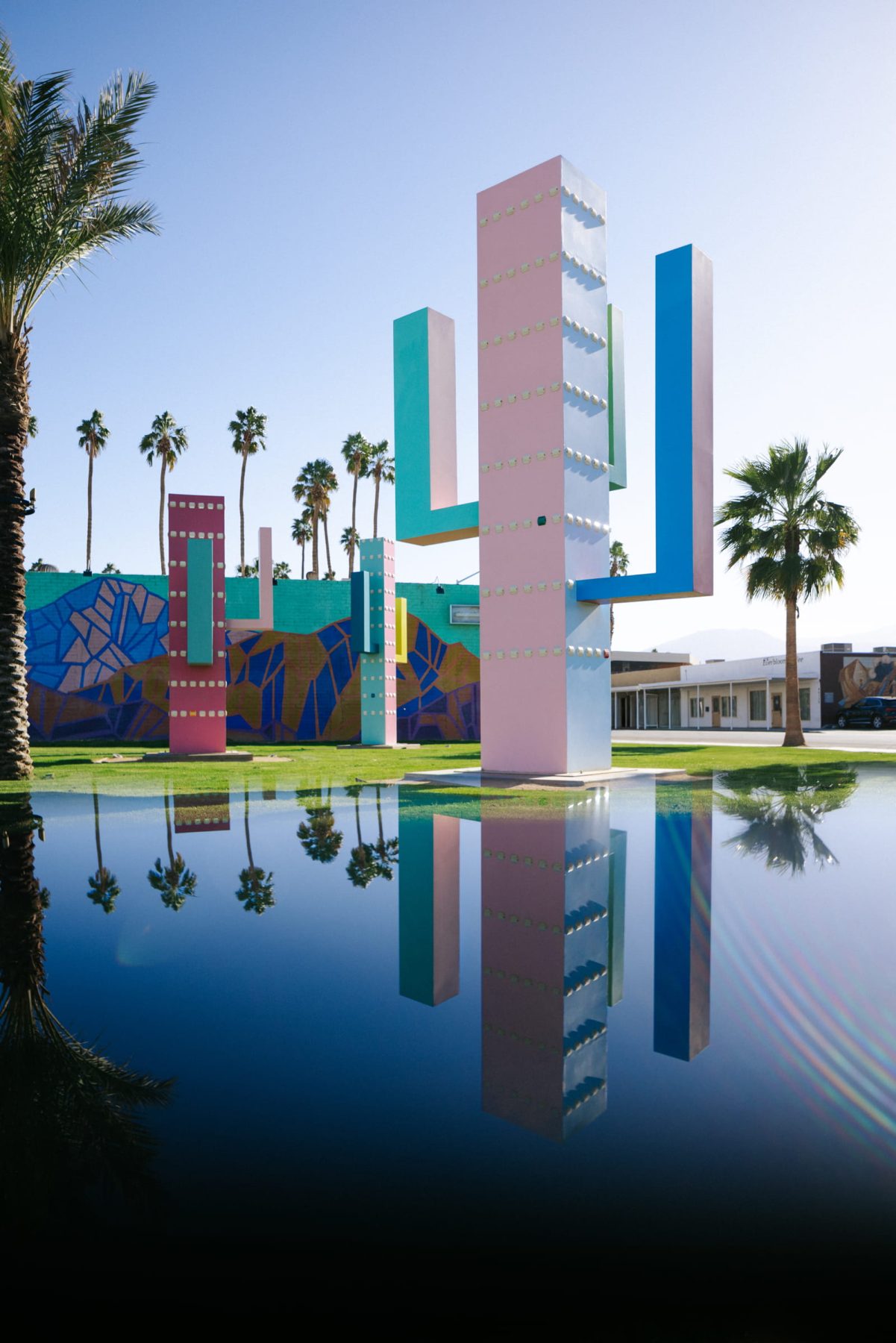
Says Clemente, “What we build here exists for maybe three weeks, but the feeling people carry out lasts a lot longer. That’s the standard we hold every commission to—not just spectacle, but something that actually stays with you.”
After the festival, these works may also join a growing roster of sculptures relocated for permanent placement in local communities.
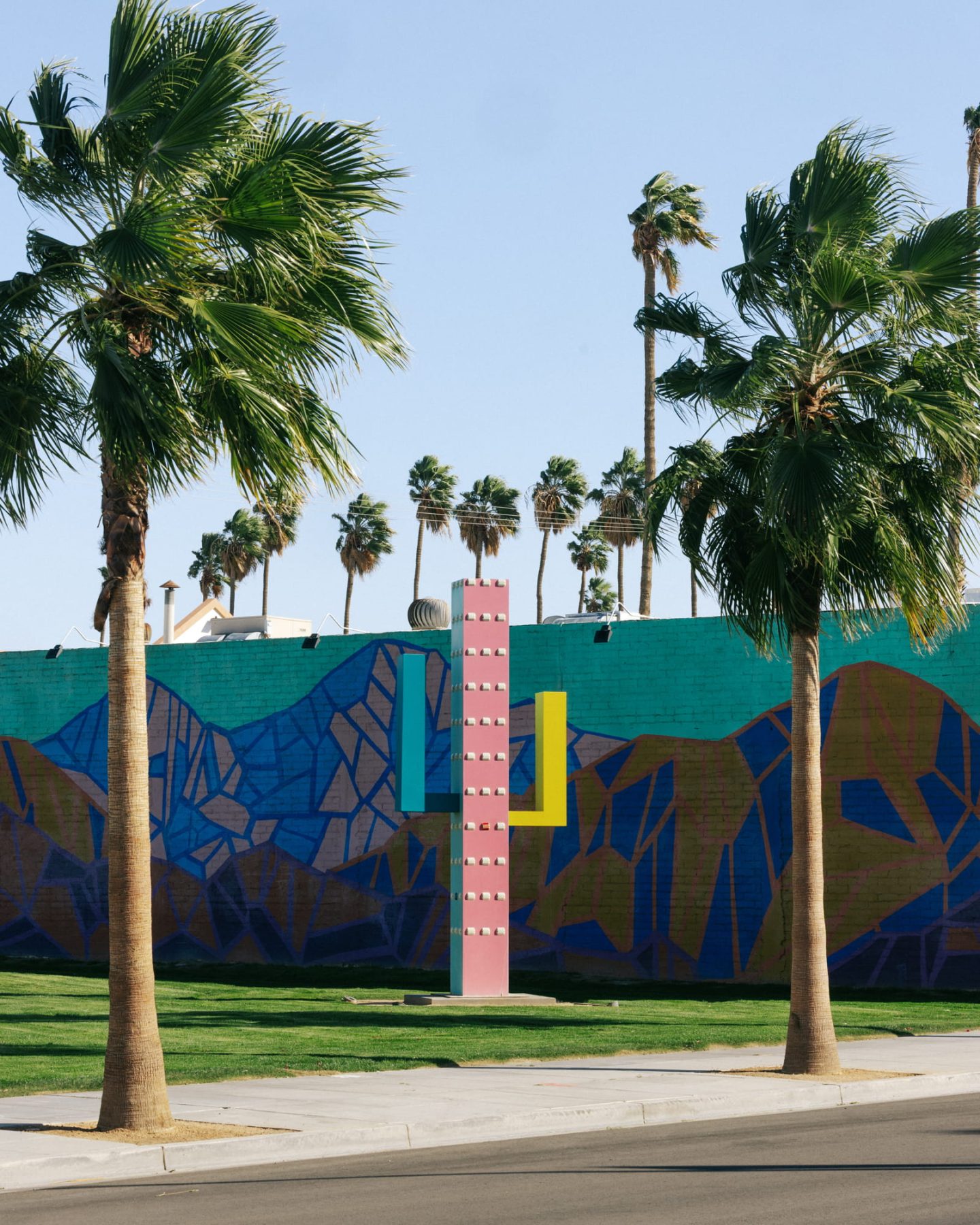
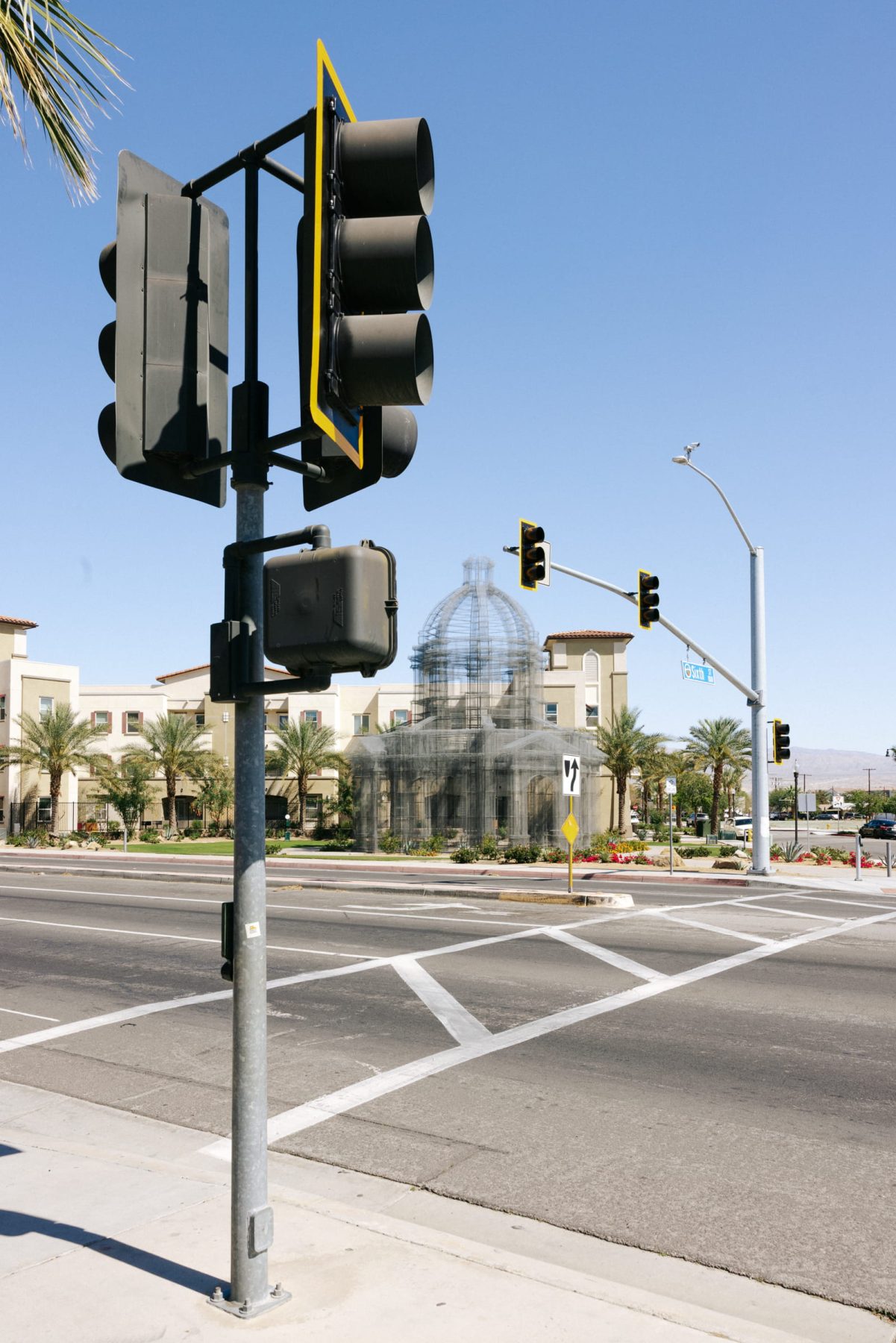
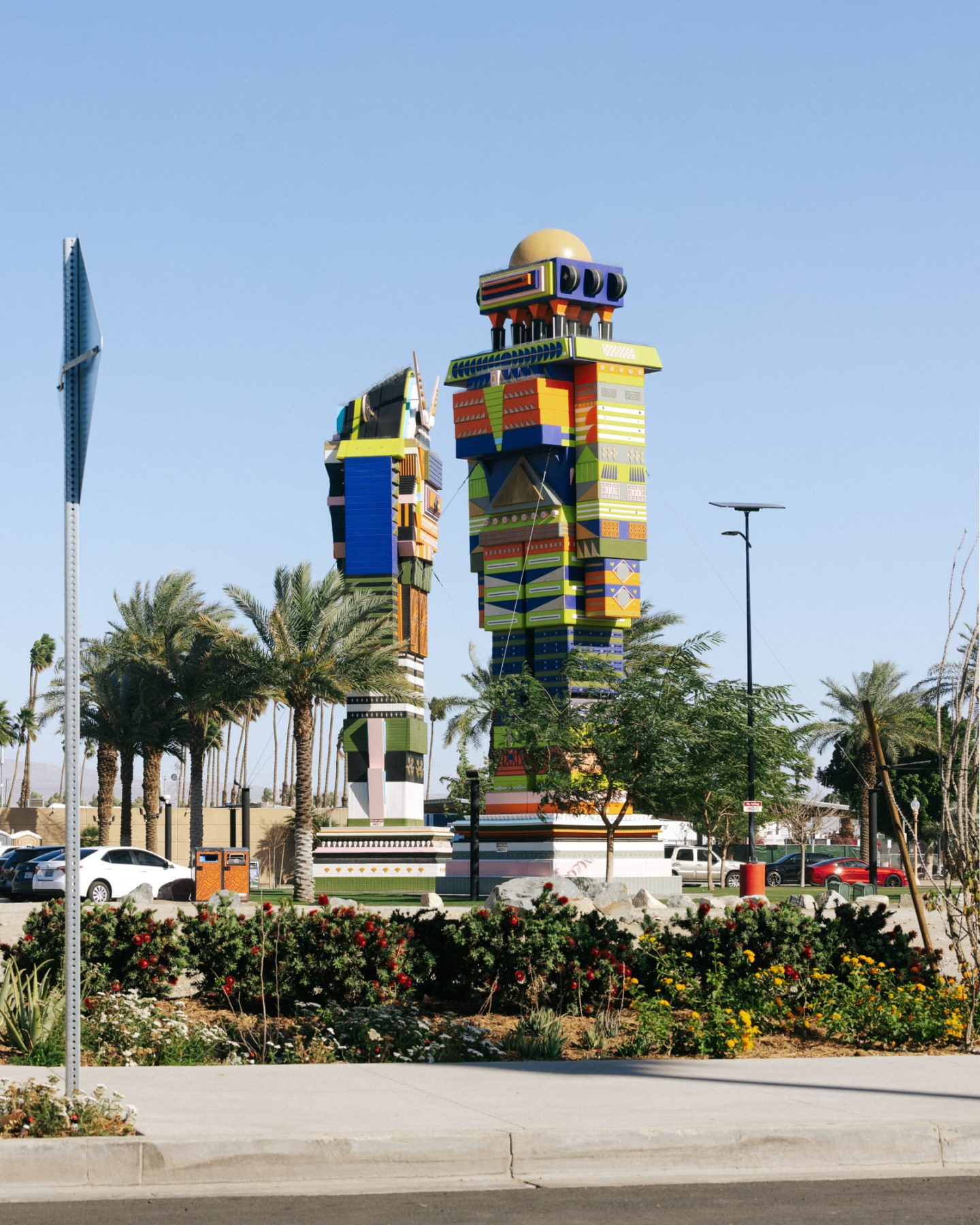
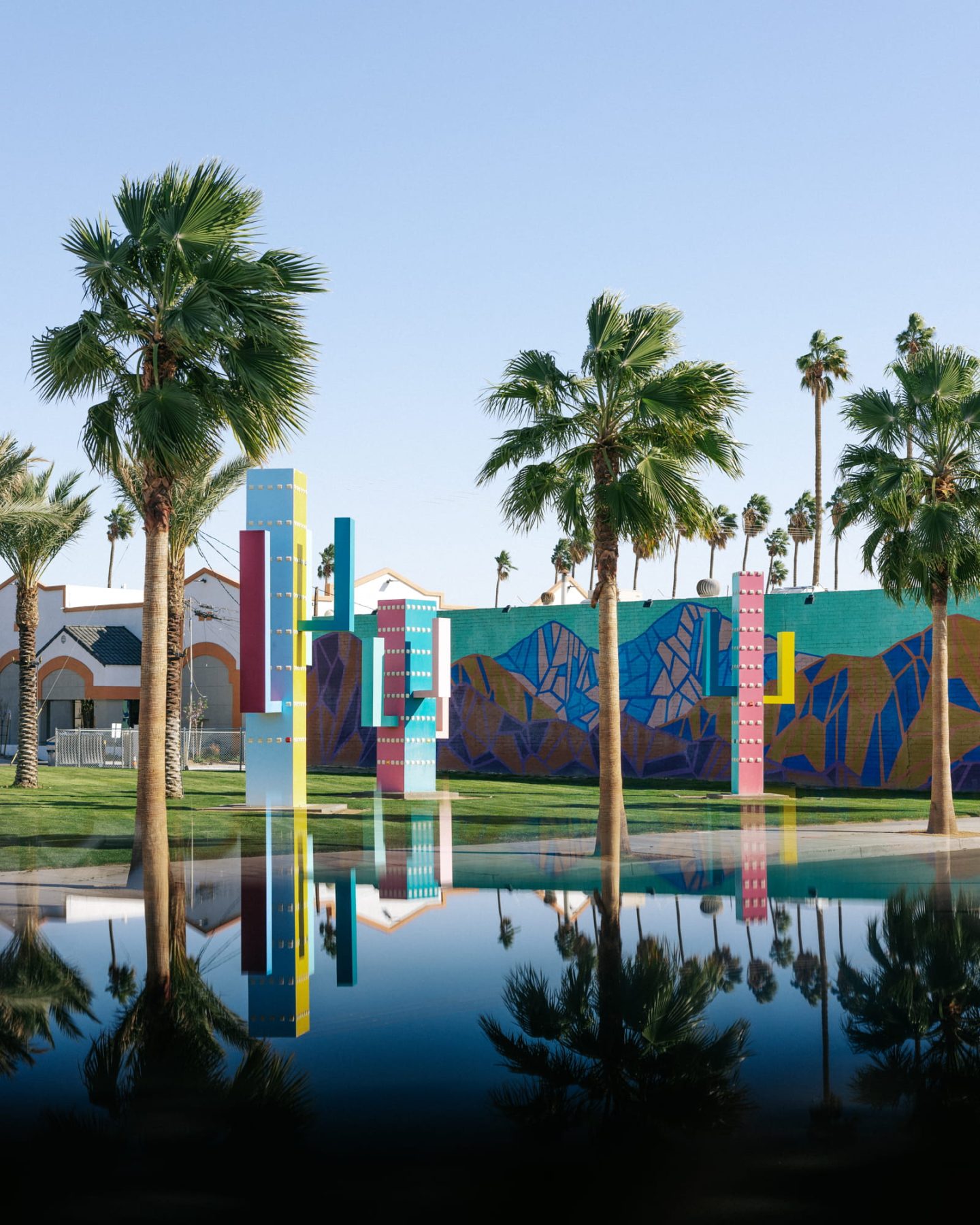
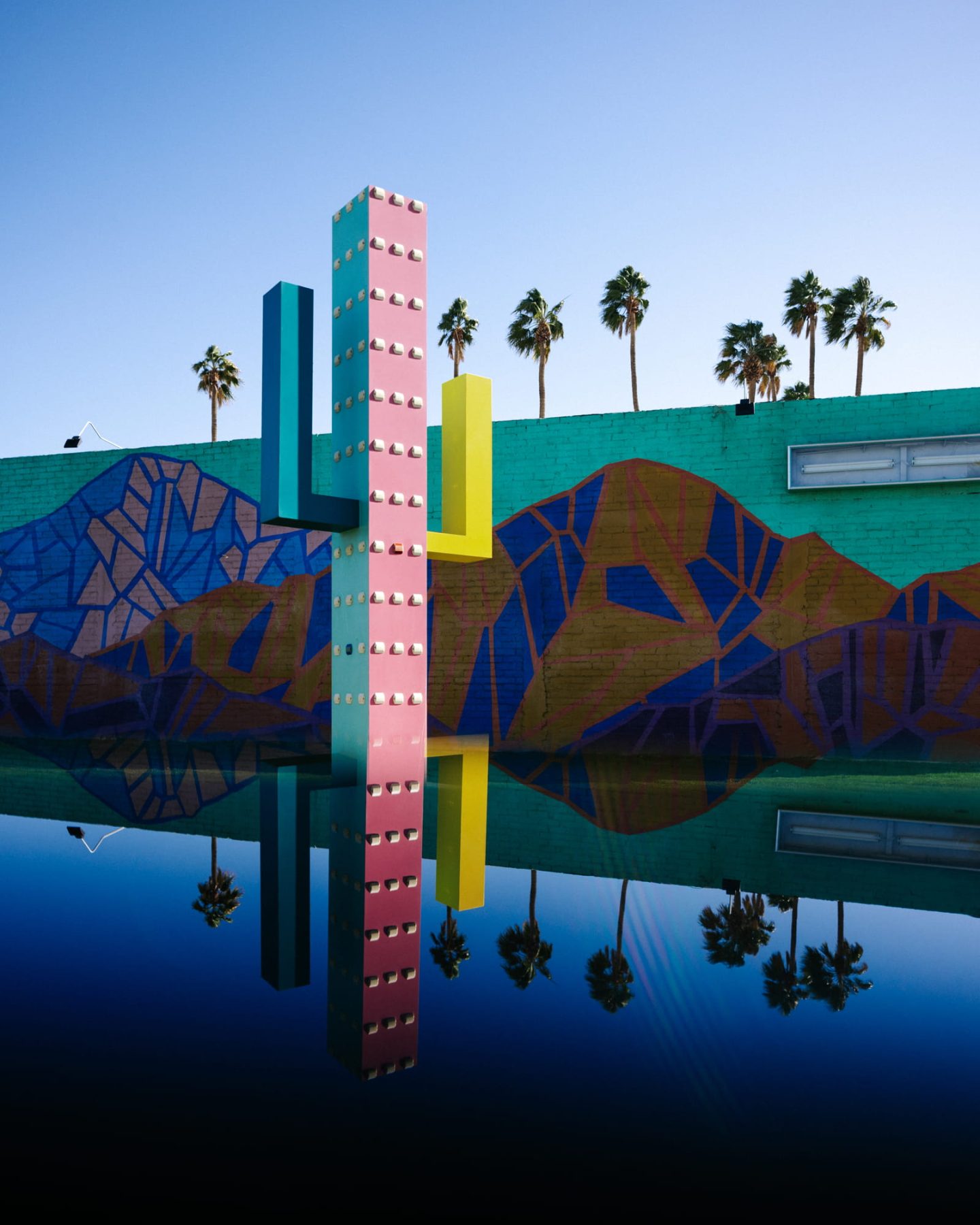
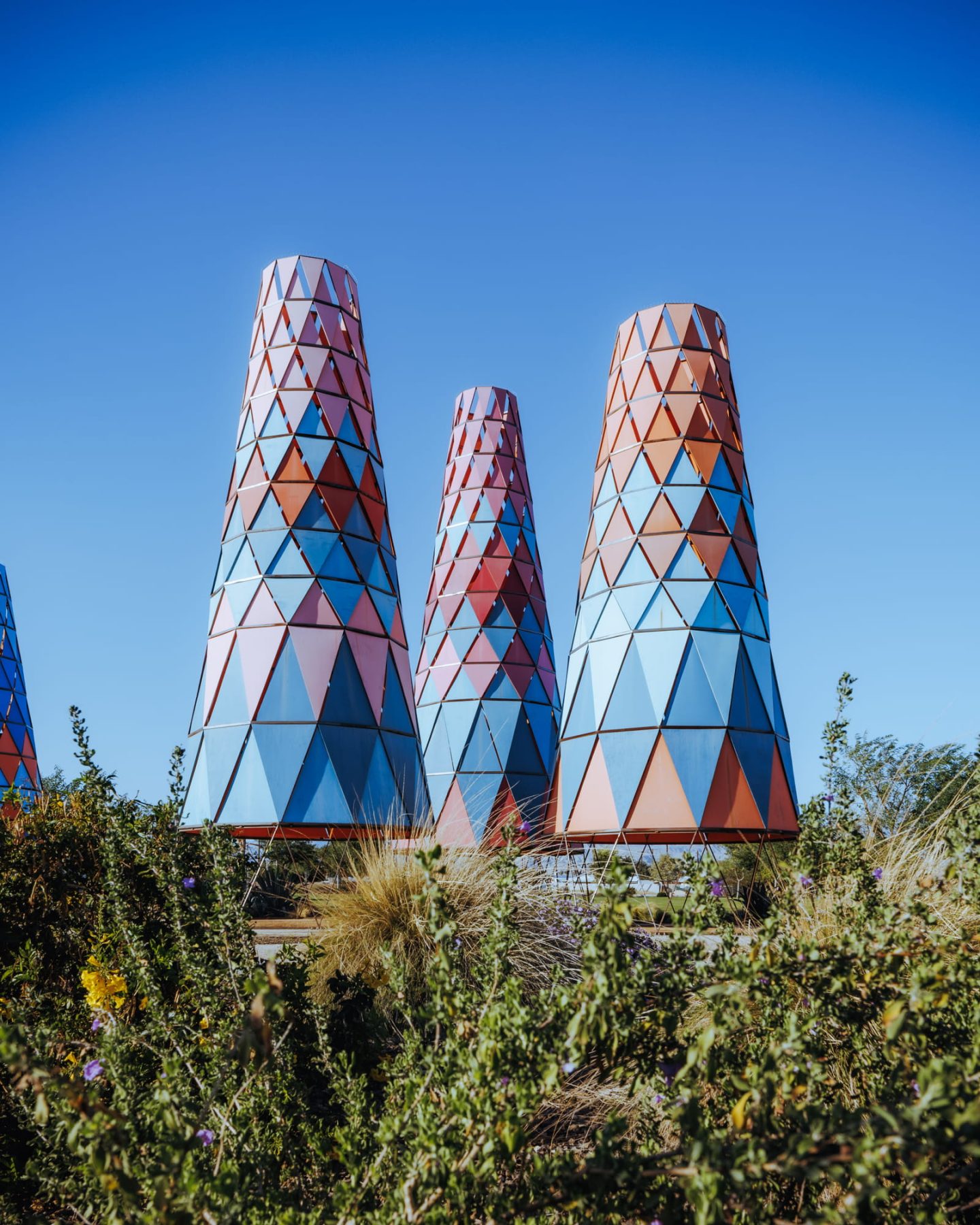
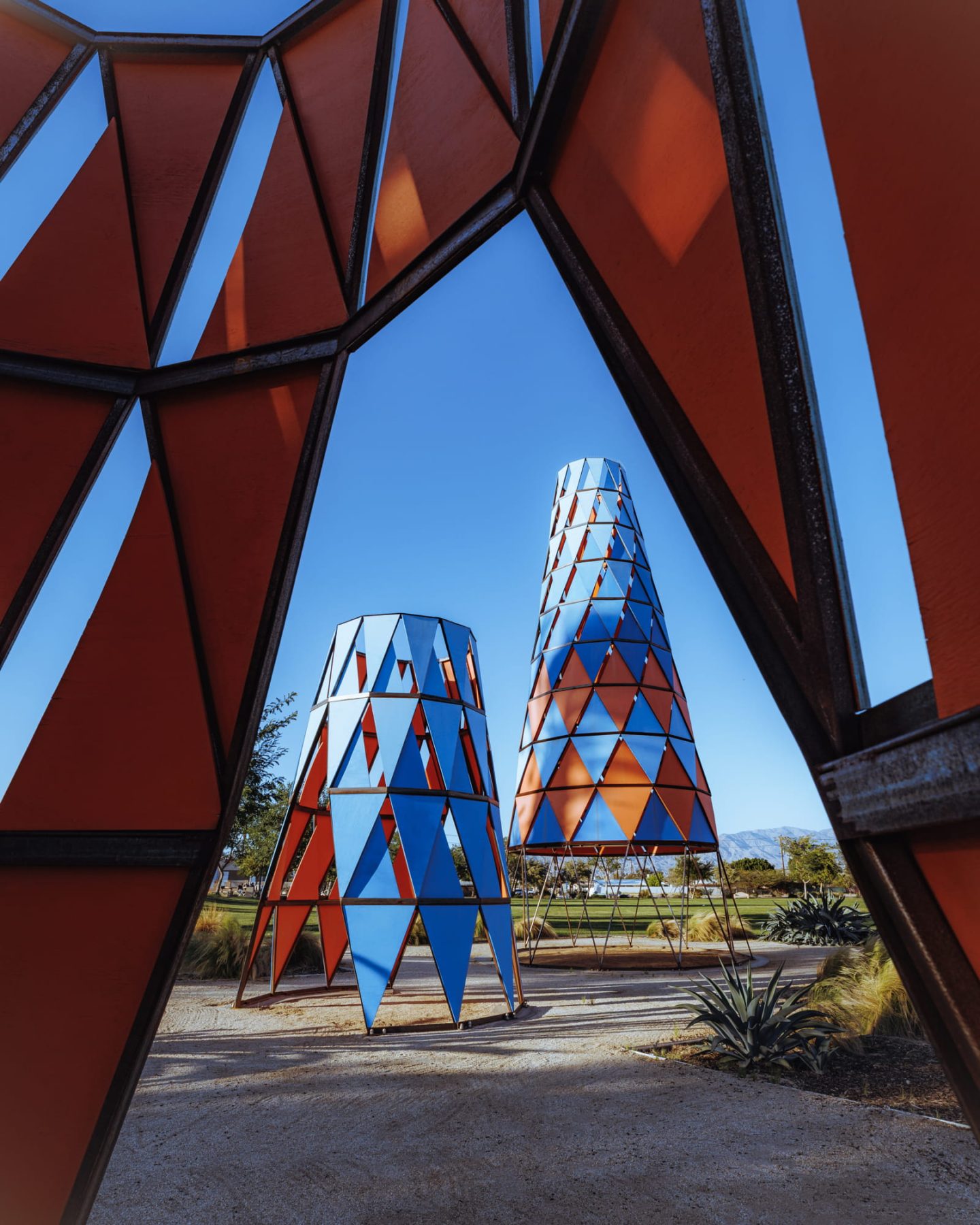
That list includes Francis Kéré’s Sarbalé ke (2019) in Dr. Carreon Park, HANNAH’s Monarchs: A House in Three Parts (2024) in Lake Cahuilla Veterans Regional Park, and Stephanie Lin’s Taffy (2025), slated for installation in Palm Desert Park this year.
As challenging as sustainability in large-scale temporary art may be, the Art Program is constantly refining its approach. When relocation isn’t possible, material reuse and repurposing is prioritized from the beginning of the design process. Lehrer and Clemente work with artists who consider end-of-life solutions in their material choices from the outset.
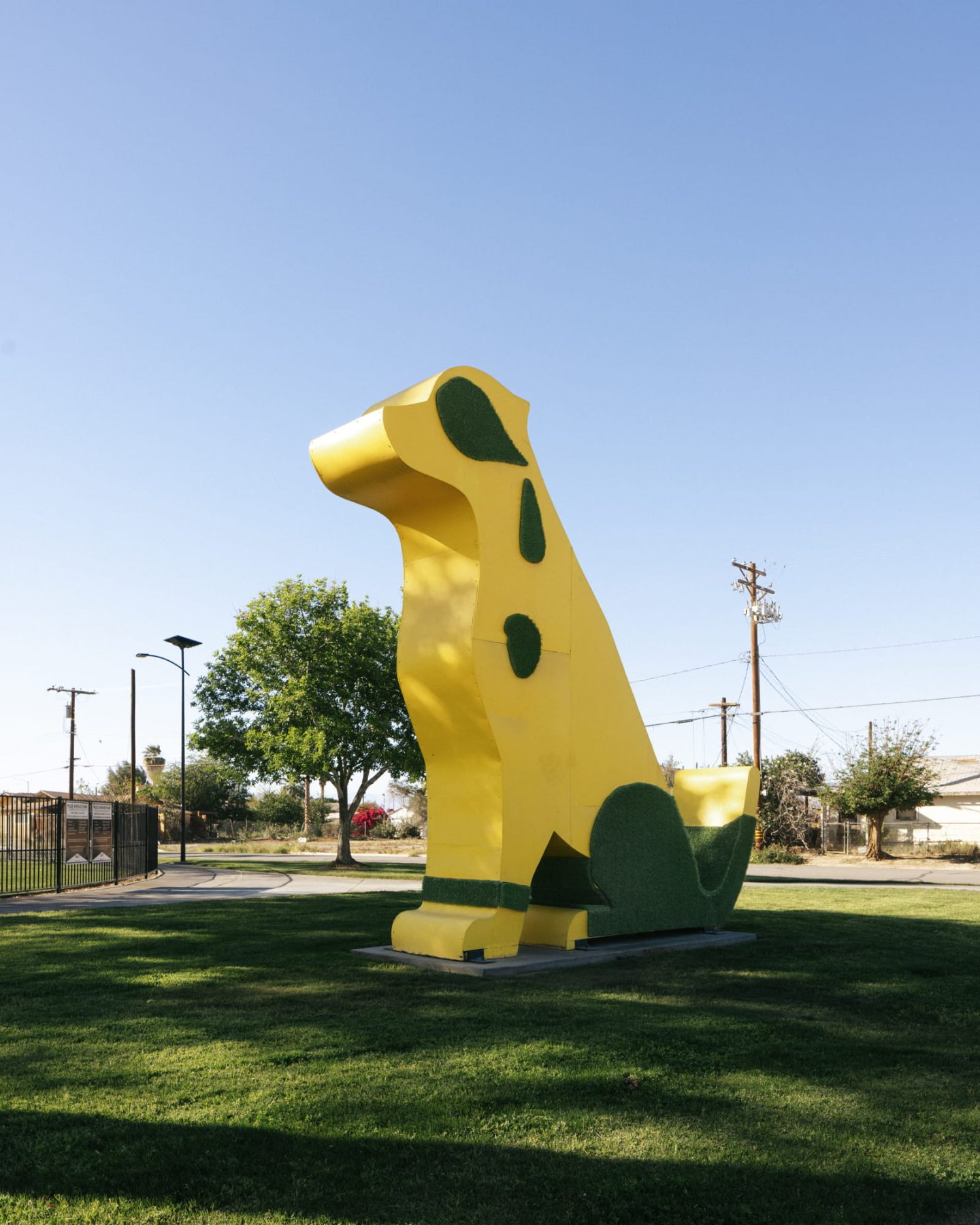
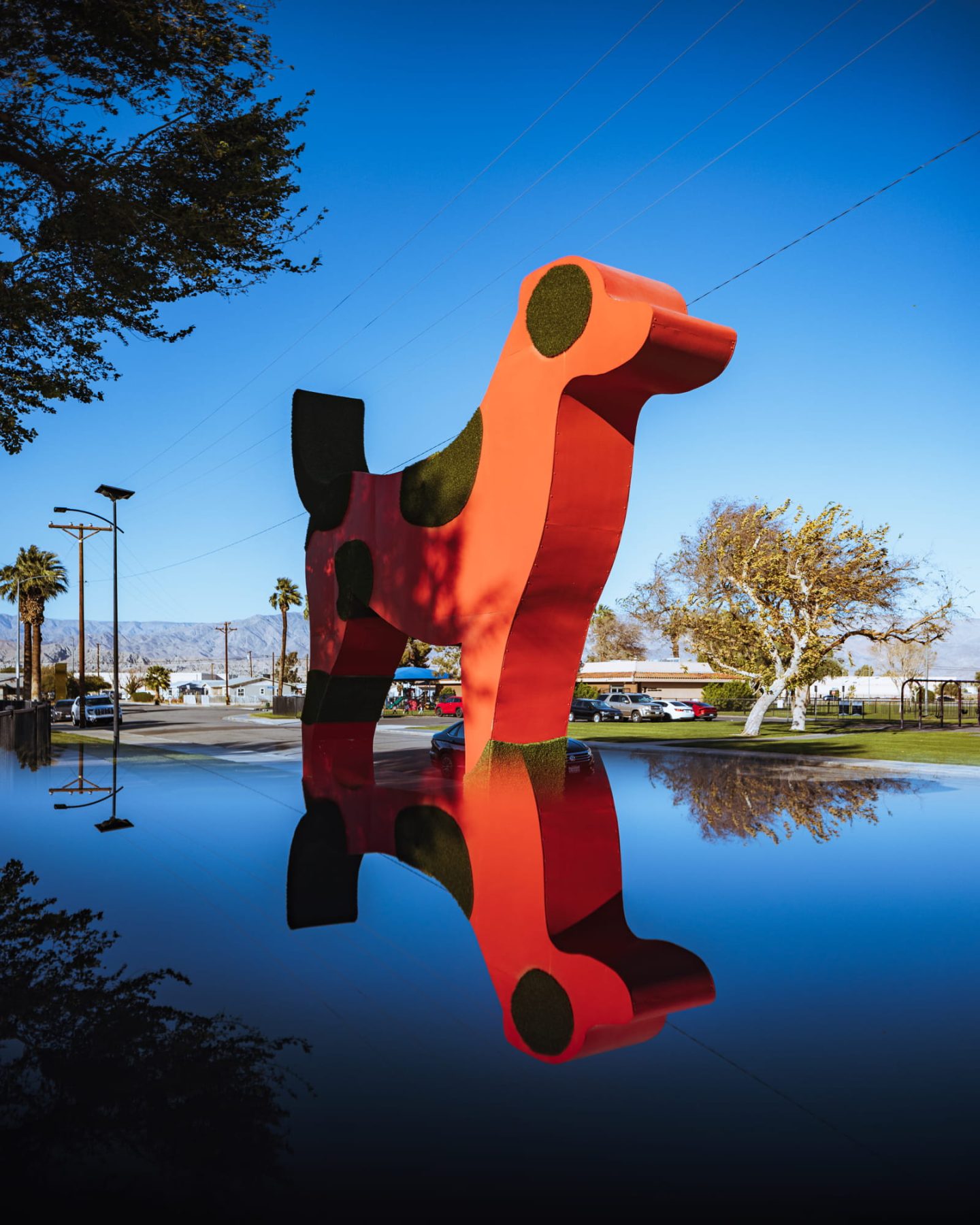
They aim for modular and demountable design strategies, allowing works to be disassembled and reconstructed elsewhere. Ensuring that works have a life beyond the festival has become a goal of the Art Program.
These sculptures, designed by visionary artists and architects and brought to life by talented engineers and builders, are continuing to spark joy long after they’ve left the grounds.
Coachella 2026
For the 2026 Coachella Valley Music & Arts Festival, Public Art Company (PAC) continues its legacy of presenting large scale installations that offer festivalgoers new dimensions to explore.
This year’s commissions bring moments of joy, toying with monumentality through the use of luminance, transparency, and lightness of form.
Curated by PAC’s Founder Raffi Lehrer in collaboration with Goldenvoice Art Director Paul Clemente, the program brings together artists who offer viewers exciting vantage points to uncover, gaze at, and wander through. In Coachella’s unique desert oasis setting, each installation engages the body and senses, foregrounding the fluctuating light of the sky and the shifting energies of the day.
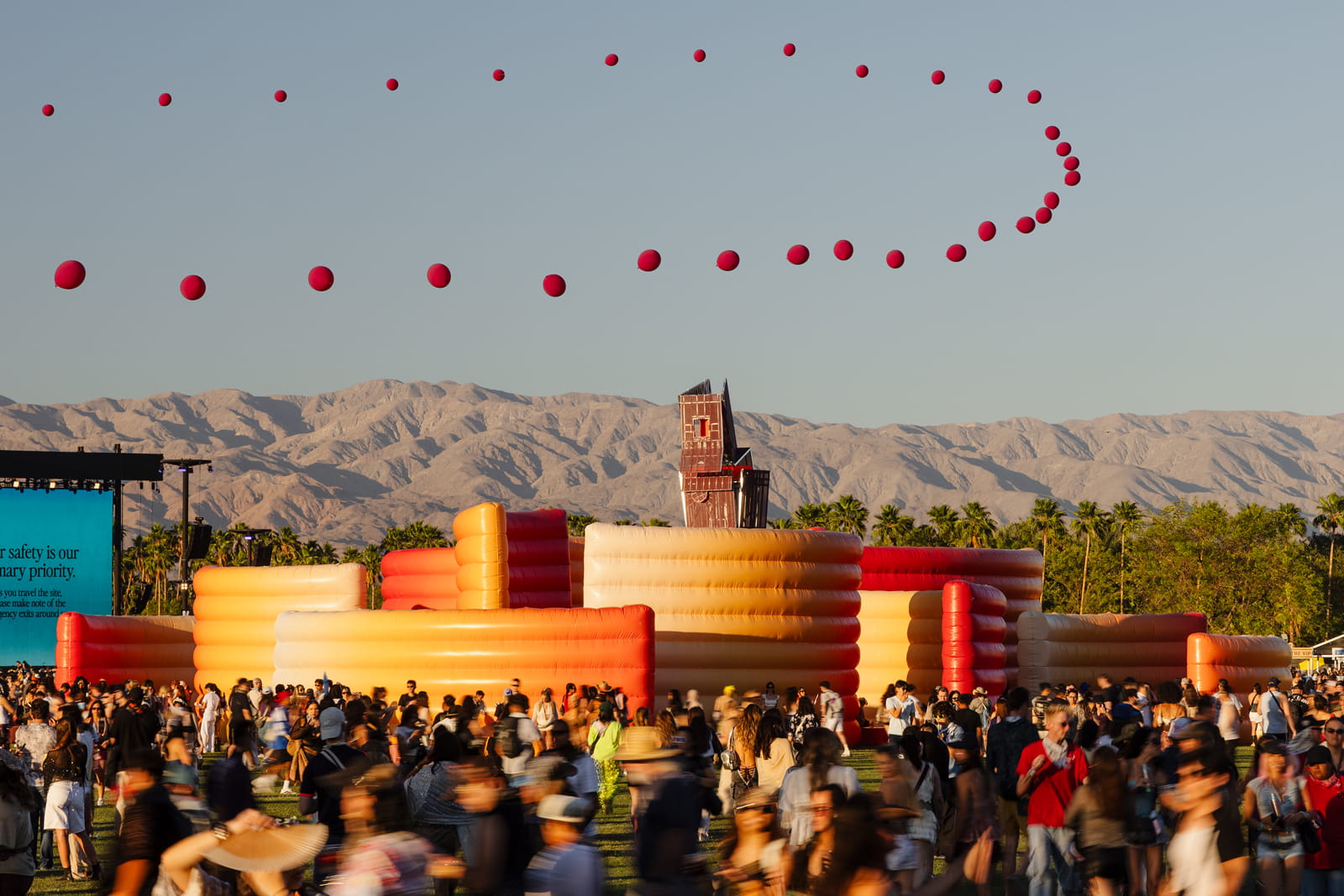
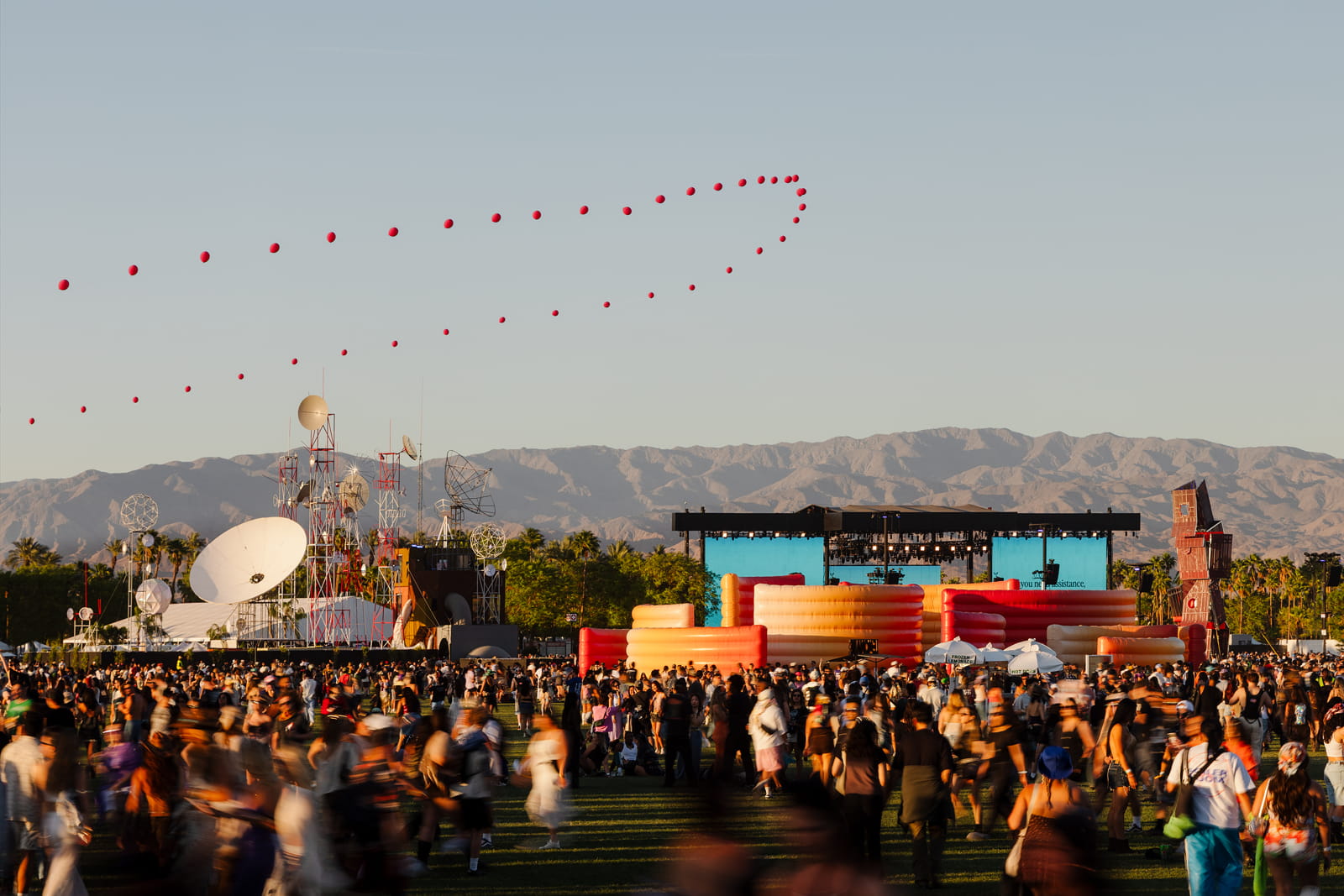
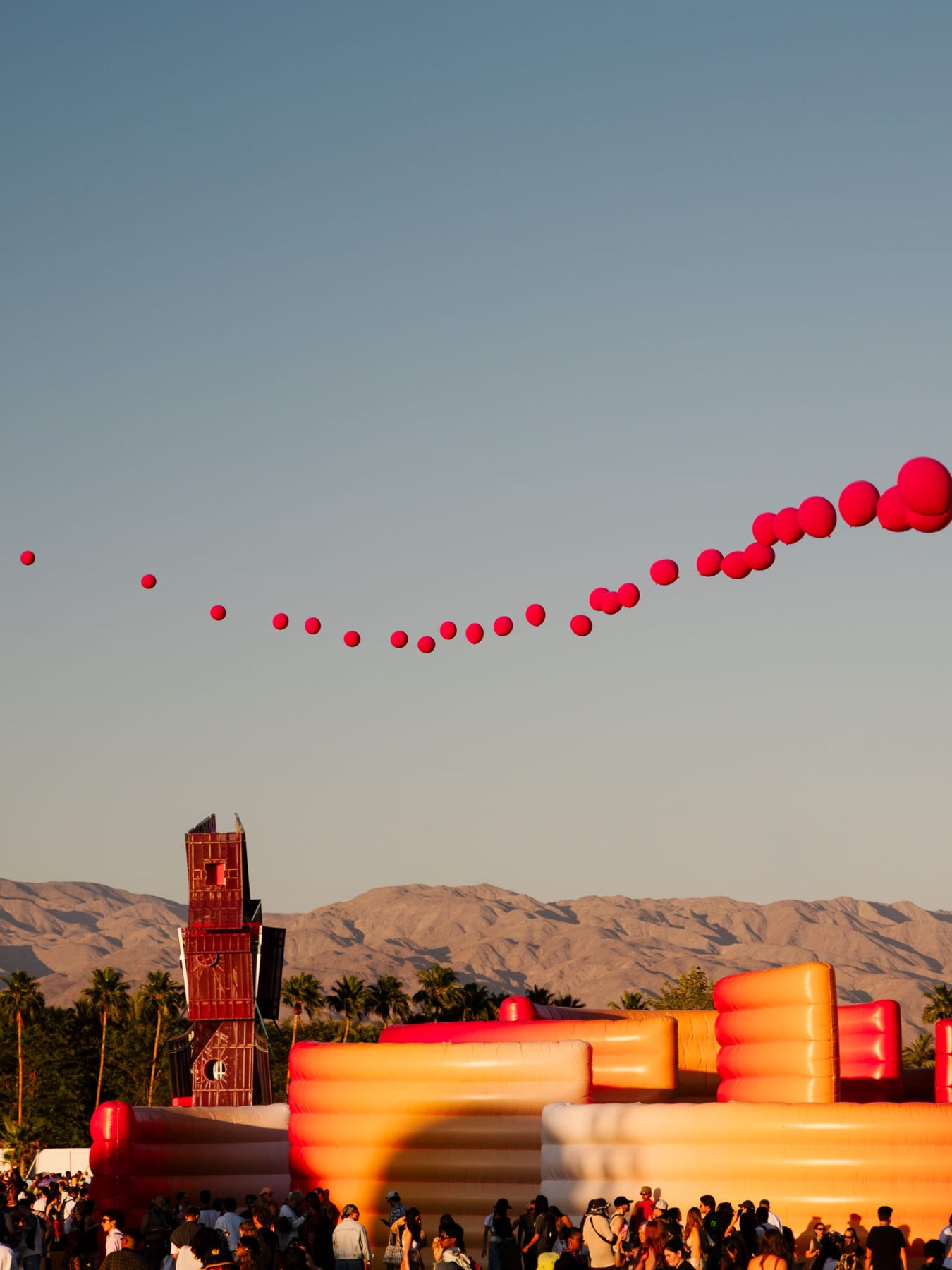
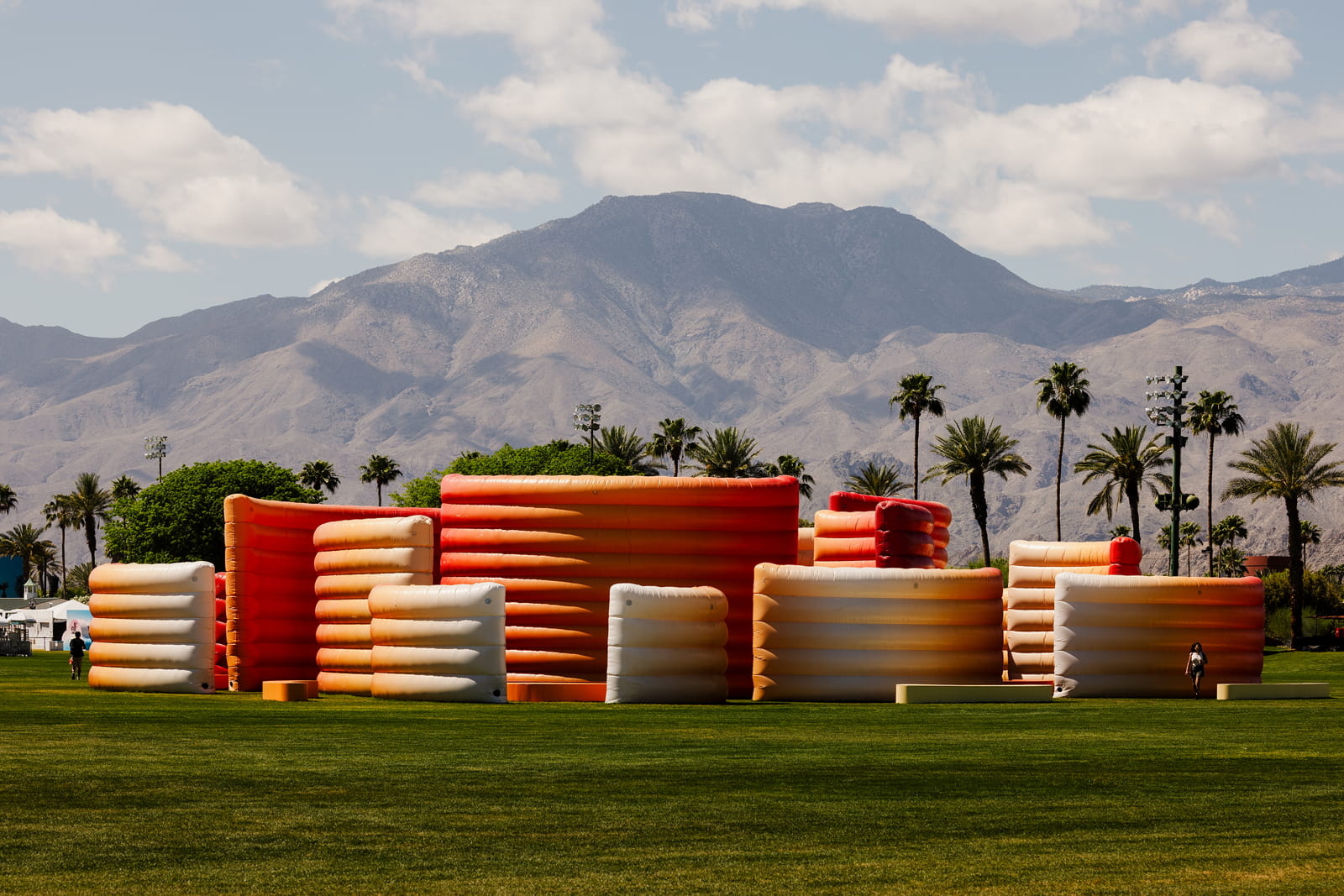
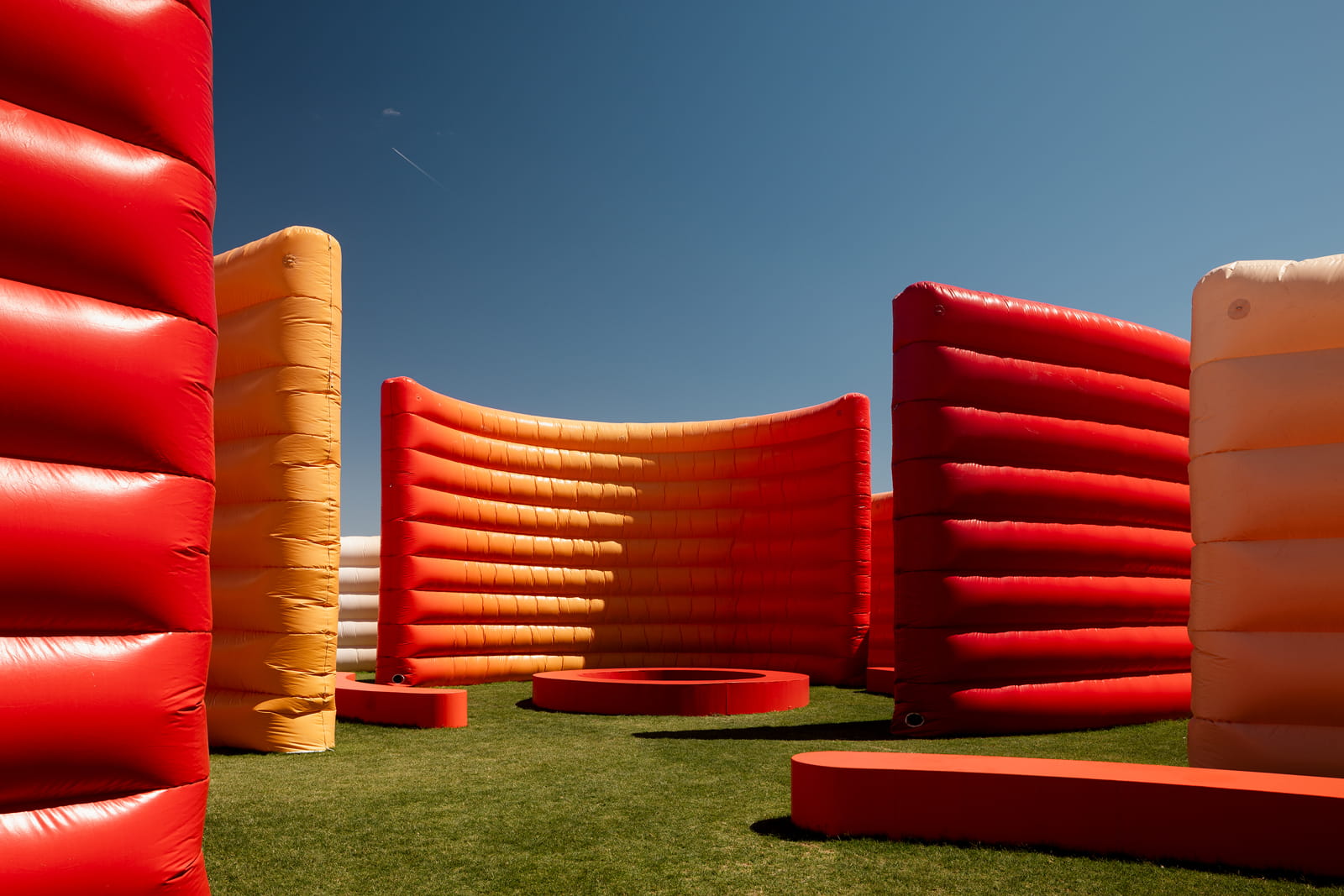
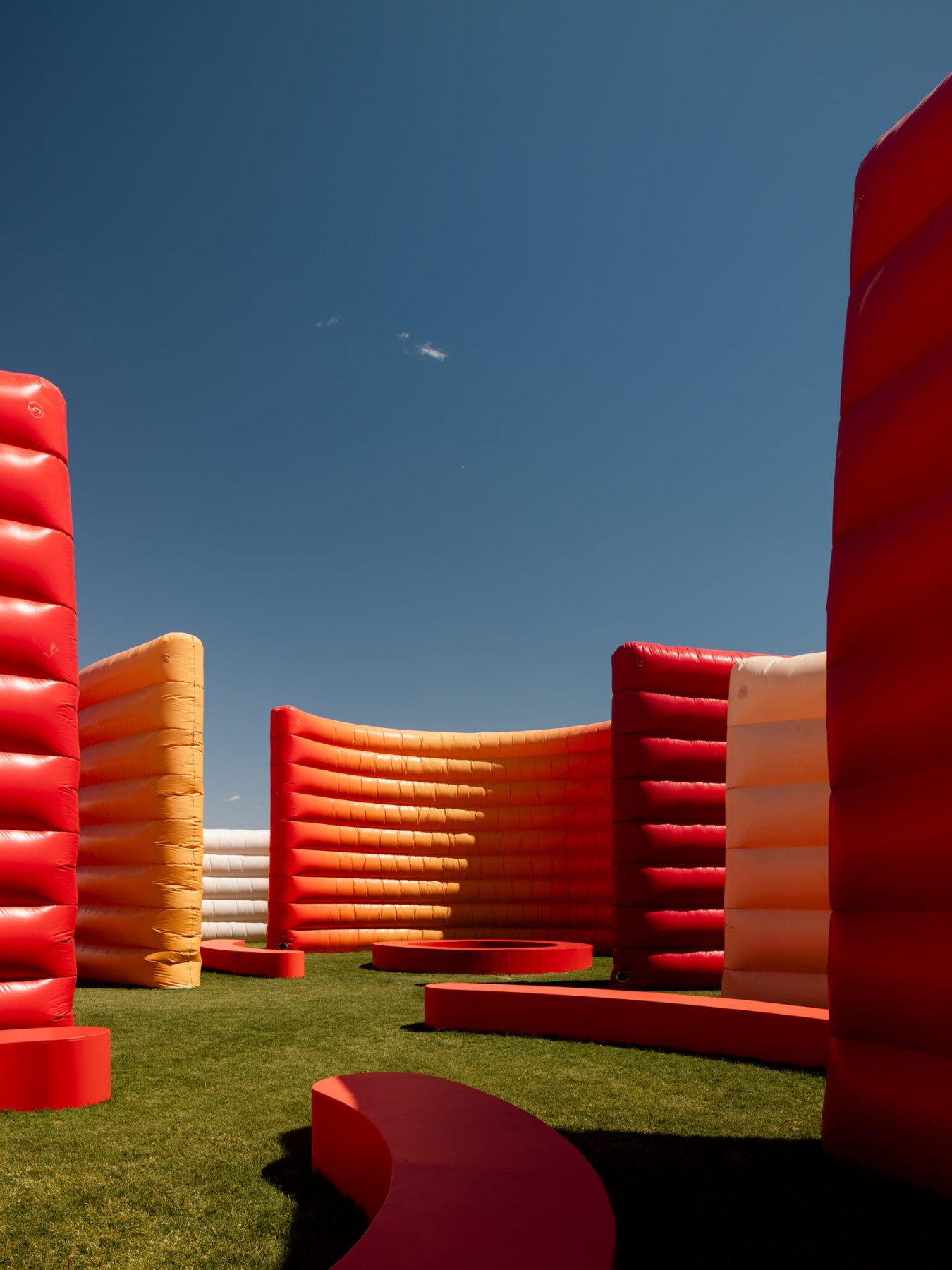
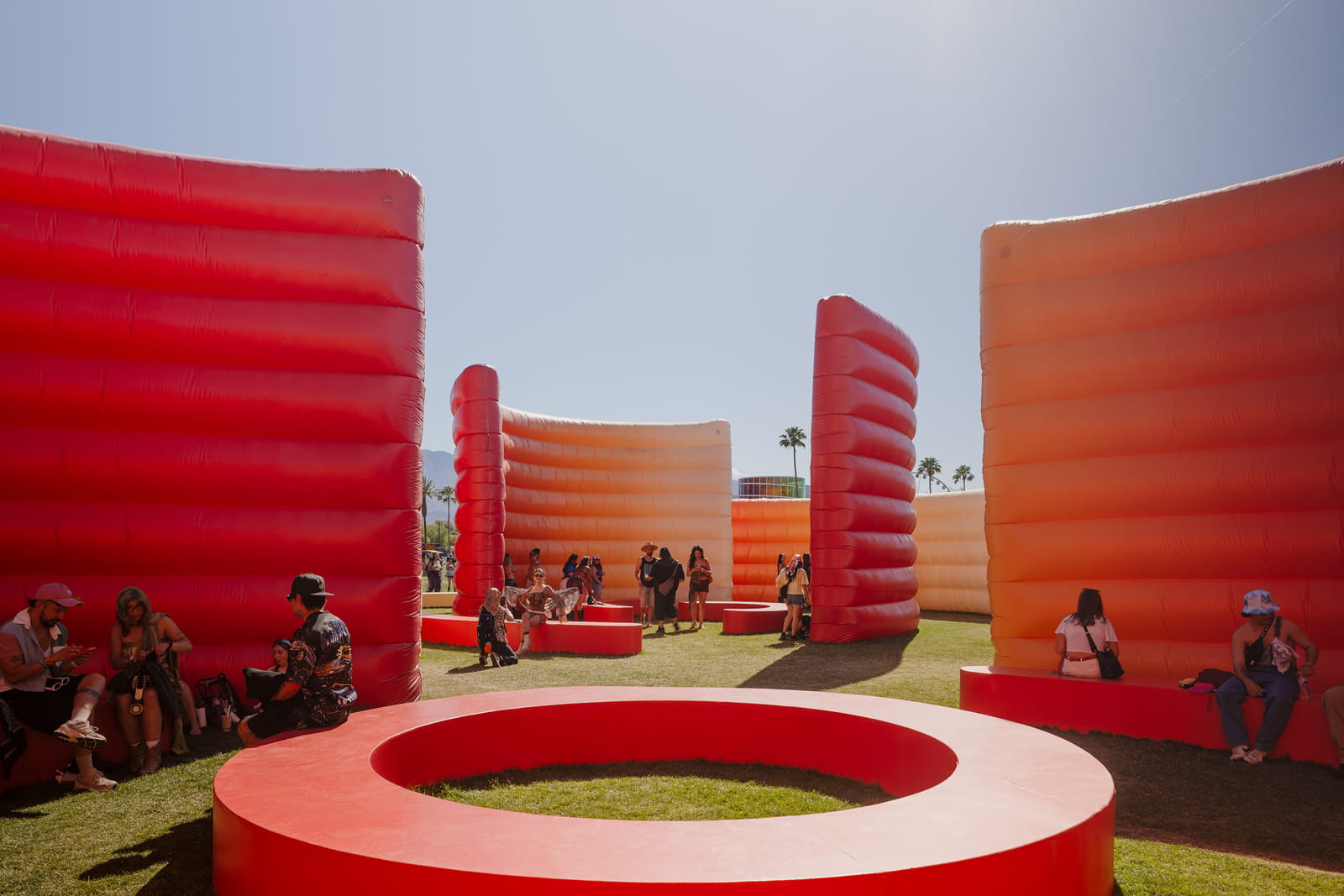
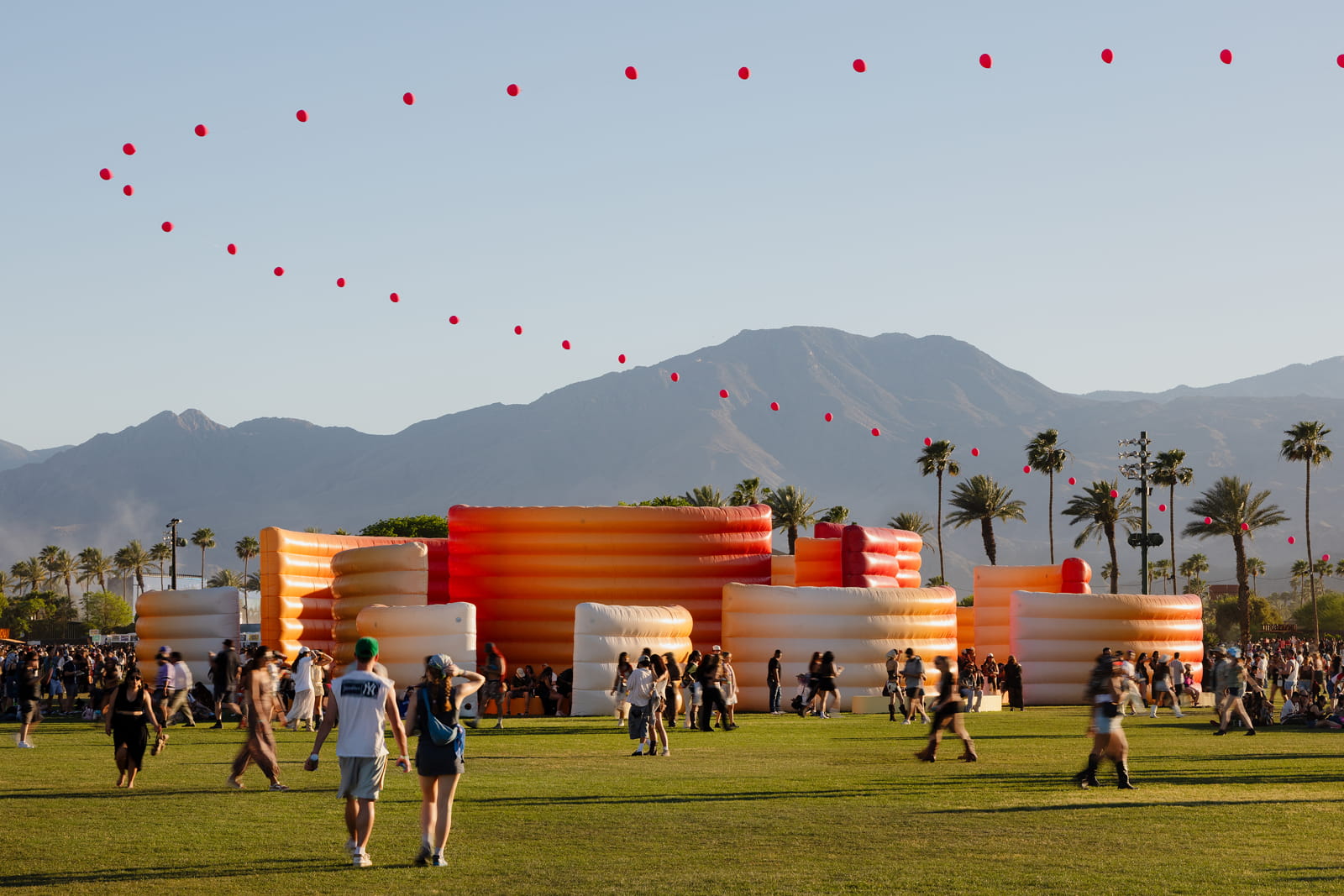
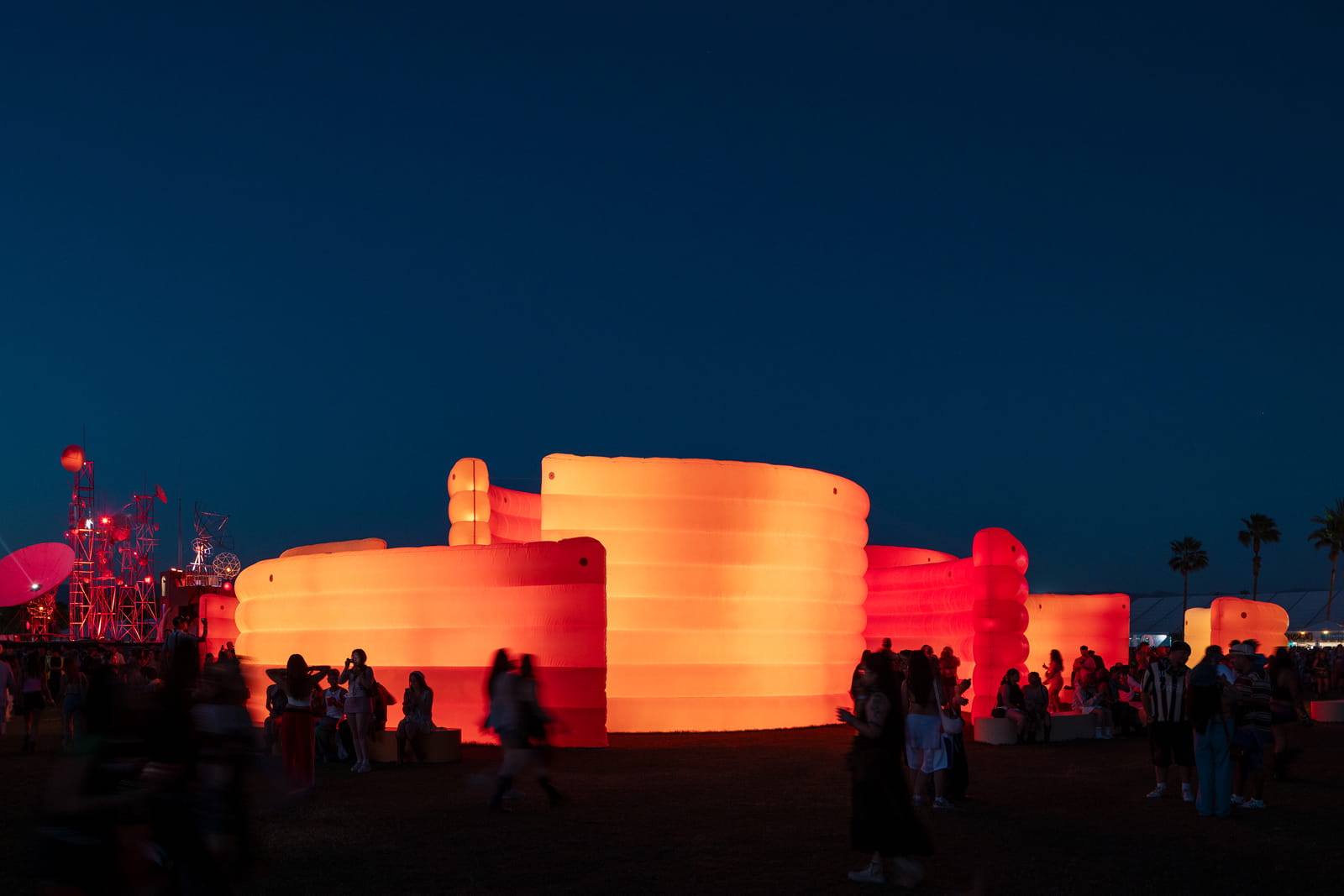
Maze by Sabine Marcelis is a maze of soft, inflated, gently curving stacked arcs. Its curved PVC forms in varying heights were inspired by the natural contours of Coachella Valley. They meet the eye like a desert mirage, shifting in color from pale yellow to deep red at the core. The result is a gradient terrain of gentle volumes that filter the festival’s sound and provide shade from the daytime sun. The forms encourage visitors to enter and meander, where they can encounter both nooks for rest and clearings for glimpses of the stages. At night, the piece becomes an illuminated oasis; the inflated structures gently glow, turning the maze into a warm, radiant landscape. The piece is an example of Marcelis’ refined material investigations. The experience weaves in her
signature themes: playful transparency, bold silhouettes, light as tangible material, and a sensory focus foregrounding touch, atmosphere, and emotion.
Based in Rotterdam, designer Sabine Marcelis is known for her refined material investigations and pure geometric forms. Working across product, installation, and spatial design, she pushes manufacturing processes to reveal surprising visual effects, crafting environments where the sensorial experience itself becomes the function.
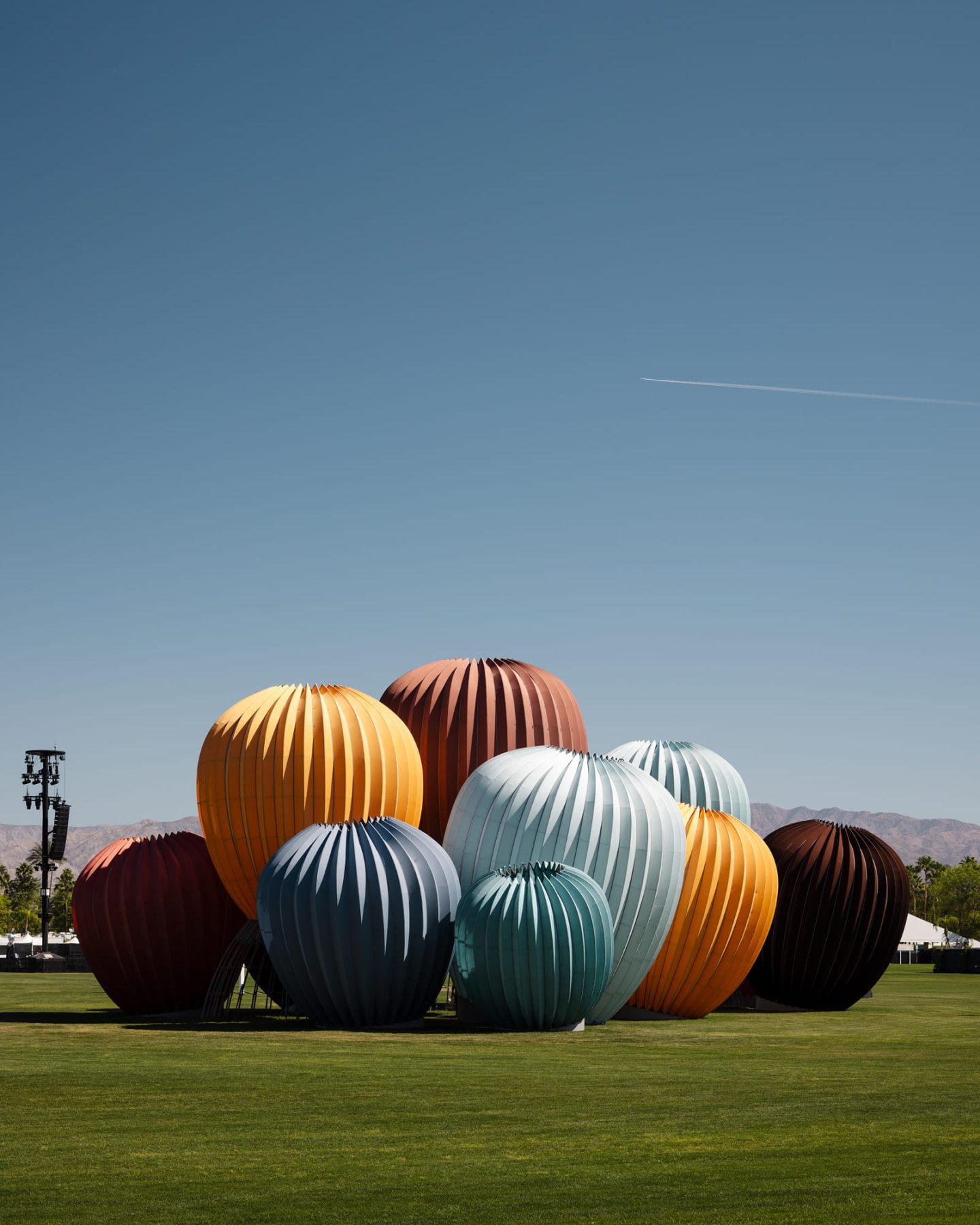
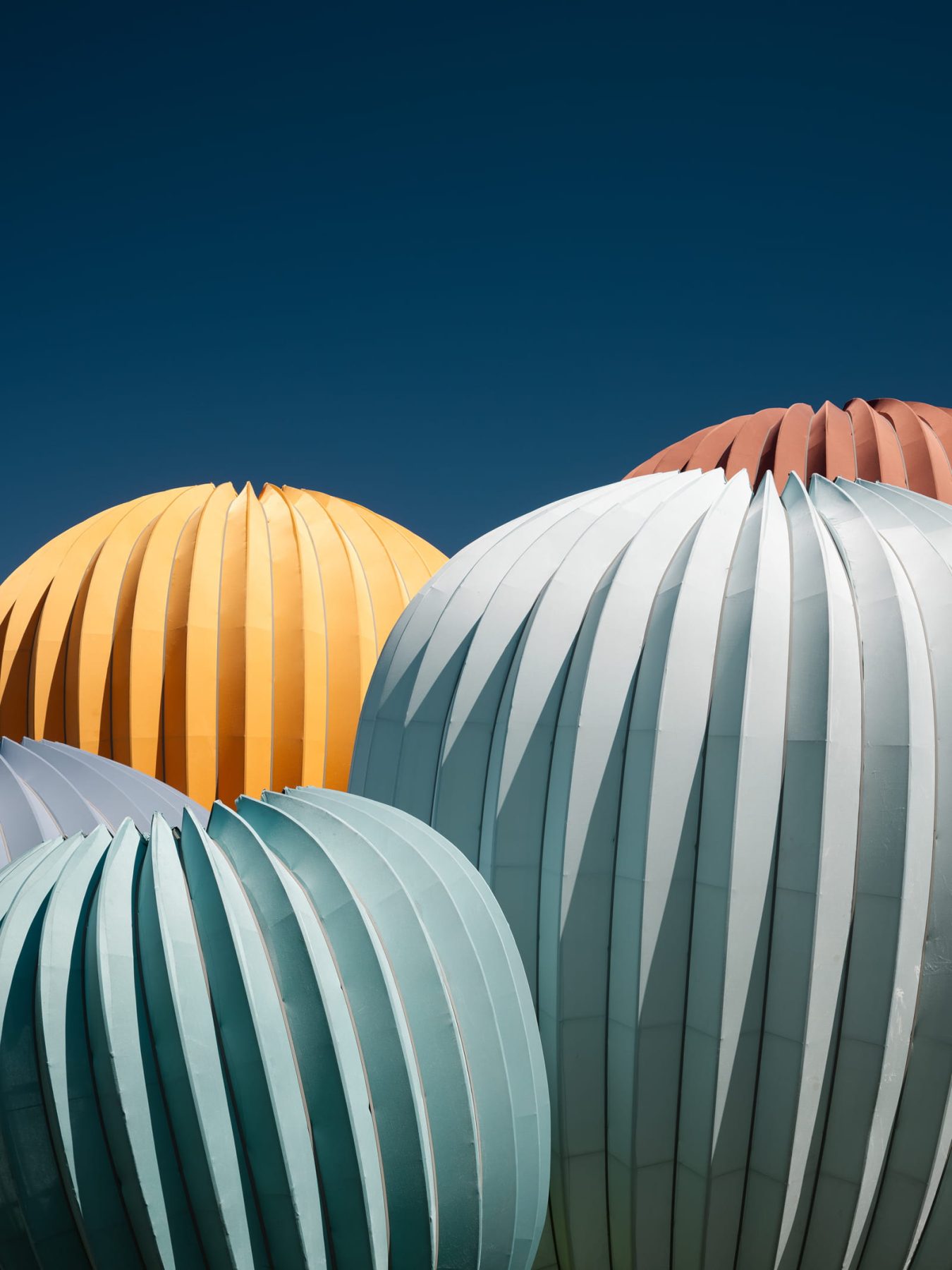
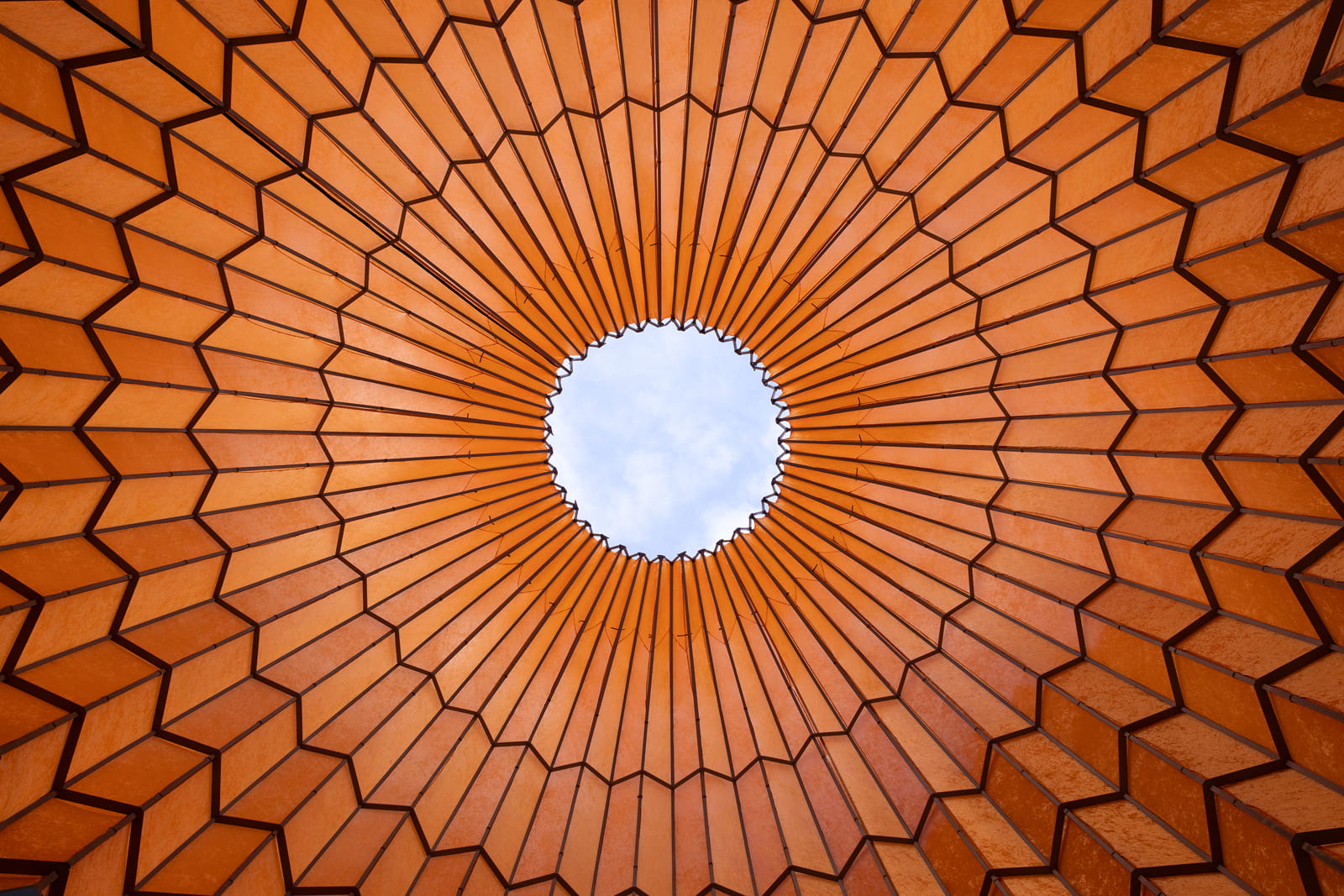
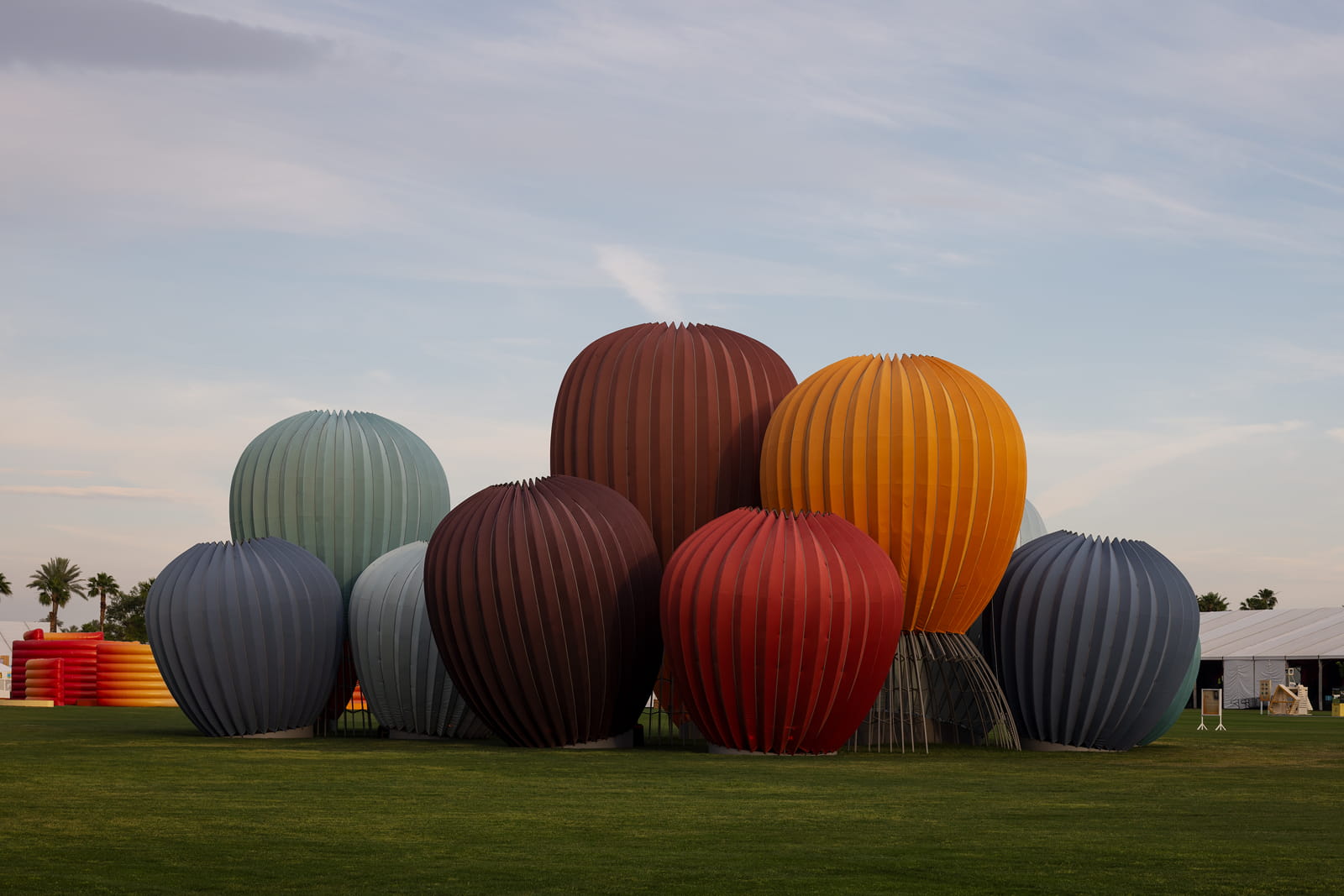
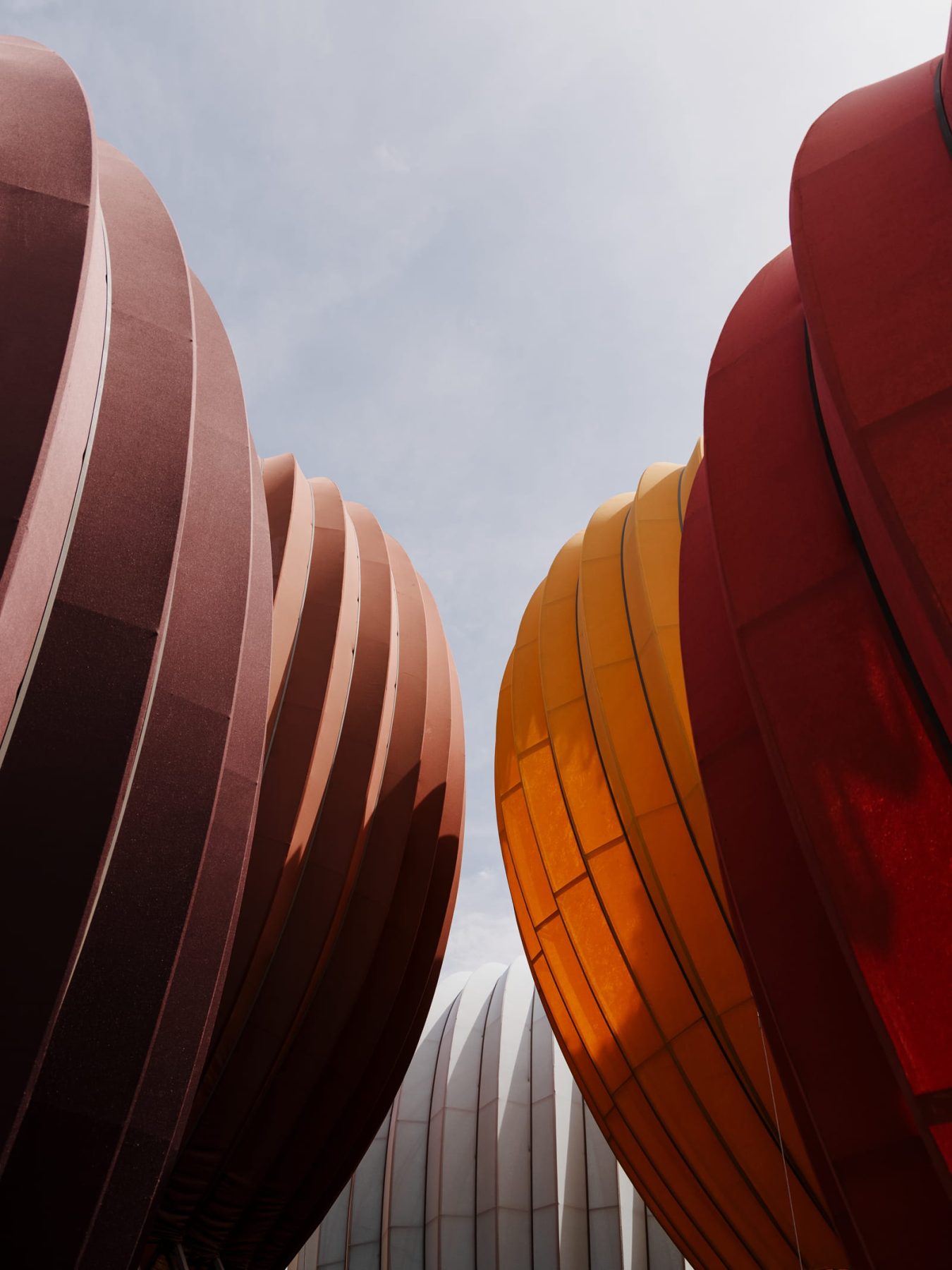
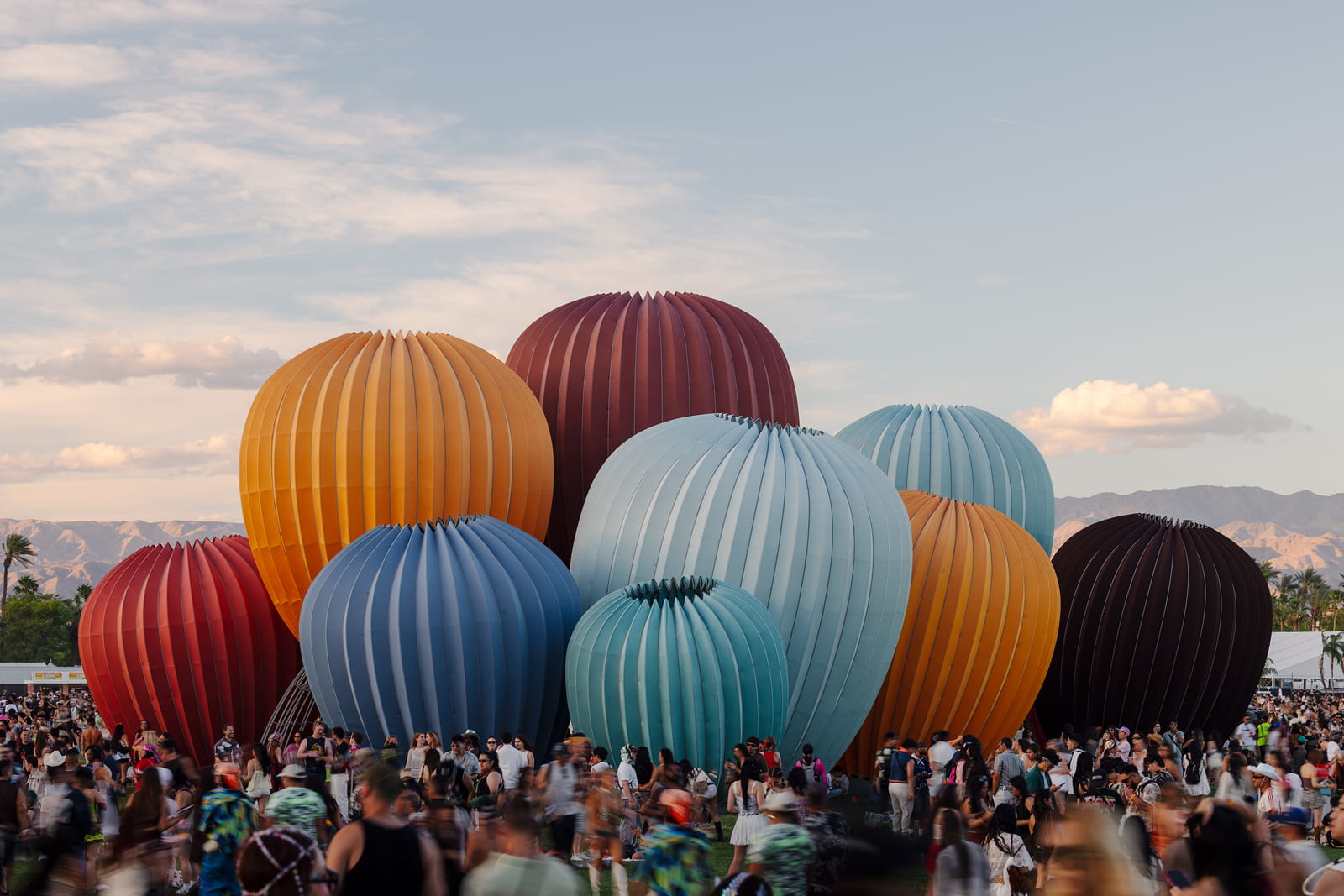
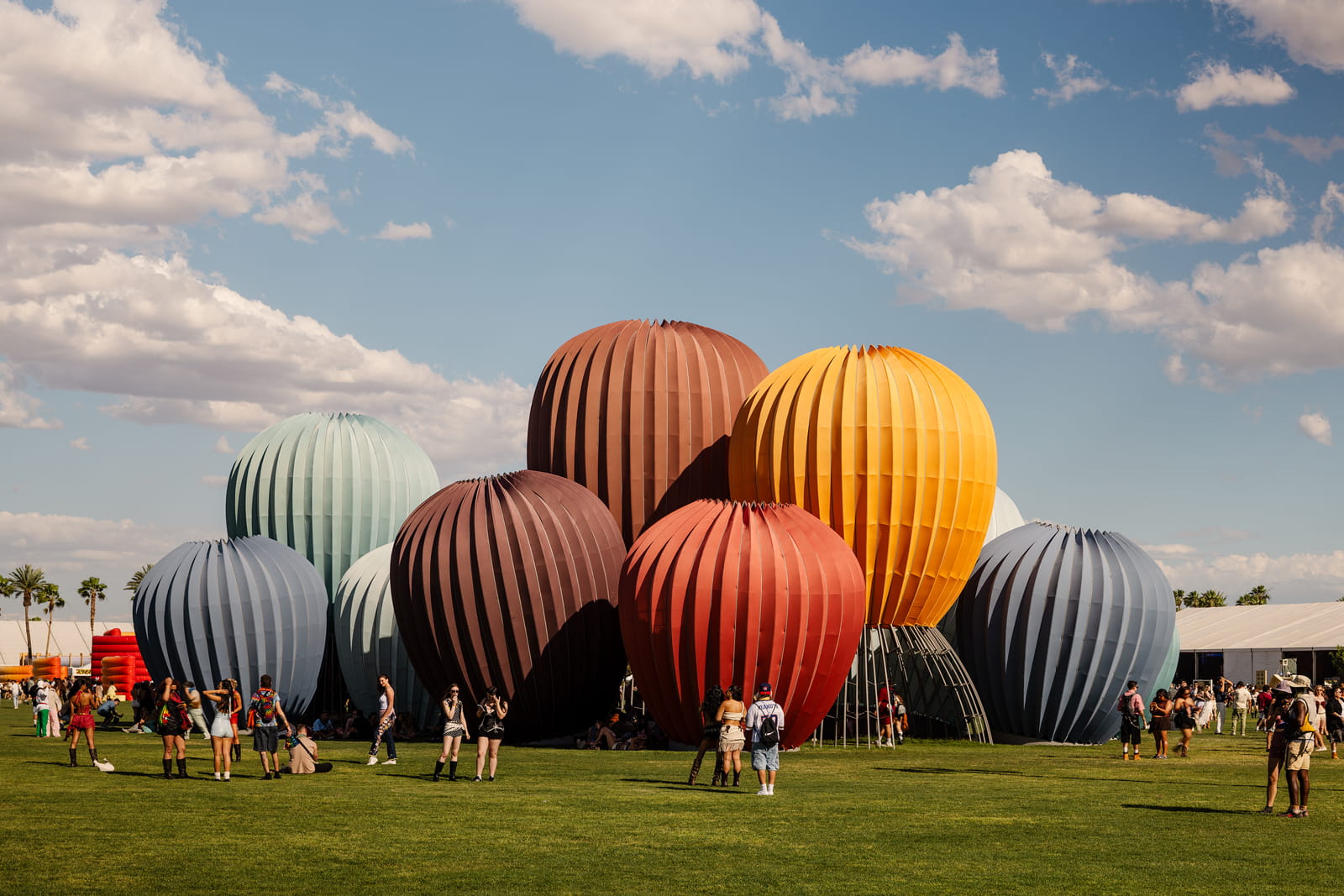
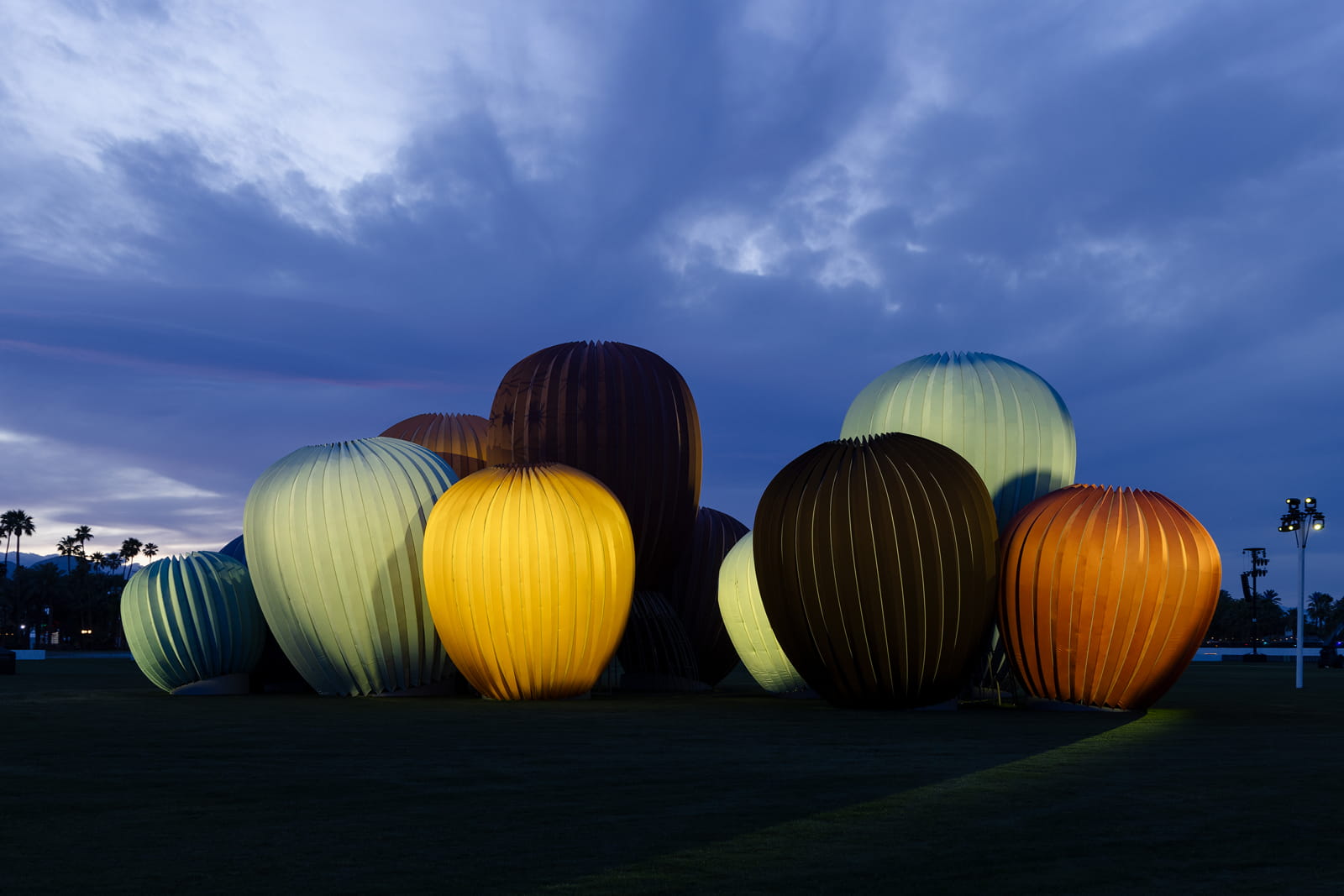
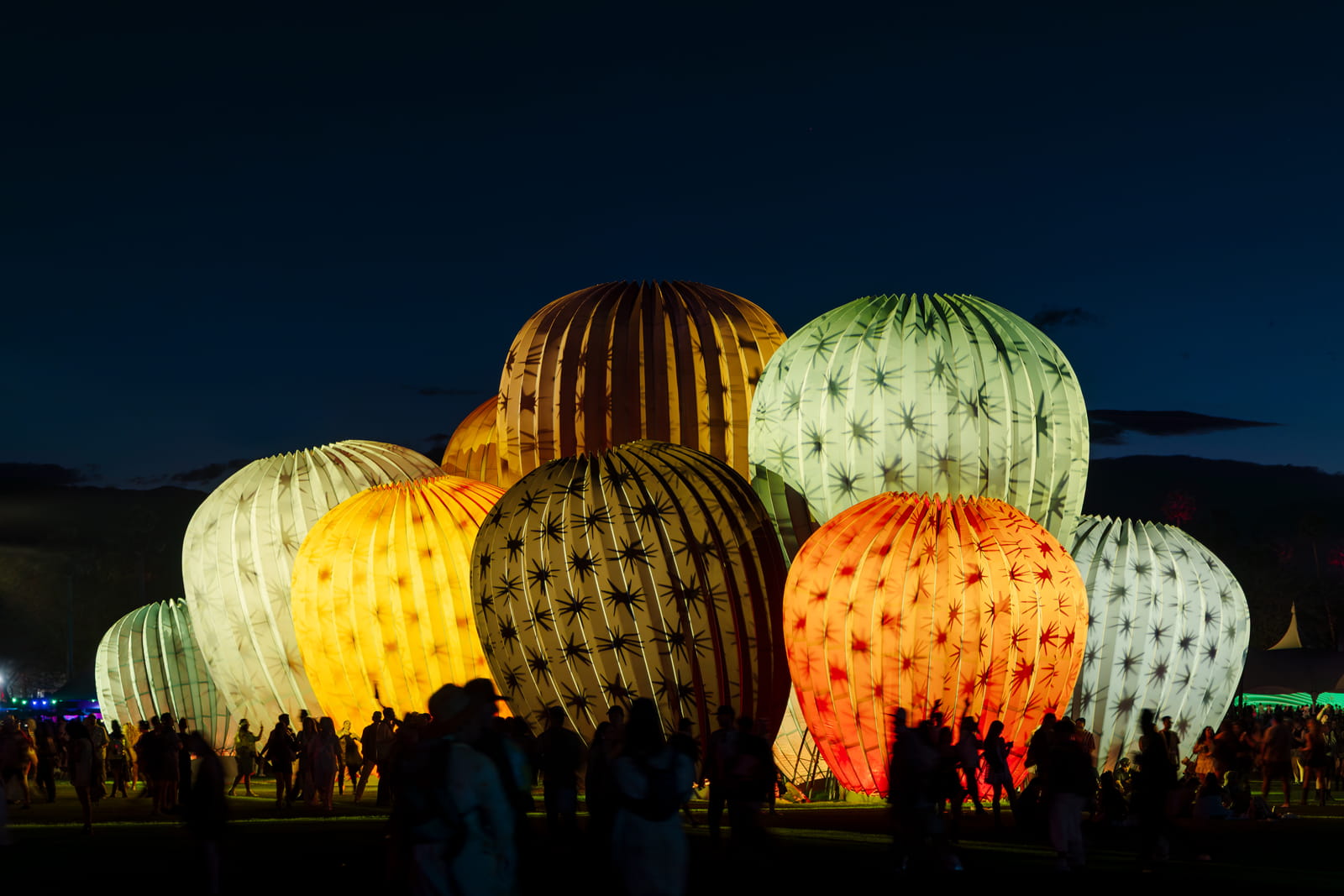
Starry Eyes by London based architect Kyriakos Chatziparaskevas is a field of towering geometric forms inspired by the star shaped golden barrel cactus. Nested together and tilting like cactuses seeking the sun, they alternate in size, some climbing to almost 40 feet tall. Openings to enter the cacti appear at their bottoms, where the brightly hued fabric lacing their outer ribs immerses the festivalgoer in a pool of color. The star shaped openings at their crowns form oculi that frame the sky, inspired by John Lautner’s iconic Bob Hope House in Palm Springs. By day, Starry Eyes provides cooling shade and respite, a tower of colorful light and shadow where one can lie back on the grass gazing at the sky. By night, it transforms into a cluster of lanterns. The translucent exteriors glow from within, echoing the celestial world twinkling above the desert. Fascinated with geometry and light and placing importance on context, Chatziparaskevas highlights not only the rich palette of Coachella’s setting, but its communal spirit for all gathered under one sky.
Kyriakos Chatziparaskevas founded the architecture and design practice AR-K-C and continues to work from London in senior design roles, in which he has led notable projects.
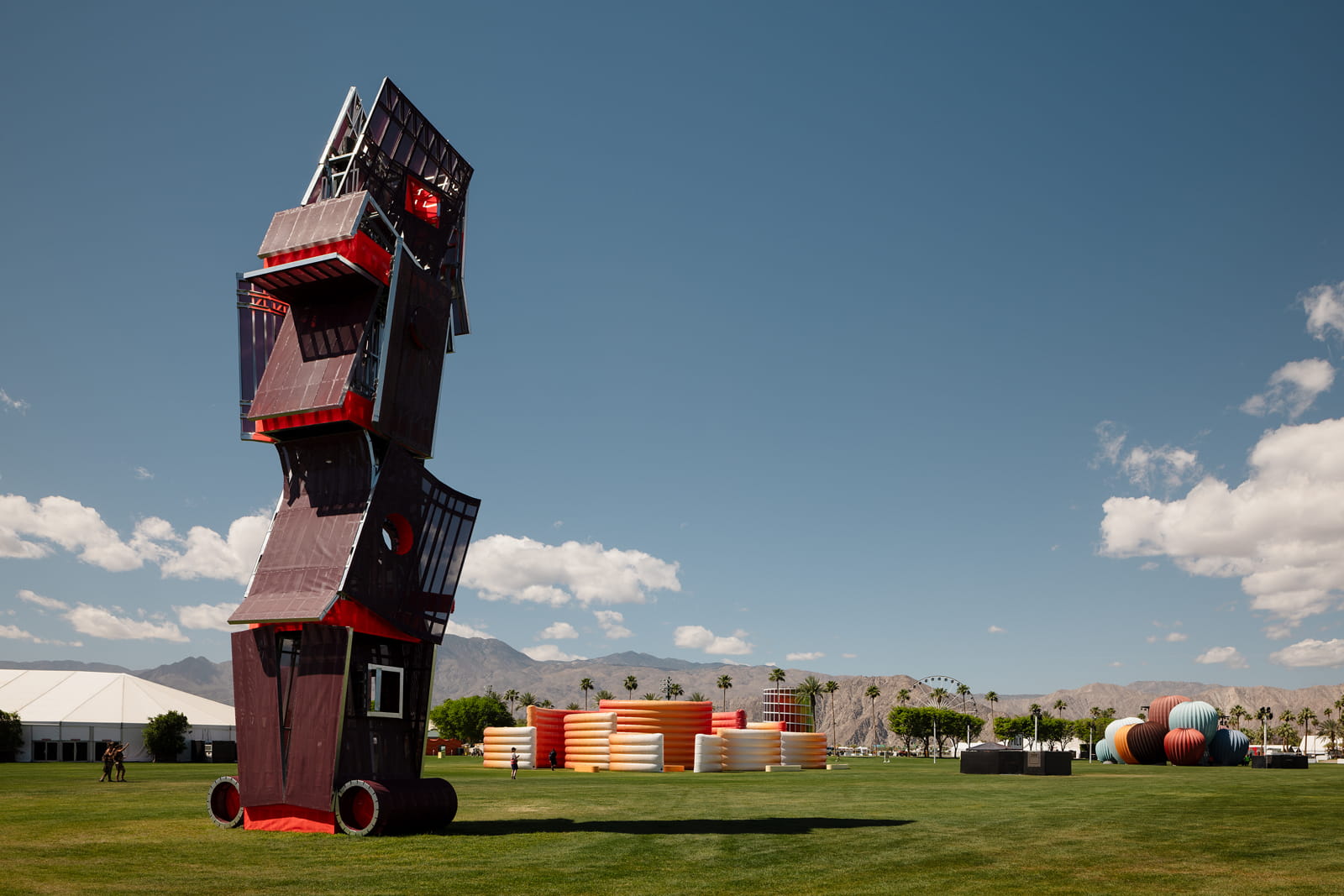
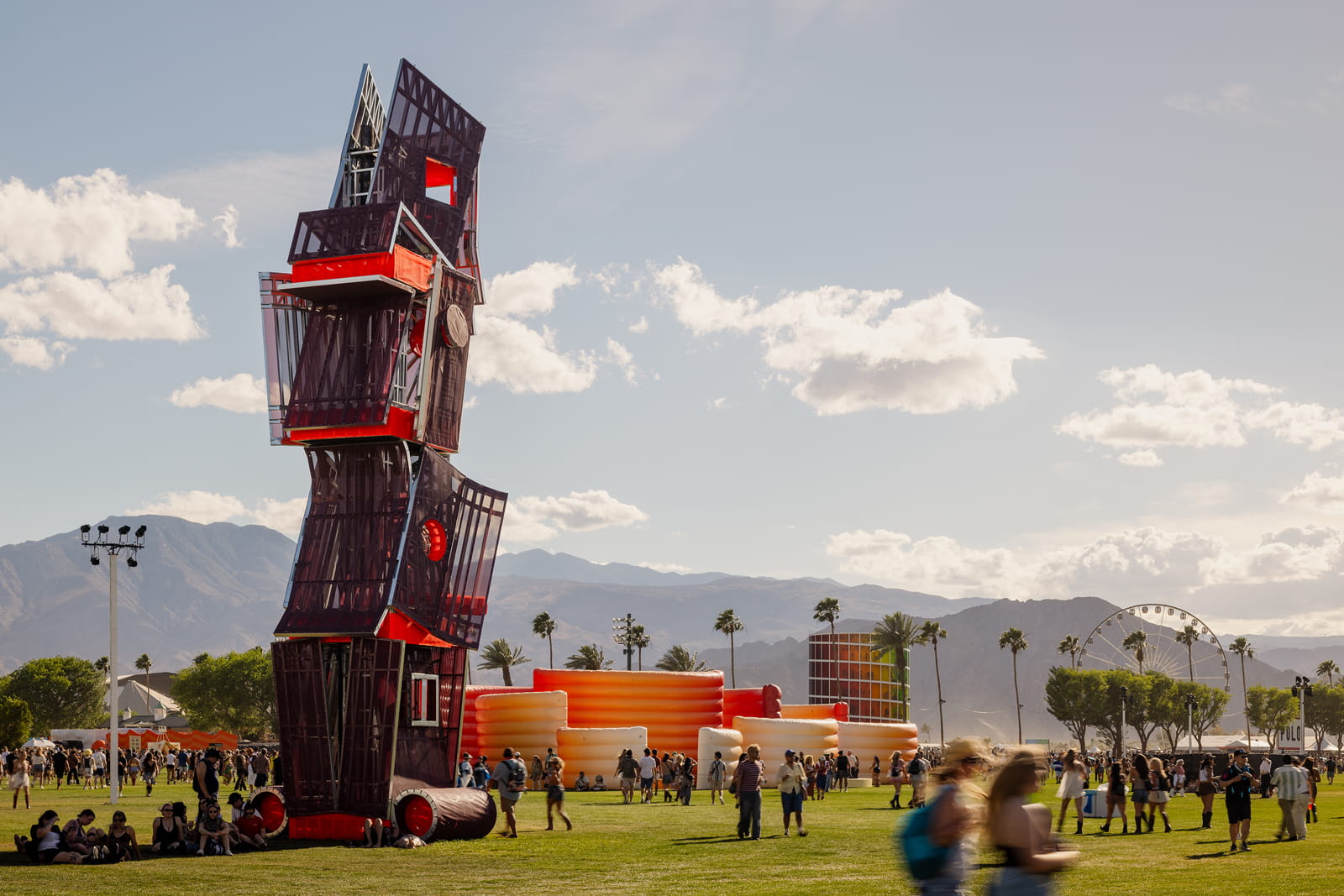
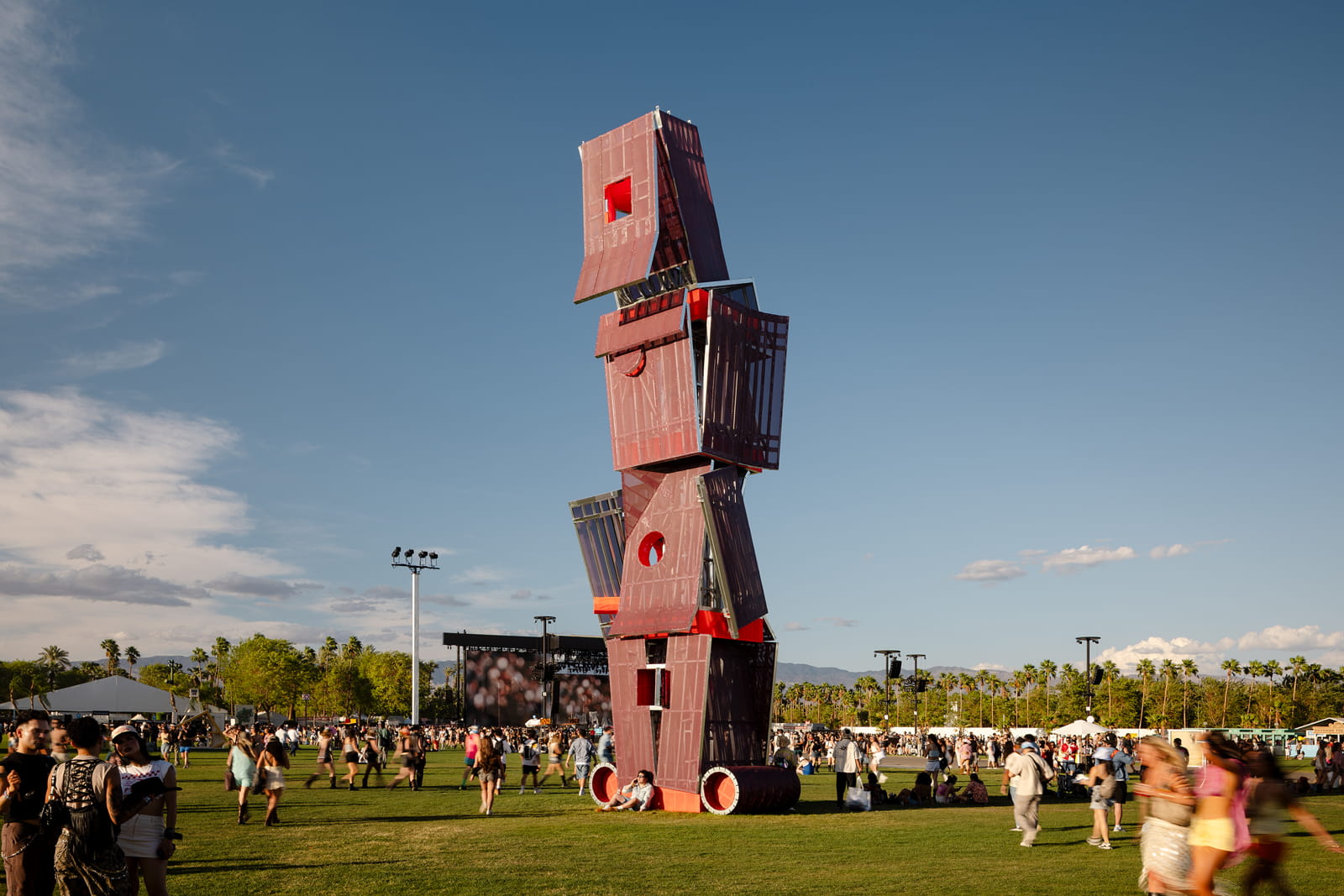
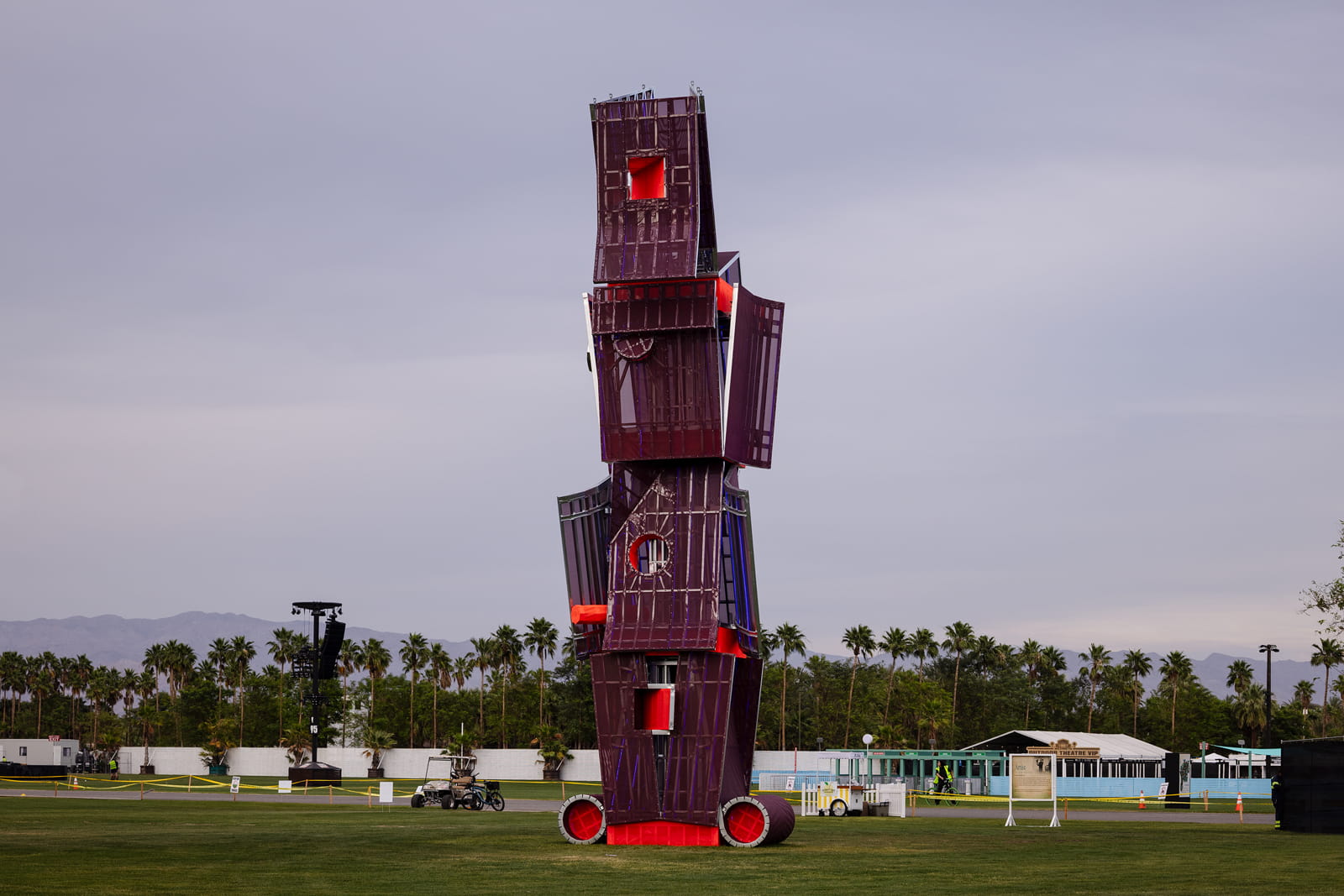
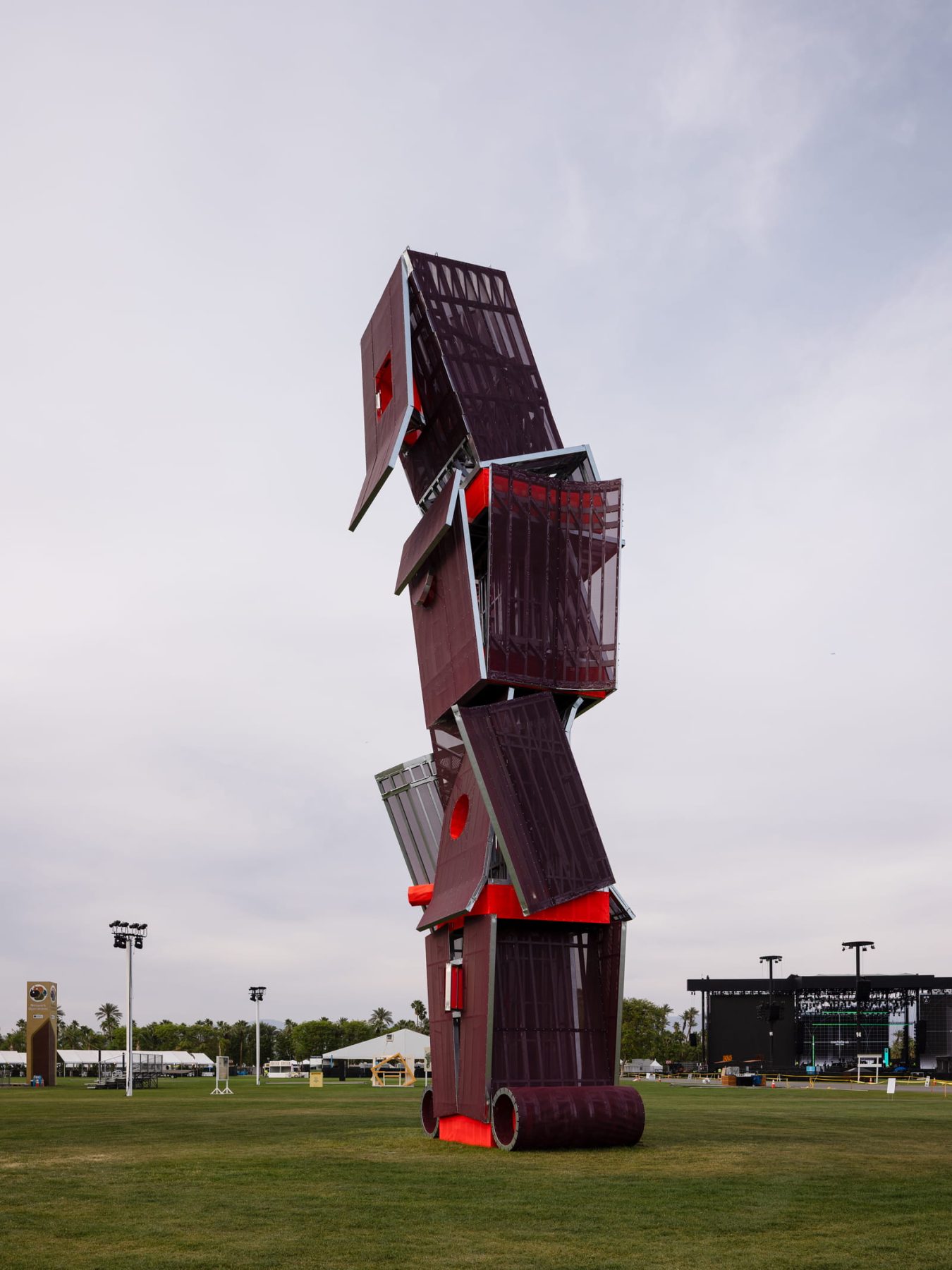
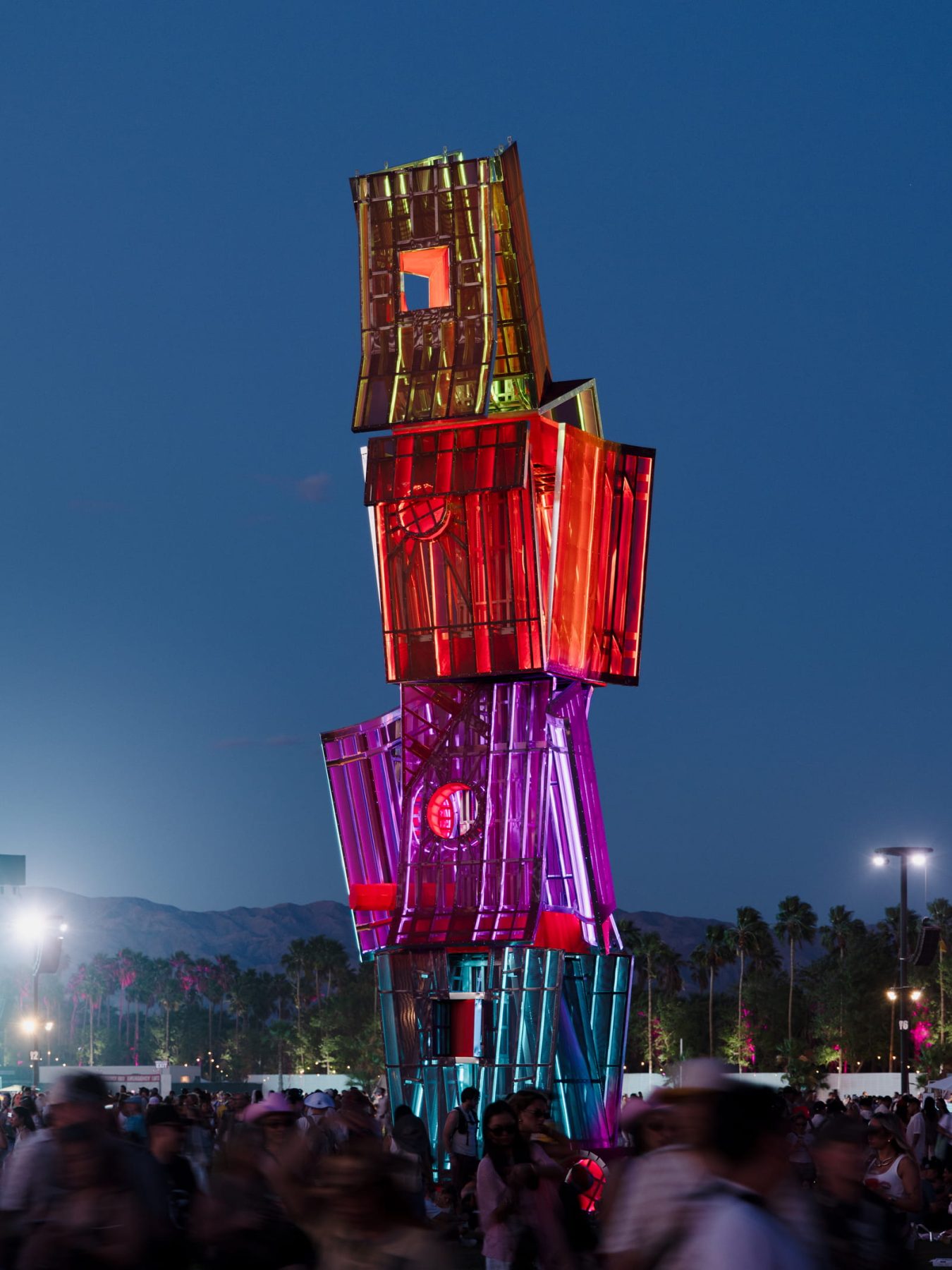
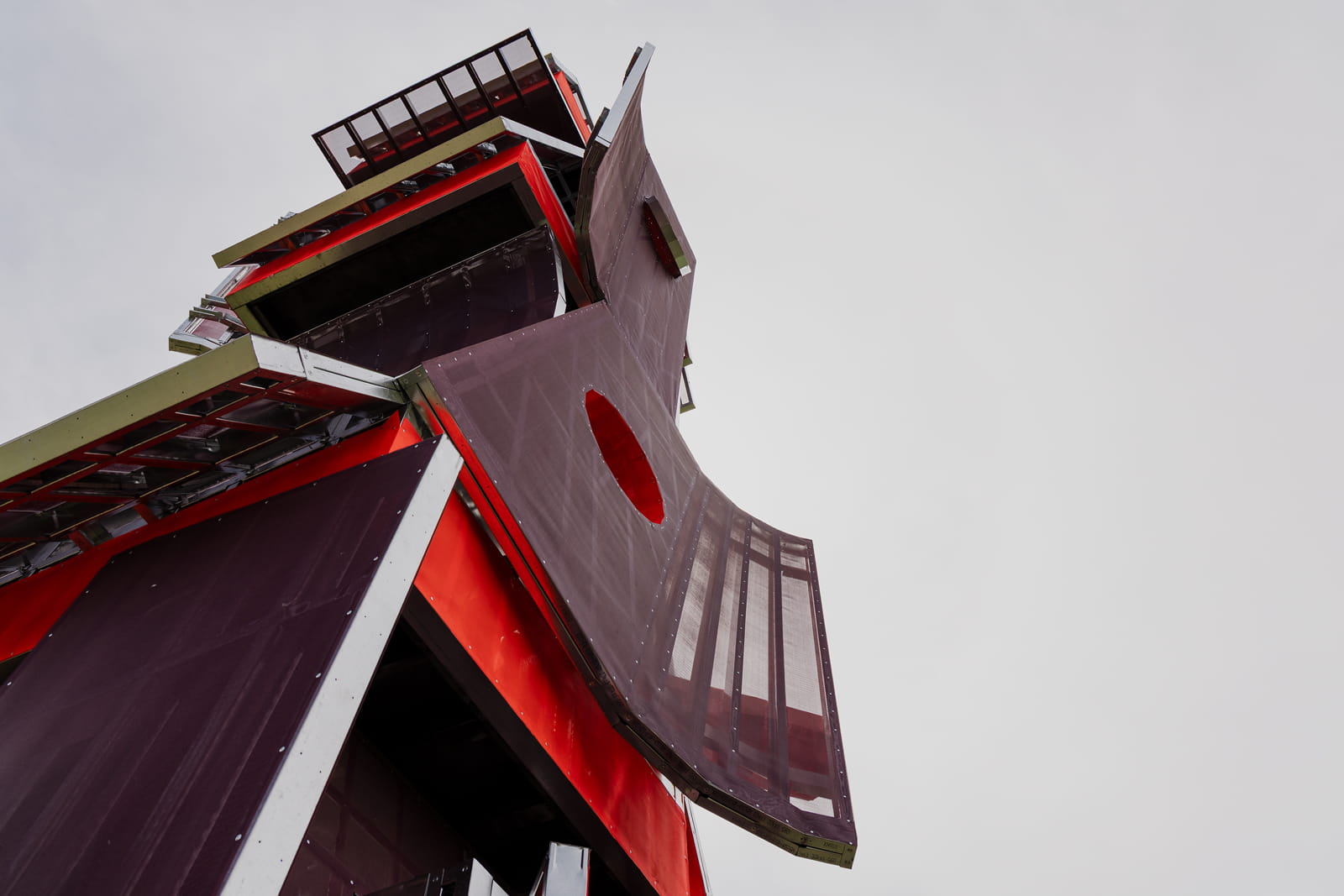
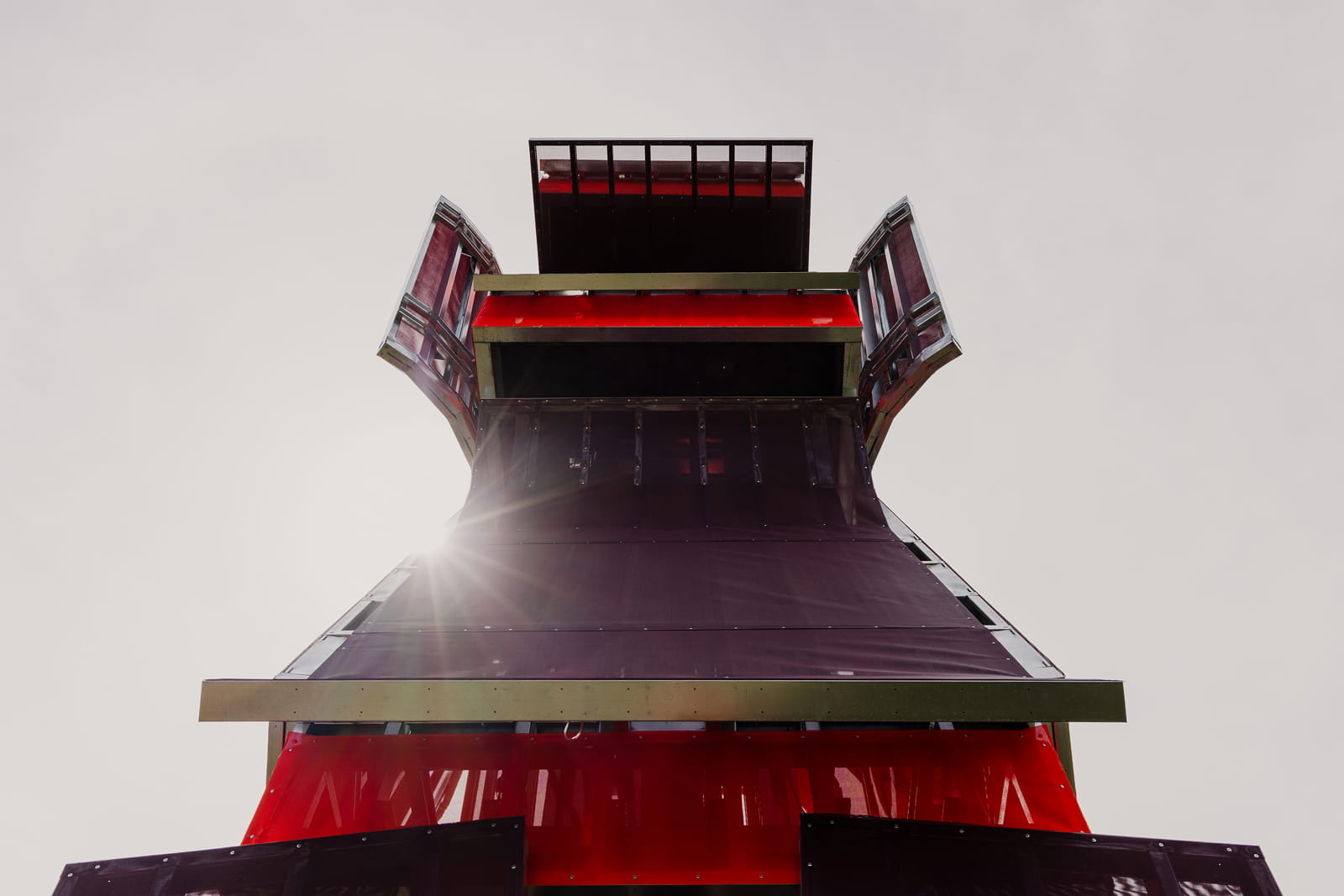
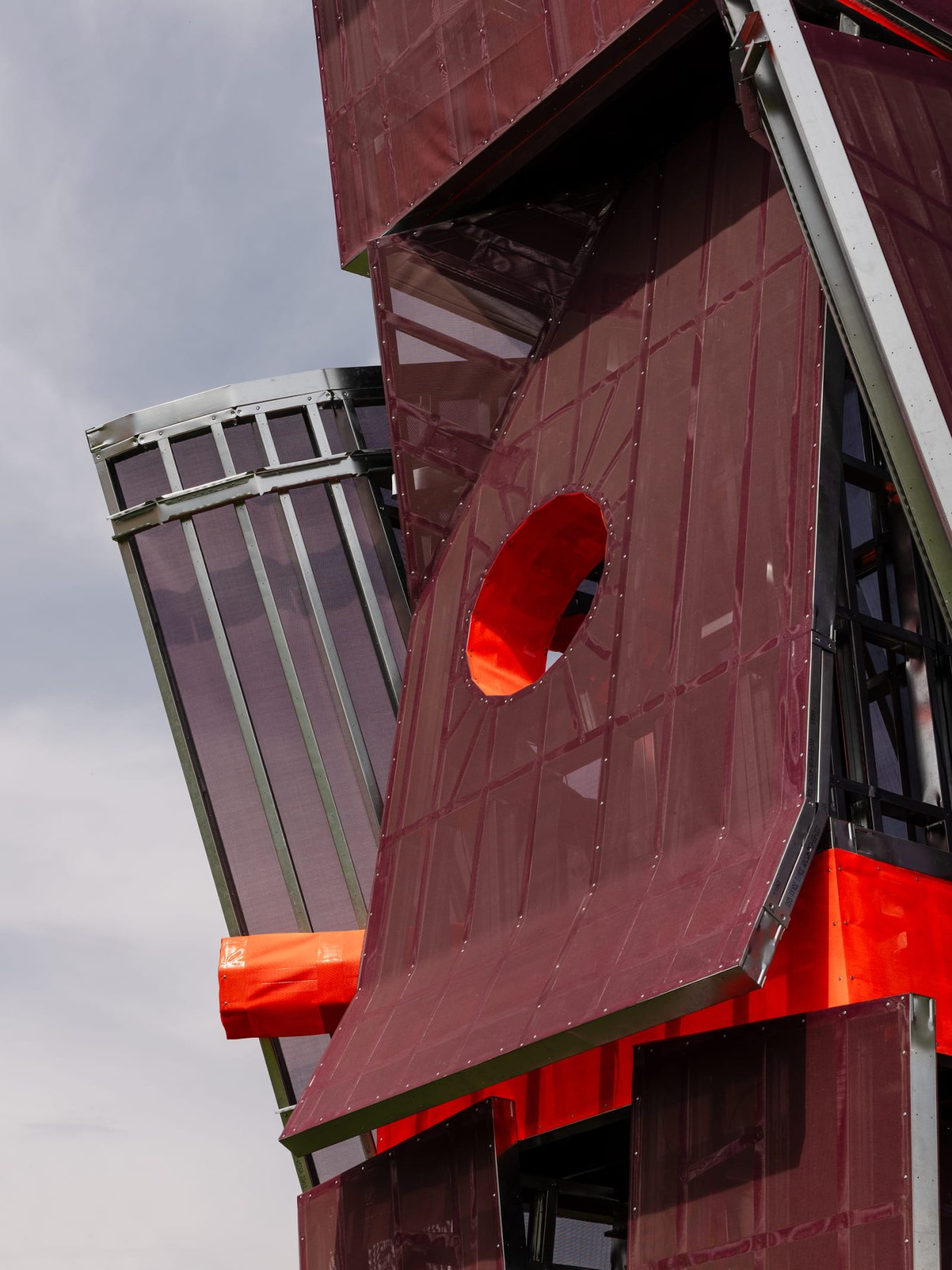
Visage Brut by The Los Angeles Design Group (The LADG), led by Andrew Holder and Claus Benjamin Freyinger, reimagines the logic and mythology of a totemic tower through the language of contemporary construction. This soaring steel monolith is a tower of modular boxes, each one folded, rolled, cut, or warped just short of losing its structural integrity. Each box is animated by a stack of subtly anthropomorphic “characters”. The result is a vertical procession of hybrid geometries that both perform the physical labor of holding up the weight above and project an uncanny, figurative presence.
Visage Brut is born from an experimental collaboration with software assisted steel fabricator StudIOConstruction. The piece is a continuation of LADG’s investigations into the urban form and interest in historical ideas, transforming an industrial material used in retail construction into an expressive totem. As day be comes dusk in the valley, the mesh and selectively skinned surfaces shift from sculptural mass to filigreed lattice, and nighttime illumination animates Visage Brut’s dual nature.
Andrew Holder and Claus Benjamin Freyinger are co-principals of The Los Angeles Design Group (The LADG), an architectural practice known for merging historical ideas with contemporary urban challenges. Holder is chair of Graduate Architecture, Landscape, and Urban Design at Pratt Institute; Freyinger lectures in the graduate architecture program at UCLA.
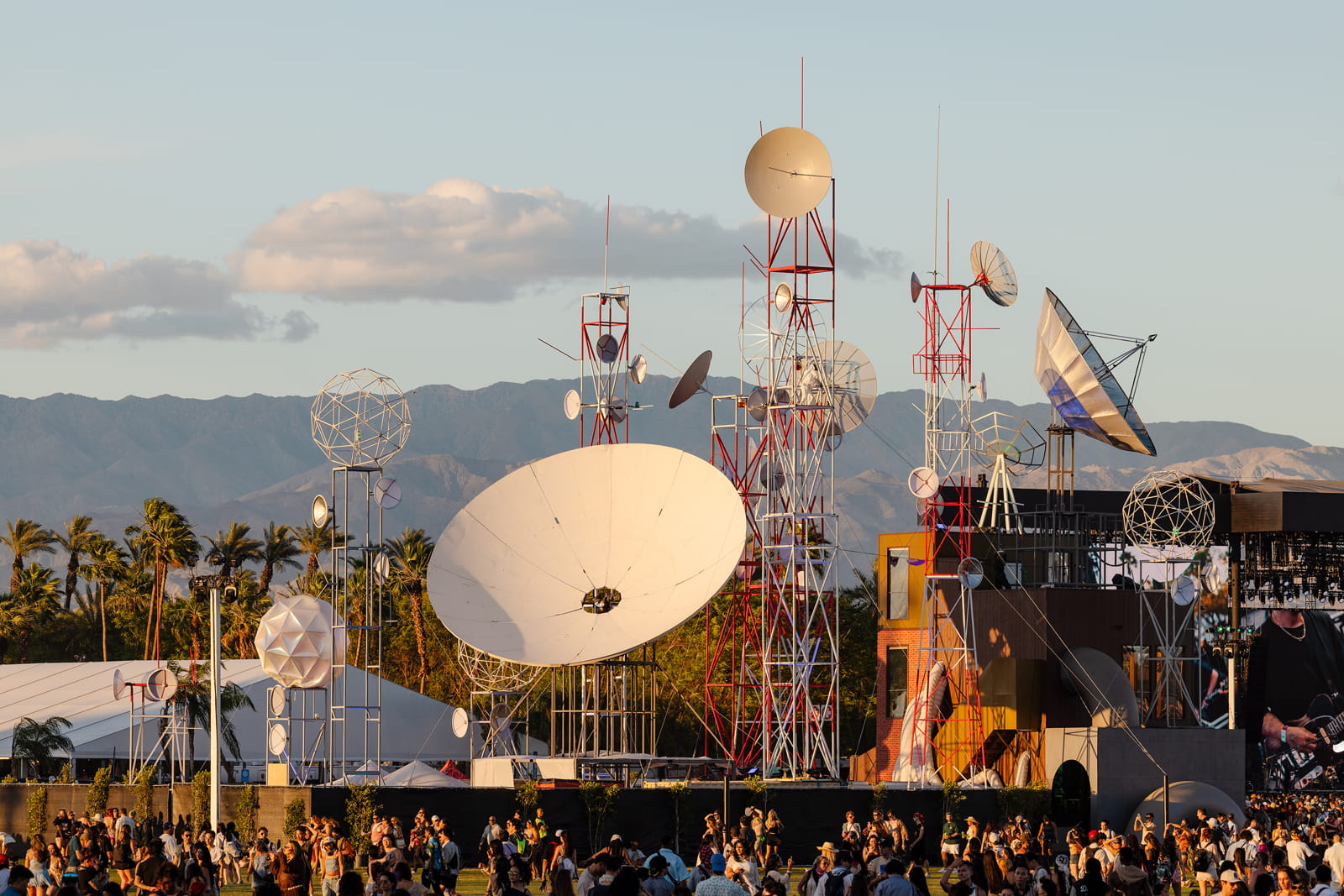
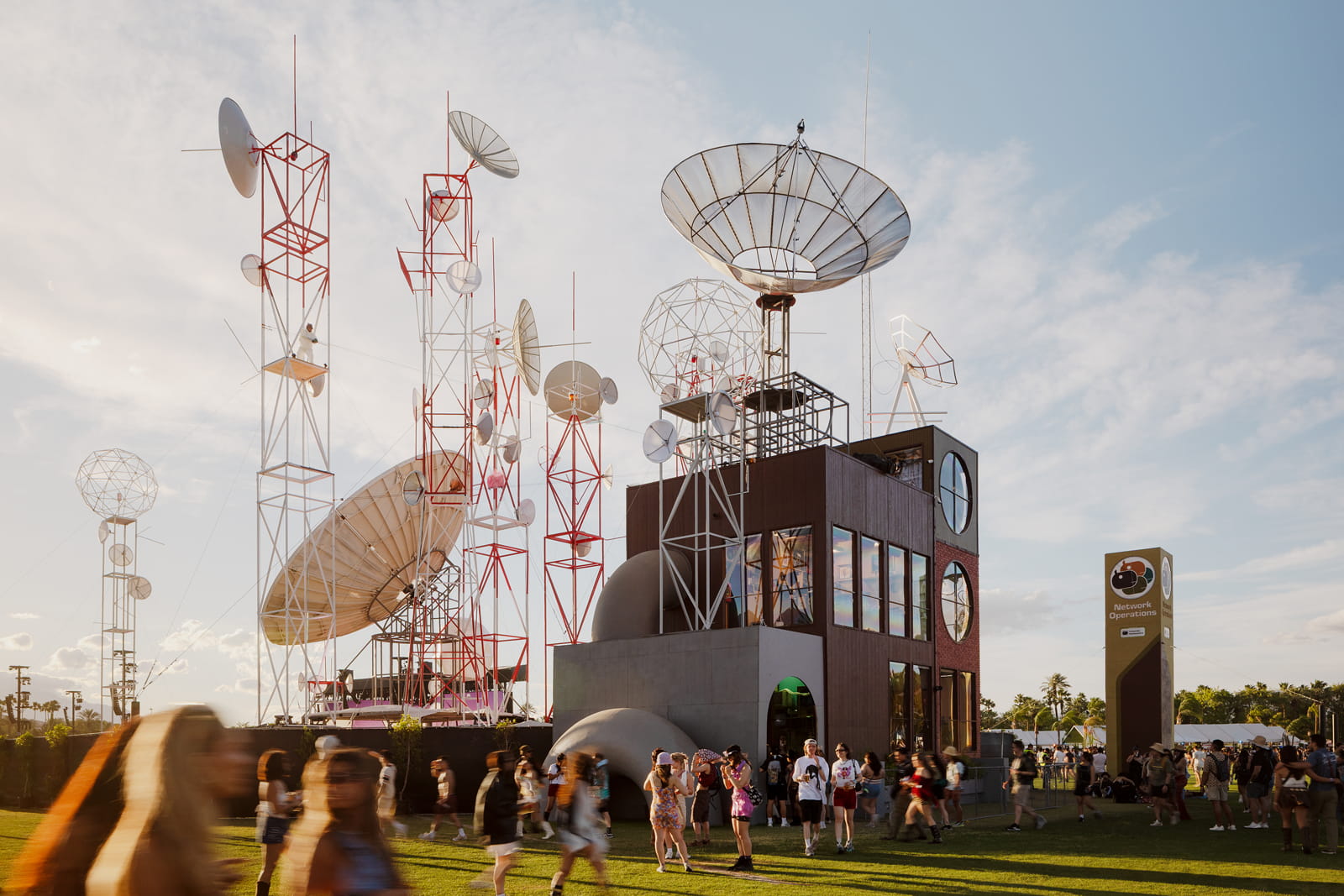
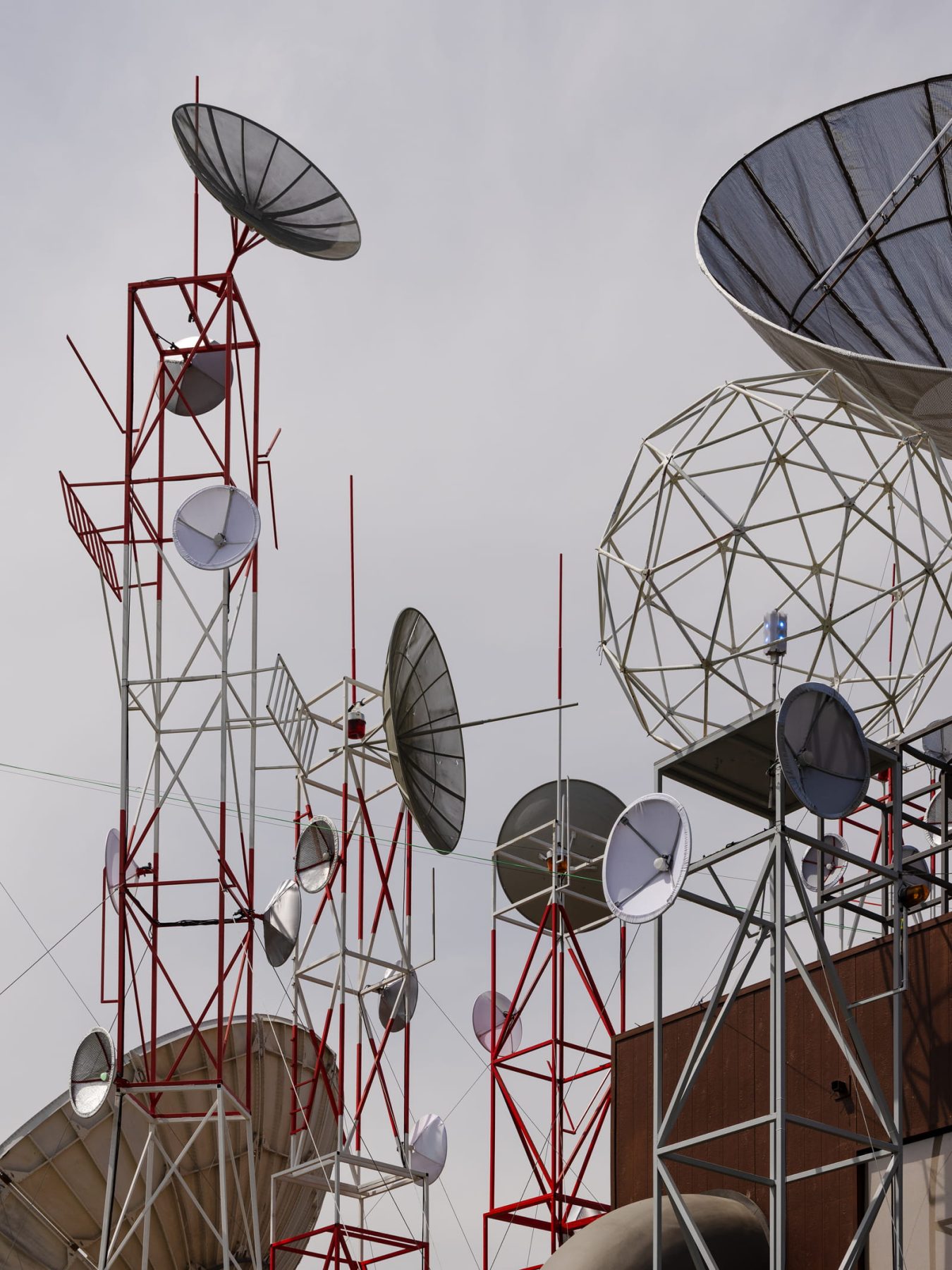
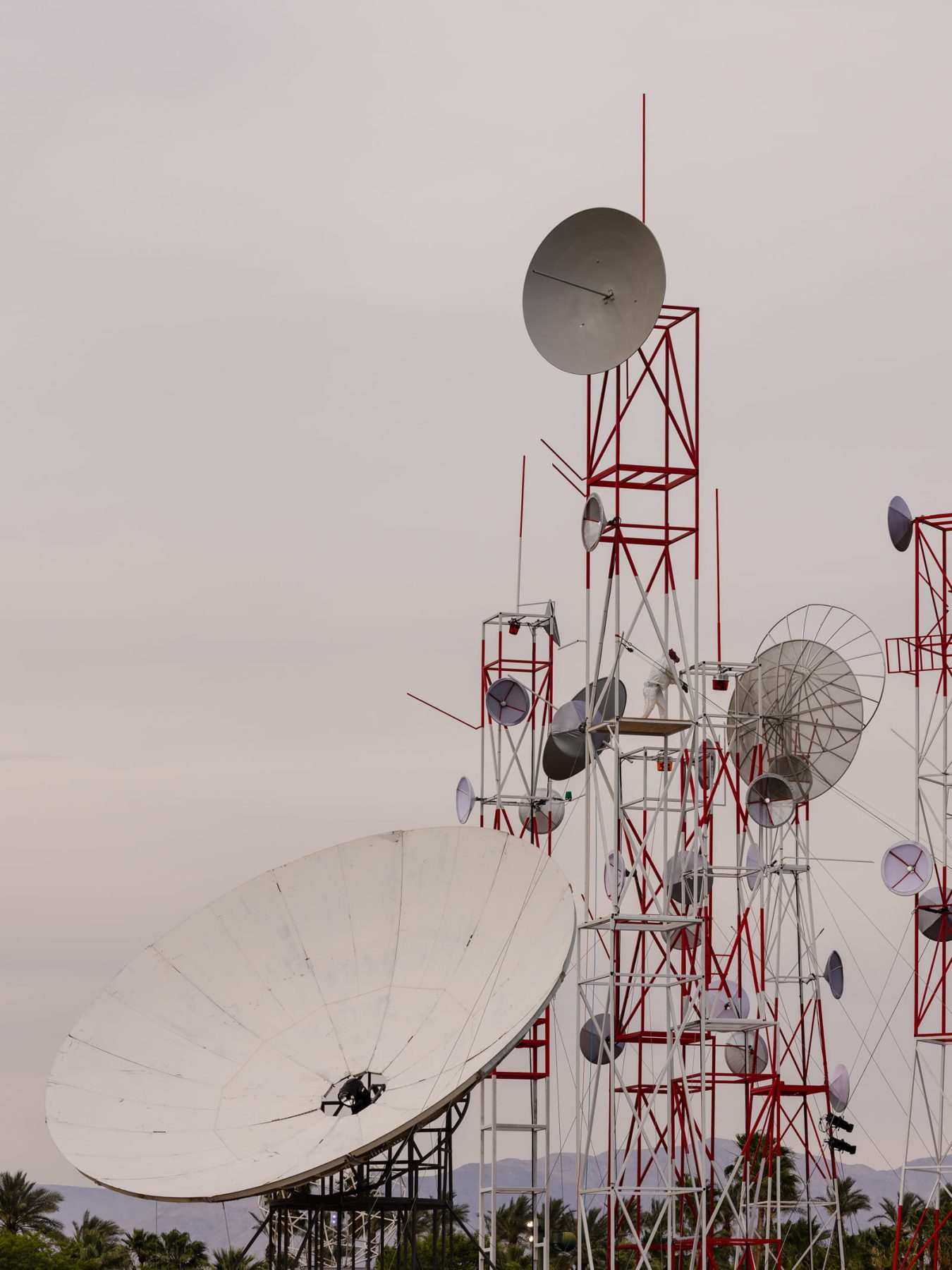
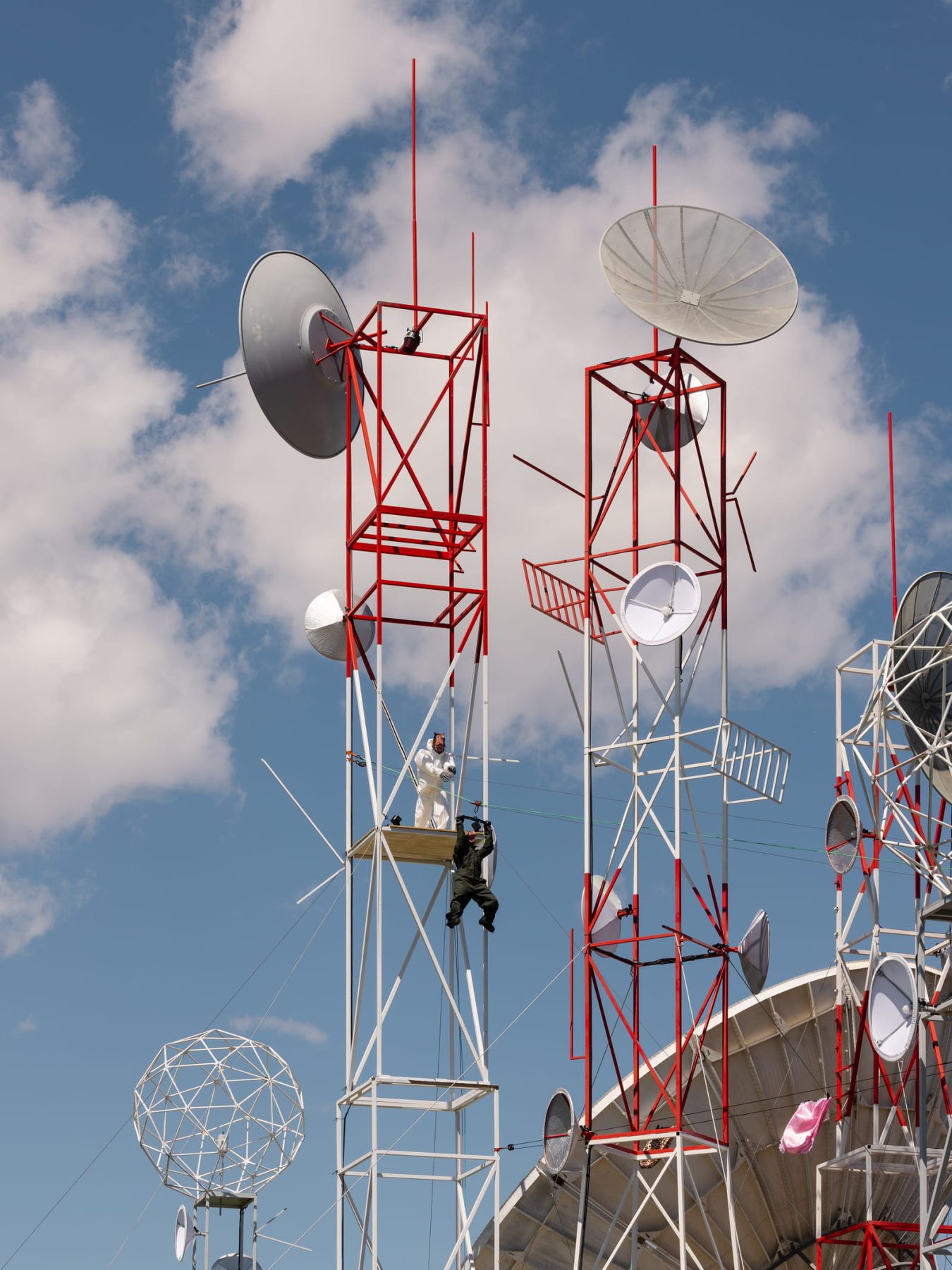
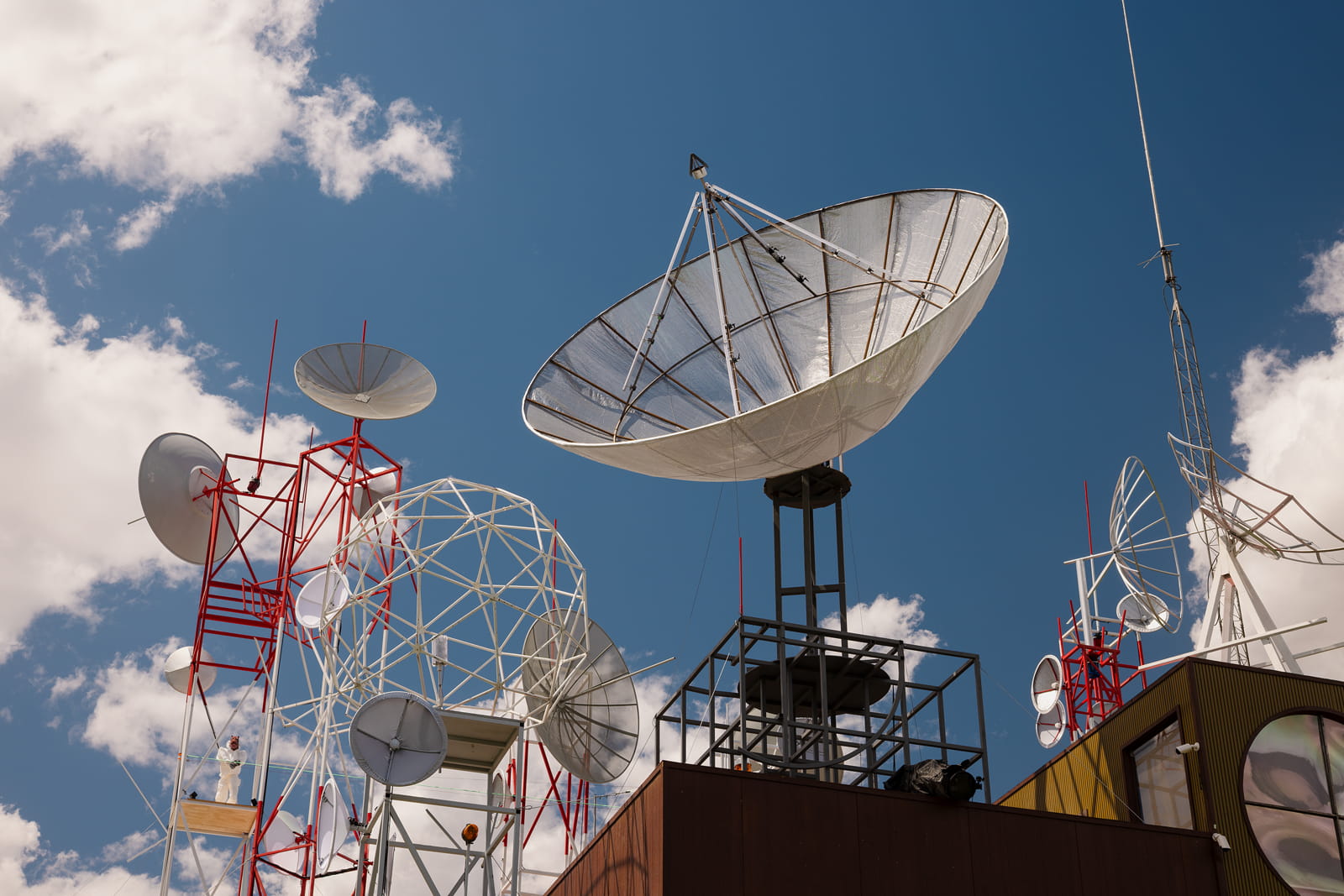
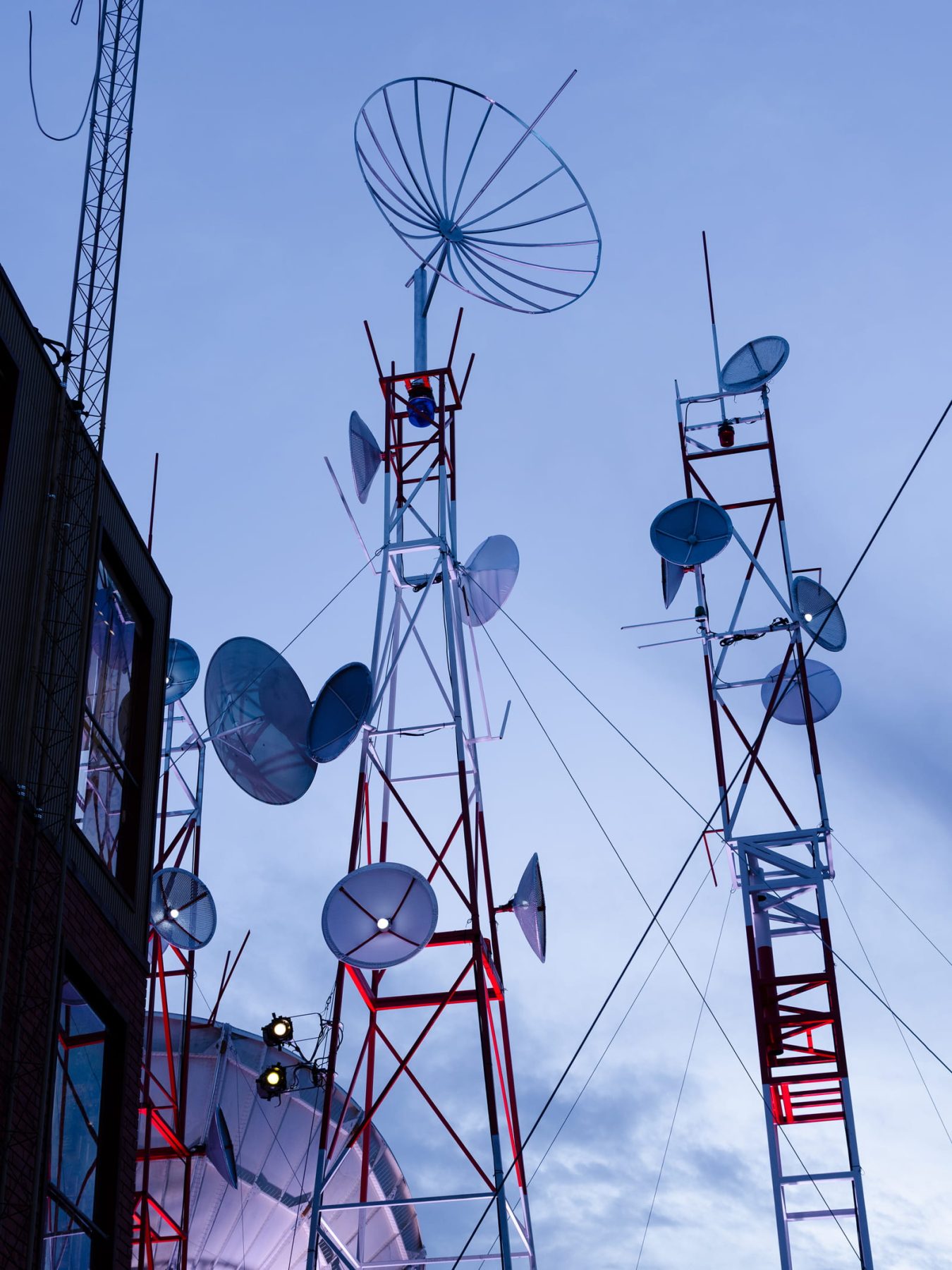
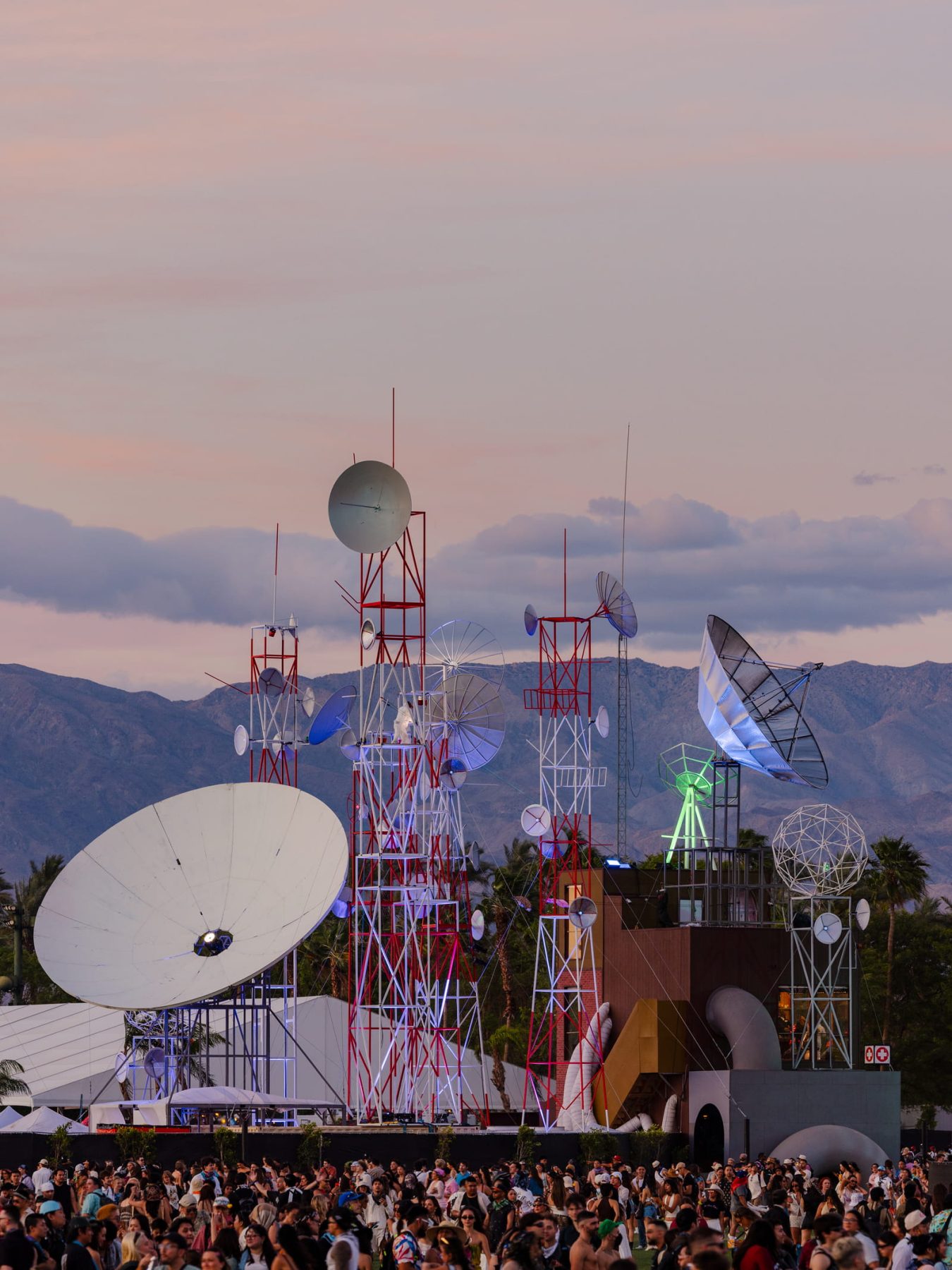
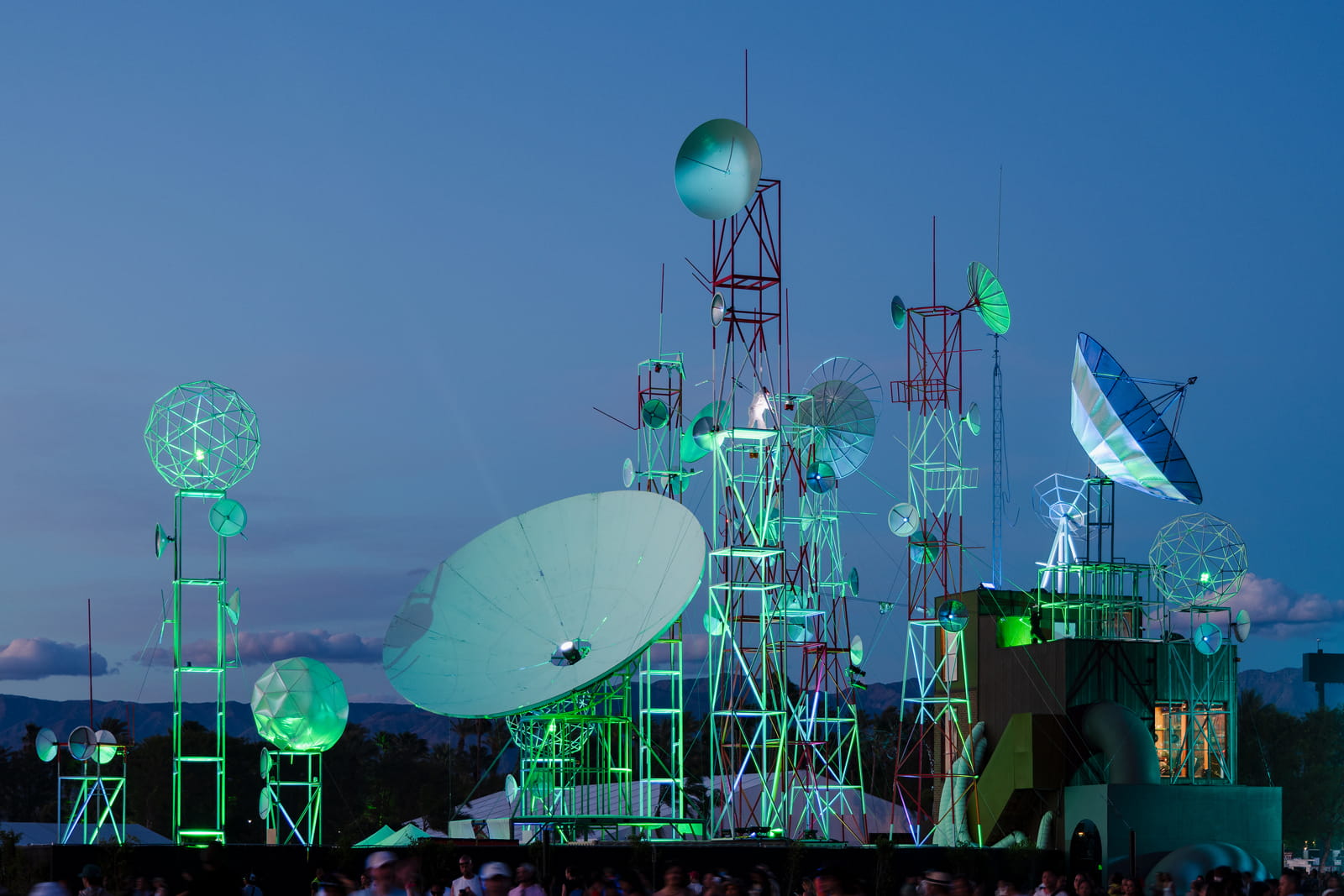
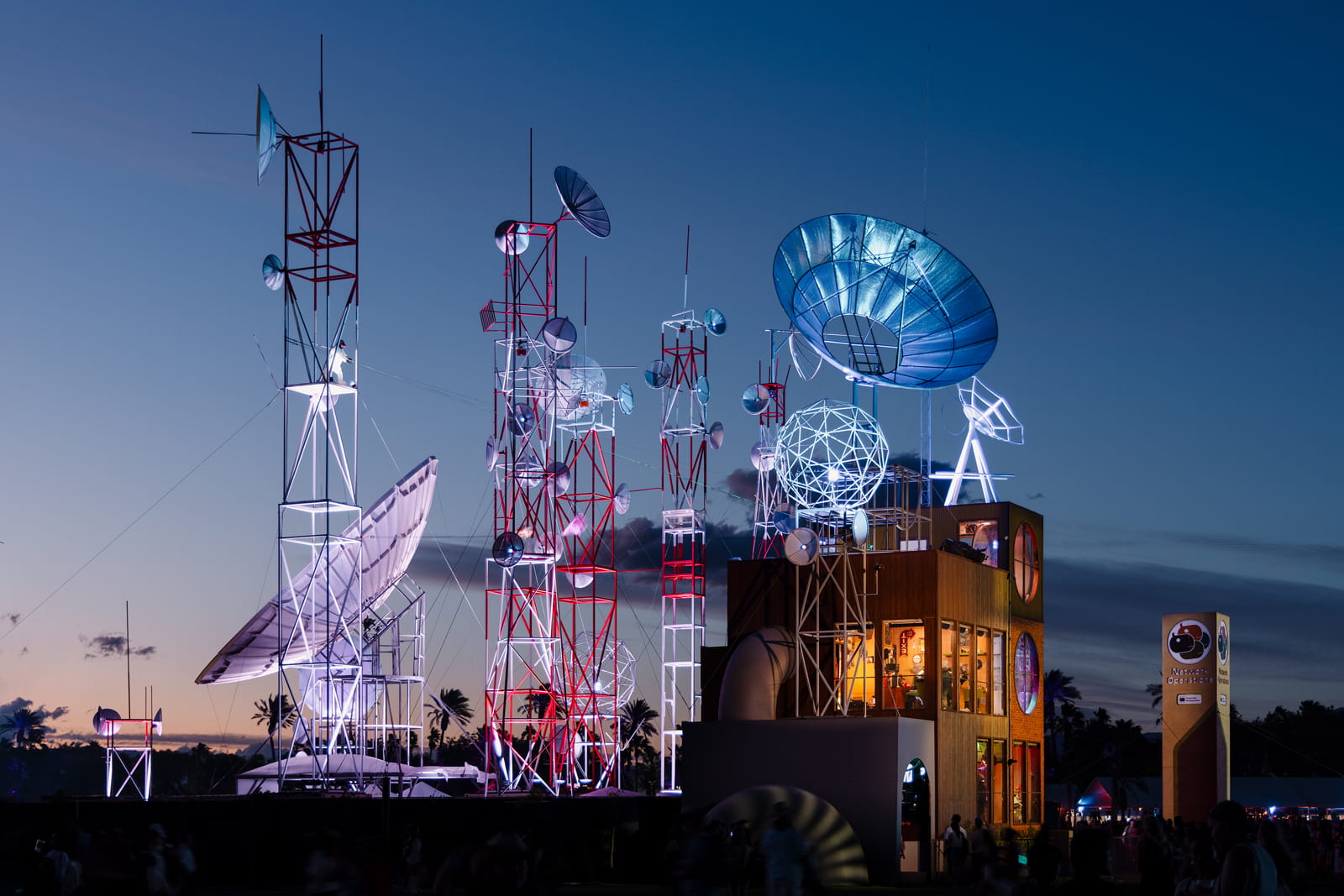
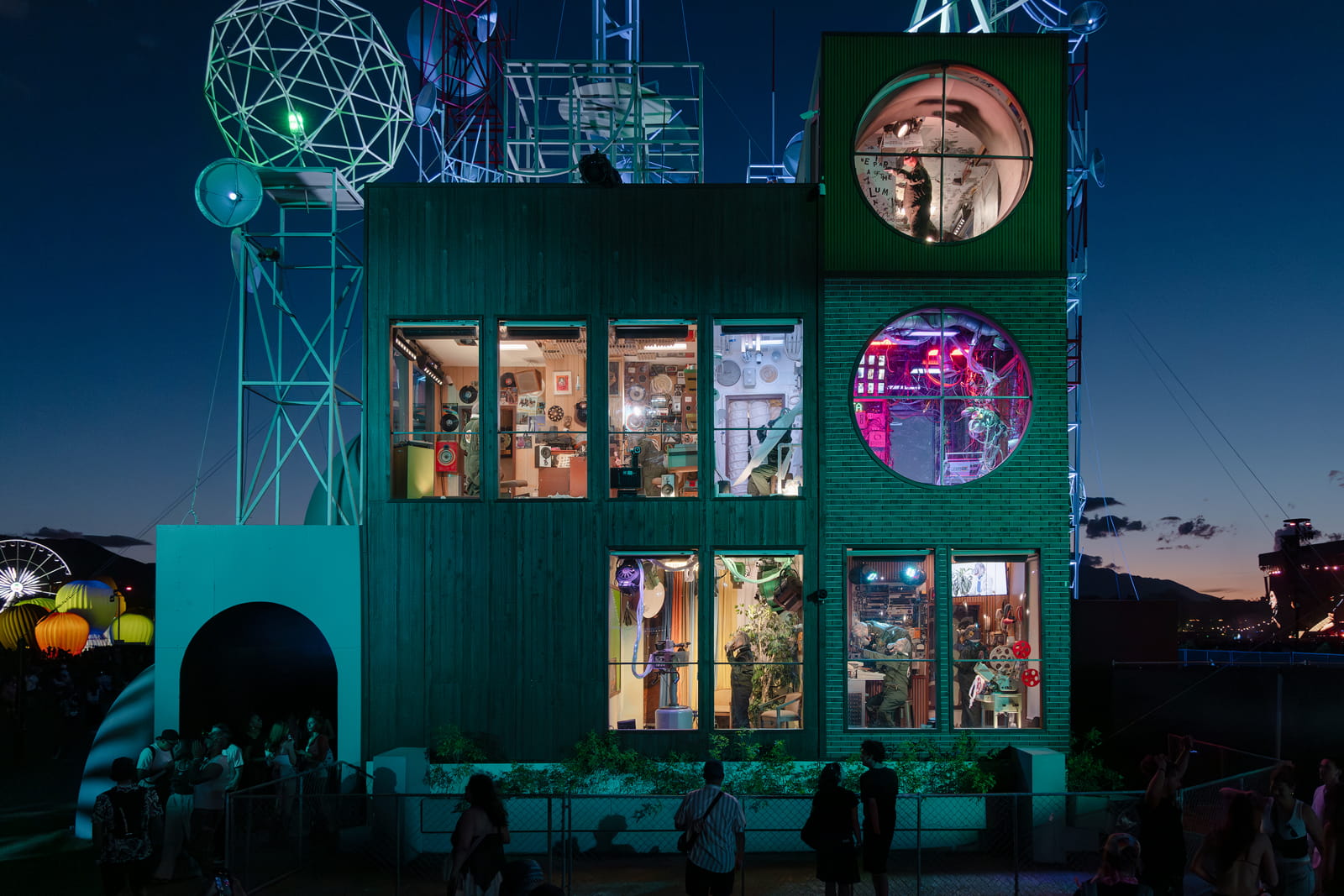
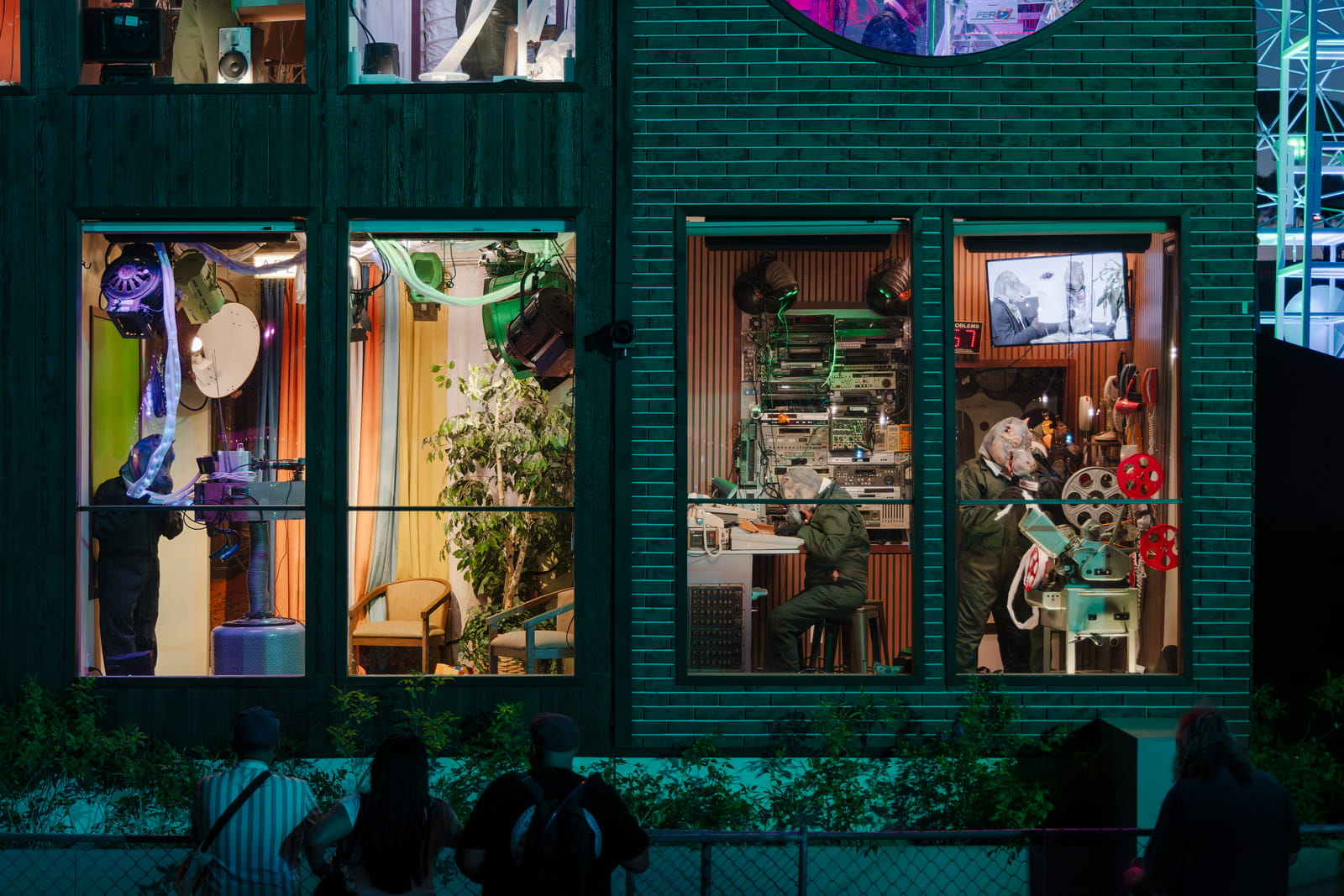
Returning this year is Dedo Vabo with Network Operations, a new chapter in their long running part sculpture part absurdist theater series Hippo Empire. Joining them will be Balloon Chain by Robert Bose, the floating ribbon of color reshaping itself with every shift of wind; Spectra, the winding, translucent, color spectrum tower by NEWSUBSTANCE; and another towering, industrial animal form by Don Kennell
Dedo Vabo — a 50/50 partnership between artists Derek Doublin and Vanessa Bonet — blend sculpture, performance, and satirical world-building at massive scale, evolving their Hippo Empire since “Power Station” (2013), “Corporate Headquarters” (2015), and “Hazardous Interstellar Planetary Operations (H.I.P.O.)” (2019).
NEWSUBSTANCE is a U.K.-based studio known for large-scale interventions — from drone shows to sculptural spectacles — that merge architecture, engineering, and performance.
Robert Bose, a New York–based artist, musician, and Army National Guard member with roots in Florida and Texas, creates buoyant, site-responsive installations worldwide.
Don Kennell is a Santa Fe–based sculptor known for monumental animal forms crafted from recycled industrial metals. His large-scale works blend anatomical precision with mythic presence, transforming discarded materials into iconic public sculptures. A longtime Coachella Valley Music and Arts Festival contributor, his installations have become widely recognized cultural landmarks.
Whether they are ensconcing, sprawling, or towering, the materiality and interactivity of these installations makes them more than just big objects.