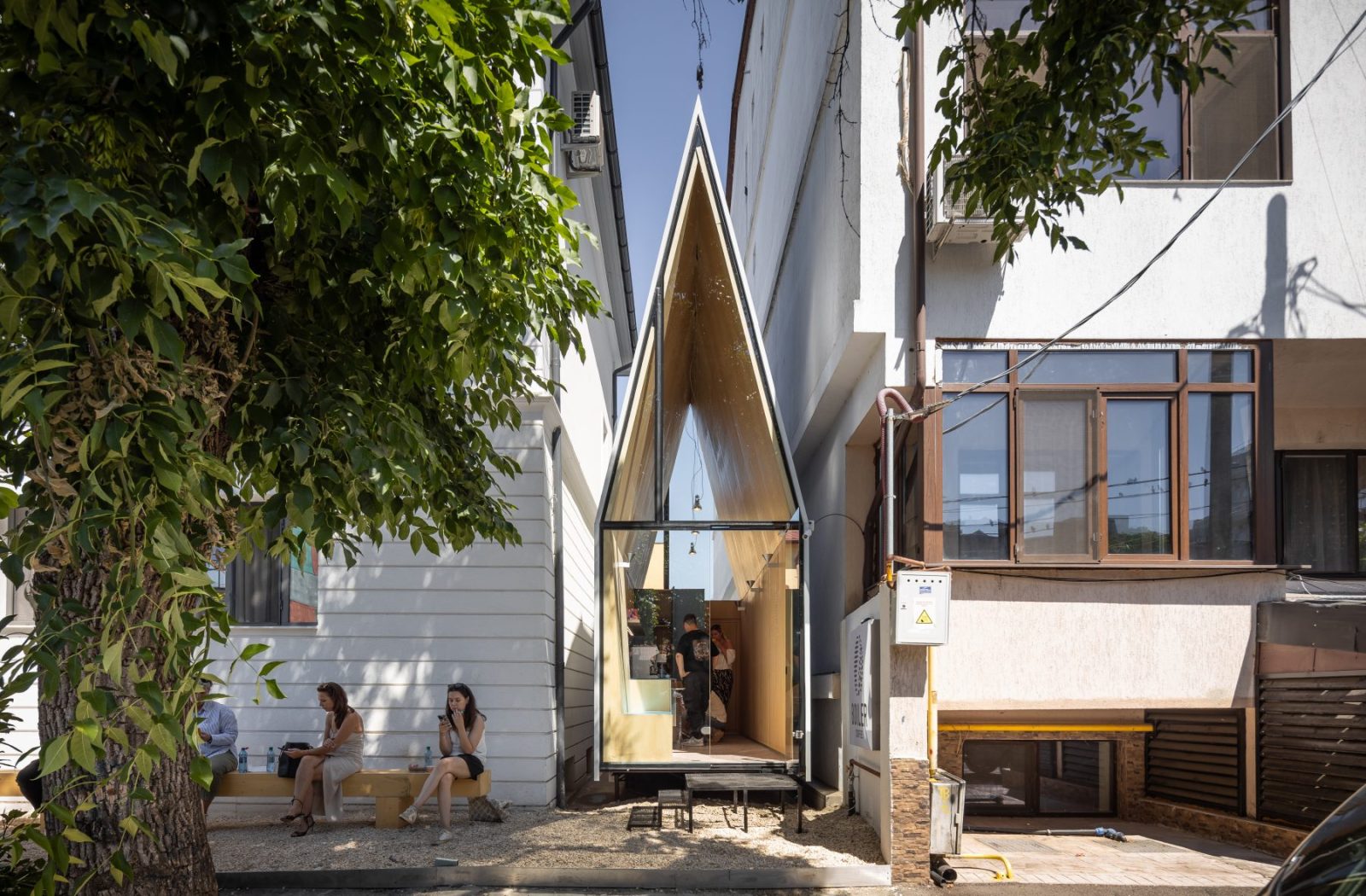
The Chapel, a jewel-box retail intervention designed by Vinklu for the local chain Boiler Coffee, has been awarded Best Retail Design Project of the Year 2025 by Archisearch. Drawing references from rural Japanese roadside shrines (hokora) and traditional teahouses (chashitsu), the project reconsiders the spatial and cultural potential of architecture at its most reduced scale. Within its compact footprint, this tiny cafe, squeezed between two residential buildings in Bucharest, Romania transcends conventional retail typologies, offering a place of pause, encounter, and social exchange, while demonstrating how even the smallest architectural gestures can cultivate meaning, intimacy, and collective ritual.
Sometimes nothing more than a wooden box or a miniature structure in rural Japan, small roadside shrines and teahouses function as modest yet highly charged architectural forms embedded in everyday movement. On the one hand, in his article “Ritual and the Public Realm in Japan: Jizō Temples in Neighborhoods,” William Siembieda argues that these humble, sacred roadside interventions are crucial to place-making, as they are frequently treated as “threshold technology”: small-scale infrastructure that manages boundaries between inside and outside, village and wilderness, safety and danger—thus reflecting local beliefs and community ties. Hokora serve simultaneously as protective markers, travelers’ safeguards, anchors of local identity, and ritual nodes within public space. On the other hand, Kumakura Isao’s “Japanese Tea Culture: The Heart and Form of Chanoyu” describes the teahouse as a deliberately small, minimalist yet highly designed experience, deeply tied to chanoyu principles. Constructed with natural materials and guided by wabi-sabi aesthetics, chashitsu embraces beauty in simplicity and imperfection.
For Stefan Pavaluta, founder of Vinklu, the ambition for this teeny-tiny coffee-shop was clear from the outset: to avoid another utilitarian “container” and instead create a contemporary chapel of design.
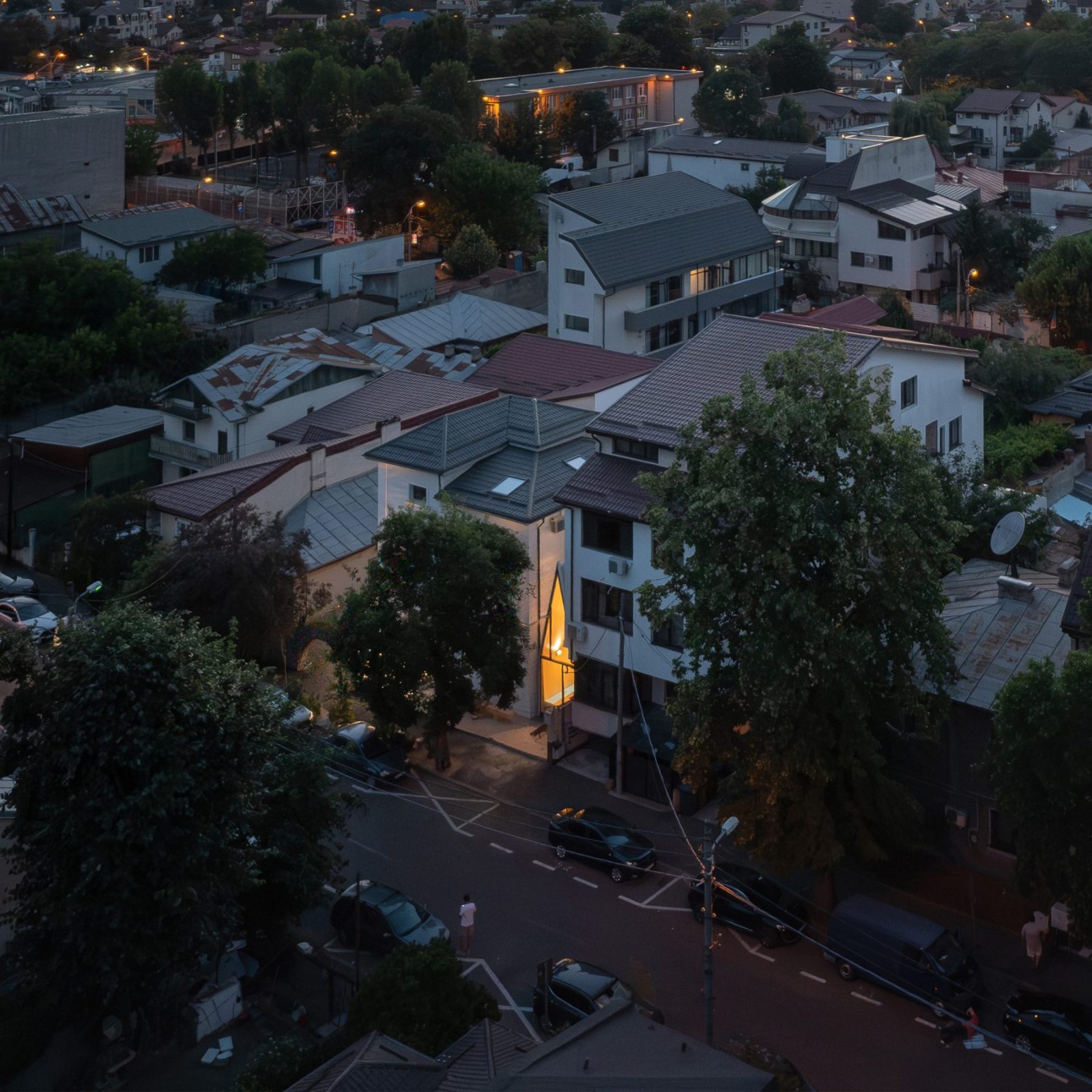
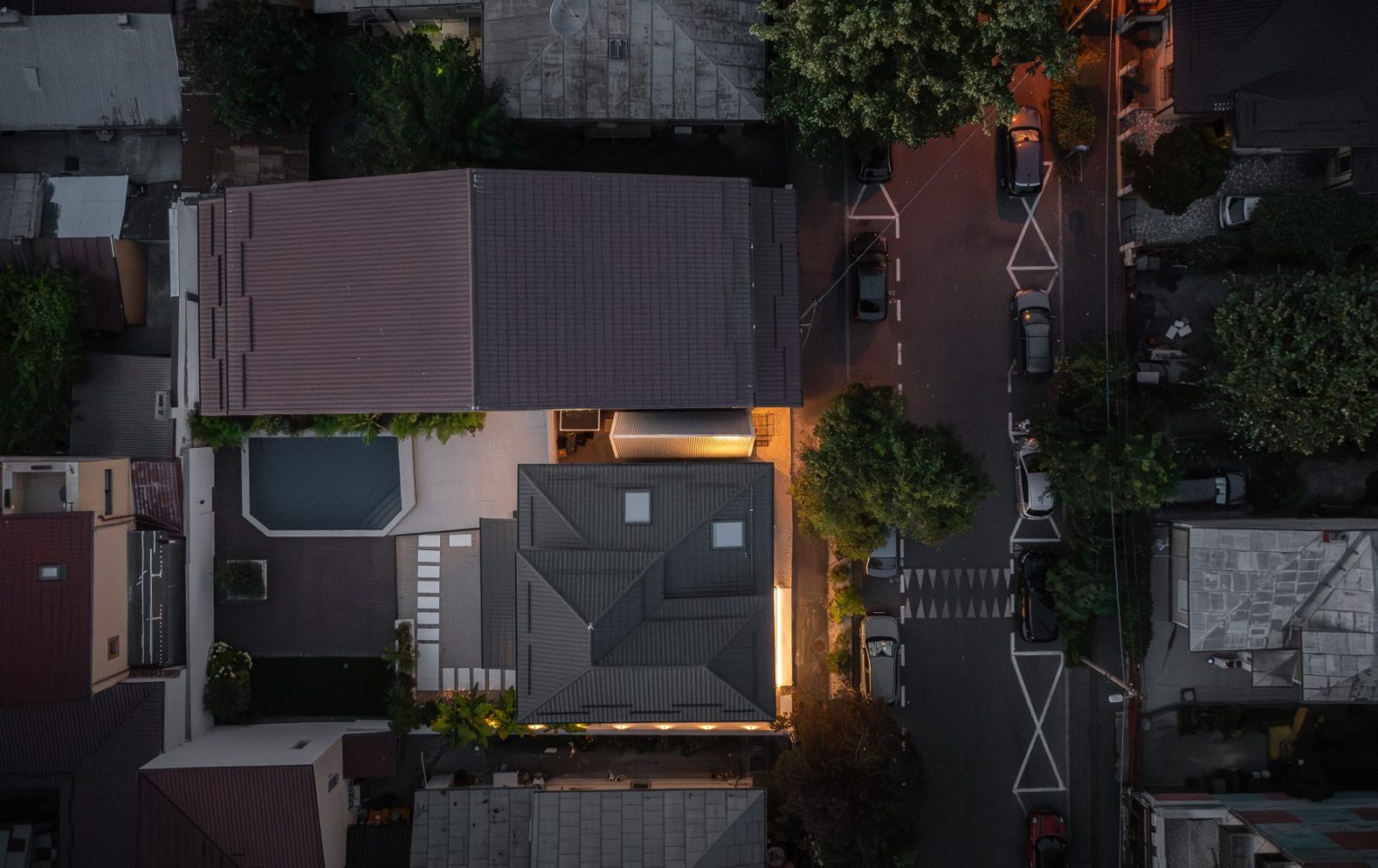
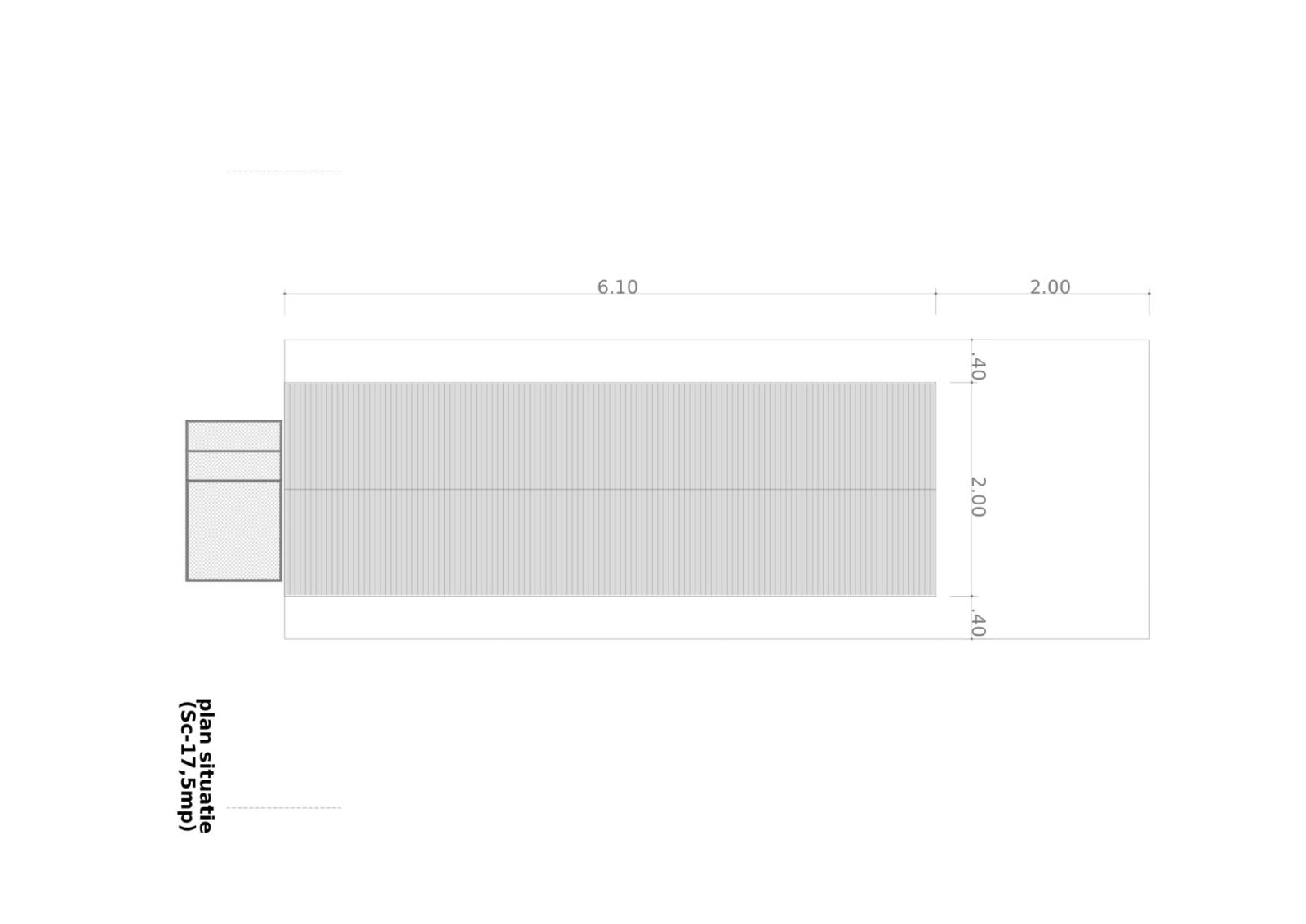
With The Chapel, Romanian architecture studio Vinklu—through a micro-architecture of meaning—aspired to transform an exceptionally narrow residual plot on Bazilescu Street in Bucharest into a carefully textured urban environment that promotes social exchange.
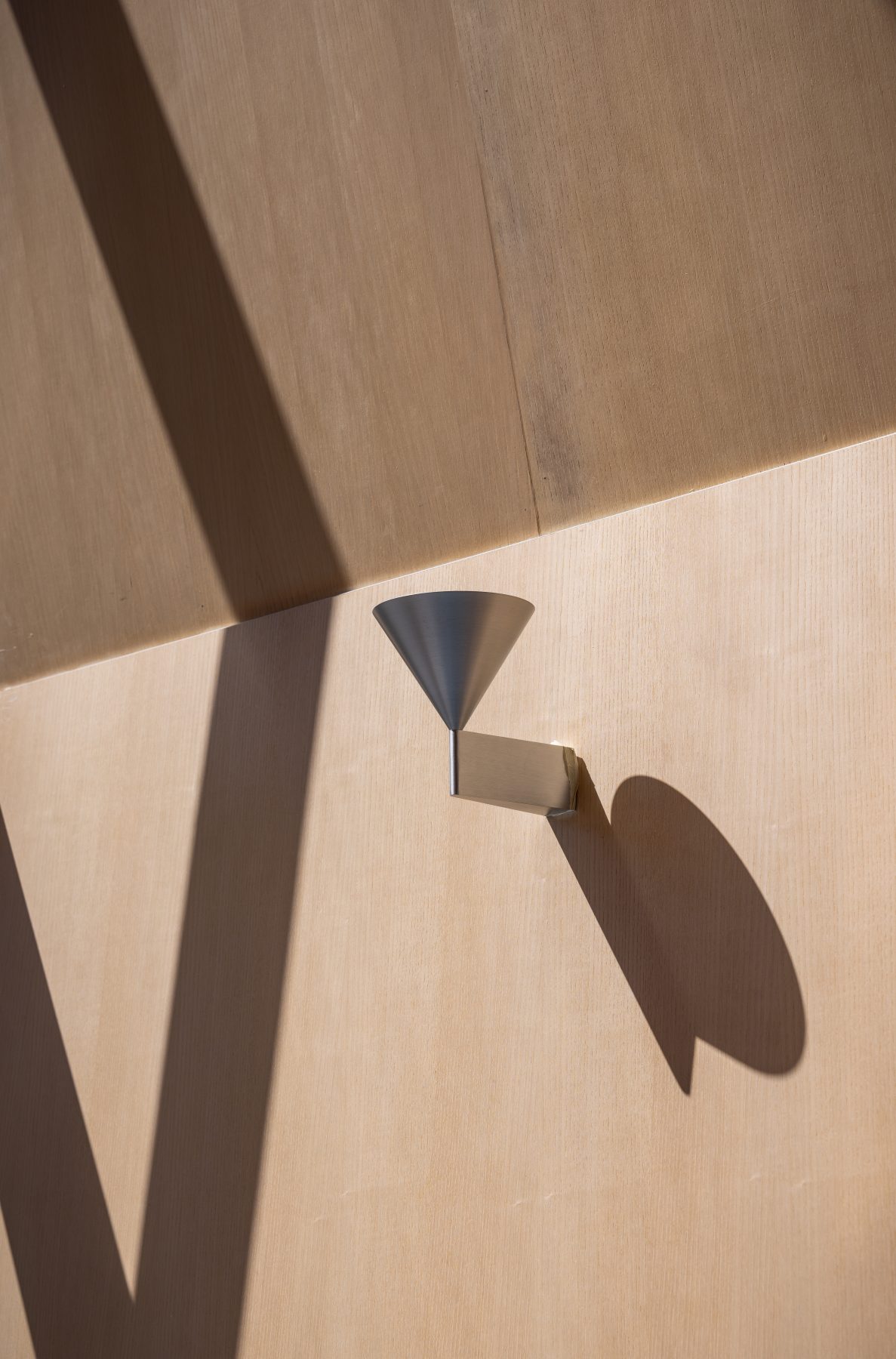
The result is a jewel-box intervention that turns an overlooked urban gap into a luminous sanctuary for human connection, contemplation, and ritual. From the beginning, the project embraced its unique constraints. Meticulous site analysis of microclimate, light behavior, and pedestrian flow informed every design decision.
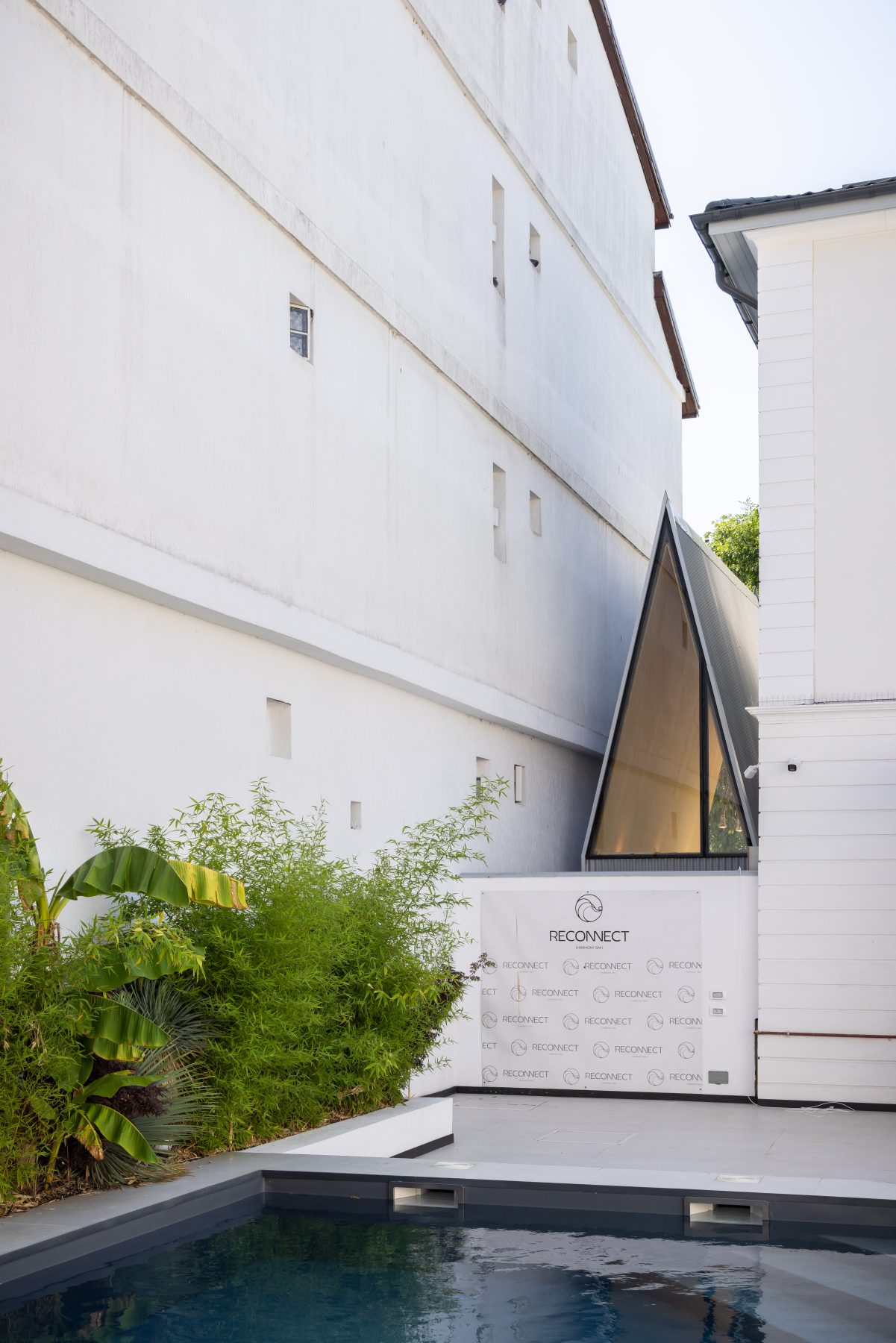
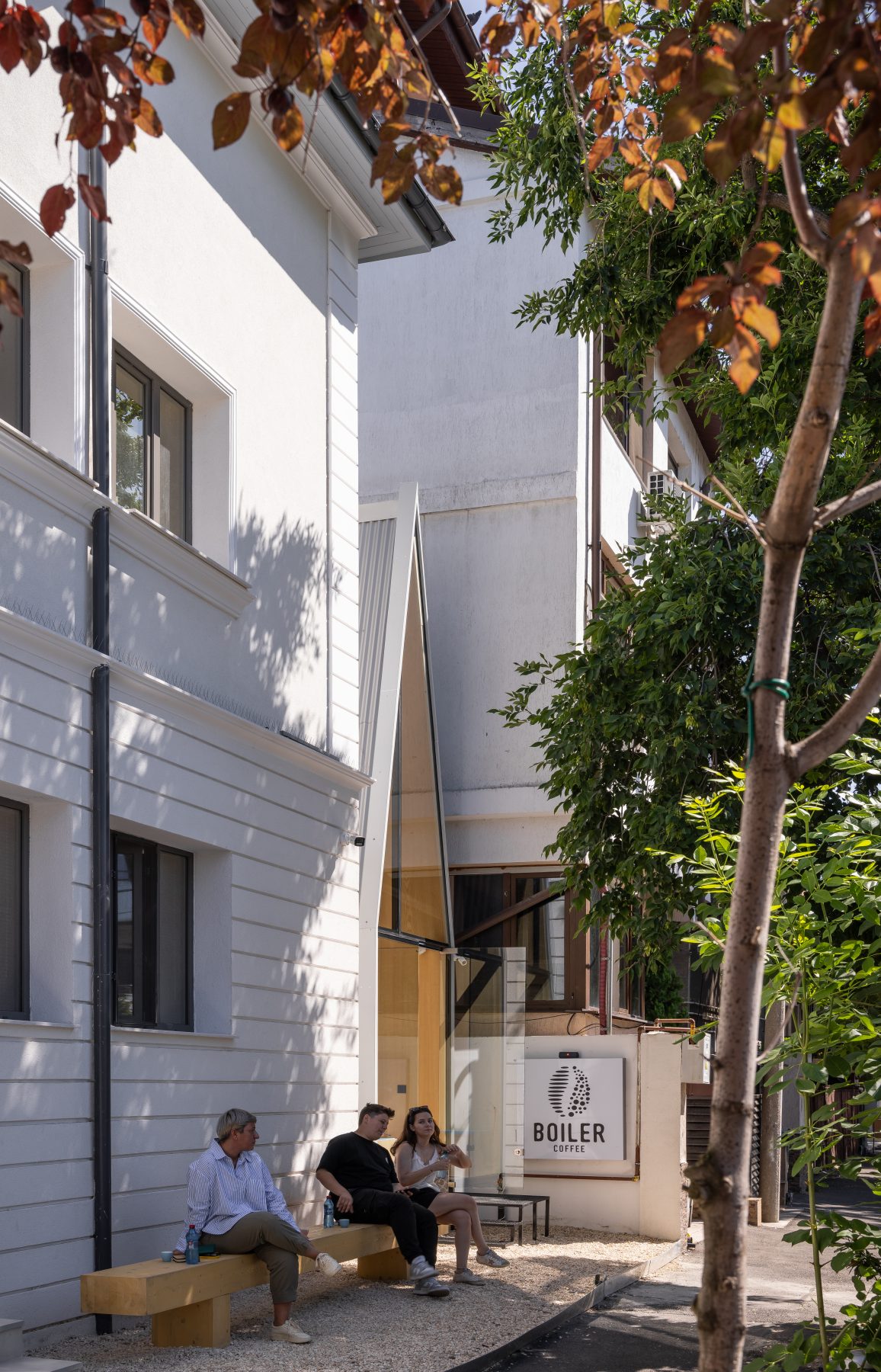
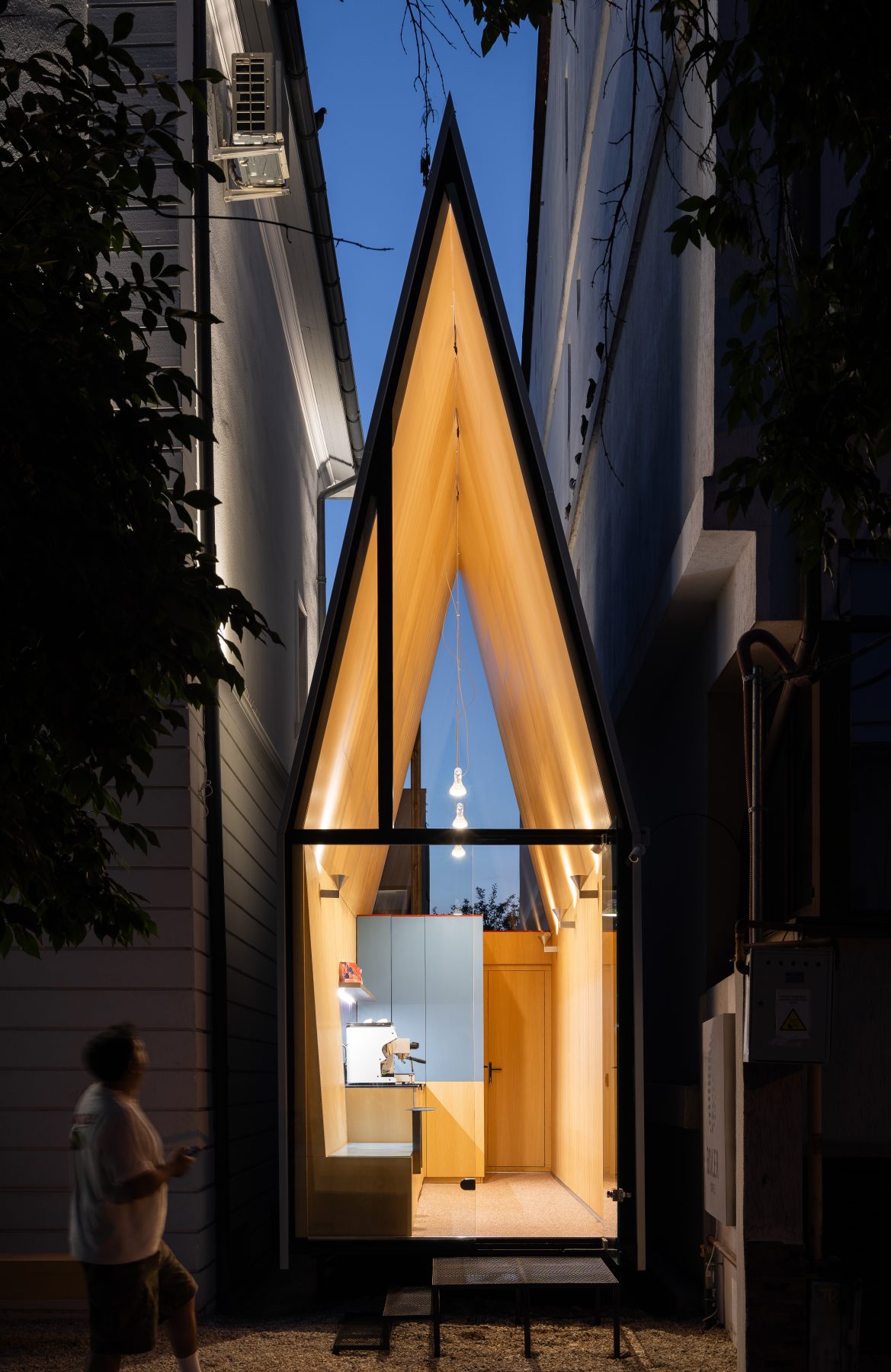
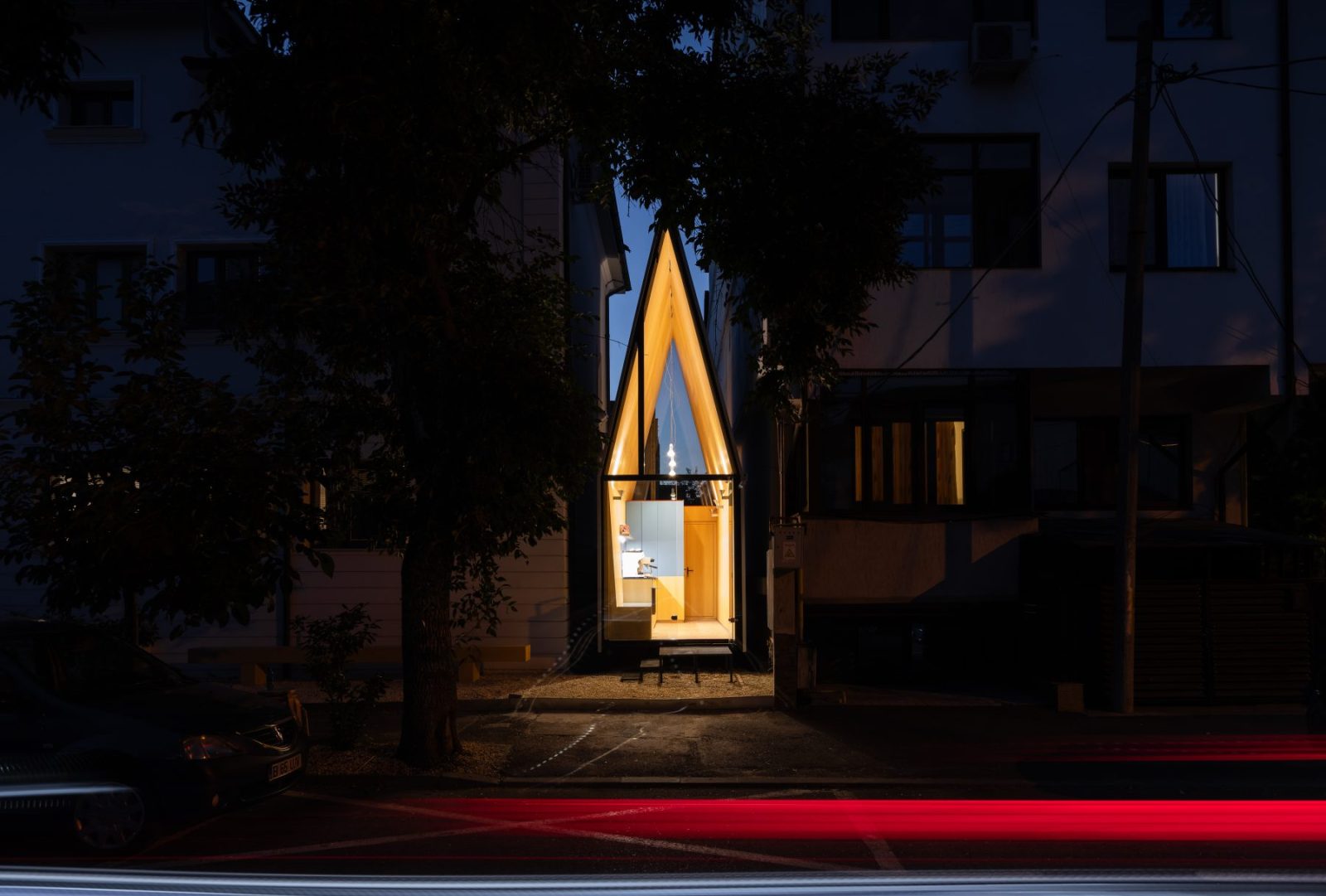
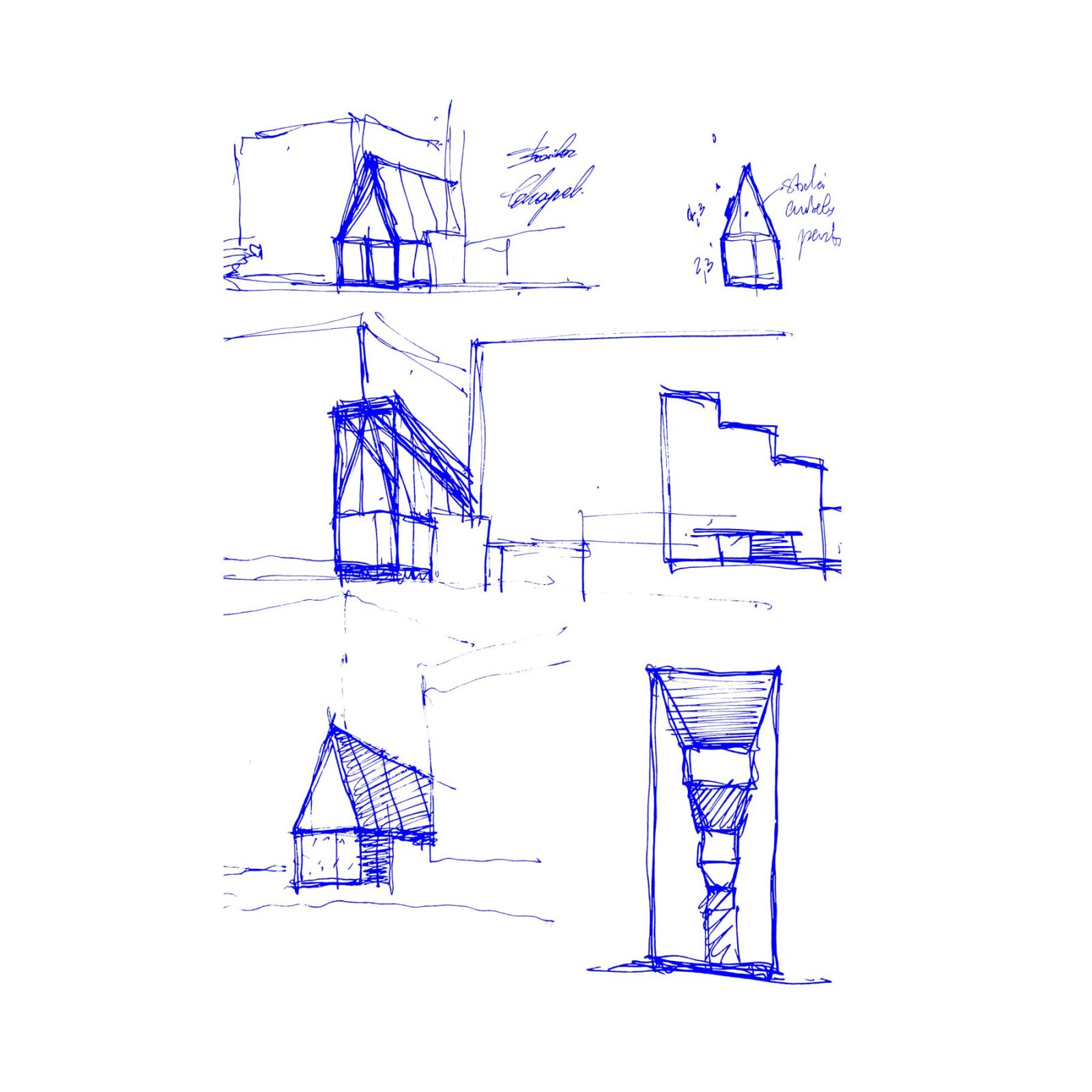
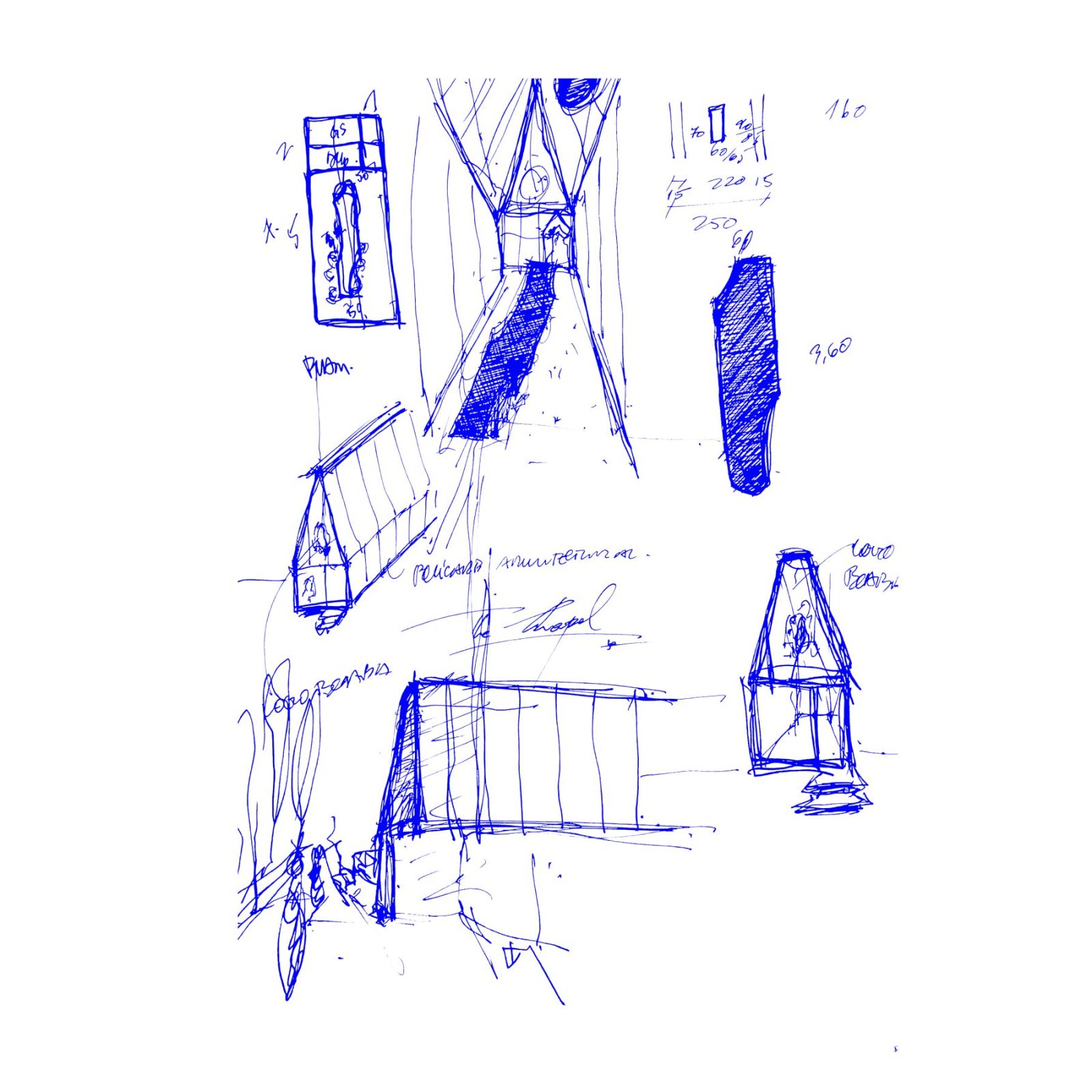
Forced to fit into the gap between two residential buildings, the Chapel’s steeply pitched form—directly referencing Japanese hokora and chashitsu—instinctively asks passersby to pause, look again, and enter.
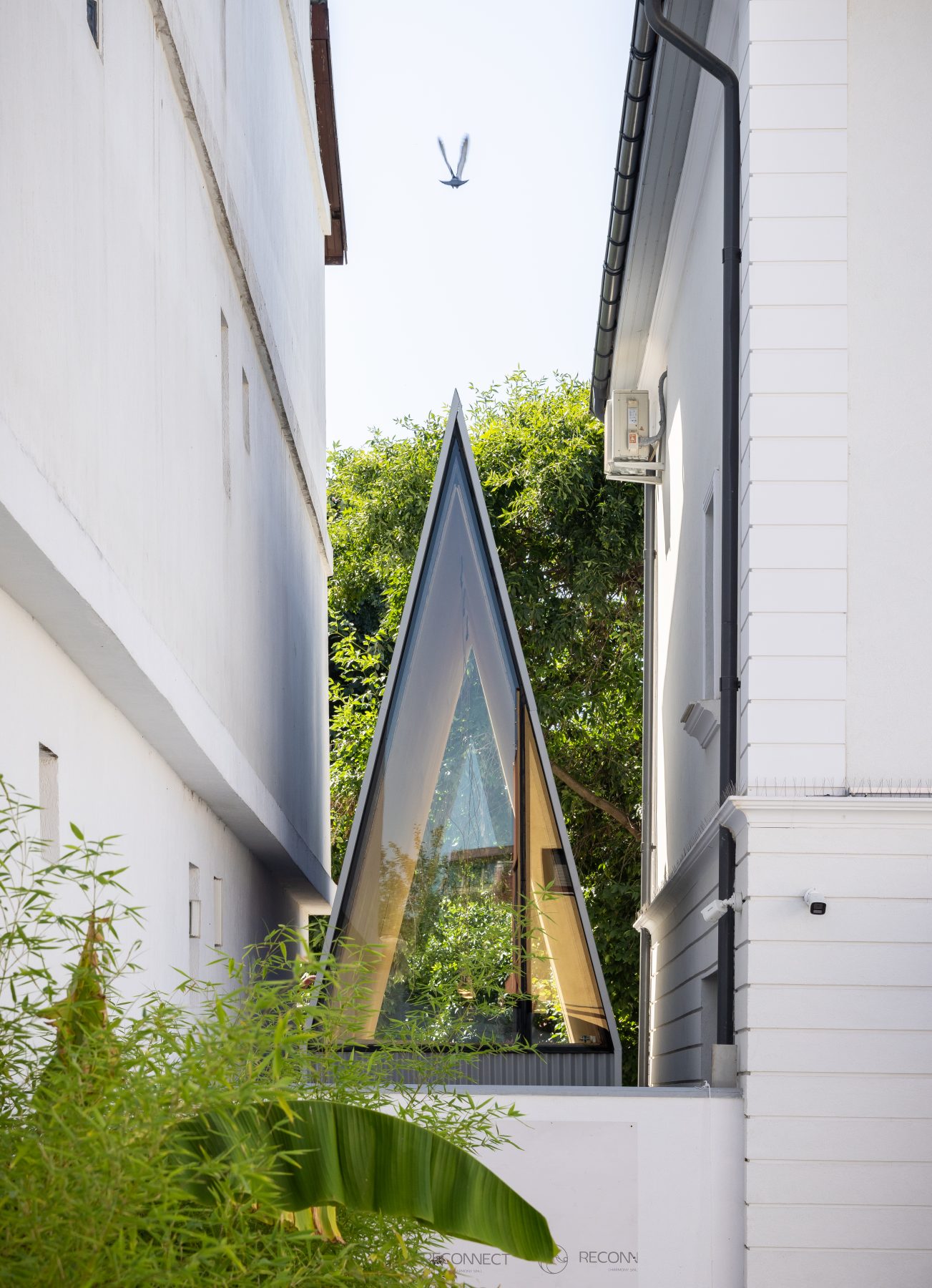
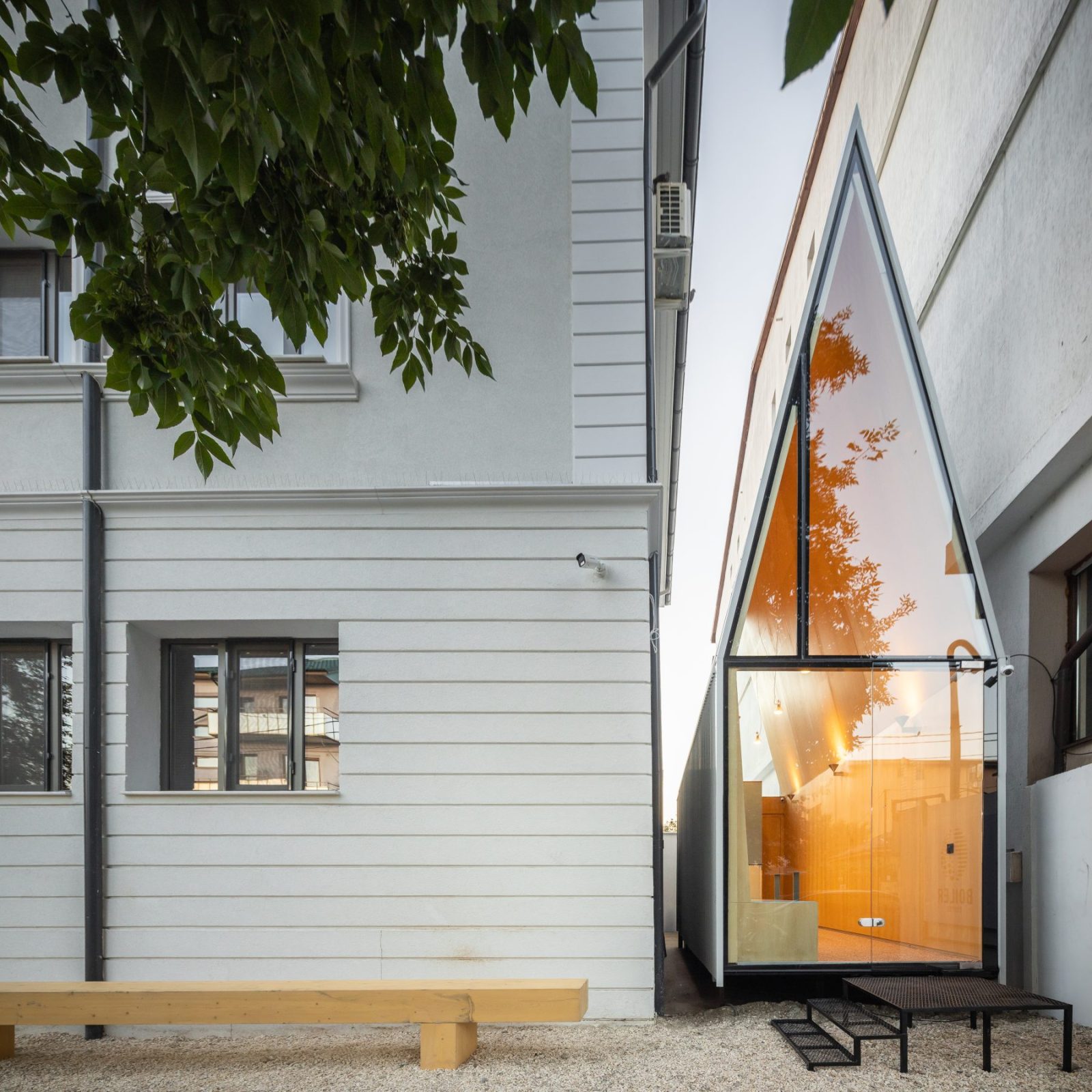
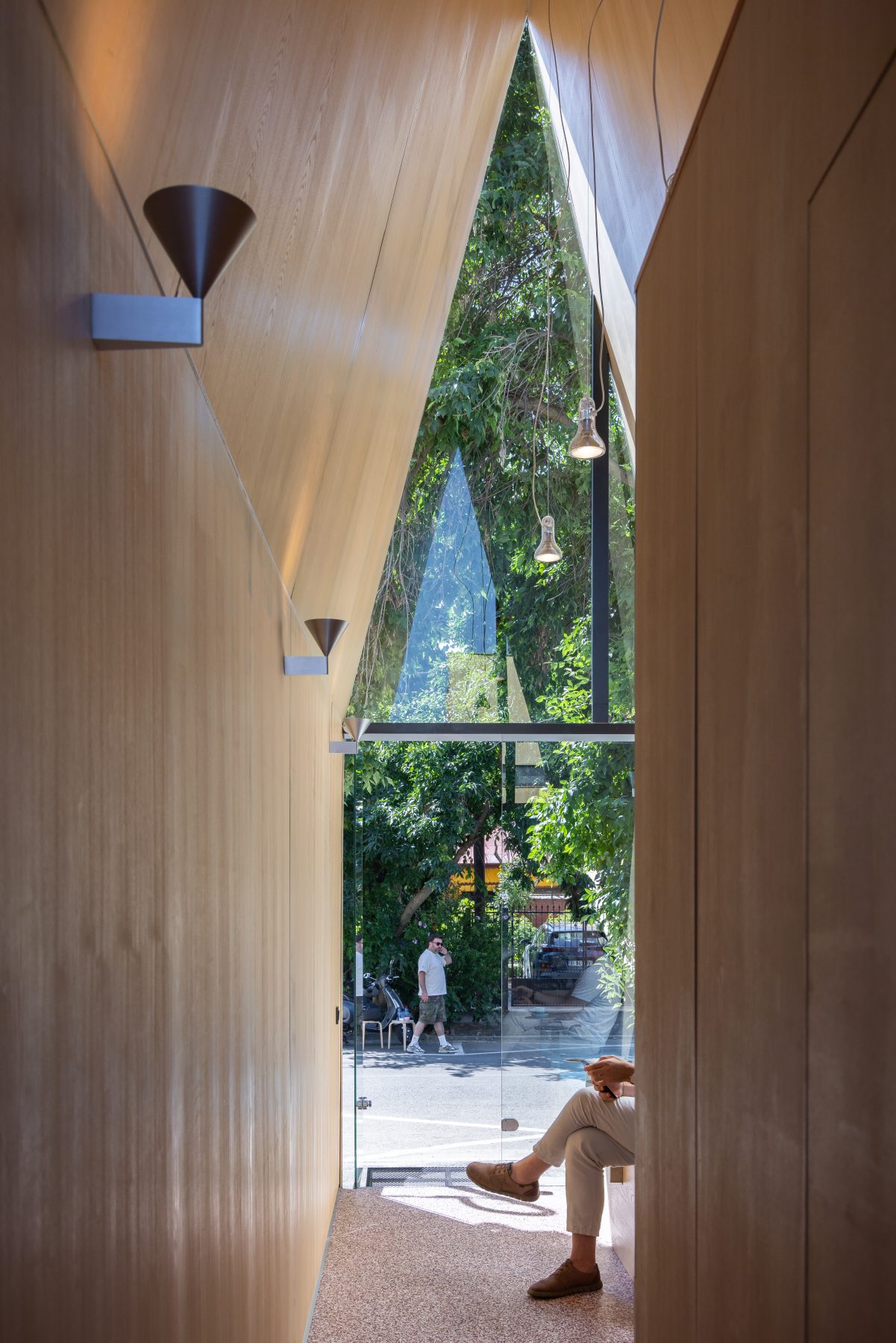
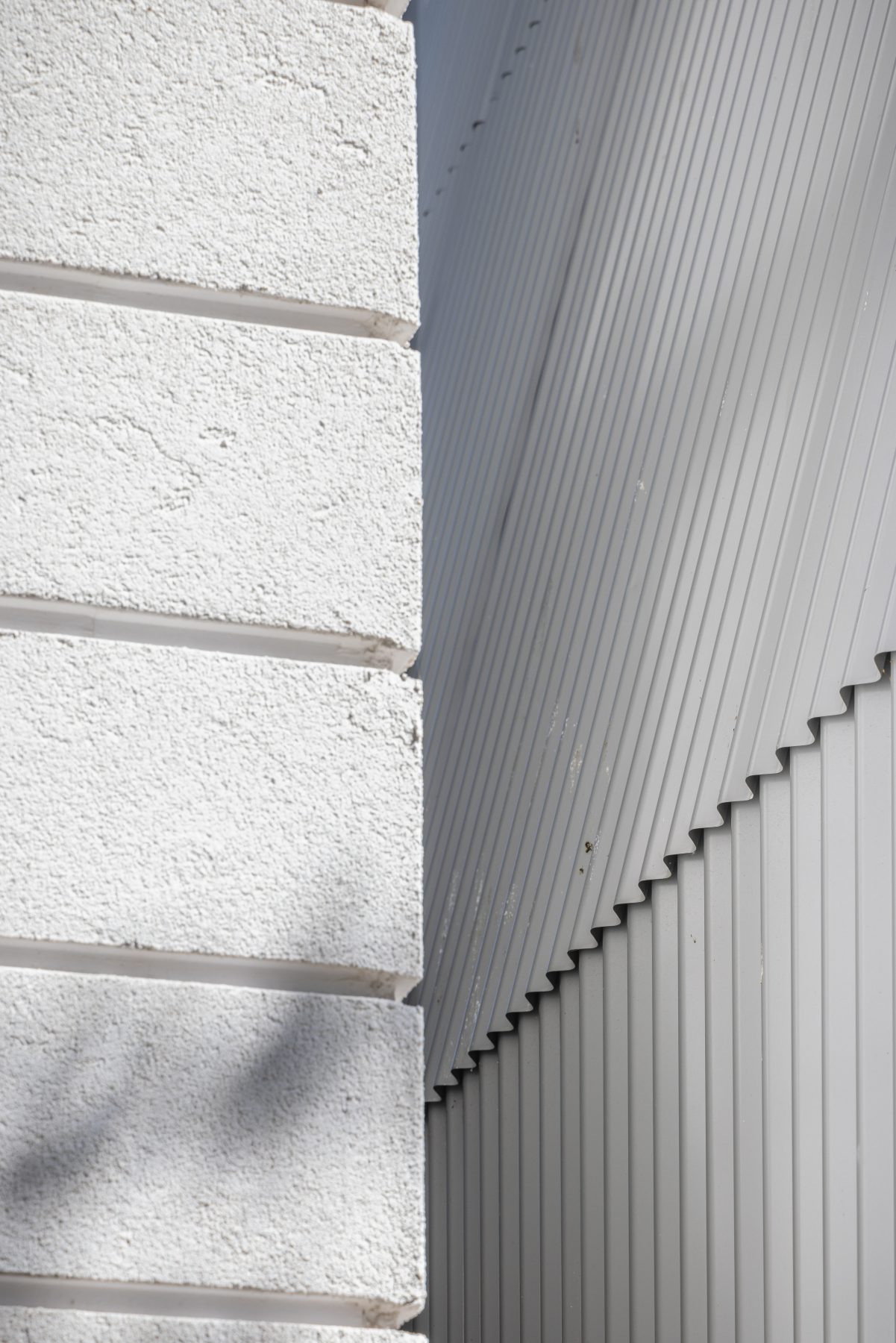
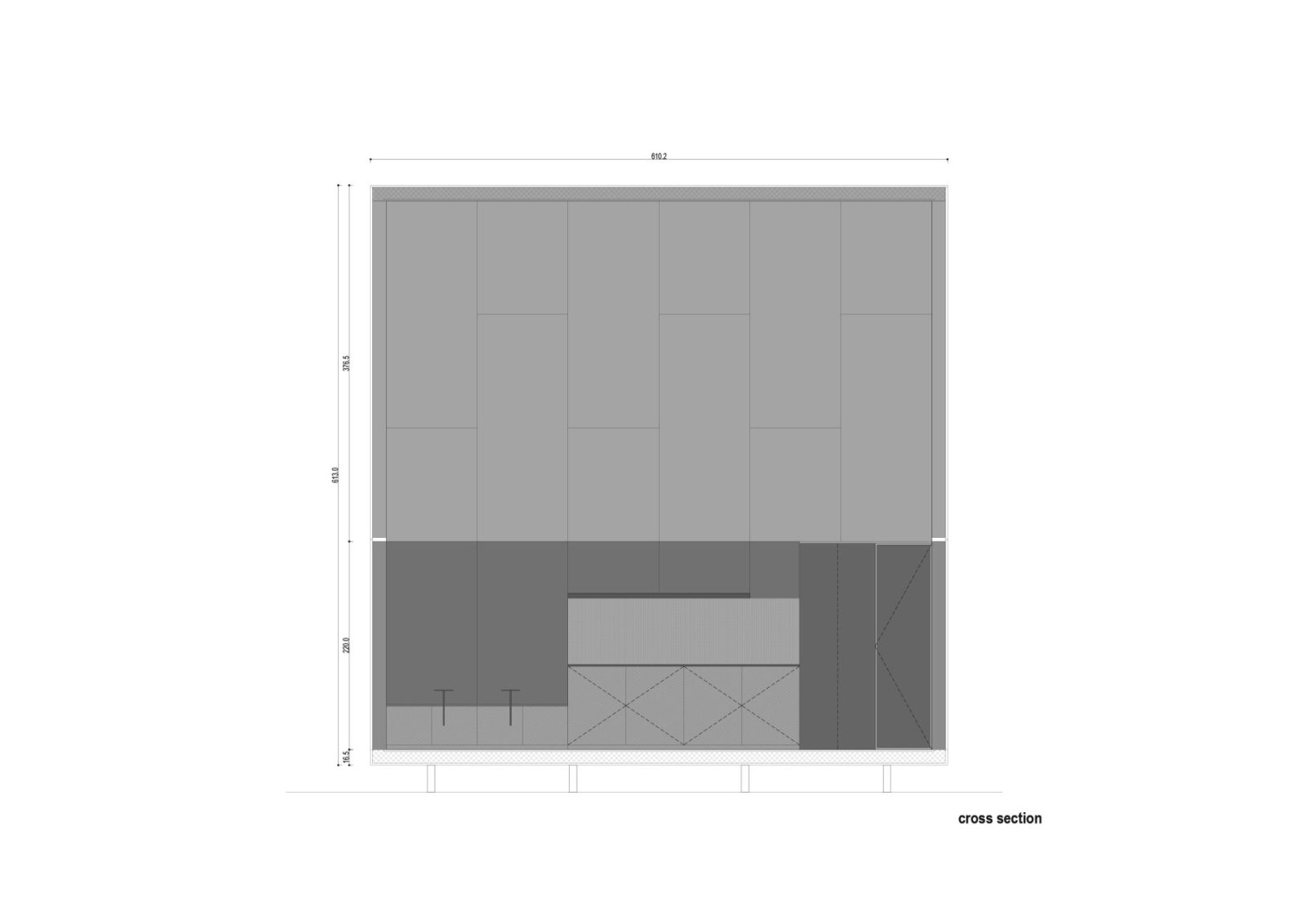
Featuring fully glazed ends that draw natural light deep into the space, the Chapel’s acute triangular profile—at once archaic and contemporary—maximizes volume and visual dynamism, allowing the interior to soar despite its narrow base. A lightweight, precisely engineered steel frame enabled rapid construction, with significant portions of the structure prefabricated off-site, ensuring swift assembly, minimal disruption, and reduced waste within the tight urban setting. Beyond the glass façades, the building is externally clad in corrugated metal, while light-toned timber lines the interior walls and sloping ceiling, offering a warm, almost monastic counterpoint to the glass skin.
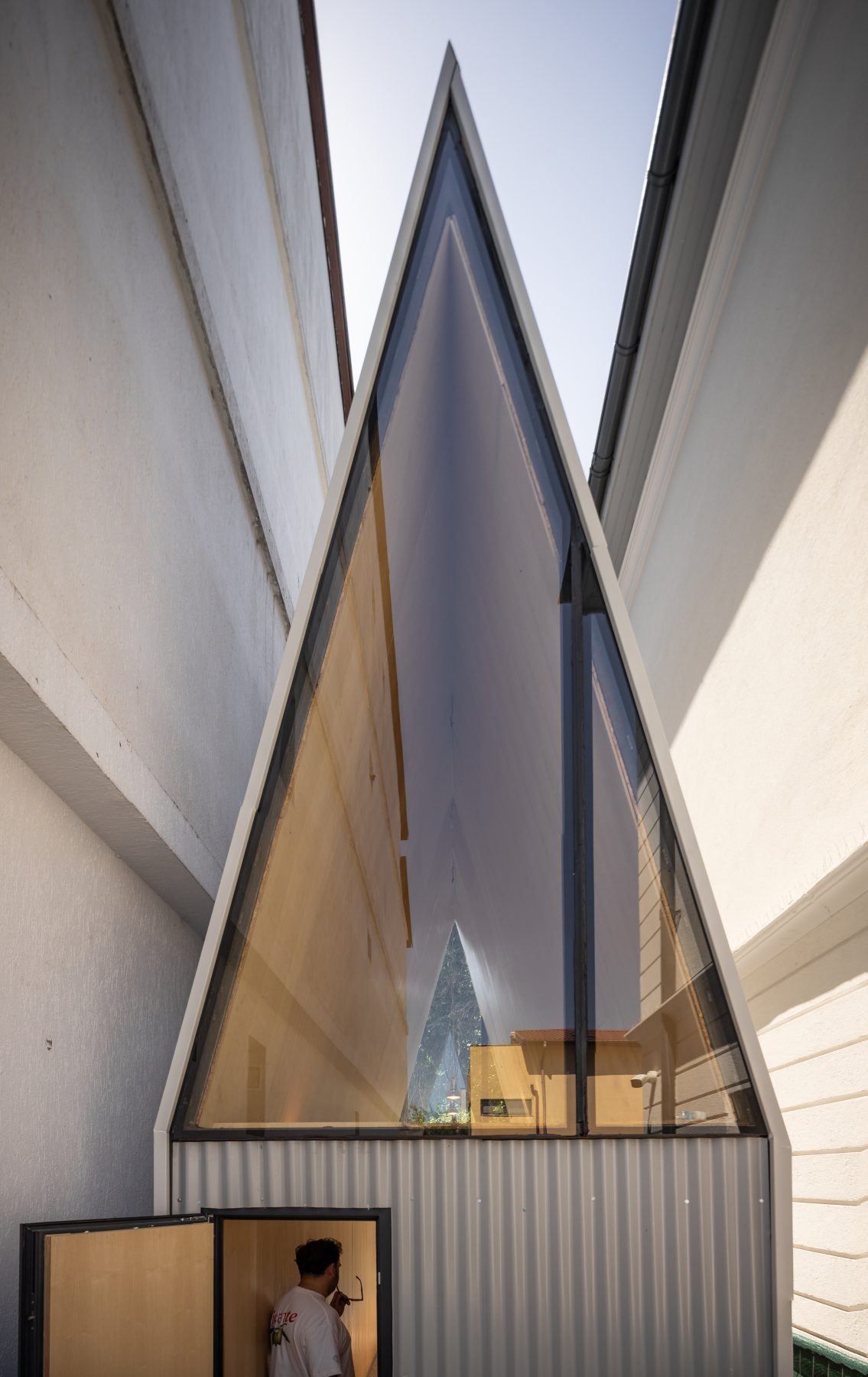
High-performance, triple-glazed, low-emissivity glass façades blur the boundary between interior and exterior, transforming the structure into a glowing lantern at night; a beacon of light and life.
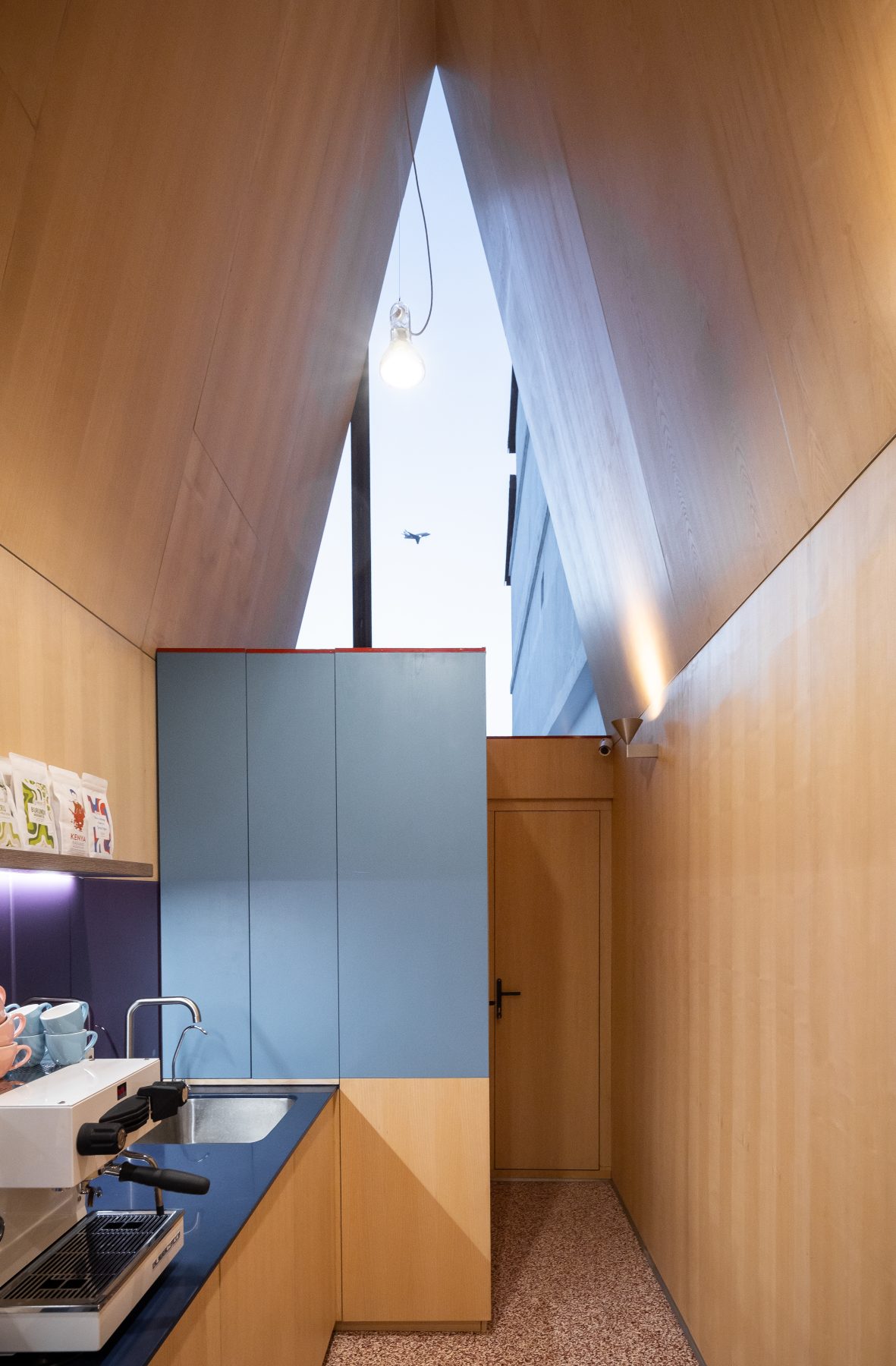
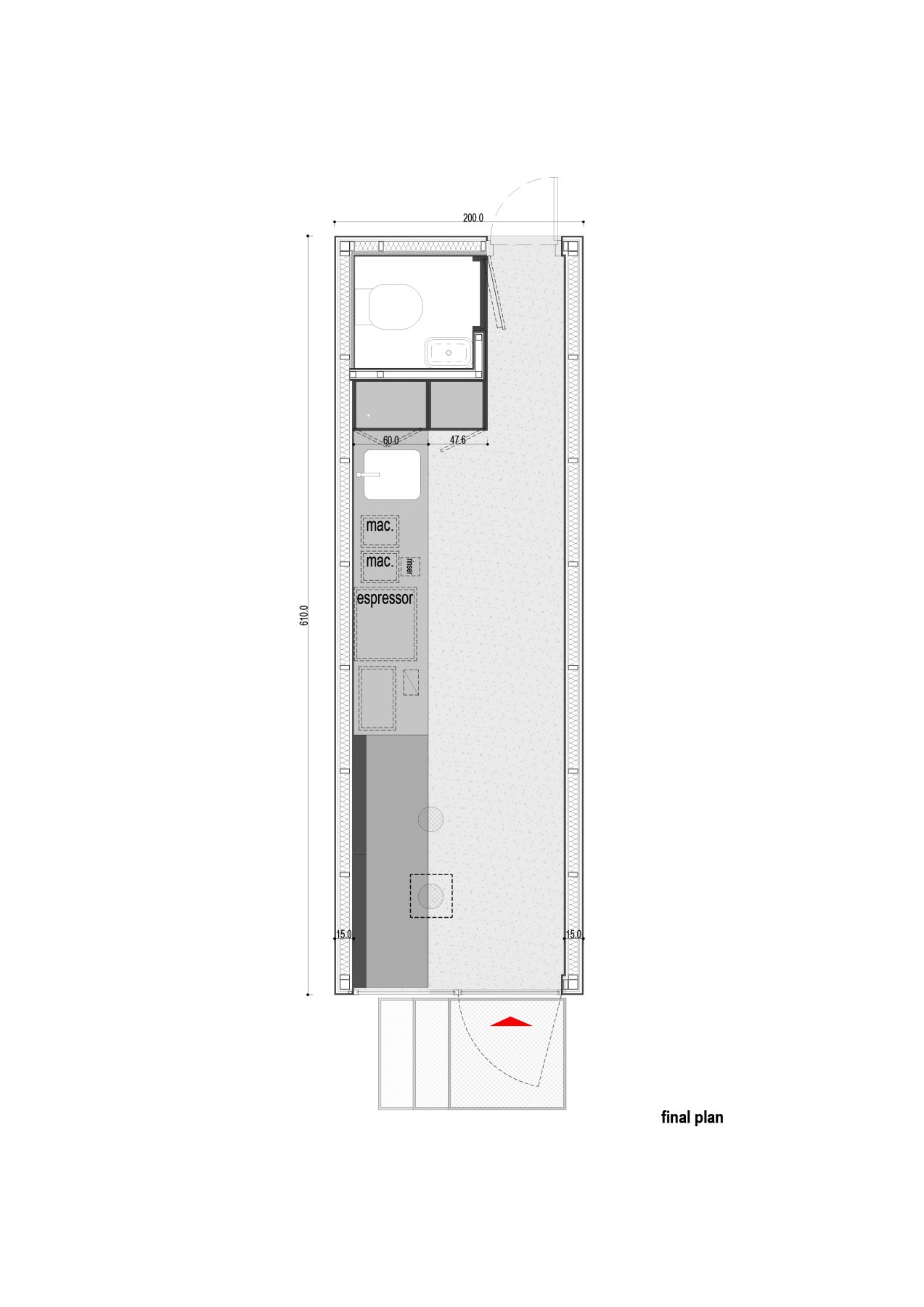
“The intention with this coffee shop was to design the layout as an extension of the public space. The exterior seating announces the space, and the interior is fully opened to the pavement. At the same time, the interior layout functions as an open kitchen: a multifunctional piece of furniture positioned on one side that begins as seating, turns into a bar, and finally transforms into storage with a small bathroom,”
—Stefan Pavaluta
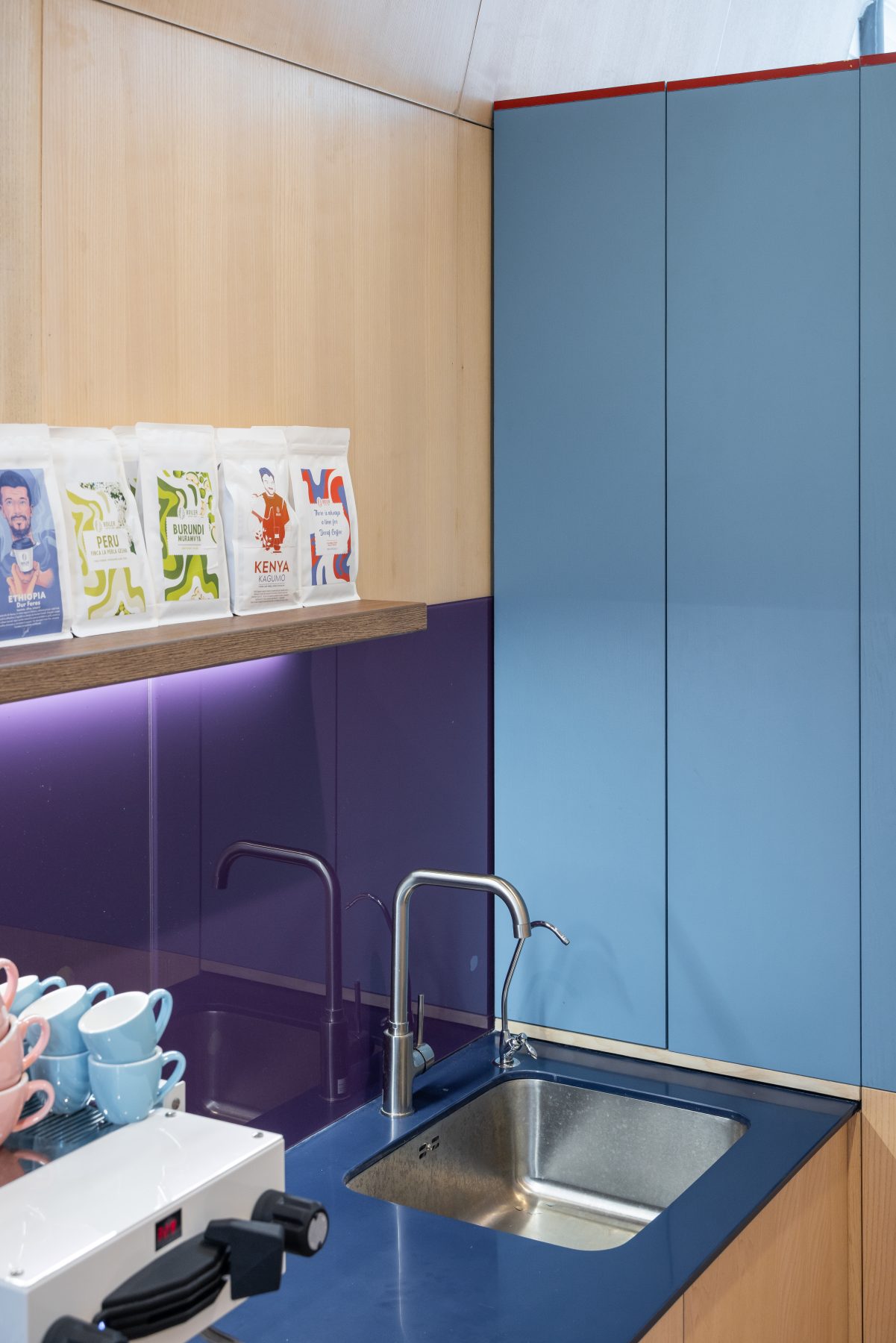
Despite its micro-scale, the interior unfolds with surprising generosity. Height and light create a sense of spatial release, while built-in furniture—part bench, part bar, part storage—operates as an open kitchen and social condenser.
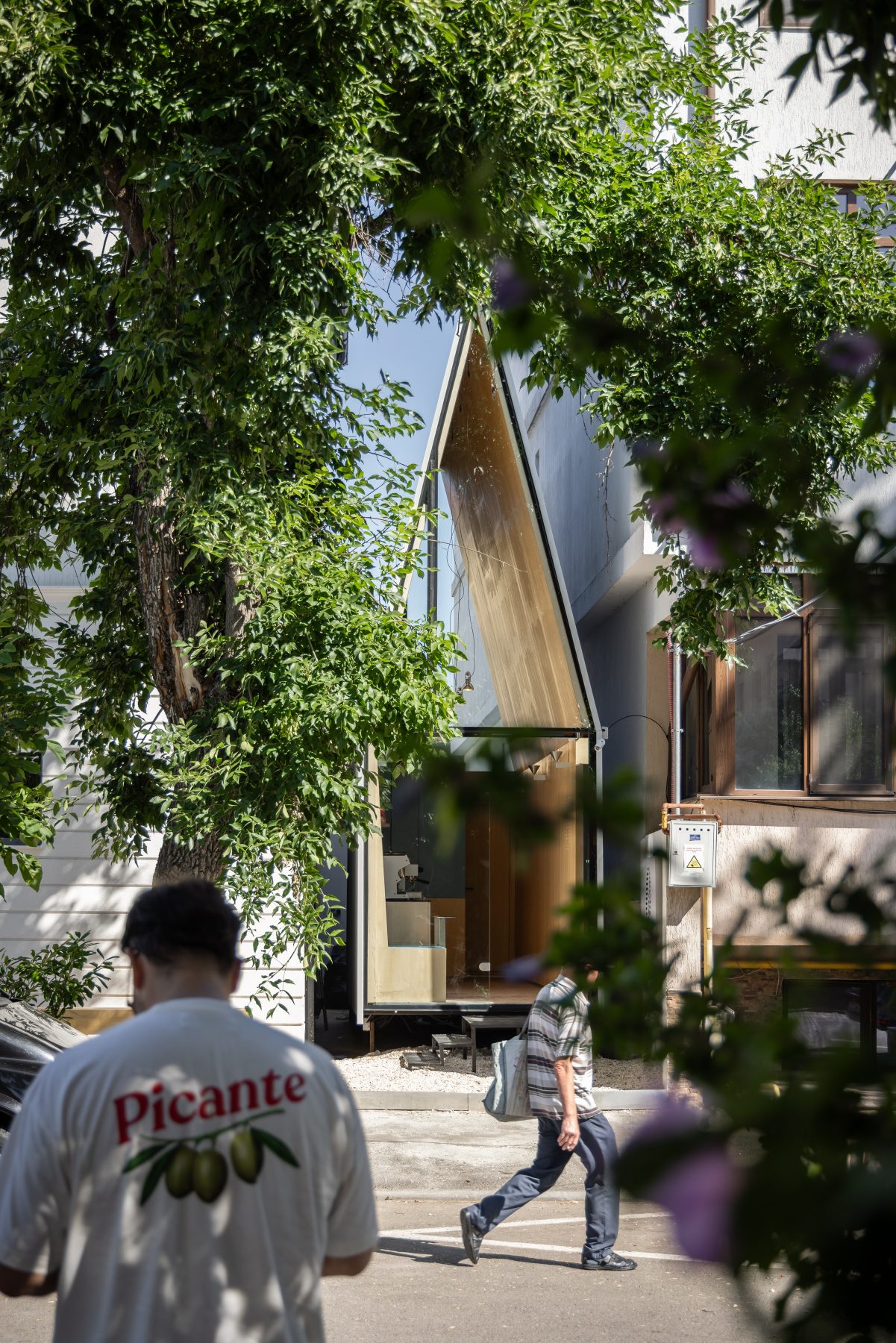
The boundary between street and interior dissolves: outdoor seating spills onto the pavement, and the café reads as a direct extension of public space.
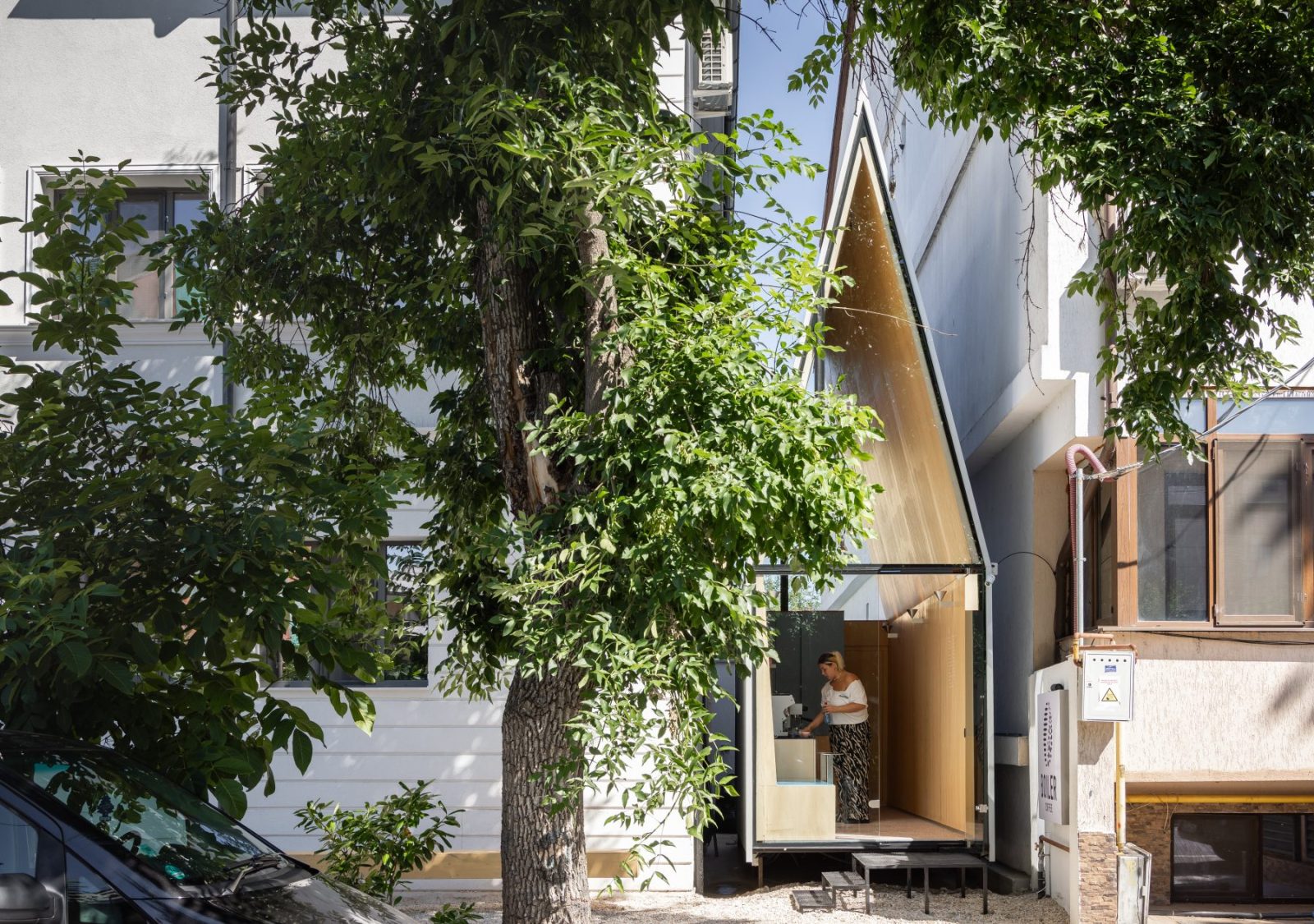
The surrounding urban greenery, composed of tall, leafy trees, becomes an essential collaborator in the design process, enhancing shade, serenity, and seasonal change. At night, illumination becomes architecture’s final gesture. The Chapel glows as an urban light installation, marking its presence with quiet intensity. Intimacy emerges through illuminated encounters and moments of pause.
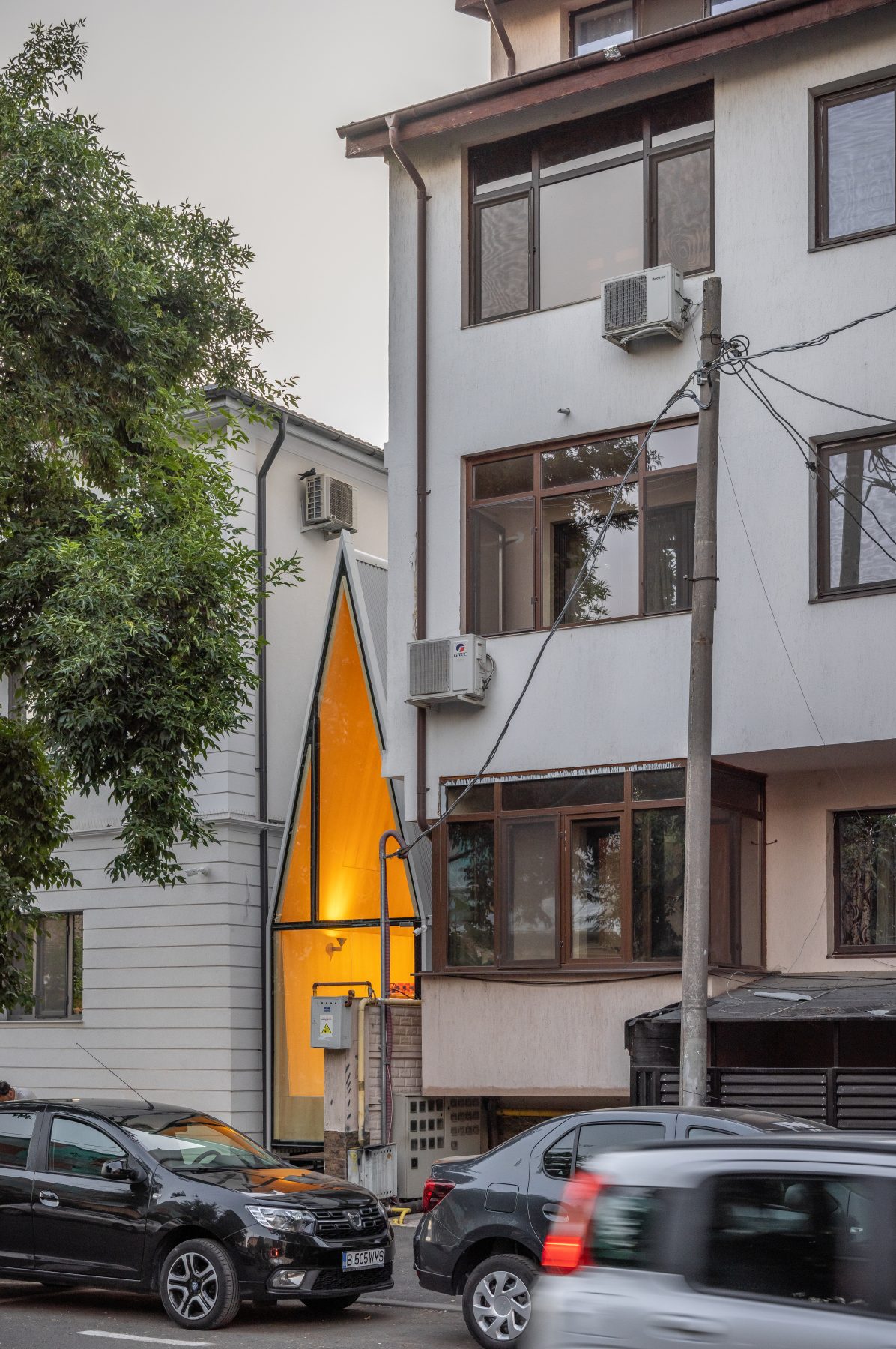
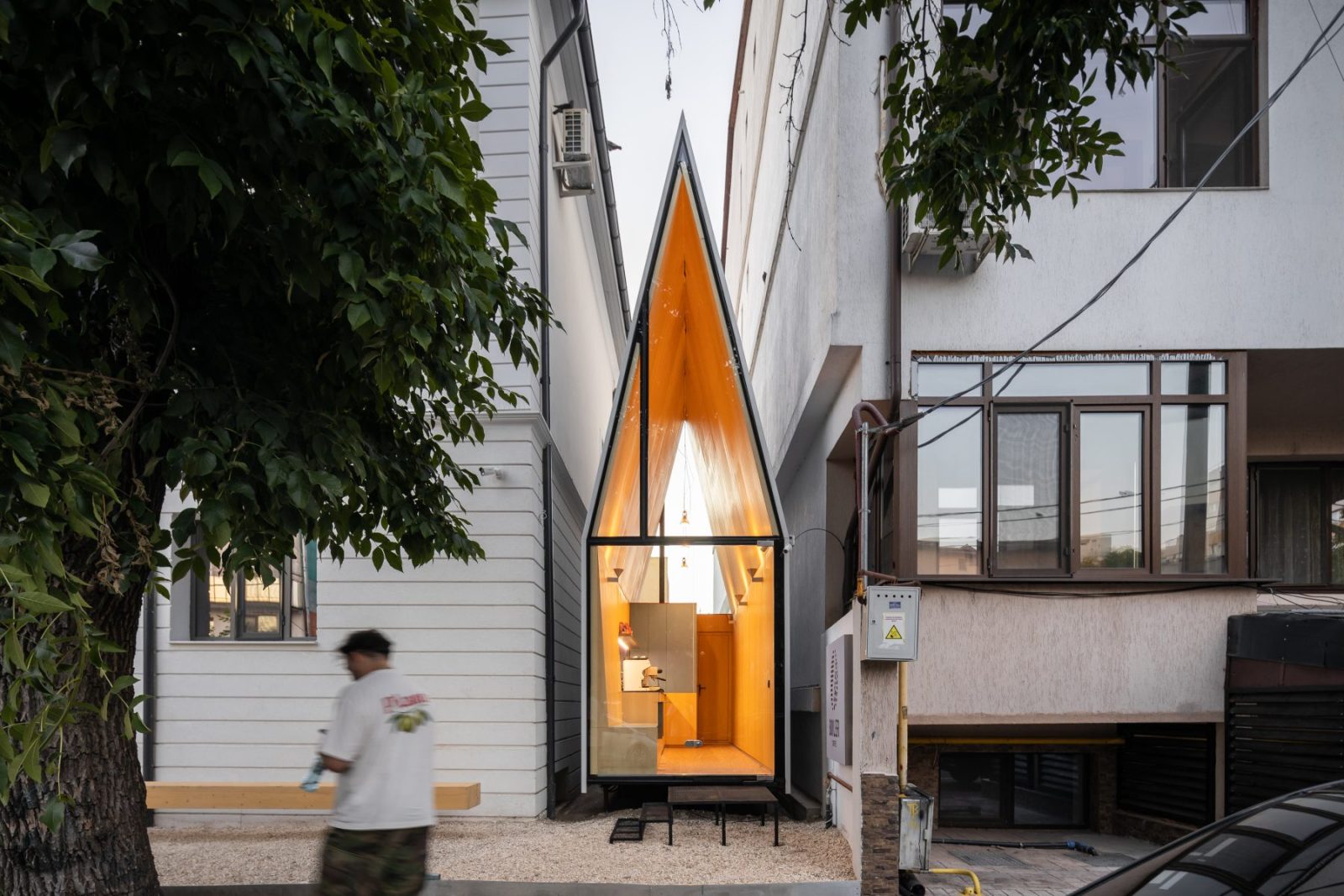
In an era of oversized gestures, The Chapel stands as a luminous testament to how small-scale, thoughtful urban interventions can yield immense emotional and civic impact by transforming neglected slivers of the city into cherished sanctuaries of human presence.
Drawings
Facts & Credits
Project title Boiler_The Chapel
Typology Retail, Cafe
Location Bucharest, Romania
Status Completed, 2025
Architecture Vinklu
Lead architect Stefan Pavaluta
General contractor Retrodraft, Alusystem
Photography Vlad Patru