Echoing nearly a decade of research into housing, households, and the evolving definition of ‘family’, START—an acronym for Social, Transformable, Affordable and Resilient Typologies—designed by STAR strategies + architecture in Ivry-sur-Seine, Greater Paris, sets out to fundamentally rethink how people live, inhabit, and coexist in contemporary (mega)cities. Responding with precision and empathy to the growing diversity of present-day lifestyles, START-Ivry is awarded Best Building of the Year 2025 by Archisearch for embodying a ground-breaking and urgently needed paradigm shift in the culture of large-scale urban housing.
START-Ivry challenges outdated dogmas, resists the dominant trend towards standardisation, and offers concrete responses for creating resilient social structures. As an extension of this work, STAR is currently preparing a book on its housing research and theories, in which START-Ivry is presented as a case study of a new way to conceive and produce housing.
In their 2018 publication ‘For the Postmodern in Architecture’, S. Giamarelos and A. M. Kotsiopoulos argue that “one of the dominant tendencies of the postmodern architectural avant-garde is the reinterpretation of modernism.”
It is precisely within this intellectual territory that the architectural ethos and design practice of STAR strategies + architecture unfold; radical yet measured, contemplative yet grounded, and, ultimately, unique, distinguished by a rare capacity for critical reflection.
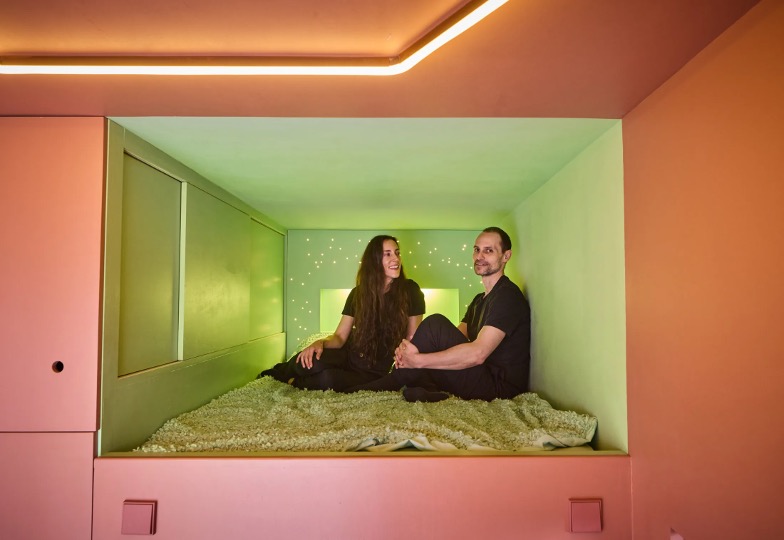
In Cabanon, a micro-apartment of under 7m² in the heart of Rotterdam, STAR strategies + architecture, in collaboration with BOARD (Bureau of Architecture, Research and Design), offered a postmodern reinterpretation of the modernist minimum living cell by deconstructing Le Corbusier’s iconic Cabanon and reassembling it as a contemporary Cabinet de Curiosités; a prototype for urban living attuned to today’s fragmented, pluralistic cityscape – what C.Rowe and F.Koetter described as city-collage.
Rethinking housing from the inside out: a new generation of social and private housing where the dwelling adapts to its inhabitants – and not the other way around
With START-Ivry, the team of STAR, led by architects Beatriz Ramo and Danae Zachariaki, reimagines the principles of modernist design by translating Louis Sullivan’s dictum “form follows function” into “form follows life.”
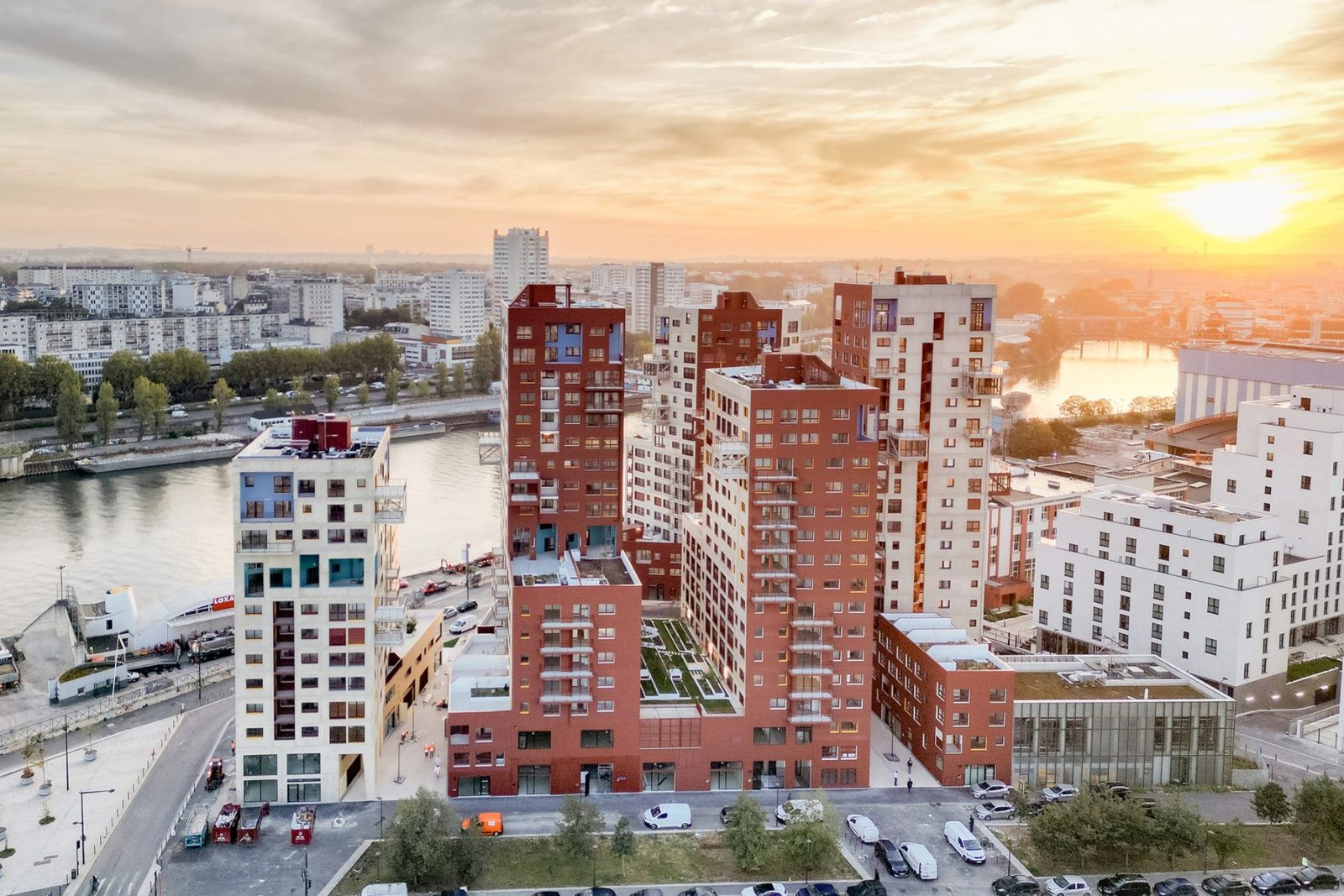
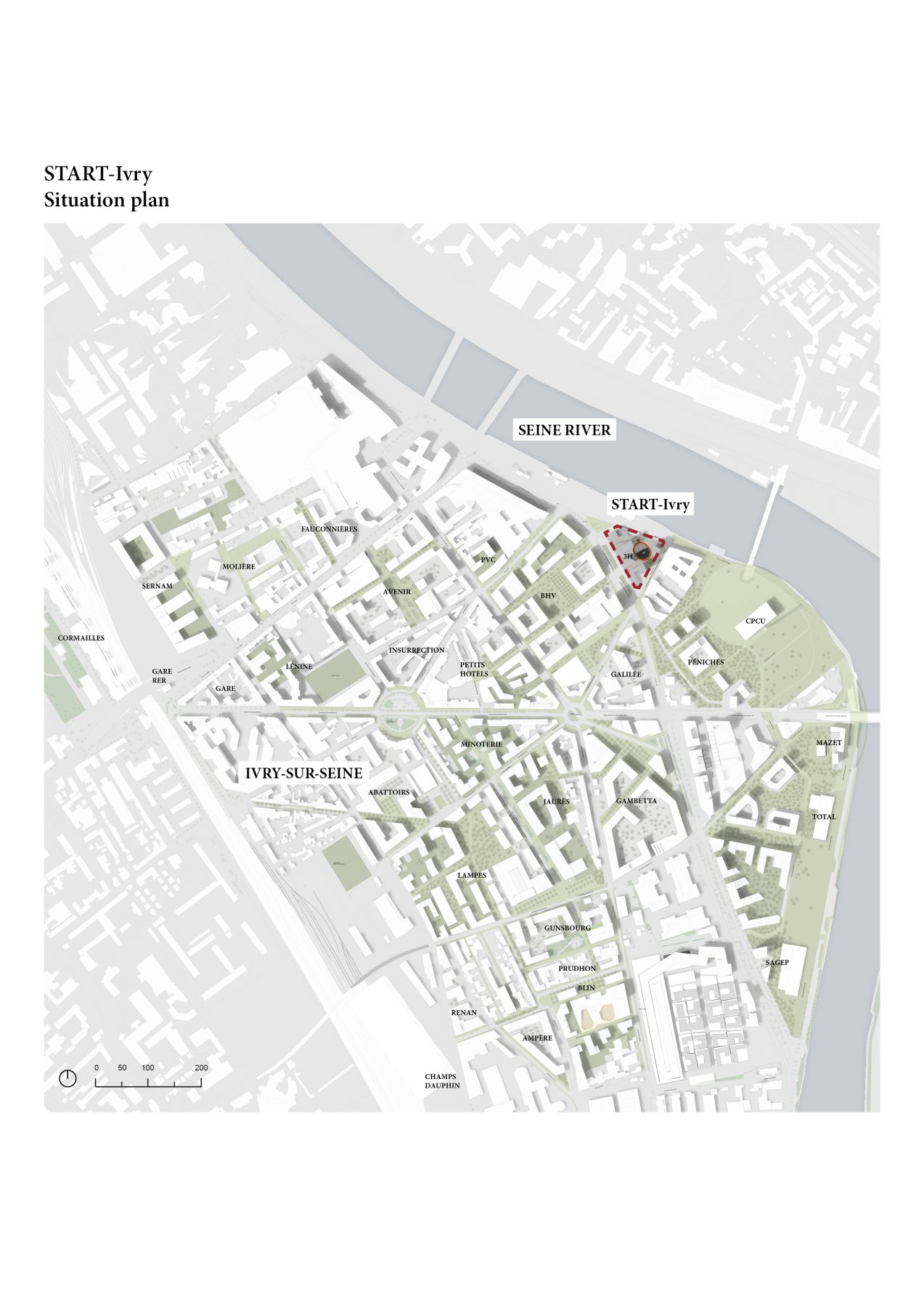
Nestled at the confluence of the Seine and Marne rivers in Ivry-sur-Seine, a district shaped for nearly a century by the French Communist Party’s social housing policies, the project redefines what collective living can be today.
START-Ivry is not just a housing complex—it’s a choreography of daily life, where architecture adapts to its inhabitants rather than the other way around. Flexible layouts, communal spaces, and responsive design strategies create a dynamic environment that is as socially conscious as it is architecturally rigorous.
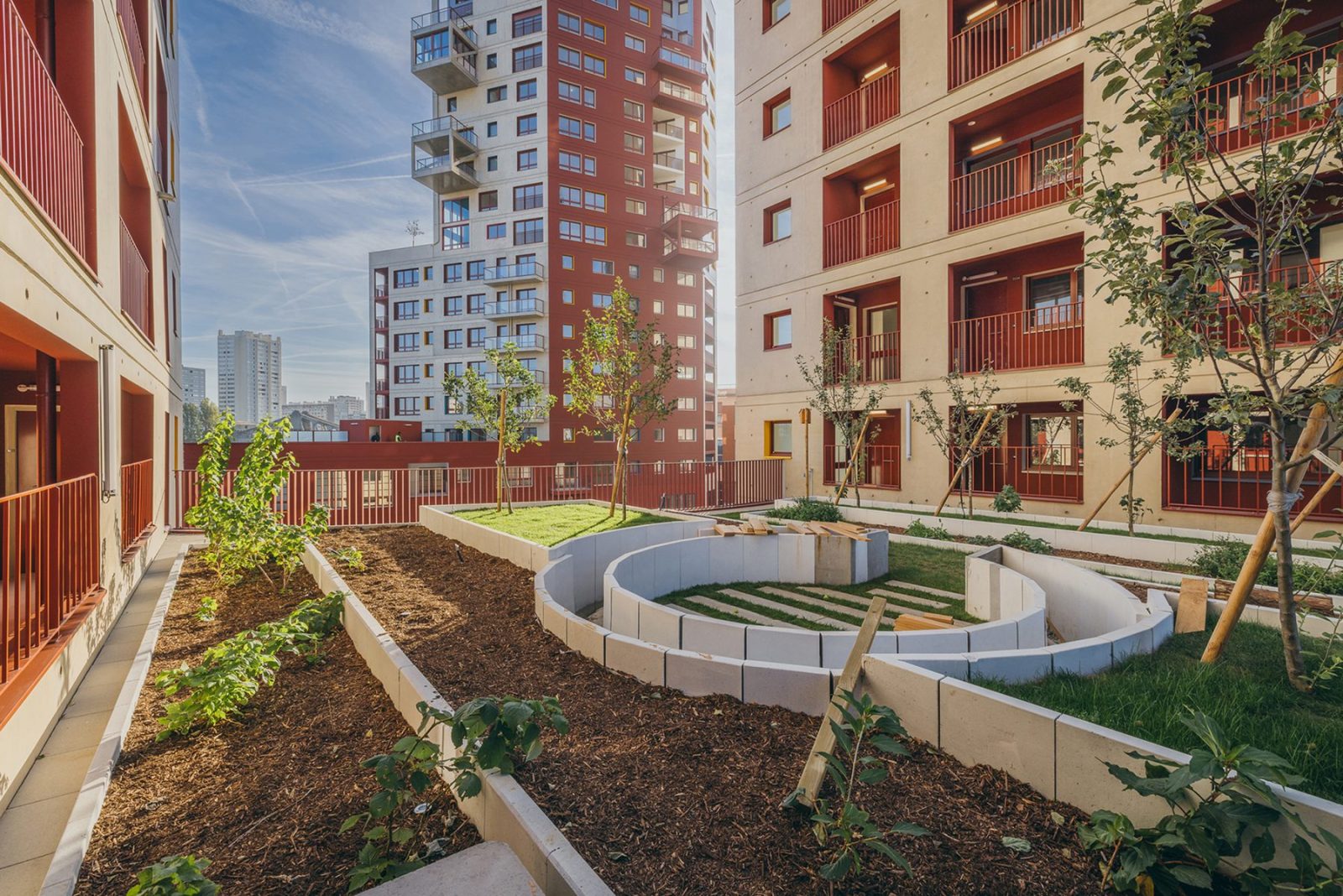
Rejecting standardization, START begins with the architect, not the developer, in order to deliver Social, Transformable, Affordable, and Resilient homes that adapt to diverse contemporary lifestyles.
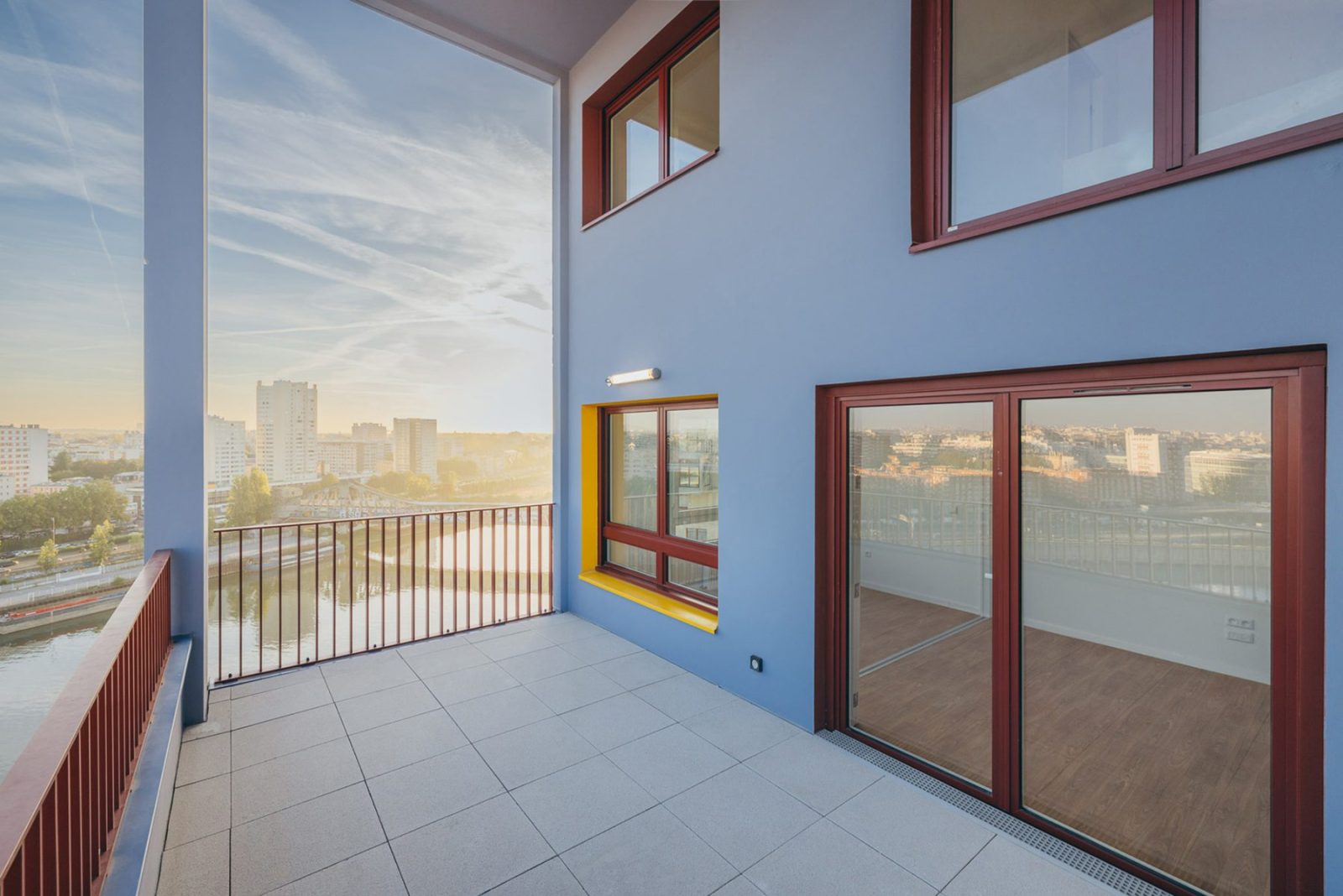
Comprising 288 dwellings across five buildings, the project proves that high-quality, flexible housing is possible within tight budgets and compact footprints. More than a development, START-Ivry is a manifesto elevating affordable living from necessity to design opportunity, signaling a bold new paradigm for social housing in the 21st century.
Reconciling households and housing: a plural society faced with standardised plans
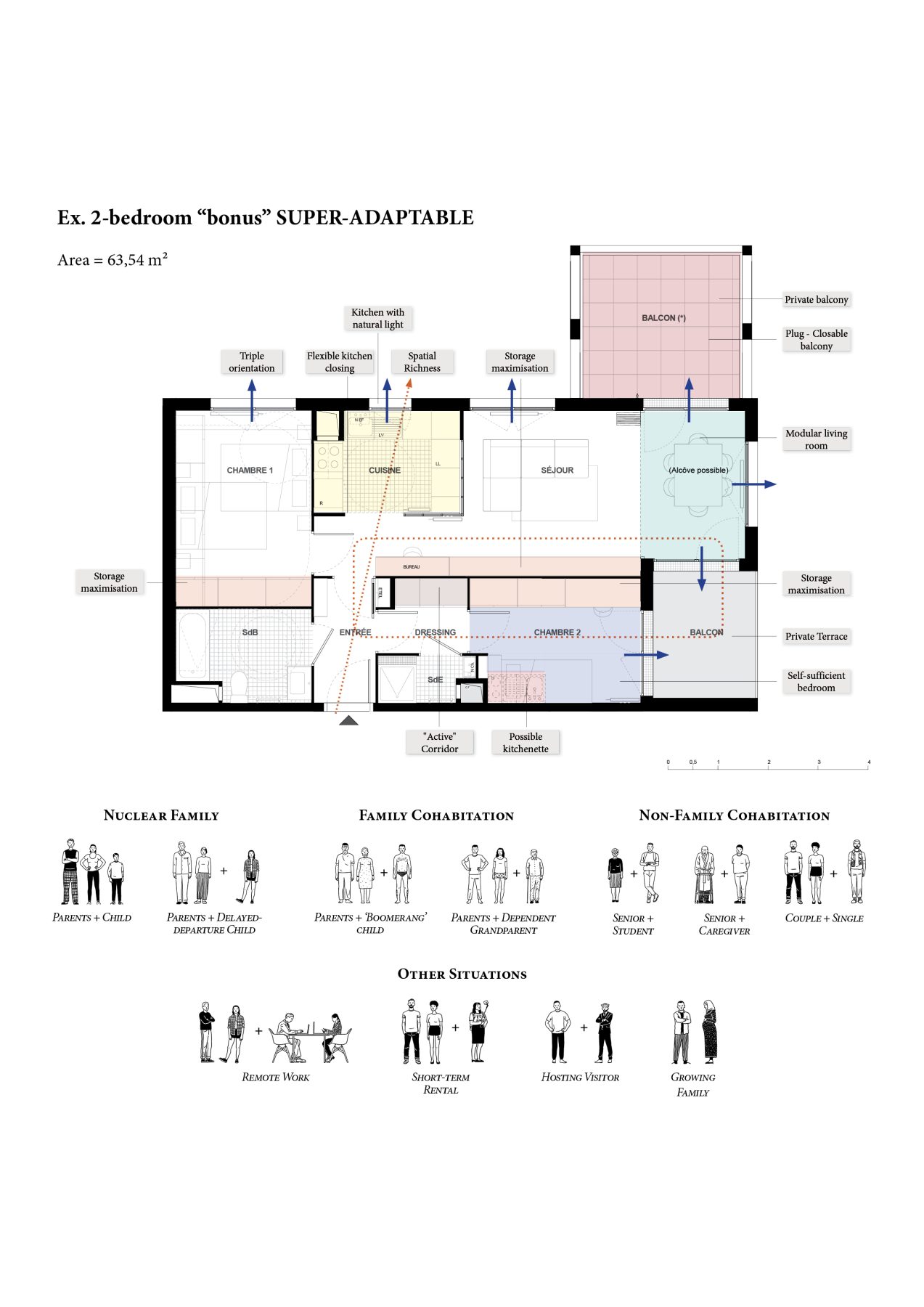
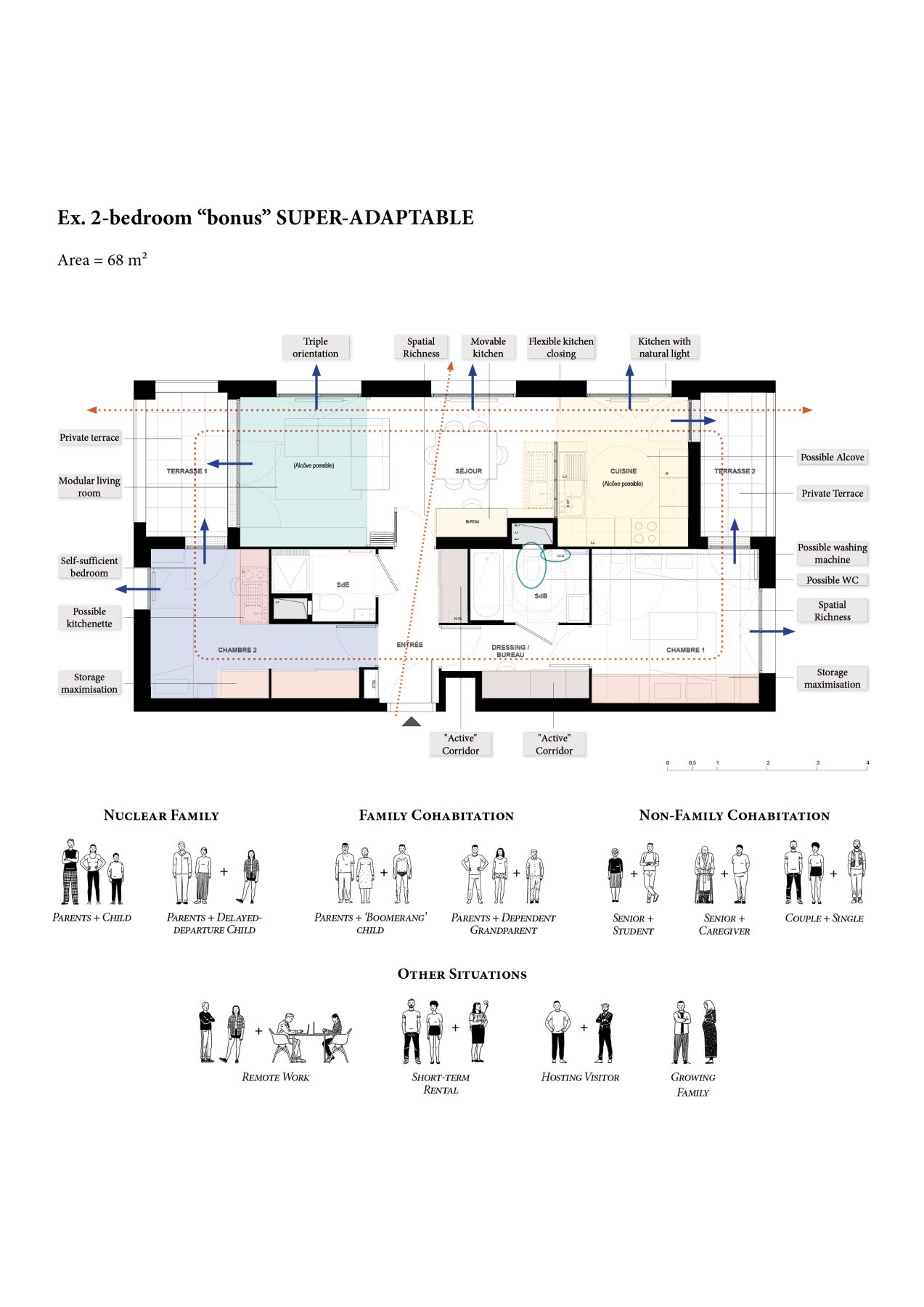
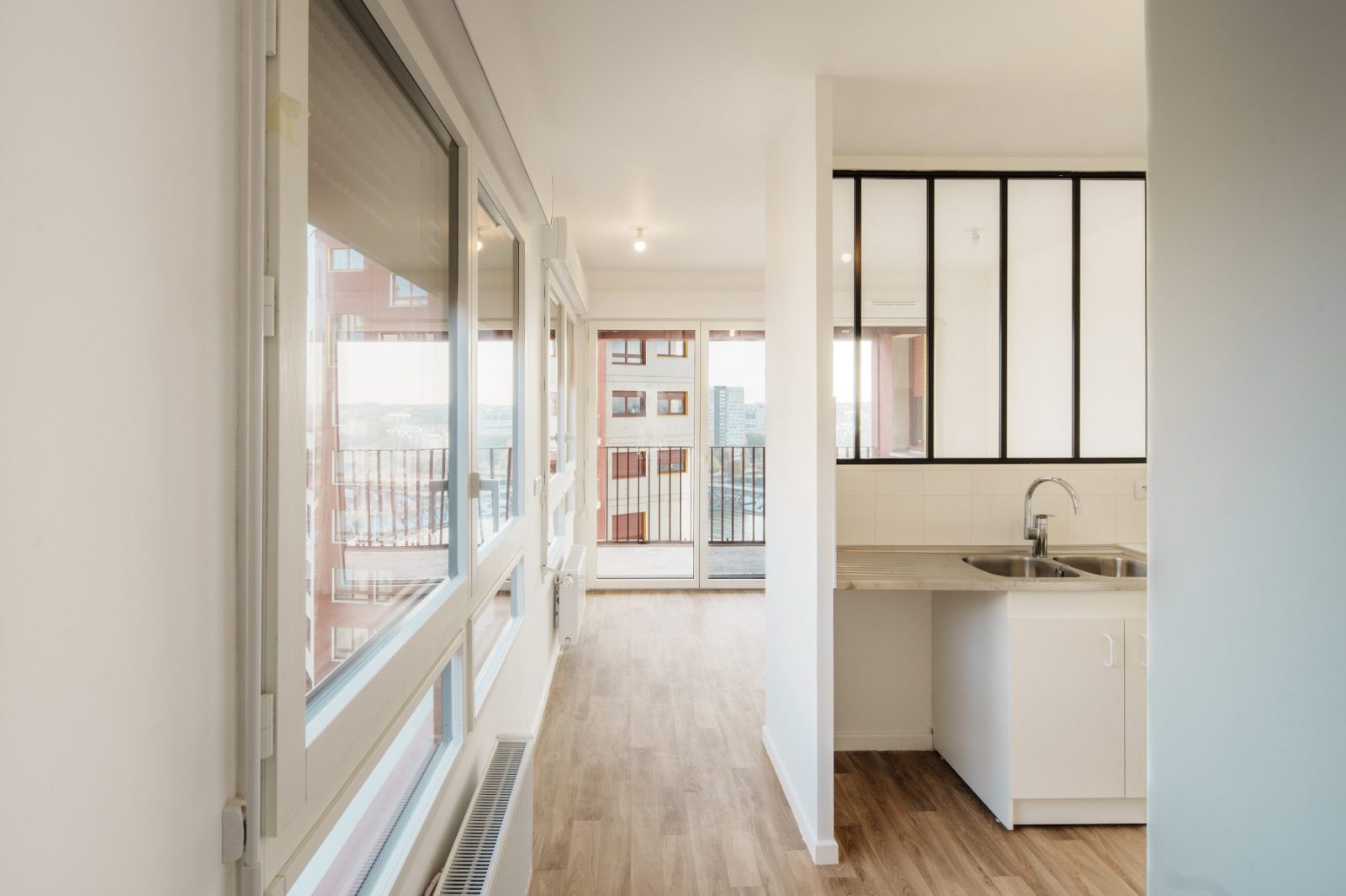
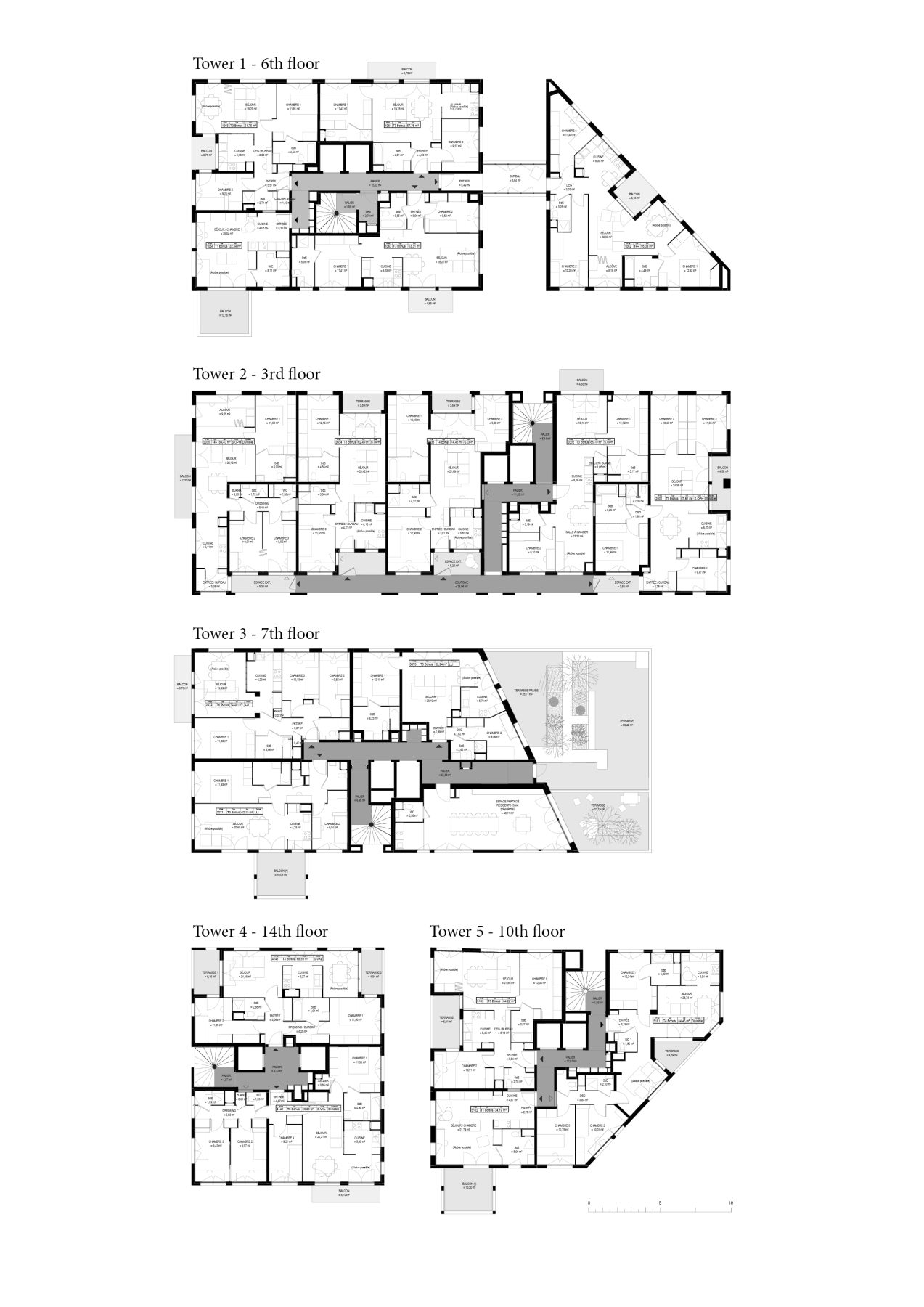
Households today are more diverse than ever, ranging from single-parent and blended families to elderly residents, remote workers, and short-term rentals, yet housing has largely remained standardized, driven by regulations and developer logic rather than the contradictory and unexpected realities of everyday life. START confronts this mismatch by designing homes that adapt to their inhabitants, anticipating changes and offering flexible solutions: kitchens relocate, rooms transform, and units can expand to accommodate evolving needs.
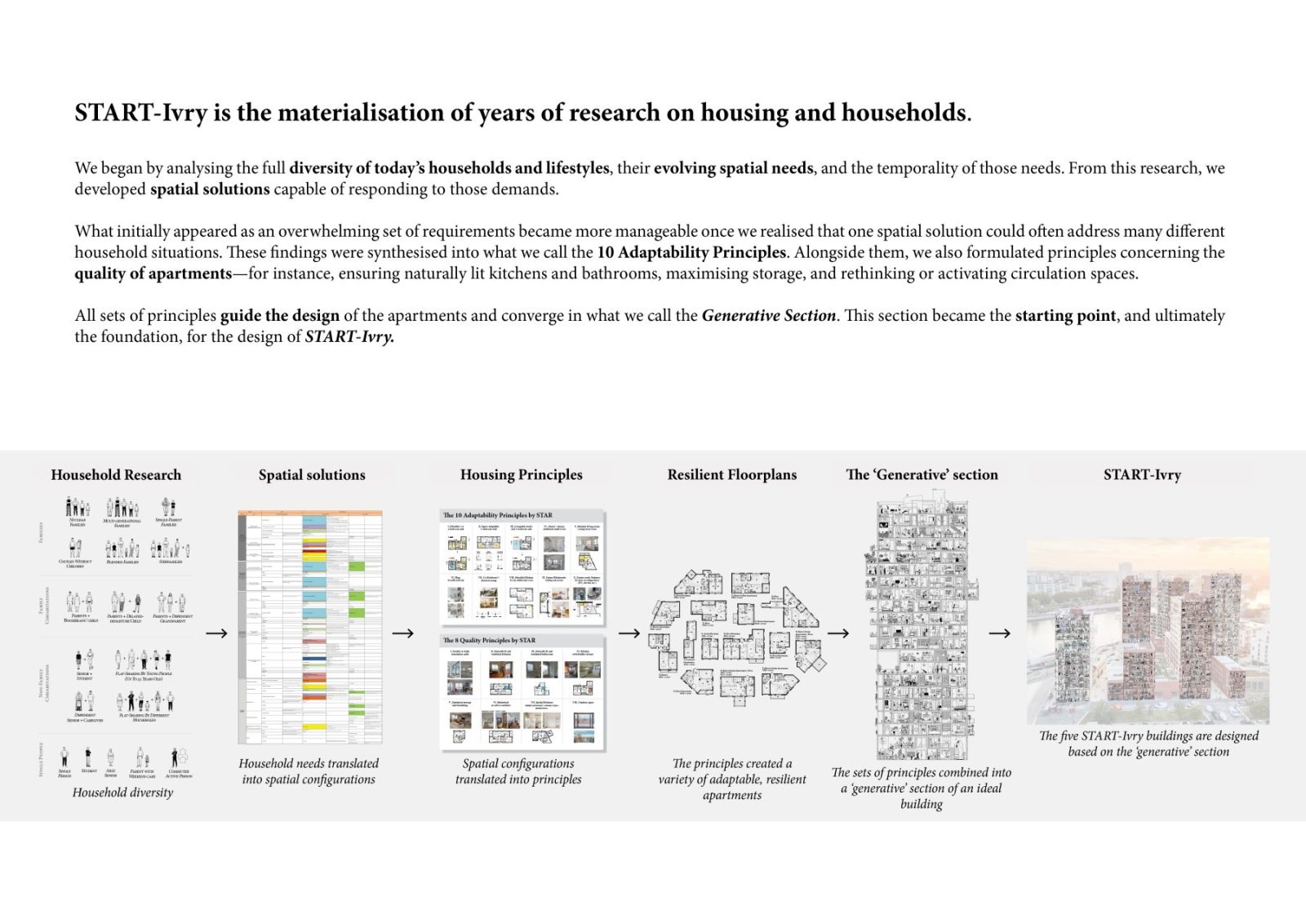
As architect Beatriz Ramo explains, “We don’t fit people into housing; housing must fit people’s needs.”
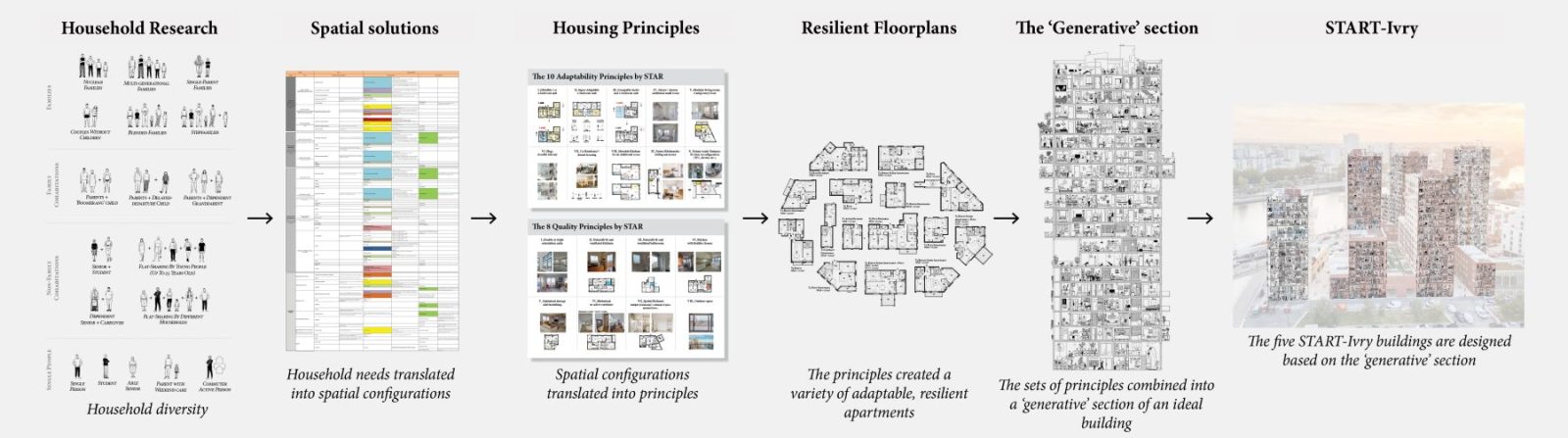
START founding design principles
The project delivers a diverse range of housing typologies, from studios to five-bedroom units, including intermediate configurations labeled “bonus” and “plus.” Its design is guided by three complementary frameworks: the 10 Adaptability Principles, which ensure dwellings remain flexible and resilient—through divisible units, “plus” alcove rooms, modular living areas, and highly adaptable two-bedroom layouts; the 8 Quality Principles, promoting naturally lit kitchens and bathrooms, maximized storage, and efficient circulation; and the 10 Principles for a Good Tower, establishing desirable density through thoughtful circulation, shared spaces, terraces, and rich spatial relationships with both ground and sky.
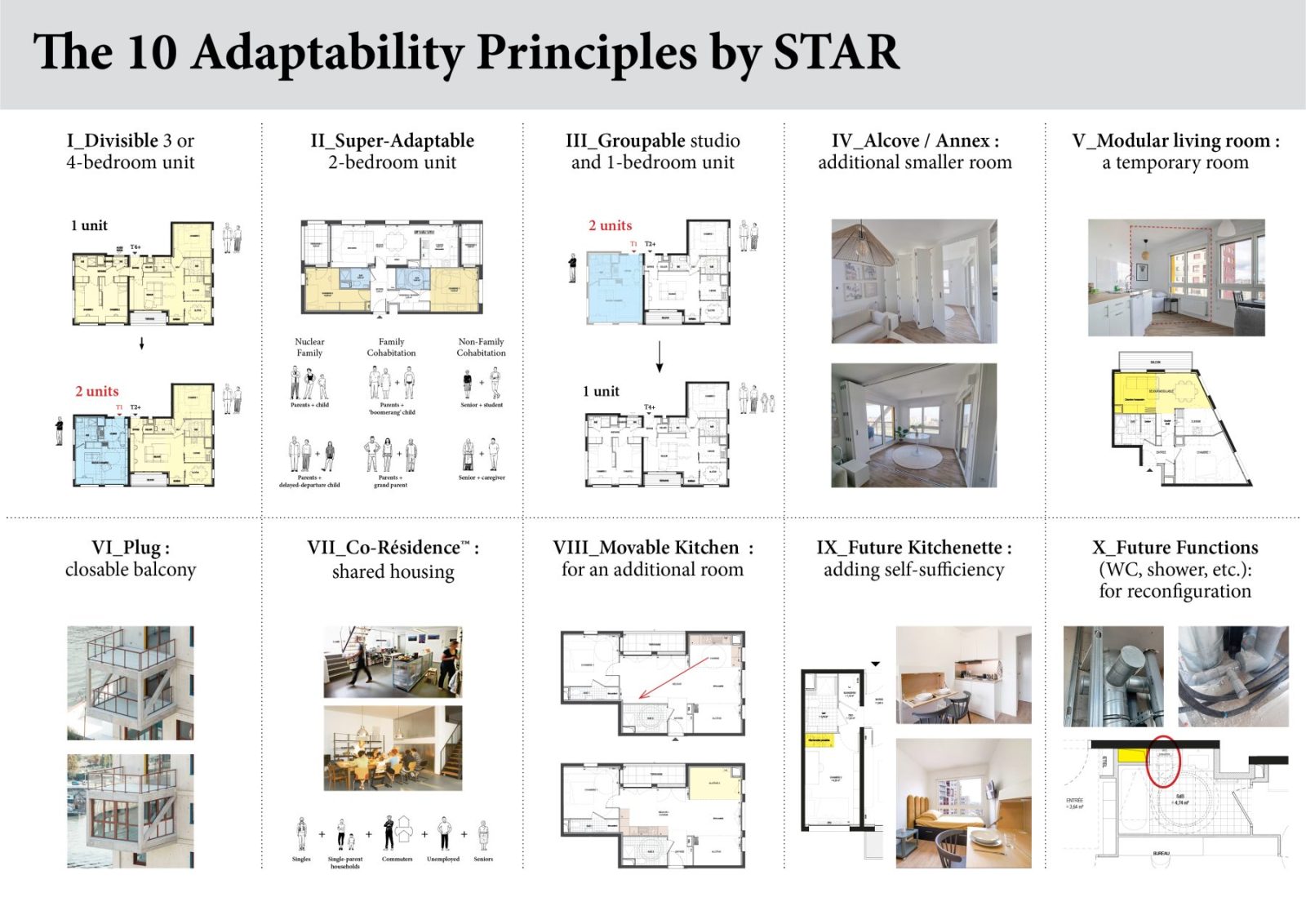
©STAR STRATEGIES + ARCHITECTURE
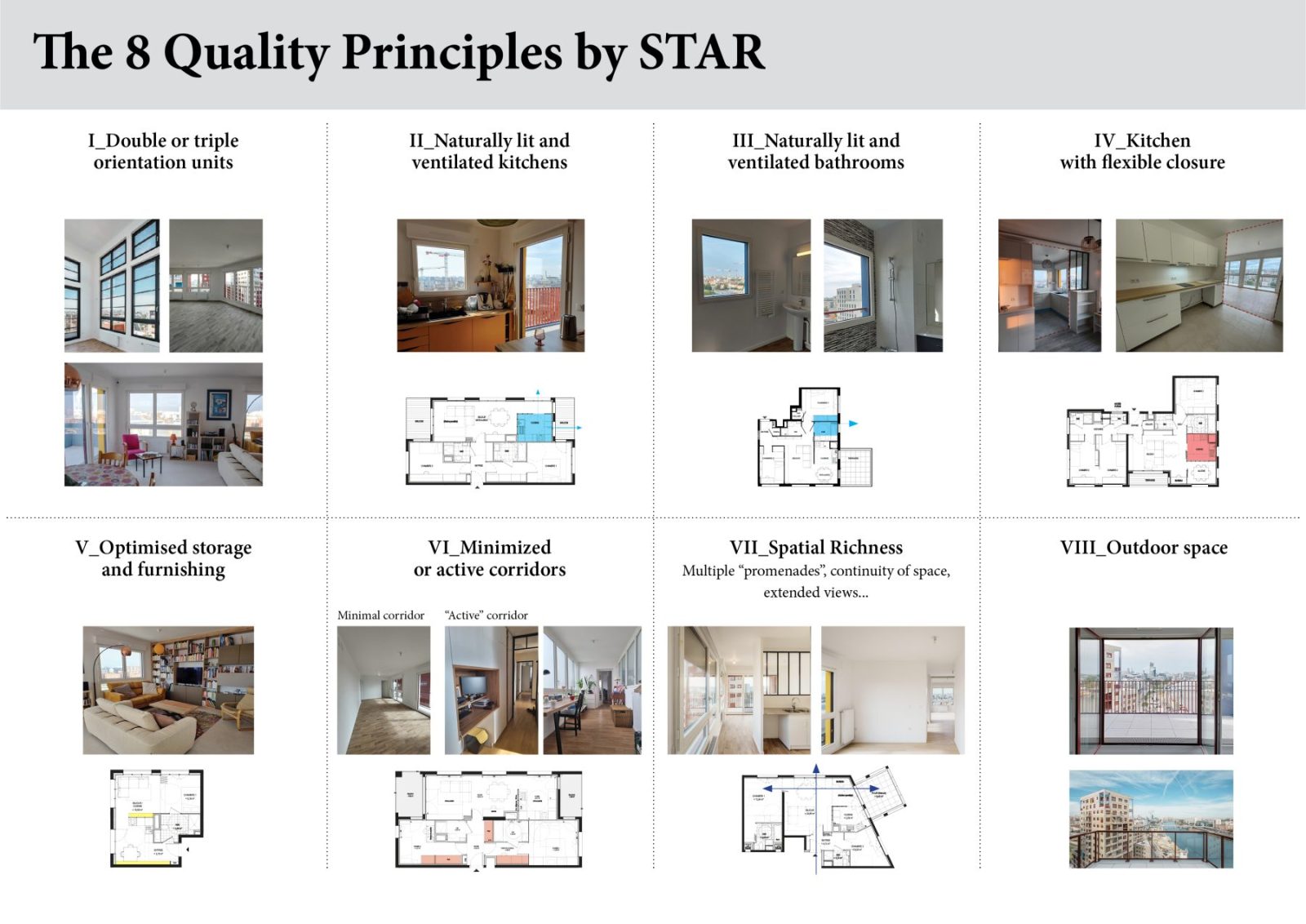
©STAR STRATEGIES + ARCHITECTURE
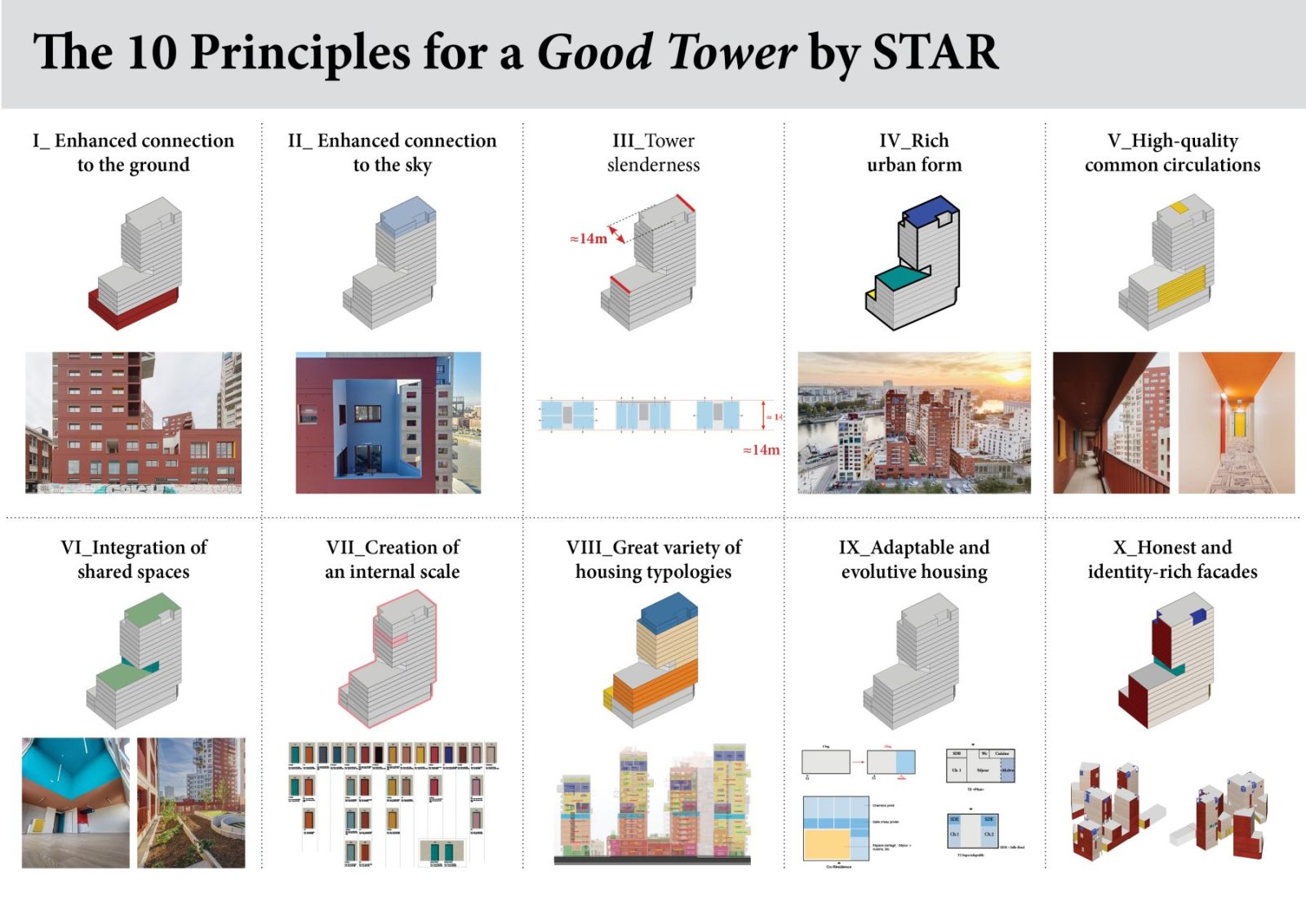
A narrative architecture: when the inside defines the building
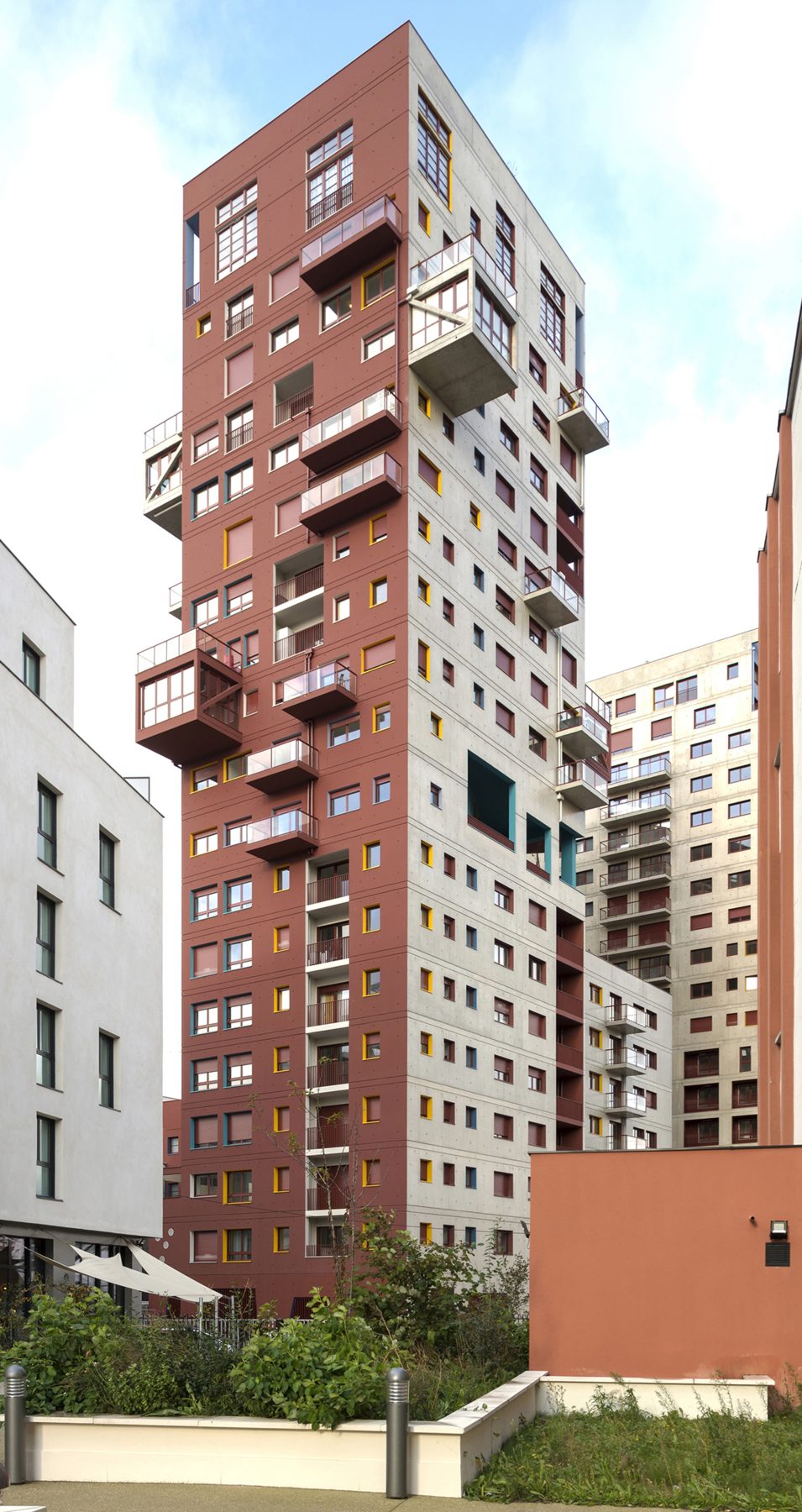
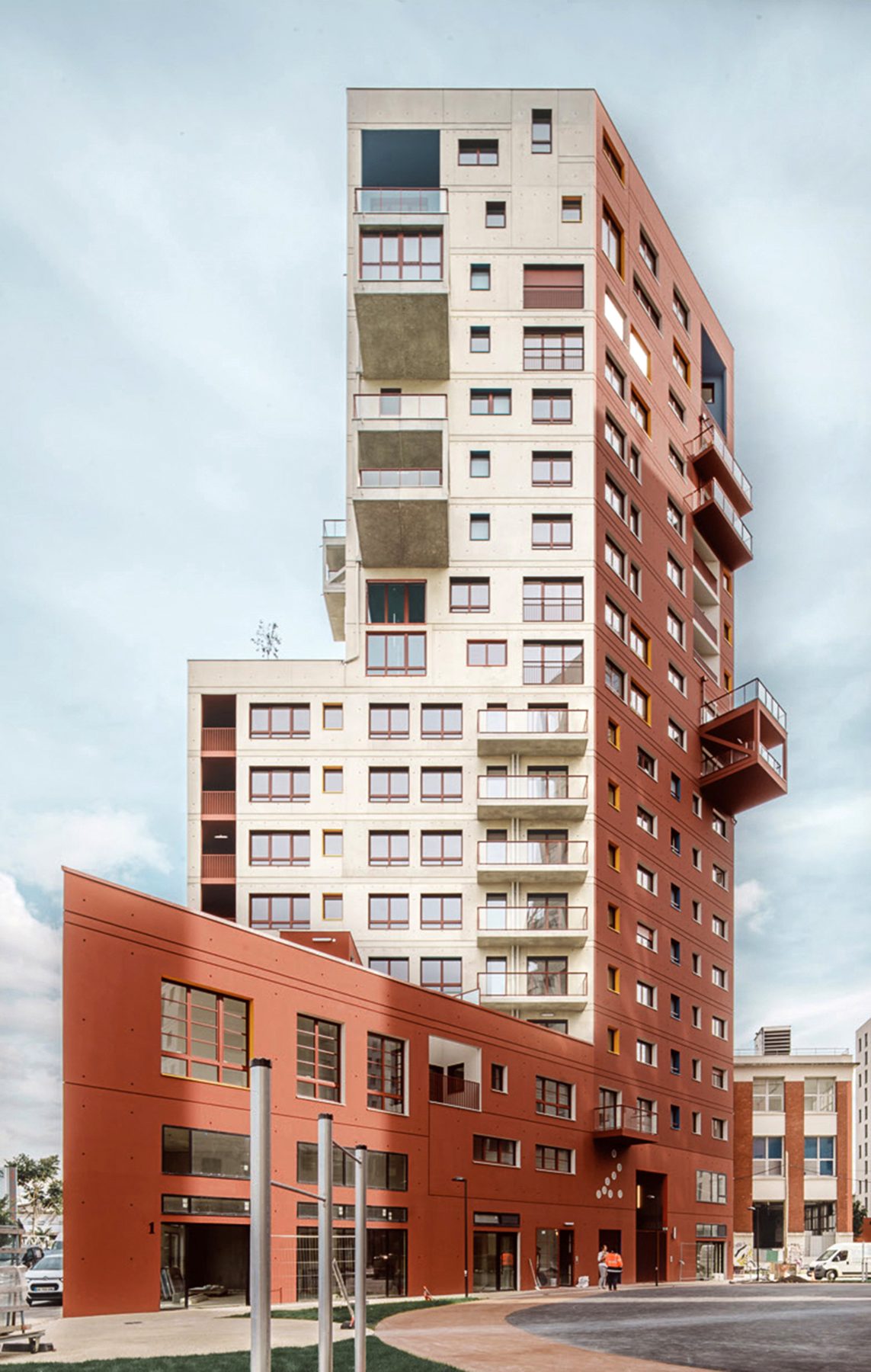
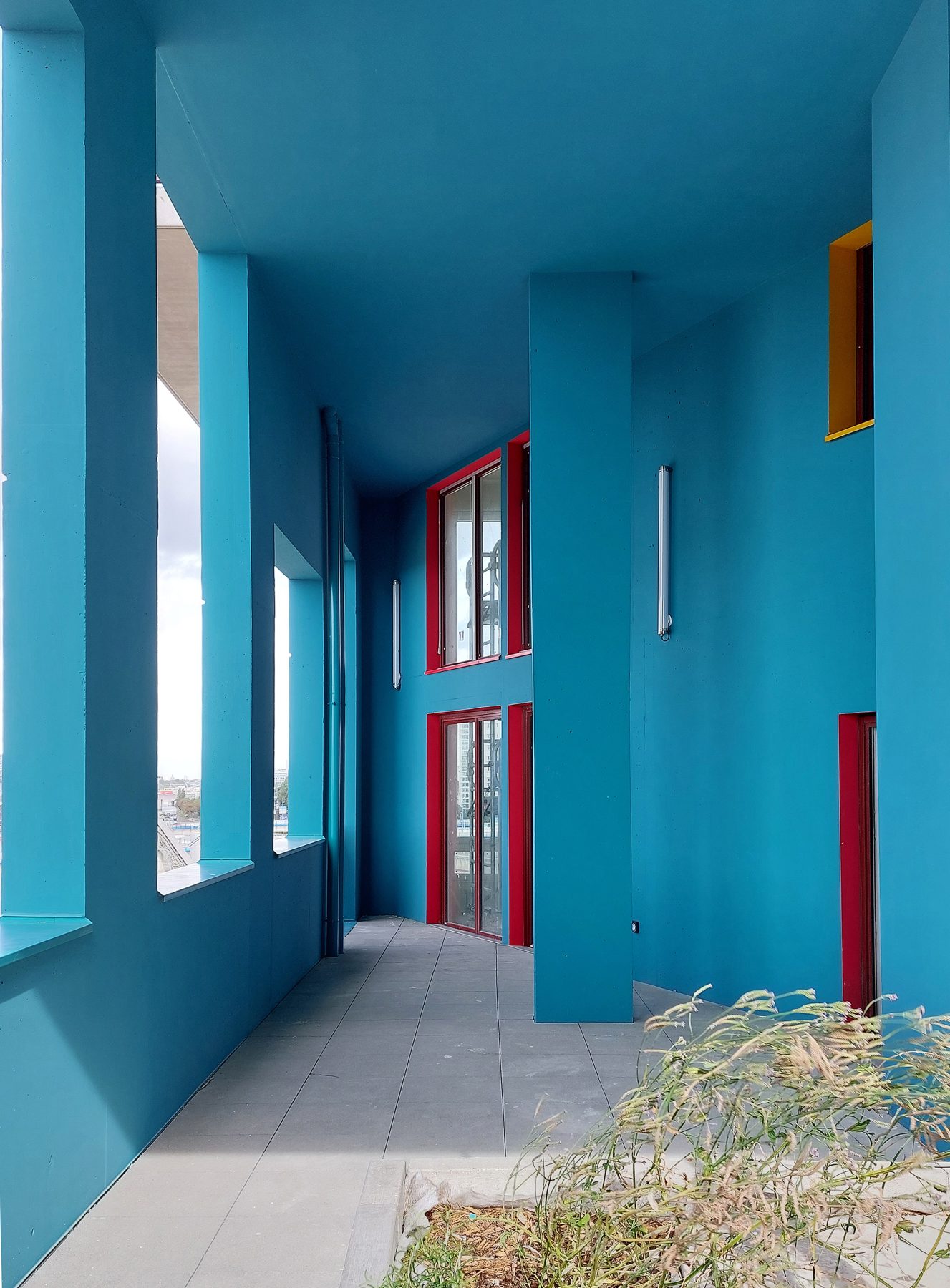
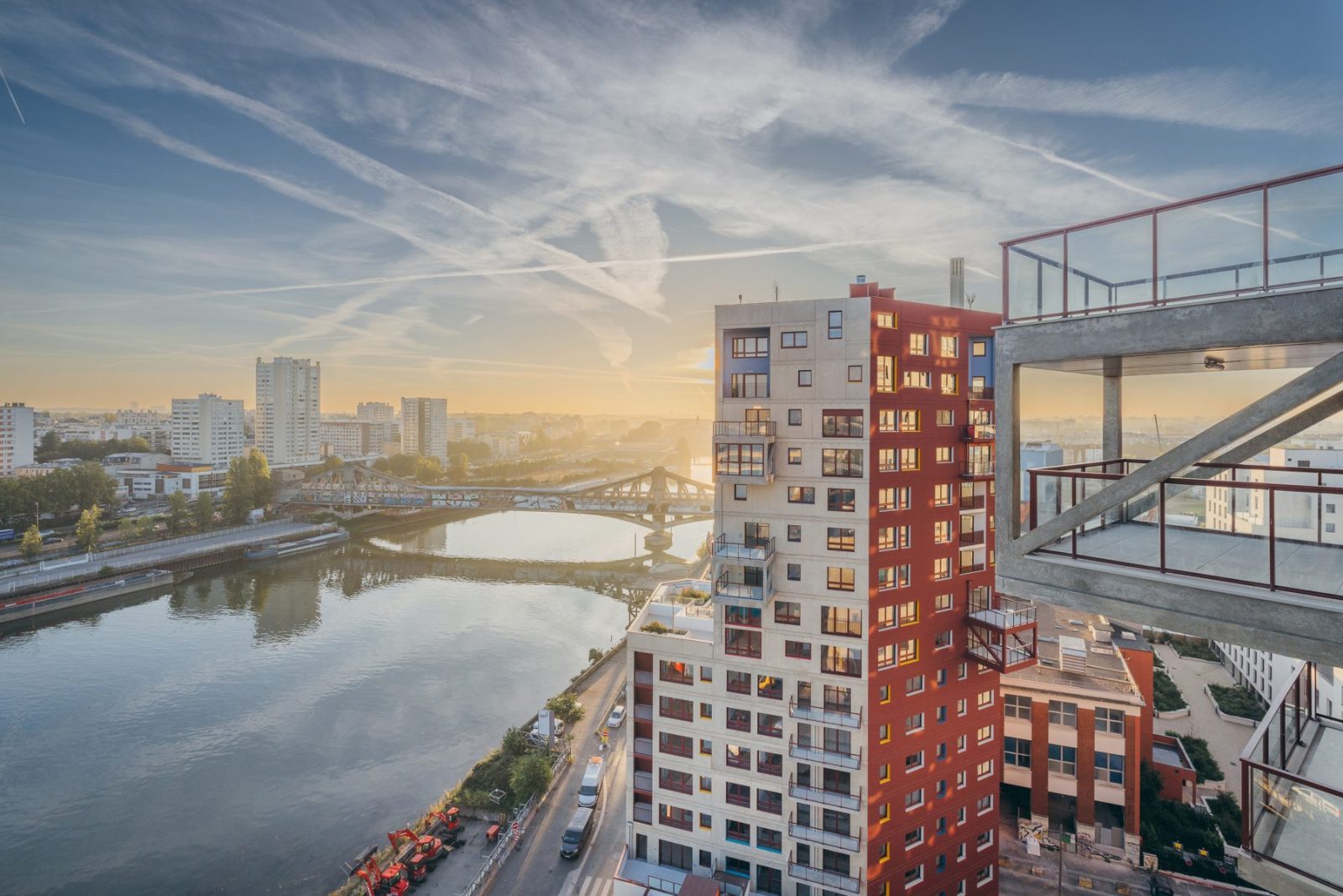
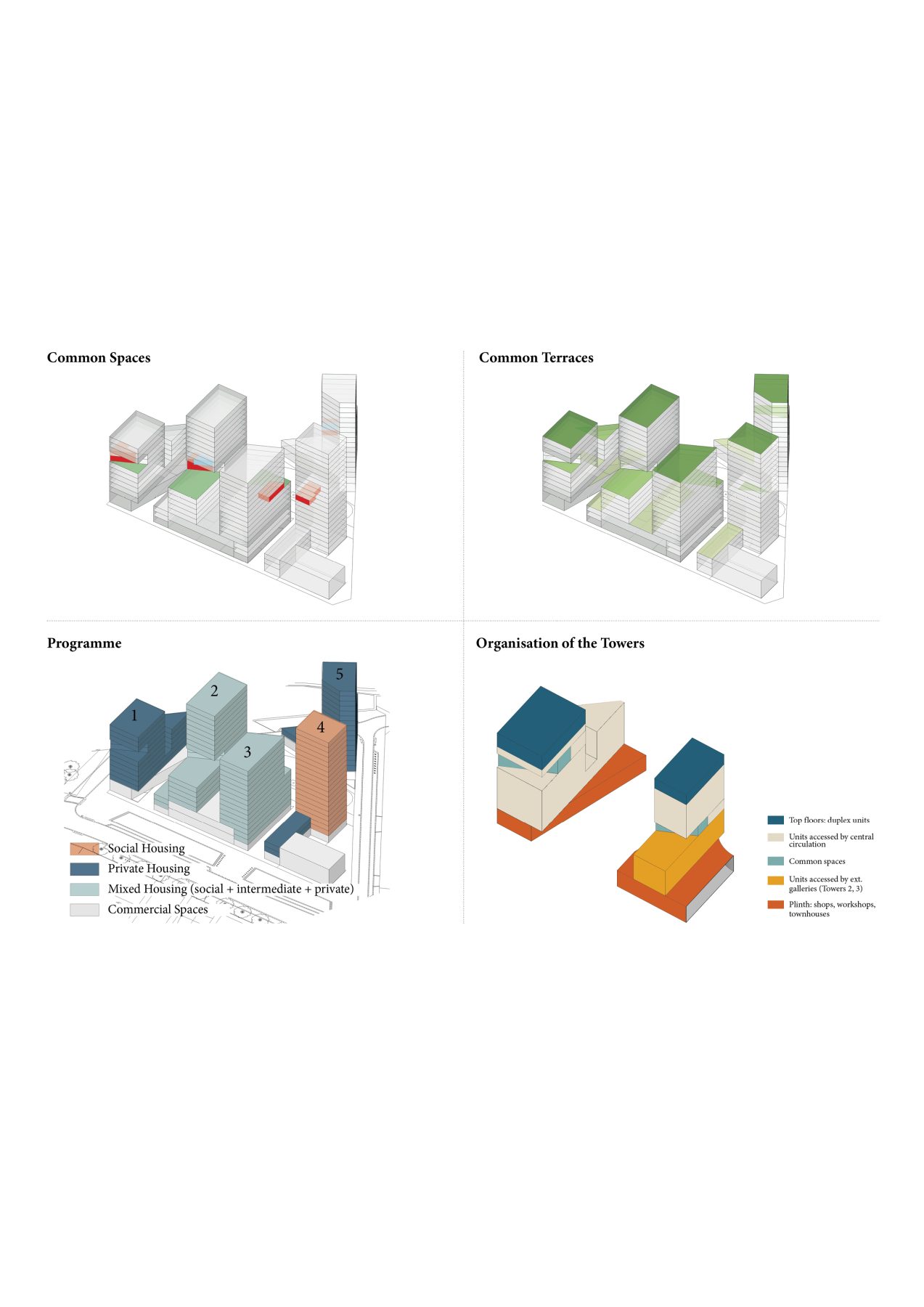
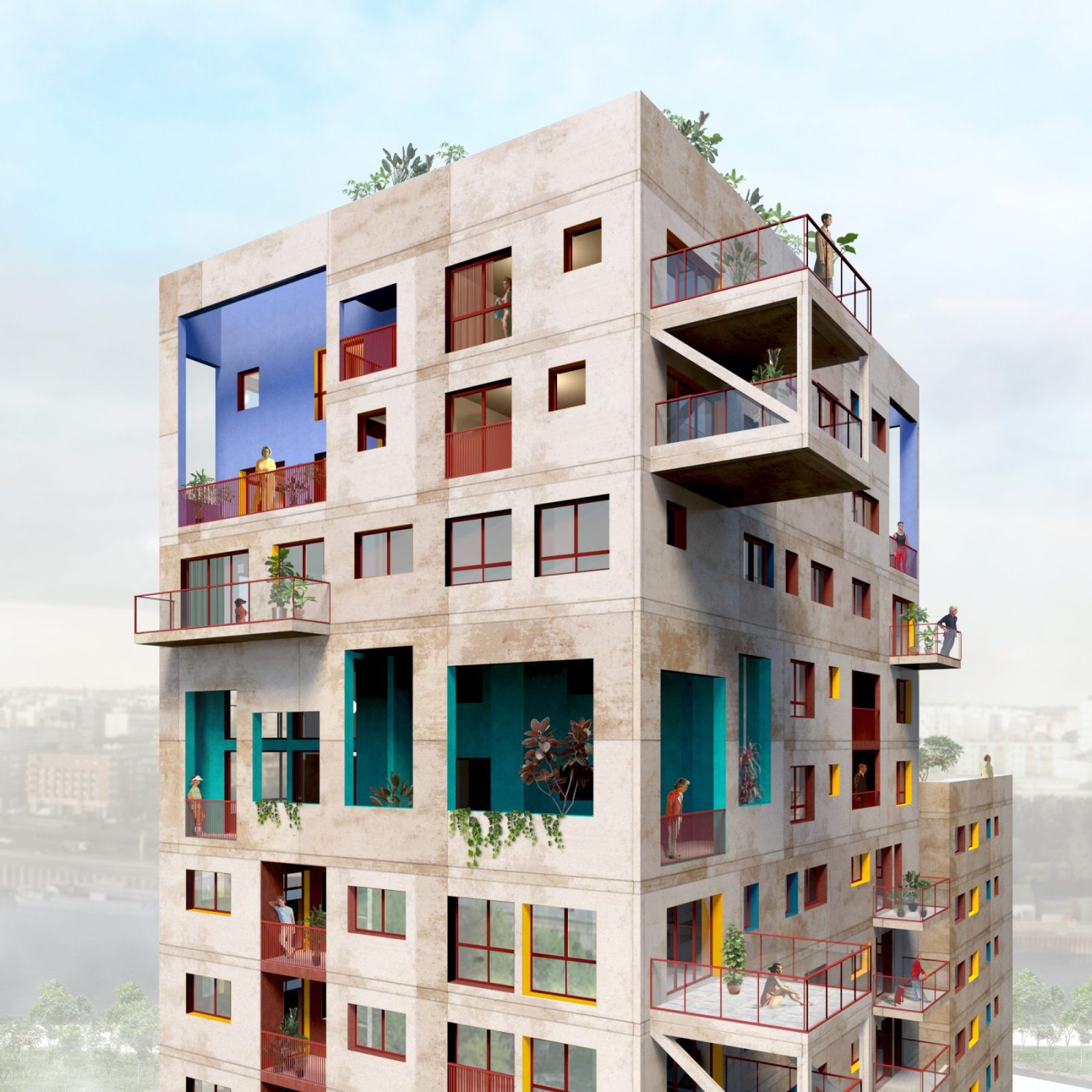
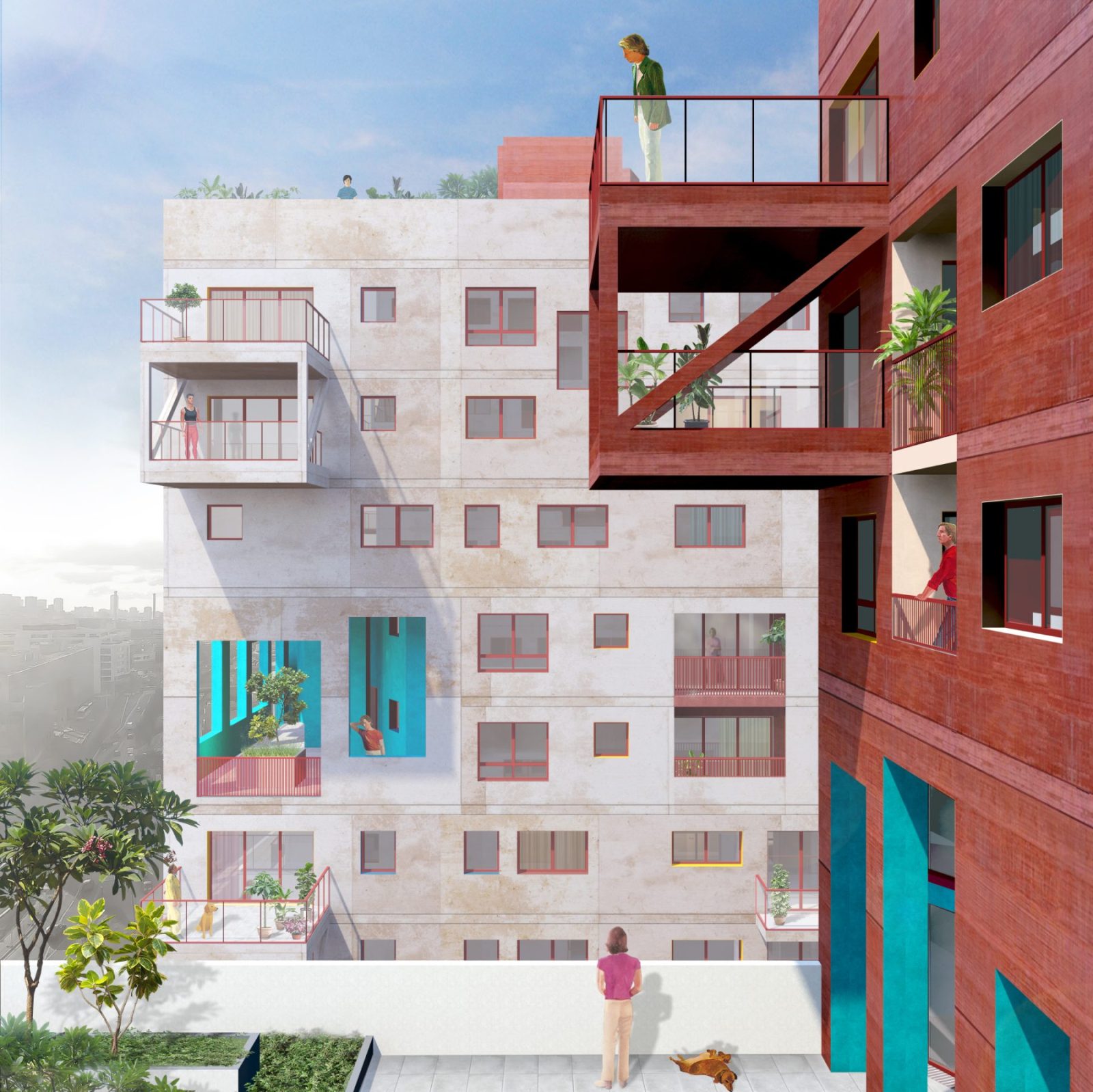
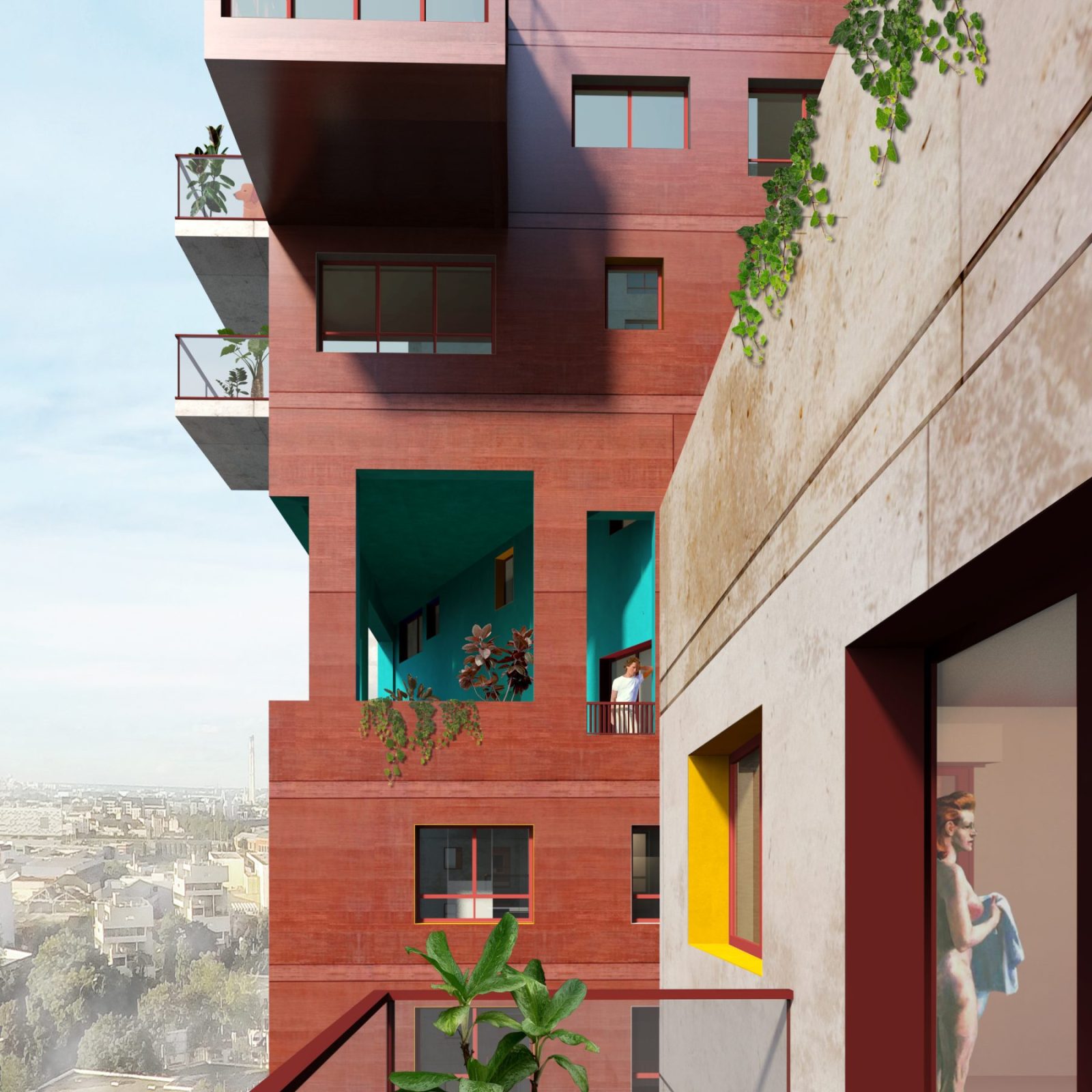
At START, the architecture emerges from the internal life of its dwellings, with geometry, window rhythms, and color accents shaped by use rather than imposed from outside. Exceptionally slender buildings—just 14 metres deep yet rising up to 56 metres—maximize natural light, ventilation, views, and typological variety, with 90% of homes enjoying double or triple orientations. Towers are articulated in three parts—street, city, and sky—while a turquoise shared-space band at the seventh floor introduces horizontal rhythm.
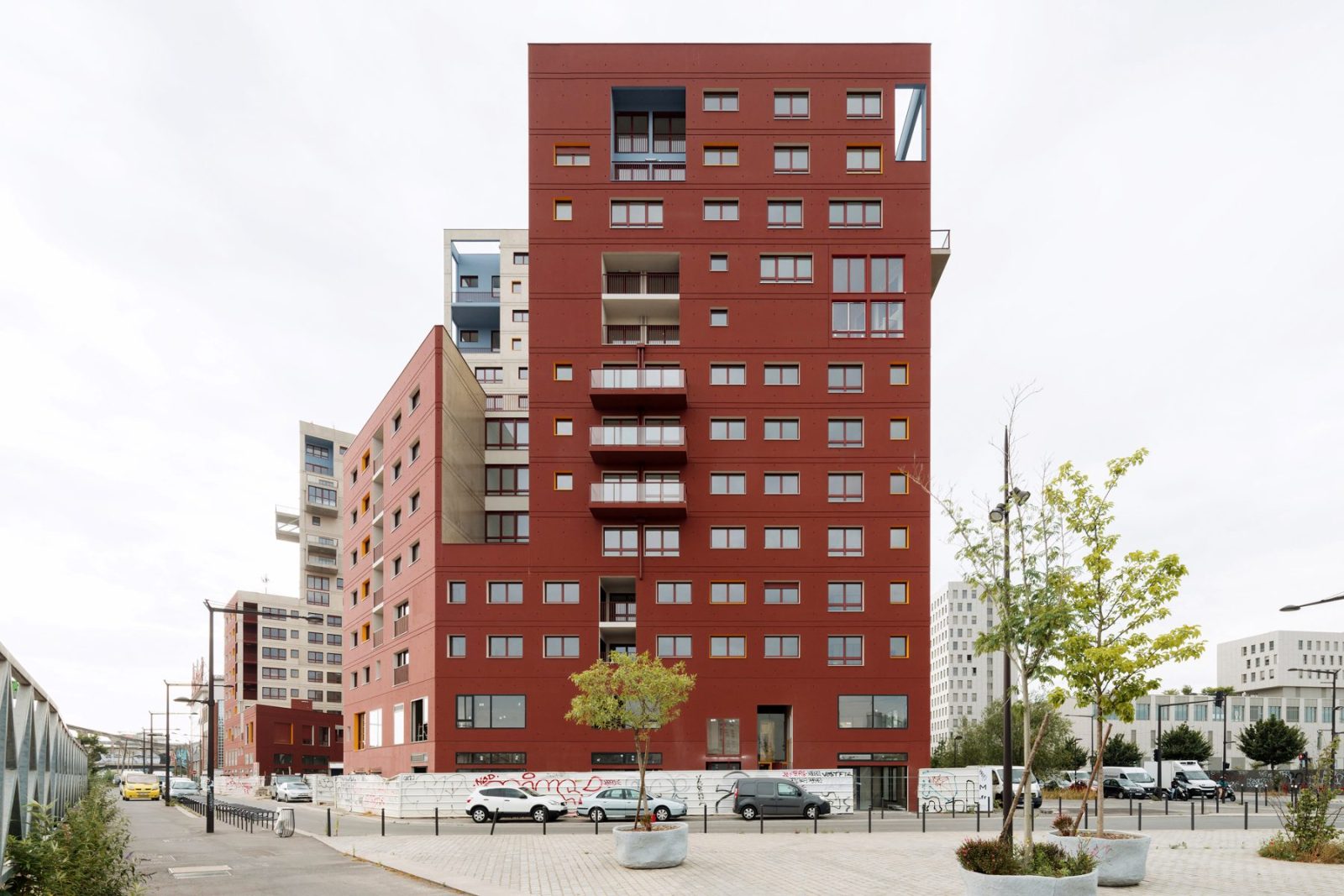
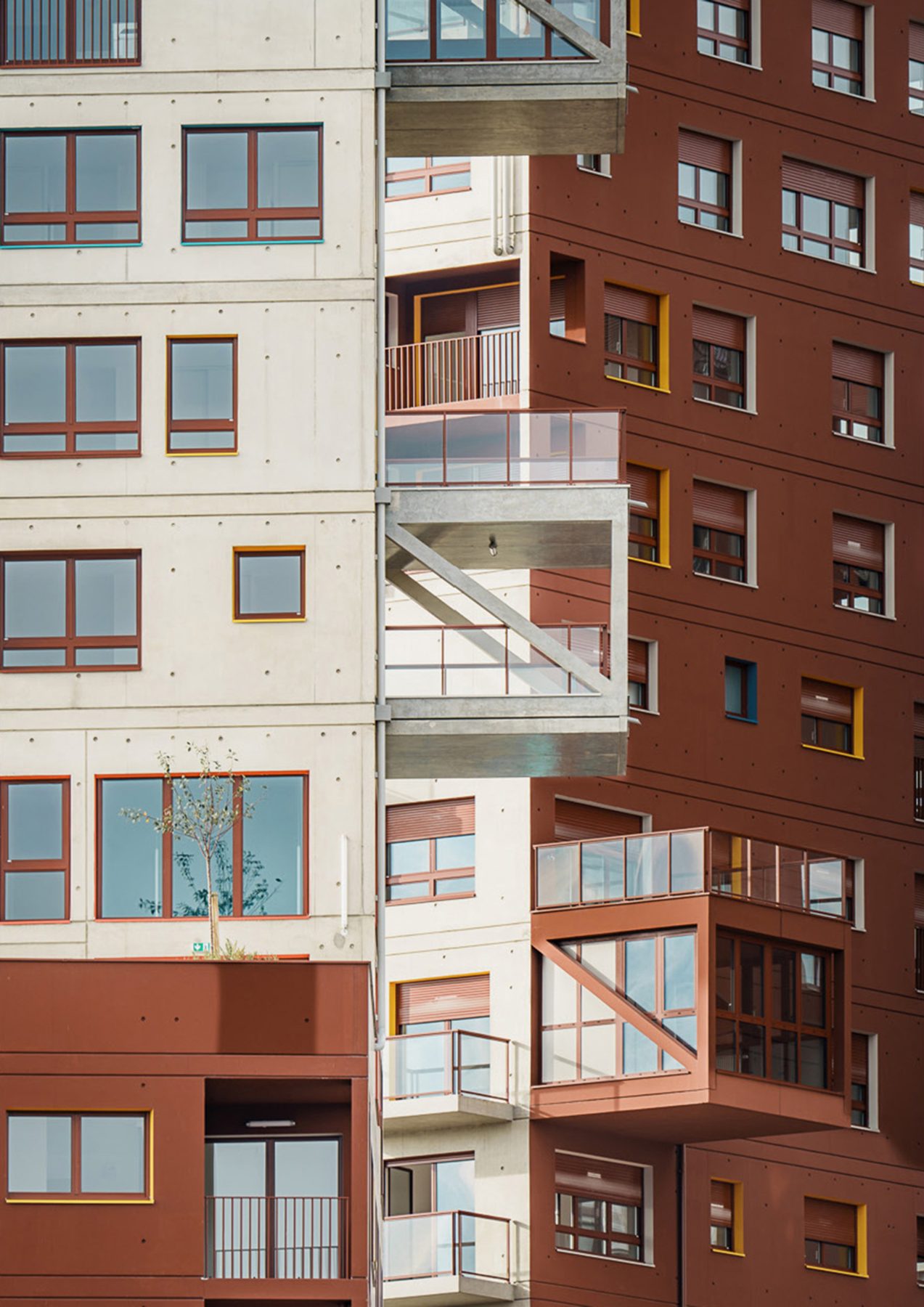
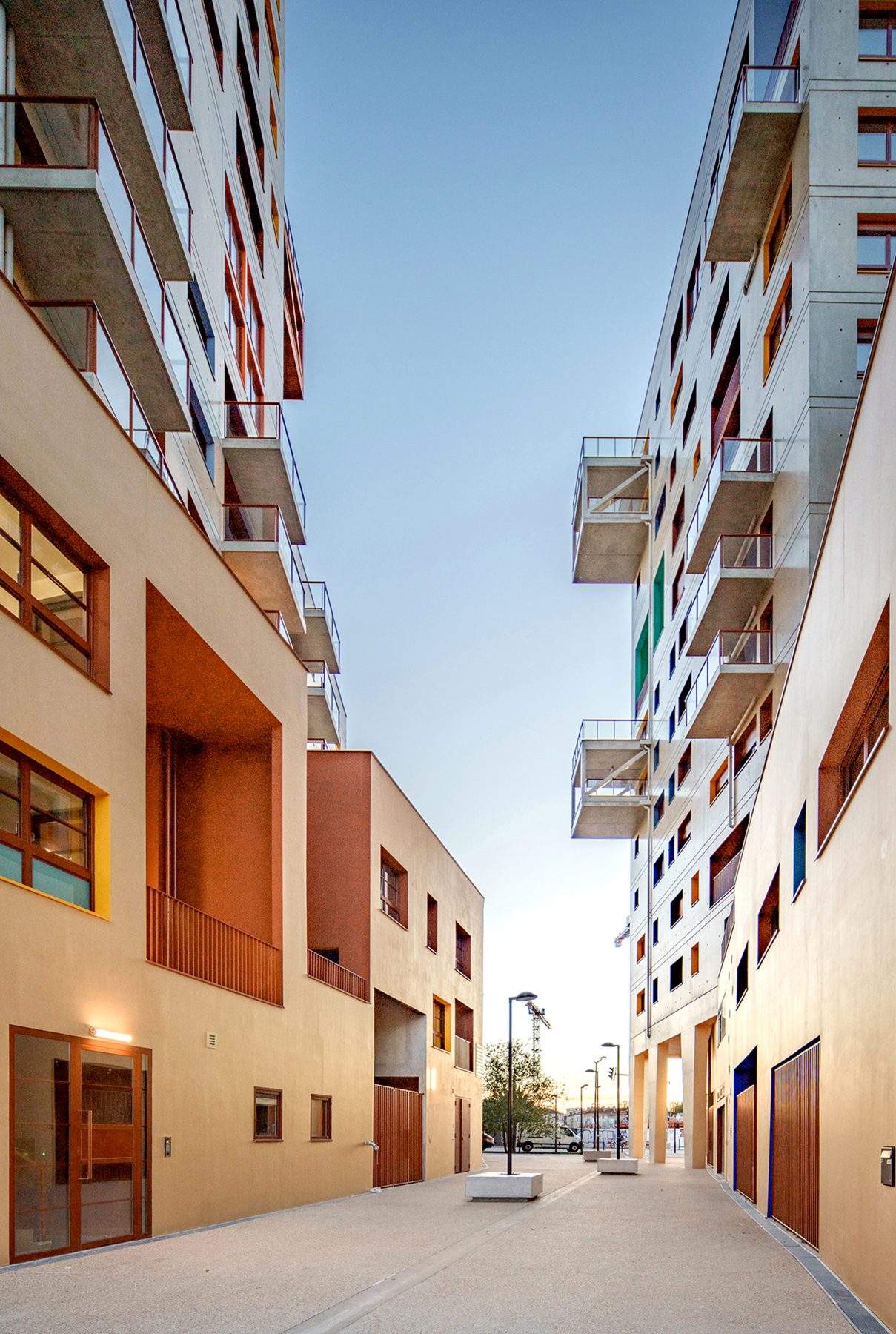
Façades eschew rigid grids, with windows, balconies, and loggias arranged to serve domestic function – their apparent irregularity reflecting the unpredictability of life.
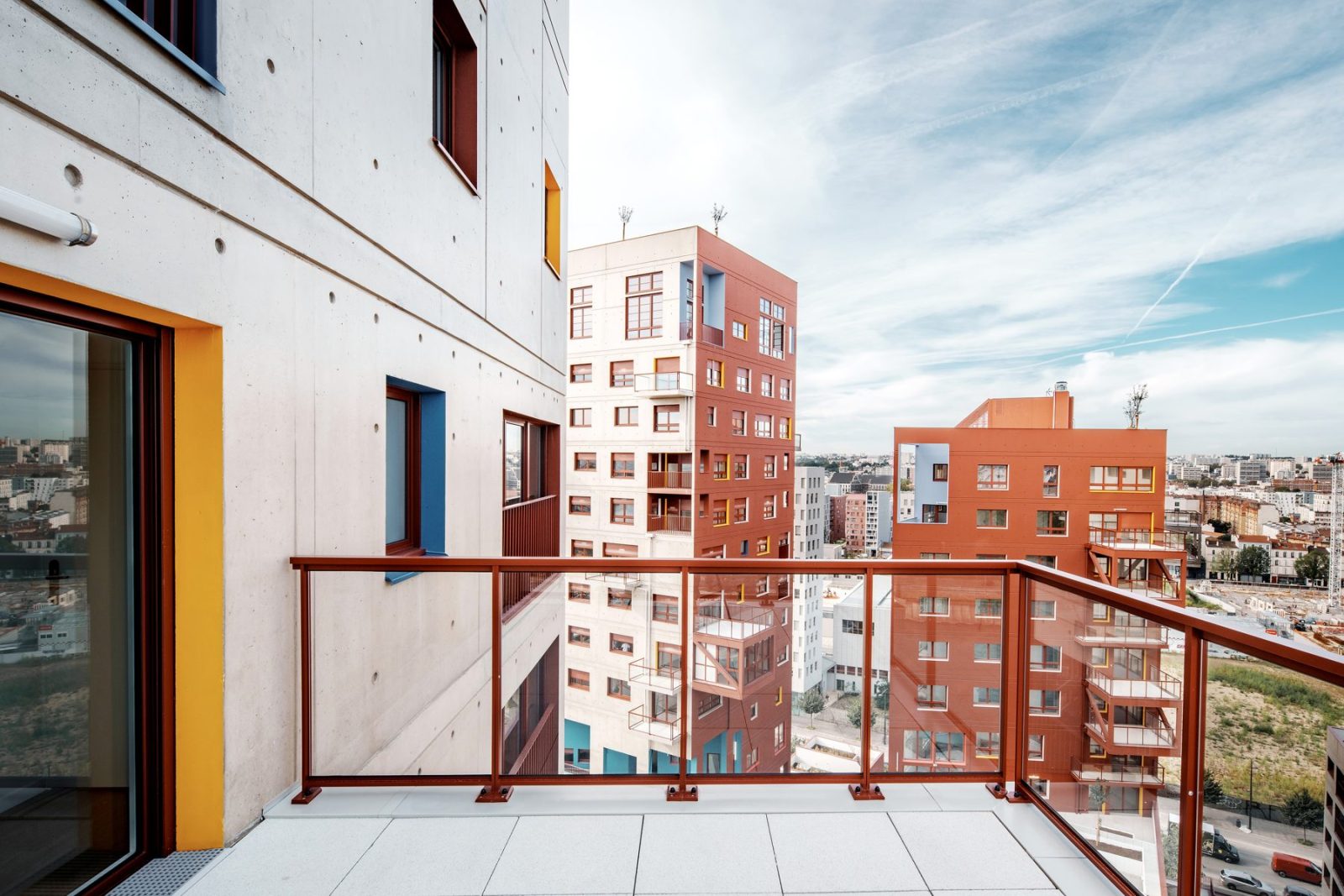
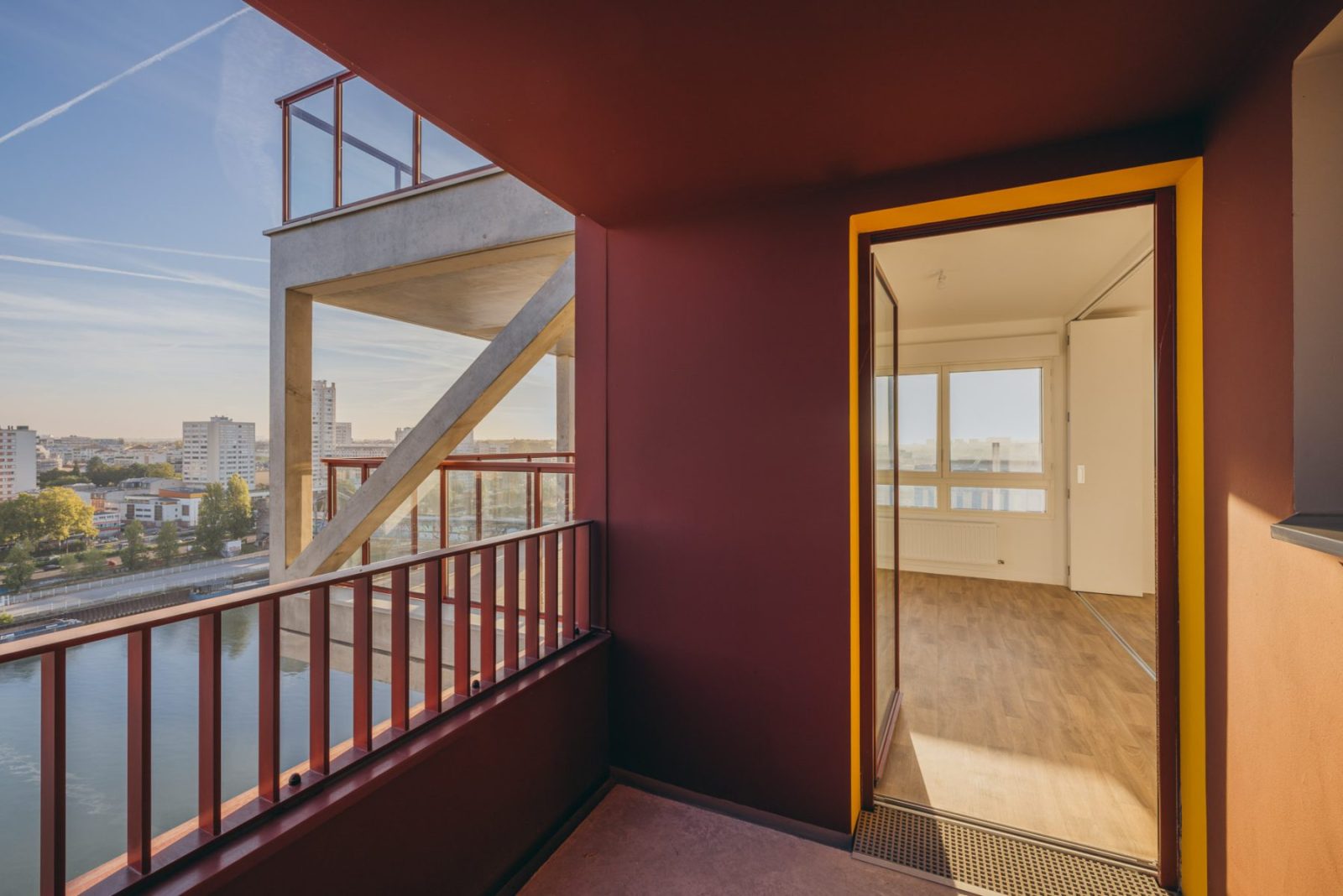
Colour accents function as an architectural code, with a palette that signals interior uses; from doors coded by typology to window jambs tinted according to the spaces they frame.
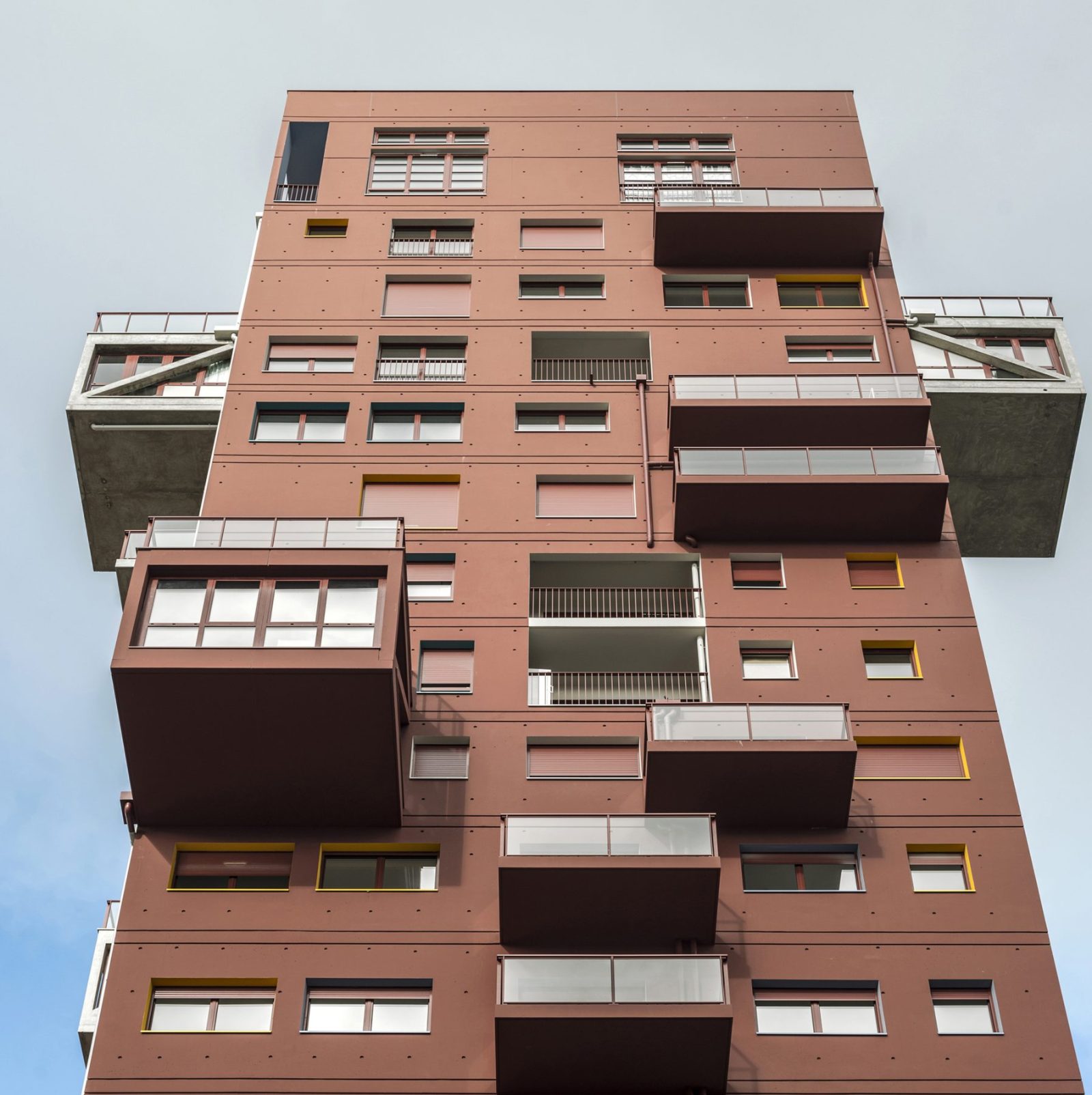
The primary façades, composed of raw concrete and red paint, pay homage to Ivry’s architectural heritage, echoing the city’s emblematic concrete and brick buildings.
Programme: surfaces and social mix
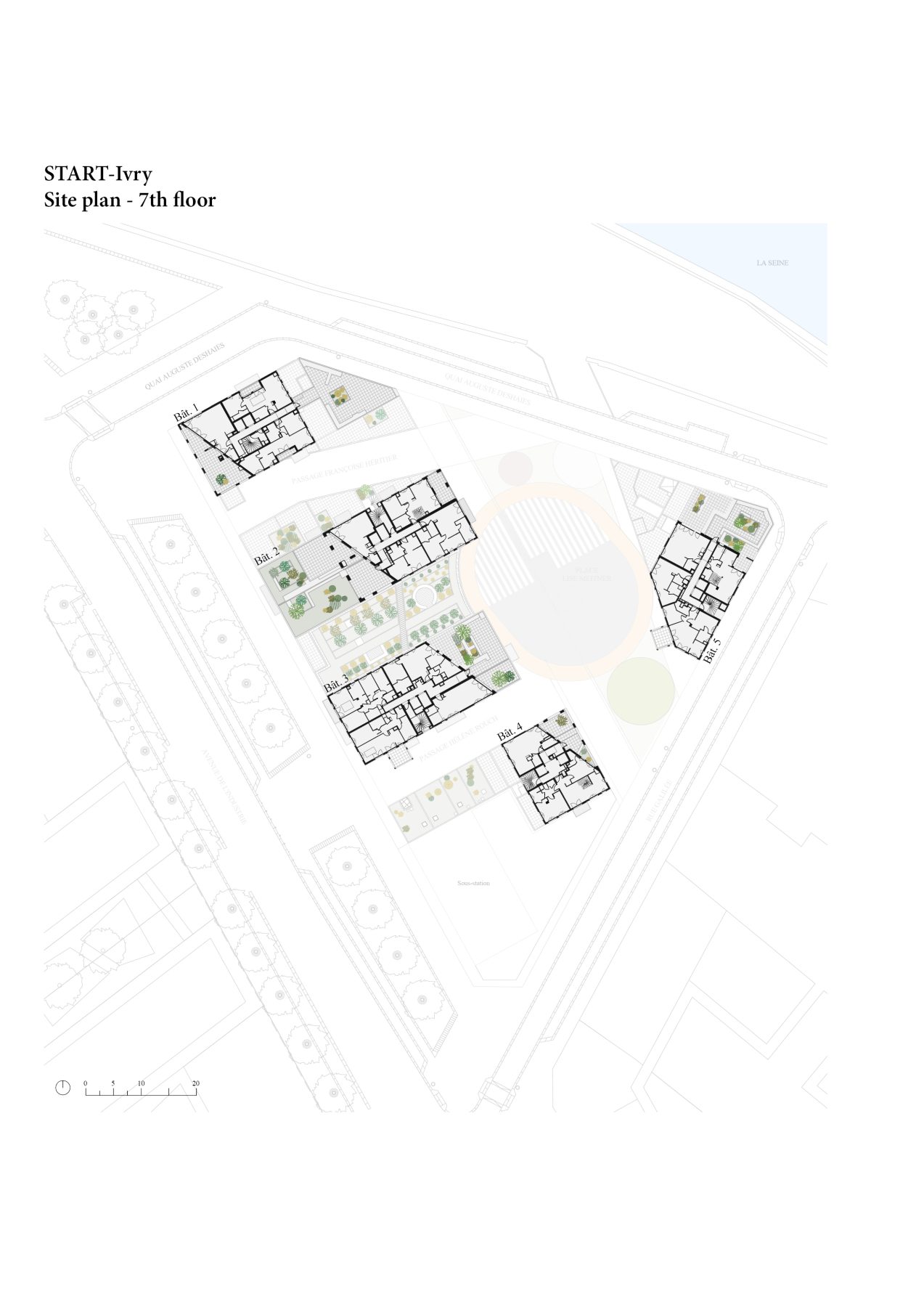
Spanning 22,863 m², including 19,700 m² of housing, START-Ivry comprises five towers of 13 to 19 storeys anchored by a commercial plinth with 14 adaptable retail units, creating a vibrant hub within the urban redevelopment zone. The project delivers 288 dwellings—potentially 350 with future subdivisions— of which half are for homeownership, 34% are social housing, and the remainder are intermediate housing. Two of the five towers are mixed combining different housing regimes even on the same corridor – a rarity in France.
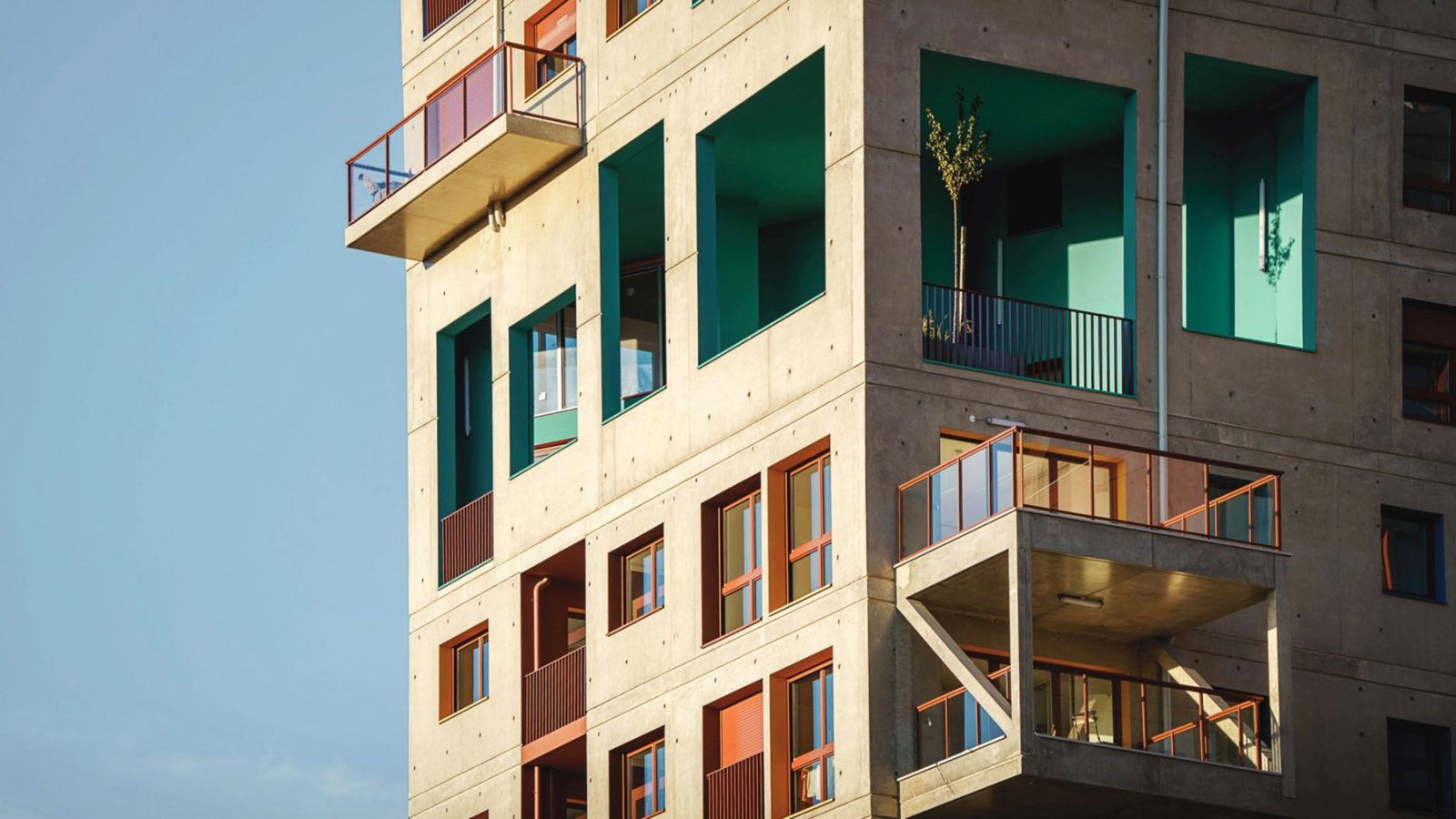
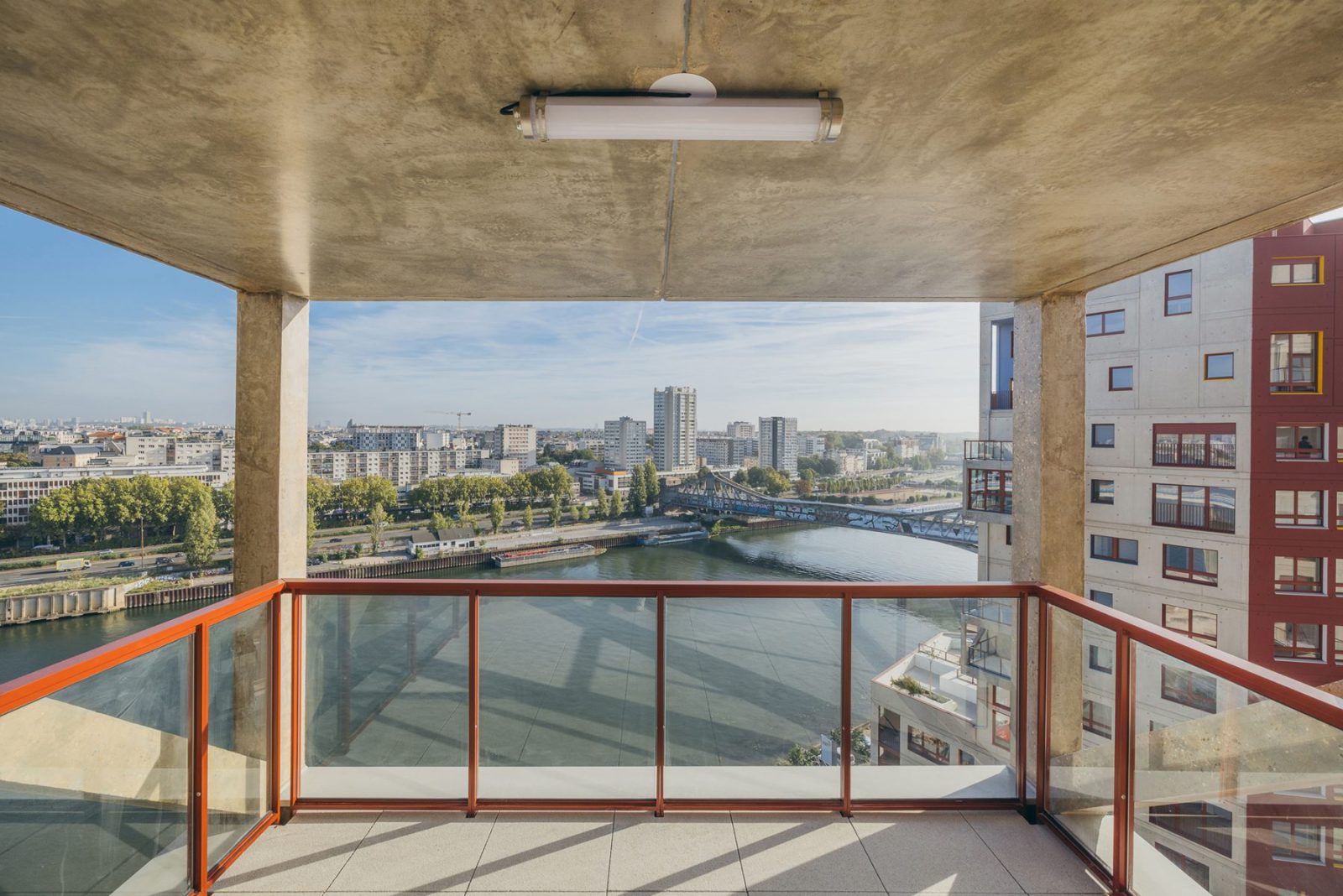
All residents share over 2,000 m² of terraces and upper-floor communal spaces.
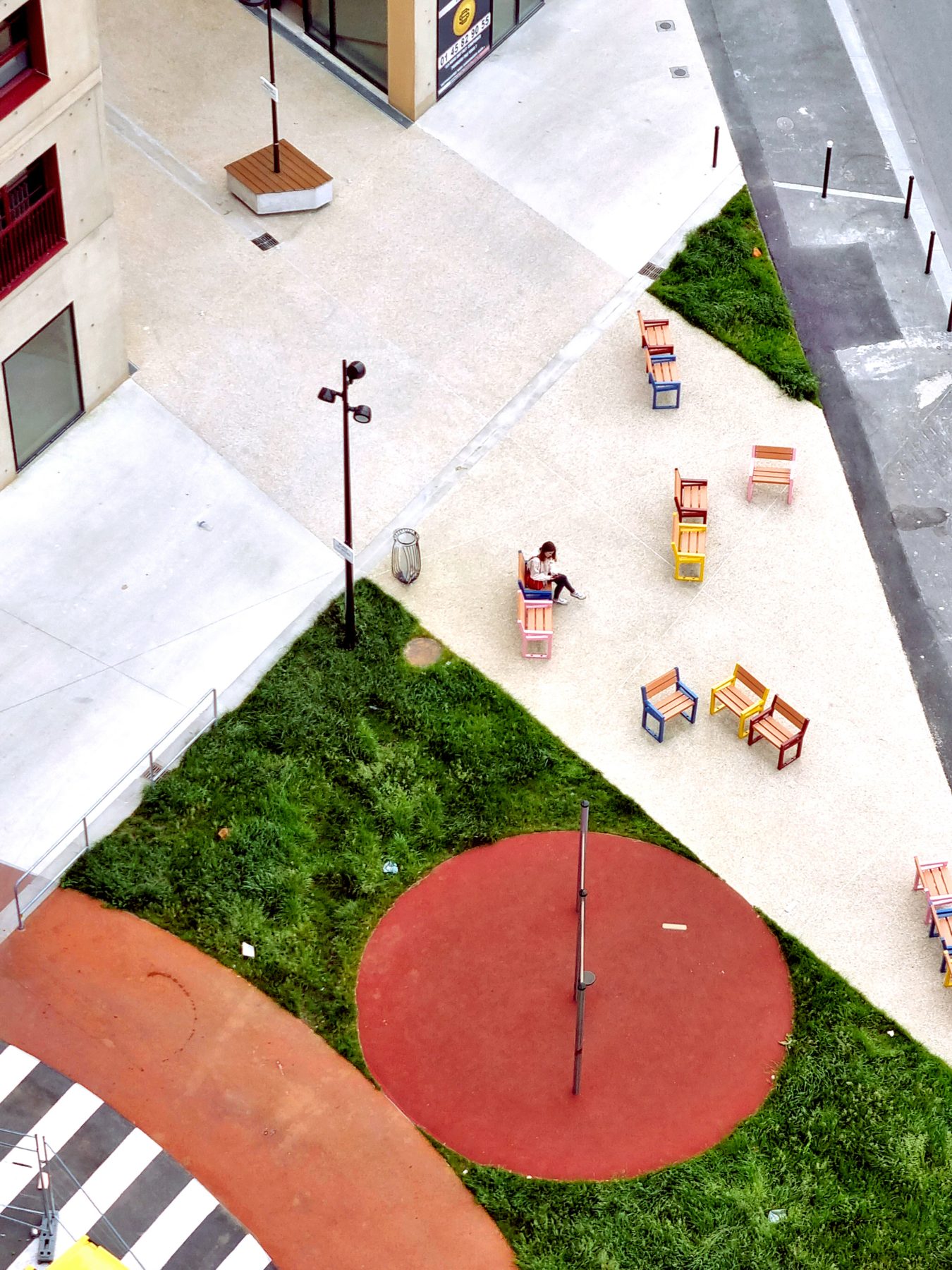
At ground level, 2,600 m² of public space—a central square and pedestrian alleys— links the site to the Seine, framing views of its iconic cable bridge, while integrating restaurants, gyms, bakeries, supermarkets, hair salons, and other amenities for both residents and the wider neighbourhood.
Environmental sustainability is inseparable from social sustainability: what good is climate-adapted housing if it fails to meet the needs of the people who live in it?
START achieves a 20% reduction in energy consumption compared to current standards and incorporates 20% low-carbon concrete in its structure and façades, with heating provided by geothermal energy. Yet the project goes beyond environmental metrics, addressing a dimension often overlooked in sustainability debates: the inhabitant and their evolving spatial needs. Unlike buildings that prioritize certifications over real-life adaptability, START responds to unforeseen everyday scenarios such as adult children returning home, live-in carers, empty bedrooms from children moving out, single-parent households, blended families, or remote work by incorporating flexible design solutions.
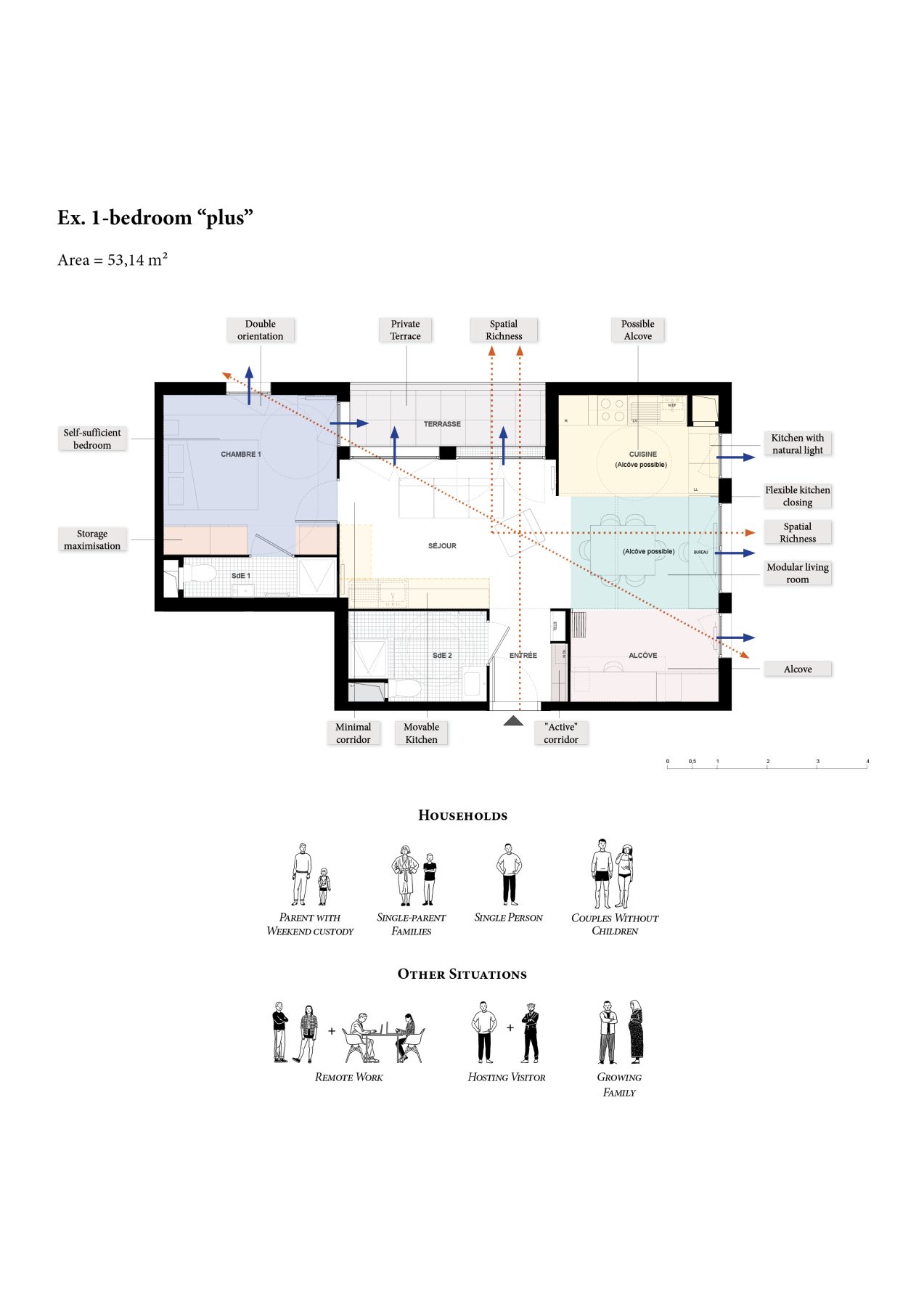

Divisible dwellings, super-adaptable homes, and “plus” or “bonus” typologies promote social and economic sustainability by adapting to changing household needs, creating new units without extra resource use, and generating additional income through rental or sale.
Inverse Method: placing the architect at the center of the process
START-Ivry was made possible through a pioneering process—the Inverse Method—in which the architect was selected first based on methodology rather than visuals, and developers were invited to compete around the architect’s project.
Over eight months, monthly workshops brought together all stakeholders—land managers, urban planners, the municipality, and future developers—to collaboratively address design, construction, and management. The winning developer was selected for their ability to align with the architect’s project while the land manager ensured continuity by embedding design principles into the sale agreement and safeguarding the architect’s central role. START could not have come to life without this process.
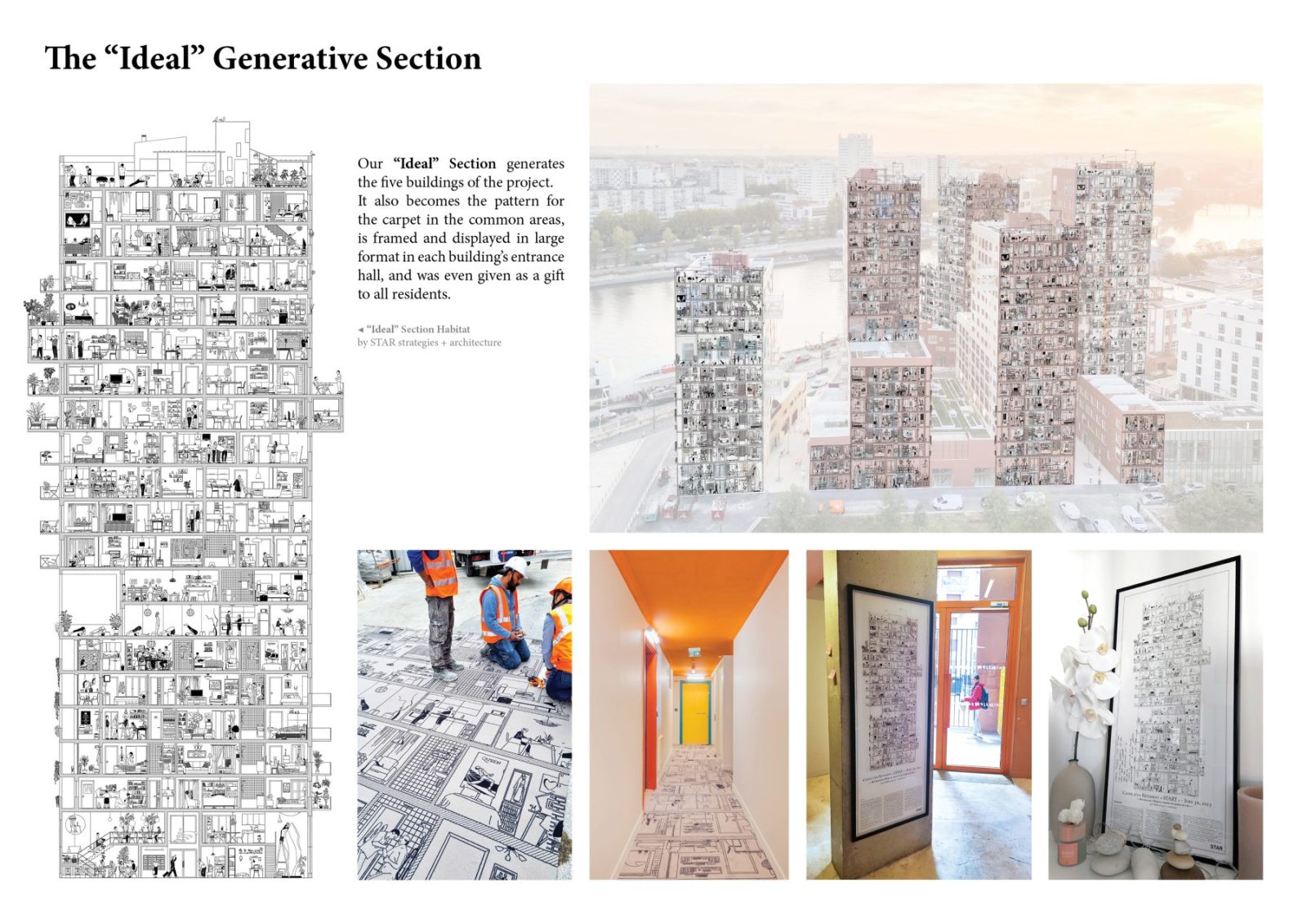
At START, standardization meets adaptability; floor plans serve as carriers of functionality, while sections become instruments for creatively orchestrating the coexistence of residents.
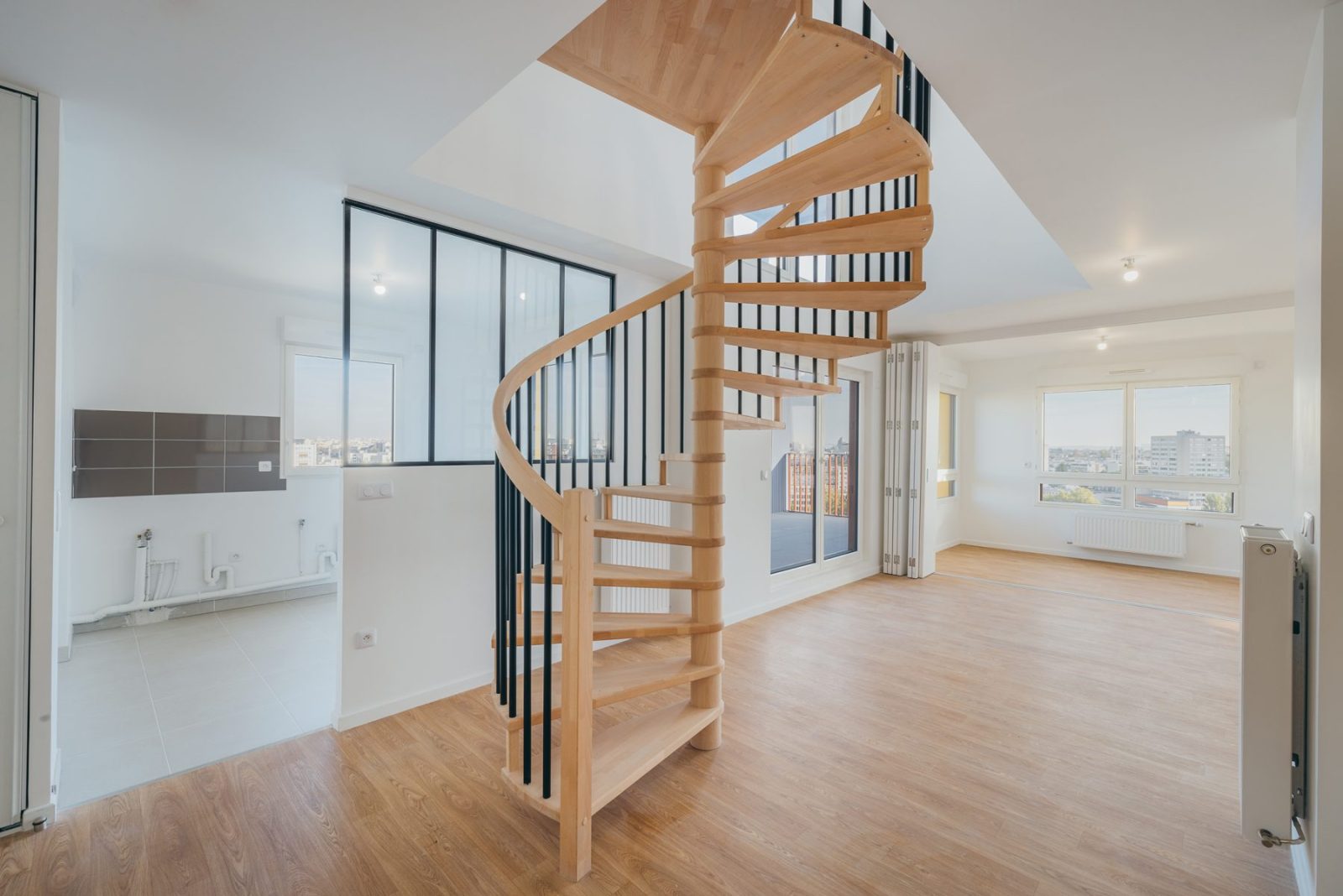
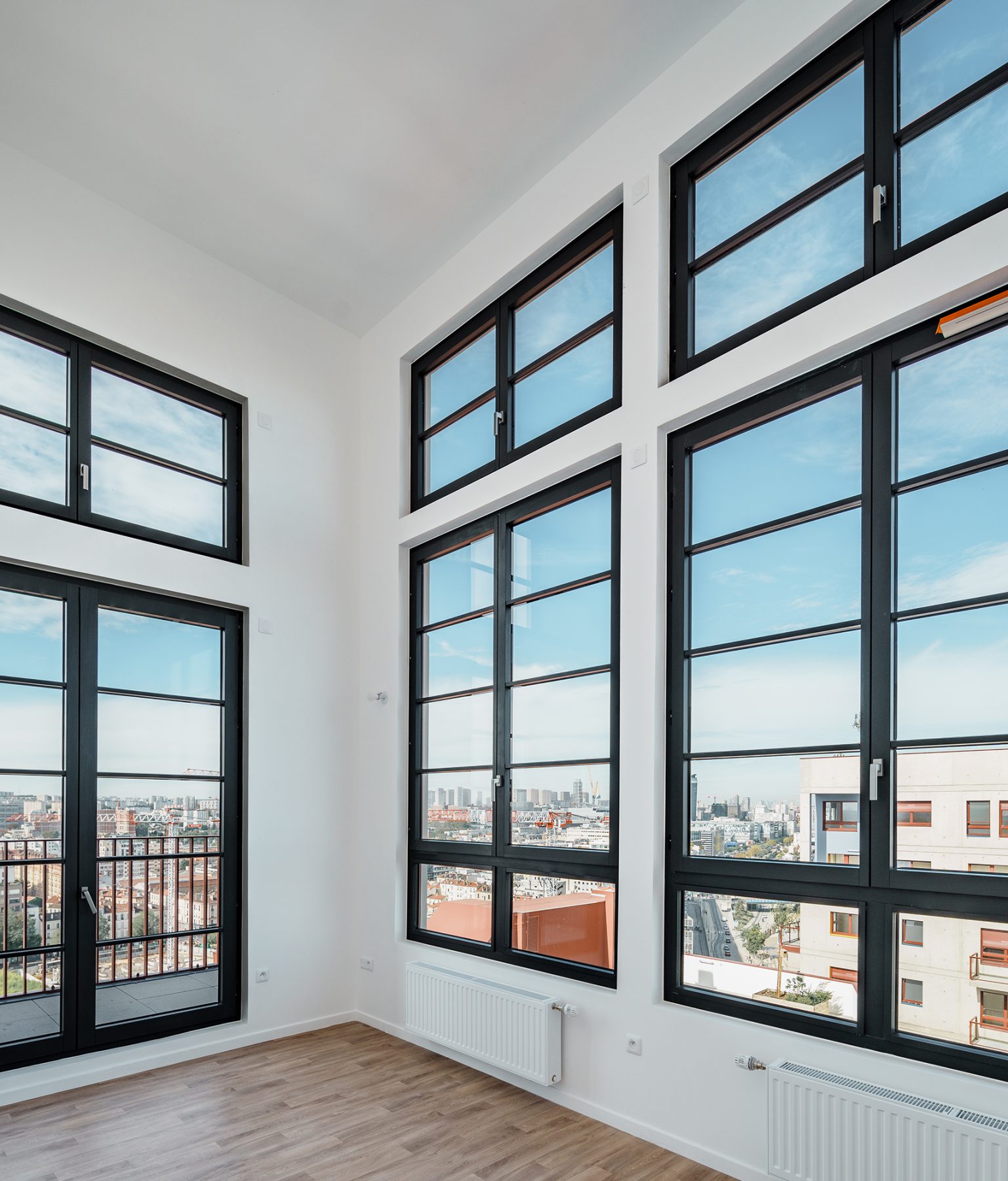
Inspired by the postmodern masterpiece Life: A User’s Manual by Georges Perec, START-Ivry embraces the unpredictability of daily life, allowing routines, reversals, and miracles to unfold naturally. START housing allows life to happen where architecture becomes at once structure and liberation, discipline and play, shaping not merely spaces, but the rhythms of how we live.
Drawings
BIO
STAR is a practice dealing with architecture in all its forms. Founded in Rotterdam in 2006 by Spanish architect Beatriz Ramo (1979), STAR strategies + architecture works on projects and research of any scale in the fields of architecture and urbanism, taking responsibility for all phases of the process — from concept to completion.
The practice has won awards in international competitions for housing, public buildings, and urban planning in France, the Netherlands, China, Iceland, Lebanon, Norway, and Spain, as well as several distinctions — including awards granted by Architizer, Archello, FRAME, Azure Awards, Architectenweb, and MIX Interiors — and the ARVHA National French Prize for Female Architects in 2024.
Its portfolio covers a wide range of projects, from The Cabanon — a 7 m² fully equipped mini-apartment with a spa in Rotterdam — to a Ferris wheel–railway station hybrid in Elche. Over the last decade, STAR has developed a strong focus on adaptable and evolutive housing, culminating in START-Ivry, a 288-dwelling experimental collective housing project in Ivry-sur-Seine, Greater Paris.

Beatriz Ramo is managing contributing editor of MONU – Magazine on Urbanism and served on the Scientific Committee of the AIGP- Atelier International du Grand Paris (2012–2016), advising the French government on housing solutions. Beatriz is a recognised critical voice in collective housing. She challenges the ongoing standardisation of housing production. Her research and built work advocate for adaptable designs that respond to the diversity and evolving needs of contemporary households — a position that has contributed meaningfully to the debate on housing quality.
START-Ivry has already received over 20 prizes so far from Architizer in the US, AZ Awards in Canada, German Design Awards in Germany, ARVHA Prize in France, Finalist in BCIA British Construction and Infrastructure Awards in UK, and Finalist at the ARCHELLO Awards in Netherlands.
Facts & Credits
Project title START-Ivry_Social, Transformable, Affordable and Resilient Typologies
Typology Collective housing (social, free market and intermediate)
Location Ivry-sur-Seine, Greater Paris, France
Duration 2015 – 2025
Architecture STAR strategies + architecture
Author Beatriz Ramo López de Angulo
Project Lead Danae Zachariaki
Team Efraín Pérez Del Barrio, Ivan Guerrero, Geoffrey Clamour, Syeva Roest, Javier Cuartero, Bittor Arrillaga, Maria Castillo, Iris Ramas, Marc Coma
Landscape / public space design Bernd Upmeyer / BOARD, Bureau of Architecture, Research and Design
Client – Developer Phase 1: SADEV 94; Phase 2: SOGEPROM Réalisations
Photography Nicolas Grosmond, Nicolas Trouillard, Kamel Khalfi, Vladimir Partalo