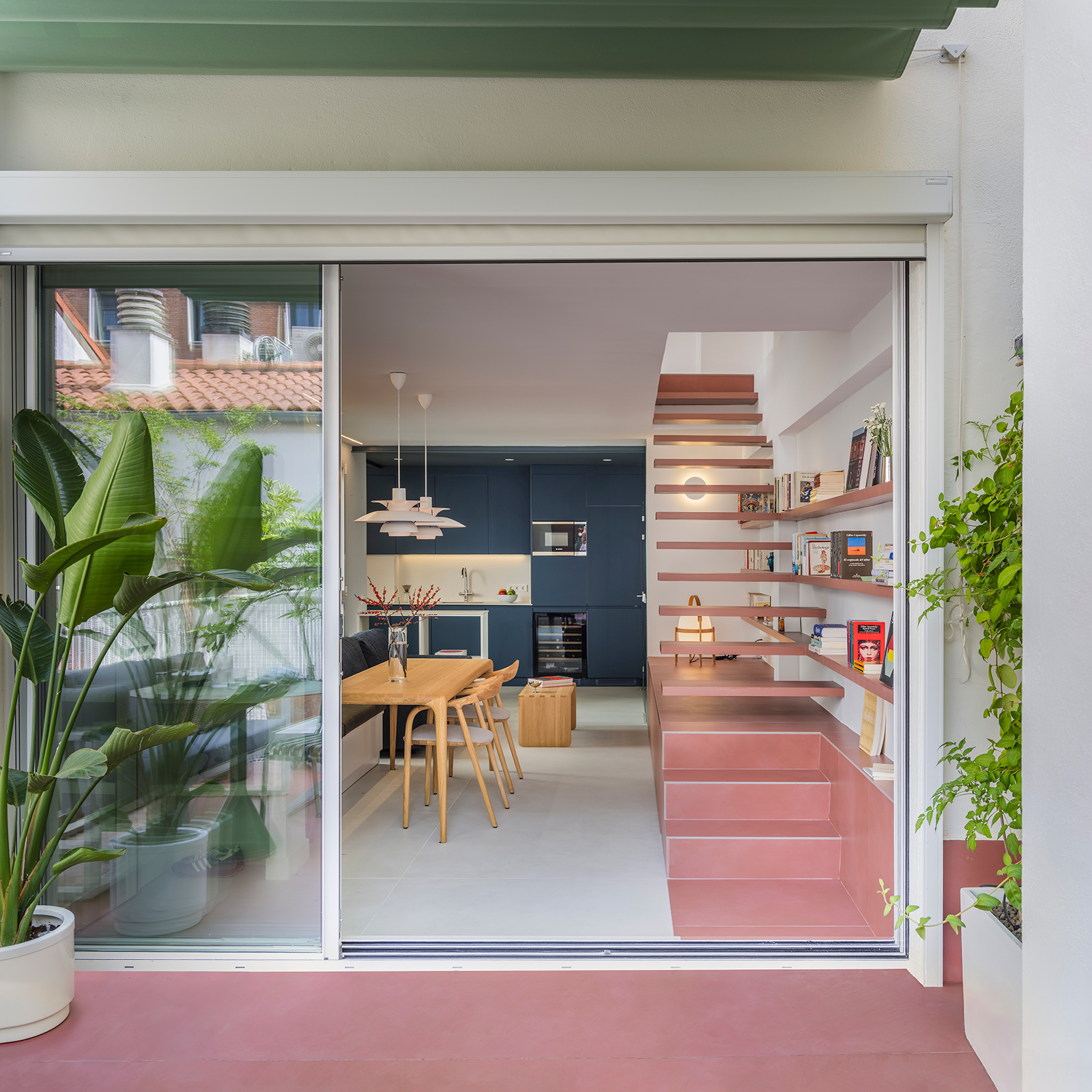
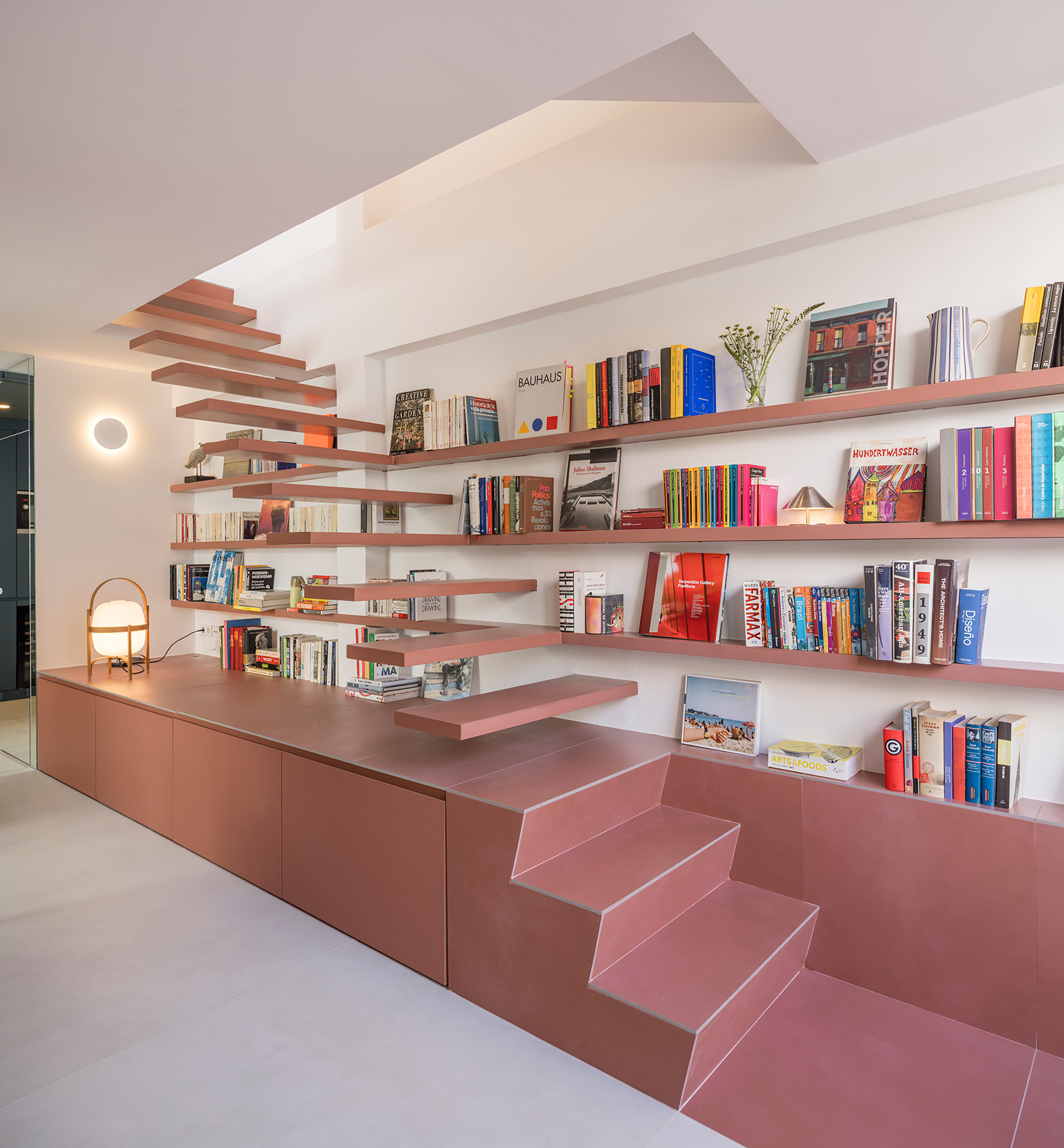
Casa binôme, by gon architects, has been awarded Best Interior Design Project of the Year 2025 by Archisearch for its quietly radical reimagining of an 80 sq.m. duplex apartment within a 1900s building in Madrid’s Conde Duque neighborhood. Designed for Philippe—an art and architecture enthusiast—the project unfolds as a phenomenological domestic landscape structured around a pink steel staircase. More than a means of ascent, the stair becomes the home’s generative core: a hybrid, inhabitable artifact that choreographs movement, filters light, and produces space, transforming everyday life into a continuous, embodied architectural sequence.
“The first steps are always the most difficult,” writes Julio Cortázar in his short prose piece, entitled “Instructions on How to Climb a Staircase”, first published in 1962 as part of his collection Historias de cronopios y de famas. At first glance, the text reads like a set of absurdly precise directions. Cortázar describes, with mock-scientific rigor, how to place one foot on a step, how the body should lean, how balance is achieved, how repetition eventually produces ascent. By over-describing the ordinary, Cortázar estranges it. The staircase suddenly becomes philosophical.

The act of ascending and descending is no longer automatic; it demands attention, effort, and awareness, thus becoming an existential task.
One must abandon the stability of the ground floor and enter a sequence of imbalance. The body advances only by risking a fall, step after step. Cortázar exposes how every transition—physical or existential—contains resistance at its beginning. The first steps are difficult not because they are complex, but because they demand presence.
Echoing an early phenomenological approach in architecture, Cortázar insists, long before theory formalized it, that movement through space is not neutral. It is learned, remembered, and negotiated by the body. The stair is not just a means to reach another level; it is a sequence of moments, each requiring trust in balance and gravity.
Picking up the thread from Cortázar’s provoking mindset, in an age of hesitant movement when elevators discourage effort and escalators anesthetize ascent, the stair remains one of architecture’s last resistant elements. It asks something of us. It slows us down. It returns the body to space and time.
At the heart of Casa binôme lies versatility, contemplation and socializing. Designed for Philippe, an art and architecture enthusiast seeking coherence, brightness, and spatial generosity, the new design balances social openness with moments of profound privacy.
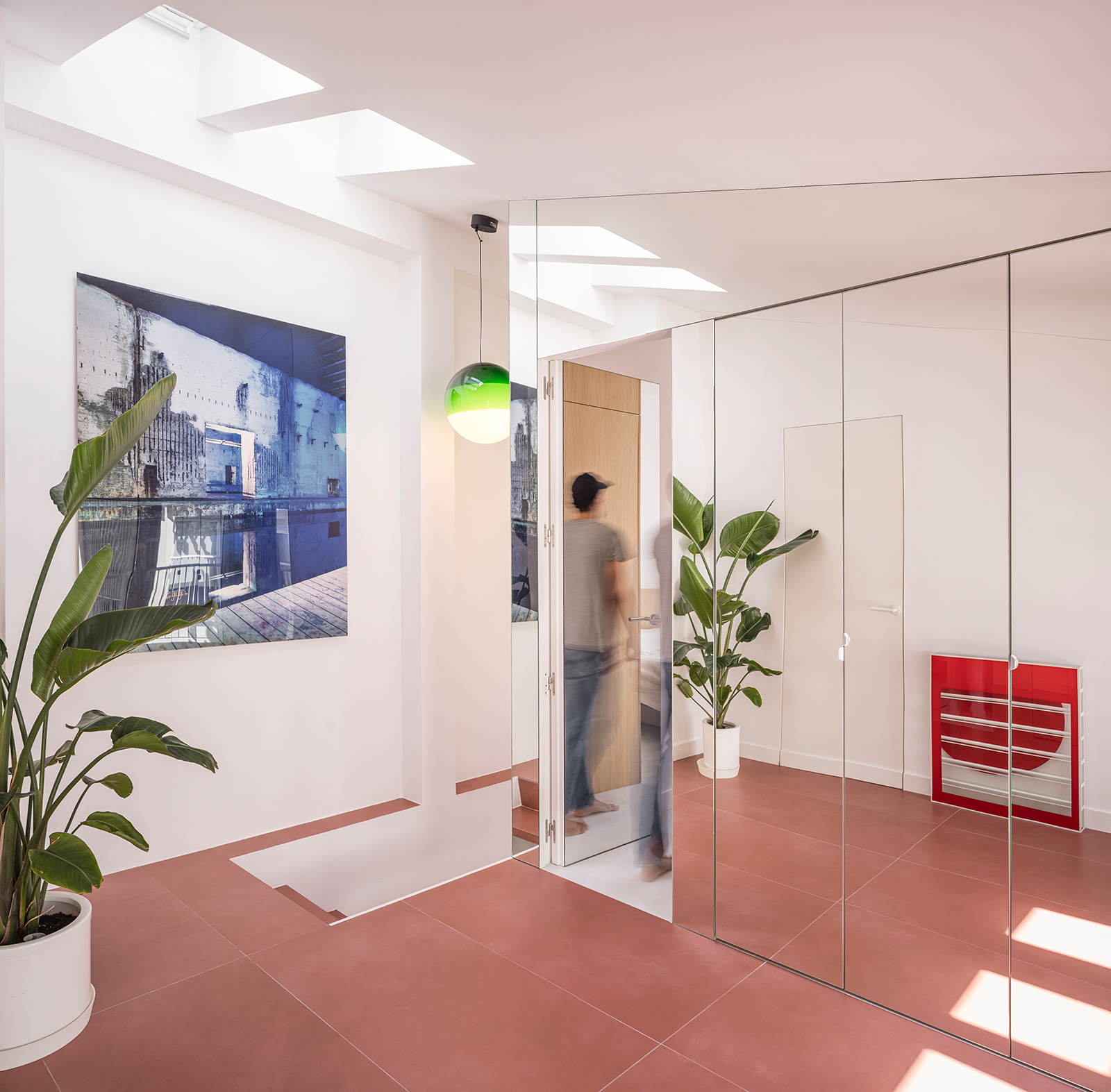
gon architects’ pink staircase is a man-made place where gathering and solitude are accommodated with equal sensitivity. More than a domestic reconfiguration, Casa binôme is a spatial essay on movement, perception, and lived experience—one that elevates the staircase from a functional necessity to the architectural core of the house.
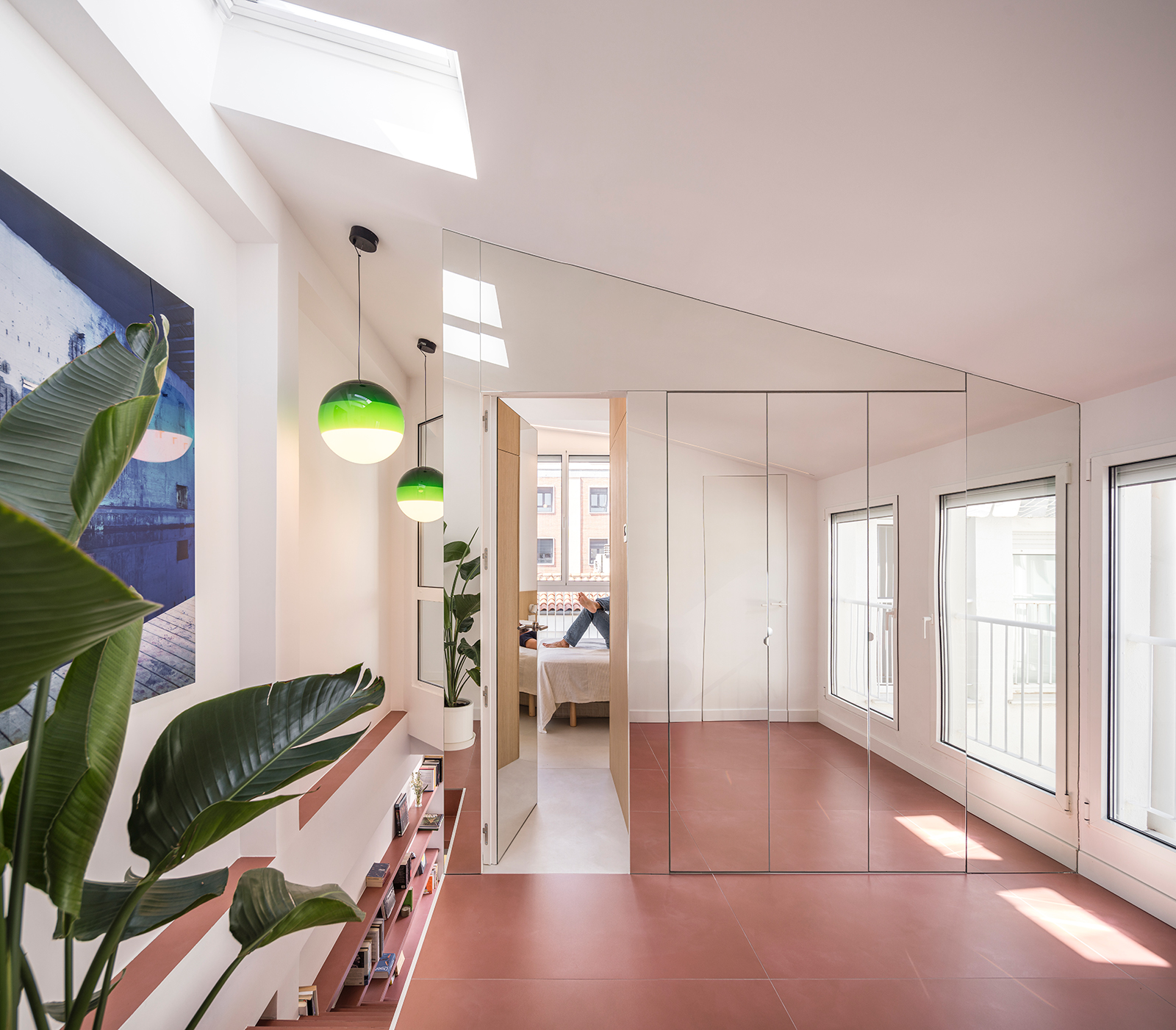
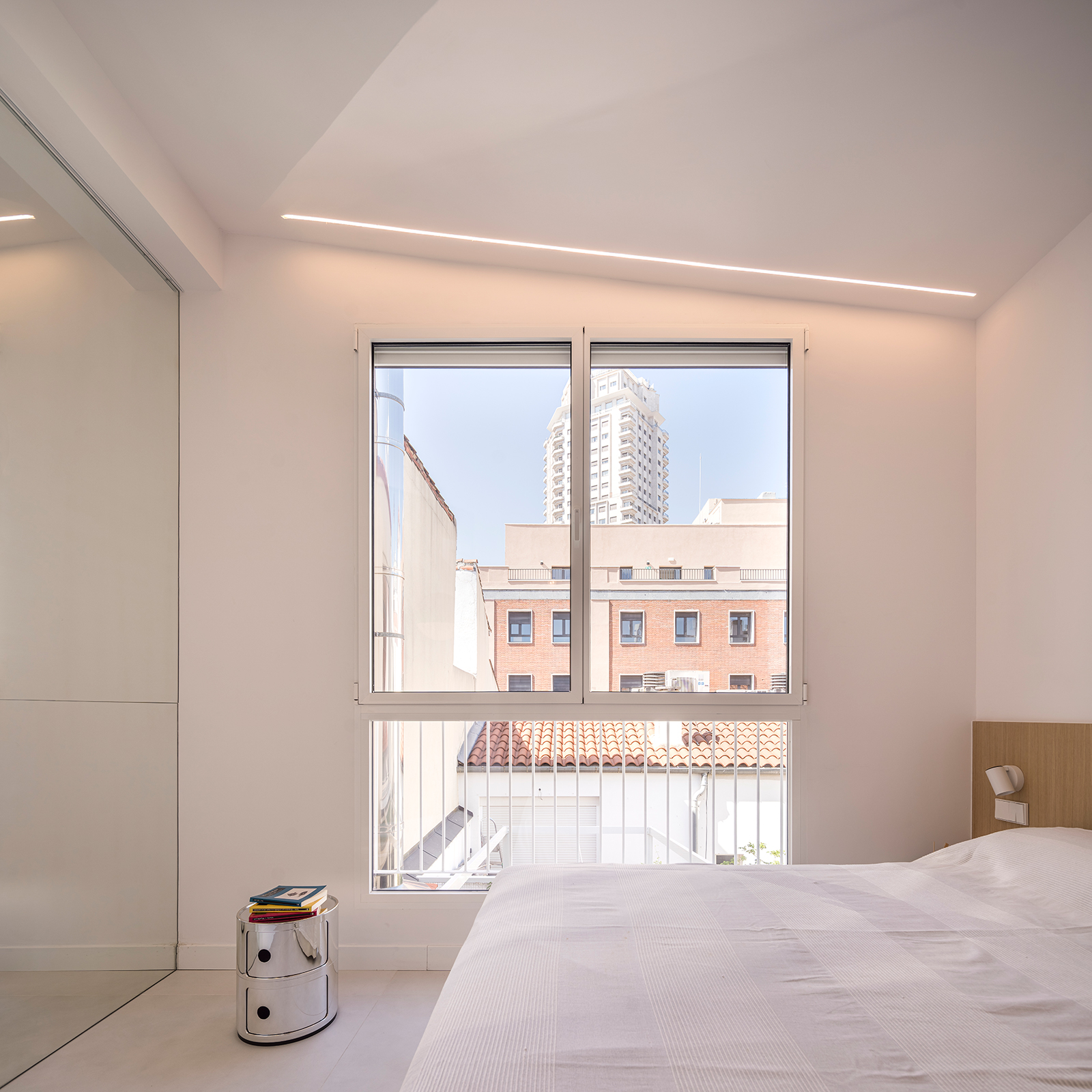
Architectural theorist Juhani Pallasmaa reminds us that architecture is never a purely visual artifact, but an embodied encounter—a dialogue between flesh, gravity, memory, and matter. Few elements express this more clearly than the stair. It is not merely a connector but a condition: a lived sequence rather than a neutral device. “The body knows and remembers. Architectural meaning derives from archaic responses and reactions remembered by the body and the senses.” The stair cannot be consumed at a glance. It unfolds step by step, through effort, balance, breath, and rhythm.
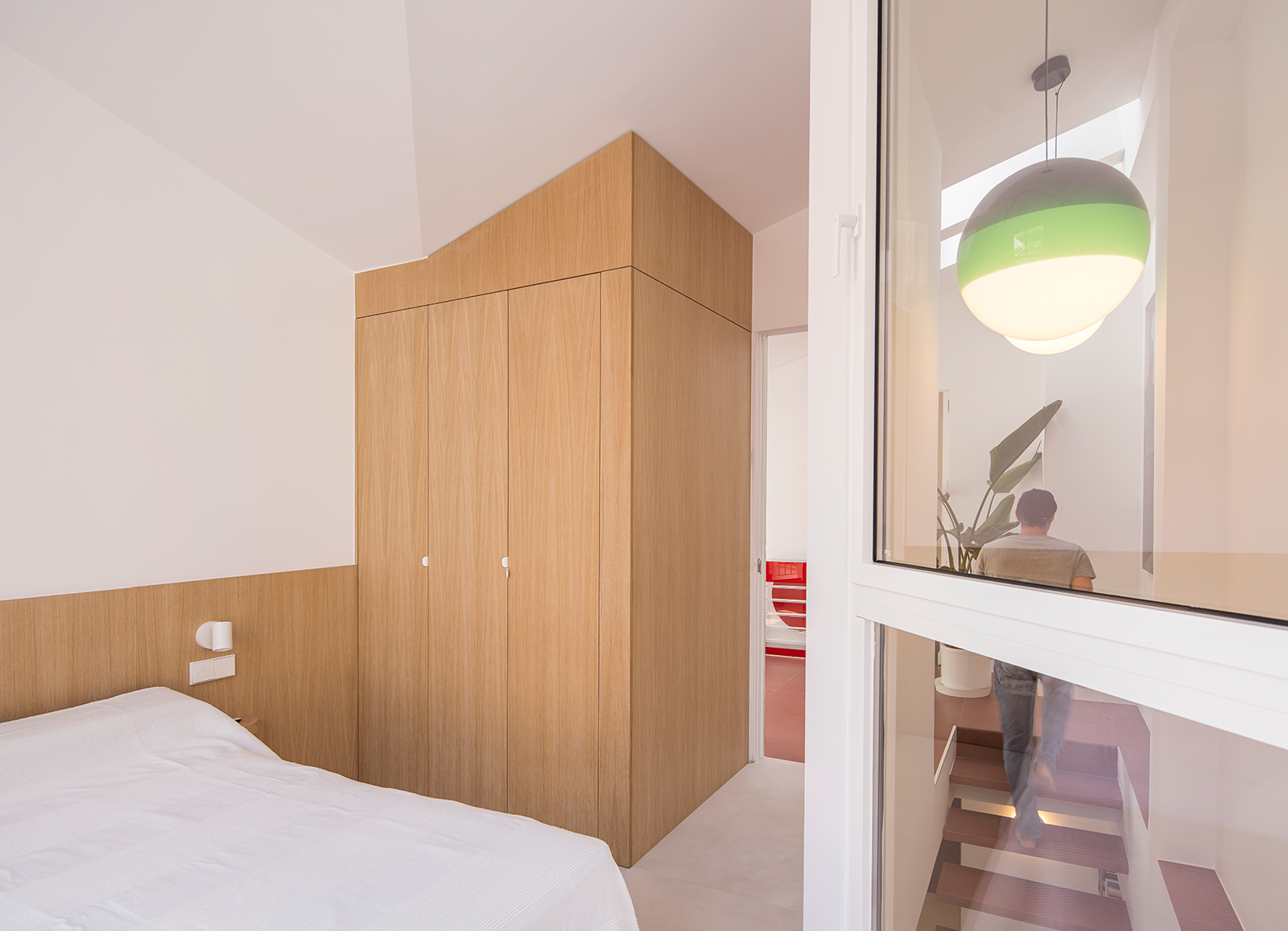
On the staircase, space is measured by the body itself, and time, quite literally, becomes space.
Before gon architects’ intervention, the apartment suffered from excessive compartmentalization, a disjointed kitchen, generic hotel-like bathrooms, poor natural light, and a terrace disconnected from everyday life. At the center of this unfunctional and characterless original spatial setting stood a rigid and monolithic welded-steel staircase. Its single flight dictated an inefficient layout and made difficult the communication between the apartment’s two levels. To rethink the interior space, gon architects figured that the stair had to be primarily reimagined.
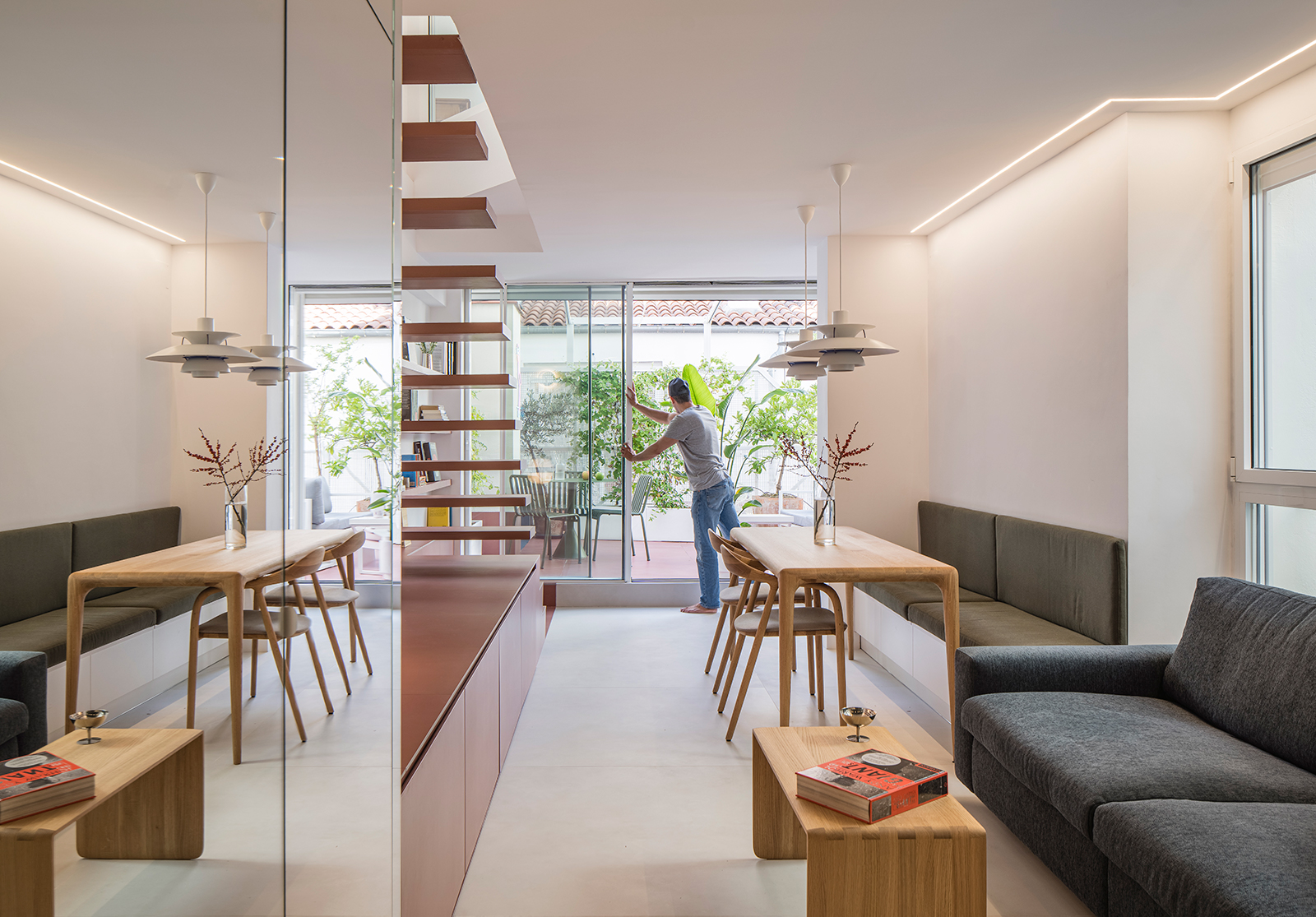
The new proposal relocates the staircase along the east wall, transforming it into a suspended steel structure delicately anchored between existing pillars. Freed from the center, the space opens, breathes, and flows.
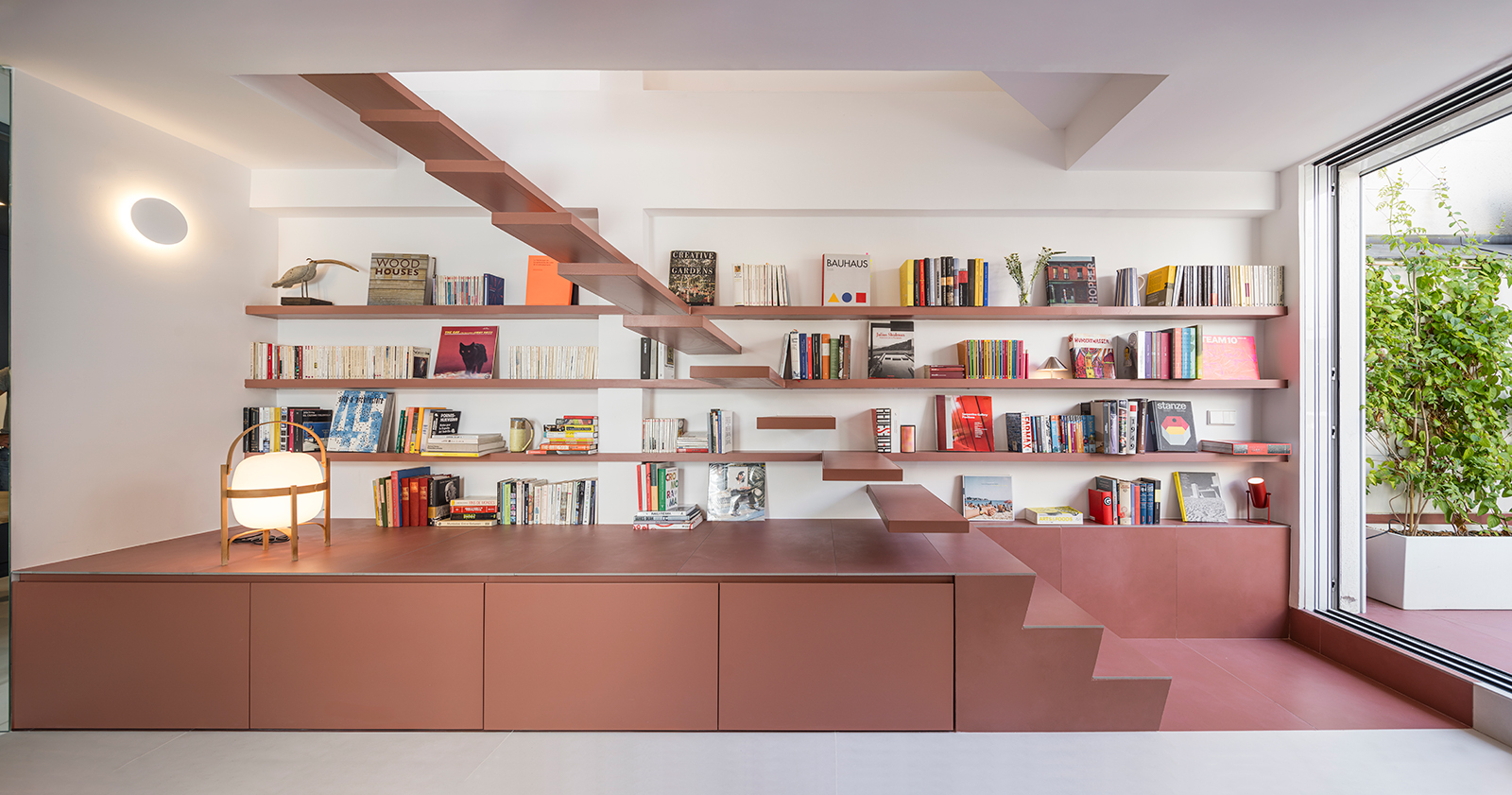
Light penetrates deeper into the duplex, circulation becomes intuitive, and the stair itself evolves into a hybrid object—simultaneously staircase, shelving system, and inhabitable furniture. It is no longer merely crossed; it is lived alongside.
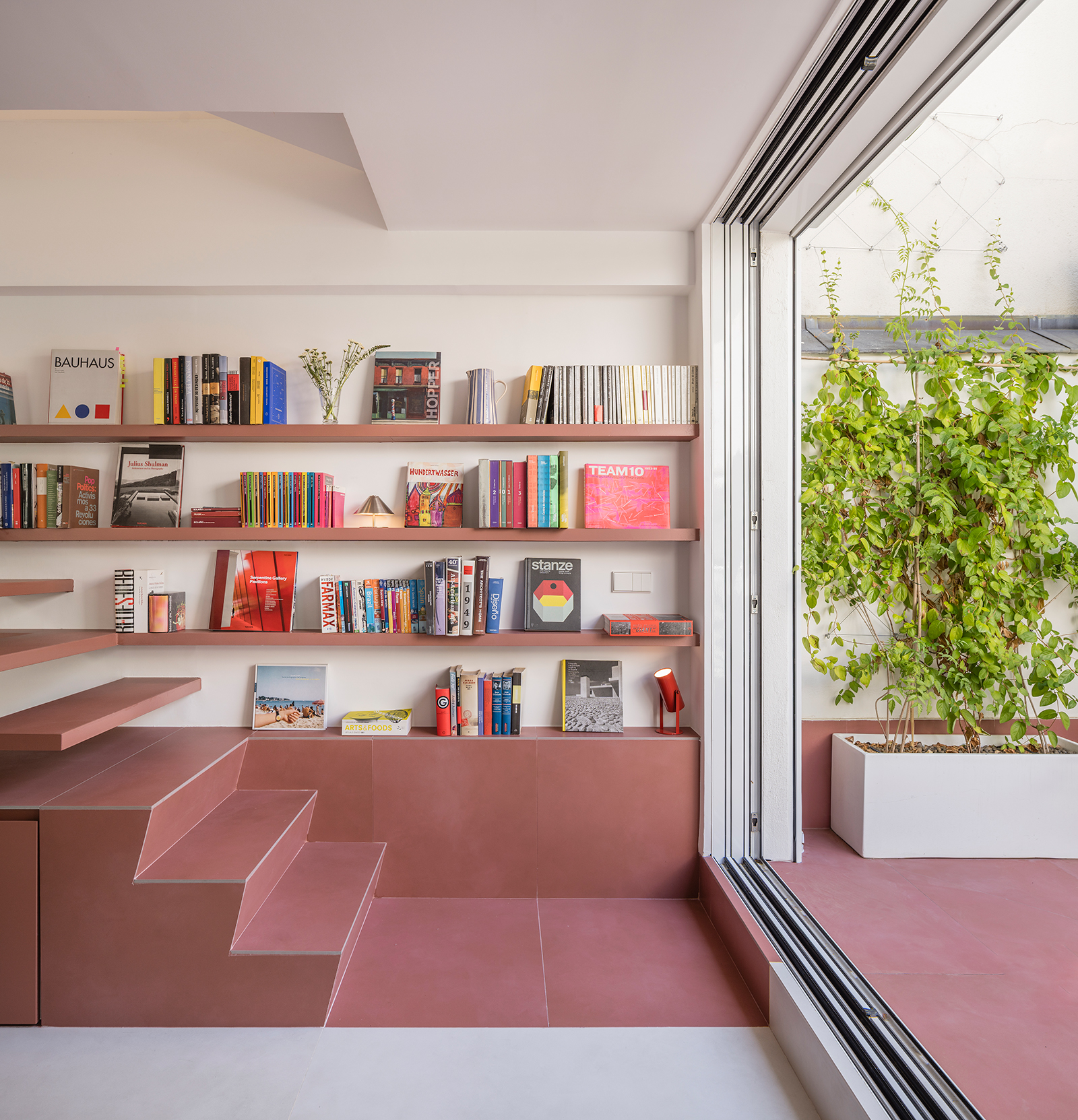
Each step is, as Pallasmaa writes, “a small pause between two states.” In Casa binôme, these pauses accumulate into a spatial rhythm that redefines domestic life. The stair introduces duration into the house—moments of hesitation, encounter, and awareness.
Design no longer has a static form; it becomes an event.
From a more poetic yet equally phenomenological perspective, Gaston Bachelard understood the stair as a psychological instrument. Ascending opens toward abstraction and light; descending invites introspection and memory. In Casa binôme, Bachelard’s vertical narrative is quietly inscribed into daily rituals—from cooking and reading to retreat and contemplation.
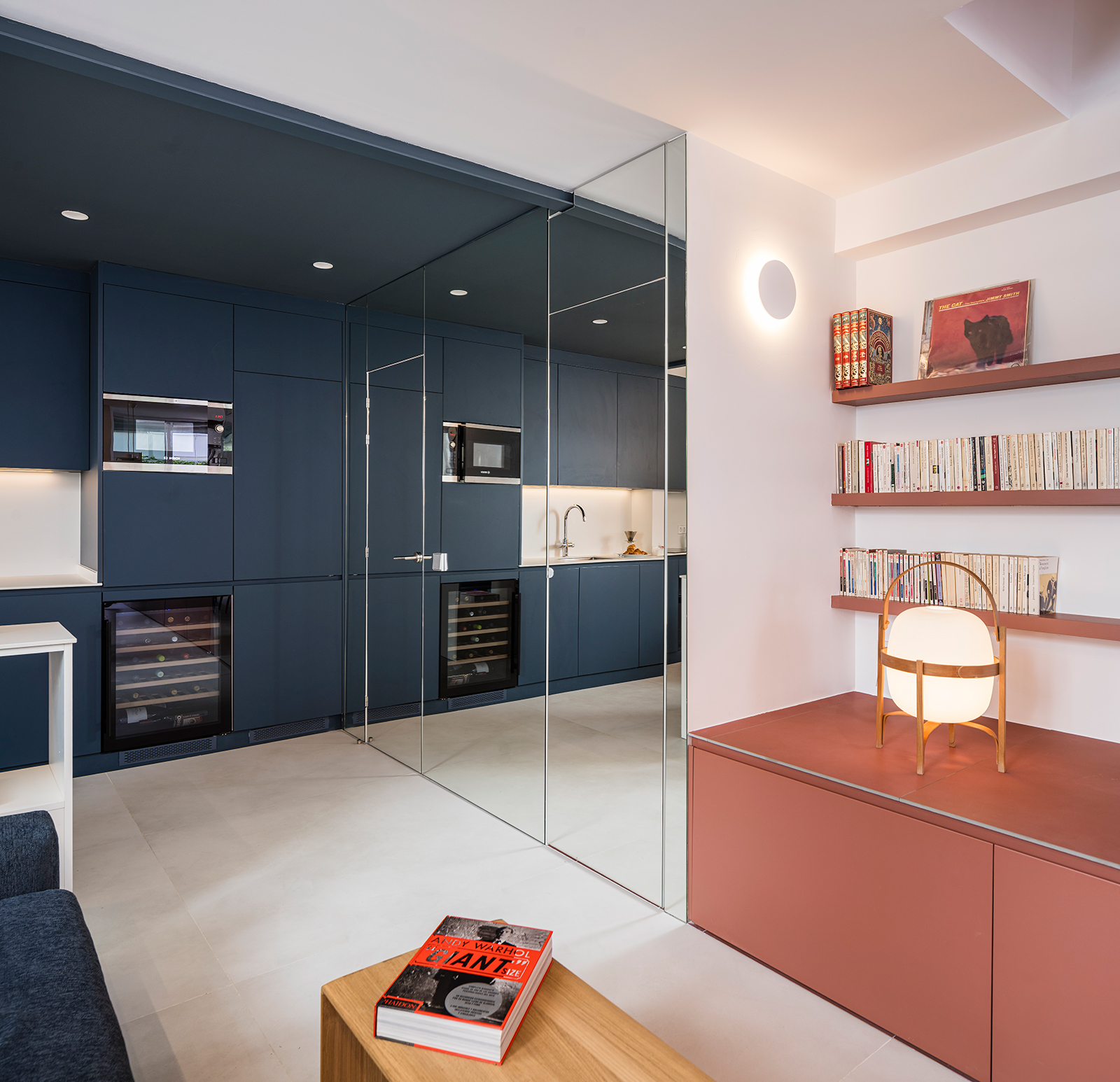
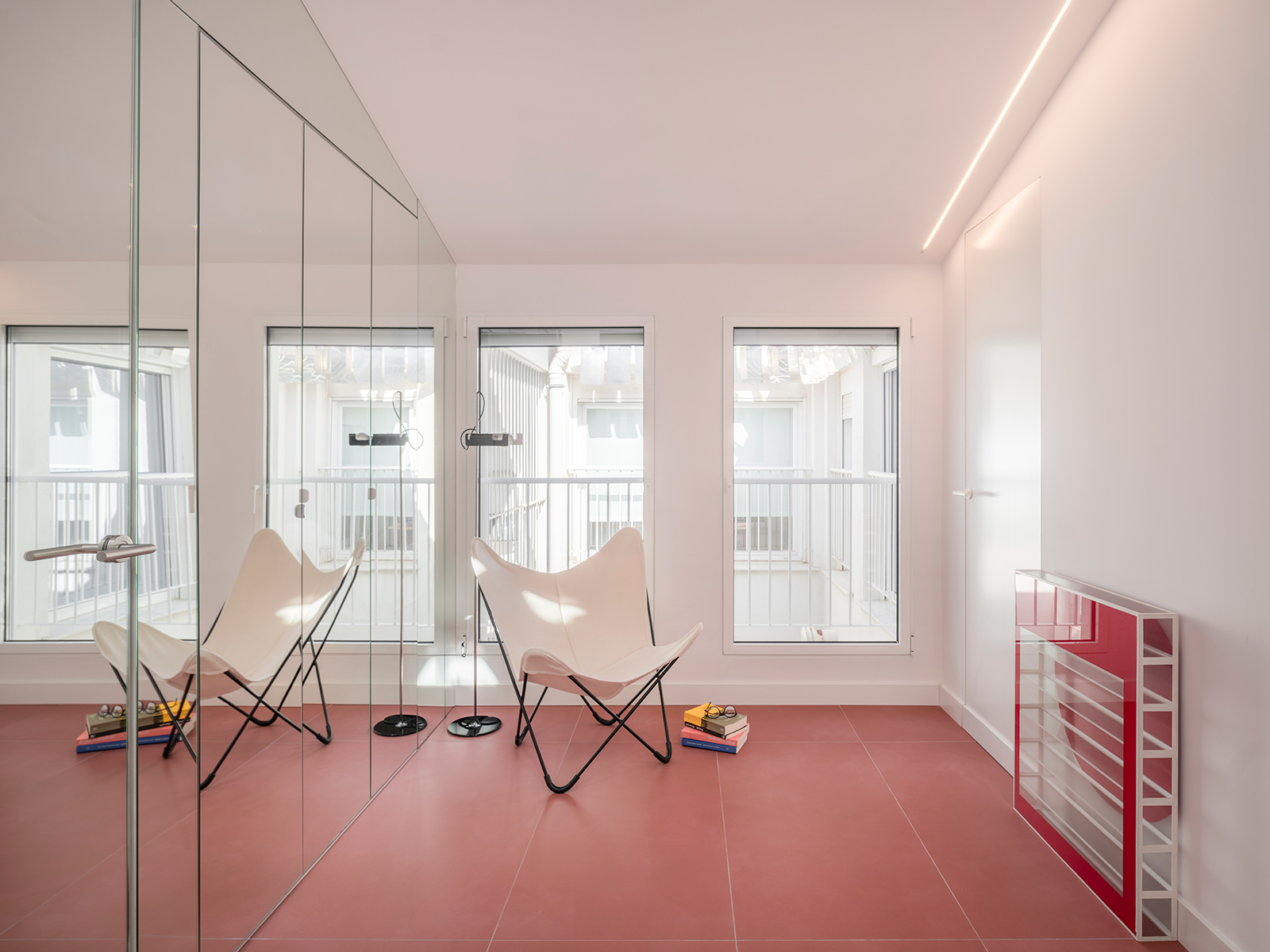
Material choices reinforce this continuity. Ceramic tiles inspired by traditional French tomettes unify interior spaces while extending visually toward the terrace, dissolving boundaries between inside and out. Mirrored surfaces in bathrooms and bedrooms multiply perspectives, dematerializing volumes and amplifying light. Books, artworks, lamps, and objects find their place within a house conceived as a continuous exterior space—fluid, layered, and deeply personal.
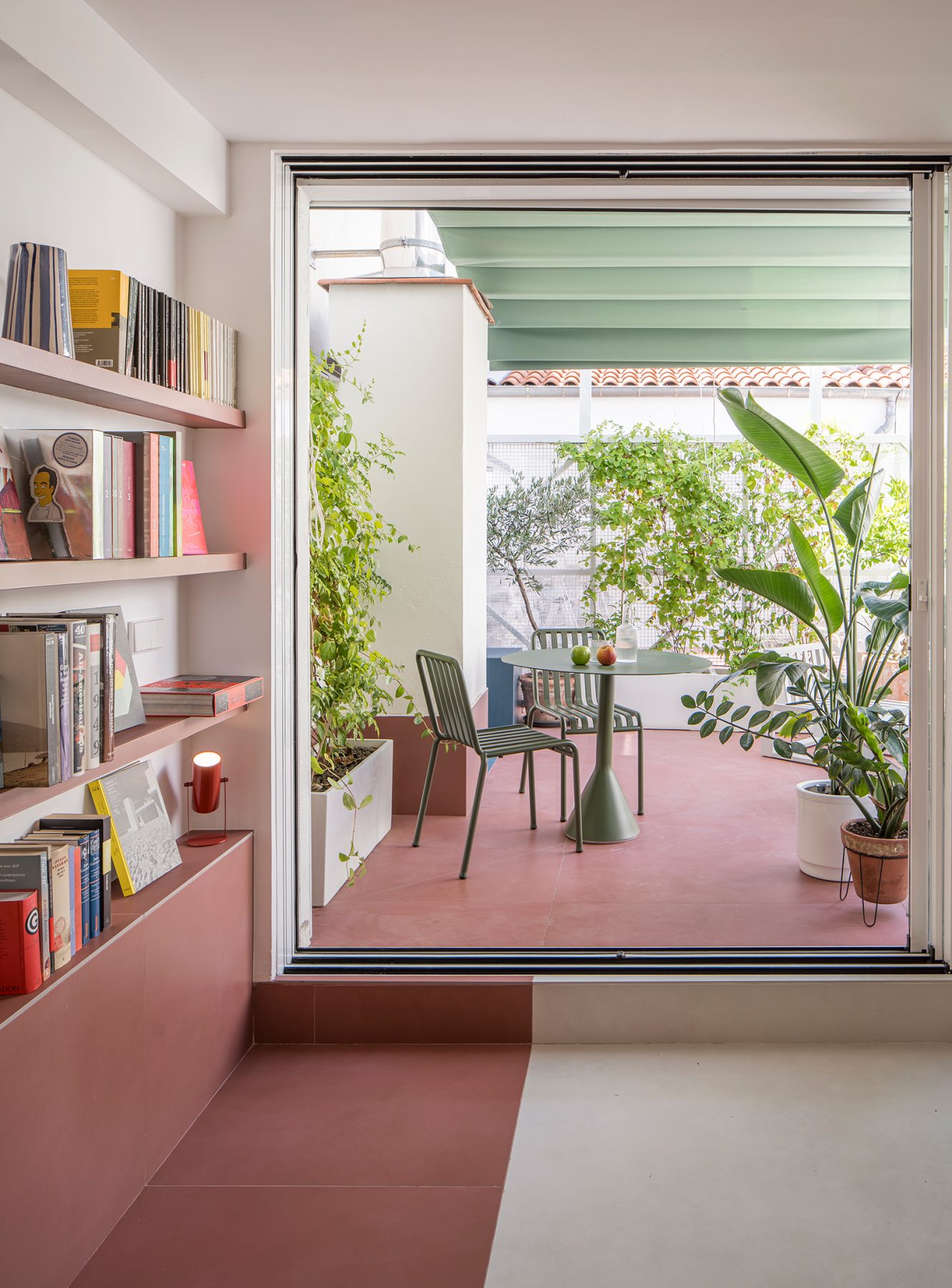
In a culture obsessed with speed and efficiency, Casa binôme quietly insists on effort and presence around a staircase as an inner landscape reimagined with precision and care.

It is here, between ascent and descent, that the space reveals its true colours and emotional intelligence. The phenomenological perspective reminds us that architecture is not only what we see, but what we undergo and that architectural objects are not merely functional elements, but also psychological instruments. To ascend is not merely to go up; to descend is not merely to go down. Each direction carries an emotional impact.
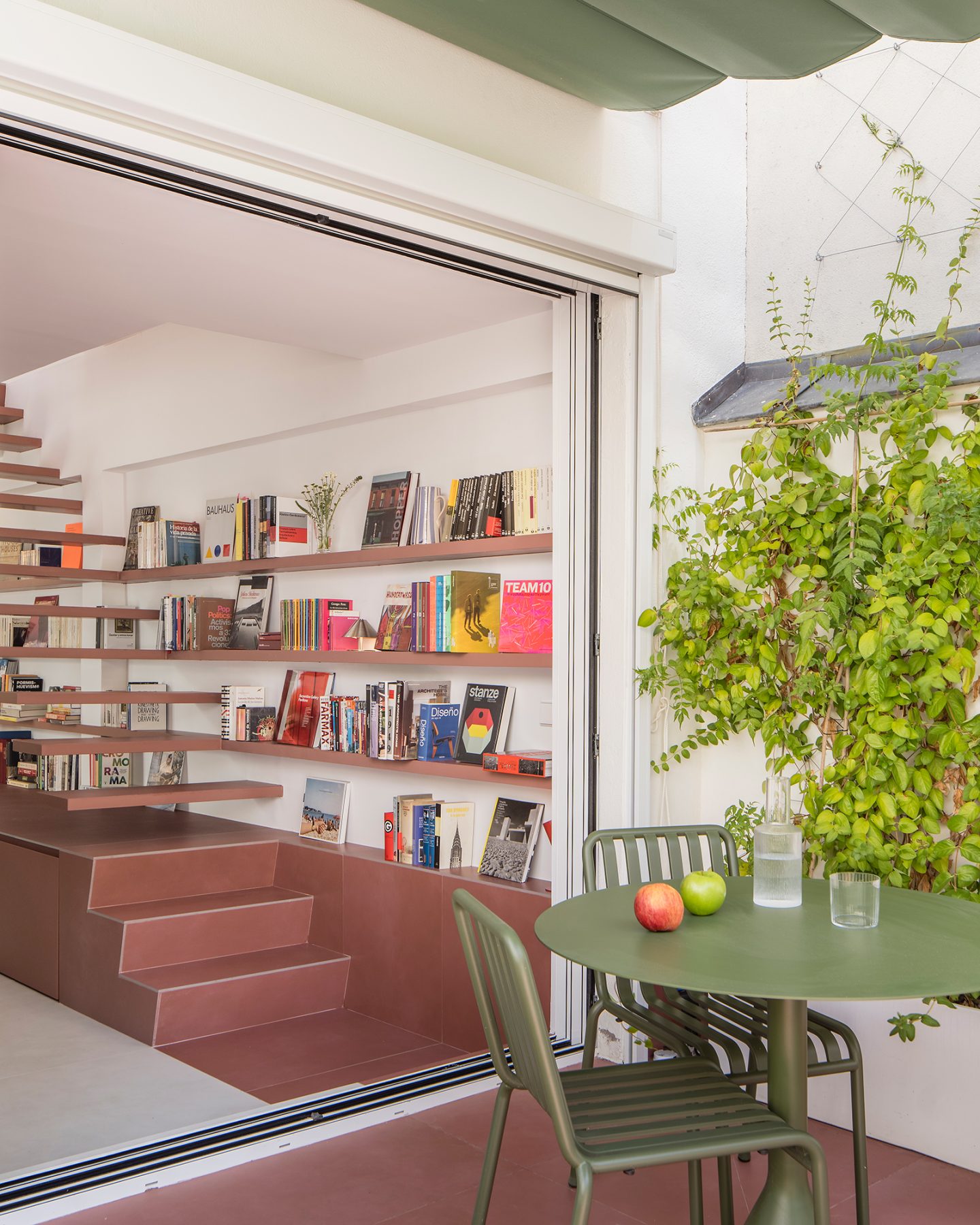
Caught between consciousness and reverie, the whimsical universe of Casa binôme reveals the stair as architecture’s most intimate threshold; where the body thinks, the time thickens, and space is not traversed but felt.
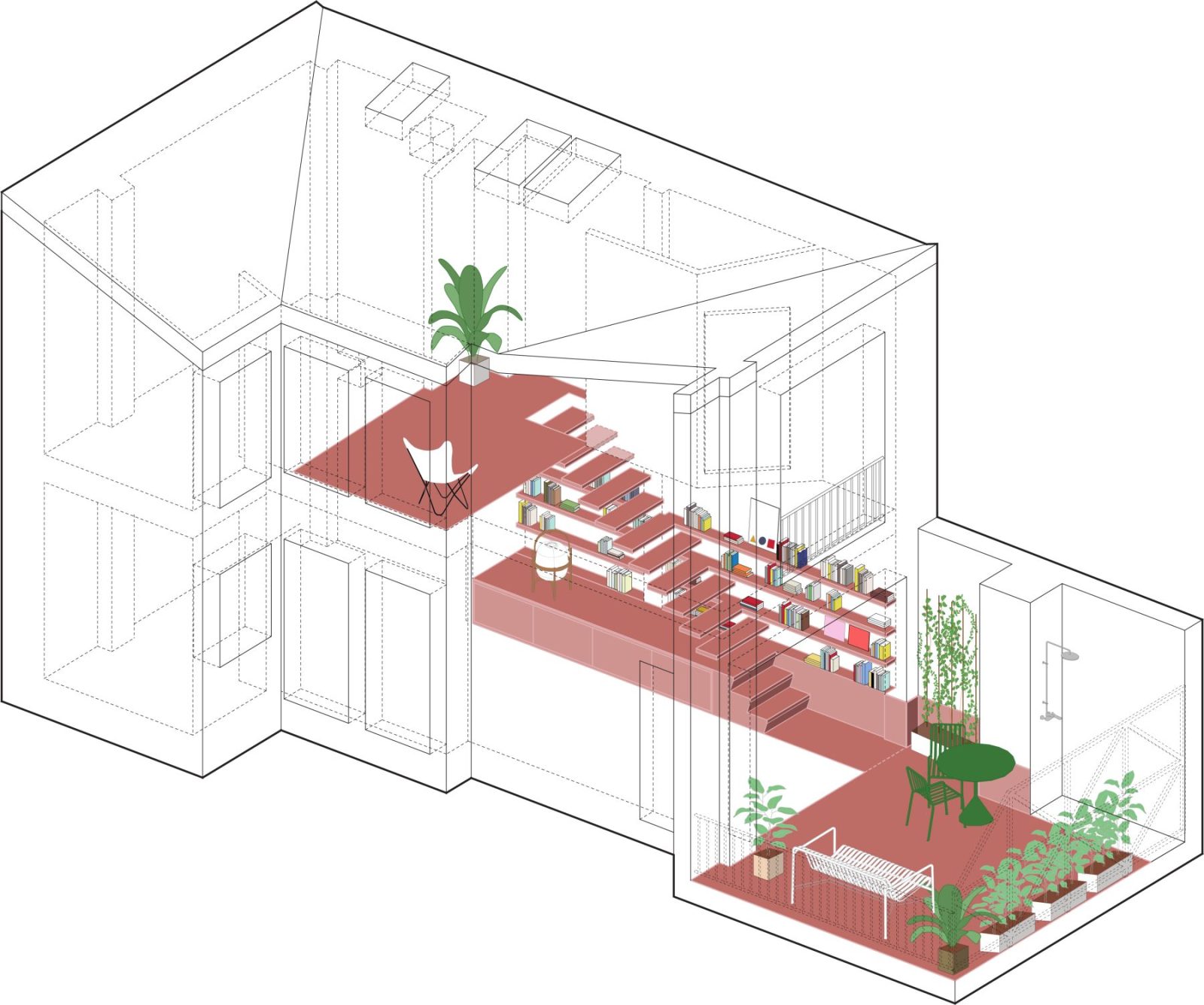
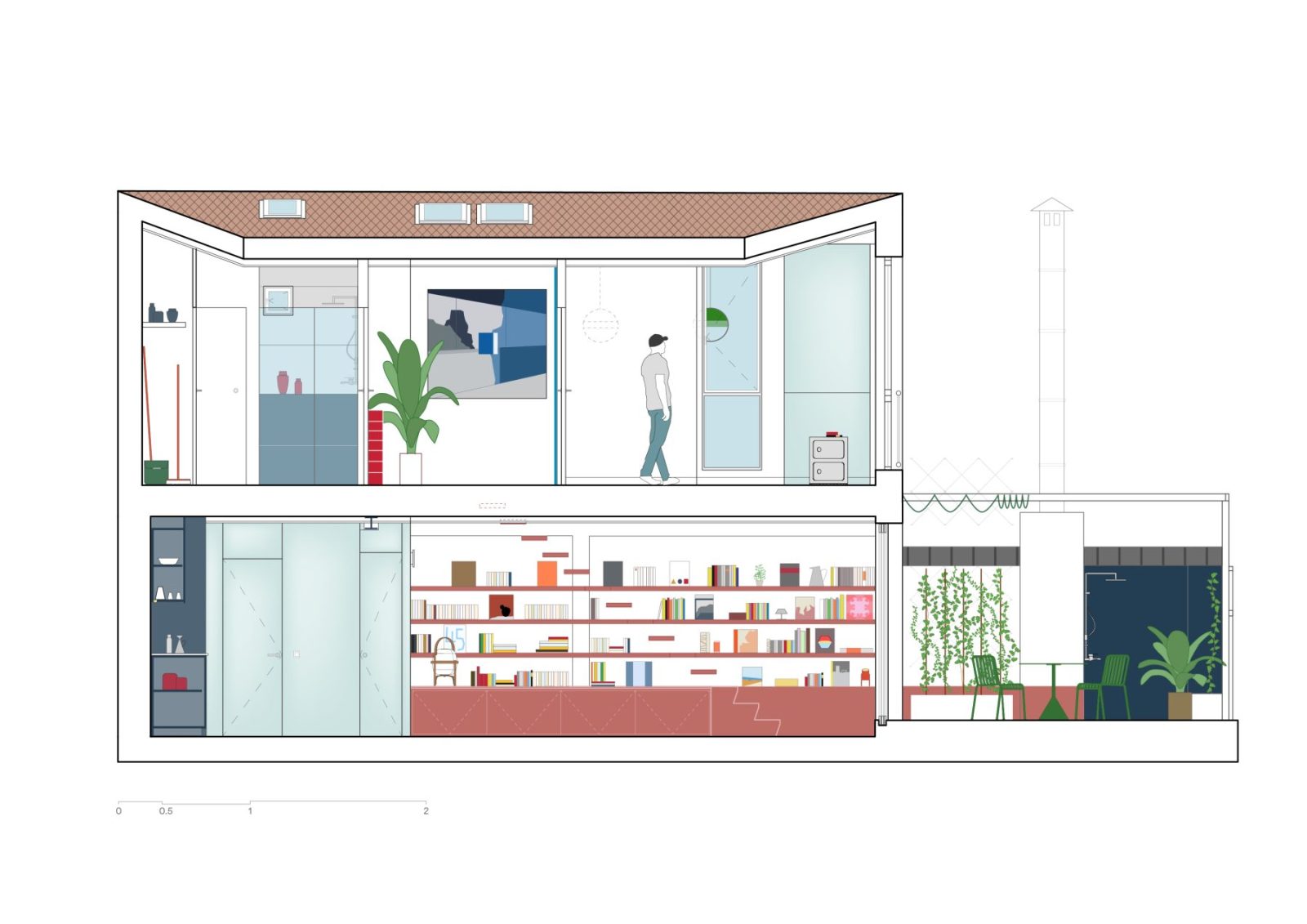
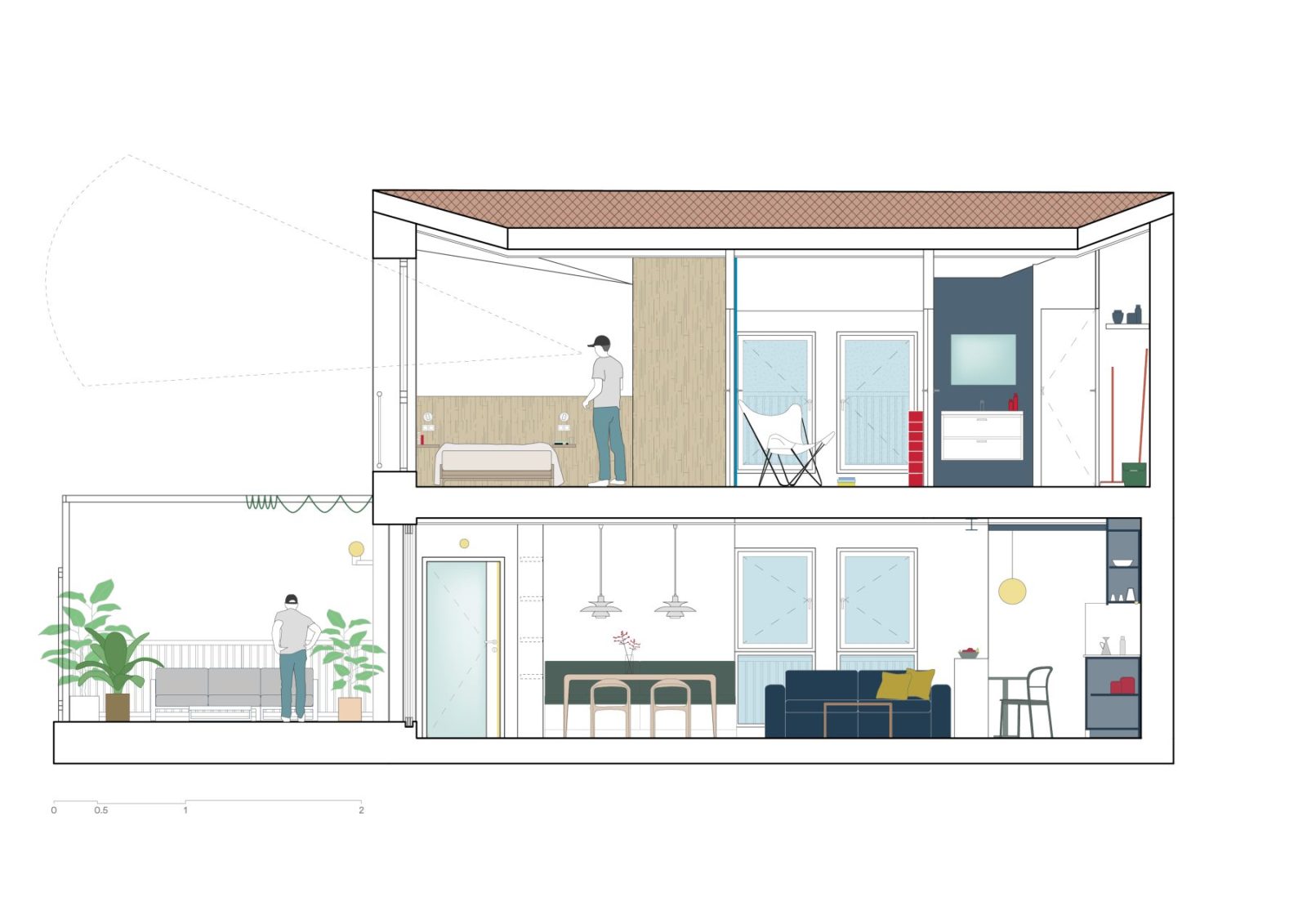
Drawings


Facts & Credits
Project title Casa binôme
Typology Interior design, Interiors, Apartment renovation, Residential
Location Madrid, Spain
Status Completed, 2025
Built surface 80sq.m.
Architecture gon architects
Lead architect Gonzalo Pardo
Design team Carol Linares, María Cecilia Cordero, Alvine Ikauniece, Maria Konstantinidou, Nicolas Howden, Sara Mordt, Alexandra Marouda
Construction REDO Construcción
Furniture Espacio Betty, Tiempos modernos
Photography Imagen Subliminal (Rocío R. Rivas + Miguel de Guzmán)