In The Summer Refuge series, curated by Archt. for Archisearch, we focus on summer houses that shelter time, memory and dreams closely connected to the nature, to rural landscape, to vernacular architecture, and to notions such as ‘summer idleness’, ‘disconnection’, ‘slow living’, and Martin Heidegger’s ‘Dasein’ namely the art of being present in the world.
The second episode, follows architect Caterina Viguera transforming a centuries-old olive press, dating back to the 1820s in one of Lefkada’s ancient villages, into a seasonal family home embodying an ideal example of a summer refuge.
-by Melina Arvaniti-Pollatou
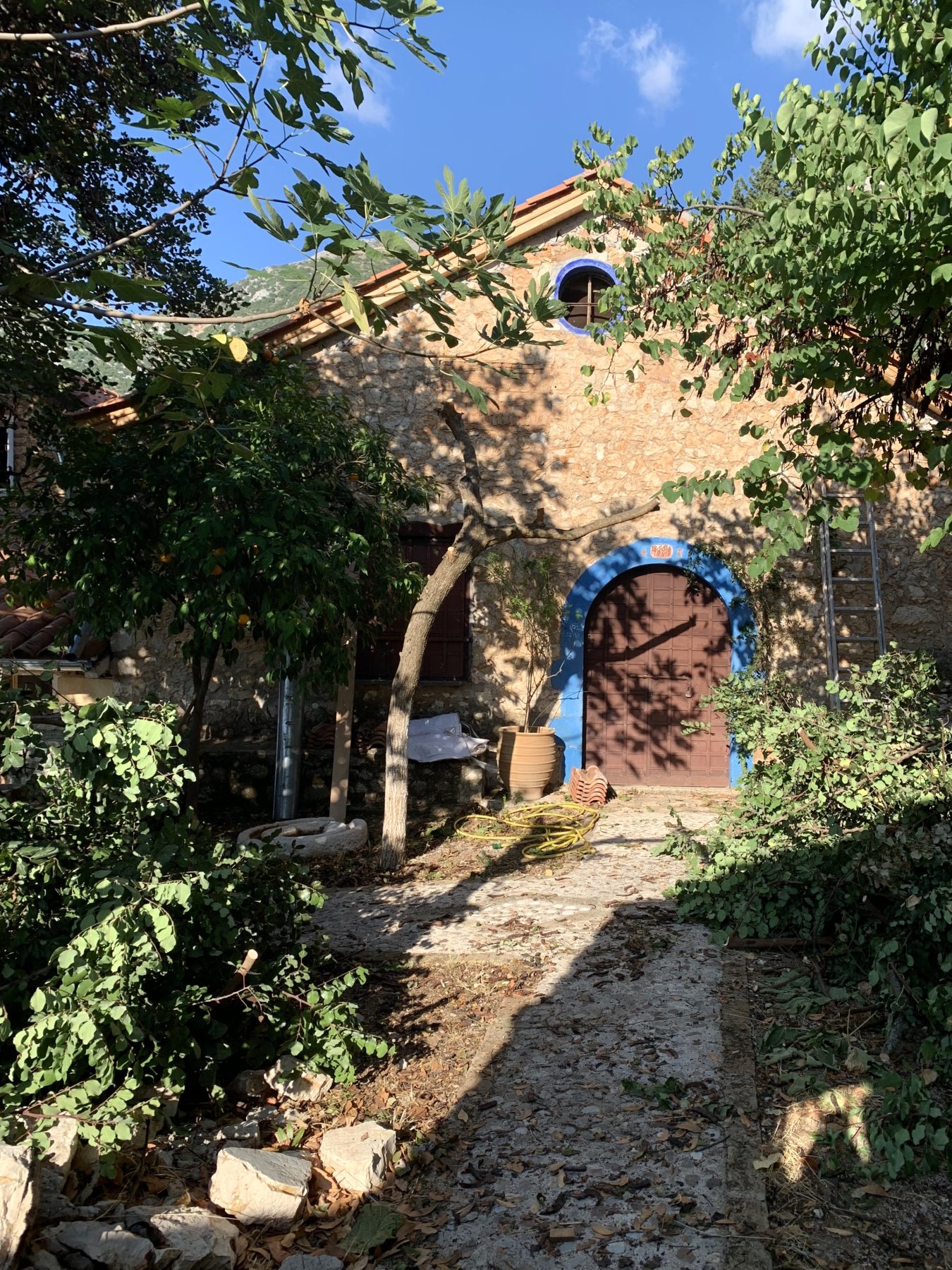
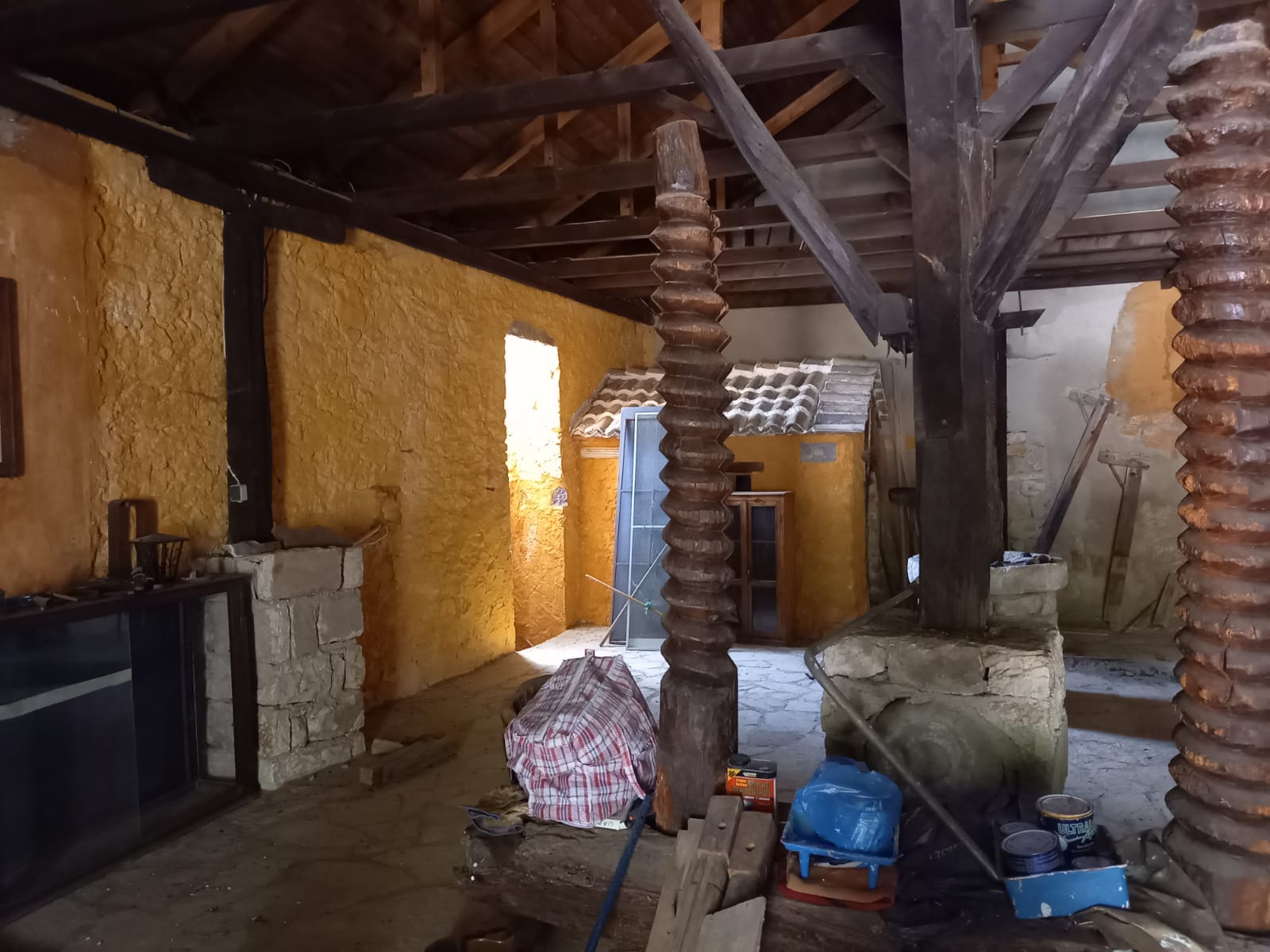
Serving as the centre of community life for more than a century, the building functioned until 1953 as a convergence point for the local rural community before being abandoned, along with the adjacent house, after a major earthquake.
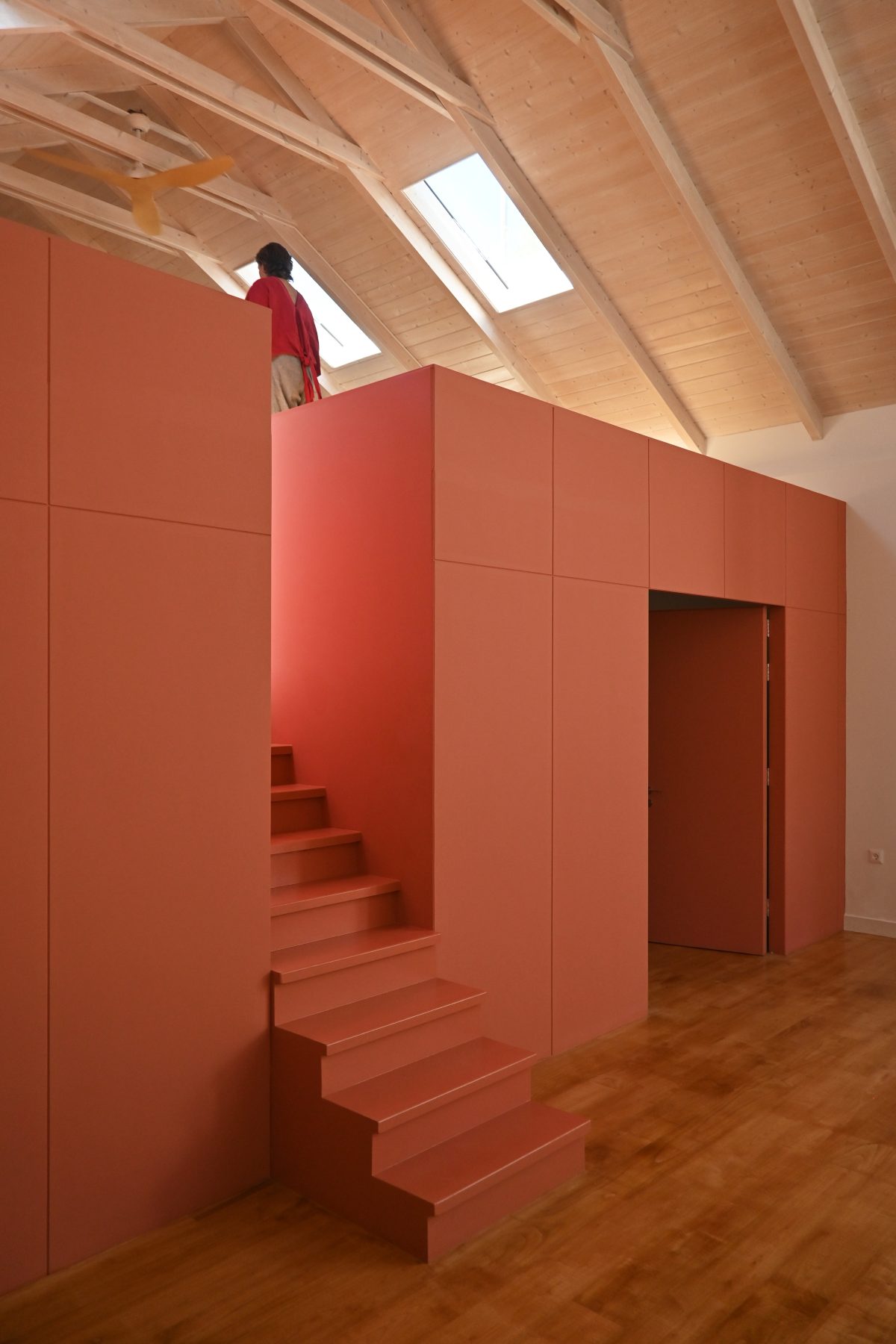
Enriched with the collective labour and core memories of the village, Mill House comes to life effortlessly pink, reimagining traditional features of vernacular Greek island architecture.
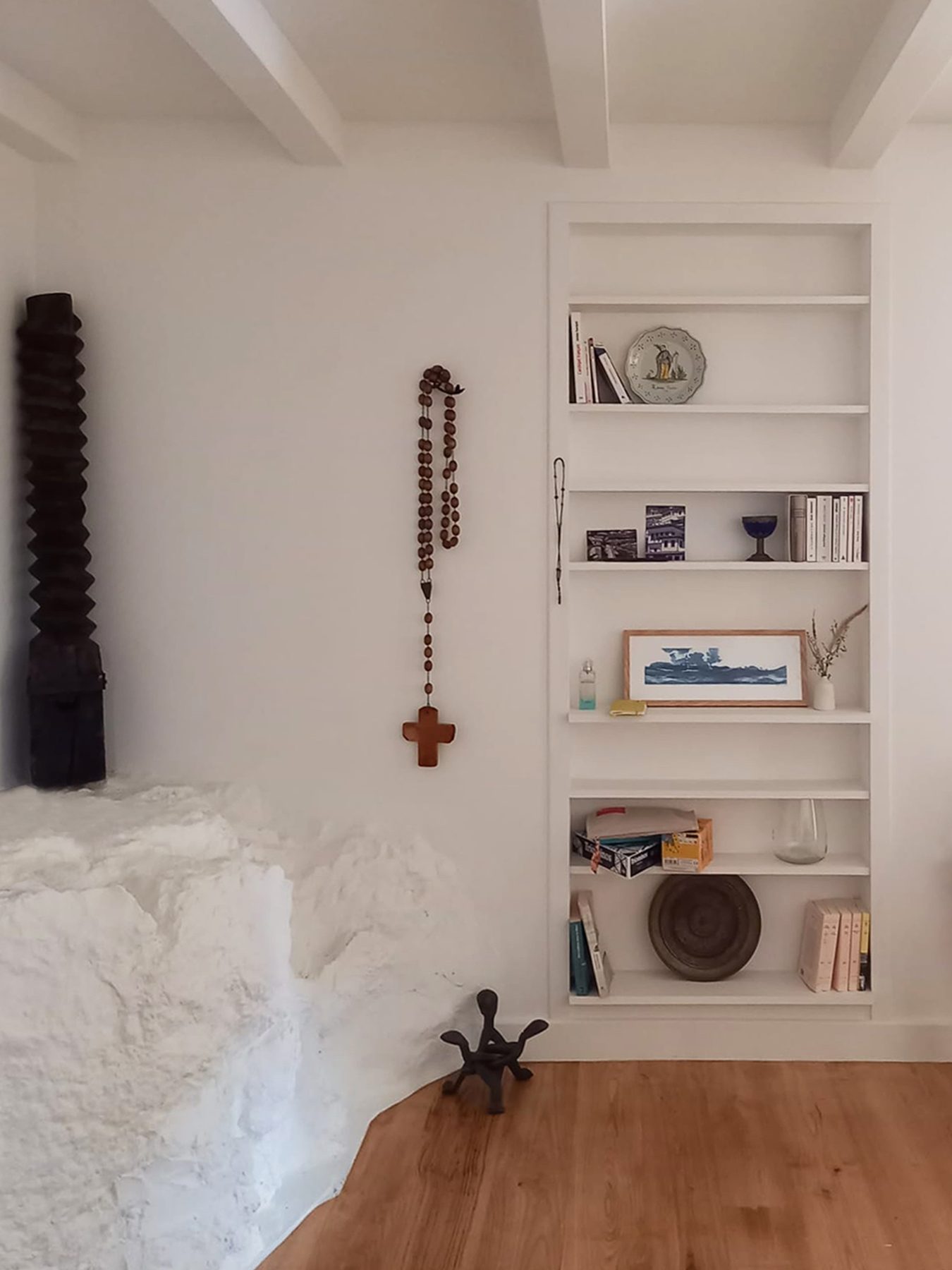
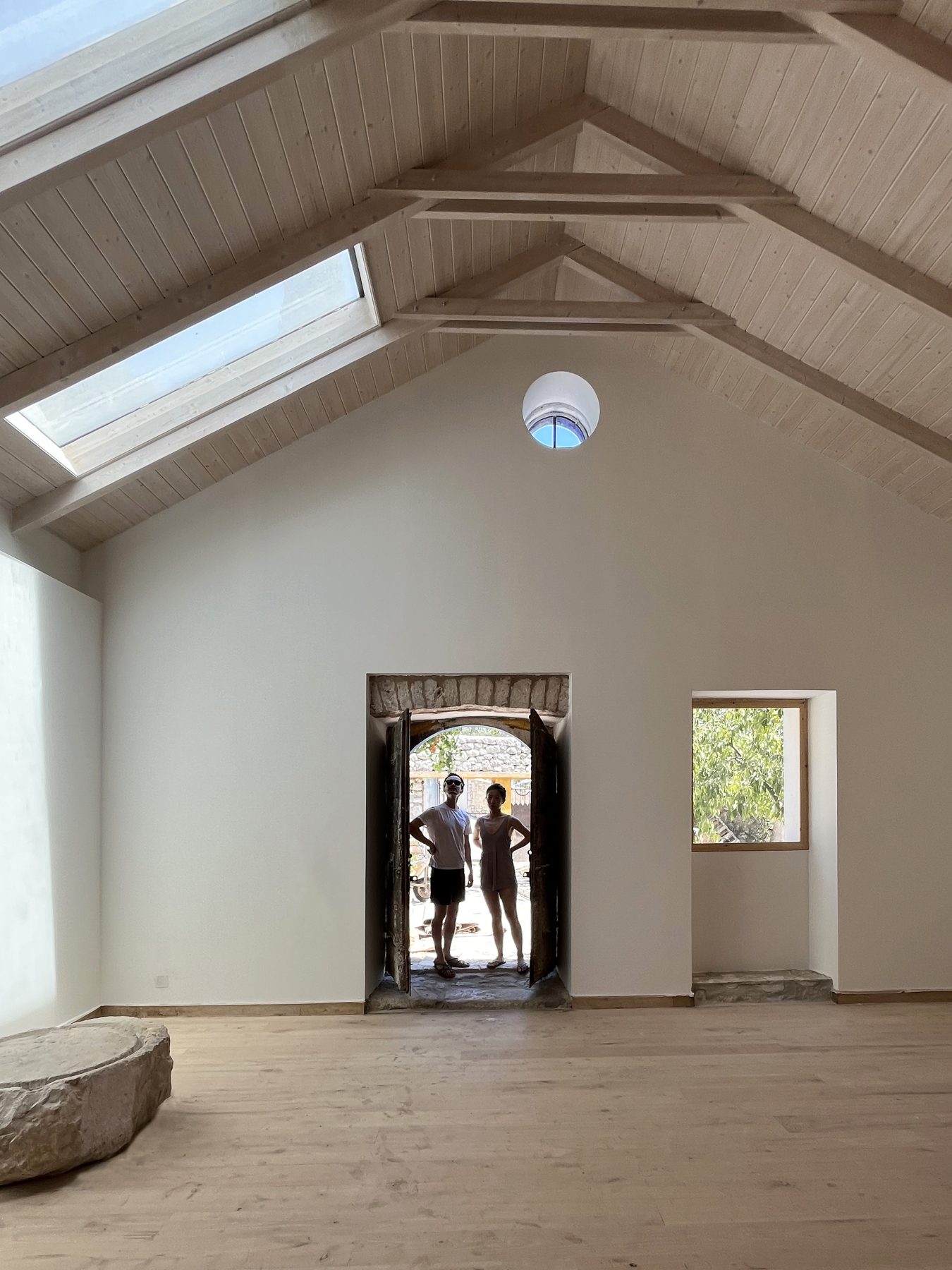
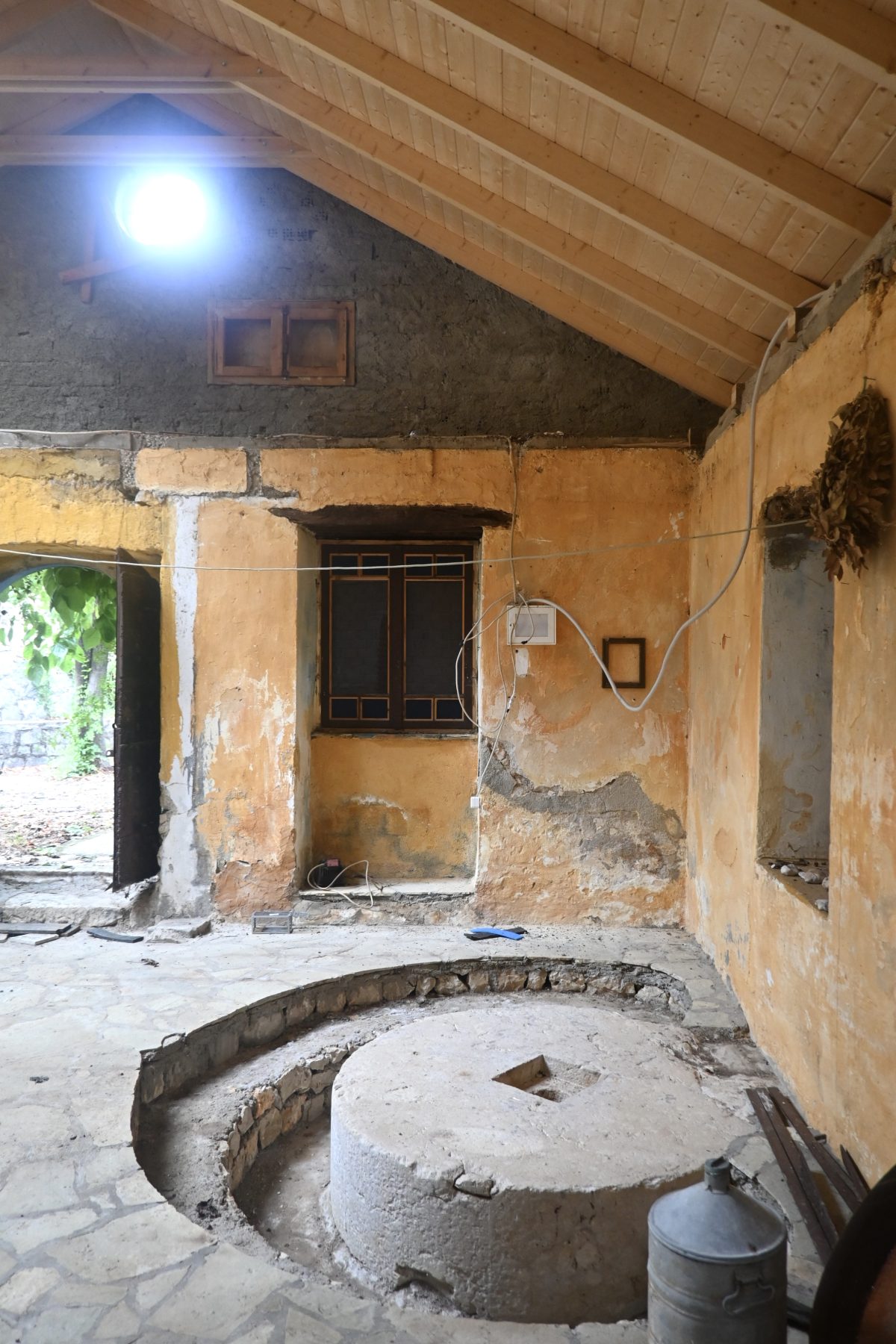
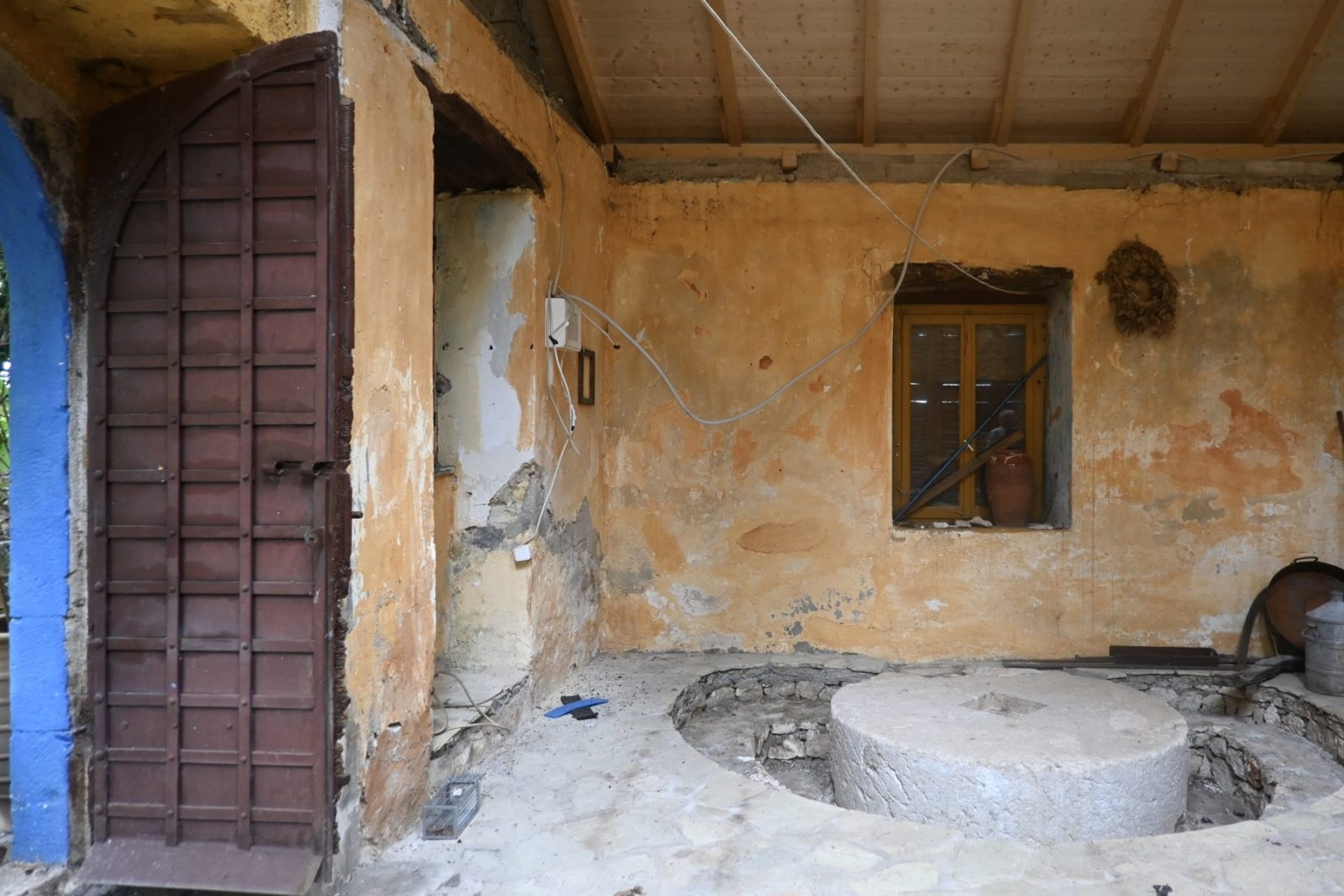
“The house was partially built into the mountain, with some natural rock formations visible inside. The interior was a dark space, illuminated primarily through small ventilation windows, with the original wooden roof structure taking up nearly half the height of the room,” recalls the architect.
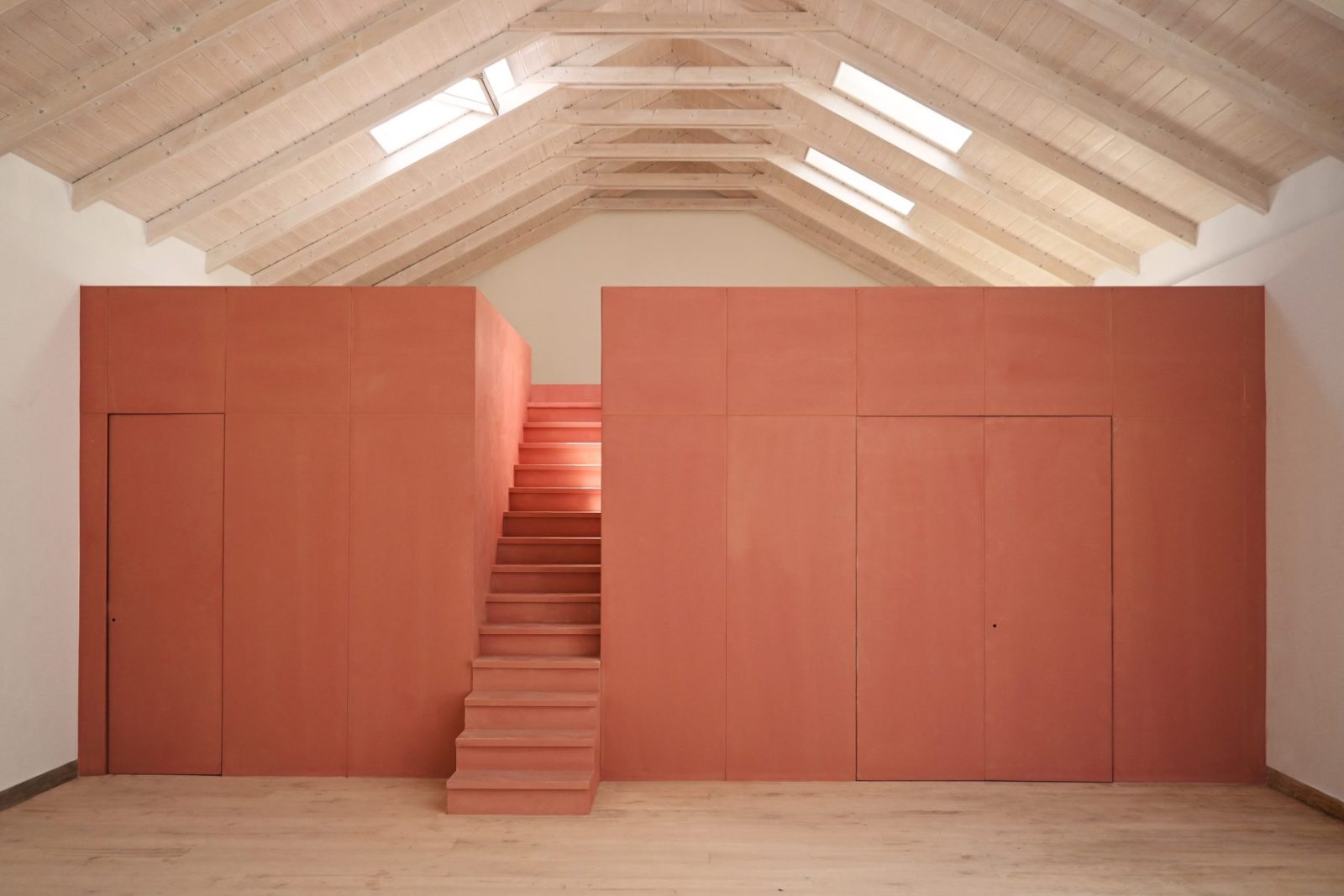
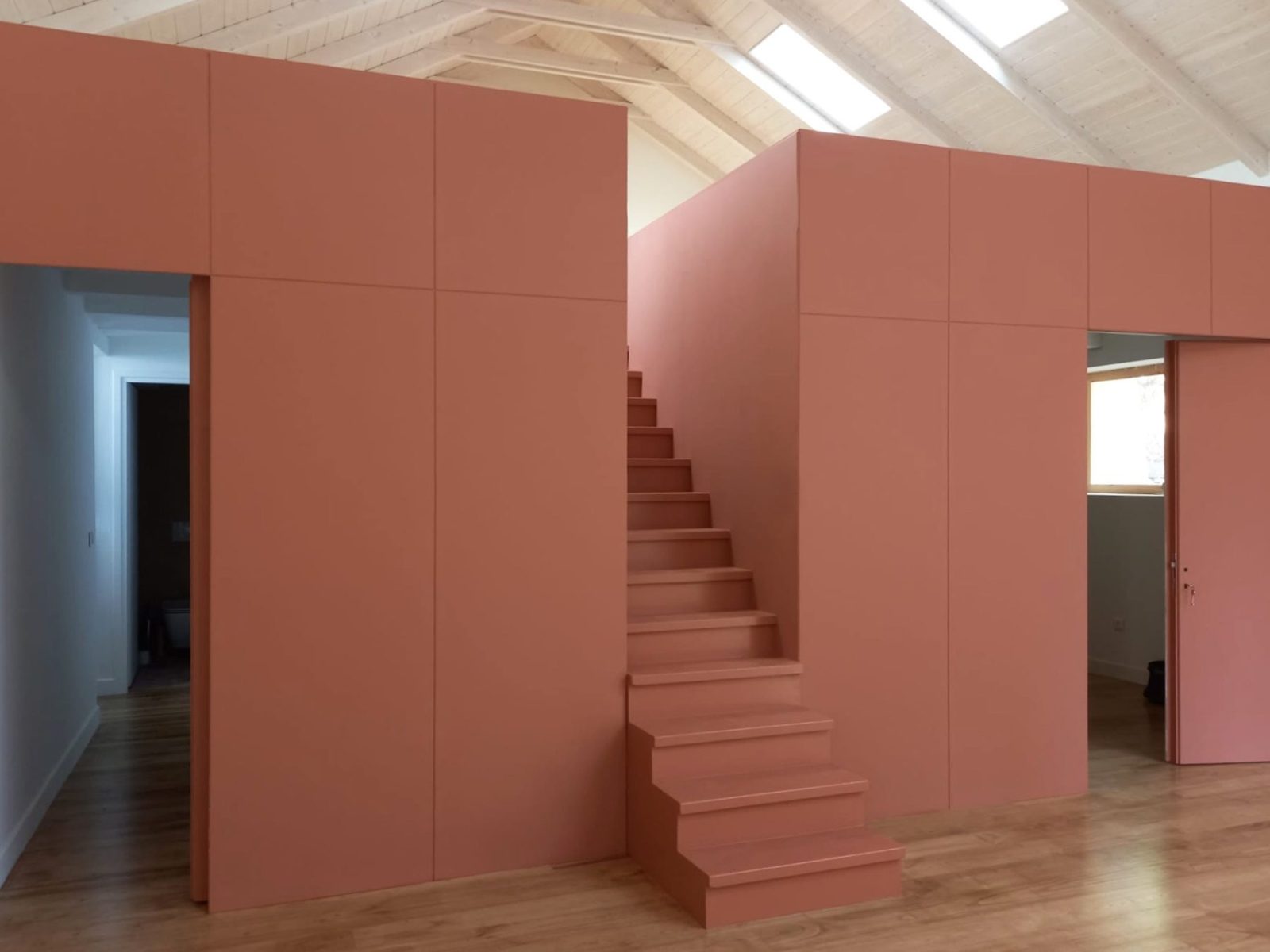
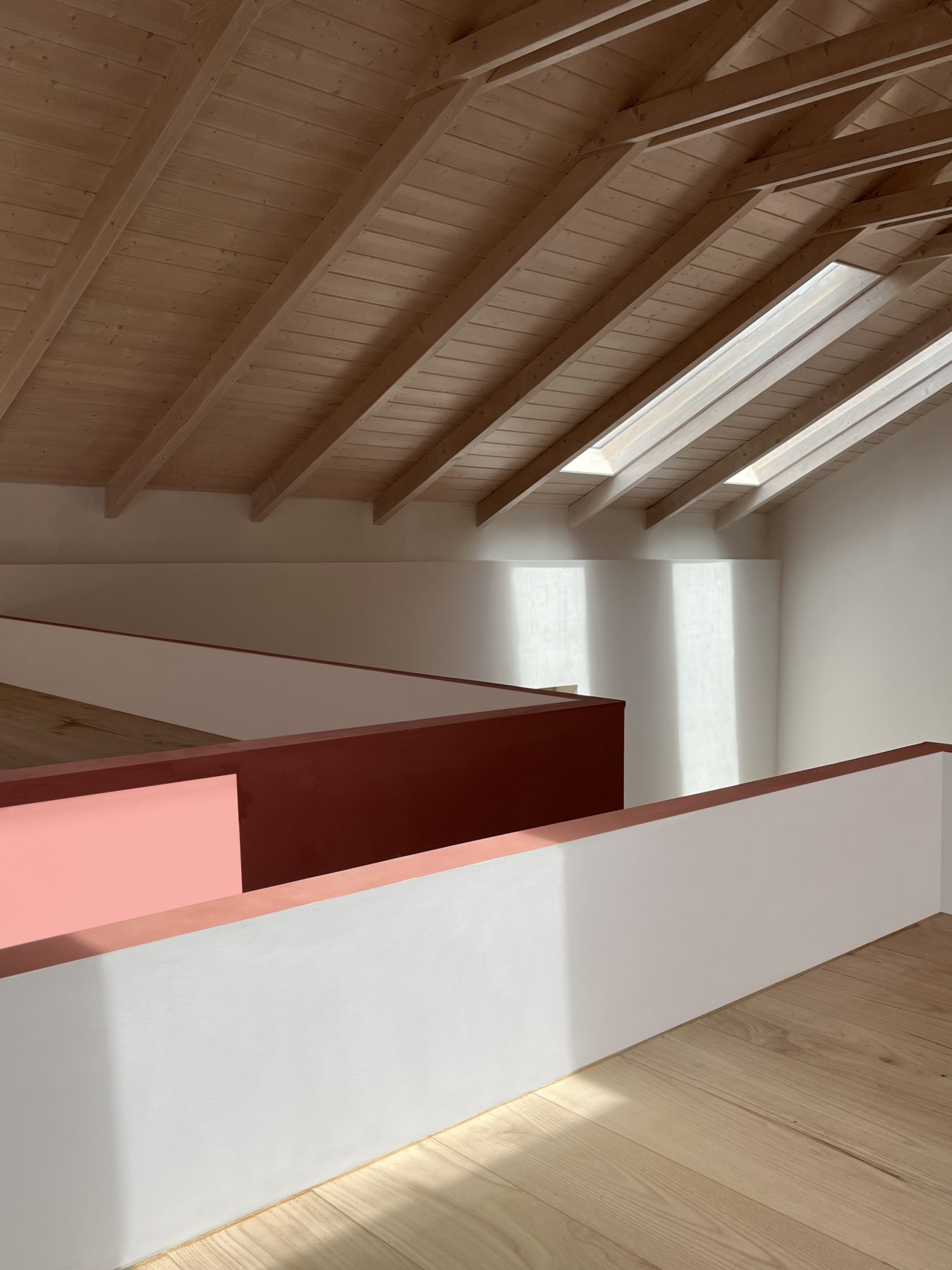
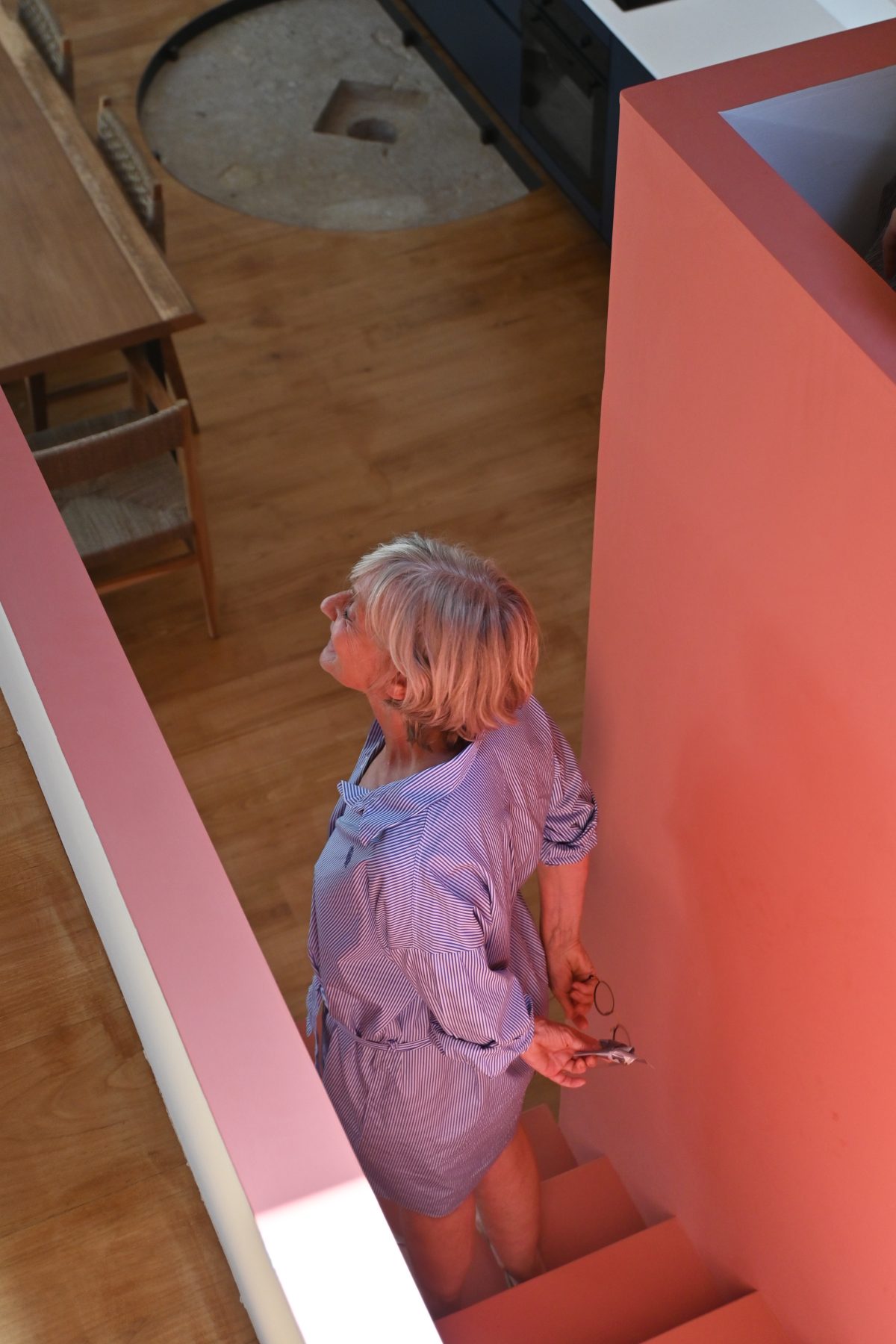
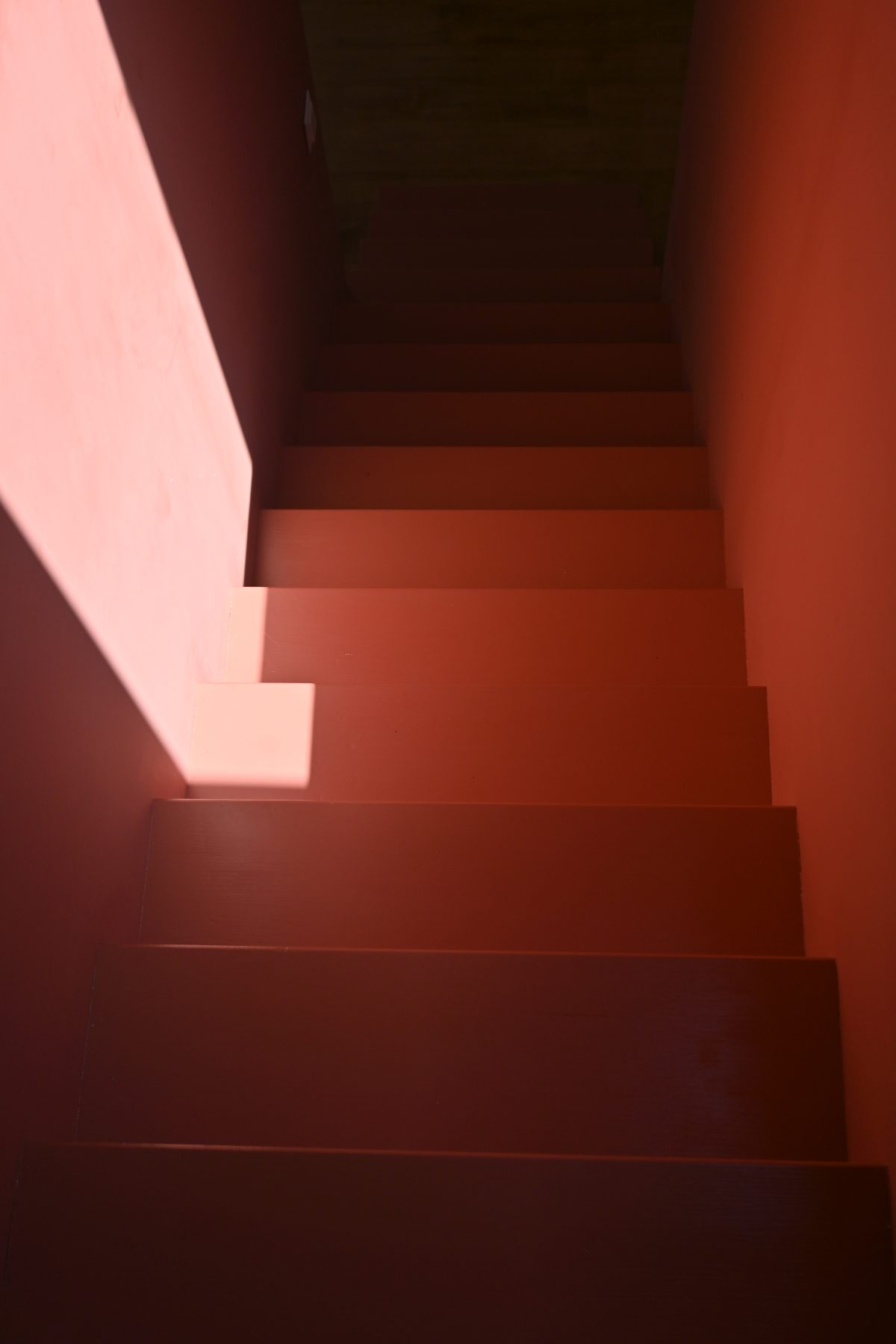
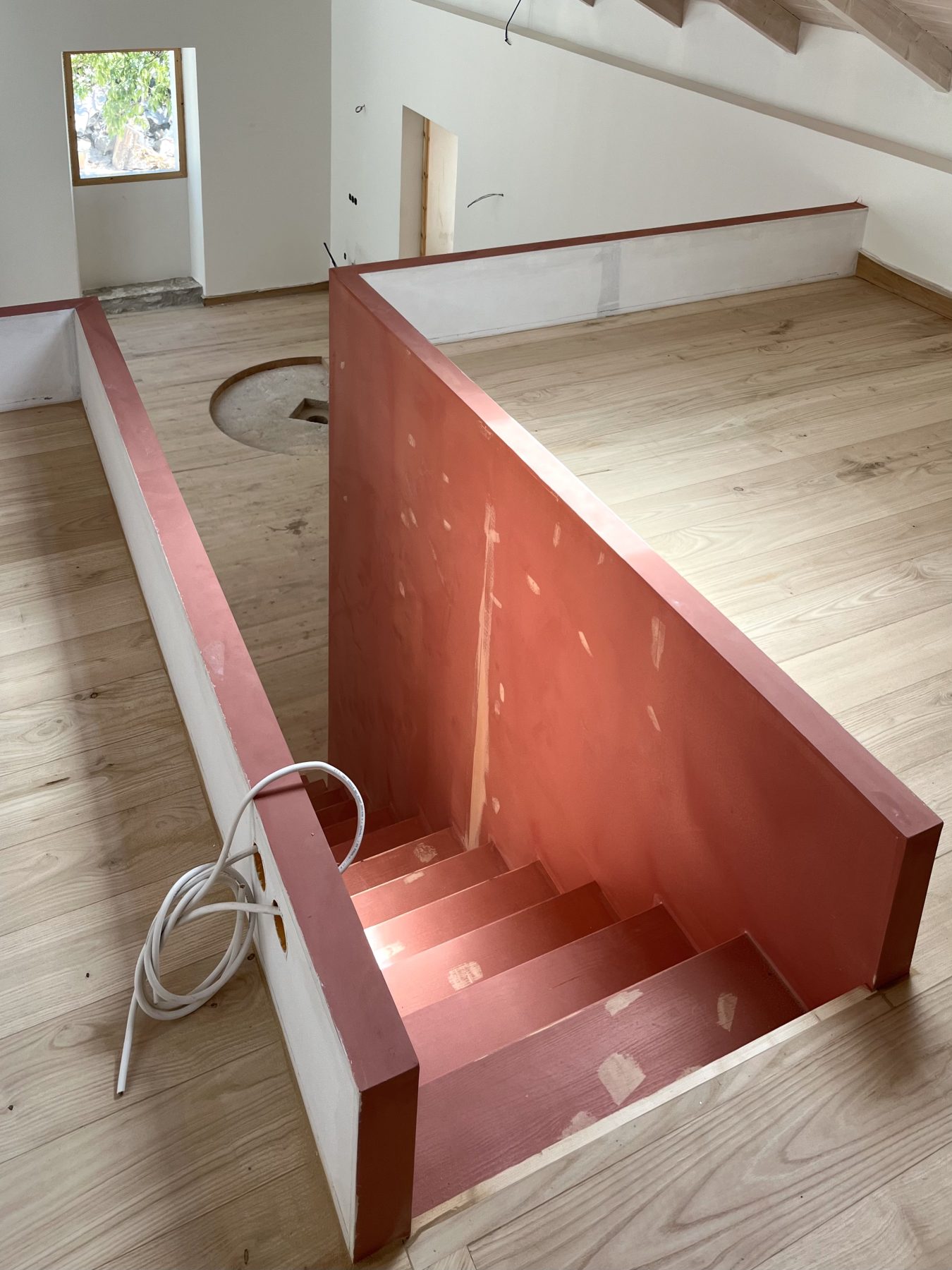
Drawing inspiration from the mesantra (μεσάντρα), the wooden built-in structure found in traditional Greek island architecture —particularly in the Cyclades and the Dodecanese— the “defining element” of the new design is a terracotta-pink wooden structure with a centrally integrated staircase leading to an open-plan mezzanine. This new micro-architecture serves a twofold purpose: creating varied spatial qualities in terms of height, privacy, and lightness on the one hand, while maximizing space and creating multifunctional areas on the other.
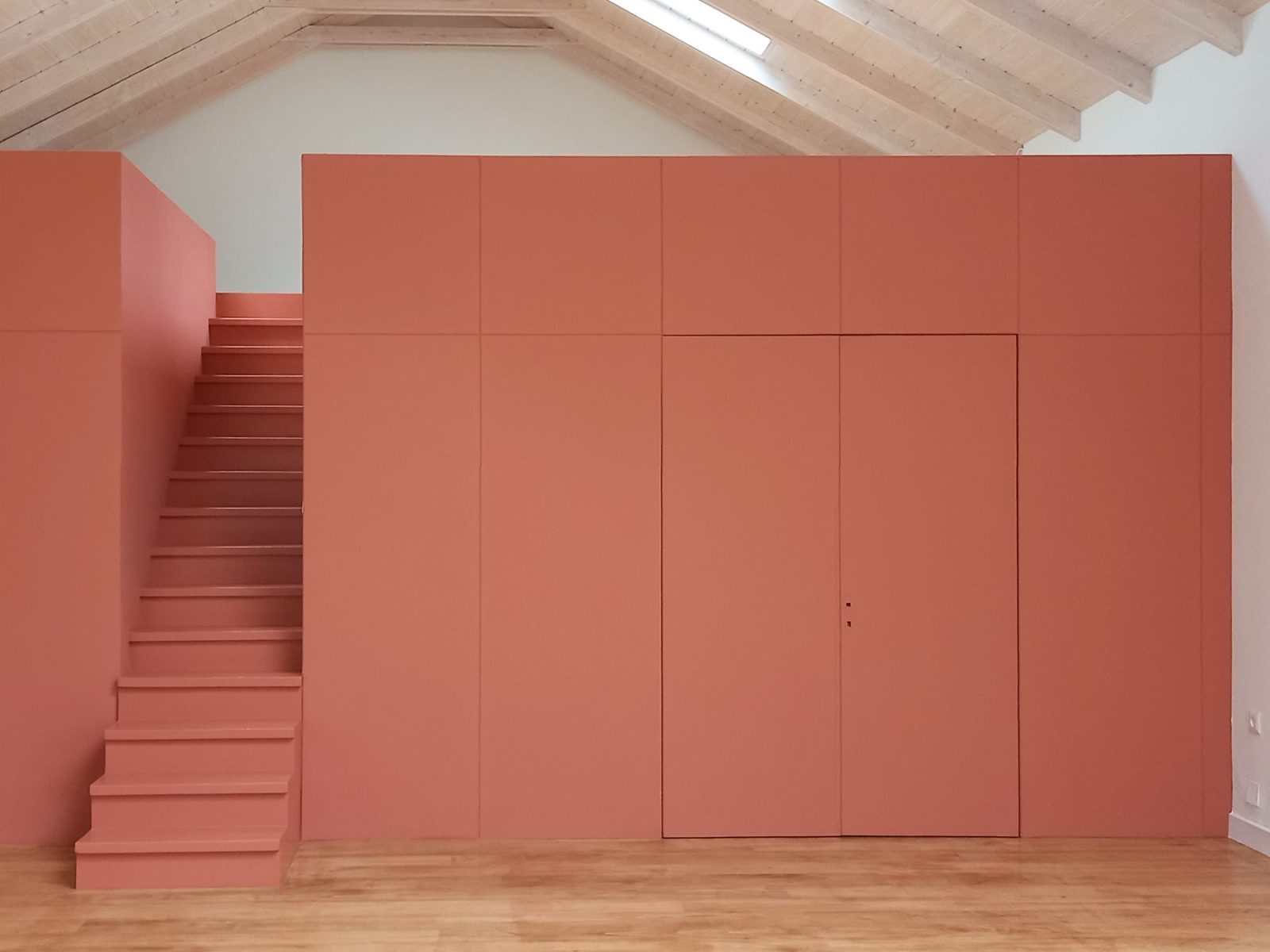
“The new plan was designed with openness, connection, and future adaptability in mind. Structural interventions were key — namely, the reinforcement of the existing walls and the replacement of the old, deteriorated roof with a new one that uses less material and incorporates large windows,” says the architect.
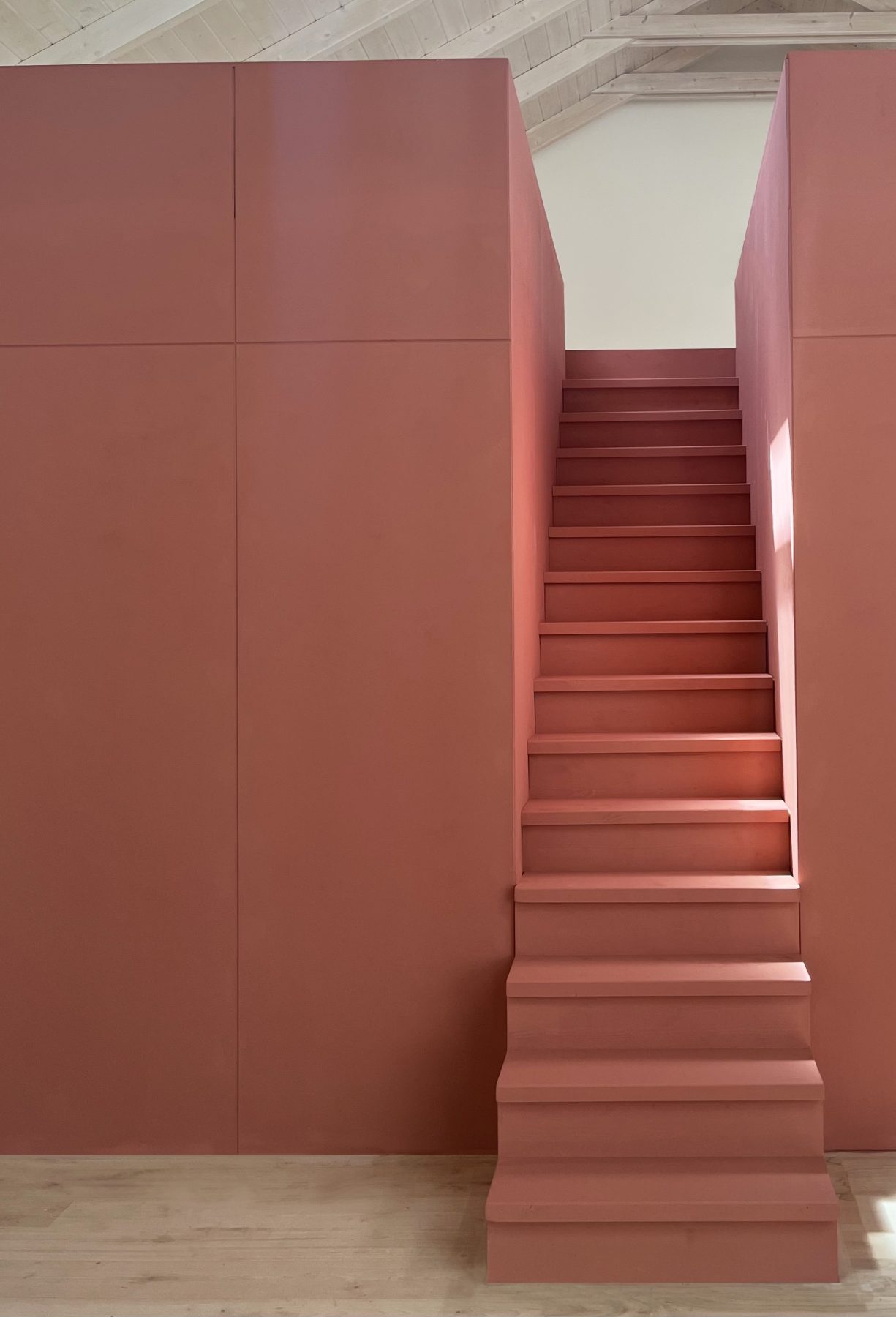
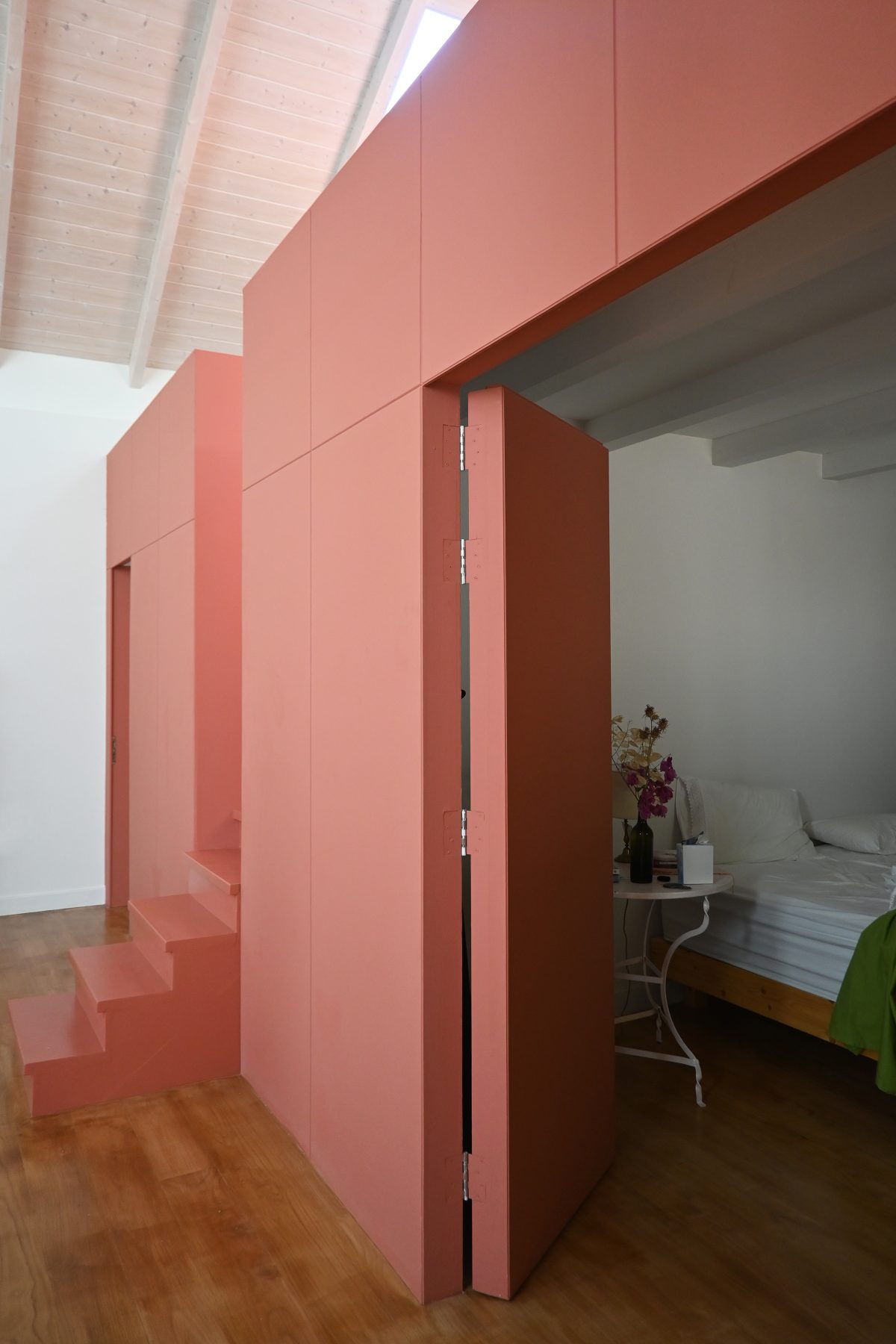
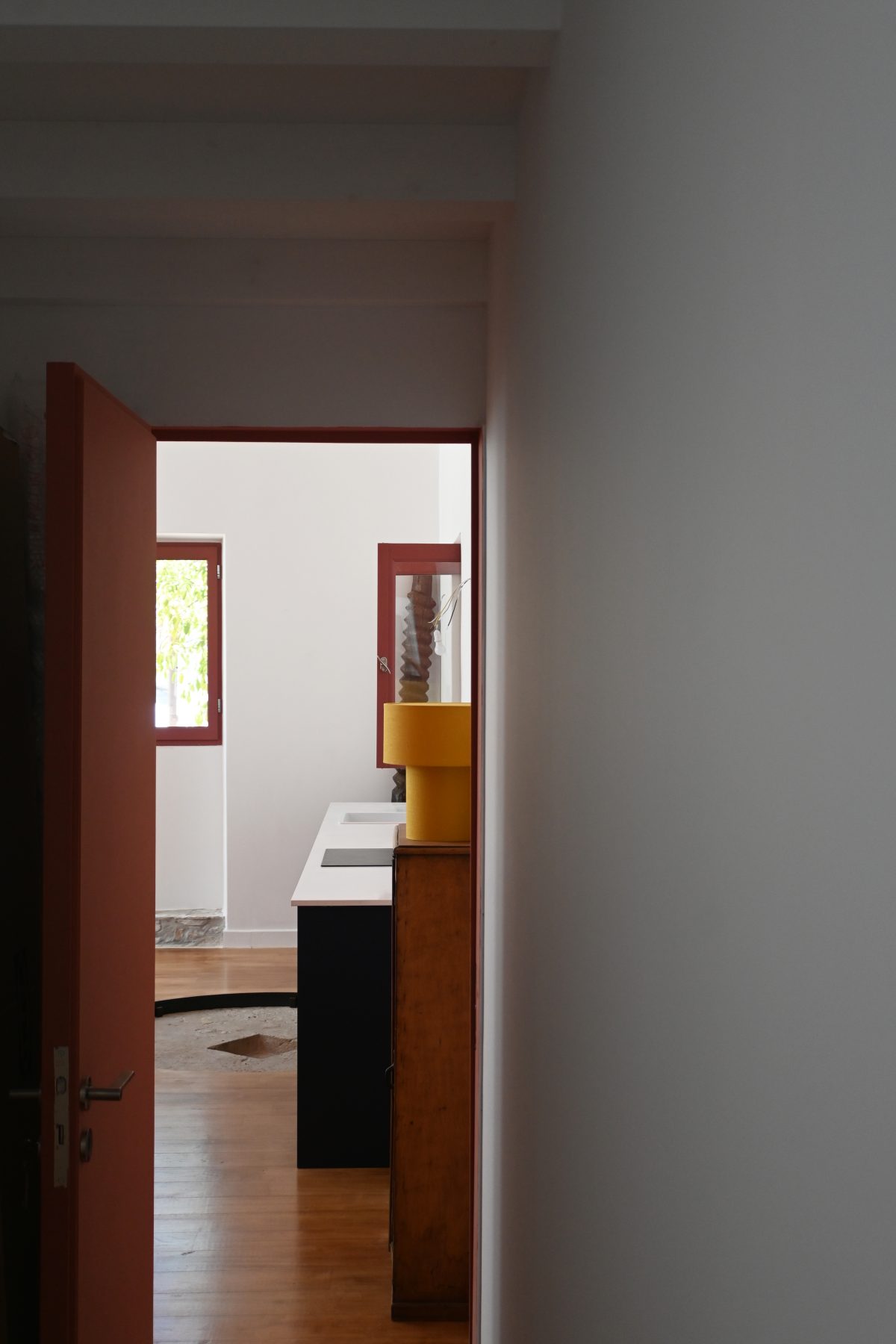
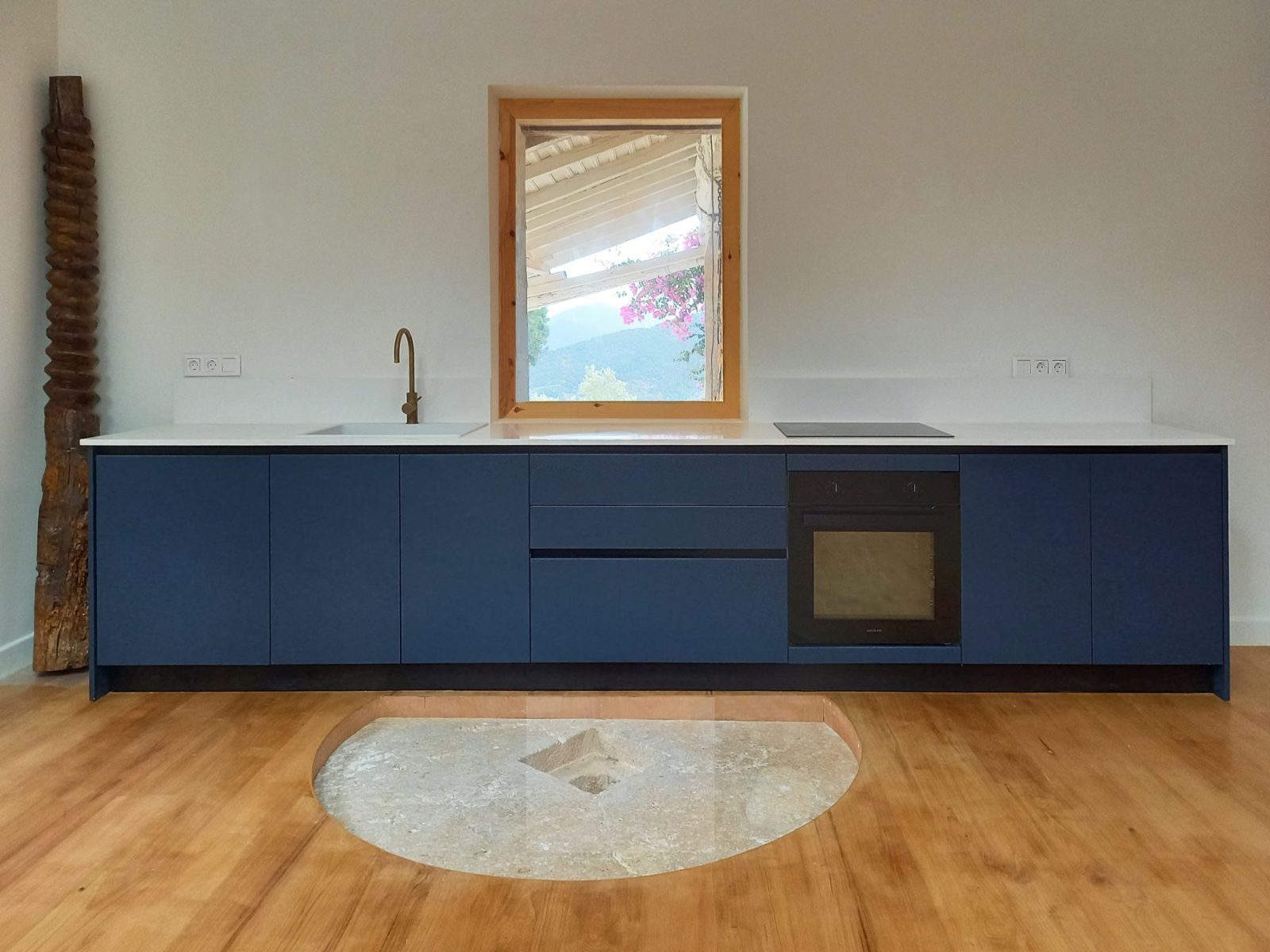
The private areas — sleeping, bathing, and storage — are positioned below the pink mesantra, protected and completely hidden from plain sight. The mezzanine area, by contrast, is deliberately left open to interpretation, ready to host anything from a group sleepover to a yoga class. The spacious, full-height front hall, where the main entrance is located, continues to welcome people into an inclusive, mixed-use space accommodating cooking, dining, and living areas. The elongated, linear kitchen, finished in a dark blue hue, sits beside the original olive mill’s central circular stone, which has been restored and preserved, now accompanied by a new wooden-framed window overlooking the sea.
Multifunctional, culturally layered, and historically charged, Mill House enters its third century reinforced by the wisdom of tradition and imbued with the pastel aura of minimal modernity.
~
~
~
Melina Arvaniti-Pollatou: Is Mill House a summer house or is it inhabited all year long? How did this influence your design approach?
Caterina Viguera: The house is inhabited intermittently throughout the year, but for longer periods during the spring and summer seasons. This led the design approach to focus on creating a cool interior space, with new openings integrated into the roof which contribute to effective natural cross ventilation. The original stone walls have been reinforced and also protected against moisture. In winter, a small wood-burning heater located in the full-height space efficiently heats the space.
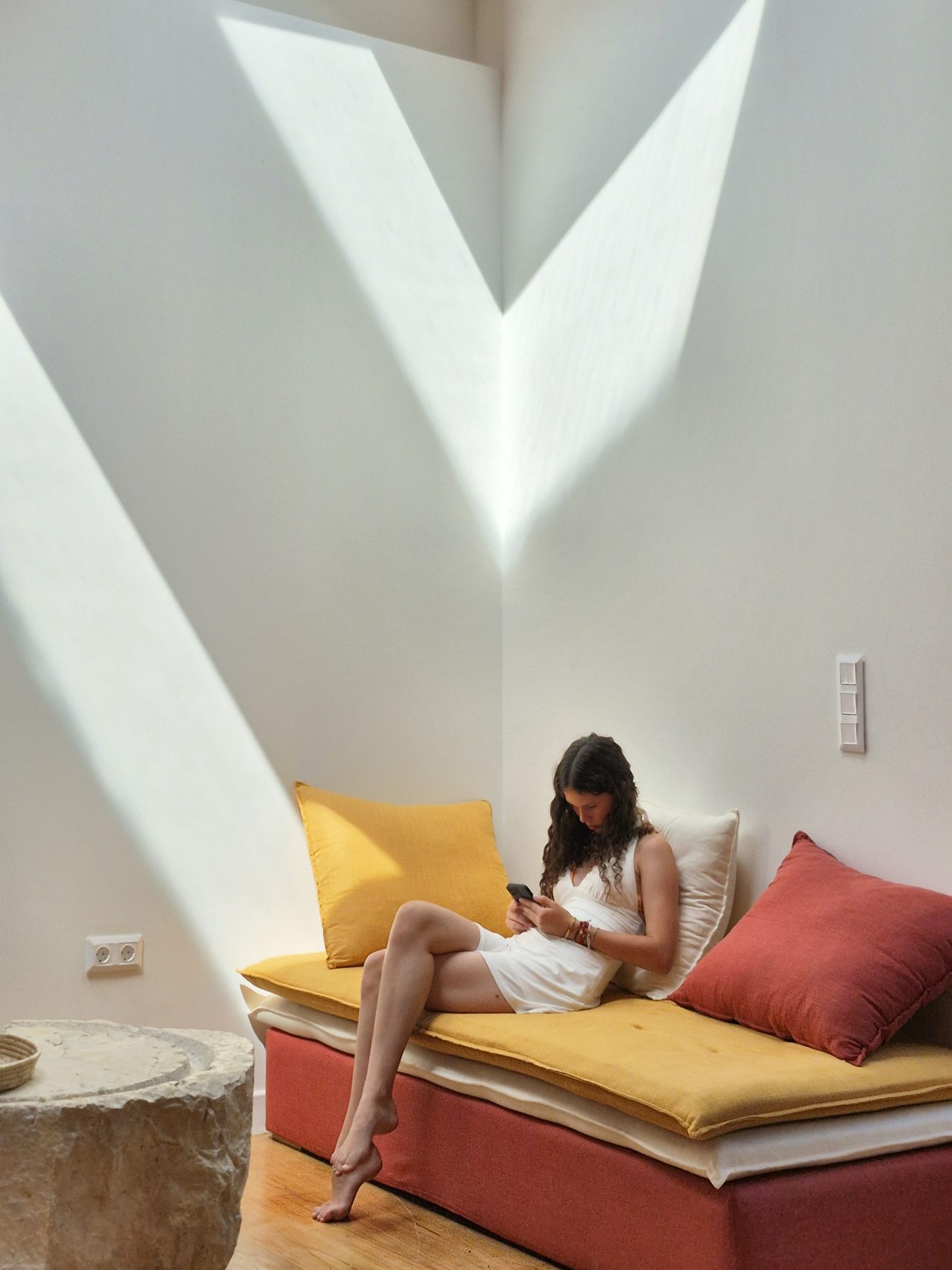
The widening of the original windows on the façade offers better views to the outside, but natural light mainly comes through these same large windows, which bathe the interior walls with light.
MAP: You transformed a centuries-old olive press into what you describe as an “open family home.” Per usual, a family home is a given ecosystem living and breathing under its own rhythm. To call it open introduces a layer of complexity; it sounds challenging, promising, even unpredictable. What makes a home open to you and how do you design this openness?
CV: To me, designing an open space means creating multiple ways to move through it, while offering adaptability for different uses and degrees of intimacy.
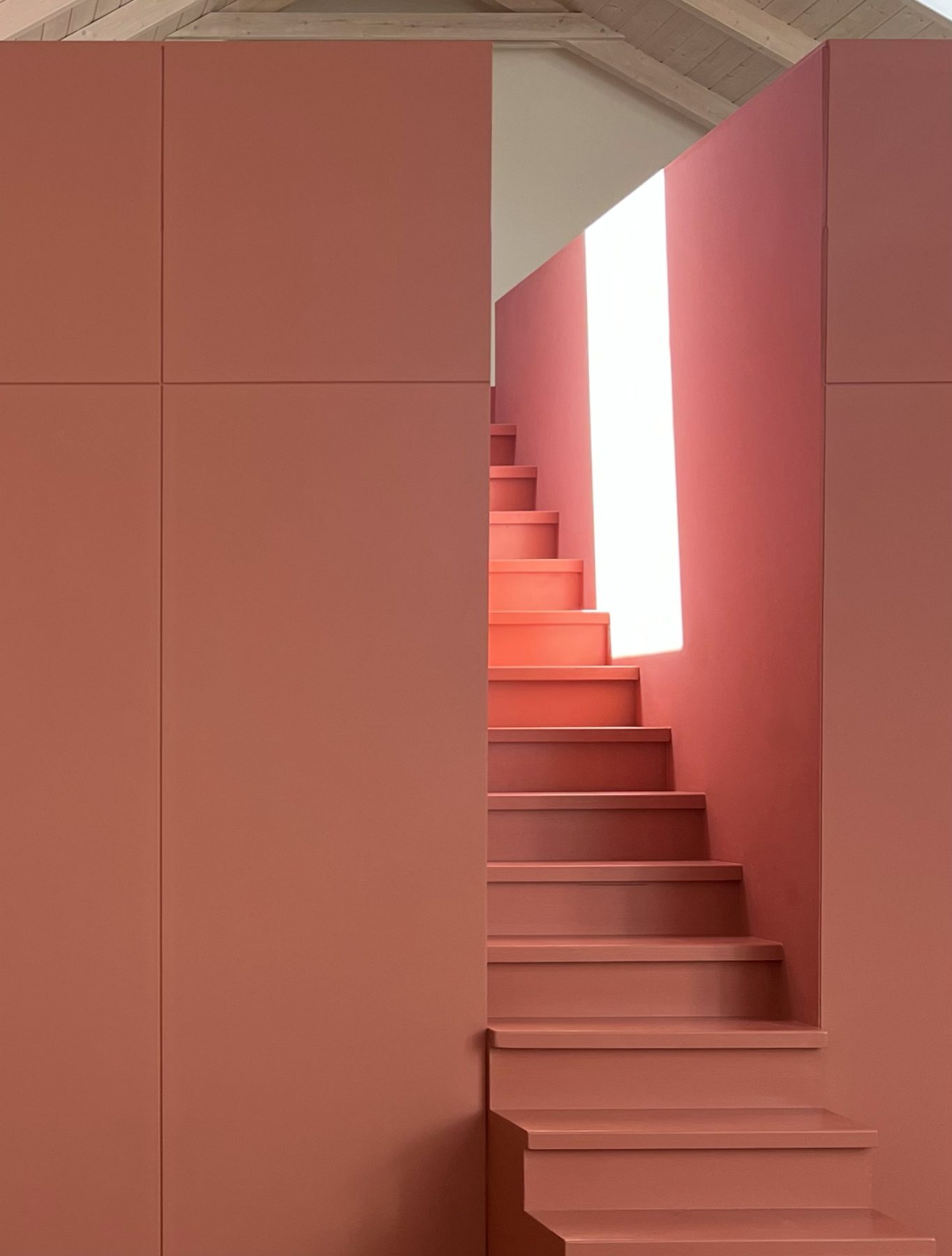
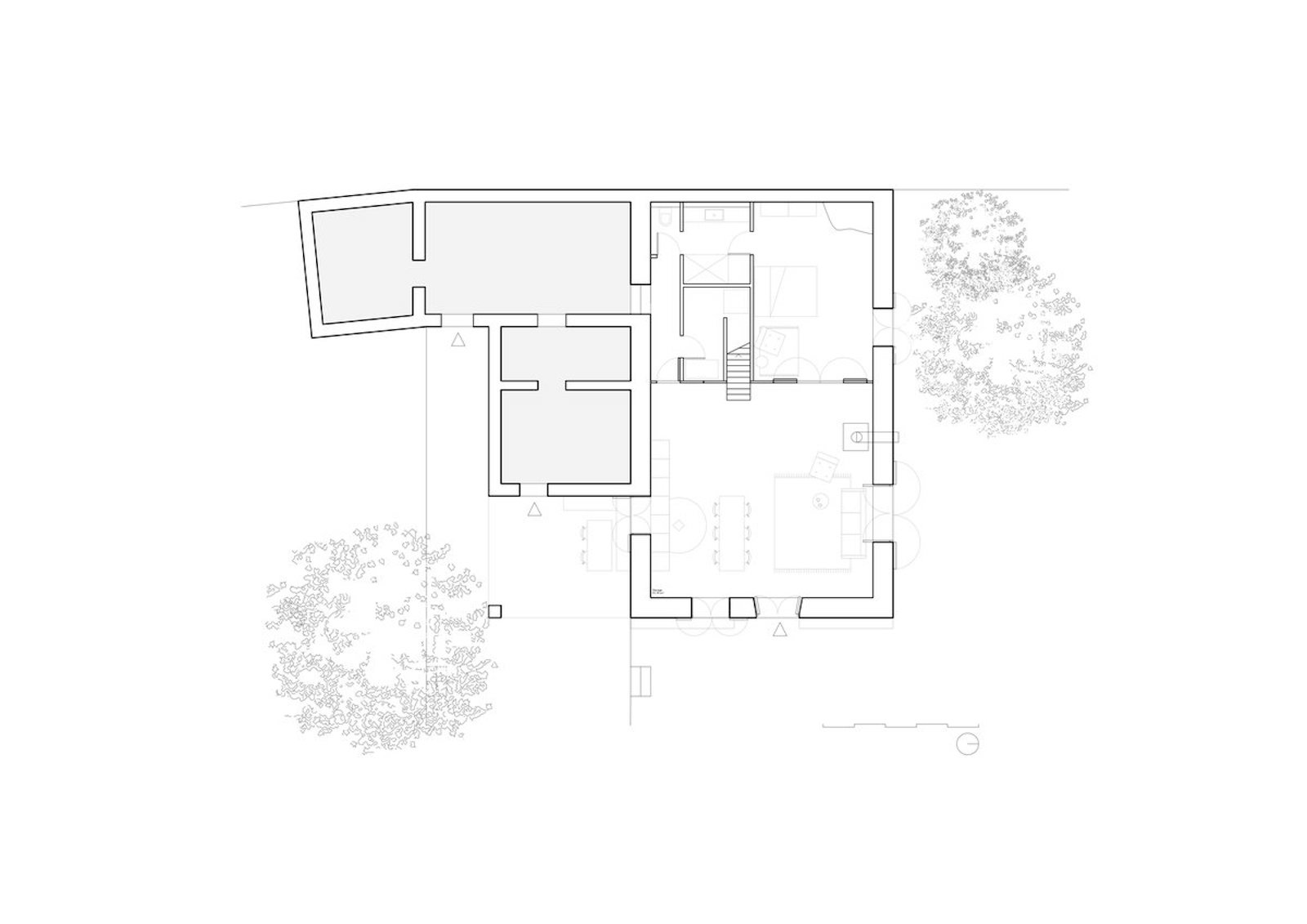
The main space — the full-height front area — acts as a gathering place and extends toward the rear mezzanine through a centrally integrated staircase. This area can be used both individually or collectively, as a bedroom for one or ten people, as a studio, or a yoga class.
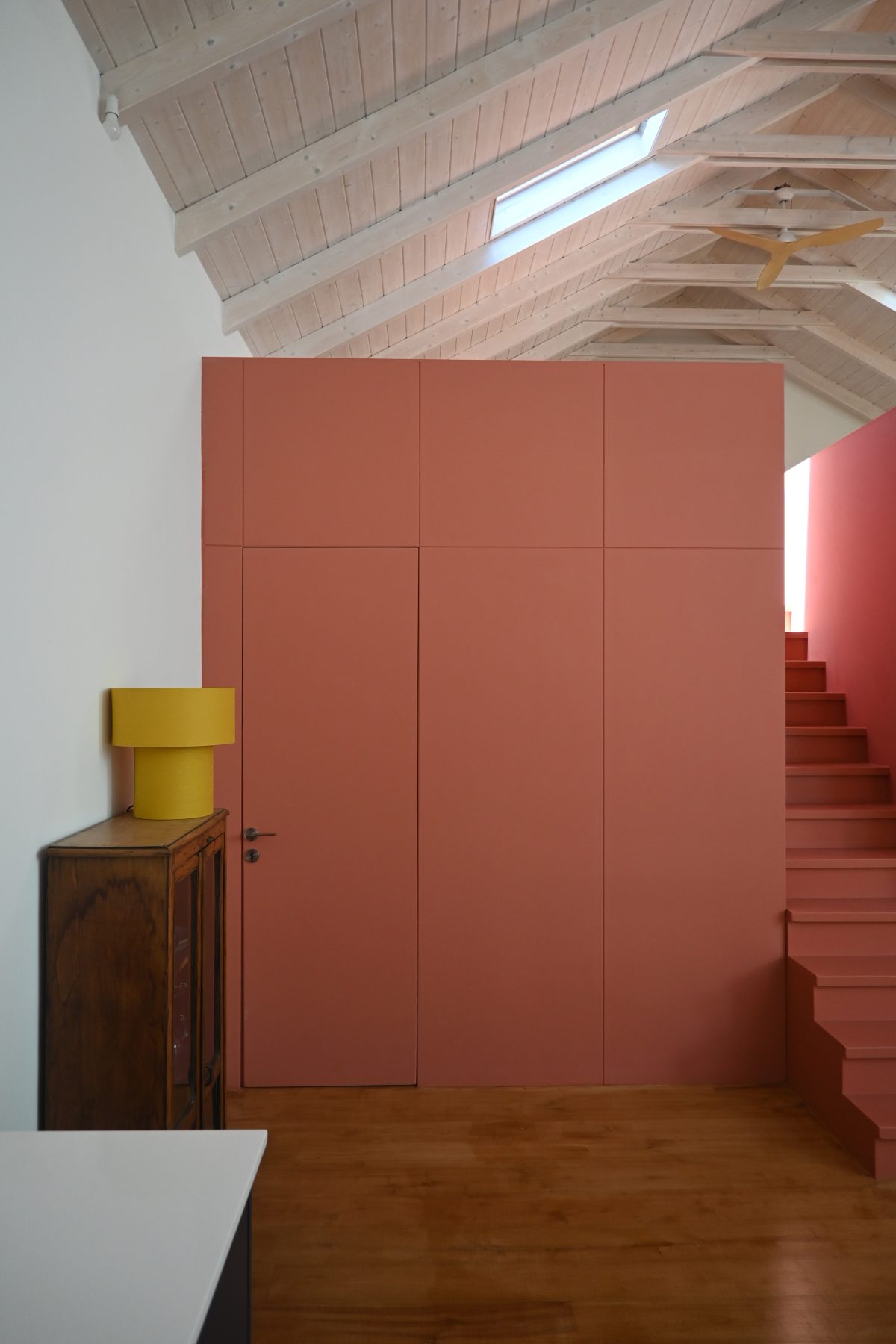
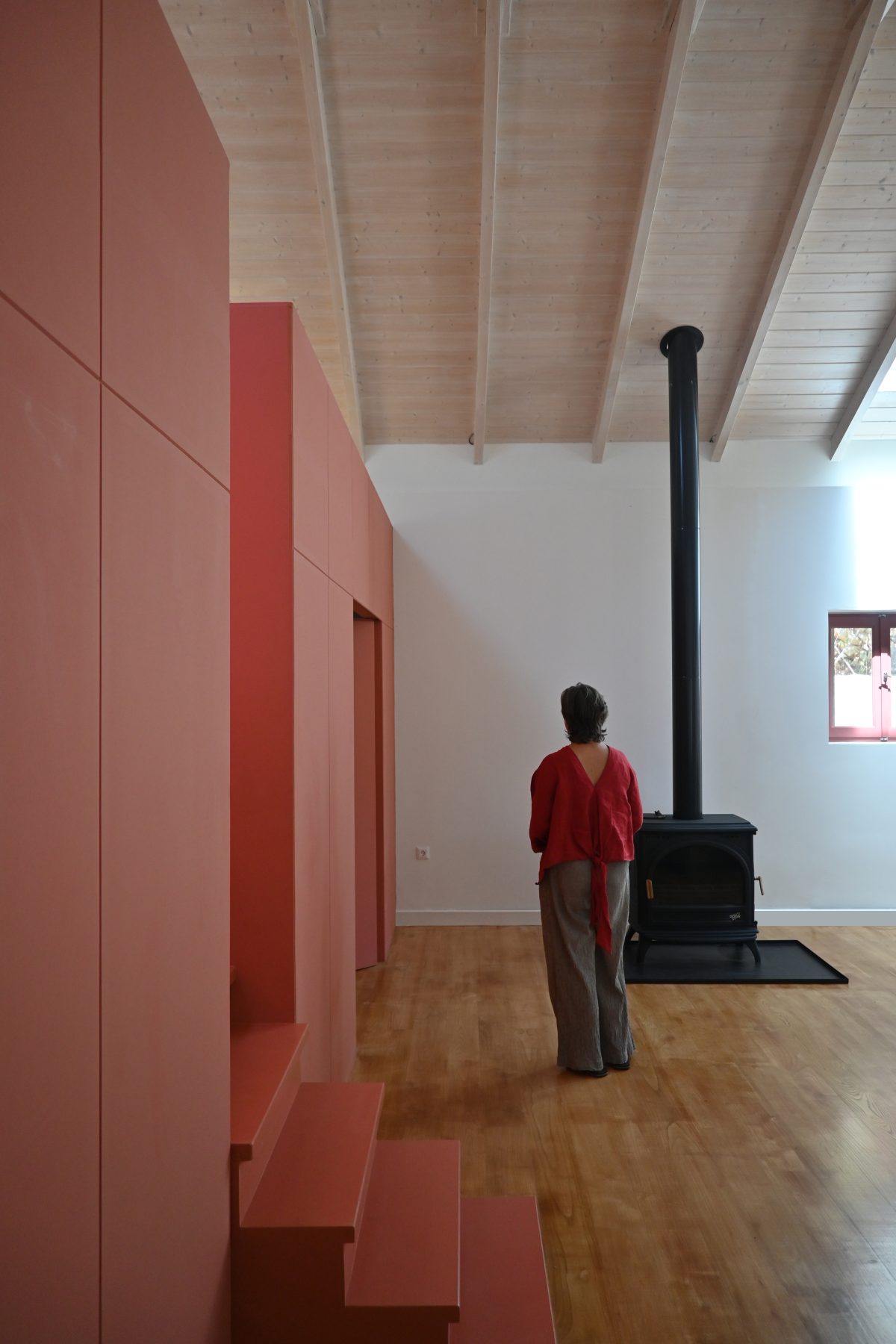
Adjacent to the main space, below the mezzanine, are a bedroom, bathroom, and storage area, which can be completely closed off with doors. These rooms are seamlessly connected by a 360-degree circulation path and also linked to the neighbouring house.
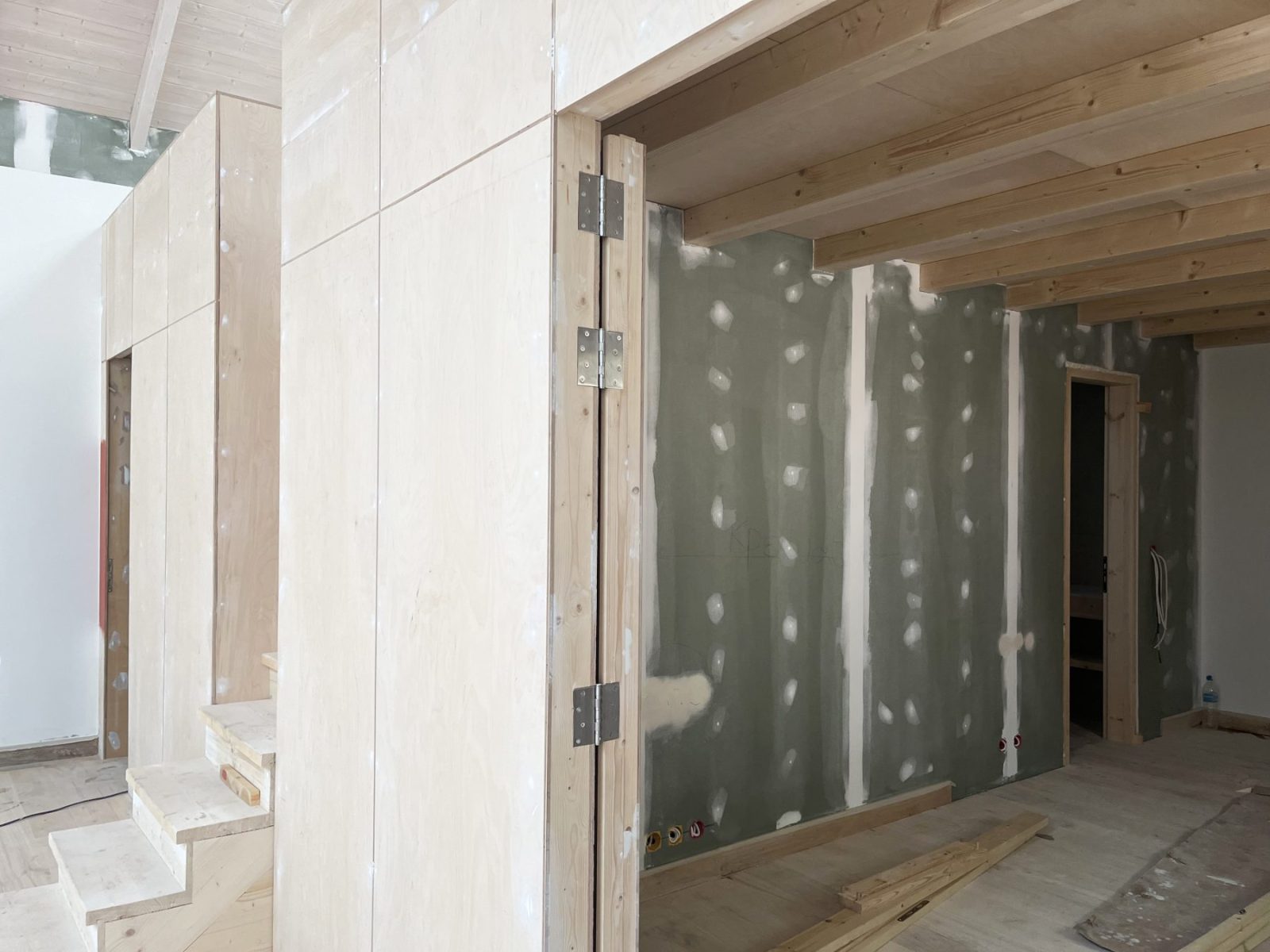
MAP: In the new design, a vibrant wooden structure —what at first glance reads as a pink box with an integrated stair— brings in mind the traditional mesantra acting like a micro-architecture; a compact, self-contained unit inserted within the original volume, allowing the rest of the space to breathe. What led you to this “box in a box” design concept and revisiting of vernacular Greek forms?
CV: I think it is important to design and build carefully and consciously.
That is why I work with sustainable, local materials, with local makers/artisans, choose modular building systems, and try to minimise the amount of material needed. In this case, I wanted to build an architectural object as light and elementary as possible – that can still have a large impact, both physically as well as in meaning and value. With just a few well-considered interventions, the existing structure has been entirely reconfigured: a new half-height partition at the center divides and orchestrate the space.
MAP: Pink for your core installation and dark blue for the open-plan kitchen. Can you tell us more about Mill House’s colour palette? What role do these hues play in the identity and atmosphere of the space?
CV: At the centre of my practice lies the use of color to explore space.
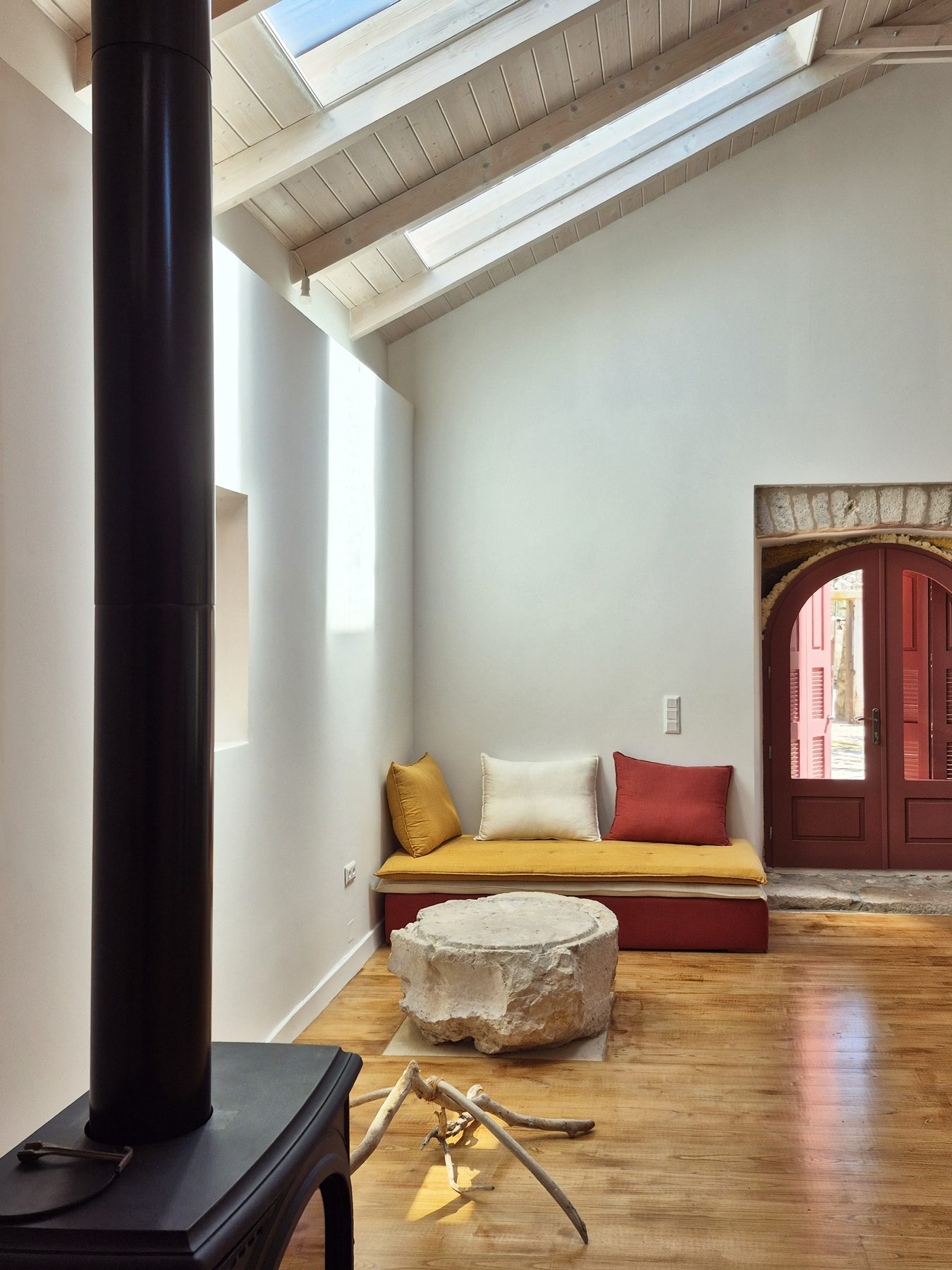
It has primarily been applied in projects within public spaces, but also in private projects. In this particular case, terracotta tones mixed with pink infuse the space with warmth, constantly shifting in character with the natural light across the seasons, giving a unique identity to the space. It echoes the warm hues of the wooden floor and contrasts subtly with the white walls and dark blue lower kitchen.
MAP: Transforming a centuries-old olive press into a contemporary home, you made key structural interventions including the full replacement of the old wooden roof. How did you preserve the building’s historical character and incorporate its material memory into your new design? Were there specific traces or elements that guided you?
CV: The historical character of the building has been preserved by keeping the mill’s central stone, measuring 130 cm in diameter, in its original location. The stone has been protected with a walkable glass surface and it articulates the kitchen area. Furthermore, the main wooden door has been preserved, and the window frames have been newly crafted to replicate the originals.
BIO
Caterina Viguera Studio (founded in 2023, Zürich/Barcelona) is an architecture practice working at the intersection of Architecture, Spatial Design and Research. Characterised by an explorative and interdisciplinary approach, the work engages on topics addressing public space, societal issues and climate change, by combining different scales, formats and media.
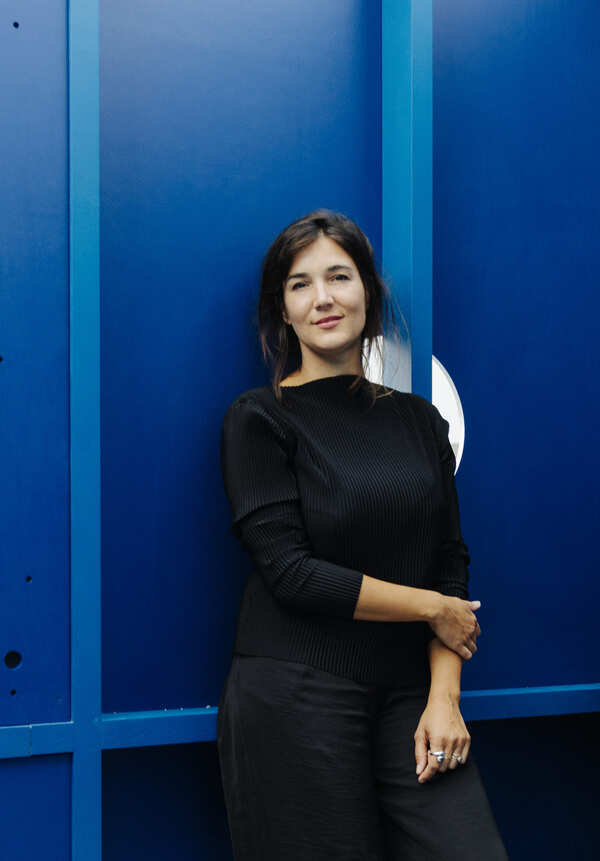
Caterina Viguera was co-founder of international architecture practice rotative studio (2017-23), based in Zürich and Rotterdam, with projects such as ‘Three Pavilions’ in Aigle (Switzerland) or ‘Learning from Venice’, a design studio making future flooding of inner-city rivers visible, to architecturally and culturally revisit public space.
She also co-founded (housing and mix-used) Cooperative Stadtufer in Lichtensteig, Switzerland, and became co-president, executive member and architect (2020-2024). The project is situated in a post-industrial complex of approximately 8‘000 m2, purchased in 2021, with main focus on creating new types of living and common sustainable spaces.
Facts & Credits
Project title Mill House
Typology Change of use, Renovation, Restoration, Residential
Location Lefkada island, Greece
Status Completed, 2024
Architectural Design Caterina Viguera Studio
Original concept rotative studio (Caterina Viguera & Alexandra Sonnemans)
Executive plan with Eulàlia Martin
Construction by civil engineer Ktergon, Pavlos Ktenas
Photography @KARA and @DK.
READ ALSO: HOTEL EXPERIENCE 2025 // Meet the Speakers: Double Decker | Μια συνέντευξη στον Διονύση Μαρίνο