Architecture in Colour investigates the role of colour in architecture as a spatial and structural tool, influencing perception, orientation, and material expression beyond aesthetics. In Epsom, Surrey, Artefact extended a 1950s detached house with Triangle House—a Caribbean-inspired wing rooted in material honesty, defined by triangular blue blockwork, terracotta accents, and a luminous yellow soffit. Unfolding as an enfilade of living spaces, the addition reaches into the garden, following the afternoon sun and reinterpreting the chromatic palette of the original dwelling.
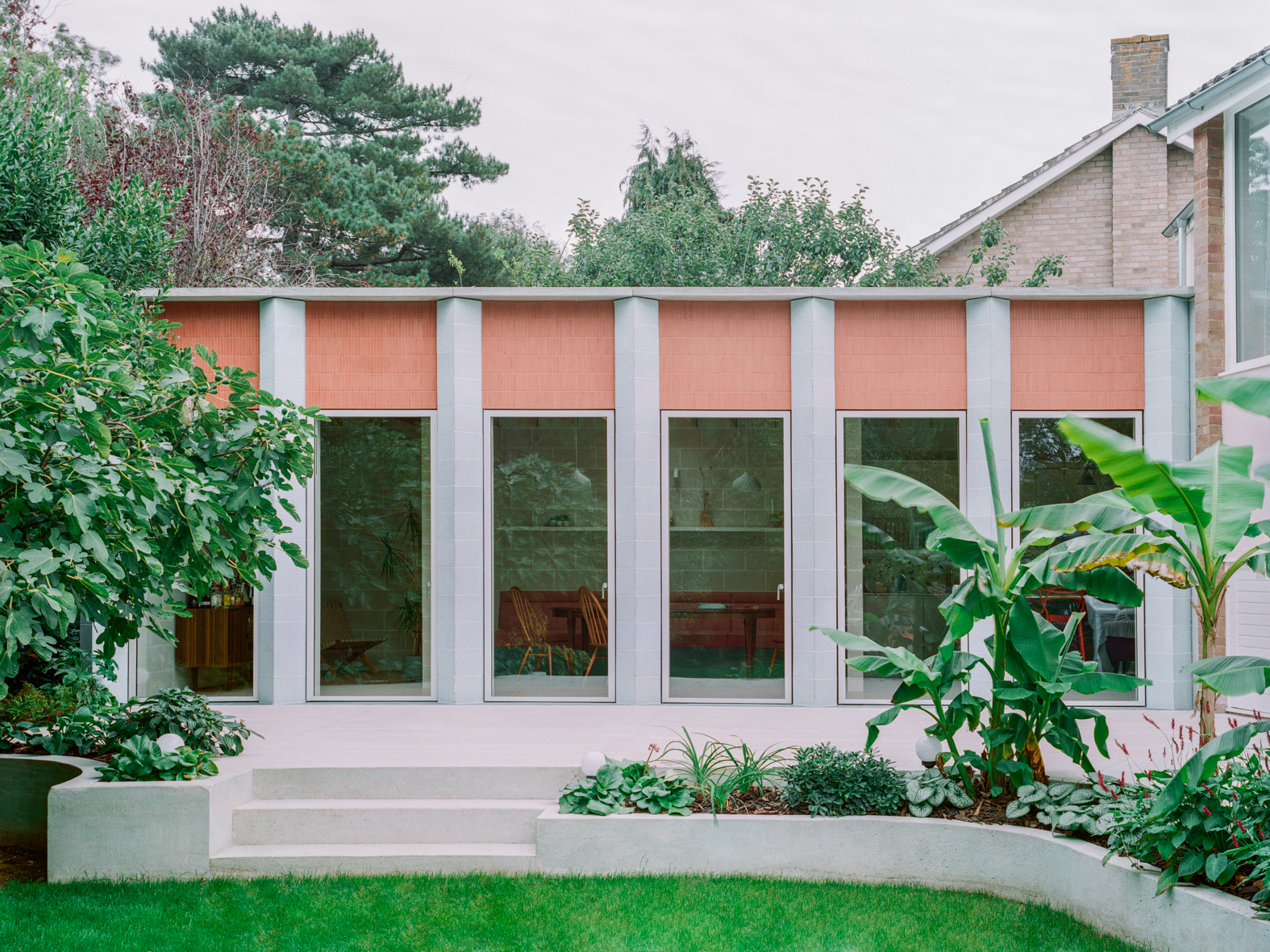
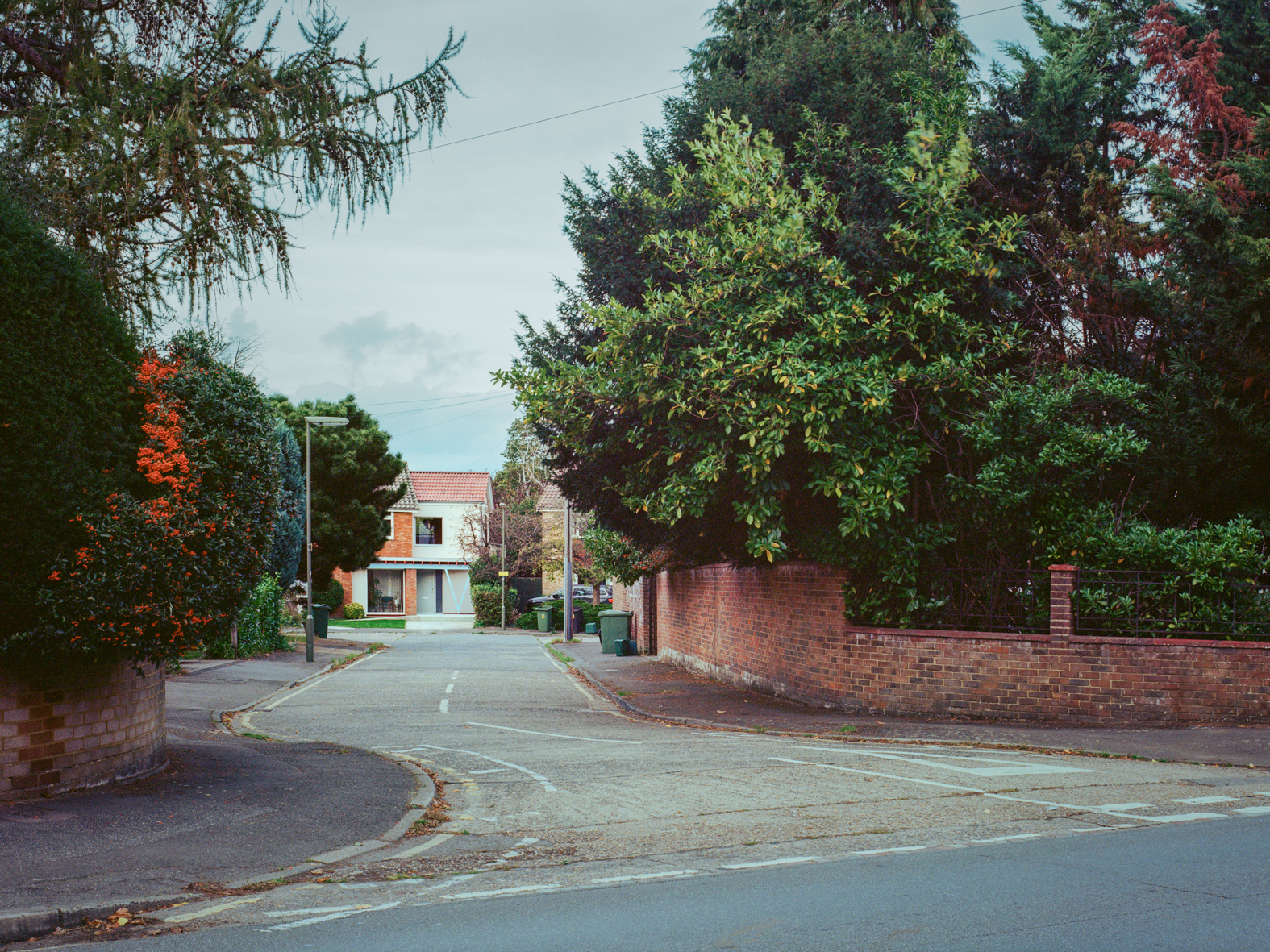
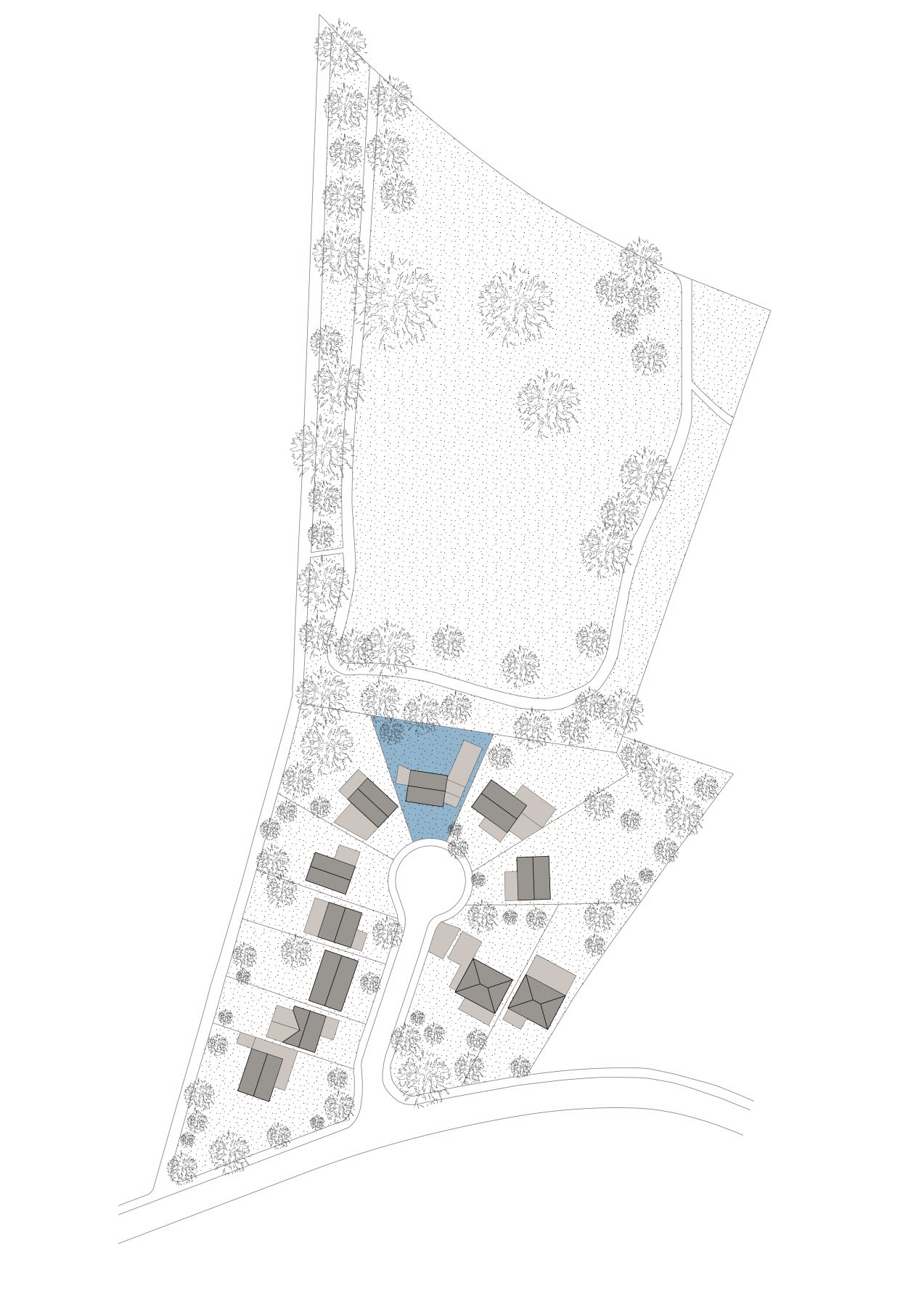
At the edge of a cul-de-sac in Epsom, a suburban town on the edge of Greater London, set within the historic county of Surrey and overlooking Roseberry Park, Triangle House repositions domestic life through light, material restraint, and spatial sequence.
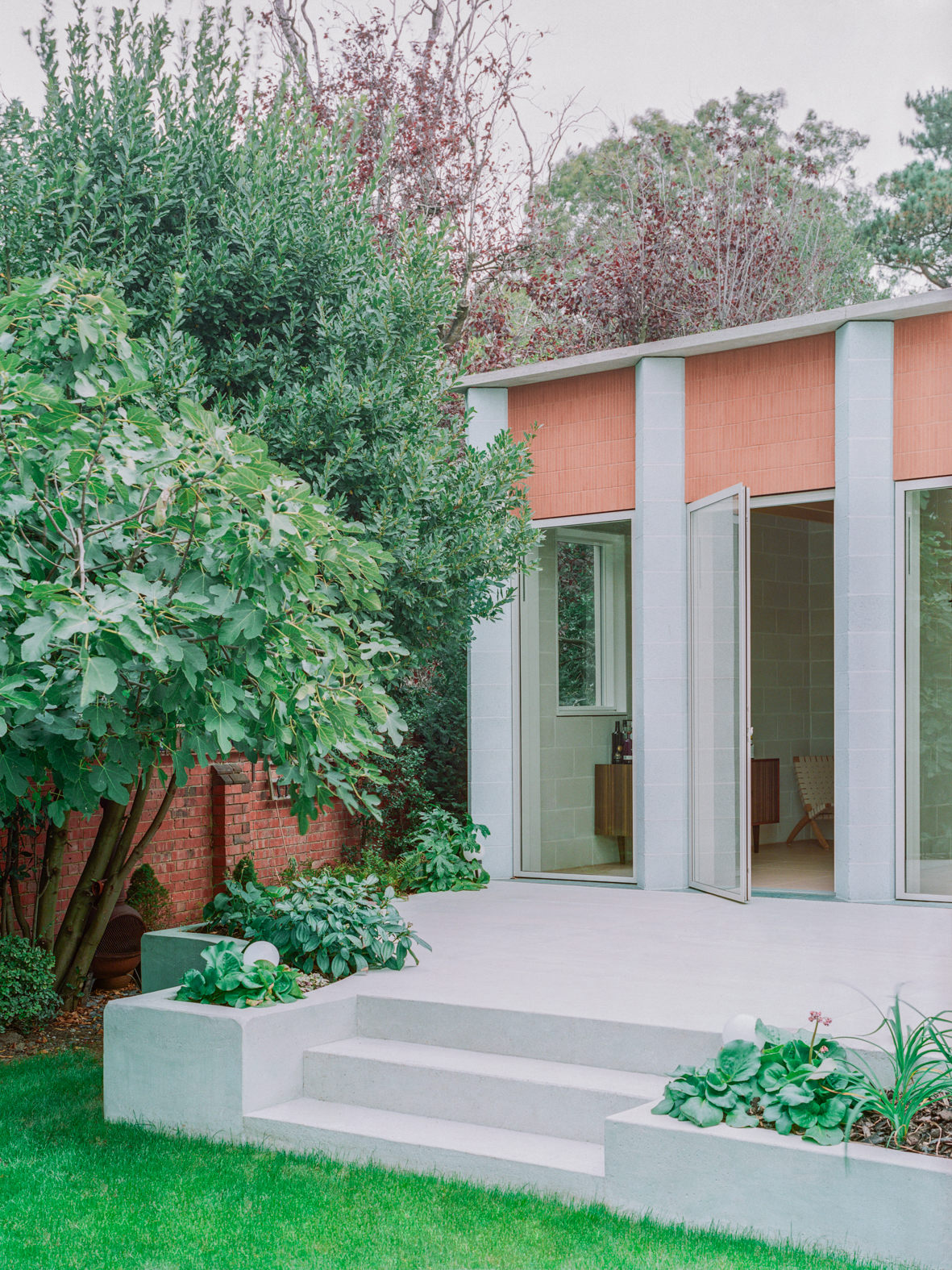
Designed by Artefact as a new wing to a 1950s detached house, the project extends deliberately into the garden to capture the afternoon sun and reframe the relationship between home, landscape, and inhabitation.
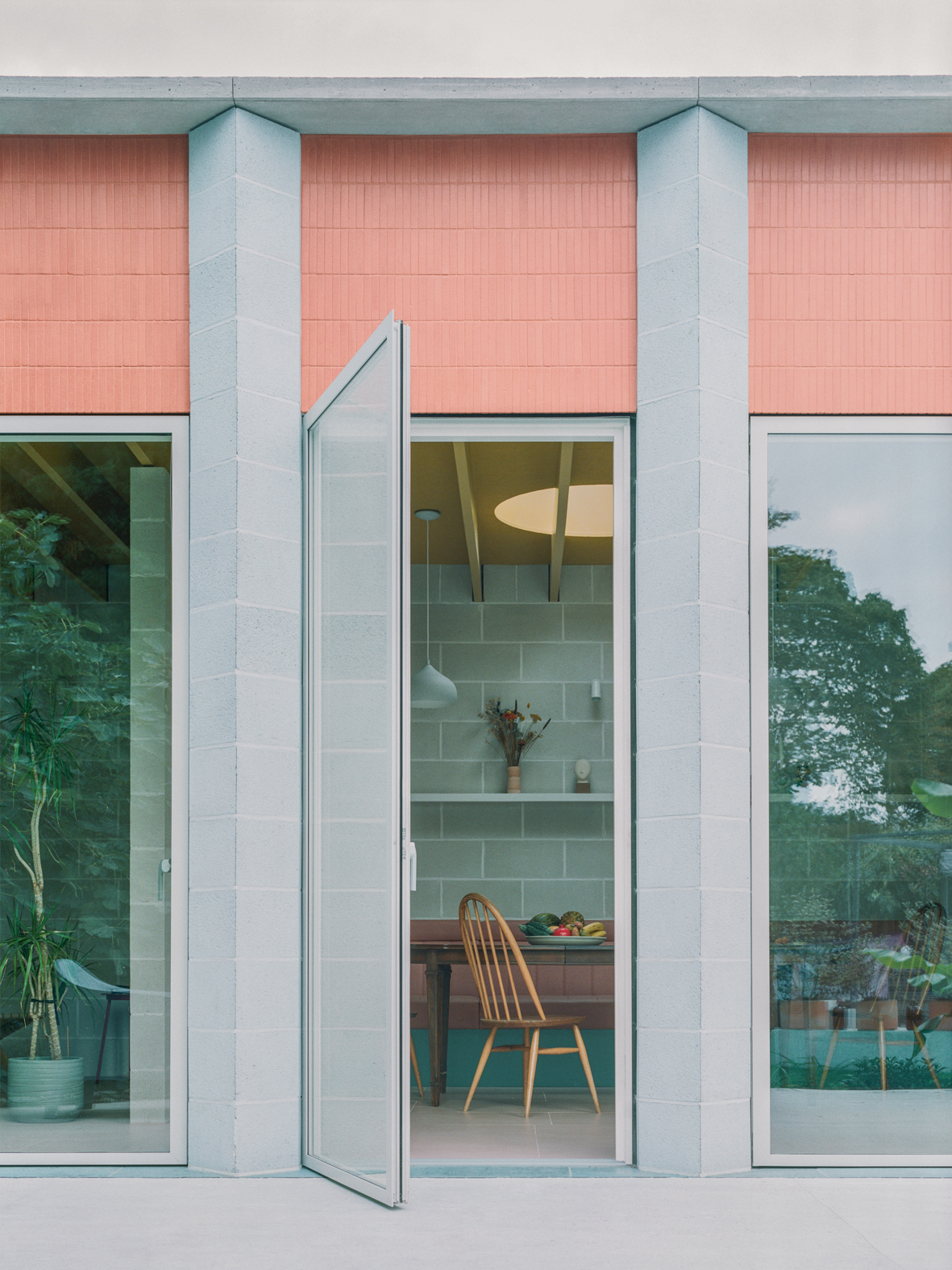
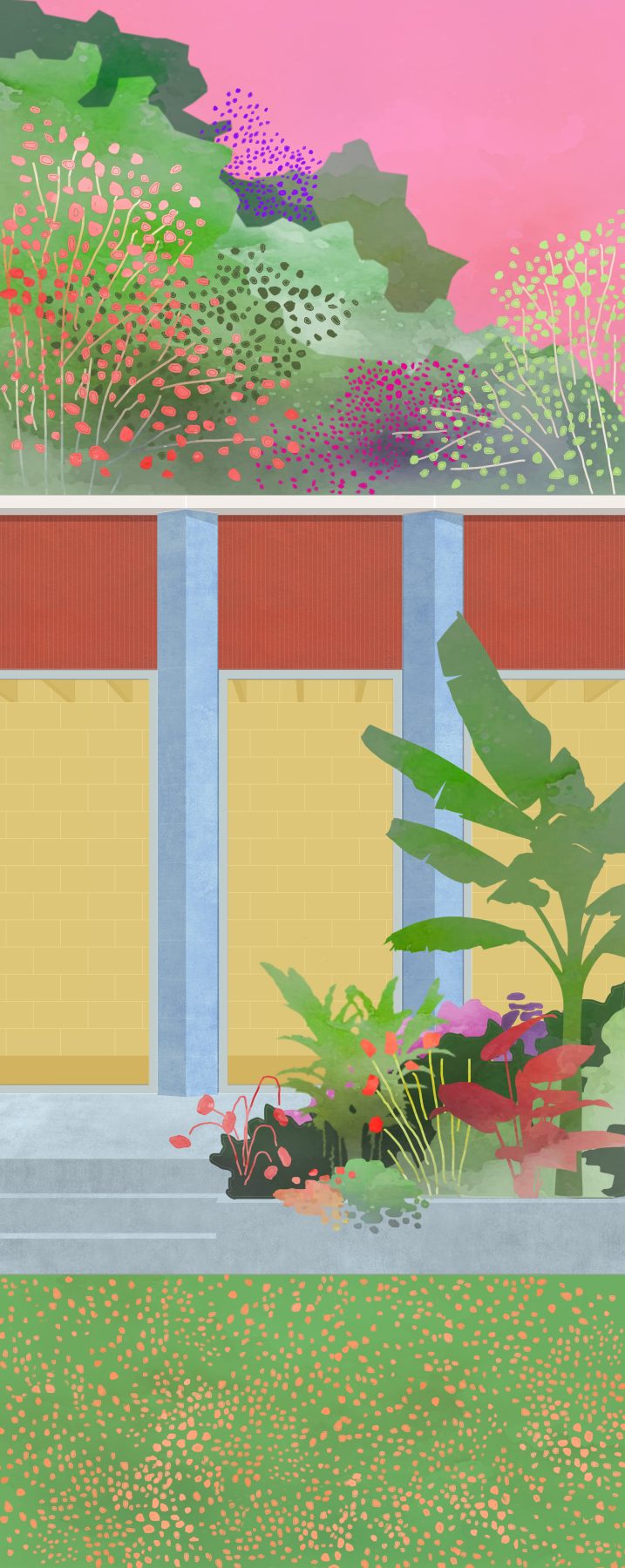
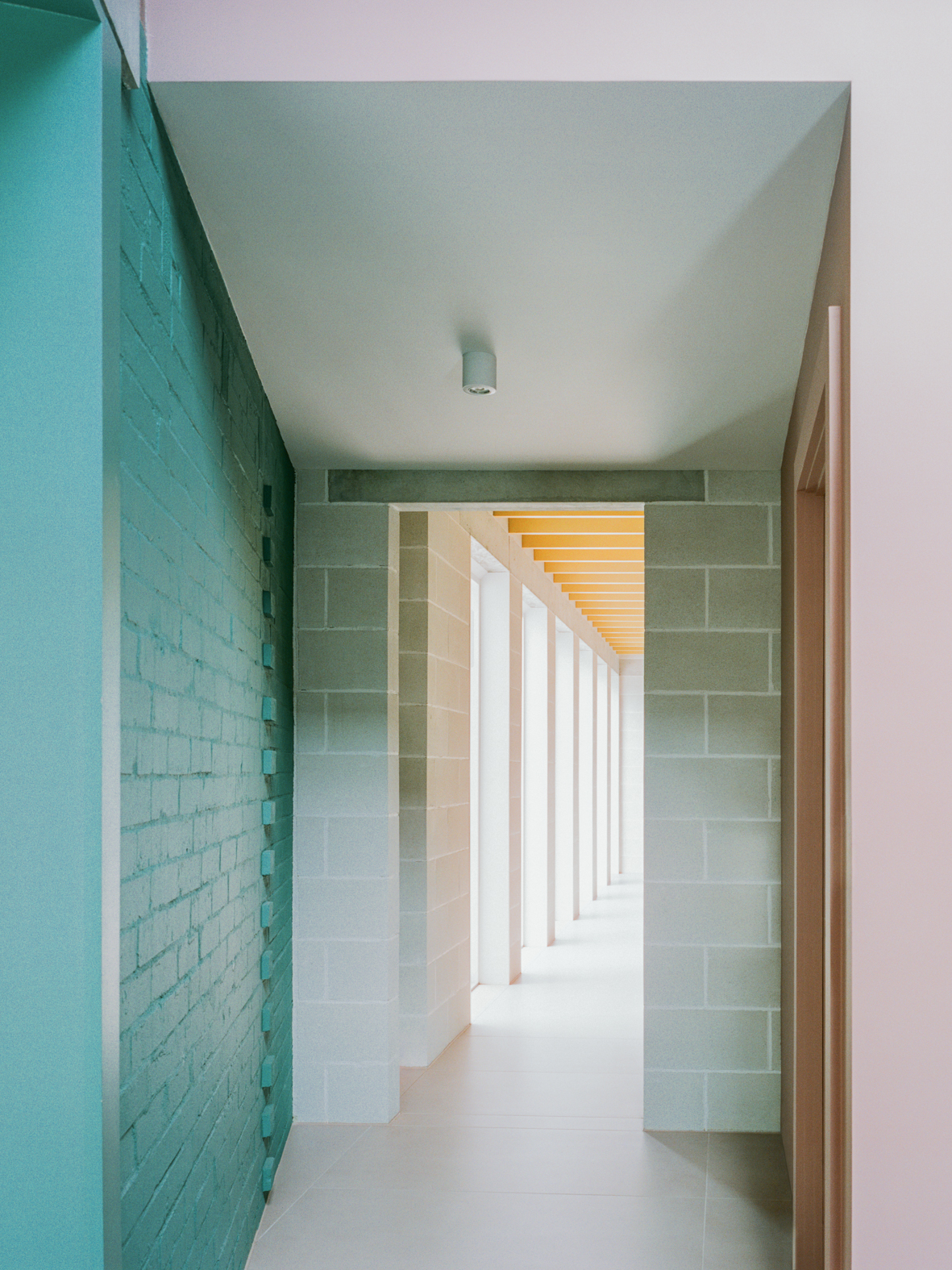
The extension draws conceptual inspiration from the book Caribbean Style which showcases the diverse architecture and gardens of Caribbean islands, from plantation manors to colorful native homes, featuring a wide selection of tropical design elements. Triangular blue pigmented blockwork, terracotta tile inlays, and a warm yellow soffit establish a palette that resonates with both the original house and the client’s heritage. This architectural language is further amplified by an exuberant planting scheme by Phenomena, where banana palms and dense foliage animate a sweeping blue terrace, binding the new wing to the existing house and the garden beyond.
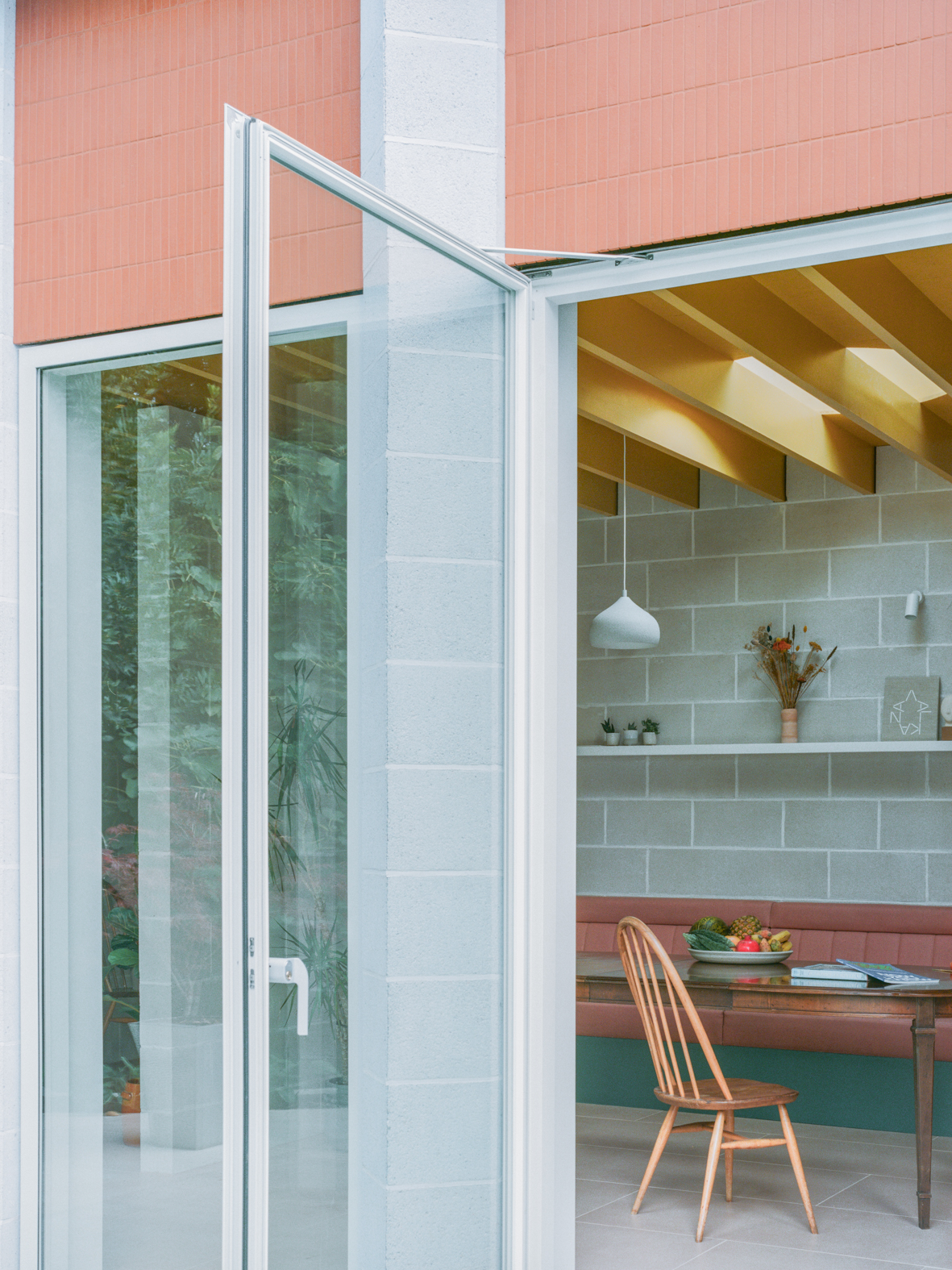
“The project was about creating a sense of optimism through architecture,” notes Daniel Marmot, Director at Artefact. “We were interested in how colour, material, and light could produce a transportive quality—something that feels unexpected within a suburban UK context, yet entirely rooted in place.”
Spatial sequence and domestic ritual
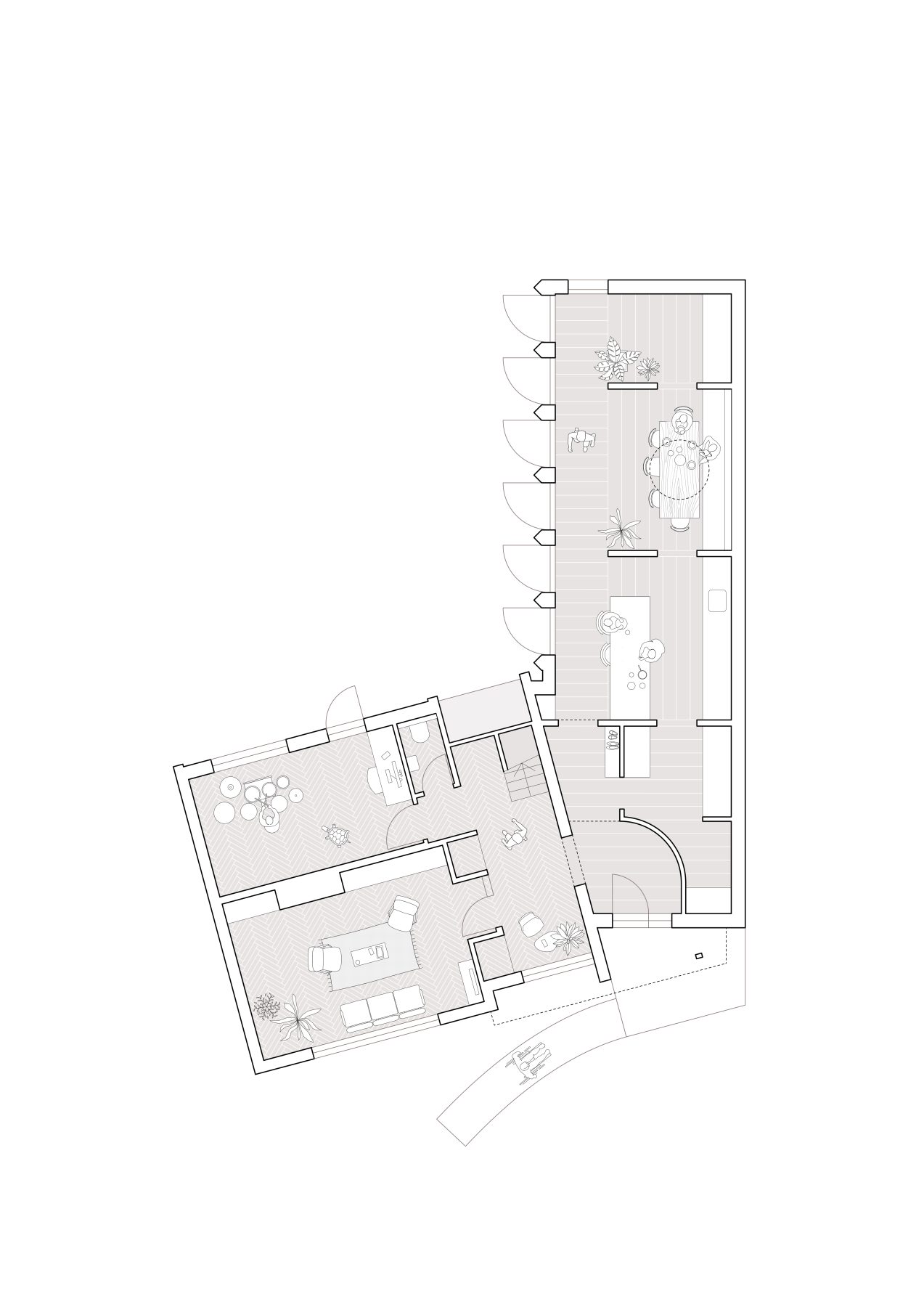
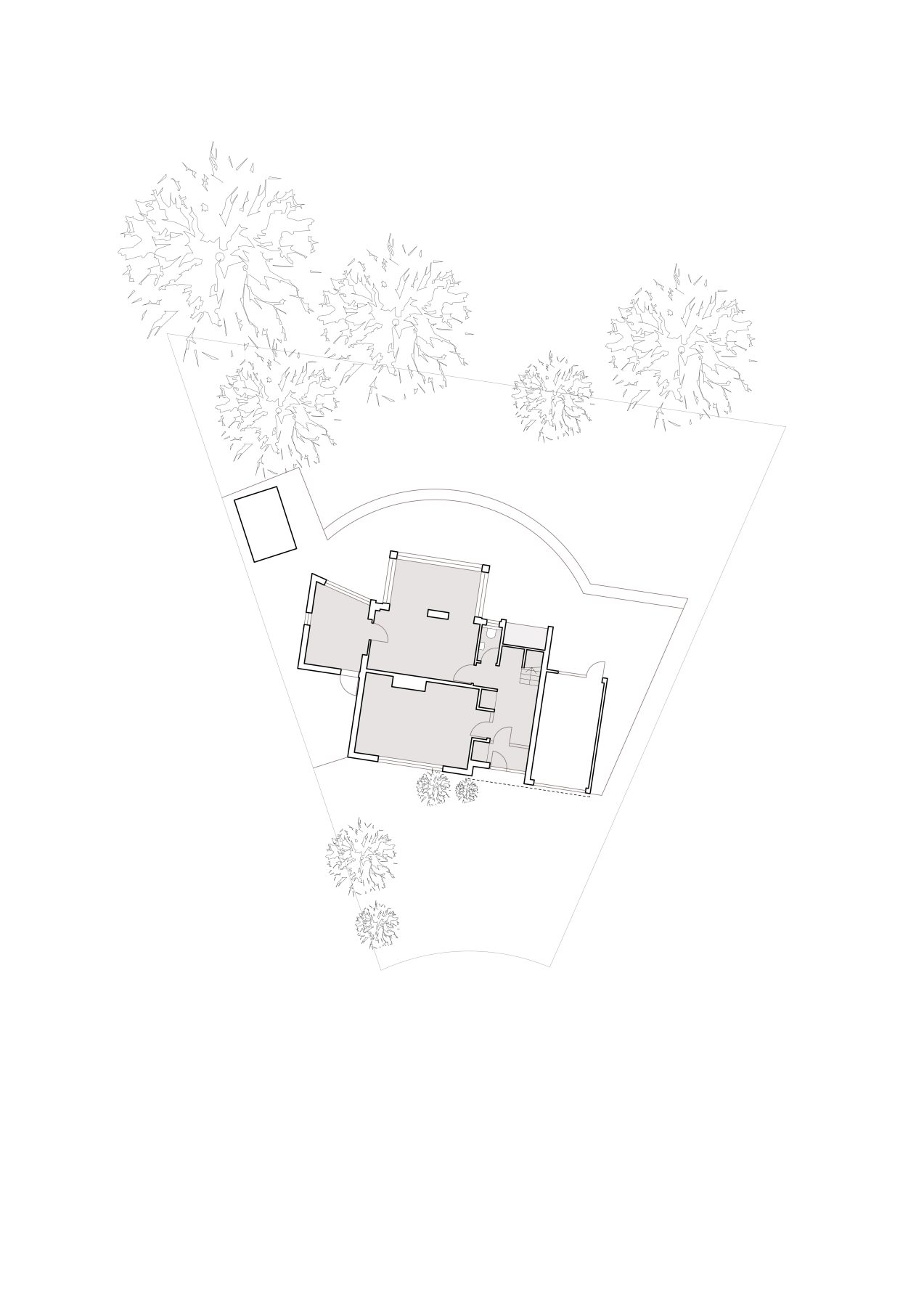
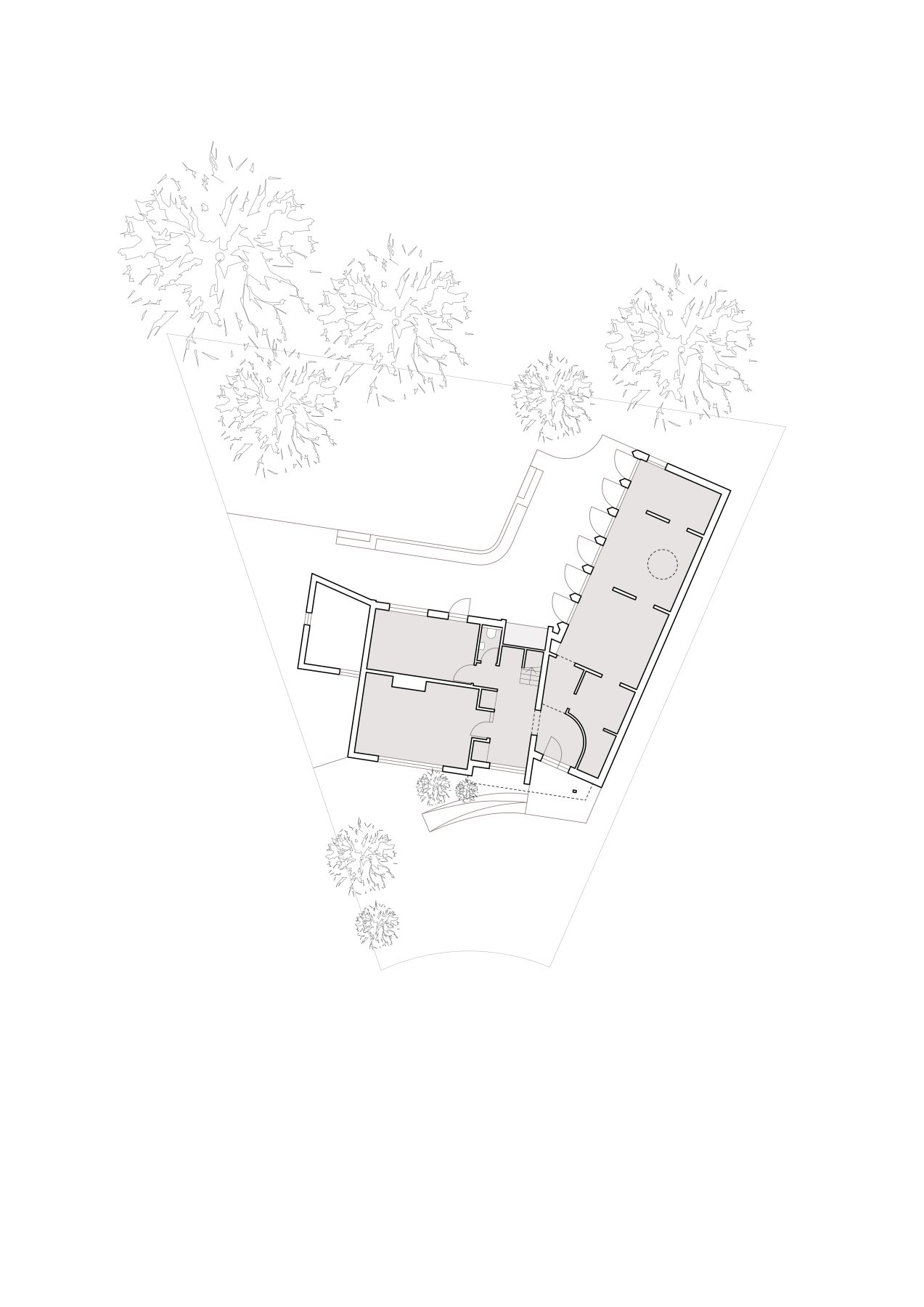
The client’s brief called for expanded living areas, a family bathroom, an adaptable bedroom, an office-cum-music room, a snug, and a reconfigured garden. Artefact responded by rejecting the conventional open-plan model in favour of a calibrated enfilade; a sequence of interconnected rooms that unfold from street to garden.
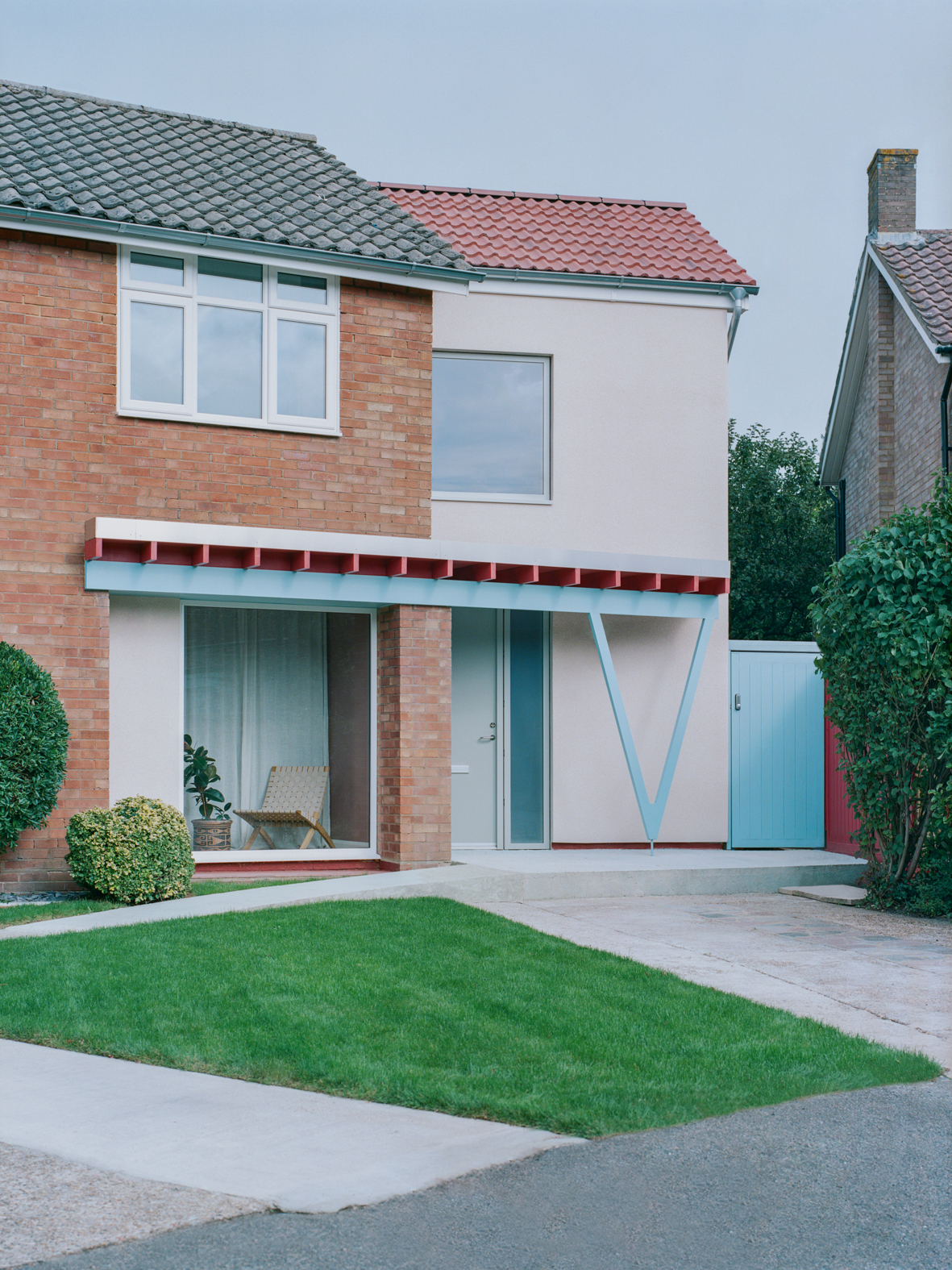
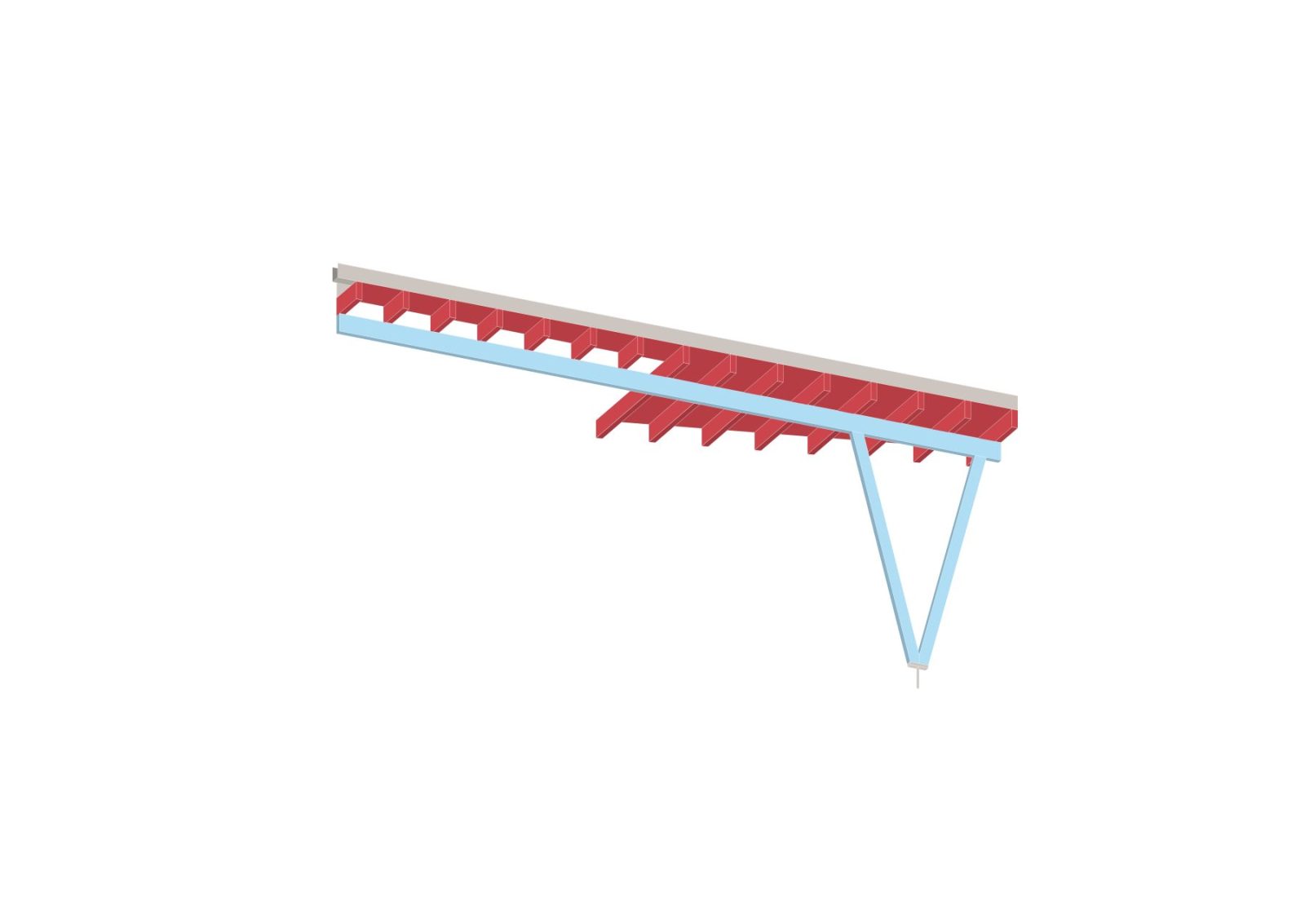
A low entrance canopy marks the threshold, supported by a triangular column that subtly references a mid-century detail found in the surrounding neighbourhood.
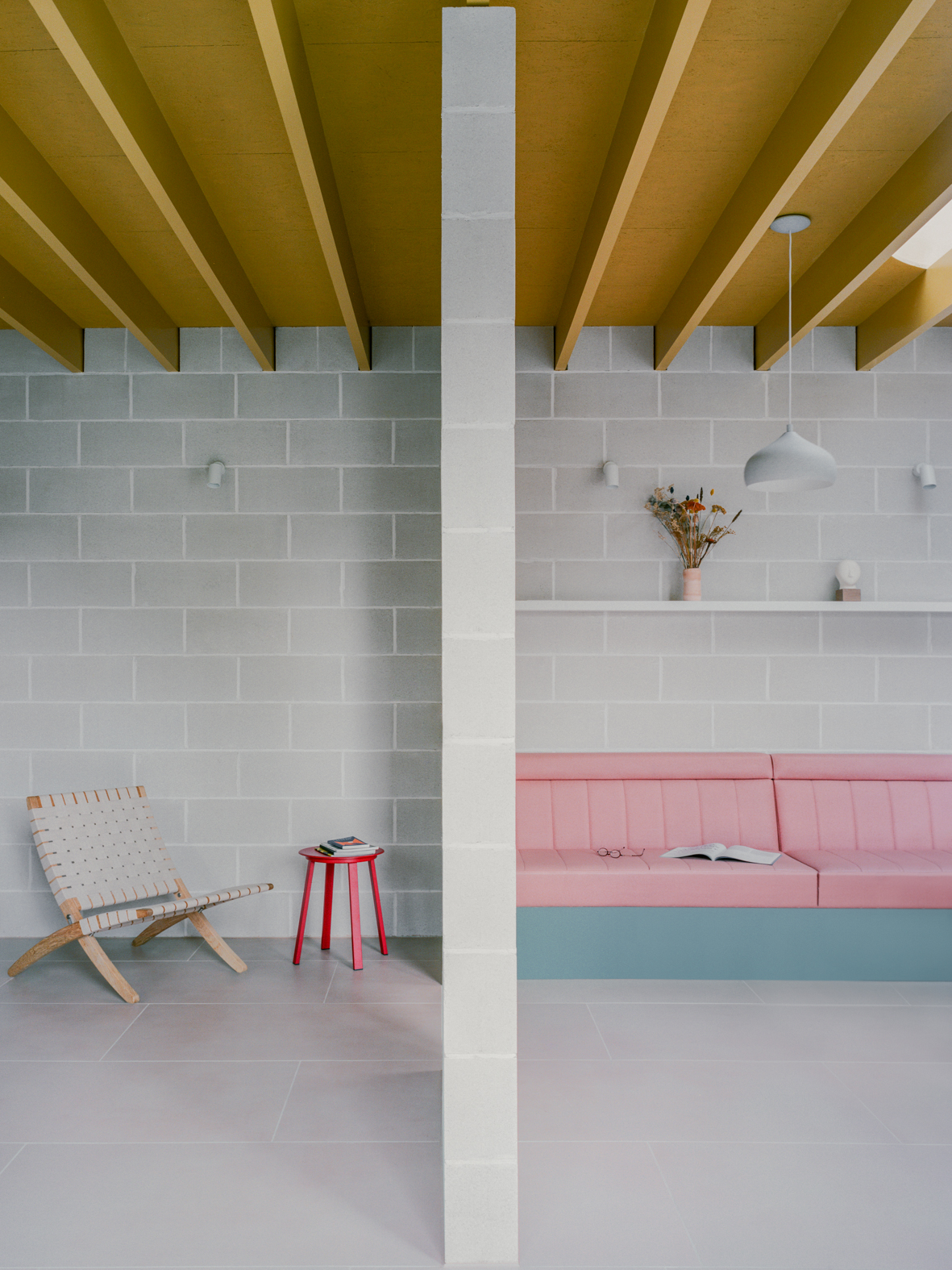
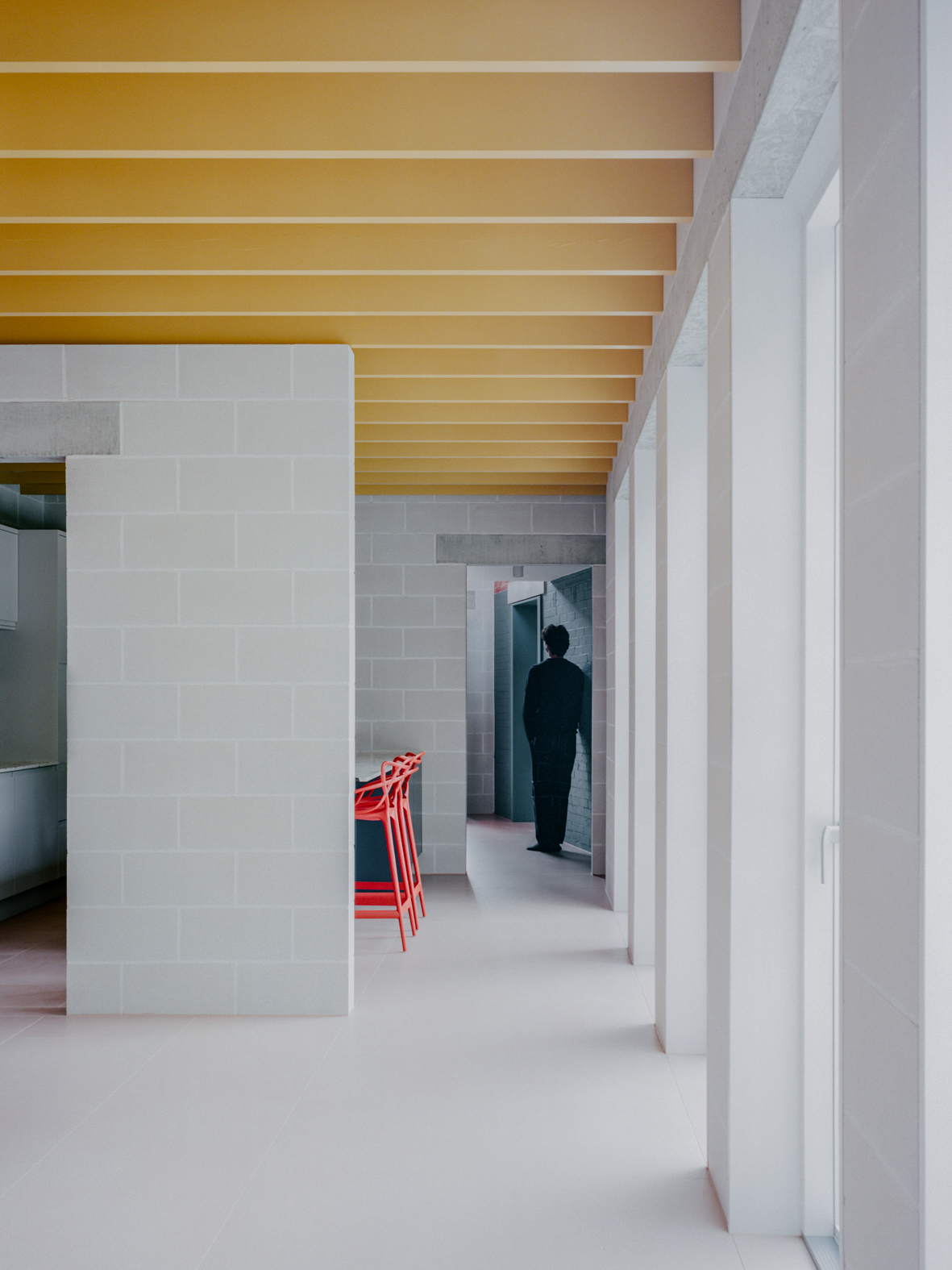
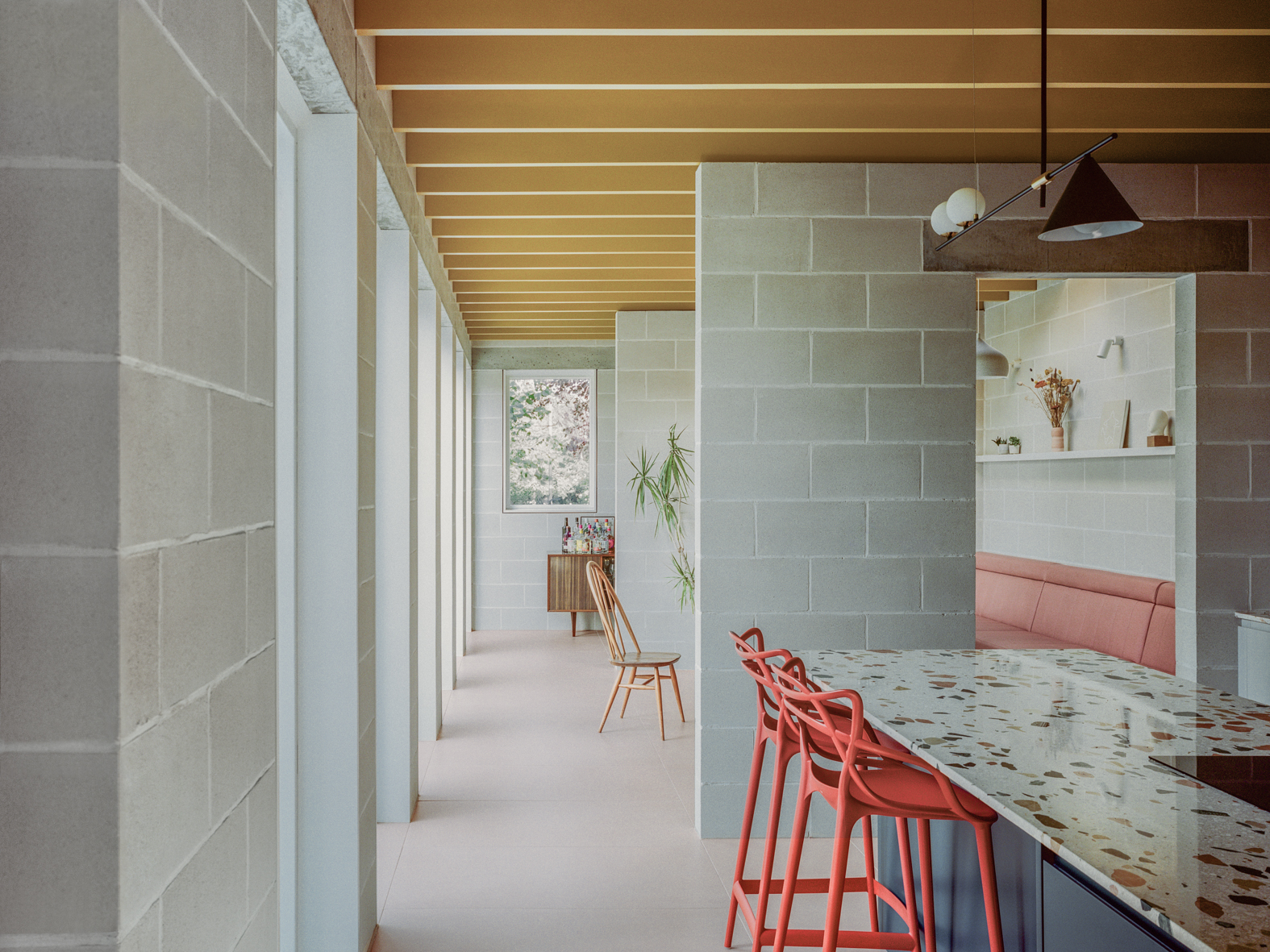
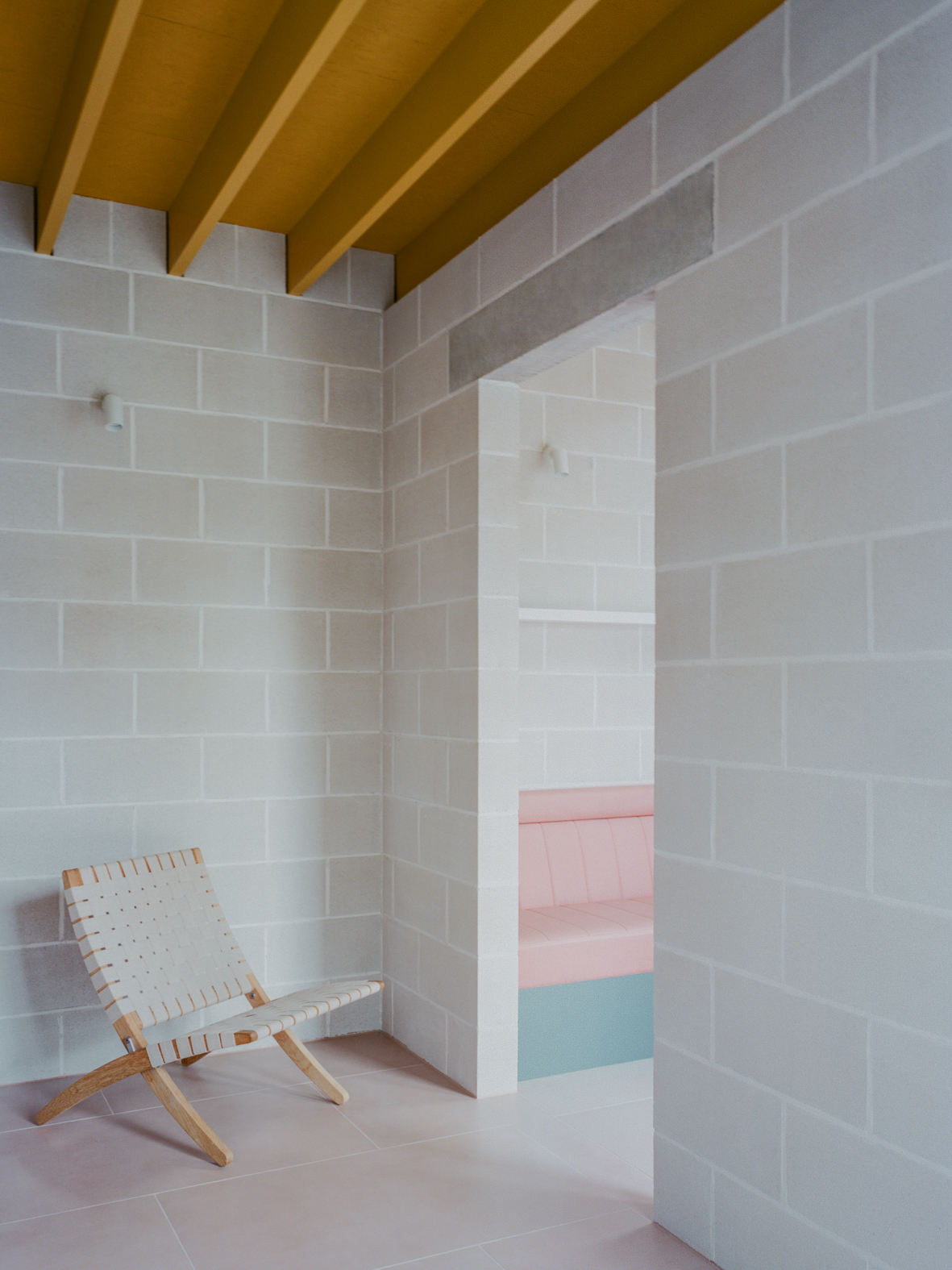
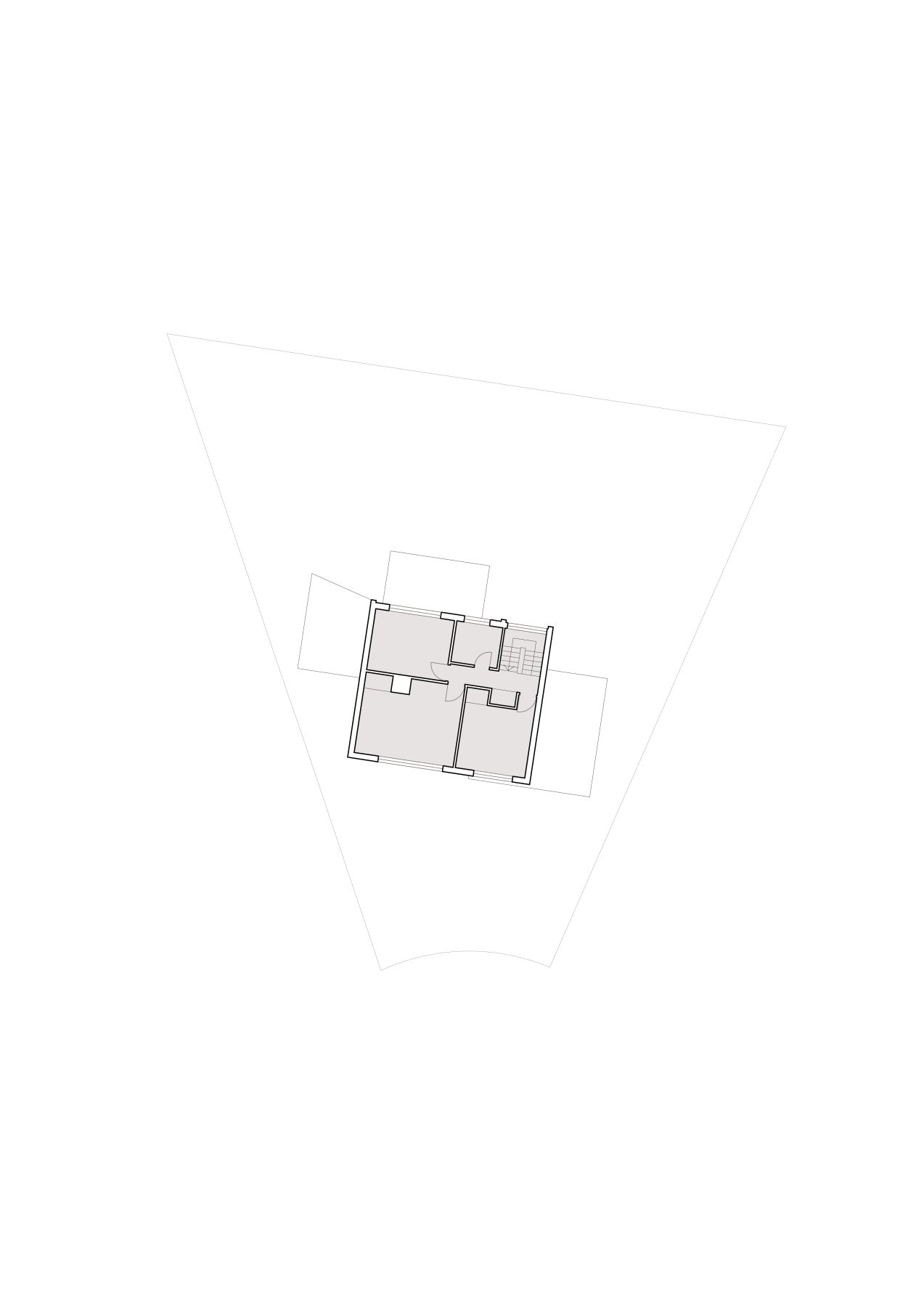
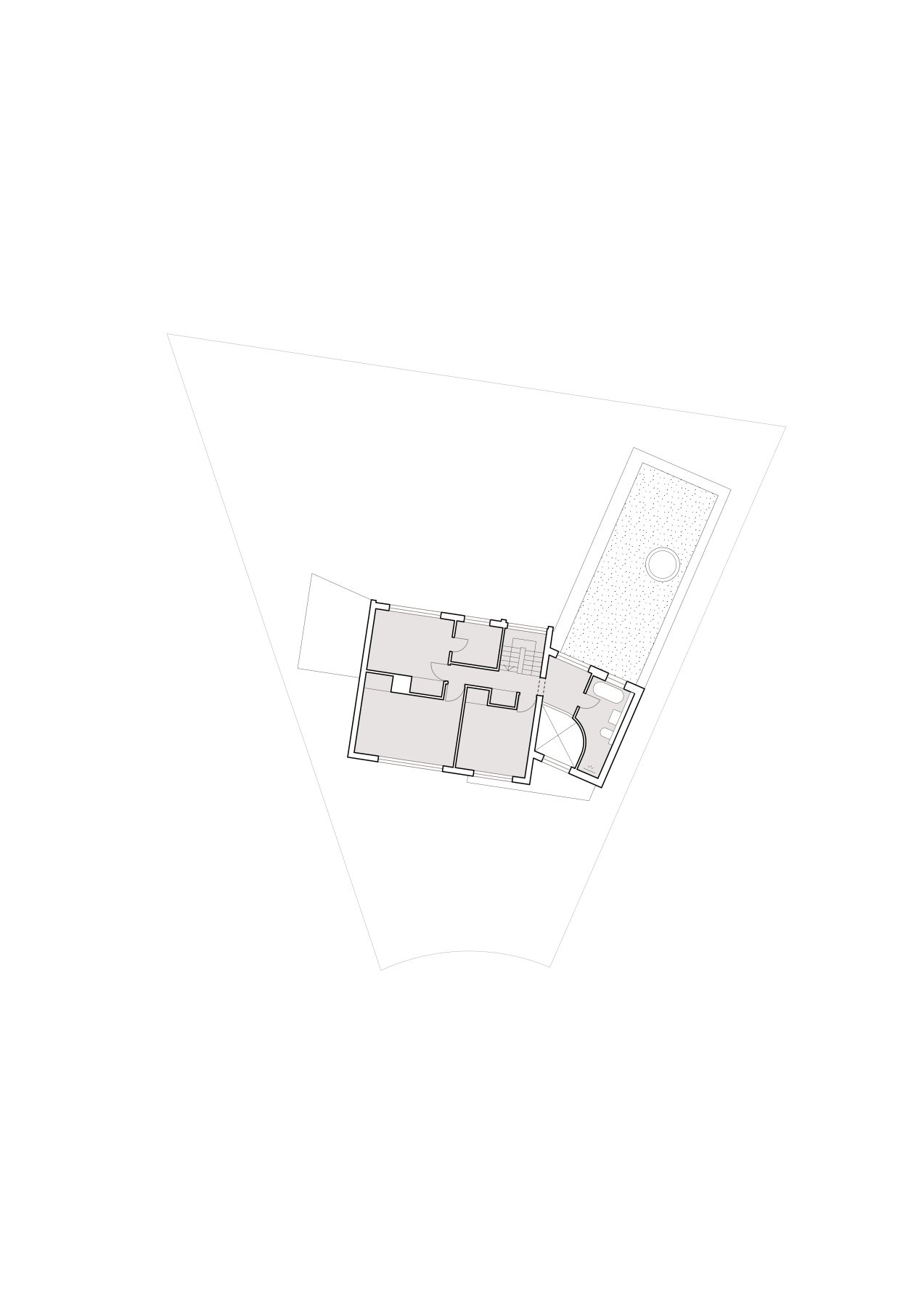
Beneath it, a compressed entry gives way to a dramatic double-height hall, where old and new intersect beneath an open mezzanine and suspended bathroom volume. From here, the house opens laterally along the garden edge, culminating in a picture window that frames views towards the park. The kitchen flows into a top-lit dining room through paired openings, continuing into an intimate snug at the end of the sequence. Internal doors are deliberately omitted; instead, carefully proportioned openings frame views between spaces, allowing each room to retain its autonomy while remaining visually and spatially connected.
“The ambition was to create rooms that acknowledge one another,” Marmot explains. “Spaces that feel distinct, yet never isolated—where movement, light, and everyday life are always perceptible.”
Material economy and expressive construction
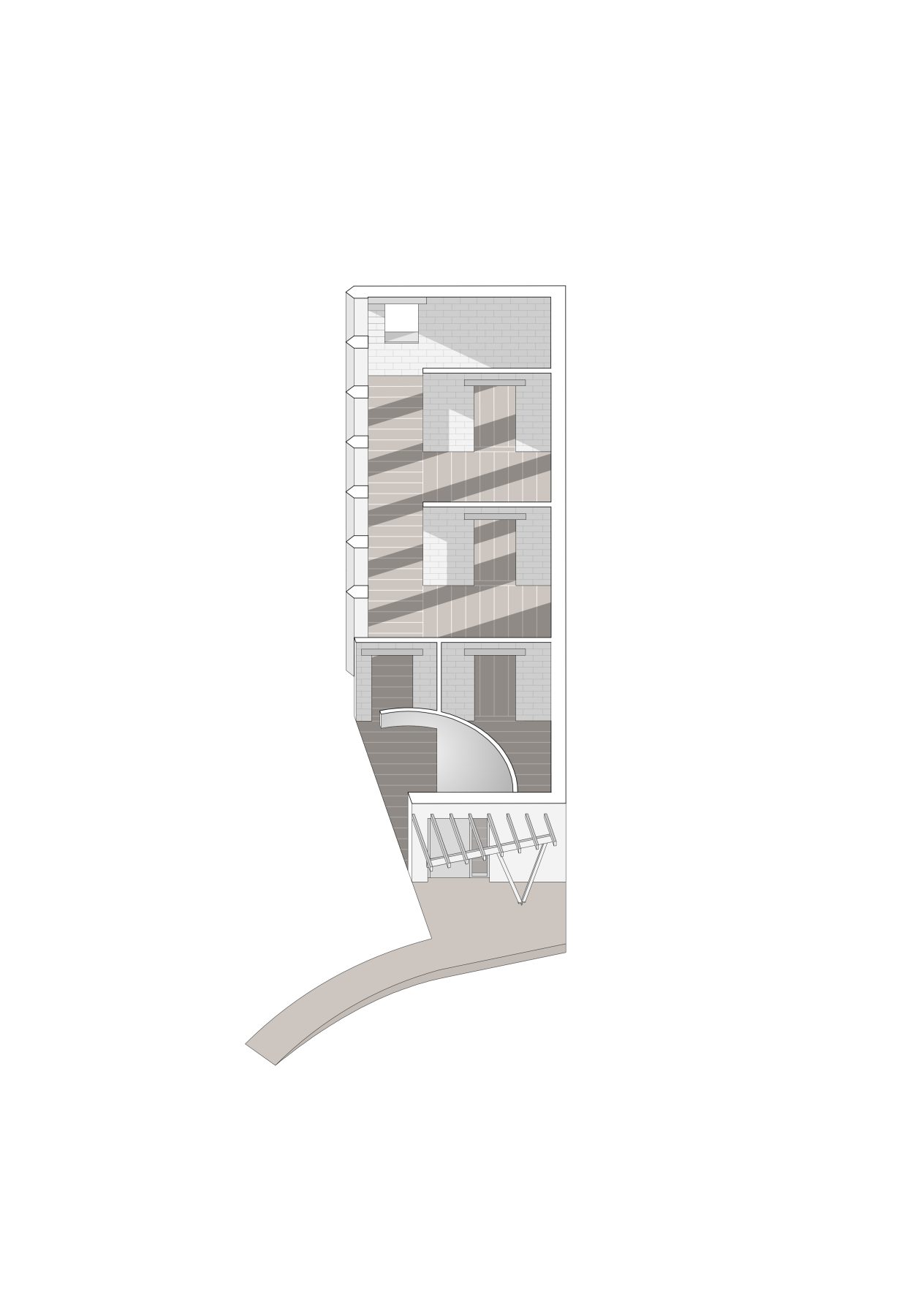
Delivered within a tight budget, Triangle House is underpinned by a rigorous material strategy that reduces complexity while heightening architectural character. The extension is constructed from a single leaf of hollow blockwork, left fair-faced internally, with insulation and render applied externally.
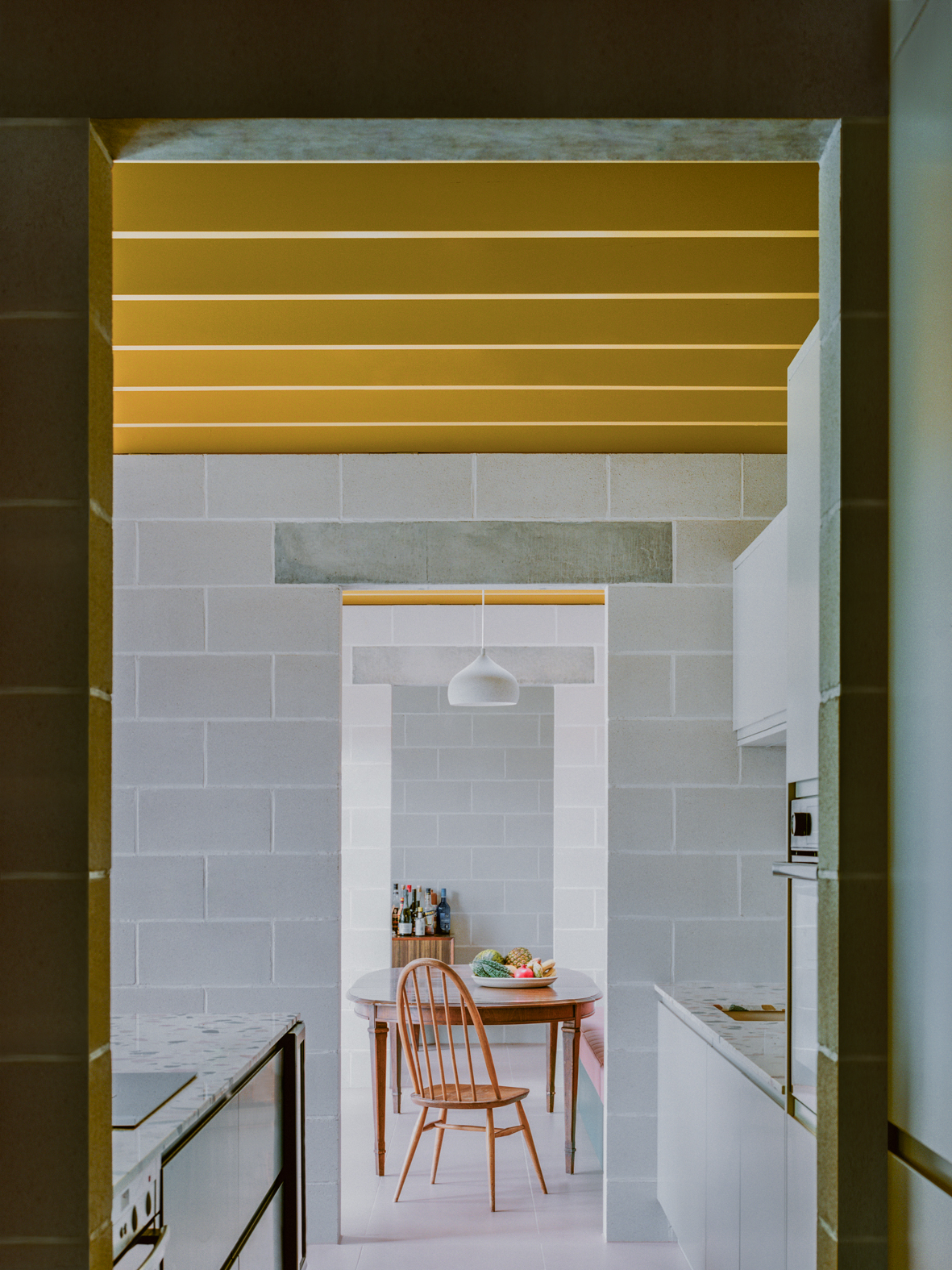
This approach challenges the UK norm of cavity wall construction, reducing masonry volume by over 50%, lowering embodied carbon, and simplifying the build process.
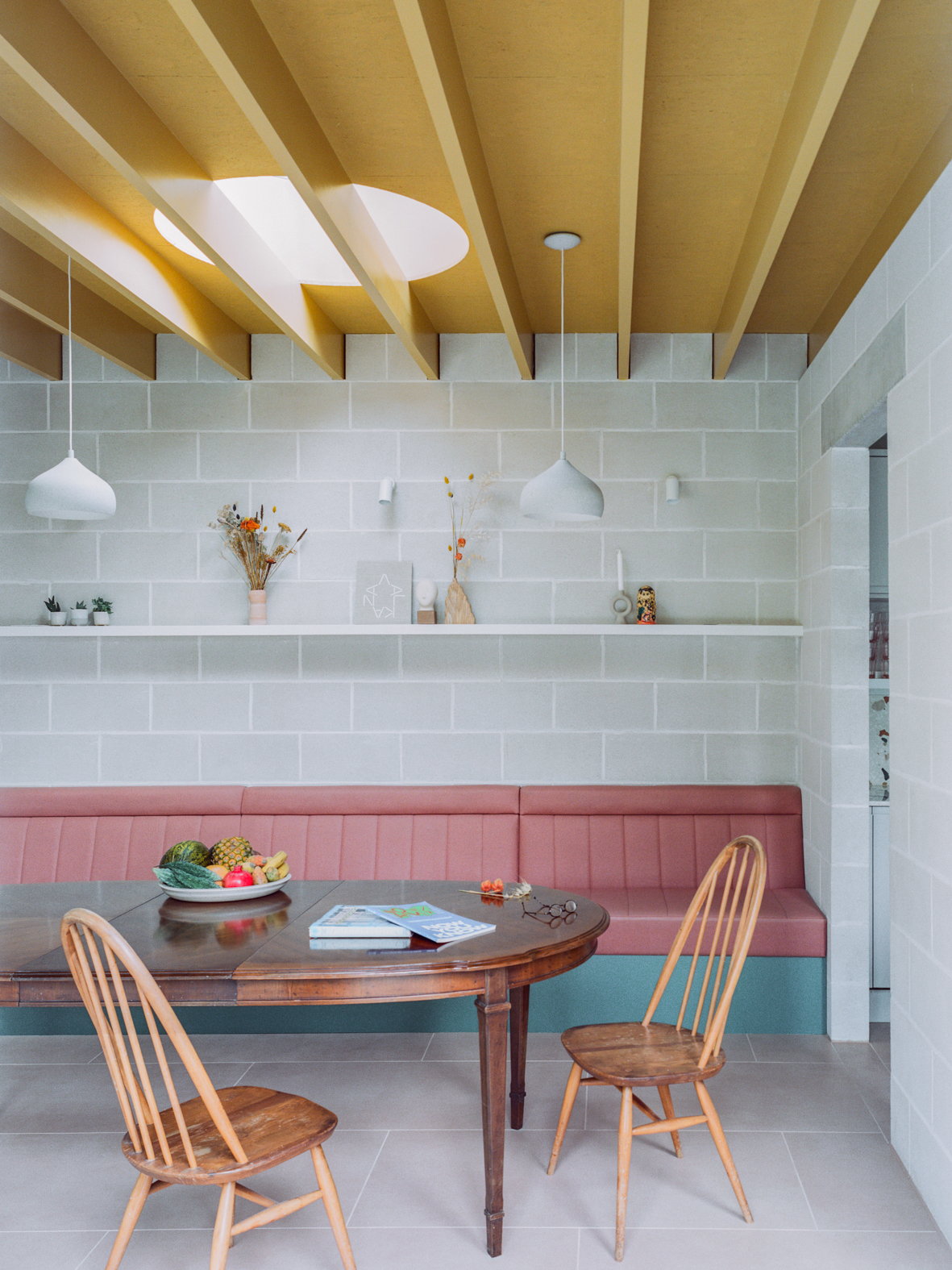
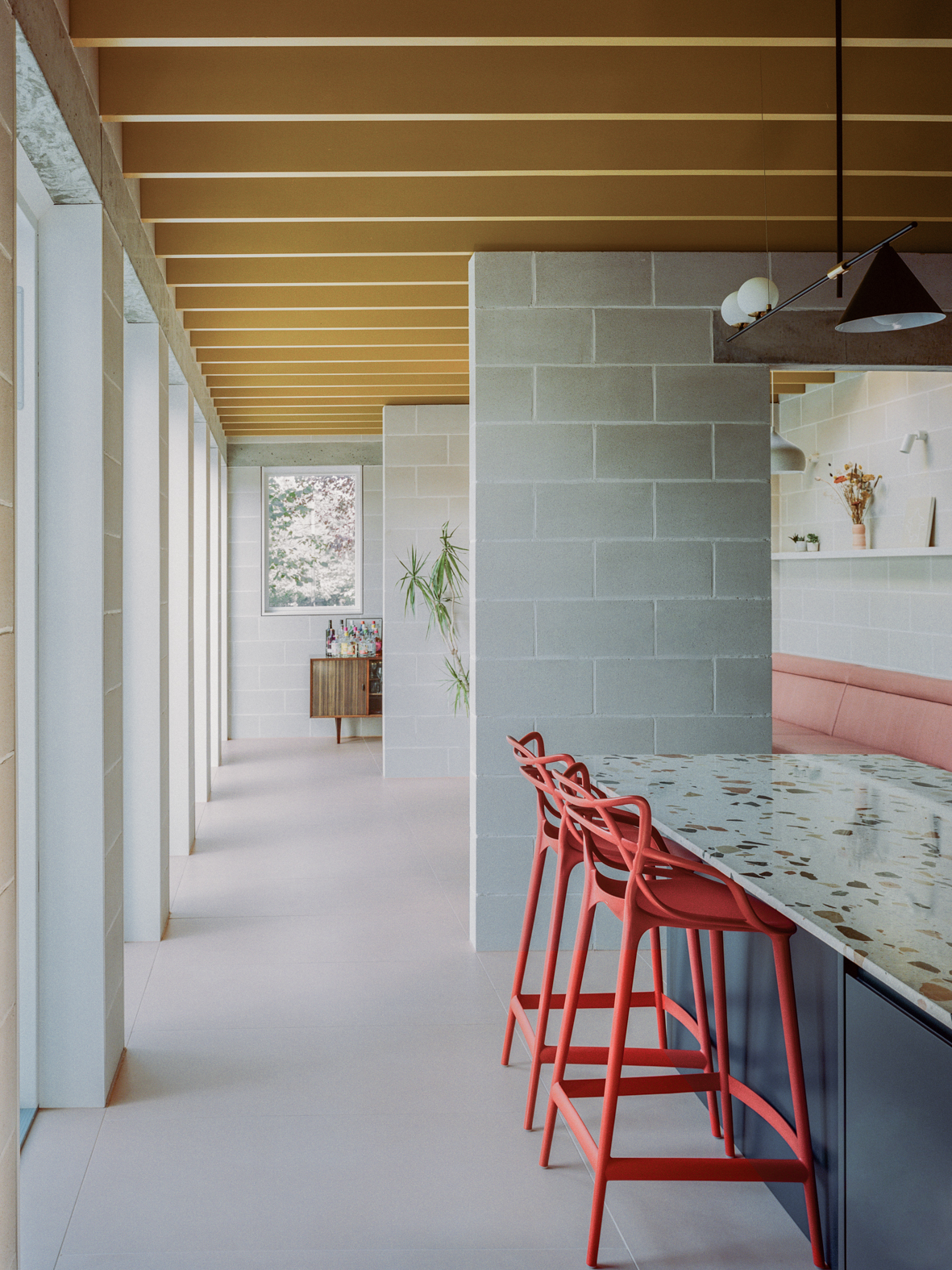
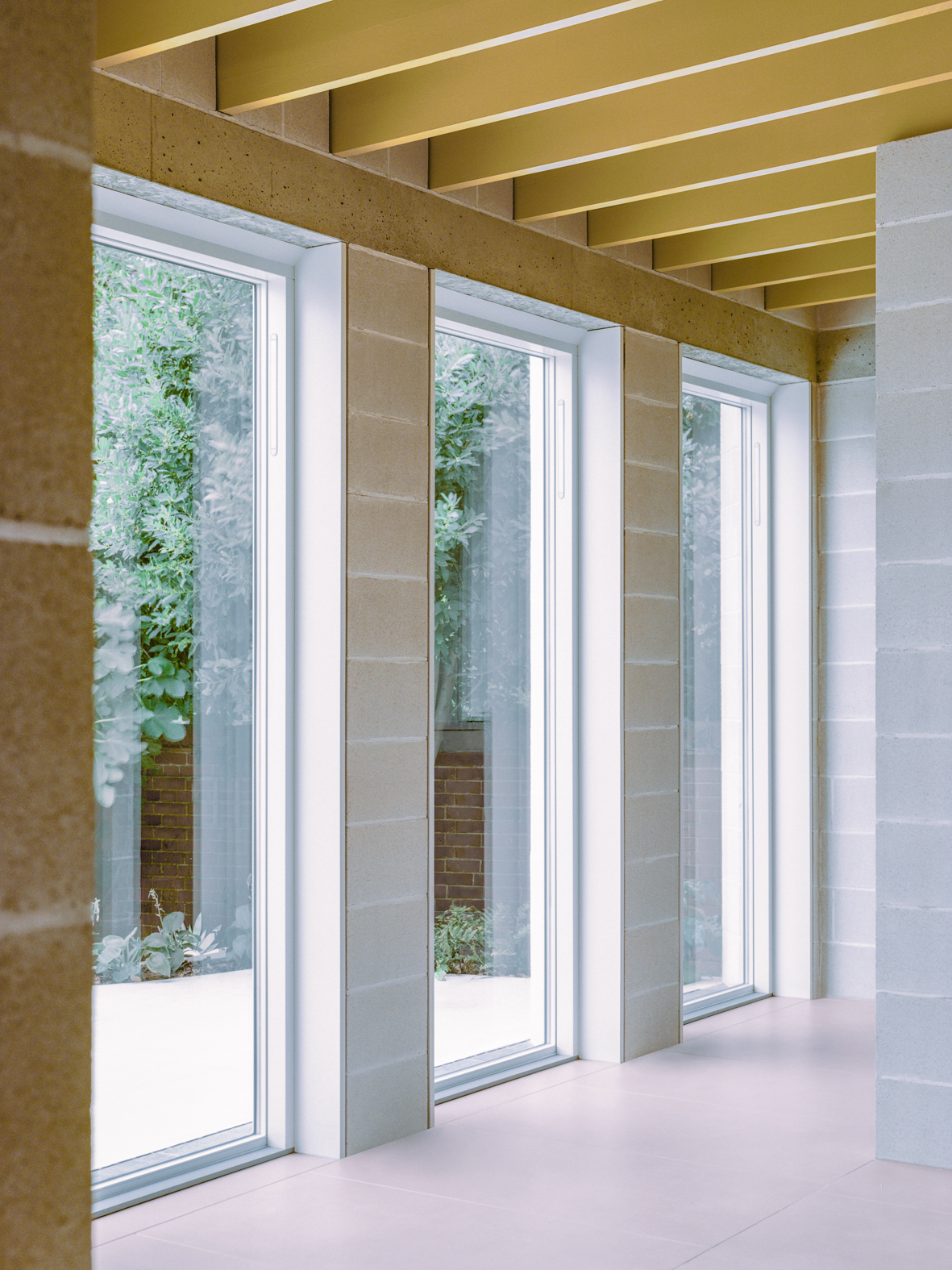
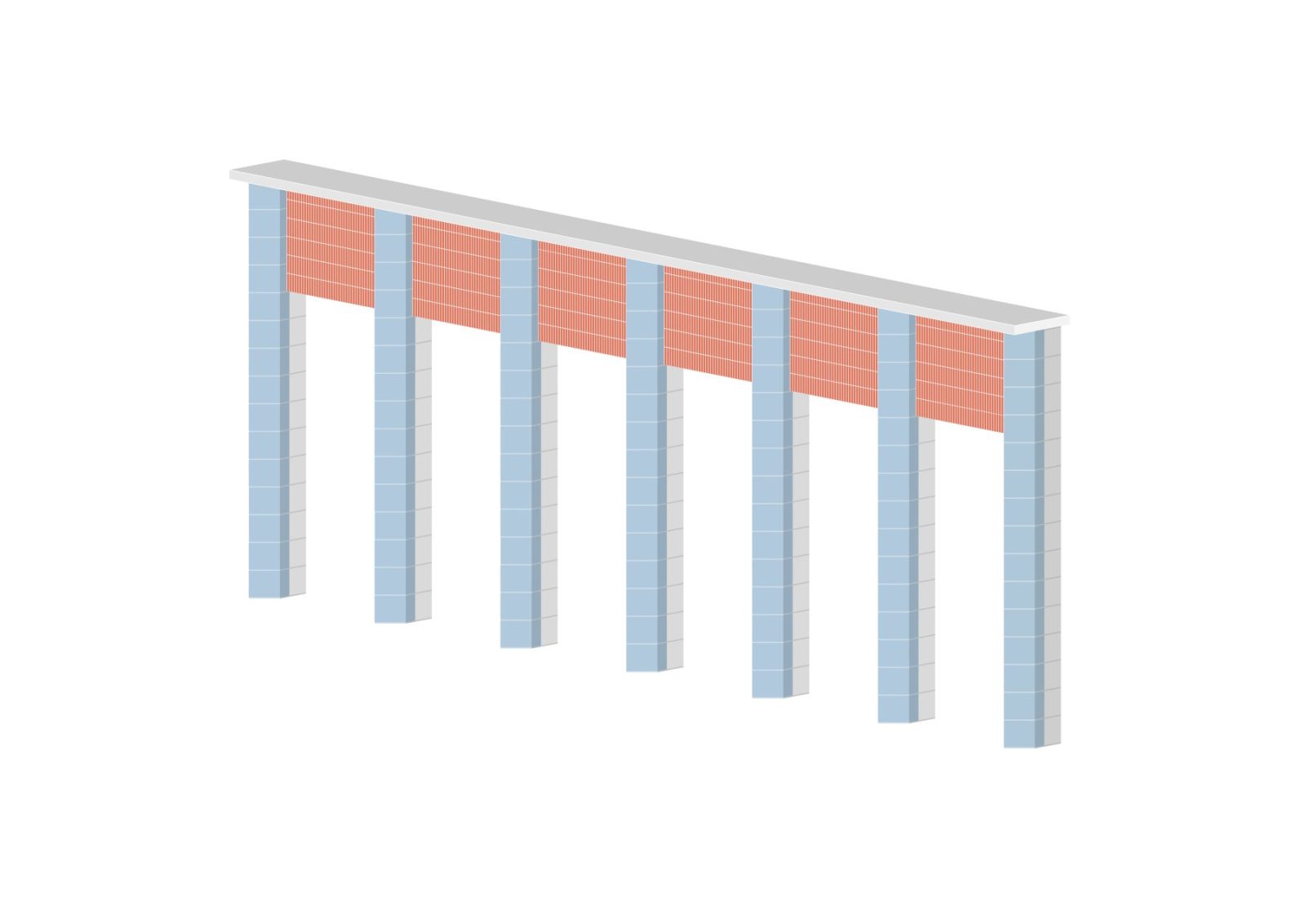
Internally, the blockwork acts structurally as a series of piers, allowing the walls to remain thin while defining space. Exposed timber beams and OSB sheathing are expressed at soffit level and painted in a bold yellow, reinforcing the project’s ethos of material honesty. The garden elevation is intentionally the most expressive: off-the-shelf blue pigmented blocks are cut on site to form deep triangular columns, punctuated by terracotta tiles that echo the arrowhead detailing of the original 1950s house. The triangular motif recurs throughout the project—from the geometry of the plot and entrance canopy to the patterning of the original wallpaper—establishing a continuous architectural narrative.
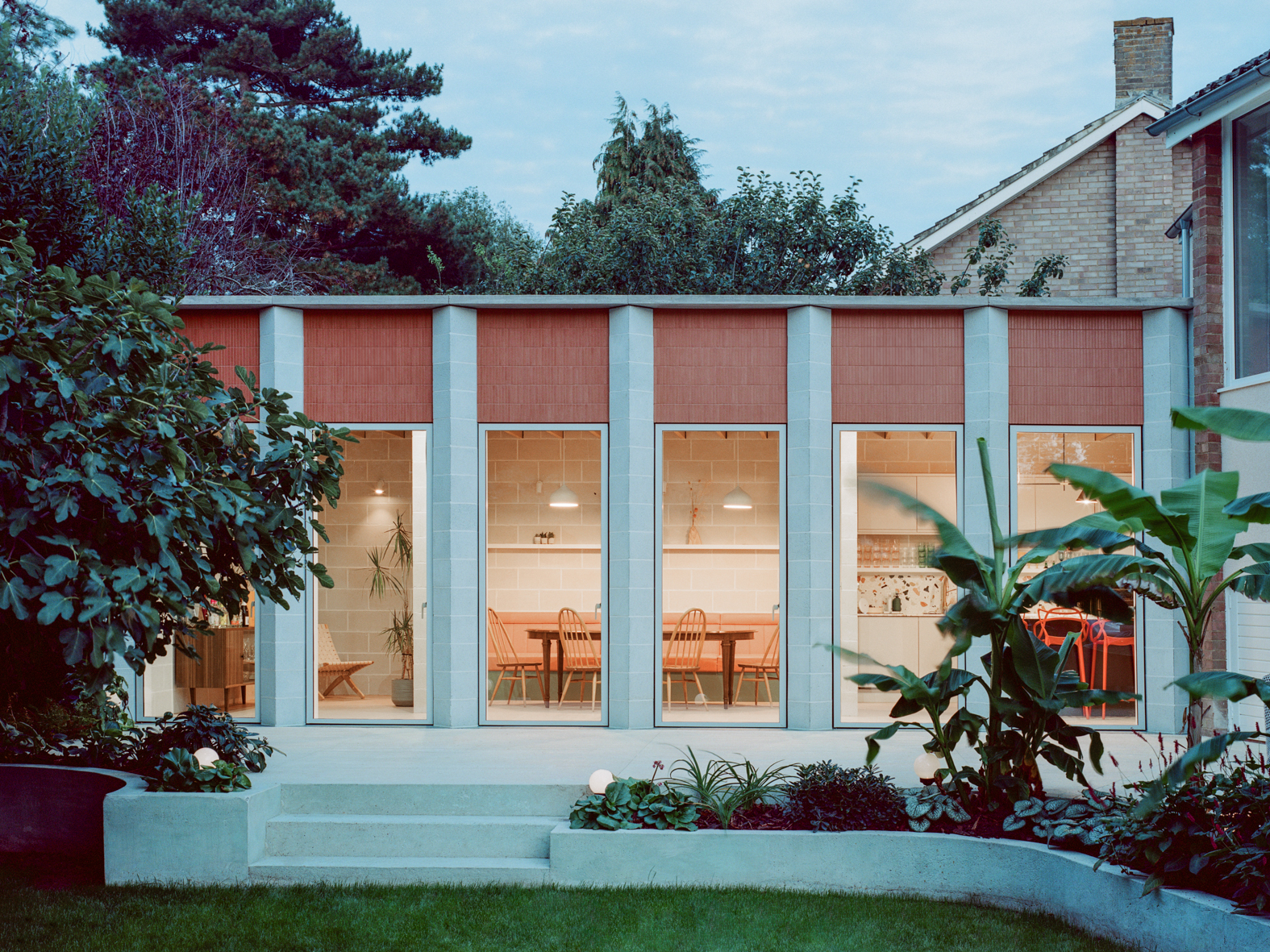
“The living space spill onto a large terrace for entertaining in the sunset that the client has nicknamed ‘Club Tropicana’,” says Marmot.
An optimistic suburban reconfiguration
The removal of a poorly constructed north-facing extension transformed both the interior quality of the house and the garden itself.
Triangle House demonstrates how material restraint, climatic awareness, and spatial precision can produce a domestic architecture that is both economical and exuberant; quietly radical within its suburban context, and deeply attuned to the rituals of daily life.
Drawings
Mini CV
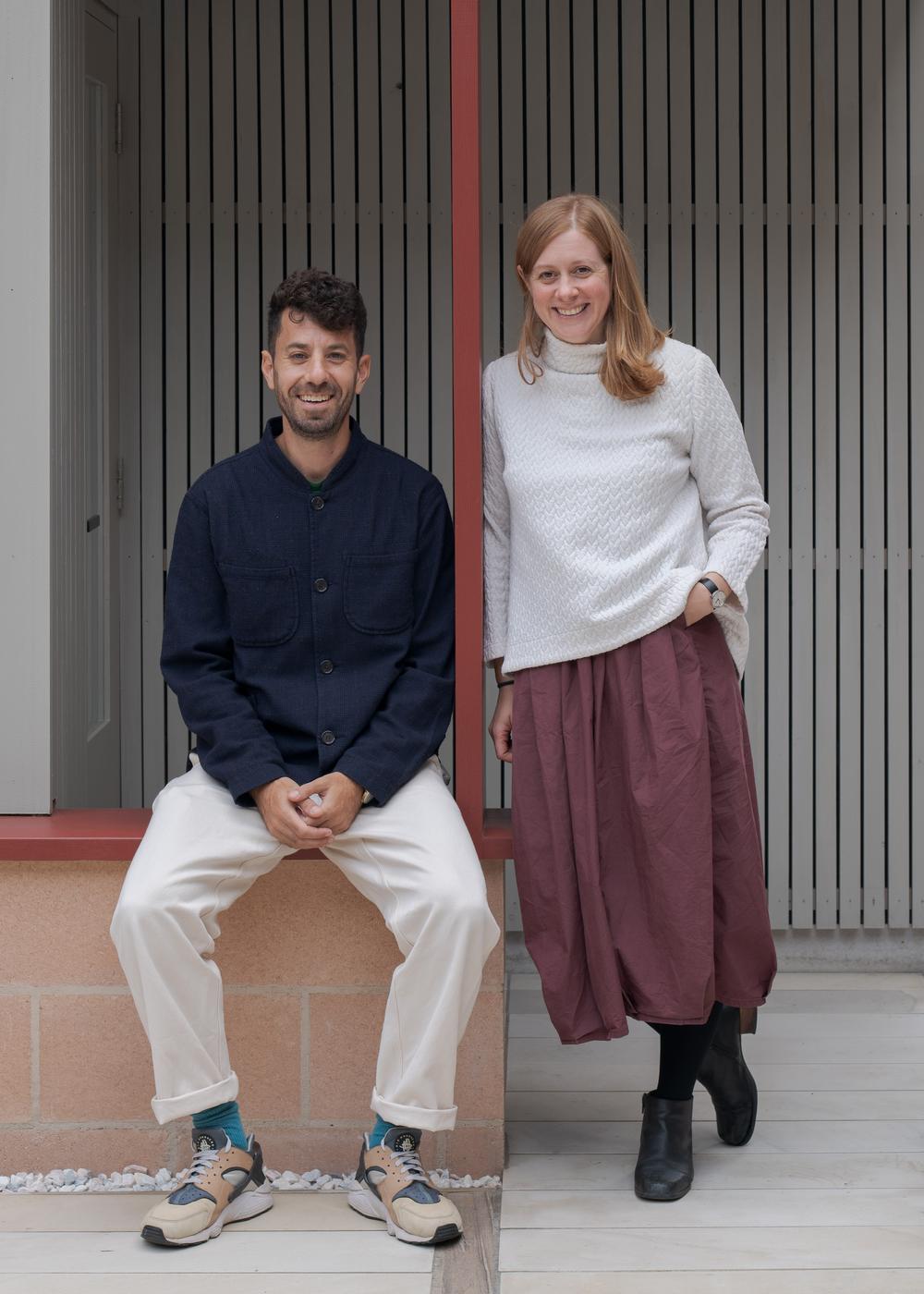
Artefact is a London-based architecture studio founded by Benedetta Rogers and Daniel Marmot. The practice approaches buildings as cultural artefacts—shaped by, and reflective of, the lives, values, and rituals of those who inhabit them.
Working across homes, installations, and community buildings, each project develops a distinct architectural identity, informed by the background of the client, the character of the wider community, the atmosphere of the site, and moments of imaginative departure.
Artefact’s work is rooted in the craft of architecture, with a strong commitment to detail and an understanding grounded in the realities of construction. The studio works with everyday materials in unexpected ways, while also exploring new material systems that reduce the environmental impact of what is built.
Facts & Credits
Project title Triangle House
Typology Housing, Residential, Architecture, Extension
Location Epsom, Surrey, Greater London, UK
Status Completed, 2023
Architecture Artefact
Contractor JB Building London Ltd
Structural Engineer Simple Works
Photography Lorenzo Zandri