Architecture for Education explores the spaces where knowledge takes form. From visionary schools and research-driven universities to civic libraries that anchor communities, this series examines how design shapes learning, interaction, and intellectual growth. Through exemplary projects worldwide, we highlight architecture that inspires curiosity, fosters inclusivity, and redefines the future of educational environments with clarity, innovation, and cultural depth.
In Bernolákovo, Bakyta architekti realizes a low-impact primary school extension and multipurpose hall that carefully mediates between civic buildings and residential fabric. Partially embedded volumes reduce visual scale while freeing green space. An L-shaped layout forms a public park, supported by flexible structures, green roofs, and permeable connections, shaping an open, community-oriented campus.
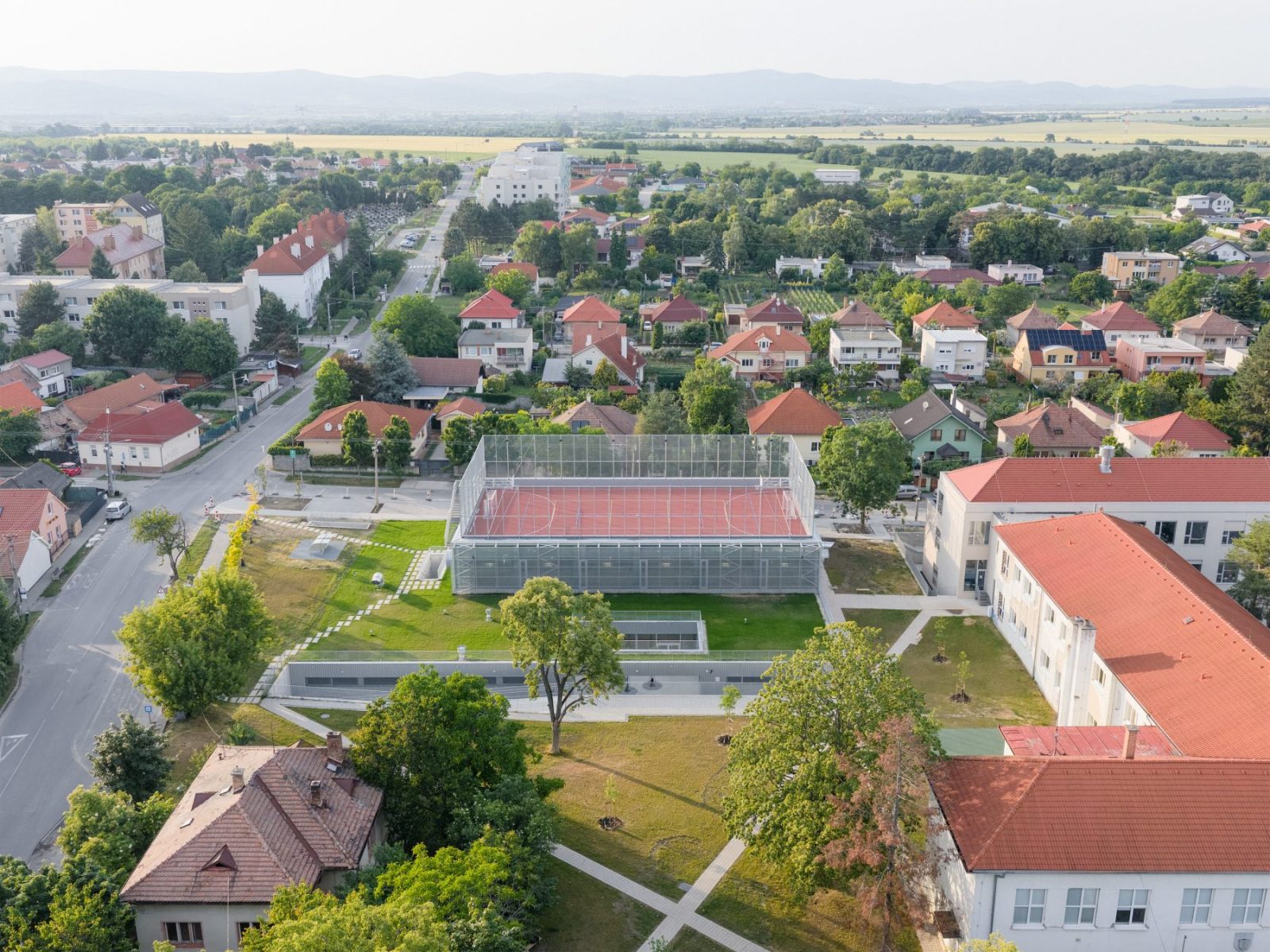
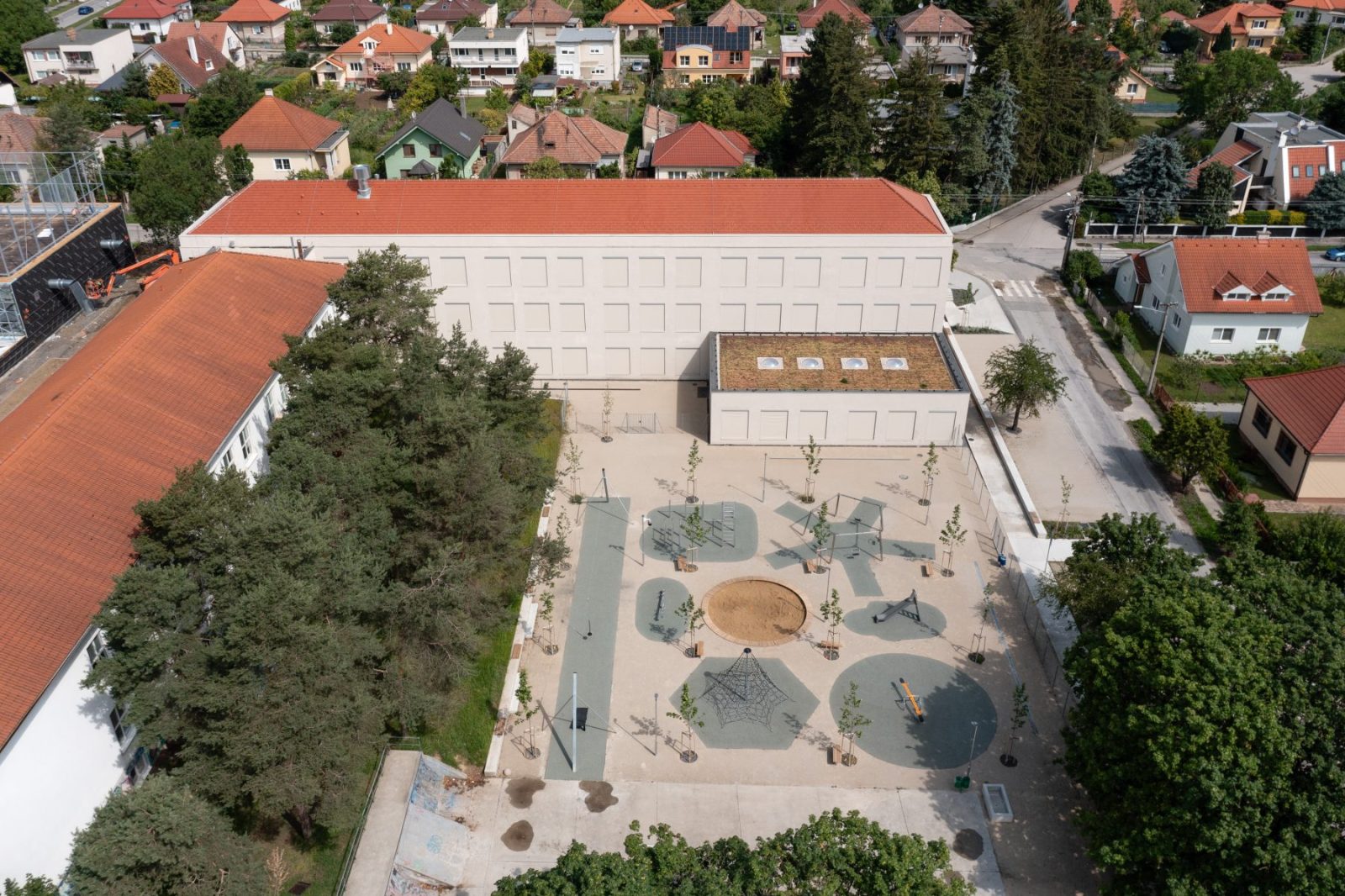
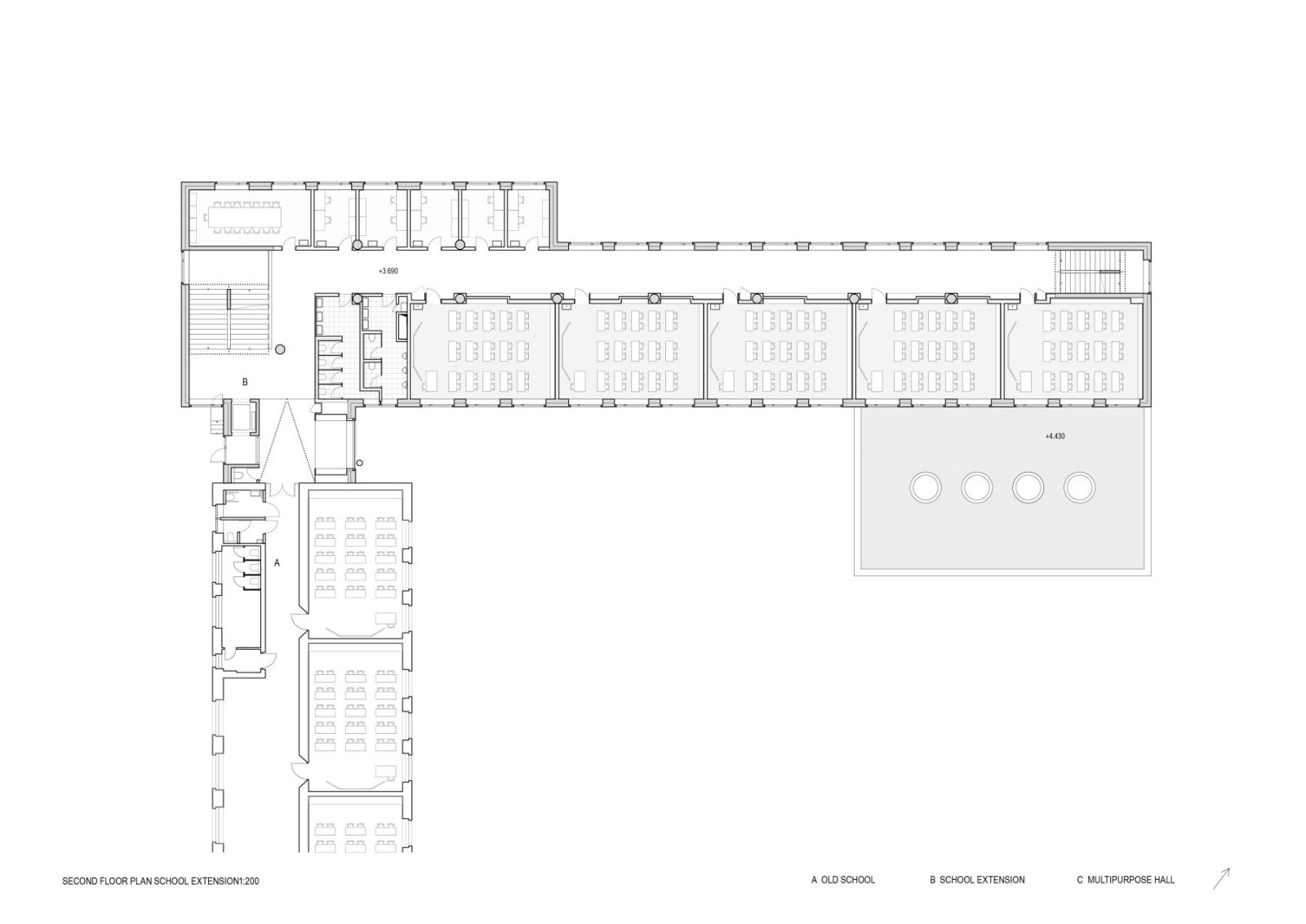
Located in the village center of Bernolákovo, Slovakia the existing civic fabric is defined by a cluster of public buildings, including the library, town hall, and the original school. The campus occupies a transitional edge condition, mediating between this institutional core and the fine-grain urbanism of surrounding family houses. The extension, developed in two phases, introduces larger programmatic volumes that deliberately contrast with the adjacent domestic scale.
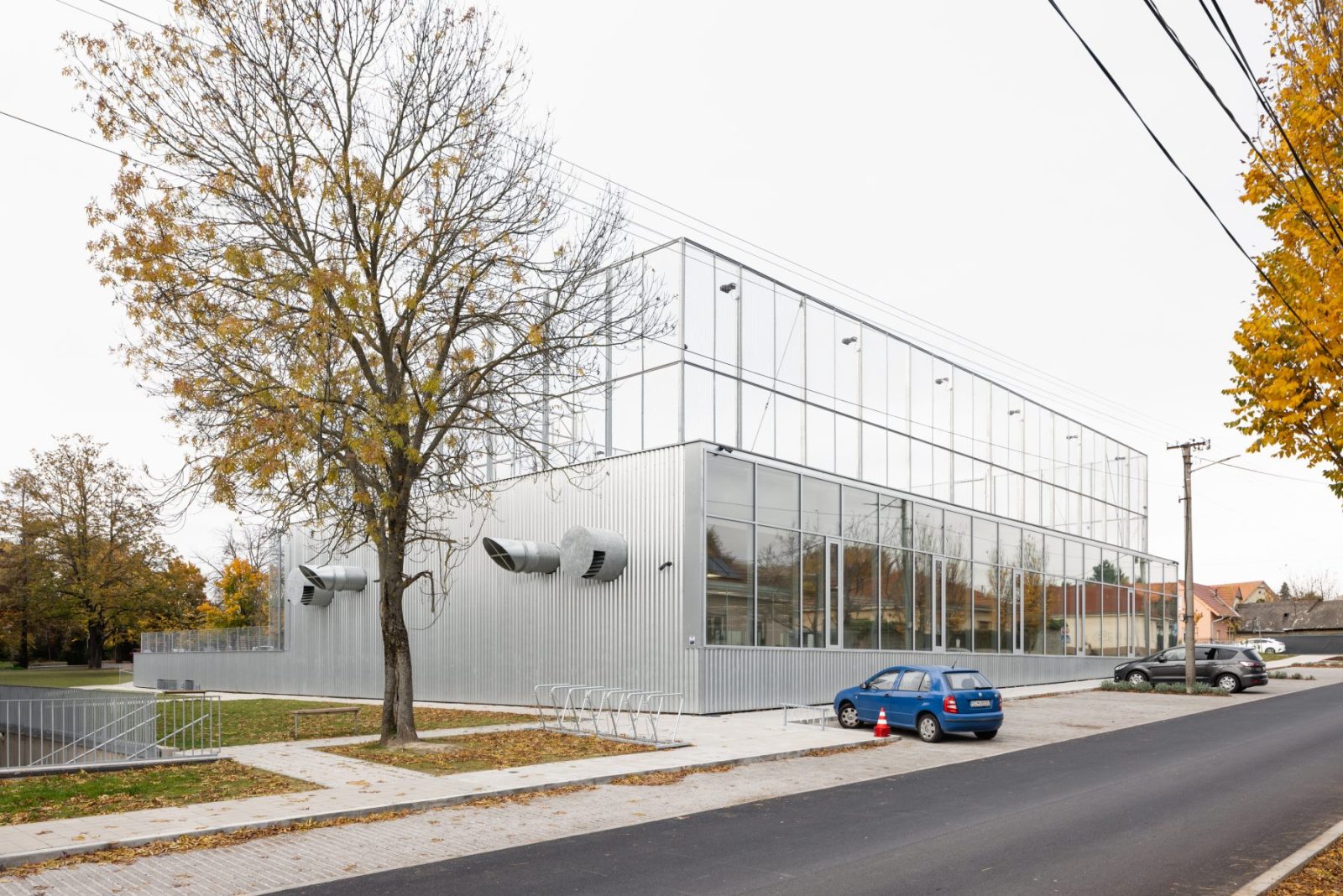
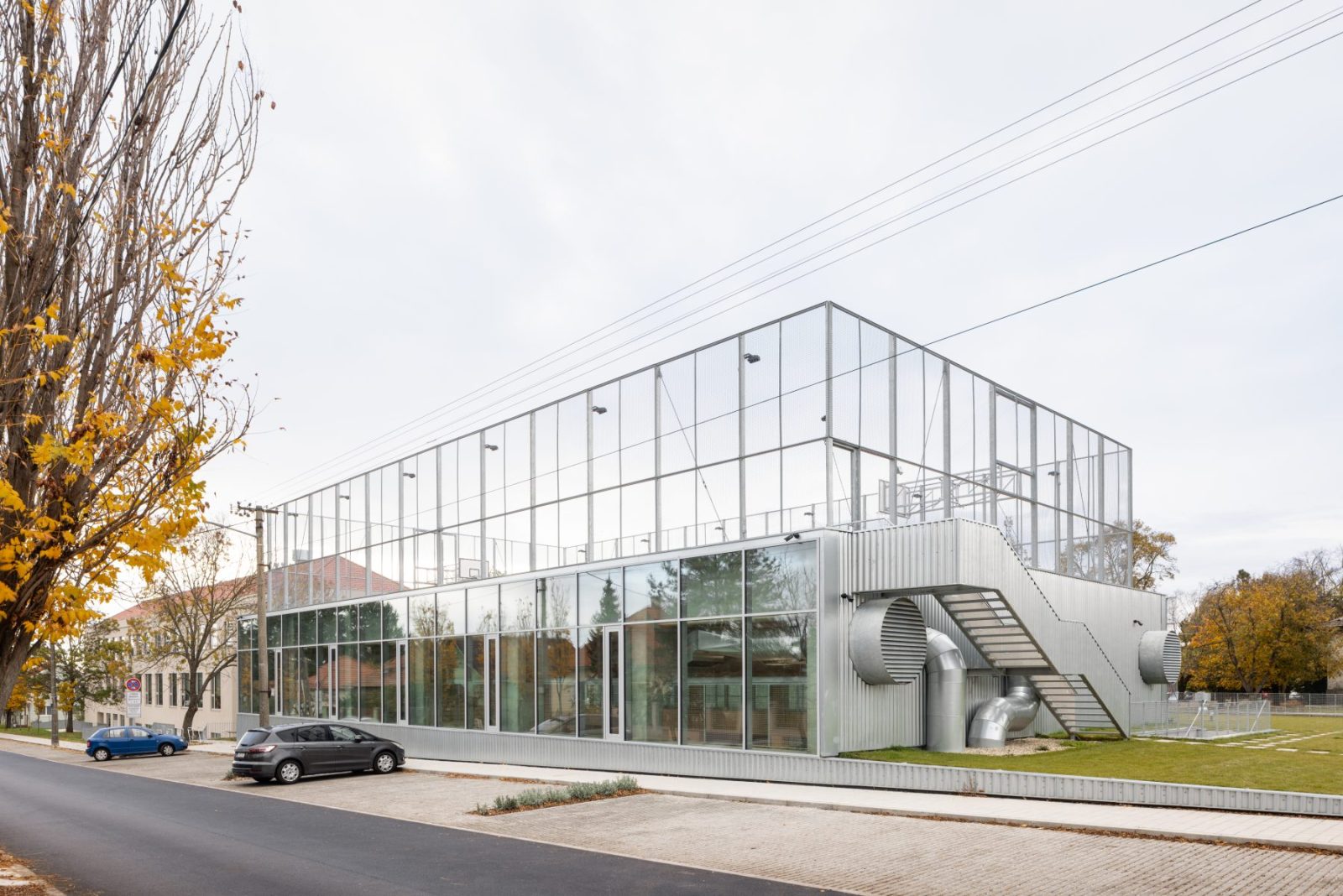
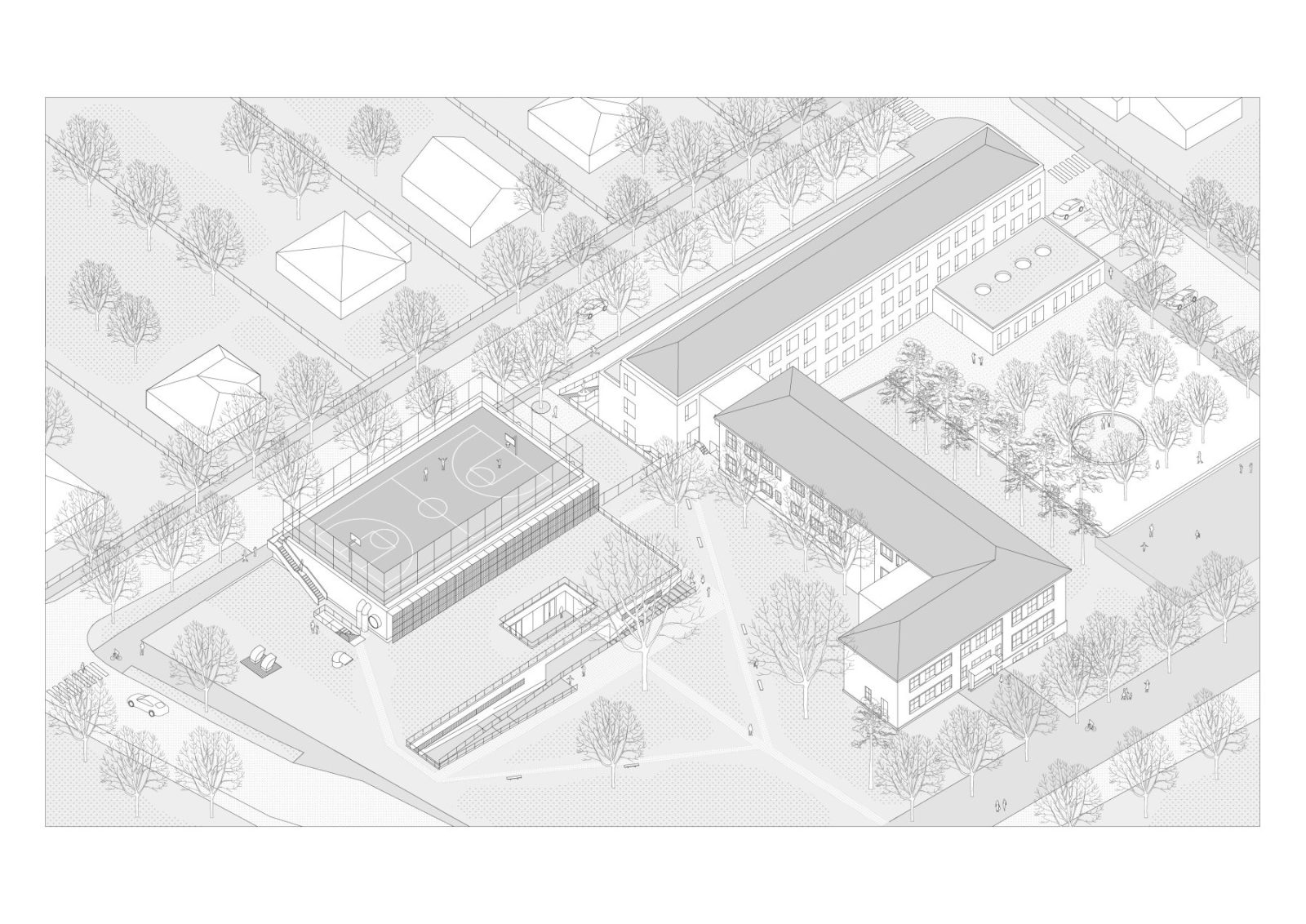
This contrast is carefully mitigated through the partial immersion of the built mass into the terrain.
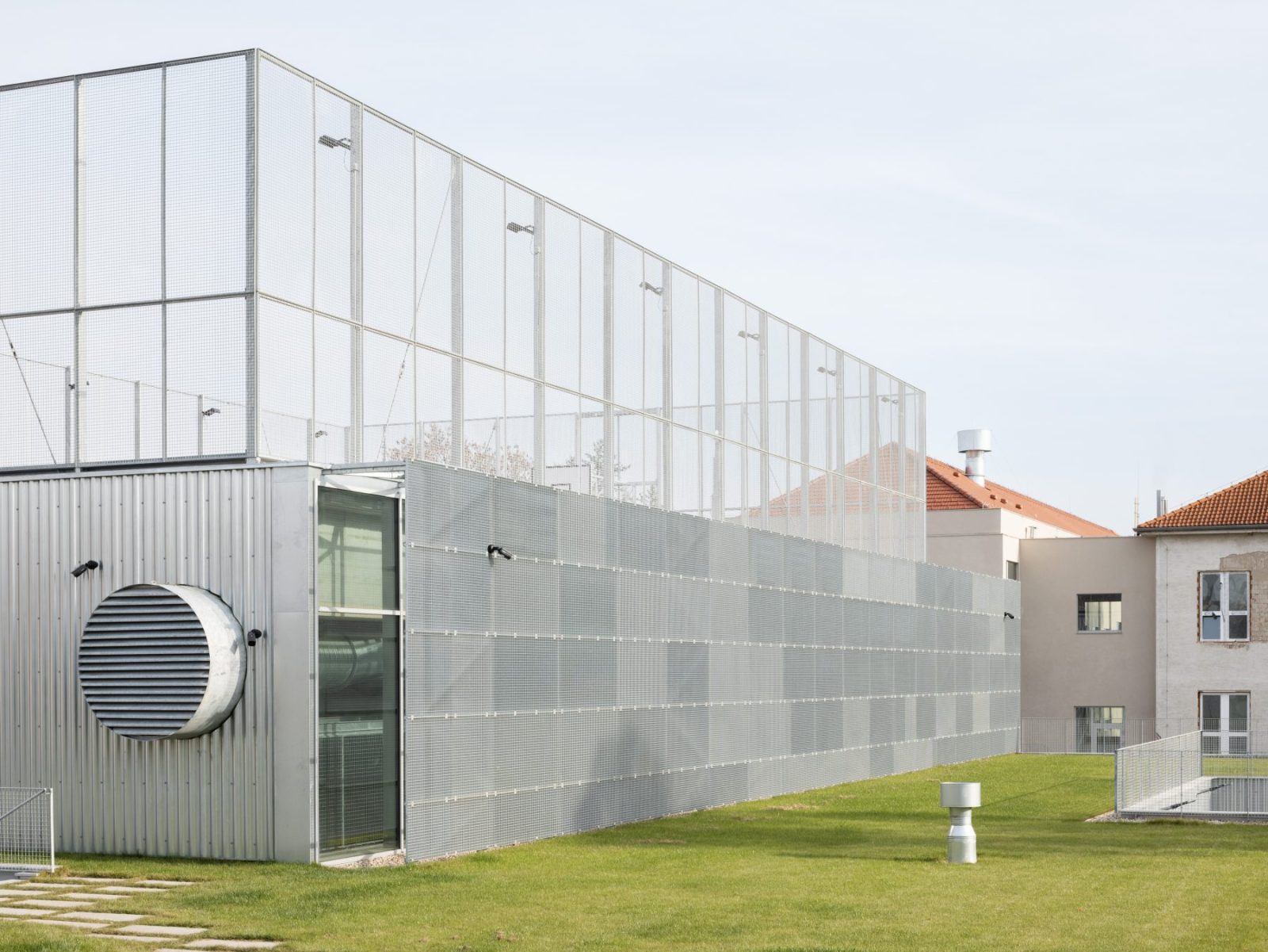
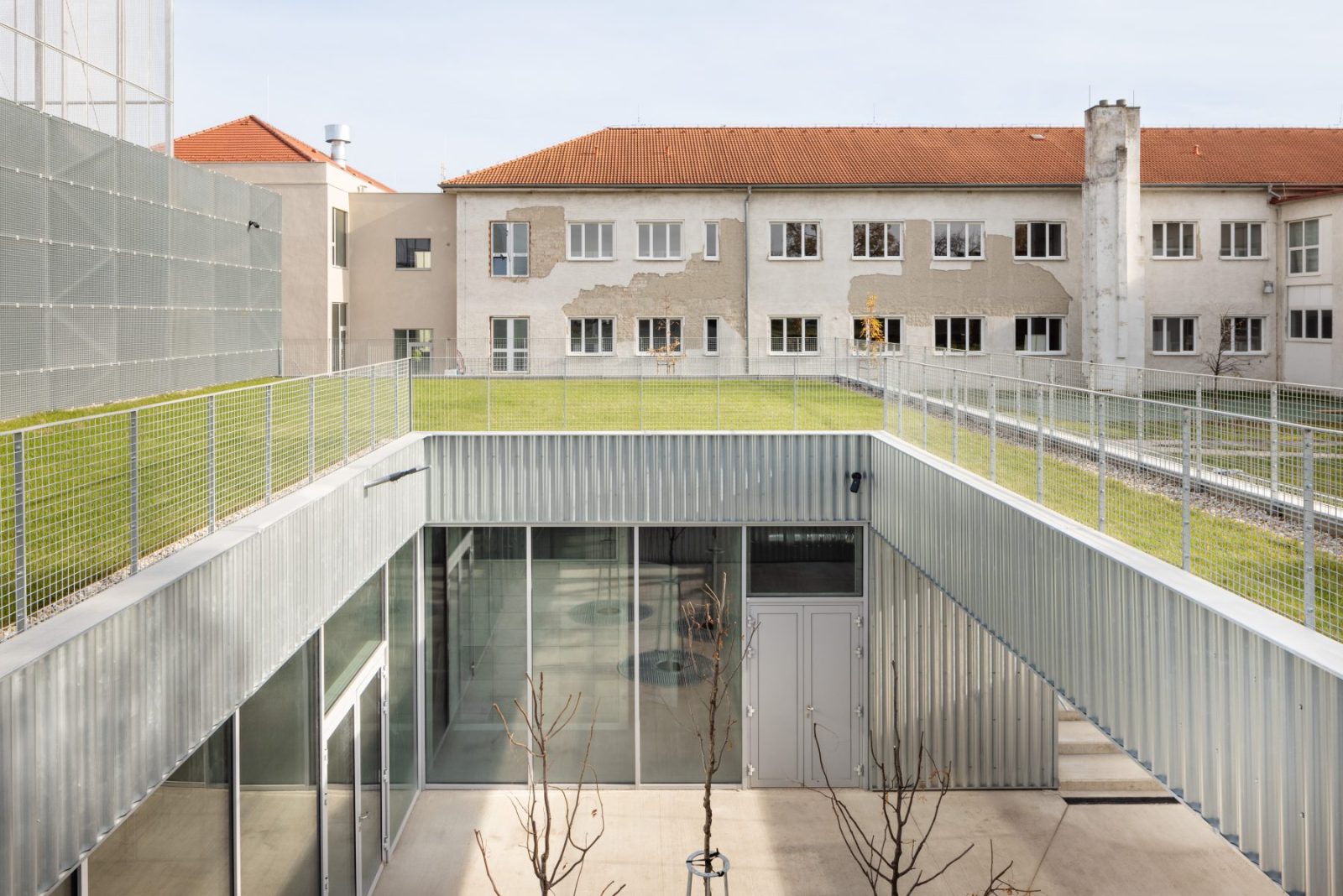
This approach reduces the perceived bulk while simultaneously liberating generous green space along the southern frontage.
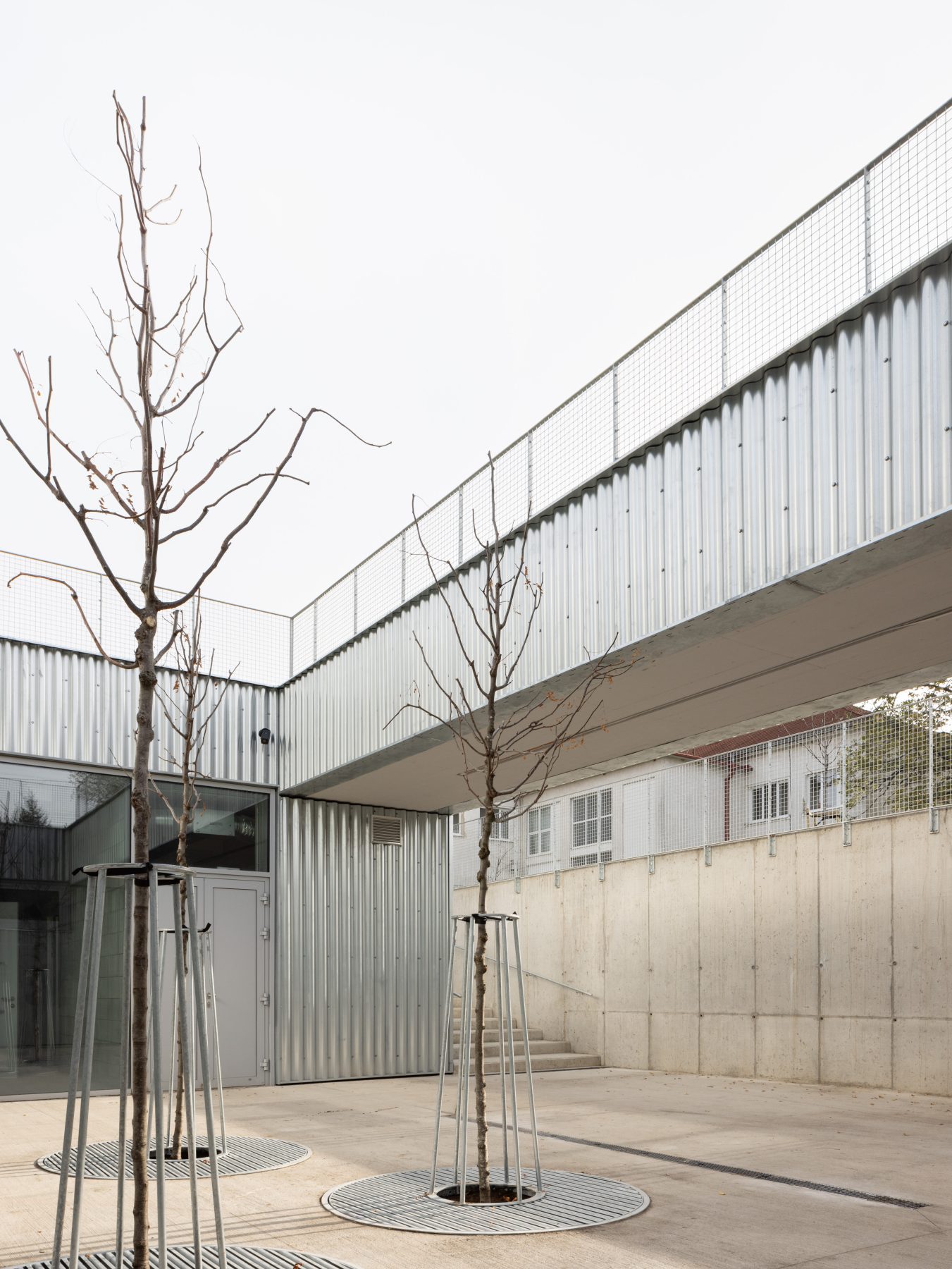
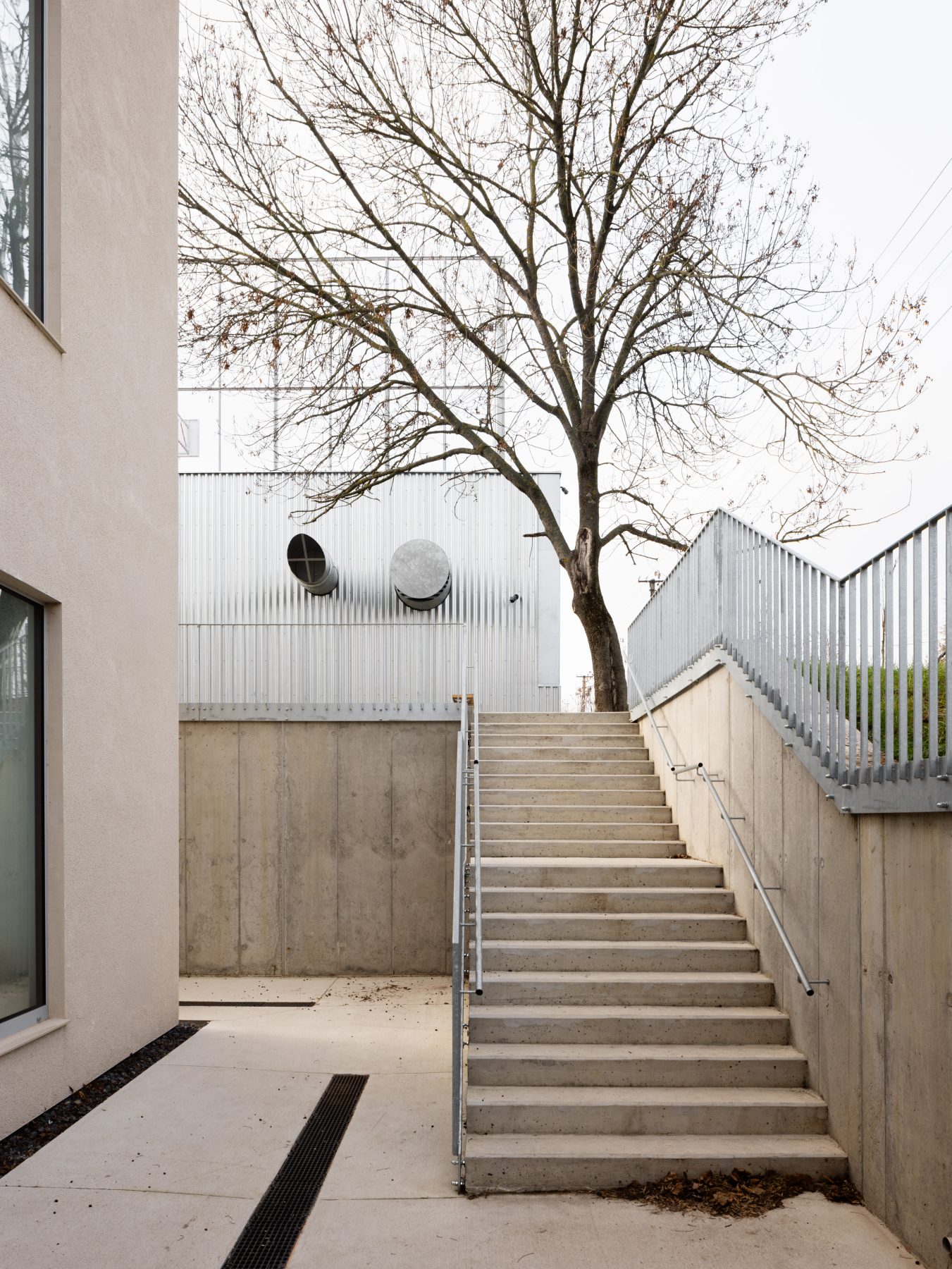
A precise L-shaped composition between the existing structure and the new pavilion establishes a clearly defined public realm in the form of a park and playground.
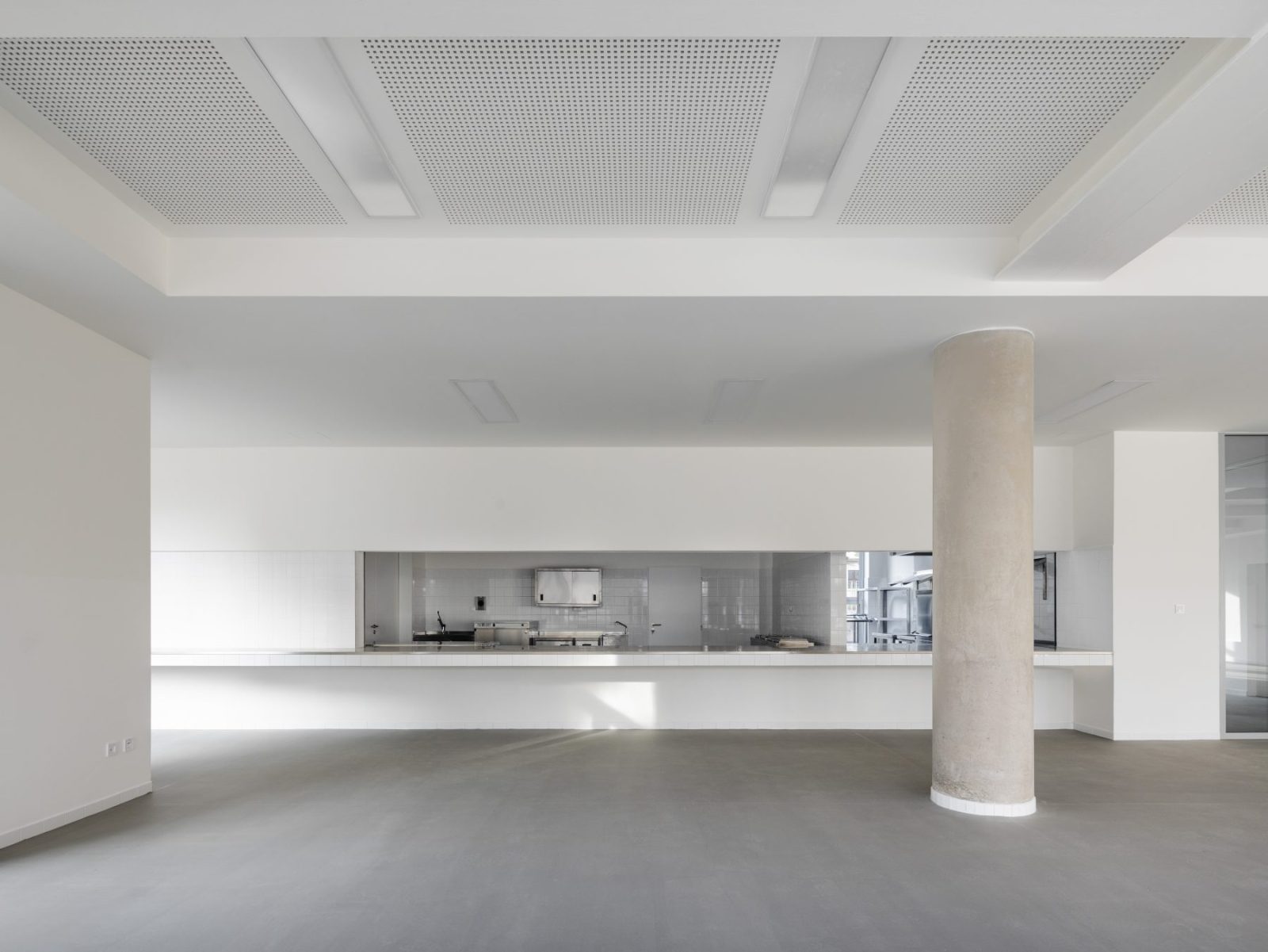
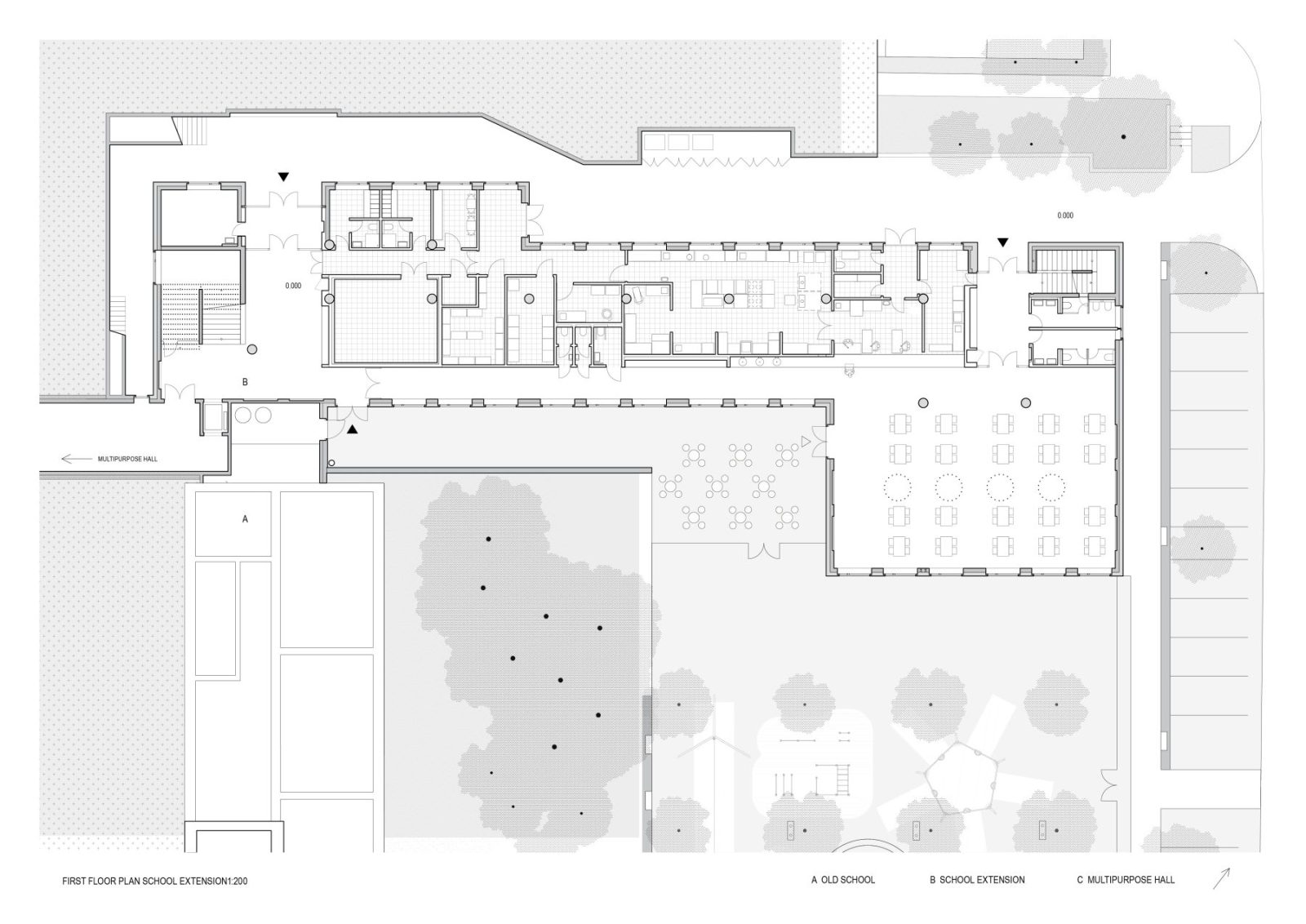
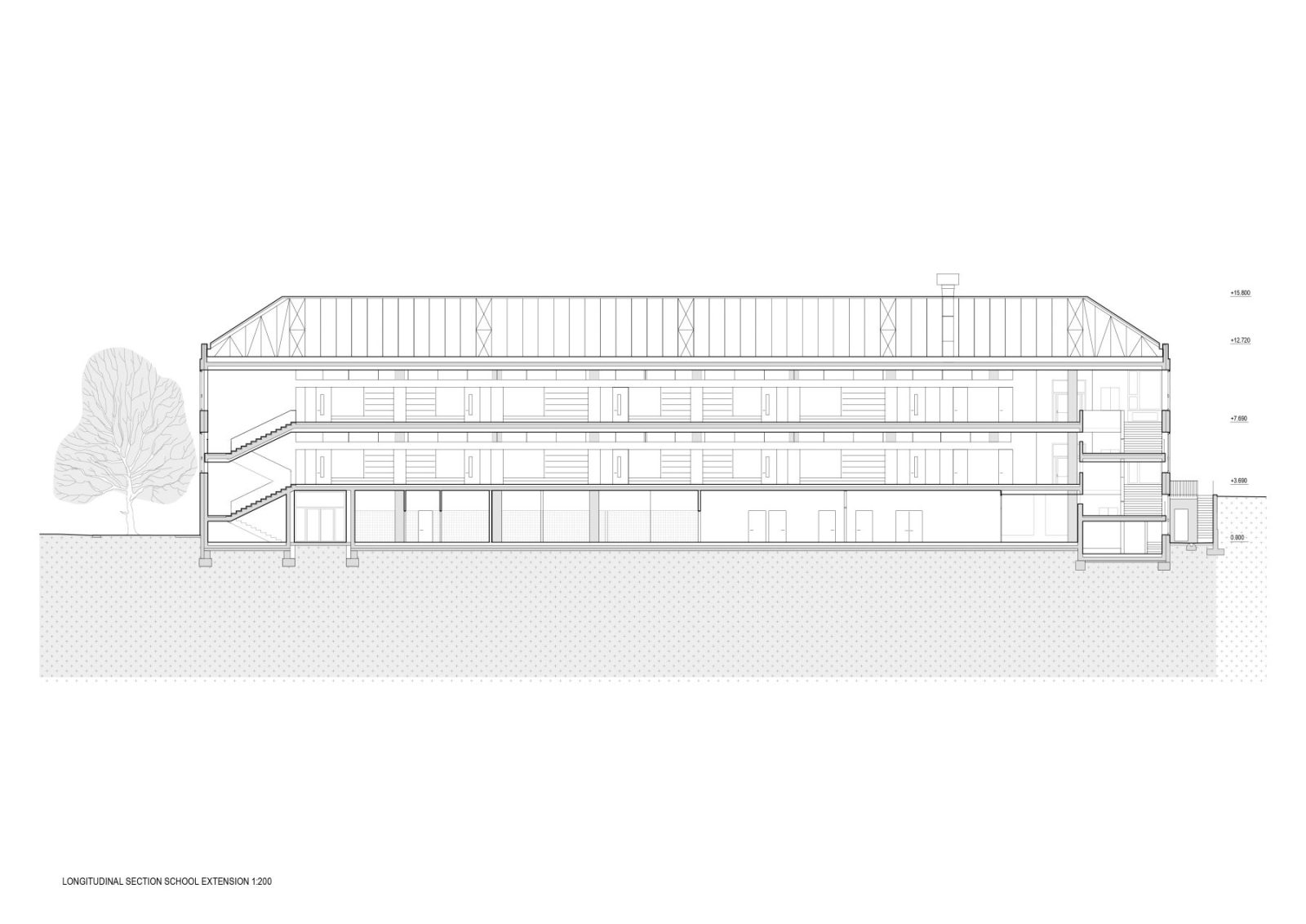
The new pavilion is articulated as a restrained, rational volume, organized around a generous internal corridor that serves both as circulation and as an informal social space for students. This linear spine is complemented by classrooms, while secondary volumes—housing the canteen and teachers’ offices—are appended to the primary form. A continuous horizontal skylight mediates between corridor and classrooms, introducing soft winter daylight deep into the interior.
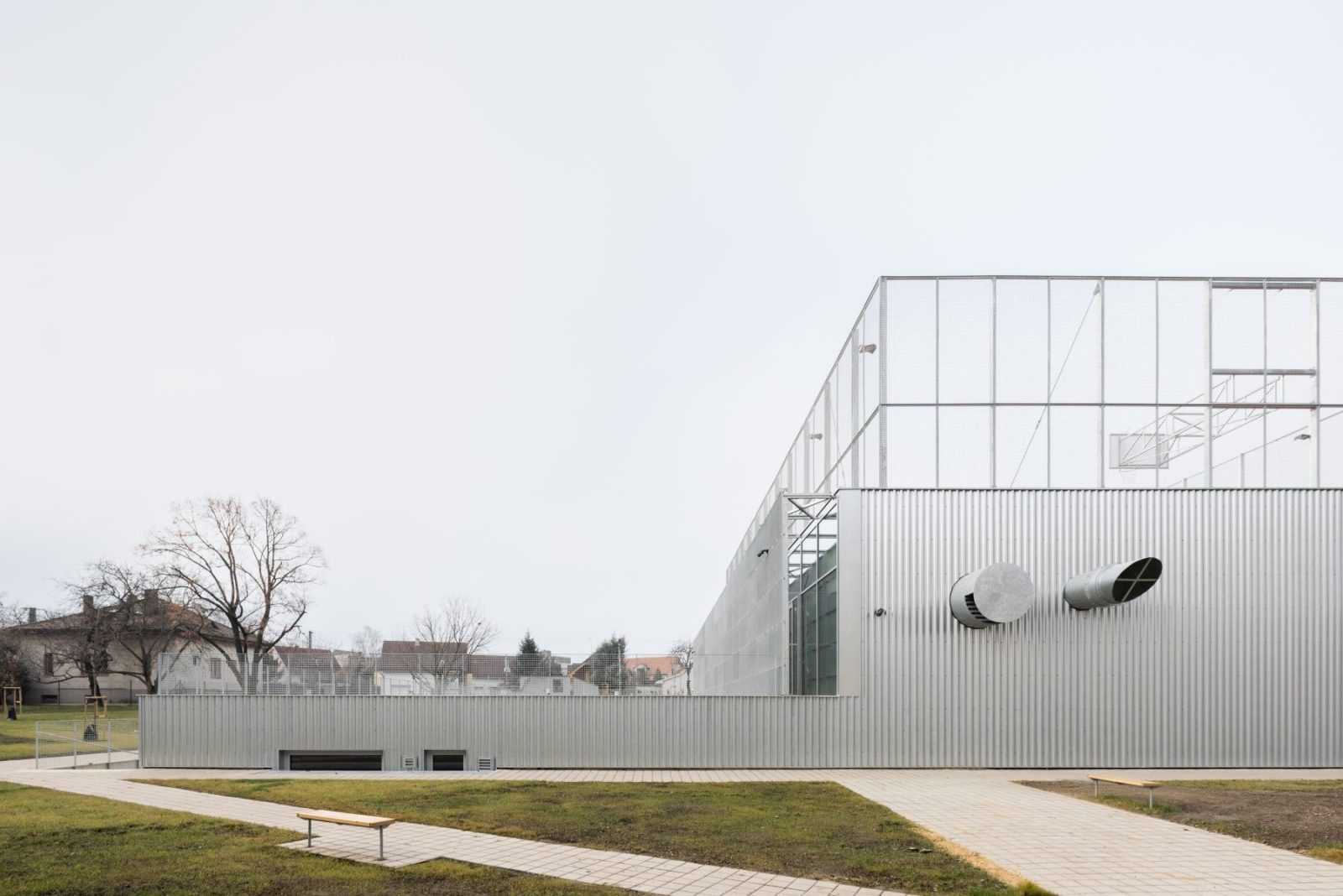
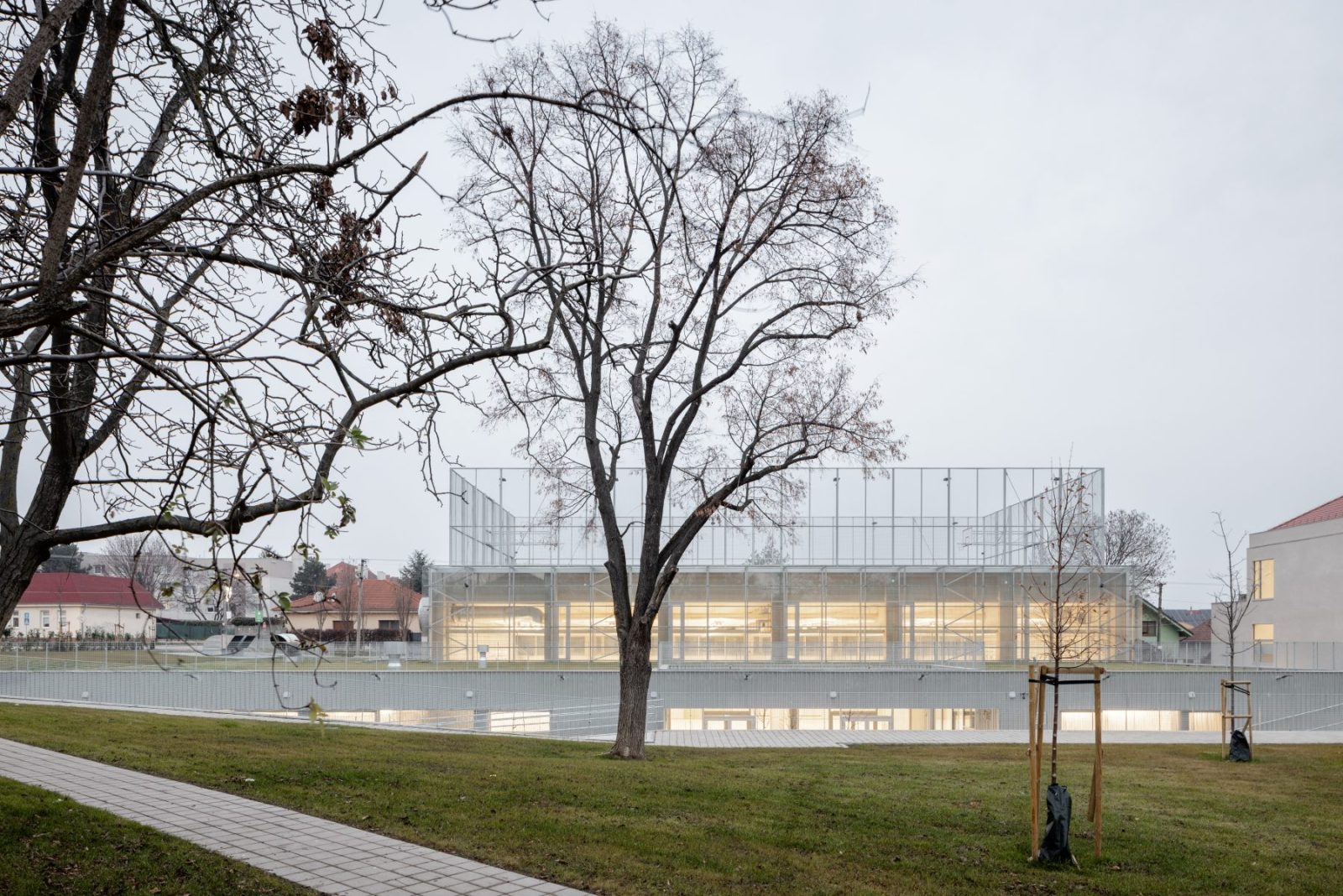
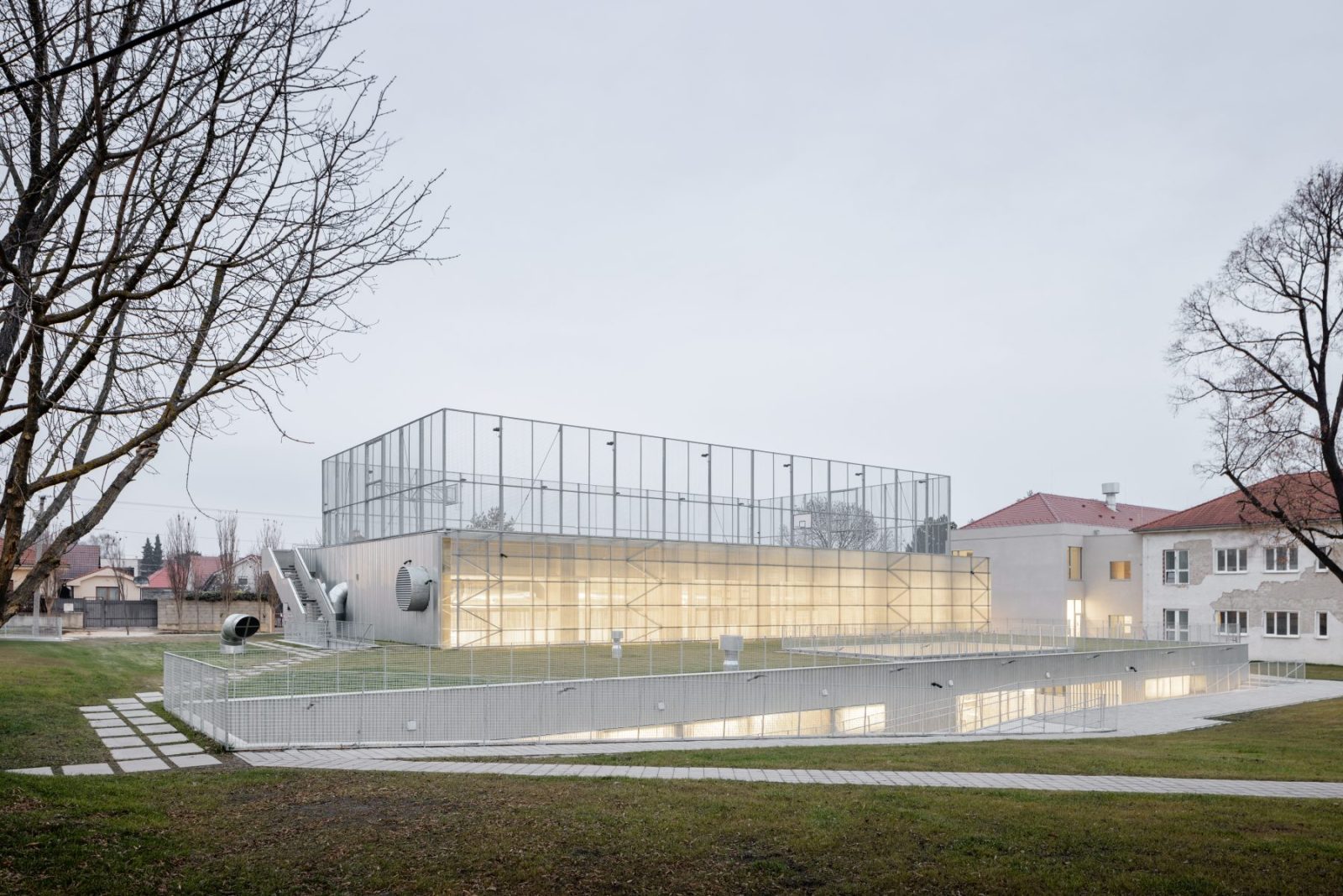
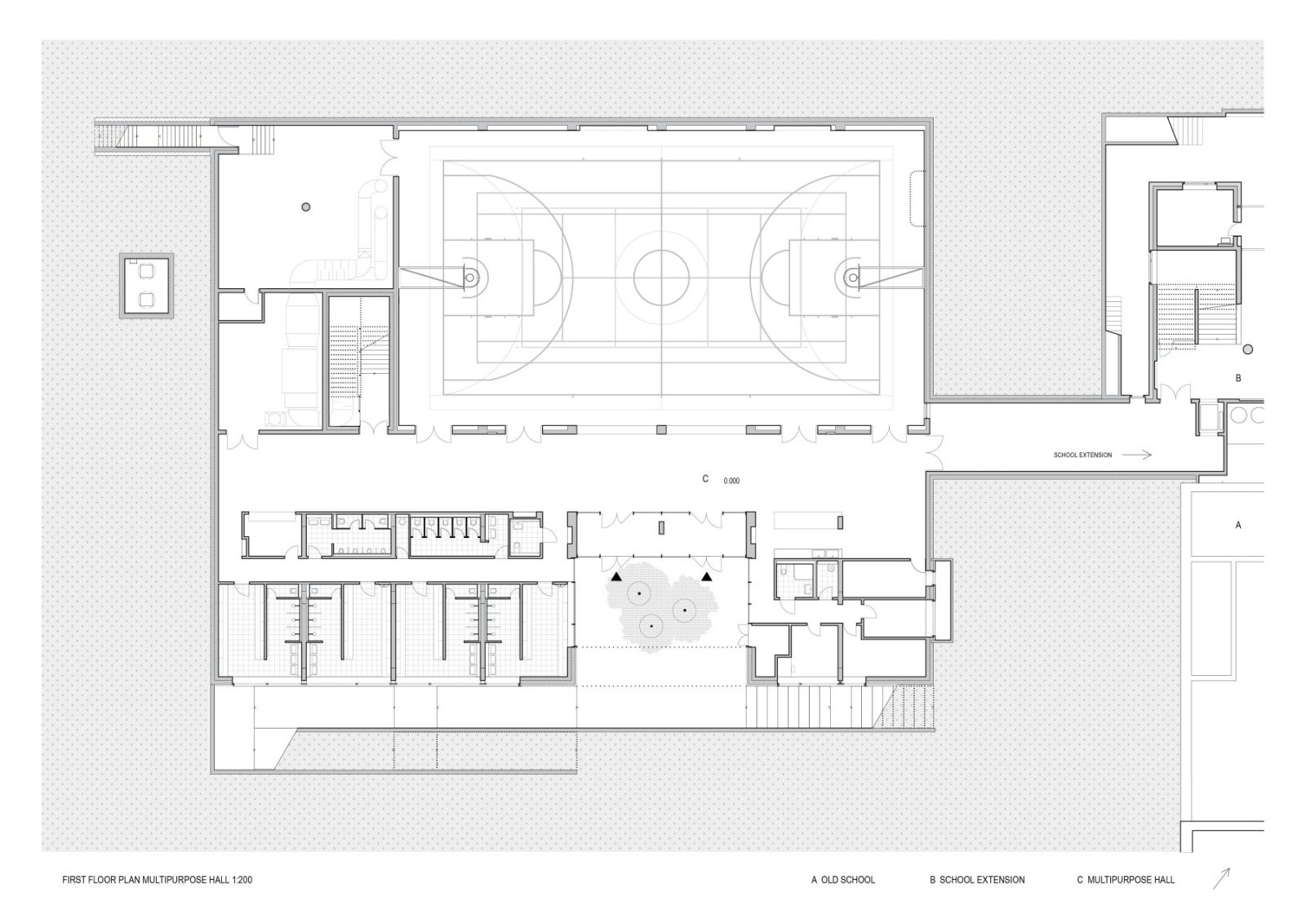
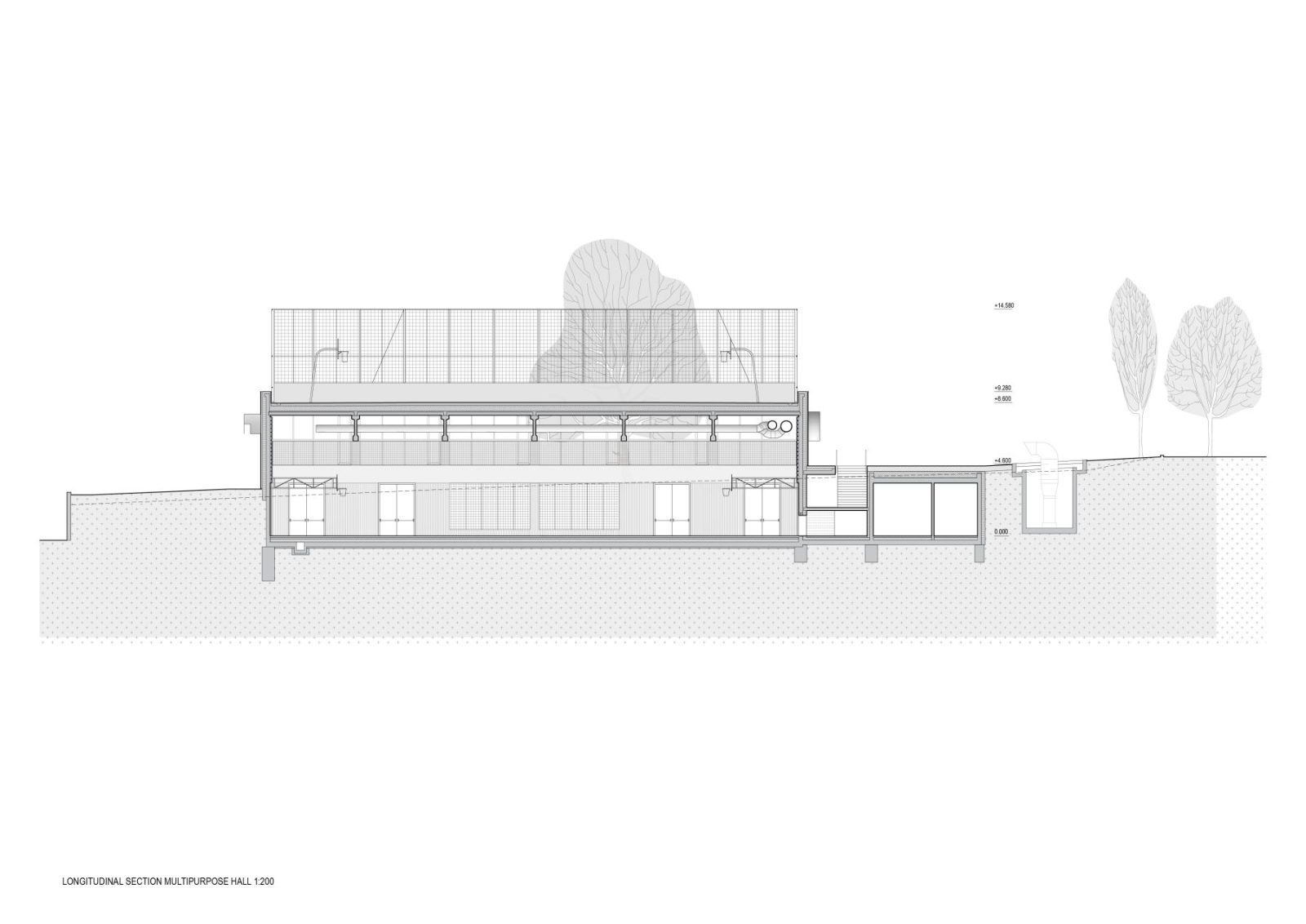
The multipurpose hall, positioned along the northern edge of the site, reinforces the spatial hierarchy by preserving the southern zone for landscape and open use. Its connection to the school via an underground passage ensures uninterrupted permeability at ground level, allowing the campus to remain fully accessible and integrated with the public domain.
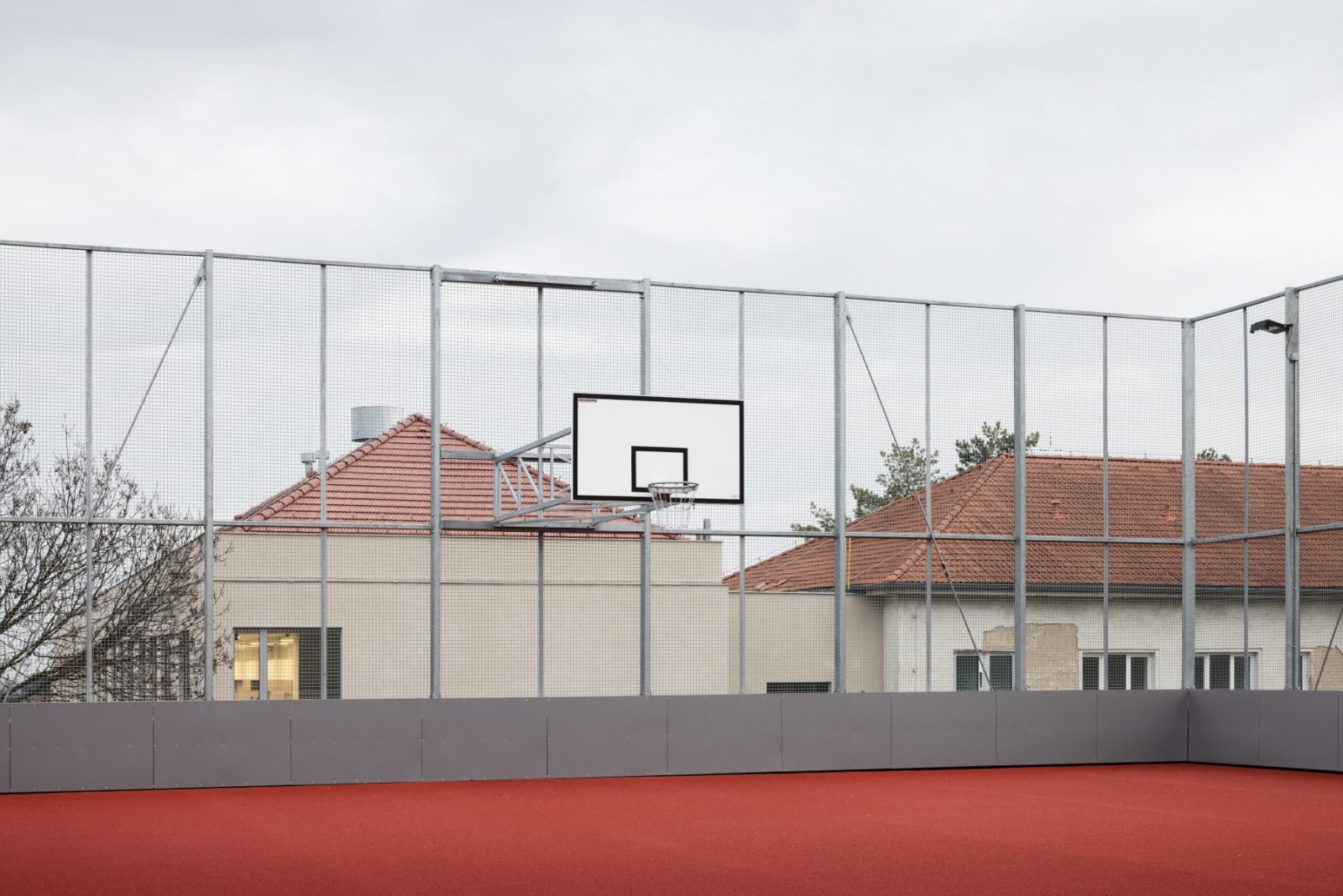
The resulting ensemble operates as an open and porous civic cluster, further enriched by a green roof and accessible rooftop playground, extending its use beyond school hours.
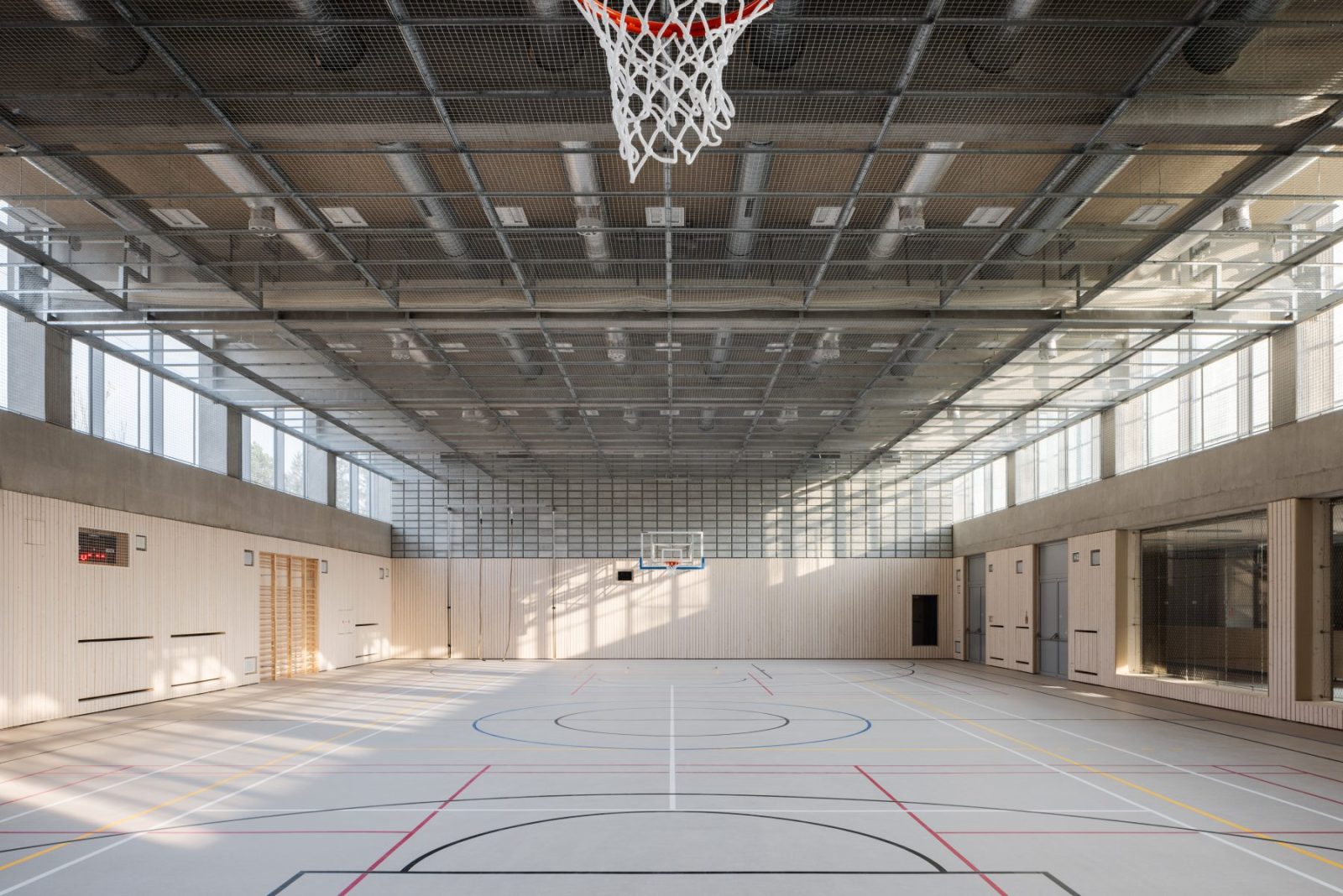
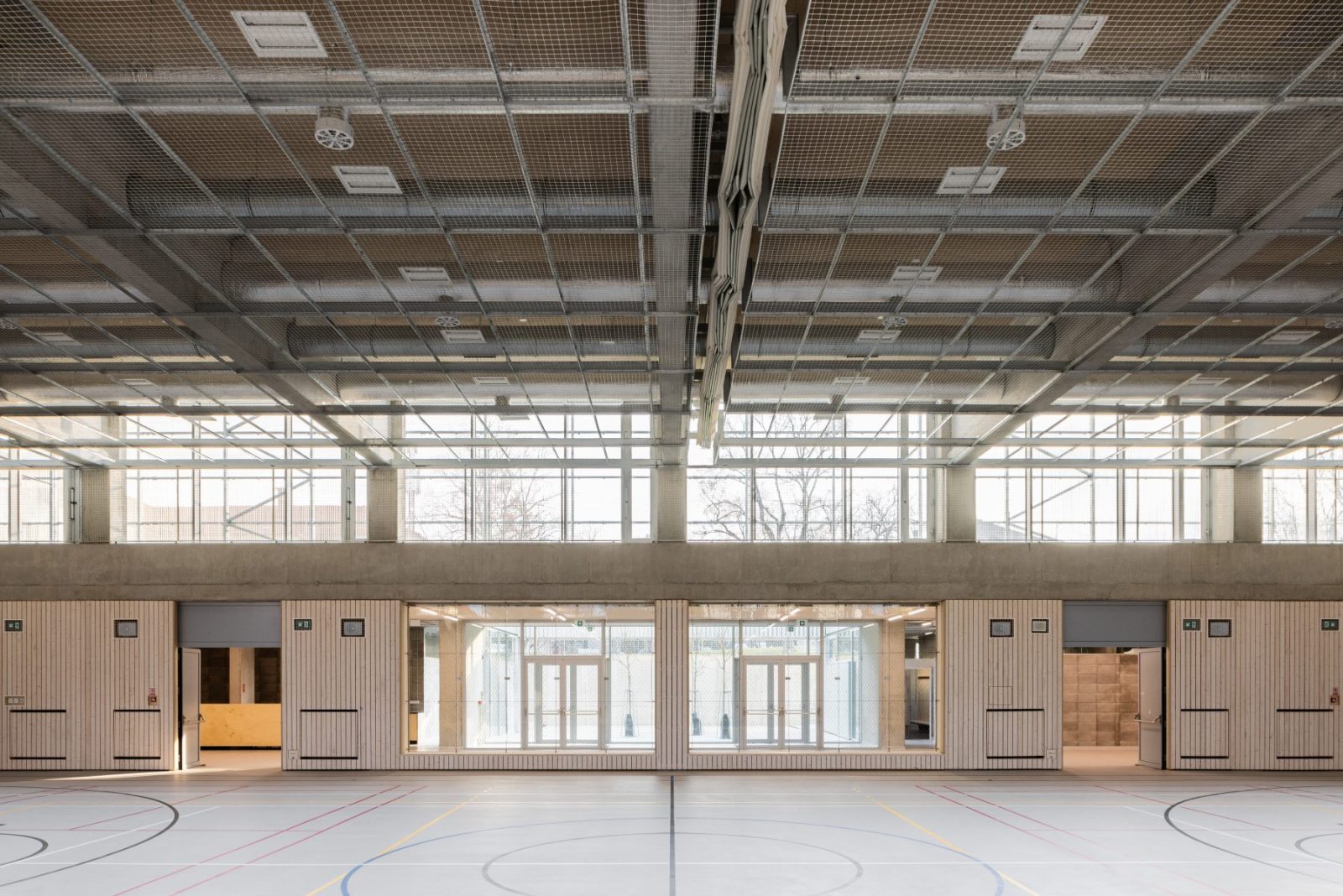
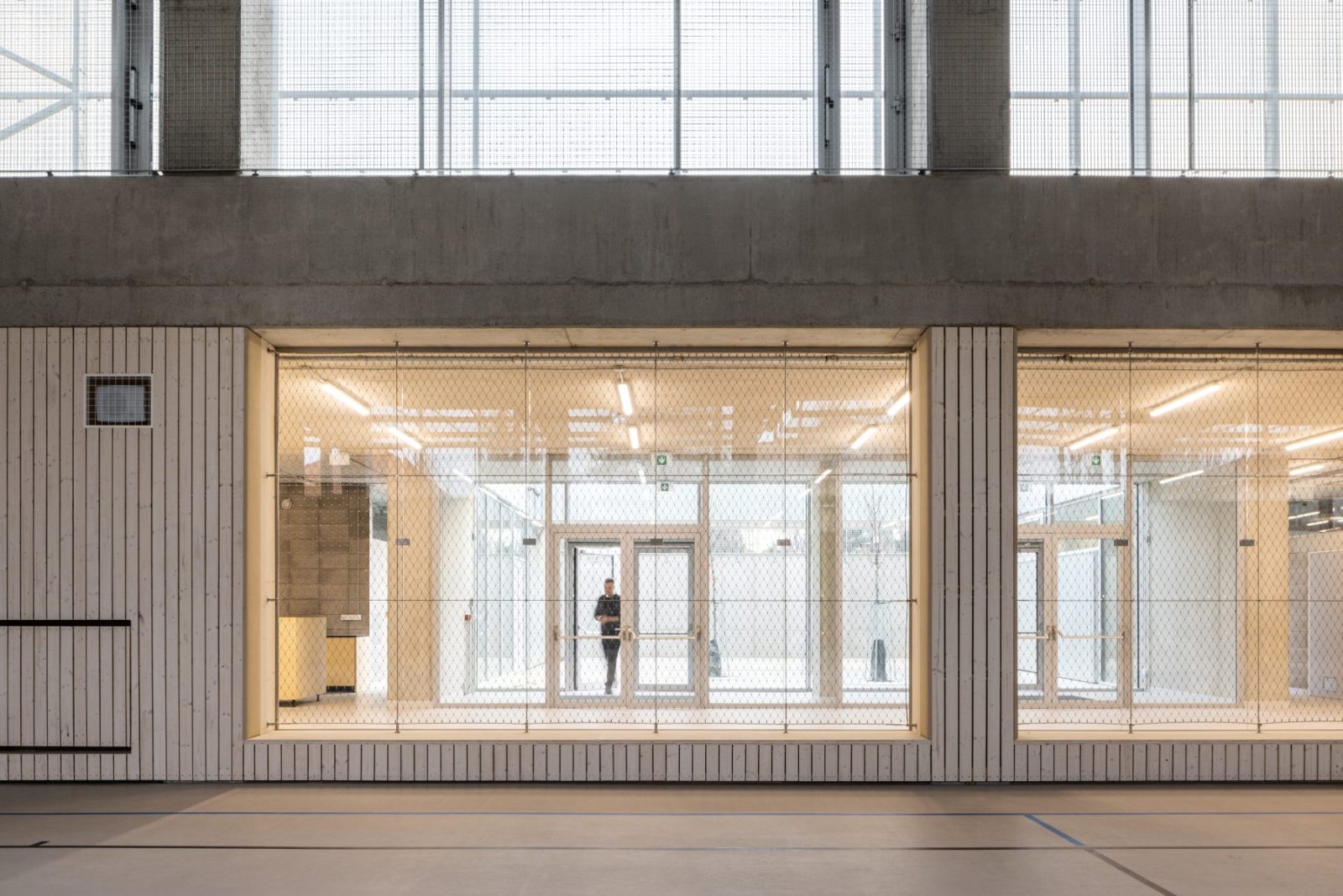
Collectively, the new volumes redefine the northern boundary of the village center. Structurally, both buildings employ reinforced concrete skeletal systems, allowing for long-term adaptability through non-load-bearing internal partitions. The hall is spanned by prestressed concrete beams, engineered to support the additional load of the rooftop playground.
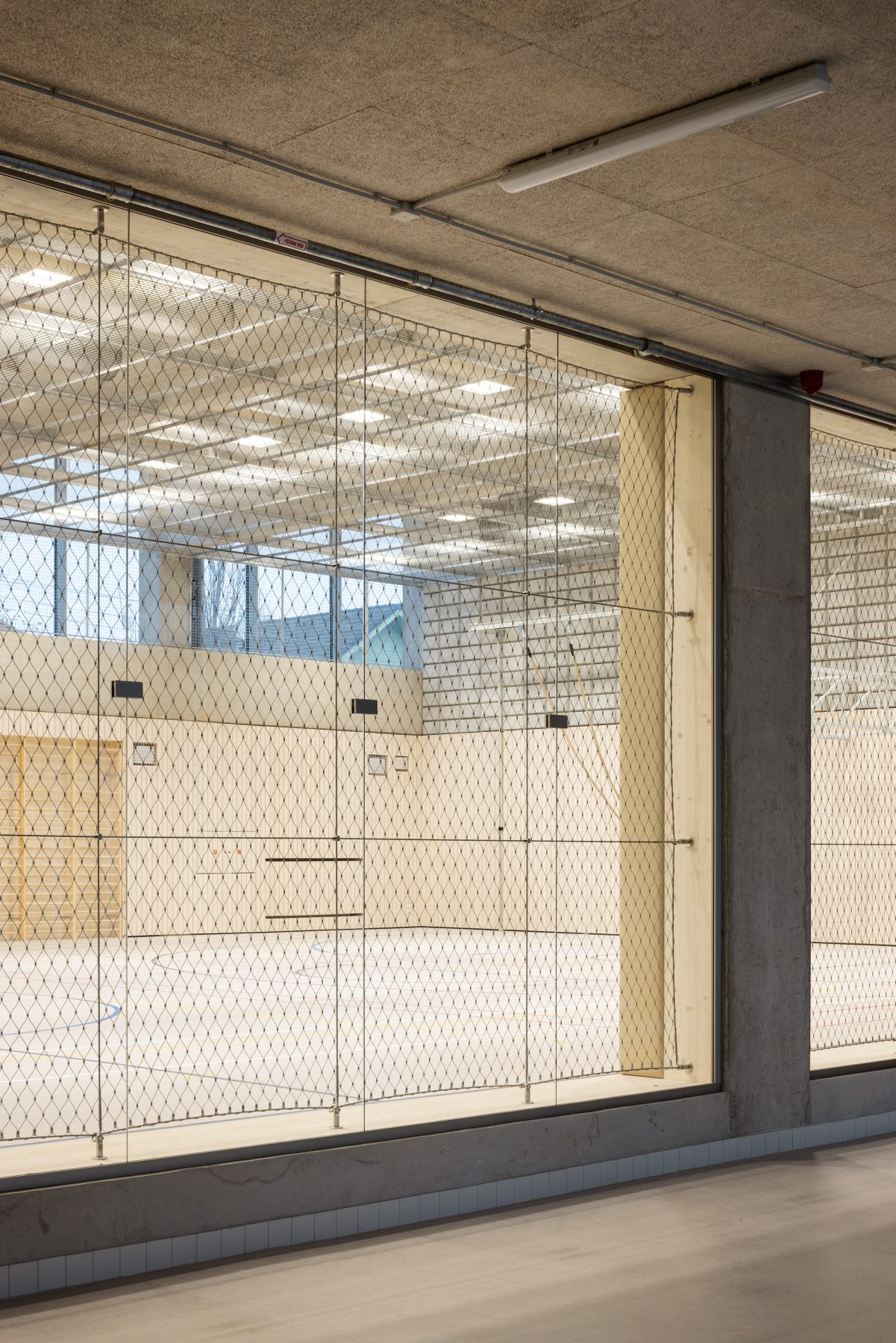
In contrast, the school pavilion adopts a pitched roof structure of wooden trusses clad in tiles, directly referencing the material and formal language of the original building—most notably in its tripartite window composition and the application of traditional Brizolit plaster.
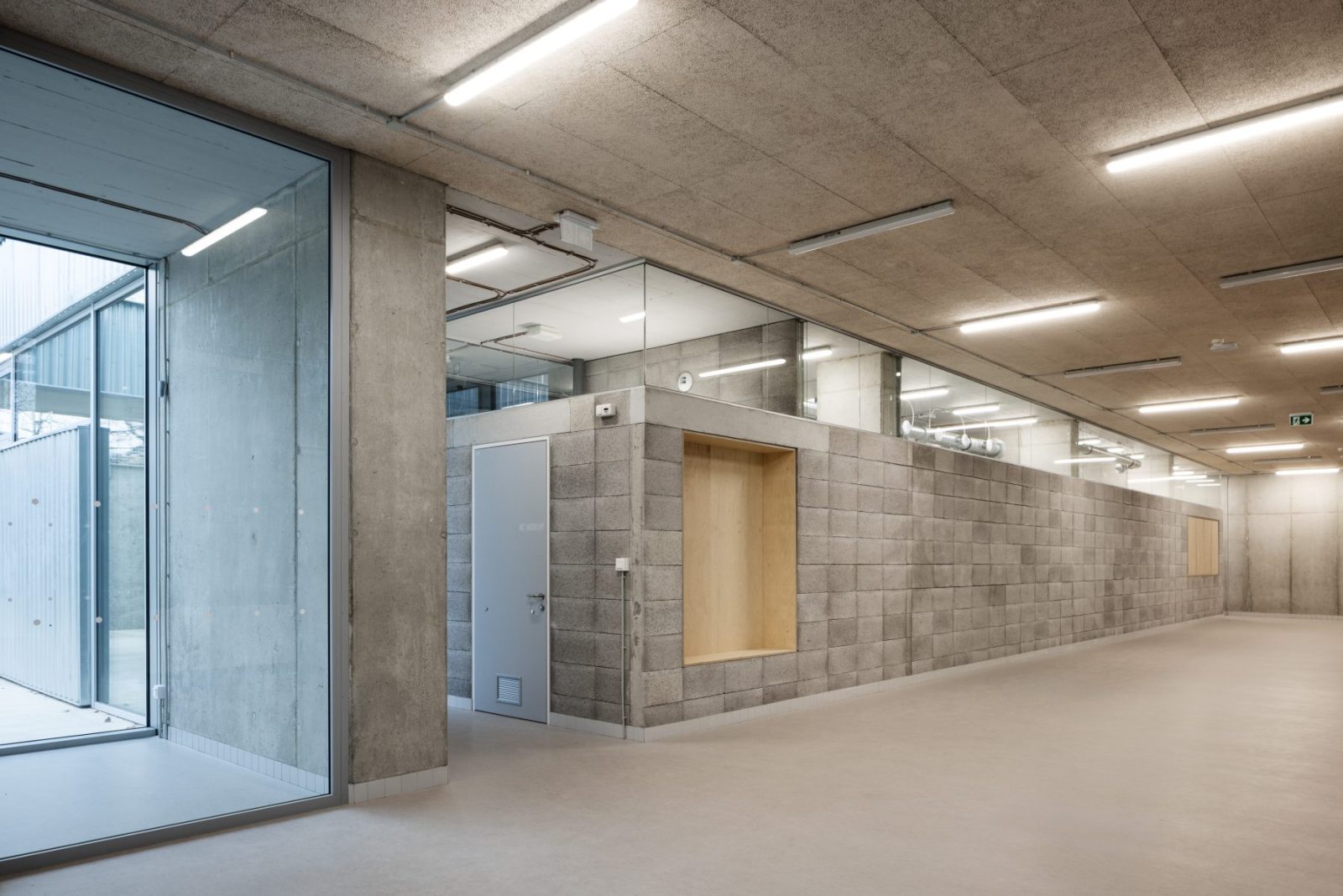
The architectural expression is intentionally restrained and timeless, aligning with the character of the existing school while avoiding overt stylistic gestures.
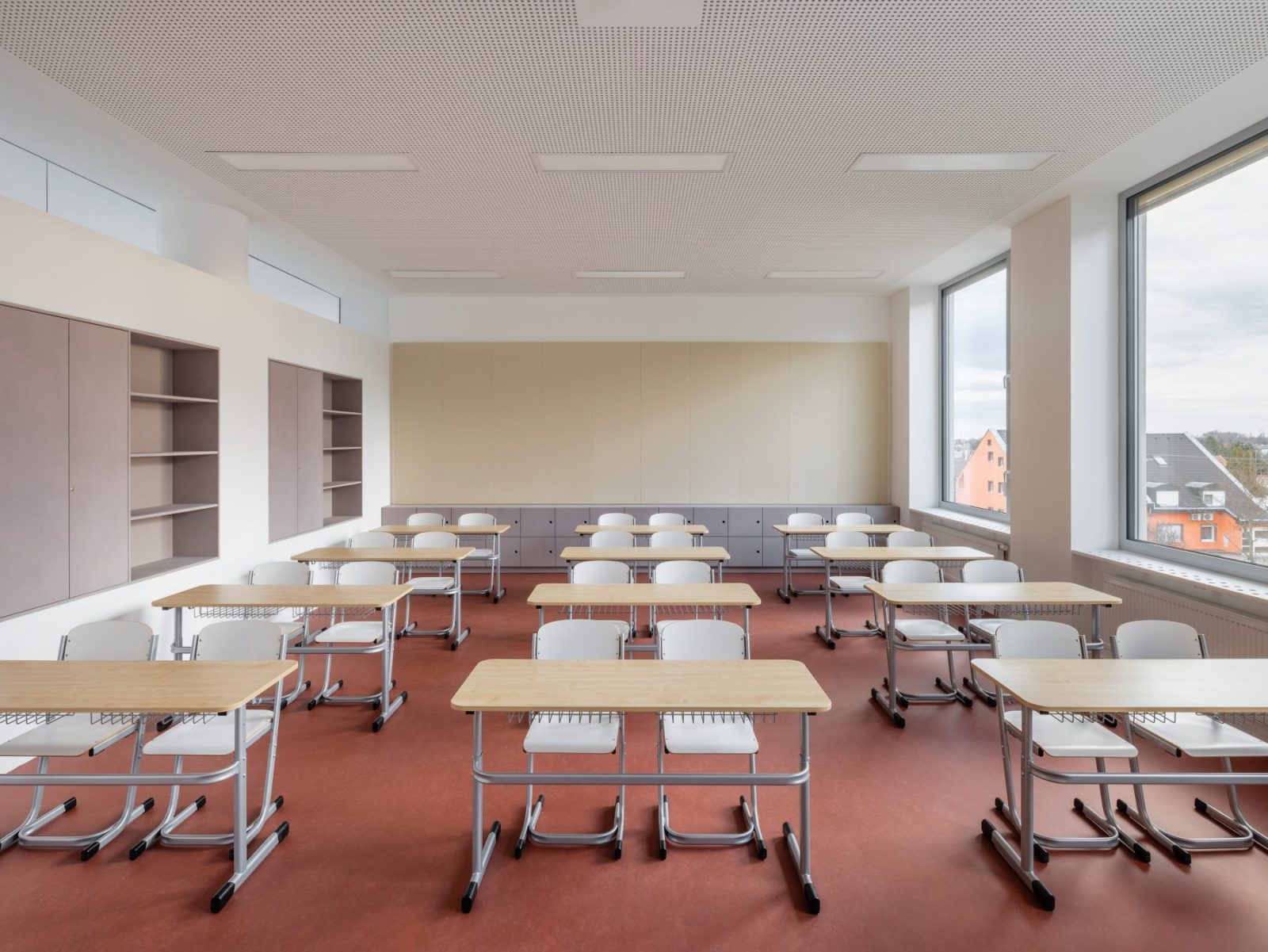
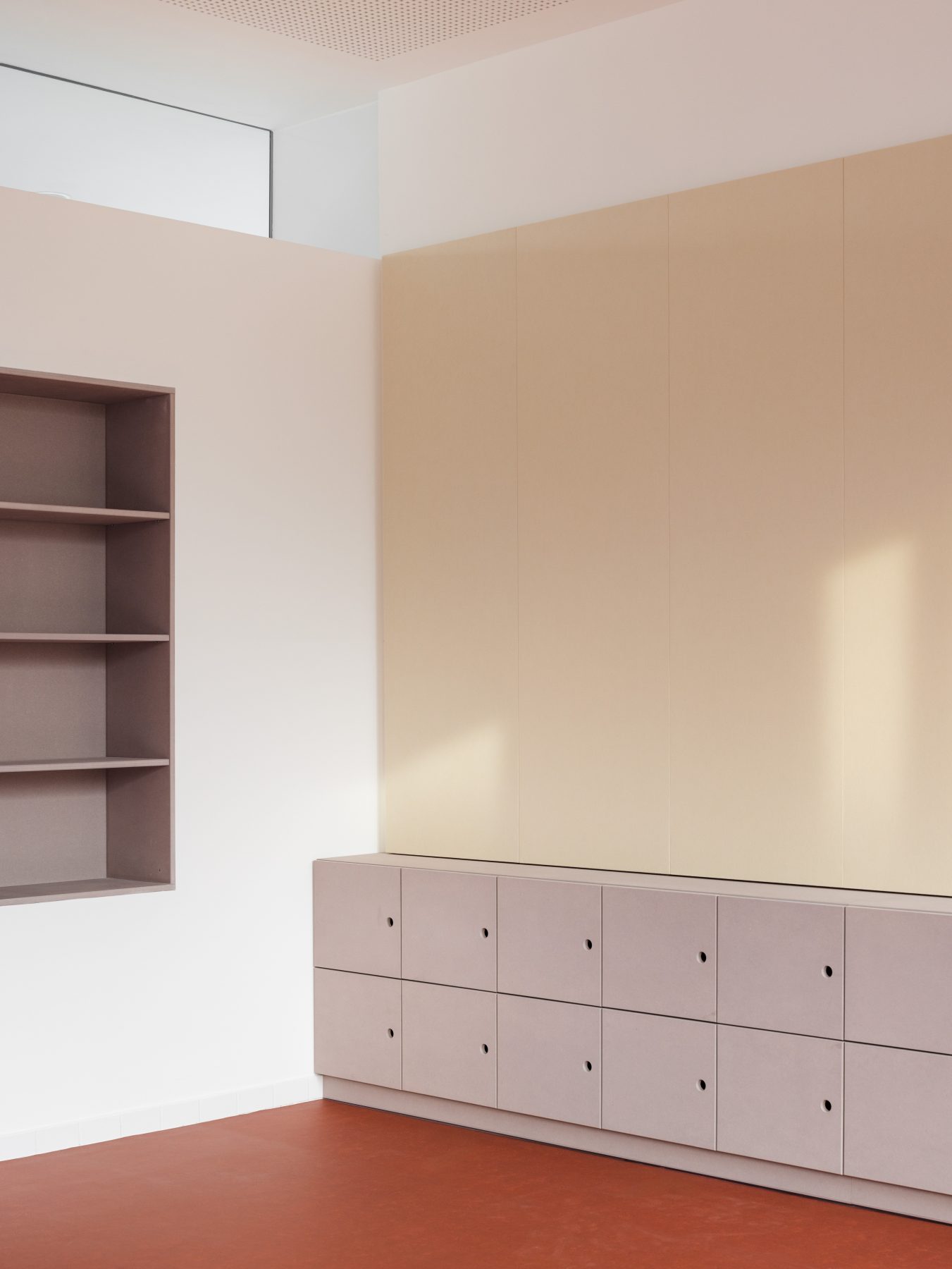
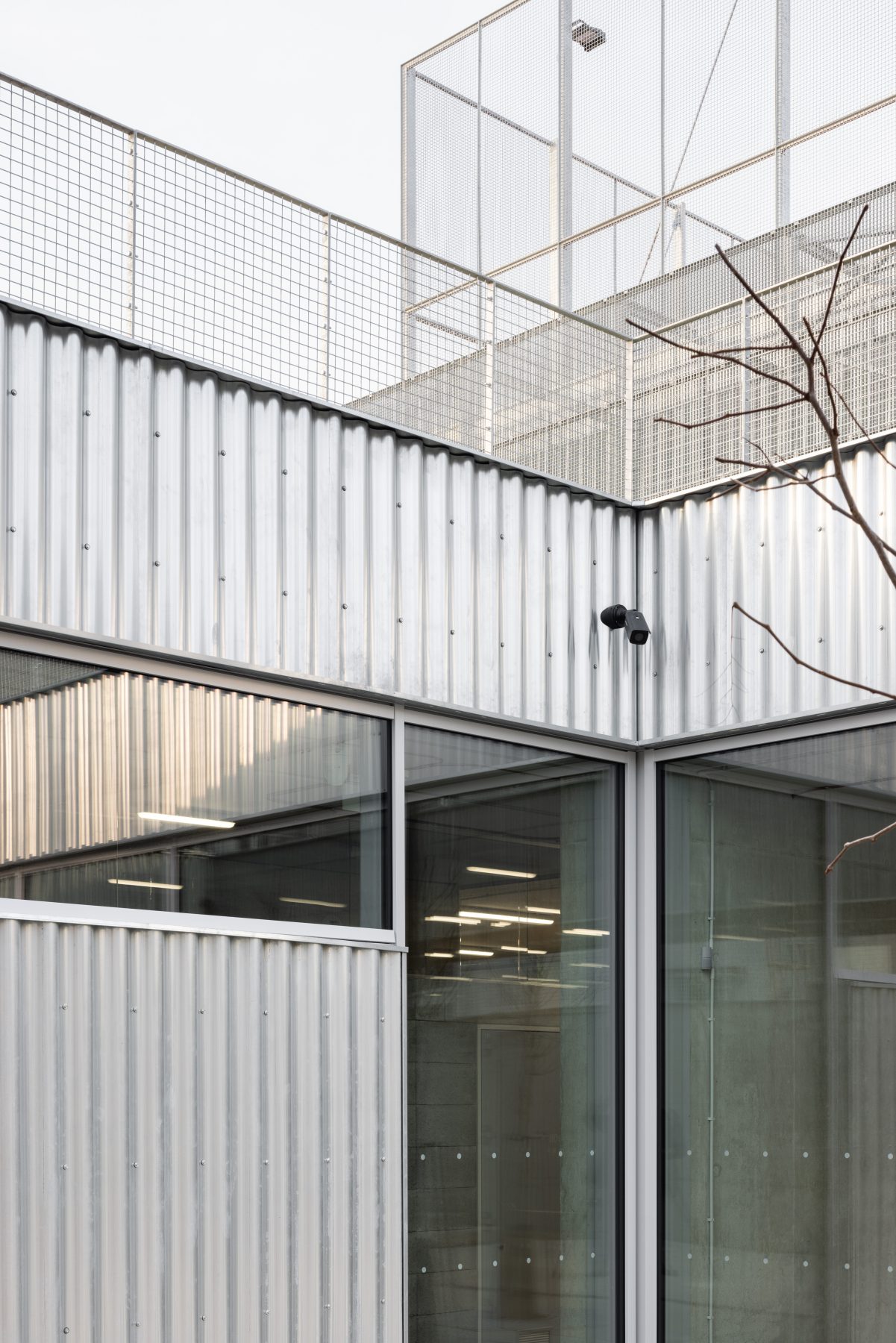
This quiet continuity is subtly offset by the clarity of contemporary detailing. In contrast, the multipurpose hall is conceived as a distinct, industrial object, clad in corrugated metal sheeting and expressed through raw, untreated materials. Its green roof, irrigated through collected rainwater, further embeds the project within a sustainable and context-responsive design strategy.
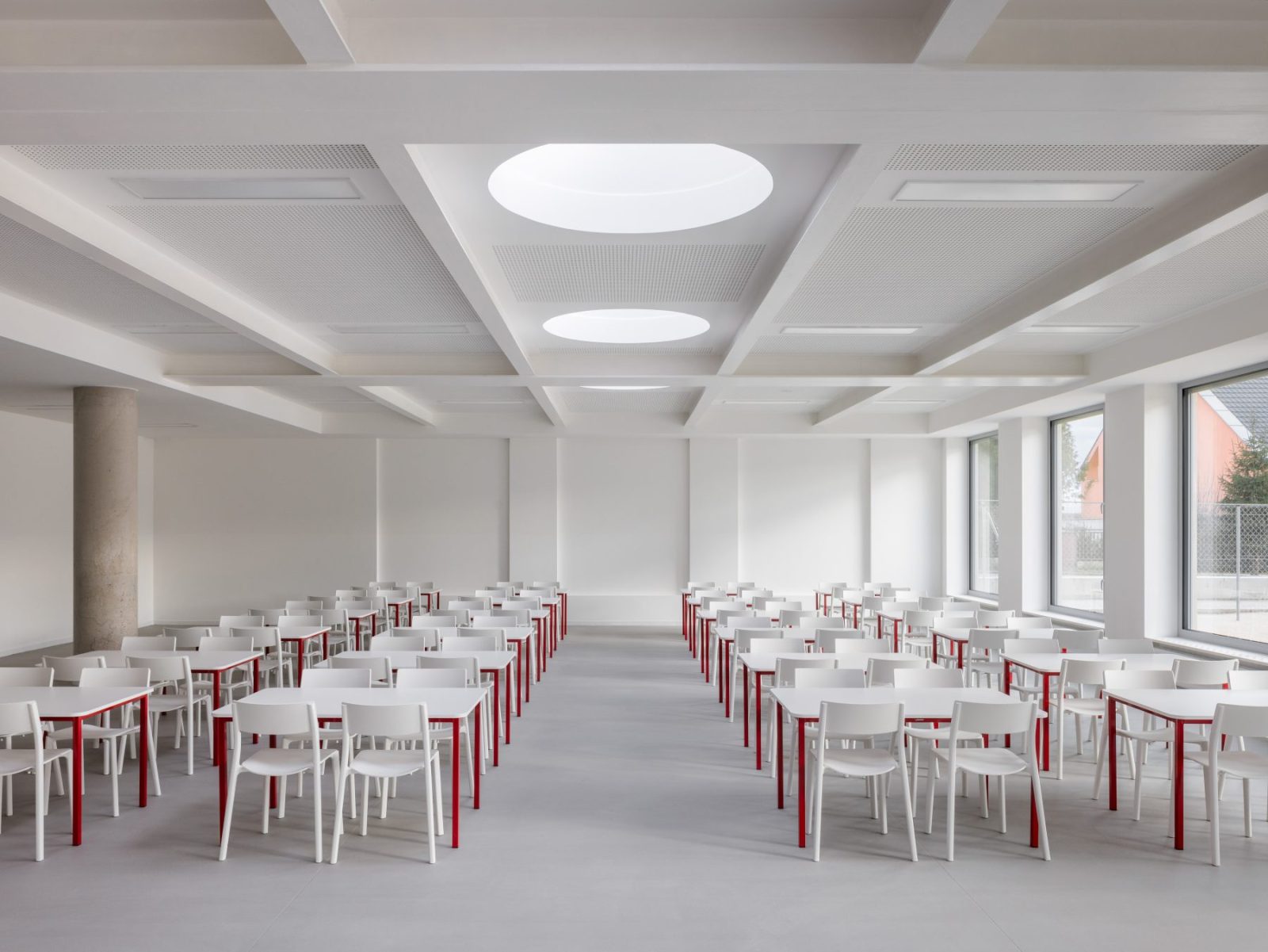
Together, these interventions establish a balanced dialogue between continuity and contrast, where new and existing elements coexist within a coherent civic framework. The project enhances the identity of Bernolákovo’s village center by carefully negotiating scale, materiality, and public space, resulting in an environment that is both functional and socially engaging. Through its integration of landscape, sustainable strategies, and adaptable structures, the ensemble not only meets contemporary educational needs but also extends its value to the wider community, reinforcing its role as an open, enduring, and inclusive public asset.
Plans
Facts & Credits
Project type: Educational building | Architecture
Project location: Bernolákovo, Slovakiae
Lead Architects: Róbert Bakyta, Ľubomíra Blašková
BAKYTA architekti team: Karina Humajová, Denis Zeman, Jaroslav Rell, Július Vass, Michal Pacher, Tatiana Kuva
Structural design: Miestor-Ján Majerník, Drha Projekt-Pavol Drha
Lighting: Exteli s.r.o.-Marek Gešnábel
Installations: Roman Kajan
Fire Safety and Accessibility: Sprinkler Systems s.r.o.-Pavel Kysel
Builder: Milanko spol. s r.o.
Photography: Matej Hakár