‘An Architecture of Care,’ an editorial series curated by Archt., explores how inclusive design reshapes contemporary architectural discourse, framing spatial practice as an act of poetic care, social engagement, and embodied experience.
In the first episode, we follow Belgian-Latvian architecture studio Sampling as they reimagine, through a careful act of unification, an Art Nouveau tenement, industrial remnants, and a courtyard in Riga, into Augustine’s Garden—a residential landscape defined by layered identities and material depth.
“Care and repair lie at the heart of Augustines Garden allowing the site itself to determine the material strategy,” say Sampling founders Liene Jakobsone and Manten Devriendt.
A gardener is always a futurist and Sampling knows that.
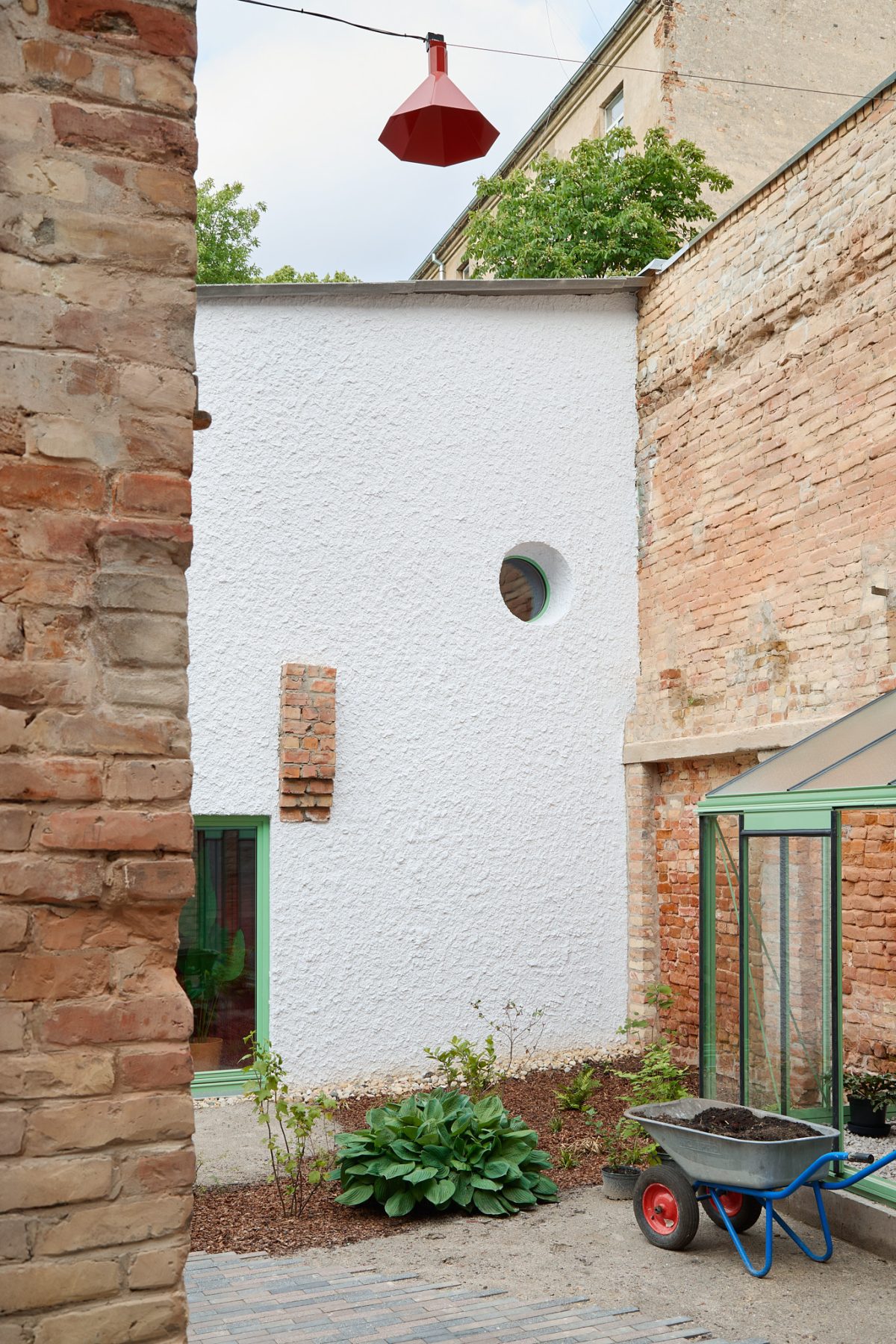
Conceived around an inner courtyard, Augustine’s Garden frames an inclusive residential environment shaped by post-industrial aesthetics and grounded in the site’s built history—retaining traces of labour and the narratives of working hands embedded in its past.
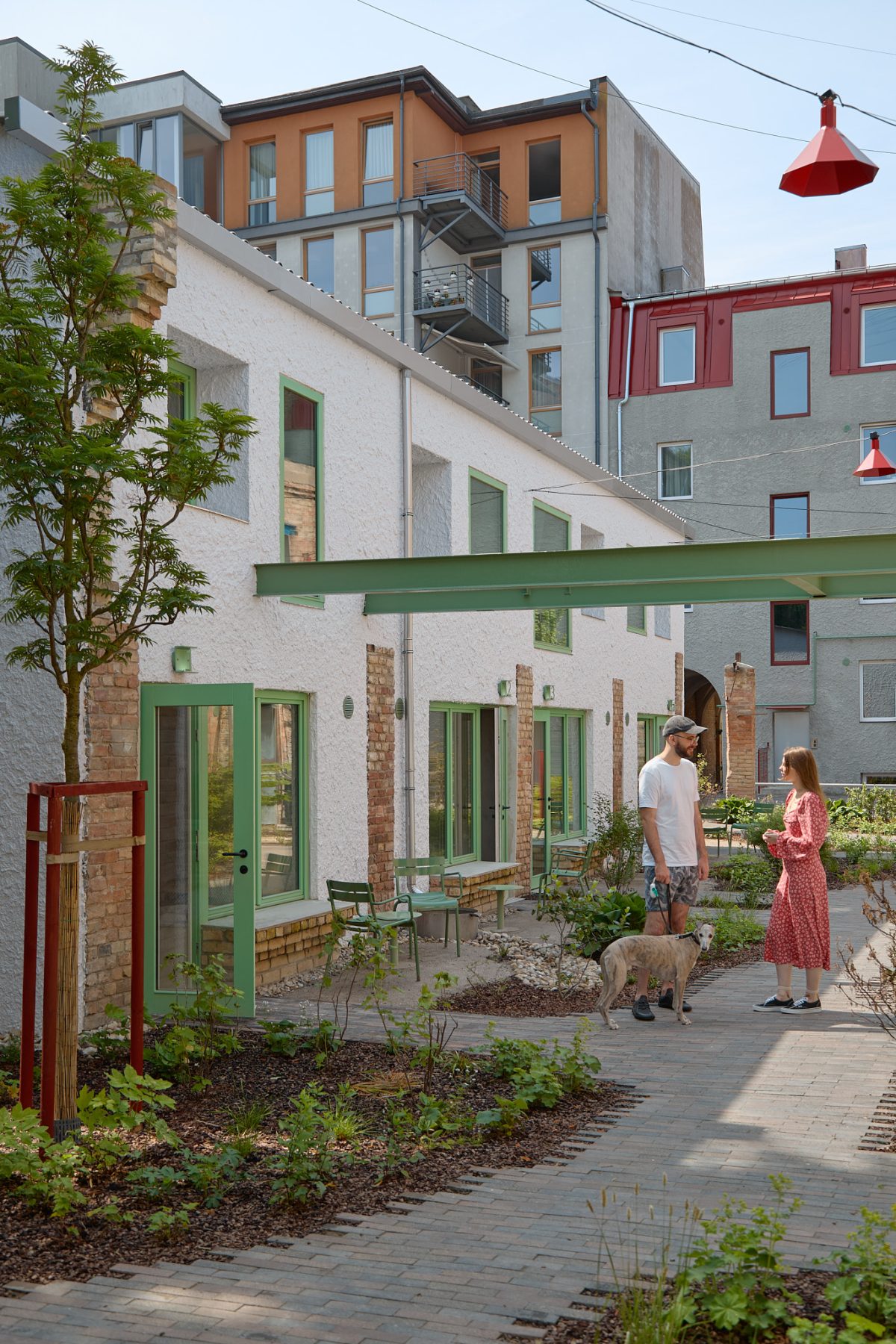
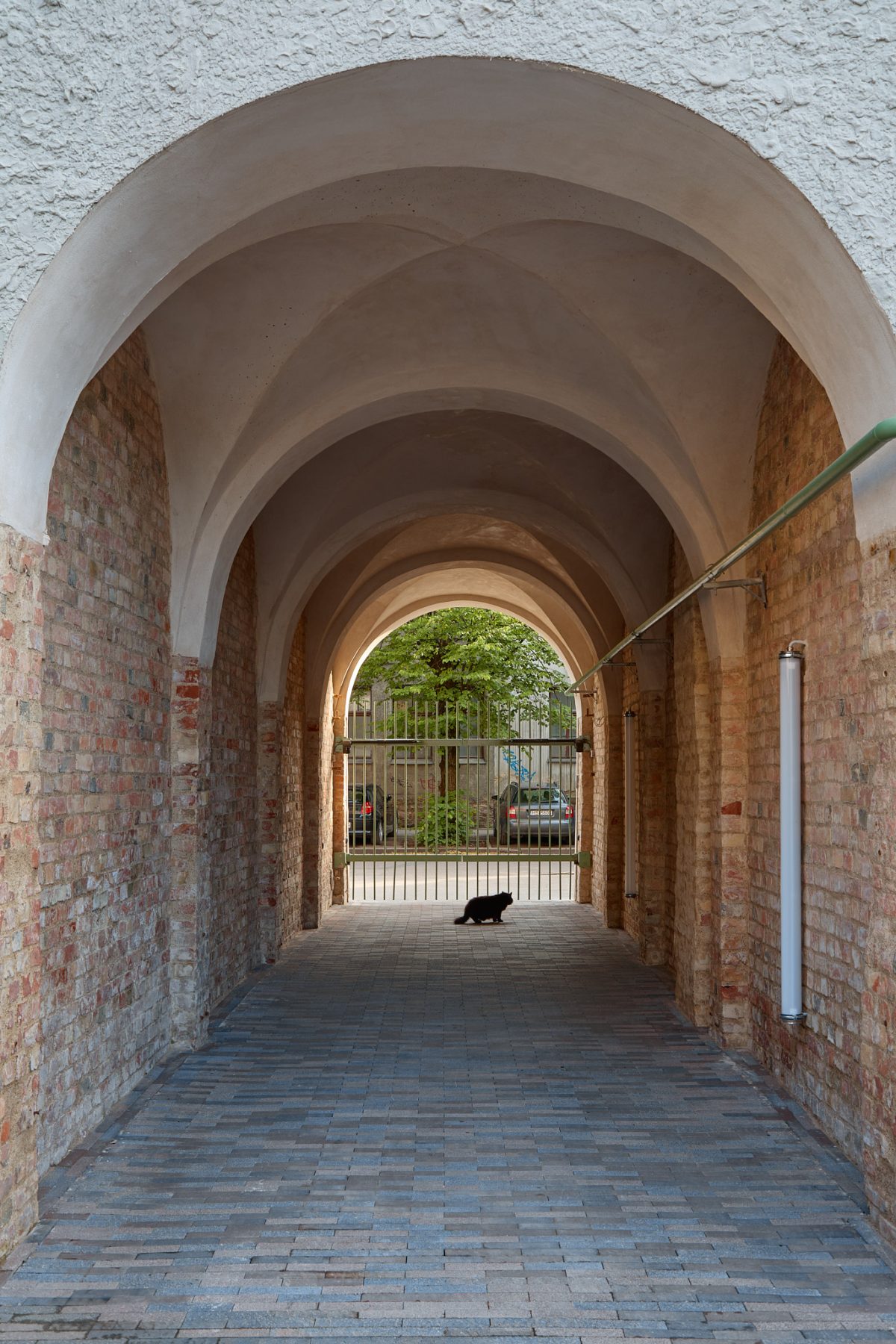
Mirroring early 20th-century Riga’s National Romantic style—a regional expression of Art Nouveau deeply rooted in identity, landscape, and vernacular tradition—the pre-existing tenement house facing the street, designed by Aleksandrs Vanags, is defined by a pronounced material authenticity and tactile presence. Its heavy, grounded yet sculptural volume is articulated through pitched gabled roofs recalling traditional Baltic architecture, Latvian decorative motifs, and a distinctive vaulted entrance.
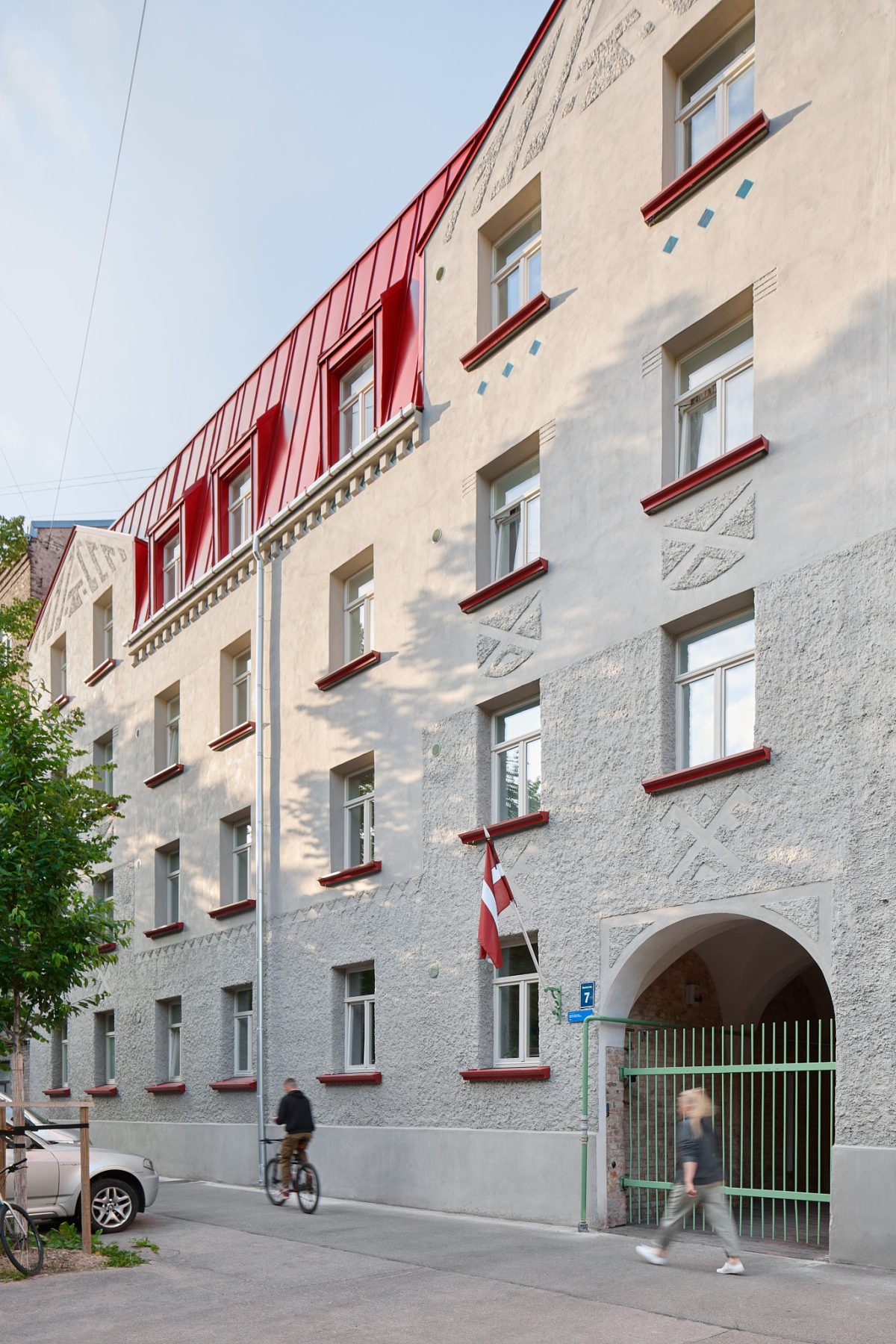
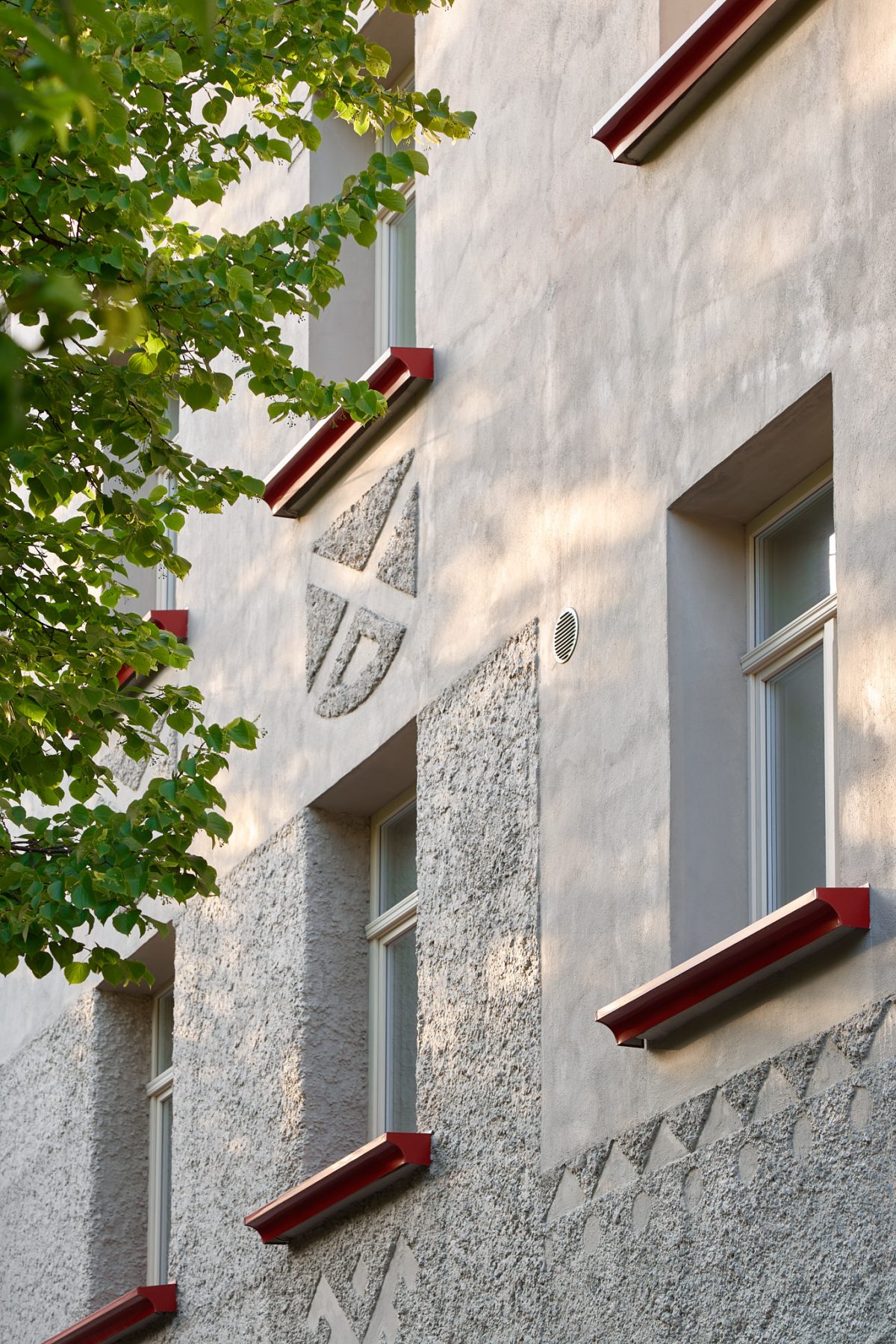
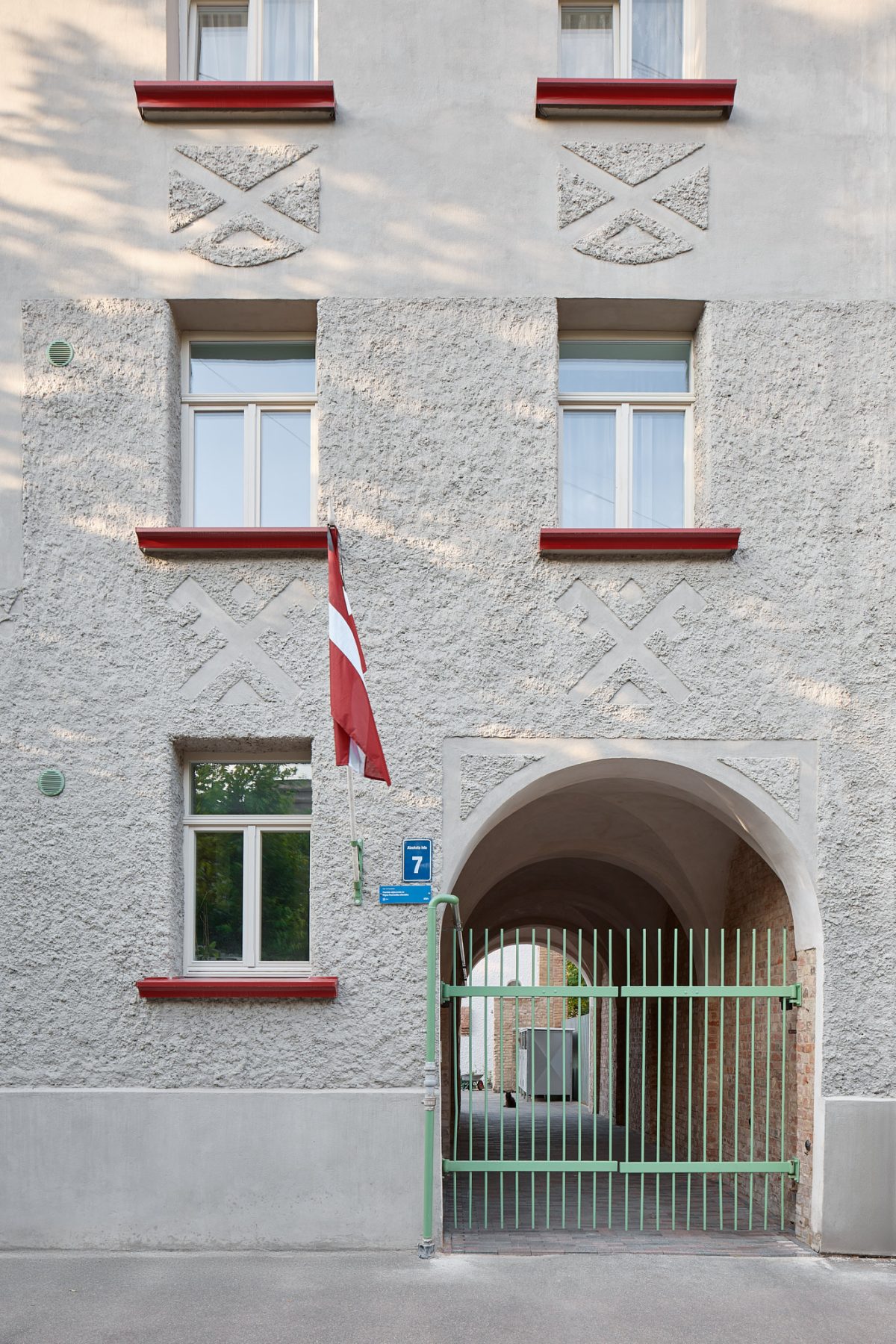
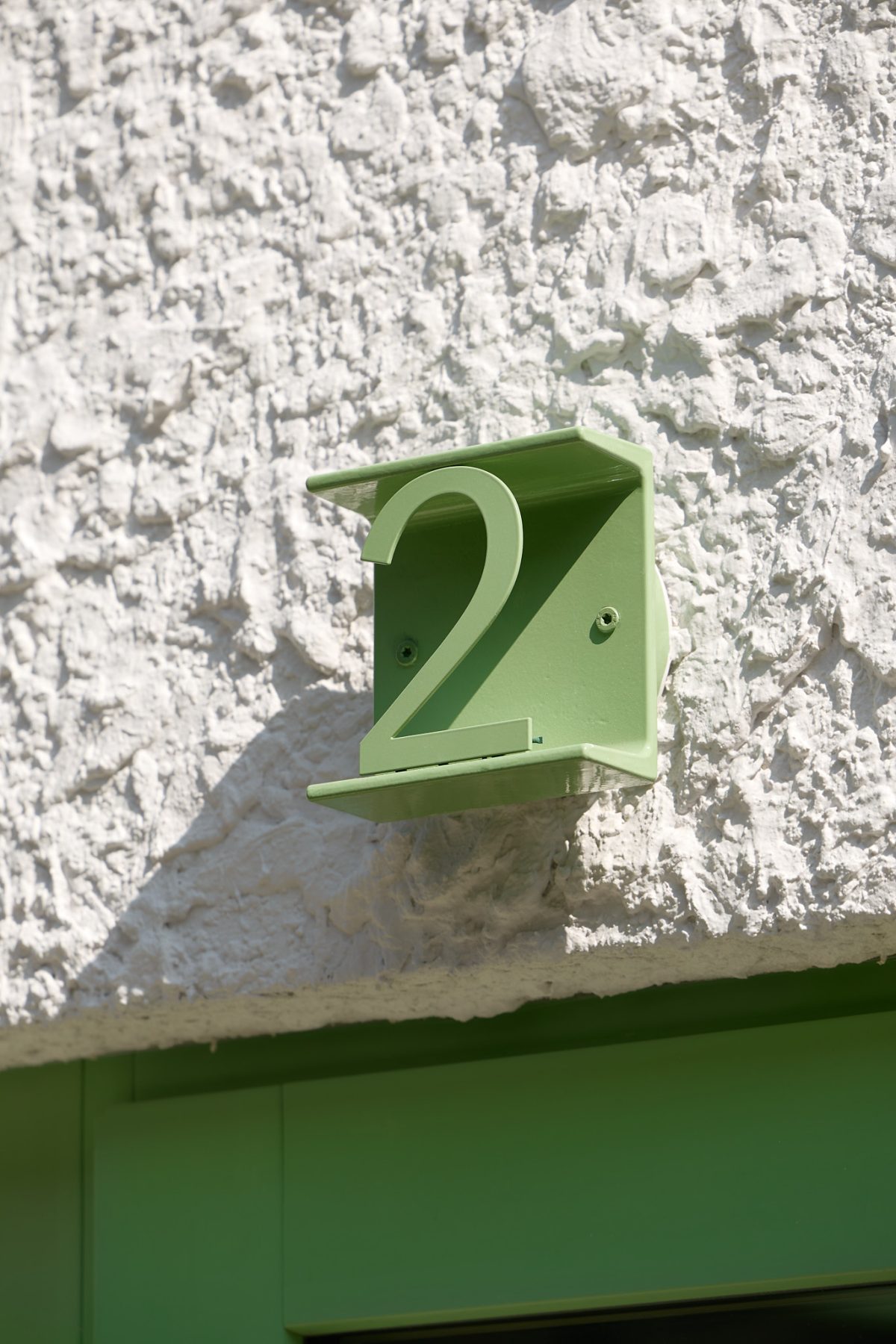
Sampling carefully restored and insulated the historic façade of the building, preserving the monochrome off-white palette characteristic of the period, where rough plaster surfaces alternate with smoother ones. The composition is subtly intensified by carmine-red accents—a tin roof and window sills—within which the façade lighting is seamlessly integrated. An olive-green gate of laconic design completes the ensemble; here, the historic vaulting is preserved, while contemporary lighting elements are discreetly introduced along the walls.
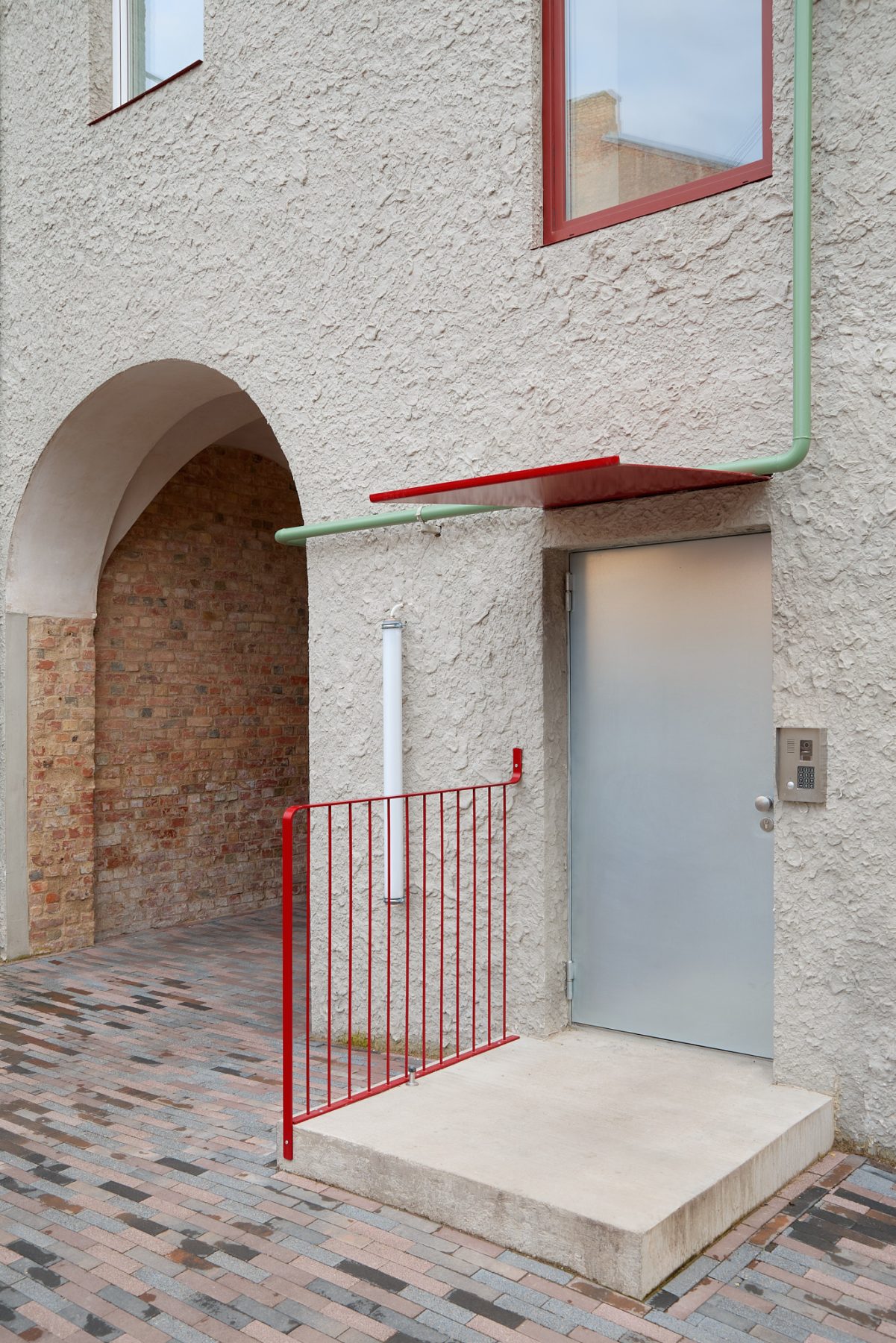
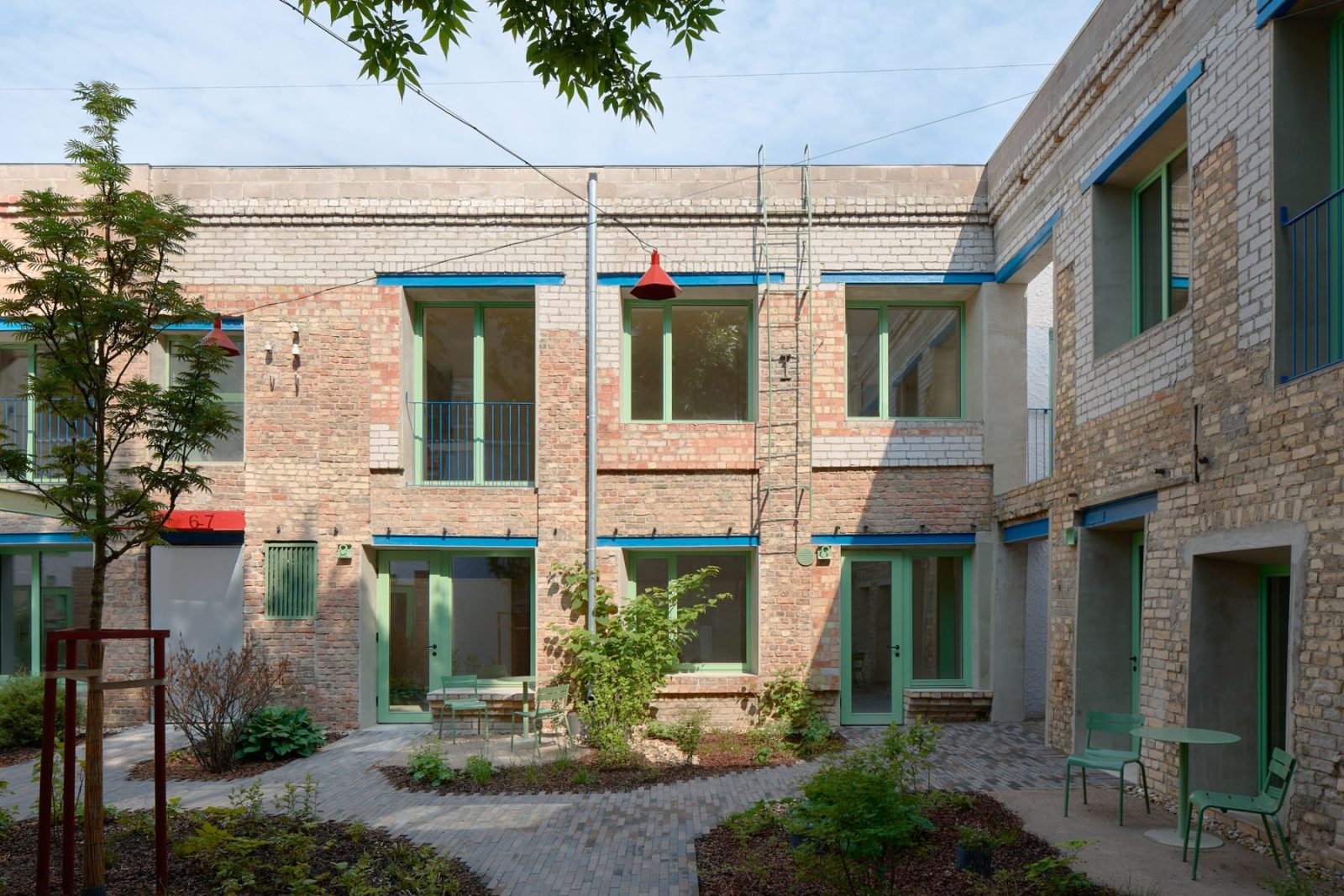
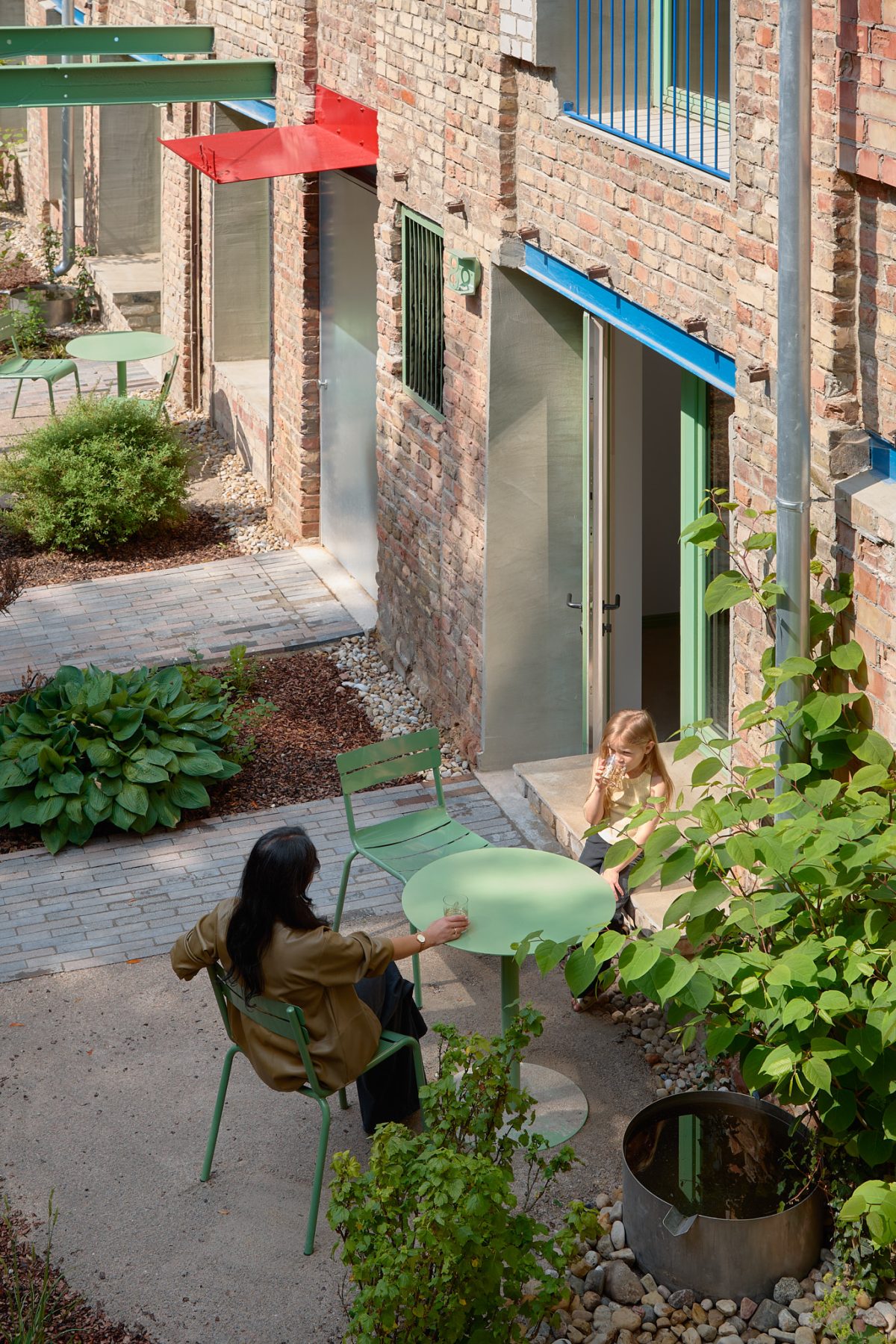
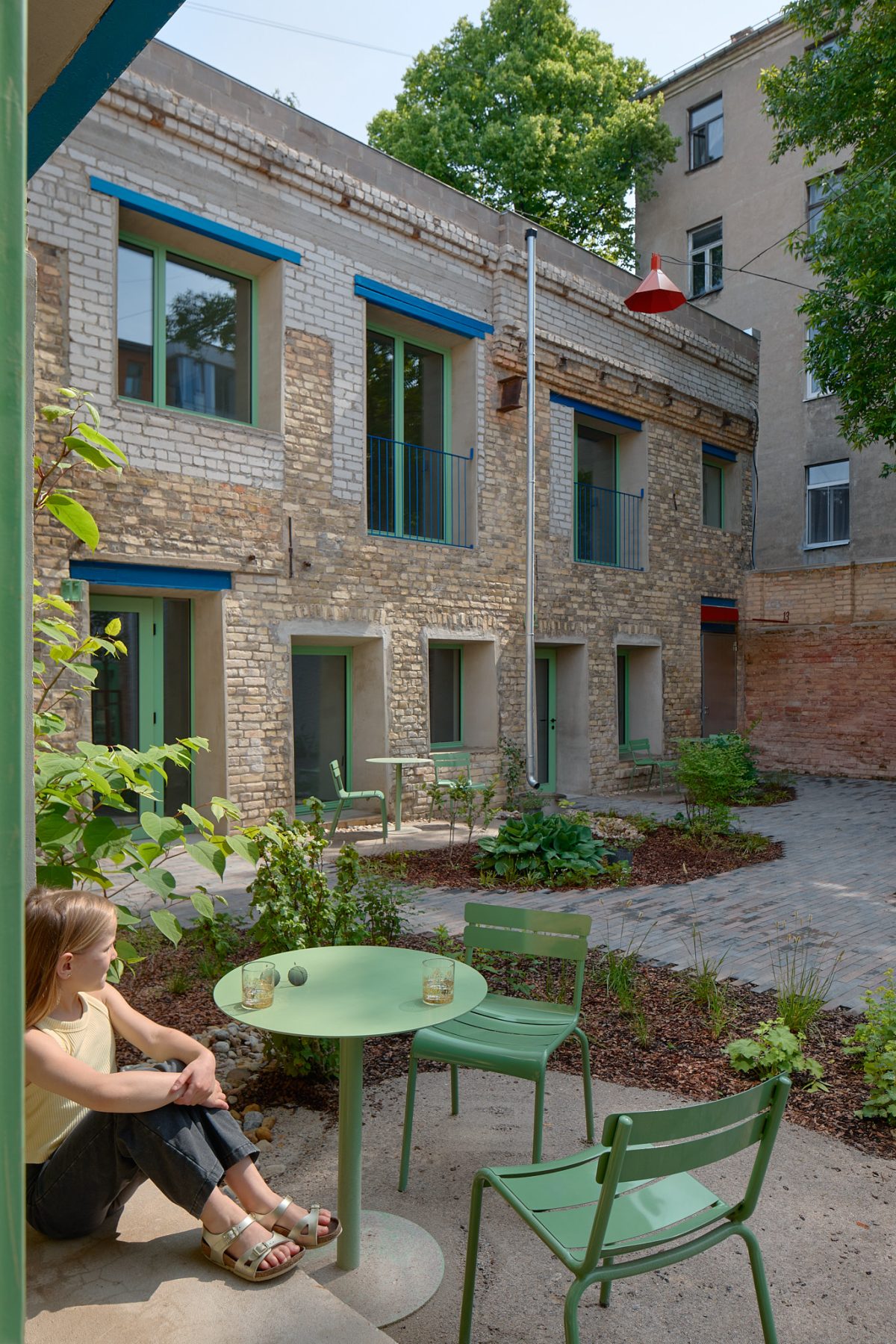
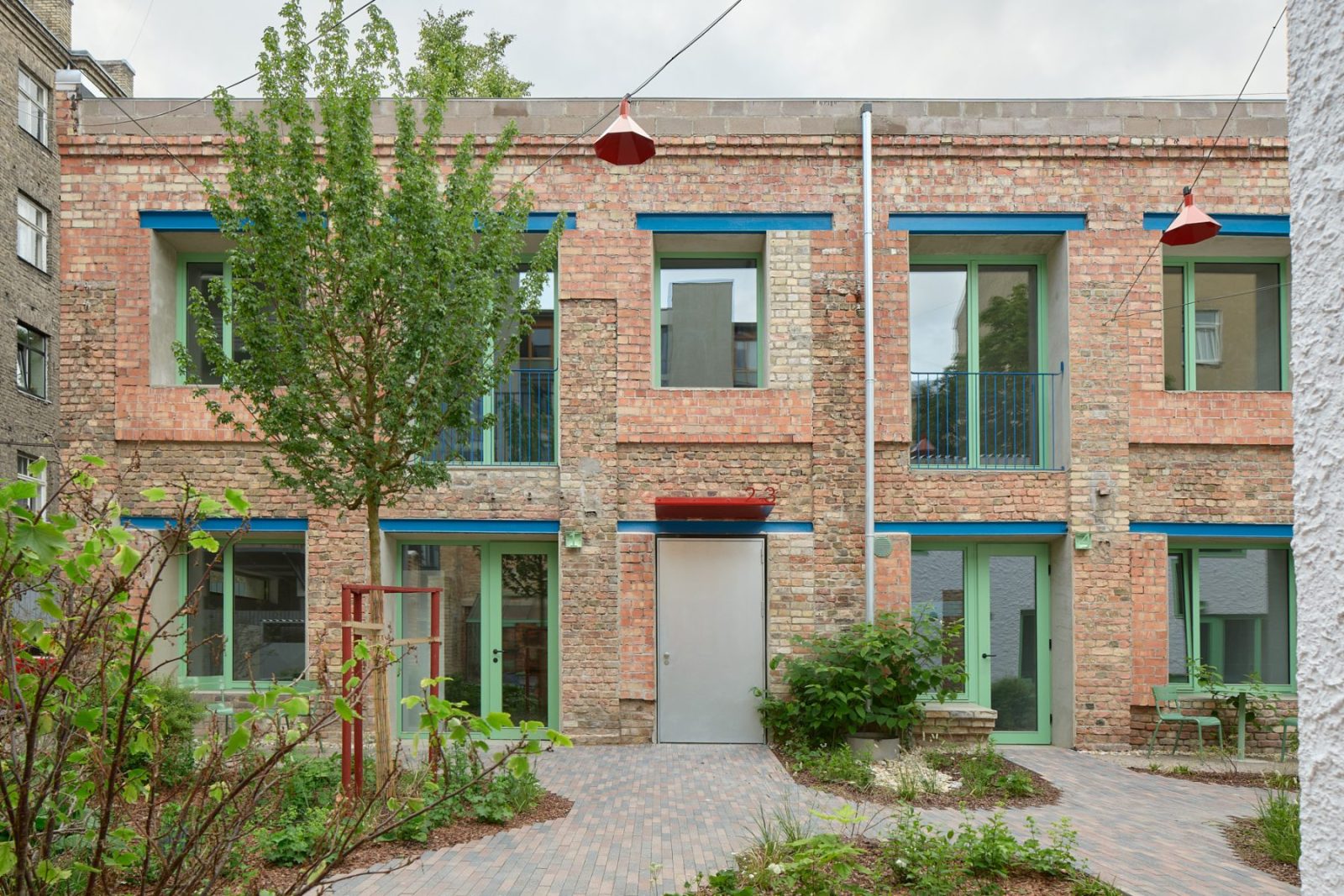
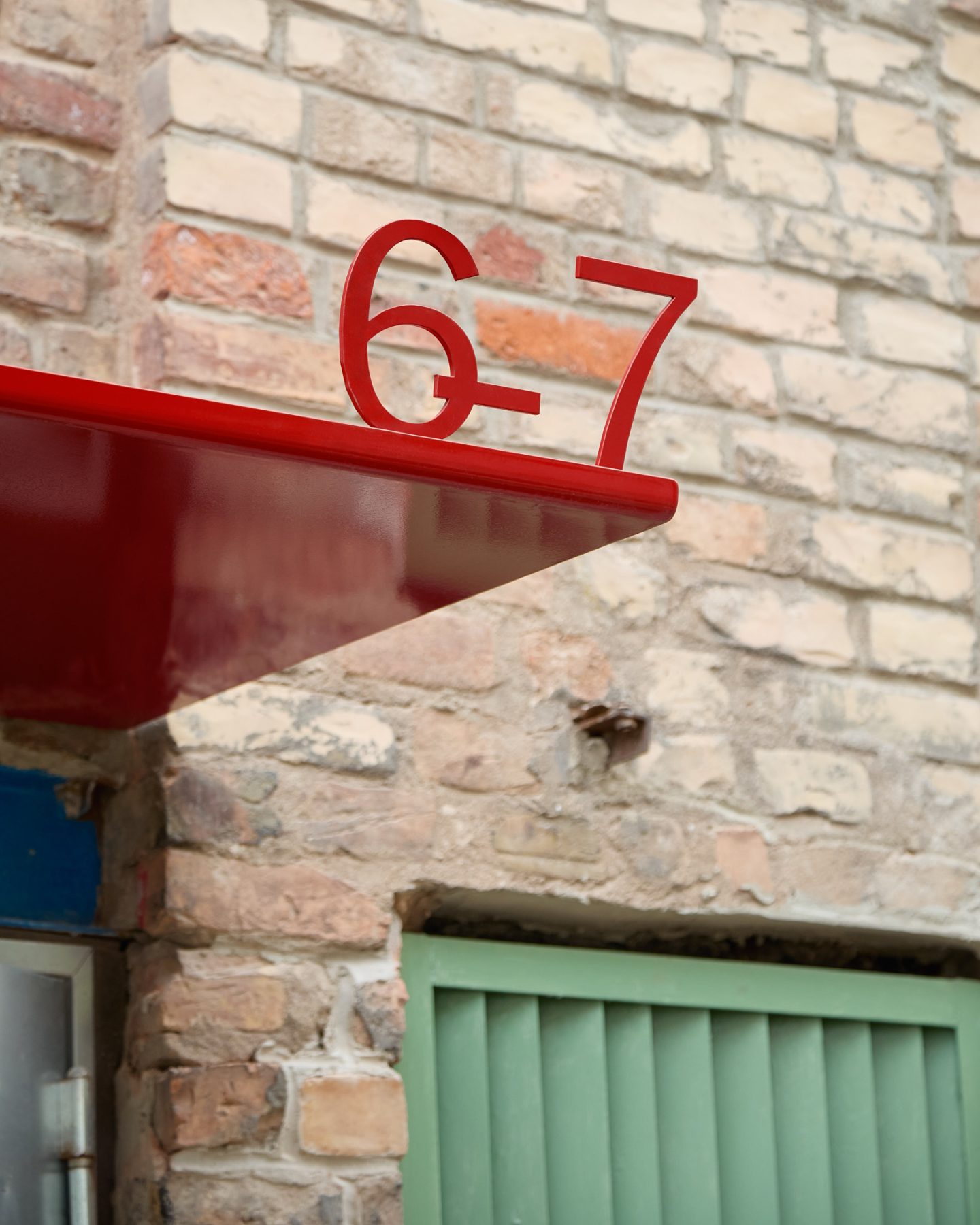
Upon passing through the gatehouse, the former industrial courtyard unfolds as an urban garden, its worn brick façades punctuated by vibrant accents of red, blue, and green metalwork.
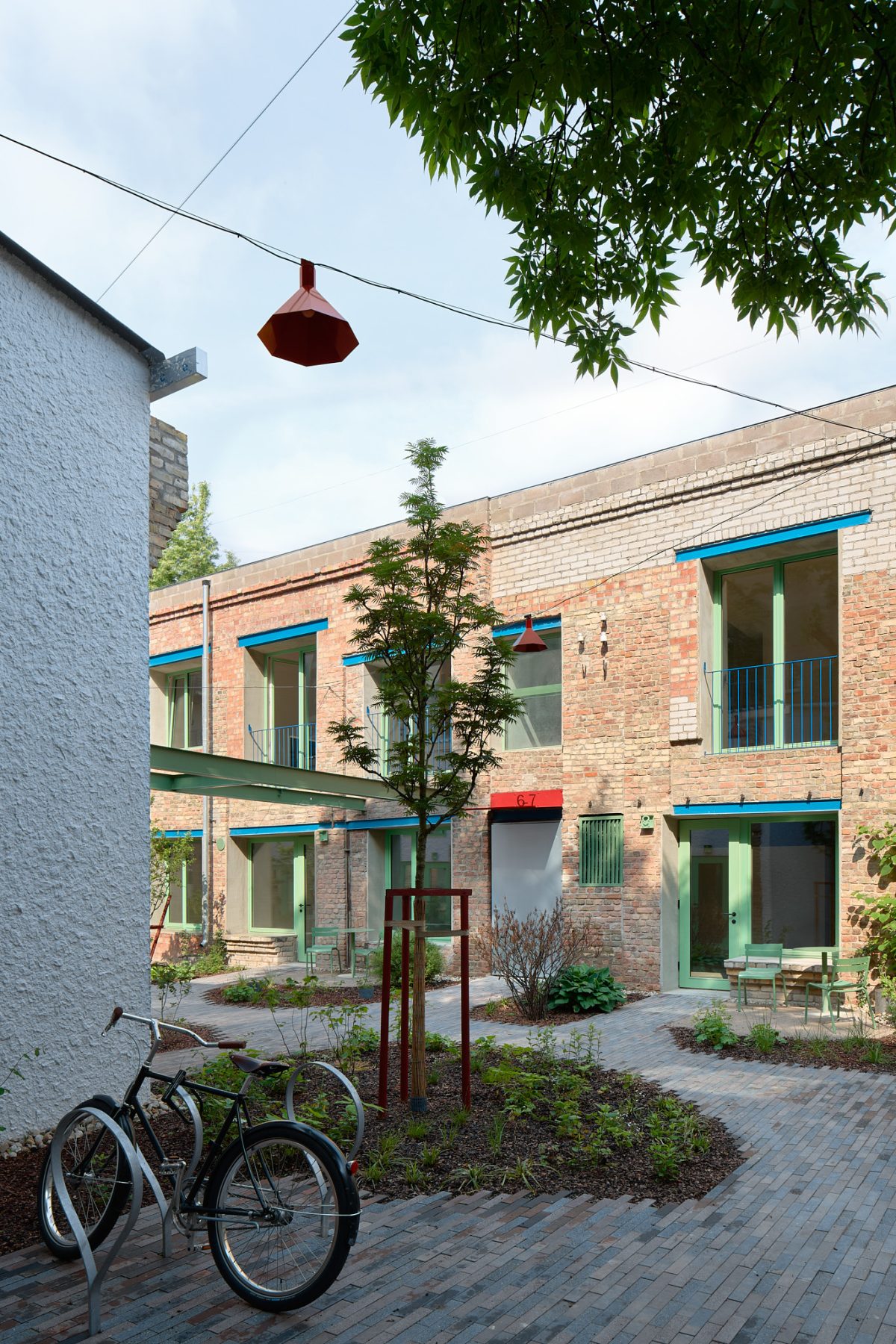
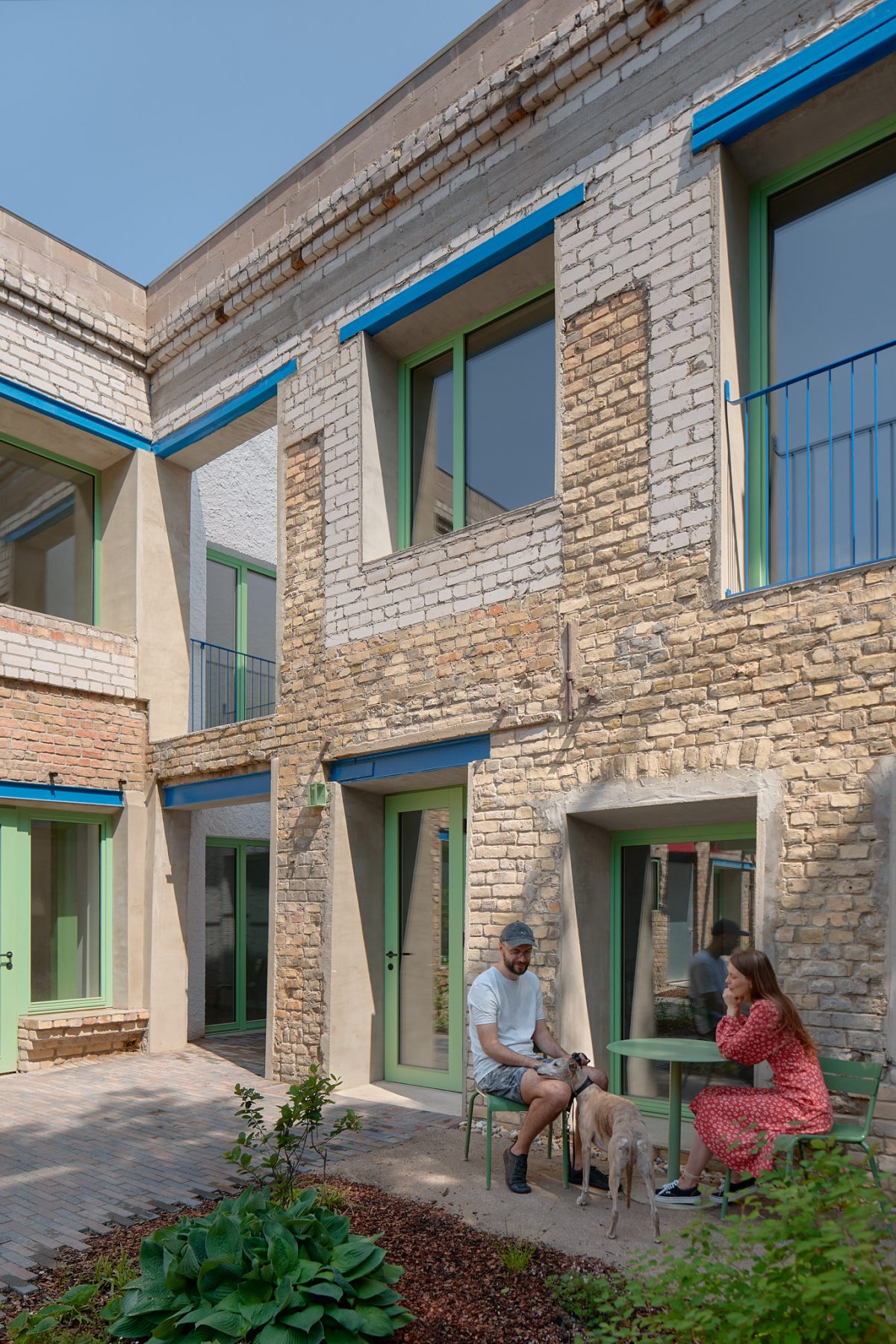
The century-old walls read as a palimpsest, bearing the layered memory of the complex’s construction—from the ceramic bricks and metal beam lintels of the early 20th century to the white silicate bricks of the Soviet era.
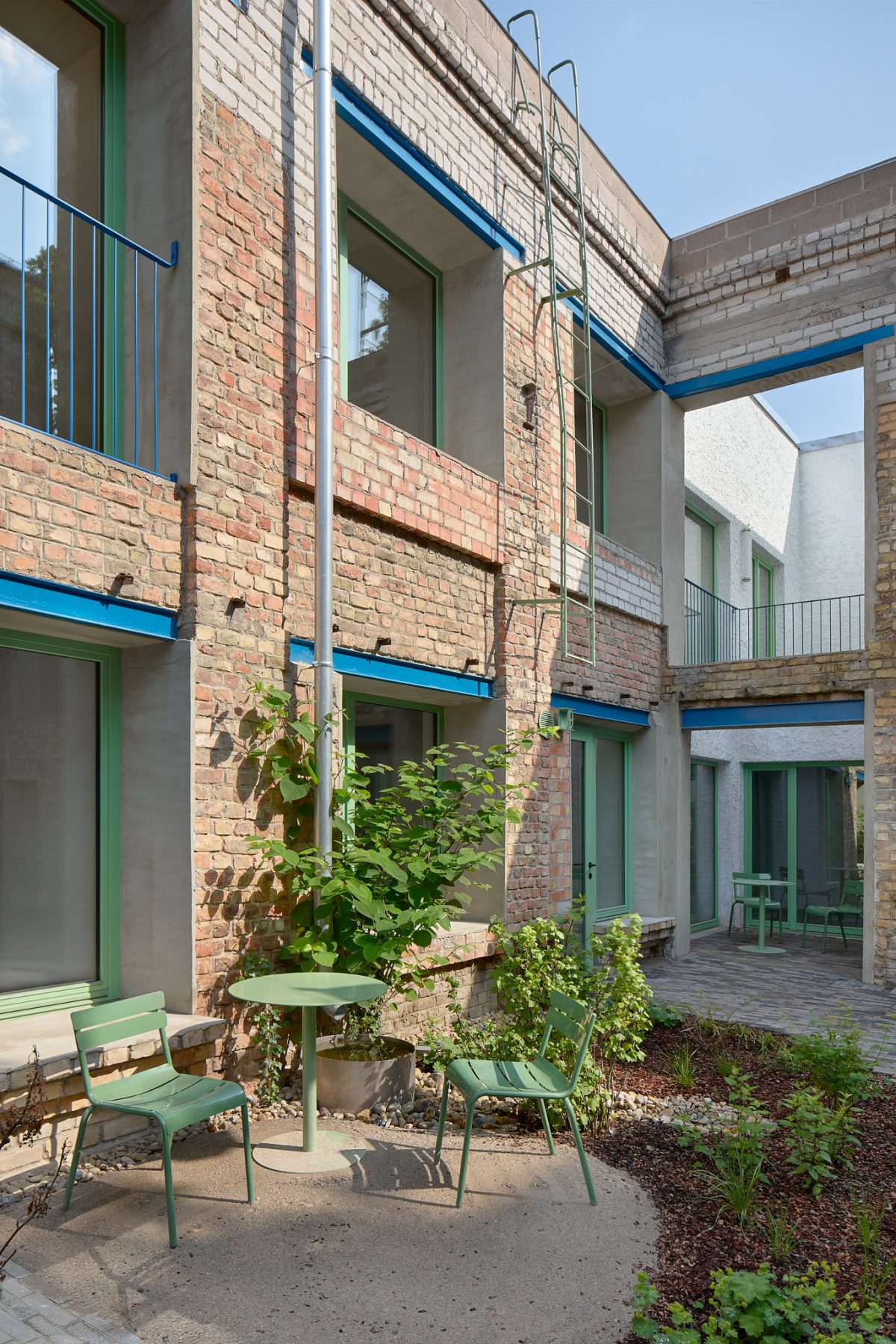
Adaptive reuse here becomes more than a design strategy; it is an act of cultural and spatial care. The buildings that once housed a community of workers now nurture a shared residential life, transforming the past into a living present.
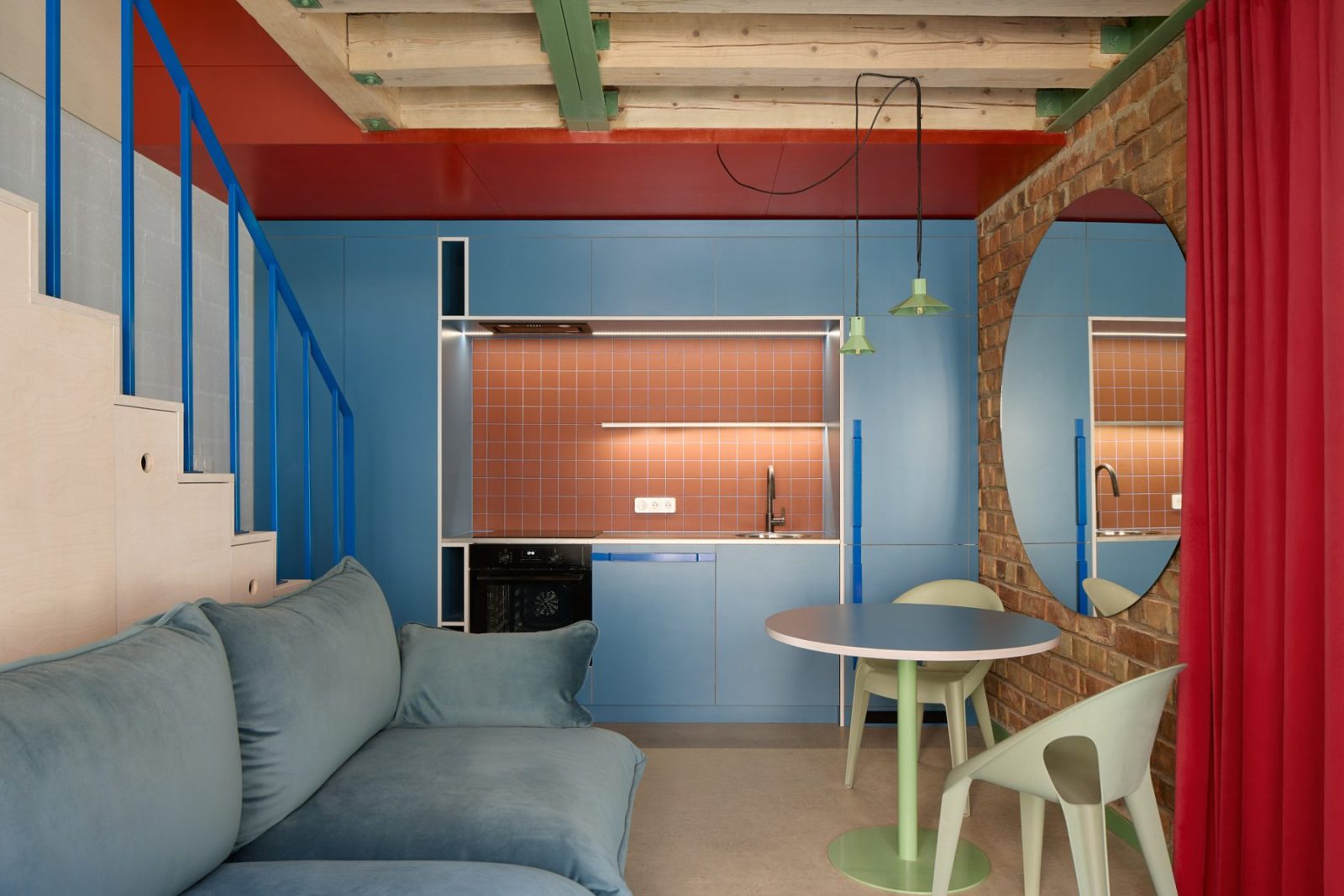
Inside, a red–blue–green palette guides the eye and the body, delineating domestic realms while conversing with exposed brick, a continuous cement-grey floor, and timber stairs, beams, and doors. These elements compose a choreography of space, shaping intimate studio duplexes and generous apartments, with terraces and French balconies, where colour, texture, and materiality weave together the story of a site continuously lived.
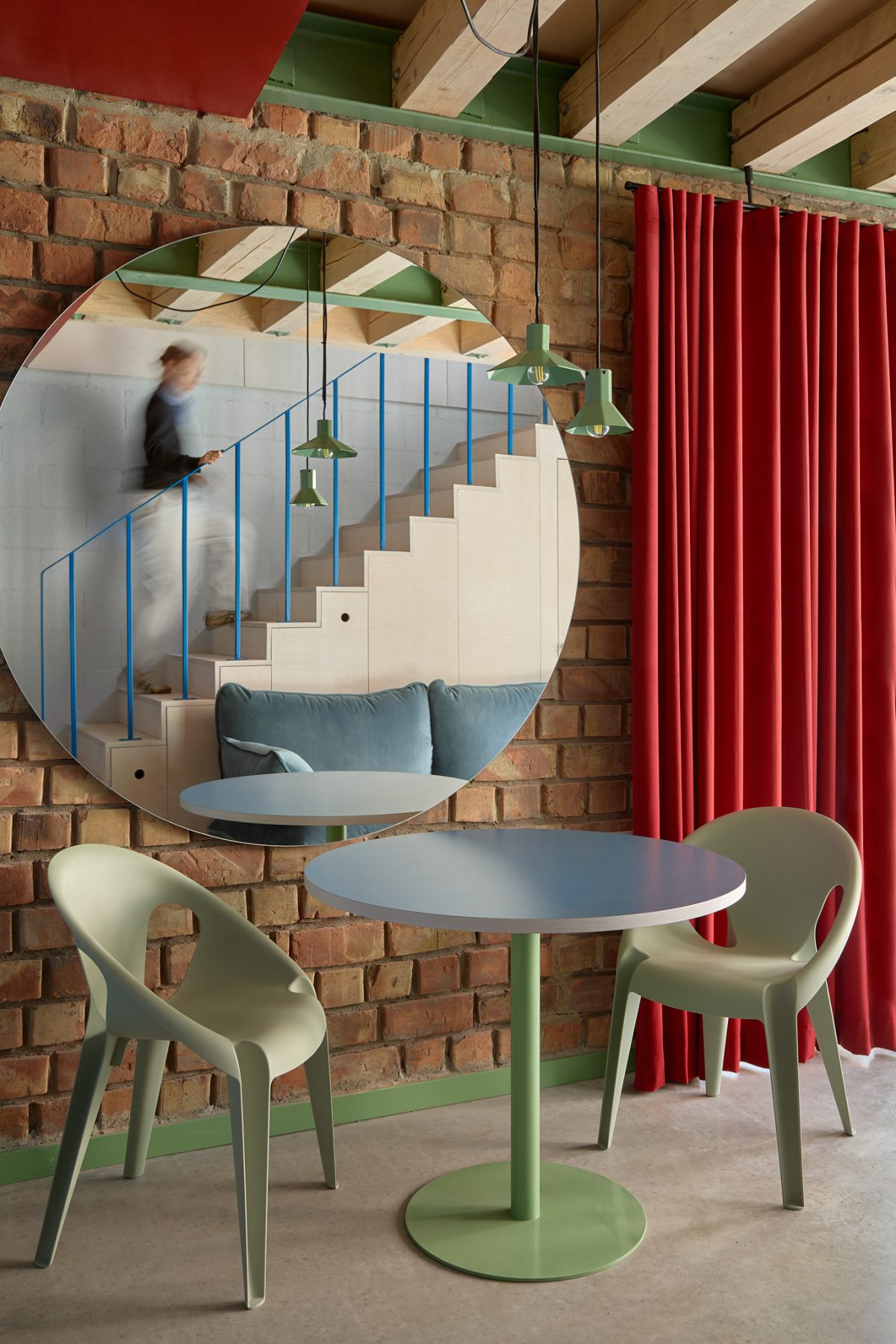
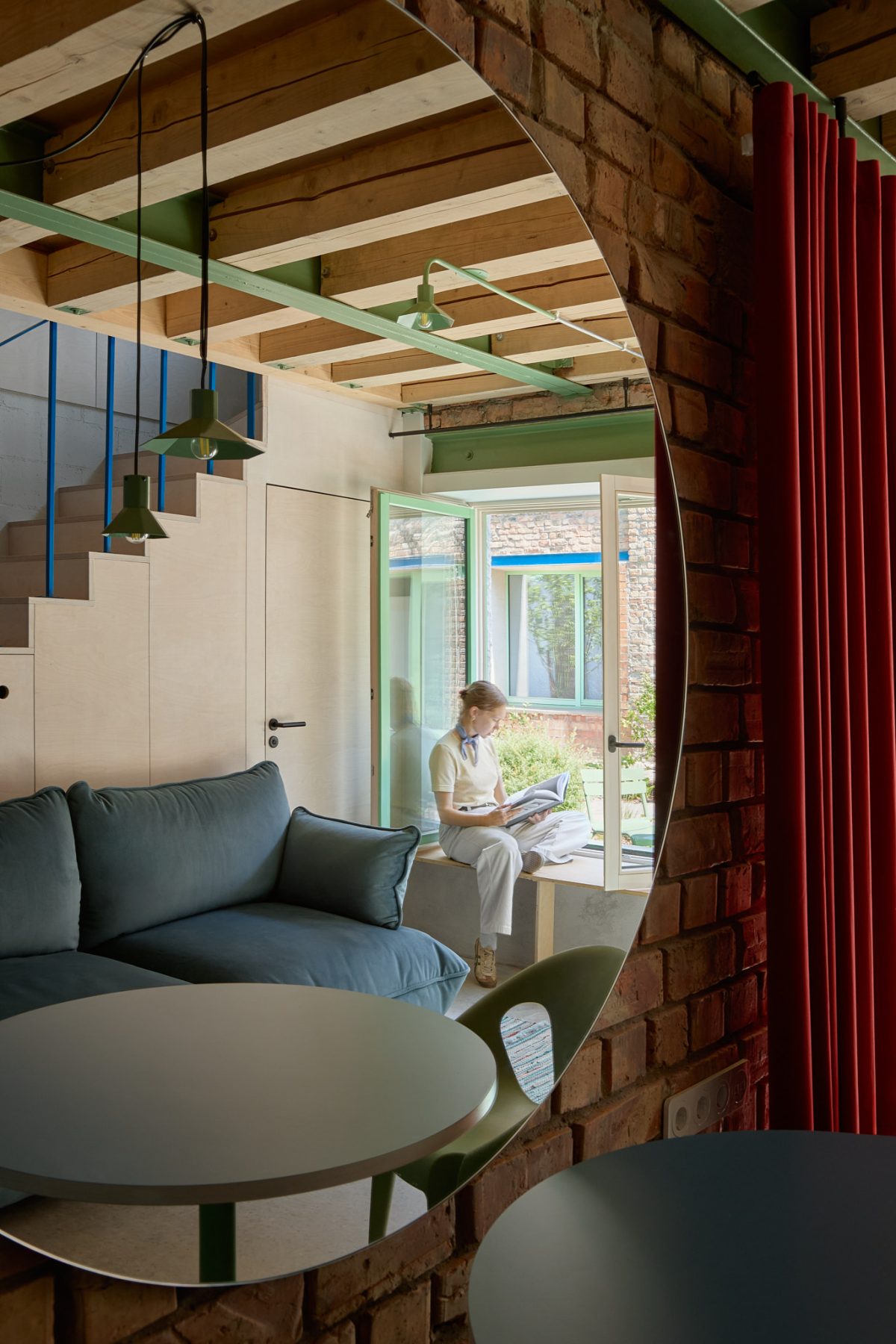
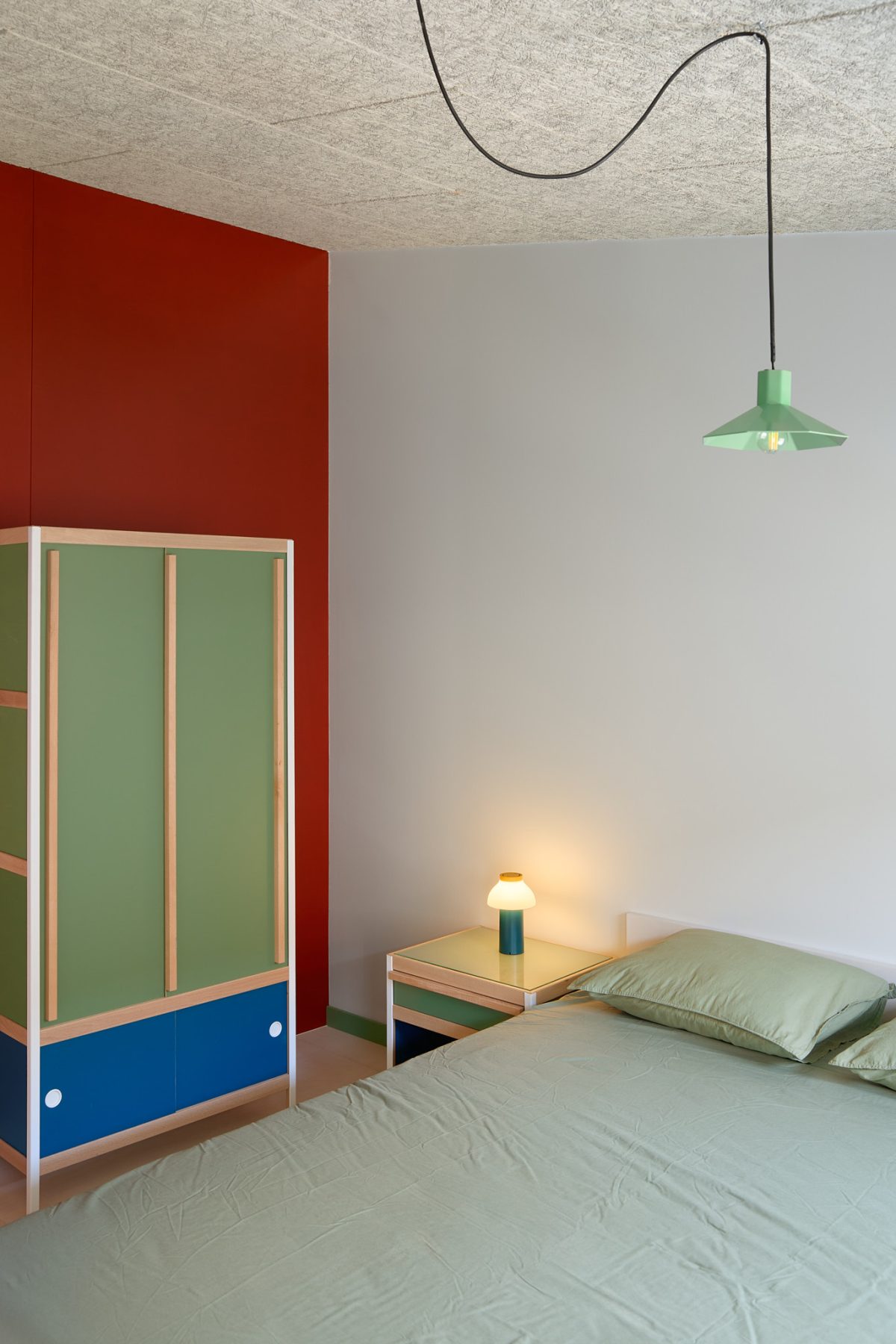
“The garden is conceived as the predominant community-building element,” say Liene and Manten, confirming that their primary goal for Augustine’s Garden was to design a yard where residents could find their way back to one another.
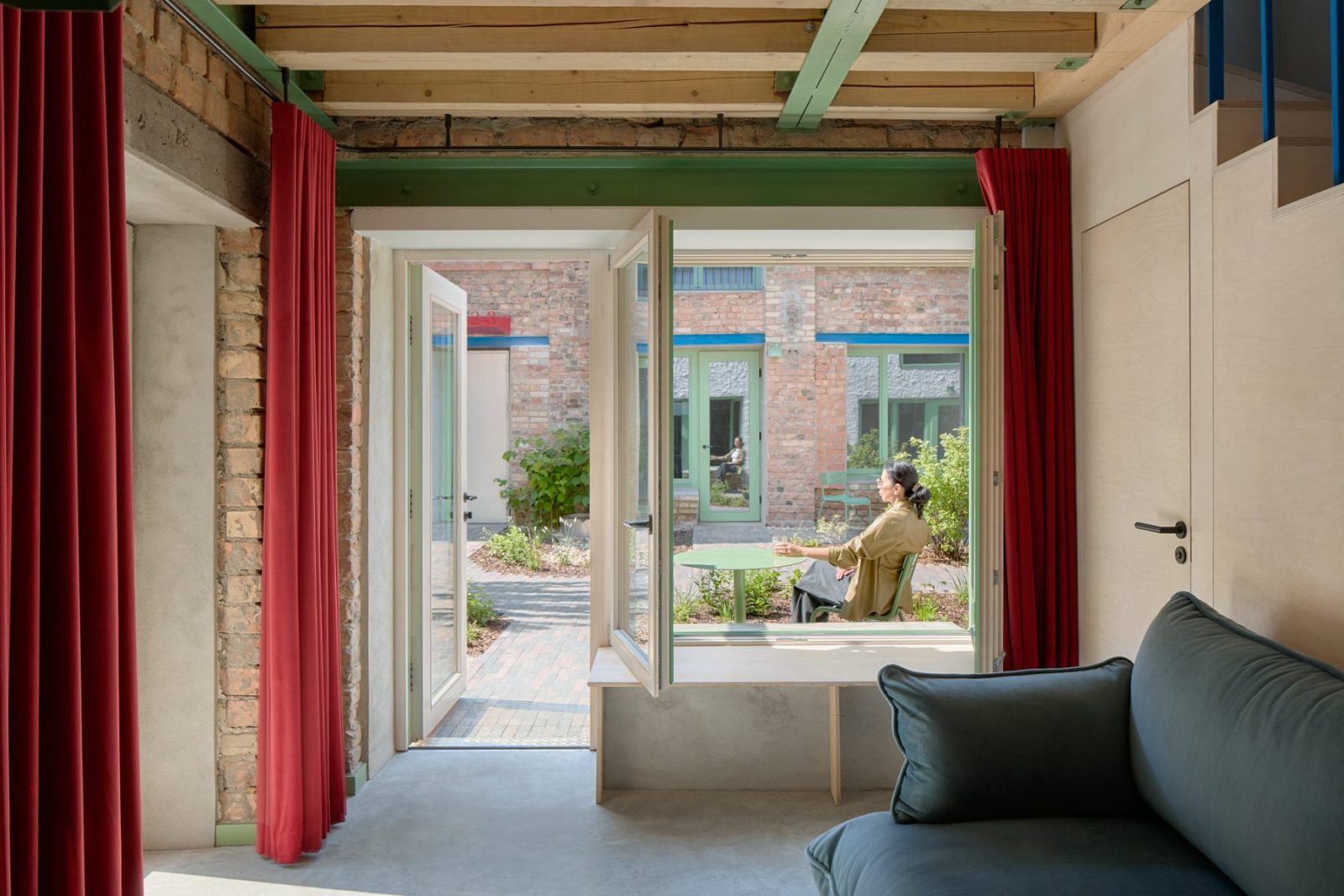
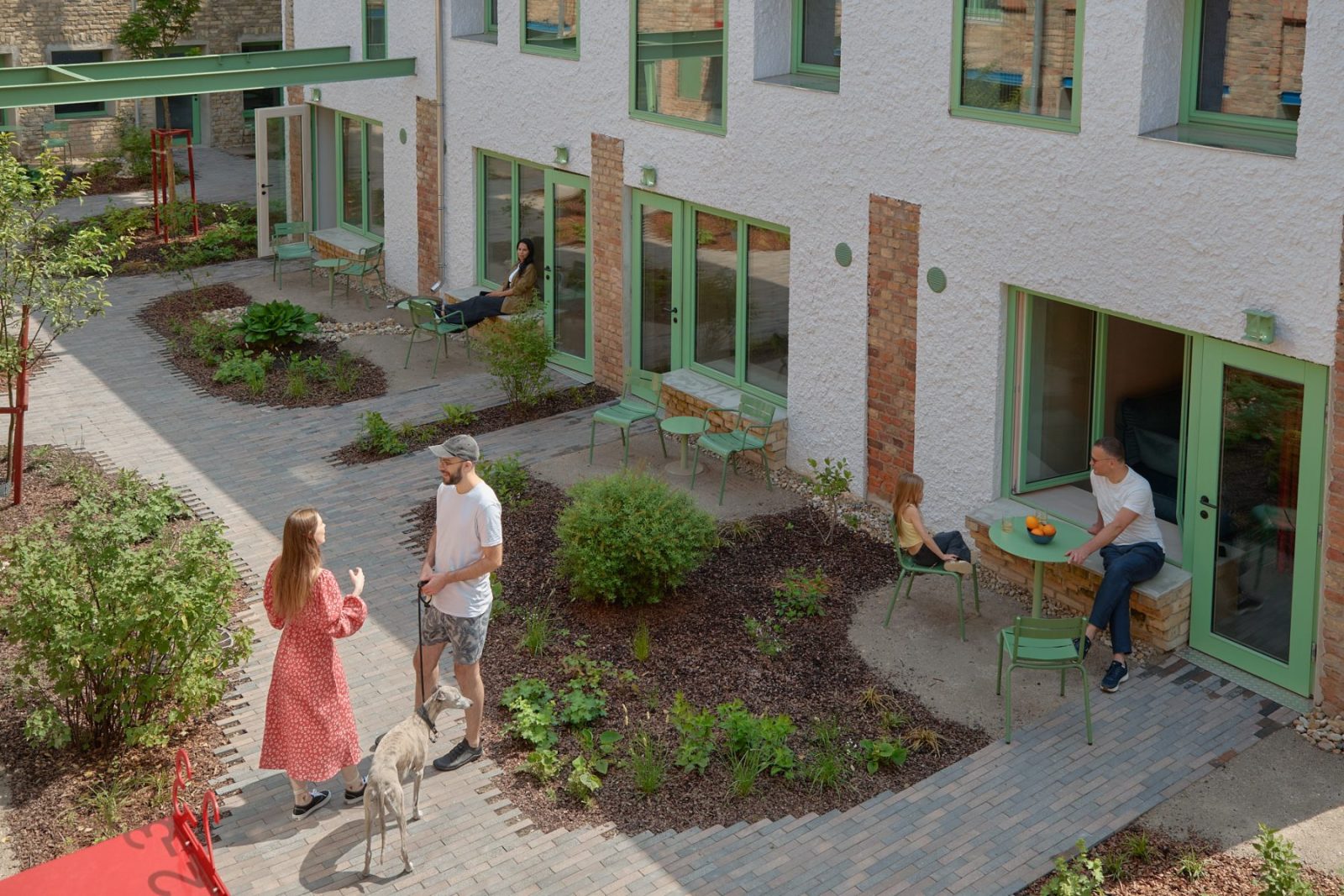
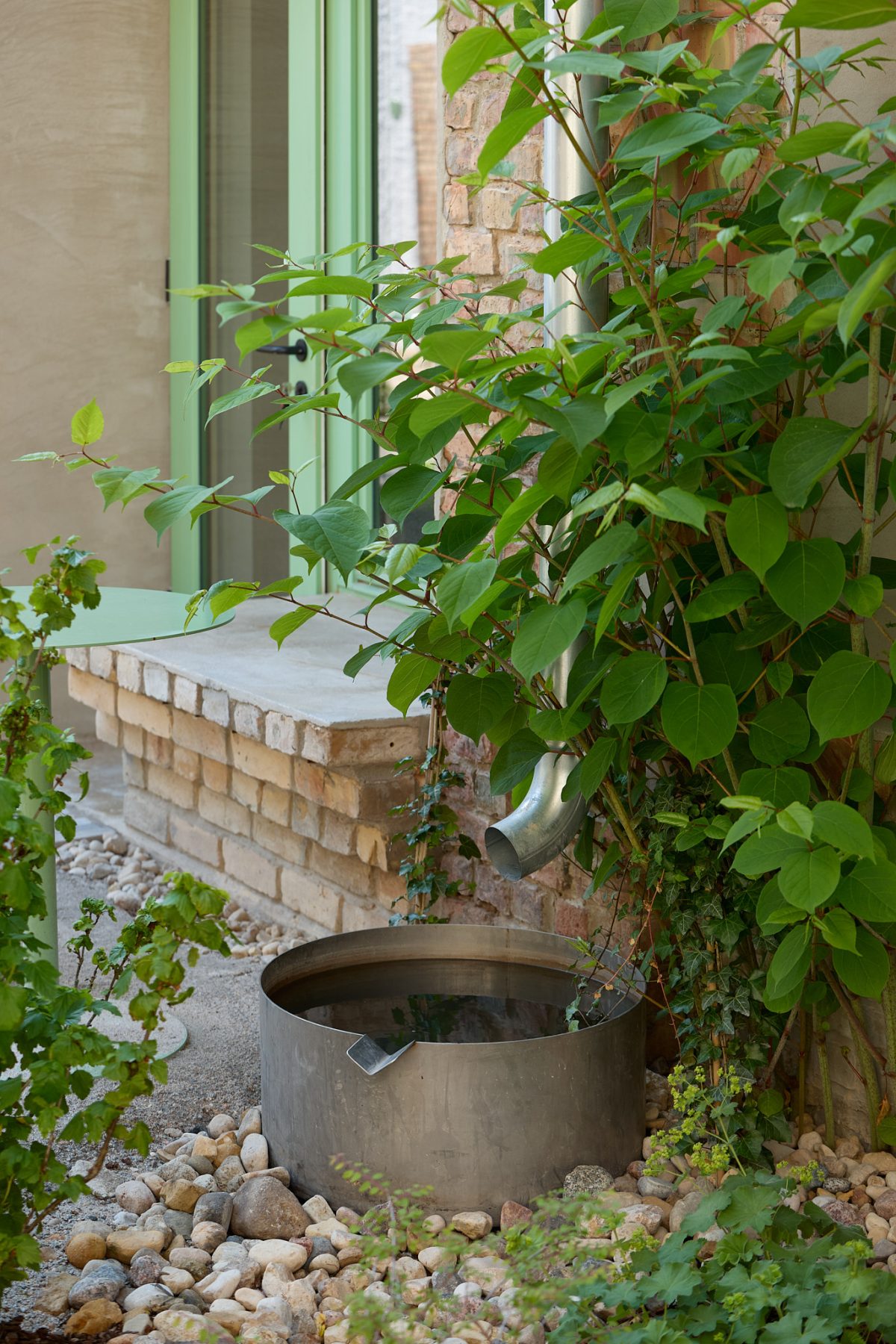
Large ground-floor windows, framed with low, wide concrete sills, double as seating, spilling the private interior life into the collective, open-air garden. Gravel-laid terraces define intimate yet inviting spaces for sharing a meal, reading, or simply chatting, fostering spontaneous encounters and communal engagement.
In Augustine’s Garden, architecture becomes a vessel for connection, where materiality, colour, and light converge to shape not only space but the rhythms of daily life. Every brick, every timber beam, every terrace carries the memory of the past while embracing the gestures of the present.
Through this work, Sampling offers a testament to how architecture can nurture historical continuity, sustain social bonds, and transform the rituals of daily living into acts of shared care.
Facts & Credits
Project title Augustine’s Garden
Typology Architecture, Adaptive Reuse, Residential
Location Riga, Latvia
Built area 830 m2
Status Completed, 2025
Architecture Sampling
Photography Madara Kuplā
READ ALSO: Rural Living: Mecozzi Verdini Places Annesso Rosso as a Modern Architectural Fragment in the Rural Italian Landscape