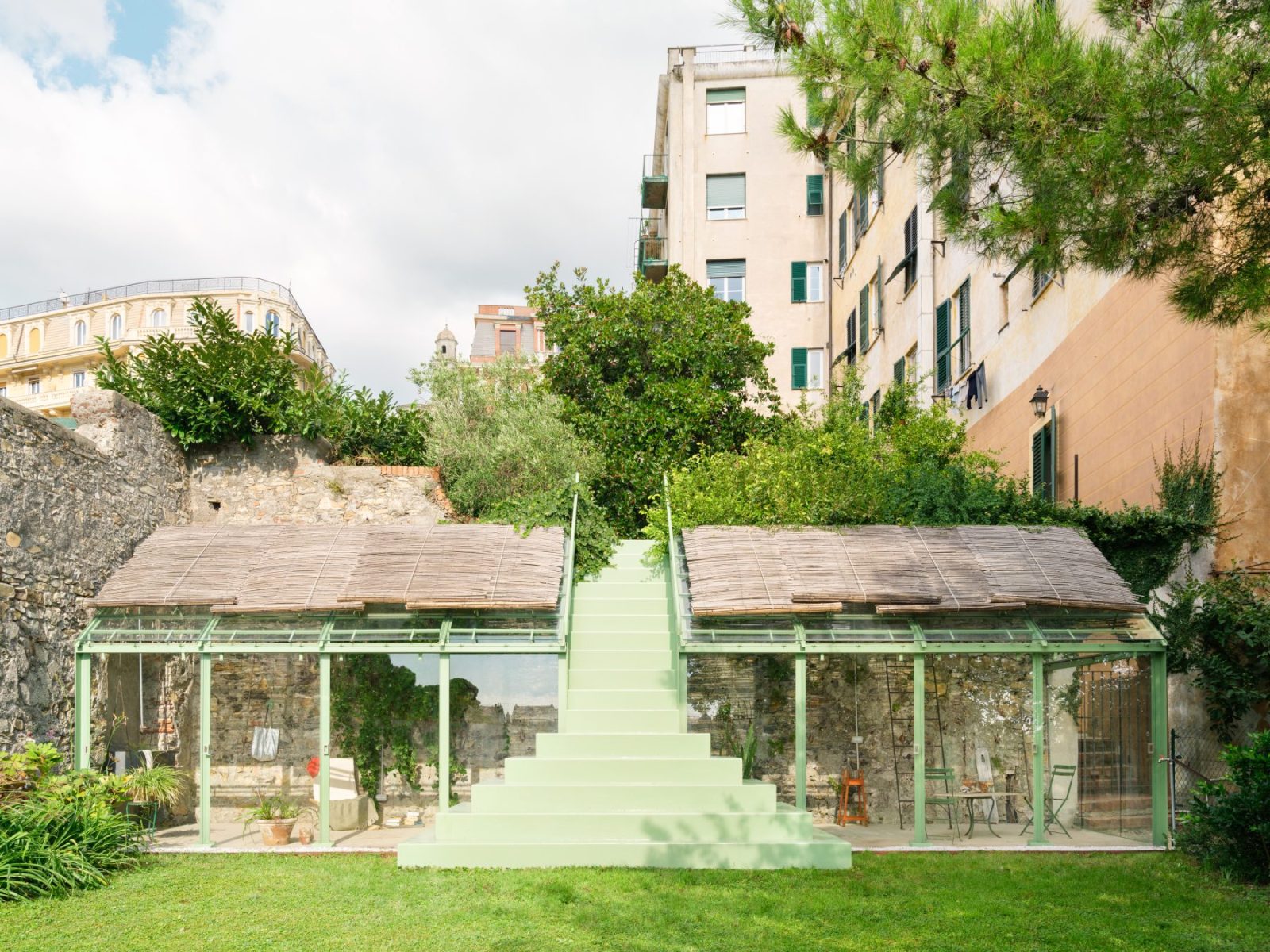
This is not a greenhouse. This is not a staircase. This isn’t even a garden. Scala San Filippo in Genoa by caarpa is a 40sq.m. liminal, contemplative space in the heart of a private garden, where a pistachio-green sculptural staircase encounters rugged stone walls, glazed surfaces, reed screens, linen curtains, and chickens wandering among watering cans, gardening tools, and fragments of reclaimed marble.
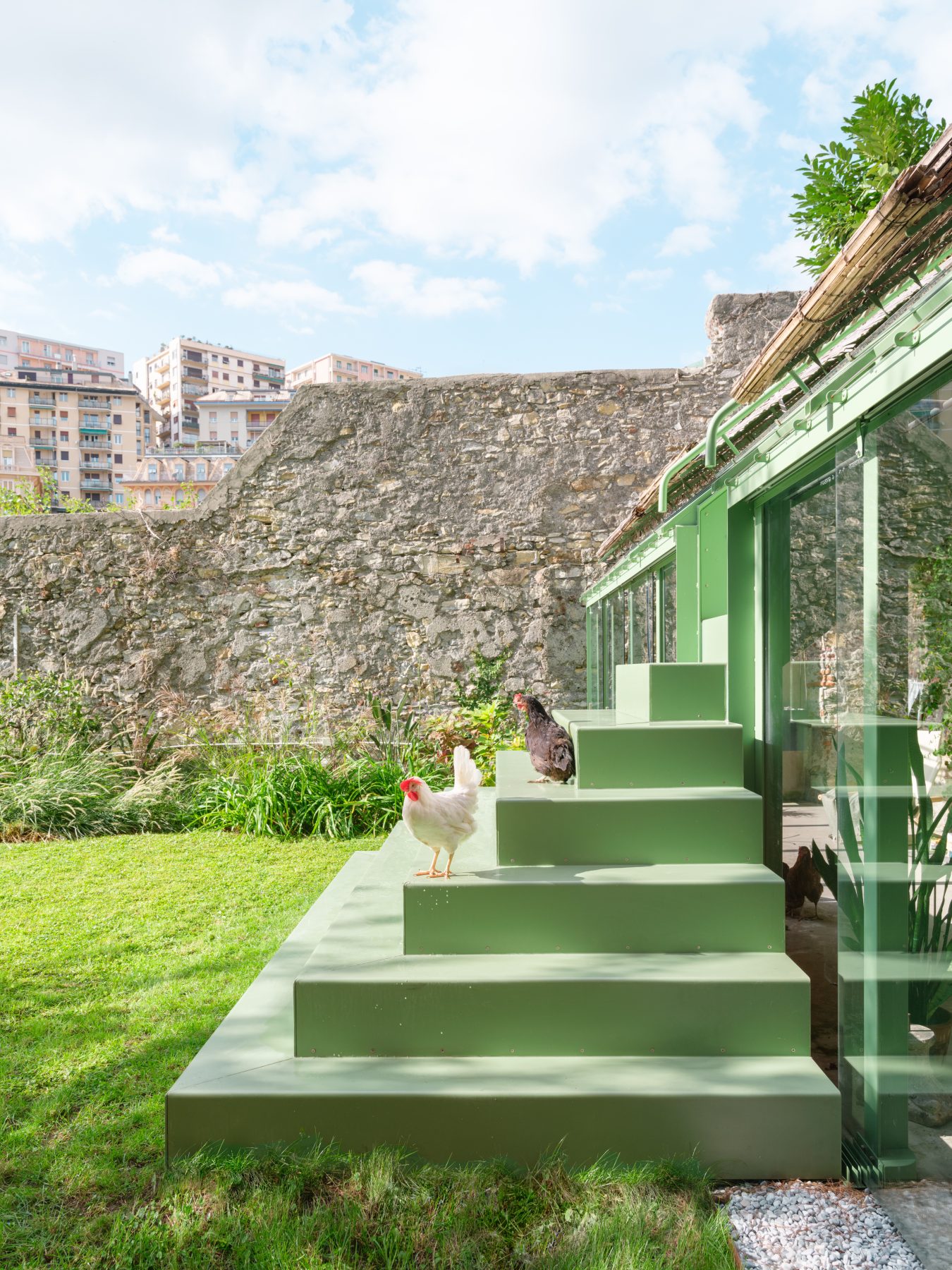
“A slight difference in level provides an opportunity to redefine the relationship between architecture and landscape, incorporating a distinct architectural feature capable of reshaping the perception of the space,” explain caarpa.
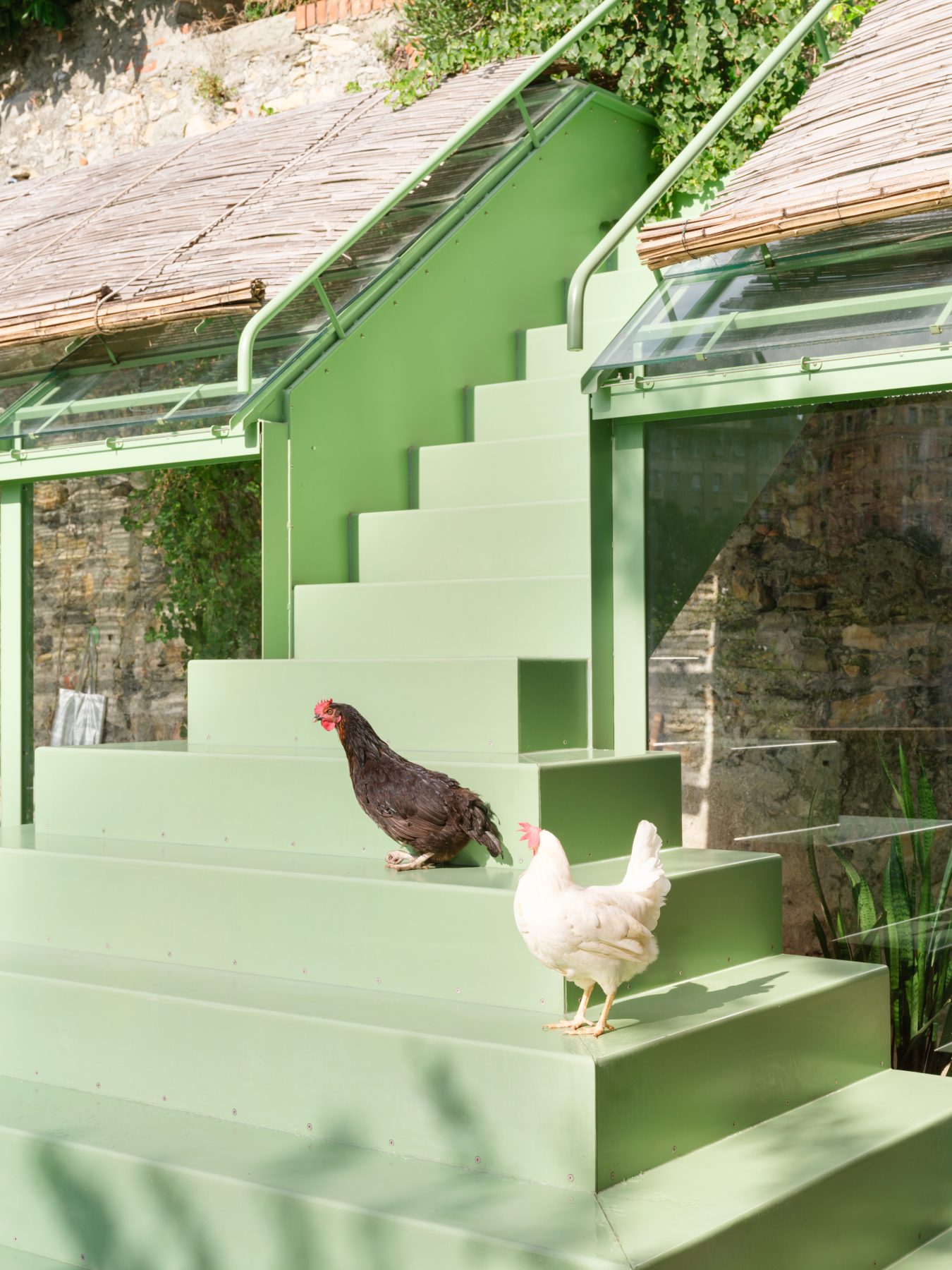
Architecture often finds its greatest expressive power in the smallest of gestures. Here, the intervention challenges the assumption that footprint, function, and form naturally coincide, questioning instead how architectural meaning is constructed.
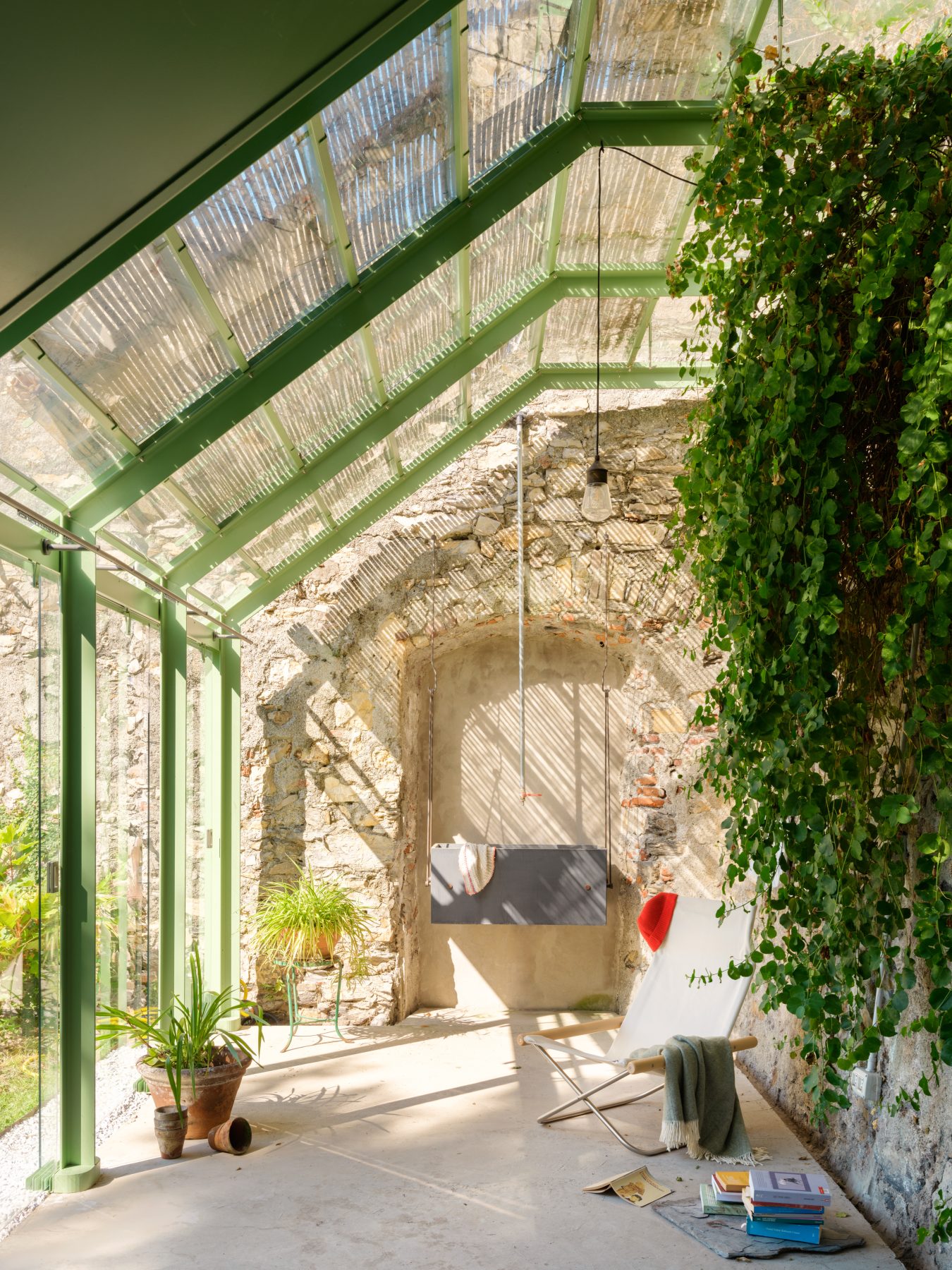
Scala San Filippo resists straightforward categorisation and eludes fixed definitions by being simultaneously staircase, greenhouse, garden, observatory, and domestic refuge—without fully becoming any of them.
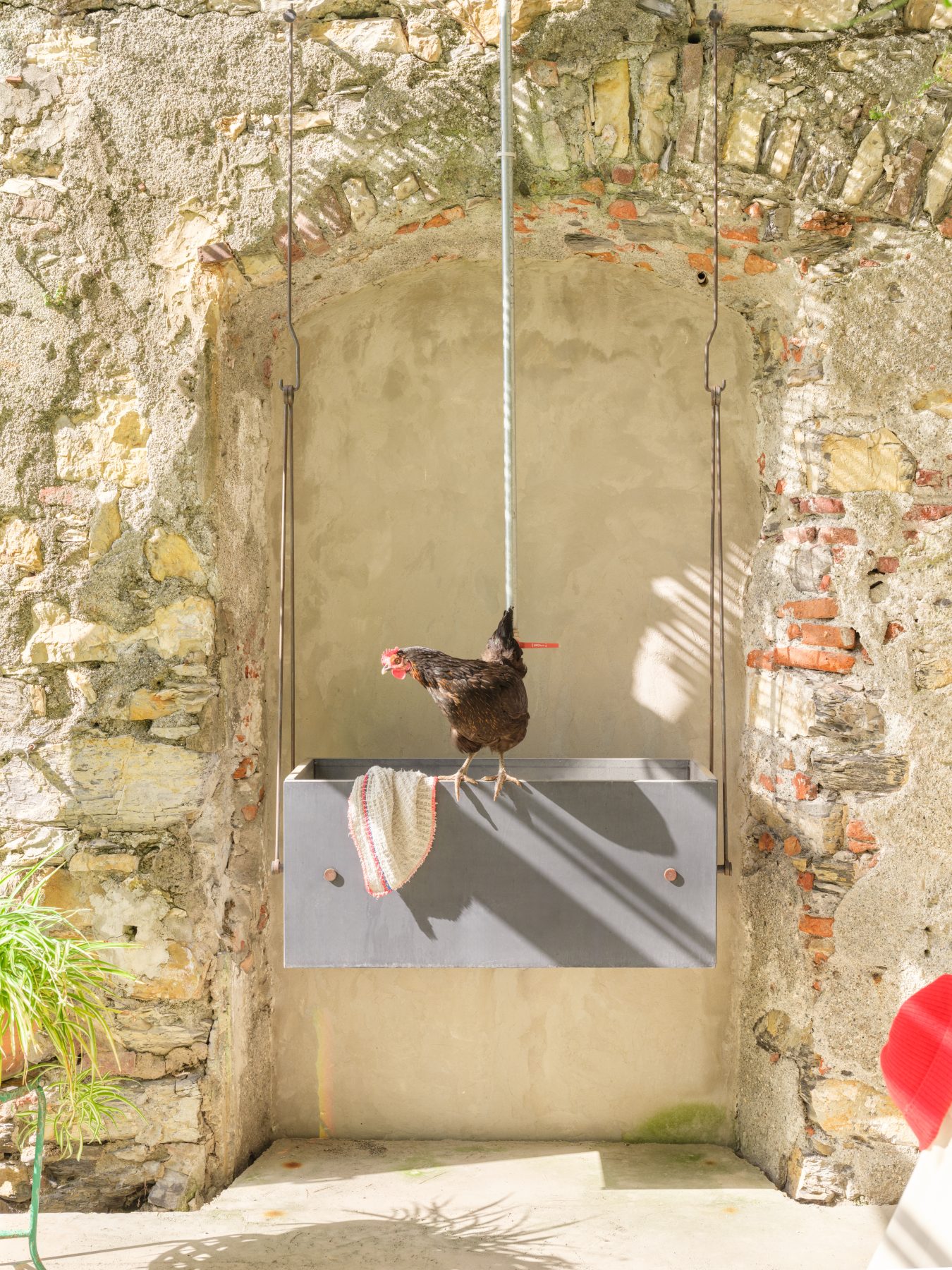
Treating the garden as a space of nature, memory, and heterotopia, caarpa embraces Foucault’s description of it as “the smallest parcel of the world and the totality of the world” (Foucault, 1986), carefully recalibrating a series of relationships: wilderness and construction, antiquity and contemporaneity, opacity and transparency, permanence and transformation.


The instrument of this transformation is a seemingly endless hybrid staircase.
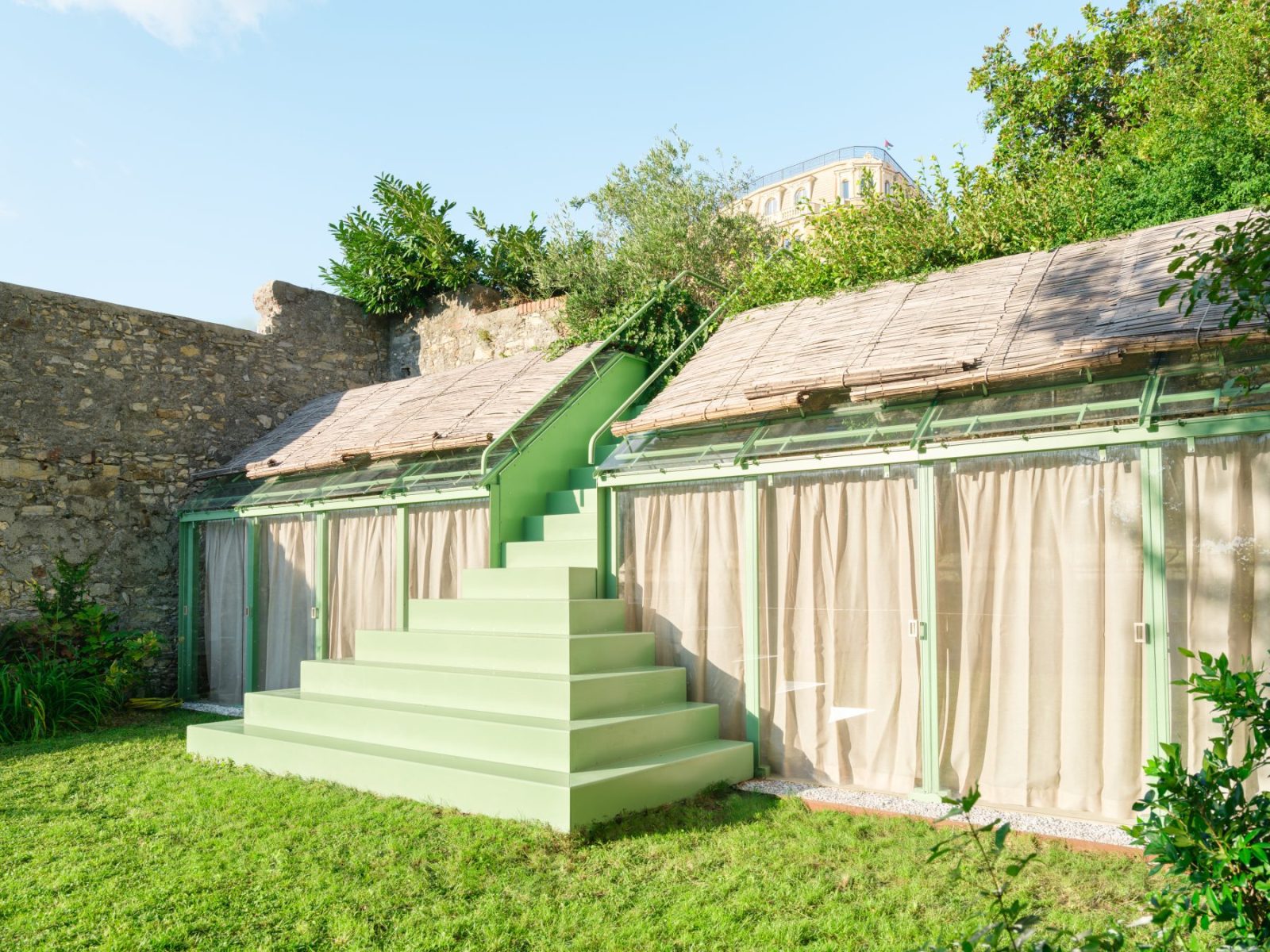
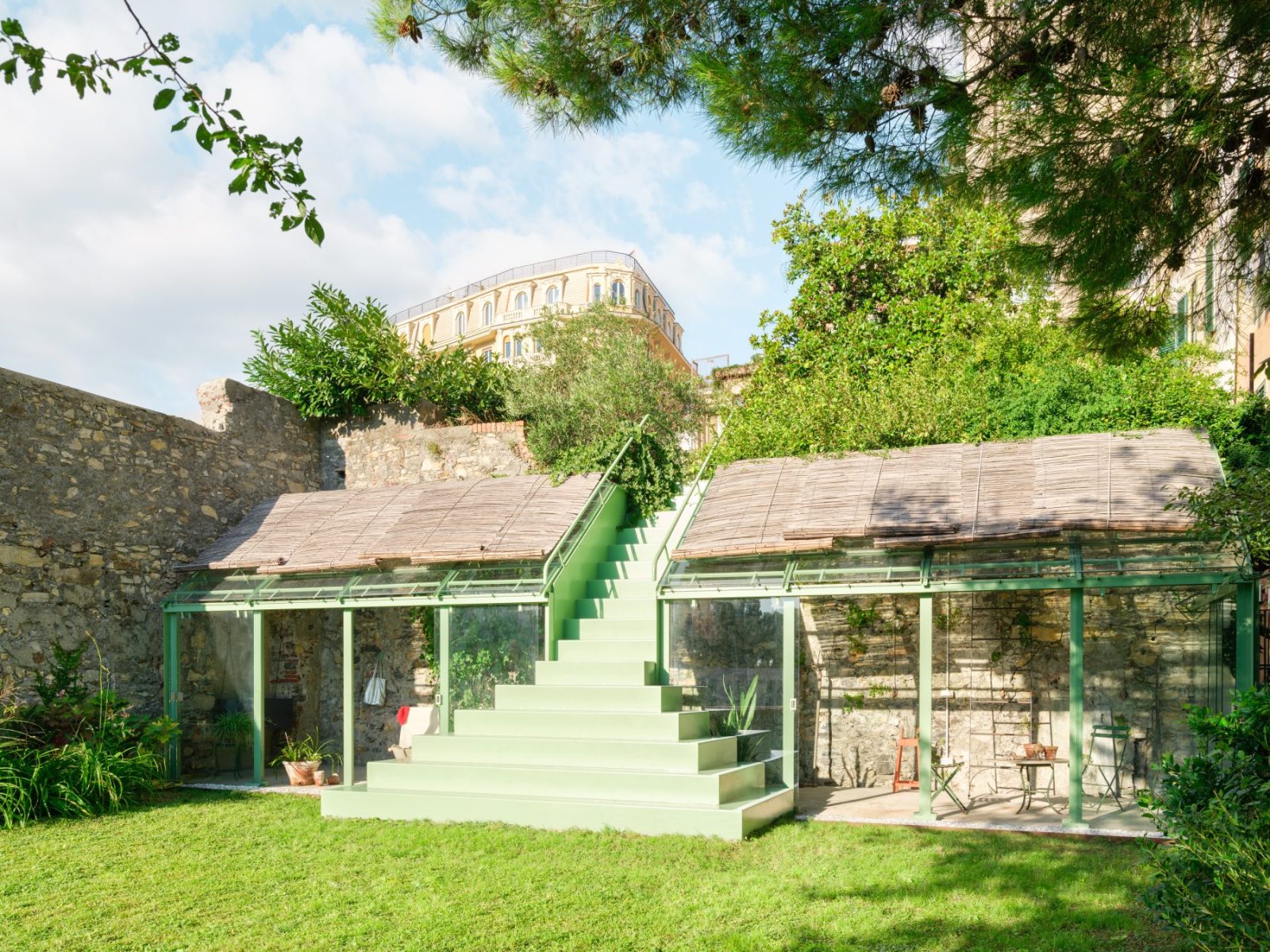
What begins as a modest response to a slight difference in level gradually unfolds into an ascending landscape, where movement becomes a way of seeing. In the spirit of Le Corbusier’s promenade architecturale (1923), Scala San Filippo is choreographed through pauses, framed views and changing relationships with the garden, transforming circulation into spatial experience.


The staircase is no longer simply a means of getting somewhere; it becomes one of those “ordinary” spaces that, as Georges Perec (1974) reminds us, quietly structure the rituals of everyday life. Yet it also exceeds this domestic familiarity. By inviting encounter, contemplation and occupation, it assumes the role Bernard Tschumi (1996) attributes to architecture itself: not merely a connector between places, but a generator of events.


Simultaneously, the intimate scale of the intervention recalls Gaston Bachelard’s notion of inhabited space as a landscape of memory and daydreaming, where architecture becomes a vessel for imagination rather than mere enclosure (Bachelard, 1958).


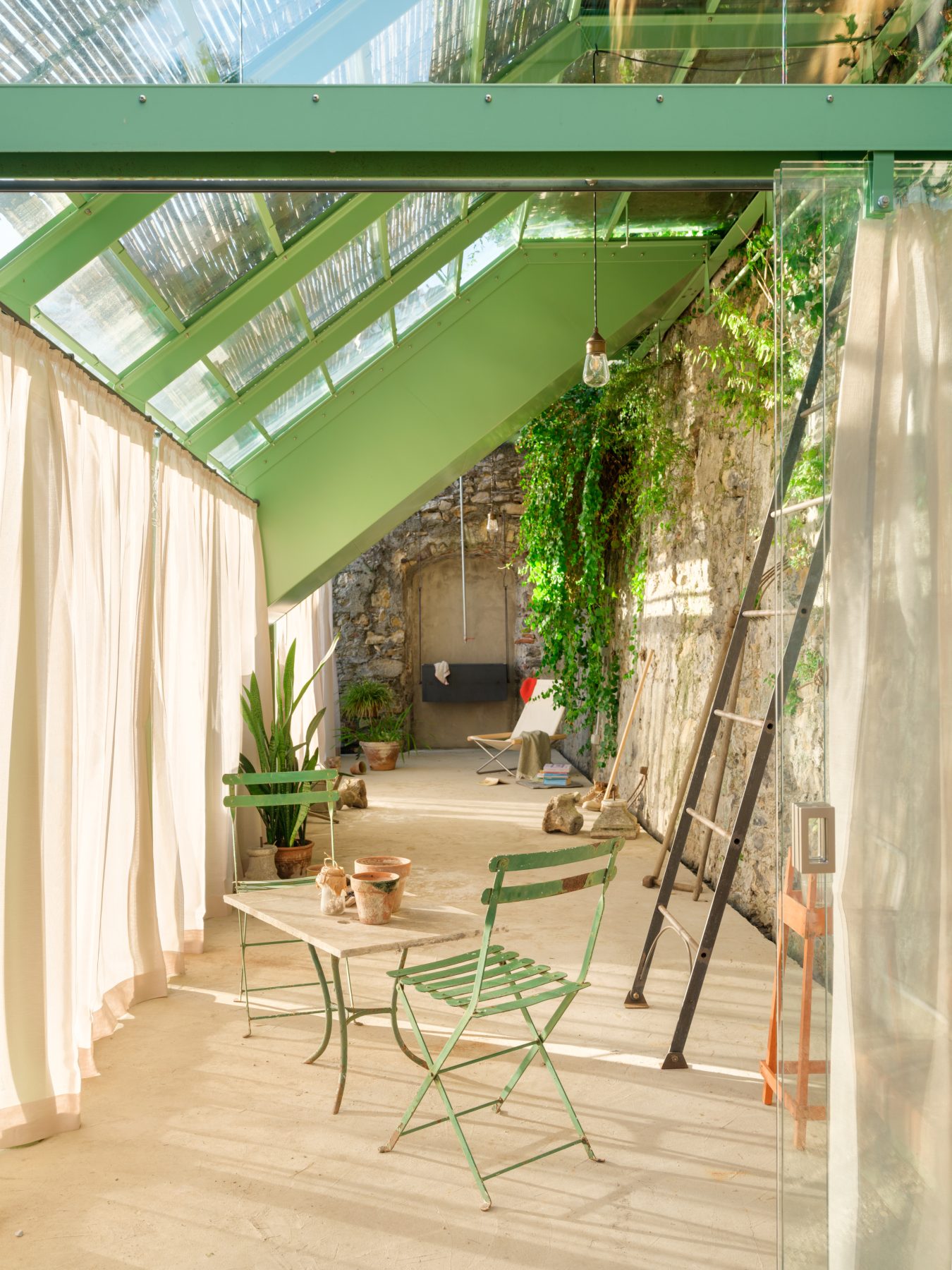
This atmosphere is cultivated through a restrained palette of materials and carefully calibrated spatial relationships. The powder-coated steel structure, finished in a subdued pistachio-green, slips into the glazed envelope of the new greenhouse while negotiating the enduring presence of the existing stone walls. Reed screens temper the transparency of the glass, linen curtains soften light and movement, and the surrounding vegetation gradually blurs the boundary between the man-made and the natural.


Rosario Assunto described the garden as “neither pure nature nor pure artifice, but an aesthetic and ethical synthesis” (Assunto, 1988). Scala San Filippo embodies precisely this condition. Neither building nor landscape, neither object nor infrastructure, it operates as a device for transition, contemplation and embodied movement. The greenhouse becomes less an enclosure than a threshold; the staircase less an element of circulation than an invitation to wander.
Ultimately, Scala San Filippo reminds us that architecture does not always require monumentality to reshape our perception of a place; sometimes, a single, carefully calibrated gesture is enough to redefine an entire world.


Facts & Credits
Project title Scala San Filippo
Typology Architecture, Landscape
Location Genoa, Italy
Built Area 40sq.m.
Status Completed, 2024
Architecture caarpa
Structural Engineer Ing. Davide Badaracco
Metalwork Gia.Da.Fly srl (GE)
Slate Washbasin Se.Pam Marmi srl
Furniture Mobilia
Casting Azienda Agricola Tresgal
Photography Anna Positano | Studio Campo
References
Assunto, R. (1988) Ontologia e teleologia del giardino. Milan: Guerini.
Bachelard, G. (1958) The Poetics of Space. Boston: Beacon Press.
Foucault, M. (1986) ‘Of Other Spaces’, Diacritics, 16(1), pp. 22–27. (Originally presented in 1967.)
Le Corbusier (1923) Vers une Architecture. Paris: Crès.
Perec, G. (1974) Species of Spaces and Other Pieces. Paris: Galilée.
Tschumi, B. (1996) Architecture and Disjunction. Cambridge, MA: MIT Press.