Margine’s Lèvanzo reimagines a 1970s single-family villa in Caprarica, Lecce, through an interplay between volumes and material continuity. Designed for a young couple, the project removes superfluous elements to restore volumetric clarity, while preserving Rosa del Garda marble as a unifying feature. New spatial strategies, integrated furnishings, and calibrated natural light redefine the interior, creating a refined dialogue between architecture, materiality, and the surrounding Salento landscape.
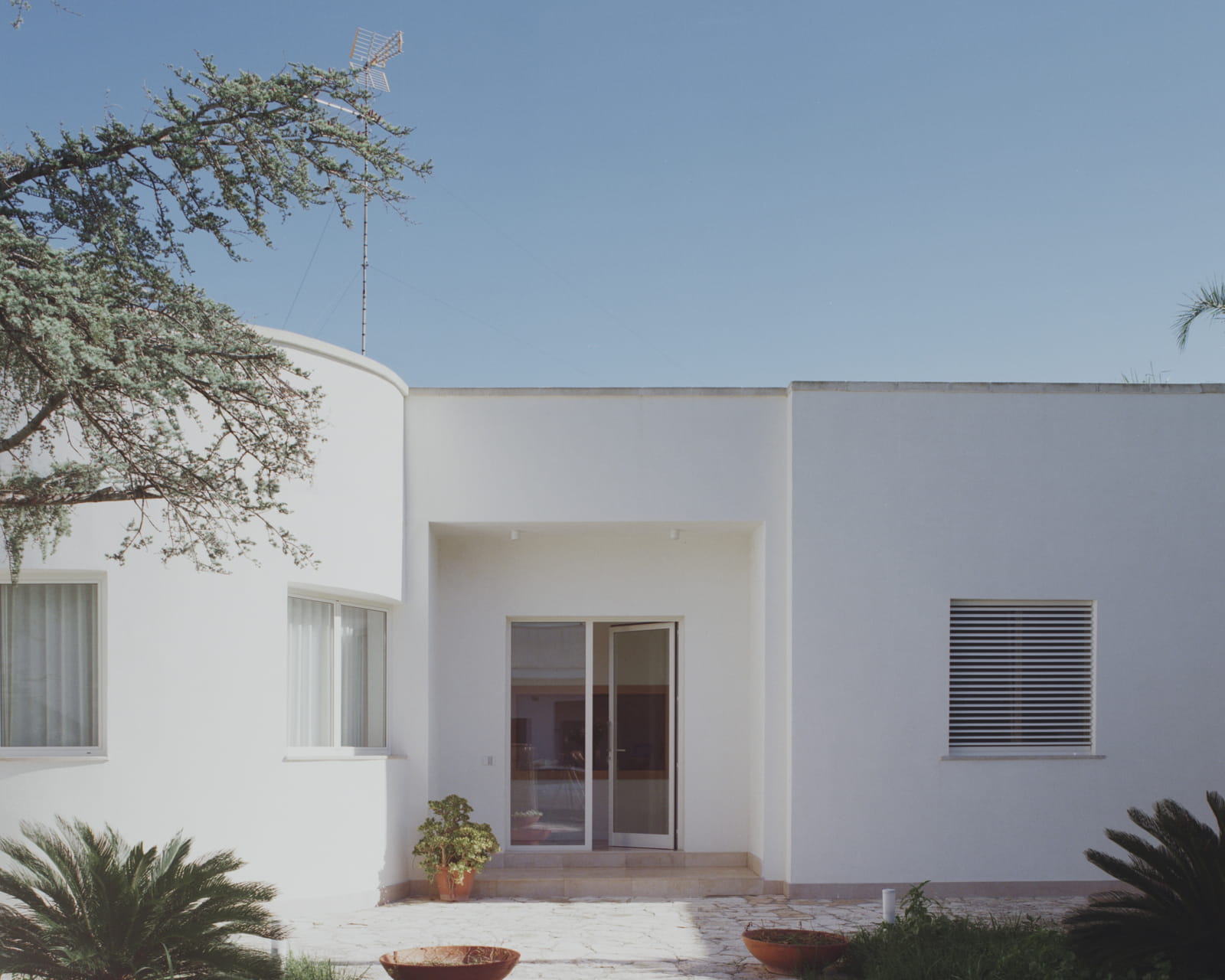
Lèvanzo is the renovation of a single-family villa in Caprarica, in the province of Lecce, set within the intimate fabric of a small Salento village.
Conceived for a young professional couple, the project redefines both the functional organization and the architectural language of a residence marked by the 1970s vocabulary.
The original structure was distinguished by an abundance of accessory elements: a semicircular living room crowned by an octagonal tiled canopy, accompanied by a sequence of smaller overhangs sheltering the entrance veranda and the garden-facing openings. Over time, this layered composition had compromised the clarity of the building’s architectural reading.
The intervention operates through a decisive act of formal subtraction.
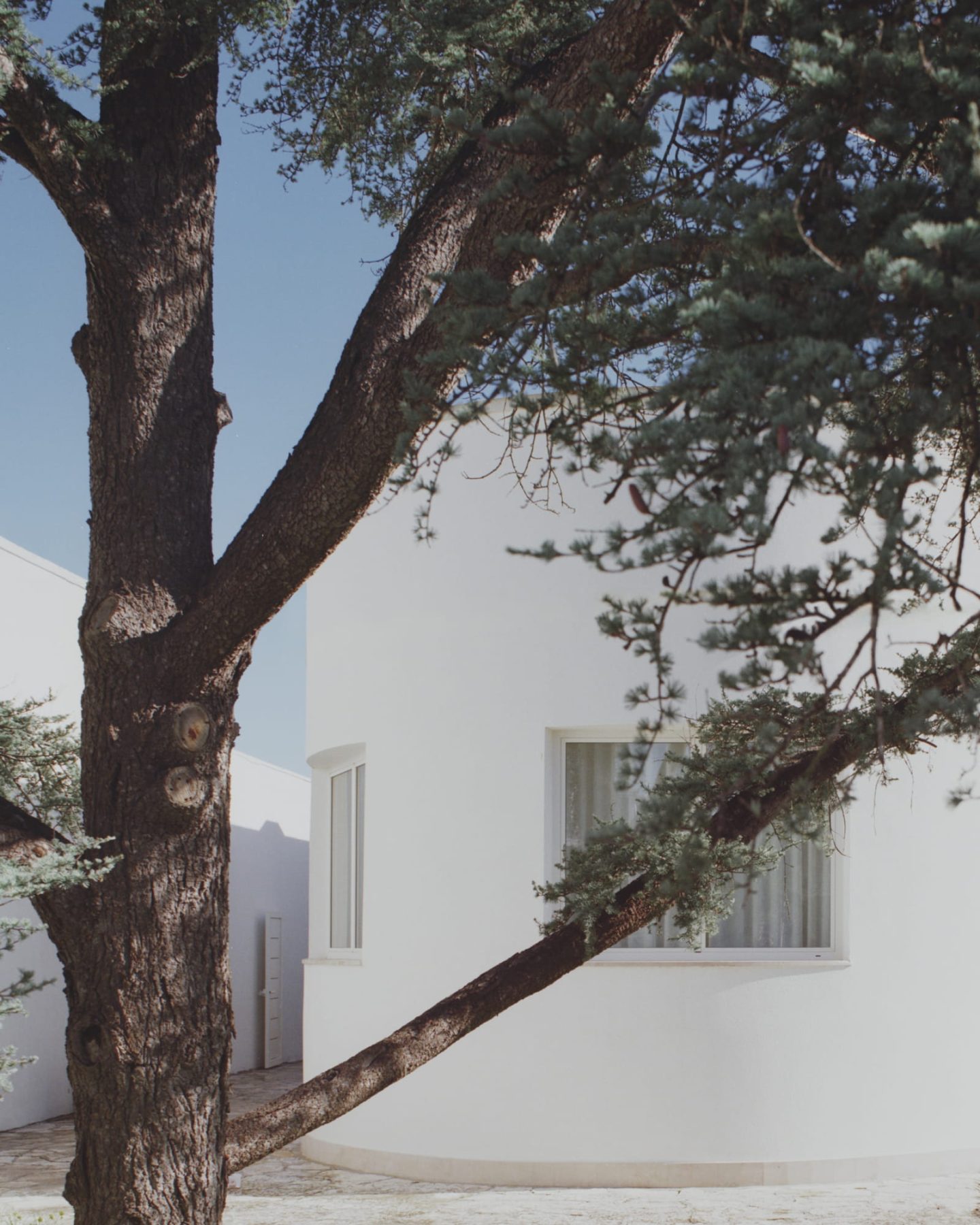
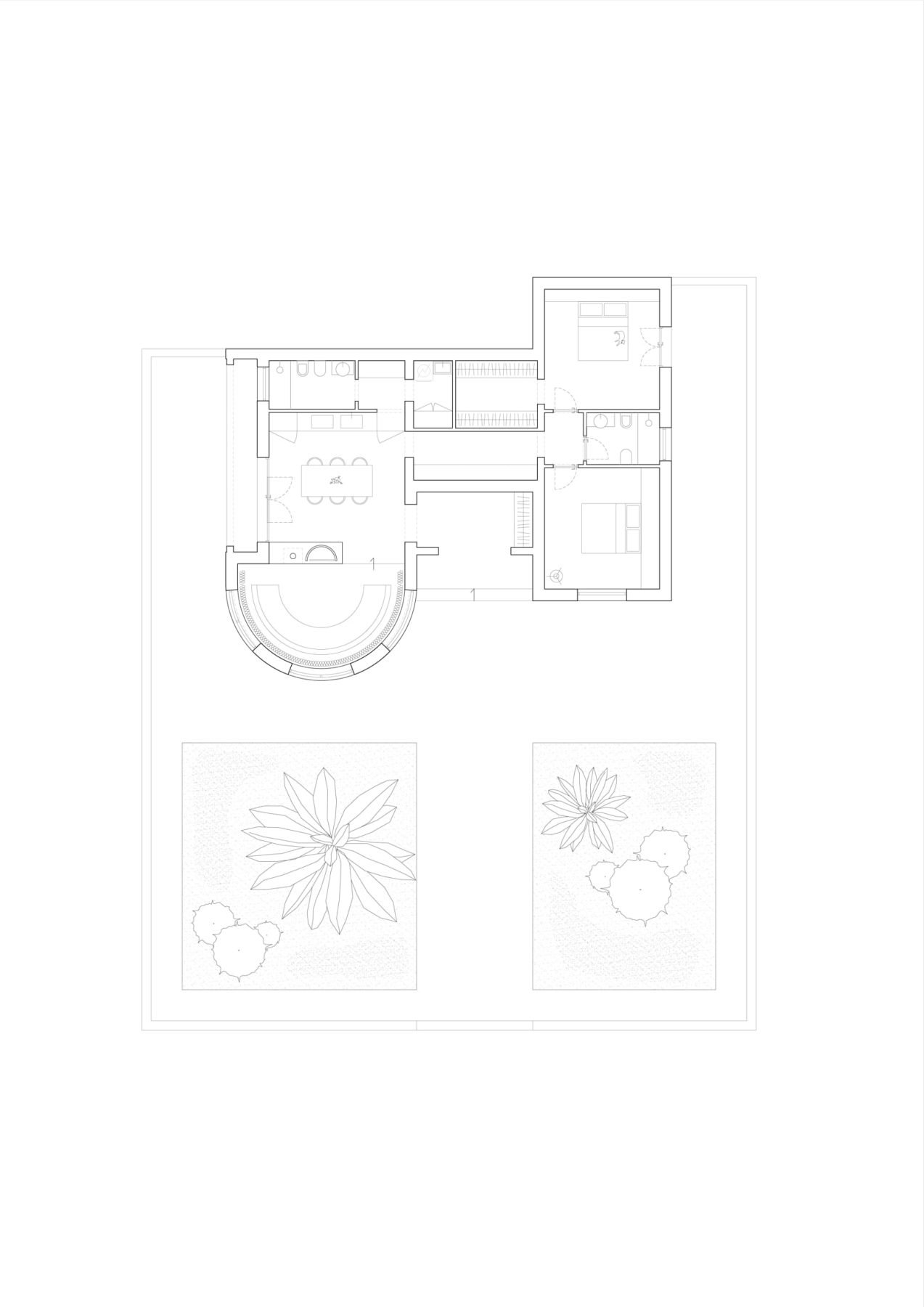
By removing canopies and overhangs, the design restores compositional legibility, allowing the interplay between volumes to emerge with precision. The cylindrical living area now interlocks with the rectilinear sleeping quarters in a purified dialogue, unified by a continuous white plaster finish that reinforces the essential character of the architecture.
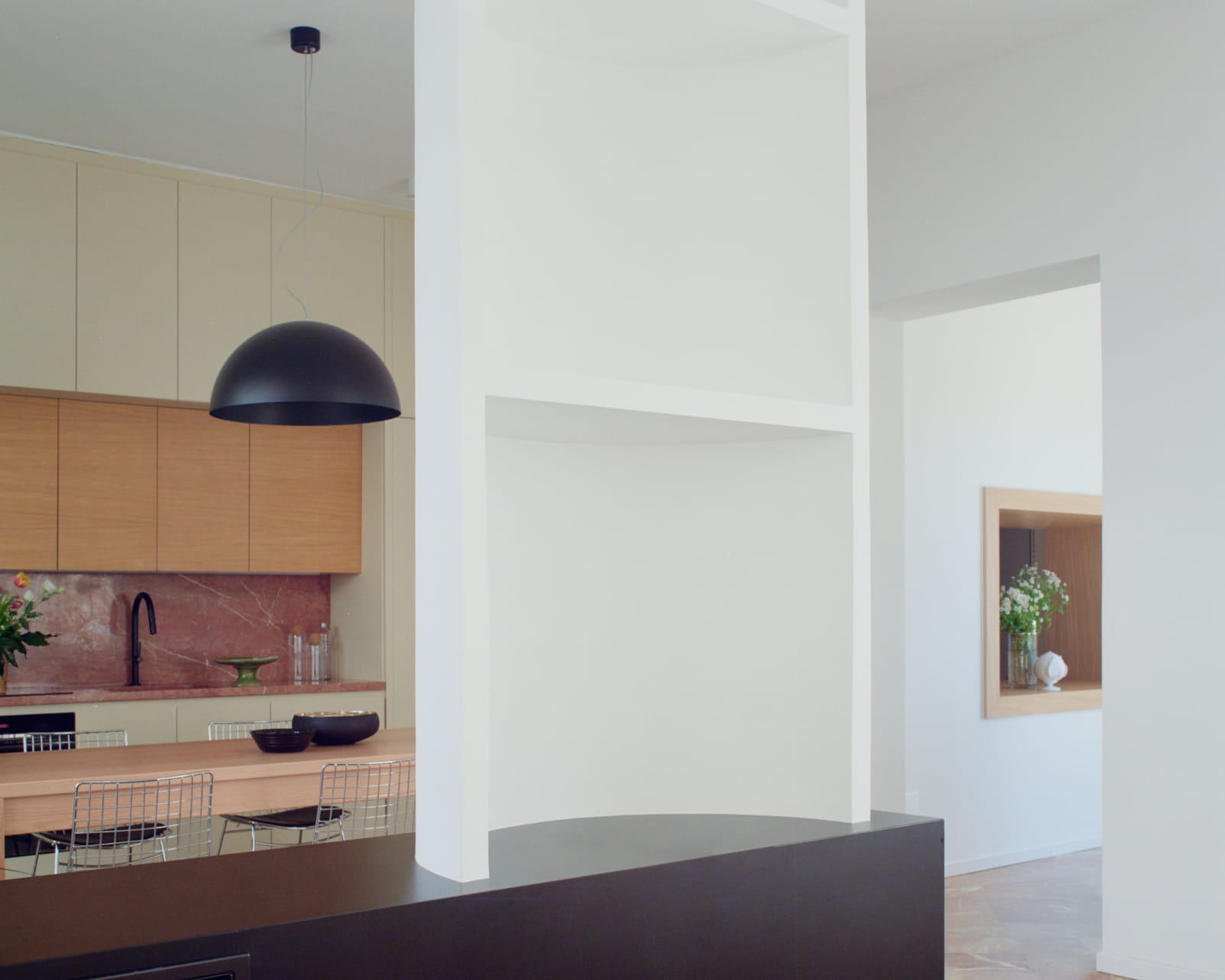
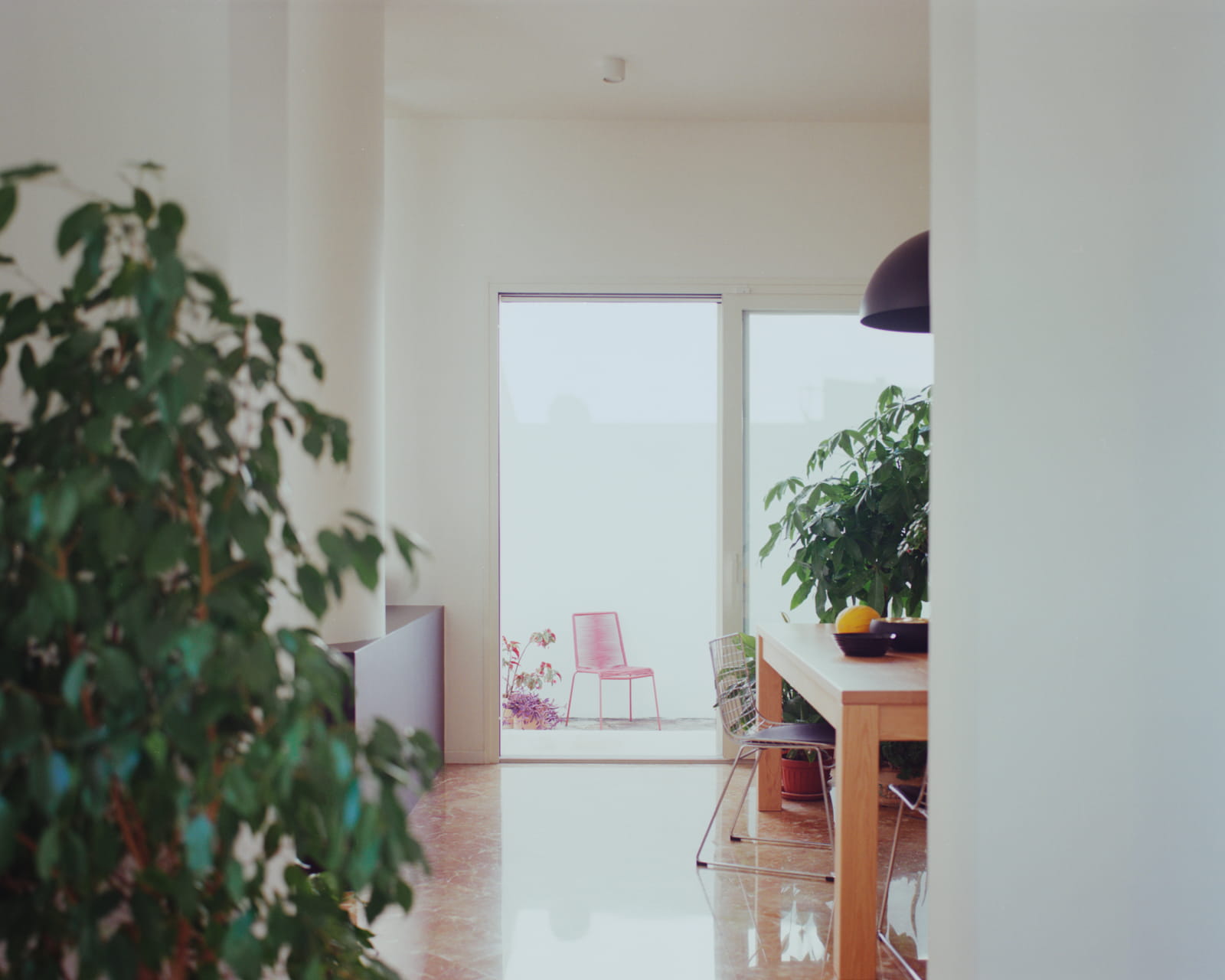
At the interior level, the original Rosa del Garda marble flooring—an intrinsic feature of the house—has been meticulously preserved, integrated, and polished.
It becomes the material and conceptual backbone of the project, anchoring the introduction of new spatial elements and functions.
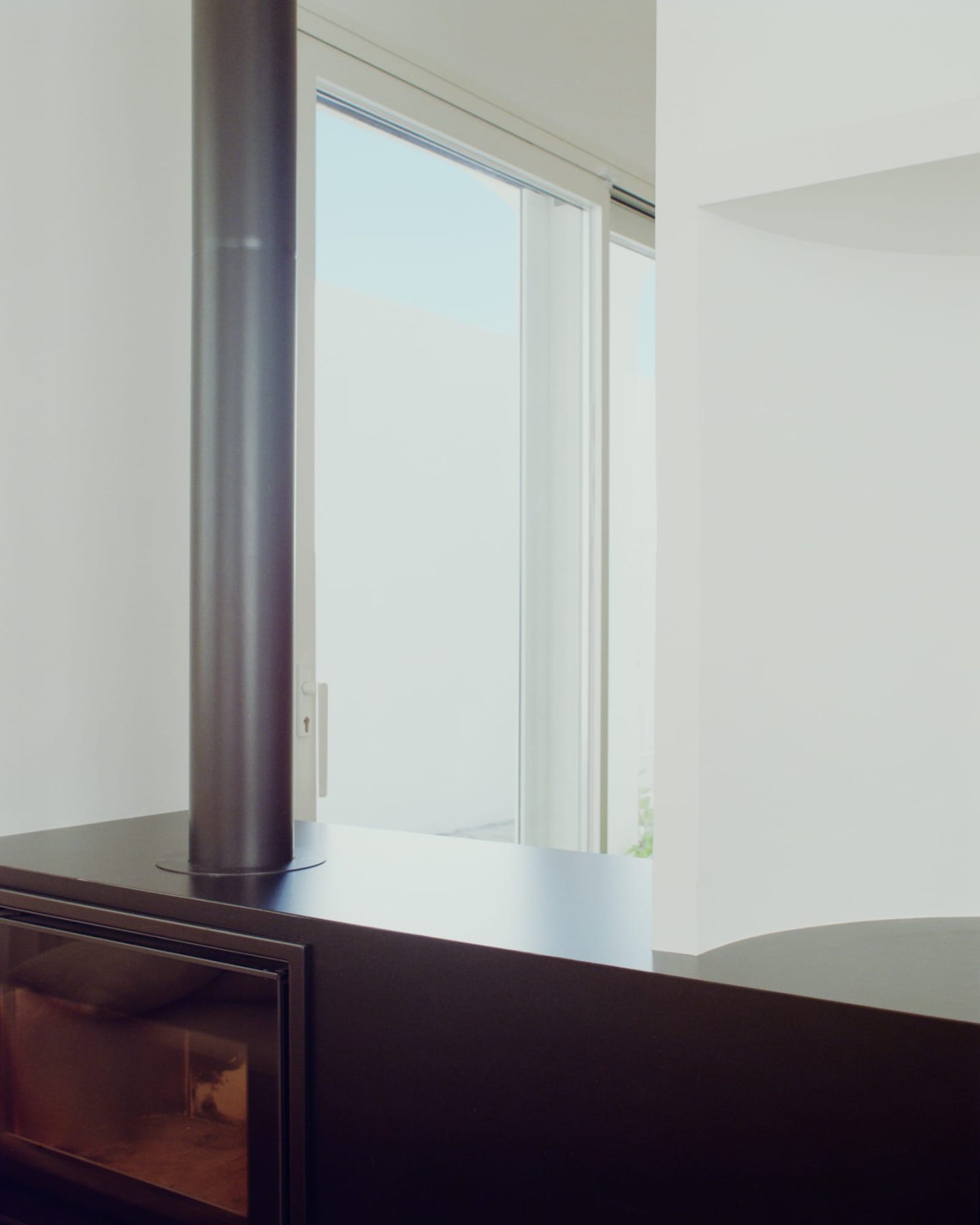
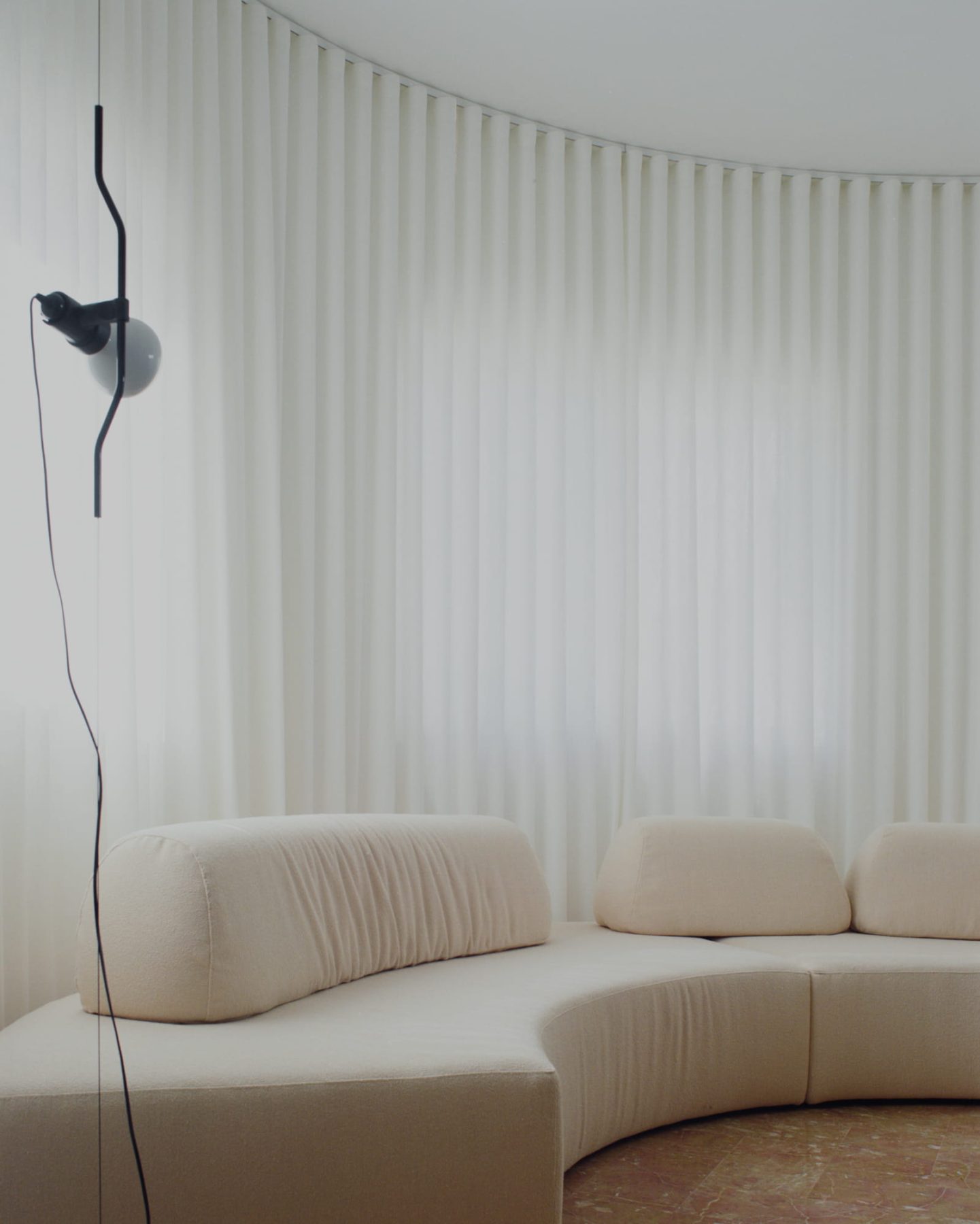
The former entrance veranda has been absorbed into the main volume and redefined as the primary point of access. From here, the sequence unfolds into the living area, where the semicircular geometry accommodates a bespoke sofa precisely calibrated to the curvature of the space. The fireplace emerges as the focal element, set upon a black gres plinth that simultaneously delineates and connects the living and dining zones. Above it, a hollow semi-column operates as both a sculptural presence and a functional device—articulated on the living side while remaining an abstract surface toward the entrance.
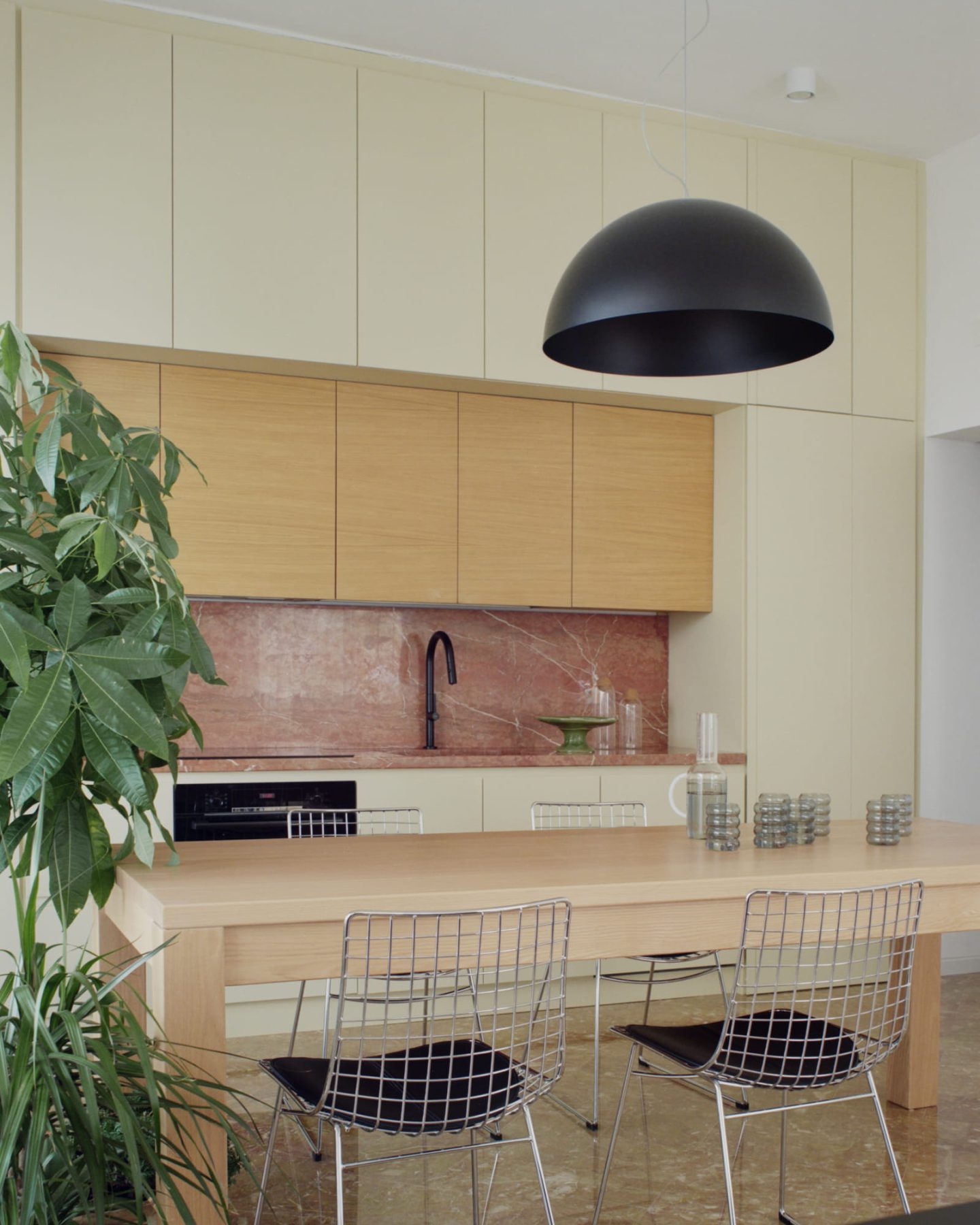
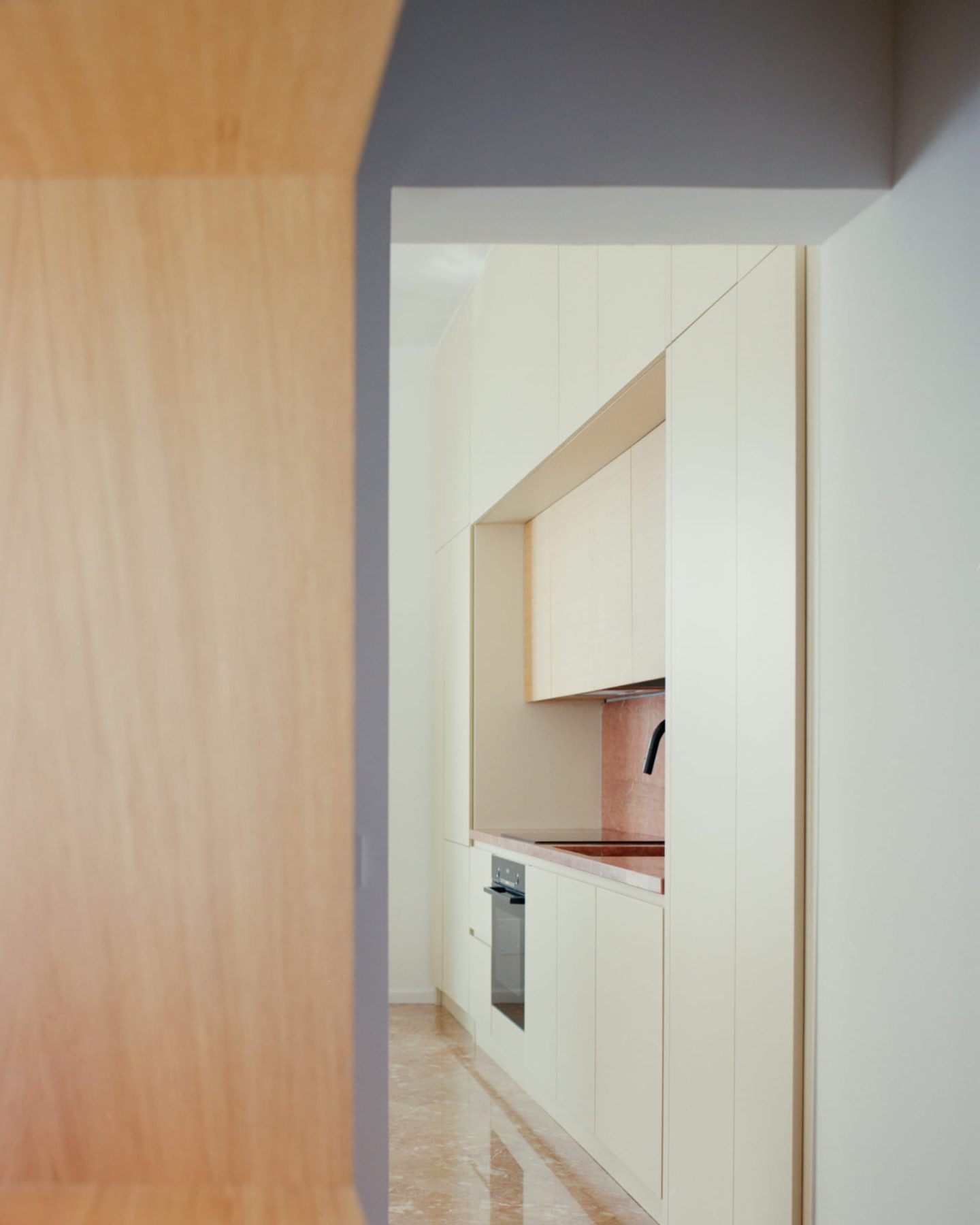
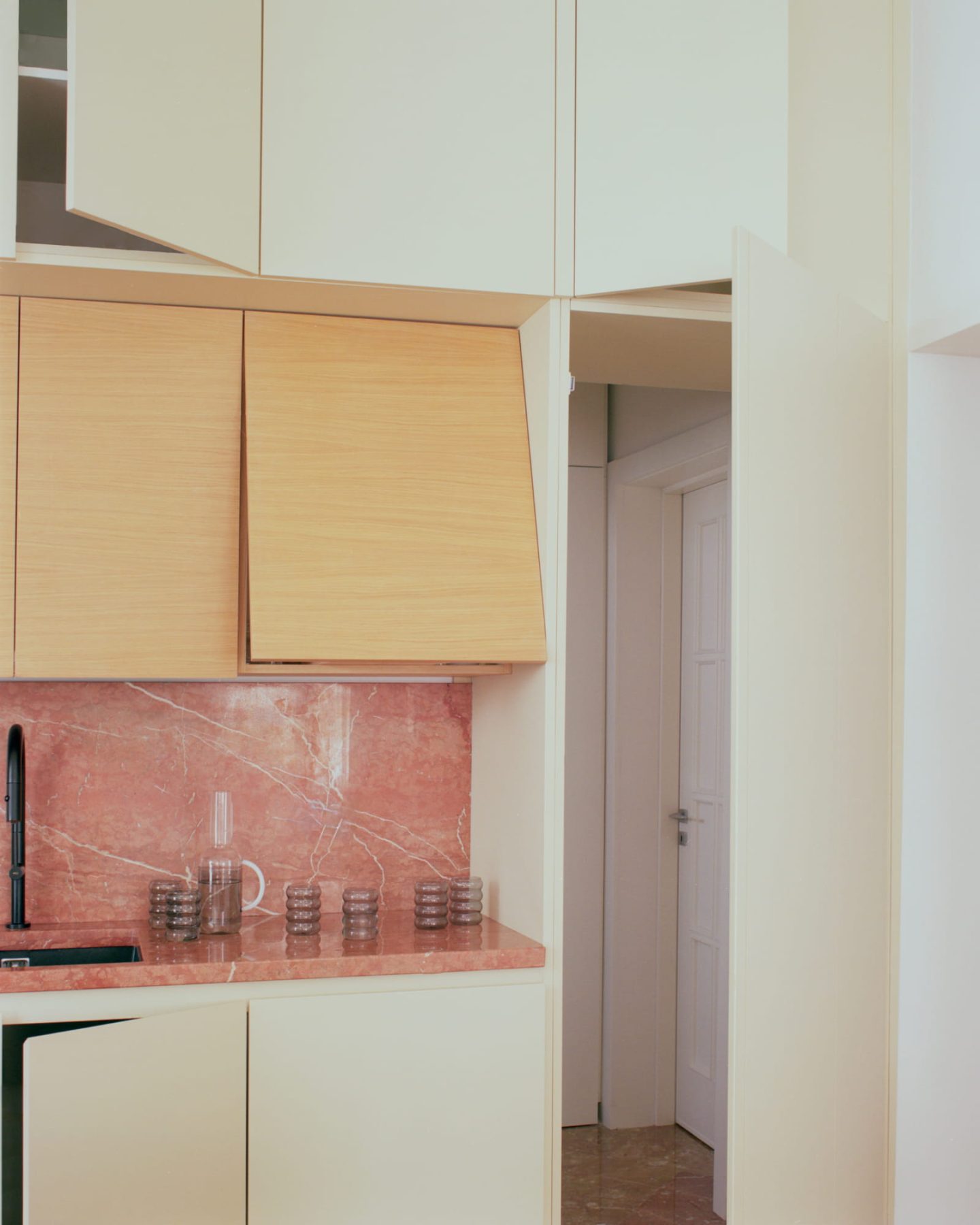
The kitchen is conceived as a continuous, integrated volume within the living space, defined by beige lacquered panels that conceal and organize access to the pantry, day bathroom, and laundry area—the latter carved out from a portion of the former entrance.
Rosa del Garda marble reappears as the kitchen countertop, reinforcing a coherent material narrative throughout the interior.
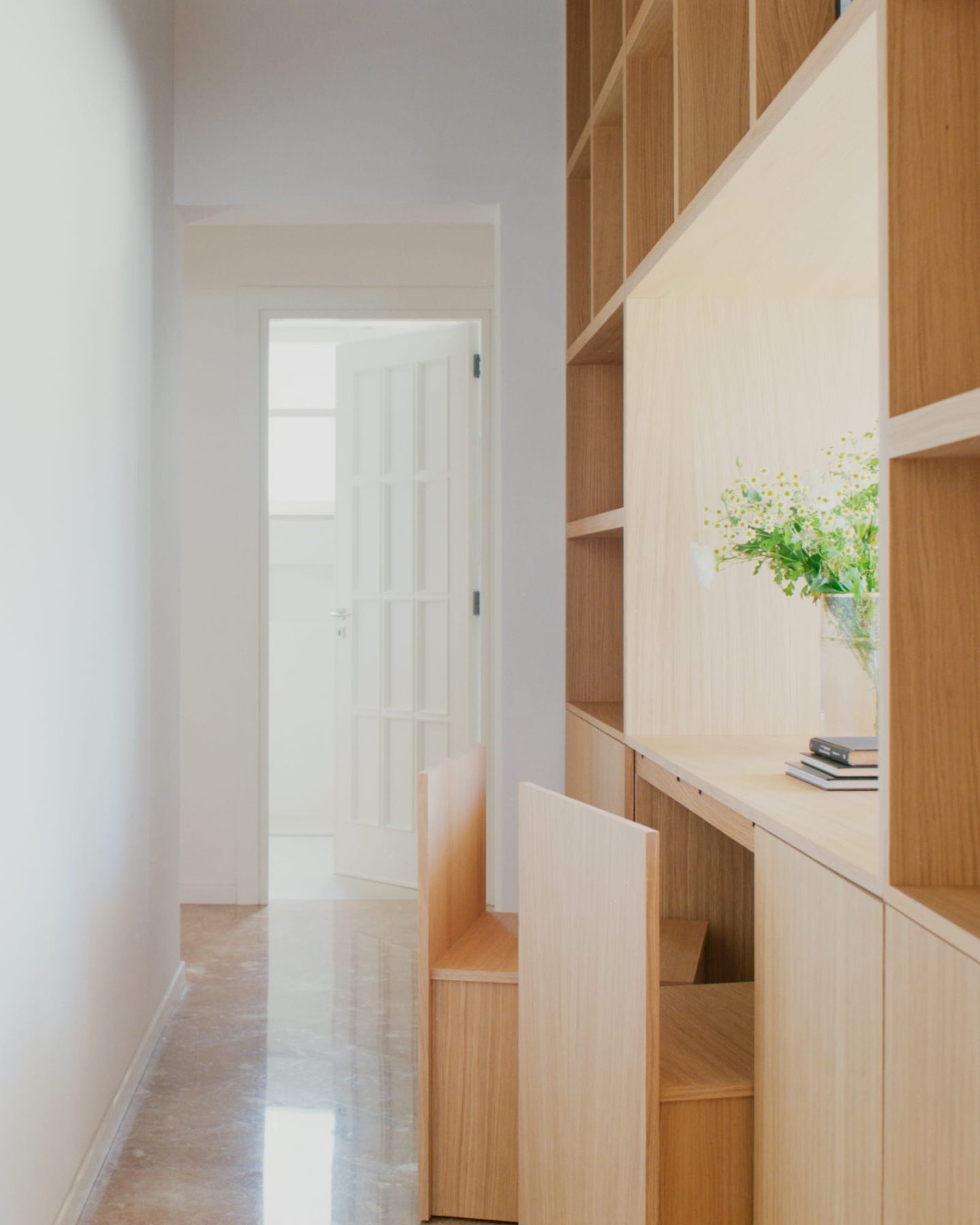
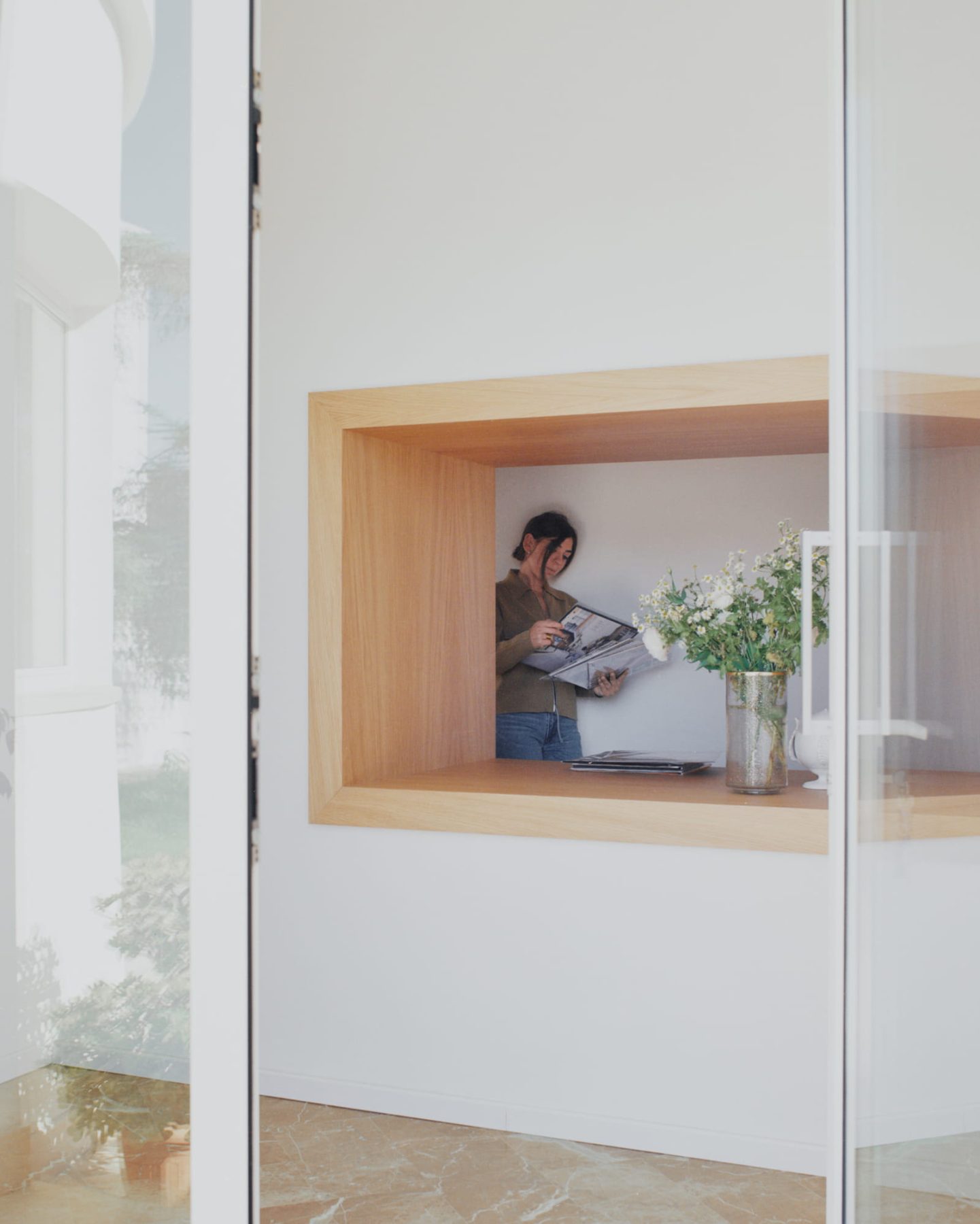
A corridor leads to the sleeping quarters, passing alongside a built-in wall that frames an internal window illuminated from the entrance, establishing subtle visual connections across spaces. The layout of this zone has been entirely reconfigured: bedrooms and bathroom are renewed, while a walk-in wardrobe, corridor, and laundry are rationally derived from the footprint of the original entry sequence. Oak joinery, contemporary furnishings, and the warm tonalities of marble contribute to an interior atmosphere that is both refined and layered.
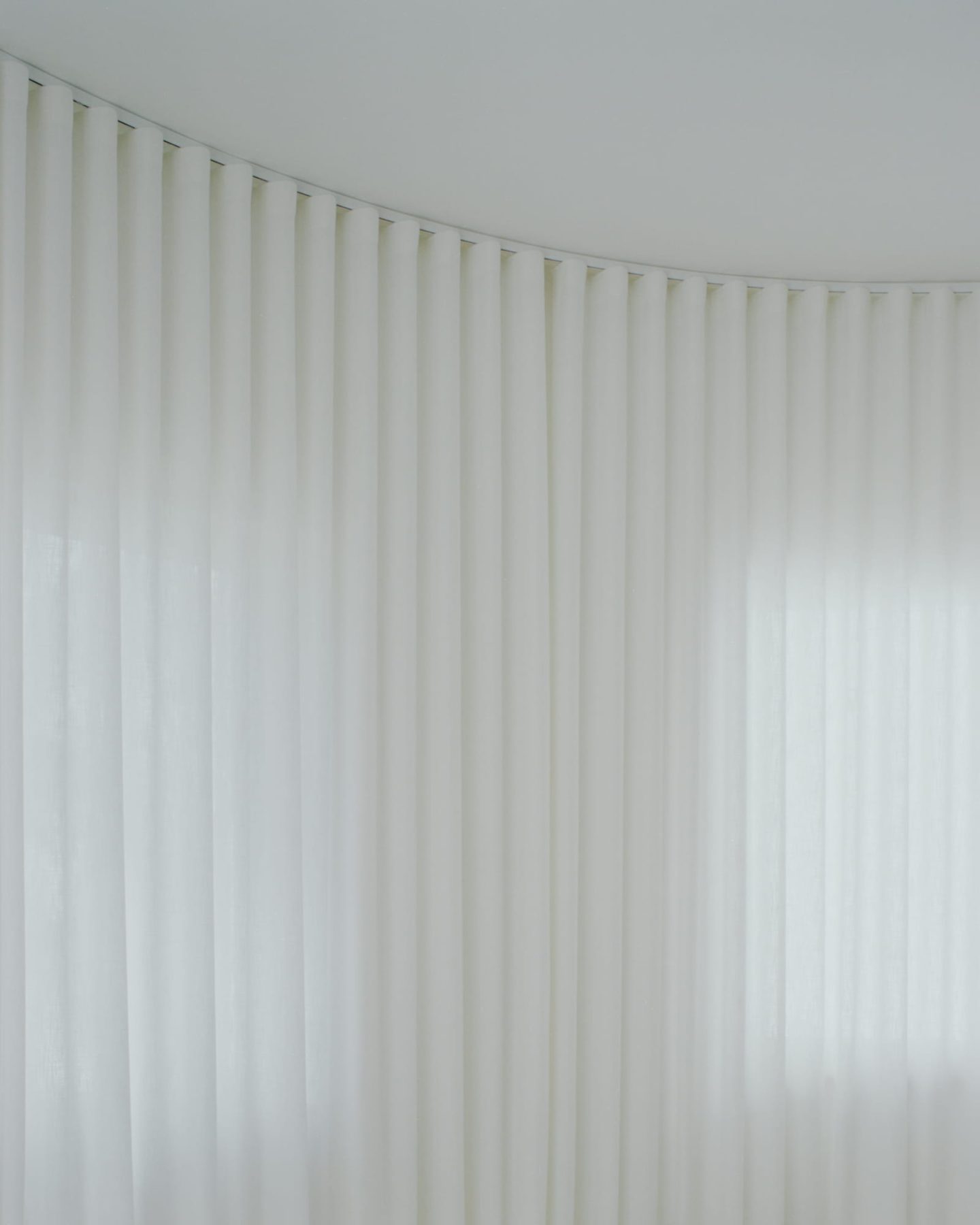
Throughout the house, natural light—particularly the sharp, low-angle luminosity characteristic of Puglia—plays a defining role.
It grazes plastered surfaces, intensifies material textures, and enhances spatial depth, fostering a continuous and nuanced dialogue between interior and exterior.
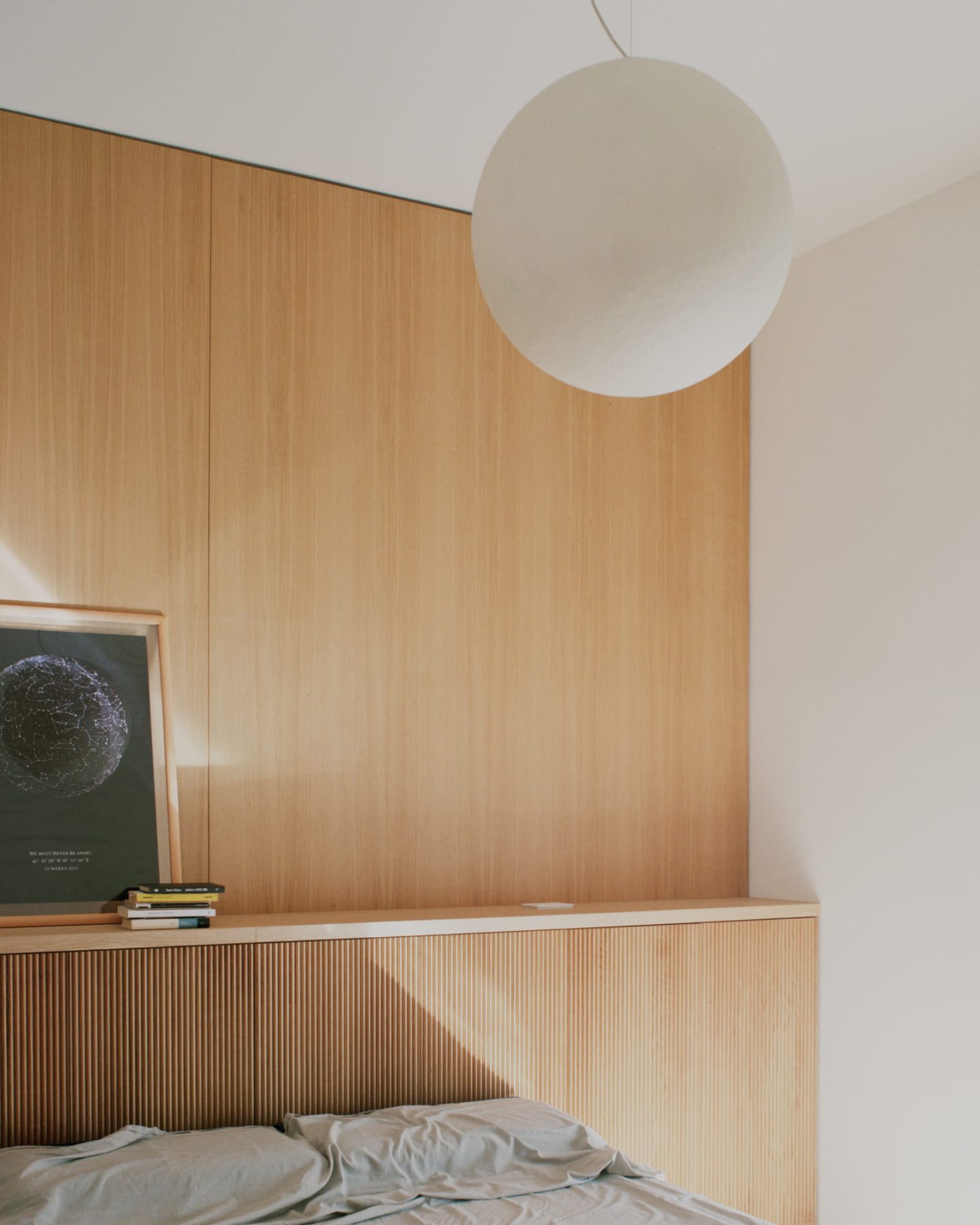
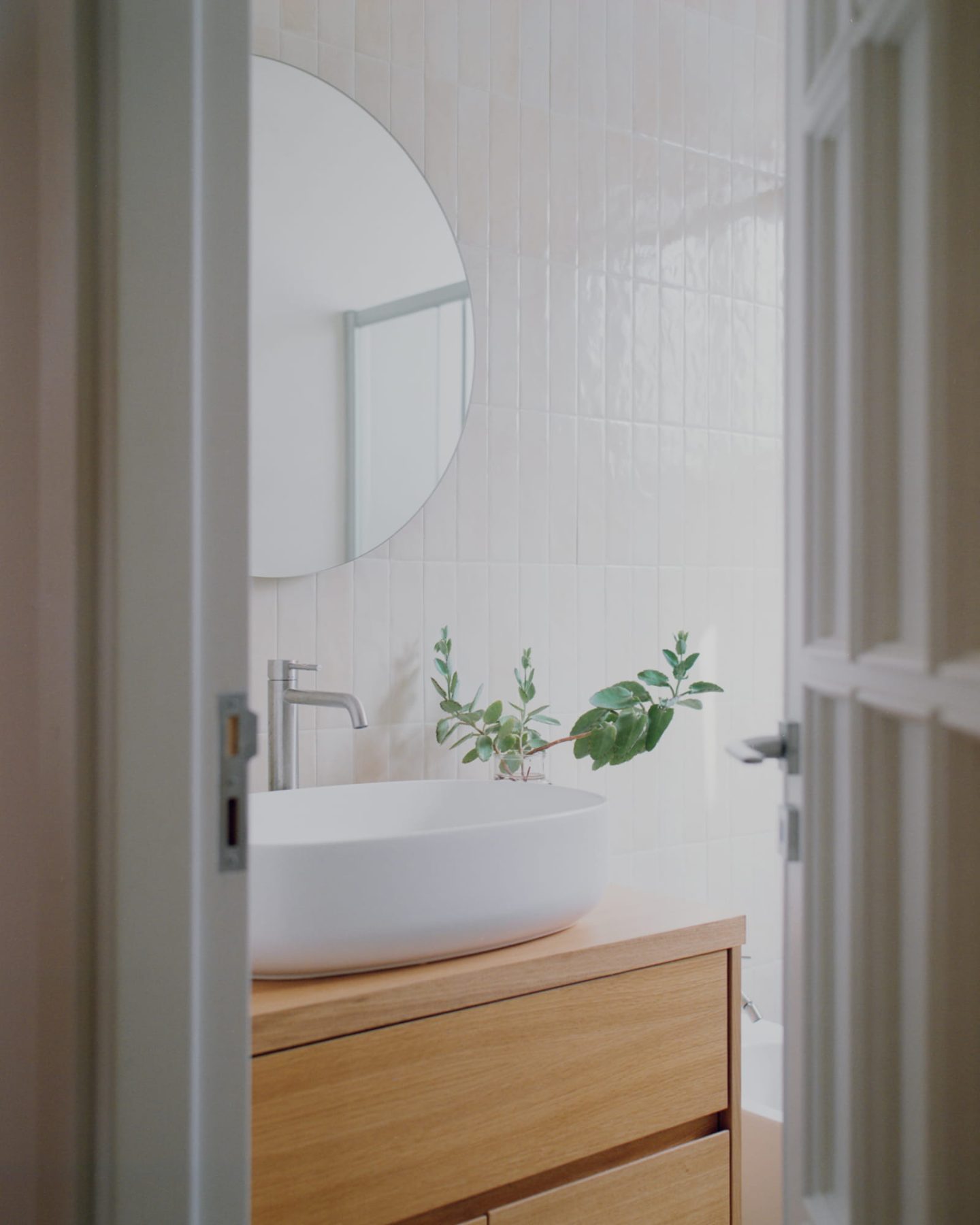
Through material continuity, controlled light, and spatial precision, the project reaffirms domesticity as an evolving dialogue between memory and reinvention, where restraint becomes a generative tool for enduring architectural presence in the Salento landscape.
Drawing
Facts & Credits
Title Lèvanzo
Typology Architecture, Residence
Location Caprarica di Lecce, Puglia, Italy
Status Completed, 2026
Area 140 m2
Architecture Margine (Giulio Ciccarese, Valentina Pontieri)
Project Team Arch. Samuele Stamerra, Designer Giulia Josè Conte
Photography Marcello Mariana
Text by the authors
Take a look at another project by Margine ‘Restoration of Masseria Caronte in Salento, Italy’, here!