A Whimsical Reuse explores refined architectural transformations where history is reinterpreted through poetic interventions and contemporary craft. Forgotten spaces gain new life, revealing a dialogue between memory, material, and contemporary ways of living.
La Fusteria by Clara Crous Arquitectura is a transformative project converting a former carpentry workshop into a contemporary residence, approached as a process of continuity that preserves structure, improves comfort, and adapts new functions while carefully maintaining identity and subtly updating inherited architecture.
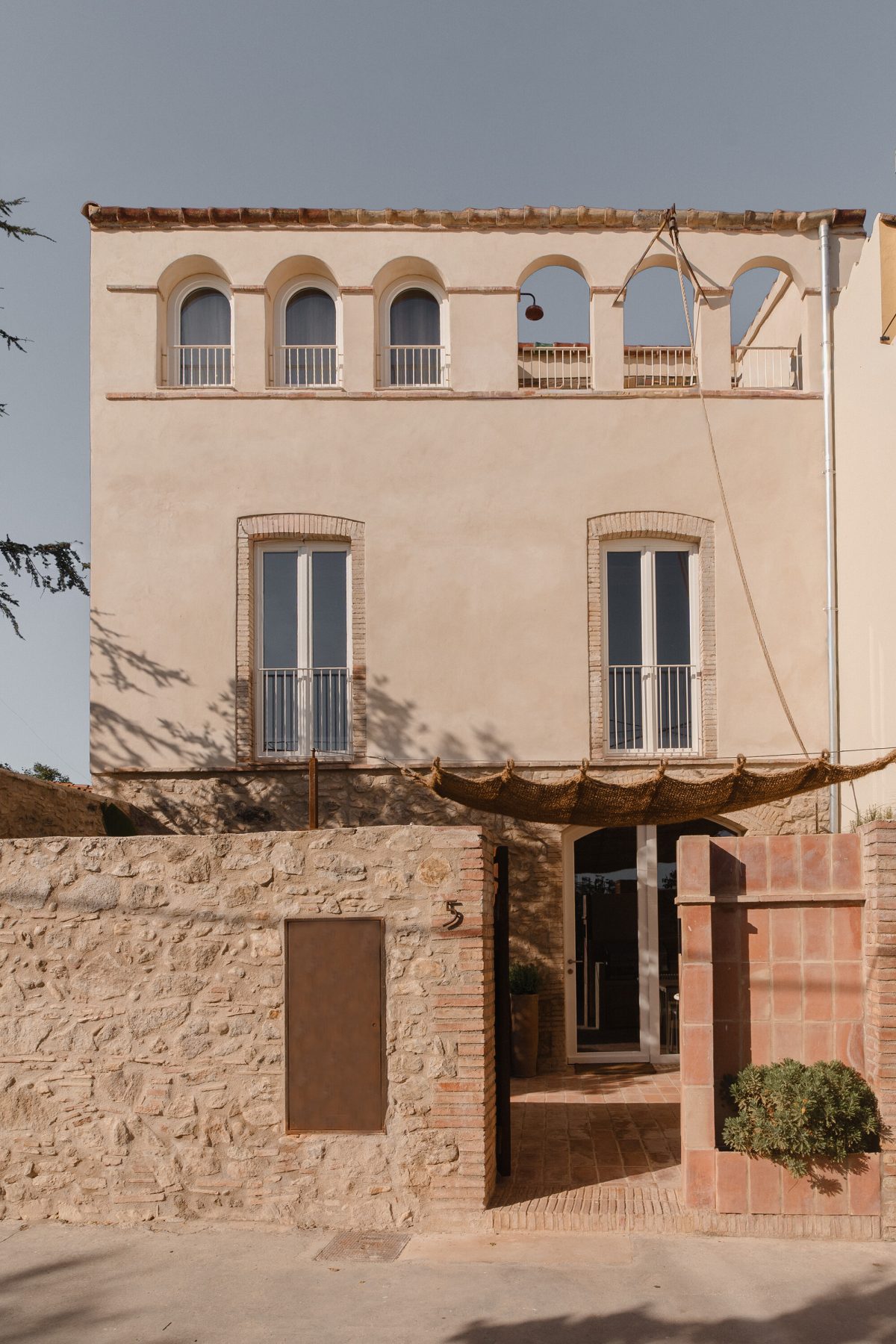
La Fusteria (Catalan for “carpentry”) transforms a former carpentry workshop into a contemporary residence, articulating a sensitive dialogue between past and present. Located in a small village in the Alt Empordà in Spain, the project preserves the building’s original character.
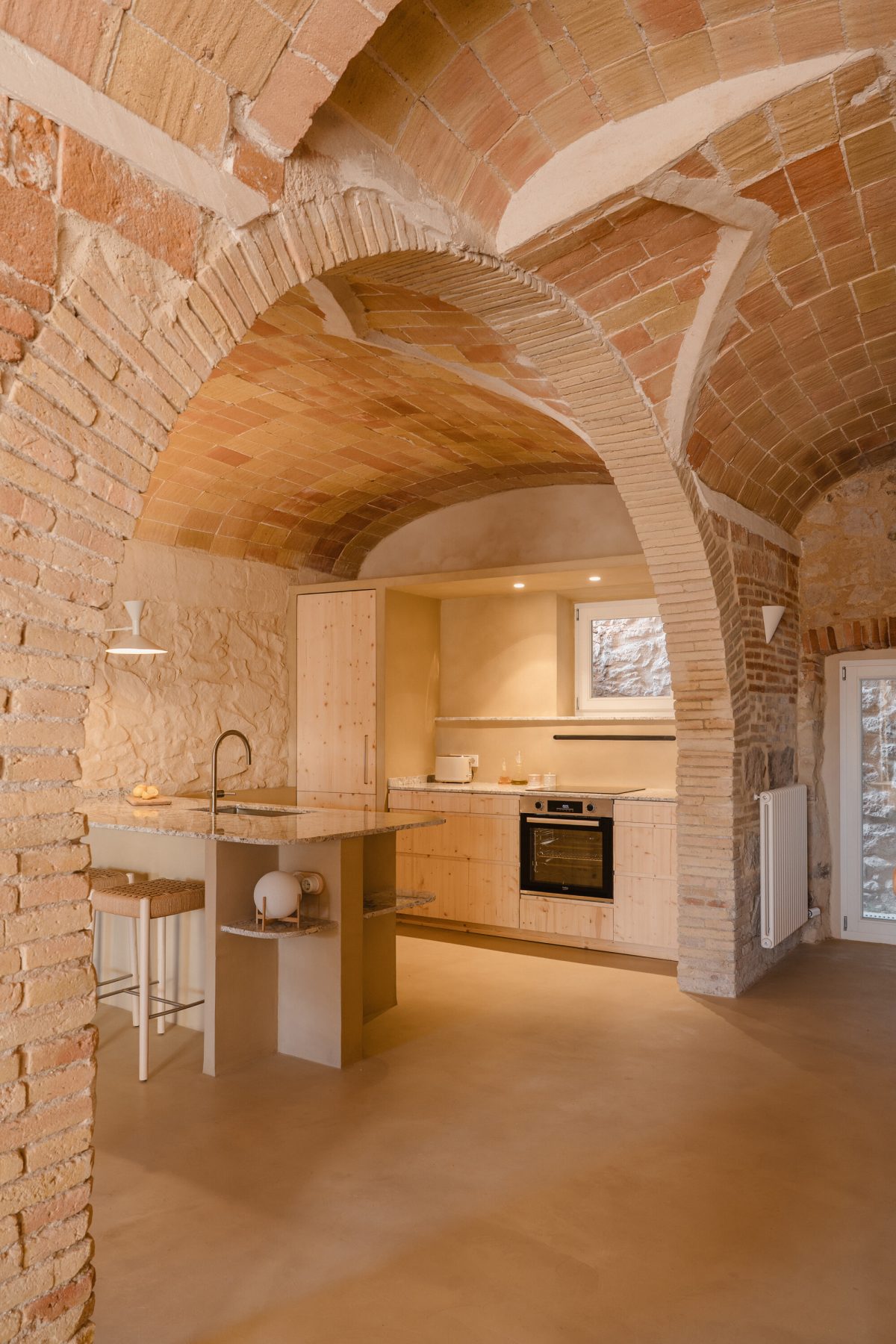
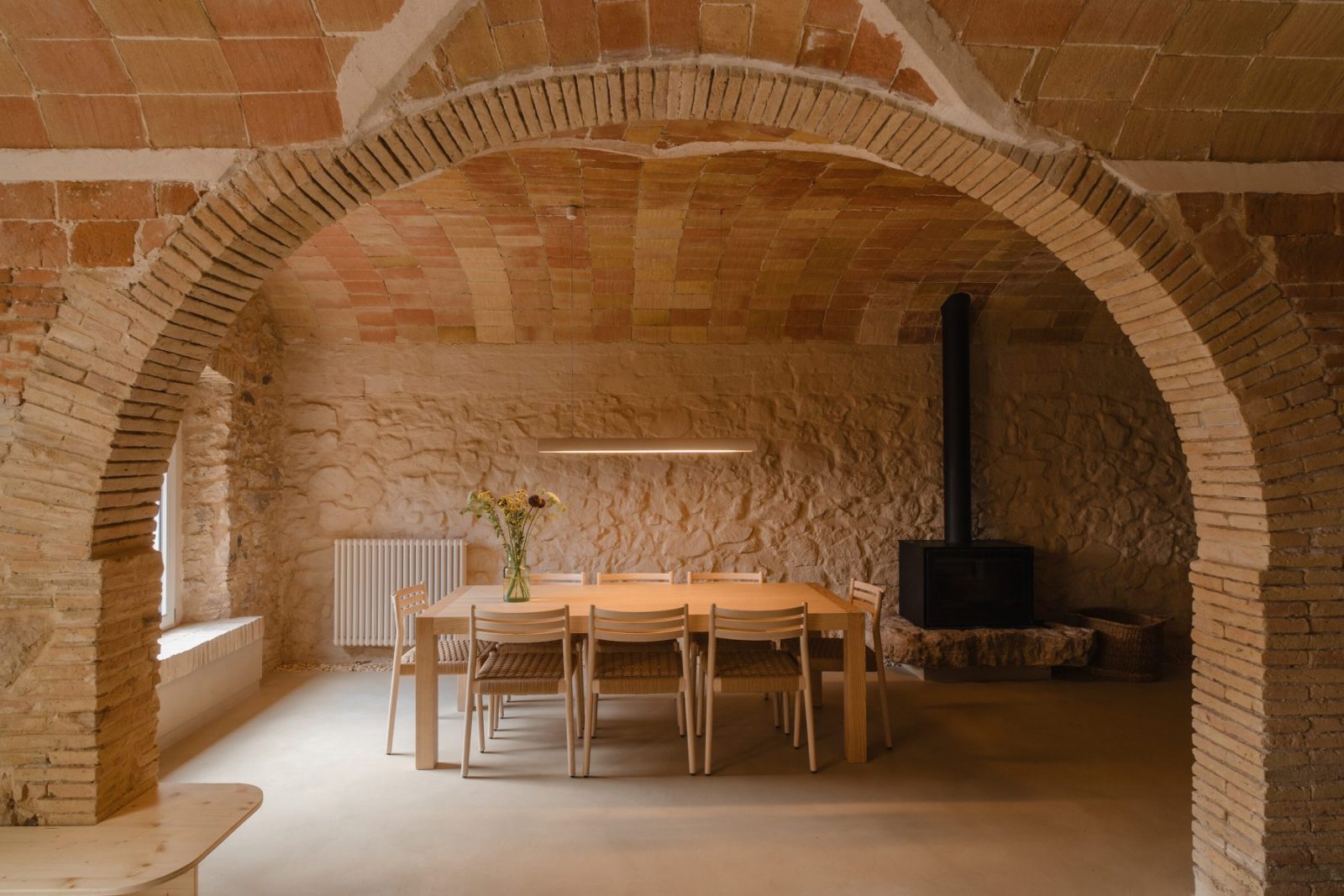
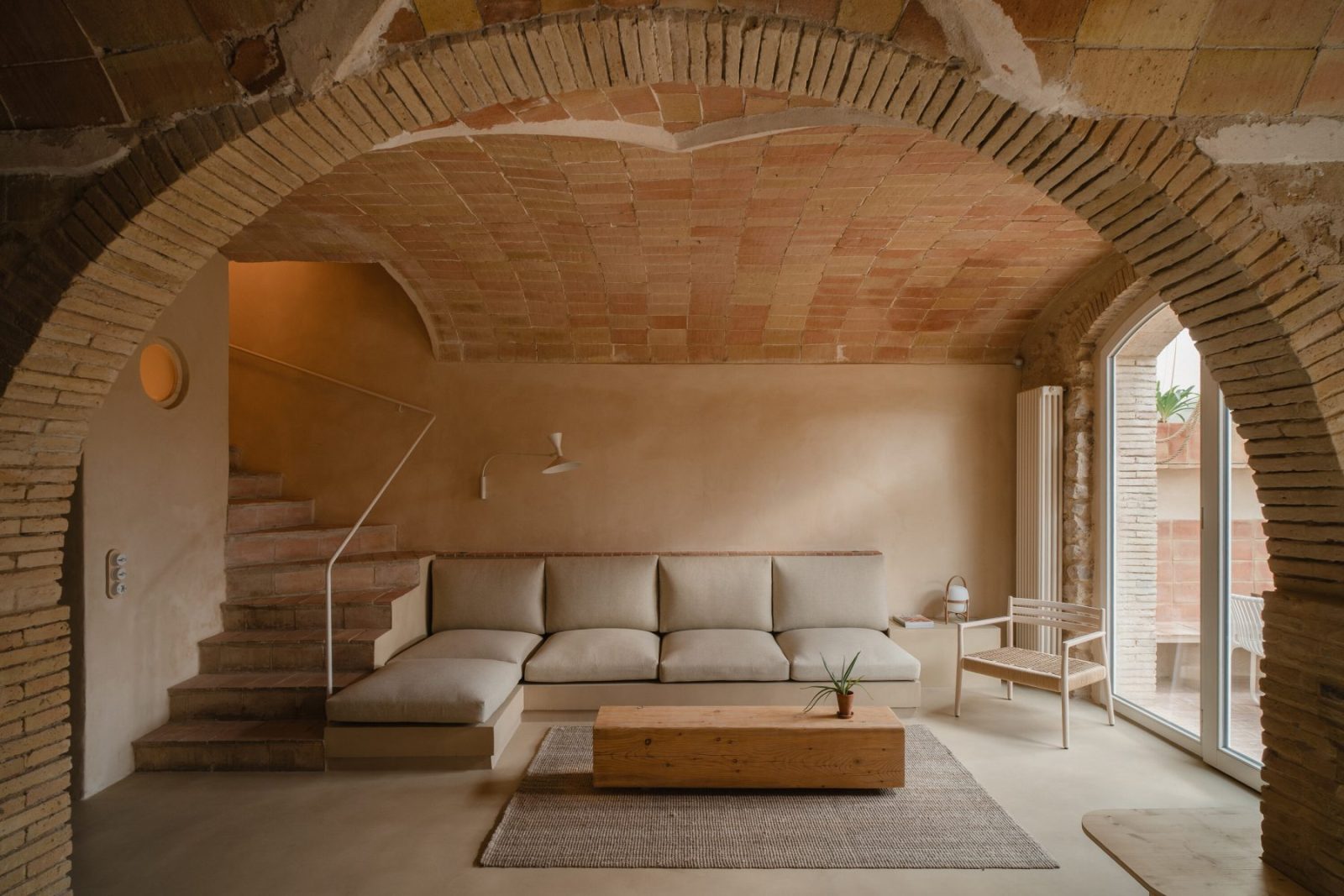
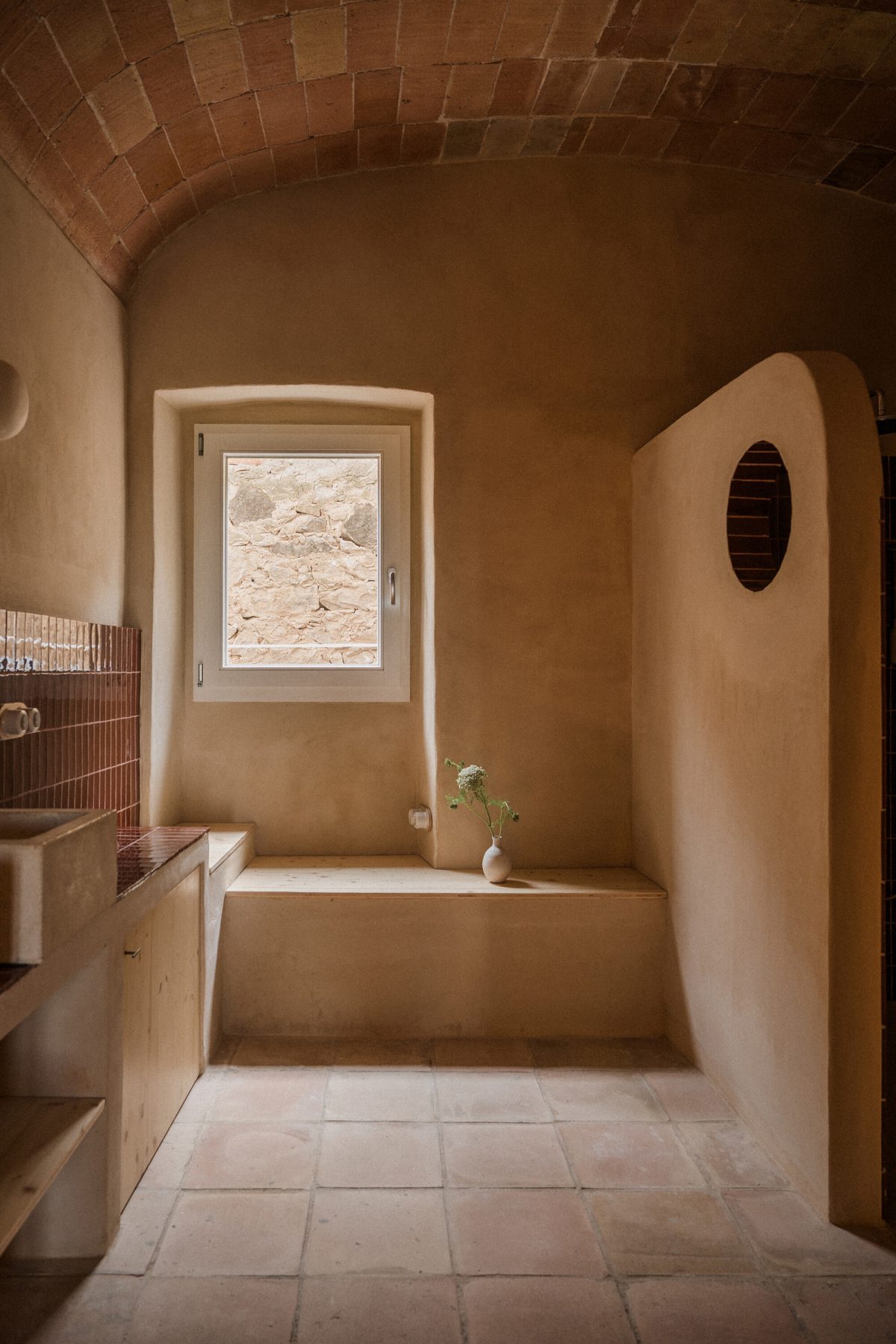
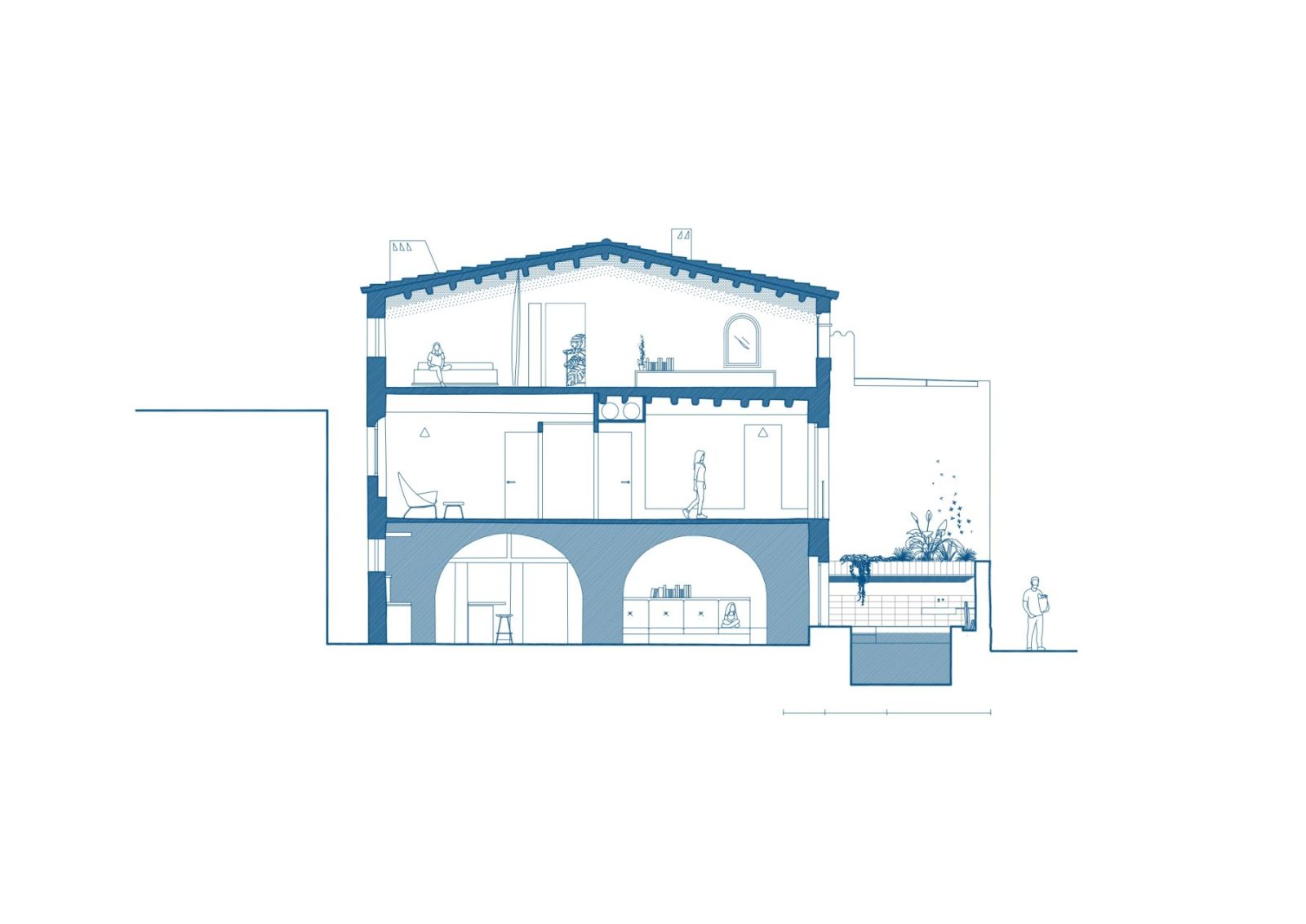
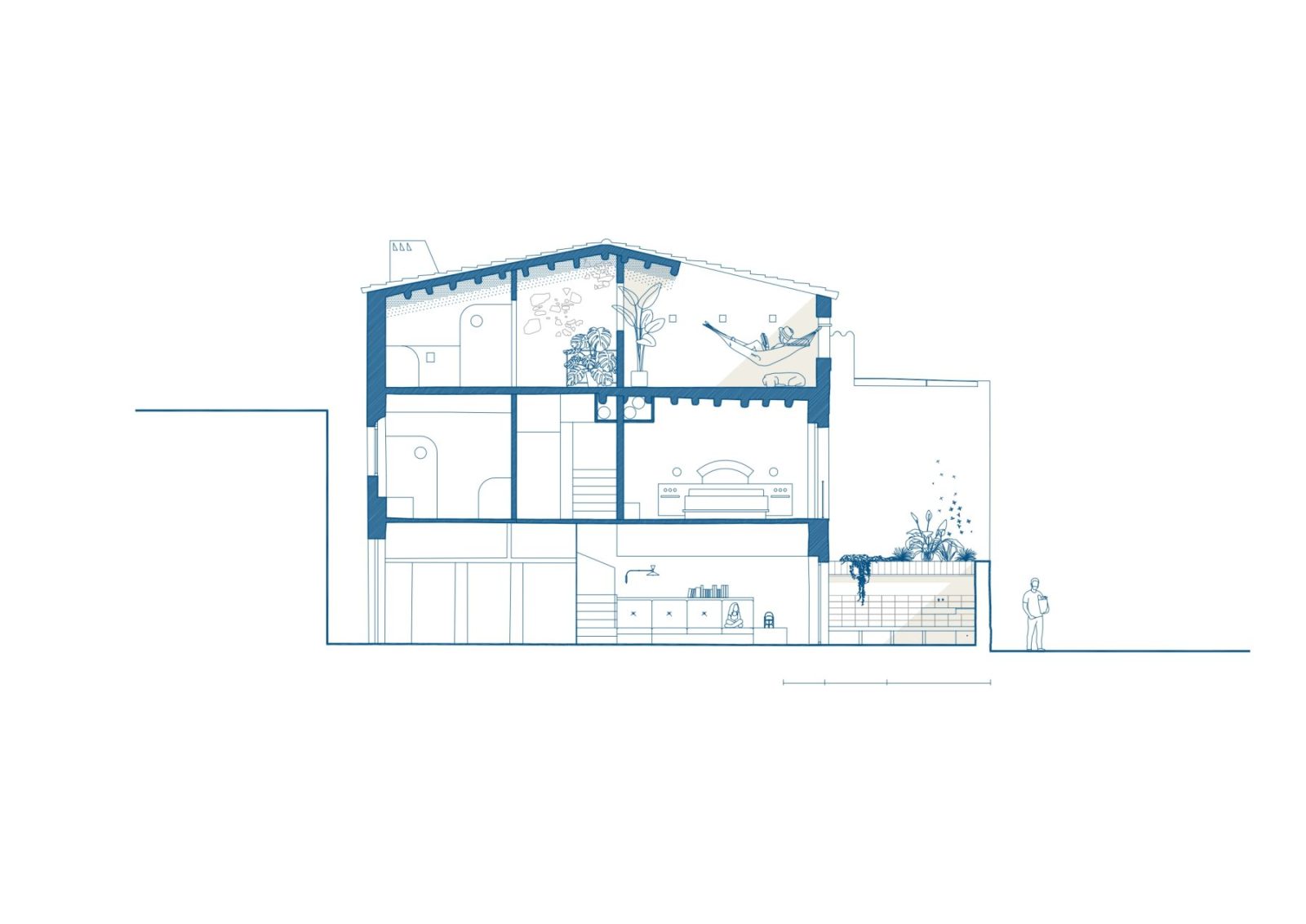
Two Catalan vaults on the ground floor retain the memory of the former workshop while acting as the primary spatial drivers of the intervention.
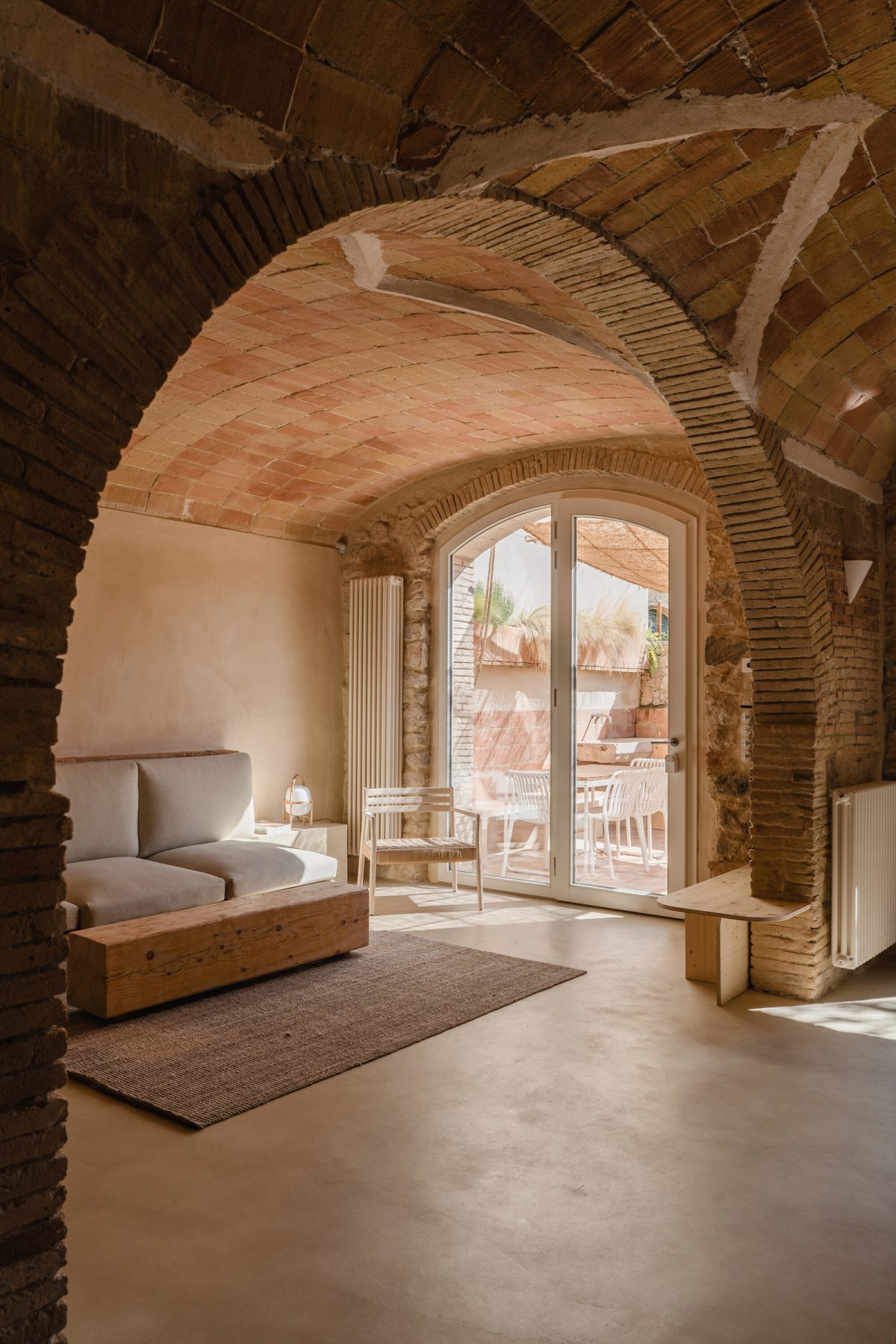
Acquired by long-time local residents, the property is intended to accommodate visiting family members—particularly during the winter months—while also functioning as a vacation rental. This dual program informs the design strategy, ensuring comfort, spatial clarity, and a refined attention to detail.
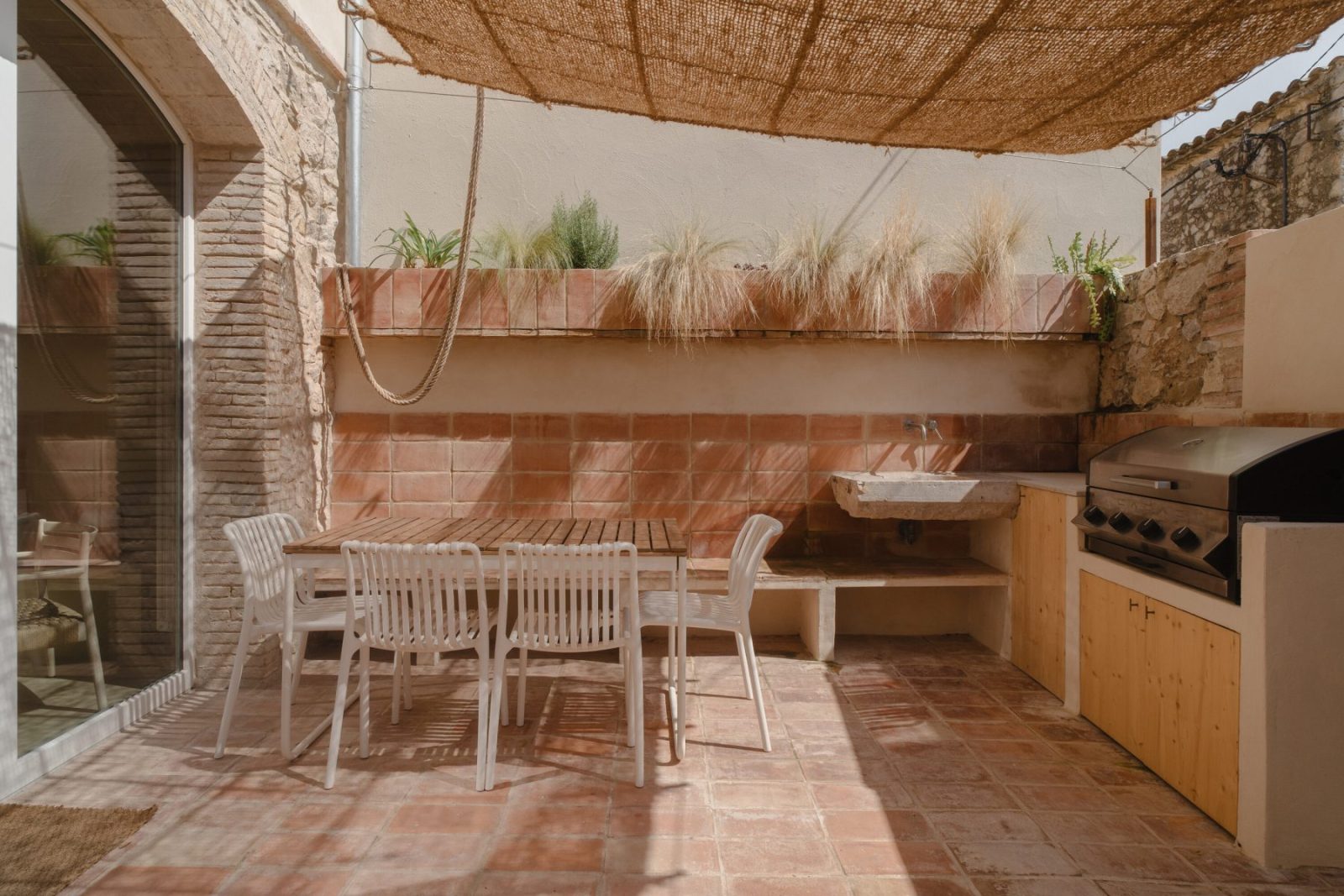
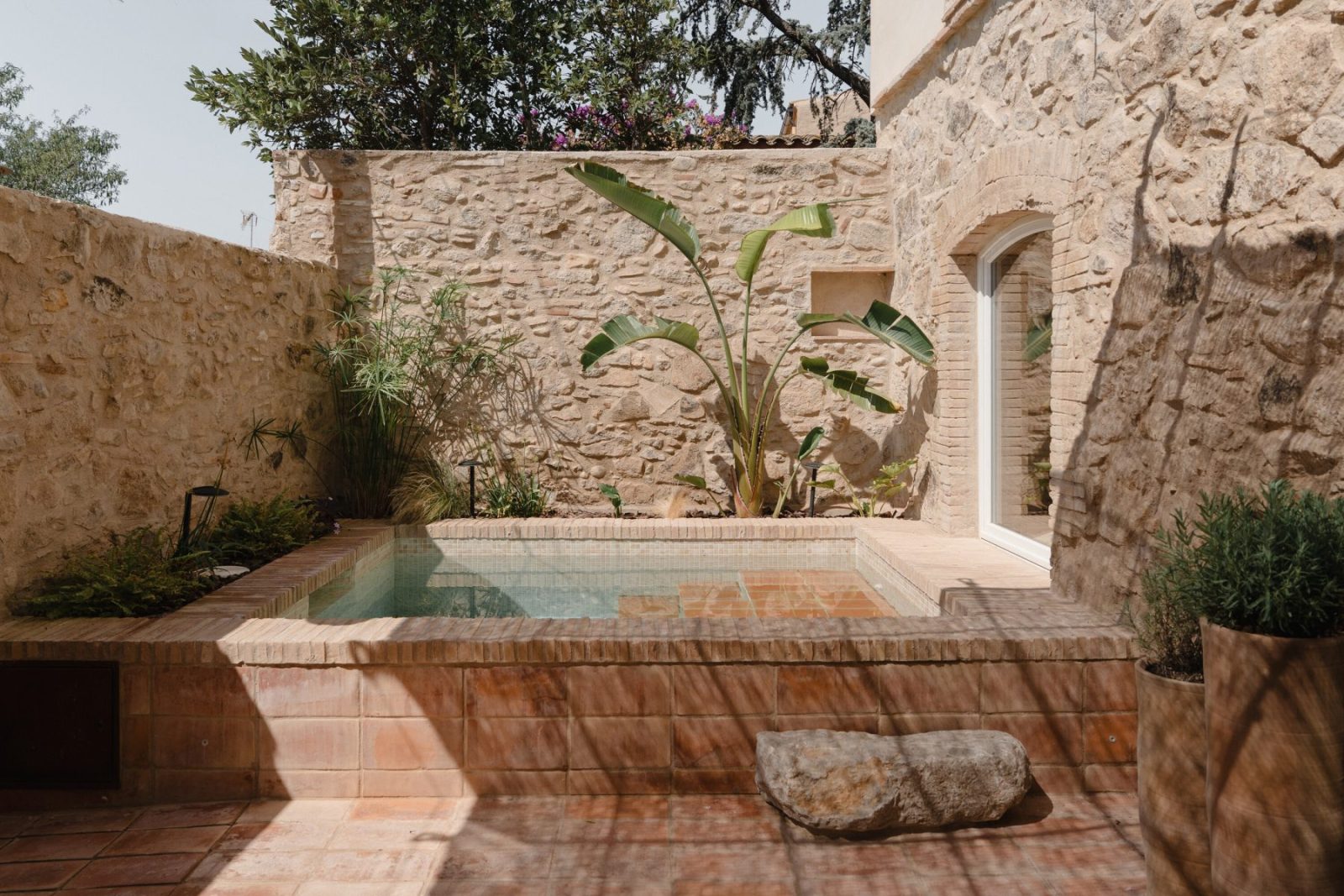
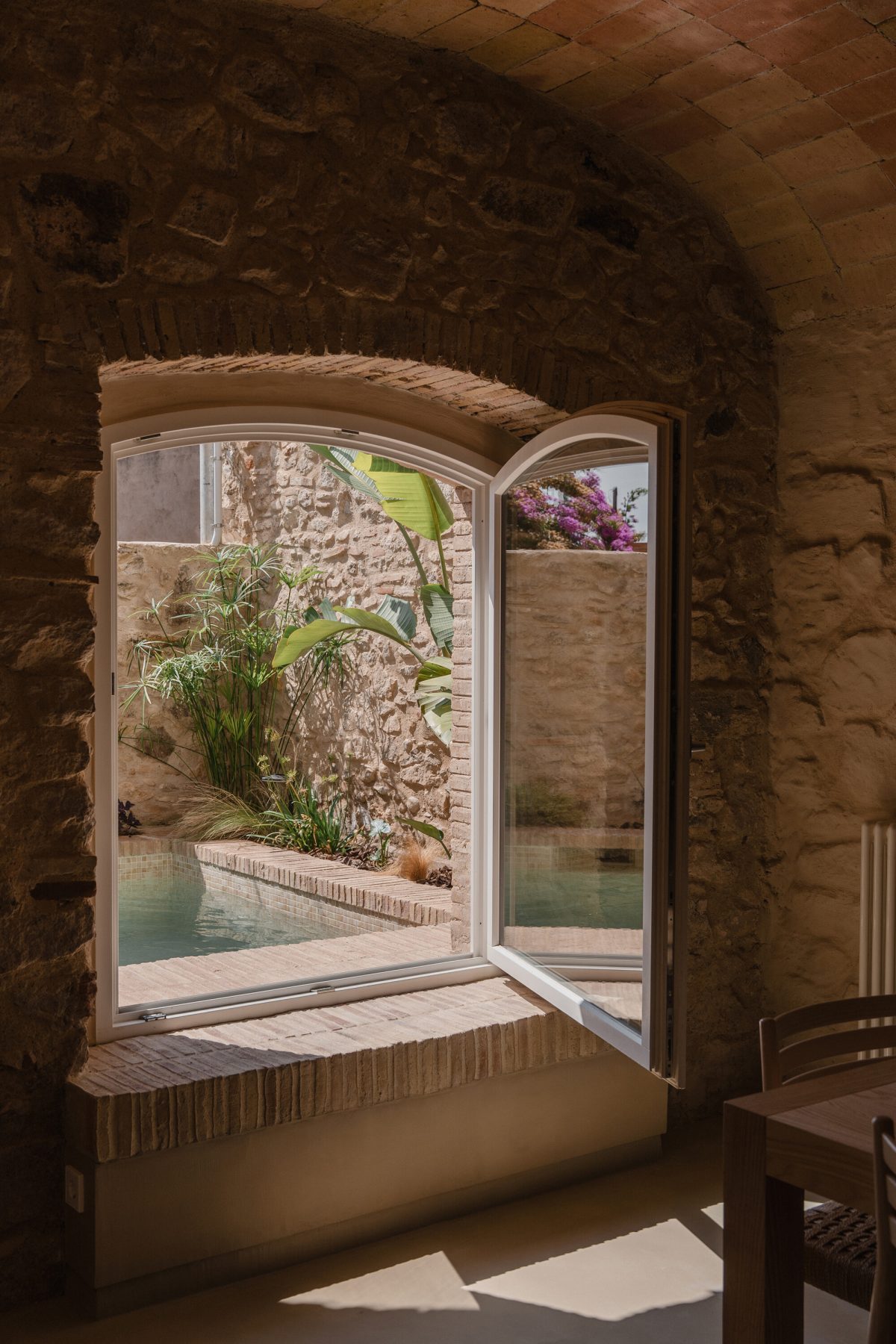
The intervention adopts a contemporary architectural language focused on improving functionality and energy performance without compromising identity.
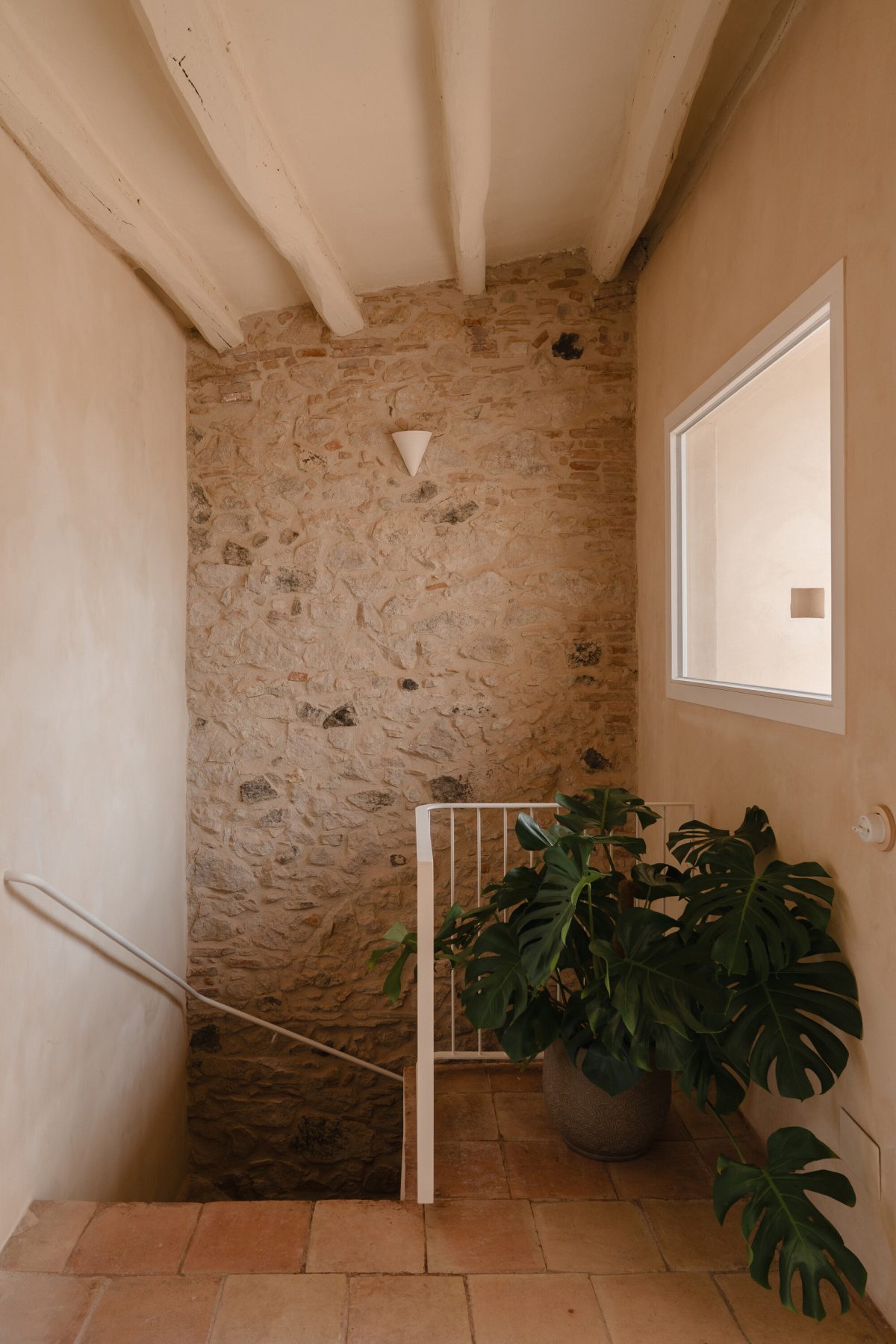
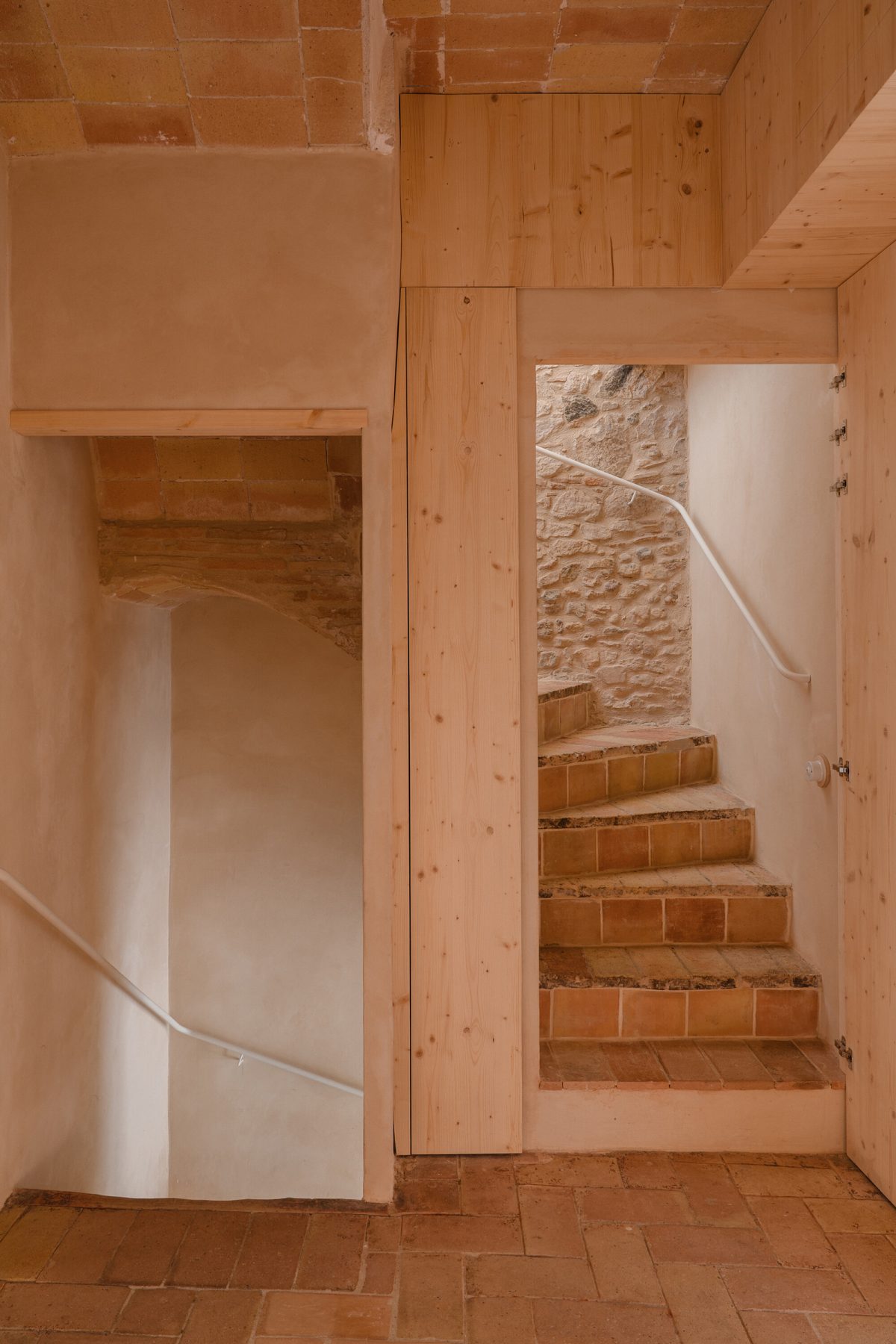
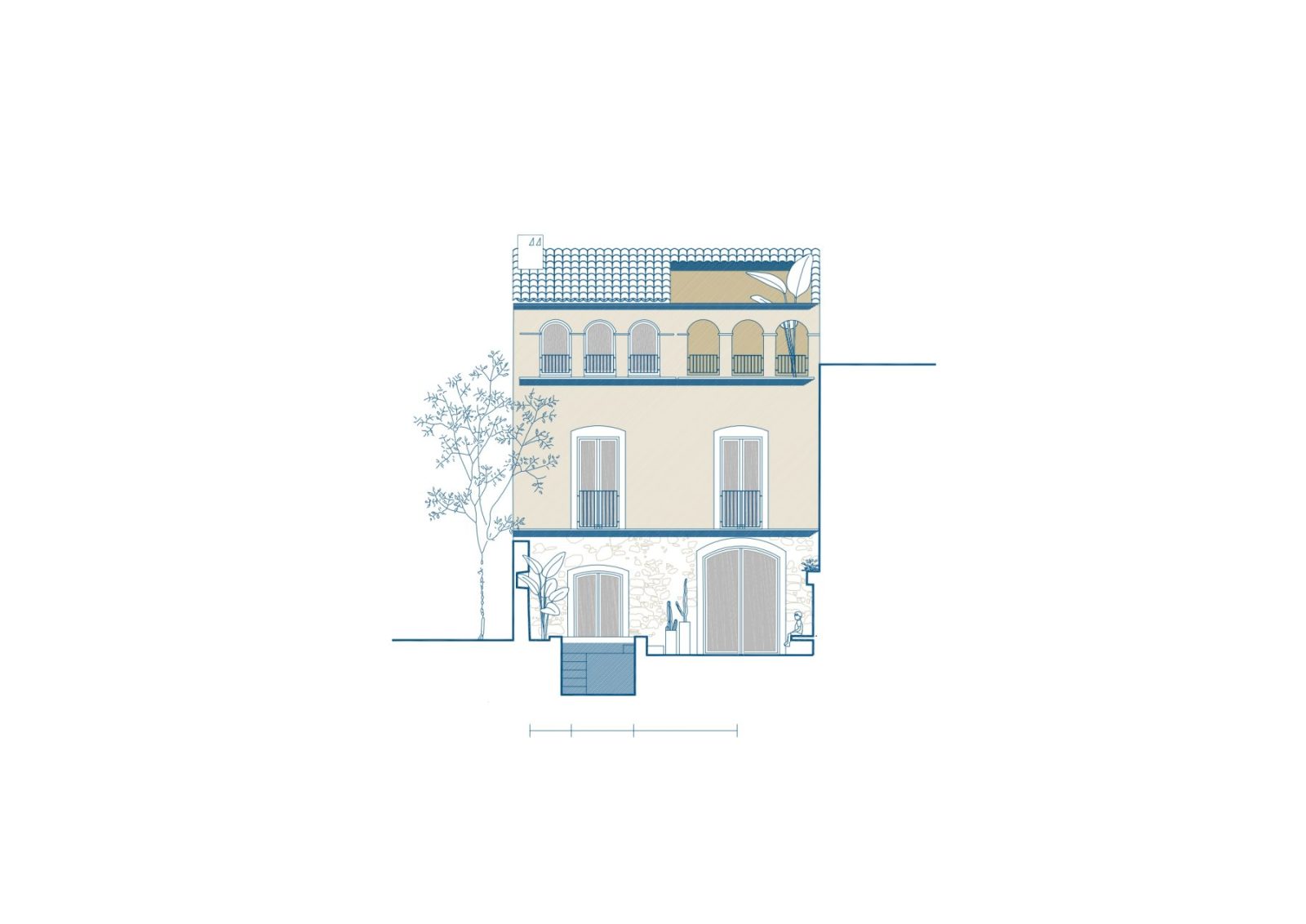
Upgraded installations and exterior joinery enhance thermal comfort and strengthen the relationship with the outdoors, while the front courtyard is reactivated as a transitional threshold between the street and the interior. Custom-designed railings contribute to a cohesive integration of safety and aesthetics.
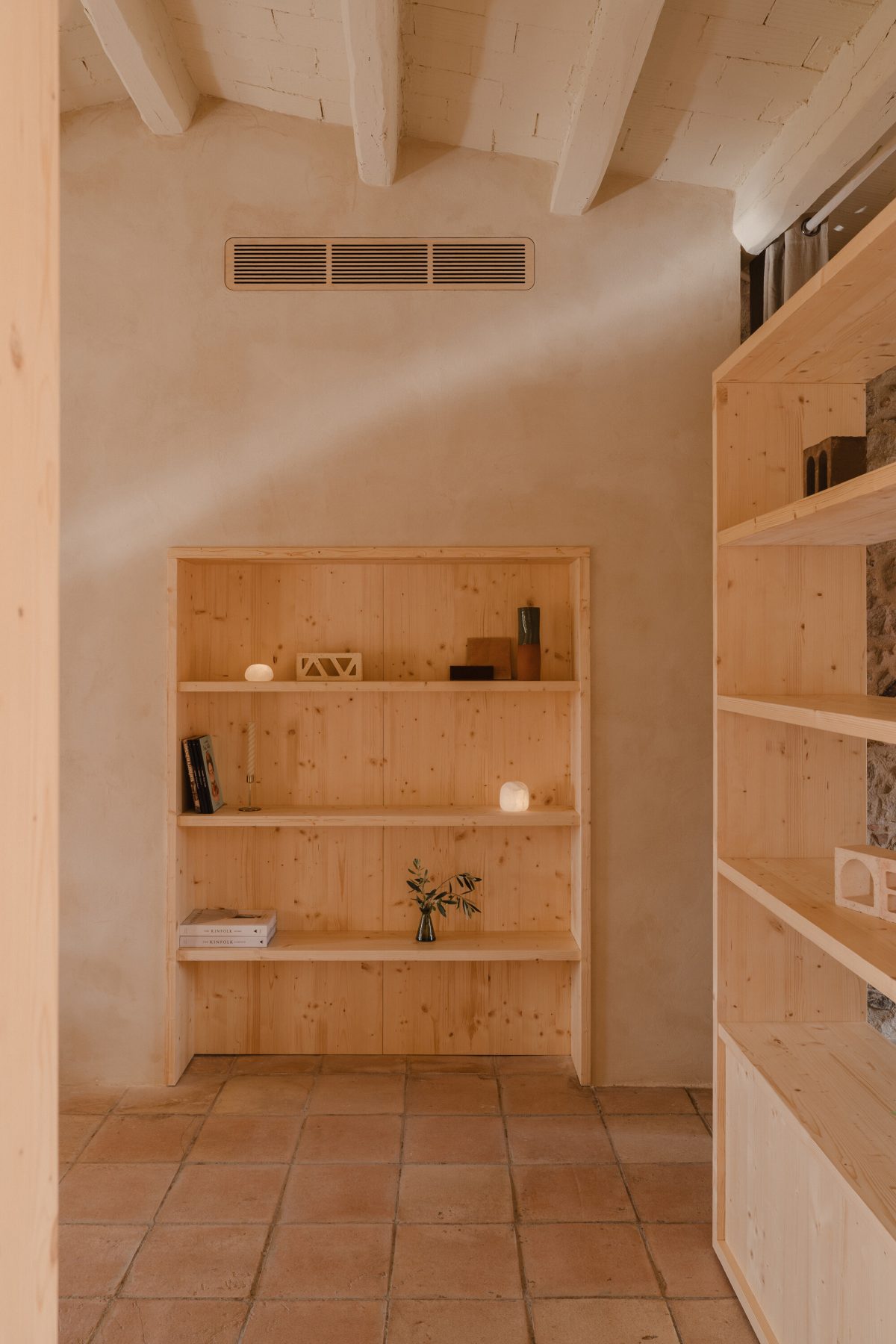
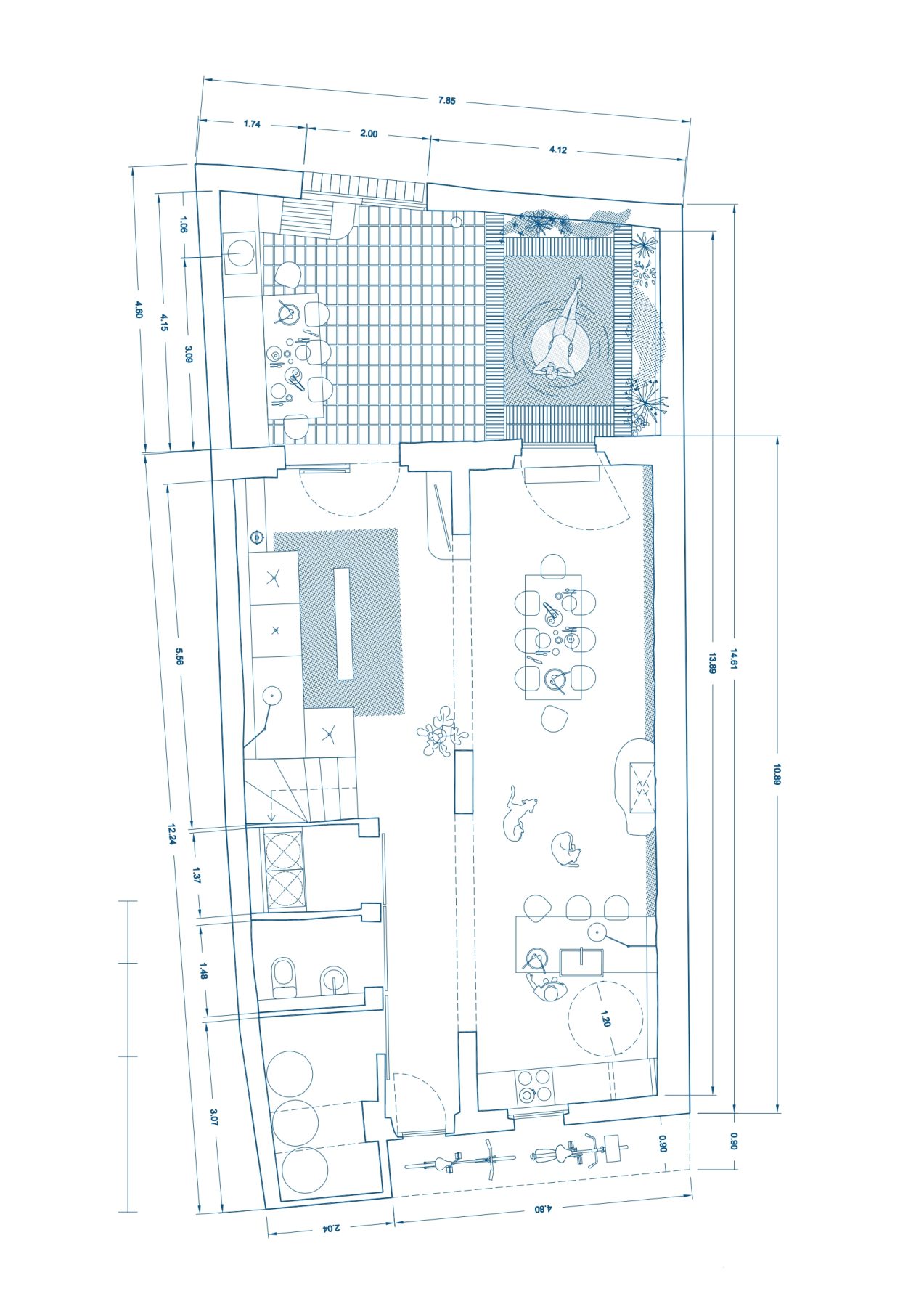
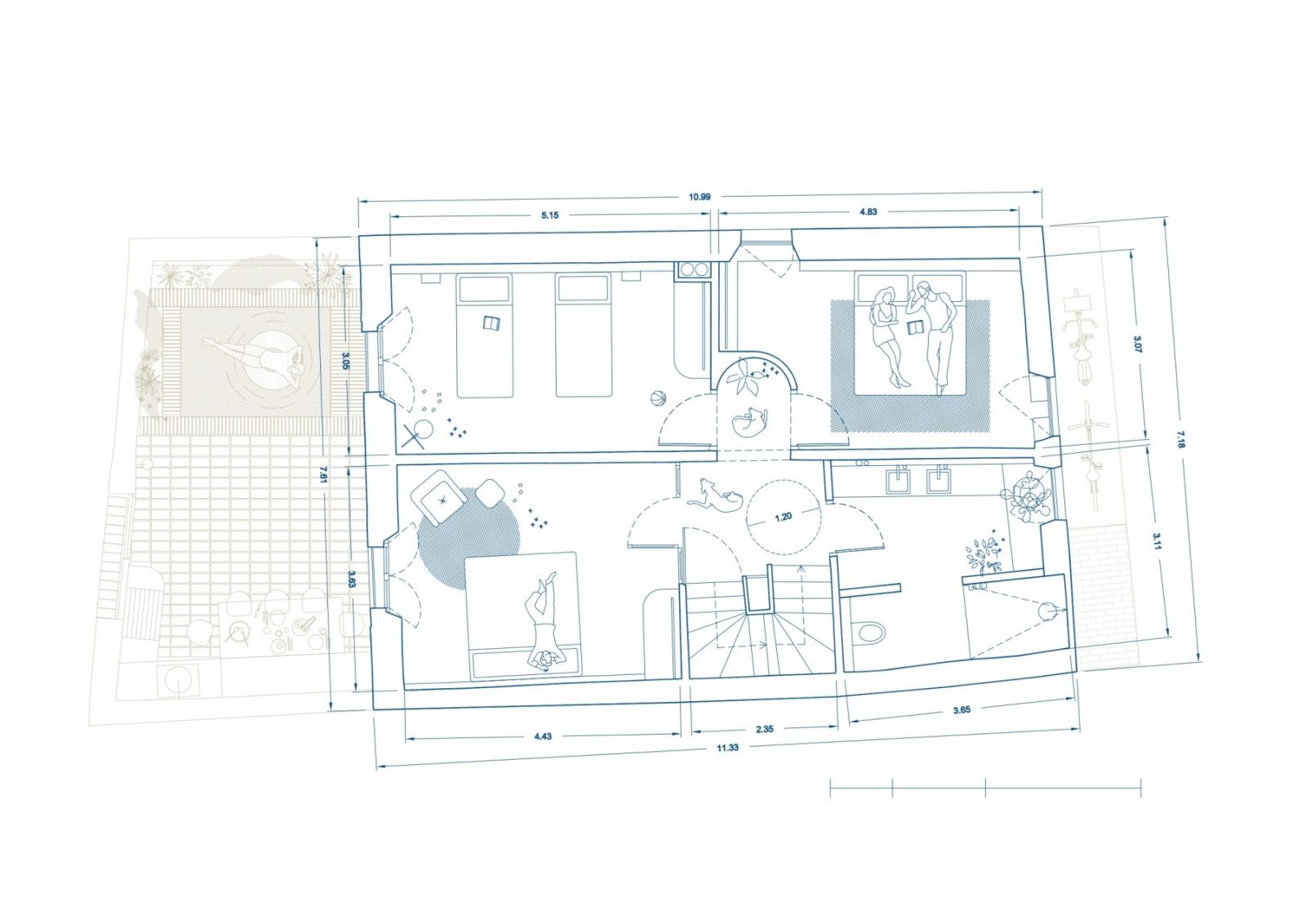
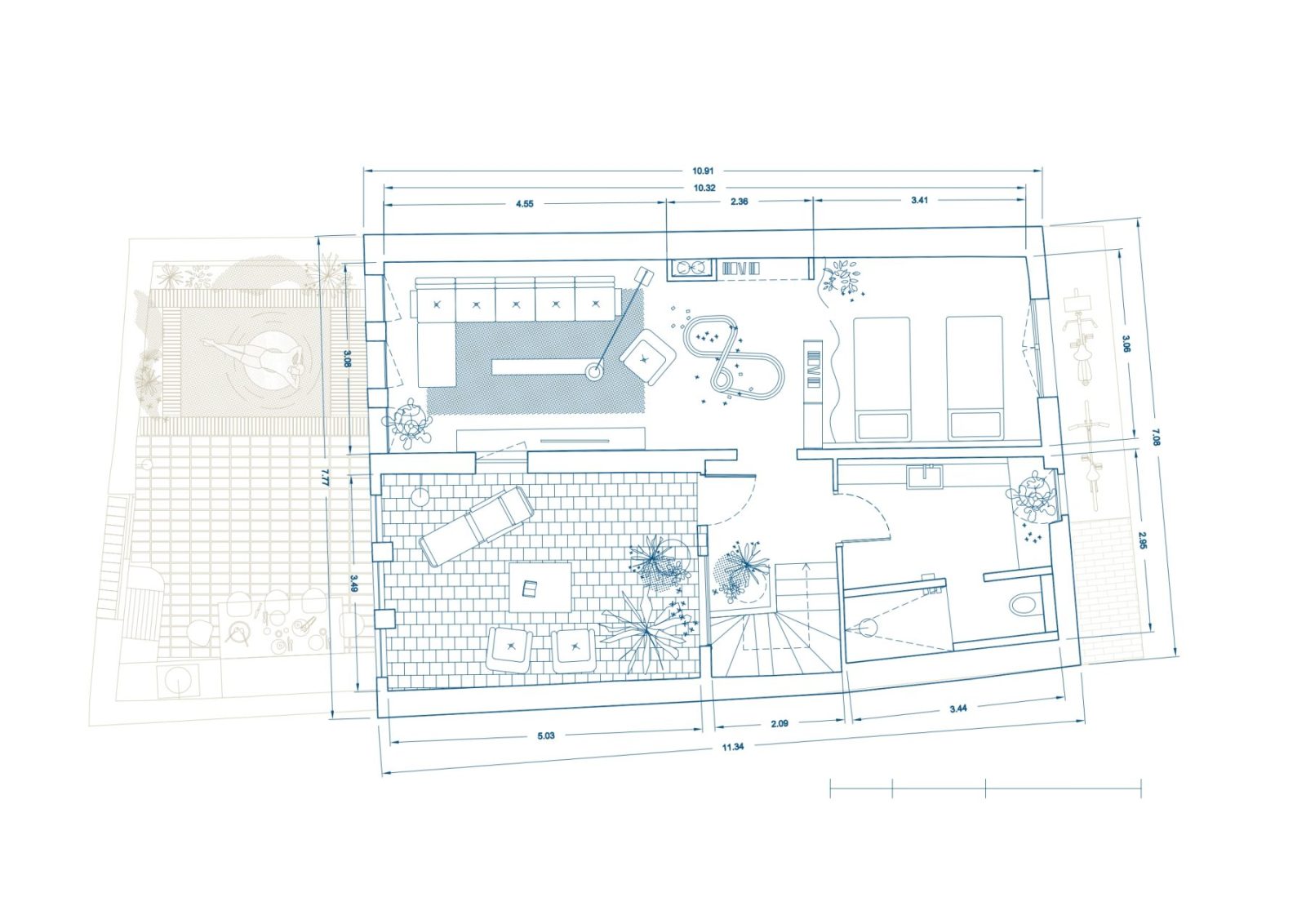
A key spatial move involves consolidating daytime living functions on the ground floor. The kitchen is repositioned adjacent to the living area, forming an open-plan environment that engages directly with the vaulted structure. The upper levels are reserved for bedrooms and more private uses.
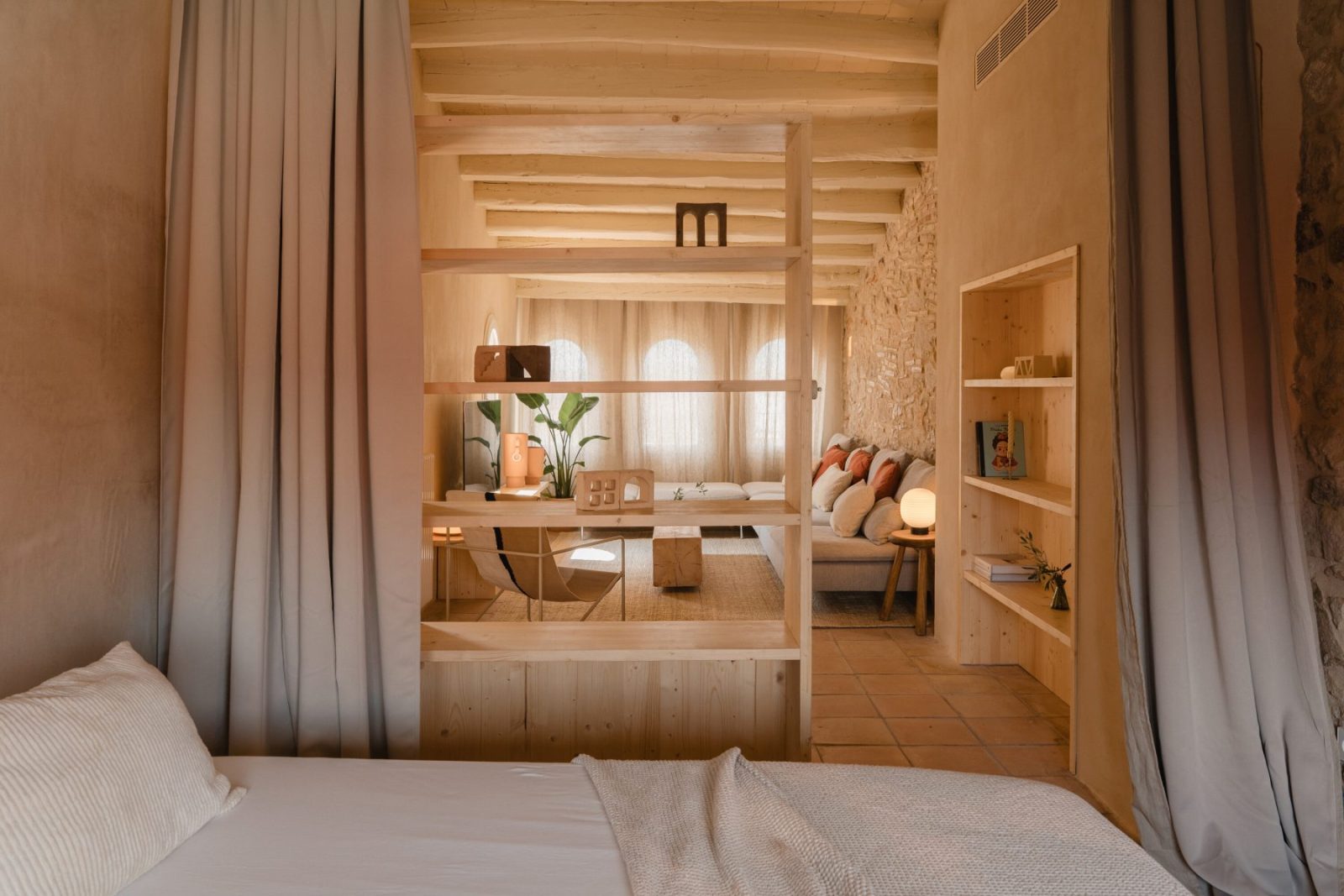
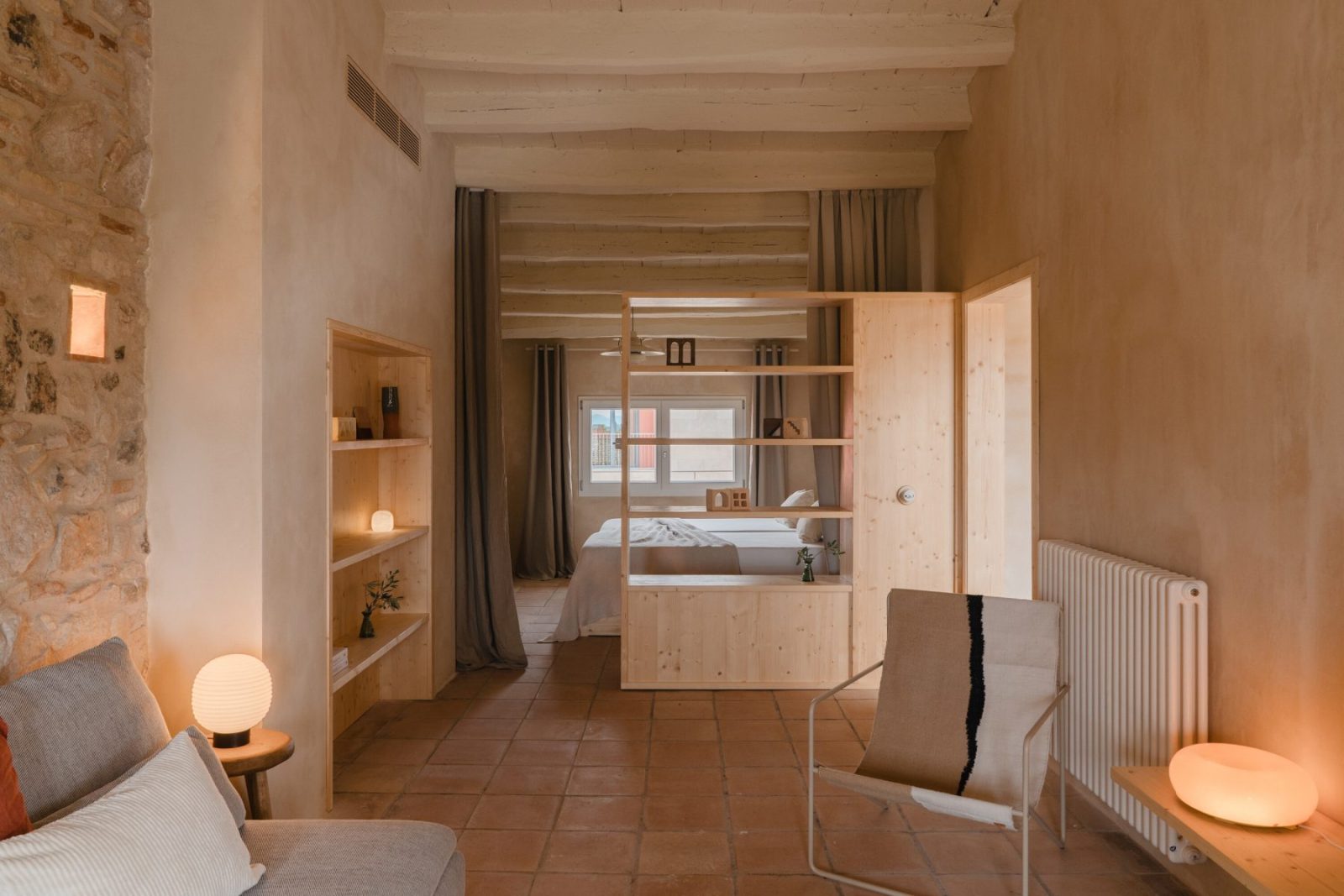
Materiality plays a defining role in the project.
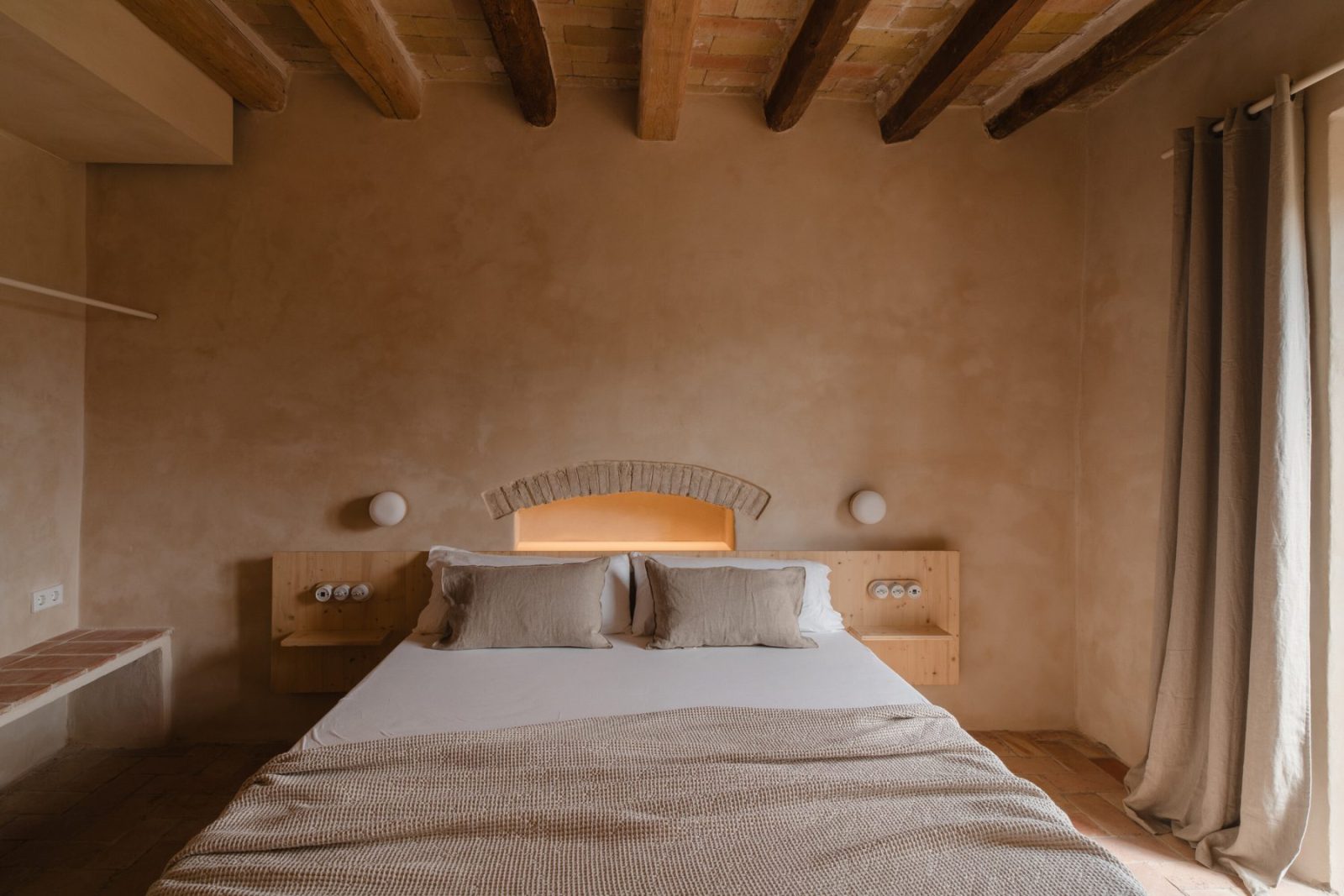
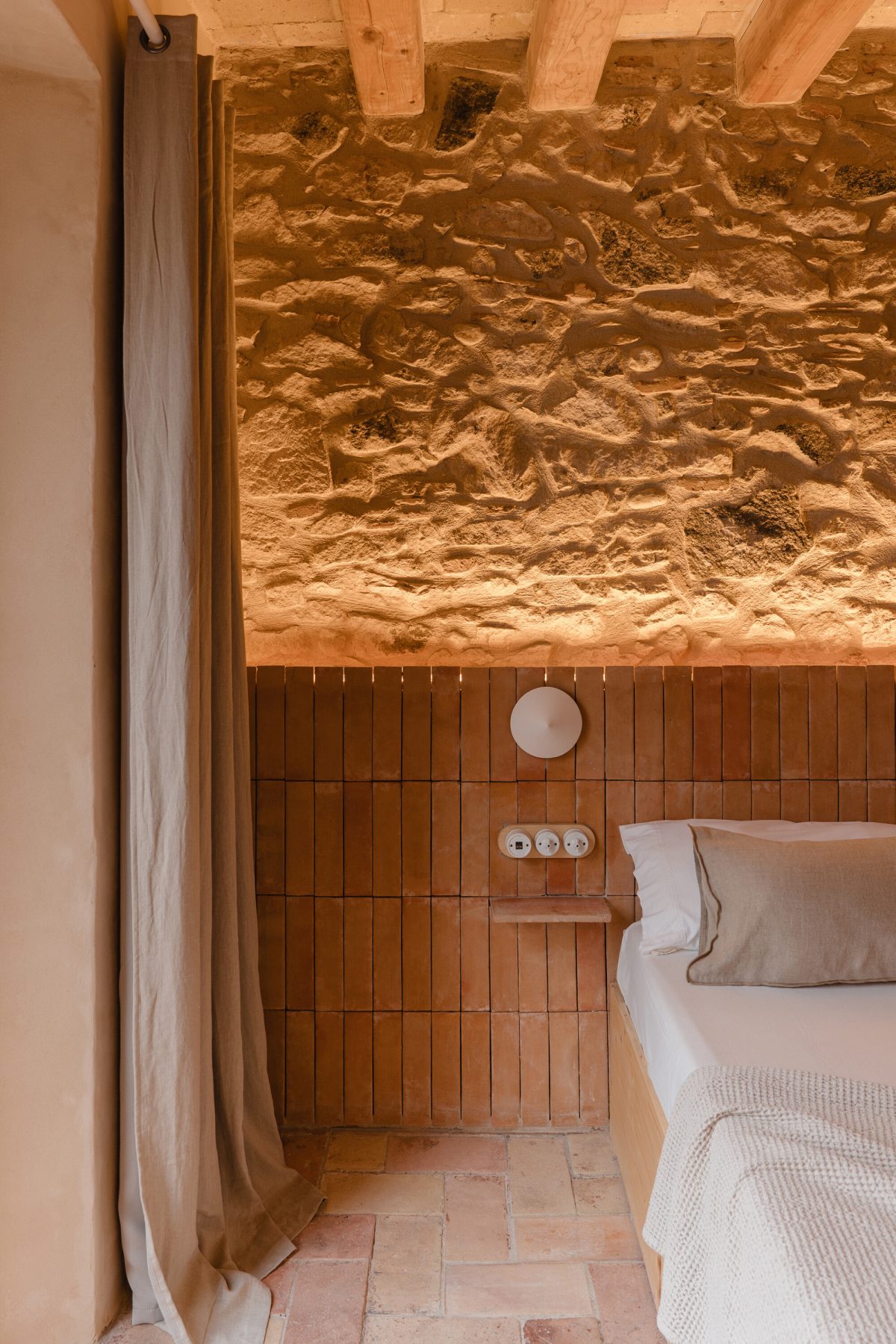
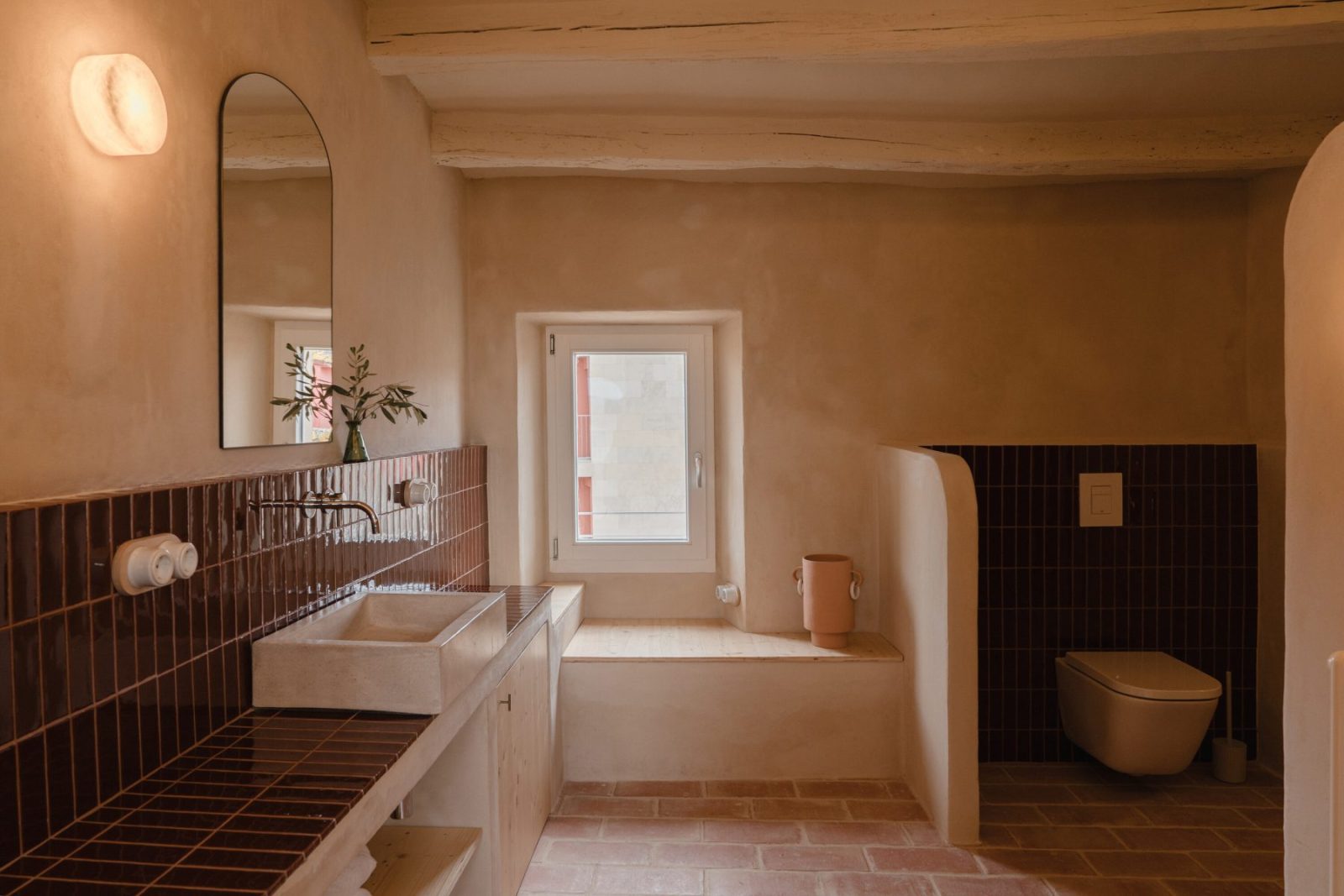
Later additions are stripped away to reveal the original fabric, with walls restored using lime mortars and plasters that allow the masonry to breathe, enhancing both light quality and tactile richness.
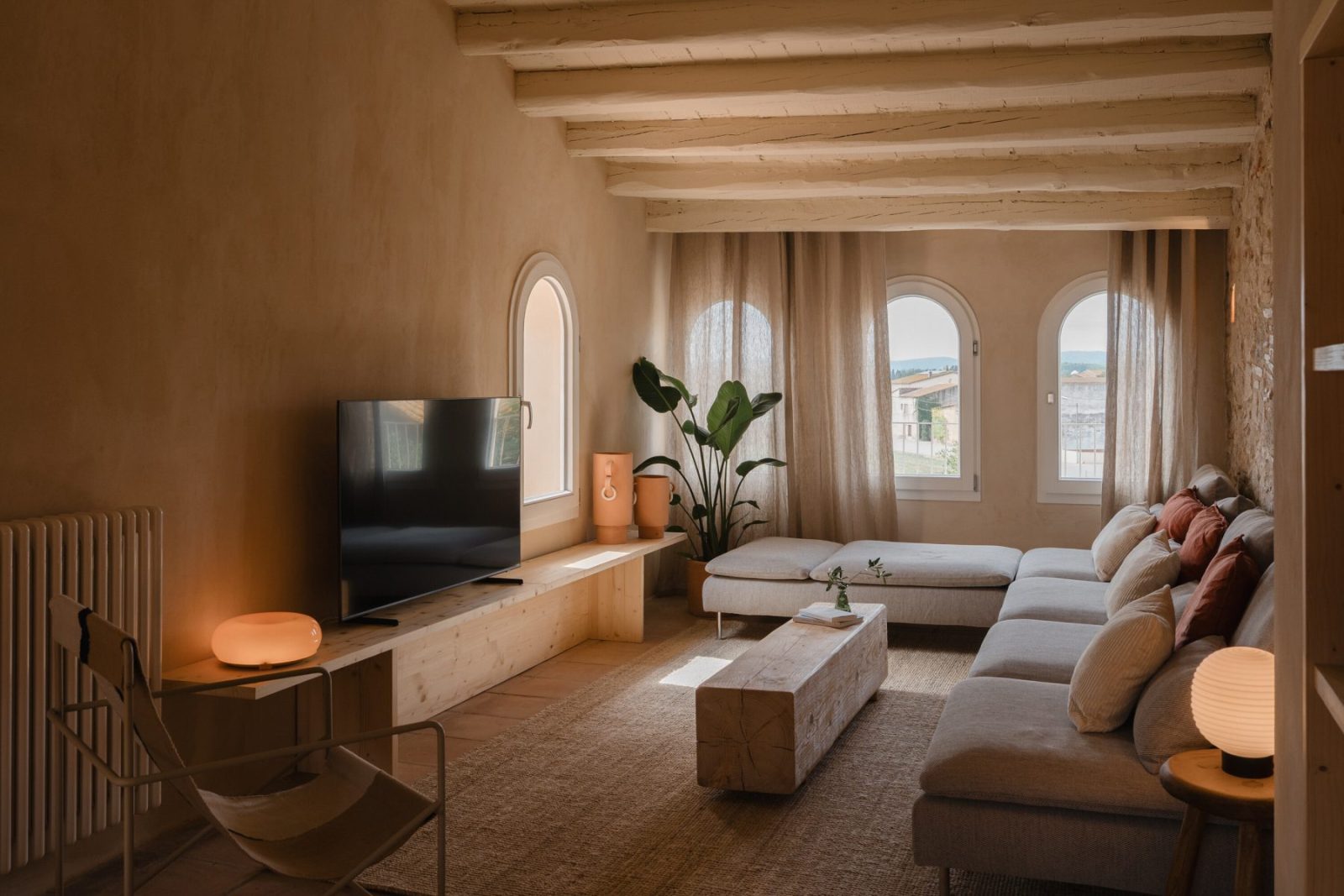
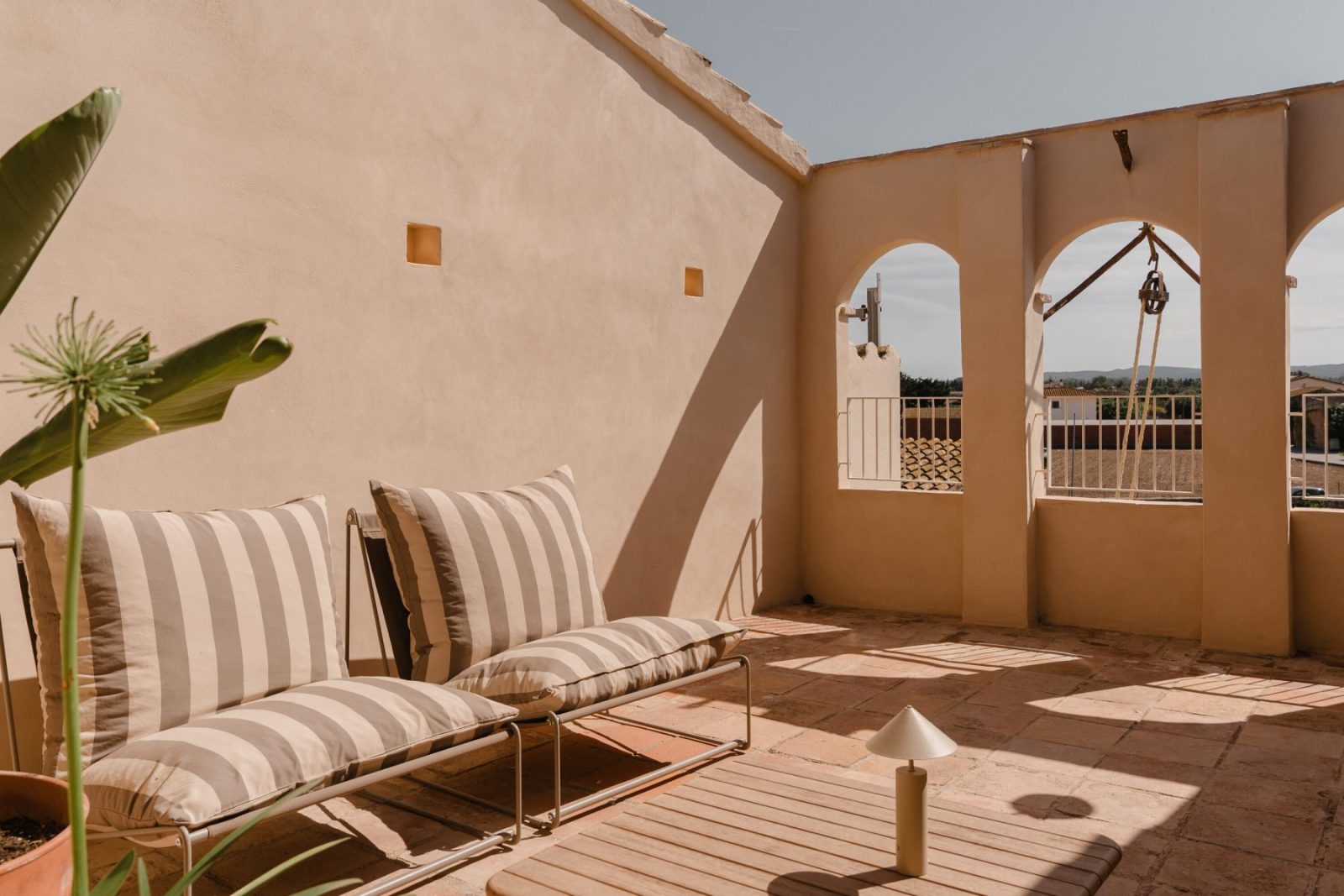
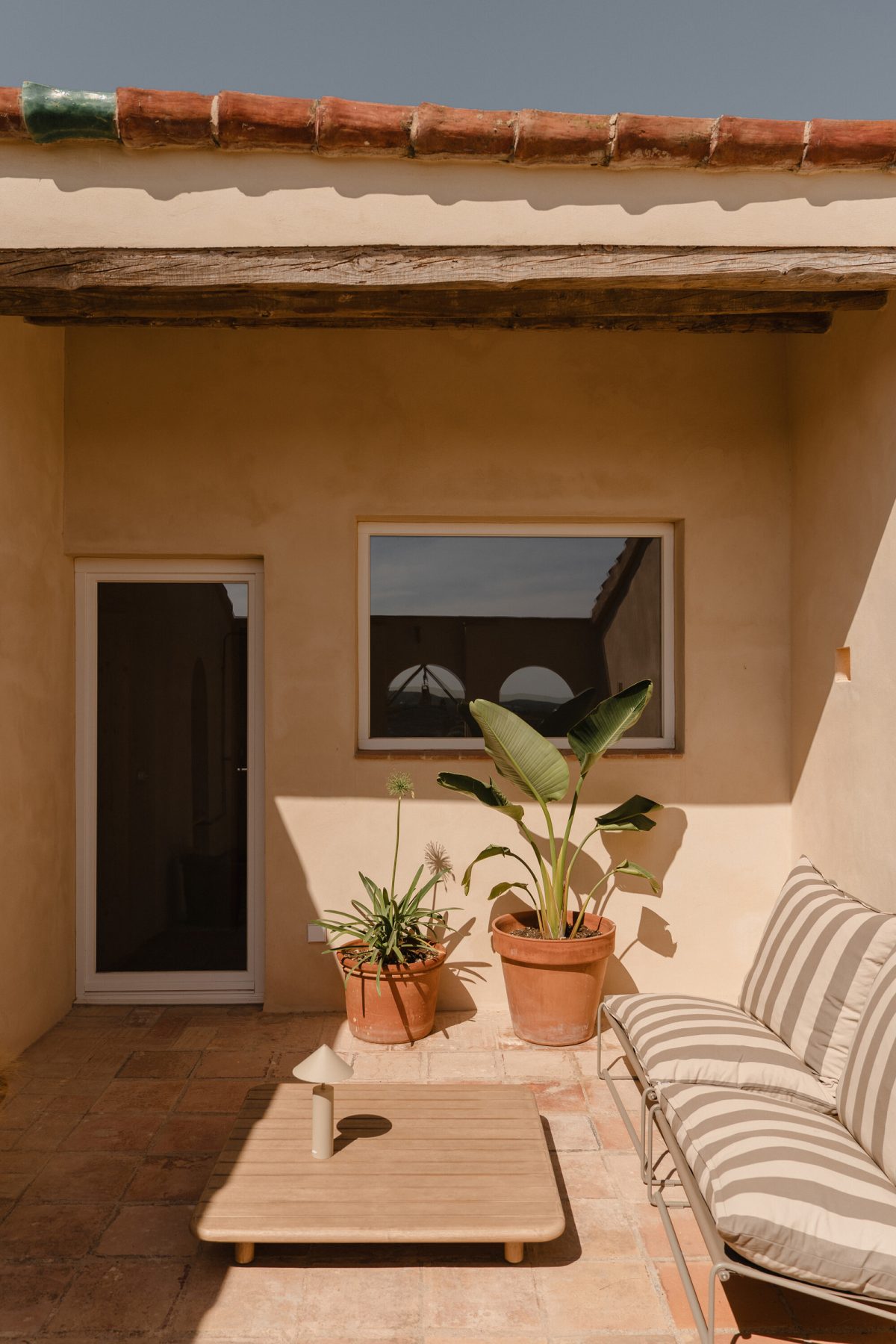
The recovery of handmade toba flooring and artisanal tiles further reinforces the connection to local craftsmanship and traditional construction techniques.
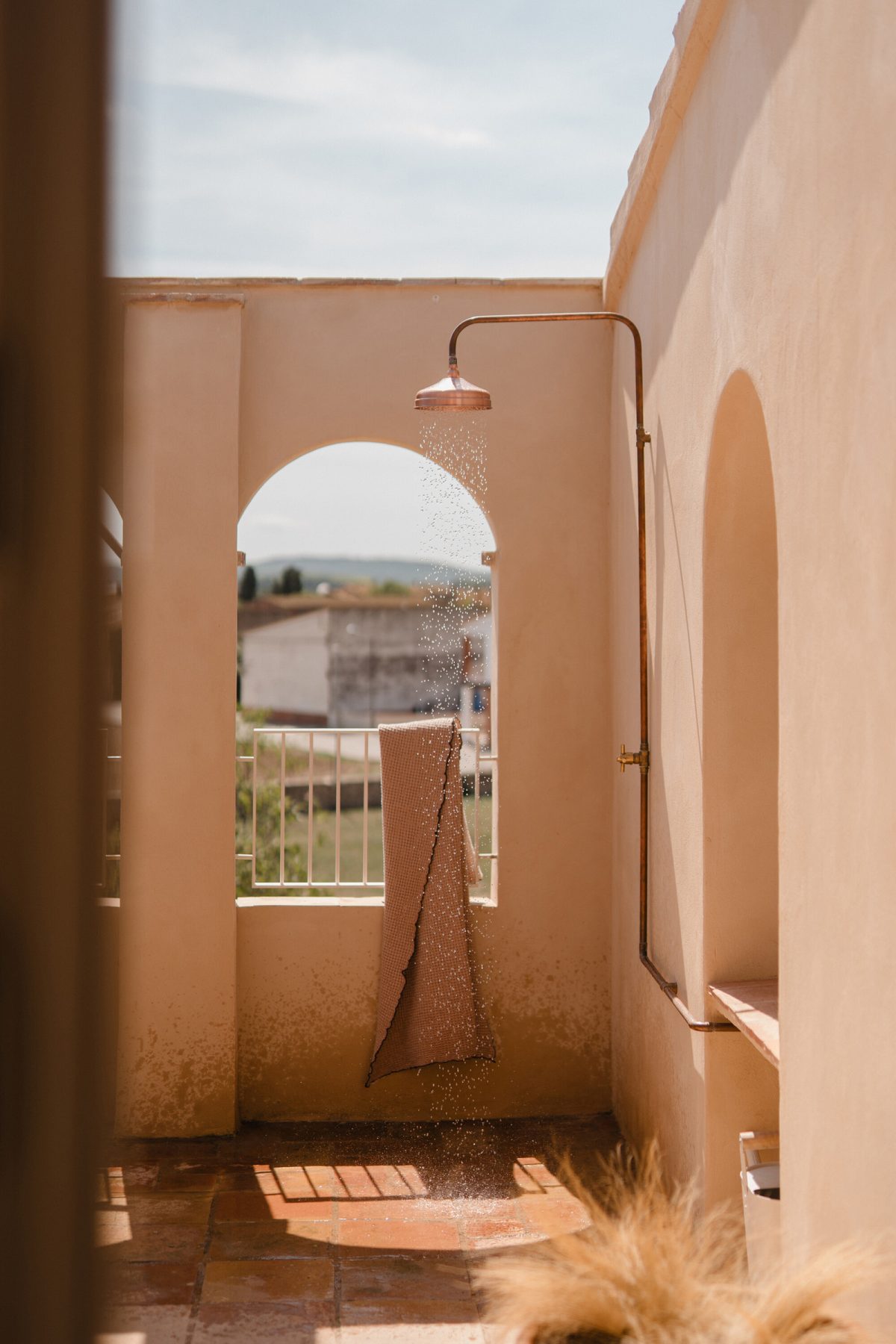
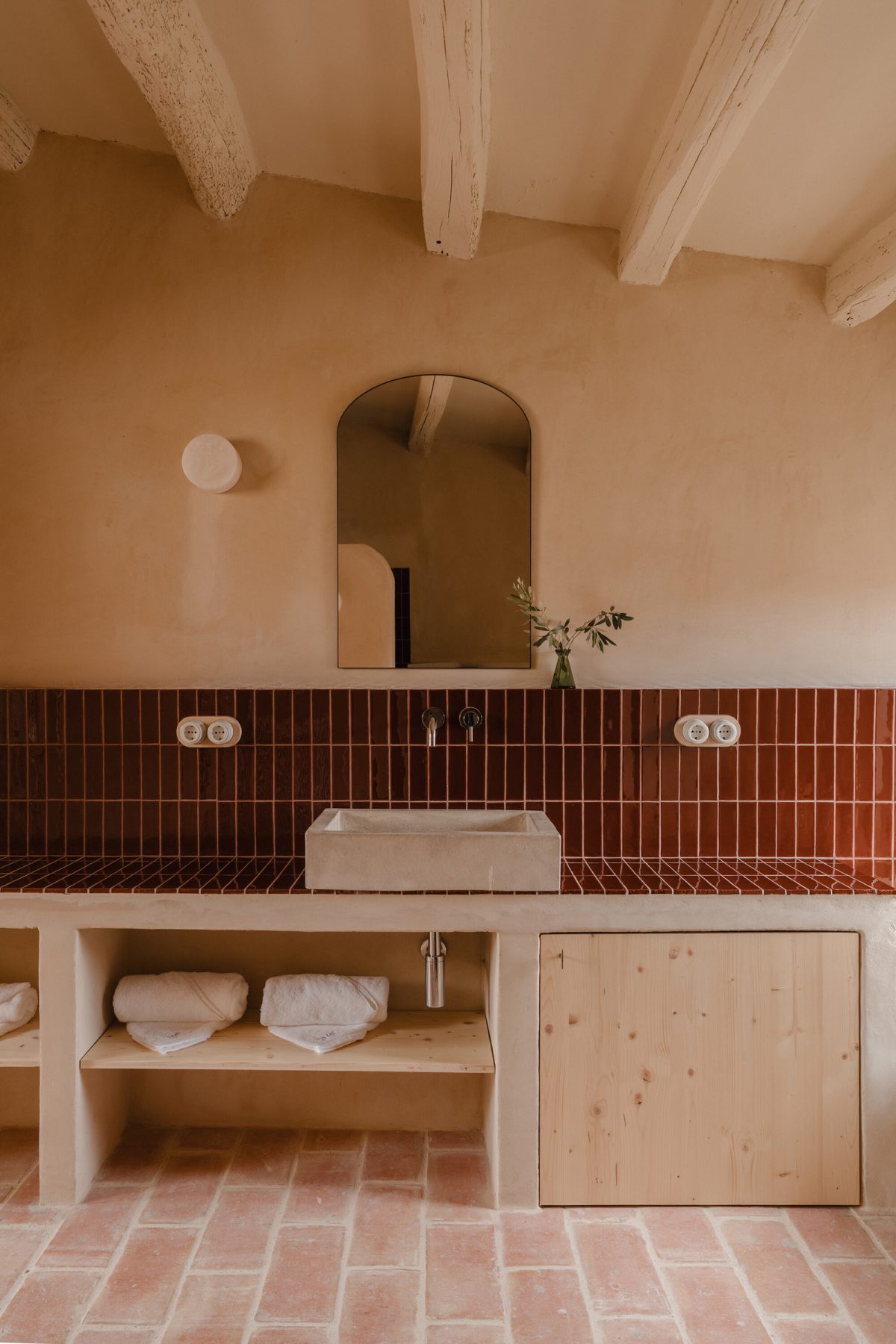
La Fusteria offers a considered approach to inhabiting built heritage. An architecture that sustains and reinterprets the existing, extending the life of the building while transforming it into an efficient, comfortable dwelling deeply rooted in its context.
Plans
Facts Credits
Project title: La Fusteria
Architecture: Studio Clara Crous Arquitectura
Design team: Jordi Collell Puig, Amanda Soler Vela
Project location: Vilamacolum, Spain
Date of completion: 2025
Client: Ca-liu
Photography: Montse Capdevila