The architect’s office explores the studio as both laboratory and mirror of architectural thought. The series examines how space, ritual, tools, and collaboration shape design culture. From intimate ateliers to larger practices, these workplaces reveal values and ambitions—where ideas are tested and identities take form, moving from paper and digital drawing toward the built world.
Conceived as the new base for Cochi Architects, the office designed Studio in Gushichan which fuses office and fabrication into a single, evolving environment. Rooted in Okinawa’s climate, the project foregrounds timber craft and passive environmental strategies. Flexible spatial arrangements support changing uses over time. Together, these elements redefine practice through a continuous exchange between drawing and making, where architecture emerges through use, experimentation, and time.
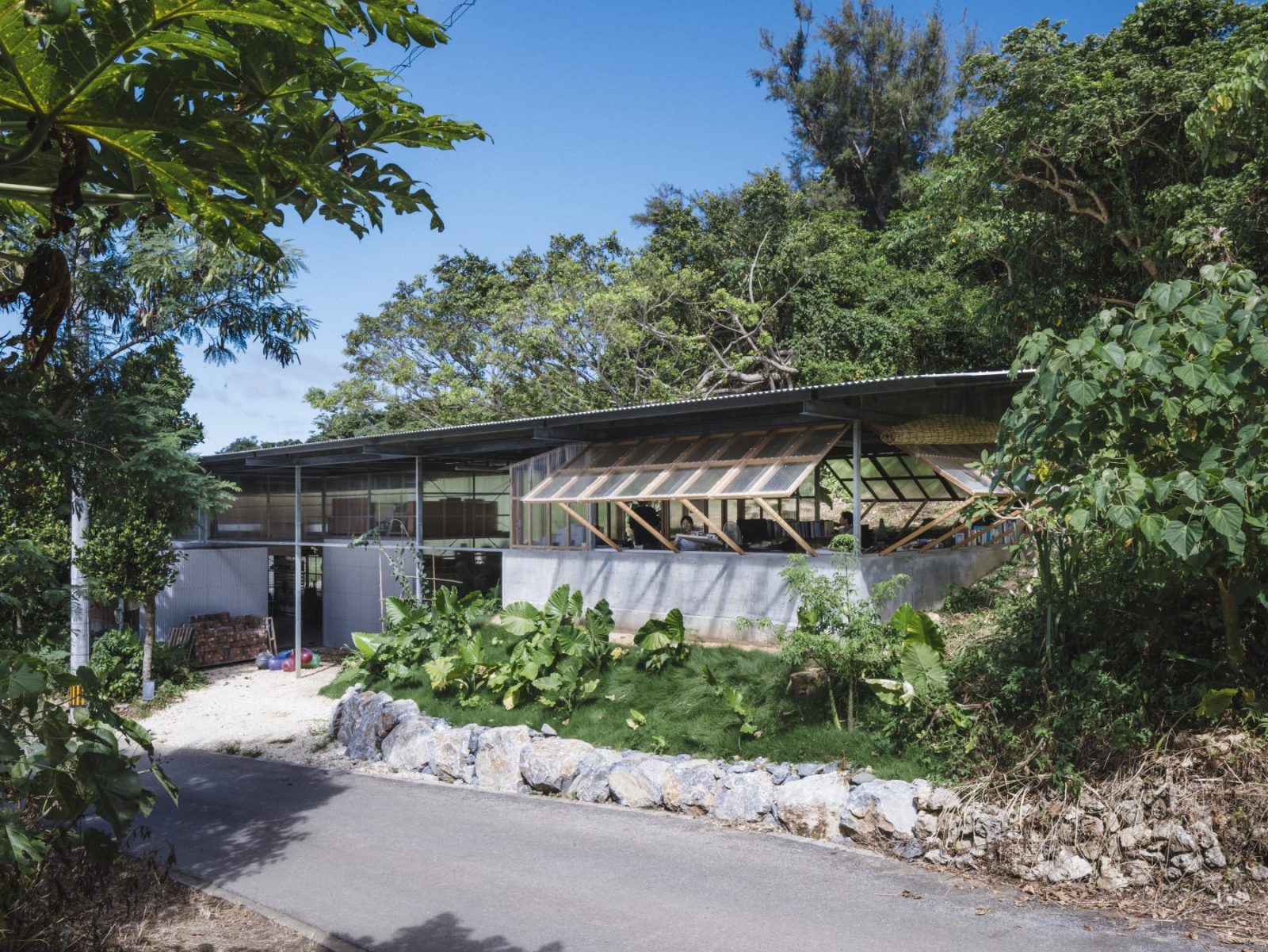 Designed by Cochi Architects as their new office, the Studio in Gushichan serves as the practice’s workspace, workshop, and living manifesto—an architectural embodiment of their philosophy rooted in environmental responsiveness, material honesty, and lived adaptability.
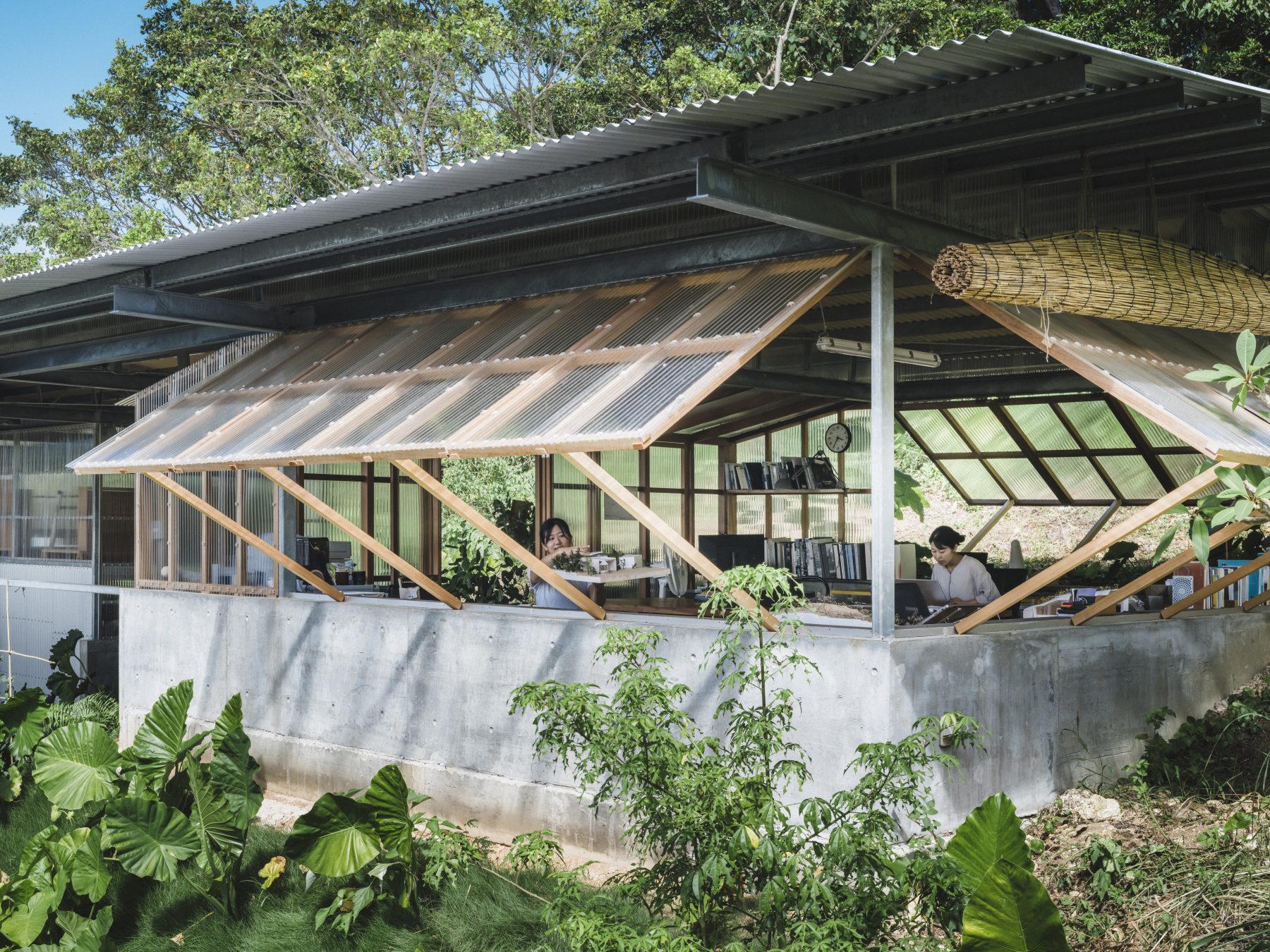
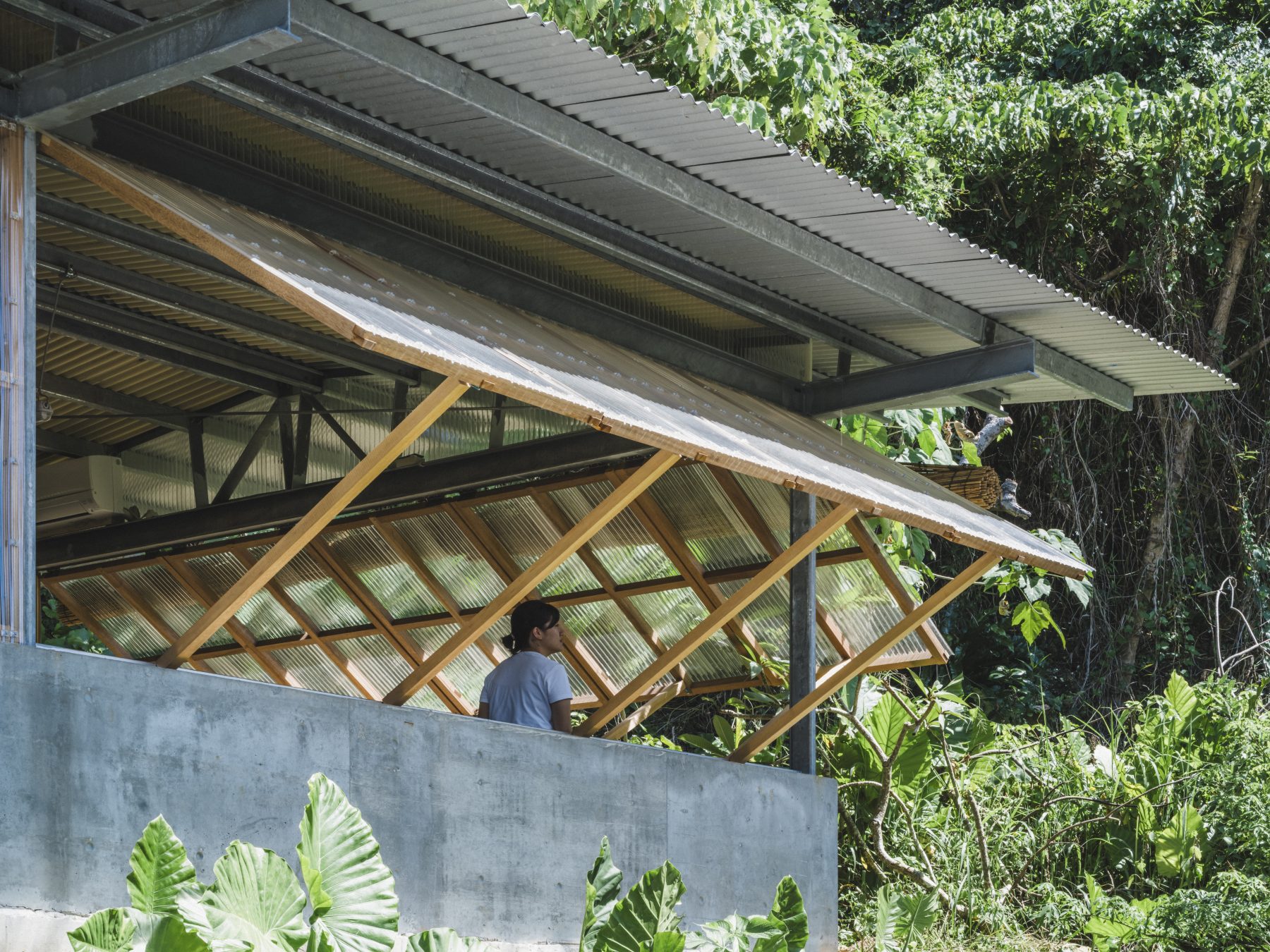
Shaped by Okinawa’s subtropical climate and cultural hybridity, the project reflects how they think, make, and inhabit space.
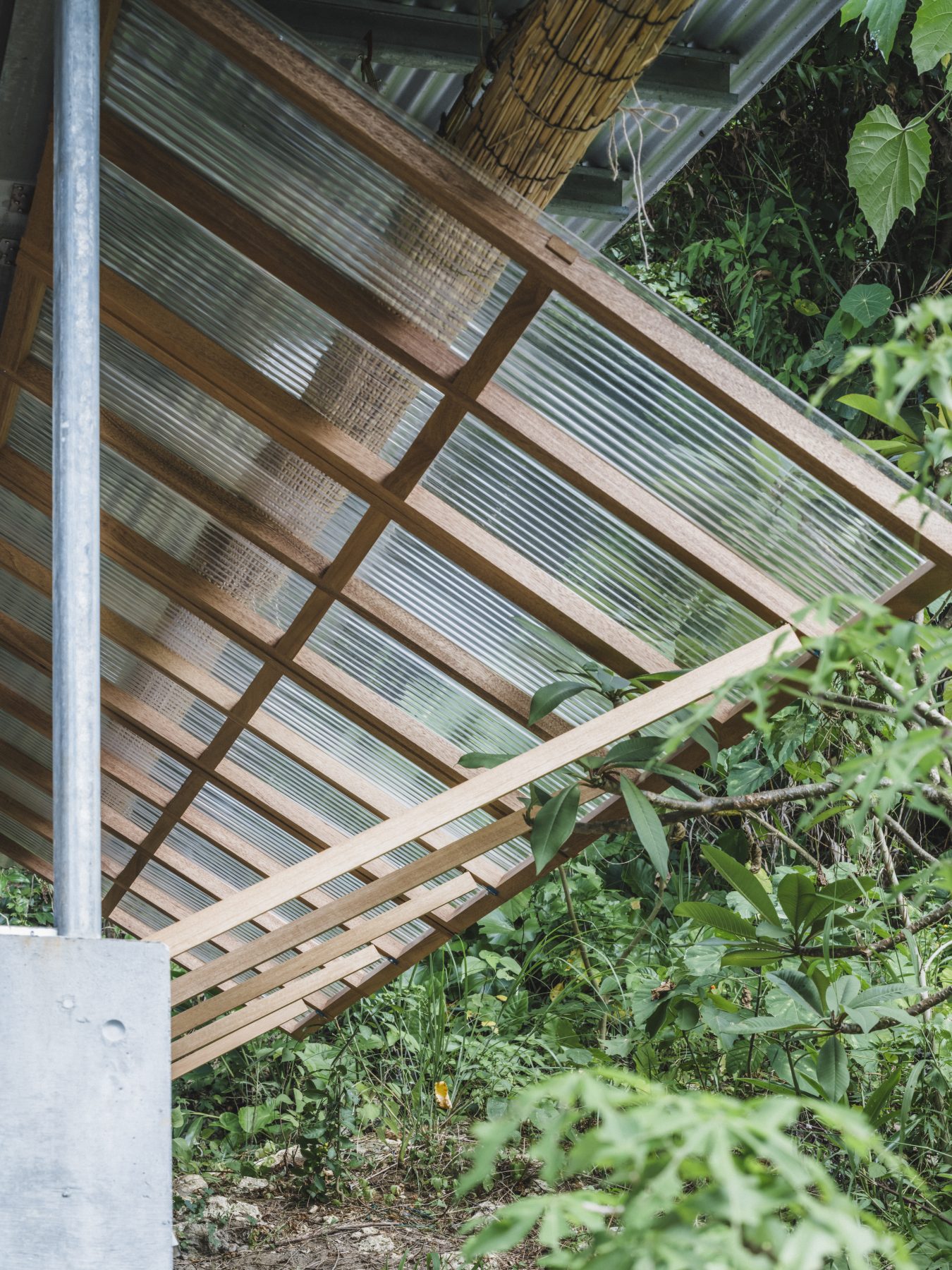
The building brings together architectural design and woodworking production under one roof, establishing a hybrid workspace where ideas are continuously tested through making. This integration emerges from a critical stance toward the region’s dominant construction methods—typically reinforced concrete paired with aluminum sashes—and instead advocates for the tactile, temporal qualities of wood.
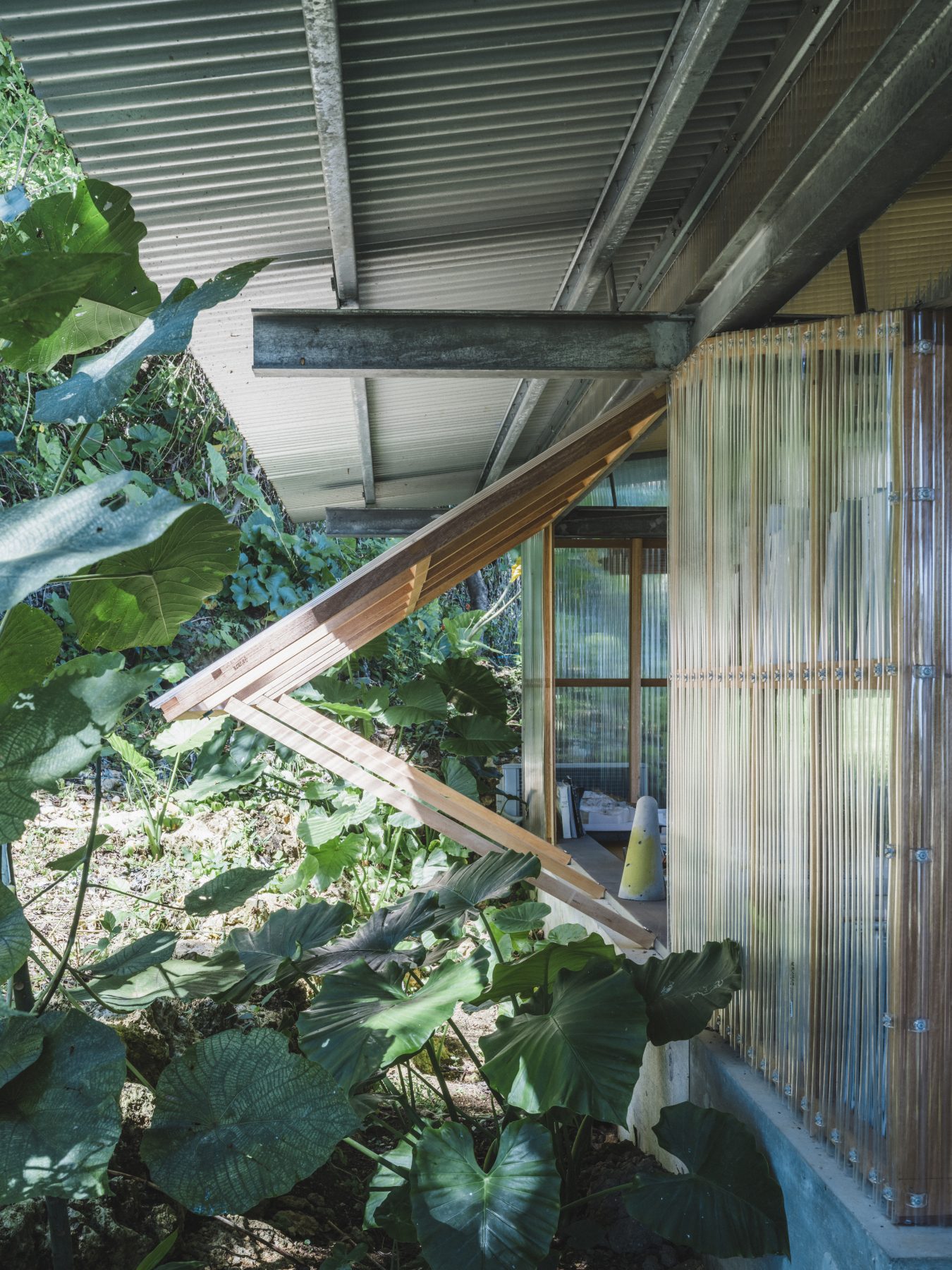
By incorporating an in-house fabrication facility, studio Cochi Architects gain full control over design, production, and maintenance, allowing details such as wooden window frames to be prototyped, refined, and realized with precision.
Architecture here becomes a process rather than a fixed result.
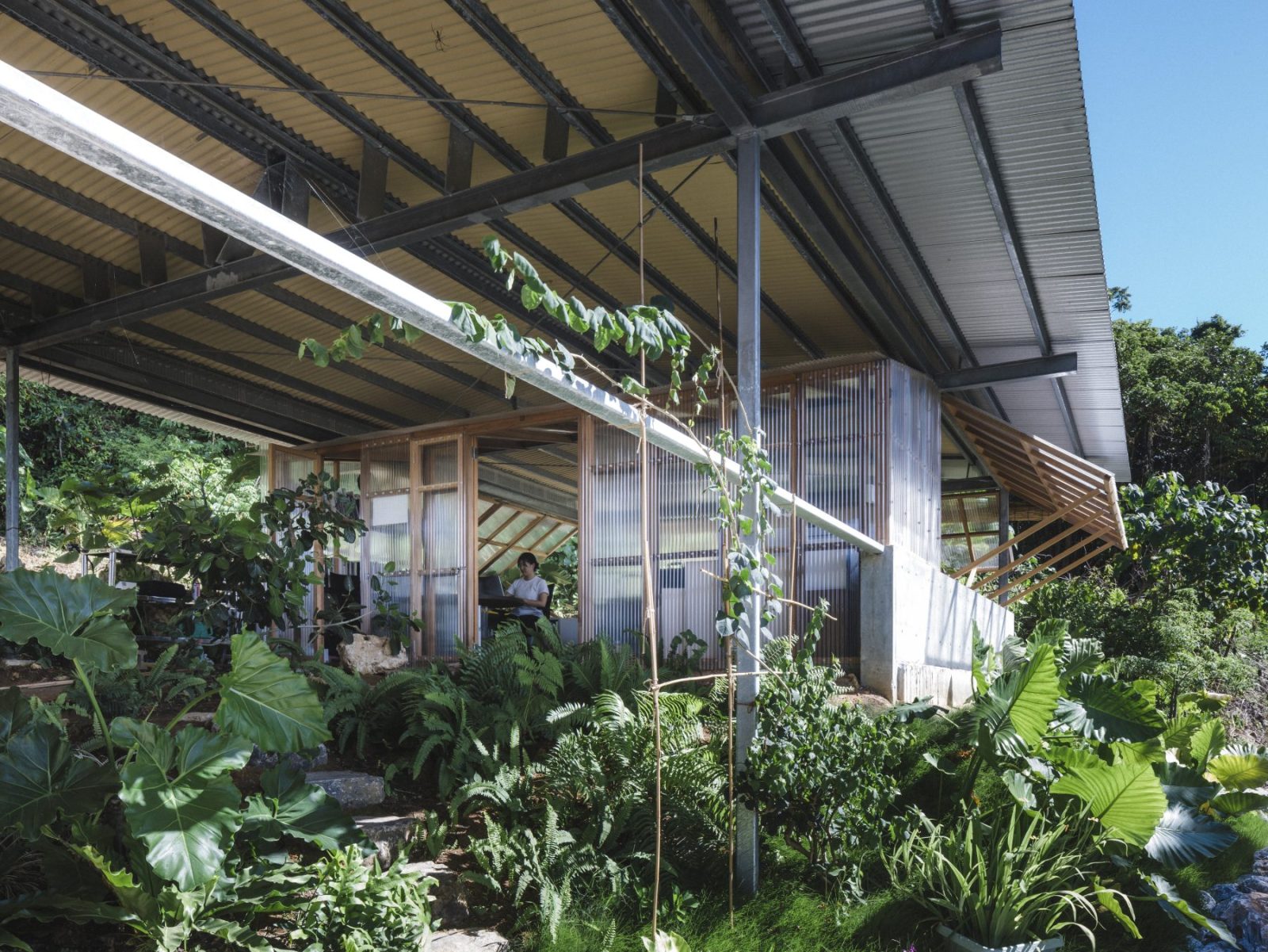
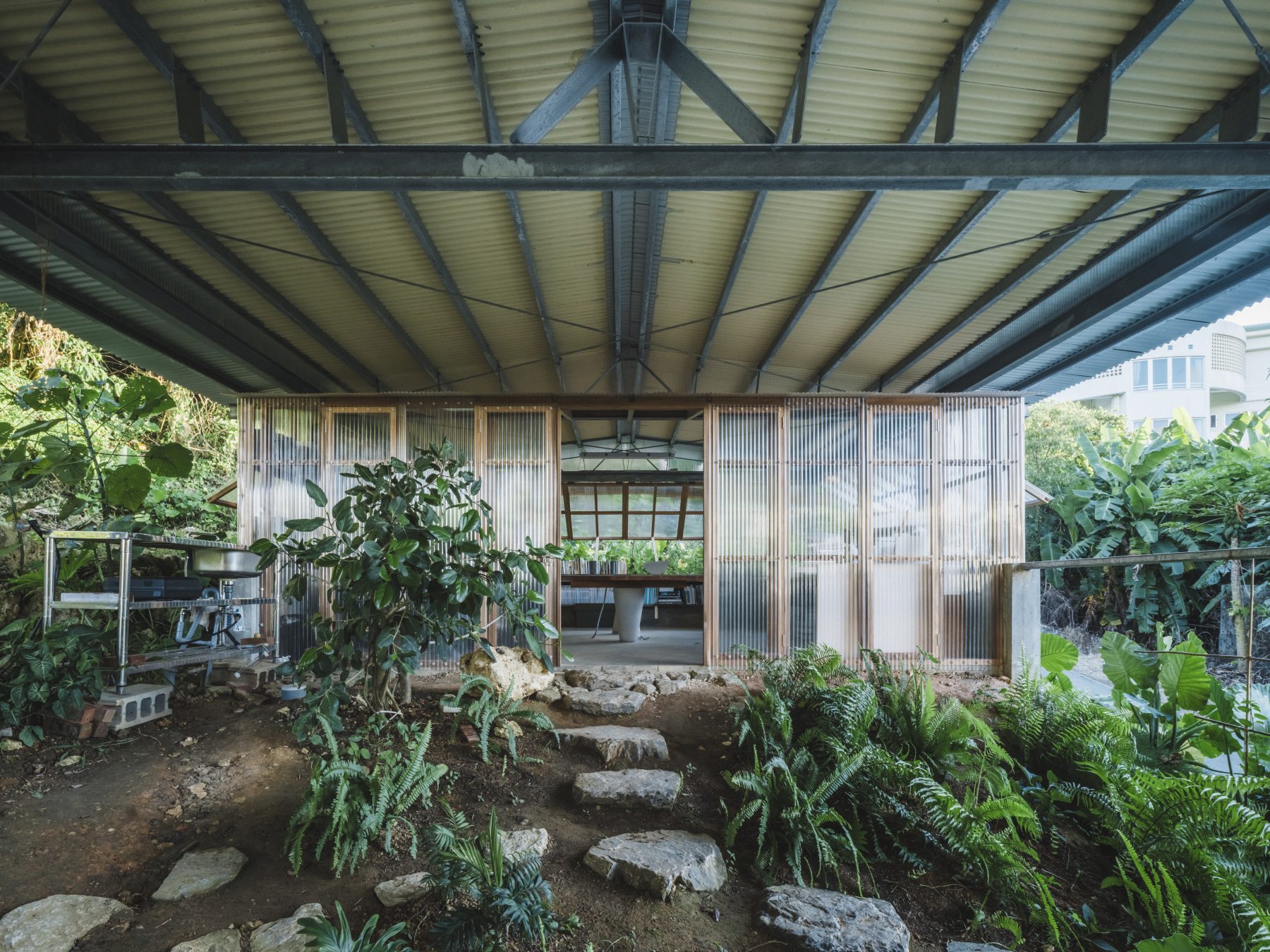
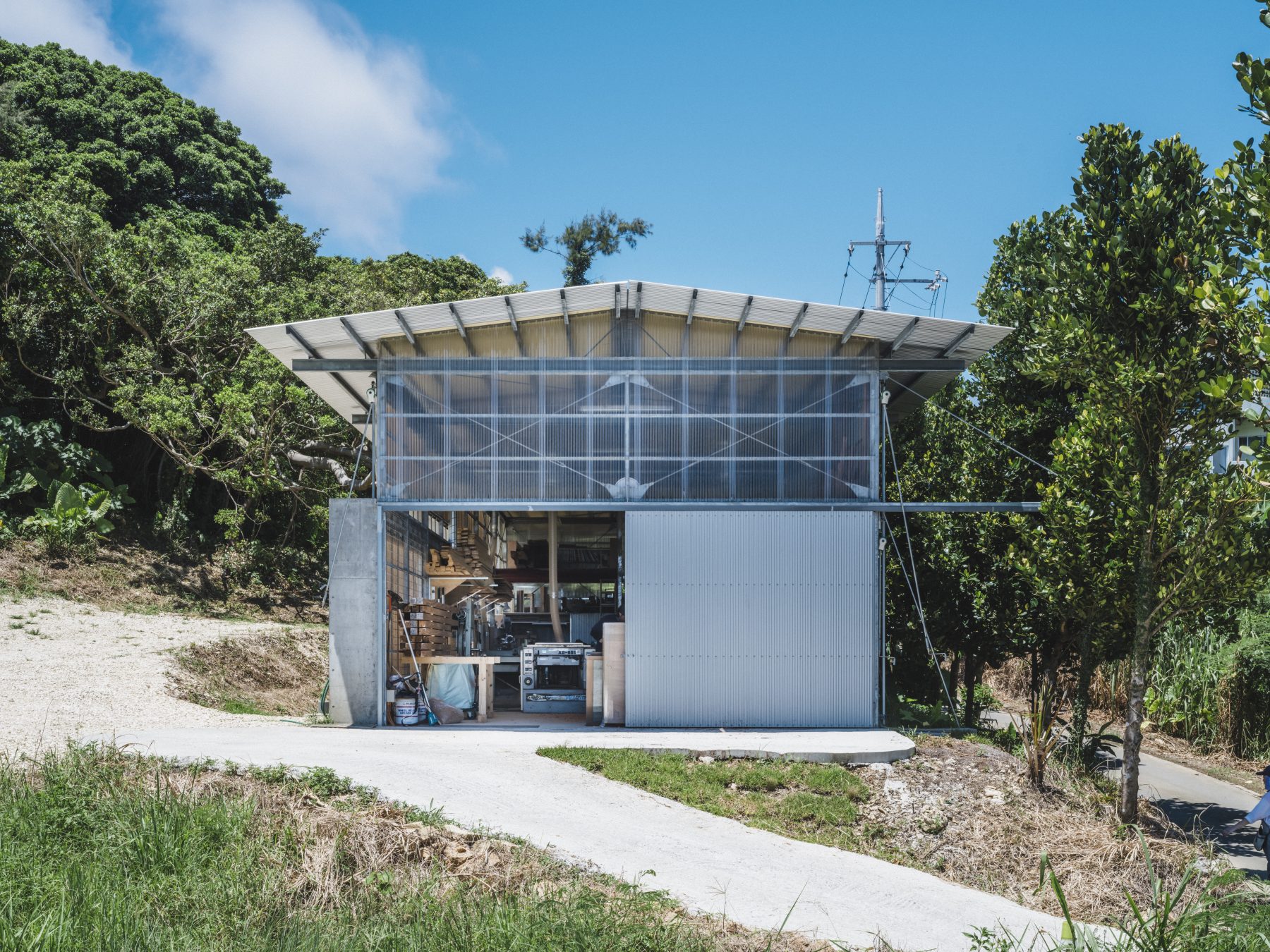
Set within a landscape of fields and dense vegetation, slightly removed from the village fabric, the building adopts a steel frame structure for its openness, economy, and speed of construction. Realized in two phases—first the workshop, then the office elements fabricated within it—the project reflects a feedback loop between design and construction. Its spatial organization follows the natural slope of the site, minimizing intervention, while a semi-external garden mediates between workshop and office, filtering noise and dust and extending the surrounding greenery into the daily working environment.
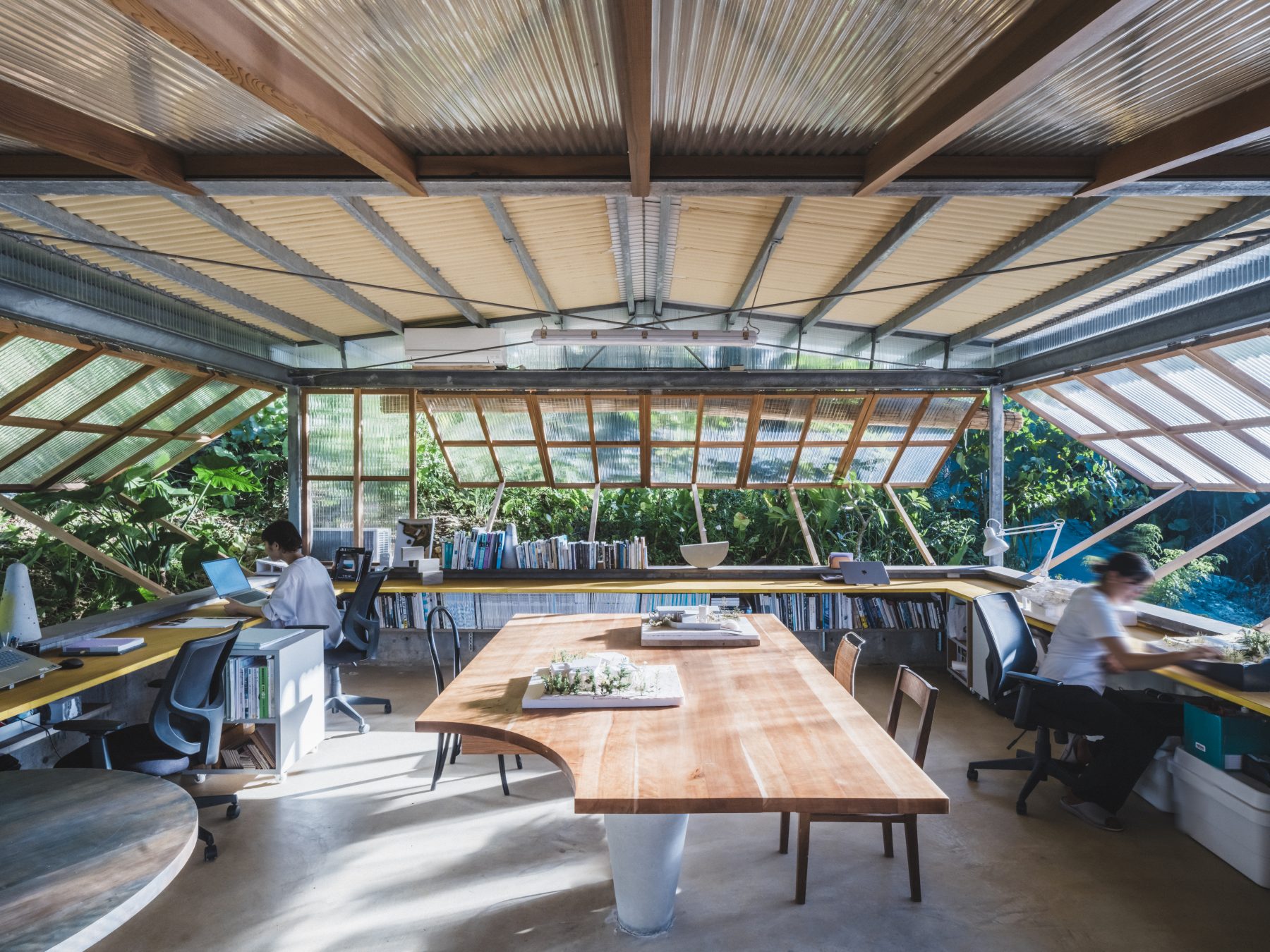
Climatic responsiveness is central.
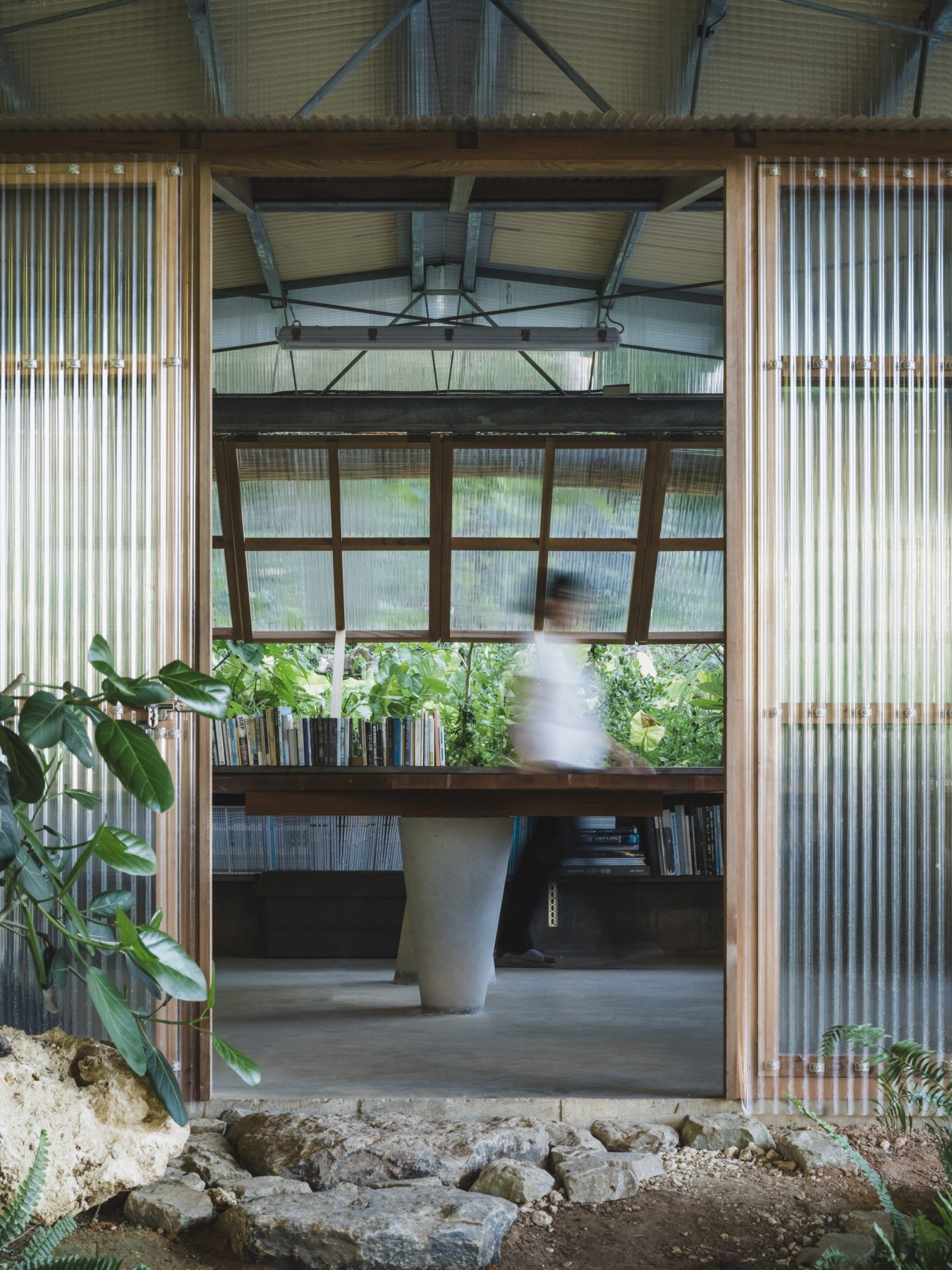
Rather than resisting Okinawa’s intense sun, humidity, heavy rainfall, and typhoons, the building absorbs and negotiates these forces. A breathable double-skin envelope—combining agricultural insect netting with roll-up vinyl membranes—enables constant natural ventilation while providing protection from the elements.
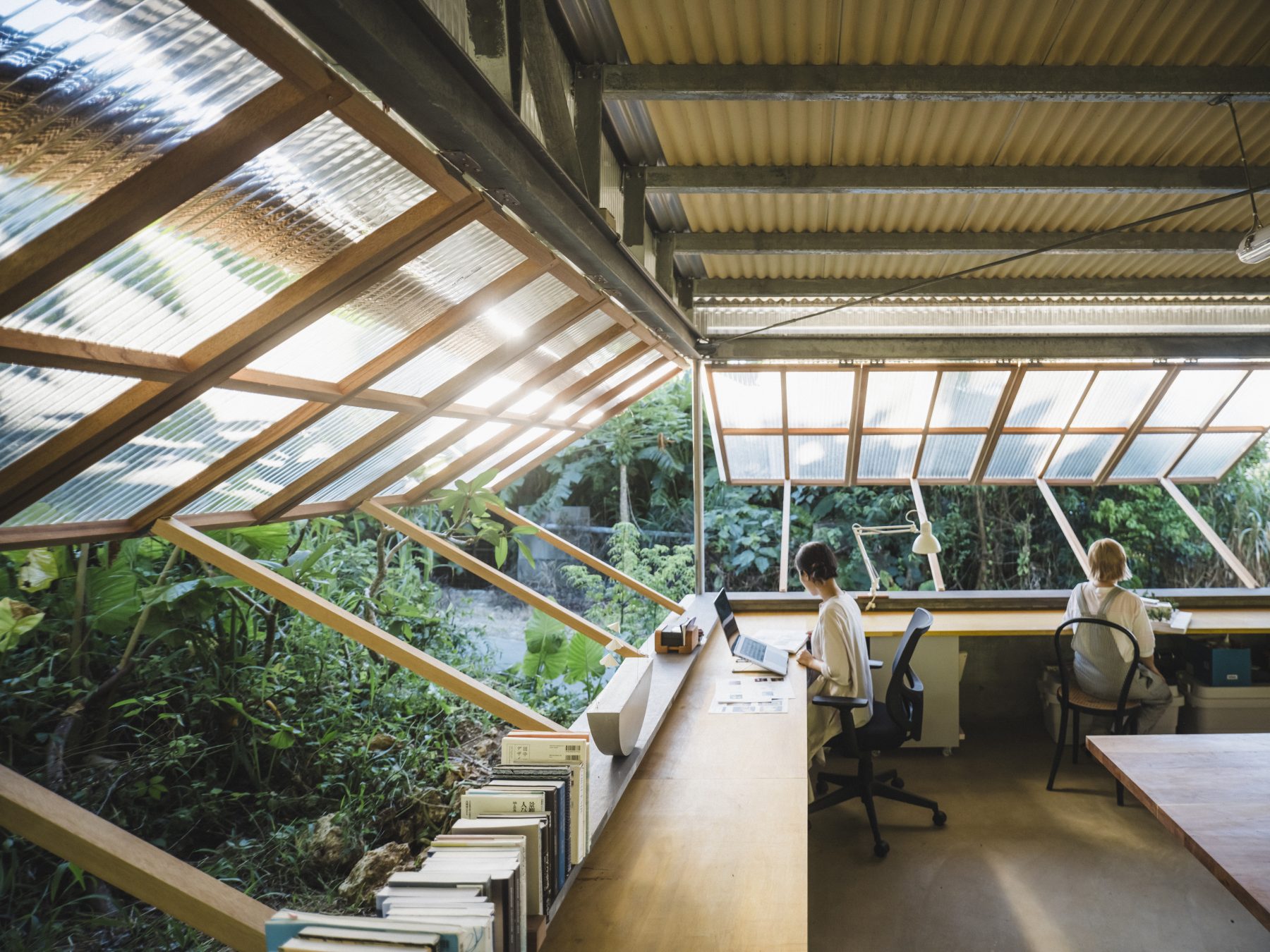
This porous boundary dissolves the distinction between inside and outside, aligning with the studio’s broader approach of architecture as an open, adaptive system.
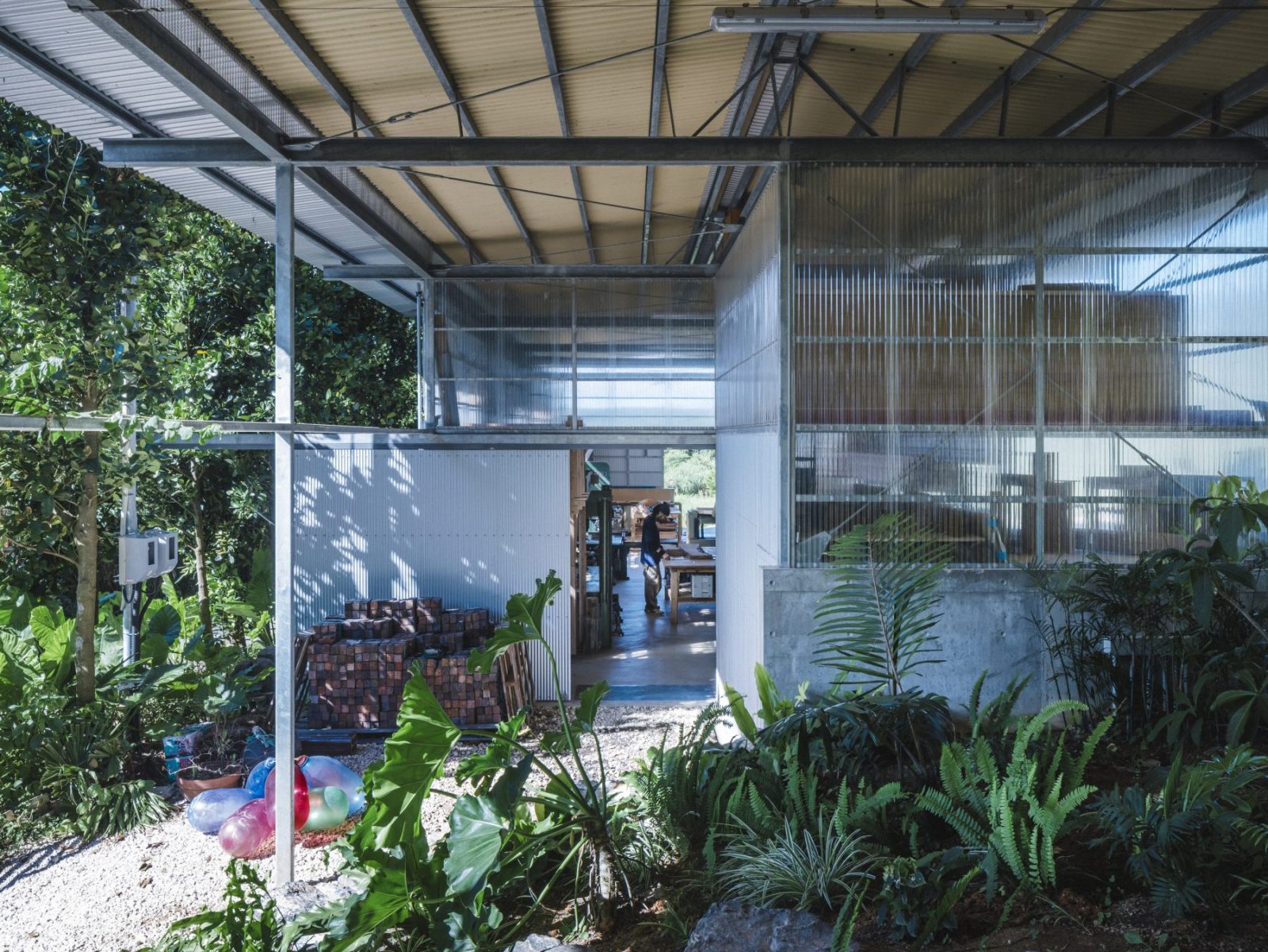
Materially, the project reflects a commitment to honesty and tactility. Exposed structural elements, lightweight polycarbonate panels, and sliding partitions emphasize construction logic and flexibility, while crafted wooden components introduce warmth and a sense of time. Imperfection, weathering, and use are not concealed but embraced, allowing the building to record its own occupation.
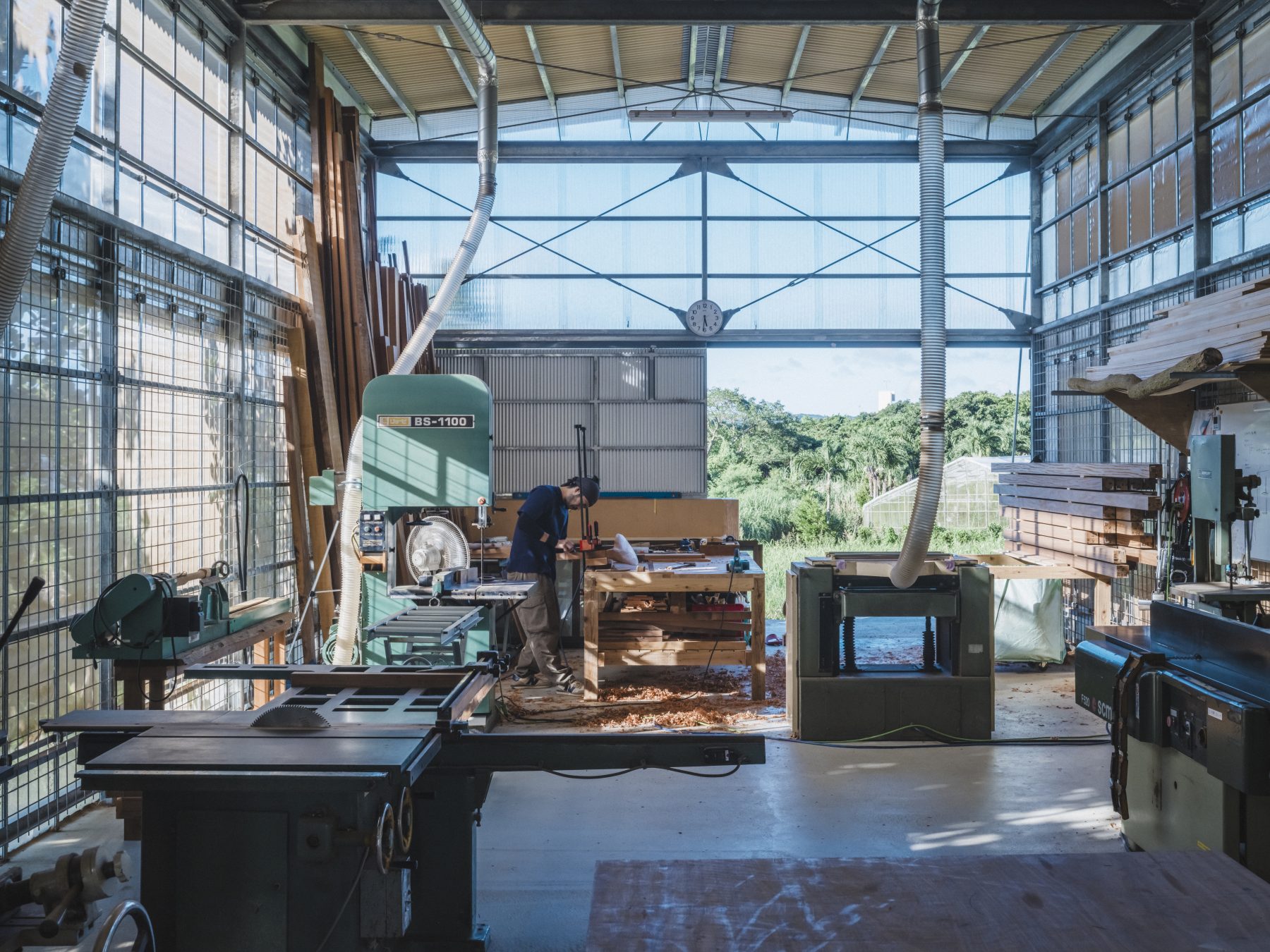
As their own workplace, the studio avoids formal spectacle and instead foregrounds everyday life—working, making, gathering—as spatial events. Circulation remains fluid and non-linear, with layered thresholds and ambiguous zones that invite reinterpretation over time.
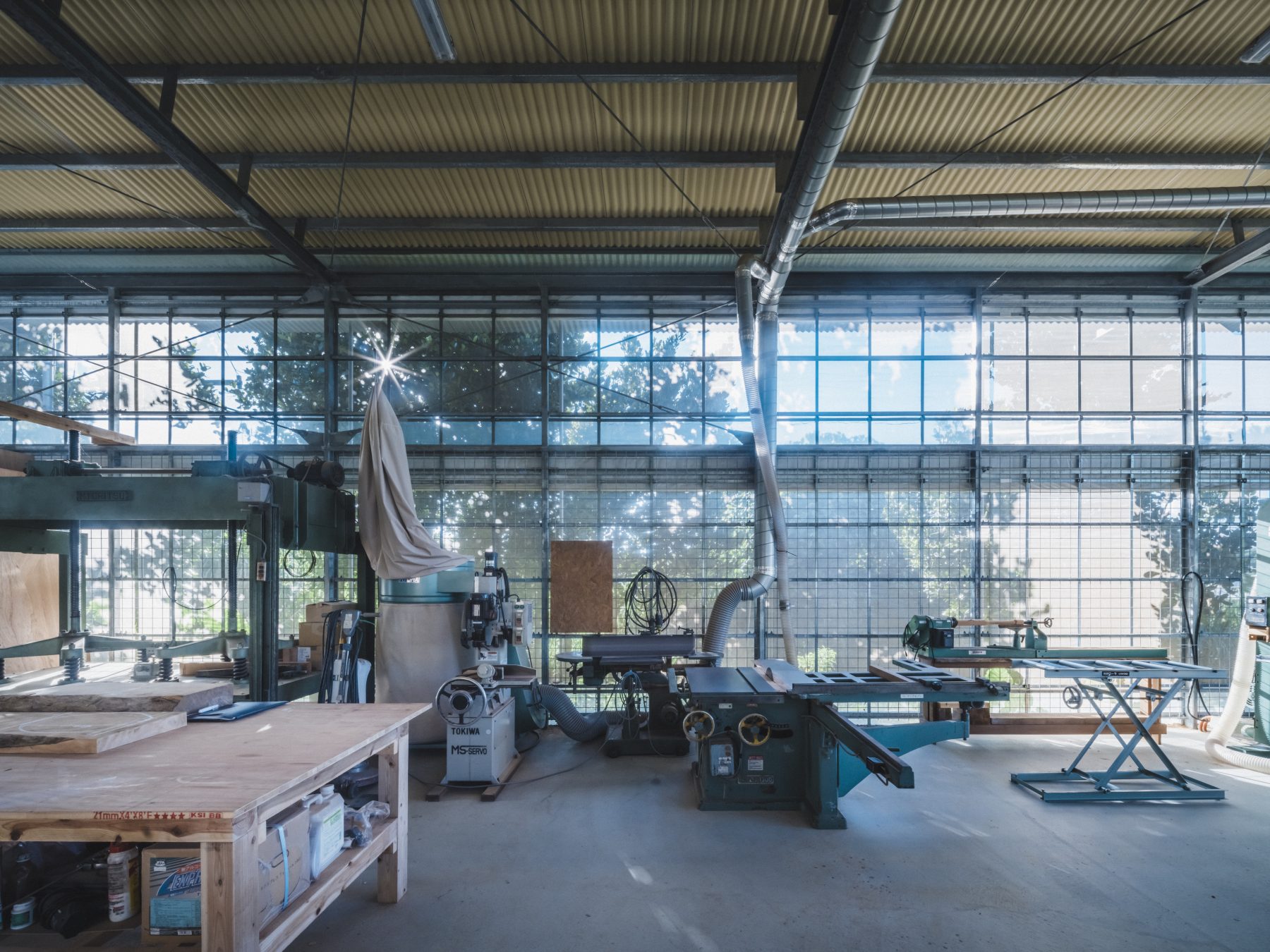
In this way, the building embodies Cochi Architects’ belief in indeterminacy: that architecture should not prescribe use too rigidly, but remain open to change.
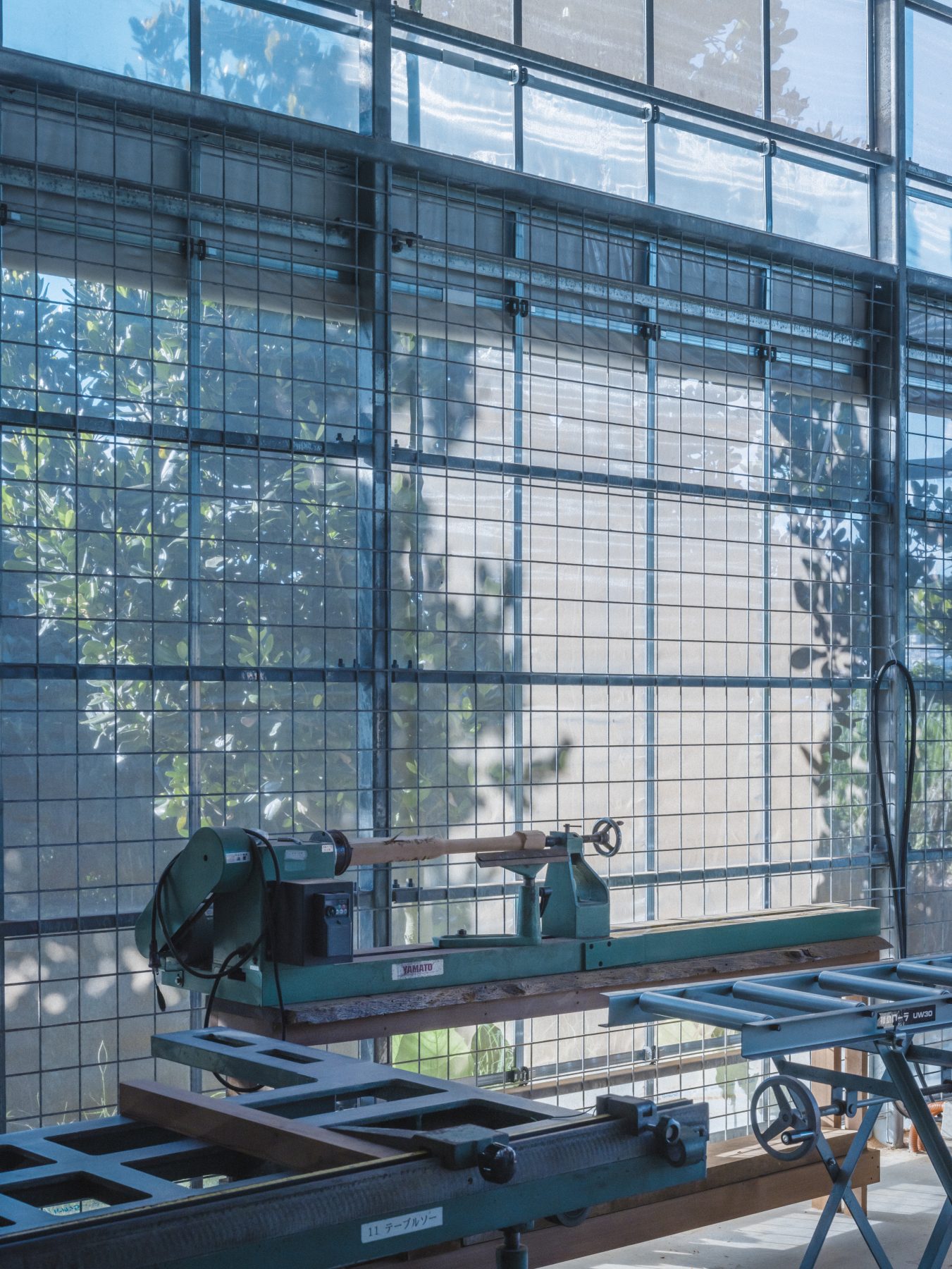
Ultimately, the Studio in Gushichan is both infrastructure and statement—a quietly radical model of practice in which design, fabrication, environment, and daily life are inseparable.
Facts & Credits
Project title: Studio in Gushichan
Architecture: Studio Cochi Architects
Project location: Gushichan, Okinawa, Japan
Photography: Ooki Jingu | @ookijingu