Reclaiming a disused factory in Leganés, Madrid, OOIIO Architecture transforms it into a contemporary automotive facility inspired by Le Corbusier’s idea of the building as a precise machine. Sustainability, energy autonomy, and a strong identity redefine industrial design. A new façade of white metal slats on a mint-green frame exposes technical systems while freeing the interior, creating a bold, rhythmic volume within a uniform industrial landscape.
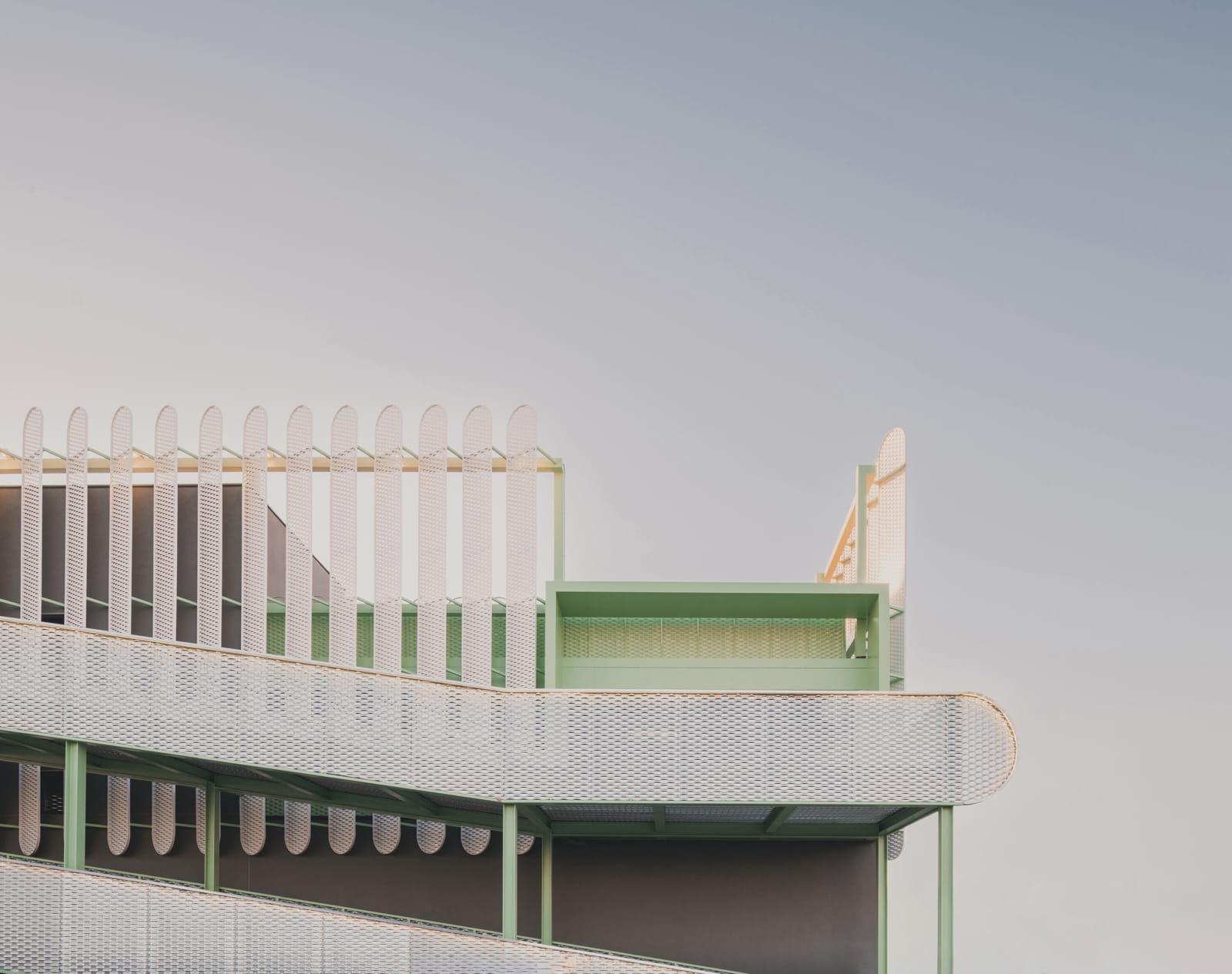
Rather than demolishing a disused kitchen factory, this project reclaims and redefines it as a contemporary automotive facility.
Through adaptive reuse, energy autonomy, and a carefully articulated architectural language, it challenges the conventions of industrial building design and argues convincingly that another approach is not only viable, but necessary.
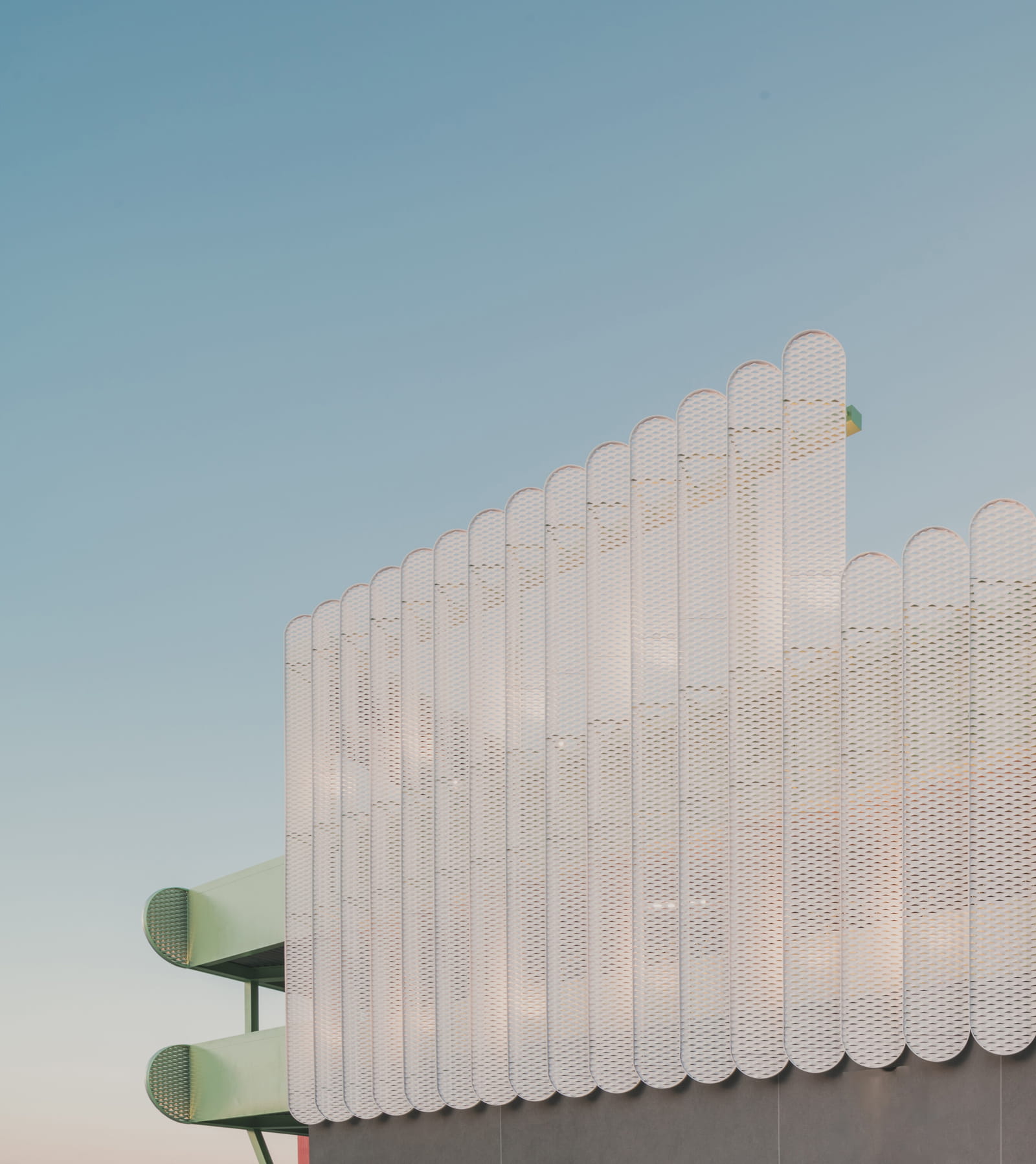
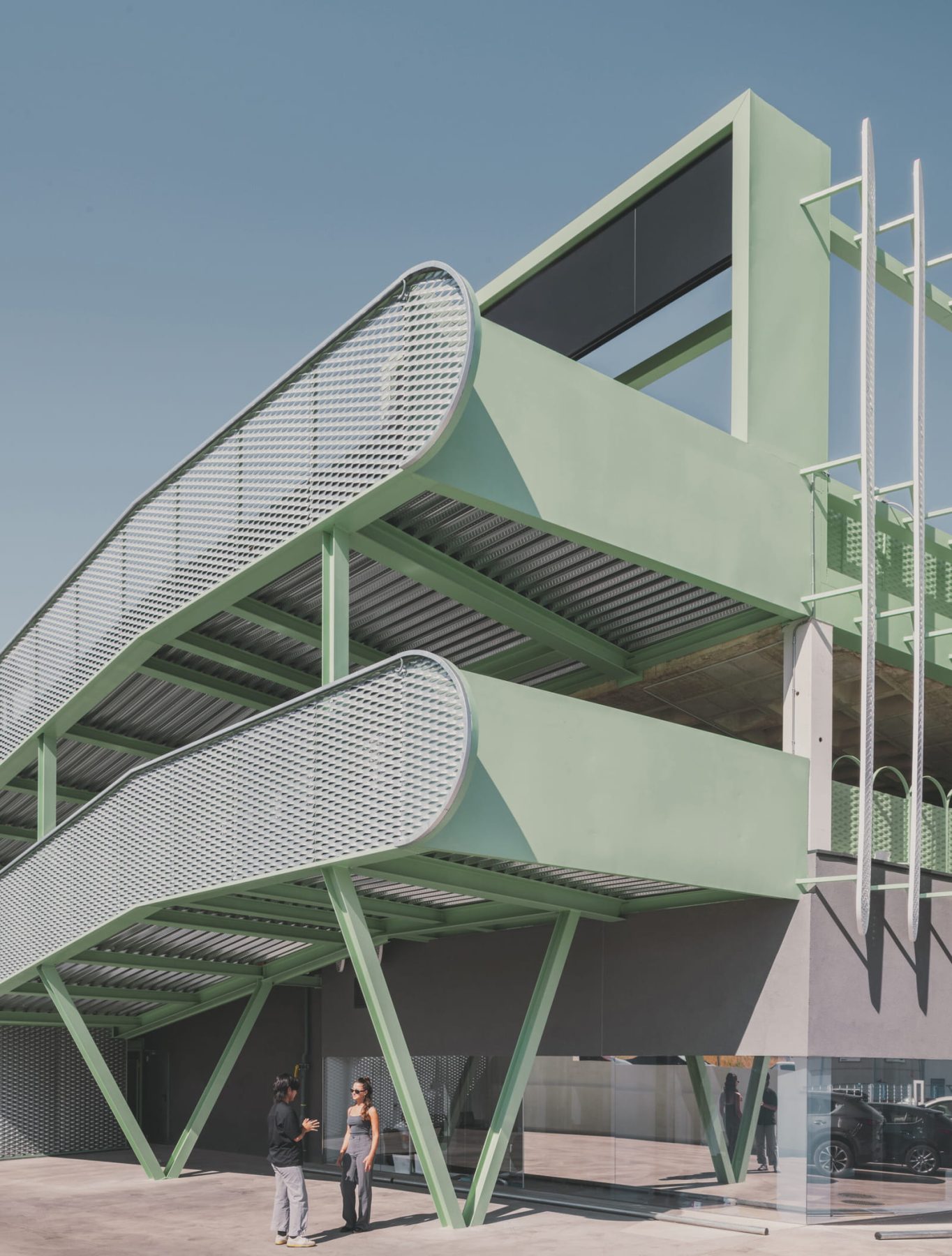
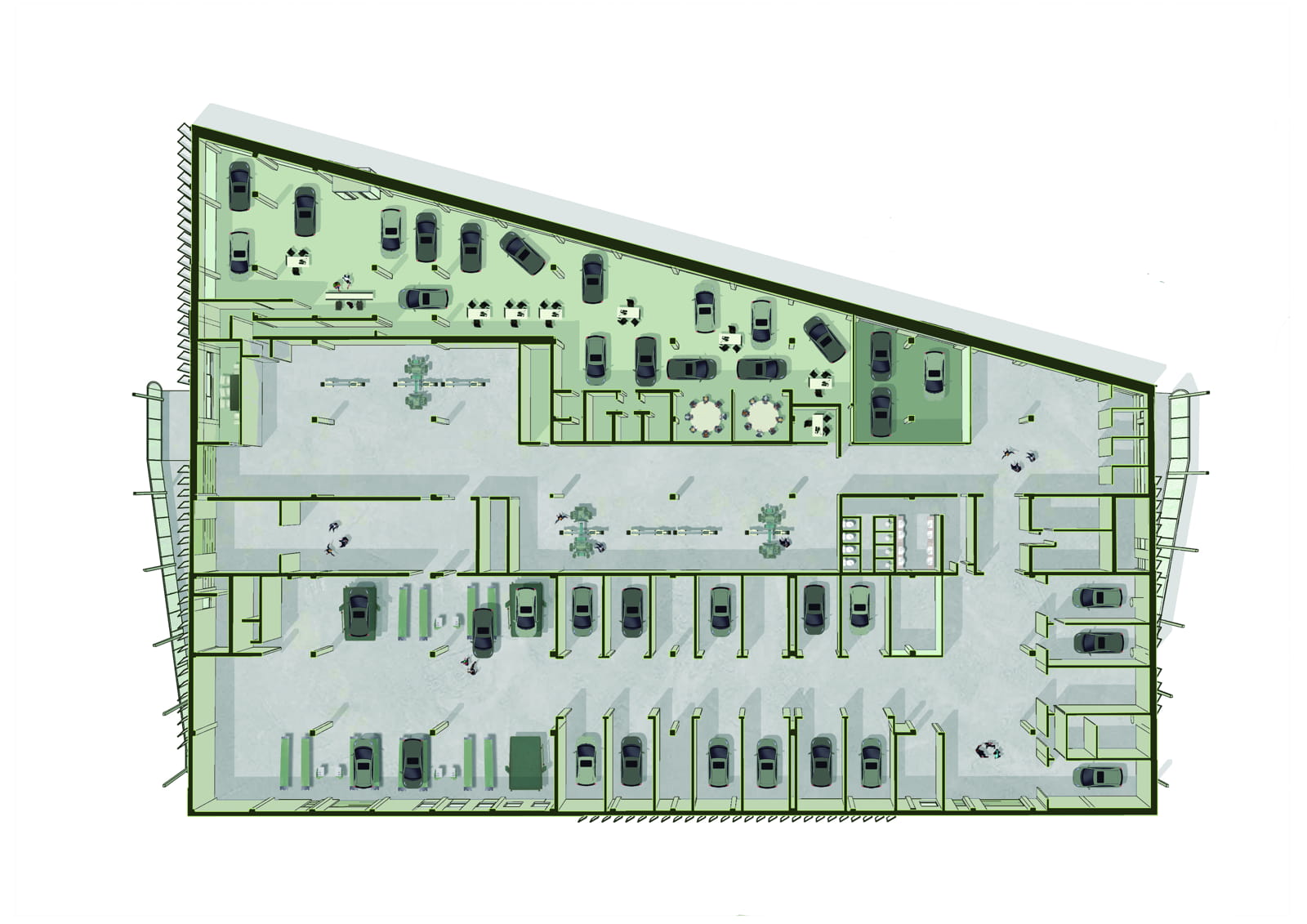
Set within an industrial park in Leganés, the commission entrusted OOIIO Architecture with an atypical brief: to design a large-scale complex for the sale and repair of automobiles. The program required a commercial showroom, offices, mechanical and bodywork workshops, and storage capacity for hundreds of vehicles—all while accommodating the continuous circulation of cars throughout the building.
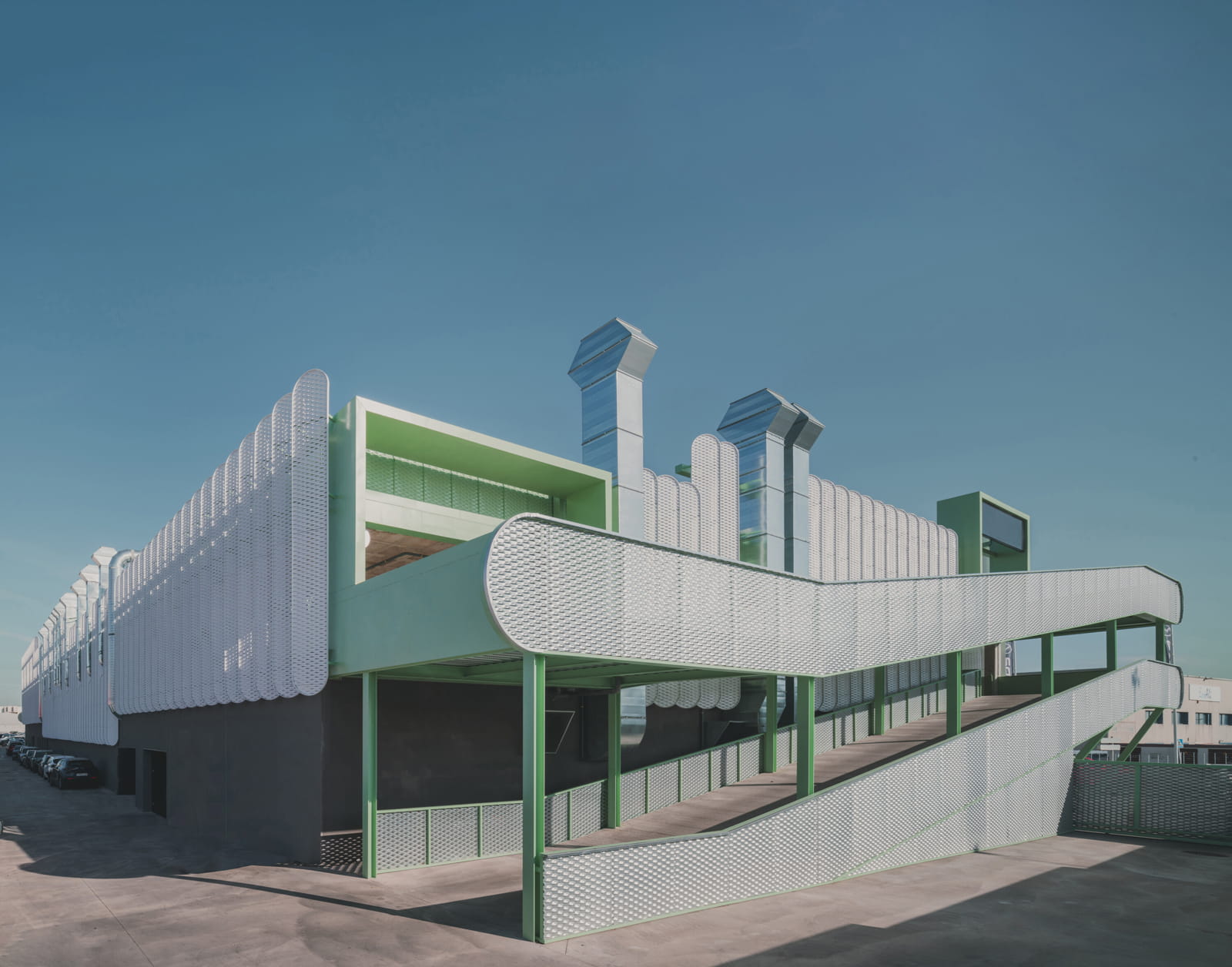
Projects of this type are typically resolved through purely technical solutions, often delegated to engineering firms and rarely engaging architectural ambition.
Industrial parks, in general, testify to this tendency, where efficiency overrides spatial quality, material articulation, and emotional resonance.
In this context, the Leganés Auto Center stands out as an exception, introducing architectural intent into a typology often deprived of it.
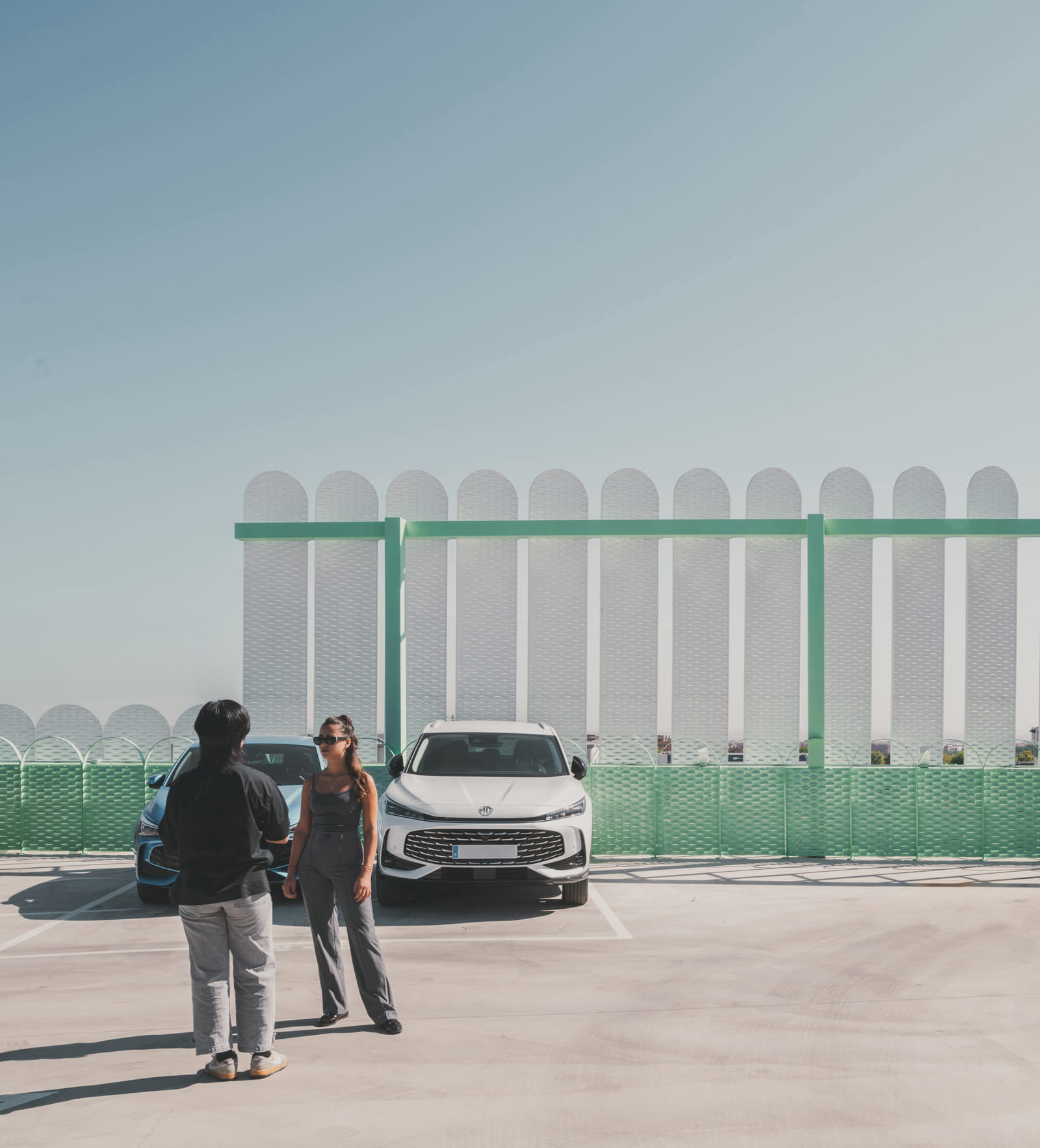
Echoing the thinking of Le Corbusier, the building is conceived as a precise machine in which every component performs optimally.
Like an automobile, it must deliver efficiency and performance, yet also convey identity and evoke experience. The automotive industry has long mastered this duality; here, that logic is transposed into architecture.
The project’s pivotal decision was to preserve and transform the existing structure rather than replace it. This strategy significantly reduces material waste while extending the life cycle of the building.
The former factory is thus reimagined as a hybrid infrastructure for contemporary automotive use.
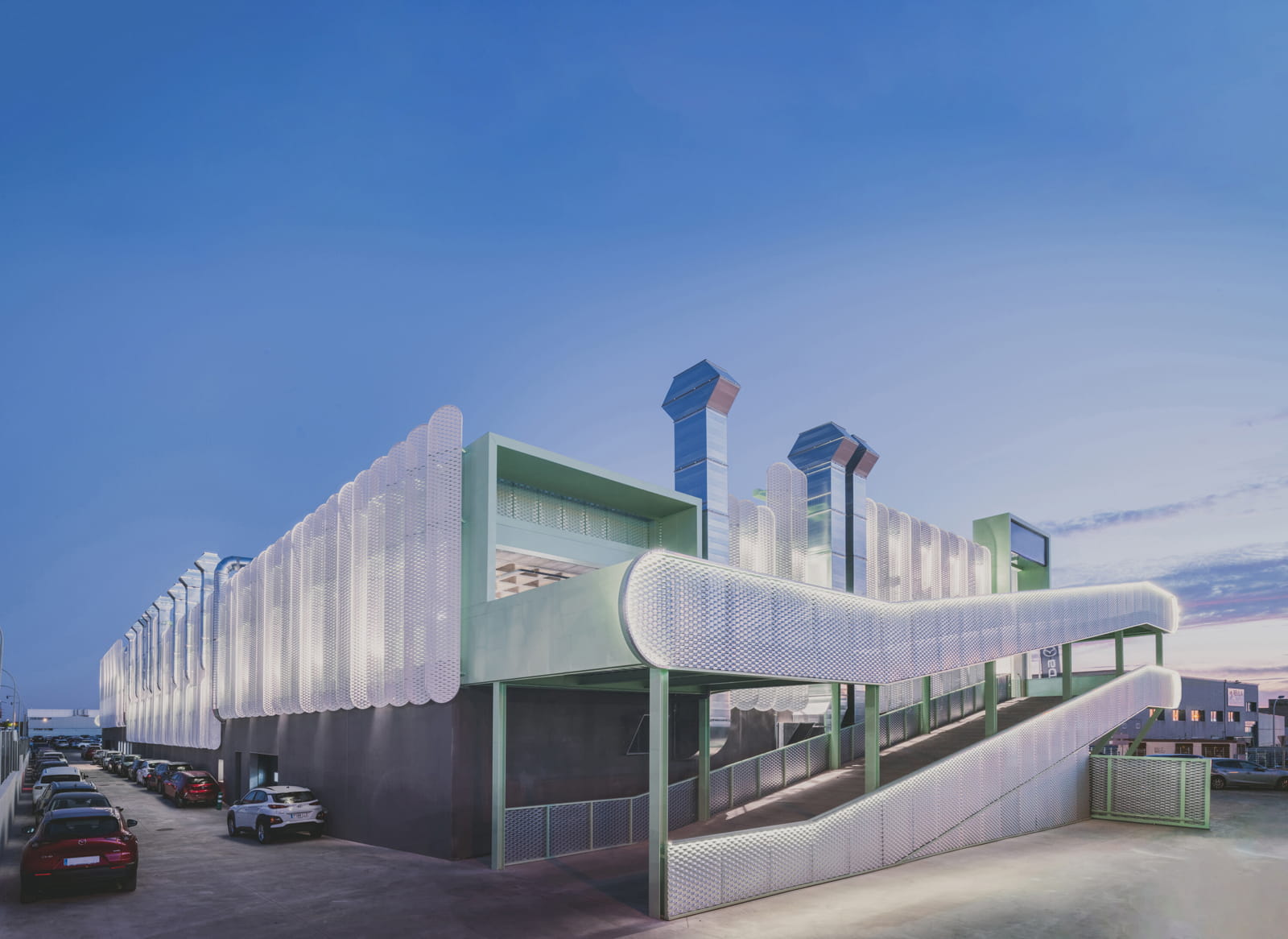
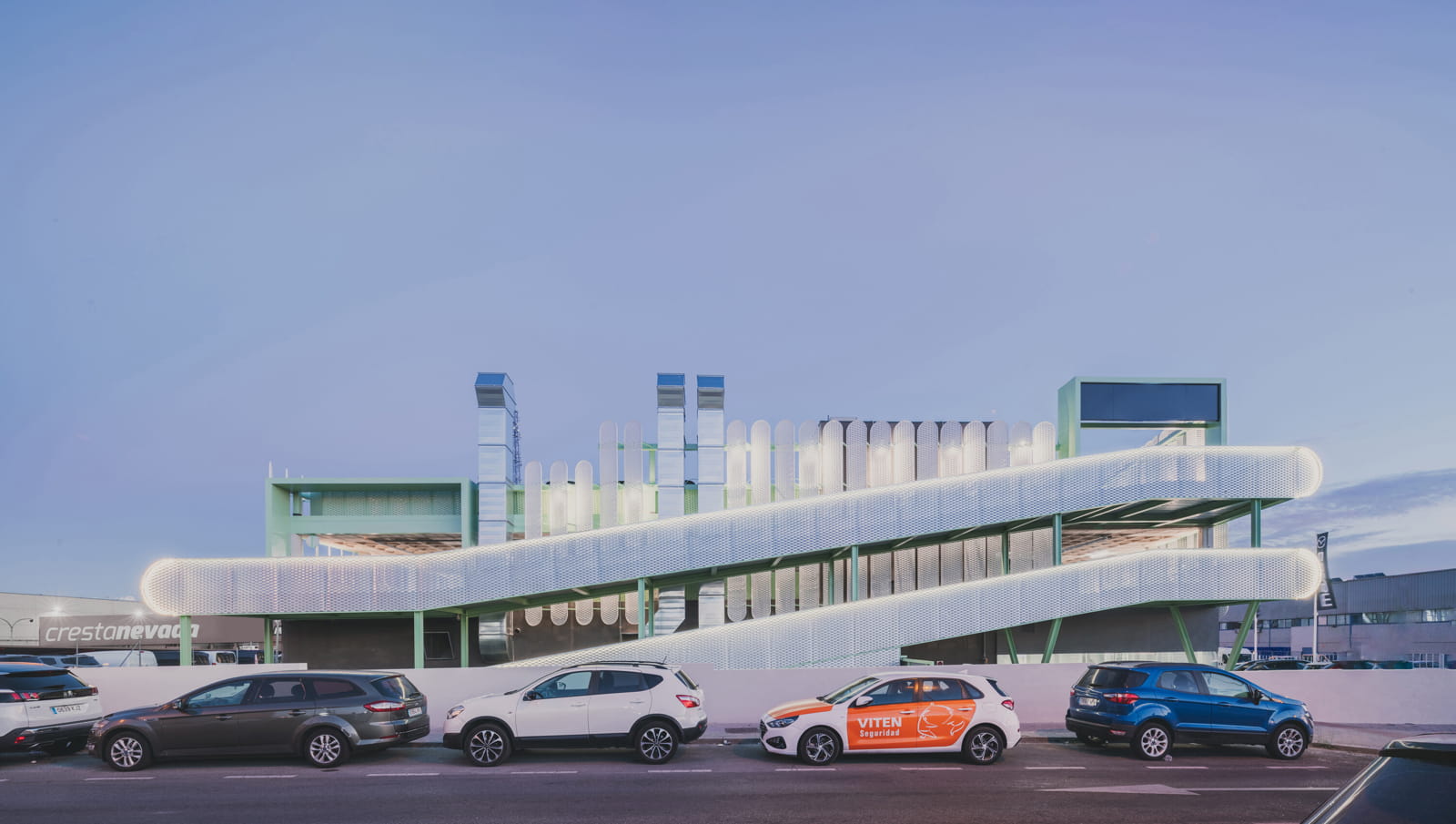
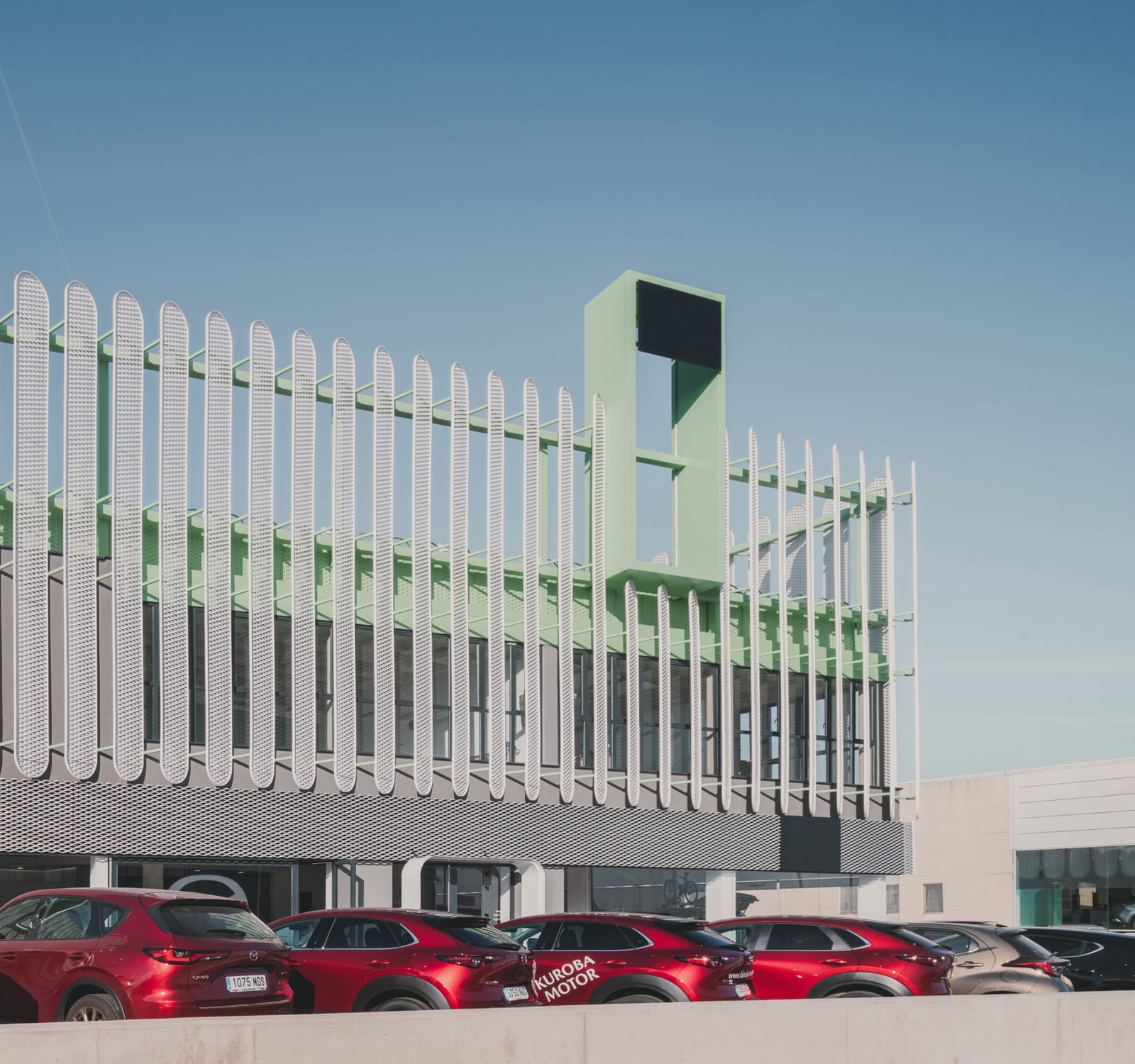
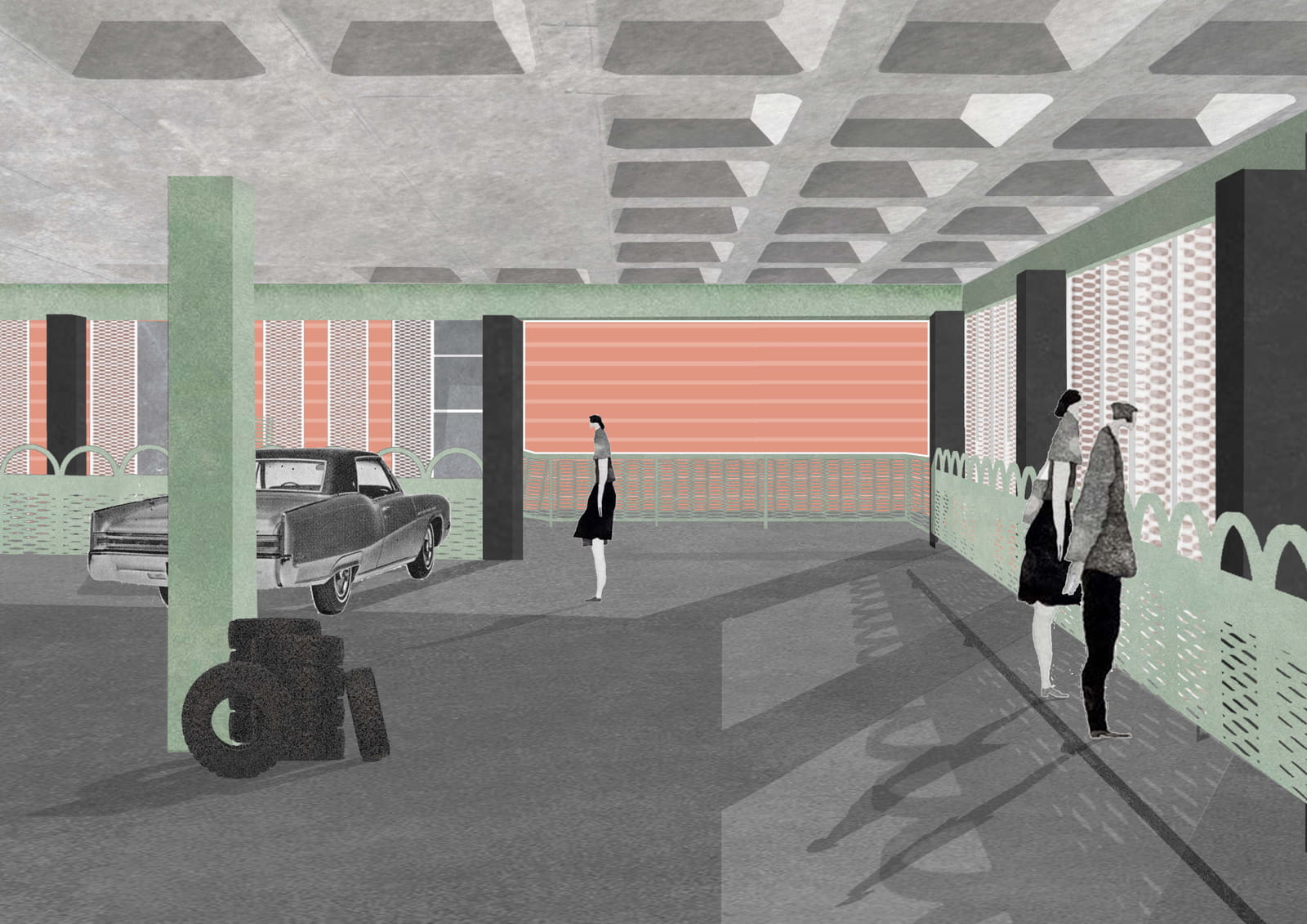
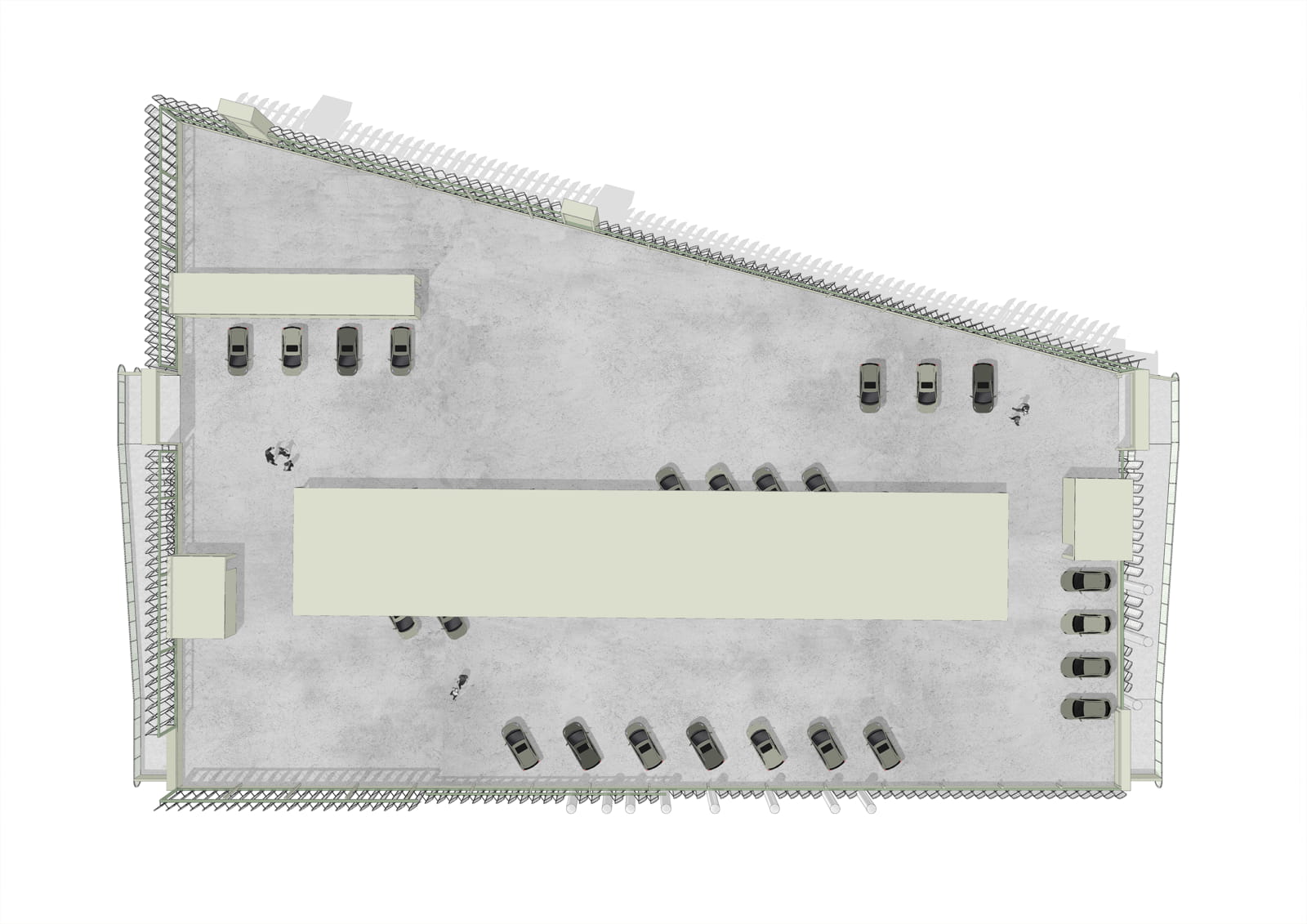
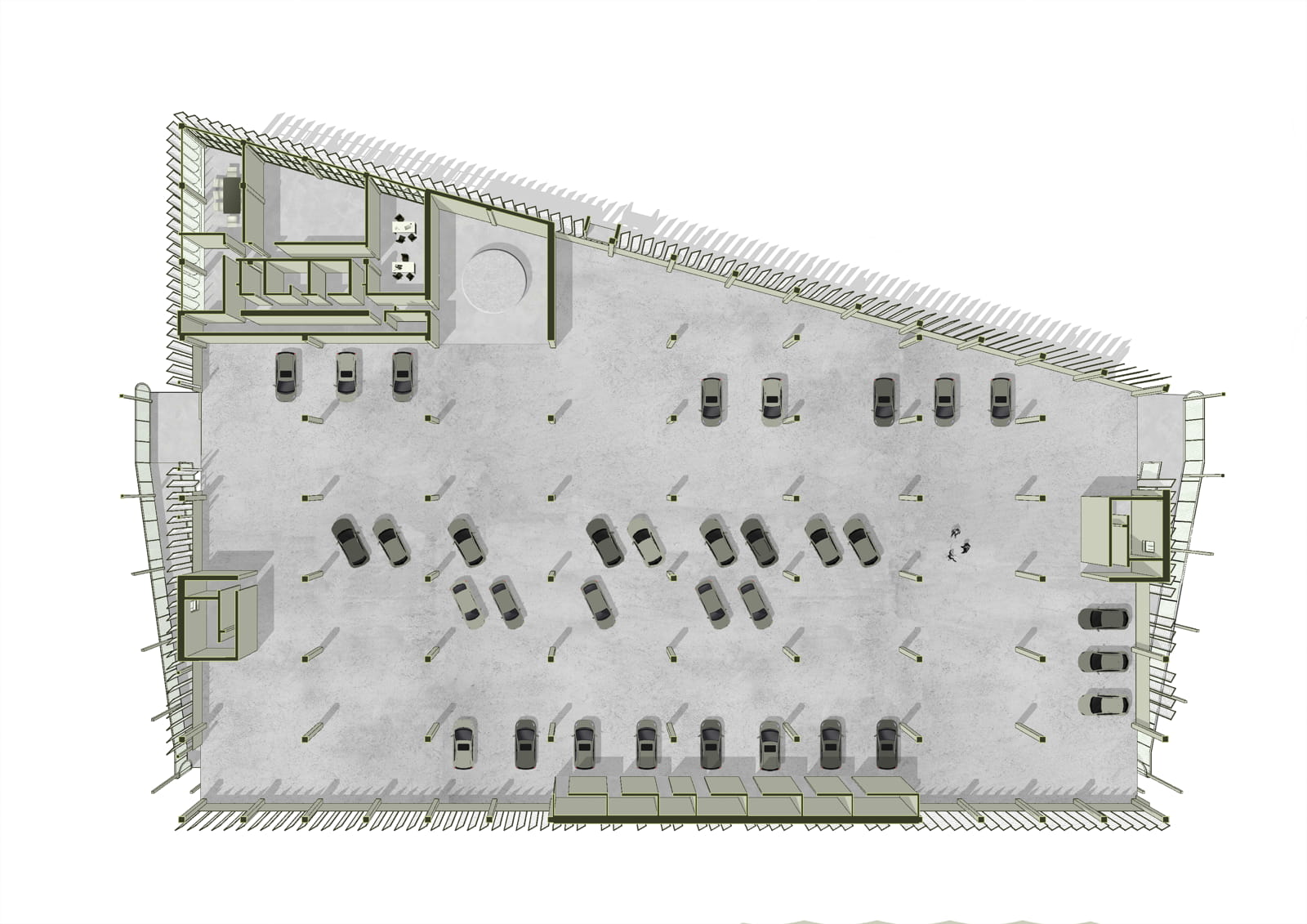
Programmatically, the ground floor accommodates the showroom and workshops, while upper levels are dedicated to vehicle storage. The original structure was reinforced to bear increased loads, and the roof was replaced with an additional storage platform shaded by photovoltaic pergolas. These installations generate sufficient energy to supply the building while contributing surplus power to the surrounding context.
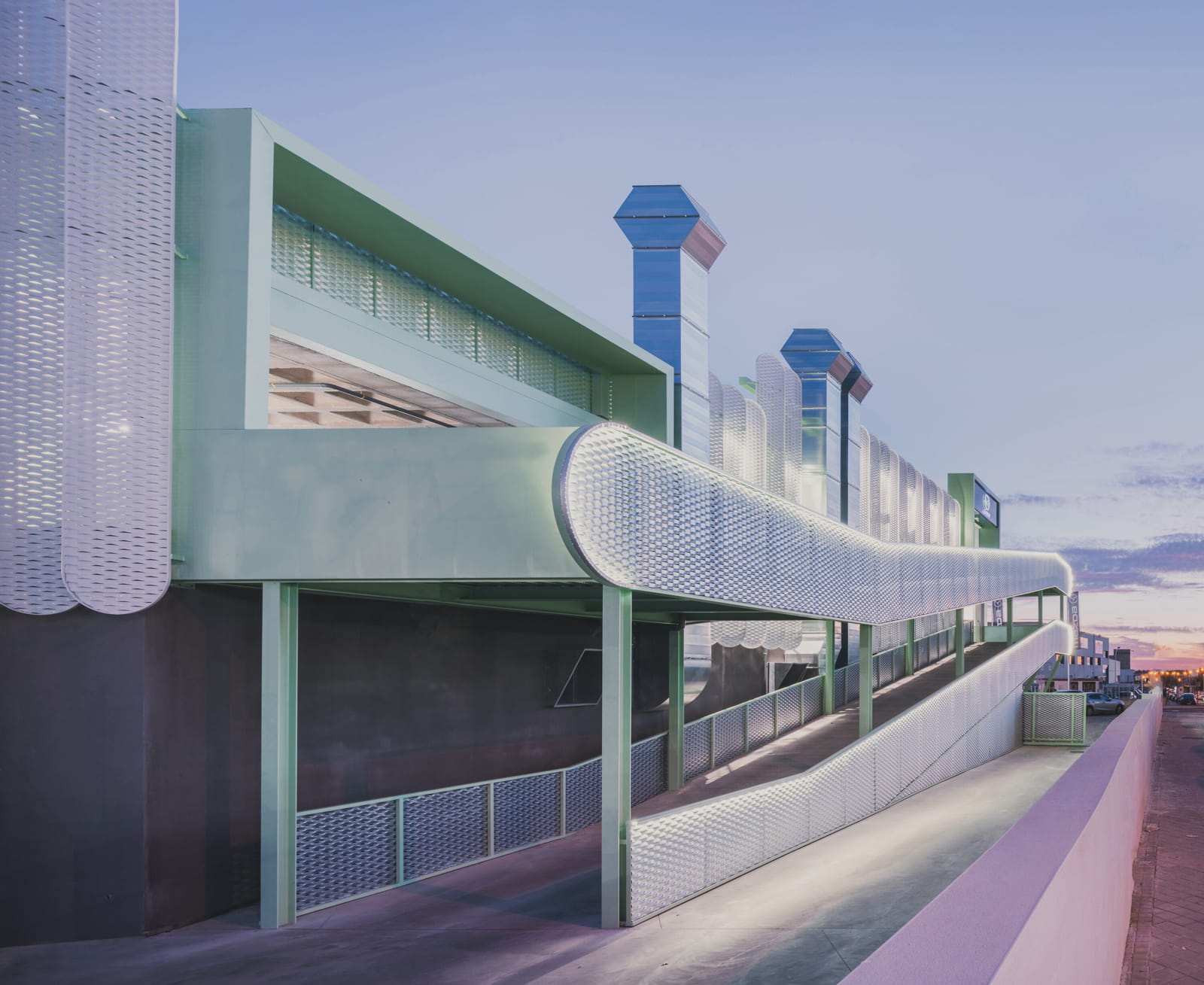
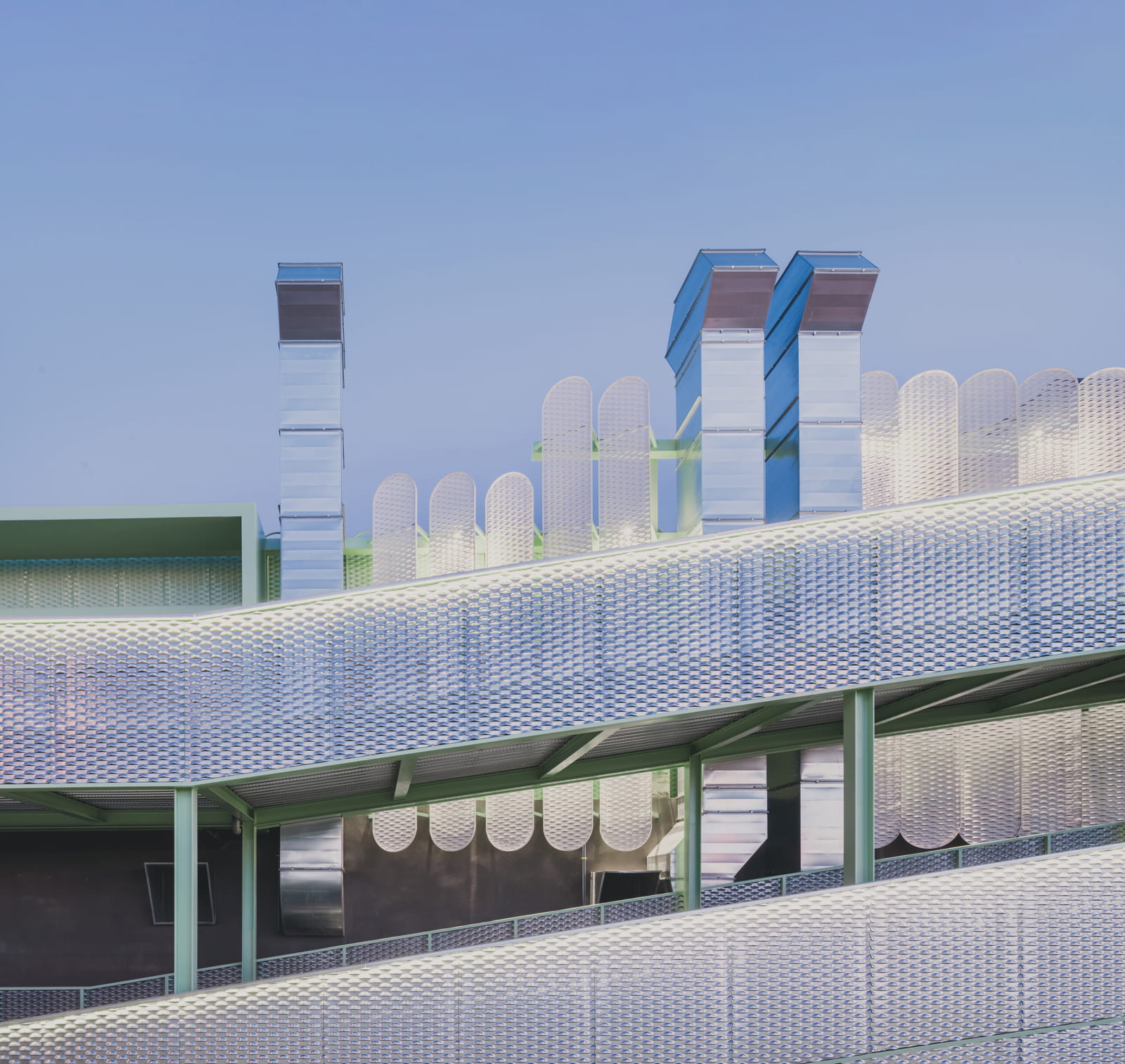
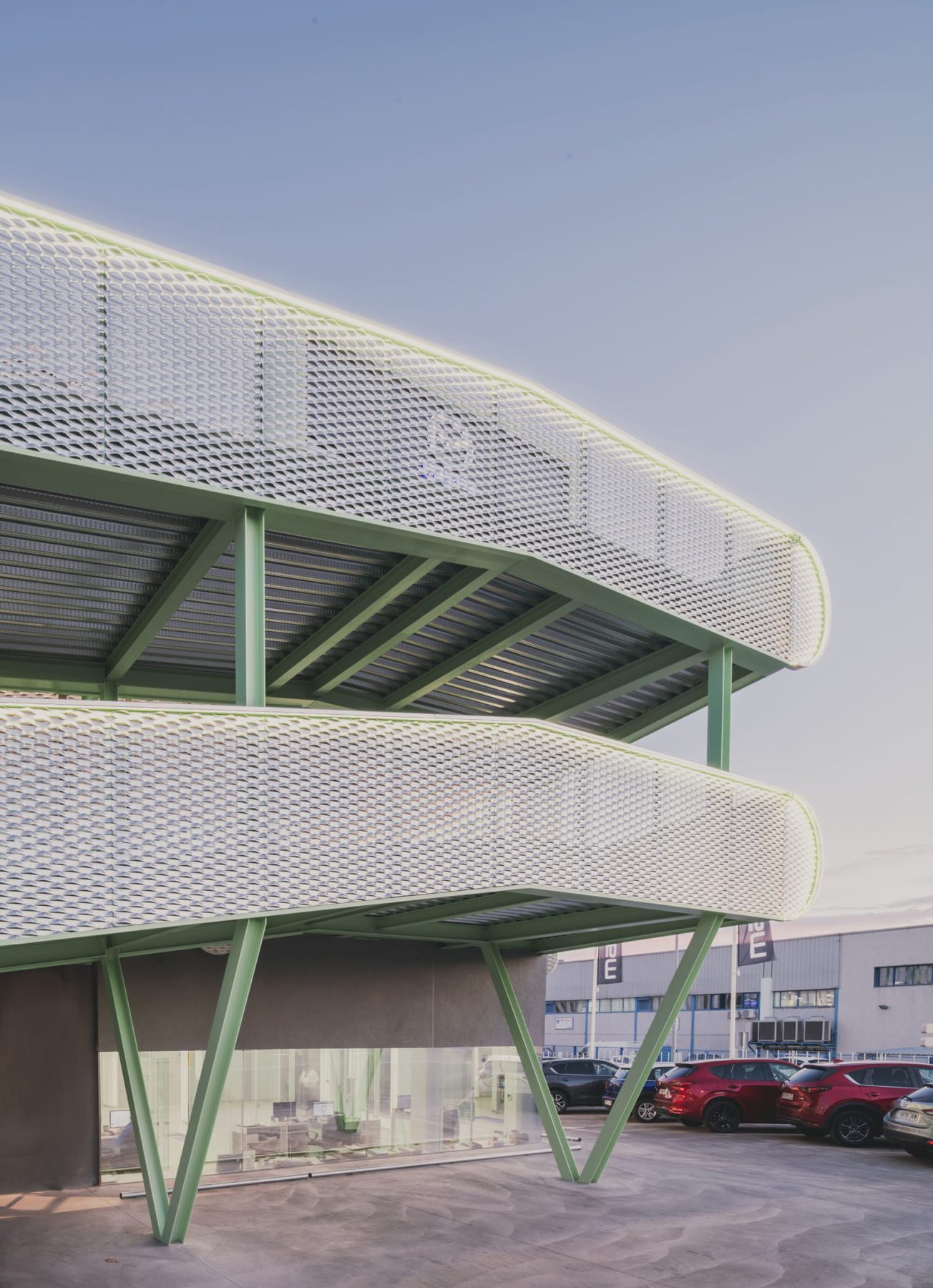
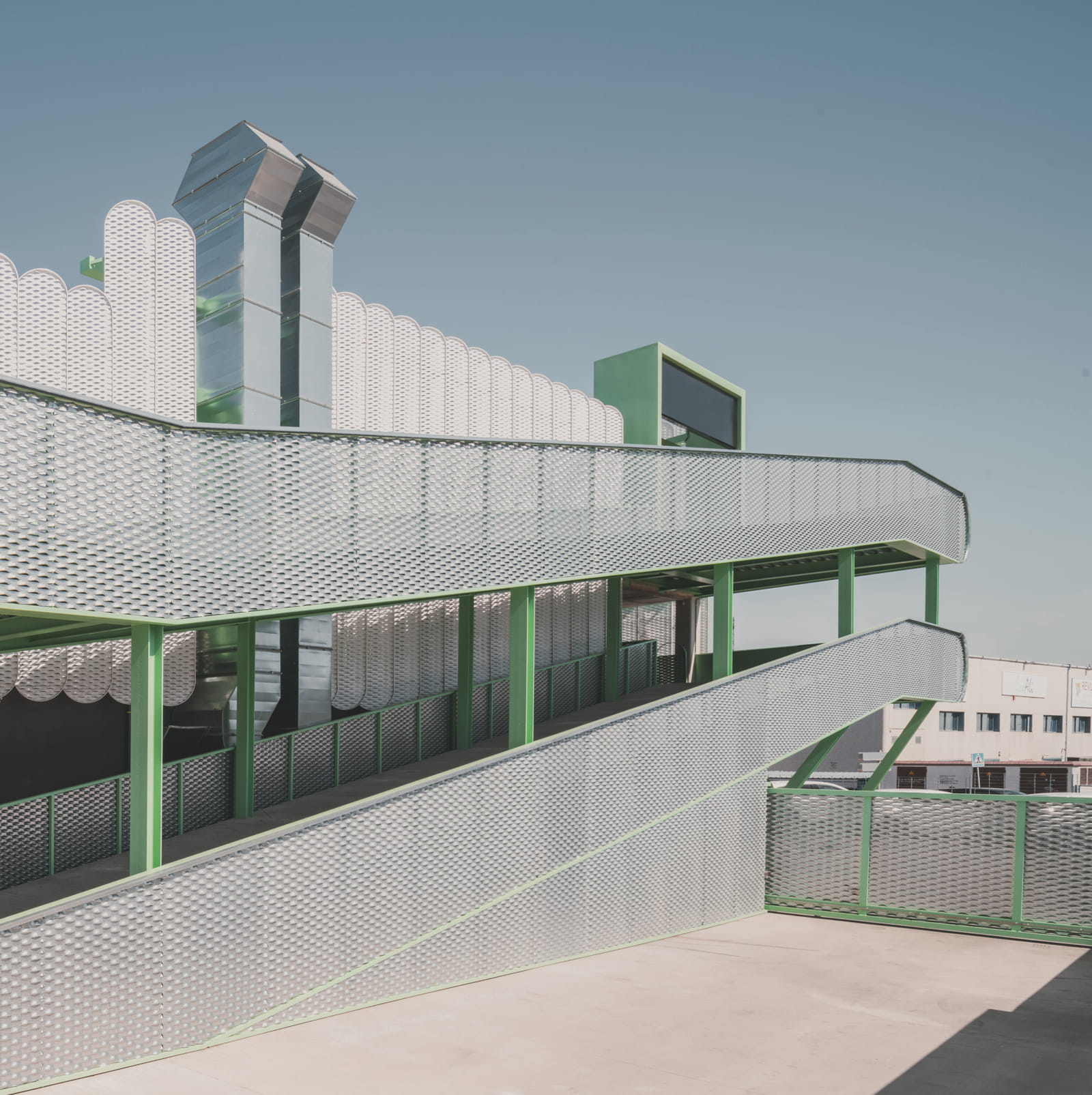
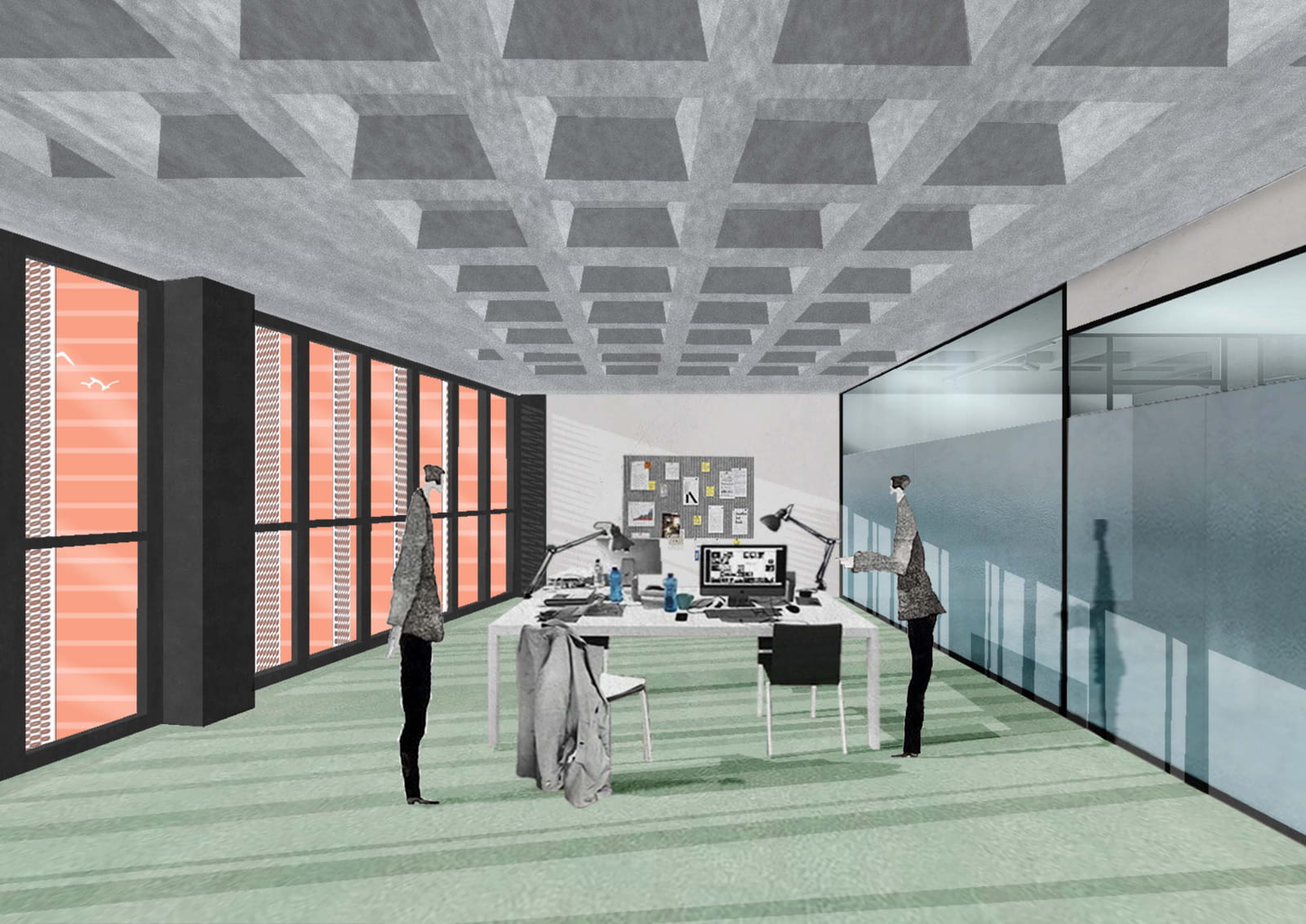
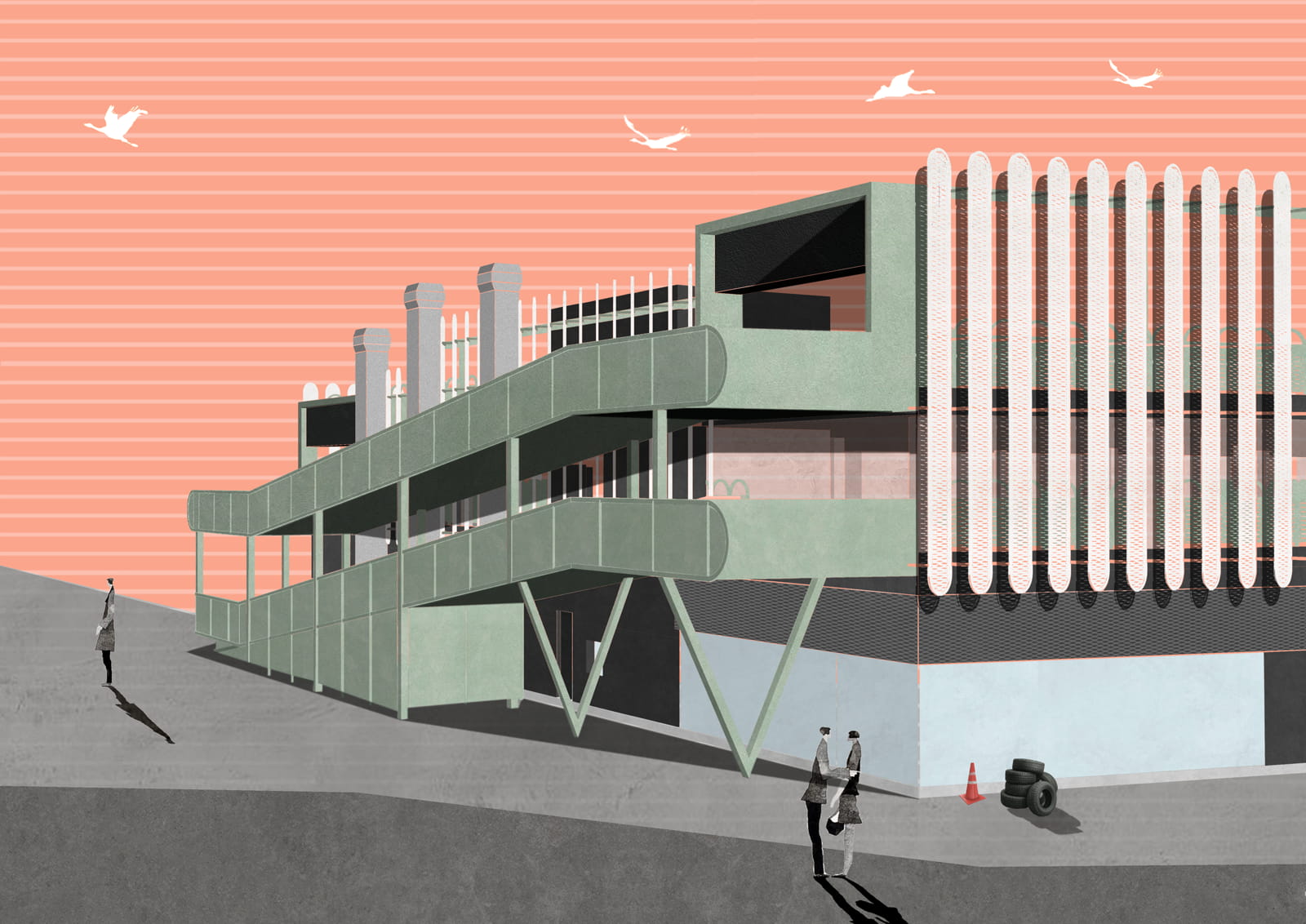
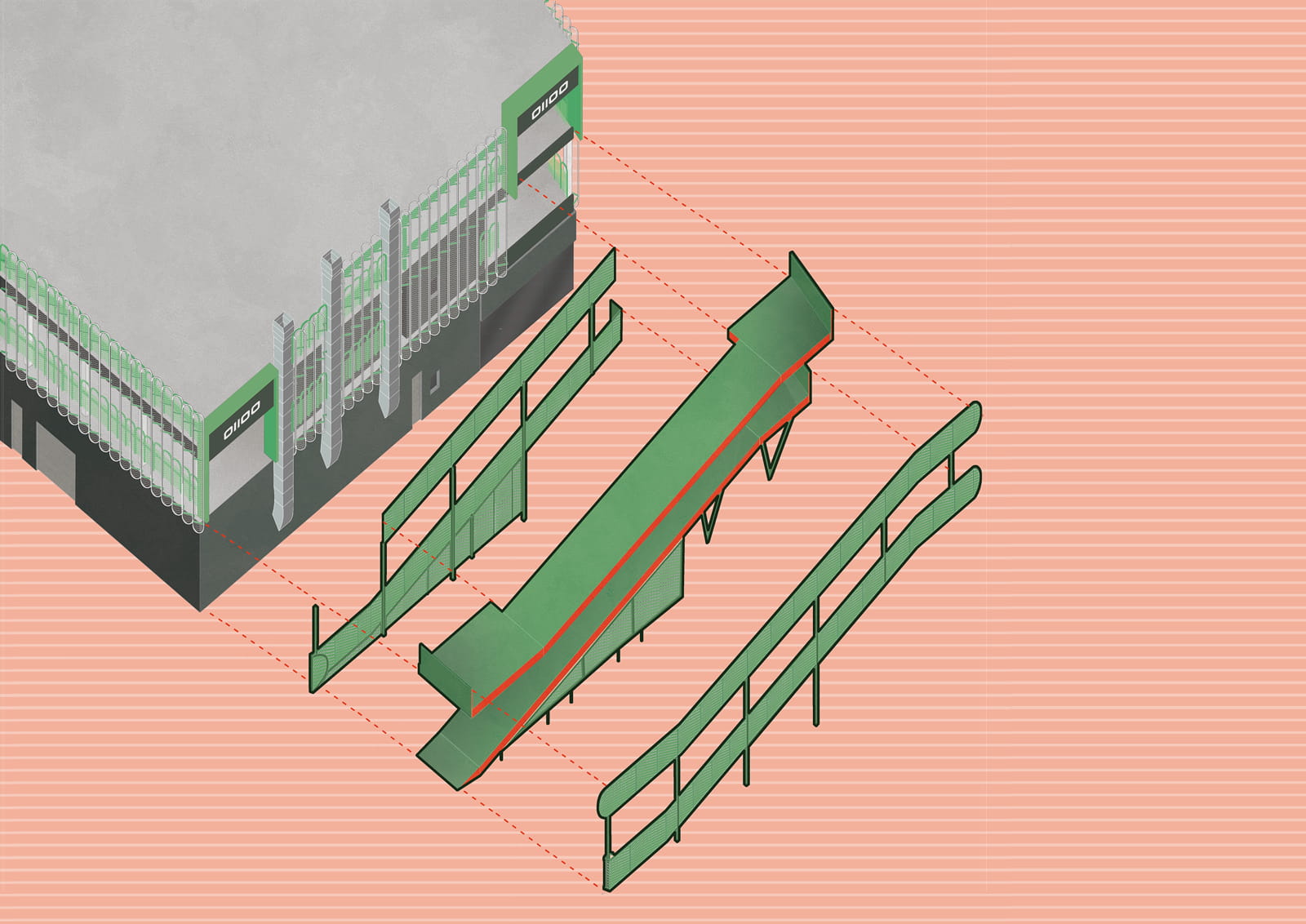
Circulation is organized through large ramps running along both sides of the building, enabling fluid vehicular movement while coexisting with customer pathways at ground level. Offices occupy the first floor, completing the program with clarity and operational efficiency.
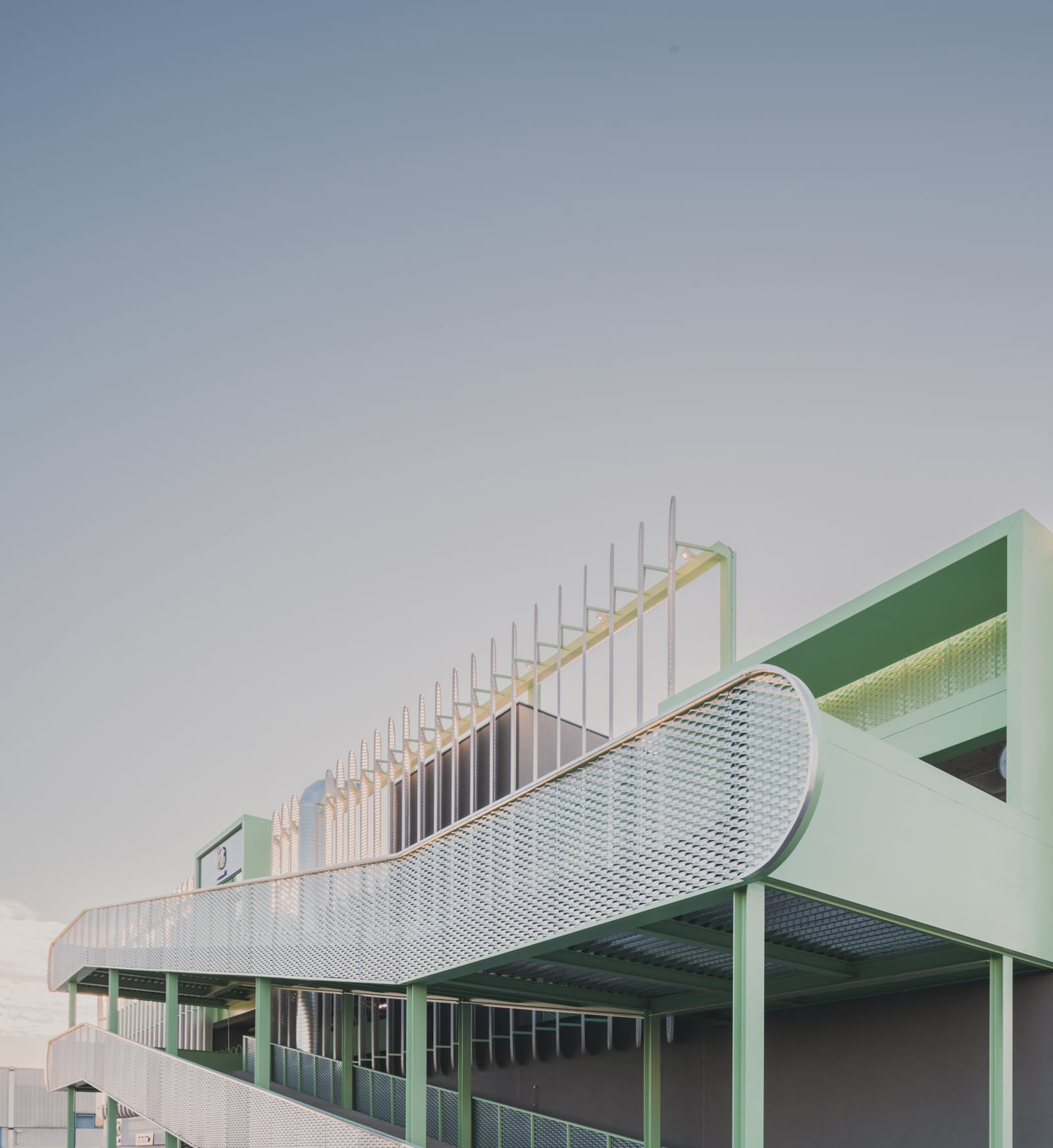
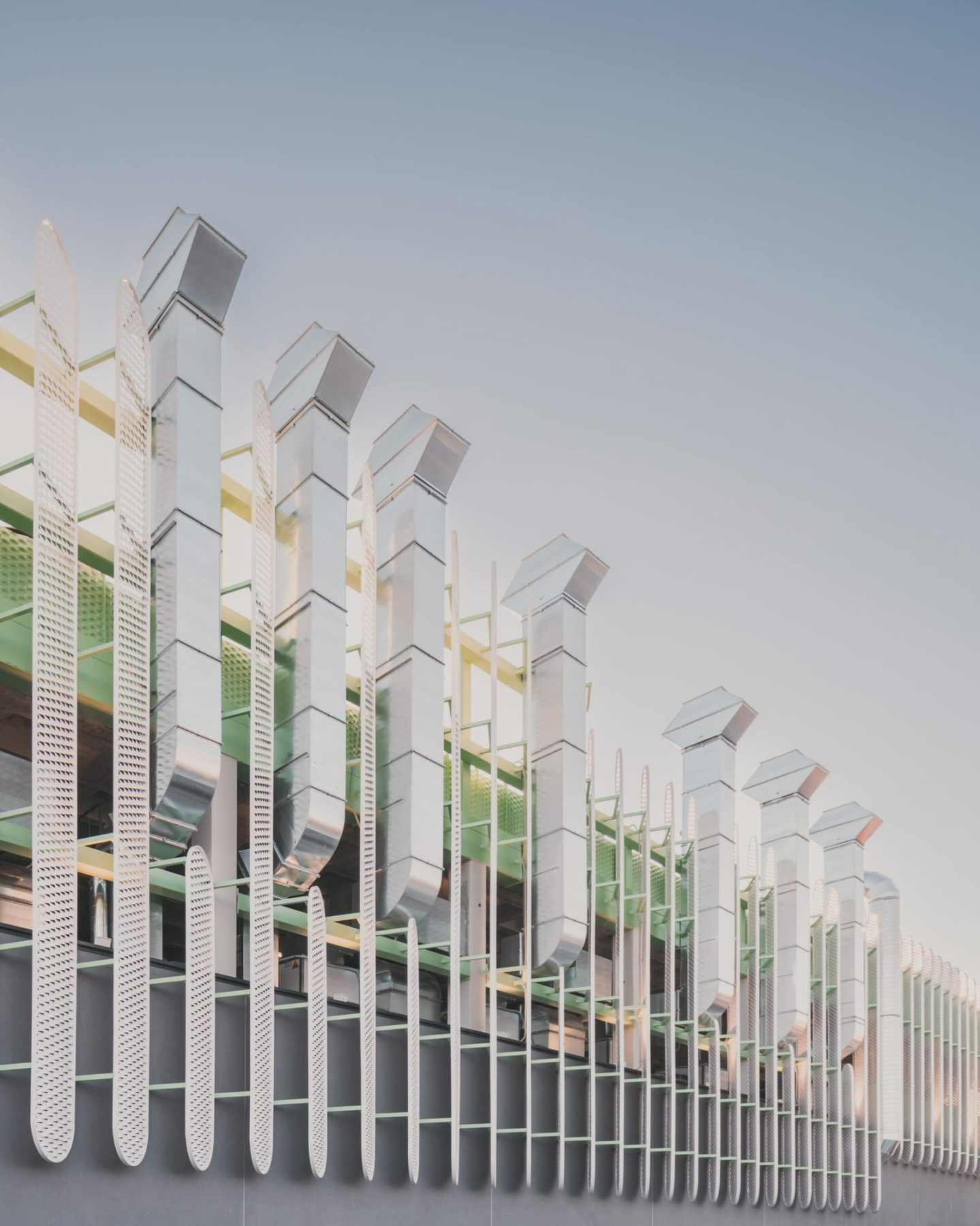
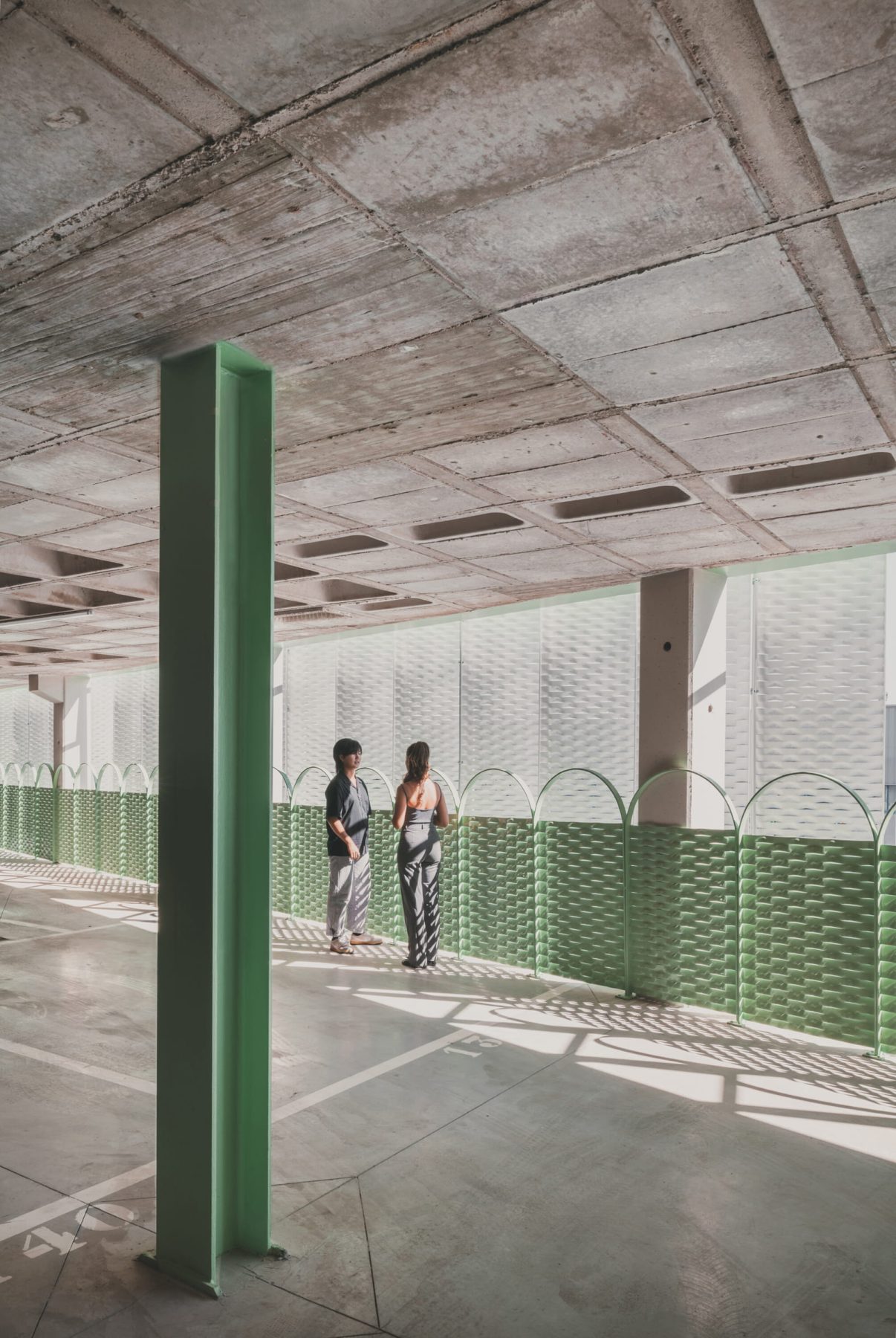
The transformation extends decisively to the building envelope. The original brick façade, inert and uninsulated, is replaced by a permeable system that redefines the relationship between interior and exterior. Upper storage areas remain naturally ventilated and unconditioned, concentrating energy use exclusively on the ground level, where human activity occurs.
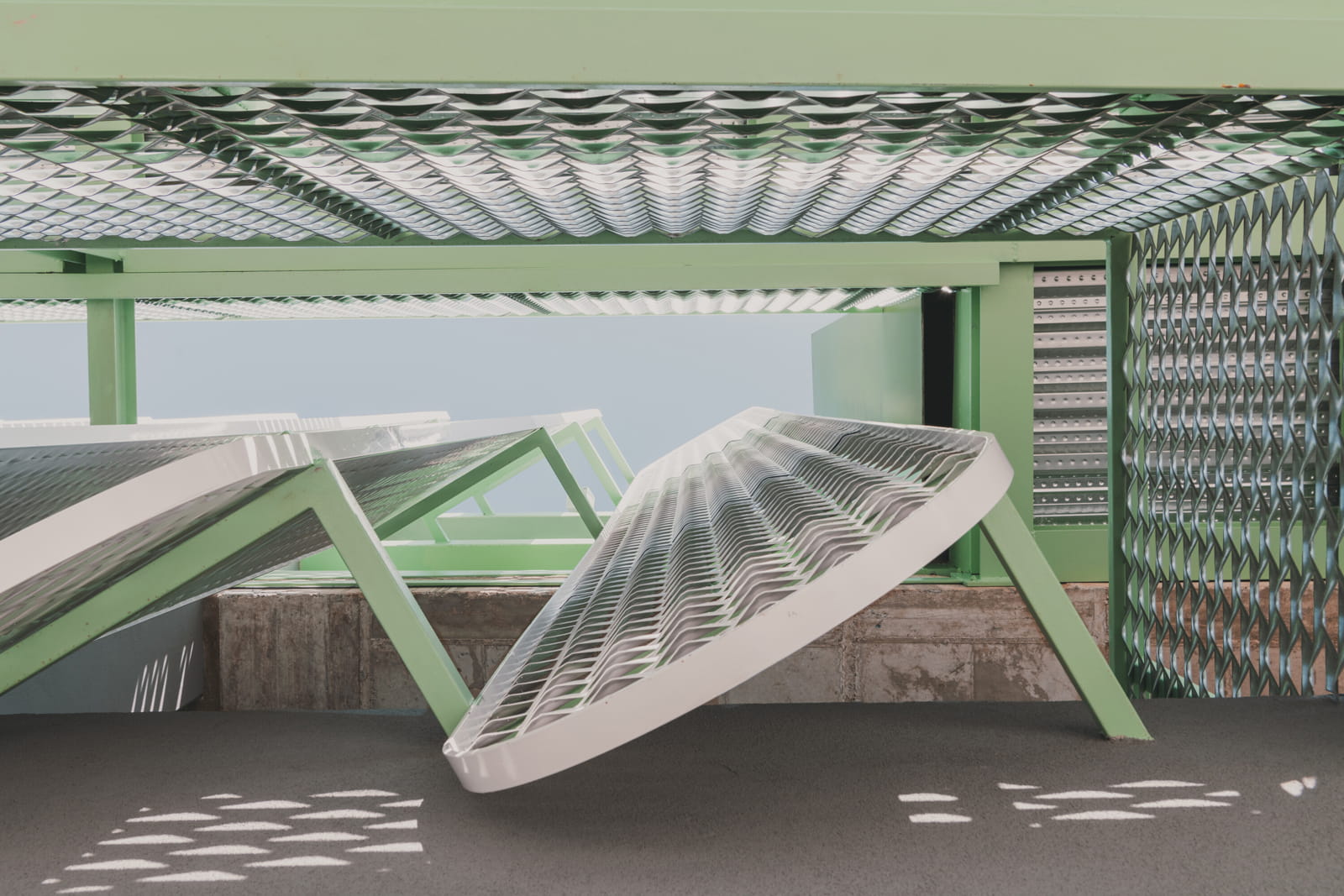
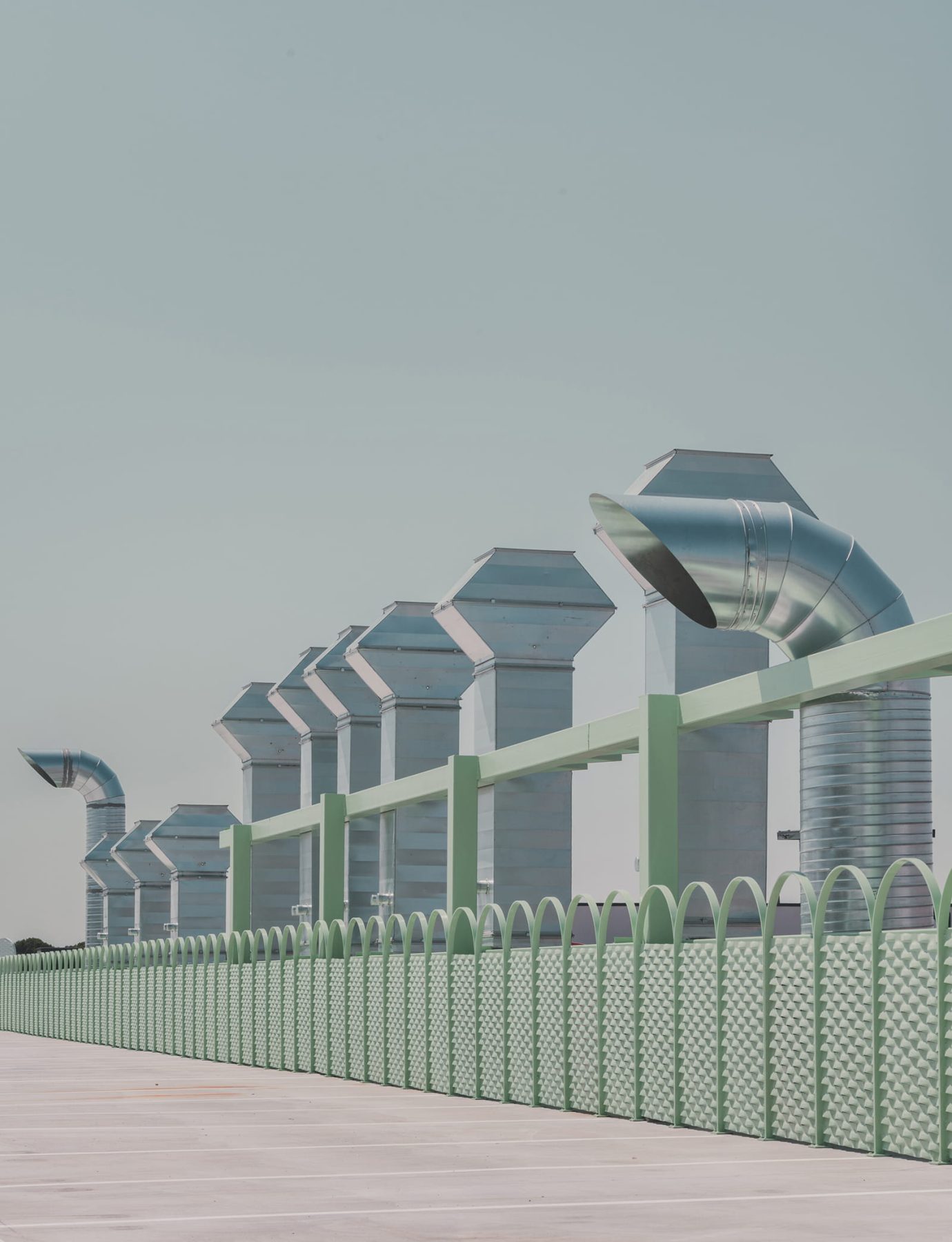
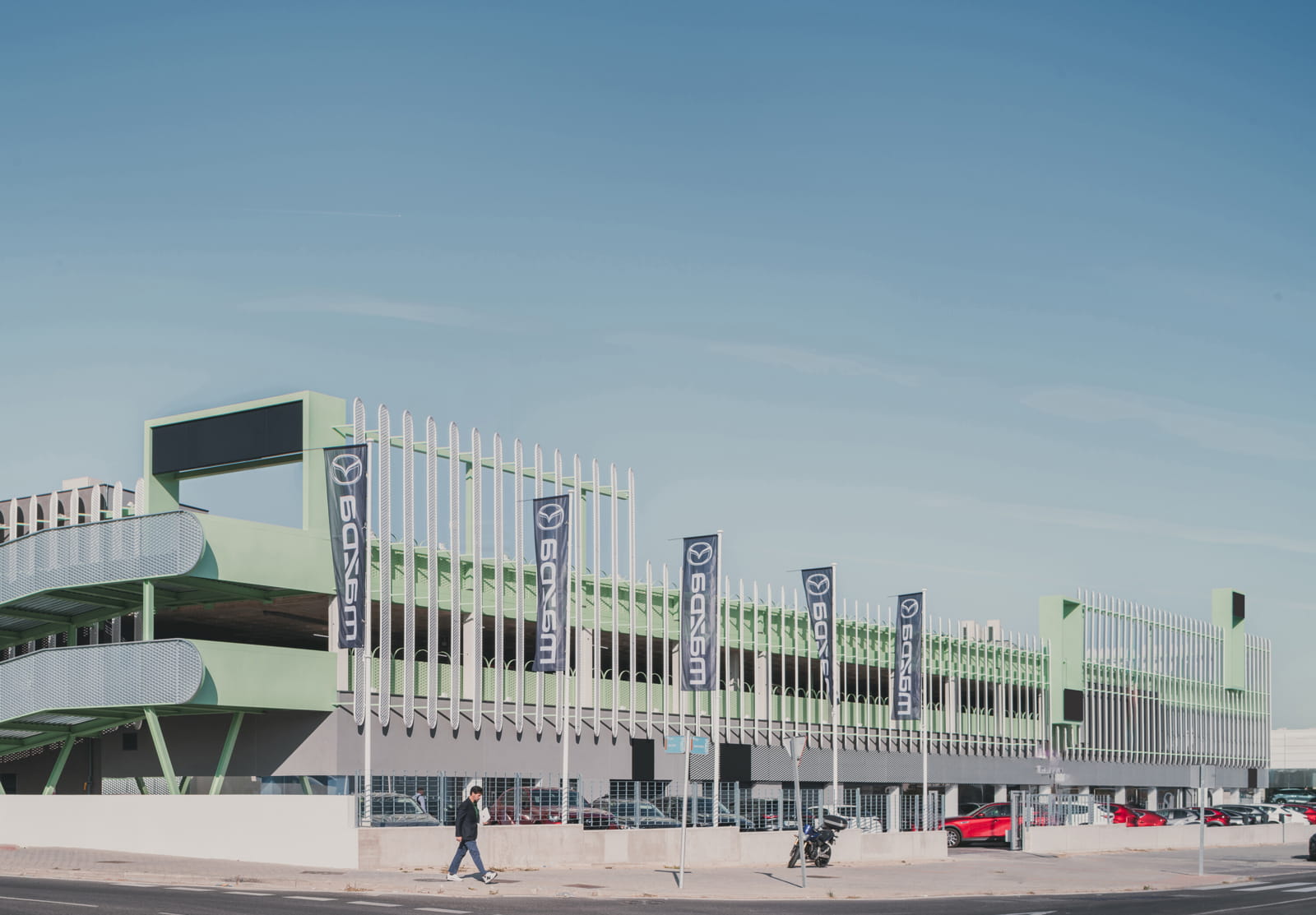
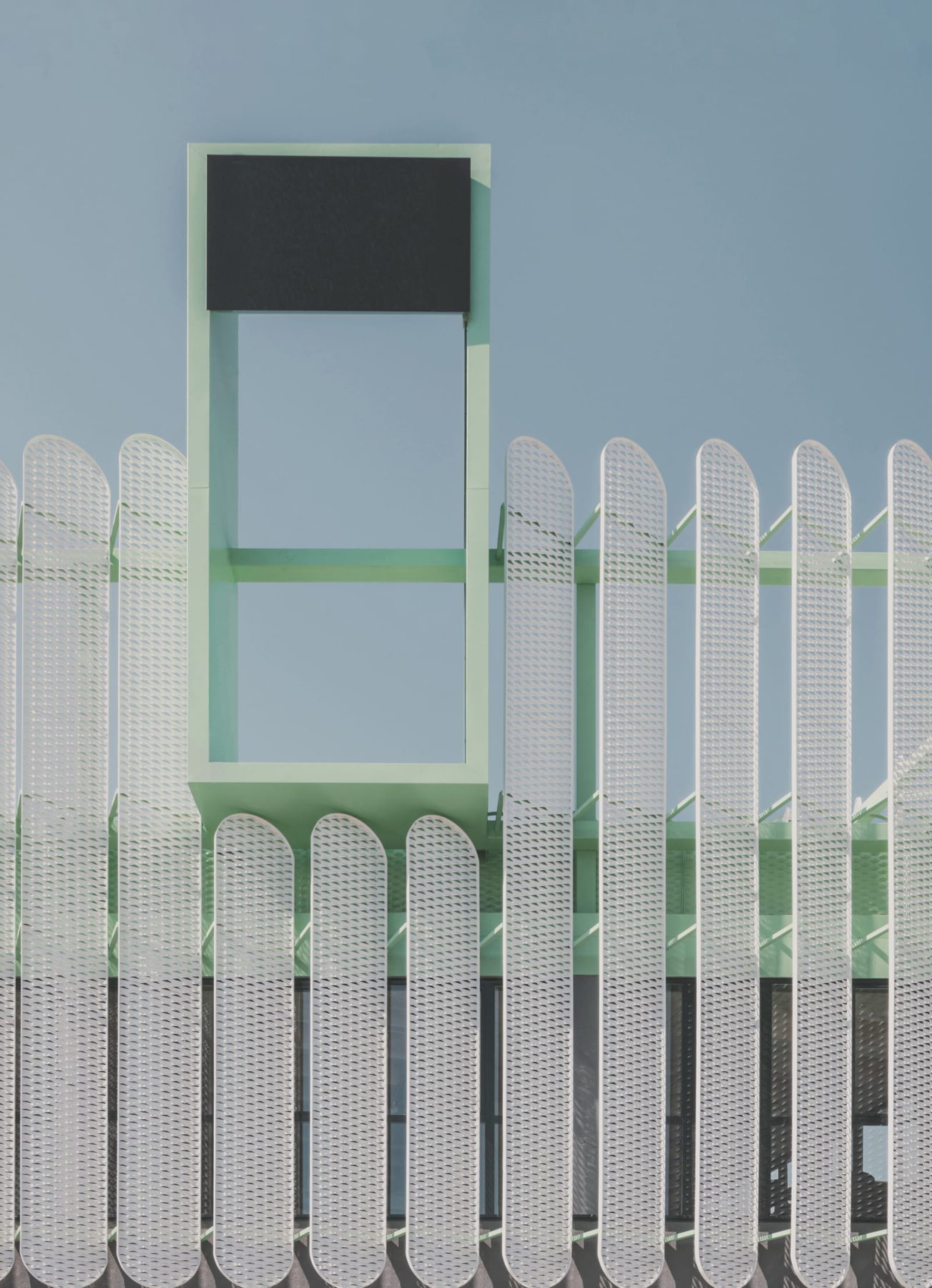
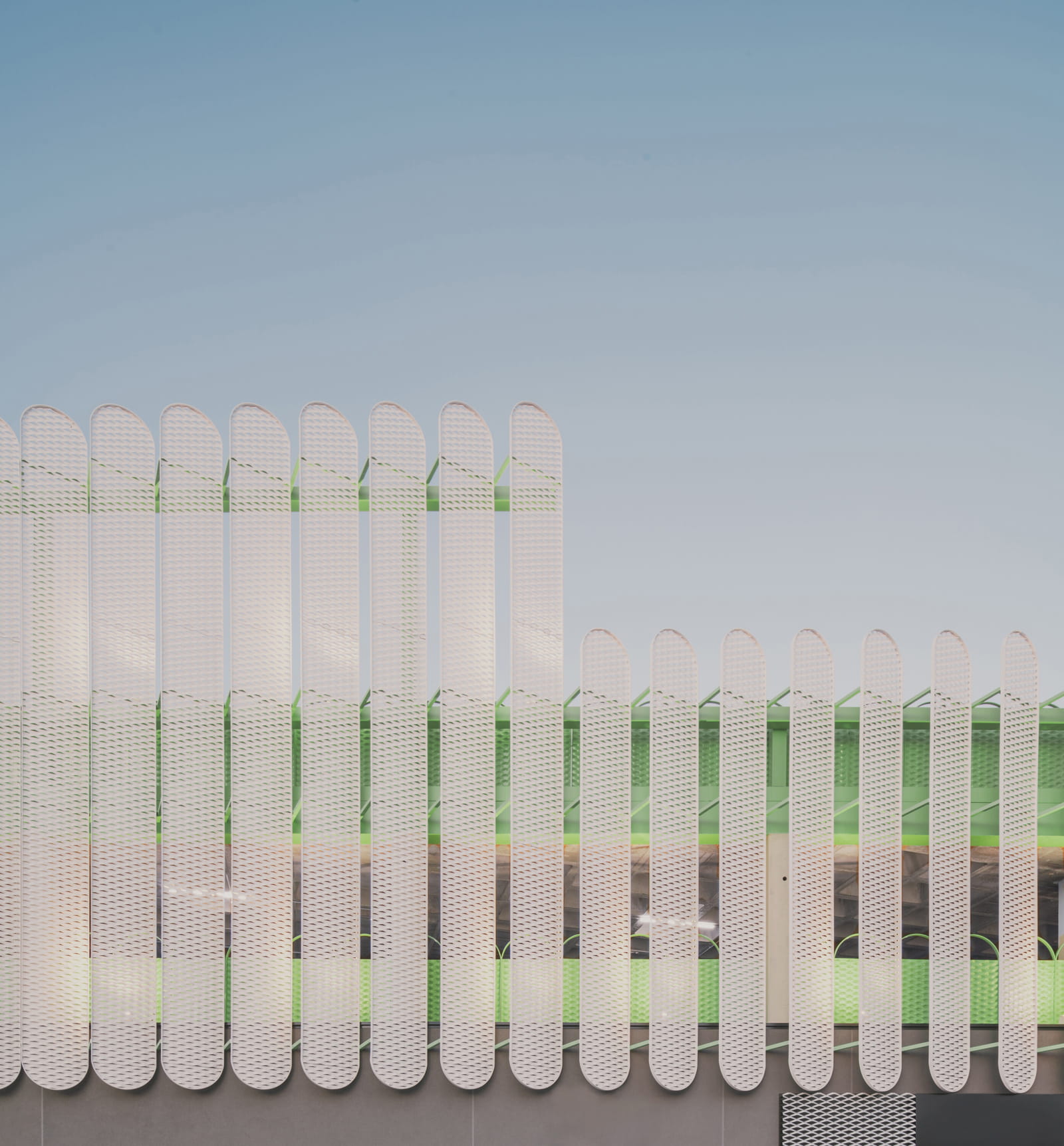
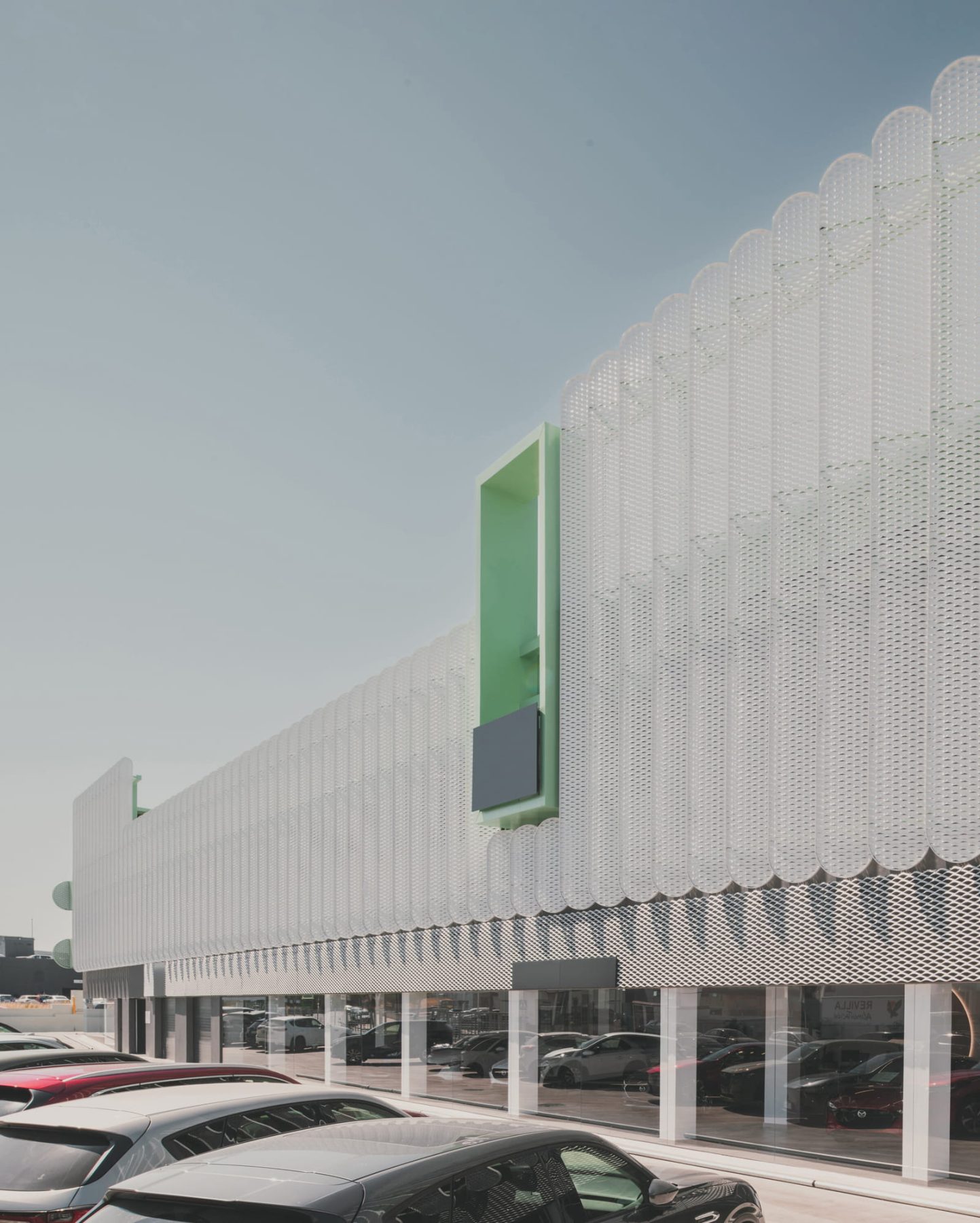
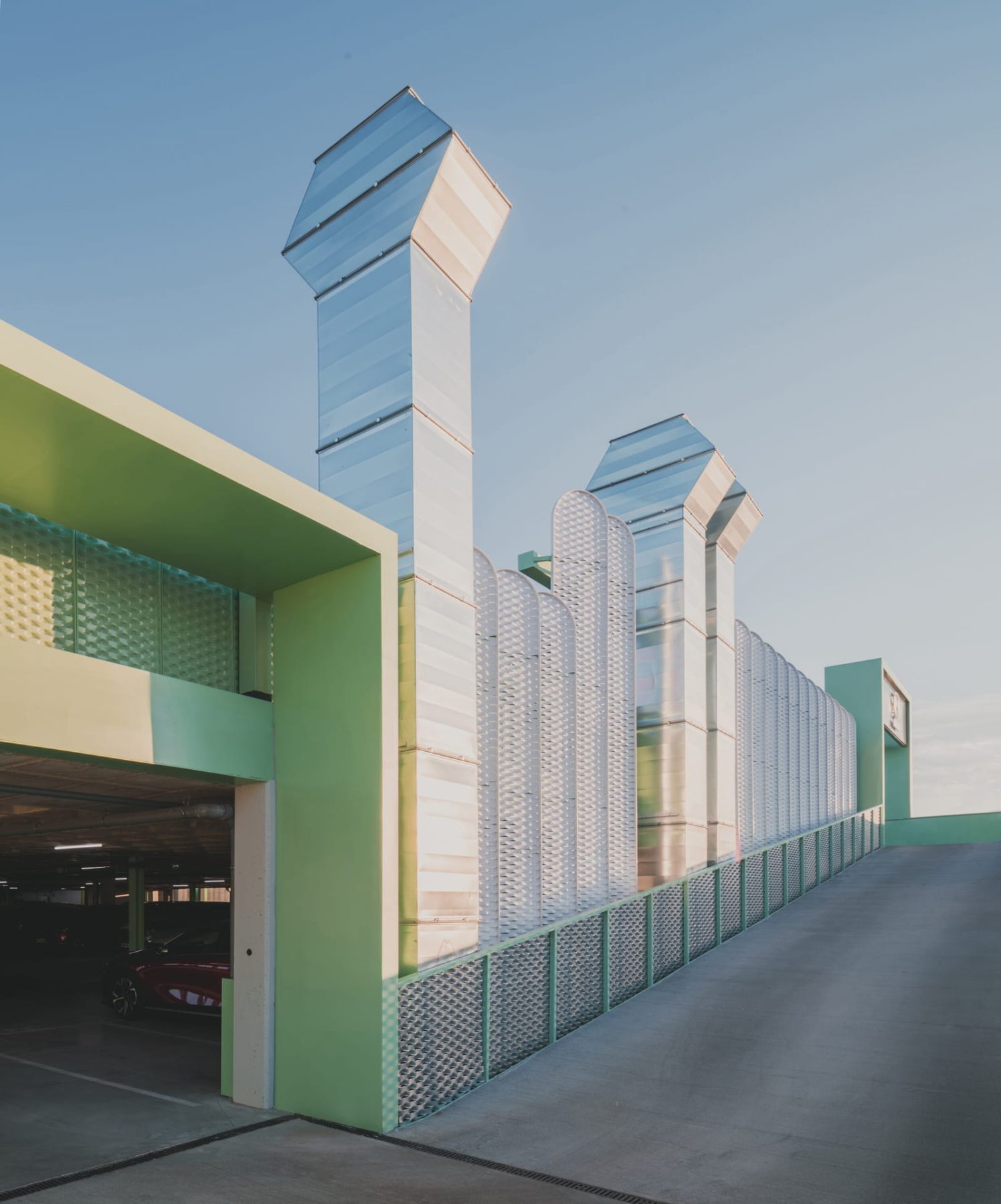
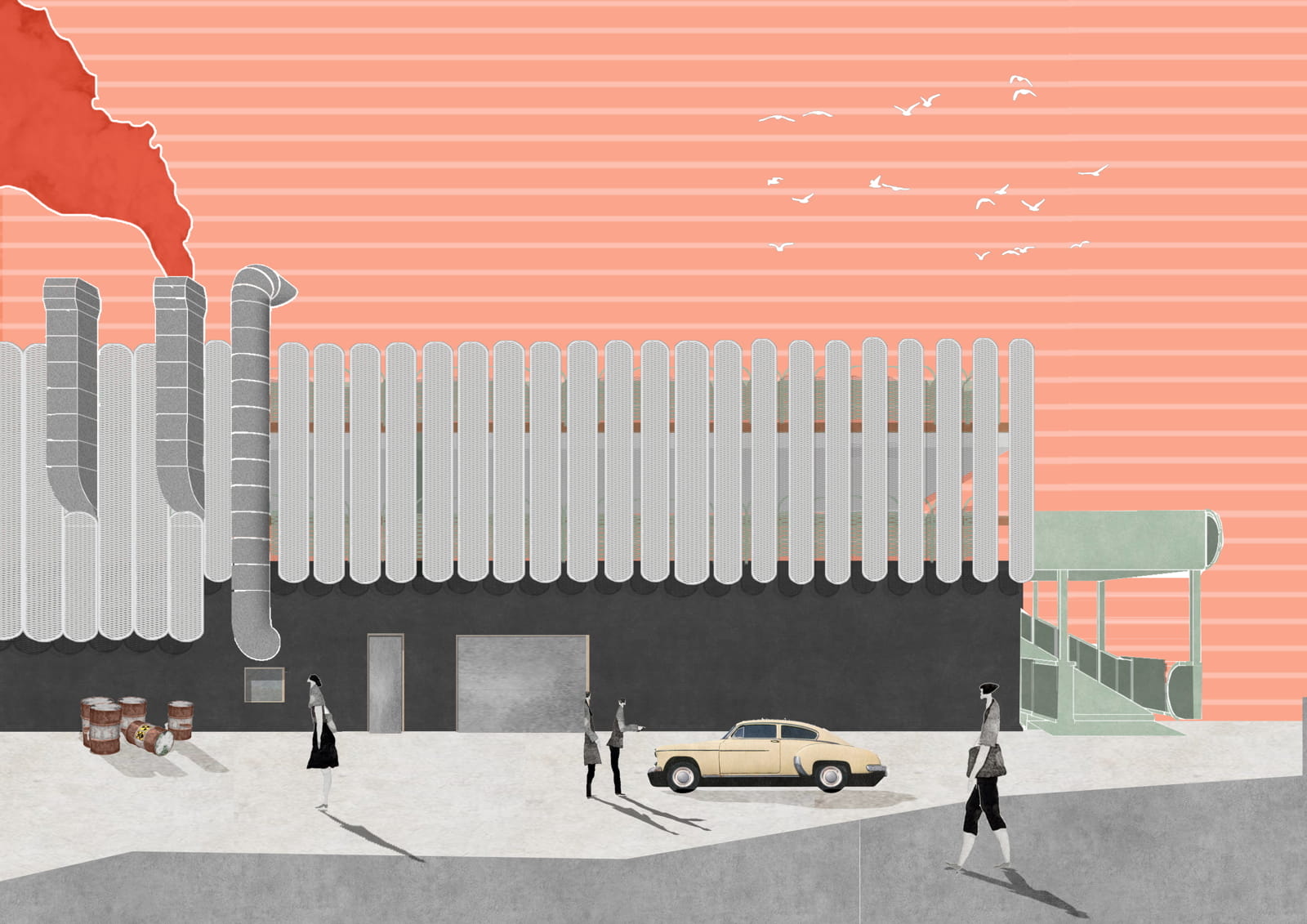
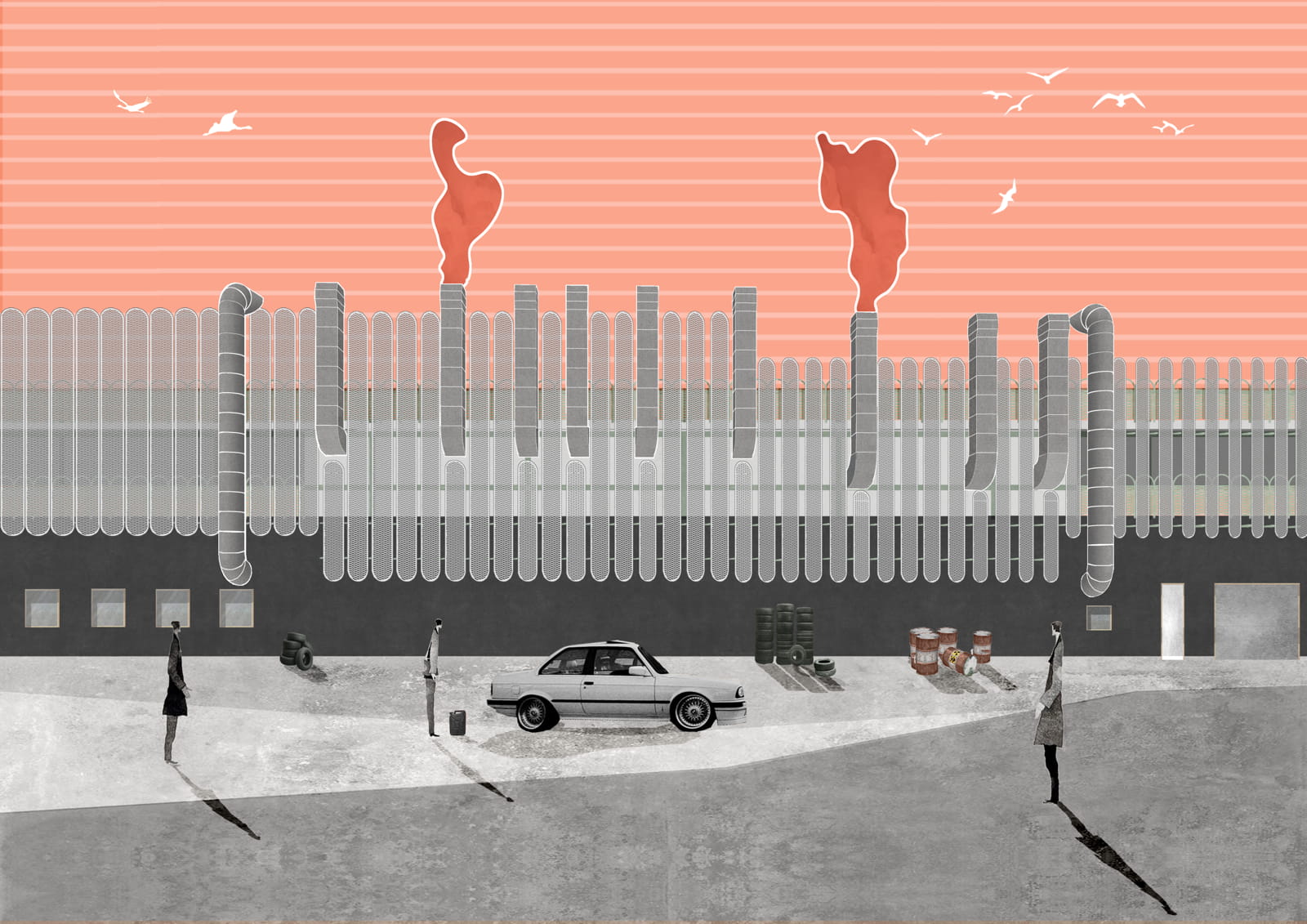
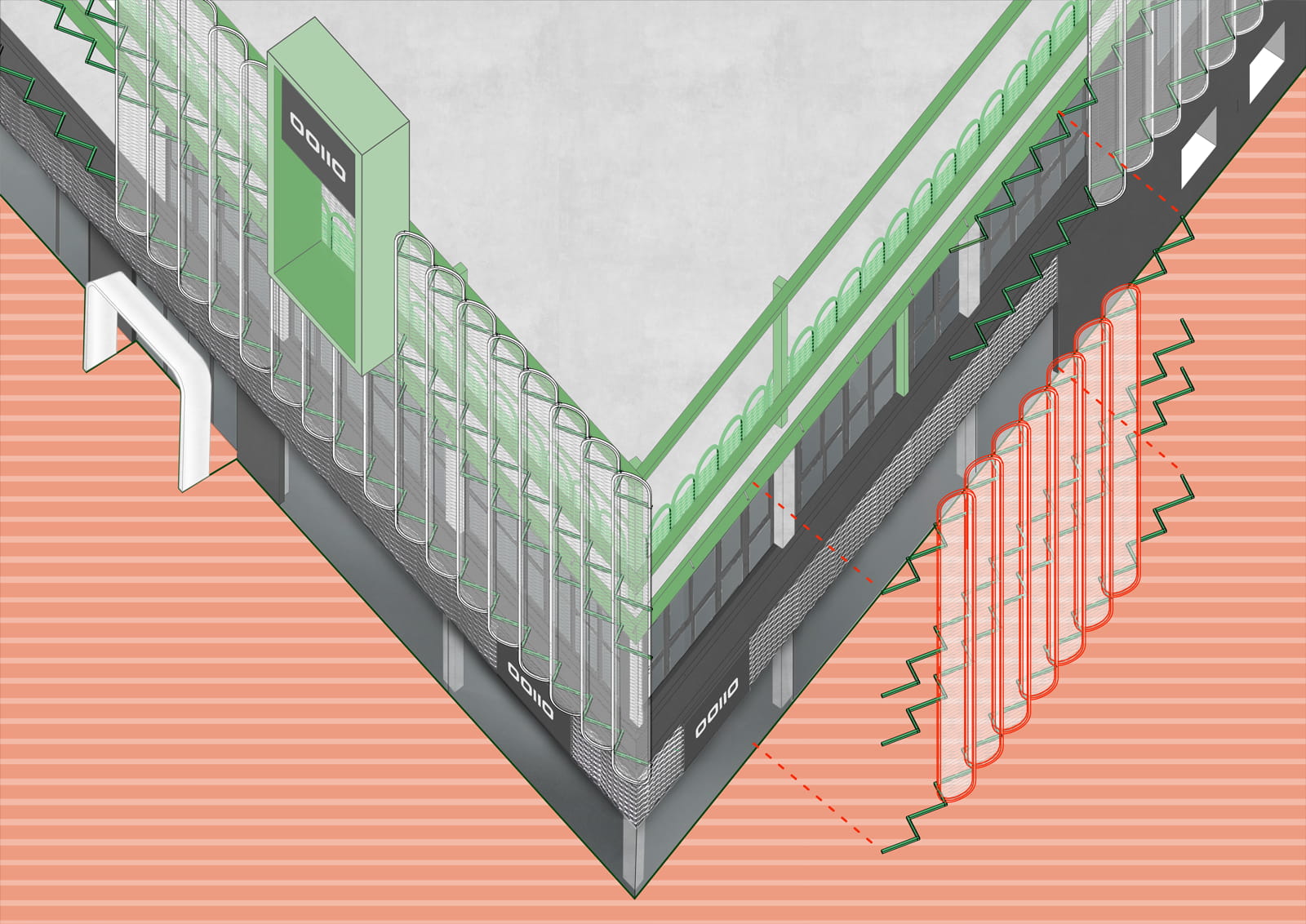
The new façade—arguably the project’s most defining feature—consists of white metal slats of varying dimensions mounted on a mint-green substructure.
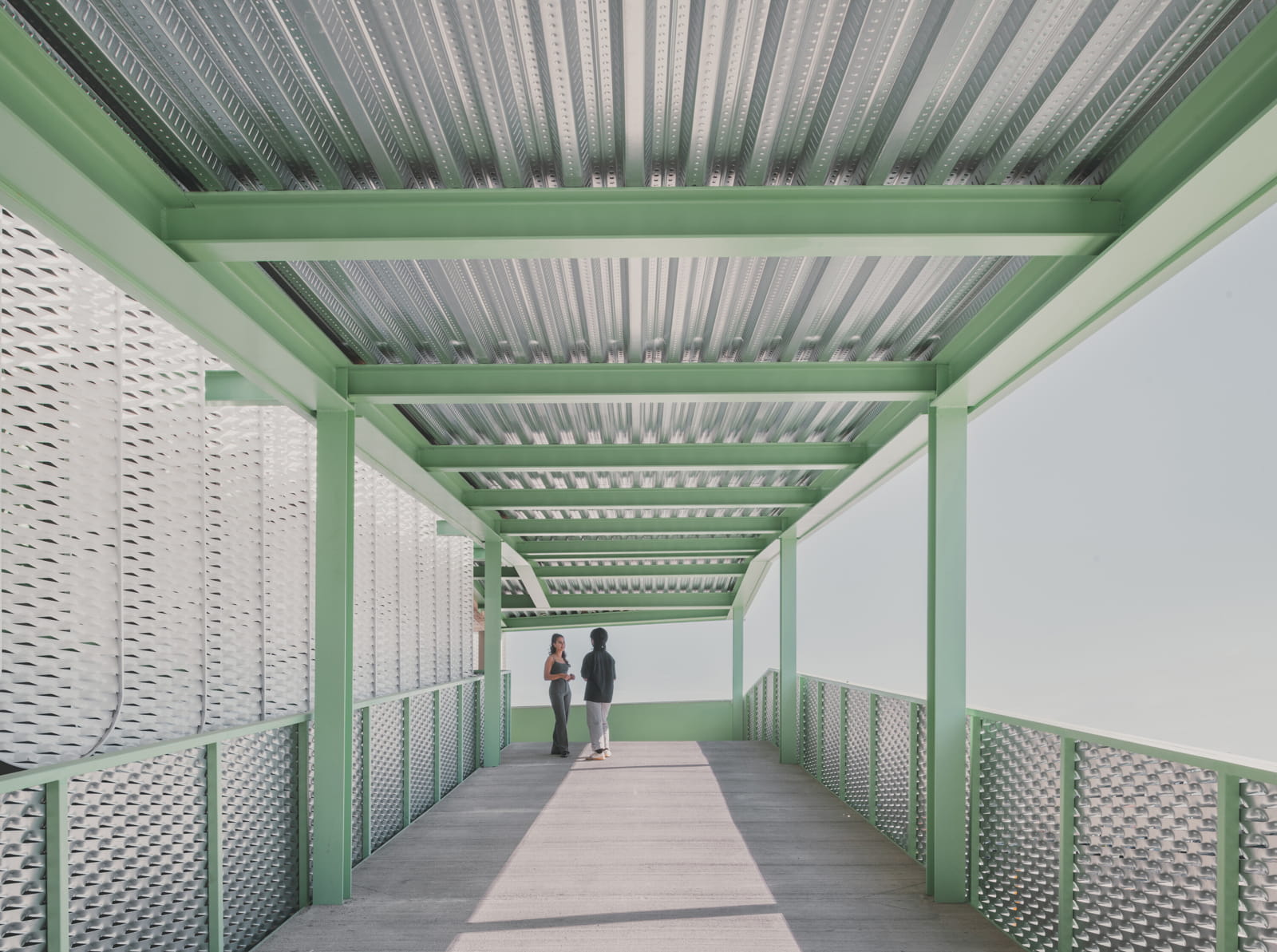
This layered skin wraps the building while incorporating chimneys and ventilation ducts from the workshops below.
By externalizing these technical systems, the design amplifies the building’s industrial character and liberates interior space for circulation.
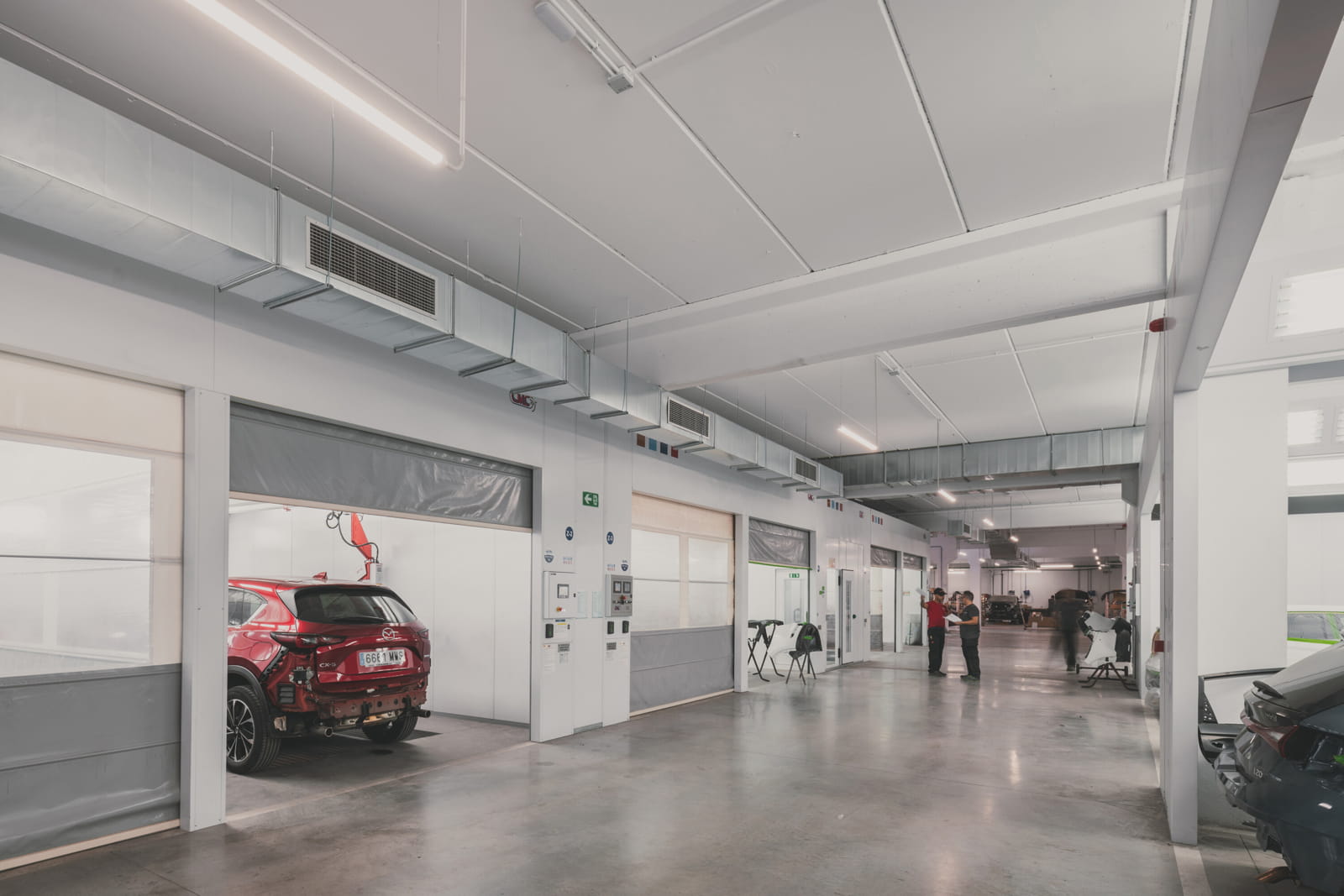
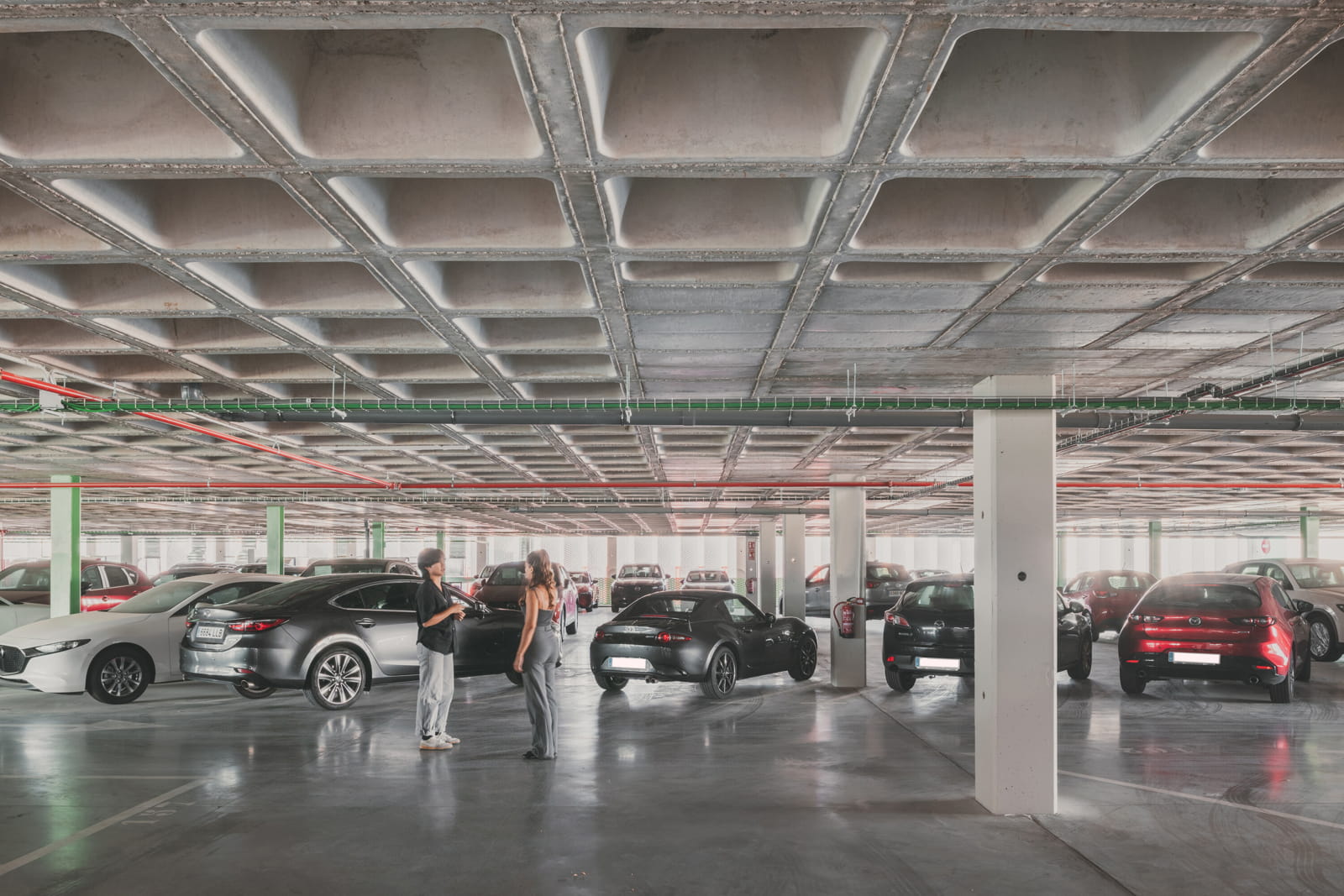
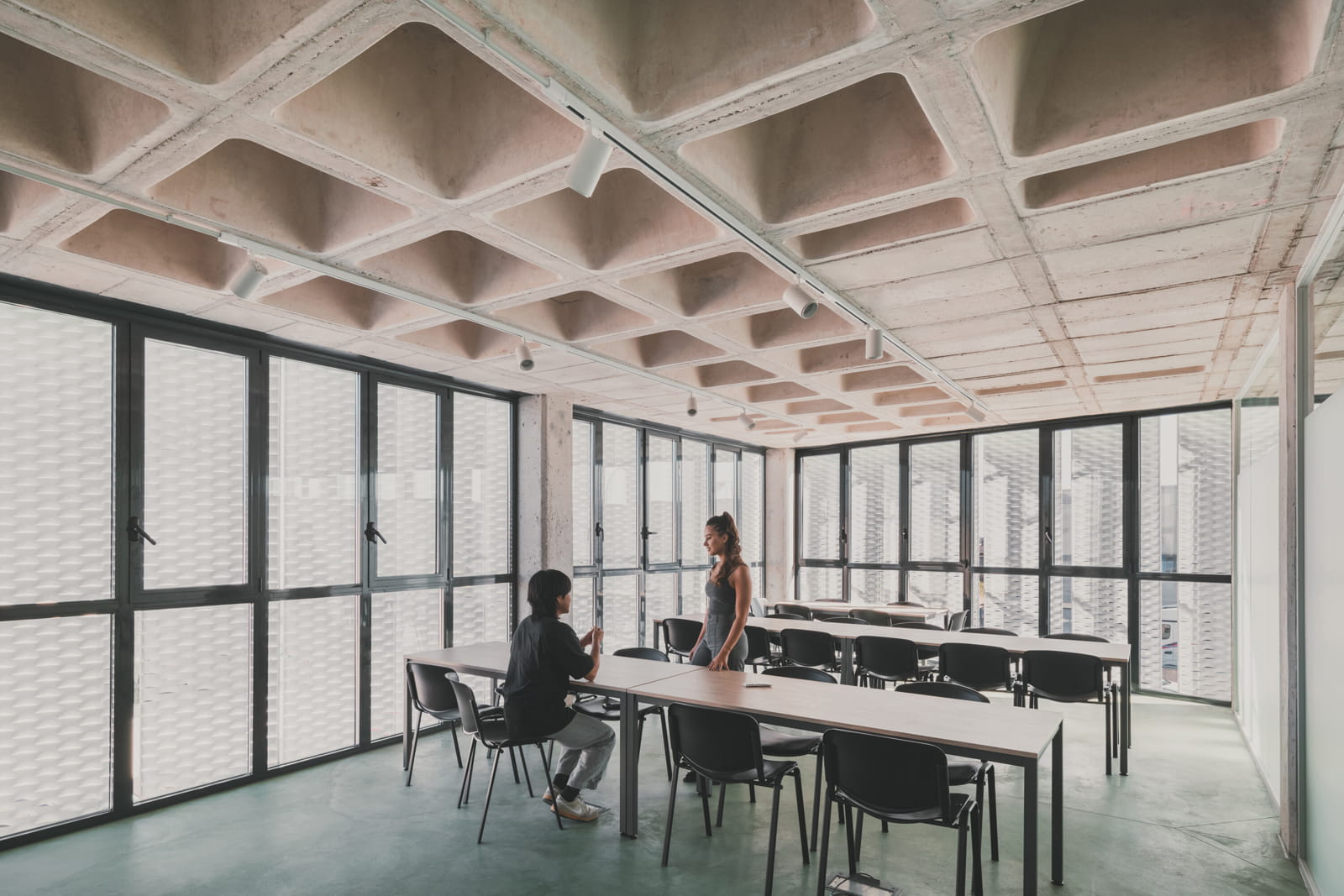

This envelope transforms the structure into a striking, rhythmic container that distinguishes itself within the homogeneity of the industrial landscape.
The vertical slats evoke the visual language of automotive branding while performing a critical environmental function: they provide passive solar protection and enable cross-ventilation, significantly reducing energy demand and maintaining thermal comfort even during Madrid’s intense summers.
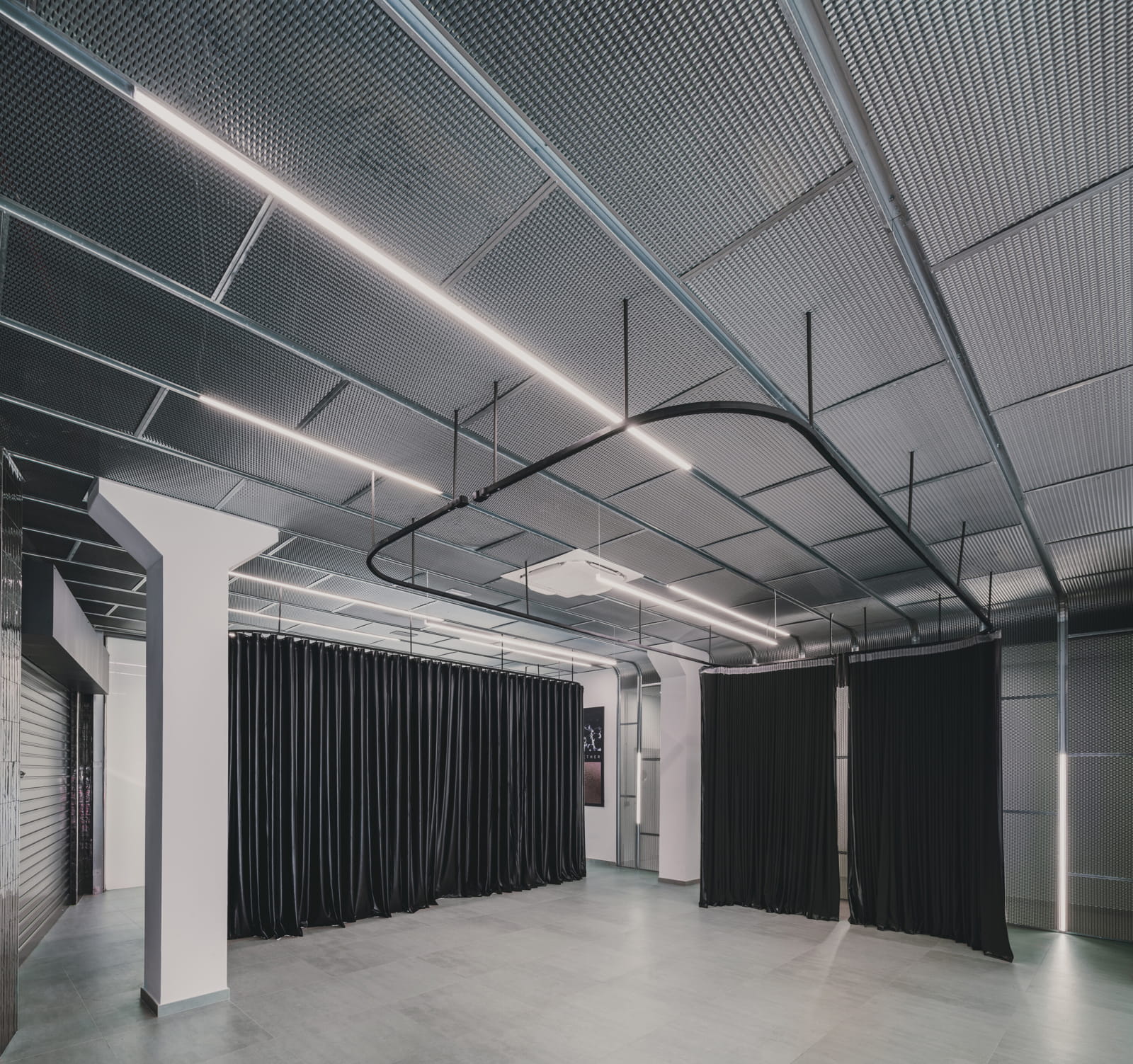
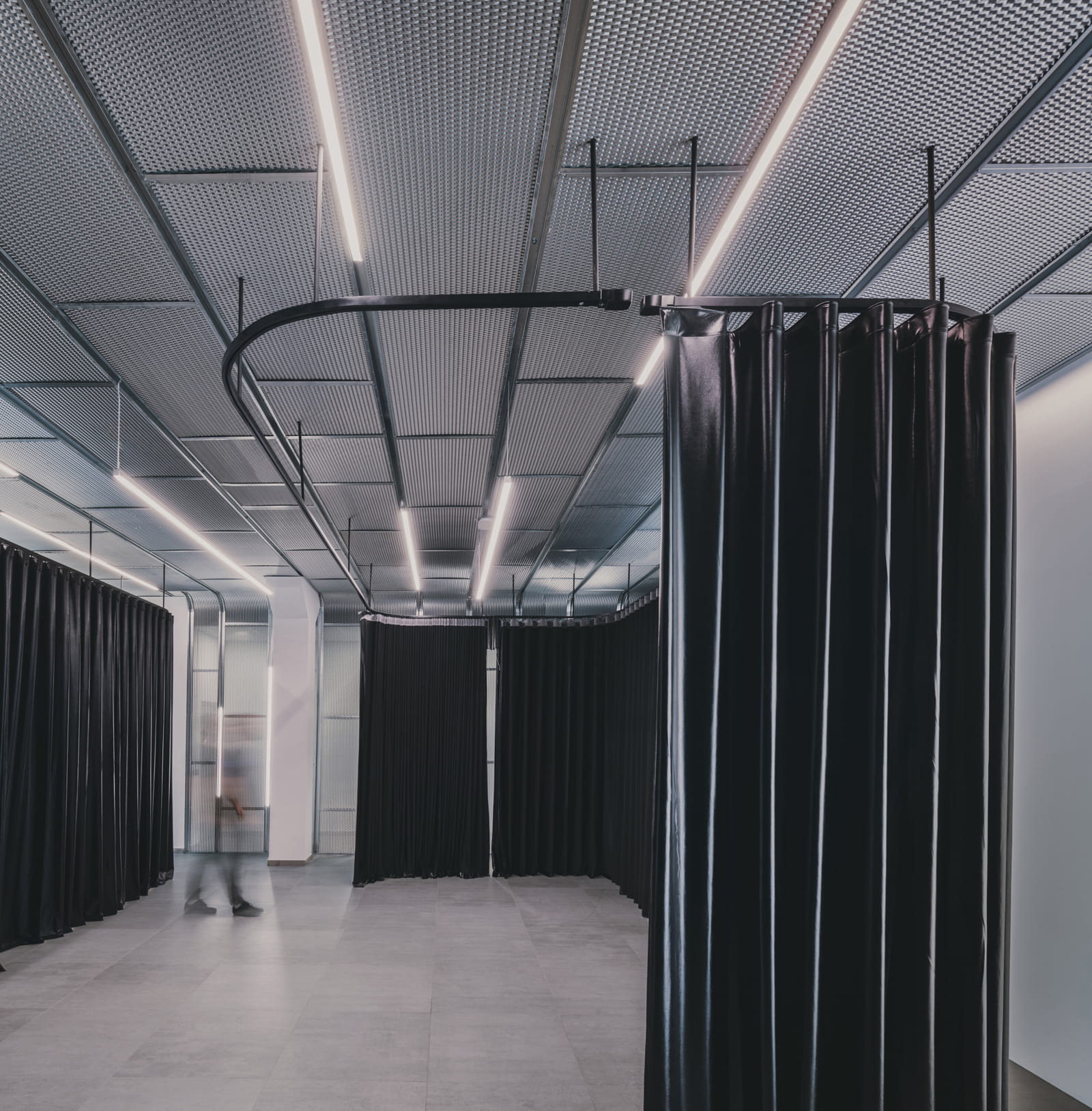
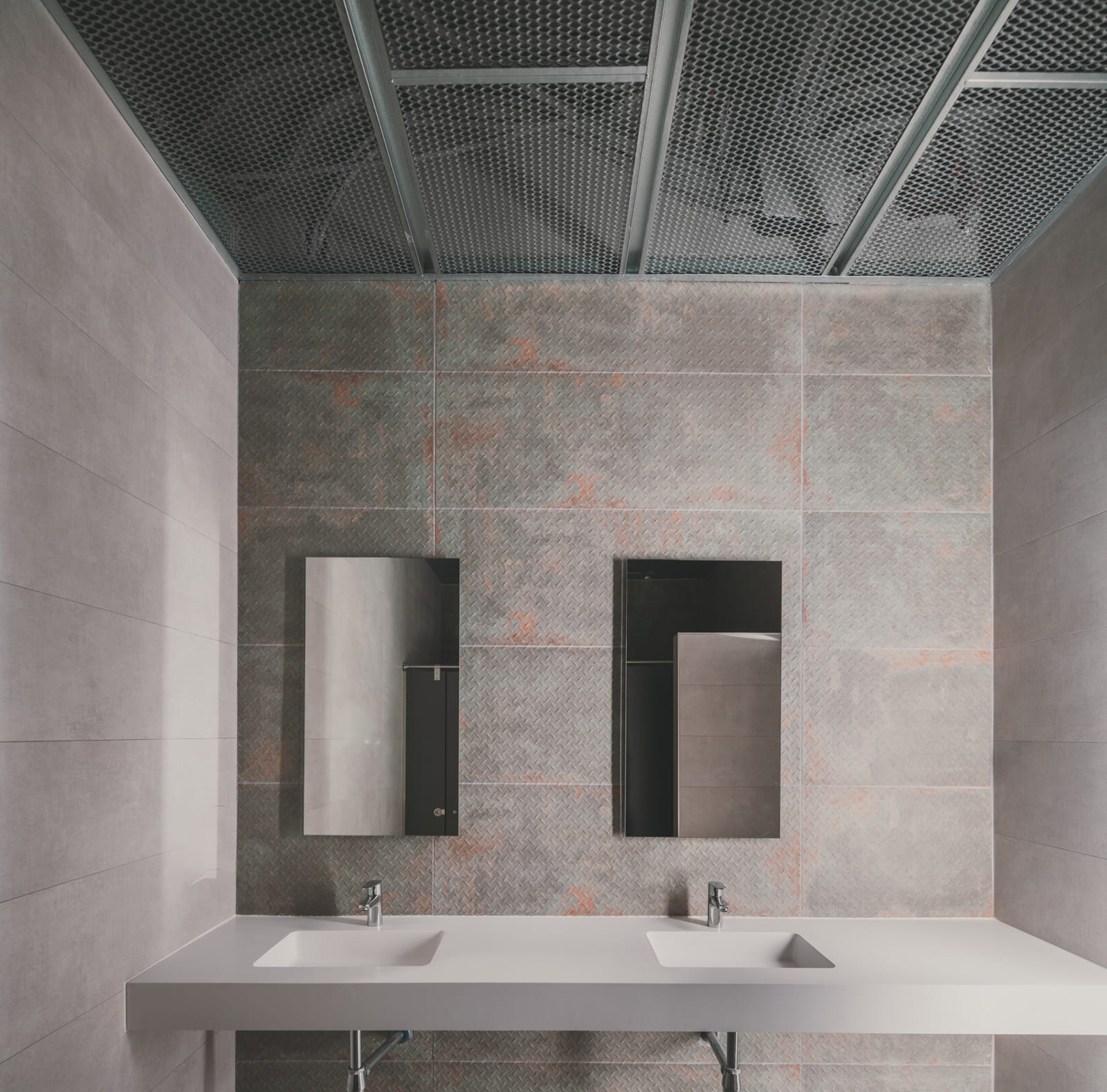

Energy efficiency, passive climate strategies, rainwater collection for vehicle washing, and a strong architectural identity converge in a single intervention. The Leganés Auto Center demonstrates that industrial architecture can be simultaneously pragmatic, sustainable, and expressive—proposing a compelling alternative to the conventional industrial paradigm.
Visualizations

Drawings
Facts & Credits
Title Leganés Auto Center
Typology Architecture, Restoration
Location Leganés, Madrid, Spain
Area 11 514 m²
Status Completed, 2025
Architecture OOIIO Architecture
Author Joaquín Millán Villamuelas
Design Team Candela Bonilla Moreno, Federica Aridon Mamolar, Ximena Zenteno Ladrón de Guevara
Photography Javier de Paz
Text by the authors