Architecture for Culture examines spaces as active cultural agents where memory, identity, and collective experience intersect. From institutions to informal settings, the series highlights how design shapes environments that sustain dialogue, creativity, and shared cultural expression.
Kasawoo transforms an industrial building in London into Loom Club, reimagining neighbourhood social spaces through a flexible, community-driven design. Conceived as a multi-use members’ hub, the project combines social, wellness, and work environments within an adaptable spatial framework. By preserving the building’s industrial character and introducing low-impact interventions, the design fosters connection, well-being, and a renewed sense of local belonging.
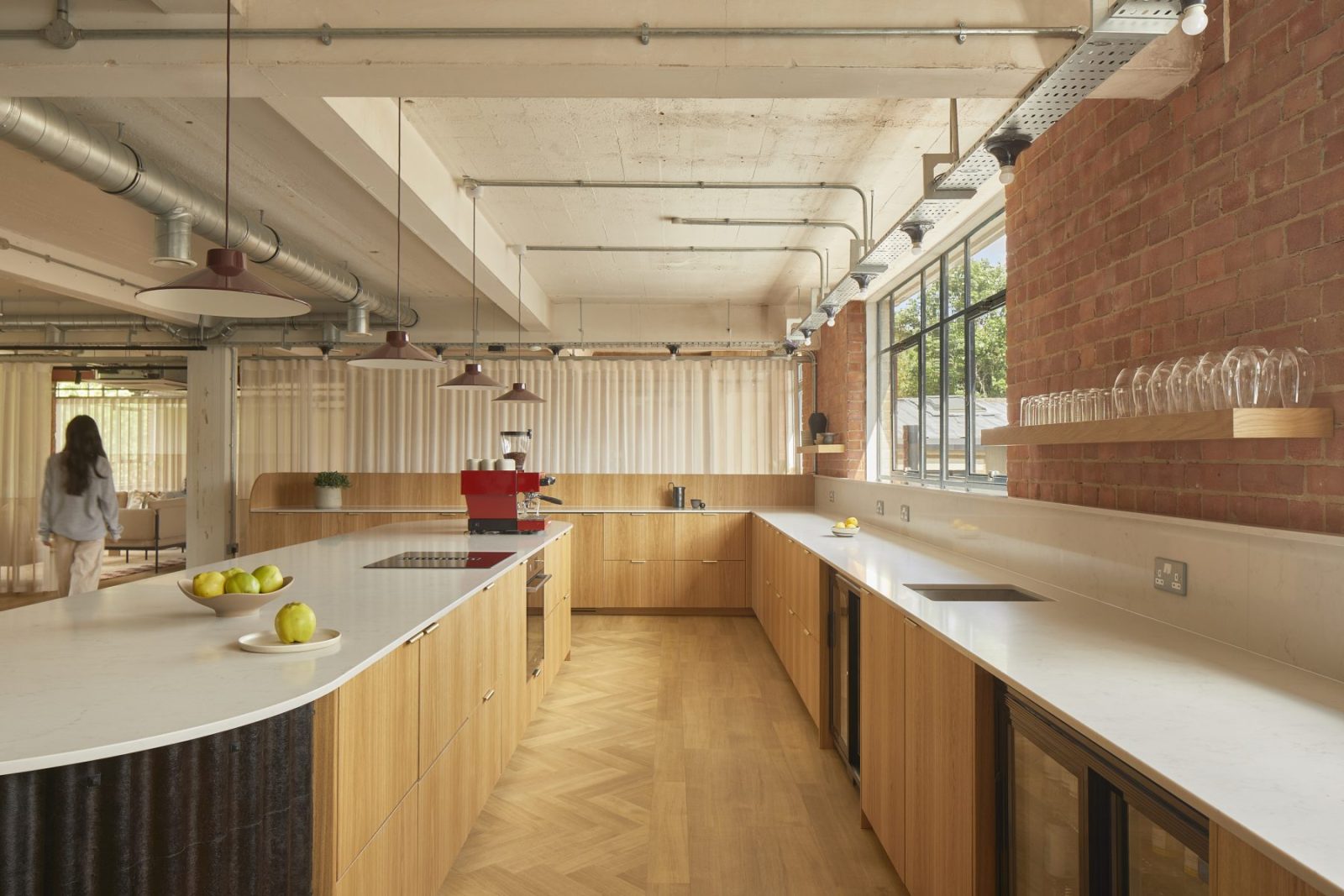
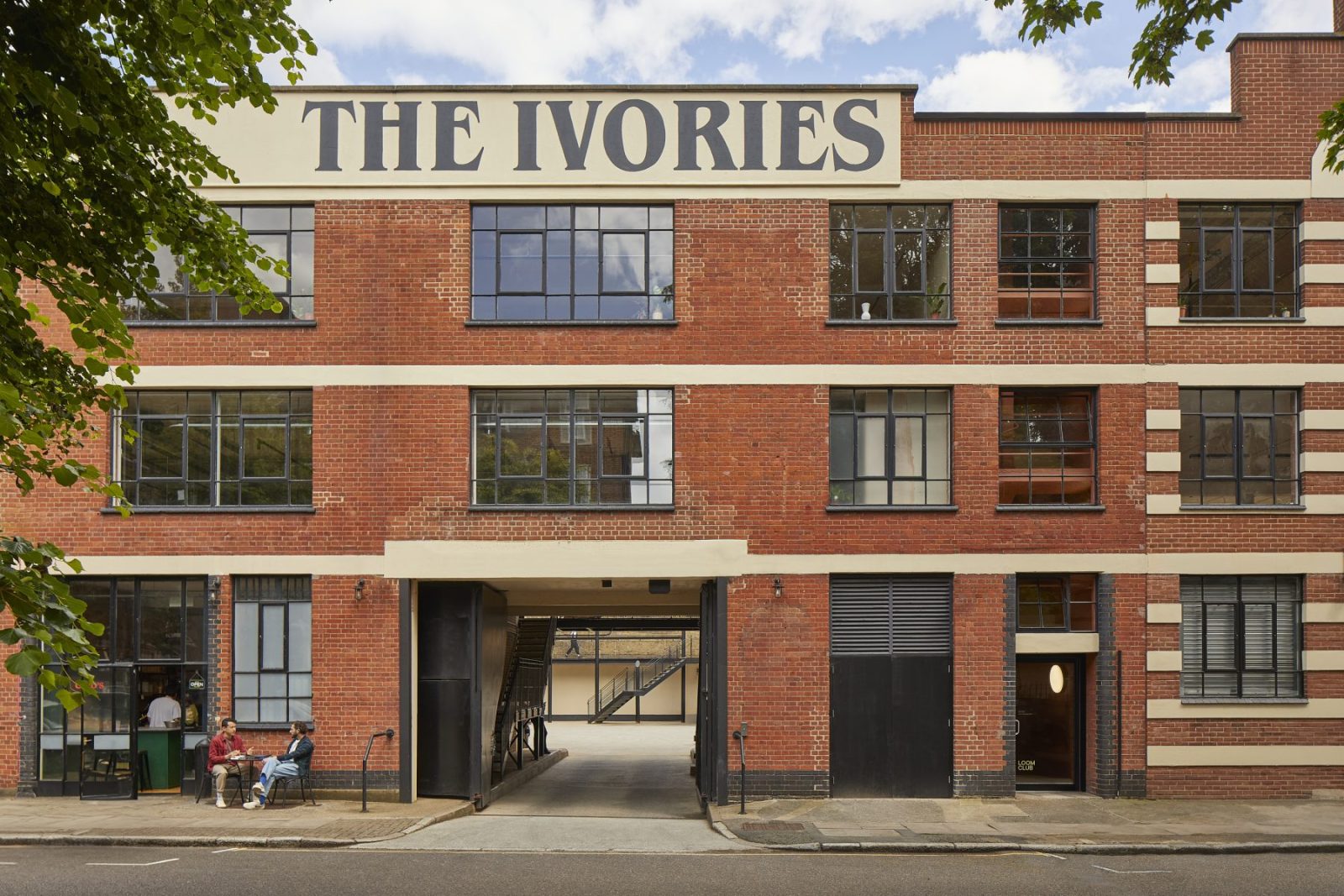
Loom Club, emerges in London as a response to the growing sense of isolation in contemporary urban life. Conceived as a neighbourhood-focused destination, the project brings together social, wellness, and workspaces under one roof, all within walking distance for its members. Set within an Art Deco industrial building in Islington, the club reactivates an existing creative hub, fostering interaction and collective well-being across a two-level spatial experience.
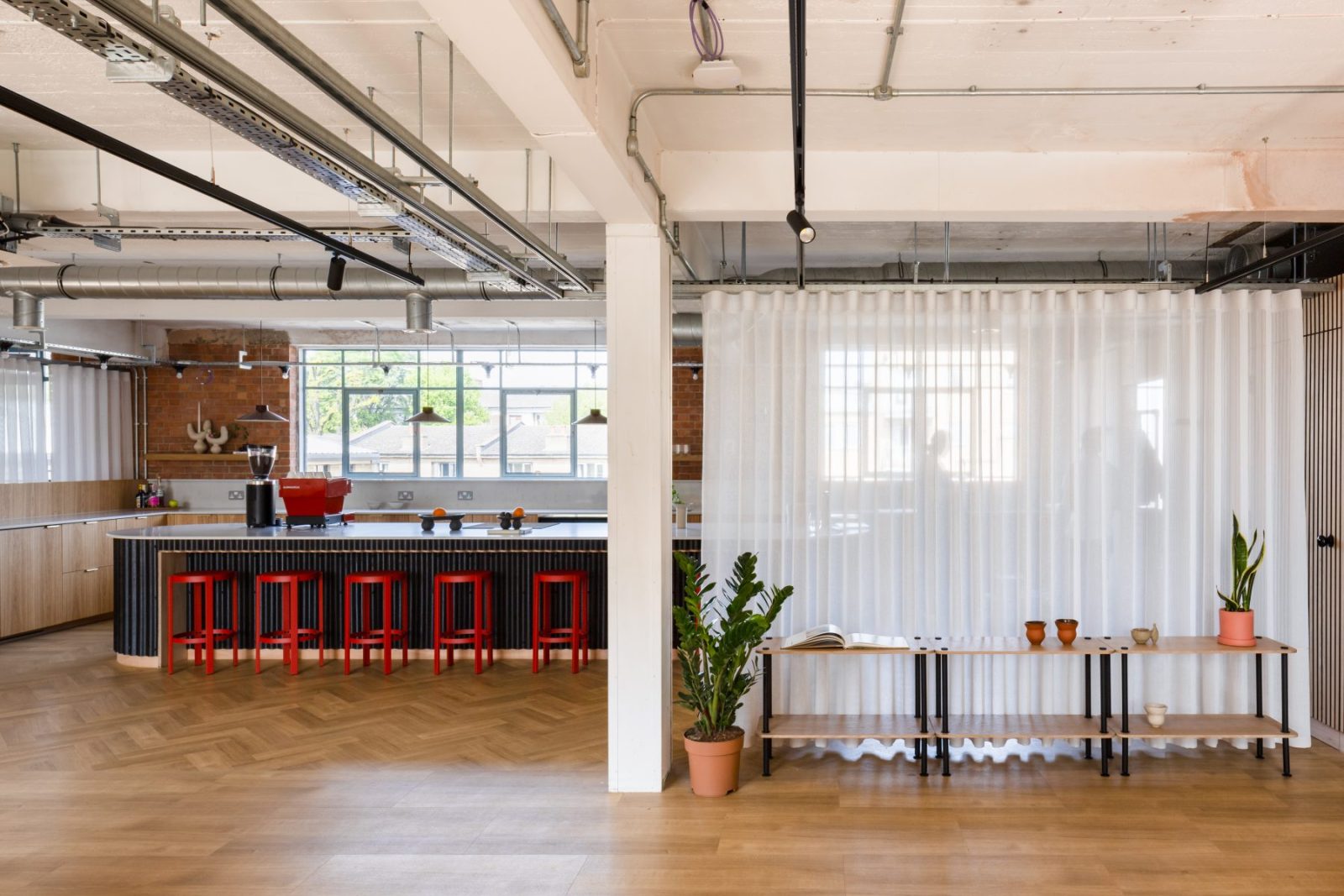
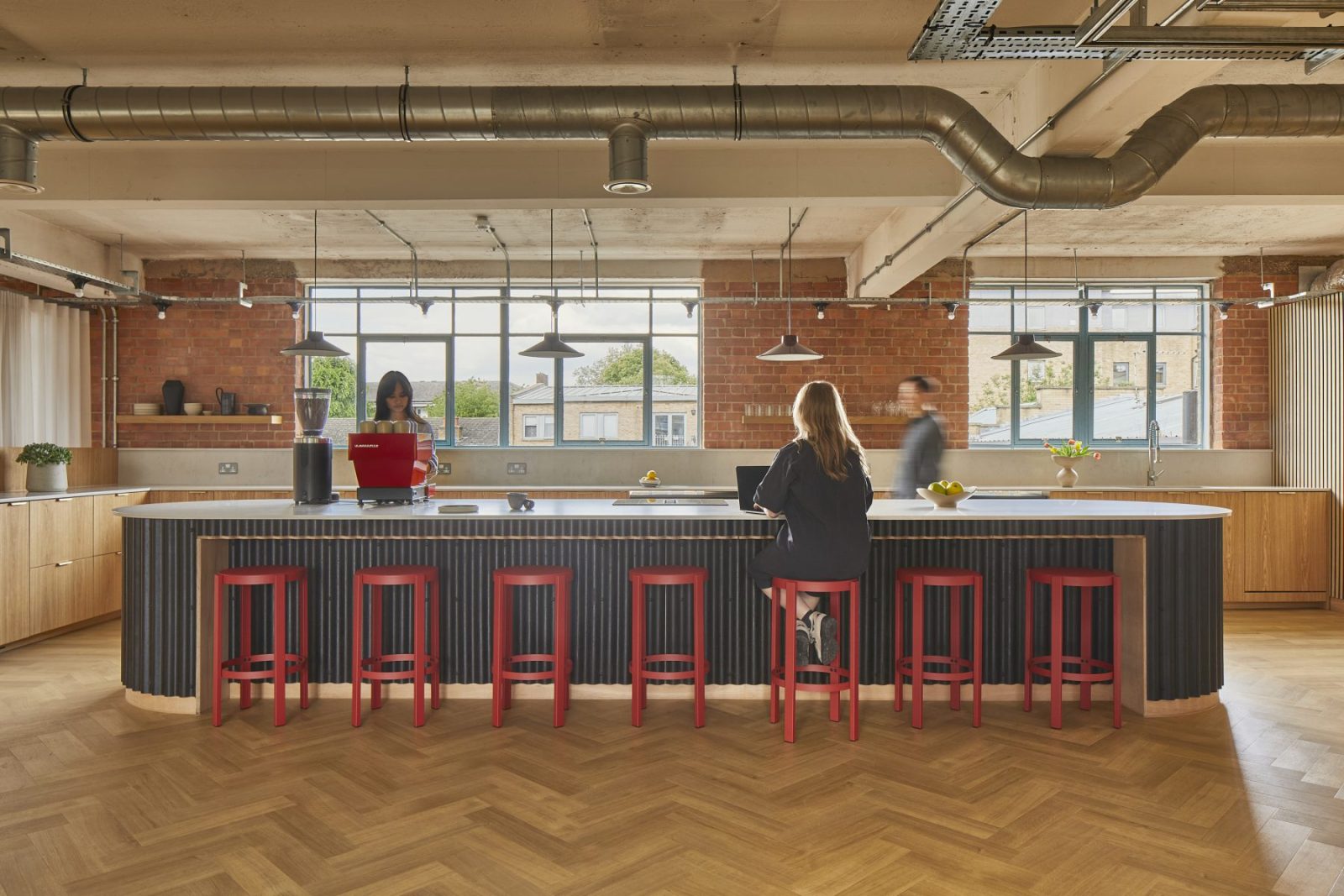
Designed by Kasawoo, the project reinterprets the industrial shell through a strategy of minimal intervention and spatial adaptability.
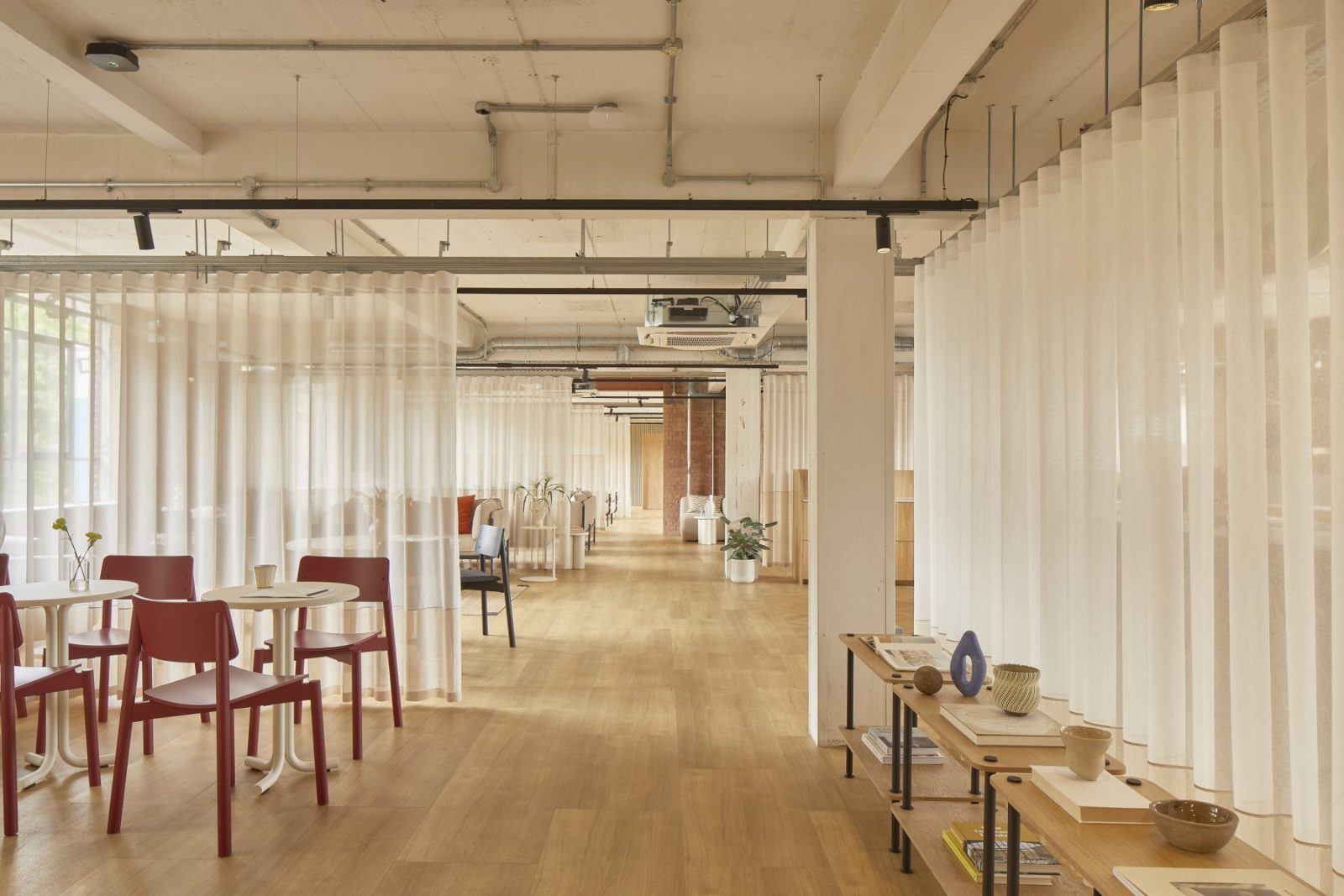
The brief called for a flexible environment capable of hosting diverse activities throughout the day, encouraging both spontaneous encounters and moments of retreat. Central to this approach is the decision to preserve the existing structure, maintaining the building’s raw character while introducing contemporary elements that support comfort and usability.
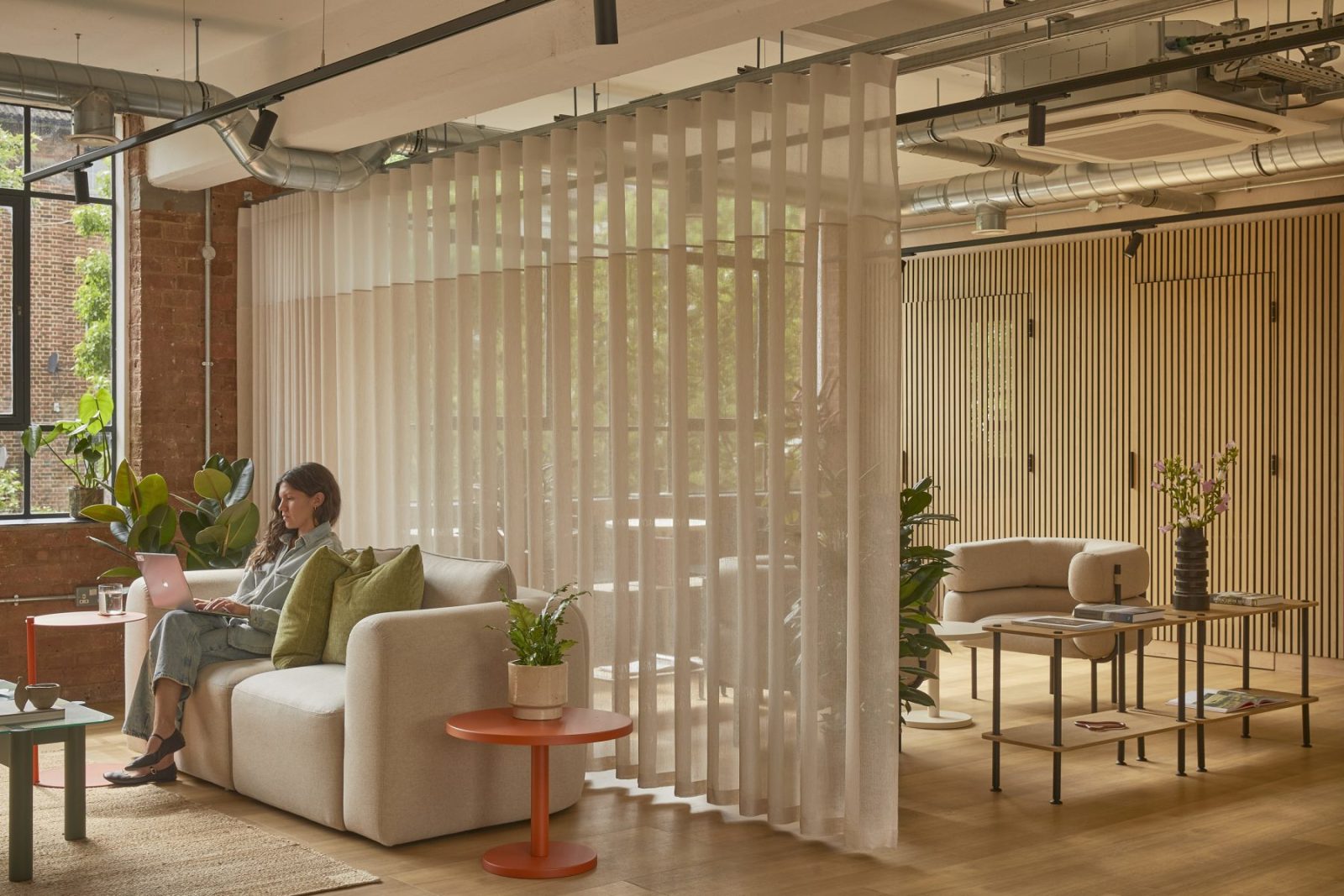
Interventions were limited to a height of 2.3 metres, leaving ceilings and upper surfaces untouched.
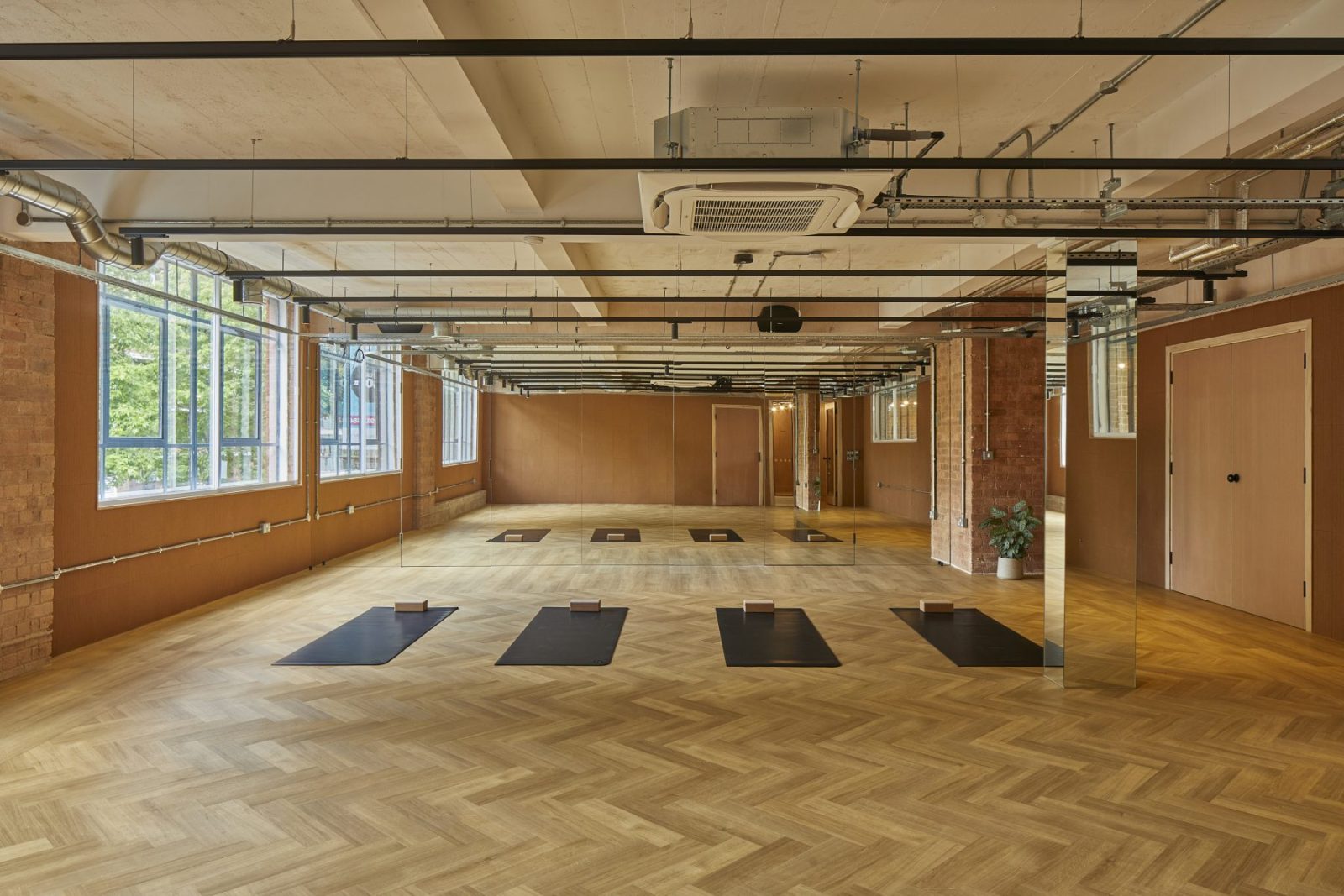
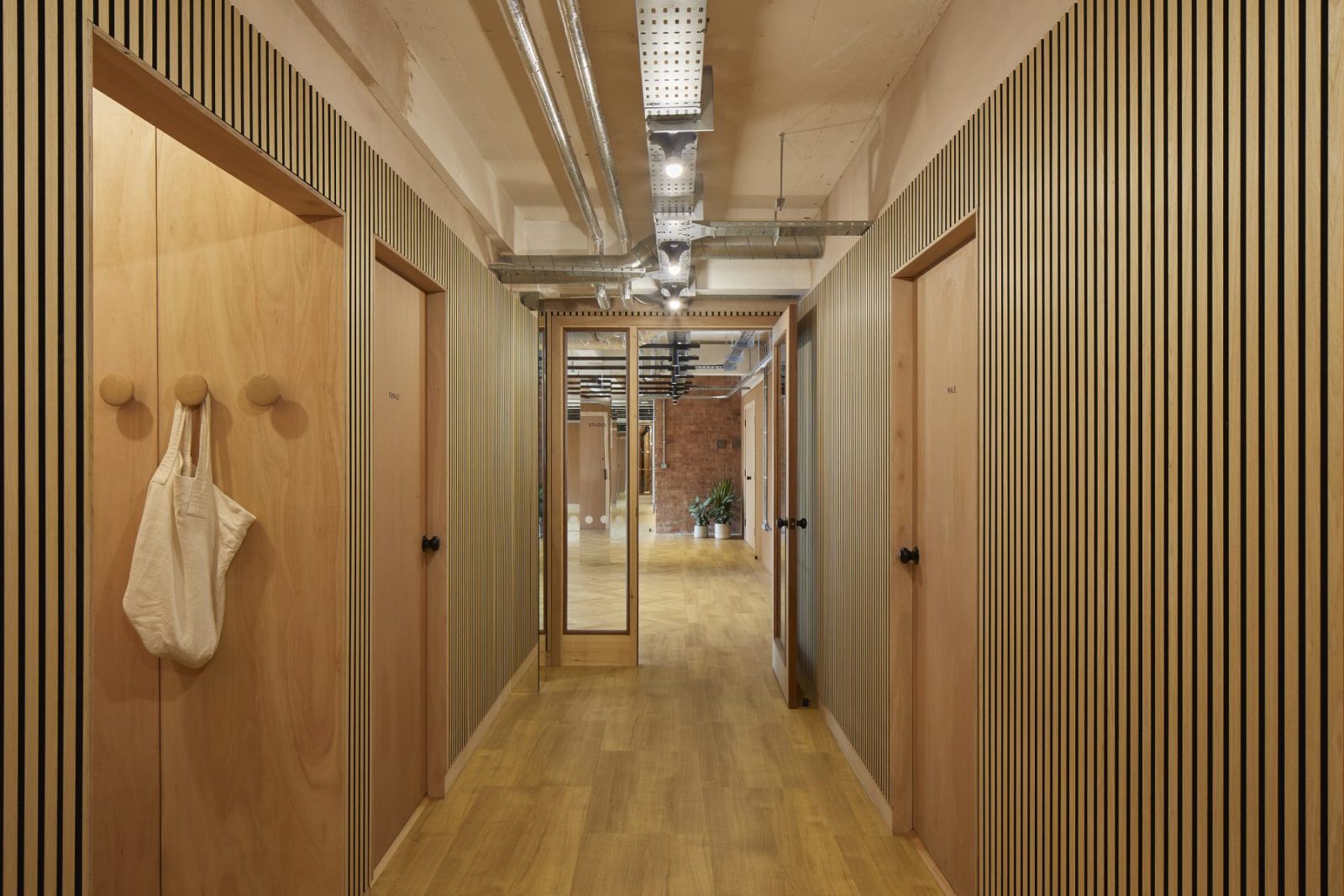
This restrained approach reveals layers of the building’s history -marks and imperfections described as “ghosts of the past”- which become an integral part of the spatial narrative. The result is an environment where old and new coexist in subtle tension, reinforcing the identity of the place.
Spatial organisation is defined by a series of adaptable zones.
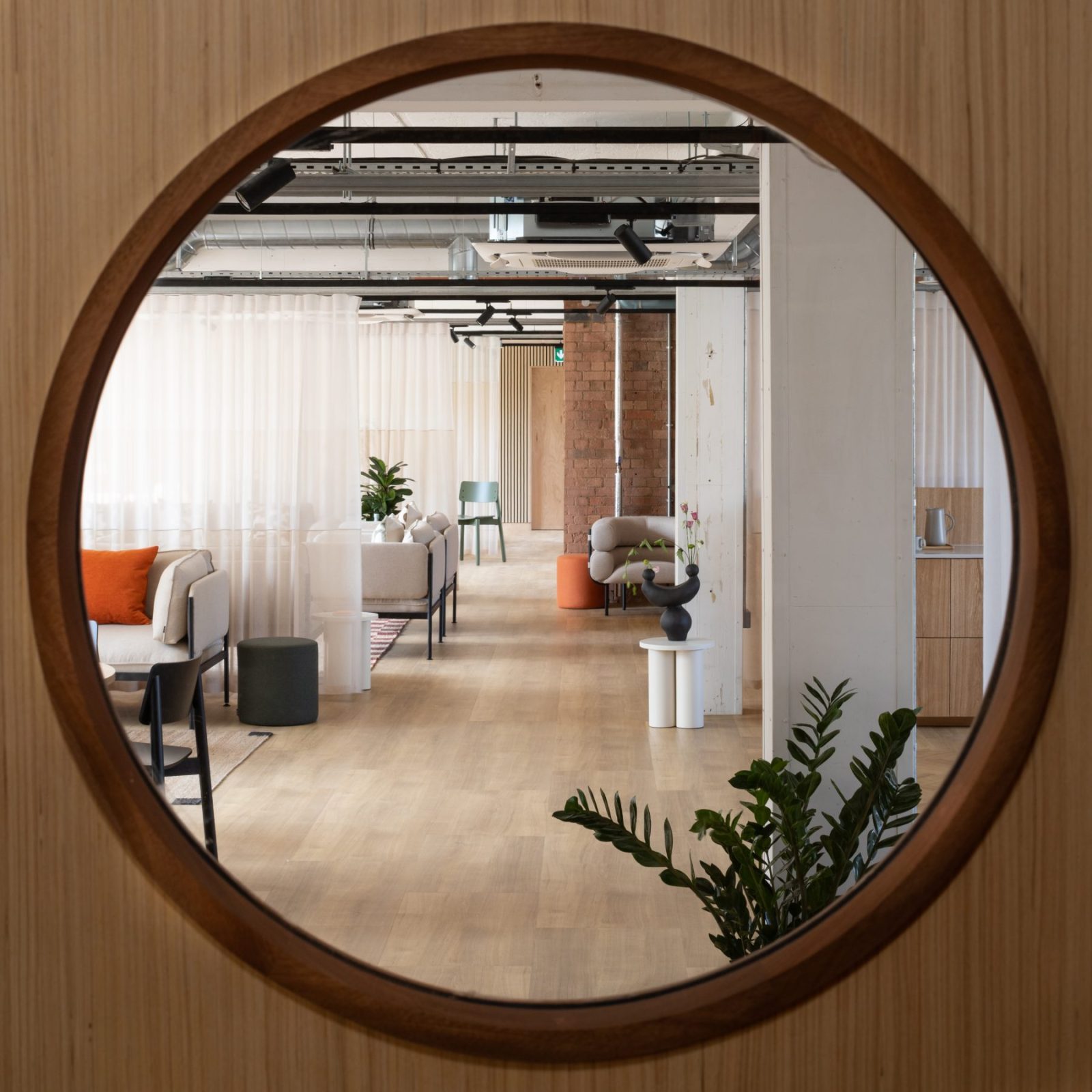
A lively main lounge centres around a communal kitchen island, designed to encourage informal interaction, while quieter areas at the rear accommodate focused activities. A system of curtains introduces a fluid architectural layer, enabling spaces to expand, contract, or transform depending on use.
Varying in opacity, these elements provide both visual and acoustic separation while contributing a soft, atmospheric quality to the interior.
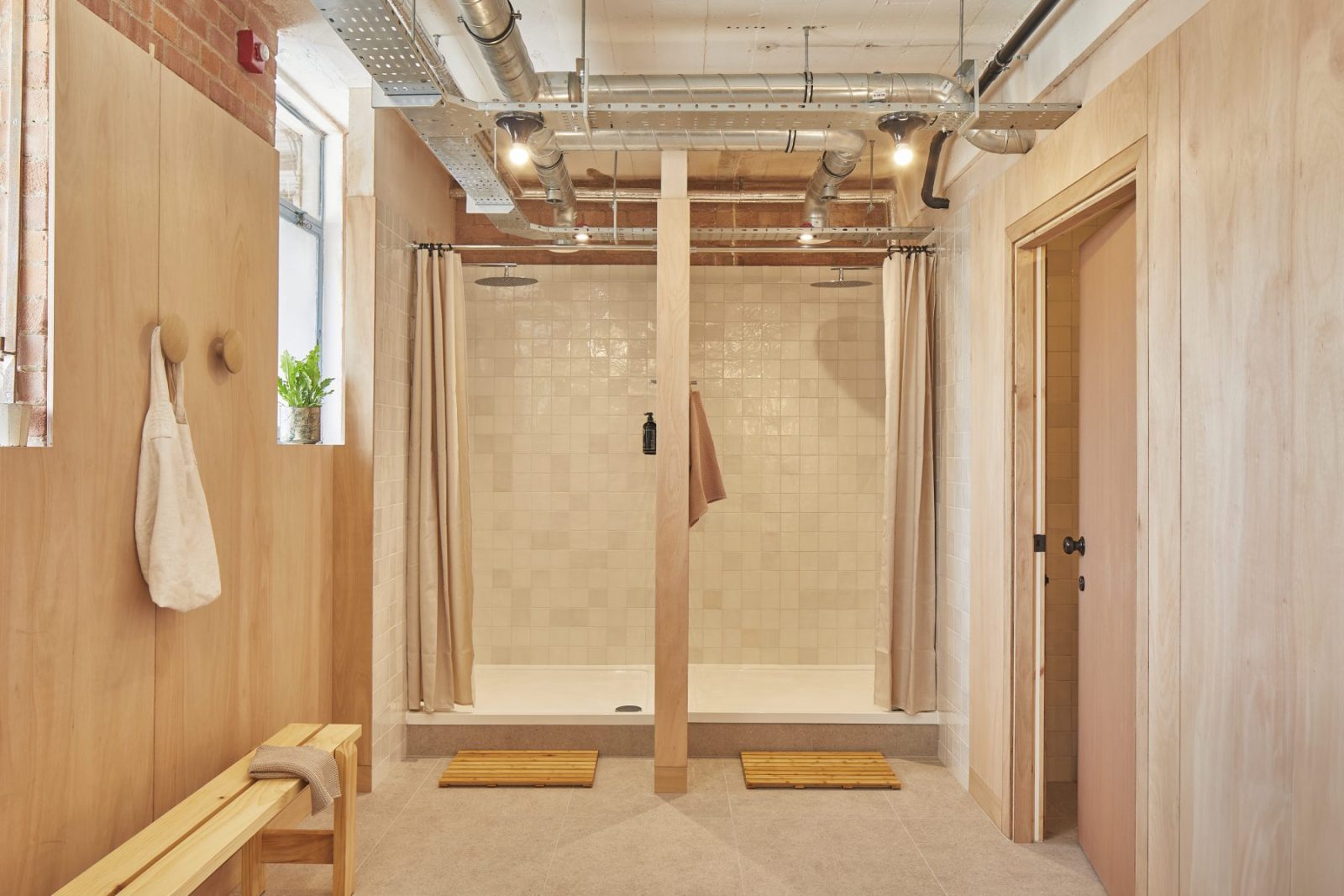
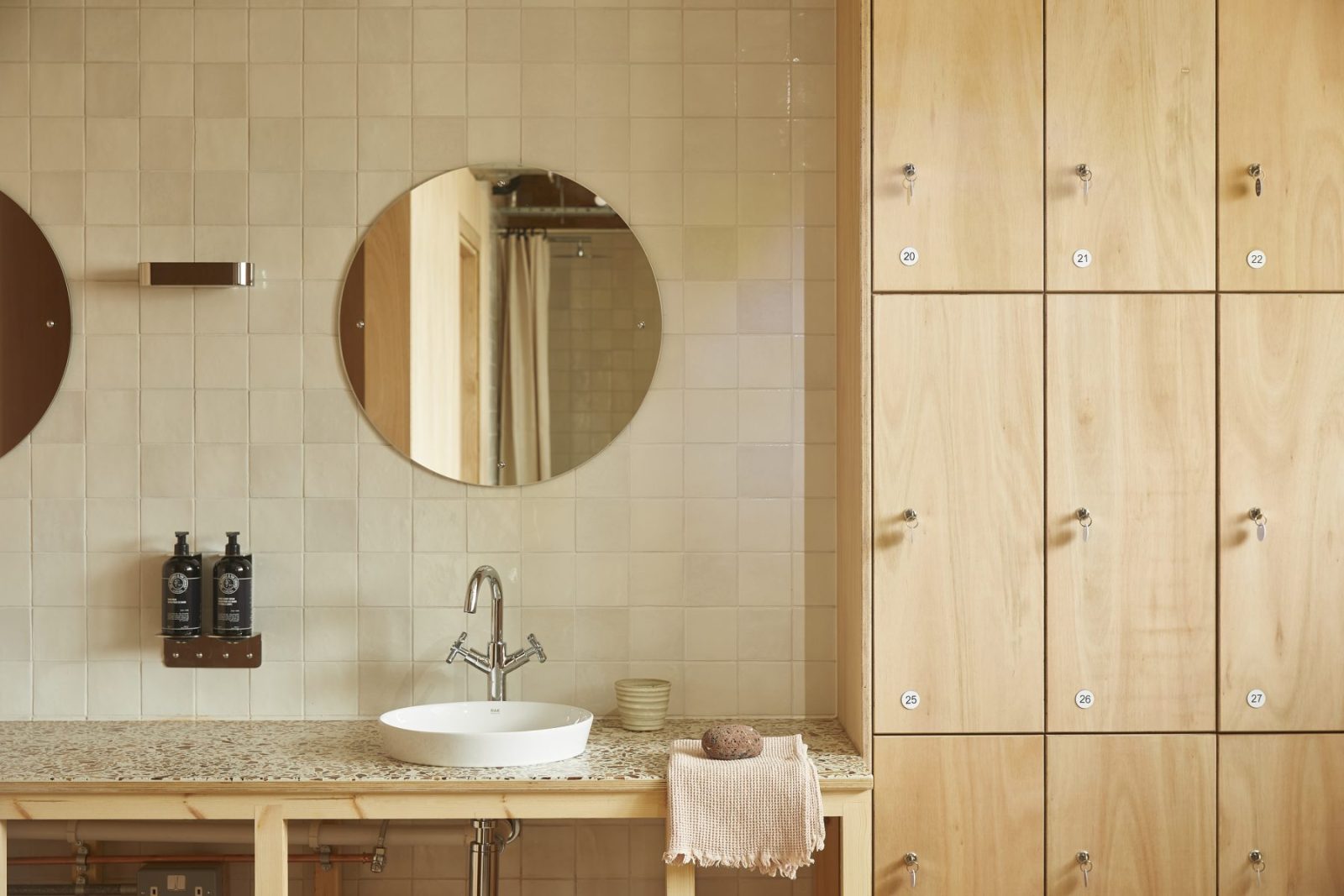
On the lower level, a wellness area accommodates changing facilities and a multipurpose room designed for both exercise and events. Here, circular curtains and sound-absorbing surfaces further enhance flexibility and comfort.
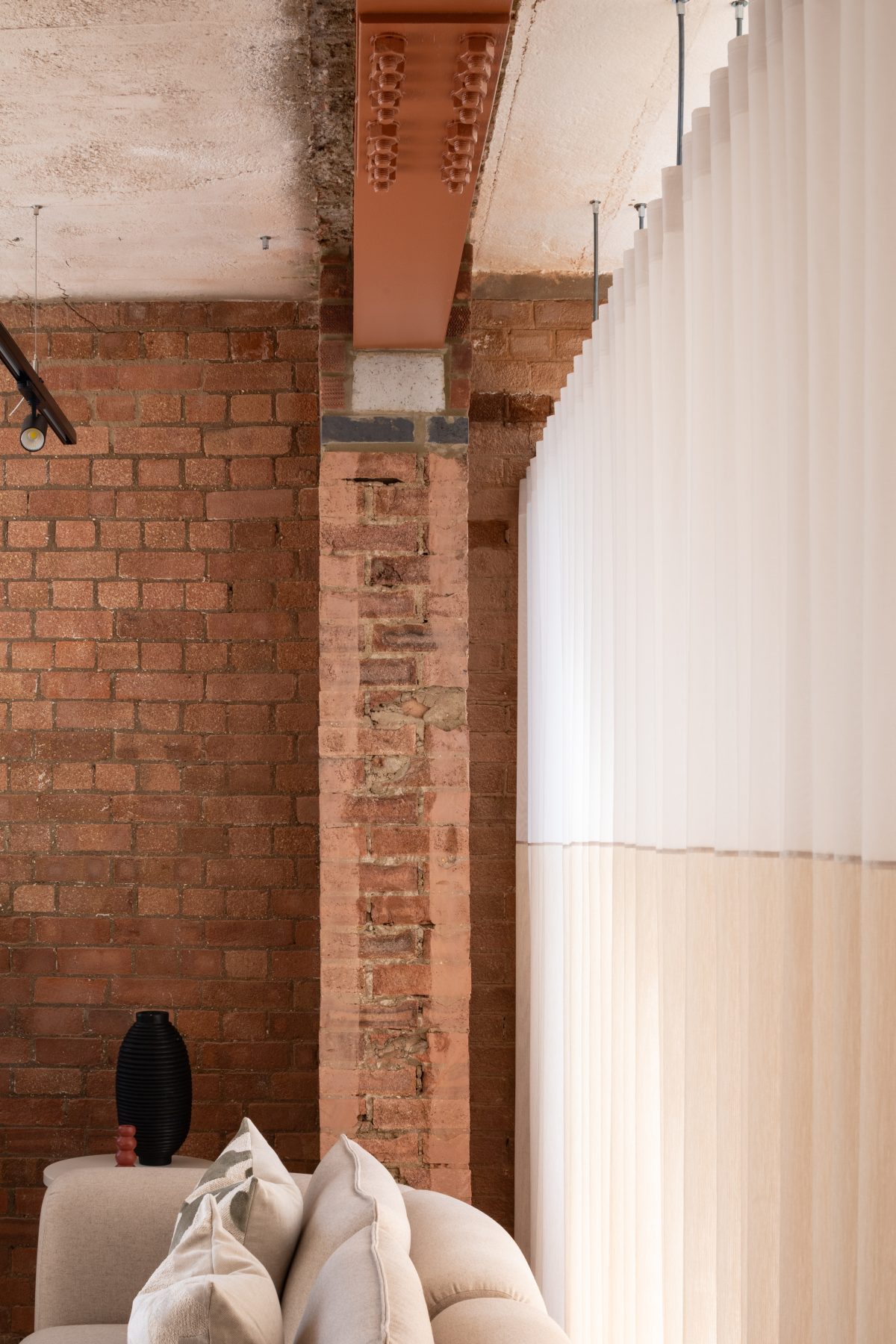
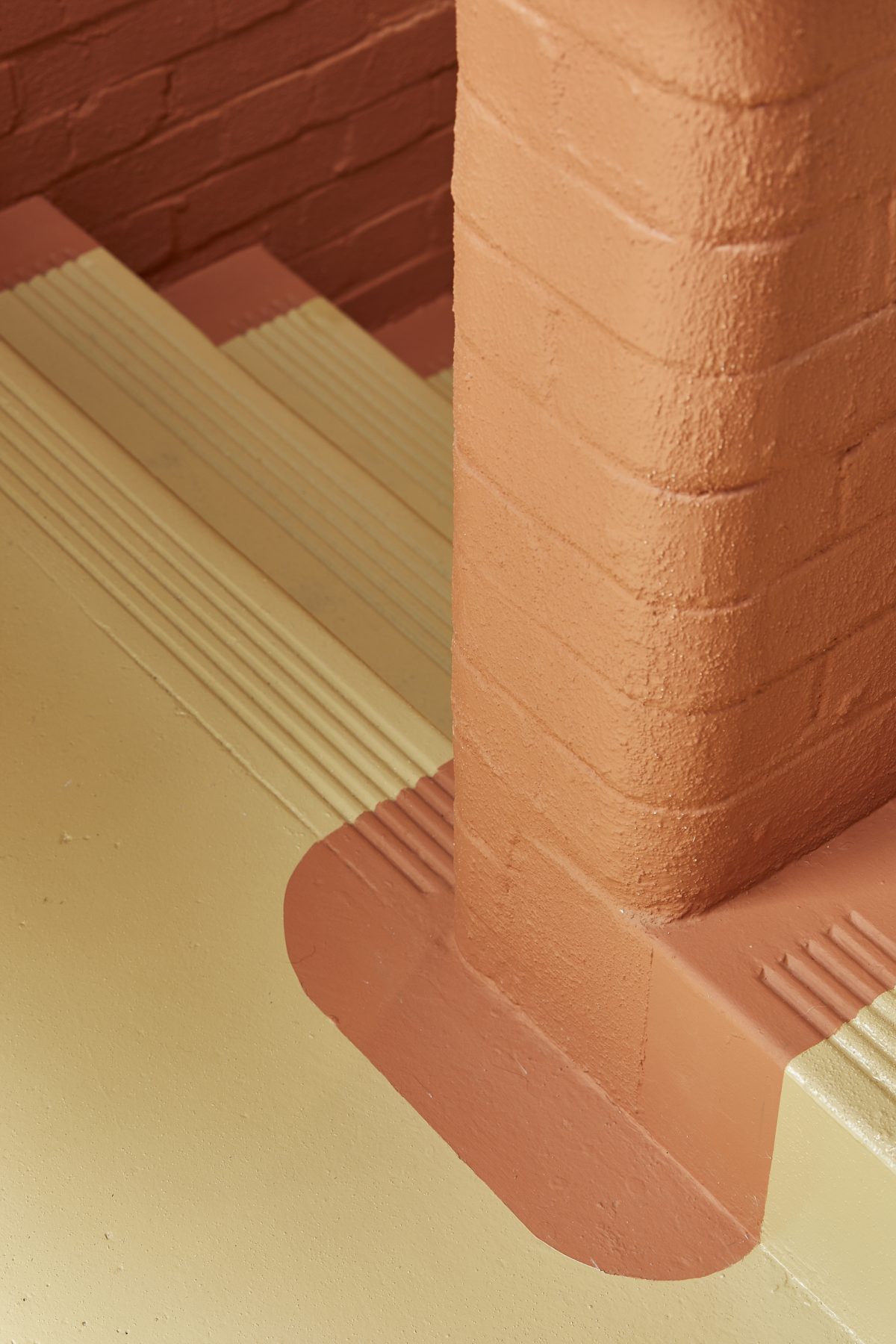
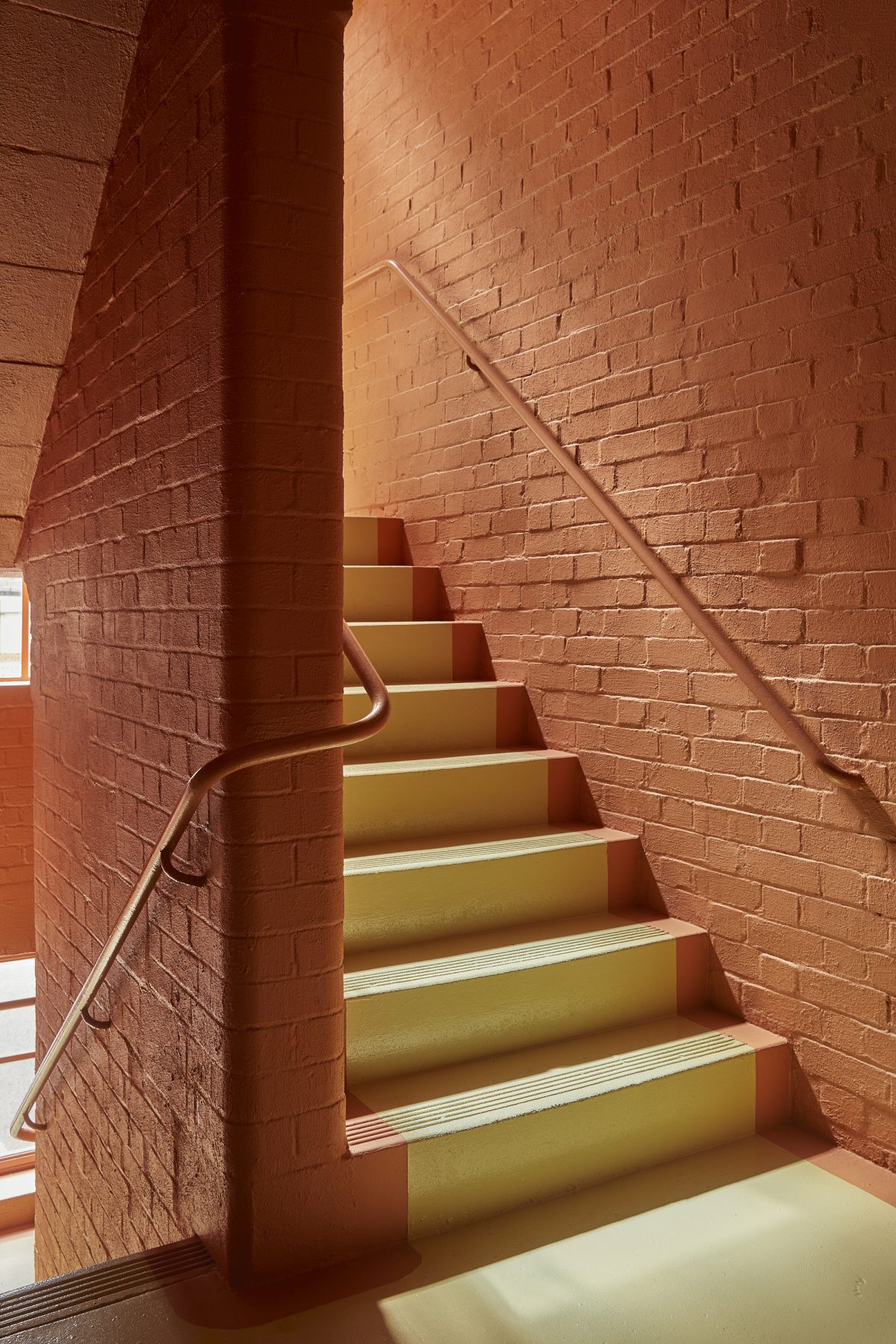
A terracotta-painted staircase connects the two floors, acting as a visual anchor within the material palette.
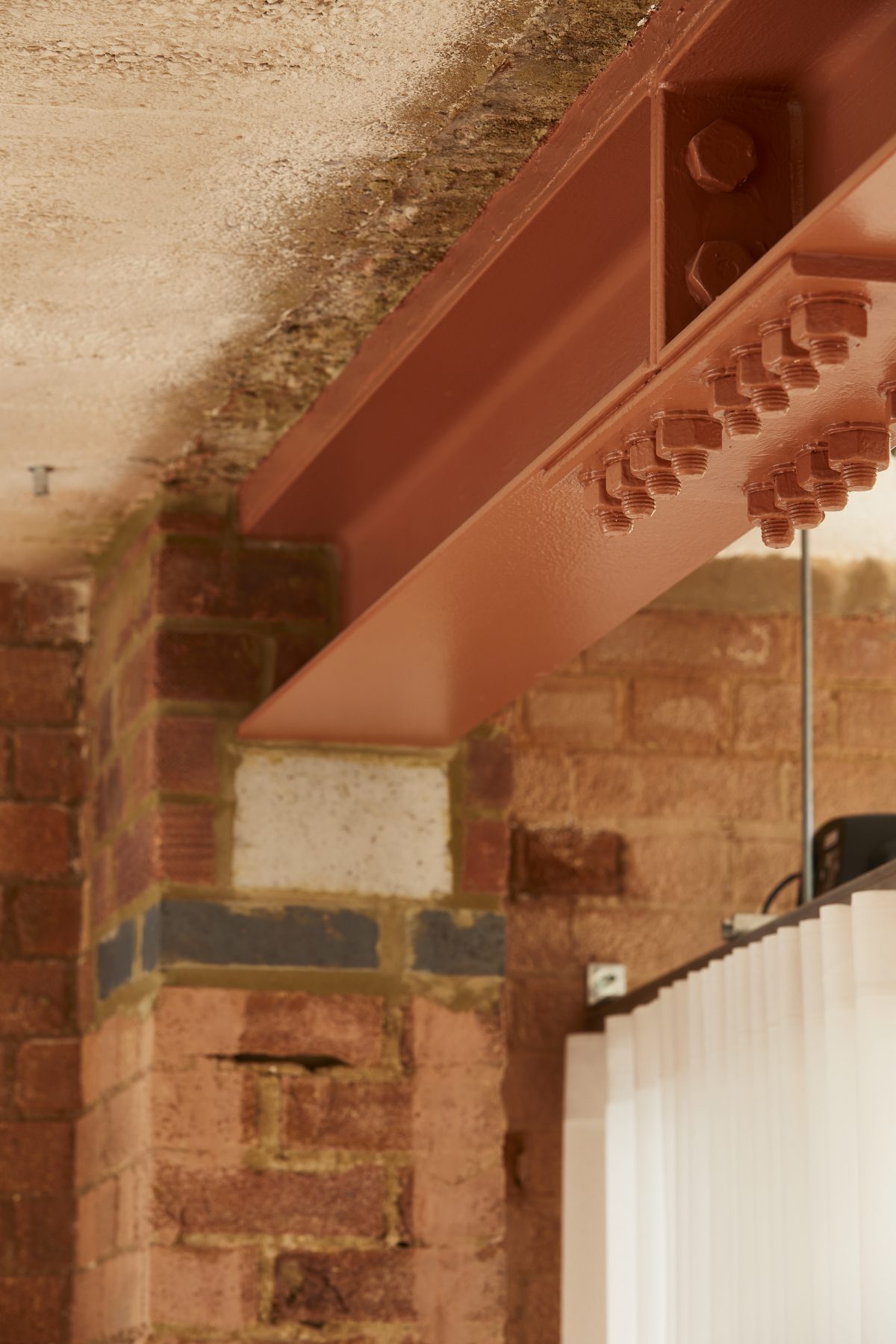
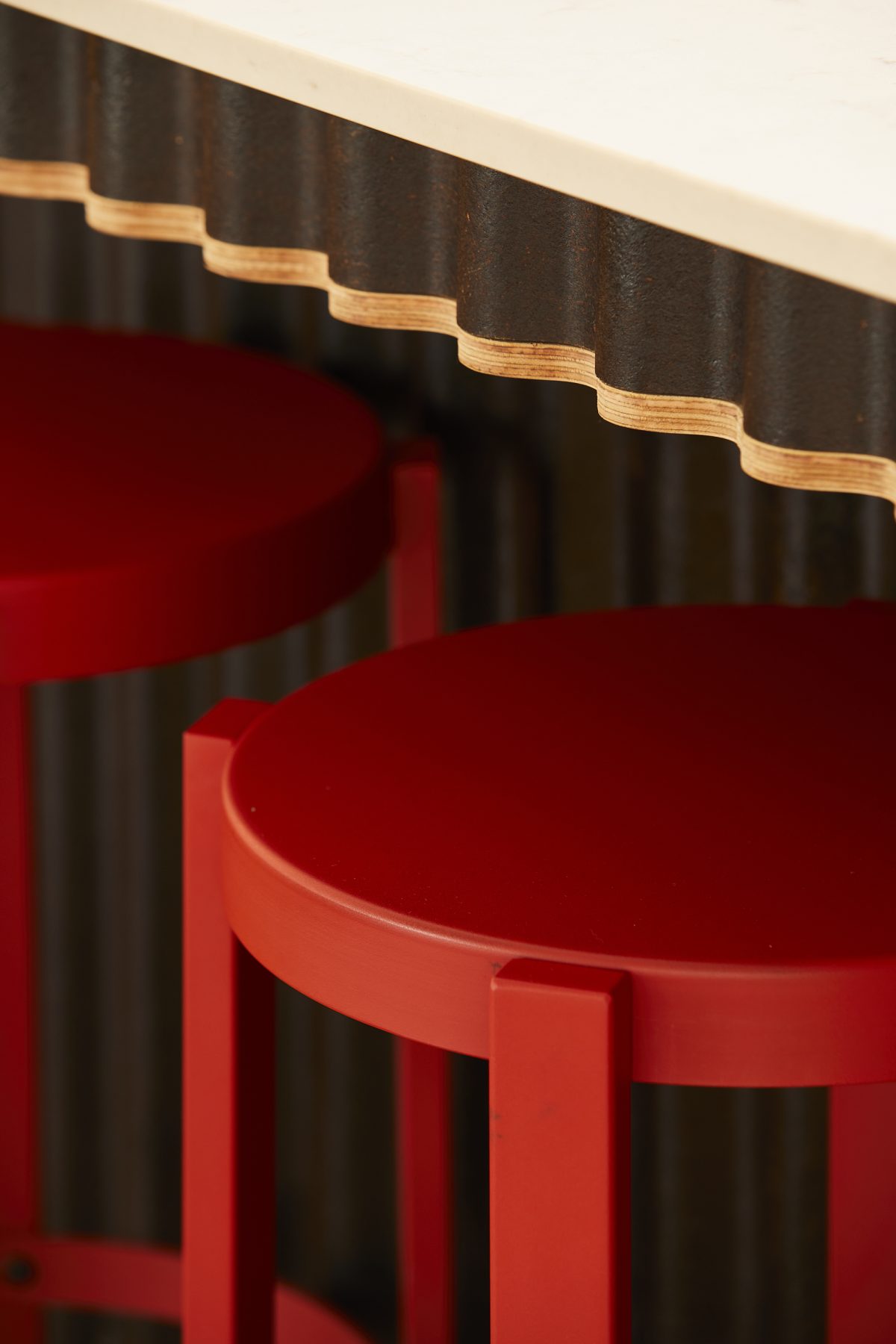
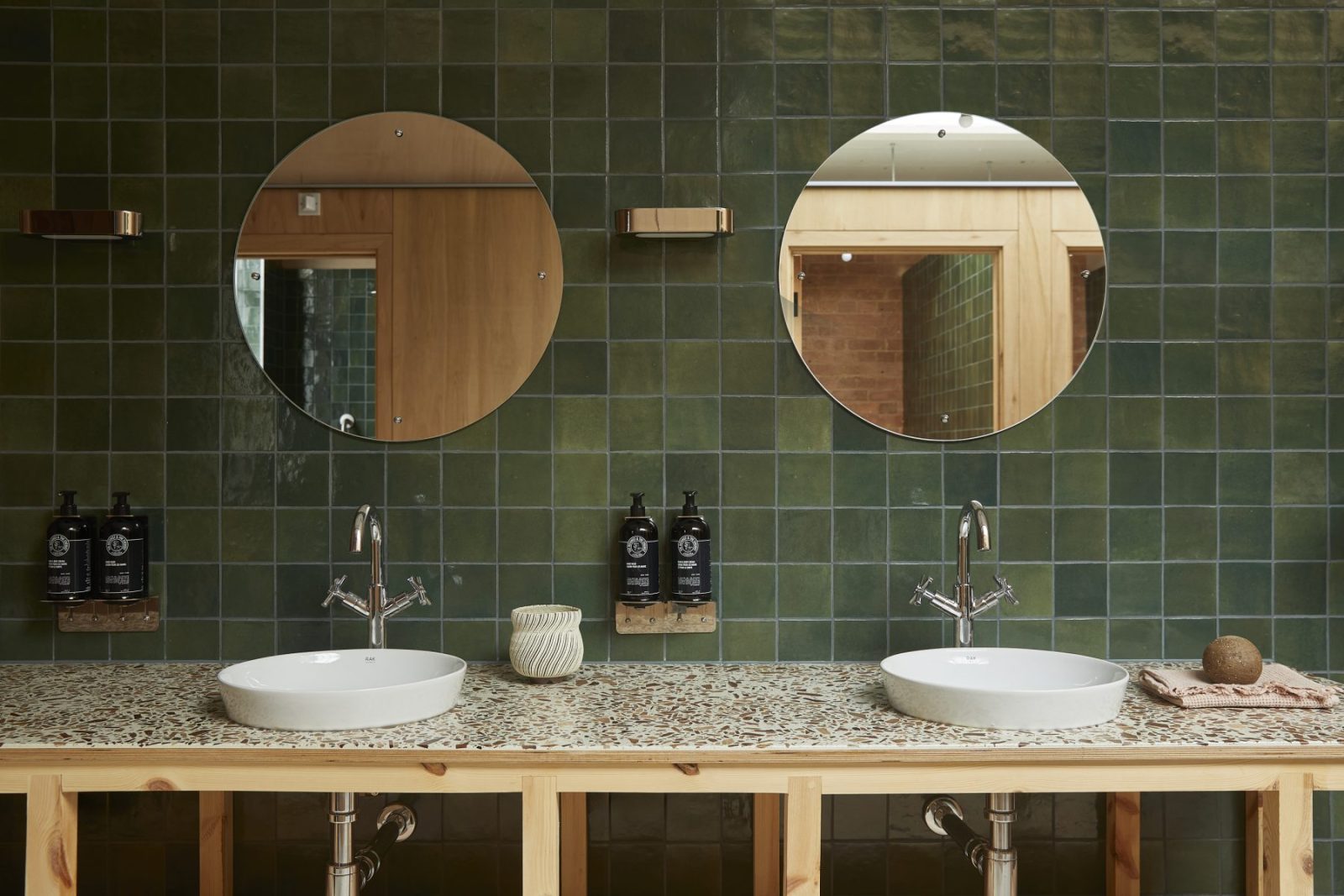
Materiality plays a central role in shaping the project’s identity. Natural, low-carbon materials, such as cork, timber, and exposed brick, are combined with soft textiles and warm, earthy tones. Subtle contrasts of colour, including terracotta, red, and green, are introduced through furnishings and planting, enriching the sensory experience while maintaining a cohesive aesthetic.
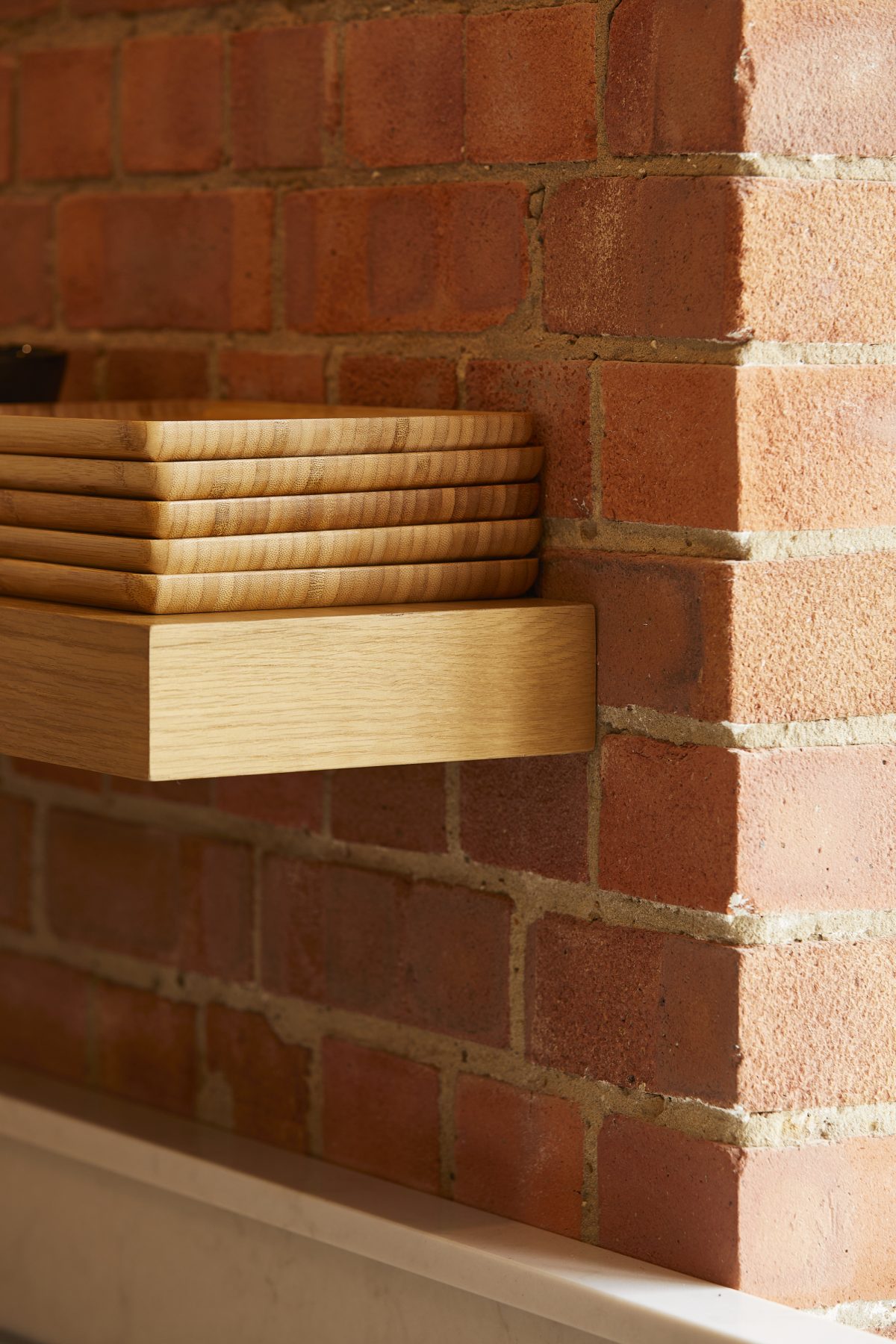
Kasawoo’s intervention reflects an approach grounded in “gentle” architecture, where minimal demolition and thoughtful reuse guide the design process.
By embracing constraints and working with the existing fabric, the project demonstrates how adaptive, community-oriented spaces can emerge through comprehensive, detailed design.
Kyriaki Kasabalis, co-founder of Kasawoo, comments: “As a start up, Loom Club is environmentally, socially and resource conscious, an ethos we share at Kasawoo”.
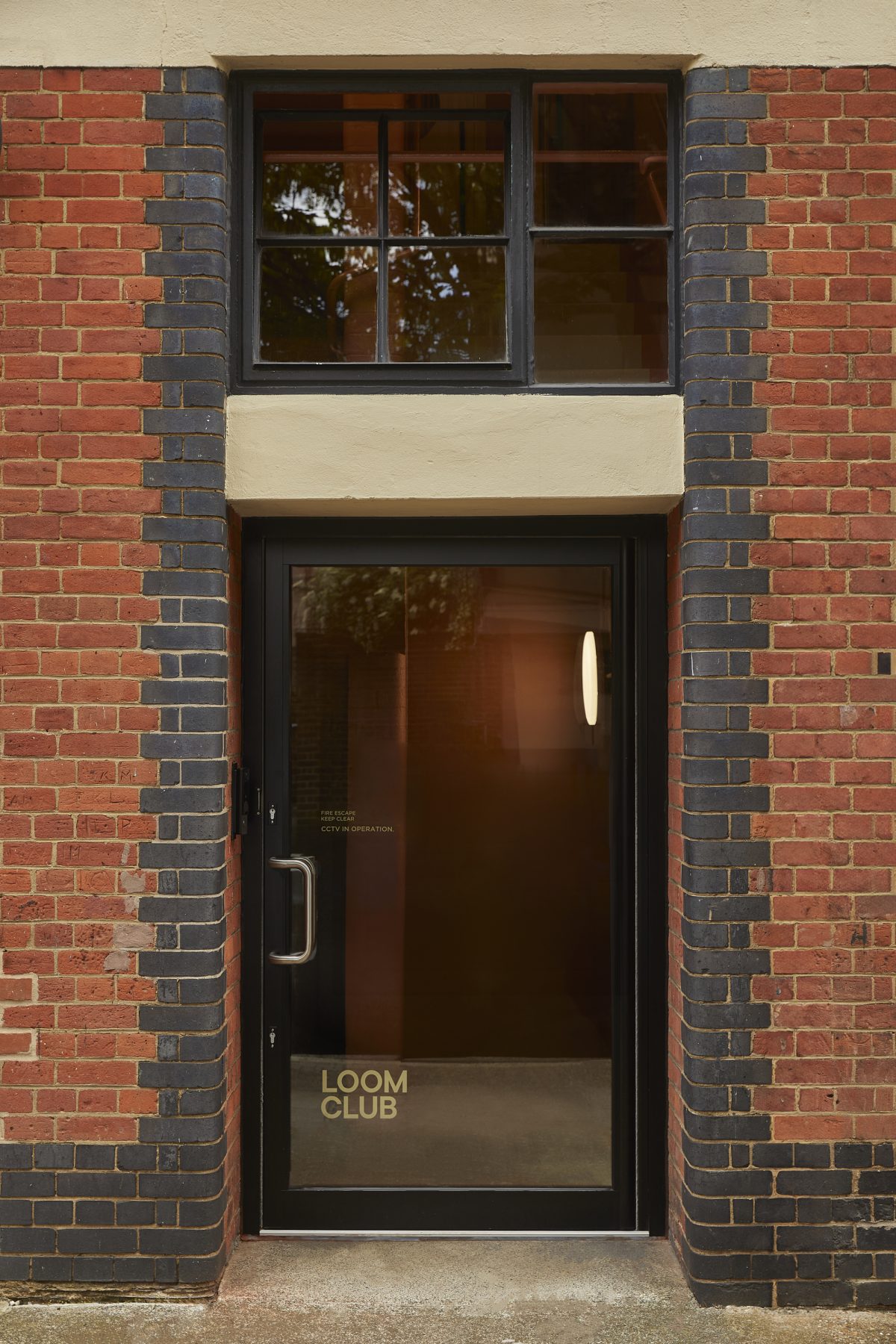
The subtle yet distinct juxtaposition between the old building and its new lease of life became the foundation of the design approach throughout the project. We purposefully worked with mundane basic materials and closely collaboratively with our client, contractor and suppliers to craft a design solution that was more than the sum of its parts. We hope that Loom Club shows a different, more playful, and more local future is possible.”
Facts & Credits
Project title: Loom Club
Project type: Interiors | Building redesign
Project location: London, UK
Architecture: Kasawoo
Photography: David Valinsky, Ed Reeve