In The Summer Refuge series, curated by Archt. for Archisearch, summer is not a sliver of time but a state of being. Rooted in nature, rural landscapes, vernacular architecture, and closely connected to notions such as “disconnection,” “slow living,” and Martin Heidegger’s “Dasein,” namely the art of being present in the world, the series focuses on seasonal houses that shelter time, memory, and dreams.
In the twelfth episode, we follow caarpa reimagining Sardinia’s industrial heritage through the transformation of California—a 60-square-metre former high-temperature cooking room within a historic tonnara, the traditional tuna-processing complex—into a pink-salmon domestic refuge by the sea.
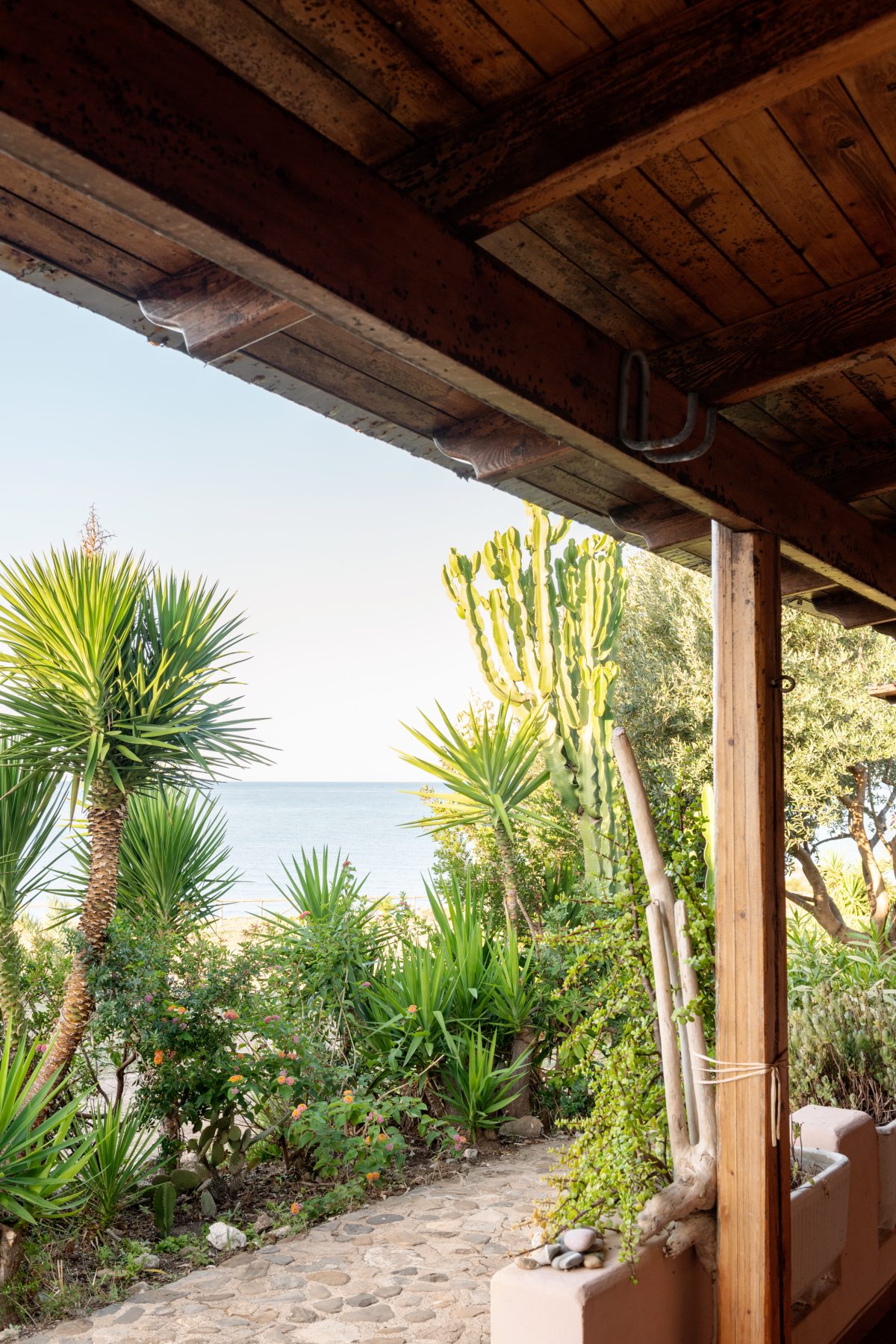
Along Costa Verde in southwestern Sardinia, one of the wildest and least urbanized coasts in the Mediterranean, architecture has long been shaped by ways of living emerging through coexistence with the sea. Defined by abandoned mining settlements, sweeping dunes, and small fishing communities, this remote stretch of coastline preserves a quieter landscape where buildings arise directly from necessity, labour, and climate.
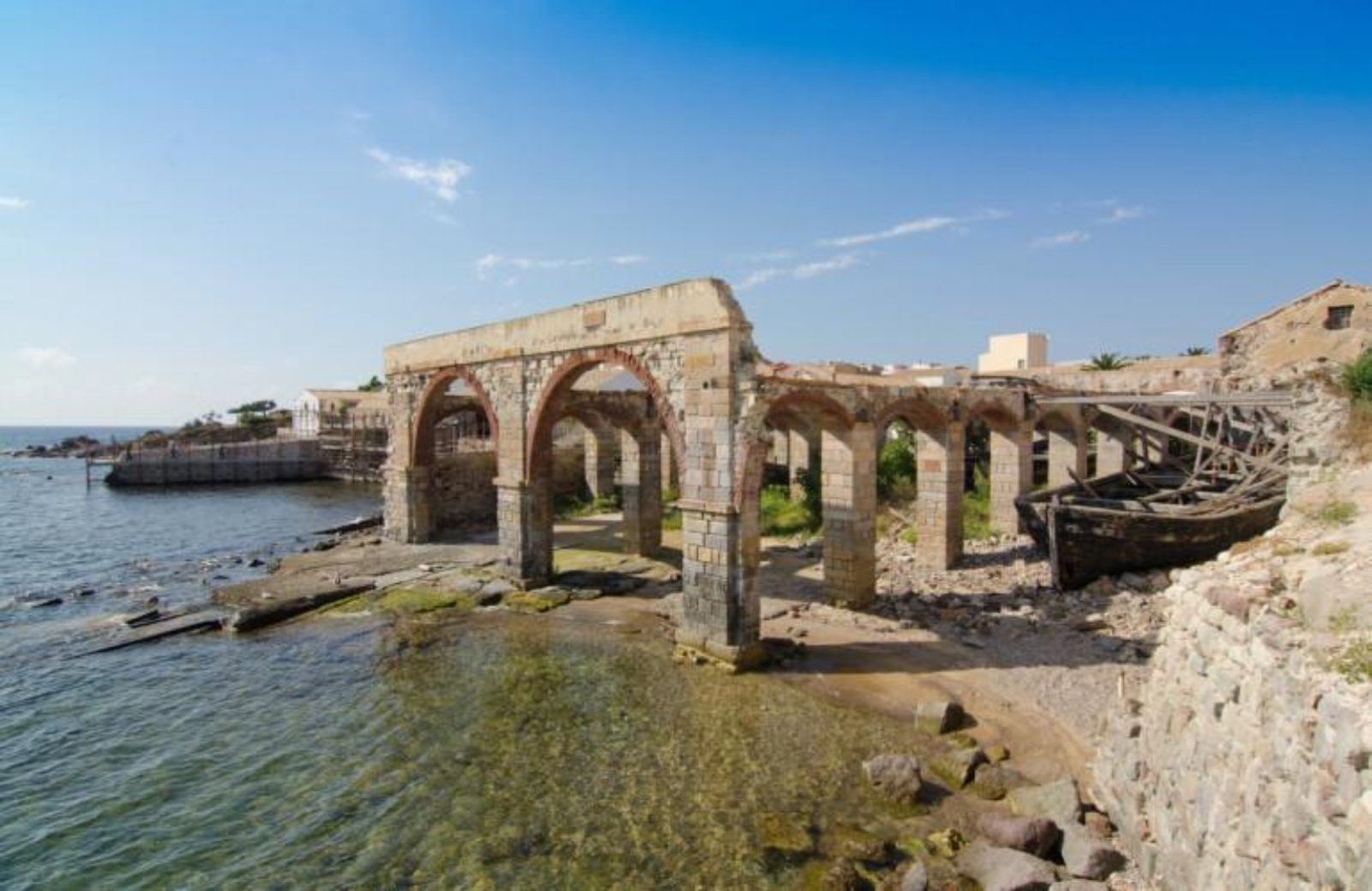
Along the coasts of Sardinia, tuna industry was once central to the economic and social life of the region.
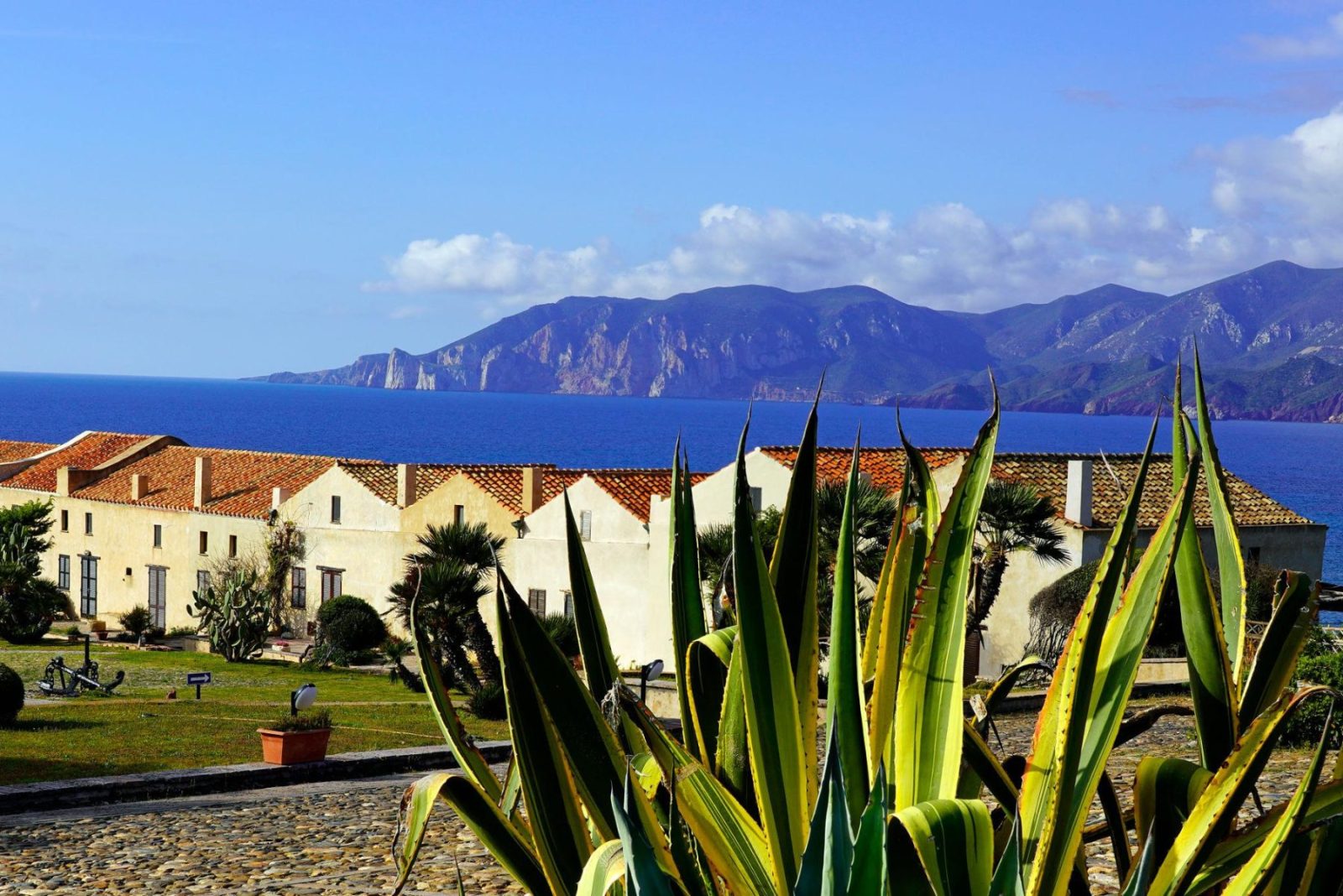
Historically, the tonnare formed entire architectural organisms dedicated to the processing and preservation of tuna: double-height interiors designed to disperse heat, robust lime-plastered surfaces resistant to salt air, patios conceived as transitional working spaces, and utilitarian spaces calibrated to high temperatures, humidity, and collective work.
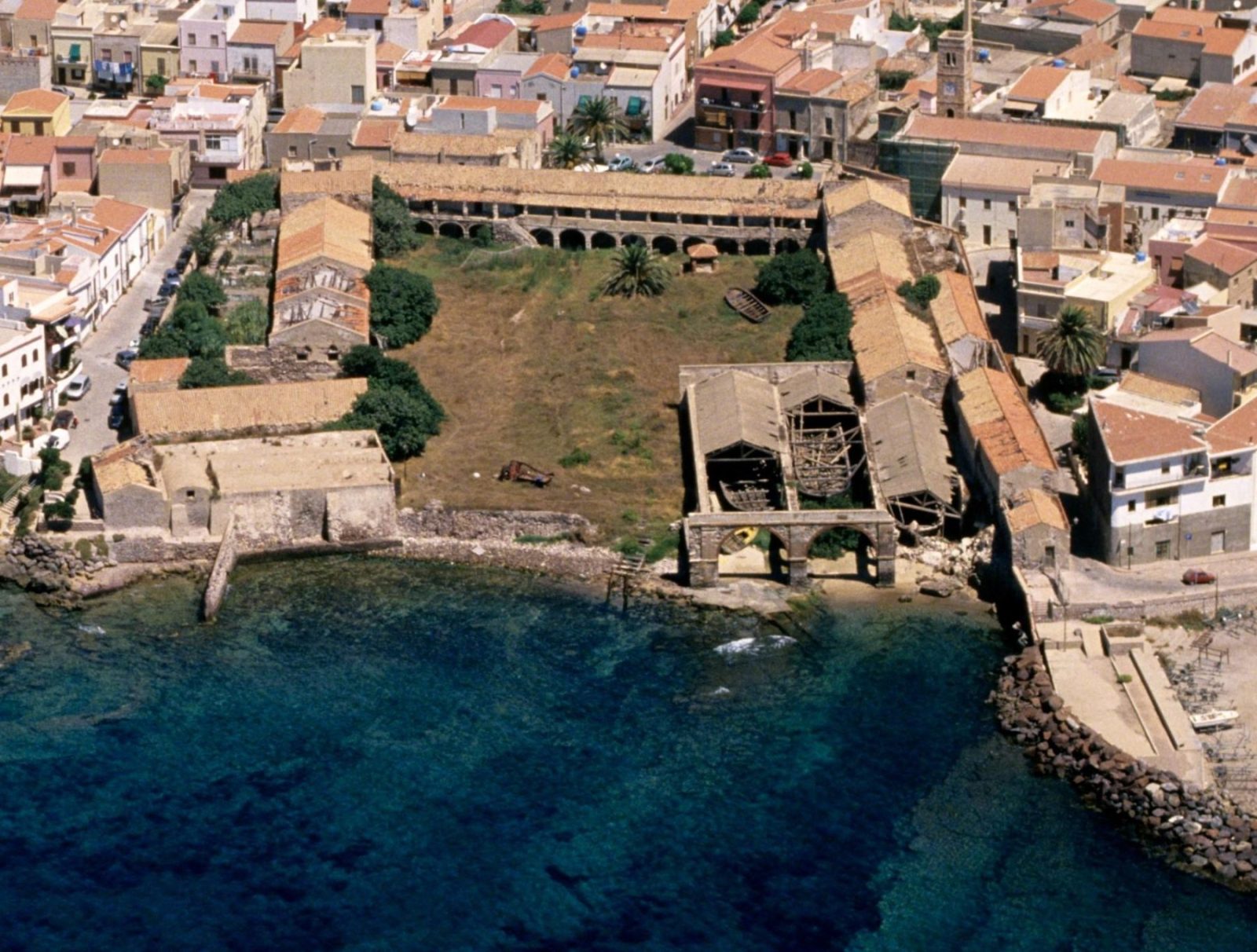
In places like Carloforte and Portoscuso, tuna processing shaped not only buildings but entire settlements. The architecture was pragmatic and collective, organized around production rhythms and seasonal migration of bluefin tuna through the Mediterranean. Many structures combined industrial and domestic functions, blurring the boundary between labour and everyday life. Courtyards, warehouses, net-repair rooms, sleeping quarters, salt-storage spaces, and vast halls where fish was butchered, cooked, preserved, and canned composed the spatial sequence of the tonnara.
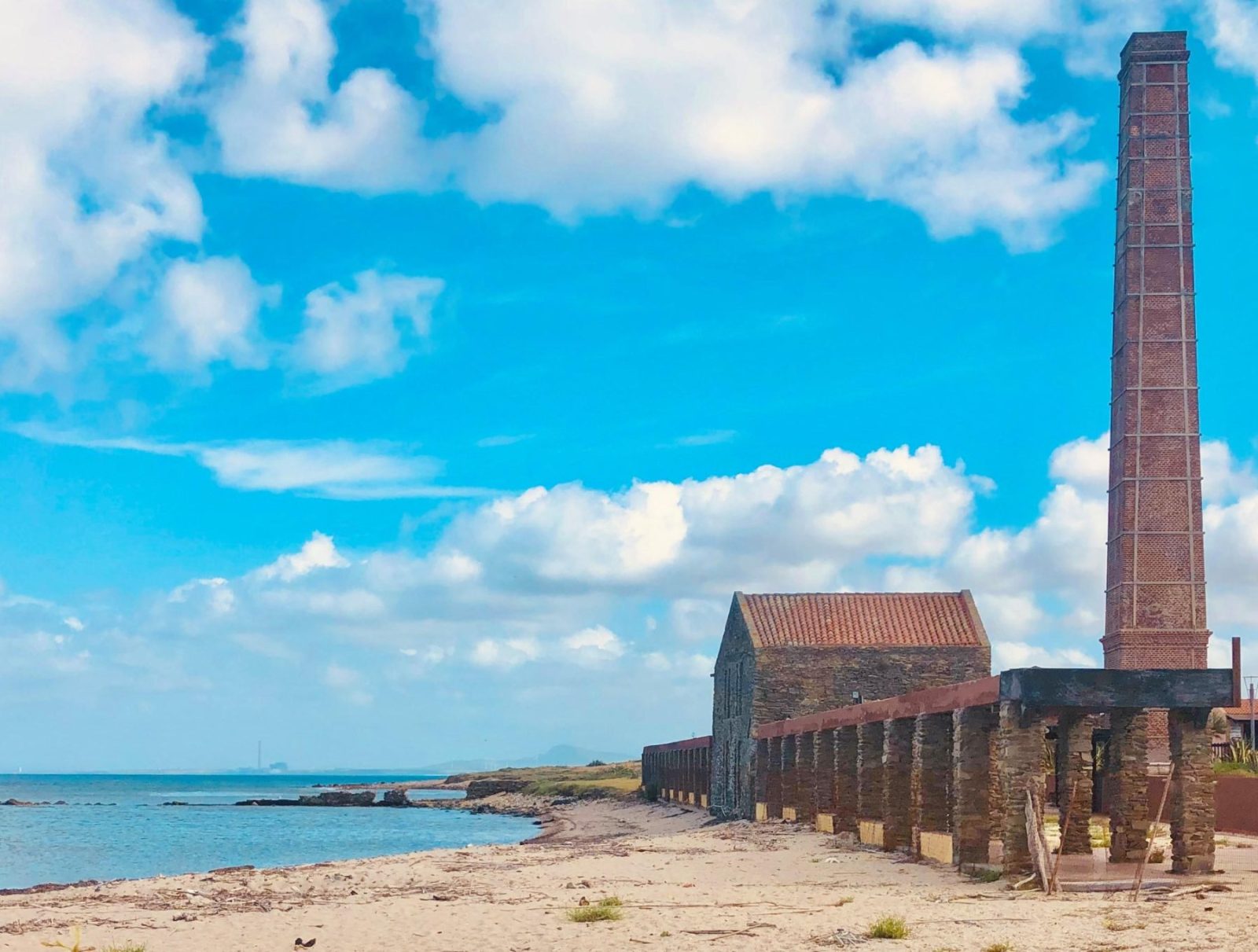
Among the most intense of these spaces was the “California”: a former high-temperature cooking room where tuna was boiled in enormous vats to separate flesh, oil, and collagen before preservation in salt or oil. These interiors needed exceptional ventilation and thermal resistance, which shaped their architecture: tall ceilings, thick masonry walls, exposed roof structures, and minimal openings designed to release steam and heat. The nickname ‘California’ emerged locally, evoking the unbearable heat generated during processing and the image of a distant, sun-scorched landscape. In many Mediterranean tuna factories, colloquial names such as these survived long after the industry itself disappeared.
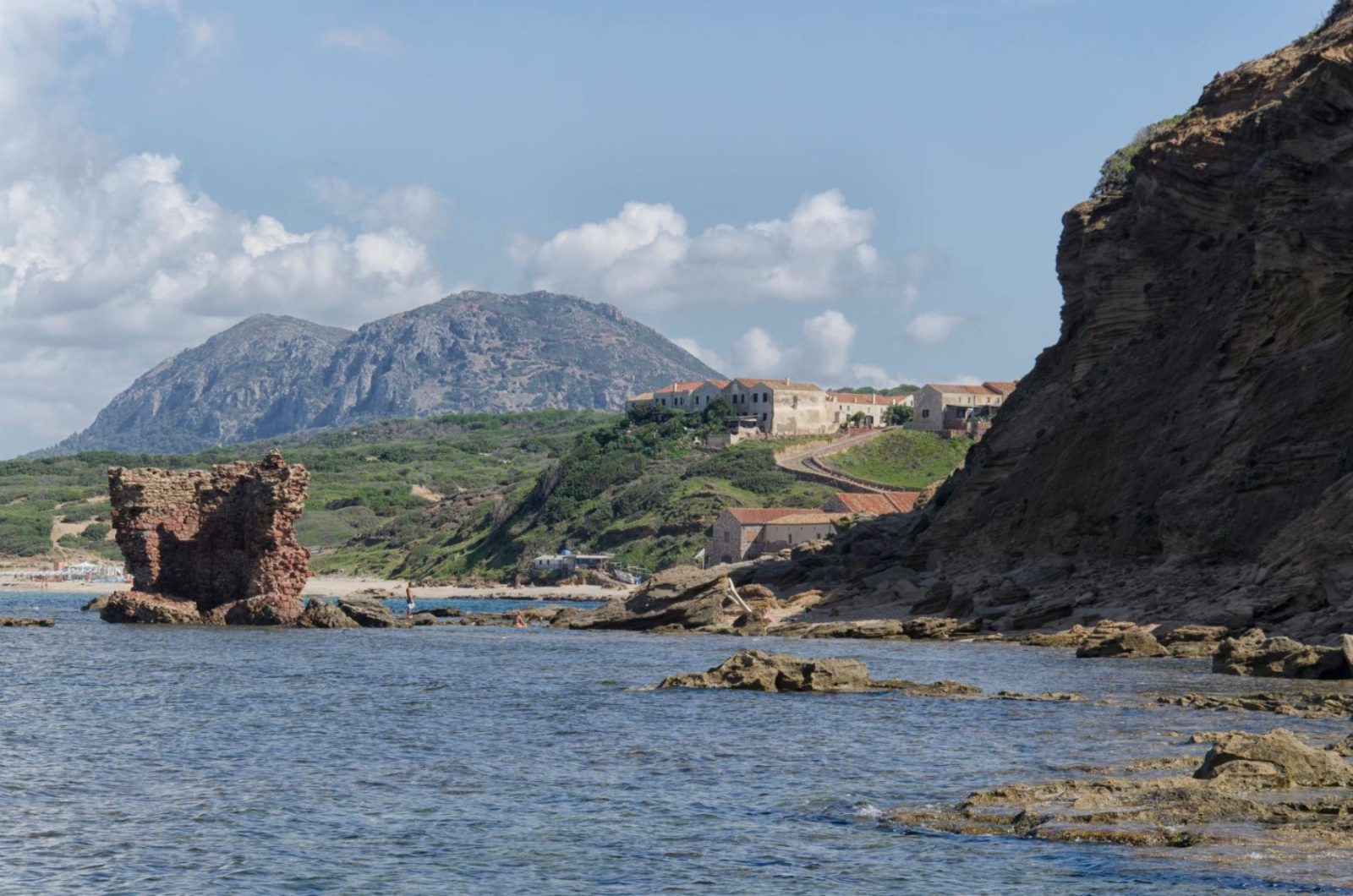
Today, many of these structures have been fragmented, converted, or abandoned, yet traces of their original spatial logic remain embedded within the villages. Their adaptive reuse is especially compelling because their architectural qualities emerged not from intimacy but from utility: oversized volumes dissipating heat, rough mineral surfaces resisting salt corrosion, and open patios mediating between interior and exterior life.
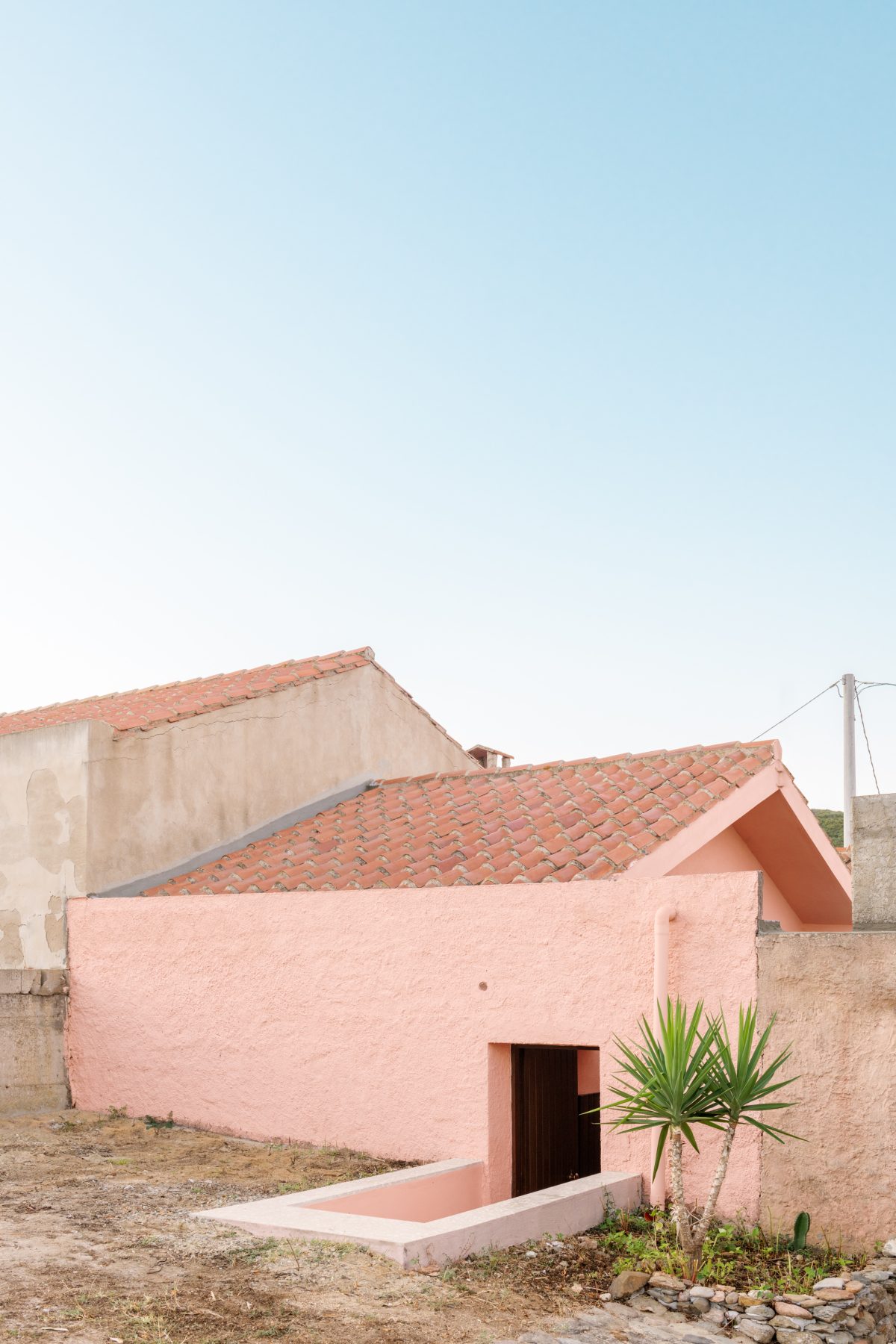
With the transformation of La California, caarpa reveals how industrial architecture, landscape, and domestic life once formed a single continuous environment along the Sardinian coast.
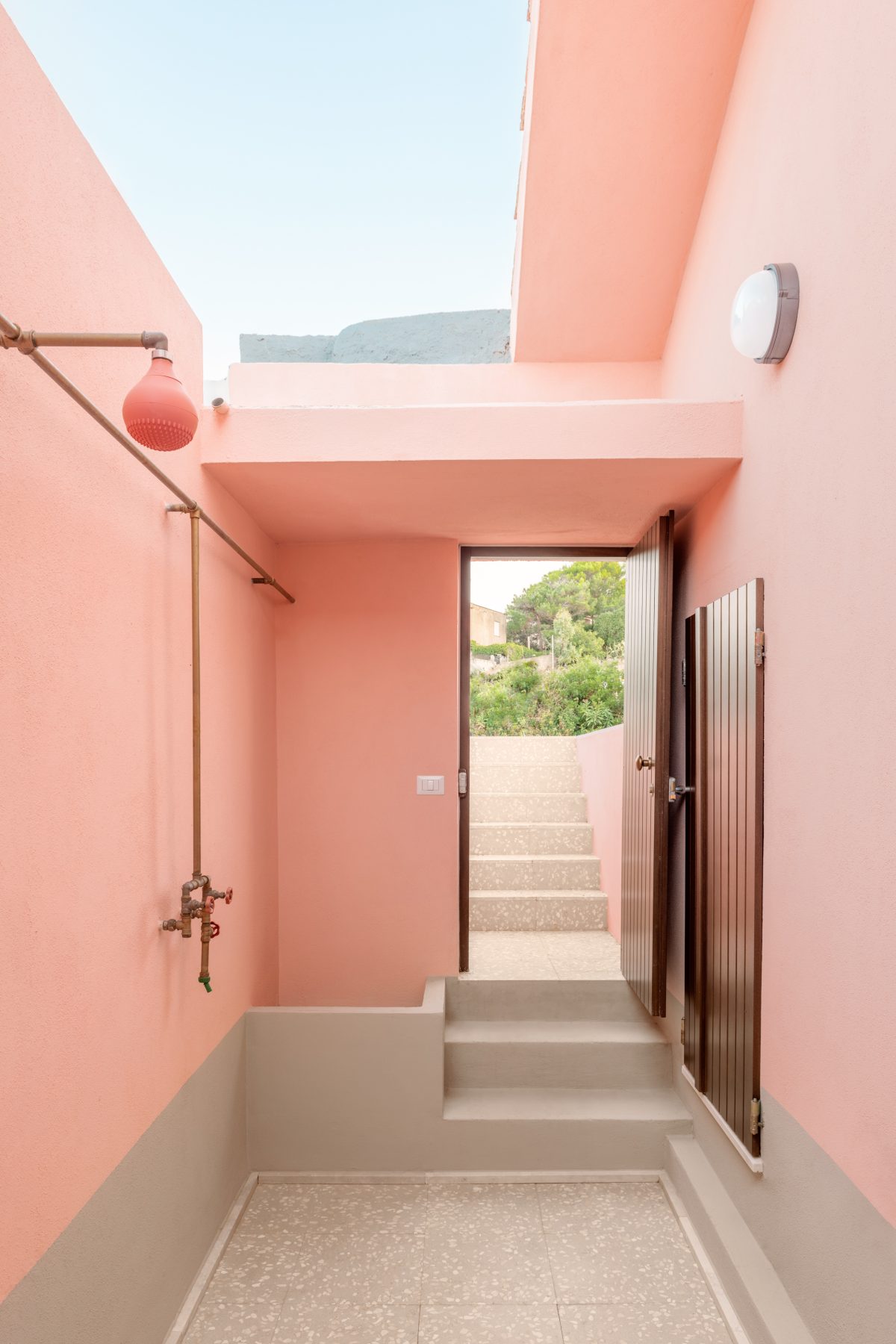
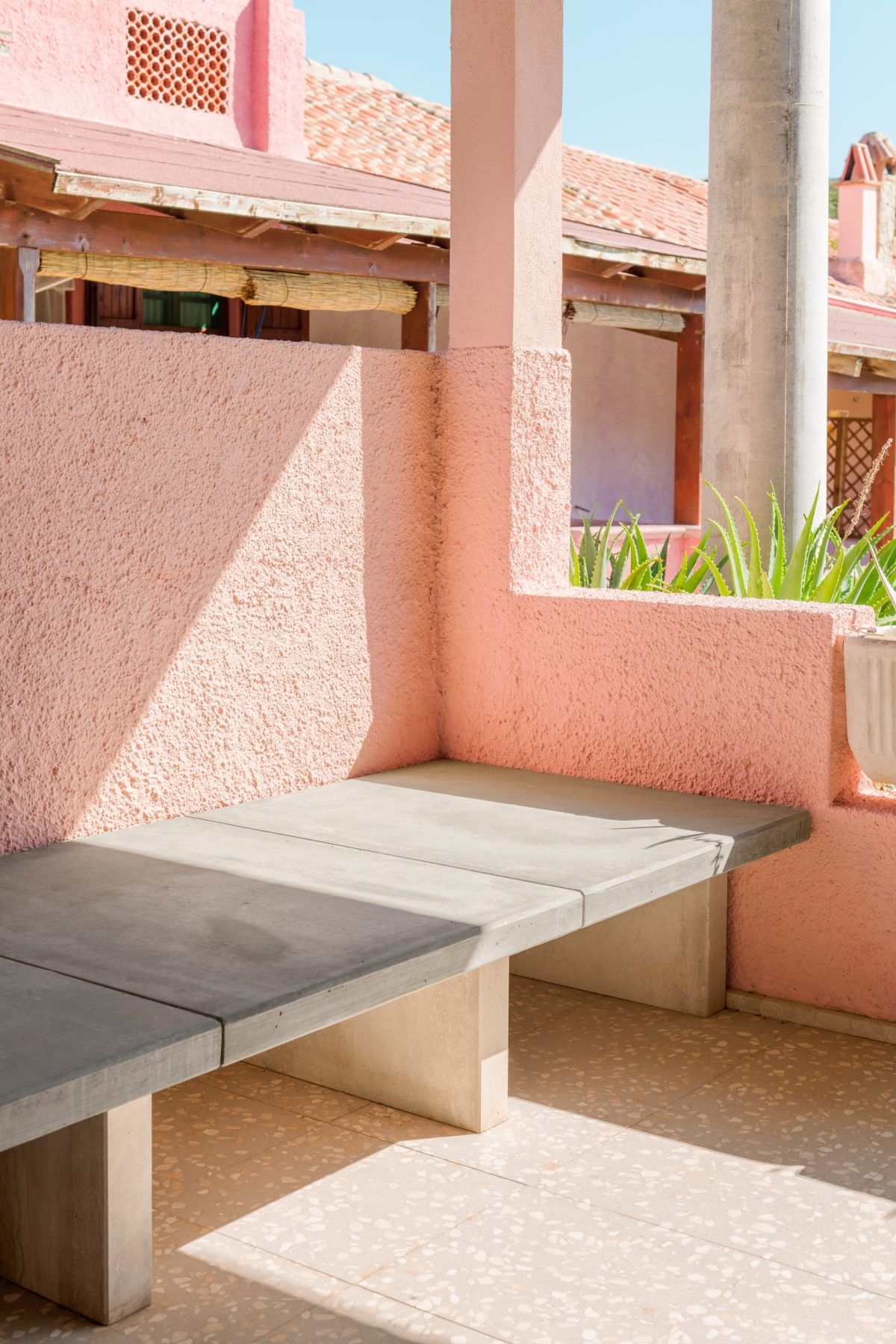
Marked by an impossible-to-ignore pink façade and a submerged entrance through the rear patio, the house resonates deeply with Sardinia’s material identity, where colour has historically emerged from the land itself.
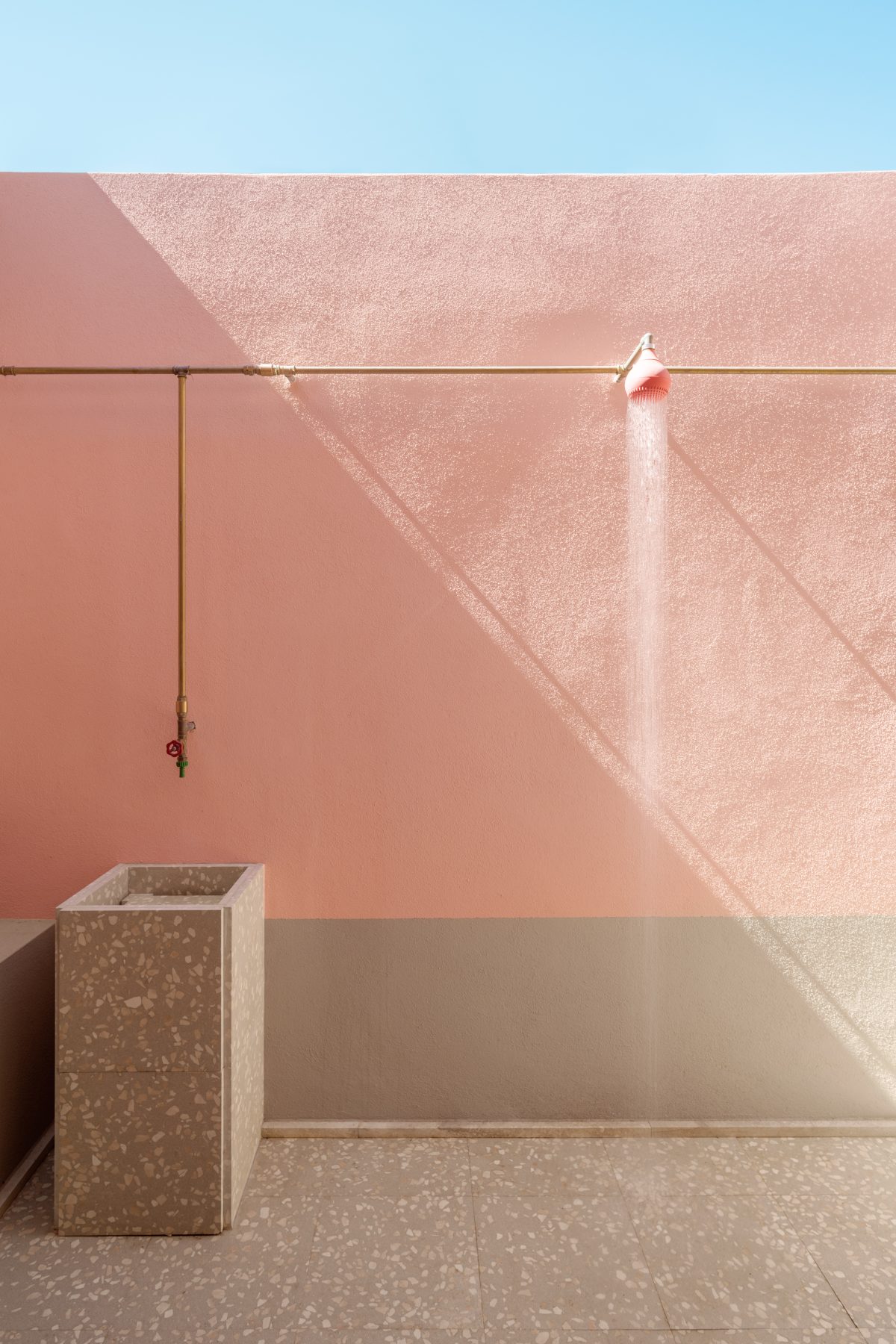
Across the island, local stone gives rise to distinct “regions of colour,” shaped by warm pink, rose, terracotta, and reddish tones derived from granite, trachyte, and tuff. Entire towns, such as Busachi in central Sardinia, are distinguished by pink trachyte buildings that glow red-pink under the Mediterranean sun. The island’s architectural identity is therefore deeply material-driven: colour is not ornamental but geological, atmospheric, and inseparable from place itself.
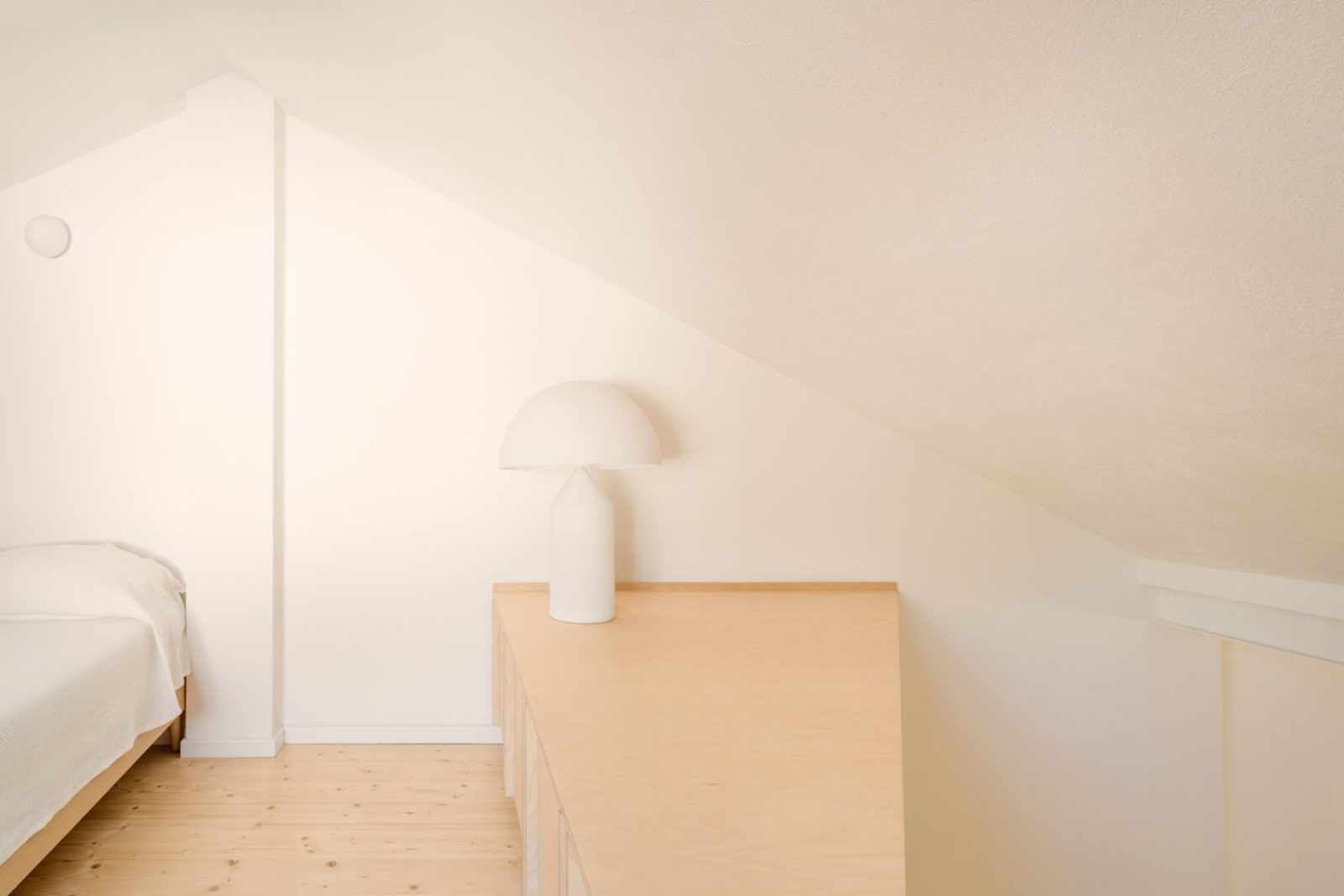
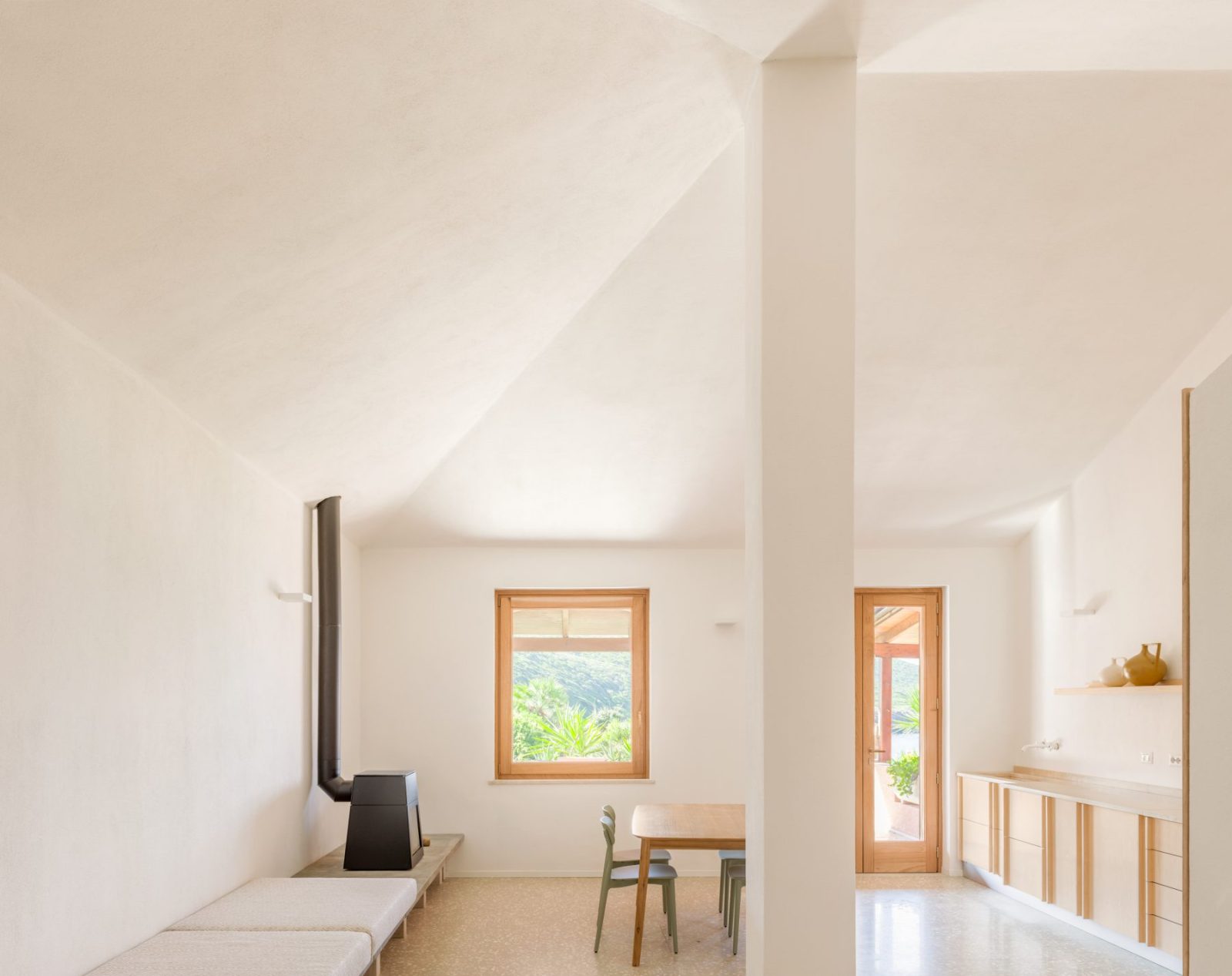
After the cessation of its industrial use, the building was subdivided into small holiday dwellings, where the pursuit of maximum sleeping capacity gradually compromised the spatial integrity of the original structure. caarpa’s intervention seeks to liberate the interiors from these later additions, restoring the full-height generosity of the former cooking hall. The intervention focuses on the interior of a small 60 sqm unit arranged on a single level with a small mezzanine.


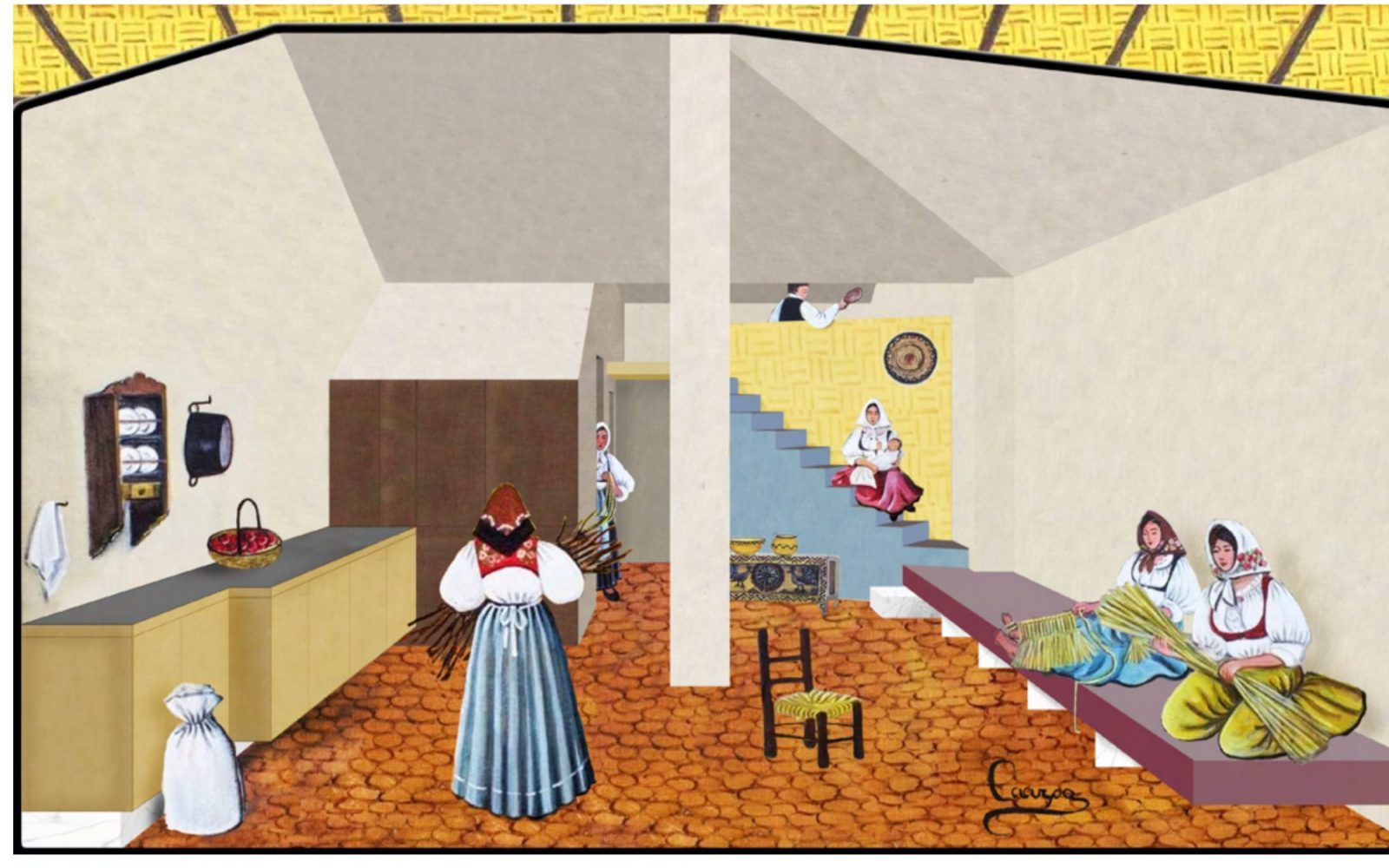
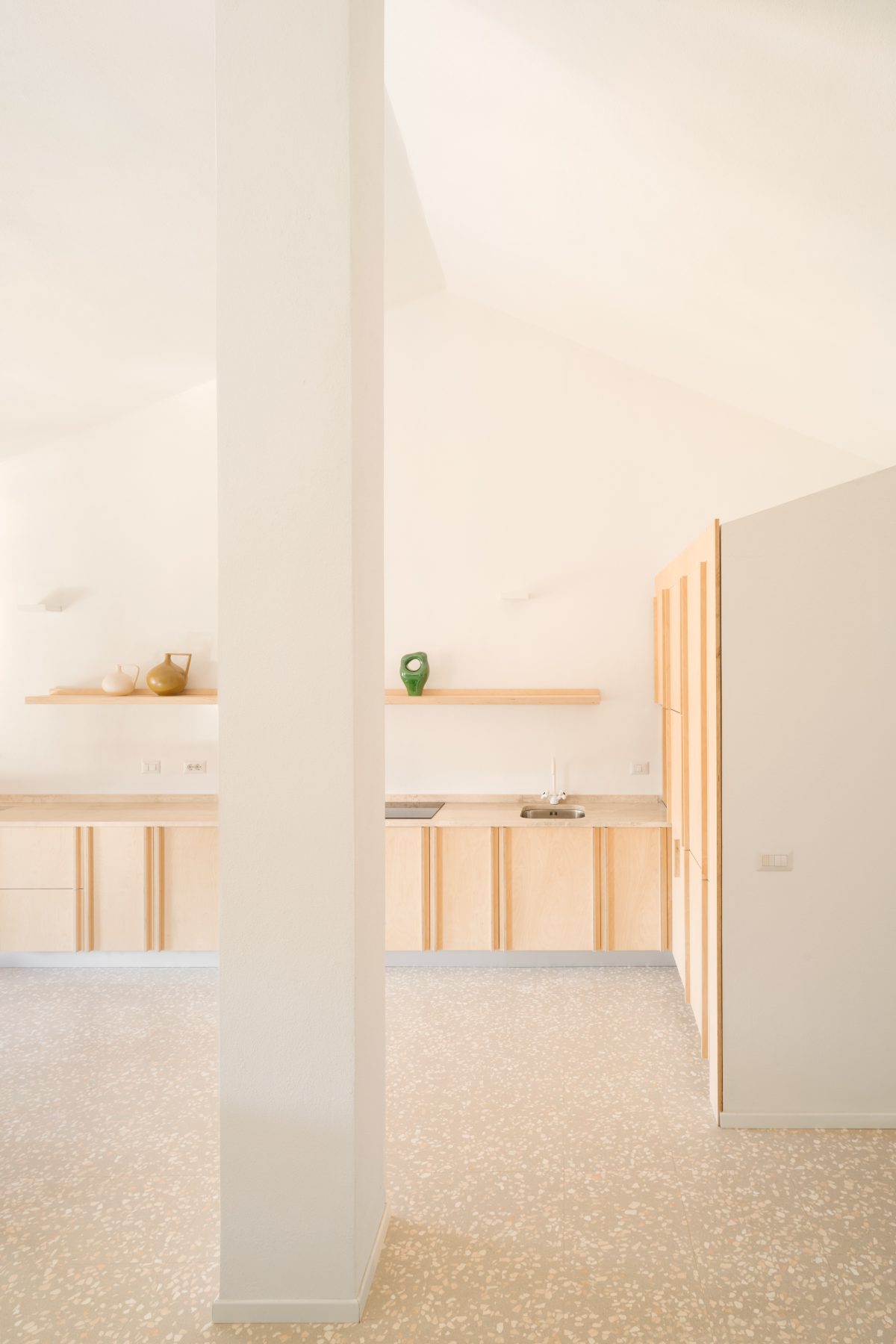
A reinforced concrete pillar at the centre of the pitched roof remains as both a constraint and the sole surviving trace of the twentieth-century alterations.
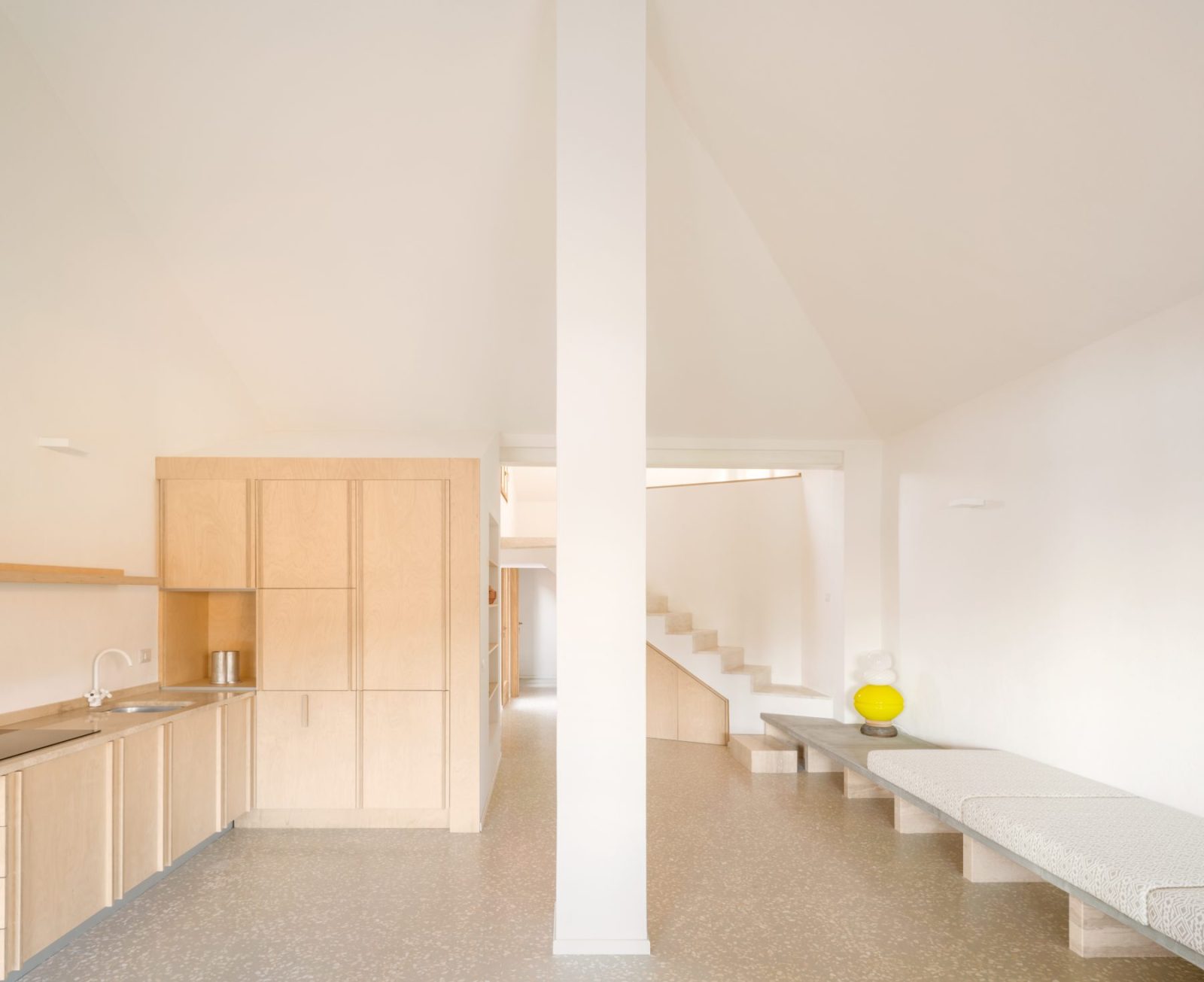
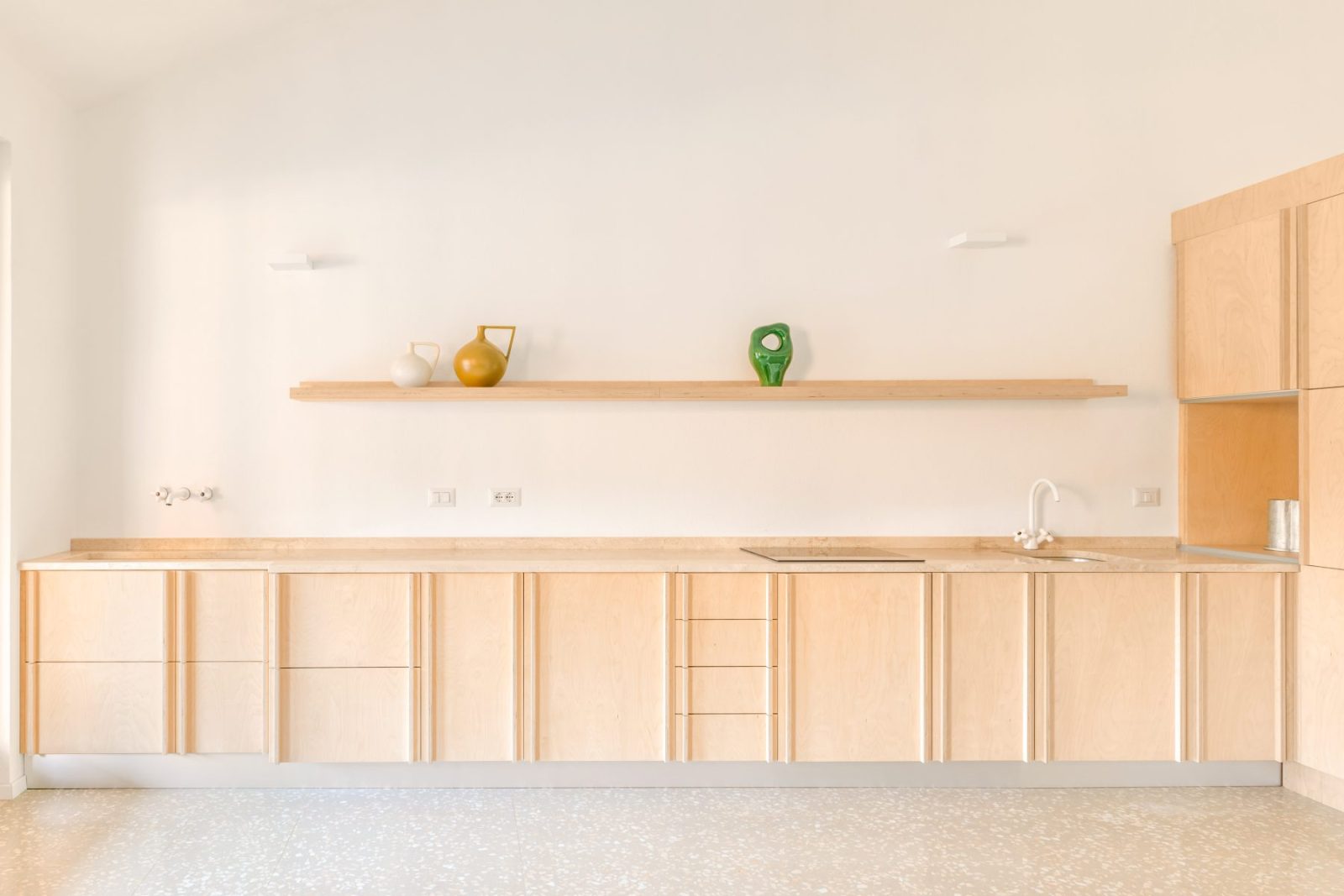
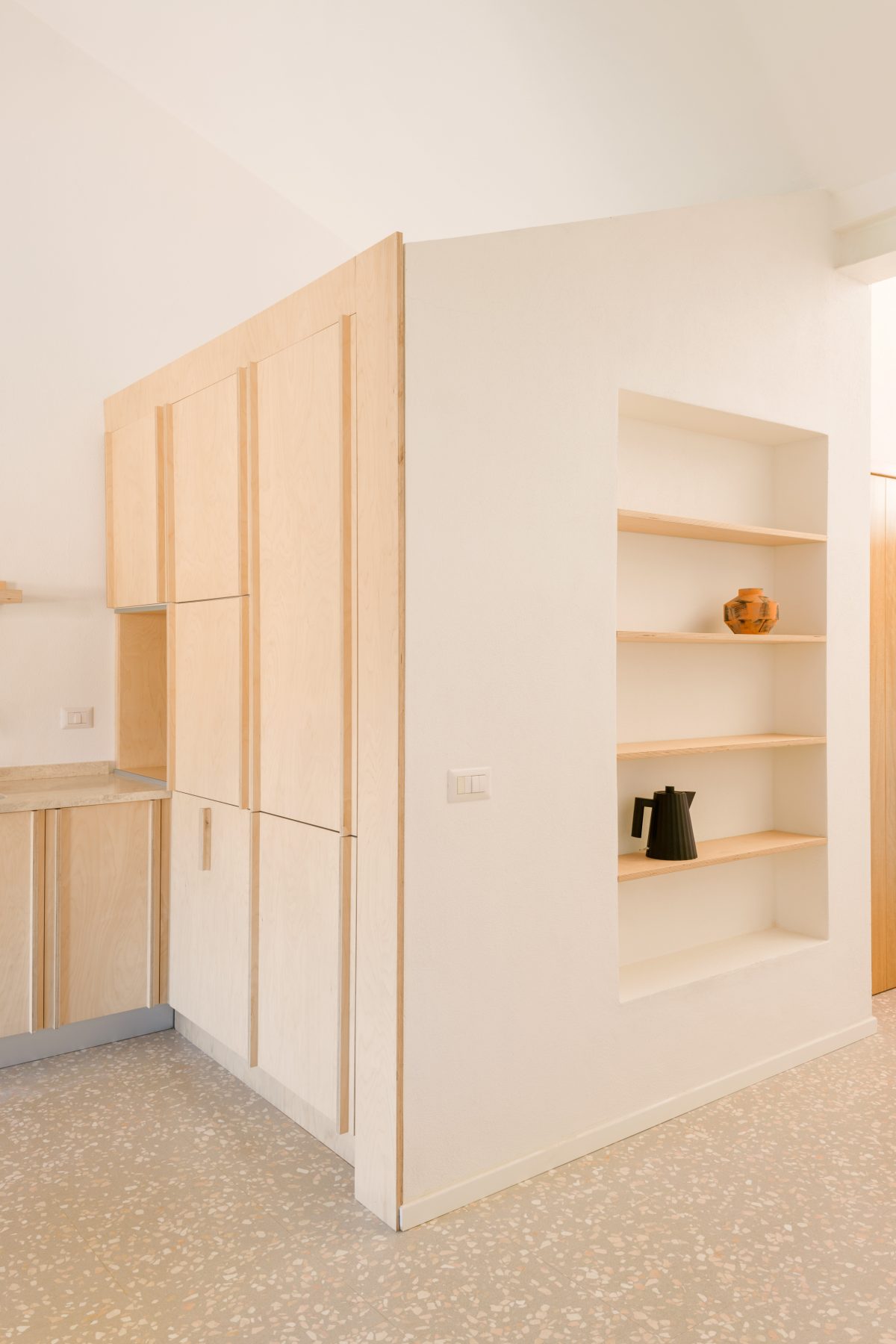
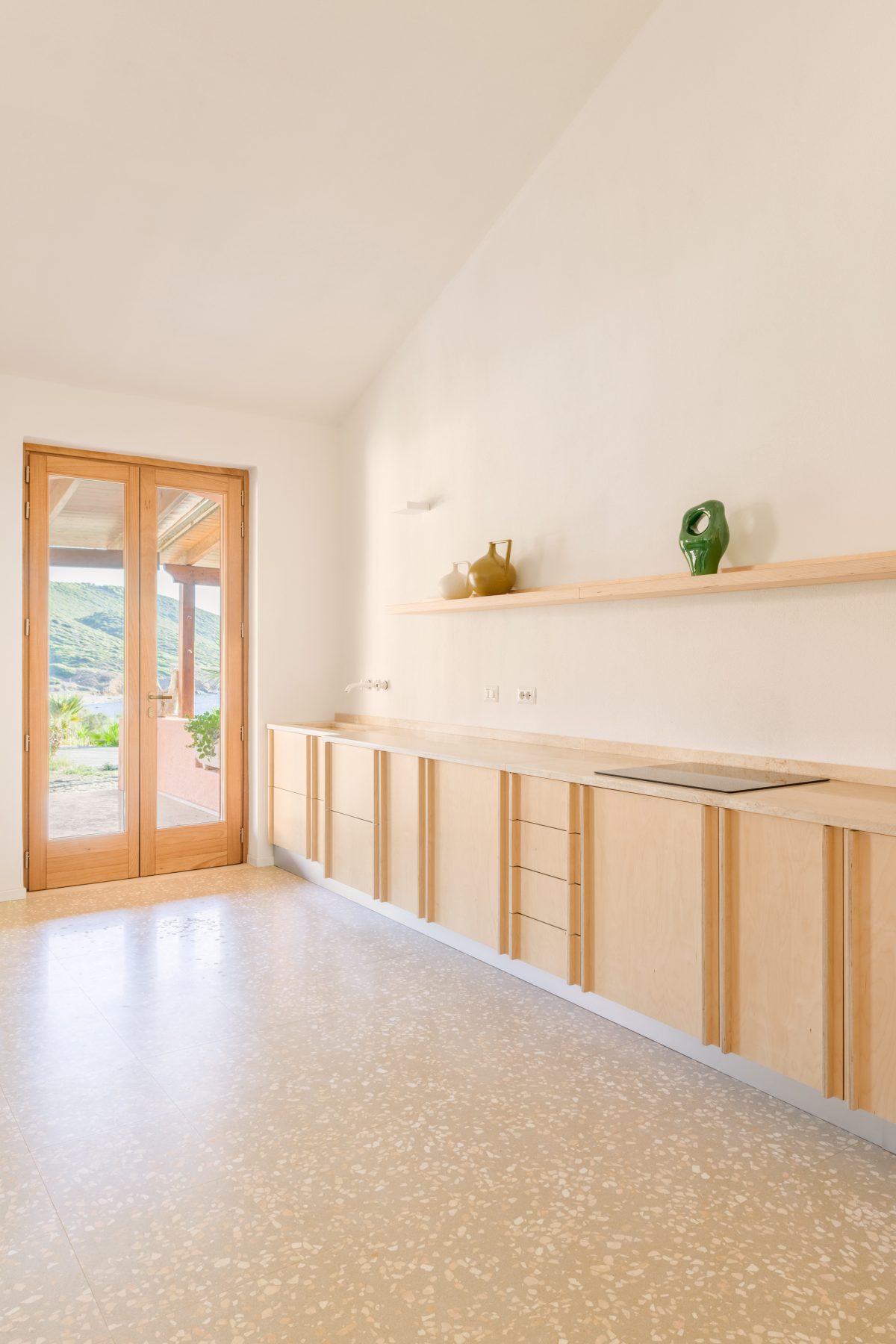
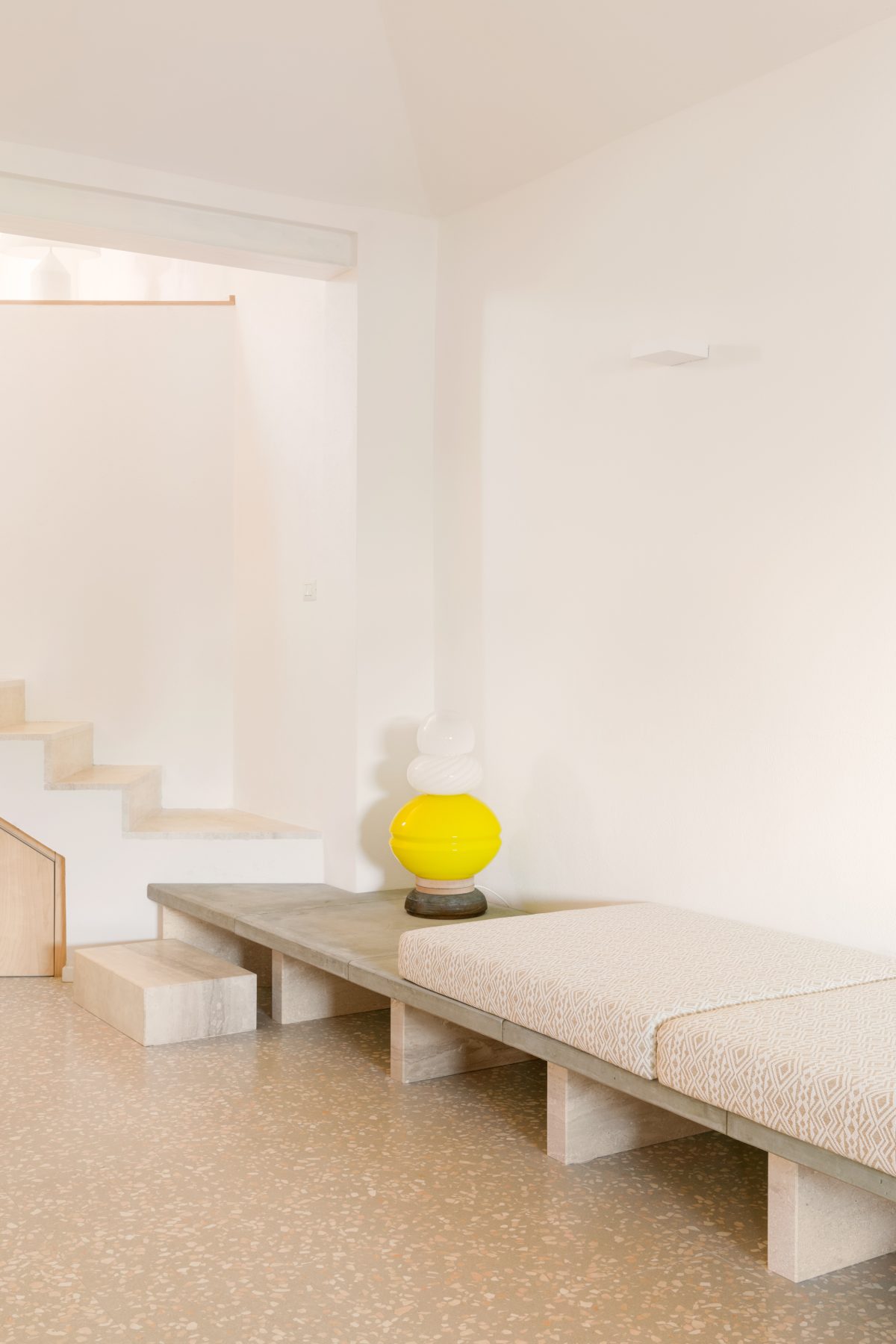
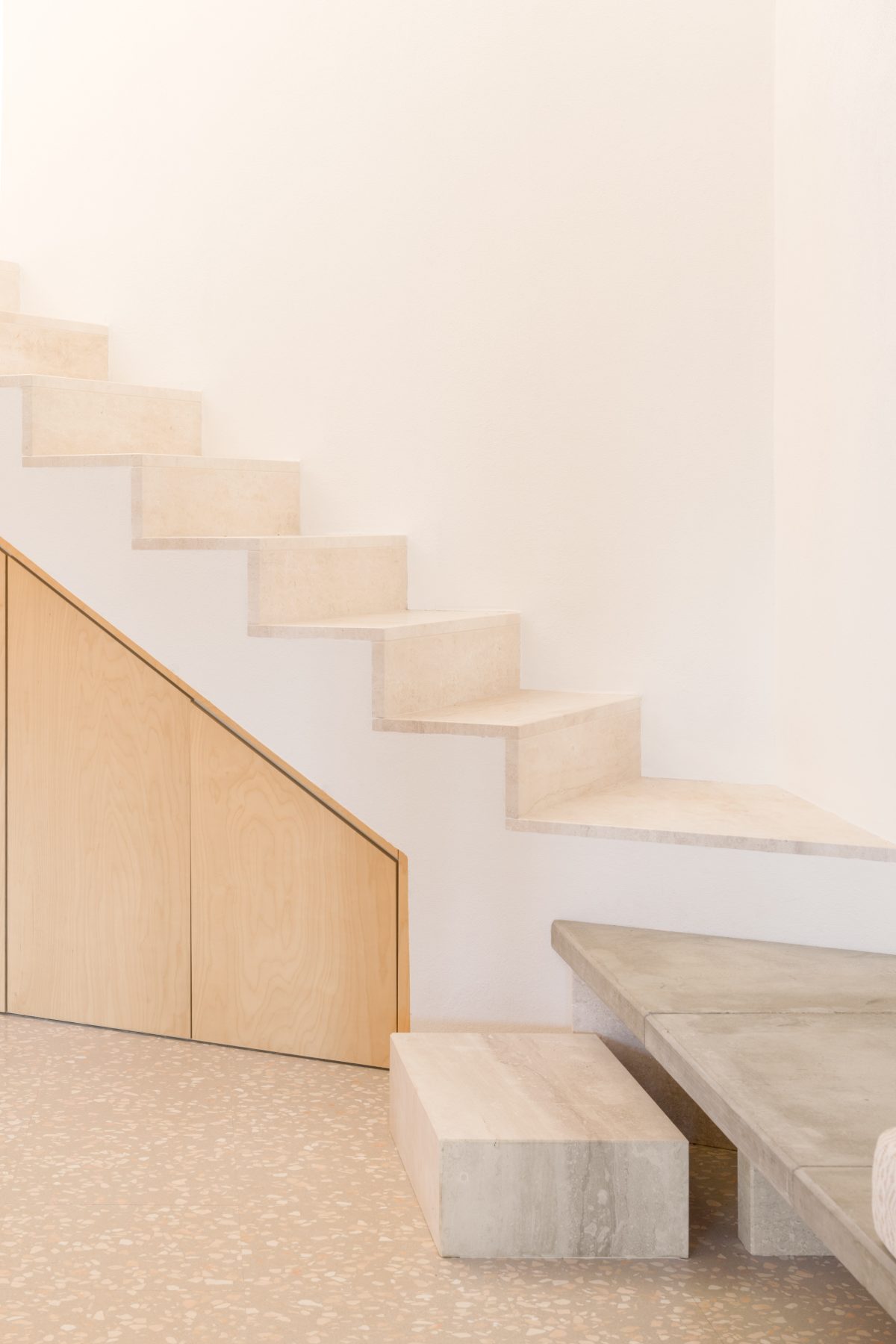
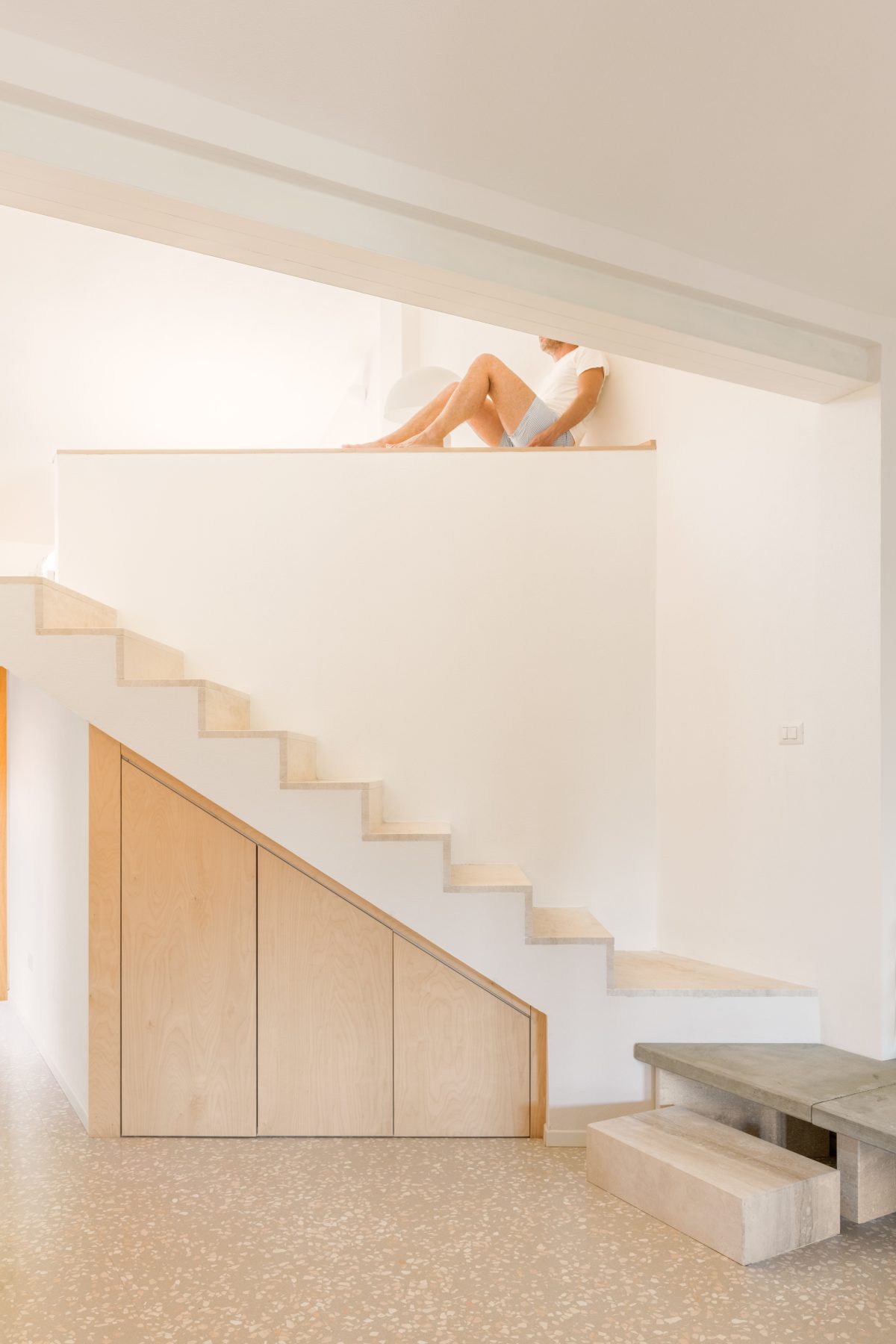
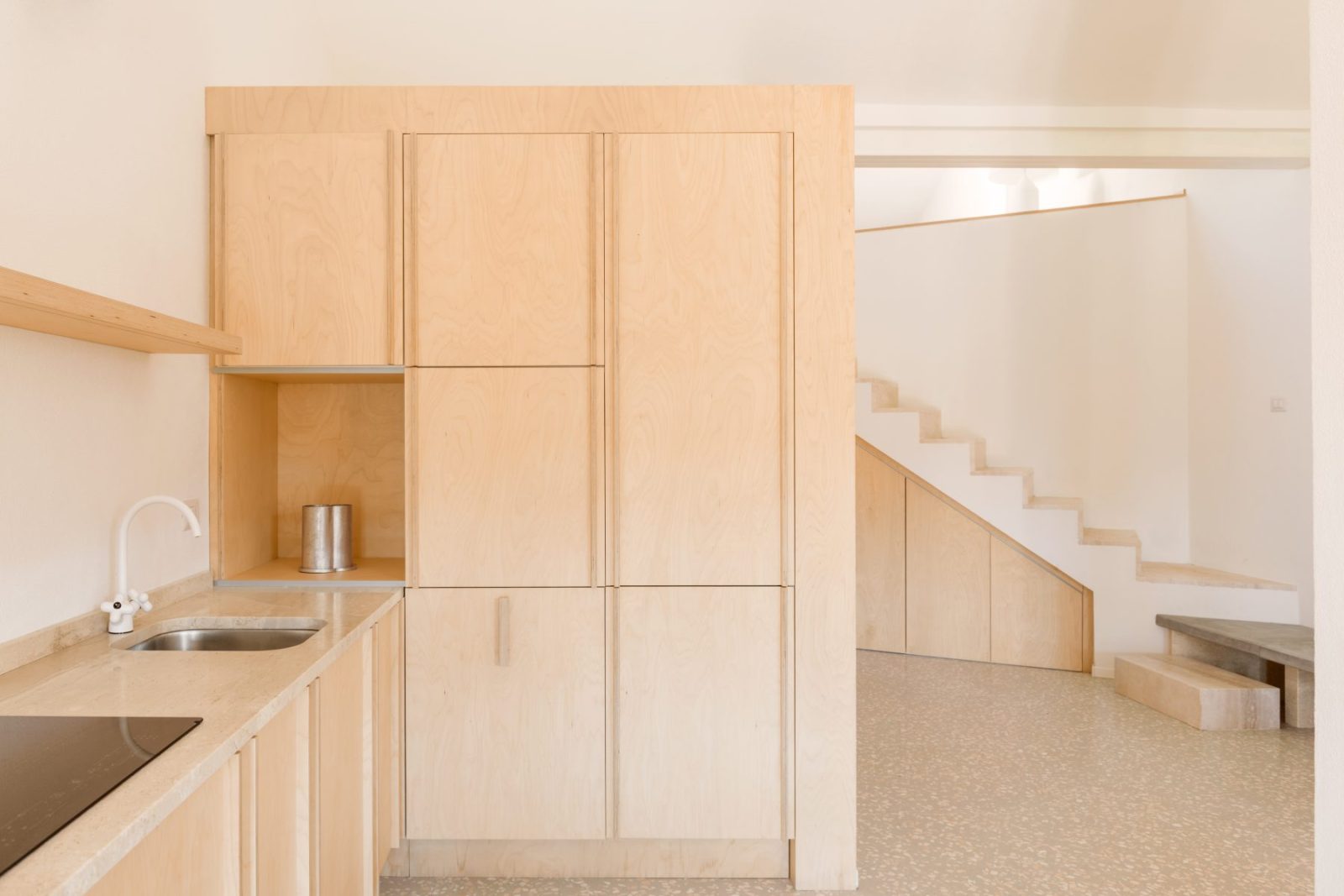
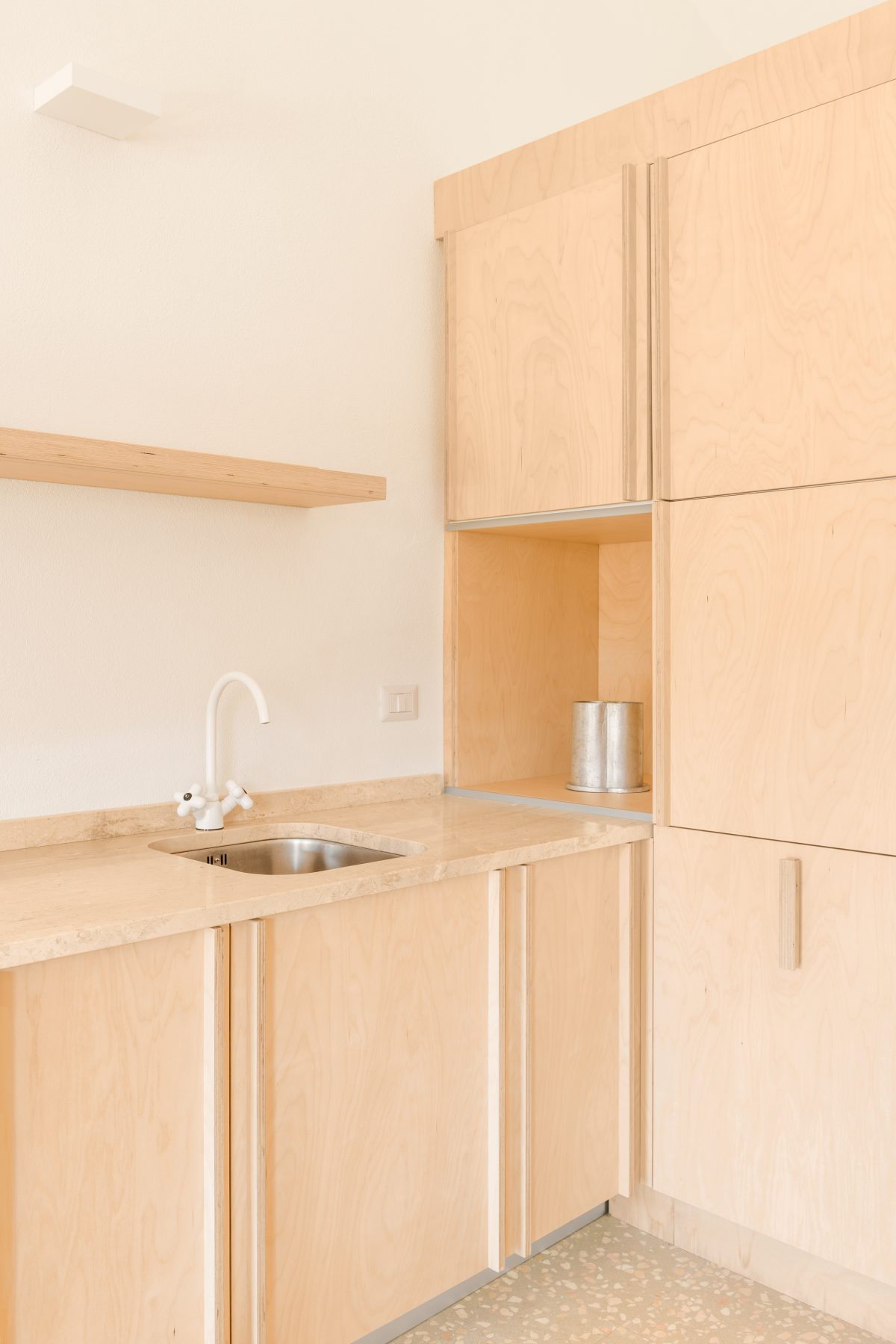
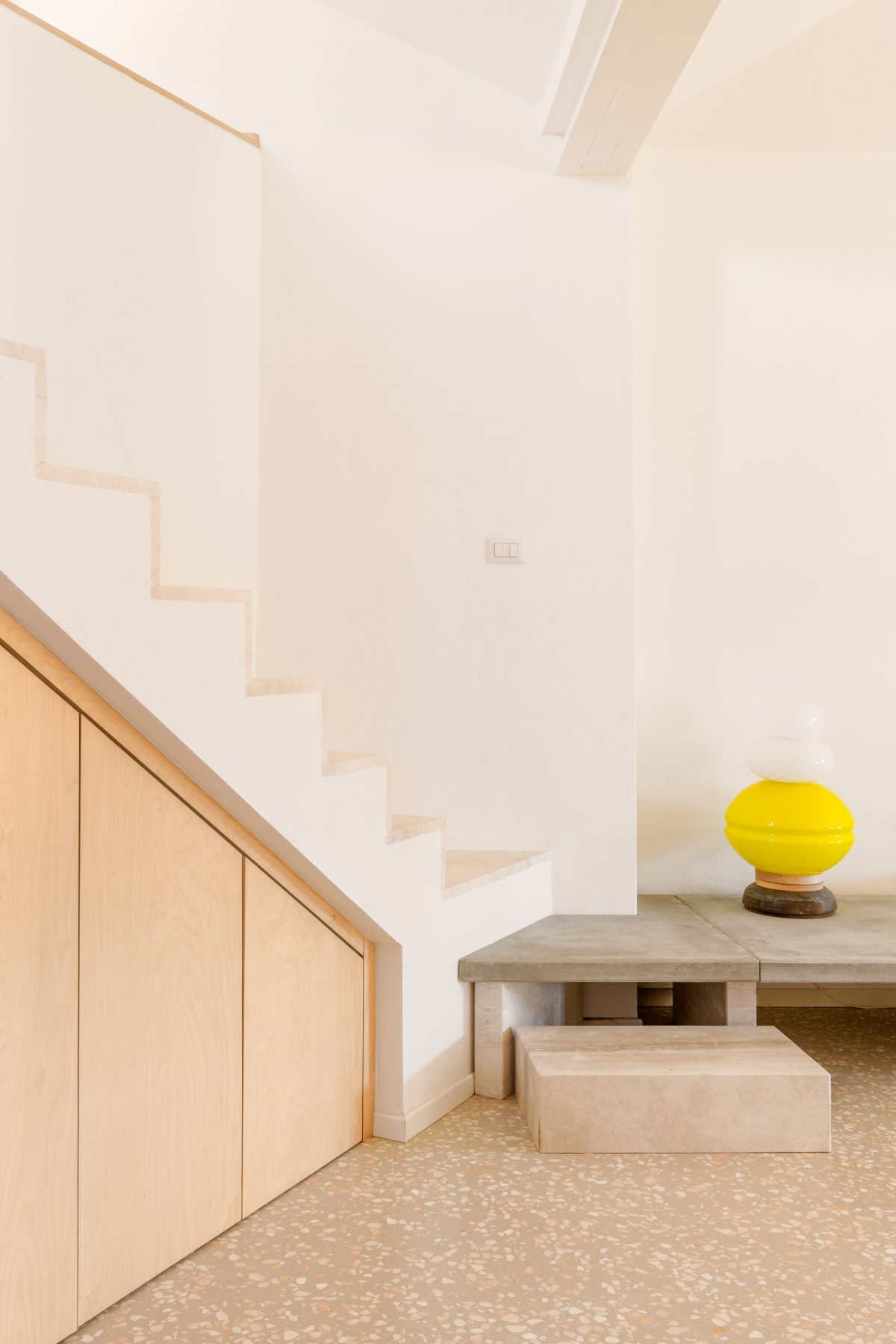
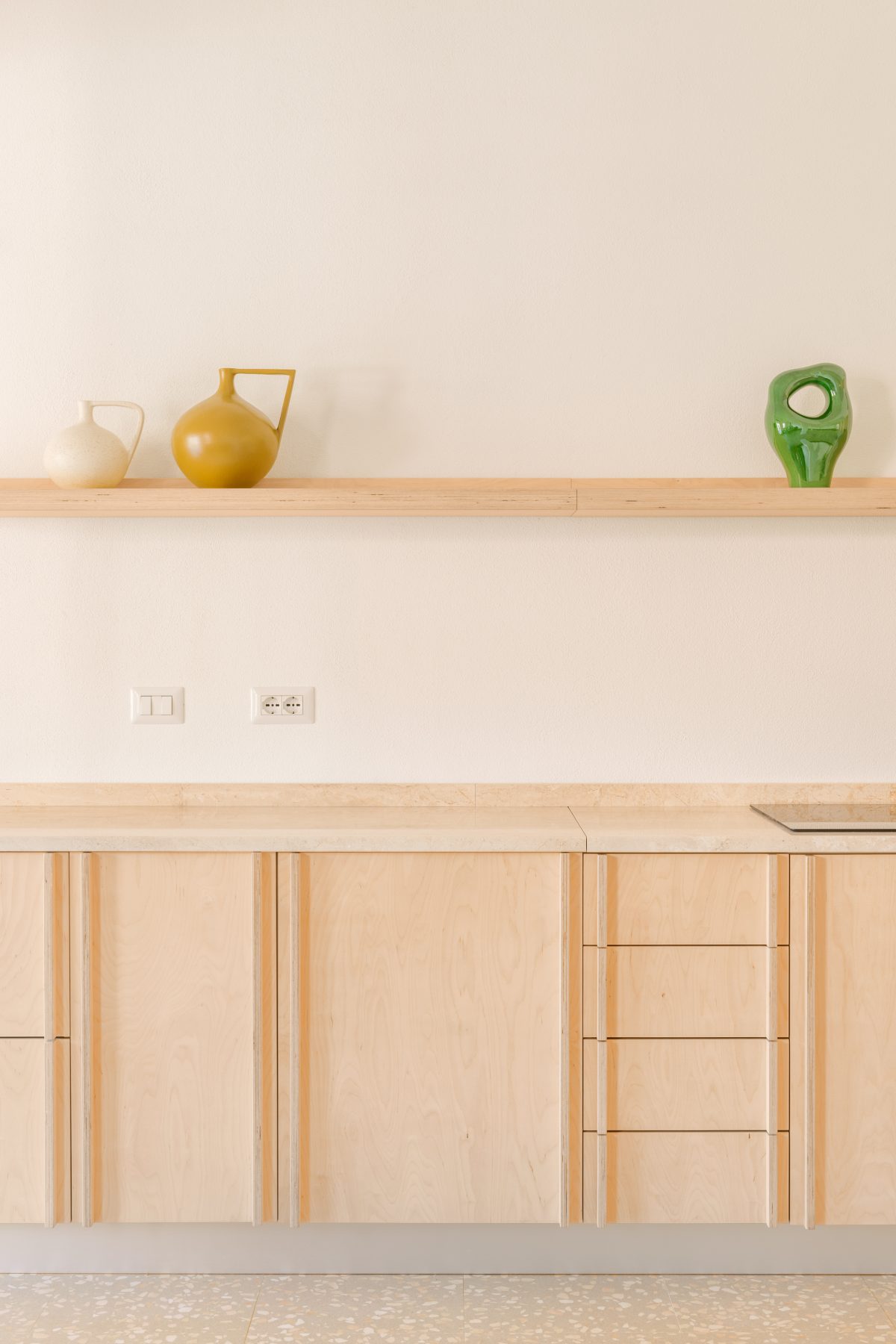
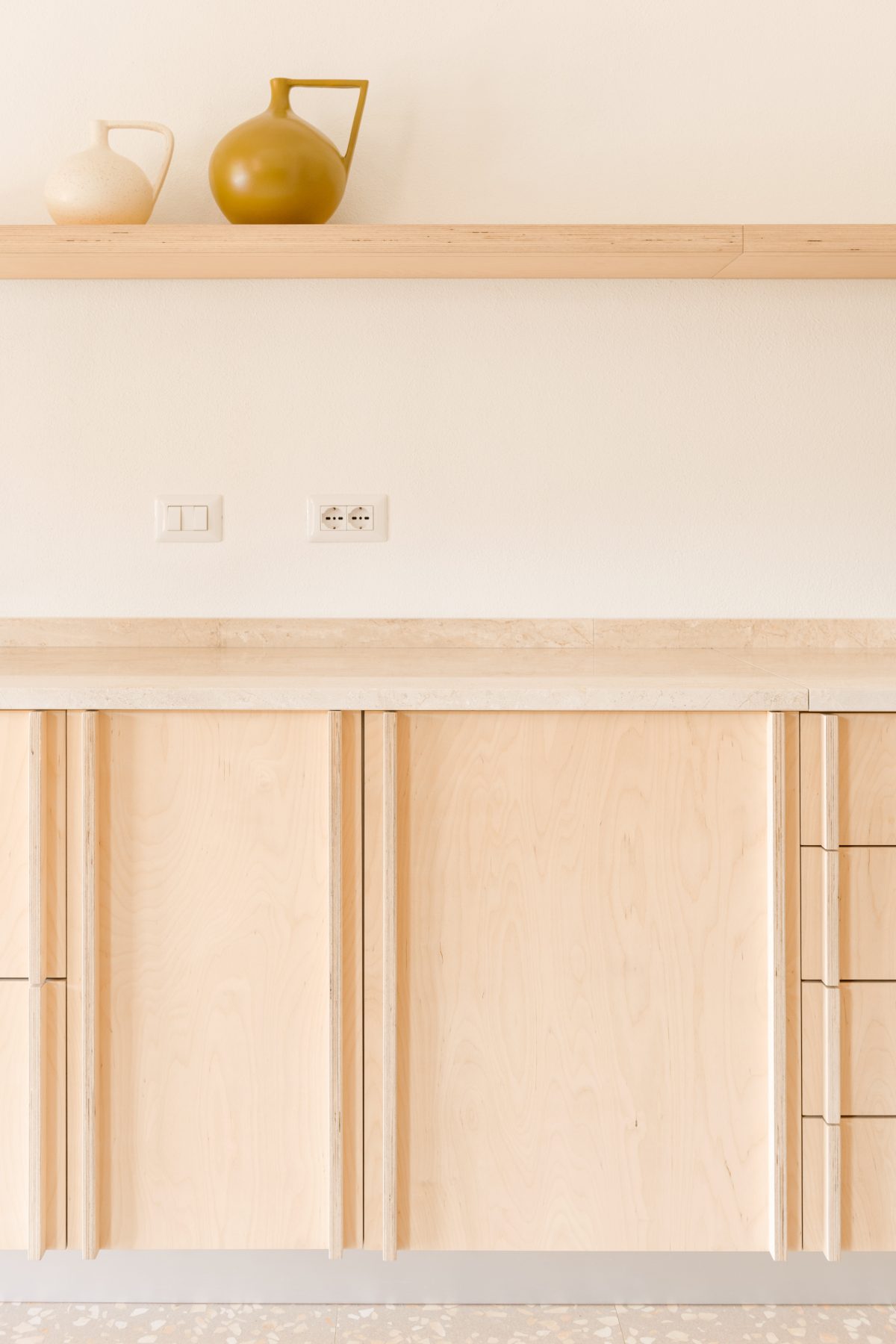
The newly liberated space is articulated through two opposing elements arranged along its edges. On one side, a custom-designed kitchen in raw birch wood conceals the bathroom volume. On the other, a bench composed of Orosei marble supports and prefabricated concrete slabs becomes simultaneously seating, resting platform, staircase, and landing leading to the mezzanine bedroom.
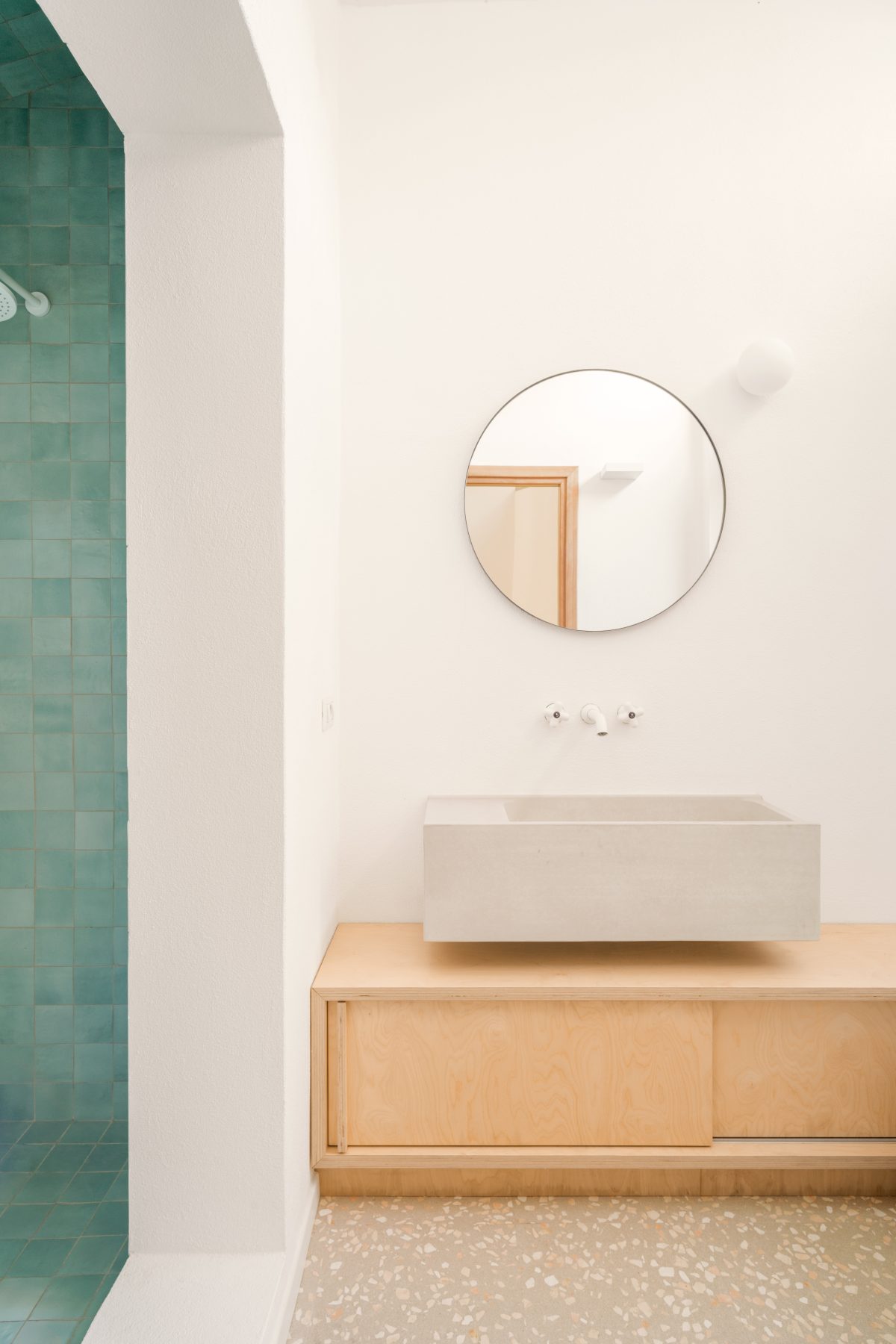
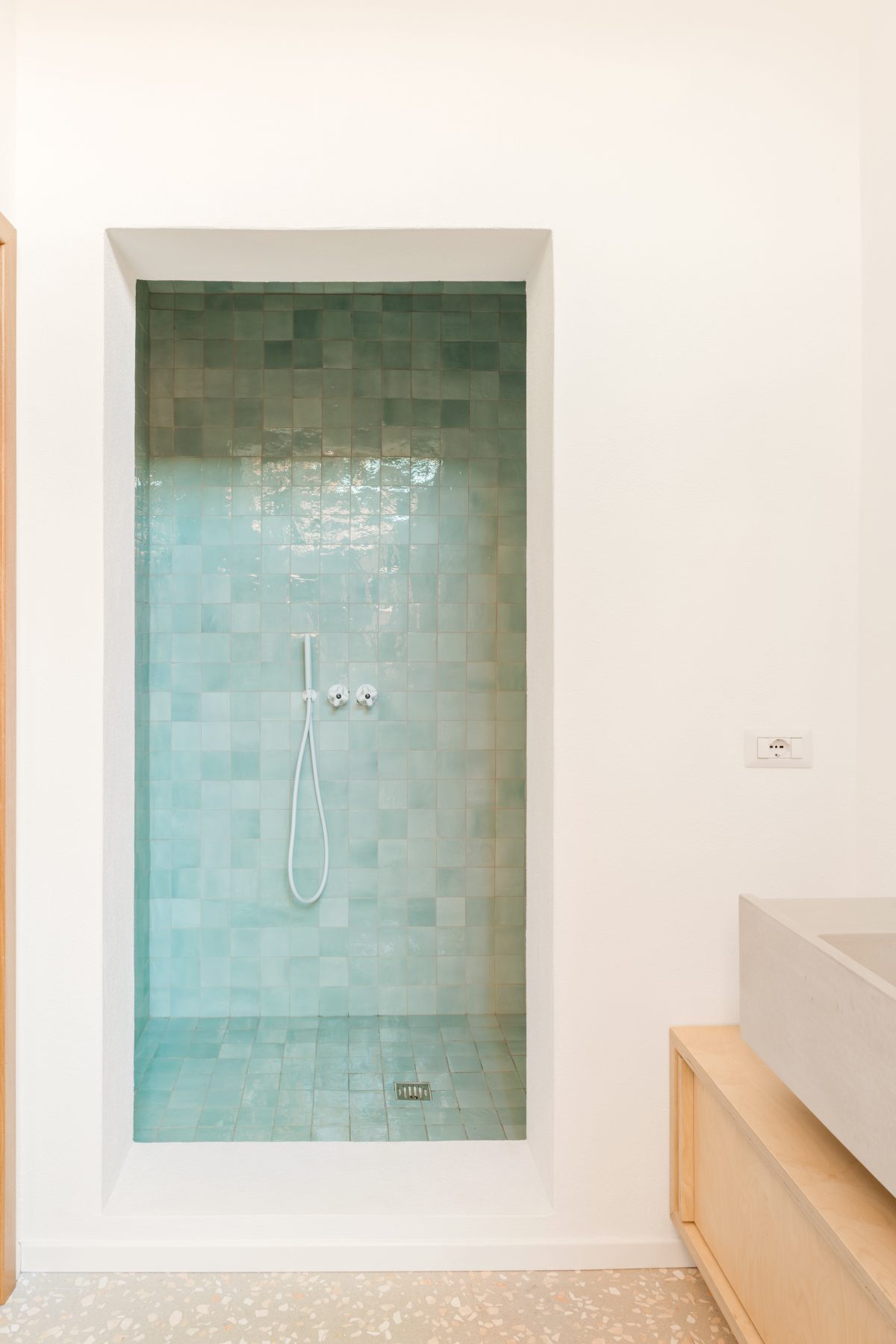
The rear patio is equipped with an exposed brass piping system incorporating an outdoor shower and washbasin, both realized using the same terrazzo tiles that continue throughout the flooring. Inside, the bathroom is almost entirely occupied by a large recessed shower clad in handmade turquoise tiles.
Shaped by the island’s industrial memory, the cycles of labour, and the seasonal rhythms of the sea, La California becomes a maritime refuge entrusted to the warmth of wood, the gravity of concrete, and the quiet sensuality of pink.
Facts & Credits
Project title La California
Typology The Summer Refuge, Adaptive Reuse, Residential
Episode 12th
Location Costa Verde, Sardinia, Italy
Status Completed, 2022
Built Area 60m2
Client Private
Architecture caarpa
Woodwork Domus Sicilia
Photography Anna Positano