h3o architects renovated Villa Parque in Barcelona’s Gràcia district, transforming a 19th-century house into a light-filled family home for a couple returning to the neighbourhood where they grew up. The careful refurbishment preserves the historic character of the 240 m² residence—including its traditional tiled floors and barrel-vaulted brick ceilings (volta catalana)—while introducing greater openness, natural light, and stronger connections to the garden. Through a series of precise interventions, the project balances memory with contemporary living, creating a tranquil family retreat within the dense urban fabric.
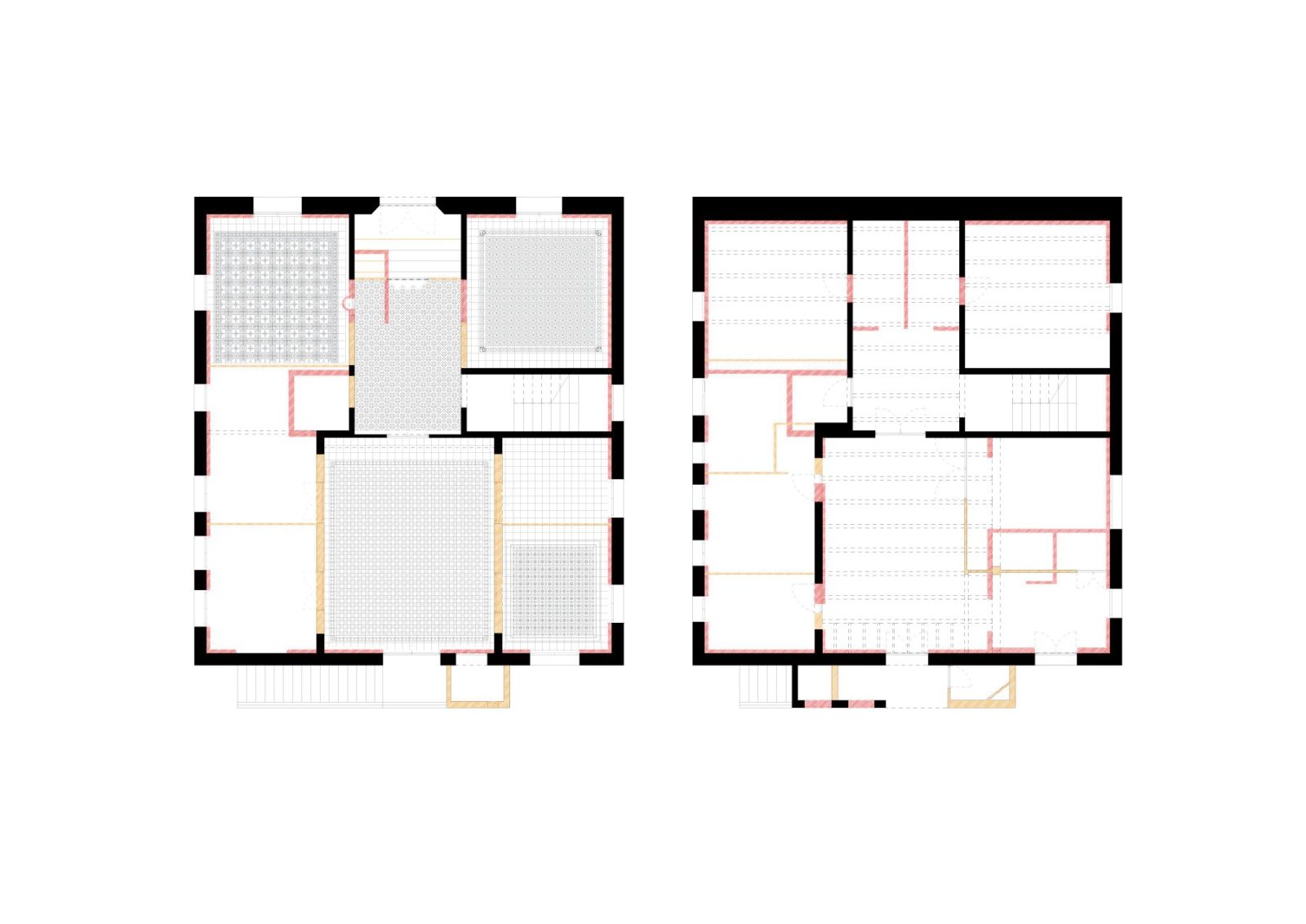
h3o architects —the Barcelona-based studio led by Adrià Orriols, Joan Gener, and Miquel Ruiz— presents Villa Parque, a residential renovation in Barcelona’s Gràcia district. The project involves the comprehensive transformation of a 240 m² detached house dating from the late 19th century. Through a precise and carefully calibrated intervention that preserves the building’s singular character, the house is given a renewed life that is more open, brighter, and energy-efficient.
The renovation responds to the aspirations of a couple entering a new stage of life, seeking to reconnect with family and re-establish themselves in the neighborhood where they grew up.
Within this renewed chapter, the home is conceived as a place capable of nurturing relationships while offering a calm retreat within the urban fabric.
Villa Parque possesses an imposing presence, defined by generous proportions and high ceilings, yet it simultaneously conveys an intimate and enveloping atmosphere. Natural light, noble materials, and the constant visual connection with the garden allow the house to feel welcoming, calm, and grounded.
The spatial organization unfolds across three interconnected realms.
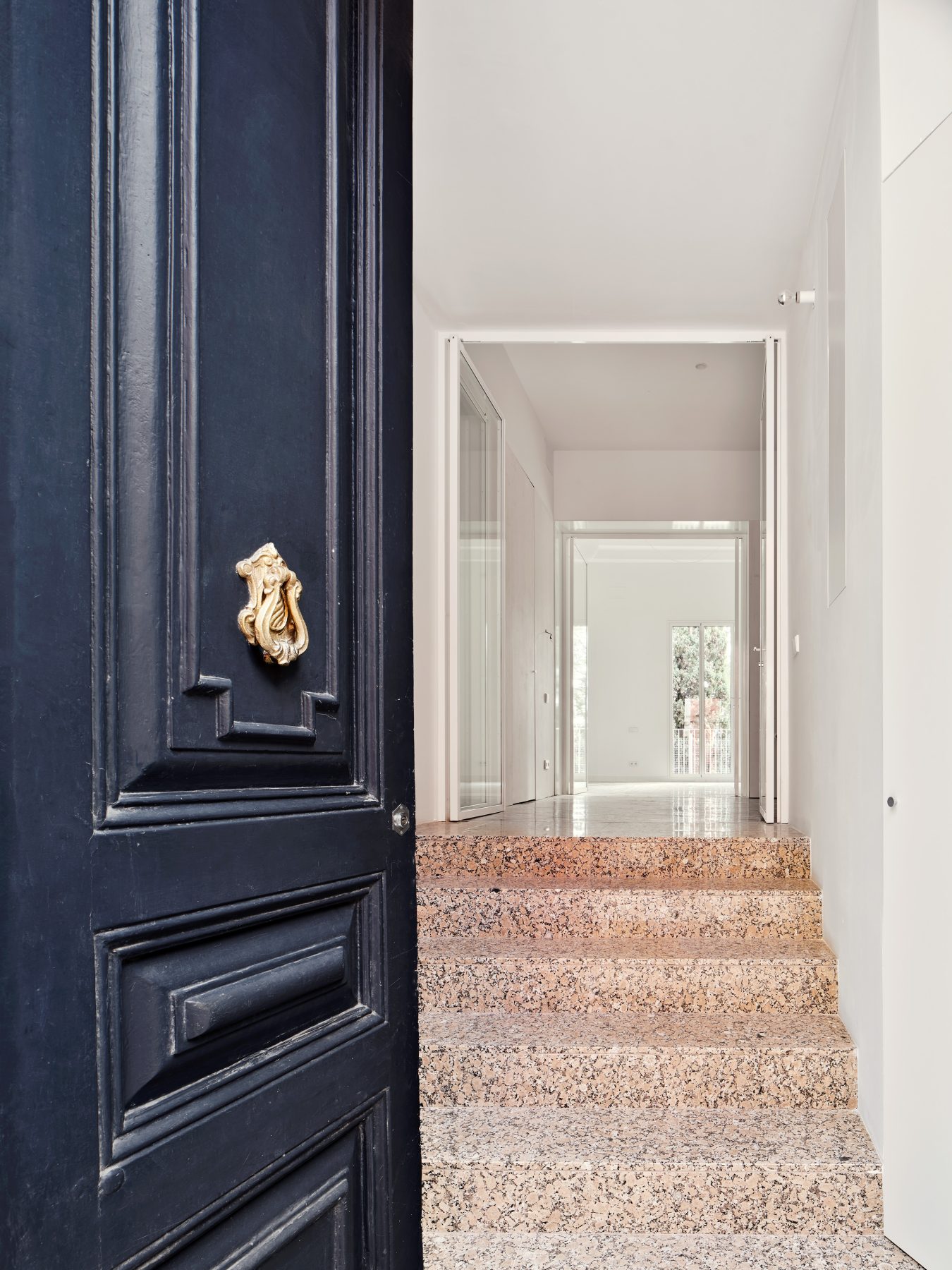
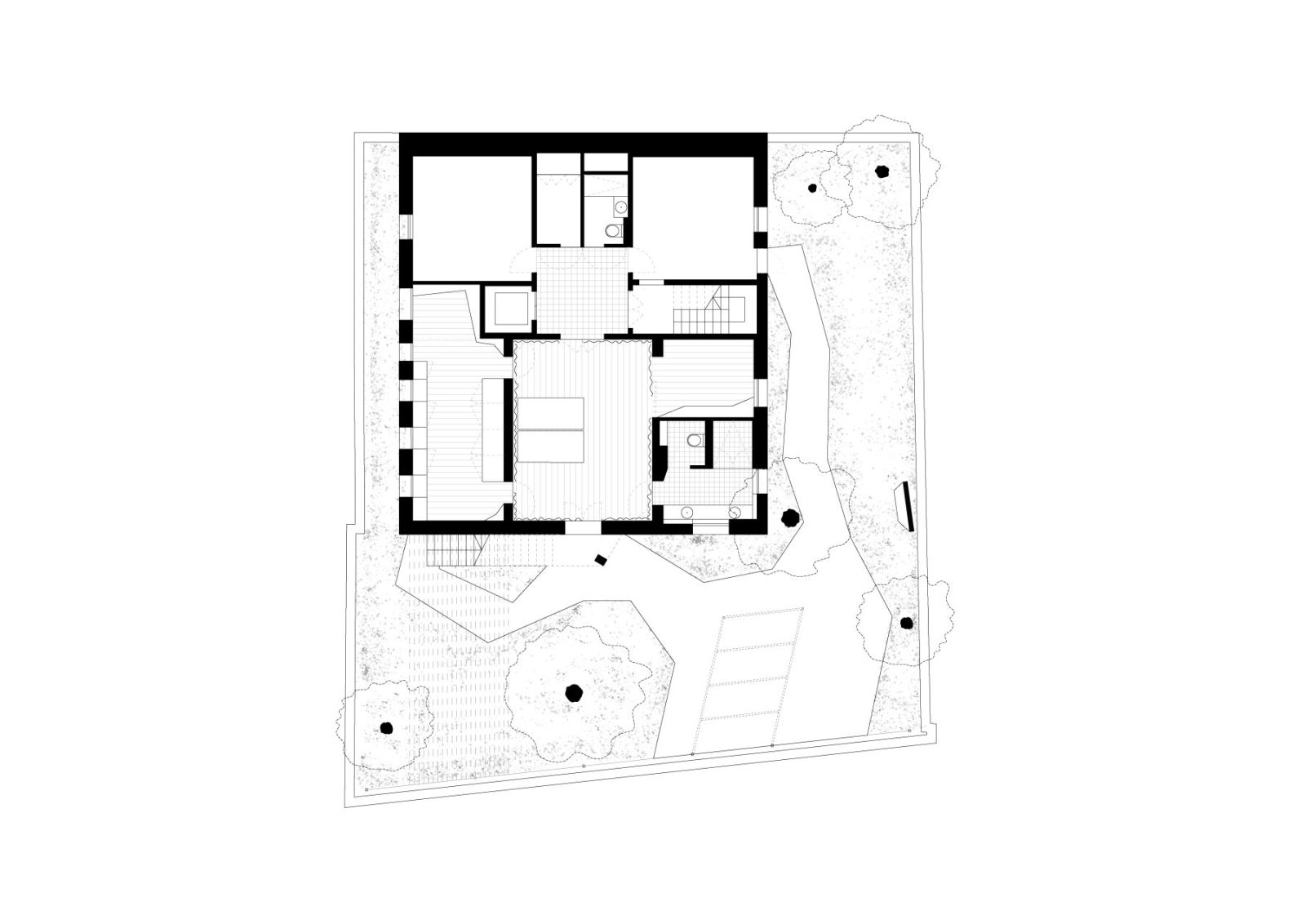
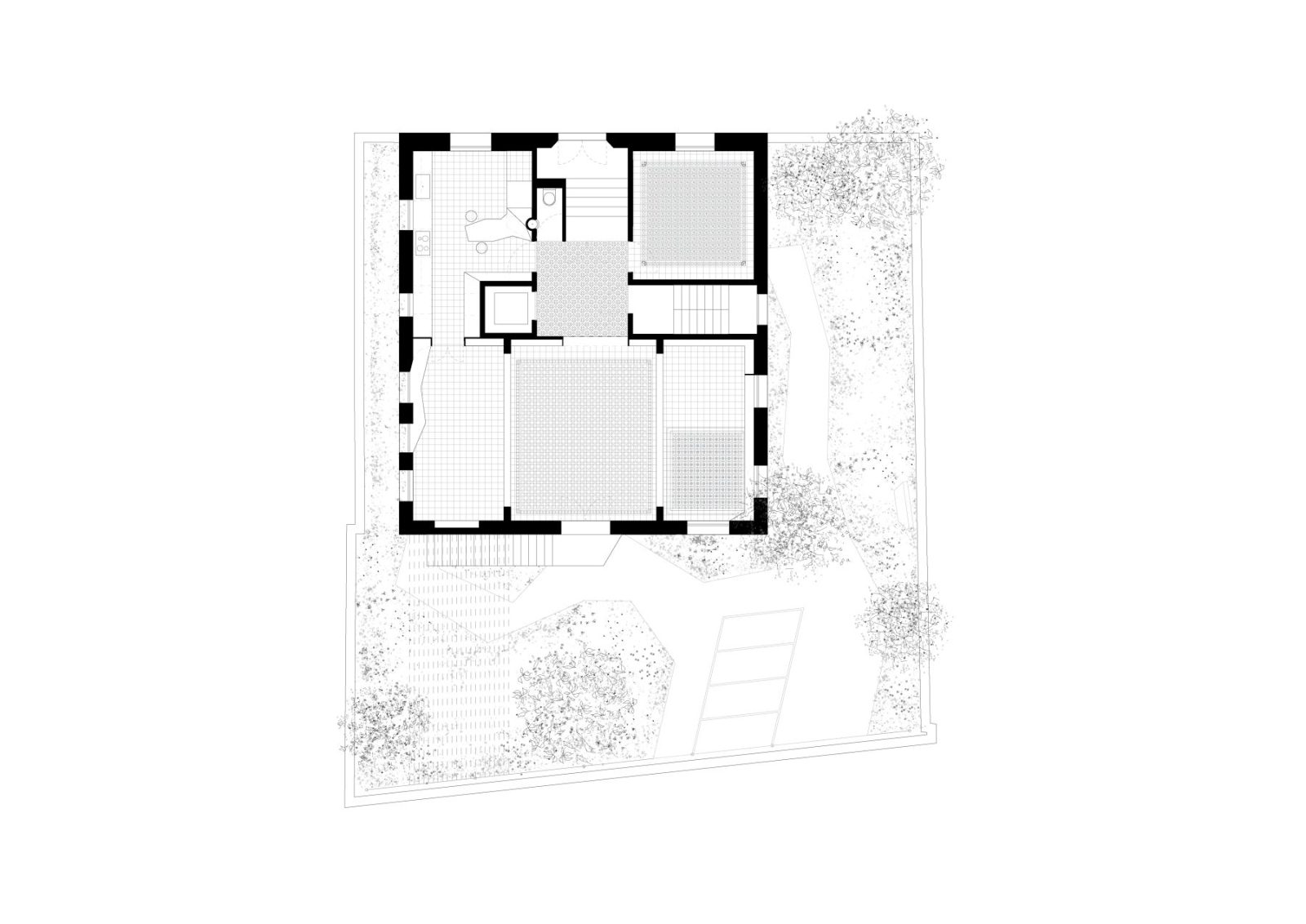
The upper floor, which provides direct access from the street and sits elevated above the garden, hosts the daytime and social spaces. Here, the kitchen, foyer, living room, and dining room are integrated into a spacious, light-filled environment.
Below, the semi-basement level accommodates the private and resting areas, offering a more sheltered and intimate atmosphere. The bedrooms open directly toward the outdoors, reinforcing the sense of connection with the landscape.
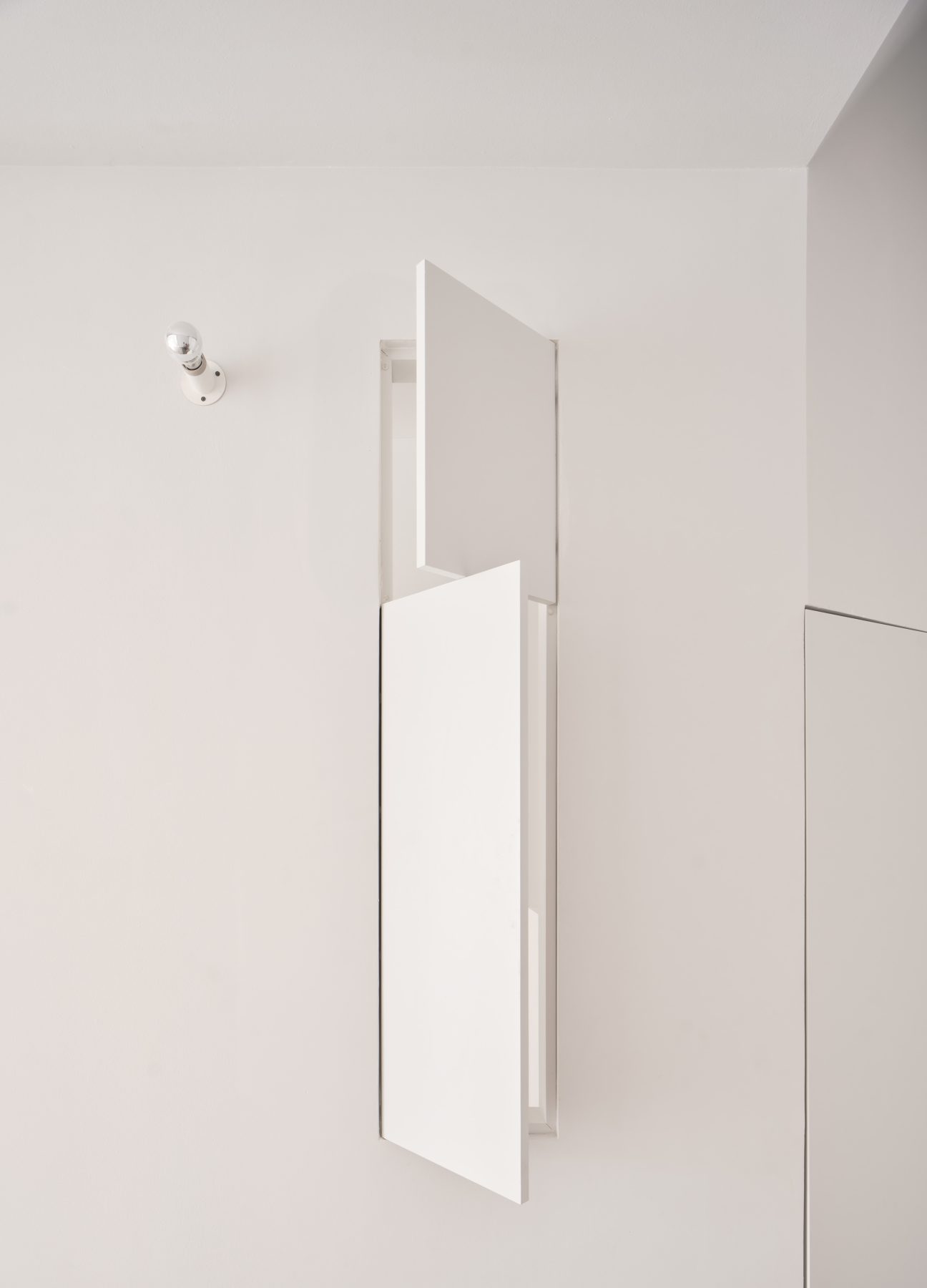
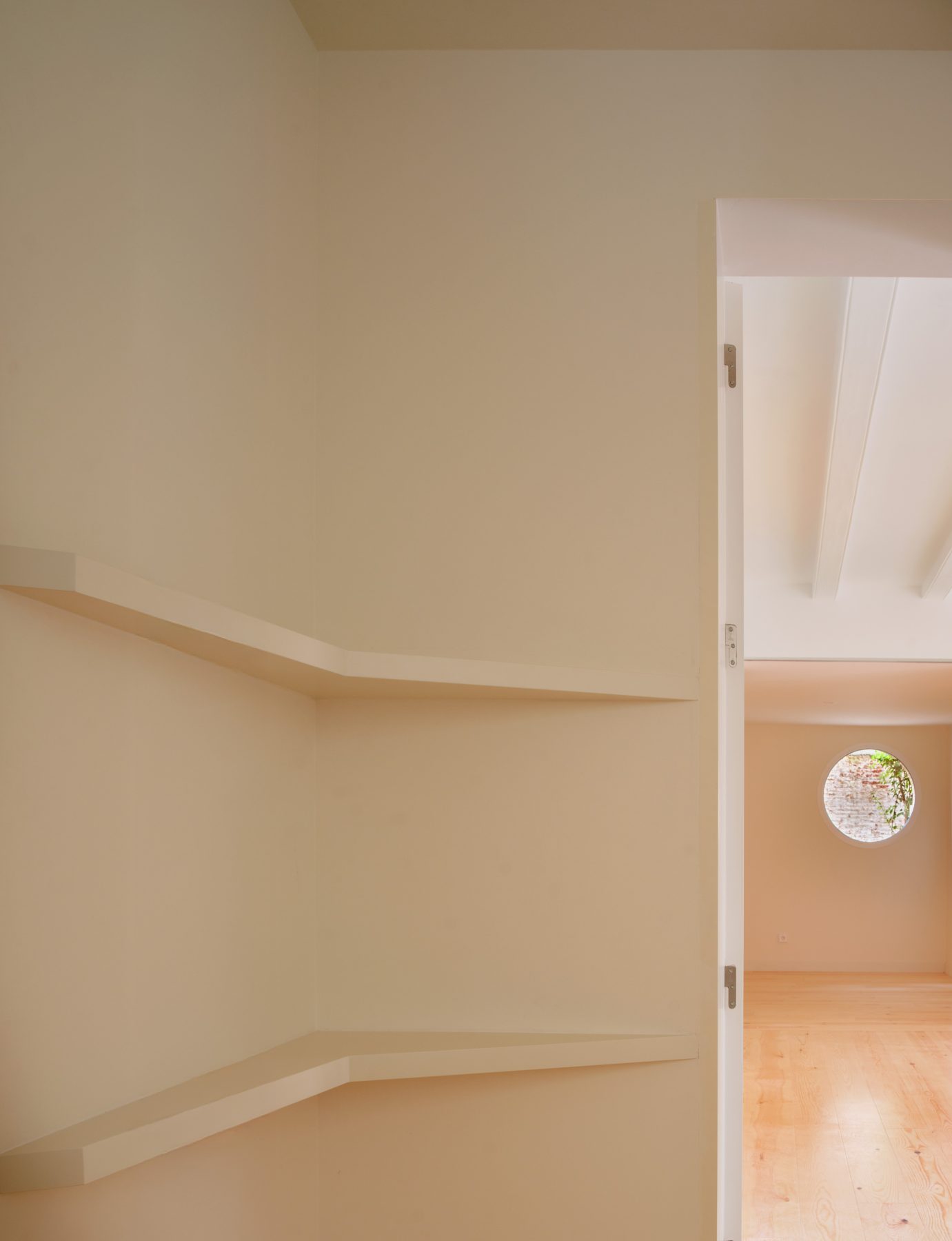
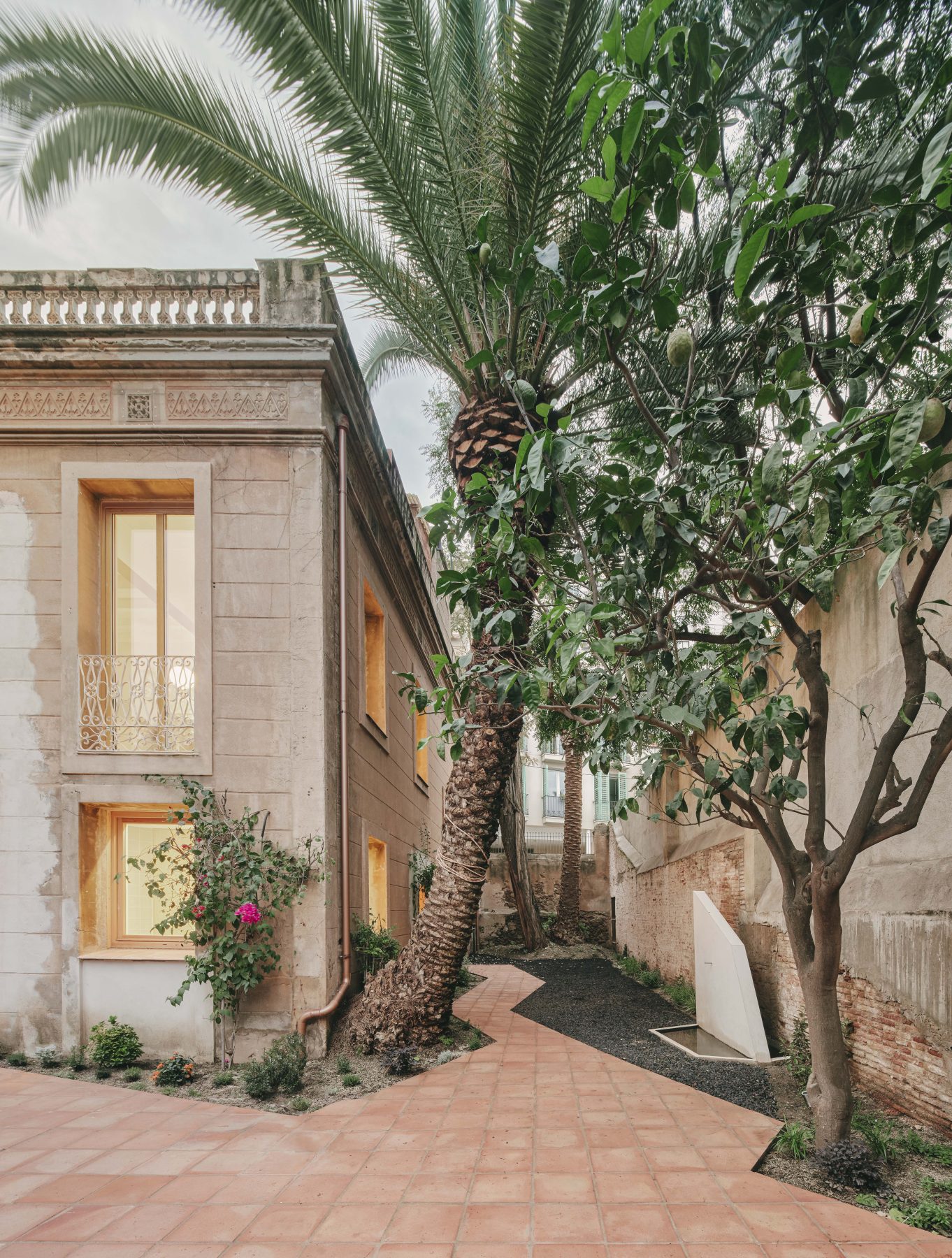
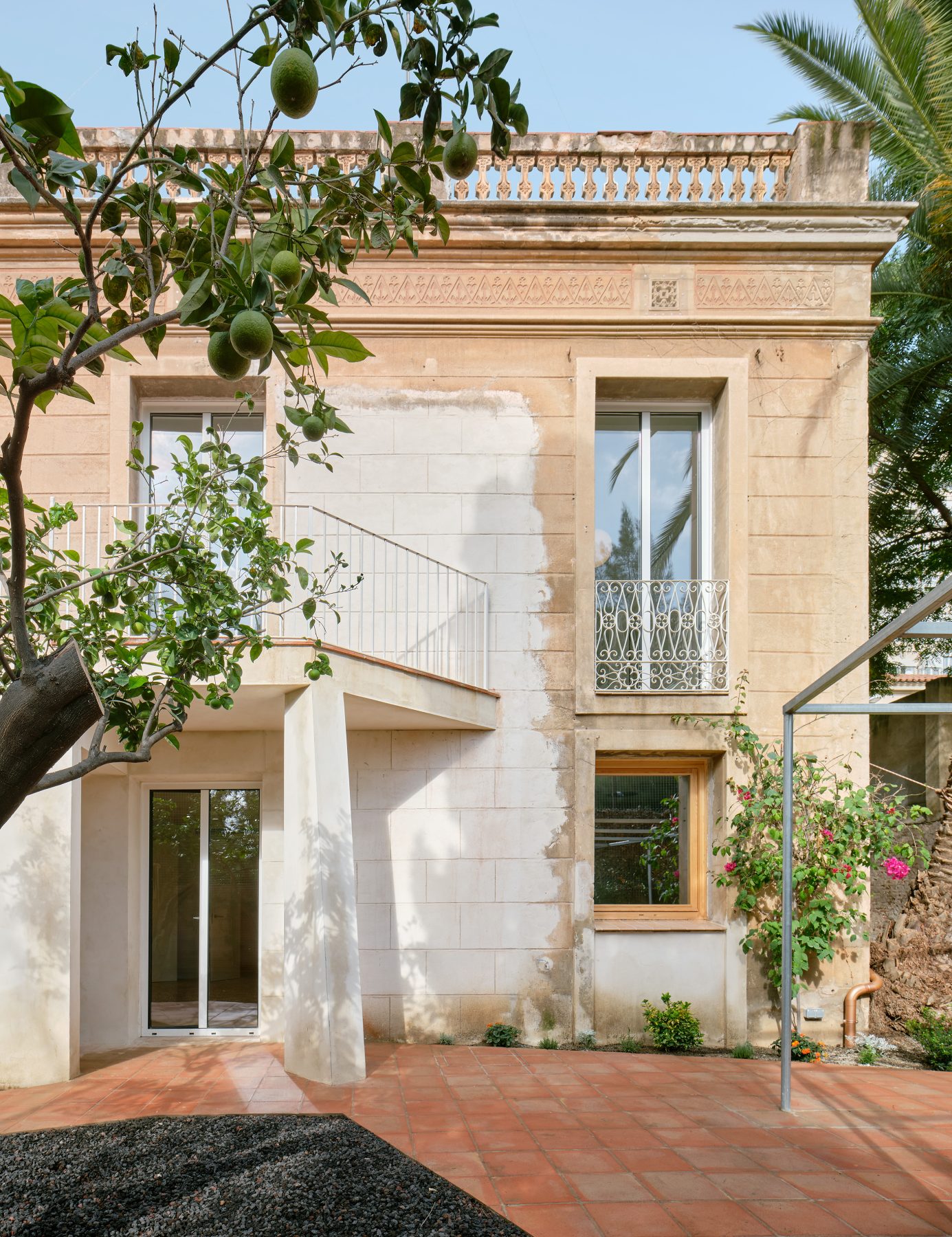
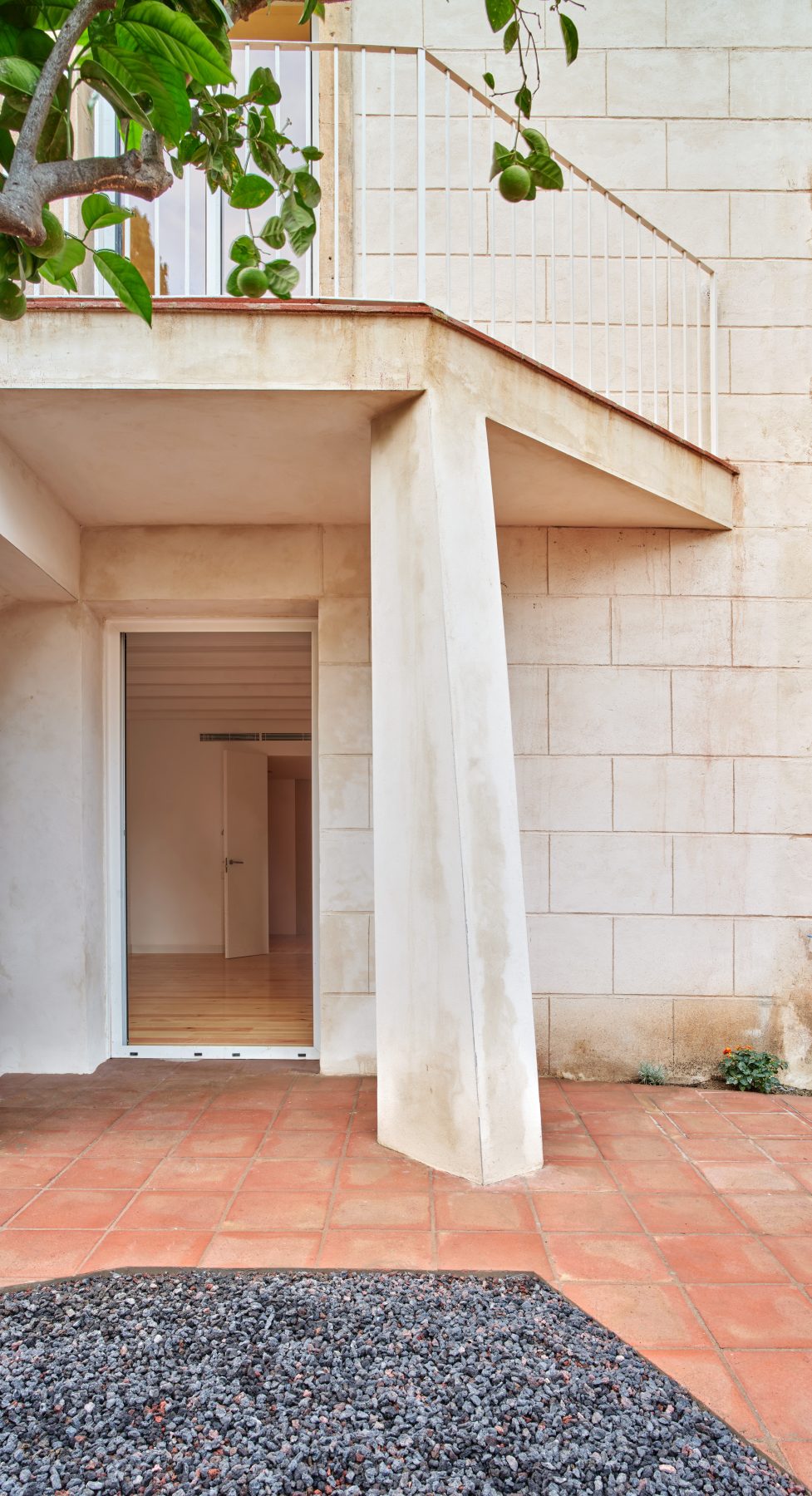
At the rear, the garden acts as a natural extension of the adjacent urban park, toward which the house is oriented through new openings that enhance permeability between interior and exterior spaces. An exterior staircase links the upper floor to the garden through an expanded balcony that also functions as a lookout toward the surrounding greenery.
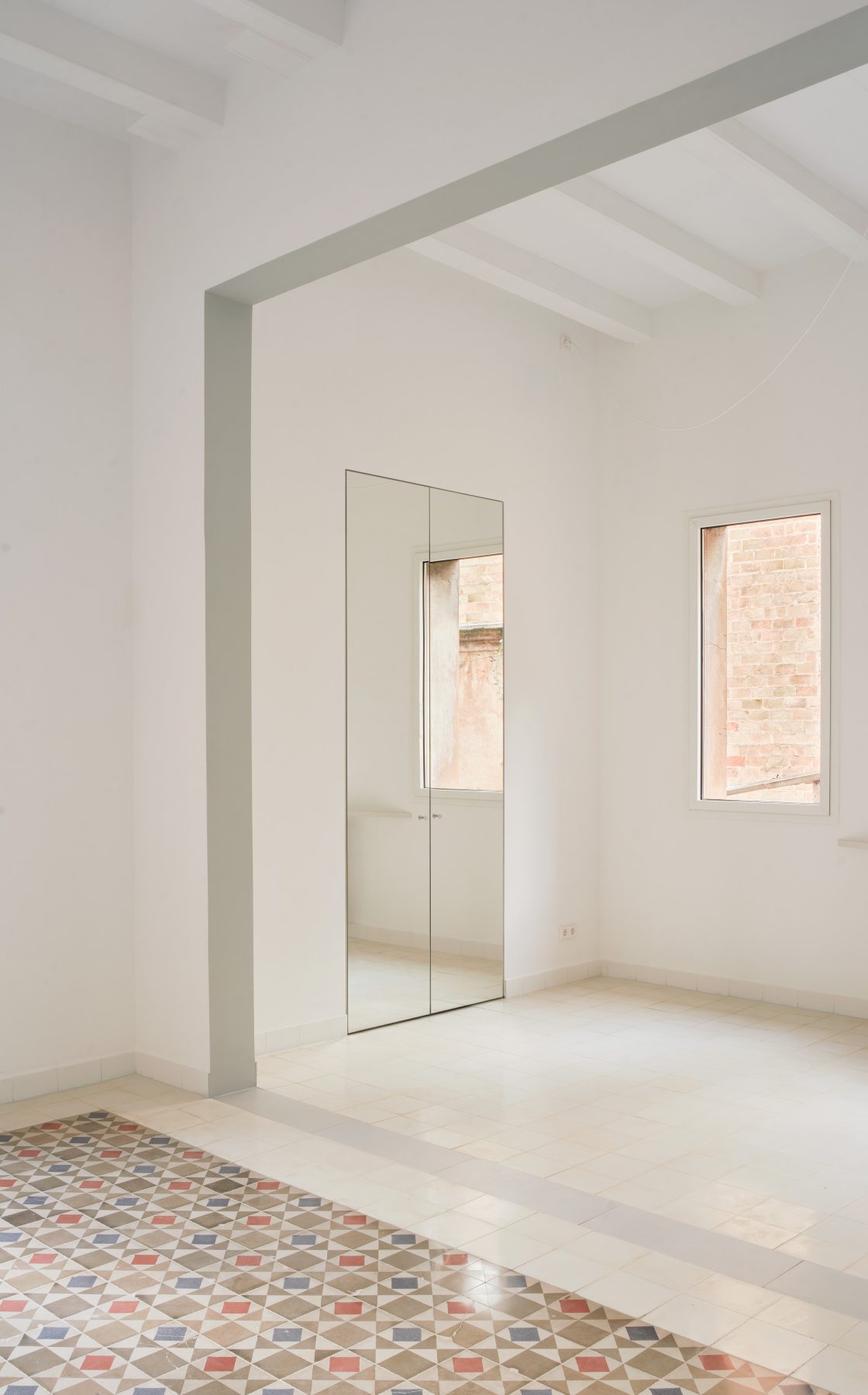
At the spatial and material level, the interior emphasizes the duality between social and private realms.
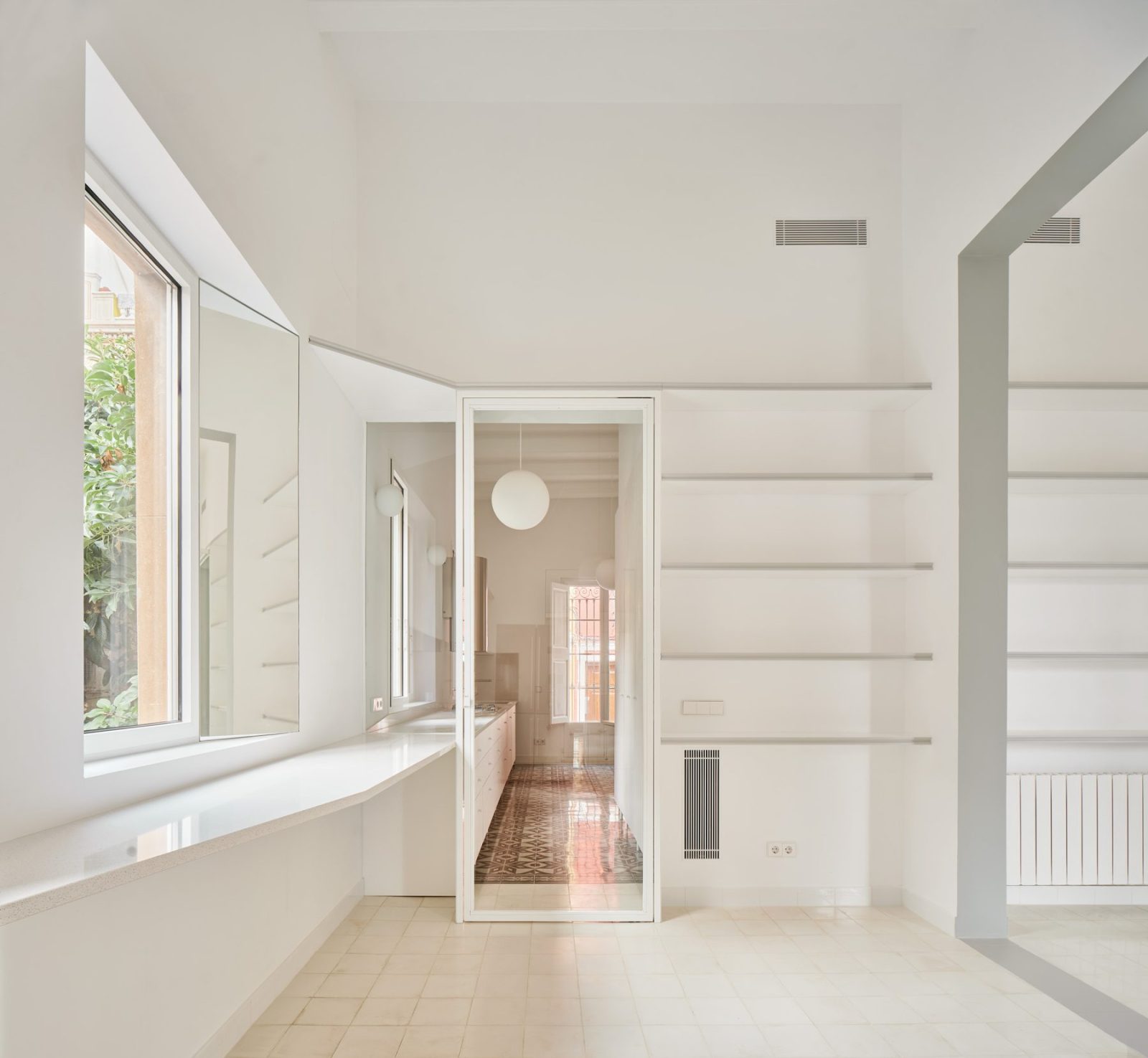
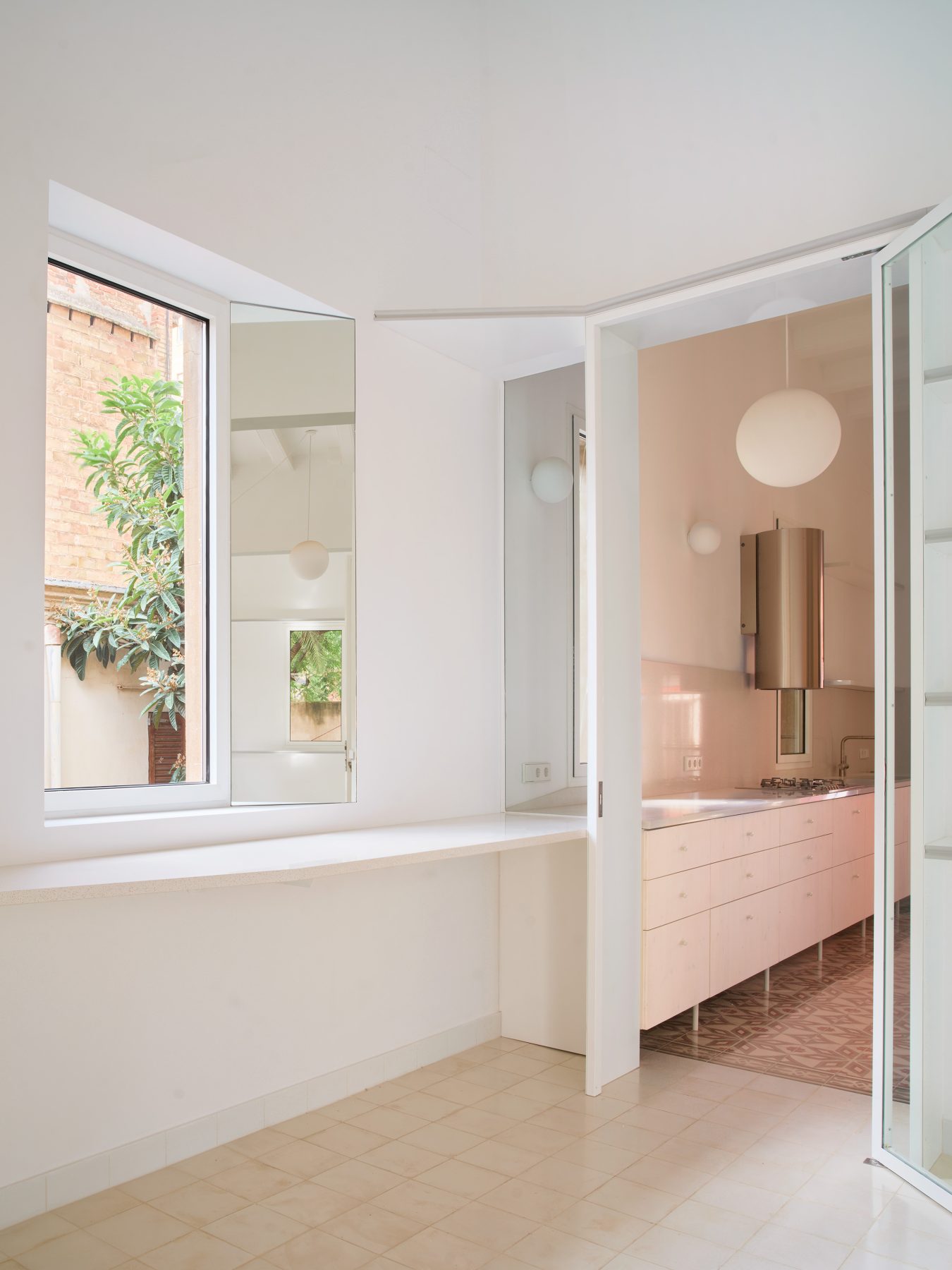
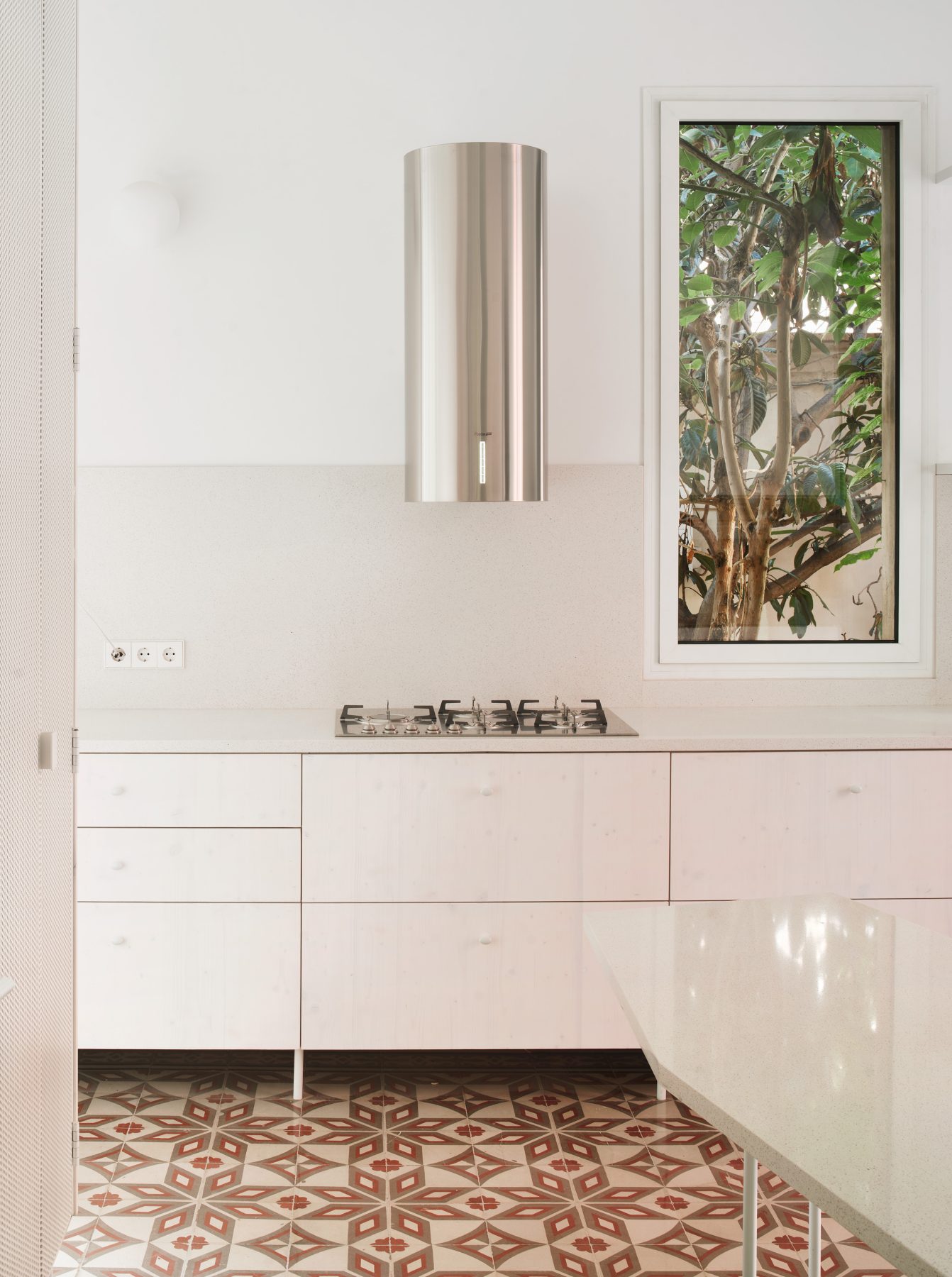
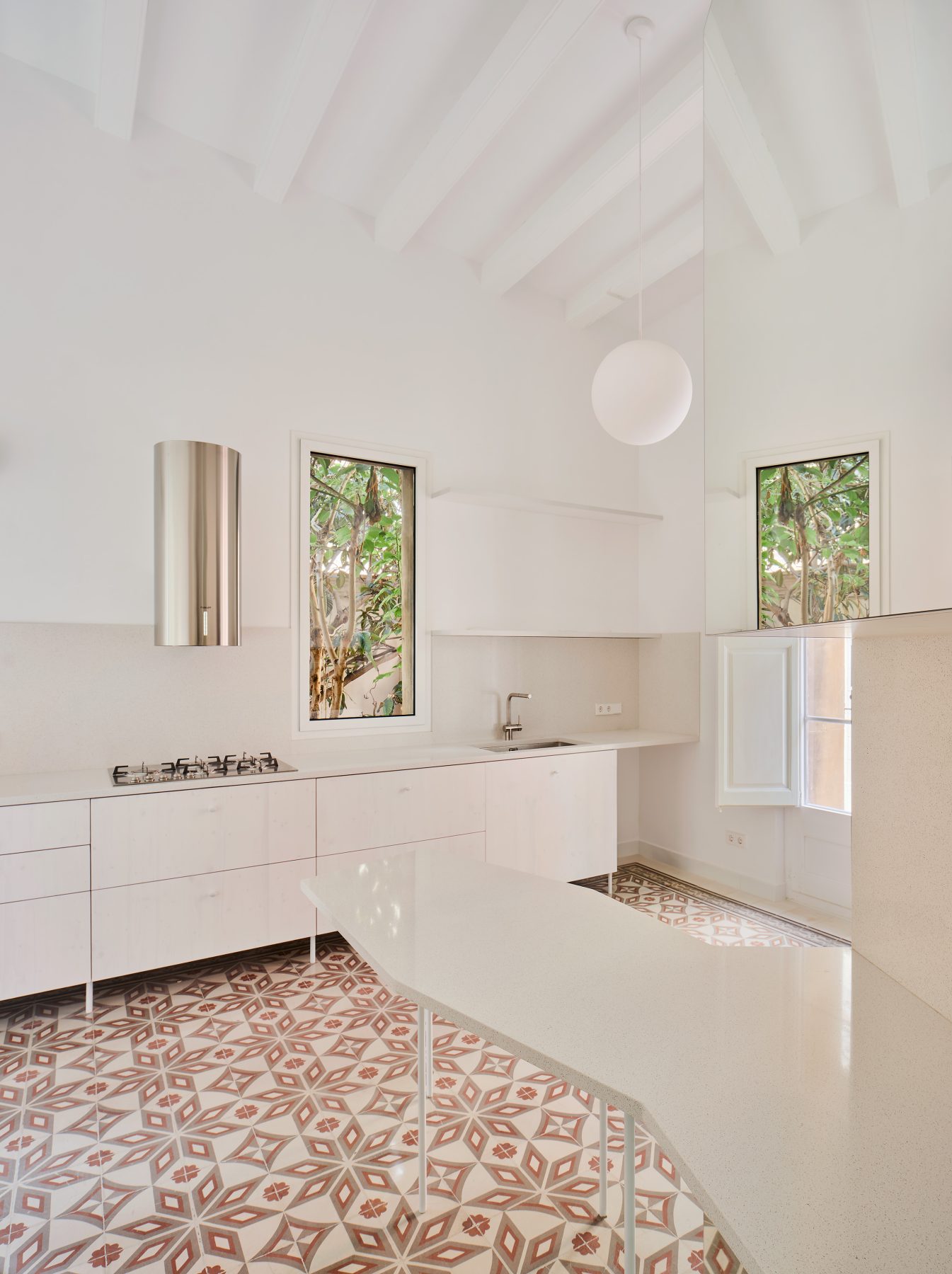
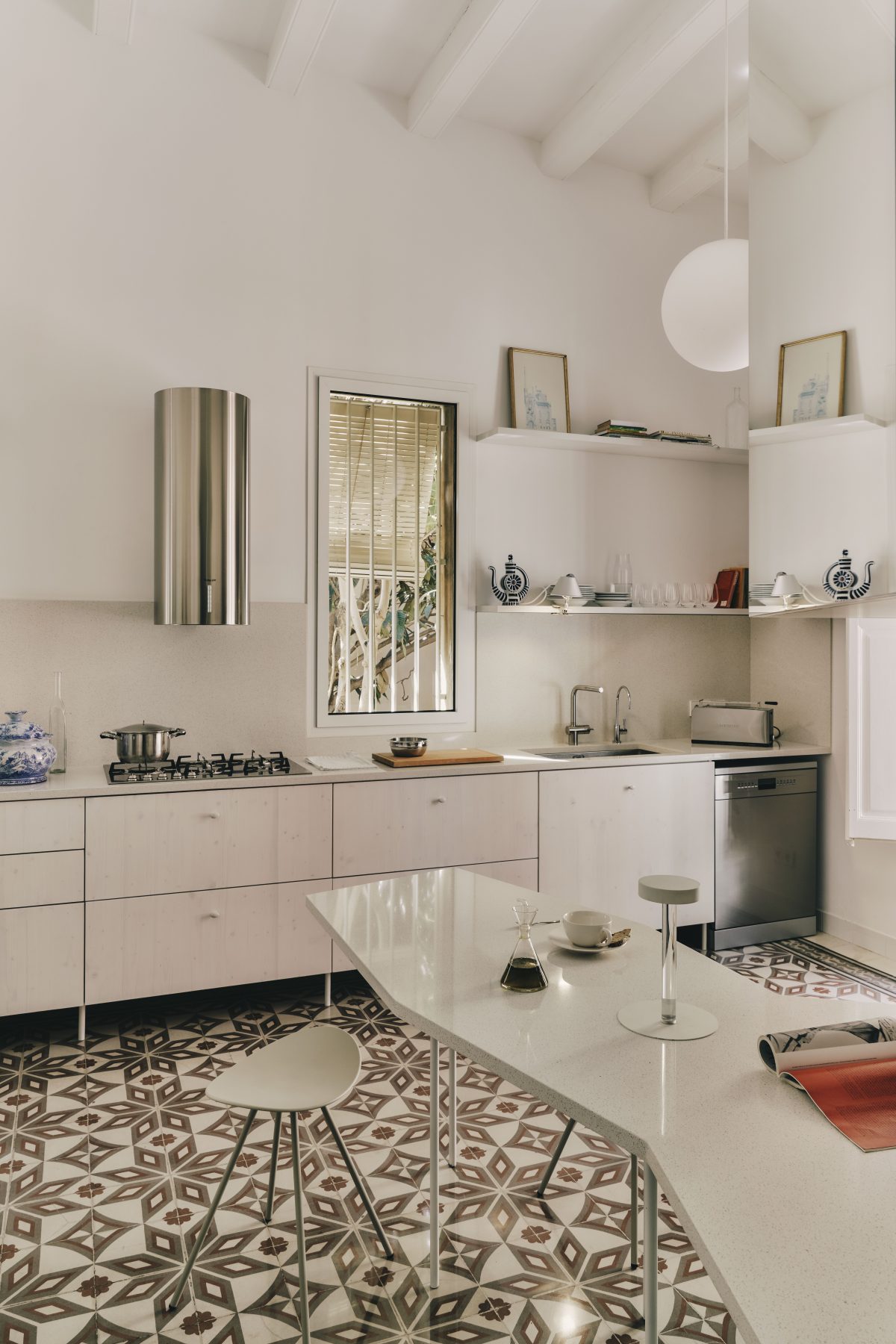
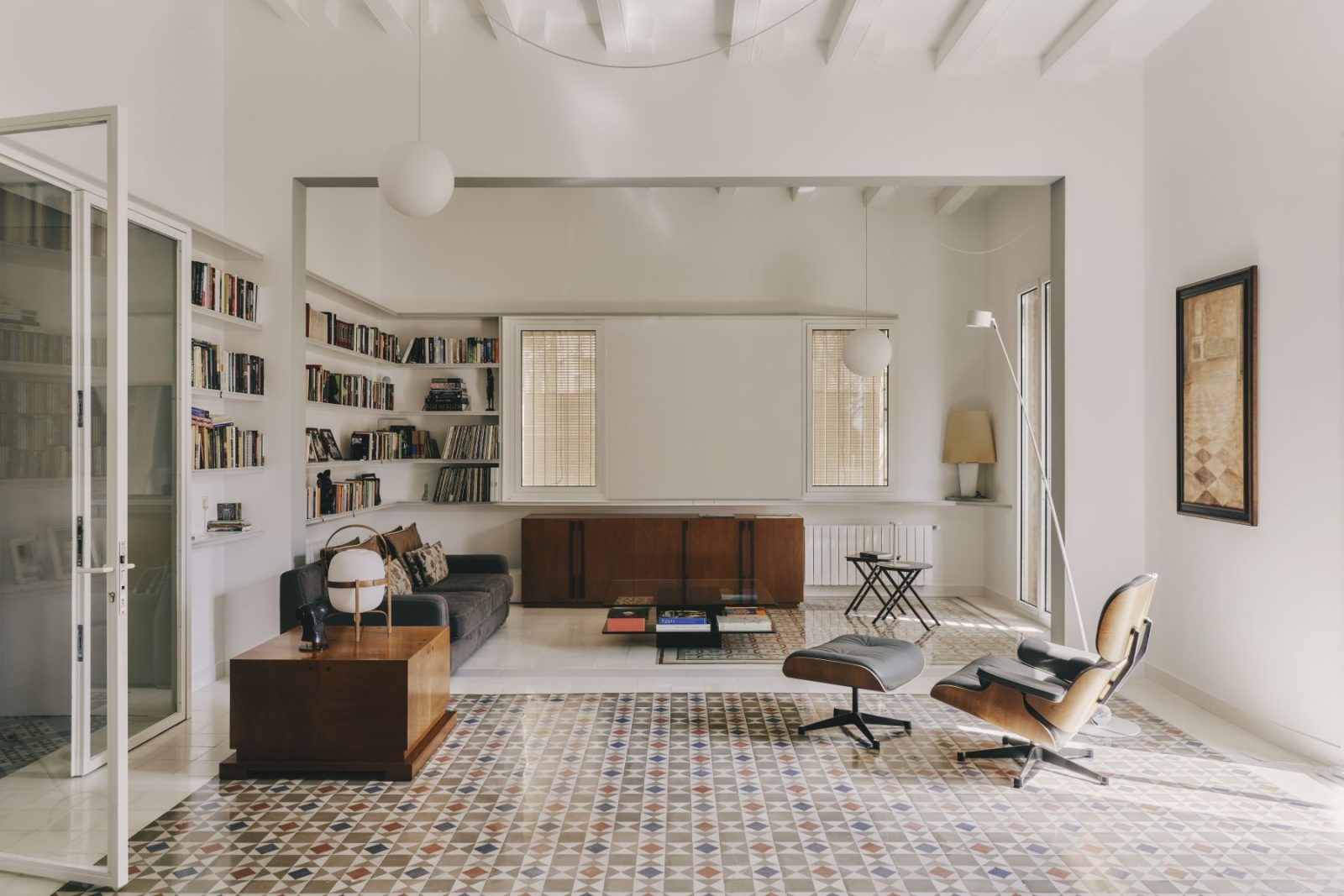
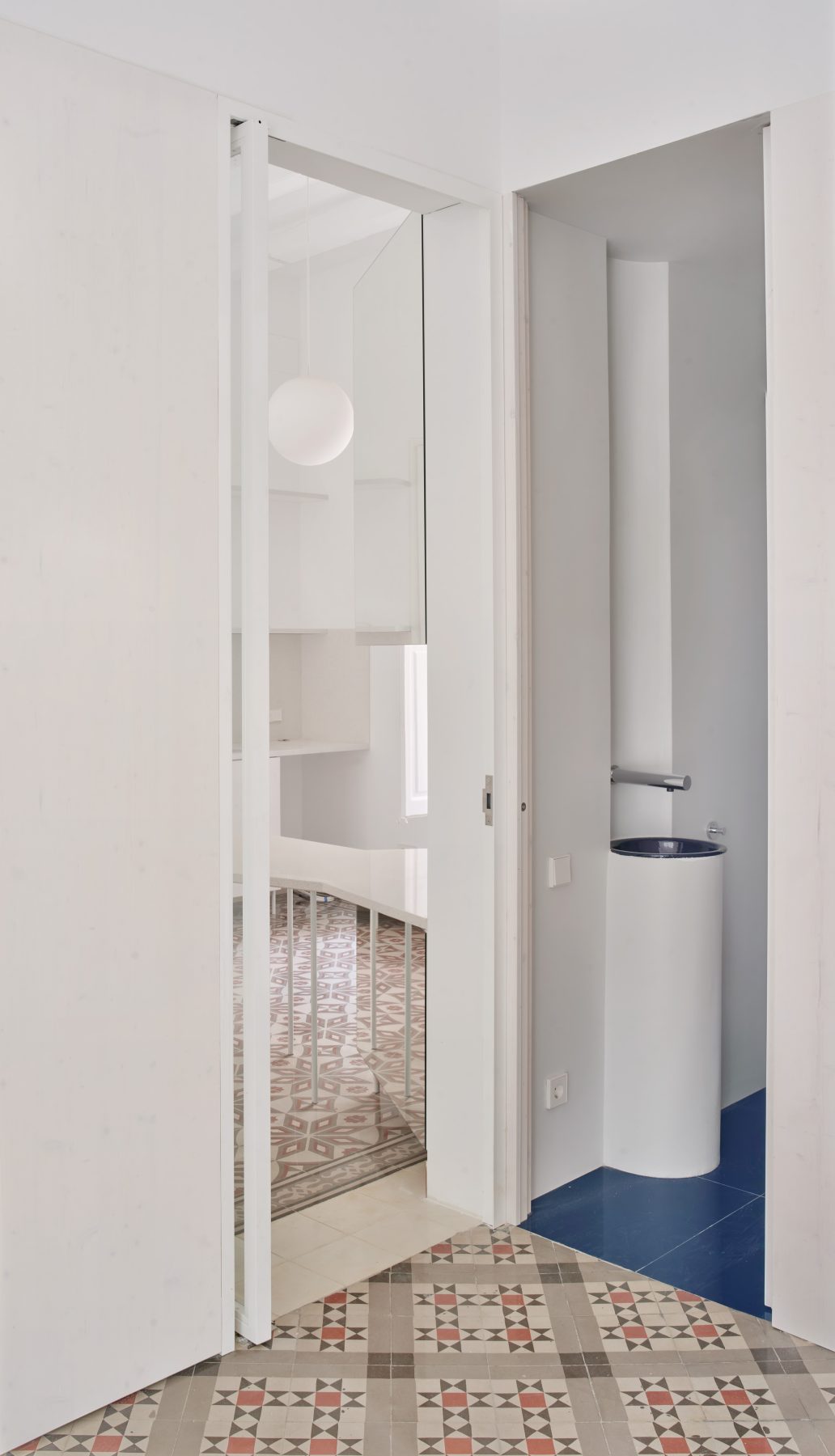
The social areas are defined by clarity and brightness, where the traditional barrel-vaulted brick ceilings (volta catalana) remain exposed and whitewashed. These historic elements contrast with dark wood furniture, black leather, and the colorful geometric patterns of the original hydraulic tiles, preserving traces of the house’s past. Mirrors along the walls introduce reflections and transparency, enhancing the relationship with the surrounding vegetation.
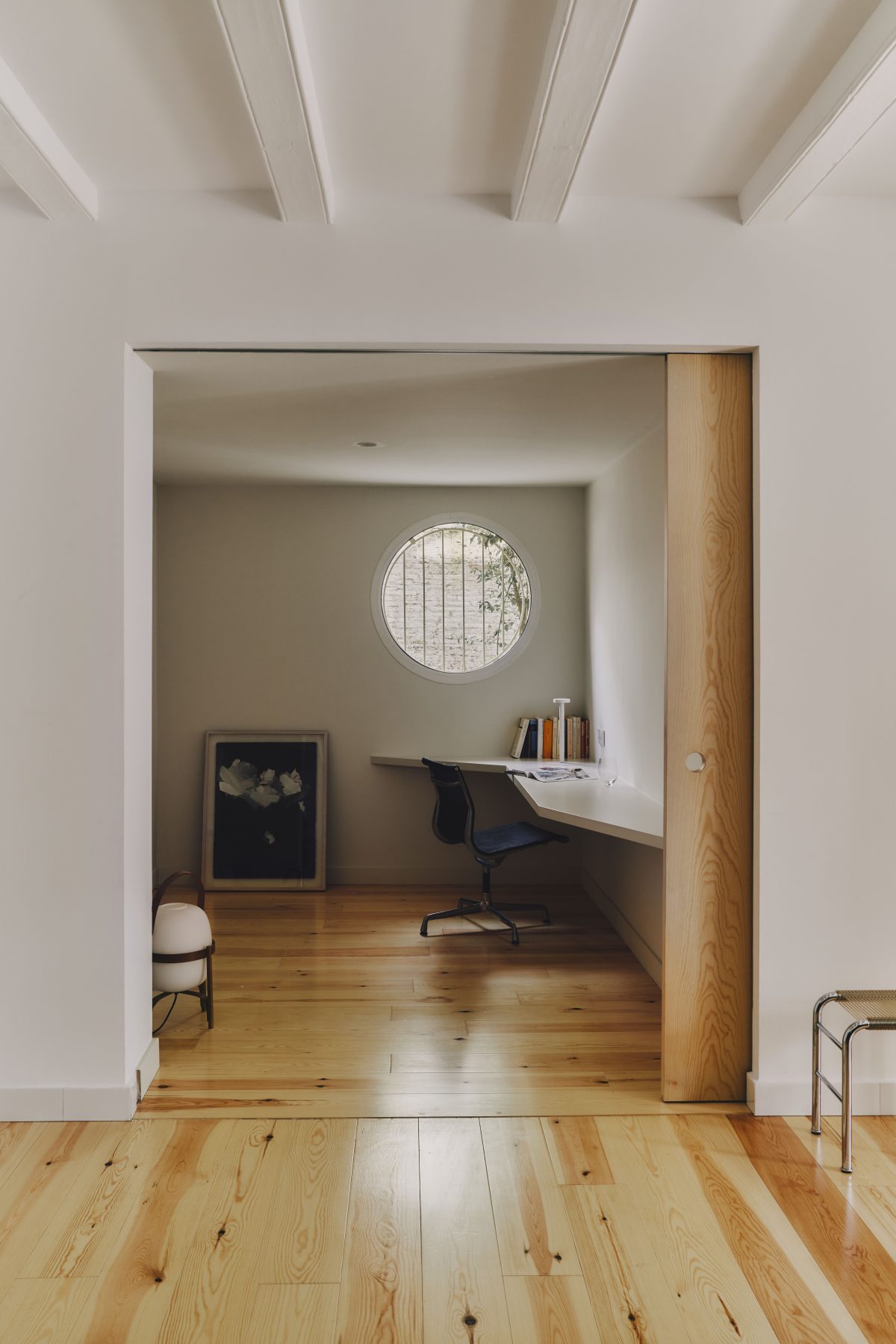
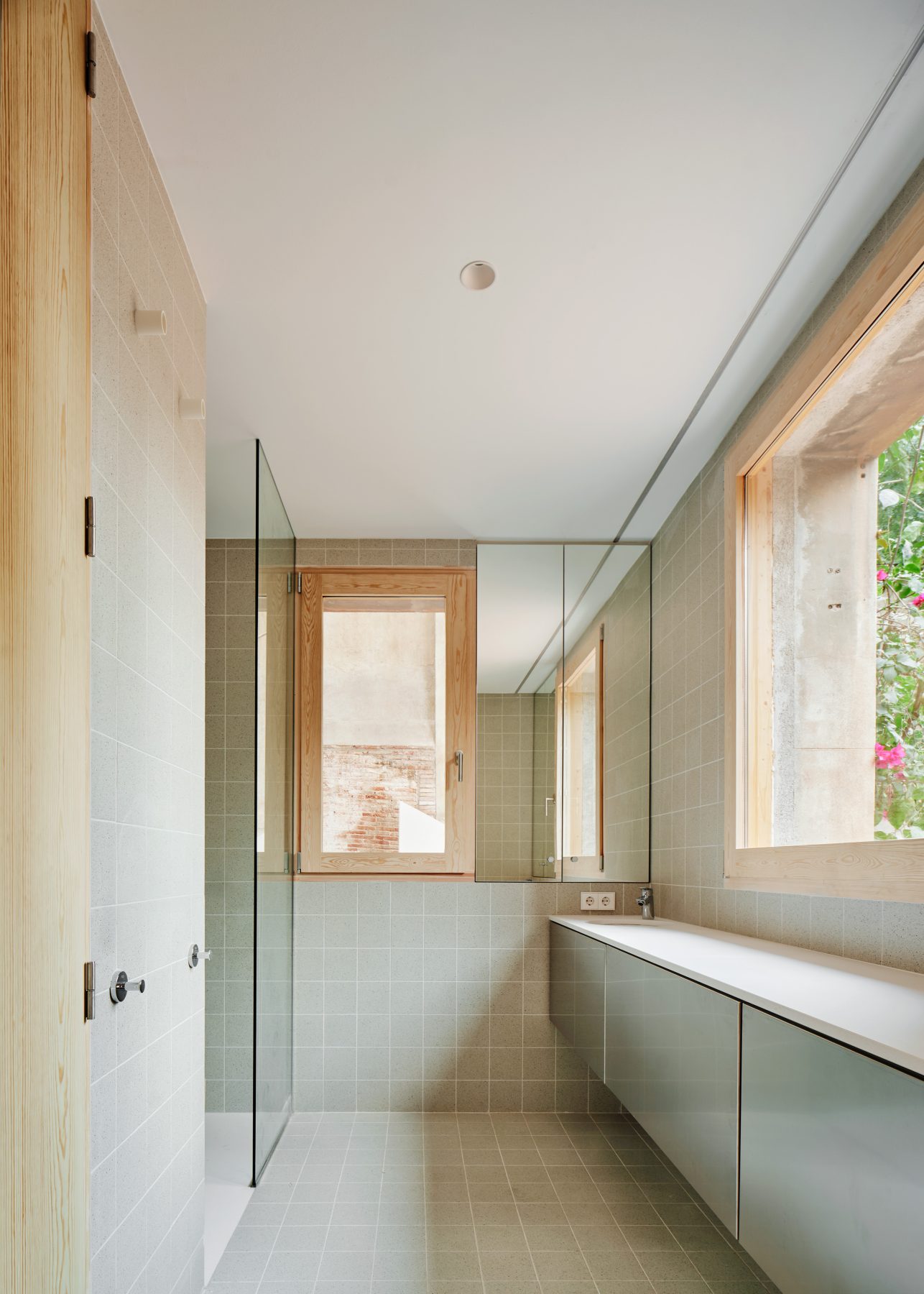
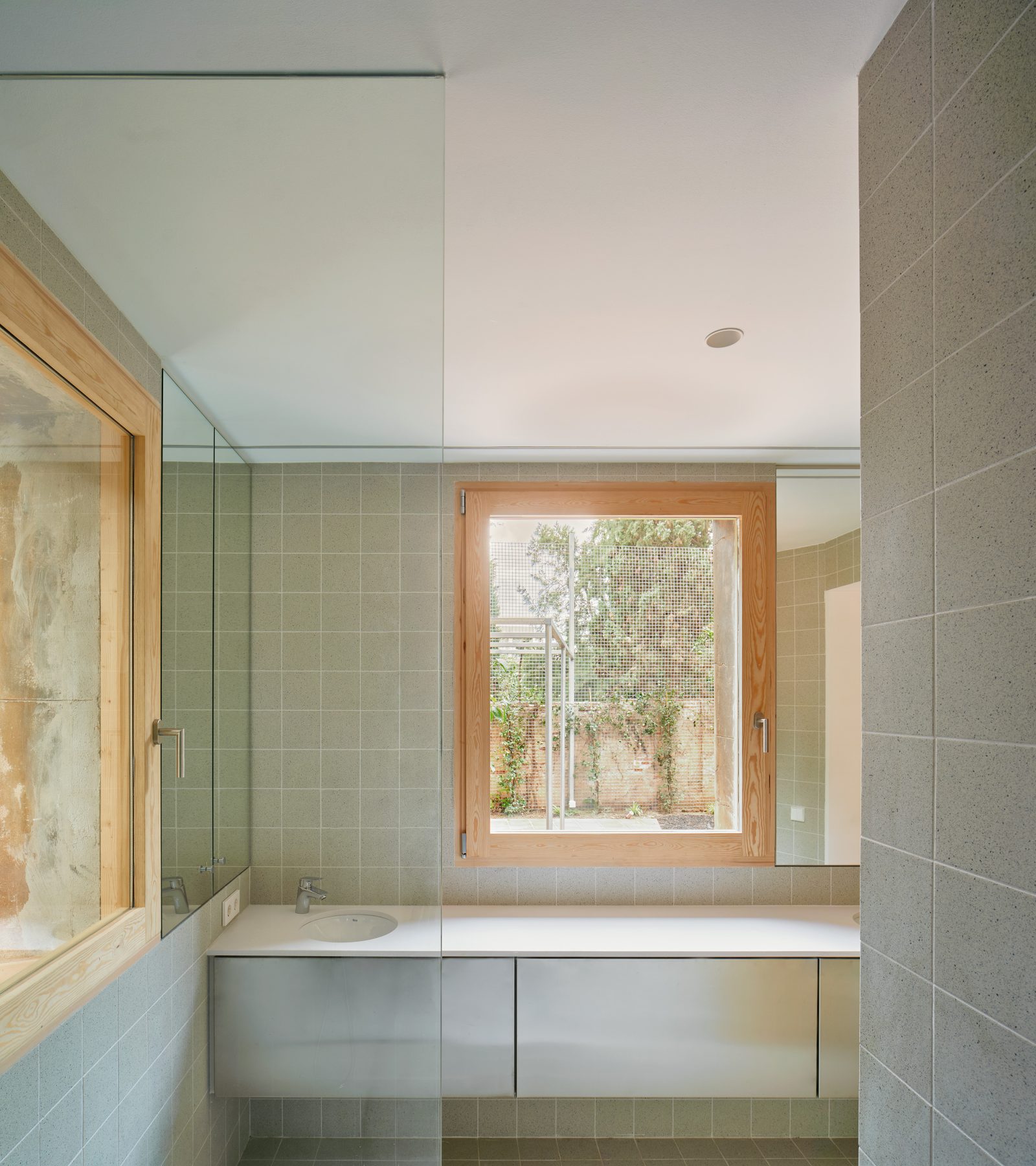
The private areas, located in closer contact with the ground, establish a more contemplative and intimate atmosphere. Wooden flooring and soft finishes in tones ranging from beige to sea green create a sense of calm and retreat.
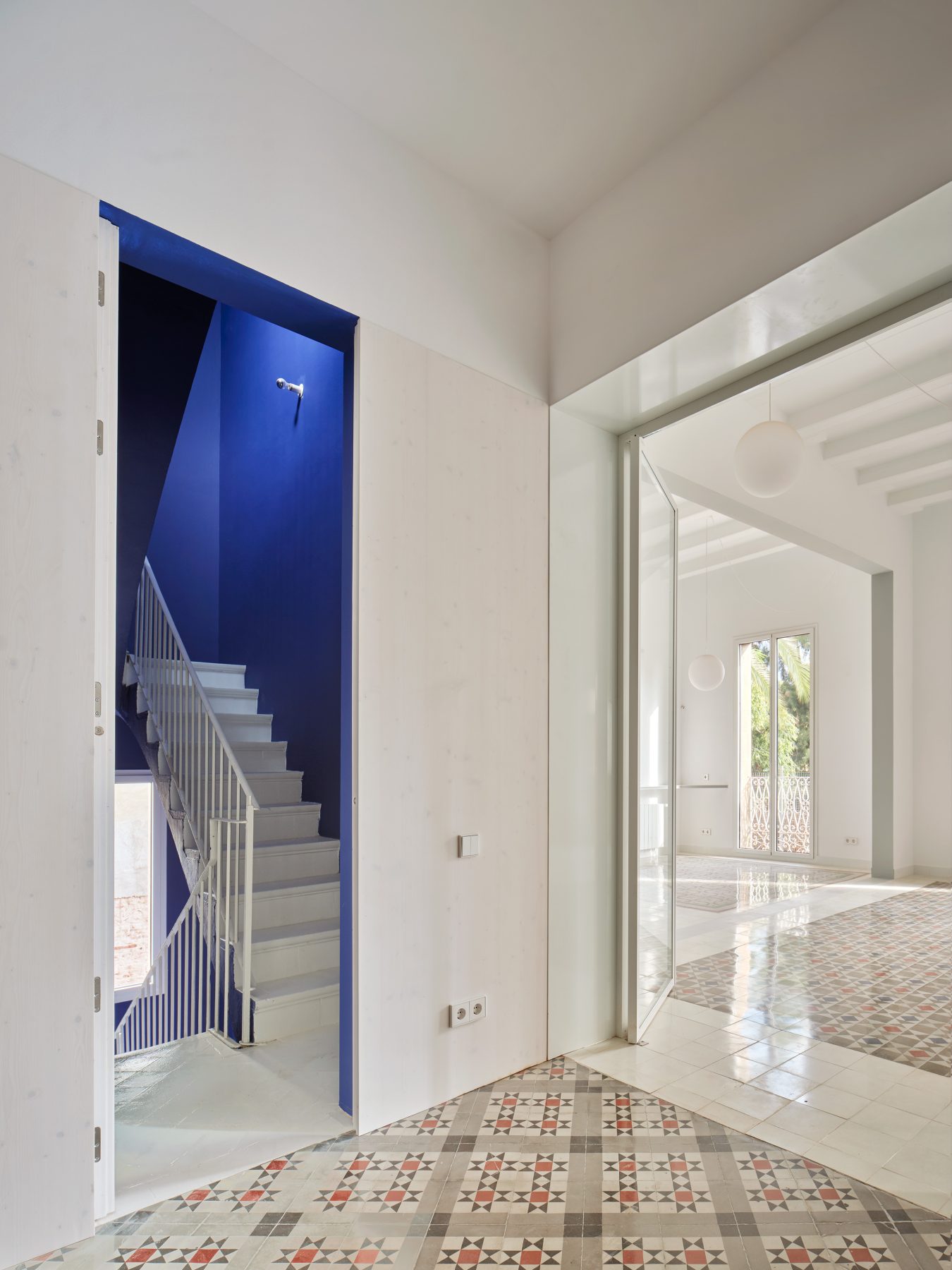
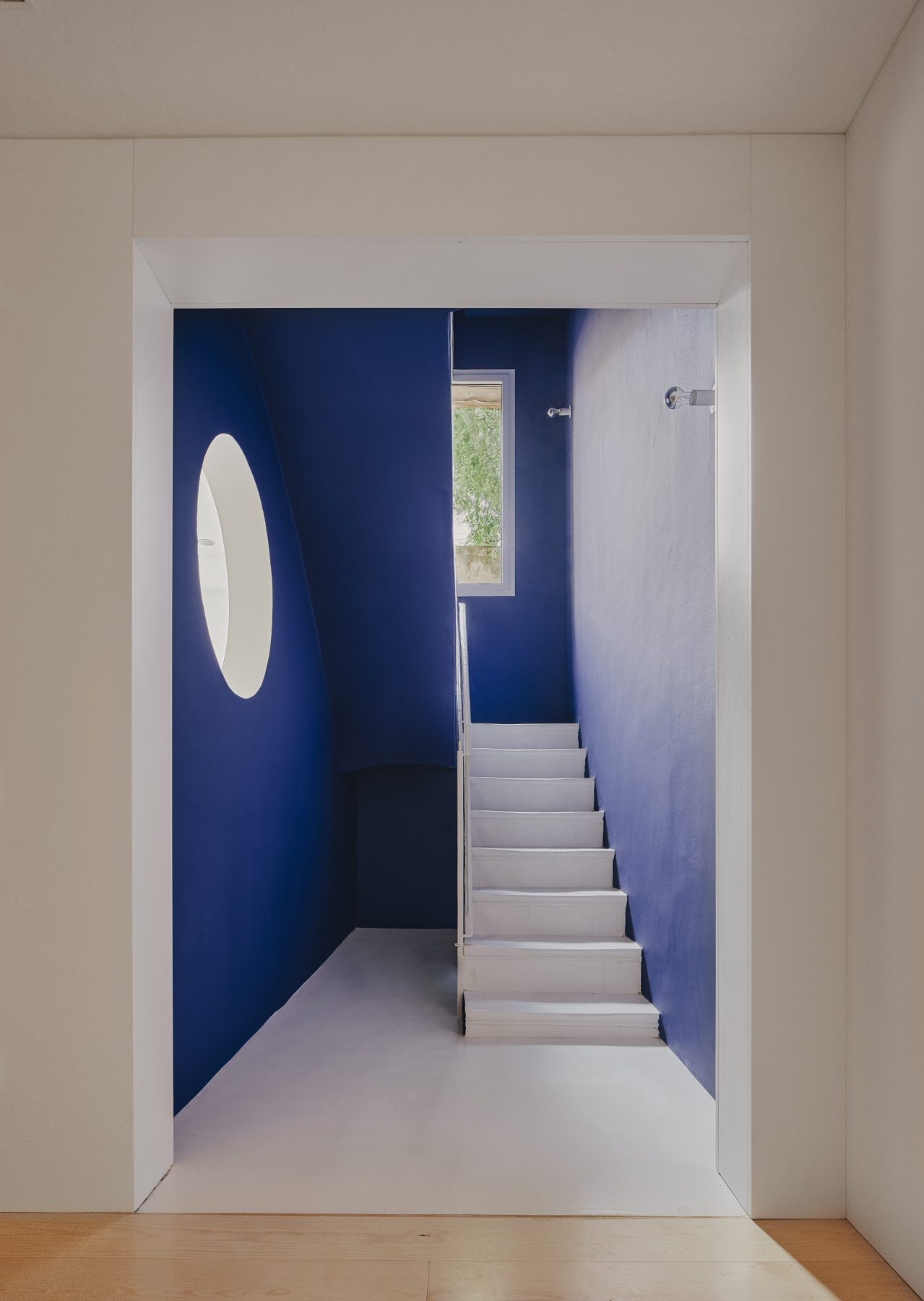
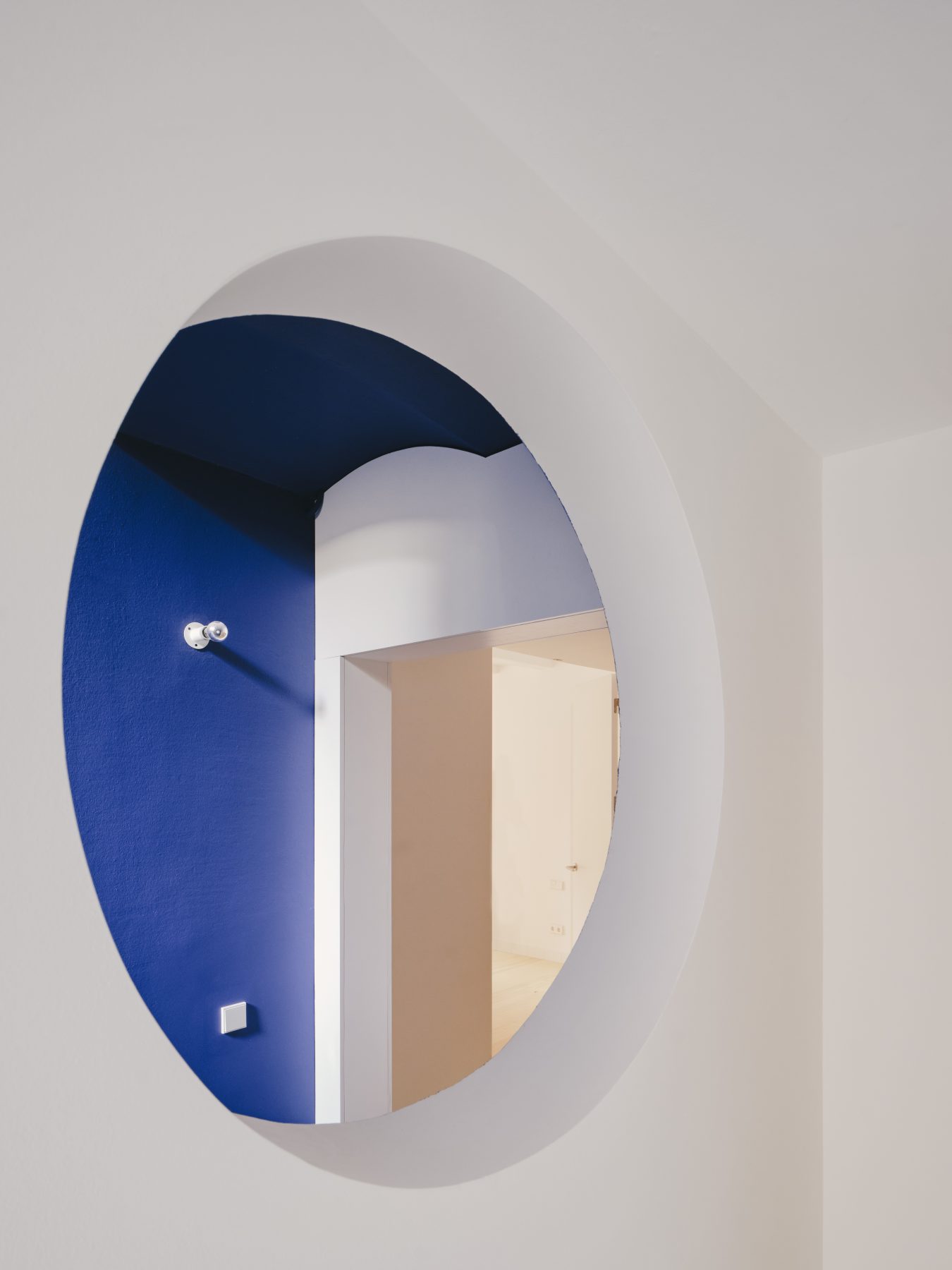
The existing staircase is reinterpreted through a vivid Klein blue treatment, transforming a functional element into a distinct spatial gesture that anchors and articulates the interior.
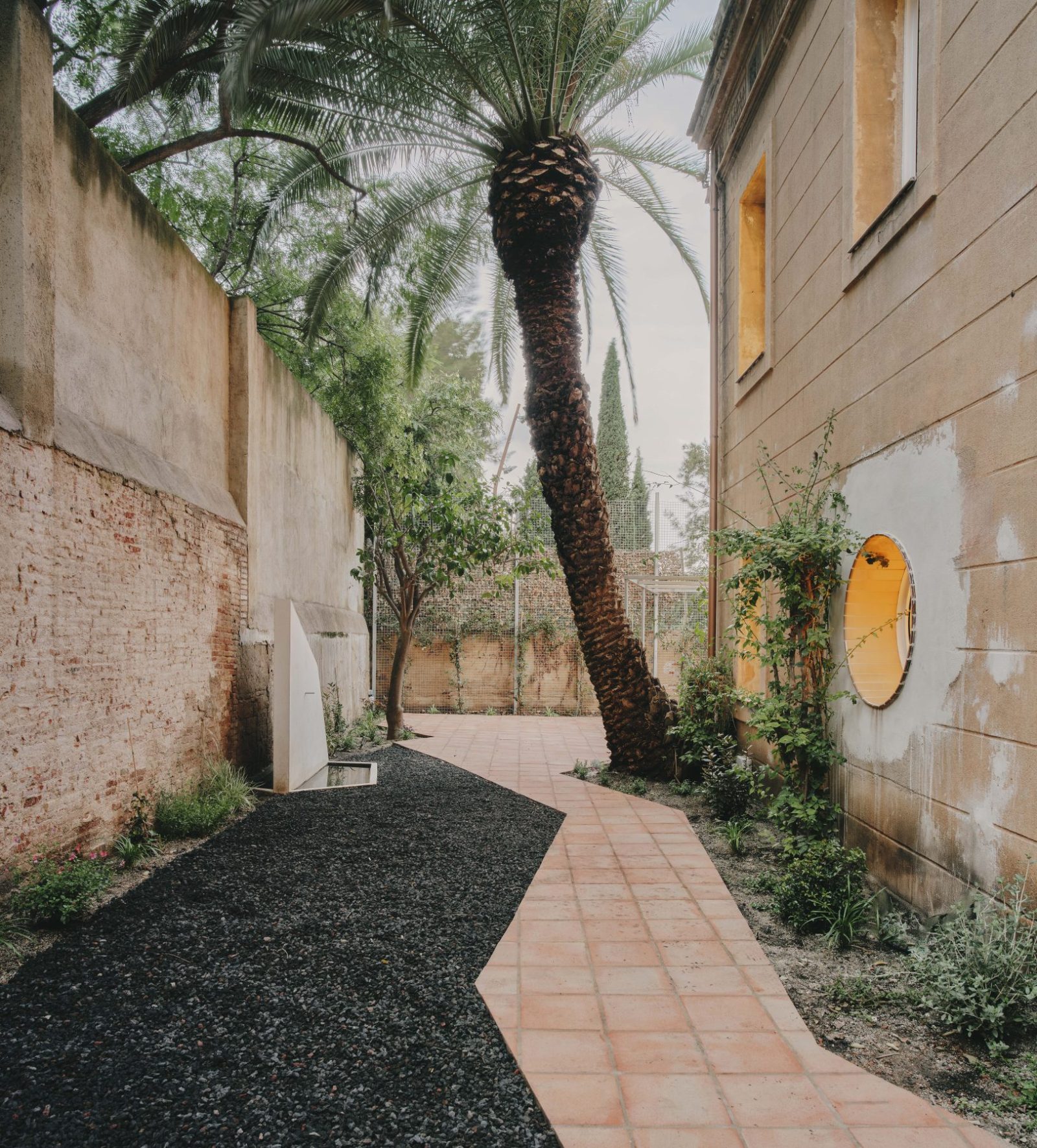
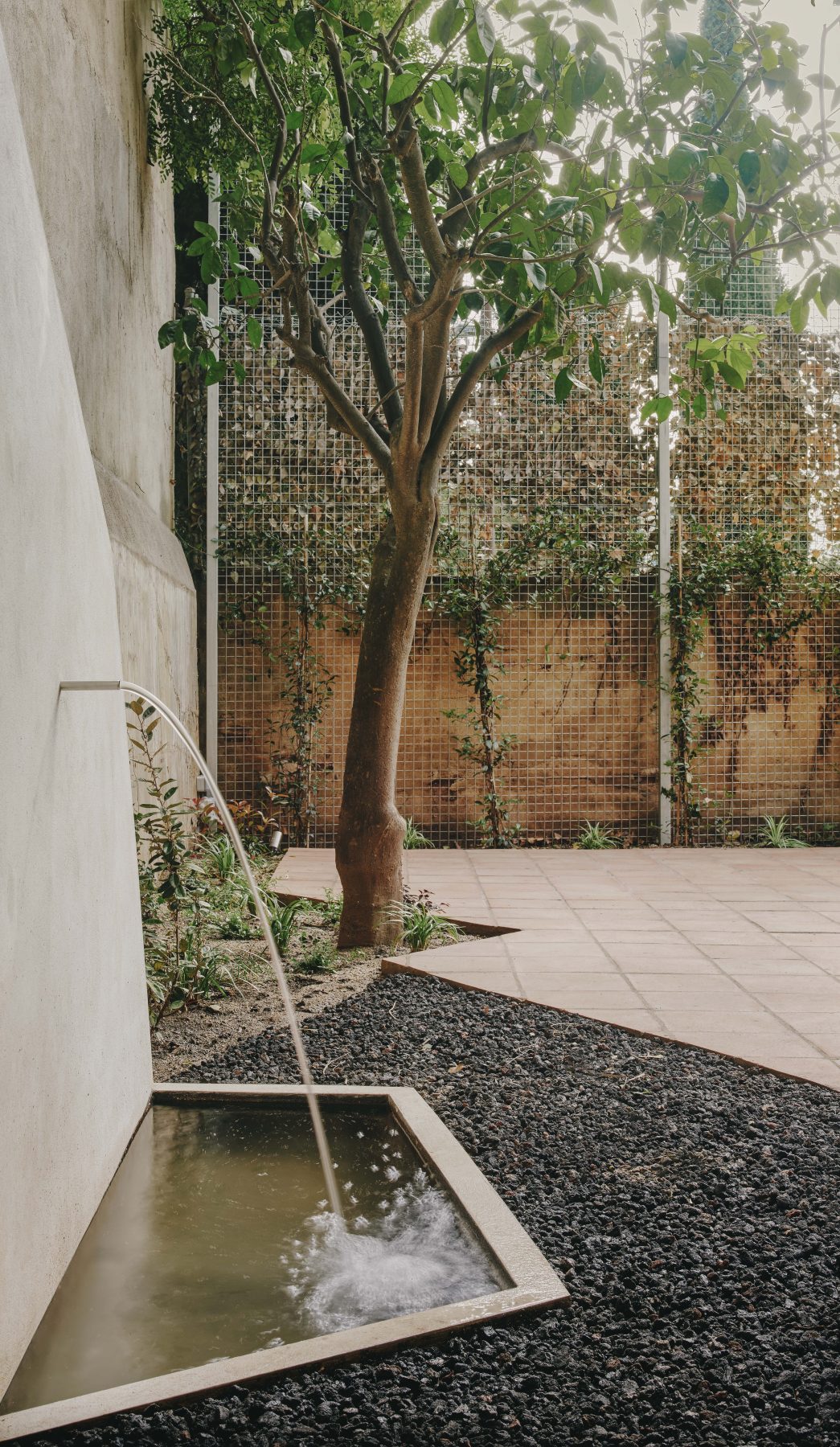
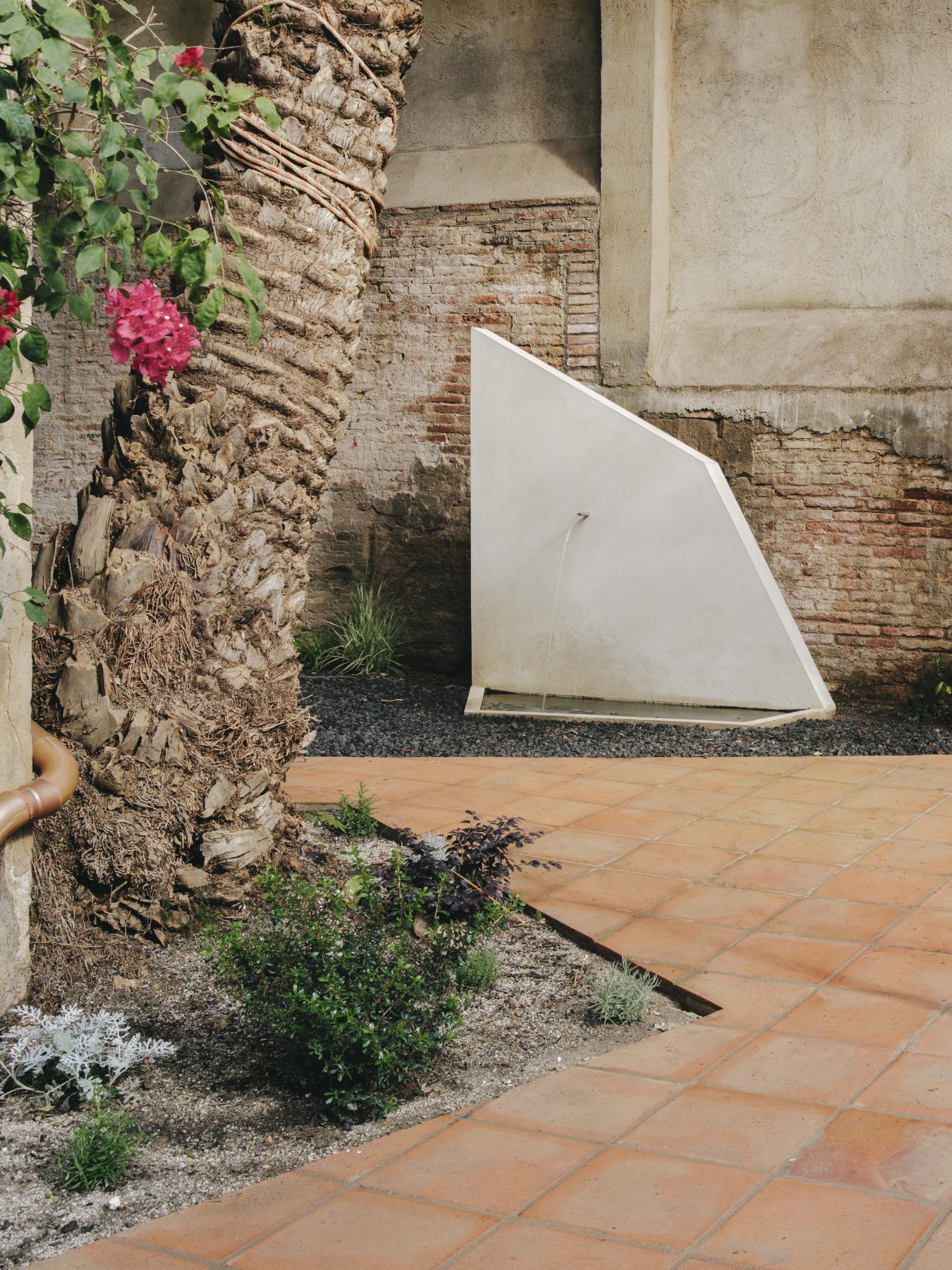
Outdoors, the garden combines existing vegetation with low-irrigation Mediterranean species. The boundary walls recover their original stone surfaces and are complemented by a metal mesh structure designed to support climbing plants. Over time, these elements will generate layers of shade and vegetation, weaving architecture and nature into an immersive landscape. The façade’s traditional plaster finish has also been preserved, enriched with textured ceramic drip edges from La Bisbal and the iconic shutters by Persiana Barcelona.
A zigzagging geometry, characteristic of the studio’s architectural language, appears throughout the project.
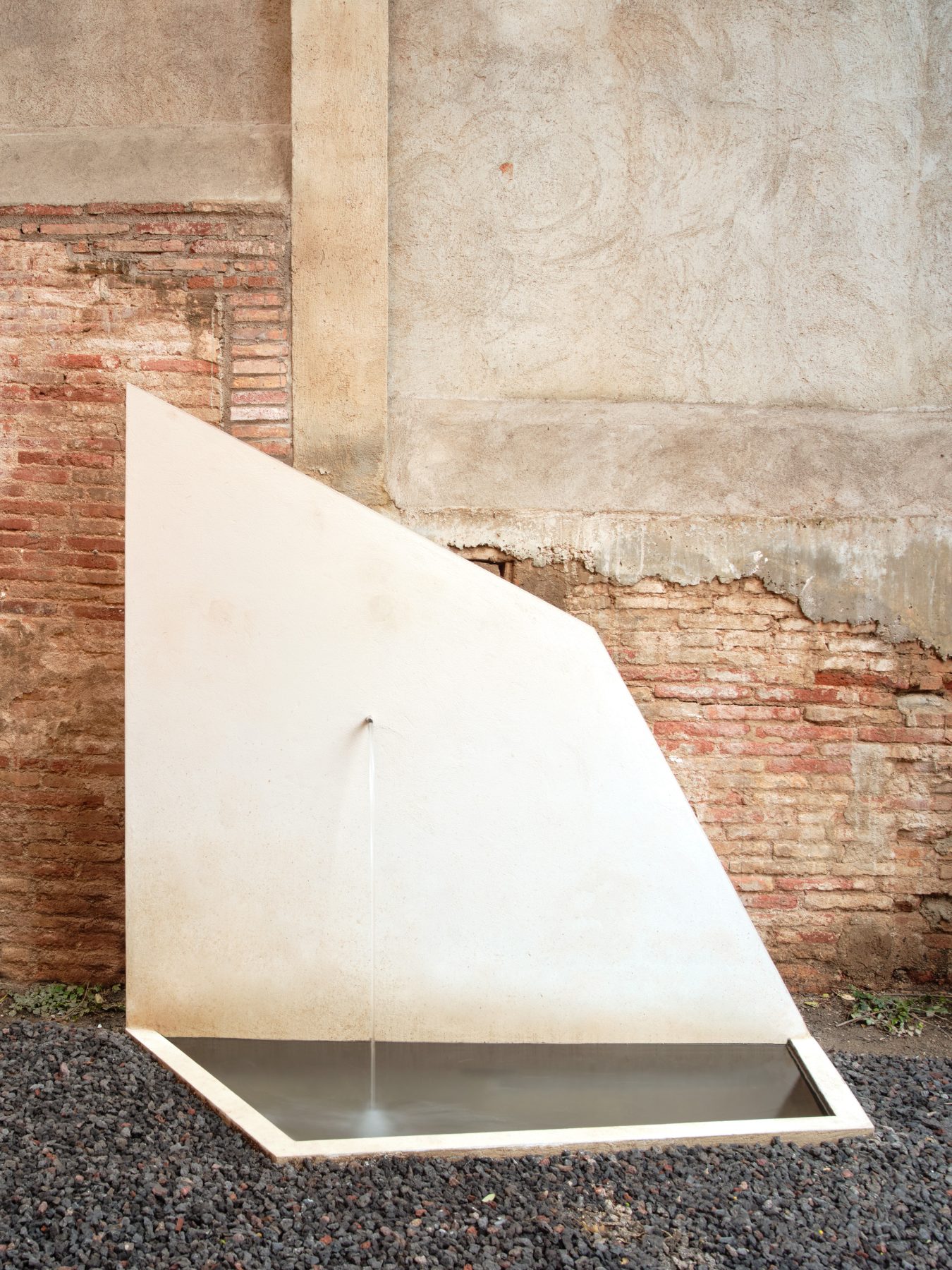
Inspired by the site’s natural topography, the motif emerges outdoors in the garden pathways, fountain, and the oblique pillar of the balcony, while indoors it is echoed in kitchen elements and shelving, reinforcing continuity within the architectural narrative. Energy performance formed a key aspect of the renovation. The house is fully insulated, incorporating interior cladding, a ventilated slab, and a thermally conditioned roof to reduce energy loss.
An aerothermal climate-control system ensures efficient heating and cooling, while rainwater collected from the roof is reused for garden irrigation.
Villa Parque stands as a dialogue between memory and contemporary living. By carefully preserving the home’s historic spirit while introducing new spatial relationships, the project establishes a renewed connection between architecture, landscape, and everyday life—allowing the house, much like its inhabitants, to return to its origins with a renewed perspective.
Plans
Facts & Credits
Project title: Villa Parque
Architects: h3o architects (Adrià Orriols, Joan Gener, Miquel Ruiz)
Project location: Barcelona
Date of completion: 2024
Project type: Residence architecture
Project director: H3o
Project manager & Coordinator: H3o
Design team & collaborators: Damien Troilo, Marcel Heras, Clara Schmiedehausen, Dite Mickevičiūtė, Laura Bravo
Area: 240m2 interior & 120m2 garden
Photography: Claudia Mauriño + José Hevia