In The Summer Refuge series, curated by Archt. for Archisearch, summer is not a sliver of time but a state of being. Rooted in nature, rural landscapes, vernacular architecture, and closely connected to notions such as “disconnection,” “slow living,” and Martin Heidegger’s “Dasein,” namely the art of being present in the world, the series focuses on seasonal houses that shelter time, memory, and dreams.
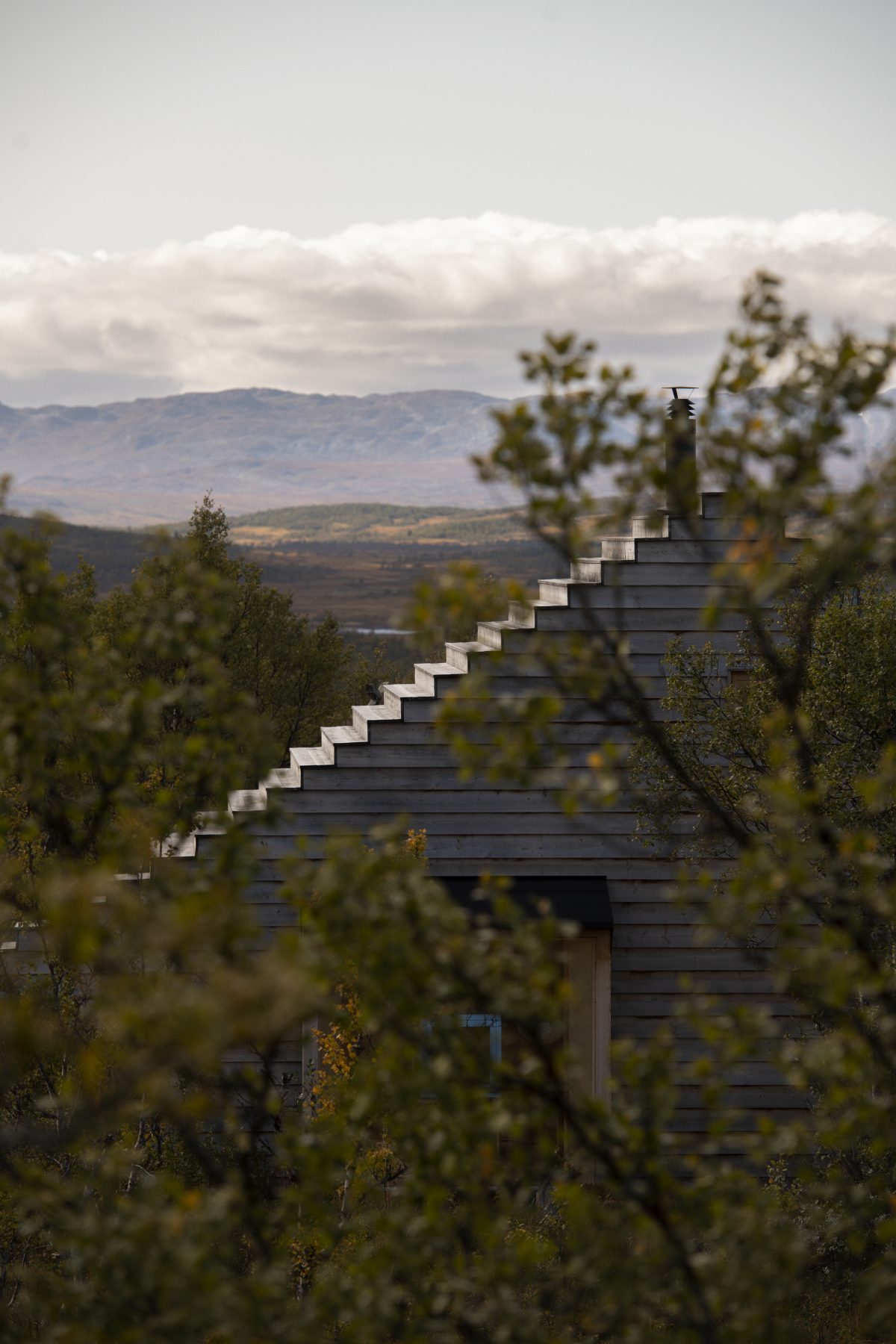
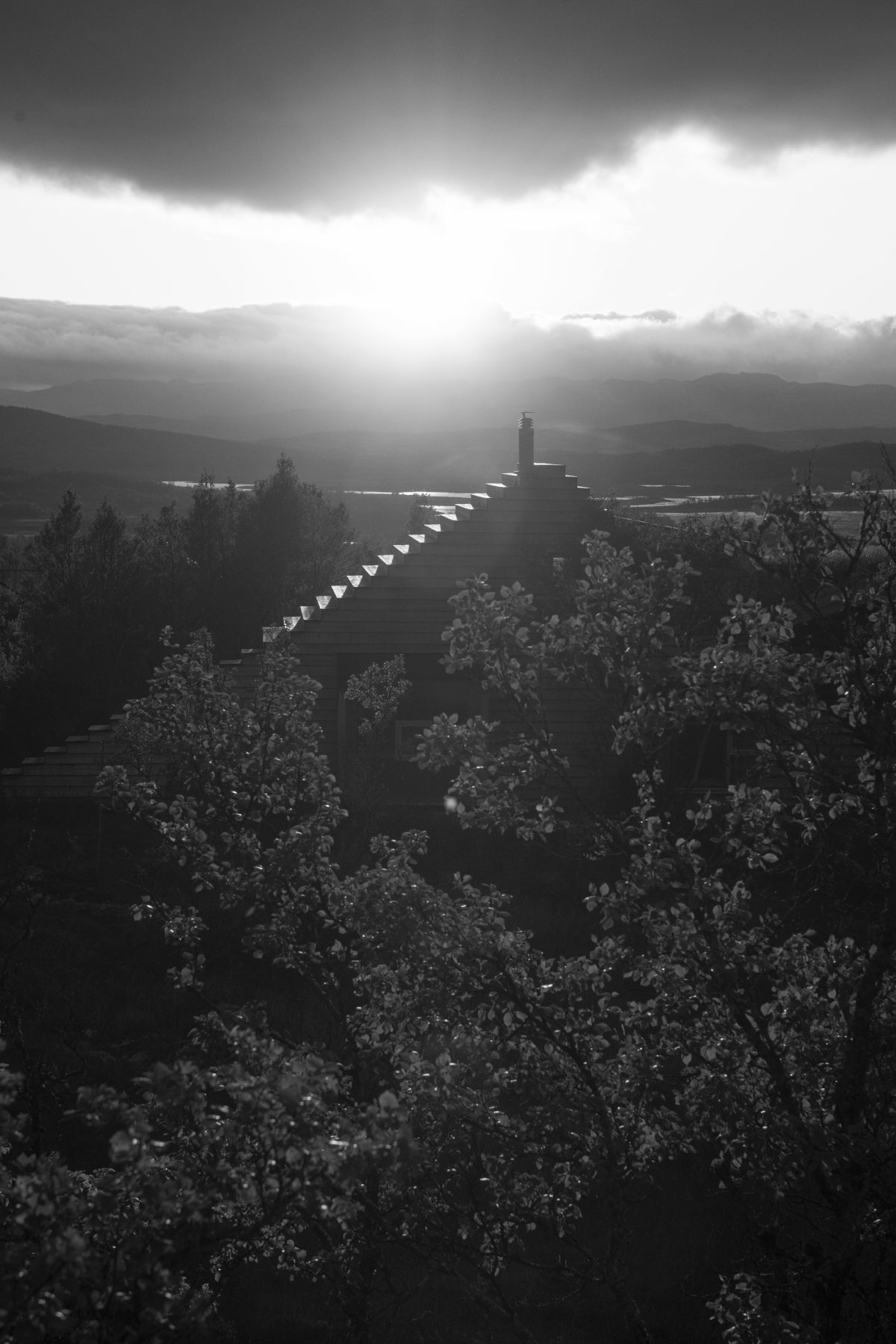
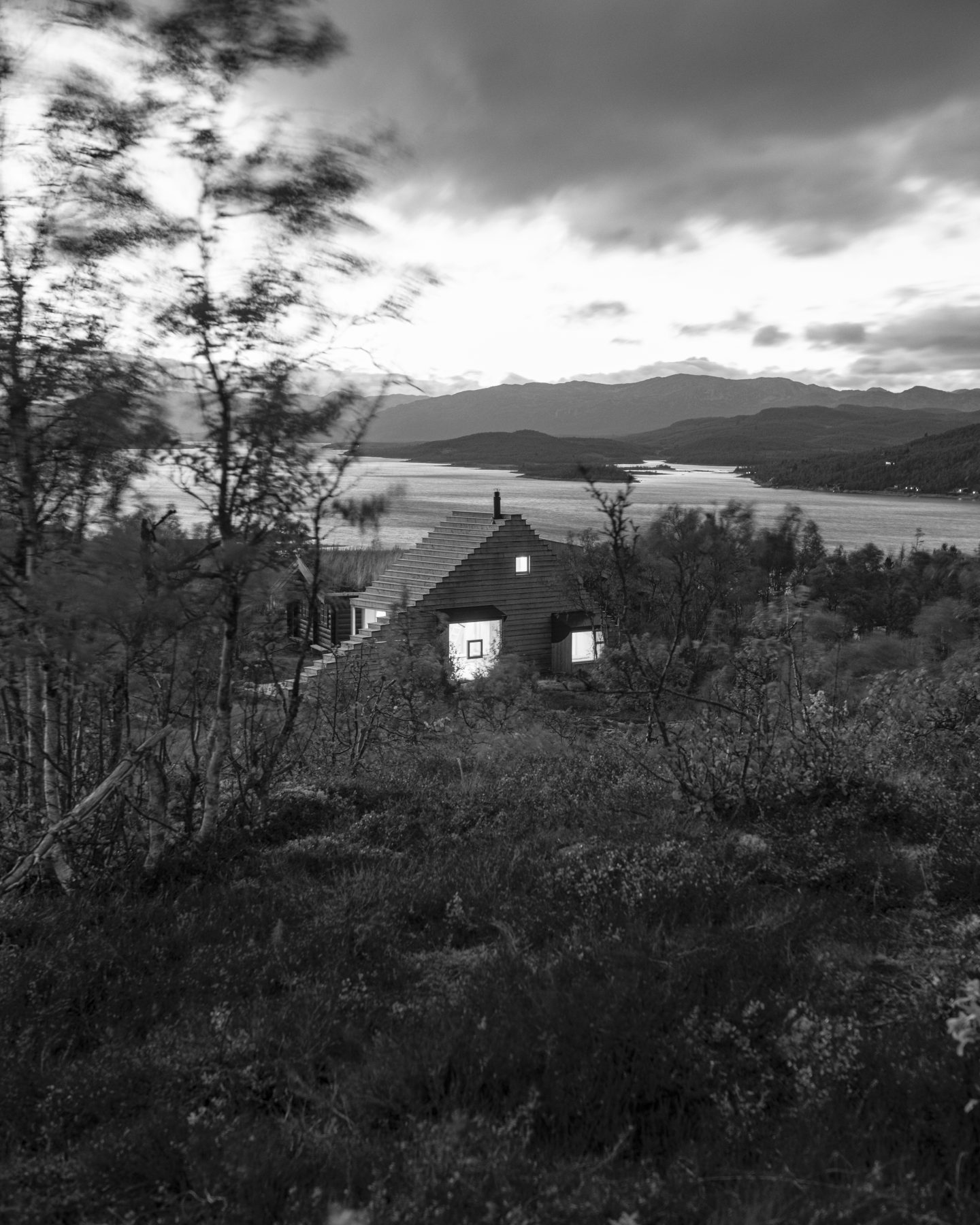
In the eighth episode, we follow Gartnerfuglen Arkitekter as they reimagine the archetypal Norwegian cabin in the moorlands of Hardangervidda National Park. Drawing references from the historical medieval stave churches (Stavkirker) and the traditional open-hearth cottages (Stuehus), the architects craft Cabin Thunder Top, a contemporary mountain refuge (hytte), as a tribute to the enduring artistry of Scandinavian craftsmanship. Rising like a man-made summit from an existing Norwegian log cabin, the extension becomes an inhabitable beacon, where thirty steps ascend to a panoramic perch overlooking Halnefjorden lake and the vast plains of southern Norway.
Cabin Thunder Top is where the mundane meets the divine, where the timeless converses with the temporal, where vernacular wisdom seamlessly merges with contemporary craft.
Acting as a refuge, thus a powerful intellectual anchor to the world, this 44 m² structure is not merely a building but a place where the act of dwelling becomes a central theme of thought, illustrating how architecture and existence can be profoundly intertwined.
For centuries, Norwegians have retreated to their hytter (holiday cabins) and årestuer (traditional mountain huts) seeking the quiet rhythms of hunting, fishing, hiking, and cross-country skiing.
Today, some 450,000 such structures punctuate the Norwegian landscape, with roughly one in three families owning a personal refuge, a testament to the enduring cultural bond between people, nature, and timbered shelters.
Representing Norway’s foremost contribution to European architectural heritage, the surviving medieval stave churches, or Stavkirker, are iconic wooden structures dating from the 12th to the 14th century. Constructed using a distinctive post-and-beam system of staves, they reflect a mastery of timber craft inherited from Viking shipbuilding traditions. Around thirty of these remarkable churches still stand today, with some of their wooden components enduring for over a millennium—an eloquent testament to both the ingenuity and longevity of Norwegian carpentry.
Traditional open-hearth cottages in Norway—often referred to as stuehus or hearth houses—form a fundamental part of the country’s vernacular architecture and rural heritage. Defined by a central open hearth that historically functioned as the core of domestic life for heating, cooking, and gathering, these cottages embody centuries of pragmatic design, local materials, and adaptation to a harsh climate.
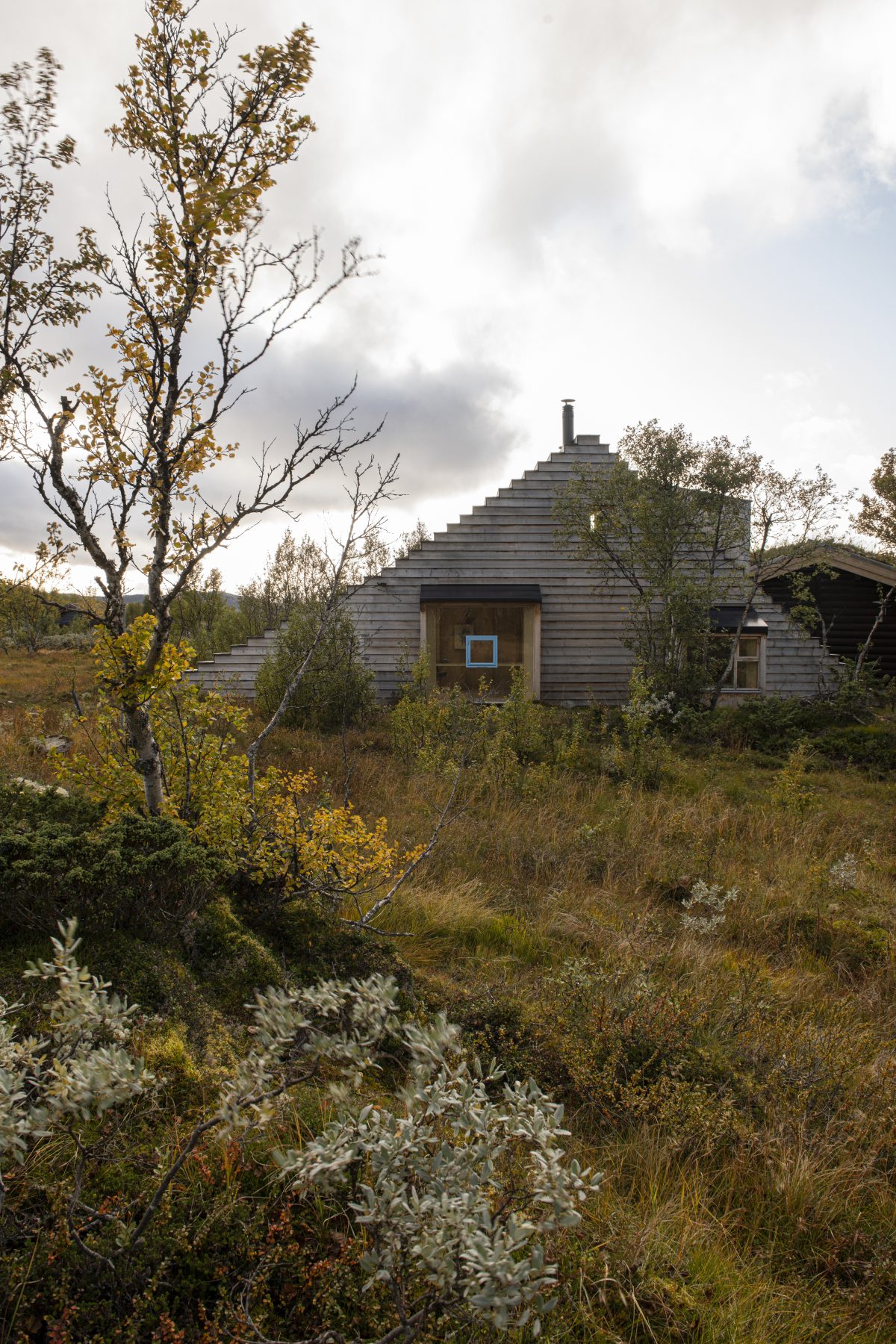
Bridging references from local rural typologies and historical Norwegian structures, Cabin Thunder Top emerges as a contemporary hytte—a hybrid of old and new forms.
“In the rolling fells of Hardangervidda, worn down by glaciers during the Ice Age, where visits by wild reindeer herds and grazing sheep are common, the cabin will be slowly appropriated by nature, as will everything brought here from the outside,” state the architects.
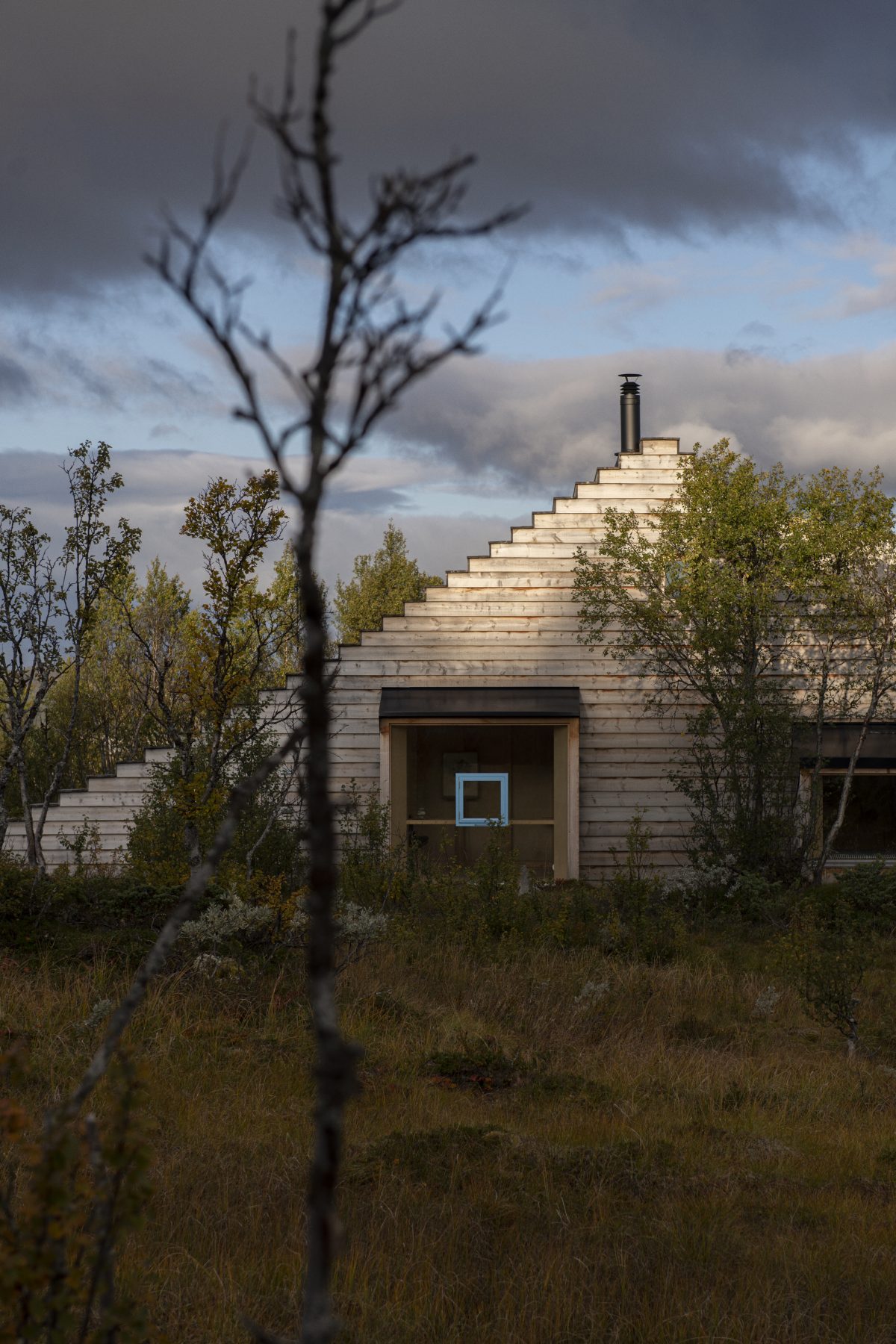
Conceived as a direct extension not only of the pre-existing log cabin but also of the treeless Hardangervidda plateau itself, framed by weather-beaten dwarf birches and heathers, the new structure counterbalances the horizontality of the terrain. It generates an intentional vertical surge within the landscape—an inhabitable beacon rising approximately 1,000 meters above sea level.
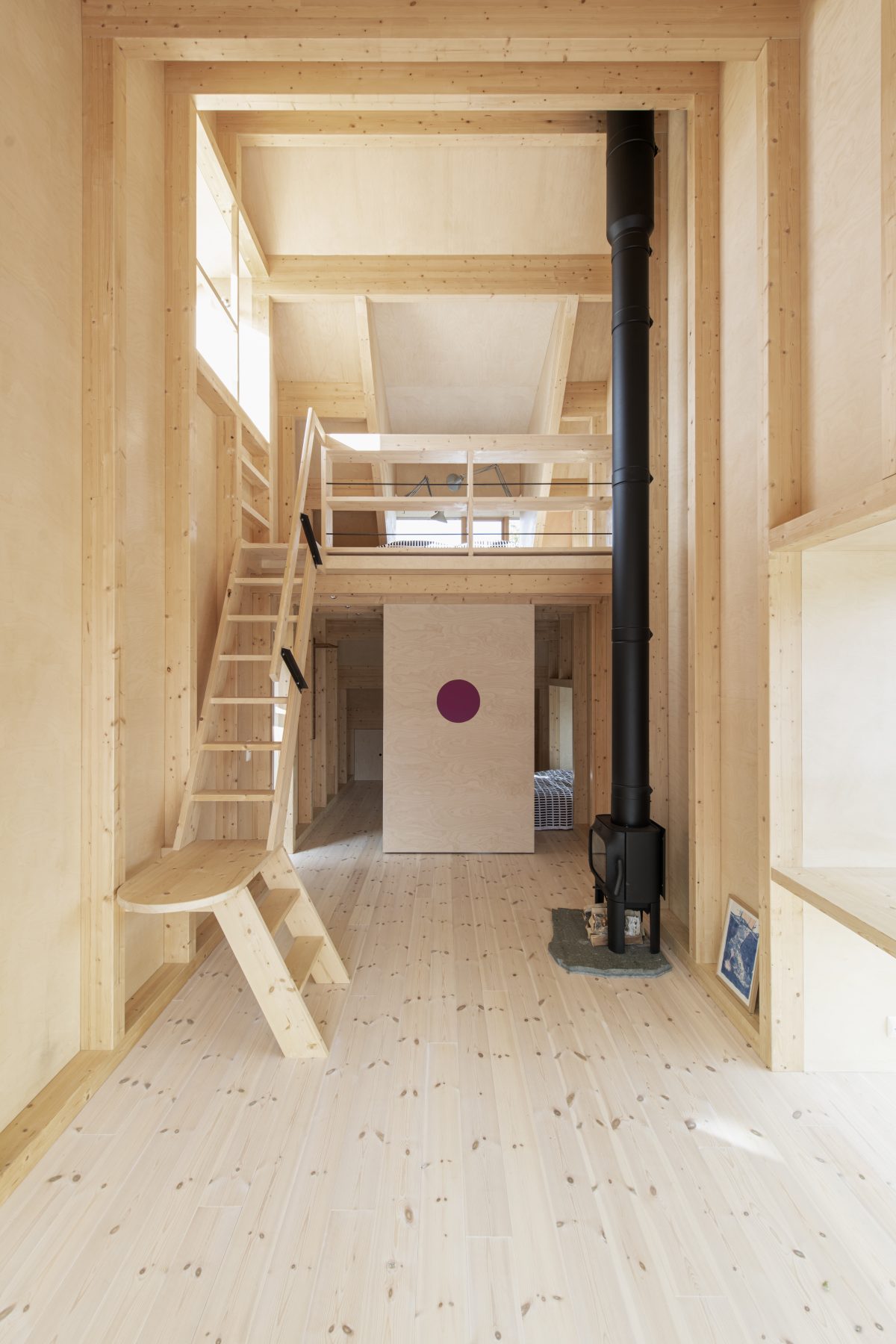
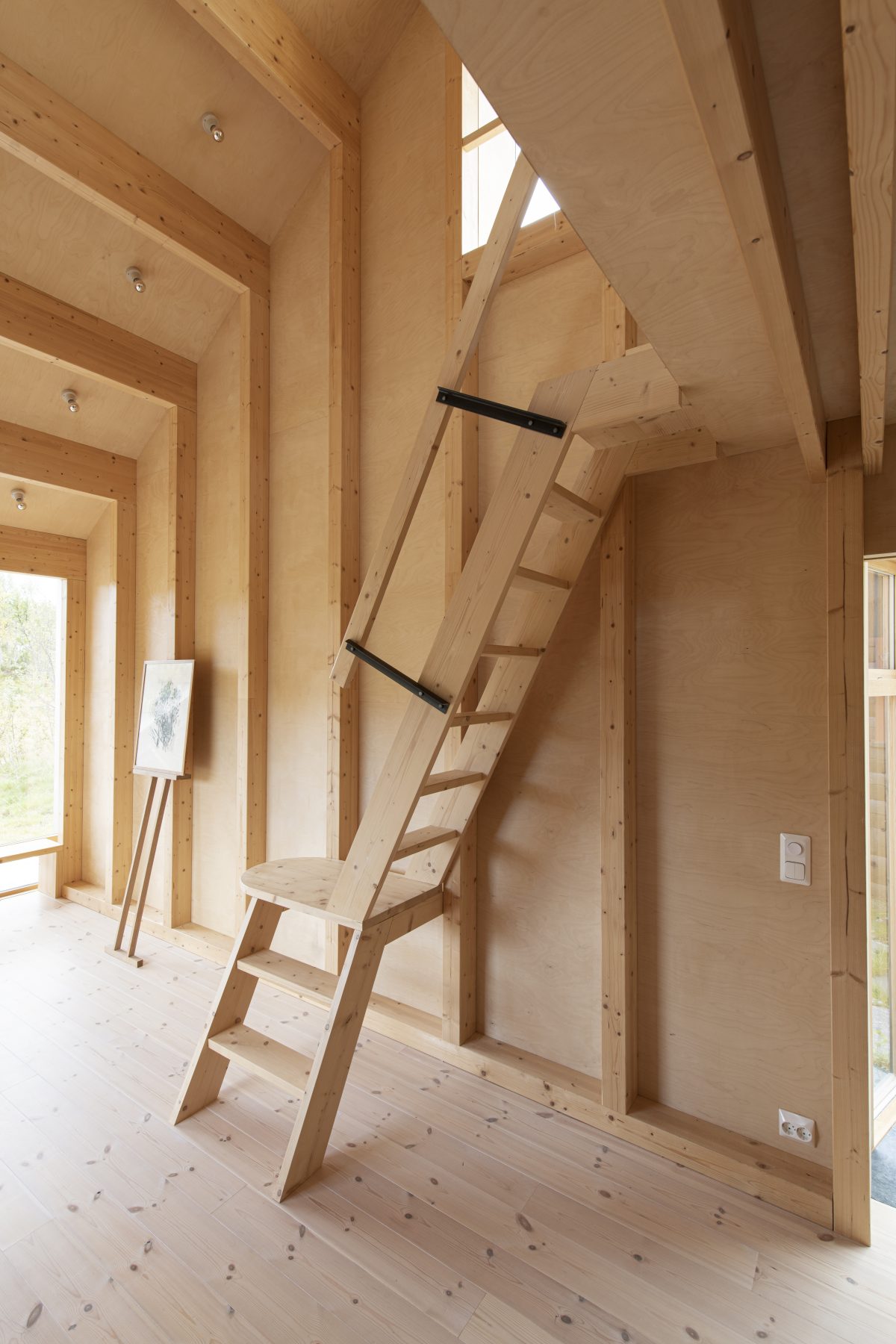
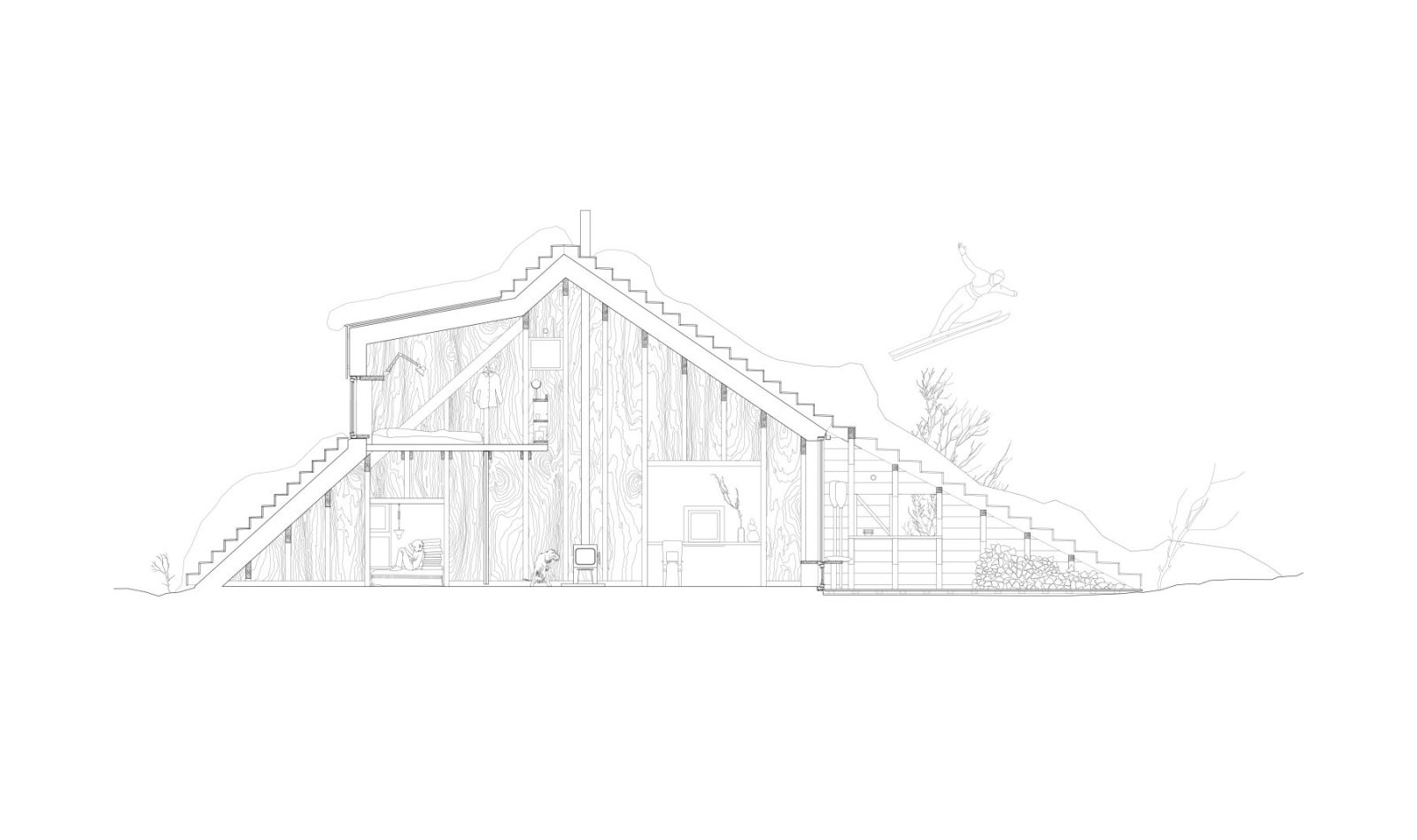
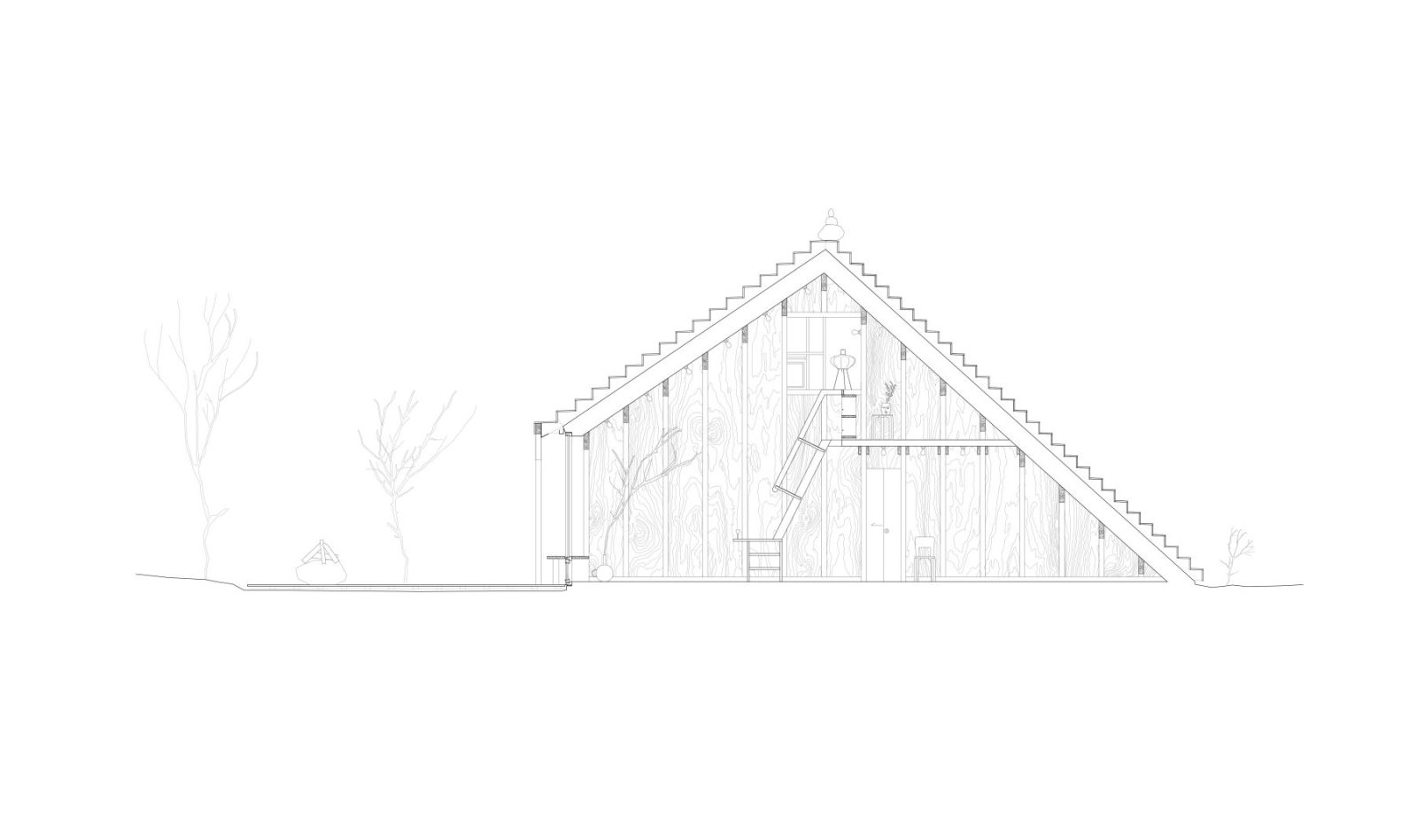
Justifying its upward gesture, thirty steps lead from the ground to the top, revealing panoramic views of the lake in one direction and the vast plains of Hardangervidda in the other.
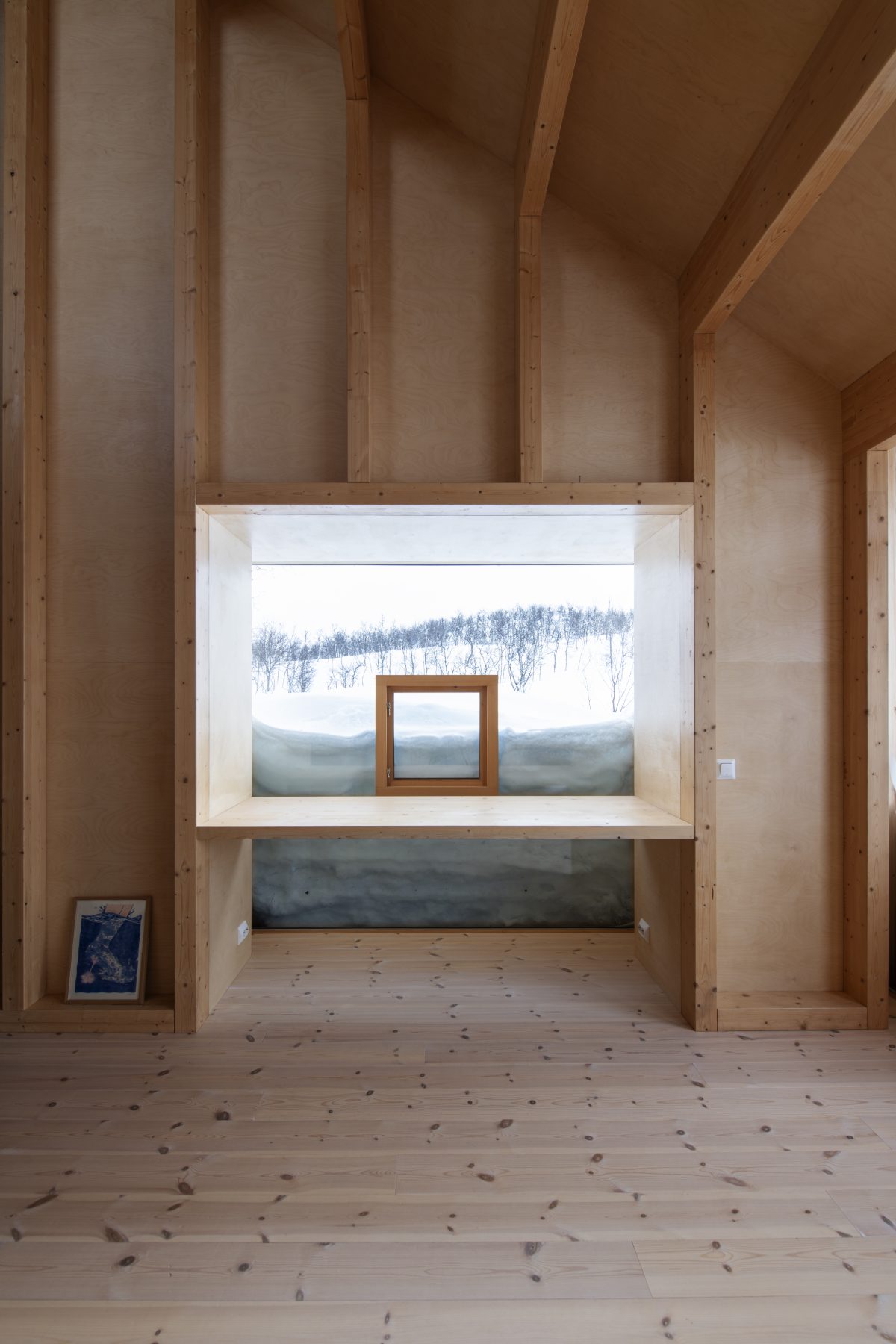
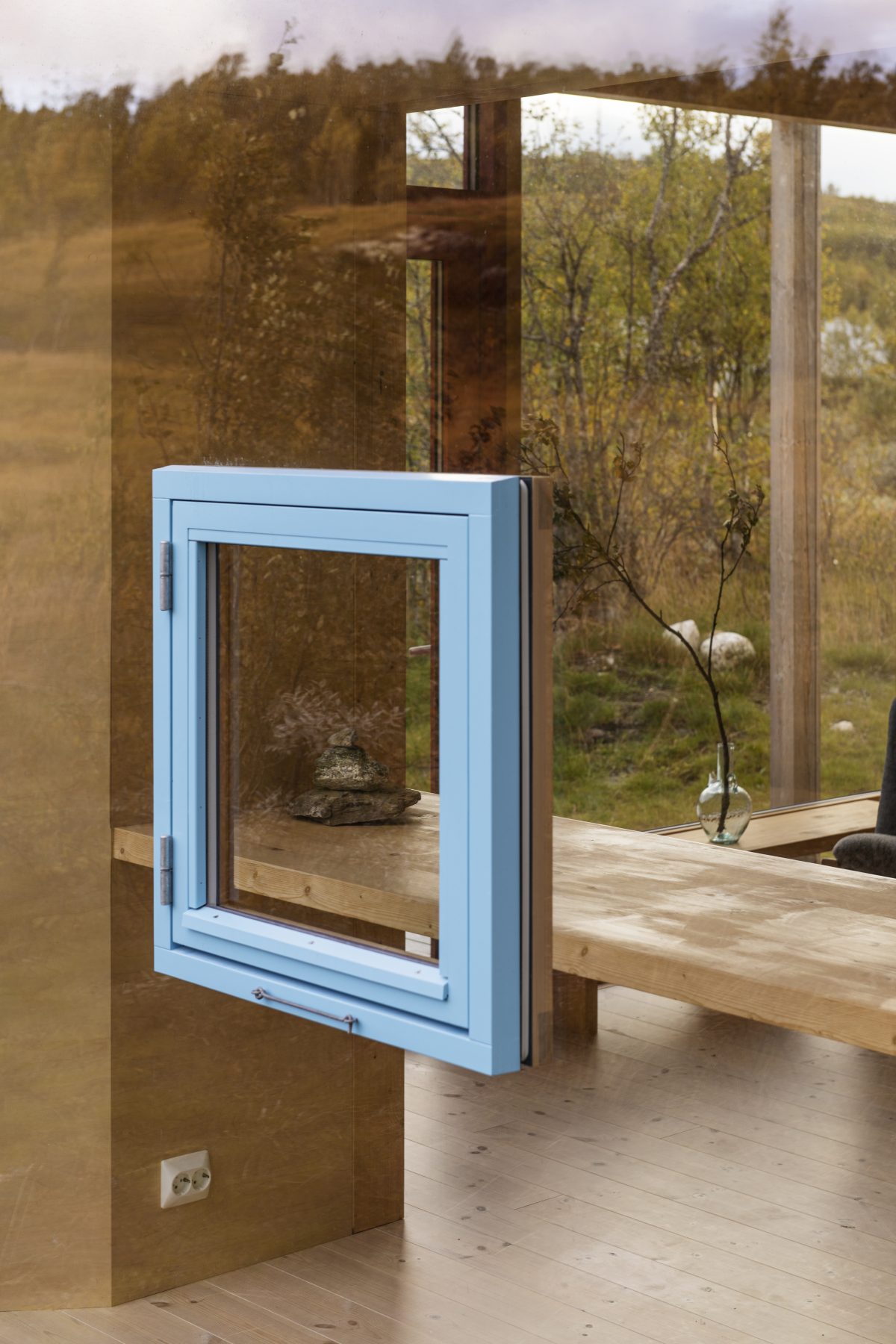
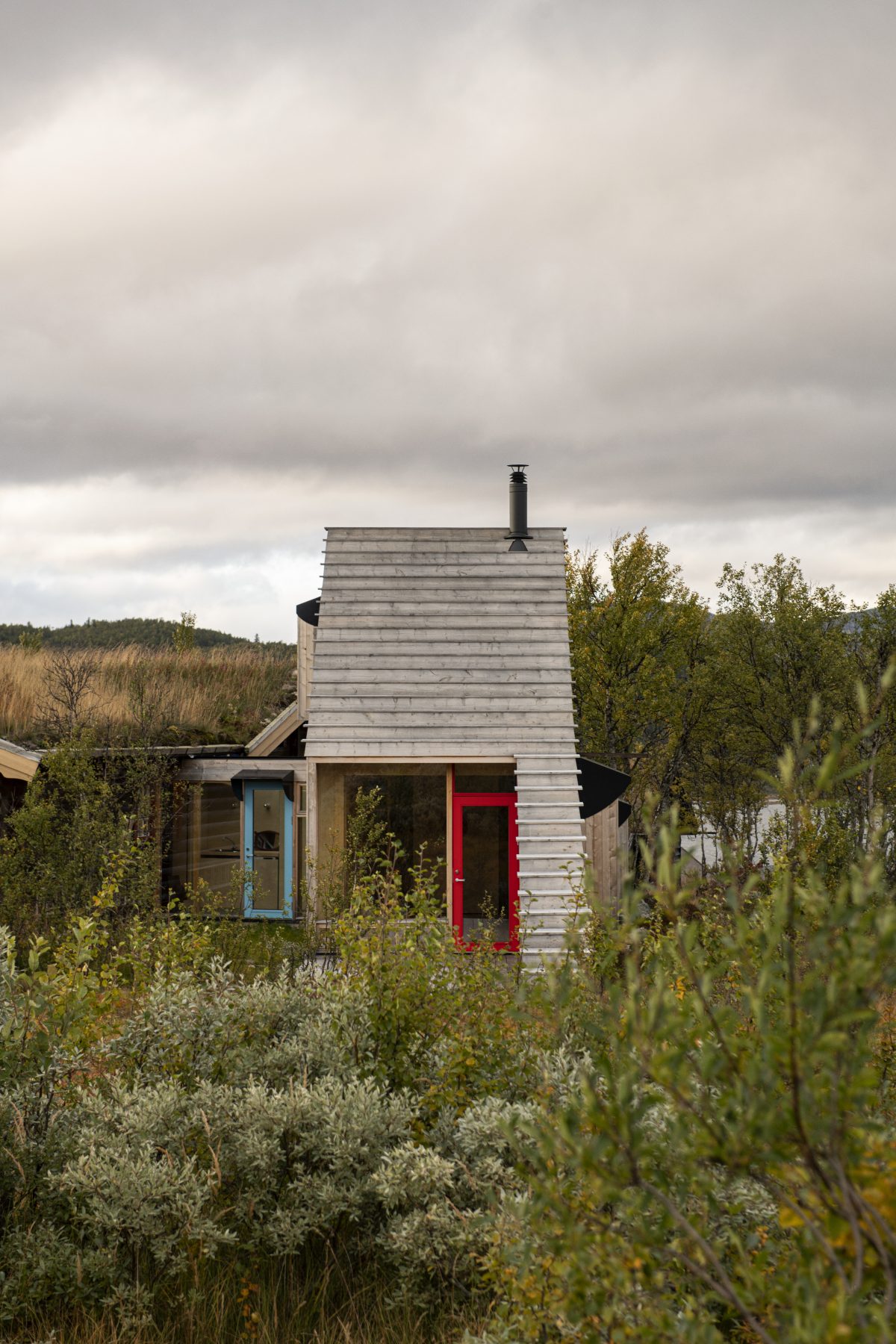
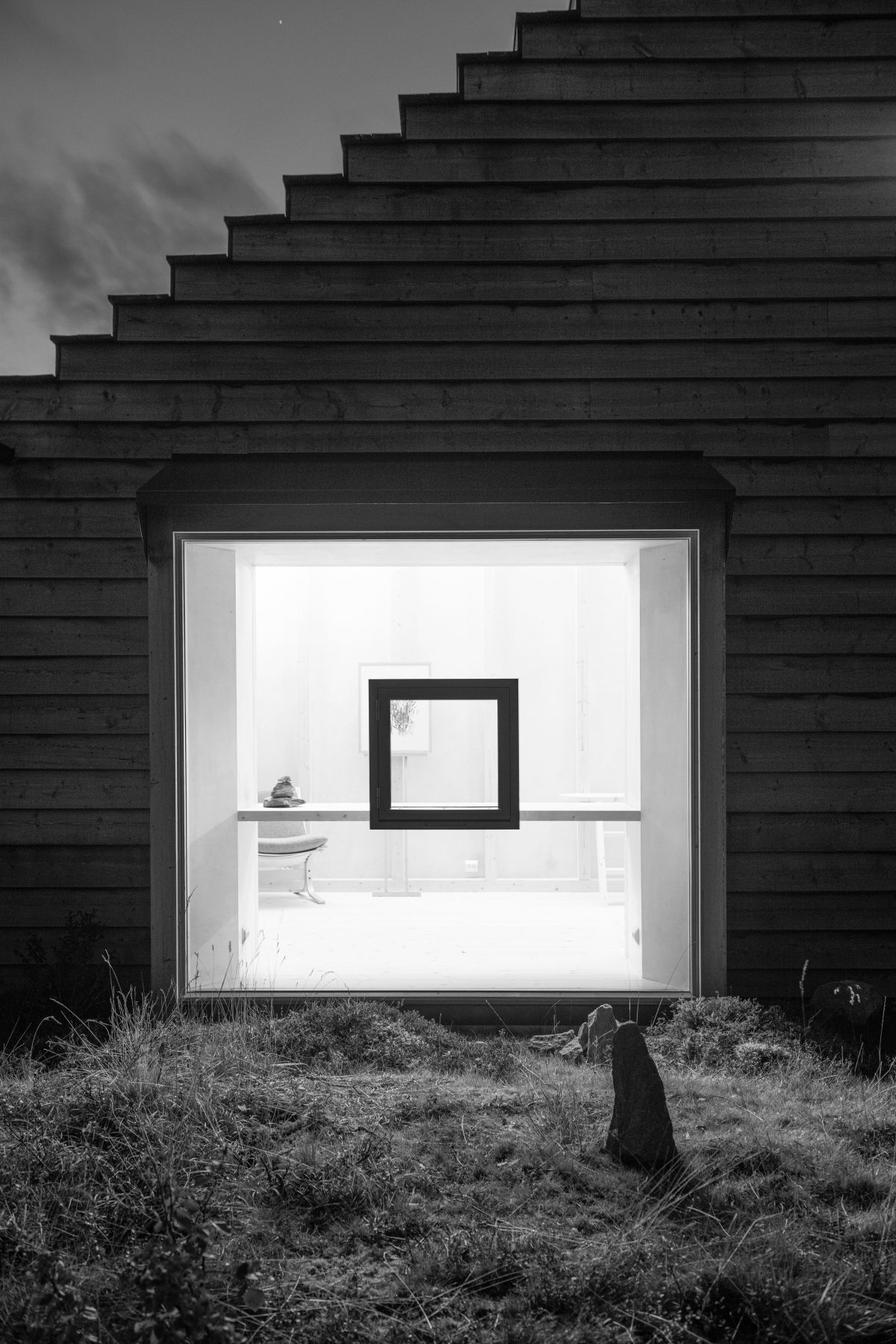
Drawing direct reference to the Stavkirker, the exterior façade is clad in untreated ore pine, while window frames in natural heartwood render Cabin Thunder Top practically maintenance-free.
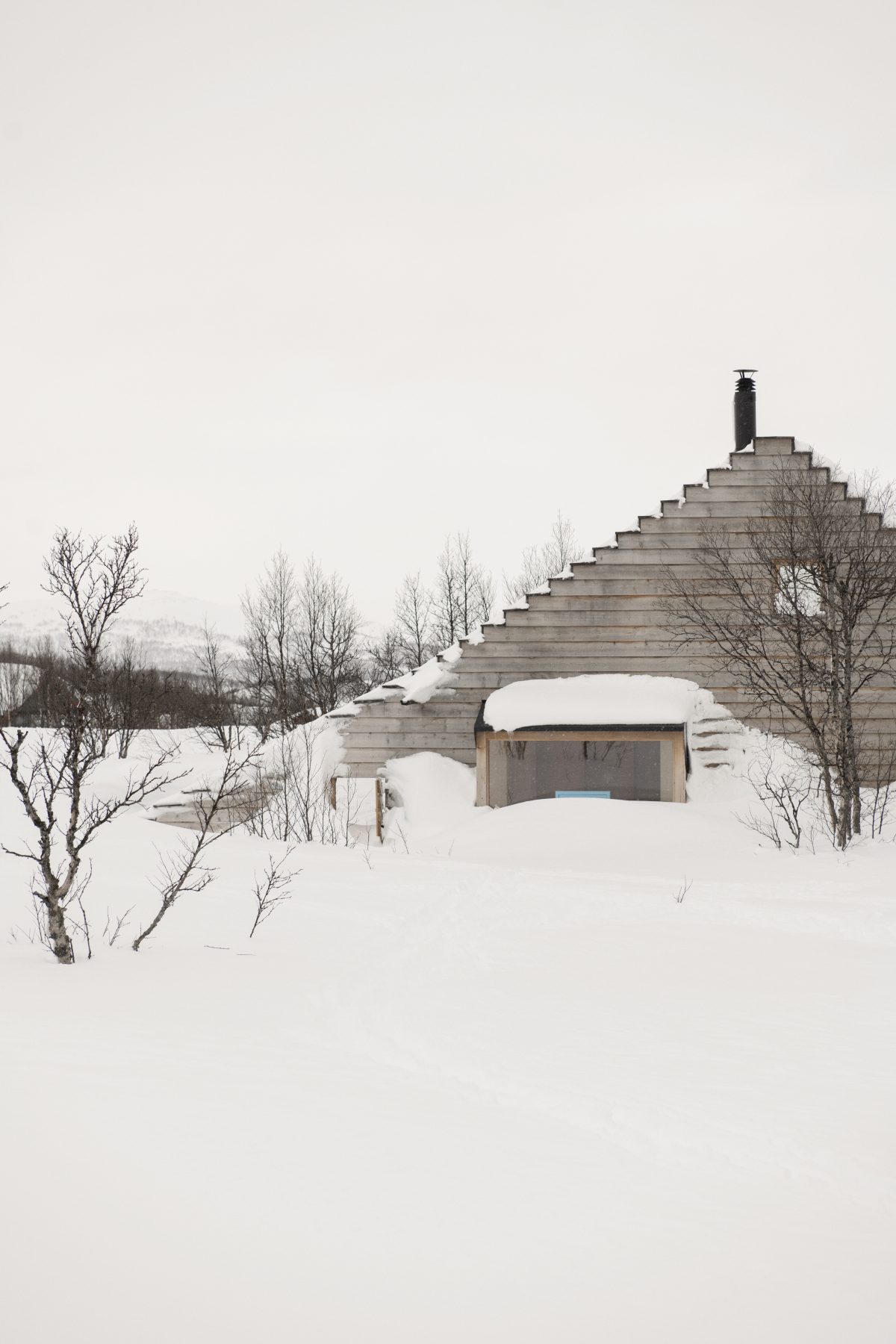
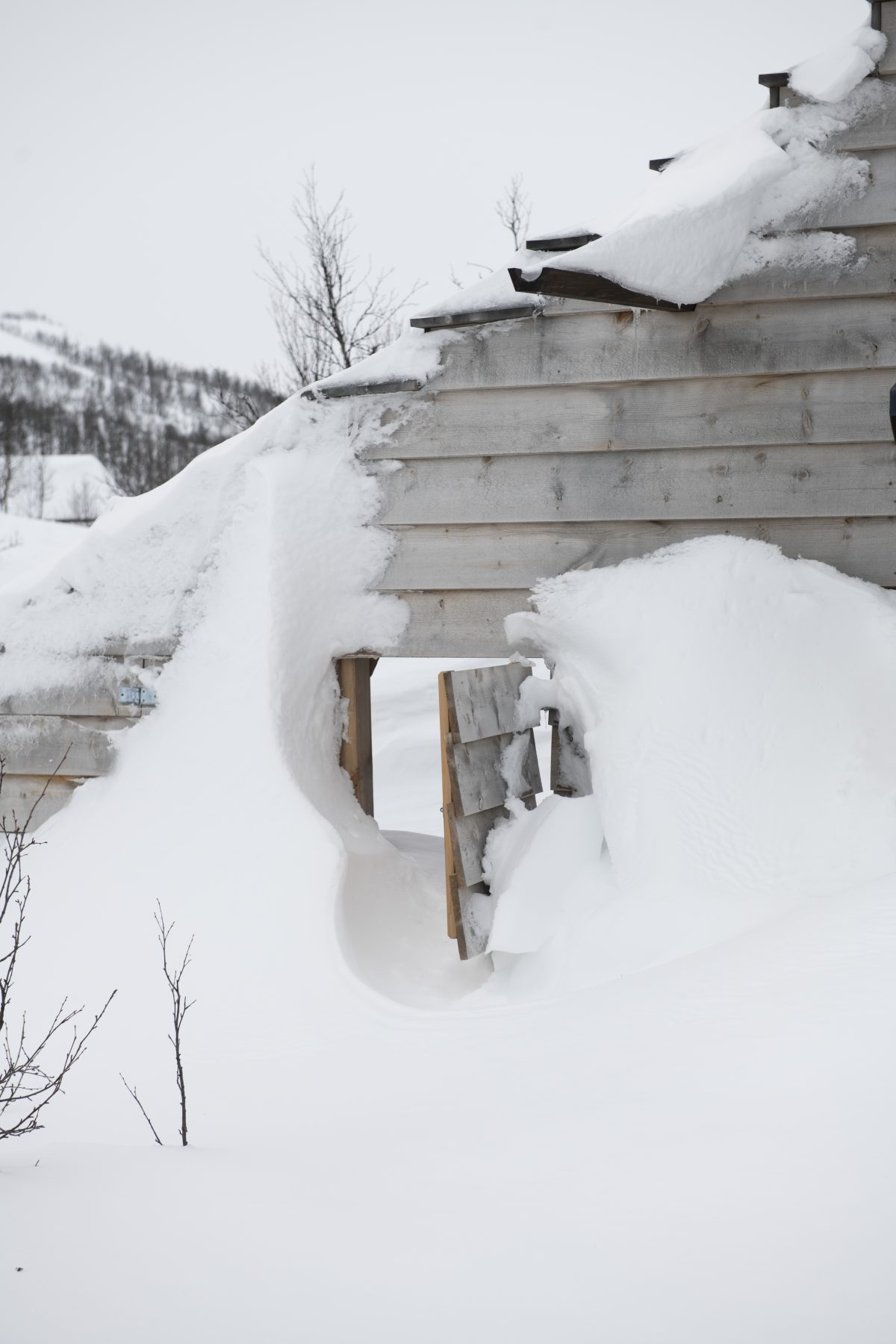
“As the cabin is covered in snow during the winter season, its roof becomes the perfect place to build a ski jump, in the spirit of Sondre Norheim, known as the father of modern skiing and for ski jumping from his own roof,” clarify Gartnerfuglen Arkitekter.
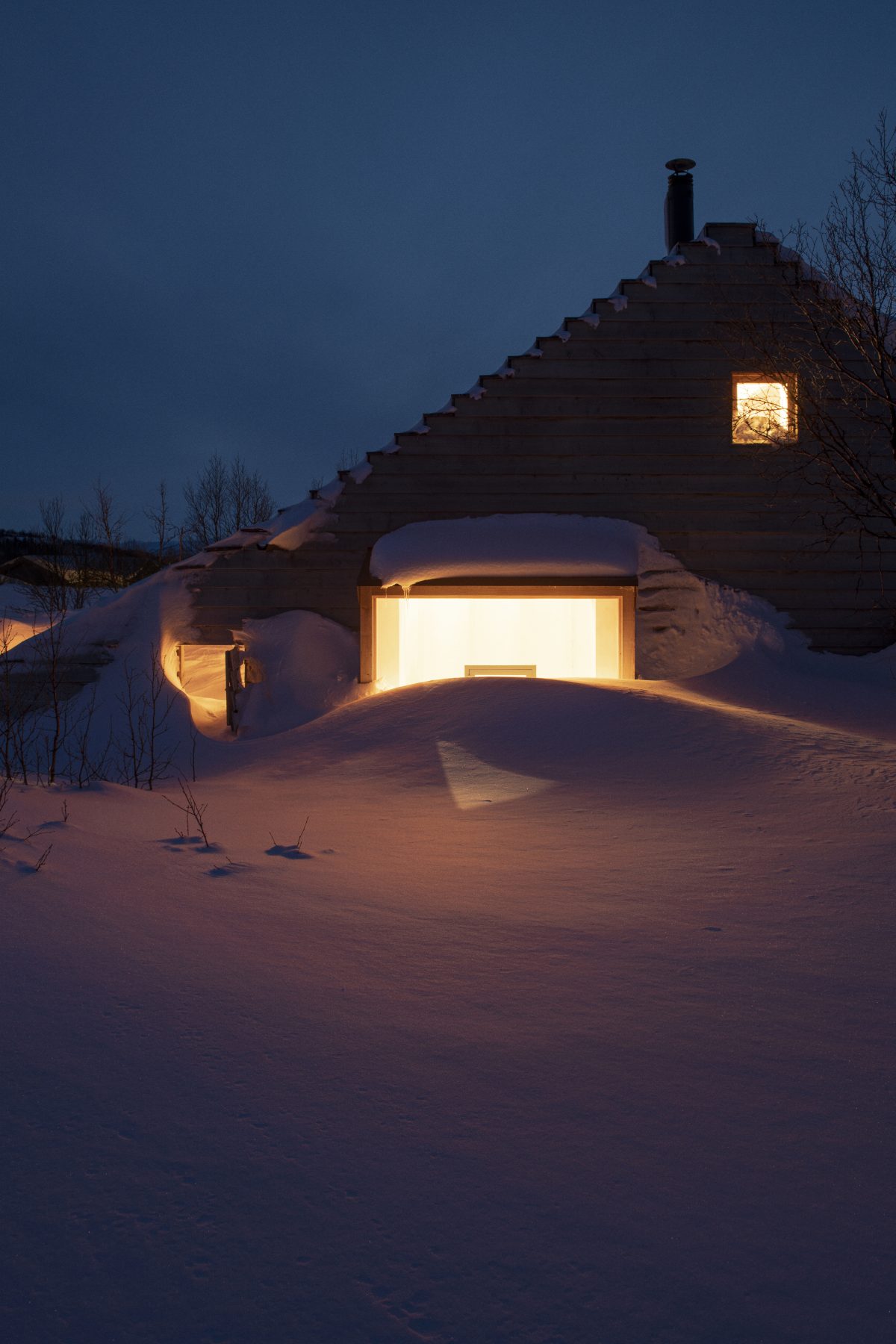
The cabin is carefully oriented to shield outdoor seating areas from biting northerly winds and blowing snow, while its sculptural form creates turbulence that prevents snow accumulation on the south-facing terrace. As a result, the space remains friendly for Easter family gatherings, when temperatures rise and Norwegians finally feel the warmth of the returning sun after the long winter.
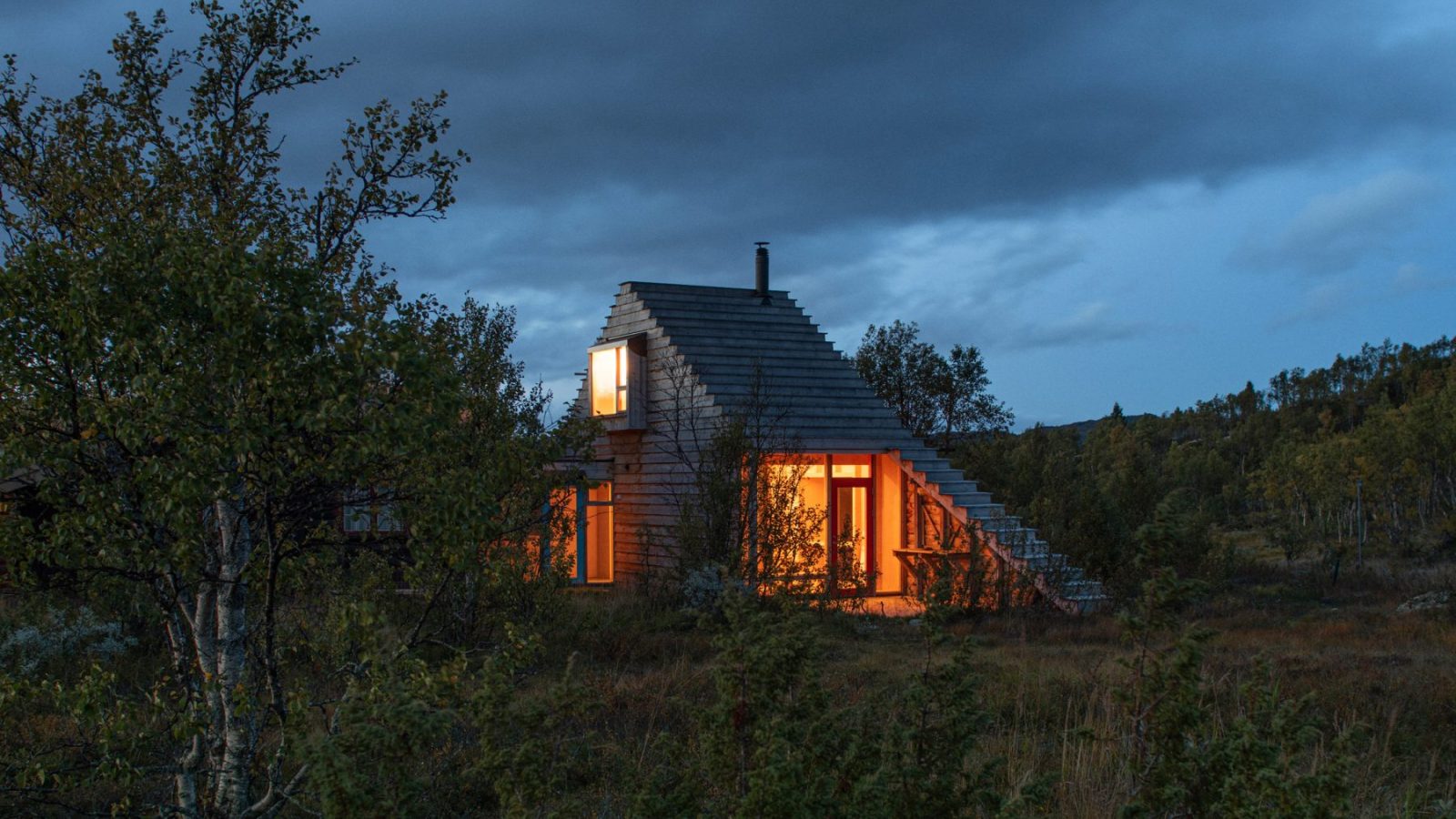
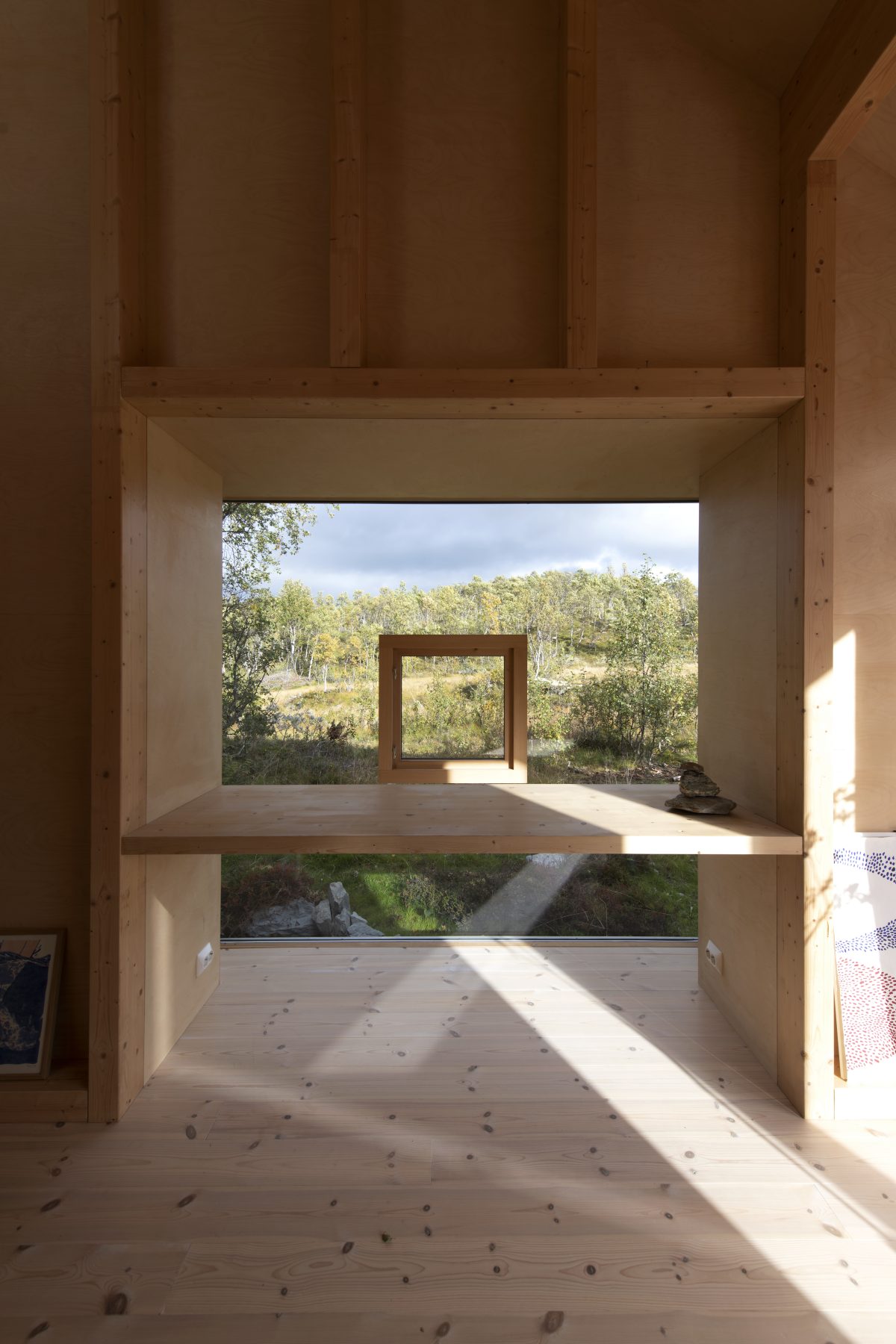
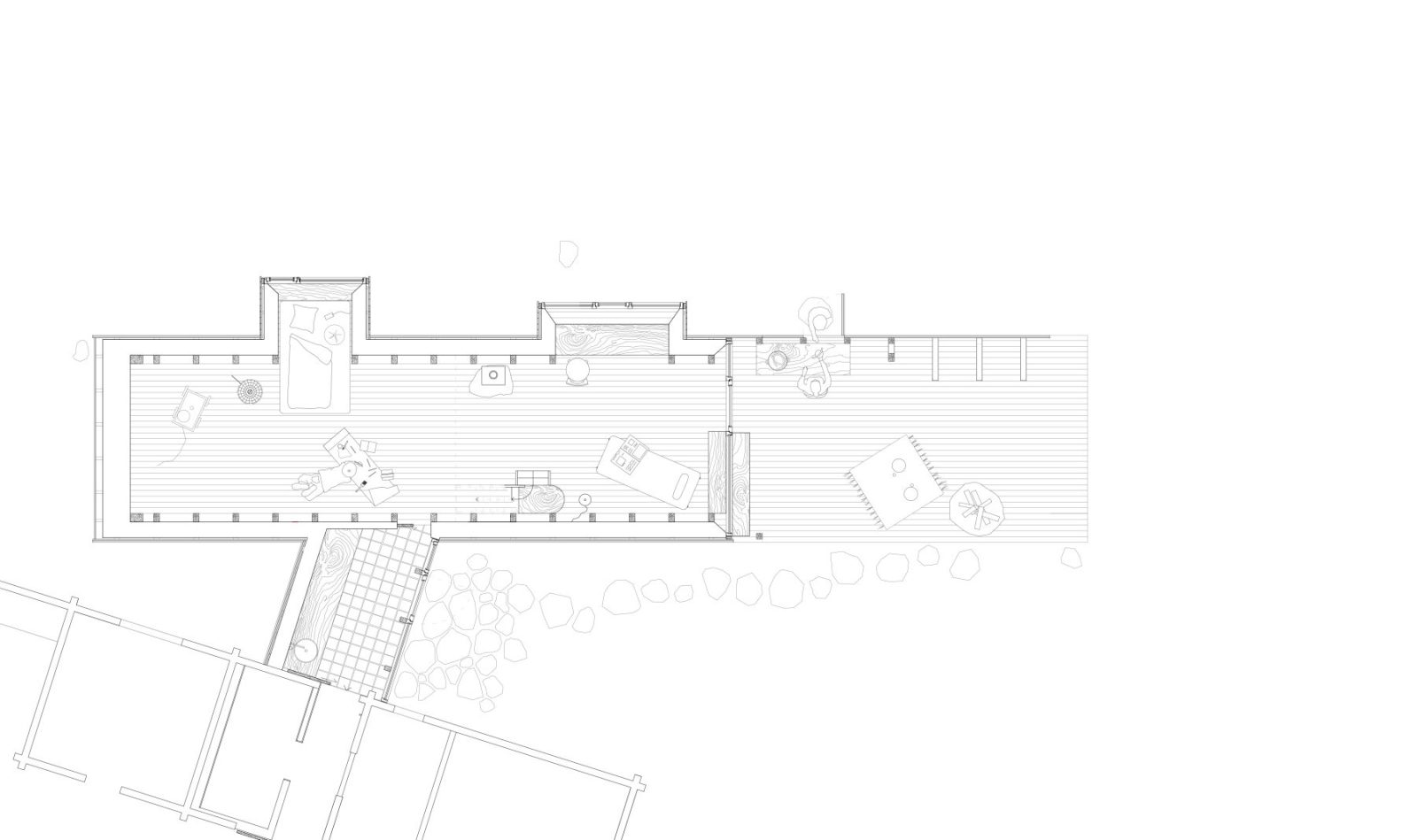
Thunder Top’s architectural language stands in deliberate contrast to that of the original cabin, with its low ceiling heights and small muntin windows. Large glass panes render the extension light and spatially generous, creating a dialogue between the intimacy of the old cottage and the openness of the new addition. Measuring 17 meters in length, 3.5 meters in width, and 6 meters in height, the extension is connected to the traditional structure through a glazed hallway containing a wardrobe and a utility sink with direct outdoor access.
Conceived as a single, double-height space organized around a small wood stove, the interior references the traditional stuehus as a mnemonically charged place of childhood memories. A constellation of small nooks invites both collective family life and moments of solitude and contemplation.
“It’s the family atelier, workshop, or weekend office. A place to paint, write, read, or simply be inspired by the views,” note the architects, adding, “The kids love the ‘hot dog stand’ in the terrace wall, the ladders, and, of course, the thrilling climb to the top of the roof.”
Bridging the past with the present, Cabin Thunder Top suggests a future shaped by imbued memory, innovated tradition, and a deep understanding of the Norwegian landscape.
Facts & Credits
Project title Thunder Top
Typology The Summer Refuge, Featured
Episode 8th
Location Hardangervidda National Park, Norway
Status Completed, 2018
Built Area 44m2
Architecture Gartnerfuglen Arkitekter
Photography Ivar Kvaal