Architecture for Education explores the spaces where knowledge takes form. From visionary schools and research-driven universities to civic libraries that anchor communities, this series examines how design shapes learning, interaction, and intellectual growth. Through exemplary projects worldwide, we highlight architecture that inspires curiosity, fosters inclusivity, and redefines the future of educational environments with clarity, innovation, and cultural depth.
Nanteuil Primary School in Montreuil, France, designed by Boman, unfolds as a wooden volume set beneath the broad canopy of the schoolyard plane tree. Accommodating four new music classrooms, the building employs timber construction and natural materials to create a calm and legible environment for learning. A continuous soft green tone weaves through façades and interiors, establishing a unified material language that connects the architecture to its surroundings. Through light, texture, and spatial clarity, the project articulates a meaningful continuity between education, nature, and architecture, where the built environment actively supports concentration, interaction, and collective experience.
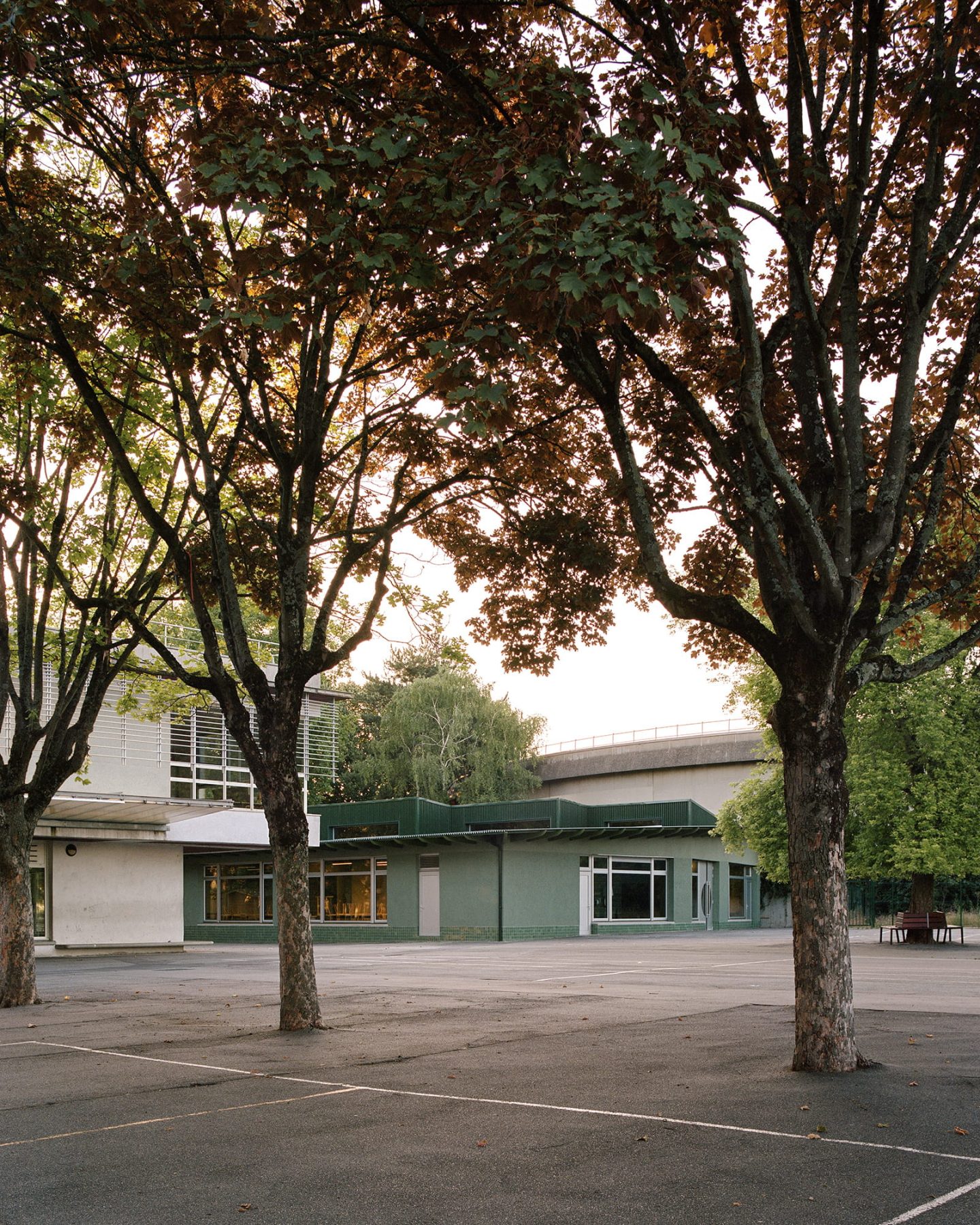
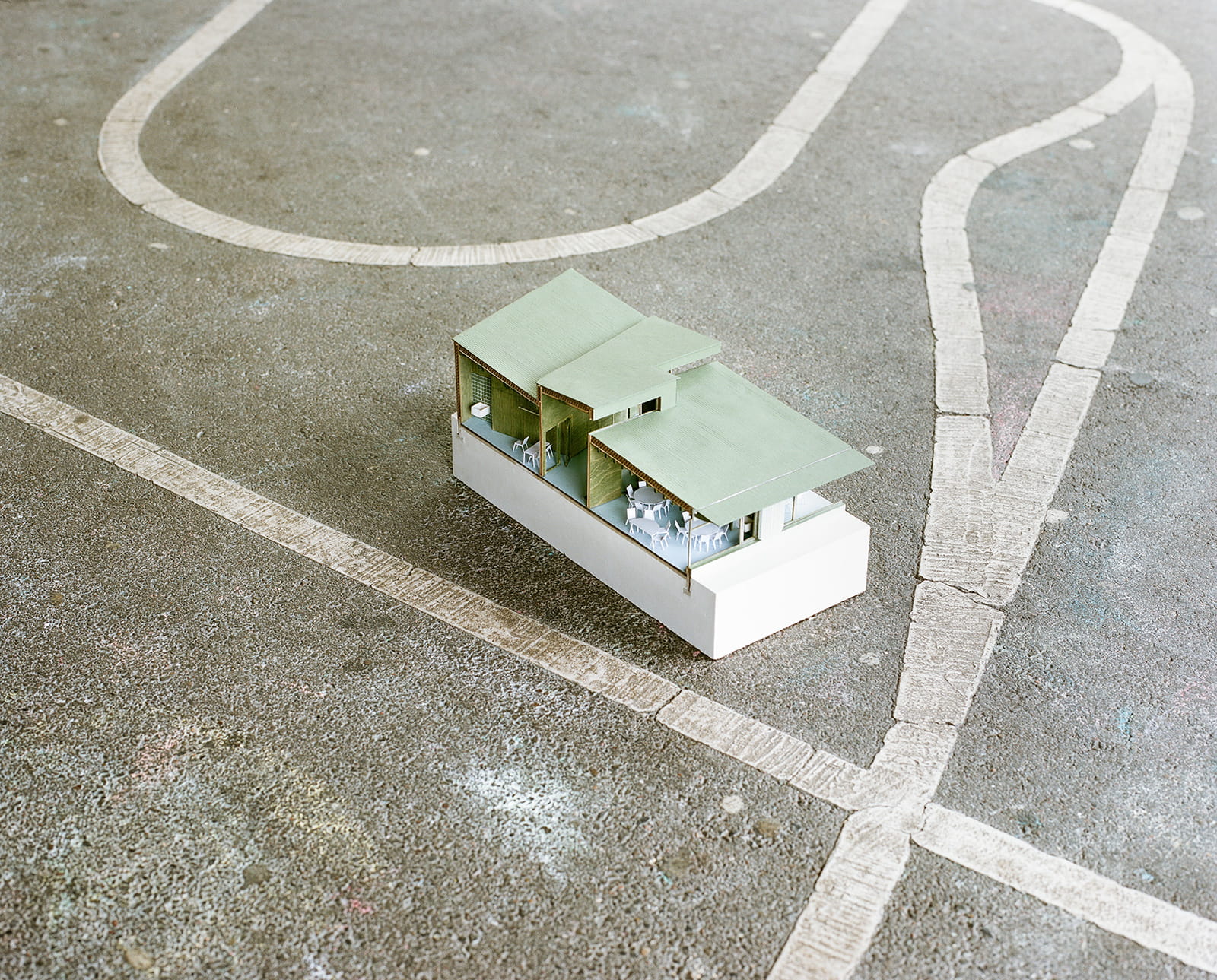
Beneath the expansive canopy of the schoolyard plane tree, a trapezoidal wooden volume unfolds as an extension of its surroundings, accommodating four new music classrooms. Nanteuil Primary School understands architecture not only as shelter, but as an active framework for learning—one that shapes attention, rhythm, and interaction. Timber both supports and envelops the structure, reinforcing an architectural approach grounded in continuity, restraint, and environmental awareness.
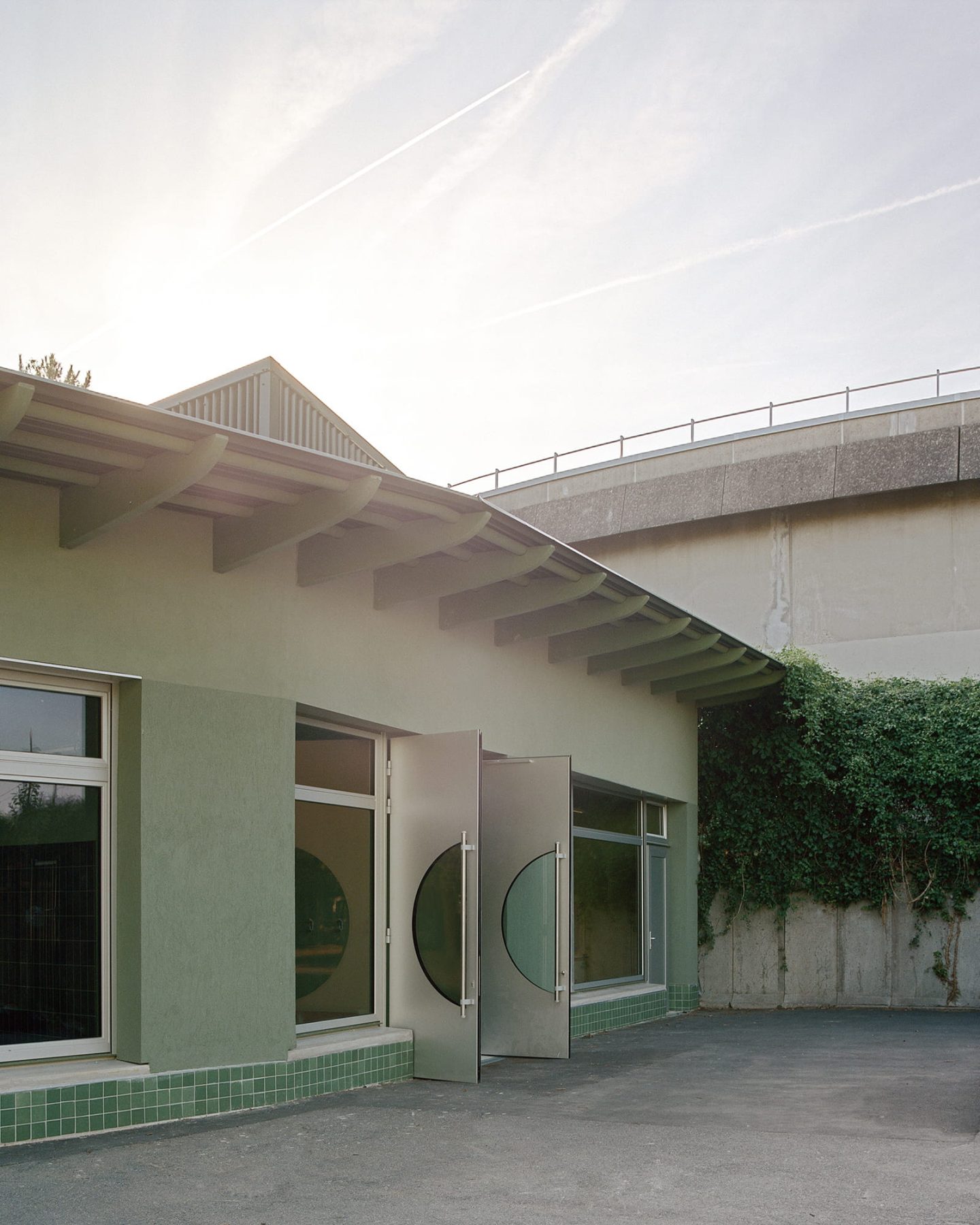
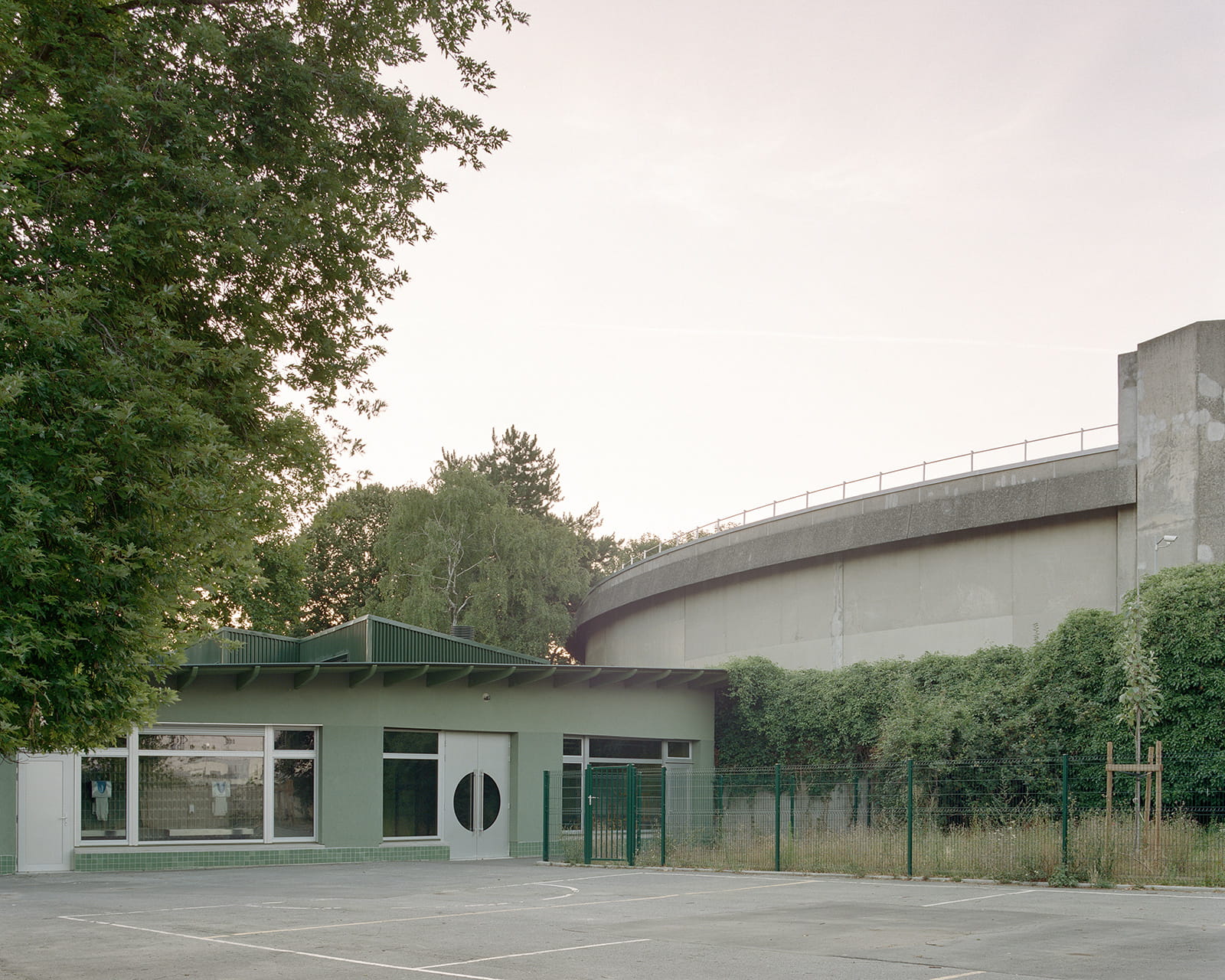
The building’s structure, framework, and cladding are conceived as a single, coherent system reflecting the pedagogical intent of the project: an architecture that is legible, calm, and quietly instructive, offering students a spatial environment that supports concentration and collective experience.
Their subtle tonal variations articulate a sense of continuity while revealing the precision of the construction.
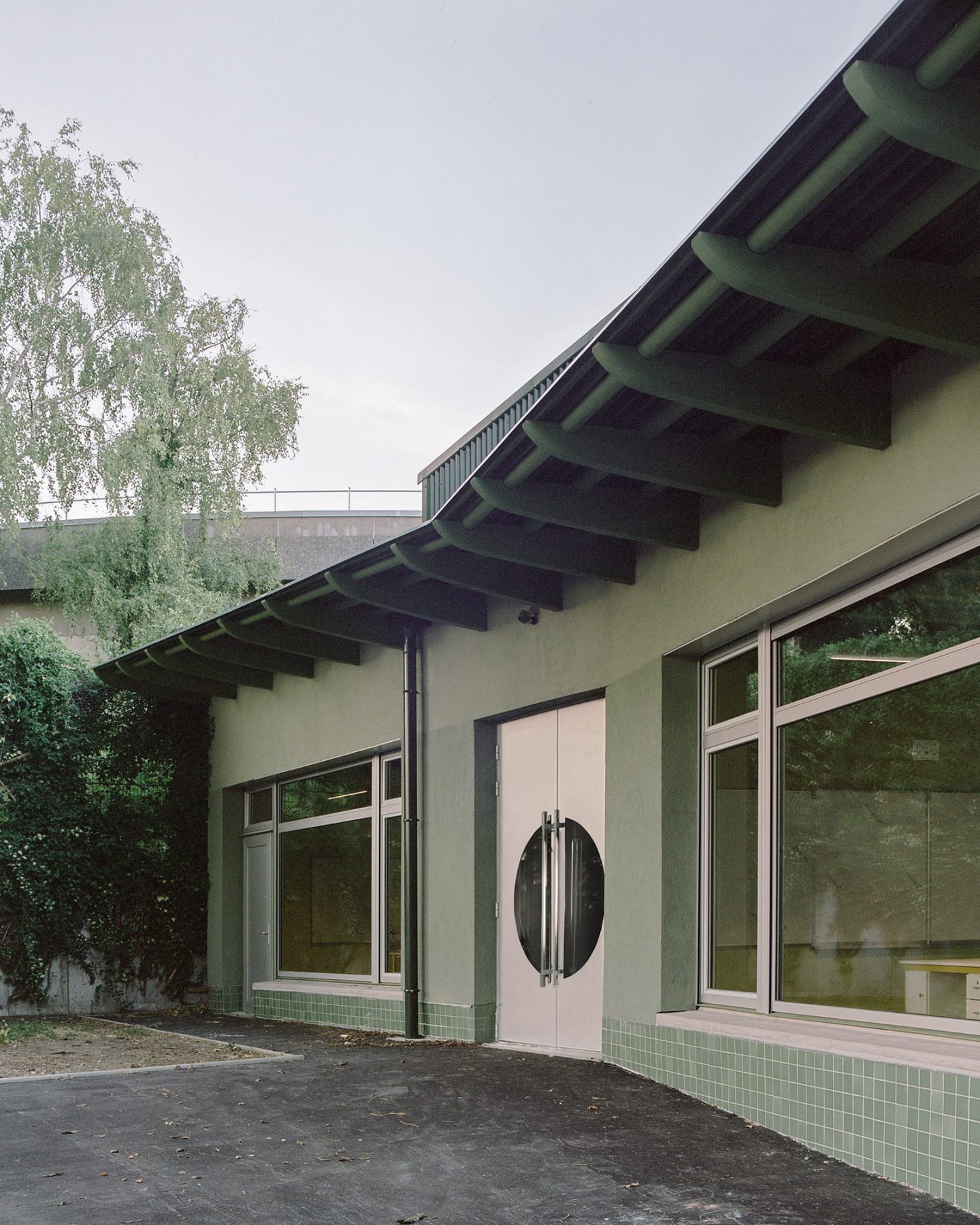
Natural materials
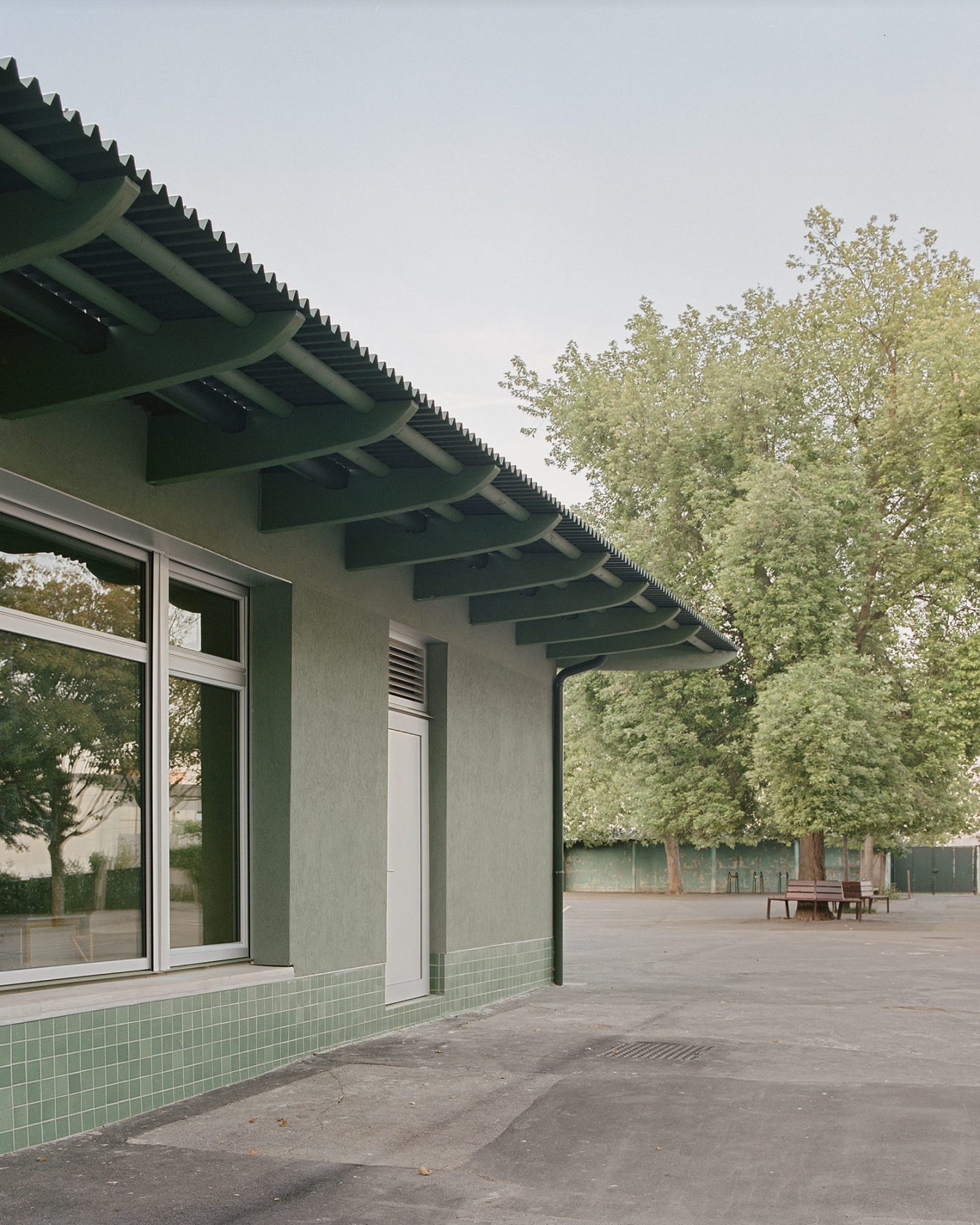
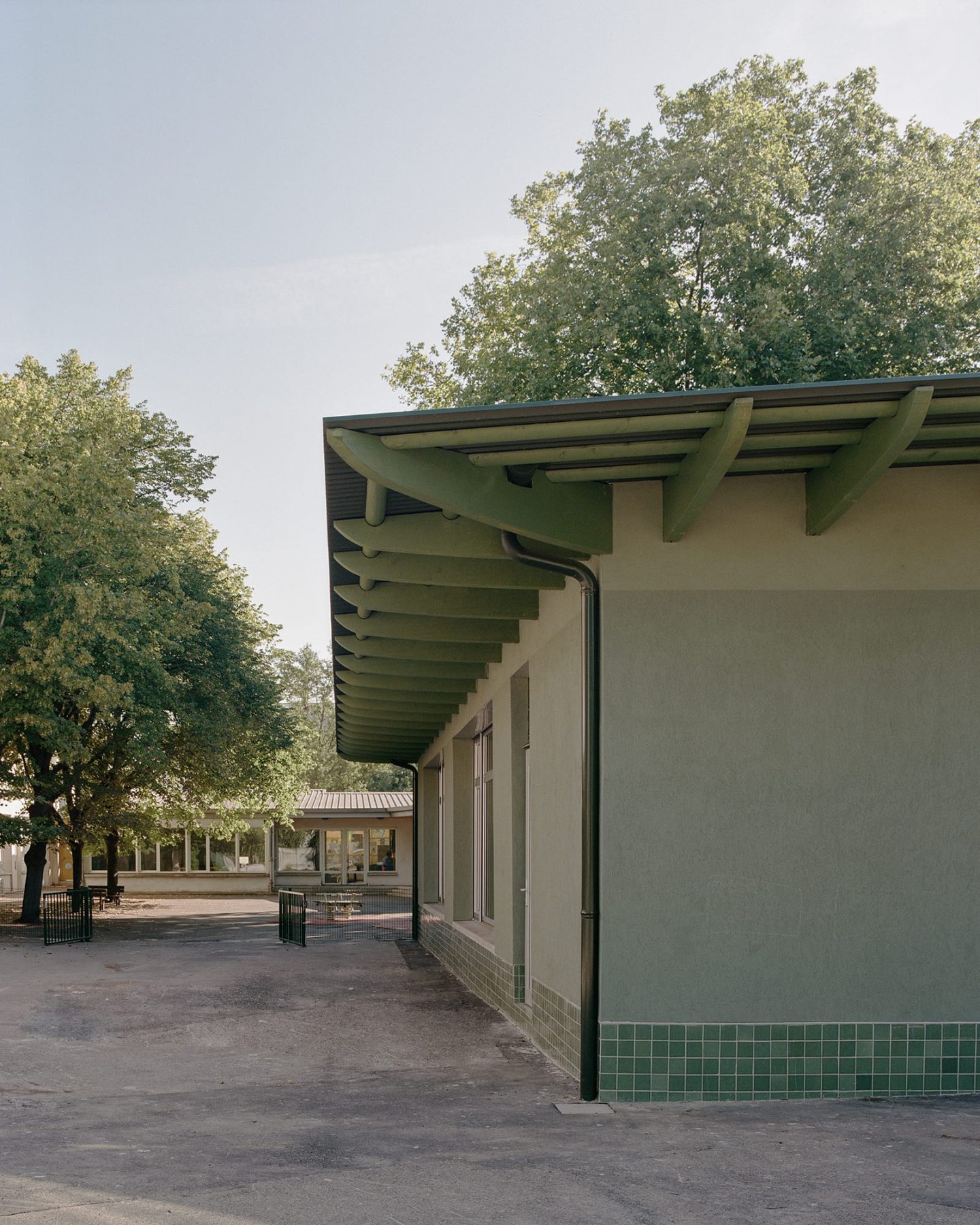
A soft green hue weaves through every architectural element, flowing seamlessly across walls, beams, eaves, joinery, plaster, and tiles.
This chromatic continuity establishes a unified material language that dissolves boundaries between components and reinforces the relationship between the building, its educational purpose, and the surrounding landscape.
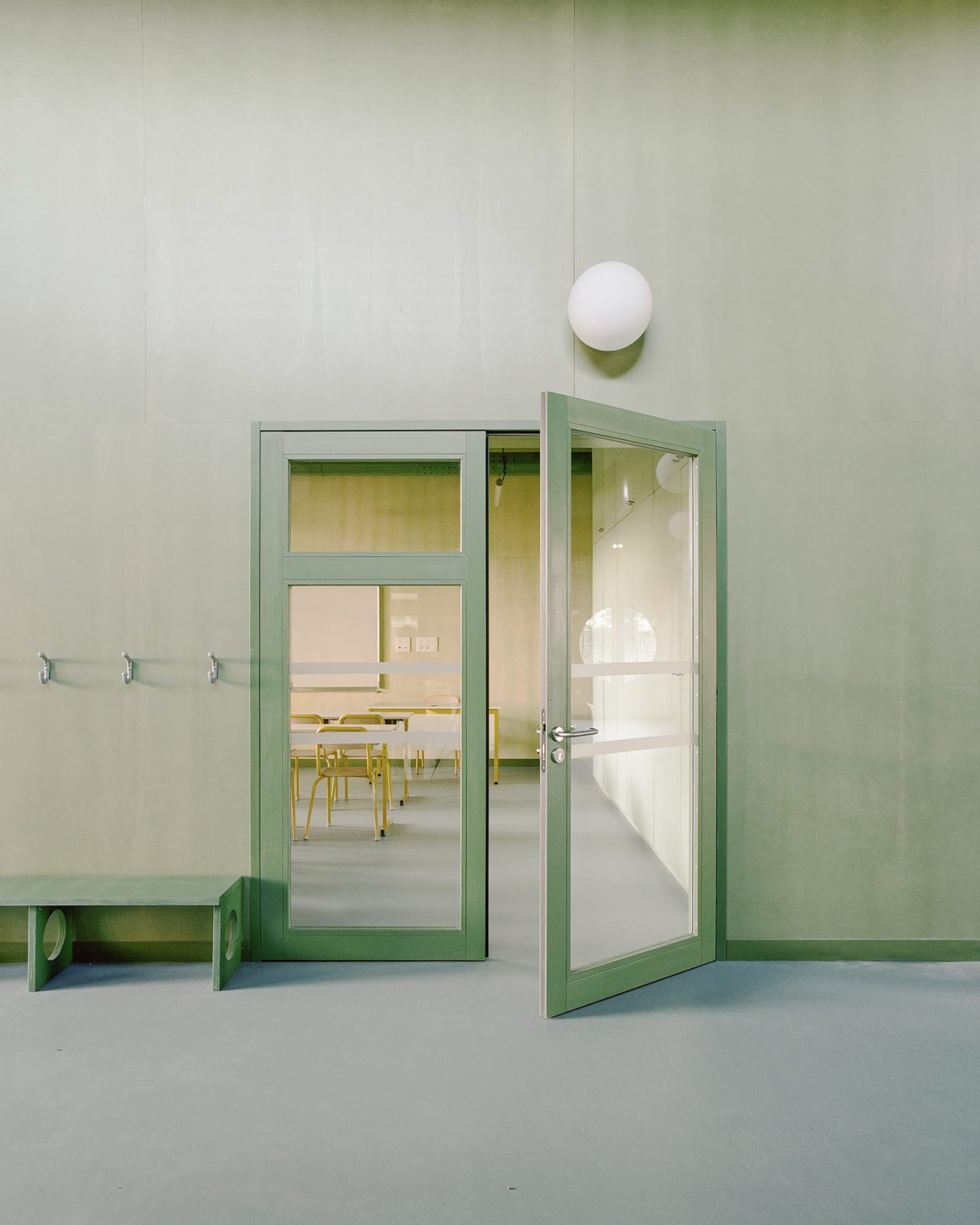
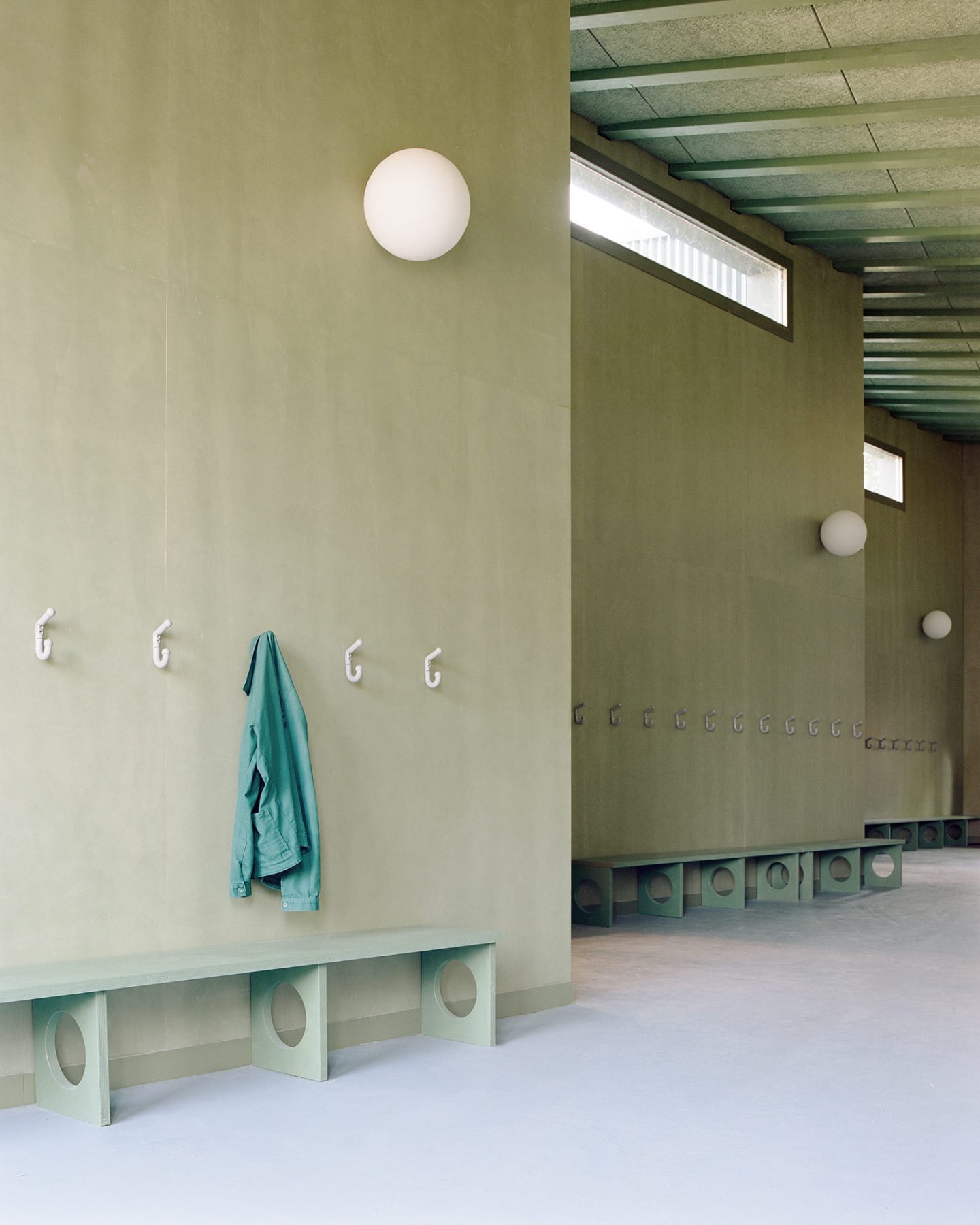
Like a sustained musical note, this uninterrupted tone mediates between architecture and nature, allowing the project to resonate with its living context.
The palette recalls the foliage of the plane tree, situating the learning spaces within a familiar and calming environment. The façades express this relationship through material depth and texture.
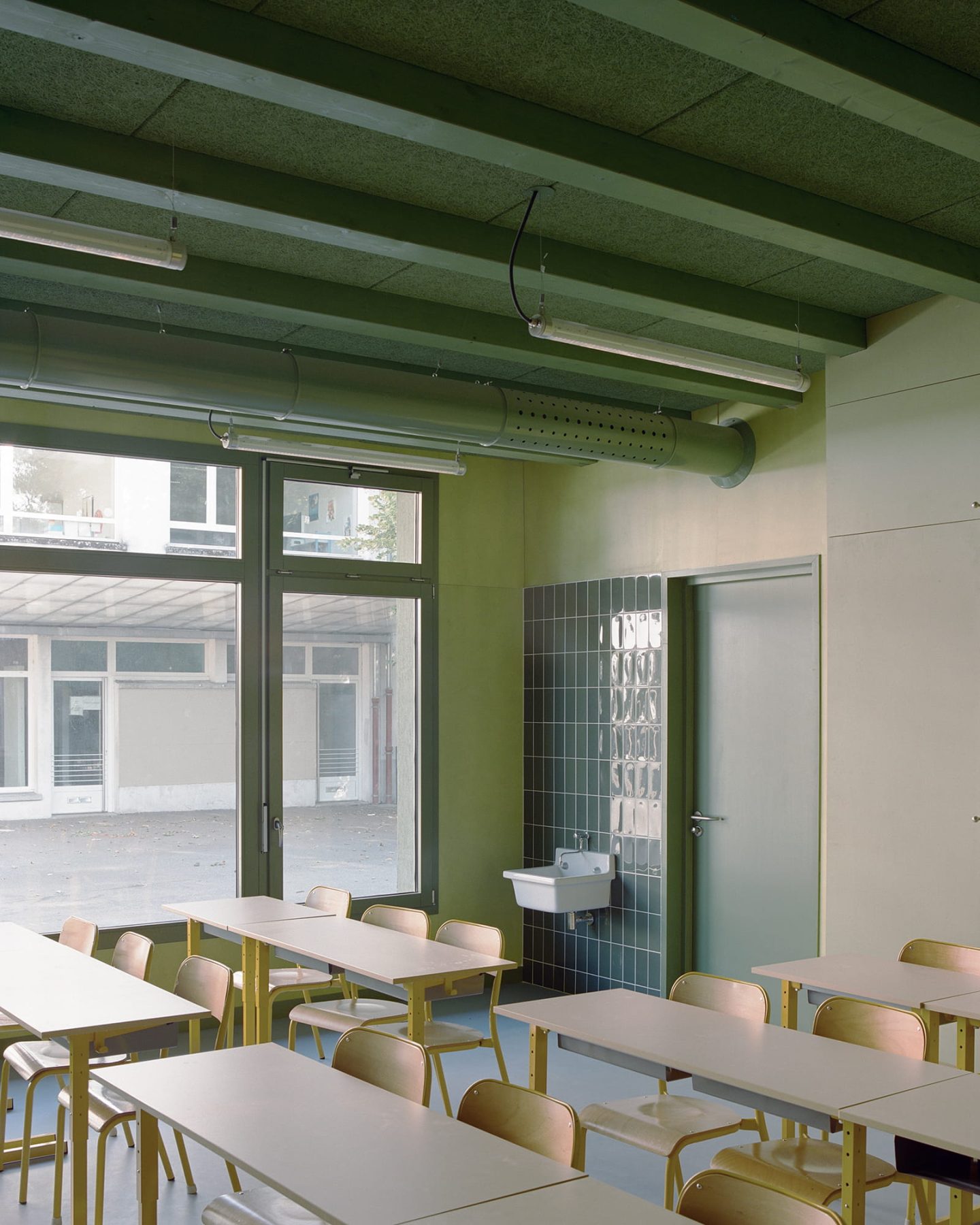
Broad openings connect classrooms visually to the schoolyard, reinforcing the idea of learning as an open and shared process.
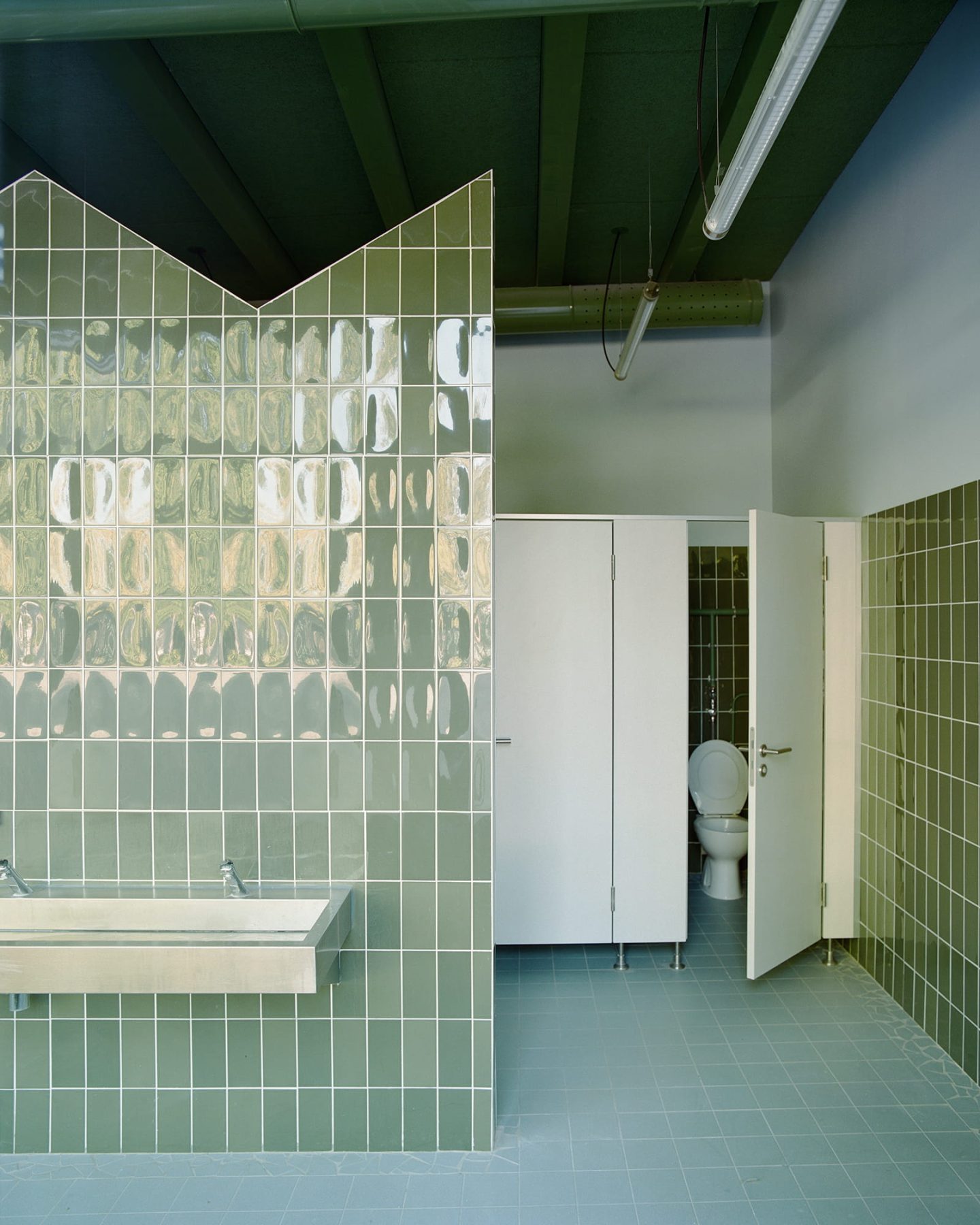
Glazed ceramic tiles at the base, ribbed mineral plaster between windows, and smooth plaster above form a layered yet cohesive envelope, where shifting shades of green respond to light and movement throughout the day.
A light-filled corridor
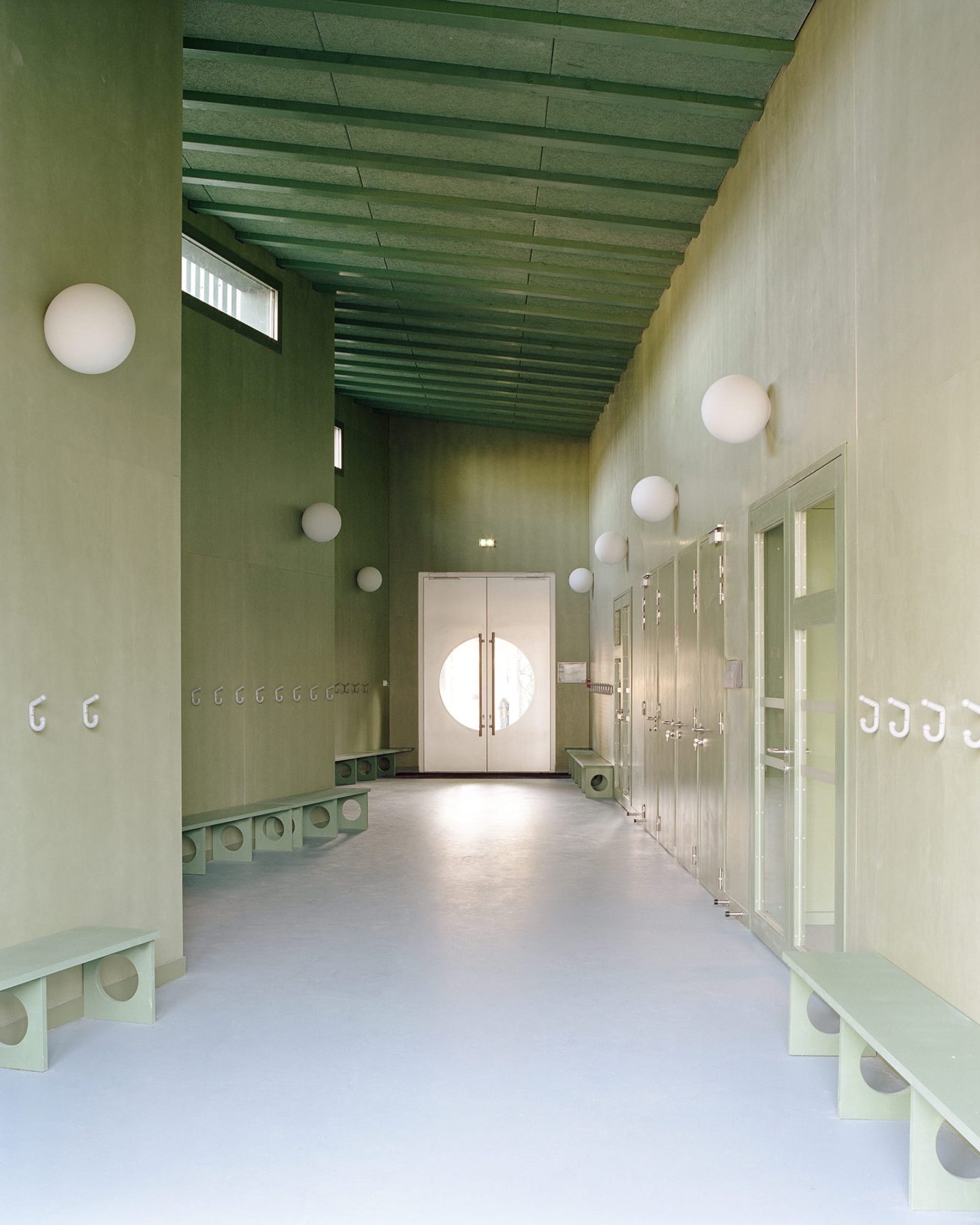
At the heart of the building, a centrally positioned, cross-ventilated corridor functions as both circulation space and social spine, linking the classrooms while encouraging informal encounters.
Each room opens generously toward the schoolyard, extending the educational environment beyond the classroom walls.
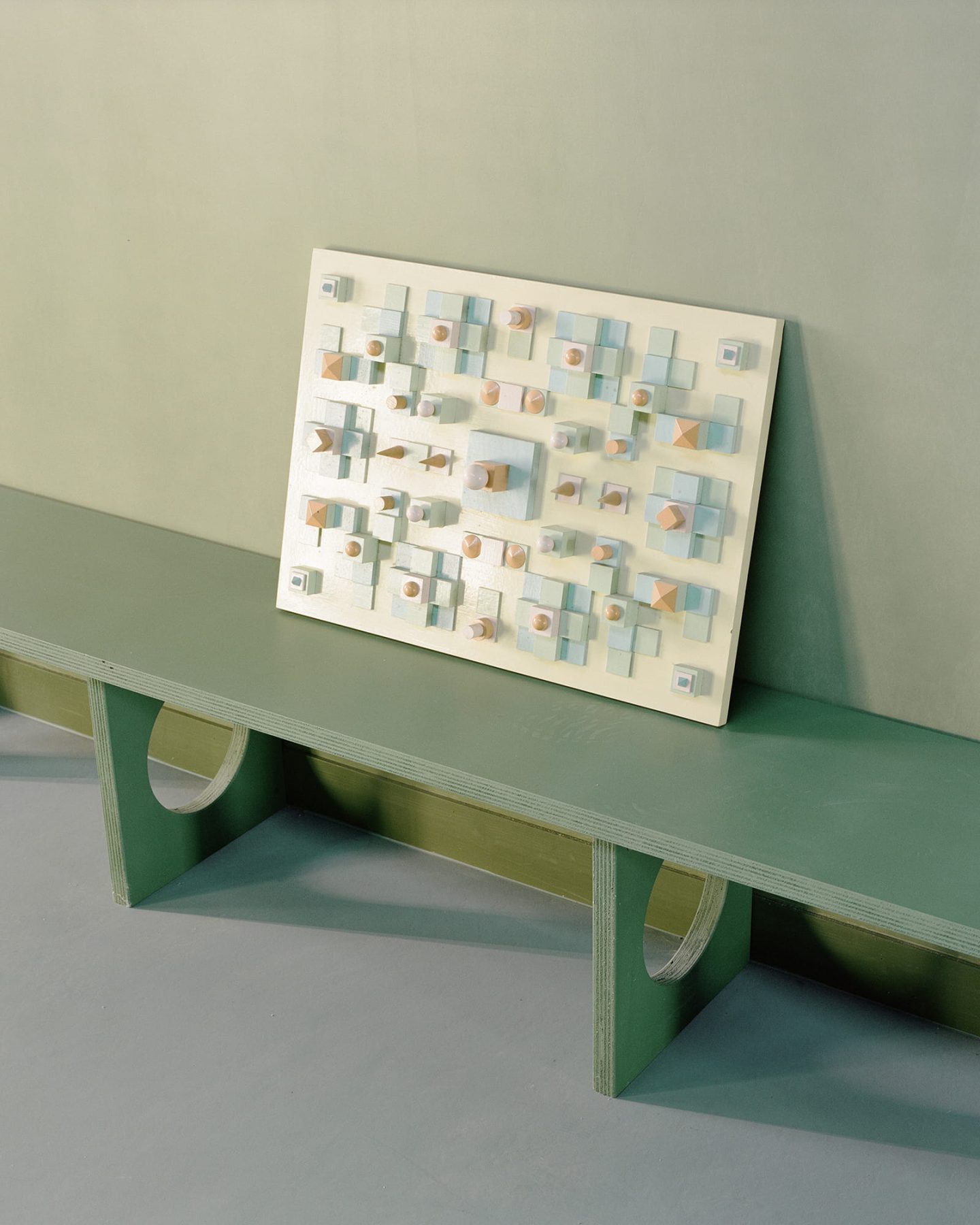
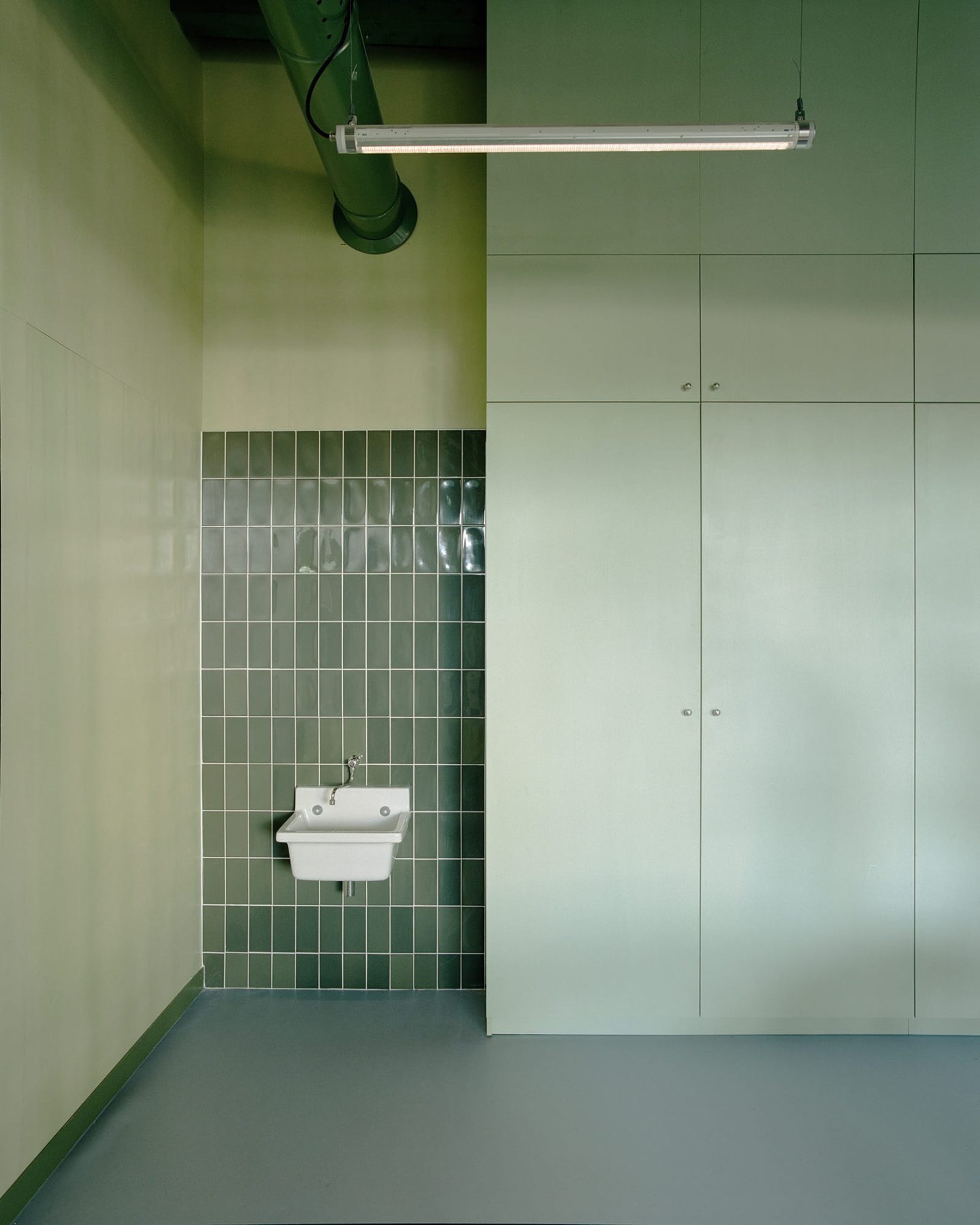
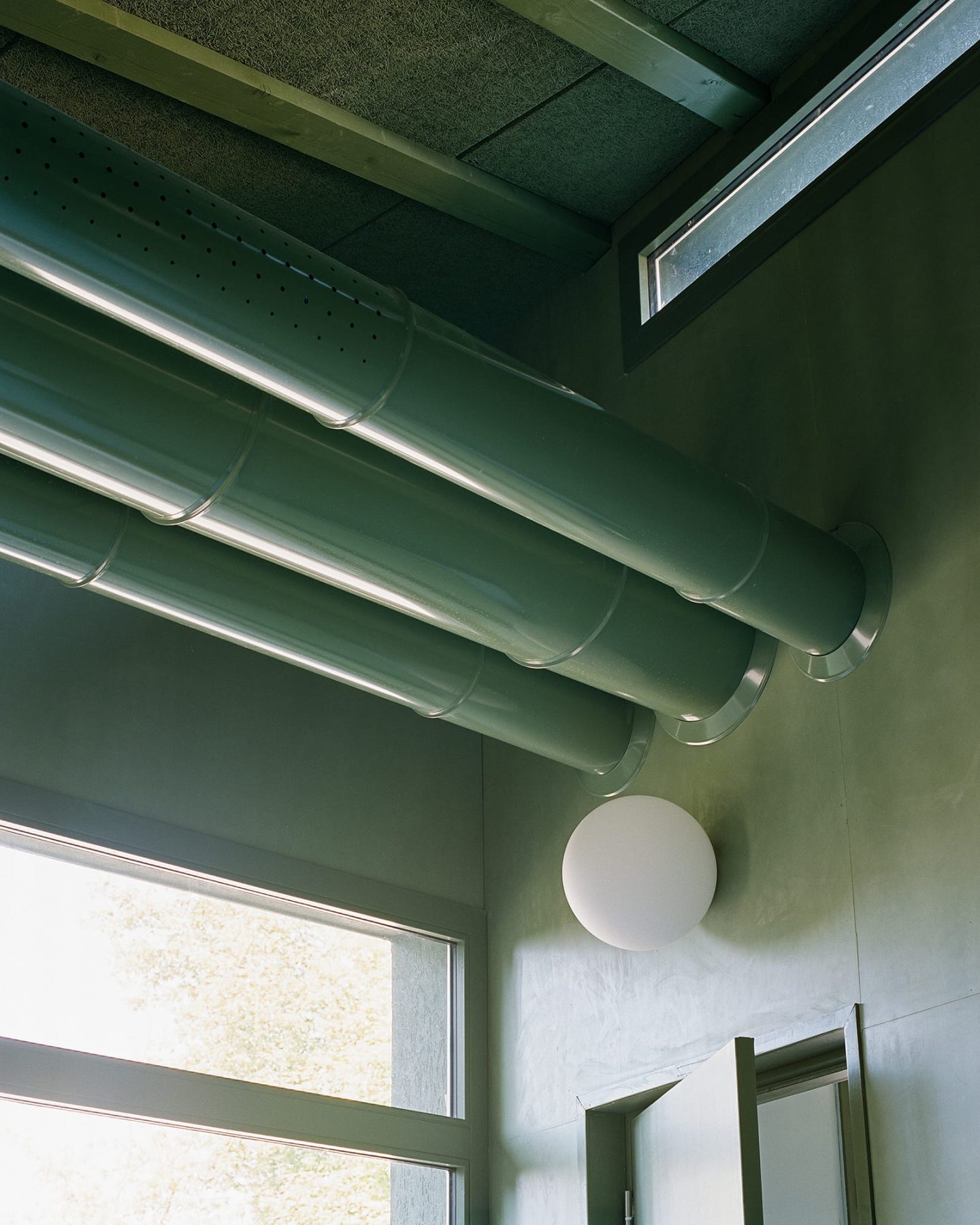
Inside, coordinated tones of green appear across materials—glazed tiles around washbasins, stained wooden cupboards, doors, beams, and exposed services—reinforcing continuity between interior spaces and the building as a whole. Extended roof overhangs stretch the volume outward, shading the classrooms and creating a transitional zone between inside and outside.
The corridor rises to a generous height, capturing daylight through skylights where moving shadows register the passage of time, subtly attuning students to natural rhythms.
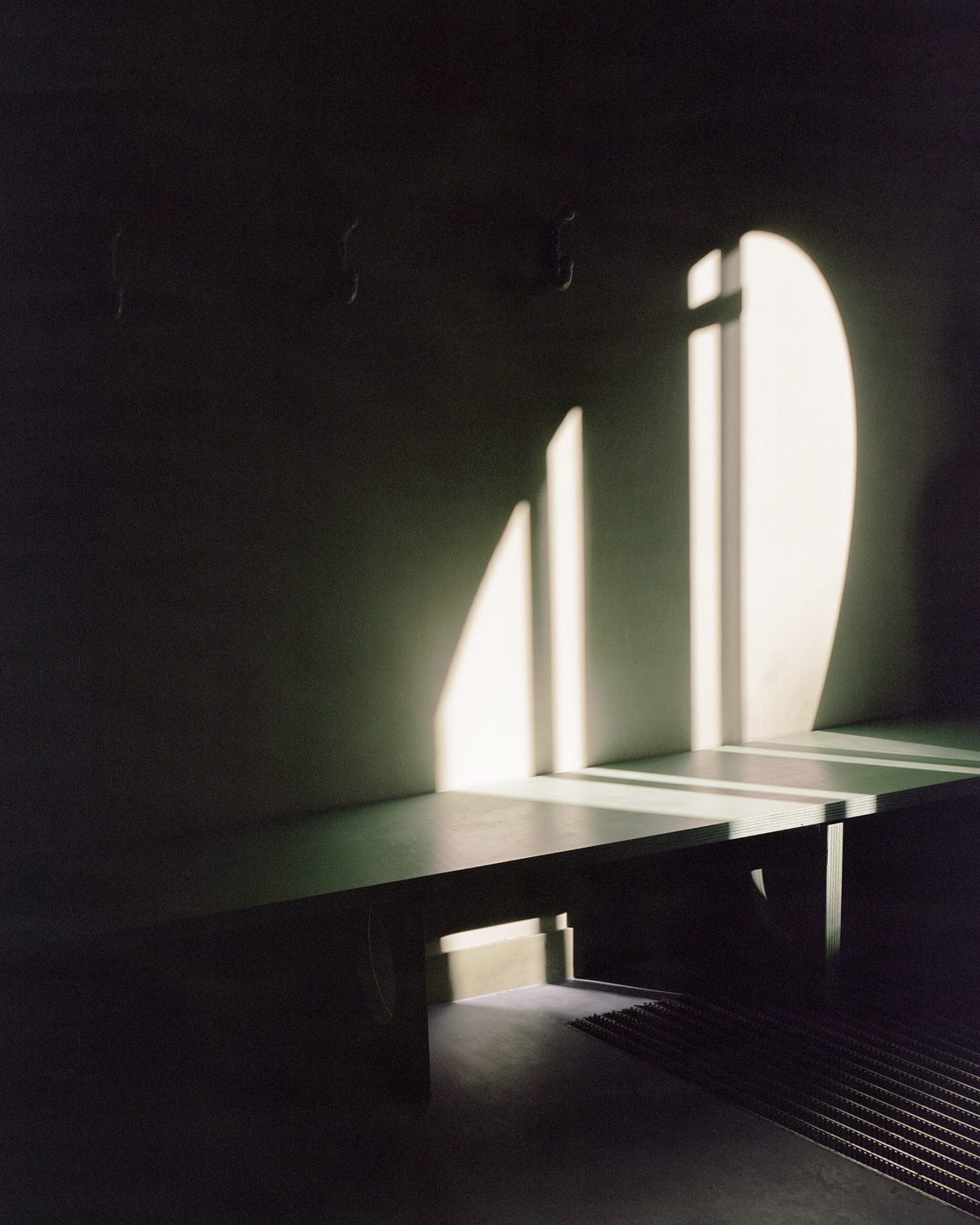
Built-in benches line the walls, offering places for pause, observation, and informal gathering, while elongating the spatial perspective.
Through its restrained form, natural materials, and carefully calibrated palette, the building articulates an educational architecture that aligns learning with place.
Echoing the presence of the plane tree whose branches brush the roof, the project establishes a continuous gesture between nature, architecture, and pedagogy—where the built environment becomes an integral part of the educational experience rather than a neutral backdrop.
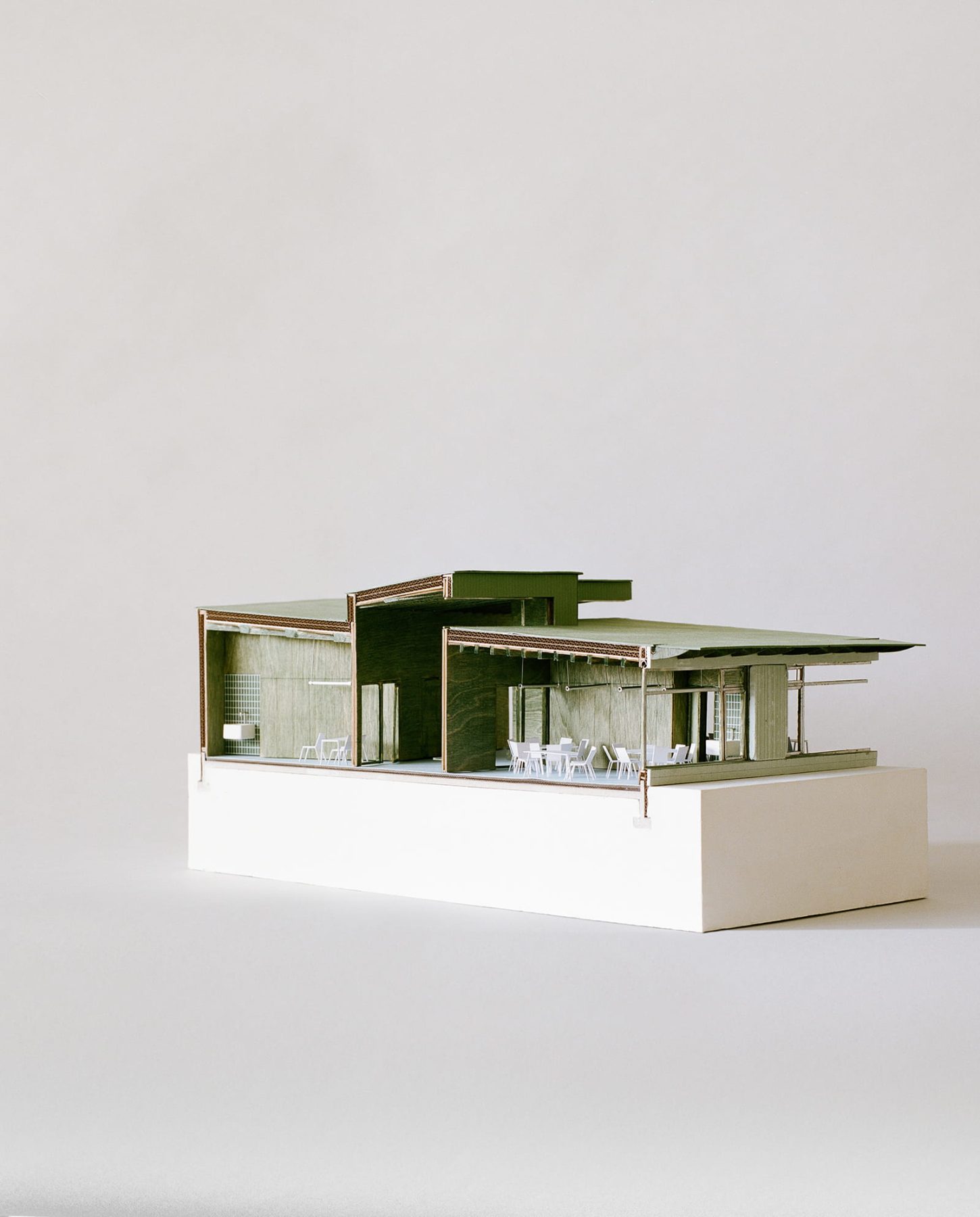
Physical Model
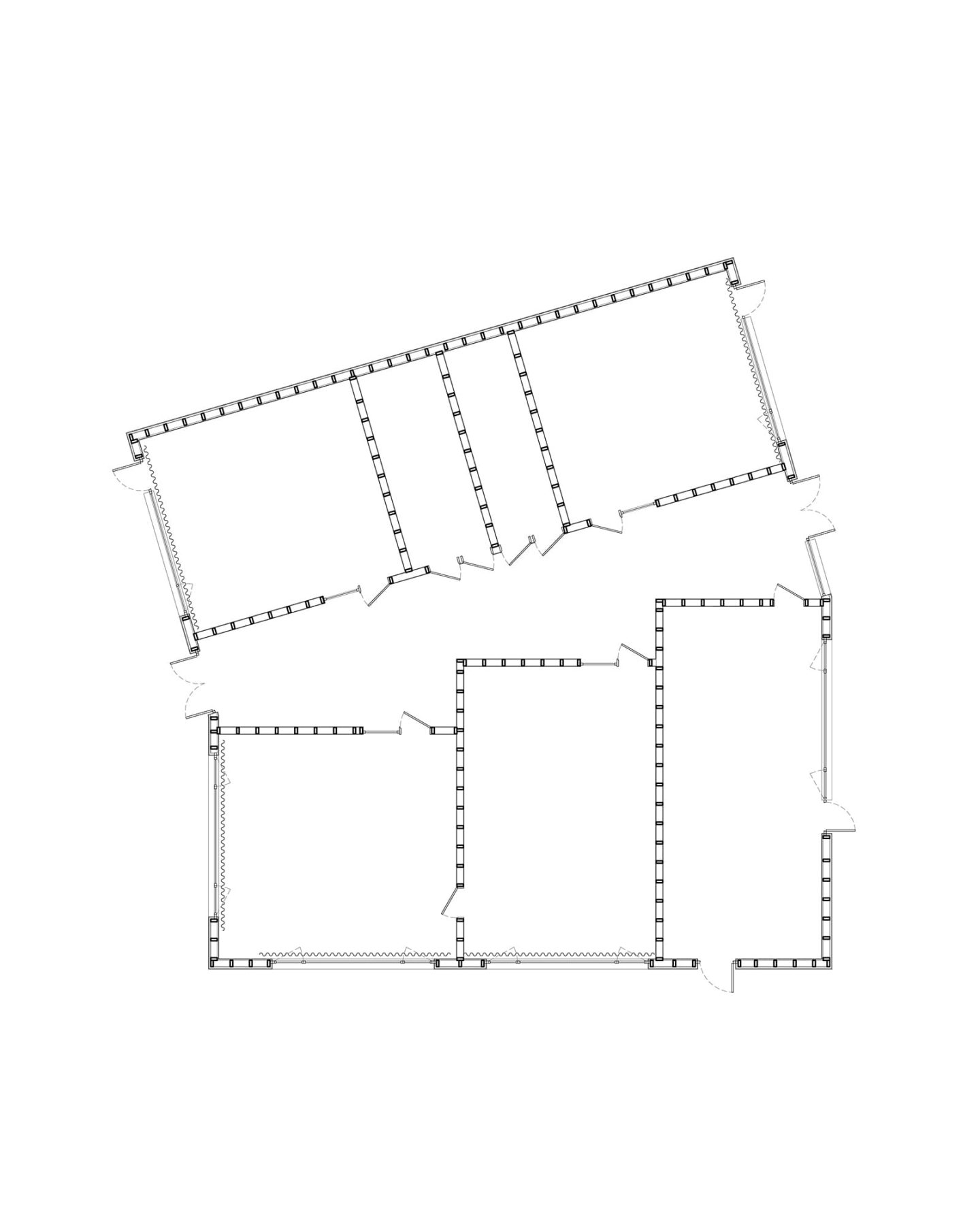
Drawing
Facts & Credits
Title Nanteuil Primary School
Typology Architecture, Educational Building
Location Montreuil, France
Status Completed, 2025
Architecture Boman
Photography Antoine Séguin
Text by the authors
Take a look at another project by Boman, THE ARCHERY HOUSE, here!