The New Polykatoikia features intriguing design solutions on how to live together in different urban contexts and social ecosystems.
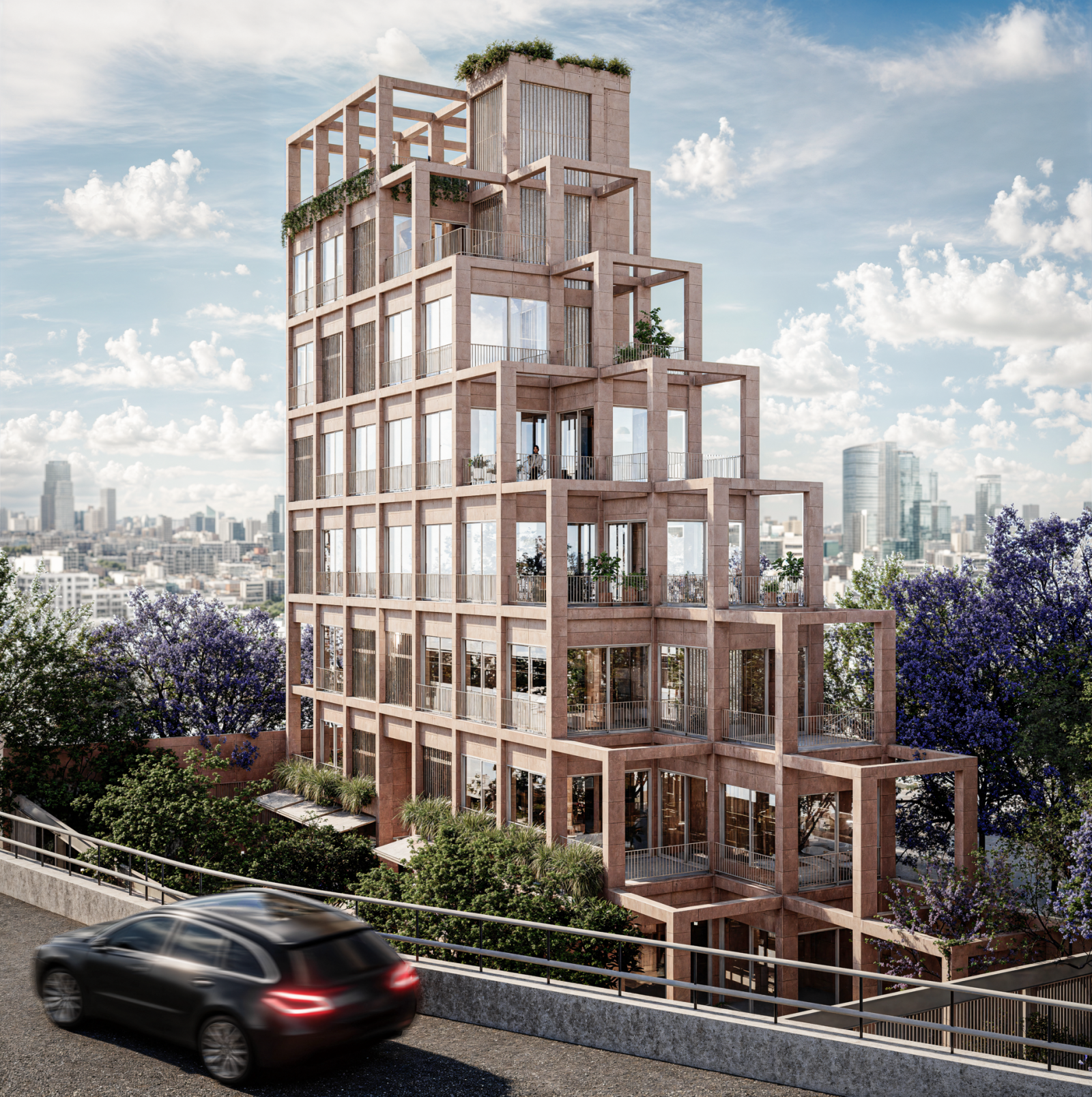
Tenter Estudio reimagines collective housing by transforming a compact corner site into a slender seven-story tower that seamlessly integrates residential and commercial programs. Through a stepped volumetric strategy connected to a system of cascading terraces, the project establishes a strong dialogue between architecture and public space. Designed with efficiency and clarity, the building embodies a contemporary approach to vertical urban living.
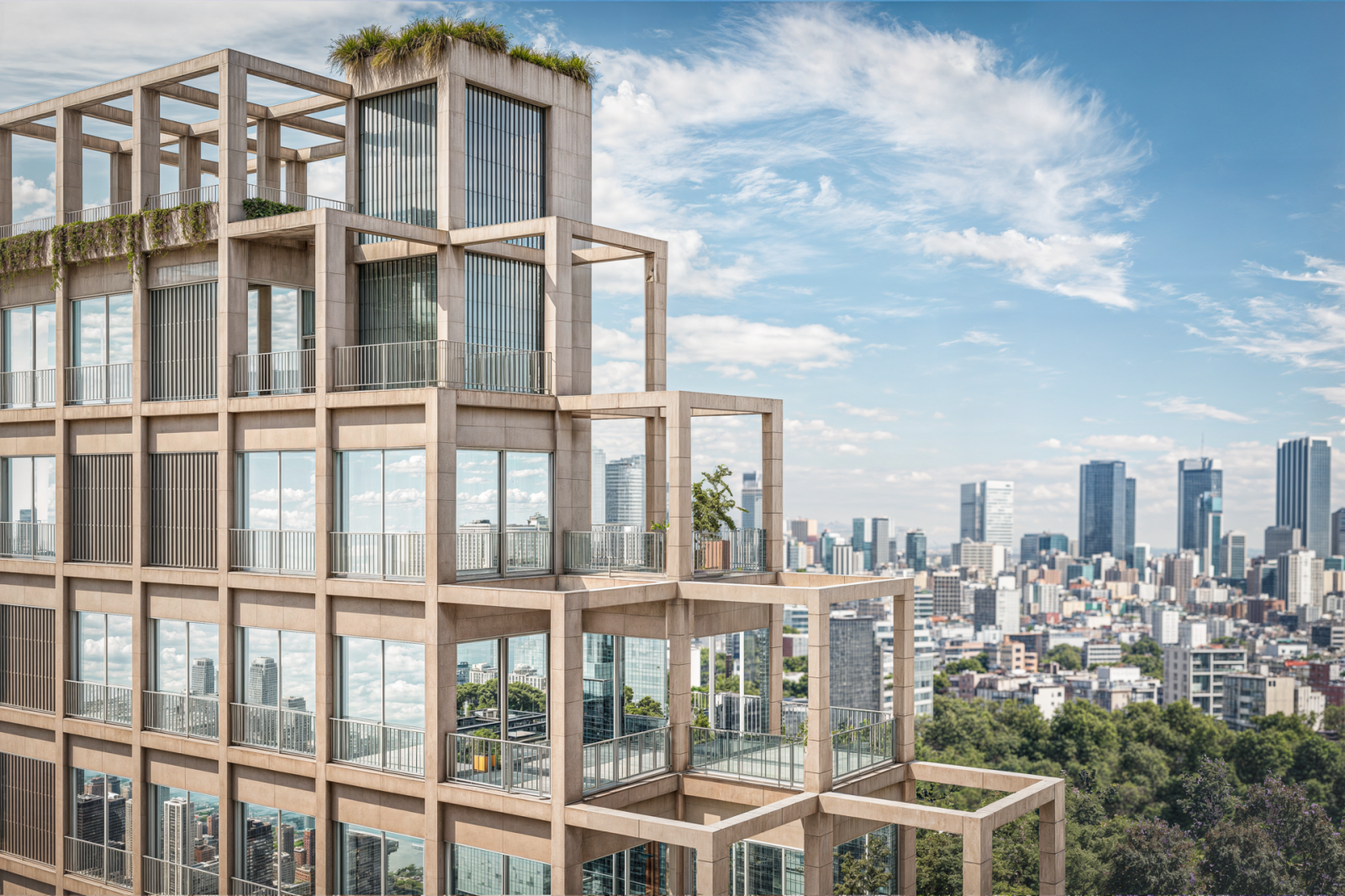
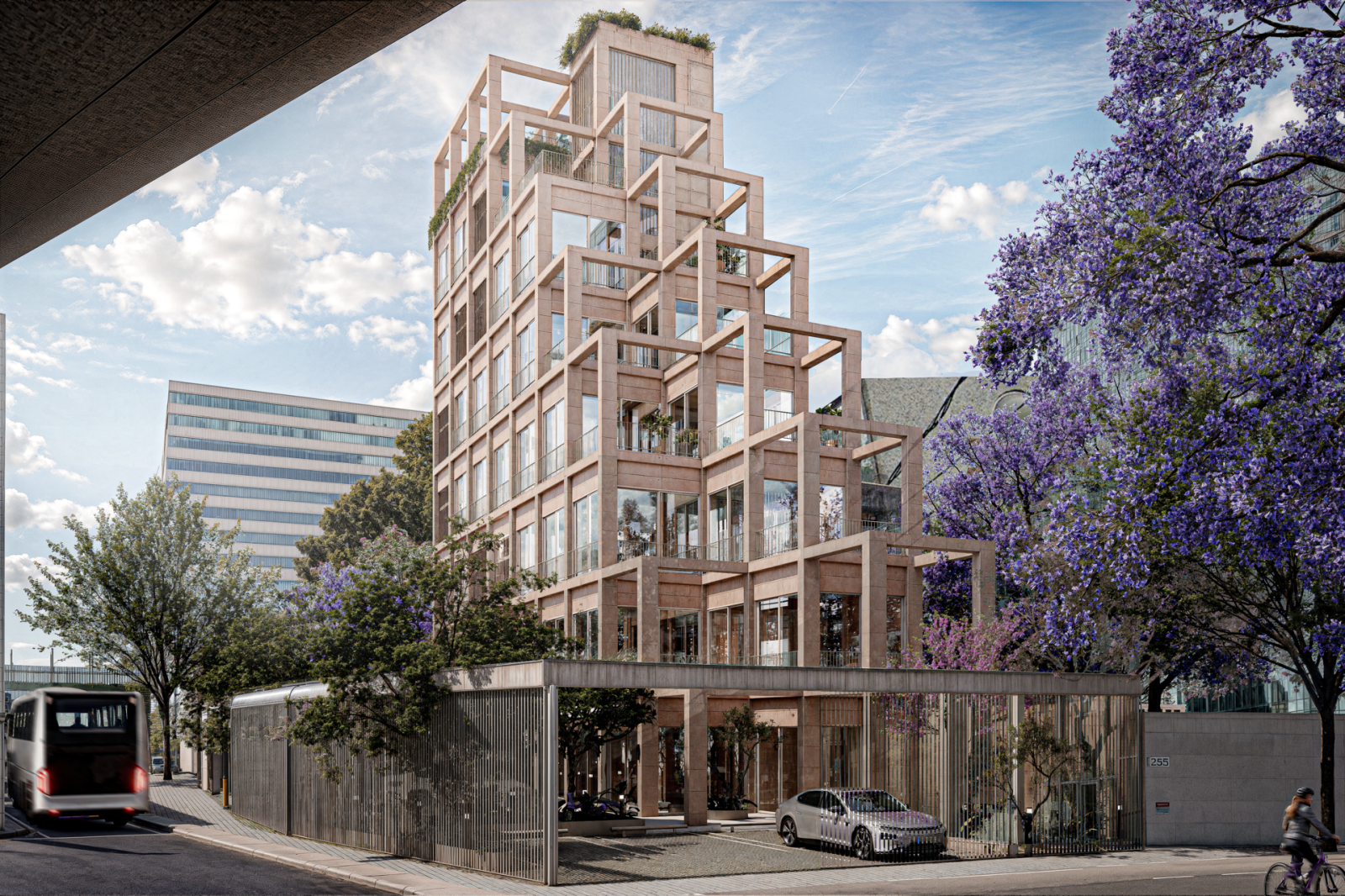
Located at the intersection of Periférico and Miguel Lanz, the project emerged from an urban development agreement that enabled the consolidation of three adjacent plots into a single architectural gesture. This condition became the basis for a strategy focused on intensifying land use, while responding to the surrounding urban conditions.
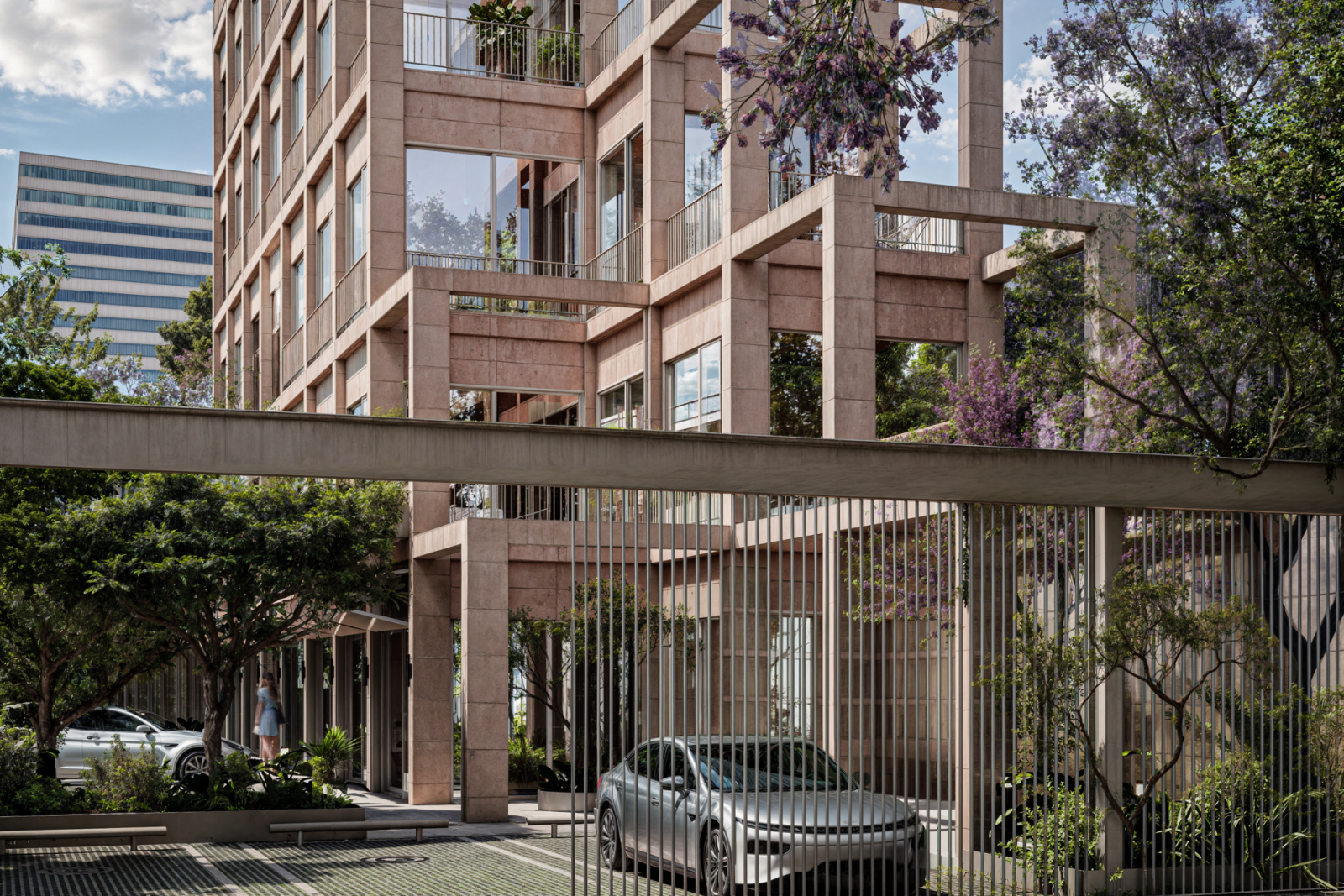
The project materializes as a slender seven-story tower whose stepped volumetry maximizes each plot’s potential. A 10-meter setback from Periférico defines the geometry of the complex, allowing the volume to adapt to the corner condition and ensuring a clear, legible presence from the public realm.
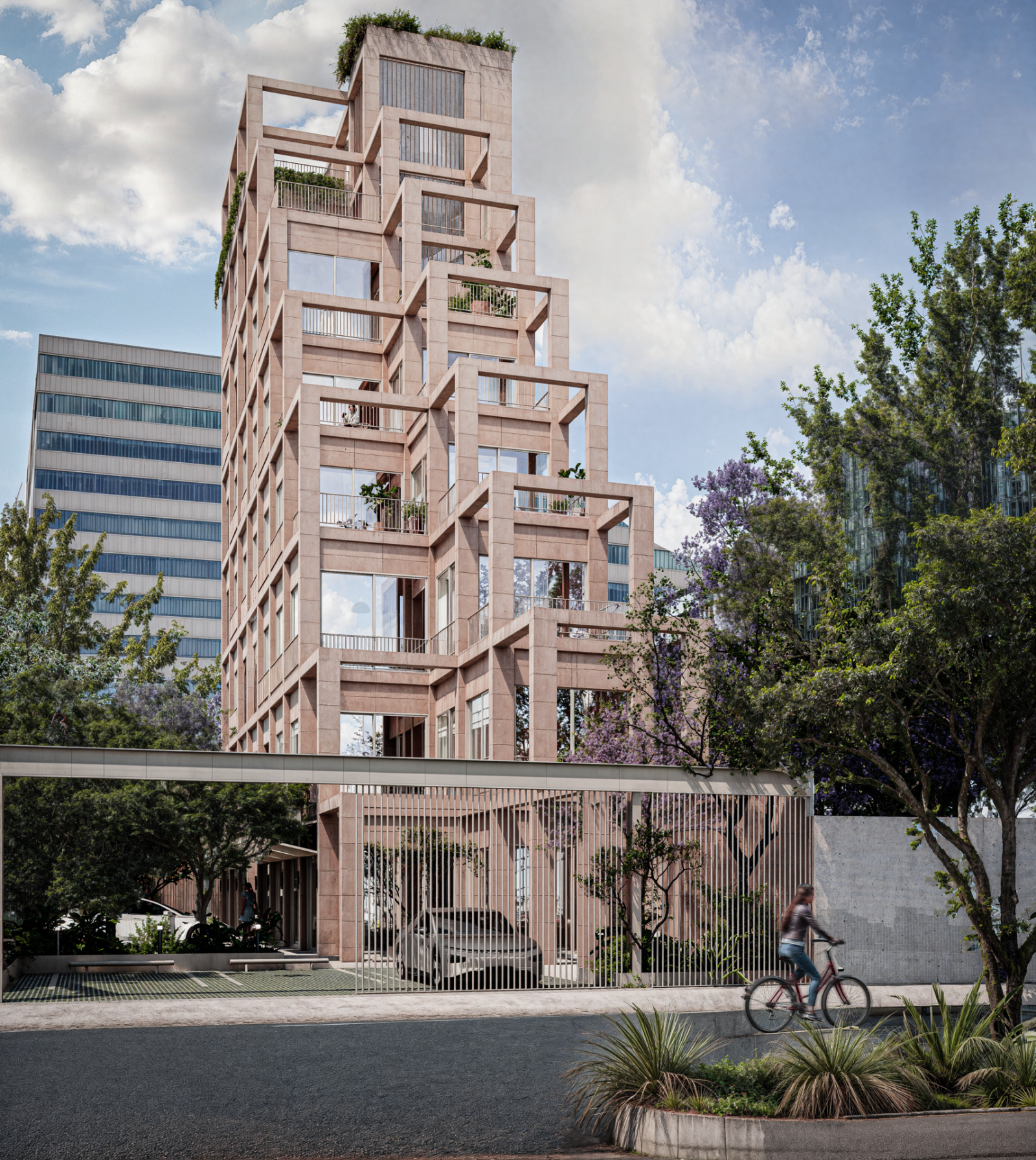
The resulting silhouette reinforces the building’s verticality, while maintaining a balanced relationship with its immediate context.
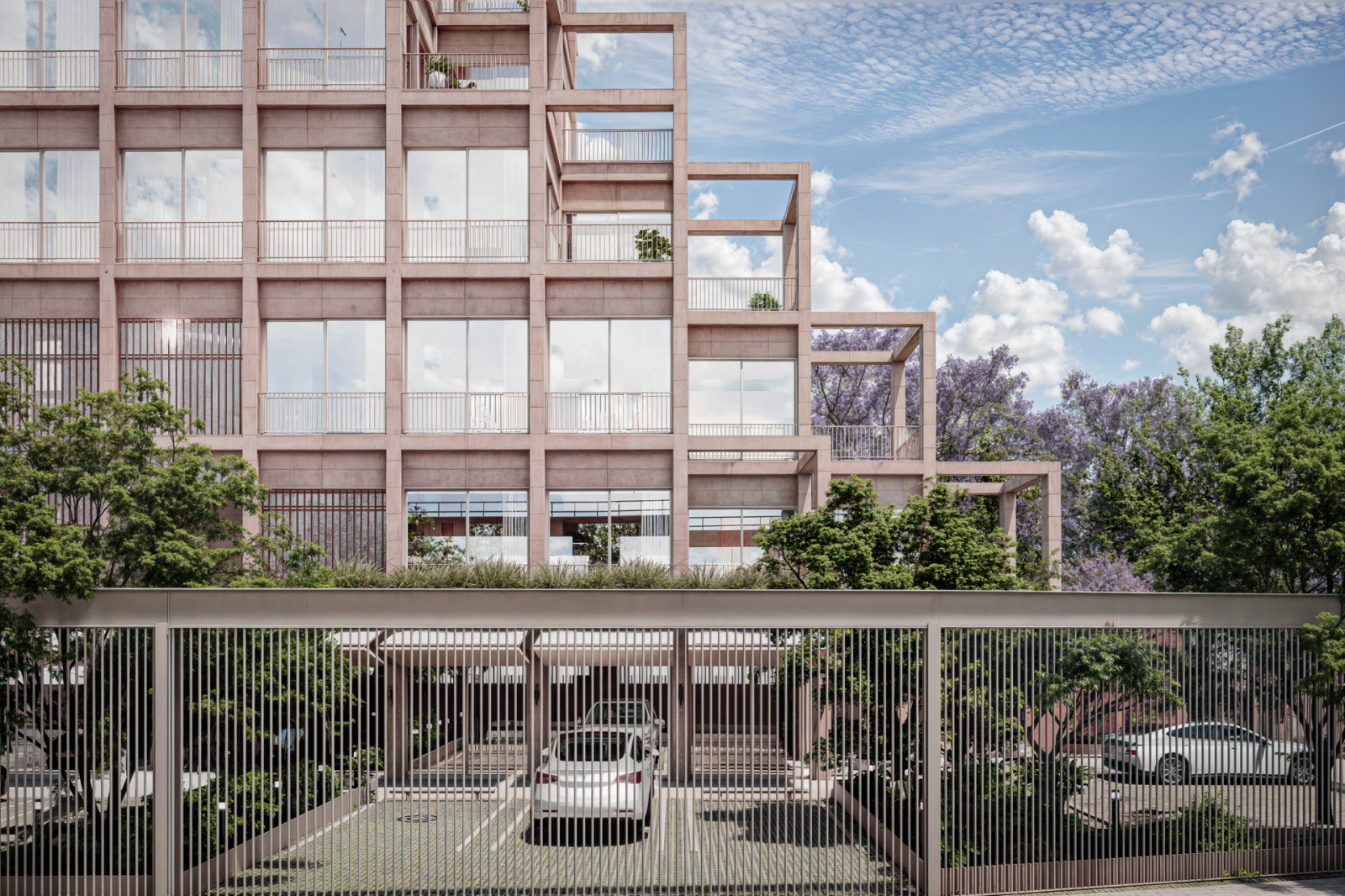
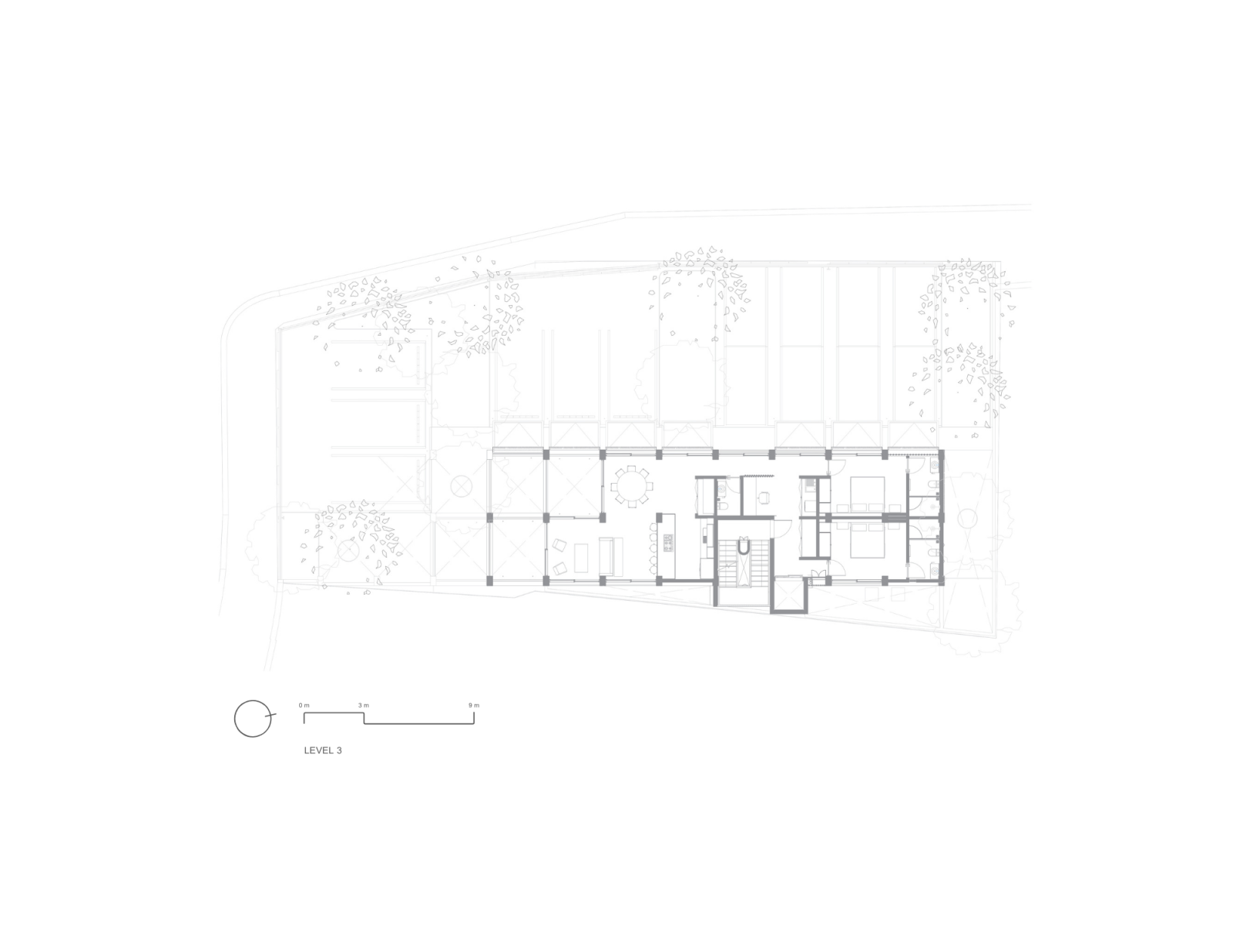
With a total built area of 1,000 m², Miguel Lanz Duret integrates six residential units above ground-floor commercial spaces. The apartments range from 60 m² to 160 m² and are differentiated not only by size but by their direct connection to a system of stepped terraces.
These outdoor spaces play a central role in the project, extending domestic life outward.
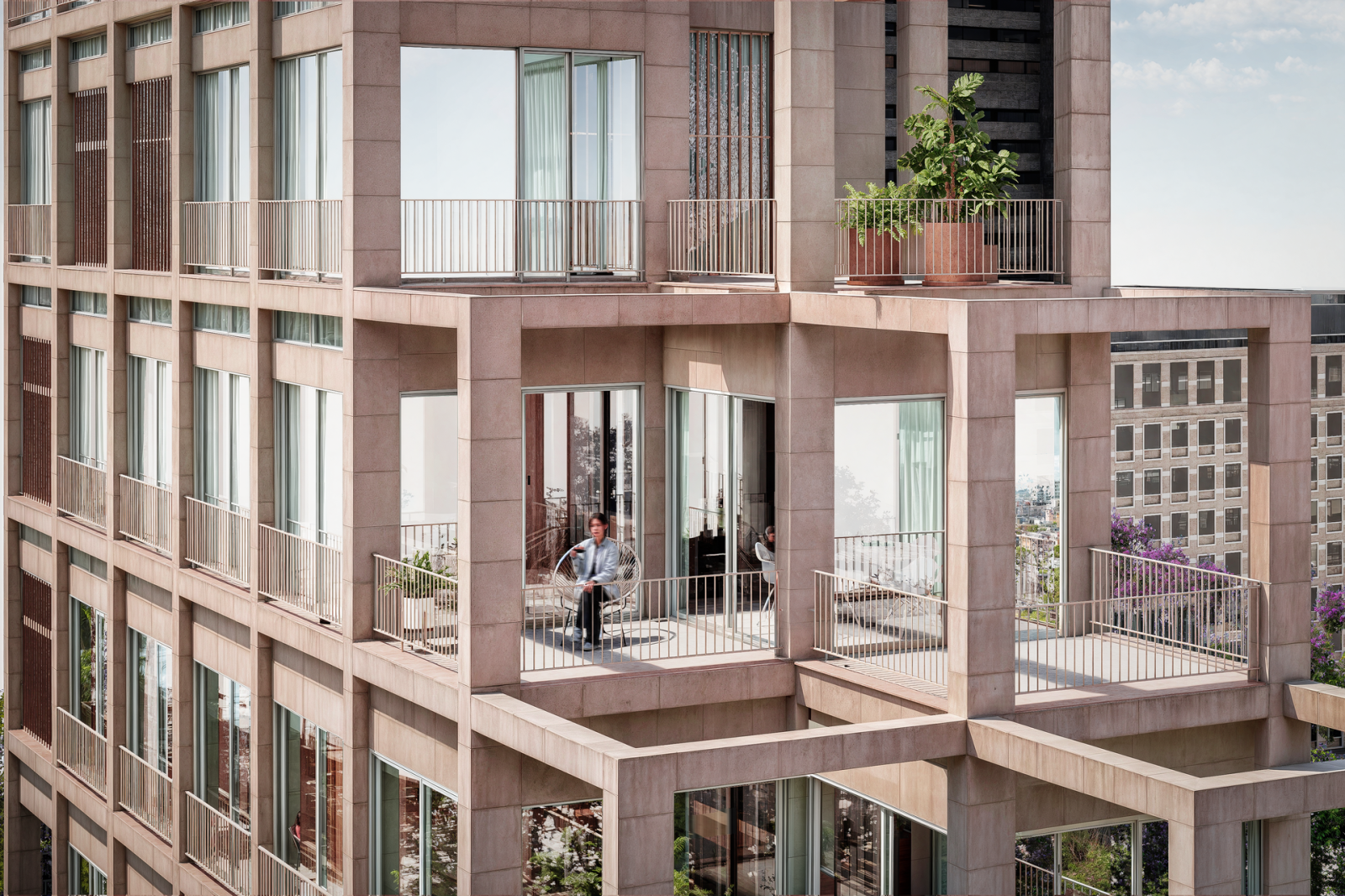
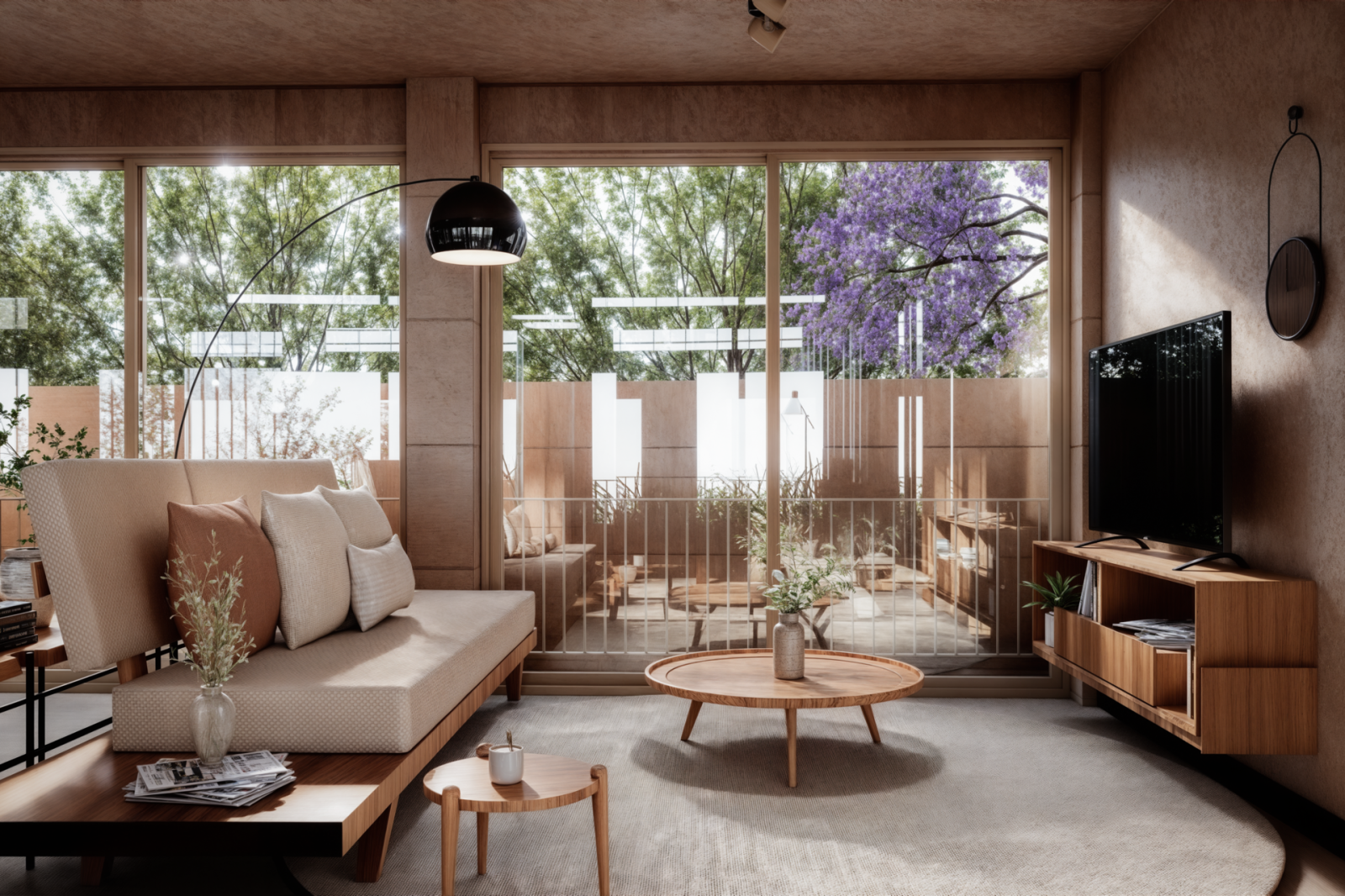
This typological diversity is informed by a targeted market analysis aimed at a young demographic, primarily dual-income couples without children (DINK’s), seeking functional, well-located housing with long-term investment potential. The project responds to these expectations through flexible layouts, efficient circulation and a strong emphasis on livability within a compact footprint.
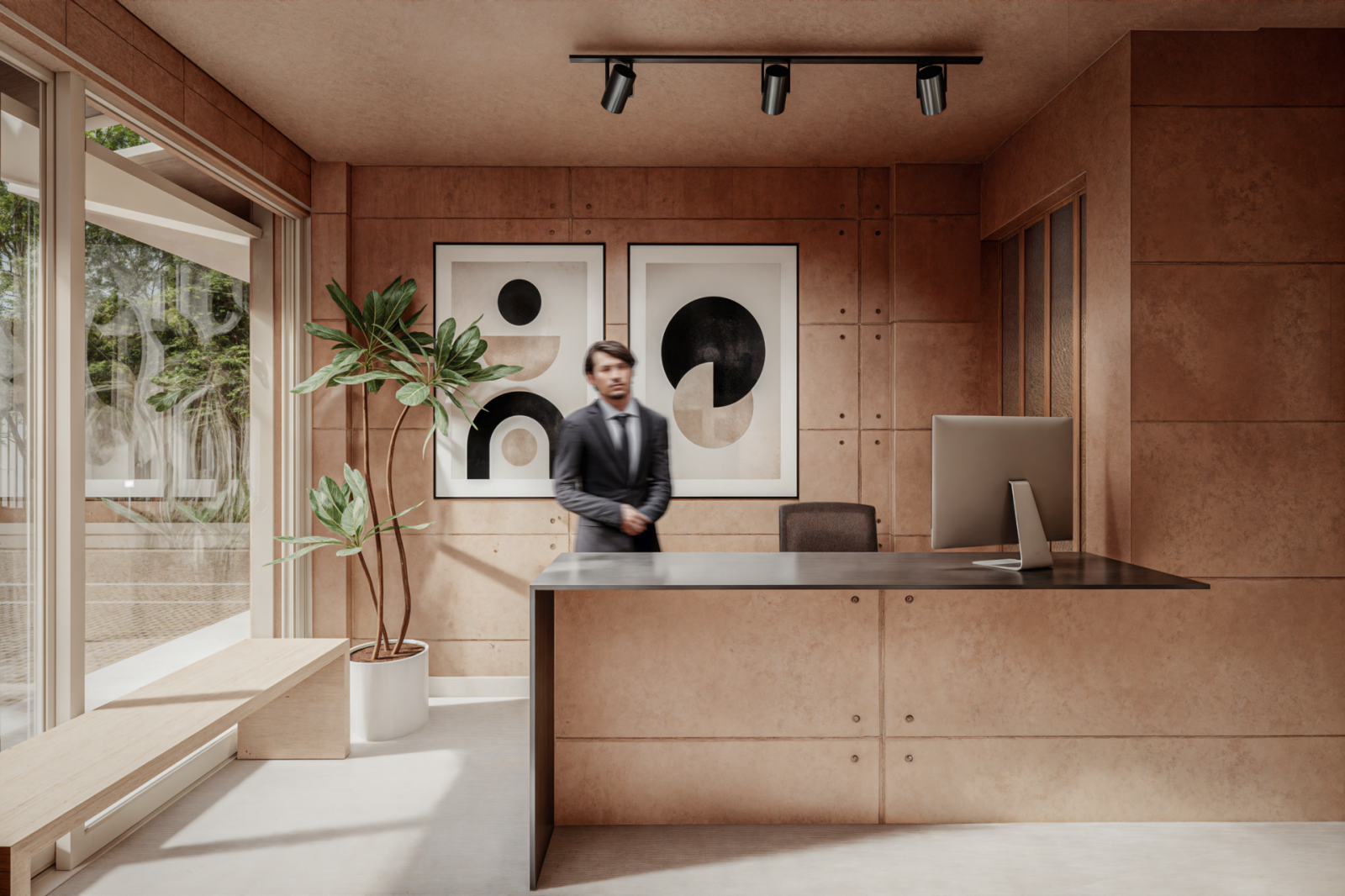

Conceived from the outset as a commercially viable development, the building incorporates open-air parking and activates the Periférico frontage through ground-floor retail spaces.
This strategy transforms the corner into an open, urban interface, reinforcing the public character of the site and contributing to street-level activity.
Concrete retaining walls structure the base of the building and extend upward to shape the stepped terraces, simultaneously defining the project’s structural logic and architectural expression.
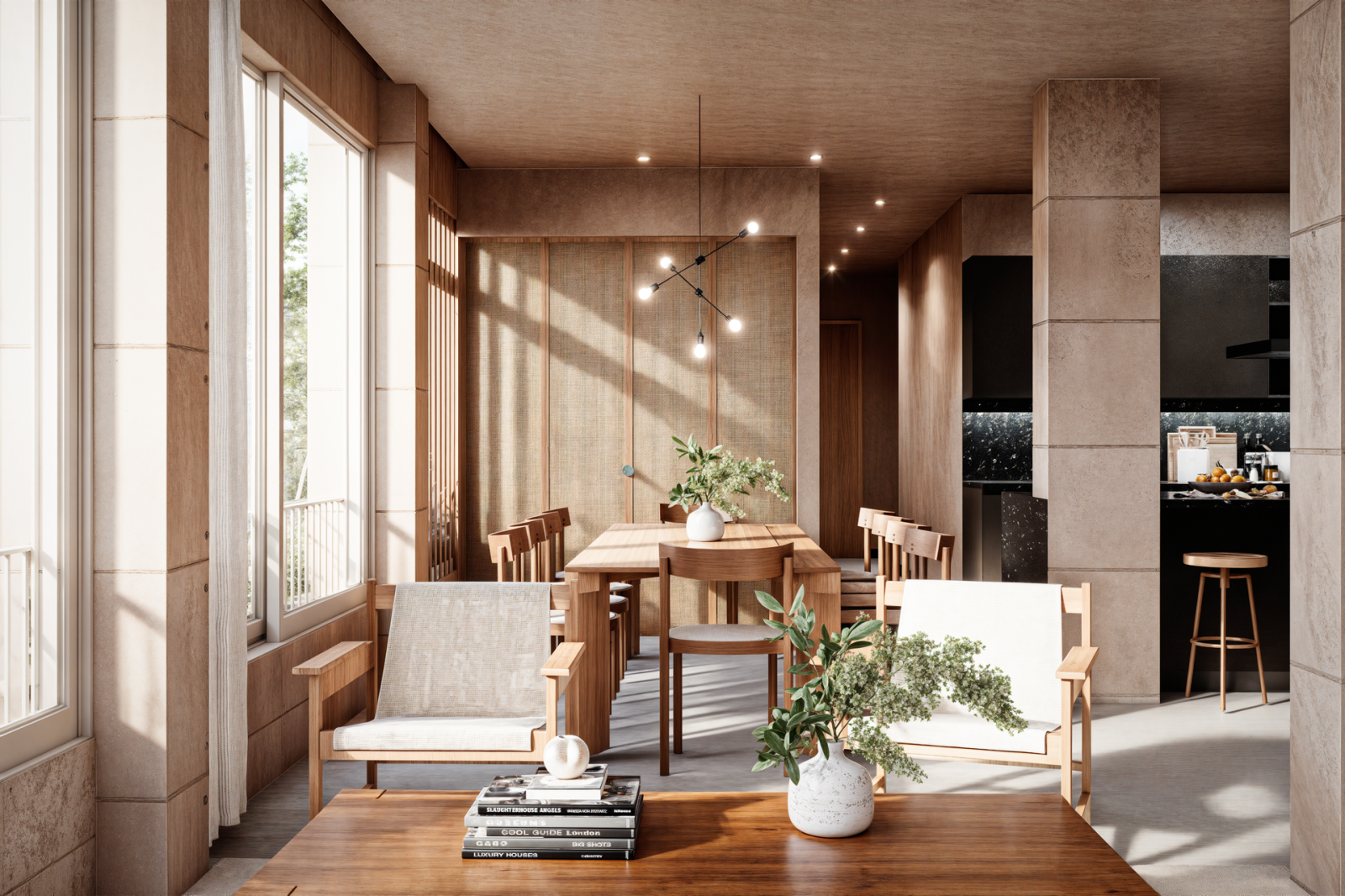
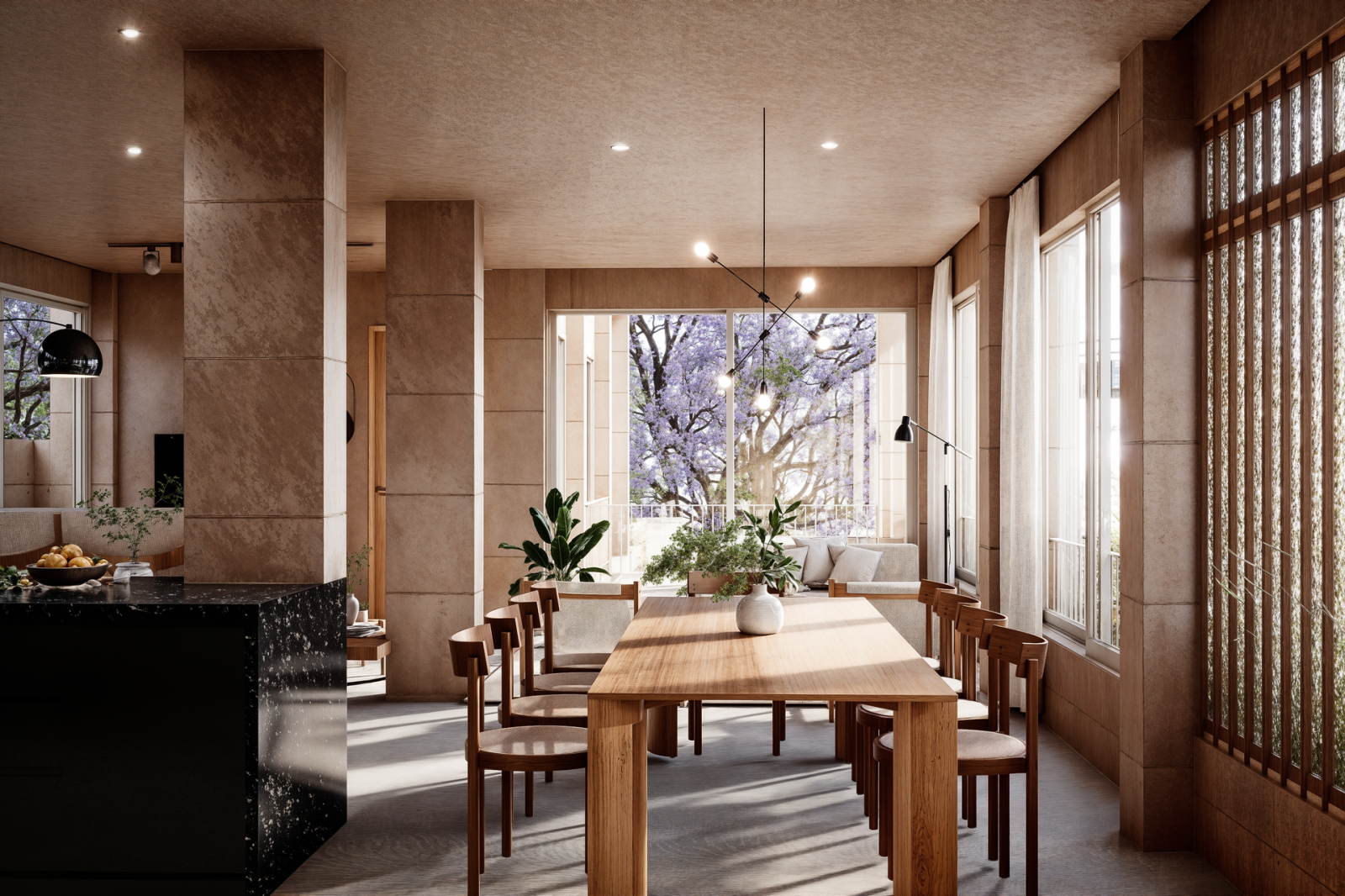
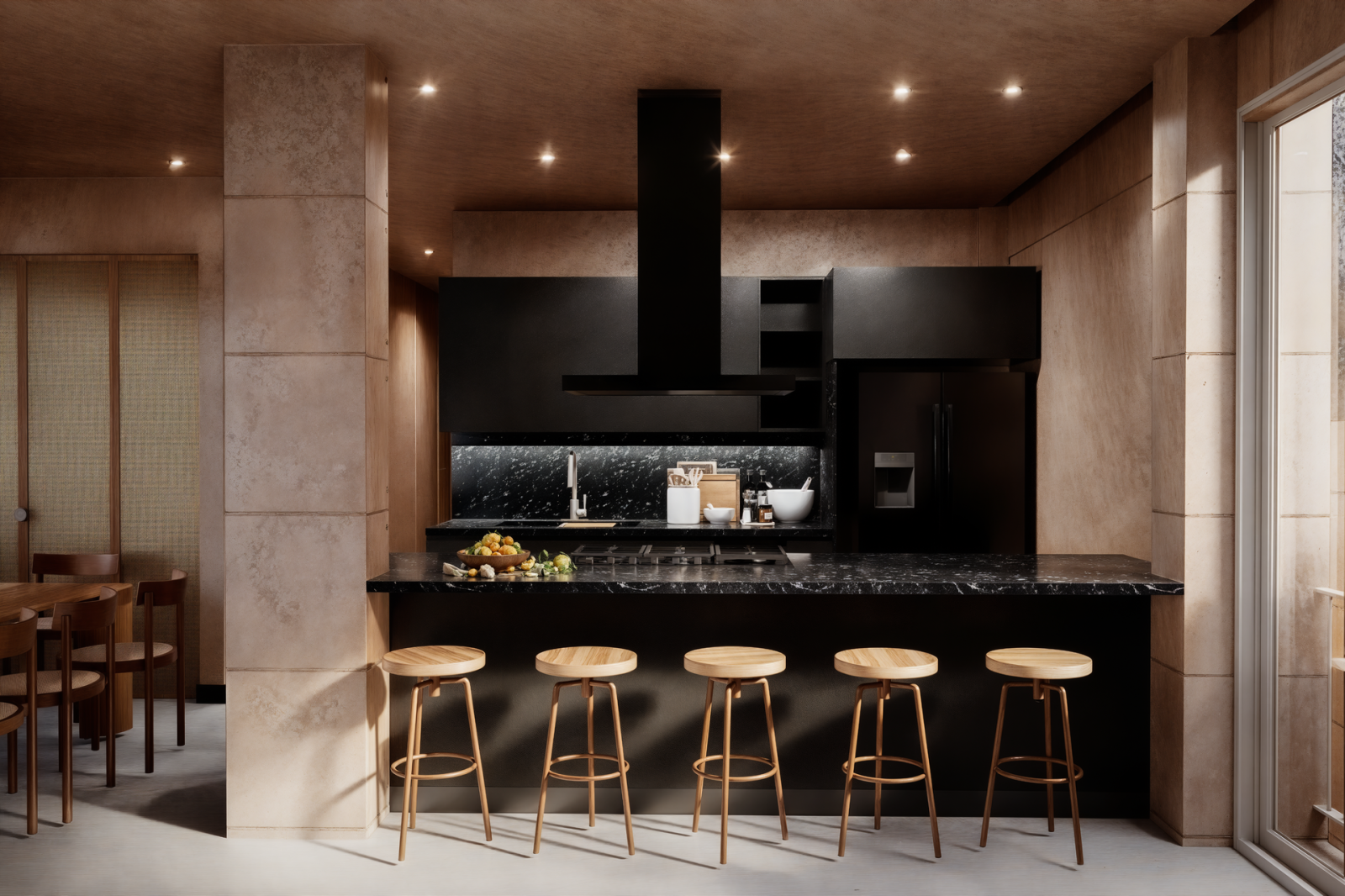
Together with the façade’s vertical fins these elements lend rhythm, depth, and a distinct identity to the volume.
Miguel Lanz Duret stands as a contemporary interpretation of collective housing: an efficient, market-aware proposal that engages the dynamics of the city while redefining how new housing profiles can inhabit dense urban environments.

Facts & Credits
Project title MIGUEL LANZ DURET, A proposal that articulates new housing profiles with the dynamics of the urban context
Typology Residential
Location Miguel Lanz, Mexico City
Architecture Tenter Estudio
Architect Félix Villaseñor
Architecture Team Zaira Andere, Alejandro Ricote, Paola Aquino, Eduardo Mendoza, Oscar Moctezuma
Area 1000 m2
Project Phase Conceptual
Visualization Tenter Estudio
Text provided by the architects