Piano Piano’s projects reinterpret existing conditions while maintaining a measured dialogue between past and present across multiple scales. The studio weaves preservation with precise, carefully calibrated additions, balancing structural clarity with spatial sensibility. Their work articulates a consistent ethos: architecture as a careful act of listening—where space, material, and movement converge to heighten the experience of inhabitation.
The Design Philosophy
Founded in Valencia in 2016 by architects Maria Donnini and Maria Grifo, Piano Piano is a studio whose practice unfolds across new-build projects, renovations and the rehabilitation of public and private spaces. While their work is predominantly rooted in the residential realm, it also extends to interventions in the landscape and the city, engaging with architecture as both an intimate and urban act.
At the core of Piano Piano’s philosophy lies a nuanced understanding of scale. Each project is conceived as a precise gesture within its context—an architectural piece capable of leaving a distinct mark while remaining deeply responsive to its surroundings. This sensitivity to the broader environment is matched by an equally rigorous attention to detail, with construction elements crafted down to the millimeter.
Their process is defined by close collaboration. Donnini and Grifo accompany clients throughout every stage of design and construction, carefully translating needs, aspirations and ways of living into spatial form. Through a thoughtful definition of each space and meticulous on-site supervision, the studio ensures that the built outcome faithfully embodies both the conceptual vision and the trust placed in their work.
The works
Casa patio Casa patio
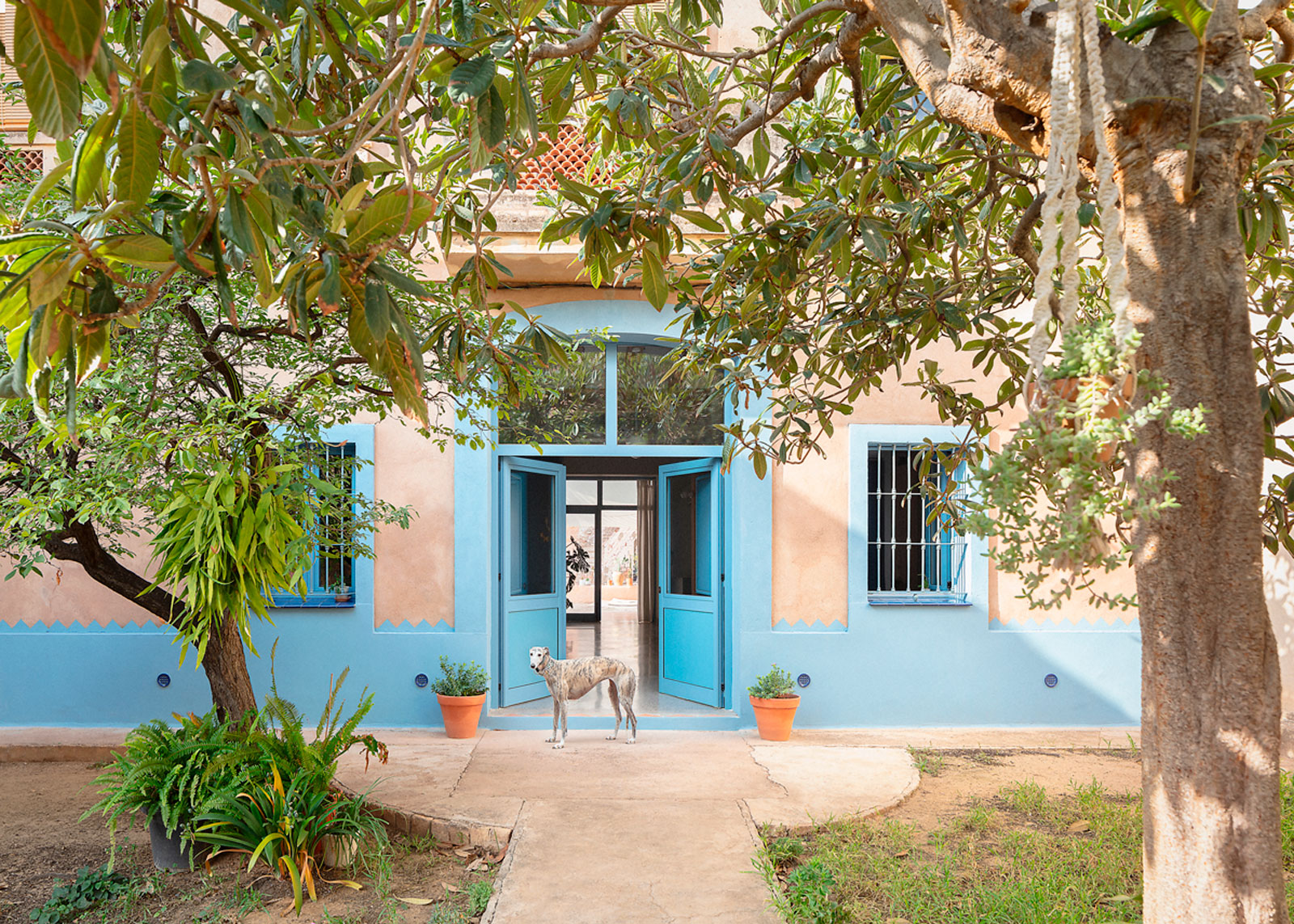
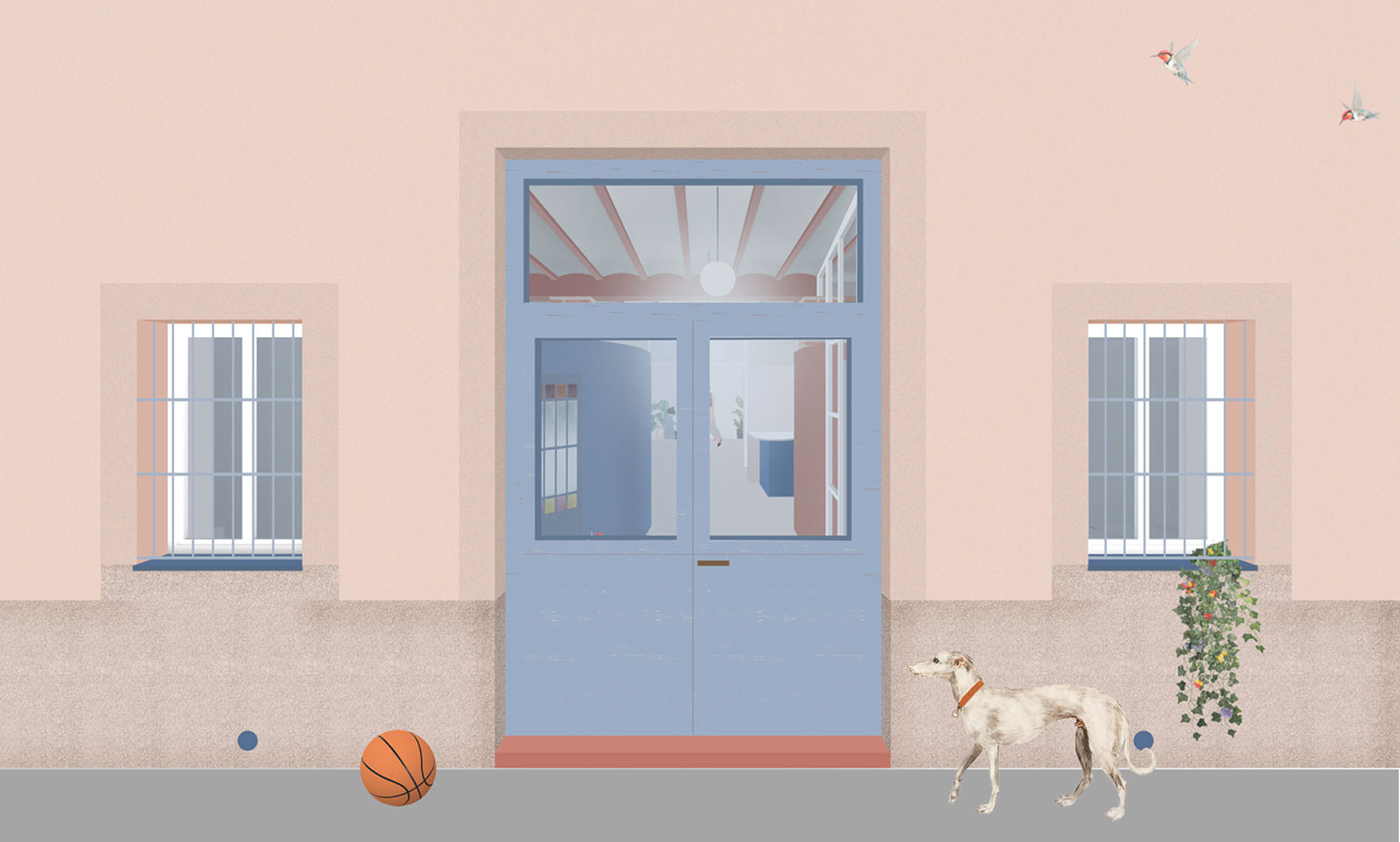
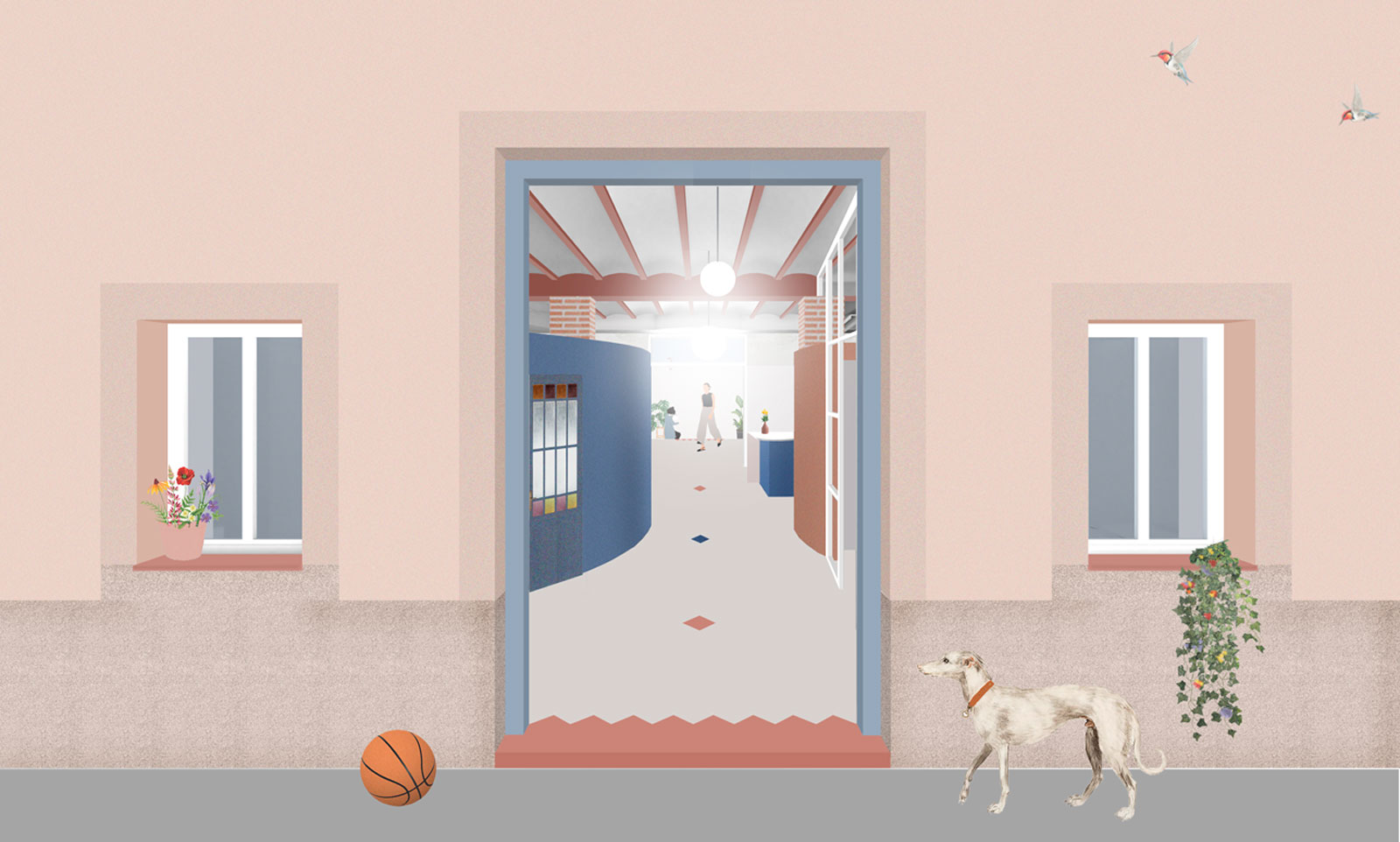
Hidden between two courtyards and set back from the street, Casa Patio reveals itself gradually. Beyond the gate, a seemingly effortless garden with two fruit trees frames a façade punctuated by elements in a distinctive blue, hinting at the careful intervention within.
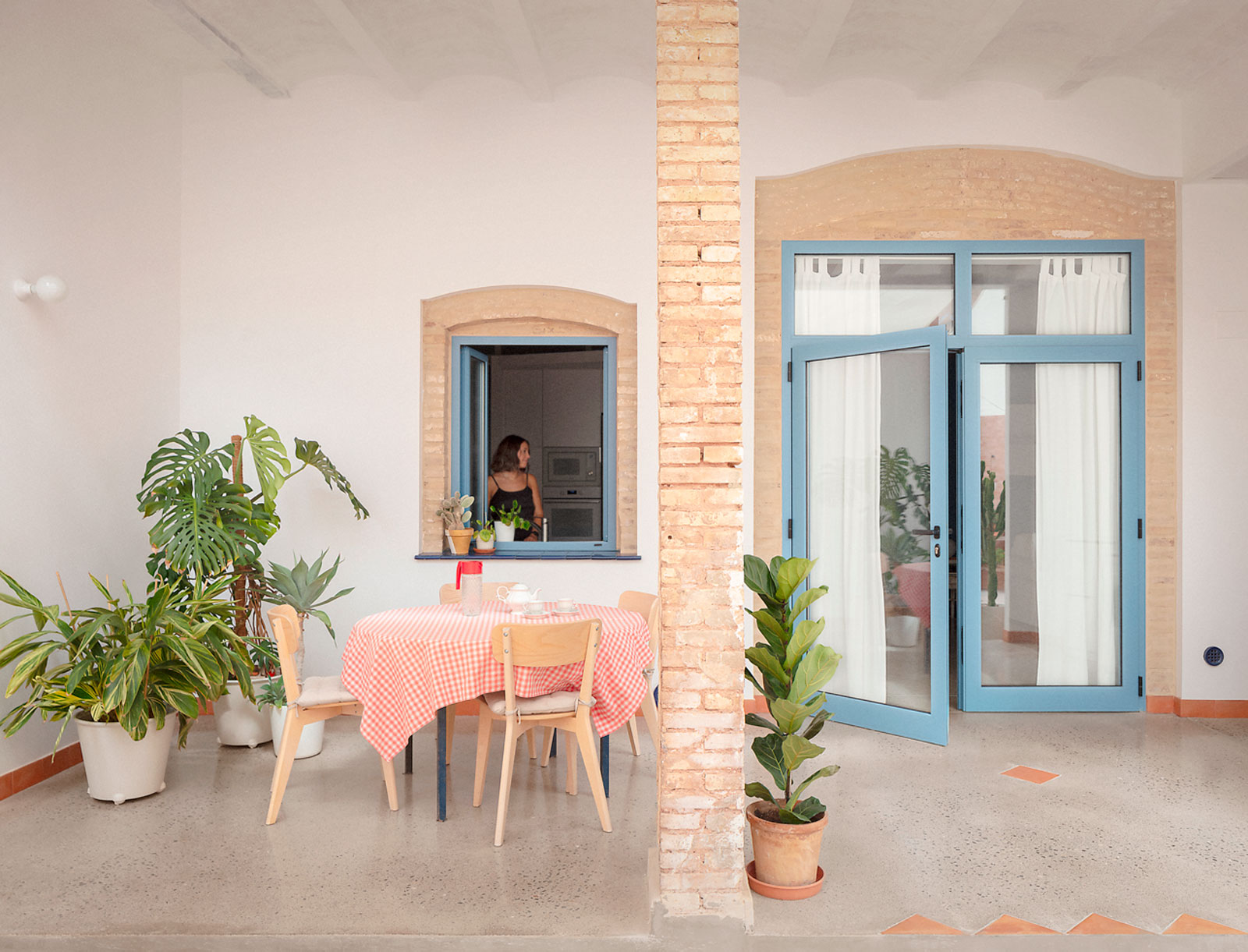
The original two-storey dwelling belongs to the rural architecture of the villages of l’Horta, organised along a pronounced central axis. Its first bays were deeply compartmentalised, followed by a third volume—likely a later annex—housing the kitchen. Thick load-bearing walls coexisted with slender partitions, generous wooden joinery and a high ground-floor ceiling that allowed cross-ventilation between front and rear patios. Yet, despite its spatial qualities and cherished recoverable elements, the house suffered from rising damp and no longer met the needs of its inhabitants.
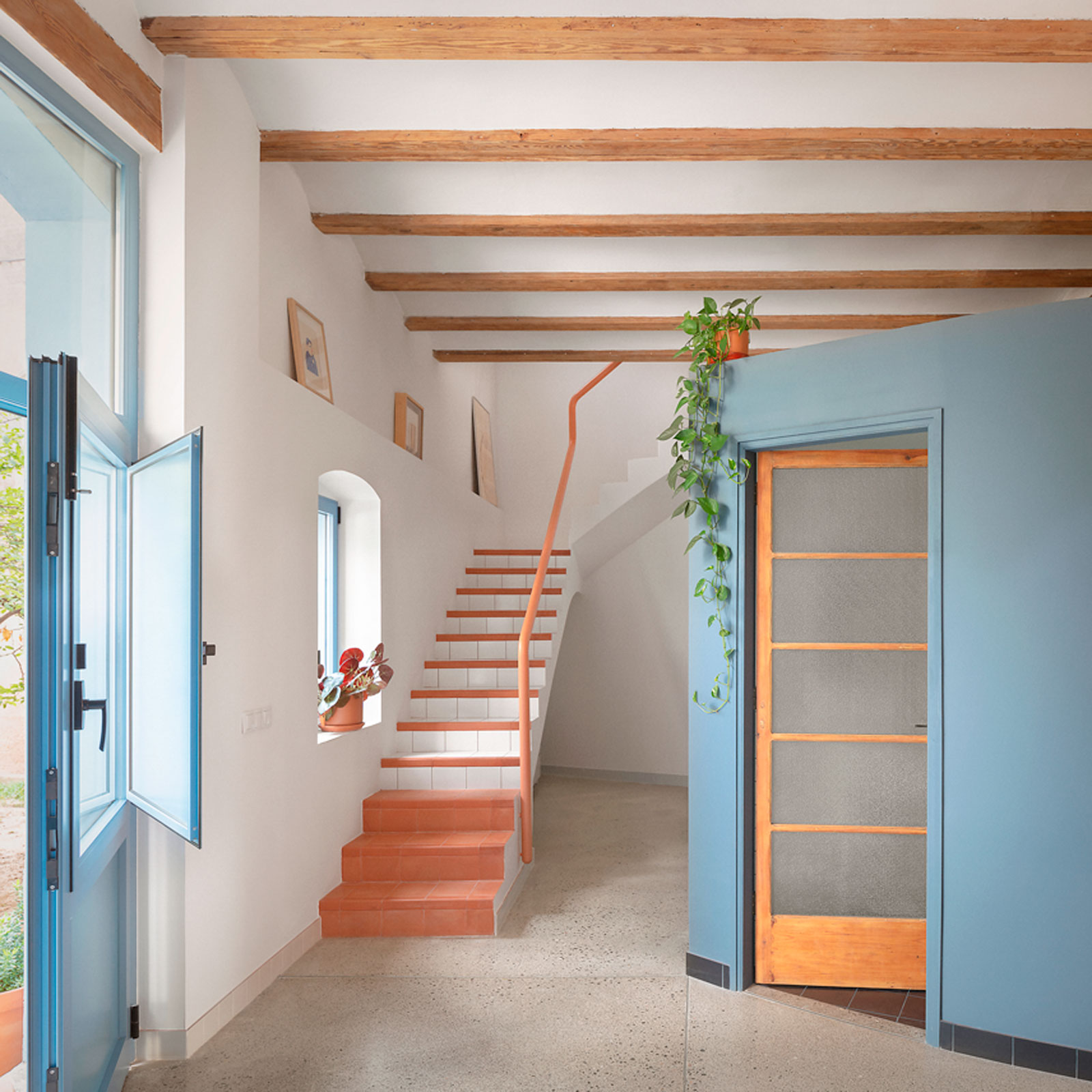
The project began with a thorough refurbishment and a sensitive intervention on the envelope to protect the dwelling from moisture, ensuring durability while preserving its character.
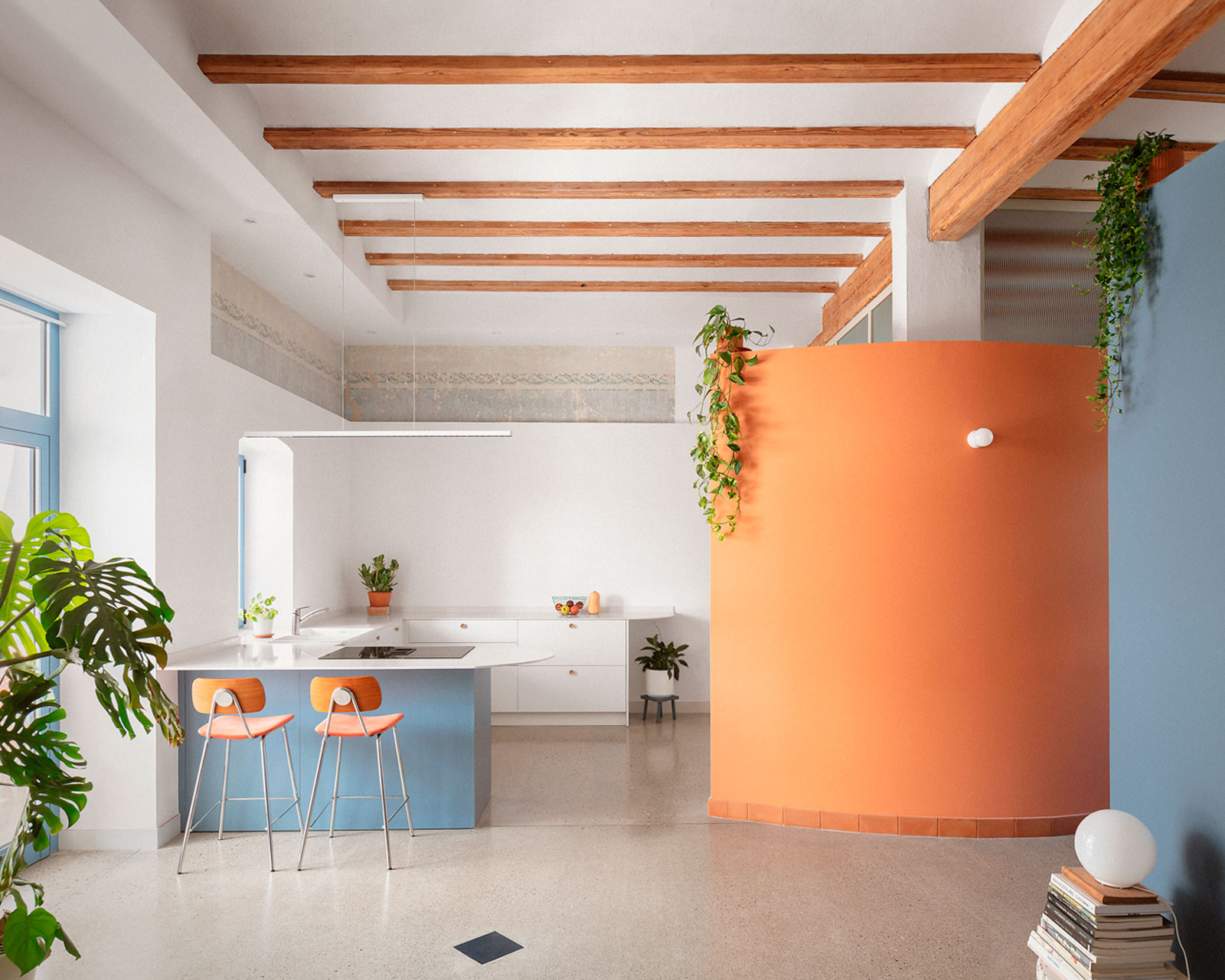
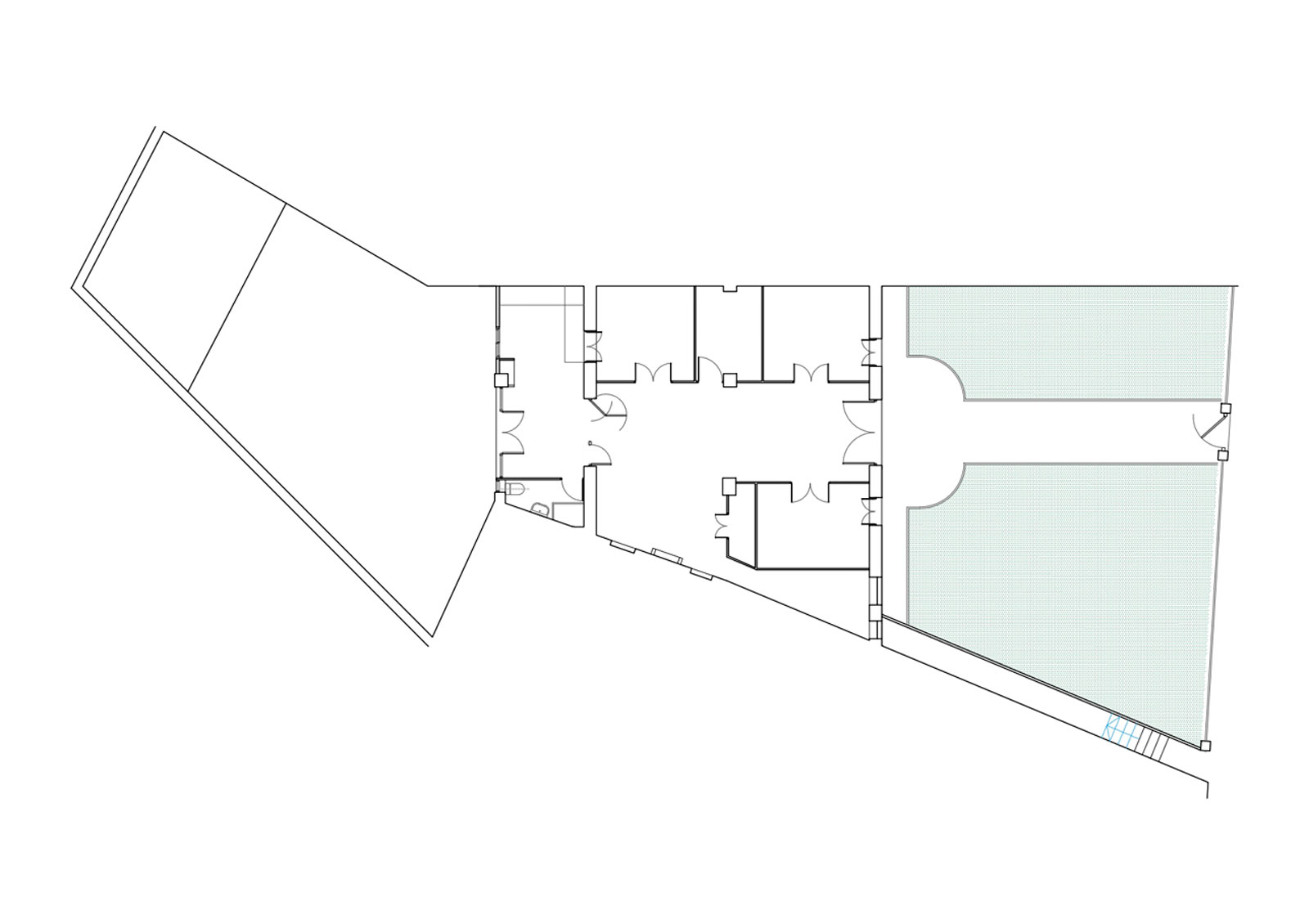
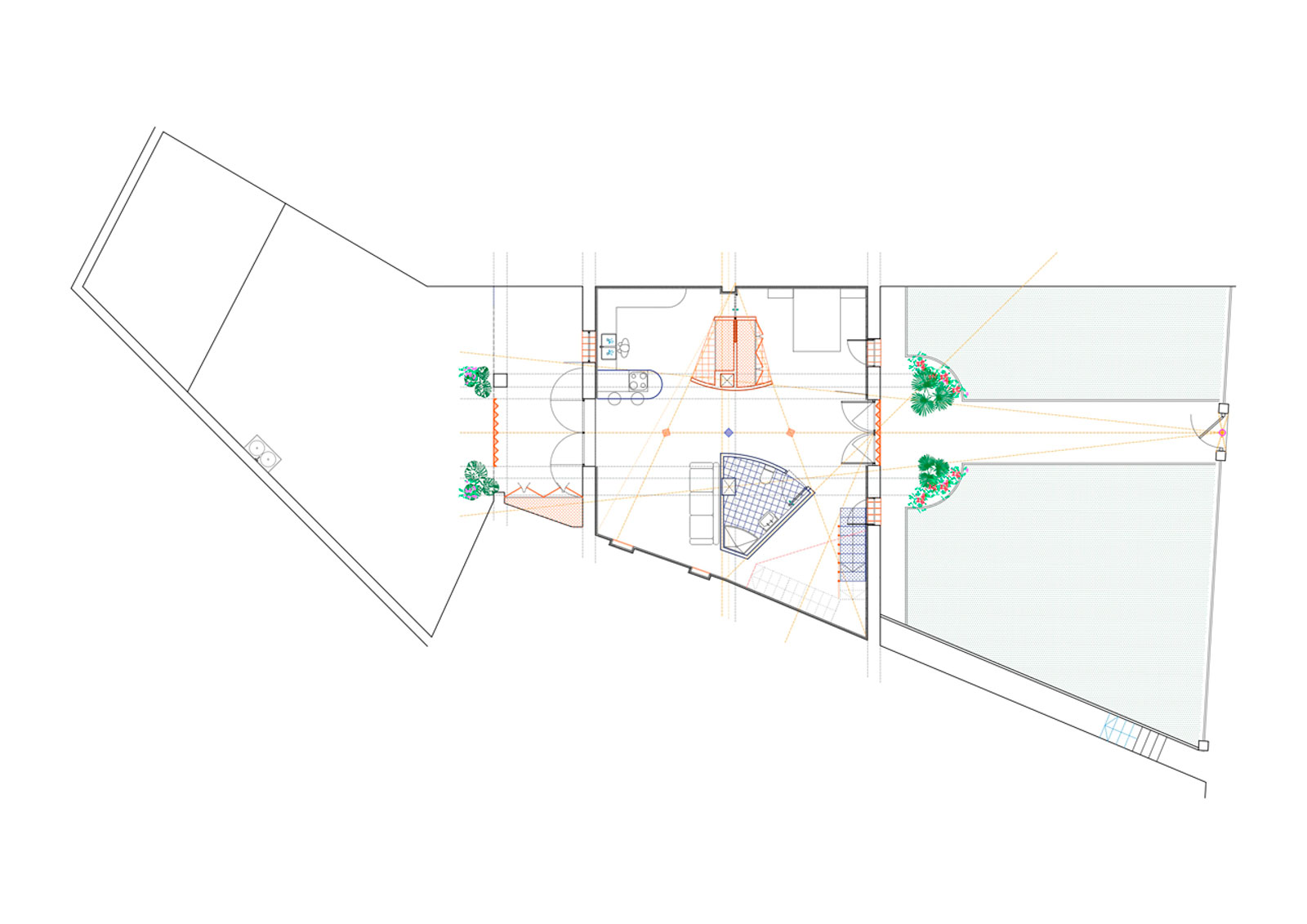
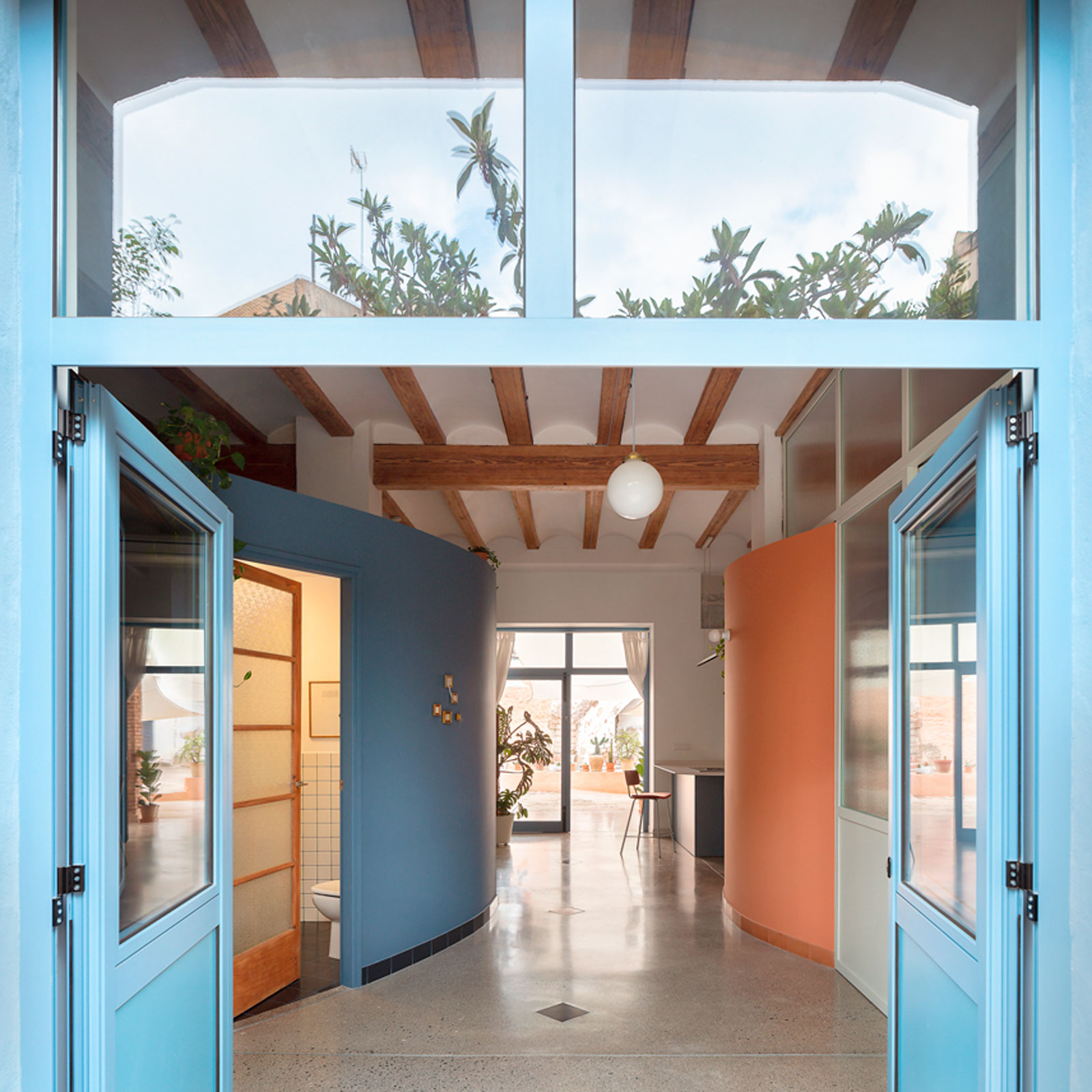
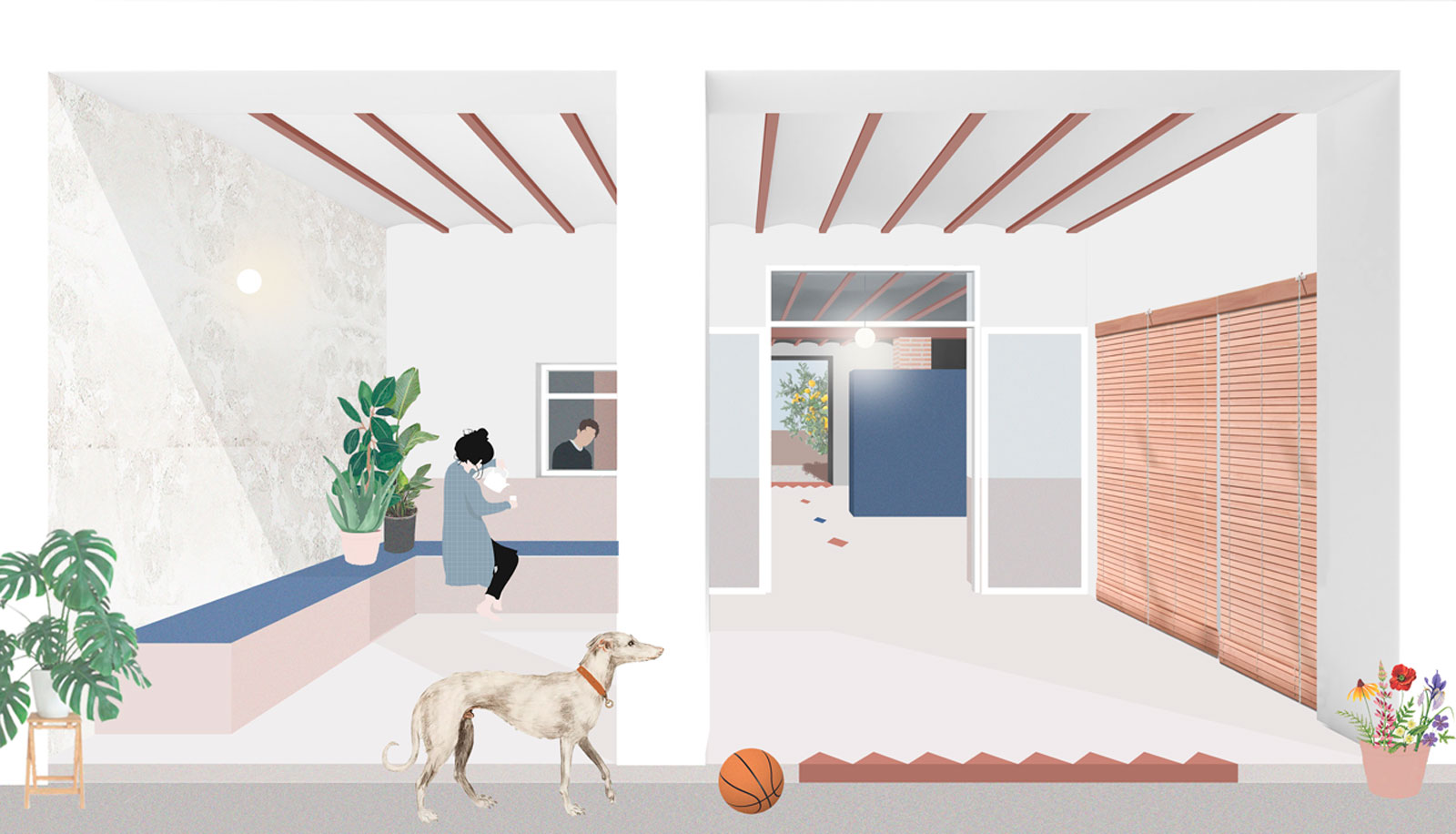
Within this renewed shell, two precisely inserted volumes redefine the ground floor. Calibrated according to the diagonals and visual routes of the existing plan, they accommodate a bathroom and kitchen storage without disrupting the original two-bay structure or its subtly imperfect symmetry.
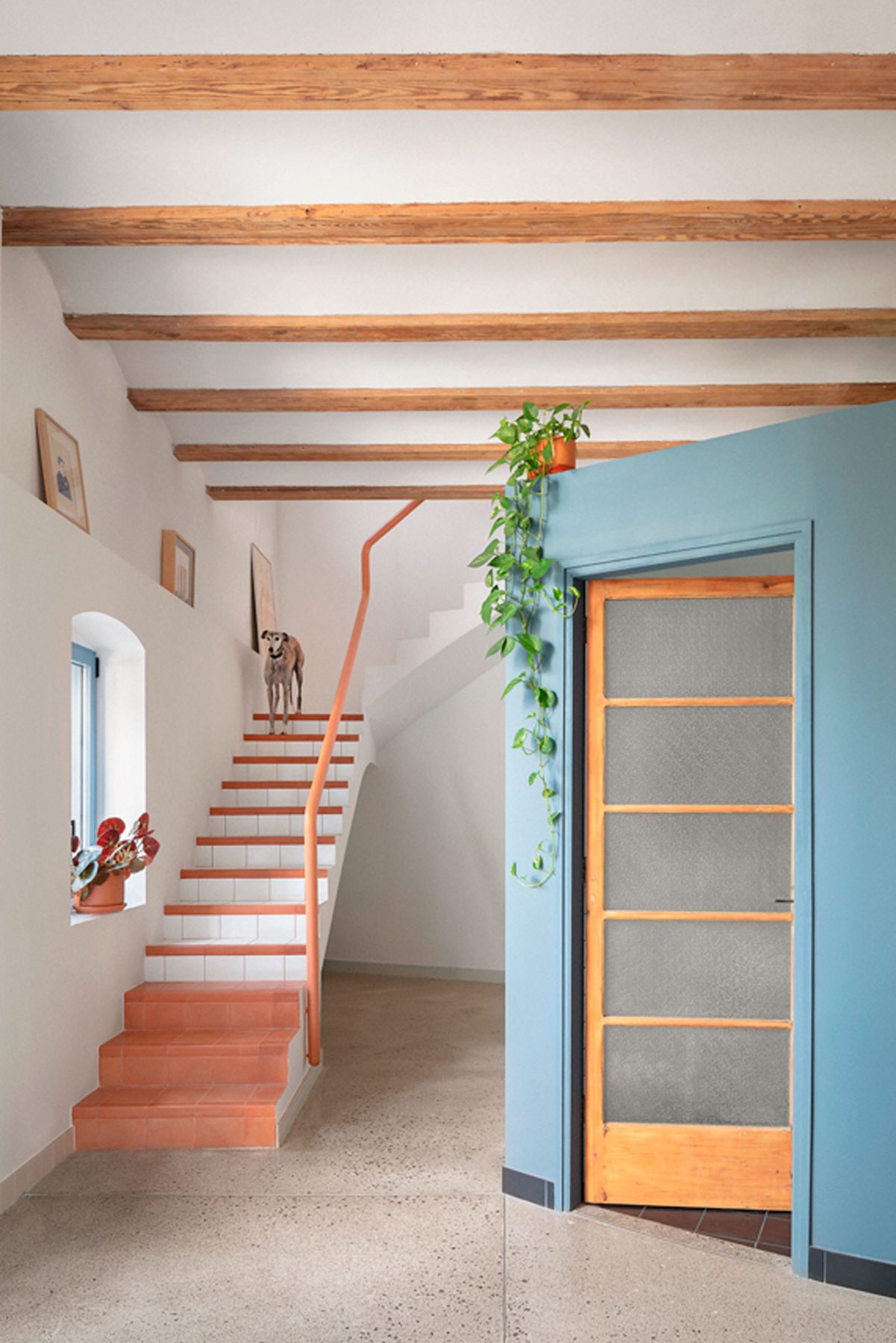
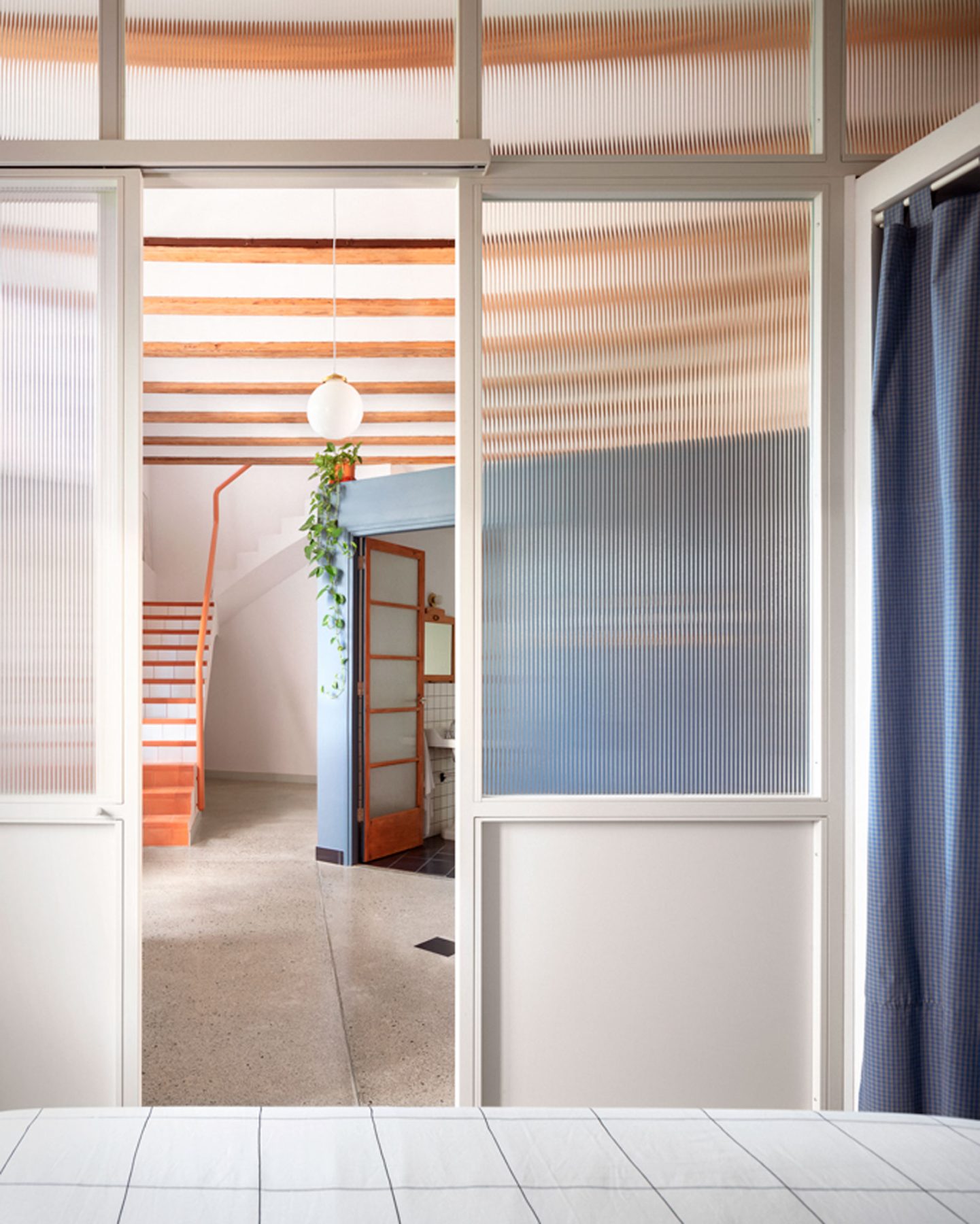
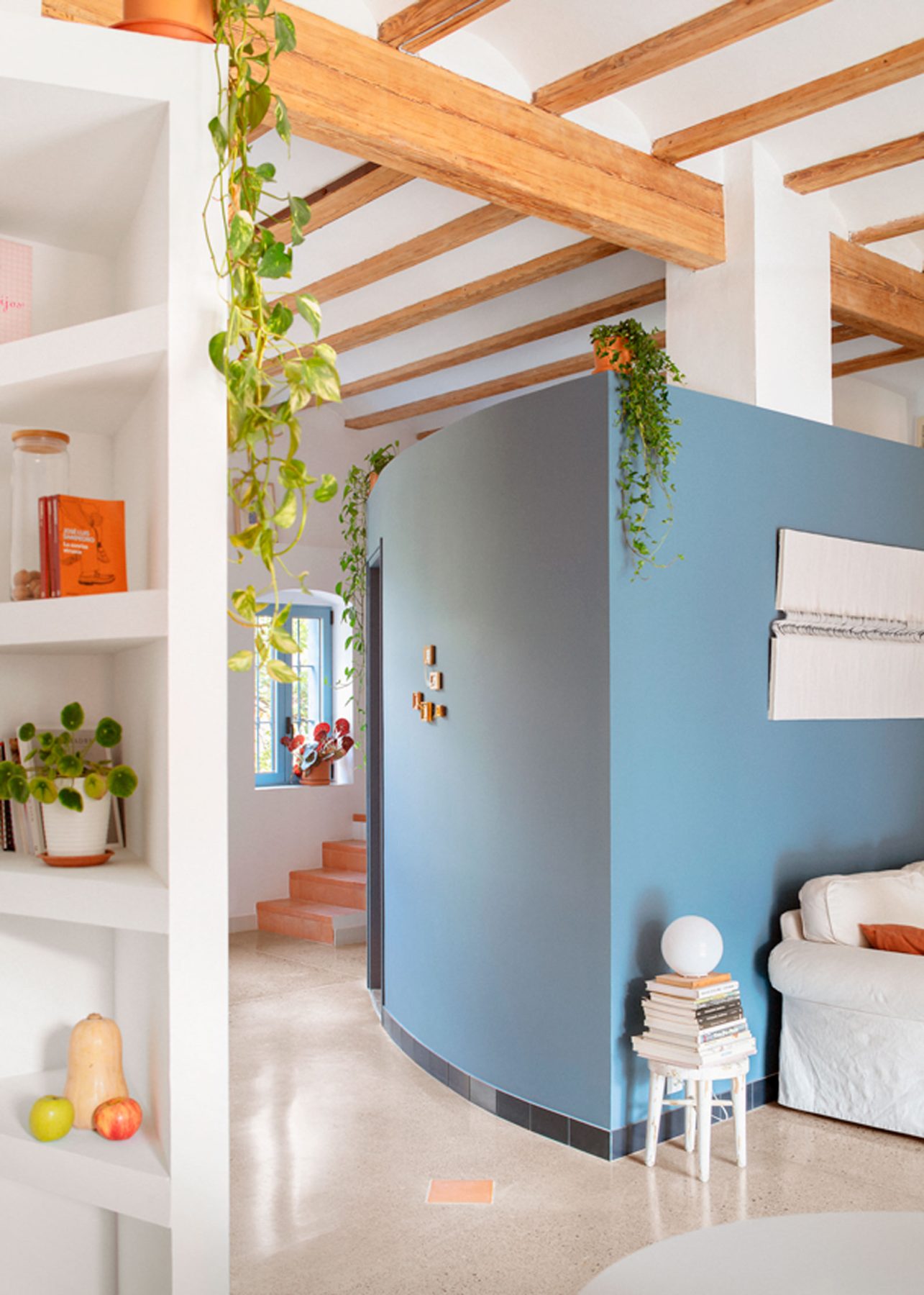
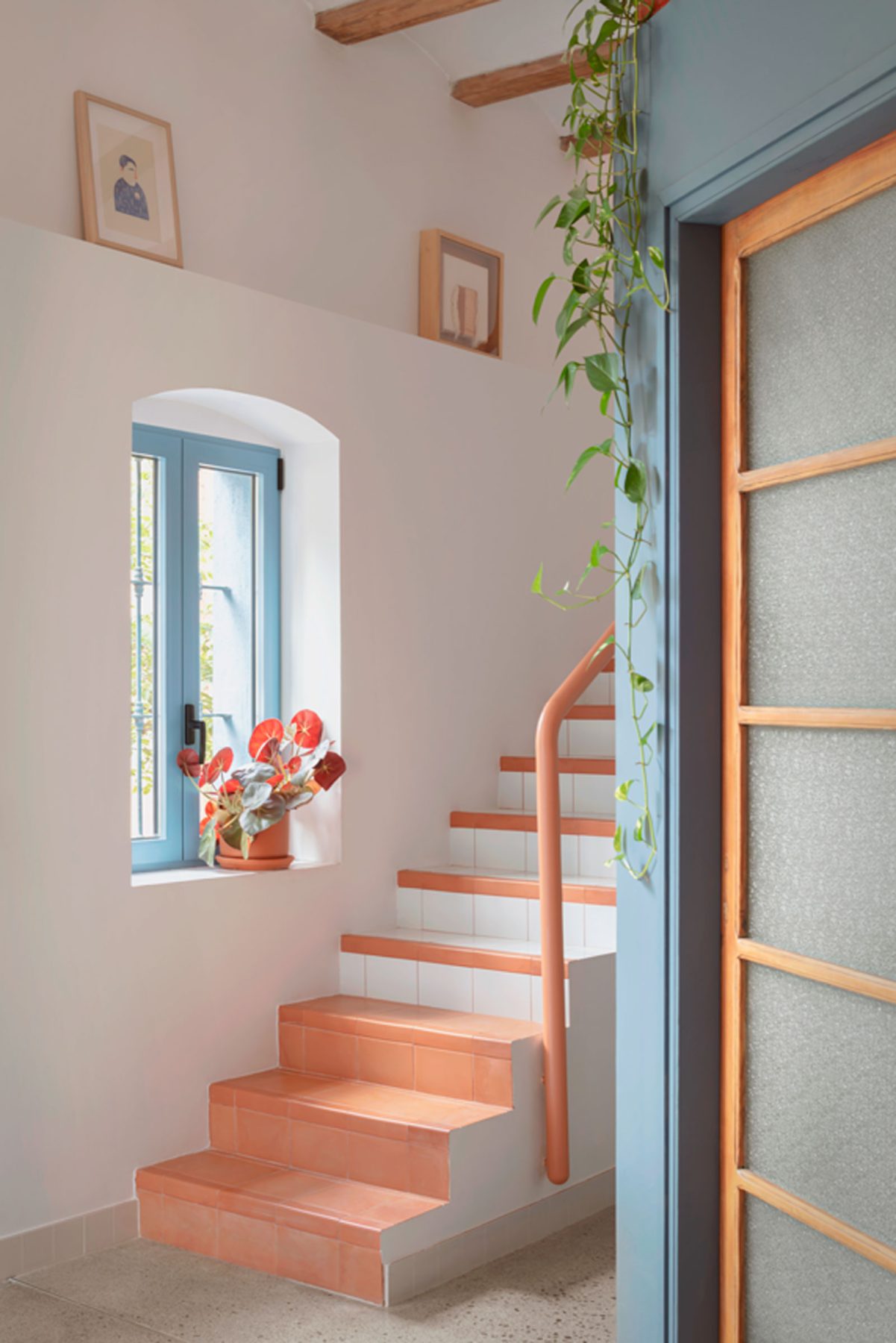
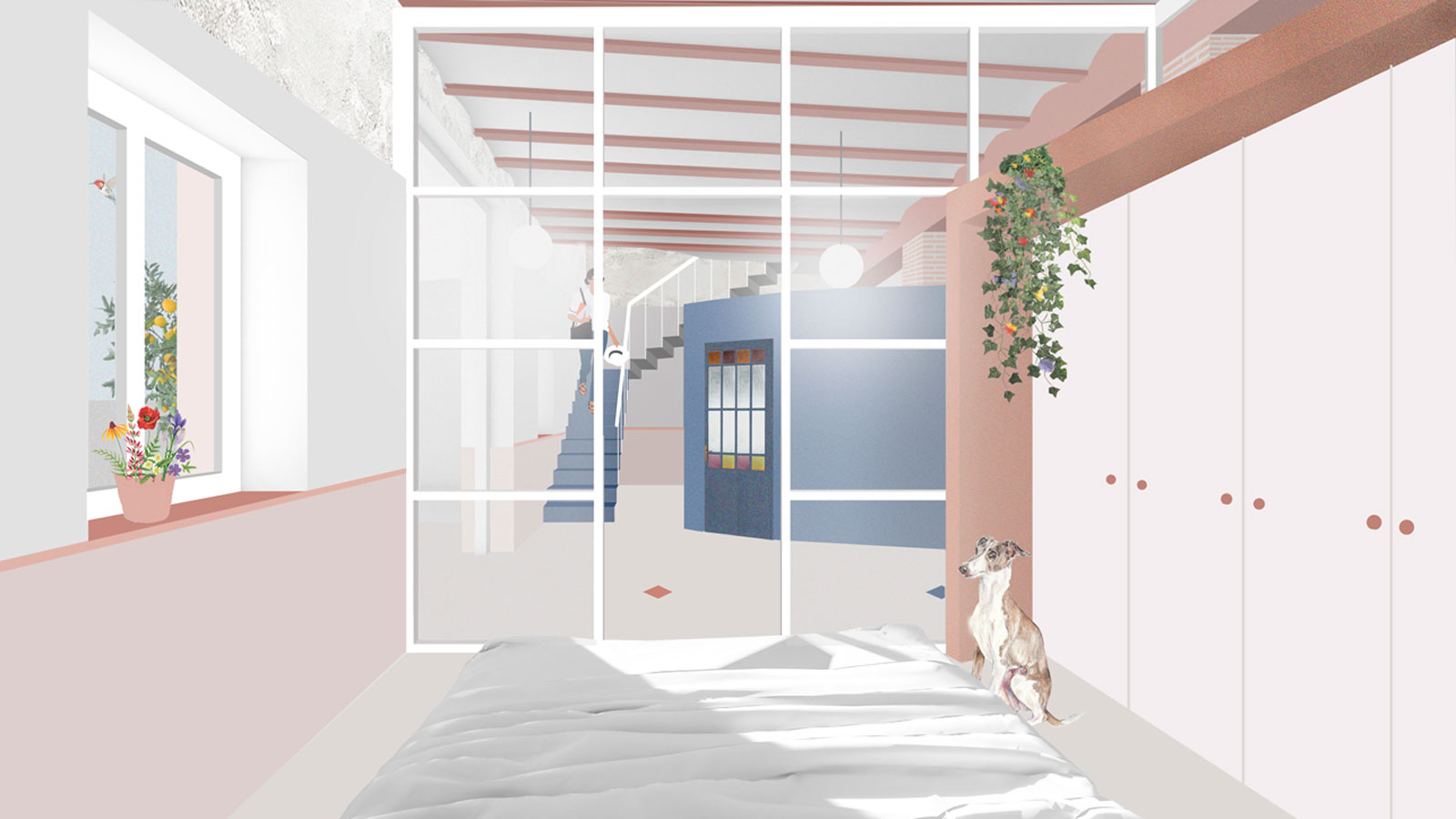
A new vaulted staircase reinstates the connection between floors, recalling the demolished original while attaching discreetly to the façade and wall. The sculptural volumes stop short of the ceiling, maintaining spatial continuity and allowing a fluid promenade punctuated by four open-ended, adaptable enclosures.
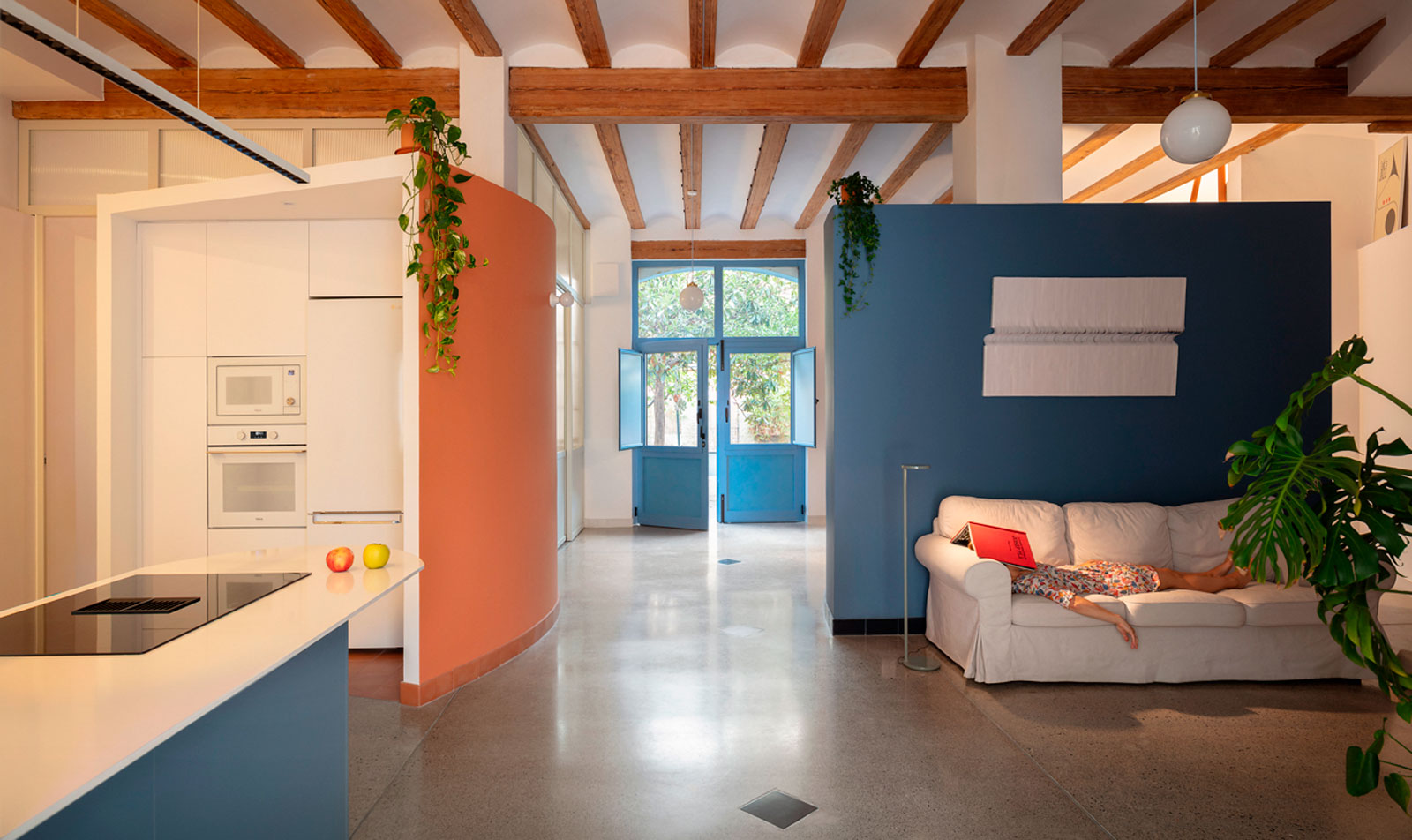
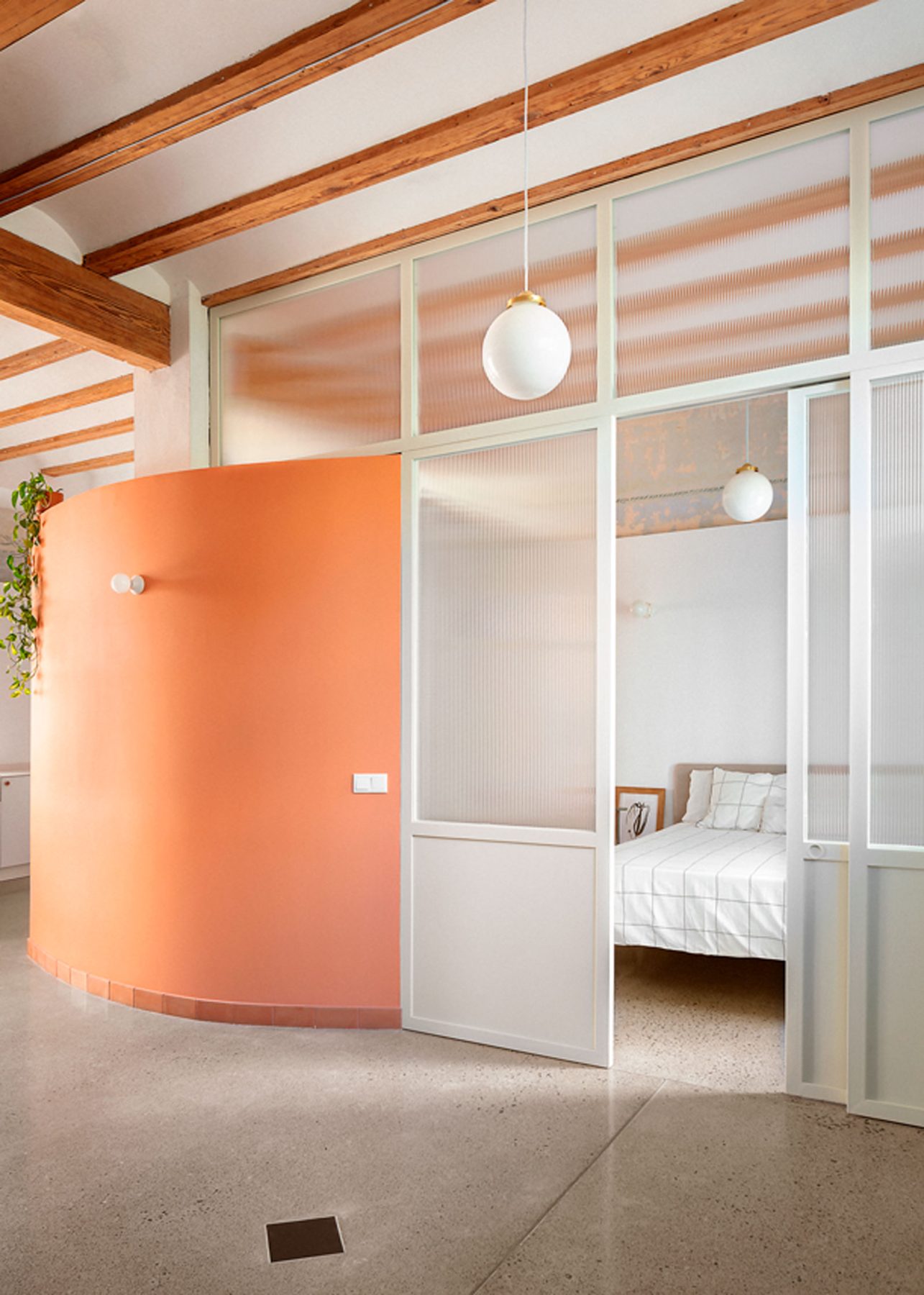
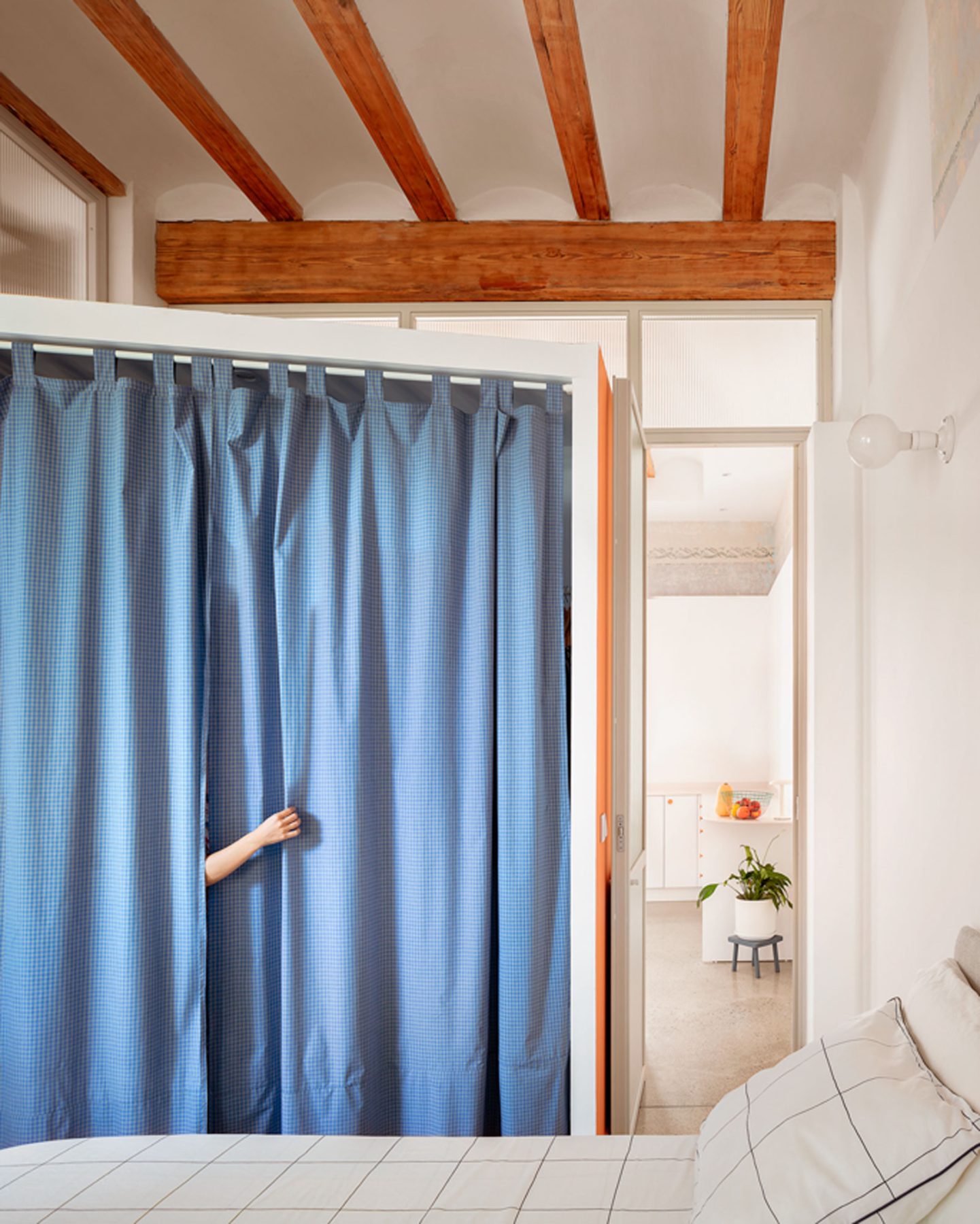
Colour operates as both spatial and atmospheric media. One volume is rendered in orangey ochre, the other in blue, set against a continuous coarse concrete floor with exposed aggregate and ceramic inlays that echo their tones.
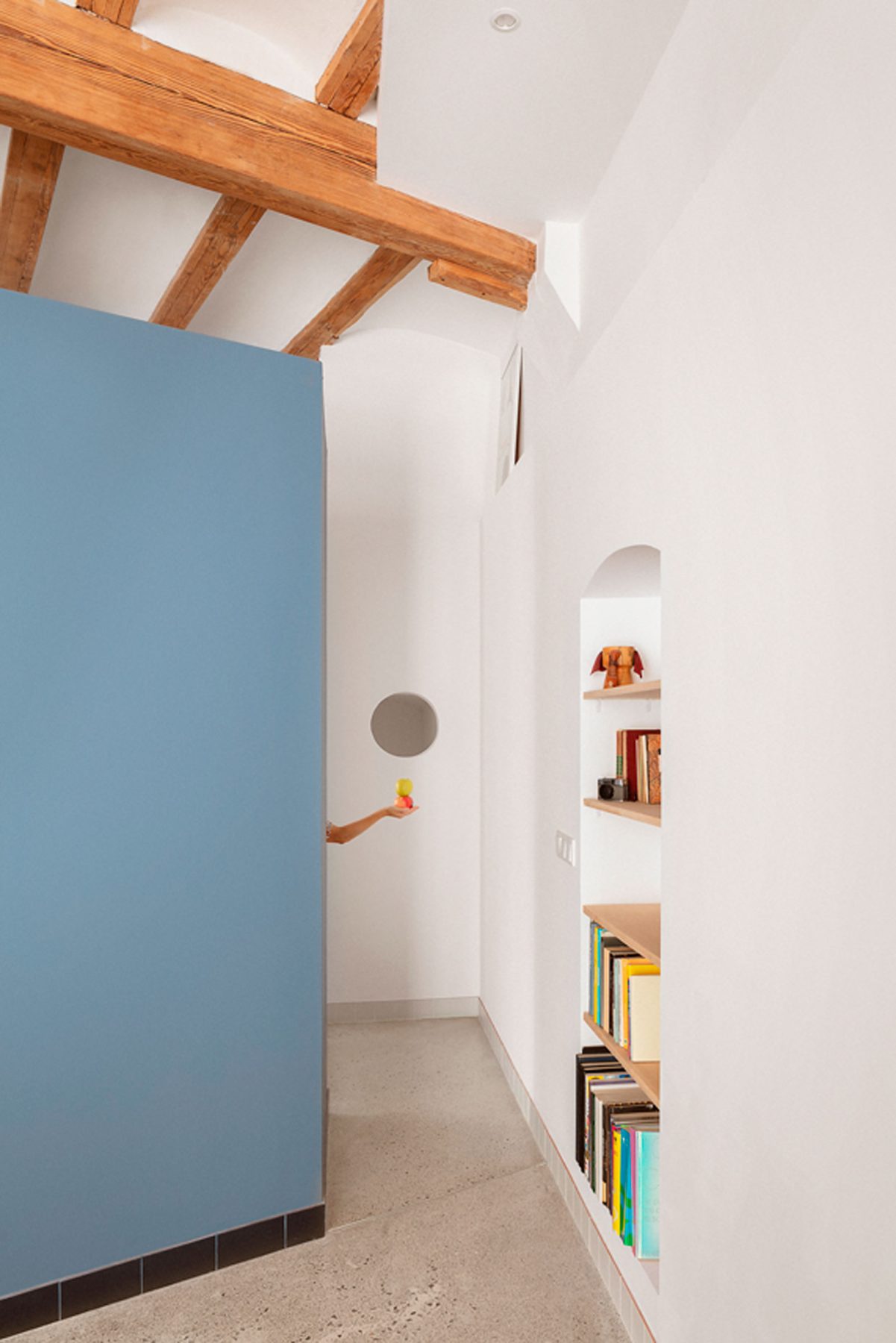
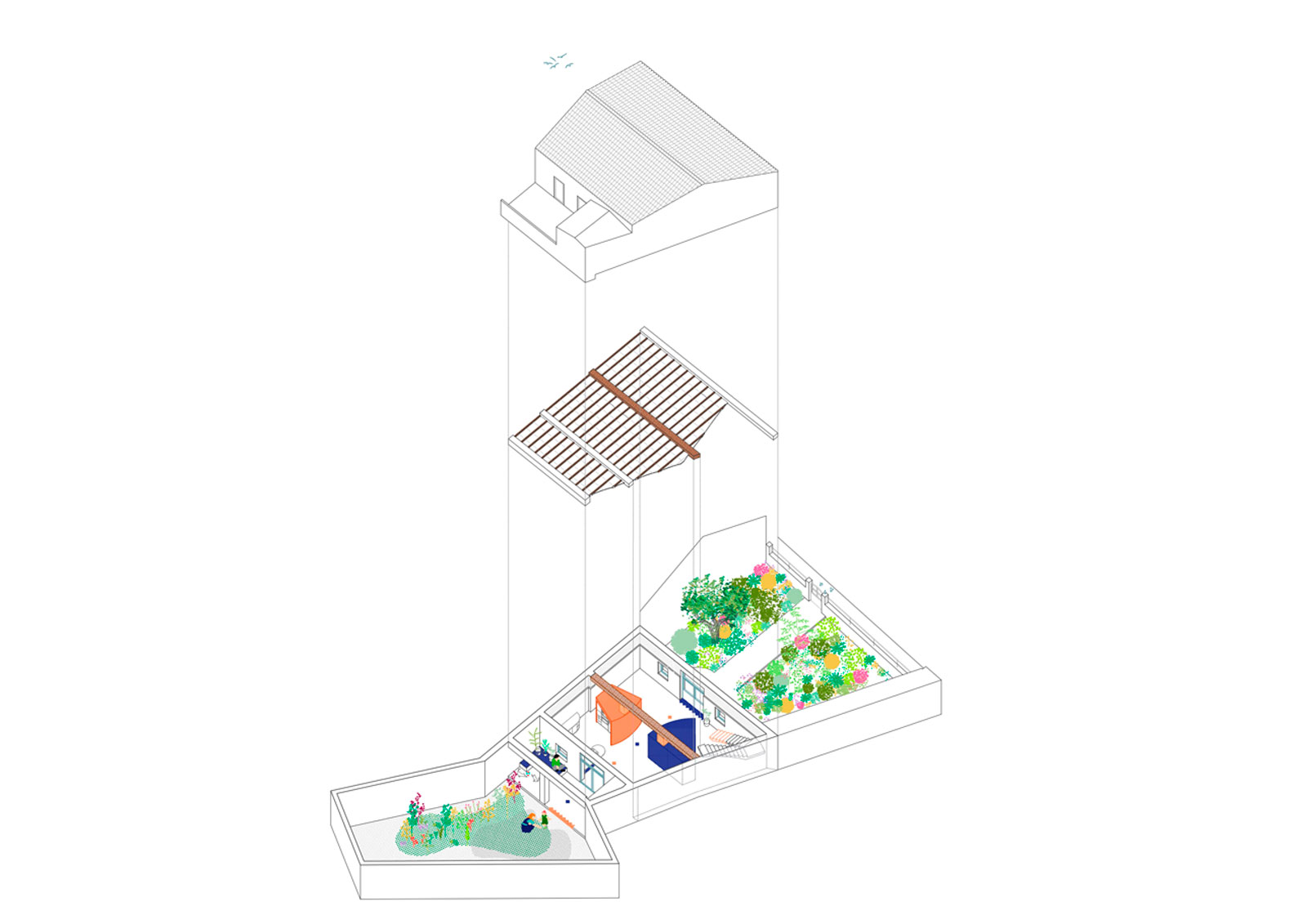
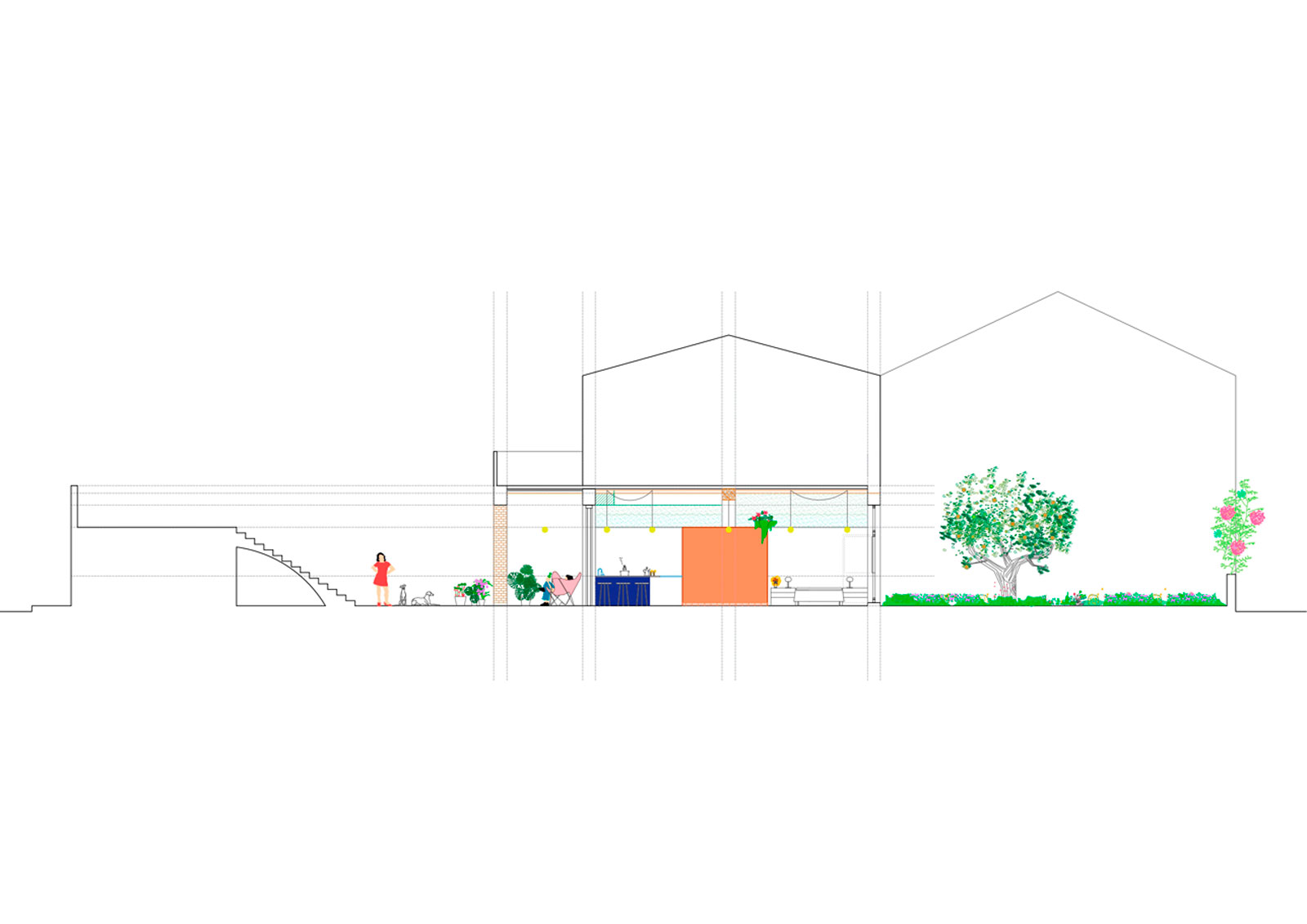
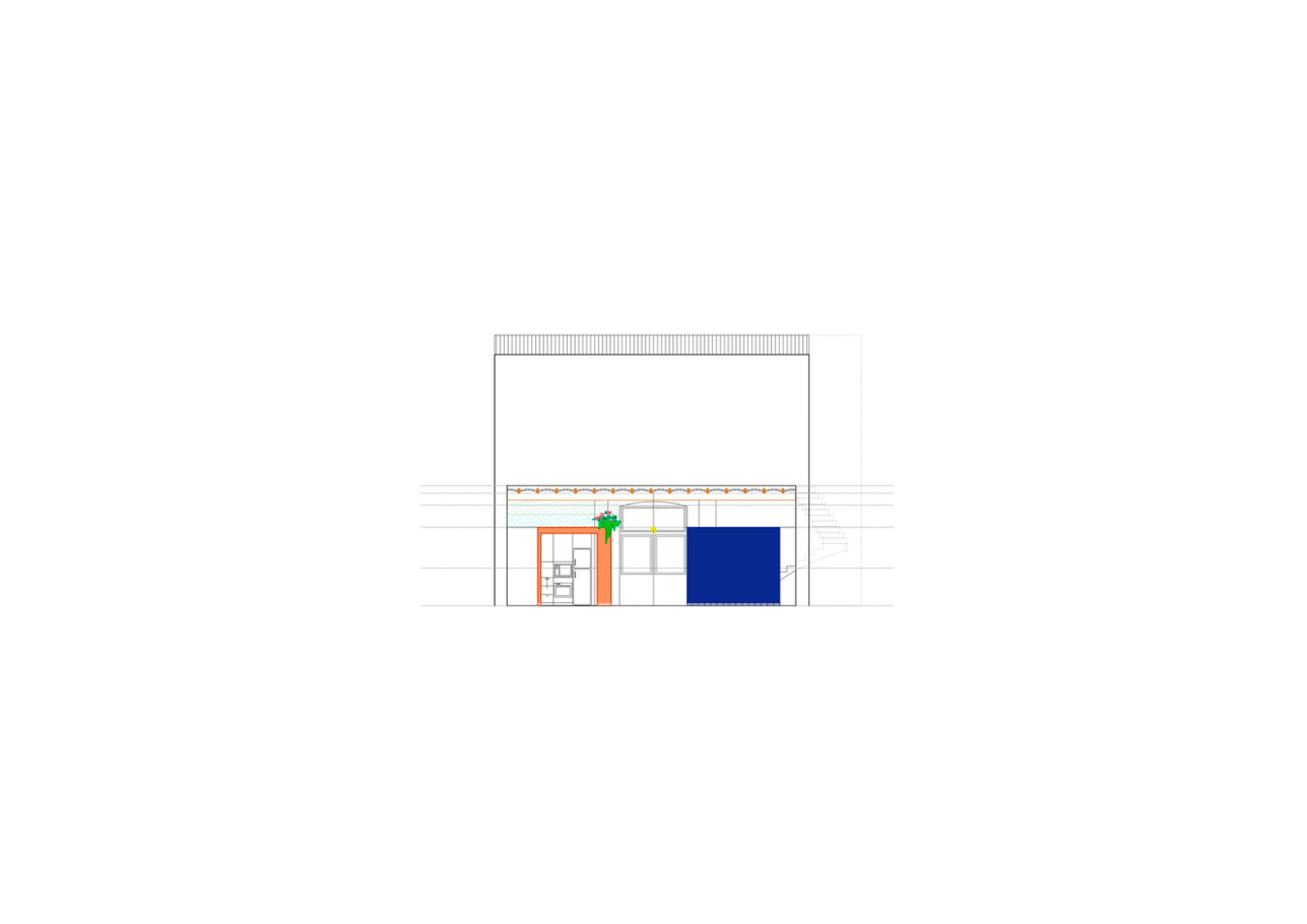
The material treatment is delicate: beams and joists are stripped back to their first layer, walls carefully peeled to reveal traces of painted borders. Casa Patio becomes an exercise in balance—between preservation and insertion, protection and openness, structure and softness.
Facts & Credits
Project title Casa patio casa patio
Typology Residential, Renovation
Location Valencia, Spain
Architecture Piano Piano Studio (Maria Donnini + Maria Grifo)
Collaborators Adrián Ripoll, Estudiante de arquitectura
Dates April 2021 – July 2023
Photography Milena Villalba
Text provided by the architects
El camino de la Almazara
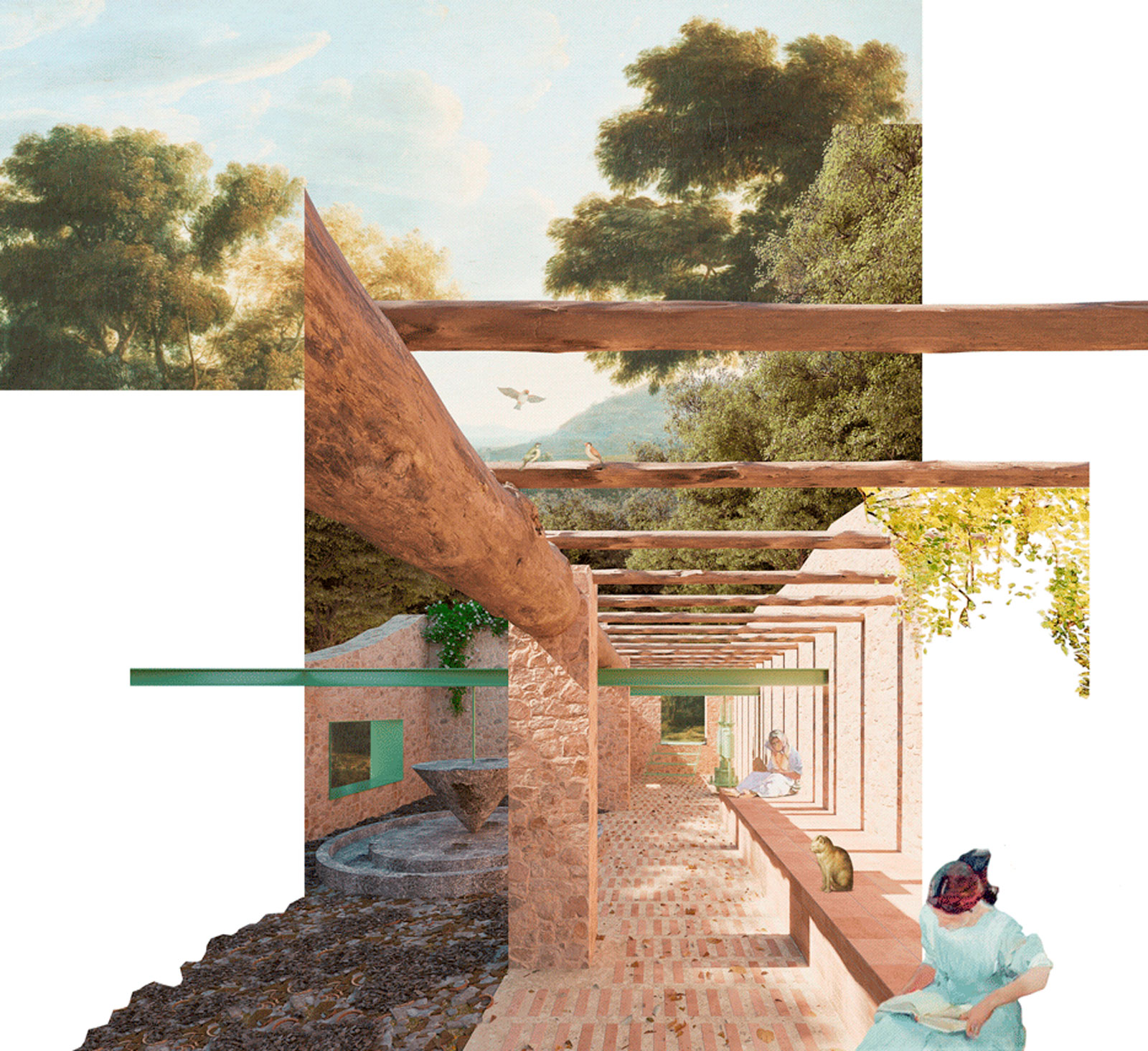
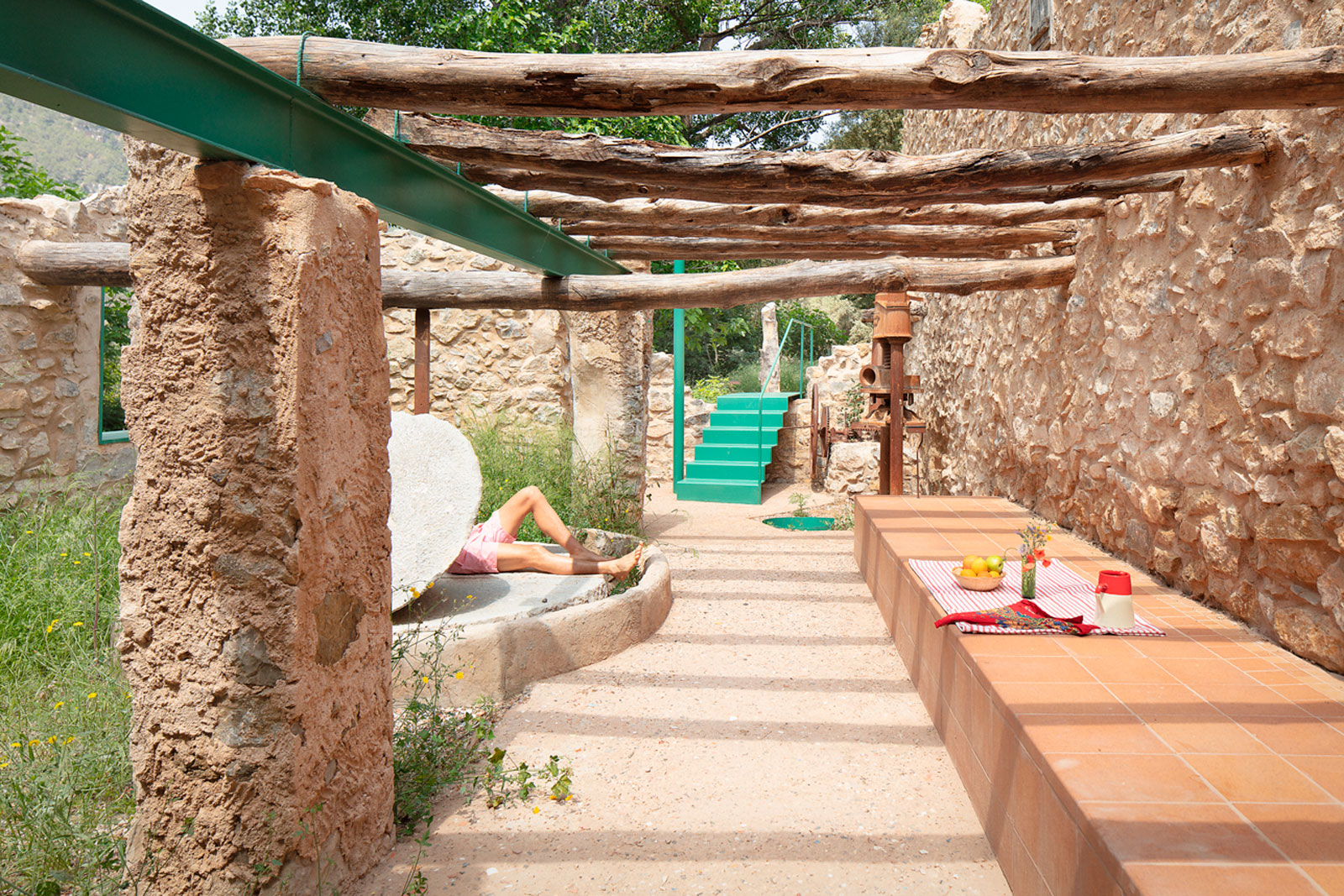
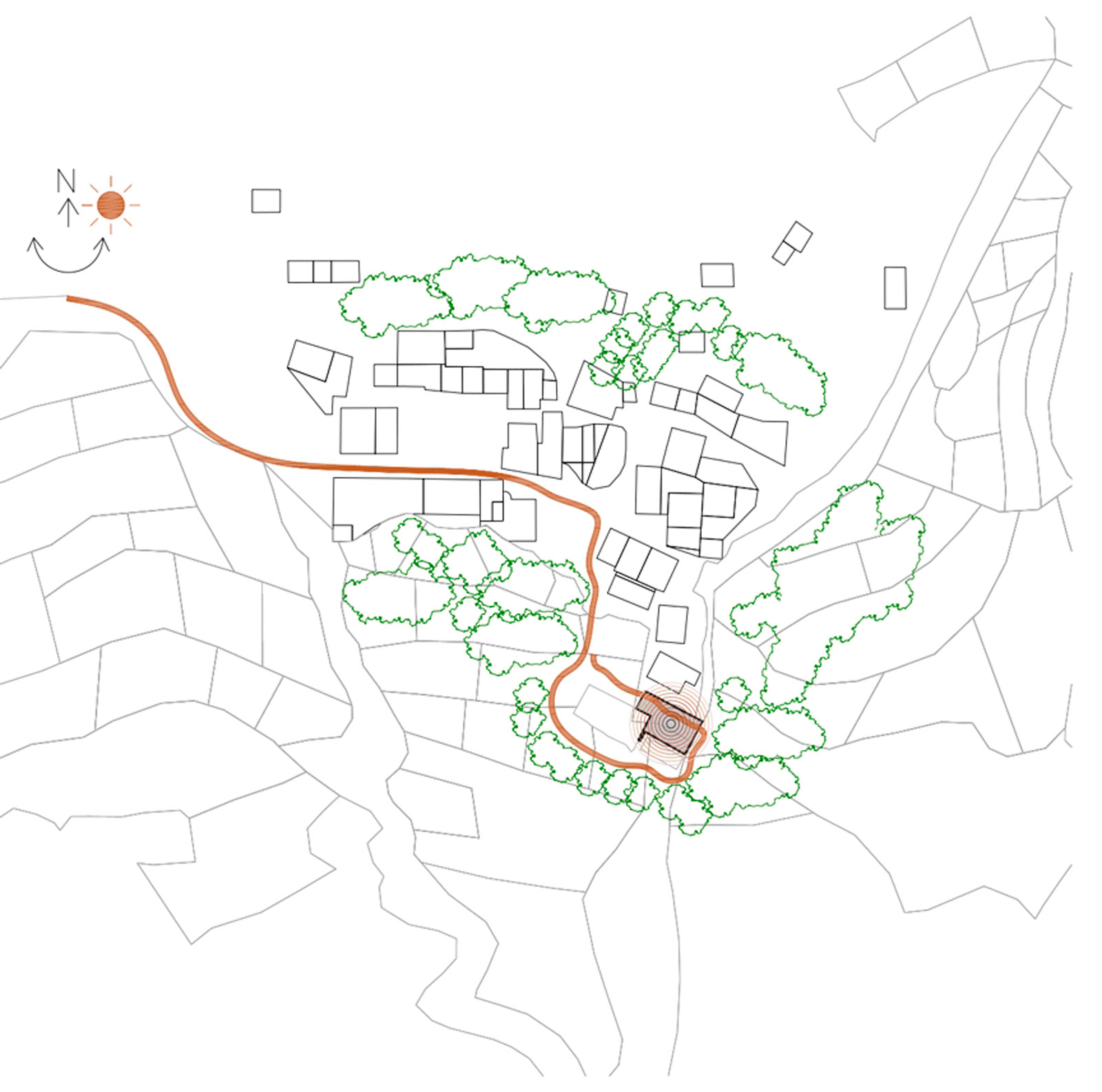
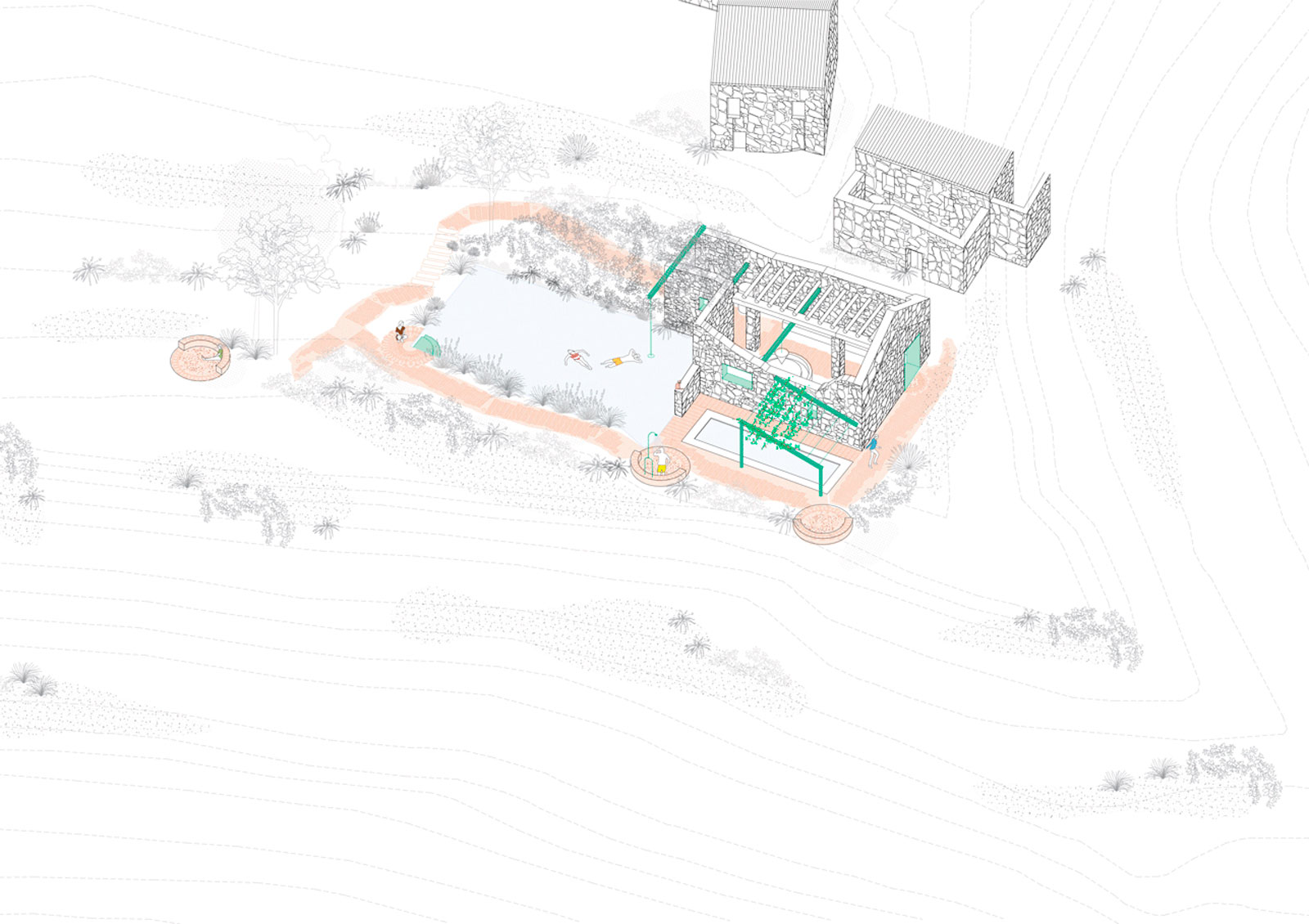
“El camino de la Almazara” unfolds in Artejuela, a small village in Alto Mijares, as a project rooted in attentive observation. Rather than imposing a new narrative, the proposal acknowledges the paths already traced by inhabitants and visitors, enhancing—almost imperceptibly—the experience of walking and staying. It is not an alteration of the existing route, but a careful intensification of its spatial and social qualities.
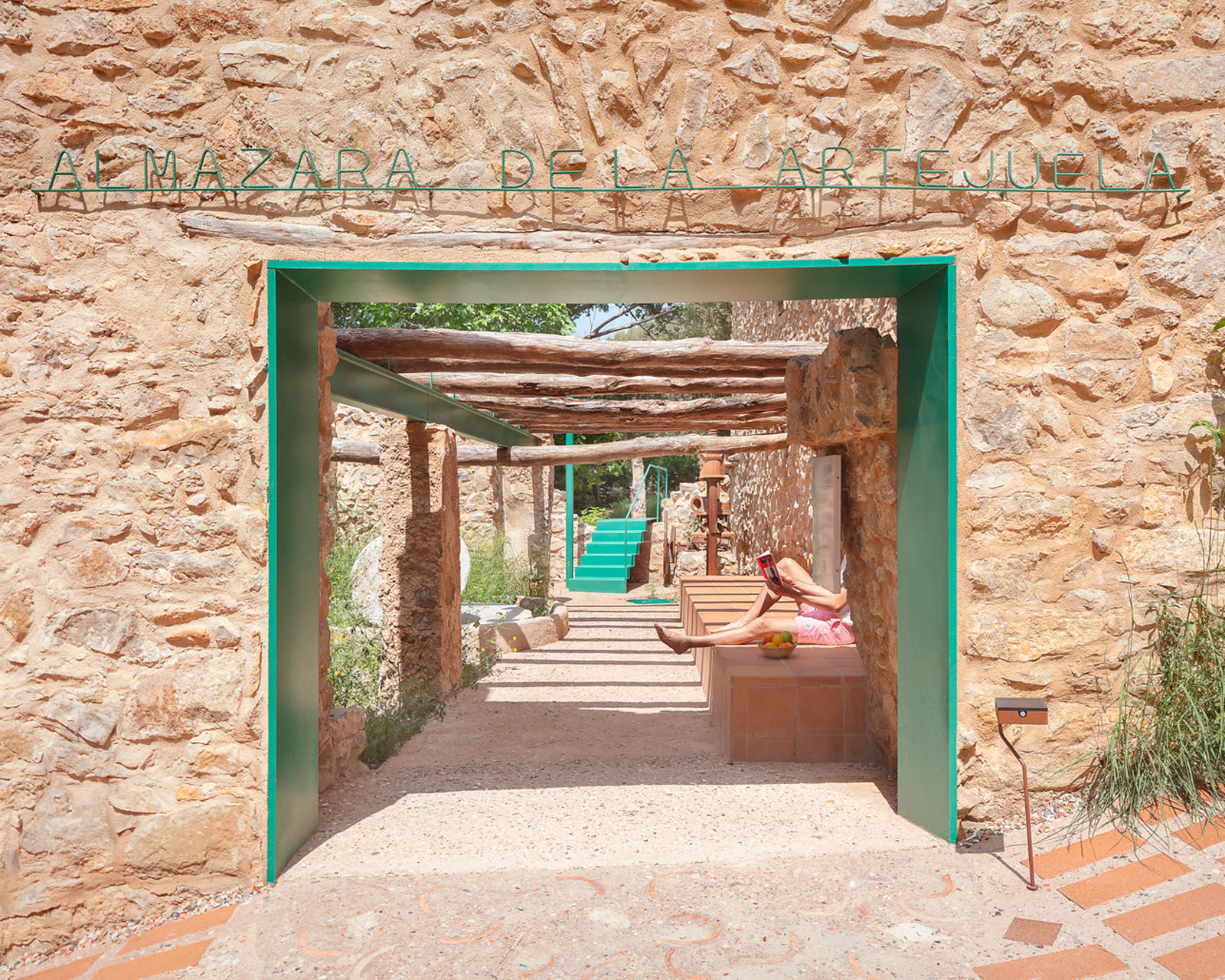
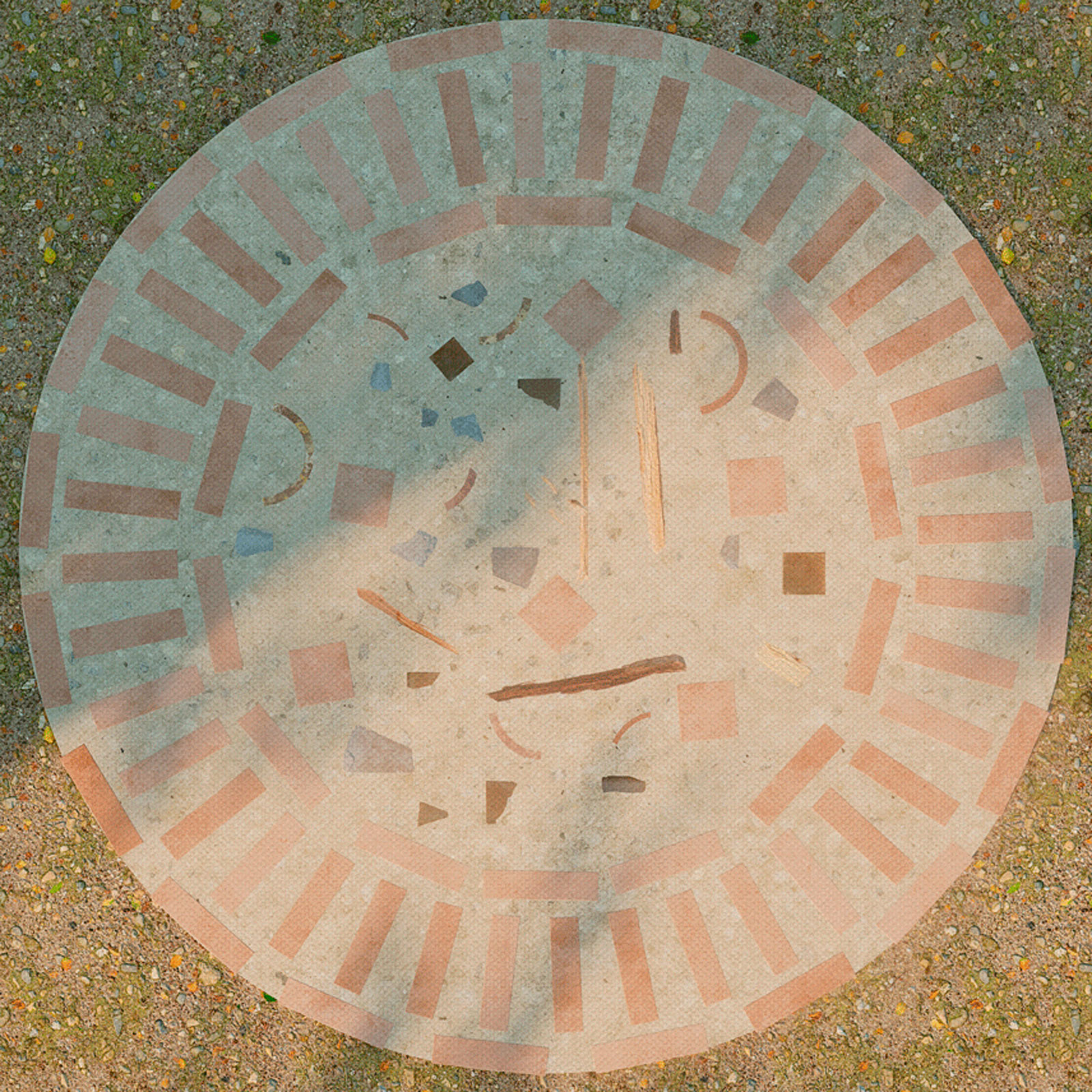
The intervention threads between the irrigation ditch and the pond, across stoneware fragments, fallen leaves and remnants of collapse.
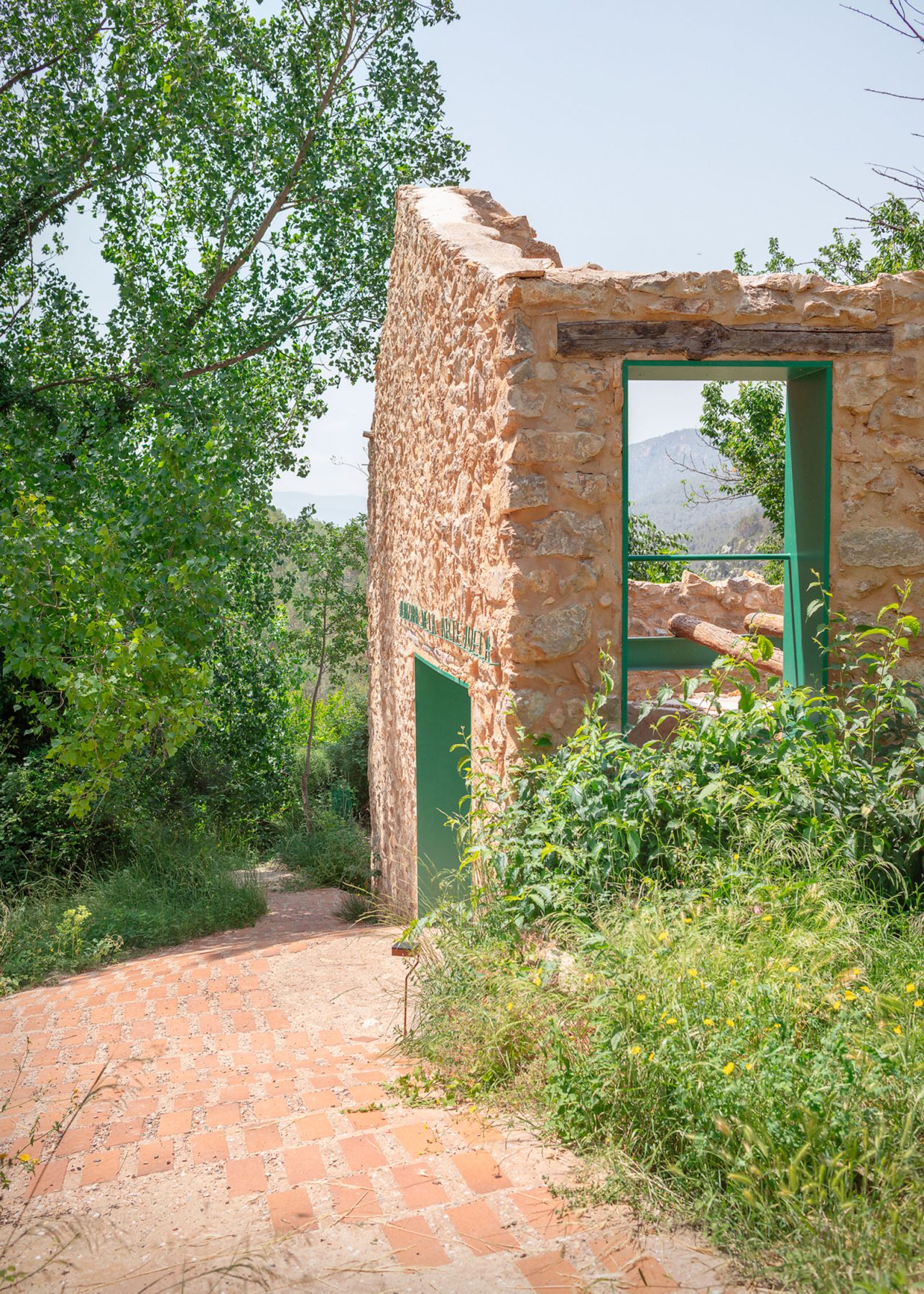

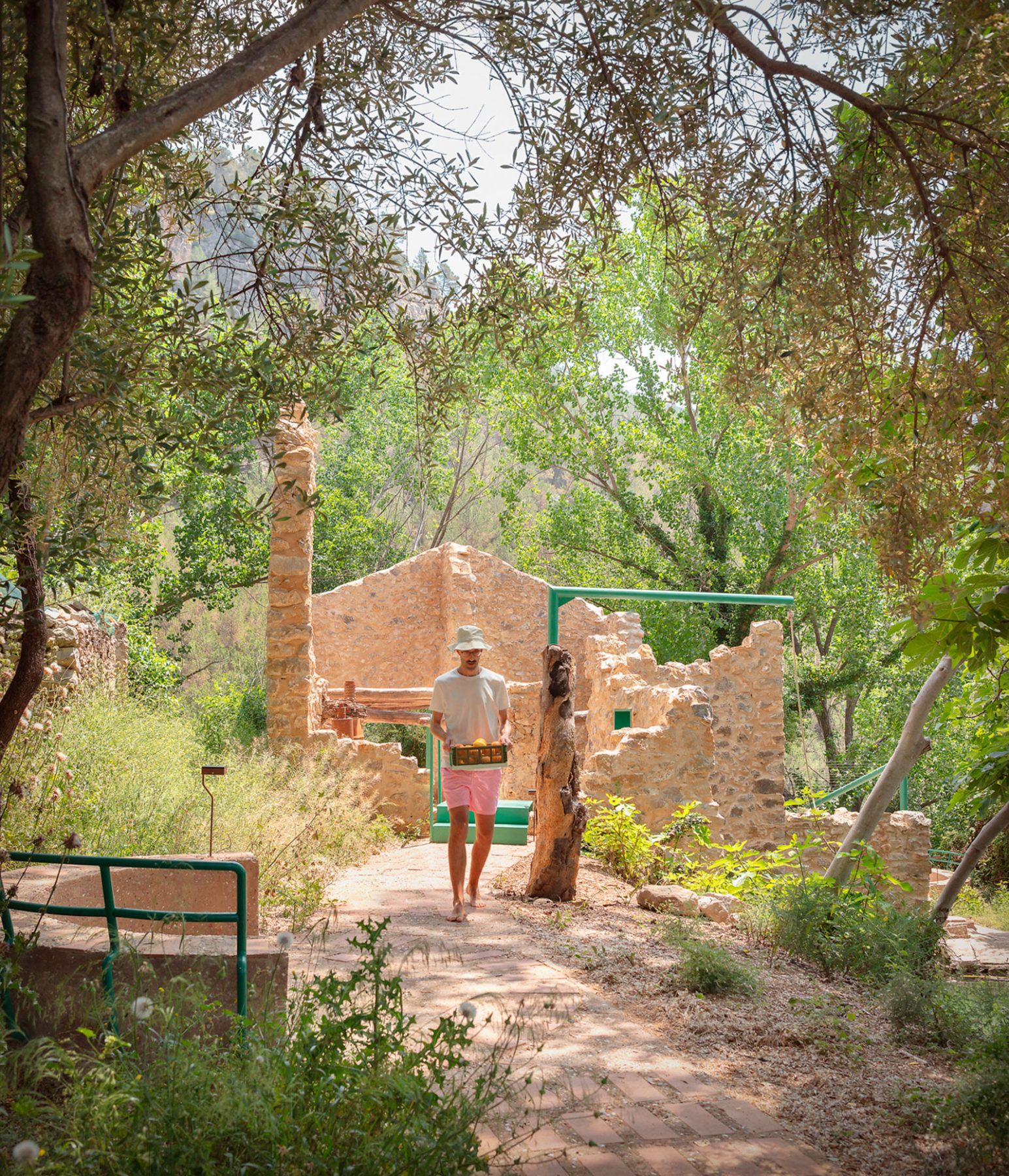

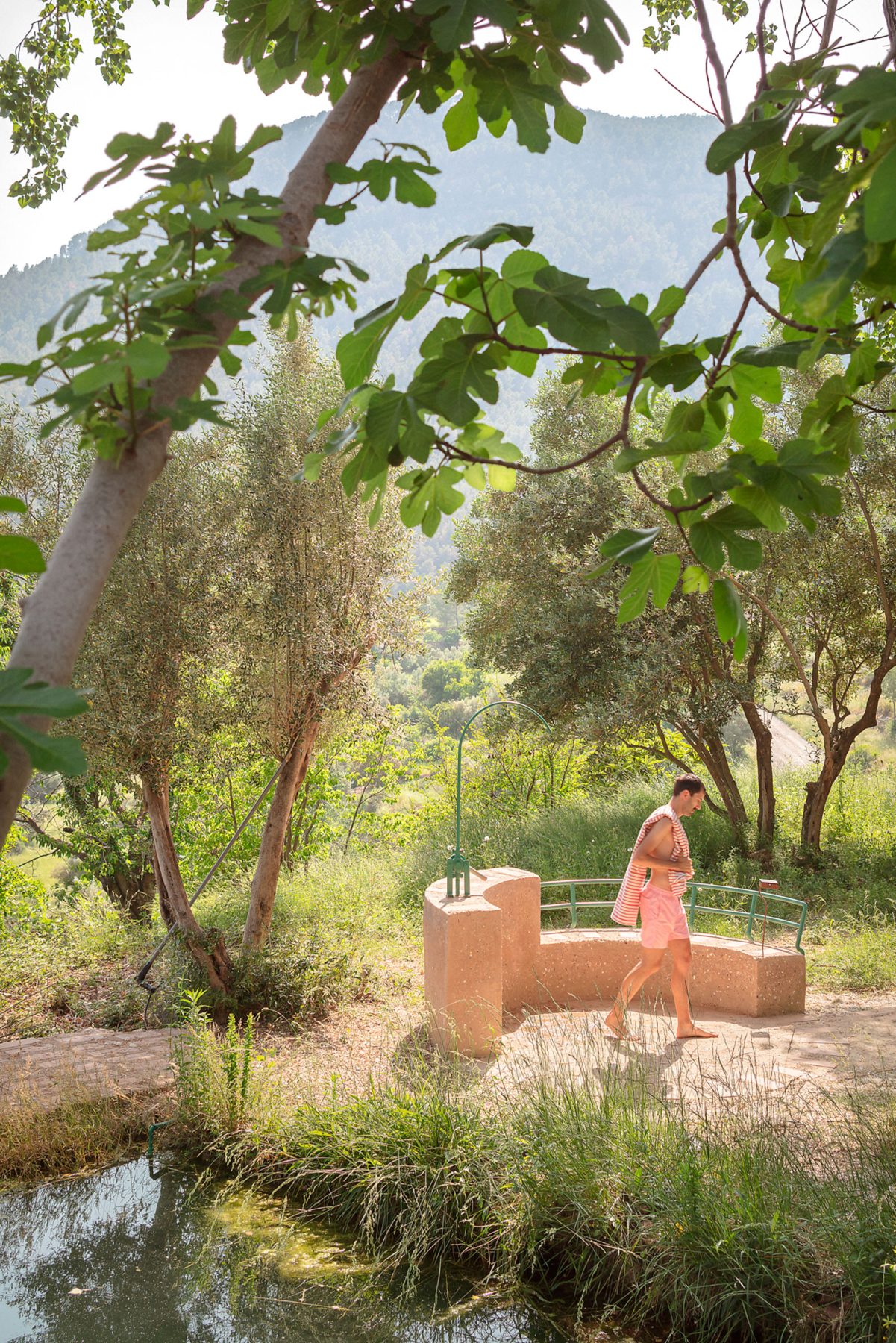
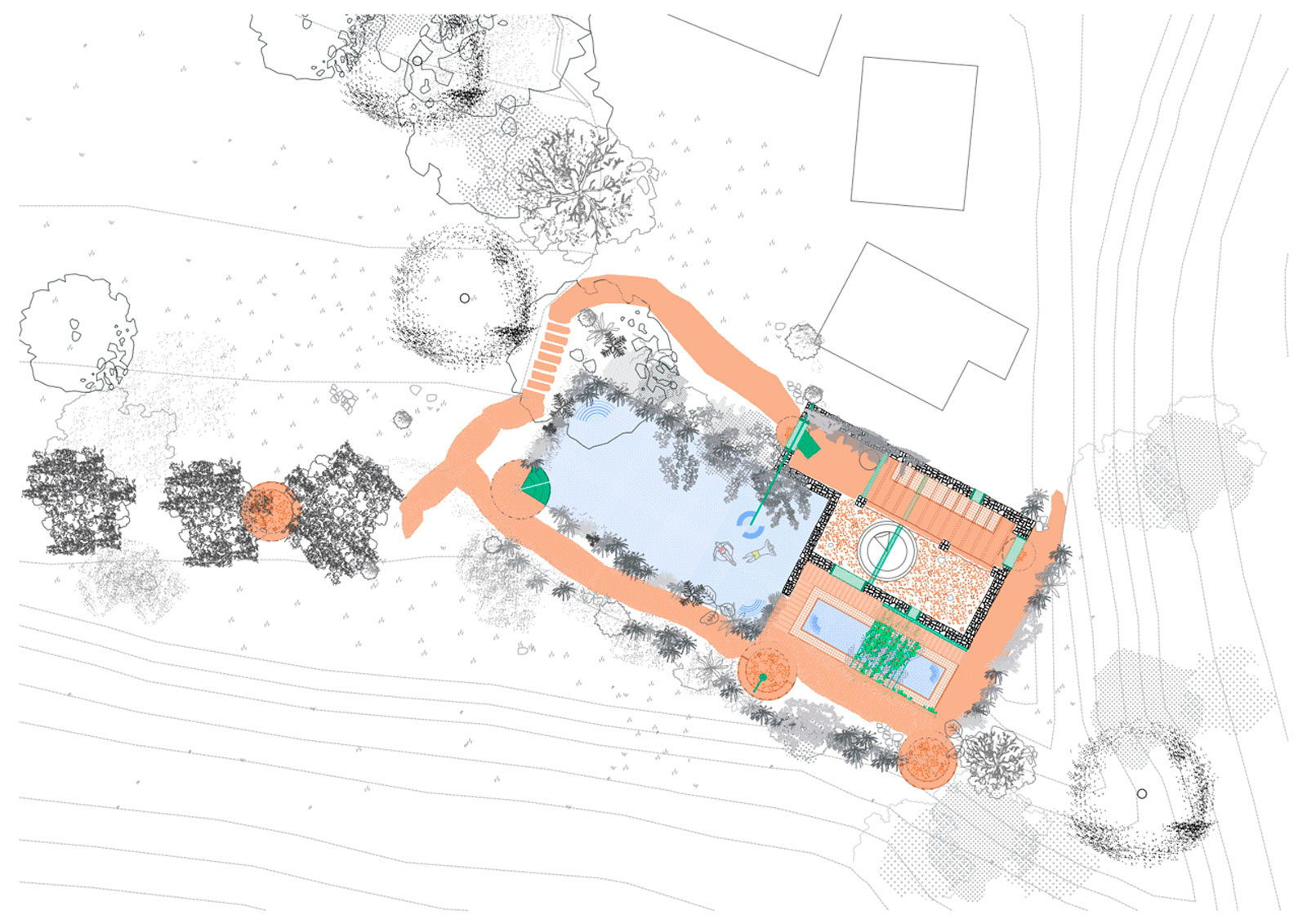
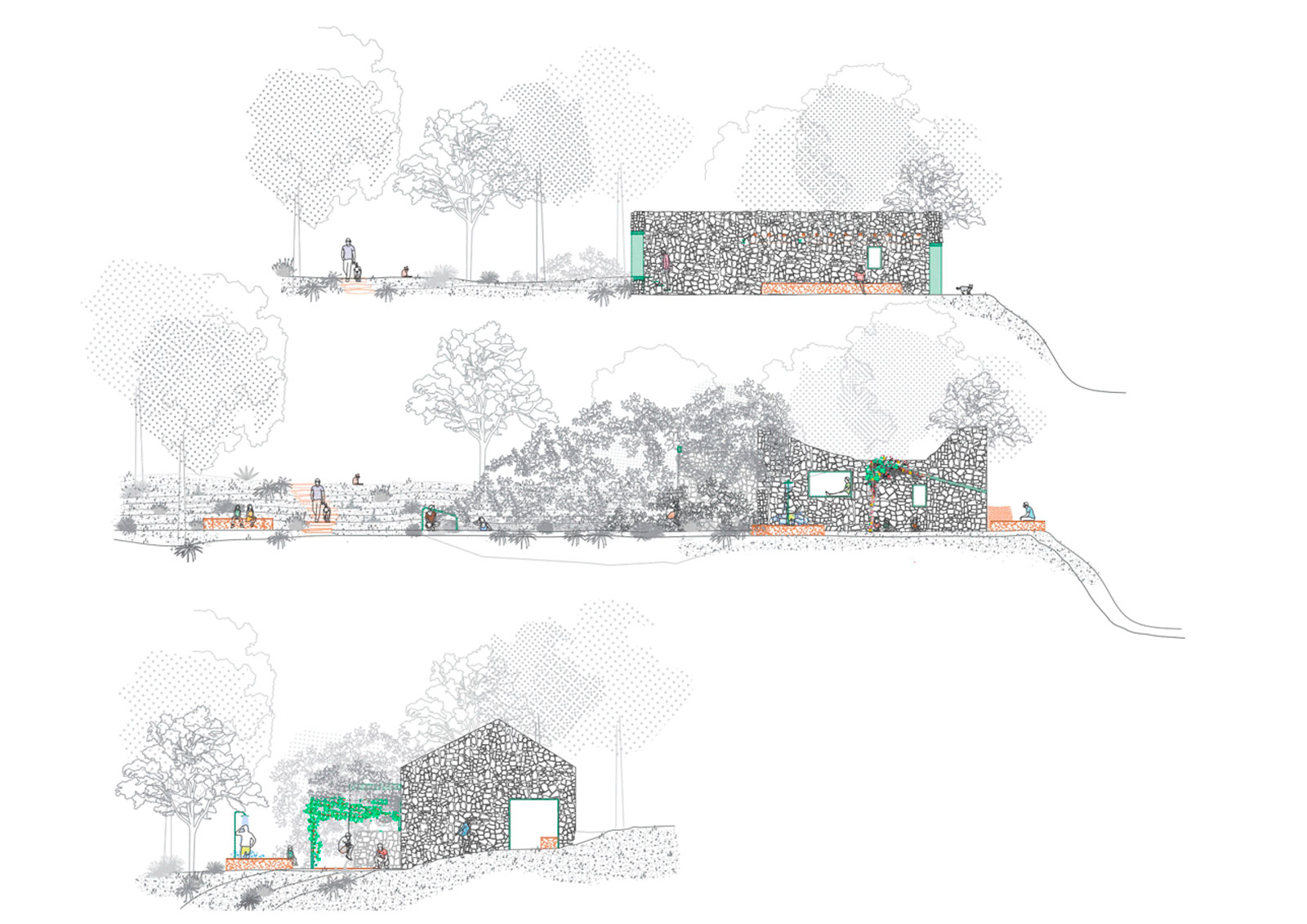
It embraces the presence of the old oil mill—its beams, both aged and newly inserted—alongside the washhouse, pergola, benches and the distinctive twin-trunk tree. Each element is part of a sequence that reveals itself gradually, reinforcing what was already there.
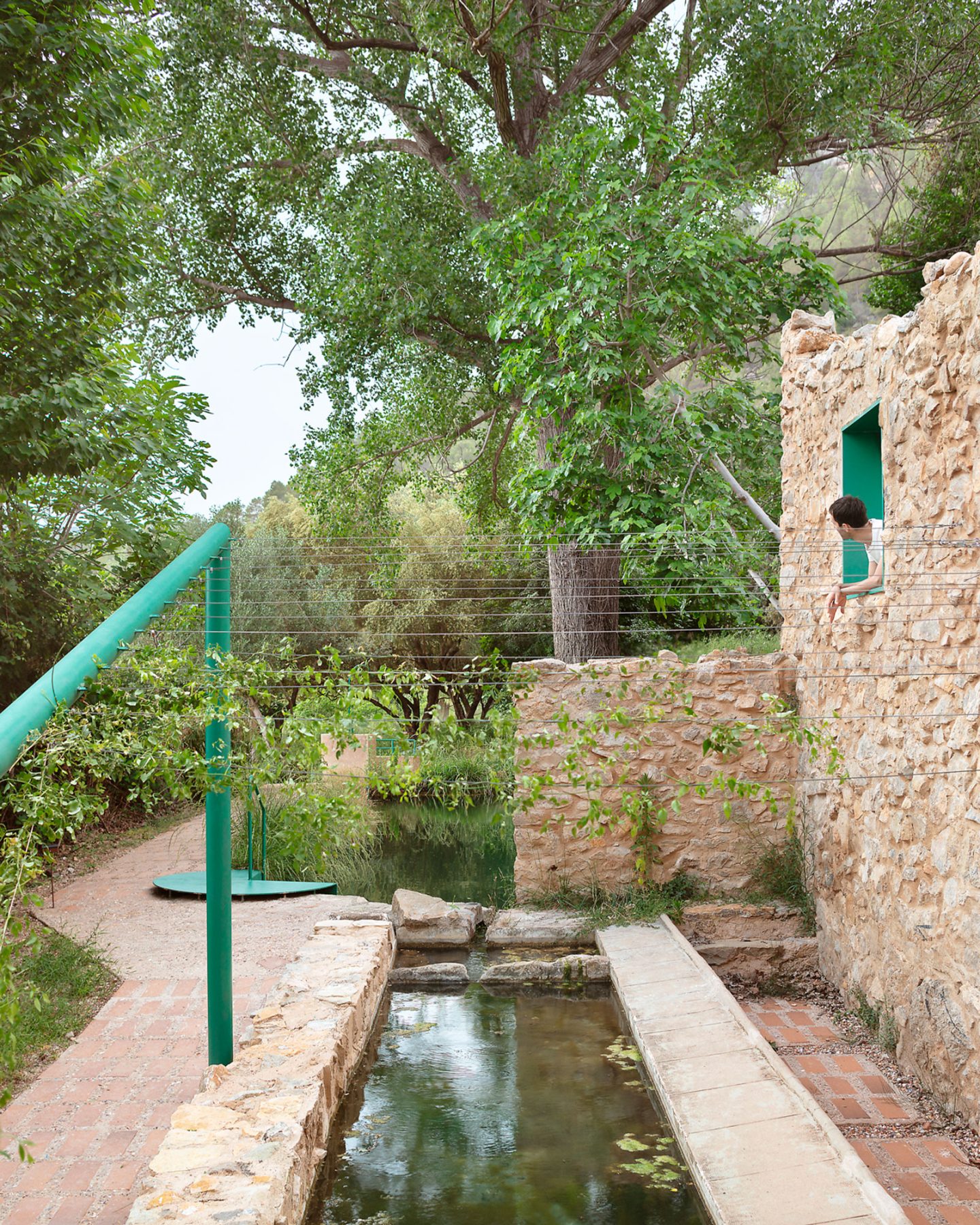
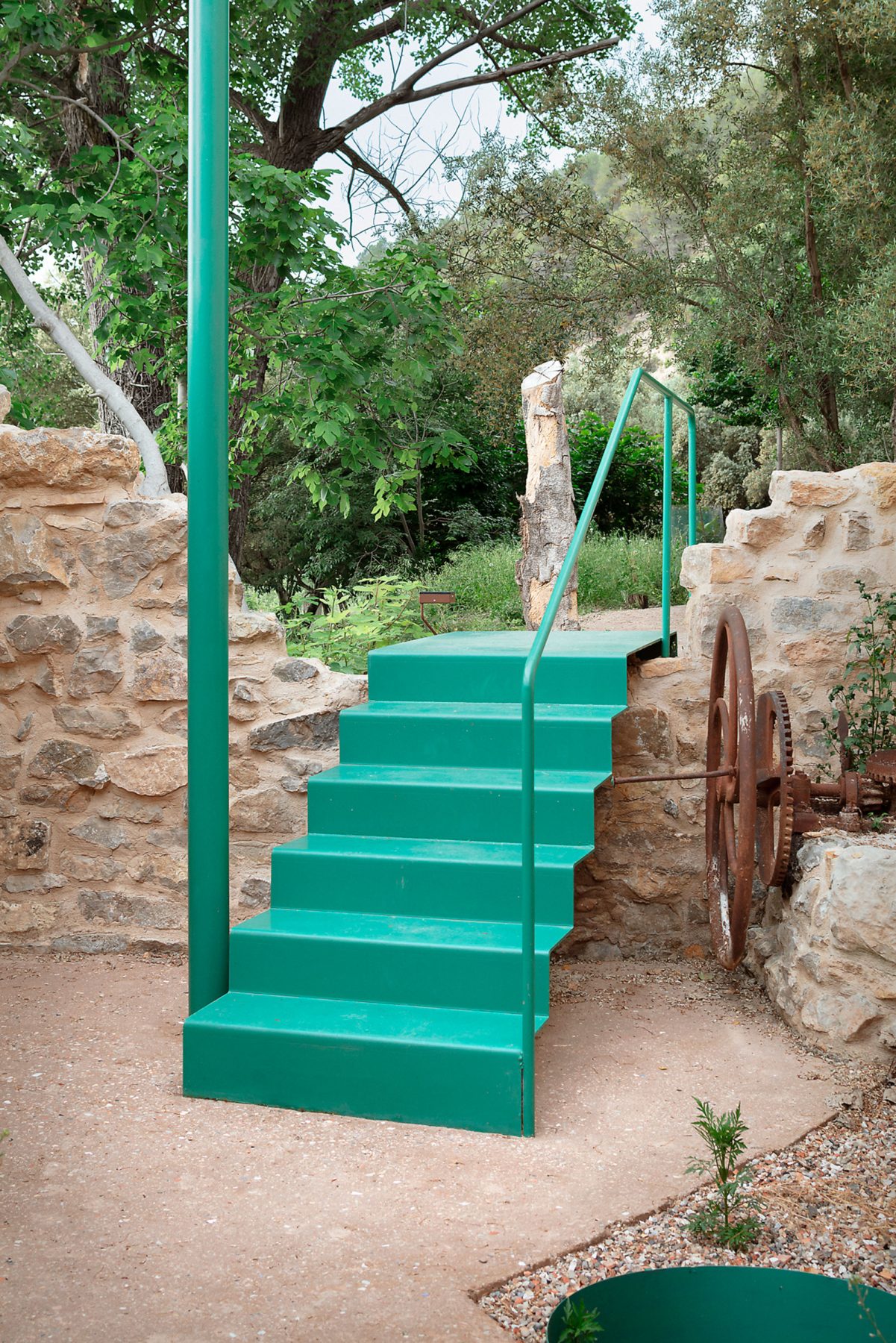
Minimal gestures guide the transformation. Metal beams consolidate the mill’s ruin, while reclaimed rubble is reused to construct the new flooring—what once formed the roof structure now composes the ground plane. A carpet of deactivated concrete initiates the descent between the last houses, transitioning into longitudinal stoneware pieces that accompany the path down through terraces toward the pond. At key moments, the paving shifts into concentric geometries, signalling safer and more accessible points of contact with the water.
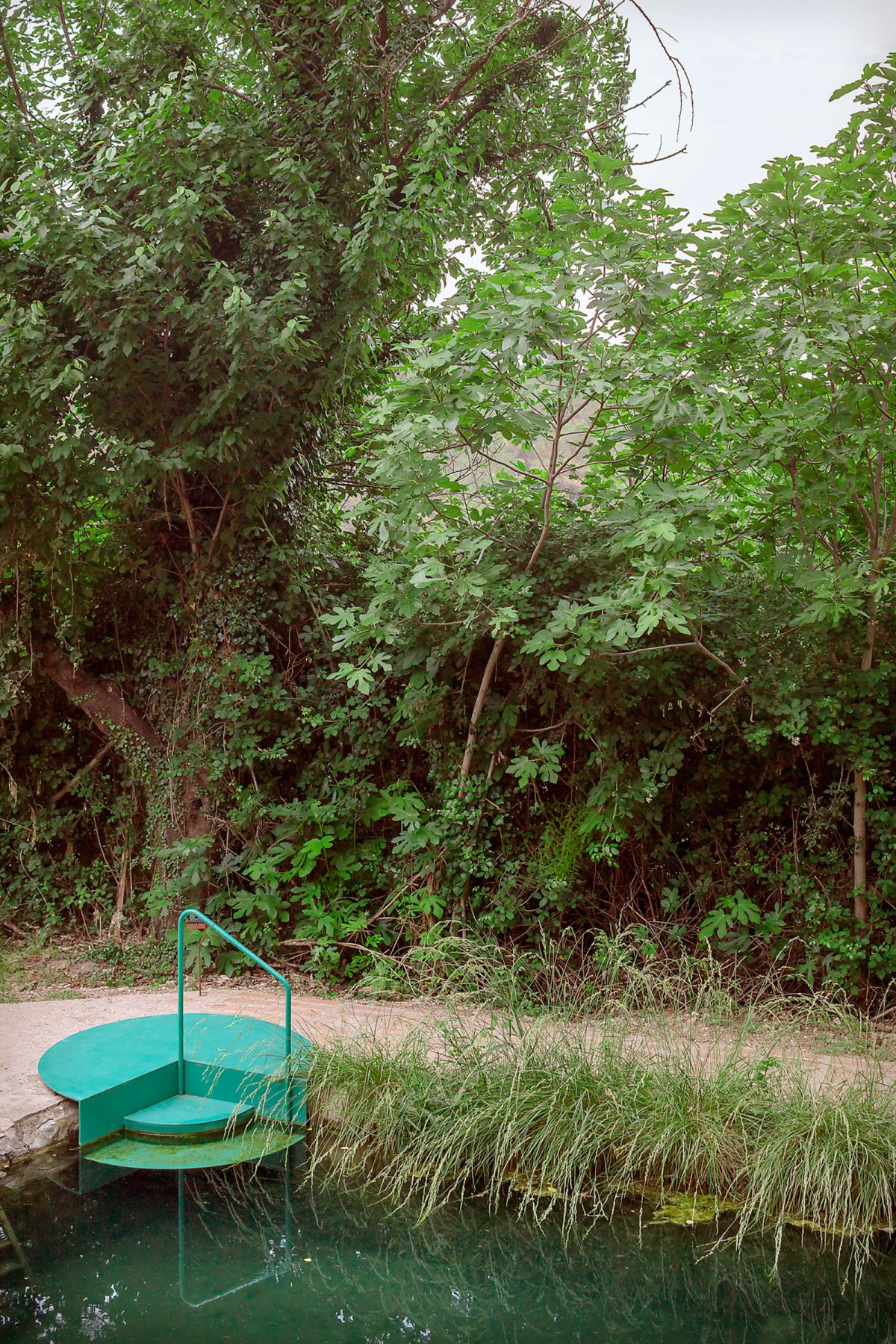
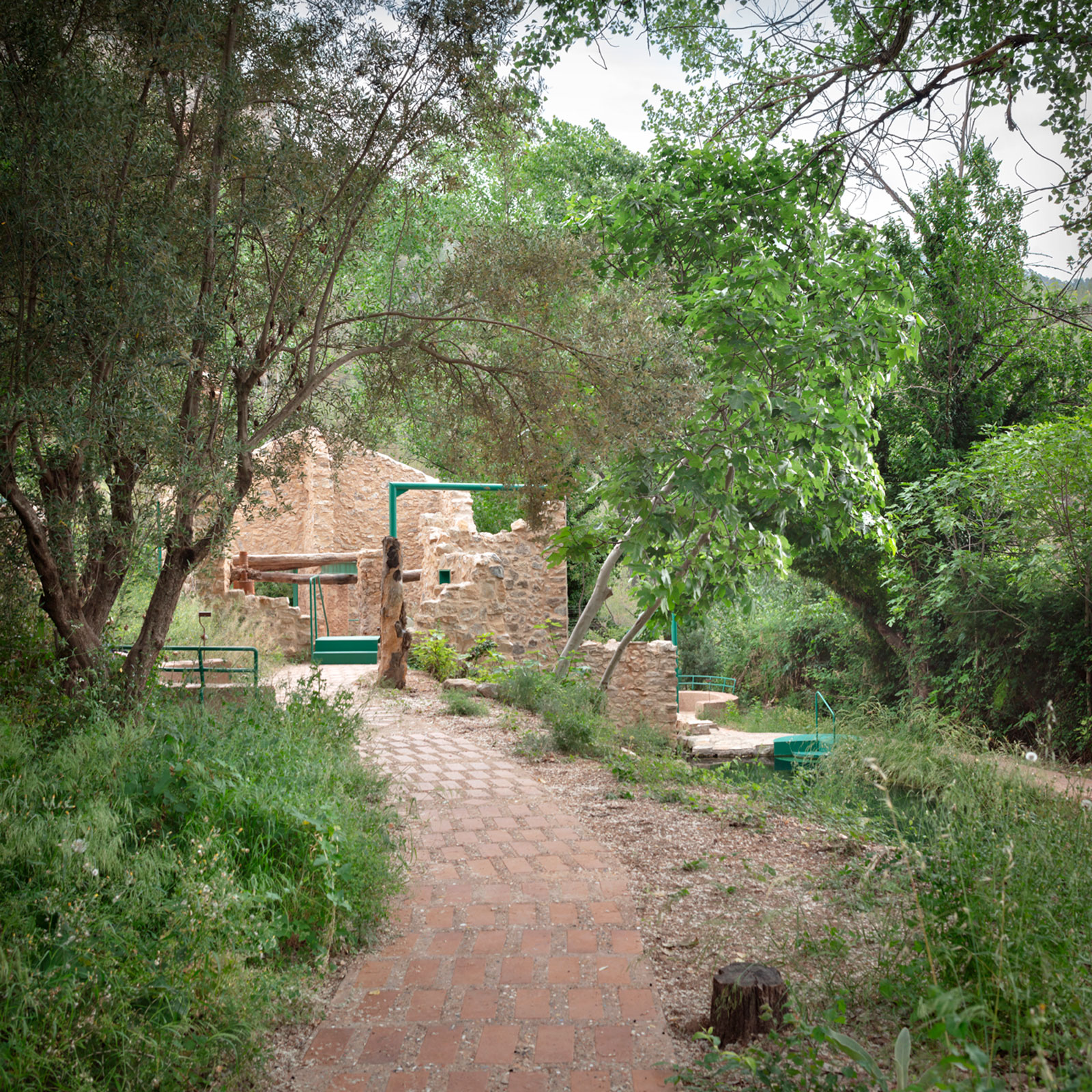

Semicircular benches punctuate the walk, inviting rest and encounter. A pergola casts shade near the old washhouse, while a lookout bench among olive trees frames distant views without displacing the spontaneous chairs long placed there by locals. Further along, circular forms reappear at the pond’s edge, surrounding a water outlet, and culminate in a belvedere overlooking the Barranc de la Artejuela and the forests of La Parreta.
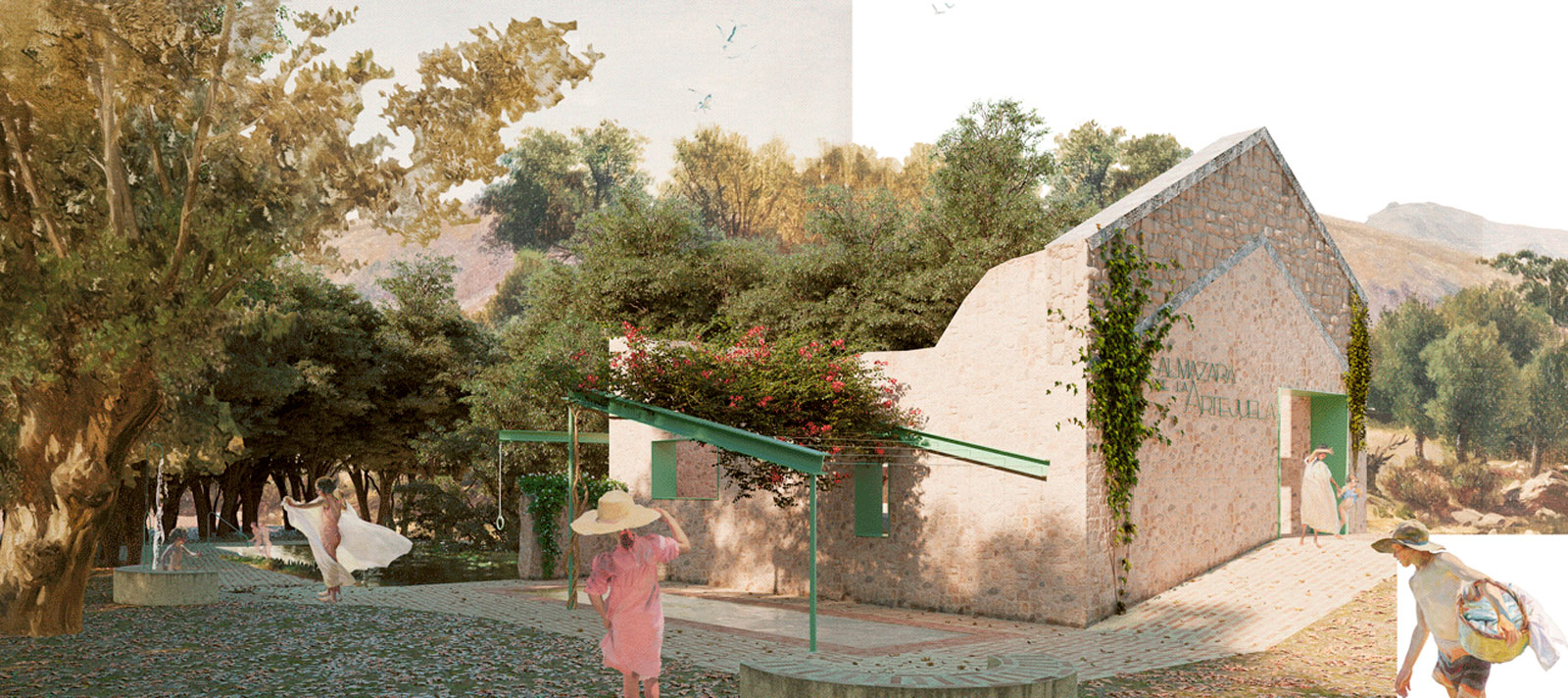
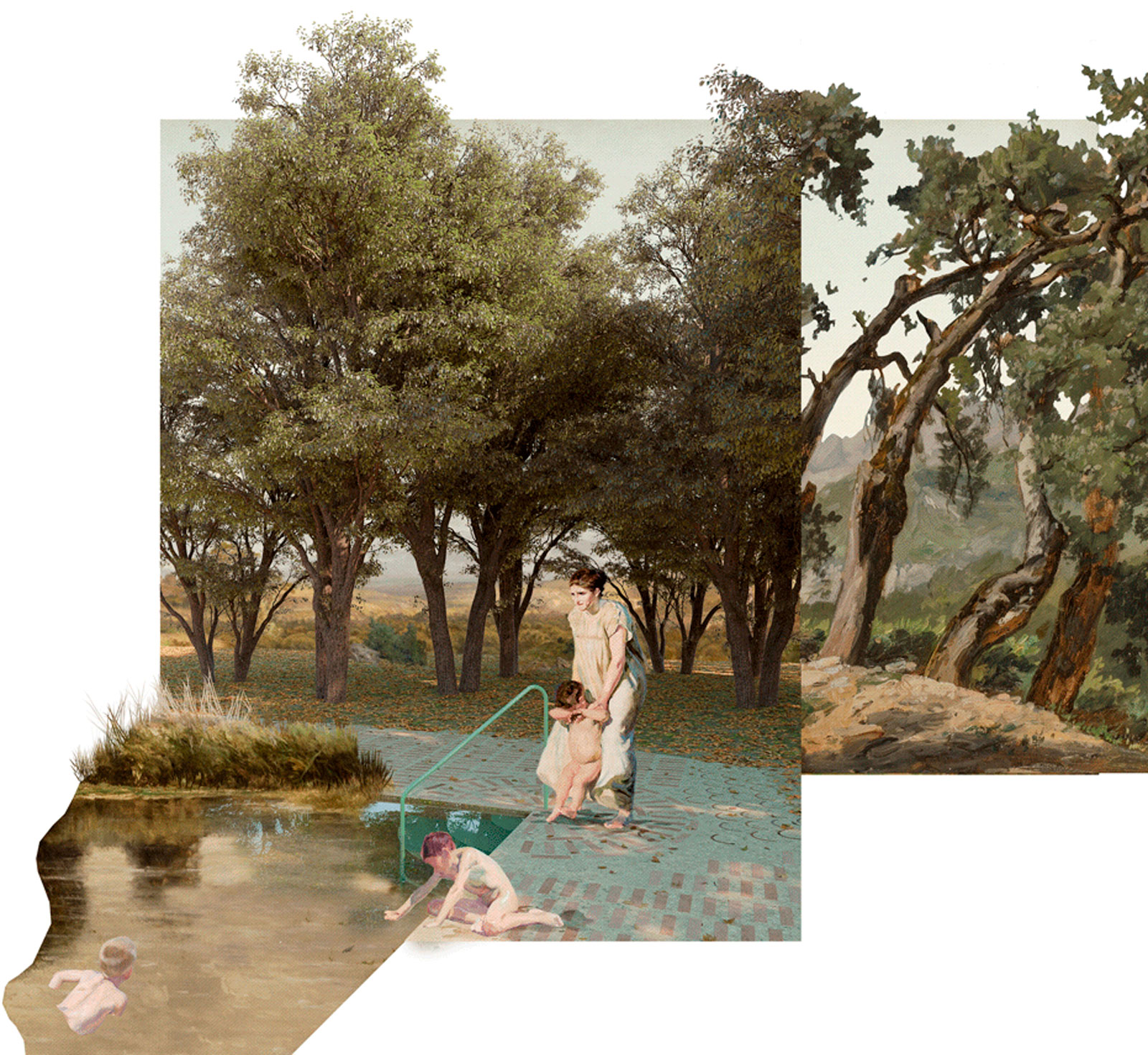
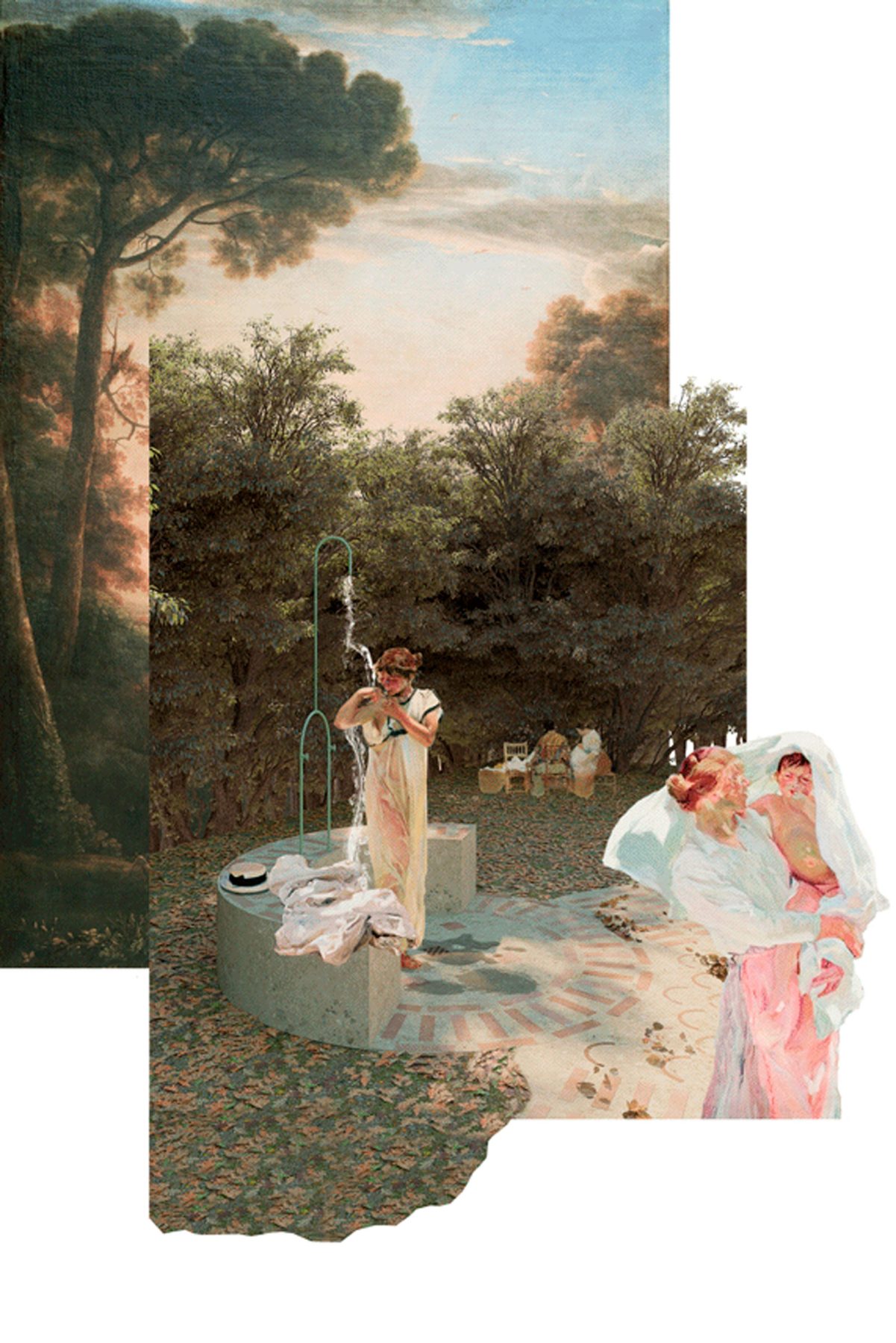
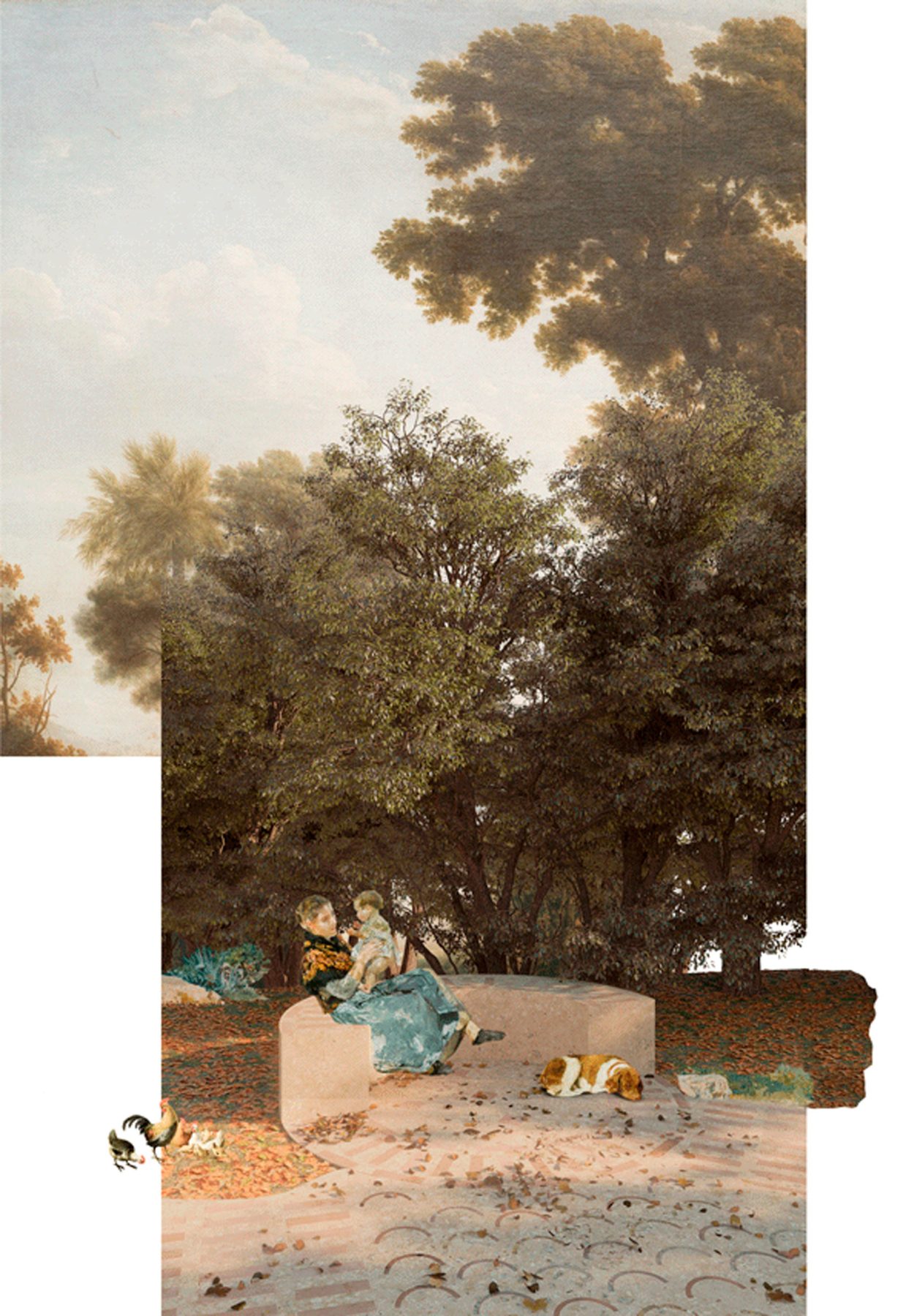
The path becomes a promenade—an evolving sequence of perspectives where the continuously shifting viewpoint reveals the project’s true intent: to heighten awareness of landscape, memory and collective use through subtle, precise intervention.
Facts & Credits
Project title El camino de la almazara
Typology Landscape Design
Location La Artejuela, Arañuel, Castellón
Architecture Piano Piano Studio (Maria Donnini + Maria Grifo)
Collaborators Realized together with Carpe and MHA Arquitectura
Technical Architect Irene Guiñón
Promoter Ajuntament d’Arañuel
Contractor Falomir Obras y Servicios SL.
Client Diputació de Castelló
Dates June 2023 – October 2024
Photography Milena Villalba
Text provided by the architects