In her master’s design thesis, ‘Rusticitas et Urbanitas’, Cristina Popescu addresses ecological and social challenges through the reimagining of architectural heritage as active agent and source of reference. The project focuses on the Solacolu Inn in Bucharest and uses it as a case study to develop a model for revitalizing ruins so they can function as forms of social infrastructure that respond to community needs.
Dictionary: Rusticitas (n., org. Latin): rusticity, a simple quality that is typical of the country (Oxford Learners Dictionaries), [author when referring to Traditional Architecture]
Urbanitas (n., org. Latin): urbanity, the process in which towns, streets, factories, etc. are built where there was once countryside (Oxford Learners Dictionaries)
‘Rusticitas et Urbanitas’ is a master’s thesis project that examines the current ‘modus operandi’ of reviving ruins, challenging the notion of a site as a static and non-referential artifact.
Instead, the author views it as an opportunity to design social infrastructures that meet community needs.

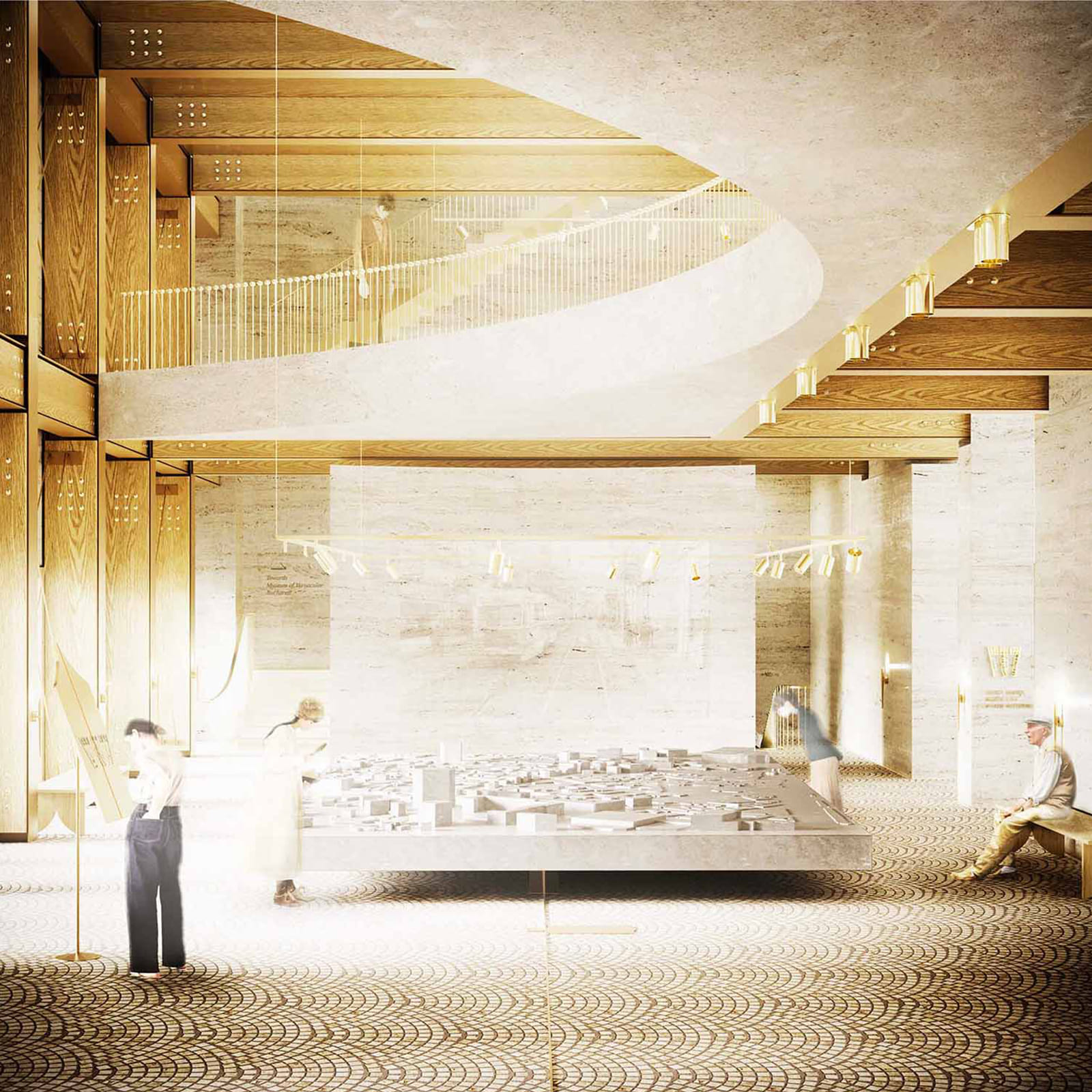
In light of present cultural and environmental dissonance and pressing spatial challenges, the project emerges as a closer examination of sustainable and aesthetic solutions.
Numerous traditional ruins, prized for their architectural significance yet left in neglect, present an opportunity to reimagine heritage and reflect on the importance of collective memory, place, and identity.
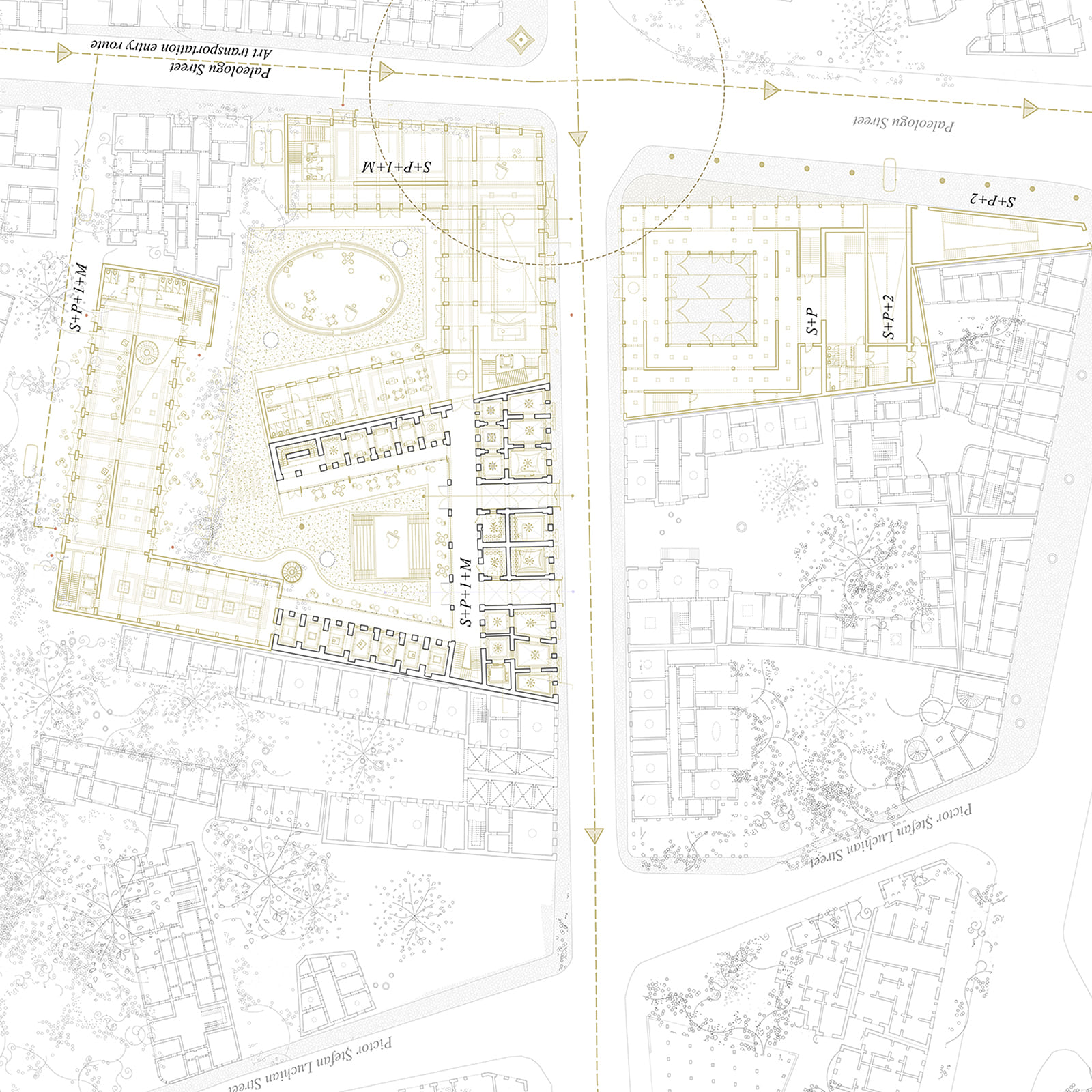
The design counteracts the view of traditional architecture as a passive exhibit, instead viewing it as a source of reference and active subject, whilst blending heritage preservation with contemporary use.
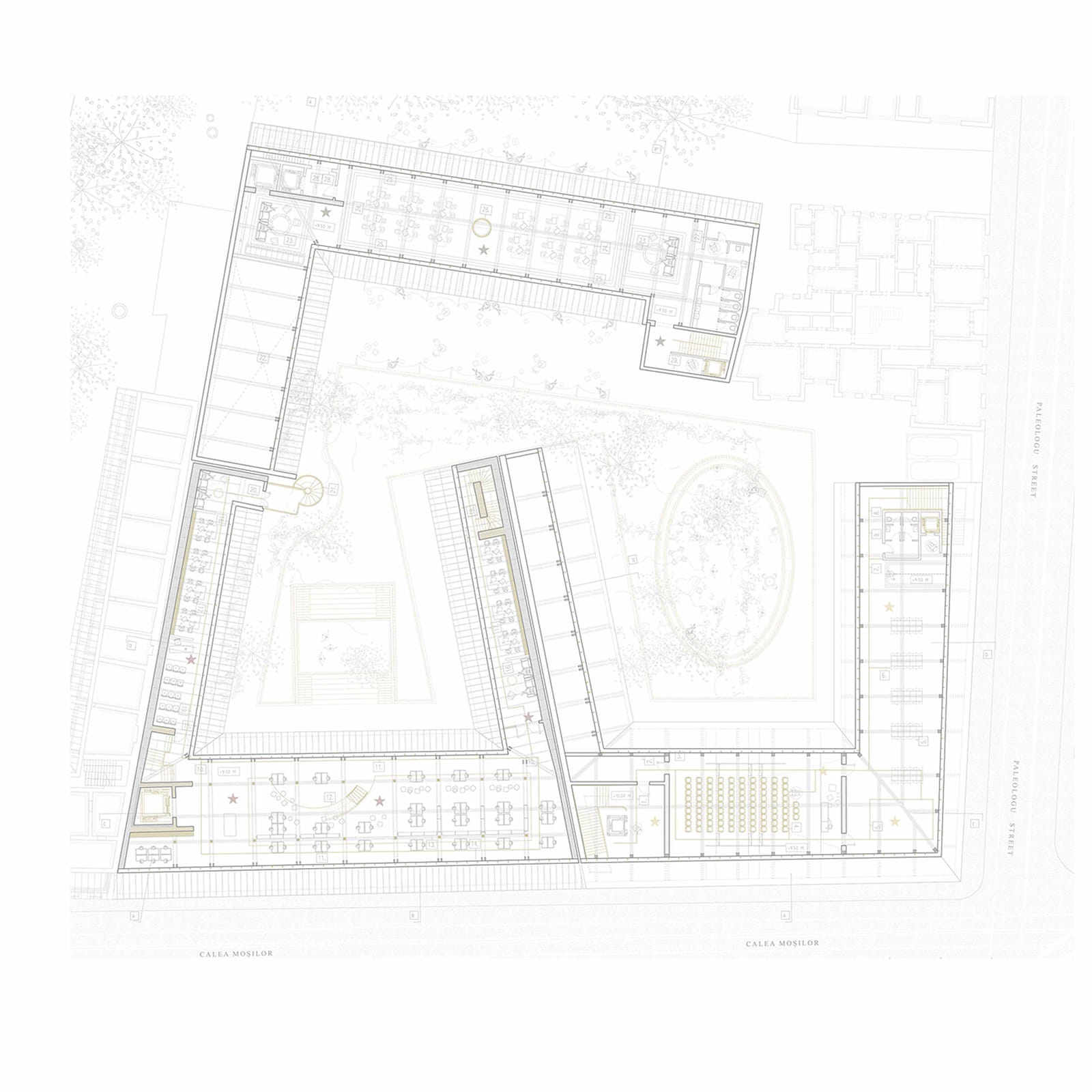
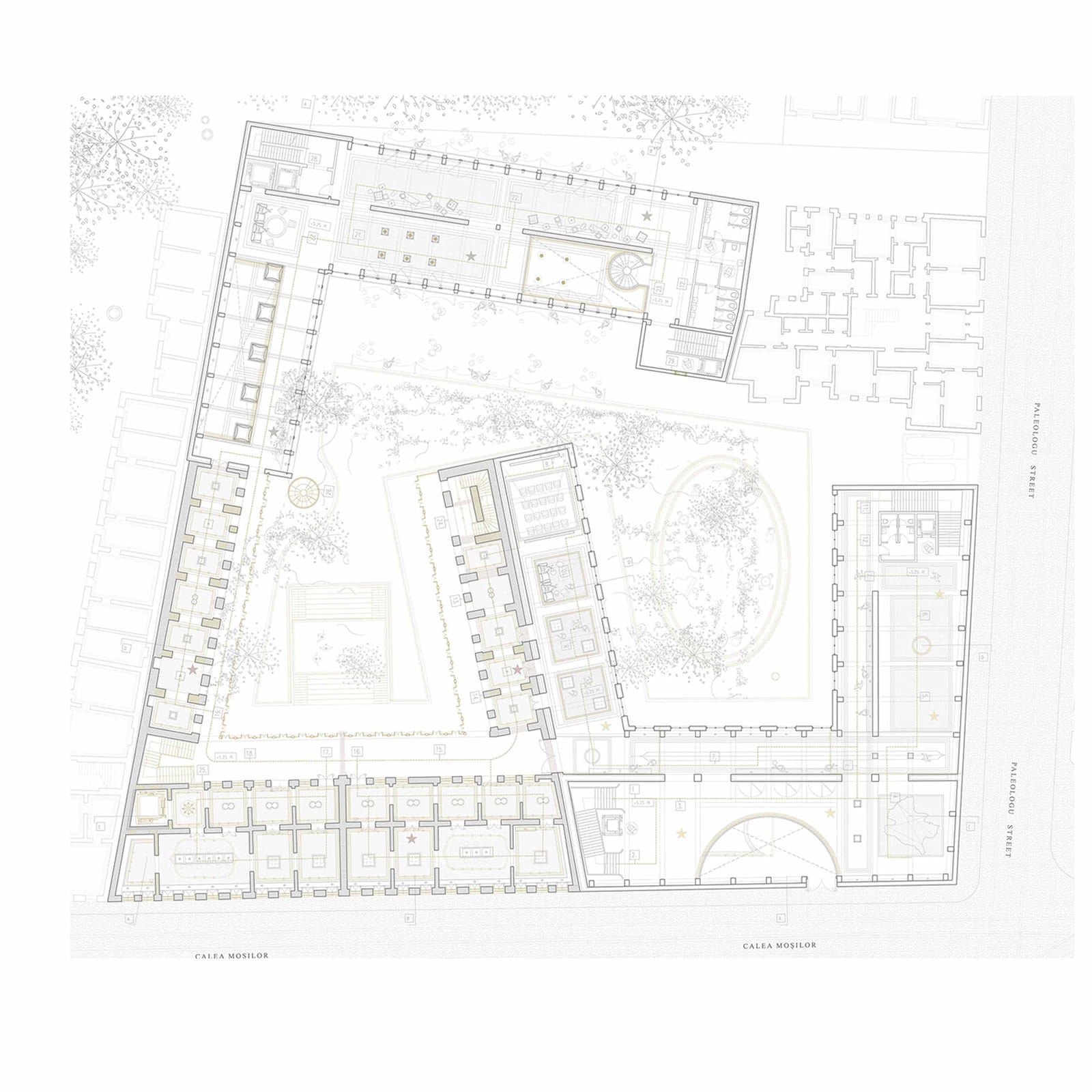
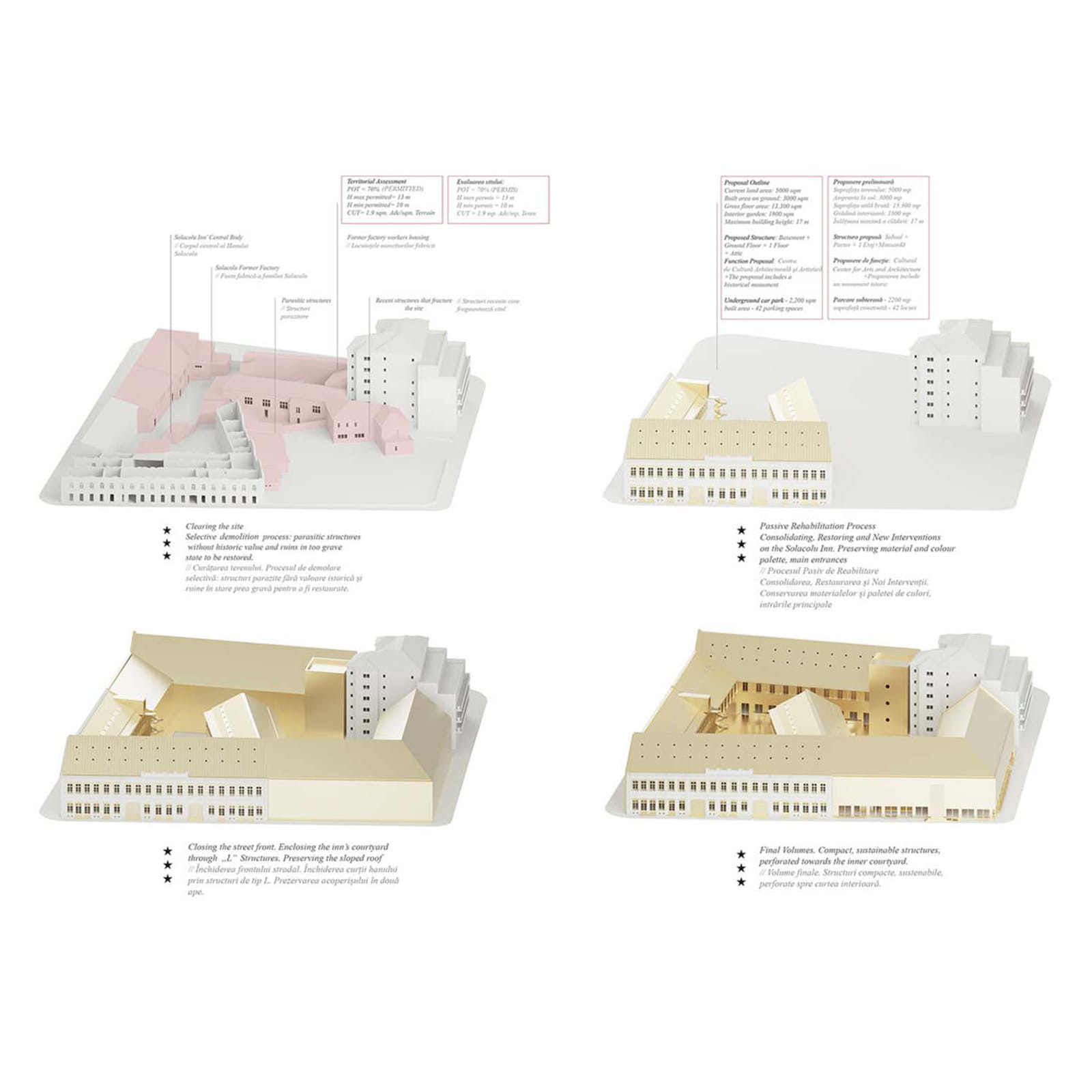
Located in a challenging and fragmented area in central Bucharest (Romania), the Solacolu Inn is a socio-culturally significant historic building in a severe state of ruin, known for its traditional design, rooted in medieval architectural practices.
In the absence of a viable project to salvage the relevant heritage elements, the author proposes a conversion, rehabilitation, and expansion of the ruined building into a Heritage and Architecture Center.
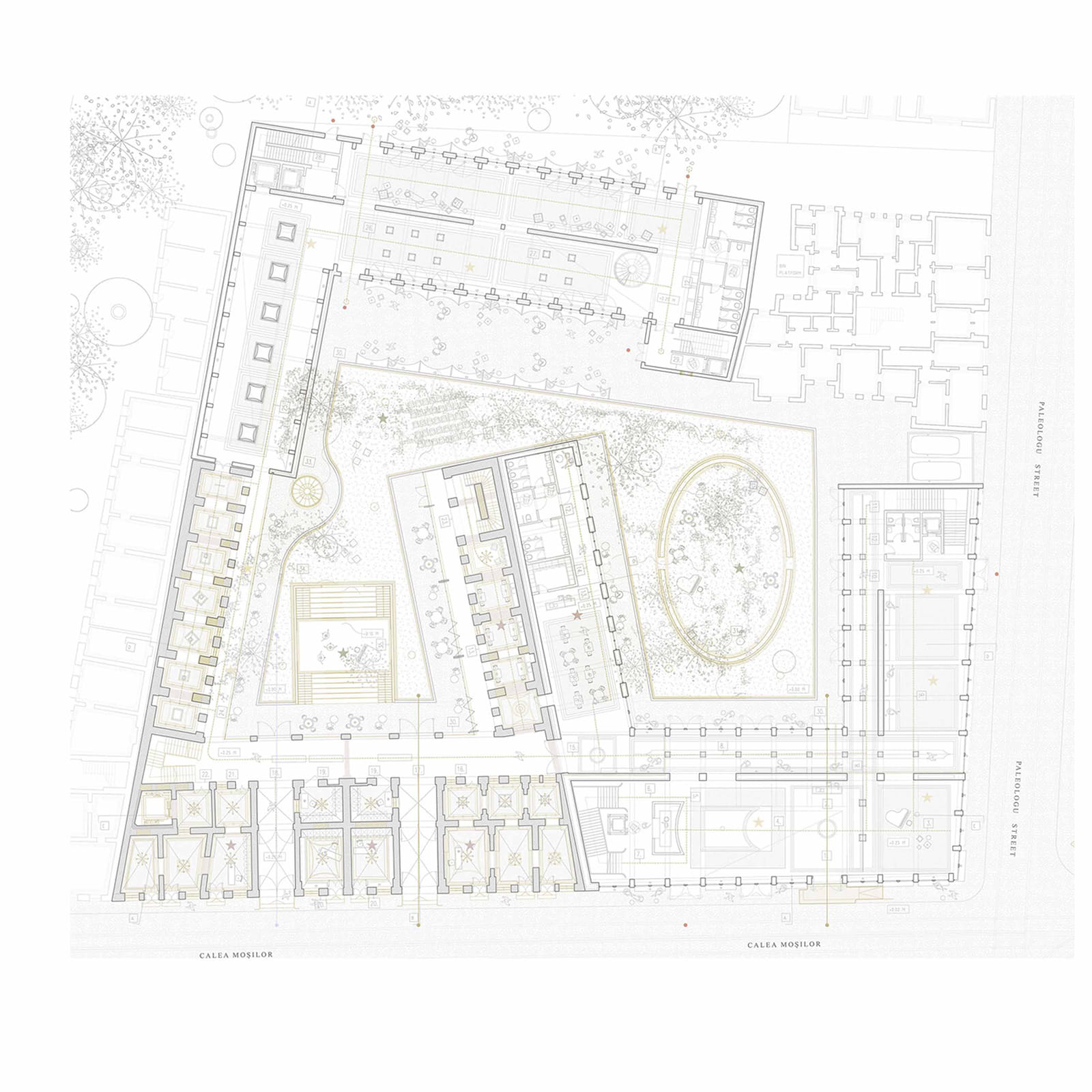
The challenging site poses an opportunity for delicate insertions and interventions on the deteriorated and disjointed site. Reclosing the linear street profile and reclaiming the spatial typologies, such as the portico, the atrium, the vestibule, garden, and sloped roof attic spaces, draw reference from medieval inns and urban “caravanserais”.
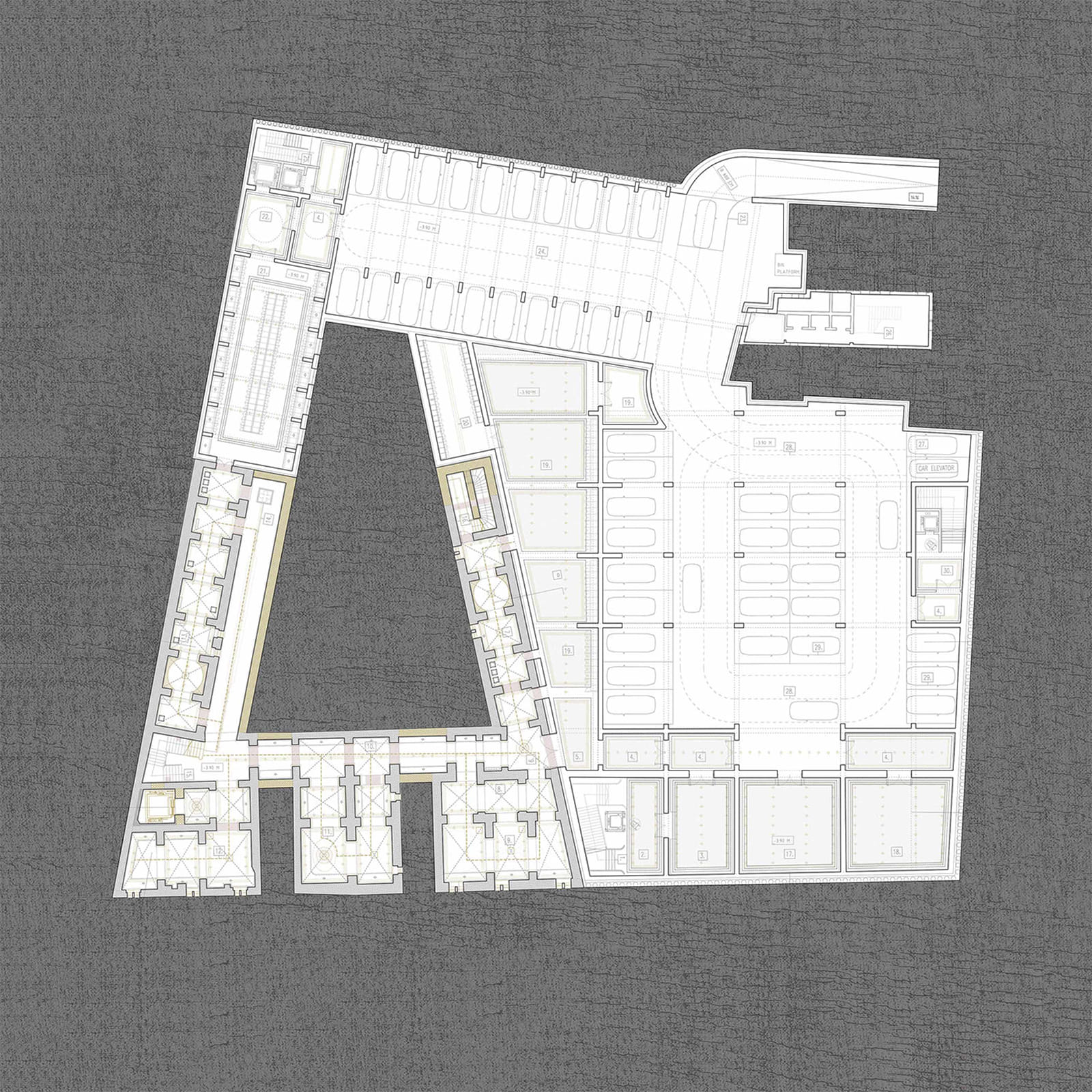
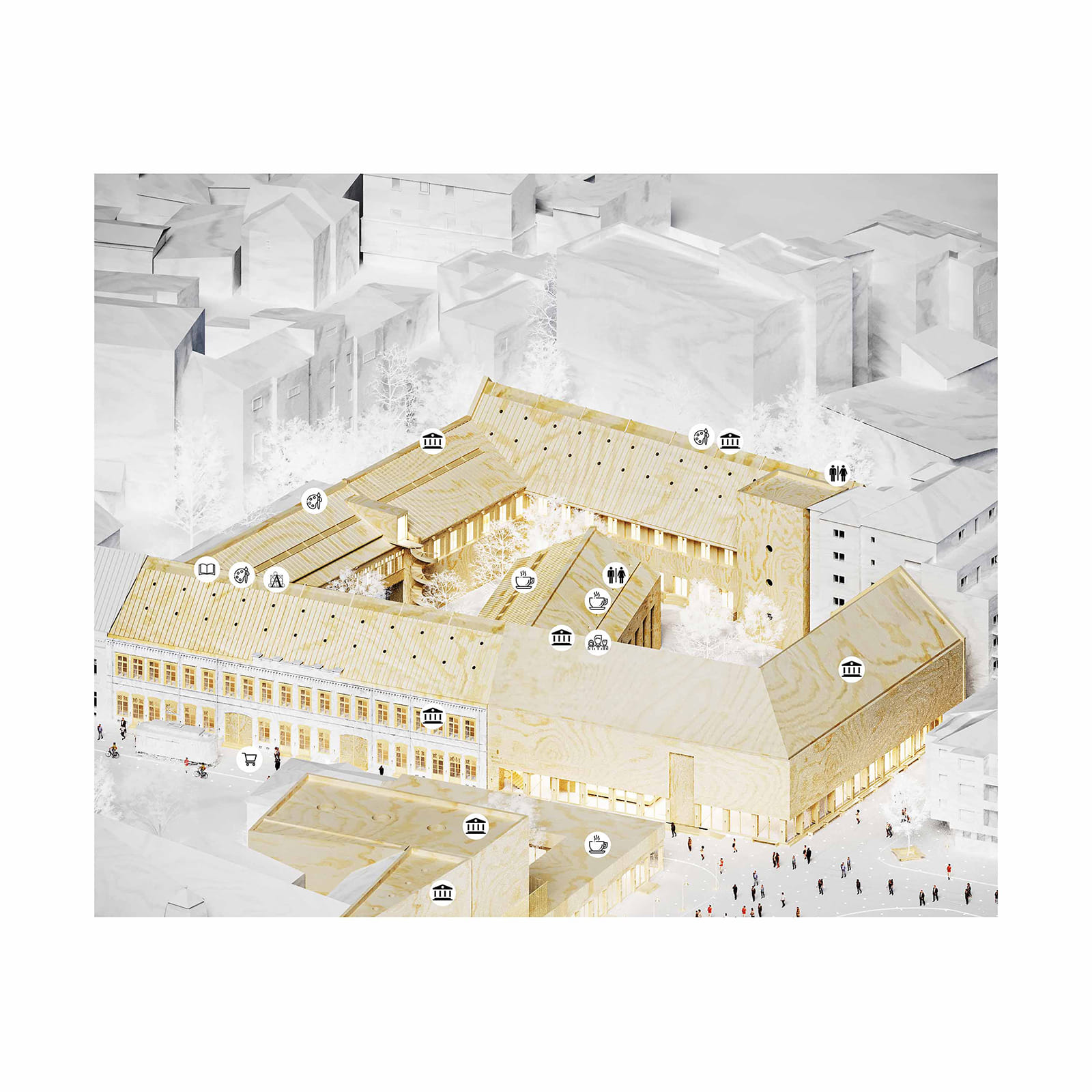
The final volume represents a complex urban center engaging with different layers of historical periods that aims to foster an immersive cultural experience.
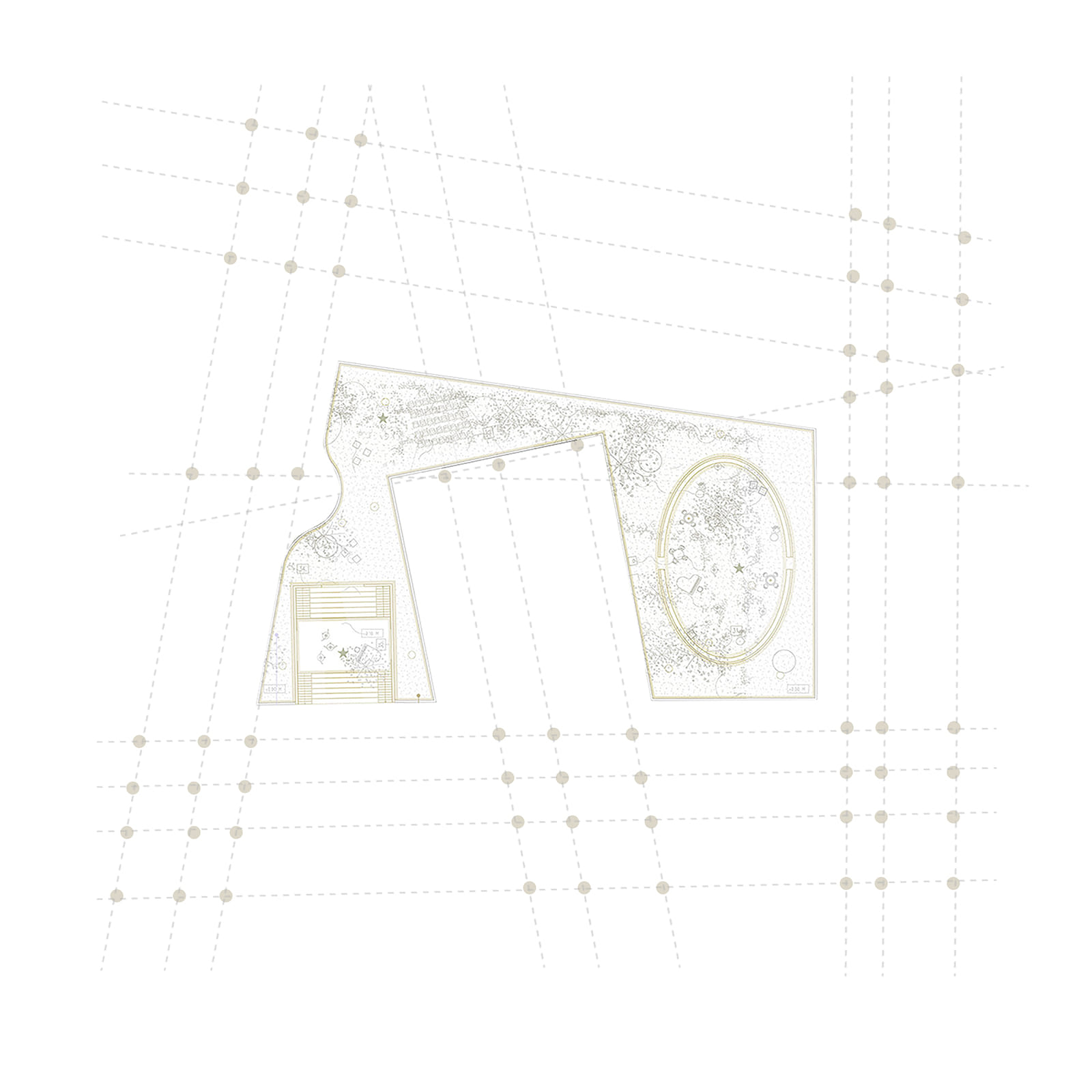
The stratification poses not only a design challenge but also an opportunity to enhance the site’s identity in the city’s urban fabric, evoking a sense of timelessness while recalling traditional influences. The 24,000 sqm Heritage and Architecture Center would facilitate connections among artists, architects, the nearby community, and various leisure activities, as well as the area’s history and traditions.
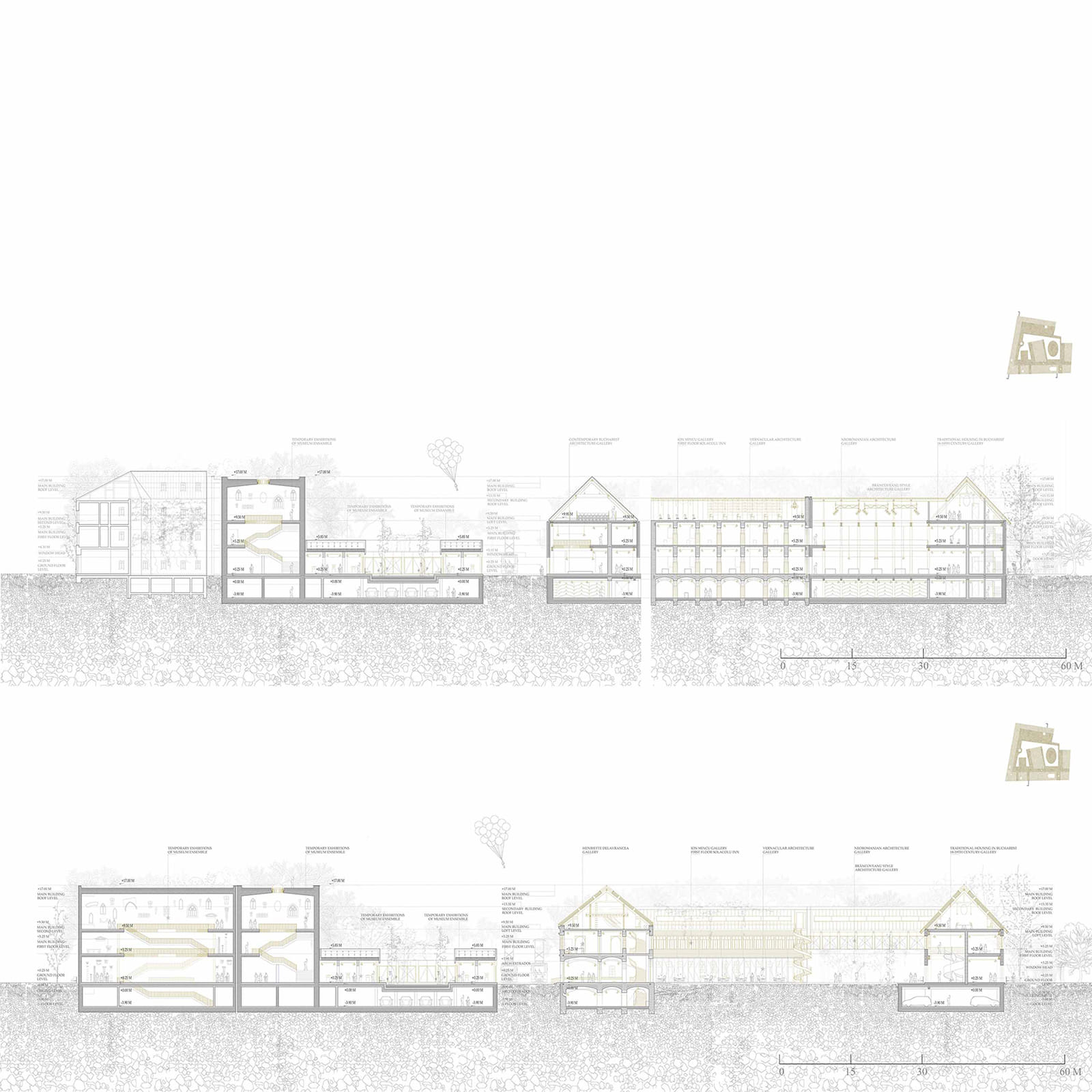
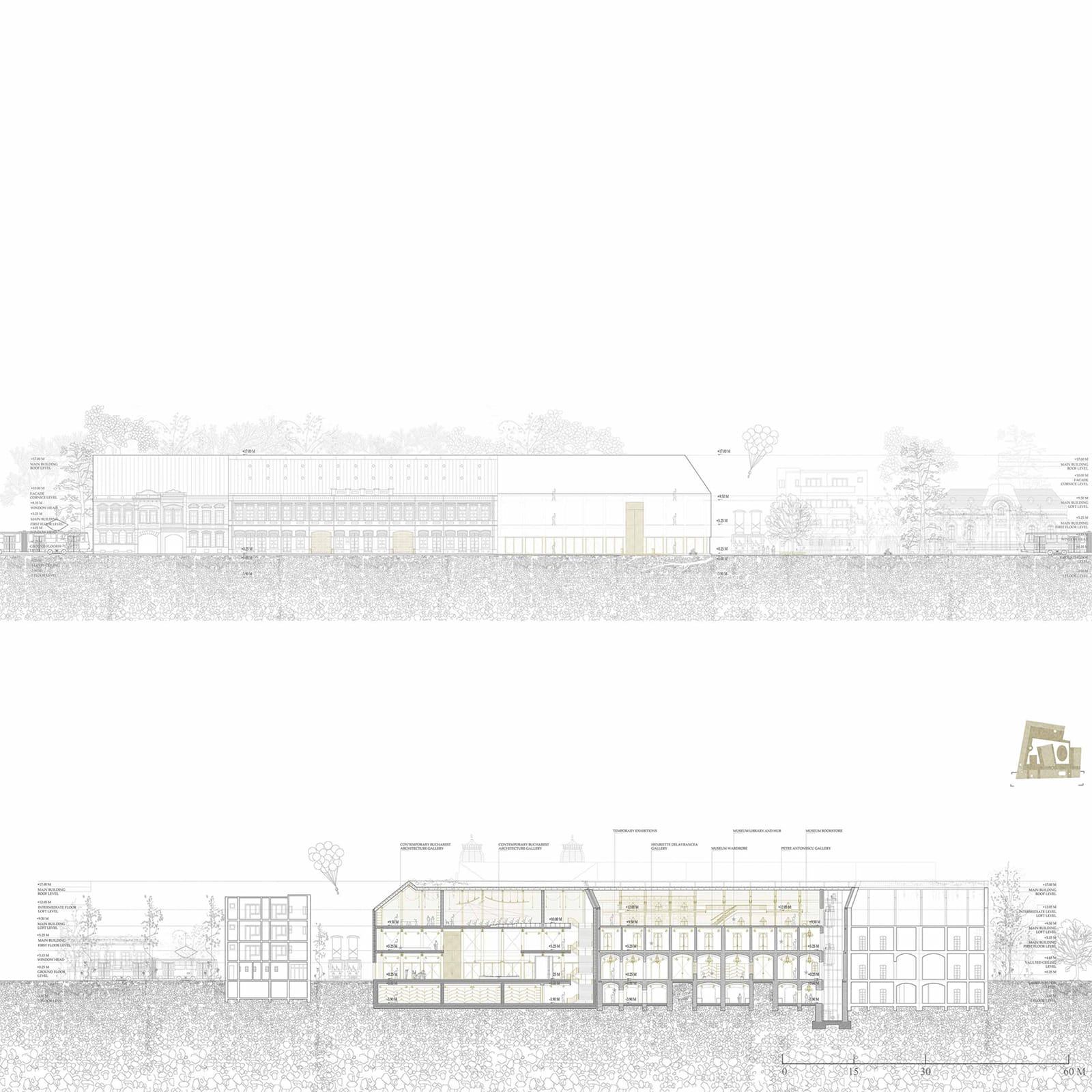
The ground floor is open to the public, featuring performance and installation spaces with a strong dialogue for social connectivity.
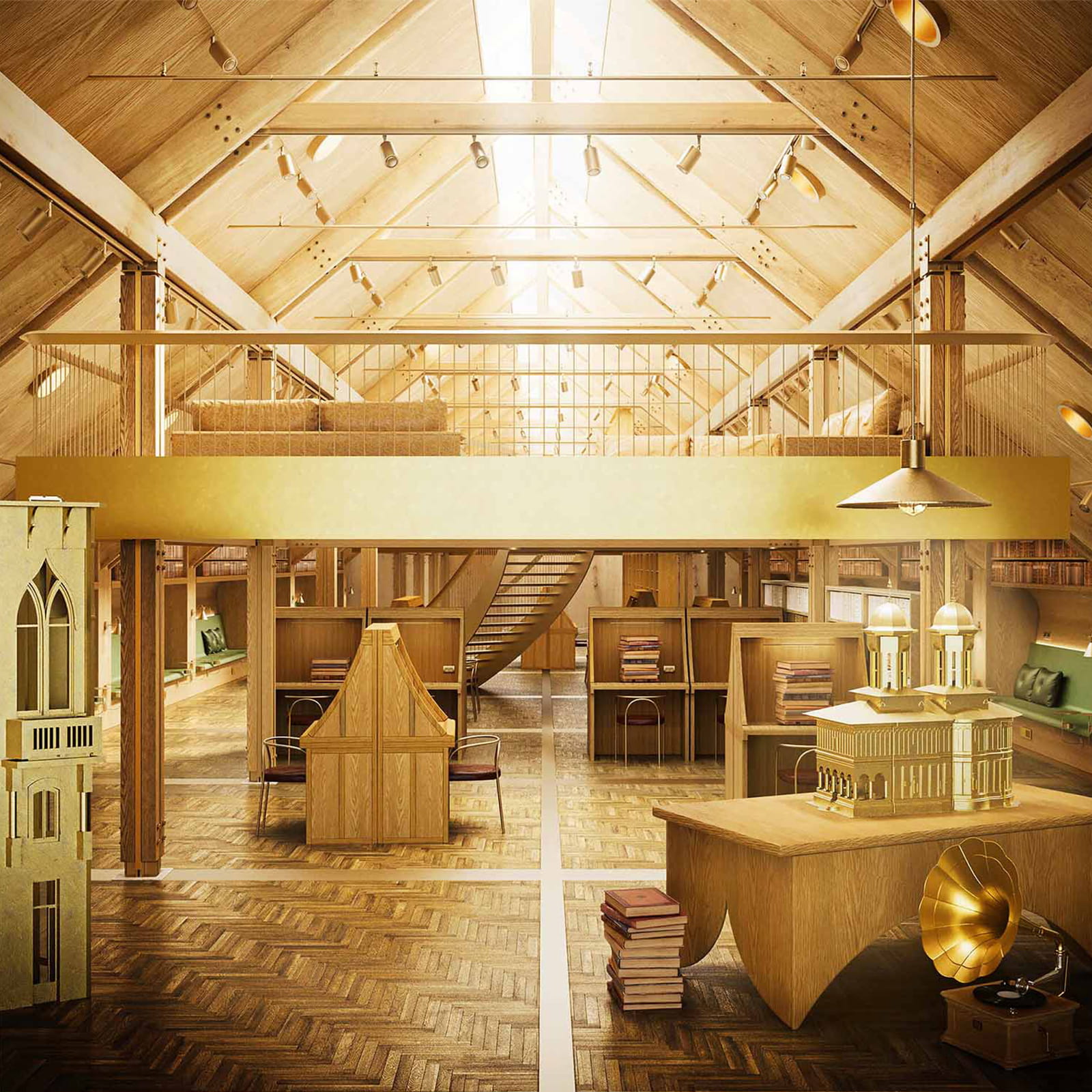
The upper levels, open to the inner courtyard, are designed for museum galleries, and related functions: a hub for students, art and restoration workshops, and a conference room.
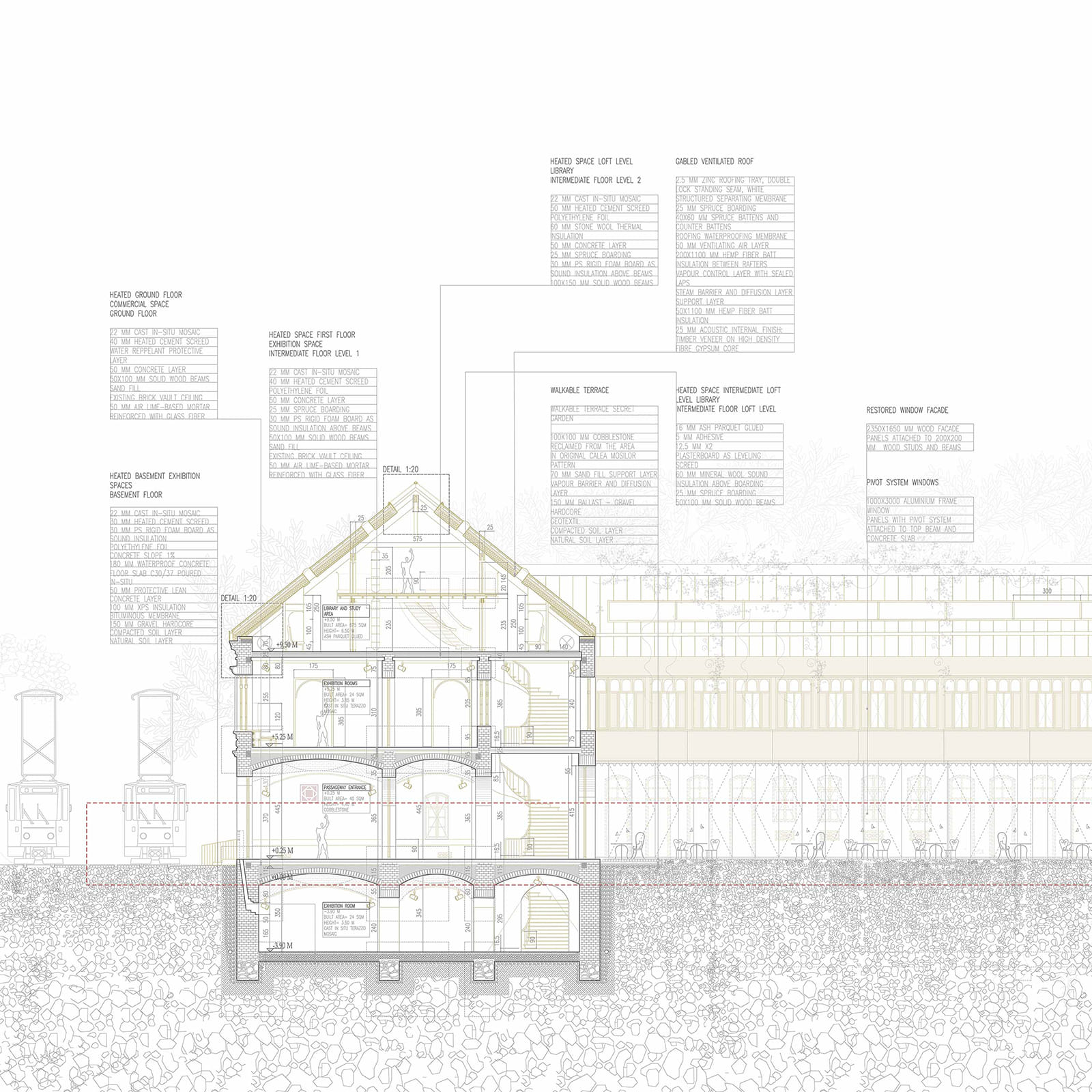
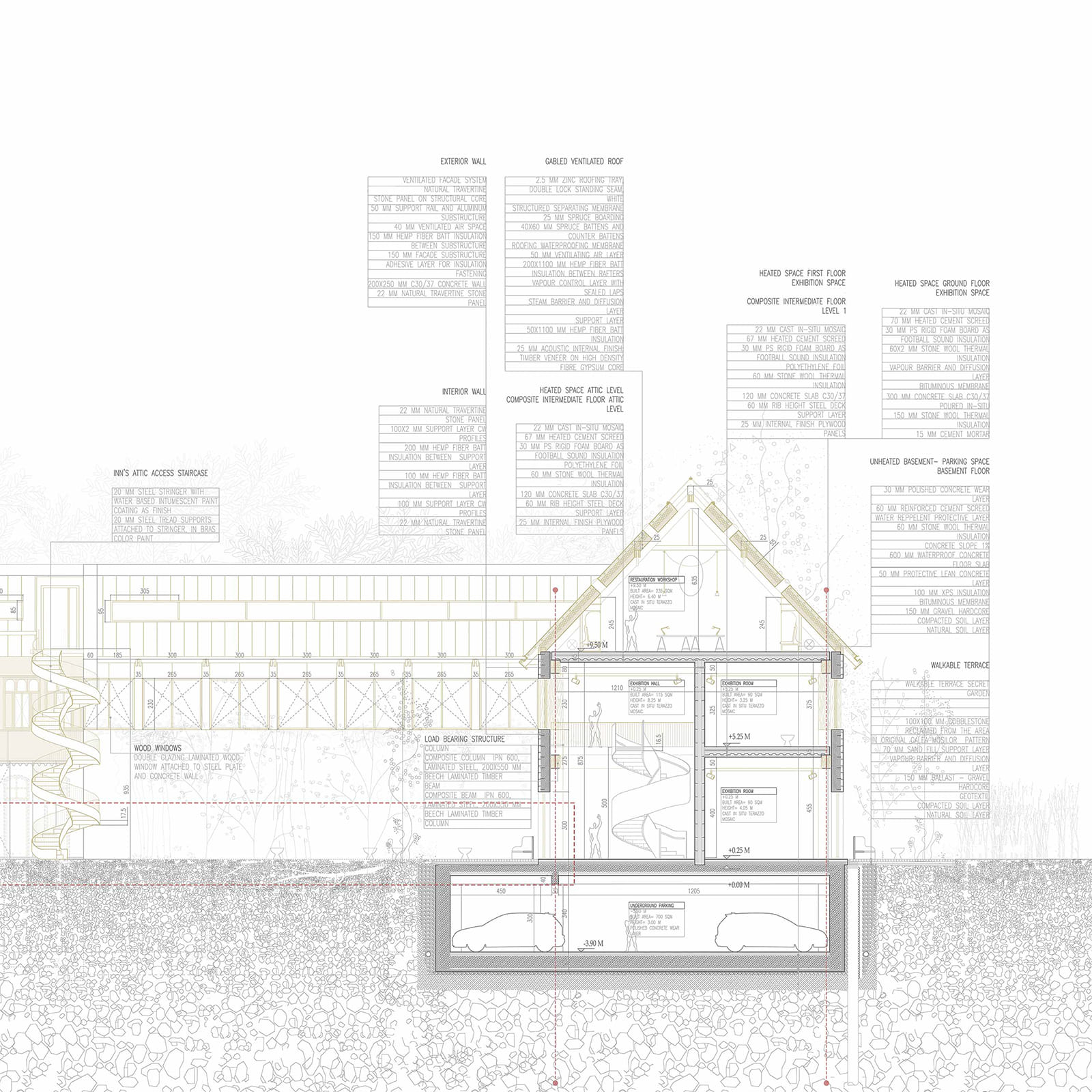
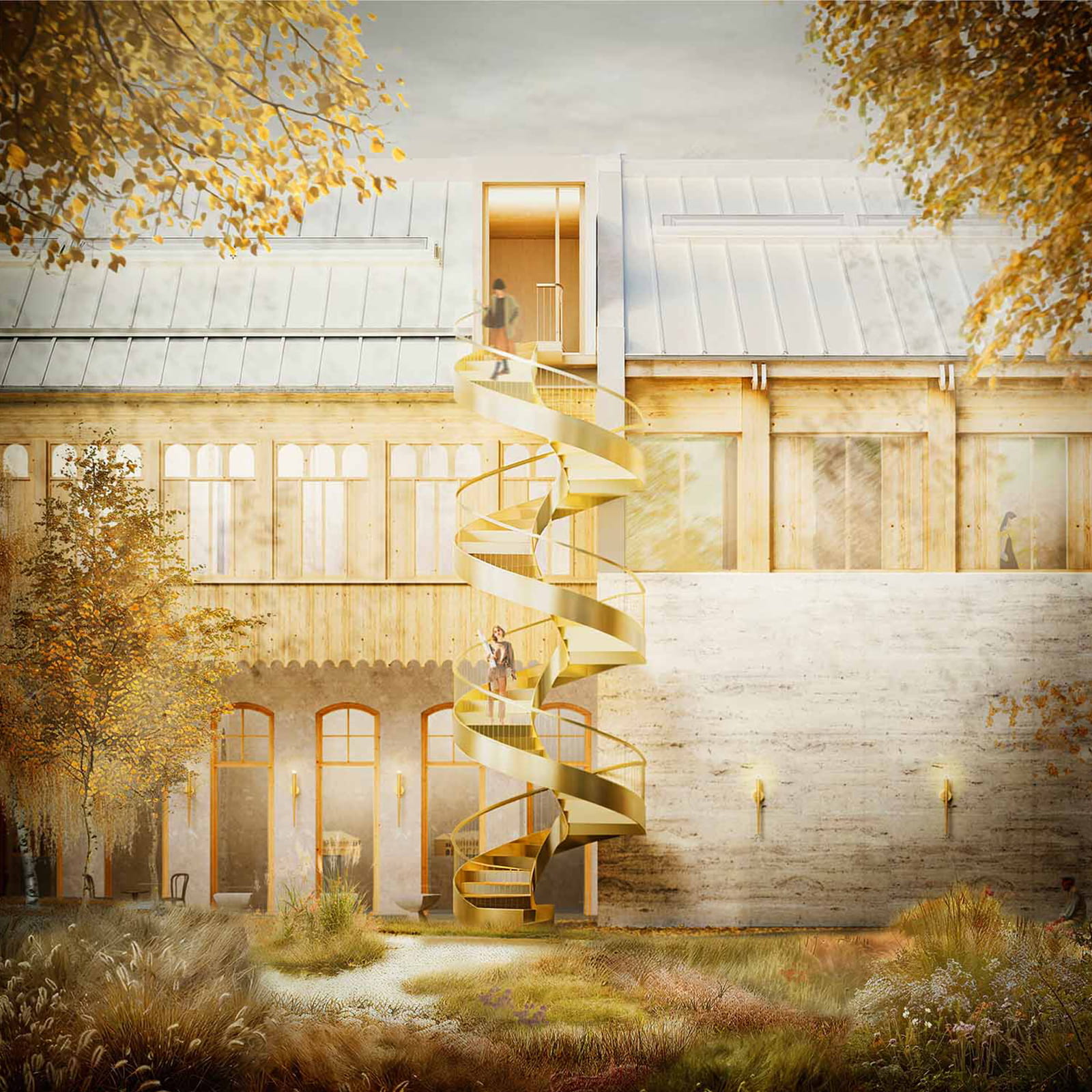
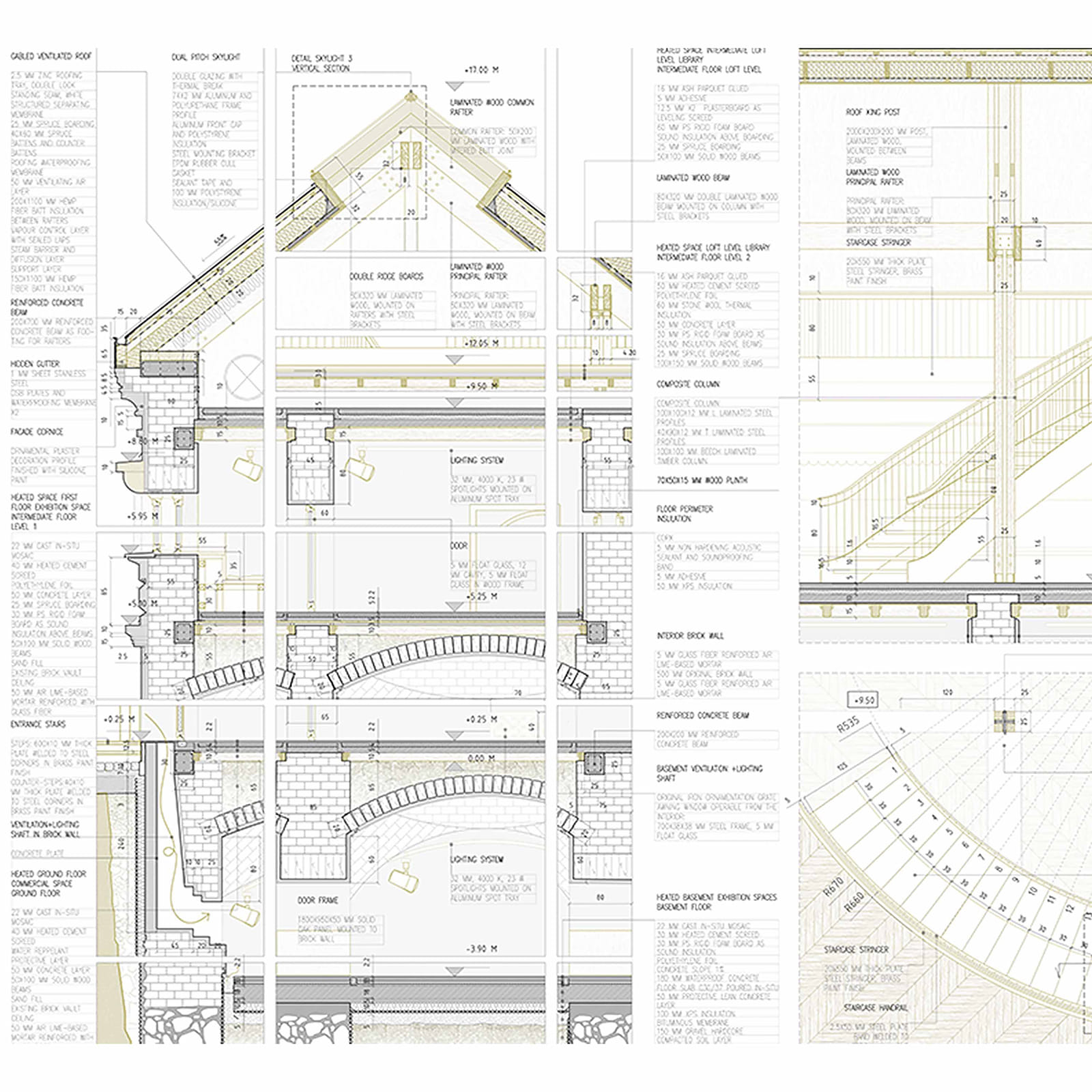
An ecology of protection, memory, and reuse is demonstrated by the envisioned innovative hybrid structure of laminated timber, steel columns, and the rear ventilated stone façade, focusing on blending heritage preservation with contemporary use.
The natural materials and contemporary solutions, such as wood, travertine, and brass, enhance the duality between the historic and modern interventions.
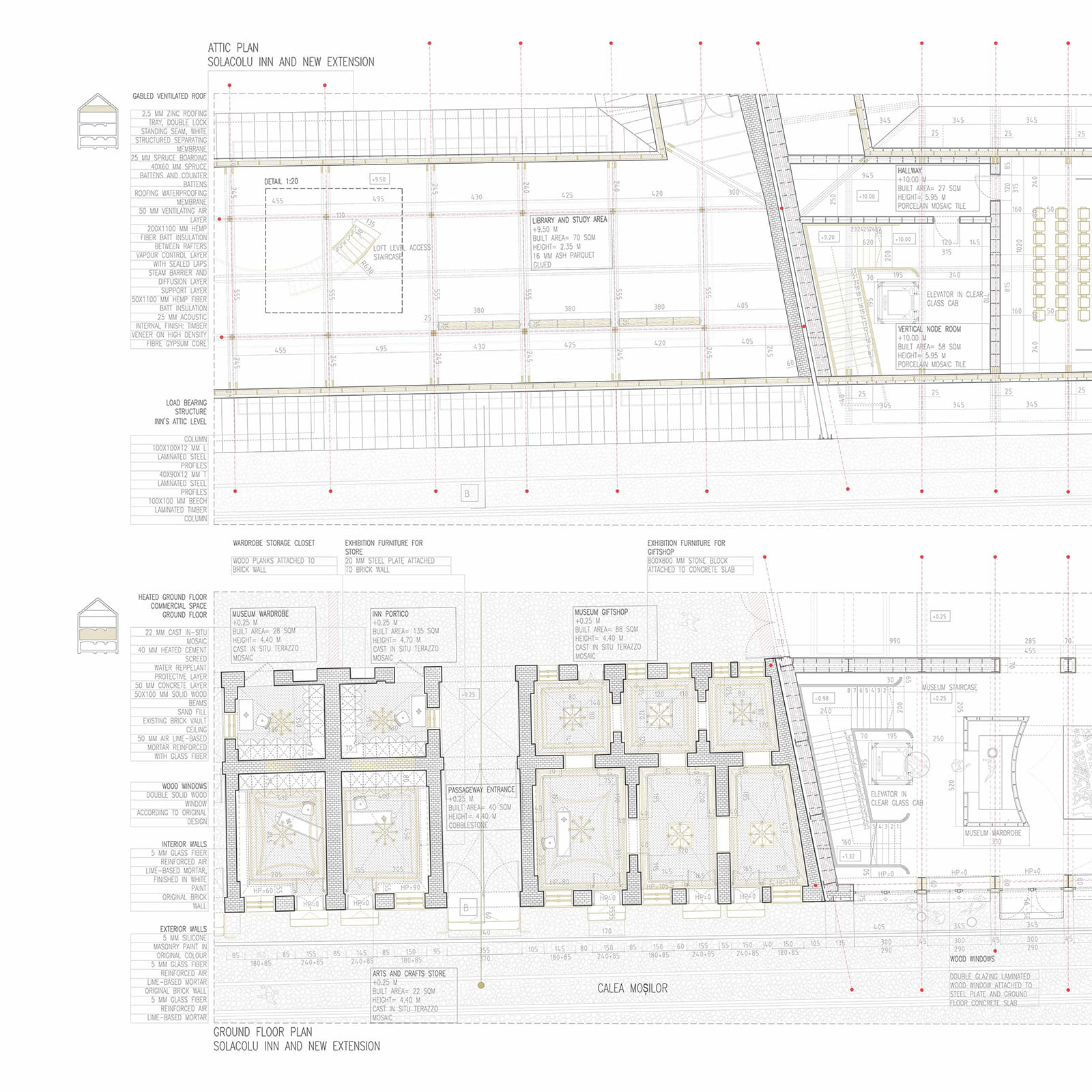
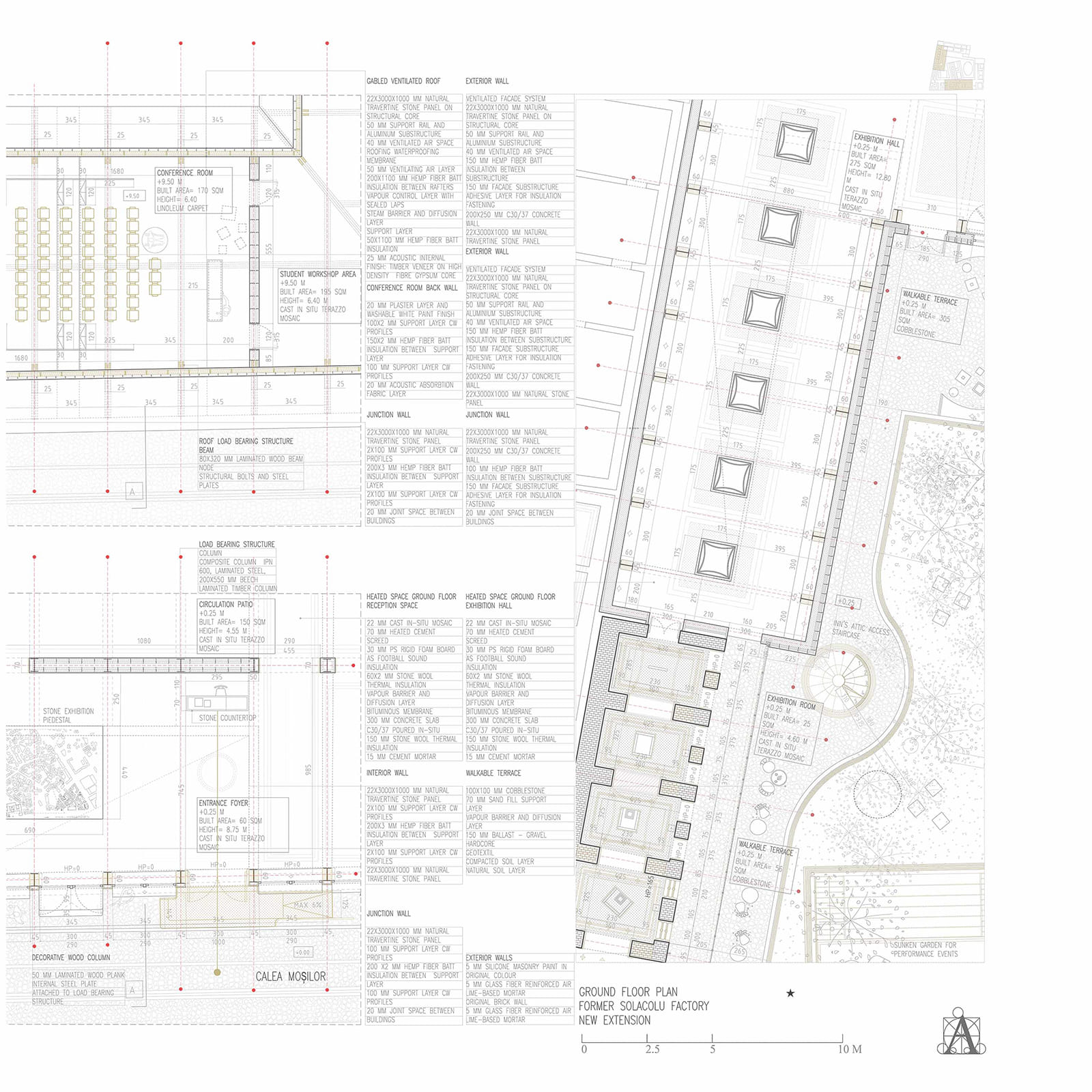
Ultimately, by reimagining the Solacolu Inn as a vibrant cultural hub, the project serves as a sustainable model for reviving ruins, offering a new methodology of reinterpretation and interaction between man, history, and architectural interventions.
Facts & Credits
Project title RUSTICITAS ET URBANITAS. Traditional Heritage as Dynamic Social Infrastructure.
Type Master Design Thesis
Student Cristina Popescu
Supervisors Anamaria Mortu (Phd. arch.), Elena Codina Dușoiu (Phd. arch.), Dragoș Marcu (eng.)
Presentation Date February 2025
University “Ion Mincu” University of Architecture and Urbanism, Bucharest
Text by the author
READ ALSO: (RE)DESIGN FOR THE PEOPLE // 5 student works for adaptive reuses of existing urban shells