FEATURED STUDENT presents selected portfolios of architecture students who, in collaboration with academic mentors and teachers, are working on visionary and innovative scenarios in architectural theory and practice.
Design Philosophy
Dimitris Paschalis is an architect based in Athens, Greece, whose practice extends seamlessly into the realm of comics, where narrative and spatial imagination intersect. A graduate of the Department of Architecture at the University of Patras, he developed drawing and sketching as central tools for thinking and expression. During his studies, he gained experience as a self-employed graphic designer while cultivating personal artistic work, which laid the foundation for his hybrid practice. Following graduation, he worked in architectural offices acquiring skills in coordination, discipline, and managing complex projects. Although this experience was not directly related to comics, it informed his structured and methodical creative process.
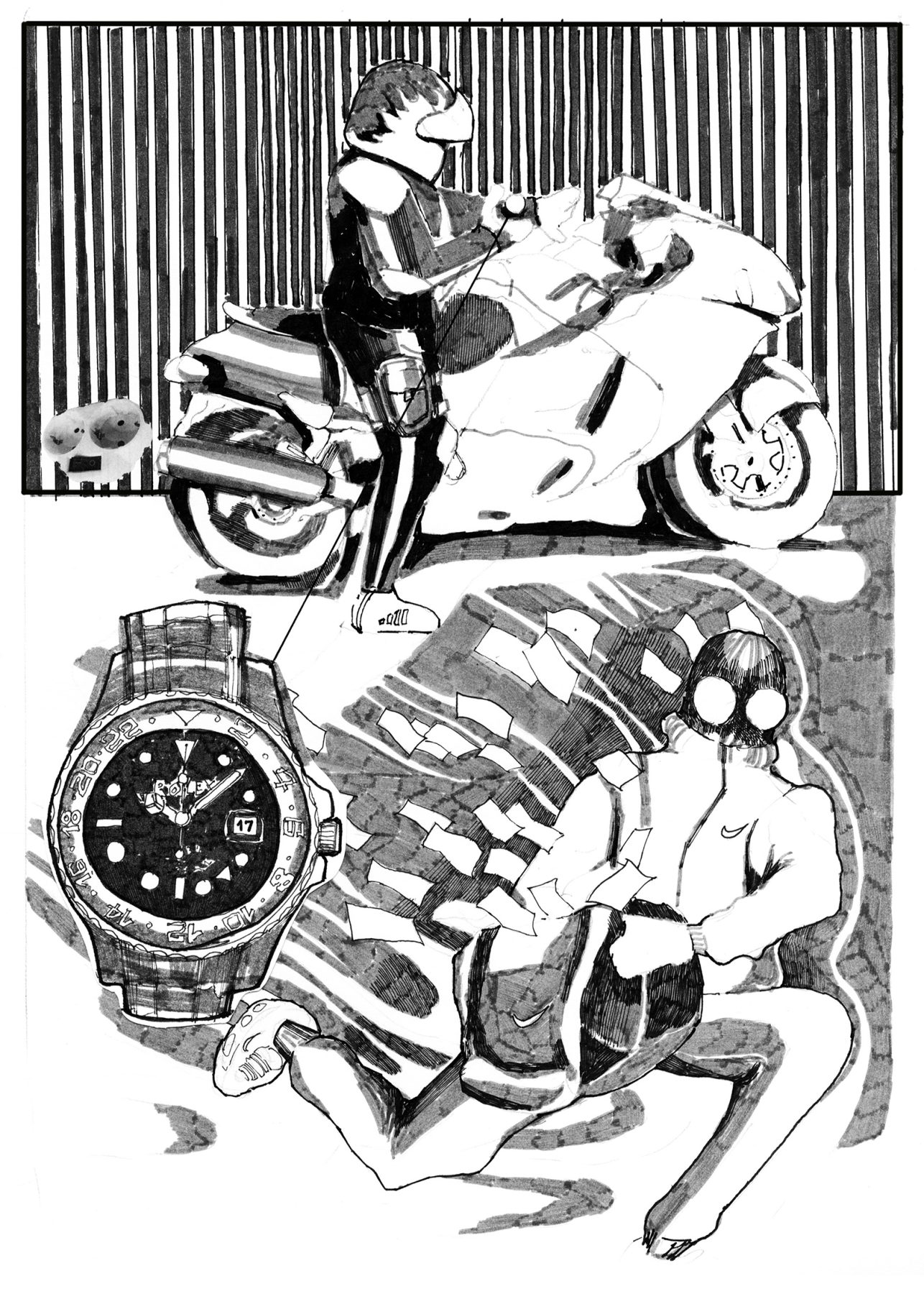
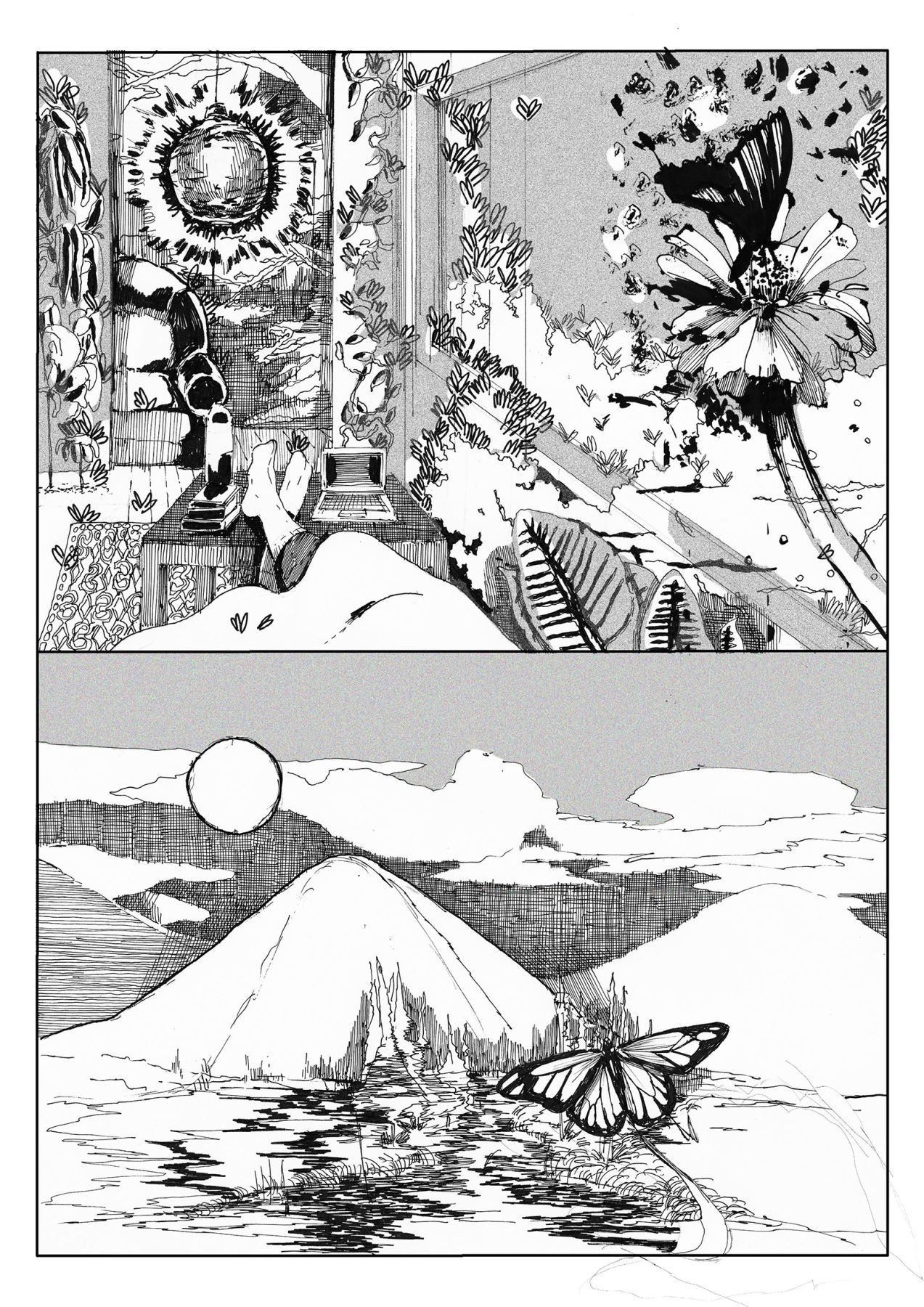
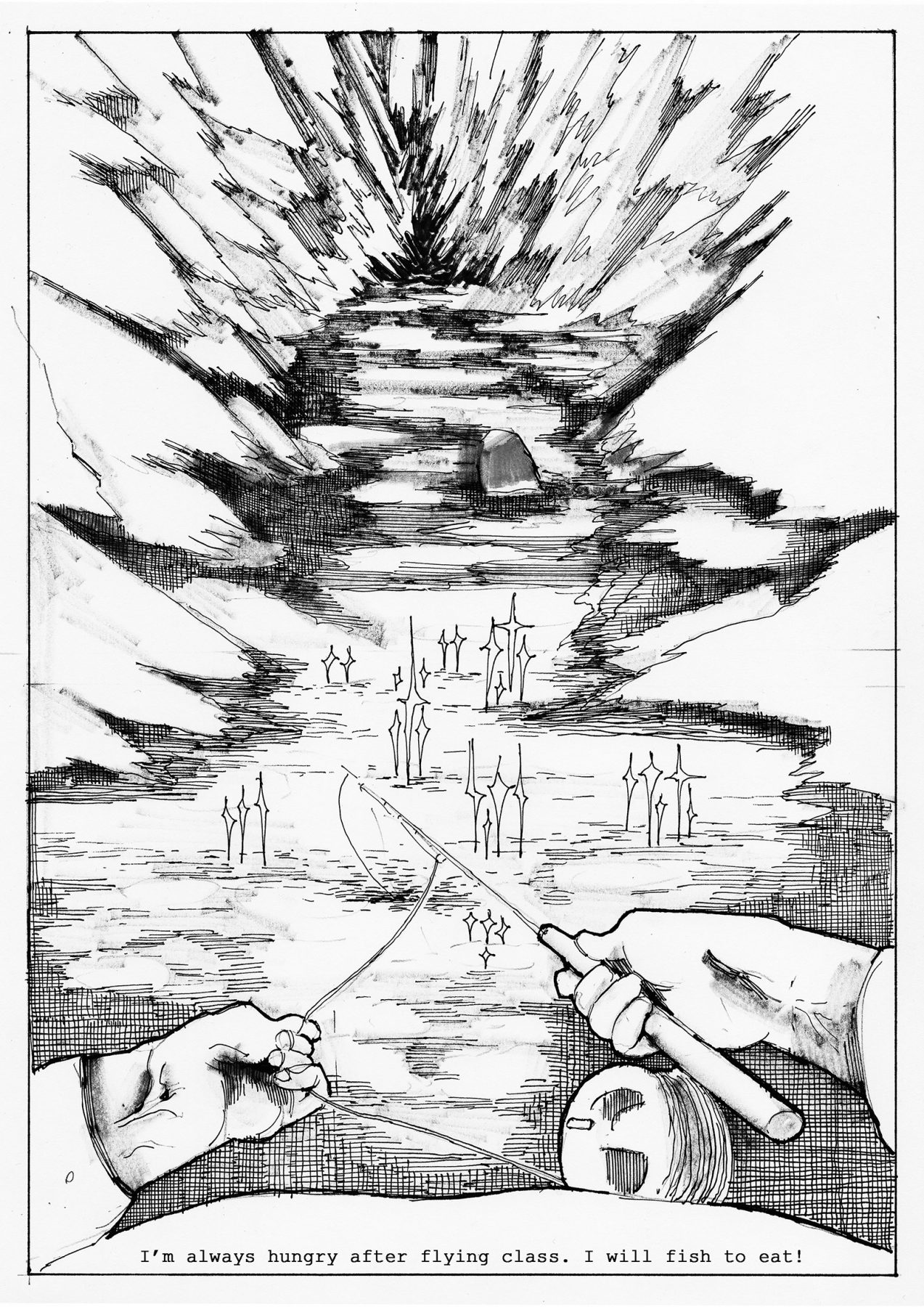
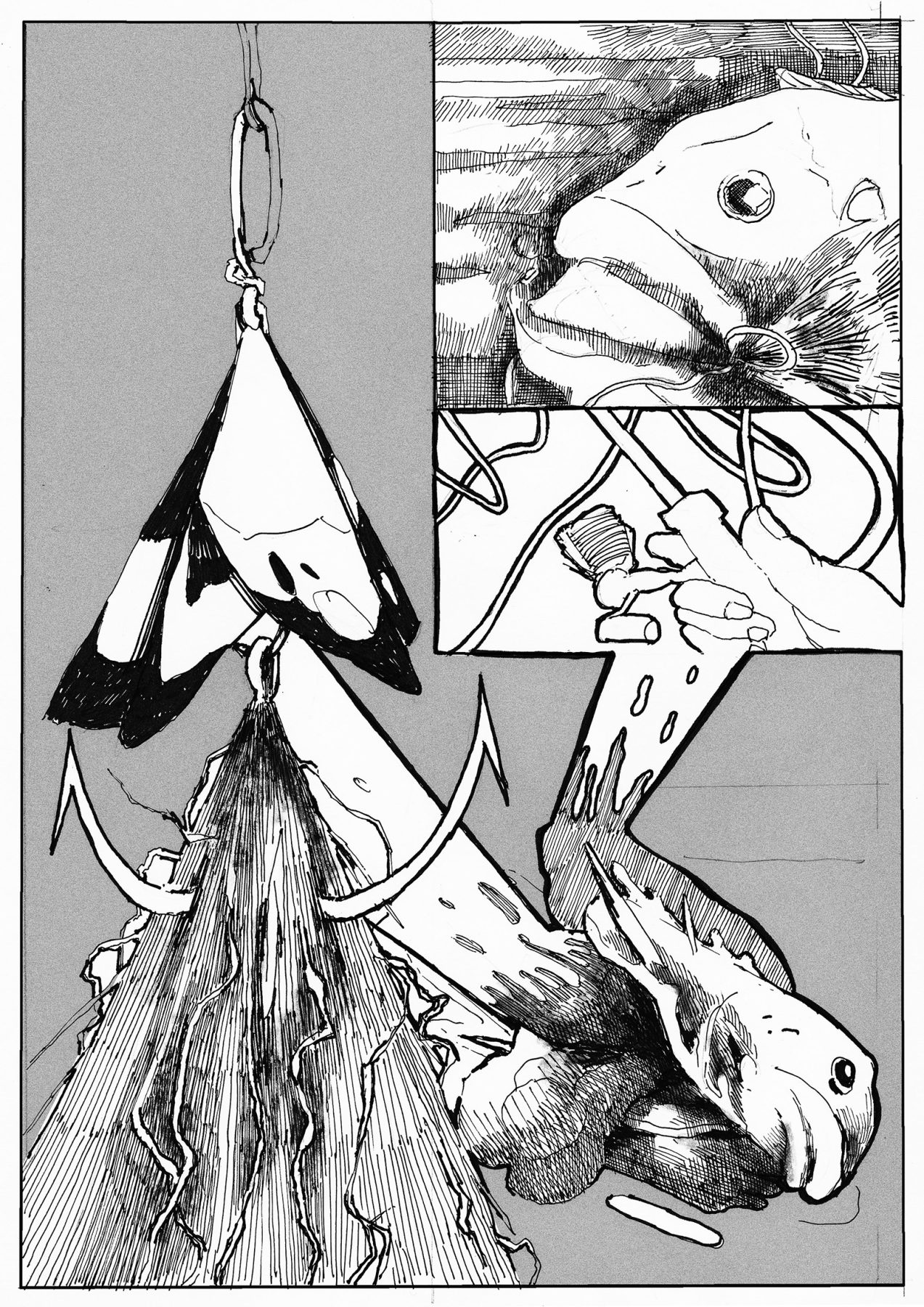
Paschalis’s work in comics consists of short, self-contained narratives that function as miniature architectural experiments.
Exploring dystopian and utopian scenarios, he examines the interplay between built environments, social structures, and human behavior. Organized around spatial logic and visual rhythm, his stories interrogate how cities and interiors shape everyday life and collective experience.
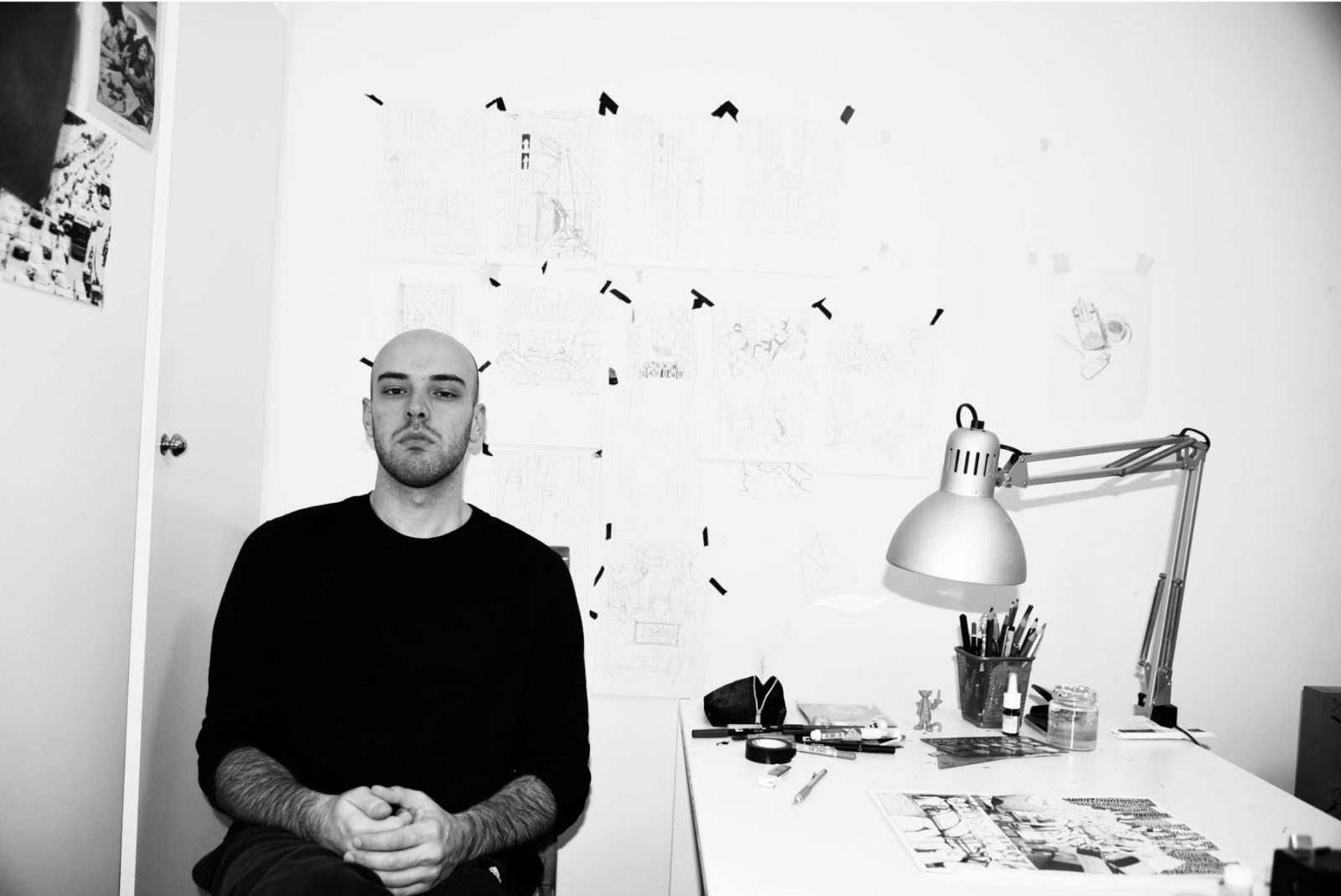
Central to his approach is a commitment to traditional, hand-made techniques.
Using ink, pencil, and collage, he constructs layered compositions that emphasize both materiality and immediacy, bridging architecture and storytelling. Each panel functions as a fragment of a larger conceptual exploration, where spatial logic, visual rhythm, and narrative coherence converge. In this way, Paschalis bridges the disciplines of architecture and comics, demonstrating how narrative strategies can expand architectural thinking beyond conventional modes of representation.
Within this framework, drawing operates not merely as a representational tool but as a method for thinking and structuring space.
His research investigates individual and collective spatial experience, including the dynamics of interpersonal distance and how environments influence movement, interaction, and relationships. Alongside comics, Paschalis works with animation, illustration, and music, yet comics remain his primary medium, producing a hybrid terrain where architecture and narrative illuminate each other, offering new ways to imagine, inhabit, and transform urban life.
A.C. 210(0): Polykatoikia’s response to conditions of extreme climate change
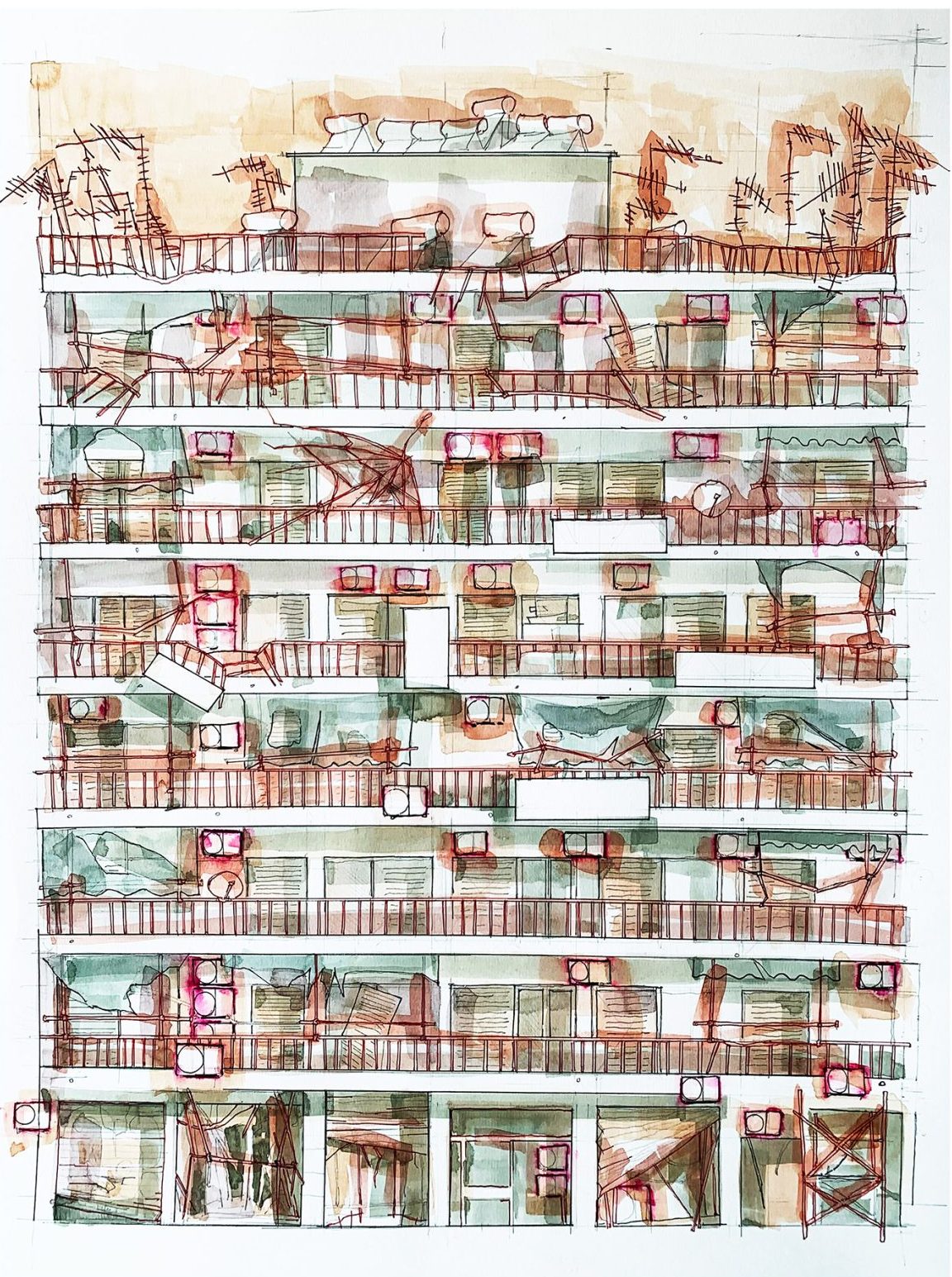
Front view of apartment building. Media: watercolors, ink, pencil.
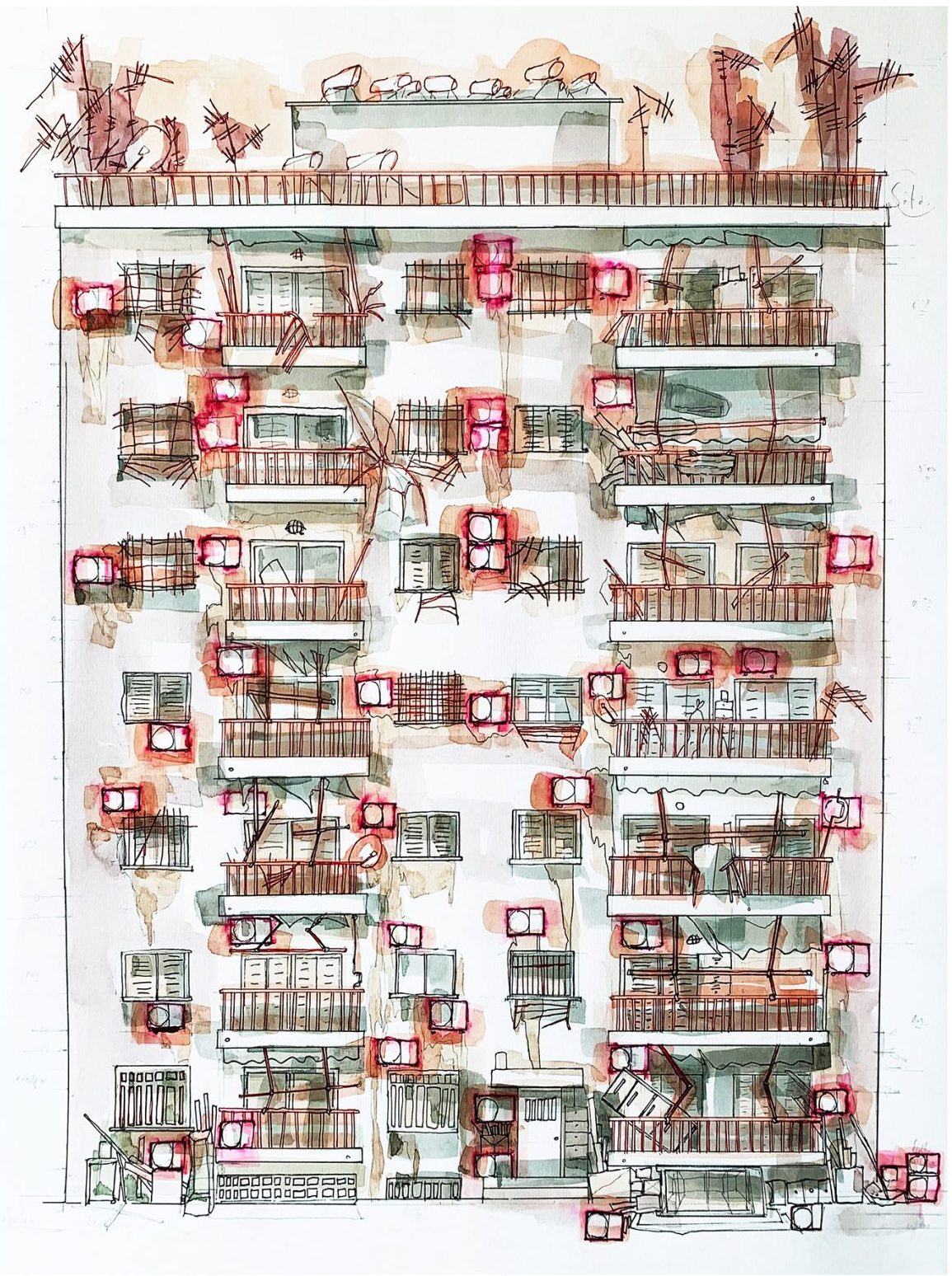
Back view of apartment building. Media: watercolors, ink, pencil.
This thesis explores the hypothetical response of a typical Athenian apartment building to conditions of severe climate change, with particular focus on the phenomenon of urban warming.
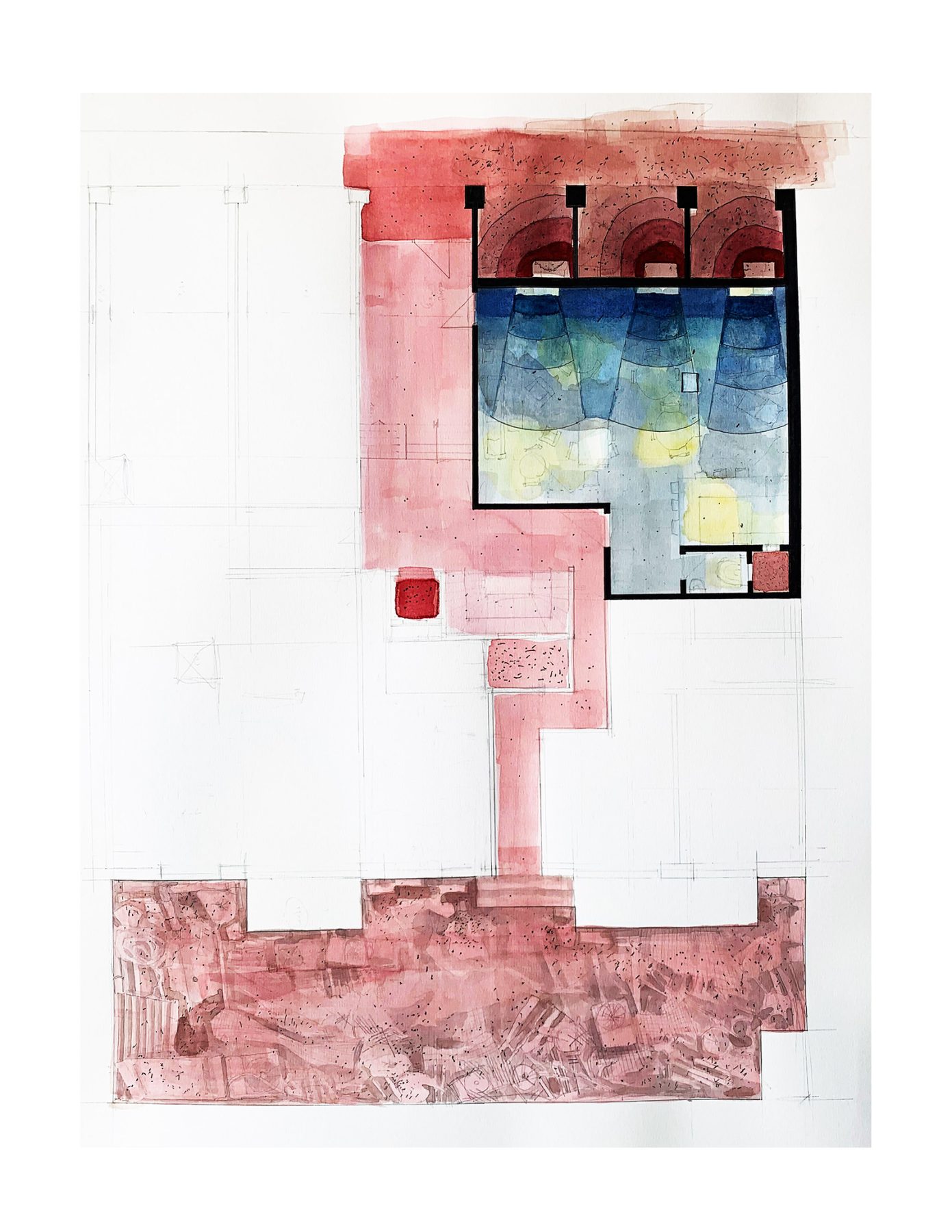 Plan. Media: watercolors, ink, pencil.
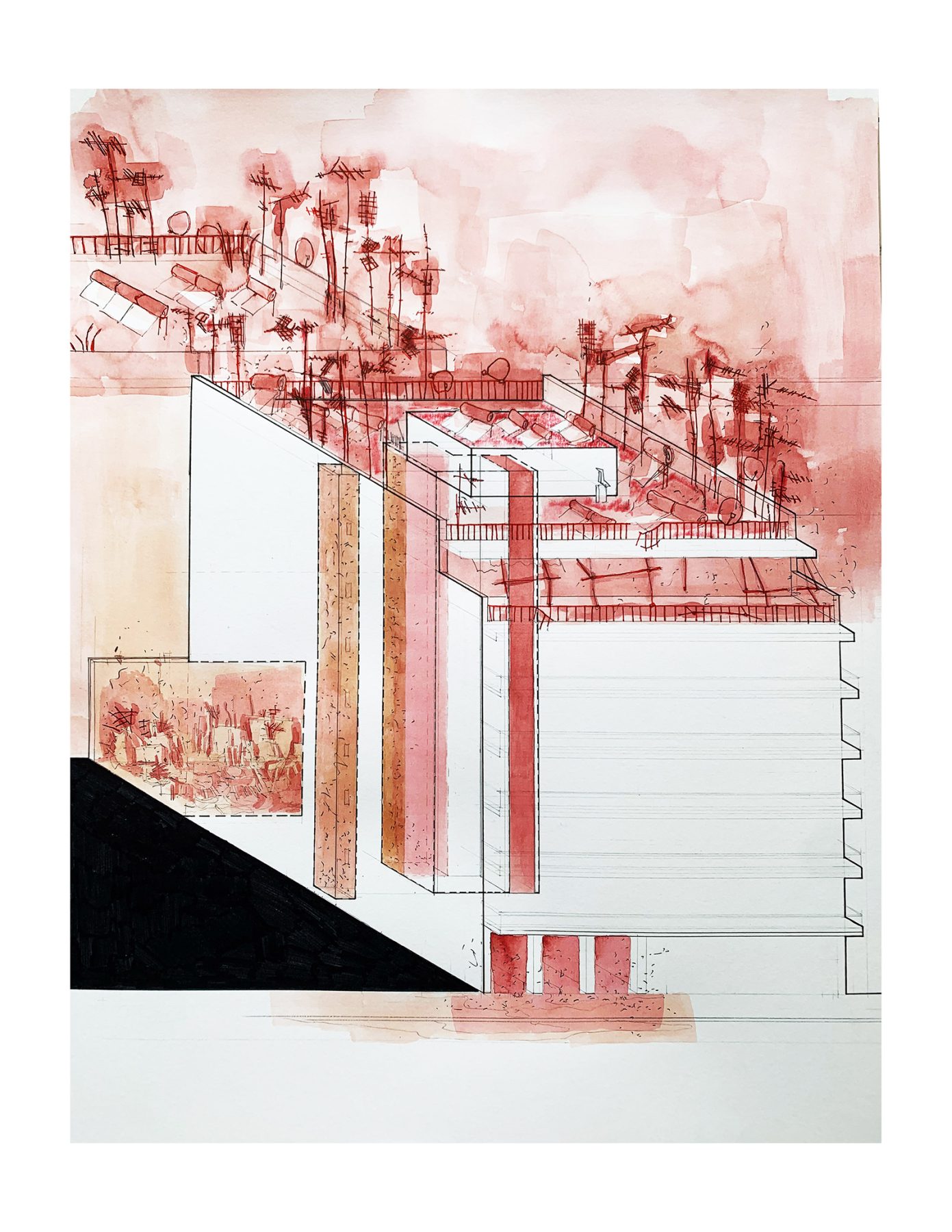
Axonometric. Media: watercolors, ink, pencil.
The research is developed through the study of speculative scenarios of extreme heat, envisioning a near future in which a common Athenian apartment building becomes a victim of intensified urban temperatures.
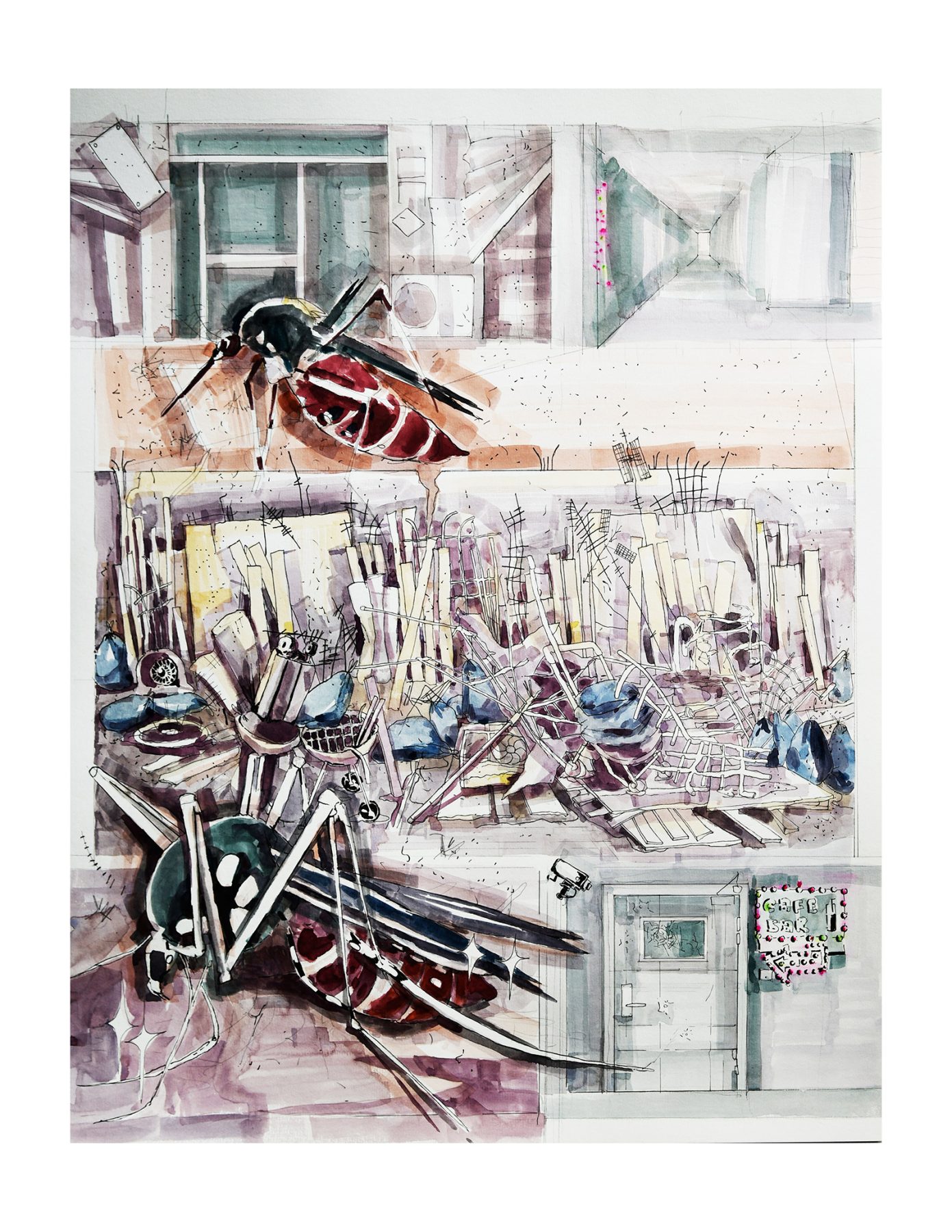
Storyboard: block yard. Media: watercolors, ink, pencil.
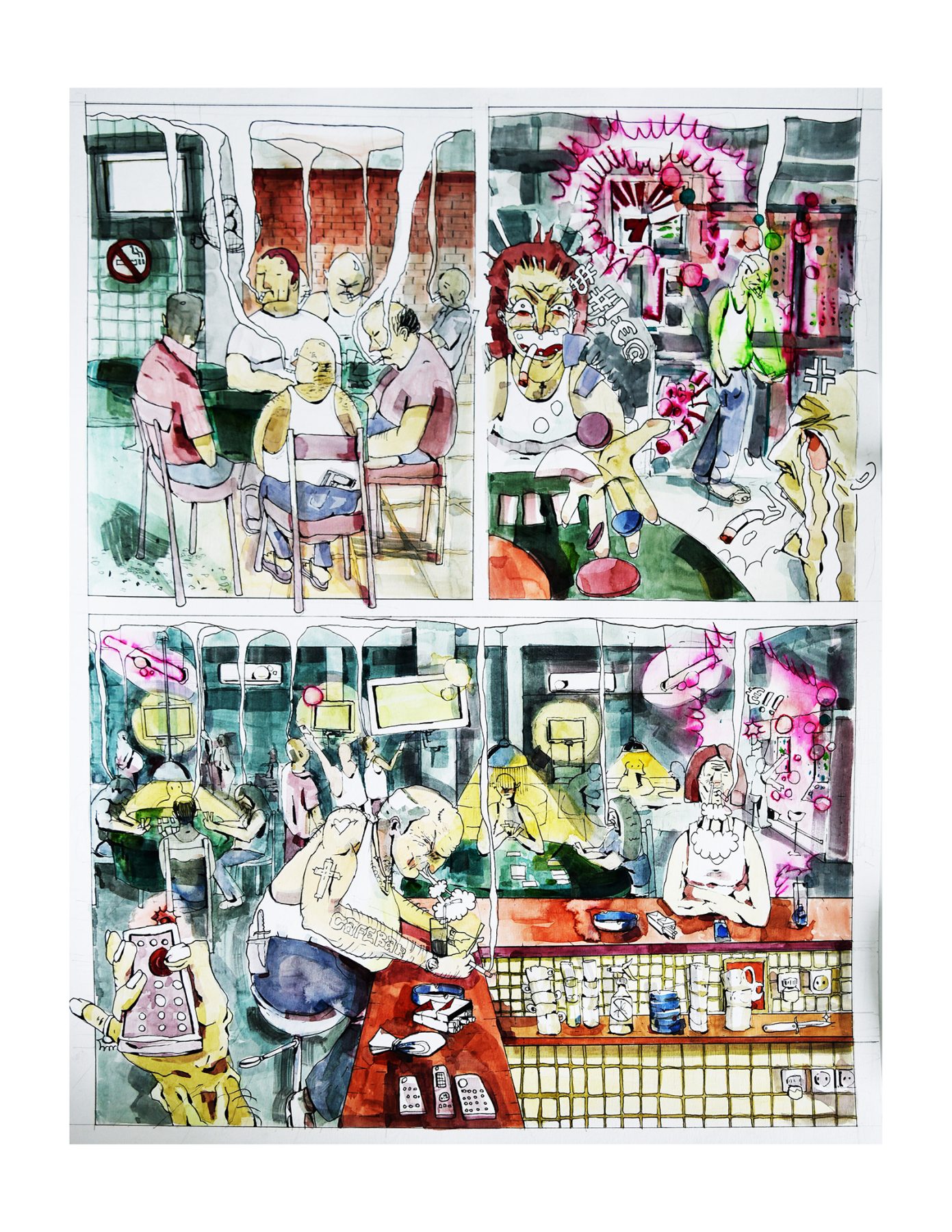
Storyboard: communal space. Media: watercolors, ink, pencil.
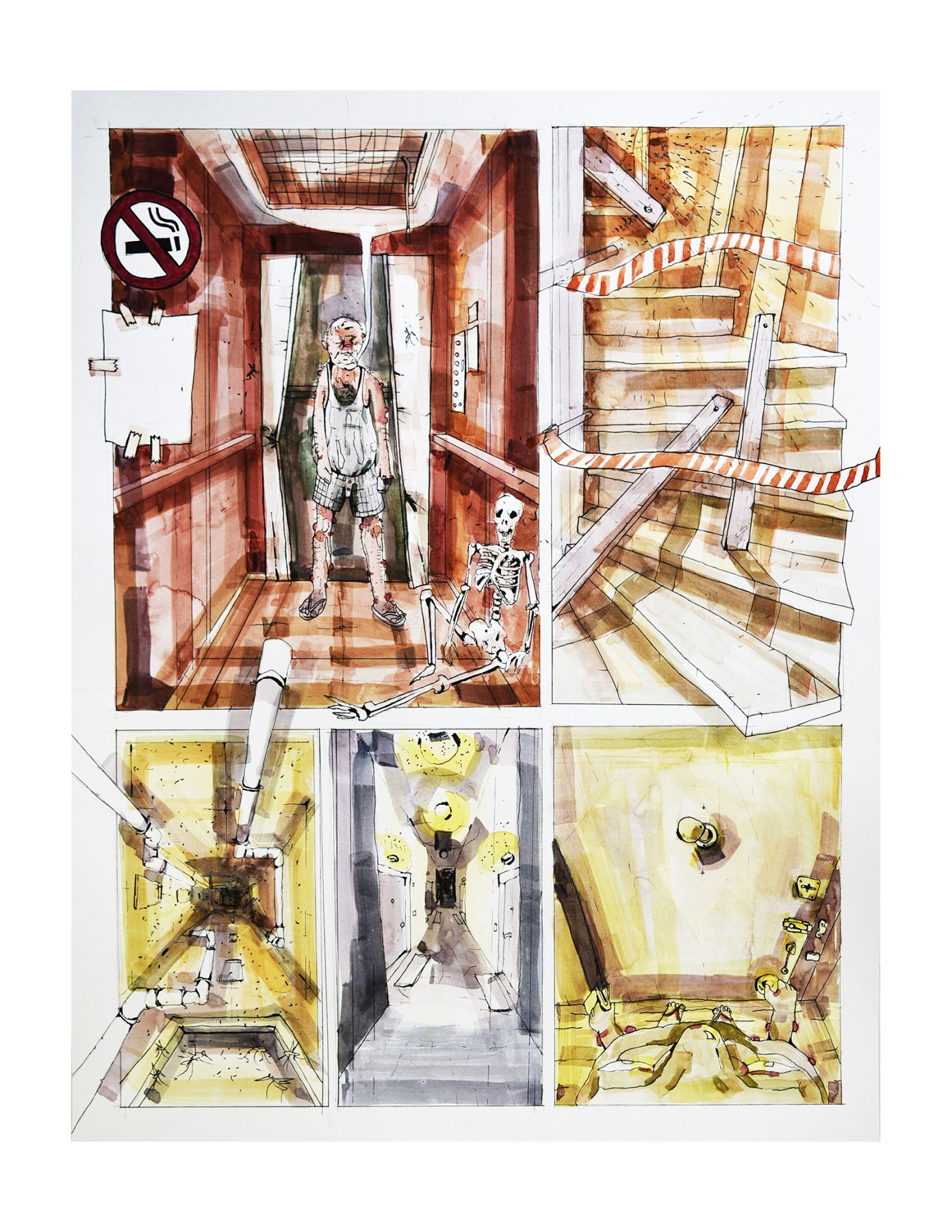 Storyboard: Elevator. Media: watercolors, ink, pencil.
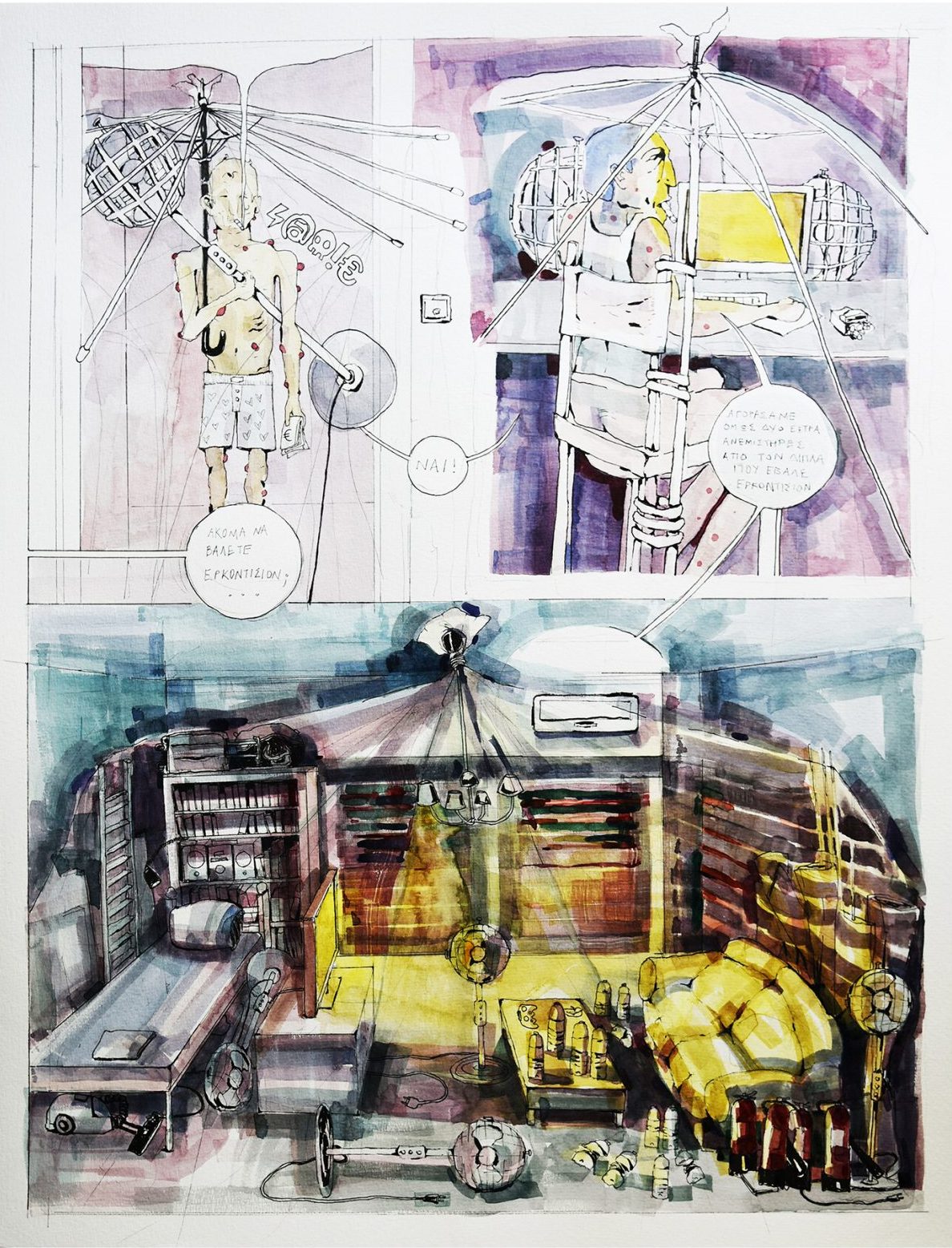
Storyboard: Residential spaces. Media: watercolors, ink, pencil.
Within this narrative framework, the project constructs a cinematic spatial environment where architecture and storytelling intersect.
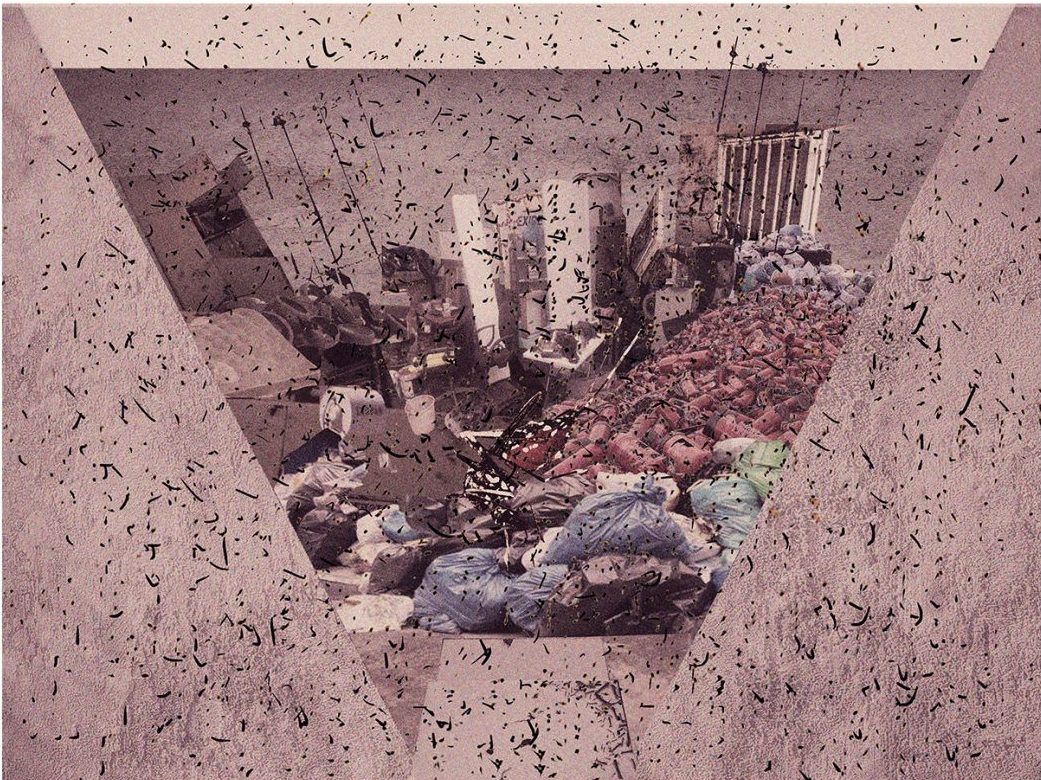
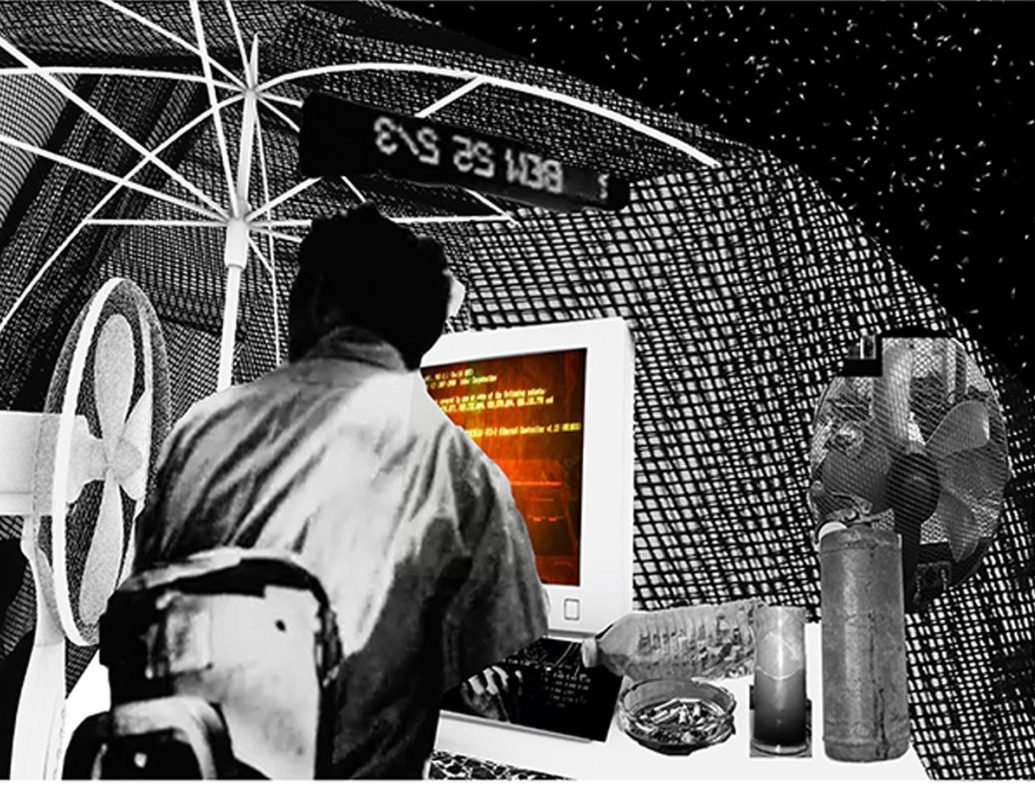
Space of the apartment building from the point of view of the film’s hypothetical protagonist.
The investigation is guided by a series of questions:
How might the building’s form be altered under extreme thermal stress?
In what ways would such transformations affect the daily lives of its inhabitants?
And how might changing environmental conditions reshape patterns of inhabitation within the building?
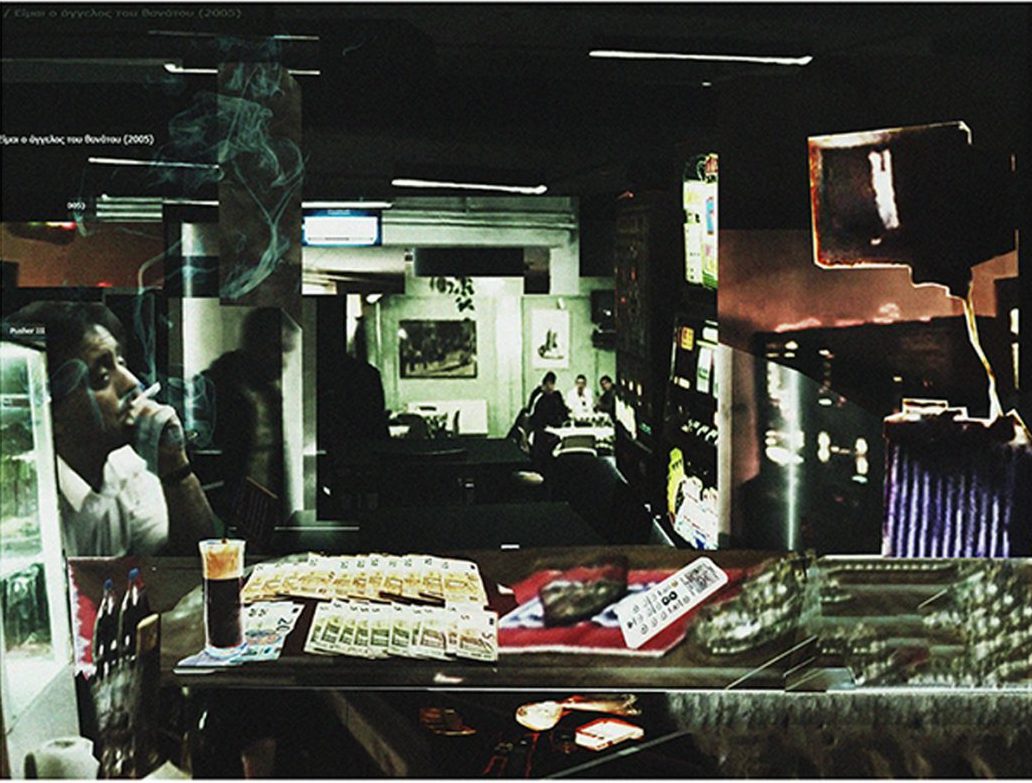
Space of the apartment building from the point of view of the film’s hypothetical protagonist.
The responses to these questions unfold as a dystopian speculative scenario—an amplified projection of conditions that are already emerging in contemporary urban environments.
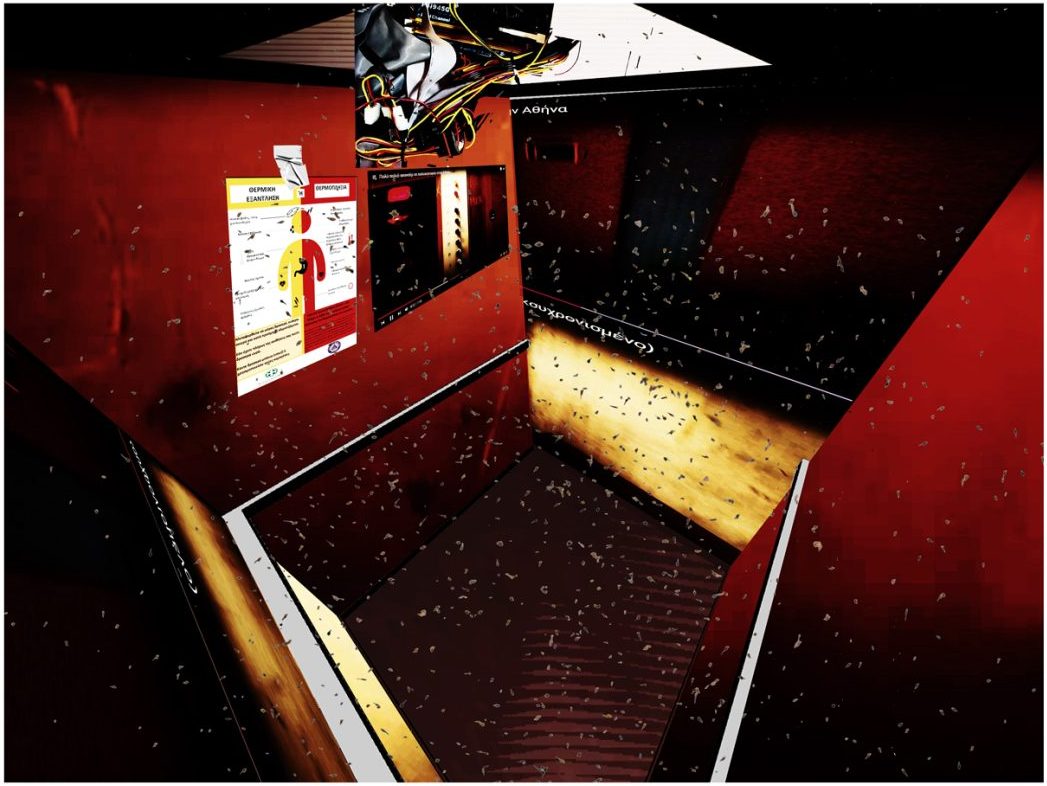
Space of the apartment building from the point of view of the film’s hypothetical protagonist.
Rather than presenting a distant or abstract future, the project frames climate change as a continuation and intensification of present-day realities within the dense urban fabric of Athens.
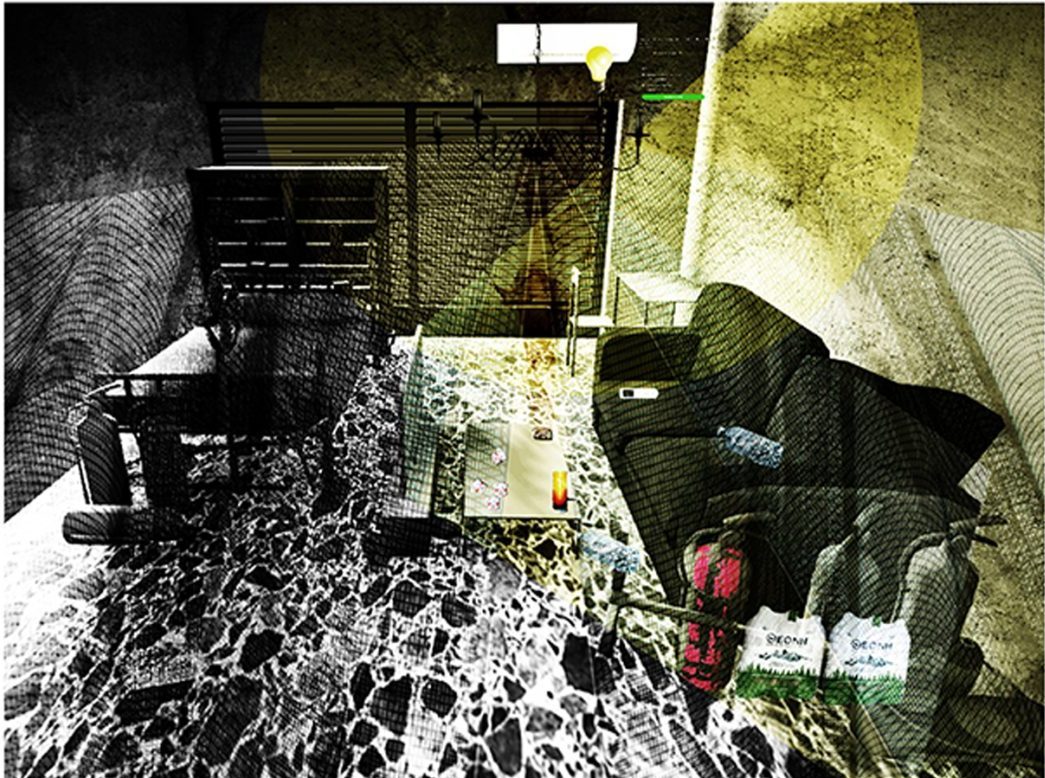
The images present the interior and exterior spaces of the apartment building from the perspective of a hypothetical protagonist within the filmic narrative. Alongside these visual scenes, architectural drawings document the building’s transformation under the pressure of extreme heat, illustrating how rising temperatures begin to affect its structure, surfaces, and spatial organization.
Facts & Credits
Project typology: Diploma thesis
Supervisors: Panos Dragonas, Ilias Papailliakis
University: Department of Architecture, University of Patras
Date of presentation: June 2024
Dreamhouse (animation):
In this work, the characters live a sick routine in their city. They live in skyscrapers and drive cars. But some experience better living conditions on the roofs of skyscrapers, where there is nature, single-family homes and swimming pools. The people at the bottom of the city watch the lives of those at the top, on their mobile phones. Everyone dreams of one day living at the top of their city that they have not had access to until now. The competition is extreme because everyone has the exact same dream.
Comics
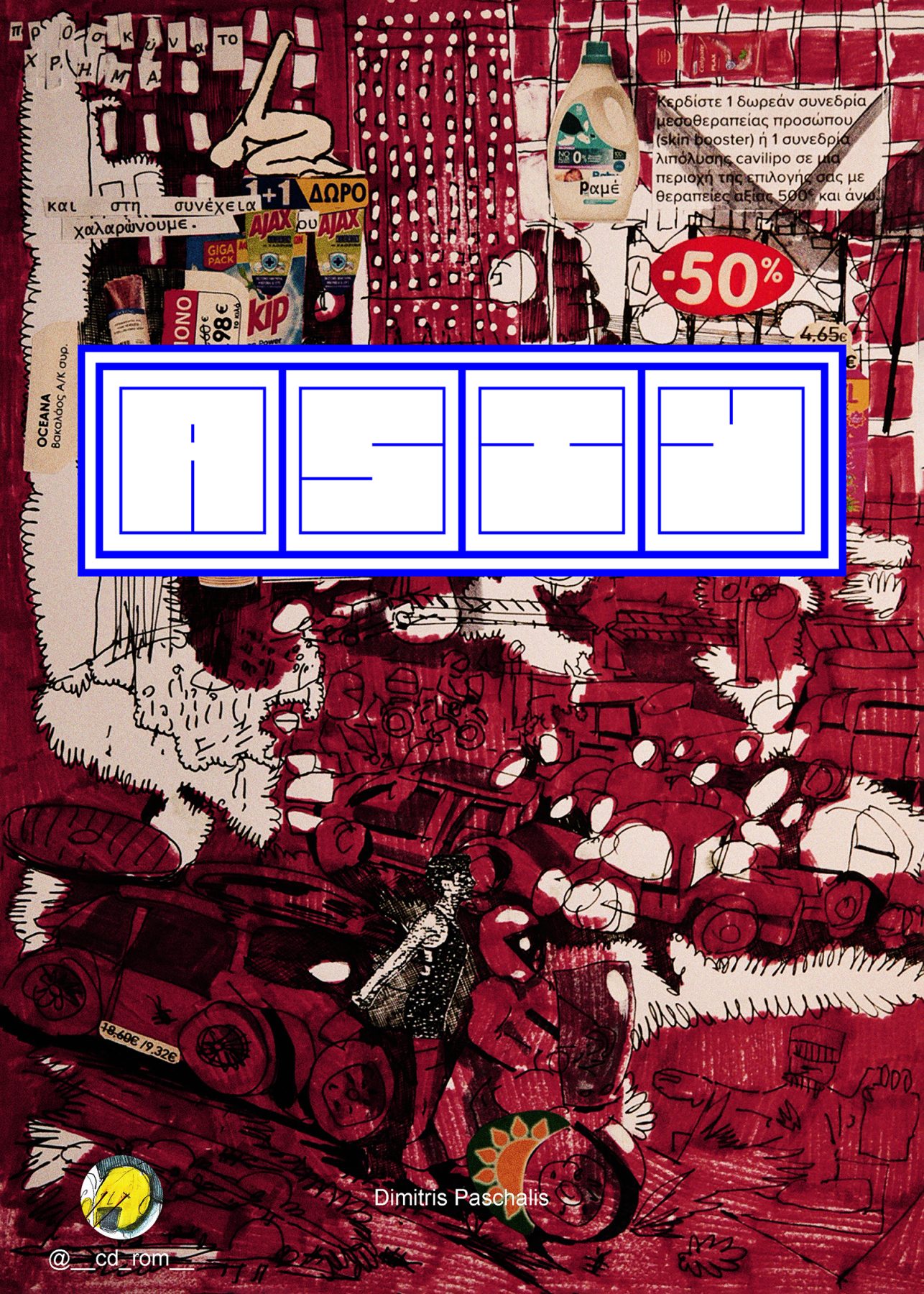
- ASTY (2026), in collaboration with Christina Peppa as a writing editor

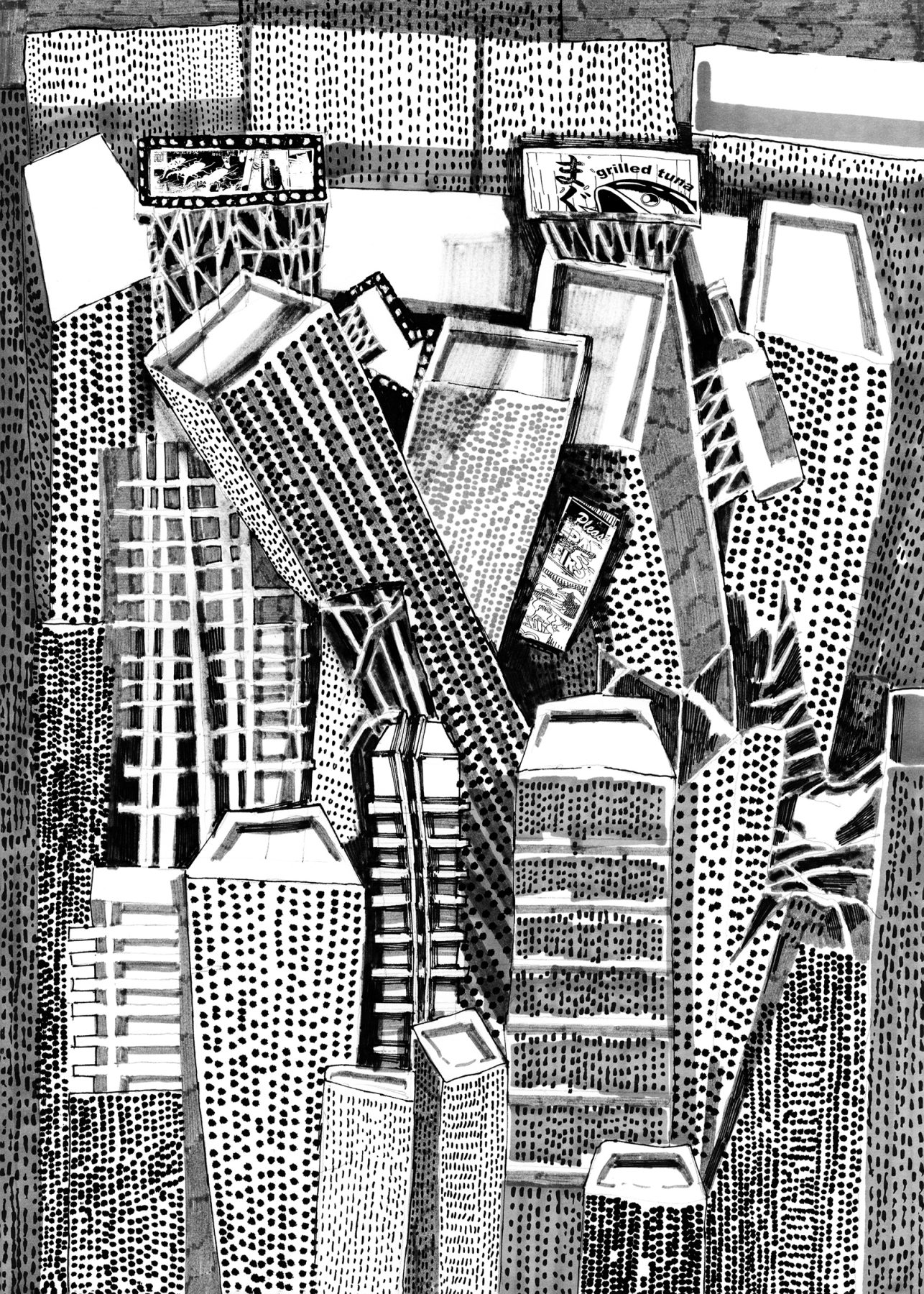
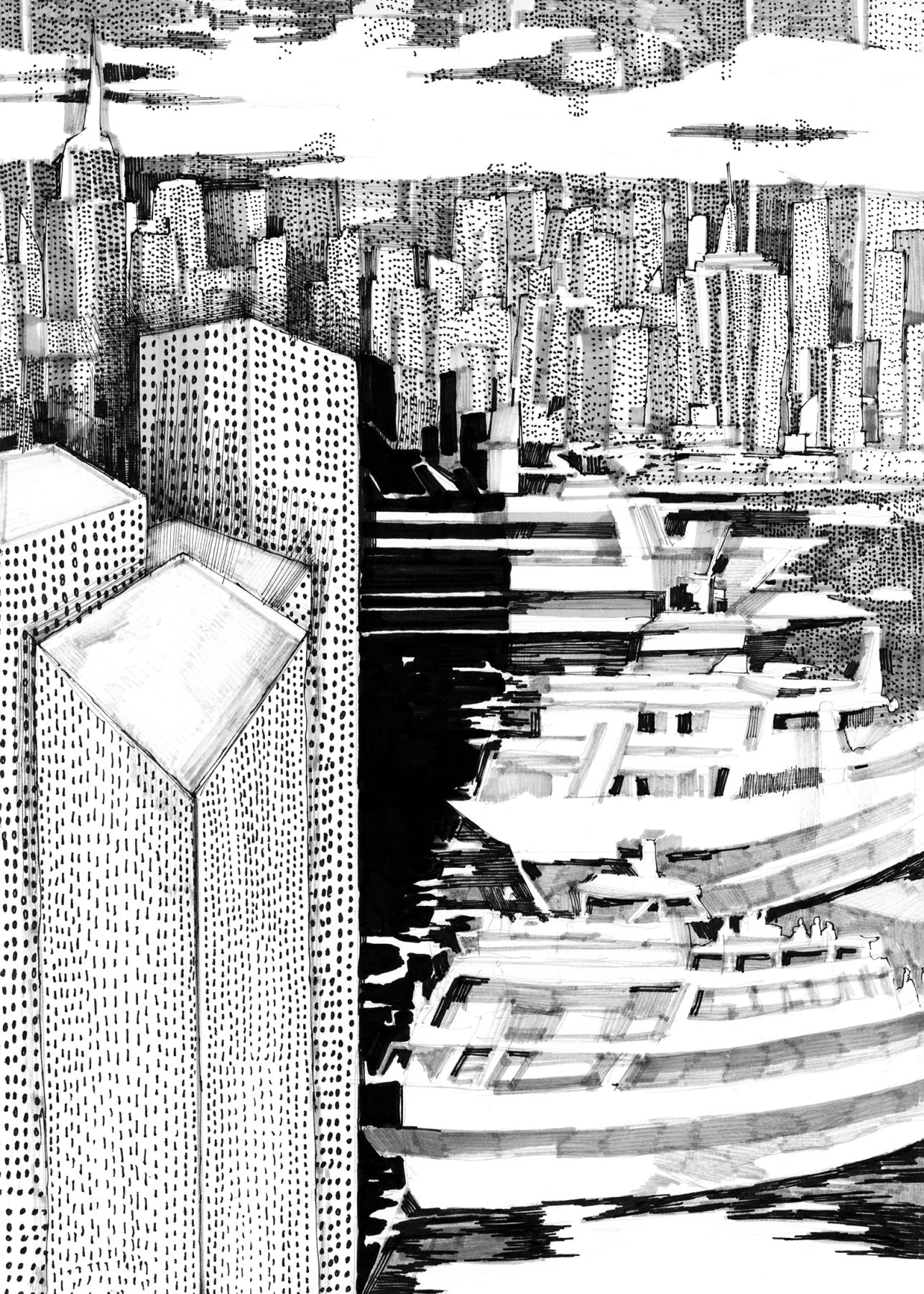
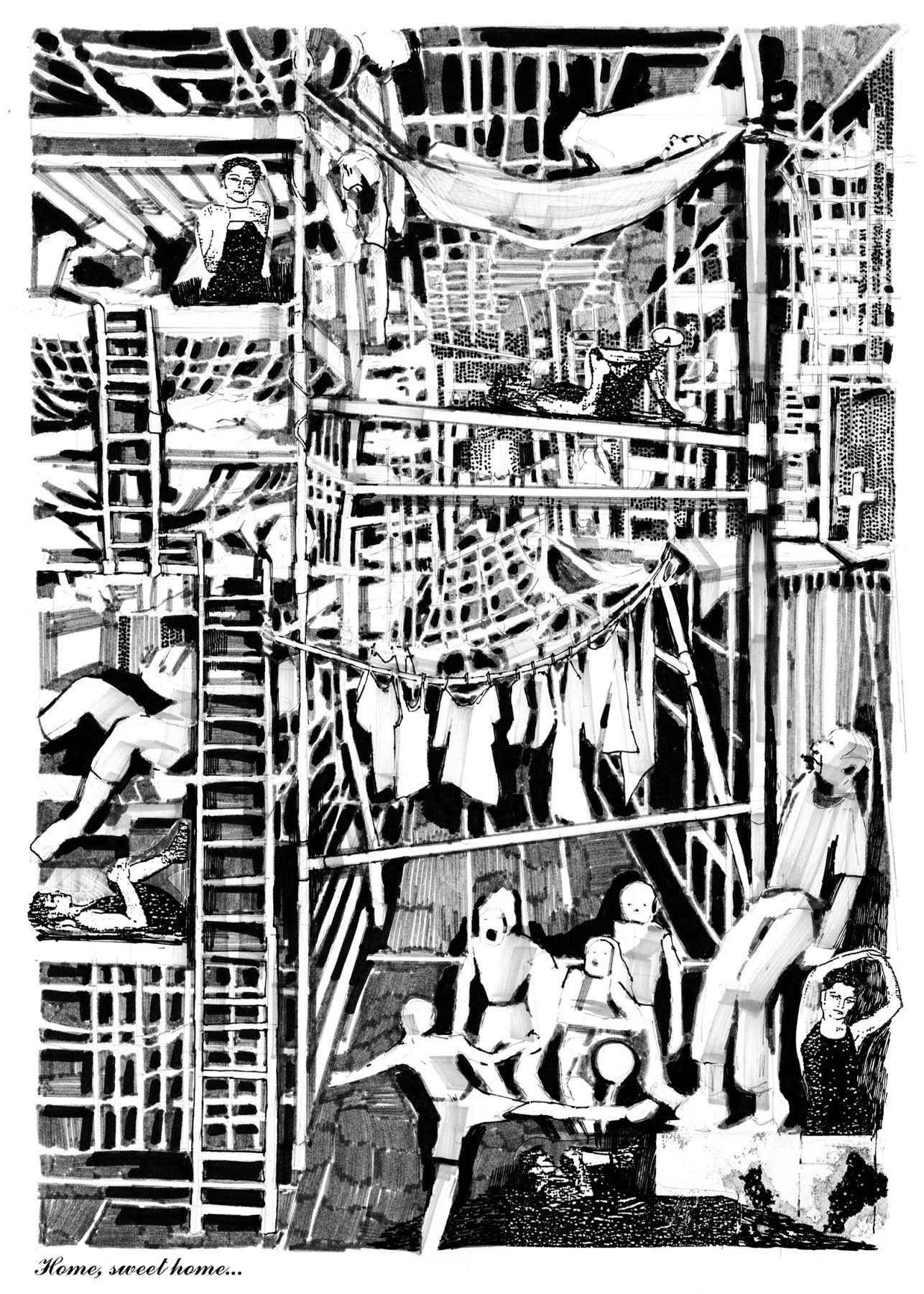
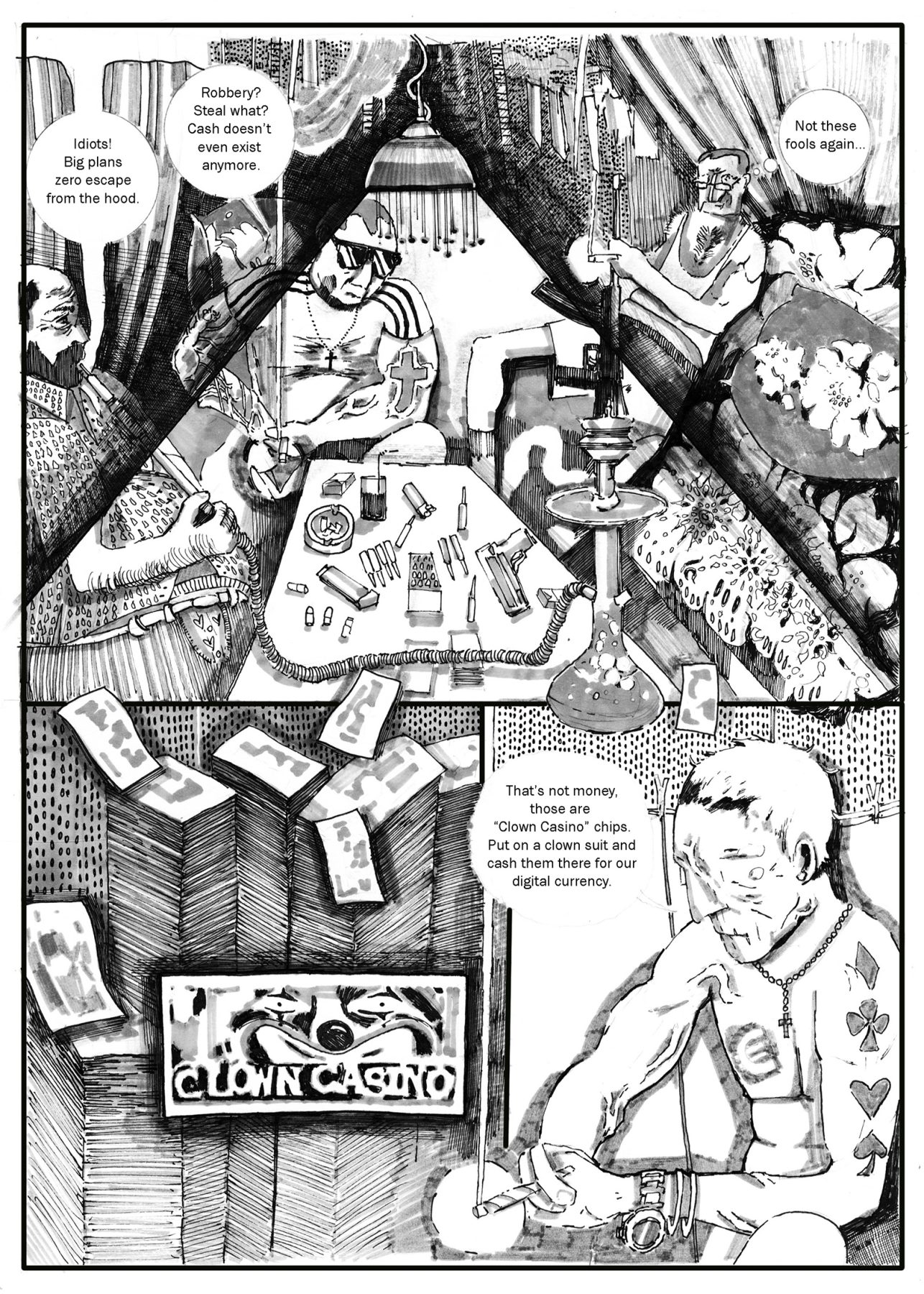
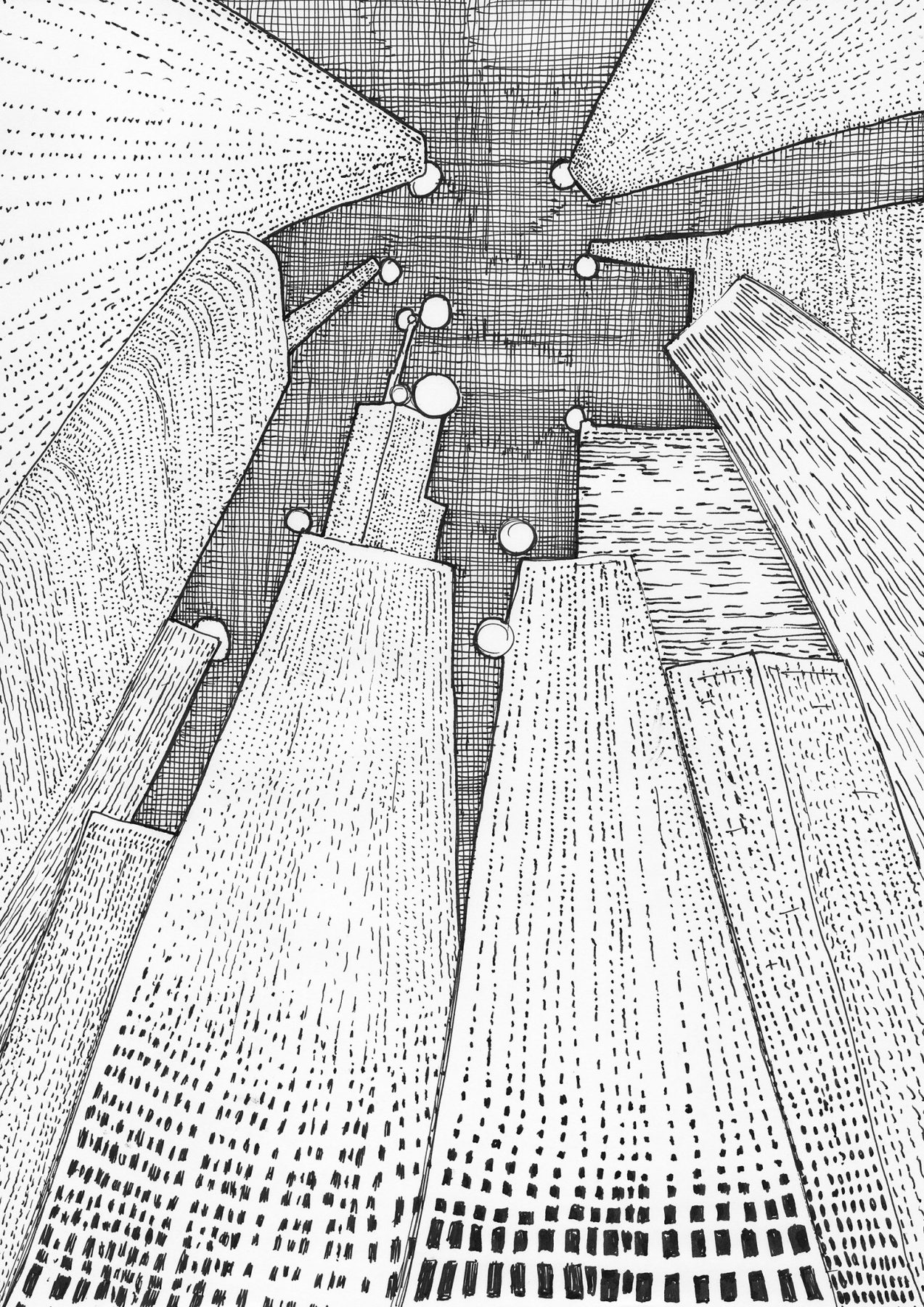
Set in Athens in the year 2999, the story unfolds in a city that has expanded beyond its limits, exhausting both its physical space and its inhabitants.
Athens is portrayed as a dense landscape dominated by towering skyscrapers, where survival becomes increasingly difficult, lawlessness prevails, and citizens are driven to seek rapid solutions to their daily struggles.The narrative reflects on the consequences of extreme urban overdevelopment and its effects on the quality of human life.
Within this speculative setting, ASTY explores the pressures of hyper-urbanization and the fragile condition of human life within an over-saturated metropolitan environment, using dystopian storytelling to examine the social and spatial consequences of unchecked urban growth.
-
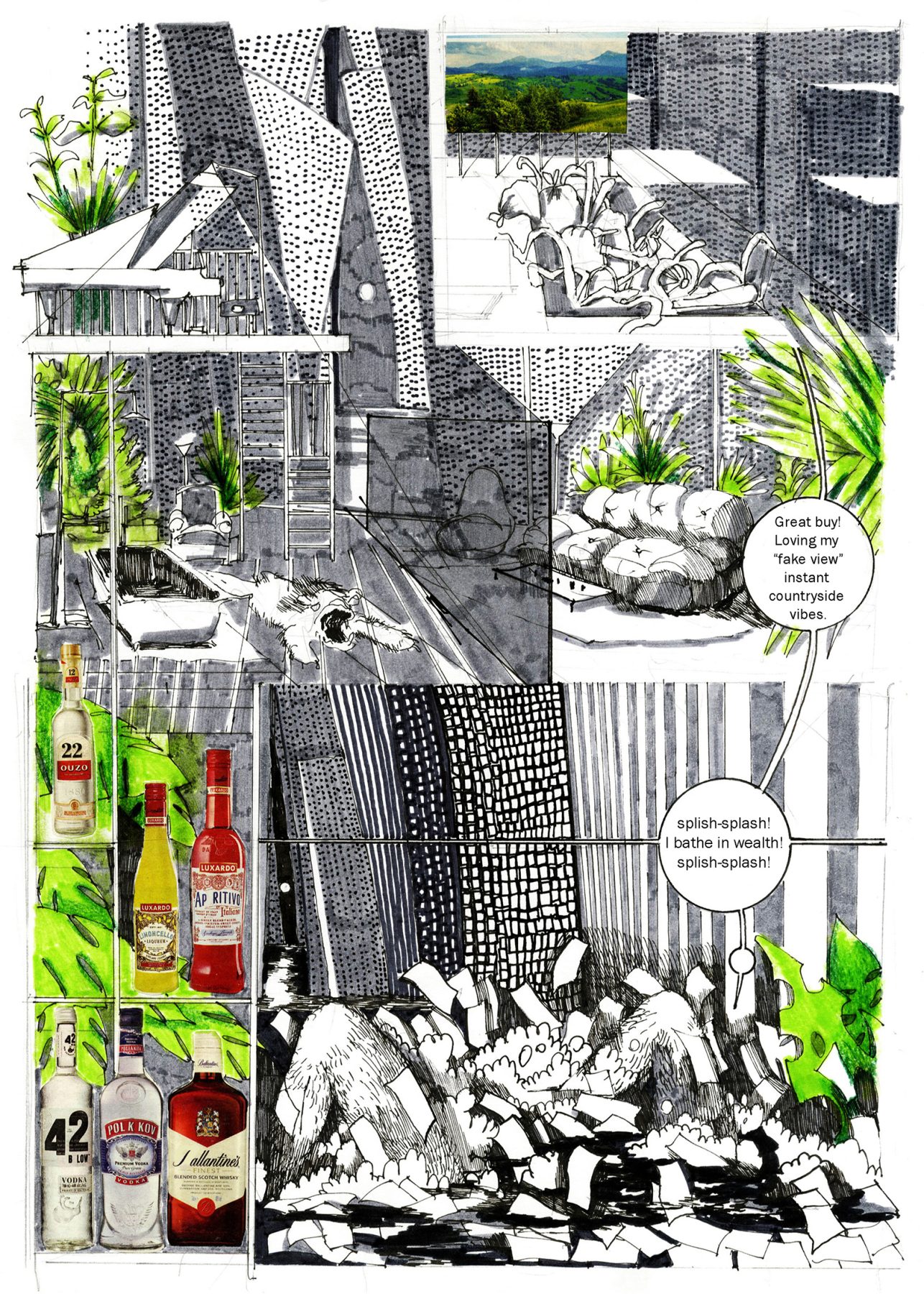
Concrete Diver (2025)
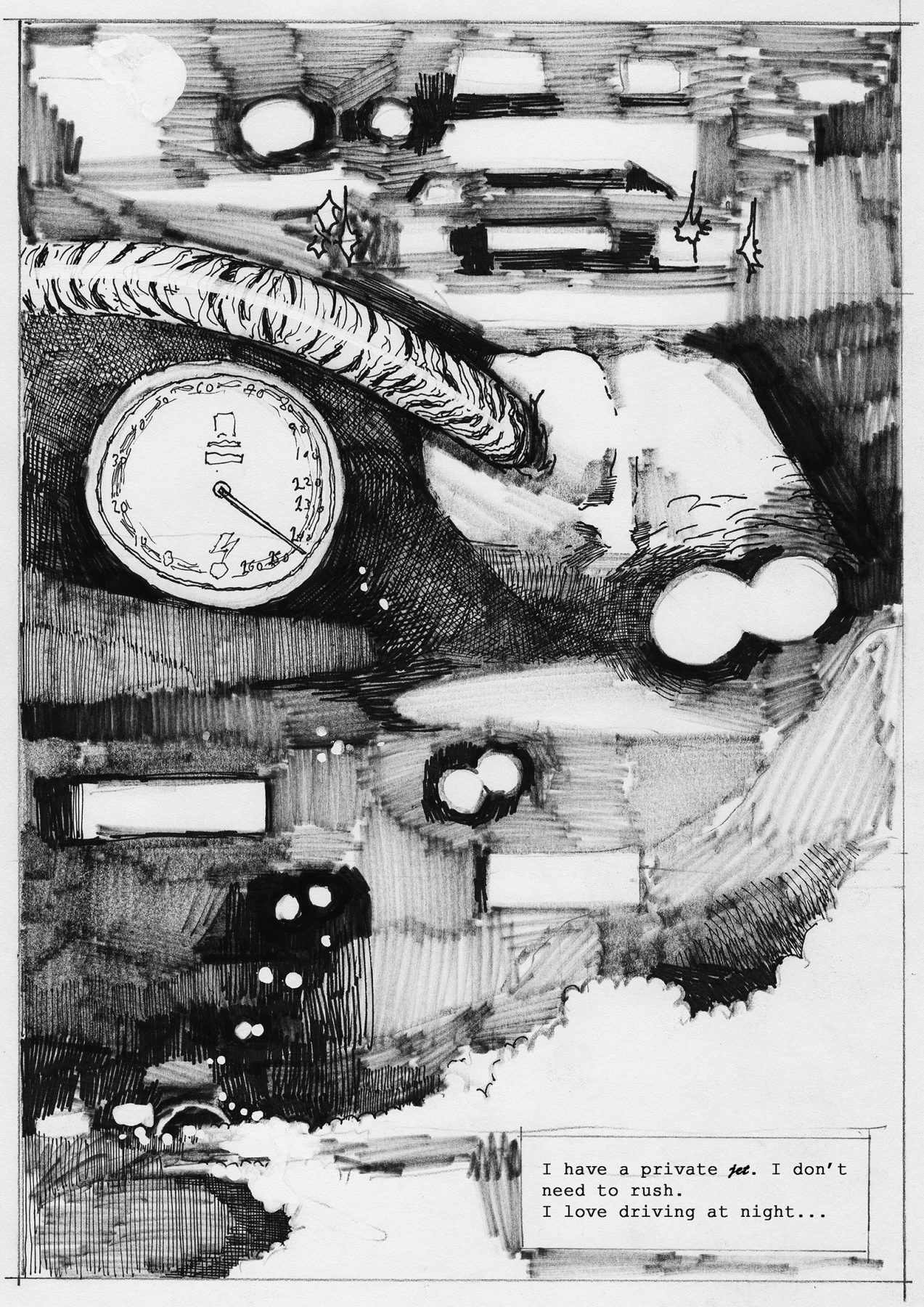
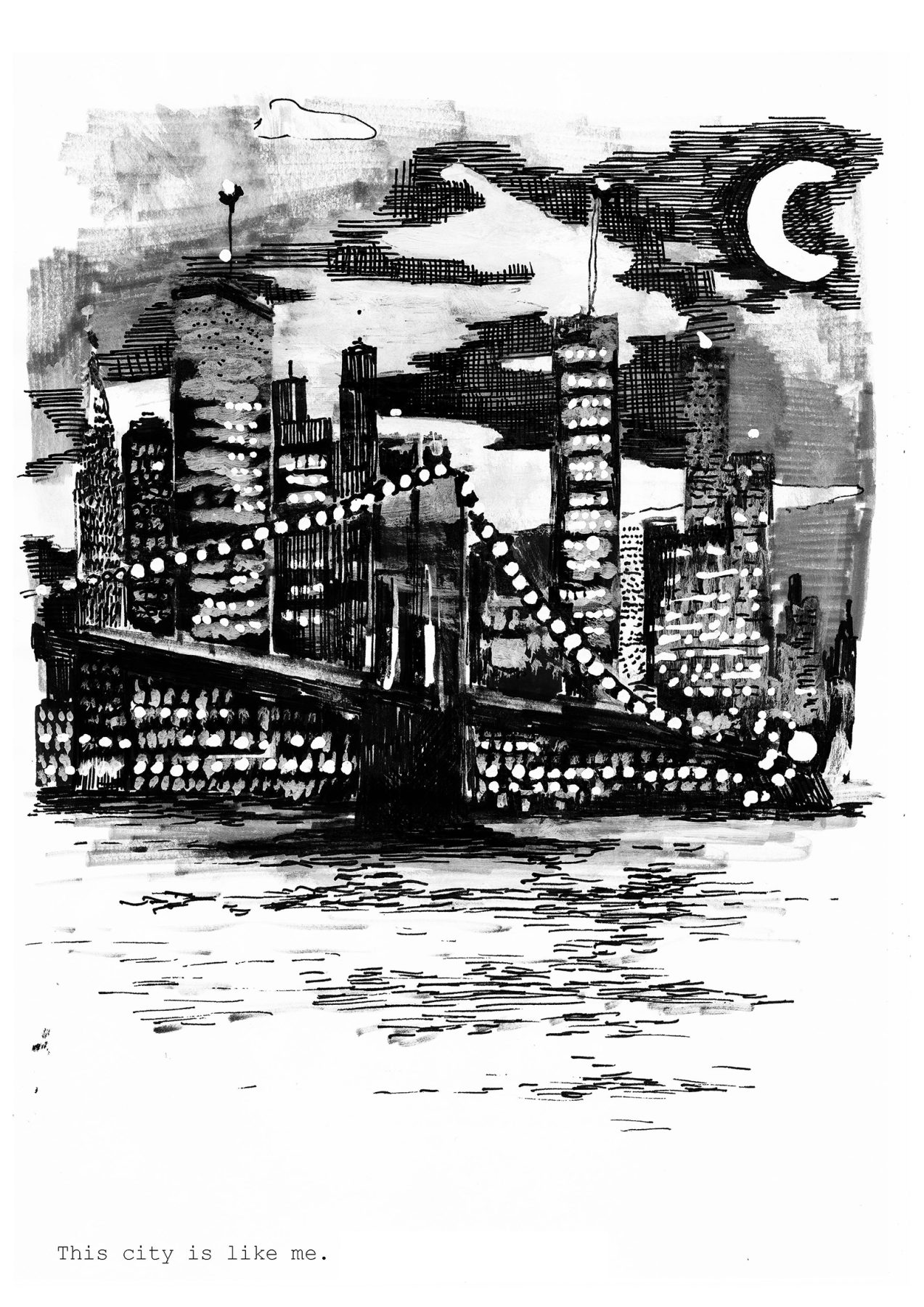
Concrete Diver is a collection of short dystopian narratives that examine various dimensions of daily life and the human mind through unconventional perspectives.

Released exclusively in digital format, the anthology consists of seven brief stories, each presenting a distinct scenario that reflects on different facets of human experience.
Through these narratives, the work combines speculative imagination with observations of contemporary life, constructing atmospheric visual worlds where ordinary situations are reframed through dystopian undertones.
READ ALSO: ESO 2026: "Negotiation, Not Compromise. Design as Dialogue Between Earth, Technology, and Humanity" | Meet the Speakers: Caroline Bos, Co-Founder of UNStudio