The ARCHITECTURE FOR CULTURE series selects and presents student works that translate cultural and historical memories into significant landmarks.
Kavala city Promotion Center: palimpsest as a tool for interpreting the city’s identity
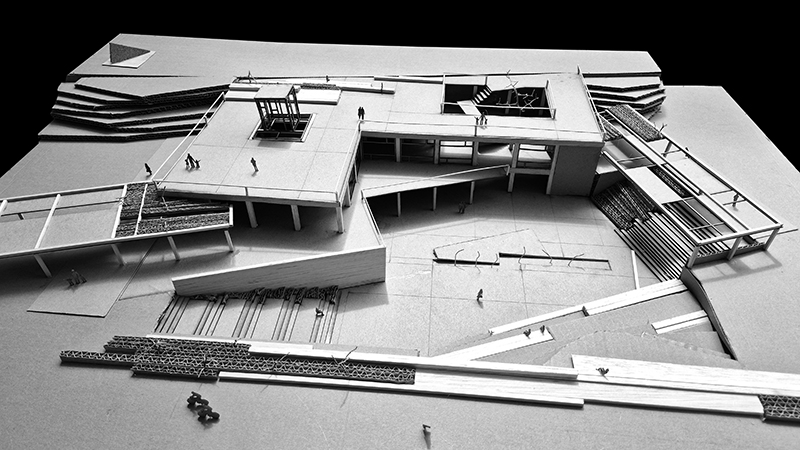
This thesis focuses on the study of the Presentation Center of the city of Kavala. The chosen study area is the Municipal Garden of Kavala, a site with a strong and enduring historical presence. The Municipal Garden has always constituted a prominent landmark for the city. This space has shaped the local identity of Kavala’s residents, having witnessed significant historical events throughout its long history. In earlier times, the natural boundary of the sea extended to the study area.
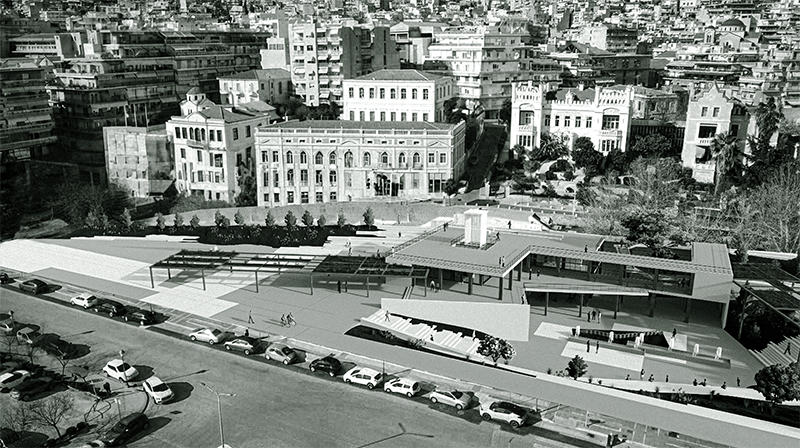
From around 1850 onwards, tobacco and the tobacco trade played a dominant role. Around this area, by the late 19th century, major tobacco enterprises were established, along with tobacco merchants’ residences, consulates, and other public buildings. Today, it functions as a public space of remembrance, continuing to serve as the city’s memorial while remaining a key node that connects public spaces and accommodates significant urban flows.
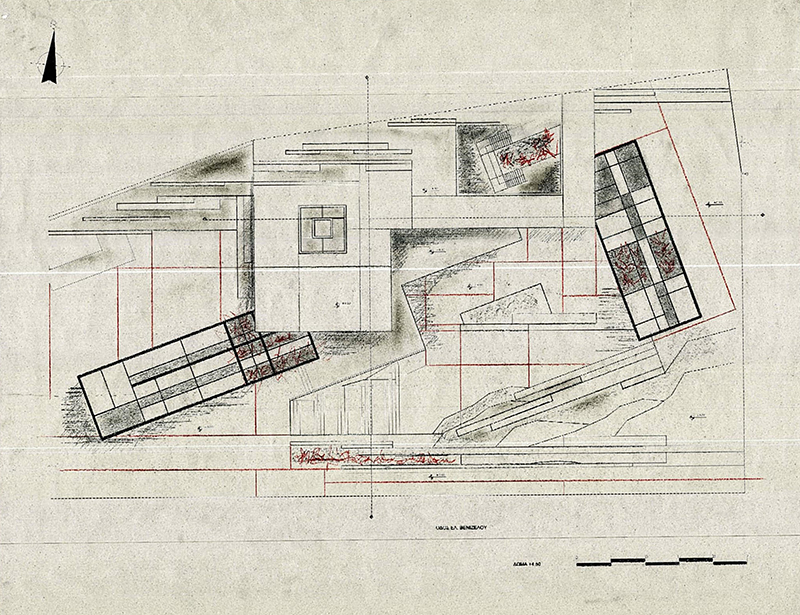
Following the study titled “Palimpsest of Kavala – Writings of Place”, we conclude that the concept of the palimpsest is an extremely valuable tool for interpreting the city’s identity.
The city embodies a variety of meanings, expressed through fragments scattered throughout its fabric. These fragments act as mosaic pieces that, when understood in conjunction, reveal multiple aspects of the city’s character.The distinct historical urban layers describe an evolutionary process and foster a dialectical relationship among them.
The redesign of the study area and the redefinition of its relationship with the present is a strong motivation to create and reintroduce it as a dynamic gesture that inscribes a new condition for the city. The intention is to strengthen the connection between the Garden and the urban fabric and to create both open-air and sheltered public spaces dedicated to recreation, culture, and creativity.
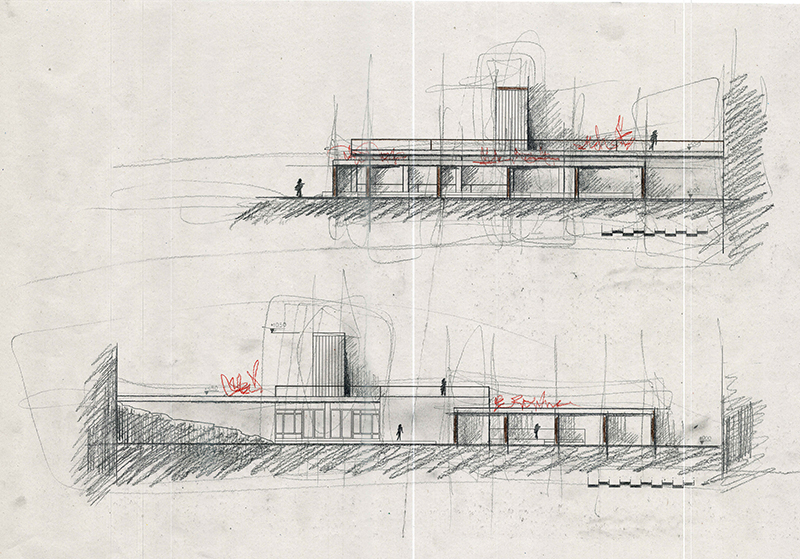
The proposal represents a translation of urban flows through outdoor configurations that guide the visitor toward the City Presentation Center, which will actively participate in the city’s social and cultural life.
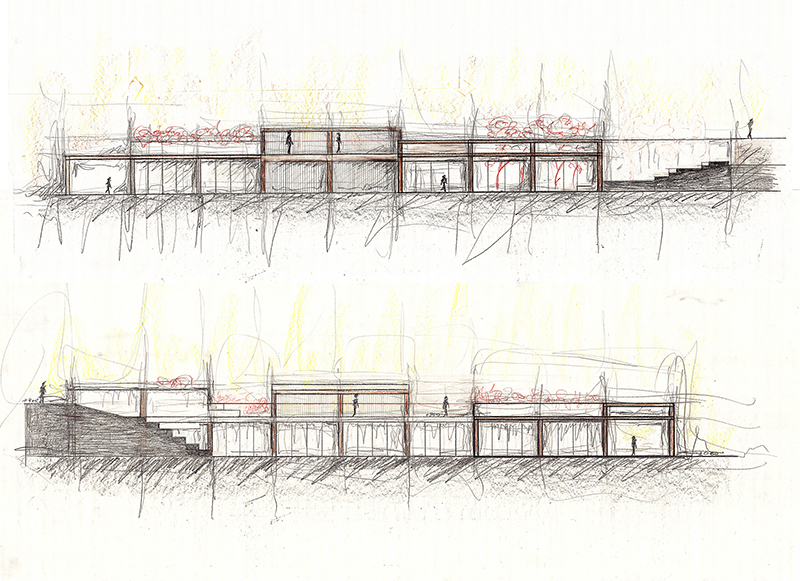
The Presentation Center is the core of the design concept. It preserves the character of the square, integrating the building into urban daily life and attempting a continuous transition between open, semi-open, and enclosed spaces.
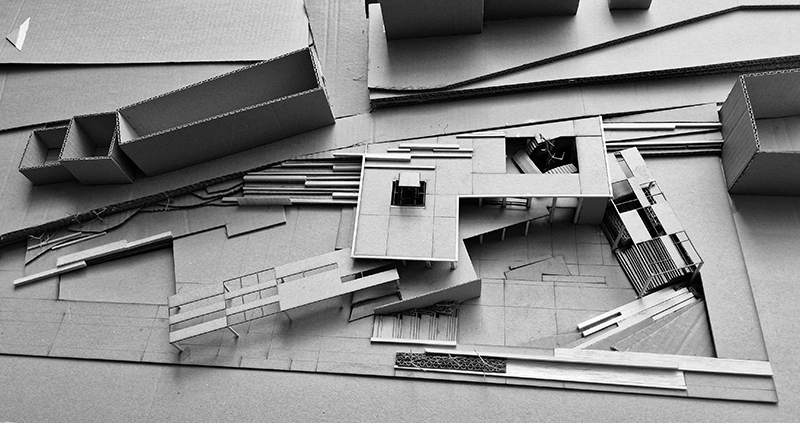
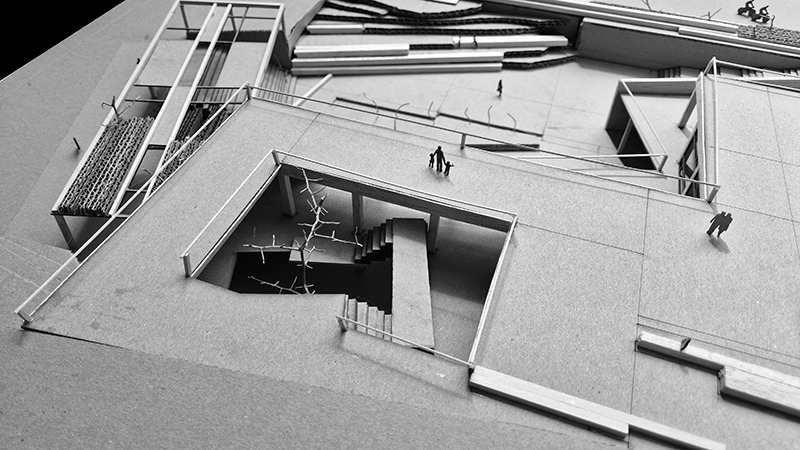
The proposal’s extroversion is expressed through perforations and the dynamic alternation of solid and void, emphasizing the relationship between the interior of the building and the surrounding open spaces.
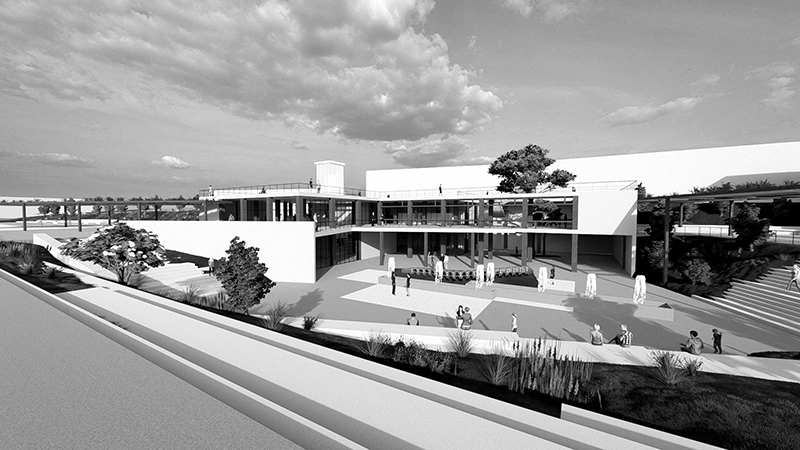
The central aim of the design of the outdoor spaces is to ensure uninterrupted urban continuity with the historic buildings that define the area’s relationship with the city. The proposal aims to reinforce the area’s character as a place of memory, preserving the memorial, fostering active citizen participation in various activities, and facilitating transitions between different parts of the city through an active network of interactions.
Facts & Credits
Project title Kavala city Promotion Center
Typology Diploma Thesis
Academic semester February 2025
Student Zoumpoulidou Anna
Supervisors D. Polychronopoulos, M. Grigoriadou, P. Gouliaris
Institution School of Architecture Democritus University of Thrace
Carving Time into the Perpetual Landscape
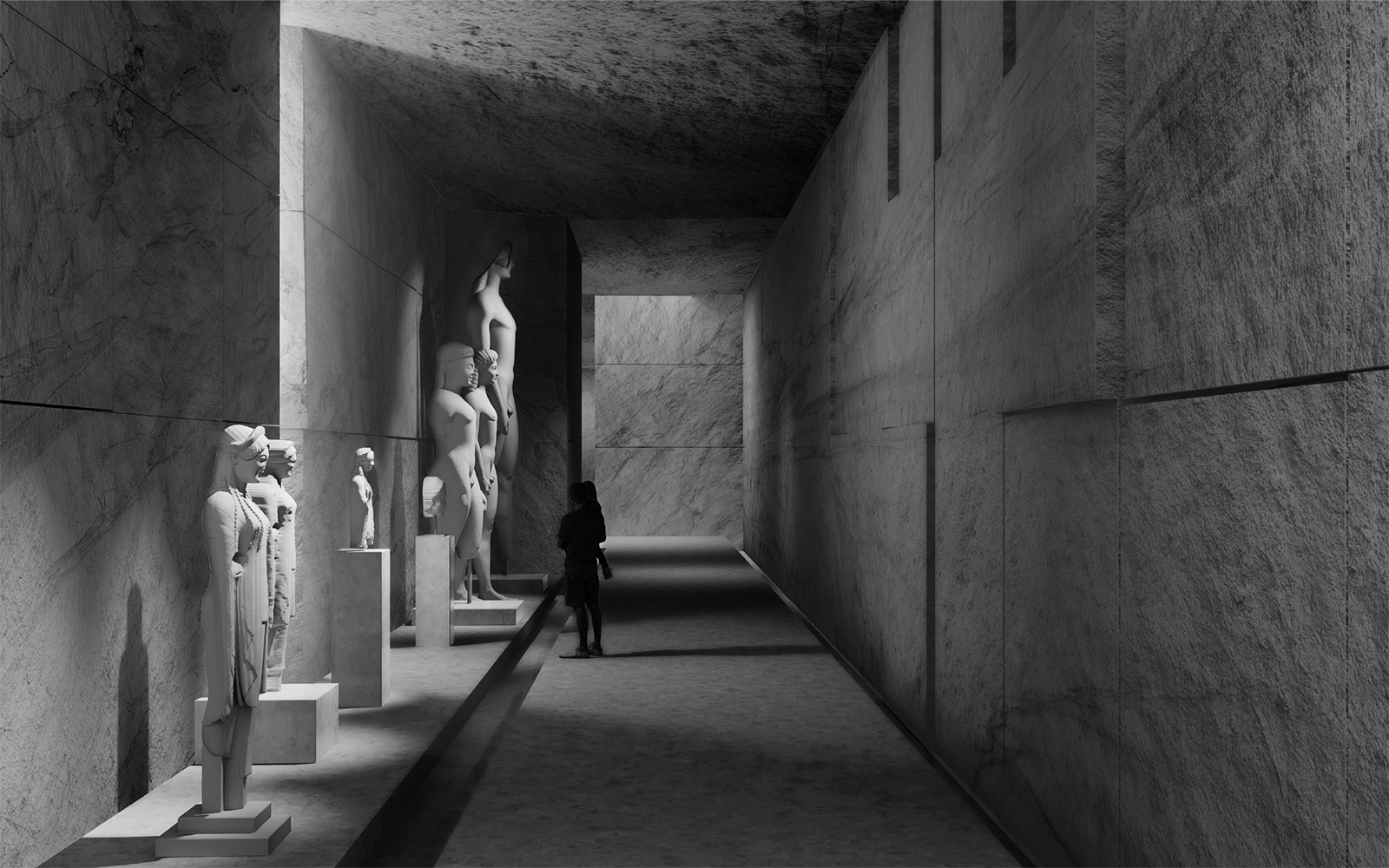
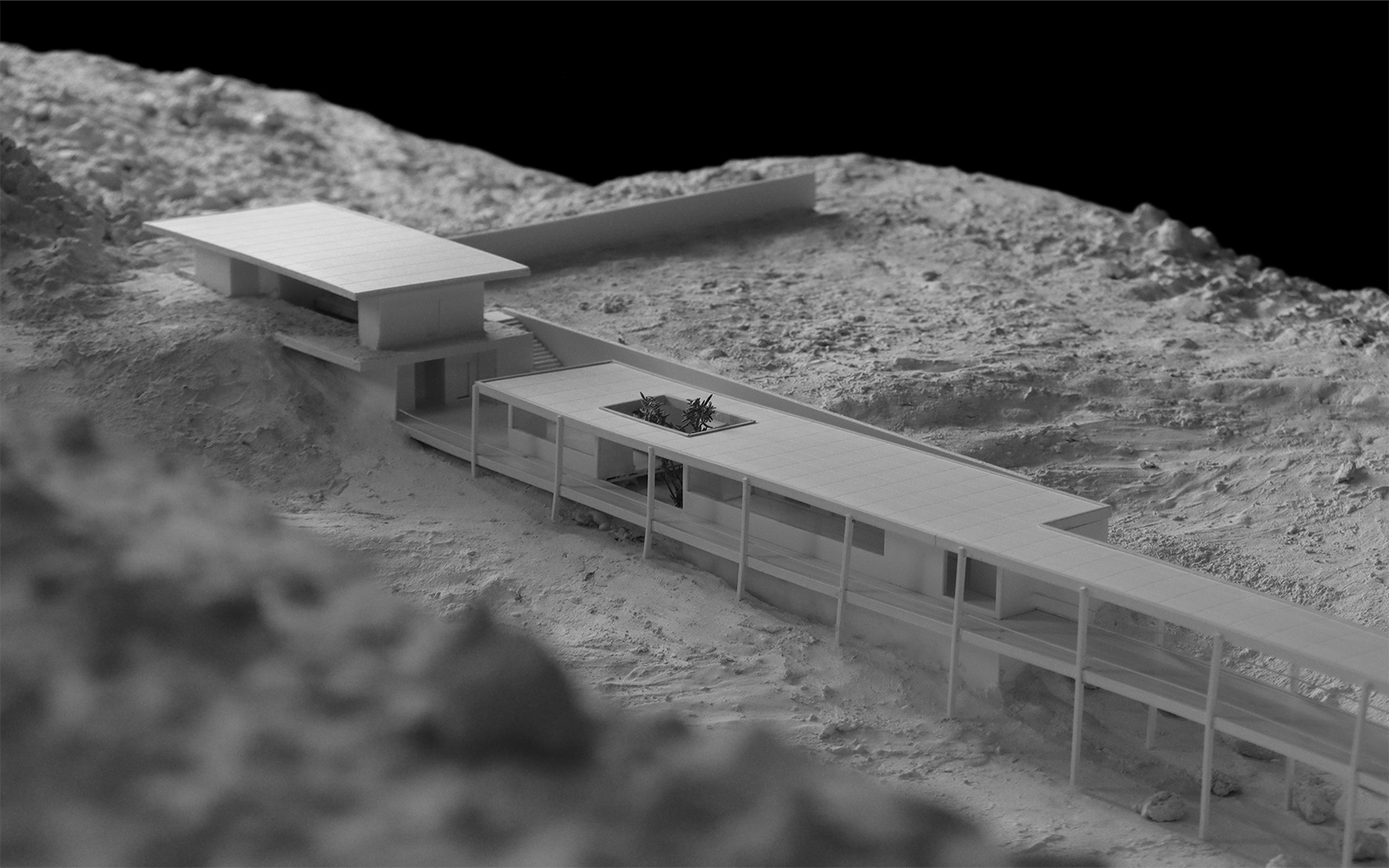
The diploma thesis project by Giorgos Koltiris concerns the occupation of an inactive industrial landmark on the island of Naxos, aiming to highlight the history and importance of the local marble through the reuse of a quarry in the heart of the island.
The program is based on two axes: a museum exhibition space and a research center, both of which are organized in accordance with the imposing form of the site. These are the key points on which the project focuses: Museum, Research, Quarry.
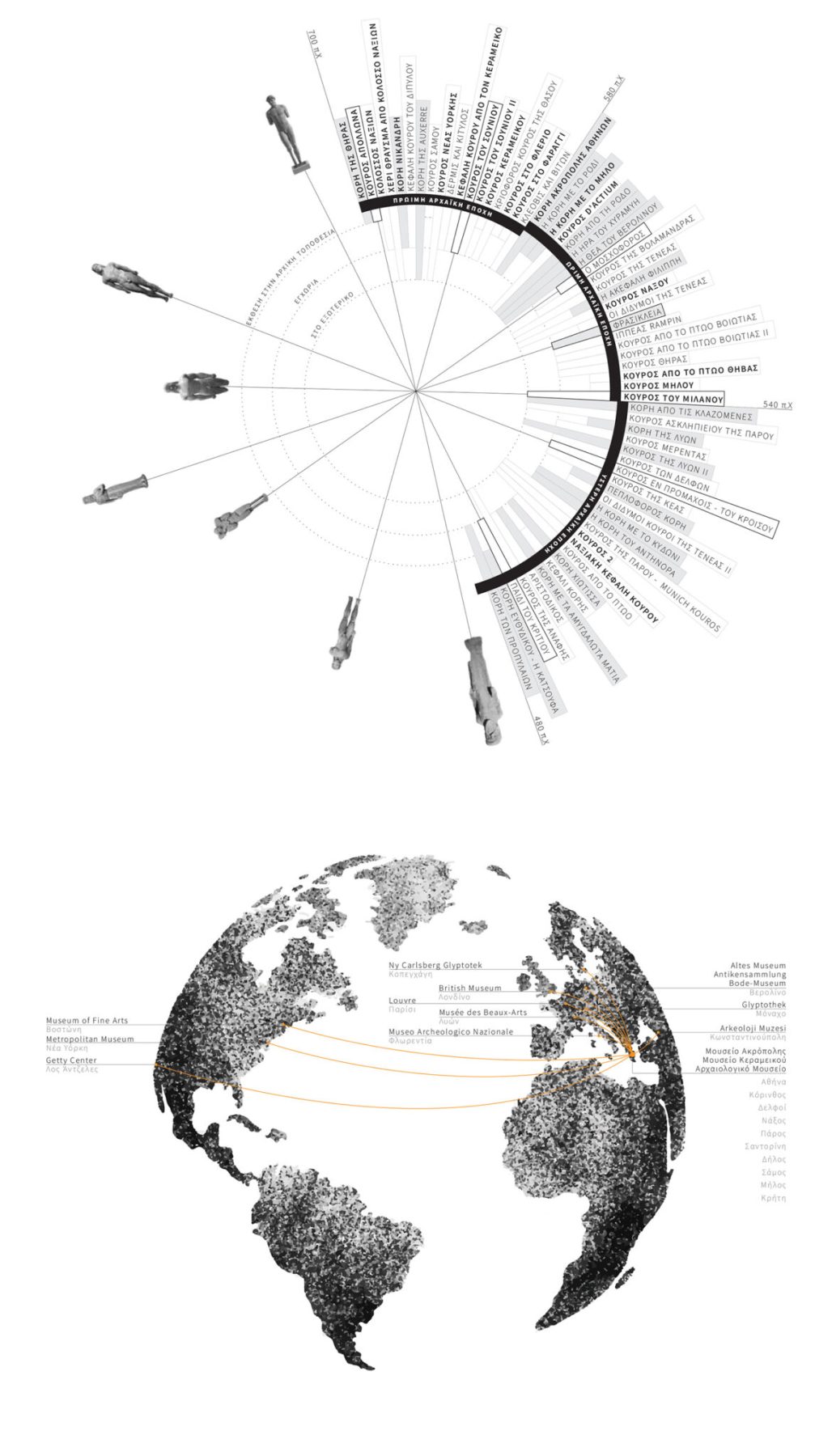
The protagonists of the intervention are Kouros and Kore, elements of Greek history that are constantly enriched by new excavations and studies.
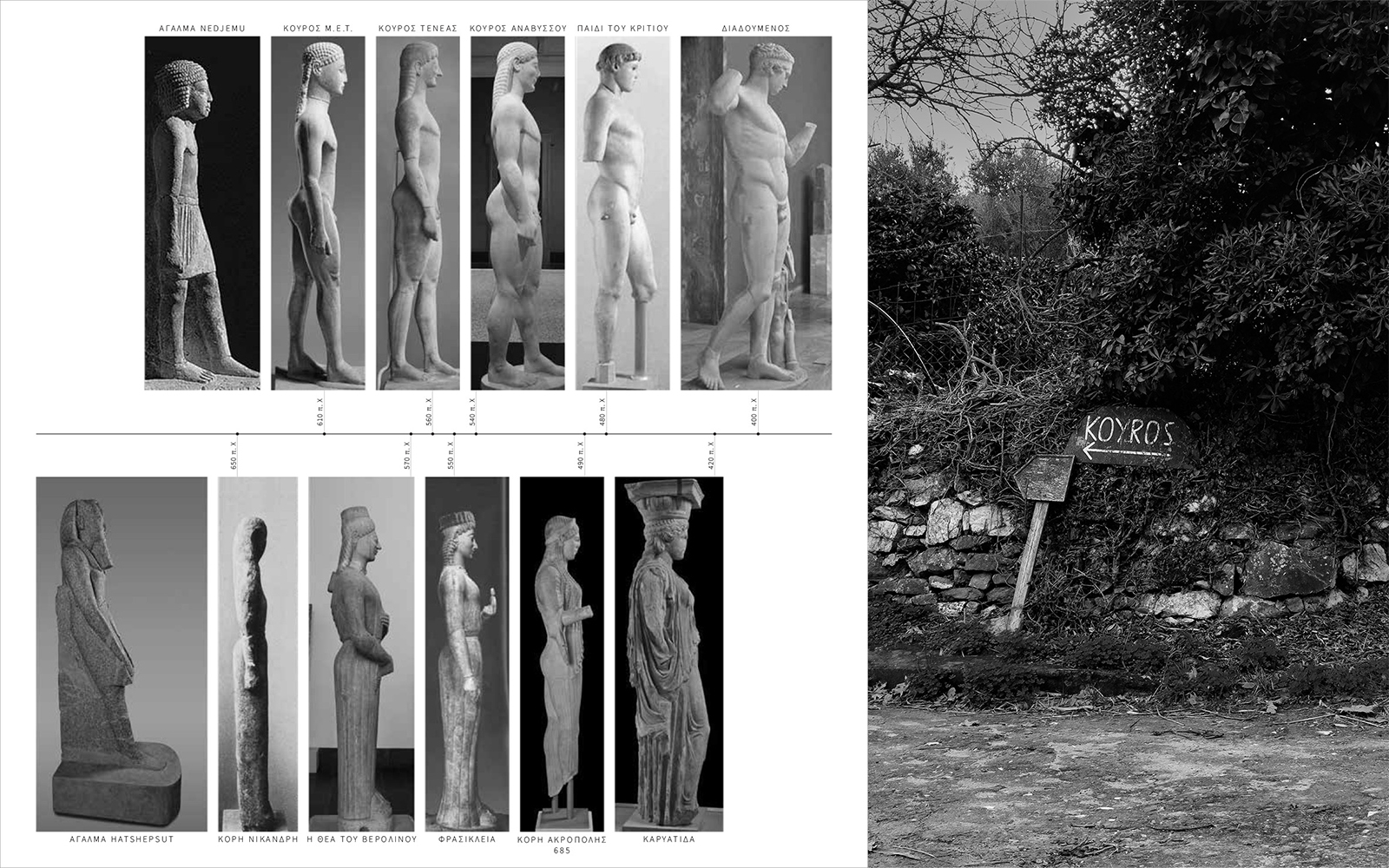
Intense quarrying takes place at the heart of Naxos, where the machinery works continuously and extracts marble on a daily basis. However, as societies become more urbanized, they lose connection to these landscapes. They grow more distant, both spatially and mentally, leaving behind unutilized industrial “carcasses.” These open wounds echo the industrial past of the area. How can our actions contribute to these abandoned landscapes? Conversely, how can nature contribute to our lives?
This project does not seek to conceal reality. It explores the relationship between construction, natural, and “artificial” ground, aiming to rekindle the connection with marble and act as a spatial reminder of the site’s history.
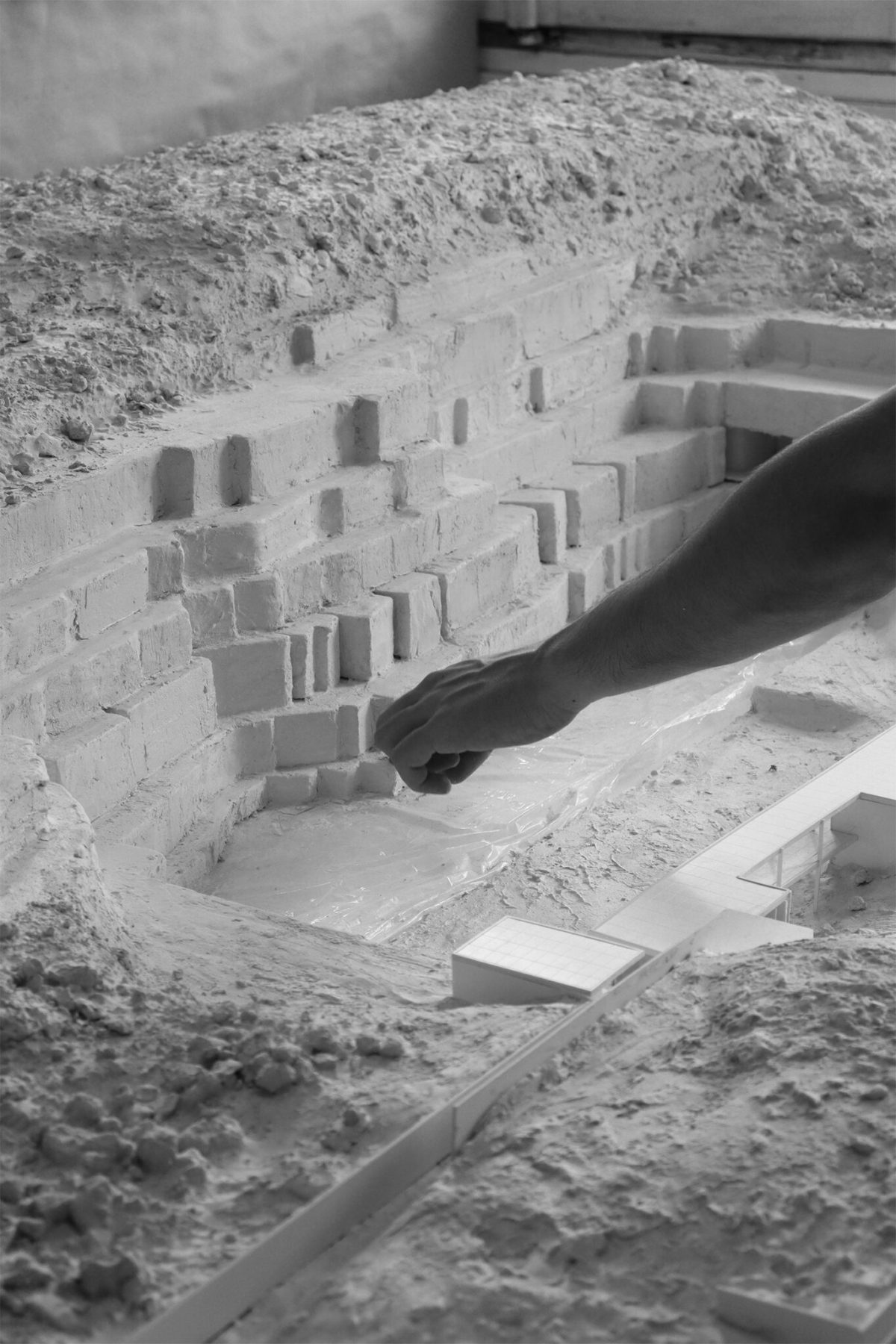
The Museum as an Experience, where the starting point is the landscape. the concept of research is introduced through a composite structure that addresses the quarry. Mostly made of metal, it conveys a sense of lightness with thinner profiles and larger openings. The research center maintains a clear and simple form so as not to overshadow the imposing quarry. Positioned lower, it allows for an unobstructed view of the setting sun. Its elongated proportion aligns with the quarry’s horizontal dimension while contrasting with its verticality, reinforcing their dialogue.
Read the full thesis article here!
Facts & Credits
Project title Carving Time into the Perpetual Landscape
Typology Diploma Thesis
Academic semester September 2024
Student Giorgos Koltiris
Supervisor Manolis Stavrakakis
Consultants Panagiota Karamanea, Panagiotis Vassilatos
Institution School of Architecture, National Technical University of Athens
Museum of the City of Eleusis: following the days of the Great Mysteries
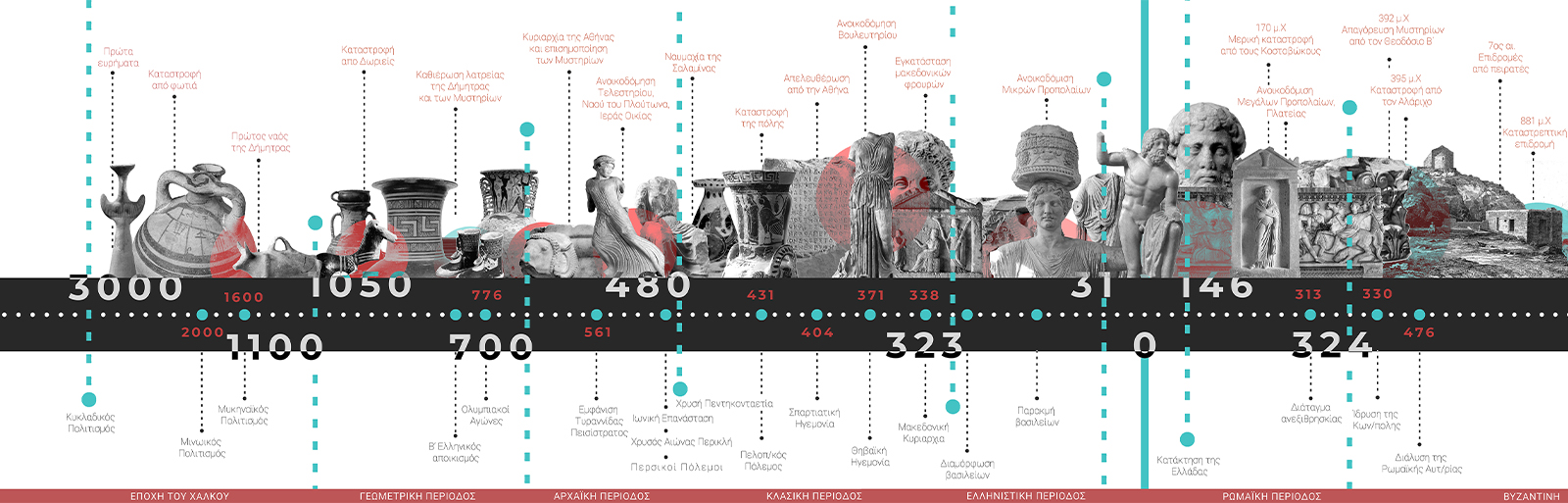
In their design thesis project, students Drakos Michail & Stampouli Elisavet, develop an architectural proposal for the design and the curation of a museum space in the city of Eleusis that aims to narrate the stories of the city by blending antiquity and the industrialization era, as the most defining periods of its history.
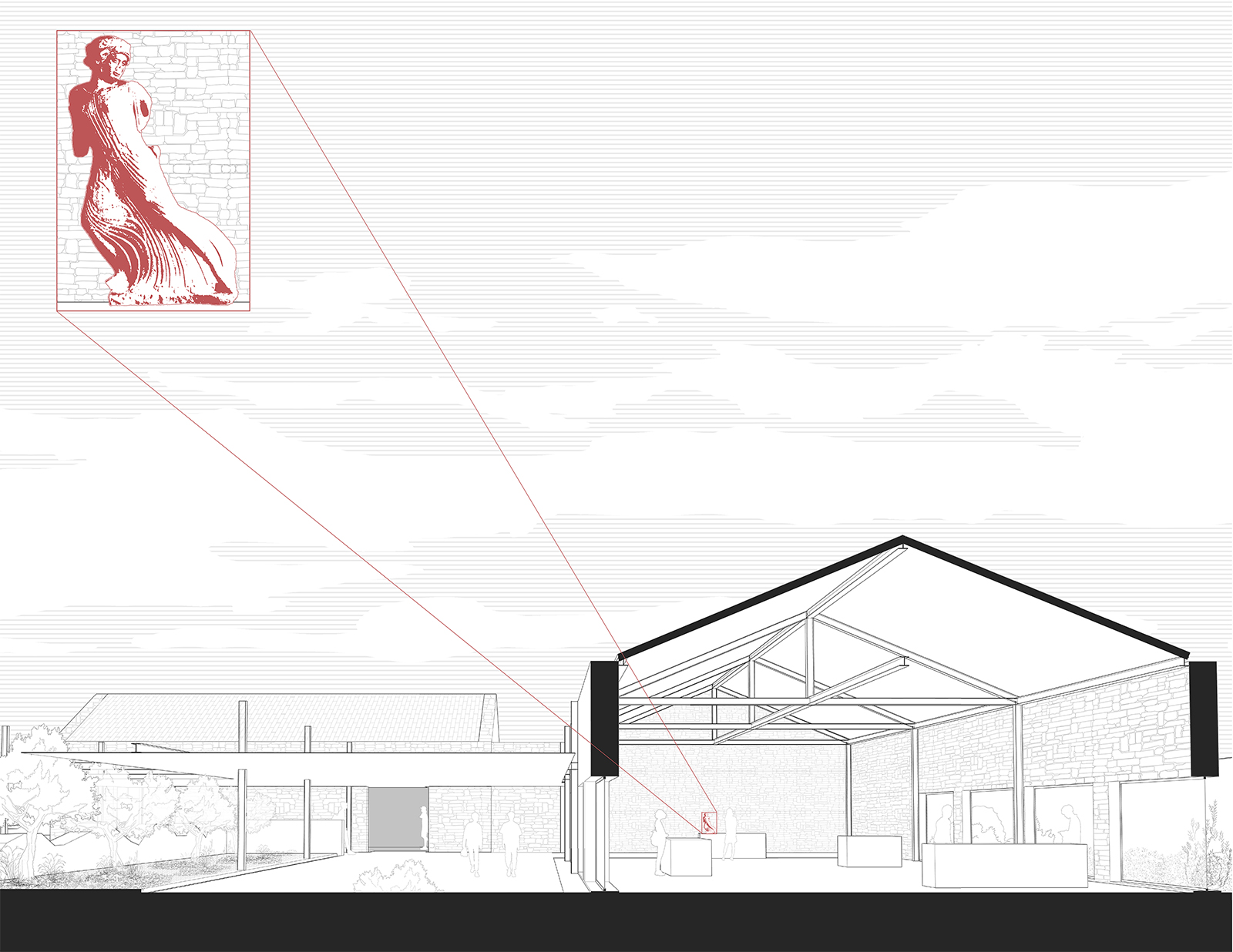
In 2011, a plan was announced to create a new museum that would combine the two significant eras. It will be built on an industrial site adjacent to the archaeological area, which is home to the ruins of the Old Oil Mill and the BOTRYS Factory.
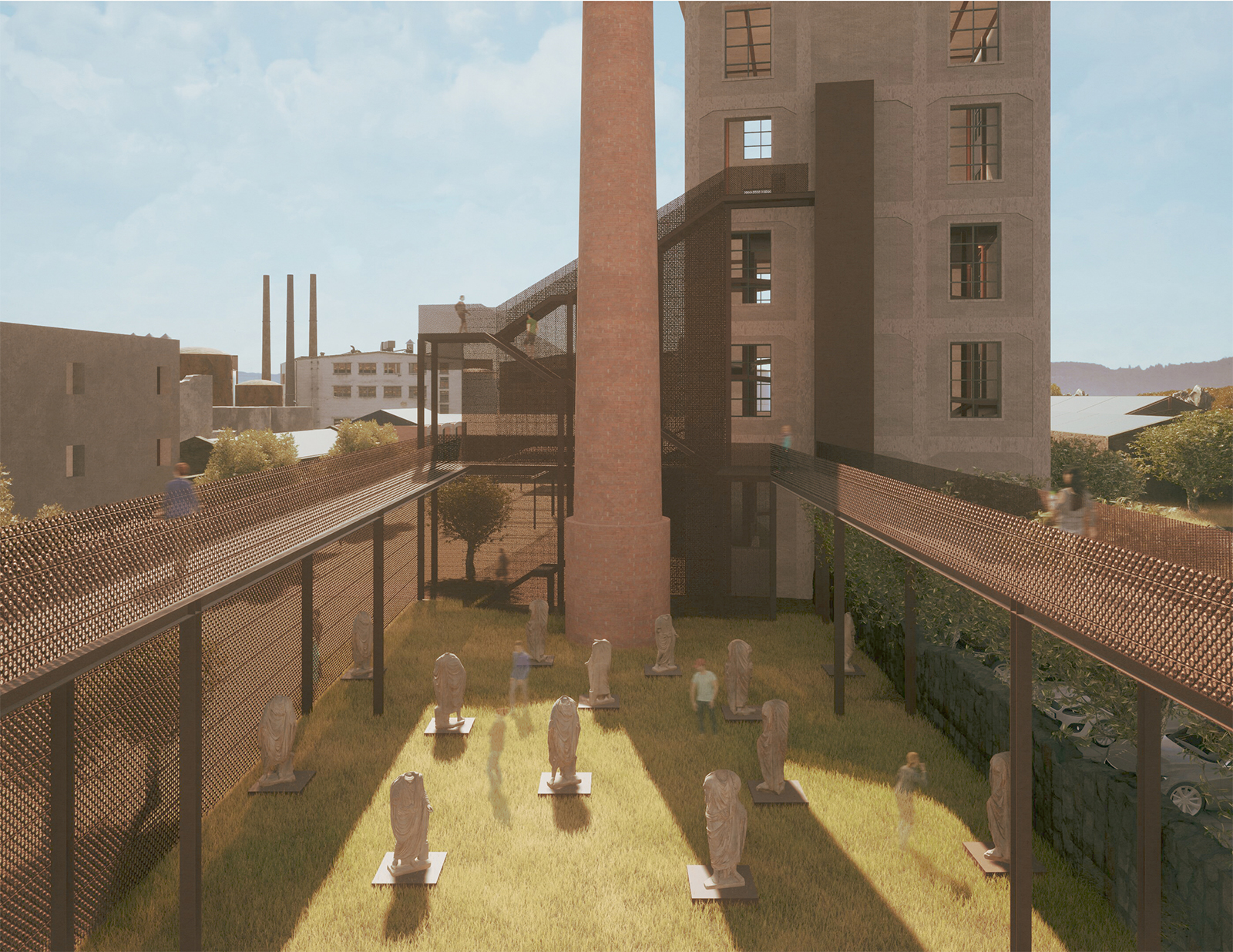
As a starting point, the decision is made to preserve the shells of the buildings that have withstood the passage of time, while keeping the traces of the demolished ones, reminding us of the industrial past.
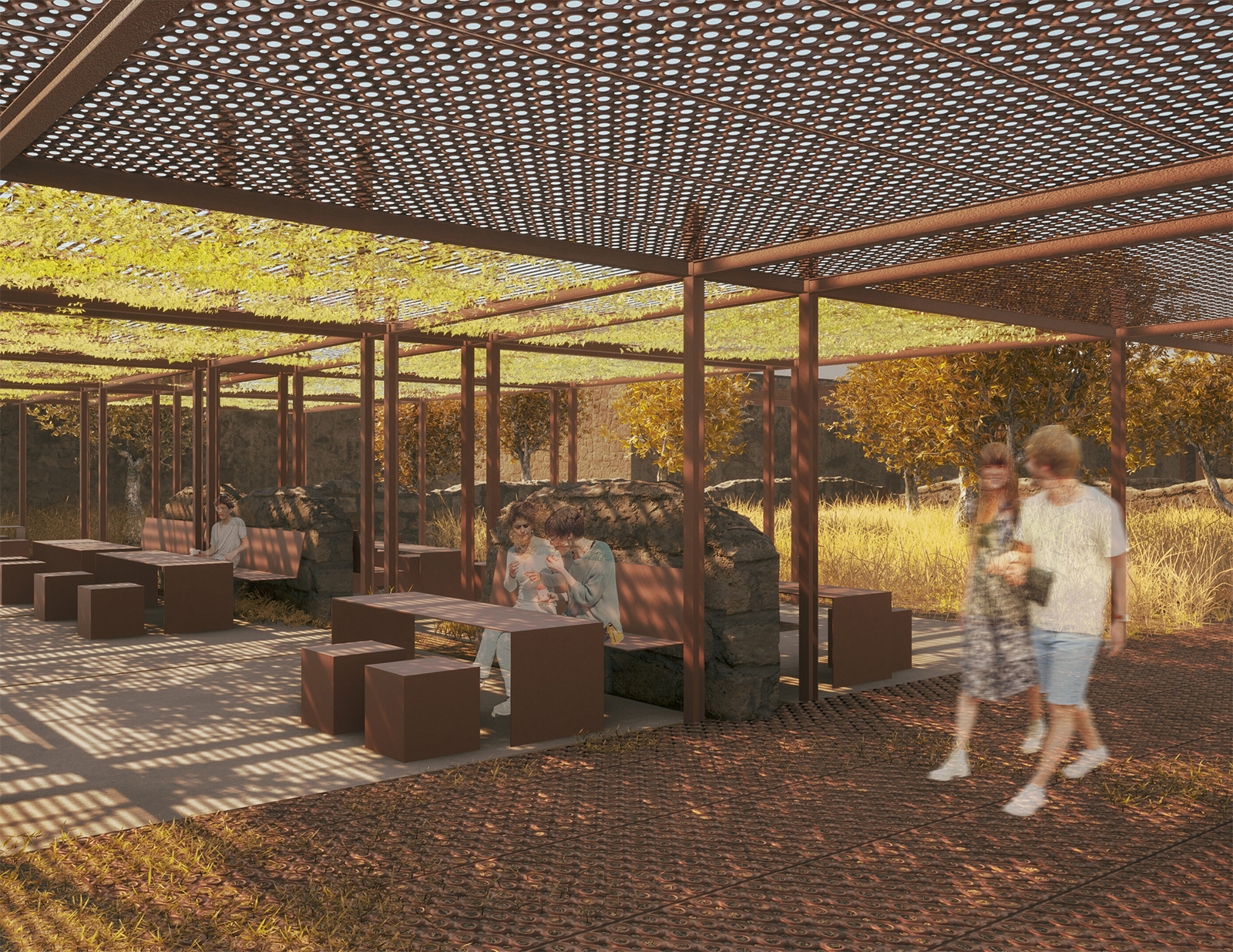
The museum’s exhibition follows the days of the Great Mysteries, with each hall dedicated to one or more of them. To connect the museum halls, the metal vocabulary is expanded. Perforated metal flooring is added to the frame, as a circulation facilitator between the halls.
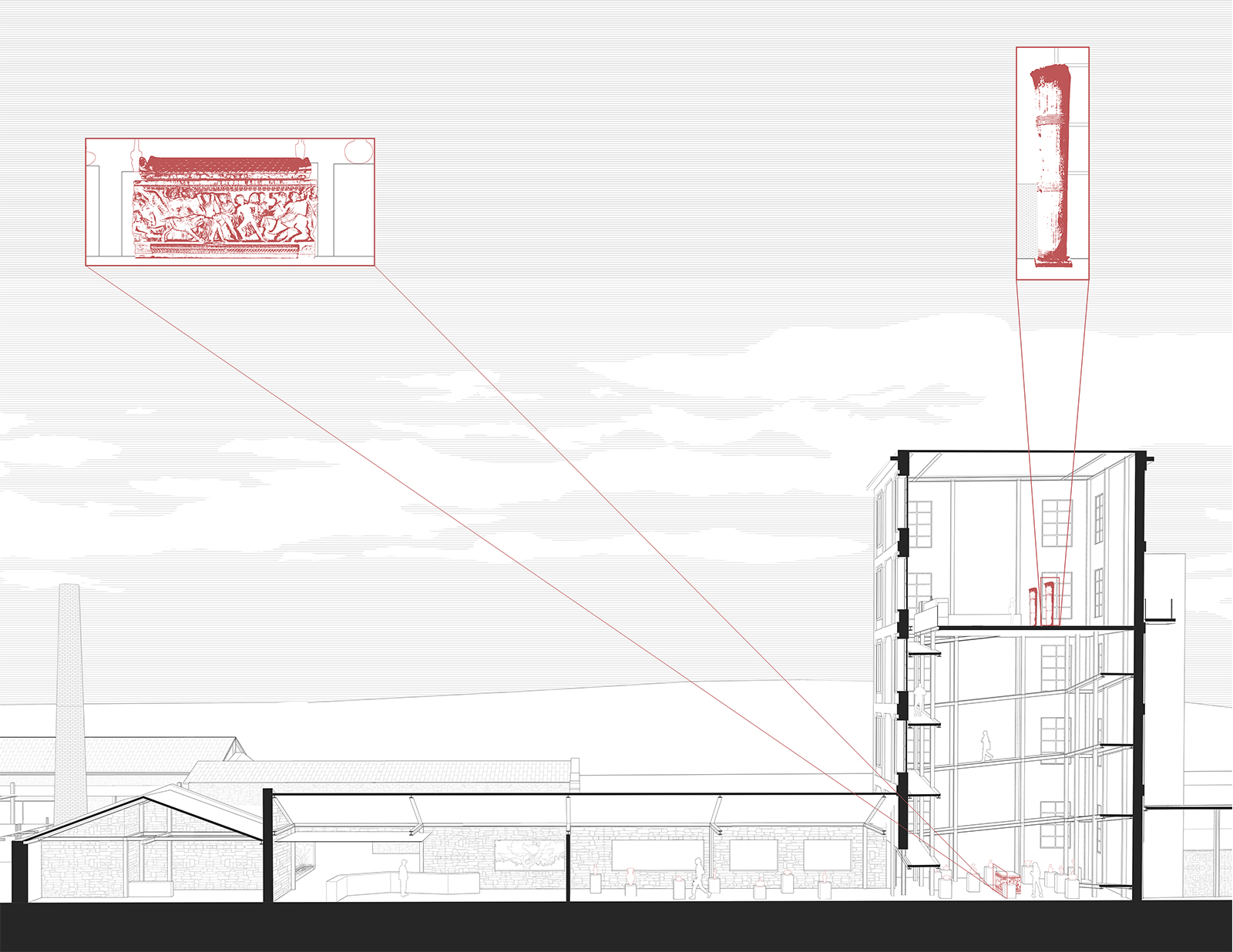
Similarly, this material is used for the canopies at the entrances. For vertical connections, stairs and bridges are added. This vocabulary is not limited to the museum spaces but also appears in the exterior areas, serving as resting points, defined by the traces of the demolished buildings.
Read the full thesis article here!
Facts & Credits
Project title Museum of the City of Eleusis
Typology Diploma Thesis
Students Drakos Michail, Stampouli Elisavet
Supervisors Giannisis Dimitrios, Tzortzi Kali
University School of Architecture, University of Patras
Text by the author
Adaptive reuse of the industrial complex of the Allatini mills
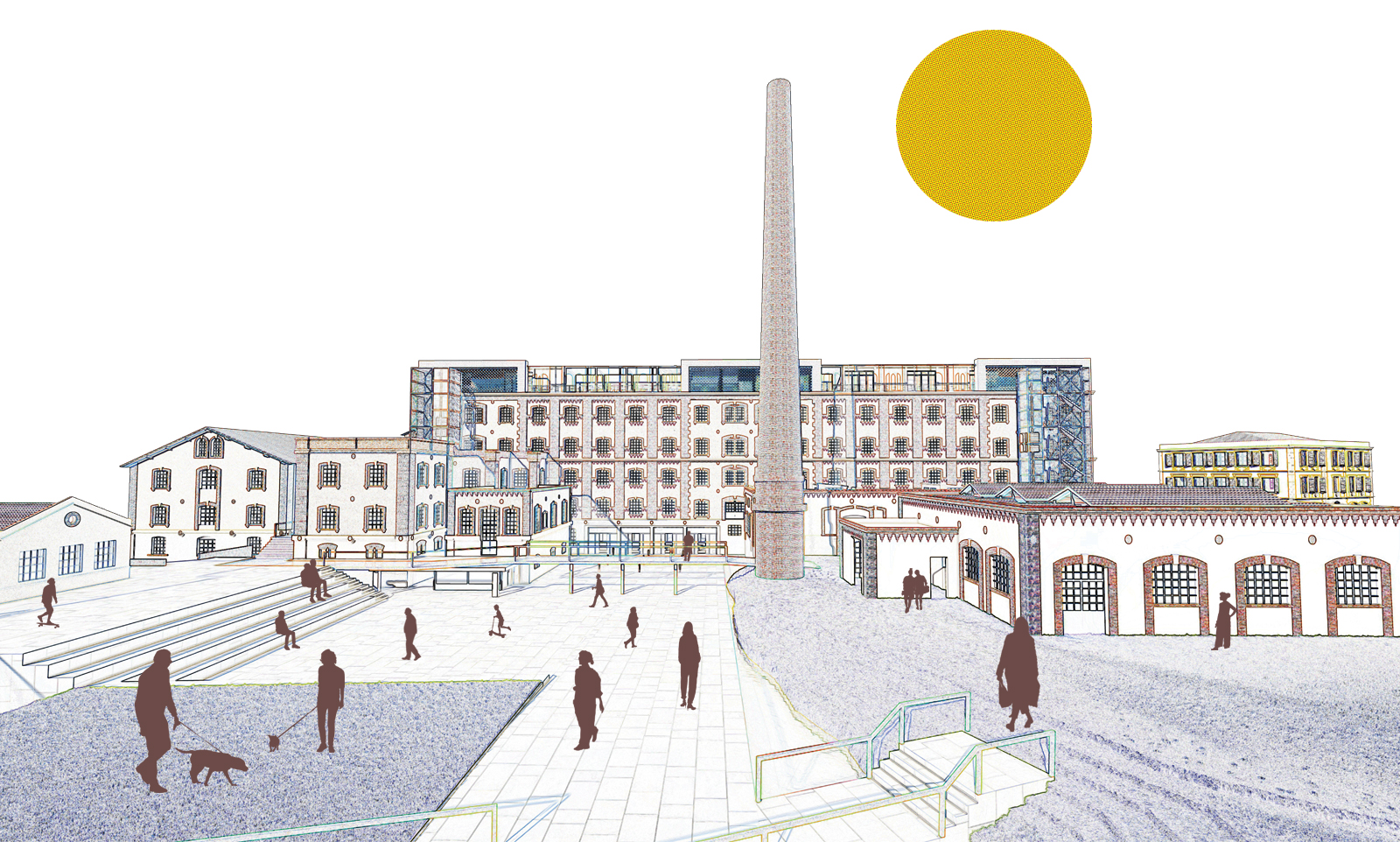
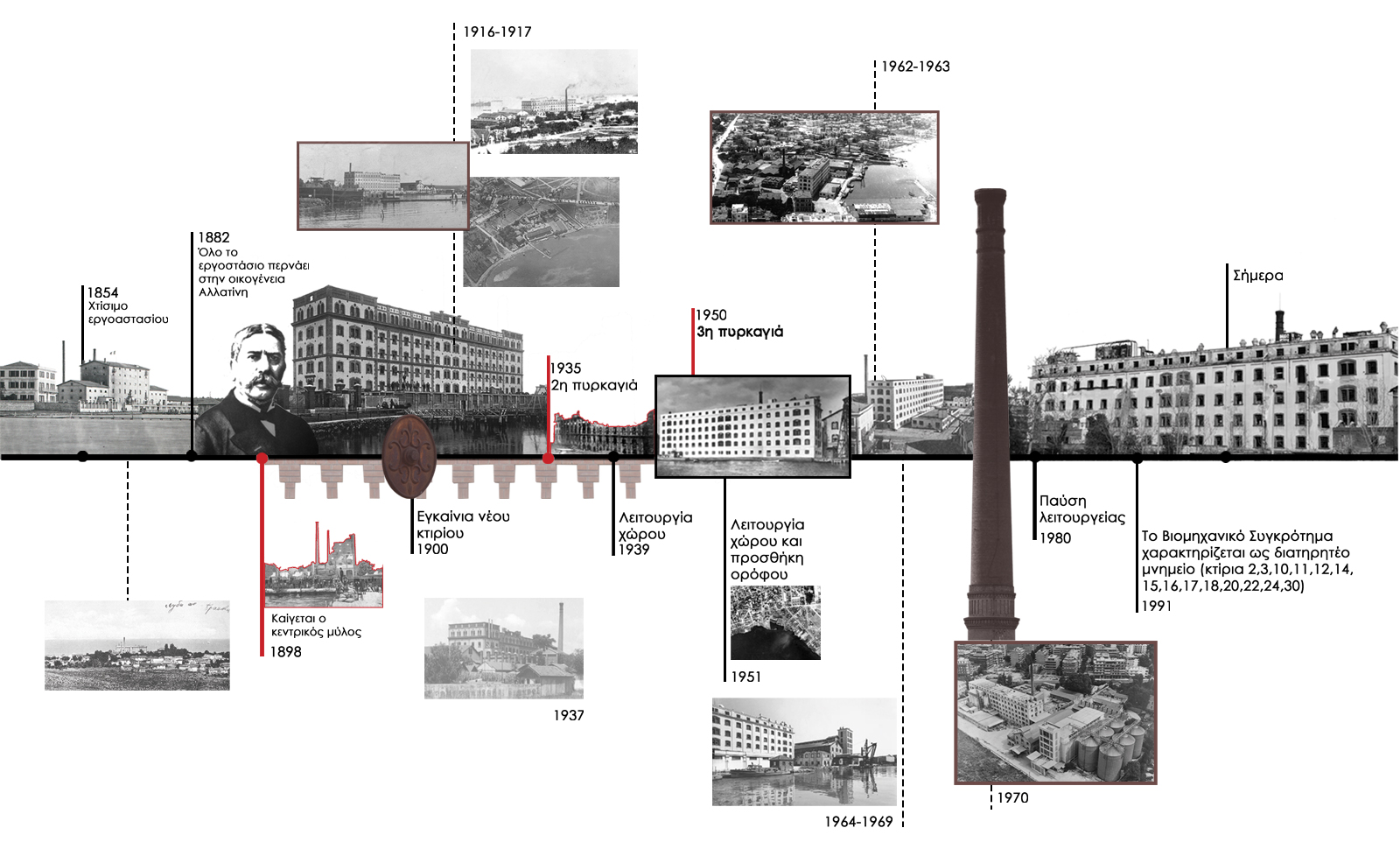
This diploma thesis is about the adaptive reuse of the industrial complex of the Allatini mills. The choice of the subject came from personal experiences that sparked my intertest to study the historical complex. The study area is located in eastern Thessaloniki, in the area of Depo, close to the Thessaloniki concert hall and the beginning of the New Waterfront. This is a neighborhood that hosts several historic buildings, cultural centers, schools and green spaces.
The architectural composition was based on the reuse of the existing shell, in order to highlight its cultural identity and foster the formation of an artistic community that can meaningfully inhabit and appropriate the space.
The creation of an art center with an artist co-living community in the abandoned factory of the Allatini mills aims in shaping a space for coexistence, collaboration and artistic expression by creating an accessible and vivid cultural space. At the same time, it highlights the architecture of the era and it connects the past with the present through artistic practices.
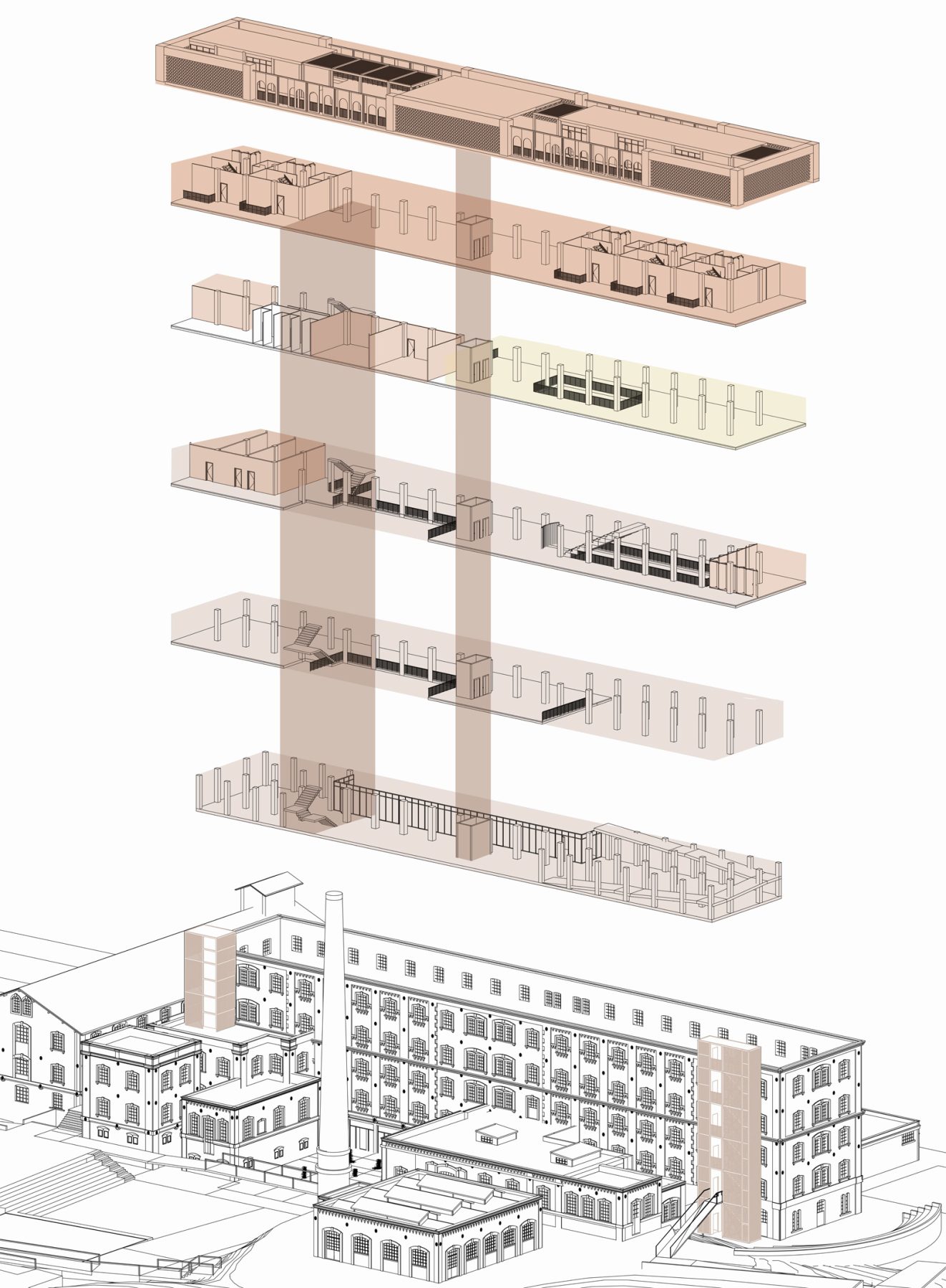
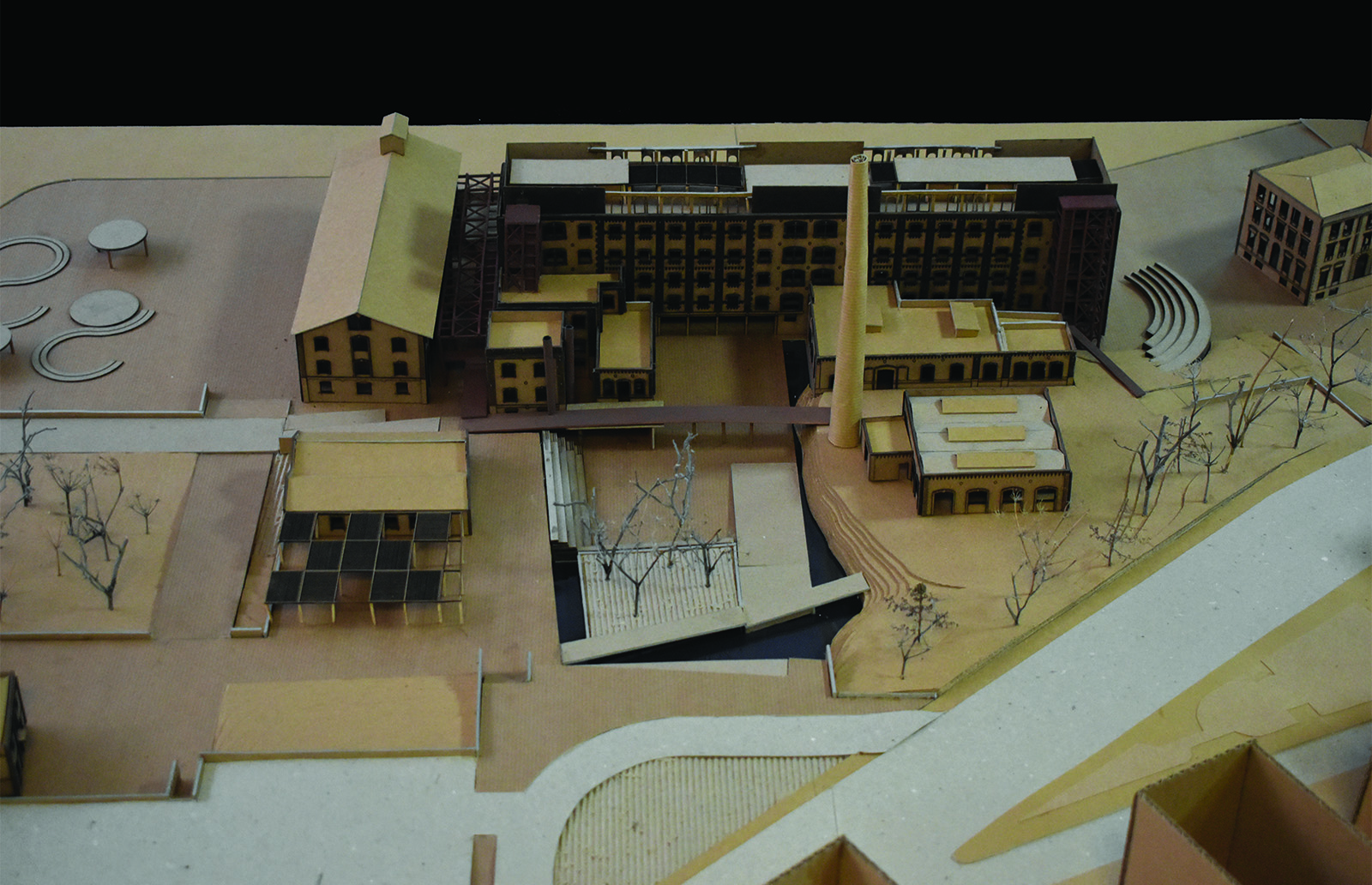
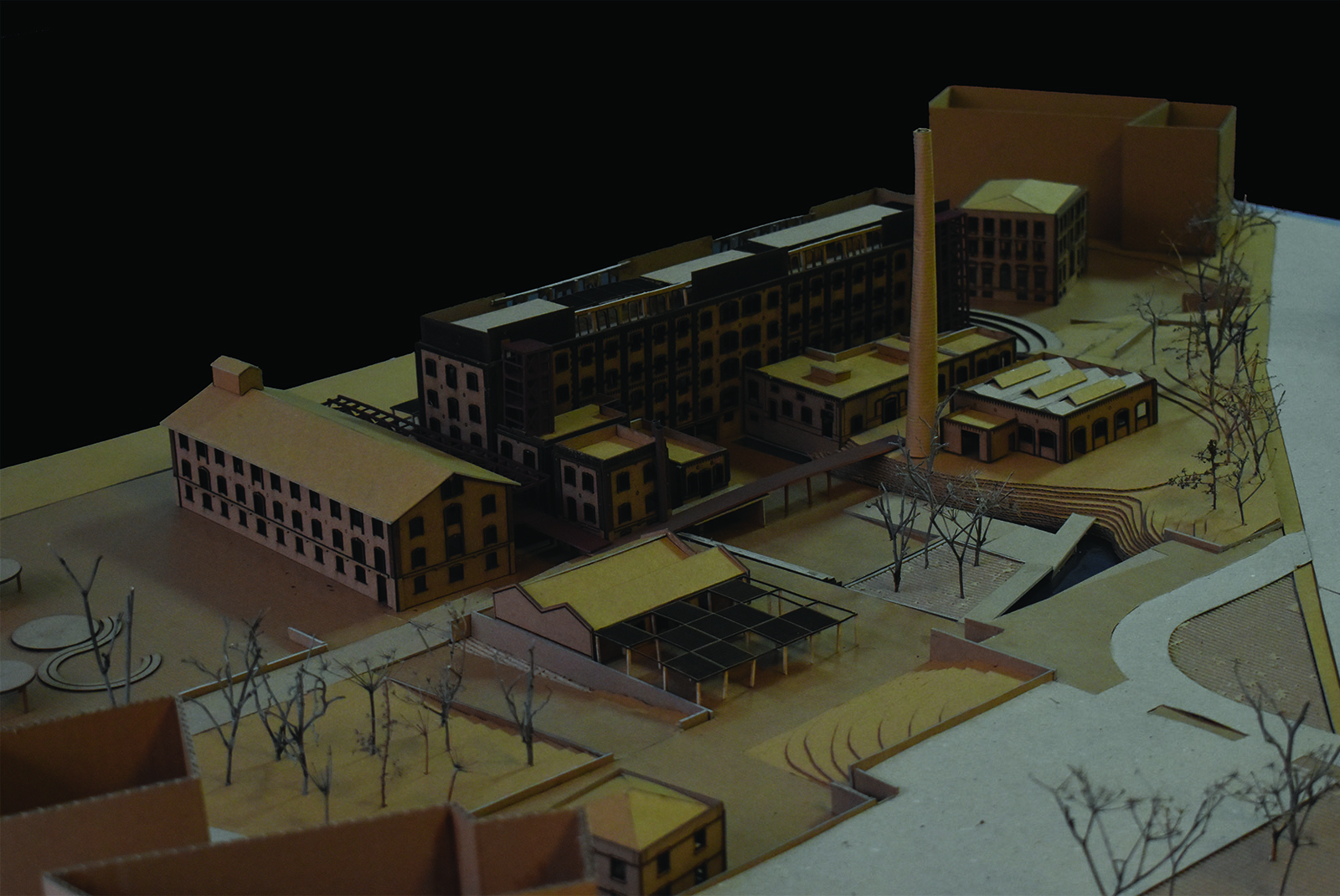
The main entrance to the site is located on its eastern side, along Papandreou street. Due to the variations in ground levels, a pathway was created that leads visitors to level ±0.00, where the main entrance of the building is also situated. In front of the eastern facade of the main building (15), a bridge was placed to connect the two +2.5 levels, ensuring a continuous circular route around the exterior of the building. This allows visitors to wander in the landscape and admire the historic facades without necessarily entering the structure. A key aspect of the urban design is the enhancement of green spaces and the reintroduction of the water element near the complex. In addition, a parking area has been created near the street for accessibility purposes.
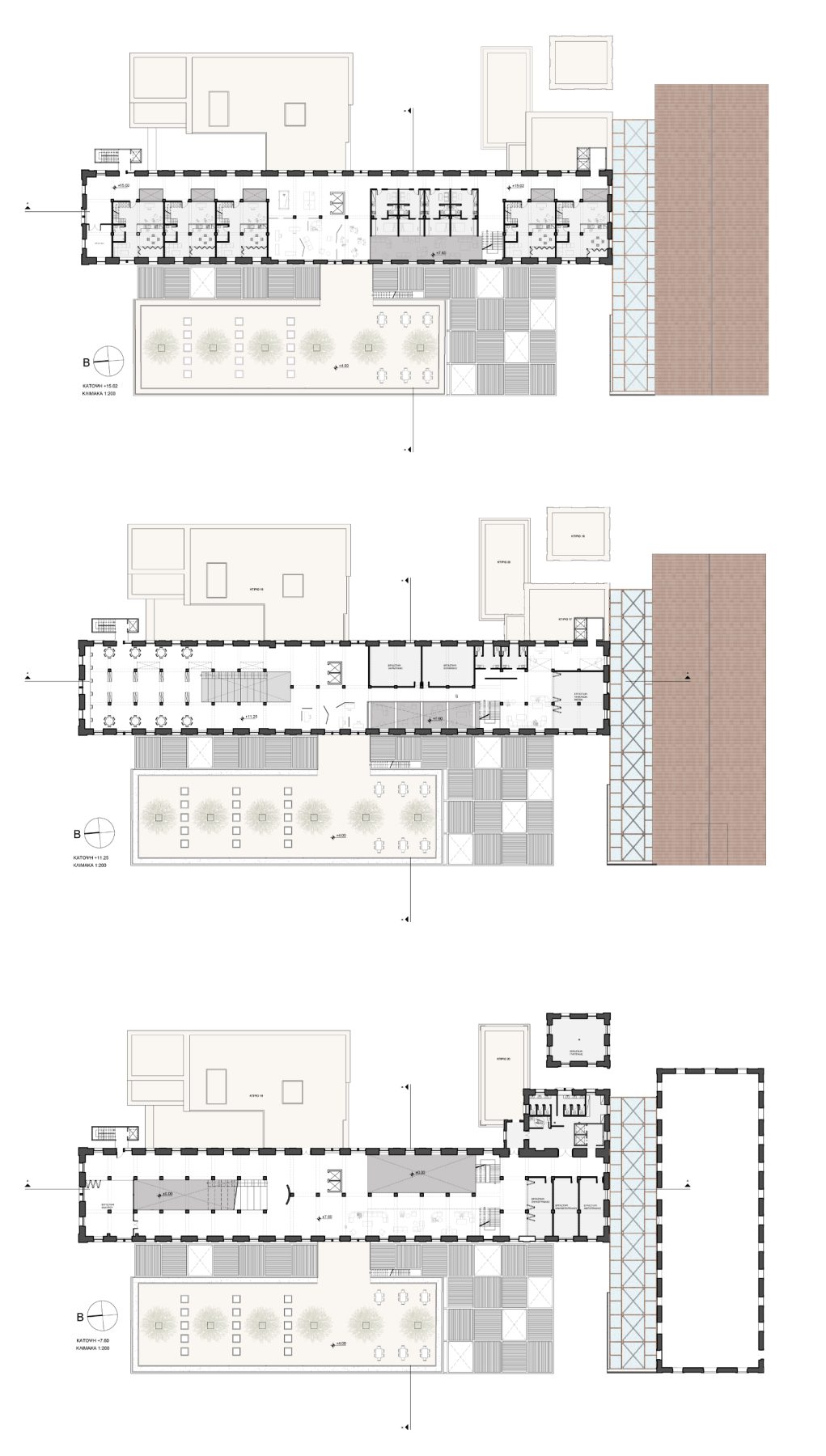
Within the building, the primary entrance is positioned on the eastern façade at ground floor level, while multiple additional access points ensure both functional circulation and compliance with fire safety regulations. The absence of balconies emerged as a design challenge, which was addressed through the incorporation of internal voids and atria, fostering vertical visual connections between floors and reinforcing the perception of openness. The first two levels are allocated to temporary exhibition areas, whereas the third and fourth levels accommodate creative studios, a library and reading room, an auditorium and communal facilities. The fifth and sixth levels are designated for collective residential units intended for artists.
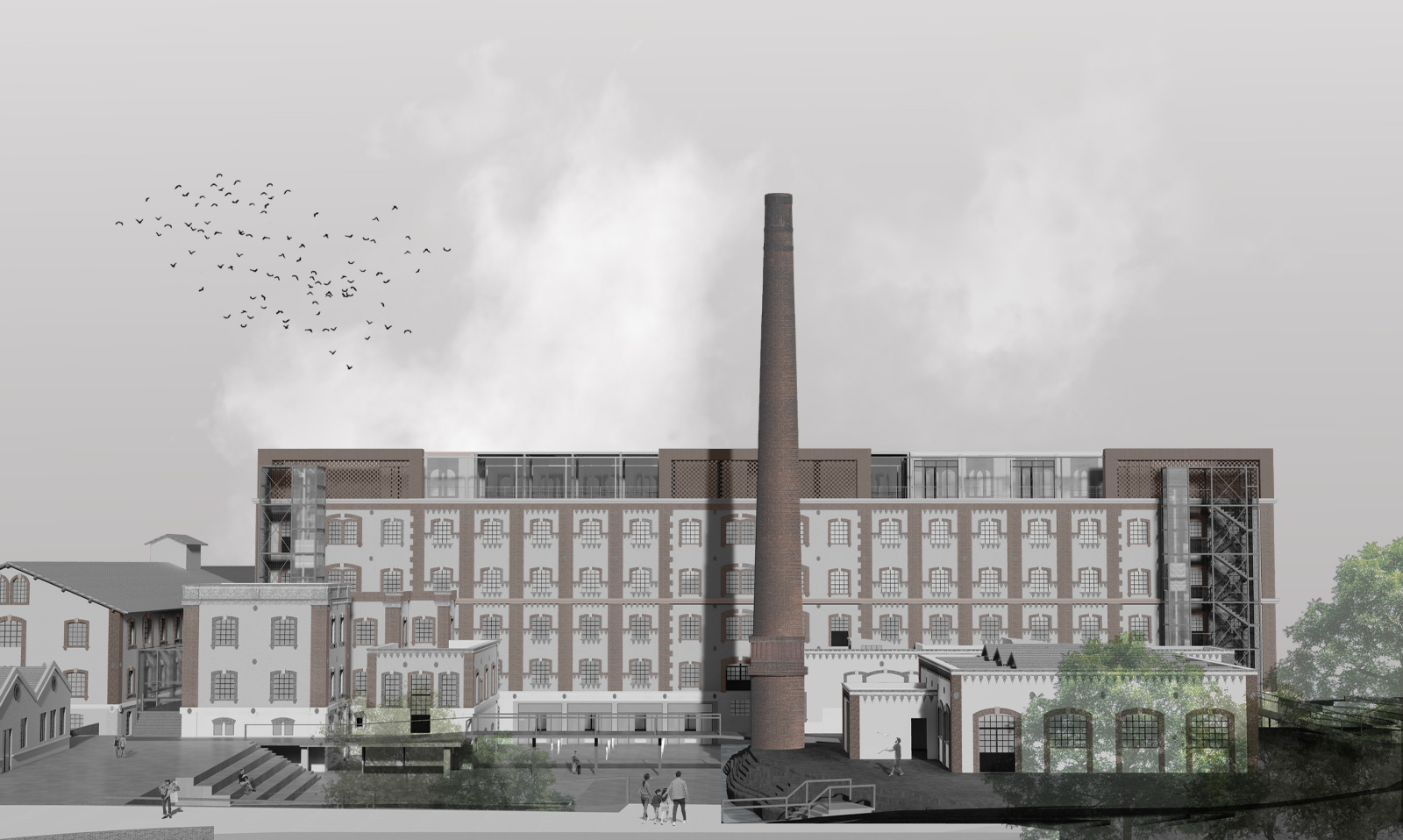
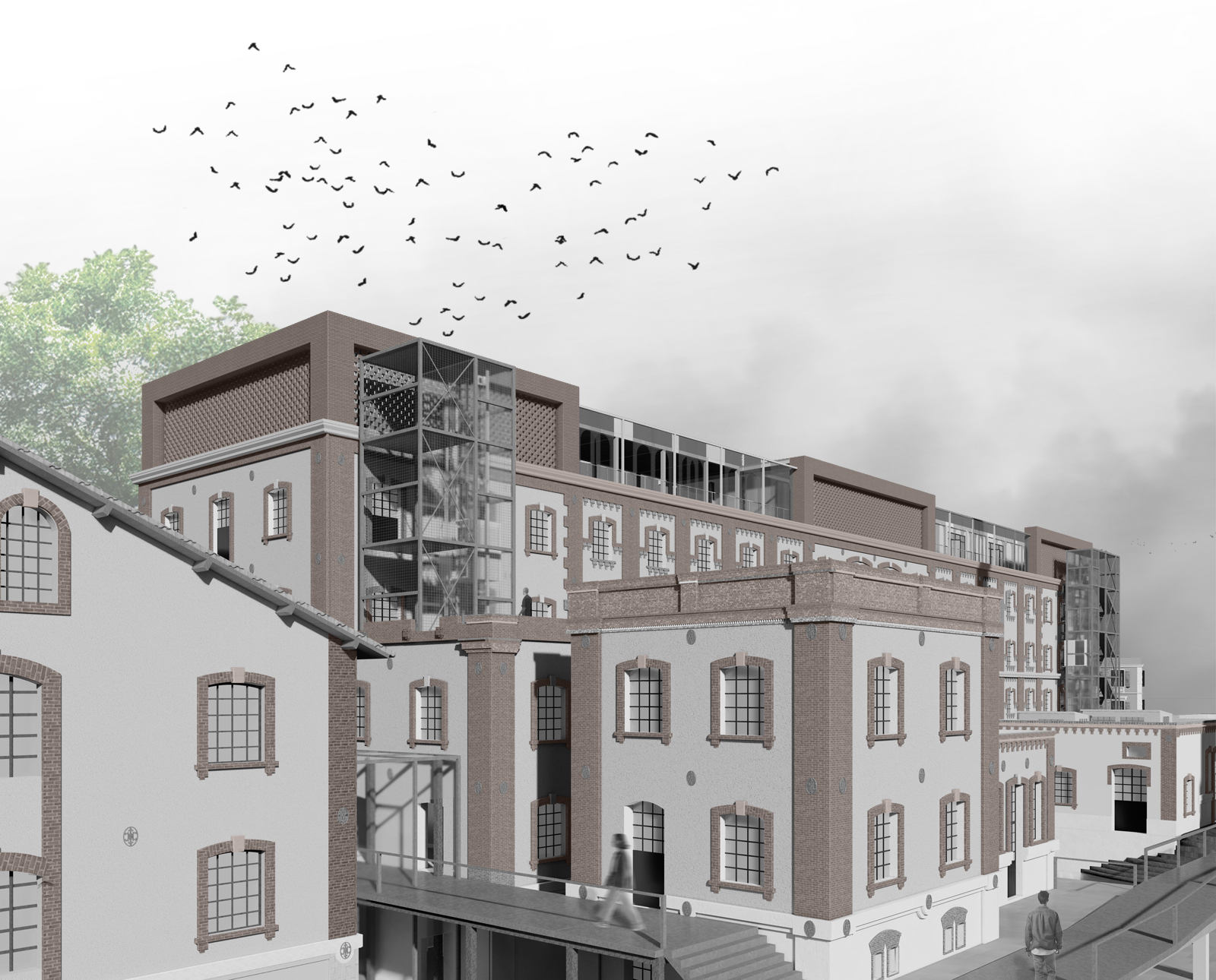
The additions made to building 15 consist mainly of self-supporting metal structures that can be removed at any time without leaving a permanent trace on the existing fabric. The main entrance was created at a point on the facade that, due to the site’s topography, was not previously visible. In order to support the massive stone masonry of the building’s wall and enable the opening of the entrance, a detailed study was carried out for the integration of a steel frame.
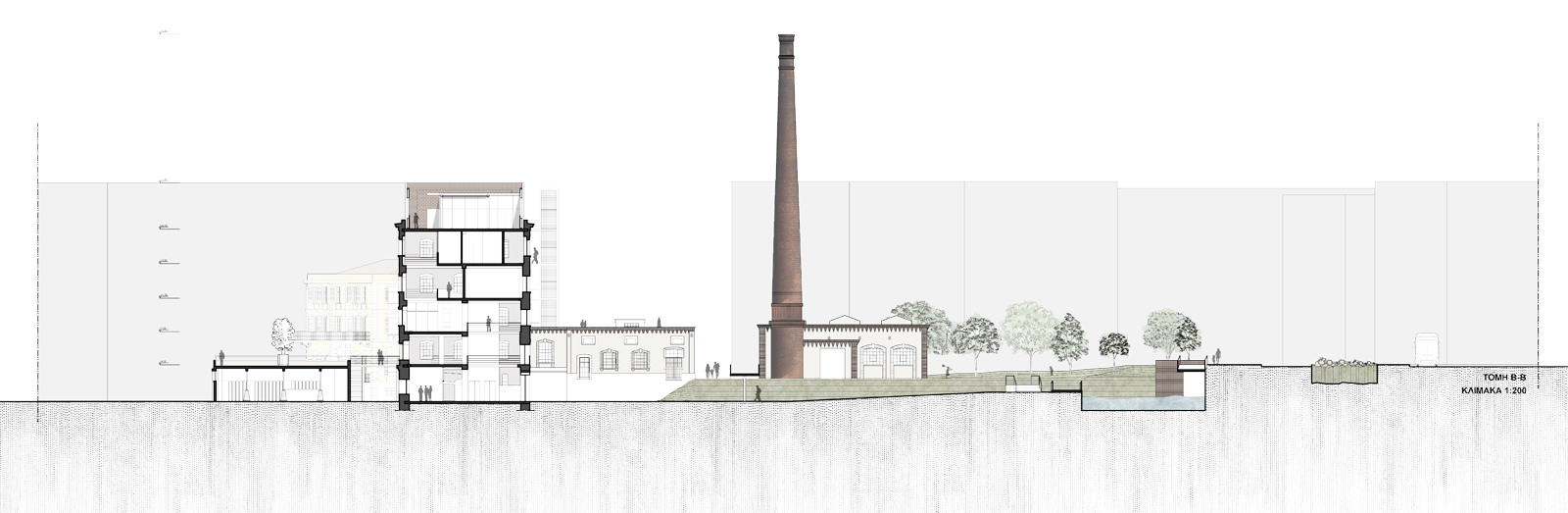
On the rooftop, brick claustra were installed, reintroducing the architectural character of the original 1900 design by the Italian Architect Vitaliano Poselli. Between the claustra, movable facades of perforated corten steel were placed. In this way, residents’ privacy is preserved without obstructing views toward the Thermaikos Gulf and Papandreou street.
In summary, the design carefully balances heritage preservation with contemporary architectural needs for an art center with an artist co-living community.
Facts & Credits
Project title Adaptive reuse of the industrial complex of the Allatini mills
Typology Diploma thesis
Year of presentation 2025
Student Pelagia Kakka
Supervisors Stavros Dendrinos, Anastasia Kapandriti, Eirini Tsetiné
Institution School of Architecture Democritus University of Thrace
READ ALSO: SOCIAL HOUSING // 5 Student Works revisit collective living