The Architect’s House explores homes conceived as both refuge and manifesto—spaces architects design for themselves, where daily life, personal values, and architectural thinking converge. Through these self-authored dwellings, the series reveals how architecture becomes an intimate act of inhabitation, experimentation, and self-reflection, offering rare insight into the discipline from the inside out.
An architect’s own apartment in a 1930s Prague modernist tenement became a decade-long exploration of the balance between preserving a building’s spirit and imprinting personal identity by Martin Cenek Architecture. The interior interweaves family heirlooms with contemporary pieces while a playful pink piglet stool in the hallway offers a touch of humor, reminding that even meticulous architects can enjoy whimsy.
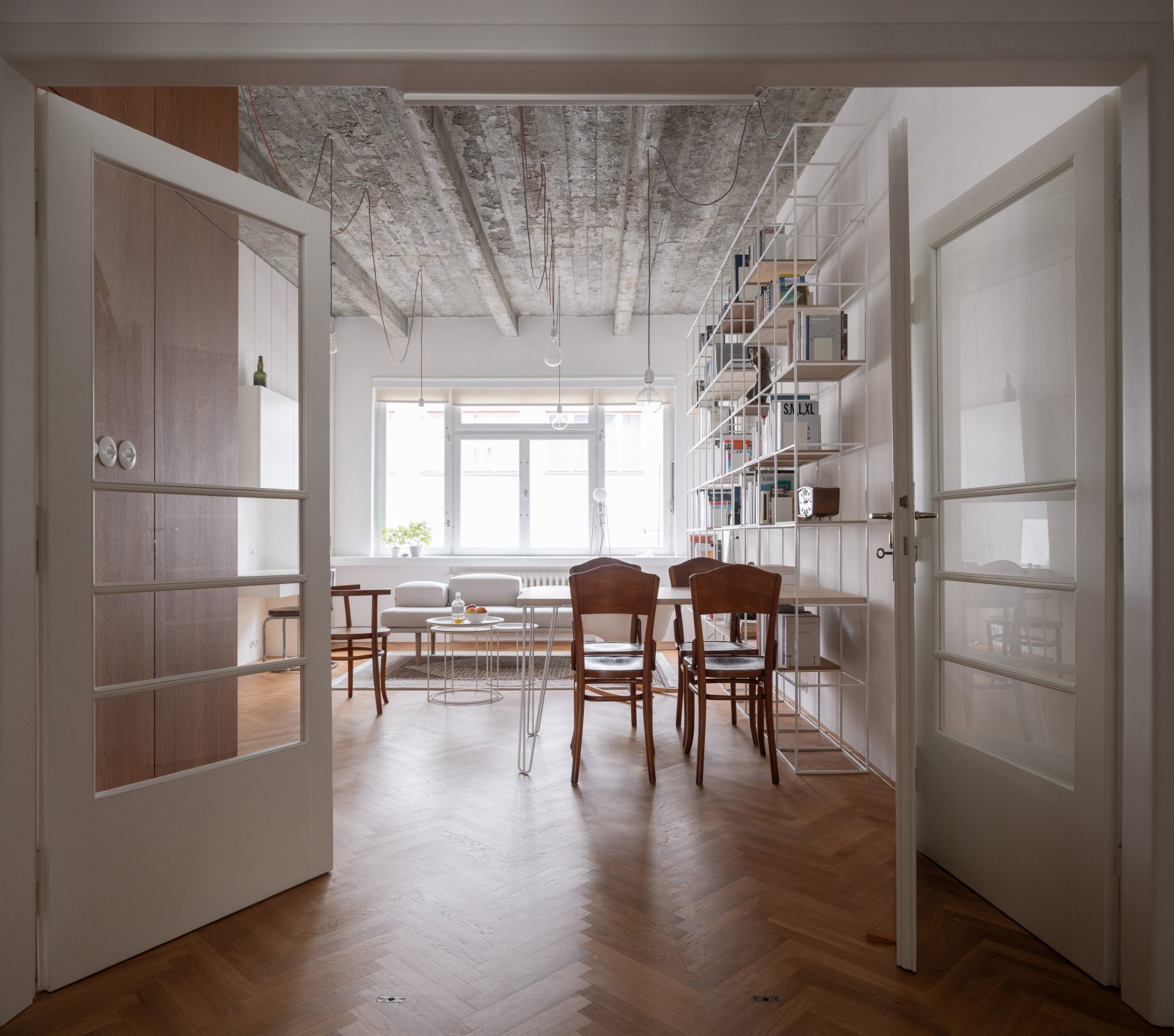
Martin Cenek’s renovation of his own two-room apartment in Prague’s New Town is a slow, deliberate architectural meditation, one that unfolded over nearly a decade and was shaped as much by doubt and responsibility as by design intention. Located in a late-1930s functionalist tenement house designed by Ladislav Šimek, the apartment inhabits a building that is a precise and honest embodiment of architectural modernism. While many original elements had survived, the apartment was in poor technical condition and no longer suited contemporary living, making a complete transformation unavoidable.
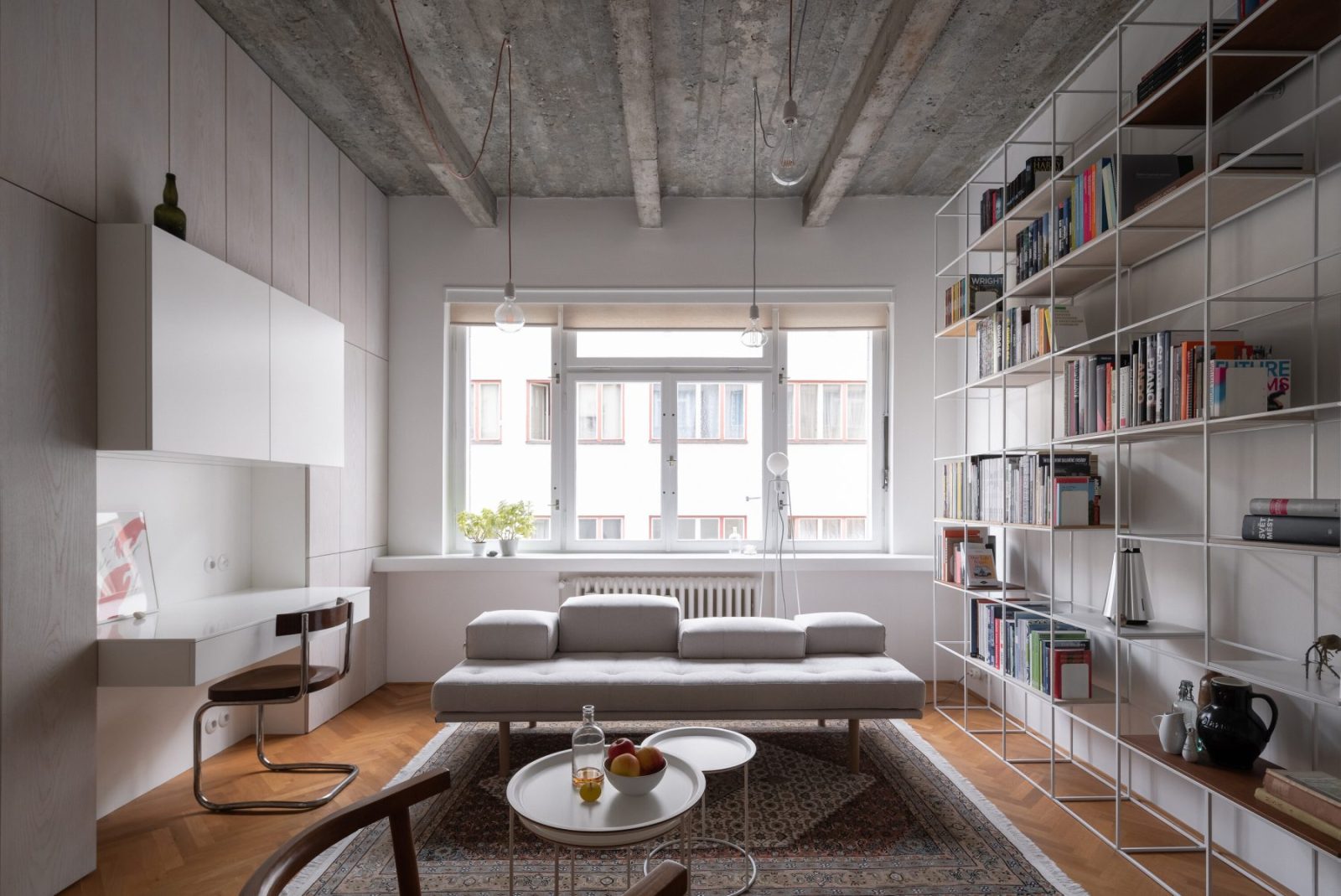
Designing one’s own home brings a particular set of challenges. Without the critical distance of a client-architect relationship, every decision becomes personal, irreversible and exposed. As Cenek reflects, being one’s own client means fully accepting the risks architects usually negotiate with others.
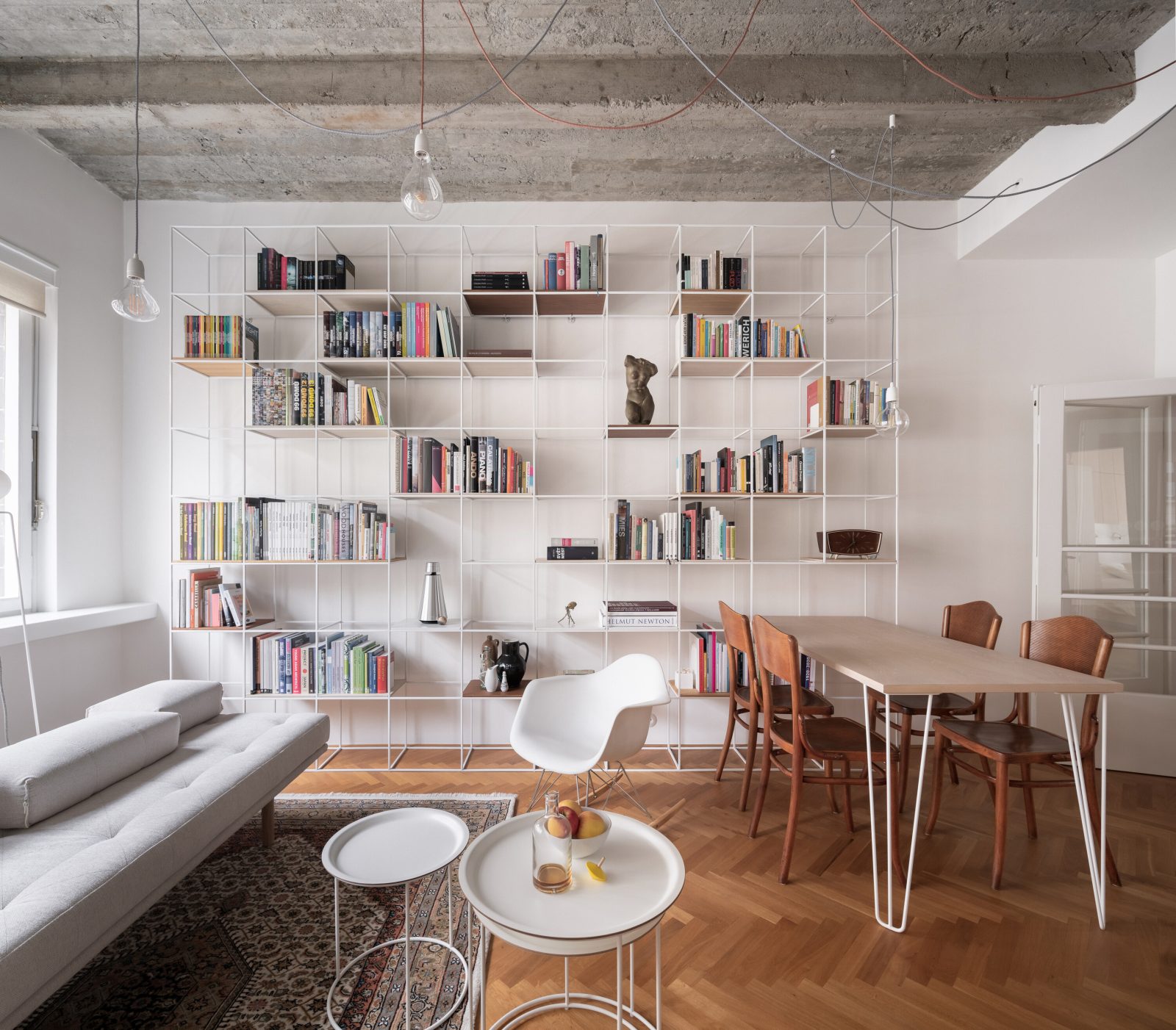
The central question throughout the process was how to balance respect for the strong spirit of the existing architecture with the desire to leave a personal imprint.
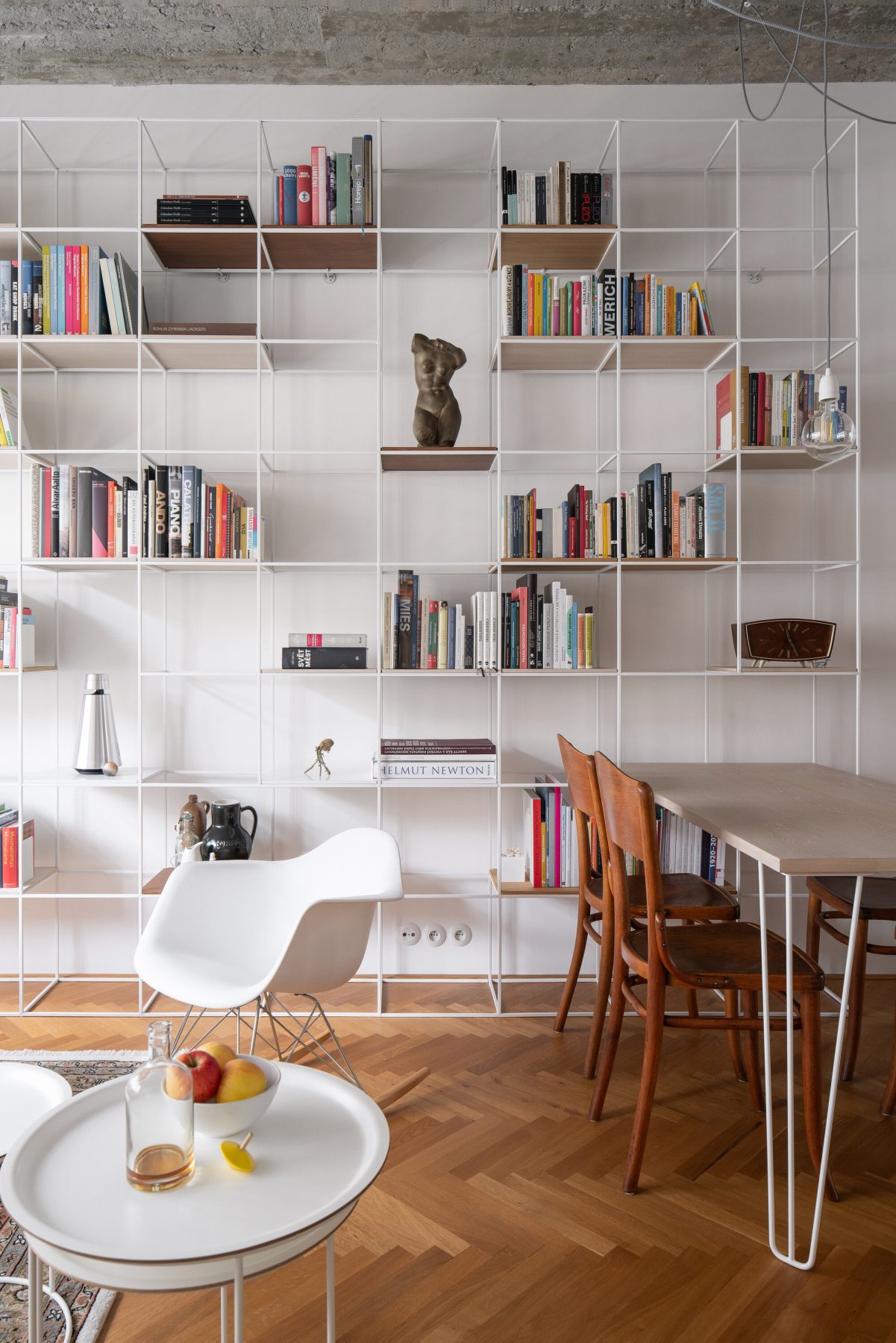
The way the finished work has influenced the architect, can be described by this quote from the well-known book Architecture of Happiness by Alain de Botton: „…a passion for architecture may turn us into aesthetes, eccentric figures who must watch over their houses with the vigilance of museum guards, patrolling their rooms in search of stains, a damp cloth or sponge in hand.“
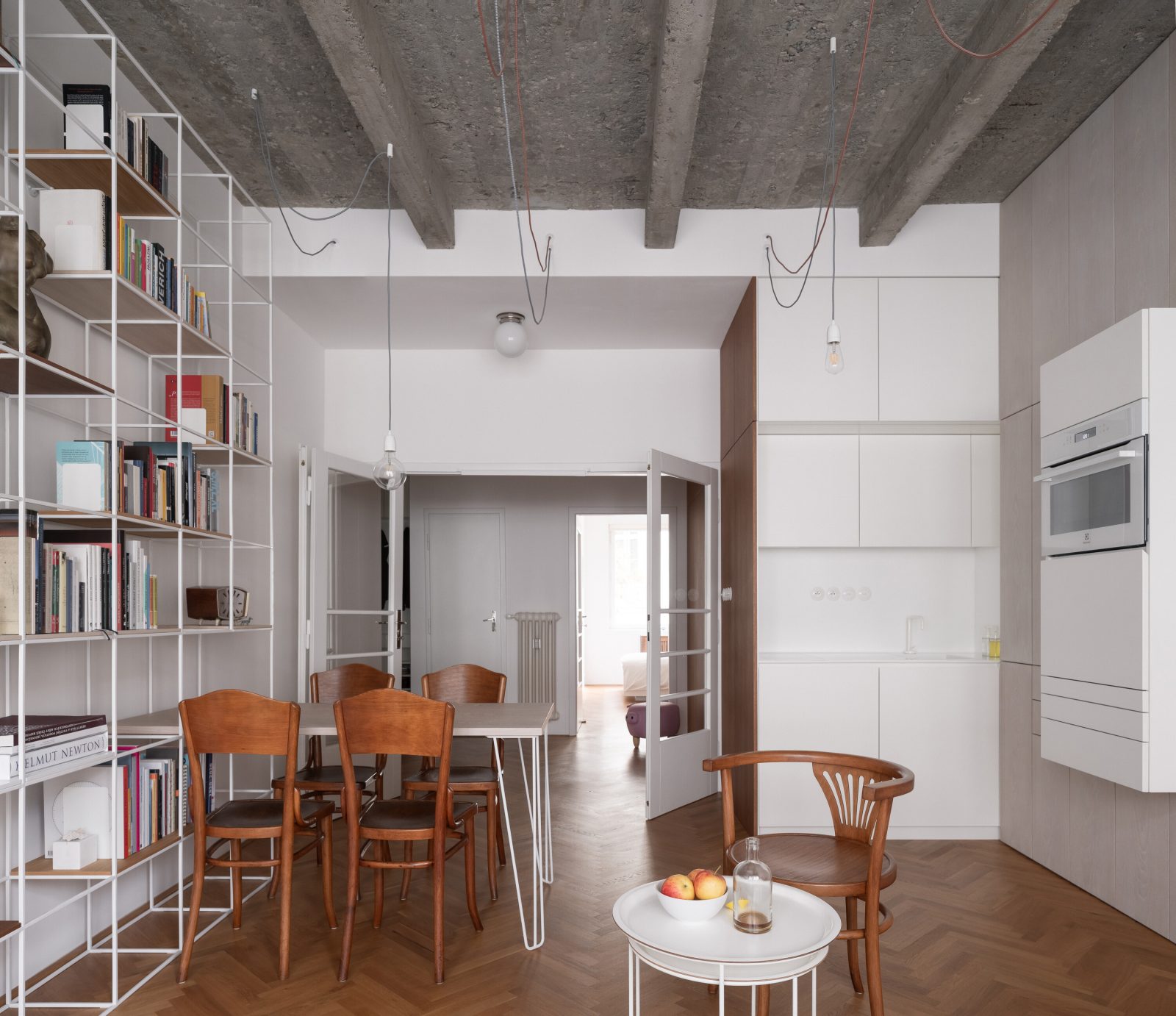
The renovation strategy was grounded in preservation and precision.
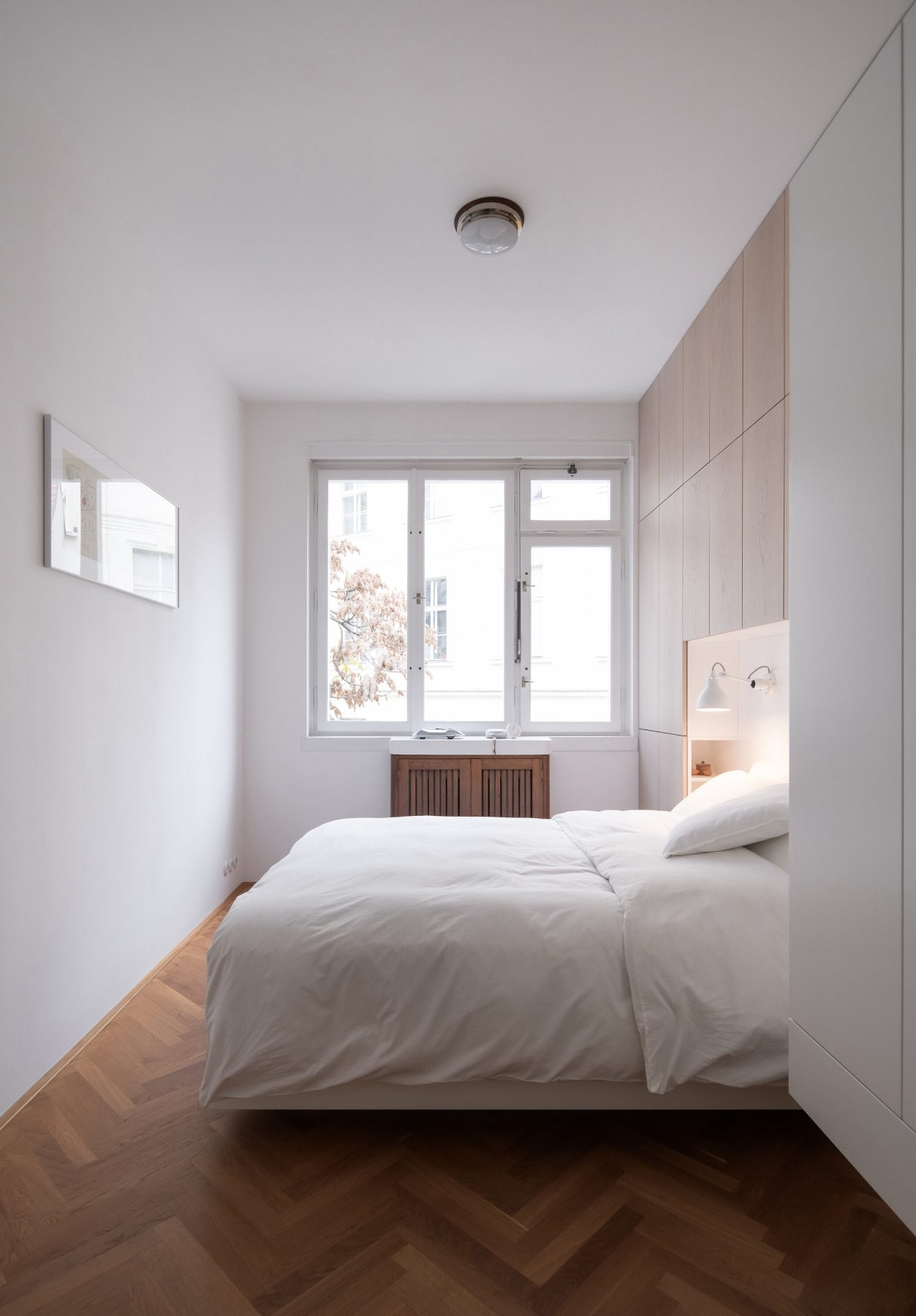
Original windows, doors and fittings were carefully restored. The oak parquet floors were replaced with an exact replica. A significant architectural gesture was the decision to expose and clean the reinforced concrete ceiling in the living room, transforming a previously concealed structural element into an original artistic gesture. The apartment underwent a complete technical upgrade, including new floor constructions, surfaces and building services.

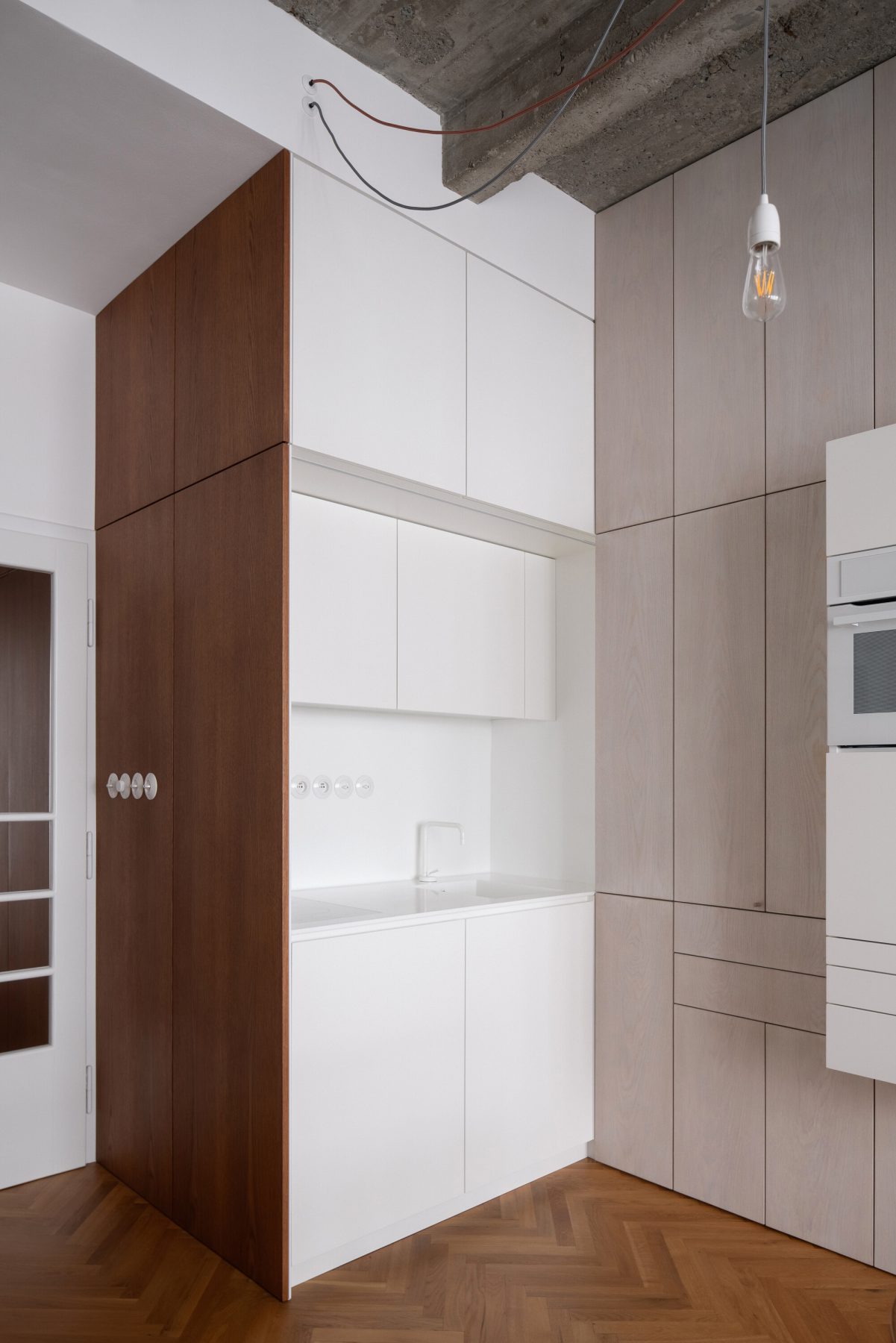
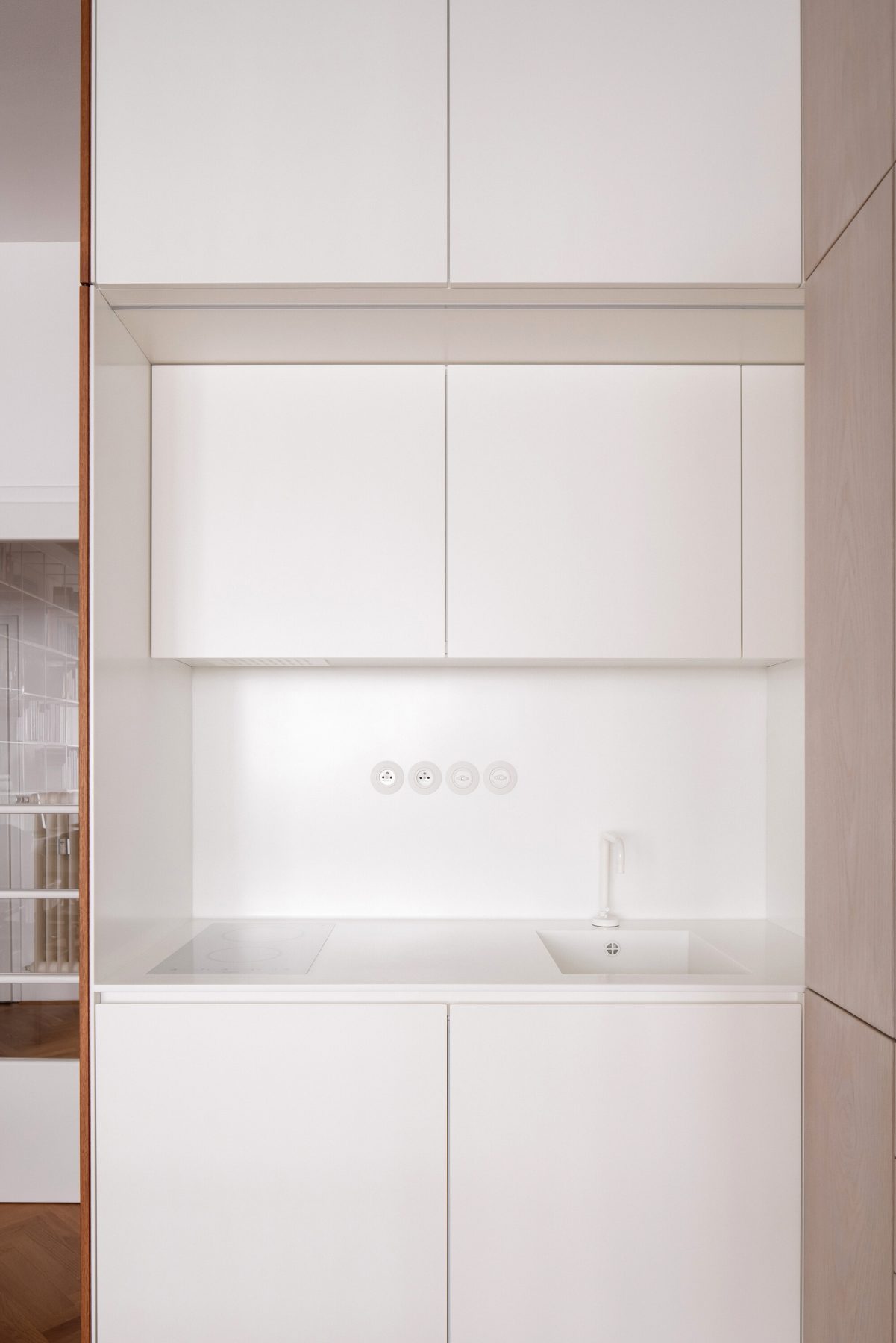
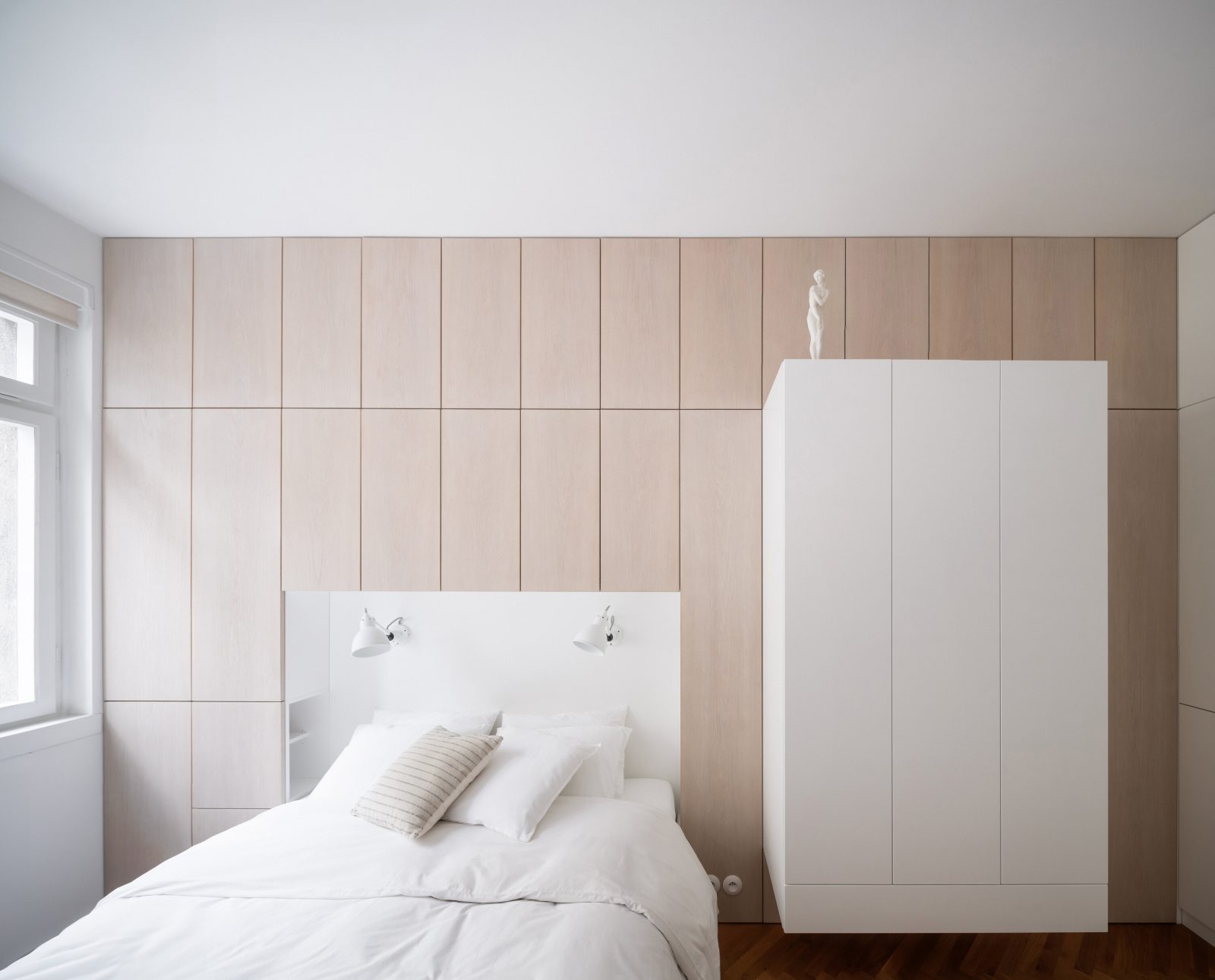
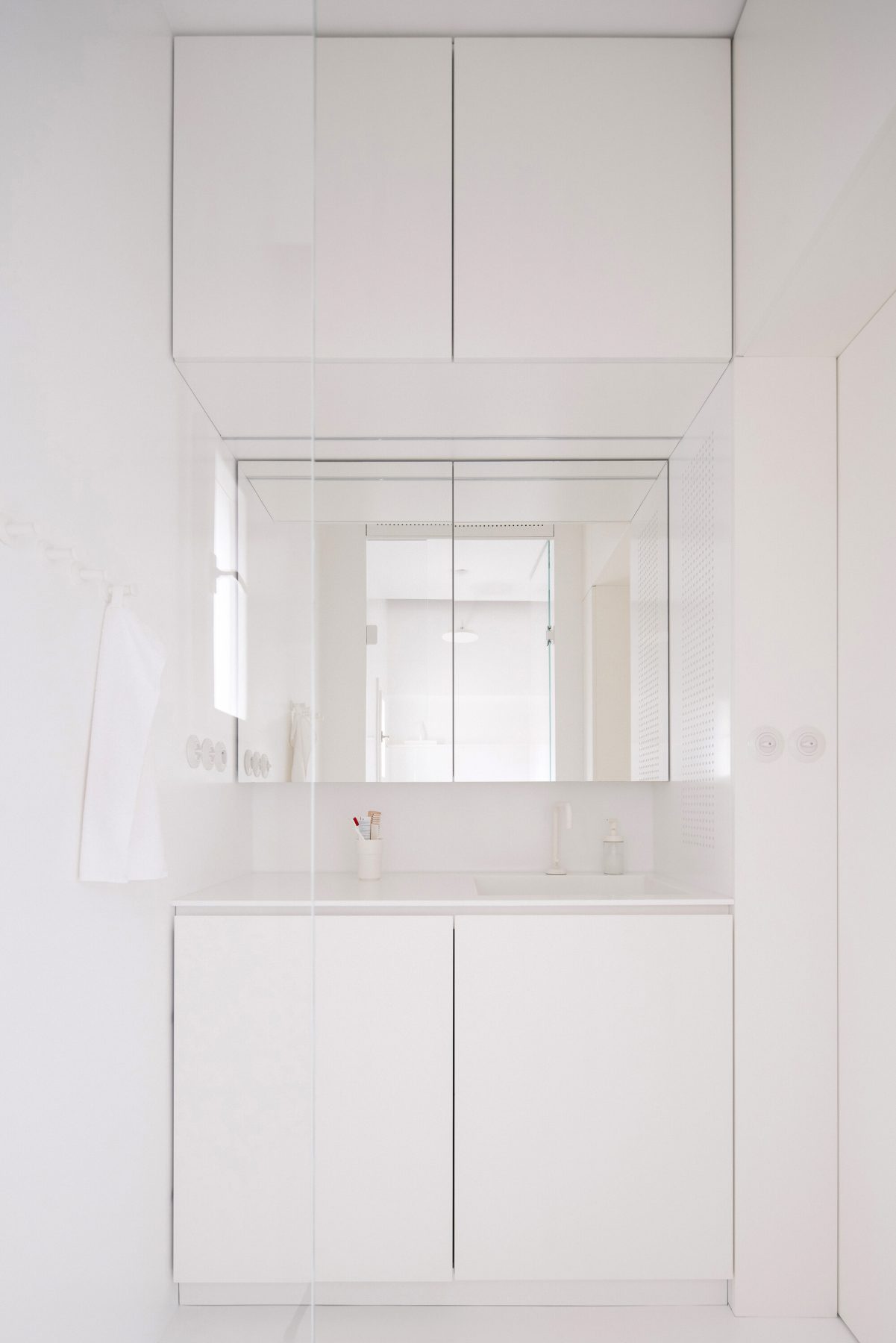
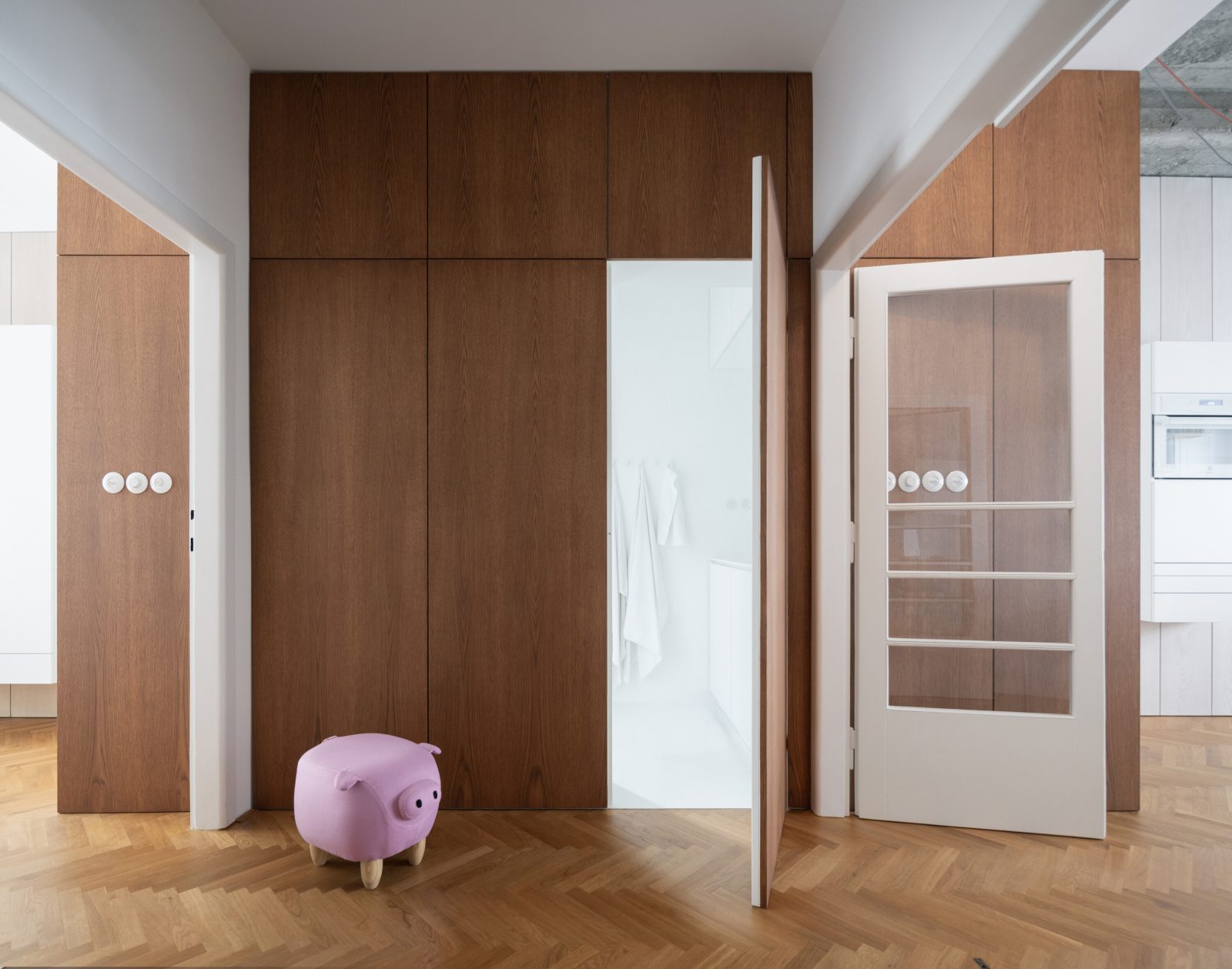
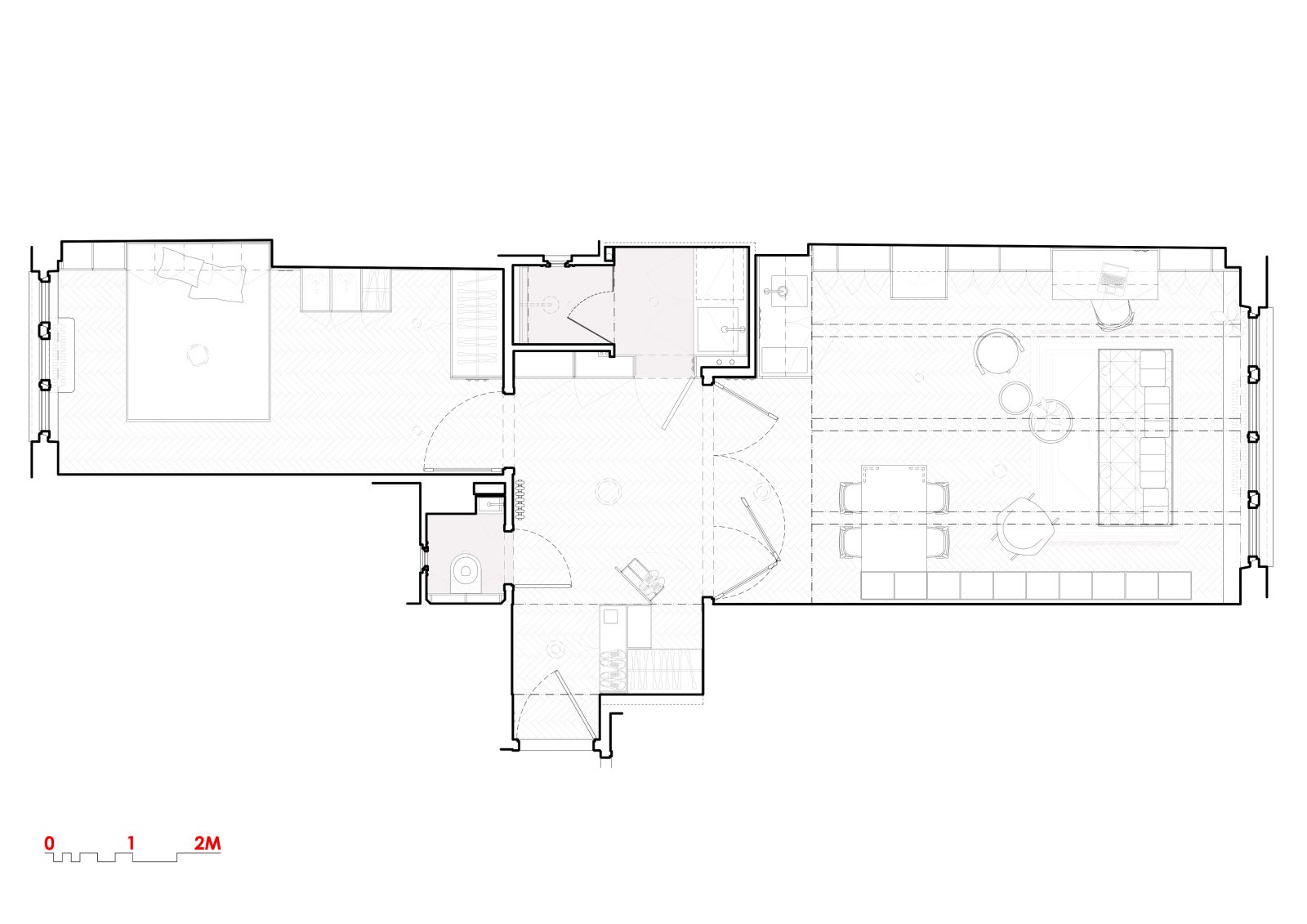
The most defining contemporary intervention is the inserted furniture block, which replaces the former pantry and bathroom.

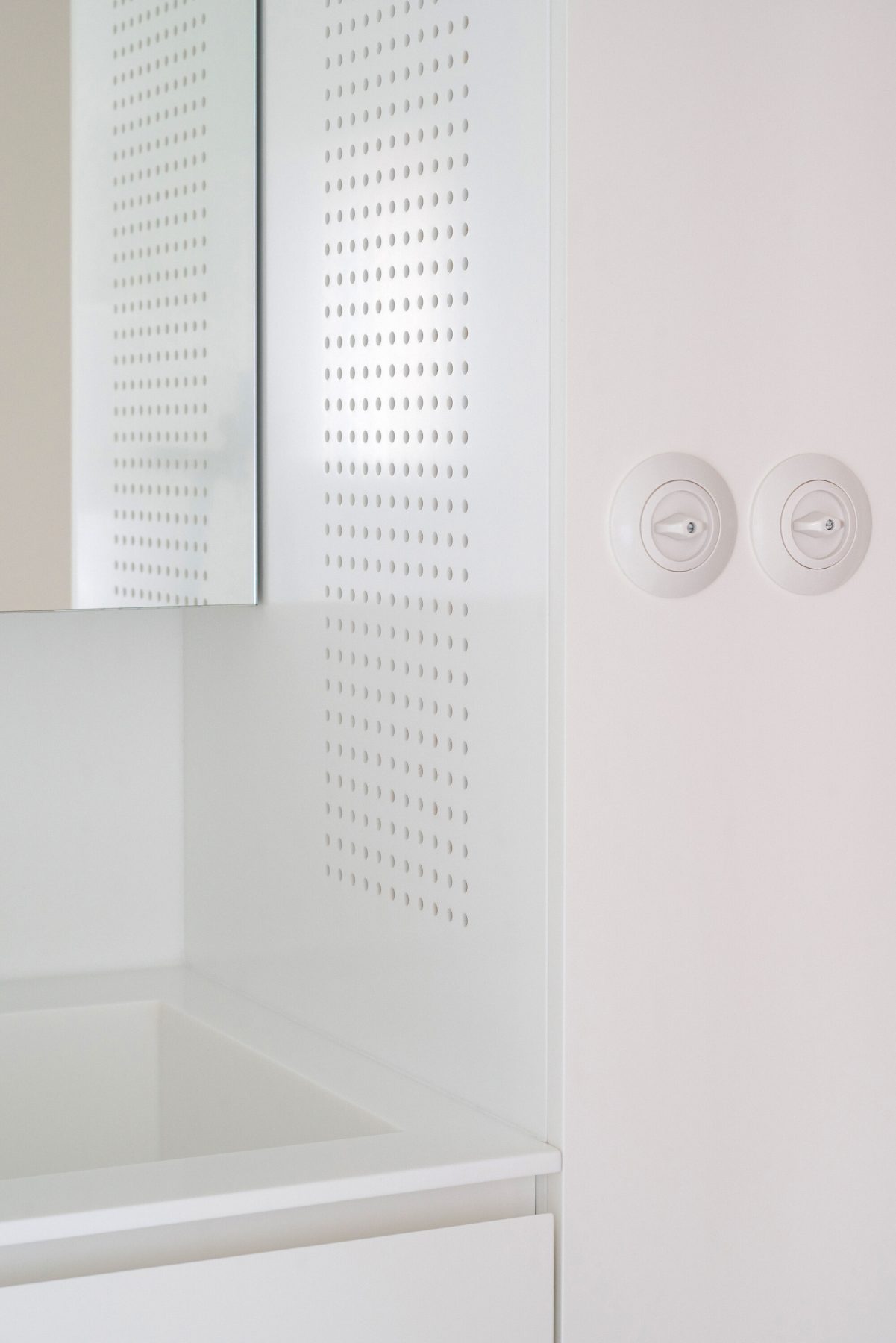
Conceived as a compact yet generous architectural element, this new layer contains extensive storage, a hidden bathroom, and part of the kitchen. Rather than mimicking the past, the block establishes a clear temporal contrast: minimalist, calm, and precise. Crafted from stained oak veneer and white lacquer, it uses traditional materials in a distinctly contemporary way, articulating space through furniture rather than walls.
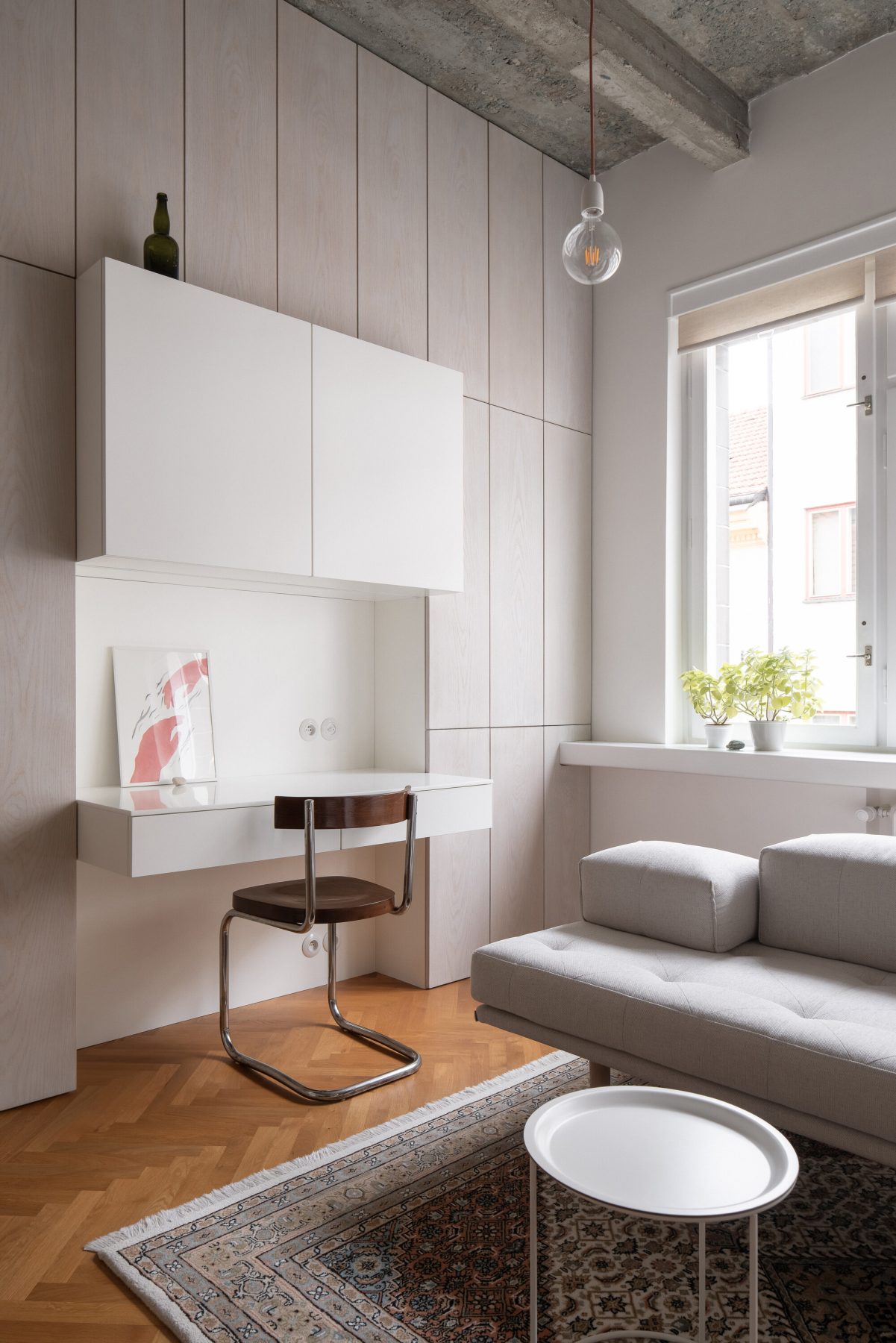
This gesture allows the original layout to be reinterpreted without erasing its logic. The apartment becomes a composition of layers –historic structure, restored elements and a new insertion– each maintaining its own identity. The result is not a nostalgic reconstruction but a restrained coexistence of eras.
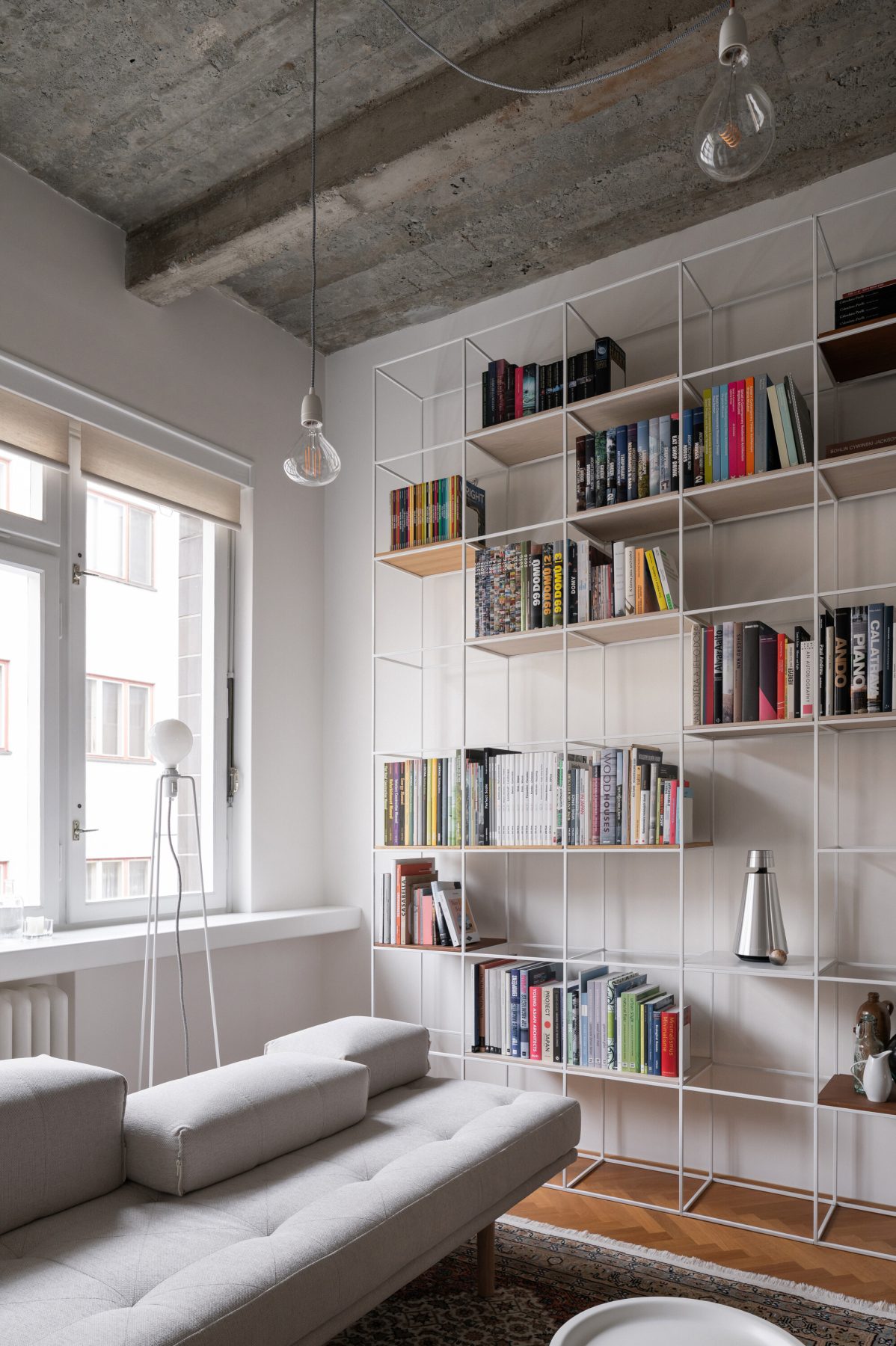
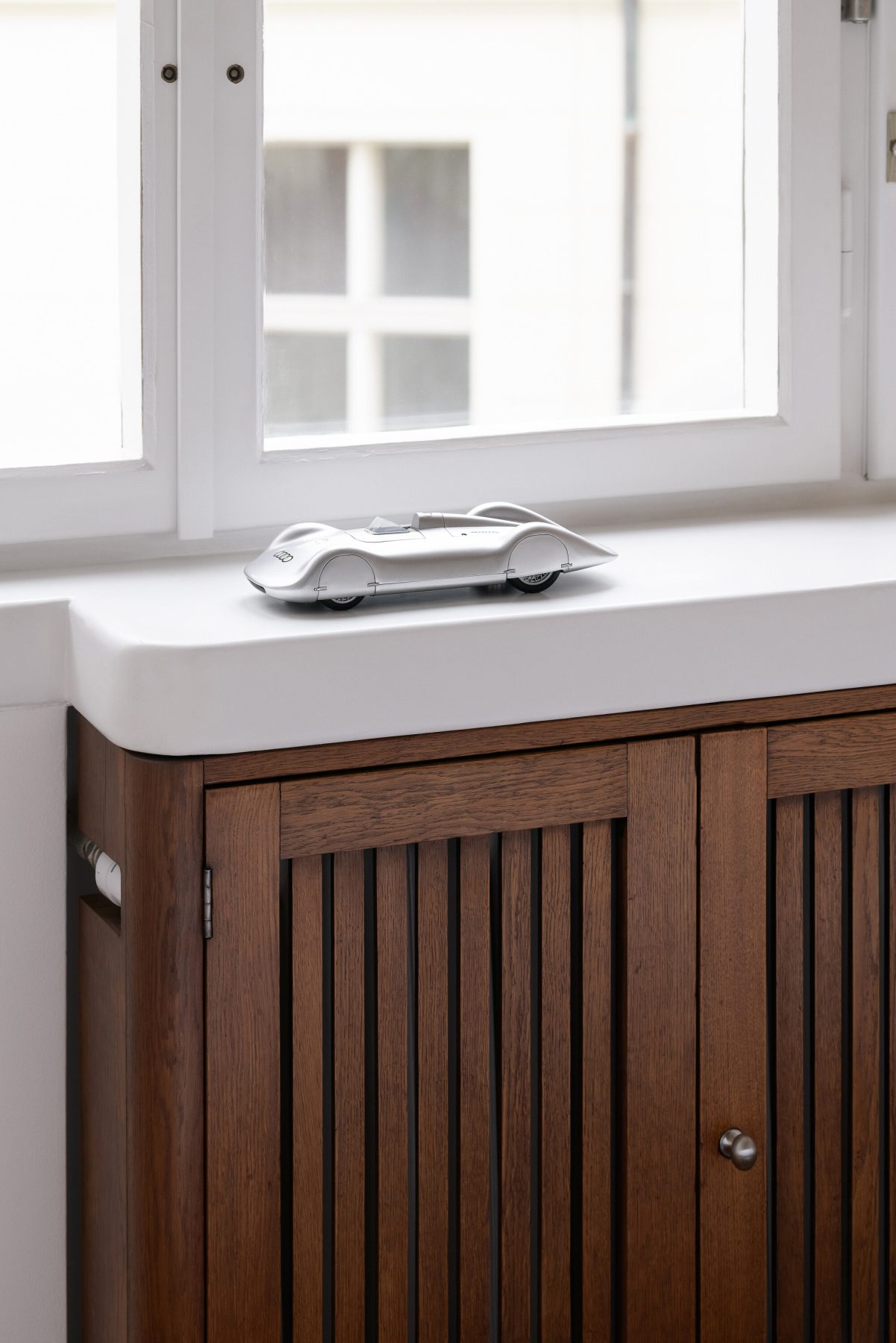
Furnishings further reinforce this dialogue. Many pieces carry deep personal and familial significance, including Thonet chairs inherited from previous generations, functionalist lighting and furniture from the 1930s and sculptural works by Jaroslav Horejc. These are paired with contemporary, minimalist designs such as the Fusion sofa by Nendo, creating an interior that is both intimate and architecturally composed.
A small but telling detail completes the narrative: a pink pig-shaped stool in the hallway, a gift from friends. Its presence acts as a gentle reminder not to overburden architecture with solemnity. In a home shaped by history, theory, and responsibility, it introduces humor and humanity.

Martin Cenek

Martin Cenek (*1982) is an authorised architect of the Czech Chamber of Architects and Registered architect of the British ARB, an independent practicing architect, assistant professor of a design studio at the Faculty of Architecture at the Czech Technical University in Prague, and a researcher focused on sustainable architecture and the application of photovoltaics in architecture within the Centre for Advanced Photovoltaics at the Czech Technical University.
He graduated with a master’s and a doctoral degree from the Faculty of Architecture at the Czech Technical University, and worked as an architect in the offices of GAP architetti asssociati and Archea associati in Rome from 2006 to 2008. Between 2011 and 2013 he was the lead architect of the CTU team in the international university competition Solar Decathlon 2013. In addition to designing, teaching and research work, he is an avid architectural photographer. Since 2008 he has his own architectural practice in Prague.
In his projects, he emphasises simple, logical and clear spatial and functional solutions, overall efficiency and sustainability of the design as well as low energy consumption.
Facts & Credits
Project title Functionalist Apartment with Pink Piggy
Typology Residential, Renovation
Location Prague, Czech Republic
Architecture Martin Cenek Architecture
Year Project 2013-2020
Completion Year 2023
Usable Area 49 m2
Custom-made furniture Václav Furmánek
Artificial stone Interiér Remich
Locksmith elements, library construction Pavel Hlava – Ferra
Glass elements JV glass
Photography Alex Shoots Buildings
Text provided by the architects
READ ALSO: More With Less: OA-STUDIO renovates an apartment in Athens through the transformative power of a shifting wall