Designed by Markéta Bromová architekti, Mezi Srnky Bistro in Prague unfolds as a sequence of two interconnected spaces with contrasting atmospheres. Set within a renovated late-19th-century building in the Vinohrady district, the interior is anchored by a durable terrazzo floor with marble inlays. A signature maroon palette, raw plaster surfaces, and a sculptural pink concrete bar articulate a layered and refined material identity.
The Mezi Srnky Bistro is located in a recently renovated apartment building with a historicist façade dating back to the late 19th century, near Náměstí Míru in Prague’s Vinohrady district. The project occupies the building’s ground floor, while two additional basement rooms are planned for renovation in a future phase.
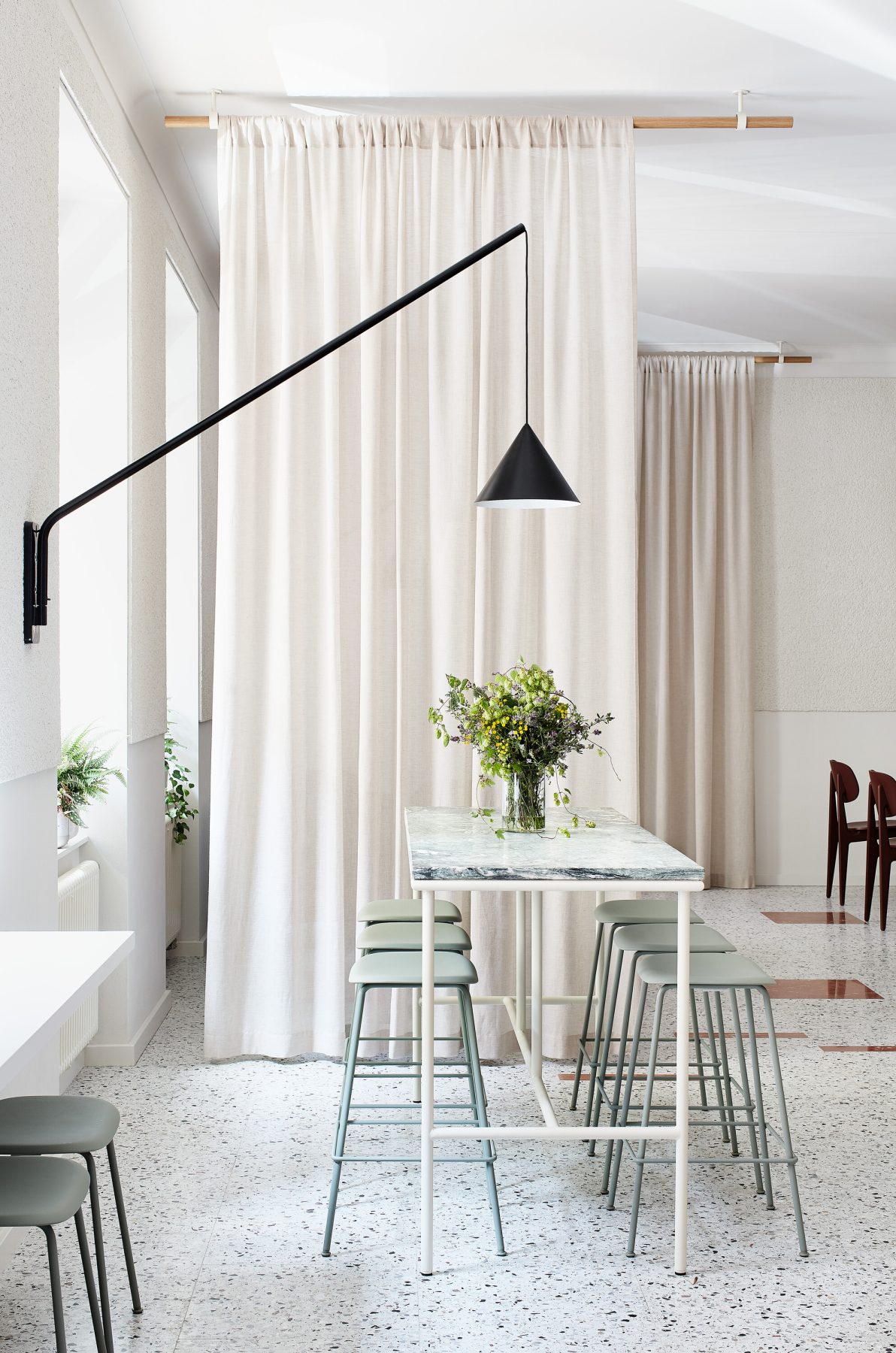
The interior concept is structured around the durability and character of the materials used throughout the space.
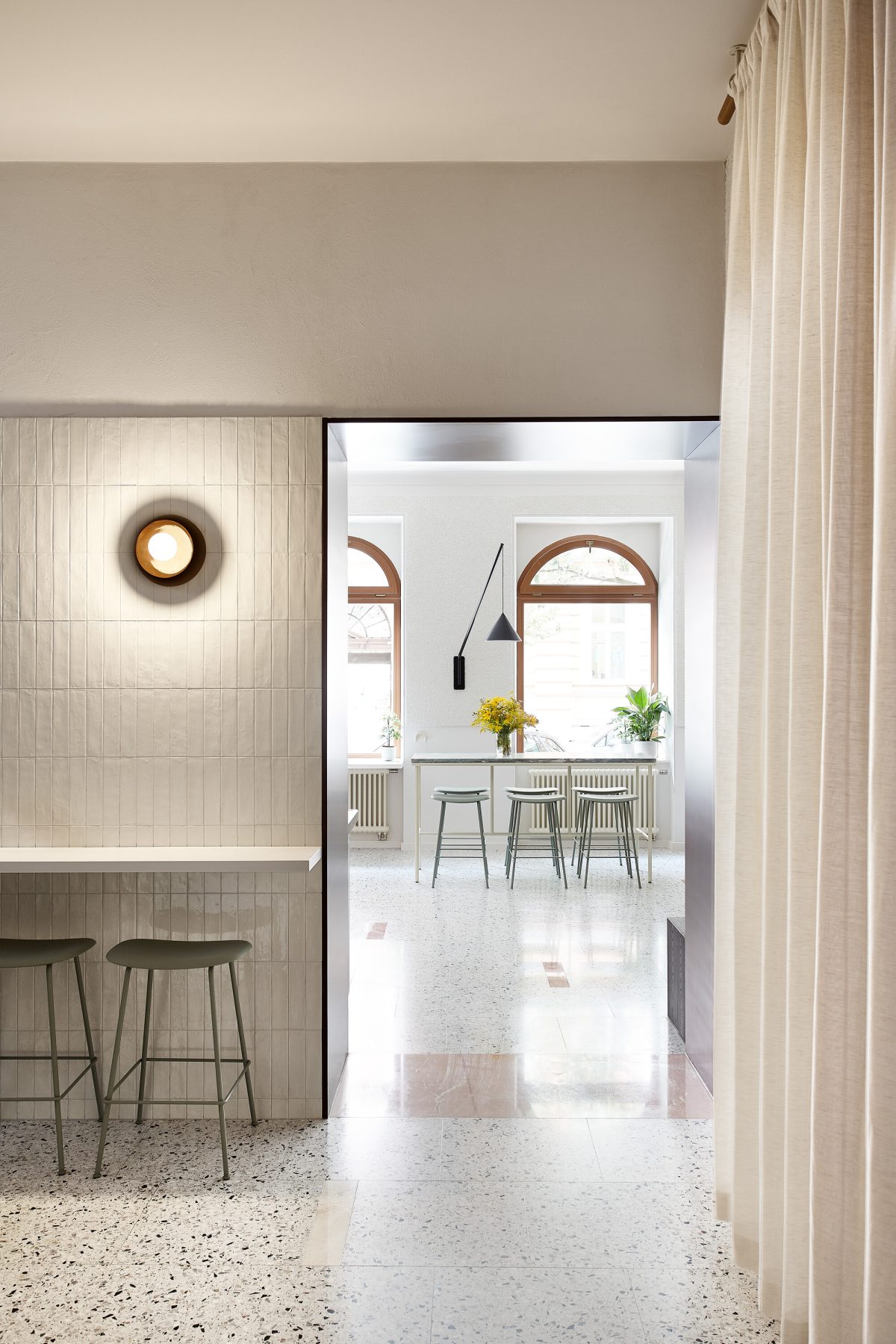
A terrazzo floor forms the foundation of the design, establishing the project’s primary material and visual framework.
As a high-traffic environment demands resilient surfaces, careful consideration was given to selecting materials capable of withstanding long-term use while maintaining a refined aesthetic.
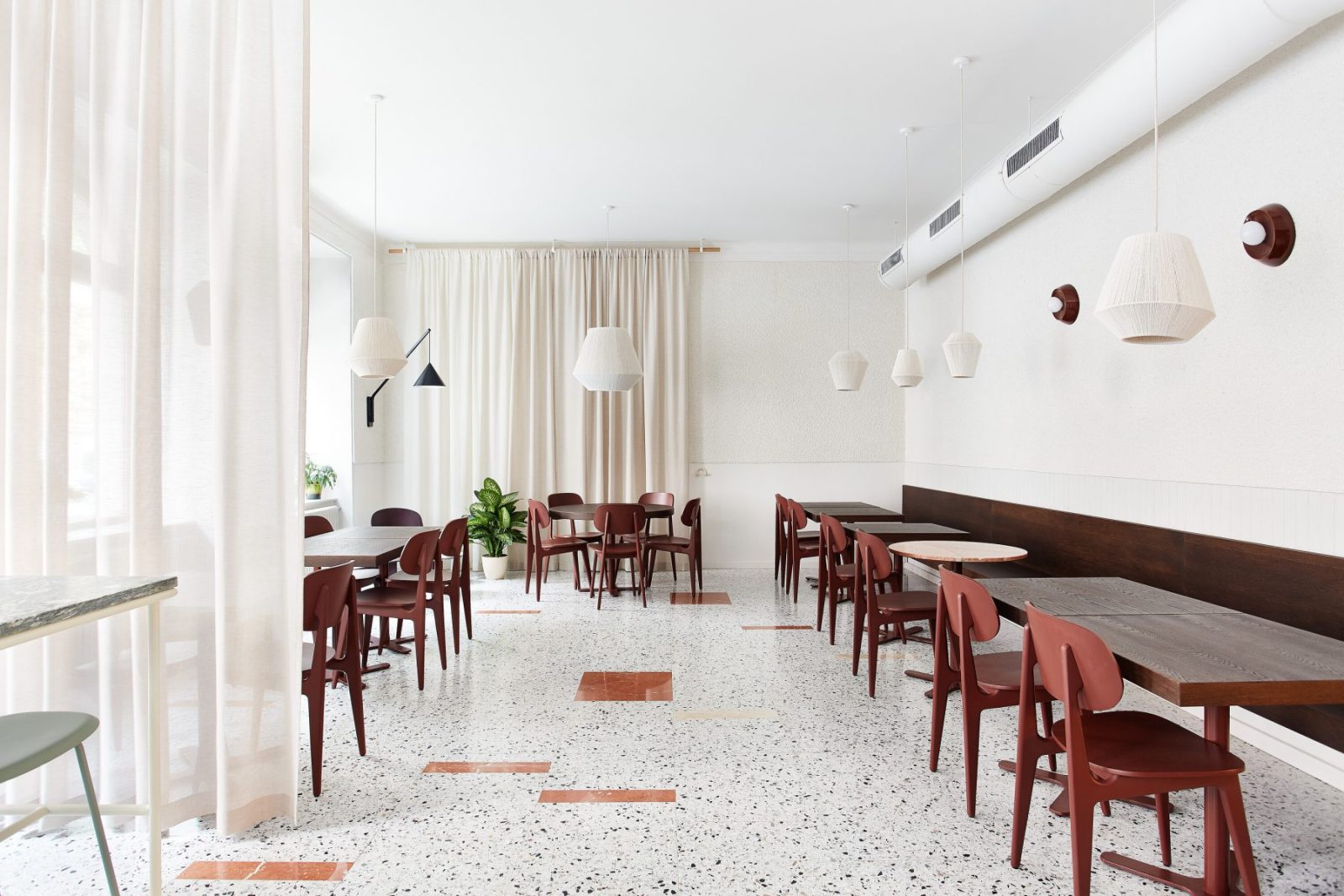
The terrazzo tiling became the basis for the overall interior composition. Within its grid, narrow strips and full pieces of marble are inserted locally, creating subtle variations that interrupt the regular pattern of the floor. This intervention introduces a dynamic visual rhythm while maintaining a sense of cohesion and elegance through the careful balance of contrasting materials.
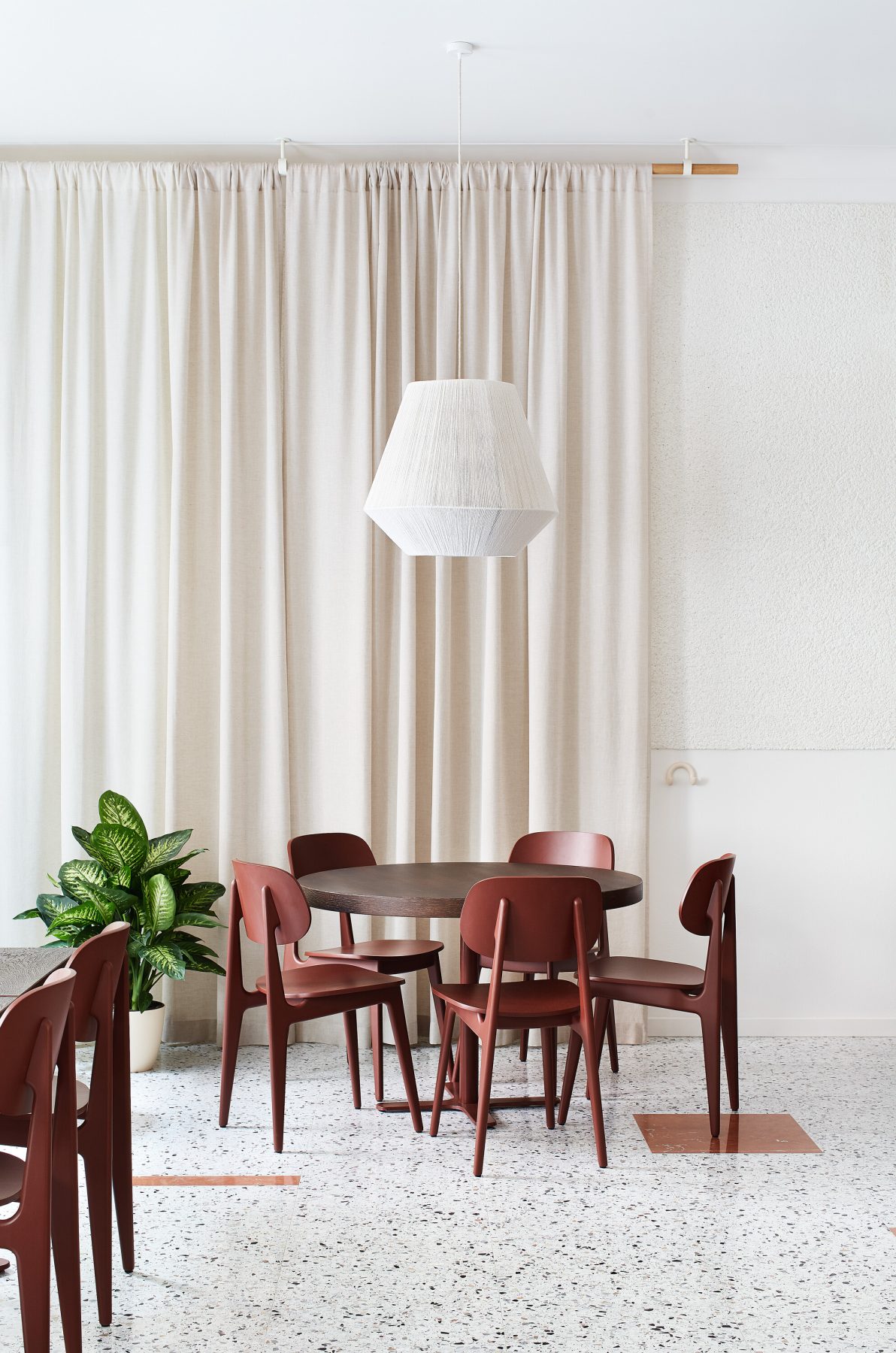
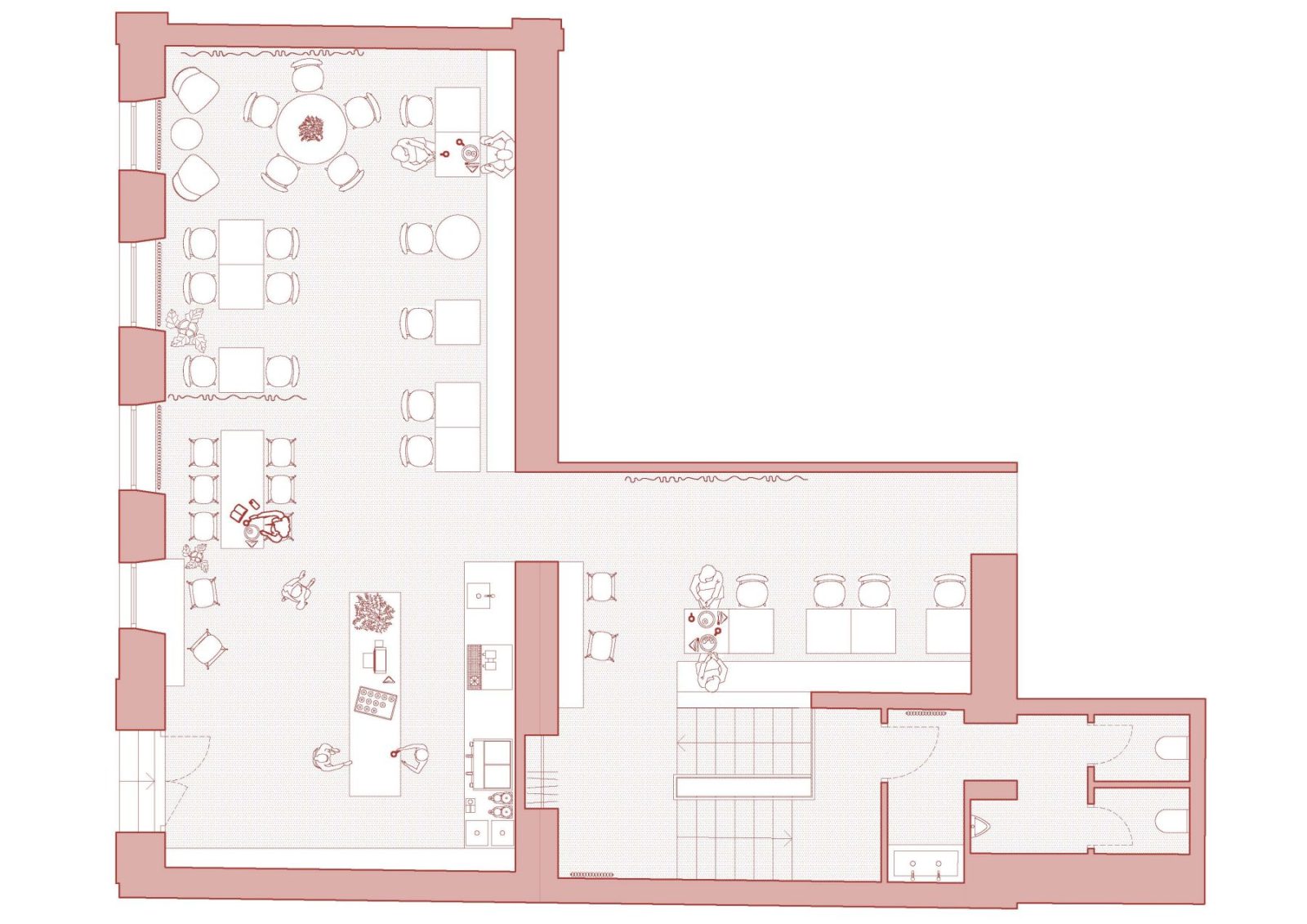
Spatially, the bistro unfolds through two interconnected rooms with distinct atmospheres.
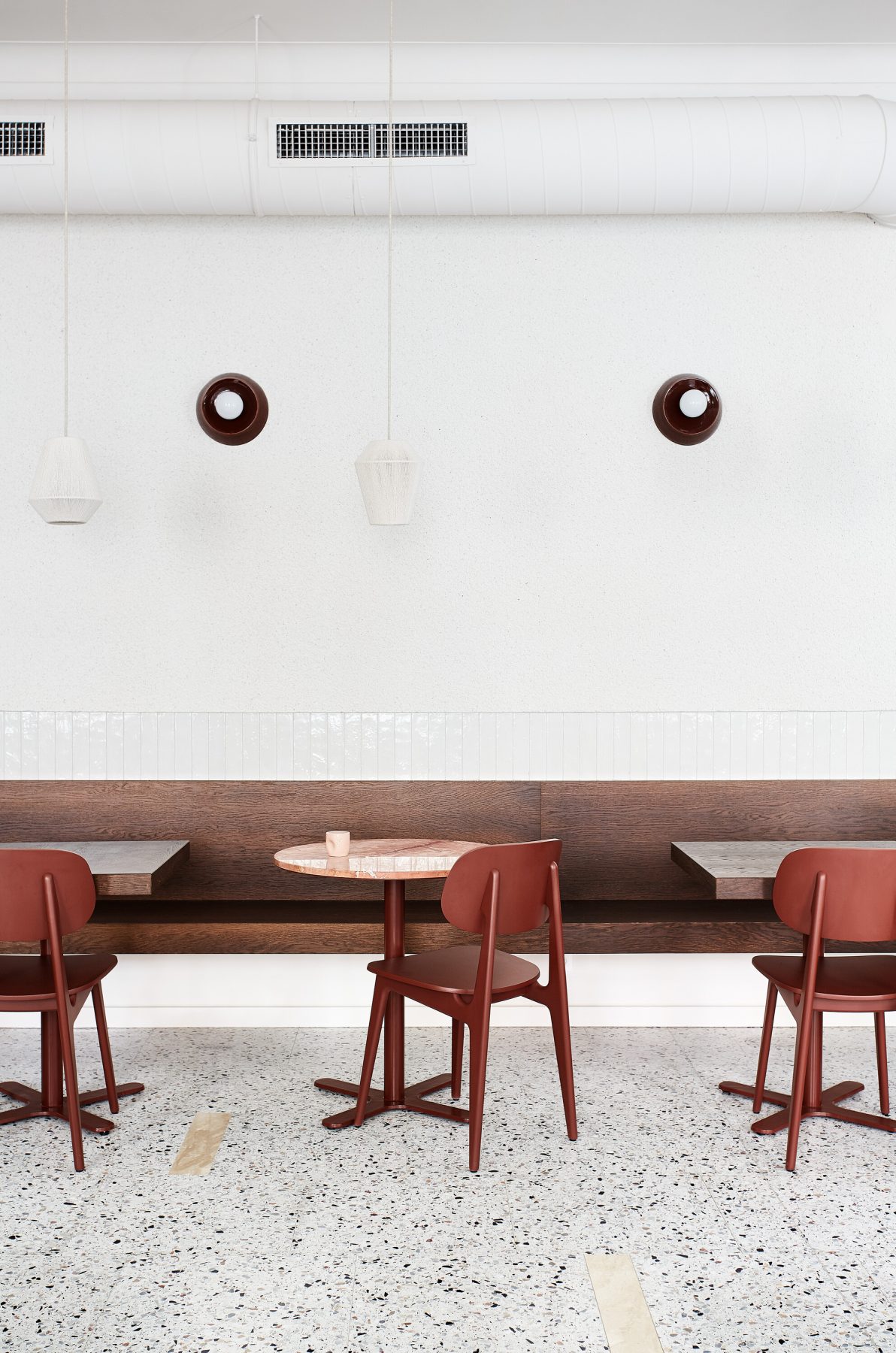
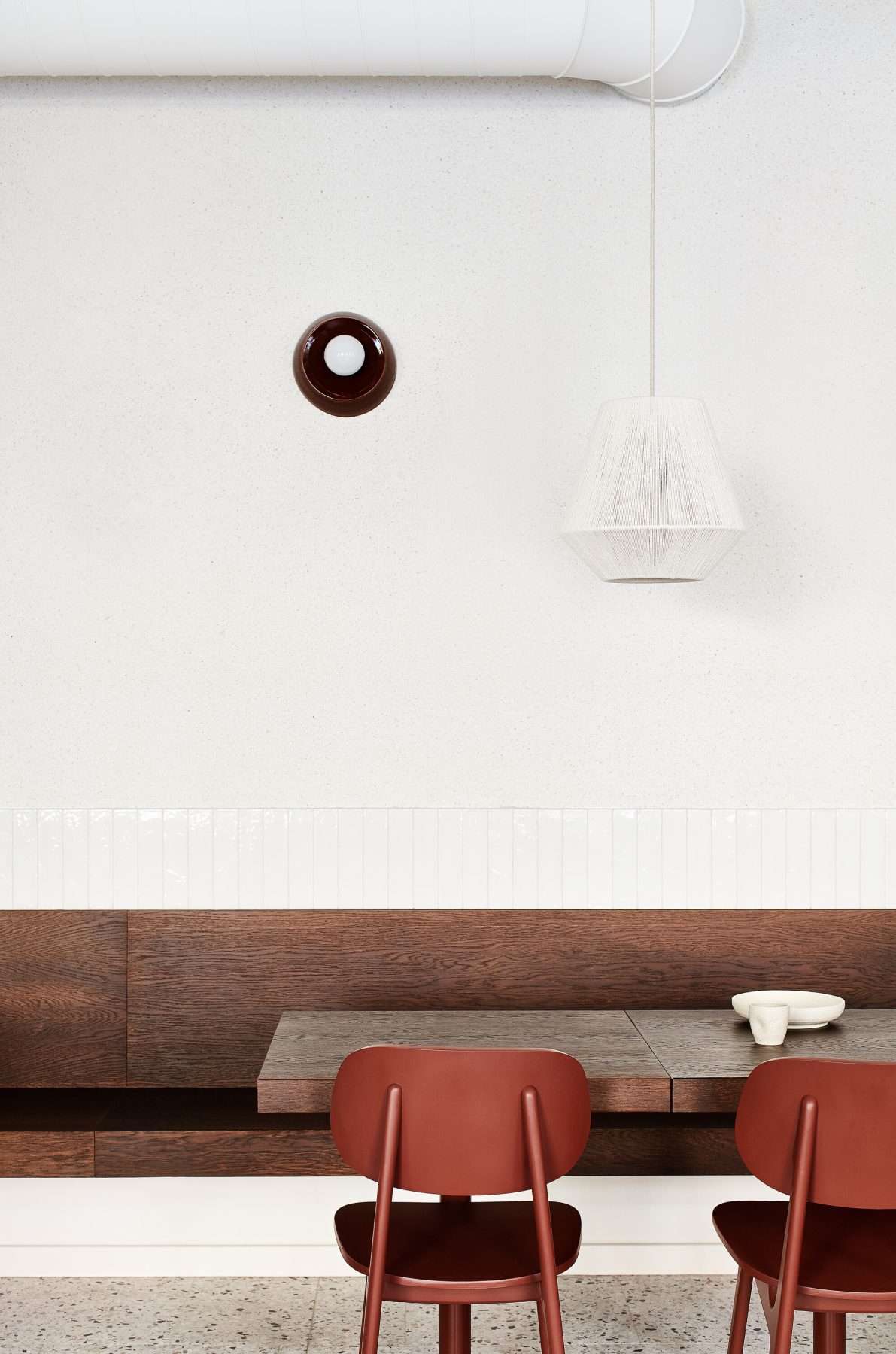
The front area is open and luminous, supporting a lively social environment, while the rear room offers a more intimate and secluded setting. A staircase located beside the rear space leads to the restrooms, while partial views toward the kitchen establish a visual connection between the dining areas and the operational core of the bistro.
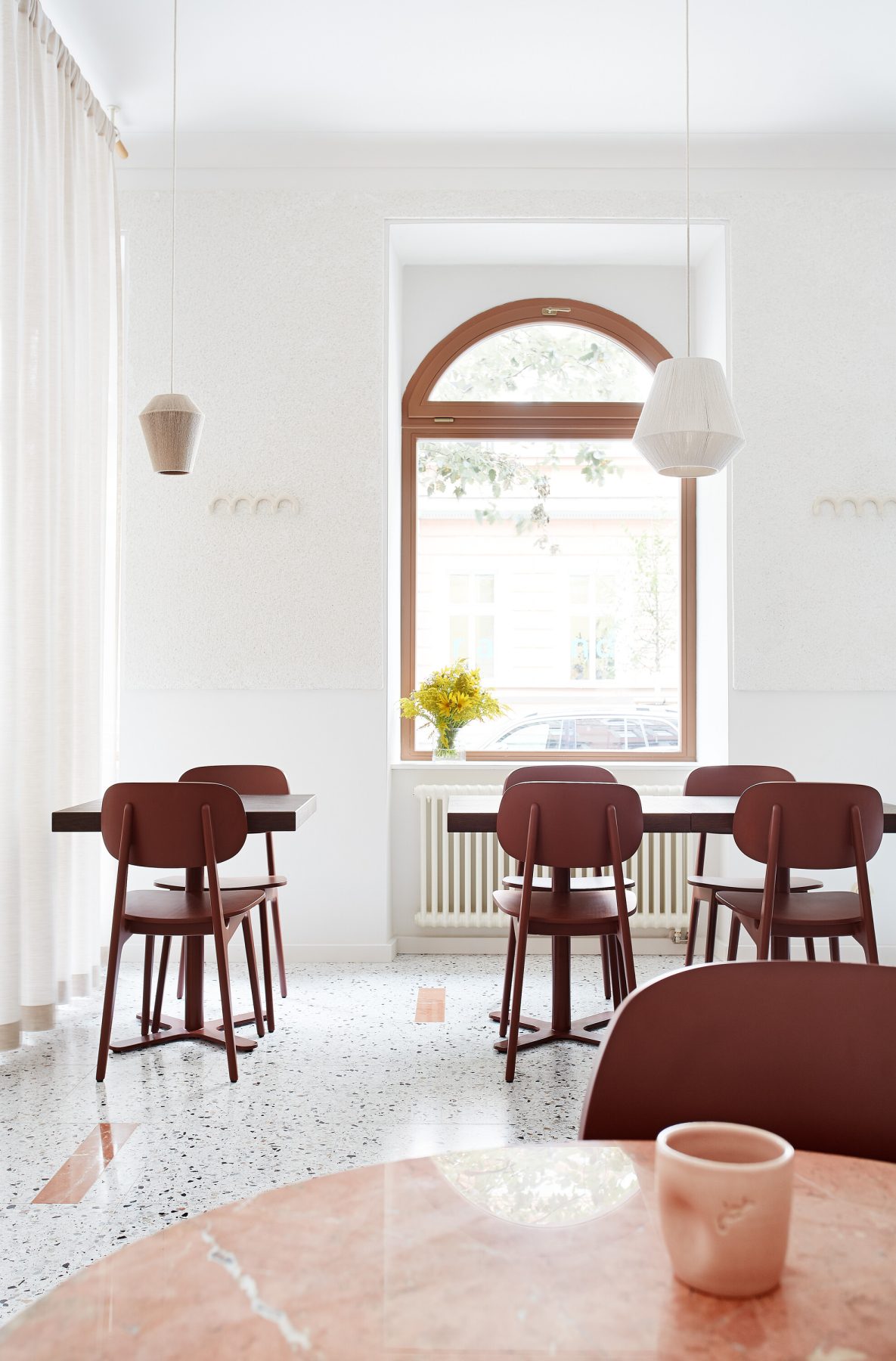
Material transitions further reinforce this spatial differentiation.
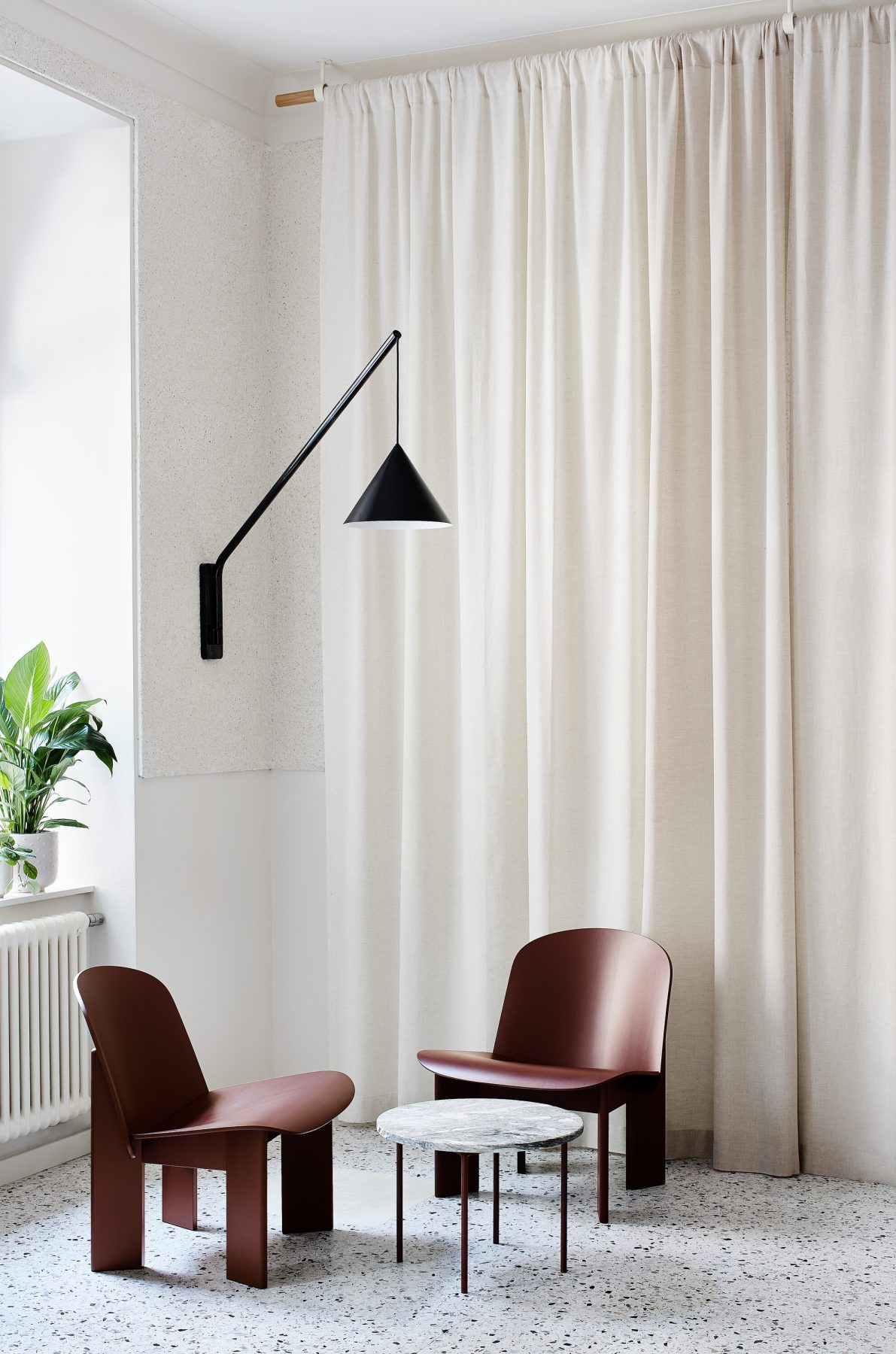
In the front room, rough textured plaster is combined with smooth painted surfaces, subtly segmenting the vertical proportions of the space. The rear room is defined by a reddish-brown chestnut wall, which integrates the built-in seating and connects visually to the staircase and restroom area.
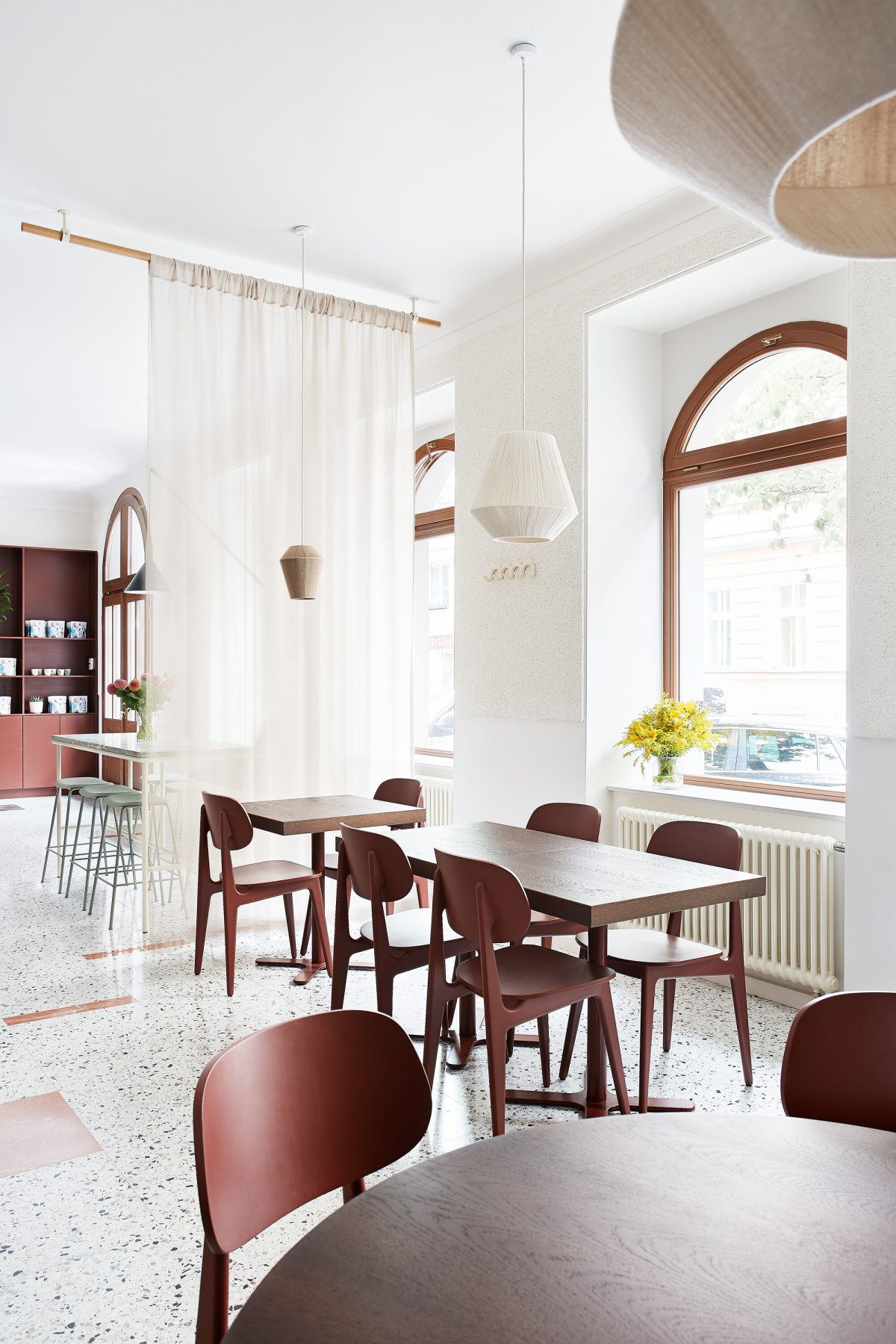
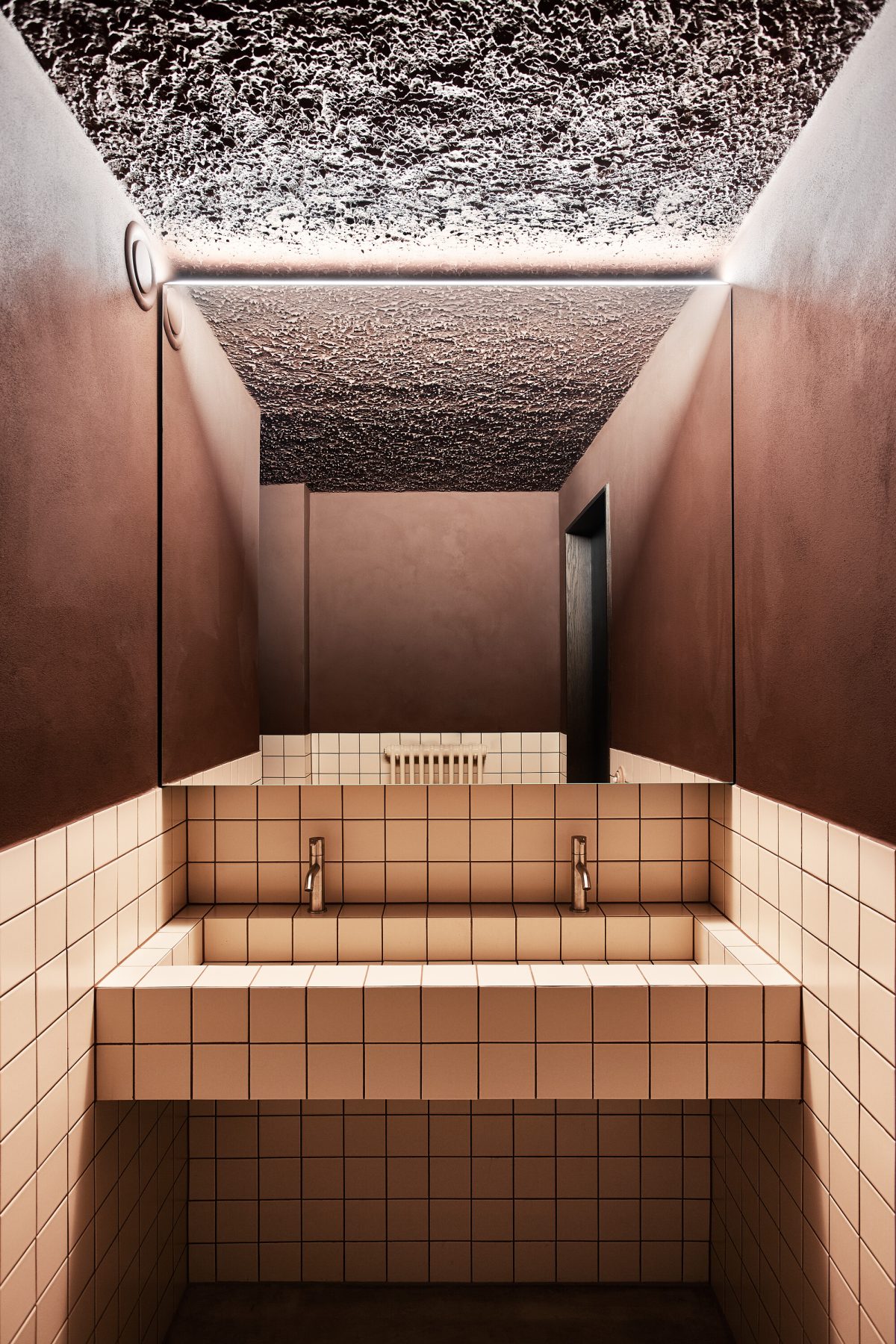
The surfaces of the staircase, landings, and intermediate platforms are treated with a simplified and more uniform material approach, allowing the raw character of the exposed concrete staircase—revealed during the initial inspection of the unfinished interior—to remain visible as part of the design narrative.
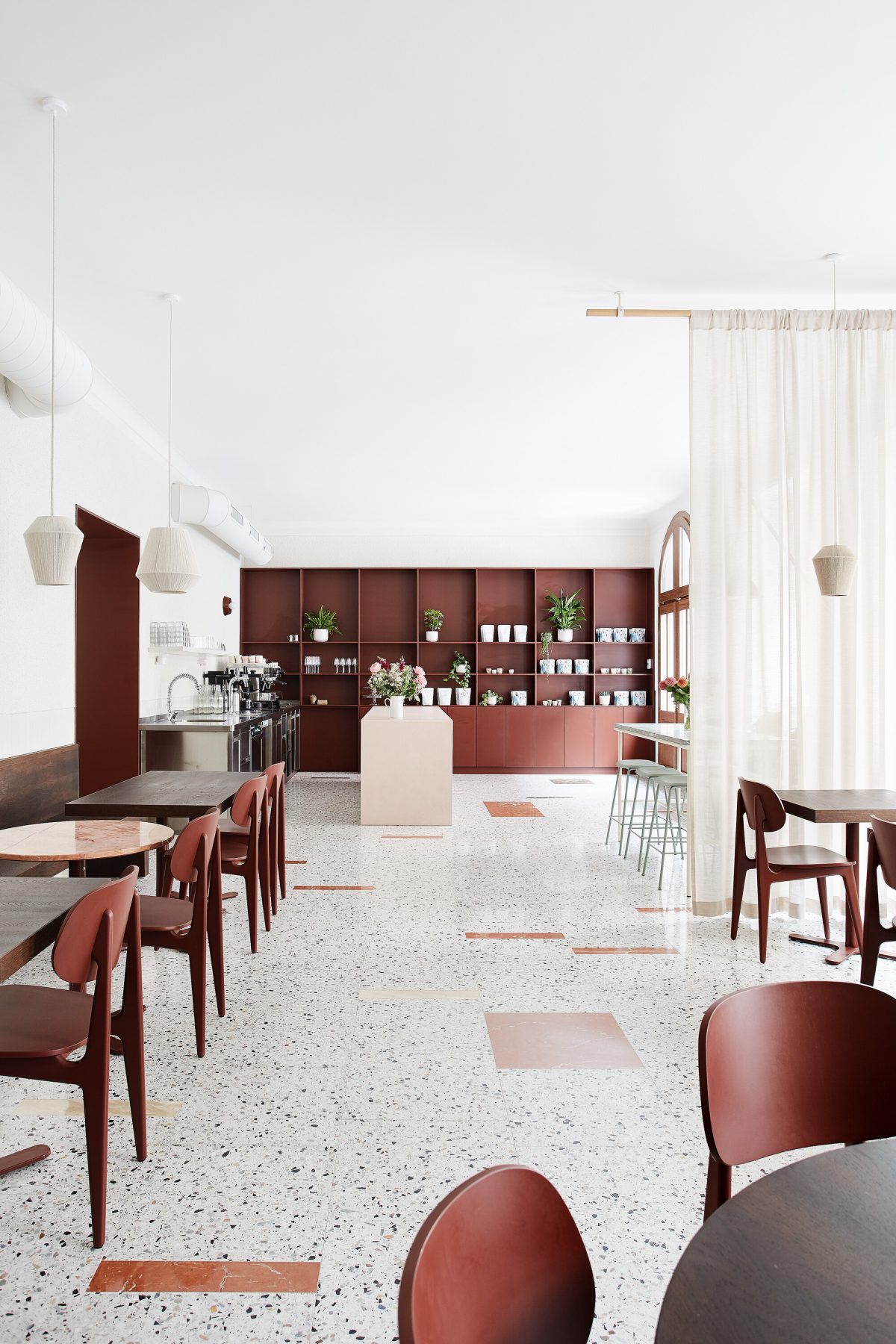
A reddish-brown tone runs consistently throughout the interior, becoming a key chromatic element of the project.
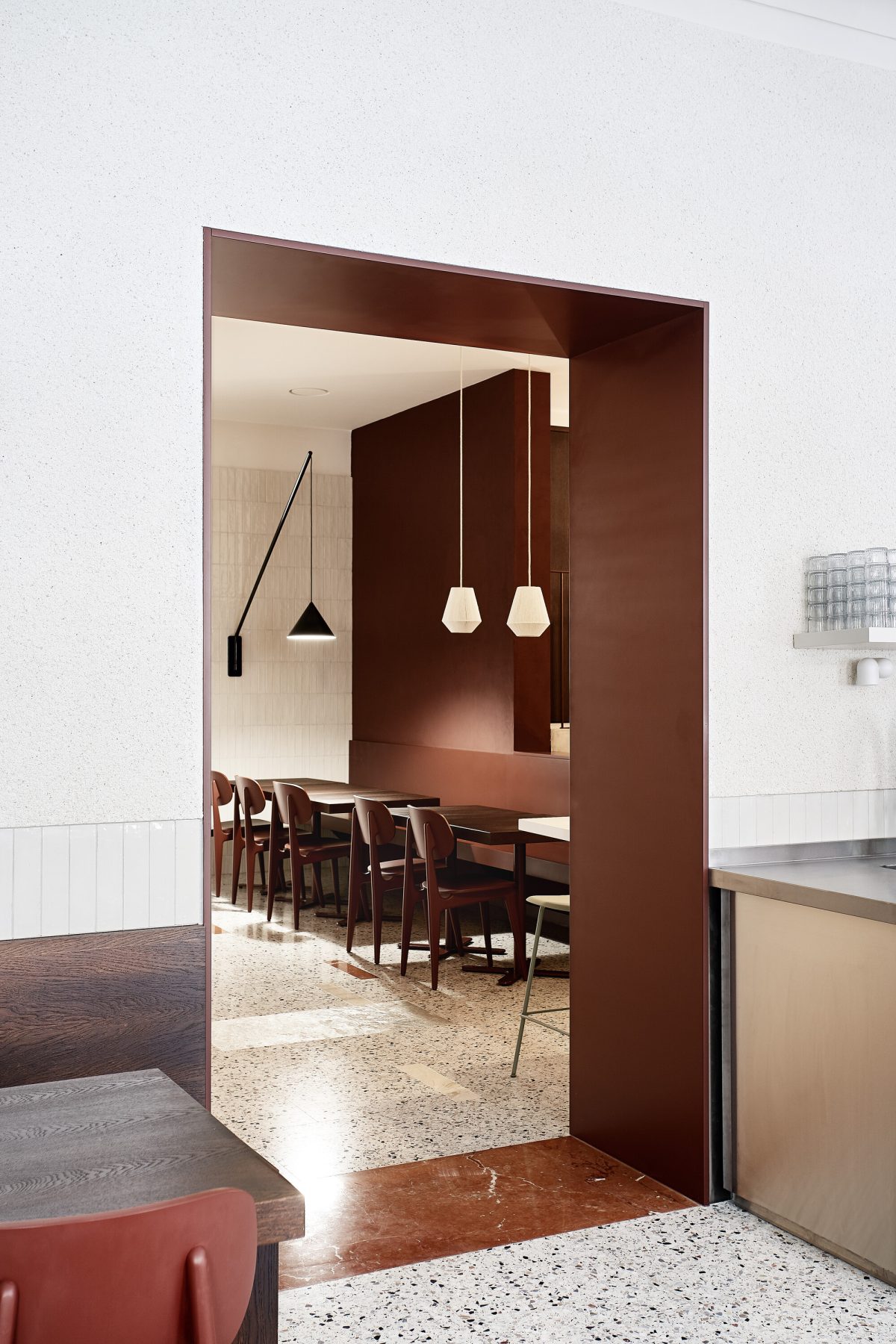
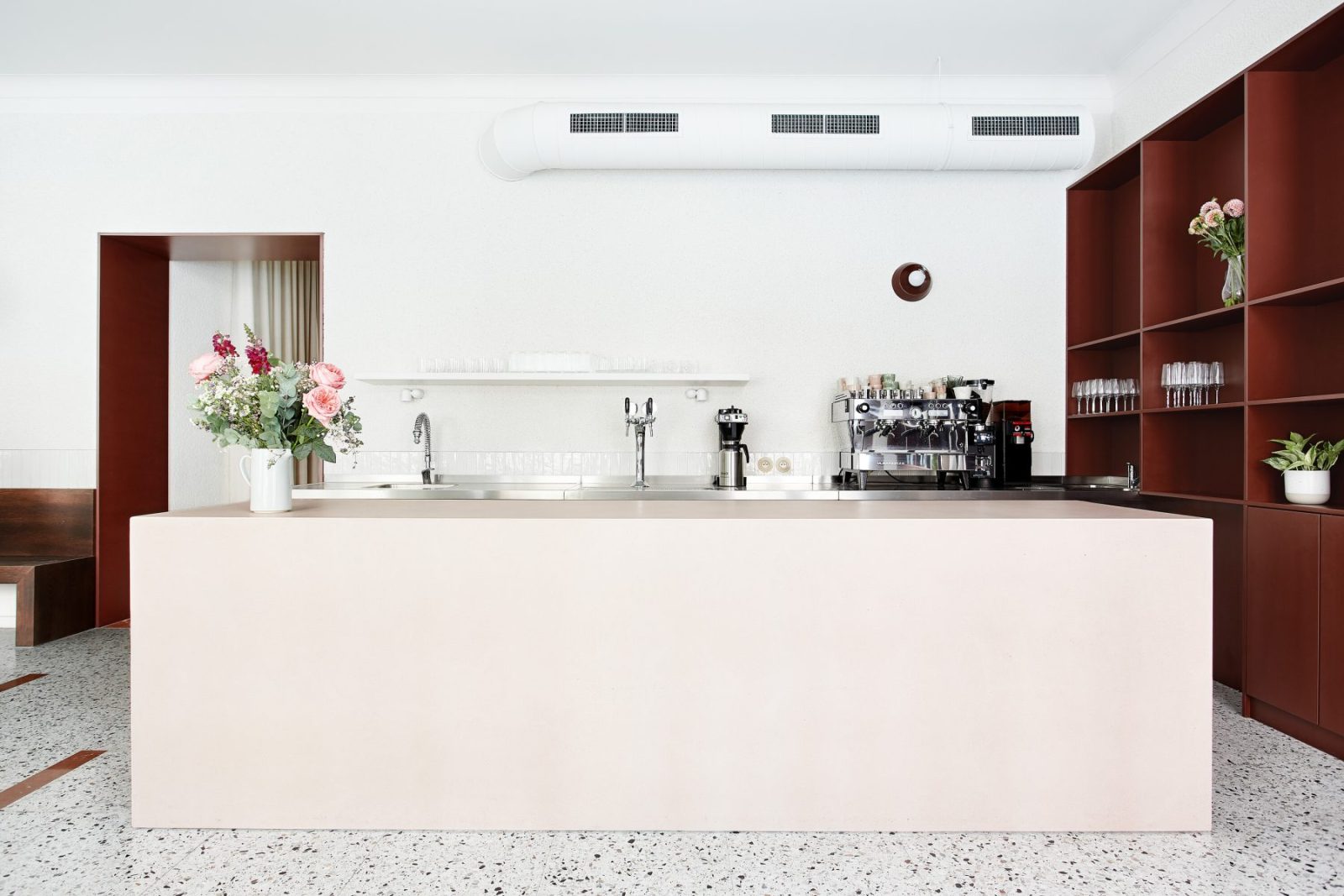
It appears immediately upon entry in a shelving structure displaying mugs, coffee, and plants, and continues through the chairs, marble accents embedded in the terrazzo floor, and the wall of the rear room. The ceilings are finished with rough plaster, lending the space a subtle industrial character, while the material of the staircase floor extends into the restrooms, visually linking these areas.
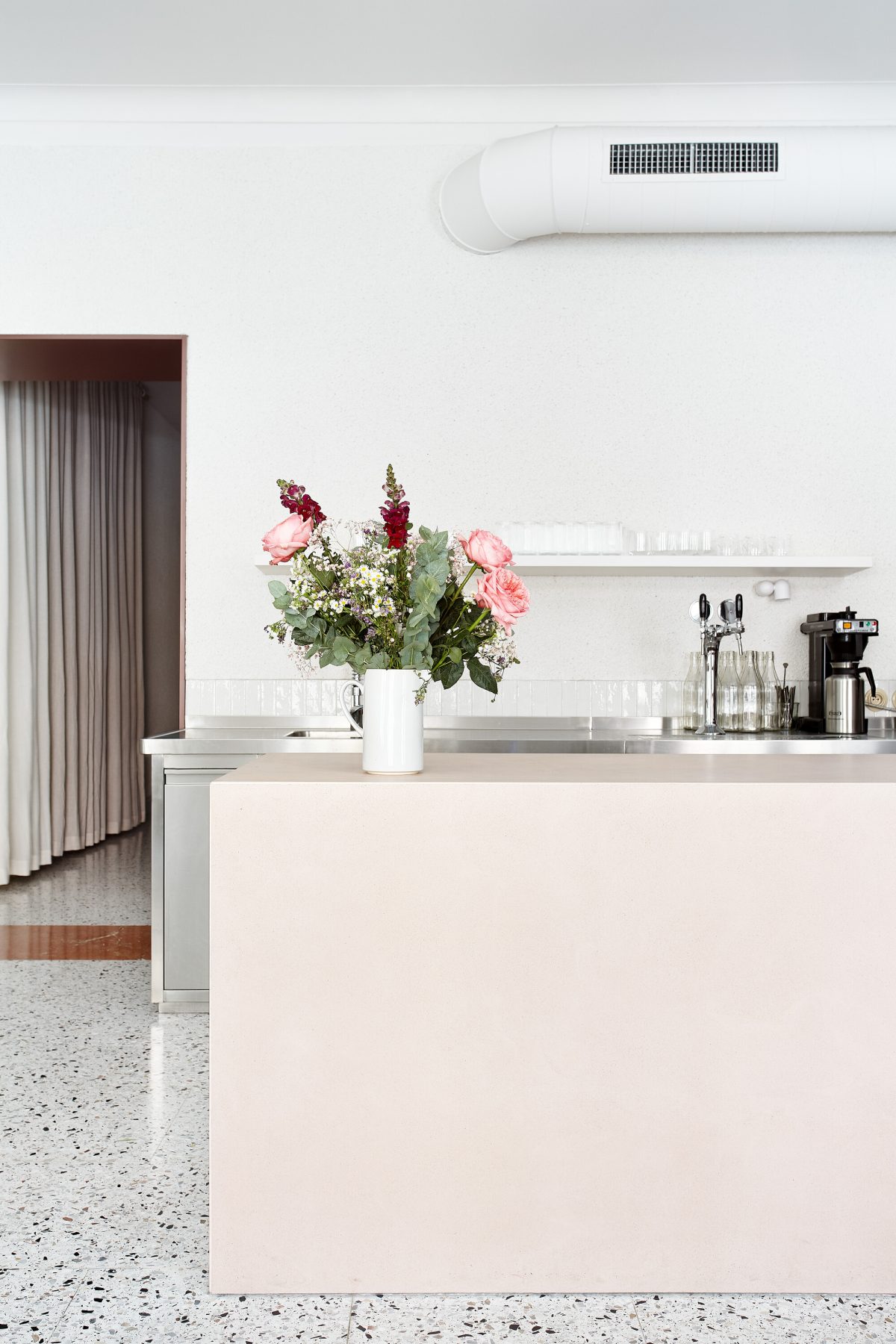
At the centre of the interior stands a pink concrete bar island, conceived as a sculptural focal point.
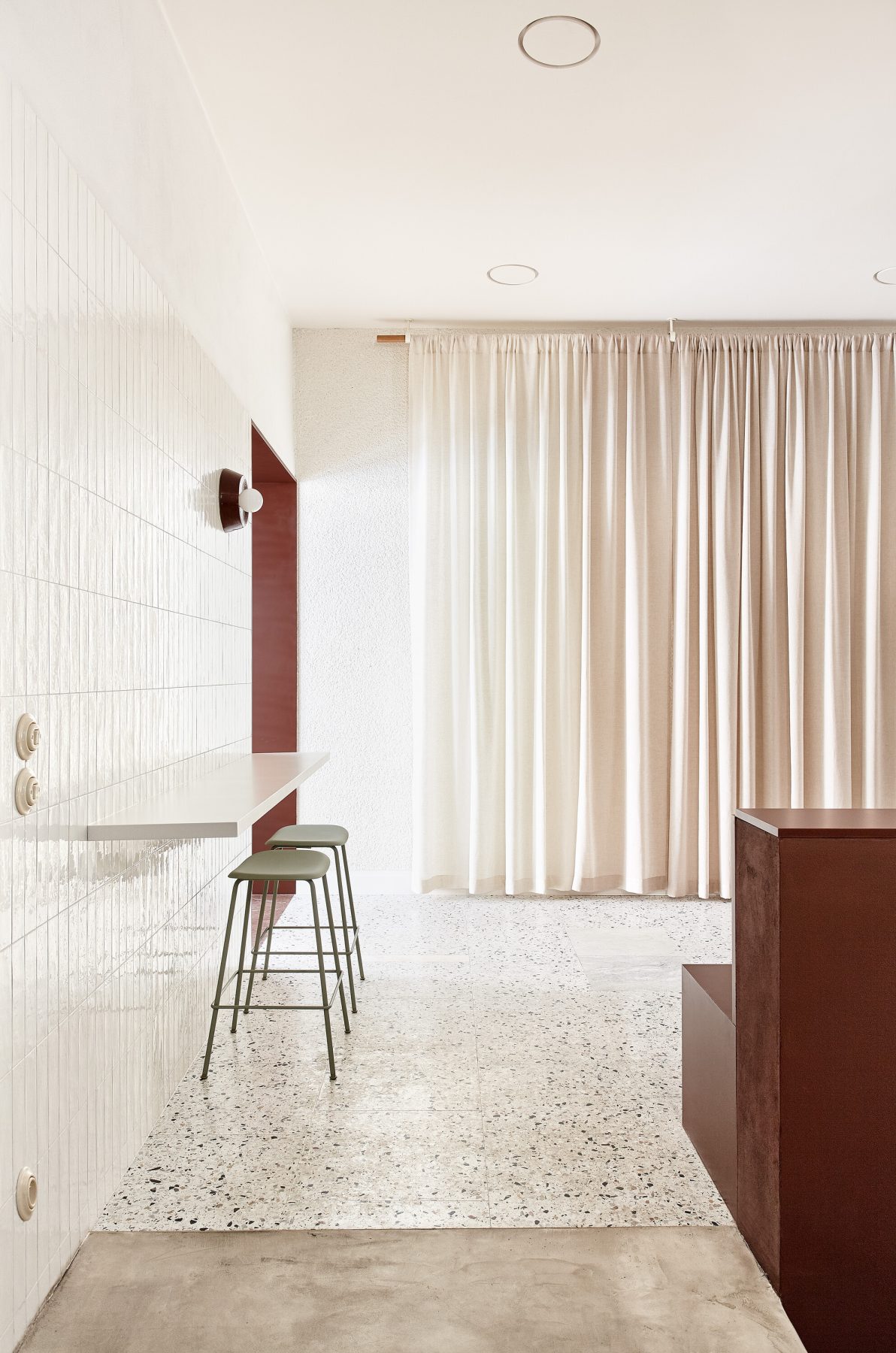
Its soft colour introduces a subtle sense of warmth and femininity, while the sharp geometry provides a strong architectural presence. Materially, the bar operates as a counterpoint to the terrazzo floor, establishing a balanced dialogue between solidity and delicacy within the space.
The interior accommodates a range of visitor preferences through diverse seating typologies.
High tables with bar stools encourage brief stops and social interaction, while a lounge area with wooden armchairs offers a quieter setting for coffee. Traditional table arrangements provide a comfortable environment for dining or working.
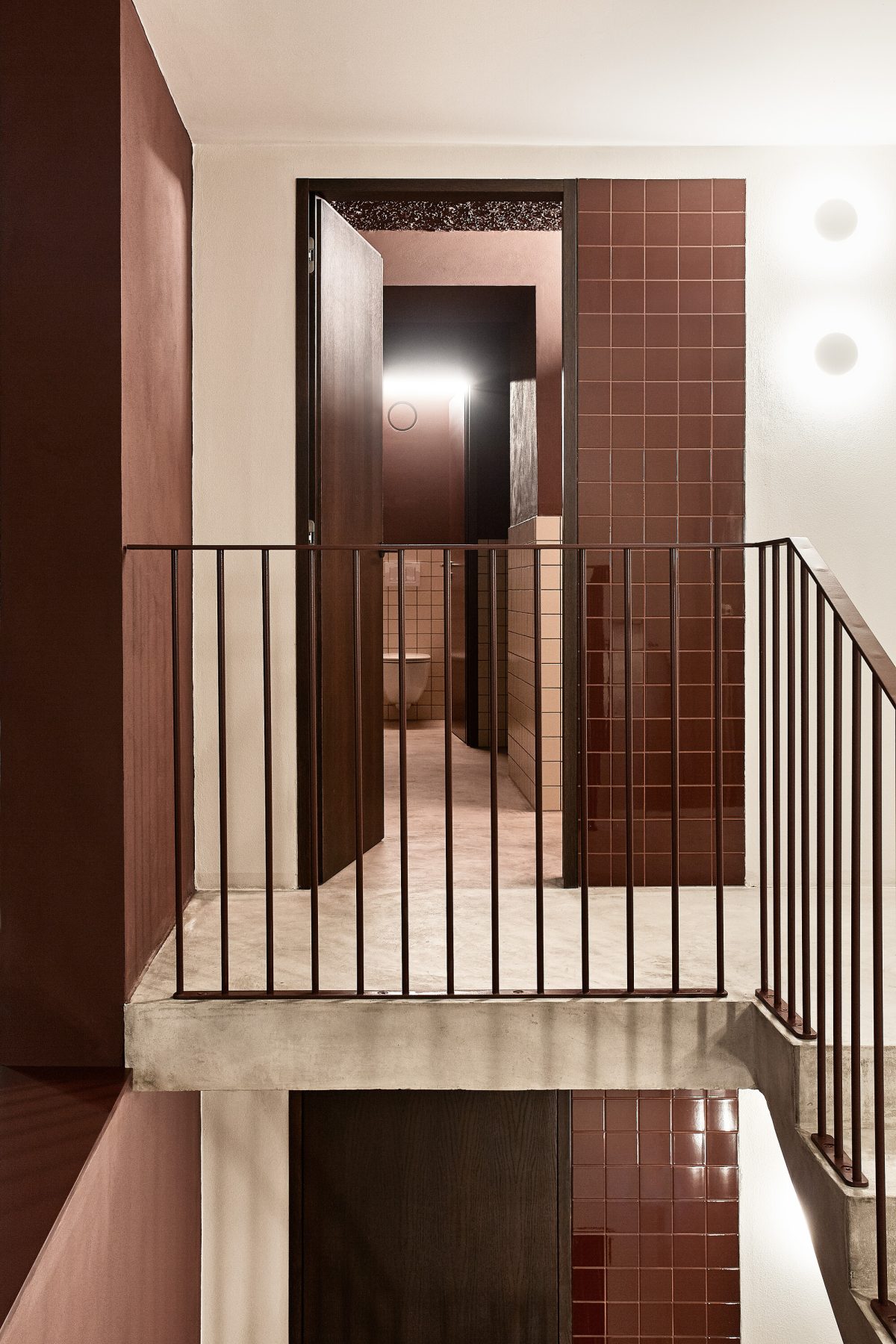
Through the careful orchestration of material durability, spatial contrast, and refined colour accents, the project brings together aesthetics and functionality, shaping a welcoming and balanced atmosphere within the historic urban context of Prague’s Vinohrady district.
Plans
Facts & Credits:
Project title: Mezi Srnky
Project architecture: Markéta Bromová architekti
Design team: Richard Mészáros, Zuzana Sagitariová, Kamila Mrázová, Nikol Janková
Project location: Prague
Area: 120m²
Date of Completion: 2024
Photography: Veronika Raffajová
READ ALSO: The Architect’s Office: Studio nada’s Workspace Is a Self-built, Brutalist Cottage Amid Walnut Trees in Rural Bulgaria