Pensi Pascual architecture studio design a small dining room in Barcelona with a sequence of geometric forms and clean lines.
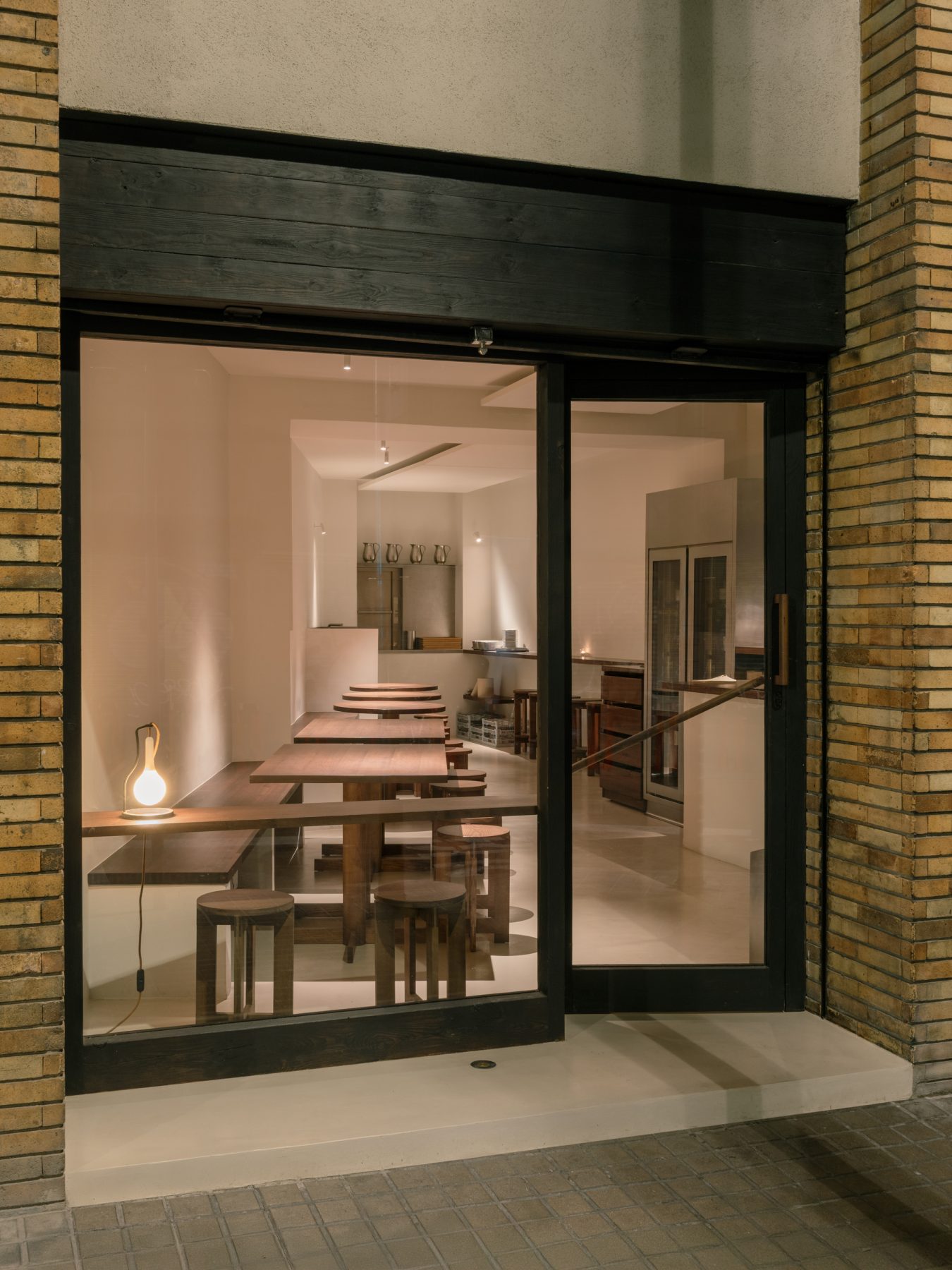
Designing a restaurant is more about the invisible than the visible.
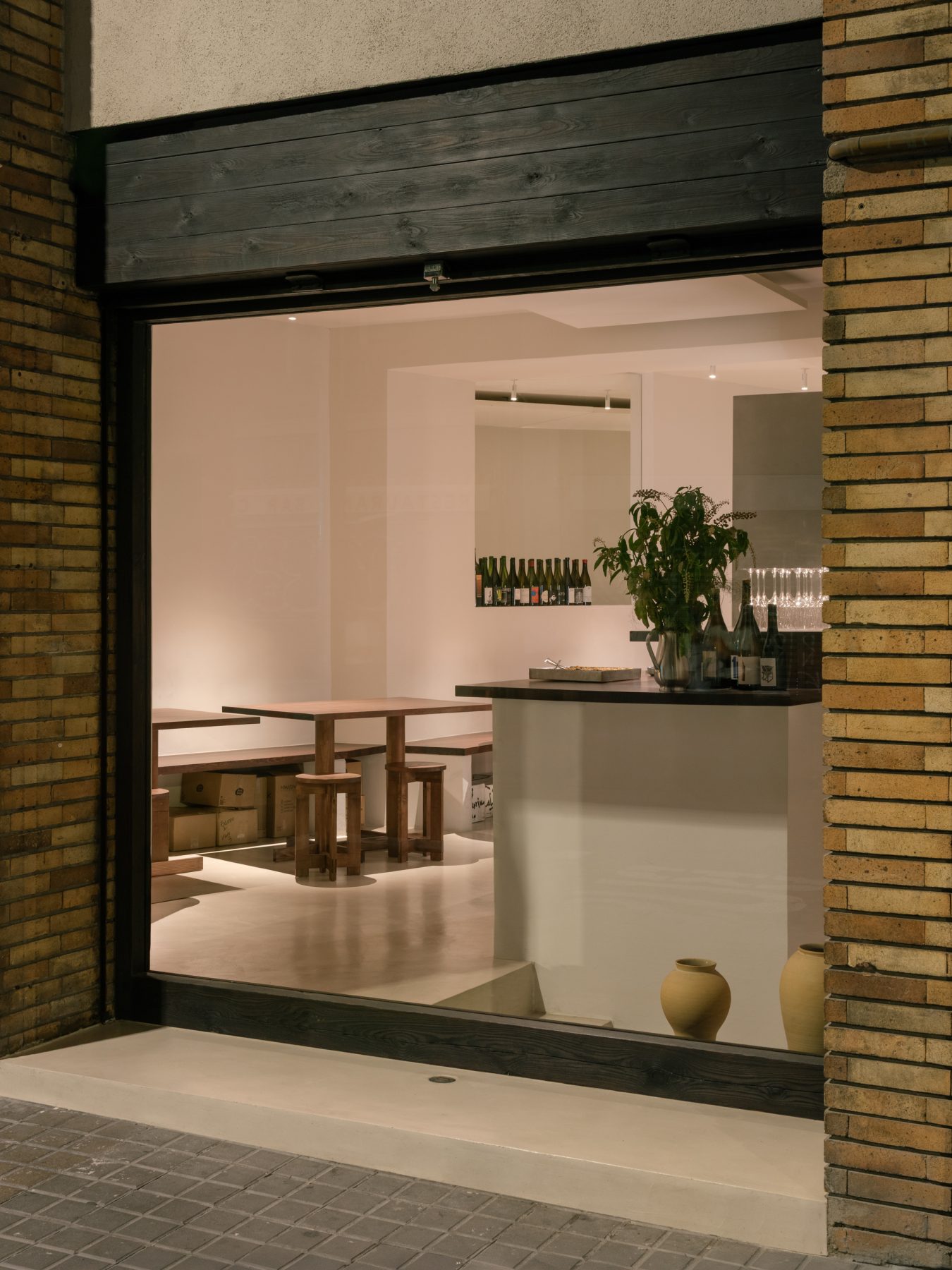
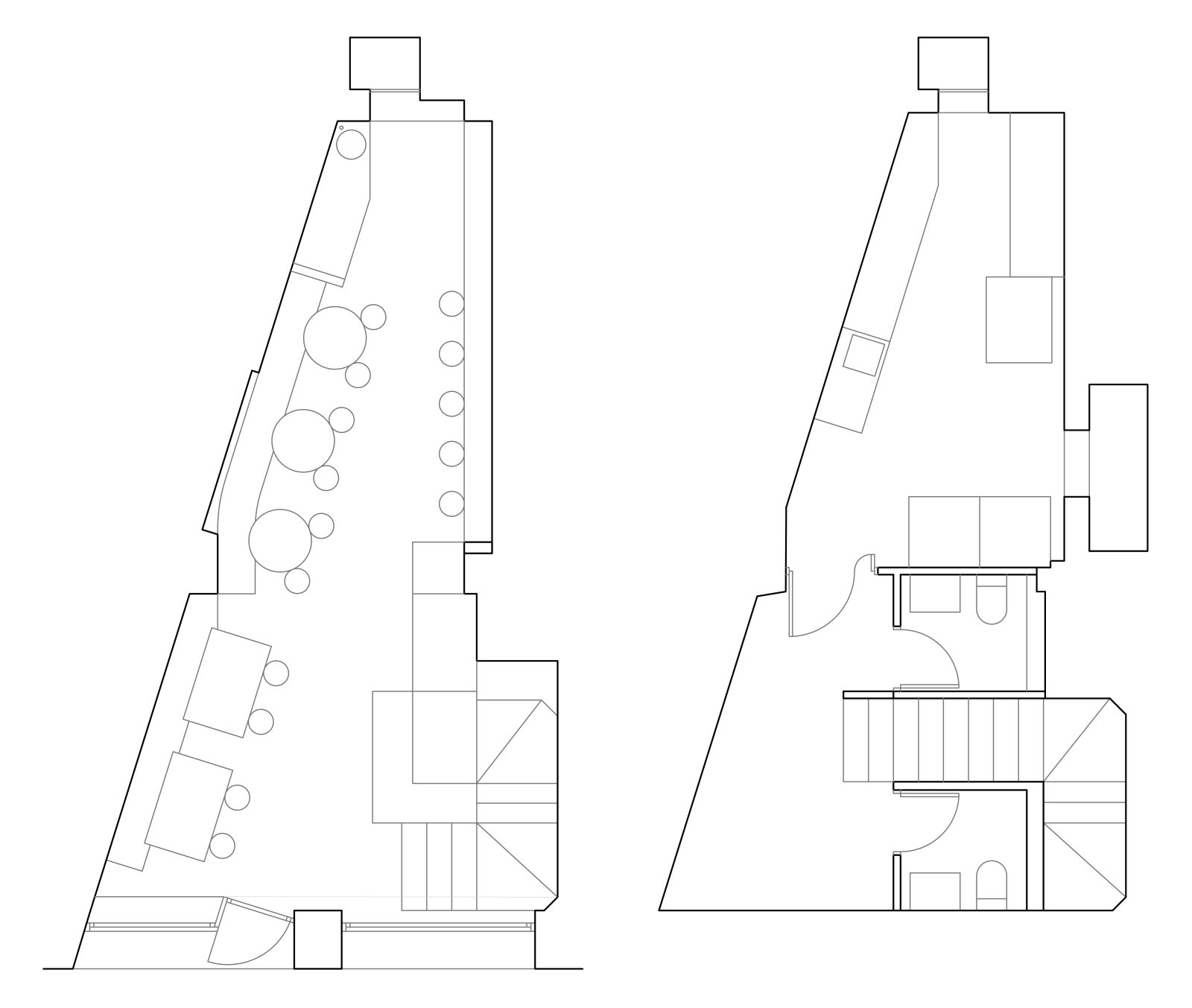
Historically, most restaurants concealed the kitchen, and this was also the case here. The kitchen, located in the basement, disappeared from the ground floor space: the area for the diners.
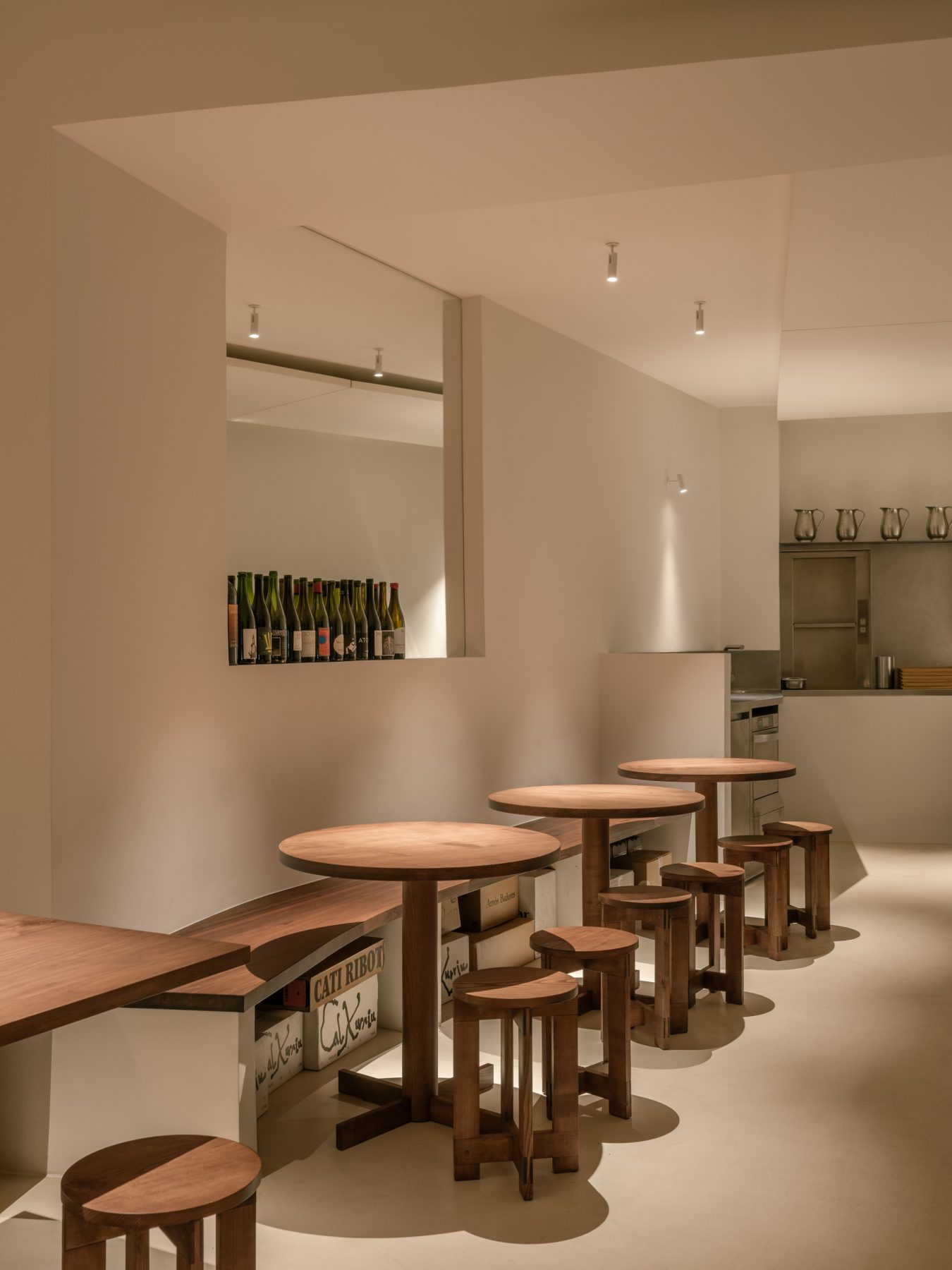
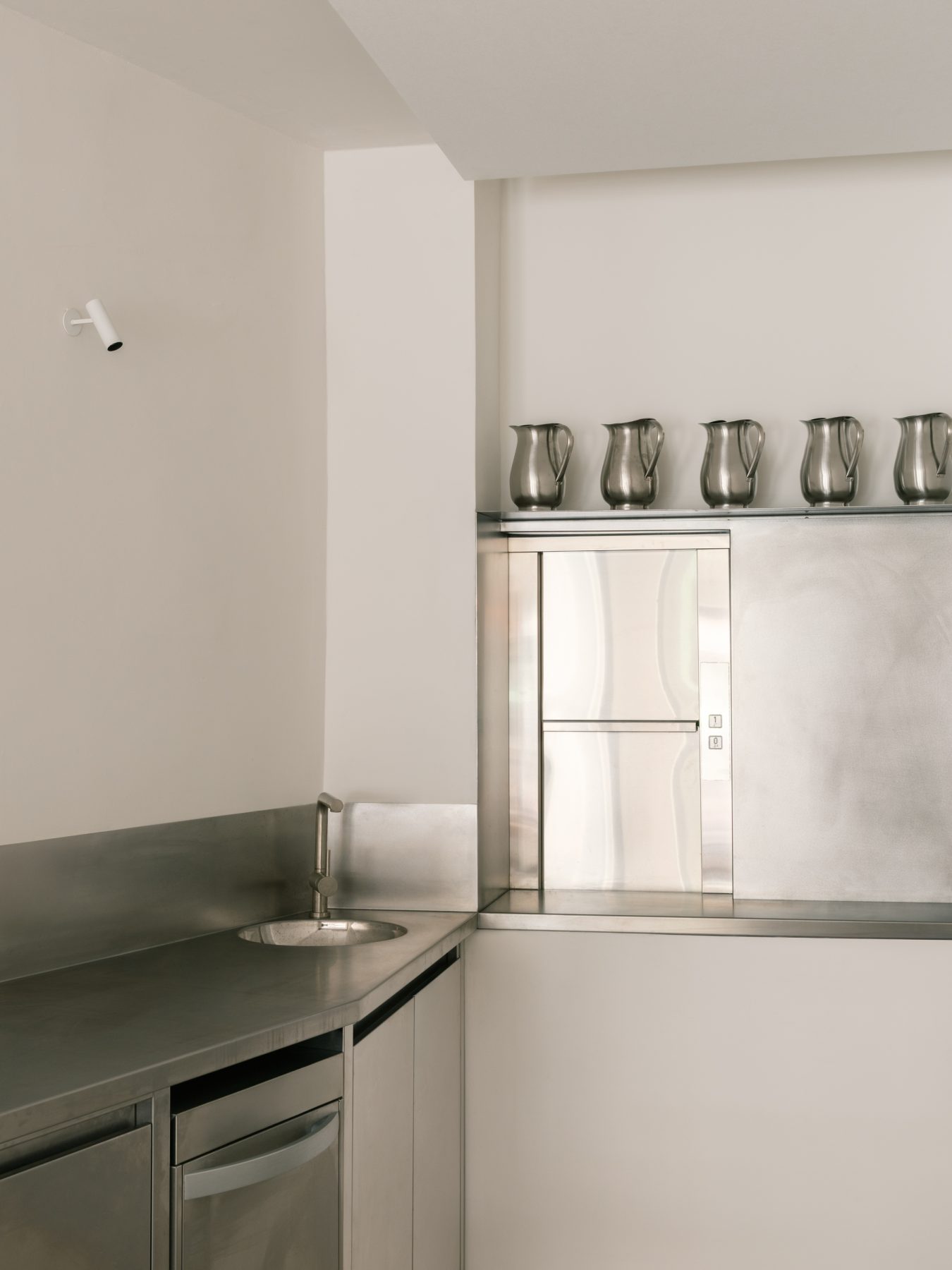
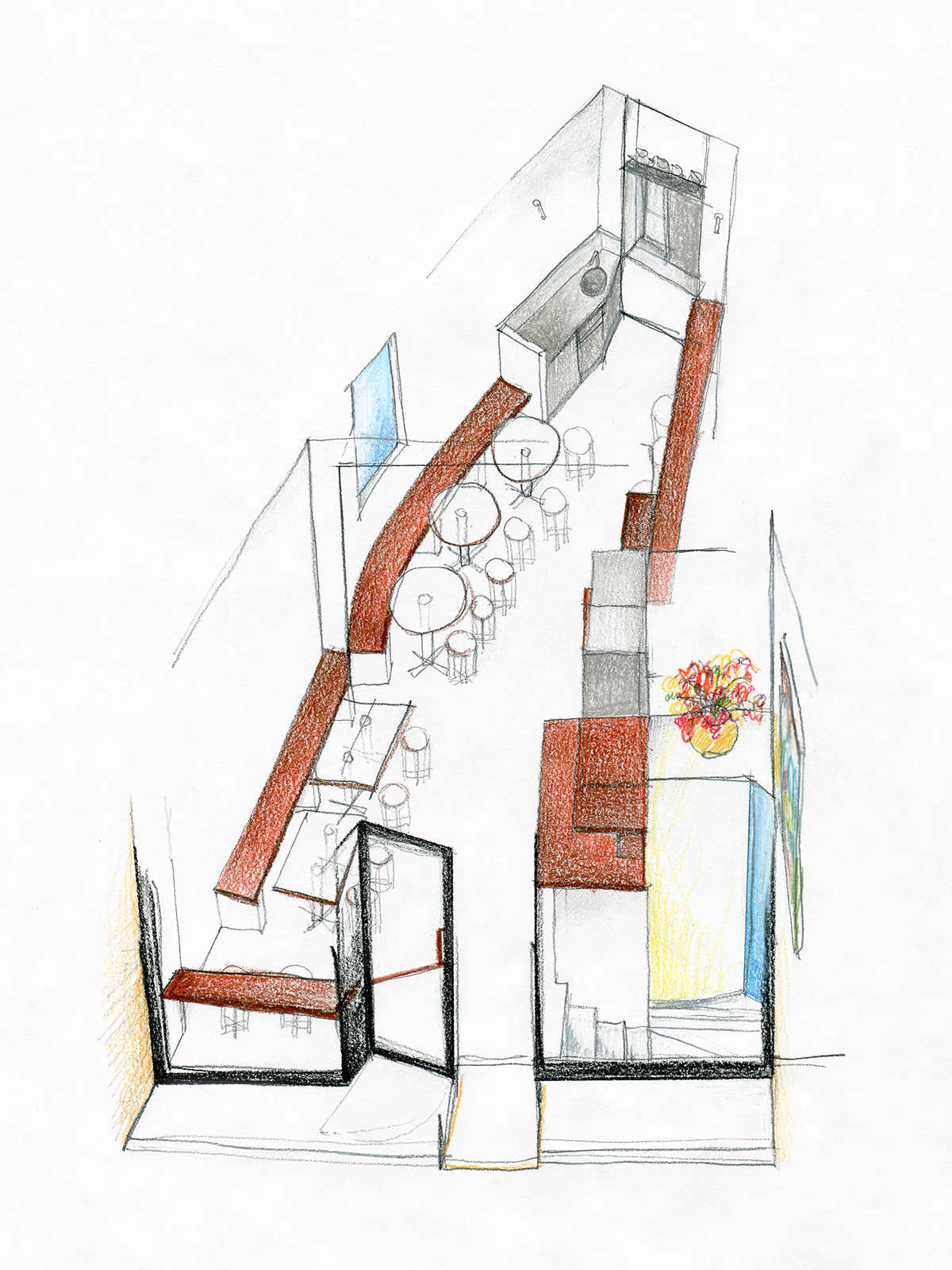
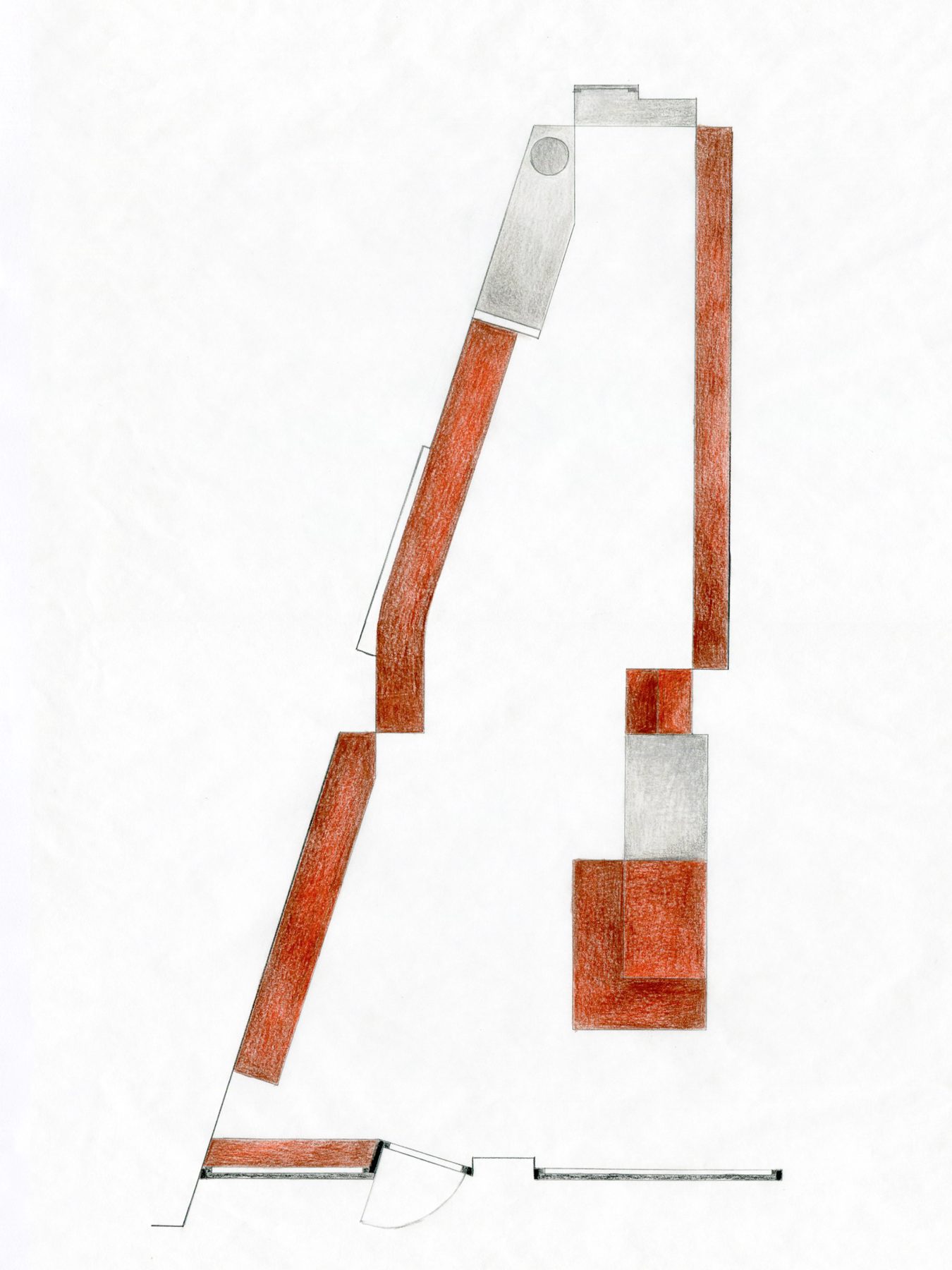
This separation allowed the restaurant to be understood as a single space dedicated to eating, drinking, and sharing. Based on this premise, the design addressed the need by de-hierarchizing the space: removing any kind of frontality or central bar, and instead creating a perimeter occupied by a display, benches, a support kitchen, a dumbwaiter, a bar, a fridge, and an auxiliary table. All these pieces, connected in sequence, served one main purpose: to free the central space and make the tables and dinners the protagonists. The very meaning of a restaurant.
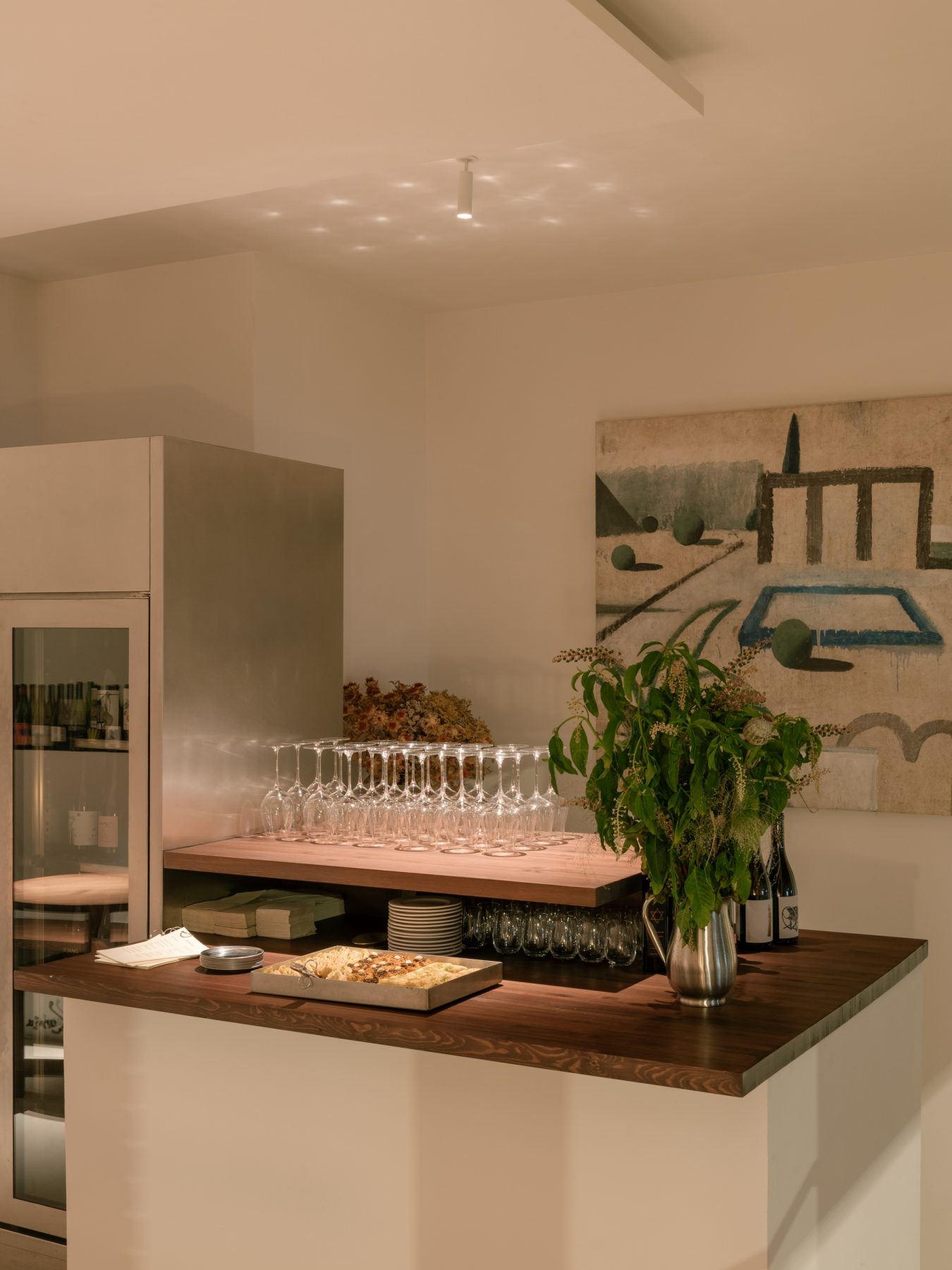
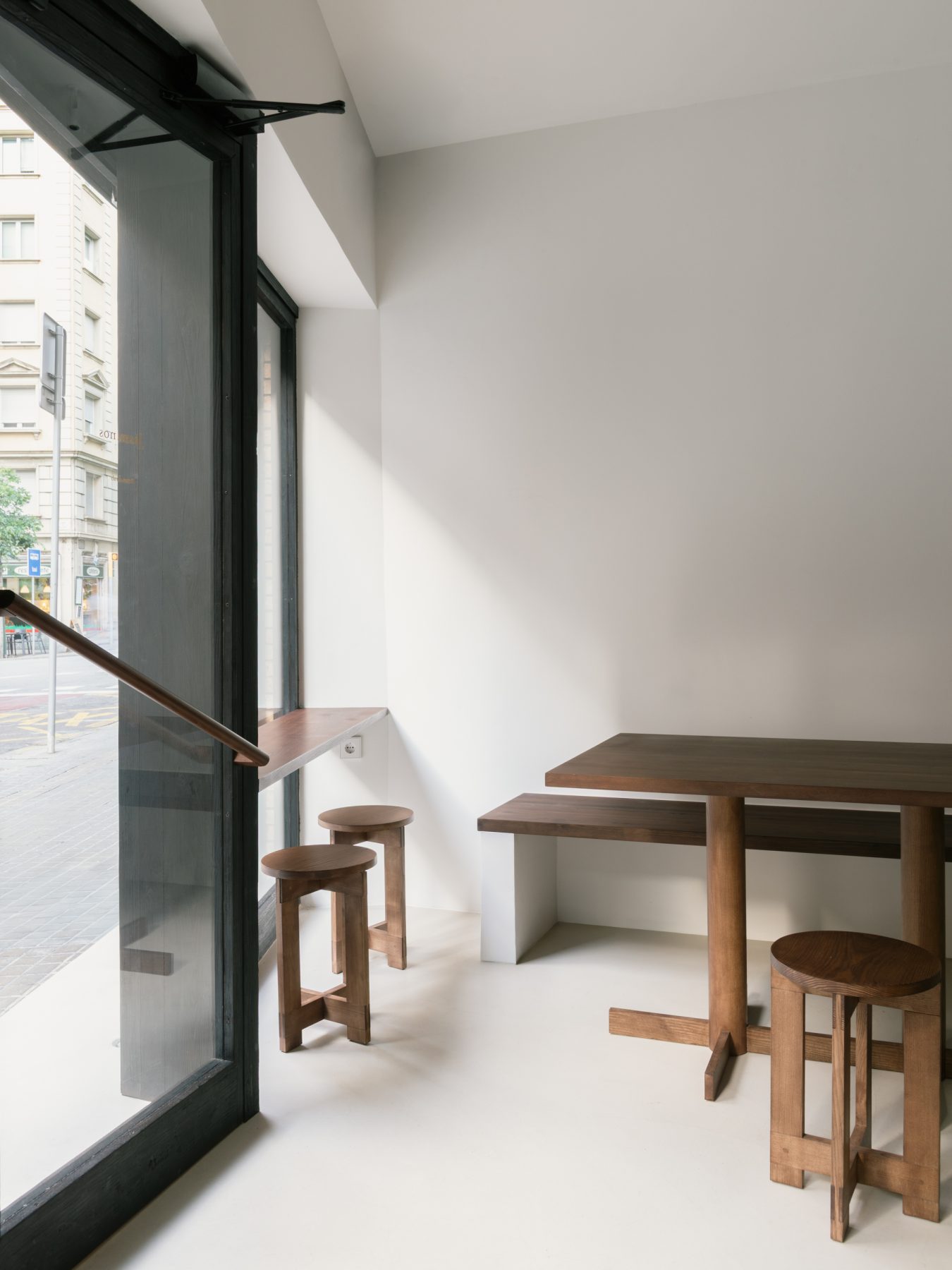
The trapezoidal shape of the space invited playful engagement with angles: from the two large façade windows, with the door disrupting their formal harmony, to every concave and convex turn.
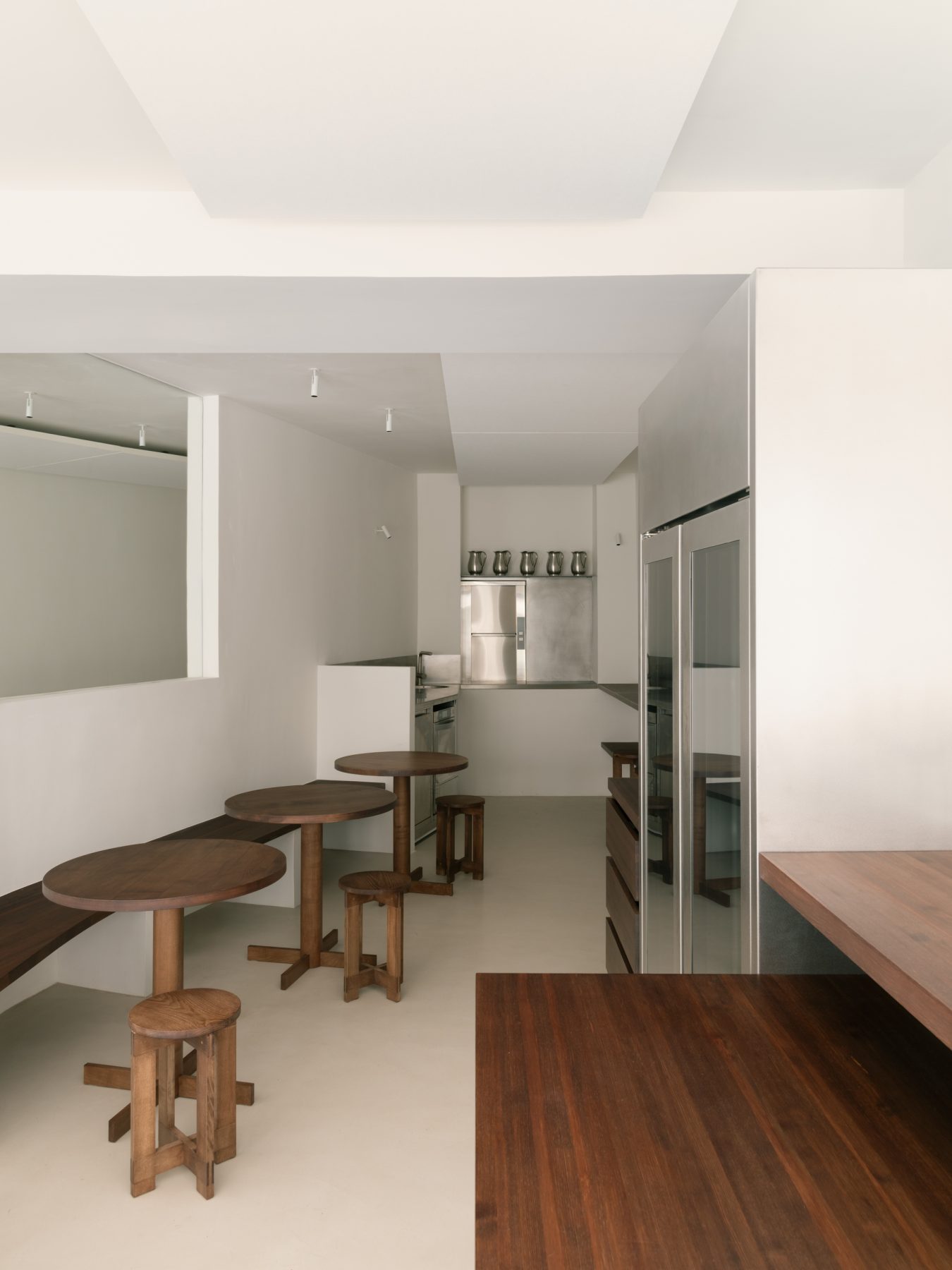
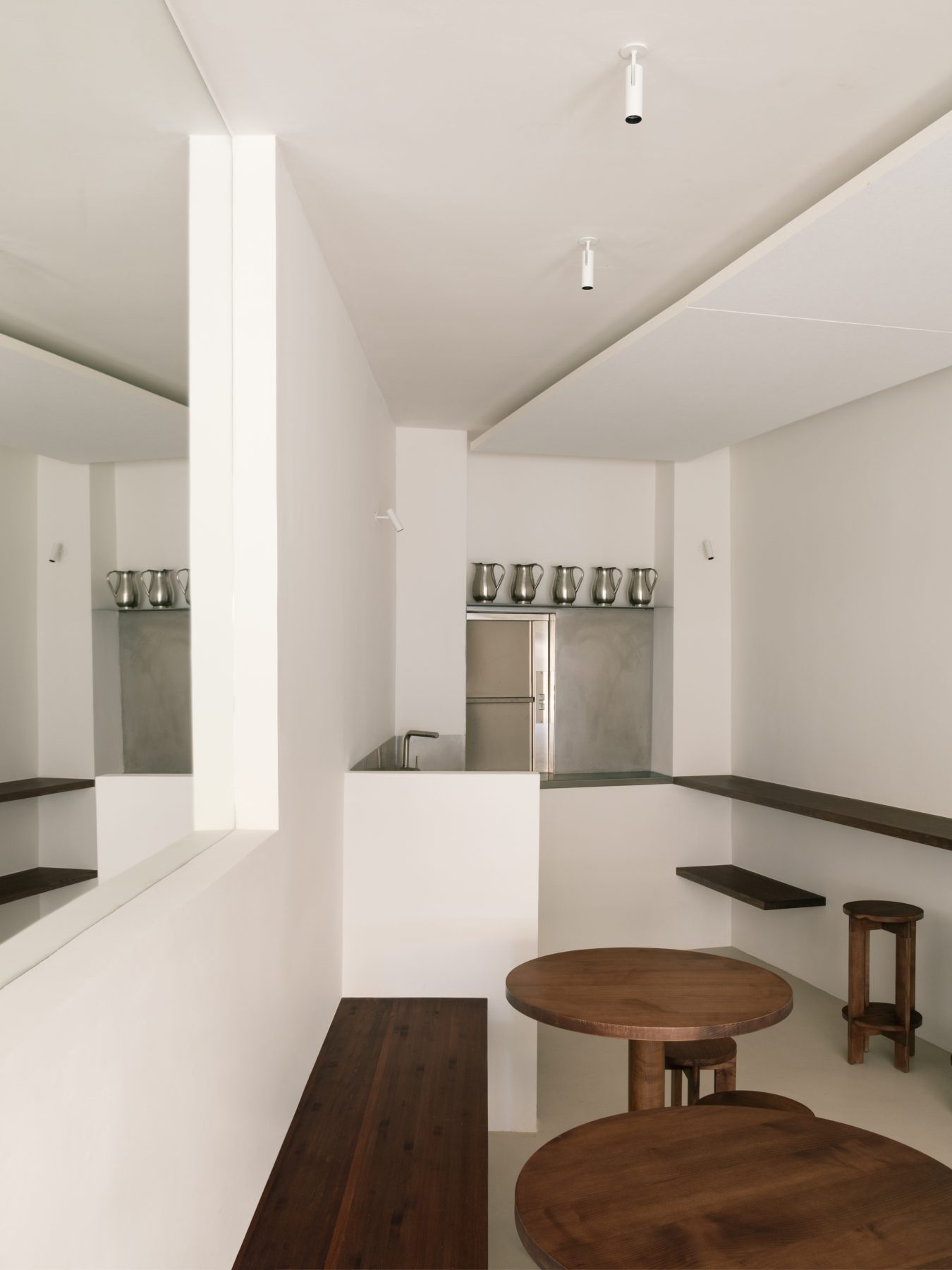
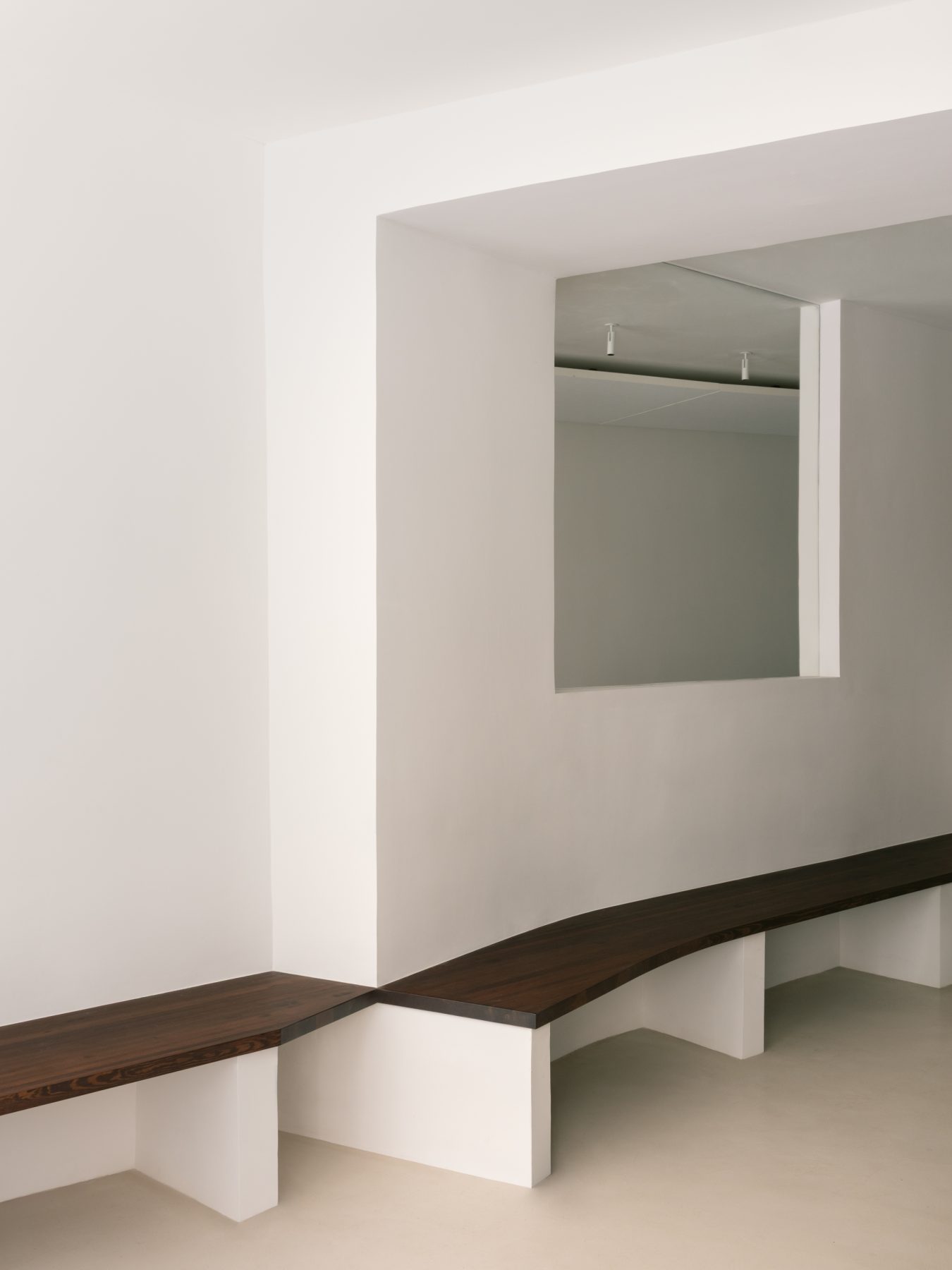
A bench running along the diagonal wall is gently broken at the corners with a soft, curved turn. Supports and dividers maintain a perpetual rhythm, as do all the heights: 45, 72, 94, and 120 cm. Lines of stability define a dimensional intent, so the entire space can always be transformed into a surface for eating or sitting.
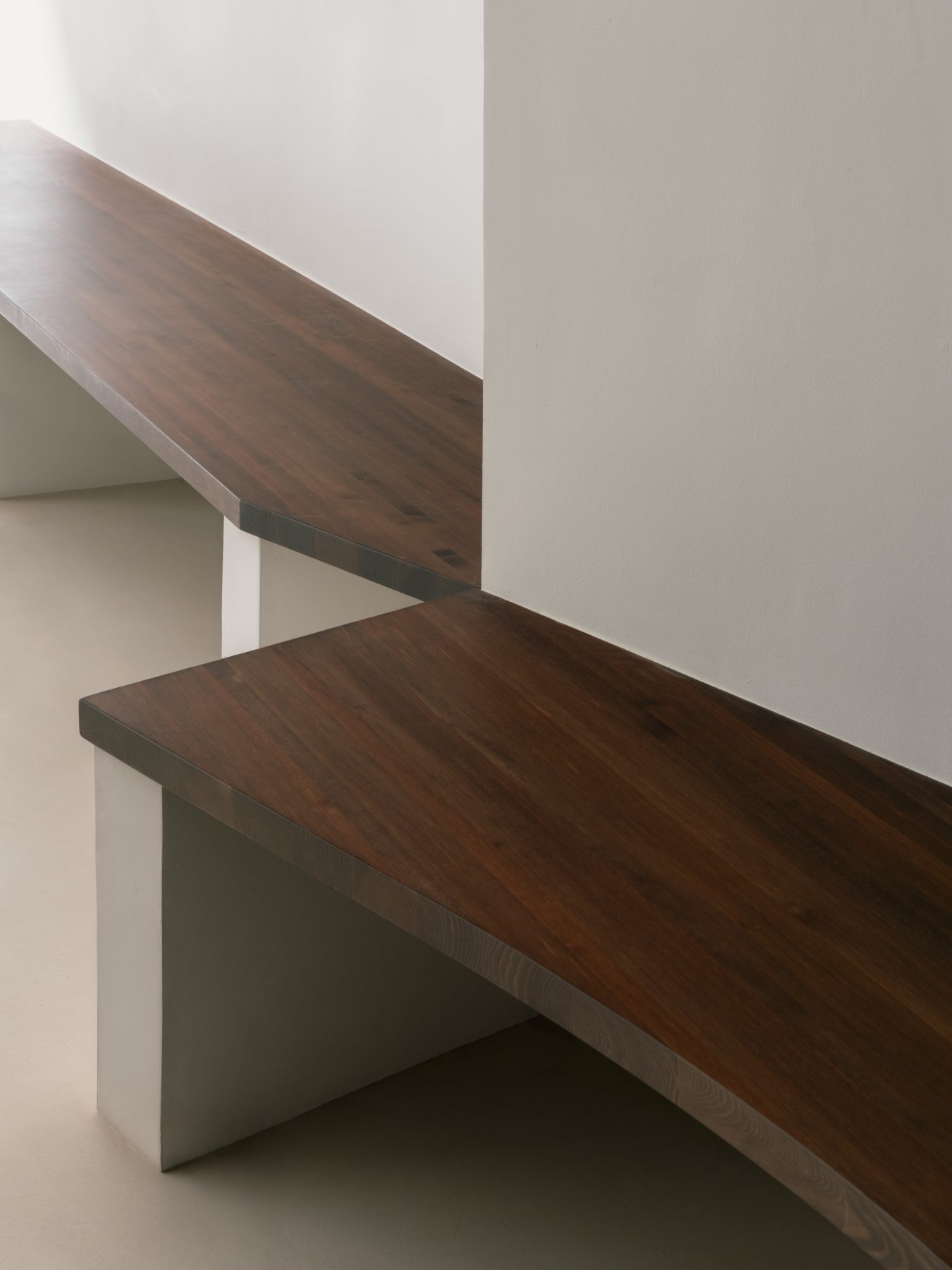
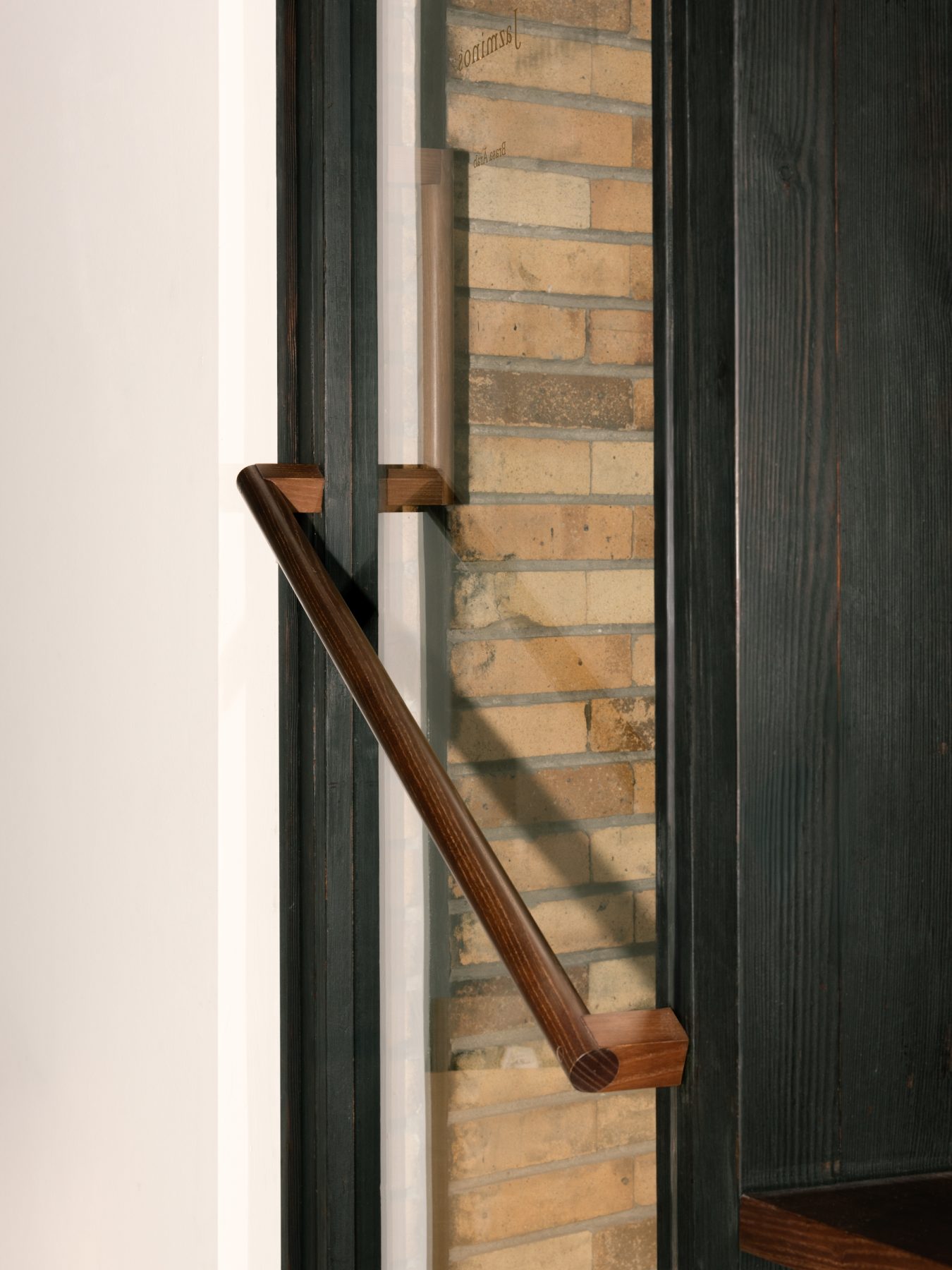
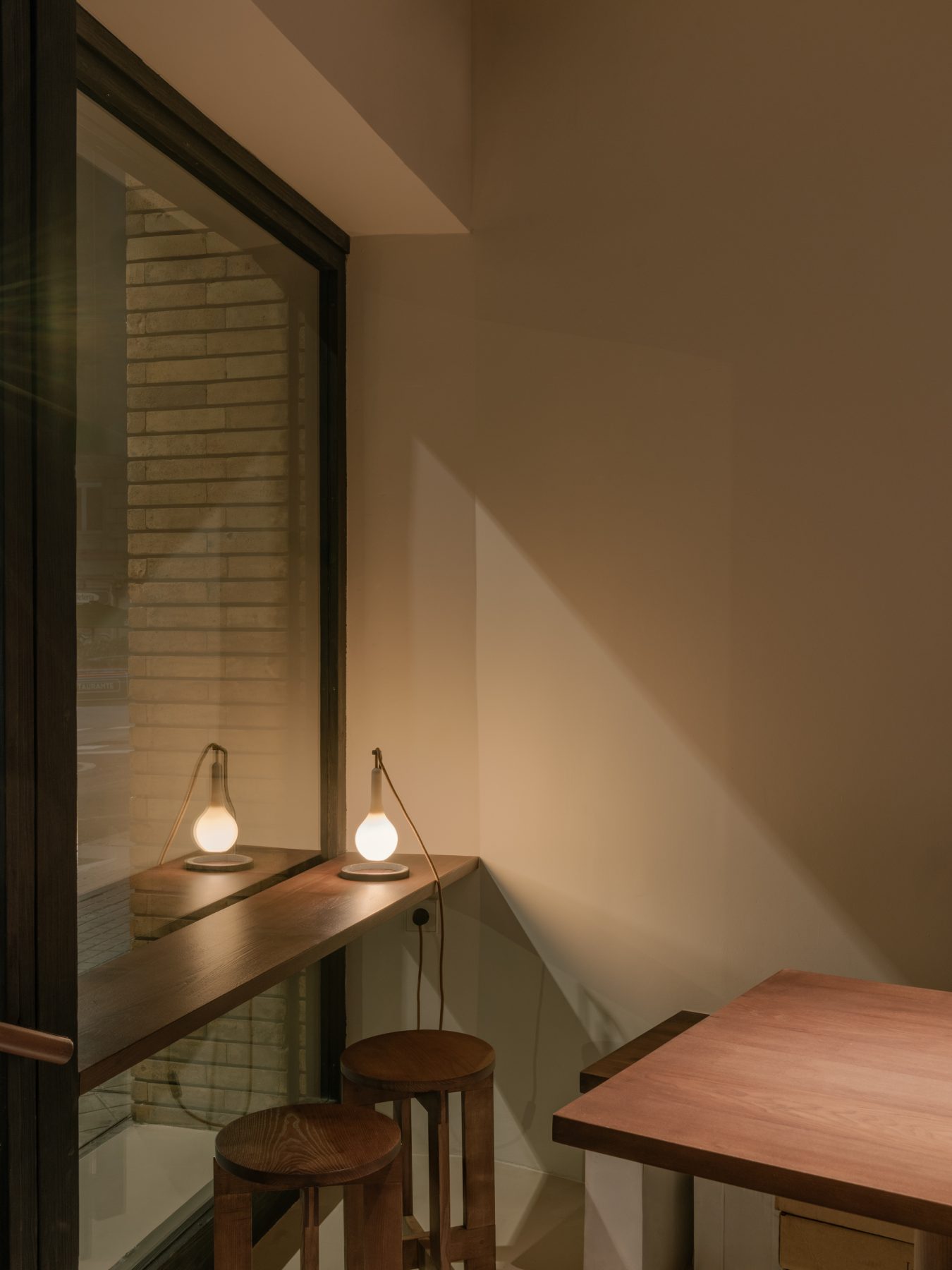
From charred wood to stained Scots pine, and including stainless steel kitchen fittings, the materiality also reflects the sobriety of the design.
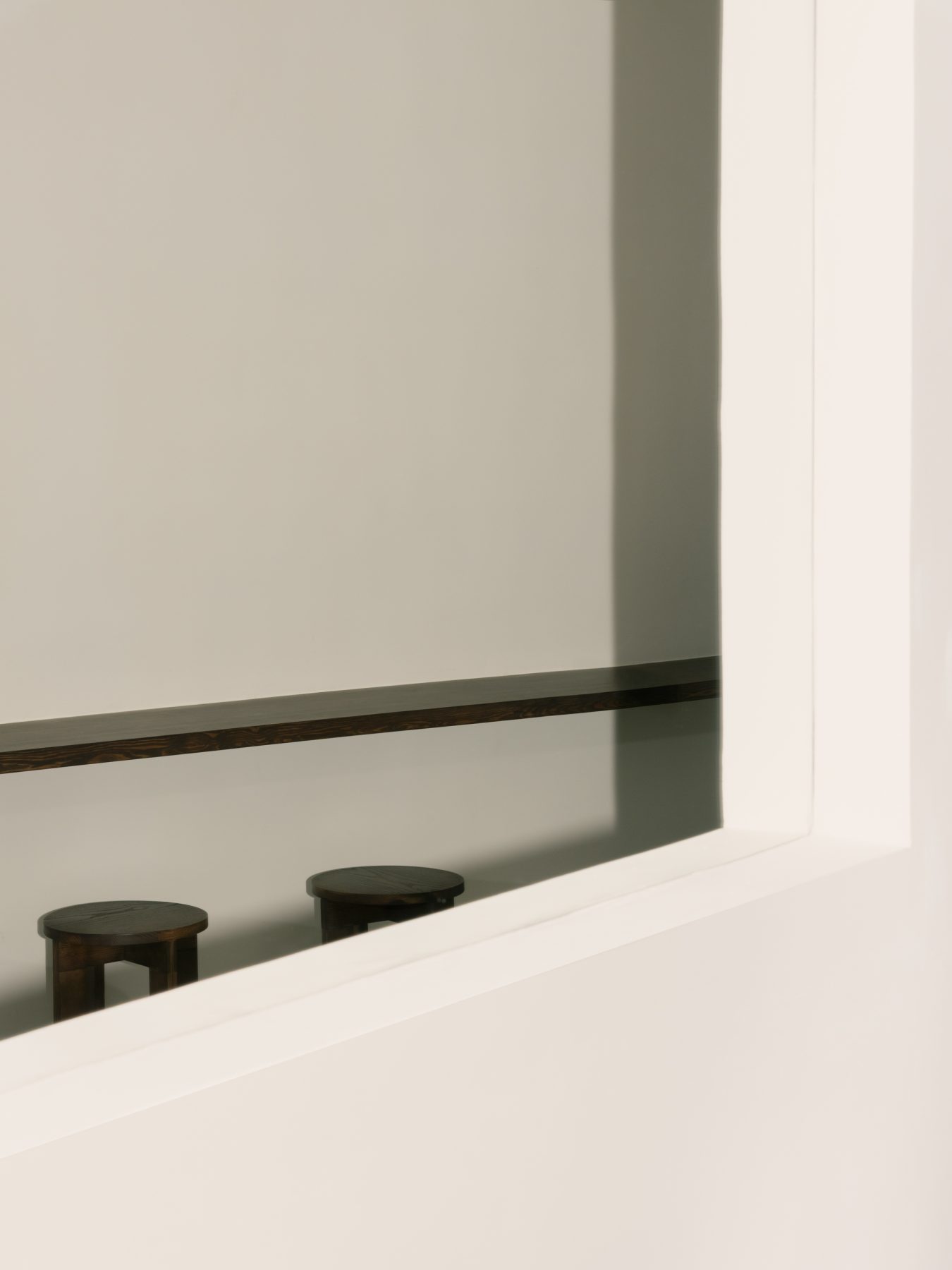
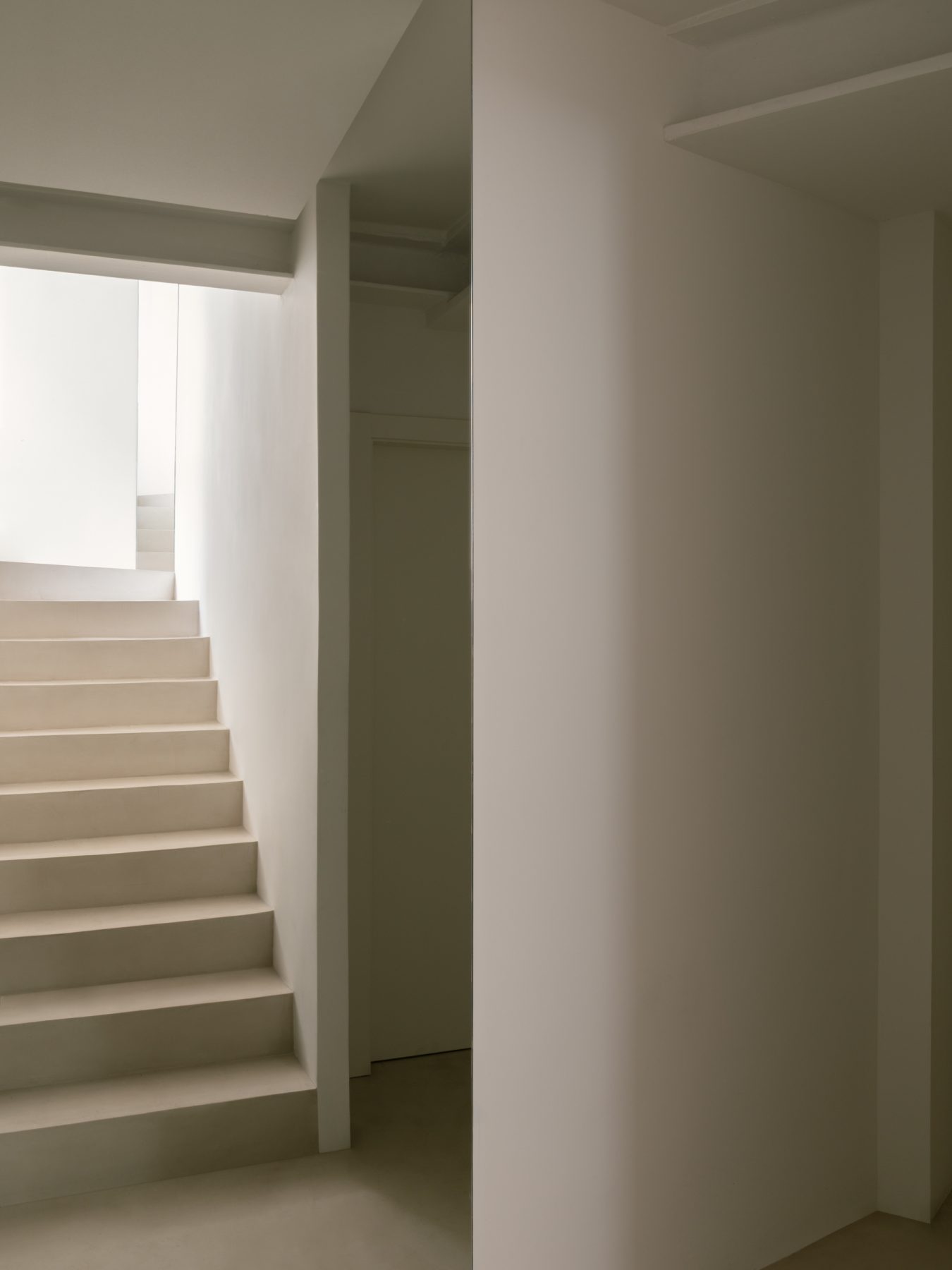
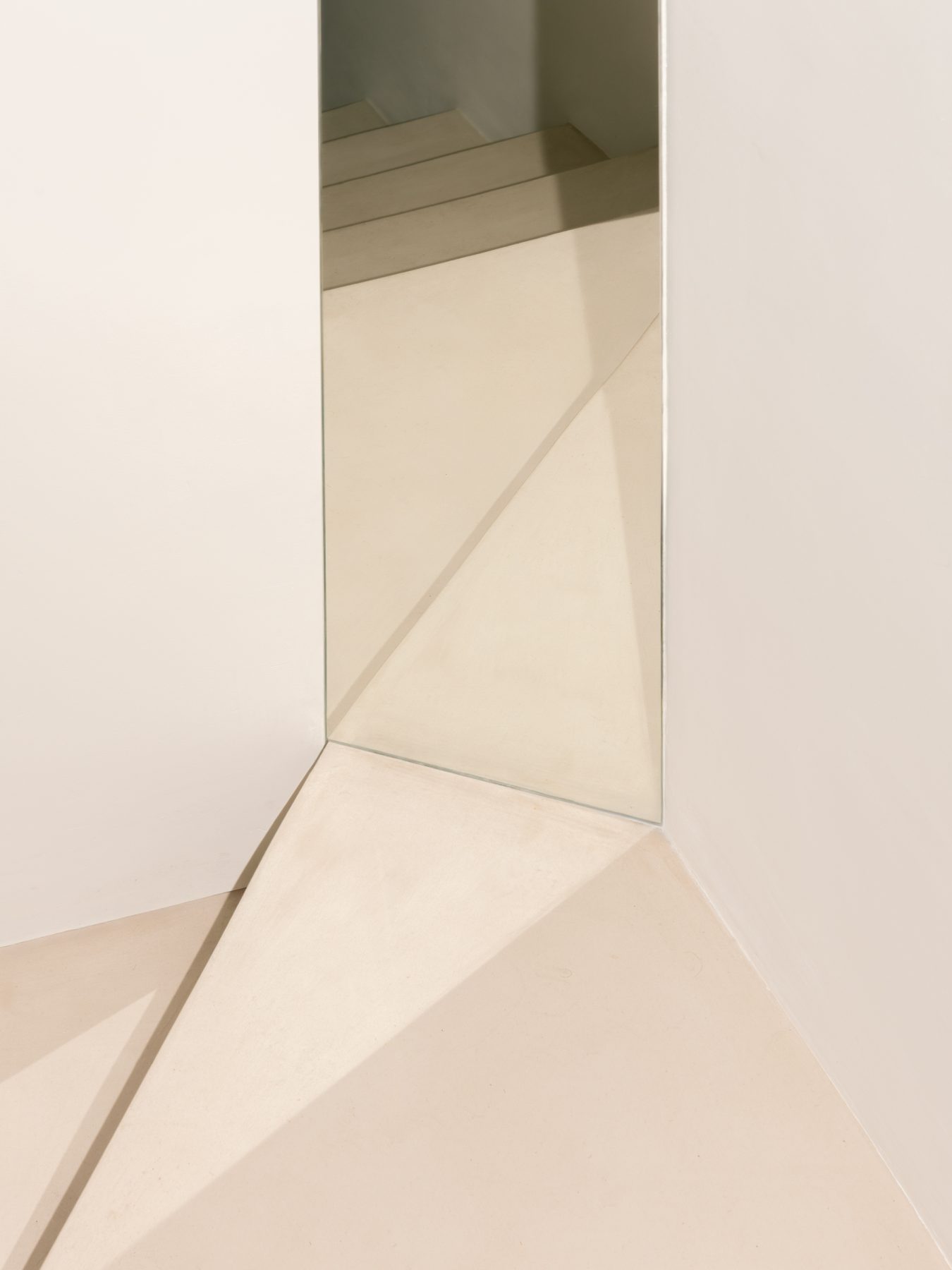
Nothing is gratuitous or unnecessary: the placement of the mirrors responds to visual continuity and reveals ascending and descending paths.
The furniture, composed of interlocking pieces, reacts to the solidity of bars and benches; the design of the tables and stools enters dialogue with the rest and creates a sequence of geometric forms visible from the shop window, inviting passersby in.
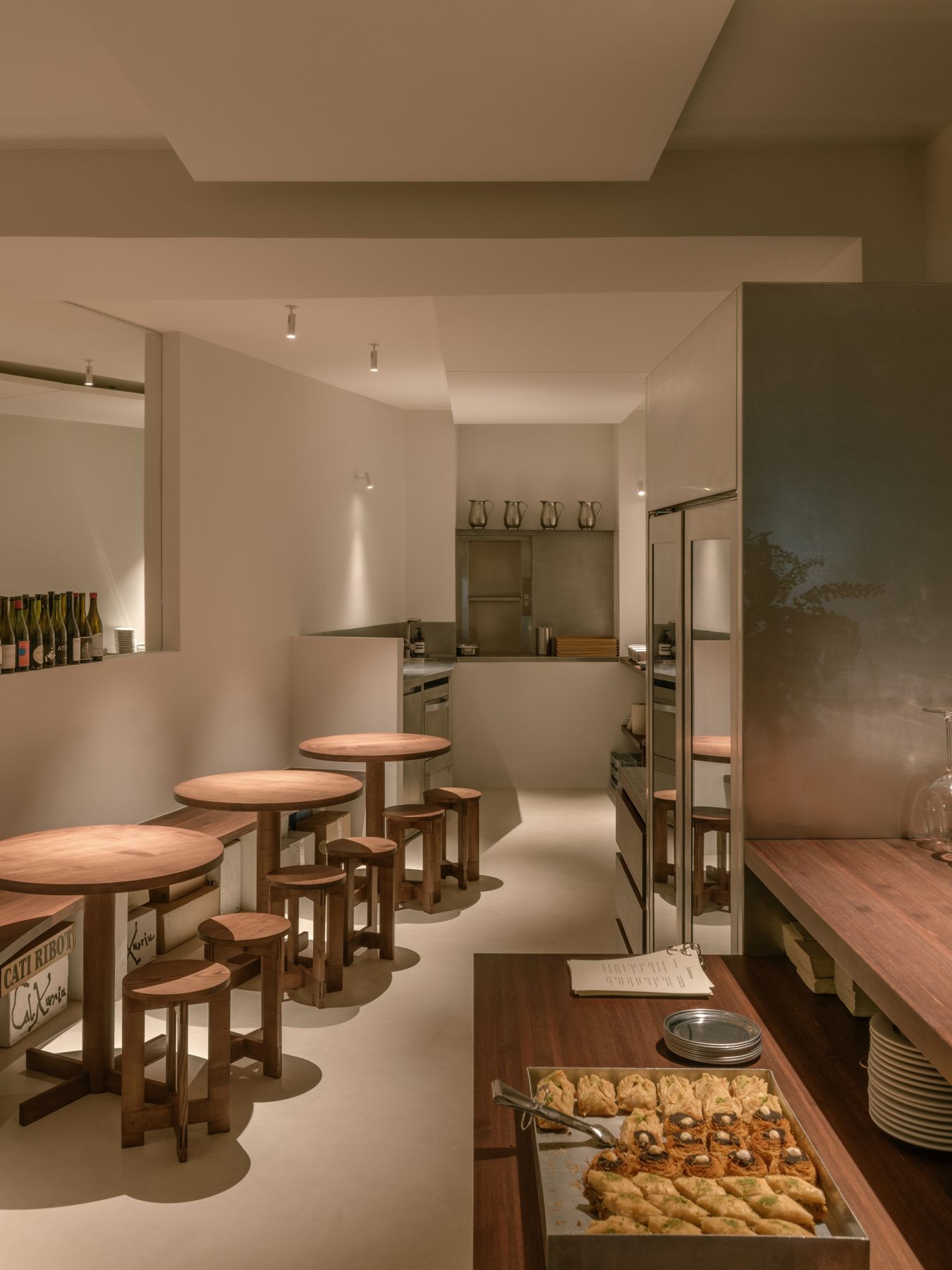
Finally, when people enter through the door, they breathe in the characteristic scent of Arab grilling without seeing the kitchen; it’s hidden, but its presence is suggested by the plated dishes on the tables. The diner sits down, receives the menu and a drink, and glances at what has been served next door. There’s no indiscretion: everything is visible at that moment. The wines are presented on a backlit menu, and glasses, cups, plates, and cutlery are arranged before the only pictorial perspective in space: a painting about family memory in l’Ametlla de Segarra.
Now, all that’s missing is the food. Suddenly, it appears from the left-hand side, at the back of the space. There’s hardly any staff: it’s enough for people to sit and order. The dishes begin to spread across the tables, bottles are opened, and everything seems to follow an invisible order. Everything is ready for the meal to begin. From that point on, it’s no longer part of the commission.
Facts & Credits
Project title Jazminos
Typology Restaurant (Natural Wine and Arabic Grill)
Location Barcelona
Architecture Pensi Pascual architecture studio
Date June 2025
Client Jazminos
Furniture David Sandoval
Photography Simonee Marcolin
Text provided by the architects
READ ALSO: JAO Arquitectura reimagines a Granada apartment as a domestic fable of threshold, chamber, and garden