Hospitality Atmospheres explores the spatial, material, and sensory qualities that shape experiences of welcome. Through carefully selected projects, the series examines how architecture frames comfort, encounter, and ritual thus revealing hospitality not as a program, but as an atmosphere shaped by light, texture, proportion, and use.
Located in Casas de Pradas, Valencia, this renovation by Crux Arquitectura reinterprets a narrow rural dwelling as a contemporary guesthouse while preserving its stone shell and vernacular memory. The project introduces new structural walls, a light-drawing timber roof, and a topographic interior landscape. Through local materials, custom furniture, and spatial continuity, Felipa House draws inspiration from a rural woman to reconnect architecture, landscape, and contemporary rural living
Two parallel territories shape contemporary life: the urban and the rural. Just an hour from Valencia, the hamlet of Casas de Pradas unfolds according to rhythms and conditions markedly different from those of the city.
Within this landscape, Felipa’s life embodied the archetype of a rural woman, shaped by labour, care, and a deep connection to the land.
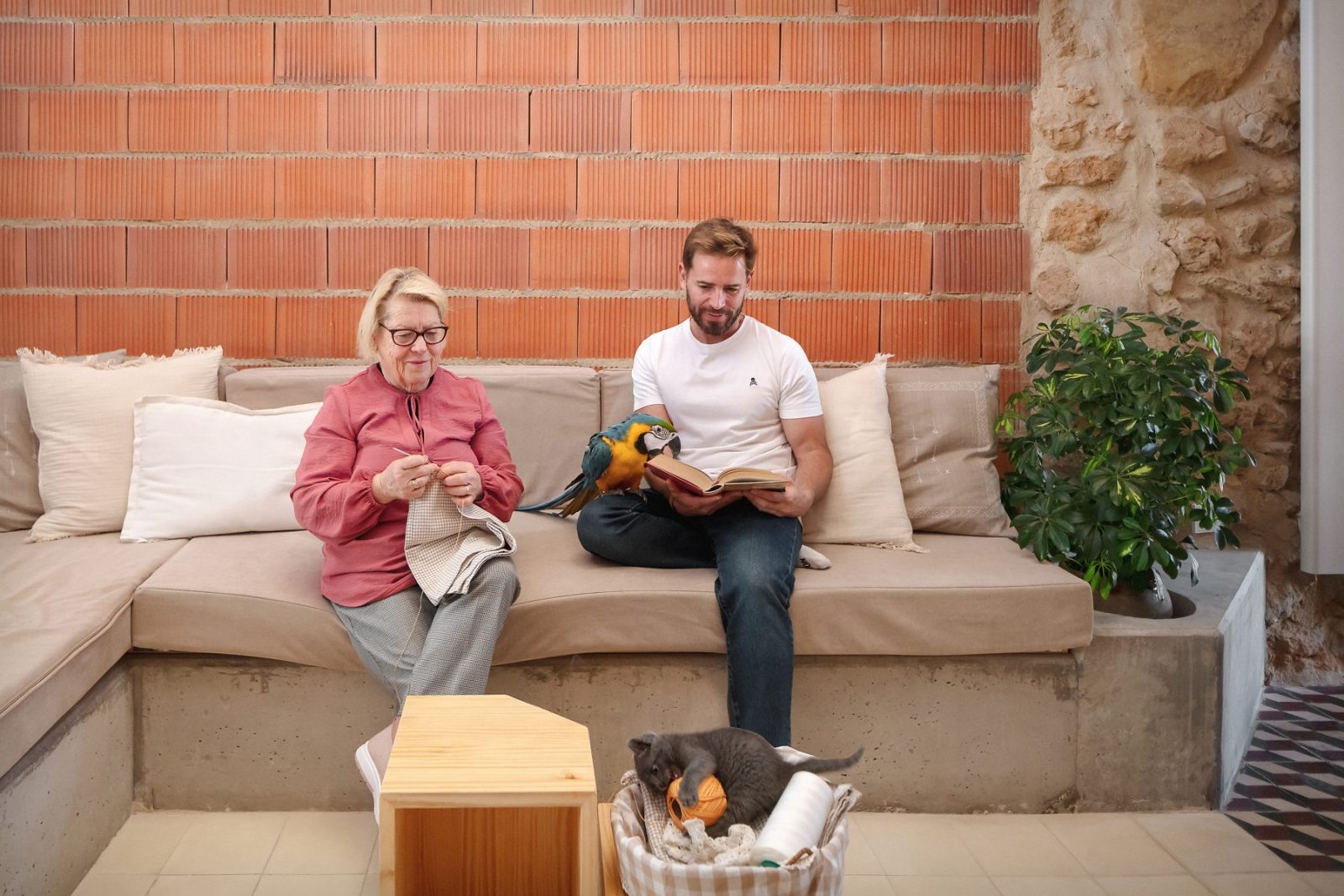
Her days began before sunrise tending animals, followed by harvesting vines in the morning dew and working for hours under the summer sun, while also caring for her parents and, later, her grandchildren. The surrounding terrain was rugged and often unforgiving, and the home itself —an extremely narrow and modest dwelling once shared with livestock— expanded gradually through intuitive and improvised additions accumulated across generations.
Over time, development and mechanisation led younger generations to migrate elsewhere, leaving the house to slowly deteriorate. Only now, with the passing of time, has the cultural loss embedded in the emptied countryside become evident, accompanied by a renewed desire to reconnect with landscapes, materials, and ways of life once deeply embedded in local culture.
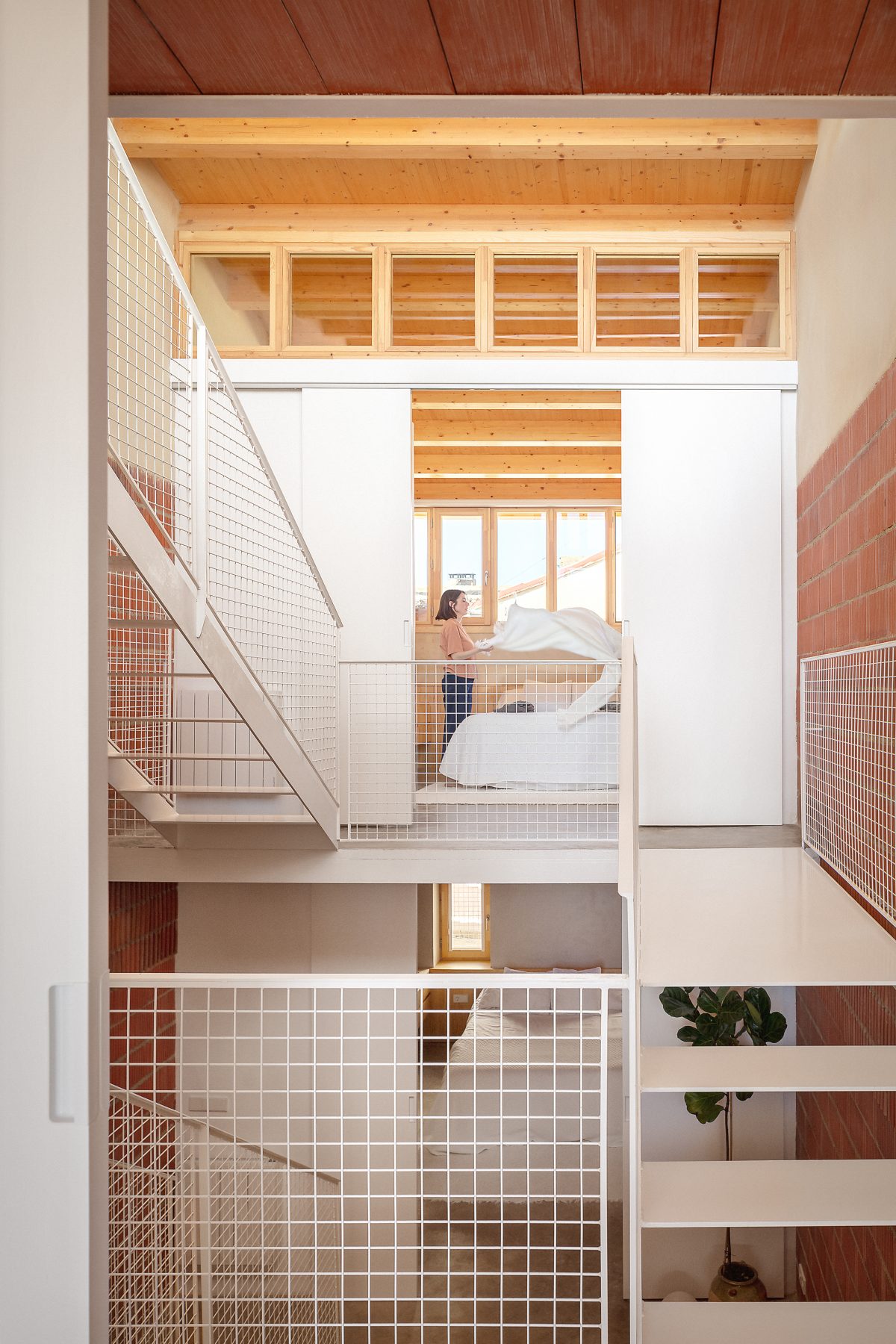
The project reimagines Felipa’s house as a contemporary rural guesthouse, capable of opening itself to the landscape while accommodating present-day living.
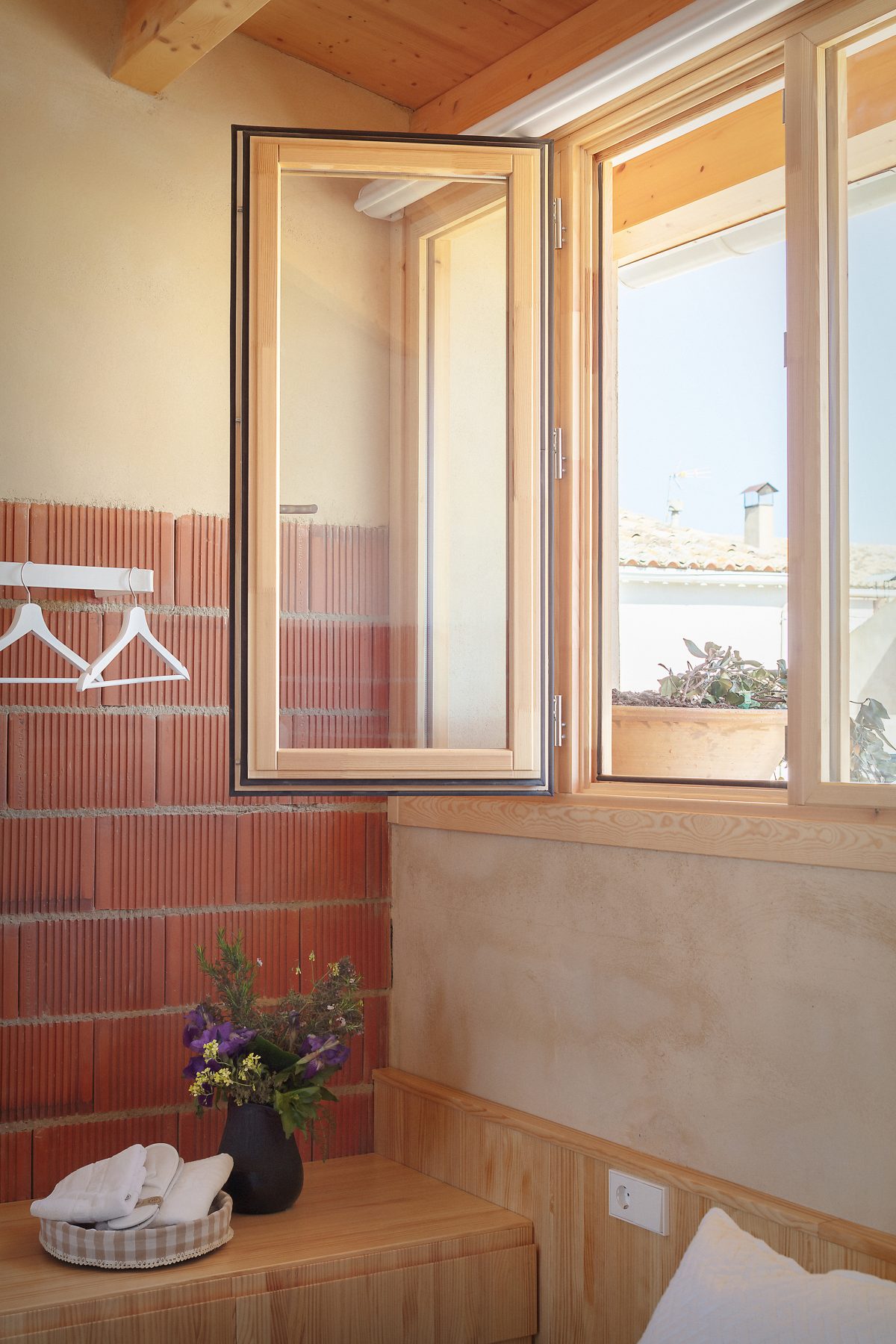
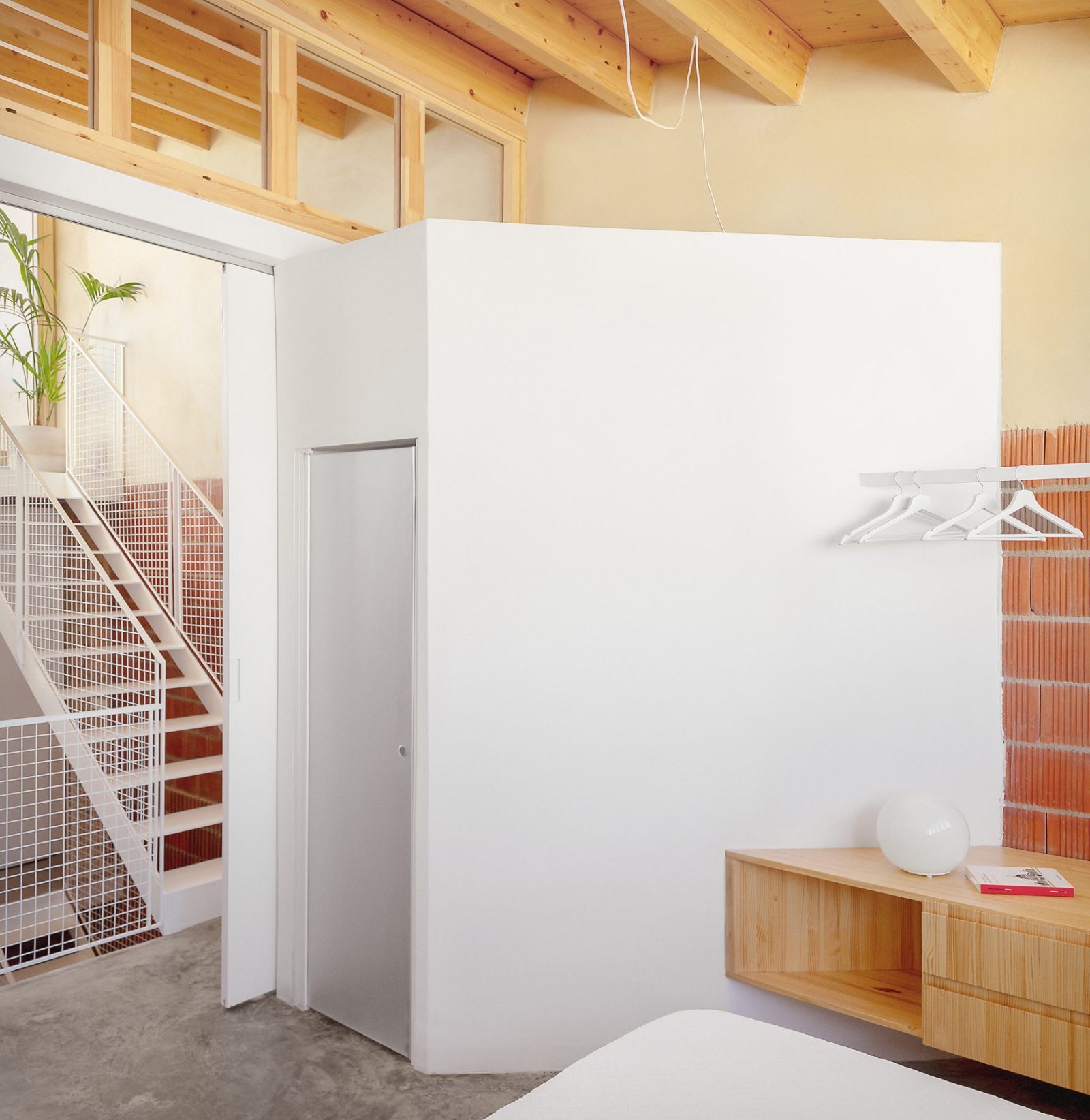
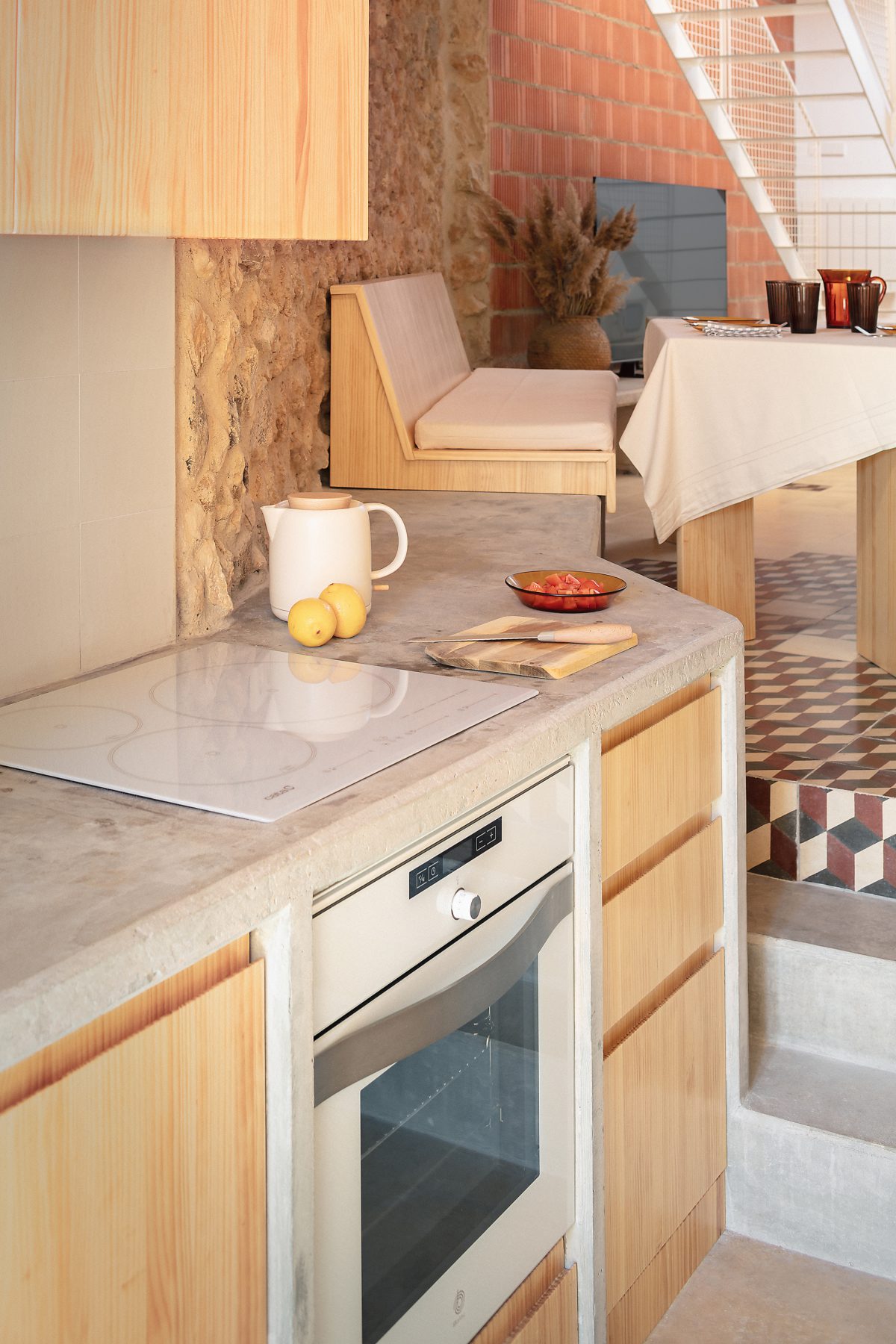
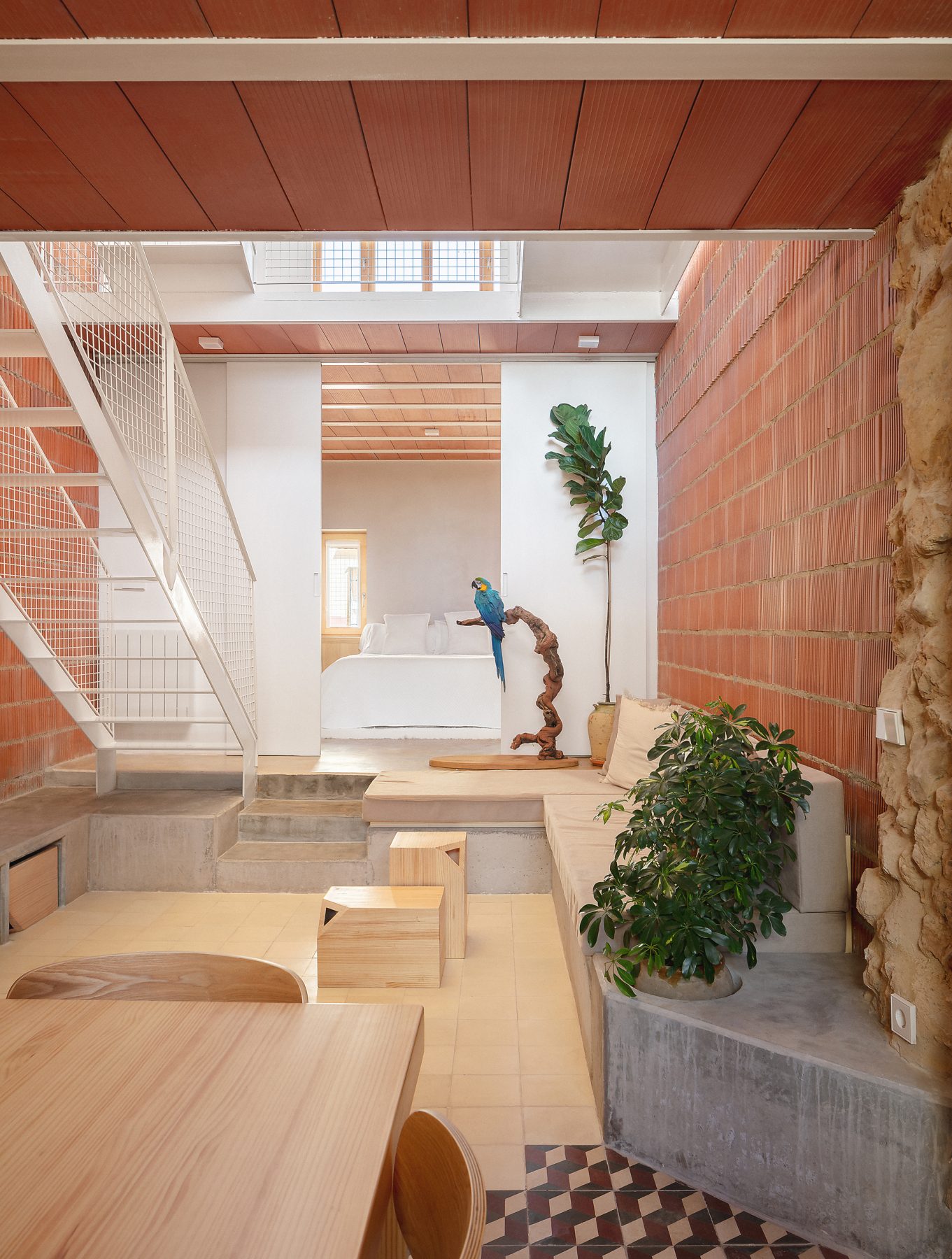
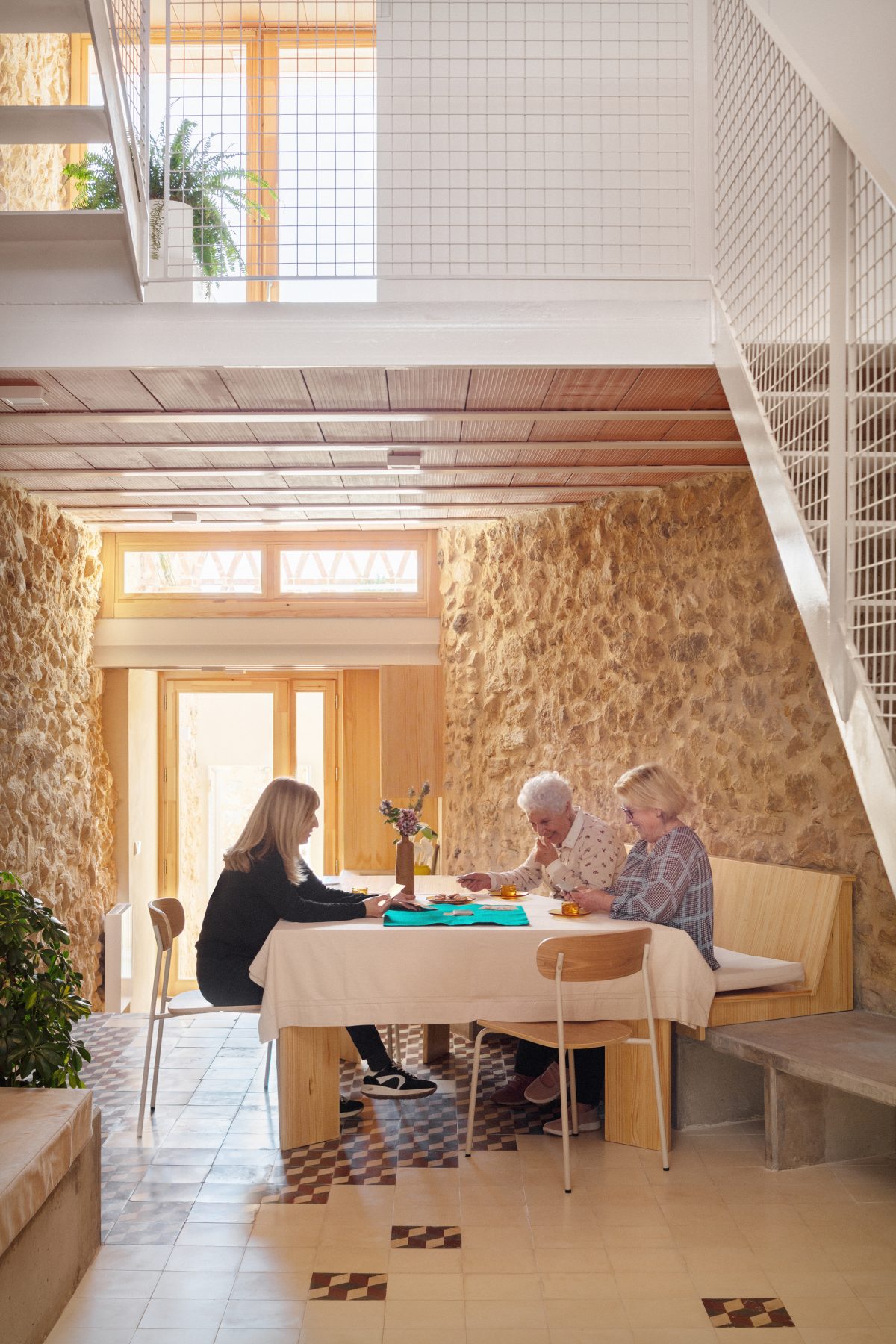
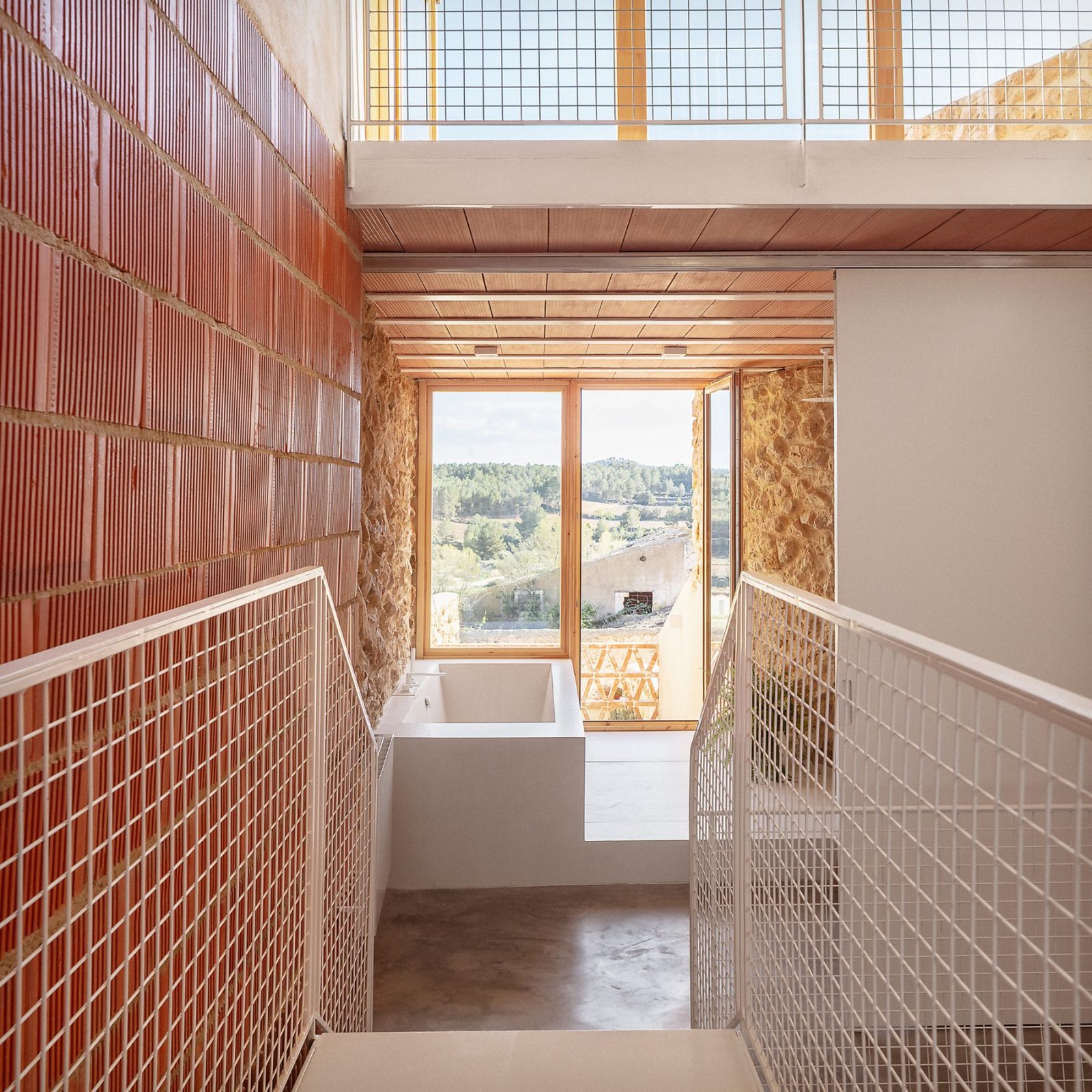
The intervention begins with the complete clearing of the interior, removing deteriorated partitions and floors to reveal the stone shell of the party walls and façade. A new ceramic-block structural wall stabilises the building, while an inclined timber roof —rising lightly above the structure— captures and draws natural light deep into the interior.
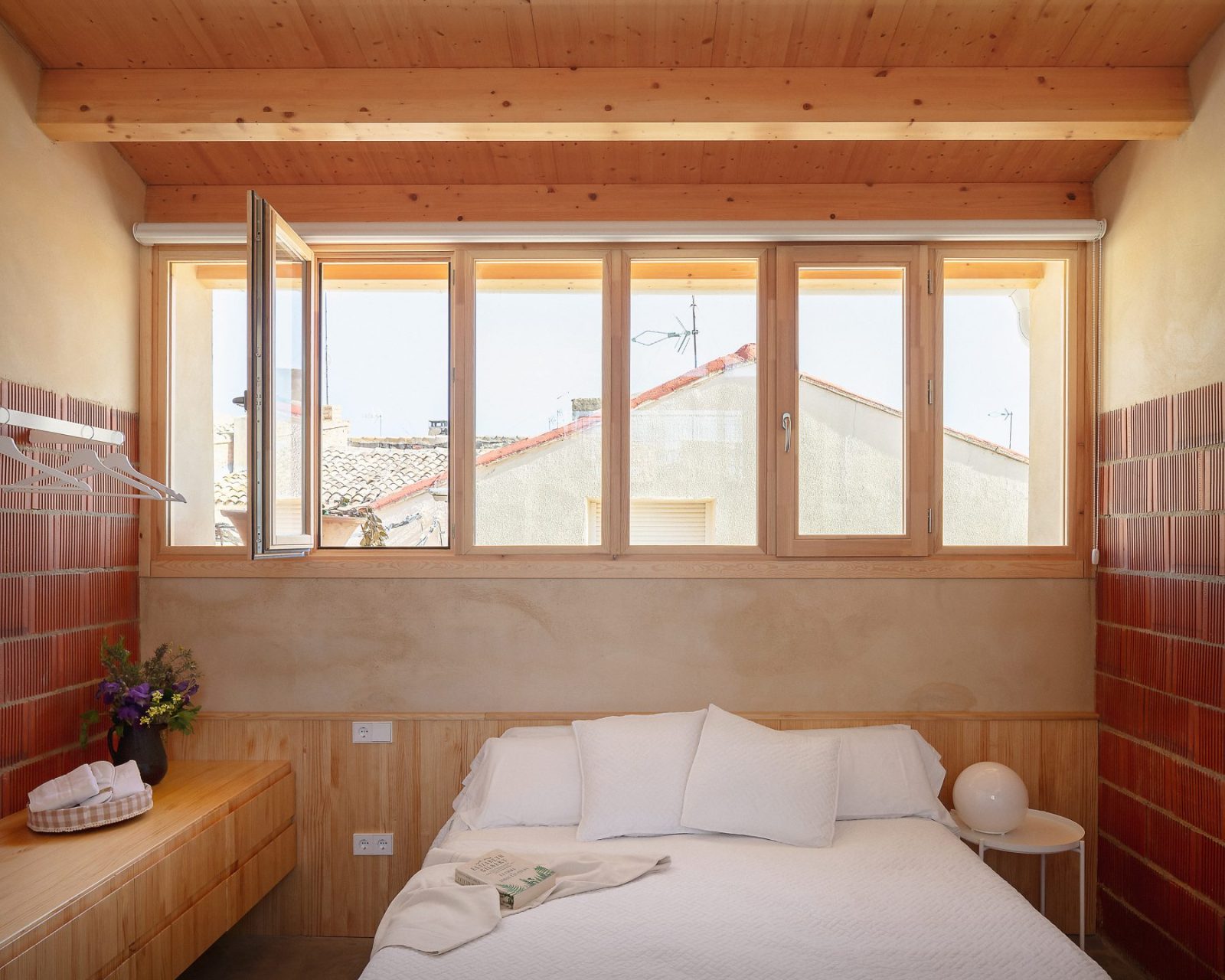
Within this rural construction logic, the project avoids predetermined material catalogues and emerges from a living inventory of available resources: materials that are locally accessible, durable, and maintainable.
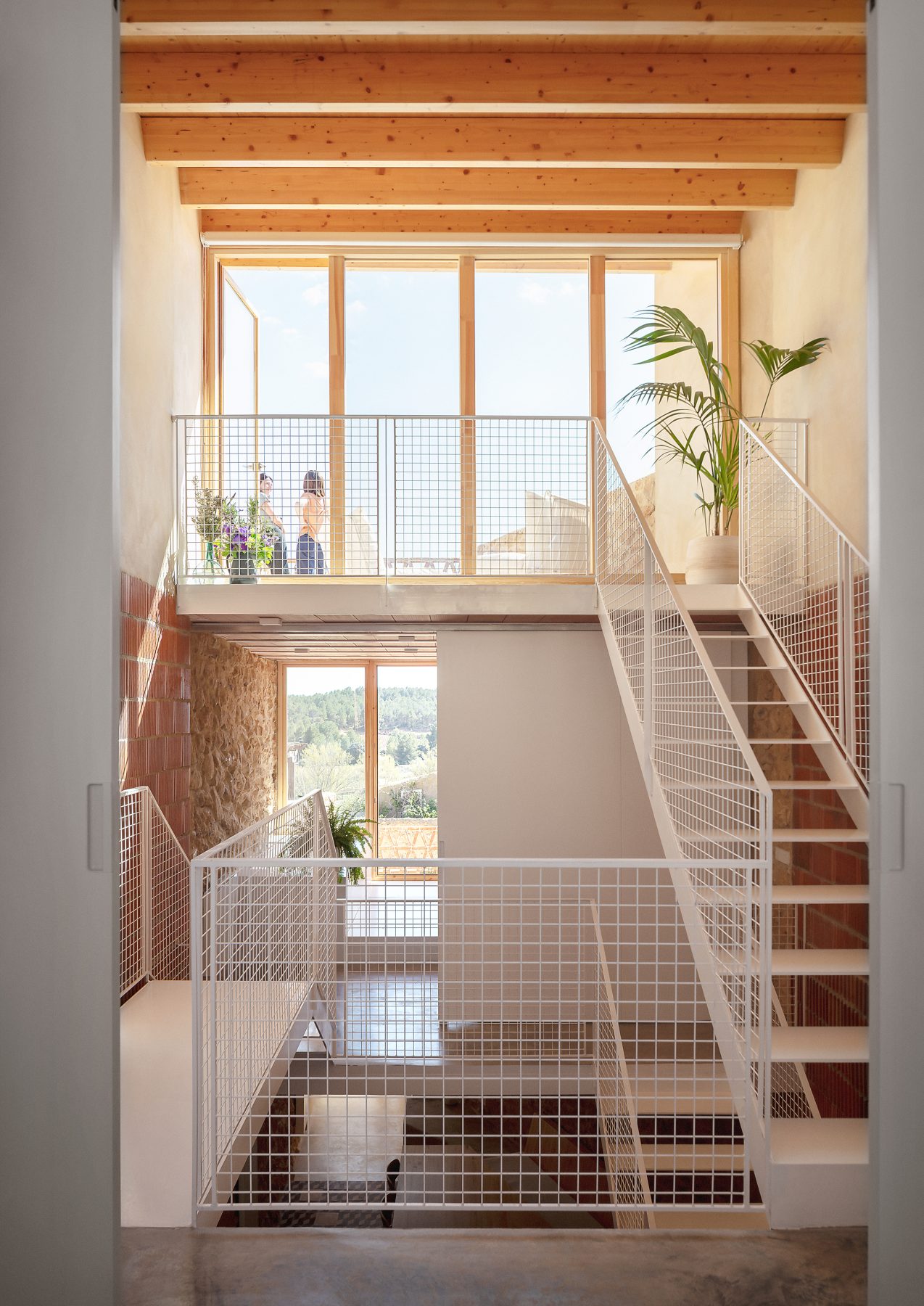
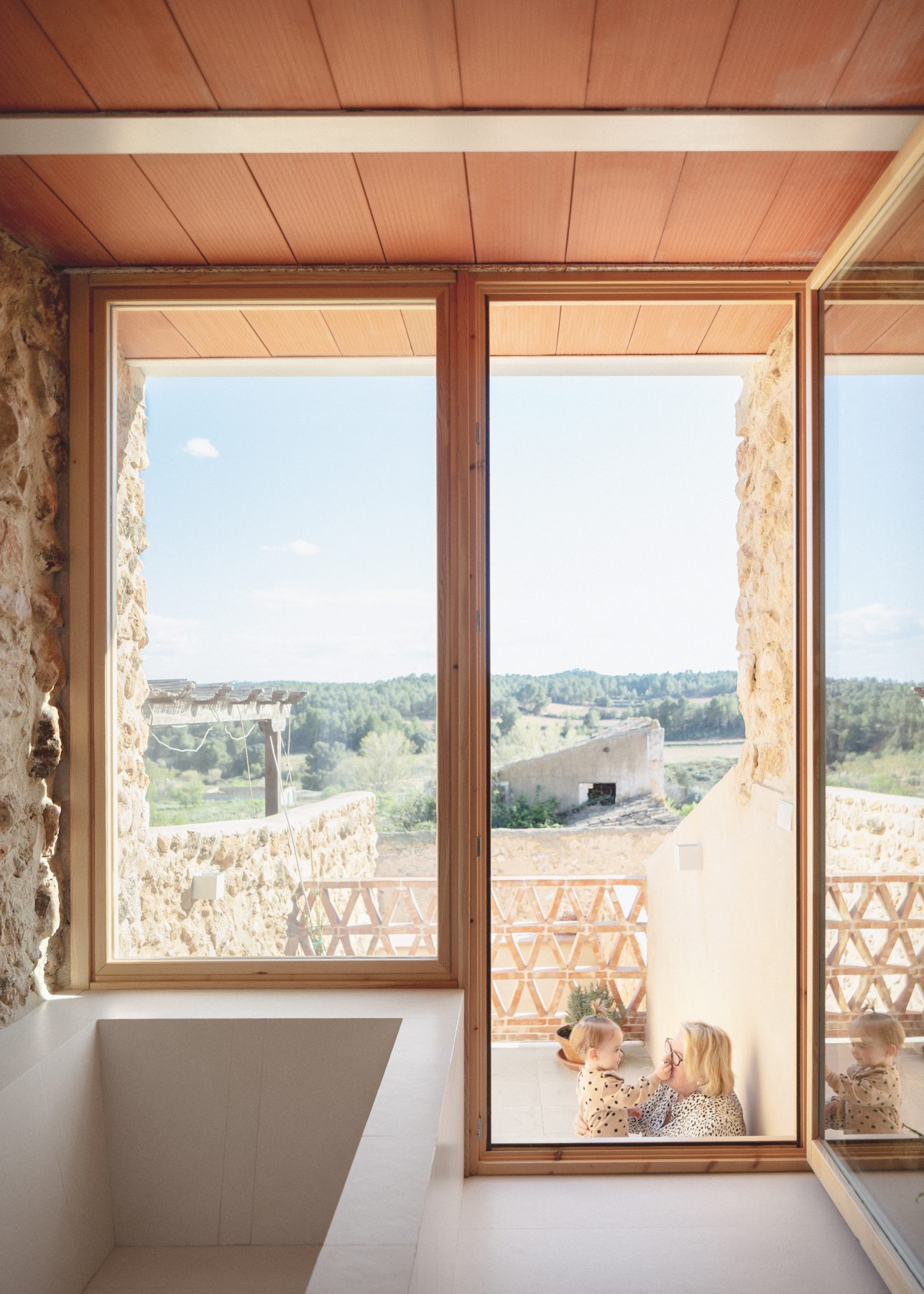
Within this framework, each surface and texture contributes a layer of time and use, gradually revealing the genealogies of the environment and allowing the architecture to express both the history of the place and the possibility of its future.
The project also incorporates custom-designed furniture elements, including modular stools, a trapezoidal table, and a sofa bed. These pieces function as small domestic architectures that reinforce the continuity between architecture, craftsmanship, and place.
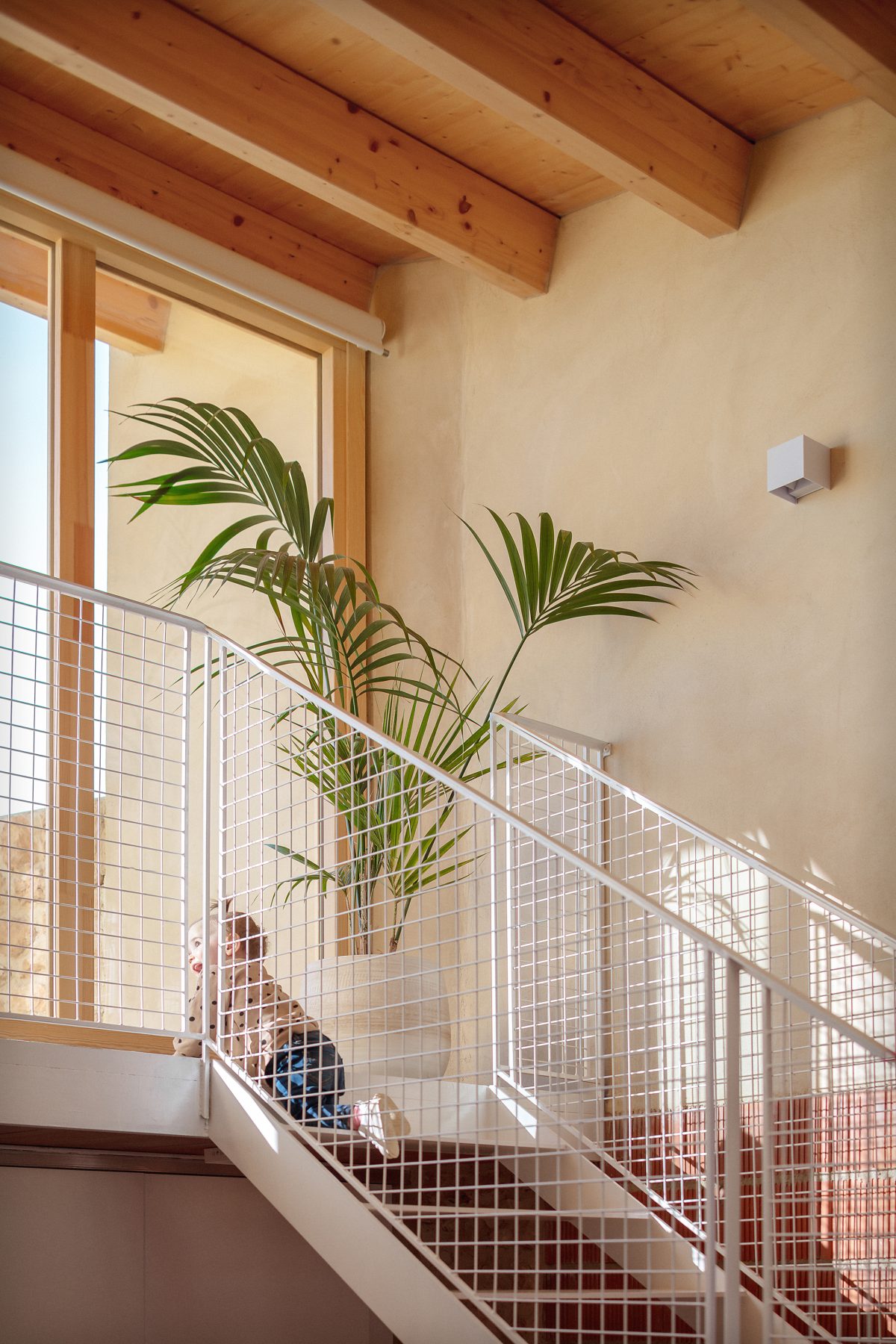
The spatial experience unfolds as a gradual architectural sequence. Entry from the lower street leads through a newly formed courtyard before the interior opens into a topographic floor landscape that creates varied areas for pause, gathering, and everyday activities. Lightweight platforms and connecting walkways accommodate essential domestic functions, while new programs emerge—spaces for self-care, social interaction, and contemplation.
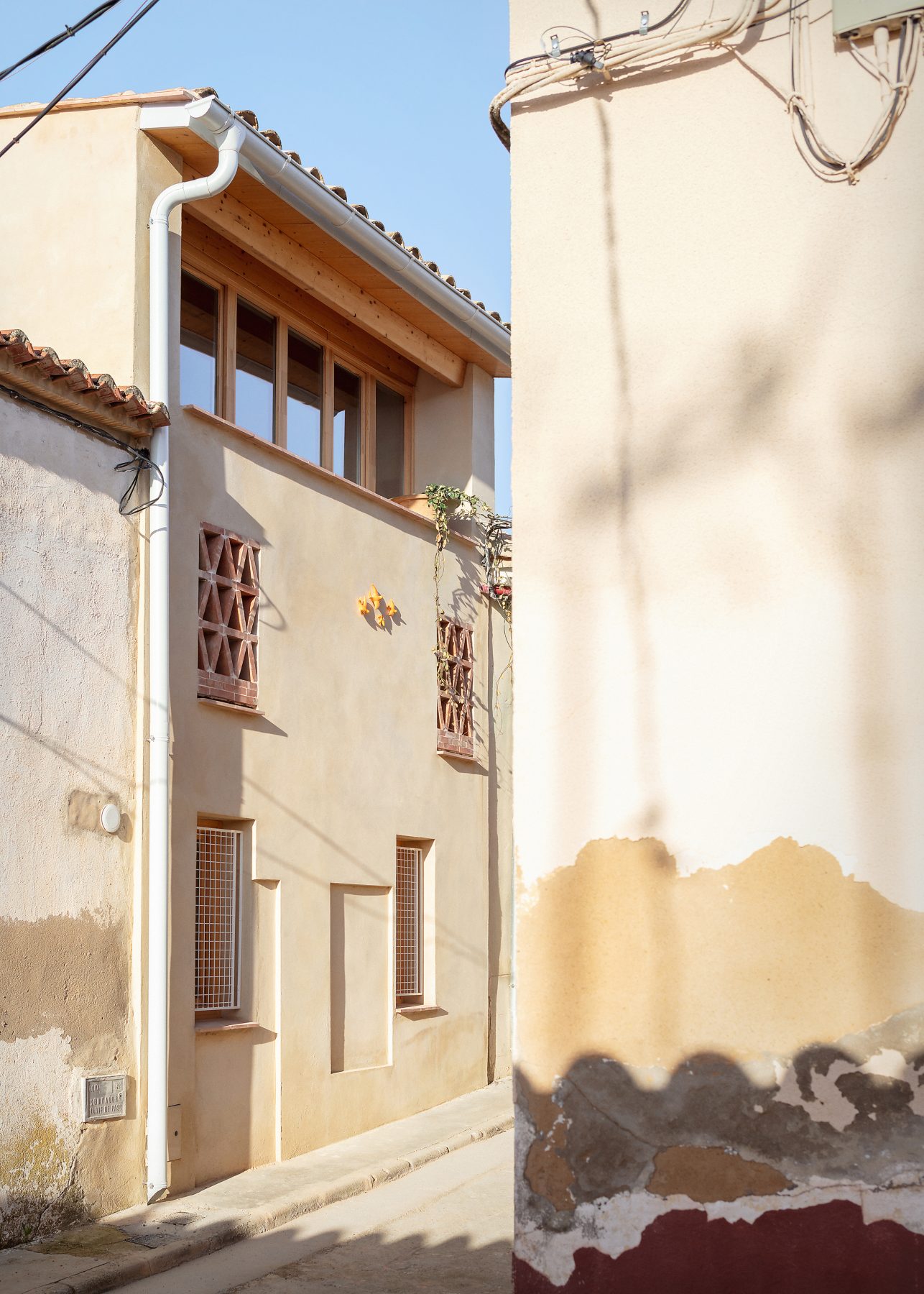
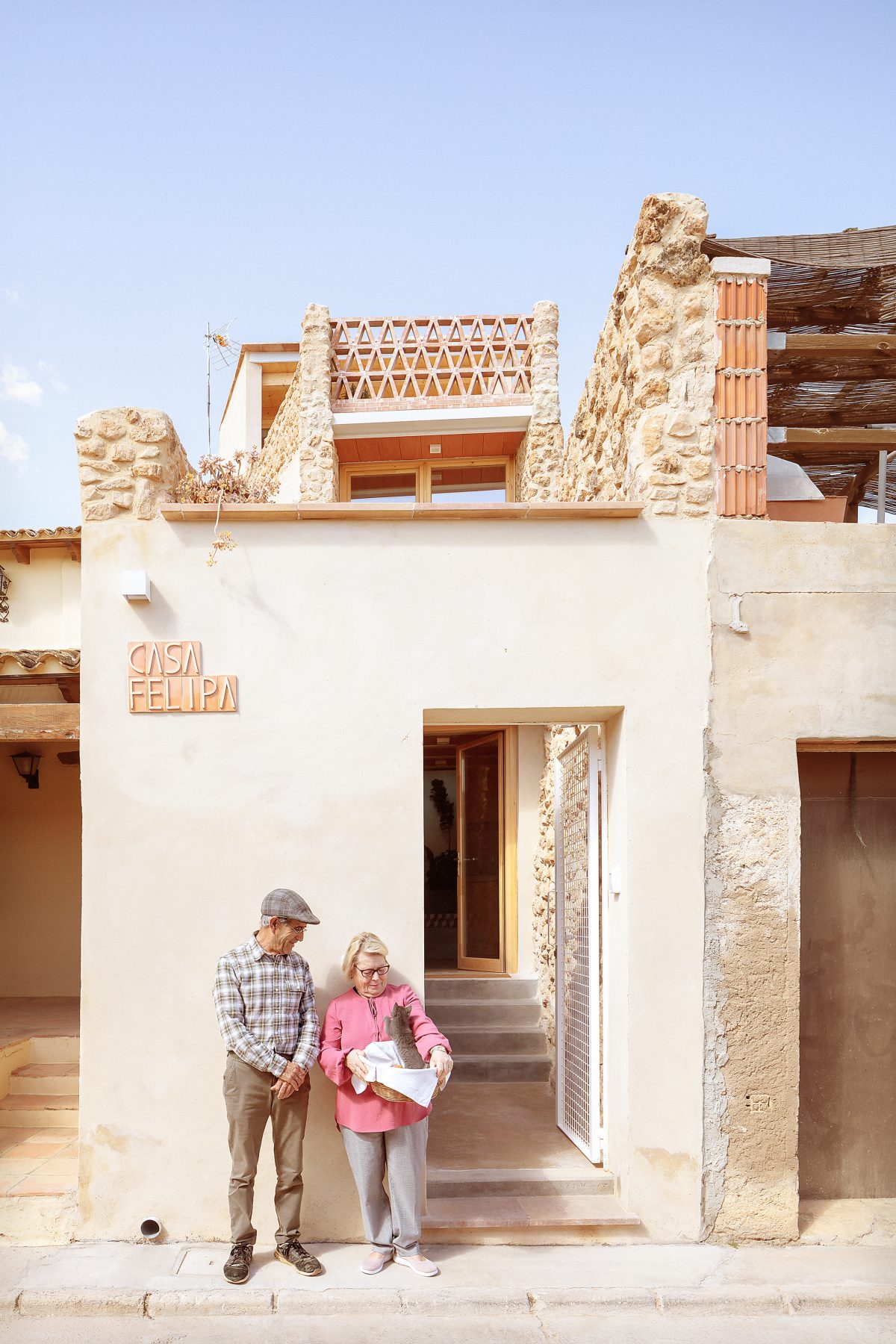
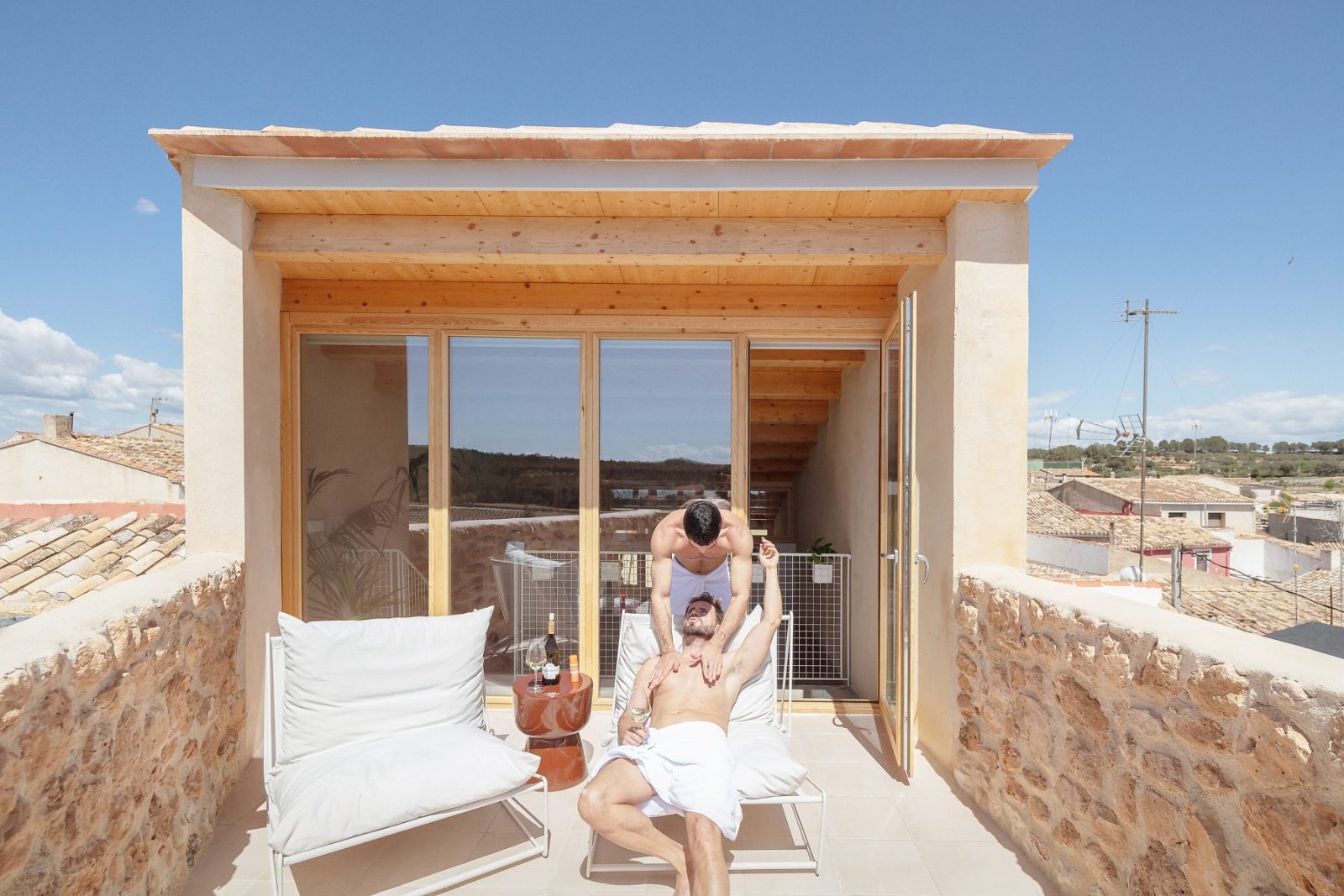
The journey culminates at the upper terrace, where expansive views frame misty sunrises and lilac-hued sunsets across the surrounding terrain.
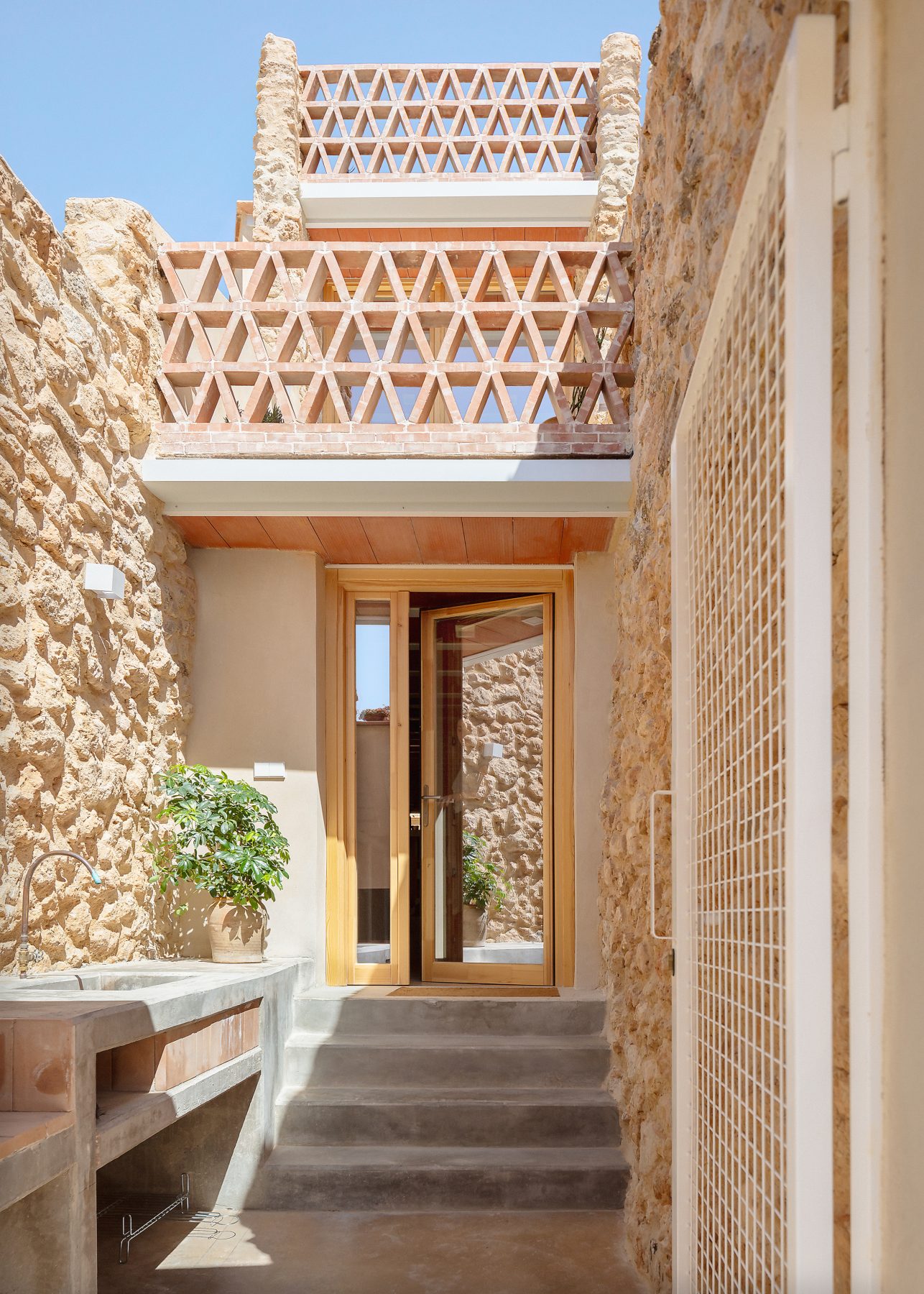
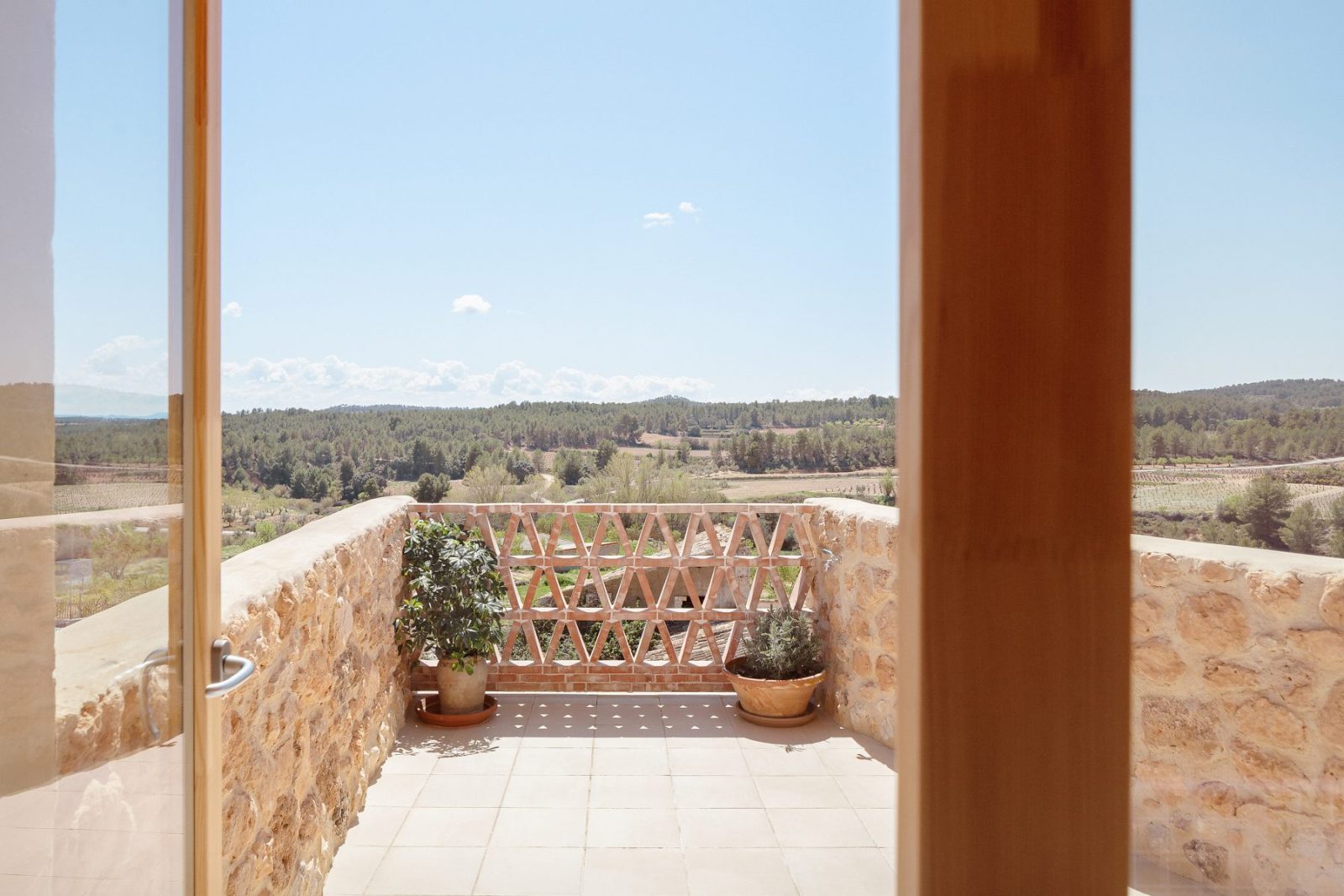
In this way, Felipa guesthouse extends beyond the role of shelter, becoming a means of reconnecting with local culture and rural landscape.
Facts & Credits
Project architecture: Crux Arquitectura
Project type: Interiors | Renovation
Date of completion: December 2024
Built area: 117 m²
Project location: Calle Olmo, Spain
Client: MIALDEA
Photography: Milena Villalba
READ ALSO: More With Less: Sara Gelibter Delivers a Landmark “House on a House” in Switzerland’s Biel-Bienne Village on a Tight Budget