Η τρίτη διοργάνωση των GRAIL AWARDS ολοκληρώθηκε, τη Τετάρτη 21 Ιανουαρίου 2026, στην τελετή απονομής των βραβείων στο κατάμεστο αμφιθέατρο Ιωάννης Δεσποτόπουλος του Ωδείου Αθηνών. Ο θεσμός των Βραβείων Αρχιτεκτονικής, Εσωτερικών Χώρων και Φωτισμού GRAIL, σε παραγωγή Βασίλη Μπαρτζώκα και Δημήτρη Φακίνου, ένωσε την εγχώρια δημιουργική σκηνή, στοχεύοντας σταθερά και σθεναρά, στην εξωστρέφεια της ελληνικής αρχιτεκτονικής εντός και εκτός συνόρων.
Το έργο «coucou nightclub», των Tsifoutidis Architects έλαβε έπαινο στην κατηγορία Χώροι Εστίασης-Διασκέδασης της ενότητας Εσωτερικοί Χώροι και Φωτισμός των GRAIL Awards 2026. Στεγασμένο σε μία παλιά βιομηχανική αποθήκη του λιμανιού της Θεσσαλονίκης, το coucou επαναπροσδιορίζει το βιομηχανικό κέλυφος ως σύγχρονο χώρο διασκέδασης. Διατηρώντας εμφανή τα υλικά του κτίσματος, ο σχεδιασμός εισάγει καθρέφτες και neon φώτα, δημιουργώντας μια “industrial disco” εμπειρία, όπου η δυναμική της ηλεκτρονικής μουσικής και του χορού συνυπάρχει με την μνήμη και την υλικότητα του χώρου.
Σε μία παλιά βιομηχανική αποθήκη του λιμανιού της Θεσσαλονίκης, κρυμμένο στον επάνω όροφο, φιλοξενείται το coucou nightclub.
Ο χώρος διαμορφώνεται ως μια «industrial disco», μια έννοια που περιγράφει τόσο τη διατήρηση και ανάδειξη του βιομηχανικού αρχιτεκτονικού κελύφους όσο και τη φύση της εμπειρίας που φιλοξενεί: ένα περιβάλλον ηλεκτρονικής μουσικής με ντίσκο αναφορές, όπου η ατμόσφαιρα της διασκέδασης αναπτύσσεται μέσα σε ένα αυθεντικά βιομηχανικό πλαίσιο.
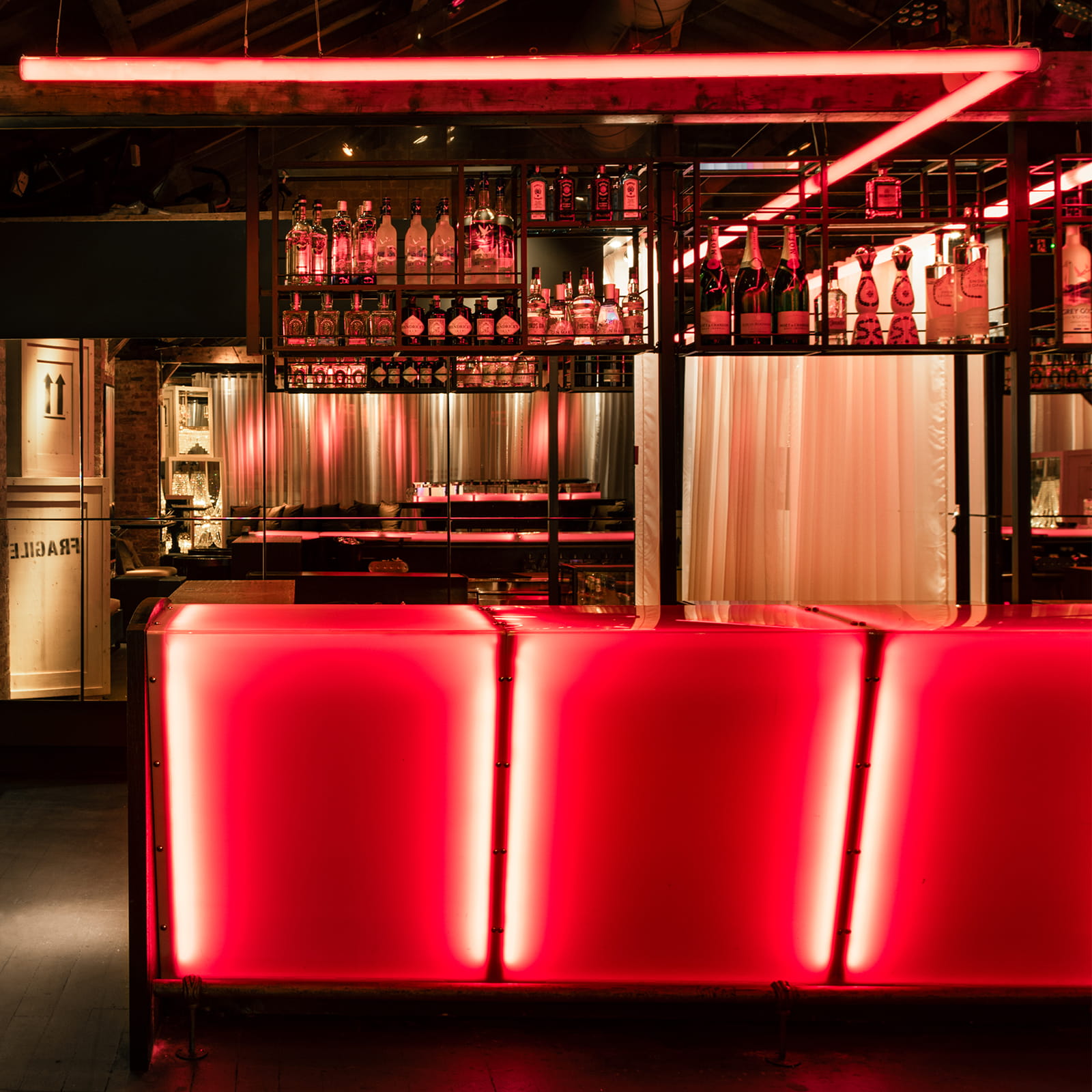
Το συγκεκριμένο σημείο αποτελεί διαχρονικό πυρήνα νυχτερινής ζωής της Θεσσαλονίκης και, στο πλαίσιο αυτού του νέου κεφαλαίου, βασικός στόχος του σχεδιασμού υπήρξε η διαμόρφωση μιας συνολικά ανανεωμένης εμπειρίας.
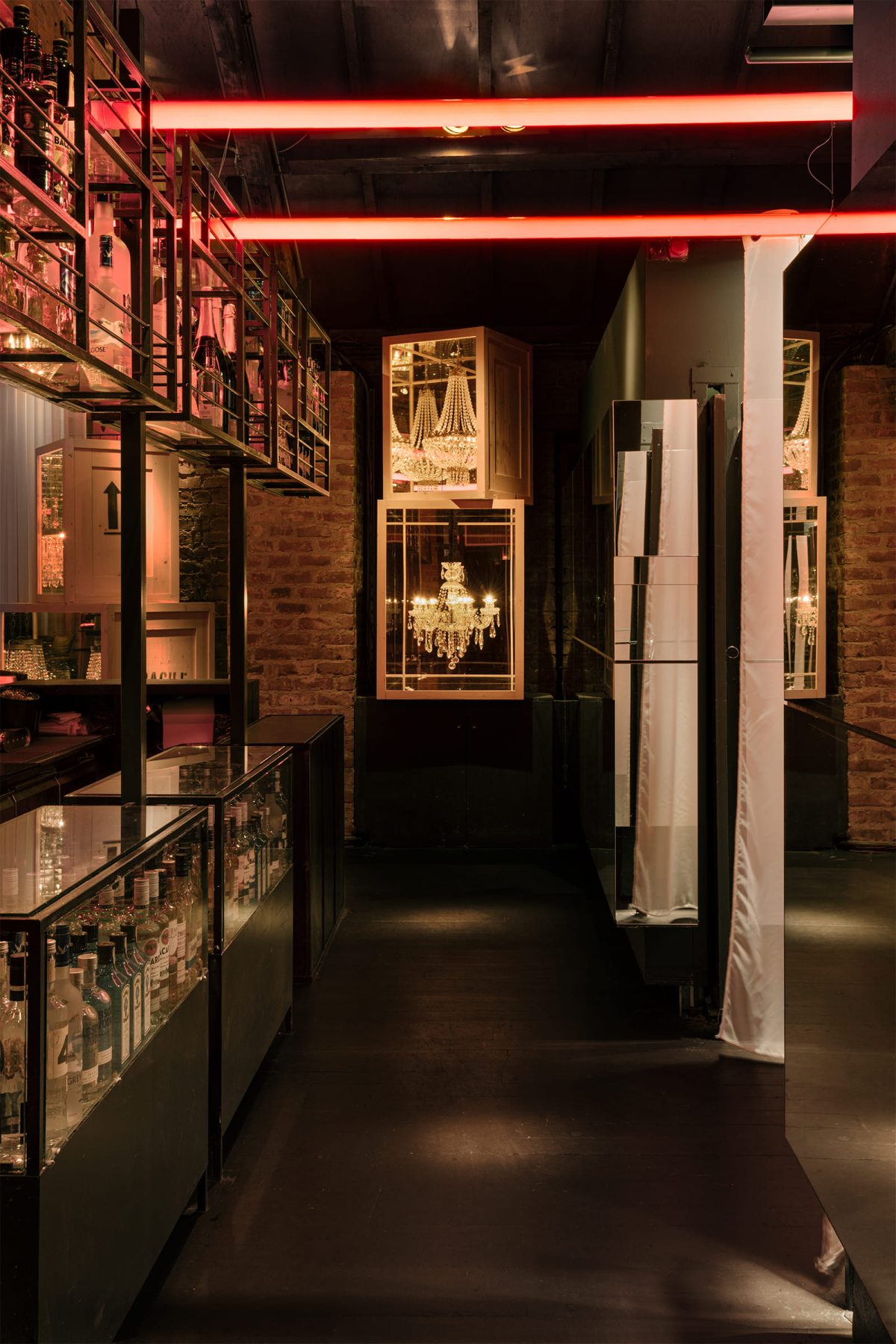
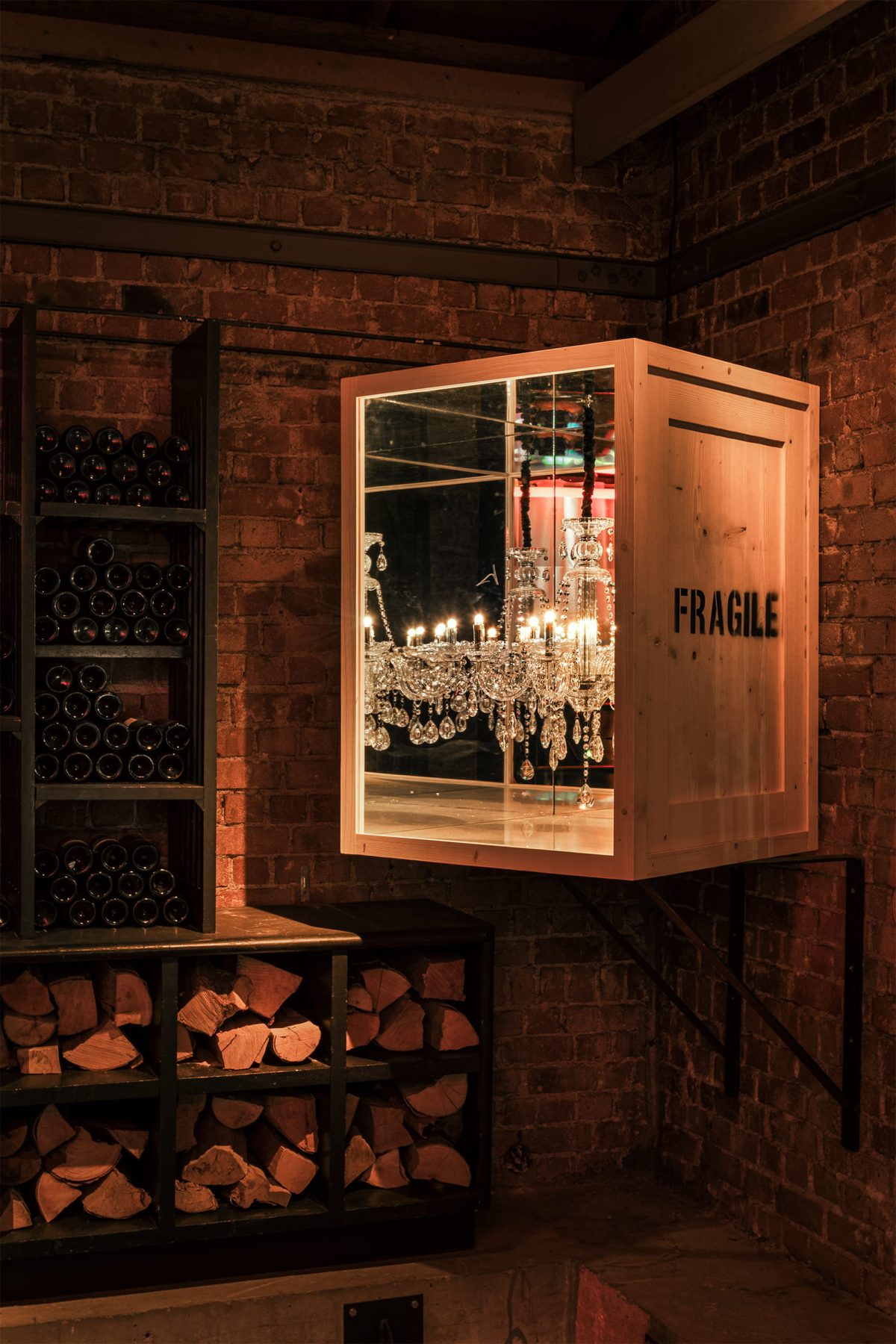
Κρίσιμα στοιχεία της αρχικής βιομηχανικής αποθήκης διατηρήθηκαν και παραμένουν εμφανή, αναδεικνύοντας τη μνήμη και την υλικότητα του χώρου, ενώ λειτουργούν ως υπόβαθρο για τη σύγχρονη σκηνογραφία του club.
Η ξύλινη οροφή και οι εμφανείς τούβλινοι τοίχοι συνυπάρχουν με υλικά όπως το βελούδο, ο καθρέφτης, οι κόκκινες neon επιφάνειες και οι λευκές ημιδιαφανείς κουρτίνες, δημιουργώντας μια έντονη αντιπαραβολή ανάμεσα στην αδρότητα του κελύφους και τη θεατρικότητα της διασκέδασης.
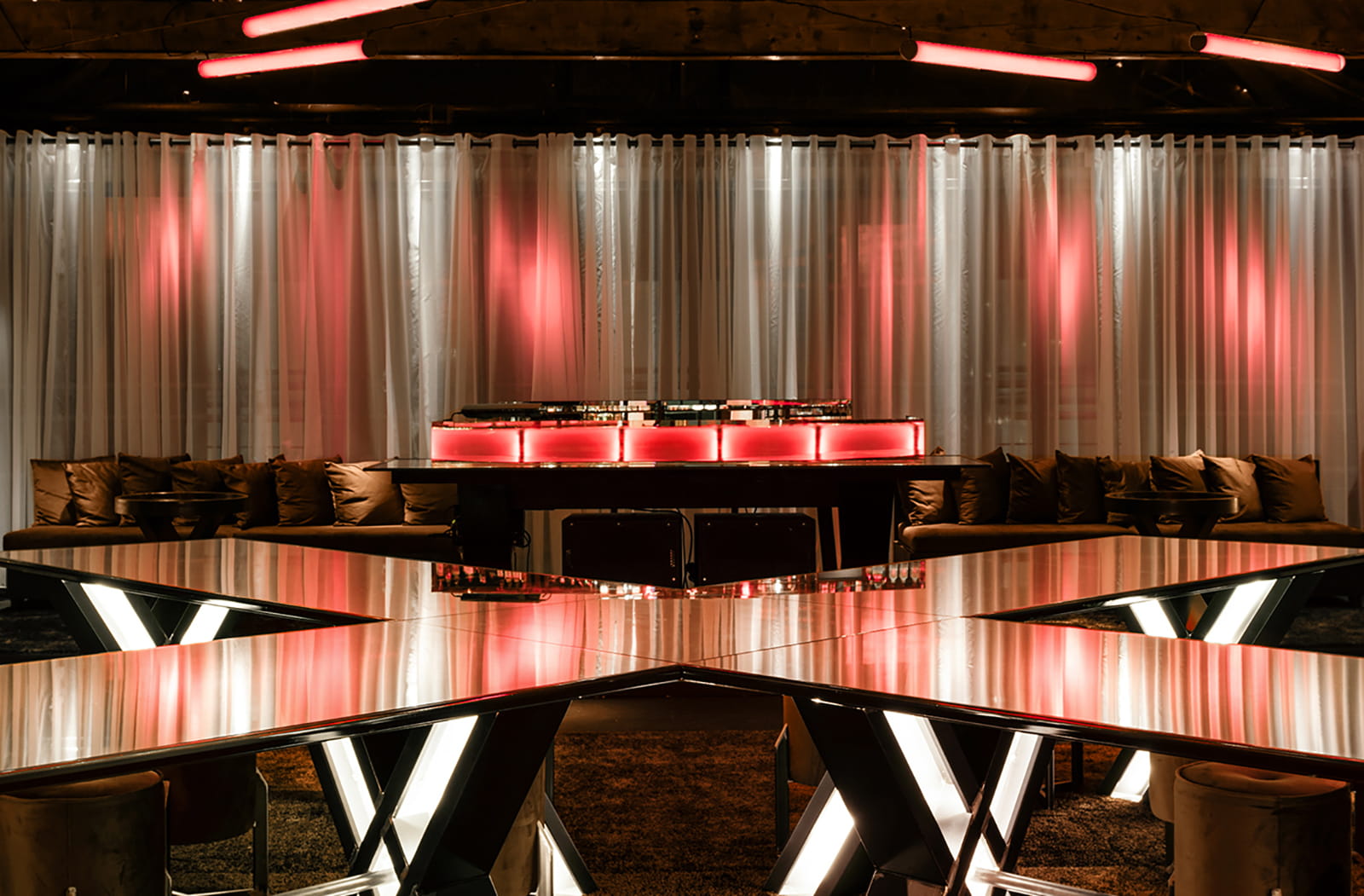
Αναγνωρίσιμο στοιχείο του χώρου αποτελεί το εκκεντρικό X stand, με επιφάνεια καθρέφτη και φωτισμένες βάσεις σε σχήμα Χ. Η μορφή του λειτουργεί ως κεντρικός πυρήνας της χορευτικής πίστας, επιτρέποντας ταυτόχρονα την ελεύθερη κυκλοφορία των επισκεπτών περιμετρικά του.
Η επιφάνεια καθρέφτη, σε συνδυασμό με τα γραμμικά φωτιστικά της οροφής, παράγει συνεχείς αντανακλάσεις που εντείνουν την αίσθηση παλμού και κίνησης στον χώρο.
Ο συνολικός φωτιστικός σχεδιασμός διαμορφώνεται μέσα από αναφορές στη neon αισθητική, όπου, ανάμεσα σε ηλεκτρονικούς ήχους και ντίσκο μπάλες, το περιβάλλον αποκτά έναν έντονα ατμοσφαιρικό χαρακτήρα που εξελίσσεται καθ’ όλη τη διάρκεια της νύχτας.
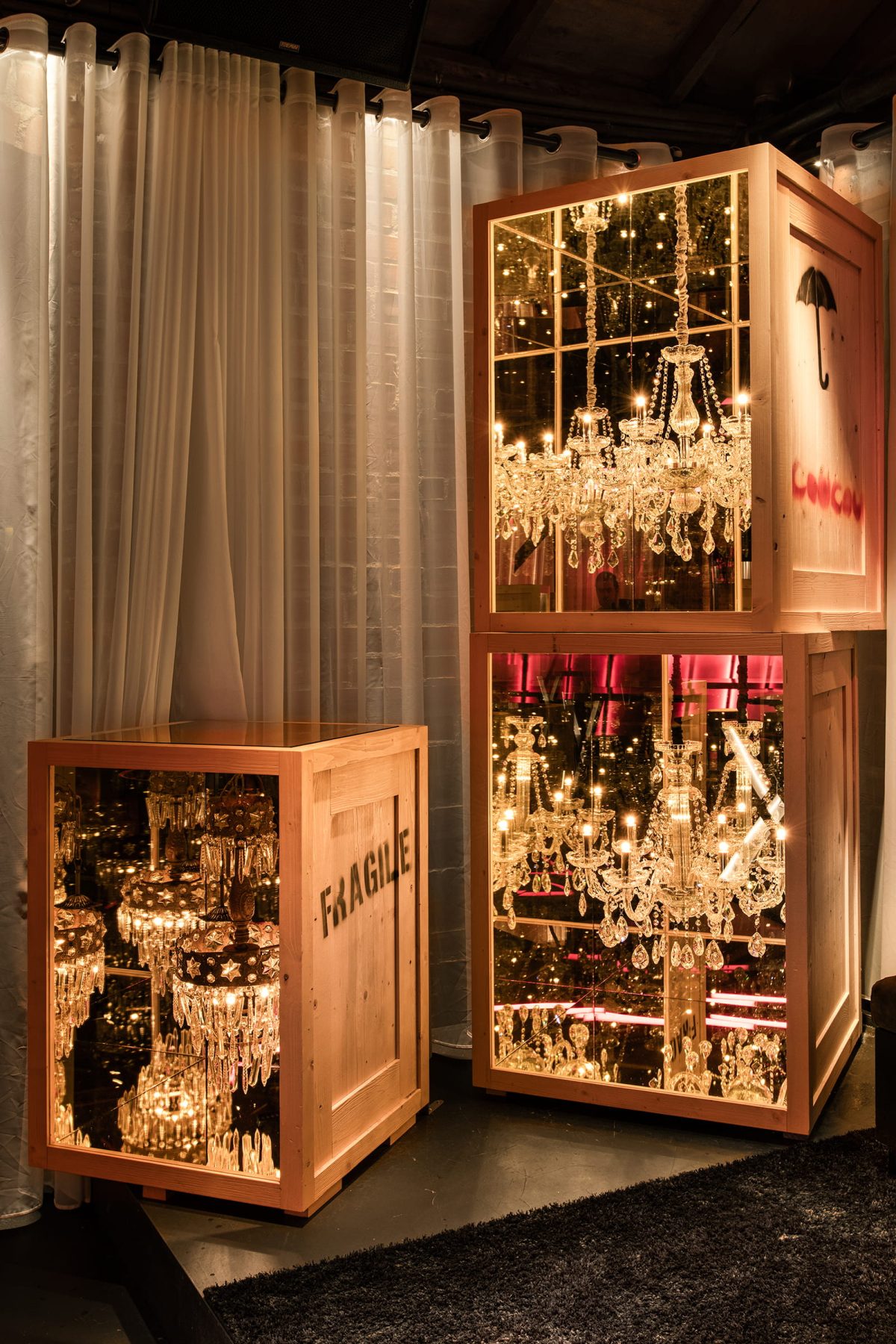
Στις επιφάνειες των τραπεζιών καθρεφτίζονται συνεχώς τα υλικά, τα φώτα και η κίνηση του χώρου, ενισχύοντας τη συνολική ατμόσφαιρα. Η θερμή παλέτα των κόκκινων neon φωτισμών διαμορφώνει τον χαρακτήρα του εσωτερικού, ενώ τα ξύλινα κιβώτια, ως λειτουργικά στοιχεία, επανανοηματοδοτούνται και εντάσσονται στο βιομηχανικό σκηνικό.
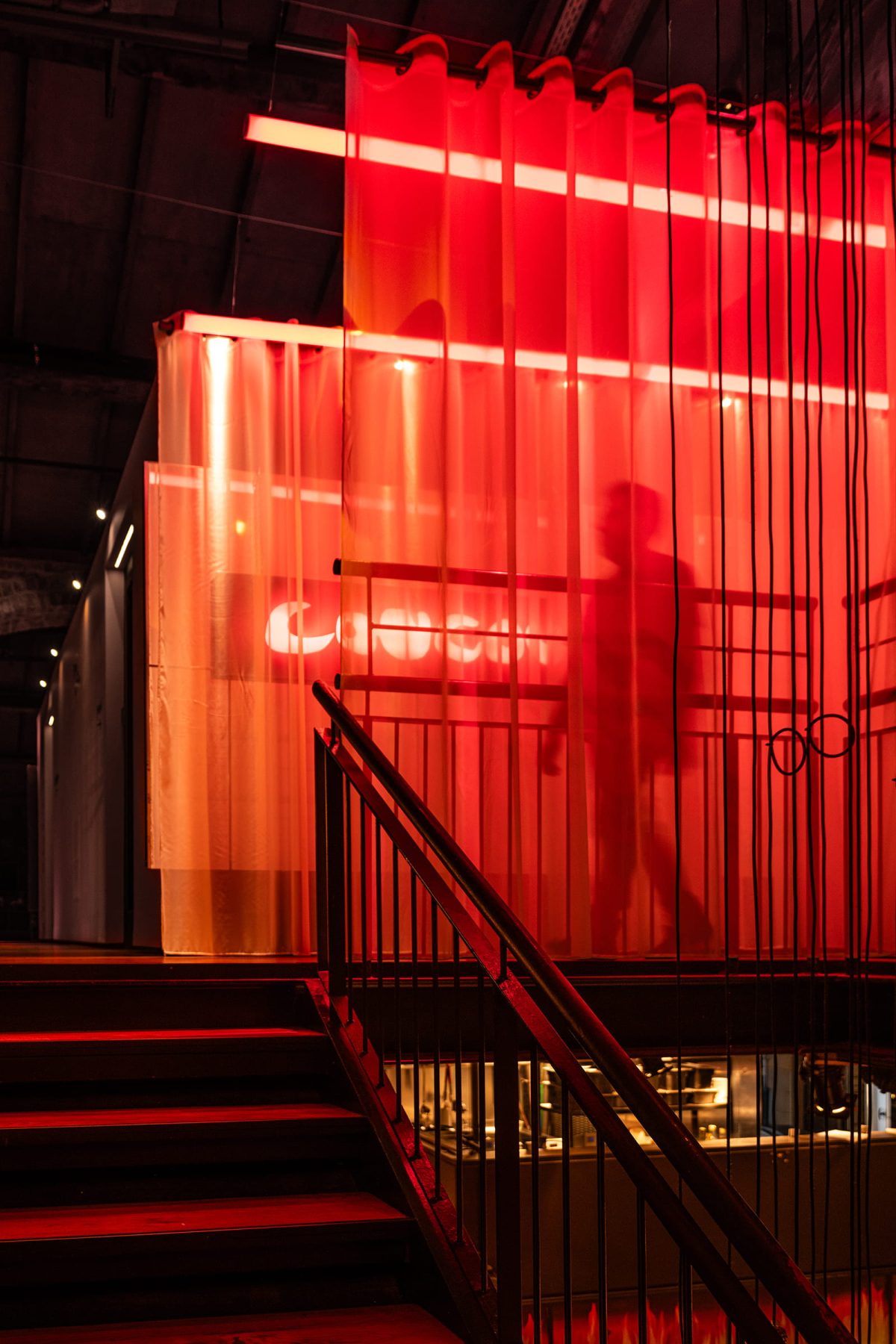
Στο δεύτερο επίπεδο της αποθήκης, πριν από την είσοδο στον κύριο χώρο του πάρτι, διαμορφώνεται ένα ενδιάμεσο πεδίο. Η διέλευση ανάμεσα από δύο ημιδιαφανείς κουρτίνες, φωτισμένες με κόκκινα neon, λειτουργεί ως σταδιακή εισαγωγή στην ατμόσφαιρα του εσωτερικού. Μετά από αυτή τη μεταβατική ζώνη, η πρόσβαση στον χώρο του club πραγματοποιείται σχεδόν υπαινικτικά, δεξιά και αριστερά από το μπαρ.
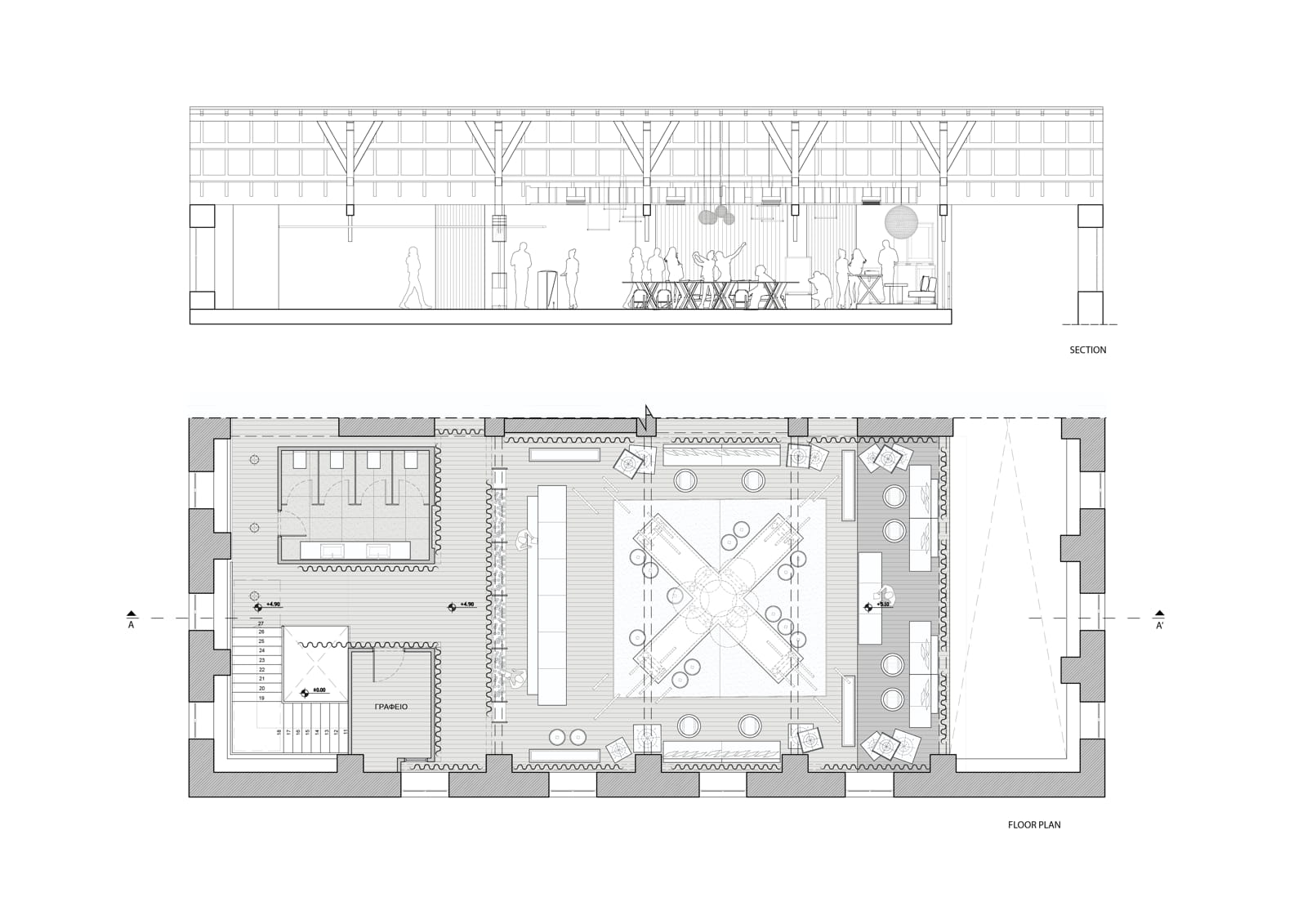
Η χωρική οργάνωση βασίζεται σε δύο διαγώνιους και δύο παράλληλους άξονες.
Το κεντρικό X stand καθιστά άμεσα αντιληπτή την ύπαρξη των διαγωνίων κατά την είσοδο, ενώ αυτές επεκτείνονται οπτικά μέσω των γραμμικών φωτιστικών της οροφής και των αντανακλάσεών τους στην επιφάνειά του. Παράλληλα, το μπαρ και το DJ booth —οι μοναδικές κατασκευές με έντονο κόκκινο φωτισμό στο επίπεδο κίνησης του ανθρώπου— τοποθετούνται αντικριστά.
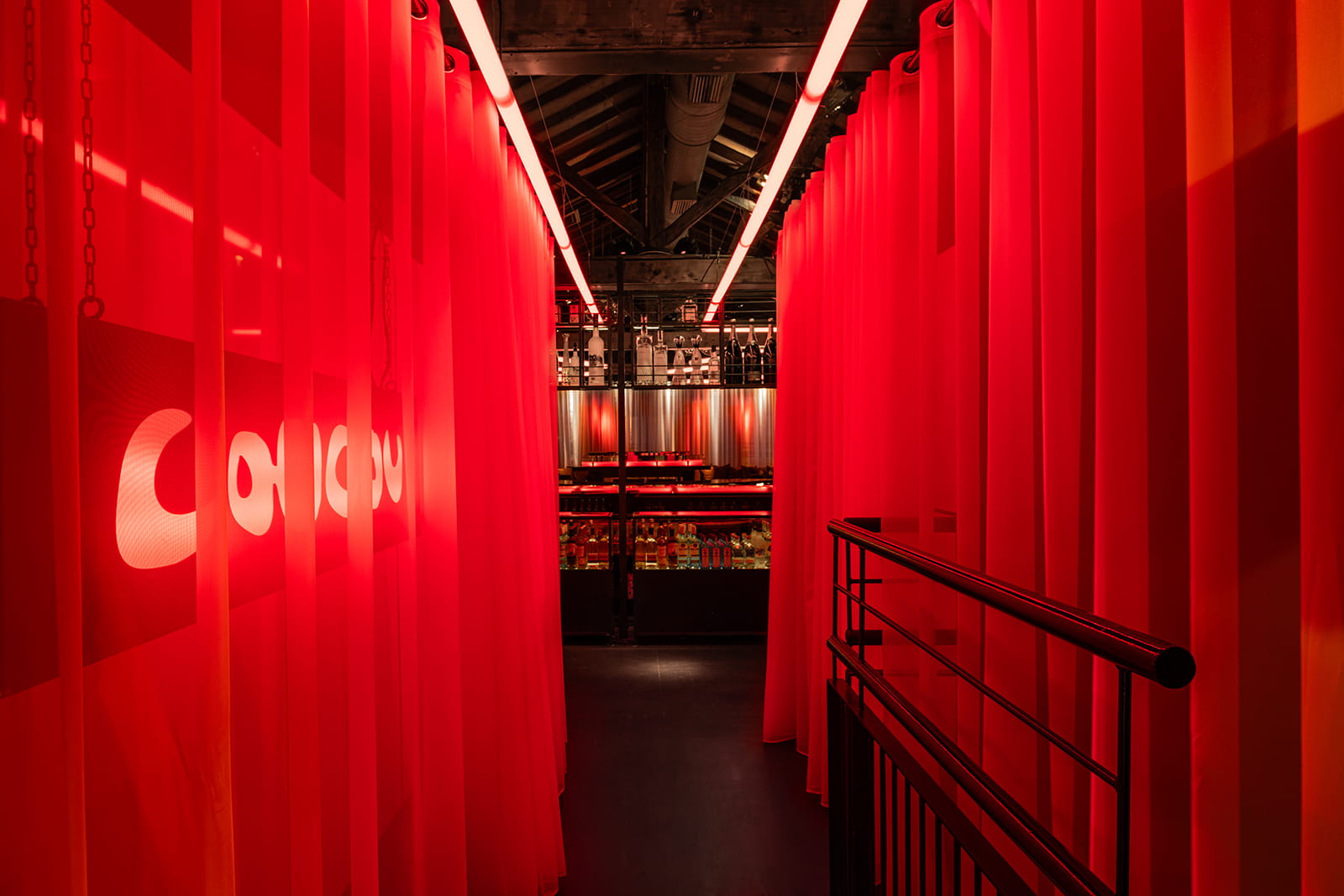
Η συμμετρία που προκύπτει σε σχέση με το κεντρικό Χ στοιχείο δημιουργεί, κατά τη διάρκεια της λειτουργίας, μια ελεγχόμενη χωρική αμφισημία ως προς τον προσανατολισμό και τη θέση της εισόδου, ενισχύοντας την αίσθηση ενός κρυφού, κλειστού δωματίου μουσικής και χορού.
Το βιομηχανικό αποτύπωμα του χώρου επανεμφανίζεται στο σκληρό, σκούρο, ξύλινο δάπεδο, το οποίο στο κέντρο μαλακώνει με την ένταξη καφέ μοκέτας, προτείνοντας μια εναλλακτική προσέγγιση για την χορευτική πίστα. Τέλος, όλα τα μεταλλικά στοιχεία —βάσεις σκαμπό, τραπέζια, κάβα και στηρίγματα του DJ booth— έχουν επεξεργαστεί με βερνίκι μετάλλου αντί για βαφή, ώστε να διατηρείται και να αναδεικνύεται ο αυθεντικός βιομηχανικός τους χαρακτήρας.
Συνολικά, ο σχεδιασμός του coucou επαναπροσδιορίζει τη βιομηχανική αποθήκη ως έναν σύγχρονο, πολυαισθητηριακό χώρο νυχτερινής εμπειρίας, όπου η αυθεντικότητα του κελύφους δεν αποκρύπτεται αλλά αναδεικνύεται. Μέσα από τη συνύπαρξη υλικών, φωτιστικών και σκηνογραφικών στοιχείων, ο χώρος μετατρέπεται σε ένα δυναμικό περιβάλλον κίνησης και μουσικής, που εντάσσεται οργανικά στη σύγχρονη αστική νυχτερινή ζωή.
Στοιχεία έργου
Τίτλος έργου coucou – an industrial disco
Τυπολογία Σχεδιασμός Εσωτερικού Χώρου, Χώρος Νυχτερινής Διασκέδασης
Αρχιτεκτονική Tsifoutidis Architect (Πέτρος Τσιφουτίδης, Φώτης Τσιφουτίδης)
Ομάδα Σχεδιασμού Σωκράτης Βουλγαράκης, Αθανασία Τσιφουτίδου
Φωτογραφία Kim Powell Photography
Kείμενο από τους δημιουργούς
Μάθετε περισσότερα για τα GRAIL Awards 2026, εδώ!
The third edition of the GRAIL AWARDS concluded on Wednesday, January 21, 2026, with the awards ceremony held at the Ioannis Despotopoulos Auditorium of the Athens Conservatoire. The GRAIL Architecture, Interior Design, and Lighting Awards—produced by Vasilios Bartzokas and Dimitris Fakinos—brought together the Greek creative scene, consistently and resolutely aiming to promote the outward-looking presence of Greek architecture both within Greece and internationally.
The project “coucou nightclub” by Tsifoutidis Architects received a commendation in the Food & Entertainment category, within the Interior Spaces and Lighting section of the GRAIL Awards 2026. Housed in a former industrial warehouse at the port of Thessaloniki, coucou redefines the industrial shell as a contemporary nightlife venue. By keeping the building’s materials exposed, the design introduces mirrors and neon lighting, creating an “industrial disco” experience where the energy of electronic music and dance coexists with the memory and materiality of the space.
Housed on the upper floor of a former industrial warehouse at the port of Thessaloniki, coucou nightclub unfolds as a hidden nightlife destination within an existing industrial shell.
The space is conceived as an “industrial disco”, a term that refers both to the preservation and reinterpretation of the building’s industrial architecture and to the nature of the experience it hosts: an electronic music environment with disco references, where the atmosphere of entertainment develops within an authentically industrial setting.
The venue has long been a key point in Thessaloniki’s nightlife scene and, in this new chapter, the primary design objective was to shape a fully renewed spatial experience.
Essential elements of the original warehouse have been retained and left visible, foregrounding the memory and materiality of the space while forming the backdrop for the club’s contemporary scenography.
The wooden roof structure and exposed brick walls coexist with materials such as velvet, mirror surfaces, red neon elements and white translucent curtains, creating a pronounced contrast between the rawness of the shell and the theatricality of the nightlife setting.
A distinctive feature of the interior is the eccentric X stand, with a mirrored surface and illuminated X-shaped bases. Its form operates as the central nucleus of the dancefloor, while allowing visitors to circulate freely around it.
The mirrored surface, in combination with the linear ceiling lights, produces continuous reflections that intensify the sense of rhythm and movement within the space.
The overall lighting design draws on a neon aesthetic, where, alongside electronic sounds and disco balls, the environment acquires a strongly atmospheric character that evolves throughout the night.
On the tabletops, materials, lights and movement are constantly reflected, reinforcing the overall spatial atmosphere. The warm palette of red neon lighting defines the character of the interior, while the wooden crates, used as functional elements, are reinterpreted and integrated into the industrial setting.
On the second level of the warehouse, before entering the main party area, an intermediate transitional zone is formed. Passing between two translucent curtains illuminated by red neon acts as a gradual introduction to the atmosphere of the interior. After this transitional sequence, access to the club space becomes almost discreet, taking place to the right and left of the bar.
The spatial organization is structured around two diagonal and two parallel axes.
The central X stand immediately reveals the presence of the diagonals upon entry, while these axes are visually extended through the linear ceiling lights and their reflections on its surface. At the same time, the bar and the DJ booth—the only constructions highlighted with intense red lighting at human eye level—are positioned opposite each other.
Drawings
The symmetry established in relation to the central X element generates, during operation, a controlled spatial ambiguity regarding orientation and the location of the entrance, enhancing the perception of a hidden, enclosed room dedicated to music and dance.
The industrial imprint of the space reappears in the hard, dark wooden floor, which softens at the center through the introduction of a brown carpet, proposing an alternative approach to the dancefloor. Finally, all metal elements—stool bases, tables, the bar back and the supports of the DJ booth—have been treated with metal varnish instead of paint, in order to preserve and emphasize their authentic industrial character.
Overall, the design of coucou redefines the industrial warehouse as a contemporary, multi-sensory nightlife environment, where the authenticity of the shell is not concealed but highlighted. Through the coexistence of materials, lighting and scenographic elements, the space becomes a dynamic setting for movement and music, organically embedded within the city’s contemporary nightlife culture.
Facts & Credits
Title coucou – an industrial disco
Typology Interior Design, Nightclub
Architecture Tsifoutidis Architects (Petros Tsifoutidis, Fotis Tsifoutidis)
Design Team Sokratis Voulgarakis, Athanasia Tsifoutidou
Photography Kim Powell Photography
Text by the authors
Learn more about GRAIL Awards 2026, here!