Emerging from the memory of a historic pharmacy in Cluj-Napoca, Romania, Laboratorium is reimagined as a contemporary specialty coffee shop. EktraArhitectura led architectural and restoration coordination, ensuring the neo-Gothic structure’s integrity, while Fain Design shaped the interior, contrasting ornate woodwork with brushed metal, fluid forms, and minimalist surfaces. Together, they orchestrate a poetic dialogue between heritage and modernity, reactivating the historic space with subtle, expressive elegance.
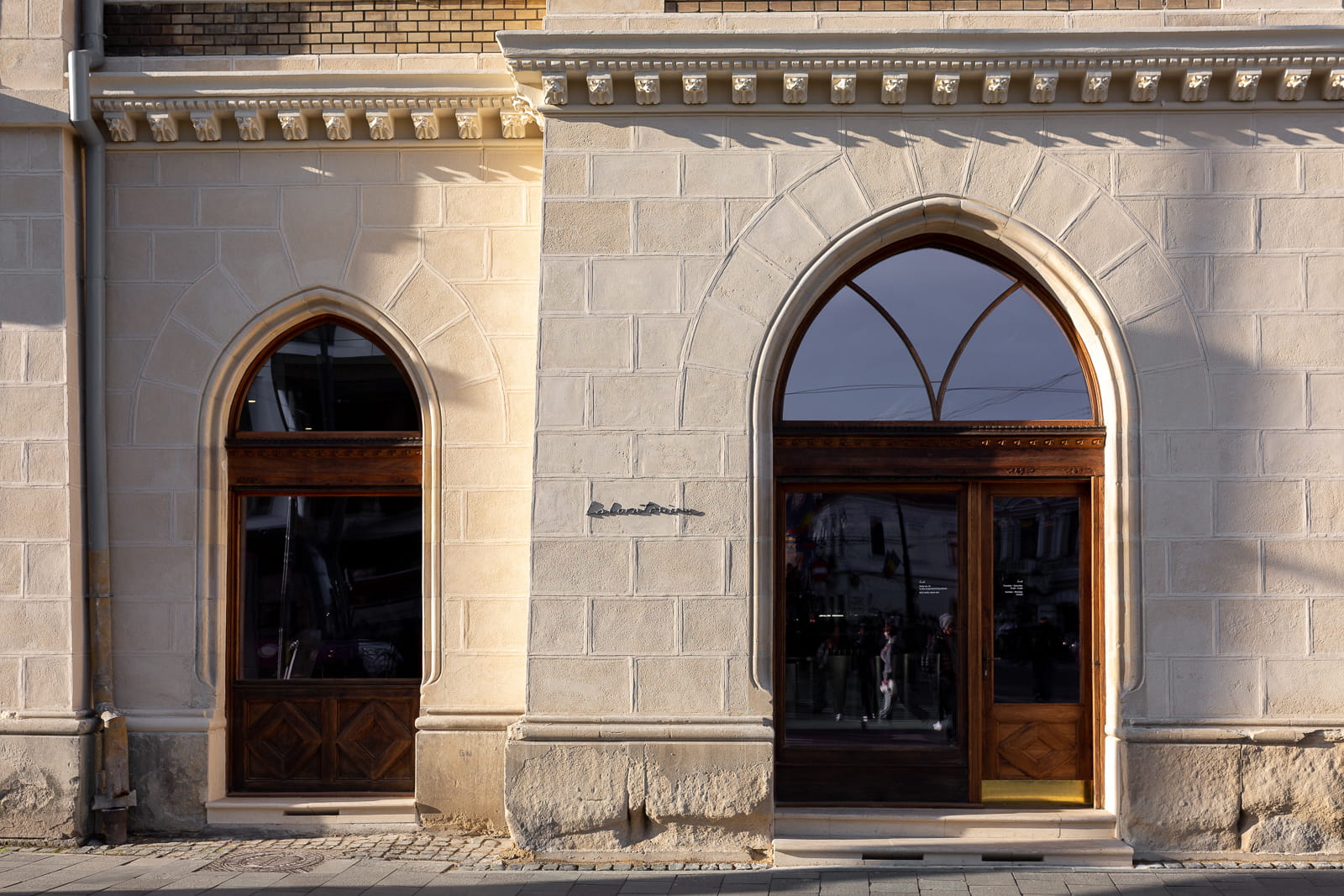
Recently inaugurated in the historic centre of Cluj-Napoca, Laboratorium is a specialty coffee shop that articulates a carefully measured architectural intervention, grounded in preservation, integration, and the revalorisation of a space of cultural significance.
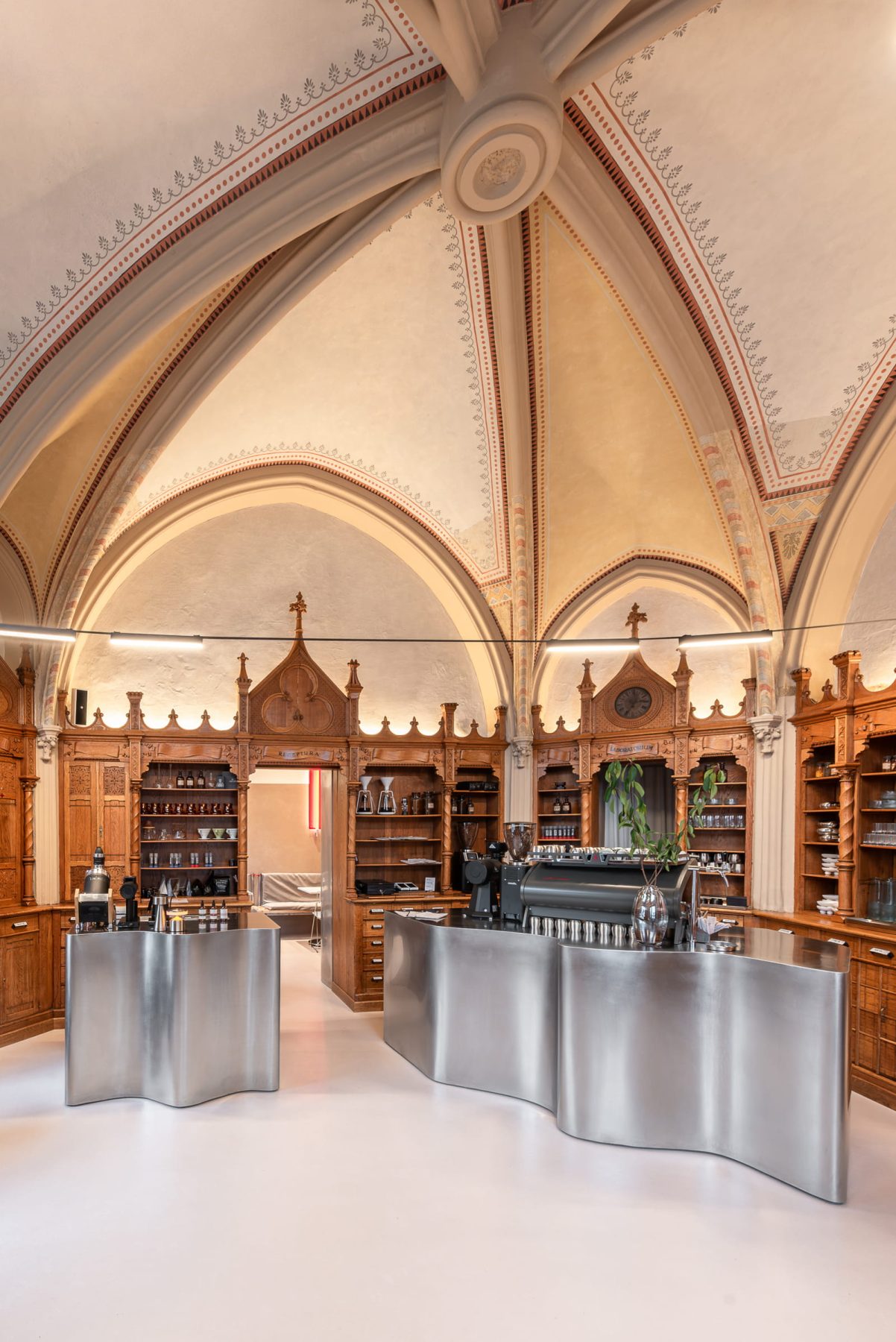
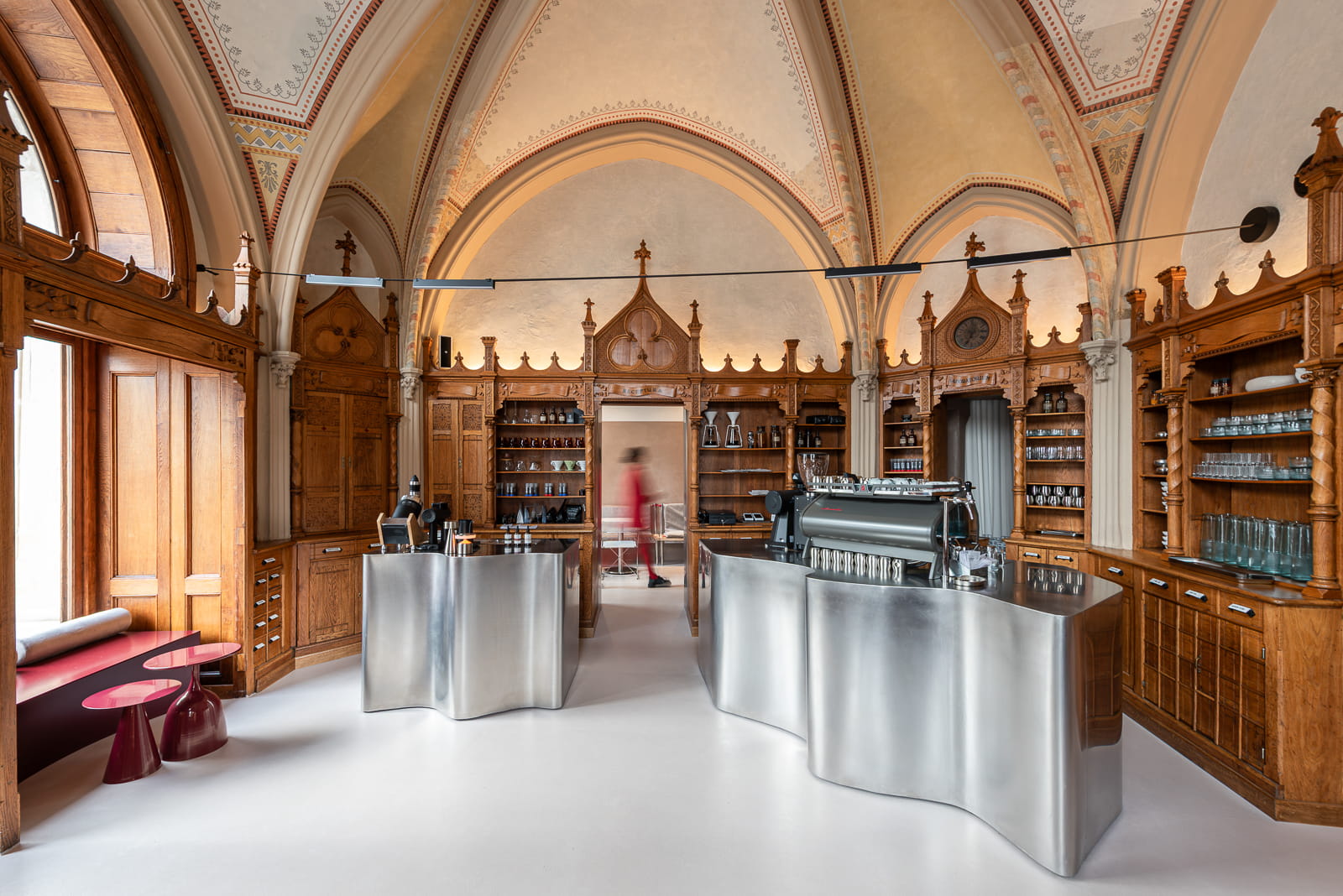
The project brings together entrepreneurial initiative, cultural awareness, and rigorous professional coordination, demonstrating how heritage interiors can be meaningfully reactivated through contemporary use rather than immobilised as static artefacts.
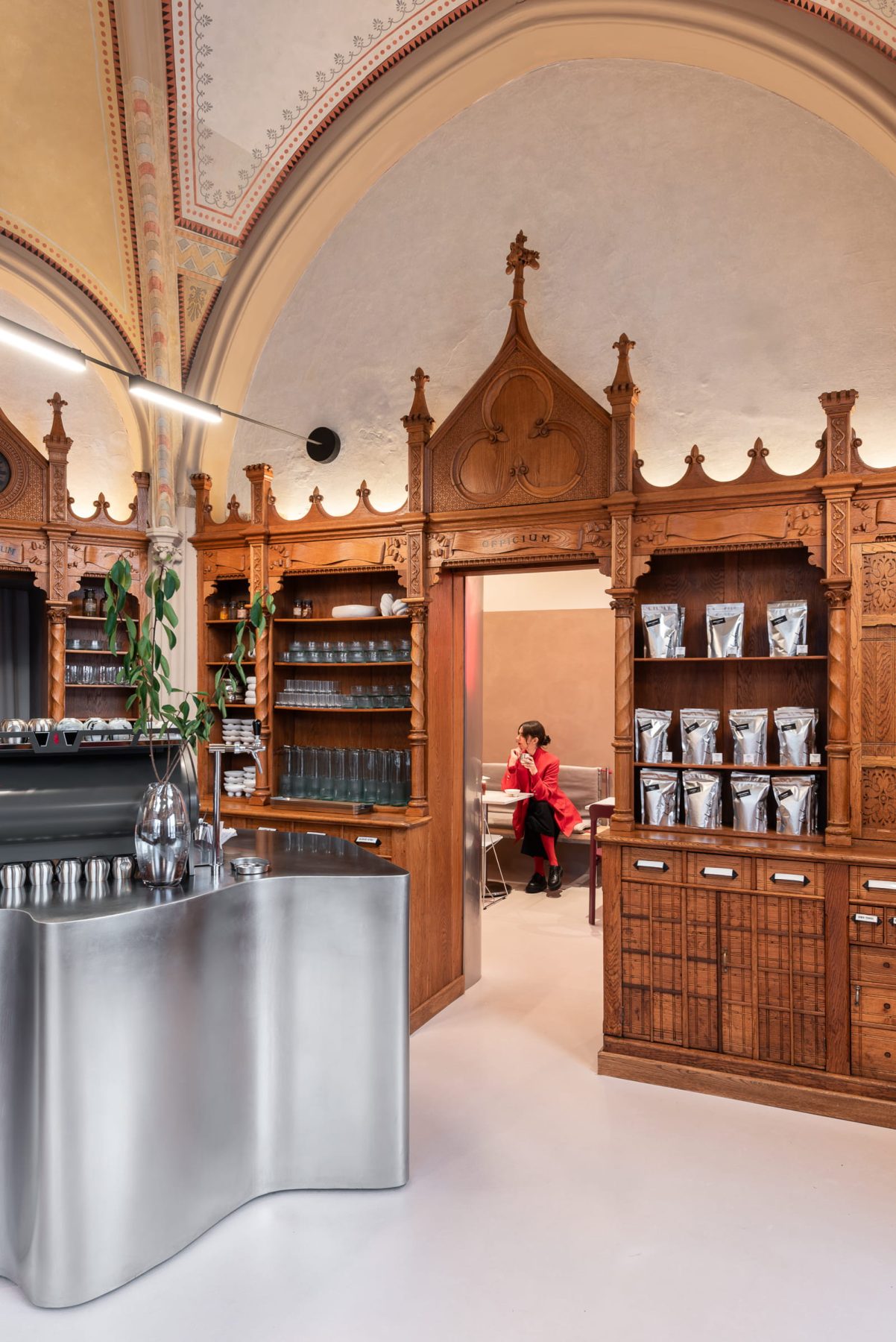
The space occupies the former Matia Corvin Pharmacy, located within Palatul Széki — one of four “report houses” erected at the end of the 19th century to mark the entrance to the city centre. Built in 1893 according to plans by architect Pecz Samu, known for the Central Market Hall in Budapest and his eclectic work incorporating Gothic detailing, the building embodies a restrained neo-Gothic language. Its original client, pharmacist, university professor, and entrepreneur Miklós Széki, resided in the apartment above the pharmacy, accessed via a spiral metal staircase, reinforcing the building’s mixed-use character from its inception.
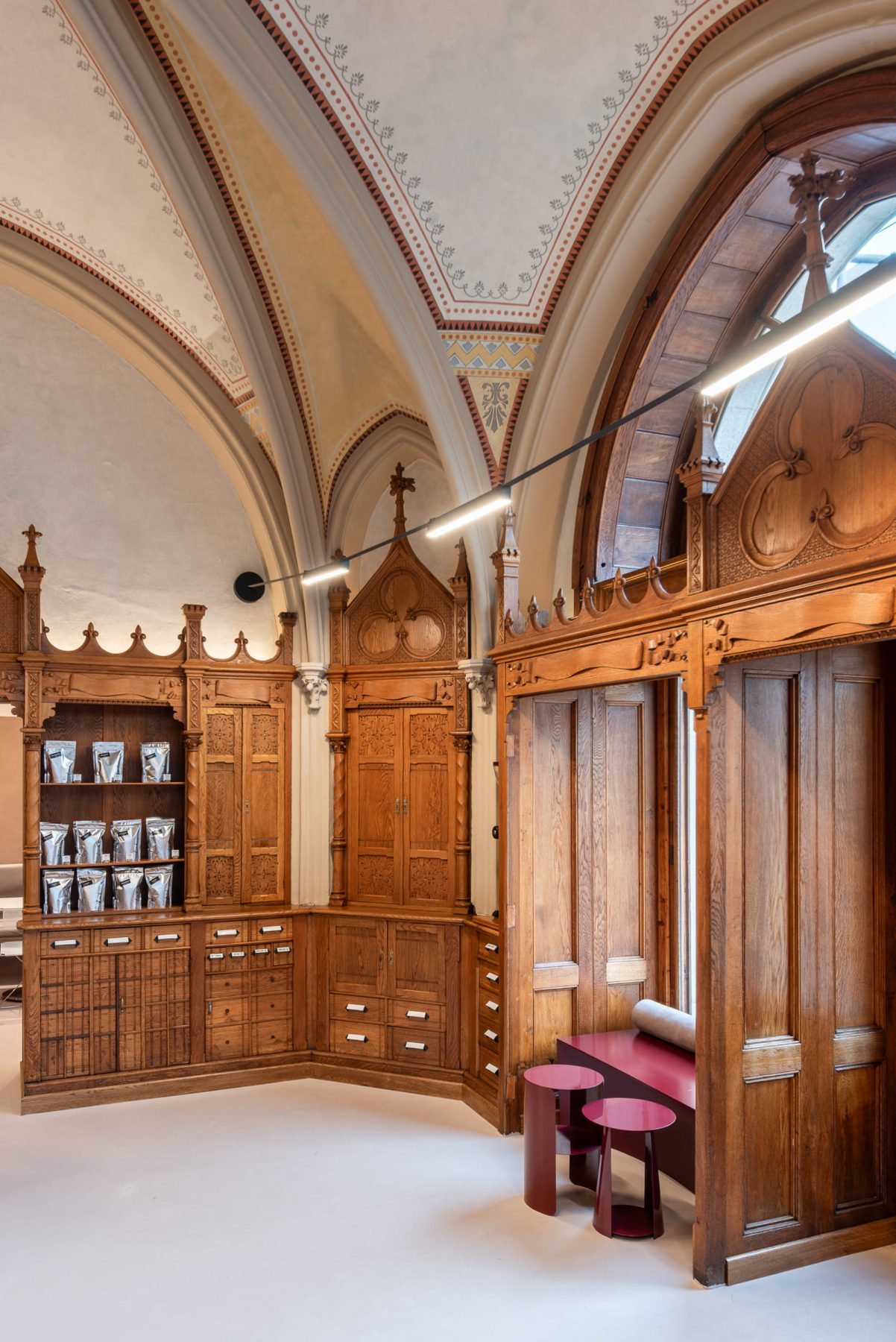
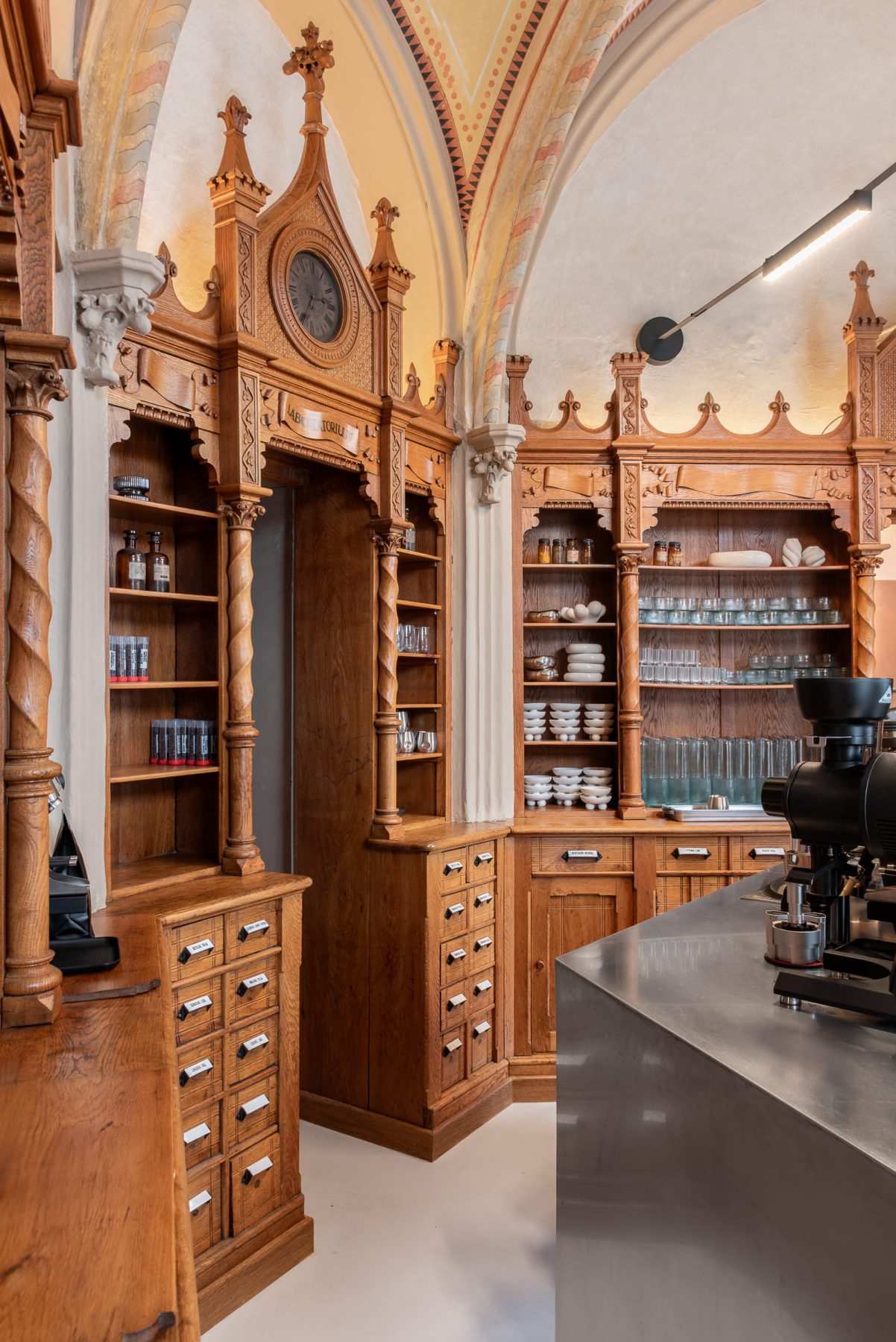
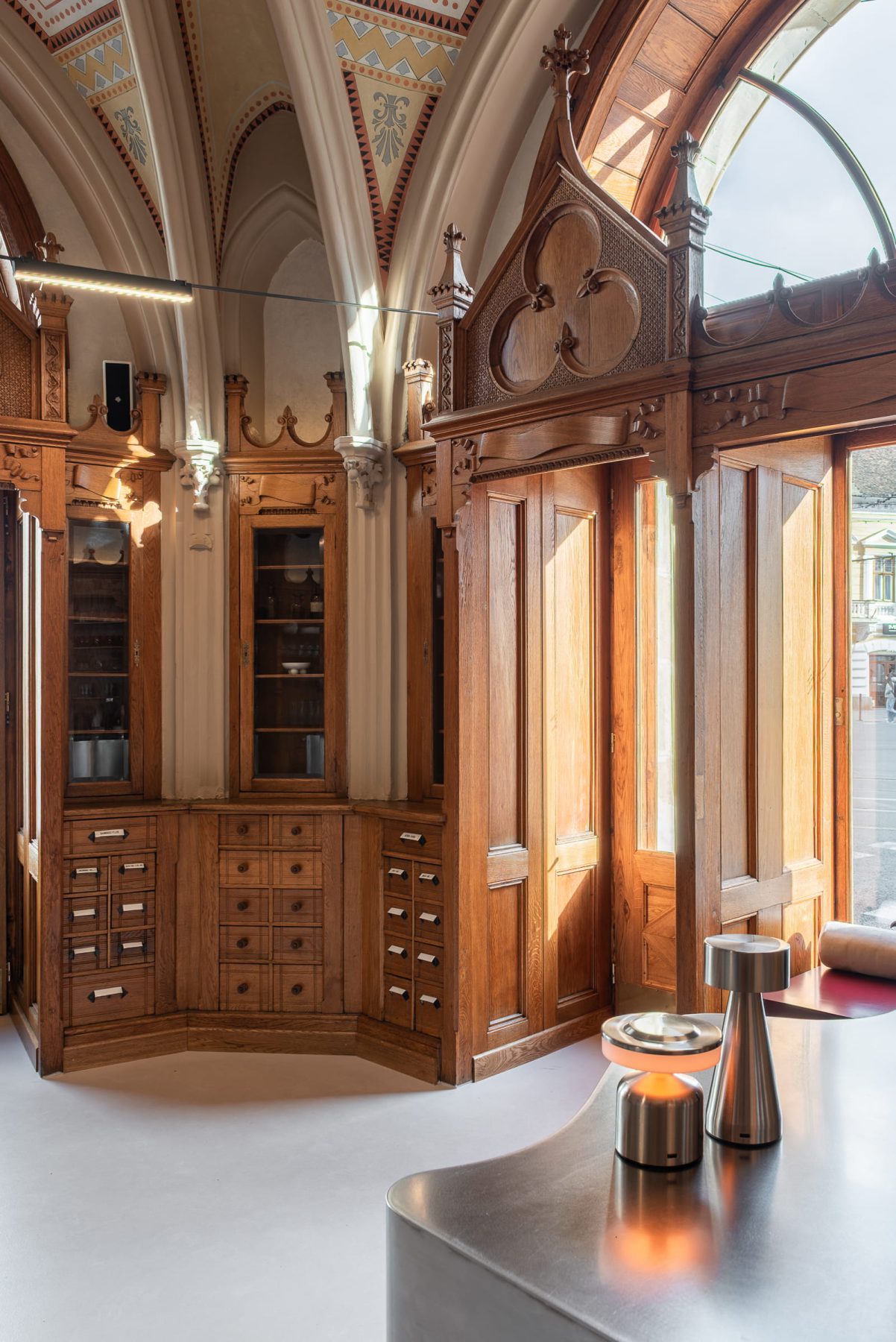
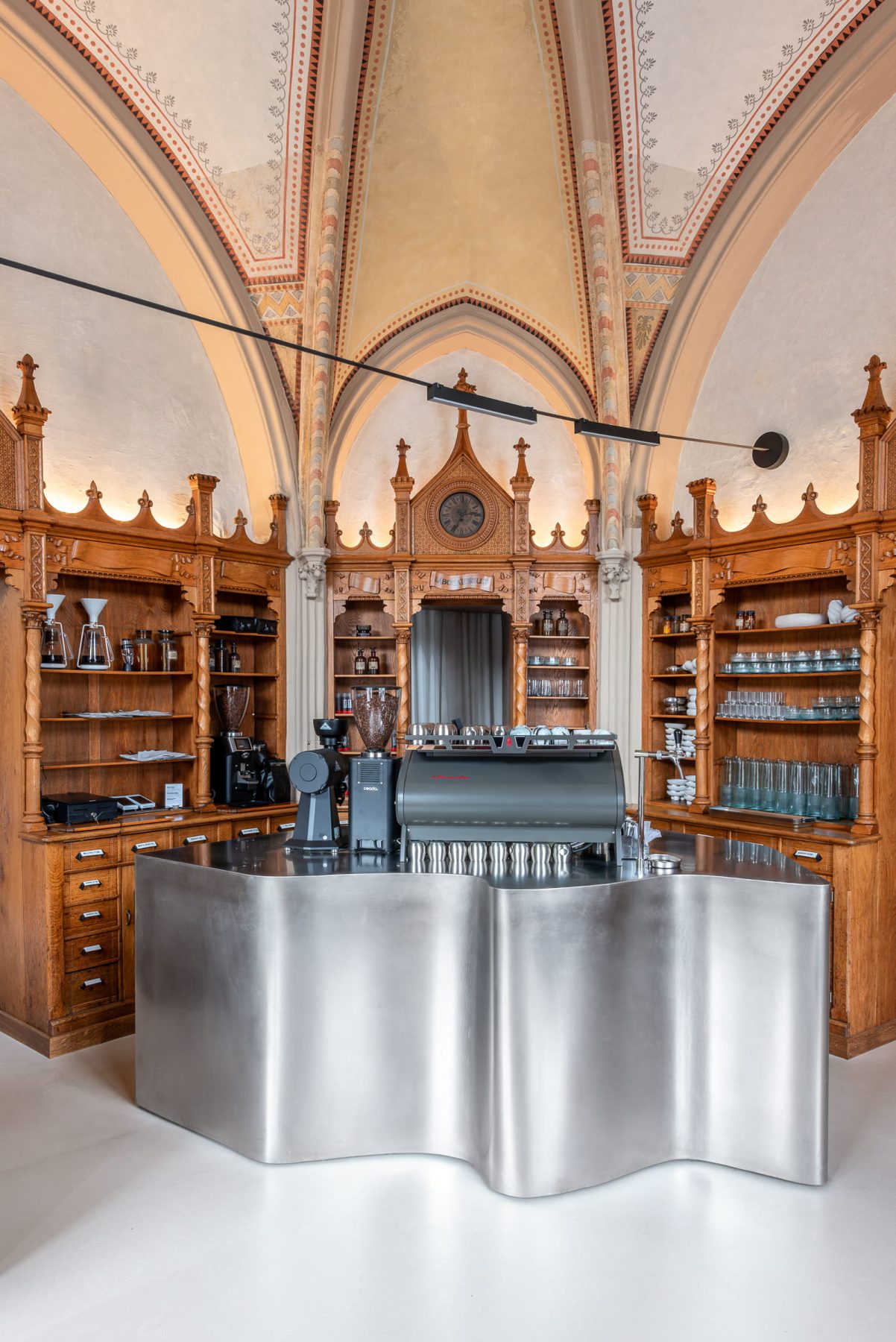
A defining feature of the interior is the original solid wood furniture, richly ornamented with Gothic arches, fleurons, and stained glass, crafted during the same period by the Cluj-based cabinetmaker B. Bak Lajos. These elements were preserved in situ and subjected to a meticulous restoration process.
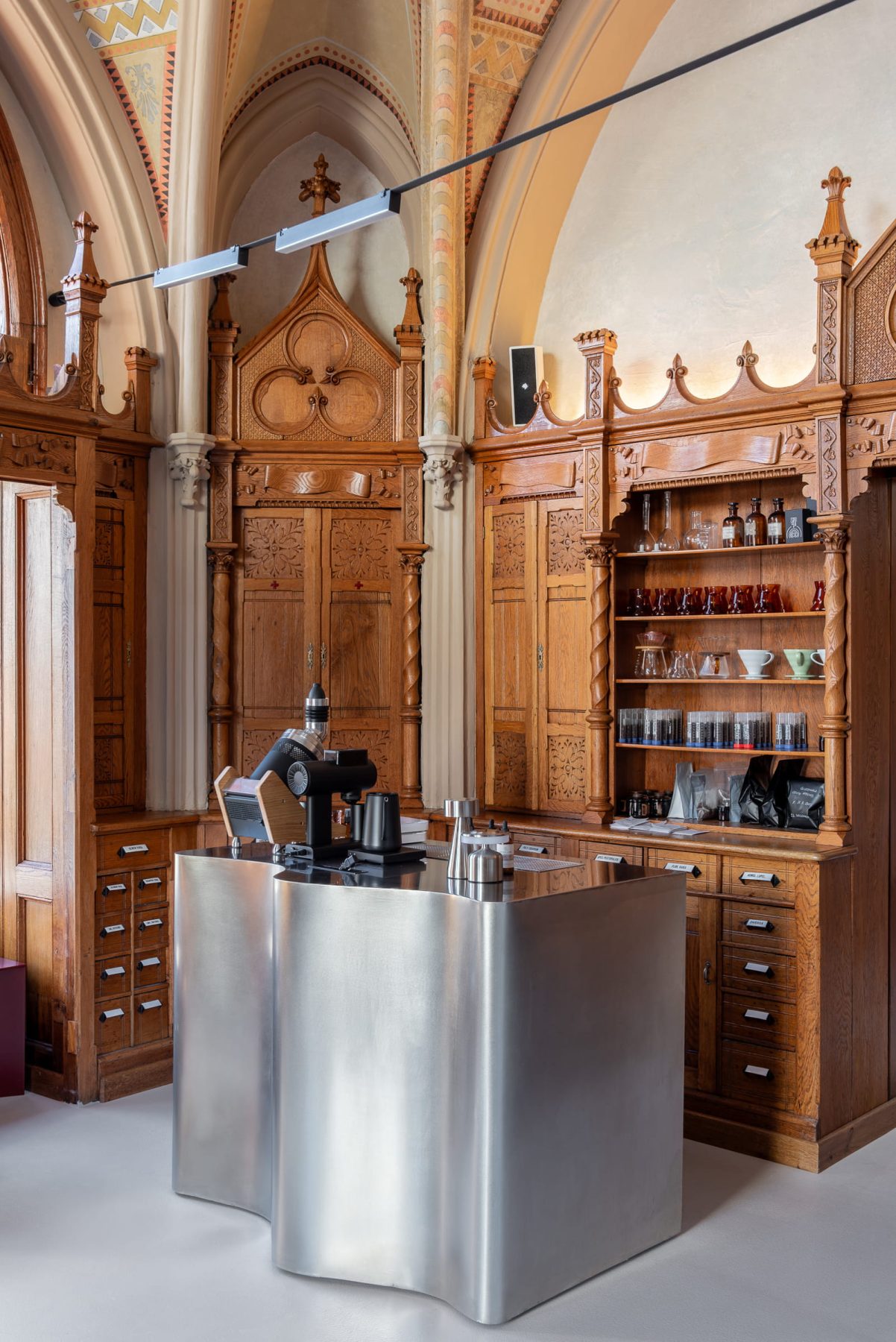
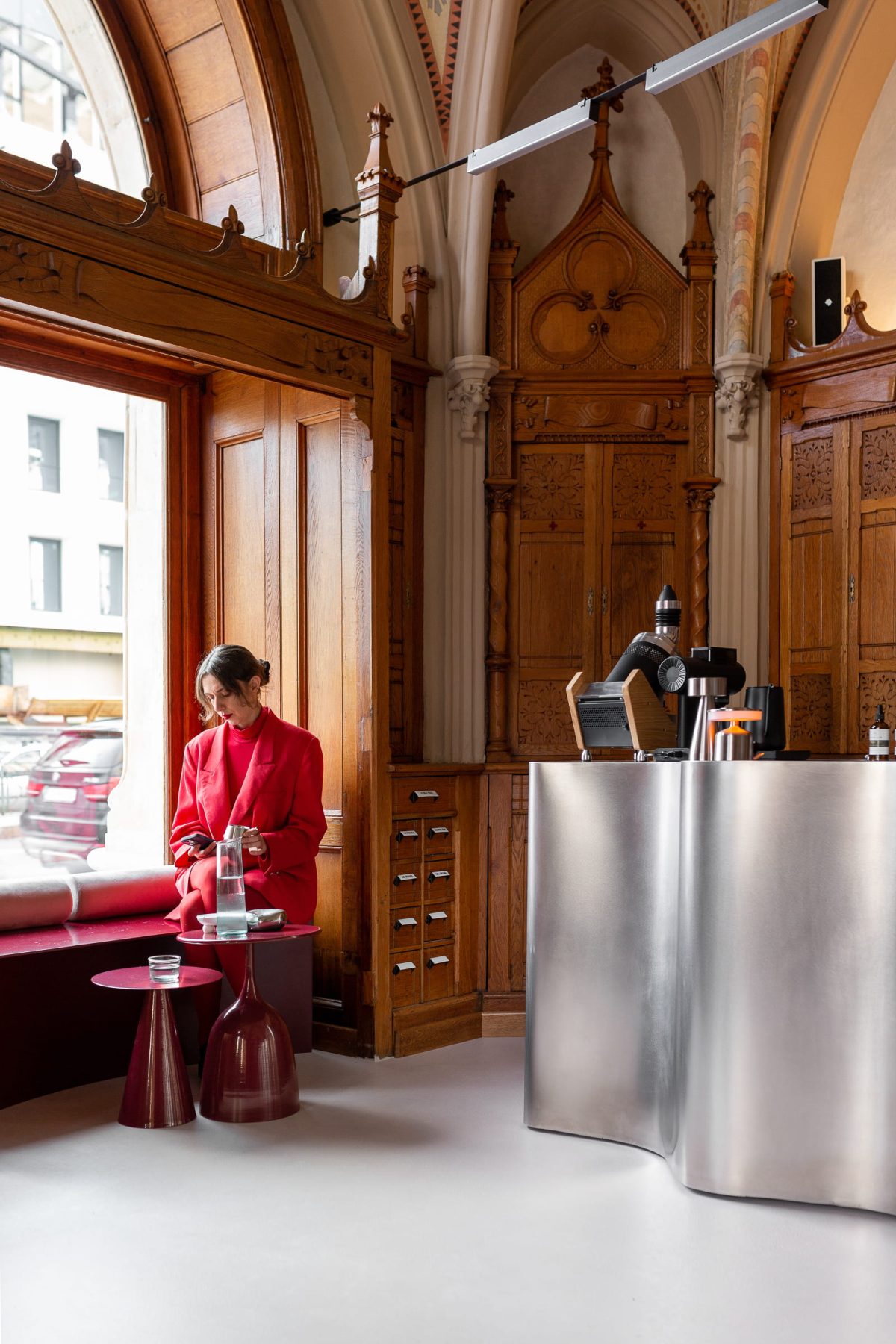
Architectural and restoration coordination brought together specialised teams across architecture, wood conservation, and decorative painting in a process grounded in research, material sensitivity, and respect for the building’s historic fabric. This interdisciplinary effort was coordinated by EktraArhitectura (Tulogdy László, Ciupe Marius, and Alb Cristina), while the wood restoration was undertaken by Unicom under the supervision of restorer Balla Csaba, and the conservation of the decorative painting was carried out by a specialized team led by Mednyánszky Zsolt, ensuring a coherent and research-informed approach across all conservation domains.
Within this framework, restoration was approached as a cultural act of recovery and continuity.
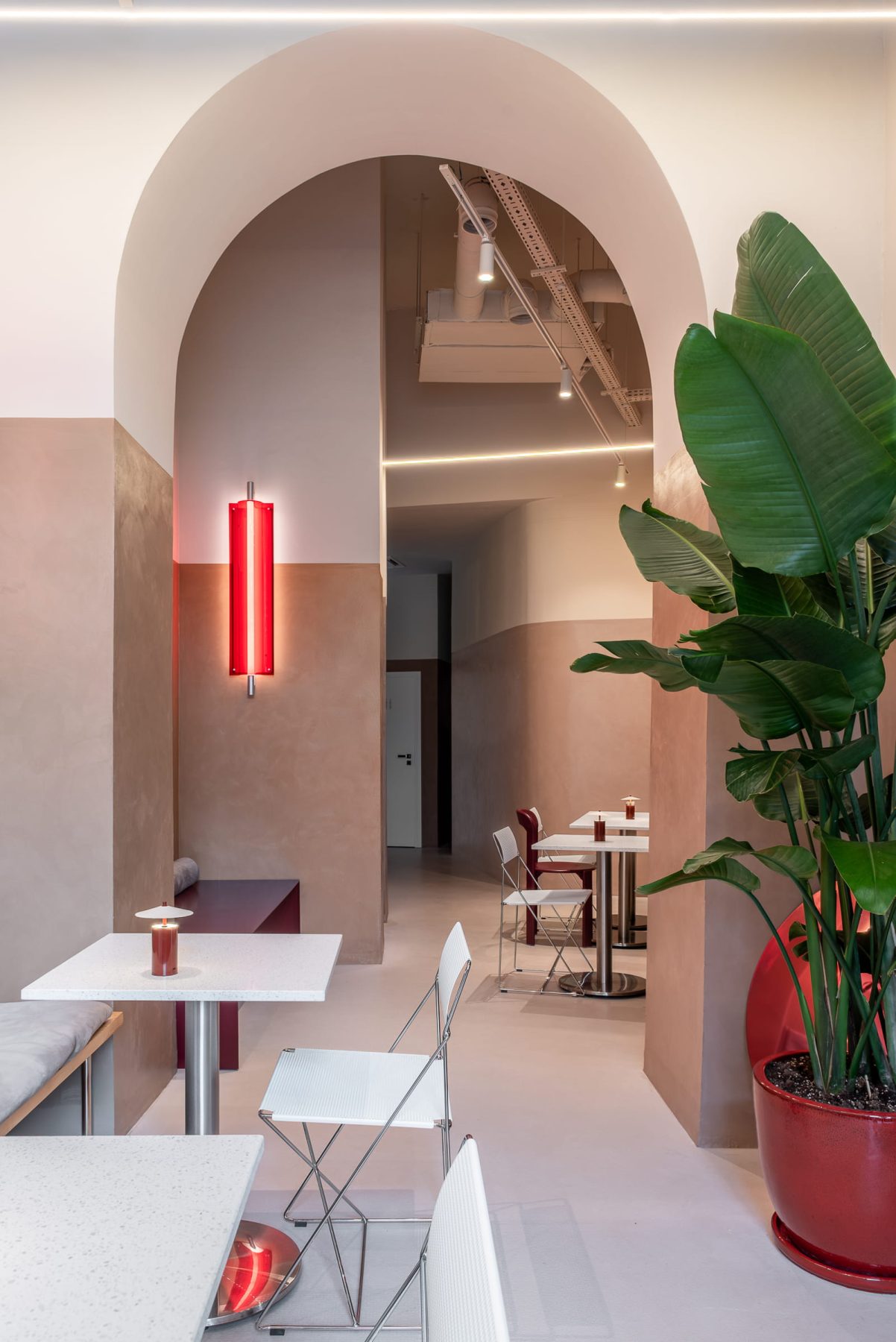
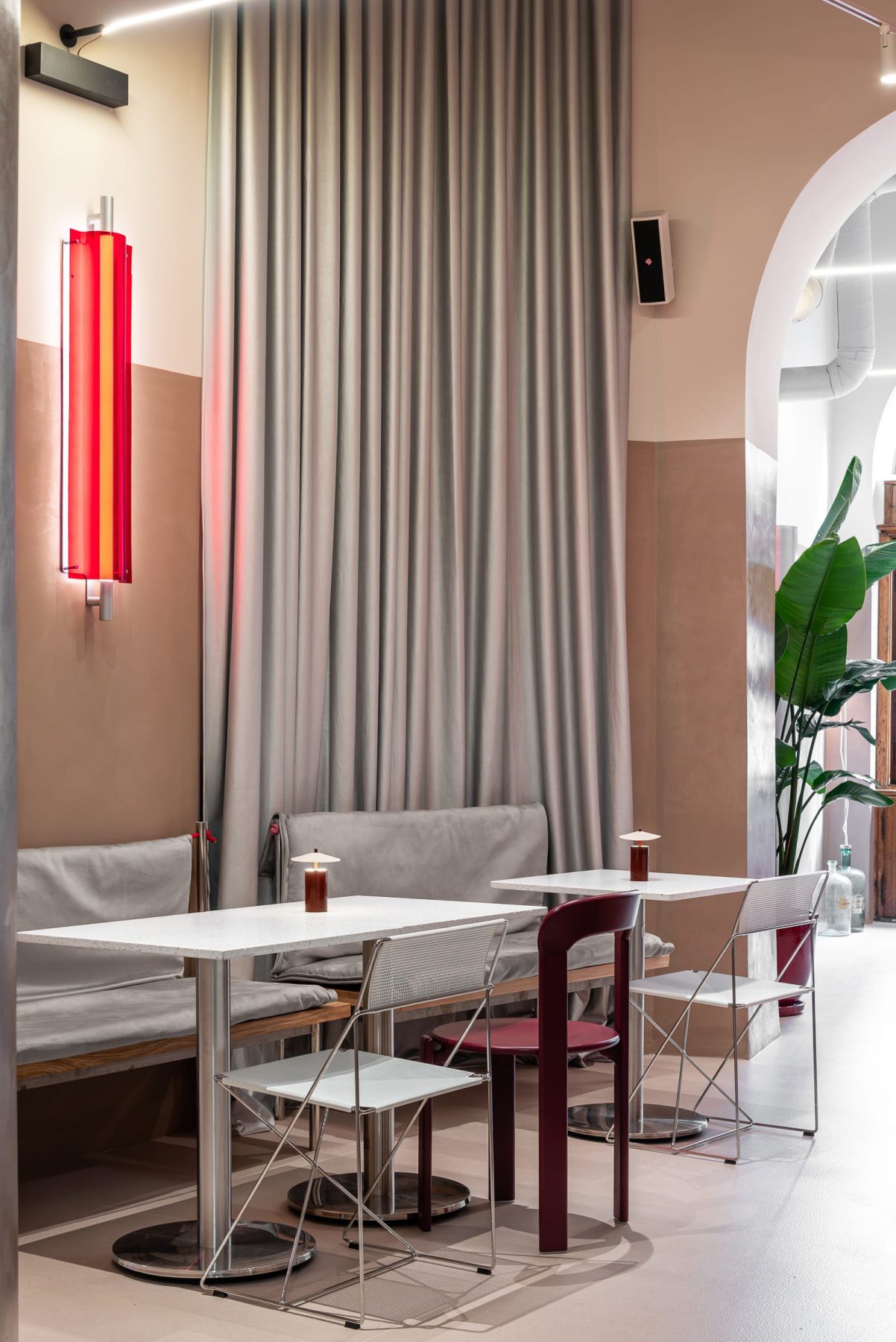
The introduction of the new programme — a specialty coffee shop — was conceived as a responsive layer, attentive to the spatial and historical qualities of the interior.
The interior design by Fain Design (Iulia Chifelea and Deea Bălgărădean) adopts a restrained and airy visual vocabulary, where brushed metal surfaces, fluid geometries, and minimalist interventions operate in dialogue with the historic woodwork.
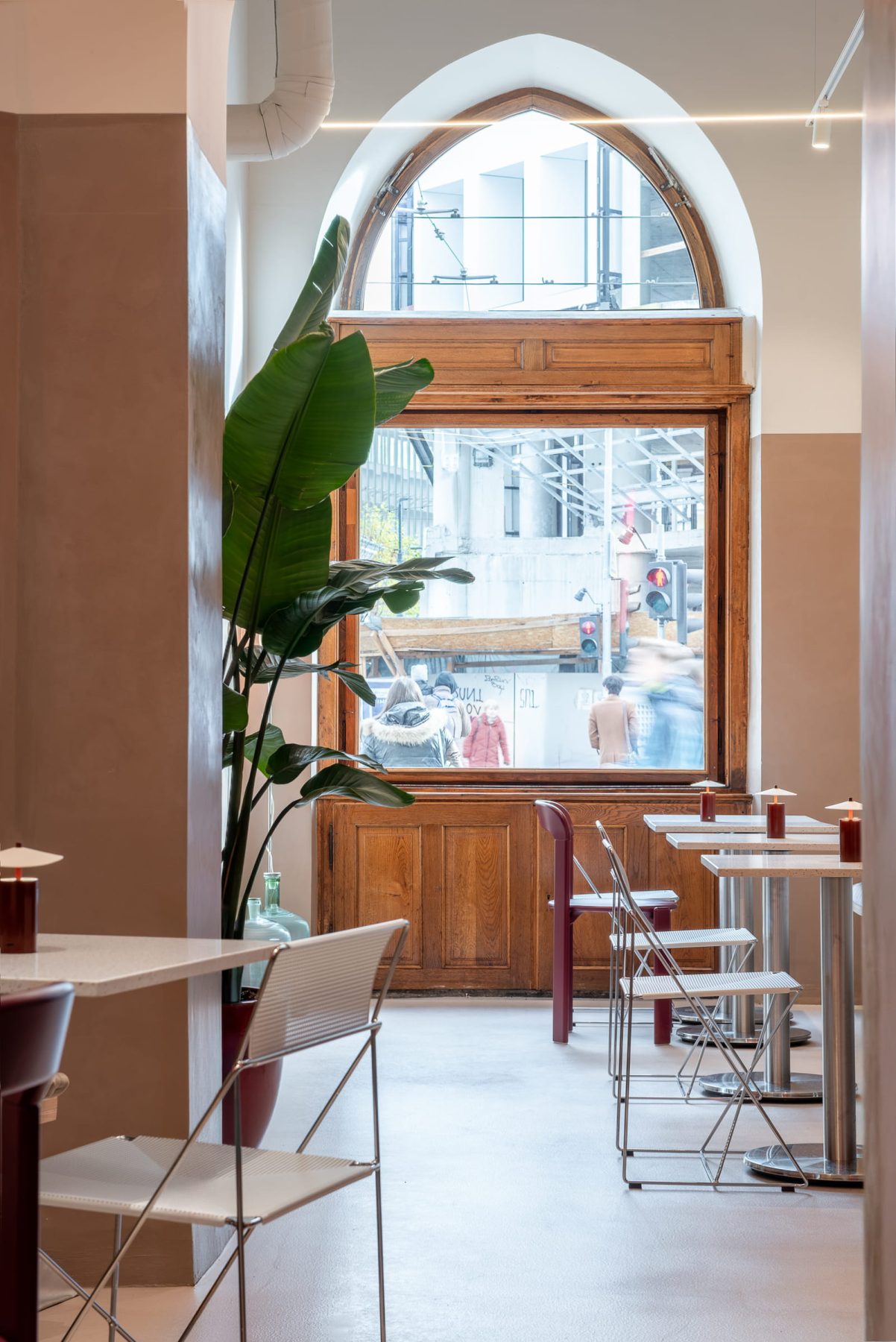
Curved stainless-steel coffee bars function as sculptural inserts, reflecting natural light filtered through the ogival arched windows, while contemporary lighting and modular furnishings establish contrast without visual competition.
The seating area, situated in the former laboratory, preserves the original skylights and reveals the historical chromatic character of the ceiling through a reconstructed paint layer. Opaline red lighting introduces a subtle scenographic nuance that resonates with the mural decorations and stained-glass elements. The visual identity, developed by The Tailor, deliberately avoids nostalgic references, instead foregrounding the experimental and research-oriented ethos suggested by the name of the space.
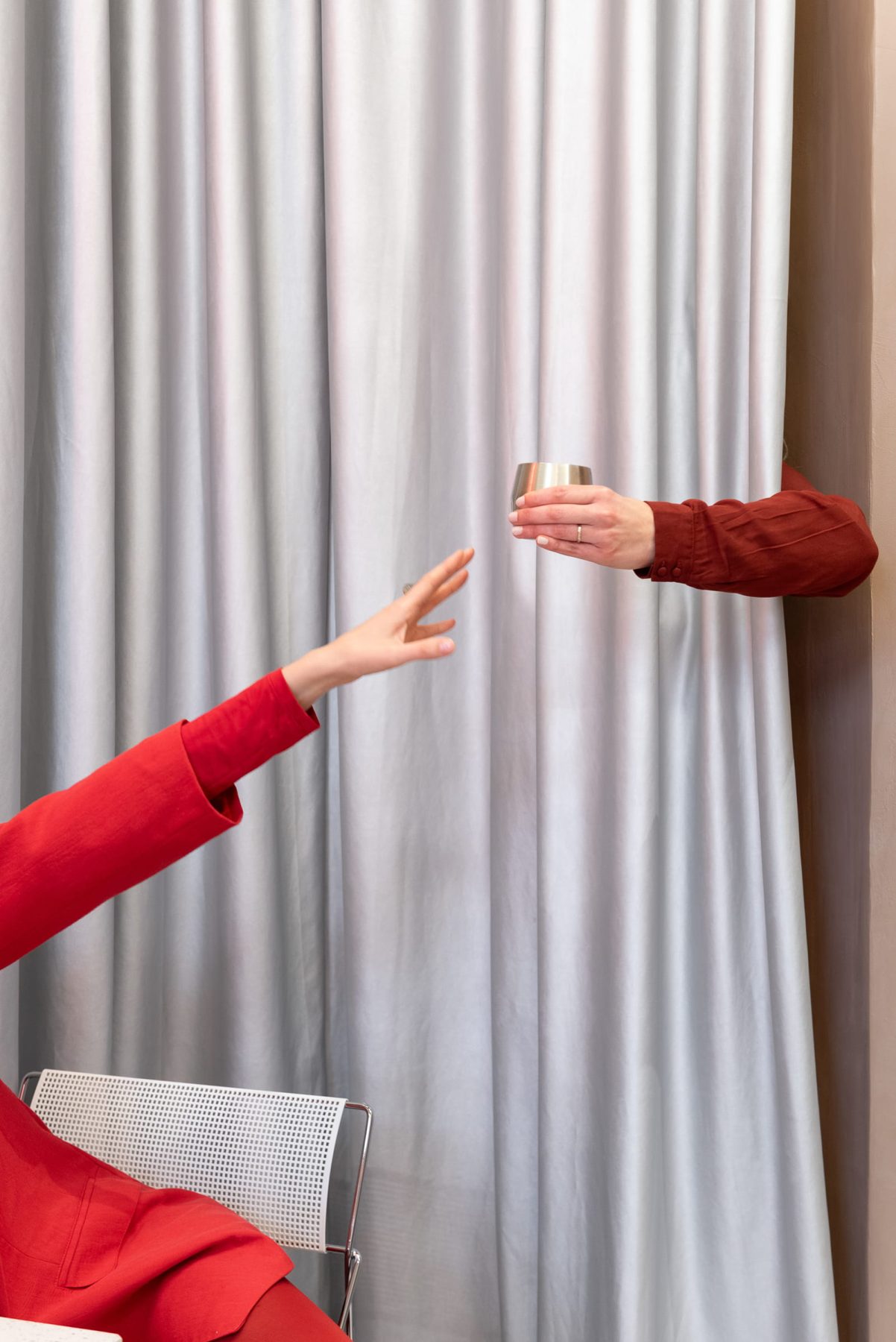
This conceptual coherence extends to the menu, which is structured around authenticity, precision, and respect for origin. Coffees are sourced directly from farmers with whom the team maintains close, long-term relationships, selected for their clarity, complexity, and traceability. Preparation methods are carefully calibrated, positioning flavour and narrative as integral components of the overall experience.
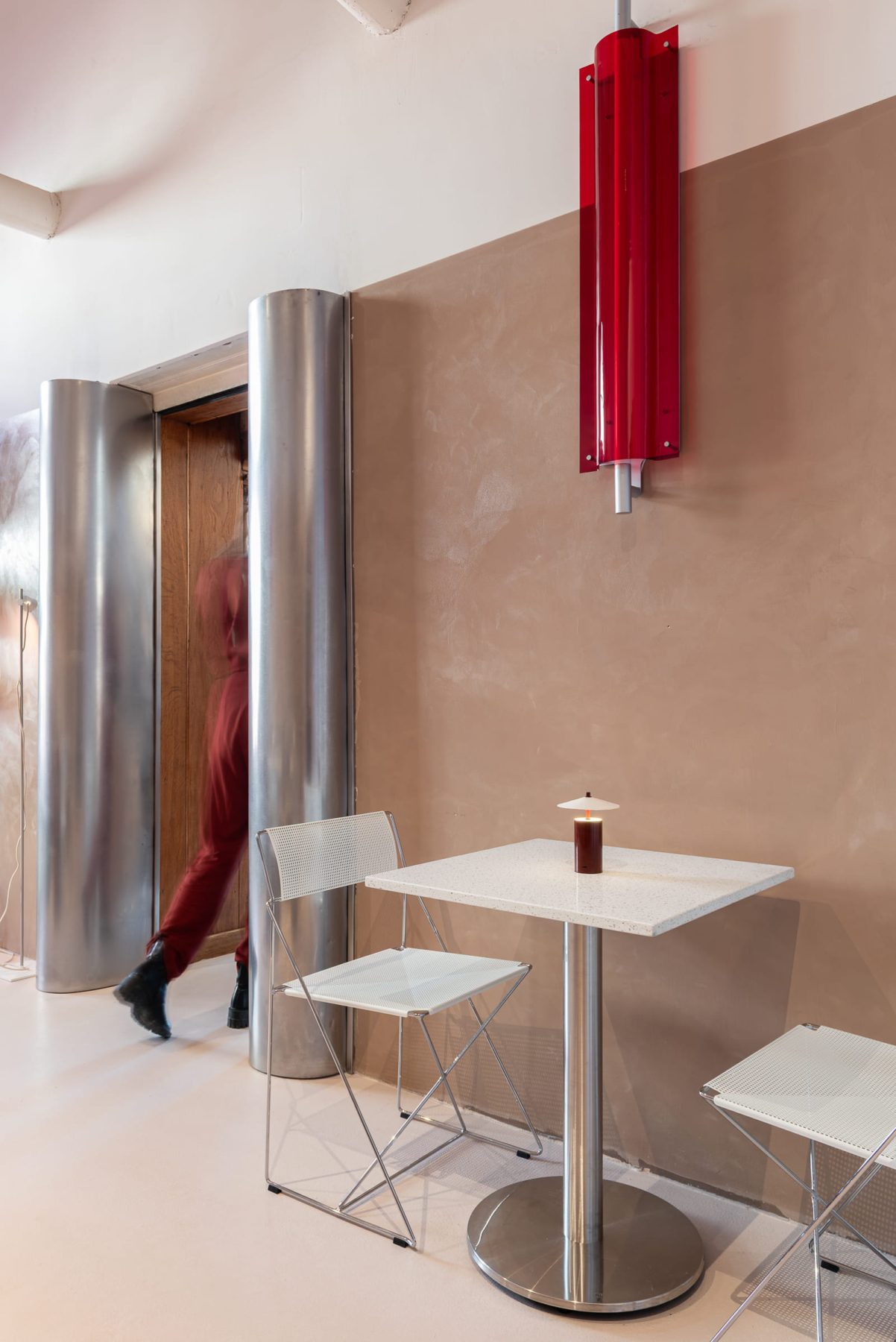
Laboratorium establishes a deliberate contrast between the richly ornamented historic woodwork and a restrained, minimal contemporary language. Clean surfaces, fluid metal elements, and discreet interventions frame and amplify the original craftsmanship, allowing heritage and modernity to coexist through an expressive dialogue.
Facts & Credits
Title Laboratorium
Typology Interior, Coffee shop
Location Cluj-Napoca, Romania
Status Completed, 2025
Architecture & Restoration Coordination EktraArhitectura (Tulogdy László, Ciupe Marius, and Alb Cristina)
Interior Design Fain Design (Iulia Chifelea and Deea Bălgărădean)
Wood restoration Unicom under the supervision of restorer Balla Csaba
Decorative painting restoration led by Mednyánszky Zsolt
Visual Identity The Tailor
Photography In Still
Text by the authors
READ ALSO: Marco Maio Architects reinterpret the cultural spirit of an historic building in Prague into a contemporary shared workspace