Architecture in Colour series treats colour as an architectural instrument rather than decoration—one that shapes space, proportion, and emotional experience as powerfully as form and light.
Atelier Apara renovates a 93 m² family house within a post-war apartment building in Paris through an object-like insertion: a reflective green cube forming the domestic nucleus. Color operates as an architectural tool over formal excess, reinforcing orientation and spatial legibility. Noble materials and industrial fixing systems—restored parquet, exposed concrete, custom marble—establish a refined dialogue between existing structure and contemporary inhabitation, defined by clarity, material intelligence, and chromatic precision.
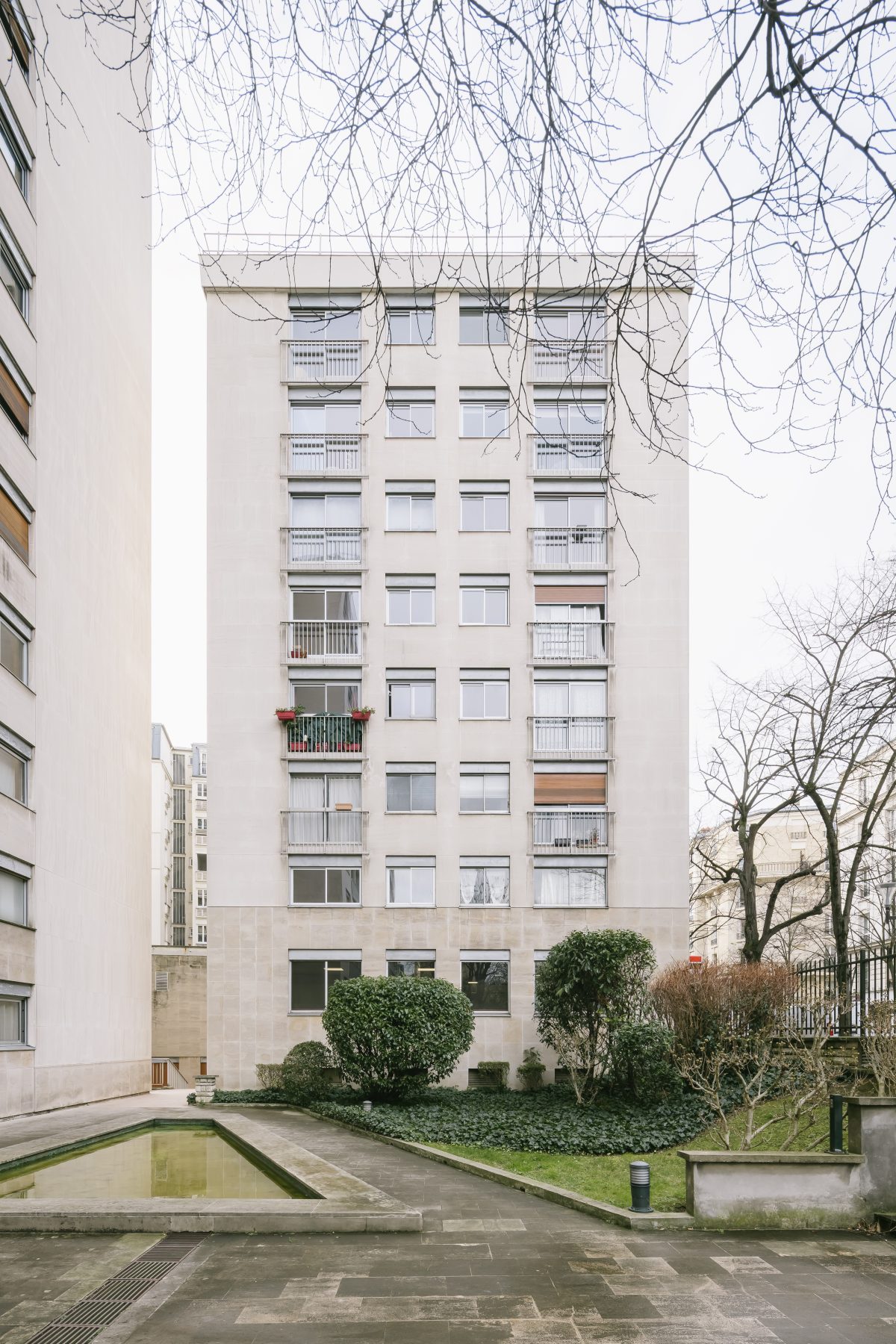
Set within a residential building dating from the 1970s–1980s in Paris, Projet “144. Sarette” by Atelier Apara reinterprets the potential of the post-war apartment through a precise and concept-driven interior transformation. The intervention engages the existing structure with a contemporary spatial vision. Conceived as the complete renovation of a 93 m² family dwelling, the project introduces a renewed domestic framework.
It redefines both spatial organization and material identity while aligning the apartment with current modes of inhabitation.
 At the core of the intervention lies a strategic reconfiguration of the plan.
The original three-room apartment is transformed into a four-room layout, incorporating an additional bedroom while preserving spatial clarity.
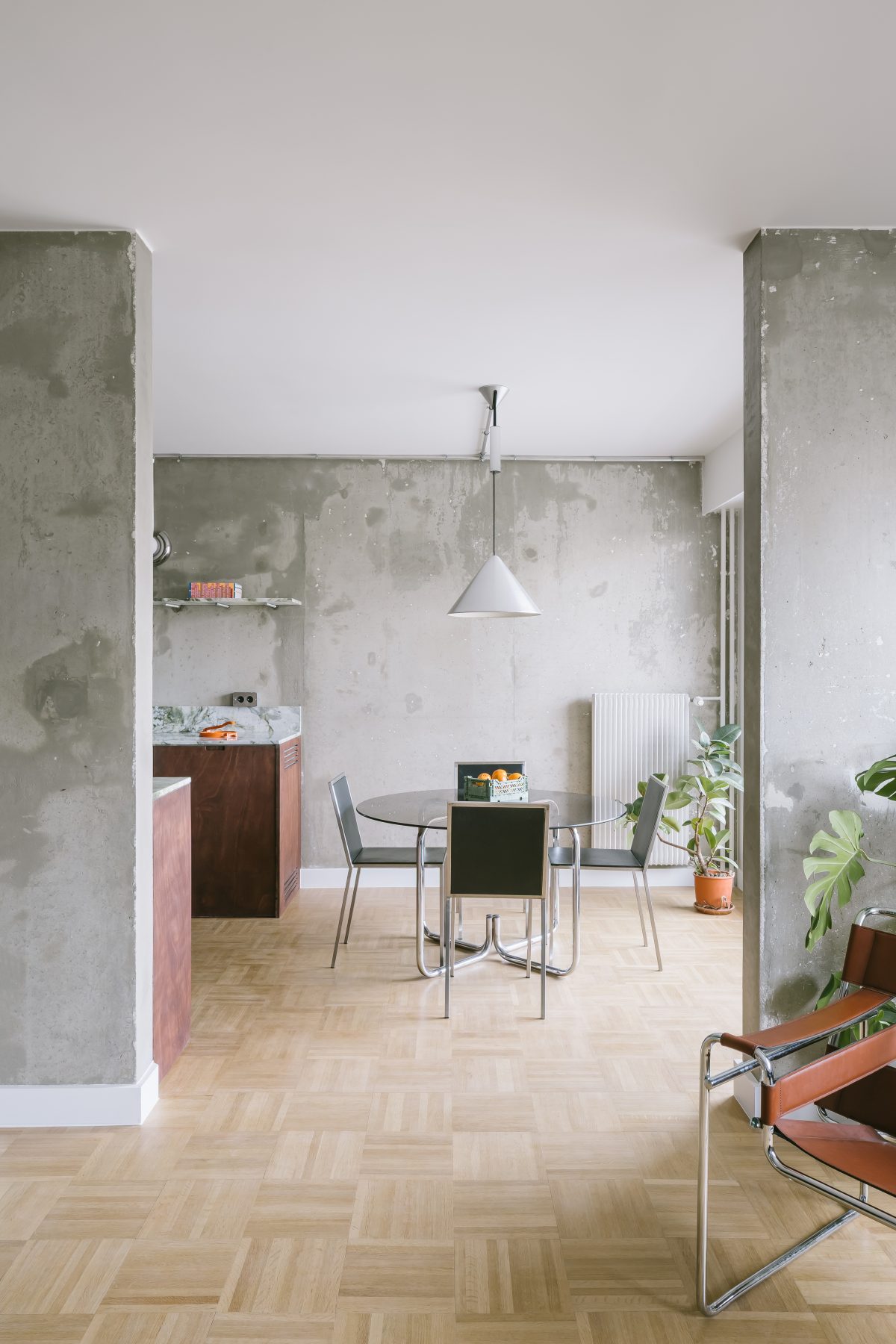
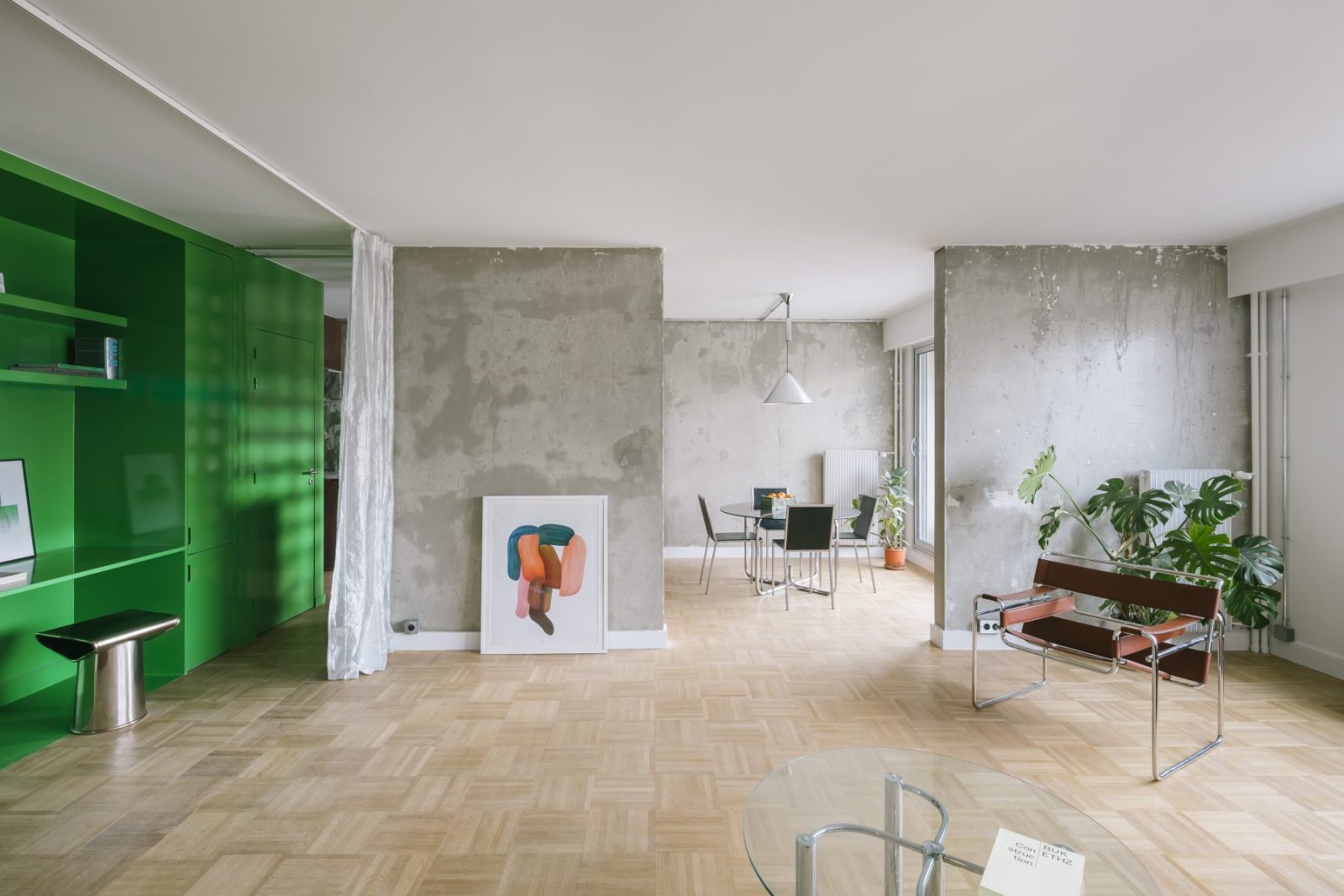
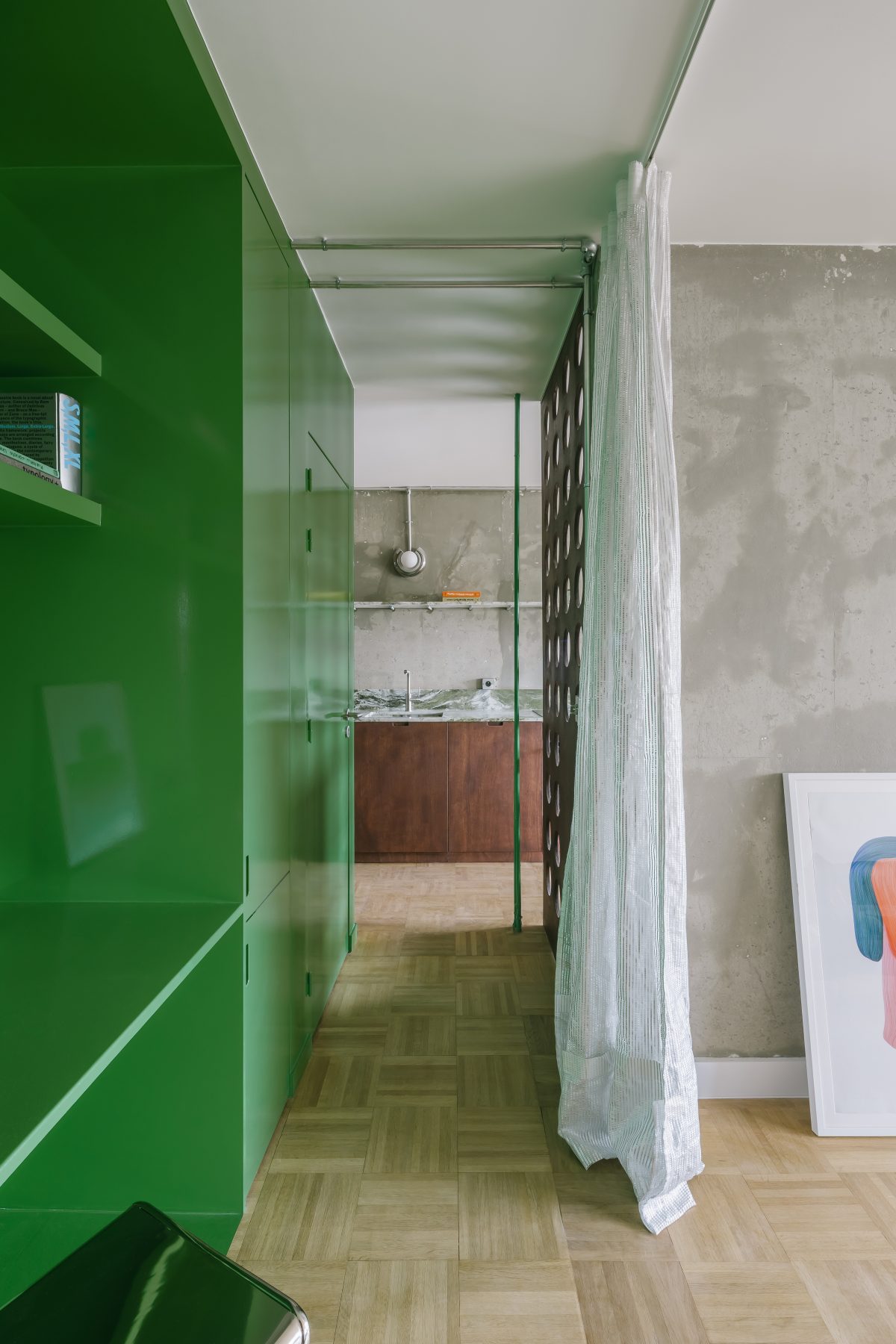
A compact central volume —a glossy green cube— is introduced to reorganize the apartment from within. This object-like element concentrates technical functions and storage, while structuring circulation.
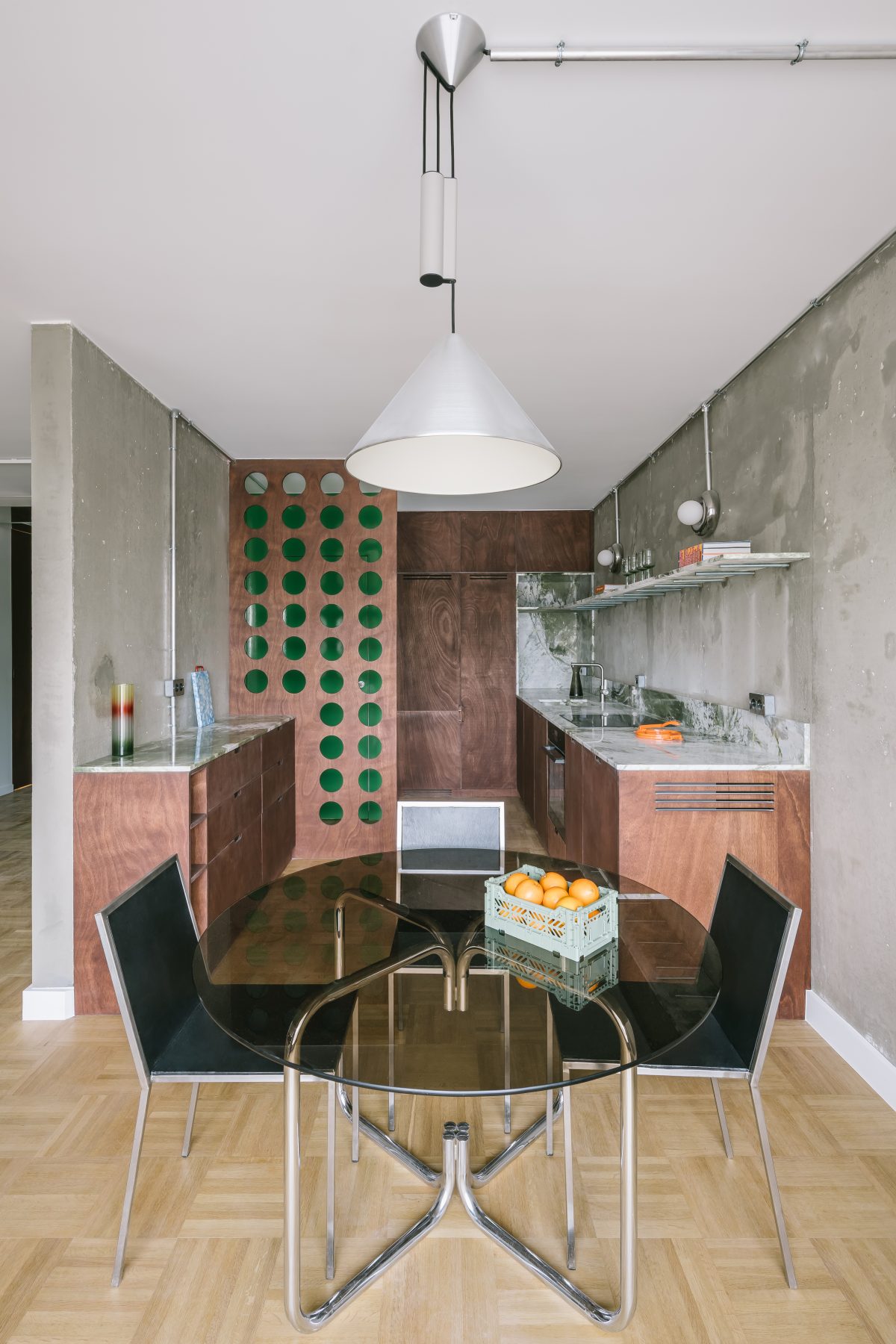
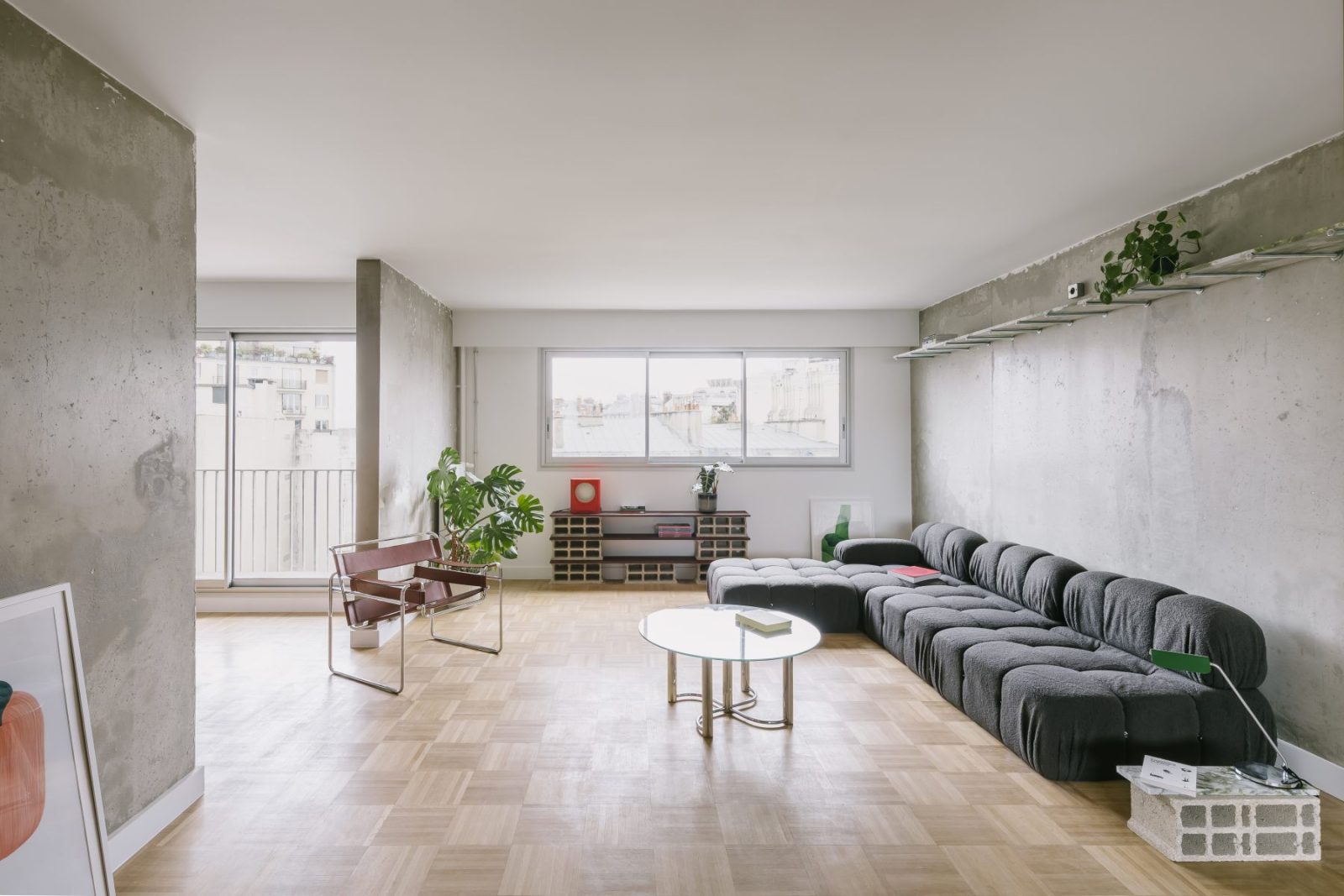
Living spaces unfold fluidly around this central nucleus, establishing a continuous and legible spatial sequence.
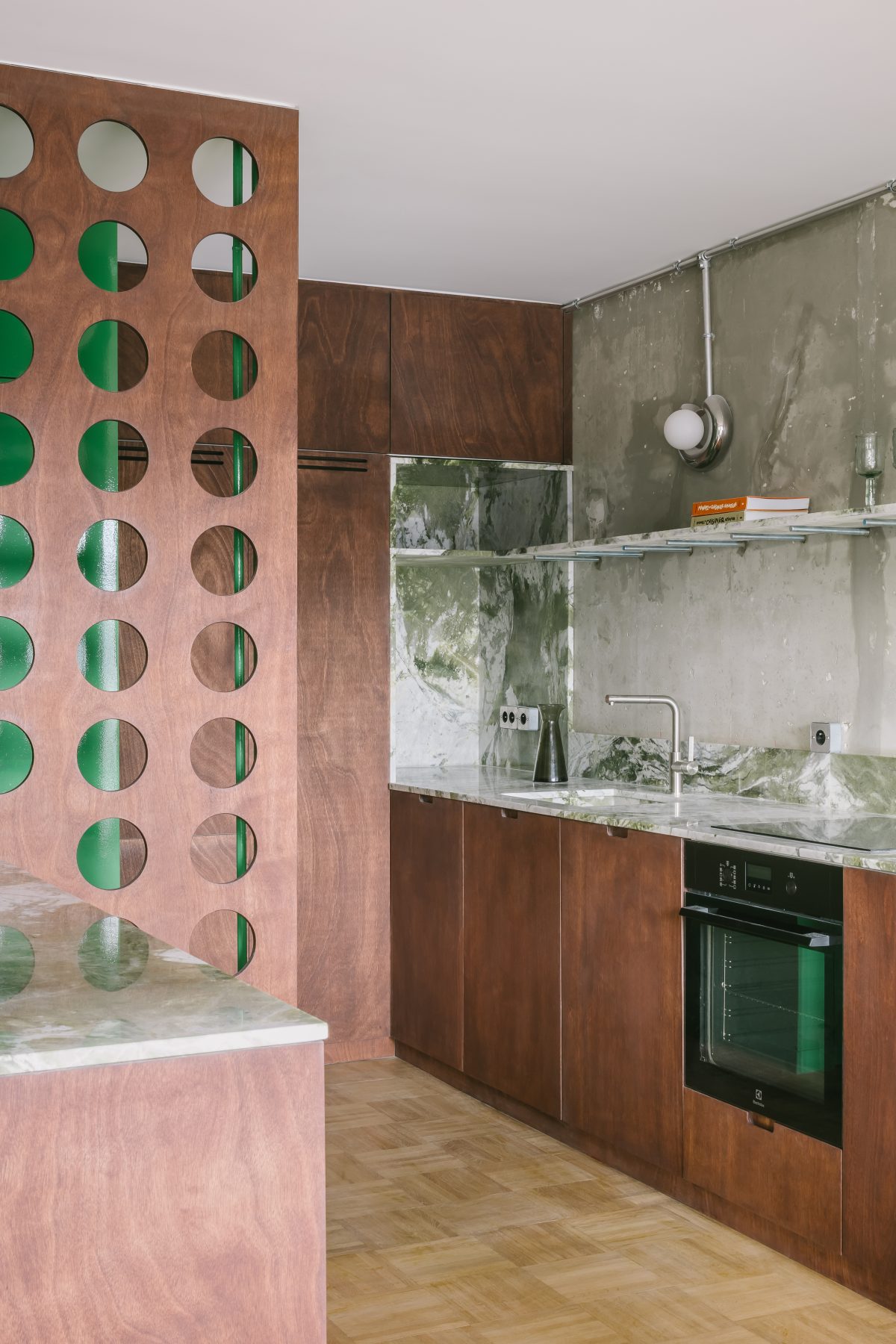
The green cube operates simultaneously as an organizational device and a luminous catalyst.
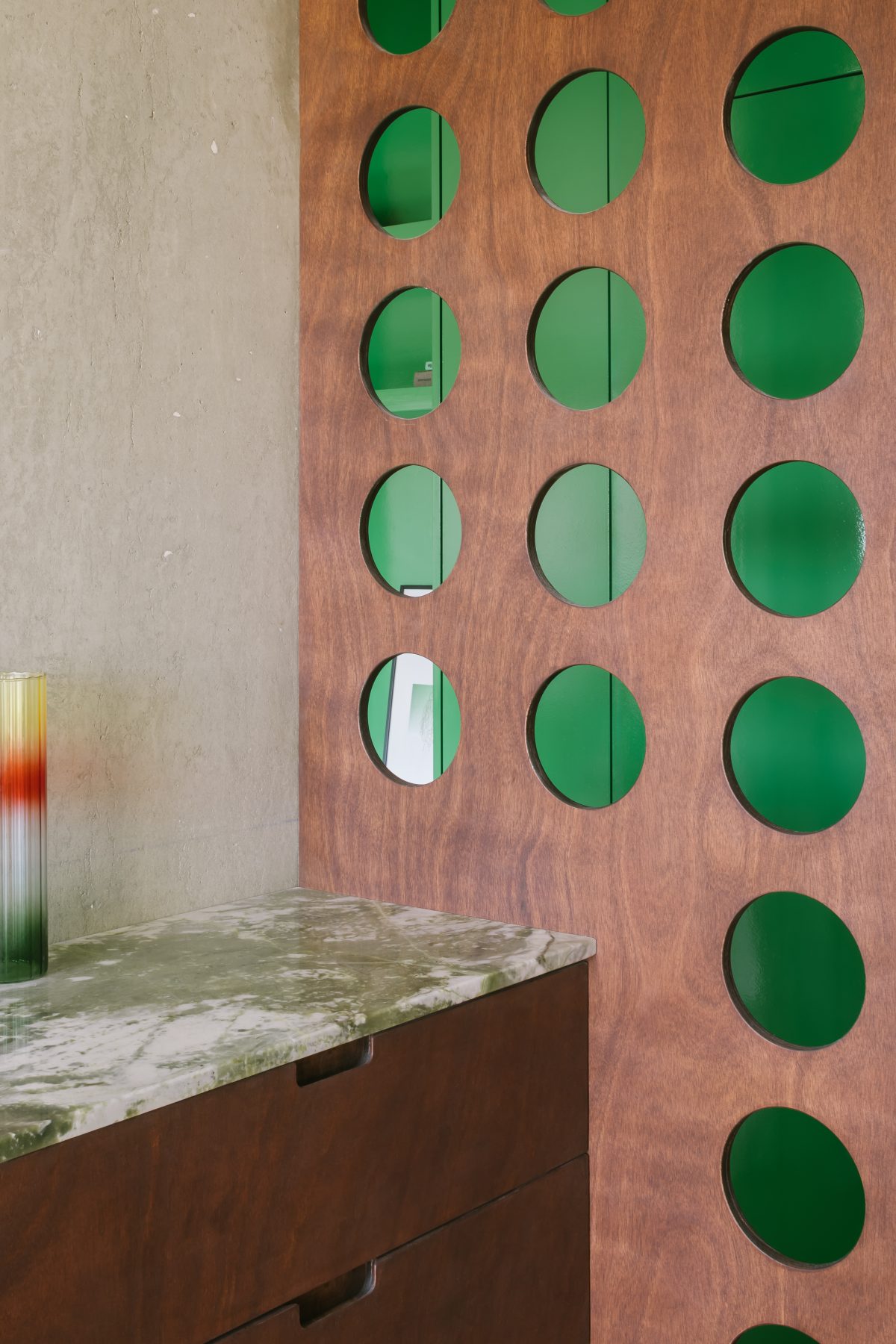
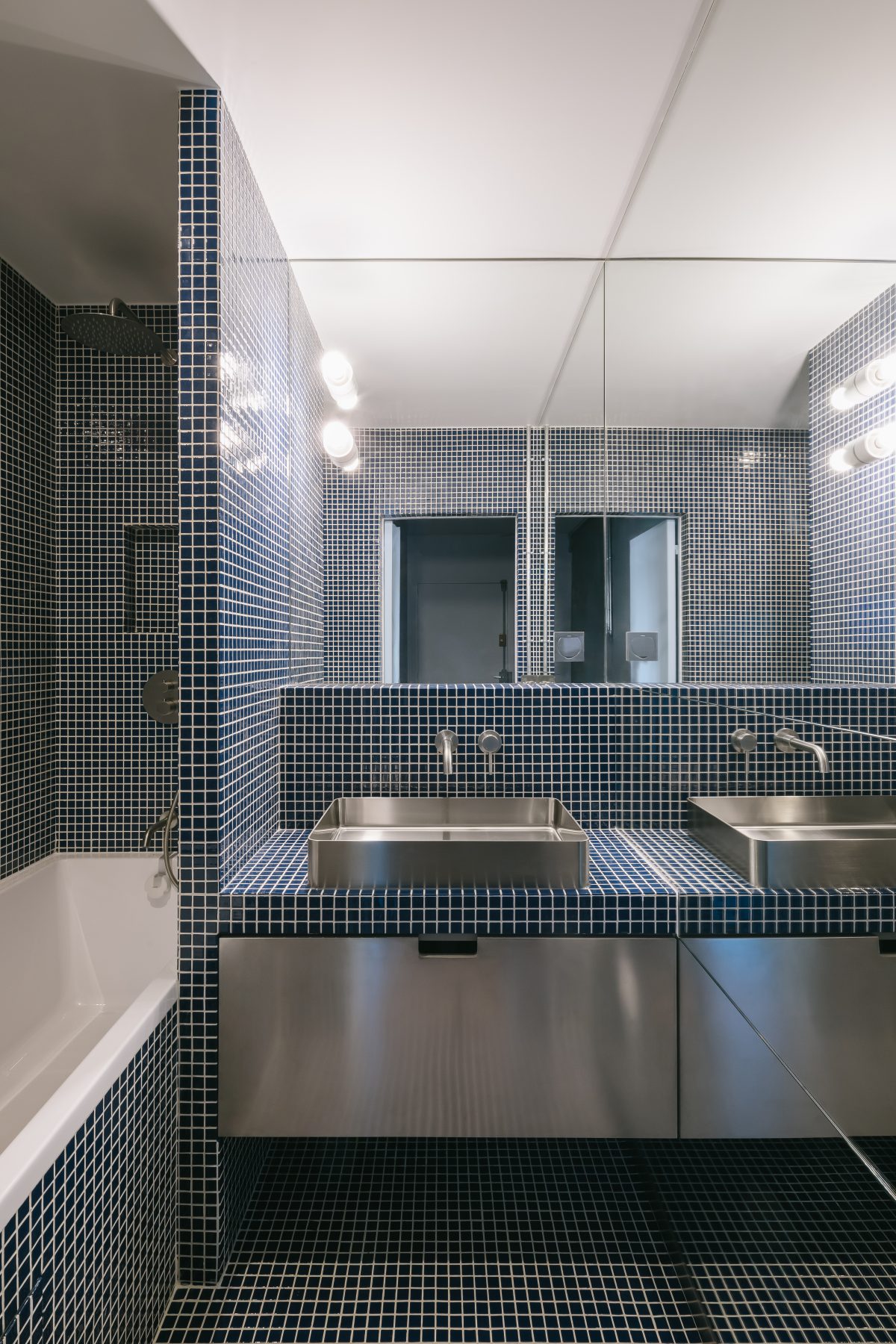
Its reflective surface captures and redistributes natural light, extending brightness into the deeper areas of the apartment. Color is thus employed as an architectural tool, reinforcing orientation and enhancing spatial perception—an approach aligned with contemporary interior practices that privilege chromatic strategies over formal excess.
Materiality is approached with equal precision.
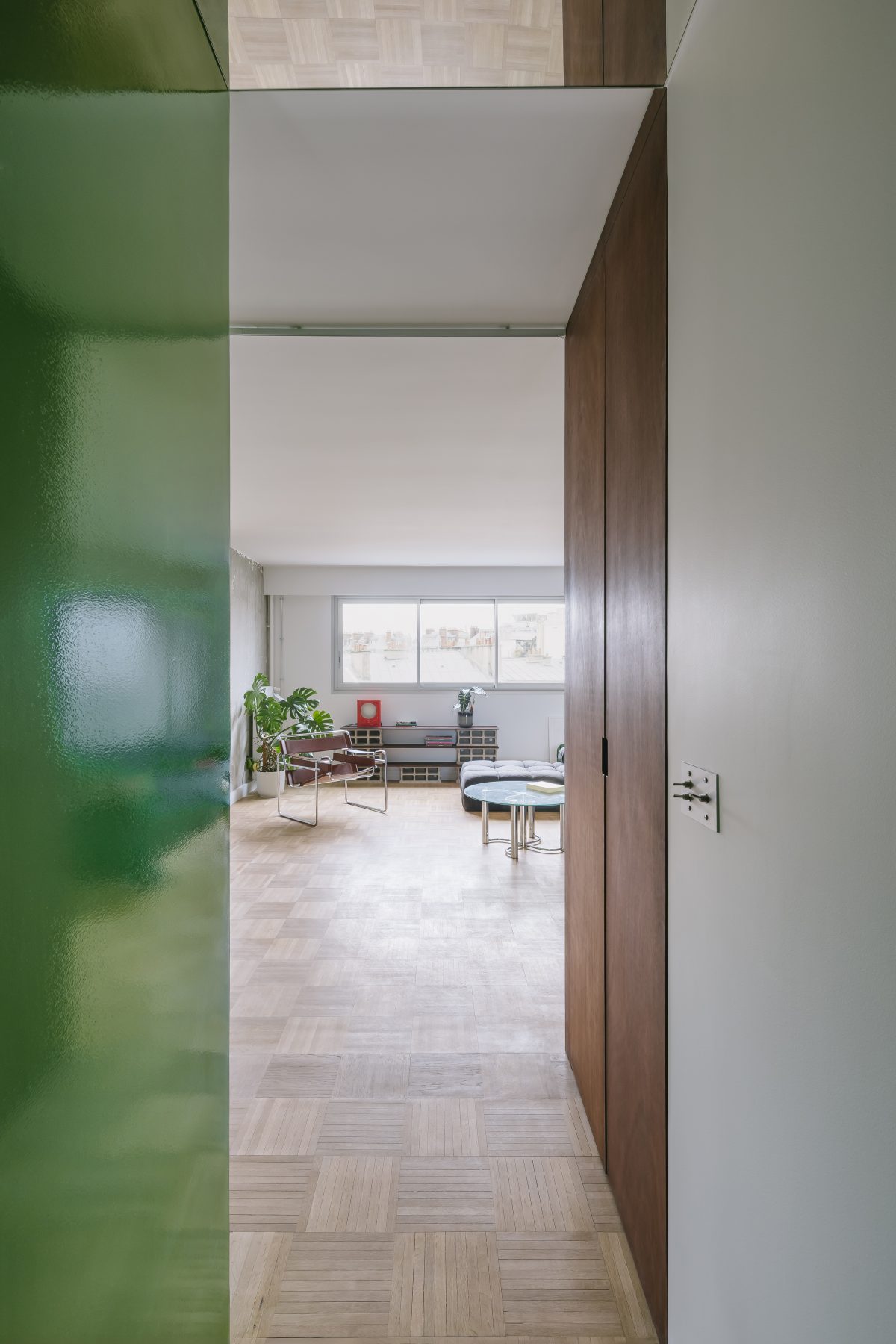
A restrained palette emphasizes contrast and continuity, balancing preservation with transformation.
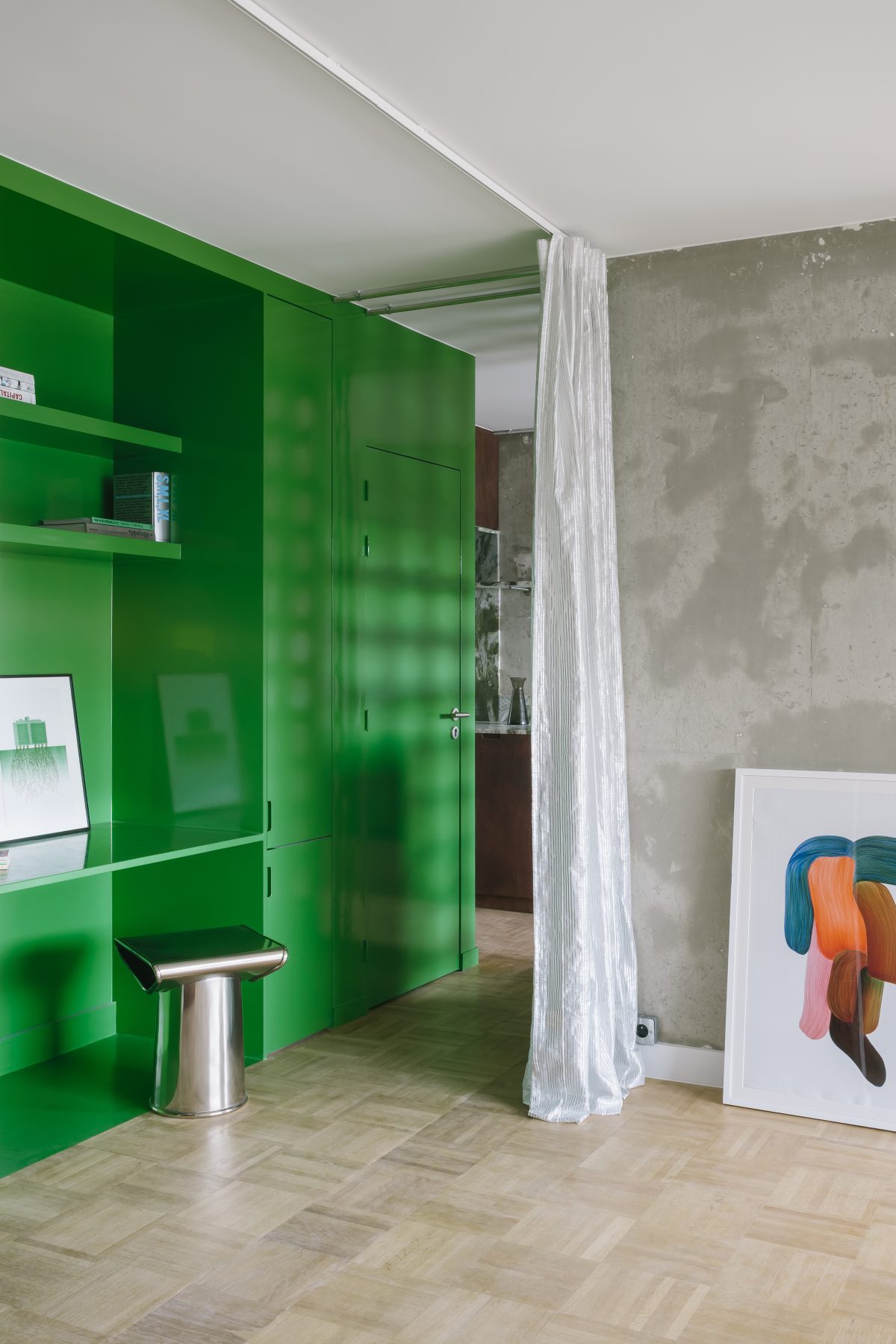
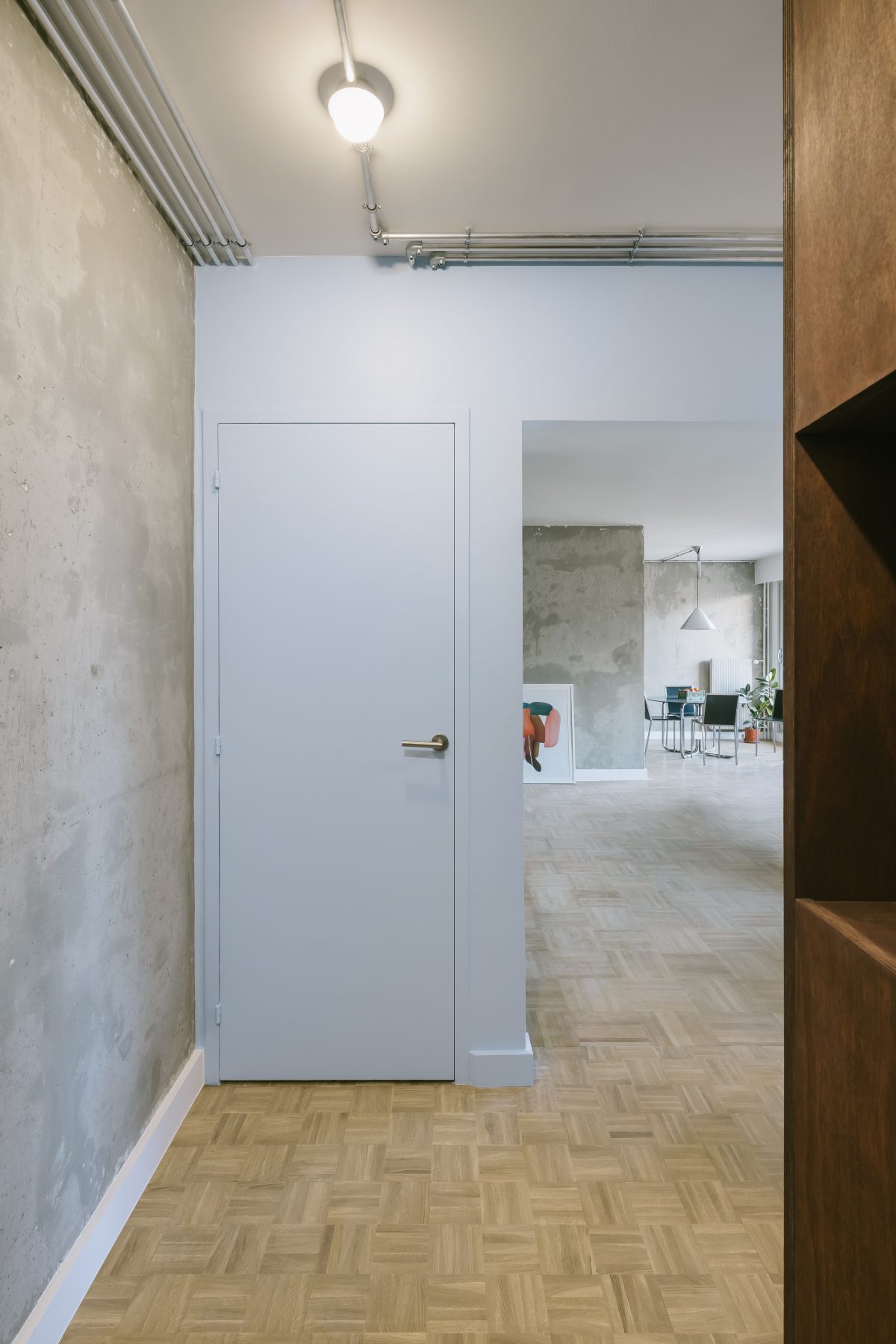
The existing parquet flooring is retained and extended, maintaining a tactile connection to the apartment’s original character while unifying the new layout. In parallel, exposed concrete surfaces reveal the building’s mineral qualities, embracing a raw aesthetic that is both economical and expressive. This dialogue between old and new, warm and cold, is articulated through carefully resolved details.
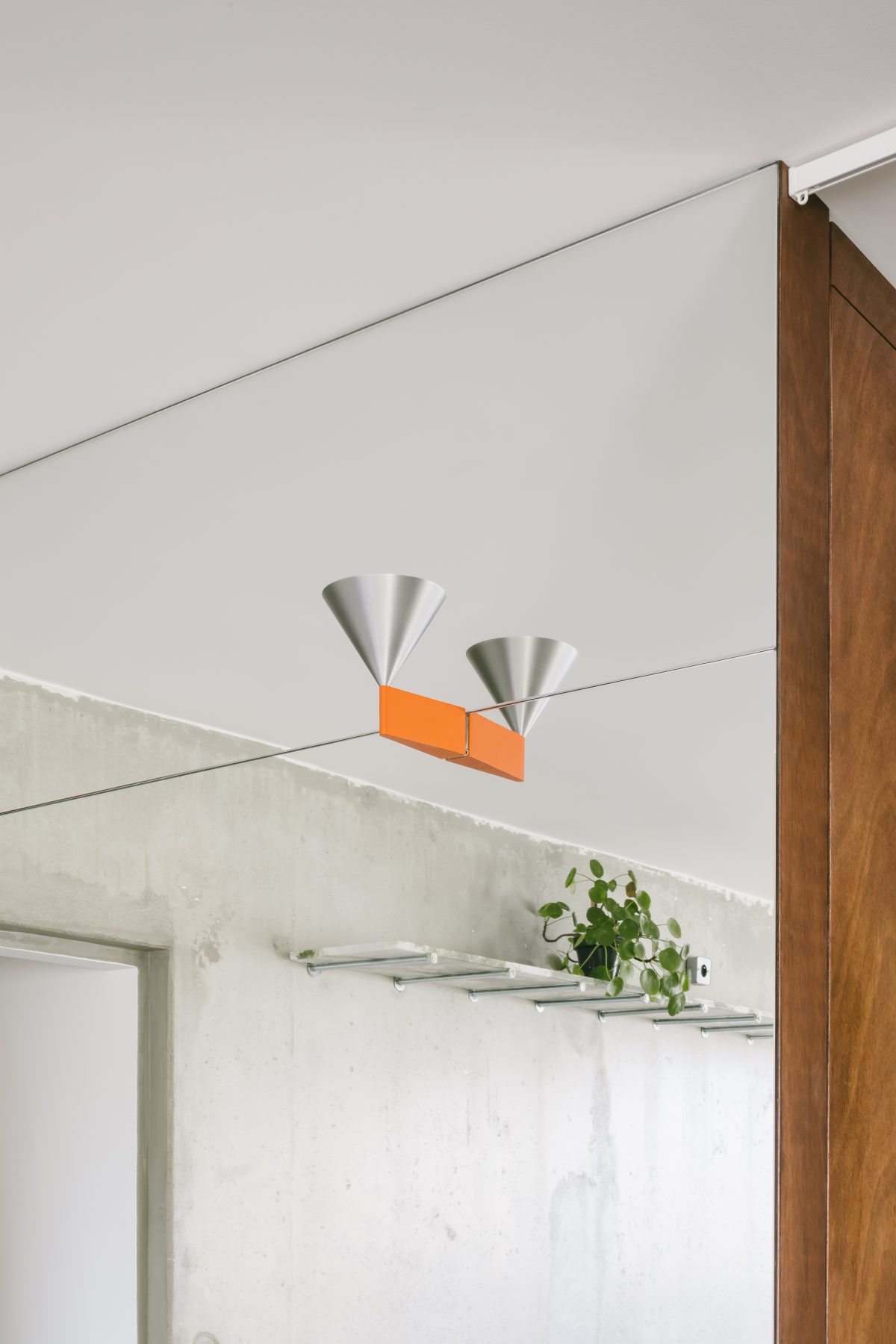
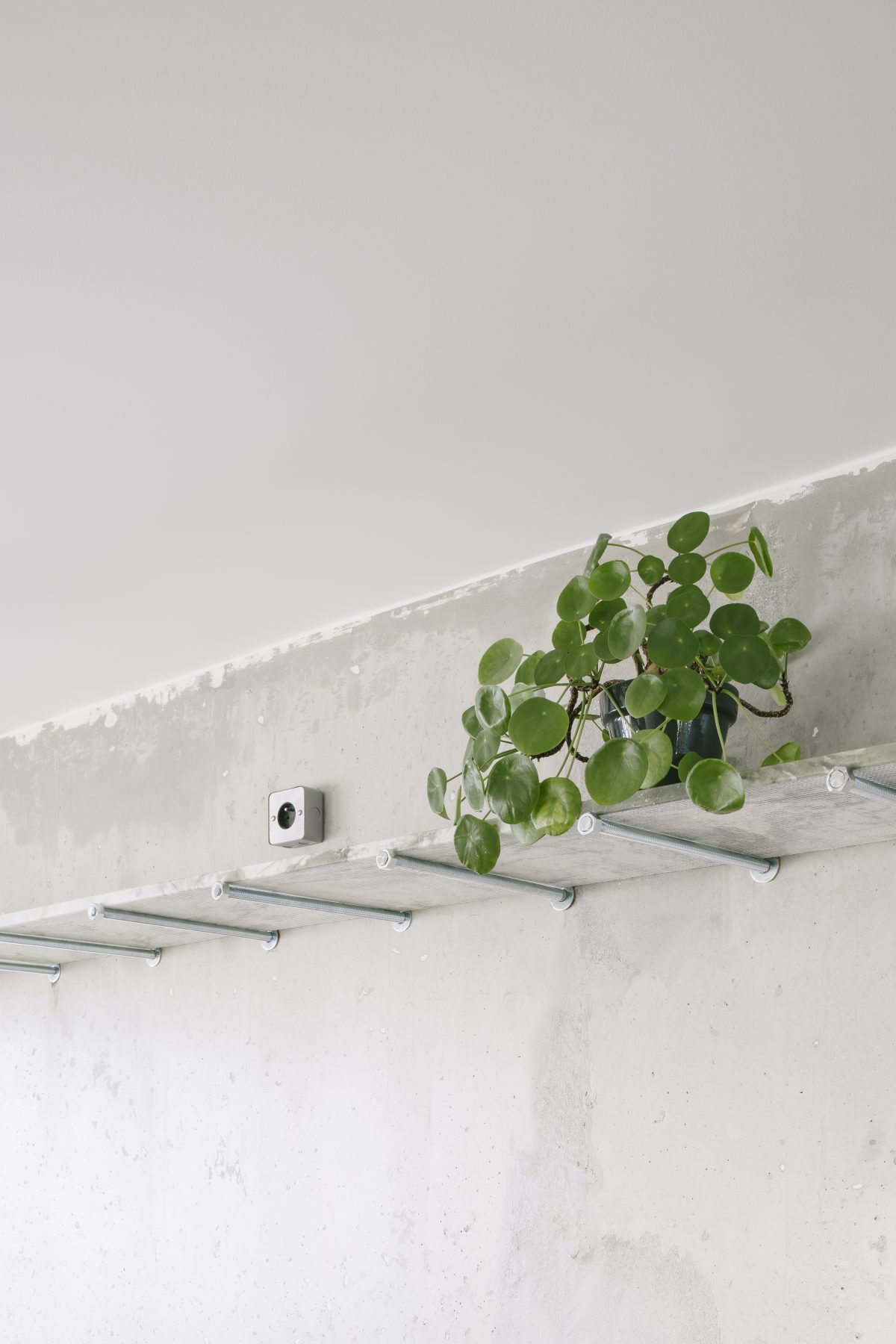
Among these, custom-designed marble shelving stands out: thin slabs supported by slender threaded rods with visible bolts.
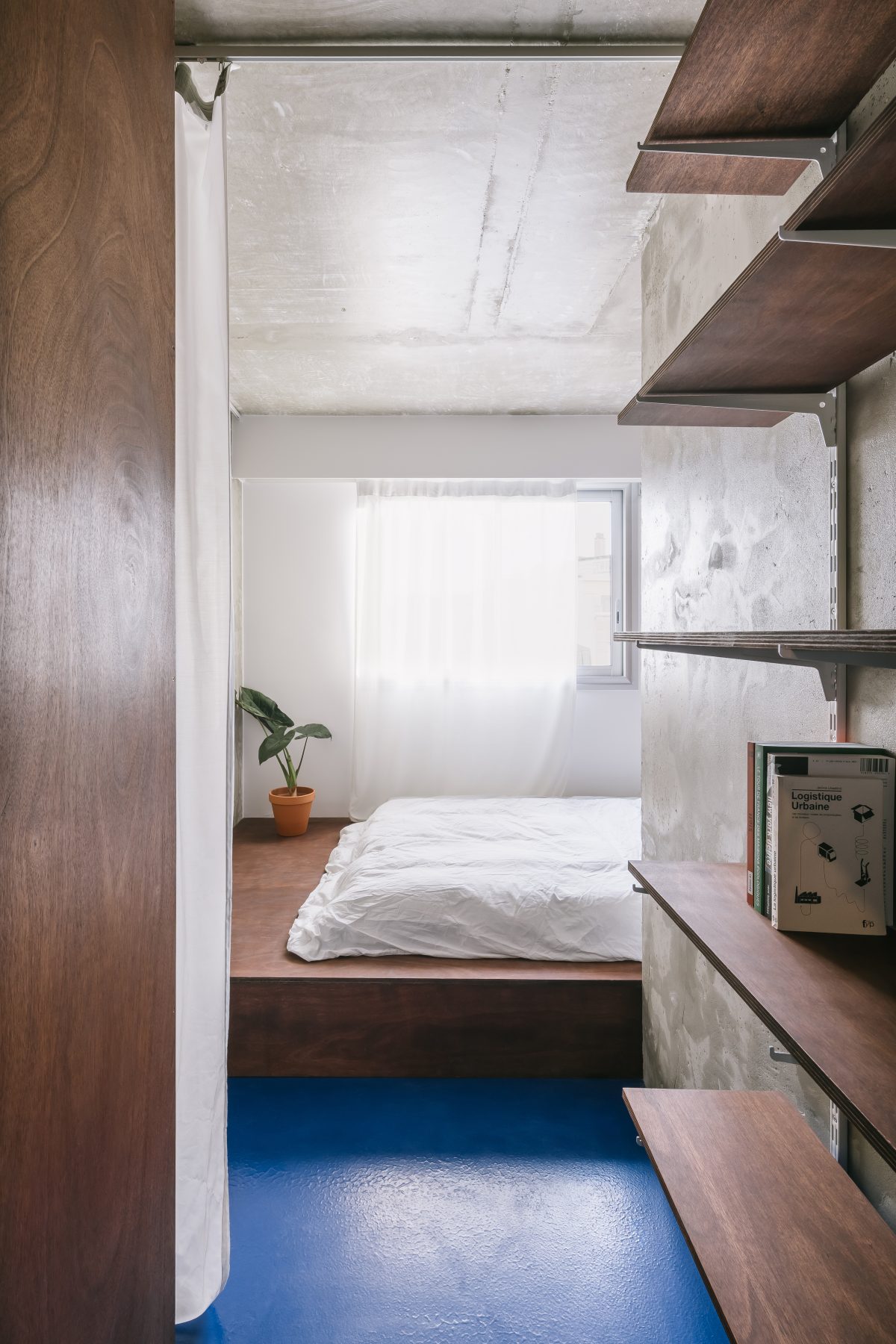
This detail encapsulates the project’s ethos—an equilibrium between refinement and constructional honesty. By juxtaposing noble materials with industrial fixing systems, Atelier Apara establishes a language that is both understated and sophisticated.
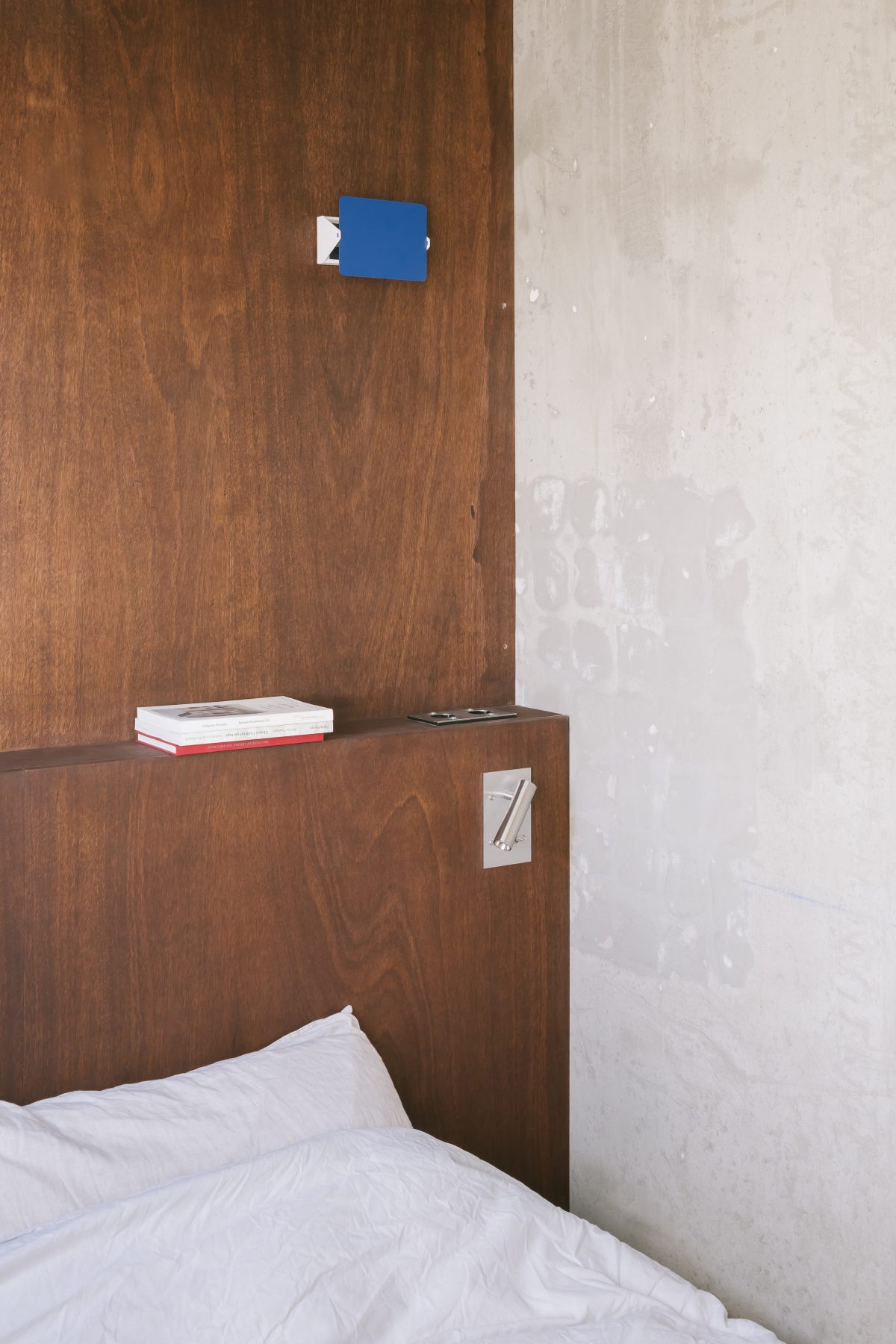
Through minimal yet decisive gestures, Projet 144.sarette demonstrates how architectural clarity, material intelligence, and chromatic precision can transform a standard apartment into a spatially rich and contemporary domestic environment.
Facts & Credits
Project title: 144. Projet Sarette
Project type: Interiors | Apartment Renovation
Architecture: Atelier Apara
Project location: Paris, France
Area: 93 m2
Date of completion: 2026
Photography: Philippe Billard