In FEATURED ARCHITECT series by Archisearch, we collect and present the local and international creative studios that emerge and stand out, in the architectural field nowadays, while promoting – with distinctive character, spontaneity, and courage – the relevant issues pertained to architectural as well as artistic theory and practice.
Operating at the intersection of architecture, design and landscape, Studio Ossidiana develops spatial projects that merge material research, ecological thinking and collective use. Led by Giovanni Bellotti and Alessandra Covini, the practice conceives installations, objects and environments as evolving systems rather than fixed forms. Through gardens, modular landscapes and inhabitable installations, their work reframes public space as a site of interaction, experimentation and shared rituals, where matter, time and users actively shape spatial experience.
The Design Philosophy
Studio Ossidiana’s design philosophy is grounded in an expanded understanding of architecture as an open, evolving system shaped by material processes, ecological thinking and collective use. Working deliberately at the crossroads of architecture, design and landscape, the Rotterdam-based practice balances research and fabrication to explore spatial projects that operate simultaneously as objects, environments and social platforms.
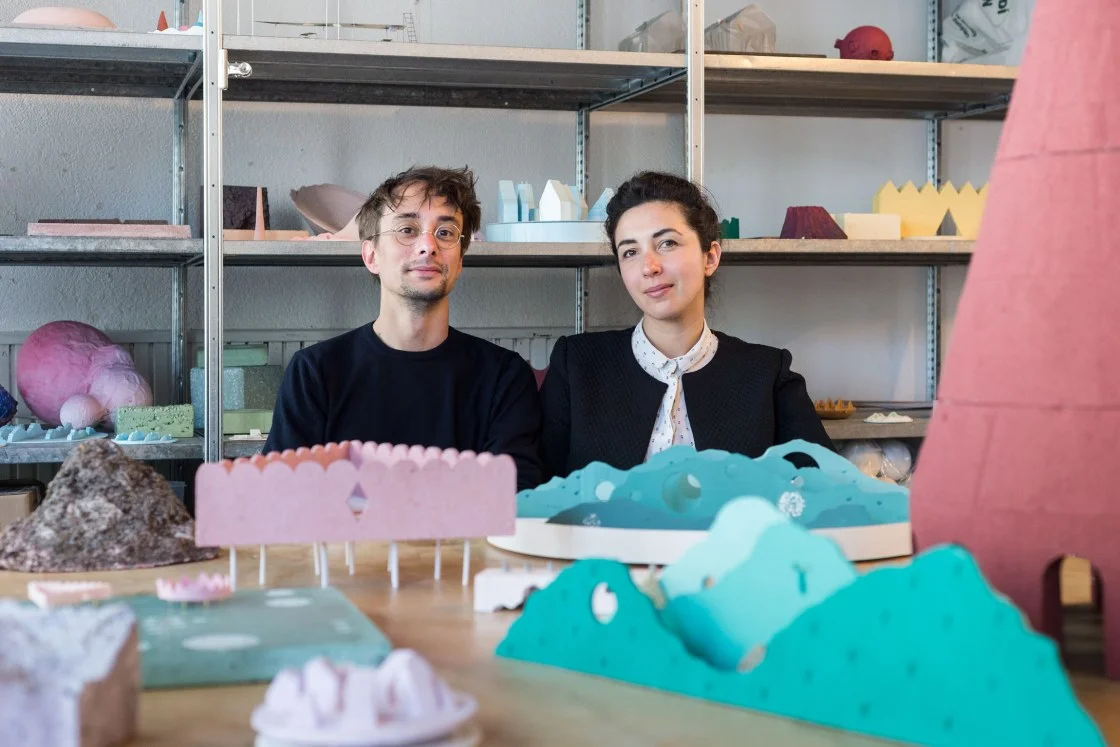
Rather than conceiving space as a fixed form, the studio approaches each project as a dynamic entity capable of transformation over time, encouraging reconfiguration, participation and reinterpretation by users. Their installations often function as modular landscapes or shifting surfaces that invite play, gathering and informal occupation, dissolving hierarchies between spectator and actor.
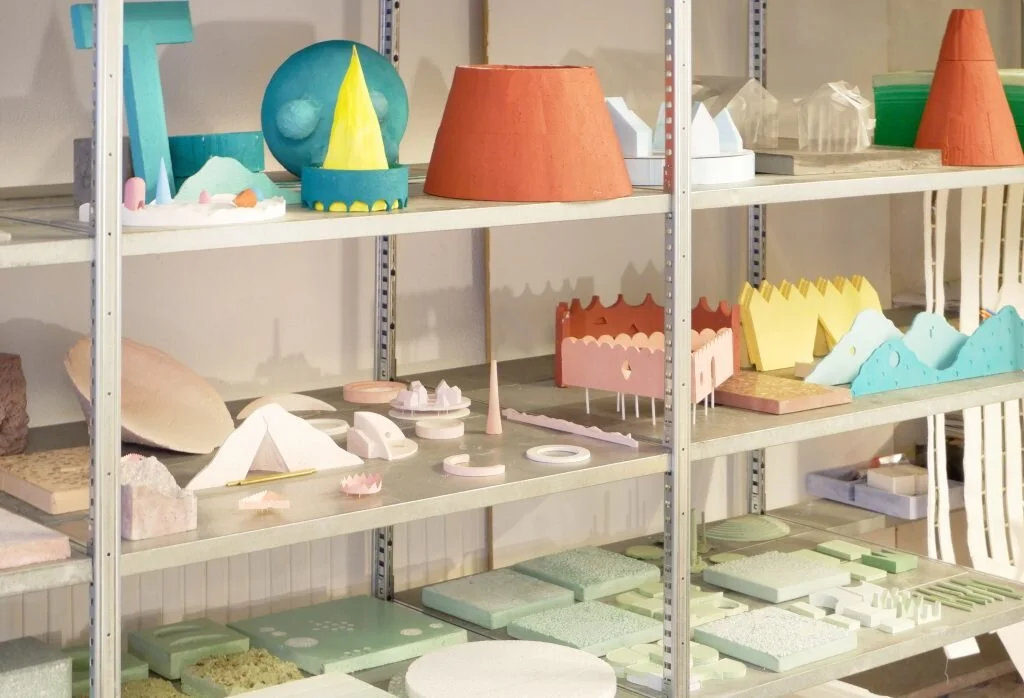
Influenced by ecological thought and by designers attentive to materials and craftsmanship, such as Carlo Scarpa or Lina Bo Bardi, Studio Ossidiana treats matter as an active agent in shaping experience. Their work seeks to imagine “usable and generous spaces” that foster encounters and shared rituals while remaining adaptable to different contexts and futures.
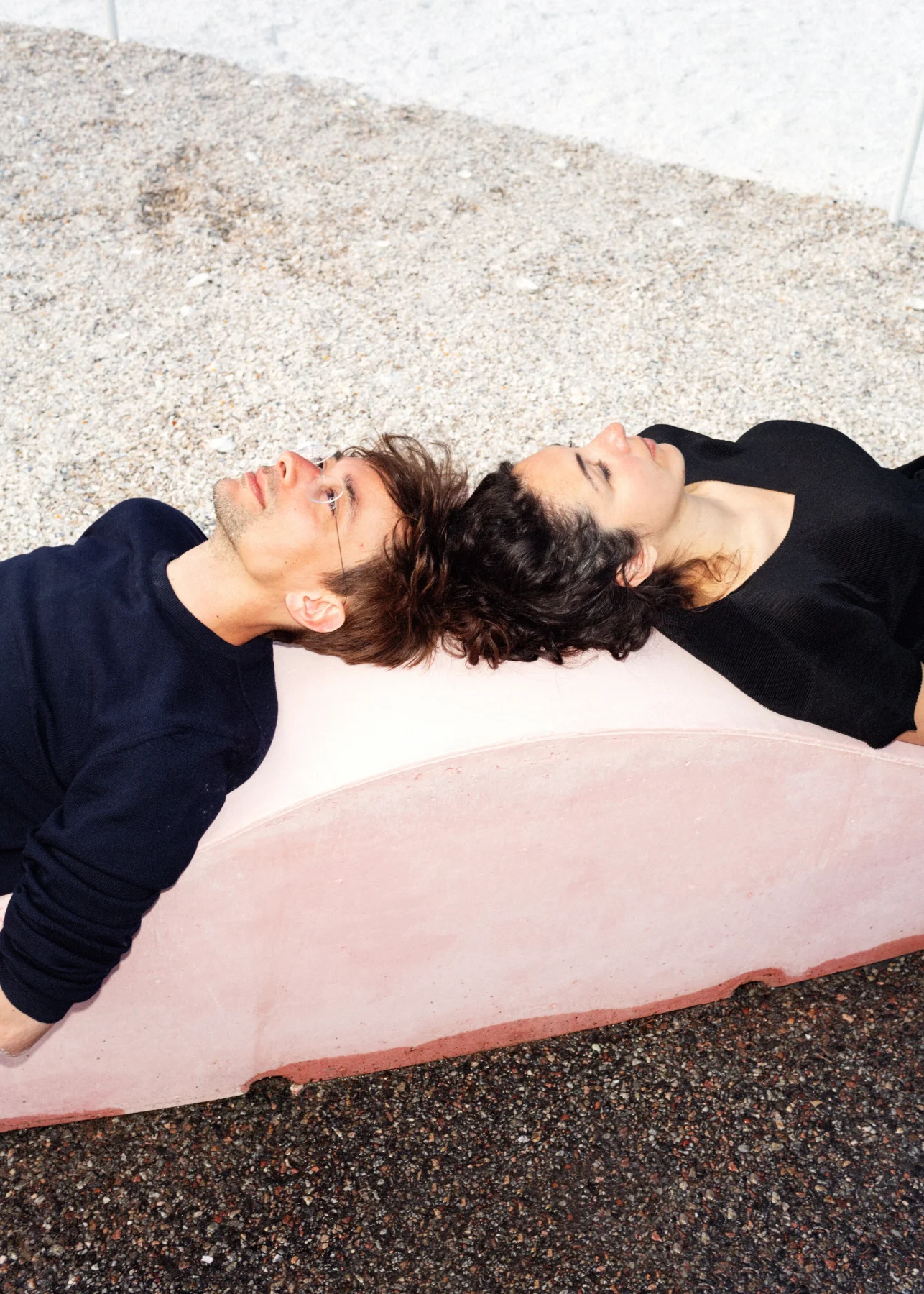
Projects like Soft Palace exemplify this ethos, proposing architecture as a landscape of hospitality where softness, inclusivity and collective choreography replace monumentality and passive contemplation. Through this approach, the studio reframes public and cultural space as a living, non-hierarchical environment—one that evolves through time, interaction and imagination rather than static permanence.
The Works
The Soft Palace, in Paris France (2025)
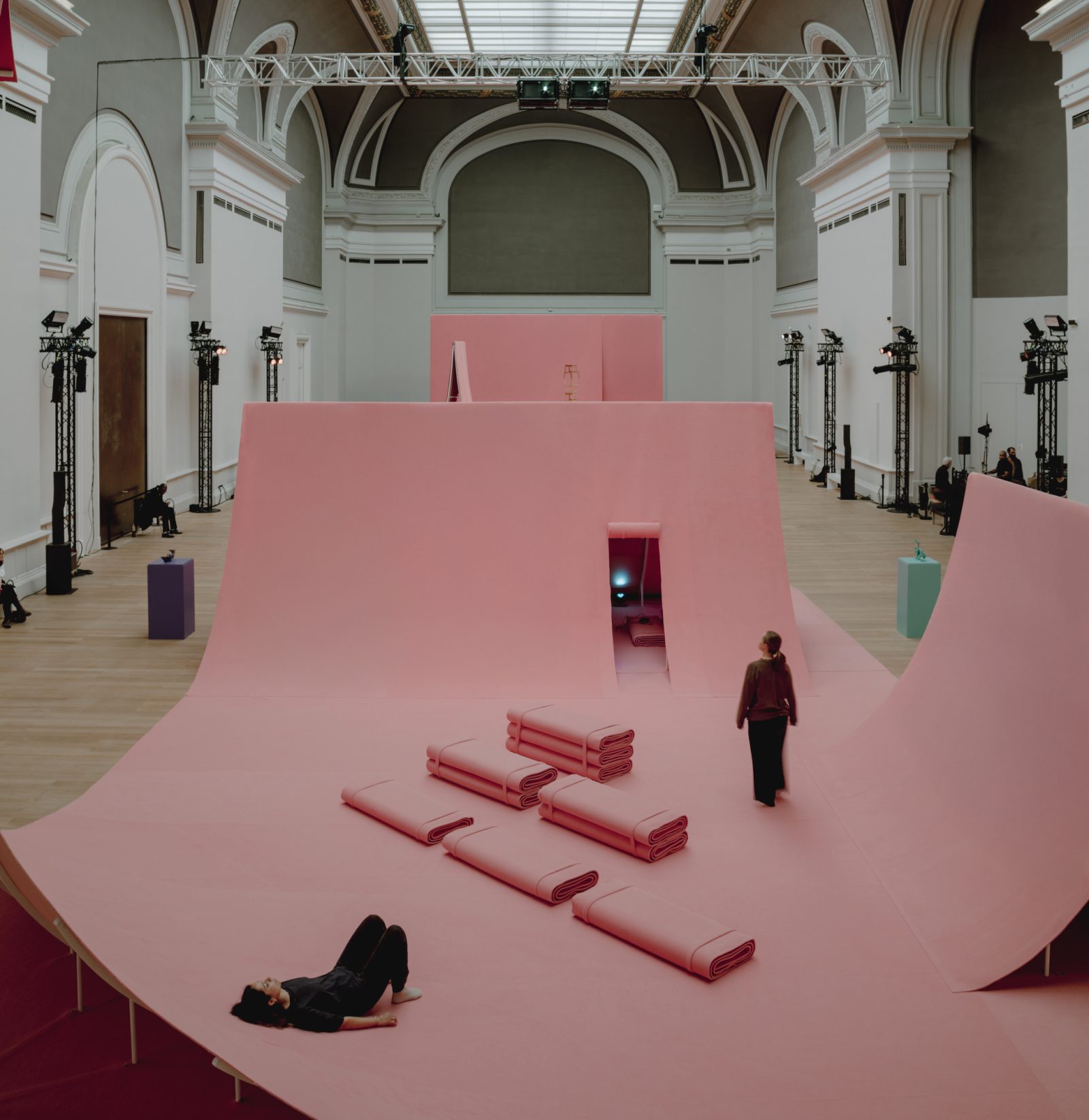
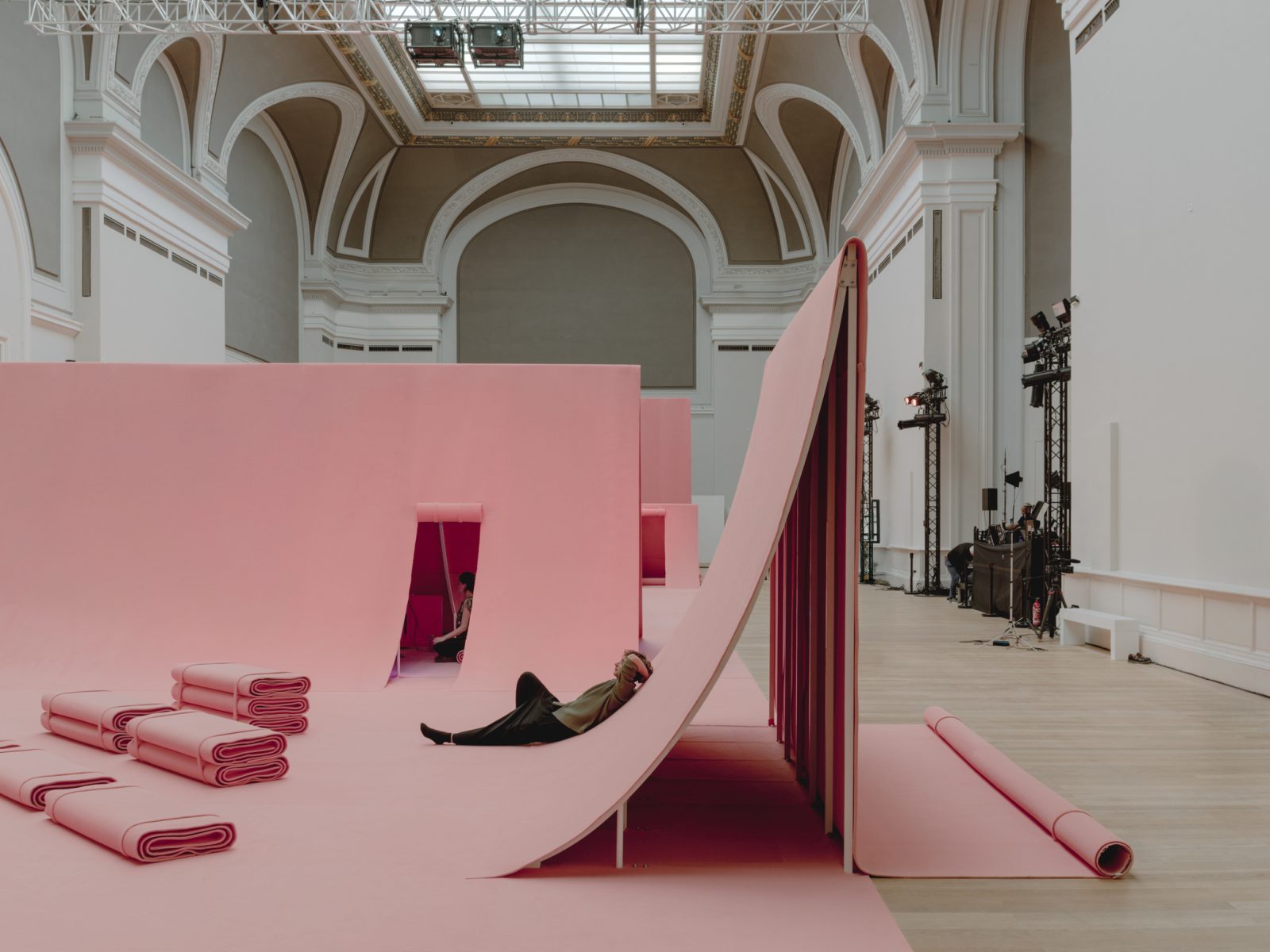
As the Centre Pompidou prepared to close its doors for renovation, Studio Ossidiana envisioned A Soft Palace as a nomadic embassy for the museum: a travelling interior capable of hosting its publics, artworks and events beyond the confines of Beaubourg. First installed in the Salon d’Honneur of the Grand Palais, the project operates as a temporary civic address—an adaptable environment for assemblies, exhibitions, performances and informal encounters—while embodying the institutional presence of the museum in motion.
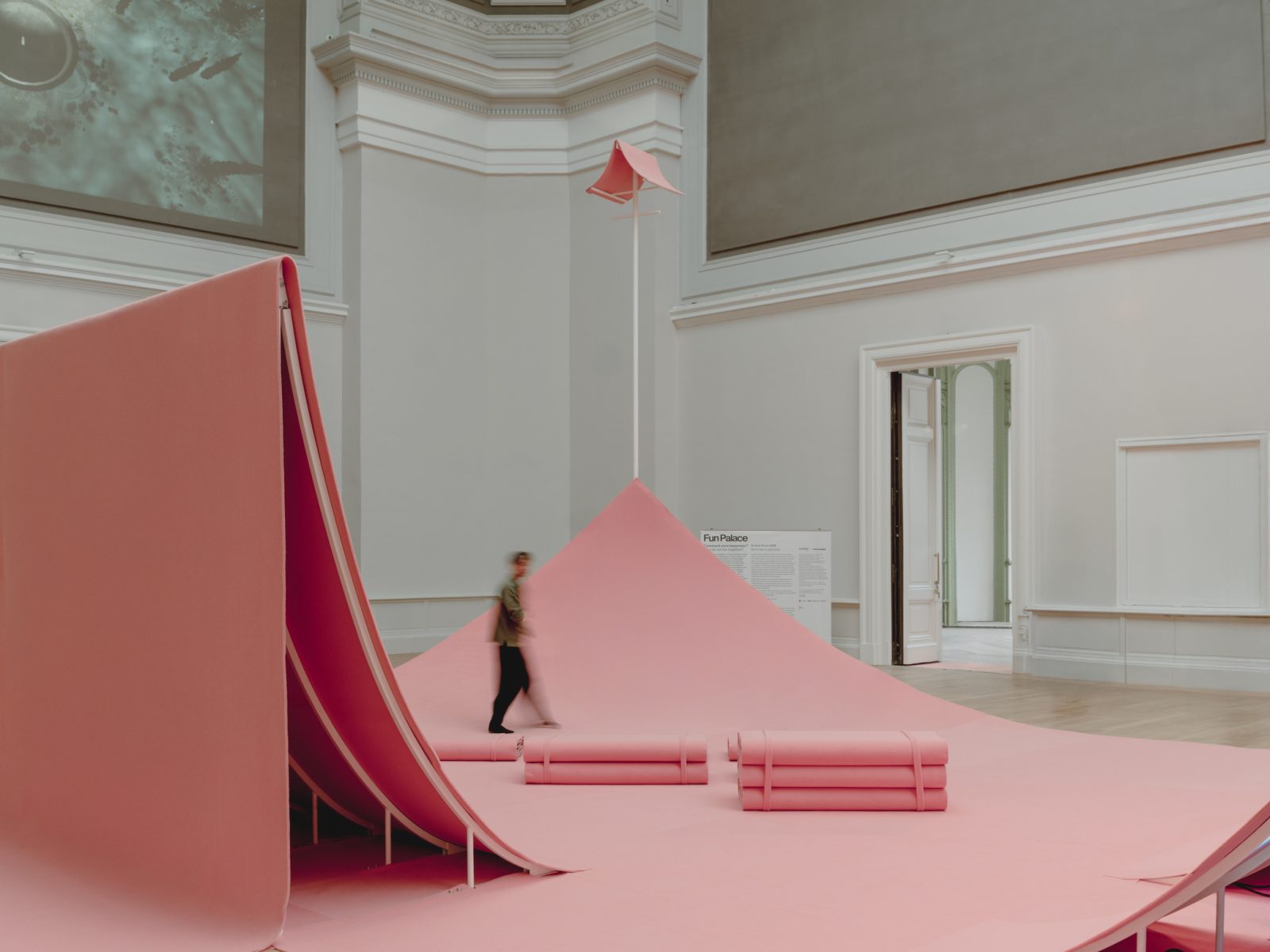
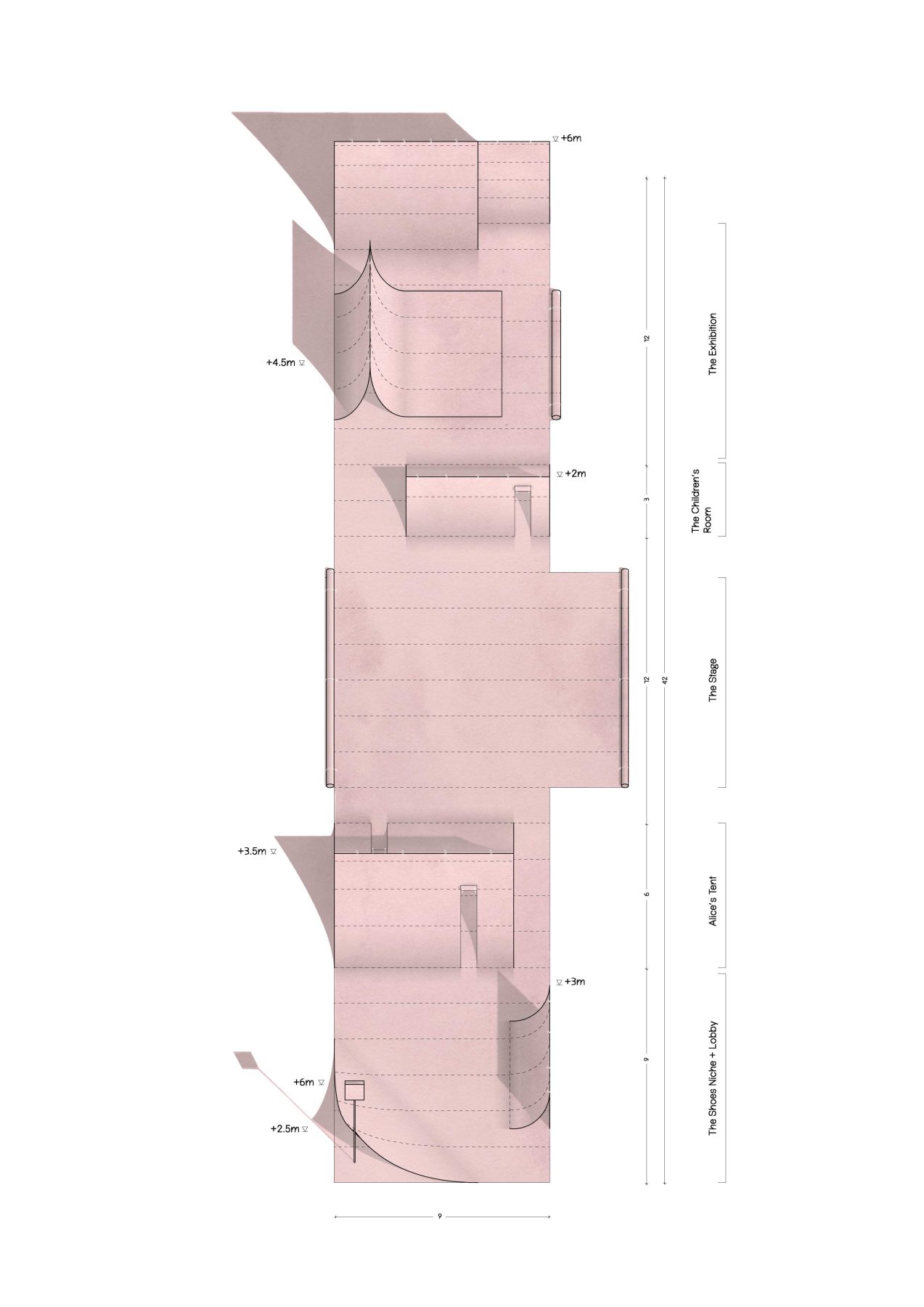
Conceived as a vast textile landscape, the Soft Palace unfolds as a continuous carpet that folds, rolls and gathers into a spatial garment, generating a topography of creases, pockets and soft thresholds.
This pliable surface encourages barefoot movement, rest and play, allowing visitors to sit, lie down, wander between activities or retreat into more intimate niches only steps away from collective events.
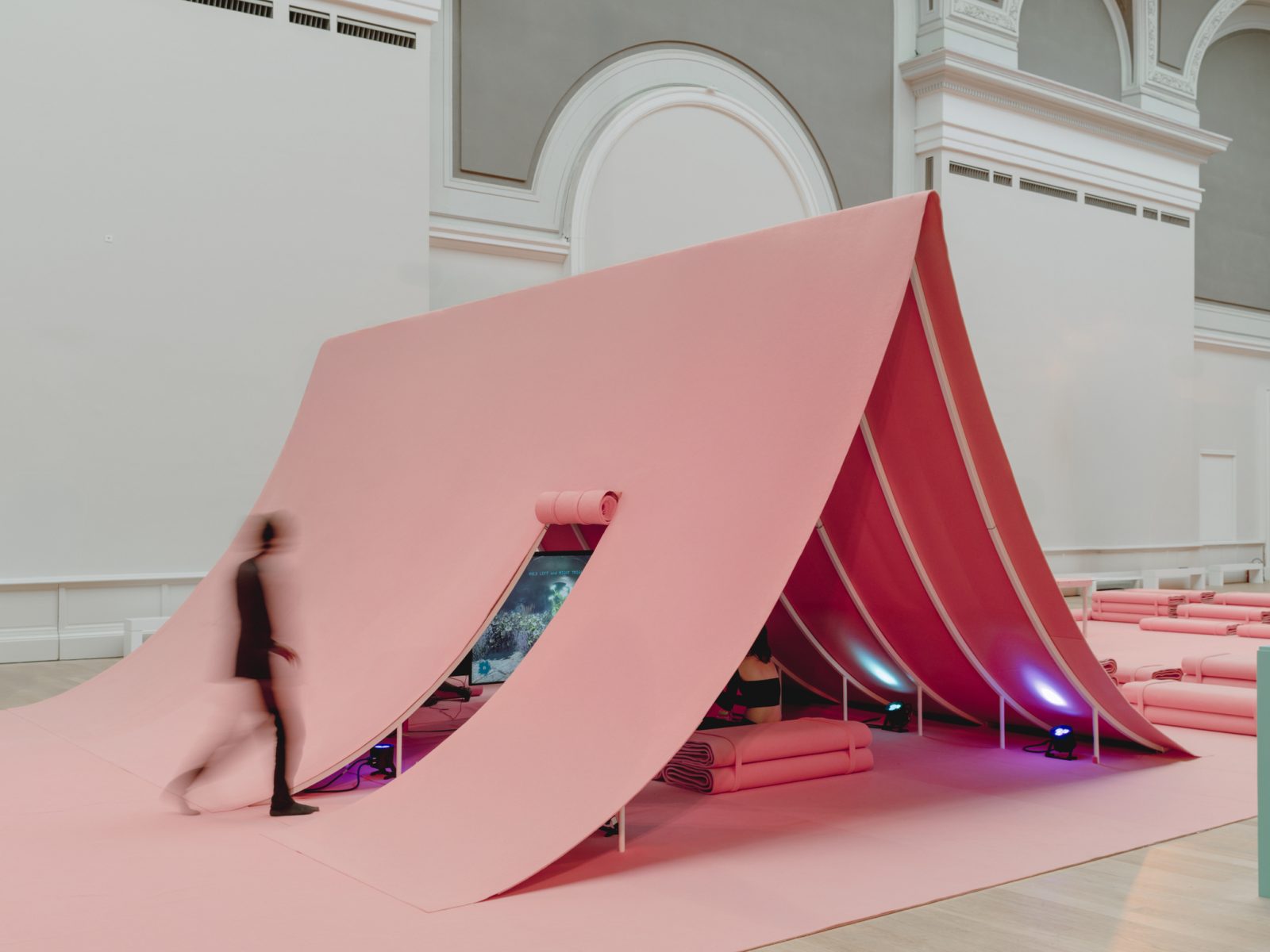
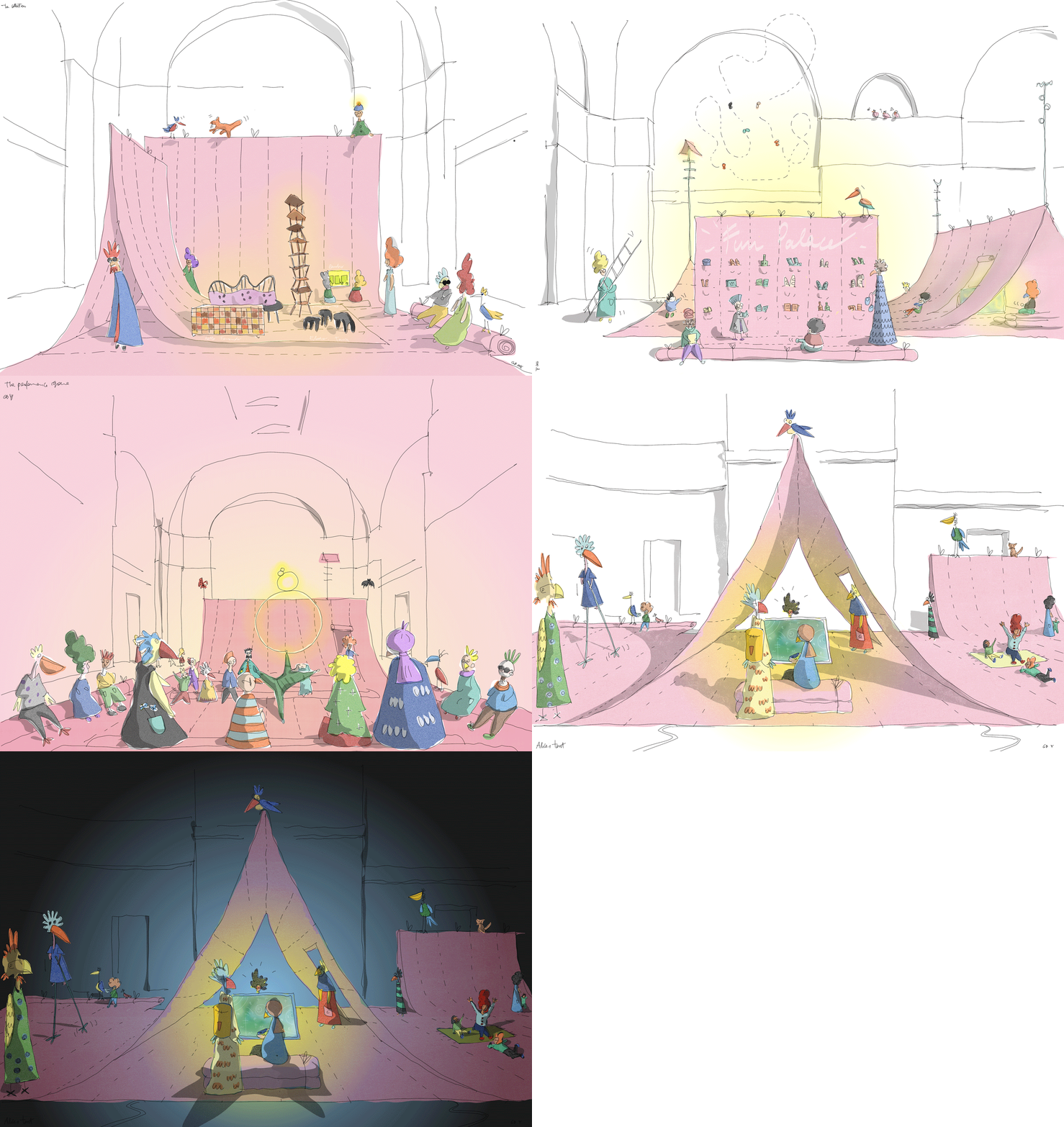
The installation thus negotiates between public and private, spectacle and introspection, transforming the act of inhabitation into a shared choreography shaped by bodies, gestures and time.
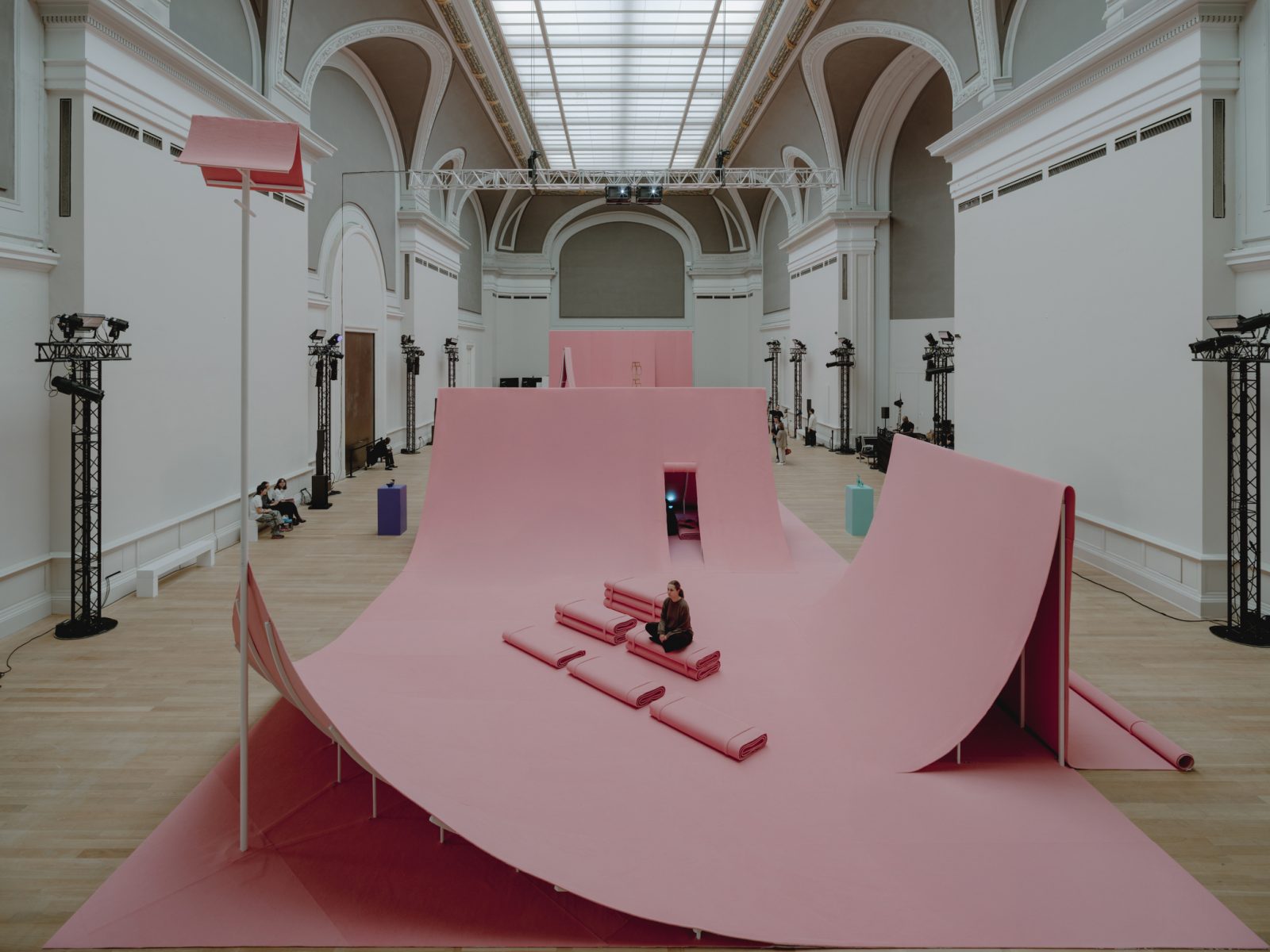
Within this nomadic embassy, every fold can become a stage and every pocket a shelter, enabling a fluid coexistence of large assemblies and solitary moments. Rather than a fixed exhibition design, A Soft Palace proposes a responsive architecture of softness, where institutional programming, everyday use and spontaneous appropriation overlap, positioning the museum not as a static container of culture but as a mobile, hospitable and embodied public space.
Facts & Credits
Project title The soft Palace
Typology Installation, Art
Location Paris, France
Architecture Studio Ossidiana
Team Giovanni Bellotti, Alessandra Covini and Klaas van der Molen with Viktoria Bacheva, Pedro Daniel Pantaleone, Anna Halek, Ruth Gonzalez, Mariagiulia Pistonese
With the support of Chanel Culture Fund
Video Game Designer Alice Bucknell
Curators Jean-Max Colard, Joséphine Huppert, Alice Pialoux, assisted by Daphné Carreras
Production Luigi D’Oro Studio, Arguzia srl
Curators of The Assembly of Objects Olivier Zeitoun, in collaboration with Iris Carton Eldin
Curators and Head of Design and Industrial Prospective Marie-Ange Brayer
Collection Attachée Mathilde Vallée
Production Manager Barbara Kugler
Scenographer Celine Coffin
Space Manager Charlotte Cochelin
Artworks Manager Nina Genonceau
Audiovisual Manager Alexandre Lebugle
Stage Management François Pegalajar, Robin Vieville, Fabrice Pleynet
Stage Management Interpreters Marguerite Capelle, Caroline Ferrard, Adèle Hattemer, Yves Tixier
Partnership Coordination Anaïs Izard, Camille Gorret
Photography Riccardo De Vecchi
Text provided by the architects
NDSM Lusthof, in Amsterdam, The Netherlands (2024)
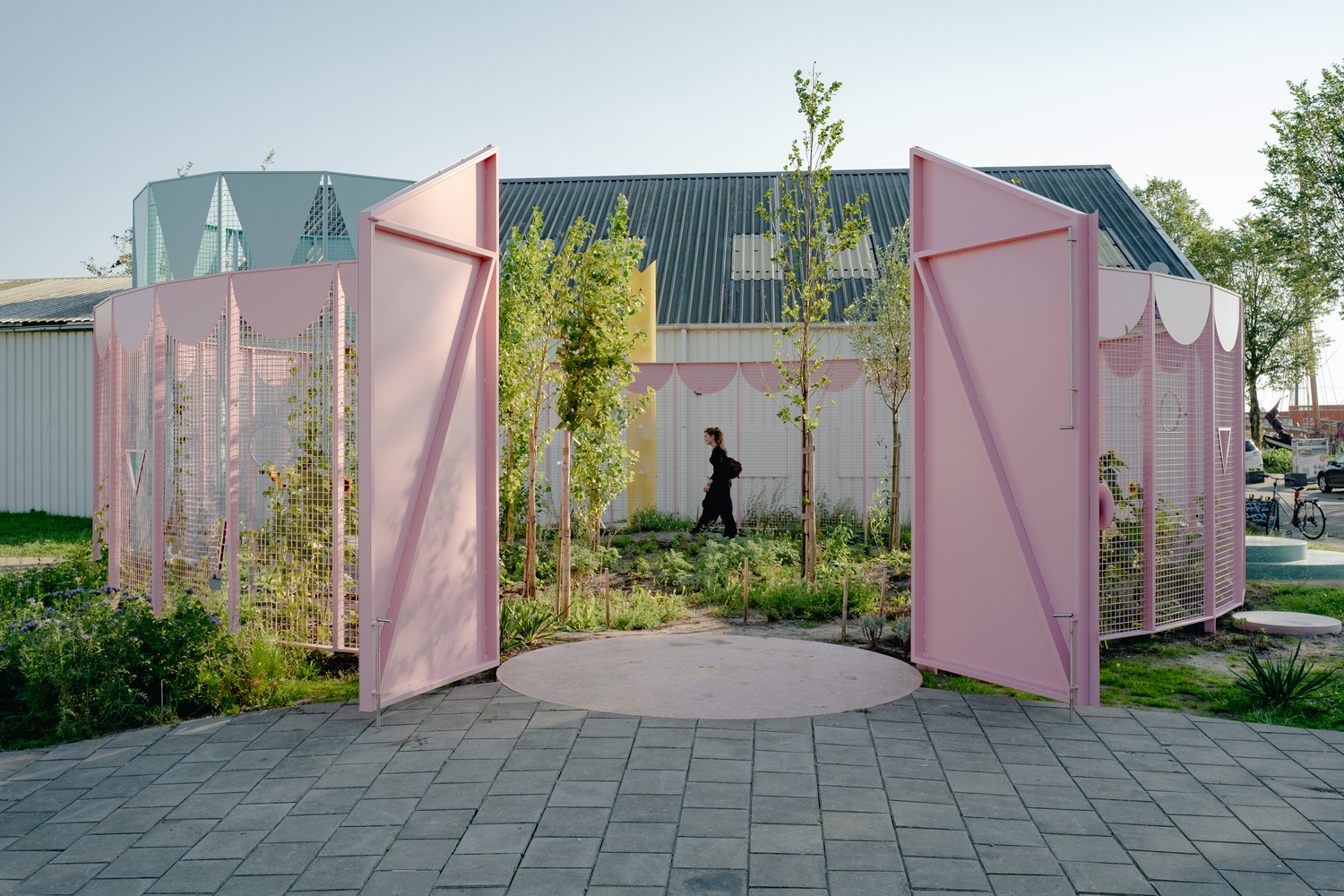
Does greenery automatically render public space meaningful?
With NDSM Lusthof, Studio Ossidiana interrogates what a green garden signifies within the contested terrain of accessibility, ownership and urban nature.
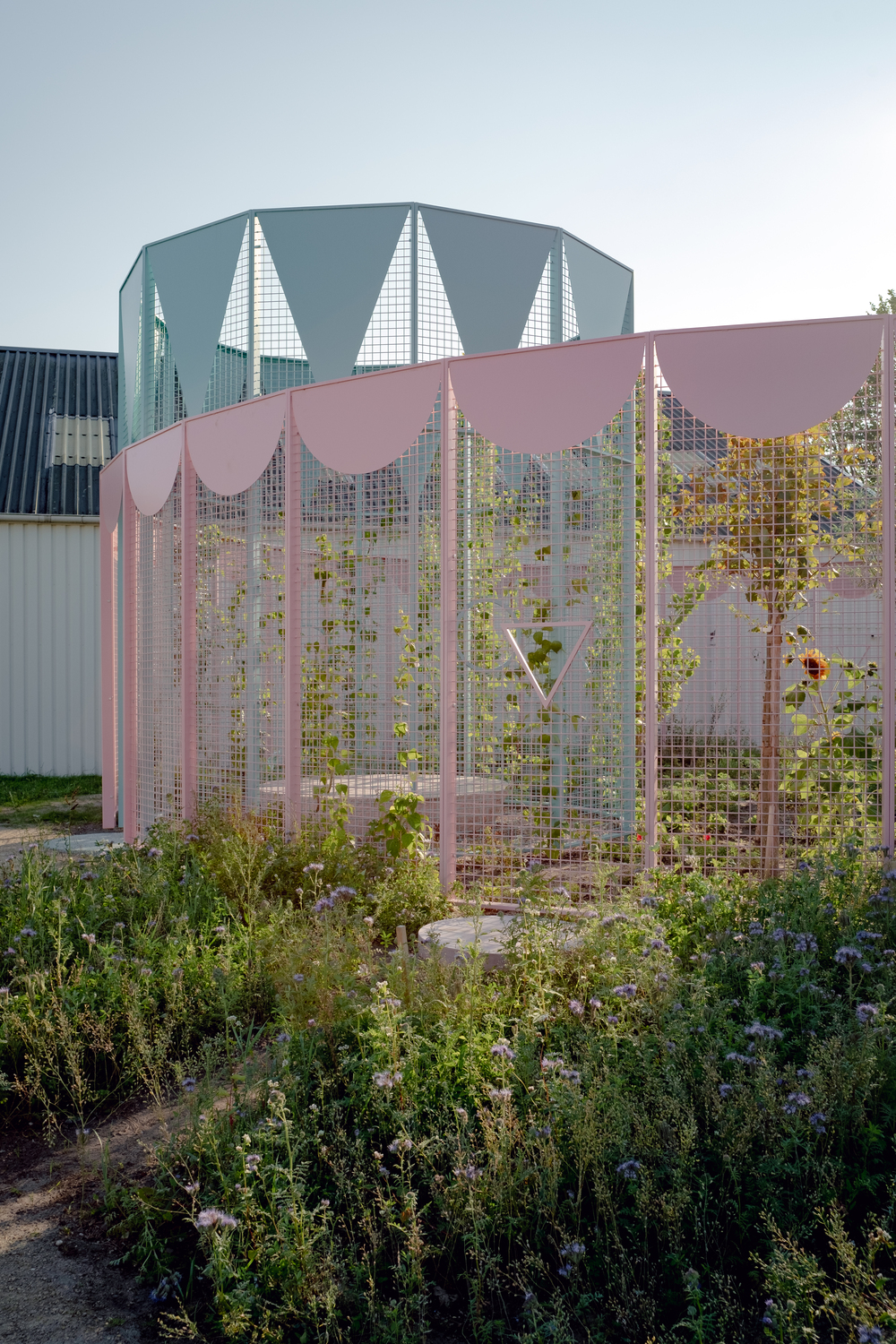
Installed on the NDSM-werf at the former site of Sexyland and set to remain for at least two years, the project revisits the historical notion of the Lusthof—gardens once designed to stimulate the senses yet often reserved for elite retreat—and repositions it within a contemporary, post-industrial context. Drawing parallels between secluded pleasure gardens along the Vecht and today’s semi-private residential courtyards, the project questions who has the right to access green spaces in the city and under what conditions.
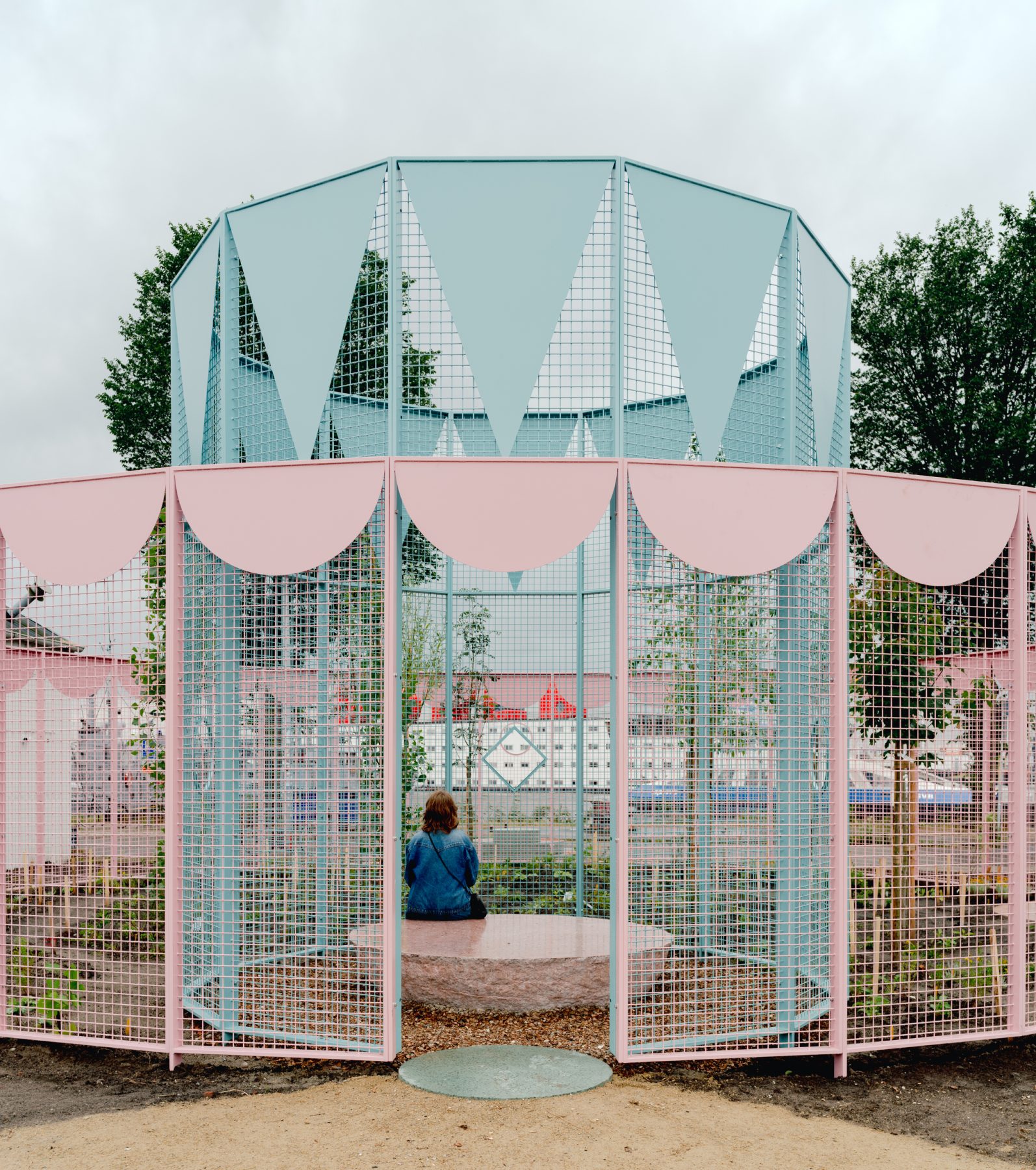
Conceived as both a map and a living fragment of the world, NDSM Lusthof operates as a place of work, experimentation and leisure: a circular garden imagined as a port for soil, plants and minerals within the former shipyard.
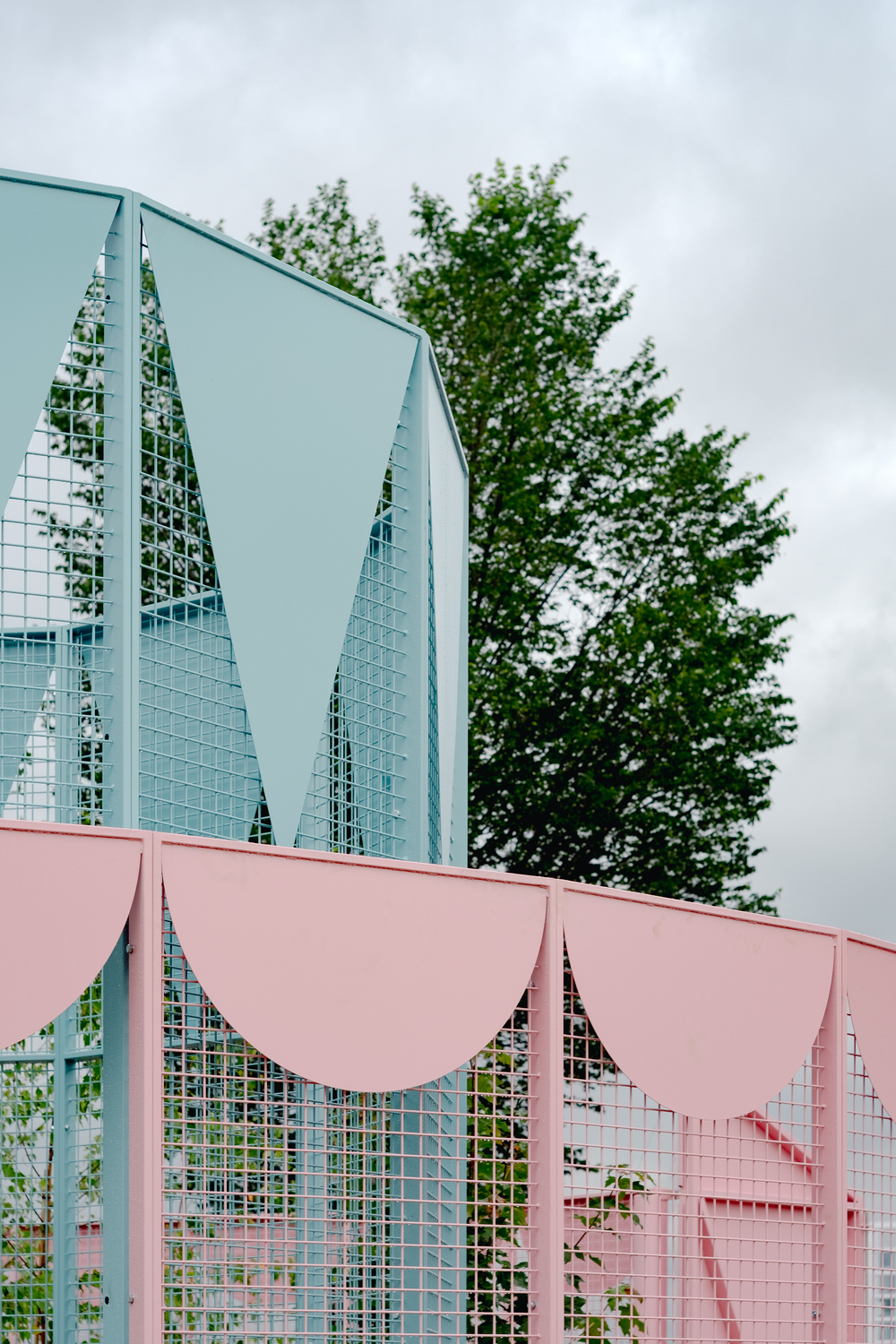
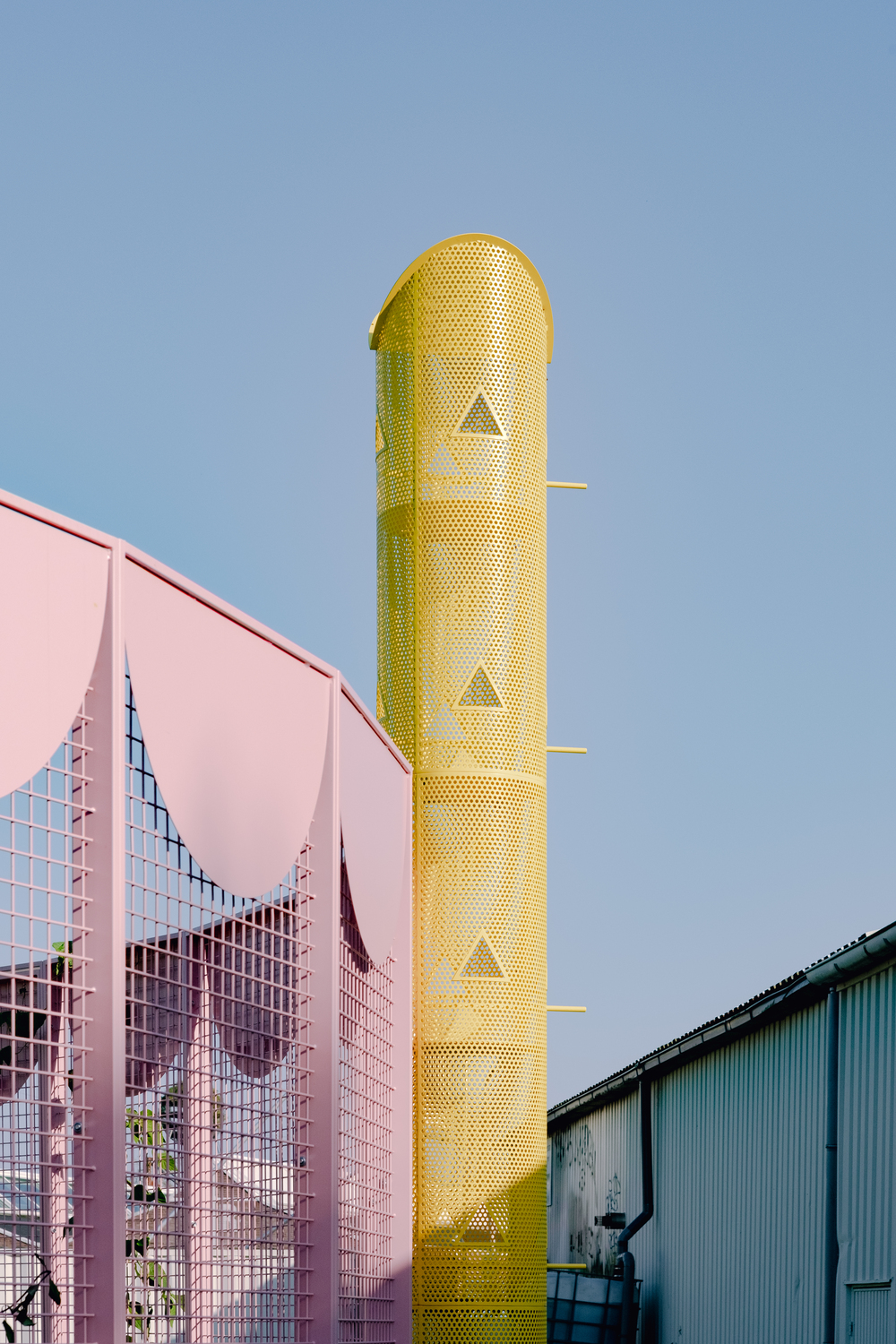
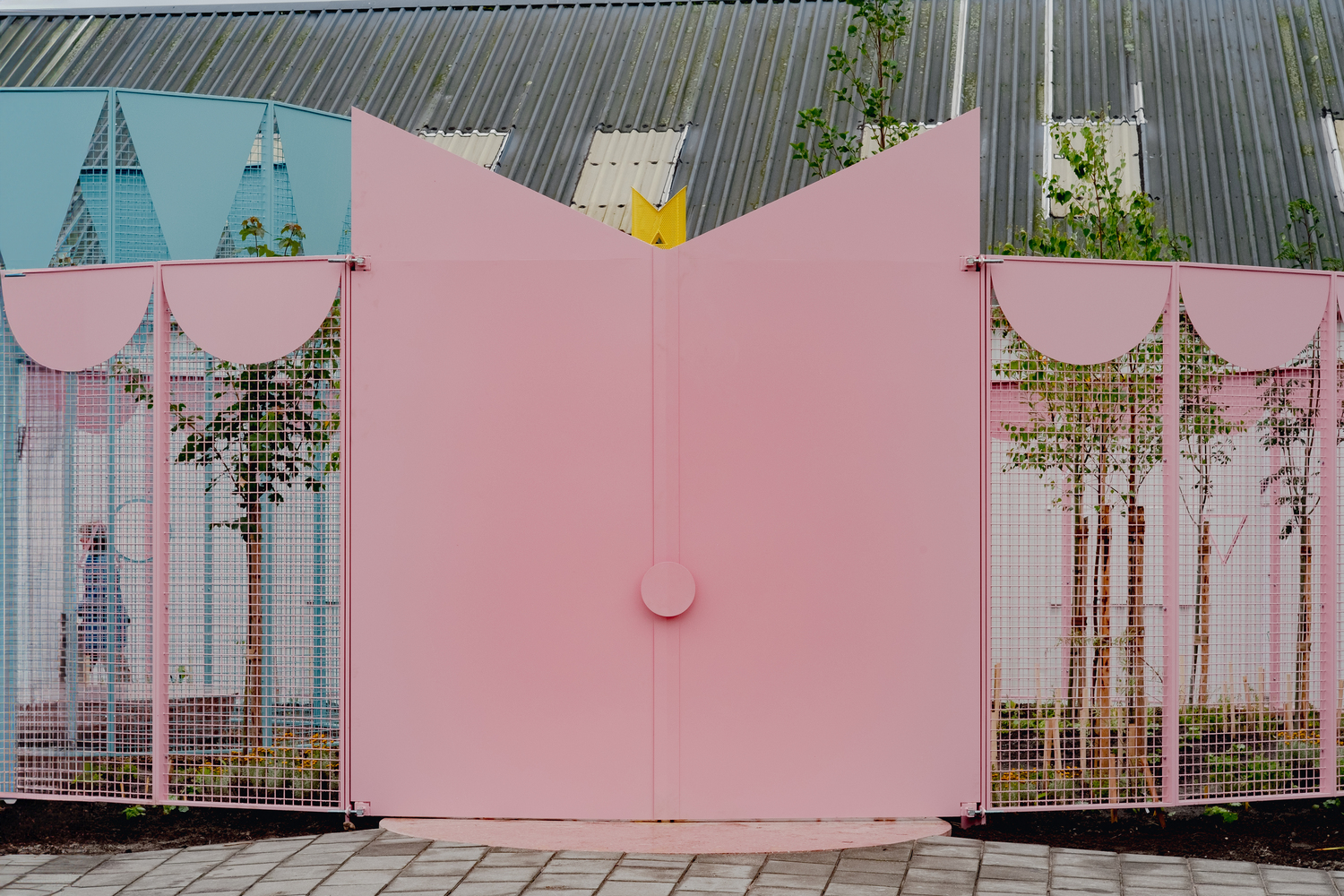
Enclosed by a playfully coloured fence with peepholes, the garden is intentionally framed rather than fully open, cultivating curiosity while protecting the growth of its ecological communities. Access is mediated through participation—as a gardener, visitor to guided tours or tea sessions, or during designated working hours—thereby redefining the notion of a “public” garden as an active, shared process rather than a passive amenity.
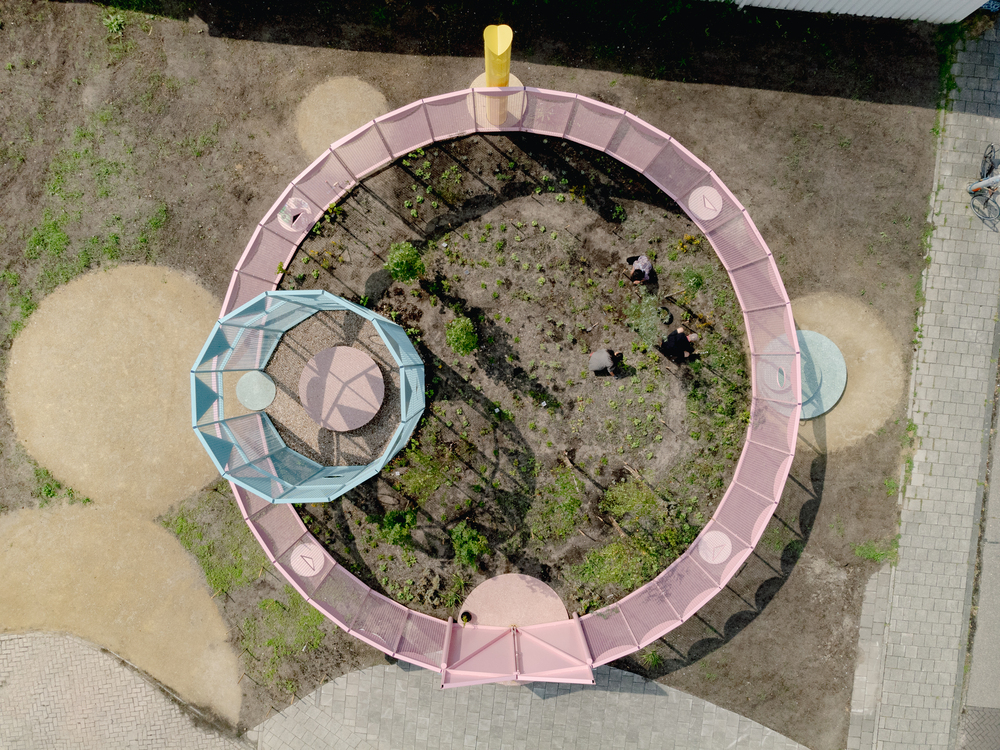
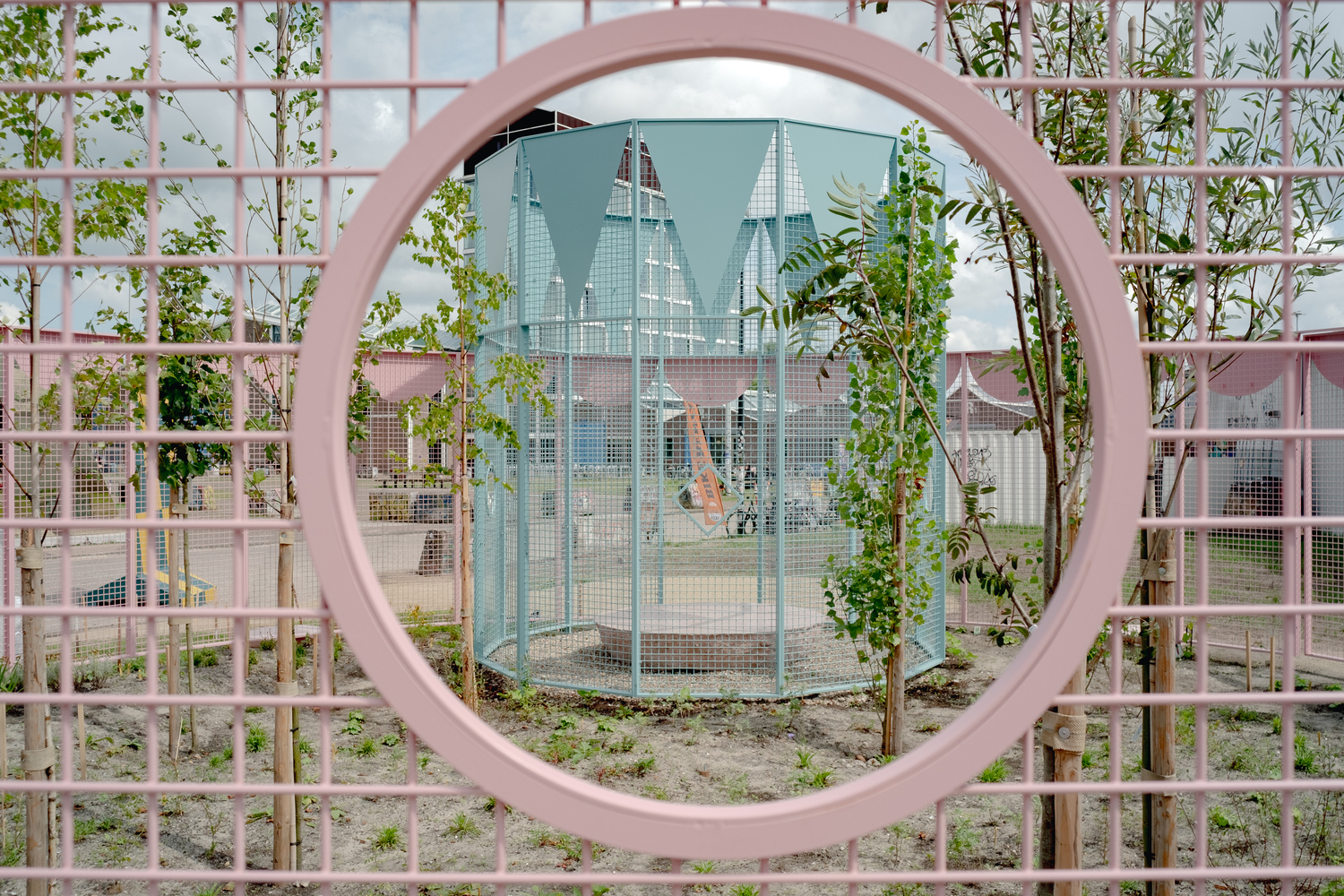
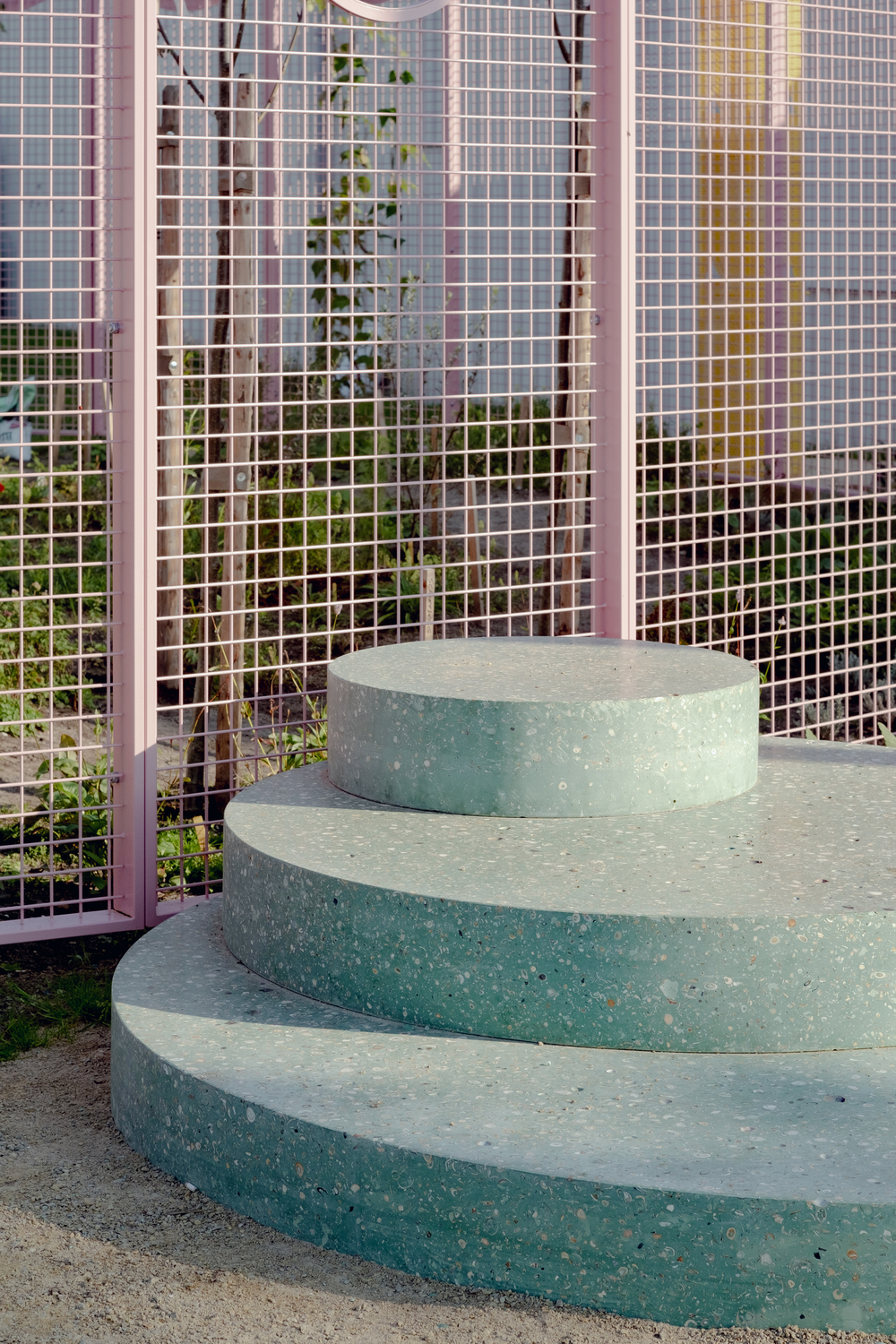
Inspired by Ottoman gardens and migration flows, the planting combines native and non-native species, medicinal herbs and functional flora that support pollinators and human use alike. Described by the studio as a living library, the garden invites collective sowing and memory-making, while its spatial openings align with cardinal directions and solstice axes, embedding seasonal cycles into everyday experience.
Facts & Credits
Project title NDSM Lusthof
Typology Landscape Design, Installation
Location Amsterdam, The Netherlands
Architecture Studio Ossidiana
Team Giovanni Bellotti and Alessandra Covini with Viktoria Bacheva, Pedro Daniel Pantaleone, Emanuele Volpe
Commissioned by Stichting NDSM-werf
Curator Petra Heck, Stichting NDSM-werf
Landscape Design Jastudio
Gardener / Volunteer Coordinator Maryam Kalami
Made Possible by Amsterdam Fonds voor de Kunst, Cultuurfonds NH, Stimuleringsfonds Creative Industrie
Production Pieter Meijer, Tomaello InConcreto
Photography Riccardo De Vecchi
Text provided by the architects
Earthsea Pavilion, in Bruges (2024)
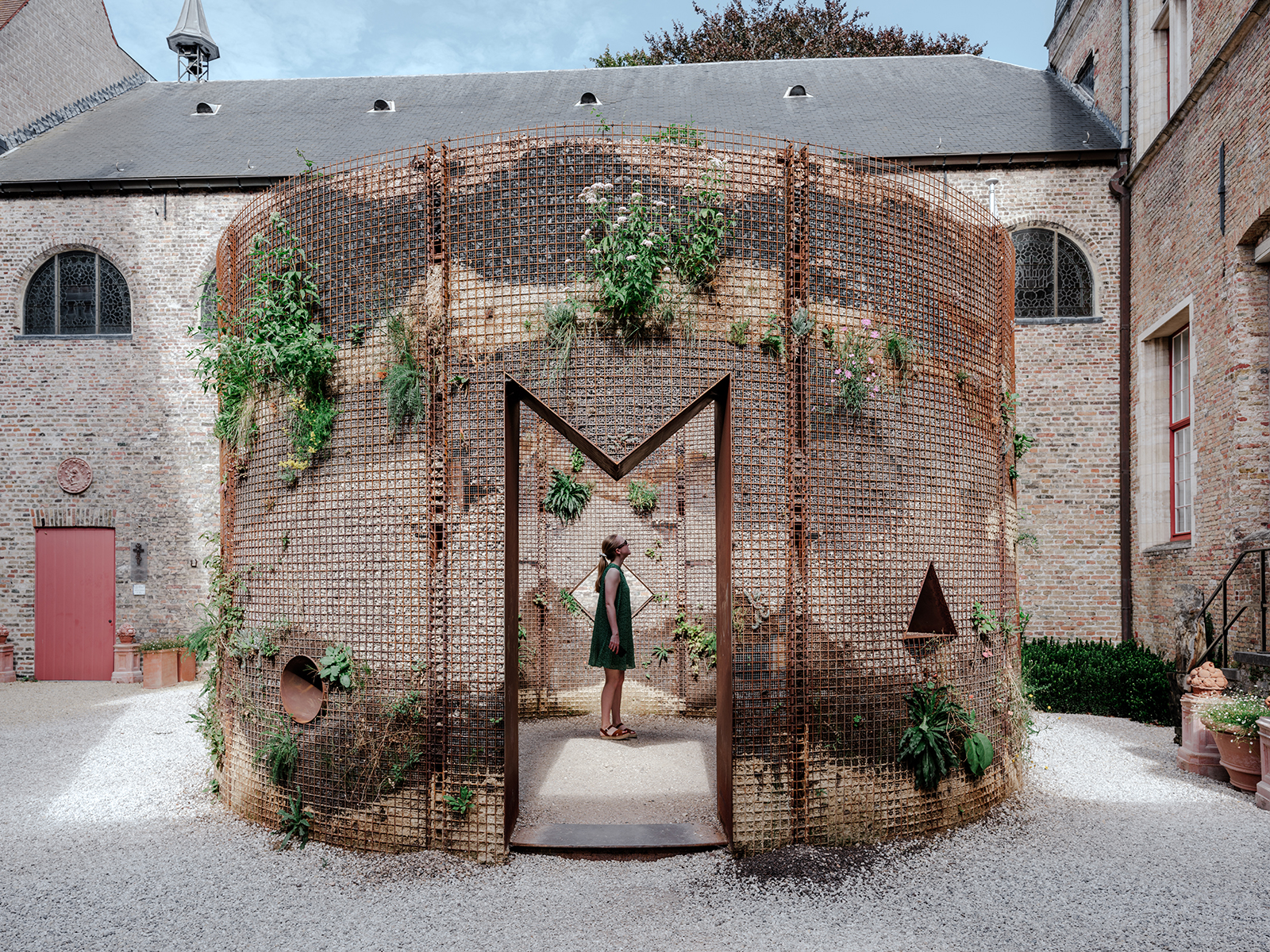
Earthsea Pavilion, presented at Bruges Triennial 2024, unfolds in the courtyard of the 15th-century Hof Bladelin as a cylindrical installation that mediates between land and sea, history and nature. The 6-metre-wide structure translates Bruges’ maritime past and layered urban memory into a vertical landscape, where substrata—echoing archaeological surveys—are brought to the surface and made perceptible.
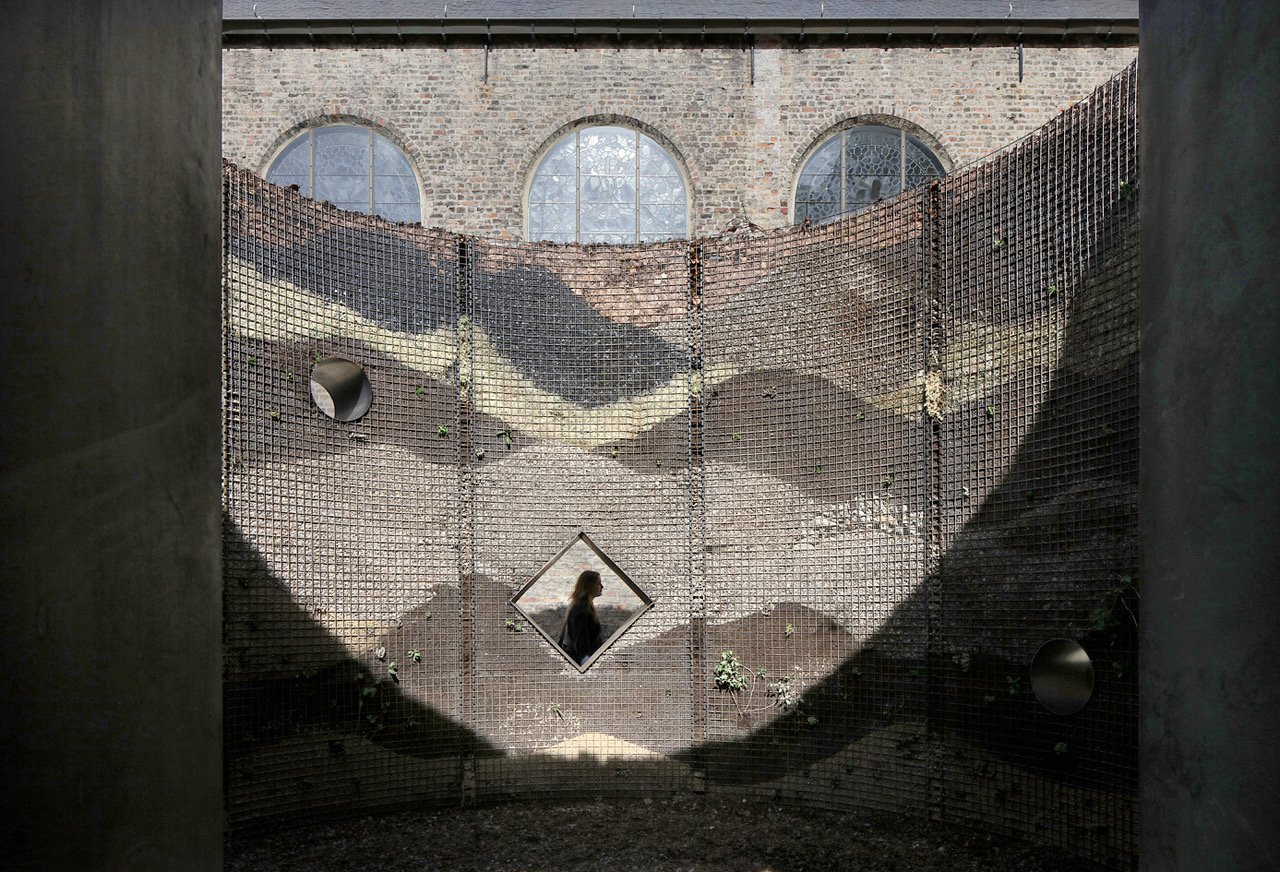
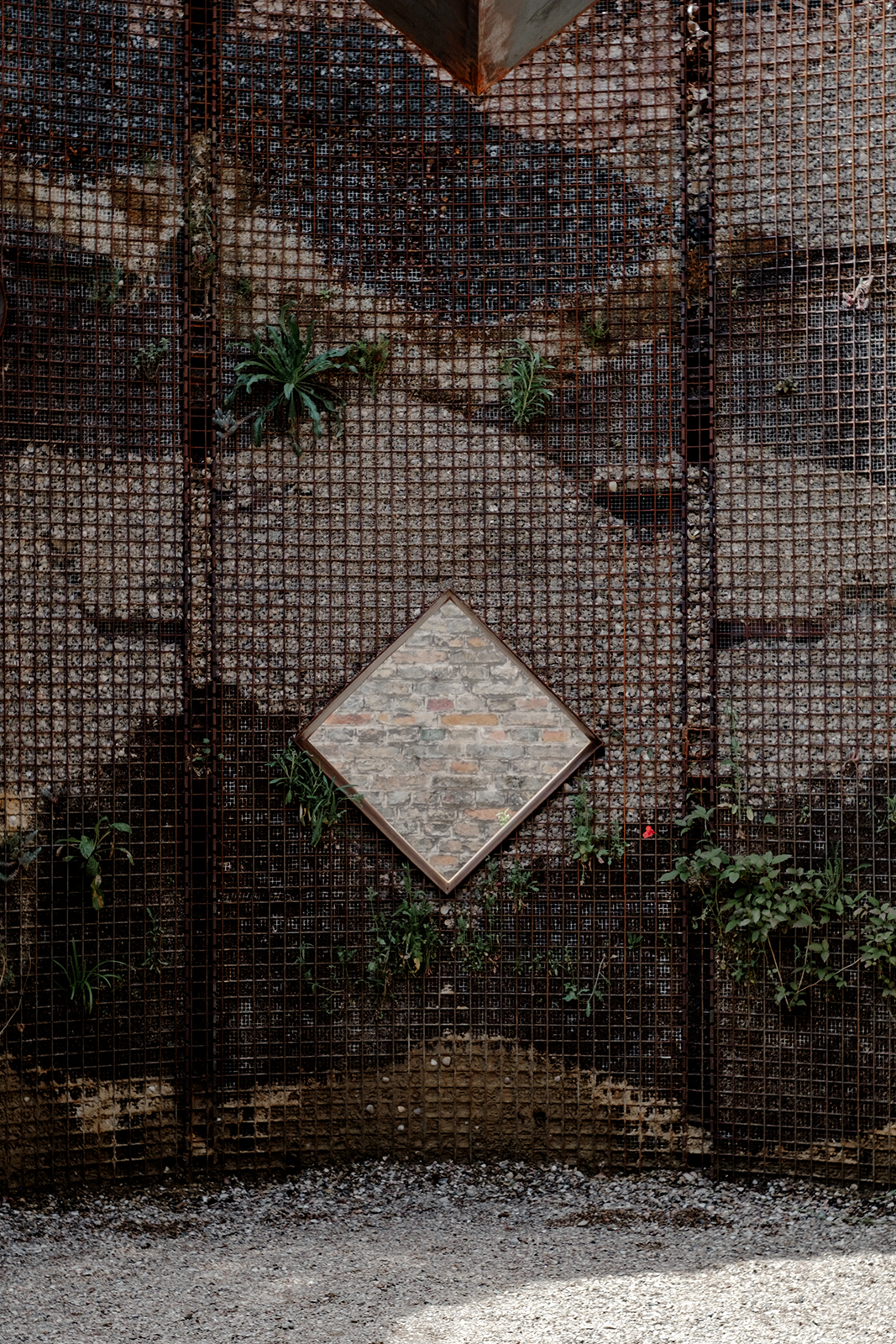
Composed of a metal grid filled with earth, peat, shells and leaves, the pavilion is stratified like a stack of ecosystems, inviting close observation and tactile engagement.
Seeds embedded within the layers activate a gradual process of growth and transformation, allowing plants and flowers to emerge over the course of the Triennial, continuously reshaping the installation’s ecological and spatial character.
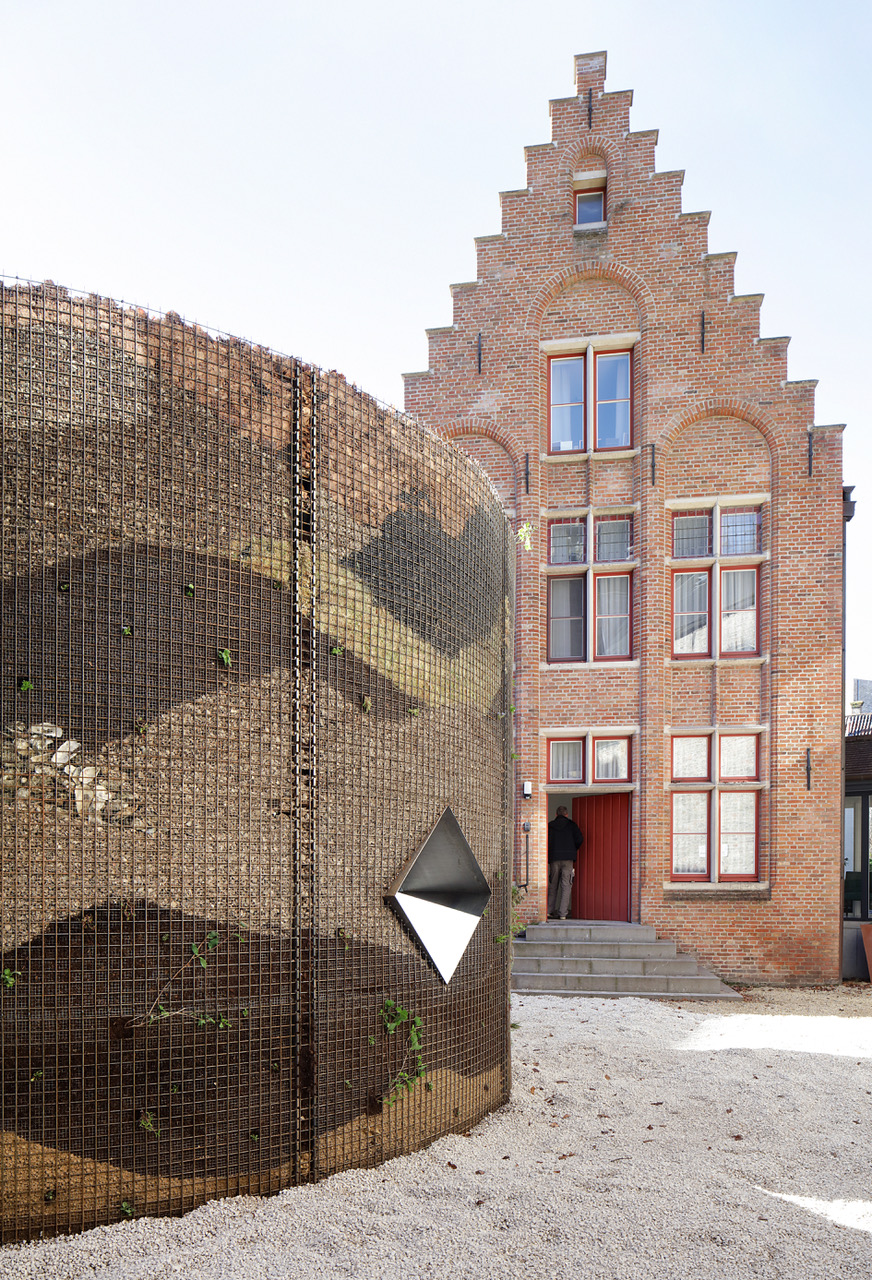
Set within Hof Bladelin—a residence commissioned in 1435 by Pieter Bladelin and later linked to the Medici—the project engages a site dense with historical resonance while resisting the notion of heritage as static.
Instead, Earthsea Pavilion introduces a living, evolving presence into the historic courtyard, functioning as a porous sanctuary for visitors, birds, insects and spontaneous vegetation.
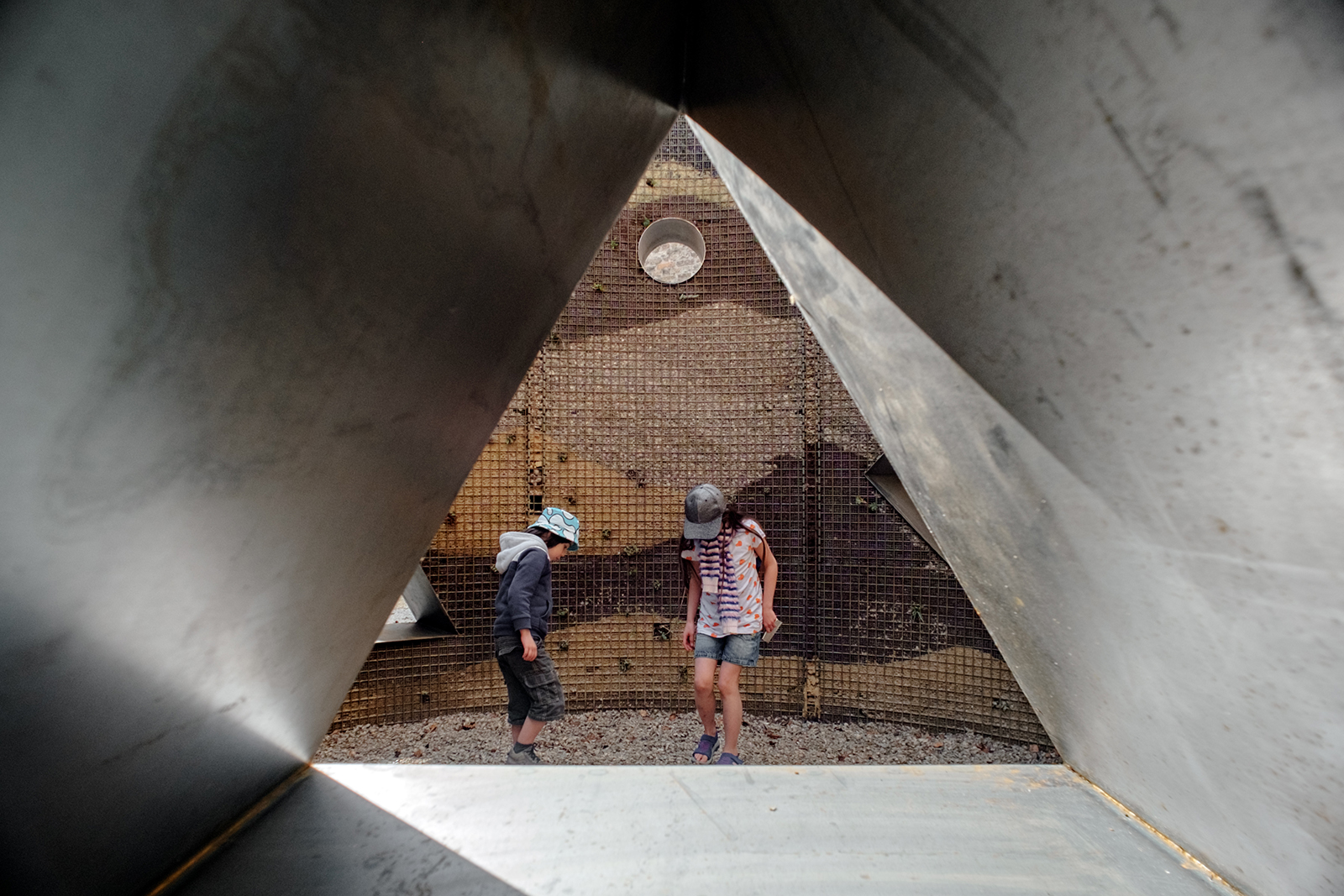
Through its cylindrical form and material layering, the installation reconnects the urban core to its geological and maritime narratives, positioning nature not as ornament but as an active agent within the UNESCO-listed fabric of Bruges.
Read more about the project here!
Massi Erratici / GAMeC, in Bergamo (2024)
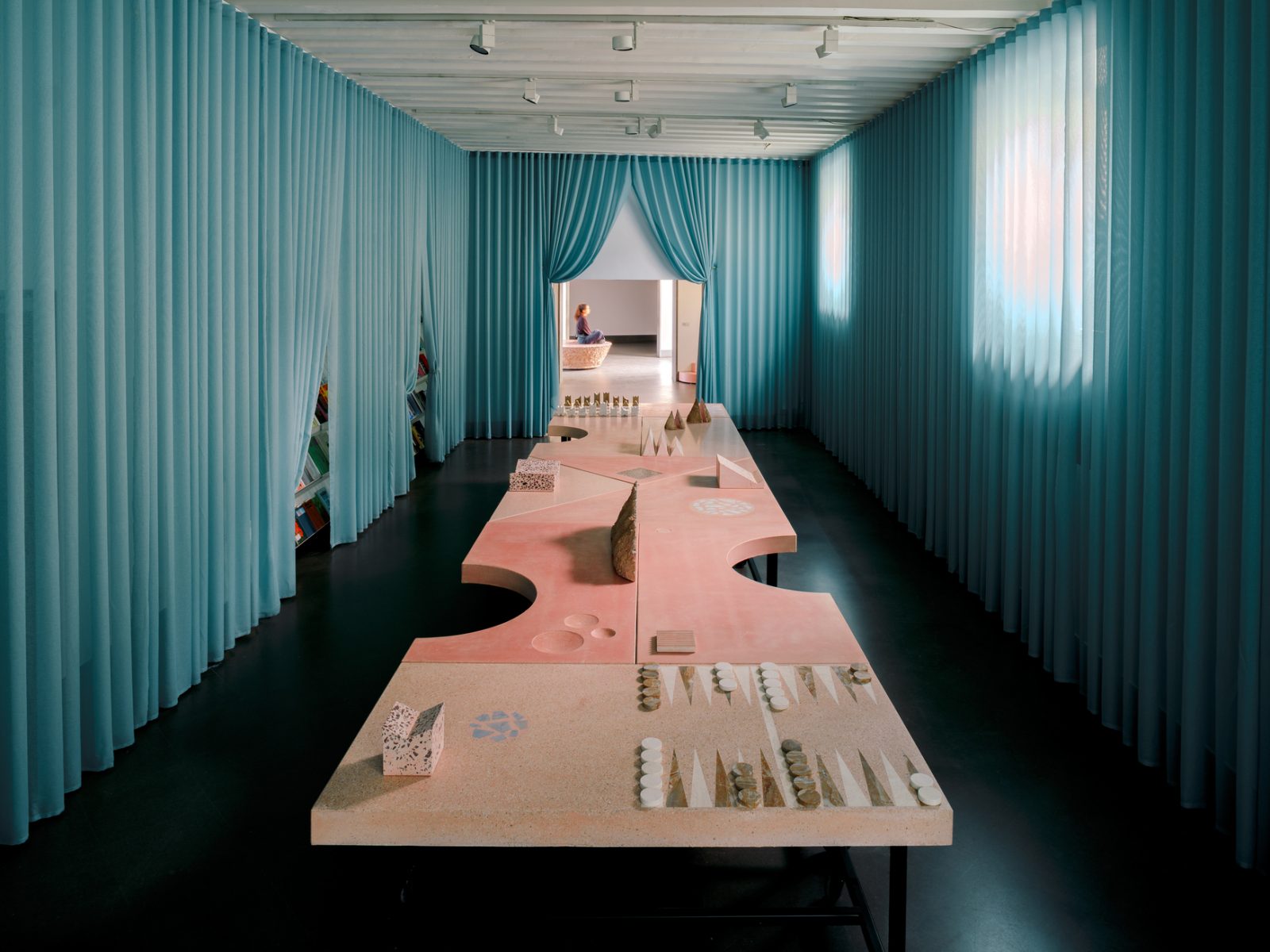
Developed in collaboration with GAMeC in Bergamo, Massi Erratici (2024) is conceived as a collection of modular surfaces and volumes that organise a range of museum-related activities, from bookshop displays and outdoor exhibitions to editorial meetings and presentations of works from the collection.
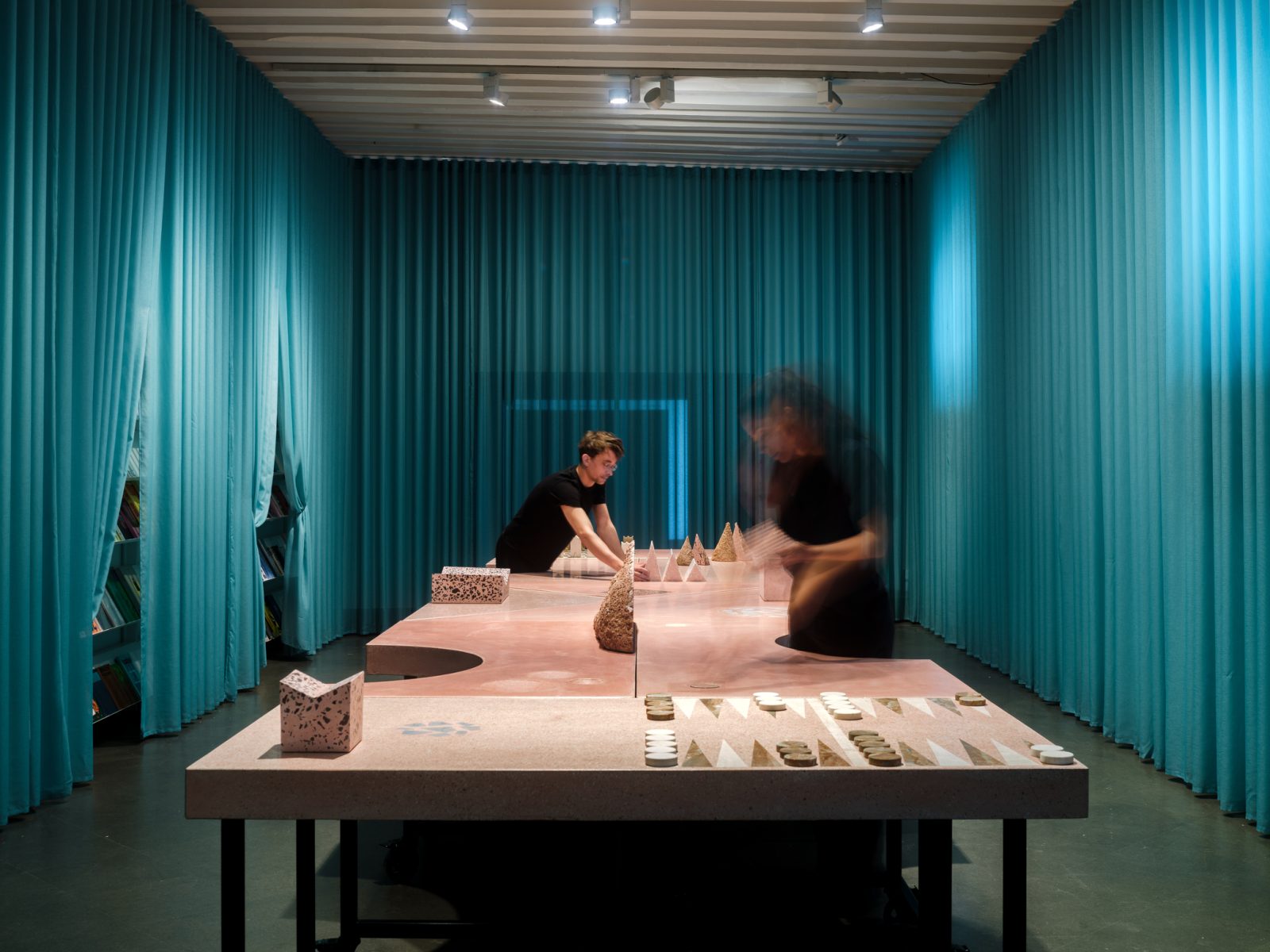
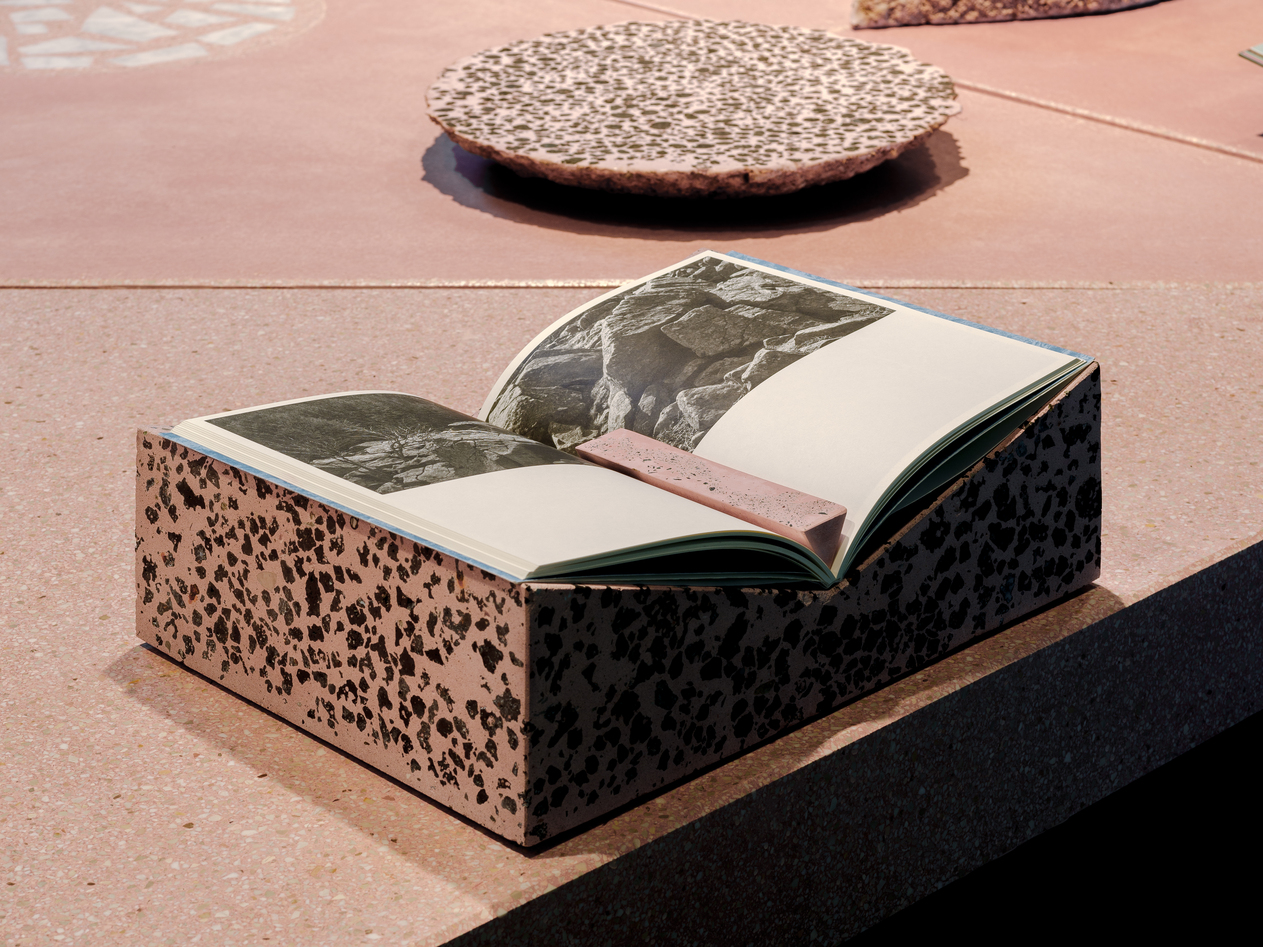
Designed as contemporary “stones”, the elements operate as a flexible spatial system that can be rearranged like a large-scale Tangram, continuously recombining into new geometric and geological configurations within the museum spaces.
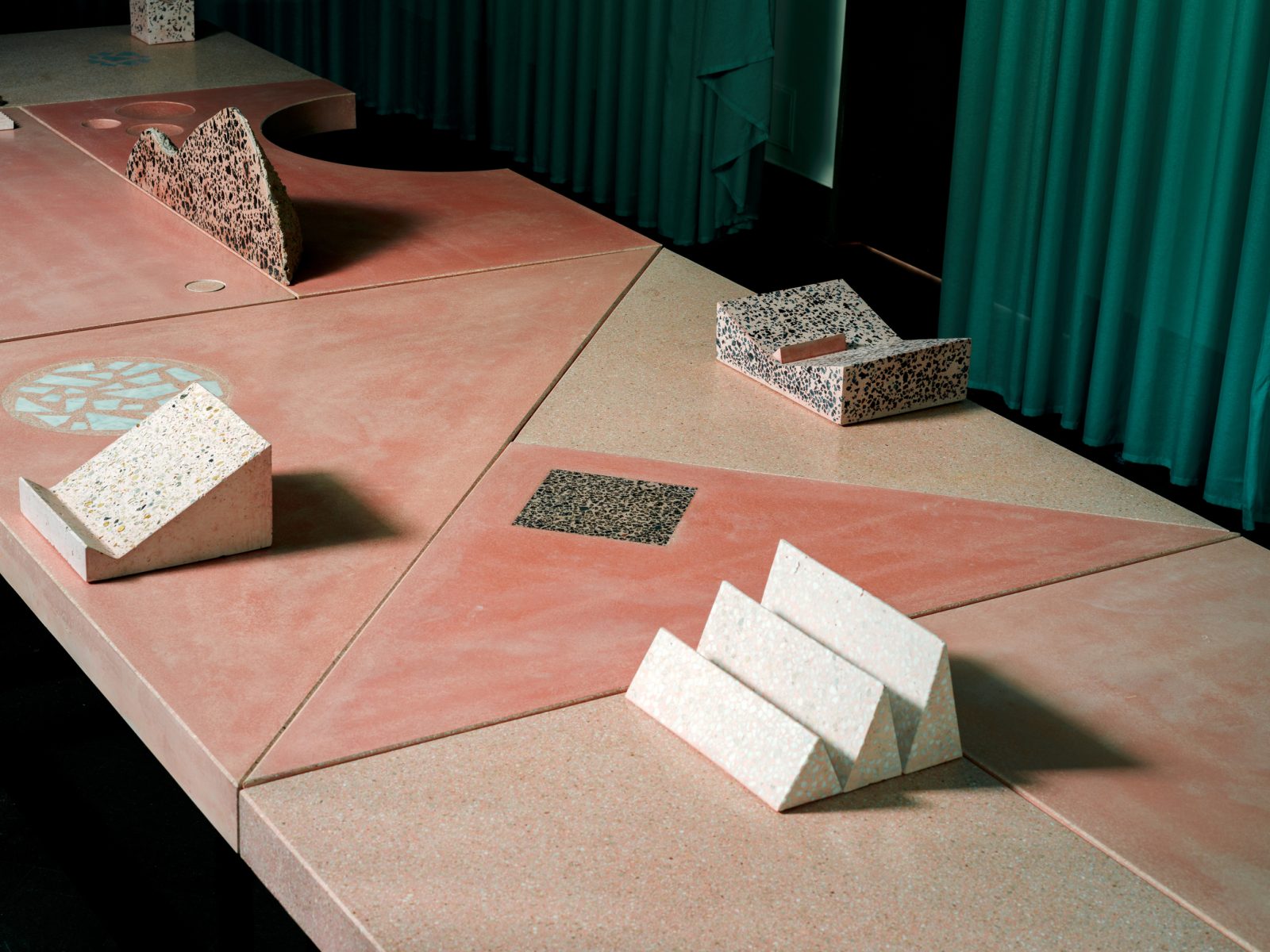
The project draws from the local tradition of stone and terrazzo craftsmanship, as well as from the Roman centuriation that historically structured the Bergamo territory and still subtly informs its landscapes.
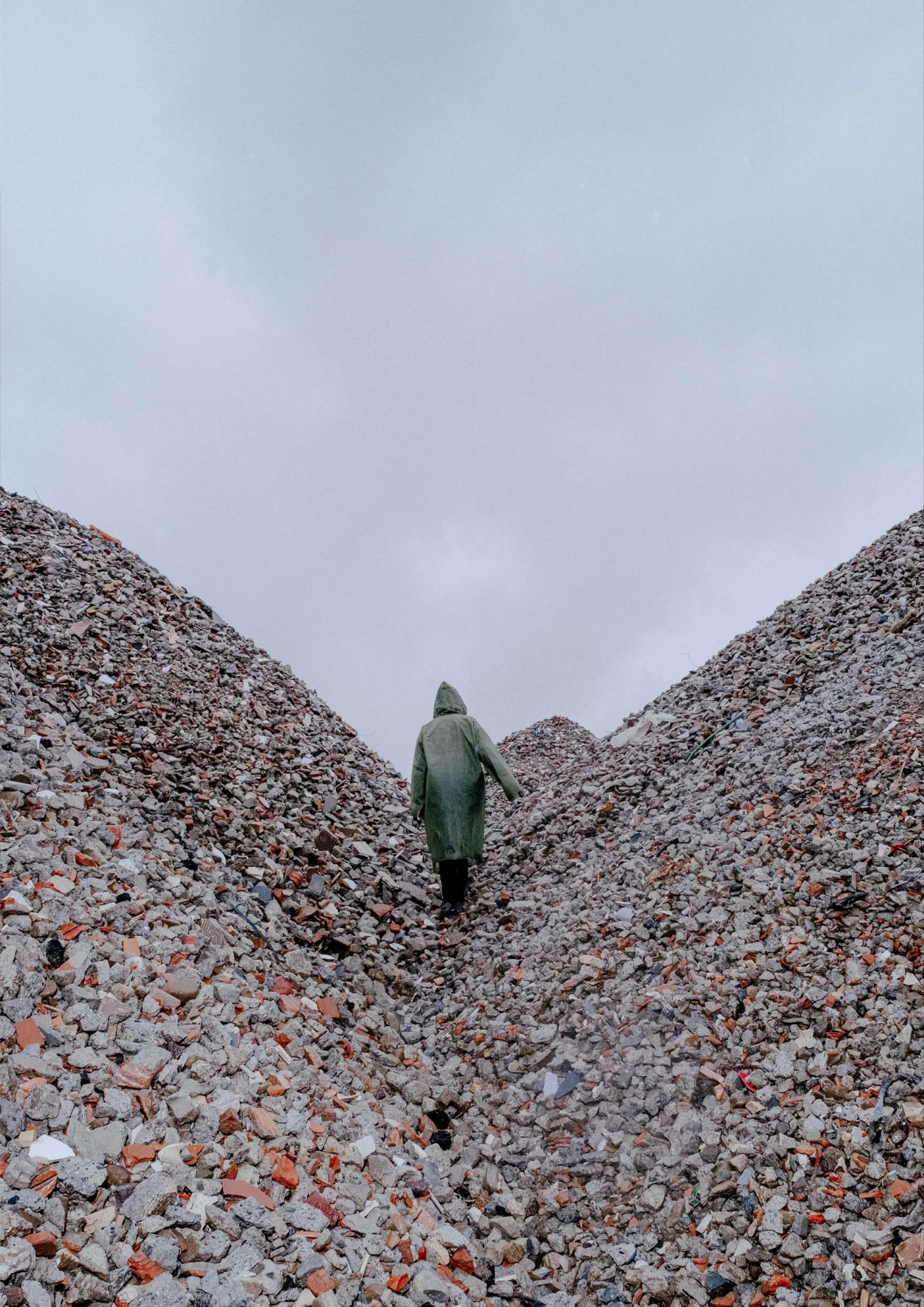
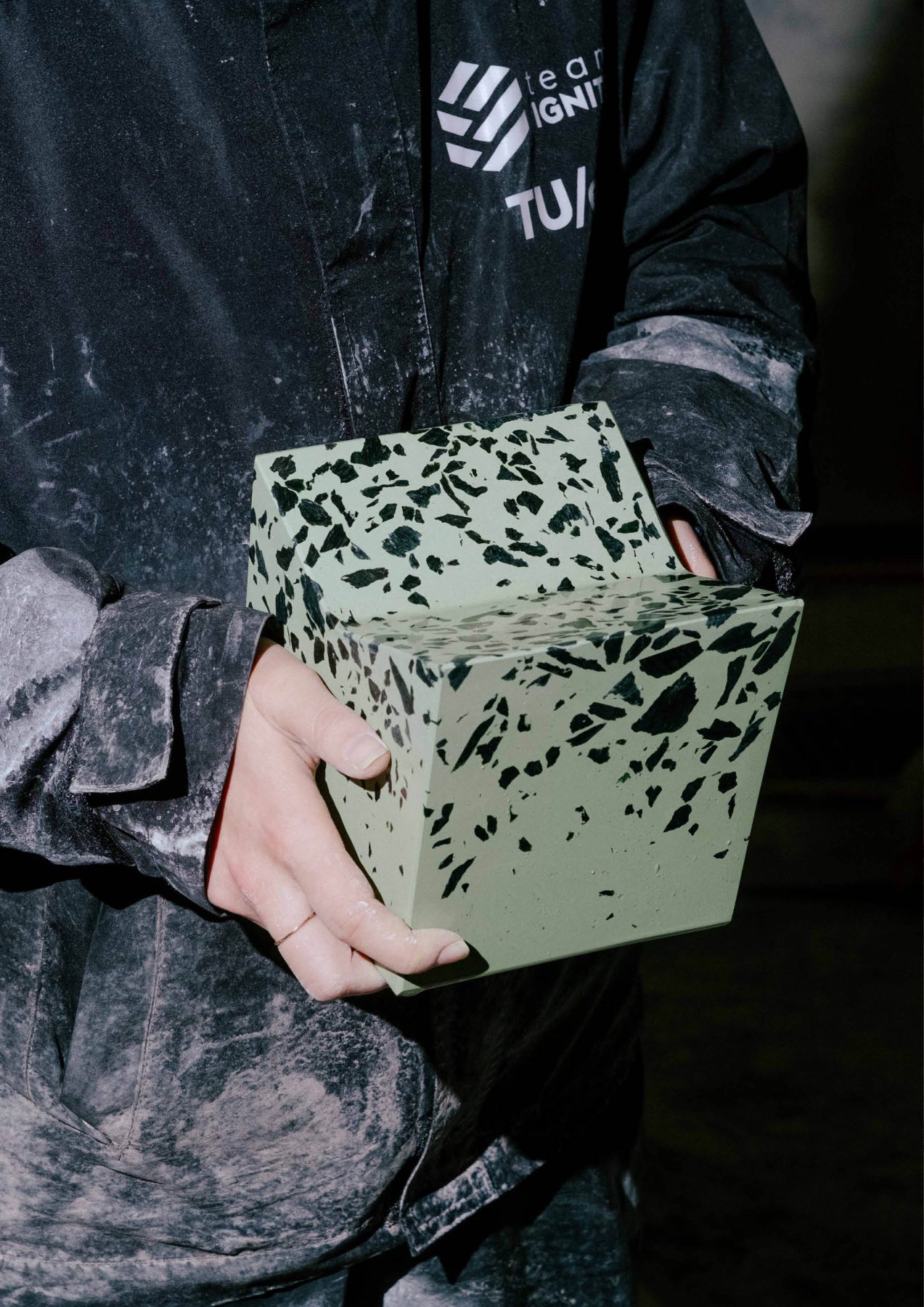
Composed of circular concrete volumes and aggregates obtained from crushed waste materials, the artificial boulders merge material reuse with a geological language that resonates with the site’s cultural context.
Conceived as erratic stones scattered throughout the museum, the modules foster proximity between visitors, staff and artworks. Their polyvalent surfaces can alternately host meetings, function as seating, support books or display artworks, framing people, objects and plants with equal attention.
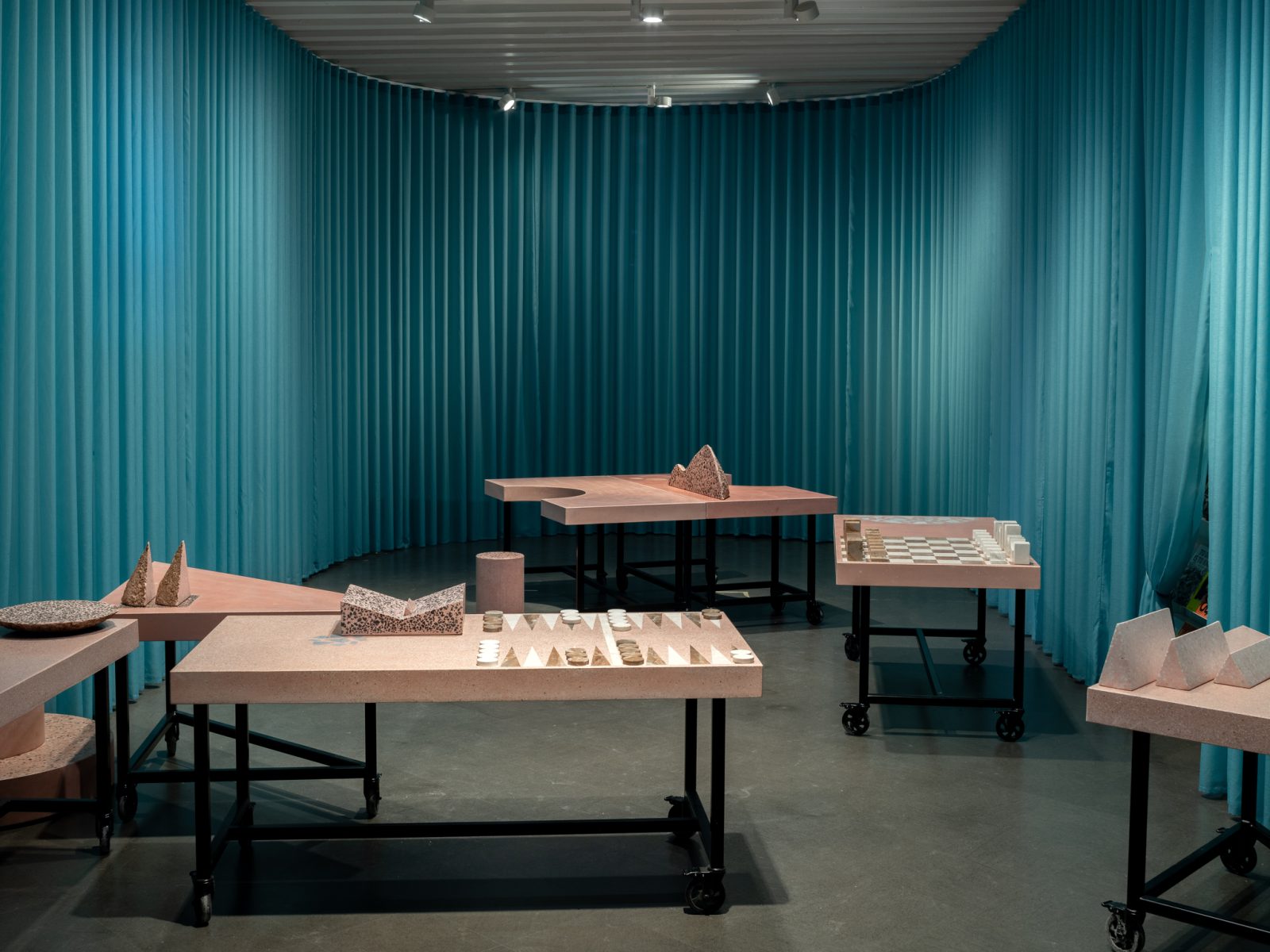
Envisioned as an expandable and nomadic collection, Massi Erratici ensures spatial continuity as GAMeC transitions to its new headquarters, adapting seamlessly to different architectural contexts.
Facts & Credits
Project title Massi Erratici / GAMeC
Typology Material Research, Installation
Location Bergamo, Italy
Architecture Studio Ossidiana
Team Giovanni Bellotti and Alessandra Covini with Pedro Daniel Pantaleone, Viktoria Bacheva, Emanuele Volpe
In Collaboration with Frantoio Sociale
Artistic Director Lorenzo Giusti
Associate Curators Sara Fumagalli, Marta Papini
Head of magazine Valentina Gervasoni
Project Partners Fondazione Architetti Bergamo, Ordine degli Architetti Pianificatori Paesaggisti e Conservatori della Provincia di Bergamo
Courtesy GAMeC – Galleria d’Arte Moderna e Contemporanea di Bergamo
Photography Riccardo De Vecchi
Text provided by the architects
The Garden of Intersections, in Logroño Spain (2023)
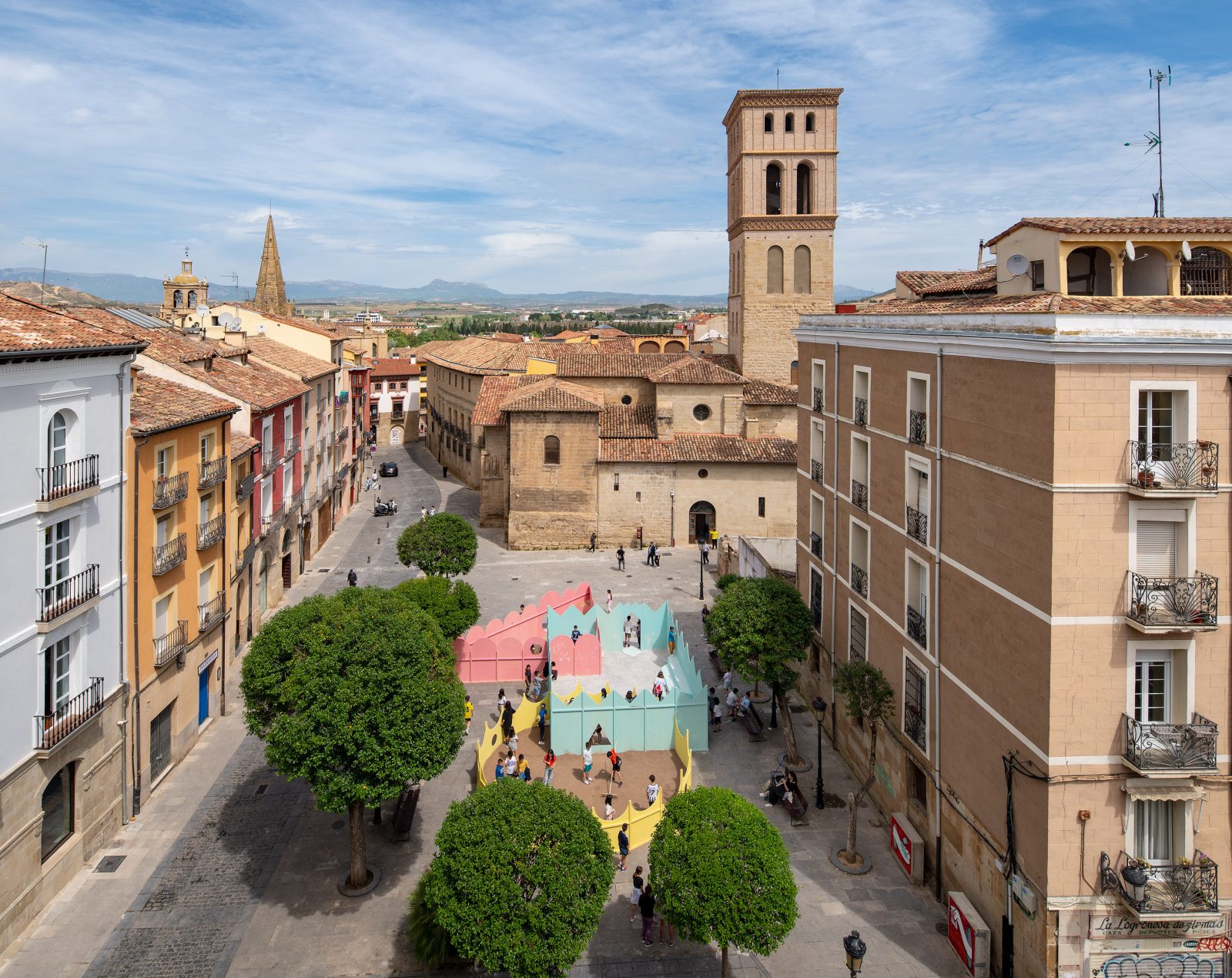
For the Concéntrico Festival, Studio Ossidiana conceived The Garden of Intersections as an inhabitable tribute to the soils of Logroño and its wider Rioja territory, bringing to the centre of the city the very ground on which it stands.
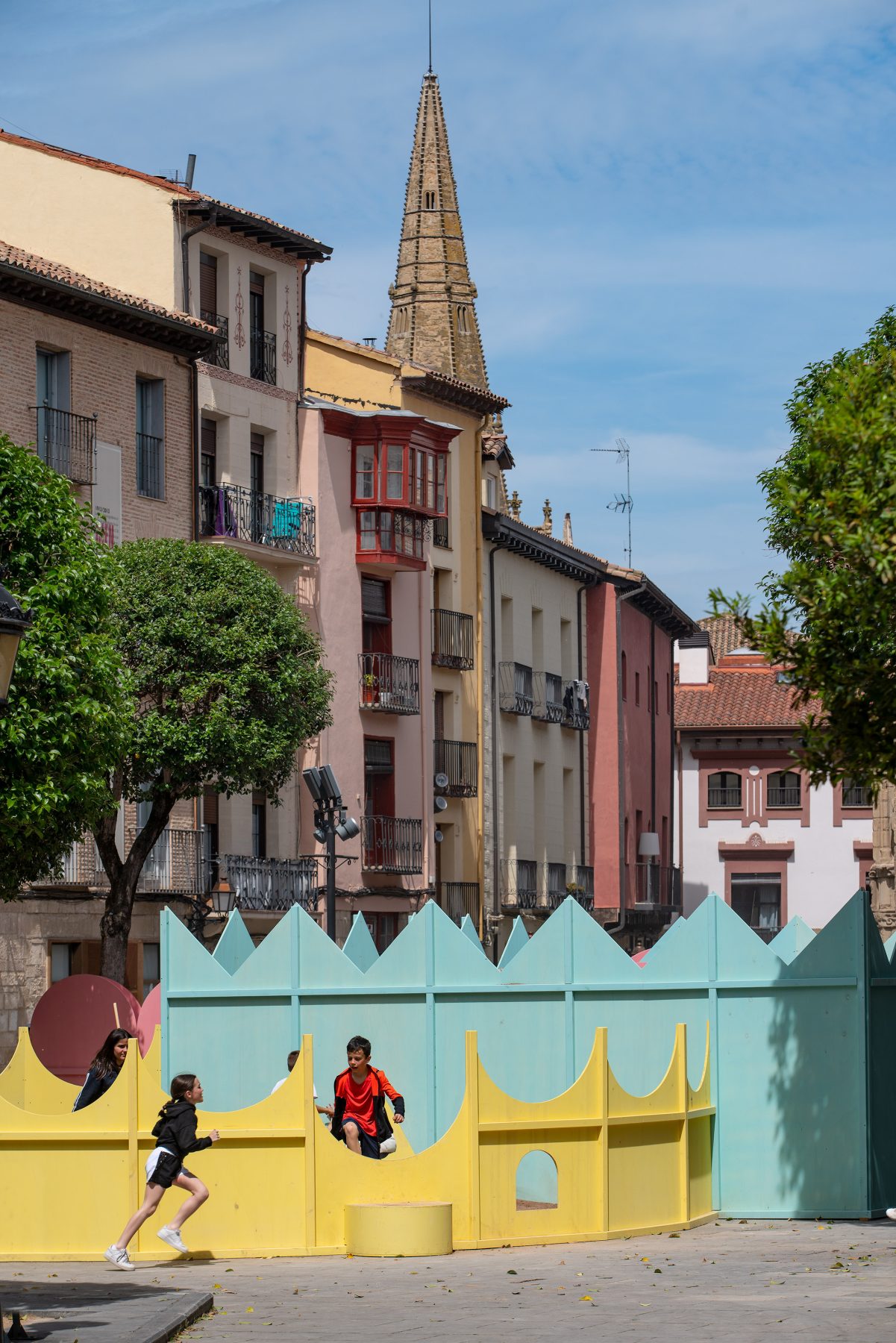
Rather than presenting soil as a static exhibit, the installation stages undomesticated matter—ferrous earth, volcanic gravel and clay-rich substrate—as an active spatial medium, predating bricks, walls, homes and churches not as a monument, but as a canvas for collective interaction.
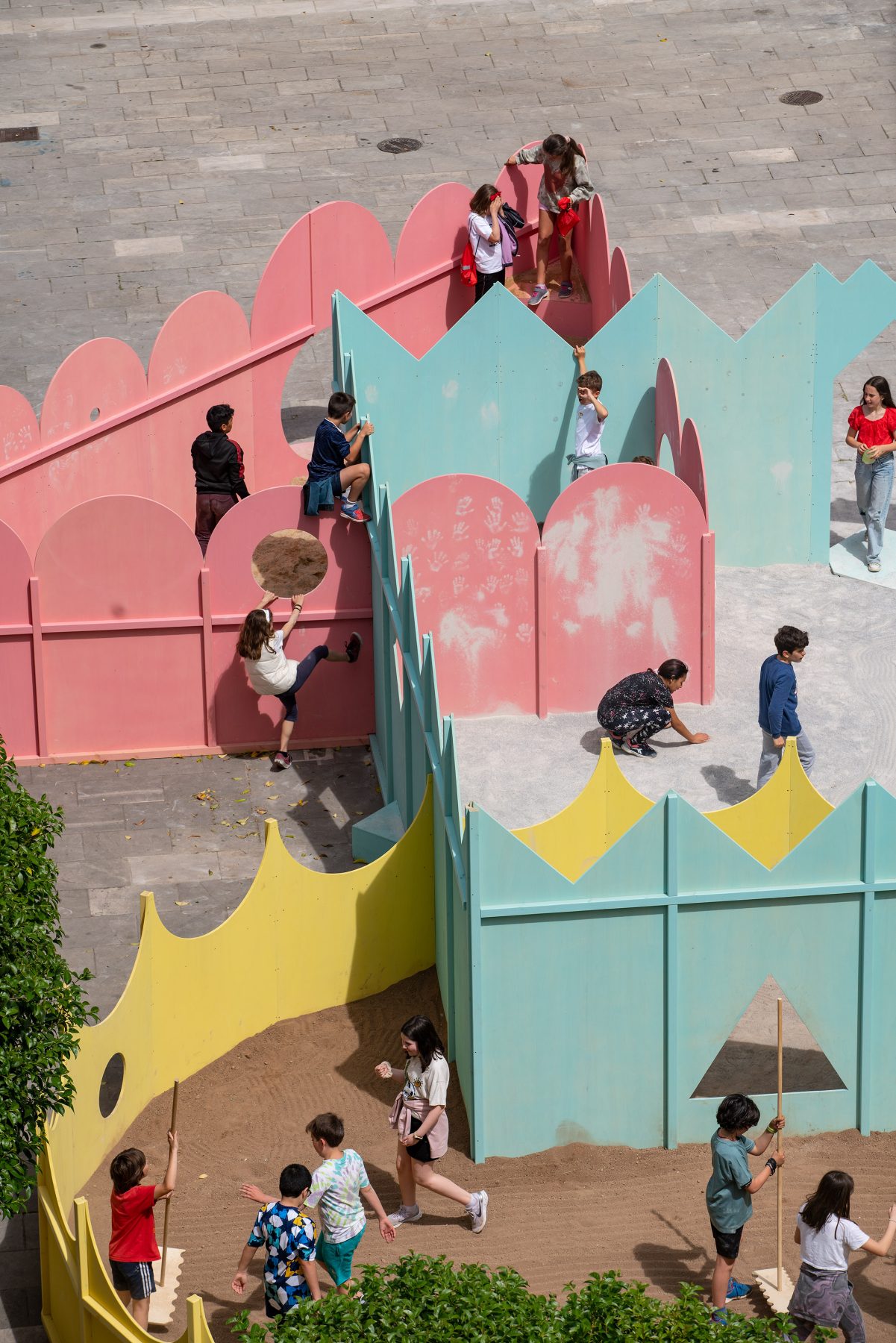
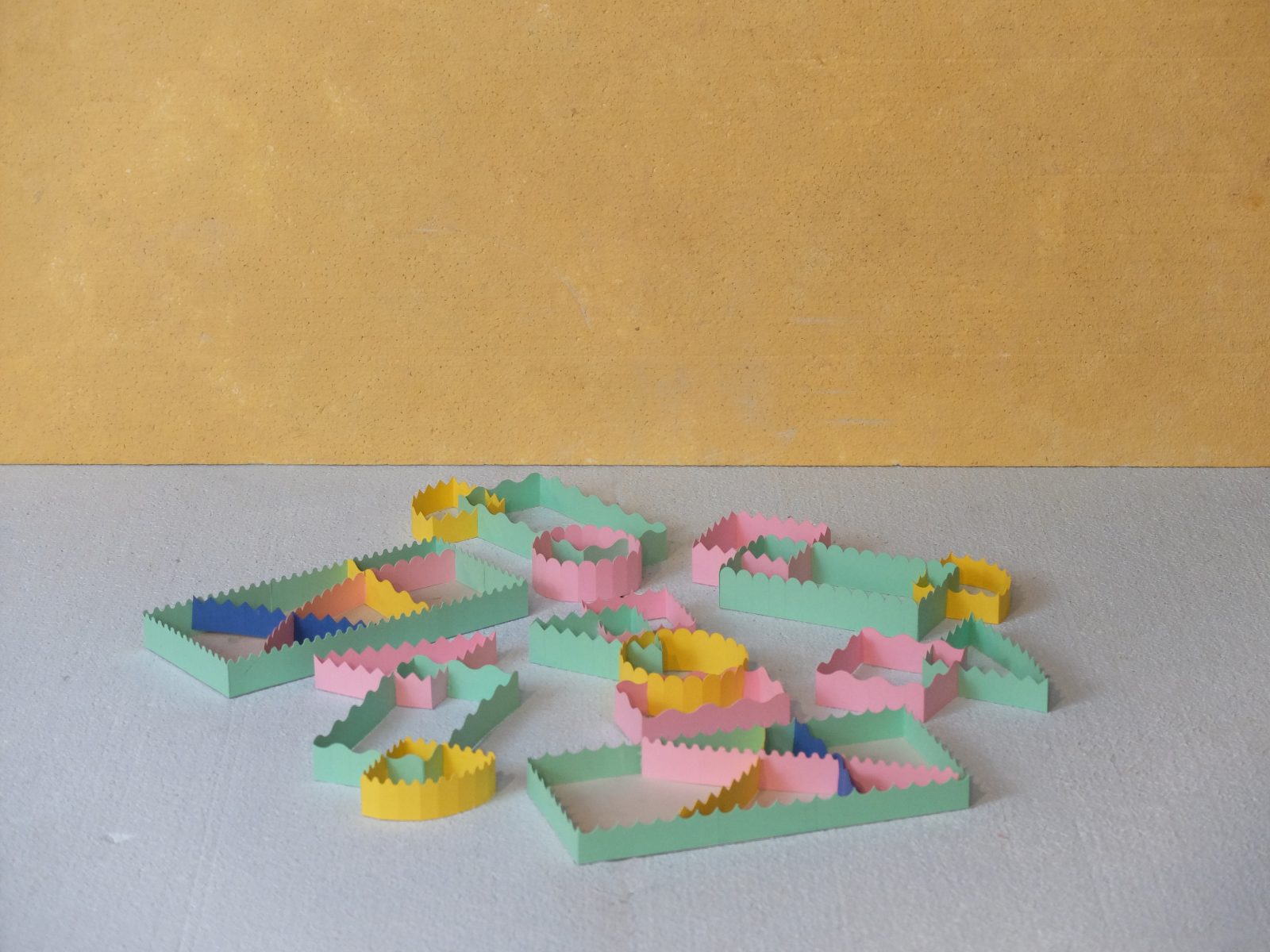
Organised as a sequence of mineral-filled rooms enclosed by hedge-like garden walls, each chamber is dedicated to a specific soil type, allowing distinct terrains to coexist, meet and gradually produce new grounds at their intersections.
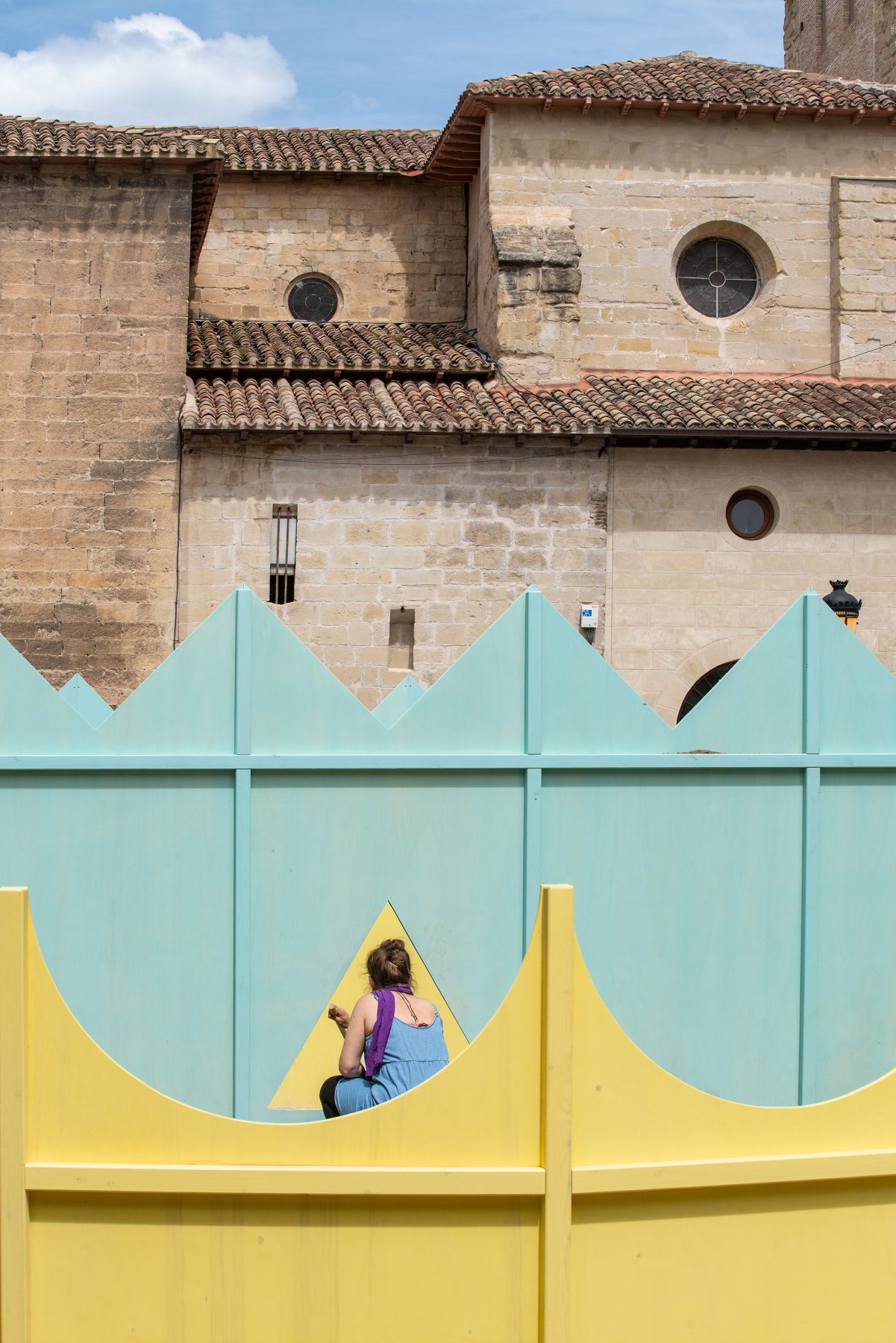
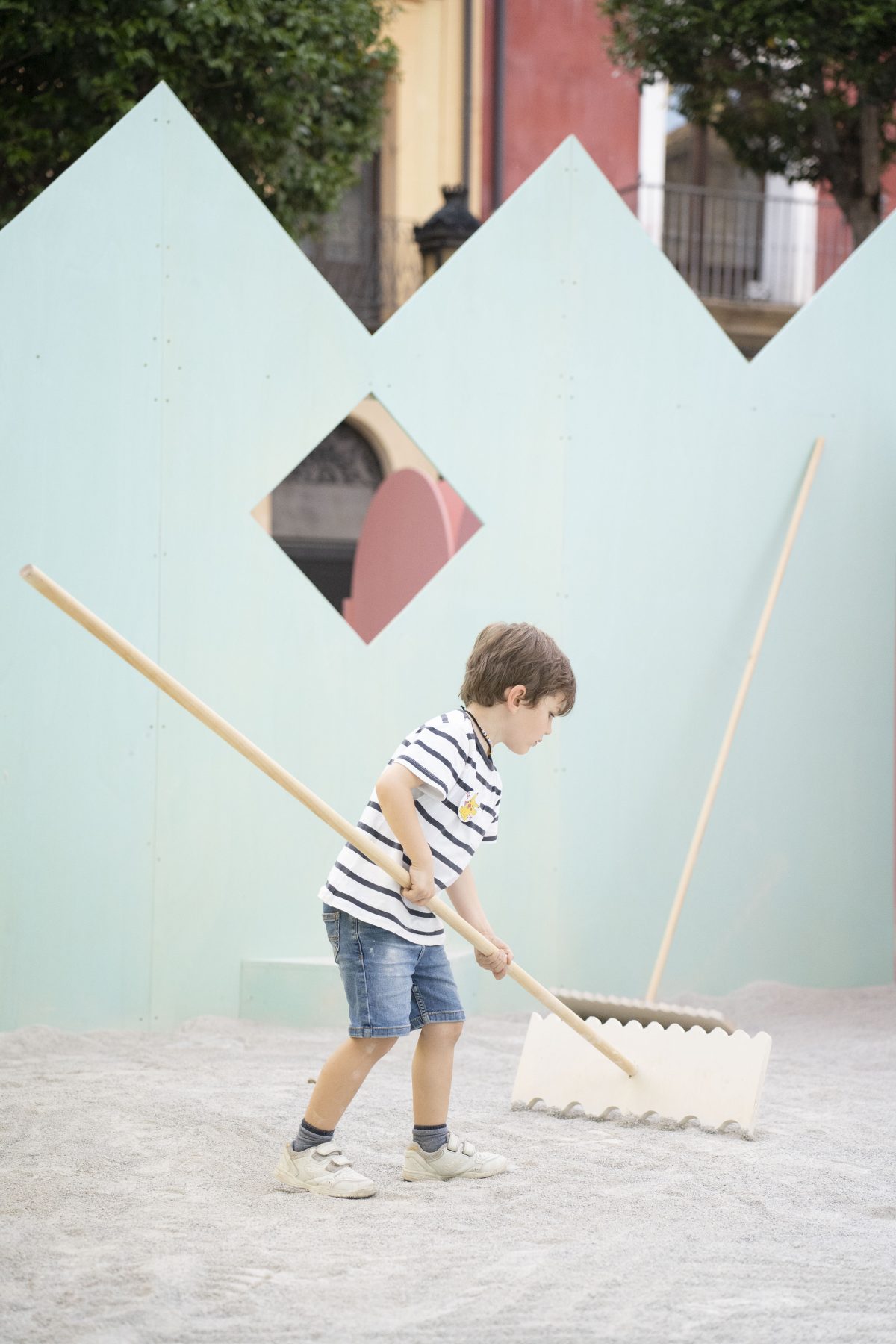
The installation invites visitors to inhabit the space as gardeners, geographers or explorers: to dig, draw on the earth, search for buried traces or simply rest on loose materials under the sun. Through daily use, movement and play, the soils are continuously displaced and remixed, transforming the garden into a living landscape shaped by human presence and environmental processes.
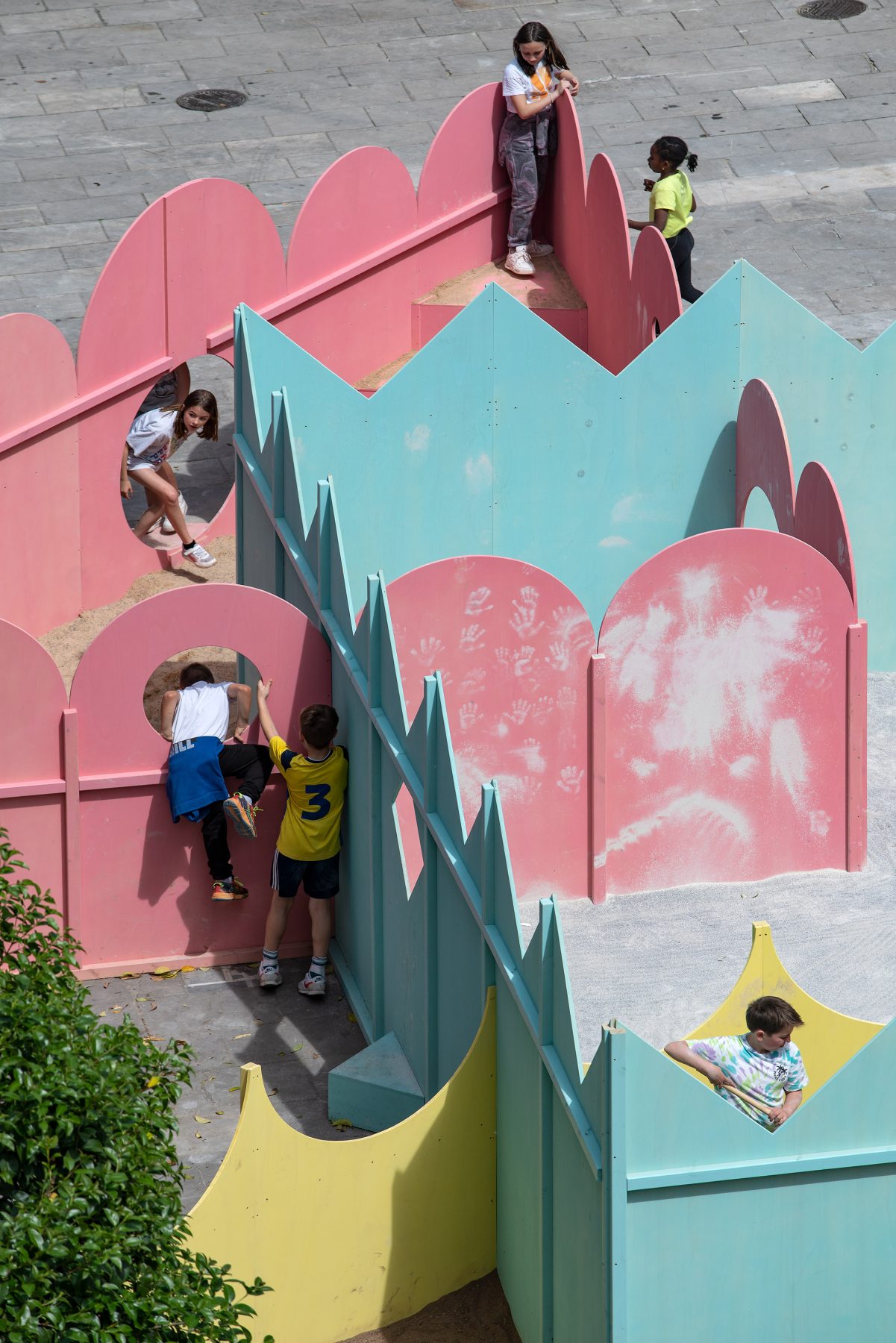
In this way, The Garden of Intersections foregrounds the tactile and pedagogical potential of the ground itself, reconnecting urban experience with the geological layers that underpin it.
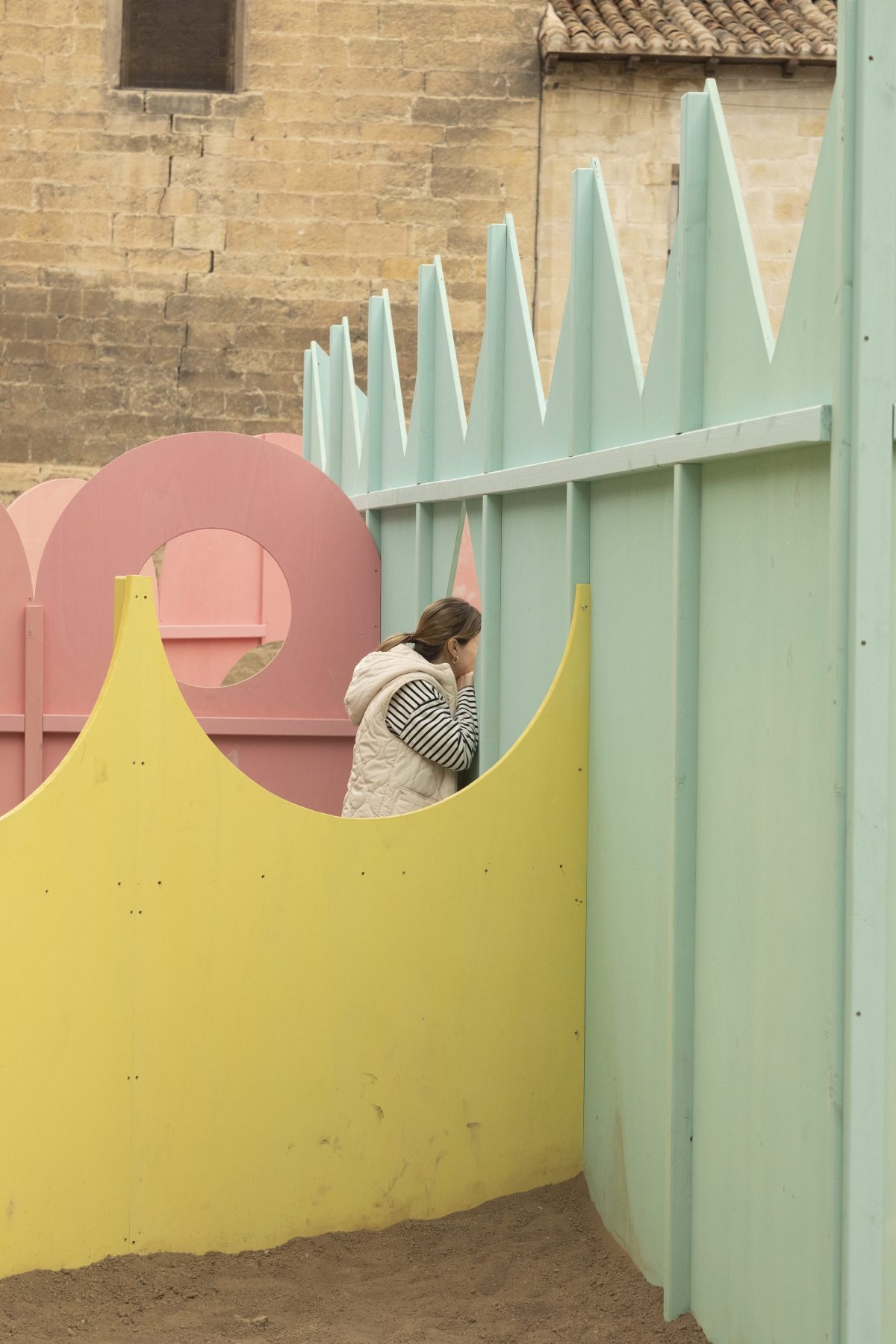
Following the festival, the project was reactivated as an experimental open-air classroom for Centro Educación Infantil Las Gaunas, extending its life beyond the temporary event. As a pavilion for listening, gardening, learning and play, it continues to cultivate new intersections between education and exploration, where teaching unfolds through direct engagement with matter, landscape and collective discovery.
Facts & Credits
Project title The Garden of Intersections
Typology Landscape Design, Installation
Location Logroño, Spain
Architecture Studio Ossidiana
Team Giovanni Bellotti, Alessandra Covini, Pedro Daniel Pantaleone, Konstantin Beck
Client Concentrico Festival and Centro Educacion Infantil las Gaunas
Director Javier Peña Ibañez
Production Carpinteria Zangroniz, Benjamin Moore España
Production Partners Istituto Italiano di Cultura Madrid, Red Planea, Education Rioja
Photography Josema Cutillas
Video Blanco en Botella
Text provided by the architects
The Garden Table in Chicago (2021)
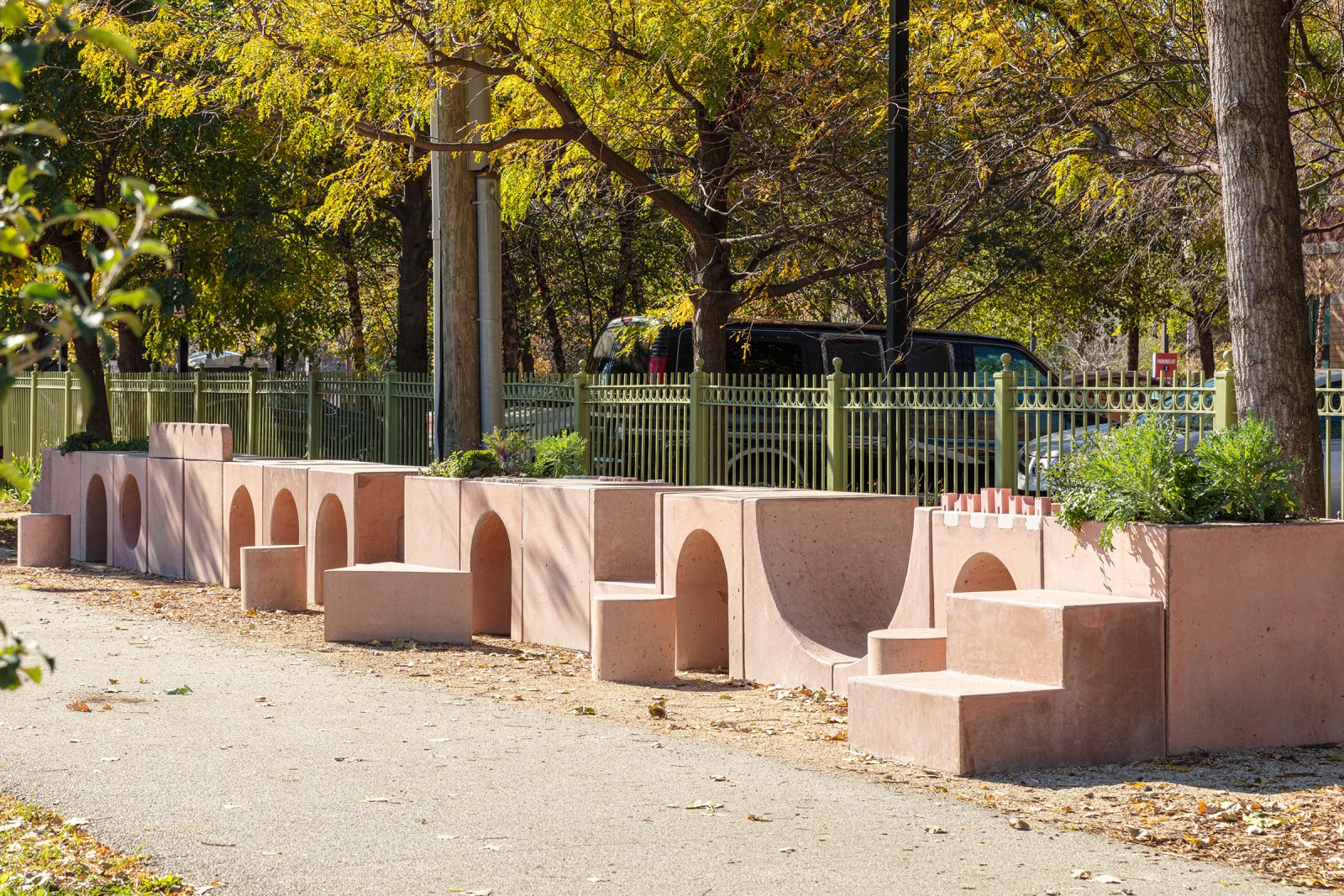
Commissioned for the Chicago Architecture Biennial as part of The Available City.
The Garden Table by Studio Ossidiana reinterprets everyday domestic practices as shared urban rituals, imagining a fragment of a collective city where cooking, eating, resting and playing unfold in the public realm.
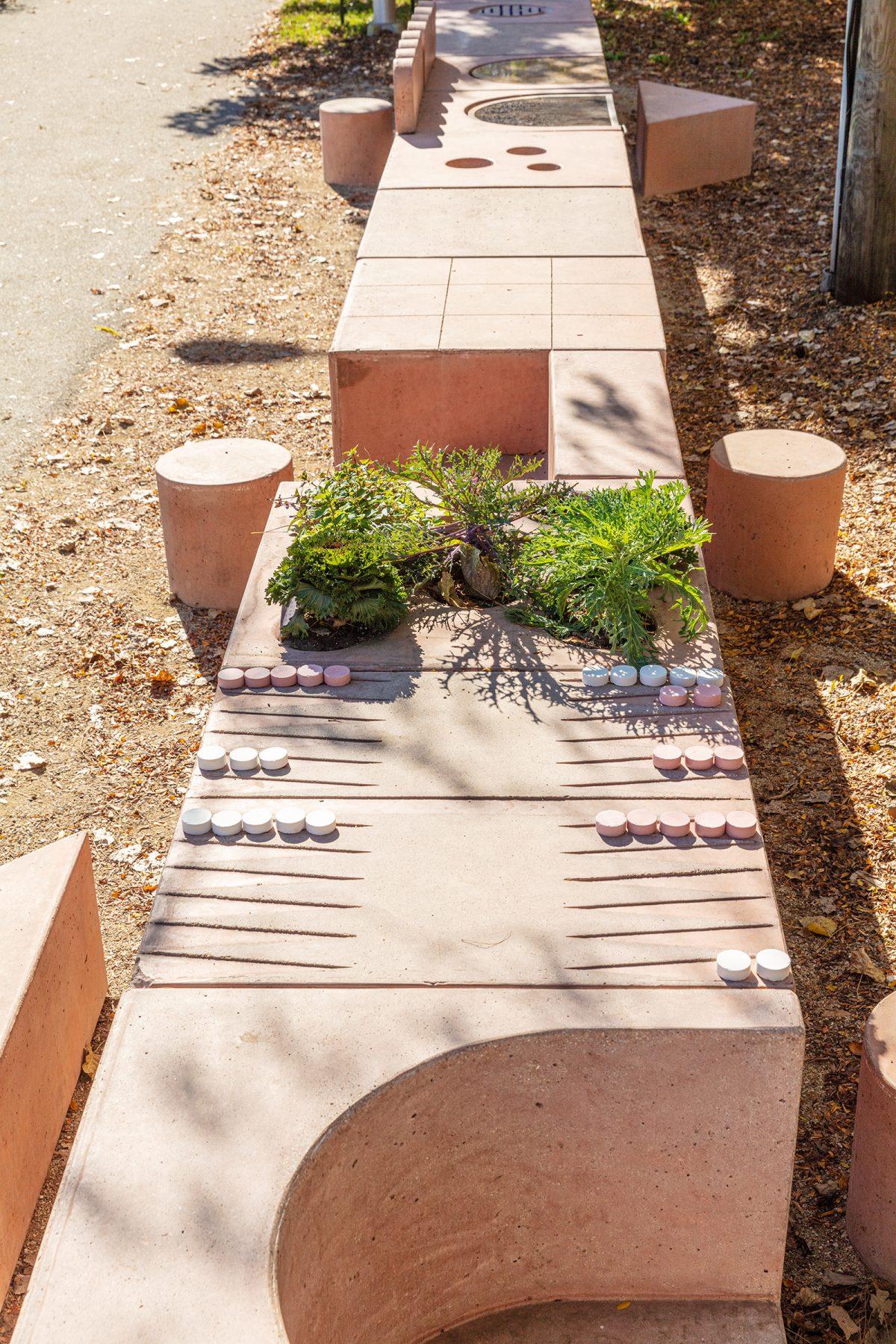
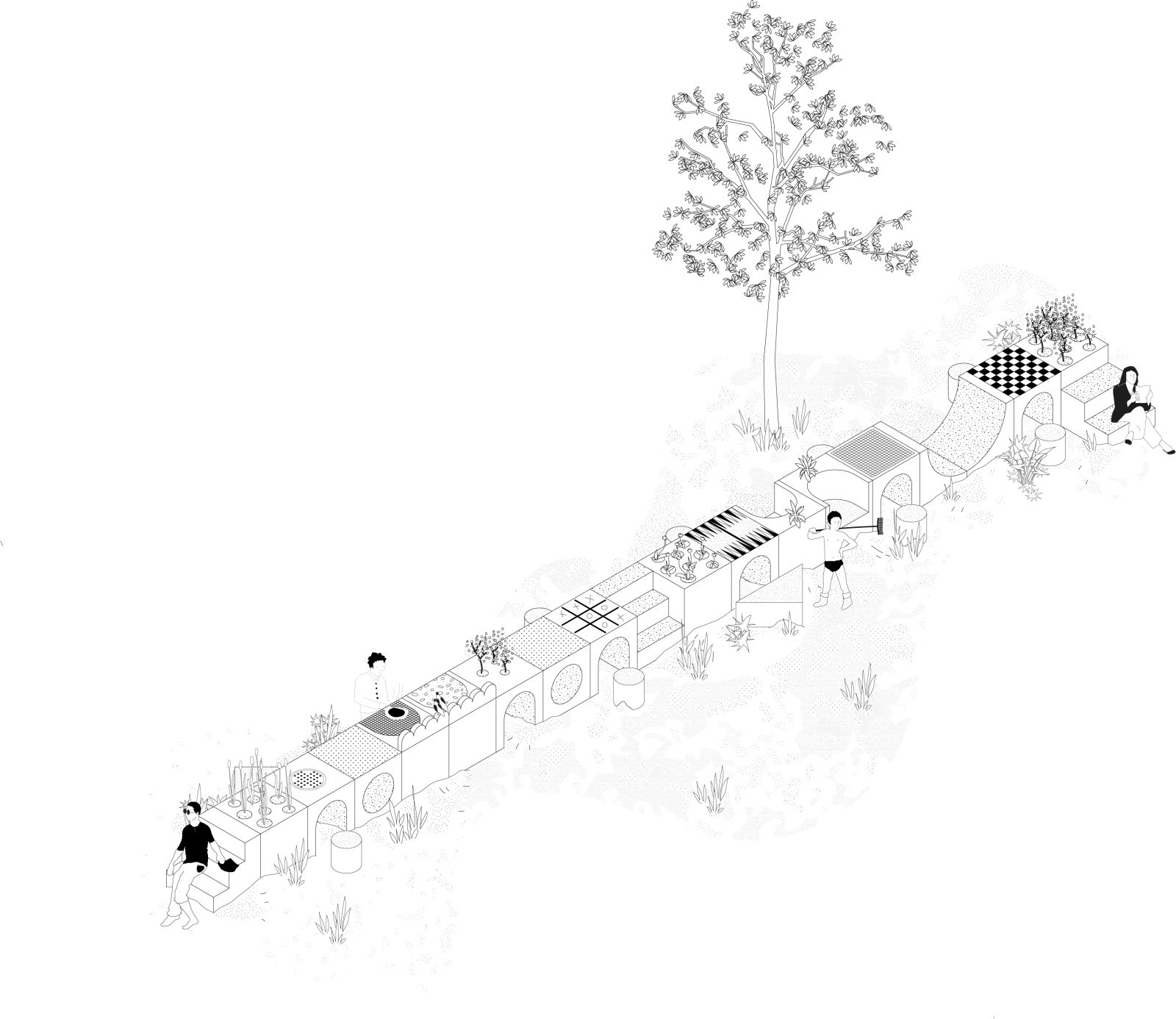
Part kitchen, part game board and part stage, the installation takes the form of a modular cast object designed to be touched, used and cultivated over time, encouraging visitors and neighbours to engage with it through informal and performative acts.
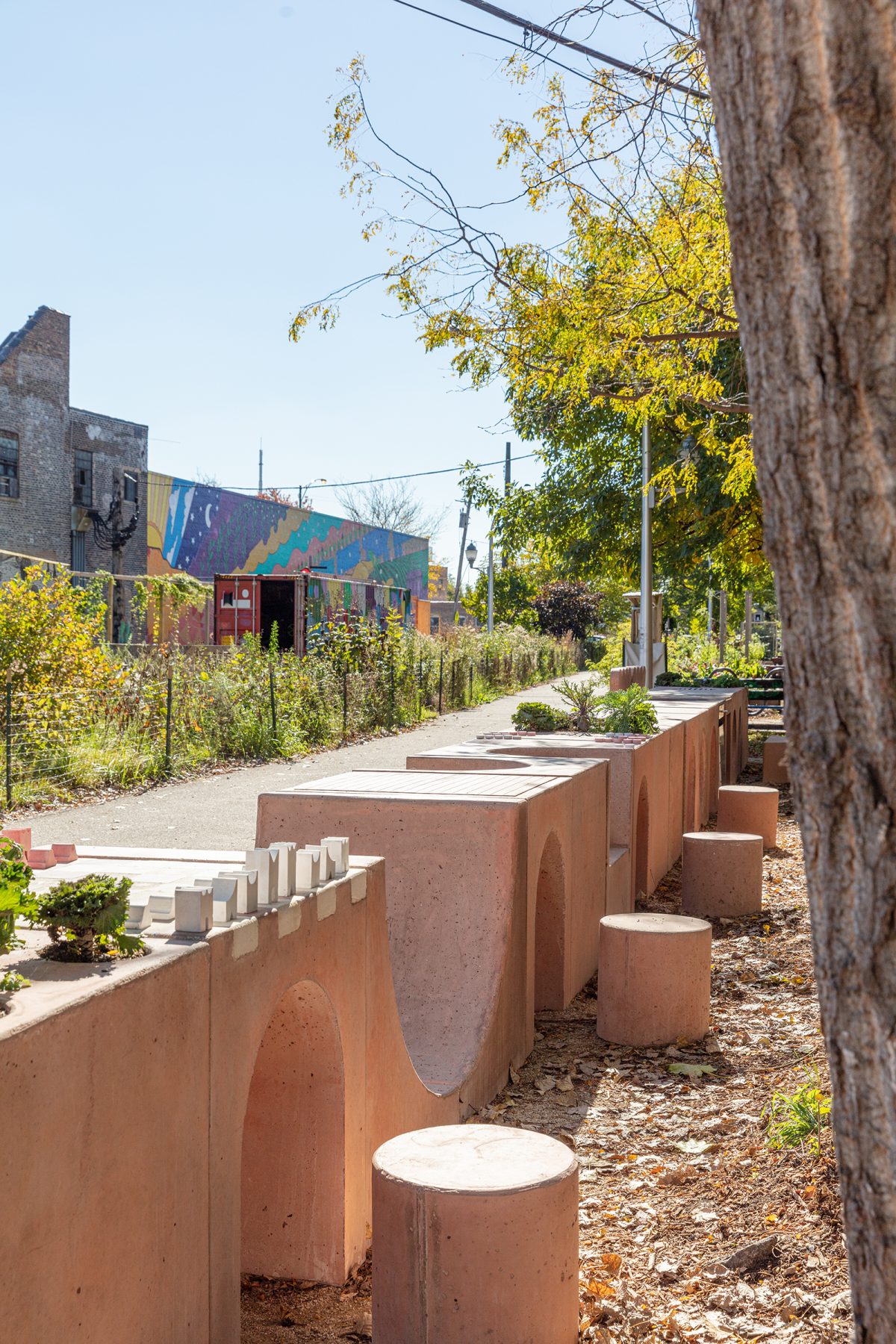
Conceived as a multi-purpose surface, the Garden Table accommodates a wide spectrum of activities—from collective barbecues, cooking classes and communal dinners to board games, gardening and spontaneous gatherings—remaining open day and night as an inclusive civic platform.
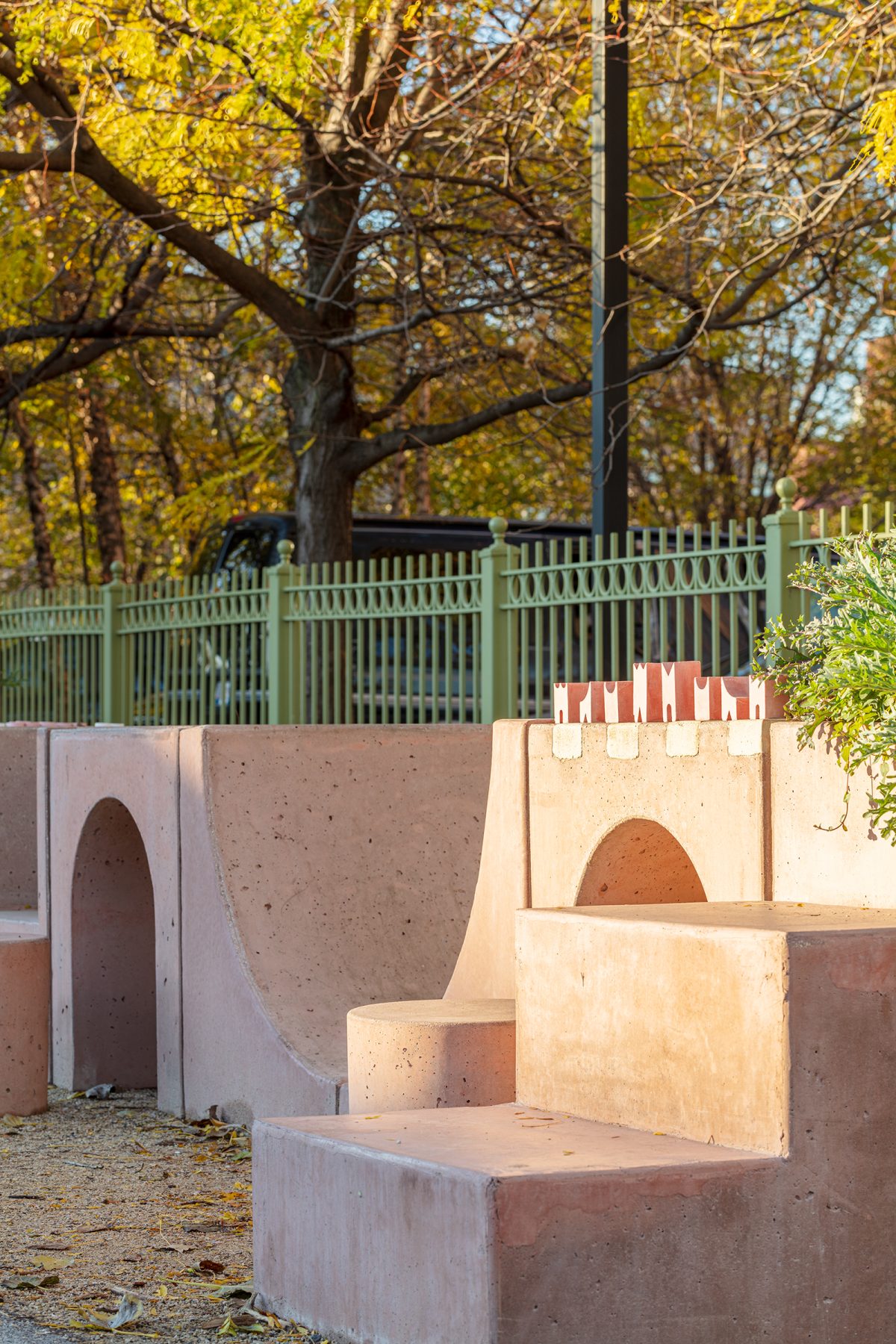
Its robust, weather-resistant cast elements ensure permanence, while allowing the structure to evolve through use and incremental additions. The modular system enables the integration of water basins, drinking fountains, pizza ovens, smokers, seating areas or bird feeders, transforming the table into an adaptable infrastructure that can grow alongside the community it serves.
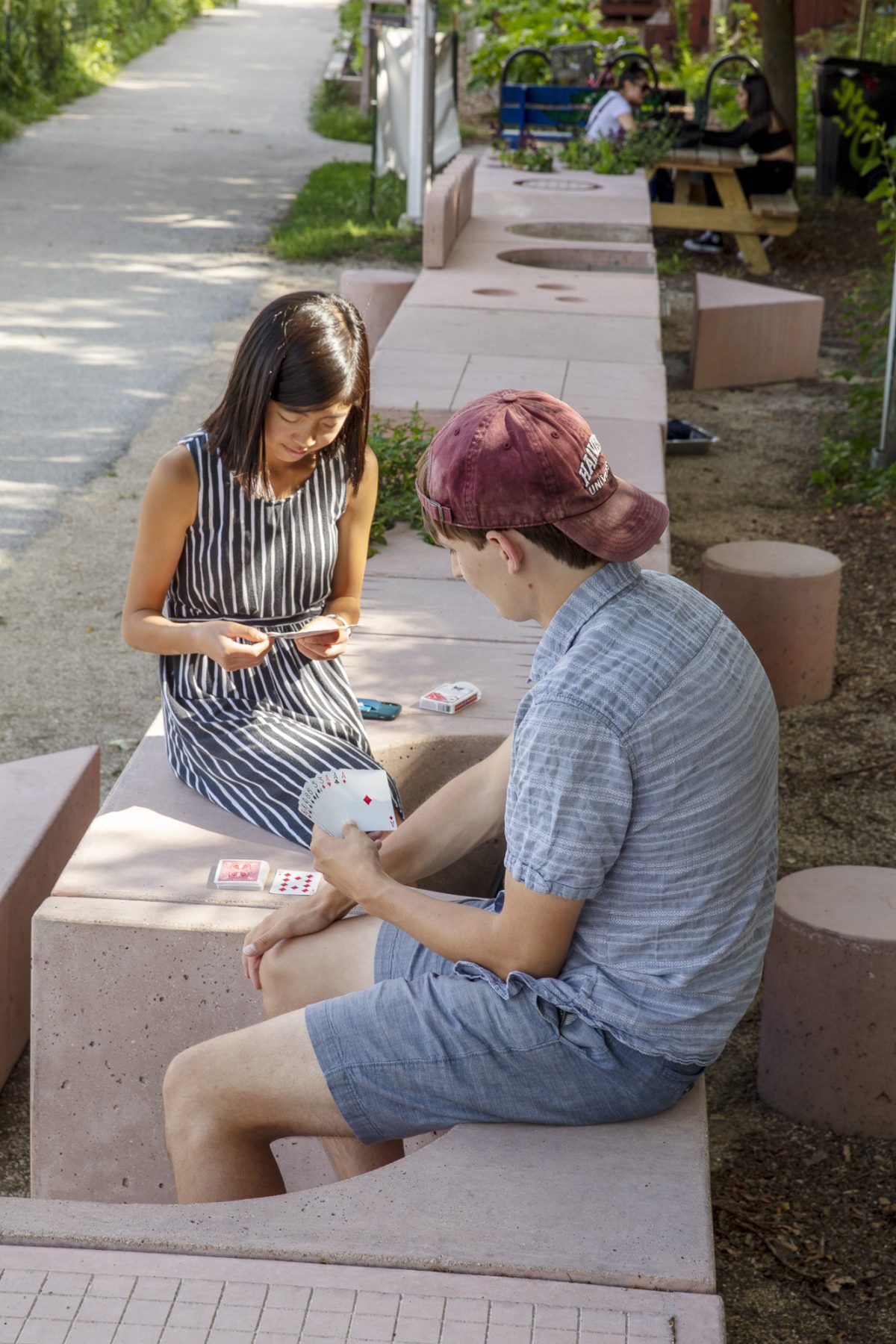
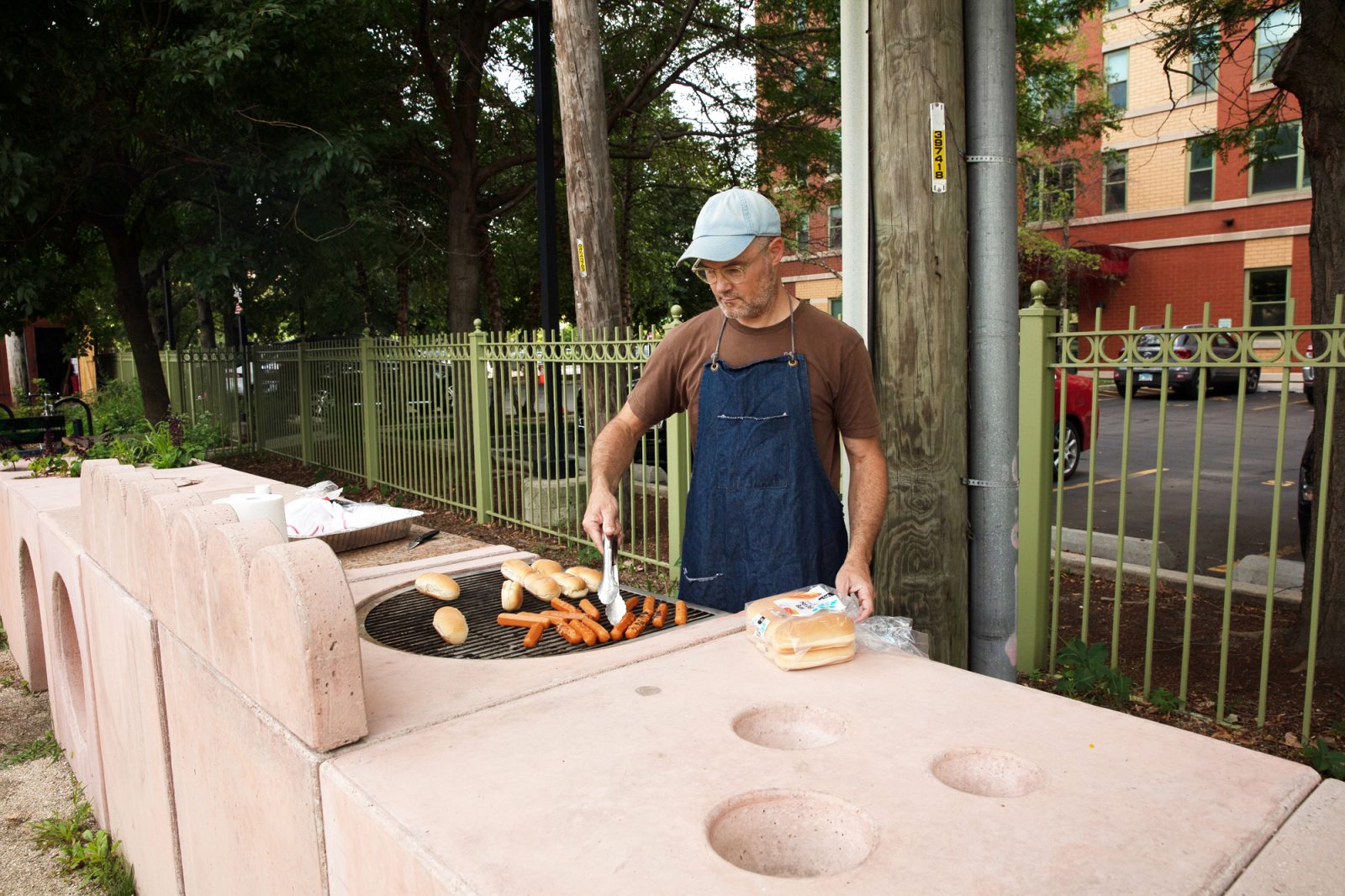
Embedded within the material composition are references to its immediate context, incorporating stones from Lake Michigan, garden soil and found objects, as well as cultivated and spontaneous plants that blur the boundary between furniture and landscape. Fire pits, spice niches, built-in vases for herbs and terrazzo game surfaces—featuring chess, backgammon, Go and checkers—extend the table’s affordances, allowing different actions to coexist, overlap or subvert one another.
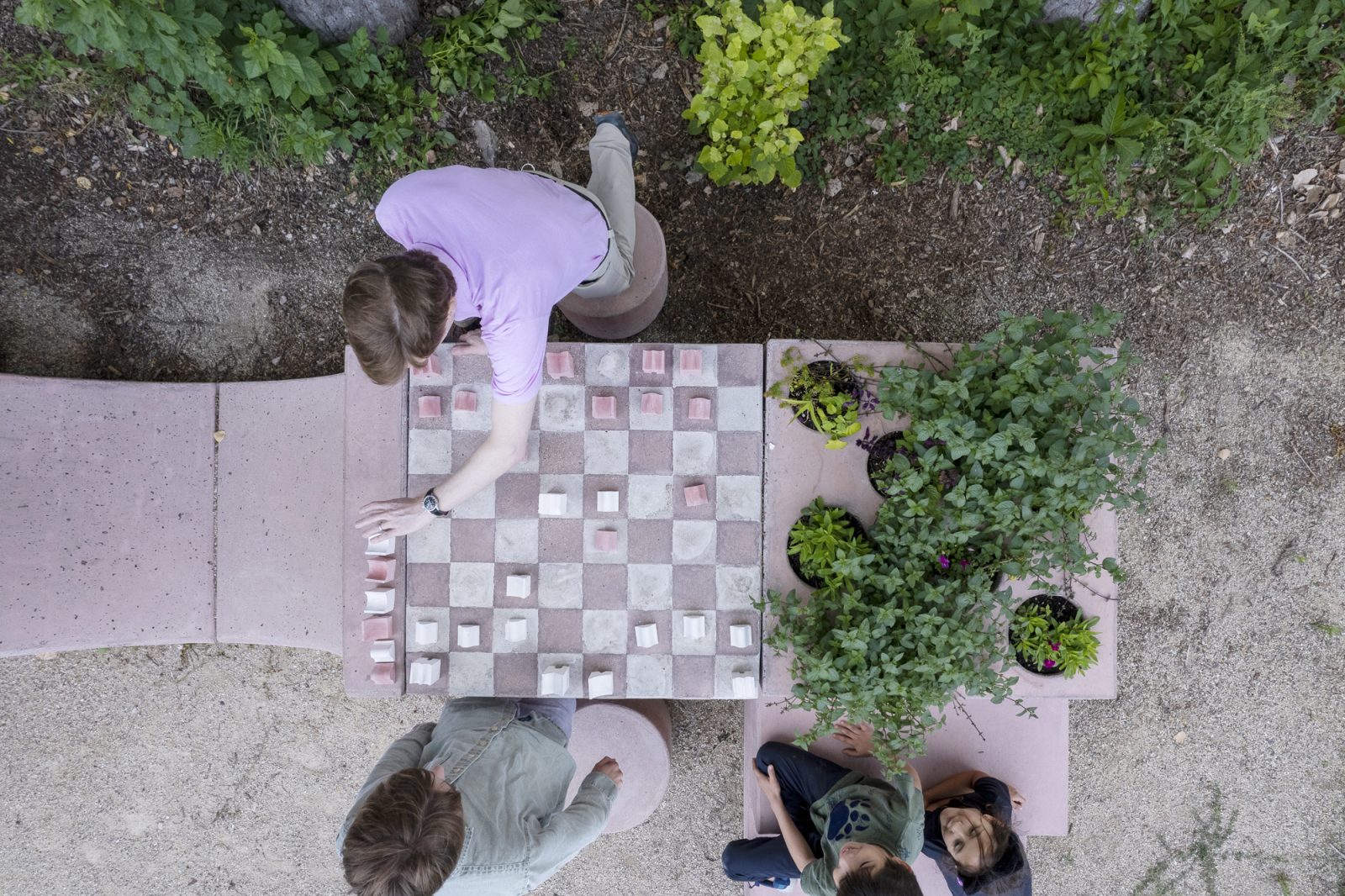
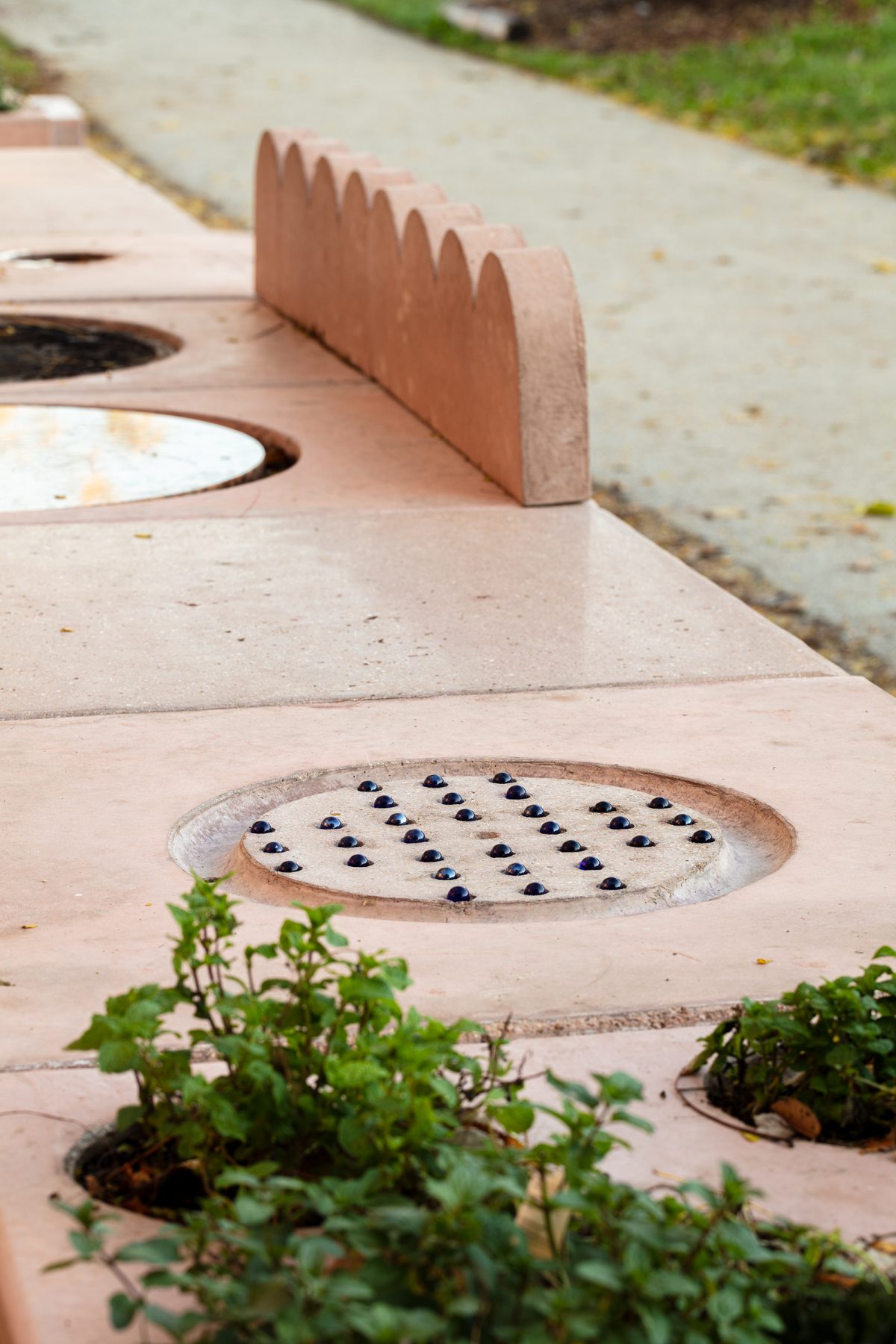
In doing so, the project expands the scope of public space, positioning domestic gestures as collective performances and proposing new forms of engagement where curation and cultivation become intertwined civic practices.
Facts & Credits
Project title The Garden Table
Typology Landscape, Urban installation
Location Chicago, USA
Architecture Studio Ossidiana
Team Alessandra Covini, Giovanni Bellotti, Mariagiulia Pistonese, Lyubov Viller
Consultant Peter del Tredici
Client Chicago Architecture Biennale / The Available City
Partners El Paseo Community Garden, NeighborSpace
Supported by Creative Industries Fund NL
Photography Travis Roozée
Text provided by the architects
The Team
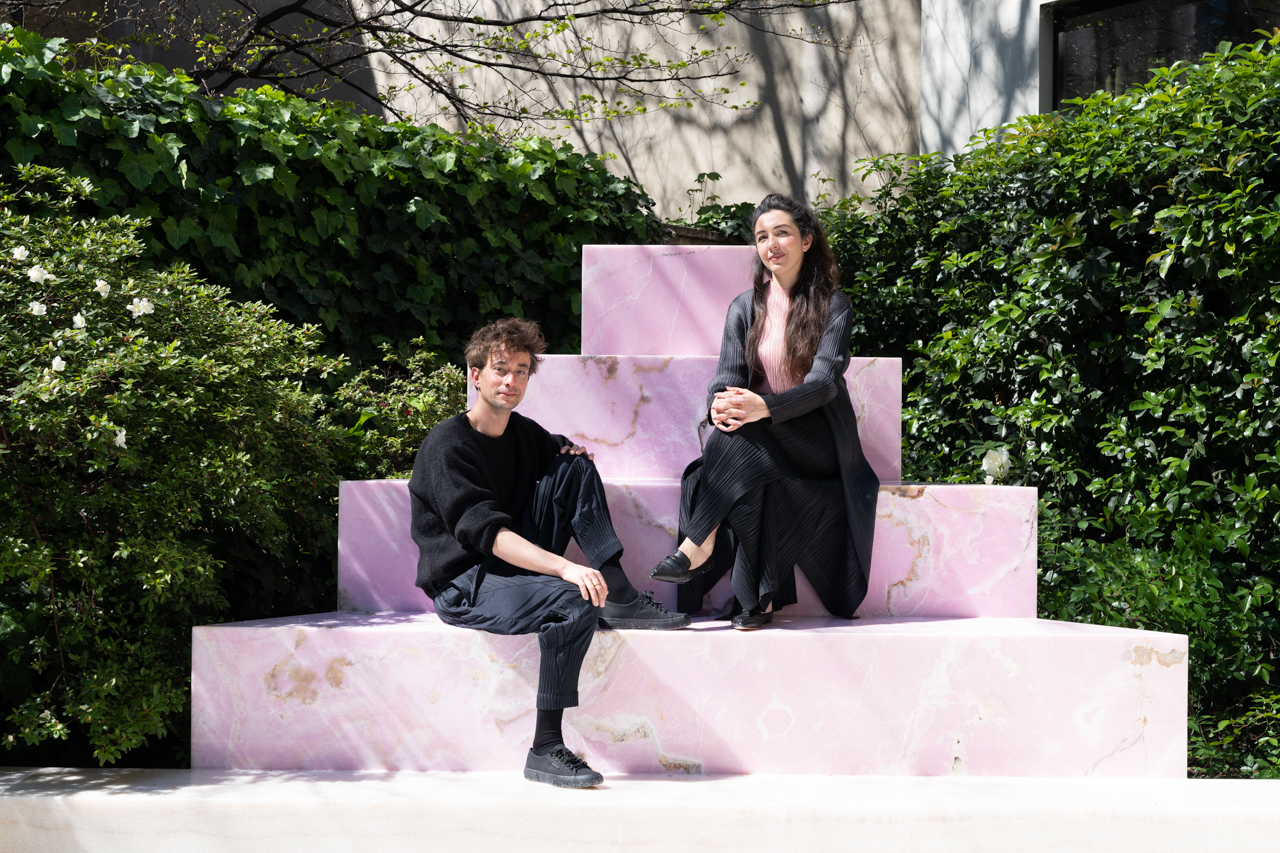
Alessandra Covini studied in Milan and Lisbon and received her master’s degree in Architecture at the University of Technology in Delft (NL). Alessandra is the winner of the Prix de Rome Architecture 2018, the oldest and most prestigious award for architects under the age of 35 in the Netherlands. Alessandra has taught and lectured at TU Delft, Rotterdam Academie van Bouwkunst, Piet Zwart Institute, KABK Den Haag, Rietveld Academy.
Giovanni Bellotti studied in Venice and Delft, and received his master’s degree in Architecture from IUAV University of Venice (IT), and a postgraduate degree from MIT (US) in Architecture and Urbanism. Giovanni is a Fulbright fellow and Miguel Vinciguerra award recipient. He worked as a researcher for TU Delft’s The Why Factory and MIT’s Center for Advanced Urbanism. Giovanni teaches at Rotterdam’s Piet Zwart Institute and lectures regularly in the Netherlands and abroad.
In 2018, Studio Ossidiana was awarded the Dutch Prix de Rome, the most prestigious prize for architects under the age of 35. The studio’s work has been exhibited in international exhibitions, among others, at Venice Architecture Biennale, Istanbul Design Biennale, Chicago Architecture Biennale, Rotterdam Architecture Biennale, and Shenzhen Architecture Biennale.
READ ALSO: ΕΣΩ 2026: "Διαπραγμάτευση, όχι Συμβιβασμός. Ο Σχεδιασμός ως Διάλογος ανάμεσα στη Γη, την Τεχνολογία και τον Άνθρωπο" | Οι ομιλητές: Ελένη Τσιγαρίδα - Etsi Architects