ESO Conference, the leading event for Design and Architecture, returns to the Athens Concert Hall on May 13, 2026, with the central theme: “Negotiation, Not Compromise. Design as Dialogue between Earth, Technology, and Humanity.”
Caroline Bos, Principal Urban Planner and Co-Founder of UNStudio, participates as a speaker at this year’s ESO 2026, bringing a perspective shaped by the constant negotiation between different scales of analysis and design, where urban strategies and architectural form are developed in dialogue, each informing and reshaping the other.
Book your tickets for ESO 2026, here!

Caroline Bos’ practice is grounded in the idea that architecture and the urban scale are intrinsically intertwined and mutually shaped through continuous dialogue. Rather than treating buildings and cities as separate domains, her approach understands architecture as emerging from the dynamic relationship between spatial, social and environmental forces within the urban context. In this perspective, design becomes the result of a constant negotiation between the multiple parameters that define a place—its infrastructure, landscape, cultural identity, and patterns of use—allowing architecture to respond meaningfully to the complexity of contemporary urban space.
With a background in Art History and Urban Planning, Bos brings a multidisciplinary perspective that bridges theory and practice.
At UNStudio, she focuses on developing vibrant, sustainable urban ecosystems where infrastructure, landscape, and social life intersect. Her work emphasizes human-centred urban design, addressing environmental, economic, and social challenges while shaping cities that remain adaptable to future change.

In this sense, urban development becomes a process of negotiation between heritage and innovation, nature and technology, long-term resilience and immediate social needs.
Bos’s academic contributions further expand this dialogue. Through teaching at institutions such as Princeton University and University of Melbourne, she has explored the relationship between virtual and material organisation in architecture and urban design, highlighting how digital tools can inform spatial thinking without losing connection to place and human experience.
Her work demonstrates how architecture can mediate between diverse forces—technological advancement, ecological responsibility, and cultural continuity—making her perspective especially relevant to the ESO 2026 conversation about design as a collaborative and evolving practice.
WORKS
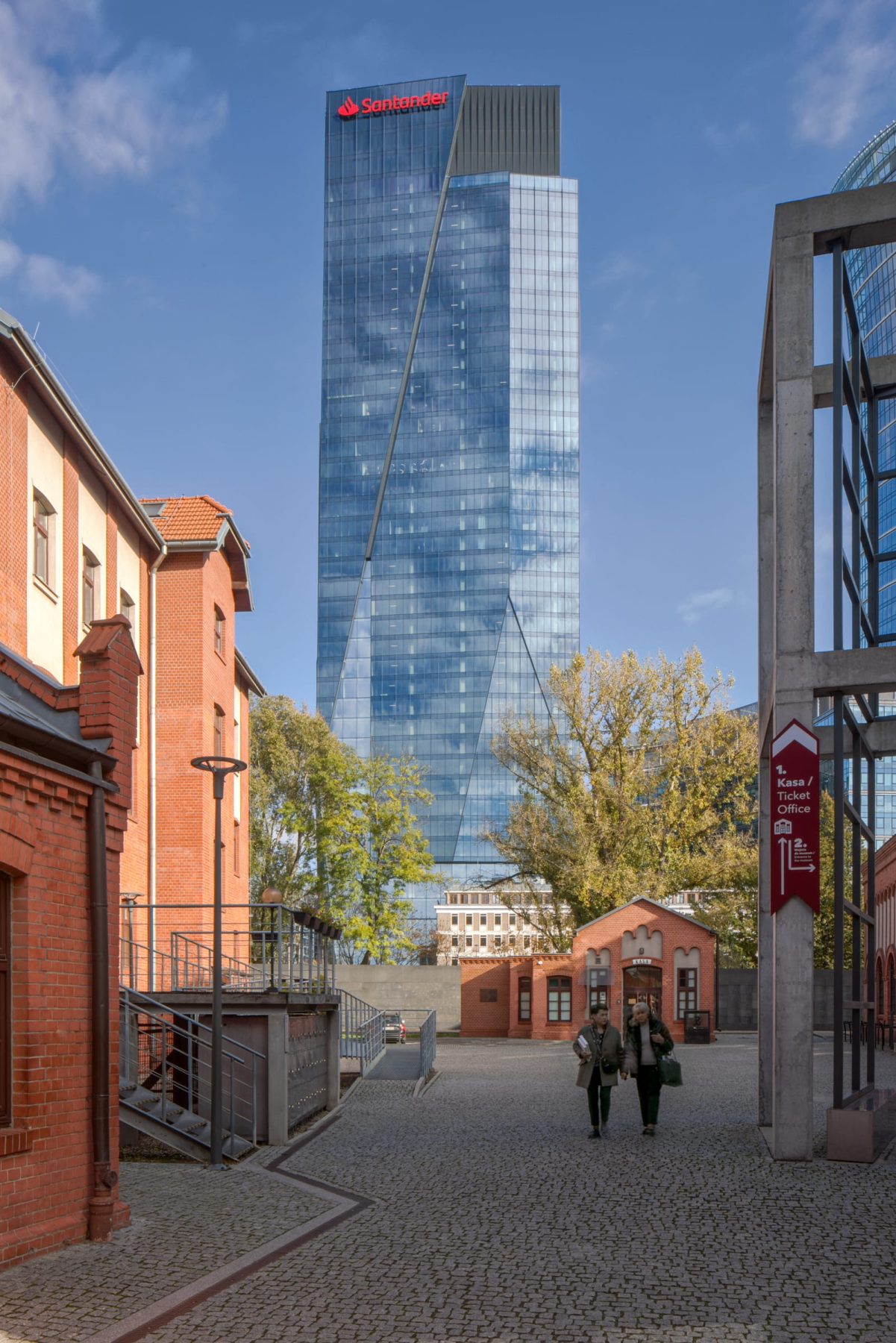
The Bridge Office Tower – Warsaw, Poland (2025)
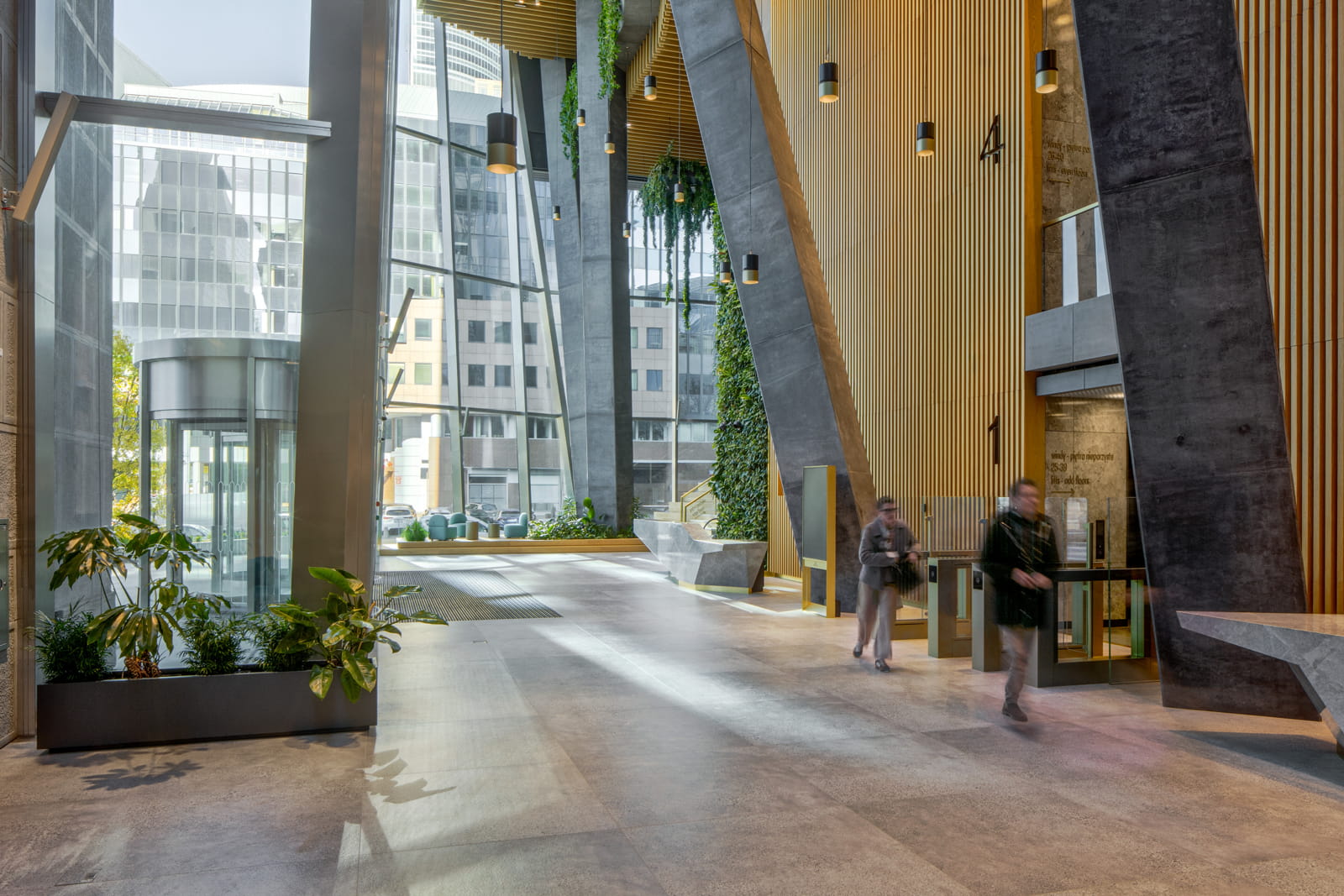
The Bridge Tower, designed by UNStudio in collaboration with Projekt Polsko-Belgijska Pracownia Architektury, is a contemporary office skyscraper in Warsaw developed for Ghelamco Poland. The 174-metre-tall building introduces approximately 47,000 m² of office space and forms a distinctive new presence within the city’s business district. Central to the project is the integration of the tower with the historic Bellona building, a protected former printing house. Through this relationship, the project establishes an architectural dialogue between heritage and contemporary development.
Rather than separating the historic structure from the new high-rise, the design connects both buildings through a shared entrance sequence.
A double-height glass lobby acts as the main access point and spatial bridge between the two volumes, preserving key historic elements such as the original colonnade and staircase while introducing new circulation features including a panoramic elevator and internal atrium. This transparent connector allows the historic building to remain visible and active within the new development.
The tower is conceived as a technologically advanced workplace that combines architectural innovation with sustainability. The development targets multiple environmental and smart-building certifications and incorporates systems that optimise energy use and support a healthy indoor environment. By merging historic preservation with forward-looking design and digital infrastructure, The Bridge Tower demonstrates how contemporary architecture can extend the life and relevance of urban heritage while shaping the future skyline of Warsaw.



Eclipse Work Campus – Dusseldorf, Germany (2023)
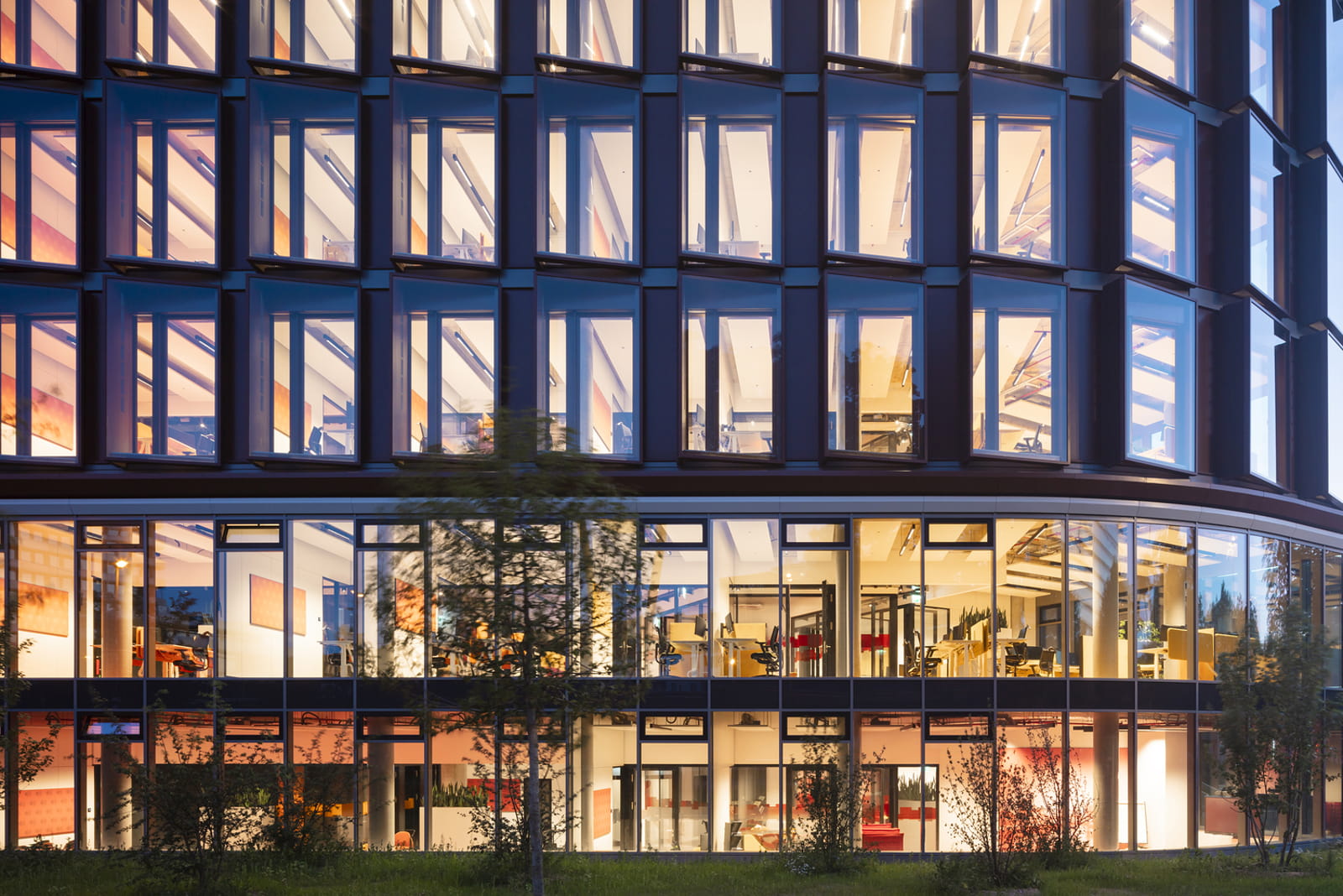
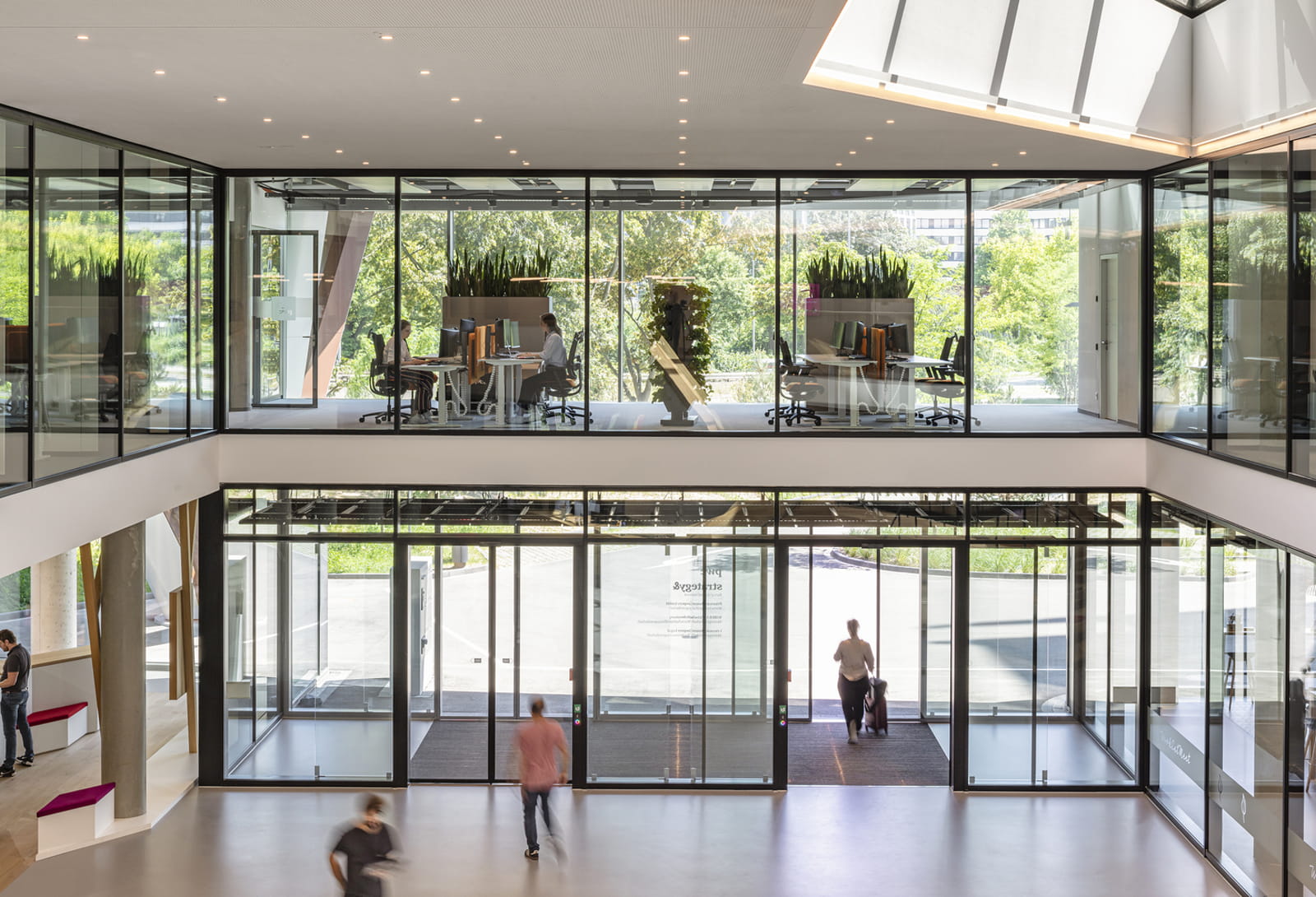
Eclipse is a vertical work campus designed by UNStudio in collaboration with HPP Architects, located on Kennedydamm in Düsseldorf and developed as the headquarters for PwC Germany. Conceived as a contemporary workplace, the project aims to foster interaction, creativity and collaboration by rethinking the traditional office environment. The building’s architecture emphasizes openness and connectivity, with light-filled interiors that support both focused work and collective activities.
The tower rises approximately 60 metres and provides around 27,000 square metres of office space, accommodating about 1,200 workplaces. Its triangular floor plan responds to the geometry of the site and is complemented by a two-storey podium and a continuous 360-degree façade that integrates the building with its urban surroundings. Inside, the organisation of spaces allows for a wide range of working environments, from individual offices to collaborative areas designed for teamwork and informal meetings.
A key architectural feature is the three-dimensional helix formed by a sequence of atria that connect the floors vertically. These voids function as social and spatial connectors, encouraging communication and interaction between users throughout the building.
At the top, a rooftop garden provides a space for events and informal gatherings, reinforcing the idea of the building as a vertical campus.
Sustainability is central to the project. Eclipse integrates smart energy technologies, including around 2,000 sensors that optimize lighting, ventilation and energy use, contributing to significant CO₂ reductions while supporting flexible and future-oriented workplace environments



Echo, TU Delf – Delft, Netherlands (2022)
Echo, designed for TU Delft, is an interfaculty educational building that redefines the relationship between learning environments, sustainability and social interaction. Conceived to respond to the university’s growing student population, the project provides adaptable spaces that support multiple forms of learning, including lectures, group work, debates and individual study. The architecture aims to move beyond traditional educational models by creating a dynamic environment where students from different disciplines can meet, collaborate and learn from one another.
A central ambition of the project is sustainability. Echo is designed to generate more energy than it consumes through the integration of approximately 1,200 solar panels, smart building installations and a heat and cold storage system.
The building also follows principles of circular design: structural elements such as steel trusses and hollow-core slabs are conceived for disassembly and reuse, while around 90 percent of the furniture has been repurposed. Transparency plays a key role in the architectural concept, maximizing daylight and creating a bright interior environment while reducing the need for artificial lighting.
The spatial organization promotes movement and interaction. A large central staircase made with bamboo ribs connects study and collaboration areas, encouraging encounters between users. The transparent ground floor functions as a public connector, forming a covered square that integrates the building with the campus. Through its flexible spaces and energy-positive design, Echo demonstrates how architecture itself can actively teach sustainability and collaboration.


Book your tickets for ESO 2026, here!
Facts & Credits
Title ESO 2026 – “Negotiation, Not Compromise. Design as Dialogue Between Earth, Technology, and Humanity”
Typology Conference, Architecture, Design
Location Alexandra Trianti Hall, Megaron Athens Concert Hall
Date Wednesday, May 13rd, 2026
Content creation & Media Partnership by Archisearch.gr
Produced & curated by the Design Ambassador
READ ALSO: Redefining Healthcare: Contemporary Clinic Designs