“Il Fantasma – The Revival of the Abbey as a Meditation Sanctuary” is an award-winning project by Maria Mpraikoudi, Ilias Nikolaidis, and Spyros Ntakis, created for the architecture competition ‘Reuse the Abbey’. The proposal envisions a thoughtful transformation of the historic abbey into a contemporary meditation retreat, emphasizing the interplay of natural light and shadow while fostering a dialogue between the old and the new.
“(…) the greatest glory of a building is not in its stones, nor in its gold. Its glory is in its Age, and in that deep sense of voicefulness, of stern watching, of mysterious sympathy, nay, even of approval or condemnation, which we feel in walls that have long been washed by the passing waves of humanity.”
John Ruskin, “The Lamp of Memory”, The Seven Lamps of Architecture (1849)
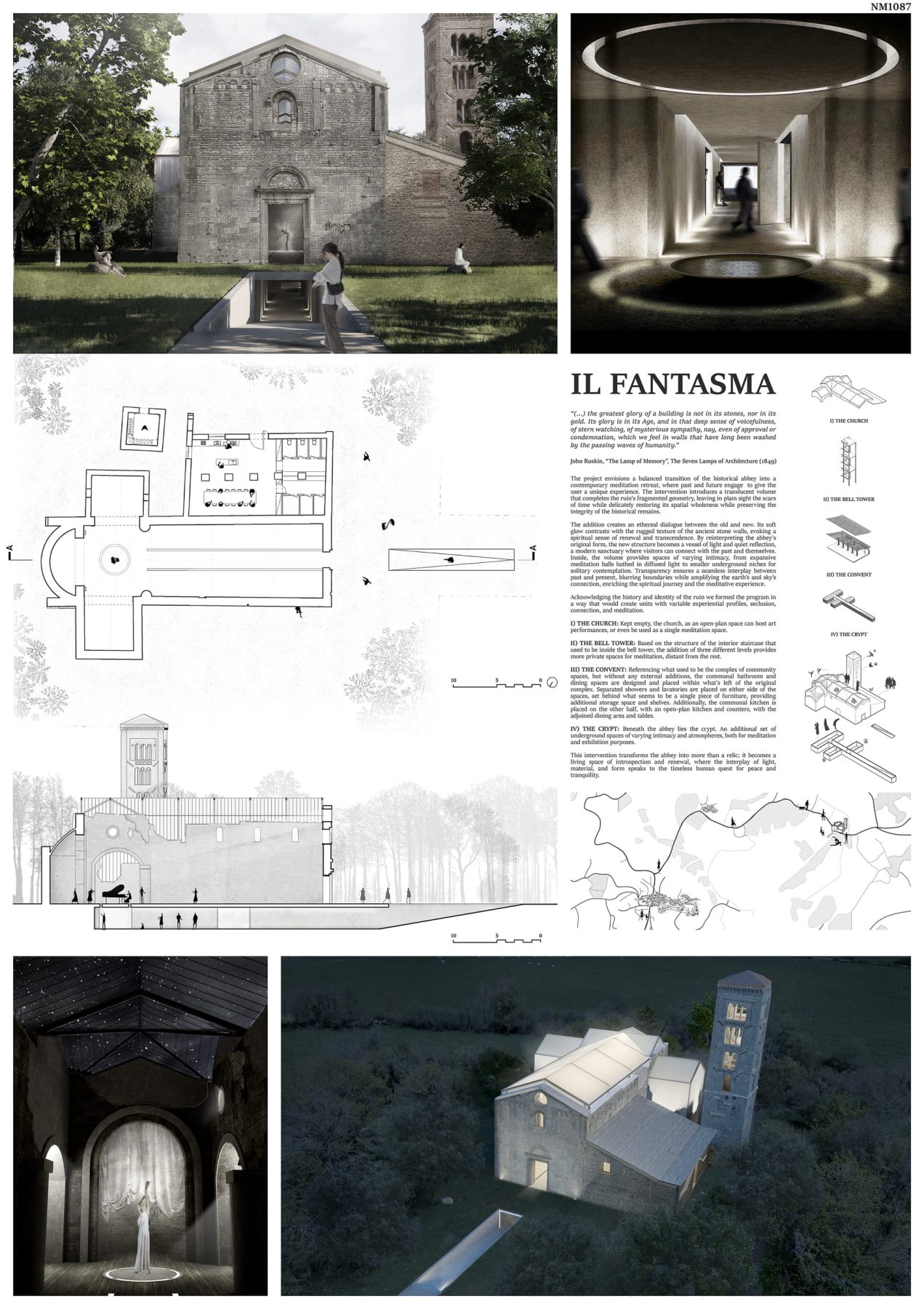
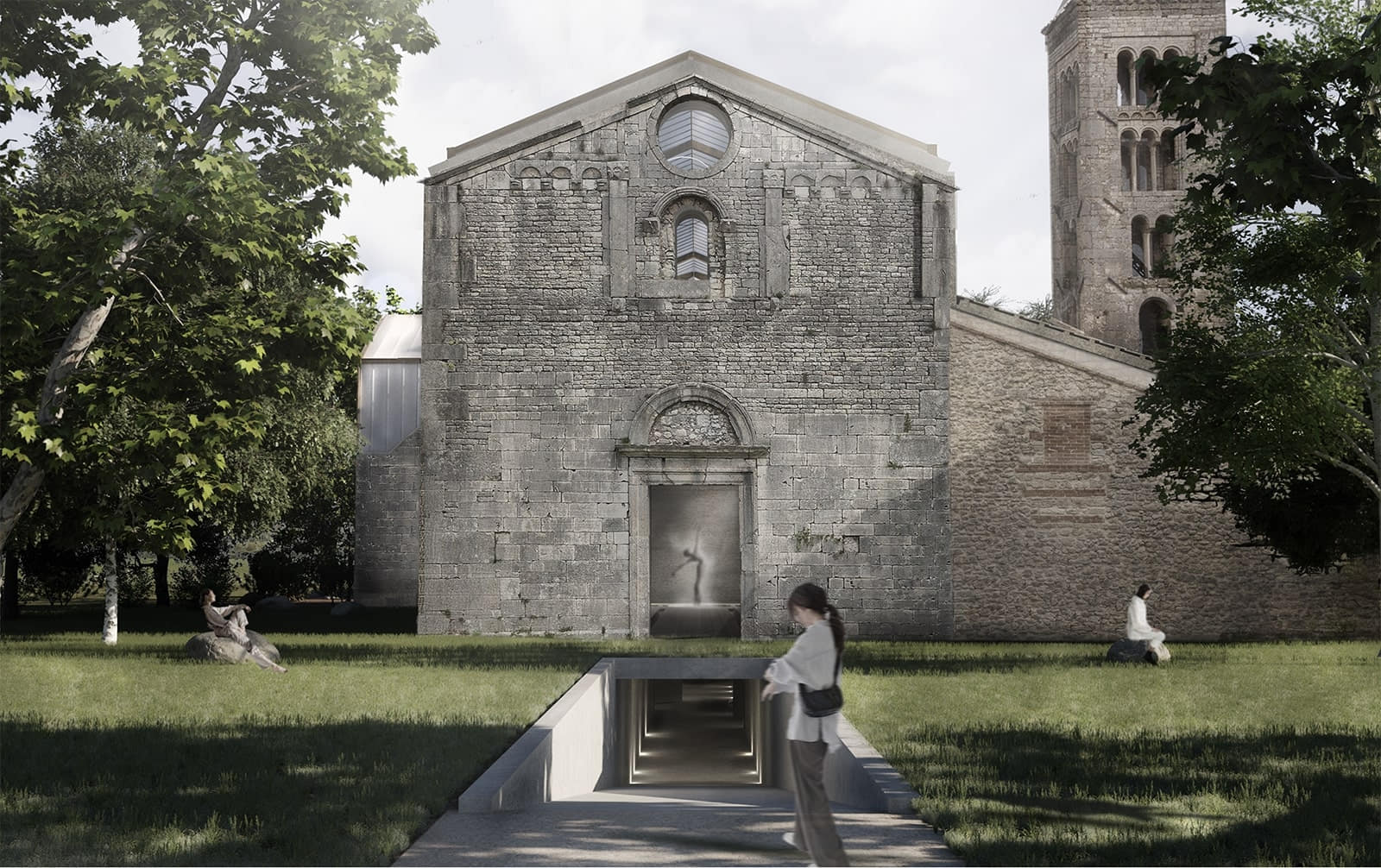
The project envisions a balanced transition of the historical abbey into a contemporary meditation retreat, where past and future engage to give the user a unique experience.
The intervention introduces a translucent volume that completes the ruin’s fragmented geometry, leaving in plain sight the scars of time while delicately restoring its spatial wholeness while preserving the integrity of the historical remains.
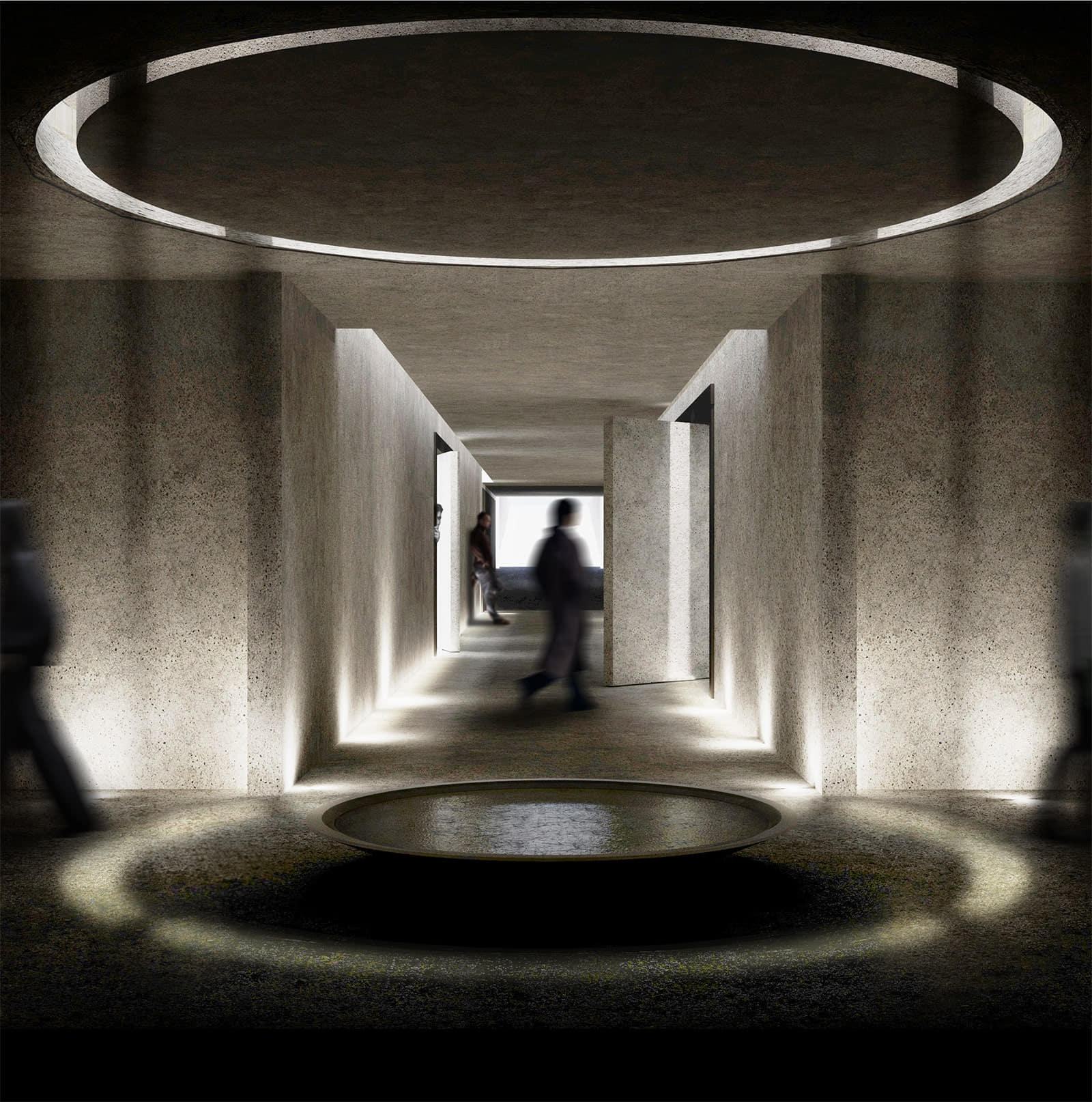
The addition creates an ethereal dialogue between the old and new.
Its soft glow contrasts with the rugged texture of the ancient stone walls, evoking a spiritual sense of renewal and transcendence.
By reinterpreting the abbey’s original form, the new structure becomes a vessel of light and quiet reflection, a modern sanctuary where visitors can connect with the past and themselves.
Inside, the volume provides spaces of varying intimacy, from expansive meditation halls bathed in diffused light to smaller underground niches for solitary contemplation.
Transparency ensures a seamless interplay between past and present, blurring boundaries while amplifying the earth’s and sky’s connection, enriching the spiritual journey and the meditative experience.

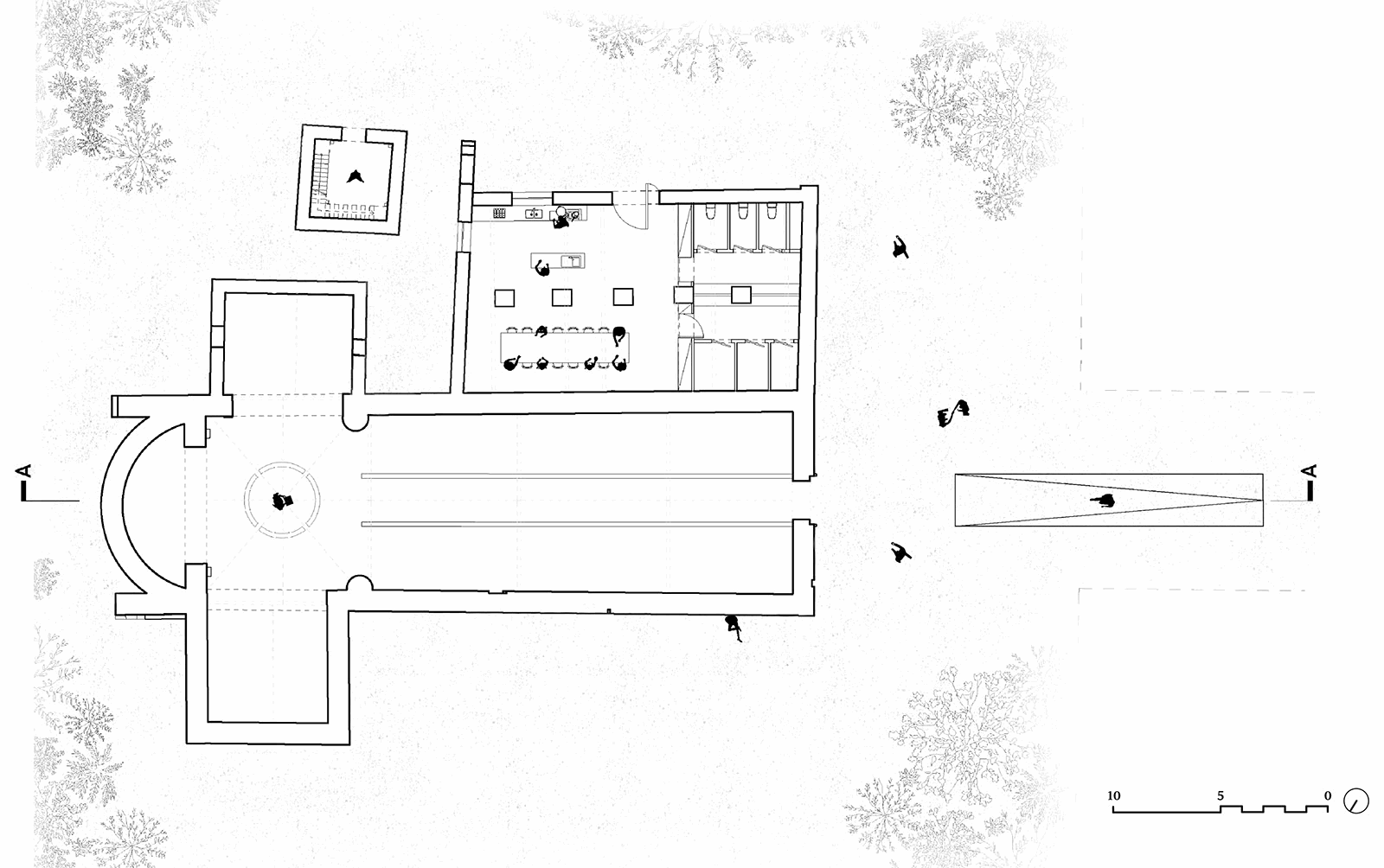
Acknowledging the history and identity of the ruin we formed the program in a way that would create units with variable experiential profiles, seclusion, connection, and meditation.
- The Church: Kept empty, the church, as an open-plan space can host art performances, or even be used as a single meditation space.
- The crypt: Beneath the abbey lies the crypt. An additional set of underground spaces of varying intimacy and atmospheres, both for meditation and exhibition purposes.
- The bell tower: Based on the structure of the interior staircase that used to be inside the bell tower, the addition of three different levels provides more private spaces for meditation, distant from the rest.
- The Convent: Referencing what used to be the complex of community spaces, but without any external additions, the communal bathroom and dining spaces are designed and placed within what’s left of the original complex. Separated showers and lavatories are placed on either side of the spaces, set behind what seems to be a single piece of furniture, providing additional storage space and shelves. Additionally, the communal kitchen is placed on the other half, with an open-plan kitchen and counters, with the adjoined dining area and tables.

This intervention transforms the abbey into more than a relic; it becomes a living space of introspection and renewal, where the interplay of light, material, and form speaks to the timeless human quest for peace and tranquility.
Facts & Credits
Title Il Fantasma – The Revival of the Abbey as a Meditation Sanctuary
Typology Proposal for Architecture Competition ‘Reuse the Abbey’
Awards 2nd award
Location Abbey of Santa Maria del Piano in Pozzaglia Sabina (Rieti)
Year 2025
Architecture Maria Mpraikoudi, Ilias Nikolaidis, Spyros Ntakis
Text by the authors
READ ALSO: Β’ Βραβείο στον Αρχιτεκτονικό Διαγωνισμό Ιδεών για την ανάπλαση του κοινόχρηστου χώρου έμπροσθεν του ΤΕΕ Θράκης στην Κομοτηνή | Αλέξανδρος Μπαντόγιας, Βαρβάρα Τούρα, Σιαμπάν Νεσλιχάν