Professor Jenchieh Hung, co-founder of the Thai architecture studio HAS Design and Research, has been invited to be a visiting professor and lead the design studio in the Master of Architecture in Architectural Design at the Faculty of Architecture, Chulalongkorn University, contributing his expertise in design and research to both Chulalongkorn University and its students. The outcome of the design studio culminated in the development of a central theme: “Bangkok Chameleon – Identity in a Shifting, Adapting, and Evolving Bangkok.” This theme explored how the identity of the city is in constant flux, adapting to the needs and desires of its diverse population while maintaining a deep connection to its history and cultural heritage.
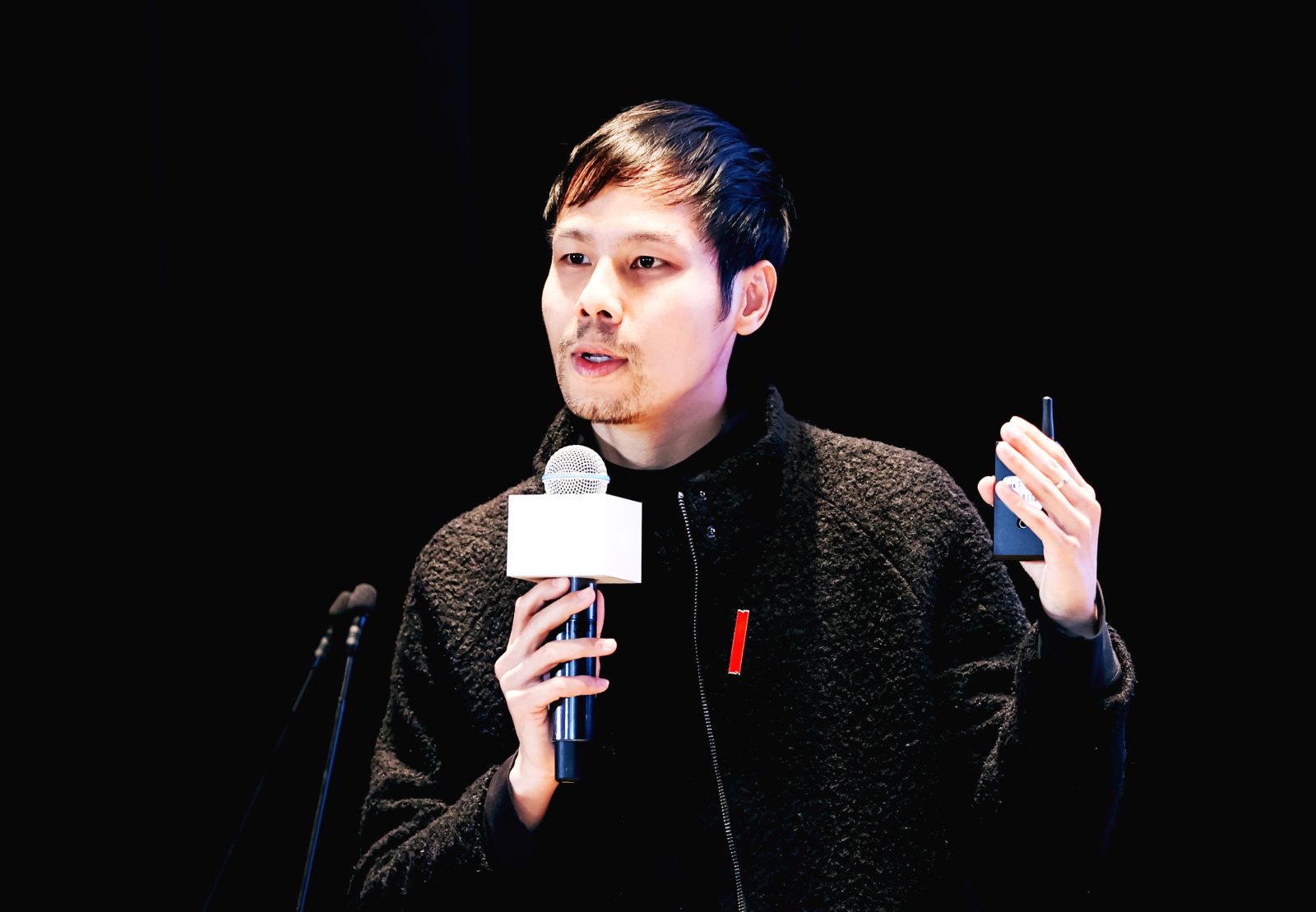
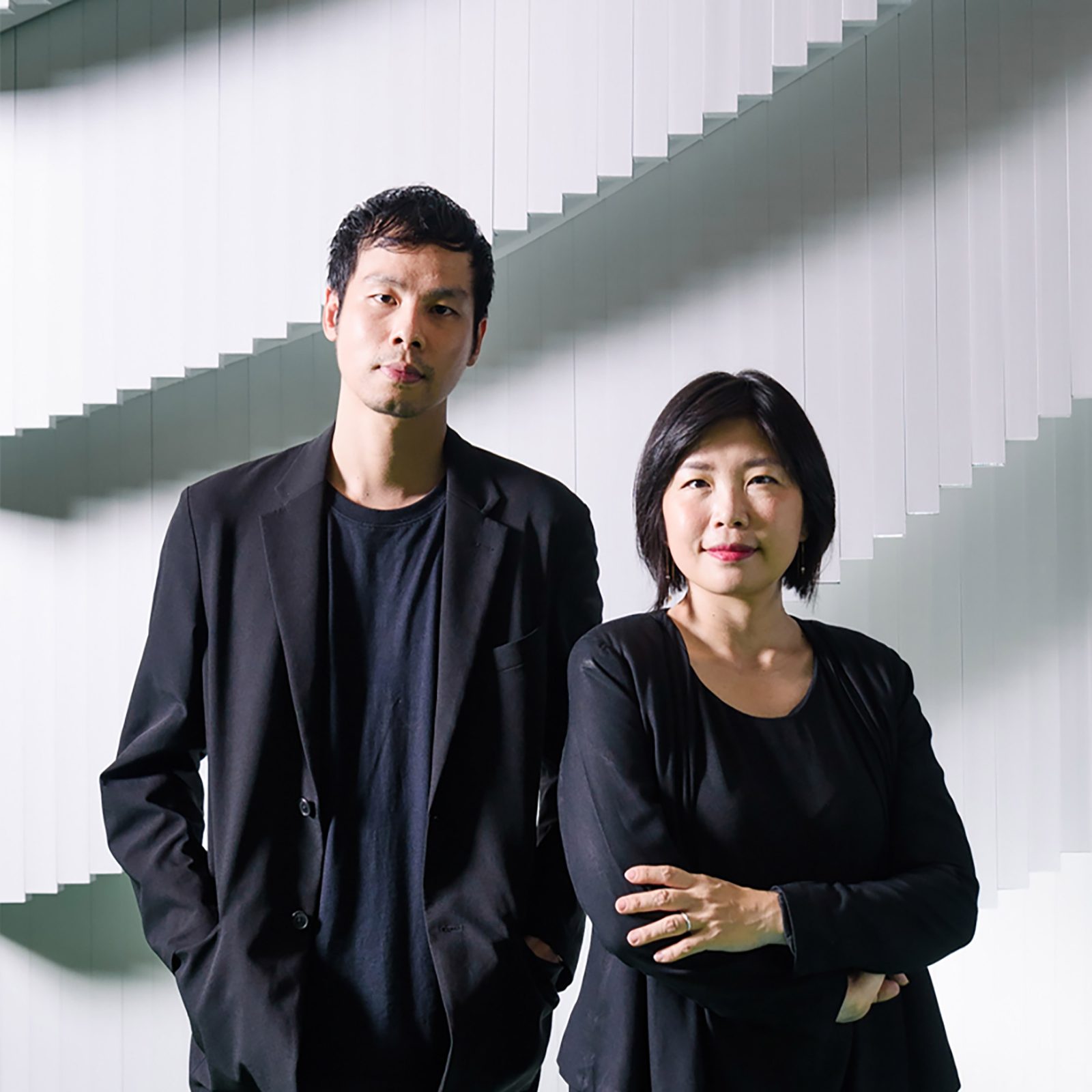
Professor Jenchieh Hung has been invited as a visiting professor at the Faculty of Architecture, Chulalongkorn University (Thailand’s top-ranked architecture university), joining forces with architect Kulthida Songkittipakdee. Together, they continue their profound commitment to architectural education, inspiring the next generation of architects through their unique and innovative approach to design. Since 2020, architects and educators Jenchieh Hung and Kulthida Songkittipakdee, the acclaimed architects and founders of HAS Design and Research, have brought his wealth of experience to Chulalongkorn University as visiting professor, leading students to explore the intersection of traditional and contemporary architectural practices.
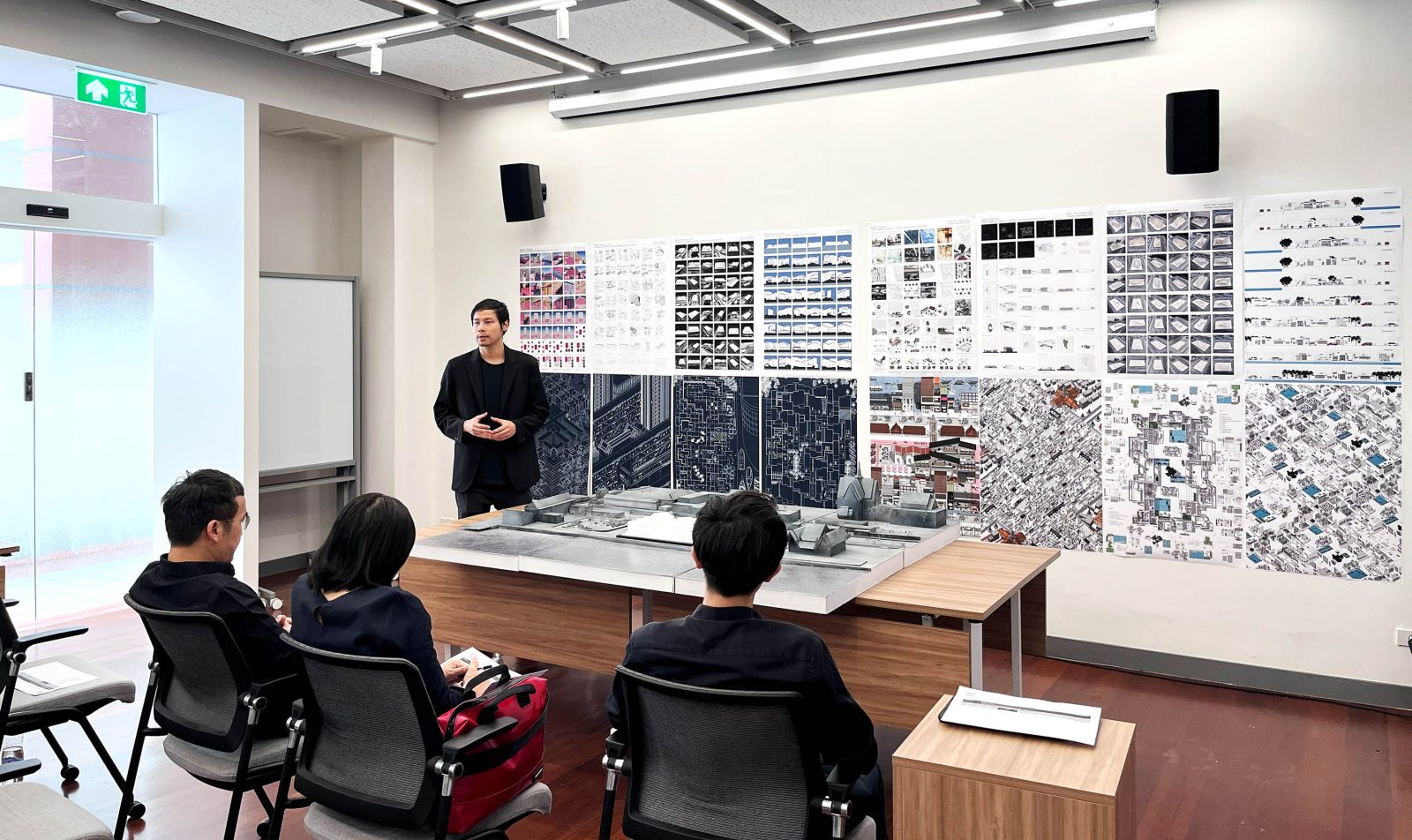
Since 2024, Professor Jenchieh Hung led the design studio for the Master of Architecture in Architectural Design at Chulalongkorn University. This studio provided a platform for students to engage with complex architectural challenges, drawing on the philosophy and methods that have defined Jenchieh Hung’s architectural practice over the years. His practice, HAS Design and Research, founded in partnership with Kulthida Songkittipakdee, is internationally recognized for its innovative exploration of “Patterns” in architecture. This approach uses the culture and memory of pattern formation as a tool to simulate both urban and natural spatial forms, blending the aesthetics of nature with the functionality of man-made structures.
Check the work of their office here!
In his design studio, the Hung And Songkittipakdee Laboratory (HAS Lab) at Chulalongkorn University, Jenchieh Hung provided students with the opportunity to engage in research that would shape the future of Bangkok’s architectural identity. Students were tasked with selecting topics related to the historical and cultural contexts of The Grand Palace, Rattanakosin Island, or the Chao Phraya River—sites that represent the heart of Bangkok’s architectural heritage and serve as important landmarks reflecting the city’s evolving identity.
By focusing on these iconic locations, students explored the interplay between tradition and modernity, investigating how contemporary architecture can respond to and coexist with the city’s rich historical context.
They examined “Patterns” and employed the process of pattern formation as a strategy to simulate urban spatial forms. Through research diagrams, physical models, and architectural drawings, students aimed to develop potential forms in terms of structure, space, materials, and more.
The outcome of the design studio culminated in the development of a central theme: “Bangkok Chameleon – Identity in a Shifting, Adapting, and Evolving Bangkok.”
This theme explored how the identity of the city is in constant flux, adapting to the needs and desires of its diverse population while maintaining a deep connection to its history and cultural heritage. Seven students selected keywords that represented key elements of Bangkok’s ever-changing identity. These keywords included shophouses, hawkers, signage, roofs, charn (ชาน), tom yum, and trees. Each of these words encapsulated a unique aspect of Bangkok’s rich and diverse cultural landscape, contributing to the city’s distinctive character.
The final architectural design project, the “Bangkok Meditation Hub,” located in the Grand Palace area, was the culmination of the studio’s exploration. This project was designed to reflect the city’s adaptive and evolving nature, offering a space for reflection and tranquility in the heart of a bustling metropolis. The design challenged students to consider how architecture can respond to the needs of contemporary society while respecting the cultural and historical significance of its surroundings. By integrating the concept of “Patterns” into the design, the students were able to create a space that not only reflected the beauty of Bangkok’s heritage but also embraced the future of the city’s architectural identity.
The result of design studio the students identifying a keyword connected to the theme “Bangkok Chameleon – Identity in a Shifting, Adapting, and Evolving Bangkok.”
Seven students have identified keywords such as shophouses, hawkers, signage, roofs, charn (ชาน), tom yum, and trees. These keywords represent important elements of identity within the theme, culminating in the final architectural design project, the “Bangkok Meditation Hub” in the Grand Palace area.
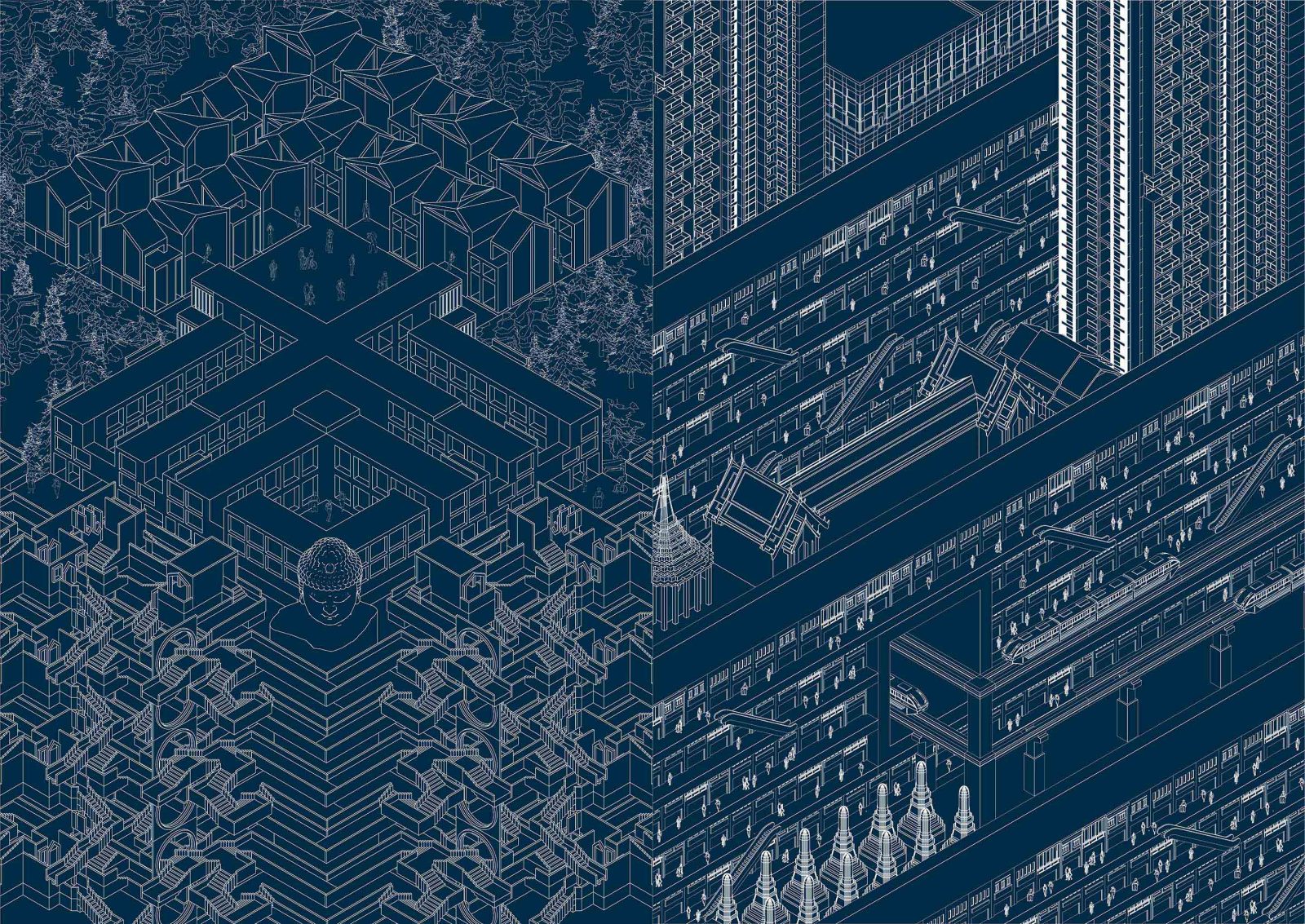
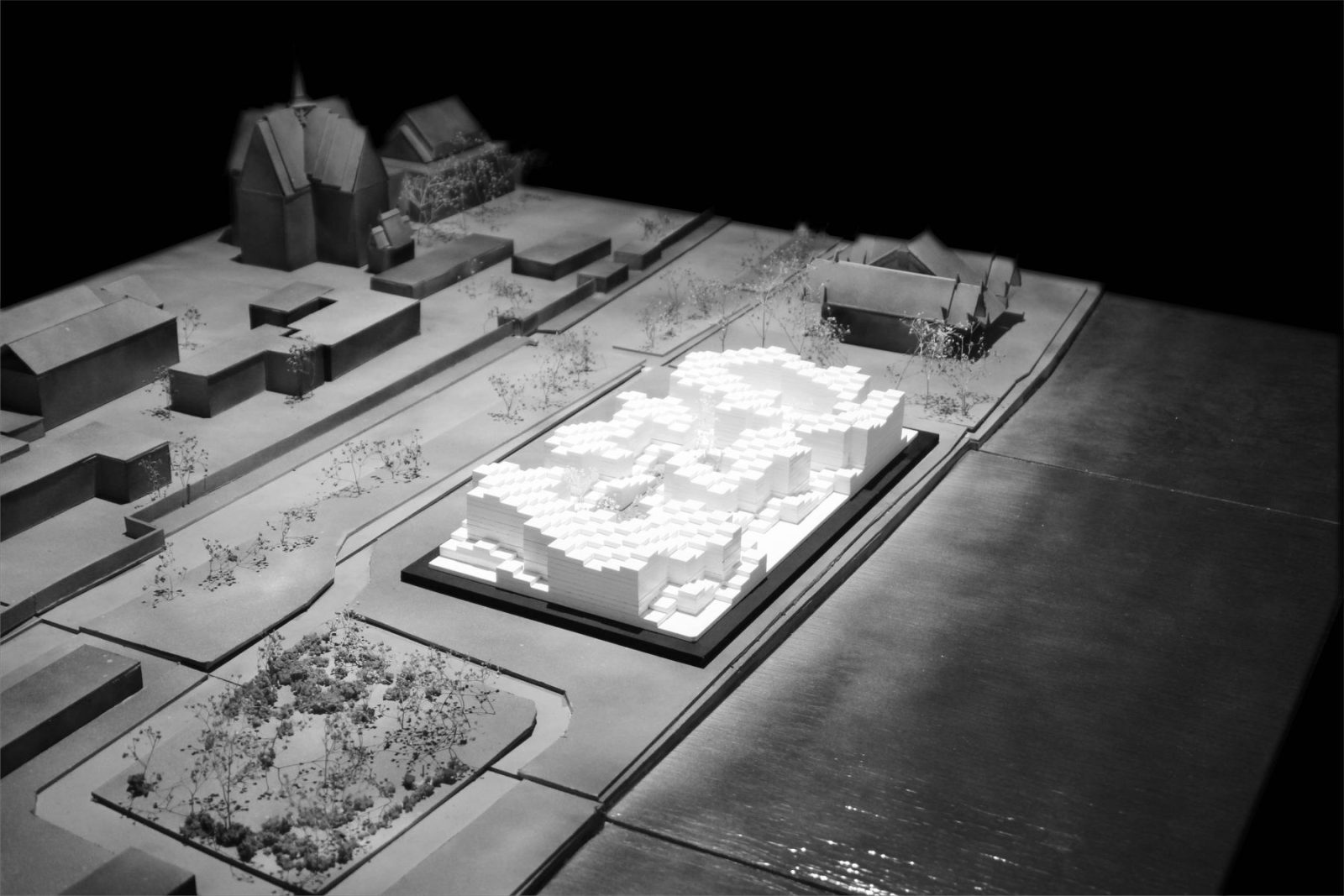
Bangkok Meditation Hub – [Shophouses]
Bangkok Meditation Hub – [Shophouses] as an Identity in a Shifting, Adapting, and Evolving Bangkok by Edbert Theo Fortino, led by Chulalongkorn University visiting professor Jenchieh Hung. The design of the Bangkok Meditation Hub is inspired by the distinctive characteristics of Bangkok’s iconic shophouses. Incorporating their form, function, and adaptability, the Bangkok Meditation Hub reflects the multifunctional nature of shophouses, which serve as banks, restaurants, cafés, and more, often with residential or commercial spaces above. This flexibility serves as the foundation for reimagining meditation as a dynamic, evolving practice.
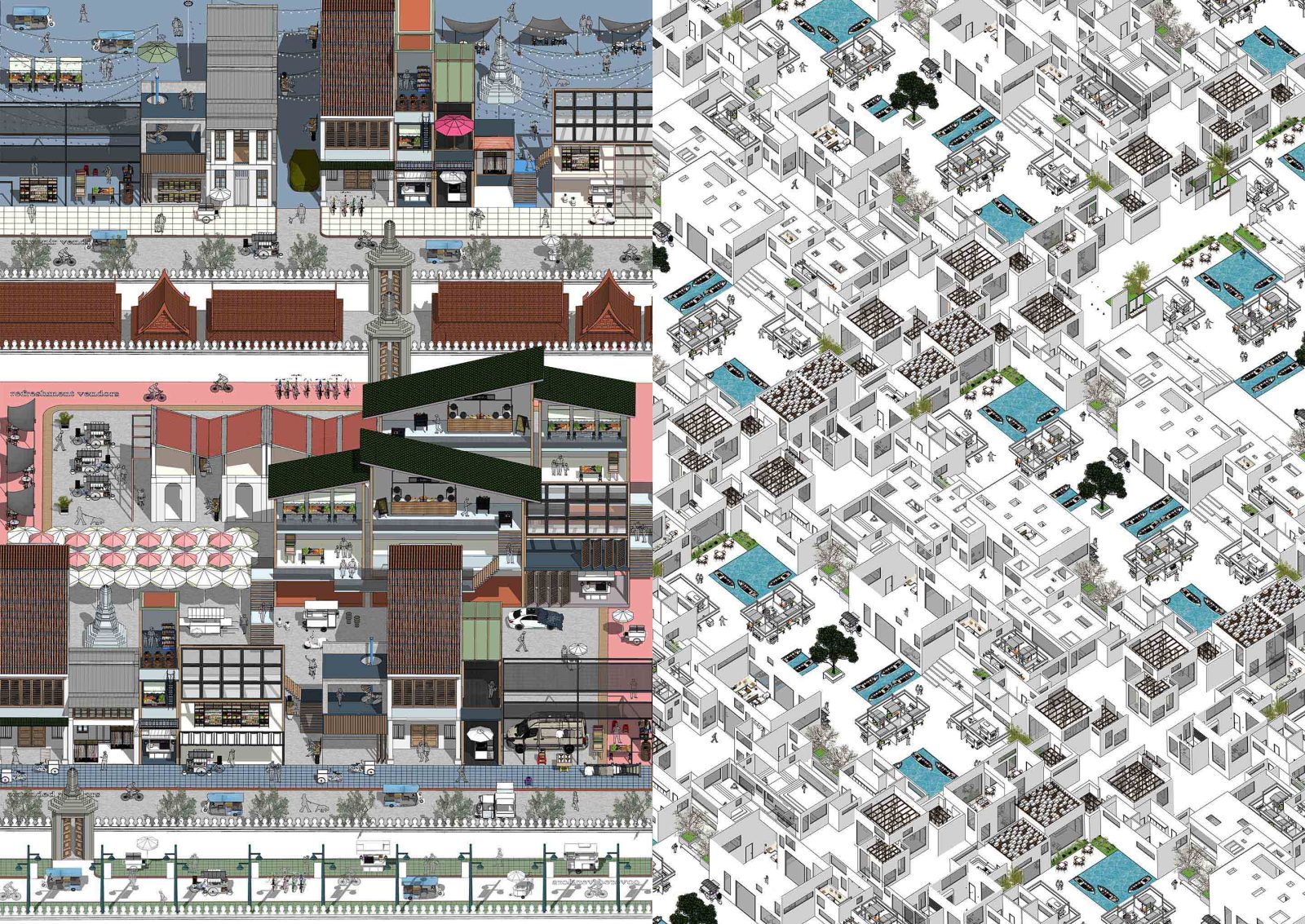
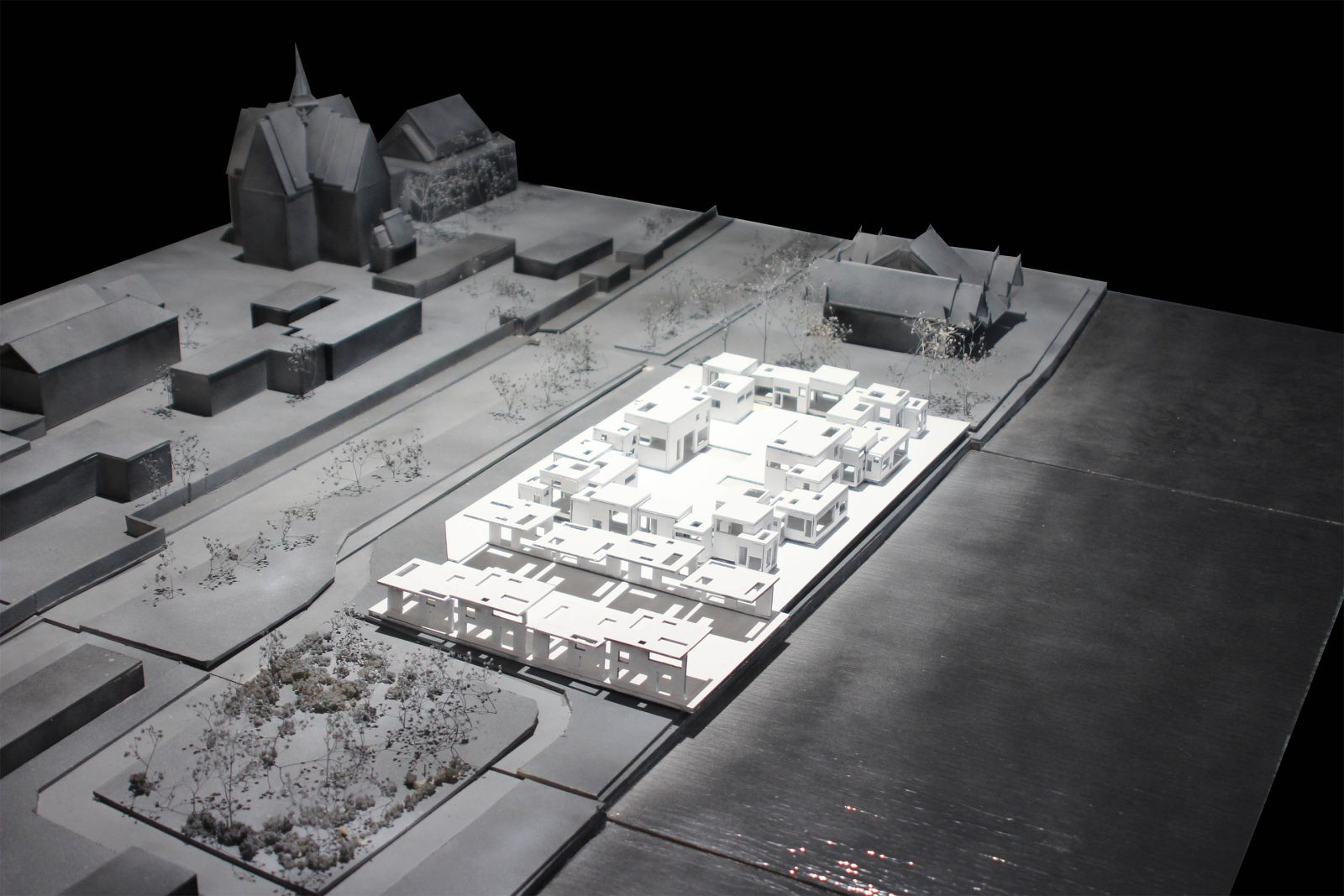
Bangkok Meditation Hub – [Hawkers]
Bangkok Meditation Hub – [Hawkers] as an Identity in a Shifting, Adapting, and Evolving Bangkok by Aung Khant, led by Chulalongkorn University visiting professor Jenchieh Hung. The research and design explore the innovative patterns and strategies employed by various vendors in Bangkok. Within the Bangkok Meditation Hub, some spaces use layered shading by arranging umbrellas in rows and filling gaps with smaller umbrellas to maximize coverage. Another space features a movable partition, similar to a vendor’s setup on a motorbike, demonstrating exceptional compactness and mobility. These design elements highlight key principles in the Bangkok Meditation Hub, including layering, compactness, transformation, and mobility, reflecting the dynamic nature of Bangkok’s evolving streets and spaces.
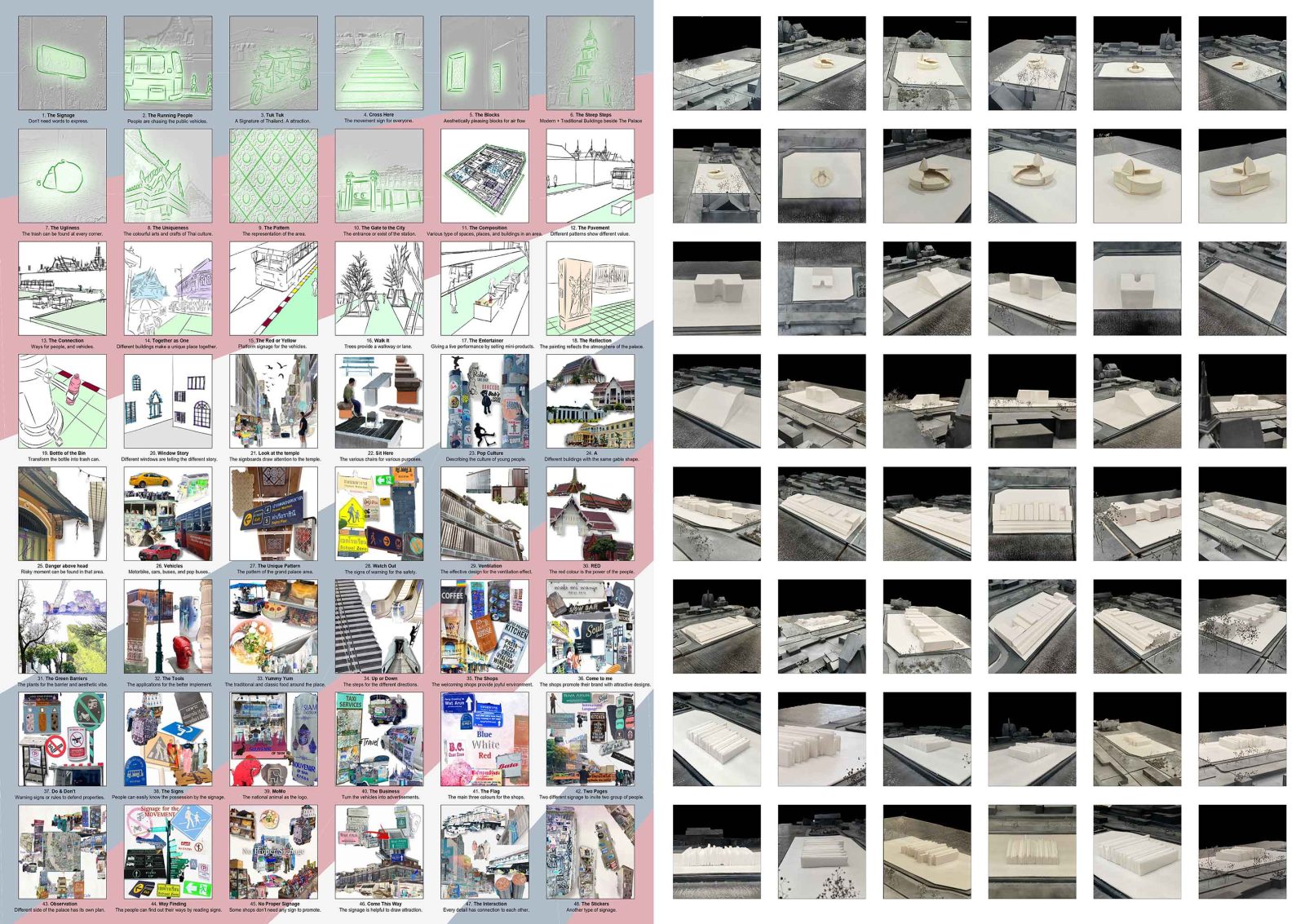
Bangkok Meditation Hub – [Signage]
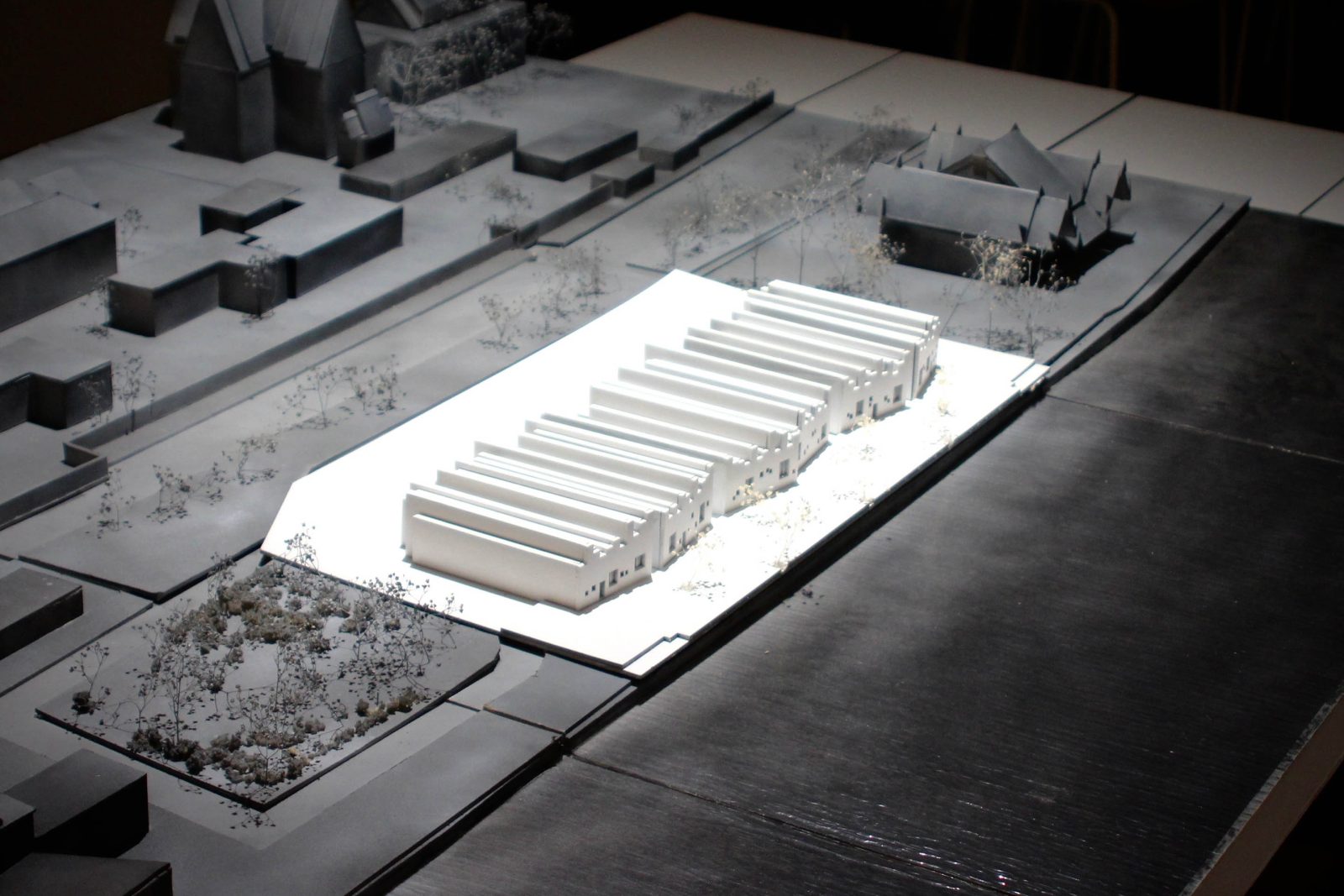
Bangkok Meditation Hub – [Signage] as an Identity in a Shifting, Adapting, and Evolving Bangkok by Min Si Hein, led by Chulalongkorn University visiting professor Jenchieh Hung. The research and design explore the role of signage in shaping the identity of the space. Composed of layered rectangular elements, the design draws inspiration from overlapping signboards, creating a dynamic flow of information for the Bangkok Meditation Hub. The result is not merely a collection of functional spaces but a cohesive system that embodies the principles of communication, gathering, and connectivity. By interpreting signage in a broader sense, the project creates a space that resonates with the site’s cultural and social context while offering practical benefits to both the community and its visitors.
Bangkok Meditation Hub – [Roofs]
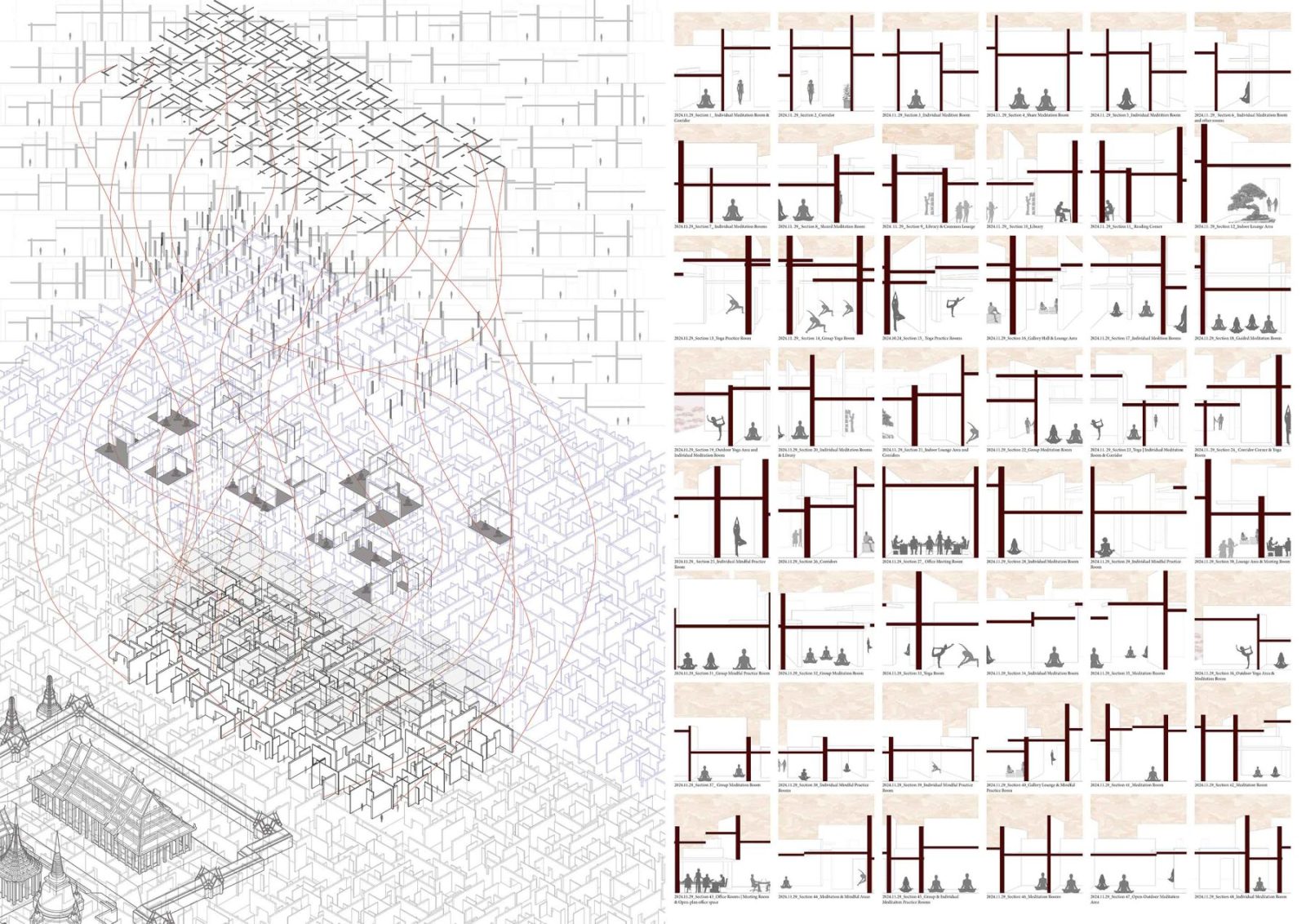
Bangkok Meditation Hub – [Roofs] as an Identity in a Shifting, Adapting, and Evolving Bangkok by Aung Yadana Htun, led by Chulalongkorn University visiting professor Jenchieh Hung. The project explores the significance of the roof in the typical Thai street. The roof’s vibrant and intricate designs hold both cultural symbolism and practical value, serving as a vital element in Bangkok’s streetscape. The shaded extensions in front of most street houses provide protection, shelter, and a sense of enclosure. This influence shapes the Bangkok Meditation Hub’s approach, focusing on creating a dynamic spatial hierarchy and fostering mindfulness and meditative experiences beneath the roof’s protective envelope.
Bangkok Meditation Hub – [Charn (ชาน)]
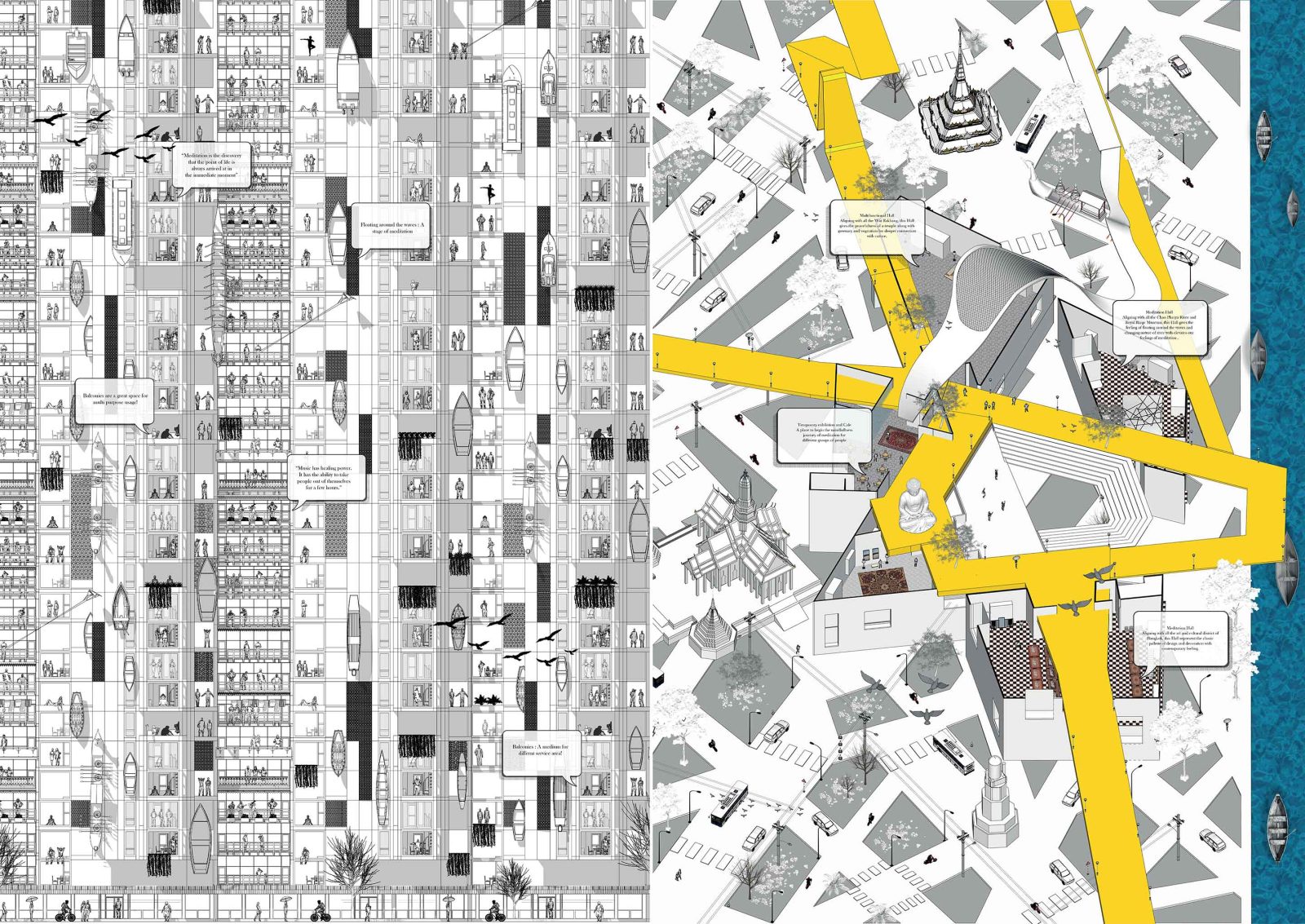
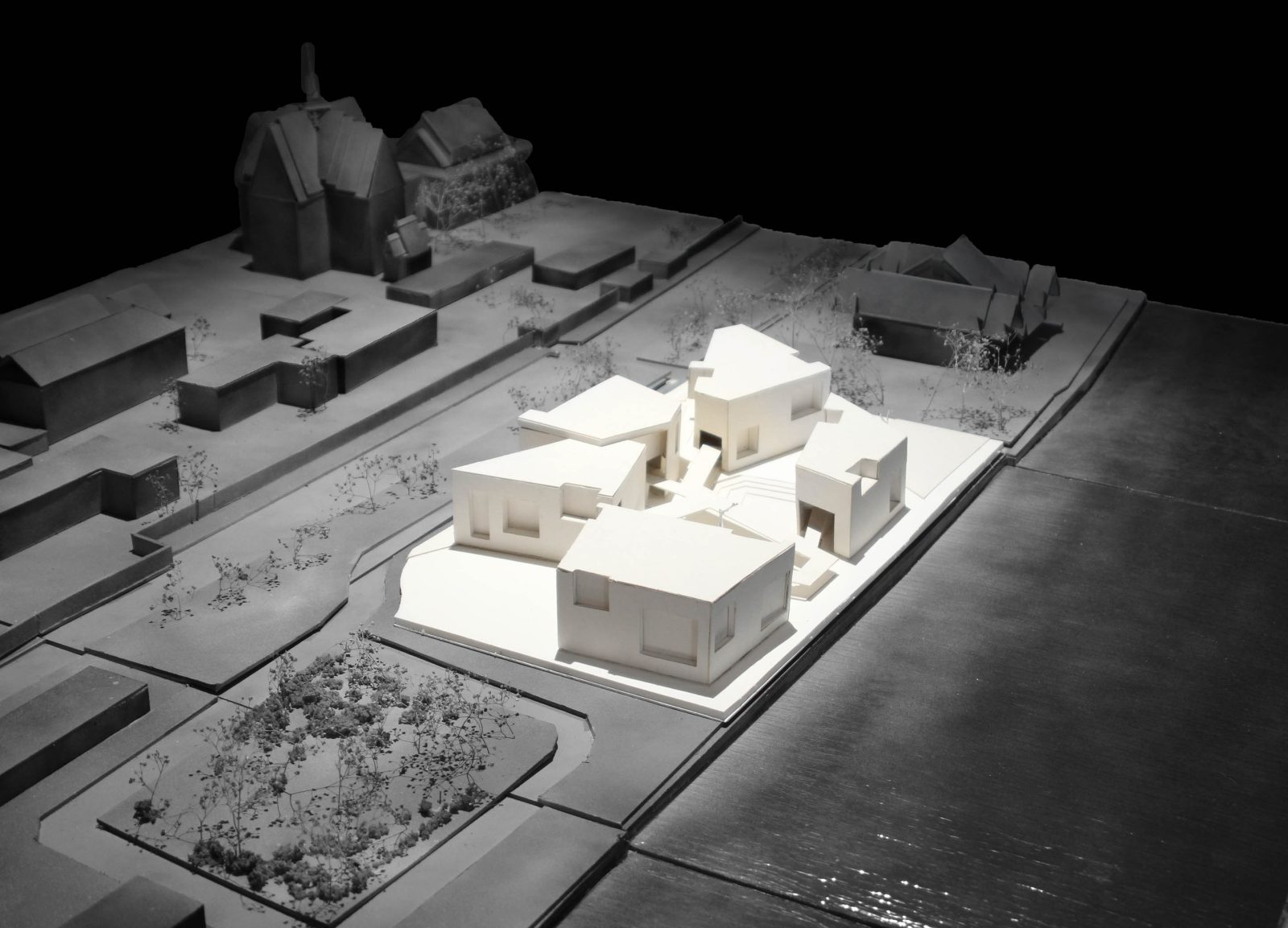
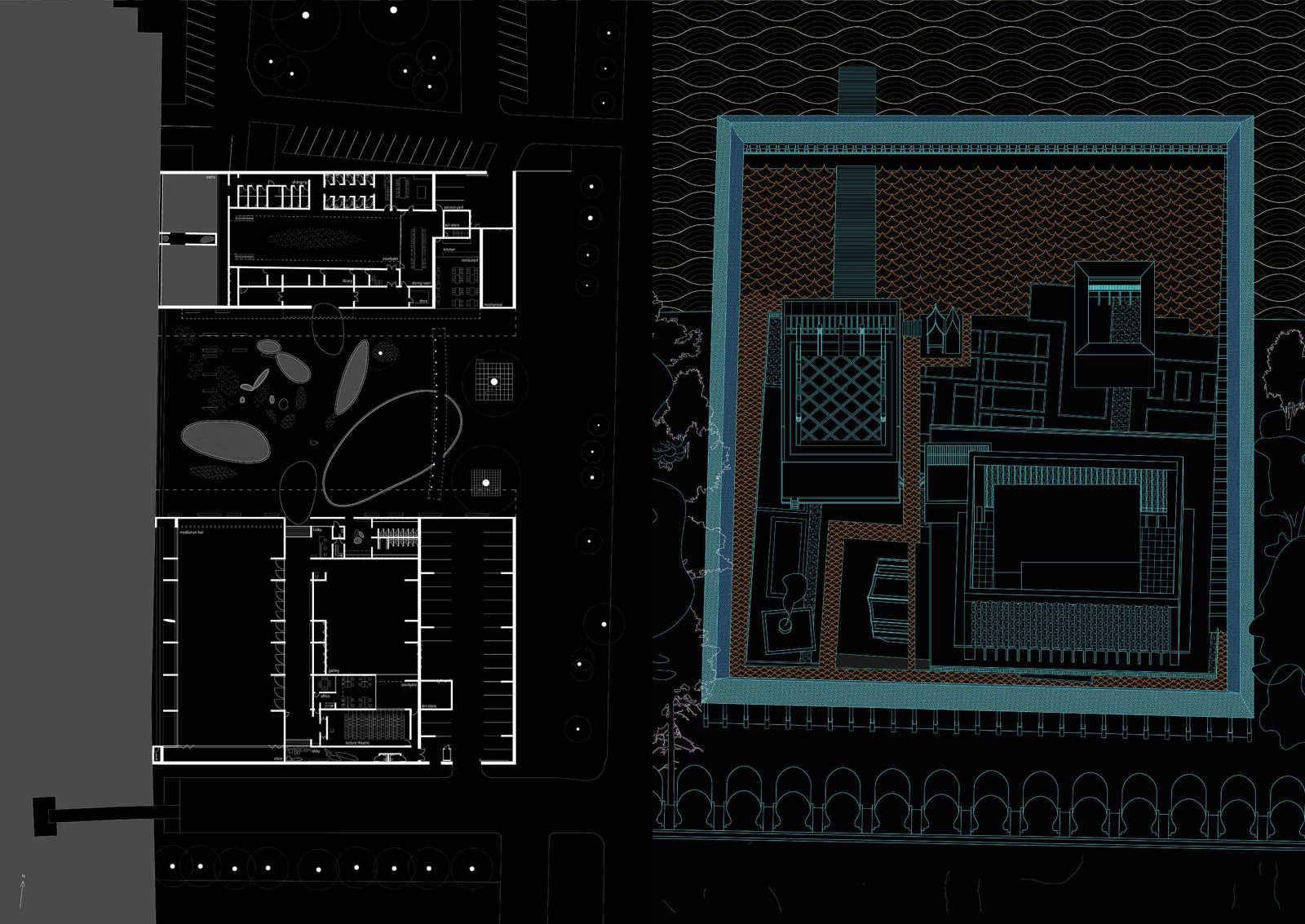
Bangkok Meditation Hub – [Charn (ชาน)] as an Identity in a Shifting, Adapting, and Evolving Bangkok by Gourav Dey, led by Chulalongkorn University visiting professor Jenchieh Hung. The project explores the concept of “Charn,” a Thai word representing an open space—such as a porch, terrace, or courtyard—where people gather, reflect, and reconnect with themselves. This concept inspired the design of the Bangkok Meditation Hub, which consists of four single-story buildings connected by porches, terraces, and courtyards. Each building serves a specific function, including meditation, exhibition, and open spaces. Together, these areas form a cohesive environment that fosters mindfulness and encourages community engagement.
Bangkok Meditation Hub – [Tom Yum]
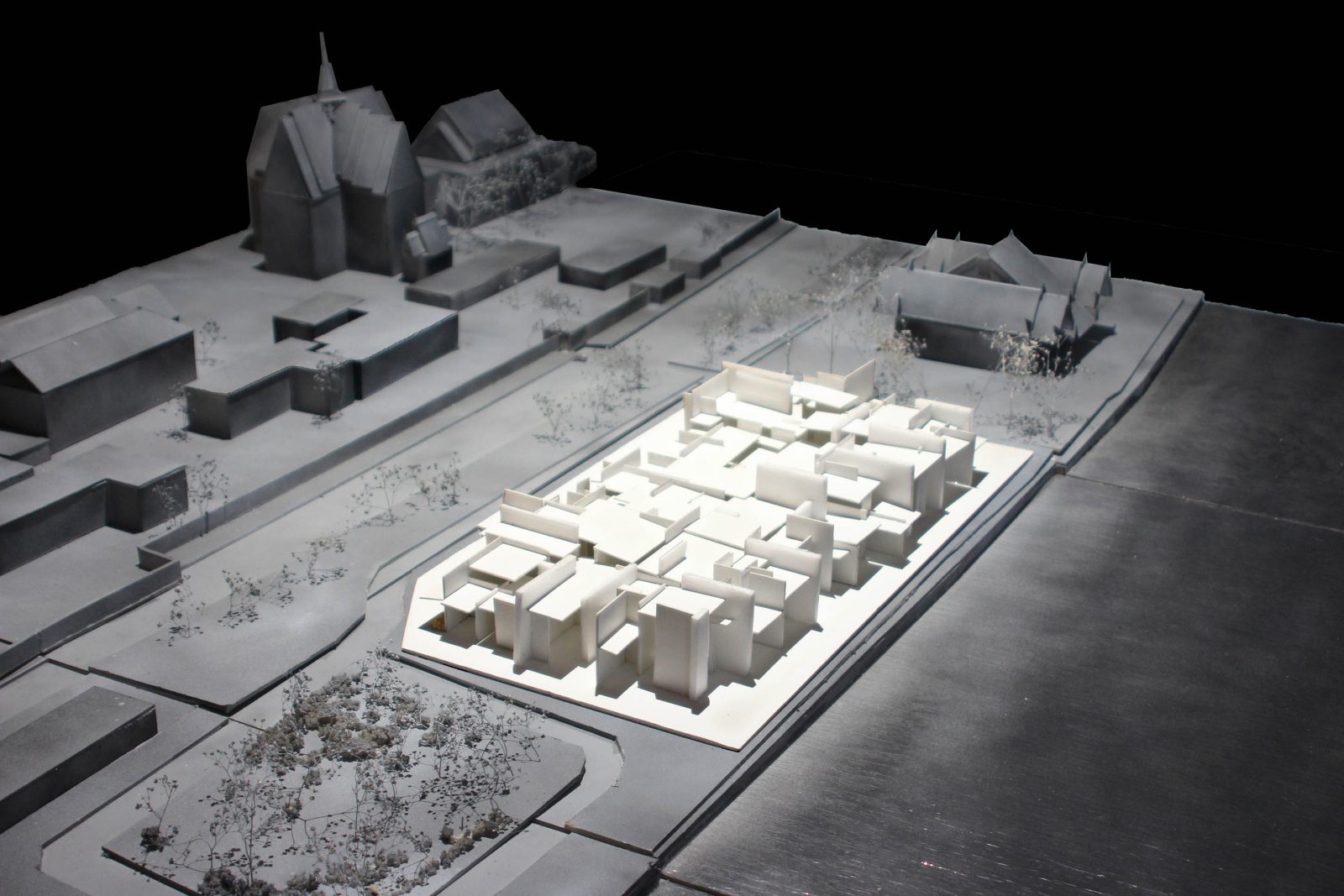
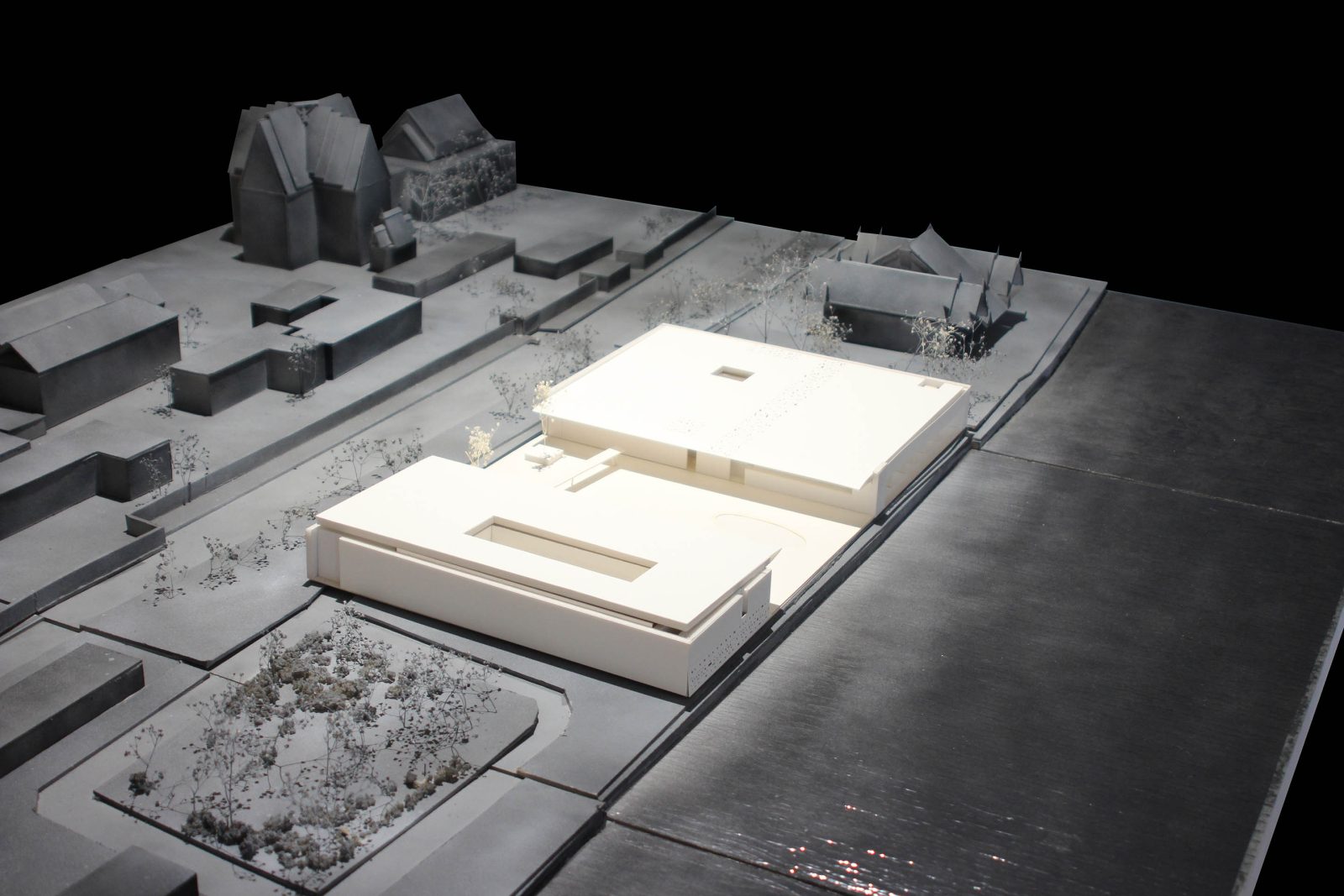
Bangkok Meditation Hub – [Tom Yum] as an Identity in a Shifting, Adapting, and Evolving Bangkok by Joshua Beanland, led by Chulalongkorn University visiting professor Jenchieh Hung. The project uses Tom Yum as both a symbol and metaphor for the city. Just as Tom Yum blends various ingredients together, it reflects the loose order of Bangkok’s streets, the mixture of influences in Thai styles, and the combination of memories and routines that shape our experience of the city. This project aims to translate the essence of Tom Yum into architecture. Here, Tom Yum is not a formal reference, but a way of harmonizing competing architectural languages into a simple structure, contained within a plain white boundary wall, with diverse spaces and relationships.
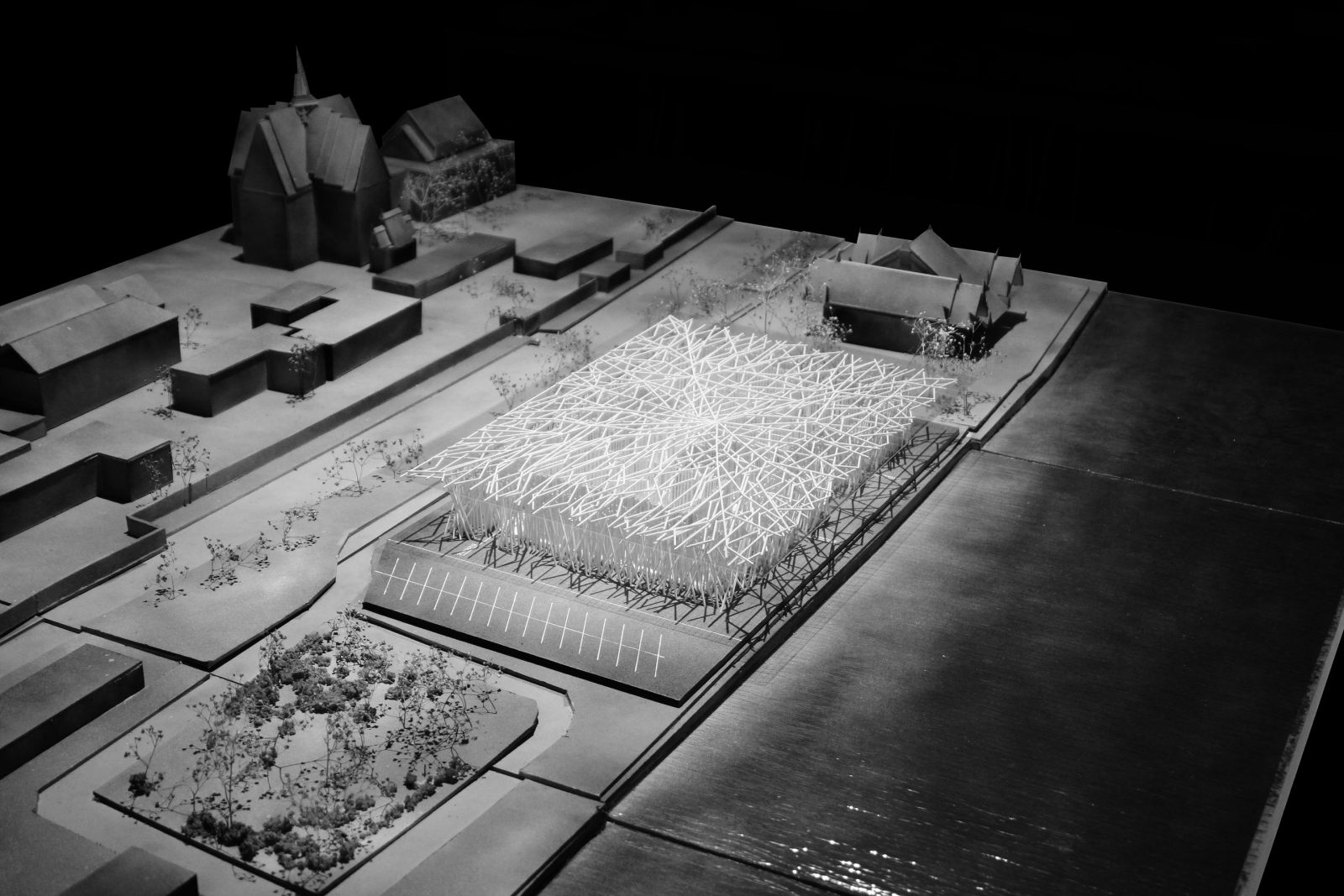
Bangkok Meditation Hub – [Trees]
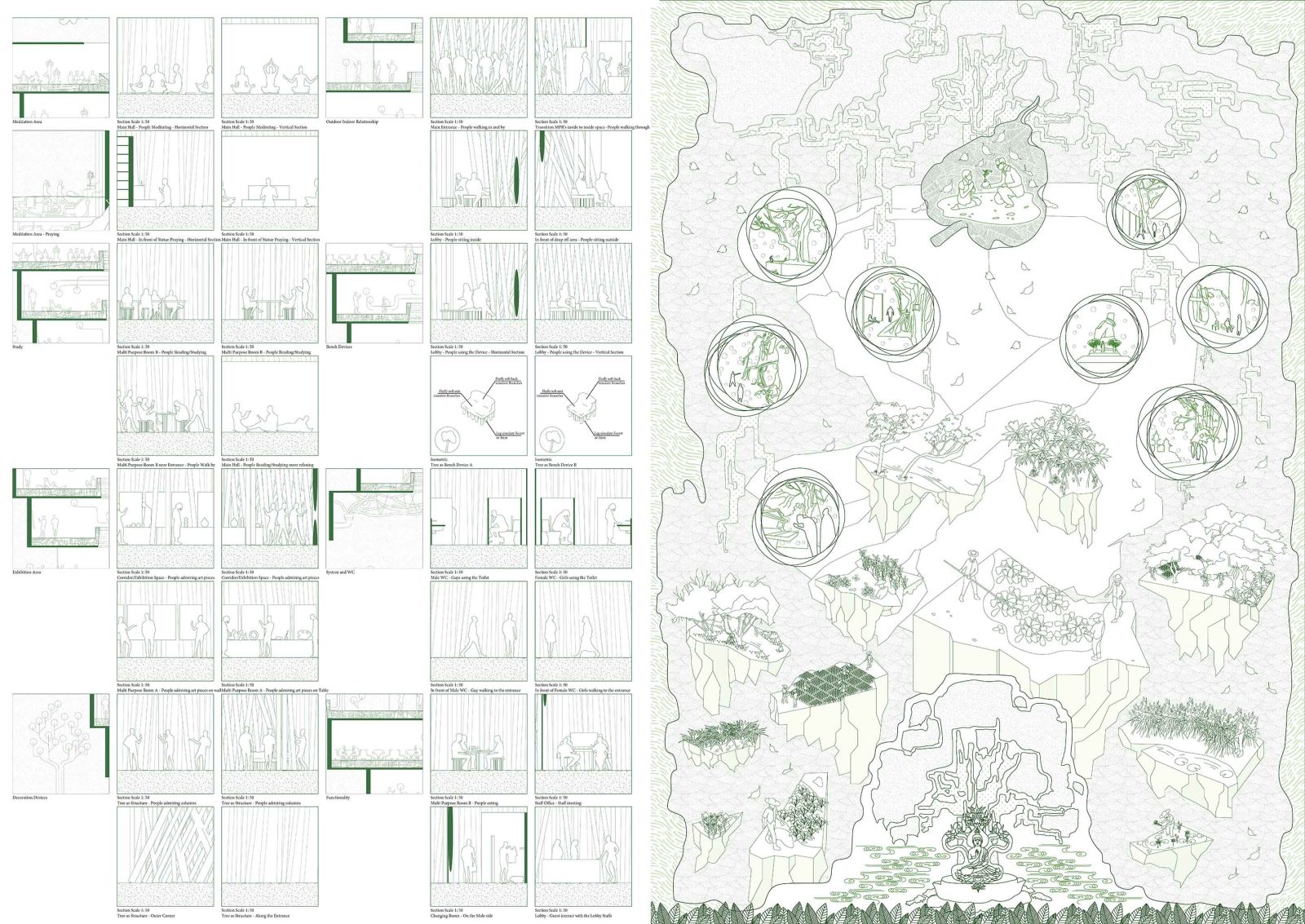
Bangkok Meditation Hub – [Trees] as an Identity in a Shifting, Adapting, and Evolving Bangkok by Bhuvarin Thaveetermsakul, led by Chulalongkorn University visiting professor Jenchieh Hung. The research and design draw inspiration from the Thai saying “under the shade of the Bodhi and Srai tree” (ใต้ร่มโพธิ์ร่มไทร), which symbolizes the protection of the king. The Bangkok Meditation Hub explores the sequence of meditation through three states: the state of loss, state of calm, and state of ascendancy. Ultimately, the key design principle is to make visitors feel as though they are under the shelter of a tree, immersed in the calm and protection of a forest environment.
READ ALSO: «Immersive Thessaloniki»: Ψηφιακή αναβίωση της χαμένης αρχιτεκτονικής κληρονομιάς της πόλης